Articles | Volume 19, issue 10
https://doi.org/10.5194/gmd-19-4095-2026
© Author(s) 2026. This work is distributed under
the Creative Commons Attribution 4.0 License.

https://doi.org/10.5194/gmd-19-4095-2026
© Author(s) 2026. This work is distributed under
the Creative Commons Attribution 4.0 License.
Scenario set-up and the new CMIP6-based climate-related forcings provided within the third round of the Inter-Sectoral Model Intercomparison Project (ISIMIP3b, group I and II)
Katja Frieler

CORRESPONDING AUTHOR
Potsdam Institute for Climate Impact Research, 14473 Potsdam, Germany
Institute for Environmental Science and Geography, University of Potsdam, 14476 Potsdam, Germany
Stefan Lange
Potsdam Institute for Climate Impact Research, 14473 Potsdam, Germany
Jacob Schewe
Potsdam Institute for Climate Impact Research, 14473 Potsdam, Germany
Matthias Mengel
Potsdam Institute for Climate Impact Research, 14473 Potsdam, Germany
Simon Treu
Potsdam Institute for Climate Impact Research, 14473 Potsdam, Germany
Institute for Environmental Science and Geography, University of Potsdam, 14476 Potsdam, Germany
Christian Otto
Potsdam Institute for Climate Impact Research, 14473 Potsdam, Germany
Jan Volkholz
Potsdam Institute for Climate Impact Research, 14473 Potsdam, Germany
Christopher P. O. Reyer
Potsdam Institute for Climate Impact Research, 14473 Potsdam, Germany
Stefanie Heinicke
Potsdam Institute for Climate Impact Research, 14473 Potsdam, Germany
Colin Jones
National Centre for Atmospheric Science and School of Earth and Environment, University of Leeds, Leeds, LS29JT, UK
Julia L. Blanchard
Institute for Marine and Antarctic Studies, University of Tasmania, Hobart, Tasmania, Australia
Cheryl S. Harrison
Department of Ocean and Coastal Science and Center for Computation and Technology, Louisiana State University, Baton Rouge, Louisiana, USA
Colleen M. Petrik
Scripps Institution of Oceanography, University of California San Diego, CA, USA
Tyler D. Eddy
Centre for Fisheries Ecosystems Research, School of Fisheries, Fisheries & Marine Institute, Memorial University, St. John's, NL, Canada
Kelly Ortega-Cisneros
Marine and Antarctic Research for Innovation and Sustainability, Department of Biological Sciences, University of Cape Town, Rondebosch, Cape Town, 7701, South Africa
Camilla Novaglio
Institute for Marine and Antarctic Studies, University of Tasmania, Hobart, Tasmania, Australia
Ryan Heneghan
School of Environment and Science, Griffith University, Brisbane, Queensland, Australia
Derek P. Tittensor
Department of Biology, Dalhousie University, Halifax, Nova Scotia, B3H 4R2, Canada
Olivier Maury
IRD, Univ Montpellier, CNRS, Ifremer, INRAE, MARBEC, Sète, France
Matthias Büchner
Potsdam Institute for Climate Impact Research, 14473 Potsdam, Germany
Thomas Vogt
Potsdam Institute for Climate Impact Research, 14473 Potsdam, Germany
Dánnell Quesada-Chacón
Potsdam Institute for Climate Impact Research, 14473 Potsdam, Germany
Kerry Emanuel
Lorenz Center, Massachusetts Institute of Technology, Cambridge, MA, USA
Chia-Ying Lee
Lamont-Doherty Earth Observatory, Columbia University, Palisades, New York, USA
Suzana J. Camargo
Lamont-Doherty Earth Observatory, Columbia University, Palisades, New York, USA
Columbia Climate School, Columbia University, New York, NY 10025, USA
Linn Hamester
Potsdam Institute for Climate Impact Research, 14473 Potsdam, Germany
Jonas Jägermeyr
Columbia Climate School, Columbia University, New York, NY 10025, USA
NASA Goddard Institute for Space Studies, New York, NY 10025, USA
Potsdam Institute for Climate Impact Research, 14473 Potsdam, Germany
Sam Rabin
CGD, National Center for Atmospheric Research Boulder, CO 80302, USA
formerly at: Institute of Meteorology and Climate Research/Atmospheric Environmental Research, Karlsruhe Institute of Technology, Garmisch-Partenkirchen, Germany
formerly at: Department of Environmental Sciences, Rutgers University, New Brunswick, New Jersey, USA
Jochen Klar
Potsdam Institute for Climate Impact Research, 14473 Potsdam, Germany
Iliusi D. Vega del Valle
Potsdam Institute for Climate Impact Research, 14473 Potsdam, Germany
Lisa Novak
Potsdam Institute for Climate Impact Research, 14473 Potsdam, Germany
Inga J. Sauer
Potsdam Institute for Climate Impact Research, 14473 Potsdam, Germany
Gitta Lasslop
Senckenberg Leibniz Biodiversity and Climate Research Centre (SBiK-F), Frankfurt am Main, Germany
Sarah Chadburn
Department of Mathematics, University of Exeter, Exeter, UK
Eleanor Burke
Met Office Hadley Centre, Fitzroy Road, Exeter, UK
Angela Gallego-Sala
Geography Department, University of Exeter, Exeter, UK
Noah Smith
College of Engineering, Mathematics and Physical Sciences, University of Exeter, Exeter EX4 4QF, UK
Jinfeng Chang
College of Environmental and Resource Sciences, Zhejiang University, Hangzhou, China
Stijn Hantson
Faculty of Natural Sciences, Universidad del Rosario, Bogotá, Colombia
Chantelle Burton
Met Office Hadley Centre, Fitzroy Road, Exeter, UK
Anne Gädeke
Potsdam Institute for Climate Impact Research, 14473 Potsdam, Germany
International Center for Climate and Environment Sciences, Institute of Atmospheric Physics, Chinese Academy of Sciences, Beijing, China
Simon N. Gosling
School of Geography, University of Nottingham, Nottingham, UK
Hannes Müller Schmied
Senckenberg Leibniz Biodiversity and Climate Research Centre (SBiK-F), Frankfurt am Main, Germany
Institute of Physical Geography, Goethe University Frankfurt, Frankfurt am Main, Germany
Fred Hattermann
Potsdam Institute for Climate Impact Research, 14473 Potsdam, Germany
Thomas Hickler
Senckenberg Leibniz Biodiversity and Climate Research Centre (SBiK-F), Frankfurt am Main, Germany
Rafael Marcé
Blanes Centre for Advanced Studies (CEAB-CSIC), Blanes, Spain
Don Pierson
Department of Ecology and Genetics, Uppsala University, Norbyvägen 18 D, 752 36 Uppsala, Sweden
Wim Thiery
Department of Water and Climate, Vrije Universiteit Brussel, Brussels, Belgium
Daniel Mercado-Bettín
Blanes Centre for Advanced Studies (CEAB-CSIC), Blanes, Spain
Robert Ladwig
Department of Ecoscience, Aarhus University, C.F. Møllers Allé 3, 8000 Aarhus C, Denmark
Ana Isabel Ayala
Department of Ecology and Genetics, Uppsala University, Norbyvägen 18 D, 752 36 Uppsala, Sweden
Matthew Forrest
Senckenberg Leibniz Biodiversity and Climate Research Centre (SBiK-F), Frankfurt am Main, Germany
Michel Bechtold
KU Leuven, Department of Earth and Environmental Sciences, Leuven, Belgium
Robert Reinecke
Institute of Geography, Johannes Gutenberg-University Mainz, Mainz, Germany
Inge de Graaf
Earth Systems and Global Change Group, Wageningen University and Research, Wageningen, the Netherlands
Jed O. Kaplan
Department of Earth, Energy, and Environment, University of Calgary, Calgary, Alberta, Canada
Alexander Koch
Department of Earth Sciences and Institute for Climate and Carbon Neutrality, The University of Hong Kong, Hong Kong
Matthieu Lengaigne
IRD, Univ Montpellier, CNRS, Ifremer, INRAE, MARBEC, Sète, France
Rohini Kumar
Department of Computational Hydrosystems, Helmholtz Centre for Environmental Research – UFZ, Leipzig 04318, Germany
Maryna Strokal
Wageningen University & Research, Wageningen, the Netherlands
Related authors
Detlef P. Van Vuuren, Brian C. O'Neill, Claudia Tebaldi, Benjamin M. Sanderson, Louise P. Chini, Pierre Friedlingstein, Tomoko Hasegawa, Keywan Riahi, Bala Govindasamy, Nico Bauer, Veronika Eyring, Cheikh M. N. Fall, Katja Frieler, Matthew J. Gidden, Laila K. Gohar, Annika Högner, Andrew D. Jones, Jarmo Kikstra, Andrew King, Reto Knutti, Elmar Kriegler, Peter Lawrence, Chris Lennard, Jason Lowe, Camilla Mathison, Shahbaz Mehmood, Zebedee Nicholls, Luciana F. Prado, Qiang Zhang, Steven K. Rose, Alex C. Ruane, Marit Sandstad, Carl-Friedrich Schleussner, Roland Seferian, Jana Sillmann, Chris Smith, Anna A. Sörensson, Swapna Panickal, Kaoru Tachiiri, Naomi Vaughan, Saritha S. Vishwanathan, Tokuta Yokohata, Marco Zecchetto, and Tilo Ziehn
Geosci. Model Dev., 19, 2627–2656, https://doi.org/10.5194/gmd-19-2627-2026, https://doi.org/10.5194/gmd-19-2627-2026, 2026
Short summary
Short summary
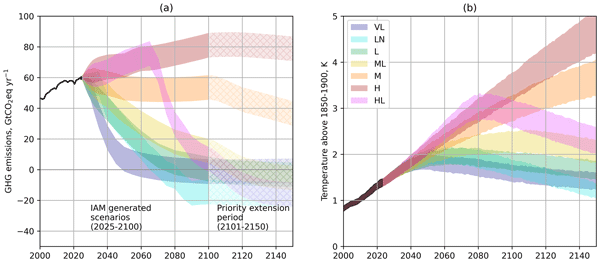
We propose a set of seven plausible 21st century emission scenarios, and their multi-century extensions, that will be used by the international community of climate modeling centers to produce the next generation of climate projections. These projections will support climate, impact and mitigation researchers, provide information to practitioners to address future risks from climate change, and contribute to policymakers’ considerations of the trade-offs among various levels of mitigation.
Edna Johanna Molina Bacca, Miodrag Stevanović, Benjamin Leon Bodirsky, Jonathan Cornelis Doelman, Louise Parsons Chini, Jan Volkholz, Katja Frieler, Christopher Paul Oliver Reyer, George Hurtt, Florian Humpenöder, Kristine Karstens, Jens Heinke, Christoph Müller, Jan Philipp Dietrich, Hermann Lotze-Campen, Elke Stehfest, and Alexander Popp
Earth Syst. Dynam., 16, 753–801, https://doi.org/10.5194/esd-16-753-2025, https://doi.org/10.5194/esd-16-753-2025, 2025
Short summary
Short summary
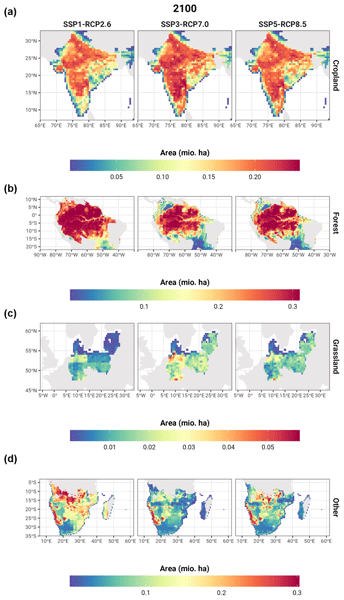
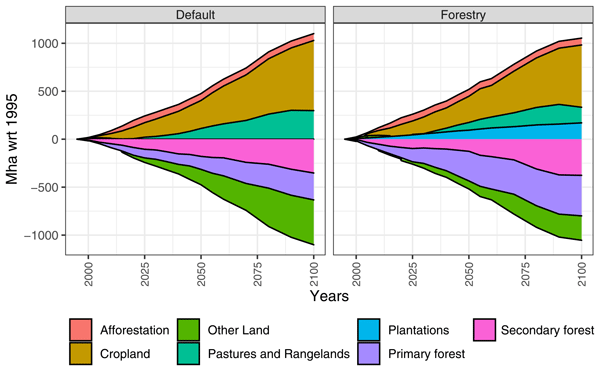
Land-use change projections are vital for impact studies. This study compares updated land-use model projections, including CO2 fertilization among other upgrades, from the MAgPIE and IMAGE models under three scenarios, highlighting differences, uncertainty hotspots, and harmonization effects. Key findings include reduced bioenergy crop demand projections and differences in grassland area allocation and sizes, with socioeconomic–climate scenarios' largest effect on variance starting in 2030.
Colin G. Jones, Fanny Adloff, Ben B. B. Booth, Peter M. Cox, Veronika Eyring, Pierre Friedlingstein, Katja Frieler, Helene T. Hewitt, Hazel A. Jeffery, Sylvie Joussaume, Torben Koenigk, Bryan N. Lawrence, Eleanor O'Rourke, Malcolm J. Roberts, Benjamin M. Sanderson, Roland Séférian, Samuel Somot, Pier Luigi Vidale, Detlef van Vuuren, Mario Acosta, Mats Bentsen, Raffaele Bernardello, Richard Betts, Ed Blockley, Julien Boé, Tom Bracegirdle, Pascale Braconnot, Victor Brovkin, Carlo Buontempo, Francisco Doblas-Reyes, Markus Donat, Italo Epicoco, Pete Falloon, Sandro Fiore, Thomas Frölicher, Neven S. Fučkar, Matthew J. Gidden, Helge F. Goessling, Rune Grand Graversen, Silvio Gualdi, José M. Gutiérrez, Tatiana Ilyina, Daniela Jacob, Chris D. Jones, Martin Juckes, Elizabeth Kendon, Erik Kjellström, Reto Knutti, Jason Lowe, Matthew Mizielinski, Paola Nassisi, Michael Obersteiner, Pierre Regnier, Romain Roehrig, David Salas y Mélia, Carl-Friedrich Schleussner, Michael Schulz, Enrico Scoccimarro, Laurent Terray, Hannes Thiemann, Richard A. Wood, Shuting Yang, and Sönke Zaehle
Earth Syst. Dynam., 15, 1319–1351, https://doi.org/10.5194/esd-15-1319-2024, https://doi.org/10.5194/esd-15-1319-2024, 2024
Short summary
Short summary
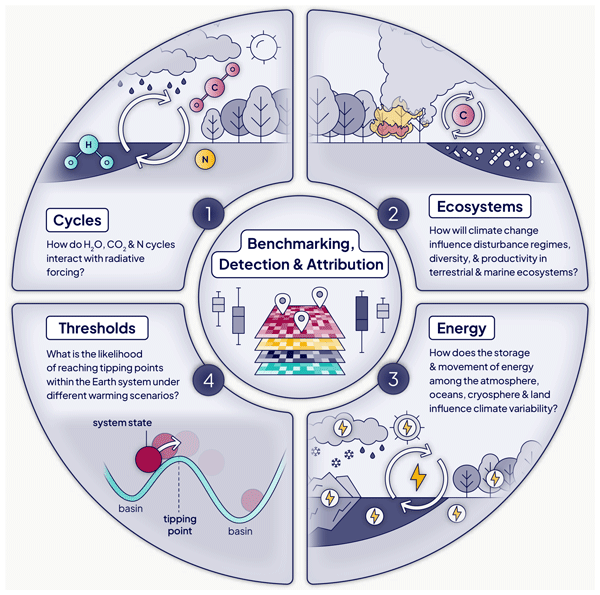
We propose a number of priority areas for the international climate research community to address over the coming decade. Advances in these areas will both increase our understanding of past and future Earth system change, including the societal and environmental impacts of this change, and deliver significantly improved scientific support to international climate policy, such as future IPCC assessments and the UNFCCC Global Stocktake.
Simon Treu, Sanne Muis, Sönke Dangendorf, Thomas Wahl, Julius Oelsmann, Stefanie Heinicke, Katja Frieler, and Matthias Mengel
Earth Syst. Sci. Data, 16, 1121–1136, https://doi.org/10.5194/essd-16-1121-2024, https://doi.org/10.5194/essd-16-1121-2024, 2024
Short summary
Short summary
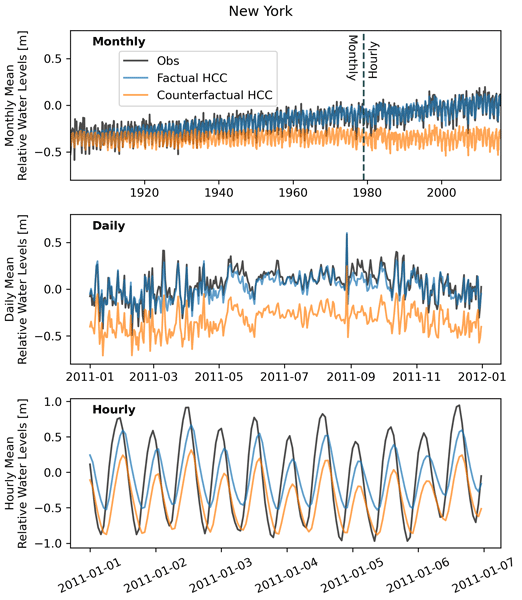
This article describes a reconstruction of monthly coastal water levels from 1900–2015 and hourly data from 1979–2015, both with and without long-term sea level rise. The dataset is based on a combination of three datasets that are focused on different aspects of coastal water levels. Comparison with tide gauge records shows that this combination brings reconstructions closer to the observations compared to the individual datasets.
Katja Frieler, Jan Volkholz, Stefan Lange, Jacob Schewe, Matthias Mengel, María del Rocío Rivas López, Christian Otto, Christopher P. O. Reyer, Dirk Nikolaus Karger, Johanna T. Malle, Simon Treu, Christoph Menz, Julia L. Blanchard, Cheryl S. Harrison, Colleen M. Petrik, Tyler D. Eddy, Kelly Ortega-Cisneros, Camilla Novaglio, Yannick Rousseau, Reg A. Watson, Charles Stock, Xiao Liu, Ryan Heneghan, Derek Tittensor, Olivier Maury, Matthias Büchner, Thomas Vogt, Tingting Wang, Fubao Sun, Inga J. Sauer, Johannes Koch, Inne Vanderkelen, Jonas Jägermeyr, Christoph Müller, Sam Rabin, Jochen Klar, Iliusi D. Vega del Valle, Gitta Lasslop, Sarah Chadburn, Eleanor Burke, Angela Gallego-Sala, Noah Smith, Jinfeng Chang, Stijn Hantson, Chantelle Burton, Anne Gädeke, Fang Li, Simon N. Gosling, Hannes Müller Schmied, Fred Hattermann, Jida Wang, Fangfang Yao, Thomas Hickler, Rafael Marcé, Don Pierson, Wim Thiery, Daniel Mercado-Bettín, Robert Ladwig, Ana Isabel Ayala-Zamora, Matthew Forrest, and Michel Bechtold
Geosci. Model Dev., 17, 1–51, https://doi.org/10.5194/gmd-17-1-2024, https://doi.org/10.5194/gmd-17-1-2024, 2024
Short summary
Short summary
Our paper provides an overview of all observational climate-related and socioeconomic forcing data used as input for the impact model evaluation and impact attribution experiments within the third round of the Inter-Sectoral Impact Model Intercomparison Project. The experiments are designed to test our understanding of observed changes in natural and human systems and to quantify to what degree these changes have already been induced by climate change.
Benedikt Mester, Thomas Vogt, Seth Bryant, Christian Otto, Katja Frieler, and Jacob Schewe
Nat. Hazards Earth Syst. Sci., 23, 3467–3485, https://doi.org/10.5194/nhess-23-3467-2023, https://doi.org/10.5194/nhess-23-3467-2023, 2023
Short summary
Short summary
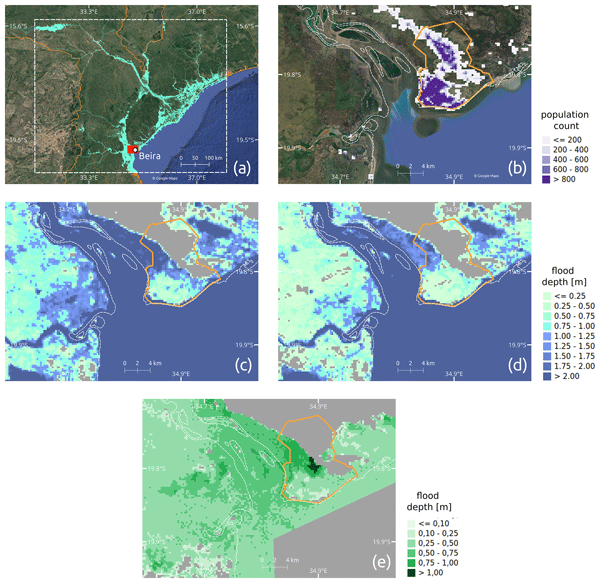
In 2019, Cyclone Idai displaced more than 478 000 people in Mozambique. In our study, we use coastal flood modeling and satellite imagery to construct a counterfactual cyclone event without the effects of climate change. We show that 12 600–14 900 displacements can be attributed to sea level rise and the intensification of storm wind speeds due to global warming. Our impact attribution study is the first one on human displacement and one of very few for a low-income country.
Dirk Nikolaus Karger, Stefan Lange, Chantal Hari, Christopher P. O. Reyer, Olaf Conrad, Niklaus E. Zimmermann, and Katja Frieler
Earth Syst. Sci. Data, 15, 2445–2464, https://doi.org/10.5194/essd-15-2445-2023, https://doi.org/10.5194/essd-15-2445-2023, 2023
Short summary
Short summary
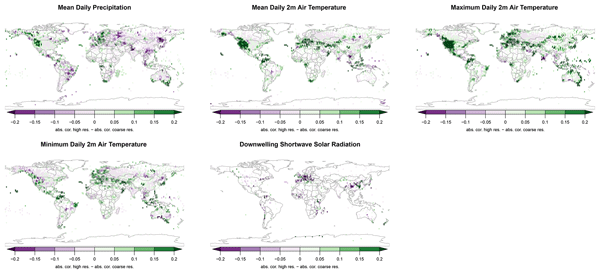
We present the first 1 km, daily, global climate dataset for climate impact studies. We show that the high-resolution data have a decreased bias and higher correlation with measurements from meteorological stations than coarser data. The dataset will be of value for a wide range of climate change impact studies both at global and regional level that benefit from using a consistent global dataset.
Malgorzata Golub, Wim Thiery, Rafael Marcé, Don Pierson, Inne Vanderkelen, Daniel Mercado-Bettin, R. Iestyn Woolway, Luke Grant, Eleanor Jennings, Benjamin M. Kraemer, Jacob Schewe, Fang Zhao, Katja Frieler, Matthias Mengel, Vasiliy Y. Bogomolov, Damien Bouffard, Marianne Côté, Raoul-Marie Couture, Andrey V. Debolskiy, Bram Droppers, Gideon Gal, Mingyang Guo, Annette B. G. Janssen, Georgiy Kirillin, Robert Ladwig, Madeline Magee, Tadhg Moore, Marjorie Perroud, Sebastiano Piccolroaz, Love Raaman Vinnaa, Martin Schmid, Tom Shatwell, Victor M. Stepanenko, Zeli Tan, Bronwyn Woodward, Huaxia Yao, Rita Adrian, Mathew Allan, Orlane Anneville, Lauri Arvola, Karen Atkins, Leon Boegman, Cayelan Carey, Kyle Christianson, Elvira de Eyto, Curtis DeGasperi, Maria Grechushnikova, Josef Hejzlar, Klaus Joehnk, Ian D. Jones, Alo Laas, Eleanor B. Mackay, Ivan Mammarella, Hampus Markensten, Chris McBride, Deniz Özkundakci, Miguel Potes, Karsten Rinke, Dale Robertson, James A. Rusak, Rui Salgado, Leon van der Linden, Piet Verburg, Danielle Wain, Nicole K. Ward, Sabine Wollrab, and Galina Zdorovennova
Geosci. Model Dev., 15, 4597–4623, https://doi.org/10.5194/gmd-15-4597-2022, https://doi.org/10.5194/gmd-15-4597-2022, 2022
Short summary
Short summary
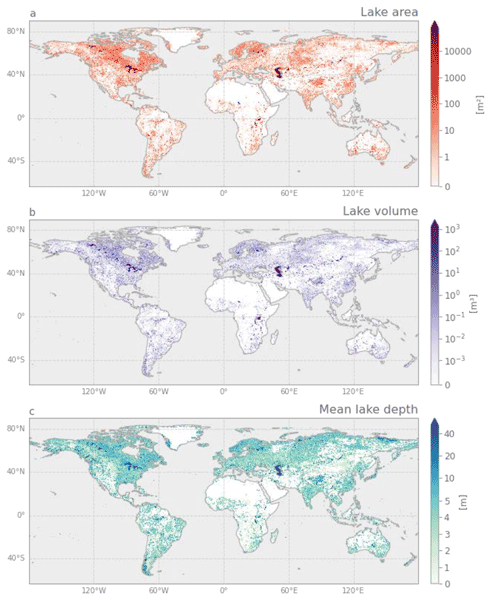
Lakes and reservoirs are warming across the globe. To better understand how lakes are changing and to project their future behavior amidst various sources of uncertainty, simulations with a range of lake models are required. This in turn requires international coordination across different lake modelling teams worldwide. Here we present a protocol for and results from coordinated simulations of climate change impacts on lakes worldwide.
Matthias Mengel, Simon Treu, Stefan Lange, and Katja Frieler
Geosci. Model Dev., 14, 5269–5284, https://doi.org/10.5194/gmd-14-5269-2021, https://doi.org/10.5194/gmd-14-5269-2021, 2021
Short summary
Short summary
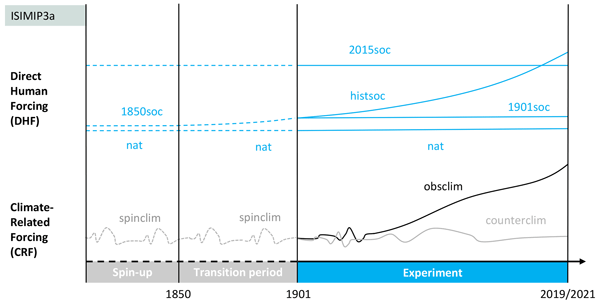
To identify the impacts of historical climate change it is necessary to separate the effect of the different impact drivers. To address this, one needs to compare historical impacts to a counterfactual world with impacts that would have been without climate change. We here present an approach that produces counterfactual climate data and can be used in climate impact models to simulate counterfactual impacts. We make these data available through the ISIMIP project.
Emmanuel Okiria, Naota Hanasaki, Simon N. Gosling, Emmanuel Nyenah, Peter Burek, Yusuke Satoh, Sebastian Ostberg, Kedar Otta, and Luca Guillaumot
EGUsphere, https://doi.org/10.5194/egusphere-2026-2043, https://doi.org/10.5194/egusphere-2026-2043, 2026
This preprint is open for discussion and under review for Hydrology and Earth System Sciences (HESS).
Short summary
Short summary
We investigated why global hydrological models struggle to simulate reservoir storage. By comparing five models against satellite data from 424 dams, we found they often exaggerate seasonal storage fluctuations due to simple one-size-fits-all global rules. Customising these settings significantly improved accuracy. This proves generic rules are a major flaw. Future models must combine traditional physics with real satellite observations to better predict global water resources.
Fang Li, David M. Lawrence, Brendan M. Rogers, Chantelle Burton, Huilin Huang, Yiquan Jiang, Johannes W. Kaiser, Matthew Kasoar, Hanna Lee, Ruby Leung, Lars Nieradzik, Aihui Wang, Daniel S. Ward, Ligeer Ce, Yangchun Li, Zhongda Lin, Apostolos Voulgarakis, and Yongkang Xue
Geosci. Model Dev., 19, 3989–4007, https://doi.org/10.5194/gmd-19-3989-2026, https://doi.org/10.5194/gmd-19-3989-2026, 2026
Short summary
Short summary
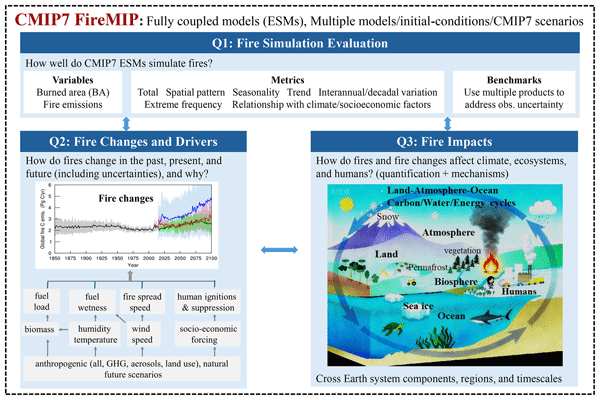
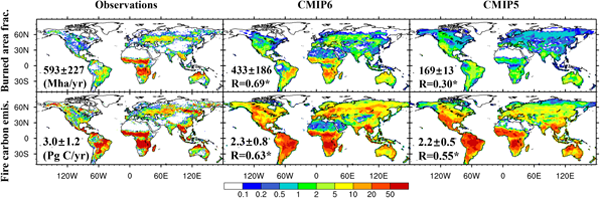
Extreme fire events are increasing, and fires are projected to rise across most regions, posing growing risks to ecosystems and society. As a key Earth system process, fire is now modeled in most Earth System Models (ESMs). FireMIP (Fire Modeling Intercomparison Project) within CMIP7 will evaluate fire simulations in state‑of‑the‑art ESMs, project future fire changes, and provide quantitative, process‑based understanding of fire's role in the Earth system.
Malve Heinz, Annelie Holzkämper, Rohini Kumar, Sélène Ledain, Pascal Horton, and Bettina Schaefli
Hydrol. Earth Syst. Sci., 30, 2879–2911, https://doi.org/10.5194/hess-30-2879-2026, https://doi.org/10.5194/hess-30-2879-2026, 2026
Short summary
Short summary
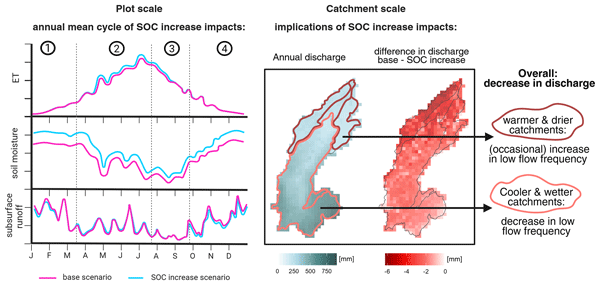
Droughts increasingly threaten agriculture. Improving soils to store more water, for example by increasing soil organic carbon, can help. We simulated this in a Swiss catchment and found that more soil carbon slightly increased soil water storage and evapotranspiration, modestly reduced floods, and shortened periods with very little streamflow. However in warmer, drier areas, these periods with little streamflow could sometimes last longer.
Katoria Lekarkar, Oldrich Rakovec, Rohini Kumar, Stefaan Dondeyne, and Ann van Griensven
Hydrol. Earth Syst. Sci., 30, 2817–2835, https://doi.org/10.5194/hess-30-2817-2026, https://doi.org/10.5194/hess-30-2817-2026, 2026
Short summary
Short summary
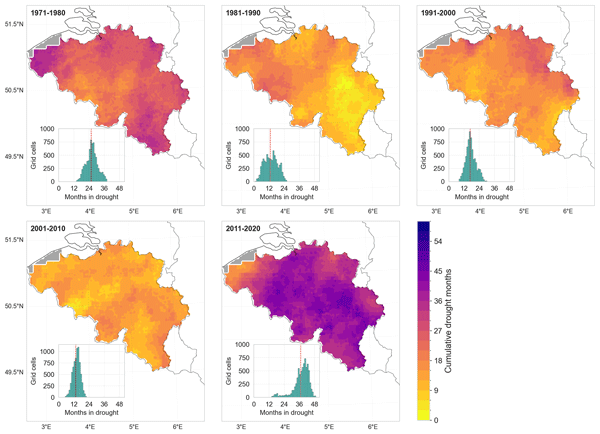
Belgium has faced intense droughts in recent years, causing major losses across sectors. To assess their rarity, we used a hydrological model to reconstruct fifty years of soil moisture in the country. We show that 2011–2020 experienced the most severe droughts since 1971, with nearly 30% of the decade under drought. We also show that rainfall-based indicators underestimate soil moisture droughts, so including soil-moisture monitoring can give decision-makers a clearer picture of drought risks.
Julie Loisel, Angela Gallego-Sala, Daniela Ransby, Emily Rabel, Cornelia Behrens, Stefanie Schumacher, Kathe Todd-Brown, Vaasuki Marupaka, and the C-PEAT Working Group Members
Earth Syst. Sci. Data Discuss., https://doi.org/10.5194/essd-2026-222, https://doi.org/10.5194/essd-2026-222, 2026
Preprint under review for ESSD
Short summary
Short summary
Over the past few decades, a lot of field-based work has been performed around the world to describe the carbon-sink capacity of peatland ecosystems. Here we provide a synthesis product that includes stratigraphic and chronological data from 267 peatland cores. Each one of these datasets is individually downloadable and openly usable through PANGAEA. We also provide scripts (R and Python) to download portions of the database.
Robin S. Smith, Tarkan A. Bilge, Thomas J. Bracegirdle, Paul R. Holland, Till Kuhlbrodt, Charlotte Lang, Spencer Liddicoat, Tom Mitcham, Jane Mulcahy, Kaitlin A. Naughten, Andrew Orr, Julien Palmieri, Antony J. Payne, Steven Rumbold, Marc Stringer, Ranjini Swaminathan, Sarah Taylor, Jeremy Walton, and Colin Jones
Earth Syst. Dynam., 17, 475–493, https://doi.org/10.5194/esd-17-475-2026, https://doi.org/10.5194/esd-17-475-2026, 2026
Short summary
Short summary
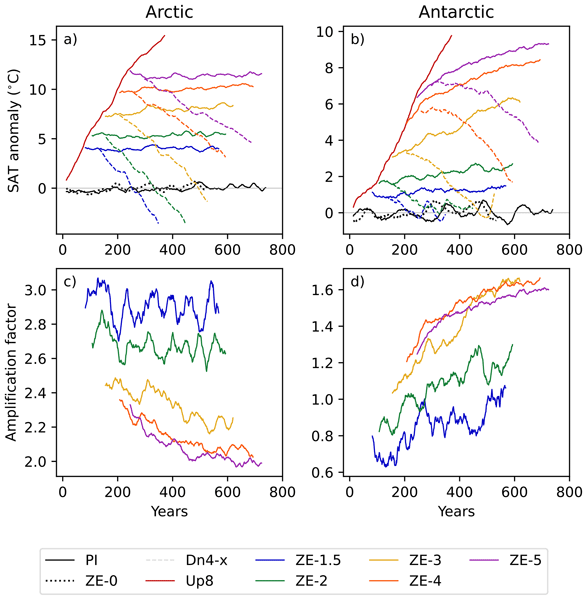
There is a dangerous amount of uncertainty in our predictions of climate change in polar regions because some of feedbacks that might lead to changes that are too rapid for us to adapt to, or that cannot be reversed. We have run a set of simulations with a state-of-the-art Earth System Model that helps improve our understanding of how climate in these regions might change. Some of the aspects we investigate are reversible but many are not, especially those affecting ice sheets and sea level.
Katja Irob, Liling Chang, Yakir Preisler, Sebastian Fiedler, Matthias Büchner, José M. Grünzweig, and Efrat Sheffer
EGUsphere, https://doi.org/10.5194/egusphere-2026-2448, https://doi.org/10.5194/egusphere-2026-2448, 2026
This preprint is open for discussion and under review for Biogeosciences (BG).
Short summary
Short summary
Dryland forests are promoted for climate mitigation, but their persistence under future climate is uncertain. Using a calibrated forest model and 21 years of field data from an arid pine forest, we simulated carbon uptake and growth through 2100. Rising carbon dioxide initially boosted productivity, but compound drought and heat stress later overrode these benefits. Declining carbon uptake preceded visible structural deterioration by up to 37 years, an early warning window for managers.
Louise Busschaert, Michel Bechtold, Sara Modanesi, Christian Massari, Dirk Raes, Sujay V. Kumar, and Gabriëlle J. M. De Lannoy
Hydrol. Earth Syst. Sci., 30, 2579–2611, https://doi.org/10.5194/hess-30-2579-2026, https://doi.org/10.5194/hess-30-2579-2026, 2026
Short summary
Short summary
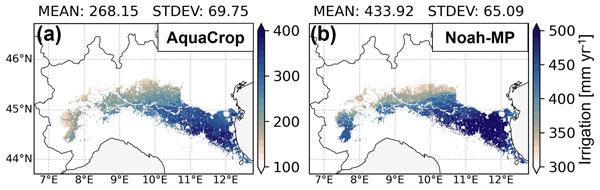
Two models, AquaCrop (crop model) and Noah-MP (land surface model), were compared estimating irrigation in Italy's Po Valley. Noah-MP simulated higher water use (434 mm/yr) than AquaCrop (268 mm/yr), mainly due to extra water losses like runoff. Once losses were accounted for, both aligned with basin-scale reports of around 500 to 600 mm/yr. The study highlights how complex irrigation modeling is, and the need for better observational data to validate results.
Jade Skye, Joe R. Melton, Colin Goldblatt, Angela Gallego-Sala, Michelle Garneau, and Scott Winton
Biogeosciences, 23, 2959–2983, https://doi.org/10.5194/bg-23-2959-2026, https://doi.org/10.5194/bg-23-2959-2026, 2026
Short summary
Short summary
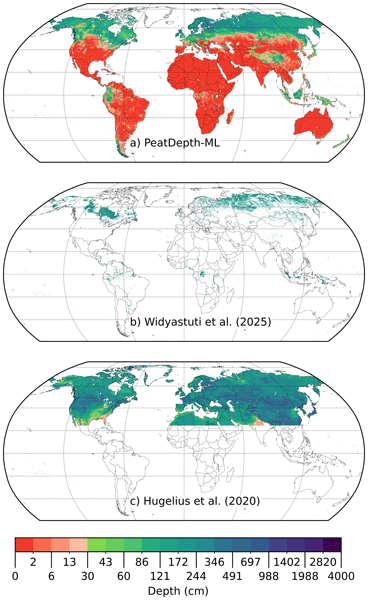
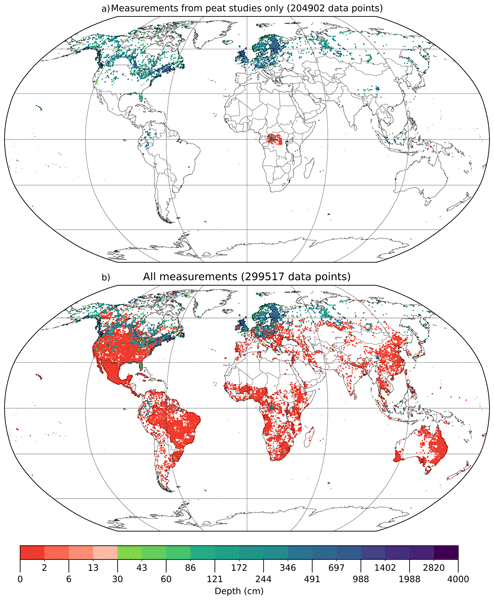
We developed PeatDepth-ML, a machine learning model predicting peat depth worldwide to help estimate carbon stocks in these climate-critical ecosystems. Our model predicts median depths of 134 cm in peatlands. Using bootstrapping, we rigorously assessed how sampling bias affects predictions. This revealed predictor selection and regional accuracy can vary greatly with different data subsets, demonstrating model reliability fundamentally depends on training data quality and geographic coverage.
Derrick Muheki, Koen Hufkens, Kim Jacobsen, Hans Verbeeck, Pascal Boeckx, Dominique Kankonde Ntumba, Olivier Kapalay Moulasa, Bas Vercruysse, Julie M. Birkholz, Christophe Verbruggen, Ed Hawkins, Seppe Lampe, Emmanuel Kasongo Yakusu, Fils Makanzu Imwangana, José Mbifo, Théophile Besango Likwela, Félicien Meunier, Olivier Dewitte, Peter Thorne, and Wim Thiery
EGUsphere, https://doi.org/10.5194/egusphere-2026-2107, https://doi.org/10.5194/egusphere-2026-2107, 2026
This preprint is open for discussion and under review for Earth System Dynamics (ESD).
Short summary
Short summary
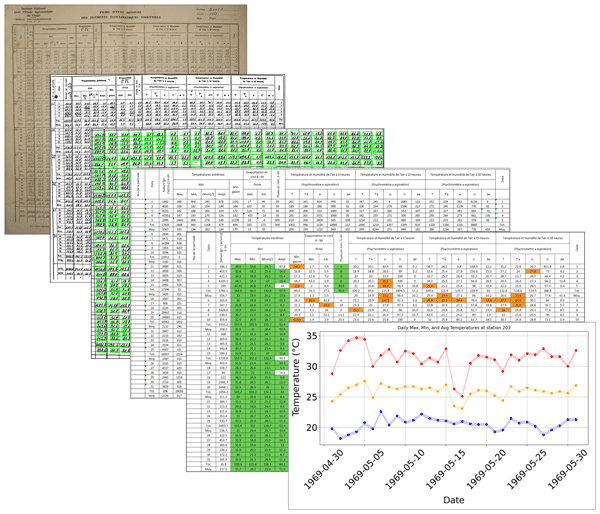
The Congo Basin is one of the least studied regions for climate change due to limited accessible data, despite large volumes of historical records stored on paper in archives. In this study, we digitised over 9,000 sheets from 37 stations in the Democratic Republic of the Congo, producing more than one million daily weather observations. The results show clear warming since the 1960s, with more hot days and fewer cold days, highlighting the importance of data rescue in data-sparse regions.
Esther Karin Bender, Matvey Debolskiy, Kjetil Aas, Sebastian Westermann, Fang Li, Jiawen Zhu, and Hanna Lee
EGUsphere, https://doi.org/10.5194/egusphere-2026-1039, https://doi.org/10.5194/egusphere-2026-1039, 2026
This preprint is open for discussion and under review for Geoscientific Model Development (GMD).
Short summary
Short summary
This paper introduces a new method to represent ice-rich permafrost soils in the Community Land Model used for climate prediction. The approach includes key processes previously missing, enabling simulation of rapid thaw events from ground-ice melt. It improves representation of soil temperature, hydrology, and landscape dynamics, leading to more accurate future greenhouse-gas estimates.
Derrick Muheki, Bas Vercruysse, Krishna Kumar Thirukokaranam Chandrasekar, Christophe Verbruggen, Julie M. Birkholz, Koen Hufkens, Hans Verbeeck, Pascal Boeckx, Seppe Lampe, Ed Hawkins, Peter Thorne, Dominique Kankonde Ntumba, Olivier Kapalay Moulasa, and Wim Thiery
Geosci. Model Dev., 19, 3213–3255, https://doi.org/10.5194/gmd-19-3213-2026, https://doi.org/10.5194/gmd-19-3213-2026, 2026
Short summary
Short summary
Archives worldwide host vast records of observed weather data crucial for understanding climate variability. However, most of these records are still in paper form, limiting their use. To address this, we developed MeteoSaver, an open-source tool, to transcribe these records to machine-readable format. Applied to ten handwritten temperature sheets, it achieved a median accuracy of 74 %. This tool offers a promising solution to preserve records from archives and unlock historical weather insights.
Daniel Mercado-Bettín, Ricardo Paíz, Valerie McCarthy, Eleanor Jennings, Elvira de Eyto, Angeles M. Gallegos, Mary Dillane, Juan C. Garcia, José J. Rodríguez, and Rafael Marcé
Biogeosciences, 23, 2661–2685, https://doi.org/10.5194/bg-23-2661-2026, https://doi.org/10.5194/bg-23-2661-2026, 2026
Short summary
Short summary
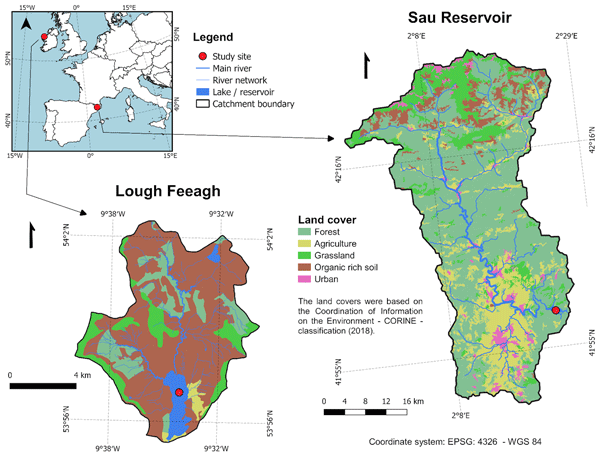
Understanding what shapes lake water quality is vital in a changing world. We studied dissolved organic matter, a key part of water quality in lakes and the carbon cycle, to analyse its environmental drivers and make predictions, by using machine learning. Tested in lakes in Ireland and Spain, it showed good predictions, even when relying only on climate-soil data, and Julian day. This helps explain how land and climate conditions influence freshwater resources. It can be reproduced worldwide.
Michel Bechtold, Benjamin Poschlod, Christian Otto, Jan Volkholz, Matthias Büchner, and Florian Zabel
Earth Syst. Sci. Data Discuss., https://doi.org/10.5194/essd-2026-227, https://doi.org/10.5194/essd-2026-227, 2026
Preprint under review for ESSD
Short summary
Short summary
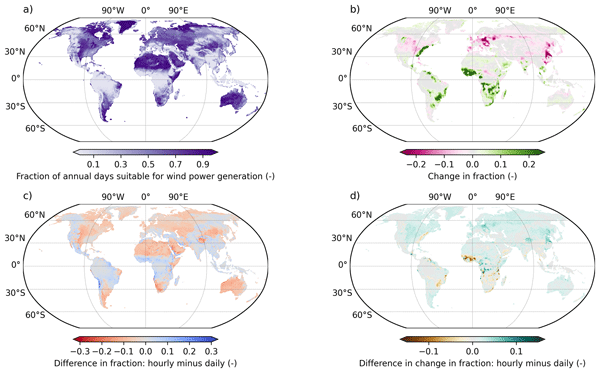
Many climate impacts depend on weather changes within a single day, but most studies still use daily averages. We created a new global hourly climate data set by disaggregating established daily records while keeping them physically consistent. The data reveal clearer patterns in rainfall timing, dangerous heat exposure, and wind and sunlight for energy, and are also very important for land surface modeling, where hourly input improves water and energy balance simulations.
Mara Y. McPartland, Tomas Lovato, Charles Koven, Jamie D. Wilson, Briony Turner, Colleen M. Petrik, José Licón-Saláiz, Fang Li, Fanny Lhardy, Jaclyn Clement Kinney, Michio Kawamiya, Birgit Hassler, Nathan P. Gillett, Cheikh Modou Noreyni Fall, Christopher Danek, Chris M. Brierley, Ana Bastos, and Oliver Andrews
Geosci. Model Dev., 19, 2849–2880, https://doi.org/10.5194/gmd-19-2849-2026, https://doi.org/10.5194/gmd-19-2849-2026, 2026
Short summary
Short summary
The Coupled Model Intercomparison Project (CMIP) is an international consortium of climate modeling groups that produce coordinated experiments in order to evaluate human influence on the climate and test knowledge of Earth systems. This paper describes the data requested for Earth systems research in CMIP7. We detail the request for model output of the carbon cycle, the flows of energy among the atmosphere, land and the oceans, and interactions between these and the global climate.
John W. Rostron, Alejandro Bodas-Salcedo, David M. H. Sexton, Colin G. Jones, Edward W. Blockley, Till Kuhlbrodt, Jane P. Mulcahy, Tamzin E. Palmer, Saloua Peatier, Mark A. Ringer, Steven T. Rumbold, Benjamin M. Sanderson, Yongming Tang, and Martin R. Willet
EGUsphere, https://doi.org/10.5194/egusphere-2026-1676, https://doi.org/10.5194/egusphere-2026-1676, 2026
This preprint is open for discussion and under review for Geoscientific Model Development (GMD).
Short summary
Short summary
The Met Office’s latest weather and climate model warms very strongly in response to increases in carbon dioxide. We created a modified version of the model with a more moderate warming response by adjusting key model parameters, using both automated methods and expert judgement. The new model matches historical temperatures more closely and is better suited for studies of long‑term climate, but has reduced overall accuracy when simulating the baseline climate.
Didier Swingedouw, Laura Jackson, Aixue Hu, Anastasia Romanou, Nicole C. Laureanti, Wilbert Weijer, Sina Loriani, Bette Otto-Bliesner, Ayako Abe-Ouchi, Lucas Almeida, Alessio Bellucci, Reyk Börner, Gokhan Danabasoglu, Donovan P. Dennis, Marion Devilliers, Sybren Drijfhout, Jonathan Donges, Friederike Fröb, Thomas L. Frölicher, Guillaume Gastineau, Heiko Goelzer, Chuncheng Guo, Urs Hofmann, Anna Höse, Colin Jones, Torben Koenigk, Ann Kristin Klose, Valerio Lembo, Jose Licon-Salaiz, Ken Mankoff, Virna Meccia, Irina Melnikova, Oliver Mehling, Laurie Menviel, Juliette Mignot, Jon I. Robson, Gavin A. Schmidt, Robin Smith, Yuchen Sun, Irene Trombini, Matteo Willeit, Richard Wood, Fanghua Wu, Lin Zhaohui, and Ricarda Winkelmann
EGUsphere, https://doi.org/10.5194/egusphere-2026-1698, https://doi.org/10.5194/egusphere-2026-1698, 2026
This preprint is open for discussion and under review for Geoscientific Model Development (GMD).
Short summary
Short summary
This study presents a plan for climate model experiments to better understand how changes in freshwater in the North Atlantic affect major ocean currents. We designed coordinated simulations to test their response to warming, added freshwater, and possible recovery after weakening. Comparing results across models and past climate evidence helps improve confidence in projections and assess risks of large ocean circulation changes.
Detlef P. Van Vuuren, Brian C. O'Neill, Claudia Tebaldi, Benjamin M. Sanderson, Louise P. Chini, Pierre Friedlingstein, Tomoko Hasegawa, Keywan Riahi, Bala Govindasamy, Nico Bauer, Veronika Eyring, Cheikh M. N. Fall, Katja Frieler, Matthew J. Gidden, Laila K. Gohar, Annika Högner, Andrew D. Jones, Jarmo Kikstra, Andrew King, Reto Knutti, Elmar Kriegler, Peter Lawrence, Chris Lennard, Jason Lowe, Camilla Mathison, Shahbaz Mehmood, Zebedee Nicholls, Luciana F. Prado, Qiang Zhang, Steven K. Rose, Alex C. Ruane, Marit Sandstad, Carl-Friedrich Schleussner, Roland Seferian, Jana Sillmann, Chris Smith, Anna A. Sörensson, Swapna Panickal, Kaoru Tachiiri, Naomi Vaughan, Saritha S. Vishwanathan, Tokuta Yokohata, Marco Zecchetto, and Tilo Ziehn
Geosci. Model Dev., 19, 2627–2656, https://doi.org/10.5194/gmd-19-2627-2026, https://doi.org/10.5194/gmd-19-2627-2026, 2026
Short summary
Short summary
We propose a set of seven plausible 21st century emission scenarios, and their multi-century extensions, that will be used by the international community of climate modeling centers to produce the next generation of climate projections. These projections will support climate, impact and mitigation researchers, provide information to practitioners to address future risks from climate change, and contribute to policymakers’ considerations of the trade-offs among various levels of mitigation.
Gabriëlle J. M. De Lannoy, Louise Busschaert, Michel Bechtold, Niccolò Lanfranco, Shannon de Roos, Zdenko Heyvaert, Martynas Bielinis, Jonas Mortelmans, Samuel A. Scherrer, Maxime Van den Bossche, Sujay Kumar, David M. Mocko, Eric Kemp, Lee Heng, Pasquale Steduto, and Dirk Raes
Geosci. Model Dev., 19, 2551–2575, https://doi.org/10.5194/gmd-19-2551-2026, https://doi.org/10.5194/gmd-19-2551-2026, 2026
Short summary
Short summary
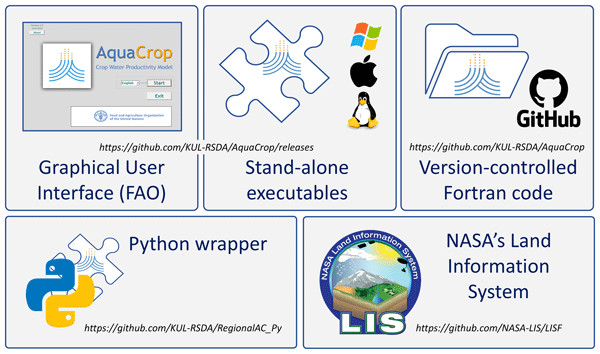
The AquaCrop model has been incorporated into the NASA Land Information System, to advance regional crop growth simulations at any spatial resolution, with a range of different input sources for meteorology, soil and crop parameters. This system also facilitates the assimilation of satellite data to update the crop and water conditions during model simulations. We present three exploratory applications to highlight pathways for future research on regional-scale crop estimation.
Konstantin Gregor, Benjamin F. Meyer, Tillmann Gaida, Victor Justo Vasquez, Karina Bett-Williams, Matthew Forrest, João P. Darela-Filho, Sam Rabin, Marcos Longo, Joe R. Melton, Johan Nord, Peter Anthoni, Vladislav Bastrikov, Thomas Colligan, Christine Delire, Michael C. Dietze, George Hurtt, Akihiko Ito, Lasse T. Keetz, Jürgen Knauer, Johannes Köster, Tzu-Shun Lin, Lei Ma, Marie Minvielle, Stefan Olin, Sebastian Ostberg, Hao Shi, Reiner Schnur, Qing Sun, Peter E. Thornton, and Anja Rammig
Geosci. Model Dev., 19, 2407–2436, https://doi.org/10.5194/gmd-19-2407-2026, https://doi.org/10.5194/gmd-19-2407-2026, 2026
Short summary
Short summary
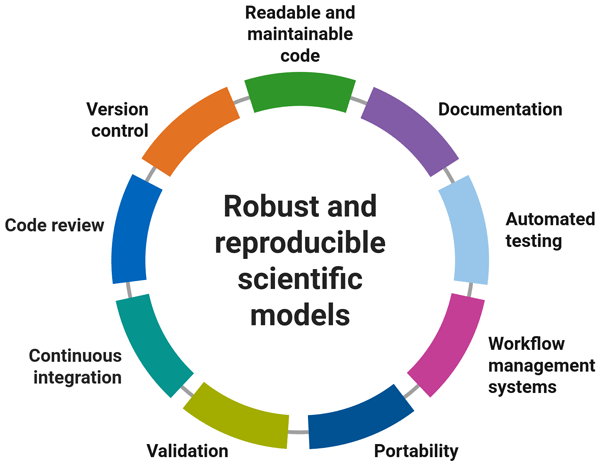
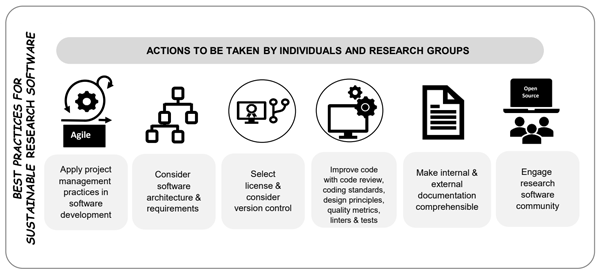
Geoscientific models are crucial for understanding Earth’s processes. However, they sometimes do not adhere to highest software quality standards, and scientific results are often hard to reproduce due to the complexity of the workflows. Here we gather the expertise of 20 modeling groups and software engineers to define best practices for making geoscientific models maintainable, usable, and reproducible. We conclude with an open-source example serving as a reference for modeling communities.
Sadaf Nasreen, Oldrich Rakovec, Rohini Kumar, Manuela I. Brunner, Ujjwal Singh, Petr Maca, Yannis Markonis, and Martin Hanel
EGUsphere, https://doi.org/10.5194/egusphere-2026-973, https://doi.org/10.5194/egusphere-2026-973, 2026
This preprint is open for discussion and under review for Hydrology and Earth System Sciences (HESS).
Short summary
Short summary
European droughts threaten water and agriculture, but how distinct drought processes will change under warming is uncertain. We examine seven mechanisms across Europe using 1971 to 2000 observations and 2070 to 2099 projections. Changes are regional: the Mediterranean shifts to longer, more severe droughts, while Northern and Western Central Europe often improve. Temperature-driven mechanisms, especially rain to snow transitions, respond most, guiding targeted adaptation.
Peng Zhou, Jieming Chou, Li Dan, Jean-François Lamarque, Muhammad Bilal, Fang Li, Mengting Sun, Rebecca Buccholz, Desneiges Murray, Zhaoxiang Cao, Jing Peng, Kai Li, Fuqiang Yang, Wei Pan, Jinyan Chen, and Liwen Xing
EGUsphere, https://doi.org/10.5194/egusphere-2026-350, https://doi.org/10.5194/egusphere-2026-350, 2026
Short summary
Short summary
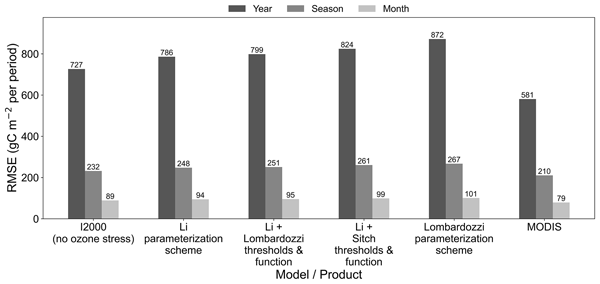
We assessed the impact of ozone damage representations in a land-surface model on simulations of vegetation productivity. Results varied depending on how ozone effects were triggered and how vegetation recovery was modeled. Schemes that incorporated vegetation-specific thresholds and memory effects on photosynthesis and water loss more accurately reflected spatial patterns, indicating directions for enhancing model realism and improving projections of ecosystem responses to ozone pollution.
Ram Singh, Alexander Koch, Allegra N. LeGrande, Kostas Tsigaridis, Riovie D. Ramos, Francis Ludlow, Igor Aleinov, Reto Ruedy, and Jed O. Kaplan
Geosci. Model Dev., 19, 1405–1428, https://doi.org/10.5194/gmd-19-1405-2026, https://doi.org/10.5194/gmd-19-1405-2026, 2026
Short summary
Short summary
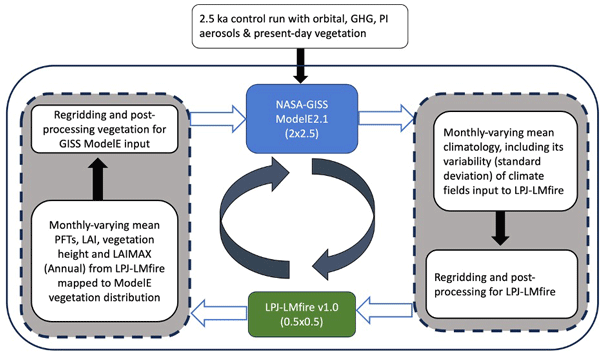
This study presents an experimental framework for asynchronous land-atmosphere coupling to include biogeophysical feedbacks using a dynamic vegetation model with an Earth system model that lacks a fully dynamic vegetation component. The framework is implemented for the 2.5 ka period and also illustrates the role of model performance metrics (bias, variability), while evaluating the simulated climate against the multi-proxy paleoclimate reconstructions.
Daniela Henry-Pinilla, Núria Catalán, Biel Obrador, and Rafael Marcé
EGUsphere, https://doi.org/10.5194/egusphere-2025-5359, https://doi.org/10.5194/egusphere-2025-5359, 2026
This preprint is open for discussion and under review for Geoscientific Model Development (GMD).
Short summary
Short summary
We developed the first global model that tracks how carbon moves and is buried across rivers, lakes, floodplains, and coastal areas. This new tool links these ecosystems within a single framework, helping scientists better understand how water systems store carbon and influence the planet’s carbon balance and climate.
Tam V. Nguyen, Rohini Kumar, José L. J. Ledesma, Pia Ebeling, Jan Fleckenstein, and Andreas Musolff
EGUsphere, https://doi.org/10.5194/egusphere-2025-6246, https://doi.org/10.5194/egusphere-2025-6246, 2026
Short summary
Short summary
Lumped and landscape-explicit dissolved organic carbon (DOC) models are commonly calibrated using stream DOC concentrations, while internal DOC dynamics in different model compartments are not given enough attention. Our study shows that stream DOC alone is insufficient to constrain DOC dynamics. Applying models calibrated in this way under changing boundary conditions may therefore lead to unrealistic results.
Seppe Lampe, Lukas Gudmundsson, Basil Kraft, Stijn Hantson, Douglas Kelley, Vincent Humphrey, Bertrand Le Saux, Emilio Chuvieco, and Wim Thiery
Geosci. Model Dev., 19, 955–988, https://doi.org/10.5194/gmd-19-955-2026, https://doi.org/10.5194/gmd-19-955-2026, 2026
Short summary
Short summary
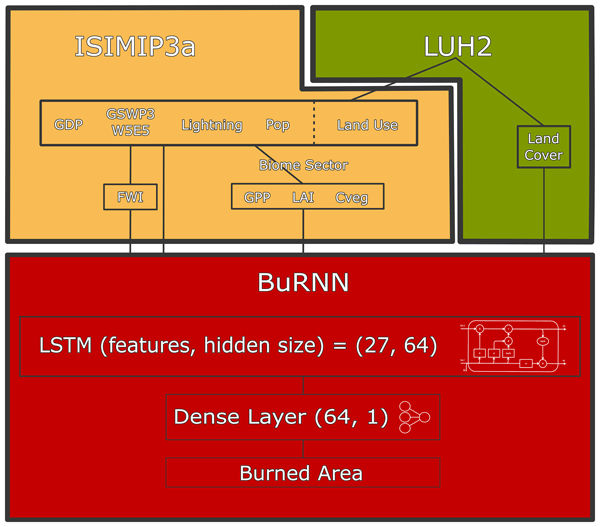
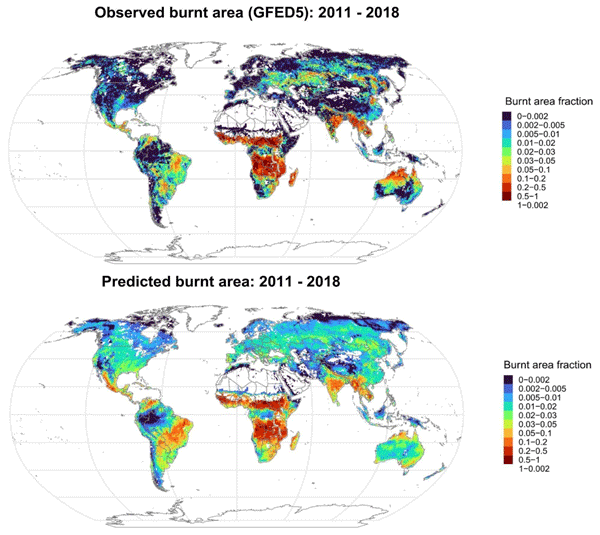
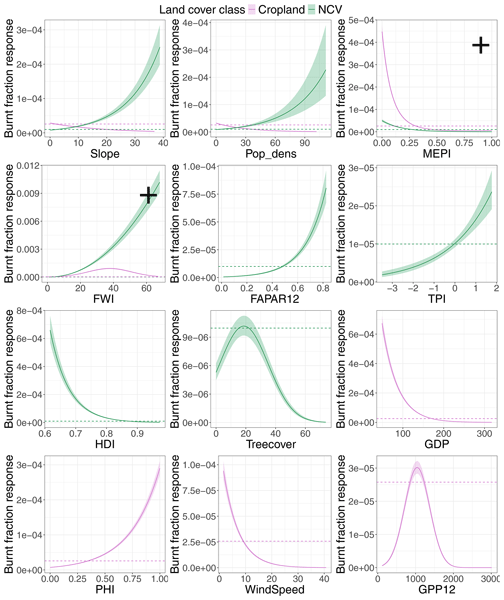
We introduce BuRNN (BUrned area modelling by Recurrent Neural Networks), a model which estimates monthly burned area based on satellite observations and climate, vegetation, and socio-economic data using machine learning. BuRNN outperforms existing process-based fire models, which improves our capabilities of modelling past and future burned areas.
Daniel J. Lunt, Nicky M. Wright, Bram Vaes, Ulrich Salzmann, James W. B. Rae, Thomas Hickler, David K. Hutchinson, Julia Brugger, Jiang Zhu, Sebastian Steinig, A. Nele Meckler, Gordon N. Inglis, David Evans, Agatha M. de Boer, Bette L. Otto-Bliesner, Natalie Burls, Yurui Zhang, Appy Sluijs, Tammo Reichgelt, Igor Niezgodzki, Katrin Meissner, Jean-Baptiste Ladant, Fanni D. Kelemen, Matthew Huber, David Greenwood, Mattias Green, Flavia Boscolo-Galazzo, Mauel Tobias Blau, and Michiel Baatsen
EGUsphere, https://doi.org/10.5194/egusphere-2025-6135, https://doi.org/10.5194/egusphere-2025-6135, 2026
Short summary
Short summary
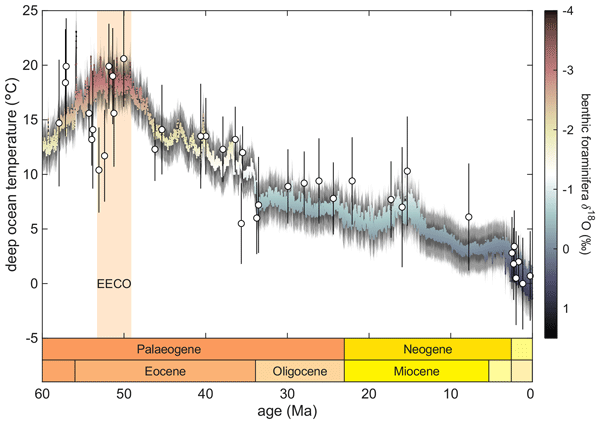
The early Eocene, about 50 million years ago, was a super-warm period of Earth's history, with high concentrations of carbon dioxide in the atmosphere. Here, we provide a framework and experimental design for climate modellers to carry out a coordinated project, simulating this period. This is the second phase of this project, and here we provide updated maps of the Earth's mountains and ocean floor, and vegetation, to enable more accurate modelling.
Pia Ebeling, Alexander Hubig, Alexander Wachholz, Ulrike Scharfenberger, Sarah Haug, Tam Nguyen, Fanny Sarrazin, Masooma Batool, Andreas Musolff, and Rohini Kumar
Earth Syst. Sci. Data, 18, 691–712, https://doi.org/10.5194/essd-18-691-2026, https://doi.org/10.5194/essd-18-691-2026, 2026
Short summary
Short summary
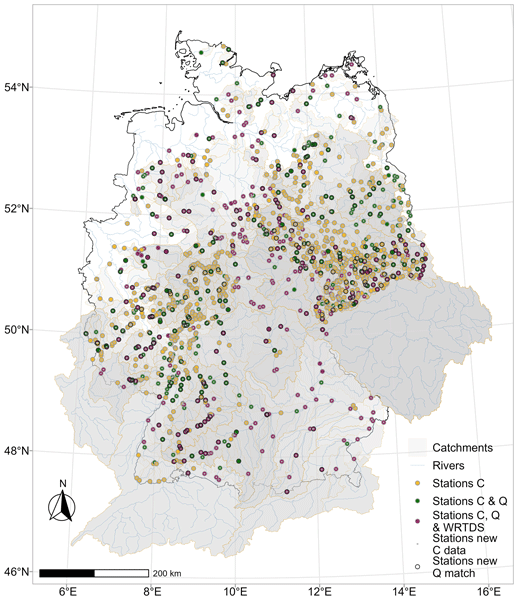
The updated river water quality data set for Germany offers longer records, new variables such as water temperature and oxygen, and time series of pollution sources, and it adds more stations with both water quality and flow data. These improvements provide clearer insights into how stream water quality changes over time and how human activities affect aquatic ecosystems.
Devon Dunmire, Michel Bechtold, Lucas Boeykens, and Gabriëlle J. M. De Lannoy
The Cryosphere, 20, 609–628, https://doi.org/10.5194/tc-20-609-2026, https://doi.org/10.5194/tc-20-609-2026, 2026
Short summary
Short summary
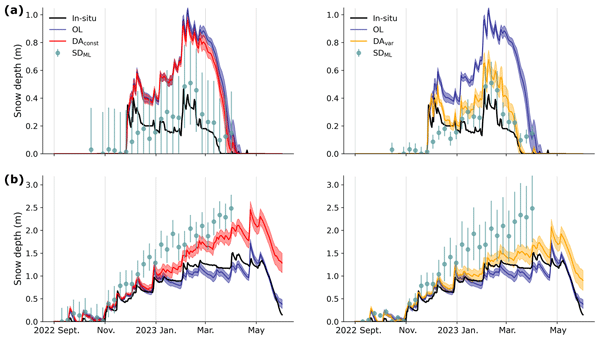
Snow is vital for society and the climate, yet estimates of snowpack remain uncertain due to observational and modeling limitations. Data assimilation (DA) helps by integrating observations with models. Here, we integrate snow depth retrievals into a physically-based snow model across the European Alps. This work offers advancements for snow data assimilation, such as incorporating a dynamic observational uncertainty, which is essential for forecasting and water resource management.
Simon Scheiter, Jinfeng Chang, Philippe Ciais, Marie Dury, Louis Francois, Matthew Forrest, Alexandra Henrot, Christopher P. O. Reyer, Sonia Seneviratne, Jörg Steinkamp, Wim Thiery, Wenfang Xu, and Thomas Hickler
EGUsphere, https://doi.org/10.5194/egusphere-2026-221, https://doi.org/10.5194/egusphere-2026-221, 2026
Short summary
Short summary
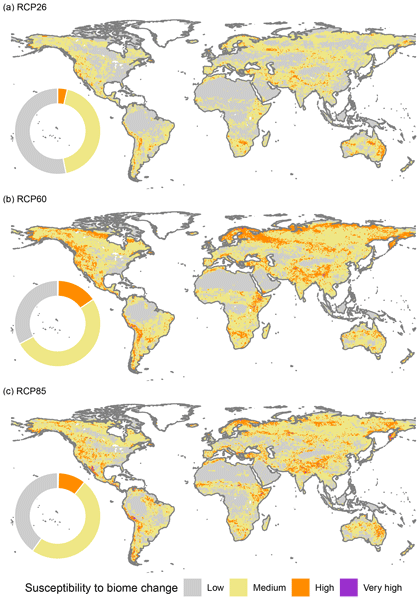
Our study shows how climate change may reshape the world's major biomes, such as forests, grasslands, and tundra. Using dynamic vegetation models, machine learning and real-world observations, we found that many biomes are likely to shift toward the poles as temperatures rise. Even under low-emission scenarios, large areas could change. These results help identify regions most susceptible to climate change and support global efforts to protect and manage natural ecosystems in the future.
Robert Reinecke, Tanjila Akhter, Annemarie Bäthge, Ricarda Dietrich, Sebastian Gnann, Simon N. Gosling, Danielle Grogan, Andreas Hartmann, Stefan Kollet, Rohini Kumar, Richard Lammers, Sida Liu, Yan Liu, Nils Moosdorf, Bibi Naz, Sara Nazari, Chibuike Orazulike, Yadu Pokhrel, Jacob Schewe, Mikhail Smilovic, Maryna Strokal, Wim Thiery, Yoshihide Wada, Shan Zuidema, and Inge de Graaf
Geosci. Model Dev., 19, 523–542, https://doi.org/10.5194/gmd-19-523-2026, https://doi.org/10.5194/gmd-19-523-2026, 2026
Short summary
Short summary
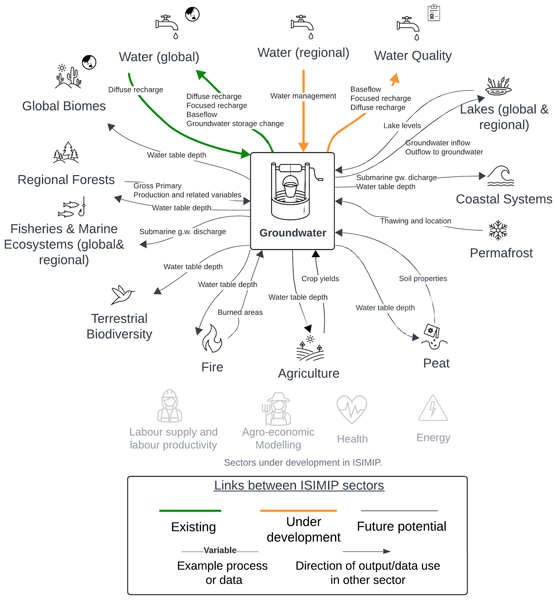
Here we describe a collaborative effort to improve predictions of how climate change will affect groundwater. The ISIMIP (The Inter-Sectoral Impact Model Intercomparison Project) groundwater sector combines multiple global groundwater models to capture a range of possible outcomes and reduce uncertainty. Initial comparisons reveal significant differences between models in key metrics like water table depth and recharge rates, highlighting the need for structured model intercomparisons.
Lukas Lindenlaub, Katja Weigel, Birgit Hassler, Colin Jones, and Veronika Eyring
Earth Syst. Dynam., 17, 81–105, https://doi.org/10.5194/esd-17-81-2026, https://doi.org/10.5194/esd-17-81-2026, 2026
Short summary
Short summary
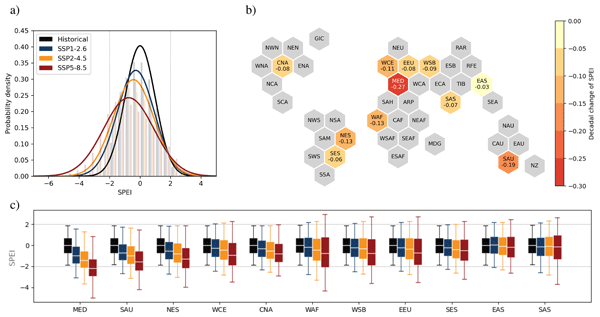
This study explores changes in drought characteristic based on projections by 18 different Earth system models. Their performance is evaluated by comparing historical simulations to observation based reanalysis. The analysis of a standardized drought index under different future scenarios revealed that the harvest area that is projected to experience extreme drought conditions towards the end of this century ranges from 10 % to 40 % depending on the emission scenario.
Victoria Frutos-Aragón, Sandra Brucet, Rafael Marcé, Tuba Bucak, Thomas A. Davidson, Louisa-Marie von Plüskow, Pieter Lemmens, and Carolina Trochine
Biogeosciences, 23, 181–204, https://doi.org/10.5194/bg-23-181-2026, https://doi.org/10.5194/bg-23-181-2026, 2026
Short summary
Short summary
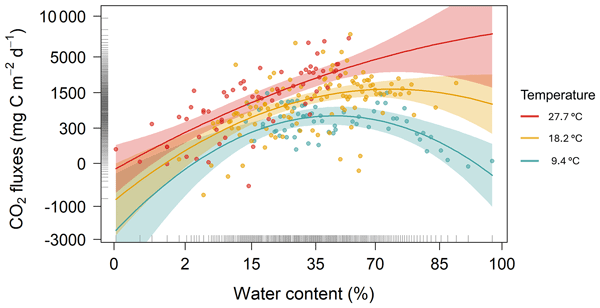
Pond sediments emit substantial CO2 during dry phases, often overlooked despite climate change increasing dry periods. We measured CO2 fluxes in 30 ponds across Mediterranean and Temperate regions, finding higher emissions in summer and in ponds with longer hydroperiods, especially in Mediterranean climates. Emissions peaked at moderate sediment water content and warm temperatures, highlighting the need to include dry-phase emissions in carbon flux assessments.
Rebecca M. Varney, Daniel Hooke, Norman J. Steinert, T. Luke Smallman, Camilla Mathison, and Eleanor J. Burke
EGUsphere, https://doi.org/10.5194/egusphere-2025-6075, https://doi.org/10.5194/egusphere-2025-6075, 2026
Short summary
Short summary
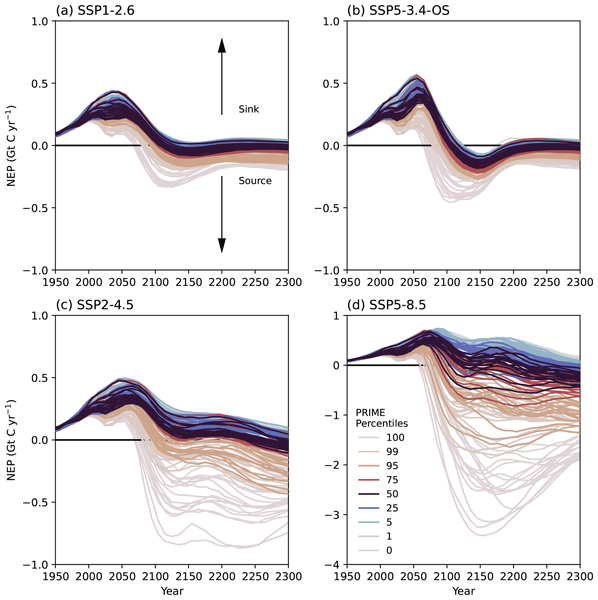
The northern high latitudes mitigate climate change by land ecosystems absorbing more carbon from the atmosphere than they release. This carbon sink is sensitive to long-term CO2 emissions. Here, we use a probabilistic framework to quantify the timing and magnitude of a transition to a carbon source in different future emission scenarios, including overshoot. The fate of this region is dependent on the balance between carbon loss from permafrost and gain from increased vegetation productivity.
Ana I. Ayala, José L. Hinostroza, Daniel Mercado-Bettín, Rafael Marcé, Simon N. Gosling, Donald C. Pierson, and Sebastian Sobek
Geosci. Model Dev., 19, 41–56, https://doi.org/10.5194/gmd-19-41-2026, https://doi.org/10.5194/gmd-19-41-2026, 2026
Short summary
Short summary
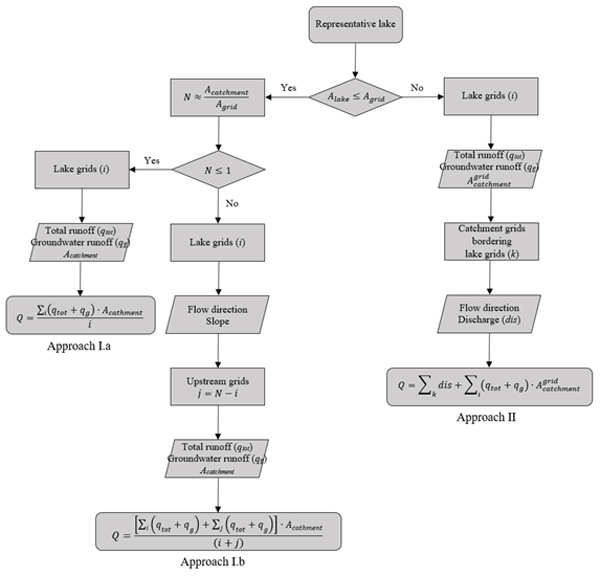
Climate change affect lakes by including not just the lakes themselves but also the land areas that drain into them. These surrounding areas influence how much water and nutrients flow into lakes which in turn impact water quality. Here, water fluxes from land, derived from a global hydrological model where water fluxes are modelled at the grid scale, were used to estimate streamflow inputs to lakes from their catchments. Using data from 70 Swedish lakes, we showed that our method works well.
Jade Skye, Joe R. Melton, Colin Goldblatt, Louis Saumier, Angela Gallego-Sala, Michelle Garneau, R. Scott Winton, Erick B. Bahati, Juan C. Benavides, Lee Fedorchuk, Gérard Imani, Carol Kagaba Kairumba, Frank Kansiime, Mariusz Lamentowicz, Michel Mbasi, Daria Wochal, Sambor Czerwiński, Jacek Landowski, Joanna Landowska, Vincent Maire, Minna M. Väliranta, Matthew Warren, Lydia E. S. Cole, Marissa A. Davies, Erik A. Lilleskov, Jingjing Sun, and Yuwan Wang
Earth Syst. Sci. Data, 17, 7313–7330, https://doi.org/10.5194/essd-17-7313-2025, https://doi.org/10.5194/essd-17-7313-2025, 2025
Short summary
Short summary
Peatlands are large stores of carbon but are vulnerable to human activities and climate change. Comprehensive peatland data are vital to understand these ecosystems, but existing datasets are fragmented and contain errors. To address this, we created Peat-DBase – a standardized global database of peat depth measurements with > 200 000 measurements worldwide, showing median depths of 130 cm. Peat-DBase avoids overlapping data compilation efforts while identifying critical observational gaps.
Catherine C. Ivanovich, Adam H. Sobel, Radley M. Horton, Ana M. B. Nunes, Rosmeri Porfírio da Rocha, and Suzana J. Camargo
Weather Clim. Dynam., 6, 1857–1874, https://doi.org/10.5194/wcd-6-1857-2025, https://doi.org/10.5194/wcd-6-1857-2025, 2025
Short summary
Short summary
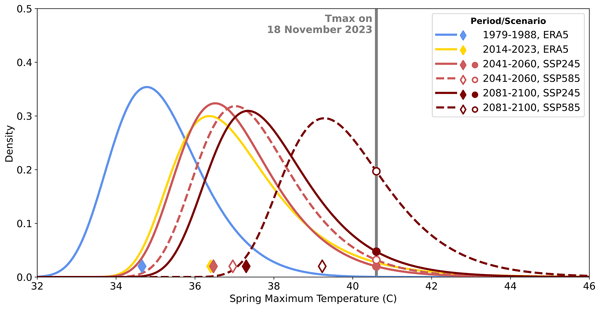
Here we identify the drivers of Rio de Janeiro’s record-breaking November 2023 heatwave. We find that springtime extreme heat in the city is becoming more frequent and heat events of the magnitude experienced in November 2023 may become significantly more likely with continued climate change. These results characterizing the evolving risk for extreme heat in Rio de Janeiro are essential for the city’s development of targeted hazard management plans.
Blessing Kavhu, Matthew Forrest, and Thomas Hickler
Biogeosciences, 22, 7001–7030, https://doi.org/10.5194/bg-22-7001-2025, https://doi.org/10.5194/bg-22-7001-2025, 2025
Short summary
Short summary
We developed a statistical model to predict global wildfire patterns based on a parsimonious set of weather, vegetation, and anthropogenic variables. This model is designed within a DGVM (Dynamic Global Vegetation Model)-compatible framework and helps to forecast seasonal fire patterns across diverse regions. It's simplicity makes it valuable for climate and fire management planning, helping communities better prepare for and adapt to rising wildfire threats.
Tim H. J. Hermans, Chiheb Ben Hammouda, Simon Treu, Timothy Tiggeloven, Anaïs Couasnon, Julius J. M. Busecke, and Roderik S. W. van de Wal
Nat. Hazards Earth Syst. Sci., 25, 4593–4612, https://doi.org/10.5194/nhess-25-4593-2025, https://doi.org/10.5194/nhess-25-4593-2025, 2025
Short summary
Short summary
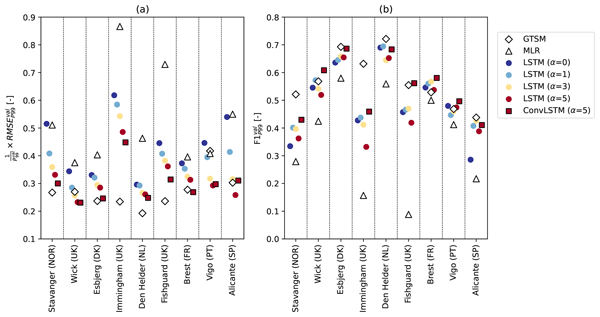
We studied the performance of different types of neural networks at predicting extreme storm surges. We found that that performance improves when during model training, storm surges that are rarer are given a higher weight than moderate storm surges. Additionally, we found that the performance of some of the neural networks approaches that of a state-of-the-art hydrodynamic model. This is promising for the future application of neural networks to climate model simulations.
Joshua Coupe, Nicole S. Lovenduski, Luise S. Gleason, Michael N. Levy, Kristen Krumhardt, Keith Lindsay, Charles Bardeen, Clay Tabor, Cheryl Harrison, Kenneth G. MacLeod, Siddhartha Mitra, and Julio Sepúlveda
Geosci. Model Dev., 18, 8217–8234, https://doi.org/10.5194/gmd-18-8217-2025, https://doi.org/10.5194/gmd-18-8217-2025, 2025
Short summary
Short summary
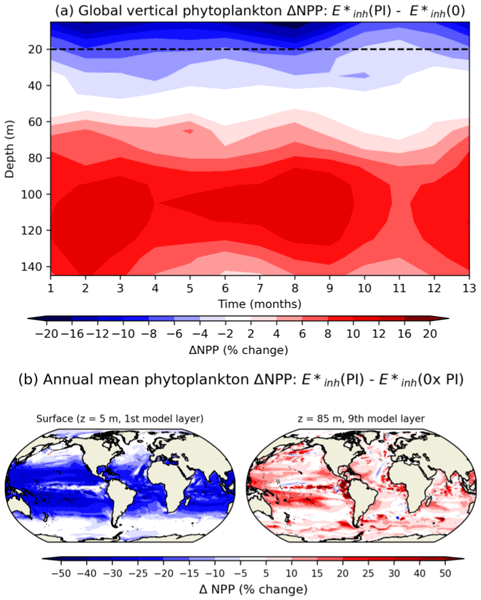
We have developed a new feature in the atmosphere and ocean components of the Community Earth System Model version 2 by implementing ultraviolet (UV) radiation inhibition of photosynthesis of four marine phytoplankton functional groups represented in the Marine Biogeochemistry Library. The new feature is tested with varying levels of UV radiation, and it will enable an analysis of an asteroid impact’s effect on the ozone layer and how that affects the base of the marine food web.
Xinrui Liu, Thomas Gasser, Jianmin Ma, Junfeng Liu, Jonas Jägermeyr, Christoph Müller, Christian Folberth, Florian Zabel, Atul Jain, Wenfeng Liu, and Heidi Webber
EGUsphere, https://doi.org/10.5194/egusphere-2025-4805, https://doi.org/10.5194/egusphere-2025-4805, 2025
Short summary
Short summary
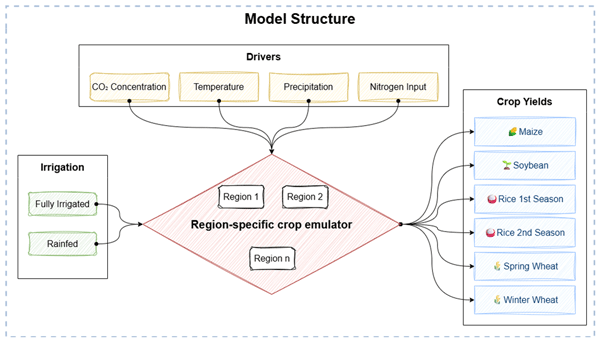
This paper presents a crop yield emulator for four major crops (maize, rice, soybean, and wheat). Trained on process-based crop model simulations, it captures yield responses to key drivers: atmospheric CO2, temperature, water availability, and nitrogen use. The emulator closely reproduces the behavior of complex crop models and aligns well with FAO-reported historical yields. It provides a robust and efficient method for representing agricultural outcomes in climate change impact assessments.
Ni Li, Wim Thiery, Shorouq Zahra, Mariana Madruga de Brito, Koffi Worou, Murathan Kurfalı, Seppe Lampe, Paul Muñoz, Clare Flynn, Camila Trigoso, Joakim Nivre, Jakob Zscheischler, and Gabriele Messori
EGUsphere, https://doi.org/10.5194/egusphere-2025-4891, https://doi.org/10.5194/egusphere-2025-4891, 2025
Short summary
Short summary
Climate extremes threaten society and ecosystems. Understanding impacts is critical, despite open databases like EM-DAT and DesInventar, reliable impact data remain scattered across various text sources. Wikimpacts 1.0, using GPT4o, provides comprehensive socio-economic impact data on 2,928 events from 1034 to 2024. It offers broader storm coverage and finer spatial resolution impact data than EM-DAT, showcasing the potential of natural language processing to enhance climate impact datasets.
Manon Maisonnier, Maoyuan Feng, David Bastviken, Sandra Arndt, Ronny Lauerwald, Aidin Jabbari, Goulven Gildas Laruelle, Murray D. MacKay, Zeli Tan, Wim Thiery, and Pierre Regnier
Earth Syst. Dynam., 16, 1779–1808, https://doi.org/10.5194/esd-16-1779-2025, https://doi.org/10.5194/esd-16-1779-2025, 2025
Short summary
Short summary
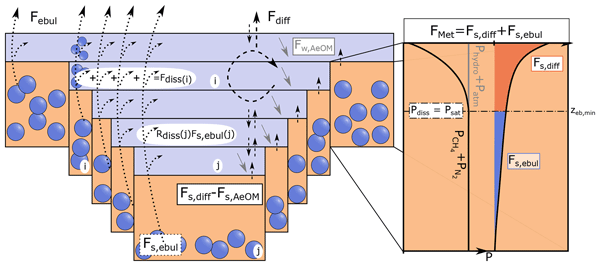
A new process-based modelling framework, FLaMe-v1.0 (Fluxes of Lake Methane version 1.0), is developed to simulate methane (CH4) emissions from lakes at large scales. FLaMe couples the dynamics of organic carbon, oxygen and methane in lakes and rests on an innovative, computationally efficient lake clustering approach for the simulation of CH4 emissions across a large number of lakes. The model evaluation suggests that FLaMe captures the sub-annual and spatial variability of CH4 emissions well.
Douglas I. Kelley, Chantelle Burton, Francesca Di Giuseppe, Matthew W. Jones, Maria L. F. Barbosa, Esther Brambleby, Joe R. McNorton, Zhongwei Liu, Anna S. I. Bradley, Katie Blackford, Eleanor Burke, Andrew Ciavarella, Enza Di Tomaso, Jonathan Eden, Igor José M. Ferreira, Lukas Fiedler, Andrew J. Hartley, Theodore R. Keeping, Seppe Lampe, Anna Lombardi, Guilherme Mataveli, Yuquan Qu, Patrícia S. Silva, Fiona R. Spuler, Carmen B. Steinmann, Miguel Ángel Torres-Vázquez, Renata Veiga, Dave van Wees, Jakob B. Wessel, Emily Wright, Bibiana Bilbao, Mathieu Bourbonnais, Cong Gao, Carlos M. Di Bella, Kebonye Dintwe, Victoria M. Donovan, Sarah Harris, Elena A. Kukavskaya, Aya Brigitte N'Dri, Cristina Santín, Galia Selaya, Johan Sjöström, John T. Abatzoglou, Niels Andela, Rachel Carmenta, Emilio Chuvieco, Louis Giglio, Douglas S. Hamilton, Stijn Hantson, Sarah Meier, Mark Parrington, Mojtaba Sadegh, Jesus San-Miguel-Ayanz, Fernando Sedano, Marco Turco, Guido R. van der Werf, Sander Veraverbeke, Liana O. Anderson, Hamish Clarke, Paulo M. Fernandes, and Crystal A. Kolden
Earth Syst. Sci. Data, 17, 5377–5488, https://doi.org/10.5194/essd-17-5377-2025, https://doi.org/10.5194/essd-17-5377-2025, 2025
Short summary
Short summary
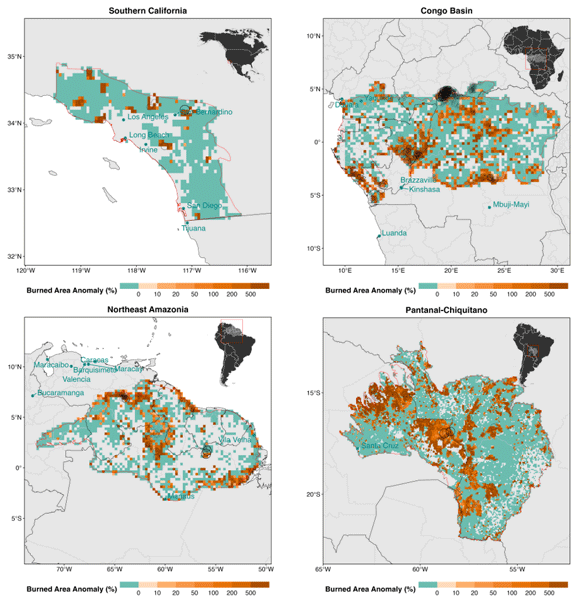
The second State of Wildfires report examines extreme wildfire events from 2024 to early 2025. It analyses key regional events in Southern California, Northeast Amazonia, Pantanal–Chiquitano, and the Congo Basin, assessing their drivers and predictability and attributing them to climate change and land use. Seasonal outlooks and decadal projections are provided. Climate change greatly increased the likelihood of these fires, and without strong mitigation, such events will become more frequent.
Colin Jones, Isaline Bossert, Donovan P. Dennis, Hazel Jeffery, Chris D. Jones, Torben Koenigk, Sina Loriani, Benjamin Sanderson, Roland Séférian, Klaus Wyser, Shuting Yang, Manabu Abe, Sebastian Bathiany, Pascale Braconnot, Victor Brovkin, Friedrich A. Burger, Patrica Cadule, Frederic S. Castruccio, Gokhan Danabasoglu, Andrea Dittus, Jonathan F. Donges, Friederike Fröb, Thomas Frölicher, Goran Georgievski, Chuncheng Guo, Aixue Hu, Peter Lawrence, Paul Lerner, José Licón-Saláiz, Bette Otto-Bliesner, Anastasia Romanou, Elena Shevliakova, Yona Silvy, Didier Swingedouw, Jerry Tjiputra, Jeremy Walton, Andy Wiltshire, Ricarda Winkelmann, Richard Wood, Tokuta Yokohata, and Tilo Ziehn
EGUsphere, https://doi.org/10.5194/egusphere-2025-3604, https://doi.org/10.5194/egusphere-2025-3604, 2025
Short summary
Short summary
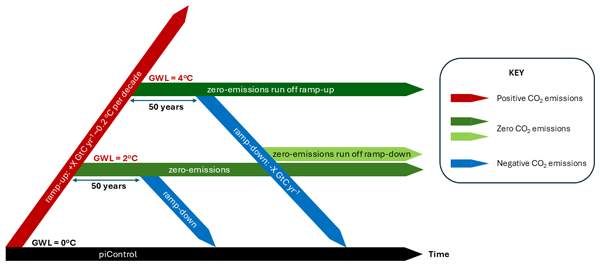
We introduce a new Earth system model experiment protocol to help researchers understand how Earth might respond to positive, zero, and negative carbon emissions. This protocol enables different models to be compared following similar warming and cooling rates. Researchers use the models to explore how the Earth reacts to different climate futures, including the risk of tipping points being exceeded and whether changes can be reversed. The results will support improved long-term climate policy.
Renata Moura da Veiga, Celso von Randow, Chantelle Burton, Douglas I. Kelley, Manoel Cardoso, and Fabiano Morelli
Nat. Hazards Earth Syst. Sci., 25, 3581–3601, https://doi.org/10.5194/nhess-25-3581-2025, https://doi.org/10.5194/nhess-25-3581-2025, 2025
Short summary
Short summary
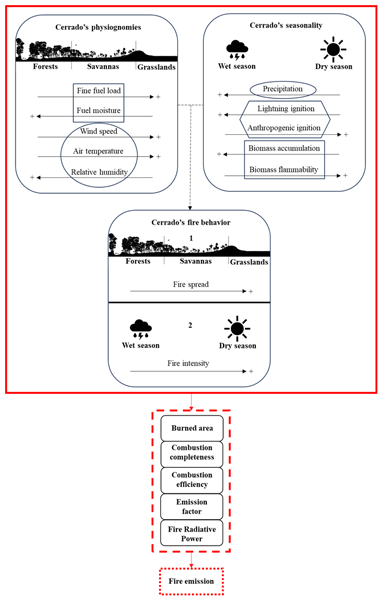
We systematically reviewed 77 papers to understand the Cerrado’s fire emissions within the global carbon budget by evaluating how fire parameters can inform emission estimates and mitigation strategies. Estimating fire emissions in the Cerrado requires a holistic approach, combining fire carbon emission estimates, fire dynamic parameters, and fire management and policy. We highlight key research gaps that could provide more comprehensive insights into accounting for fire emissions in the Cerrado.
Vishal Thakur, Yannis Markonis, Rohini Kumar, Johanna Ruth Thomson, Mijael Rodrigo Vargas Godoy, Martin Hanel, and Oldrich Rakovec
Hydrol. Earth Syst. Sci., 29, 4395–4416, https://doi.org/10.5194/hess-29-4395-2025, https://doi.org/10.5194/hess-29-4395-2025, 2025
Short summary
Short summary
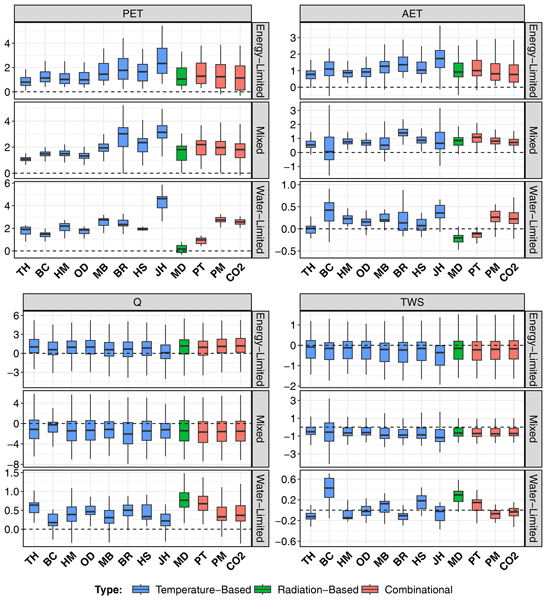
Understanding the changes in water movement in earth is crucial for everyone. To quantify this water movement there are several techniques. We examined how different methods of estimating evaporation impact predictions of various types of water movement across Europe. We found that, while these methods generally agree on whether changes are increasing or decreasing, they differ in magnitude. This means selecting the right evaporation method is crucial for accurate predictions of water movement.
Anastasios Rovithakis, Eleanor Burke, Chantelle Burton, Matthew Kasoar, Manolis G. Grillakis, Konstantinos D. Seiradakis, and Apostolos Voulgarakis
Nat. Hazards Earth Syst. Sci., 25, 3185–3200, https://doi.org/10.5194/nhess-25-3185-2025, https://doi.org/10.5194/nhess-25-3185-2025, 2025
Short summary
Short summary
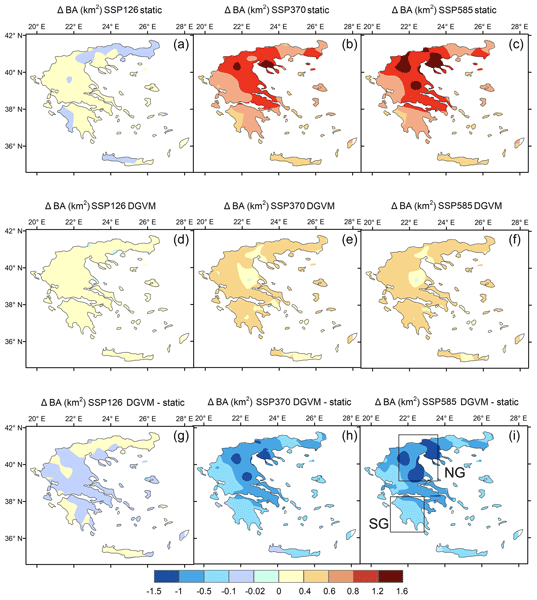
We used a land surface computer model to forecast how climate change will impact wildfires in Greece. Our results show a significant increase in future burnt area due to hotter, drier climate. Allowing vegetation to change with the climate lessens this increase overall, since fire is no longer igniting in areas already burnt, and it even led to projected decreases in the agricultural areas in the north of the country.
Tereza Jarníková, Colin Jones, Steven Rumbold, and Corinne Le Quéré
EGUsphere, https://doi.org/10.5194/egusphere-2025-3374, https://doi.org/10.5194/egusphere-2025-3374, 2025
Short summary
Short summary
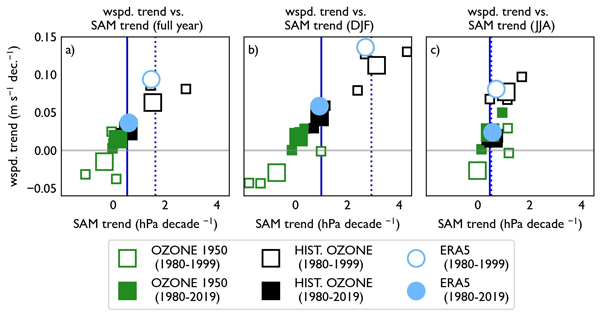
Southern Ocean winds drive global climate and have strengthened since 1980 due to Antarctic ozone depletion. We assessed which climate reconstructions best capture these changes using sea level pressure observations. We then used an Earth system model to attribute these changes between ozone and greenhouse gas emissions. Ozone depletion dominated past wind acceleration, but greenhouse gases will drive future changes after 2050.
Kerry Emanuel, Tommaso Alberti, Stella Bourdin, Suzana J. Camargo, Davide Faranda, Emmanouil Flaounas, Juan Jesus Gonzalez-Aleman, Chia-Ying Lee, Mario Marcello Miglietta, Claudia Pasquero, Alice Portal, Hamish Ramsay, Marco Reale, and Romualdo Romero
Weather Clim. Dynam., 6, 901–926, https://doi.org/10.5194/wcd-6-901-2025, https://doi.org/10.5194/wcd-6-901-2025, 2025
Short summary
Short summary
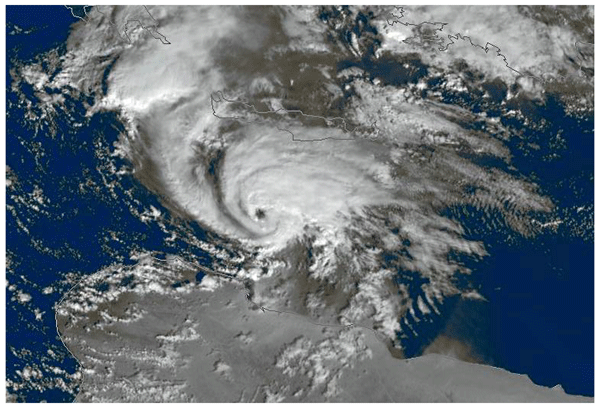
Storms strongly resembling hurricanes are sometimes observed to form well outside the tropics, even in polar latitudes. They behave capriciously, developing very rapidly and then dying just as quickly. We show that strong dynamical processes in the atmosphere can sometimes cause it to become much colder locally than the underlying ocean, creating the conditions for hurricanes to form but only over small areas and for short times. We call the resulting storms "CYCLOPs".
Kai Schröter, Pia-Johanna Schweizer, Benedikt Gräler, Lydia Cumiskey, Sukaina Bharwani, Janne Parviainen, Chahan M. Kropf, Viktor Wattin Håkansson, Martin Drews, Tracy Irvine, Clarissa Dondi, Heiko Apel, Jana Löhrlein, Stefan Hochrainer-Stigler, Stefano Bagli, Levente Huszti, Christopher Genillard, Silvia Unguendoli, Fred Hattermann, and Max Steinhausen
Nat. Hazards Earth Syst. Sci., 25, 3055–3073, https://doi.org/10.5194/nhess-25-3055-2025, https://doi.org/10.5194/nhess-25-3055-2025, 2025
Short summary
Short summary
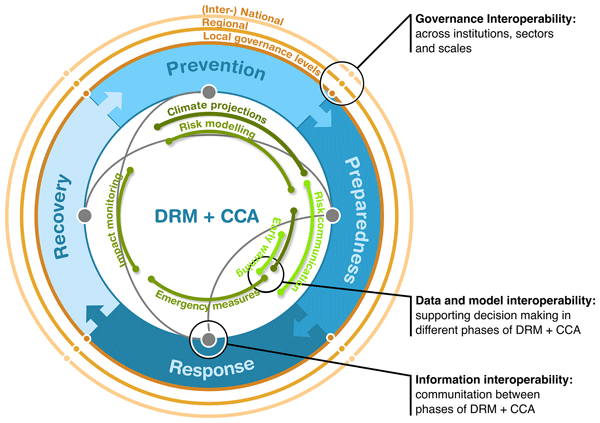
With the increasing negative impacts of extreme weather events globally, it is crucial to align efforts to manage disasters with measures to adapt to climate change. We identify challenges in systems and organizations working together. We suggest that collaboration across various fields is essential and propose an approach to improve collaboration, including a framework for better stakeholder engagement and an open-source data system that helps gather and connect important information.
Emmanuel Nyenah, Petra Döll, Martina Flörke, Leon Mühlenbruch, Lasse Nissen, and Robert Reinecke
Geosci. Model Dev., 18, 5635–5653, https://doi.org/10.5194/gmd-18-5635-2025, https://doi.org/10.5194/gmd-18-5635-2025, 2025
Short summary
Short summary
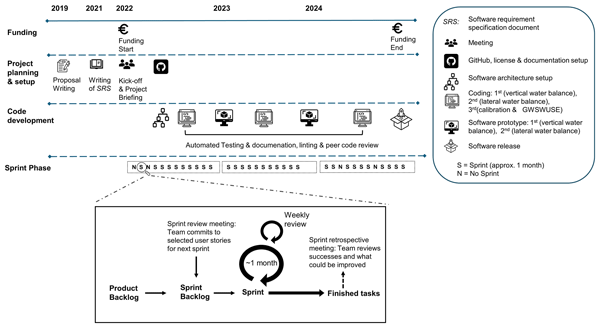
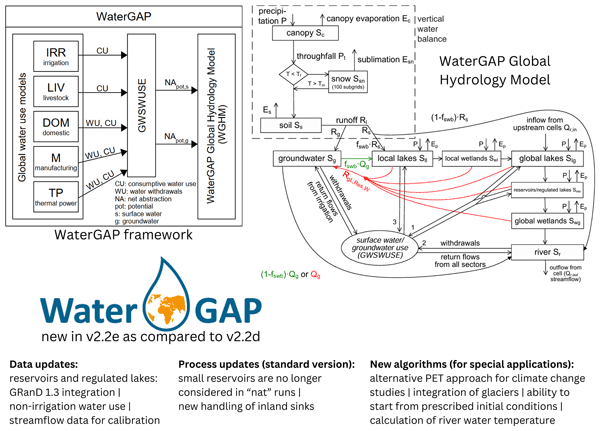
We reprogrammed the latest WaterGAP model (2.2e) to create a sustainable global hydrological model. By utilizing best software practices like modular design, version control, and clear documentation, the new WaterGAP supports collaboration across teams. It can be easily understood, applied, and enhanced by both novice and experienced modellers. Additionally, we share the reprogramming process to assist in the reprogramming of other large geoscientific research software.
Sophie L. Buijs, Inga J. Sauer, Chahan M. Kropf, Samuel Juhel, Zélie Stalhandske, and Marleen C. De Ruiter
EGUsphere, https://doi.org/10.5194/egusphere-2025-3200, https://doi.org/10.5194/egusphere-2025-3200, 2025
Short summary
Short summary
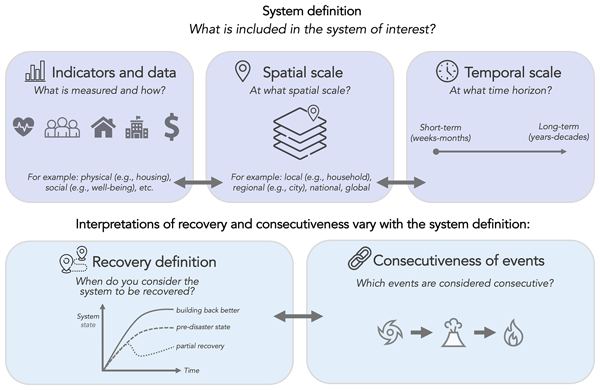
We studied how repeated disasters affect recovery across housing, health, economic systems, and governance. Our findings show that failing to recover fully between events can increase long-term risks but also offers opportunities for learning and adaptation. Understanding these dynamics can help societies plan better, reduce vulnerability, and build resilience to increasingly frequent and severe hazards.
Jan Řehoř, Rudolf Brázdil, Oldřich Rakovec, Martin Hanel, Milan Fischer, Rohini Kumar, Jan Balek, Markéta Poděbradská, Vojtěch Moravec, Luis Samaniego, Yannis Markonis, and Miroslav Trnka
Hydrol. Earth Syst. Sci., 29, 3341–3358, https://doi.org/10.5194/hess-29-3341-2025, https://doi.org/10.5194/hess-29-3341-2025, 2025
Short summary
Short summary
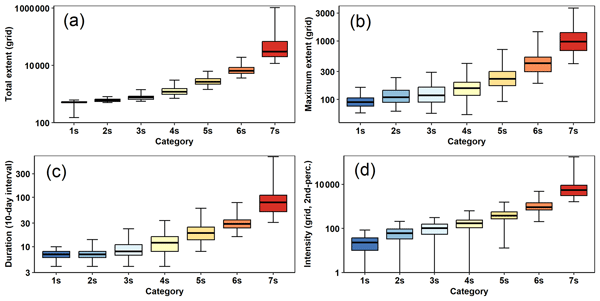
We present a robust method for identification and classification of global land drought events (GLDEs) based on soil moisture. Two models were used to calculate soil moisture and delimit soil drought over global land from 1980–2022, with clusters of 775 and 630 GLDEs. Using four spatiotemporal and three motion-related characteristics, we categorized GLDEs into seven severity and seven dynamic categories. The frequency of GLDEs has generally increased in recent decades.
Shulei Zhang, Hongbin Liang, Fang Li, Xingjie Lu, and Yongjiu Dai
Hydrol. Earth Syst. Sci., 29, 3119–3143, https://doi.org/10.5194/hess-29-3119-2025, https://doi.org/10.5194/hess-29-3119-2025, 2025
Short summary
Short summary
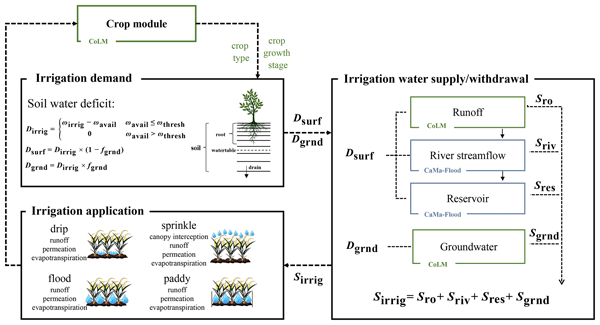
This study enhances irrigation modeling in the Common Land Model by capturing the full irrigation process, detailing water supplies from various sources, and enabling bidirectional coupling between water demand and supply. The proposed model accurately simulates irrigation water withdrawals, energy fluxes, river flow, and crop yields. It offers insights into irrigation-related climate impacts and water scarcity, contributing to sustainable water management and improved Earth system modeling.
Carolina Natel, David Martín Belda, Peter Anthoni, Neele Haß, Sam Rabin, and Almut Arneth
Geosci. Model Dev., 18, 4317–4333, https://doi.org/10.5194/gmd-18-4317-2025, https://doi.org/10.5194/gmd-18-4317-2025, 2025
Short summary
Short summary
We developed fast machine learning models to predict forest regrowth and carbon dynamics under climate change. These models mimic the outputs of a complex vegetation model but run 95 % faster, enabling global analyses and supporting climate solutions in large modeling frameworks such as LandSyMM.
Samantha Siedlecki, Stanley Nmor, Gennadi Lessin, Kelly Kearney, Subhadeep Rakshit, Colleen Petrik, Jessica Luo, Cristina Schultz, Dalton Sasaki, Kayla Gillen, Anh Pham, Christopher Somes, Damian Brady, Jeremy Testa, Christophe Rabouille, Isa Elegbede, and Olivier Sulpis
EGUsphere, https://doi.org/10.5194/egusphere-2025-1846, https://doi.org/10.5194/egusphere-2025-1846, 2025
Preprint archived
Short summary
Short summary
Benthic biogeochemical models are essential for simulating seafloor carbon cycling and climate feedbacks, yet vary widely in structure and assumptions. This paper introduces SedBGC_MIP, a community initiative to compare existing models, refine key processes, and assess uncertainty. We highlight discrepancies through case studies and introduce needs including observational benchmarks. Ultimately, we seek to improve climate and resource projections.
Pia Ebeling, Andreas Musolff, Rohini Kumar, Andreas Hartmann, and Jan H. Fleckenstein
Hydrol. Earth Syst. Sci., 29, 2925–2950, https://doi.org/10.5194/hess-29-2925-2025, https://doi.org/10.5194/hess-29-2925-2025, 2025
Short summary
Short summary
Groundwater is a crucial resource at risk due to droughts. To understand drought effects on groundwater levels in Germany, we grouped 6626 wells into six regional and two national patterns. Weather explained half of the level variations with varied response times. Shallow groundwater responds fast and is more vulnerable to short droughts (a few months). Dampened deep heads buffer short droughts but suffer from long droughts and recoveries. Two nationwide trend patterns were linked to human water use.
Joao C. M. Teixeira, Chantelle Burton, Douglas I. Kelley, Gerd A. Folberth, Fiona M. O'Connor, Richard A. Betts, and Apostolos Voulgarakis
EGUsphere, https://doi.org/10.5194/egusphere-2025-3066, https://doi.org/10.5194/egusphere-2025-3066, 2025
Short summary
Short summary
Burnt areas produced by wildfires around the world are decreasing, especially in tropical regions, but many climate models fail to show this trend. Our study looks at whether adding a measure of human development to a fire model could improve its representation of these processes. We found that including these factors helped the model better match observations in many regions. This shows that human activity plays a key role in shaping fire trends.
Santiago Botía, Saqr Munassar, Thomas Koch, Danilo Custodio, Luana S. Basso, Shujiro Komiya, Jost V. Lavric, David Walter, Manuel Gloor, Giordane Martins, Stijn Naus, Gerbrand Koren, Ingrid T. Luijkx, Stijn Hantson, John B. Miller, Wouter Peters, Christian Rödenbeck, and Christoph Gerbig
Atmos. Chem. Phys., 25, 6219–6255, https://doi.org/10.5194/acp-25-6219-2025, https://doi.org/10.5194/acp-25-6219-2025, 2025
Short summary
Short summary
This study uses dry CO2 mole fractions from the Amazon Tall Tower Observatory together with airborne profiles to estimate net carbon exchange in tropical South America. We found that the biogeographic Amazon is a net carbon sink, while the Cerrado and Caatinga biomes are net carbon sources, resulting in an overall neutral balance. Finally, to further reduce the uncertainty in our estimates we call for an expansion of the monitoring capacity, especially in the Amazon–Andes foothills.
Ricarda Winkelmann, Donovan P. Dennis, Jonathan F. Donges, Sina Loriani, Ann Kristin Klose, Jesse F. Abrams, Jorge Alvarez-Solas, Torsten Albrecht, David Armstrong McKay, Sebastian Bathiany, Javier Blasco Navarro, Victor Brovkin, Eleanor Burke, Gokhan Danabasoglu, Reik V. Donner, Markus Drüke, Goran Georgievski, Heiko Goelzer, Anna B. Harper, Gabriele Hegerl, Marina Hirota, Aixue Hu, Laura C. Jackson, Colin Jones, Hyungjun Kim, Torben Koenigk, Peter Lawrence, Timothy M. Lenton, Hannah Liddy, José Licón-Saláiz, Maxence Menthon, Marisa Montoya, Jan Nitzbon, Sophie Nowicki, Bette Otto-Bliesner, Francesco Pausata, Stefan Rahmstorf, Karoline Ramin, Alexander Robinson, Johan Rockström, Anastasia Romanou, Boris Sakschewski, Christina Schädel, Steven Sherwood, Robin S. Smith, Norman J. Steinert, Didier Swingedouw, Matteo Willeit, Wilbert Weijer, Richard Wood, Klaus Wyser, and Shuting Yang
EGUsphere, https://doi.org/10.5194/egusphere-2025-1899, https://doi.org/10.5194/egusphere-2025-1899, 2025
Short summary
Short summary
The Tipping Points Modelling Intercomparison Project (TIPMIP) is an international collaborative effort to systematically assess tipping point risks in the Earth system using state-of-the-art coupled and stand-alone domain models. TIPMIP will provide a first global atlas of potential tipping dynamics, respective critical thresholds and key uncertainties, generating an important building block towards a comprehensive scientific basis for policy- and decision-making.
Mateus Dantas de Paula, Tatiana Reichert, Laynara F. Lugli, Erica McGale, Kerstin Pierick, João Paulo Darela-Filho, Liam Langan, Jürgen Homeier, Anja Rammig, and Thomas Hickler
Biogeosciences, 22, 2707–2732, https://doi.org/10.5194/bg-22-2707-2025, https://doi.org/10.5194/bg-22-2707-2025, 2025
Short summary
Short summary
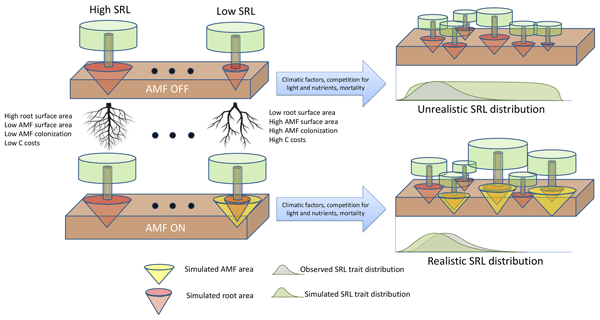
This study explores how plant roots with different forms and functions rely on fungal partnerships for nutrient uptake. This relationship was integrated into a vegetation model and was tested in a tropical forest in Ecuador. The model accurately predicted root traits and showed that without fungi, biomass decreased by up to 80 %. The findings highlight the critical role of fungi in ecosystem processes and suggest that root–fungal interactions should be considered in vegetation models.
Maria Lucia Ferreira Barbosa, Douglas I. Kelley, Chantelle A. Burton, Igor J. M. Ferreira, Renata Moura da Veiga, Anna Bradley, Paulo Guilherme Molin, and Liana O. Anderson
Geosci. Model Dev., 18, 3533–3557, https://doi.org/10.5194/gmd-18-3533-2025, https://doi.org/10.5194/gmd-18-3533-2025, 2025
Short summary
Short summary
As fire seasons in Brazil become increasingly severe, confidently understanding the factors driving fires is more critical than ever. To address this challenge, we developed FLAME (Fire Landscape Analysis using Maximum Entropy), a new model designed to predict fires and to analyse the spatial influence of both environmental and human factors while accounting for uncertainties. By adapting the model to different regions, we can enhance fire management strategies, making FLAME a powerful tool for protecting landscapes in Brazil and beyond.
Edna Johanna Molina Bacca, Miodrag Stevanović, Benjamin Leon Bodirsky, Jonathan Cornelis Doelman, Louise Parsons Chini, Jan Volkholz, Katja Frieler, Christopher Paul Oliver Reyer, George Hurtt, Florian Humpenöder, Kristine Karstens, Jens Heinke, Christoph Müller, Jan Philipp Dietrich, Hermann Lotze-Campen, Elke Stehfest, and Alexander Popp
Earth Syst. Dynam., 16, 753–801, https://doi.org/10.5194/esd-16-753-2025, https://doi.org/10.5194/esd-16-753-2025, 2025
Short summary
Short summary
Land-use change projections are vital for impact studies. This study compares updated land-use model projections, including CO2 fertilization among other upgrades, from the MAgPIE and IMAGE models under three scenarios, highlighting differences, uncertainty hotspots, and harmonization effects. Key findings include reduced bioenergy crop demand projections and differences in grassland area allocation and sizes, with socioeconomic–climate scenarios' largest effect on variance starting in 2030.
Friedrich J. Bohn, Ana Bastos, Romina Martin, Anja Rammig, Niak Sian Koh, Giles B. Sioen, Bram Buscher, Louise Carver, Fabrice DeClerck, Moritz Drupp, Robert Fletcher, Matthew Forrest, Alexandros Gasparatos, Alex Godoy-Faúndez, Gregor Hagedorn, Martin C. Hänsel, Jessica Hetzer, Thomas Hickler, Cornelia B. Krug, Stasja Koot, Xiuzhen Li, Amy Luers, Shelby Matevich, H. Damon Matthews, Ina C. Meier, Mirco Migliavacca, Awaz Mohamed, Sungmin O, David Obura, Ben Orlove, Rene Orth, Laura Pereira, Markus Reichstein, Lerato Thakholi, Peter H. Verburg, and Yuki Yoshida
Biogeosciences, 22, 2425–2460, https://doi.org/10.5194/bg-22-2425-2025, https://doi.org/10.5194/bg-22-2425-2025, 2025
Short summary
Short summary
An interdisciplinary collaboration of 36 international researchers from 35 institutions highlights recent findings in biosphere research. Within eight themes, they discuss issues arising from climate change and other anthropogenic stressors and highlight the co-benefits of nature-based solutions and ecosystem services. Based on an analysis of these eight topics, we have synthesized four overarching insights.
Suqi Guo, Felix Havermann, Steven J. De Hertog, Fei Luo, Iris Manola, Thomas Raddatz, Hongmei Li, Wim Thiery, Quentin Lejeune, Carl-Friedrich Schleussner, David Wårlind, Lars Nieradzik, and Julia Pongratz
Earth Syst. Dynam., 16, 631–666, https://doi.org/10.5194/esd-16-631-2025, https://doi.org/10.5194/esd-16-631-2025, 2025
Short summary
Short summary
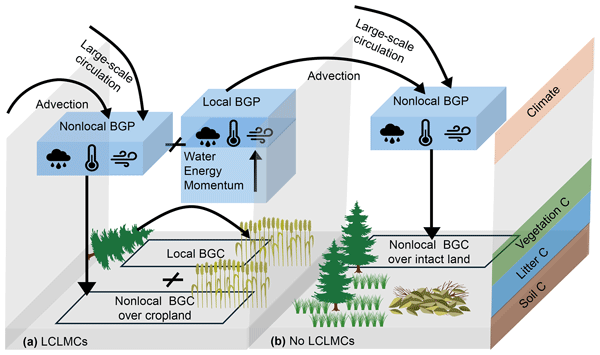
Land cover and land management changes (LCLMCs) can alter climate even in intact areas, causing carbon changes in remote areas. This study is the first to assess these effects, finding they substantially alter global carbon dynamics, changing terrestrial stocks by up to dozens of gigatonnes. These results are vital for scientific and policy assessments, given the expected role of LCLMCs in achieving the Paris Agreement's goal to limit global warming below 1.5 °C.
Hannes Müller Schmied, Simon Newland Gosling, Marlo Garnsworthy, Laura Müller, Camelia-Eliza Telteu, Atiq Kainan Ahmed, Lauren Seaby Andersen, Julien Boulange, Peter Burek, Jinfeng Chang, He Chen, Lukas Gudmundsson, Manolis Grillakis, Luca Guillaumot, Naota Hanasaki, Aristeidis Koutroulis, Rohini Kumar, Guoyong Leng, Junguo Liu, Xingcai Liu, Inga Menke, Vimal Mishra, Yadu Pokhrel, Oldrich Rakovec, Luis Samaniego, Yusuke Satoh, Harsh Lovekumar Shah, Mikhail Smilovic, Tobias Stacke, Edwin Sutanudjaja, Wim Thiery, Athanasios Tsilimigkras, Yoshihide Wada, Niko Wanders, and Tokuta Yokohata
Geosci. Model Dev., 18, 2409–2425, https://doi.org/10.5194/gmd-18-2409-2025, https://doi.org/10.5194/gmd-18-2409-2025, 2025
Short summary
Short summary
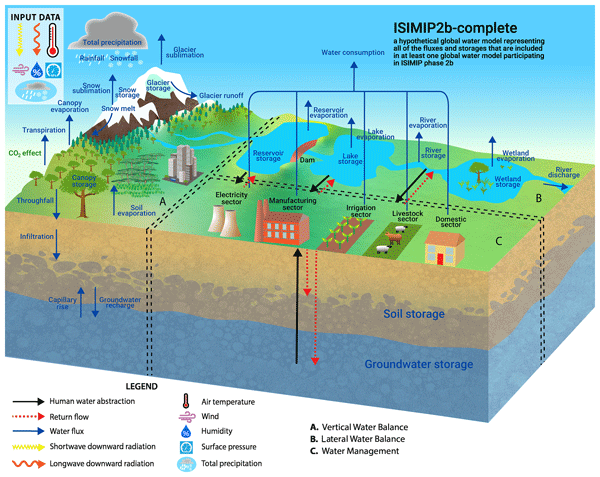
Global water models contribute to the evaluation of important natural and societal issues but are – as all models – simplified representation of reality. So, there are many ways to calculate the water fluxes and storages. This paper presents a visualization of 16 global water models using a standardized visualization and the pathway towards this common understanding. Next to academic education purposes, we envisage that these diagrams will help researchers, model developers, and data users.
Cristina Deidda, Arpita Khanna, Wolfgang Schade, and Wim Thiery
EGUsphere, https://doi.org/10.5194/egusphere-2025-1697, https://doi.org/10.5194/egusphere-2025-1697, 2025
Short summary
Short summary
Climate extremes like floods, heatwaves, droughts, and wildfires are disrupting Europe’s transport. This study combines a review of past events and future projections to assess current losses and the future exposure of transport infrastructure. Exposure to extremes is projected to rise, but lower emissions can reduce it. Urgent action is needed to adapt the Trans-European Transport Network to a changing climate.
Mateus Dantas de Paula, Matthew Forrest, David Warlind, João Paulo Darela Filho, Katrin Fleischer, Anja Rammig, and Thomas Hickler
Geosci. Model Dev., 18, 2249–2274, https://doi.org/10.5194/gmd-18-2249-2025, https://doi.org/10.5194/gmd-18-2249-2025, 2025
Short summary
Short summary
Our study maps global nitrogen (N) and phosphorus (P) availability and how they changed from 1901 to 2018. We find that tropical regions are mostly P-limited, while temperate and boreal areas face N limitations. Over time, P limitation increased, especially in the tropics, while N limitation decreased. These shifts are key to understanding global plant growth and carbon storage, highlighting the importance of including P dynamics in ecosystem models.
Luke Oberhagemann, Maik Billing, Werner von Bloh, Markus Drüke, Matthew Forrest, Simon P. K. Bowring, Jessica Hetzer, Jaime Ribalaygua Batalla, and Kirsten Thonicke
Geosci. Model Dev., 18, 2021–2050, https://doi.org/10.5194/gmd-18-2021-2025, https://doi.org/10.5194/gmd-18-2021-2025, 2025
Short summary
Short summary
Under climate change, the conditions necessary for wildfires to form are occurring more frequently in many parts of the world. To help predict how wildfires will change in future, global fire models are being developed. We analyze and further develop one such model, SPITFIRE. Our work identifies and corrects sources of substantial bias in the model that are important to the global fire modelling field. With this analysis and these developments, we help to provide a basis for future improvements.
Inika Taylor, Douglas I. Kelley, Camilla Mathison, Karina E. Williams, Andrew J. Hartley, Richard A. Betts, and Chantelle Burton
EGUsphere, https://doi.org/10.5194/egusphere-2025-720, https://doi.org/10.5194/egusphere-2025-720, 2025
Short summary
Short summary
Climate change is reshaping fire seasons worldwide and, in many places, increasing fire weather risk. We use climate model simulations to project future changes in fire danger at different levels of global warming, focusing on Australia, Brazil, and the USA. Keeping warming below 2 °C significantly limits the increase in fire risk, but even at 1.5 °C, fire seasons lengthen, with more extreme conditions. However, low-fire weather periods remain, offering critical windows for fire management.
Martin Thurner, Kailiang Yu, Stefano Manzoni, Anatoly Prokushkin, Melanie A. Thurner, Zhiqiang Wang, and Thomas Hickler
Biogeosciences, 22, 1475–1493, https://doi.org/10.5194/bg-22-1475-2025, https://doi.org/10.5194/bg-22-1475-2025, 2025
Short summary
Short summary
Nitrogen concentrations in tree tissues (leaves, branches, stems, and roots) are related to photosynthesis, growth, and respiration and thus to vegetation carbon uptake. Our novel database allows us to identify the controls of tree tissue nitrogen concentrations in boreal and temperate forests, such as tree age/size, species, and climate. Changes therein will affect tissue nitrogen concentrations and thus also vegetation carbon uptake.
Camilla Mathison, Eleanor J. Burke, Gregory Munday, Chris D. Jones, Chris J. Smith, Norman J. Steinert, Andy J. Wiltshire, Chris Huntingford, Eszter Kovacs, Laila K. Gohar, Rebecca M. Varney, and Douglas McNeall
Geosci. Model Dev., 18, 1785–1808, https://doi.org/10.5194/gmd-18-1785-2025, https://doi.org/10.5194/gmd-18-1785-2025, 2025
Short summary
Short summary
We present PRIME (Probabilistic Regional Impacts from Model patterns and Emissions), which is designed to take new emissions scenarios and rapidly provide regional impact information. PRIME allows large ensembles to be run on multi-centennial timescales, including the analysis of many important variables for impact assessments. Our evaluation shows that PRIME reproduces the climate response for known scenarios, providing confidence in using PRIME for novel scenarios.
Masooma Batool, Fanny J. Sarrazin, and Rohini Kumar
Earth Syst. Sci. Data, 17, 881–916, https://doi.org/10.5194/essd-17-881-2025, https://doi.org/10.5194/essd-17-881-2025, 2025
Short summary
Short summary
Our paper presents a reconstruction and analysis of the gridded P surplus in European landscapes from 1850 to 2019 at a 5 arcmin resolution. By utilizing 48 different estimates, we account for uncertainties in major components of the P surplus. Our findings highlight substantial historical changes, with the total P surplus in the EU 27 tripling over 170 years. Our dataset enables flexible aggregation at various spatial scales, providing critical insights for land and water management strategies.
Johannes Feldbauer, Jorrit P. Mesman, Tobias K. Andersen, and Robert Ladwig
Hydrol. Earth Syst. Sci., 29, 1183–1199, https://doi.org/10.5194/hess-29-1183-2025, https://doi.org/10.5194/hess-29-1183-2025, 2025
Short summary
Short summary
Models help to understand natural systems and are used to predict changes based on scenarios (e.g., climate change). To simulate water temperature and deduce impacts on water quality in lakes, 1D lake models are often used. There are several such models that differ regarding their assumptions and mathematical process description. This study examines the performance of four such models on a global dataset of 73 lakes and relates their performance to the model structure and lake characteristics.
Kangari Narender Reddy, Somnath Baidya Roy, Sam S. Rabin, Danica L. Lombardozzi, Gudimetla Venkateswara Varma, Ruchira Biswas, and Devavat Chiru Naik
Geosci. Model Dev., 18, 763–785, https://doi.org/10.5194/gmd-18-763-2025, https://doi.org/10.5194/gmd-18-763-2025, 2025
Short summary
Short summary
The study aimed to improve the representation of wheat and rice in a land model for the Indian region. The modified model performed significantly better than the default model in simulating crop phenology, yield, and carbon, water, and energy fluxes compared to observations. The study highlights the need for global land models to use region-specific crop parameters for accurately simulating vegetation processes and land surface processes.
Aloïs Tilloy, Dominik Paprotny, Stefania Grimaldi, Goncalo Gomes, Alessandra Bianchi, Stefan Lange, Hylke Beck, Cinzia Mazzetti, and Luc Feyen
Earth Syst. Sci. Data, 17, 293–316, https://doi.org/10.5194/essd-17-293-2025, https://doi.org/10.5194/essd-17-293-2025, 2025
Short summary
Short summary
This article presents a reanalysis of Europe's river streamflow for the period 1951–2020. Streamflow is estimated through a state-of-the-art hydrological simulation framework benefitting from detailed information about the landscape, climate, and human activities. The resulting Hydrological European ReAnalysis (HERA) can be a valuable tool for studying hydrological dynamics, including the impacts of climate change and human activities on European water resources and flood and drought risks.
Tuula Aalto, Aki Tsuruta, Jarmo Mäkelä, Jurek Müller, Maria Tenkanen, Eleanor Burke, Sarah Chadburn, Yao Gao, Vilma Mannisenaho, Thomas Kleinen, Hanna Lee, Antti Leppänen, Tiina Markkanen, Stefano Materia, Paul A. Miller, Daniele Peano, Olli Peltola, Benjamin Poulter, Maarit Raivonen, Marielle Saunois, David Wårlind, and Sönke Zaehle
Biogeosciences, 22, 323–340, https://doi.org/10.5194/bg-22-323-2025, https://doi.org/10.5194/bg-22-323-2025, 2025
Short summary
Short summary
Wetland methane responses to temperature and precipitation were studied in a boreal wetland-rich region in northern Europe using ecosystem models, atmospheric inversions, and upscaled flux observations. The ecosystem models differed in their responses to temperature and precipitation and in their seasonality. However, multi-model means, inversions, and upscaled fluxes had similar seasonality, and they suggested co-limitation by temperature and precipitation.
Bijan Fallah, Masoud Rostami, Emmanuele Russo, Paula Harder, Christoph Menz, Peter Hoffmann, Iulii Didovets, and Fred F. Hattermann
Geosci. Model Dev., 18, 161–180, https://doi.org/10.5194/gmd-18-161-2025, https://doi.org/10.5194/gmd-18-161-2025, 2025
Short summary
Short summary
We tried to contribute to a local climate change impact study in central Asia, a region that is water-scarce and vulnerable to global climate change. We use regional models and machine learning to produce reliable local data from global climate models. We find that regional models show more realistic and detailed changes in heavy precipitation than global climate models. Our work can help assess the future risks of extreme events and plan adaptation strategies in central Asia.
Ryan Vella, Matthew Forrest, Andrea Pozzer, Alexandra P. Tsimpidi, Thomas Hickler, Jos Lelieveld, and Holger Tost
Atmos. Chem. Phys., 25, 243–262, https://doi.org/10.5194/acp-25-243-2025, https://doi.org/10.5194/acp-25-243-2025, 2025
Short summary
Short summary
This study examines how land cover changes influence biogenic volatile organic compound (BVOC) emissions and atmospheric states. Using a coupled chemistry–climate–vegetation model, we compare present-day land cover (deforested for crops and grazing) with natural vegetation and an extreme reforestation scenario. We find that vegetation changes significantly impact global BVOC emissions and organic aerosols but have a relatively small effect on total aerosols, clouds, and radiative effects.
Laia Estrada, Xavier Garcia, Joan Saló-Grau, Rafael Marcé, Antoni Munné, and Vicenç Acuña
Hydrol. Earth Syst. Sci., 28, 5353–5373, https://doi.org/10.5194/hess-28-5353-2024, https://doi.org/10.5194/hess-28-5353-2024, 2024
Short summary
Short summary
Hydrological modelling is a powerful tool to support decision-making. We assessed spatio-temporal patterns and trends of streamflow for 2001–2022 with a hydrological model, integrating stakeholder expert knowledge on management operations. The results provide insight into how climate change and anthropogenic pressures affect water resources availability in regions vulnerable to water scarcity, thus raising the need for sustainable management practices and integrated hydrological modelling.
Eshrat Fatima, Rohini Kumar, Sabine Attinger, Maren Kaluza, Oldrich Rakovec, Corinna Rebmann, Rafael Rosolem, Sascha E. Oswald, Luis Samaniego, Steffen Zacharias, and Martin Schrön
Hydrol. Earth Syst. Sci., 28, 5419–5441, https://doi.org/10.5194/hess-28-5419-2024, https://doi.org/10.5194/hess-28-5419-2024, 2024
Short summary
Short summary
This study establishes a framework to incorporate cosmic-ray neutron measurements into the mesoscale Hydrological Model (mHM). We evaluate different approaches to estimate neutron counts within the mHM using the Desilets equation, with uniformly and non-uniformly weighted average soil moisture, and the physically based code COSMIC. The data improved not only soil moisture simulations but also the parameterisation of evapotranspiration in the model.
Matthew Forrest, Jessica Hetzer, Maik Billing, Simon P. K. Bowring, Eric Kosczor, Luke Oberhagemann, Oliver Perkins, Dan Warren, Fátima Arrogante-Funes, Kirsten Thonicke, and Thomas Hickler
Biogeosciences, 21, 5539–5560, https://doi.org/10.5194/bg-21-5539-2024, https://doi.org/10.5194/bg-21-5539-2024, 2024
Short summary
Short summary
Climate change is causing an increase in extreme wildfires in Europe, but drivers of fire are not well understood, especially across different land cover types. We used statistical models with satellite data, climate data, and socioeconomic data to determine what affects burning in cropland and non-cropland areas of Europe. We found different drivers of burning in cropland burning vs. non-cropland to the point that some variables, e.g. population density, had the complete opposite effects.
Hannes Müller Schmied, Tim Trautmann, Sebastian Ackermann, Denise Cáceres, Martina Flörke, Helena Gerdener, Ellen Kynast, Thedini Asali Peiris, Leonie Schiebener, Maike Schumacher, and Petra Döll
Geosci. Model Dev., 17, 8817–8852, https://doi.org/10.5194/gmd-17-8817-2024, https://doi.org/10.5194/gmd-17-8817-2024, 2024
Short summary
Short summary
Assessing water availability and water use at the global scale is challenging but essential for a range of purposes. We describe the newest version of the global hydrological model WaterGAP, which has been used for numerous water resource assessments since 1996. We show the effects of new model features, as well as model evaluations, against water abstraction statistics and observed streamflow and water storage anomalies. The publicly available model output for several variants is described.
Fang Li, Xiang Song, Sandy P. Harrison, Jennifer R. Marlon, Zhongda Lin, L. Ruby Leung, Jörg Schwinger, Virginie Marécal, Shiyu Wang, Daniel S. Ward, Xiao Dong, Hanna Lee, Lars Nieradzik, Sam S. Rabin, and Roland Séférian
Geosci. Model Dev., 17, 8751–8771, https://doi.org/10.5194/gmd-17-8751-2024, https://doi.org/10.5194/gmd-17-8751-2024, 2024
Short summary
Short summary
This study provides the first comprehensive assessment of historical fire simulations from 19 Earth system models in phase 6 of the Coupled Model Intercomparison Project (CMIP6). Most models reproduce global totals, spatial patterns, seasonality, and regional historical changes well but fail to simulate the recent decline in global burned area and underestimate the fire response to climate variability. CMIP6 simulations address three critical issues of phase-5 models.
Emmanuel Nyenah, Petra Döll, Daniel S. Katz, and Robert Reinecke
Geosci. Model Dev., 17, 8593–8611, https://doi.org/10.5194/gmd-17-8593-2024, https://doi.org/10.5194/gmd-17-8593-2024, 2024
Short summary
Short summary
Research software is vital for scientific progress but is often developed by scientists with limited skills, time, and funding, leading to challenges in usability and maintenance. Our study across 10 sectors shows strengths in version control, open-source licensing, and documentation while emphasizing the need for containerization and code quality. We recommend workshops; code quality metrics; funding; and following the findable, accessible, interoperable, and reusable (FAIR) standards.
Bettina K. Gier, Manuel Schlund, Pierre Friedlingstein, Chris D. Jones, Colin Jones, Sönke Zaehle, and Veronika Eyring
Biogeosciences, 21, 5321–5360, https://doi.org/10.5194/bg-21-5321-2024, https://doi.org/10.5194/bg-21-5321-2024, 2024
Short summary
Short summary
This study investigates present-day carbon cycle variables in CMIP5 and CMIP6 simulations. Overall, CMIP6 models perform better but also show many remaining biases. A significant improvement in the simulation of photosynthesis in models with a nitrogen cycle is found, with only small differences between emission- and concentration-based simulations. Thus, we recommend using emission-driven simulations in CMIP7 by default and including the nitrogen cycle in all future carbon cycle models.
Jerome Guiet, Daniele Bianchi, Kim J. N. Scherrer, Ryan F. Heneghan, and Eric D. Galbraith
Geosci. Model Dev., 17, 8421–8454, https://doi.org/10.5194/gmd-17-8421-2024, https://doi.org/10.5194/gmd-17-8421-2024, 2024
Short summary
Short summary
The BiOeconomic mArine Trophic Size-spectrum (BOATSv2) model dynamically simulates global commercial fish populations and their coupling with fishing activity, as emerging from environmental and economic drivers. New features, including separate pelagic and demersal populations, iron limitation, and spatial variation of fishing costs and management, improve the accuracy of high seas fisheries. The updated model code is available to simulate both historical and future scenarios.
Benjamin M. Sanderson, Ben B. B. Booth, John Dunne, Veronika Eyring, Rosie A. Fisher, Pierre Friedlingstein, Matthew J. Gidden, Tomohiro Hajima, Chris D. Jones, Colin G. Jones, Andrew King, Charles D. Koven, David M. Lawrence, Jason Lowe, Nadine Mengis, Glen P. Peters, Joeri Rogelj, Chris Smith, Abigail C. Snyder, Isla R. Simpson, Abigail L. S. Swann, Claudia Tebaldi, Tatiana Ilyina, Carl-Friedrich Schleussner, Roland Séférian, Bjørn H. Samset, Detlef van Vuuren, and Sönke Zaehle
Geosci. Model Dev., 17, 8141–8172, https://doi.org/10.5194/gmd-17-8141-2024, https://doi.org/10.5194/gmd-17-8141-2024, 2024
Short summary
Short summary
We discuss how, in order to provide more relevant guidance for climate policy, coordinated climate experiments should adopt a greater focus on simulations where Earth system models are provided with carbon emissions from fossil fuels together with land use change instructions, rather than past approaches that have largely focused on experiments with prescribed atmospheric carbon dioxide concentrations. We discuss how these goals might be achieved in coordinated climate modeling experiments.
Gabriela Negrete-García, Jessica Y. Luo, Colleen M. Petrik, Manfredi Manizza, and Andrew D. Barton
Biogeosciences, 21, 4951–4973, https://doi.org/10.5194/bg-21-4951-2024, https://doi.org/10.5194/bg-21-4951-2024, 2024
Short summary
Short summary
The Arctic Ocean experiences significant seasonal and year-to-year changes, impacting marine plankton populations. Using a plankton community model, we studied these effects on plankton communities and their influence on fish production. Our findings revealed earlier plankton blooms, shifts towards more carnivorous zooplankton, and increased fishery potential during summertime, especially in warmer years with less ice, highlighting the delicate balance of Arctic ecosystems.
Louise Busschaert, Michel Bechtold, Sara Modanesi, Christian Massari, Dirk Raes, Sujay V. Kumar, and Gabrielle J. M. De Lannoy
EGUsphere, https://doi.org/10.2139/ssrn.4974019, https://doi.org/10.2139/ssrn.4974019, 2024
Preprint archived
Short summary
Short summary
This study estimates irrigation in the Po Valley using AquaCrop and Noah-MP models with sprinkler irrigation. Noah-MP shows higher annual rates than AquaCrop due to more water losses. After adjusting, both align with reported irrigation ranges (500–600 mm/yr). Soil moisture estimates from both models match satellite data, though both have limitations in vegetation and evapotranspiration modeling. The study emphasizes the need for observations to improve irrigation estimates.
Colin G. Jones, Fanny Adloff, Ben B. B. Booth, Peter M. Cox, Veronika Eyring, Pierre Friedlingstein, Katja Frieler, Helene T. Hewitt, Hazel A. Jeffery, Sylvie Joussaume, Torben Koenigk, Bryan N. Lawrence, Eleanor O'Rourke, Malcolm J. Roberts, Benjamin M. Sanderson, Roland Séférian, Samuel Somot, Pier Luigi Vidale, Detlef van Vuuren, Mario Acosta, Mats Bentsen, Raffaele Bernardello, Richard Betts, Ed Blockley, Julien Boé, Tom Bracegirdle, Pascale Braconnot, Victor Brovkin, Carlo Buontempo, Francisco Doblas-Reyes, Markus Donat, Italo Epicoco, Pete Falloon, Sandro Fiore, Thomas Frölicher, Neven S. Fučkar, Matthew J. Gidden, Helge F. Goessling, Rune Grand Graversen, Silvio Gualdi, José M. Gutiérrez, Tatiana Ilyina, Daniela Jacob, Chris D. Jones, Martin Juckes, Elizabeth Kendon, Erik Kjellström, Reto Knutti, Jason Lowe, Matthew Mizielinski, Paola Nassisi, Michael Obersteiner, Pierre Regnier, Romain Roehrig, David Salas y Mélia, Carl-Friedrich Schleussner, Michael Schulz, Enrico Scoccimarro, Laurent Terray, Hannes Thiemann, Richard A. Wood, Shuting Yang, and Sönke Zaehle
Earth Syst. Dynam., 15, 1319–1351, https://doi.org/10.5194/esd-15-1319-2024, https://doi.org/10.5194/esd-15-1319-2024, 2024
Short summary
Short summary
We propose a number of priority areas for the international climate research community to address over the coming decade. Advances in these areas will both increase our understanding of past and future Earth system change, including the societal and environmental impacts of this change, and deliver significantly improved scientific support to international climate policy, such as future IPCC assessments and the UNFCCC Global Stocktake.
Fanny J. Sarrazin, Sabine Attinger, and Rohini Kumar
Earth Syst. Sci. Data, 16, 4673–4708, https://doi.org/10.5194/essd-16-4673-2024, https://doi.org/10.5194/essd-16-4673-2024, 2024
Short summary
Short summary
Nitrogen (N) and phosphorus (P) contamination of water bodies is a long-term issue due to the long history of N and P inputs to the environment and their persistence. Here, we introduce a long-term and high-resolution dataset of N and P inputs from wastewater (point sources) for Germany, combining data from different sources and conceptual understanding. We also account for uncertainties in modelling choices, thus facilitating robust long-term and large-scale water quality studies.
Sabin I. Taranu, David M. Lawrence, Yoshihide Wada, Ting Tang, Erik Kluzek, Sam Rabin, Yi Yao, Steven J. De Hertog, Inne Vanderkelen, and Wim Thiery
Geosci. Model Dev., 17, 7365–7399, https://doi.org/10.5194/gmd-17-7365-2024, https://doi.org/10.5194/gmd-17-7365-2024, 2024
Short summary
Short summary
In this study, we improved a climate model by adding the representation of water use sectors such as domestic, industry, and agriculture. This new feature helps us understand how water is used and supplied in various areas. We tested our model from 1971 to 2010 and found that it accurately identifies areas with water scarcity. By modelling the competition between sectors when water availability is limited, the model helps estimate the intensity and extent of individual sectors' water shortages.
Basil A. S. Davis, Marc Fasel, Jed O. Kaplan, Emmanuele Russo, and Ariane Burke
Clim. Past, 20, 1939–1988, https://doi.org/10.5194/cp-20-1939-2024, https://doi.org/10.5194/cp-20-1939-2024, 2024
Short summary
Short summary
During the last ice age (21 000 yr BP) in Europe, the composition and extent of forest and its associated climate remain unclear, with models indicating more forest north of the Alps and a warmer and somewhat wetter climate than suggested by the data. A new compilation of pollen records with improved dating suggests greater agreement with model climates but still suggests models overestimate forest cover, especially in the west.
Dominik Paprotny, Belinda Rhein, Michalis I. Vousdoukas, Paweł Terefenko, Francesco Dottori, Simon Treu, Jakub Śledziowski, Luc Feyen, and Heidi Kreibich
Hydrol. Earth Syst. Sci., 28, 3983–4010, https://doi.org/10.5194/hess-28-3983-2024, https://doi.org/10.5194/hess-28-3983-2024, 2024
Short summary
Short summary
Long-term trends in flood losses are regulated by multiple factors, including climate variation, population and economic growth, land-use transitions, reservoir construction, and flood risk reduction measures. Here, we reconstruct the factual circumstances in which almost 15 000 potential riverine, coastal and compound floods in Europe occurred between 1950 and 2020. About 10 % of those events are reported to have caused significant socioeconomic impacts.
Fang Li, Zhimin Zhou, Samuel Levis, Stephen Sitch, Felicity Hayes, Zhaozhong Feng, Peter B. Reich, Zhiyi Zhao, and Yanqing Zhou
Geosci. Model Dev., 17, 6173–6193, https://doi.org/10.5194/gmd-17-6173-2024, https://doi.org/10.5194/gmd-17-6173-2024, 2024
Short summary
Short summary
A new scheme is developed to model the surface ozone damage to vegetation in regional and global process-based models. Based on 4210 data points from ozone experiments, it accurately reproduces statistically significant linear or nonlinear photosynthetic and stomatal responses to ozone in observations for all vegetation types. It also enables models to implicitly capture the variability in plant ozone tolerance and the shift among species within a vegetation type.
Matthew W. Jones, Douglas I. Kelley, Chantelle A. Burton, Francesca Di Giuseppe, Maria Lucia F. Barbosa, Esther Brambleby, Andrew J. Hartley, Anna Lombardi, Guilherme Mataveli, Joe R. McNorton, Fiona R. Spuler, Jakob B. Wessel, John T. Abatzoglou, Liana O. Anderson, Niels Andela, Sally Archibald, Dolors Armenteras, Eleanor Burke, Rachel Carmenta, Emilio Chuvieco, Hamish Clarke, Stefan H. Doerr, Paulo M. Fernandes, Louis Giglio, Douglas S. Hamilton, Stijn Hantson, Sarah Harris, Piyush Jain, Crystal A. Kolden, Tiina Kurvits, Seppe Lampe, Sarah Meier, Stacey New, Mark Parrington, Morgane M. G. Perron, Yuquan Qu, Natasha S. Ribeiro, Bambang H. Saharjo, Jesus San-Miguel-Ayanz, Jacquelyn K. Shuman, Veerachai Tanpipat, Guido R. van der Werf, Sander Veraverbeke, and Gavriil Xanthopoulos
Earth Syst. Sci. Data, 16, 3601–3685, https://doi.org/10.5194/essd-16-3601-2024, https://doi.org/10.5194/essd-16-3601-2024, 2024
Short summary
Short summary
This inaugural State of Wildfires report catalogues extreme fires of the 2023–2024 fire season. For key events, we analyse their predictability and drivers and attribute them to climate change and land use. We provide a seasonal outlook and decadal projections. Key anomalies occurred in Canada, Greece, and western Amazonia, with other high-impact events catalogued worldwide. Climate change significantly increased the likelihood of extreme fires, and mitigation is required to lessen future risk.
Tobias Karl David Weber, Lutz Weihermüller, Attila Nemes, Michel Bechtold, Aurore Degré, Efstathios Diamantopoulos, Simone Fatichi, Vilim Filipović, Surya Gupta, Tobias L. Hohenbrink, Daniel R. Hirmas, Conrad Jackisch, Quirijn de Jong van Lier, John Koestel, Peter Lehmann, Toby R. Marthews, Budiman Minasny, Holger Pagel, Martine van der Ploeg, Shahab Aldin Shojaeezadeh, Simon Fiil Svane, Brigitta Szabó, Harry Vereecken, Anne Verhoef, Michael Young, Yijian Zeng, Yonggen Zhang, and Sara Bonetti
Hydrol. Earth Syst. Sci., 28, 3391–3433, https://doi.org/10.5194/hess-28-3391-2024, https://doi.org/10.5194/hess-28-3391-2024, 2024
Short summary
Short summary
Pedotransfer functions (PTFs) are used to predict parameters of models describing the hydraulic properties of soils. The appropriateness of these predictions critically relies on the nature of the datasets for training the PTFs and the physical comprehensiveness of the models. This roadmap paper is addressed to PTF developers and users and critically reflects the utility and future of PTFs. To this end, we present a manifesto aiming at a paradigm shift in PTF research.
Jevgenijs Steinbuks, Yongyang Cai, Jonas Jaegermeyr, and Thomas W. Hertel
Geosci. Model Dev., 17, 4791–4819, https://doi.org/10.5194/gmd-17-4791-2024, https://doi.org/10.5194/gmd-17-4791-2024, 2024
Short summary
Short summary
This paper applies a cutting-edge numerical method, SCEQ, to show how uncertain climate change and technological progress affect the future utilization of the world's scarce land resources. The paper's key insight is to illustrate how much global cropland will expand when future crop yields are unknown. The study finds the range of outcomes for land use change to be smaller when using this novel method compared to existing deterministic models.
Yi Xi, Chunjing Qiu, Yuan Zhang, Dan Zhu, Shushi Peng, Gustaf Hugelius, Jinfeng Chang, Elodie Salmon, and Philippe Ciais
Geosci. Model Dev., 17, 4727–4754, https://doi.org/10.5194/gmd-17-4727-2024, https://doi.org/10.5194/gmd-17-4727-2024, 2024
Short summary
Short summary
The ORCHIDEE-MICT model can simulate the carbon cycle and hydrology at a sub-grid scale but energy budgets only at a grid scale. This paper assessed the implementation of a multi-tiling energy budget approach in ORCHIDEE-MICT and found warmer surface and soil temperatures, higher soil moisture, and more soil organic carbon across the Northern Hemisphere compared with the original version.
Rebecca M. Varney, Pierre Friedlingstein, Sarah E. Chadburn, Eleanor J. Burke, and Peter M. Cox
Biogeosciences, 21, 2759–2776, https://doi.org/10.5194/bg-21-2759-2024, https://doi.org/10.5194/bg-21-2759-2024, 2024
Short summary
Short summary
Soil carbon is the largest store of carbon on the land surface of Earth and is known to be particularly sensitive to climate change. Understanding this future response is vital to successfully meeting Paris Agreement targets, which rely heavily on carbon uptake by the land surface. In this study, the individual responses of soil carbon are quantified and compared amongst CMIP6 Earth system models used within the most recent IPCC report, and the role of soils in the land response is highlighted.
Petra Döll, Howlader Mohammad Mehedi Hasan, Kerstin Schulze, Helena Gerdener, Lara Börger, Somayeh Shadkam, Sebastian Ackermann, Seyed-Mohammad Hosseini-Moghari, Hannes Müller Schmied, Andreas Güntner, and Jürgen Kusche
Hydrol. Earth Syst. Sci., 28, 2259–2295, https://doi.org/10.5194/hess-28-2259-2024, https://doi.org/10.5194/hess-28-2259-2024, 2024
Short summary
Short summary
Currently, global hydrological models do not benefit from observations of model output variables to reduce and quantify model output uncertainty. For the Mississippi River basin, we explored three approaches for using both streamflow and total water storage anomaly observations to adjust the parameter sets in a global hydrological model. We developed a method for considering the observation uncertainties to quantify the uncertainty of model output and provide recommendations.
Derrick Muheki, Axel A. J. Deijns, Emanuele Bevacqua, Gabriele Messori, Jakob Zscheischler, and Wim Thiery
Earth Syst. Dynam., 15, 429–466, https://doi.org/10.5194/esd-15-429-2024, https://doi.org/10.5194/esd-15-429-2024, 2024
Short summary
Short summary
Climate change affects the interaction, dependence, and joint occurrence of climate extremes. Here we investigate the joint occurrence of pairs of river floods, droughts, heatwaves, crop failures, wildfires, and tropical cyclones in East Africa under past and future climate conditions. Our results show that, across all future warming scenarios, the frequency and spatial extent of these co-occurring extremes will increase in this region, particularly in areas close to the Nile and Congo rivers.
Jorrit P. Mesman, Inmaculada C. Jiménez-Navarro, Ana I. Ayala, Javier Senent-Aparicio, Dennis Trolle, and Don C. Pierson
Hydrol. Earth Syst. Sci., 28, 1791–1802, https://doi.org/10.5194/hess-28-1791-2024, https://doi.org/10.5194/hess-28-1791-2024, 2024
Short summary
Short summary
Spring events in lakes are key processes for ecosystem functioning. We used a coupled catchment–lake model to investigate future changes in the timing of spring discharge, ice-off, spring phytoplankton peak, and onset of stratification in a mesotrophic lake. We found a clear trend towards earlier occurrence under climate warming but also that relative shifts in the timing occurred, such as onset of stratification advancing more slowly than the other events.
Katie R. Blackford, Matthew Kasoar, Chantelle Burton, Eleanor Burke, Iain Colin Prentice, and Apostolos Voulgarakis
Geosci. Model Dev., 17, 3063–3079, https://doi.org/10.5194/gmd-17-3063-2024, https://doi.org/10.5194/gmd-17-3063-2024, 2024
Short summary
Short summary
Peatlands are globally important stores of carbon which are being increasingly threatened by wildfires with knock-on effects on the climate system. Here we introduce a novel peat fire parameterization in the northern high latitudes to the INFERNO global fire model. Representing peat fires increases annual burnt area across the high latitudes, alongside improvements in how we capture year-to-year variation in burning and emissions.
Dana A. Lapides, W. Jesse Hahm, Matthew Forrest, Daniella M. Rempe, Thomas Hickler, and David N. Dralle
Biogeosciences, 21, 1801–1826, https://doi.org/10.5194/bg-21-1801-2024, https://doi.org/10.5194/bg-21-1801-2024, 2024
Short summary
Short summary
Water stored in weathered bedrock is rarely incorporated into vegetation and Earth system models despite increasing recognition of its importance. Here, we add a weathered bedrock component to a widely used vegetation model. Using a case study of two sites in California and model runs across the United States, we show that more accurately representing subsurface water storage and hydrology increases summer plant water use so that it better matches patterns in distributed data products.
Steven J. De Hertog, Carmen E. Lopez-Fabara, Ruud van der Ent, Jessica Keune, Diego G. Miralles, Raphael Portmann, Sebastian Schemm, Felix Havermann, Suqi Guo, Fei Luo, Iris Manola, Quentin Lejeune, Julia Pongratz, Carl-Friedrich Schleussner, Sonia I. Seneviratne, and Wim Thiery
Earth Syst. Dynam., 15, 265–291, https://doi.org/10.5194/esd-15-265-2024, https://doi.org/10.5194/esd-15-265-2024, 2024
Short summary
Short summary
Changes in land use are crucial to achieve lower global warming. However, despite their importance, the effects of these changes on moisture fluxes are poorly understood. We analyse land cover and management scenarios in three climate models involving cropland expansion, afforestation, and irrigation. Results show largely consistent influences on moisture fluxes, with cropland expansion causing a drying and reduced local moisture recycling, while afforestation and irrigation show the opposite.
Rosa Pietroiusti, Inne Vanderkelen, Friederike E. L. Otto, Clair Barnes, Lucy Temple, Mary Akurut, Philippe Bally, Nicole P. M. van Lipzig, and Wim Thiery
Earth Syst. Dynam., 15, 225–264, https://doi.org/10.5194/esd-15-225-2024, https://doi.org/10.5194/esd-15-225-2024, 2024
Short summary
Short summary
Heavy rainfall in eastern Africa between late 2019 and mid 2020 caused devastating floods and landslides and drove the levels of Lake Victoria to a record-breaking maximum in May 2020. In this study, we characterize the spatial extent and impacts of the floods in the Lake Victoria basin and investigate how human-induced climate change influenced the probability and intensity of the record-breaking lake levels and flooding by applying a multi-model extreme event attribution methodology.
Simon Treu, Sanne Muis, Sönke Dangendorf, Thomas Wahl, Julius Oelsmann, Stefanie Heinicke, Katja Frieler, and Matthias Mengel
Earth Syst. Sci. Data, 16, 1121–1136, https://doi.org/10.5194/essd-16-1121-2024, https://doi.org/10.5194/essd-16-1121-2024, 2024
Short summary
Short summary
This article describes a reconstruction of monthly coastal water levels from 1900–2015 and hourly data from 1979–2015, both with and without long-term sea level rise. The dataset is based on a combination of three datasets that are focused on different aspects of coastal water levels. Comparison with tide gauge records shows that this combination brings reconstructions closer to the observations compared to the individual datasets.
Jonas Mortelmans, Anne Felsberg, Gabriëlle J. M. De Lannoy, Sander Veraverbeke, Robert D. Field, Niels Andela, and Michel Bechtold
Nat. Hazards Earth Syst. Sci., 24, 445–464, https://doi.org/10.5194/nhess-24-445-2024, https://doi.org/10.5194/nhess-24-445-2024, 2024
Short summary
Short summary
With global warming increasing the frequency and intensity of wildfires in the boreal region, accurate risk assessments are becoming more crucial than ever before. The Canadian Fire Weather Index (FWI) is a renowned system, yet its effectiveness in peatlands, where hydrology plays a key role, is limited. By incorporating groundwater data from numerical models and satellite observations, our modified FWI improves the accuracy of fire danger predictions, especially over summer.
Celray James Chawanda, Albert Nkwasa, Wim Thiery, and Ann van Griensven
Hydrol. Earth Syst. Sci., 28, 117–138, https://doi.org/10.5194/hess-28-117-2024, https://doi.org/10.5194/hess-28-117-2024, 2024
Short summary
Short summary
Africa's water resources are being negatively impacted by climate change and land-use change. The SWAT+ hydrological model was used to simulate the hydrological cycle in Africa, and results show likely decreases in river flows in the Zambezi and Congo rivers and highest flows in the Niger River basins due to climate change. Land cover change had the biggest impact in the Congo River basin, emphasizing the importance of including land-use change in studies.
Katja Frieler, Jan Volkholz, Stefan Lange, Jacob Schewe, Matthias Mengel, María del Rocío Rivas López, Christian Otto, Christopher P. O. Reyer, Dirk Nikolaus Karger, Johanna T. Malle, Simon Treu, Christoph Menz, Julia L. Blanchard, Cheryl S. Harrison, Colleen M. Petrik, Tyler D. Eddy, Kelly Ortega-Cisneros, Camilla Novaglio, Yannick Rousseau, Reg A. Watson, Charles Stock, Xiao Liu, Ryan Heneghan, Derek Tittensor, Olivier Maury, Matthias Büchner, Thomas Vogt, Tingting Wang, Fubao Sun, Inga J. Sauer, Johannes Koch, Inne Vanderkelen, Jonas Jägermeyr, Christoph Müller, Sam Rabin, Jochen Klar, Iliusi D. Vega del Valle, Gitta Lasslop, Sarah Chadburn, Eleanor Burke, Angela Gallego-Sala, Noah Smith, Jinfeng Chang, Stijn Hantson, Chantelle Burton, Anne Gädeke, Fang Li, Simon N. Gosling, Hannes Müller Schmied, Fred Hattermann, Jida Wang, Fangfang Yao, Thomas Hickler, Rafael Marcé, Don Pierson, Wim Thiery, Daniel Mercado-Bettín, Robert Ladwig, Ana Isabel Ayala-Zamora, Matthew Forrest, and Michel Bechtold
Geosci. Model Dev., 17, 1–51, https://doi.org/10.5194/gmd-17-1-2024, https://doi.org/10.5194/gmd-17-1-2024, 2024
Short summary
Short summary
Our paper provides an overview of all observational climate-related and socioeconomic forcing data used as input for the impact model evaluation and impact attribution experiments within the third round of the Inter-Sectoral Impact Model Intercomparison Project. The experiments are designed to test our understanding of observed changes in natural and human systems and to quantify to what degree these changes have already been induced by climate change.
Austin Delany, Robert Ladwig, Cal Buelo, Ellen Albright, and Paul C. Hanson
Biogeosciences, 20, 5211–5228, https://doi.org/10.5194/bg-20-5211-2023, https://doi.org/10.5194/bg-20-5211-2023, 2023
Short summary
Short summary
Internal and external sources of organic carbon (OC) in lakes can contribute to oxygen depletion, but their relative contributions remain in question. To study this, we built a two-layer model to recreate processes relevant to carbon for six Wisconsin lakes. We found that internal OC was more important than external OC in depleting oxygen. This shows that it is important to consider both the fast-paced cycling of internally produced OC and the slower cycling of external OC when studying lakes.
Sam S. Rabin, William J. Sacks, Danica L. Lombardozzi, Lili Xia, and Alan Robock
Geosci. Model Dev., 16, 7253–7273, https://doi.org/10.5194/gmd-16-7253-2023, https://doi.org/10.5194/gmd-16-7253-2023, 2023
Short summary
Short summary
Climate models can help us simulate how the agricultural system will be affected by and respond to environmental change, but to be trustworthy they must realistically reproduce historical patterns. When farmers plant their crops and what varieties they choose will be important aspects of future adaptation. Here, we improve the crop component of a global model to better simulate observed growing seasons and examine the impacts on simulated crop yields and irrigation demand.
Lee de Mora, Ranjini Swaminathan, Richard P. Allan, Jerry C. Blackford, Douglas I. Kelley, Phil Harris, Chris D. Jones, Colin G. Jones, Spencer Liddicoat, Robert J. Parker, Tristan Quaife, Jeremy Walton, and Andrew Yool
Earth Syst. Dynam., 14, 1295–1315, https://doi.org/10.5194/esd-14-1295-2023, https://doi.org/10.5194/esd-14-1295-2023, 2023
Short summary
Short summary
We investigate the flux of carbon from the atmosphere into the land surface and ocean for multiple models and over a range of future scenarios. We did this by comparing simulations after the same change in the global-mean near-surface temperature. Using this method, we show that the choice of scenario can impact the carbon allocation to the land, ocean, and atmosphere. Scenarios with higher emissions reach the same warming levels sooner, but also with relatively more carbon in the atmosphere.
Weihang Liu, Tao Ye, Christoph Müller, Jonas Jägermeyr, James A. Franke, Haynes Stephens, and Shuo Chen
Geosci. Model Dev., 16, 7203–7221, https://doi.org/10.5194/gmd-16-7203-2023, https://doi.org/10.5194/gmd-16-7203-2023, 2023
Short summary
Short summary
We develop a machine-learning-based crop model emulator with the inputs and outputs of multiple global gridded crop model ensemble simulations to capture the year-to-year variation of crop yield under future climate change. The emulator can reproduce the year-to-year variation of simulated yield given by the crop models under CO2, temperature, water, and nitrogen perturbations. Developing this emulator can provide a tool to project future climate change impact in a simple way.
Yang Chen, Joanne Hall, Dave van Wees, Niels Andela, Stijn Hantson, Louis Giglio, Guido R. van der Werf, Douglas C. Morton, and James T. Randerson
Earth Syst. Sci. Data, 15, 5227–5259, https://doi.org/10.5194/essd-15-5227-2023, https://doi.org/10.5194/essd-15-5227-2023, 2023
Short summary
Short summary
Using multiple sets of remotely sensed data, we created a dataset of monthly global burned area from 1997 to 2020. The estimated annual global burned area is 774 million hectares, significantly higher than previous estimates. Burned area declined by 1.21% per year due to extensive fire loss in savanna, grassland, and cropland ecosystems. This study enhances our understanding of the impact of fire on the carbon cycle and climate system, and may improve the predictions of future fire changes.
Benedikt Mester, Thomas Vogt, Seth Bryant, Christian Otto, Katja Frieler, and Jacob Schewe
Nat. Hazards Earth Syst. Sci., 23, 3467–3485, https://doi.org/10.5194/nhess-23-3467-2023, https://doi.org/10.5194/nhess-23-3467-2023, 2023
Short summary
Short summary
In 2019, Cyclone Idai displaced more than 478 000 people in Mozambique. In our study, we use coastal flood modeling and satellite imagery to construct a counterfactual cyclone event without the effects of climate change. We show that 12 600–14 900 displacements can be attributed to sea level rise and the intensification of storm wind speeds due to global warming. Our impact attribution study is the first one on human displacement and one of very few for a low-income country.
Samuel Scherrer, Gabriëlle De Lannoy, Zdenko Heyvaert, Michel Bechtold, Clement Albergel, Tarek S. El-Madany, and Wouter Dorigo
Hydrol. Earth Syst. Sci., 27, 4087–4114, https://doi.org/10.5194/hess-27-4087-2023, https://doi.org/10.5194/hess-27-4087-2023, 2023
Short summary
Short summary
We explored different options for data assimilation (DA) of the remotely sensed leaf area index (LAI). We found strong biases between LAI predicted by Noah-MP and observations. LAI DA that does not take these biases into account can induce unphysical patterns in the resulting LAI and flux estimates and leads to large changes in the climatology of root zone soil moisture. We tested two bias-correction approaches and explored alternative solutions to treating bias in LAI DA.
Ryan Vella, Andrea Pozzer, Matthew Forrest, Jos Lelieveld, Thomas Hickler, and Holger Tost
Biogeosciences, 20, 4391–4412, https://doi.org/10.5194/bg-20-4391-2023, https://doi.org/10.5194/bg-20-4391-2023, 2023
Short summary
Short summary
We investigated the effect of the El Niño–Southern Oscillation (ENSO) on biogenic volatile organic compound (BVOC) emissions from plants. ENSO events can cause a significant increase in these emissions, which have a long-term impact on the Earth's atmosphere. Persistent ENSO conditions can cause long-term changes in vegetation, resulting in even higher BVOC emissions. We link ENSO-induced emission anomalies with driving atmospheric and vegetational variables.
Rebecca M. Varney, Sarah E. Chadburn, Eleanor J. Burke, Simon Jones, Andy J. Wiltshire, and Peter M. Cox
Biogeosciences, 20, 3767–3790, https://doi.org/10.5194/bg-20-3767-2023, https://doi.org/10.5194/bg-20-3767-2023, 2023
Short summary
Short summary
This study evaluates soil carbon projections during the 21st century in CMIP6 Earth system models. In general, we find a reduced spread of changes in global soil carbon in CMIP6 compared to the previous CMIP5 generation. The reduced CMIP6 spread arises from an emergent relationship between soil carbon changes due to change in plant productivity and soil carbon changes due to changes in turnover time. We show that this relationship is consistent with false priming under transient climate change.
Joao Carlos Martins Teixeira, Chantelle Burton, Douglas I. Kelly, Gerd A. Folberth, Fiona M. O'Connor, Richard A. Betts, and Apostolos Voulgarakis
Biogeosciences Discuss., https://doi.org/10.5194/bg-2023-136, https://doi.org/10.5194/bg-2023-136, 2023
Revised manuscript not accepted
Short summary
Short summary
Representing socio-economic impacts on fires is crucial to underpin the confidence in global fire models. Introducing these into INFERNO, reduces biases and improves the modelled burnt area (BA) trends when compared to observations. Including socio-economic factors in the representation of fires in Earth System Models is important for realistically simulating BA, quantifying trends in the recent past, and for understanding the main drivers of those at regional scales.
Kedar Otta, Hannes Müller Schmied, Simon N. Gosling, and Naota Hanasaki
Hydrol. Earth Syst. Sci. Discuss., https://doi.org/10.5194/hess-2023-215, https://doi.org/10.5194/hess-2023-215, 2023
Revised manuscript not accepted
Short summary
Short summary
Reservoirs play important roles in hydrology and water resources management globally and are incorporated into many Global Hydrological Models. Their simulations are, however, poorly validated due to the lack of available long-term in-situ observation data globally. Here we investigated the applicability of the latest satellite-based reservoir storage estimations in the contiguous US. We found that those products are useful for validating reservoir storage simulations when they are normalized.
Arianna Borriero, Rohini Kumar, Tam V. Nguyen, Jan H. Fleckenstein, and Stefanie R. Lutz
Hydrol. Earth Syst. Sci., 27, 2989–3004, https://doi.org/10.5194/hess-27-2989-2023, https://doi.org/10.5194/hess-27-2989-2023, 2023
Short summary
Short summary
We analyzed the uncertainty of the water transit time distribution (TTD) arising from model input (interpolated tracer data) and structure (StorAge Selection, SAS, functions). We found that uncertainty was mainly associated with temporal interpolation, choice of SAS function, nonspatial interpolation, and low-flow conditions. It is important to characterize the specific uncertainty sources and their combined effects on TTD, as this has relevant implications for both water quantity and quality.
Shruti Nath, Lukas Gudmundsson, Jonas Schwaab, Gregory Duveiller, Steven J. De Hertog, Suqi Guo, Felix Havermann, Fei Luo, Iris Manola, Julia Pongratz, Sonia I. Seneviratne, Carl F. Schleussner, Wim Thiery, and Quentin Lejeune
Geosci. Model Dev., 16, 4283–4313, https://doi.org/10.5194/gmd-16-4283-2023, https://doi.org/10.5194/gmd-16-4283-2023, 2023
Short summary
Short summary
Tree cover changes play a significant role in climate mitigation and adaptation. Their regional impacts are key in informing national-level decisions and prioritising areas for conservation efforts. We present a first step towards exploring these regional impacts using a simple statistical device, i.e. emulator. The emulator only needs to train on climate model outputs representing the maximal impacts of aff-, re-, and deforestation, from which it explores plausible in-between outcomes itself.
Camilla Mathison, Eleanor Burke, Andrew J. Hartley, Douglas I. Kelley, Chantelle Burton, Eddy Robertson, Nicola Gedney, Karina Williams, Andy Wiltshire, Richard J. Ellis, Alistair A. Sellar, and Chris D. Jones
Geosci. Model Dev., 16, 4249–4264, https://doi.org/10.5194/gmd-16-4249-2023, https://doi.org/10.5194/gmd-16-4249-2023, 2023
Short summary
Short summary
This paper describes and evaluates a new modelling methodology to quantify the impacts of climate change on water, biomes and the carbon cycle. We have created a new configuration and set-up for the JULES-ES land surface model, driven by bias-corrected historical and future climate model output provided by the Inter-Sectoral Impacts Model Intercomparison Project (ISIMIP). This allows us to compare projections of the impacts of climate change across multiple impact models and multiple sectors.
Stefano Potter, Sol Cooperdock, Sander Veraverbeke, Xanthe Walker, Michelle C. Mack, Scott J. Goetz, Jennifer Baltzer, Laura Bourgeau-Chavez, Arden Burrell, Catherine Dieleman, Nancy French, Stijn Hantson, Elizabeth E. Hoy, Liza Jenkins, Jill F. Johnstone, Evan S. Kane, Susan M. Natali, James T. Randerson, Merritt R. Turetsky, Ellen Whitman, Elizabeth Wiggins, and Brendan M. Rogers
Biogeosciences, 20, 2785–2804, https://doi.org/10.5194/bg-20-2785-2023, https://doi.org/10.5194/bg-20-2785-2023, 2023
Short summary
Short summary
Here we developed a new burned-area detection algorithm between 2001–2019 across Alaska and Canada at 500 m resolution. We estimate 2.37 Mha burned annually between 2001–2019 over the domain, emitting 79.3 Tg C per year, with a mean combustion rate of 3.13 kg C m−2. We found larger-fire years were generally associated with greater mean combustion. The burned-area and combustion datasets described here can be used for local- to continental-scale applications of boreal fire science.
Dirk Nikolaus Karger, Stefan Lange, Chantal Hari, Christopher P. O. Reyer, Olaf Conrad, Niklaus E. Zimmermann, and Katja Frieler
Earth Syst. Sci. Data, 15, 2445–2464, https://doi.org/10.5194/essd-15-2445-2023, https://doi.org/10.5194/essd-15-2445-2023, 2023
Short summary
Short summary
We present the first 1 km, daily, global climate dataset for climate impact studies. We show that the high-resolution data have a decreased bias and higher correlation with measurements from meteorological stations than coarser data. The dataset will be of value for a wide range of climate change impact studies both at global and regional level that benefit from using a consistent global dataset.
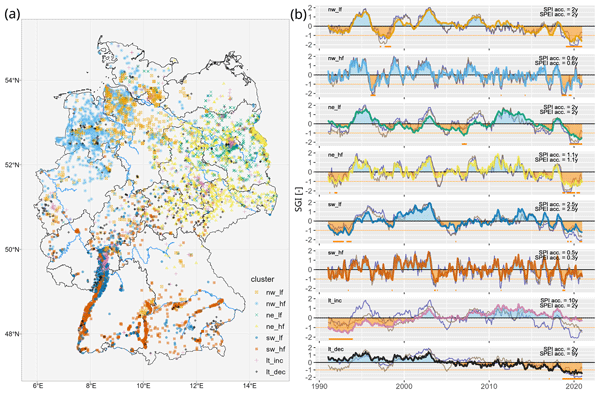
Steven J. De Hertog, Felix Havermann, Inne Vanderkelen, Suqi Guo, Fei Luo, Iris Manola, Dim Coumou, Edouard L. Davin, Gregory Duveiller, Quentin Lejeune, Julia Pongratz, Carl-Friedrich Schleussner, Sonia I. Seneviratne, and Wim Thiery
Earth Syst. Dynam., 14, 629–667, https://doi.org/10.5194/esd-14-629-2023, https://doi.org/10.5194/esd-14-629-2023, 2023
Short summary
Short summary
Land cover and land management changes are important strategies for future land-based mitigation. We investigate the climate effects of cropland expansion, afforestation, irrigation and wood harvesting using three Earth system models. Results show that these have important implications for surface temperature where the land cover and/or management change occur and in remote areas. Idealized afforestation causes global warming, which might offset the cooling effect from enhanced carbon uptake.
Steven J. De Hertog, Carmen E. Lopez-Fabara, Ruud van der Ent, Jessica Keune, Diego G. Miralles, Raphael Portmann, Sebastian Schemm, Felix Havermann, Suqi Guo, Fei Luo, Iris Manola, Quentin Lejeune, Julia Pongratz, Carl-Friedrich Schleussner, Sonia I. Seneviratne, and Wim Thiery
EGUsphere, https://doi.org/10.5194/egusphere-2023-953, https://doi.org/10.5194/egusphere-2023-953, 2023
Preprint archived
Short summary
Short summary
Land cover and management changes can affect the climate and water availability. In this study we use climate model simulations of extreme global land cover changes (afforestation, deforestation) and land management changes (irrigation) to understand the effects on the global water cycle and local to continental water availability. We show that cropland expansion generally leads to higher evaporation and lower amounts of precipitation and afforestation and irrigation expansion to the opposite.
Francisco José Cuesta-Valero, Hugo Beltrami, Almudena García-García, Gerhard Krinner, Moritz Langer, Andrew H. MacDougall, Jan Nitzbon, Jian Peng, Karina von Schuckmann, Sonia I. Seneviratne, Wim Thiery, Inne Vanderkelen, and Tonghua Wu
Earth Syst. Dynam., 14, 609–627, https://doi.org/10.5194/esd-14-609-2023, https://doi.org/10.5194/esd-14-609-2023, 2023
Short summary
Short summary
Climate change is caused by the accumulated heat in the Earth system, with the land storing the second largest amount of this extra heat. Here, new estimates of continental heat storage are obtained, including changes in inland-water heat storage and permafrost heat storage in addition to changes in ground heat storage. We also argue that heat gains in all three components should be monitored independently of their magnitude due to heat-dependent processes affecting society and ecosystems.
Wenfu Tang, Simone Tilmes, David M. Lawrence, Fang Li, Cenlin He, Louisa K. Emmons, Rebecca R. Buchholz, and Lili Xia
Atmos. Chem. Phys., 23, 5467–5486, https://doi.org/10.5194/acp-23-5467-2023, https://doi.org/10.5194/acp-23-5467-2023, 2023
Short summary
Short summary
Globally, total wildfire burned area is projected to increase over the 21st century under scenarios without geoengineering and decrease under the two geoengineering scenarios. Geoengineering reduces fire by decreasing surface temperature and wind speed and increasing relative humidity and soil water. However, geoengineering also yields reductions in precipitation, which offset some of the fire reduction.
Karina von Schuckmann, Audrey Minière, Flora Gues, Francisco José Cuesta-Valero, Gottfried Kirchengast, Susheel Adusumilli, Fiammetta Straneo, Michaël Ablain, Richard P. Allan, Paul M. Barker, Hugo Beltrami, Alejandro Blazquez, Tim Boyer, Lijing Cheng, John Church, Damien Desbruyeres, Han Dolman, Catia M. Domingues, Almudena García-García, Donata Giglio, John E. Gilson, Maximilian Gorfer, Leopold Haimberger, Maria Z. Hakuba, Stefan Hendricks, Shigeki Hosoda, Gregory C. Johnson, Rachel Killick, Brian King, Nicolas Kolodziejczyk, Anton Korosov, Gerhard Krinner, Mikael Kuusela, Felix W. Landerer, Moritz Langer, Thomas Lavergne, Isobel Lawrence, Yuehua Li, John Lyman, Florence Marti, Ben Marzeion, Michael Mayer, Andrew H. MacDougall, Trevor McDougall, Didier Paolo Monselesan, Jan Nitzbon, Inès Otosaka, Jian Peng, Sarah Purkey, Dean Roemmich, Kanako Sato, Katsunari Sato, Abhishek Savita, Axel Schweiger, Andrew Shepherd, Sonia I. Seneviratne, Leon Simons, Donald A. Slater, Thomas Slater, Andrea K. Steiner, Toshio Suga, Tanguy Szekely, Wim Thiery, Mary-Louise Timmermans, Inne Vanderkelen, Susan E. Wjiffels, Tonghua Wu, and Michael Zemp
Earth Syst. Sci. Data, 15, 1675–1709, https://doi.org/10.5194/essd-15-1675-2023, https://doi.org/10.5194/essd-15-1675-2023, 2023
Short summary
Short summary
Earth's climate is out of energy balance, and this study quantifies how much heat has consequently accumulated over the past decades (ocean: 89 %, land: 6 %, cryosphere: 4 %, atmosphere: 1 %). Since 1971, this accumulated heat reached record values at an increasing pace. The Earth heat inventory provides a comprehensive view on the status and expectation of global warming, and we call for an implementation of this global climate indicator into the Paris Agreement’s Global Stocktake.
François Clayer, Leah Jackson-Blake, Daniel Mercado-Bettín, Muhammed Shikhani, Andrew French, Tadhg Moore, James Sample, Magnus Norling, Maria-Dolores Frias, Sixto Herrera, Elvira de Eyto, Eleanor Jennings, Karsten Rinke, Leon van der Linden, and Rafael Marcé
Hydrol. Earth Syst. Sci., 27, 1361–1381, https://doi.org/10.5194/hess-27-1361-2023, https://doi.org/10.5194/hess-27-1361-2023, 2023
Short summary
Short summary
We assessed the predictive skill of forecasting tools over the next season for water discharge and lake temperature. Tools were forced with seasonal weather predictions; however, most of the prediction skill originates from legacy effects and not from seasonal weather predictions. Yet, when skills from seasonal weather predictions are present, additional skill comes from interaction effects. Skilful lake seasonal predictions require better weather predictions and realistic antecedent conditions.
Jane P. Mulcahy, Colin G. Jones, Steven T. Rumbold, Till Kuhlbrodt, Andrea J. Dittus, Edward W. Blockley, Andrew Yool, Jeremy Walton, Catherine Hardacre, Timothy Andrews, Alejandro Bodas-Salcedo, Marc Stringer, Lee de Mora, Phil Harris, Richard Hill, Doug Kelley, Eddy Robertson, and Yongming Tang
Geosci. Model Dev., 16, 1569–1600, https://doi.org/10.5194/gmd-16-1569-2023, https://doi.org/10.5194/gmd-16-1569-2023, 2023
Short summary
Short summary
Recent global climate models simulate historical global mean surface temperatures which are too cold, possibly to due to excessive aerosol cooling. This raises questions about the models' ability to simulate important climate processes and reduces confidence in future climate predictions. We present a new version of the UK Earth System Model, which has an improved aerosols simulation and a historical temperature record. Interestingly, the long-term response to CO2 remains largely unchanged.
Jérôme Pinti, Tim DeVries, Tommy Norin, Camila Serra-Pompei, Roland Proud, David A. Siegel, Thomas Kiørboe, Colleen M. Petrik, Ken H. Andersen, Andrew S. Brierley, and André W. Visser
Biogeosciences, 20, 997–1009, https://doi.org/10.5194/bg-20-997-2023, https://doi.org/10.5194/bg-20-997-2023, 2023
Short summary
Short summary
Large numbers of marine organisms such as zooplankton and fish perform daily vertical migration between the surface (at night) and the depths (in the daytime). This fascinating migration is important for the carbon cycle, as these organisms actively bring carbon to depths where it is stored away from the atmosphere for a long time. Here, we quantify the contributions of different animals to this carbon drawdown and storage and show that fish are important to the biological carbon pump.
Ryan Vella, Matthew Forrest, Jos Lelieveld, and Holger Tost
Geosci. Model Dev., 16, 885–906, https://doi.org/10.5194/gmd-16-885-2023, https://doi.org/10.5194/gmd-16-885-2023, 2023
Short summary
Short summary
Biogenic volatile organic compounds (BVOCs) are released by vegetation and have a major impact on atmospheric chemistry and aerosol formation. Non-interacting vegetation constrains the majority of numerical models used to estimate global BVOC emissions, and thus, the effects of changing vegetation on emissions are not addressed. In this work, we replace the offline vegetation with dynamic vegetation states by linking a chemistry–climate model with a global dynamic vegetation model.
Carolin Winter, Tam V. Nguyen, Andreas Musolff, Stefanie R. Lutz, Michael Rode, Rohini Kumar, and Jan H. Fleckenstein
Hydrol. Earth Syst. Sci., 27, 303–318, https://doi.org/10.5194/hess-27-303-2023, https://doi.org/10.5194/hess-27-303-2023, 2023
Short summary
Short summary
The increasing frequency of severe and prolonged droughts threatens our freshwater resources. While we understand drought impacts on water quantity, its effects on water quality remain largely unknown. Here, we studied the impact of the unprecedented 2018–2019 drought in Central Europe on nitrate export in a heterogeneous mesoscale catchment in Germany. We show that severe drought can reduce a catchment's capacity to retain nitrogen, intensifying the internal pollution and export of nitrate.
Shuqi Lin, Donald C. Pierson, and Jorrit P. Mesman
Geosci. Model Dev., 16, 35–46, https://doi.org/10.5194/gmd-16-35-2023, https://doi.org/10.5194/gmd-16-35-2023, 2023
Short summary
Short summary
The risks brought by the proliferation of algal blooms motivate the improvement of bloom forecasting tools, but algal blooms are complexly controlled and difficult to predict. Given rapid growth of monitoring data and advances in computation, machine learning offers an alternative prediction methodology. This study tested various machine learning workflows in a dimictic mesotrophic lake and gave promising predictions of the seasonal variations and the timing of algal blooms.
Jed O. Kaplan and Katie Hong-Kiu Lau
Earth Syst. Sci. Data, 14, 5665–5670, https://doi.org/10.5194/essd-14-5665-2022, https://doi.org/10.5194/essd-14-5665-2022, 2022
Short summary
Short summary
Global lightning strokes are recorded continuously by a network of ground-based stations. We consolidated these point observations into a map form and provide these as electronic datasets for research purposes. Here we extend our dataset to include lightning observations from 2021.
Yao Gao, Eleanor J. Burke, Sarah E. Chadburn, Maarit Raivonen, Mika Aurela, Lawrence B. Flanagan, Krzysztof Fortuniak, Elyn Humphreys, Annalea Lohila, Tingting Li, Tiina Markkanen, Olli Nevalainen, Mats B. Nilsson, Włodzimierz Pawlak, Aki Tsuruta, Huiyi Yang, and Tuula Aalto
Biogeosciences Discuss., https://doi.org/10.5194/bg-2022-229, https://doi.org/10.5194/bg-2022-229, 2022
Manuscript not accepted for further review
Short summary
Short summary
We coupled a process-based peatland CH4 emission model HIMMELI with a state-of-art land surface model JULES. The performance of the coupled model was evaluated at six northern wetland sites. The coupled model is considered to be more appropriate in simulating wetland CH4 emission. In order to improve the simulated CH4 emission, the model requires better representation of the peat soil carbon and hydrologic processes in JULES and the methane production and transportation processes in HIMMELI.
Axel A. J. Deijns, Olivier Dewitte, Wim Thiery, Nicolas d'Oreye, Jean-Philippe Malet, and François Kervyn
Nat. Hazards Earth Syst. Sci., 22, 3679–3700, https://doi.org/10.5194/nhess-22-3679-2022, https://doi.org/10.5194/nhess-22-3679-2022, 2022
Short summary
Short summary
Landslides and flash floods are rainfall-induced processes that often co-occur and interact, generally very quickly. In mountainous cloud-covered environments, determining when these processes occur remains challenging. We propose a regional methodology using open-access satellite radar images that allow for the timing of landslide and flash floods events, in the contrasting landscapes of tropical Africa, with an accuracy of up to a few days. The methodology shows potential for transferability.
Hanqin Tian, Zihao Bian, Hao Shi, Xiaoyu Qin, Naiqing Pan, Chaoqun Lu, Shufen Pan, Francesco N. Tubiello, Jinfeng Chang, Giulia Conchedda, Junguo Liu, Nathaniel Mueller, Kazuya Nishina, Rongting Xu, Jia Yang, Liangzhi You, and Bowen Zhang
Earth Syst. Sci. Data, 14, 4551–4568, https://doi.org/10.5194/essd-14-4551-2022, https://doi.org/10.5194/essd-14-4551-2022, 2022
Short summary
Short summary
Nitrogen is one of the critical nutrients for growth. Evaluating the change in nitrogen inputs due to human activity is necessary for nutrient management and pollution control. In this study, we generated a historical dataset of nitrogen input to land at the global scale. This dataset consists of nitrogen fertilizer, manure, and atmospheric deposition inputs to cropland, pasture, and rangeland at high resolution from 1860 to 2019.
Friedrich Boeing, Oldrich Rakovec, Rohini Kumar, Luis Samaniego, Martin Schrön, Anke Hildebrandt, Corinna Rebmann, Stephan Thober, Sebastian Müller, Steffen Zacharias, Heye Bogena, Katrin Schneider, Ralf Kiese, Sabine Attinger, and Andreas Marx
Hydrol. Earth Syst. Sci., 26, 5137–5161, https://doi.org/10.5194/hess-26-5137-2022, https://doi.org/10.5194/hess-26-5137-2022, 2022
Short summary
Short summary
In this paper, we deliver an evaluation of the second generation operational German drought monitor (https://www.ufz.de/duerremonitor) with a state-of-the-art compilation of observed soil moisture data from 40 locations and four different measurement methods in Germany. We show that the expressed stakeholder needs for higher resolution drought information at the one-kilometer scale can be met and that the agreement of simulated and observed soil moisture dynamics can be moderately improved.
Antony Siahaan, Robin S. Smith, Paul R. Holland, Adrian Jenkins, Jonathan M. Gregory, Victoria Lee, Pierre Mathiot, Antony J. Payne, Jeff K. Ridley, and Colin G. Jones
The Cryosphere, 16, 4053–4086, https://doi.org/10.5194/tc-16-4053-2022, https://doi.org/10.5194/tc-16-4053-2022, 2022
Short summary
Short summary
The UK Earth System Model is the first to fully include interactions of the atmosphere and ocean with the Antarctic Ice Sheet. Under the low-greenhouse-gas SSP1–1.9 (Shared Socioeconomic Pathway) scenario, the ice sheet remains stable over the 21st century. Under the strong-greenhouse-gas SSP5–8.5 scenario, the model predicts strong increases in melting of large ice shelves and snow accumulation on the surface. The dominance of accumulation leads to a sea level fall at the end of the century.
Dánnell Quesada-Chacón, Klemens Barfus, and Christian Bernhofer
Geosci. Model Dev., 15, 7353–7370, https://doi.org/10.5194/gmd-15-7353-2022, https://doi.org/10.5194/gmd-15-7353-2022, 2022
Short summary
Short summary
We improved the performance of past perfect prognosis statistical downscaling methods while achieving full model repeatability with GPU-calculated deep learning models using the TensorFlow, climate4R, and VALUE frameworks. We employed the ERA5 reanalysis as predictors and ReKIS (eastern Ore Mountains, Germany, 1 km resolution) as precipitation predictand, while incorporating modern deep learning architectures. The achieved repeatability is key to accomplish further milestones with deep learning.
Rebecca M. Varney, Sarah E. Chadburn, Eleanor J. Burke, and Peter M. Cox
Biogeosciences, 19, 4671–4704, https://doi.org/10.5194/bg-19-4671-2022, https://doi.org/10.5194/bg-19-4671-2022, 2022
Short summary
Short summary
Soil carbon is the Earth’s largest terrestrial carbon store, and the response to climate change represents one of the key uncertainties in obtaining accurate global carbon budgets required to successfully militate against climate change. The ability of climate models to simulate present-day soil carbon is therefore vital. This study assesses soil carbon simulation in the latest ensemble of models which allows key areas for future model development to be identified.
Sara Modanesi, Christian Massari, Michel Bechtold, Hans Lievens, Angelica Tarpanelli, Luca Brocca, Luca Zappa, and Gabriëlle J. M. De Lannoy
Hydrol. Earth Syst. Sci., 26, 4685–4706, https://doi.org/10.5194/hess-26-4685-2022, https://doi.org/10.5194/hess-26-4685-2022, 2022
Short summary
Short summary
Given the crucial impact of irrigation practices on the water cycle, this study aims at estimating irrigation through the development of an innovative data assimilation system able to ingest high-resolution Sentinel-1 radar observations into the Noah-MP land surface model. The developed methodology has important implications for global water resource management and the comprehension of human impacts on the water cycle and identifies main challenges and outlooks for future research.
Steven J. De Hertog, Felix Havermann, Inne Vanderkelen, Suqi Guo, Fei Luo, Iris Manola, Dim Coumou, Edouard L. Davin, Gregory Duveiller, Quentin Lejeune, Julia Pongratz, Carl-Friedrich Schleussner, Sonia I. Seneviratne, and Wim Thiery
Earth Syst. Dynam., 13, 1305–1350, https://doi.org/10.5194/esd-13-1305-2022, https://doi.org/10.5194/esd-13-1305-2022, 2022
Short summary
Short summary
Land cover and land management changes are important strategies for future land-based mitigation. We investigate the climate effects of cropland expansion, afforestation, irrigation, and wood harvesting using three Earth system models. Results show that these have important implications for surface temperature where the land cover and/or management change occurs and in remote areas. Idealized afforestation causes global warming, which might offset the cooling effect from enhanced carbon uptake.
Anne Felsberg, Jean Poesen, Michel Bechtold, Matthias Vanmaercke, and Gabriëlle J. M. De Lannoy
Nat. Hazards Earth Syst. Sci., 22, 3063–3082, https://doi.org/10.5194/nhess-22-3063-2022, https://doi.org/10.5194/nhess-22-3063-2022, 2022
Short summary
Short summary
In this study we assessed global landslide susceptibility at the coarse 36 km spatial resolution of global satellite soil moisture observations to prepare for a subsequent combination of the two. Specifically, we focus therefore on the susceptibility of hydrologically triggered landslides. We introduce ensemble techniques, common in, for example, meteorology but not yet in the landslide community, to retrieve reliable estimates of the total prediction uncertainty.
Bahar Bahrami, Anke Hildebrandt, Stephan Thober, Corinna Rebmann, Rico Fischer, Luis Samaniego, Oldrich Rakovec, and Rohini Kumar
Geosci. Model Dev., 15, 6957–6984, https://doi.org/10.5194/gmd-15-6957-2022, https://doi.org/10.5194/gmd-15-6957-2022, 2022
Short summary
Short summary
Leaf area index (LAI) and gross primary productivity (GPP) are crucial components to carbon cycle, and are closely linked to water cycle in many ways. We develop a Parsimonious Canopy Model (PCM) to simulate GPP and LAI at stand scale, and show its applicability over a diverse range of deciduous broad-leaved forest biomes. With its modular structure, the PCM is able to adapt with existing data requirements, and run in either a stand-alone mode or as an interface linked to hydrologic models.
Dominik Paprotny and Matthias Mengel
Geosci. Model Dev. Discuss., https://doi.org/10.5194/gmd-2022-194, https://doi.org/10.5194/gmd-2022-194, 2022
Preprint withdrawn
Short summary
Short summary
Population and economic growth over past decades have increased risk posed by natural hazards. The model presented here generates high-resolution maps of land use, population and assets (exposure) from 1870 to 2020 for 42 countries. It combines multiple methods with a large database of historical statistical data to approximate past anthropogenic environment of Europe. It enables attributing losses from past disasters to climate change by removing the influence of changes in exposure.
Sadaf Nasreen, Markéta Součková, Mijael Rodrigo Vargas Godoy, Ujjwal Singh, Yannis Markonis, Rohini Kumar, Oldrich Rakovec, and Martin Hanel
Earth Syst. Sci. Data, 14, 4035–4056, https://doi.org/10.5194/essd-14-4035-2022, https://doi.org/10.5194/essd-14-4035-2022, 2022
Short summary
Short summary
This article presents a 500-year reconstructed annual runoff dataset for several European catchments. Several data-driven and hydrological models were used to derive the runoff series using reconstructed precipitation and temperature and a set of proxy data. The simulated runoff was validated using independent observed runoff data and documentary evidence. The validation revealed a good fit between the observed and reconstructed series for 14 catchments, which are available for further analysis.
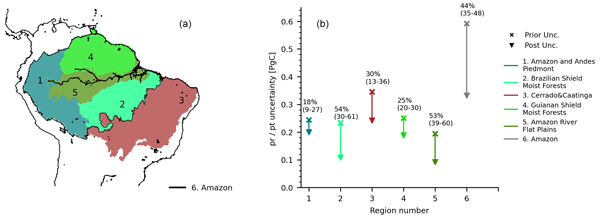
Pia Ebeling, Rohini Kumar, Stefanie R. Lutz, Tam Nguyen, Fanny Sarrazin, Michael Weber, Olaf Büttner, Sabine Attinger, and Andreas Musolff
Earth Syst. Sci. Data, 14, 3715–3741, https://doi.org/10.5194/essd-14-3715-2022, https://doi.org/10.5194/essd-14-3715-2022, 2022
Short summary
Short summary
Environmental data are critical for understanding and managing ecosystems, including the mitigation of water quality degradation. To increase data availability, we present the first large-sample water quality data set (QUADICA) of riverine macronutrient concentrations combined with water quantity, meteorological, and nutrient forcing data as well as catchment attributes. QUADICA covers 1386 German catchments to facilitate large-sample data-driven and modeling water quality assessments.
Louise Busschaert, Shannon de Roos, Wim Thiery, Dirk Raes, and Gabriëlle J. M. De Lannoy
Hydrol. Earth Syst. Sci., 26, 3731–3752, https://doi.org/10.5194/hess-26-3731-2022, https://doi.org/10.5194/hess-26-3731-2022, 2022
Short summary
Short summary
Increasing amounts of water are used for agriculture. Therefore, we looked into how irrigation requirements will evolve under a changing climate over Europe. Our results show that, by the end of the century and under high emissions, irrigation water will increase by 30 % on average compared to the year 2000. Also, the irrigation requirement is likely to vary more from 1 year to another. However, if emissions are mitigated, these effects are reduced.
Md Jamal Uddin Khan, Fabien Durand, Kerry Emanuel, Yann Krien, Laurent Testut, and A. K. M. Saiful Islam
Nat. Hazards Earth Syst. Sci., 22, 2359–2379, https://doi.org/10.5194/nhess-22-2359-2022, https://doi.org/10.5194/nhess-22-2359-2022, 2022
Short summary
Short summary
Cyclonic storm surges constitute a major threat to lives and properties along the vast coastline of the Bengal delta. From a combination of cyclone and storm surge modelling, we present a robust probabilistic estimate of the storm surge flooding hazard under the current climate. The estimated extreme water levels vary regionally, and the inland flooding is strongly controlled by the embankments. More than 1/10 of the coastal population is currently exposed to 50-year return period flooding.
Mahdi André Nakhavali, Lina M. Mercado, Iain P. Hartley, Stephen Sitch, Fernanda V. Cunha, Raffaello di Ponzio, Laynara F. Lugli, Carlos A. Quesada, Kelly M. Andersen, Sarah E. Chadburn, Andy J. Wiltshire, Douglas B. Clark, Gyovanni Ribeiro, Lara Siebert, Anna C. M. Moraes, Jéssica Schmeisk Rosa, Rafael Assis, and José L. Camargo
Geosci. Model Dev., 15, 5241–5269, https://doi.org/10.5194/gmd-15-5241-2022, https://doi.org/10.5194/gmd-15-5241-2022, 2022
Short summary
Short summary
In tropical ecosystems, the availability of rock-derived elements such as P can be very low. Thus, without a representation of P cycling, tropical forest responses to rising atmospheric CO2 conditions in areas such as Amazonia remain highly uncertain. We introduced P dynamics and its interactions with the N and P cycles into the JULES model. Our results highlight the potential for high P limitation and therefore lower CO2 fertilization capacity in the Amazon forest with low-fertility soils.
Vili Virkki, Elina Alanärä, Miina Porkka, Lauri Ahopelto, Tom Gleeson, Chinchu Mohan, Lan Wang-Erlandsson, Martina Flörke, Dieter Gerten, Simon N. Gosling, Naota Hanasaki, Hannes Müller Schmied, Niko Wanders, and Matti Kummu
Hydrol. Earth Syst. Sci., 26, 3315–3336, https://doi.org/10.5194/hess-26-3315-2022, https://doi.org/10.5194/hess-26-3315-2022, 2022
Short summary
Short summary
Direct and indirect human actions have altered streamflow across the world since pre-industrial times. Here, we apply a method of environmental flow envelopes (EFEs) that develops the existing global environmental flow assessments by methodological advances and better consideration of uncertainty. By assessing the violations of the EFE, we comprehensively quantify the frequency, severity, and trends of flow alteration during the past decades, illustrating anthropogenic effects on streamflow.
Malgorzata Golub, Wim Thiery, Rafael Marcé, Don Pierson, Inne Vanderkelen, Daniel Mercado-Bettin, R. Iestyn Woolway, Luke Grant, Eleanor Jennings, Benjamin M. Kraemer, Jacob Schewe, Fang Zhao, Katja Frieler, Matthias Mengel, Vasiliy Y. Bogomolov, Damien Bouffard, Marianne Côté, Raoul-Marie Couture, Andrey V. Debolskiy, Bram Droppers, Gideon Gal, Mingyang Guo, Annette B. G. Janssen, Georgiy Kirillin, Robert Ladwig, Madeline Magee, Tadhg Moore, Marjorie Perroud, Sebastiano Piccolroaz, Love Raaman Vinnaa, Martin Schmid, Tom Shatwell, Victor M. Stepanenko, Zeli Tan, Bronwyn Woodward, Huaxia Yao, Rita Adrian, Mathew Allan, Orlane Anneville, Lauri Arvola, Karen Atkins, Leon Boegman, Cayelan Carey, Kyle Christianson, Elvira de Eyto, Curtis DeGasperi, Maria Grechushnikova, Josef Hejzlar, Klaus Joehnk, Ian D. Jones, Alo Laas, Eleanor B. Mackay, Ivan Mammarella, Hampus Markensten, Chris McBride, Deniz Özkundakci, Miguel Potes, Karsten Rinke, Dale Robertson, James A. Rusak, Rui Salgado, Leon van der Linden, Piet Verburg, Danielle Wain, Nicole K. Ward, Sabine Wollrab, and Galina Zdorovennova
Geosci. Model Dev., 15, 4597–4623, https://doi.org/10.5194/gmd-15-4597-2022, https://doi.org/10.5194/gmd-15-4597-2022, 2022
Short summary
Short summary
Lakes and reservoirs are warming across the globe. To better understand how lakes are changing and to project their future behavior amidst various sources of uncertainty, simulations with a range of lake models are required. This in turn requires international coordination across different lake modelling teams worldwide. Here we present a protocol for and results from coordinated simulations of climate change impacts on lakes worldwide.
Inne Vanderkelen, Shervan Gharari, Naoki Mizukami, Martyn P. Clark, David M. Lawrence, Sean Swenson, Yadu Pokhrel, Naota Hanasaki, Ann van Griensven, and Wim Thiery
Geosci. Model Dev., 15, 4163–4192, https://doi.org/10.5194/gmd-15-4163-2022, https://doi.org/10.5194/gmd-15-4163-2022, 2022
Short summary
Short summary
Human-controlled reservoirs have a large influence on the global water cycle. However, dam operations are rarely represented in Earth system models. We implement and evaluate a widely used reservoir parametrization in a global river-routing model. Using observations of individual reservoirs, the reservoir scheme outperforms the natural lake scheme. However, both schemes show a similar performance due to biases in runoff timing and magnitude when using simulated runoff.
Noah D. Smith, Eleanor J. Burke, Kjetil Schanke Aas, Inge H. J. Althuizen, Julia Boike, Casper Tai Christiansen, Bernd Etzelmüller, Thomas Friborg, Hanna Lee, Heather Rumbold, Rachael H. Turton, Sebastian Westermann, and Sarah E. Chadburn
Geosci. Model Dev., 15, 3603–3639, https://doi.org/10.5194/gmd-15-3603-2022, https://doi.org/10.5194/gmd-15-3603-2022, 2022
Short summary
Short summary
The Arctic has large areas of small mounds that are caused by ice lifting up the soil. Snow blown by wind gathers in hollows next to these mounds, insulating them in winter. The hollows tend to be wetter, and thus the soil absorbs more heat in summer. The warm wet soil in the hollows decomposes, releasing methane. We have made a model of this, and we have tested how it behaves and whether it looks like sites in Scandinavia and Siberia. Sometimes we get more methane than a model without mounds.
Zhu Deng, Philippe Ciais, Zitely A. Tzompa-Sosa, Marielle Saunois, Chunjing Qiu, Chang Tan, Taochun Sun, Piyu Ke, Yanan Cui, Katsumasa Tanaka, Xin Lin, Rona L. Thompson, Hanqin Tian, Yuanzhi Yao, Yuanyuan Huang, Ronny Lauerwald, Atul K. Jain, Xiaoming Xu, Ana Bastos, Stephen Sitch, Paul I. Palmer, Thomas Lauvaux, Alexandre d'Aspremont, Clément Giron, Antoine Benoit, Benjamin Poulter, Jinfeng Chang, Ana Maria Roxana Petrescu, Steven J. Davis, Zhu Liu, Giacomo Grassi, Clément Albergel, Francesco N. Tubiello, Lucia Perugini, Wouter Peters, and Frédéric Chevallier
Earth Syst. Sci. Data, 14, 1639–1675, https://doi.org/10.5194/essd-14-1639-2022, https://doi.org/10.5194/essd-14-1639-2022, 2022
Short summary
Short summary
In support of the global stocktake of the Paris Agreement on climate change, we proposed a method for reconciling the results of global atmospheric inversions with data from UNFCCC national greenhouse gas inventories (NGHGIs). Here, based on a new global harmonized database that we compiled from the UNFCCC NGHGIs and a comprehensive framework presented in this study to process the results of inversions, we compared their results of carbon dioxide (CO2), methane (CH4), and nitrous oxide (N2O).
Leah A. Jackson-Blake, François Clayer, Elvira de Eyto, Andrew S. French, María Dolores Frías, Daniel Mercado-Bettín, Tadhg Moore, Laura Puértolas, Russell Poole, Karsten Rinke, Muhammed Shikhani, Leon van der Linden, and Rafael Marcé
Hydrol. Earth Syst. Sci., 26, 1389–1406, https://doi.org/10.5194/hess-26-1389-2022, https://doi.org/10.5194/hess-26-1389-2022, 2022
Short summary
Short summary
We explore, together with stakeholders, whether seasonal forecasting of water quantity, quality, and ecology can help support water management at five case study sites, primarily in Europe. Reliable forecasting, a season in advance, has huge potential to improve decision-making. However, managers were reluctant to use the forecasts operationally. Key barriers were uncertainty and often poor historic performance. The importance of practical hands-on experience was also highlighted.
Sandy P. Harrison, Roberto Villegas-Diaz, Esmeralda Cruz-Silva, Daniel Gallagher, David Kesner, Paul Lincoln, Yicheng Shen, Luke Sweeney, Daniele Colombaroli, Adam Ali, Chéïma Barhoumi, Yves Bergeron, Tatiana Blyakharchuk, Přemysl Bobek, Richard Bradshaw, Jennifer L. Clear, Sambor Czerwiński, Anne-Laure Daniau, John Dodson, Kevin J. Edwards, Mary E. Edwards, Angelica Feurdean, David Foster, Konrad Gajewski, Mariusz Gałka, Michelle Garneau, Thomas Giesecke, Graciela Gil Romera, Martin P. Girardin, Dana Hoefer, Kangyou Huang, Jun Inoue, Eva Jamrichová, Nauris Jasiunas, Wenying Jiang, Gonzalo Jiménez-Moreno, Monika Karpińska-Kołaczek, Piotr Kołaczek, Niina Kuosmanen, Mariusz Lamentowicz, Martin Lavoie, Fang Li, Jianyong Li, Olga Lisitsyna, José Antonio López-Sáez, Reyes Luelmo-Lautenschlaeger, Gabriel Magnan, Eniko Katalin Magyari, Alekss Maksims, Katarzyna Marcisz, Elena Marinova, Jenn Marlon, Scott Mensing, Joanna Miroslaw-Grabowska, Wyatt Oswald, Sebastián Pérez-Díaz, Ramón Pérez-Obiol, Sanna Piilo, Anneli Poska, Xiaoguang Qin, Cécile C. Remy, Pierre J. H. Richard, Sakari Salonen, Naoko Sasaki, Hieke Schneider, William Shotyk, Migle Stancikaite, Dace Šteinberga, Normunds Stivrins, Hikaru Takahara, Zhihai Tan, Liva Trasune, Charles E. Umbanhowar, Minna Väliranta, Jüri Vassiljev, Xiayun Xiao, Qinghai Xu, Xin Xu, Edyta Zawisza, Yan Zhao, Zheng Zhou, and Jordan Paillard
Earth Syst. Sci. Data, 14, 1109–1124, https://doi.org/10.5194/essd-14-1109-2022, https://doi.org/10.5194/essd-14-1109-2022, 2022
Short summary
Short summary
We provide a new global data set of charcoal preserved in sediments that can be used to examine how fire regimes have changed during past millennia and to investigate what caused these changes. The individual records have been standardised, and new age models have been constructed to allow better comparison across sites. The data set contains 1681 records from 1477 sites worldwide.
Sarah E. Chadburn, Eleanor J. Burke, Angela V. Gallego-Sala, Noah D. Smith, M. Syndonia Bret-Harte, Dan J. Charman, Julia Drewer, Colin W. Edgar, Eugenie S. Euskirchen, Krzysztof Fortuniak, Yao Gao, Mahdi Nakhavali, Włodzimierz Pawlak, Edward A. G. Schuur, and Sebastian Westermann
Geosci. Model Dev., 15, 1633–1657, https://doi.org/10.5194/gmd-15-1633-2022, https://doi.org/10.5194/gmd-15-1633-2022, 2022
Short summary
Short summary
We present a new method to include peatlands in an Earth system model (ESM). Peatlands store huge amounts of carbon that accumulates very slowly but that can be rapidly destabilised, emitting greenhouse gases. Our model captures the dynamic nature of peat by simulating the change in surface height and physical properties of the soil as carbon is added or decomposed. Thus, we model, for the first time in an ESM, peat dynamics and its threshold behaviours that can lead to destabilisation.
Aine M. Gormley-Gallagher, Sebastian Sterl, Annette L. Hirsch, Sonia I. Seneviratne, Edouard L. Davin, and Wim Thiery
Earth Syst. Dynam., 13, 419–438, https://doi.org/10.5194/esd-13-419-2022, https://doi.org/10.5194/esd-13-419-2022, 2022
Short summary
Short summary
Our results show that agricultural management can impact the local climate and highlight the need to evaluate land management in climate models. We use regression analysis on climate simulations and observations to assess irrigation and conservation agriculture impacts on warming trends. This allowed us to distinguish between the effects of land management and large-scale climate forcings such as rising CO2 concentrations and thus gain insight into the impacts under different climate regimes.
Martin Horwath, Benjamin D. Gutknecht, Anny Cazenave, Hindumathi Kulaiappan Palanisamy, Florence Marti, Ben Marzeion, Frank Paul, Raymond Le Bris, Anna E. Hogg, Inès Otosaka, Andrew Shepherd, Petra Döll, Denise Cáceres, Hannes Müller Schmied, Johnny A. Johannessen, Jan Even Øie Nilsen, Roshin P. Raj, René Forsberg, Louise Sandberg Sørensen, Valentina R. Barletta, Sebastian B. Simonsen, Per Knudsen, Ole Baltazar Andersen, Heidi Ranndal, Stine K. Rose, Christopher J. Merchant, Claire R. Macintosh, Karina von Schuckmann, Kristin Novotny, Andreas Groh, Marco Restano, and Jérôme Benveniste
Earth Syst. Sci. Data, 14, 411–447, https://doi.org/10.5194/essd-14-411-2022, https://doi.org/10.5194/essd-14-411-2022, 2022
Short summary
Short summary
Global mean sea-level change observed from 1993 to 2016 (mean rate of 3.05 mm yr−1) matches the combined effect of changes in water density (thermal expansion) and ocean mass. Ocean-mass change has been assessed through the contributions from glaciers, ice sheets, and land water storage or directly from satellite data since 2003. Our budget assessments of linear trends and monthly anomalies utilise new datasets and uncertainty characterisations developed within ESA's Climate Change Initiative.
Robert Schweppe, Stephan Thober, Sebastian Müller, Matthias Kelbling, Rohini Kumar, Sabine Attinger, and Luis Samaniego
Geosci. Model Dev., 15, 859–882, https://doi.org/10.5194/gmd-15-859-2022, https://doi.org/10.5194/gmd-15-859-2022, 2022
Short summary
Short summary
The recently released multiscale parameter regionalization (MPR) tool enables
environmental modelers to efficiently use extensive datasets for model setups.
It flexibly ingests the datasets using user-defined data–parameter relationships
and rescales parameter fields to given model resolutions. Modern
land surface models especially benefit from MPR through increased transparency and
flexibility in modeling decisions. Thus, MPR empowers more sound and robust
simulations of the Earth system.
Jianyong Ma, Stefan Olin, Peter Anthoni, Sam S. Rabin, Anita D. Bayer, Sylvia S. Nyawira, and Almut Arneth
Geosci. Model Dev., 15, 815–839, https://doi.org/10.5194/gmd-15-815-2022, https://doi.org/10.5194/gmd-15-815-2022, 2022
Short summary
Short summary
The implementation of the biological N fixation process in LPJ-GUESS in this study provides an opportunity to quantify N fixation rates between legumes and to better estimate grain legume production on a global scale. It also helps to predict and detect the potential contribution of N-fixing plants as
green manureto reducing or removing the use of N fertilizer in global agricultural systems, considering different climate conditions, management practices, and land-use change scenarios.
Albert Nkwasa, Celray James Chawanda, Jonas Jägermeyr, and Ann van Griensven
Hydrol. Earth Syst. Sci., 26, 71–89, https://doi.org/10.5194/hess-26-71-2022, https://doi.org/10.5194/hess-26-71-2022, 2022
Short summary
Short summary
We present an approach on how to incorporate crop phenology in a regional hydrological model using decision tables and global datasets of rainfed and irrigated cropland with the associated cropping calendar and management practices. Results indicate improved temporal patterns of leaf area index (LAI) and evapotranspiration (ET) simulations in comparison with remote sensing data. In addition, the improvement of the cropping season also helps to improve soil erosion estimates in cultivated areas.
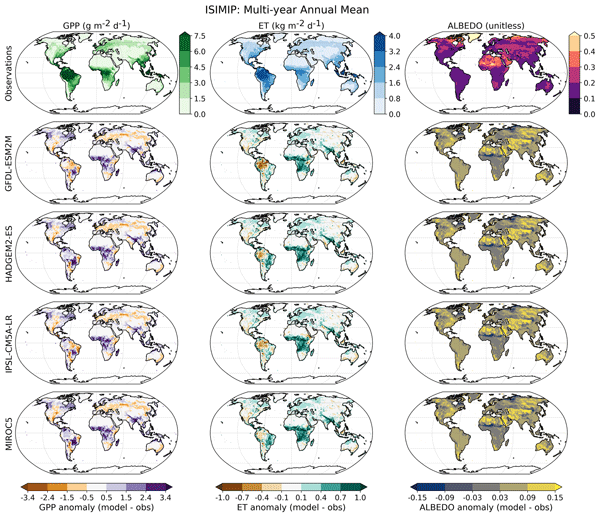
Huilin Huang, Yongkang Xue, Ye Liu, Fang Li, and Gregory S. Okin
Geosci. Model Dev., 14, 7639–7657, https://doi.org/10.5194/gmd-14-7639-2021, https://doi.org/10.5194/gmd-14-7639-2021, 2021
Short summary
Short summary
This study applies a fire-coupled dynamic vegetation model to quantify fire impact at monthly to annual scales. We find fire reduces grass cover by 4–8 % annually for widespread areas in south African savanna and reduces tree cover by 1 % at the periphery of tropical Congolese rainforest. The grass cover reduction peaks at the beginning of the rainy season, which quickly diminishes before the next fire season. In contrast, the reduction of tree cover is irreversible within one growing season.
Catherine Hardacre, Jane P. Mulcahy, Richard J. Pope, Colin G. Jones, Steven T. Rumbold, Can Li, Colin Johnson, and Steven T. Turnock
Atmos. Chem. Phys., 21, 18465–18497, https://doi.org/10.5194/acp-21-18465-2021, https://doi.org/10.5194/acp-21-18465-2021, 2021
Short summary
Short summary
We investigate UKESM1's ability to represent the sulfur (S) cycle in the recent historical period. The S cycle is a key driver of historical radiative forcing. Earth system models such as UKESM1 should represent the S cycle well so that we can have confidence in their projections of future climate. We compare UKESM1 to observations of sulfur compounds, finding that the model generally performs well. We also identify areas for UKESM1’s development, focussing on how SO2 is removed from the air.
Joni Dehaspe, Fanny Sarrazin, Rohini Kumar, Jan H. Fleckenstein, and Andreas Musolff
Hydrol. Earth Syst. Sci., 25, 6437–6463, https://doi.org/10.5194/hess-25-6437-2021, https://doi.org/10.5194/hess-25-6437-2021, 2021
Short summary
Short summary
Increased nitrate concentrations in surface waters can compromise river ecosystem health. As riverine nitrate uptake is hard to measure, we explore how low-frequency nitrate concentration and discharge observations (that are widely available) can help to identify (in)efficient uptake in river networks. We find that channel geometry and water velocity rather than the biological uptake capacity dominate the nitrate-discharge pattern at the outlet. The former can be used to predict uptake.
Tom Gleeson, Thorsten Wagener, Petra Döll, Samuel C. Zipper, Charles West, Yoshihide Wada, Richard Taylor, Bridget Scanlon, Rafael Rosolem, Shams Rahman, Nurudeen Oshinlaja, Reed Maxwell, Min-Hui Lo, Hyungjun Kim, Mary Hill, Andreas Hartmann, Graham Fogg, James S. Famiglietti, Agnès Ducharne, Inge de Graaf, Mark Cuthbert, Laura Condon, Etienne Bresciani, and Marc F. P. Bierkens
Geosci. Model Dev., 14, 7545–7571, https://doi.org/10.5194/gmd-14-7545-2021, https://doi.org/10.5194/gmd-14-7545-2021, 2021
Short summary
Short summary
Groundwater is increasingly being included in large-scale (continental to global) land surface and hydrologic simulations. However, it is challenging to evaluate these simulations because groundwater is
hiddenunderground and thus hard to measure. We suggest using multiple complementary strategies to assess the performance of a model (
model evaluation).
Abhijeet Mishra, Florian Humpenöder, Jan Philipp Dietrich, Benjamin Leon Bodirsky, Brent Sohngen, Christopher P. O. Reyer, Hermann Lotze-Campen, and Alexander Popp
Geosci. Model Dev., 14, 6467–6494, https://doi.org/10.5194/gmd-14-6467-2021, https://doi.org/10.5194/gmd-14-6467-2021, 2021
Short summary
Short summary
Timber plantations are an increasingly important source of roundwood production, next to harvest from natural forests. However, timber plantations are currently underrepresented in global land-use models. Here, we include timber production and plantations in the MAgPIE modeling framework. This allows one to capture the competition for land between agriculture and forestry. We show that increasing timber plantations in the coming decades partly compete with cropland for limited land resources.
Bjorn Stevens, Sandrine Bony, David Farrell, Felix Ament, Alan Blyth, Christopher Fairall, Johannes Karstensen, Patricia K. Quinn, Sabrina Speich, Claudia Acquistapace, Franziska Aemisegger, Anna Lea Albright, Hugo Bellenger, Eberhard Bodenschatz, Kathy-Ann Caesar, Rebecca Chewitt-Lucas, Gijs de Boer, Julien Delanoë, Leif Denby, Florian Ewald, Benjamin Fildier, Marvin Forde, Geet George, Silke Gross, Martin Hagen, Andrea Hausold, Karen J. Heywood, Lutz Hirsch, Marek Jacob, Friedhelm Jansen, Stefan Kinne, Daniel Klocke, Tobias Kölling, Heike Konow, Marie Lothon, Wiebke Mohr, Ann Kristin Naumann, Louise Nuijens, Léa Olivier, Robert Pincus, Mira Pöhlker, Gilles Reverdin, Gregory Roberts, Sabrina Schnitt, Hauke Schulz, A. Pier Siebesma, Claudia Christine Stephan, Peter Sullivan, Ludovic Touzé-Peiffer, Jessica Vial, Raphaela Vogel, Paquita Zuidema, Nicola Alexander, Lyndon Alves, Sophian Arixi, Hamish Asmath, Gholamhossein Bagheri, Katharina Baier, Adriana Bailey, Dariusz Baranowski, Alexandre Baron, Sébastien Barrau, Paul A. Barrett, Frédéric Batier, Andreas Behrendt, Arne Bendinger, Florent Beucher, Sebastien Bigorre, Edmund Blades, Peter Blossey, Olivier Bock, Steven Böing, Pierre Bosser, Denis Bourras, Pascale Bouruet-Aubertot, Keith Bower, Pierre Branellec, Hubert Branger, Michal Brennek, Alan Brewer, Pierre-Etienne Brilouet, Björn Brügmann, Stefan A. Buehler, Elmo Burke, Ralph Burton, Radiance Calmer, Jean-Christophe Canonici, Xavier Carton, Gregory Cato Jr., Jude Andre Charles, Patrick Chazette, Yanxu Chen, Michal T. Chilinski, Thomas Choularton, Patrick Chuang, Shamal Clarke, Hugh Coe, Céline Cornet, Pierre Coutris, Fleur Couvreux, Susanne Crewell, Timothy Cronin, Zhiqiang Cui, Yannis Cuypers, Alton Daley, Gillian M. Damerell, Thibaut Dauhut, Hartwig Deneke, Jean-Philippe Desbios, Steffen Dörner, Sebastian Donner, Vincent Douet, Kyla Drushka, Marina Dütsch, André Ehrlich, Kerry Emanuel, Alexandros Emmanouilidis, Jean-Claude Etienne, Sheryl Etienne-Leblanc, Ghislain Faure, Graham Feingold, Luca Ferrero, Andreas Fix, Cyrille Flamant, Piotr Jacek Flatau, Gregory R. Foltz, Linda Forster, Iulian Furtuna, Alan Gadian, Joseph Galewsky, Martin Gallagher, Peter Gallimore, Cassandra Gaston, Chelle Gentemann, Nicolas Geyskens, Andreas Giez, John Gollop, Isabelle Gouirand, Christophe Gourbeyre, Dörte de Graaf, Geiske E. de Groot, Robert Grosz, Johannes Güttler, Manuel Gutleben, Kashawn Hall, George Harris, Kevin C. Helfer, Dean Henze, Calvert Herbert, Bruna Holanda, Antonio Ibanez-Landeta, Janet Intrieri, Suneil Iyer, Fabrice Julien, Heike Kalesse, Jan Kazil, Alexander Kellman, Abiel T. Kidane, Ulrike Kirchner, Marcus Klingebiel, Mareike Körner, Leslie Ann Kremper, Jan Kretzschmar, Ovid Krüger, Wojciech Kumala, Armin Kurz, Pierre L'Hégaret, Matthieu Labaste, Tom Lachlan-Cope, Arlene Laing, Peter Landschützer, Theresa Lang, Diego Lange, Ingo Lange, Clément Laplace, Gauke Lavik, Rémi Laxenaire, Caroline Le Bihan, Mason Leandro, Nathalie Lefevre, Marius Lena, Donald Lenschow, Qiang Li, Gary Lloyd, Sebastian Los, Niccolò Losi, Oscar Lovell, Christopher Luneau, Przemyslaw Makuch, Szymon Malinowski, Gaston Manta, Eleni Marinou, Nicholas Marsden, Sebastien Masson, Nicolas Maury, Bernhard Mayer, Margarette Mayers-Als, Christophe Mazel, Wayne McGeary, James C. McWilliams, Mario Mech, Melina Mehlmann, Agostino Niyonkuru Meroni, Theresa Mieslinger, Andreas Minikin, Peter Minnett, Gregor Möller, Yanmichel Morfa Avalos, Caroline Muller, Ionela Musat, Anna Napoli, Almuth Neuberger, Christophe Noisel, David Noone, Freja Nordsiek, Jakub L. Nowak, Lothar Oswald, Douglas J. Parker, Carolyn Peck, Renaud Person, Miriam Philippi, Albert Plueddemann, Christopher Pöhlker, Veronika Pörtge, Ulrich Pöschl, Lawrence Pologne, Michał Posyniak, Marc Prange, Estefanía Quiñones Meléndez, Jule Radtke, Karim Ramage, Jens Reimann, Lionel Renault, Klaus Reus, Ashford Reyes, Joachim Ribbe, Maximilian Ringel, Markus Ritschel, Cesar B. Rocha, Nicolas Rochetin, Johannes Röttenbacher, Callum Rollo, Haley Royer, Pauline Sadoulet, Leo Saffin, Sanola Sandiford, Irina Sandu, Michael Schäfer, Vera Schemann, Imke Schirmacher, Oliver Schlenczek, Jerome Schmidt, Marcel Schröder, Alfons Schwarzenboeck, Andrea Sealy, Christoph J. Senff, Ilya Serikov, Samkeyat Shohan, Elizabeth Siddle, Alexander Smirnov, Florian Späth, Branden Spooner, M. Katharina Stolla, Wojciech Szkółka, Simon P. de Szoeke, Stéphane Tarot, Eleni Tetoni, Elizabeth Thompson, Jim Thomson, Lorenzo Tomassini, Julien Totems, Alma Anna Ubele, Leonie Villiger, Jan von Arx, Thomas Wagner, Andi Walther, Ben Webber, Manfred Wendisch, Shanice Whitehall, Anton Wiltshire, Allison A. Wing, Martin Wirth, Jonathan Wiskandt, Kevin Wolf, Ludwig Worbes, Ethan Wright, Volker Wulfmeyer, Shanea Young, Chidong Zhang, Dongxiao Zhang, Florian Ziemen, Tobias Zinner, and Martin Zöger
Earth Syst. Sci. Data, 13, 4067–4119, https://doi.org/10.5194/essd-13-4067-2021, https://doi.org/10.5194/essd-13-4067-2021, 2021
Short summary
Short summary
The EUREC4A field campaign, designed to test hypothesized mechanisms by which clouds respond to warming and benchmark next-generation Earth-system models, is presented. EUREC4A comprised roughly 5 weeks of measurements in the downstream winter trades of the North Atlantic – eastward and southeastward of Barbados. It was the first campaign that attempted to characterize the full range of processes and scales influencing trade wind clouds.
Matthias Mengel, Simon Treu, Stefan Lange, and Katja Frieler
Geosci. Model Dev., 14, 5269–5284, https://doi.org/10.5194/gmd-14-5269-2021, https://doi.org/10.5194/gmd-14-5269-2021, 2021
Short summary
Short summary
To identify the impacts of historical climate change it is necessary to separate the effect of the different impact drivers. To address this, one needs to compare historical impacts to a counterfactual world with impacts that would have been without climate change. We here present an approach that produces counterfactual climate data and can be used in climate impact models to simulate counterfactual impacts. We make these data available through the ISIMIP project.
Silje Lund Sørland, Roman Brogli, Praveen Kumar Pothapakula, Emmanuele Russo, Jonas Van de Walle, Bodo Ahrens, Ivonne Anders, Edoardo Bucchignani, Edouard L. Davin, Marie-Estelle Demory, Alessandro Dosio, Hendrik Feldmann, Barbara Früh, Beate Geyer, Klaus Keuler, Donghyun Lee, Delei Li, Nicole P. M. van Lipzig, Seung-Ki Min, Hans-Jürgen Panitz, Burkhardt Rockel, Christoph Schär, Christian Steger, and Wim Thiery
Geosci. Model Dev., 14, 5125–5154, https://doi.org/10.5194/gmd-14-5125-2021, https://doi.org/10.5194/gmd-14-5125-2021, 2021
Short summary
Short summary
We review the contribution from the CLM-Community to regional climate projections following the CORDEX framework over Europe, South Asia, East Asia, Australasia, and Africa. How the model configuration, horizontal and vertical resolutions, and choice of driving data influence the model results for the five domains is assessed, with the purpose of aiding the planning and design of regional climate simulations in the future.
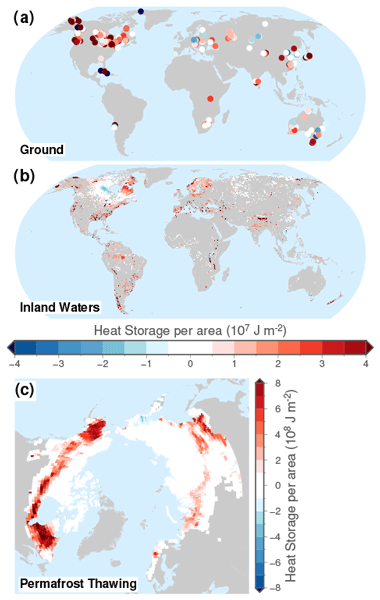
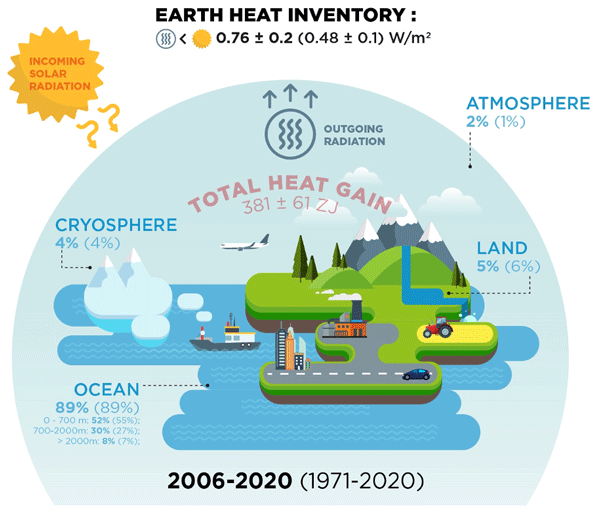
Jed O. Kaplan and Katie Hong-Kiu Lau
Earth Syst. Sci. Data, 13, 3219–3237, https://doi.org/10.5194/essd-13-3219-2021, https://doi.org/10.5194/essd-13-3219-2021, 2021
Short summary
Short summary
Lightning is an important atmospheric phenomenon and natural hazard, but few long-term data are freely available on lightning stroke location, timing, and power. Here, we present a new, open-access dataset of lightning strokes covering 2010–2020, based on a network of low-frequency radio detectors. The dataset is comprised of GIS maps and is intended for researchers, government, industry, and anyone for whom knowing when and where lightning is likely to strike is useful information.
Camelia-Eliza Telteu, Hannes Müller Schmied, Wim Thiery, Guoyong Leng, Peter Burek, Xingcai Liu, Julien Eric Stanislas Boulange, Lauren Seaby Andersen, Manolis Grillakis, Simon Newland Gosling, Yusuke Satoh, Oldrich Rakovec, Tobias Stacke, Jinfeng Chang, Niko Wanders, Harsh Lovekumar Shah, Tim Trautmann, Ganquan Mao, Naota Hanasaki, Aristeidis Koutroulis, Yadu Pokhrel, Luis Samaniego, Yoshihide Wada, Vimal Mishra, Junguo Liu, Petra Döll, Fang Zhao, Anne Gädeke, Sam S. Rabin, and Florian Herz
Geosci. Model Dev., 14, 3843–3878, https://doi.org/10.5194/gmd-14-3843-2021, https://doi.org/10.5194/gmd-14-3843-2021, 2021
Short summary
Short summary
We analyse water storage compartments, water flows, and human water use sectors included in 16 global water models that provide simulations for the Inter-Sectoral Impact Model Intercomparison Project phase 2b. We develop a standard writing style for the model equations. We conclude that even though hydrologic processes are often based on similar equations, in the end these equations have been adjusted, or the models have used different values for specific parameters or specific variables.
Patricio Velasquez, Jed O. Kaplan, Martina Messmer, Patrick Ludwig, and Christoph C. Raible
Clim. Past, 17, 1161–1180, https://doi.org/10.5194/cp-17-1161-2021, https://doi.org/10.5194/cp-17-1161-2021, 2021
Short summary
Short summary
This study assesses the importance of resolution and land–atmosphere feedbacks for European climate. We performed an asynchronously coupled experiment that combined a global climate model (~ 100 km), a regional climate model (18 km), and a dynamic vegetation model (18 km). Modelled climate and land cover agree reasonably well with independent reconstructions based on pollen and other paleoenvironmental proxies. The regional climate is significantly influenced by land cover.
Andrew Yool, Julien Palmiéri, Colin G. Jones, Lee de Mora, Till Kuhlbrodt, Ekatarina E. Popova, A. J. George Nurser, Joel Hirschi, Adam T. Blaker, Andrew C. Coward, Edward W. Blockley, and Alistair A. Sellar
Geosci. Model Dev., 14, 3437–3472, https://doi.org/10.5194/gmd-14-3437-2021, https://doi.org/10.5194/gmd-14-3437-2021, 2021
Short summary
Short summary
The ocean plays a key role in modulating the Earth’s climate. Understanding this role is critical when using models to project future climate change. Consequently, it is necessary to evaluate their realism against the ocean's observed state. Here we validate UKESM1, a new Earth system model, focusing on the realism of its ocean physics and circulation, as well as its biological cycles and productivity. While we identify biases, generally the model performs well over a wide range of properties.
Thomas Schneider von Deimling, Hanna Lee, Thomas Ingeman-Nielsen, Sebastian Westermann, Vladimir Romanovsky, Scott Lamoureux, Donald A. Walker, Sarah Chadburn, Erin Trochim, Lei Cai, Jan Nitzbon, Stephan Jacobi, and Moritz Langer
The Cryosphere, 15, 2451–2471, https://doi.org/10.5194/tc-15-2451-2021, https://doi.org/10.5194/tc-15-2451-2021, 2021
Short summary
Short summary
Climate warming puts infrastructure built on permafrost at risk of failure. There is a growing need for appropriate model-based risk assessments. Here we present a modelling study and show an exemplary case of how a gravel road in a cold permafrost environment in Alaska might suffer from degrading permafrost under a scenario of intense climate warming. We use this case study to discuss the broader-scale applicability of our model for simulating future Arctic infrastructure failure.
Cited articles
Adler, R. F., Huffman, G. J., Chang, A., Ferraro, R., Xie, P.-P., Janowiak, J., Rudolf, B., Schneider, U., Curtis, S., Bolvin, D., Gruber, A., Susskind, J., Arkin, P., and Nelkin, E.: The Version-2 Global Precipitation Climatology Project (GPCP) Monthly Precipitation Analysis (1979–Present), J. Hydrometeorol., 4, 1147–1167, https://doi.org/10.1175/1525-7541(2003)004<1147:TVGPCP>2.0.CO;2, 2003.
Andela, B., Broetz, B., de Mora, L., Drost, N., Eyring, V., Koldunov, N., Lauer, A., Predoi, V., Righi, M., Schlund, M., Vegas-Regidor, J., Zimmermann, K., Bock, L., Diblen, F., Dreyer, L., Earnshaw, P., Hassler, B., Little, B., and Loosveldt-Tomas, S.: ESMValCore (v2.0.0), Zenodo [software], https://doi.org/10.5281/zenodo.3952695, 2020a.
Barrier, N., Lengaigne, M., Rault, J., Person, R., Ethé, C., Aumont, O., and Maury, O.: Mechanisms underlying the epipelagic ecosystem response to ENSO in the equatorial Pacific ocean, Prog. Oceanogr., 213, 103002, https://doi.org/10.1016/j.pocean.2023.103002, 2023.
Bock, L. and Lauer, A.: Cloud properties and their projected changes in CMIP models with low to high climate sensitivity, Atmos. Chem. Phys., 24, 1587–1605, https://doi.org/10.5194/acp-24-1587-2024, 2024.
Bock, L., Lauer, A., Schlund, M., Barreiro, M., Bellouin, N., Jones, C., Meehl, G. A., Predoi, V., Roberts, M. J., and Eyring, V.: Quantifying progress across different CMIP phases with the ESMValTool, J. Geophys. Res., 125, https://doi.org/10.1029/2019jd032321, 2020.
Boucher, O., Denvil, S., Levavasseur, G., Cozic, A., Caubel, A., Foujols, M.-A., Meurdesoif, Y., Cadule, P., Devilliers, M., Ghattas, J., Lebas, N., Lurton, T., Mellul, L., Musat, I., Mignot, J., and Cheruy, F.: IPSL IPSL-CM6A-LR model output prepared for CMIP6 CMIP, Earth System Grid Federation [data set], https://doi.org/10.22033/ESGF/CMIP6.1534, 2018.
Boucher, O., Denvil, S., Levavasseur, G., Cozic, A., Caubel, A., Foujols, M.-A., Meurdesoif, Y., Cadule, P., Devilliers, M., Dupont, E., and Lurton, T.: IPSL IPSL-CM6A-LR model output prepared for CMIP6 ScenarioMIP, Earth System Grid Federation [data set], https://doi.org/10.22033/ESGF/CMIP6.1532, 2019.
Boucher, O., Servonnat, J., Albright, A. L., Aumont, O., Balkanski, Y., Bastrikov, V., Bekki, S., Bonnet, R., Bony, S., Bopp, L., Braconnot, P., Brockmann, P., Cadule, P., Caubel, A., Cheruy, F., Codron, F., Cozic, A., Cugnet, D., D'Andrea, F., Davini, P., de Lavergne, C., Denvil, S., Deshayes, J., Devilliers, M., Ducharne, A., Dufresne, J.-L., Dupont, E., Éthé, C., Fairhead, L., Falletti, L., Flavoni, S., Foujols, M.-A., Gardoll, S., Gastineau, G., Ghattas, J., Grandpeix, J.-Y., Guenet, B., Guez, L. E., Guilyardi, E., Guimberteau, M., Hauglustaine, D., Hourdin, F., Idelkadi, A., Joussaume, S., Kageyama, M., Khodri, M., Krinner, G., Lebas, N., Levavasseur, G., Lévy, C., Li, L., Lott, F., Lurton, T., Luyssaert, S., Madec, G., Madeleine, J.-B., Maignan, F., Marchand, M., Marti, O., Mellul, L., Meurdesoif, Y., Mignot, J., Musat, I., Ottlé, C., Peylin, P., Planton, Y., Polcher, J., Rio, C., Rochetin, N., Rousset, C., Sepulchre, P., Sima, A., Swingedouw, D., Thiéblemont, R., Traore, A. K., Vancoppenolle, M., Vial, J., Vialard, J., Viovy, N., and Vuichard, N.: Presentation and evaluation of the IPSL-CM6A-LR climate model, J. Adv. Model. Earth Sy., 12, https://doi.org/10.1029/2019ms002010, 2020.
Büchner, M.: ISIMIP3b ocean input data, ISIMIP Repository [data set], https://doi.org/10.48364/ISIMIP.575744.5, 2024.
Büchner, M. and Reyer, C.: ISIMIP3b atmospheric composition input data, ISIMIP Repository [data set], https://doi.org/10.48364/ISIMIP.482153.1, 2022.
Buck, A. L.: New Equations for Computing Vapor Pressure and Enhancement Factor, J. Appl. Meteorol. Climatol., 20, 1527–1532, https://doi.org/10.1175/1520-0450(1981)020<1527:NEFCVP>2.0.CO;2, 1981.
Camargo, S. J., Tippett, M. K., Sobel, A. H., Vecchi, G. A., and Zhao, M.: Testing the Performance of Tropical Cyclone Genesis Indices in Future Climates Using the HiRAM Model, J. Climate, 27, 9171–9196, https://doi.org/10.1175/JCLI-D-13-00505.1, 2014.
Cannon, A. J.: Multivariate quantile mapping bias correction: an N-dimensional probability density function transform for climate model simulations of multiple variables, Clim. Dynam., 50, 31–49, https://doi.org/10.1007/s00382-017-3580-6, 2018.
Cecil, D.: LIS/OTD 0.5 Degree High Resolution Monthly Climatology (HRMC), NASA Global Hydrometeorology Resource Center Distributed Active Archive Center [data set], https://doi.org/10.5067/LIS/LIS-OTD/DATA303, 2006.
CMIP Model and Experiment Documentation: https://wcrp-cmip.org/cmip-model-and-experiment-documentation/, last access: 6 March 2026.
CMIP6 source_id values: https://wcrp-cmip.github.io/CMIP6_CVs/docs/CMIP6_source_id.html, last access: 16 January 2023.
Cucchi, M., Weedon, G. P., Amici, A., Bellouin, N., Lange, S., Müller Schmied, H., Hersbach, H., and Buontempo, C.: WFDE5: bias-adjusted ERA5 reanalysis data for impact studies, Earth Syst. Sci. Data, 12, 2097–2120, https://doi.org/10.5194/essd-12-2097-2020, 2020.
Dunne, J. P., Horowitz, L. W., Adcroft, A. J., Ginoux, P., Held, I. M., John, J. G., Krasting, J. P., Malyshev, S., Naik, V., Paulot, F., Shevliakova, E., Stock, C. A., Zadeh, N., Balaji, V., Blanton, C., Dunne, K. A., Dupuis, C., Durachta, J., Dussin, R., Gauthier, P. P. G., Griffies, S. M., Guo, H., Hallberg, R. W., Harrison, M., He, J., Hurlin, W., McHugh, C., Menzel, R., Milly, P. C. D., Nikonov, S., Paynter, D. J., Ploshay, J., Radhakrishnan, A., Rand, K., Reichl, B. G., Robinson, T., Schwarzkopf, D. M., Sentman, L. T., Underwood, S., Vahlenkamp, H., Winton, M., Wittenberg, A. T., Wyman, B., Zeng, Y., and Zhao, M.: The GFDL earth system model version 4.1 (GFDL-ESM 4.1): Overall coupled model description and simulation characteristics, J. Adv. Model. Earth Sy., 12, https://doi.org/10.1029/2019ms002015, 2020.
Eddy, T. D., Heneghan, R. F., Bryndum-Buchholz, A., Fulton, E. A., Harrison, C. S., Tittensor, D. P., Lotze, H. K., Ortega-Cisneros, K., Novaglio, C., Bianchi, D., Büchner, M., Bulman, C., Cheung, W. W. L., Christensen, V., Coll, M., Everett, J. D., Fierro-Arcos, D., Galbraith, E. D., Gascuel, D., Guiet, J., Mackinson, S., Maury, O., Niiranen, S., Oliveros-Ramos, R., Palacios-Abrantes, J., Piroddi, C., du Pontavice, H., Reum, J., Richardson, A. J., Schewe, J., Shannon, L., Shin, Y.-J., Steenbeek, J., Volkholz, J., Walker, N. D., Woodworth-Jefcoats, P., and Blanchard, J. L.: Global and regional marine ecosystem models reveal key uncertainties in climate change projections, Earths Future, 13, https://doi.org/10.1029/2024ef005537, 2025.
Emanuel, K., DesAutels, C., Holloway, C., and Korty, R.: Environmental Control of Tropical Cyclone Intensity, J. Atmos. Sci., 61, 843–858, https://doi.org/10.1175/1520-0469(2004)061<0843:ECOTCI>2.0.CO;2, 2004.
Emanuel, K., Sundararajan, R., and Williams, J.: Hurricanes and Global Warming: Results from Downscaling IPCC AR4 Simulations, B. Am. Meteorol. Soc., 89, 347–368, https://doi.org/10.1175/BAMS-89-3-347, 2008.
Emanuel, K., Quesada-Chacón, D., Novak, L., and Otto, C.: ISIMIP3b tropical cyclone tracks (MIT), ISIMIP Repository [data set], https://doi.org/10.48364/ISIMIP.682793, 2025.
Eyring, V., Bony, S., Meehl, G. A., Senior, C. A., Stevens, B., Stouffer, R. J., and Taylor, K. E.: Overview of the Coupled Model Intercomparison Project Phase 6 (CMIP6) experimental design and organization, Geosci. Model Dev., 9, 1937–1958, https://doi.org/10.5194/gmd-9-1937-2016, 2016.
Eyring, V., Gillett, N. P., Achuta Rao, K. M., Barimalala, R., Barreiro Parrillo, M., Bellouin, N., Masson-Delmotte, V., Zhai, P., Pirani, A., Connors, S. L., Péan, C., Berger, S., and Intergovernmental Panel on Climate Change (IPCC): Human Influence on the Climate System, in: Climate Change 2021 – The Physical Science Basis: Working Group I Contribution to the Sixth Assessment Report of the Intergovernmental Panel on Climate Change, Cambridge University Press, 423–552, https://doi.org/10.1017/9781009157896.005, 2023.
Forster, P., Storelvmo, T., Armour, K., Collins, W., Dufresne, J.-L., Frame, D., Lunt, D. J., Mauritsen, T., Palmer, Watanabe, M., Wild, M., and Zhang, H.: The earth's energy budget, climate feedbacks and climate sensitivity, in: Climate Change 2021 – The Physical Science Basis, Cambridge University Press, 923–1054, https://doi.org/10.1017/9781009157896.009, 2021.
Fosu, B., Sobel, A., Camargo, S., Tippett, M., Hemmati, M., Bowen, S., and Bloemendaal, N.: Assessing future tropical cyclone risk using downscaled 1 CMIP6 projections, Journal of Catastrophe Risk and Resilience, 2, https://doi.org/10.63024/dpva-2pa1, 2024.
Frieler, K., Lange, S., Piontek, F., Reyer, C. P. O., Schewe, J., Warszawski, L., Zhao, F., Chini, L., Denvil, S., Emanuel, K., Geiger, T., Halladay, K., Hurtt, G., Mengel, M., Murakami, D., Ostberg, S., Popp, A., Riva, R., Stevanovic, M., Suzuki, T., Volkholz, J., Burke, E., Ciais, P., Ebi, K., Eddy, T. D., Elliott, J., Galbraith, E., Gosling, S. N., Hattermann, F., Hickler, T., Hinkel, J., Hof, C., Huber, V., Jägermeyr, J., Krysanova, V., Marcé, R., Müller Schmied, H., Mouratiadou, I., Pierson, D., Tittensor, D. P., Vautard, R., van Vliet, M., Biber, M. F., Betts, R. A., Bodirsky, B. L., Deryng, D., Frolking, S., Jones, C. D., Lotze, H. K., Lotze-Campen, H., Sahajpal, R., Thonicke, K., Tian, H., and Yamagata, Y.: Assessing the impacts of 1.5 °C global warming – simulation protocol of the Inter-Sectoral Impact Model Intercomparison Project (ISIMIP2b), Geosci. Model Dev., 10, 4321–4345, https://doi.org/10.5194/gmd-10-4321-2017, 2017.
Frieler, K., Volkholz, J., Lange, S., Schewe, J., Mengel, M., del Rocío Rivas López, M., Otto, C., Reyer, C. P. O., Karger, D. N., Malle, J. T., Treu, S., Menz, C., Blanchard, J. L., Harrison, C. S., Petrik, C. M., Eddy, T. D., Ortega-Cisneros, K., Novaglio, C., Rousseau, Y., Watson, R. A., Stock, C., Liu, X., Heneghan, R., Tittensor, D., Maury, O., Büchner, M., Vogt, T., Wang, T., Sun, F., Sauer, I. J., Koch, J., Vanderkelen, I., Jägermeyr, J., Müller, C., Rabin, S., Klar, J., Vega del Valle, I. D., Lasslop, G., Chadburn, S., Burke, E., Gallego-Sala, A., Smith, N., Chang, J., Hantson, S., Burton, C., Gädeke, A., Li, F., Gosling, S. N., Müller Schmied, H., Hattermann, F., Wang, J., Yao, F., Hickler, T., Marcé, R., Pierson, D., Thiery, W., Mercado-Bettín, D., Ladwig, R., Ayala-Zamora, A. I., Forrest, M., and Bechtold, M.: Scenario setup and forcing data for impact model evaluation and impact attribution within the third round of the Inter-Sectoral Impact Model Intercomparison Project (ISIMIP3a), Geosci. Model Dev., 17, 1–51, https://doi.org/10.5194/gmd-17-1-2024, 2024.
Geiger, T., Gütschow, J., Bresch, D. N., Emanuel, K., and Frieler, K.: Double benefit of limiting global warming for tropical cyclone exposure, Nat. Clim. Chang., 11, 861–866, https://doi.org/10.1038/s41558-021-01157-9, 2021.
Gennaretti, F., Sangelantoni, L., and Grenier, P.: Toward daily climate scenarios for Canadian Arctic coastal zones with more realistic temperature-precipitation interdependence, J. Geophys. Res.-Atmos., 120, 11862–11877, https://doi.org/10.1002/2015JD023890, 2015.
Gillett, N. P., Shiogama, H., Funke, B., Hegerl, G., Knutti, R., Matthes, K., Santer, B. D., Stone, D., and Tebaldi, C.: The Detection and Attribution Model Intercomparison Project (DAMIP v1.0) contribution to CMIP6, Geosci. Model Dev., 9, 3685–3697, https://doi.org/10.5194/gmd-9-3685-2016, 2016.
Good, P., Sellar, A., Tang, Y., Rumbold, S., Ellis, R., Kelley, D., Kuhlbrodt, T., and Walton, J.: MOHC UKESM1.0-LL model output prepared for CMIP6 ScenarioMIP, Earth System Grid Federation [data set], https://doi.org/10.22033/ESGF/CMIP6.1567, 2019.
Gregory, J. M., Griffies, S. M., Hughes, C. W., Lowe, J. A., Church, J. A., Fukimori, I., Gomez, N., Kopp, R. E., Landerer, F., Cozannet, G. L., Ponte, R. M., Stammer, D., Tamisiea, M. E., and van de Wal, R. S. W.: Concepts and terminology for sea level: Mean, variability and change, both local and global, Surv. Geophys., 40, 1251–1289, https://doi.org/10.1007/s10712-019-09525-z, 2019.
Grenier, P.: Two Types of Physical Inconsistency to Avoid with Univariate Quantile Mapping: A Case Study over North America Concerning Relative Humidity and Its Parent Variables, J. Appl. Meteorol. Climatol., 57, 347–364, https://doi.org/10.1175/JAMC-D-17-0177.1, 2018.
Haerter, J. O., Hagemann, S., Moseley, C., and Piani, C.: Climate model bias correction and the role of timescales, Hydrol. Earth Syst. Sci., 15, 1065–1079, https://doi.org/10.5194/hess-15-1065-2011, 2011.
Hausfather, Z. and Peters, G. P.: Emissions – the “business as usual” story is misleading, Nature, 577, 618–620, https://doi.org/10.1038/d41586-020-00177-3, 2020.
Hersbach, H., Bell, B., Berrisford, P., Hirahara, S., Horányi, A., Muñoz-Sabater, J., Nicolas, J., Peubey, C., Radu, R., Schepers, D., Simmons, A., Soci, C., Abdalla, S., Abellan, X., Balsamo, G., Bechtold, P., Biavati, G., Bidlot, J., Bonavita, M., Chiara, G., Dahlgren, P., Dee, D., Diamantakis, M., Dragani, R., Flemming, J., Forbes, R., Fuentes, M., Geer, A., Haimberger, L., Healy, S., Hogan, R. J., Hólm, E., Janisková, M., Keeley, S., Laloyaux, P., Lopez, P., Lupu, C., Radnoti, G., Rosnay, P., Rozum, I., Vamborg, F., Villaume, S., and Jean-Noël Thépaut: The ERA5 global reanalysis, Q. J. Roy. Meteor. Soc., 146, 1999–2049, https://doi.org/10.1002/qj.3803, 2020.
Holland, G. J.: An Analytic Model of the Wind and Pressure Profiles in Hurricanes, Mon. Weather Rev., 108, 1212–1218, 1980.
Holland, G. J.: A revised hurricane pressure–wind model, Mon. Weather Rev., 136, 3432–3445, https://doi.org/10.1175/2008mwr2395.1, 2008.
ISIMIP Repository: https://data.isimip.org, last access: 6 January 2026.
ISIMIP3b simulation protocol: https://protocol.isimip.org/#/ISIMIP3b, last access: 21 January 2026.
Jägermeyr, J., Müller, C., Ruane, A. C., Elliott, J., Balkovic, J., Castillo, O., Faye, B., Foster, I., Folberth, C., Franke, J. A., Fuchs, K., Guarin, J. R., Heinke, J., Hoogenboom, G., Iizumi, T., Jain, A. K., Kelly, D., Khabarov, N., Lange, S., Lin, T.-S., Liu, W., Mialyk, O., Minoli, S., Moyer, E. J., Okada, M., Phillips, M., Porter, C., Rabin, S. S., Scheer, C., Schneider, J. M., Schyns, J. F., Skalsky, R., Smerald, A., Stella, T., Stephens, H., Webber, H., Zabel, F., and Rosenzweig, C.: Climate impacts on global agriculture emerge earlier in new generation of climate and crop models, Nature Food, 2, 873–885, https://doi.org/10.1038/s43016-021-00400-y, 2021.
John, J. G., Blanton, C., McHugh, C., Radhakrishnan, A., Rand, K., Vahlenkamp, H., Wilson, C., Zadeh, N. T., Dunne, J. P., Dussin, R., Horowitz, L. W., Krasting, J. P., Lin, P., Malyshev, S., Naik, V., Ploshay, J., Shevliakova, E., Silvers, L., Stock, C., Winton, M., and Zeng, Y.: NOAA-GFDL GFDL-ESM4 model output prepared for CMIP6 ScenarioMIP, Earth System Grid Federation [data set], https://doi.org/10.22033/ESGF/CMIP6.1414, 2018.
Jungclaus, J., Bittner, M., Wieners, K.-H., Wachsmann, F., Schupfner, M., Legutke, S., Giorgetta, M., Reick, C., Gayler, V., Haak, H., de Vrese, P., Raddatz, T., Esch, M., Mauritsen, T., von Storch, J.-S., Behrens, J., Brovkin, V., Claussen, M., Crueger, T., Fast, I., Fiedler, S., Hagemann, S., Hohenegger, C., Jahns, T., Kloster, S., Kinne, S., Lasslop, G., Kornblueh, L., Marotzke, J., Matei, D., Meraner, K., Mikolajewicz, U., Modali, K., Müller, W., Nabel, J., Notz, D., Peters-von Gehlen, K., Pincus, R., Pohlmann, H., Pongratz, J., Rast, S., Schmidt, H., Schnur, R., Schulzweida, U., Six, K., Stevens, B., Voigt, A., and Roeckner, E.: MPI-M MPIESM1.2-HR model output prepared for CMIP6 CMIP, Earth System Grid Federation [data set], https://doi.org/10.22033/ESGF/CMIP6.741, 2019.
Kaplan, J. O. and Lau, K. H.-K.: The WGLC global gridded lightning climatology and time series, Earth Syst. Sci. Data, 13, 3219–3237, https://doi.org/10.5194/essd-13-3219-2021, 2021.
Kaplan, J. O. and Lau, K. H.-K.: World Wide Lightning Location Network (WWLLN) Global Lightning Climatology (WGLC) and time series, 2022 update, Earth Syst. Sci. Data, 14, 5665–5670, https://doi.org/10.5194/essd-14-5665-2022, 2022.
Kaplan, J. O., Koch, A., and Lau, K. H.-K.: Estimated future global lightning strokes (2010–2100), Zenodo [data set], https://doi.org/10.5281/zenodo.7511843, 2023.
Krasting, J. P., John, J. G., Blanton, C., McHugh, C., Nikonov, S., Radhakrishnan, A., Rand, K., Zadeh, N. T., Balaji, V., Durachta, J., Dupuis, C., Menzel, R., Robinson, T., Underwood, S., Vahlenkamp, H., Dunne, K. A., Gauthier, P. P. G., Ginoux, P., Griffies, S. M., Hallberg, R., Harrison, M., Hurlin, W., Malyshev, S., Naik, V., Paulot, F., Paynter, D. J., Ploshay, J., Reichl, B. G., Schwarzkopf, D. M., Seman, C. J., Silvers, L., Wyman, B., Zeng, Y., Adcroft, A., Dunne, J. P., Dussin, R., Guo, H., He, J., Held, I. M., Horowitz, L. W., Lin, P., Milly, P. C. D., Shevliakova, E., Stock, C., Winton, M., Wittenberg, A. T., Xie, Y., and Zhao, M.: NOAA-GFDL GFDL-ESM4 model output prepared for CMIP6 CMIP, Earth System Grid Federation [data set], https://doi.org/10.22033/ESGF/CMIP6.1407, 2018.
Lan, X., Tans, P., and Thoning, K. W.: Trends in globally-averaged CO2 determined from NOAA Global Monitoring Laboratory measurements, Version 2023-01, https://doi.org/10.15138/9N0H-ZH07, 2023.
Lange, S.: ISIMIP2b Bias-Correction Code, Zenodo [code], https://doi.org/10.5281/zenodo.1069050, 2017.
Lange, S.: Bias correction of surface downwelling longwave and shortwave radiation for the EWEMBI dataset, Earth Syst. Dynam., 9, 627–645, https://doi.org/10.5194/esd-9-627-2018, 2018.
Lange, S.: EartH2Observe, WFDEI and ERA-interim data merged and bias-corrected for ISIMIP (EWEMBI), GFZ Data Services [data set], https://doi.org/10.5880/pik.2019.004, 2019a.
Lange, S.: Trend-preserving bias adjustment and statistical downscaling with ISIMIP3BASD (v1.0), Geosci. Model Dev., 12, 3055–3070, https://doi.org/10.5194/gmd-12-3055-2019, 2019b.
Lange, S.: ISIMIP3BASD (1.0), Zenodo, https://doi.org/10.5281/zenodo.2586869, 2019.
Lange, S.: ISIMIP3BASD, Zenodo [code], https://doi.org/10.5281/zenodo.4686991, 2021a.
Lange, S.: ISIMIP3b bias adjustment fact sheet, https://www.isimip.org/documents/413/ISIMIP3b_bias_adjustment_fact_sheet_Gnsz7CO.pdf, last access: 1 December 2021b.
Lange, S.: ISIMIP3BASD (2.5.2), Zenodo [code], https://doi.org/10.5281/zenodo.6344911, 2022.
Lange, S. and Büchner, M.: ISIMIP3b bias-adjusted atmospheric climate input data, ISIMIP Repository [data set], https://doi.org/10.48364/ISIMIP.842396.1, 2021.
Lange, S., Menz, C., Gleixner, S., Cucchi, M., Weedon, G. P., Amici, A., Bellouin, N., Schmied, H. M., Hersbach, H., Buontempo, C., and Cagnazzo, C.: WFDE5 over land merged with ERA5 over the ocean (W5E5 v2.0), ISIMIP Repository [data set], https://doi.org/10.48364/ISIMIP.342217, 2021.
Lange, S., Quesada-Chacón, D., and Büchner, M.: Secondary ISIMIP3b bias-adjusted atmospheric climate input data, ISIMIP Repository [data set], https://doi.org/10.48364/ISIMIP.581124.3, 2023.
Large, W. G., A. S. G. Y.: Diurnal to decadal global forcing for ocean and sea ice models: the data sets and flux climatologies, CGD Division of the National Centre for Atmospheric Research (NCAR), 2004.
Lee, C.-Y., Tippett, M. K., Camargo, S. J., and Sobel, A. H.: Probabilistic Multiple Linear Regression Modeling for Tropical Cyclone Intensity, Mon. Weather Rev., 143, 933–954, https://doi.org/10.1175/MWR-D-14-00171.1, 2015.
Lee, C.-Y., Tippett, M. K., Sobel, A. H., and Camargo, S. J.: Rapid intensification and the bimodal distribution of tropical cyclone intensity, Nat. Commun., 7, 10625, https://doi.org/10.1038/ncomms10625, 2016.
Lee, C.-Y., Tippett, M. K., Sobel, A. H., and Camargo, S. J.: An environmentally forced tropical cyclone hazard model, J. Adv. Model. Earth Sy., 10, 223–241, https://doi.org/10.1002/2017ms001186, 2018.
Lee, C.-Y., Camargo, S. J., Sobel, A. H., and Tippett, M. K.: Statistical–Dynamical Downscaling Projections of Tropical Cyclone Activity in a Warming Climate: Two Diverging Genesis Scenarios, J. Climate, 33, 4815–4834, https://doi.org/10.1175/JCLI-D-19-0452.1, 2020.
Lee, C.-Y., Camargo, S. J., Sobel, A., Tippett, M. K., Quesada-Chacón, D., Büchner, M., Novak, L., and Otto, C.: ISIMIP3b tropical cyclone tracks (CHAZ), ISIMIP Repository [data set], https://doi.org/10.48364/ISIMIP.808980, 2025.
Lengaigne, M., Pang, S., Silvy, Y., Danielli, V., Gopika, S., Sadhvi, K., Dutheil, C., Rousset, C., Ethé, C., Person, R., Madec, G., Barrier, N., Maury, O., Dalaut, L., Menkes, C., Nicol, S., Gorgues, T., Melet, A., and Guihou, K.: An ocean-only framework for correcting future CMIP oceanic projections from their present-day biases, ESS Open Archive, 05 July 2024, https://doi.org/10.22541/essoar.172019498.89258365/v1, 2025.
Li, G., Xie, S.-P., Du, Y., and Luo, Y.: Effects of excessive equatorial cold tongue bias on the projections of tropical Pacific climate change. Part I: the warming pattern in CMIP5 multi-model ensemble, Clim. Dynam., 47, 3817–3831, https://doi.org/10.1007/s00382-016-3043-5, 2016.
Liang, Y., Gillett, N. P., and Monahan, A. H.: Accounting for Pacific climate variability increases projected global warming, Nat. Clim. Chang., 14, 608–614, https://doi.org/10.1038/s41558-024-02017-y, 2024.
Madec, G.: NEMO ocean engine, Version 3.6 stable Note du Pole de modelisation de l'Institut Pierre-Simon Laplace, vol. 27, IPSL, Paris, France, 2015.
Maraun, D.: Bias Correction, Quantile Mapping, and Downscaling: Revisiting the Inflation Issue, J. Climate, 26, 2137–2143, https://doi.org/10.1175/JCLI-D-12-00821.1, 2013.
Mauritsen, T., Bader, J., Becker, T., Behrens, J., Bittner, M., Brokopf, R., Brovkin, V., Claussen, M., Crueger, T., Esch, M., Fast, I., Fiedler, S., Fläschner, D., Gayler, V., Giorgetta, M., Goll, D. S., Haak, H., Hagemann, S., Hedemann, C., Hohenegger, C., Ilyina, T., Jahns, T., Jimenéz-de-la-Cuesta, D., Jungclaus, J., Kleinen, T., Kloster, S., Kracher, D., Kinne, S., Kleberg, D., Lasslop, G., Kornblueh, L., Marotzke, J., Matei, D., Meraner, K., Mikolajewicz, U., Modali, K., Möbis, B., Müller, W. A., Nabel, J. E. M. S., Nam, C. C. W., Notz, D., Nyawira, S.-S., Paulsen, H., Peters, K., Pincus, R., Pohlmann, H., Pongratz, J., Popp, M., Raddatz, T. J., Rast, S., Redler, R., Reick, C. H., Rohrschneider, T., Schemann, V., Schmidt, H., Schnur, R., Schulzweida, U., Six, K. D., Stein, L., Stemmler, I., Stevens, B., von Storch, J.-S., Tian, F., Voigt, A., Vrese, P., Wieners, K.-H., Wilkenskjeld, S., Winkler, A., and Roeckner, E.: Developments in the MPI-M Earth System Model version 1.2 (MPI-ESM1.2) and Its Response to Increasing CO2, J. Adv. Model. Earth Sy., 11, 998–1038, https://doi.org/10.1029/2018MS001400, 2019.
Meehl, G. A., Senior, C. A., Eyring, V., Flato, G., Lamarque, J.-F., Stouffer, R. J., Taylor, K. E., and Schlund, M.: Context for interpreting equilibrium climate sensitivity and transient climate response from the CMIP6 Earth system models, Sci. Adv., 6, eaba1981, https://doi.org/10.1126/sciadv.aba1981, 2020.
Meiler, S., Vogt, T., Bloemendaal, N., Ciullo, A., Lee, C.-Y., Camargo, S. J., Emanuel, K., and Bresch, D. N.: Intercomparison of regional loss estimates from global synthetic tropical cyclone models, Nat. Commun., 13, 6156, https://doi.org/10.1038/s41467-022-33918-1, 2022.
Meiler, S., Kropf, C. M., McCaughey, J. W., Lee, C.-Y., Camargo, S. J., Sobel, A. H., Bloemendaal, N., Emanuel, K., and Bresch, D. N.: Navigating and attributing uncertainty in future tropical cyclone risk estimates, Sci. Adv., 11, eadn4607, https://doi.org/10.1126/sciadv.adn4607, 2025.
Meinshausen, M., Smith, S. J., Calvin, K., Daniel, J. S., Kainuma, M. L. T., Lamarque, J.-F., Matsumoto, K., Montzka, S. A., Raper, S. C. B., Riahi, K., Thomson, A., Velders, G. J. M., and van Vuuren, D. P. P.: The RCP greenhouse gas concentrations and their extensions from 1765 to 2300, Clim. Change, 109, 213, https://doi.org/10.1007/s10584-011-0156-z, 2011.
Meinshausen, M., Vogel, E., Nauels, A., Lorbacher, K., Meinshausen, N., Etheridge, D. M., Fraser, P. J., Montzka, S. A., Rayner, P. J., Trudinger, C. M., Krummel, P. B., Beyerle, U., Canadell, J. G., Daniel, J. S., Enting, I. G., Law, R. M., Lunder, C. R., O'Doherty, S., Prinn, R. G., Reimann, S., Rubino, M., Velders, G. J. M., Vollmer, M. K., Wang, R. H. J., and Weiss, R.: Historical greenhouse gas concentrations for climate modelling (CMIP6), Geosci. Model Dev., 10, 2057–2116, https://doi.org/10.5194/gmd-10-2057-2017, 2017.
Meinshausen, M., Nicholls, Z. R. J., Lewis, J., Gidden, M. J., Vogel, E., Freund, M., Beyerle, U., Gessner, C., Nauels, A., Bauer, N., Canadell, J. G., Daniel, J. S., John, A., Krummel, P. B., Luderer, G., Meinshausen, N., Montzka, S. A., Rayner, P. J., Reimann, S., Smith, S. J., van den Berg, M., Velders, G. J. M., Vollmer, M. K., and Wang, R. H. J.: The shared socio-economic pathway (SSP) greenhouse gas concentrations and their extensions to 2500, Geosci. Model Dev., 13, 3571–3605, https://doi.org/10.5194/gmd-13-3571-2020, 2020.
Muis, S., Apecechea, M. I., Dullaart, J., de Lima Rego, J., Madsen, K. S., Su, J., Yan, K., and Verlaan, M.: A High-Resolution Global Dataset of Extreme Sea Levels, Tides, and Storm Surges, Including Future Projections, Front. Marine Sci., 7, https://doi.org/10.3389/fmars.2020.00263, 2020.
Muis, S., Aerts, J. C. J. H., Á. Antolínez, J. A., Dullaart, J. C., Duong, T. M., Erikson, L., Haarsma, R. J., Apecechea, M. I., Mengel, M., Le Bars, D., O'Neill, A., Ranasinghe, R., Roberts, M. J., Verlaan, M., Ward, P. J., and Yan, K.: Global projections of storm surges using high-resolution CMIP6 climate models, Earths Future, 11, https://doi.org/10.1029/2023ef003479, 2023.
O'Neill, B., van Aalst, M., Z., Z. I., Berrang Ford, L., Bhadwal, S., Buhaug, H., Diaz, D., Frieler, K., Garschagen, M., Magnan, A., Midgley, G., Mirzabaev, A., Thomas, A., and Warren, R.: Climate Change 2022: Impacts, Adaptation and Vulnerability. Key Risks Across Sectors and Regions, in: Contribution of Working Group II to the Sixth Assessment Report of the Intergovernmental Panel on Climate Change, edited by: Pörtner, H.-O., Roberts, D. C., Tignor, M., Poloczanska, E. S., Mintenbeck, K., Alegría, A., Craig, M., Langsdorf, S., Löschke, S., Möller, V., Okem, A., and Rama, B., Cambridge University Press, Cambridge, UK and New York, NY, USA, 2411–2538, https://doi.org/10.1017/9781009325844.025, 2022.
O'Neill, B. C., Tebaldi, C., van Vuuren, D. P., Eyring, V., Friedlingstein, P., Hurtt, G., Knutti, R., Kriegler, E., Lamarque, J.-F., Lowe, J., Meehl, G. A., Moss, R., Riahi, K., and Sanderson, B. M.: The Scenario Model Intercomparison Project (ScenarioMIP) for CMIP6, Geosci. Model Dev., 9, 3461–3482, https://doi.org/10.5194/gmd-9-3461-2016, 2016.
Ortega-Cisneros, K., Fierros-Arcos, D., Lindmark, M., Novaglio, C., Woodworth-Jefcoats, P., Eddy, T. D., Coll, M., Fulton, E., Oliveros-Ramos, R., Reum, J., Shin, Y.-J., Bulman, C., Capitani, L., Datta, S., Murphy, K., Rogers, A., Shannon, L., Whitehouse, G. A., Adekoya, E., Dias, B. S., Fuster-Alonso, A., Hansen, C., Husson, B., McGregor, V., Morell, A., Morzaria Luna, H.-N., Ouled-Cheikh, J., Ruzicka, J., Steenbeek, J., Stollberg, I., Subramaniam, R. C., Tulloch, V., Bryndum-Buchholz, A., Harrison, C. S., Heneghan, R., Maury, O., Pozo Buil, M., Schewe, J., Tittensor, D. P., Townsend, H., and Blanchard, J. L.: An integrated global-to-regional scale workflow for simulating climate change impacts on marine ecosystems, Earths Future, 13, https://doi.org/10.1029/2024ef004826, 2025.
Perrette, M. and Mengel, M.: Relative sea level projections constrained by historical trends at tide gauge sites, Sci. Adv., 11, eado4506, https://doi.org/10.1126/sciadv.ado4506, 2025.
Quesada-Chacón, D.: Data for Figure 3, 4 and 5 of ISIMIP3b, group I + II protocol paper, Zenodo [data set], https://doi.org/10.5281/zenodo.17990574, 2025.
Quesada-Chacón, D., Hamester, L., and Vogt, T.: Code to generate the rain and windfields presented in the ISIMIP3b protocol paper, Zenodo [code], https://doi.org/10.5281/ZENODO.17570410, 2025a.
Quesada-Chacón, D., Novak, L., Hamester, L., and Otto, C.: ISIMIP3b tropical cyclone wind and rain fields (MIT), ISIMIP Repository [data set], https://doi.org/10.48364/ISIMIP.779038, 2025b.
Righi, M., Andela, B., Eyring, V., Lauer, A., Predoi, V., Schlund, M., Vegas-Regidor, J., Bock, L., Brötz, B., de Mora, L., Diblen, F., Dreyer, L., Drost, N., Earnshaw, P., Hassler, B., Koldunov, N., Little, B., Loosveldt Tomas, S., and Zimmermann, K.: Earth System Model Evaluation Tool (ESMValTool) v2.0 – technical overview, Geosci. Model Dev., 13, 1179–1199, https://doi.org/10.5194/gmd-13-1179-2020, 2020.
Ruosteenoja, K., Jylhä, K., Räisänen, J., and Mäkelä, A.: Surface air relative humidities spuriously exceeding 100 % in CMIP5 model output and their impact on future projections, J. Geophys. Res.-Atmos., 122, 9557–9568, https://doi.org/10.1002/2017JD026909, 2017.
Ruosteenoja, K., Jylhä, K., Räisänen, J., and Mäkelä, A.: Reply to comment by genthon et al. On “surface air relative humidities spuriously exceeding 100 % in CMIP5 model output and their impact on future projections,” J. Geophys. Res., 123, 8728–8734, https://doi.org/10.1029/2018jd028680, 2018.
Schupfner, M., Wieners, K.-H., Wachsmann, F., Steger, C., Bittner, M., Jungclaus, J., Früh, B., Pankatz, K., Giorgetta, M., Reick, C., Legutke, S., Esch, M., Gayler, V., Haak, H., de Vrese, P., Raddatz, T., Mauritsen, T., von Storch, J.-S., Behrens, J., Brovkin, V., Claussen, M., Crueger, T., Fast, I., Fiedler, S., Hagemann, S., Hohenegger, C., Jahns, T., Kloster, S., Kinne, S., Lasslop, G., Kornblueh, L., Marotzke, J., Matei, D., Meraner, K., Mikolajewicz, U., Modali, K., Müller, W., Nabel, J., Notz, D., Peters-von Gehlen, K., Pincus, R., Pohlmann, H., Pongratz, J., Rast, S., Schmidt, H., Schnur, R., Schulzweida, U., Six, K., Stevens, B., Voigt, A., and Roeckner, E.: DKRZ MPI-ESM1.2-HR model output prepared for CMIP6 ScenarioMIP, Earth System Grid Federation [data set], https://doi.org/10.22033/ESGF/CMIP6.2450, 2019.
Séférian, R., Berthet, S., Yool, A., Palmiéri, J., Bopp, L., Tagliabue, A., Kwiatkowski, L., Aumont, O., Christian, J., Dunne, J., Gehlen, M., Ilyina, T., John, J. G., Li, H., Long, M. C., Luo, J. Y., Nakano, H., Romanou, A., Schwinger, J., Stock, C., Santana-Falcón, Y., Takano, Y., Tjiputra, J., Tsujino, H., Watanabe, M., Wu, T., Wu, F., and Yamamoto, A.: Tracking Improvement in Simulated Marine Biogeochemistry Between CMIP5 and CMIP6, Curr. Clim. Change Rep., 6, 95–119, https://doi.org/10.1007/s40641-020-00160-0, 2020.
Sellar, A. A., Jones, C. G., Mulcahy, J. P., Tang, Y., Yool, A., Wiltshire, A., O'Connor, F. M., Stringer, M., Hill, R., Palmieri, J., Woodward, S., Mora, L., Kuhlbrodt, T., Rumbold, S. T., Kelley, D. I., Ellis, R., Johnson, C. E., Walton, J., Abraham, N. L., Andrews, M. B., Andrews, T., Archibald, A. T., Berthou, S., Burke, E., Blockley, E., Carslaw, K., Dalvi, M., Edwards, J., Folberth, G. A., Gedney, N., Griffiths, P. T., Harper, A. B., Hendry, M. A., Hewitt, A. J., Johnson, B., Jones, A., Jones, C. D., Keeble, J., Liddicoat, S., Morgenstern, O., Parker, R. J., Predoi, V., Robertson, E., Siahaan, A., Smith, R. S., Swaminathan, R., Woodhouse, M. T., Zeng, G., and Zerroukat, M.: UKESM1: Description and evaluation of the U.k. earth system model, J. Adv. Model. Earth Sy., 11, 4513–4558, https://doi.org/10.1029/2019ms001739, 2019.
Shakespeare, C. J. and Roderick, M. L.: Diagnosing instantaneous forcing and feedbacks of downwelling longwave radiation at the surface: A simple methodology and its application to CMIP5 models, J. Climate, 35, 3785–3801, https://doi.org/10.1175/jcli-d-21-0865.1, 2022.
Shiogama, H., Fujimori, S., Hasegawa, T., Hayashi, M., Hirabayashi, Y., Ogura, T., Iizumi, T., Takahashi, K., and Takemura, T.: Important distinctiveness of SSP3–7.0 for use in impact assessments, Nat. Clim. Chang., 13, 1276–1278, https://doi.org/10.1038/s41558-023-01883-2, 2023.
Sobel, A. H., Lee, C.-Y., Camargo, S. J., Mandli, K. T., Emanuel, K. A., Mukhopadhyay, P., and Mahakur, M.: Tropical Cyclone Hazard to Mumbai in the Recent Historical Climate, Mon. Weather Rev., 147, 2355–2366, https://doi.org/10.1175/MWR-D-18-0419.1, 2019.
Sobel, A. H., Lee, C.-Y., Bowen, S. G., Camargo, S. J., Cane, M. A., Clement, A., Fosu, B., Hart, M., Reed, K. A., Seager, R., and Tippett, M. K.: Near-term tropical cyclone risk and coupled Earth system model biases, P. Natl. Acad. Sci. USA, 120, e2209631120, https://doi.org/10.1073/pnas.2209631120, 2021.
Stewart, K. D., Kim, W. M., Urakawa, S., Hogg, A. M., Yeager, S., Tsujino, H., Nakano, H., Kiss, A. E., and Danabasoglu, G.: JRA55-do-based repeat year forcing datasets for driving ocean–sea-ice models, Ocean Model., 147, 101557, https://doi.org/10.1016/j.ocemod.2019.101557, 2020.
Swaminathan, R., Schewe, J., Walton, J., Zimmermann, K., Jones, C., Betts, R. A., Burton, C., Jones, C. D., Mengel, M., Reyer, C. P. O., Turner, A. G., and Weigel, K.: Regional impacts poorly constrained by climate sensitivity, Earths Future, 12, https://doi.org/10.1029/2024ef004901, 2024.
Switanek, M. B., Troch, P. A., Castro, C. L., Leuprecht, A., Chang, H.-I., Mukherjee, R., and Demaria, E. M. C.: Scaled distribution mapping: a bias correction method that preserves raw climate model projected changes, Hydrol. Earth Syst. Sci., 21, 2649–2666, https://doi.org/10.5194/hess-21-2649-2017, 2017.
Tagliabue, A., Kwiatkowski, L., Bopp, L., Butenschön, M., Cheung, W., Lengaigne, M., and Vialard, J.: Persistent Uncertainties in Ocean Net Primary Production Climate Change Projections at Regional Scales Raise Challenges for Assessing Impacts on Ecosystem Services, Front. Climate, 3, https://doi.org/10.3389/fclim.2021.738224, 2021.
Tang, Y., Rumbold, S., Ellis, R., Kelley, D., Mulcahy, J., Sellar, A., Walton, J., and Jones, C.: MOHC UKESM1.0-LL model output prepared for CMIP6 CMIP, Earth System Grid Federation [data set], https://doi.org/10.22033/ESGF/CMIP6.1569, 2019.
Themeßl, M. J., Gobiet, A., and Heinrich, G.: Empirical-statistical downscaling and error correction of regional climate models and its impact on the climate change signal, Clim. Change, 112, 449–468, https://doi.org/10.1007/s10584-011-0224-4, 2012.
Thrasher, B., Maurer, E. P., McKellar, C., and Duffy, P. B.: Technical Note: Bias correcting climate model simulated daily temperature extremes with quantile mapping, Hydrol. Earth Syst. Sci., 16, 3309–3314, https://doi.org/10.5194/hess-16-3309-2012, 2012.
Tippett, M. K., Camargo, S. J., and Sobel, A. H.: A Poisson Regression Index for Tropical Cyclone Genesis and the Role of Large-Scale Vorticity in Genesis, J. Climate, 24, 2335–2357, https://doi.org/10.1175/2010JCLI3811.1, 2011.
Treu, S., Muis, S., Dangendorf, S., Wahl, T., Oelsmann, J., Heinicke, S., Frieler, K., and Mengel, M.: Reconstruction of hourly coastal water levels and counterfactuals without sea level rise for impact attribution, Earth Syst. Sci. Data, 16, 1121–1136, https://doi.org/10.5194/essd-16-1121-2024, 2024.
Tsujino, H., Urakawa, S., Nakano, H., Small, R. J., Kim, W. M., Yeager, S. G., Danabasoglu, G., Suzuki, T., Bamber, J. L., Bentsen, M., Böning, C. W., Bozec, A., Chassignet, E. P., Curchitser, E., Boeira Dias, F., Durack, P. J., Griffies, S. M., Harada, Y., Ilicak, M., Josey, S. A., Kobayashi, C., Kobayashi, S., Komuro, Y., Large, W. G., Le Sommer, J., Marsland, S. J., Masina, S., Scheinert, M., Tomita, H., Valdivieso, M., and Yamazaki, D.: JRA-55 based surface dataset for driving ocean–sea-ice models (JRA55-do), Ocean Model., 130, 79–139, https://doi.org/10.1016/j.ocemod.2018.07.002, 2018.
Tsujino, H., Urakawa, L. S., Griffies, S. M., Danabasoglu, G., Adcroft, A. J., Amaral, A. E., Arsouze, T., Bentsen, M., Bernardello, R., Böning, C. W., Bozec, A., Chassignet, E. P., Danilov, S., Dussin, R., Exarchou, E., Fogli, P. G., Fox-Kemper, B., Guo, C., Ilicak, M., Iovino, D., Kim, W. M., Koldunov, N., Lapin, V., Li, Y., Lin, P., Lindsay, K., Liu, H., Long, M. C., Komuro, Y., Marsland, S. J., Masina, S., Nummelin, A., Rieck, J. K., Ruprich-Robert, Y., Scheinert, M., Sicardi, V., Sidorenko, D., Suzuki, T., Tatebe, H., Wang, Q., Yeager, S. G., and Yu, Z.: Evaluation of global ocean–sea-ice model simulations based on the experimental protocols of the Ocean Model Intercomparison Project phase 2 (OMIP-2), Geosci. Model Dev., 13, 3643–3708, https://doi.org/10.5194/gmd-13-3643-2020, 2020.
Watanabe, M., Kang, S. M., Collins, M., Hwang, Y.-T., McGregor, S., and Stuecker, M. F.: Possible shift in controls of the tropical Pacific surface warming pattern, Nature, 630, 315–324, https://doi.org/10.1038/s41586-024-07452-7, 2024.
Weedon, G. P., Gomes, S., Viterbo, P., Österle, H., Adam, J. C., Bellouin, N., Boucher, O., and Best, M.: The watch forcing data 1958–2001: a meteorological forcing data set for land surface- and hydrological-models, https://publications.pik-potsdam.de/rest/items/item_16400_1/component/file_16401/content (last access: 20 December 2025), 41, 2010.
Woodworth-Jefcoats, P.: therMizer-FishMIP-2022-HI: Code and data for FishMIP 2022 ISIMIP 3a – Hawaii longline fishing ground regional model, Github, https://github.com/pwoodworth-jefcoats/therMizer-FishMIP-2022-HI (last access: 20 December 2025), 2022.
Yukimoto, S., Kawai, H., Koshiro, T., Oshima, N., Yoshida, K., Urakawa, S., Tsujino, H., Deushi, M., Tanaka, T., Hosaka, M., Yabu, S., Yoshimura, H., Shindo, E., Mizuta, R., Obata, A., Adachi, Y., and Ishii, M.: The Meteorological Research Institute Earth System Model Version 2.0, MRI-ESM2.0: Description and Basic Evaluation of the Physical Component, J. Meteorol. Soc. Jpn. Ser. II, 97, 931–965, https://doi.org/10.2151/jmsj.2019-051, 2019a.
Yukimoto, S., Koshiro, T., Kawai, H., Oshima, N., Yoshida, K., Urakawa, S., Tsujino, H., Deushi, M., Tanaka, T., Hosaka, M., Yoshimura, H., Shindo, E., Mizuta, R., Ishii, M., Obata, A., and Adachi, Y.: MRI MRI-ESM2.0 model output prepared for CMIP6 CMIP, Earth System Grid Federation [data set], https://doi.org/10.22033/ESGF/CMIP6.621, 2019b.
Yukimoto, S., Koshiro, T., Kawai, H., Oshima, N., Yoshida, K., Urakawa, S., Tsujino, H., Deushi, M., Tanaka, T., Hosaka, M., Yoshimura, H., Shindo, E., Mizuta, R., Ishii, M., Obata, A., and Adachi, Y.: MRI MRI-ESM2.0 model output prepared for CMIP6 ScenarioMIP, Earth System Grid Federation [data set], https://doi.org/10.22033/ESGF/CMIP6.638, 2019c.
Zelinka, M. D., Myers, T. A., McCoy, D. T., Po-Chedley, S., Caldwell, P. M., Ceppi, P., Klein, S. A., and Taylor, K. E.: Causes of higher climate sensitivity in CMIP6 models, Geophys. Res. Lett., 47, https://doi.org/10.1029/2019gl085782, 2020.
Zhang, L. and Li, T.: A simple analytical model for understanding the formation of sea surface temperature patterns under global warming, J. Climate, 27, 8413–8421, https://doi.org/10.1175/jcli-d-14-00346.1, 2014.
Zhu, L., Quiring, S. M., and Emanuel, K. A.: Estimating tropical cyclone precipitation risk in Texas, Geophys. Res. Lett., 40, 6225–6230, https://doi.org/10.1002/2013gl058284, 2013.
Short summary
This paper describes the experiments and data sets necessary to run historic and future impact projections, and the underlying assumptions of future climate change as defined by the 3rd round of the ISIMIP Project (Inter-sectoral Impactmodel Intercomparison Project, isimip.org). ISIMIP provides a framework for cross-sectorally consistent climate impact simulations to contribute to a comprehensive and consistent picture of the world under different climate-change scenarios.
This paper describes the experiments and data sets necessary to run historic and future impact...