
Articles | Volume 19, issue 7
https://doi.org/10.5194/gmd-19-2821-2026
© Author(s) 2026. This work is distributed under
the Creative Commons Attribution 4.0 License.
the Creative Commons Attribution 4.0 License.
https://doi.org/10.5194/gmd-19-2821-2026
© Author(s) 2026. This work is distributed under
the Creative Commons Attribution 4.0 License.
the Creative Commons Attribution 4.0 License.
Model experiment description paper
| Highlight paper
| 
14 Apr 2026
Model experiment description paper | Highlight paper |
| 14 Apr 2026
| 14 Apr 2026
The Destination Earth digital twin for climate change adaptation
Francisco J. Doblas-Reyes
CORRESPONDING AUTHOR

ICREA, Barcelona, Spain
Barcelona Supercomputing Center (BSC), Barcelona, Spain
Jenni Kontkanen
CSC – IT Center for Science, Espoo, Finland
Irina Sandu
European Centre for Medium-Range Weather Forecasts, Bonn, Germany
Mario Acosta
Barcelona Supercomputing Center (BSC), Barcelona, Spain
Mohammed Hussam Al Turjmam
Alfred-Wegener-Institut, Helmholtz-Zentrum für Polar- und Meeresforschung (AWI), Bremerhaven, Germany
Ivan Alsina-Ferrer
Barcelona Supercomputing Center (BSC), Barcelona, Spain
Miguel Andrés-Martínez
Alfred-Wegener-Institut, Helmholtz-Zentrum für Polar- und Meeresforschung (AWI), Bremerhaven, Germany
Costanza Anerdi
Department of Environment, Land and Infrastructure Engineering, Politecnico di Torino, Turin, Italy
Leo Arriola
Barcelona Supercomputing Center (BSC), Barcelona, Spain
Marvin Axness
Barcelona Supercomputing Center (BSC), Barcelona, Spain
Marc Batlle Martín
Barcelona Supercomputing Center (BSC), Barcelona, Spain
Peter Bauer
Max Planck Institute for Meteorology, Hamburg, Germany
Tobias Becker
European Centre for Medium-Range Weather Forecasts, Bonn, Germany
Daniel Beltrán
Barcelona Supercomputing Center (BSC), Barcelona, Spain
Sebastian Beyer
Alfred-Wegener-Institut, Helmholtz-Zentrum für Polar- und Meeresforschung (AWI), Bremerhaven, Germany
Hendryk Bockelmann
German Climate Computing Center (DKRZ), Hamburg, Germany
Pierre-Antoine Bretonnière
Barcelona Supercomputing Center (BSC), Barcelona, Spain
Sebastien Cabaniols
EMEA Research Lab, Hewlett Packard Enterprise, Grenoble, France
Silvia Caprioli
Department of Environment, Land and Infrastructure Engineering, Politecnico di Torino, Turin, Italy
Miguel Castrillo
Barcelona Supercomputing Center (BSC), Barcelona, Spain
Aparna Chandrasekar
Helmholtz Centre for Environmental Research, Leipzig, Germany
now at: Bundesanstalt für Gewässerkunde (BfG), Koblenz, Germany
Suvarchal Cheedela
Alfred-Wegener-Institut, Helmholtz-Zentrum für Polar- und Meeresforschung (AWI), Bremerhaven, Germany
Victor Correal
Barcelona Supercomputing Center (BSC), Barcelona, Spain
Emanuele Danovaro
European Centre for Medium-Range Weather Forecasts, Bonn, Germany
Paolo Davini
Consiglio Nazionale delle Ricerche, Istituto di Scienze dell'Atmosfera e del Clima (CNR-ISAC), Torino, Italy
Jussi Enkovaara
CSC – IT Center for Science, Espoo, Finland
Claudia Frauen
German Climate Computing Center (DKRZ), Hamburg, Germany
Barbara Früh
Deutscher Wetterdienst, Offenbach, Germany
Aina Gaya Àvila
Barcelona Supercomputing Center (BSC), Barcelona, Spain
Paolo Ghinassi
Consiglio Nazionale delle Ricerche, Istituto di Scienze dell'Atmosfera e del Clima (CNR-ISAC), Torino, Italy
Rohit Ghosh
Alfred-Wegener-Institut, Helmholtz-Zentrum für Polar- und Meeresforschung (AWI), Bremerhaven, Germany
Supriyo Ghosh
Barcelona Supercomputing Center (BSC), Barcelona, Spain
Iker González
Barcelona Supercomputing Center (BSC), Barcelona, Spain
Katherine Grayson
Barcelona Supercomputing Center (BSC), Barcelona, Spain
Matthew Griffith
European Centre for Medium-Range Weather Forecasts (ECMWF), Reading, UK
Ioan Hadade
European Centre for Medium-Range Weather Forecasts, Bonn, Germany
Christopher Haine
EMEA Research Lab, Hewlett Packard Enterprise, Grenoble, France
Carl Hartick
Deutscher Wetterdienst, Offenbach, Germany
Utz-Uwe Haus
EMEA Research Lab, Hewlett Packard Enterprise, Grenoble, France
Shane Hearne
Barcelona Supercomputing Center (BSC), Barcelona, Spain
Heikki Järvinen
Institute for Atmospheric and Earth System Research, University of Helsinki, Helsinki, Finland
Bernat Jiménez
Barcelona Supercomputing Center (BSC), Barcelona, Spain
now at: Instituto de Geociencias (IGEO), CSIC-UCM, Madrid, Spain
Amal John
Alfred-Wegener-Institut, Helmholtz-Zentrum für Polar- und Meeresforschung (AWI), Bremerhaven, Germany
Marlin Juchem
Deutscher Wetterdienst, Offenbach, Germany
now at: German Aerospace Center (DLR), Oberpfaffenhofen, Germany
Thomas Jung
Alfred-Wegener-Institut, Helmholtz-Zentrum für Polar- und Meeresforschung (AWI), Bremerhaven, Germany
Jessica Kegel
Alfred-Wegener-Institut, Helmholtz-Zentrum für Polar- und Meeresforschung (AWI), Bremerhaven, Germany
Matthias Kelbling
Helmholtz Centre for Environmental Research, Leipzig, Germany
Kai Keller
Barcelona Supercomputing Center (BSC), Barcelona, Spain
Bruno Kinoshita
Barcelona Supercomputing Center (BSC), Barcelona, Spain
Theresa Kiszler
CSC – IT Center for Science, Espoo, Finland
Daniel Klocke
Max Planck Institute for Meteorology, Hamburg, Germany
Lukas Kluft
Max Planck Institute for Meteorology, Hamburg, Germany
Nikolay Koldunov
Alfred-Wegener-Institut, Helmholtz-Zentrum für Polar- und Meeresforschung (AWI), Bremerhaven, Germany
Tobias Kölling
Max Planck Institute for Meteorology, Hamburg, Germany
Joonas Kolstela
Finnish Meteorological Institute, Helsinki, Finland
Luis Kornblueh
Max Planck Institute for Meteorology, Hamburg, Germany
Sergey Kosukhin
Max Planck Institute for Meteorology, Hamburg, Germany
Aleksander Lacima-Nadolnik
Barcelona Supercomputing Center (BSC), Barcelona, Spain
Jeisson Javier Leal Rojas
Helmholtz Centre for Environmental Research, Leipzig, Germany
Jonni Lehtiranta
Finnish Meteorological Institute, Helsinki, Finland
Tuomas Lunttila
CSC – IT Center for Science, Espoo, Finland
Anna Luoma
CSC – IT Center for Science, Espoo, Finland
Pekka Manninen
CSC – IT Center for Science, Espoo, Finland
Alexey Medvedev
Barcelona Supercomputing Center (BSC), Barcelona, Spain
Sebastian Milinski
European Centre for Medium-Range Weather Forecasts, Bonn, Germany
Ali Mohammed
EMEA Research Lab, Hewlett Packard Enterprise, Grenoble, France
Sebastian Müller
Helmholtz Centre for Environmental Research, Leipzig, Germany
Devaraju Naryanappa
CSC – IT Center for Science, Espoo, Finland
Natalia Nazarova
Department of Environment, Land and Infrastructure Engineering, Politecnico di Torino, Turin, Italy
Sami Niemelä
Finnish Meteorological Institute, Helsinki, Finland
Bimochan Niraula
Alfred-Wegener-Institut, Helmholtz-Zentrum für Polar- und Meeresforschung (AWI), Bremerhaven, Germany
now at: German Climate Computing Center (DKRZ), Hamburg, Germany
Henrik Nortamo
CSC – IT Center for Science, Espoo, Finland
Aleksi Nummelin
Finnish Meteorological Institute, Helsinki, Finland
Matteo Nurisso
Department of Environment, Land and Infrastructure Engineering, Politecnico di Torino, Turin, Italy
Consiglio Nazionale delle Ricerche, Istituto di Scienze dell'Atmosfera e del Clima (CNR-ISAC), Torino, Italy
Pablo Ortega
Barcelona Supercomputing Center (BSC), Barcelona, Spain
Stella Paronuzzi
Barcelona Supercomputing Center (BSC), Barcelona, Spain
now at: Mercator Ocean International (MOi), Toulouse, France
Xabier Pedruzo-Bagazgoitia
European Centre for Medium-Range Weather Forecasts, Bonn, Germany
Charles Pelletier
European Centre for Medium-Range Weather Forecasts, Bonn, Germany
Carlos Peña
Barcelona Supercomputing Center (BSC), Barcelona, Spain
Suraj Polade
Finnish Meteorological Institute, Helsinki, Finland
Himansu Kesari Pradhan
Alfred-Wegener-Institut, Helmholtz-Zentrum für Polar- und Meeresforschung (AWI), Bremerhaven, Germany
Rommel Quintanilla
Barcelona Supercomputing Center (BSC), Barcelona, Spain
Tiago Quintino
European Centre for Medium-Range Weather Forecasts (ECMWF), Reading, UK
Thomas Rackow
European Centre for Medium-Range Weather Forecasts, Bonn, Germany
Jouni Räisänen
Institute for Atmospheric and Earth System Research, University of Helsinki, Helsinki, Finland
Maqsood Mubarak Rajput
Alfred-Wegener-Institut, Helmholtz-Zentrum für Polar- und Meeresforschung (AWI), Bremerhaven, Germany
René Redler
Max Planck Institute for Meteorology, Hamburg, Germany
Balthasar Reuter
European Centre for Medium-Range Weather Forecasts, Bonn, Germany
Nuno Rocha Monteiro
Barcelona Supercomputing Center (BSC), Barcelona, Spain
Francesc Roura-Adserias
Barcelona Supercomputing Center (BSC), Barcelona, Spain
Silva Ruppert
Alfred-Wegener-Institut, Helmholtz-Zentrum für Polar- und Meeresforschung (AWI), Bremerhaven, Germany
Susan Sayed
Deutscher Wetterdienst, Offenbach, Germany
Reiner Schnur
Max Planck Institute for Meteorology, Hamburg, Germany
Tanvi Sharma
Alfred-Wegener-Institut, Helmholtz-Zentrum für Polar- und Meeresforschung (AWI), Bremerhaven, Germany
now at: Siemens AG, Berlin, Germany
Dmitry Sidorenko
Alfred-Wegener-Institut, Helmholtz-Zentrum für Polar- und Meeresforschung (AWI), Bremerhaven, Germany
Outi Sievi-Korte
CSC – IT Center for Science, Espoo, Finland
Albert Soret
Barcelona Supercomputing Center (BSC), Barcelona, Spain
Christian Steger
Deutscher Wetterdienst, Offenbach, Germany
Bjorn Stevens
Max Planck Institute for Meteorology, Hamburg, Germany
Jan Streffing
Alfred-Wegener-Institut, Helmholtz-Zentrum für Polar- und Meeresforschung (AWI), Bremerhaven, Germany
Jaleena Sunny
Alfred-Wegener-Institut, Helmholtz-Zentrum für Polar- und Meeresforschung (AWI), Bremerhaven, Germany
now at: Swiss Seismological Service (SED) – ETH Zurich, Zurich, Switzerland
Luiggi Tenorio
Barcelona Supercomputing Center (BSC), Barcelona, Spain
Stephan Thober
Helmholtz Centre for Environmental Research, Leipzig, Germany
Ulf Tigerstedt
CSC – IT Center for Science, Espoo, Finland
Oriol Tinto
Barcelona Supercomputing Center (BSC), Barcelona, Spain
Juha Tonttila
CSC – IT Center for Science, Espoo, Finland
Heikki Tuomenvirta
Finnish Meteorological Institute, Helsinki, Finland
Lauri Tuppi
Institute for Atmospheric and Earth System Research, University of Helsinki, Helsinki, Finland
Ginka Van Thielen
Barcelona Supercomputing Center (BSC), Barcelona, Spain
Emanuele Vitali
CSC – IT Center for Science, Espoo, Finland
Jost von Hardenberg
Department of Environment, Land and Infrastructure Engineering, Politecnico di Torino, Turin, Italy
Ingo Wagner
Barcelona Supercomputing Center (BSC), Barcelona, Spain
Nils Wedi
European Centre for Medium-Range Weather Forecasts, Bonn, Germany
Jan Wehner
Alfred-Wegener-Institut, Helmholtz-Zentrum für Polar- und Meeresforschung (AWI), Bremerhaven, Germany
Sven Willner
Max Planck Institute for Meteorology, Hamburg, Germany
Xavier Yepes-Arbós
Barcelona Supercomputing Center (BSC), Barcelona, Spain
Florian Ziemen
German Climate Computing Center (DKRZ), Hamburg, Germany
Janos Zimmermann
German Climate Computing Center (DKRZ), Hamburg, Germany
Related authors
Diego A. Campos, Katherine Grayson, Ramiro I. Saurral, Sebastian Beyer, Amal John, Matías Olmo, and Francisco Doblas-Reyes
Weather Clim. Dynam., 7, 1153–1171, https://doi.org/10.5194/wcd-7-1153-2026, https://doi.org/10.5194/wcd-7-1153-2026, 2026
Short summary
Short summary
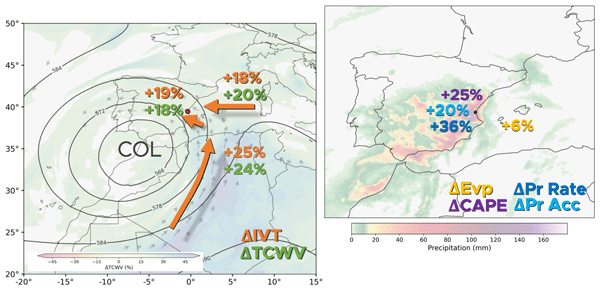
Human-caused warming intensified the late October 2024 Valencia extreme precipitation event. Using storyline simulations, we compared today’s climate with a cooler past climate while keeping the synoptic weather pattern the same. Warmer air and sea temperatures increased moisture, instability, and rainfall, showing that climate change amplified an already extreme storm.
Heikki Järvinen, Jouni Räisänen, Lauri Tuppi, Clément Bouvier, Antonio Sanchez-Benitez, Juniper Tyree, Antti Toropainen, Paolo Davini, Francisco Doblas-Reyes, Thomas Jung, Daniel Klocke, Jenni Kontkanen, Sebastian Milinski, Matteo Nurisso, Himansu Kesari Pradhan, and Irina Sandu
EGUsphere, https://doi.org/10.5194/egusphere-2026-3364, https://doi.org/10.5194/egusphere-2026-3364, 2026
Short summary
Short summary
There is rich process-level variability present in the new-generation kilometre-scale climate simulations. The EU’s Climate Change Adaptation Digital Twin (Climate DT) integrates global Earth observing systems and observation modelling capabilities – until now common only in weather prediction – into operational climate simulation workflow. This provides a novel framework for precise evaluation of fine-scale details of simulation data and informing adaptation decisions at local (city) scales.
Bernardo Maraldi, Nuno Rocha Monteiro, Marvin Axness, Daria Kuznetsova, Pablo Ortega, and Francisco Doblas-Reyes
EGUsphere, https://doi.org/10.5194/egusphere-2026-3251, https://doi.org/10.5194/egusphere-2026-3251, 2026
Short summary
Short summary
We investigate the impact of model resolution on the representation of the Madden Julian Oscillation (MJO) in a global climate model run at 25 km and 9 km of resolution. We evaluate the model representation of the intensity, propagation and variability of the MJO. This study reveals that resolution only partially improves the simulated MJO. It also shows how biases in the underlying ocean and atmosphere prevent the model from capturing the right MJO long-term variability
Aude Carréric, Pablo Ortega, Roberto Bilbao, Carlos Delgado-Torres, Vladimir Lapin, Ferran Lopez-Marti, Markus Donat, and Francisco Doblas-Reyes
Earth Syst. Dynam., 17, 717–737, https://doi.org/10.5194/esd-17-717-2026, https://doi.org/10.5194/esd-17-717-2026, 2026
Short summary
Short summary
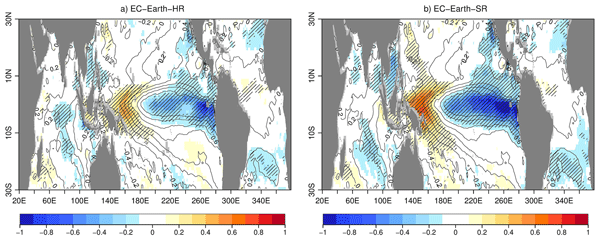
The paper assesses the impact of horizontal resolution of the EC-Earth climate model on its ability to predict El Nino Southern Oscillation (ENSO). The high-resolution simulations show better forecast skill linked to improved simulation of ENSO-related variability and ENSO teleconnections with the equatorial Atlantic. However, the remaining poor skill in the western Pacific highlights the importance of better understanding ENSO simulation errors and mean state biases to improve forecasts.
Diego Campos, Matías Olmo, Pep Cos, Margarida Samsó, and Francisco Doblas-Reyes
EGUsphere, https://doi.org/10.5194/egusphere-2026-2830, https://doi.org/10.5194/egusphere-2026-2830, 2026
Short summary
Short summary
Human influence on the Western Mediterranean climate was investigated using observations and climate model simulations covering the past seven decades. The results show a clear human fingerprint on regional warming driven mainly by greenhouse gas emissions. In contrast, rainfall changes remain highly uncertain and are dominated by natural variability, without a clear human signal. These findings improve the understanding of how climate change is affecting one of Europe’s most vulnerable regions.
Carlos Delgado-Torres, Markus G. Donat, Núria Pérez-Zanón, Verónica Torralba, Roberto Bilbao, Pierre-Antoine Bretonnière, Margarida Samsó-Cabré, Albert Soret, and Francisco J. Doblas-Reyes
Earth Syst. Dynam., 17, 41–56, https://doi.org/10.5194/esd-17-41-2026, https://doi.org/10.5194/esd-17-41-2026, 2026
Short summary
Short summary
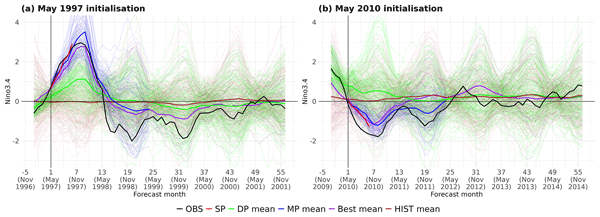
Many decisions require consistent climate information from seasonal to multi-year timescales. We assess seamless forecasts created by constraining seasonal and decadal predictions and compare them with initialised multi-annual forecasts. Multi-annual predictions provide the highest skill, but constrained forecasts still perform well and offer a low-cost, regularly updatable solution for delivering coherent climate information.
Manuel G. Marciani, Miguel Castrillo, Gladys Utrera, Mario C. Acosta, Bruno P. Kinoshita, and Francisco Doblas-Reyes
Geosci. Model Dev., 18, 9709–9721, https://doi.org/10.5194/gmd-18-9709-2025, https://doi.org/10.5194/gmd-18-9709-2025, 2025
Short summary
Short summary
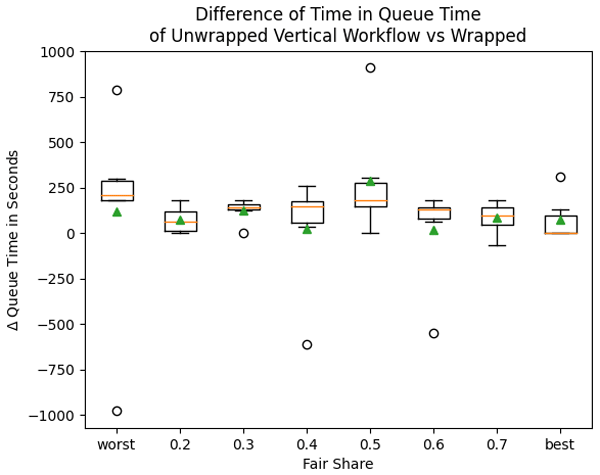
Earth System Model simulations are typically run on large, highly congested flagship computers using workflows. These workflows can consist of thousands of tasks. If these tasks are queued individually, the wait time can add up, resulting in a long response time. In this paper, we explore a technique for aggregating tasks into a single submission. We found that this simple technique reduced the time spent in the queue by up to 7 %.
Rashed Mahmood, Markus G. Donat, Roberto Bilbao, Pablo Ortega, Vladimir Lapin, Etienne Tourigny, and Francisco Doblas-Reyes
Earth Syst. Dynam., 16, 1923–1934, https://doi.org/10.5194/esd-16-1923-2025, https://doi.org/10.5194/esd-16-1923-2025, 2025
Short summary
Short summary
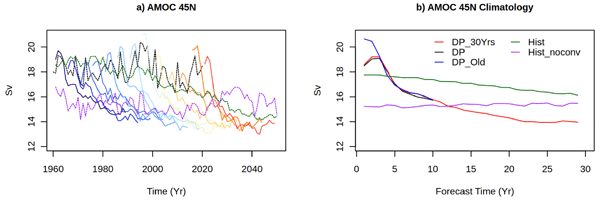
We present 30 year long initialized climate predictions run with the EC-Earth3 model. The predictions show high skill in most regions for near-surface temperatures, with some added skill from initialization for the first decade, but only very limited added skill beyond. The predictions exhibit drift associated with a persistent slowdown in Atlantic Meridonial Overturning Circulation , leaving the initialised predictions in a different climate state than the historical climate simulations.
Katherine Grayson, Stephan Thober, Aleksander Lacima-Nadolnik, Ivan Alsina-Ferrer, Llorenç Lledó, Ehsan Sharifi, and Francisco Doblas-Reyes
Geosci. Model Dev., 18, 5873–5890, https://doi.org/10.5194/gmd-18-5873-2025, https://doi.org/10.5194/gmd-18-5873-2025, 2025
Short summary
Short summary
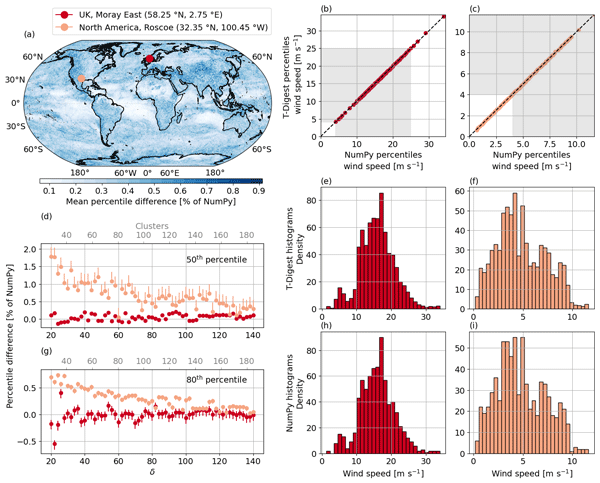
We present One_Pass (v0.8.0), a Python package enabling computation of statistics from streamed global climate model output using one-pass algorithms. Users often need statistics covering periods longer than the stream duration, requiring algorithms that do not store full time series. One-pass methods address this need while avoiding full data archiving, offering memory-efficient, accurate results for high-performance computing (HPC) workflows and downstream applications like bias adjustment.
Pep Cos, Matias Olmo, Diego Campos, Raül Marcos-Matamoros, Lluís Palma, Ángel G. Muñoz, and Francisco J. Doblas-Reyes
Weather Clim. Dynam., 6, 609–626, https://doi.org/10.5194/wcd-6-609-2025, https://doi.org/10.5194/wcd-6-609-2025, 2025
Short summary
Short summary
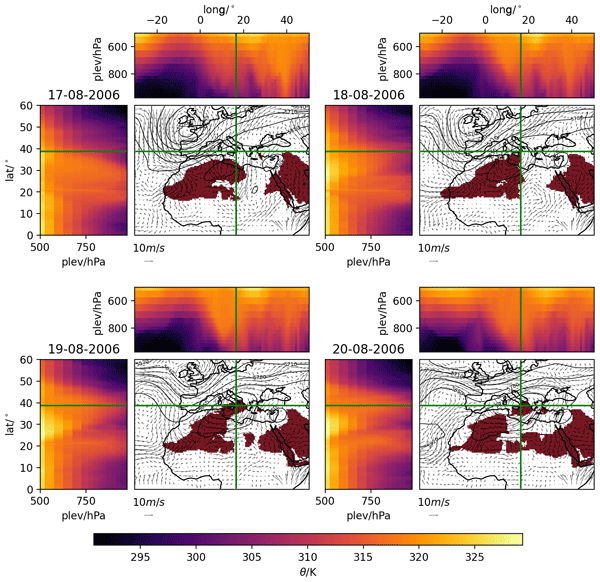
This work presents the identification of Saharan warm-air intrusions in the western Mediterranean, which are the displacement of air masses formed over the Sahara toward the west of the Mediterranean region. We focus on the recent past and obtain a catalogue of intrusion days. The results show the existence of different types of intrusions, important impacts on extremely high temperatures in the Mediterranean and Europe, and the dynamic mechanisms that can cause the onset of these events.

Colin G. Jones, Fanny Adloff, Ben B. B. Booth, Peter M. Cox, Veronika Eyring, Pierre Friedlingstein, Katja Frieler, Helene T. Hewitt, Hazel A. Jeffery, Sylvie Joussaume, Torben Koenigk, Bryan N. Lawrence, Eleanor O'Rourke, Malcolm J. Roberts, Benjamin M. Sanderson, Roland Séférian, Samuel Somot, Pier Luigi Vidale, Detlef van Vuuren, Mario Acosta, Mats Bentsen, Raffaele Bernardello, Richard Betts, Ed Blockley, Julien Boé, Tom Bracegirdle, Pascale Braconnot, Victor Brovkin, Carlo Buontempo, Francisco Doblas-Reyes, Markus Donat, Italo Epicoco, Pete Falloon, Sandro Fiore, Thomas Frölicher, Neven S. Fučkar, Matthew J. Gidden, Helge F. Goessling, Rune Grand Graversen, Silvio Gualdi, José M. Gutiérrez, Tatiana Ilyina, Daniela Jacob, Chris D. Jones, Martin Juckes, Elizabeth Kendon, Erik Kjellström, Reto Knutti, Jason Lowe, Matthew Mizielinski, Paola Nassisi, Michael Obersteiner, Pierre Regnier, Romain Roehrig, David Salas y Mélia, Carl-Friedrich Schleussner, Michael Schulz, Enrico Scoccimarro, Laurent Terray, Hannes Thiemann, Richard A. Wood, Shuting Yang, and Sönke Zaehle
Earth Syst. Dynam., 15, 1319–1351, https://doi.org/10.5194/esd-15-1319-2024, https://doi.org/10.5194/esd-15-1319-2024, 2024
Short summary
Short summary
We propose a number of priority areas for the international climate research community to address over the coming decade. Advances in these areas will both increase our understanding of past and future Earth system change, including the societal and environmental impacts of this change, and deliver significantly improved scientific support to international climate policy, such as future IPCC assessments and the UNFCCC Global Stocktake.
Bjorn Stevens, Stefan Adami, Tariq Ali, Hartwig Anzt, Zafer Aslan, Sabine Attinger, Jaana Bäck, Johanna Baehr, Peter Bauer, Natacha Bernier, Bob Bishop, Hendryk Bockelmann, Sandrine Bony, Guy Brasseur, David N. Bresch, Sean Breyer, Gilbert Brunet, Pier Luigi Buttigieg, Junji Cao, Christelle Castet, Yafang Cheng, Ayantika Dey Choudhury, Deborah Coen, Susanne Crewell, Atish Dabholkar, Qing Dai, Francisco Doblas-Reyes, Dale Durran, Ayoub El Gaidi, Charlie Ewen, Eleftheria Exarchou, Veronika Eyring, Florencia Falkinhoff, David Farrell, Piers M. Forster, Ariane Frassoni, Claudia Frauen, Oliver Fuhrer, Shahzad Gani, Edwin Gerber, Debra Goldfarb, Jens Grieger, Nicolas Gruber, Wilco Hazeleger, Rolf Herken, Chris Hewitt, Torsten Hoefler, Huang-Hsiung Hsu, Daniela Jacob, Alexandra Jahn, Christian Jakob, Thomas Jung, Christopher Kadow, In-Sik Kang, Sarah Kang, Karthik Kashinath, Katharina Kleinen-von Königslöw, Daniel Klocke, Uta Kloenne, Milan Klöwer, Chihiro Kodama, Stefan Kollet, Tobias Kölling, Jenni Kontkanen, Steve Kopp, Michal Koran, Markku Kulmala, Hanna Lappalainen, Fakhria Latifi, Bryan Lawrence, June Yi Lee, Quentin Lejeun, Christian Lessig, Chao Li, Thomas Lippert, Jürg Luterbacher, Pekka Manninen, Jochem Marotzke, Satoshi Matsouoka, Charlotte Merchant, Peter Messmer, Gero Michel, Kristel Michielsen, Tomoki Miyakawa, Jens Müller, Ramsha Munir, Sandeep Narayanasetti, Ousmane Ndiaye, Carlos Nobre, Achim Oberg, Riko Oki, Tuba Özkan-Haller, Tim Palmer, Stan Posey, Andreas Prein, Odessa Primus, Mike Pritchard, Julie Pullen, Dian Putrasahan, Johannes Quaas, Krishnan Raghavan, Venkatachalam Ramaswamy, Markus Rapp, Florian Rauser, Markus Reichstein, Aromar Revi, Sonakshi Saluja, Masaki Satoh, Vera Schemann, Sebastian Schemm, Christina Schnadt Poberaj, Thomas Schulthess, Cath Senior, Jagadish Shukla, Manmeet Singh, Julia Slingo, Adam Sobel, Silvina Solman, Jenna Spitzer, Philip Stier, Thomas Stocker, Sarah Strock, Hang Su, Petteri Taalas, John Taylor, Susann Tegtmeier, Georg Teutsch, Adrian Tompkins, Uwe Ulbrich, Pier-Luigi Vidale, Chien-Ming Wu, Hao Xu, Najibullah Zaki, Laure Zanna, Tianjun Zhou, and Florian Ziemen
Earth Syst. Sci. Data, 16, 2113–2122, https://doi.org/10.5194/essd-16-2113-2024, https://doi.org/10.5194/essd-16-2113-2024, 2024
Short summary
Short summary
To manage Earth in the Anthropocene, new tools, new institutions, and new forms of international cooperation will be required. Earth Virtualization Engines is proposed as an international federation of centers of excellence to empower all people to respond to the immense and urgent challenges posed by climate change.
Roberto Bilbao, Pablo Ortega, Didier Swingedouw, Leon Hermanson, Panos Athanasiadis, Rosie Eade, Marion Devilliers, Francisco Doblas-Reyes, Nick Dunstone, An-Chi Ho, William Merryfield, Juliette Mignot, Dario Nicolì, Margarida Samsó, Reinel Sospedra-Alfonso, Xian Wu, and Stephen Yeager
Earth Syst. Dynam., 15, 501–525, https://doi.org/10.5194/esd-15-501-2024, https://doi.org/10.5194/esd-15-501-2024, 2024
Short summary
Short summary
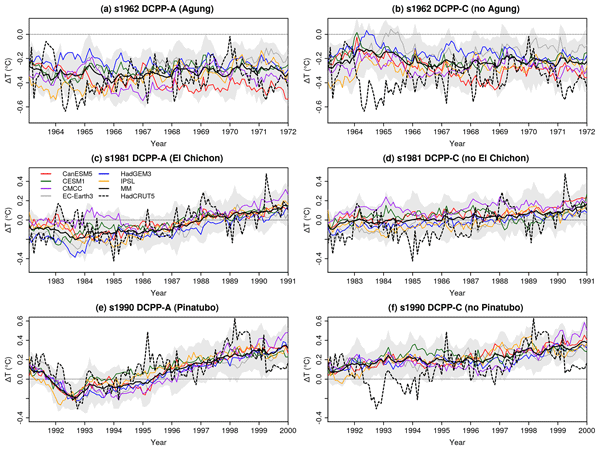
In recent decades three major volcanic eruptions have occurred: Mount Agung in 1963, El Chichón in 1982 and Mount Pinatubo in 1991. In this article we explore the climatic impacts of these volcanic eruptions with a purposefully designed set of simulations from six CMIP6 decadal prediction systems. We analyse the radiative and dynamical responses and show that including the volcanic forcing in these predictions is important to reproduce the observed surface temperature variations.
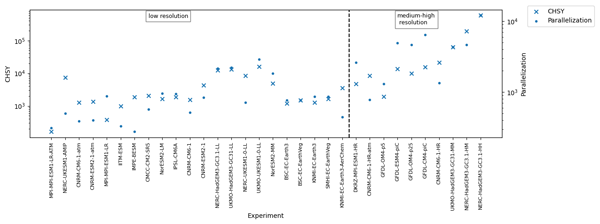
Mario C. Acosta, Sergi Palomas, Stella V. Paronuzzi Ticco, Gladys Utrera, Joachim Biercamp, Pierre-Antoine Bretonniere, Reinhard Budich, Miguel Castrillo, Arnaud Caubel, Francisco Doblas-Reyes, Italo Epicoco, Uwe Fladrich, Sylvie Joussaume, Alok Kumar Gupta, Bryan Lawrence, Philippe Le Sager, Grenville Lister, Marie-Pierre Moine, Jean-Christophe Rioual, Sophie Valcke, Niki Zadeh, and Venkatramani Balaji
Geosci. Model Dev., 17, 3081–3098, https://doi.org/10.5194/gmd-17-3081-2024, https://doi.org/10.5194/gmd-17-3081-2024, 2024
Short summary
Short summary
We present a collection of performance metrics gathered during the Coupled Model Intercomparison Project Phase 6 (CMIP6), a worldwide initiative to study climate change. We analyse the metrics that resulted from collaboration efforts among many partners and models and describe our findings to demonstrate the utility of our study for the scientific community. The research contributes to understanding climate modelling performance on the current high-performance computing (HPC) architectures.
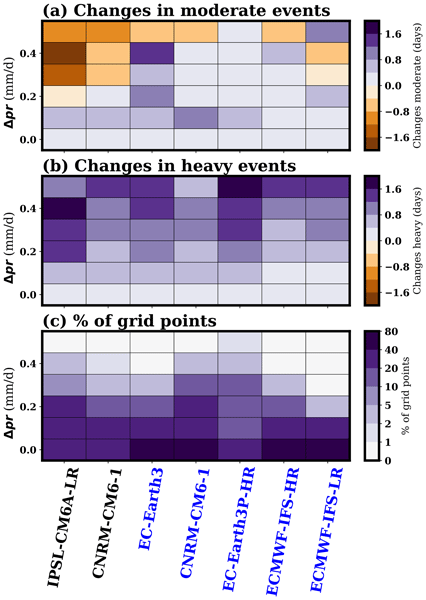
Elsa Mohino, Paul-Arthur Monerie, Juliette Mignot, Moussa Diakhaté, Markus Donat, Christopher David Roberts, and Francisco Doblas-Reyes
Earth Syst. Dynam., 15, 15–40, https://doi.org/10.5194/esd-15-15-2024, https://doi.org/10.5194/esd-15-15-2024, 2024
Short summary
Short summary
The impact of the Atlantic multidecadal variability (AMV) on the rainfall distribution and timing of the West African monsoon is not well known. Analysing model output, we find that a positive AMV enhances the number of wet days, daily rainfall intensity, and extremes over the Sahel and tends to prolong the monsoon length through later demise. Heavy rainfall events increase all over the Sahel, while moderate ones only occur in the north. Model biases affect the skill in simulating AMV impact.
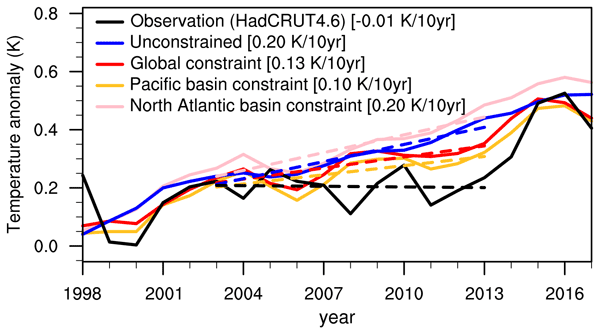
Rashed Mahmood, Markus G. Donat, Pablo Ortega, Francisco J. Doblas-Reyes, Carlos Delgado-Torres, Margarida Samsó, and Pierre-Antoine Bretonnière
Earth Syst. Dynam., 13, 1437–1450, https://doi.org/10.5194/esd-13-1437-2022, https://doi.org/10.5194/esd-13-1437-2022, 2022
Short summary
Short summary
Near-term climate change projections are strongly affected by the uncertainty from internal climate variability. Here we present a novel approach to reduce such uncertainty by constraining decadal-scale variability in the projections using observations. The constrained ensembles show significant added value over the unconstrained ensemble in predicting global climate 2 decades ahead. We also show the applicability of regional constraints for attributing predictability to certain ocean regions.
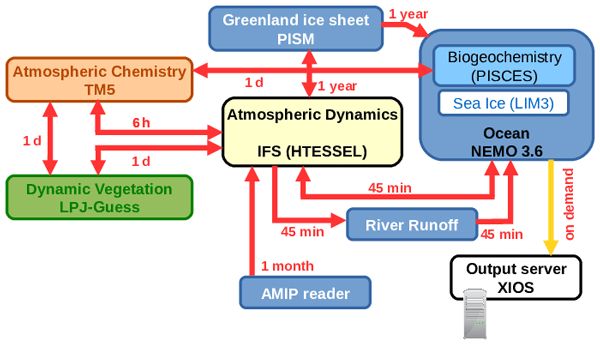
Ralf Döscher, Mario Acosta, Andrea Alessandri, Peter Anthoni, Thomas Arsouze, Tommi Bergman, Raffaele Bernardello, Souhail Boussetta, Louis-Philippe Caron, Glenn Carver, Miguel Castrillo, Franco Catalano, Ivana Cvijanovic, Paolo Davini, Evelien Dekker, Francisco J. Doblas-Reyes, David Docquier, Pablo Echevarria, Uwe Fladrich, Ramon Fuentes-Franco, Matthias Gröger, Jost v. Hardenberg, Jenny Hieronymus, M. Pasha Karami, Jukka-Pekka Keskinen, Torben Koenigk, Risto Makkonen, François Massonnet, Martin Ménégoz, Paul A. Miller, Eduardo Moreno-Chamarro, Lars Nieradzik, Twan van Noije, Paul Nolan, Declan O'Donnell, Pirkka Ollinaho, Gijs van den Oord, Pablo Ortega, Oriol Tintó Prims, Arthur Ramos, Thomas Reerink, Clement Rousset, Yohan Ruprich-Robert, Philippe Le Sager, Torben Schmith, Roland Schrödner, Federico Serva, Valentina Sicardi, Marianne Sloth Madsen, Benjamin Smith, Tian Tian, Etienne Tourigny, Petteri Uotila, Martin Vancoppenolle, Shiyu Wang, David Wårlind, Ulrika Willén, Klaus Wyser, Shuting Yang, Xavier Yepes-Arbós, and Qiong Zhang
Geosci. Model Dev., 15, 2973–3020, https://doi.org/10.5194/gmd-15-2973-2022, https://doi.org/10.5194/gmd-15-2973-2022, 2022
Short summary
Short summary
The Earth system model EC-Earth3 is documented here. Key performance metrics show physical behavior and biases well within the frame known from recent models. With improved physical and dynamic features, new ESM components, community tools, and largely improved physical performance compared to the CMIP5 version, EC-Earth3 represents a clear step forward for the only European community ESM. We demonstrate here that EC-Earth3 is suited for a range of tasks in CMIP6 and beyond.
Josep Cos, Francisco Doblas-Reyes, Martin Jury, Raül Marcos, Pierre-Antoine Bretonnière, and Margarida Samsó
Earth Syst. Dynam., 13, 321–340, https://doi.org/10.5194/esd-13-321-2022, https://doi.org/10.5194/esd-13-321-2022, 2022
Short summary
Short summary
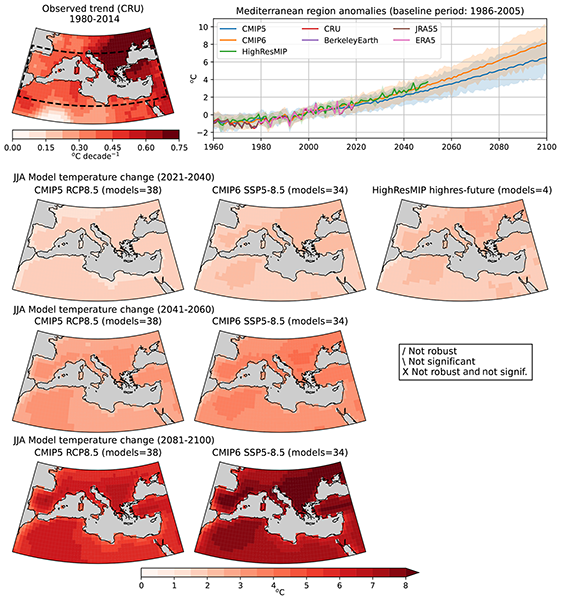
The Mediterranean has been identified as being more affected by climate change than other regions. We find that amplified warming during summer and annual precipitation declines are expected for the 21st century and that the magnitude of the changes will mainly depend on greenhouse gas emissions. By applying a method giving more importance to models with greater performance and independence, we find that the differences between the last two community modelling efforts are reduced in the region.
Kanika Taneja, Silvia M. Calderón, Harri Kokkola, Juha Tonttila, Sami Romakkaniemi, Seethala Chellappan, Antti Arola, Antti Lipponen, Taina Yli-Juuti, Snehitha M. Kommula, Tuukka Petäjä, Markku Kulmala, and Tero Mielonen
EGUsphere, https://doi.org/10.5194/egusphere-2026-4750, https://doi.org/10.5194/egusphere-2026-4750, 2026
This preprint is open for discussion and under review for Atmospheric Chemistry and Physics (ACP).
Short summary
Short summary
Vegetation can cool the climate by releasing gases that form aerosols, which scatter sunlight and brighten clouds. To quantify this feedback in Finland and the United States, we combine field measurements of aerosols and satellite observations of clouds. It is essential to select near-ideal clouds; otherwise, cloud-related cooling is underestimated. Cloud cooling matched aerosol cooling at the clean site in Finland and was nearly three times stronger at the rural site in the United States.
Anna Lea Albright, Bjorn Stevens, and Martin Wirth
Atmos. Meas. Tech., 19, 5973–5987, https://doi.org/10.5194/amt-19-5973-2026, https://doi.org/10.5194/amt-19-5973-2026, 2026
Short summary
Short summary
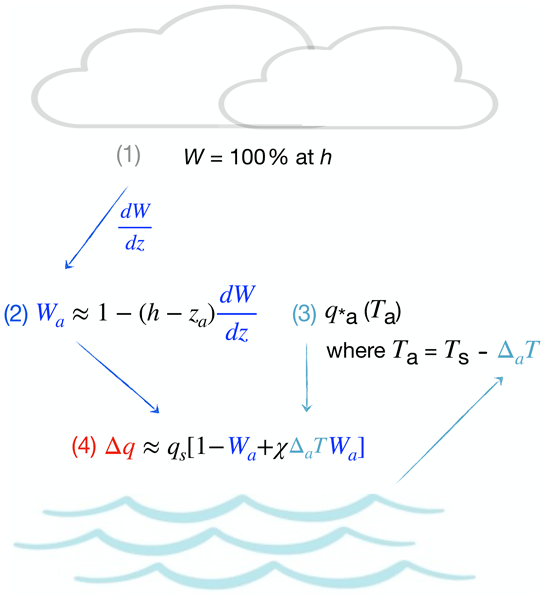
Ocean evaporation transfers heat and moisture to the atmosphere, shaping our weather and climate. Yet humidity just above the ocean is difficult to measure from space. Here we show that lasers measuring low cloud base height can infer near-surface humidity. Measurements from ships, aircraft, and weather balloons are used to validate the method. Applied to satellites, this method could help fill gaps in humidity measurements over the ocean.
Woosub Roh, Masaki Satoh, Romain Fiévet, Mark D. Fielding, Robin J. Hogan, Bjorn Stevens, Takuji Kubota, and Hajime Okamoto
EGUsphere, https://doi.org/10.5194/egusphere-2026-3606, https://doi.org/10.5194/egusphere-2026-3606, 2026
This preprint is open for discussion and under review for Geoscientific Model Development (GMD).
Short summary
Short summary
Clouds and rainfall are still difficult to represent accurately in weather and climate models. We introduce a new project called the EarthCARE–ORCESTRA Model Intercomparison Project (ECOMIP), which uses observations from the new Earth Cloud, Aerosol and Radiation Explorer (EarthCARE) satellite and a tropical field campaign to compare and improve atmospheric models. Initial results show that different models can reproduce the same storm system but differ in its size and structure.

Pablo Goitia, Manuel G. Marciani, Miguel Castrillo, and Mario C. Acosta
Geosci. Model Dev., 19, 8501–8514, https://doi.org/10.5194/gmd-19-8501-2026, https://doi.org/10.5194/gmd-19-8501-2026, 2026
Short summary
Short summary
Earth System Model workflows commonly run on highly congested high-performance computing platforms, meaning that each individual workflow task potentially faces lengthy waiting times in the queues of the schedulers. In this work, we evaluate the task aggregation approach in EC-Earth3 workflows to reduce the queue times and, consequently, the total execution time. The results show up to 23% more simulated years over the same time span, with queuing times reduced by up to a factor of 12.33.
Ayush Prasad, Ioanna Merkouriadi, Aleksi Nummelin, Jack Landy, Arttu Jutila, and Glen E. Liston
EGUsphere, https://doi.org/10.5194/egusphere-2026-4727, https://doi.org/10.5194/egusphere-2026-4727, 2026
This preprint is open for discussion and under review for The Cryosphere (TC).
Short summary
Short summary
Snow on Arctic sea ice is blown by wind into uneven drifts around ridges, which affects how well we can measure the thickness of the ice from satellites. Numerical models can capture this but are far too slow to run across the whole Arctic. We trained a machine-learning model on detailed simulations of small patches of ice, then applied it across the Arctic using satellite measurements of how rough the ice surface is.
Niklas Bruns, Andreas Huth, Stephan Thober, and Samuel M. Fischer
EGUsphere, https://doi.org/10.5194/egusphere-2026-4918, https://doi.org/10.5194/egusphere-2026-4918, 2026
This preprint is open for discussion and under review for Geoscientific Model Development (GMD).
Short summary
Short summary
Forests and water are tightly linked: trees shape how water moves through landscapes, while water availability controls forest growth. Models of forests and hydrology are typically developed separately. We coupled an individual-based forest model with a distributed hydrological model for a German catchment. Dynamic vegetation substantially altered water partitioning, shifting evapotranspiration towards transpiration, and river discharge was found to carry information about forest productivity.
Oskari Rantala, Jouni A. Räisänen, Jenni Rauhala, and Marja Bister
Weather Clim. Dynam., 7, 1571–1592, https://doi.org/10.5194/wcd-7-1571-2026, https://doi.org/10.5194/wcd-7-1571-2026, 2026
Short summary
Short summary
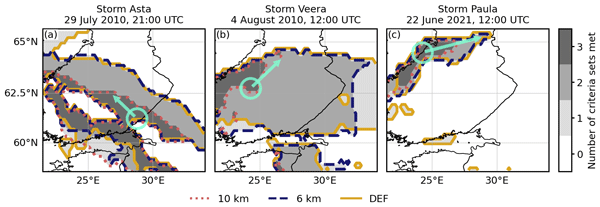
Derechos are widespread long-lasting windstorms associated with thunderstorms. They can cause damage comparable to tornadoes. Using data from derechos in Finland and results from earlier studies, we develop three criteria sets to identify atmospheric conditions favoring derecho formation in Finland. Application of these criteria sets to historical data shows that conditions favoring derechos have become more common in Finland during the recent decades.

Mehdi Pasha Karami, Torben Koenigk, Shiyu Wang, René Navarro Labastida, Tim Kruschke, Aude Carréric, Pablo Ortega, Klaus Wyser, Ramon Fuentes Franco, Agatha M. de Boer, Marie Sicard, and Aitor Aldama Campino
Earth Syst. Dynam., 17, 1151–1176, https://doi.org/10.5194/esd-17-1151-2026, https://doi.org/10.5194/esd-17-1151-2026, 2026
Short summary
Short summary
This study uses a high-resolution global climate model to simulate future climate, with a particular focus on the Arctic and North Atlantic. The model projects a nearly ice-free Arctic by 2040. The paper also introduces a framework to diagnose deep-water formation (DWF) in the Labrador, Irminger, and Greenland Seas and to quantify their regional contributions to the Atlantic Meridional Overturning Circulation (AMOC), revealing how different ocean regions contribute to the weakening of AMOC in a warming climate.
Matteo Nurisso, Jost von Hardenberg, Marco Cadau, Silvia Caprioli, Paolo Ghinassi, Supriyo Ghosh, Nikolay Koldunov, Natalia Nazarova, Maqsood Mubarak Rajput, Emanuele Tovazzi, and Paolo Davini
Geosci. Model Dev., 19, 7725–7740, https://doi.org/10.5194/gmd-19-7725-2026, https://doi.org/10.5194/gmd-19-7725-2026, 2026
Short summary
Short summary
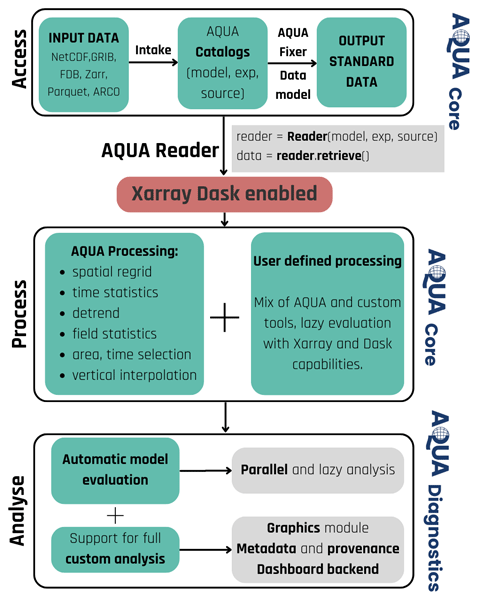
We present a new open-source software called AQUA designed to handle and evaluate the vast amounts of data produced by high-resolution climate simulations. As climate models become more detailed, their output can become too large and complex for traditional analysis methods. We introduce a new framework for data access, processing, and comparison that is fast, reliable, and easy to automate. Our results show that it can efficiently manage very large datasets and support real-time quality checks.
Diajeng W. Atmojo, Katja Weigel, Arthur Grundner, Marika M. Holland, Dmitry Sidorenko, and Veronika Eyring
The Cryosphere, 20, 4437–4464, https://doi.org/10.5194/tc-20-4437-2026, https://doi.org/10.5194/tc-20-4437-2026, 2026
Short summary
Short summary
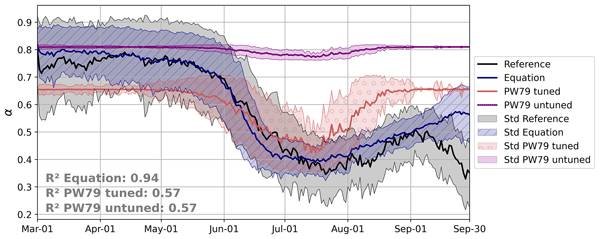
This study presents an observation-driven sea ice albedo parametrisation by discovering an equation using symbolic regression, an interpretable machine learning method. Leveraging satellite and reanalyses data, our discovered equation identifies high sensitivity to thin snow and the weighted temperature difference between sea ice surface and 2 m air as critical to determine sea ice albedo. Our findings contribute to improving Arctic climate projections and understanding.
Ramiro I. Saurral, Anna Martín-Perellón, Diego A. Campos, Juan Jesús González-Alemán, Saskia Loosveldt-Tomas, and Pablo Ortega
EGUsphere, https://doi.org/10.5194/egusphere-2026-4187, https://doi.org/10.5194/egusphere-2026-4187, 2026
This preprint is open for discussion and under review for Earth System Dynamics (ESD).
Short summary
Short summary
The Mediterranean region is frequently affected by very intense precipitation events caused by cyclones. In this study, we analyze a new dataset of climate change experiments built using a more detailed representation of the Earth surface compared with typical simulations of the global climate. In particular, we assess whether this finer representation provides more reliable simulations of how extreme precipitation evolves in the present and might evolve in the future.
Eneko Martin-Martinez, Eduardo Moreno-Chamarro, Fraser William Goldsworth, Jin-Song von Storch, Cristina Arumi, Daria Kuznetsova, Saskia Loosveldt-Tomas, Pierre-Antoine Bretonnière, and Pablo Ortega
Ocean Sci., 22, 2307–2331, https://doi.org/10.5194/os-22-2307-2026, https://doi.org/10.5194/os-22-2307-2026, 2026
Short summary
Short summary
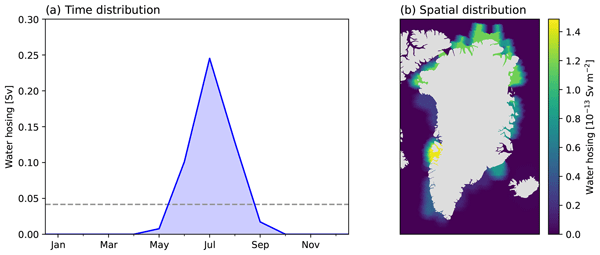
We investigate the impact of Greenland meltwaters on the ocean circulation and the North Atlantic region. To this end, we impose a quasi-realistic distribution of freshwater fluxes in a global climate model with 8-km horizontal resolution, much finer than the standard 100-km scale. The study reveals that the meltwaters disperse unevenly across the North Atlantic, guided by boundary currents and modulated by gradual changes in the large-scale circulation, which undergoes a progressive weakening.
Matthias Cuntz, Stephan Thober, Anne Verhoef, Yijian Zeng, Aaron Boone, Agnès Ducharne, Sujan Koirala, David M. Lawrence, Philipp de Vrese, Carsten Montzka, Sonia I. Seneviratne, Harry Vereecken, Dani Or, Salma Tafasca, Naoki Mizukami, Rich Ellis, Patrick C. McGuire, and Lukas Gudmundsson
EGUsphere, https://doi.org/10.5194/egusphere-2026-4223, https://doi.org/10.5194/egusphere-2026-4223, 2026
Preprint archived
Short summary
Short summary
Land surface models (LSMs) are essential tools to analyze future climate change. Here we pushed state-of-the-art LSMs out of their comfort zone revealing hidden connections between processes encoded into the models. The LSMs reacted differently due to complex, sometimes counter-intuitive interactions of different water fluxes. We identified surface runoff and soil evaporation as the two main reasons behind model differences, which should be improved by using more mechanistic descriptions.
Juniper Tyree, Robert Underwood, Clément Bouvier, Daniel Köhler, Tim Reichelt, Peter Dueben, Sara Faghih-Naini, Heikki Järvinen, and Milan Klöwer
EGUsphere, https://doi.org/10.5194/egusphere-2026-4266, https://doi.org/10.5194/egusphere-2026-4266, 2026
Short summary
Short summary
Many scientists use computers to simulate our world. This is producing too much data. Data can be made smaller using lossy compression. But many scientists fear losing important details and avoid it. We created Compression Safeguards to protect scientists and make lossy compression safe. First, scientists say what’s important in their data. Then the Safeguards correct the compressed data so that nothing important is lost. We test many examples: Safeguards protect but make the data less smaller.
Antti Toropainen, Mika Rantanen, and Jouni Räisänen
EGUsphere, https://doi.org/10.5194/egusphere-2026-3721, https://doi.org/10.5194/egusphere-2026-3721, 2026
This preprint is open for discussion and under review for Geoscientific Model Development (GMD).
Short summary
Short summary
This study describes a tool for quantifying the effect of climate change on locally observed temperatures at time-scales ranging from a day to a month. The impact of climate change is estimated by "transferring" past temperature observations to stationary pre-industrial, present-day and future climates by using predicted temperature changes from global climate models. We apply the tool to a record-hot heatwave which impacted Northern Europe in July 2025.
Pin-Hsin Hu, Christian H. Reick, Reiner Schnur, Axel Kleidon, and Martin Claussen
Geosci. Model Dev., 19, 6357–6402, https://doi.org/10.5194/gmd-19-6357-2026, https://doi.org/10.5194/gmd-19-6357-2026, 2026
Short summary
Short summary
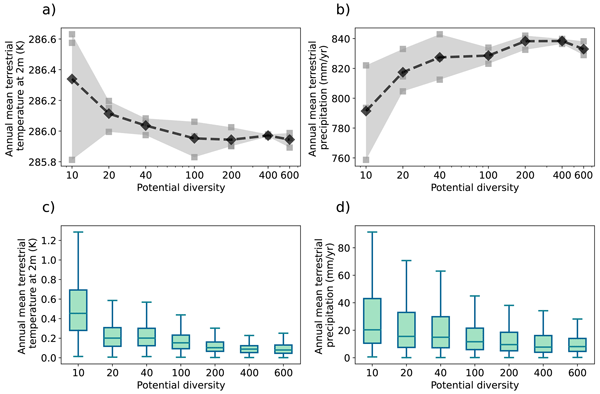
We introduce the new plant functional diversity model JeDi-BACH, a novel tool that integrates the Jena Diversity Model (JeDi) within the land component of the ICON Earth System Model. JeDi-BACH captures a richer set of plant trait variations based on environmental filtering and functional tradeoffs without a priori knowledge of the vegetation types. JeDi-BACH represents a significant advancement in modeling the complex interactions between plant functional diversity and climate.
Hans Segura, Allison A. Wing, Heike Kalesse-Los, Ruben Carrasco, James H. Ruppert Jr., Anna Trosits, Louise Nuijens, Felix Ament, Daniel Blandfort, Michael M. Bell, Pierre Bosser, Delián Colón-Burgos, Geet George, Joelle Habib, Jochen Horstmann, Friedhelm Jansen, Lukas Kluft, Robert Kopte, Klas Ove Möller, Peristera Paschou, Hauke Schmidt, Michael Schlundt, Ilya Serikov, Martin Stelzner, Elizabeth J. Thompson, Werenfrid Wimmer, Marcus Dengler, and Daniel Klocke
Earth Syst. Sci. Data Discuss., https://doi.org/10.5194/essd-2026-343, https://doi.org/10.5194/essd-2026-343, 2026
Preprint under review for ESSD
Short summary
Short summary
BOWTIE (Beobachtung von Ozean und Wolken - Das Trans ITCZ Experiment) was an observational campaign occurring in summer 2024, which intensively took measurements from the upper ocean to the upper troposphere in the wettest region of the tropical Atlantic. Here, we provide an overview of the measurements and instrumentation, including remote sensing and conventional, which targeted small-scale processes under different weather regimes, from calm doldrums to gusty, precipitating events.
Renu Singh, Robert Brunstein, Antonia Jost, Yana Hasson, Thomas Rackow, Claire Monteleoni, Christian Lessig, and Guillaume Couairon
EGUsphere, https://doi.org/10.48550/arXiv.2605.29976, https://doi.org/10.48550/arXiv.2605.29976, 2026
This preprint is open for discussion and under review for Geoscientific Model Development (GMD).
Short summary
Short summary
We investigate if two machine learning weather models, ArchesWeather and ArchesWeatherGen can simulate long-term climate trends. We adapt the models to be driven by observed sea surface temperature (SST), and perform predictions 1978–2024. We show they capture important aspects of observed climate and respond significantly to artificially warmed SST, comparable with reanalysis and physics-based climate models. They require significantly less compute resources than traditional climate models.
Clara J. A. Bayley, Ann Kristin Naumann, Florian Poydenot, Raphaela Vogel, Bjorn Stevens, and Shin-Ichiro Shima
Geosci. Model Dev., 19, 6121–6142, https://doi.org/10.5194/gmd-19-6121-2026, https://doi.org/10.5194/gmd-19-6121-2026, 2026
Short summary
Short summary
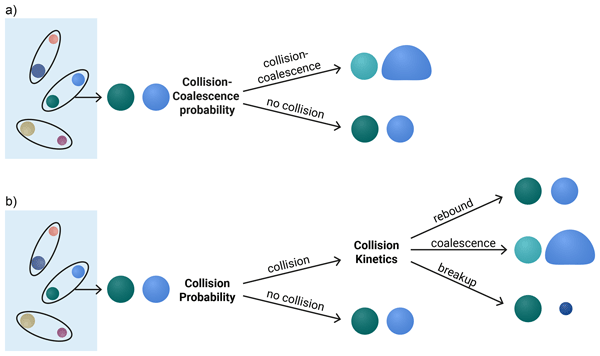
We are developing a model called CLEO, a type of “Superdroplet Model” (SDM) for cloud microphysics, to try to overcome some of the issues faced by climate models which are caused by errors in cloud modelling. Here we describe the equations for cloud microphysics CLEO uses and how we solve them, such as to see how water-droplets move around and grow/shrink in the atmosphere. We also provide some demonstrations of the microphysical processes we model to show that CLEO works as intended.
Clara J. A. Bayley, Tobias Kölling, Ann Kristin Naumann, Raphaela Vogel, and Bjorn Stevens
Geosci. Model Dev., 19, 6099–6120, https://doi.org/10.5194/gmd-19-6099-2026, https://doi.org/10.5194/gmd-19-6099-2026, 2026
Short summary
Short summary
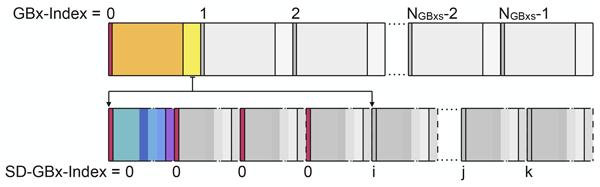
Cloud microphysics is a leading source of error in both regional and global climate models and this limits our ability to understand the Earth’s climate and how it is changing. However a fairly new type of model called a Superdroplet Model (SDM) may improve both regional and global models if it can be made cost-efficient enough. Hence we are introducing a novel version of SDM, called CLEO, and it's key features that make it efficient, especially on very high performance,
exascale, computers.
Tobias Spiegl, Norel Rimbu, Franziska Kappenberger, Xiaojie Hao, Wenjuan Huo, Stephan Thober, Ulrike Langematz, and Gerrit Lohmann
EGUsphere, https://doi.org/10.5194/egusphere-2026-3630, https://doi.org/10.5194/egusphere-2026-3630, 2026
Short summary
Short summary
Natural solar signals are not fixed in time. During past centennial-scale solar minima, reduced solar activity promoted summer heavy precipitation through coupled changes in ozone, sea ice and storm tracks. In a warmer future climate, this pathway weakens, showing that anthropogenic warming can reshape how natural forcings translate into regional weather extremes.
Diego A. Campos, Katherine Grayson, Ramiro I. Saurral, Sebastian Beyer, Amal John, Matías Olmo, and Francisco Doblas-Reyes
Weather Clim. Dynam., 7, 1153–1171, https://doi.org/10.5194/wcd-7-1153-2026, https://doi.org/10.5194/wcd-7-1153-2026, 2026
Short summary
Short summary
Human-caused warming intensified the late October 2024 Valencia extreme precipitation event. Using storyline simulations, we compared today’s climate with a cooler past climate while keeping the synoptic weather pattern the same. Warmer air and sea temperatures increased moisture, instability, and rainfall, showing that climate change amplified an already extreme storm.
Helene Marie Gloeckner, Theresa Mieslinger, Nina Robbins-Blanch, Geet George, Lukas Kluft, Tobias Kölling, Sandrine Bony, Julia Miriam Windmiller, and Bjorn Stevens
Earth Syst. Sci. Data, 18, 4425–4450, https://doi.org/10.5194/essd-18-4425-2026, https://doi.org/10.5194/essd-18-4425-2026, 2026
Short summary
Short summary
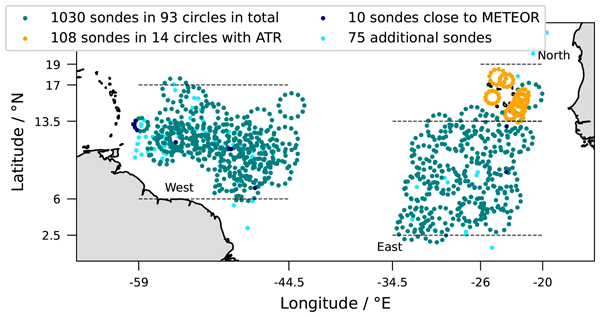
As part of the ORCESTRA (Organized Convection and EarthCARE Studies over the Tropical Atlantic) measurement field campaign in August and September 2024, 1191 dropsondes were deployed over the tropical Atlantic. They measure temperature, humidity, and horizontal winds throughout the atmosphere. Here, we present the resulting datasets, which contain different levels of quality controls as well as derived vertical winds. The data will help to understand processes within the tropical rain belt in the Atlantic.
Beate Geyer, Angelo Campanale, Evgenii Churiulin, Hendrik Feldmann, Klaus Goergen, Stefan Hagemann, Ha Thi Minh Ho-Hagemann, Muhammed Muhshif Karadan, Klaus Keuler, Pavel Khain, Divyaja Lawand, Patrick Ludwig, Vera Maurer, Sergei Petrov, Stefan Poll, Christopher Purr, Emmanuele Russo, Martina Schubert-Frisius, Jan-Peter Schulz, Shweta Singh, Christian Steger, Heimo Truhetz, and Andreas Will
Geosci. Model Dev., 19, 5439–5490, https://doi.org/10.5194/gmd-19-5439-2026, https://doi.org/10.5194/gmd-19-5439-2026, 2026
Short summary
Short summary
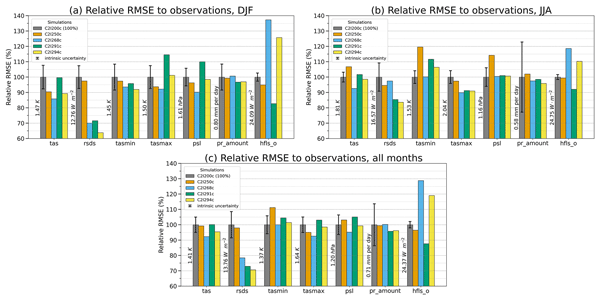
Complex models in environmental science typically have a lot of tuning parameters, which has to be set by the users depending on the application. This study presents a new method of objective tuning of a huge number of parameters, by combining expert judgement with automated tuning called Linear Meta-Model optimisation (LiMMo). The method is successfully applied to the regional climate model named ICON (Icosahedral Non-hydrostatic)-CLM (Climate Limited-area Modelling) over Europe.
Heikki Järvinen, Jouni Räisänen, Lauri Tuppi, Clément Bouvier, Antonio Sanchez-Benitez, Juniper Tyree, Antti Toropainen, Paolo Davini, Francisco Doblas-Reyes, Thomas Jung, Daniel Klocke, Jenni Kontkanen, Sebastian Milinski, Matteo Nurisso, Himansu Kesari Pradhan, and Irina Sandu
EGUsphere, https://doi.org/10.5194/egusphere-2026-3364, https://doi.org/10.5194/egusphere-2026-3364, 2026
Short summary
Short summary
There is rich process-level variability present in the new-generation kilometre-scale climate simulations. The EU’s Climate Change Adaptation Digital Twin (Climate DT) integrates global Earth observing systems and observation modelling capabilities – until now common only in weather prediction – into operational climate simulation workflow. This provides a novel framework for precise evaluation of fine-scale details of simulation data and informing adaptation decisions at local (city) scales.
Bernardo Maraldi, Nuno Rocha Monteiro, Marvin Axness, Daria Kuznetsova, Pablo Ortega, and Francisco Doblas-Reyes
EGUsphere, https://doi.org/10.5194/egusphere-2026-3251, https://doi.org/10.5194/egusphere-2026-3251, 2026
Short summary
Short summary
We investigate the impact of model resolution on the representation of the Madden Julian Oscillation (MJO) in a global climate model run at 25 km and 9 km of resolution. We evaluate the model representation of the intensity, propagation and variability of the MJO. This study reveals that resolution only partially improves the simulated MJO. It also shows how biases in the underlying ocean and atmosphere prevent the model from capturing the right MJO long-term variability
M. Andrea Orihuela-García, Yohan Ruprich-Robert, Vladimir Lapin, Saskia Loosveldt Tomas, Raffaele Bernardello, Margarida Samsó-Cabré, Pierre-Antoine Bretonnière, Miguel Castrillo, and Martí Galí
Biogeosciences, 23, 4083–4112, https://doi.org/10.5194/bg-23-4083-2026, https://doi.org/10.5194/bg-23-4083-2026, 2026
Short summary
Short summary
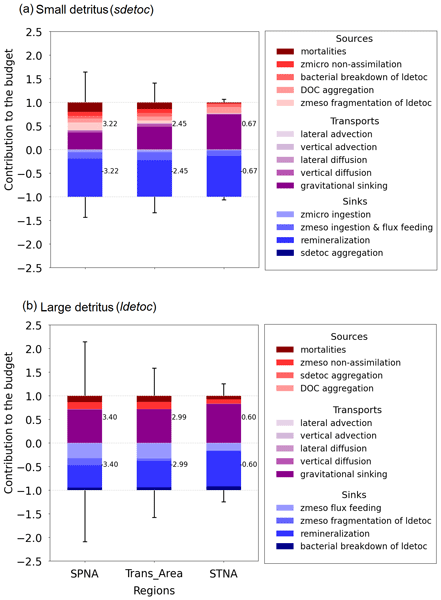
We use a biogeochemical model to examine how particulate organic carbon (POC) is produced, transformed and transported to the deep ocean. Vertical flux attenuation arises from several interacting processes: export pathways, particle lability, temperature-dependent degradation, and zooplankton transformations, leading to strongest attenuation in the most productive region. Together with extensive comparison to observations, such a budgeting approach can help constrain model projections.
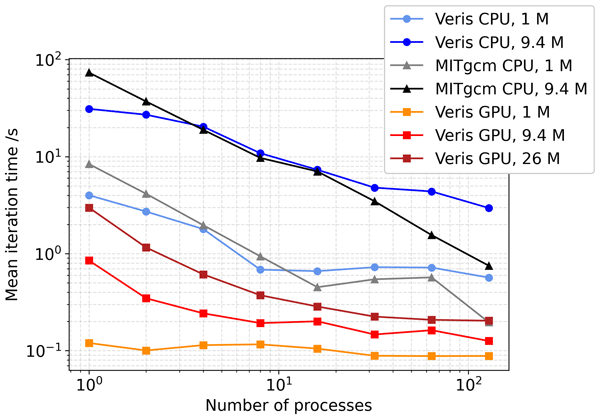
Jan P. Gärtner, Martin Losch, Suvarchal K. Cheedela, Markus Jochum, and Roman Nuterman
Geosci. Model Dev., 19, 5225–5236, https://doi.org/10.5194/gmd-19-5225-2026, https://doi.org/10.5194/gmd-19-5225-2026, 2026
Short summary
Short summary
Climate simulations help us understand the Earth system and its evolution. The models used to perform these simulations are highly complex, require significant programming expertise to build and consume a lot of energy. A key component of climate models is their sea ice components. In this work, we present a sea ice model that offers an easier development process while maintaining strong performance. The model is able to run on a computer's graphics card, which greatly reduces its energy usage.
Oriol Tintó Prims, Sergi Palomas, Simone Vacondio, and Mario C. Acosta
EGUsphere, https://doi.org/10.5194/egusphere-2026-1661, https://doi.org/10.5194/egusphere-2026-1661, 2026
Short summary
Short summary
Earth System models are our main tools to study the climate. They consist of different components, like the atmosphere and ocean. We investigated the hidden inefficiencies of running these components one after the other rather than simultaneously. By defining a new metric, we enable developers to quantify the exact cost of this sequential approach. This helps identify wasted computing resources, ultimately guiding the design of faster and more efficient climate models for the future.
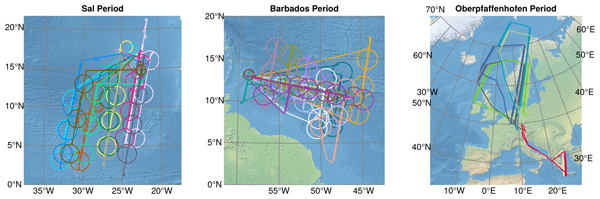
Silke Groß, Florian Ewald, Bjorn Stevens, Martin Wirth, Georgios Dekoutsidis, André Ehrlich, Dimitra Kouklaki, Konstantin Krüger, Sophie Rosenburg, Lea Volkmer, Jonas von Bismark, Lutz Hirsch, Anna E. Luebke, Eleni Marinou, Bernhard Mayer, Montserrat Pinol Sole, Manfred Wendisch, Julia Windmiller, Vassilis Amiridis, Rob Koopman, Takuji Kubota, and Markus Rapp
Atmos. Meas. Tech., 19, 3933–3959, https://doi.org/10.5194/amt-19-3933-2026, https://doi.org/10.5194/amt-19-3933-2026, 2026
Short summary
Short summary
In May 2024 the joint European Space Agency (ESA) and the Japan Aerospace Exploration Agency (JAXA) mission EarthCARE was launched. A similar payload as on the satellite was set up on the German research aircraft HALO, and deployed during an extensive measurement campaign to validated the satellite. We present our instrumentation, the measurements, and its potential for the validation of EarthCARE. We show first validation results and assessments of the EarthCARE data quality.
Aude Carréric, Pablo Ortega, Roberto Bilbao, Carlos Delgado-Torres, Vladimir Lapin, Ferran Lopez-Marti, Markus Donat, and Francisco Doblas-Reyes
Earth Syst. Dynam., 17, 717–737, https://doi.org/10.5194/esd-17-717-2026, https://doi.org/10.5194/esd-17-717-2026, 2026
Short summary
Short summary
The paper assesses the impact of horizontal resolution of the EC-Earth climate model on its ability to predict El Nino Southern Oscillation (ENSO). The high-resolution simulations show better forecast skill linked to improved simulation of ENSO-related variability and ENSO teleconnections with the equatorial Atlantic. However, the remaining poor skill in the western Pacific highlights the importance of better understanding ENSO simulation errors and mean state biases to improve forecasts.
Tom Dörffel, Natalia Mikula, Lisa Schielicke, Theresa Kiszler, Davide Faranda, Berengere Dubrulle, and Nikki Vercauteren
EGUsphere, https://doi.org/10.5194/egusphere-2026-2918, https://doi.org/10.5194/egusphere-2026-2918, 2026
Short summary
Short summary
We investigate how two different indicators related to measures of energy transfer can be used to assess the dynamics of tropical cyclones. One indicator is based on the energy redistribution across length-scales and the other one is based on more fundamental thermodynamic principles. This research demonstrates the potential of these indicators of being used as predictors for the intensity change of tropical cyclones even in under-resolved simulations.
Diego Campos, Matías Olmo, Pep Cos, Margarida Samsó, and Francisco Doblas-Reyes
EGUsphere, https://doi.org/10.5194/egusphere-2026-2830, https://doi.org/10.5194/egusphere-2026-2830, 2026
Short summary
Short summary
Human influence on the Western Mediterranean climate was investigated using observations and climate model simulations covering the past seven decades. The results show a clear human fingerprint on regional warming driven mainly by greenhouse gas emissions. In contrast, rainfall changes remain highly uncertain and are dominated by natural variability, without a clear human signal. These findings improve the understanding of how climate change is affecting one of Europe’s most vulnerable regions.
Jerry Raj, Elsa Mohino, Belén Rodríguez-Fonseca, Teresa Losada, Thomas Rackow, and Tobias Becker
EGUsphere, https://doi.org/10.5194/egusphere-2026-2879, https://doi.org/10.5194/egusphere-2026-2879, 2026
Short summary
Short summary
African Easterly Waves drive most of the rainfall across West Africa and spawn many Atlantic hurricanes. Using a global coupled climate model at a fine resolution, we checked how AEWs will change in a warming world. Our results show that the waves will intensify over land, bringing more extreme downpours to parts of the Sahel while the western Sahel dries. These shifts threaten food security and increase flood risk for one of the world's most climate-vulnerable regions.
Hairu Ding, Bjorn Stevens, Frank Lunkeit, and Nedjeljka Žagar
EGUsphere, https://doi.org/10.5194/egusphere-2026-2787, https://doi.org/10.5194/egusphere-2026-2787, 2026
Short summary
Short summary
Stratocumulus cover large areas of the low-latitude oceans and influence Earth’s solar radiation. This work investigates the relationship between large-scale circulation and stratocumulus variability across timescales. The results help explain inconsistencies in previously proposed large-scale mechanisms and highlight that stratocumulus are not controlled by a single factor (lower-tropospheric stability), although they correlate strongly on long timescales.
Hugues Goosse, Cecile Davrinche, Benjamin Richaud, Dániel Topál, Stephy Libera, Alberto C. Naveira Garabato, Alessandro Silvano, Martin Vancoppenolle, and Pablo Ortega
EGUsphere, https://doi.org/10.5194/egusphere-2026-1823, https://doi.org/10.5194/egusphere-2026-1823, 2026
Short summary
Short summary
The variability of the winter sea ice edge is much higher in regions close to the main topographic features of the Southern Ocean than over the smoother abyssal plain. The oceanic bathymetry influences mesoscale eddy activity and the Antarctic Circumpolar Current jets, affecting both oceanic heat transport and sea ice velocity and subsequently sea ice variability.
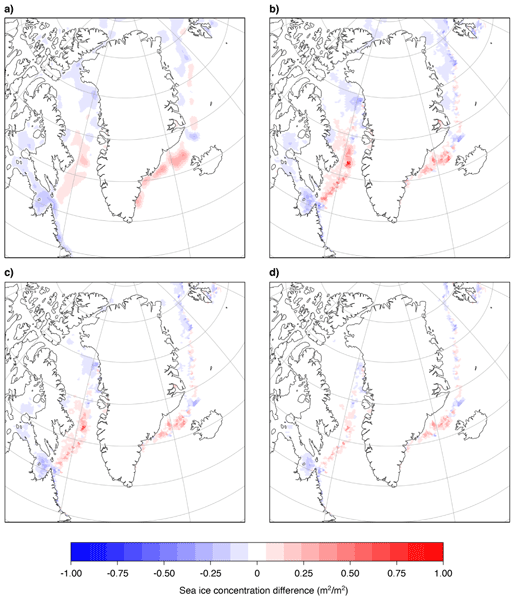
Philip Browne, Eric de Boisseson, Sarah Keeley, Charles Pelletier, and Hao Zuo
The Cryosphere, 20, 3299–3311, https://doi.org/10.5194/tc-20-3299-2026, https://doi.org/10.5194/tc-20-3299-2026, 2026
Short summary
Short summary
An initial estimate of sea ice conditions are required to start modern weather forecasting models. To get these we have to combine observations, typically from satellites, with previous estimates of the sea ice conditions. This paper talks about how we do this in the latest version of the model, where the sea ice state has to be specified for ice of different thicknesses. We describe the method that is used when we produce an estimate for every hour for the past 50 years.
Brian Henn, Christopher S. Bretherton, Nikolay Koldunov, Christian Lessig, Maria J. Molina, Troy Arcomano, Oliver Watt-Meyer, Guillaume Couairon, Renu Singh, Robert Brunstein, Yana Hasson, Antonia Jost, Noah Brenowitz, Peter Manshausen, Nathaniel Cresswell-Clay, Dale Durran, Kyle Joseph Chen Hall, Janni Yuval, Dmitrii Kochkov, Stephan Hoyer, and Ignacio Lopez-Gomez
EGUsphere, https://doi.org/10.48550/arXiv.2605.06944, https://doi.org/10.48550/arXiv.2605.06944, 2026
This preprint is open for discussion and under review for Geoscientific Model Development (GMD).
Short summary
Short summary
AIMIP (AI Model Intercomparison Project) is a community effort to rigorously evaluate AI weather and climate models, which simulate Earth's climate with extraordinary efficiency compared to traditional systems. Phase 1 is an atmosphere-only standardized experiment, showing that AI models are competitive on average historical patterns but may struggle with long-term warming trends and generalizing to unseen scenarios. The AIMIP Phase 1 dataset is publicly available for open model evaluation.
Rohit Ghosh, Suvarchal Kumar Cheedela, Sebastian Beyer, Nikolay Koldunov, Stella Berzina, Audrey Delpech, Svetlana Loza, Chathurika Wikramage, Stephy Libera, Matthias Aengenheyster, Amal John, Armelle Remedio, Patrick Scholz, Dmitry Sidorenko, Jan Streffing, Fabian Wachsmann, and Thomas Jung
EGUsphere, https://doi.org/10.5194/egusphere-2026-1289, https://doi.org/10.5194/egusphere-2026-1289, 2026
Short summary
Short summary
Understanding climate change requires detailed computer simulations of the Earth system. Here we present one of the first century-long global simulations in which both the atmosphere and ocean are represented at kilometre-scale resolution. Such simulations are extremely computationally demanding, but we demonstrate their feasibility and show that they can capture key climate patterns while representing important small-scale ocean processes.
James A. Anstey, Neal Butchart, Scott Osprey, Yoshio Kawatani, Kevin Hamilton, Jadwiga H. Richter, Tim Stockdale, Martin B. Andrews, Zhaoyang Chai, Paolo Davini, Dong-Chan Hong, Kai Huang, Aleena M. Jaison, Tobias Kerzenmacher, Jeff R. Knight, Pu Lin, Francois Lott, Yixiong Lu, Hiroaki Naoe, Federico Serva, Isla Simpson, Seok-Woo Son, Qi Tang, Shingo Watanabe, Jinbo Xie, and Kohei Yoshida
EGUsphere, https://doi.org/10.5194/egusphere-2026-1165, https://doi.org/10.5194/egusphere-2026-1165, 2026
Short summary
Short summary
We describe experiments where modelled tropical stratosphere winds are adjusted by "nudging" them toward realistic time-evolving eastward and westward Quasi-Biennial Oscillation (QBO) winds. The effects of this bias correction on other atmospheric processes, such as the stratospheric polar vortex or tropical waves that force the QBO, can then be assessed. We describe details of the experiments, the multi-model ensemble that has performed them, and basic validation of the nudging response.
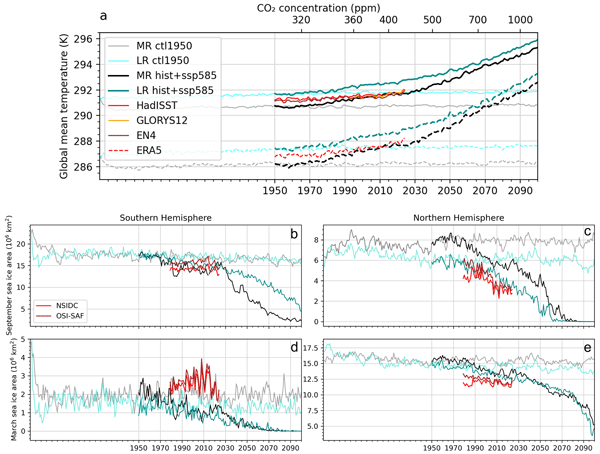
Martina Zapponini, Tido Semmler, Jan Streffing, Thomas Rackow, Lettie A. Roach, and Thomas Jung
Geosci. Model Dev., 19, 3395–3425, https://doi.org/10.5194/gmd-19-3395-2026, https://doi.org/10.5194/gmd-19-3395-2026, 2026
Short summary
Short summary
This study evaluates the impact of grid resolution on long-term present and future climate runs using the Alfred Wegener Institute global model AWI-CM3. A higher-resolution setup (35 km atmosphere, eddy-permitting/resolving ocean) improves small-scale processes and long-term variability, across variables and regions, and can capture nonlinear ocean–atmosphere interactions often missed by Coupled Model Intercomparison Project (CMIP) models.
Julien Lenhardt, Johannes Quaas, Dino Sejdinovic, and Daniel Klocke
Atmos. Chem. Phys., 26, 5447–5475, https://doi.org/10.5194/acp-26-5447-2026, https://doi.org/10.5194/acp-26-5447-2026, 2026
Short summary
Short summary
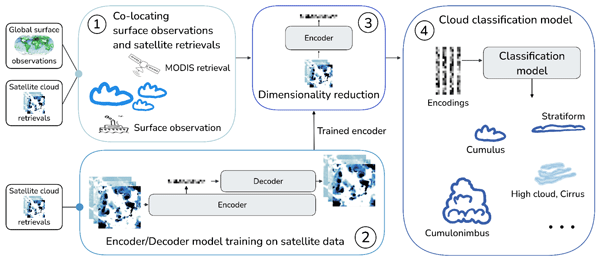
Clouds come in various shapes and sizes and constitute a fundamental element of the Earth's climate system. Different cloud types show variable impacts on climate change. We present a new cloud type classification method called CloudViT (Cloud Vision Transformer) relying on spatial patterns of cloud properties obtained from satellite data using machine learning. We can thus help understanding the effects of different cloud types on climate change.
Konstantin Gregor, Benjamin F. Meyer, Tillmann Gaida, Victor Justo Vasquez, Karina Bett-Williams, Matthew Forrest, João P. Darela-Filho, Sam Rabin, Marcos Longo, Joe R. Melton, Johan Nord, Peter Anthoni, Vladislav Bastrikov, Thomas Colligan, Christine Delire, Michael C. Dietze, George Hurtt, Akihiko Ito, Lasse T. Keetz, Jürgen Knauer, Johannes Köster, Tzu-Shun Lin, Lei Ma, Marie Minvielle, Stefan Olin, Sebastian Ostberg, Hao Shi, Reiner Schnur, Qing Sun, Peter E. Thornton, and Anja Rammig
Geosci. Model Dev., 19, 2407–2436, https://doi.org/10.5194/gmd-19-2407-2026, https://doi.org/10.5194/gmd-19-2407-2026, 2026
Short summary
Short summary
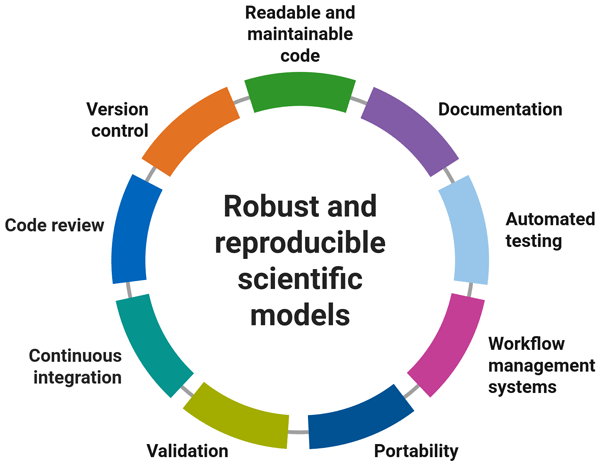
Geoscientific models are crucial for understanding Earth’s processes. However, they sometimes do not adhere to highest software quality standards, and scientific results are often hard to reproduce due to the complexity of the workflows. Here we gather the expertise of 20 modeling groups and software engineers to define best practices for making geoscientific models maintainable, usable, and reproducible. We conclude with an open-source example serving as a reference for modeling communities.
Marius Winkler, Marius Rixen, Florent Beucher, Fleur Couvreux, Chaehyeon C. Nam, Philippe Peyrillé, Hauke Schmidt, Hans Segura, Karl-Hermann Wieners, Ezri Alkilani-Brown, Abdou Aziz Coly, Giovanni Biagioli, Michael M. Bell, Ester Brito, Emma Chauvin, Julie Capo, Delián Colón-Burgos, Akeem Dawes, Jose Carlos da Luz, Zekican Demiralay, Vincent Douet, Vincent Ducastin, Clarisse Dufaux, Jean-Louis Dufresne, Florence Favot, Thomas Fiolleau, Emilie Fons, Geet George, Helene M. Gloeckner, Suelly Gonçalves, Laurent Gouttesoulard, Lennéa Hayo, Wei-Ting Hsiao, Sarah Kennison, Michael Kopelman, Tsung-Yung Lee, Enora Le Gall, Mateo Lovato, Emily Luschen, Nicolas Maury, Brett McKim, Louis Netz, Diouf Ousseynou, Karsten Peters-von Gehlen, Chavez Pope, Basile Poujol, Niwde Rivera Maldonado, Nina Robbins-Blanch, Nicolas Rochetin, Daniel Rowe, Paula Romero Jure, James H. Ruppert Jr., Jairo Segura Bermudez, Jarrett C. Starr, Martin Stelzner, Connor Stoll, Macintyre Syrett, Abraham Tekoe, Jeremie Trules, Colin Welty, Daniel Klocke, Raphaela Vogel, Sandrine Bony, Allison A. Wing, and Bjorn Stevens
Earth Syst. Sci. Data, 18, 1833–1854, https://doi.org/10.5194/essd-18-1833-2026, https://doi.org/10.5194/essd-18-1833-2026, 2026
Short summary
Short summary
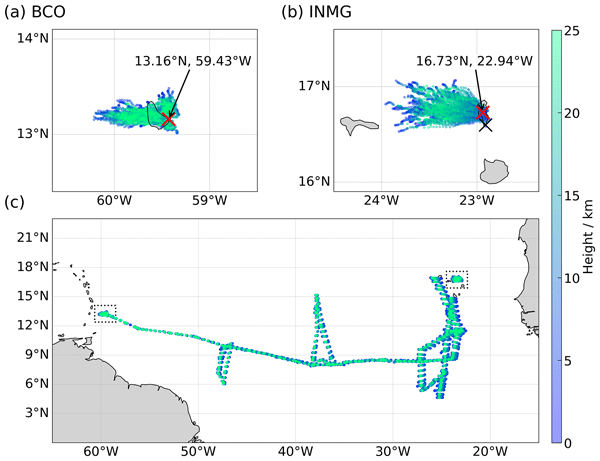
The RAPSODI dataset compiles 624 radiosonde profiles collected during the 2024 ORCESTRA campaign across the tropical Atlantic: from Cape Verde (INMG), the R/V Meteor, and the Barbados Cloud Observatory. It provides high-resolution temperature, humidity, wind, and pressure data to study convection, tropical waves, and ITCZ dynamics. Data are quality-controlled and openly available in Zarr format via IPFS.
Sara Moreno-Montes, Carlos Delgado-Torres, Matías Olmo, Sushovan Ghosh, Verónica Torralba, and Albert Soret
EGUsphere, https://doi.org/10.5194/egusphere-2026-1205, https://doi.org/10.5194/egusphere-2026-1205, 2026
Short summary
Short summary
Wind and solar power depend on weather conditions that can vary over the next few years. This study assesses whether climate forecasts for the next three years can help anticipate changes in renewable energy production across Europe. Solar energy is generally more predictable, especially in spring and summer, while wind energy is harder to forecast. The results show when and where near-term climate information can support energy planning and improve the resilience of renewable power systems.
Morven Muilwijk, Tore Hattermann, Rebecca L. Beadling, Neil C. Swart, Aleksi Nummelin, Chuncheng Guo, David M. Chandler, Petra M. Langebroek, Shenjie Zhou, Pierre Dutrieux, Jia-Jia Chen, Christopher Danek, Matthew H. England, Stephen M. Griffies, F. Alexander Haumann, André Jüling, Ombeline Jouet, Qian Li, Torge Martin, John Marshall, Andrew G. Pauling, Ariaan Purich, Zihan Song, Inga J. Smith, Max Thomas, Irene Trombini, Eveline C. van der Linden, and Xiaoqi Xu
The Cryosphere, 20, 1087–1117, https://doi.org/10.5194/tc-20-1087-2026, https://doi.org/10.5194/tc-20-1087-2026, 2026
Short summary
Short summary
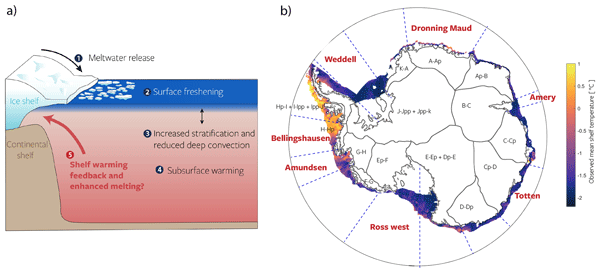
Antarctic meltwater affects ocean stratification and temperature, which in turn influences the rate of ice shelf melting – a coupling missing in most climate models. We analyze a suite of climate models with added meltwater to explore this feedback in different regions. While meltwater generally enhances ocean warming and melt, in West Antarctica most models simulate coastal cooling, suggesting a negative feedback that could slow future ice loss there.
Bianca Mezzina, Christopher David Roberts, Matthias Aengenheyster, Rohit Ghosh, Malcolm John Roberts, and Marc Batlle Martin
EGUsphere, https://doi.org/10.5194/egusphere-2026-547, https://doi.org/10.5194/egusphere-2026-547, 2026
Short summary
Short summary
El Nino-Southern Oscllation (ENSO) is a climate phenomenon that can influence climate worldwide, but current climate models still struggle to properly simulate its impacts. We investigate if a new set of models with unprecedented fine detail in the ocean and the atmosphere can simulate this better. By comparing several models and experiments, we find that higher detail does not always improve results and that natural climate variability strongly limits clear gains.
Violaine Piton, Hervé Giordani, Romain Bourdalle-Badie, and Charles Pelletier
EGUsphere, https://doi.org/10.5194/egusphere-2026-640, https://doi.org/10.5194/egusphere-2026-640, 2026
Short summary
Short summary
Vertical ocean mixing regulates climate by transferring heat from the surface to depth. Because most models use simplified schemes, they often misrepresent convection and bias temperatures and air–sea heat exchange. We test a new mixing scheme in a global ocean model. It better captures daily tropical surface mixing and deep winter convection at high latitudes, reduces upper-ocean temperature biases, and alters surface heat balance, improving climate model realism.
Xavier Lapillonne, Daniel Hupp, Fabian Gessler, André Walser, Andreas Pauling, Annika Lauber, Benjamin Cumming, Carlos Osuna, Christoph Müller, Claire Merker, Daniel Leuenberger, David Leutwyler, Dmitry Alexeev, Gabriel Vollenweider, Guillaume Van Parys, Jonas Jucker, Lukas Jansing, Marco Arpagaus, Marco Induni, Marek Jacob, Matthias Kraushaar, Michael Jähn, Mikael Stellio, Oliver Fuhrer, Petra Baumann, Philippe Steiner, Pirmin Kaufmann, Remo Dietlicher, Ralf Müller, Sergey Kosukhin, Thomas C. Schulthess, Ulrich Schättler, Victoria Cherkas, and William Sawyer
Geosci. Model Dev., 19, 755–772, https://doi.org/10.5194/gmd-19-755-2026, https://doi.org/10.5194/gmd-19-755-2026, 2026
Short summary
Short summary
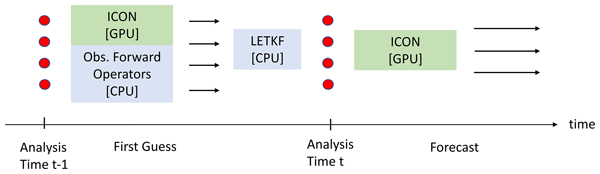
The ICON climate and numerical weather prediction model was fully ported to Graphical Processing Units (GPUs) using OpenACC compiler directives, covering all components required for operational weather prediction. The GPU port together with several performance optimizations led to a speed-up of 5.6× when comparing to traditional Central Processing Units (CPUs) . Thanks to this adaptation effort, MeteoSwiss became the first national weather service to run the ICON model operationally on GPUs.
Carlos Delgado-Torres, Markus G. Donat, Núria Pérez-Zanón, Verónica Torralba, Roberto Bilbao, Pierre-Antoine Bretonnière, Margarida Samsó-Cabré, Albert Soret, and Francisco J. Doblas-Reyes
Earth Syst. Dynam., 17, 41–56, https://doi.org/10.5194/esd-17-41-2026, https://doi.org/10.5194/esd-17-41-2026, 2026
Short summary
Short summary
Many decisions require consistent climate information from seasonal to multi-year timescales. We assess seamless forecasts created by constraining seasonal and decadal predictions and compare them with initialised multi-annual forecasts. Multi-annual predictions provide the highest skill, but constrained forecasts still perform well and offer a low-cost, regularly updatable solution for delivering coherent climate information.
Kai R. Keller, Marta Alerany Solé, and Mario Acosta
Geosci. Model Dev., 18, 10221–10243, https://doi.org/10.5194/gmd-18-10221-2025, https://doi.org/10.5194/gmd-18-10221-2025, 2025
Short summary
Short summary
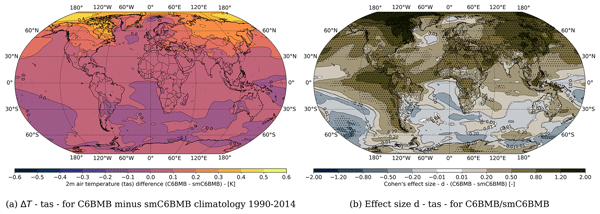
Can we be sure that different computing environments, that should not change the model climate, indeed leave the climate unaltered? In this article, we present a novel methodology that answers whether two model climates are statistically the same. Besides a new methodology, able to detect significant differences between two model climates 60 % more accurately than a similar recent state-of-the-art method, we also provide an analysis on what actually constitutes a different climate.
Johanna Beckmann, Giorgia Di Capua, and Paolo Davini
Weather Clim. Dynam., 6, 1875–1894, https://doi.org/10.5194/wcd-6-1875-2025, https://doi.org/10.5194/wcd-6-1875-2025, 2025
Short summary
Short summary
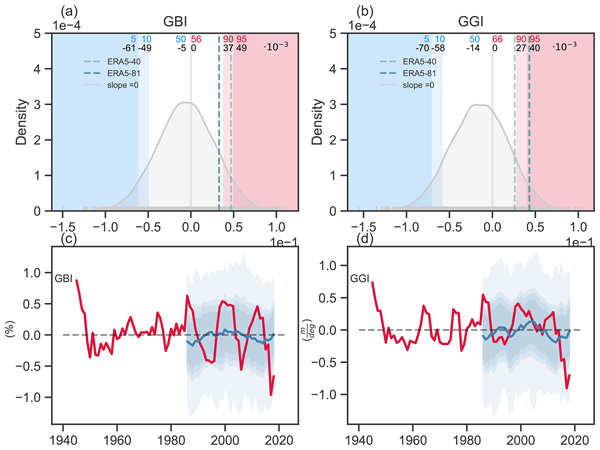
Greenland blocking, which enhances ice sheet melting, has increased, but climate models fail to capture this trend. Analysis with reanalysis data and a seasonal forecast system shows that model improvements help, but they still miss the role of early North American snowmelt in shaping blocking patterns. This gap may explain the discrepancy and suggests that future projections could underestimate Greenland blocking and its impact on melting.
Amanda Frigola, Eneko Martin-Martinez, Eduardo Moreno-Chamarro, Margarida Samsó, Saskia Loosvelt-Tomas, Pierre-Antoine Bretonnière, Daria Kuznetsova, Xia Lin, and Pablo Ortega
Ocean Sci., 21, 3507–3540, https://doi.org/10.5194/os-21-3507-2025, https://doi.org/10.5194/os-21-3507-2025, 2025
Short summary
Short summary
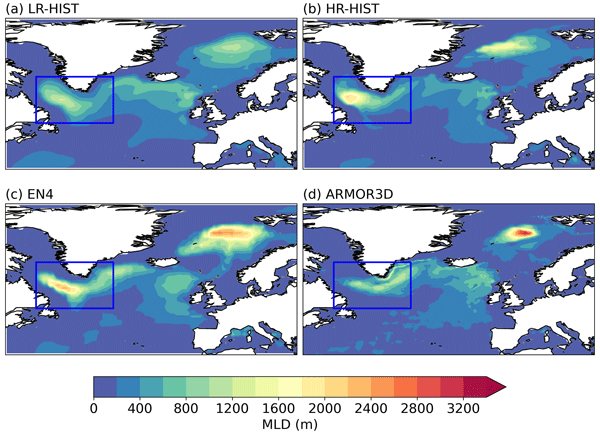
Compared to standard resolution models, mesoscale eddy-resolving models present a more realistic stratification in the subpolar North Atlantic, an Atlantic overturning profile closer to RAPID observations, and an improved structure of the subpolar gyre and Gulf Stream. Although surface biases in the Central North Atlantic are reduced, the representation of the North Atlantic Current path and strength in mesoscale-resolving models requires further improvement.
Manuel G. Marciani, Miguel Castrillo, Gladys Utrera, Mario C. Acosta, Bruno P. Kinoshita, and Francisco Doblas-Reyes
Geosci. Model Dev., 18, 9709–9721, https://doi.org/10.5194/gmd-18-9709-2025, https://doi.org/10.5194/gmd-18-9709-2025, 2025
Short summary
Short summary
Earth System Model simulations are typically run on large, highly congested flagship computers using workflows. These workflows can consist of thousands of tasks. If these tasks are queued individually, the wait time can add up, resulting in a long response time. In this paper, we explore a technique for aggregating tasks into a single submission. We found that this simple technique reduced the time spent in the queue by up to 7 %.
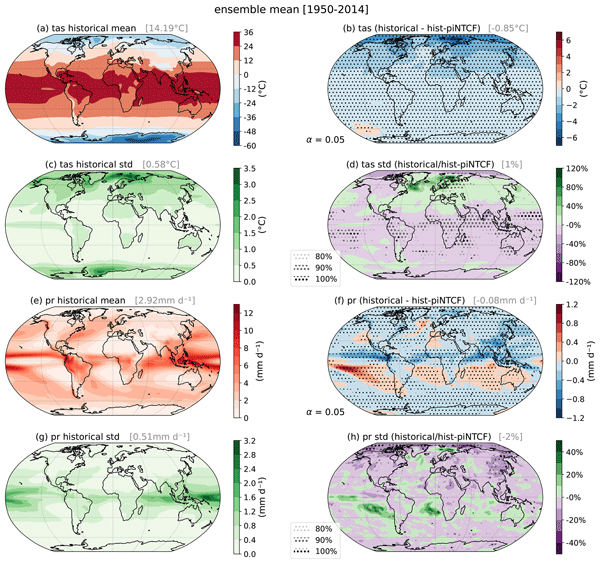
Alba Santos-Espeso, María Gonçalves Ageitos, Pablo Ortega, Carlos Pérez García-Pando, Markus G. Donat, Margarida Samso Cabré, and Saskia Loosveldt Tomas
Earth Syst. Dynam., 16, 2161–2186, https://doi.org/10.5194/esd-16-2161-2025, https://doi.org/10.5194/esd-16-2161-2025, 2025
Short summary
Short summary
Short-lived air pollutants (e.g., aerosols and ozone) affect climate differently than greenhouse gases. Using climate models, we found that during 1950–2014, these pollutants caused global cooling, stronger in the Arctic, increased vertical mixing in the Labrador Sea, and southward displacement of the tropical rain belt. These regional impacts oppose those of greenhouse gases. Hence, future reductions in pollution for better air quality must be accompanied by stricter greenhouse gas mitigation.
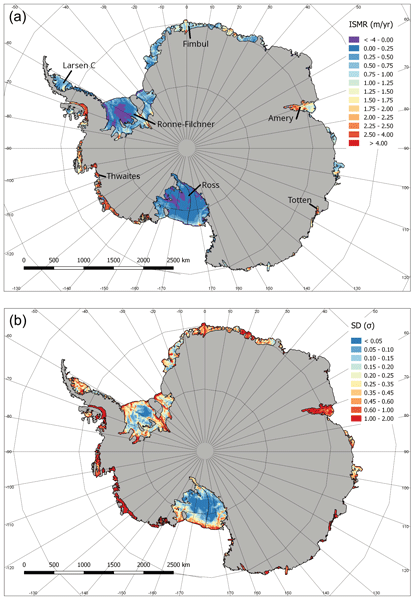
Benjamin K. Galton-Fenzi, Richard Porter-Smith, Sue Cook, Eva Cougnon, David E. Gwyther, Wilma G. C. Huneke, Madelaine G. Rosevear, Xylar Asay-Davis, Fabio Boeira Dias, Michael S. Dinniman, David Holland, Kazuya Kusahara, Kaitlin A. Naughten, Keith W. Nicholls, Charles Pelletier, Ole Richter, Hélène Seroussi, and Ralph Timmermann
The Cryosphere, 19, 6507–6525, https://doi.org/10.5194/tc-19-6507-2025, https://doi.org/10.5194/tc-19-6507-2025, 2025
Short summary
Short summary
Quantifying melt and freeze beneath Antarctica’s floating ice shelves is vital to understanding present-day ice-sheet behavior and its potential to contribute to future sea-level rise. We compare 10 ice-shelf/ocean computer simulations with satellite data, providing the first multi-model estimate of melting and refreezing driven by the ocean. This new estimate offers a valuable tool for assessing ice-shelf roles in current and future ice-sheet changes, informing coastal adaptation strategies.
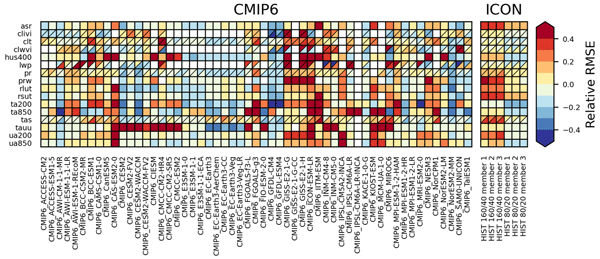
Wolfgang A. Müller, Stephan Lorenz, Trang V. Pham, Andrea Schneidereit, Renate Brokopf, Victor Brovkin, Nils Brüggemann, Fatemeh Chegini, Dietmar Dommenget, Kristina Fröhlich, Barbara Früh, Veronika Gayler, Helmuth Haak, Stefan Hagemann, Moritz Hanke, Tatiana Ilyina, Johann Jungclaus, Martin Köhler, Peter Korn, Luis Kornblueh, Clarissa A. Kroll, Julian Krüger, Karel Castro-Morales, Ulrike Niemeier, Holger Pohlmann, Iuliia Polkova, Roland Potthast, Thomas Riddick, Manuel Schlund, Tobias Stacke, Roland Wirth, Dakuan Yu, and Jochem Marotzke
Geosci. Model Dev., 18, 9385–9415, https://doi.org/10.5194/gmd-18-9385-2025, https://doi.org/10.5194/gmd-18-9385-2025, 2025
Short summary
Short summary
We provide a new Earth System model configuration framed into the ICON architecture, which provides the baseline for the next generation of climate predictions and projections (hereafter ICON XPP). Two resolutions of ICON XPP are presented that show high runtime performances making it suitable to run long integrations and large-ensemble experiments. ICON XPP similarly perform to CMIP6-class of climate models making it a good basis for climate forecasts and projections, and climate research.
Clarissa A. Kroll, Robert C. Jnglin Wills, Luis Kornblueh, Ulrike Niemeier, and Andrea Schneidereit
Atmos. Chem. Phys., 25, 16915–16943, https://doi.org/10.5194/acp-25-16915-2025, https://doi.org/10.5194/acp-25-16915-2025, 2025
Short summary
Short summary
The double Inter-Tropical Convergence Zone is a prominent precipitation bias in climate models. We demonstrate its persistence from a resolution of 160 km up to 5 km. Its root cause lies in biased moisture transport from the subtropics to the inner tropics reducing convection and weakening tropical circulation. Increasing the surface wind speed addresses the bias, but deteriorates the global circulation. This highlights the importance of resolution hierarchies and parametrization development.
Stefan Poll, Paul Rigor, Slavko Brdar, Ha Thi Minh Ho-Hagemann, Carl Hartick, Marco van Hulten, Ana Gonzalez-Nicolas, Johannes Keller, Daniel Caviedes-Voullieme, Harrie-Jan Hendricks-Franssen, Klaus Goergen, and Stefan Kollet
EGUsphere, https://doi.org/10.5194/egusphere-2025-5468, https://doi.org/10.5194/egusphere-2025-5468, 2025
This preprint is open for discussion and under review for Ocean Science (OS).
Short summary
Short summary
This paper presents TSMP2, a new version of an regional Earth system model that allows to simulate and analyze the complex interactions within terrestrial ecosystems from groundwater to atmosphere. TSMP2 links an atmospheric, a land surface model and an hydrological model through an external coupler and is fully open-source. We describe the TSMP2 model system, present the impact of coupling approaches, and outline our development strategy along with technical and performance aspects.
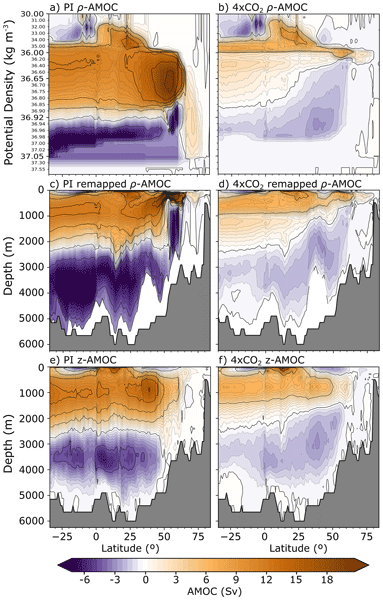
Fernanda DI Alzira Oliveira Matos, Dmitry Sidorenko, Xiaoxu Shi, Lars Ackermann, Janini Pereira, Gerrit Lohmann, and Christian Stepanek
Ocean Sci., 21, 2895–2914, https://doi.org/10.5194/os-21-2895-2025, https://doi.org/10.5194/os-21-2895-2025, 2025
Short summary
Short summary
The Atlantic Meridional Overturning Circulation (AMOC) is responsible for about 25 % of the poleward ocean heat transport. Currently, the AMOC strength is mostly calculated in depth space (z-AMOC). However, we argue that, in warmer climates, the AMOC should be calculated in density space (ρ-AMOC). We performed simulations with CO2 forcing of 280 ppmv (PI) and 1120 ppmv of (4xCO2) and find that ρ-AMOC provides more physical and meaningful information about the AMOC in warmer climates.
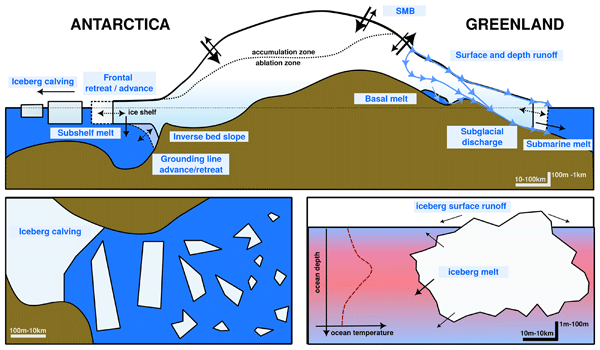
Gavin A. Schmidt, Kenneth D. Mankoff, Jonathan L. Bamber, Clara Burgard, Dustin Carroll, David M. Chandler, Violaine Coulon, Benjamin J. Davison, Matthew H. England, Paul R. Holland, Nicolas C. Jourdain, Qian Li, Juliana M. Marson, Pierre Mathiot, Clive R. McMahon, Twila A. Moon, Ruth Mottram, Sophie Nowicki, Anna Olivé Abelló, Andrew G. Pauling, Thomas Rackow, and Damien Ringeisen
Geosci. Model Dev., 18, 8333–8361, https://doi.org/10.5194/gmd-18-8333-2025, https://doi.org/10.5194/gmd-18-8333-2025, 2025
Short summary
Short summary
The impact of increasing mass loss from the Greenland and Antarctic ice sheets has not so far been included in historical climate model simulations. This paper describes the protocols and data available for modeling groups to add this anomalous freshwater to their ocean modules to better represent the impacts of these fluxes on ocean circulation, sea ice, salinity and sea level.
Rashed Mahmood, Markus G. Donat, Roberto Bilbao, Pablo Ortega, Vladimir Lapin, Etienne Tourigny, and Francisco Doblas-Reyes
Earth Syst. Dynam., 16, 1923–1934, https://doi.org/10.5194/esd-16-1923-2025, https://doi.org/10.5194/esd-16-1923-2025, 2025
Short summary
Short summary
We present 30 year long initialized climate predictions run with the EC-Earth3 model. The predictions show high skill in most regions for near-surface temperatures, with some added skill from initialization for the first decade, but only very limited added skill beyond. The predictions exhibit drift associated with a persistent slowdown in Atlantic Meridonial Overturning Circulation , leaving the initialised predictions in a different climate state than the historical climate simulations.
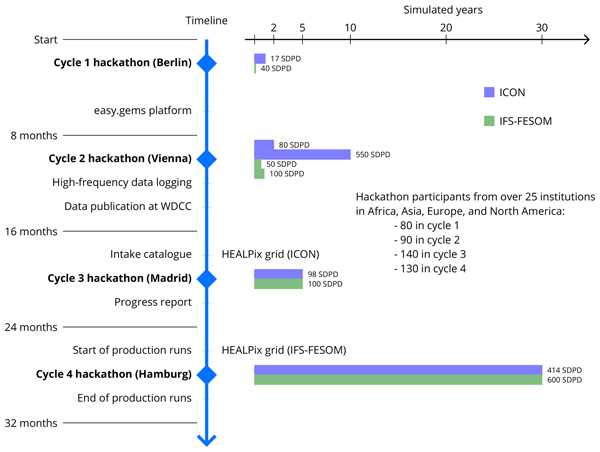
Hans Segura, Xabier Pedruzo-Bagazgoitia, Philipp Weiss, Sebastian K. Müller, Thomas Rackow, Junhong Lee, Edgar Dolores-Tesillos, Imme Benedict, Matthias Aengenheyster, Razvan Aguridan, Gabriele Arduini, Alexander J. Baker, Jiawei Bao, Swantje Bastin, Eulàlia Baulenas, Tobias Becker, Sebastian Beyer, Hendryk Bockelmann, Nils Brüggemann, Lukas Brunner, Suvarchal K. Cheedela, Sushant Das, Jasper Denissen, Ian Dragaud, Piotr Dziekan, Madeleine Ekblom, Jan Frederik Engels, Monika Esch, Richard Forbes, Claudia Frauen, Lilli Freischem, Diego García-Maroto, Philipp Geier, Paul Gierz, Álvaro González-Cervera, Katherine Grayson, Matthew Griffith, Oliver Gutjahr, Helmuth Haak, Ioan Hadade, Kerstin Haslehner, Shabeh ul Hasson, Jan Hegewald, Lukas Kluft, Aleksei Koldunov, Nikolay Koldunov, Tobias Kölling, Shunya Koseki, Sergey Kosukhin, Josh Kousal, Peter Kuma, Arjun U. Kumar, Rumeng Li, Nicolas Maury, Maximilian Meindl, Sebastian Milinski, Kristian Mogensen, Bimochan Niraula, Jakub Nowak, Divya Sri Praturi, Ulrike Proske, Dian Putrasahan, René Redler, David Santuy, Domokos Sármány, Reiner Schnur, Patrick Scholz, Dmitry Sidorenko, Dorian Spät, Birgit Sützl, Daisuke Takasuka, Adrian Tompkins, Alejandro Uribe, Mirco Valentini, Menno Veerman, Aiko Voigt, Sarah Warnau, Fabian Wachsmann, Marta Wacławczyk, Nils Wedi, Karl-Hermann Wieners, Jonathan Wille, Marius Winkler, Yuting Wu, Florian Ziemen, Janos Zimmermann, Frida A.-M. Bender, Dragana Bojovic, Sandrine Bony, Simona Bordoni, Patrice Brehmer, Marcus Dengler, Emanuel Dutra, Saliou Faye, Erich Fischer, Chiel van Heerwaarden, Cathy Hohenegger, Heikki Järvinen, Markus Jochum, Thomas Jung, Johann H. Jungclaus, Noel S. Keenlyside, Daniel Klocke, Heike Konow, Martina Klose, Szymon Malinowski, Olivia Martius, Thorsten Mauritsen, Juan Pedro Mellado, Theresa Mieslinger, Elsa Mohino, Hanna Pawłowska, Karsten Peters-von Gehlen, Abdoulaye Sarré, Pajam Sobhani, Philip Stier, Lauri Tuppi, Pier Luigi Vidale, Irina Sandu, and Bjorn Stevens
Geosci. Model Dev., 18, 7735–7761, https://doi.org/10.5194/gmd-18-7735-2025, https://doi.org/10.5194/gmd-18-7735-2025, 2025
Short summary
Short summary
The Next Generation of Earth Modeling Systems project (nextGEMS) developed two Earth system models that use horizontal grid spacing of 10 km and finer, giving more fidelity to the representation of local phenomena, globally. In its fourth cycle, nextGEMS simulated the Earth System climate over the 2020–2049 period under the SSP3-7.0 scenario. Here, we provide an overview of nextGEMS, insights into the model development, and the realism of multi-decadal, kilometer-scale simulations.
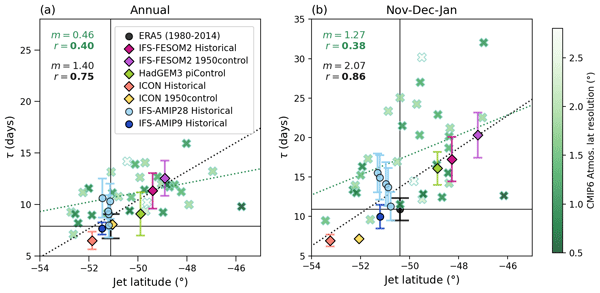
Ting-Chen Chen, Hugues Goosse, Cécile Davrinche, Stephy Libera, Christopher Roberts, Matthias Aengenheyster, Kristian Strommen, Malcolm Roberts, Rohit Ghosh, and Jin-Song von Storch
Weather Clim. Dynam., 6, 1179–1193, https://doi.org/10.5194/wcd-6-1179-2025, https://doi.org/10.5194/wcd-6-1179-2025, 2025
Short summary
Short summary
Southern Annular Mode (SAM) is a leading mode of Southern Hemisphere climate variability, but global models often overestimate its persistence in summer. Bias in SAM persistence is reduced and jet latitude improved using high-resolution sea surface temperature (SST)-prescribed models, pointing to the central role of SSTs. Control experiments explore the influence of model resolution and mesoscale ocean features on SAM persistence, highlighting the complex and subtle nature of air-sea coupling.
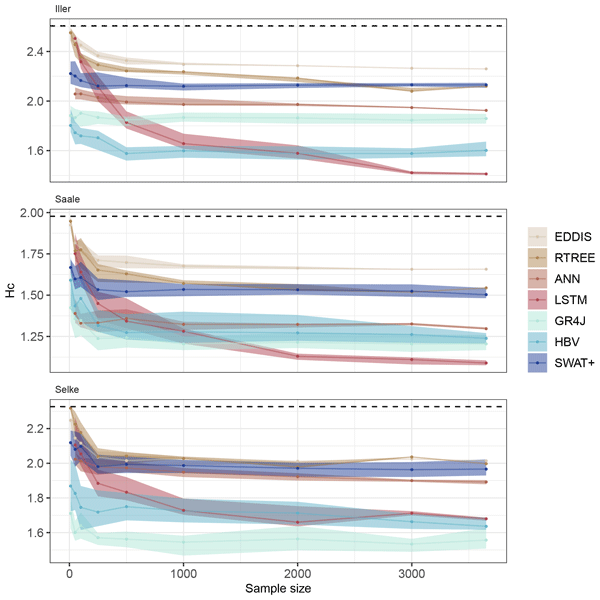
Maria Staudinger, Anna Herzog, Ralf Loritz, Tobias Houska, Sandra Pool, Diana Spieler, Paul D. Wagner, Juliane Mai, Jens Kiesel, Stephan Thober, Björn Guse, and Uwe Ehret
Hydrol. Earth Syst. Sci., 29, 5005–5029, https://doi.org/10.5194/hess-29-5005-2025, https://doi.org/10.5194/hess-29-5005-2025, 2025
Short summary
Short summary
Three process-based and four data-driven hydrological models are compared using different training data. We found that process-based models perform better with small datasets but stop learning soon, while data-driven models learn longer. The study highlights the importance of memory in data and the impact of different data sampling methods on model performance. The direct comparison of these models is novel and provides a clear understanding of their performance under various data conditions.
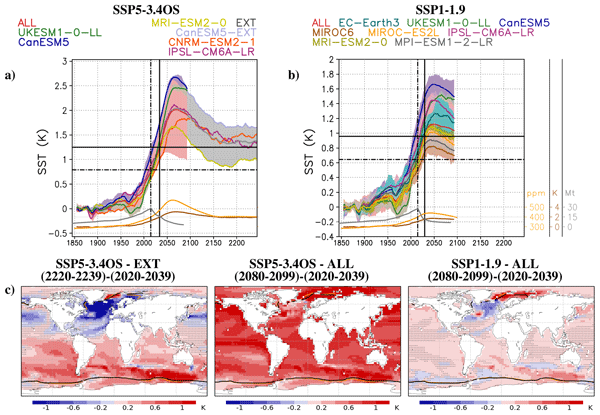
Pedro José Roldán-Gómez, Pablo Ortega, and Markus G. Donat
Ocean Sci., 21, 2283–2303, https://doi.org/10.5194/os-21-2283-2025, https://doi.org/10.5194/os-21-2283-2025, 2025
Short summary
Short summary
The overshoot scenarios, in which temperatures exceed the targets of the Paris Agreement and are brought back afterwards with a net-negative emission strategy, are known to activate irreversible processes in the climate system. This work analyses in detail the impact of some of these mechanisms, with a particular focus on those associated with ocean circulation and sea ice changes.
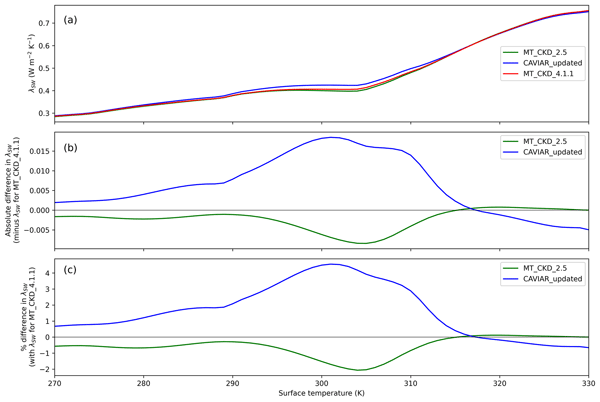
Kaah P. Menang, Stefan A. Buehler, Lukas Kluft, Robin J. Hogan, and Florian E. Roemer
Atmos. Chem. Phys., 25, 11689–11701, https://doi.org/10.5194/acp-25-11689-2025, https://doi.org/10.5194/acp-25-11689-2025, 2025
Short summary
Short summary
We investigated the impact of the shortwave water vapour continuum absorption on clear-sky shortwave radiative feedback. For current temperatures, the impact is modest (<2%). In a warmer world, continuum-induced uncertainty in estimated feedback would be up to ~5%. Representing continuum absorption with the widely used semi-empirical model in radiative transfer calculations leads to an underestimation of this feedback. Constraining the shortwave continuum will help reduce these discrepancies.
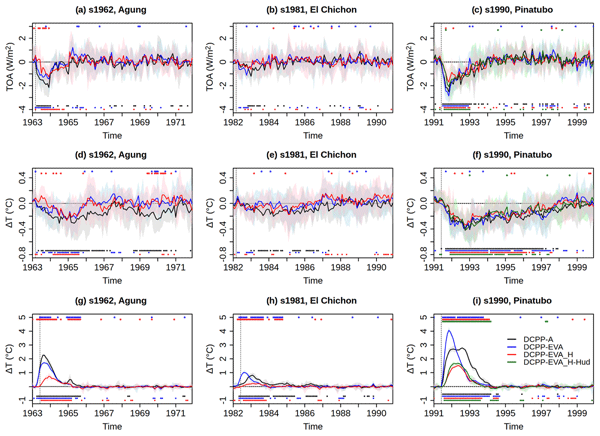
Roberto Bilbao, Thomas J. Aubry, Matthew Toohey, Pablo Ortega, Vladimir Lapin, and Etienne Tourigny
Geosci. Model Dev., 18, 6239–6254, https://doi.org/10.5194/gmd-18-6239-2025, https://doi.org/10.5194/gmd-18-6239-2025, 2025
Short summary
Short summary
Large volcanic eruptions are unpredictable and can have significant climatic impacts. If one occurs, operational decadal forecasts will become invalid and must be rerun including the volcanic forcing. By analyzing the climate response in EC-Earth3 retrospective predictions, we show that idealised forcings produced with two simple models could be used in operational decadal forecasts to account for the radiative impacts of the next major volcanic eruption.
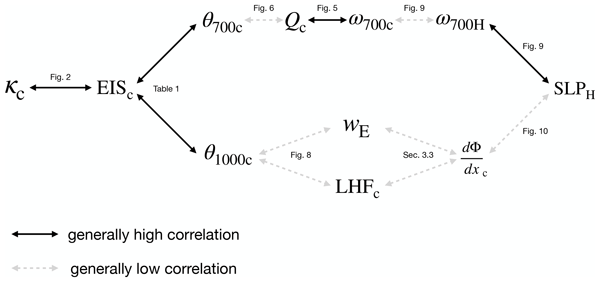
Hairu Ding, Bjorn Stevens, and Hauke Schmidt
Atmos. Chem. Phys., 25, 10511–10521, https://doi.org/10.5194/acp-25-10511-2025, https://doi.org/10.5194/acp-25-10511-2025, 2025
Short summary
Short summary
This study examines the physical link between subtropical highs and stratocumulus variability. Using reanalysis data, we test two proposed pathways – one at the surface and one in the free troposphere – but find that neither is a dominant mechanism for stratocumulus variability on seasonal and interannual timescales. These results challenge the assumed influence of subtropical highs on stratocumulus and highlight the need for further research into lower-tropospheric stability dynamics.
Katherine Grayson, Stephan Thober, Aleksander Lacima-Nadolnik, Ivan Alsina-Ferrer, Llorenç Lledó, Ehsan Sharifi, and Francisco Doblas-Reyes
Geosci. Model Dev., 18, 5873–5890, https://doi.org/10.5194/gmd-18-5873-2025, https://doi.org/10.5194/gmd-18-5873-2025, 2025
Short summary
Short summary
We present One_Pass (v0.8.0), a Python package enabling computation of statistics from streamed global climate model output using one-pass algorithms. Users often need statistics covering periods longer than the stream duration, requiring algorithms that do not store full time series. One-pass methods address this need while avoiding full data archiving, offering memory-efficient, accurate results for high-performance computing (HPC) workflows and downstream applications like bias adjustment.
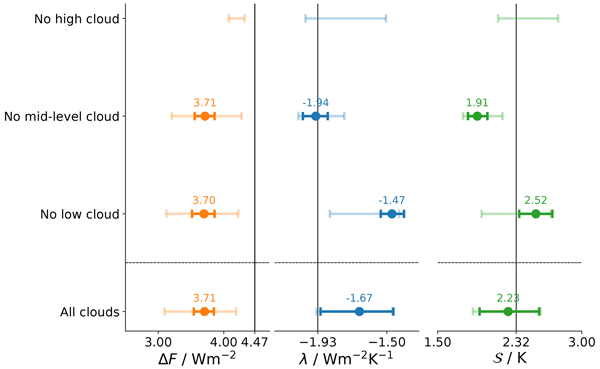
Lukas Kluft, Bjorn Stevens, Manfred Brath, and Stefan A. Buehler
Atmos. Chem. Phys., 25, 9075–9084, https://doi.org/10.5194/acp-25-9075-2025, https://doi.org/10.5194/acp-25-9075-2025, 2025
Short summary
Short summary
Using a single-column model, we investigate the effect of the vertical distribution of clouds on climate sensitivity. We show that, depending on their height, clouds can mask or unmask the radiative response of the clear-sky atmosphere. Our single-column model yields an all-sky climate sensitivity of 2.2 K, slightly less than the clear-sky value. This value can be interpreted as a baseline to which changes in surface albedo and an assumed reduction in cloud albedo would add.
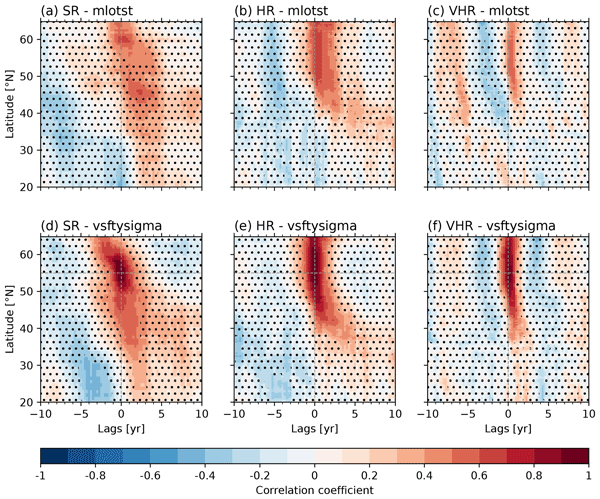
Eneko Martin-Martinez, Amanda Frigola, Eduardo Moreno-Chamarro, Daria Kuznetsova, Saskia Loosveldt-Tomas, Margarida Samsó Cabré, Pierre-Antoine Bretonnière, and Pablo Ortega
Earth Syst. Dynam., 16, 1343–1364, https://doi.org/10.5194/esd-16-1343-2025, https://doi.org/10.5194/esd-16-1343-2025, 2025
Short summary
Short summary
We investigate the impact of model resolution on different processes in the North Atlantic using three different resolutions of the same climate model. The higher resolutions allow for the explicit simulation of smaller-scale processes. We found differences across resolutions in how denser waters are formed and transported southward, impacting the large-scale circulation of the Atlantic Ocean.
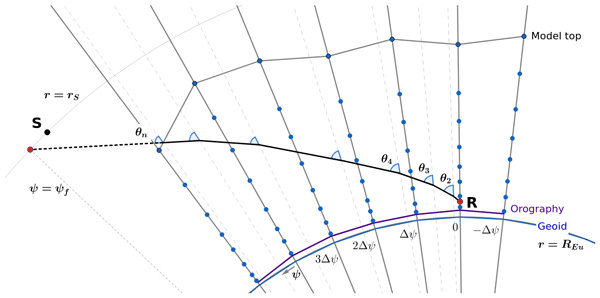
Maksym Vasiuta, Angel Navarro Trastoy, Sanam Motlaghzadeh, Lauri Tuppi, Torsten Mayer-Gürr, and Heikki Järvinen
Geosci. Model Dev., 18, 5015–5030, https://doi.org/10.5194/gmd-18-5015-2025, https://doi.org/10.5194/gmd-18-5015-2025, 2025
Short summary
Short summary
Propagation of electromagnetic signals in Earth's neutral atmosphere inflicts errors in space geodetic observations. To model these errors accurately, it is necessary to use a signal tracing algorithm which is informed of the state of the atmosphere. We developed such an algorithm and tested it by processing Global Navigation Satellite System network observations. Our algorithm's main advantage is lossless utilization of atmospheric information provided by numerical weather prediction models.
Florian Sauerland, Pierre-Vincent Huot, Sylvain Marchi, Thierry Fichefet, Hugues Goosse, Konstanze Haubner, François Klein, François Massonnet, Bianca Mezzina, Eduardo Moreno-Chamarro, Pablo Ortega, Frank Pattyn, Charles Pelletier, Deborah Verfaillie, Lars Zipf, and Nicole van Lipzig
EGUsphere, https://doi.org/10.5194/egusphere-2025-2889, https://doi.org/10.5194/egusphere-2025-2889, 2025
Short summary
Short summary
We simulated the Antarctic climate from 1985 to 2014. Our model is driven using the ERA-5 reanalysis for one simulation and the EC-Earth global climate model for three others. Most of the simulated trends, such as sea ice extent and precipitation over land, have opposite signs for the two drivers, but agree between the three EC-Earth driven simulations. We conclude that these opposing trends must be due to the different drivers, and that the climate over land is less predictable than over sea.
Anna Lea Albright, Bjorn Stevens, and Martin Wirth
EGUsphere, https://doi.org/10.5194/egusphere-2025-3551, https://doi.org/10.5194/egusphere-2025-3551, 2025
Preprint archived
Short summary
Short summary
Ocean evaporation transfers heat and moisture into the atmosphere, shaping our weather and climate, yet humidity just above the ocean is hard to measure from space. We show that lasers measuring low cloud height can accurately infer near-surface humidity. Tests on ships, aircraft, and with weather balloons are used to validate the method. Applied to satellites, this method could help fill gaps in humidity measurements over the ocean.

Sebastian Müller, Martin Lange, Thomas Fischer, Sara König, Matthias Kelbling, Jeisson Javier Leal Rojas, and Stephan Thober
Geosci. Model Dev., 18, 4483–4498, https://doi.org/10.5194/gmd-18-4483-2025, https://doi.org/10.5194/gmd-18-4483-2025, 2025
Short summary
Short summary
This study presents FINAM (
FINAM is not a model), a new coupling framework written in Python to dynamically connect independently developed models. Python, as the ultimate glue language, enables the use of codes from nearly any programming language like Fortran, C++, Rust, and others. FINAM is designed to simplify the integration of various models with minimal effort, as demonstrated through various examples ranging from simple to complex systems.
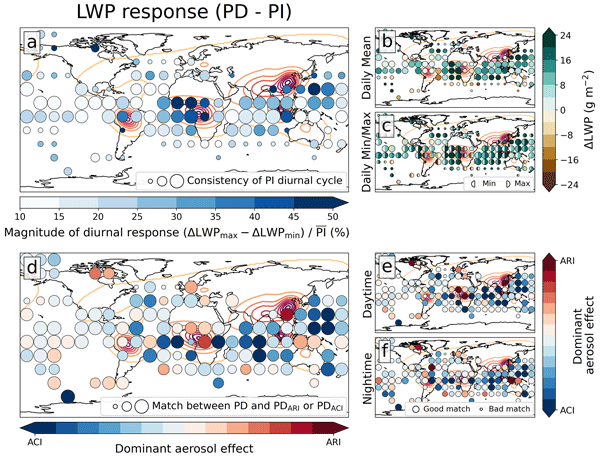
Ross J. Herbert, Andrew I. L. Williams, Philipp Weiss, Duncan Watson-Parris, Elisabeth Dingley, Daniel Klocke, and Philip Stier
Atmos. Chem. Phys., 25, 7789–7814, https://doi.org/10.5194/acp-25-7789-2025, https://doi.org/10.5194/acp-25-7789-2025, 2025
Short summary
Short summary
Clouds exist at scales that climate models struggle to represent, limiting our knowledge of how climate change may impact clouds. Here we use a new kilometer-scale global model representing an important step towards the necessary scale. We focus on how aerosol particles modify clouds, radiation, and precipitation. We find the magnitude and manner of responses tend to vary from region to region, highlighting the potential of global kilometer-scale simulations and a need to represent aerosols in climate models.
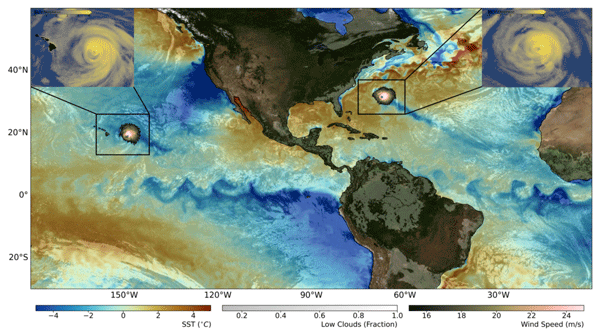
Ja-Yeon Moon, Jan Streffing, Sun-Seon Lee, Tido Semmler, Miguel Andrés-Martínez, Jiao Chen, Eun-Byeoul Cho, Jung-Eun Chu, Christian L. E. Franzke, Jan P. Gärtner, Rohit Ghosh, Jan Hegewald, Songyee Hong, Dae-Won Kim, Nikolay Koldunov, June-Yi Lee, Zihao Lin, Chao Liu, Svetlana N. Loza, Wonsun Park, Woncheol Roh, Dmitry V. Sein, Sahil Sharma, Dmitry Sidorenko, Jun-Hyeok Son, Malte F. Stuecker, Qiang Wang, Gyuseok Yi, Martina Zapponini, Thomas Jung, and Axel Timmermann
Earth Syst. Dynam., 16, 1103–1134, https://doi.org/10.5194/esd-16-1103-2025, https://doi.org/10.5194/esd-16-1103-2025, 2025
Short summary
Short summary
Based on a series of storm-resolving greenhouse warming simulations conducted with the AWI-CM3 model at 9 km global atmosphere and 4–25 km ocean resolution, we present new projections of regional climate change, modes of climate variability, and extreme events. The 10-year-long high-resolution simulations for the 2000s, 2030s, 2060s, and 2090s were initialized from a coarser-resolution transient run (31 km atmosphere) which follows the SSP5-8.5 greenhouse gas emission scenario from 1950–2100 CE.
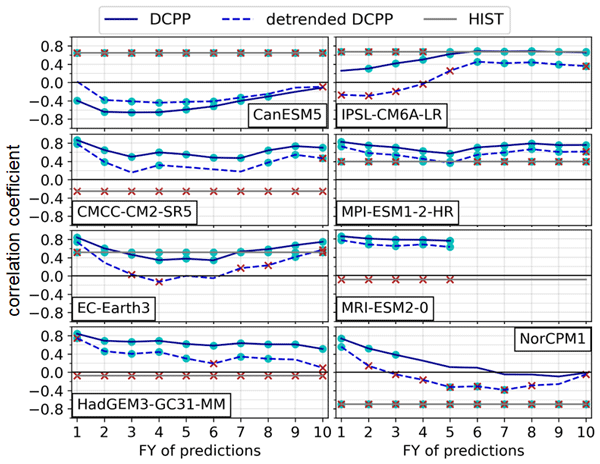
Teresa Carmo-Costa, Roberto Bilbao, Jon Robson, Ana Teles-Machado, and Pablo Ortega
Earth Syst. Dynam., 16, 1001–1028, https://doi.org/10.5194/esd-16-1001-2025, https://doi.org/10.5194/esd-16-1001-2025, 2025
Short summary
Short summary
Climate models can be used to skilfully predict decadal changes in North Atlantic ocean heat content. However, significant regional differences among these models reveal large uncertainties in the influence of external forcings. This study examines eight climate models to understand the differences in their predictive capacity for the North Atlantic, investigating the importance of external forcings and key model characteristics such as ocean stratification and the local atmospheric forcing.
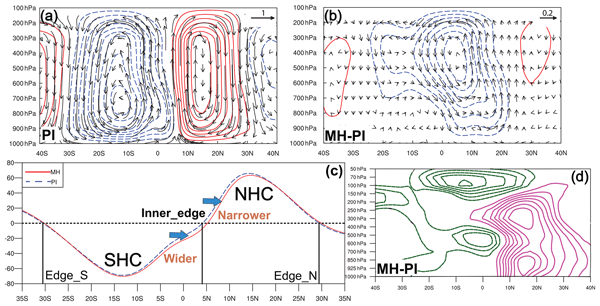
Jianpu Bian, Jouni Räisänen, and Heikki Seppä
Clim. Past, 21, 1209–1233, https://doi.org/10.5194/cp-21-1209-2025, https://doi.org/10.5194/cp-21-1209-2025, 2025
Short summary
Short summary
This research explores the connection between the mid-Holocene northward shift of the Intertropical Convergence Zone (ITCZ) and Hadley cell changes and effects on terrestrial hydroclimate. Our findings show that the ITCZ shift coincides with a contraction and weakening of the northern Hadley cell and an expansion and intensification of the southern cell, leading to reduced (increased) terrestrial aridity and dryland contraction (expansion) in the Northern (Southern) Hemisphere.
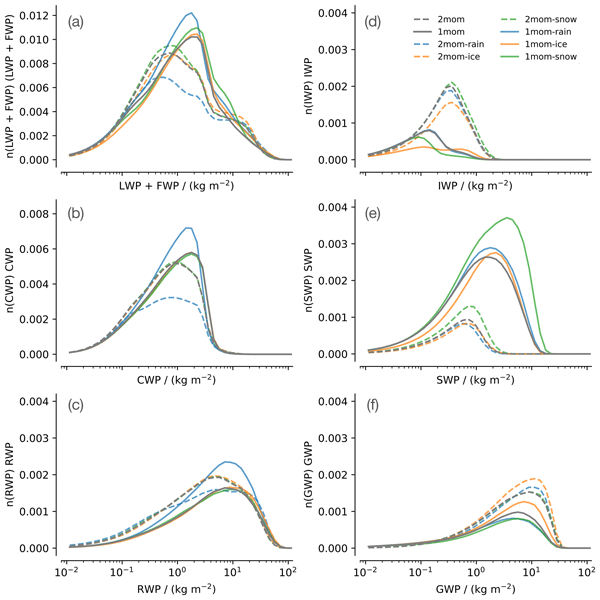
Ann Kristin Naumann, Monika Esch, and Bjorn Stevens
Atmos. Chem. Phys., 25, 6429–6444, https://doi.org/10.5194/acp-25-6429-2025, https://doi.org/10.5194/acp-25-6429-2025, 2025
Short summary
Short summary
This study explores how uncertainties in the representation of microphysical processes affect the tropical condensate distribution in the global storm-resolving model ICON. The results point to the importance of the fall speed of hydrometeor particles and to a simple relationship: the faster a condensate falls, the less there is of it. Implications for the energy balance and precipitation properties are discussed.
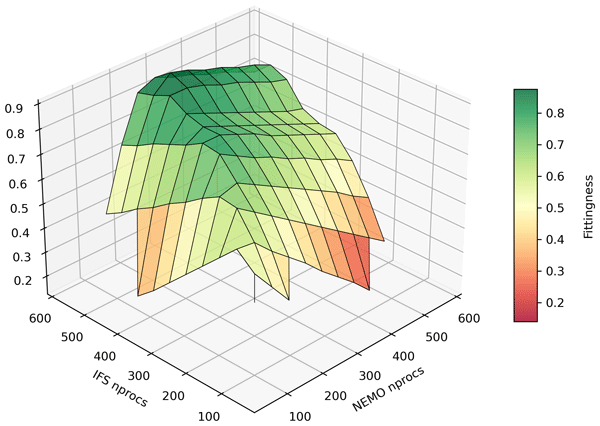
Sergi Palomas, Mario C. Acosta, Gladys Utrera, and Etienne Tourigny
Geosci. Model Dev., 18, 3661–3679, https://doi.org/10.5194/gmd-18-3661-2025, https://doi.org/10.5194/gmd-18-3661-2025, 2025
Short summary
Short summary
We present an automatic tool that optimizes resource distribution in coupled climate models, enhancing speed and reducing computational costs without requiring expert knowledge. Users can set energy/time criteria or limit resource usage. Tested on various European Community Earth System Model (EC-Earth) configurations and high-performance computing (HPC) platforms, it achieved up to 34 % faster simulations with fewer resources.
Pep Cos, Matias Olmo, Diego Campos, Raül Marcos-Matamoros, Lluís Palma, Ángel G. Muñoz, and Francisco J. Doblas-Reyes
Weather Clim. Dynam., 6, 609–626, https://doi.org/10.5194/wcd-6-609-2025, https://doi.org/10.5194/wcd-6-609-2025, 2025
Short summary
Short summary
This work presents the identification of Saharan warm-air intrusions in the western Mediterranean, which are the displacement of air masses formed over the Sahara toward the west of the Mediterranean region. We focus on the recent past and obtain a catalogue of intrusion days. The results show the existence of different types of intrusions, important impacts on extremely high temperatures in the Mediterranean and Europe, and the dynamic mechanisms that can cause the onset of these events.
Yushi Morioka, Eric Maisonnave, Sébastien Masson, Clement Rousset, Luis Kornblueh, Marco Giorgetta, Masami Nonaka, and Swadhin K. Behera
EGUsphere, https://doi.org/10.5194/egusphere-2025-2258, https://doi.org/10.5194/egusphere-2025-2258, 2025
Preprint archived
Short summary
Short summary
Ocean mesoscale eddies, which have a horizontal scale with an order of 100 km, play a prominent role in global ocean heat transport that regulates Earth climate. Here we newly develop an eddy-permitting climate model to demonstrate that the increased ocean model resolution improves representation of air-sea interaction in the western and eastern boundary current regions, while the improved sea ice model physics benefit realistic simulation of sea ice variability.
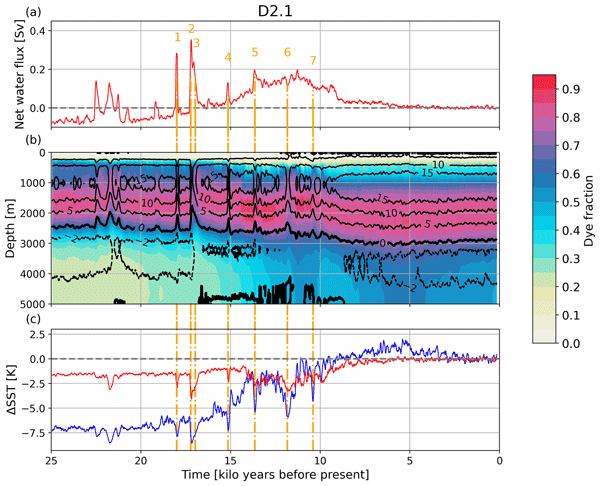
Uwe Mikolajewicz, Marie-Luise Kapsch, Clemens Schannwell, Katharina D. Six, Florian A. Ziemen, Meike Bagge, Jean-Philippe Baudouin, Olga Erokhina, Veronika Gayler, Volker Klemann, Virna L. Meccia, Anne Mouchet, and Thomas Riddick
Clim. Past, 21, 719–751, https://doi.org/10.5194/cp-21-719-2025, https://doi.org/10.5194/cp-21-719-2025, 2025
Short summary
Short summary
A fully coupled atmosphere–ocean–ice-sheet–solid-earth model was applied to simulate the time from the Last Glacial Maximum (about 25 000 years before the present) to the pre-industrial period. The model simulations are compared to observational estimates. During this climate transition, the model simulates several abrupt changes in the North Atlantic region, which are initiated by different processes. The underlying mechanisms are analysed and described.
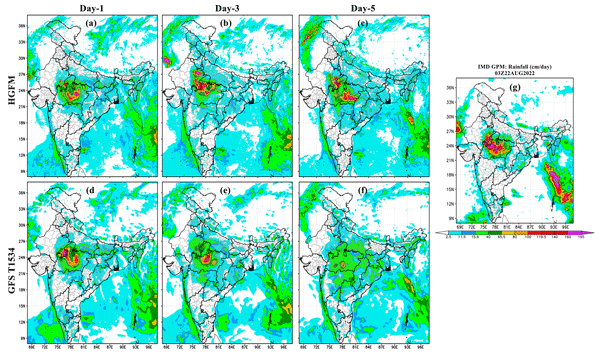
R. Phani Murali Krishna, Siddharth Kumar, A. Gopinathan Prajeesh, Peter Bechtold, Nils Wedi, Kumar Roy, Malay Ganai, B. Revanth Reddy, Snehlata Tirkey, Tanmoy Goswami, Radhika Kanase, Sahadat Sarkar, Medha Deshpande, and Parthasarathi Mukhopadhyay
Geosci. Model Dev., 18, 1879–1894, https://doi.org/10.5194/gmd-18-1879-2025, https://doi.org/10.5194/gmd-18-1879-2025, 2025
Short summary
Short summary
The High-Resolution Global Forecast Model (HGFM) is an advanced iteration of the operational Global Forecast System (GFS) model. HGFM can produce forecasts at a spatial scale of ~6 km in tropics. It demonstrates improved accuracy in short- to medium-range weather prediction over the Indian region, with notable success in predicting extreme events. Further, the model will be entrusted to operational forecasting agencies after validation and testing.
Malcolm J. Roberts, Kevin A. Reed, Qing Bao, Joseph J. Barsugli, Suzana J. Camargo, Louis-Philippe Caron, Ping Chang, Cheng-Ta Chen, Hannah M. Christensen, Gokhan Danabasoglu, Ivy Frenger, Neven S. Fučkar, Shabeh ul Hasson, Helene T. Hewitt, Huanping Huang, Daehyun Kim, Chihiro Kodama, Michael Lai, Lai-Yung Ruby Leung, Ryo Mizuta, Paulo Nobre, Pablo Ortega, Dominique Paquin, Christopher D. Roberts, Enrico Scoccimarro, Jon Seddon, Anne Marie Treguier, Chia-Ying Tu, Paul A. Ullrich, Pier Luigi Vidale, Michael F. Wehner, Colin M. Zarzycki, Bosong Zhang, Wei Zhang, and Ming Zhao
Geosci. Model Dev., 18, 1307–1332, https://doi.org/10.5194/gmd-18-1307-2025, https://doi.org/10.5194/gmd-18-1307-2025, 2025
Short summary
Short summary
HighResMIP2 is a model intercomparison project focusing on high-resolution global climate models, that is, those with grid spacings of 25 km or less in the atmosphere and ocean, using simulations of decades to a century in length. We are proposing an update of our simulation protocol to make the models more applicable to key questions for climate variability and hazard in present-day and future projections and to build links with other communities to provide more robust climate information.

Swantje Bastin, Aleksei Koldunov, Florian Schütte, Oliver Gutjahr, Marta Agnieszka Mrozowska, Tim Fischer, Radomyra Shevchenko, Arjun Kumar, Nikolay Koldunov, Helmuth Haak, Nils Brüggemann, Rebecca Hummels, Mia Sophie Specht, Johann Jungclaus, Sergey Danilov, Marcus Dengler, and Markus Jochum
Geosci. Model Dev., 18, 1189–1220, https://doi.org/10.5194/gmd-18-1189-2025, https://doi.org/10.5194/gmd-18-1189-2025, 2025
Short summary
Short summary
Vertical mixing is an important process, for example, for tropical sea surface temperature, but cannot be resolved by ocean models. Comparisons of mixing schemes and settings have usually been done with a single model, sometimes yielding conflicting results. We systematically compare two widely used schemes with different parameter settings in two different ocean models and show that most effects from mixing scheme parameter changes are model-dependent.
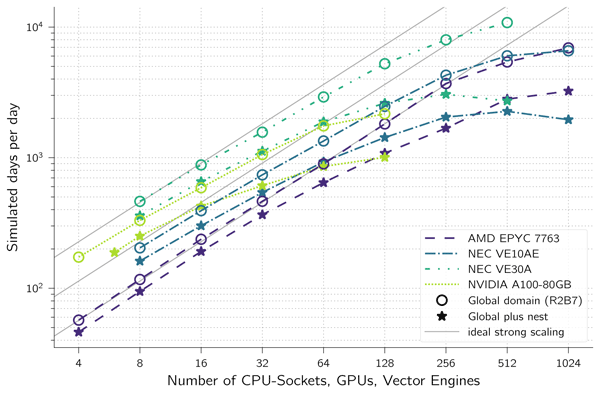
Panagiotis Adamidis, Erik Pfister, Hendryk Bockelmann, Dominik Zobel, Jens-Olaf Beismann, and Marek Jacob
Geosci. Model Dev., 18, 905–919, https://doi.org/10.5194/gmd-18-905-2025, https://doi.org/10.5194/gmd-18-905-2025, 2025
Short summary
Short summary
In this paper, we investigated performance indicators of the climate model ICON (ICOsahedral Nonhydrostatic) on different compute architectures to answer the question of how to generate high-resolution climate simulations. Evidently, it is not enough to use more computing units of the conventionally used architectures; higher memory throughput is the most promising approach. More potential can be gained from single-node optimization rather than simply increasing the number of compute nodes.
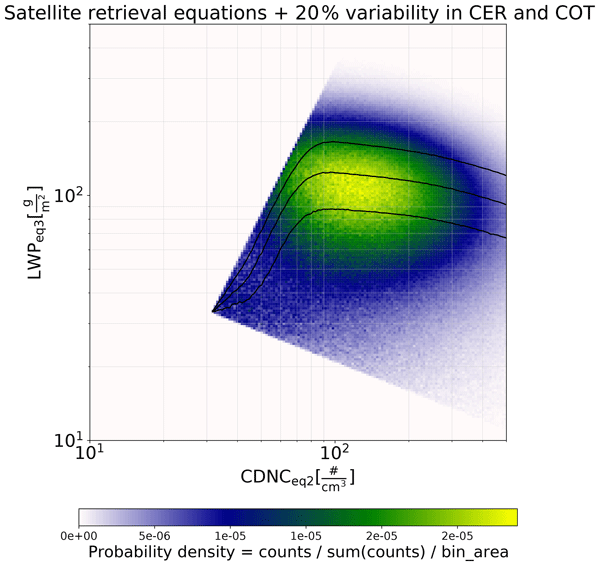
Harri Kokkola, Juha Tonttila, Silvia M. Calderón, Sami Romakkaniemi, Antti Lipponen, Aapo Peräkorpi, Tero Mielonen, Edward Gryspeerdt, Timo Henrik Virtanen, Pekka Kolmonen, and Antti Arola
Atmos. Chem. Phys., 25, 1533–1543, https://doi.org/10.5194/acp-25-1533-2025, https://doi.org/10.5194/acp-25-1533-2025, 2025
Short summary
Short summary
Understanding how atmospheric aerosols affect clouds is a scientific challenge. One question is how aerosols affects the amount of cloud water. We used a cloud-scale model to study these effects on marine clouds. The study showed that variations in cloud properties and instrument noise can cause bias in satellite-derived cloud water content. However, our results suggest that for similar weather conditions with well-defined aerosol concentrations, satellite data can reliably track these effects.
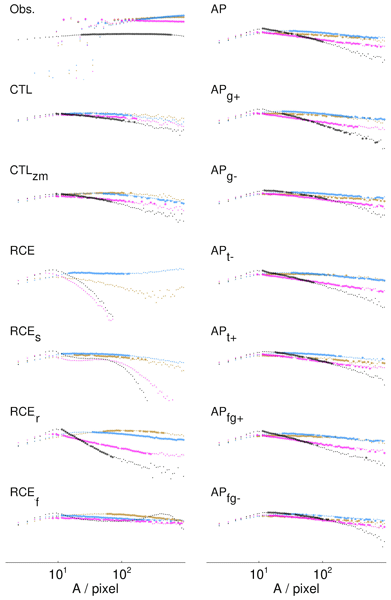
Claudia Christine Stephan and Bjorn Stevens
Atmos. Chem. Phys., 25, 1209–1226, https://doi.org/10.5194/acp-25-1209-2025, https://doi.org/10.5194/acp-25-1209-2025, 2025
Short summary
Short summary
Tropical precipitation cluster area and intensity distributions follow power laws, but the physical processes responsible for this behavior remain unknown. We analyze global simulations that realistically represent precipitation processes. We consider Earth-like planets as well as virtual planets to realize different types of large-scale dynamics. Our finding is that power laws in Earth’s precipitation cluster statistics stem from the robust power laws in Earth’s atmospheric wind field.
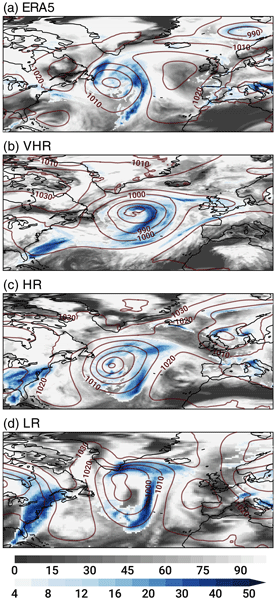
Eduardo Moreno-Chamarro, Thomas Arsouze, Mario Acosta, Pierre-Antoine Bretonnière, Miguel Castrillo, Eric Ferrer, Amanda Frigola, Daria Kuznetsova, Eneko Martin-Martinez, Pablo Ortega, and Sergi Palomas
Geosci. Model Dev., 18, 461–482, https://doi.org/10.5194/gmd-18-461-2025, https://doi.org/10.5194/gmd-18-461-2025, 2025
Short summary
Short summary
We present the high-resolution model version of the EC-Earth global climate model to contribute to HighResMIP. The combined model resolution is about 10–15 km in both the ocean and atmosphere, which makes it one of the finest ever used to complete historical and scenario simulations. This model is compared with two lower-resolution versions, with a 100 km and a 25 km grid. The three models are compared with observations to study the improvements thanks to the increased resolution.
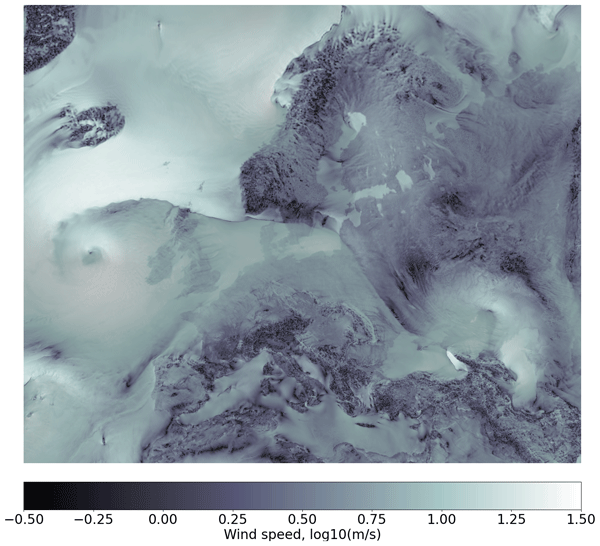
Thomas Rackow, Xabier Pedruzo-Bagazgoitia, Tobias Becker, Sebastian Milinski, Irina Sandu, Razvan Aguridan, Peter Bechtold, Sebastian Beyer, Jean Bidlot, Souhail Boussetta, Willem Deconinck, Michail Diamantakis, Peter Dueben, Emanuel Dutra, Richard Forbes, Rohit Ghosh, Helge F. Goessling, Ioan Hadade, Jan Hegewald, Thomas Jung, Sarah Keeley, Lukas Kluft, Nikolay Koldunov, Aleksei Koldunov, Tobias Kölling, Josh Kousal, Christian Kühnlein, Pedro Maciel, Kristian Mogensen, Tiago Quintino, Inna Polichtchouk, Balthasar Reuter, Domokos Sármány, Patrick Scholz, Dmitry Sidorenko, Jan Streffing, Birgit Sützl, Daisuke Takasuka, Steffen Tietsche, Mirco Valentini, Benoît Vannière, Nils Wedi, Lorenzo Zampieri, and Florian Ziemen
Geosci. Model Dev., 18, 33–69, https://doi.org/10.5194/gmd-18-33-2025, https://doi.org/10.5194/gmd-18-33-2025, 2025
Short summary
Short summary
Detailed global climate model simulations have been created based on a numerical weather prediction model, offering more accurate spatial detail down to the scale of individual cities ("kilometre-scale") and a better understanding of climate phenomena such as atmospheric storms, whirls in the ocean, and cracks in sea ice. The new model aims to provide globally consistent information on local climate change with greater precision, benefiting environmental planning and local impact modelling.
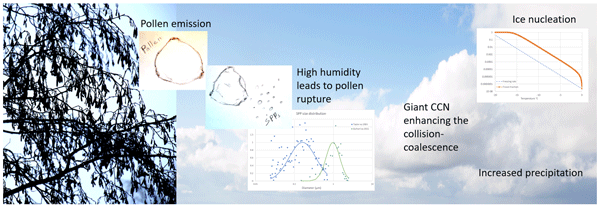
Marje Prank, Juha Tonttila, Xiaoxia Shang, Sami Romakkaniemi, and Tomi Raatikainen
Atmos. Chem. Phys., 25, 183–197, https://doi.org/10.5194/acp-25-183-2025, https://doi.org/10.5194/acp-25-183-2025, 2025
Short summary
Short summary
Large primary bioparticles such as pollen can be abundant in the atmosphere. In humid conditions pollen can rupture and release a large number of fine sub-pollen particles (SPPs). The paper investigates what kind of birch pollen concentrations are needed for the pollen and SPPs to start playing a noticeable role in cloud processes and alter precipitation formation. In the studied cases only the largest observed pollen concentrations were able to noticeably alter the precipitation formation.

Oriol Tintó Prims, Robert Redl, Marc Rautenhaus, Tobias Selz, Takumi Matsunobu, Kameswar Rao Modali, and George Craig
Geosci. Model Dev., 17, 8909–8925, https://doi.org/10.5194/gmd-17-8909-2024, https://doi.org/10.5194/gmd-17-8909-2024, 2024
Short summary
Short summary
Advanced compression techniques can drastically reduce the size of meteorological datasets (by 5 to 150 times) without compromising the data's scientific value. We developed a user-friendly tool called
enstools-compressionthat makes this compression simple for Earth scientists. This tool works seamlessly with common weather and climate data formats. Our work shows that lossy compression can significantly improve how researchers store and analyze large meteorological datasets.
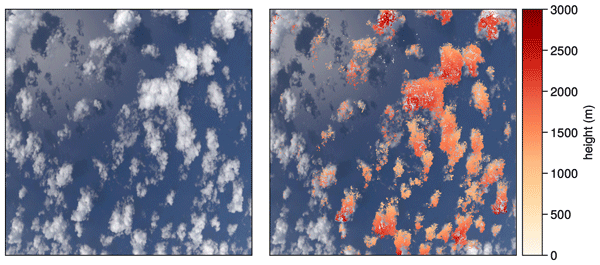
Lea Volkmer, Tobias Kölling, Tobias Zinner, and Bernhard Mayer
Atmos. Meas. Tech., 17, 6807–6817, https://doi.org/10.5194/amt-17-6807-2024, https://doi.org/10.5194/amt-17-6807-2024, 2024
Short summary
Short summary
The importance of the consideration of cloud motion for the stereographic determination of cloud top height from aircraft observations is demonstrated using measurements of the airborne spectrometer of the Munich Aerosol Cloud Scanner (specMACS). A method for cloud motion correction using model winds from the European Centre for Medium-Range Weather Forecasts is presented and validated using both real measurements and realistic radiative transfer simulations.
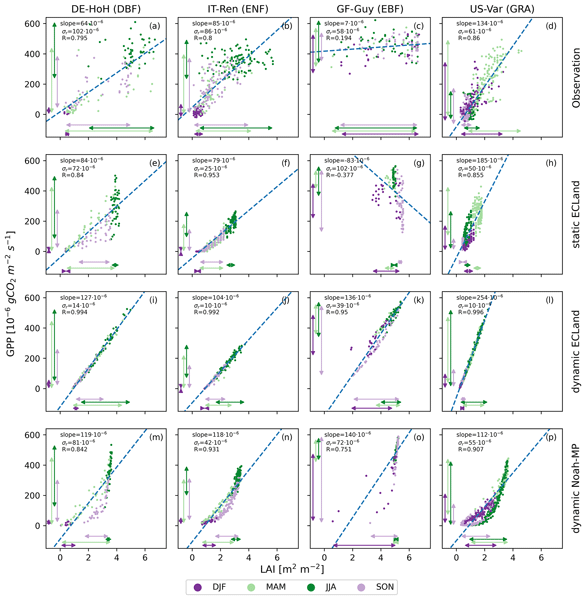
Sven Armin Westermann, Anke Hildebrandt, Souhail Bousetta, and Stephan Thober
Biogeosciences, 21, 5277–5303, https://doi.org/10.5194/bg-21-5277-2024, https://doi.org/10.5194/bg-21-5277-2024, 2024
Short summary
Short summary
Plants at the land surface mediate between soil and the atmosphere regarding water and carbon transport. Since plant growth is a dynamic process, models need to consider these dynamics. Two models that predict water and carbon fluxes by considering plant temporal evolution were tested against observational data. Currently, dynamizing plants in these models did not enhance their representativeness, which is caused by a mismatch between implemented physical relations and observable connections.
Colin G. Jones, Fanny Adloff, Ben B. B. Booth, Peter M. Cox, Veronika Eyring, Pierre Friedlingstein, Katja Frieler, Helene T. Hewitt, Hazel A. Jeffery, Sylvie Joussaume, Torben Koenigk, Bryan N. Lawrence, Eleanor O'Rourke, Malcolm J. Roberts, Benjamin M. Sanderson, Roland Séférian, Samuel Somot, Pier Luigi Vidale, Detlef van Vuuren, Mario Acosta, Mats Bentsen, Raffaele Bernardello, Richard Betts, Ed Blockley, Julien Boé, Tom Bracegirdle, Pascale Braconnot, Victor Brovkin, Carlo Buontempo, Francisco Doblas-Reyes, Markus Donat, Italo Epicoco, Pete Falloon, Sandro Fiore, Thomas Frölicher, Neven S. Fučkar, Matthew J. Gidden, Helge F. Goessling, Rune Grand Graversen, Silvio Gualdi, José M. Gutiérrez, Tatiana Ilyina, Daniela Jacob, Chris D. Jones, Martin Juckes, Elizabeth Kendon, Erik Kjellström, Reto Knutti, Jason Lowe, Matthew Mizielinski, Paola Nassisi, Michael Obersteiner, Pierre Regnier, Romain Roehrig, David Salas y Mélia, Carl-Friedrich Schleussner, Michael Schulz, Enrico Scoccimarro, Laurent Terray, Hannes Thiemann, Richard A. Wood, Shuting Yang, and Sönke Zaehle
Earth Syst. Dynam., 15, 1319–1351, https://doi.org/10.5194/esd-15-1319-2024, https://doi.org/10.5194/esd-15-1319-2024, 2024
Short summary
Short summary
We propose a number of priority areas for the international climate research community to address over the coming decade. Advances in these areas will both increase our understanding of past and future Earth system change, including the societal and environmental impacts of this change, and deliver significantly improved scientific support to international climate policy, such as future IPCC assessments and the UNFCCC Global Stocktake.
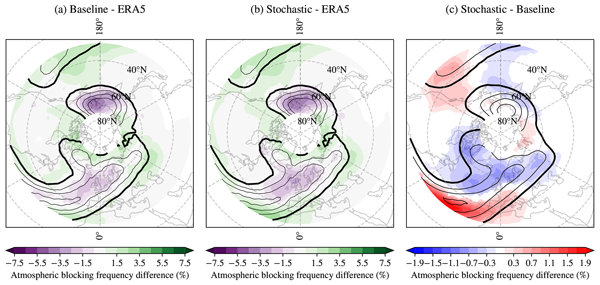
Michele Filippucci, Simona Bordoni, and Paolo Davini
Weather Clim. Dynam., 5, 1207–1222, https://doi.org/10.5194/wcd-5-1207-2024, https://doi.org/10.5194/wcd-5-1207-2024, 2024
Short summary
Short summary
Atmospheric blocking is a recurring phenomenon in midlatitudes, causing winter cold spells and summer heat waves. Current models underestimate it, hindering understanding of global warming's impact on extremes. In this paper, we investigate whether stochastic parameterizations can improve blocking representation. We find that blocking frequency representation slightly deteriorates, following a change in midlatitude winds. We conclude by suggesting a direction for future model development.
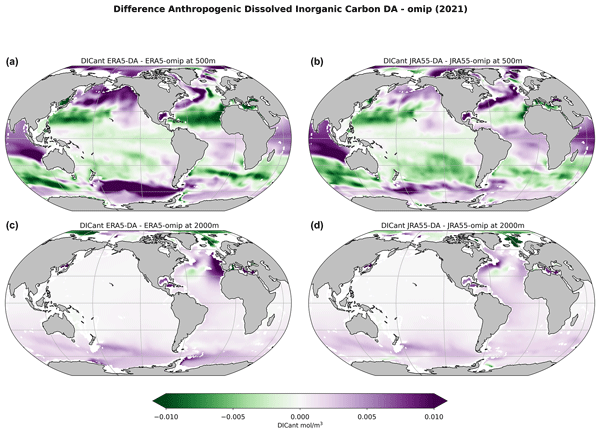
Raffaele Bernardello, Valentina Sicardi, Vladimir Lapin, Pablo Ortega, Yohan Ruprich-Robert, Etienne Tourigny, and Eric Ferrer
Earth Syst. Dynam., 15, 1255–1275, https://doi.org/10.5194/esd-15-1255-2024, https://doi.org/10.5194/esd-15-1255-2024, 2024
Short summary
Short summary
The ocean mitigates climate change by absorbing about 25 % of the carbon that is emitted to the atmosphere. However, ocean CO2 uptake is not constant in time, and improving our understanding of the mechanisms regulating this variability can potentially lead to a better predictive capability of its future behavior. In this study, we compare two ocean modeling practices that are used to reconstruct the historical ocean carbon uptake, demonstrating the abilities of one over the other.
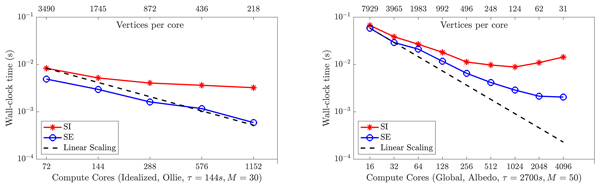
Tridib Banerjee, Patrick Scholz, Sergey Danilov, Knut Klingbeil, and Dmitry Sidorenko
Geosci. Model Dev., 17, 7051–7065, https://doi.org/10.5194/gmd-17-7051-2024, https://doi.org/10.5194/gmd-17-7051-2024, 2024
Short summary
Short summary
In this paper we propose a new alternative to one of the functionalities of the sea ice model FESOM2. The alternative we propose allows the model to capture and simulate fast changes in quantities like sea surface elevation more accurately. We also demonstrate that the new alternative is faster and more adept at taking advantages of highly parallelized computing infrastructure. We therefore show that this new alternative is a great addition to the sea ice model FESOM2.
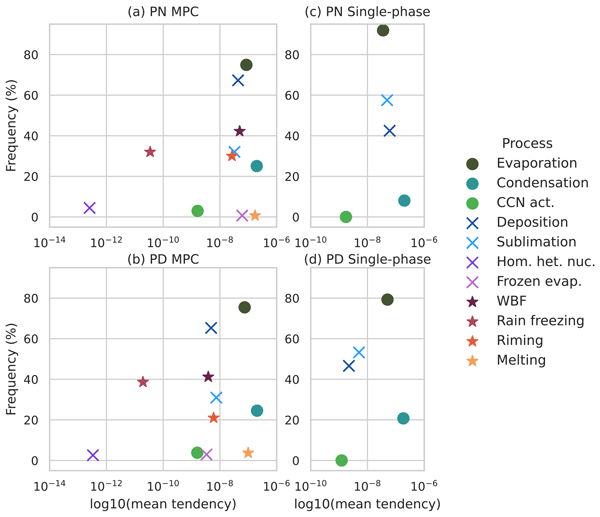
Theresa Kiszler, Davide Ori, and Vera Schemann
Atmos. Chem. Phys., 24, 10039–10053, https://doi.org/10.5194/acp-24-10039-2024, https://doi.org/10.5194/acp-24-10039-2024, 2024
Short summary
Short summary
Microphysical processes impact the phase-partitioning of clouds. In this study we evaluate these processes while focusing on low-level Arctic clouds. To achieve this we used an extensive simulation set in combination with a new diagnostic tool. This study presents our findings on the relevance of these processes and their behaviour under different thermodynamic regimes.
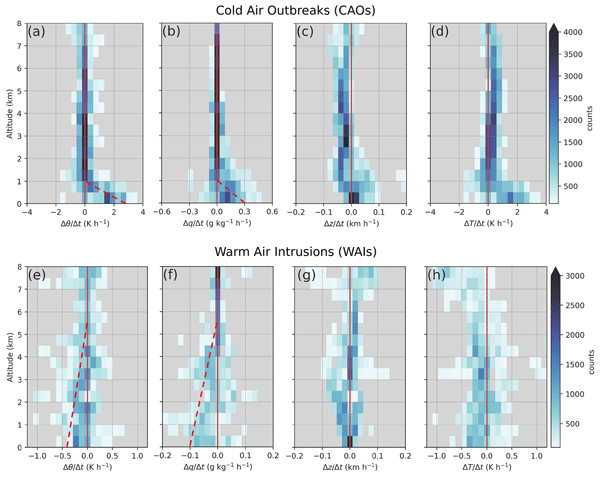
Manfred Wendisch, Susanne Crewell, André Ehrlich, Andreas Herber, Benjamin Kirbus, Christof Lüpkes, Mario Mech, Steven J. Abel, Elisa F. Akansu, Felix Ament, Clémantyne Aubry, Sebastian Becker, Stephan Borrmann, Heiko Bozem, Marlen Brückner, Hans-Christian Clemen, Sandro Dahlke, Georgios Dekoutsidis, Julien Delanoë, Elena De La Torre Castro, Henning Dorff, Regis Dupuy, Oliver Eppers, Florian Ewald, Geet George, Irina V. Gorodetskaya, Sarah Grawe, Silke Groß, Jörg Hartmann, Silvia Henning, Lutz Hirsch, Evelyn Jäkel, Philipp Joppe, Olivier Jourdan, Zsofia Jurányi, Michail Karalis, Mona Kellermann, Marcus Klingebiel, Michael Lonardi, Johannes Lucke, Anna E. Luebke, Maximilian Maahn, Nina Maherndl, Marion Maturilli, Bernhard Mayer, Johanna Mayer, Stephan Mertes, Janosch Michaelis, Michel Michalkov, Guillaume Mioche, Manuel Moser, Hanno Müller, Roel Neggers, Davide Ori, Daria Paul, Fiona M. Paulus, Christian Pilz, Felix Pithan, Mira Pöhlker, Veronika Pörtge, Maximilian Ringel, Nils Risse, Gregory C. Roberts, Sophie Rosenburg, Johannes Röttenbacher, Janna Rückert, Michael Schäfer, Jonas Schaefer, Vera Schemann, Imke Schirmacher, Jörg Schmidt, Sebastian Schmidt, Johannes Schneider, Sabrina Schnitt, Anja Schwarz, Holger Siebert, Harald Sodemann, Tim Sperzel, Gunnar Spreen, Bjorn Stevens, Frank Stratmann, Gunilla Svensson, Christian Tatzelt, Thomas Tuch, Timo Vihma, Christiane Voigt, Lea Volkmer, Andreas Walbröl, Anna Weber, Birgit Wehner, Bruno Wetzel, Martin Wirth, and Tobias Zinner
Atmos. Chem. Phys., 24, 8865–8892, https://doi.org/10.5194/acp-24-8865-2024, https://doi.org/10.5194/acp-24-8865-2024, 2024
Short summary
Short summary
The Arctic is warming faster than the rest of the globe. Warm-air intrusions (WAIs) into the Arctic may play an important role in explaining this phenomenon. Cold-air outbreaks (CAOs) out of the Arctic may link the Arctic climate changes to mid-latitude weather. In our article, we describe how to observe air mass transformations during CAOs and WAIs using three research aircraft instrumented with state-of-the-art remote-sensing and in situ measurement devices.
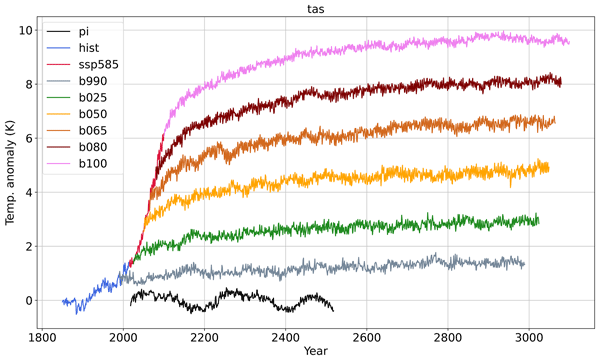
Federico Fabiano, Paolo Davini, Virna L. Meccia, Giuseppe Zappa, Alessio Bellucci, Valerio Lembo, Katinka Bellomo, and Susanna Corti
Earth Syst. Dynam., 15, 527–546, https://doi.org/10.5194/esd-15-527-2024, https://doi.org/10.5194/esd-15-527-2024, 2024
Short summary
Short summary
Even after the concentration of greenhouse gases is stabilized, the climate will continue to adapt, seeking a new equilibrium. We study this long-term stabilization through a set of 1000-year simulations, obtained by suddenly "freezing" the atmospheric composition at different levels. If frozen at the current state, global warming surpasses 3° in the long term with our model. We then study how climate impacts will change after various centuries and how the deep ocean will warm.
Bjorn Stevens, Stefan Adami, Tariq Ali, Hartwig Anzt, Zafer Aslan, Sabine Attinger, Jaana Bäck, Johanna Baehr, Peter Bauer, Natacha Bernier, Bob Bishop, Hendryk Bockelmann, Sandrine Bony, Guy Brasseur, David N. Bresch, Sean Breyer, Gilbert Brunet, Pier Luigi Buttigieg, Junji Cao, Christelle Castet, Yafang Cheng, Ayantika Dey Choudhury, Deborah Coen, Susanne Crewell, Atish Dabholkar, Qing Dai, Francisco Doblas-Reyes, Dale Durran, Ayoub El Gaidi, Charlie Ewen, Eleftheria Exarchou, Veronika Eyring, Florencia Falkinhoff, David Farrell, Piers M. Forster, Ariane Frassoni, Claudia Frauen, Oliver Fuhrer, Shahzad Gani, Edwin Gerber, Debra Goldfarb, Jens Grieger, Nicolas Gruber, Wilco Hazeleger, Rolf Herken, Chris Hewitt, Torsten Hoefler, Huang-Hsiung Hsu, Daniela Jacob, Alexandra Jahn, Christian Jakob, Thomas Jung, Christopher Kadow, In-Sik Kang, Sarah Kang, Karthik Kashinath, Katharina Kleinen-von Königslöw, Daniel Klocke, Uta Kloenne, Milan Klöwer, Chihiro Kodama, Stefan Kollet, Tobias Kölling, Jenni Kontkanen, Steve Kopp, Michal Koran, Markku Kulmala, Hanna Lappalainen, Fakhria Latifi, Bryan Lawrence, June Yi Lee, Quentin Lejeun, Christian Lessig, Chao Li, Thomas Lippert, Jürg Luterbacher, Pekka Manninen, Jochem Marotzke, Satoshi Matsouoka, Charlotte Merchant, Peter Messmer, Gero Michel, Kristel Michielsen, Tomoki Miyakawa, Jens Müller, Ramsha Munir, Sandeep Narayanasetti, Ousmane Ndiaye, Carlos Nobre, Achim Oberg, Riko Oki, Tuba Özkan-Haller, Tim Palmer, Stan Posey, Andreas Prein, Odessa Primus, Mike Pritchard, Julie Pullen, Dian Putrasahan, Johannes Quaas, Krishnan Raghavan, Venkatachalam Ramaswamy, Markus Rapp, Florian Rauser, Markus Reichstein, Aromar Revi, Sonakshi Saluja, Masaki Satoh, Vera Schemann, Sebastian Schemm, Christina Schnadt Poberaj, Thomas Schulthess, Cath Senior, Jagadish Shukla, Manmeet Singh, Julia Slingo, Adam Sobel, Silvina Solman, Jenna Spitzer, Philip Stier, Thomas Stocker, Sarah Strock, Hang Su, Petteri Taalas, John Taylor, Susann Tegtmeier, Georg Teutsch, Adrian Tompkins, Uwe Ulbrich, Pier-Luigi Vidale, Chien-Ming Wu, Hao Xu, Najibullah Zaki, Laure Zanna, Tianjun Zhou, and Florian Ziemen
Earth Syst. Sci. Data, 16, 2113–2122, https://doi.org/10.5194/essd-16-2113-2024, https://doi.org/10.5194/essd-16-2113-2024, 2024
Short summary
Short summary
To manage Earth in the Anthropocene, new tools, new institutions, and new forms of international cooperation will be required. Earth Virtualization Engines is proposed as an international federation of centers of excellence to empower all people to respond to the immense and urgent challenges posed by climate change.
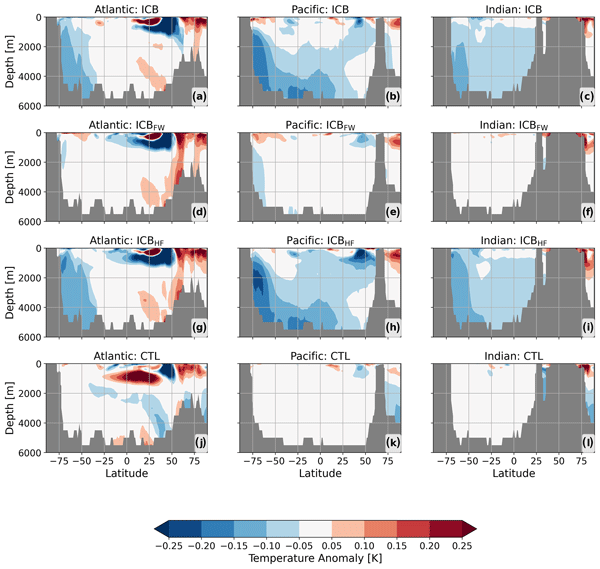
Lars Ackermann, Thomas Rackow, Kai Himstedt, Paul Gierz, Gregor Knorr, and Gerrit Lohmann
Geosci. Model Dev., 17, 3279–3301, https://doi.org/10.5194/gmd-17-3279-2024, https://doi.org/10.5194/gmd-17-3279-2024, 2024
Short summary
Short summary
We present long-term simulations with interactive icebergs in the Southern Ocean. By melting, icebergs reduce the temperature and salinity of the surrounding ocean. In our simulations, we find that this cooling effect of iceberg melting is not limited to the surface ocean but also reaches the deep ocean and propagates northward into all ocean basins. Additionally, the formation of deep-water masses in the Southern Ocean is enhanced.
Roberto Bilbao, Pablo Ortega, Didier Swingedouw, Leon Hermanson, Panos Athanasiadis, Rosie Eade, Marion Devilliers, Francisco Doblas-Reyes, Nick Dunstone, An-Chi Ho, William Merryfield, Juliette Mignot, Dario Nicolì, Margarida Samsó, Reinel Sospedra-Alfonso, Xian Wu, and Stephen Yeager
Earth Syst. Dynam., 15, 501–525, https://doi.org/10.5194/esd-15-501-2024, https://doi.org/10.5194/esd-15-501-2024, 2024
Short summary
Short summary
In recent decades three major volcanic eruptions have occurred: Mount Agung in 1963, El Chichón in 1982 and Mount Pinatubo in 1991. In this article we explore the climatic impacts of these volcanic eruptions with a purposefully designed set of simulations from six CMIP6 decadal prediction systems. We analyse the radiative and dynamical responses and show that including the volcanic forcing in these predictions is important to reproduce the observed surface temperature variations.
Mario C. Acosta, Sergi Palomas, Stella V. Paronuzzi Ticco, Gladys Utrera, Joachim Biercamp, Pierre-Antoine Bretonniere, Reinhard Budich, Miguel Castrillo, Arnaud Caubel, Francisco Doblas-Reyes, Italo Epicoco, Uwe Fladrich, Sylvie Joussaume, Alok Kumar Gupta, Bryan Lawrence, Philippe Le Sager, Grenville Lister, Marie-Pierre Moine, Jean-Christophe Rioual, Sophie Valcke, Niki Zadeh, and Venkatramani Balaji
Geosci. Model Dev., 17, 3081–3098, https://doi.org/10.5194/gmd-17-3081-2024, https://doi.org/10.5194/gmd-17-3081-2024, 2024
Short summary
Short summary
We present a collection of performance metrics gathered during the Coupled Model Intercomparison Project Phase 6 (CMIP6), a worldwide initiative to study climate change. We analyse the metrics that resulted from collaboration efforts among many partners and models and describe our findings to demonstrate the utility of our study for the scientific community. The research contributes to understanding climate modelling performance on the current high-performance computing (HPC) architectures.
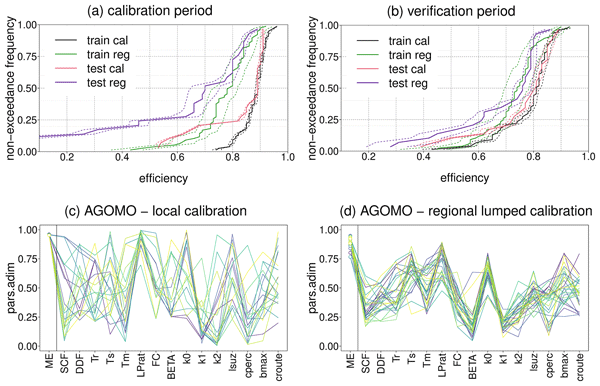
Matteo Pesce, Alberto Viglione, Jost von Hardenberg, Larisa Tarasova, Stefano Basso, Ralf Merz, Juraj Parajka, and Rui Tong
Proc. IAHS, 385, 65–69, https://doi.org/10.5194/piahs-385-65-2024, https://doi.org/10.5194/piahs-385-65-2024, 2024
Short summary
Short summary
The manuscript describes an application of PArameter Set Shuffling (PASS) approach in the Alpine region. A machine learning decision-tree algorithm is applied for the regional calibration of a conceptual semi-distributed hydrological model. Regional model efficiencies don't decrease significantly when moving in space from catchments used for the regional calibration (training) to catchments used for the procedure validation (test) and, in time, from the calibration to the verification period.
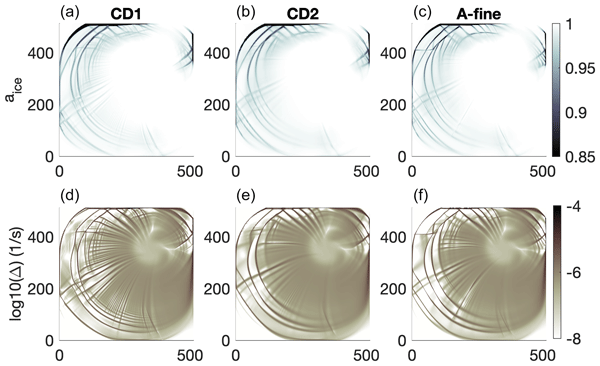
Sergey Danilov, Carolin Mehlmann, Dmitry Sidorenko, and Qiang Wang
Geosci. Model Dev., 17, 2287–2297, https://doi.org/10.5194/gmd-17-2287-2024, https://doi.org/10.5194/gmd-17-2287-2024, 2024
Short summary
Short summary
Sea ice models are a necessary component of climate models. At very high resolution they are capable of simulating linear kinematic features, such as leads, which are important for better prediction of heat exchanges between the ocean and atmosphere. Two new discretizations are described which improve the sea ice component of the Finite volumE Sea ice–Ocean Model (FESOM version 2) by allowing simulations of finer scales.
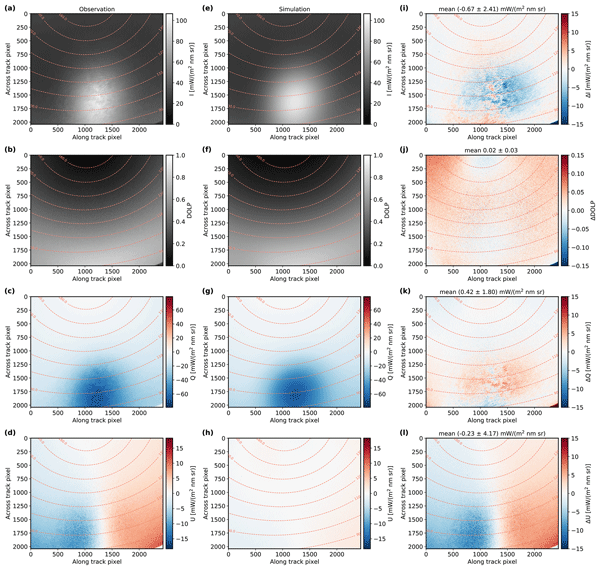
Anna Weber, Tobias Kölling, Veronika Pörtge, Andreas Baumgartner, Clemens Rammeloo, Tobias Zinner, and Bernhard Mayer
Atmos. Meas. Tech., 17, 1419–1439, https://doi.org/10.5194/amt-17-1419-2024, https://doi.org/10.5194/amt-17-1419-2024, 2024
Short summary
Short summary
In this work, we introduce the 2D RGB polarization-resolving cameras of the airborne hyperspectral and polarized imaging system specMACS. A full characterization and calibration of the cameras including a geometric calibration as well as a radiometric characterization is provided, allowing for the computation of absolute calibrated, georeferenced Stokes vectors rotated into the scattering plane. We validate the calibration by comparing sunglint measurements to radiative transfer simulations.
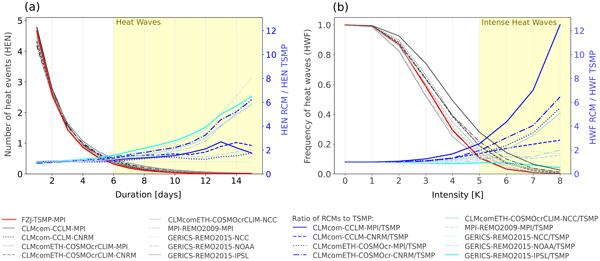
Liubov Poshyvailo-Strube, Niklas Wagner, Klaus Goergen, Carina Furusho-Percot, Carl Hartick, and Stefan Kollet
Earth Syst. Dynam., 15, 167–189, https://doi.org/10.5194/esd-15-167-2024, https://doi.org/10.5194/esd-15-167-2024, 2024
Short summary
Short summary
Groundwater (GW) representation is simplified in most regional climate models. Here, we introduce a unique Terrestrial Systems Modeling Platform (TSMP) dataset with an explicit representation of GW, in the context of dynamical downscaling of GCMs for climate change studies. We compare the heat events statistics of TSMP and the CORDEX ensemble. Our results show that TSMP systematically simulates fewer heat waves, and they are shorter and less intense.
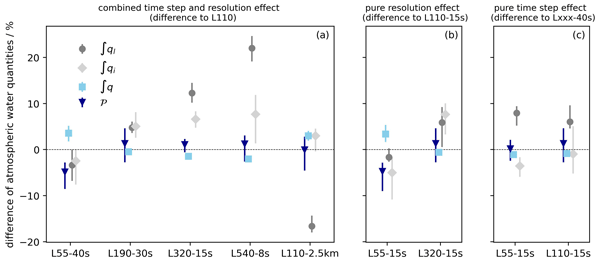
Hauke Schmidt, Sebastian Rast, Jiawei Bao, Amrit Cassim, Shih-Wei Fang, Diego Jimenez-de la Cuesta, Paul Keil, Lukas Kluft, Clarissa Kroll, Theresa Lang, Ulrike Niemeier, Andrea Schneidereit, Andrew I. L. Williams, and Bjorn Stevens
Geosci. Model Dev., 17, 1563–1584, https://doi.org/10.5194/gmd-17-1563-2024, https://doi.org/10.5194/gmd-17-1563-2024, 2024
Short summary
Short summary
A recent development in numerical simulations of the global atmosphere is the increase in horizontal resolution to grid spacings of a few kilometers. However, the vertical grid spacing of these models has not been reduced at the same rate as the horizontal grid spacing. Here, we assess the effects of much finer vertical grid spacings, in particular the impacts on cloud quantities and the atmospheric energy balance.
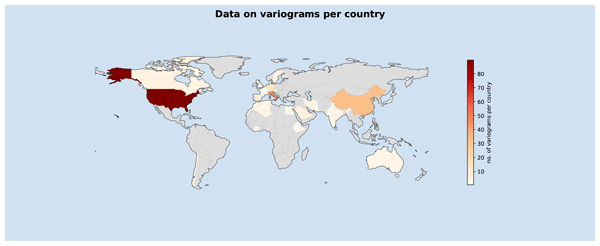
Falk Heße, Sebastian Müller, and Sabine Attinger
Hydrol. Earth Syst. Sci., 28, 357–374, https://doi.org/10.5194/hess-28-357-2024, https://doi.org/10.5194/hess-28-357-2024, 2024
Short summary
Short summary
In this study, we have presented two different advances for the field of subsurface geostatistics. First, we present data of variogram functions from a variety of different locations around the world. Second, we present a series of geostatistical analyses aimed at examining some of the statistical properties of such variogram functions and their relationship to a number of widely used variogram model functions.
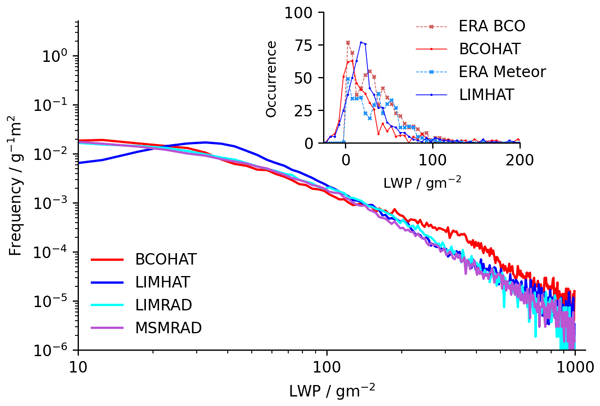
Sabrina Schnitt, Andreas Foth, Heike Kalesse-Los, Mario Mech, Claudia Acquistapace, Friedhelm Jansen, Ulrich Löhnert, Bernhard Pospichal, Johannes Röttenbacher, Susanne Crewell, and Bjorn Stevens
Earth Syst. Sci. Data, 16, 681–700, https://doi.org/10.5194/essd-16-681-2024, https://doi.org/10.5194/essd-16-681-2024, 2024
Short summary
Short summary
This publication describes the microwave radiometric measurements performed during the EUREC4A campaign at Barbados Cloud Observatory (BCO) and aboard RV Meteor and RV Maria S Merian. We present retrieved integrated water vapor (IWV), liquid water path (LWP), and temperature and humidity profiles as a unified, quality-controlled, multi-site data set on a 3 s temporal resolution for a core period between 19 January 2020 and 14 February 2020.
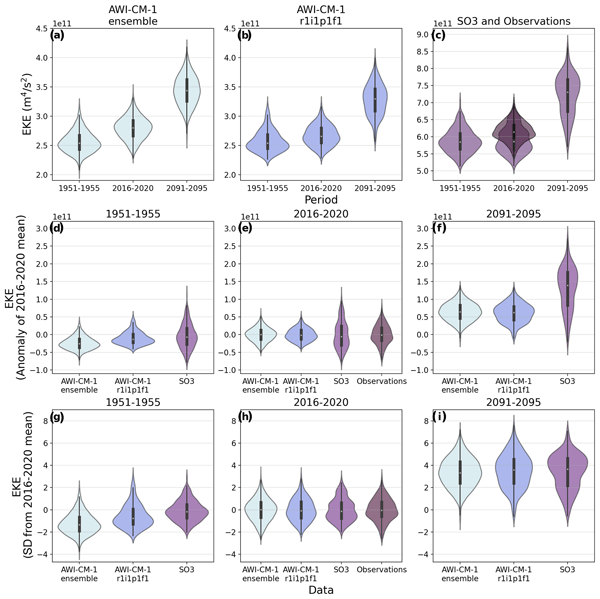
Nathan Beech, Thomas Rackow, Tido Semmler, and Thomas Jung
Geosci. Model Dev., 17, 529–543, https://doi.org/10.5194/gmd-17-529-2024, https://doi.org/10.5194/gmd-17-529-2024, 2024
Short summary
Short summary
Cost-reducing modeling strategies are applied to high-resolution simulations of the Southern Ocean in a changing climate. They are evaluated with respect to observations and traditional, lower-resolution modeling methods. The simulations effectively reproduce small-scale ocean flows seen in satellite data and are largely consistent with traditional model simulations after 4 °C of warming. Small-scale flows are found to intensify near bathymetric features and to become more variable.
Elsa Mohino, Paul-Arthur Monerie, Juliette Mignot, Moussa Diakhaté, Markus Donat, Christopher David Roberts, and Francisco Doblas-Reyes
Earth Syst. Dynam., 15, 15–40, https://doi.org/10.5194/esd-15-15-2024, https://doi.org/10.5194/esd-15-15-2024, 2024
Short summary
Short summary
The impact of the Atlantic multidecadal variability (AMV) on the rainfall distribution and timing of the West African monsoon is not well known. Analysing model output, we find that a positive AMV enhances the number of wet days, daily rainfall intensity, and extremes over the Sahel and tends to prolong the monsoon length through later demise. Heavy rainfall events increase all over the Sahel, while moderate ones only occur in the north. Model biases affect the skill in simulating AMV impact.
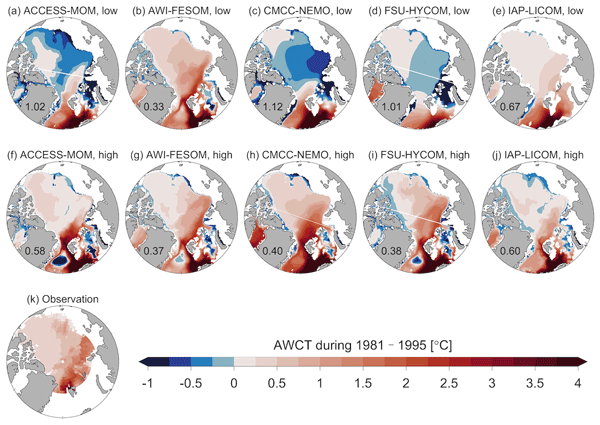
Qiang Wang, Qi Shu, Alexandra Bozec, Eric P. Chassignet, Pier Giuseppe Fogli, Baylor Fox-Kemper, Andy McC. Hogg, Doroteaciro Iovino, Andrew E. Kiss, Nikolay Koldunov, Julien Le Sommer, Yiwen Li, Pengfei Lin, Hailong Liu, Igor Polyakov, Patrick Scholz, Dmitry Sidorenko, Shizhu Wang, and Xiaobiao Xu
Geosci. Model Dev., 17, 347–379, https://doi.org/10.5194/gmd-17-347-2024, https://doi.org/10.5194/gmd-17-347-2024, 2024
Short summary
Short summary
Increasing resolution improves model skills in simulating the Arctic Ocean, but other factors such as parameterizations and numerics are at least of the same importance for obtaining reliable simulations.
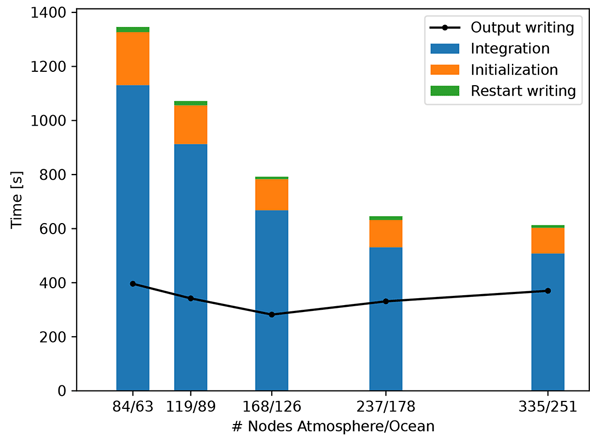
Abhiraj Bishnoi, Olaf Stein, Catrin I. Meyer, René Redler, Norbert Eicker, Helmuth Haak, Lars Hoffmann, Daniel Klocke, Luis Kornblueh, and Estela Suarez
Geosci. Model Dev., 17, 261–273, https://doi.org/10.5194/gmd-17-261-2024, https://doi.org/10.5194/gmd-17-261-2024, 2024
Short summary
Short summary
We enabled the weather and climate model ICON to run in a high-resolution coupled atmosphere–ocean setup on the JUWELS supercomputer, where the ocean and the model I/O runs on the CPU Cluster, while the atmosphere is running simultaneously on GPUs. Compared to a simulation performed on CPUs only, our approach reduces energy consumption by 45 % with comparable runtimes. The experiments serve as preparation for efficient computing of kilometer-scale climate models on future supercomputing systems.
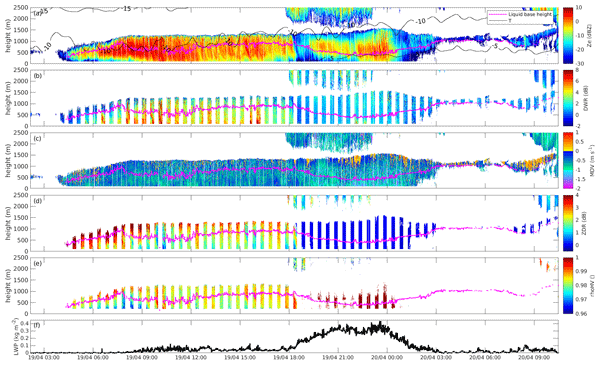
Giovanni Chellini, Rosa Gierens, Kerstin Ebell, Theresa Kiszler, Pavel Krobot, Alexander Myagkov, Vera Schemann, and Stefan Kneifel
Earth Syst. Sci. Data, 15, 5427–5448, https://doi.org/10.5194/essd-15-5427-2023, https://doi.org/10.5194/essd-15-5427-2023, 2023
Short summary
Short summary
We present a comprehensive quality-controlled dataset of remote sensing observations of low-level mixed-phase clouds (LLMPCs) taken at the high Arctic site of Ny-Ålesund, Svalbard, Norway. LLMPCs occur frequently in the Arctic region, and substantially warm the surface. However, our understanding of microphysical processes in these clouds is incomplete. This dataset includes a comprehensive set of variables which allow for extensive investigation of such processes in LLMPCs at the site.
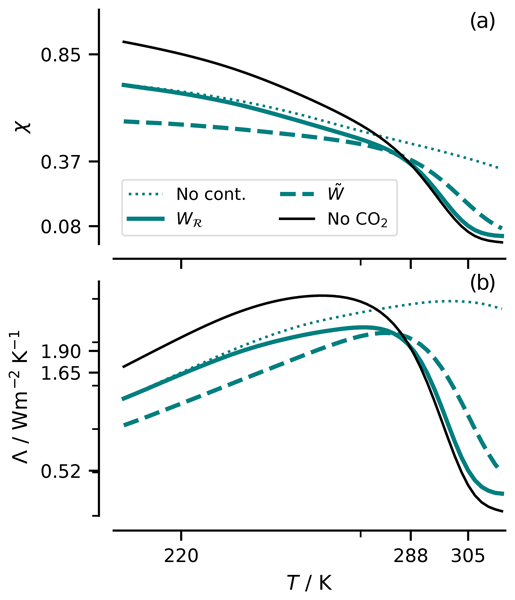
Bjorn Stevens and Lukas Kluft
Atmos. Chem. Phys., 23, 14673–14689, https://doi.org/10.5194/acp-23-14673-2023, https://doi.org/10.5194/acp-23-14673-2023, 2023
Short summary
Short summary
A simple model is introduced to account for the spectral diversity of radiant energy transfer. It provides an improved basis for assessing the different ways in which clouds influence Earth’s climate sensitivity, demonstrating how many cloud effects depend on the existing cloud climatology. Given existing assessments of changes in cloud albedo with warming, it is determined that clouds reduce Earth's climate sensitivity as compared to what it would be in a counterfactual world without clouds.
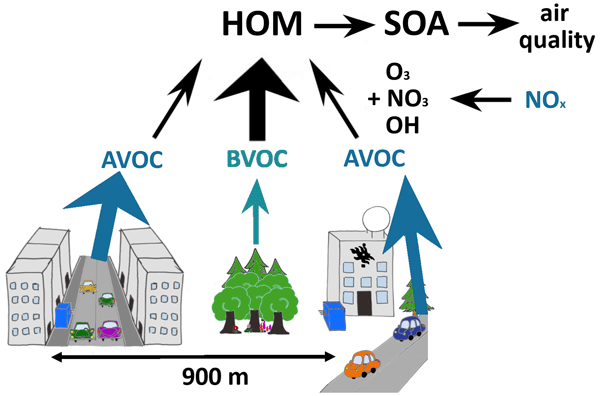
Magdalena Okuljar, Olga Garmash, Miska Olin, Joni Kalliokoski, Hilkka Timonen, Jarkko V. Niemi, Pauli Paasonen, Jenni Kontkanen, Yanjun Zhang, Heidi Hellén, Heino Kuuluvainen, Minna Aurela, Hanna E. Manninen, Mikko Sipilä, Topi Rönkkö, Tuukka Petäjä, Markku Kulmala, Miikka Dal Maso, and Mikael Ehn
Atmos. Chem. Phys., 23, 12965–12983, https://doi.org/10.5194/acp-23-12965-2023, https://doi.org/10.5194/acp-23-12965-2023, 2023
Short summary
Short summary
Highly oxygenated organic molecules (HOMs) form secondary organic aerosol that affects air quality and health. In this study, we demonstrate that in a moderately polluted city with abundant vegetation, the composition of HOMs is largely controlled by the effect of NOx on the biogenic volatile organic compound oxidation. Comparing the results from two nearby stations, we show that HOM composition and formation pathways can change considerably within small distances in urban environments.
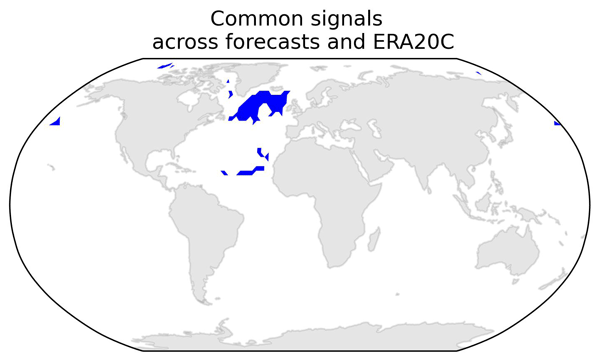
Kristian Strommen, Tim Woollings, Paolo Davini, Paolo Ruggieri, and Isla R. Simpson
Weather Clim. Dynam., 4, 853–874, https://doi.org/10.5194/wcd-4-853-2023, https://doi.org/10.5194/wcd-4-853-2023, 2023
Short summary
Short summary
We present evidence which strongly suggests that decadal variations in the intensity of the North Atlantic winter jet stream can be predicted by current forecast models but that decadal variations in its position appear to be unpredictable. It is argued that this skill at predicting jet intensity originates from the slow, predictable variability in sea surface temperatures in the sub-polar North Atlantic.
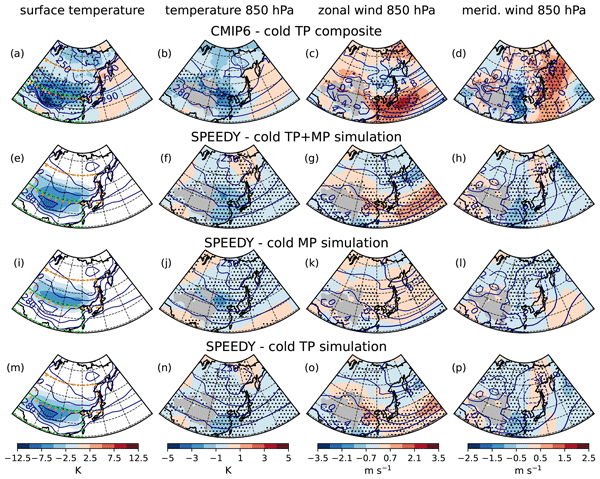
Alice Portal, Fabio D'Andrea, Paolo Davini, Mostafa E. Hamouda, and Claudia Pasquero
Weather Clim. Dynam., 4, 809–822, https://doi.org/10.5194/wcd-4-809-2023, https://doi.org/10.5194/wcd-4-809-2023, 2023
Short summary
Short summary
The differences between climate models can be exploited to infer how specific aspects of the climate influence the Earth system. This work analyses the effects of a negative temperature anomaly over the Tibetan Plateau on the winter atmospheric circulation. We show that models with a colder-than-average Tibetan Plateau present a reinforcement of the eastern Asian winter monsoon and discuss the atmospheric response to the enhanced transport of cold air from the continent toward the Pacific Ocean.
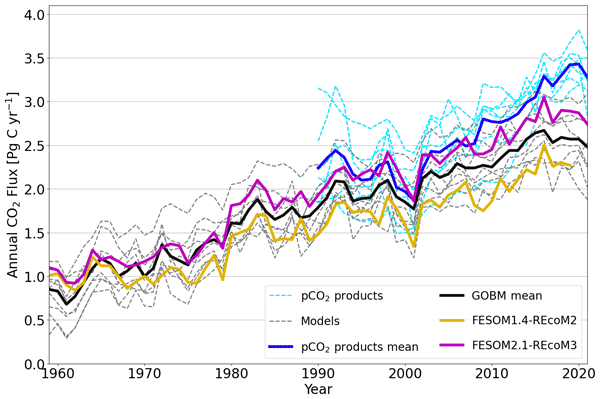
Özgür Gürses, Laurent Oziel, Onur Karakuş, Dmitry Sidorenko, Christoph Völker, Ying Ye, Moritz Zeising, Martin Butzin, and Judith Hauck
Geosci. Model Dev., 16, 4883–4936, https://doi.org/10.5194/gmd-16-4883-2023, https://doi.org/10.5194/gmd-16-4883-2023, 2023
Short summary
Short summary
This paper assesses the biogeochemical model REcoM3 coupled to the ocean–sea ice model FESOM2.1. The model can be used to simulate the carbon uptake or release of the ocean on timescales of several hundred years. A detailed analysis of the nutrients, ocean productivity, and ecosystem is followed by the carbon cycle. The main conclusion is that the model performs well when simulating the observed mean biogeochemical state and variability and is comparable to other ocean–biogeochemical models.
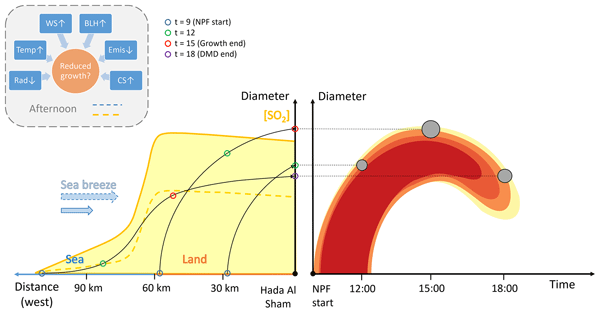
Simo Hakala, Ville Vakkari, Heikki Lihavainen, Antti-Pekka Hyvärinen, Kimmo Neitola, Jenni Kontkanen, Veli-Matti Kerminen, Markku Kulmala, Tuukka Petäjä, Tareq Hussein, Mamdouh I. Khoder, Mansour A. Alghamdi, and Pauli Paasonen
Atmos. Chem. Phys., 23, 9287–9321, https://doi.org/10.5194/acp-23-9287-2023, https://doi.org/10.5194/acp-23-9287-2023, 2023
Short summary
Short summary
Things are not always as they first seem in ambient aerosol measurements. Observations of decreasing particle sizes are often interpreted as resulting from particle evaporation. We show that such observations can counterintuitively be explained by particles that are constantly growing in size. This requires one to account for the previous movements of the observed air. Our explanation implies a larger number of larger particles, meaning more significant effects of aerosols on climate and health.
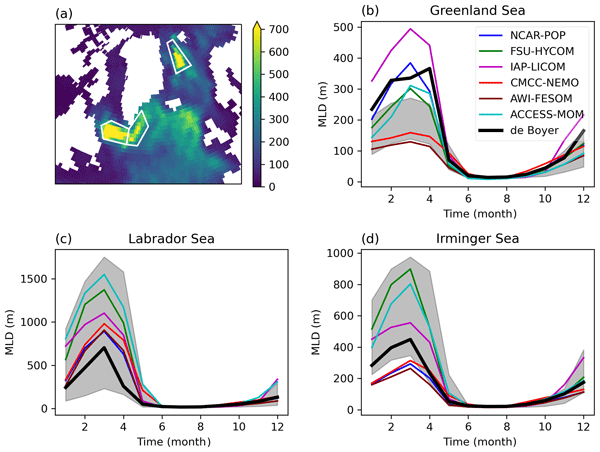
Anne Marie Treguier, Clement de Boyer Montégut, Alexandra Bozec, Eric P. Chassignet, Baylor Fox-Kemper, Andy McC. Hogg, Doroteaciro Iovino, Andrew E. Kiss, Julien Le Sommer, Yiwen Li, Pengfei Lin, Camille Lique, Hailong Liu, Guillaume Serazin, Dmitry Sidorenko, Qiang Wang, Xiaobio Xu, and Steve Yeager
Geosci. Model Dev., 16, 3849–3872, https://doi.org/10.5194/gmd-16-3849-2023, https://doi.org/10.5194/gmd-16-3849-2023, 2023
Short summary
Short summary
The ocean mixed layer is the interface between the ocean interior and the atmosphere and plays a key role in climate variability. We evaluate the performance of the new generation of ocean models for climate studies, designed to resolve
ocean eddies, which are the largest source of ocean variability and modulate the mixed-layer properties. We find that the mixed-layer depth is better represented in eddy-rich models but, unfortunately, not uniformly across the globe and not in all models.
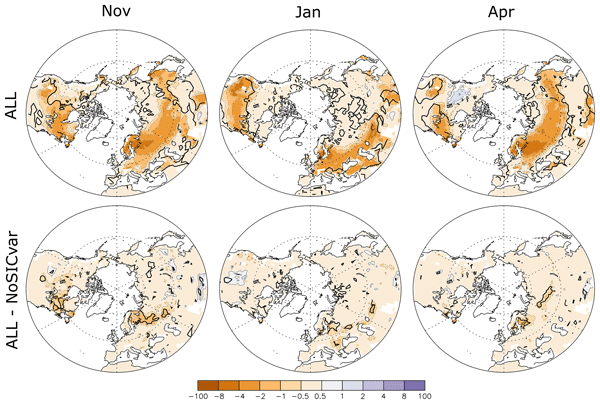
Guillaume Gastineau, Claude Frankignoul, Yongqi Gao, Yu-Chiao Liang, Young-Oh Kwon, Annalisa Cherchi, Rohit Ghosh, Elisa Manzini, Daniela Matei, Jennifer Mecking, Lingling Suo, Tian Tian, Shuting Yang, and Ying Zhang
The Cryosphere, 17, 2157–2184, https://doi.org/10.5194/tc-17-2157-2023, https://doi.org/10.5194/tc-17-2157-2023, 2023
Short summary
Short summary
Snow cover variability is important for many human activities. This study aims to understand the main drivers of snow cover in observations and models in order to better understand it and guide the improvement of climate models and forecasting systems. Analyses reveal a dominant role for sea surface temperature in the Pacific. Winter snow cover is also found to have important two-way interactions with the troposphere and stratosphere. No robust influence of the sea ice concentration is found.
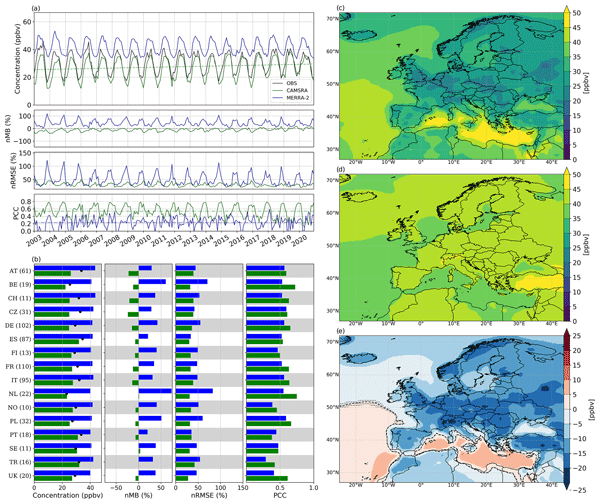
Aleksander Lacima, Hervé Petetin, Albert Soret, Dene Bowdalo, Oriol Jorba, Zhaoyue Chen, Raúl F. Méndez Turrubiates, Hicham Achebak, Joan Ballester, and Carlos Pérez García-Pando
Geosci. Model Dev., 16, 2689–2718, https://doi.org/10.5194/gmd-16-2689-2023, https://doi.org/10.5194/gmd-16-2689-2023, 2023
Short summary
Short summary
Understanding how air pollution varies across space and time is of key importance for the safeguarding of human health. This work arose in the context of the project EARLY-ADAPT, for which the Barcelona Supercomputing Center developed an air pollution database covering all of Europe. Through different statistical methods, we compared two global pollution models against measurements from ground stations and found significant discrepancies between the observed and the modeled surface pollution.
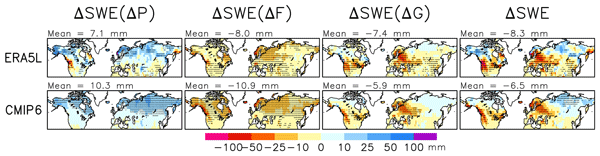
Jouni Räisänen
The Cryosphere, 17, 1913–1934, https://doi.org/10.5194/tc-17-1913-2023, https://doi.org/10.5194/tc-17-1913-2023, 2023
Short summary
Short summary
Changes in snow amount since the mid-20th century are studied, focusing on the mechanisms that have changed the water equivalent of the snowpack (SWE). Both reanalysis and climate model data show a decrease in SWE in most of the Northern Hemisphere. The total winter precipitation has increased in most areas, but this has been compensated for by reduced snowfall-to-precipitation ratio and enhanced snowmelt. However, the details and magnitude of these trends vary between different data sets.
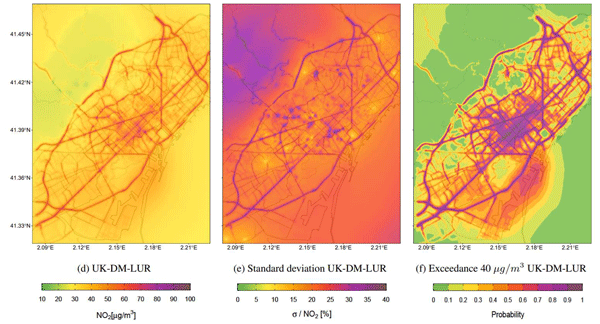
Alvaro Criado, Jan Mateu Armengol, Hervé Petetin, Daniel Rodriguez-Rey, Jaime Benavides, Marc Guevara, Carlos Pérez García-Pando, Albert Soret, and Oriol Jorba
Geosci. Model Dev., 16, 2193–2213, https://doi.org/10.5194/gmd-16-2193-2023, https://doi.org/10.5194/gmd-16-2193-2023, 2023
Short summary
Short summary
This work aims to derive and evaluate a general statistical post-processing tool specifically designed for the street scale that can be applied to any urban air quality system. Our data fusion methodology corrects NO2 fields based on continuous hourly observations and experimental campaigns. This study enables us to obtain exceedance probability maps of air quality standards. In 2019, 13 % of the Barcelona area had a 70 % or higher probability of exceeding the annual legal NO2 limit of 40 µg/m3.
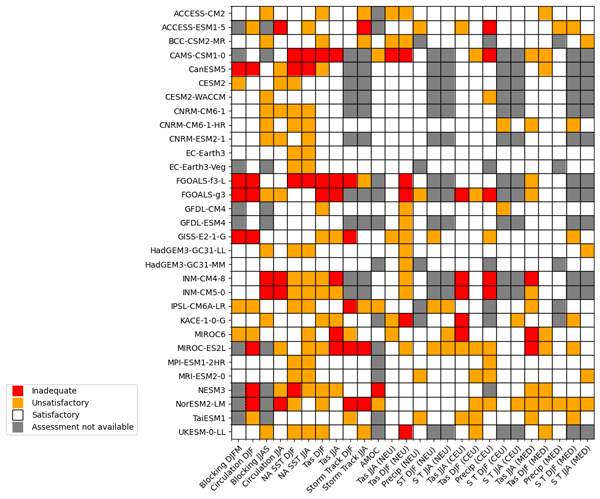
Tamzin E. Palmer, Carol F. McSweeney, Ben B. B. Booth, Matthew D. K. Priestley, Paolo Davini, Lukas Brunner, Leonard Borchert, and Matthew B. Menary
Earth Syst. Dynam., 14, 457–483, https://doi.org/10.5194/esd-14-457-2023, https://doi.org/10.5194/esd-14-457-2023, 2023
Short summary
Short summary
We carry out an assessment of an ensemble of general climate models (CMIP6) based on the ability of the models to represent the key physical processes that are important for representing European climate. Filtering the models with the assessment leads to more models with less global warming being removed, and this shifts the lower part of the projected temperature range towards greater warming. This is in contrast to the affect of weighting the ensemble using global temperature trends.
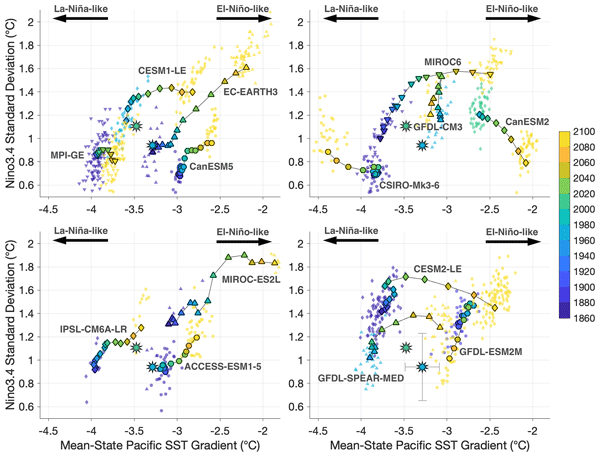
Nicola Maher, Robert C. Jnglin Wills, Pedro DiNezio, Jeremy Klavans, Sebastian Milinski, Sara C. Sanchez, Samantha Stevenson, Malte F. Stuecker, and Xian Wu
Earth Syst. Dynam., 14, 413–431, https://doi.org/10.5194/esd-14-413-2023, https://doi.org/10.5194/esd-14-413-2023, 2023
Short summary
Short summary
Understanding whether the El Niño–Southern Oscillation (ENSO) is likely to change in the future is important due to its widespread impacts. By using large ensembles, we can robustly isolate the time-evolving response of ENSO variability in 14 climate models. We find that ENSO variability evolves in a nonlinear fashion in many models and that there are large differences between models. These nonlinear changes imply that ENSO impacts may vary dramatically throughout the 21st century.
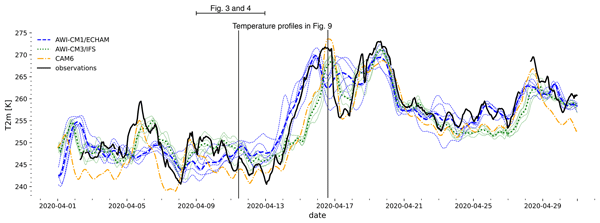
Felix Pithan, Marylou Athanase, Sandro Dahlke, Antonio Sánchez-Benítez, Matthew D. Shupe, Anne Sledd, Jan Streffing, Gunilla Svensson, and Thomas Jung
Geosci. Model Dev., 16, 1857–1873, https://doi.org/10.5194/gmd-16-1857-2023, https://doi.org/10.5194/gmd-16-1857-2023, 2023
Short summary
Short summary
Evaluating climate models usually requires long observational time series, but we present a method that also works for short field campaigns. We compare climate model output to observations from the MOSAiC expedition in the central Arctic Ocean. All models show how the arrival of a warm air mass warms the Arctic in April 2020, but two models do not show the response of snow temperature to the diurnal cycle. One model has too little liquid water and too much ice in clouds during cold days.

Hervé Petetin, Marc Guevara, Steven Compernolle, Dene Bowdalo, Pierre-Antoine Bretonnière, Santiago Enciso, Oriol Jorba, Franco Lopez, Albert Soret, and Carlos Pérez García-Pando
Atmos. Chem. Phys., 23, 3905–3935, https://doi.org/10.5194/acp-23-3905-2023, https://doi.org/10.5194/acp-23-3905-2023, 2023
Short summary
Short summary
This study analyses the potential of the TROPOMI space sensor for monitoring the variability of NO2 pollution over the Iberian Peninsula. A reduction of NO2 levels is observed during the weekend and in summer, especially over most urbanized areas, in agreement with surface observations. An enhancement of NO2 is found during summer with TROPOMI over croplands, potentially related to natural soil NO emissions, which illustrates the outstanding value of TROPOMI for complementing surface networks.
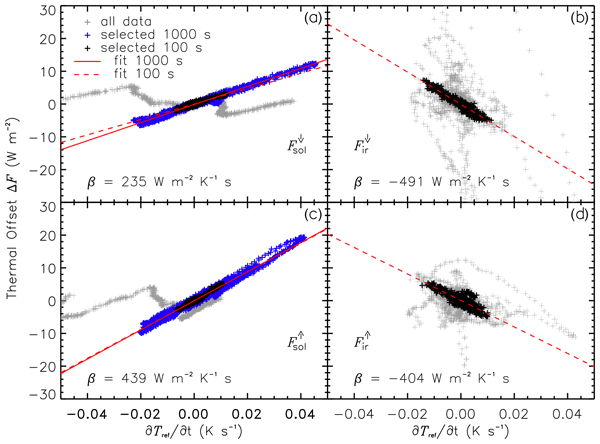
André Ehrlich, Martin Zöger, Andreas Giez, Vladyslav Nenakhov, Christian Mallaun, Rolf Maser, Timo Röschenthaler, Anna E. Luebke, Kevin Wolf, Bjorn Stevens, and Manfred Wendisch
Atmos. Meas. Tech., 16, 1563–1581, https://doi.org/10.5194/amt-16-1563-2023, https://doi.org/10.5194/amt-16-1563-2023, 2023
Short summary
Short summary
Measurements of the broadband radiative energy budget from aircraft are needed to study the effect of clouds, aerosol particles, and surface conditions on the Earth's energy budget. However, the moving aircraft introduces challenges to the instrument performance and post-processing of the data. This study introduces a new radiometer package, outlines a greatly simplifying method to correct thermal offsets, and provides exemplary measurements of solar and thermal–infrared irradiance.
Zhao-Yue Chen, Raul Méndez, Hervé Petetin, Aleksander Lacima, Carlos Pérez García-Pando, and Joan Ballester
Earth Syst. Sci. Data Discuss., https://doi.org/10.5194/essd-2023-104, https://doi.org/10.5194/essd-2023-104, 2023
Preprint withdrawn
Short summary
Short summary
Given in the limitations of existing AOD and its size fraction information, a new 18-year daily Aerosol Optical Depth (AOD) dataset over Europe has been developed based on quantile machine learning (QML) models. This dataset improves the ability to monitor and analyse fine-mode and coarse-mode aerosols. They provide better tools to investigate negatively affect human health and have impacts on climate, visibility, and biogeochemical cycling.
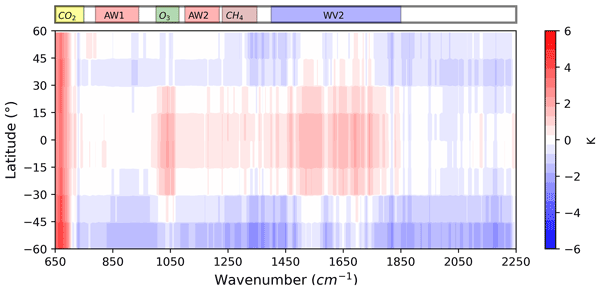
Stefano Della Fera, Federico Fabiano, Piera Raspollini, Marco Ridolfi, Ugo Cortesi, Flavio Barbara, and Jost von Hardenberg
Geosci. Model Dev., 16, 1379–1394, https://doi.org/10.5194/gmd-16-1379-2023, https://doi.org/10.5194/gmd-16-1379-2023, 2023
Short summary
Short summary
The long-term comparison between observed and simulated outgoing longwave radiances represents a strict test to evaluate climate model performance. In this work, 9 years of synthetic spectrally resolved radiances, simulated online on the basis of the atmospheric fields predicted by the EC-Earth global climate model (v3.3.3) in clear-sky conditions, are compared to IASI spectral radiance climatology in order to detect model biases in temperature and humidity at different atmospheric levels.
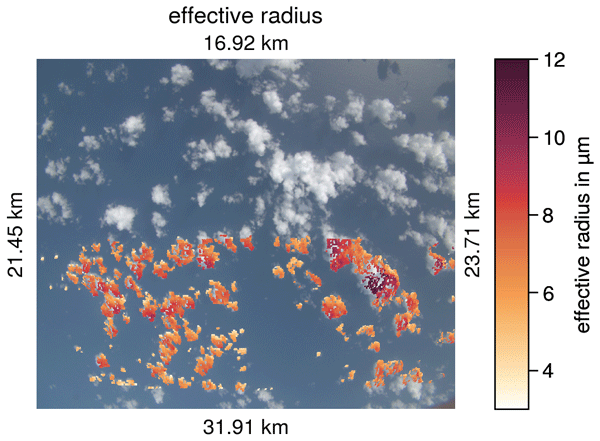
Veronika Pörtge, Tobias Kölling, Anna Weber, Lea Volkmer, Claudia Emde, Tobias Zinner, Linda Forster, and Bernhard Mayer
Atmos. Meas. Tech., 16, 645–667, https://doi.org/10.5194/amt-16-645-2023, https://doi.org/10.5194/amt-16-645-2023, 2023
Short summary
Short summary
In this work, we analyze polarized cloudbow observations by the airborne camera system specMACS to retrieve the cloud droplet size distribution defined by the effective radius (reff) and the effective variance (veff). Two case studies of trade-wind cumulus clouds observed during the EUREC4A field campaign are presented. The results are combined into maps of reff and veff with a very high spatial resolution (100 m × 100 m) that allow new insights into cloud microphysics.
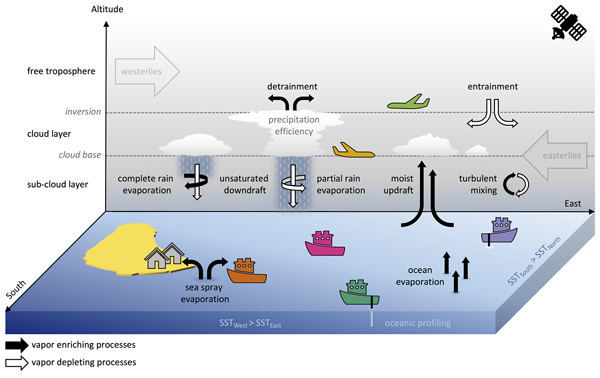
Adriana Bailey, Franziska Aemisegger, Leonie Villiger, Sebastian A. Los, Gilles Reverdin, Estefanía Quiñones Meléndez, Claudia Acquistapace, Dariusz B. Baranowski, Tobias Böck, Sandrine Bony, Tobias Bordsdorff, Derek Coffman, Simon P. de Szoeke, Christopher J. Diekmann, Marina Dütsch, Benjamin Ertl, Joseph Galewsky, Dean Henze, Przemyslaw Makuch, David Noone, Patricia K. Quinn, Michael Rösch, Andreas Schneider, Matthias Schneider, Sabrina Speich, Bjorn Stevens, and Elizabeth J. Thompson
Earth Syst. Sci. Data, 15, 465–495, https://doi.org/10.5194/essd-15-465-2023, https://doi.org/10.5194/essd-15-465-2023, 2023
Short summary
Short summary
One of the novel ways EUREC4A set out to investigate trade wind clouds and their coupling to the large-scale circulation was through an extensive network of isotopic measurements in water vapor, precipitation, and seawater. Samples were taken from the island of Barbados, from aboard two aircraft, and from aboard four ships. This paper describes the full collection of EUREC4A isotopic in situ data and guides readers to complementary remotely sensed water vapor isotope ratios.
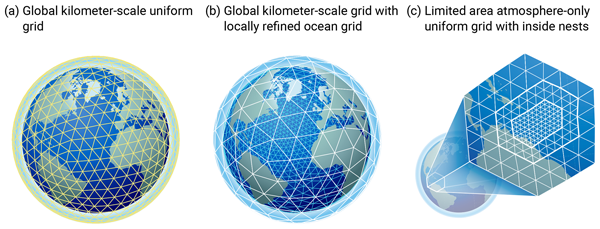
Cathy Hohenegger, Peter Korn, Leonidas Linardakis, René Redler, Reiner Schnur, Panagiotis Adamidis, Jiawei Bao, Swantje Bastin, Milad Behravesh, Martin Bergemann, Joachim Biercamp, Hendryk Bockelmann, Renate Brokopf, Nils Brüggemann, Lucas Casaroli, Fatemeh Chegini, George Datseris, Monika Esch, Geet George, Marco Giorgetta, Oliver Gutjahr, Helmuth Haak, Moritz Hanke, Tatiana Ilyina, Thomas Jahns, Johann Jungclaus, Marcel Kern, Daniel Klocke, Lukas Kluft, Tobias Kölling, Luis Kornblueh, Sergey Kosukhin, Clarissa Kroll, Junhong Lee, Thorsten Mauritsen, Carolin Mehlmann, Theresa Mieslinger, Ann Kristin Naumann, Laura Paccini, Angel Peinado, Divya Sri Praturi, Dian Putrasahan, Sebastian Rast, Thomas Riddick, Niklas Roeber, Hauke Schmidt, Uwe Schulzweida, Florian Schütte, Hans Segura, Radomyra Shevchenko, Vikram Singh, Mia Specht, Claudia Christine Stephan, Jin-Song von Storch, Raphaela Vogel, Christian Wengel, Marius Winkler, Florian Ziemen, Jochem Marotzke, and Bjorn Stevens
Geosci. Model Dev., 16, 779–811, https://doi.org/10.5194/gmd-16-779-2023, https://doi.org/10.5194/gmd-16-779-2023, 2023
Short summary
Short summary
Models of the Earth system used to understand climate and predict its change typically employ a grid spacing of about 100 km. Yet, many atmospheric and oceanic processes occur on much smaller scales. In this study, we present a new model configuration designed for the simulation of the components of the Earth system and their interactions at kilometer and smaller scales, allowing an explicit representation of the main drivers of the flow of energy and matter by solving the underlying equations.
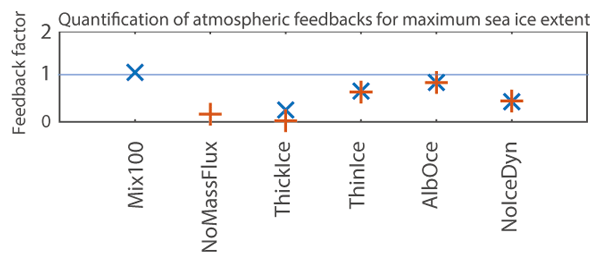
Hugues Goosse, Sofia Allende Contador, Cecilia M. Bitz, Edward Blanchard-Wrigglesworth, Clare Eayrs, Thierry Fichefet, Kenza Himmich, Pierre-Vincent Huot, François Klein, Sylvain Marchi, François Massonnet, Bianca Mezzina, Charles Pelletier, Lettie Roach, Martin Vancoppenolle, and Nicole P. M. van Lipzig
The Cryosphere, 17, 407–425, https://doi.org/10.5194/tc-17-407-2023, https://doi.org/10.5194/tc-17-407-2023, 2023
Short summary
Short summary
Using idealized sensitivity experiments with a regional atmosphere–ocean–sea ice model, we show that sea ice advance is constrained by initial conditions in March and the retreat season is influenced by the magnitude of several physical processes, in particular by the ice–albedo feedback and ice transport. Atmospheric feedbacks amplify the response of the winter ice extent to perturbations, while some negative feedbacks related to heat conduction fluxes act on the ice volume.
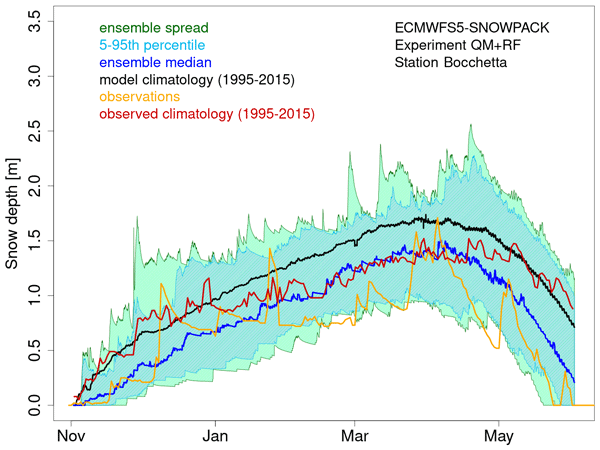
Silvia Terzago, Giulio Bongiovanni, and Jost von Hardenberg
Hydrol. Earth Syst. Sci., 27, 519–542, https://doi.org/10.5194/hess-27-519-2023, https://doi.org/10.5194/hess-27-519-2023, 2023
Short summary
Short summary
Reliable seasonal forecasts of the abundance of mountain snowpack over the winter/spring ahead provide valuable information for water management, hydropower production and ski tourism. We present a climate service prototype to generate multi-model ensemble seasonal forecasts of mountain snow depth, based on Copernicus seasonal forecast system meteorological data used to force the SNOWPACK model. The prototype shows skill at predicting snow depth below and above normal and extremely dry seasons.
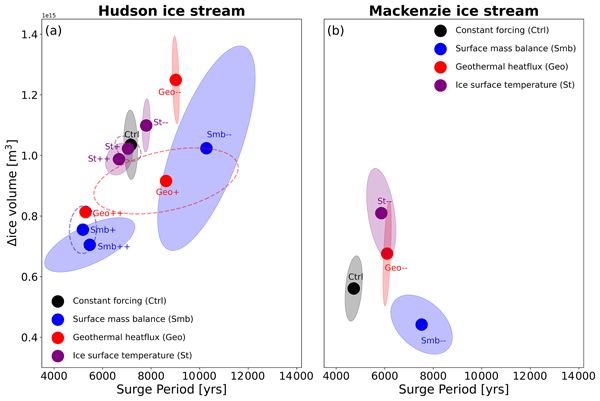
Clemens Schannwell, Uwe Mikolajewicz, Florian Ziemen, and Marie-Luise Kapsch
Clim. Past, 19, 179–198, https://doi.org/10.5194/cp-19-179-2023, https://doi.org/10.5194/cp-19-179-2023, 2023
Short summary
Short summary
Heinrich-type ice-sheet surges are recurring events over the course of the last glacial cycle during which large numbers of icebergs are discharged from the Laurentide ice sheet into the ocean. These events alter the evolution of the global climate. Here, we use model simulations of the Laurentide ice sheet to identify and quantify the importance of various climate and ice-sheet parameters for the simulated surge cycle.
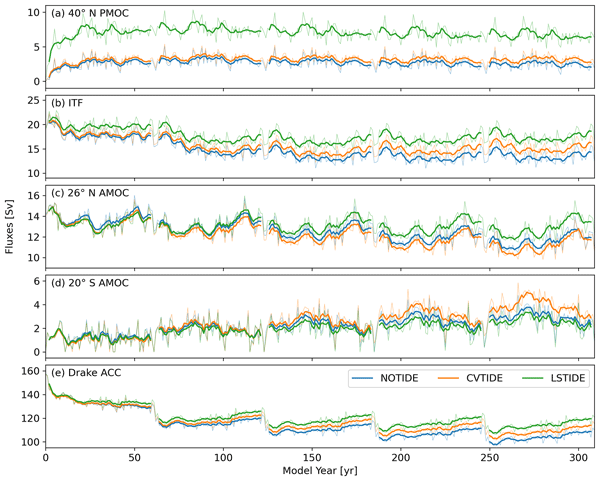
Pengyang Song, Dmitry Sidorenko, Patrick Scholz, Maik Thomas, and Gerrit Lohmann
Geosci. Model Dev., 16, 383–405, https://doi.org/10.5194/gmd-16-383-2023, https://doi.org/10.5194/gmd-16-383-2023, 2023
Short summary
Short summary
Tides have essential effects on the ocean and climate. Most previous research applies parameterised tidal mixing to discuss their effects in models. By comparing the effect of a tidal mixing parameterisation and tidal forcing on the ocean state, we assess the advantages and disadvantages of the two methods. Our results show that tidal mixing in the North Pacific Ocean strongly affects the global thermohaline circulation. We also list some effects that are not considered in the parameterisation.
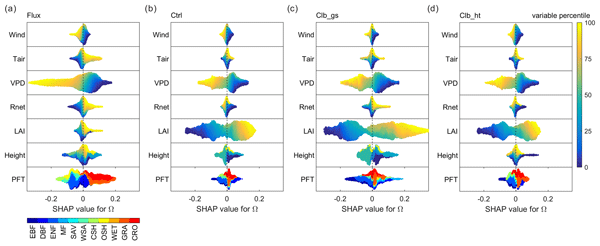
Yuan Zhang, Devaraju Narayanappa, Philippe Ciais, Wei Li, Daniel Goll, Nicolas Vuichard, Martin G. De Kauwe, Laurent Li, and Fabienne Maignan
Geosci. Model Dev., 15, 9111–9125, https://doi.org/10.5194/gmd-15-9111-2022, https://doi.org/10.5194/gmd-15-9111-2022, 2022
Short summary
Short summary
There are a few studies to examine if current models correctly represented the complex processes of transpiration. Here, we use a coefficient Ω, which indicates if transpiration is mainly controlled by vegetation processes or by turbulence, to evaluate the ORCHIDEE model. We found a good performance of ORCHIDEE, but due to compensation of biases in different processes, we also identified how different factors control Ω and where the model is wrong. Our method is generic to evaluate other models.
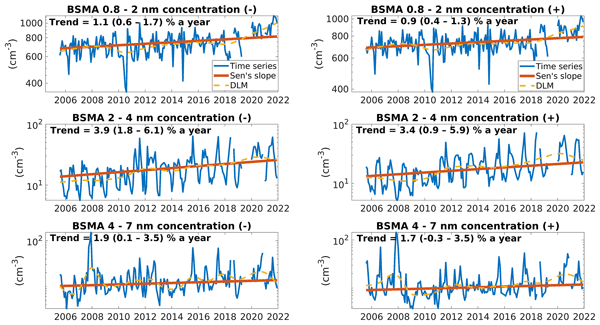
Juha Sulo, Janne Lampilahti, Xuemeng Chen, Jenni Kontkanen, Tuomo Nieminen, Veli-Matti Kerminen, Tuukka Petäjä, Markku Kulmala, and Katrianne Lehtipalo
Atmos. Chem. Phys., 22, 15223–15242, https://doi.org/10.5194/acp-22-15223-2022, https://doi.org/10.5194/acp-22-15223-2022, 2022
Short summary
Short summary
We measured atmospheric ion concentrations continuously in a boreal forest between 2005 and 2021 and observed an increasing interannual trend. The increase in cluster ion concentrations can be largely explained by an overall decreasing level of anthropogenic aerosols in the boreal forest. This suggests that the role of ions in atmospheric new particle formation may be more important in the future.
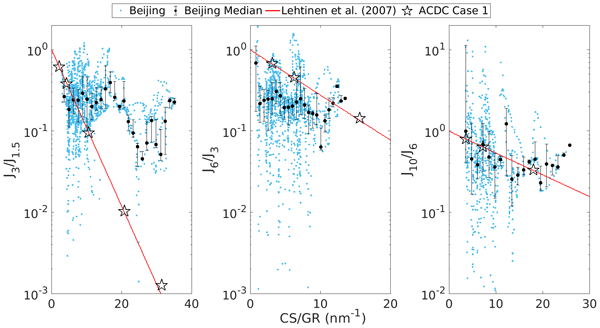
Santeri Tuovinen, Runlong Cai, Veli-Matti Kerminen, Jingkun Jiang, Chao Yan, Markku Kulmala, and Jenni Kontkanen
Atmos. Chem. Phys., 22, 15071–15091, https://doi.org/10.5194/acp-22-15071-2022, https://doi.org/10.5194/acp-22-15071-2022, 2022
Short summary
Short summary
We compare observed survival probabilities of atmospheric particles from Beijing, China, with survival probabilities based on analytical formulae and model simulations. We find observed survival probabilities under polluted conditions at smaller sizes to be higher, while at larger sizes they are lower than or similar to theoretical survival probabilities. Uncertainties in condensation sink and growth rate are unlikely to explain higher-than-predicted survival probabilities at smaller sizes.

Rainer Schneck, Veronika Gayler, Julia E. M. S. Nabel, Thomas Raddatz, Christian H. Reick, and Reiner Schnur
Geosci. Model Dev., 15, 8581–8611, https://doi.org/10.5194/gmd-15-8581-2022, https://doi.org/10.5194/gmd-15-8581-2022, 2022
Short summary
Short summary
The versions of ICON-A and ICON-Land/JSBACHv4 used for this study constitute the first milestone in the development of the new ICON Earth System Model ICON-ESM. JSBACHv4 is the successor of JSBACHv3, and most of the parameterizations of JSBACHv4 are re-implementations from JSBACHv3. We assess and compare the performance of JSBACHv4 and JSBACHv3. Overall, the JSBACHv4 results are as good as JSBACHv3, but both models reveal the same main shortcomings, e.g. the depiction of the leaf area index.

Sergei Kirillov, Igor Dmitrenko, David G. Babb, Jens K. Ehn, Nikolay Koldunov, Søren Rysgaard, David Jensen, and David G. Barber
Ocean Sci., 18, 1535–1557, https://doi.org/10.5194/os-18-1535-2022, https://doi.org/10.5194/os-18-1535-2022, 2022
Short summary
Short summary
The sea ice bridge usually forms during winter in Nares Strait and prevents ice drifting south. However, this bridge has recently become unstable, and in this study we investigate the role of oceanic heat flux in this decline. Using satellite data, we identify areas where sea ice is relatively thin and further attribute those areas to the heat fluxes from the warm subsurface water masses. We also discuss the potential role of such an impact on ice bridge instability and earlier ice break up.
Rashed Mahmood, Markus G. Donat, Pablo Ortega, Francisco J. Doblas-Reyes, Carlos Delgado-Torres, Margarida Samsó, and Pierre-Antoine Bretonnière
Earth Syst. Dynam., 13, 1437–1450, https://doi.org/10.5194/esd-13-1437-2022, https://doi.org/10.5194/esd-13-1437-2022, 2022
Short summary
Short summary
Near-term climate change projections are strongly affected by the uncertainty from internal climate variability. Here we present a novel approach to reduce such uncertainty by constraining decadal-scale variability in the projections using observations. The constrained ensembles show significant added value over the unconstrained ensemble in predicting global climate 2 decades ahead. We also show the applicability of regional constraints for attributing predictability to certain ocean regions.
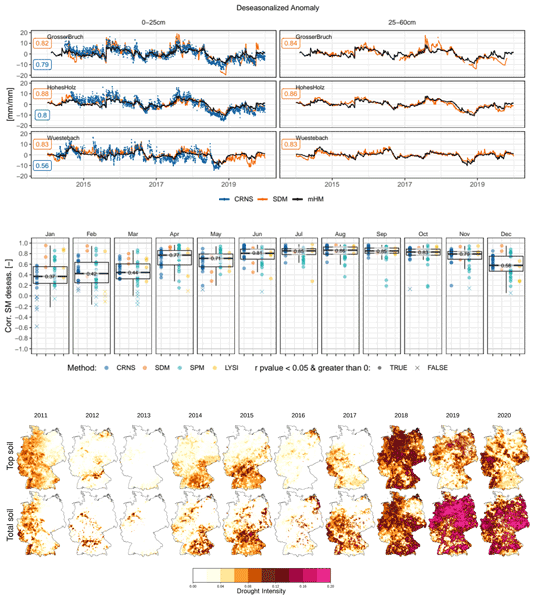
Friedrich Boeing, Oldrich Rakovec, Rohini Kumar, Luis Samaniego, Martin Schrön, Anke Hildebrandt, Corinna Rebmann, Stephan Thober, Sebastian Müller, Steffen Zacharias, Heye Bogena, Katrin Schneider, Ralf Kiese, Sabine Attinger, and Andreas Marx
Hydrol. Earth Syst. Sci., 26, 5137–5161, https://doi.org/10.5194/hess-26-5137-2022, https://doi.org/10.5194/hess-26-5137-2022, 2022
Short summary
Short summary
In this paper, we deliver an evaluation of the second generation operational German drought monitor (https://www.ufz.de/duerremonitor) with a state-of-the-art compilation of observed soil moisture data from 40 locations and four different measurement methods in Germany. We show that the expressed stakeholder needs for higher resolution drought information at the one-kilometer scale can be met and that the agreement of simulated and observed soil moisture dynamics can be moderately improved.
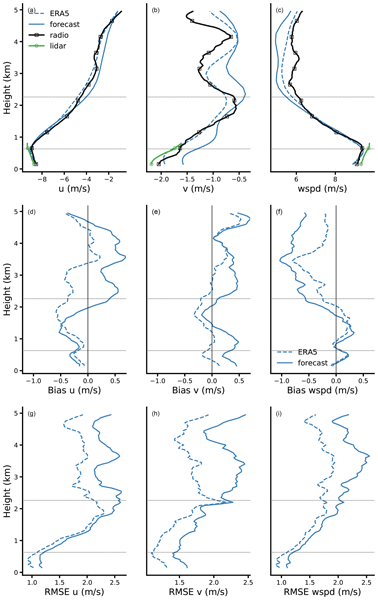
Alessandro Carlo Maria Savazzi, Louise Nuijens, Irina Sandu, Geet George, and Peter Bechtold
Atmos. Chem. Phys., 22, 13049–13066, https://doi.org/10.5194/acp-22-13049-2022, https://doi.org/10.5194/acp-22-13049-2022, 2022
Short summary
Short summary
Winds are of great importance for the transport of energy and moisture in the atmosphere. In this study we use measurements from the EUREC4A field campaign and several model experiments to understand the wind bias in the forecasts produced by the European Centre for Medium-Range Weather Forecasts. We are able to link the model errors to heights above 2 km and to the representation of the diurnal cycle of winds: the model makes the winds too slow in the morning and too strong in the evening.
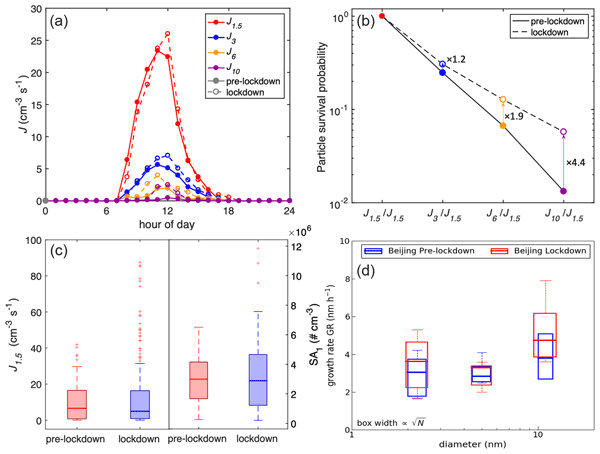
Chao Yan, Yicheng Shen, Dominik Stolzenburg, Lubna Dada, Ximeng Qi, Simo Hakala, Anu-Maija Sundström, Yishuo Guo, Antti Lipponen, Tom V. Kokkonen, Jenni Kontkanen, Runlong Cai, Jing Cai, Tommy Chan, Liangduo Chen, Biwu Chu, Chenjuan Deng, Wei Du, Xiaolong Fan, Xu-Cheng He, Juha Kangasluoma, Joni Kujansuu, Mona Kurppa, Chang Li, Yiran Li, Zhuohui Lin, Yiliang Liu, Yuliang Liu, Yiqun Lu, Wei Nie, Jouni Pulliainen, Xiaohui Qiao, Yonghong Wang, Yifan Wen, Ye Wu, Gan Yang, Lei Yao, Rujing Yin, Gen Zhang, Shaojun Zhang, Feixue Zheng, Ying Zhou, Antti Arola, Johanna Tamminen, Pauli Paasonen, Yele Sun, Lin Wang, Neil M. Donahue, Yongchun Liu, Federico Bianchi, Kaspar R. Daellenbach, Douglas R. Worsnop, Veli-Matti Kerminen, Tuukka Petäjä, Aijun Ding, Jingkun Jiang, and Markku Kulmala
Atmos. Chem. Phys., 22, 12207–12220, https://doi.org/10.5194/acp-22-12207-2022, https://doi.org/10.5194/acp-22-12207-2022, 2022
Short summary
Short summary
Atmospheric new particle formation (NPF) is a dominant source of atmospheric ultrafine particles. In urban environments, traffic emissions are a major source of primary pollutants, but their contribution to NPF remains under debate. During the COVID-19 lockdown, traffic emissions were significantly reduced, providing a unique chance to examine their relevance to NPF. Based on our comprehensive measurements, we demonstrate that traffic emissions alone are not able to explain the NPF in Beijing.
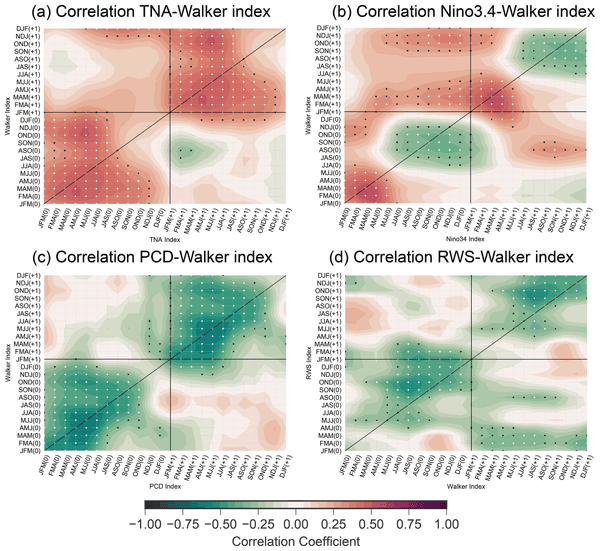
Jake W. Casselman, Bernat Jiménez-Esteve, and Daniela I. V. Domeisen
Weather Clim. Dynam., 3, 1077–1096, https://doi.org/10.5194/wcd-3-1077-2022, https://doi.org/10.5194/wcd-3-1077-2022, 2022
Short summary
Short summary
Using an atmospheric general circulation model, we analyze how the tropical North Atlantic influences the El Niño–Southern Oscillation connection towards the North Atlantic European region. We also focus on the lesser-known boreal spring and summer response following an El Niño–Southern Oscillation event. Our results show that altered tropical Atlantic sea surface temperatures may cause different responses over the Caribbean region, consequently influencing the North Atlantic European region.
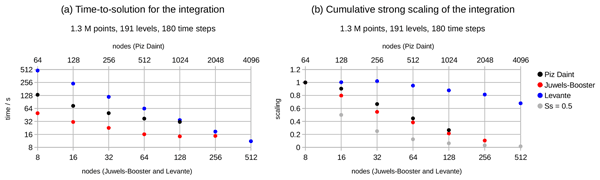
Marco A. Giorgetta, William Sawyer, Xavier Lapillonne, Panagiotis Adamidis, Dmitry Alexeev, Valentin Clément, Remo Dietlicher, Jan Frederik Engels, Monika Esch, Henning Franke, Claudia Frauen, Walter M. Hannah, Benjamin R. Hillman, Luis Kornblueh, Philippe Marti, Matthew R. Norman, Robert Pincus, Sebastian Rast, Daniel Reinert, Reiner Schnur, Uwe Schulzweida, and Bjorn Stevens
Geosci. Model Dev., 15, 6985–7016, https://doi.org/10.5194/gmd-15-6985-2022, https://doi.org/10.5194/gmd-15-6985-2022, 2022
Short summary
Short summary
This work presents a first version of the ICON atmosphere model that works not only on CPUs, but also on GPUs. This GPU-enabled ICON version is benchmarked on two GPU machines and a CPU machine. While the weak scaling is very good on CPUs and GPUs, the strong scaling is poor on GPUs. But the high performance of GPU machines allowed for first simulations of a short period of the quasi-biennial oscillation at very high resolution with explicit convection and gravity wave forcing.
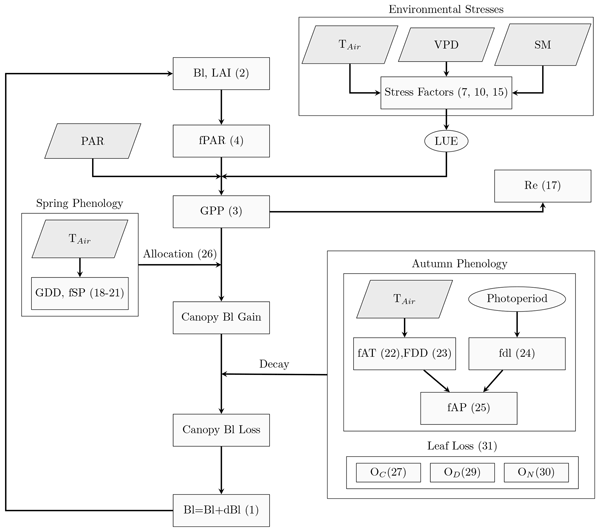
Bahar Bahrami, Anke Hildebrandt, Stephan Thober, Corinna Rebmann, Rico Fischer, Luis Samaniego, Oldrich Rakovec, and Rohini Kumar
Geosci. Model Dev., 15, 6957–6984, https://doi.org/10.5194/gmd-15-6957-2022, https://doi.org/10.5194/gmd-15-6957-2022, 2022
Short summary
Short summary
Leaf area index (LAI) and gross primary productivity (GPP) are crucial components to carbon cycle, and are closely linked to water cycle in many ways. We develop a Parsimonious Canopy Model (PCM) to simulate GPP and LAI at stand scale, and show its applicability over a diverse range of deciduous broad-leaved forest biomes. With its modular structure, the PCM is able to adapt with existing data requirements, and run in either a stand-alone mode or as an interface linked to hydrologic models.
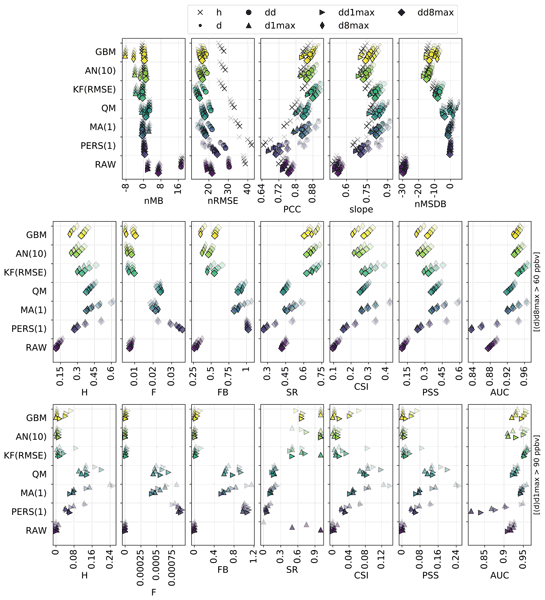
Hervé Petetin, Dene Bowdalo, Pierre-Antoine Bretonnière, Marc Guevara, Oriol Jorba, Jan Mateu Armengol, Margarida Samso Cabre, Kim Serradell, Albert Soret, and Carlos Pérez Garcia-Pando
Atmos. Chem. Phys., 22, 11603–11630, https://doi.org/10.5194/acp-22-11603-2022, https://doi.org/10.5194/acp-22-11603-2022, 2022
Short summary
Short summary
This study investigates the extent to which ozone forecasts provided by the Copernicus Atmospheric Monitoring Service (CAMS) can be improved using surface observations and state-of-the-art statistical methods. Through a case study over the Iberian Peninsula in 2018–2019, it unambiguously demonstrates the value of these methods for improving the raw CAMS O3 forecasts while at the same time highlighting the complexity of improving the detection of the highest O3 concentrations.
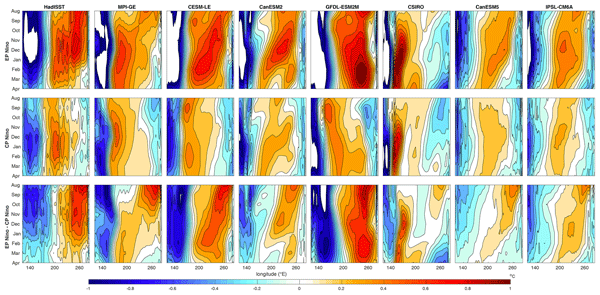
Nicola Maher, Thibault P. Tabarin, and Sebastian Milinski
Earth Syst. Dynam., 13, 1289–1304, https://doi.org/10.5194/esd-13-1289-2022, https://doi.org/10.5194/esd-13-1289-2022, 2022
Short summary
Short summary
El Niño events occur as two broad types: eastern Pacific (EP) and central Pacific (CP). EP and CP events differ in strength, evolution, and in their impacts. In this study we create a new machine learning classifier to identify the two types of El Niño events using observed sea surface temperature data. We apply our new classifier to climate models and show that CP events are unlikely to change in frequency or strength under a warming climate, with model disagreement for EP events.
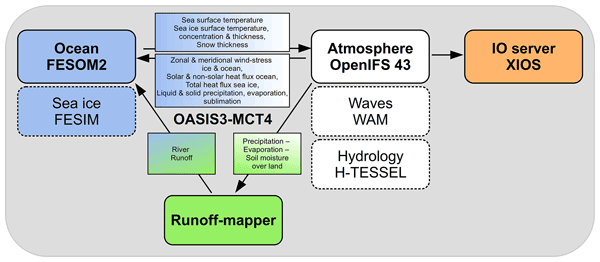
Jan Streffing, Dmitry Sidorenko, Tido Semmler, Lorenzo Zampieri, Patrick Scholz, Miguel Andrés-Martínez, Nikolay Koldunov, Thomas Rackow, Joakim Kjellsson, Helge Goessling, Marylou Athanase, Qiang Wang, Jan Hegewald, Dmitry V. Sein, Longjiang Mu, Uwe Fladrich, Dirk Barbi, Paul Gierz, Sergey Danilov, Stephan Juricke, Gerrit Lohmann, and Thomas Jung
Geosci. Model Dev., 15, 6399–6427, https://doi.org/10.5194/gmd-15-6399-2022, https://doi.org/10.5194/gmd-15-6399-2022, 2022
Short summary
Short summary
We developed a new atmosphere–ocean coupled climate model, AWI-CM3. Our model is significantly more computationally efficient than its predecessors AWI-CM1 and AWI-CM2. We show that the model, although cheaper to run, provides results of similar quality when modeling the historic period from 1850 to 2014. We identify the remaining weaknesses to outline future work. Finally we preview an improved simulation where the reduction in computational cost has to be invested in higher model resolution.
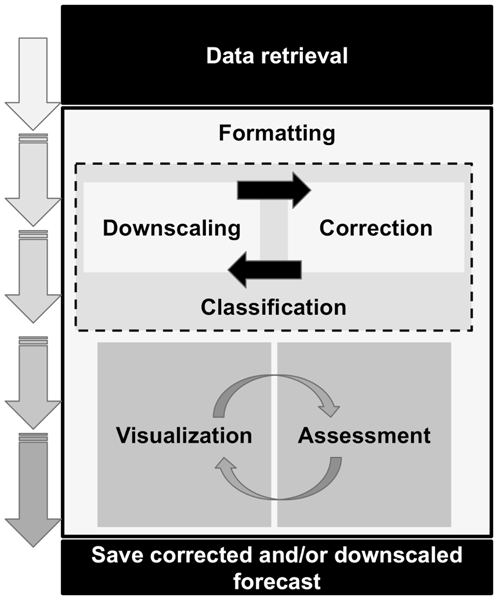
Núria Pérez-Zanón, Louis-Philippe Caron, Silvia Terzago, Bert Van Schaeybroeck, Llorenç Lledó, Nicolau Manubens, Emmanuel Roulin, M. Carmen Alvarez-Castro, Lauriane Batté, Pierre-Antoine Bretonnière, Susana Corti, Carlos Delgado-Torres, Marta Domínguez, Federico Fabiano, Ignazio Giuntoli, Jost von Hardenberg, Eroteida Sánchez-García, Verónica Torralba, and Deborah Verfaillie
Geosci. Model Dev., 15, 6115–6142, https://doi.org/10.5194/gmd-15-6115-2022, https://doi.org/10.5194/gmd-15-6115-2022, 2022
Short summary
Short summary
CSTools (short for Climate Service Tools) is an R package that contains process-based methods for climate forecast calibration, bias correction, statistical and stochastic downscaling, optimal forecast combination, and multivariate verification, as well as basic and advanced tools to obtain tailored products. In addition to describing the structure and methods in the package, we also present three use cases to illustrate the seasonal climate forecast post-processing for specific purposes.
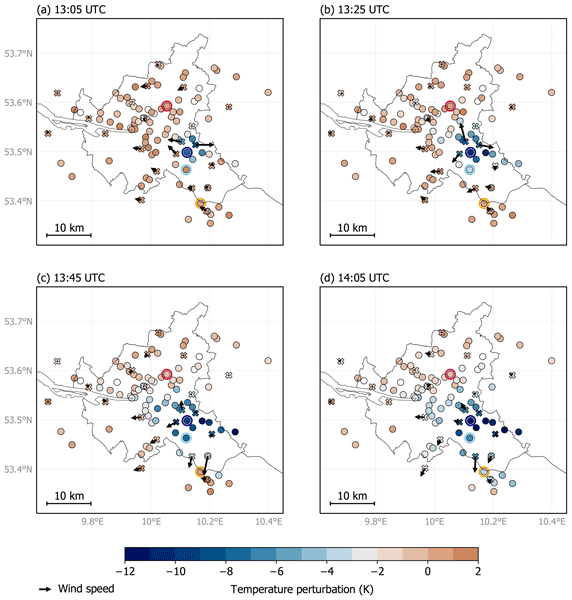
Bastian Kirsch, Cathy Hohenegger, Daniel Klocke, Rainer Senke, Michael Offermann, and Felix Ament
Earth Syst. Sci. Data, 14, 3531–3548, https://doi.org/10.5194/essd-14-3531-2022, https://doi.org/10.5194/essd-14-3531-2022, 2022
Short summary
Short summary
Conventional observation networks are too coarse to resolve the horizontal structure of kilometer-scale atmospheric processes. We present the FESST@HH field experiment that took place in Hamburg (Germany) during summer 2020 and featured a dense network of 103 custom-built, low-cost weather stations. The data set is capable of providing new insights into the structure of convective cold pools and the nocturnal urban heat island and variations of local temperature fluctuations.
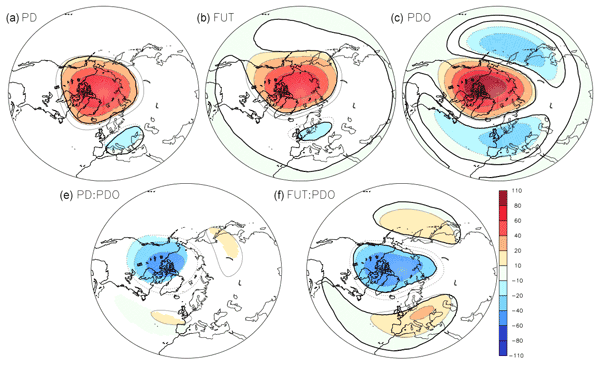
Amélie Simon, Guillaume Gastineau, Claude Frankignoul, Vladimir Lapin, and Pablo Ortega
Weather Clim. Dynam., 3, 845–861, https://doi.org/10.5194/wcd-3-845-2022, https://doi.org/10.5194/wcd-3-845-2022, 2022
Short summary
Short summary
The influence of the Arctic sea-ice loss on atmospheric circulation in midlatitudes depends on persistent sea surface temperatures in the North Pacific. In winter, Arctic sea-ice loss and a warm North Pacific Ocean both induce depressions over the North Pacific and North Atlantic, an anticyclone over Greenland, and a stratospheric anticyclone over the Arctic. However, the effects are not additive as the interaction between both signals is slightly destructive.
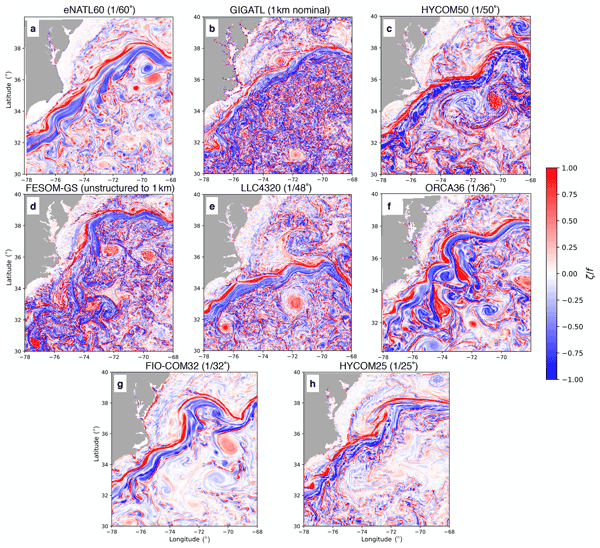
Takaya Uchida, Julien Le Sommer, Charles Stern, Ryan P. Abernathey, Chris Holdgraf, Aurélie Albert, Laurent Brodeau, Eric P. Chassignet, Xiaobiao Xu, Jonathan Gula, Guillaume Roullet, Nikolay Koldunov, Sergey Danilov, Qiang Wang, Dimitris Menemenlis, Clément Bricaud, Brian K. Arbic, Jay F. Shriver, Fangli Qiao, Bin Xiao, Arne Biastoch, René Schubert, Baylor Fox-Kemper, William K. Dewar, and Alan Wallcraft
Geosci. Model Dev., 15, 5829–5856, https://doi.org/10.5194/gmd-15-5829-2022, https://doi.org/10.5194/gmd-15-5829-2022, 2022
Short summary
Short summary
Ocean and climate scientists have used numerical simulations as a tool to examine the ocean and climate system since the 1970s. Since then, owing to the continuous increase in computational power and advances in numerical methods, we have been able to simulate increasing complex phenomena. However, the fidelity of the simulations in representing the phenomena remains a core issue in the ocean science community. Here we propose a cloud-based framework to inter-compare and assess such simulations.
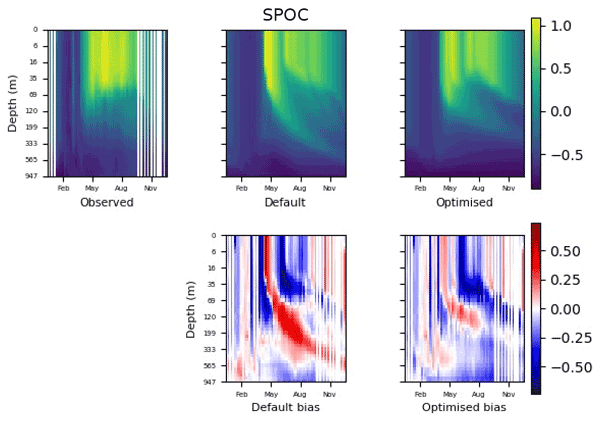
Marcus Falls, Raffaele Bernardello, Miguel Castrillo, Mario Acosta, Joan Llort, and Martí Galí
Geosci. Model Dev., 15, 5713–5737, https://doi.org/10.5194/gmd-15-5713-2022, https://doi.org/10.5194/gmd-15-5713-2022, 2022
Short summary
Short summary
This paper describes and tests a method which uses a genetic algorithm (GA), a type of optimisation algorithm, on an ocean biogeochemical model. The aim is to produce a set of numerical parameters that best reflect the observed data of particulate organic carbon in a specific region of the ocean. We show that the GA can provide optimised model parameters in a robust and efficient manner and can also help detect model limitations, ultimately leading to a reduction in the model uncertainties.
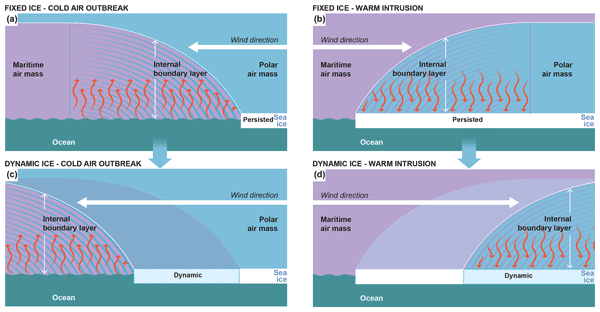
Jonathan J. Day, Sarah Keeley, Gabriele Arduini, Linus Magnusson, Kristian Mogensen, Mark Rodwell, Irina Sandu, and Steffen Tietsche
Weather Clim. Dynam., 3, 713–731, https://doi.org/10.5194/wcd-3-713-2022, https://doi.org/10.5194/wcd-3-713-2022, 2022
Short summary
Short summary
A recent drive to develop seamless forecasting systems has culminated in the development of weather forecasting systems that include a coupled representation of the atmosphere, ocean and sea ice. Before this, sea ice and sea surface temperature anomalies were typically fixed throughout a given forecast. We show that the dynamic coupling is most beneficial during periods of rapid ice advance, where persistence is a poor forecast of the sea ice and leads to large errors in the uncoupled system.
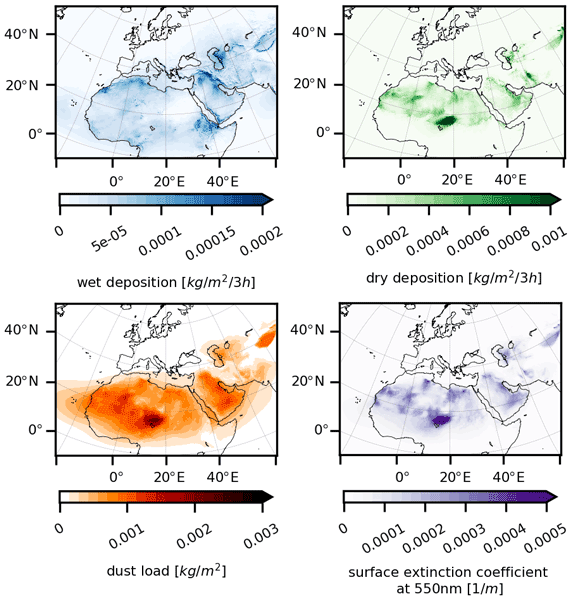
Enza Di Tomaso, Jerónimo Escribano, Sara Basart, Paul Ginoux, Francesca Macchia, Francesca Barnaba, Francesco Benincasa, Pierre-Antoine Bretonnière, Arnau Buñuel, Miguel Castrillo, Emilio Cuevas, Paola Formenti, María Gonçalves, Oriol Jorba, Martina Klose, Lucia Mona, Gilbert Montané Pinto, Michail Mytilinaios, Vincenzo Obiso, Miriam Olid, Nick Schutgens, Athanasios Votsis, Ernest Werner, and Carlos Pérez García-Pando
Earth Syst. Sci. Data, 14, 2785–2816, https://doi.org/10.5194/essd-14-2785-2022, https://doi.org/10.5194/essd-14-2785-2022, 2022
Short summary
Short summary
MONARCH reanalysis of desert dust aerosols extends the existing observation-based information for mineral dust monitoring by providing 3-hourly upper-air, surface and total column key geophysical variables of the dust cycle over Northern Africa, the Middle East and Europe, at a 0.1° horizontal resolution in a rotated grid, from 2007 to 2016. This work provides evidence of the high accuracy of this data set and its suitability for air quality and health and climate service applications.
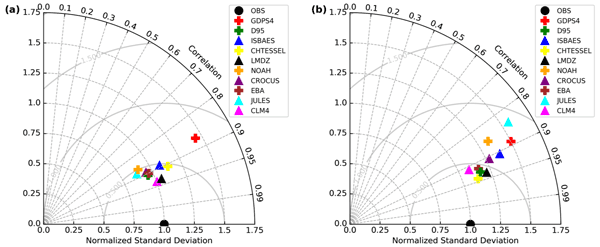
Patrick Le Moigne, Eric Bazile, Anning Cheng, Emanuel Dutra, John M. Edwards, William Maurel, Irina Sandu, Olivier Traullé, Etienne Vignon, Ayrton Zadra, and Weizhong Zheng
The Cryosphere, 16, 2183–2202, https://doi.org/10.5194/tc-16-2183-2022, https://doi.org/10.5194/tc-16-2183-2022, 2022
Short summary
Short summary
This paper describes an intercomparison of snow models, of varying complexity, used for numerical weather prediction or academic research. The results show that the simplest models are, under certain conditions, able to reproduce the surface temperature just as well as the most complex models. Moreover, the diversity of surface parameters of the models has a strong impact on the temporal variability of the components of the simulated surface energy balance.
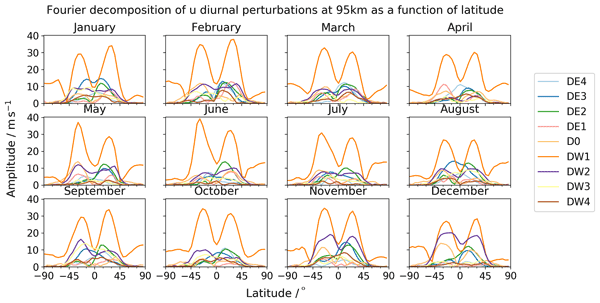
Matthew J. Griffith and Nicholas J. Mitchell
Ann. Geophys., 40, 327–358, https://doi.org/10.5194/angeo-40-327-2022, https://doi.org/10.5194/angeo-40-327-2022, 2022
Short summary
Short summary
There is great scientific interest in extending atmospheric models, such as the Met Office’s Unified Model, upwards to include the upper atmosphere. Atmospheric tides are an important driver of circulation at these greater heights. This study provides a first in-depth analysis of the migrating and non-migrating components of these tides, examining important tidal properties. Our results show that the ExUM produces a rich spectrum of spatial components, with significant non-migrating components.

Theresa Mieslinger, Bjorn Stevens, Tobias Kölling, Manfred Brath, Martin Wirth, and Stefan A. Buehler
Atmos. Chem. Phys., 22, 6879–6898, https://doi.org/10.5194/acp-22-6879-2022, https://doi.org/10.5194/acp-22-6879-2022, 2022
Short summary
Short summary
The trades are home to a plethora of small cumulus clouds that are often barely visible to the human eye and difficult to detect with active and passive remote sensing methods. With the help of a new method and by means of high-resolution data we can detect small and particularly thin clouds. We find that optically thin clouds are a common phenomenon in the trades, covering a large area and influencing the radiative effect of clouds if they are undetected and contaminate the cloud-free signal.
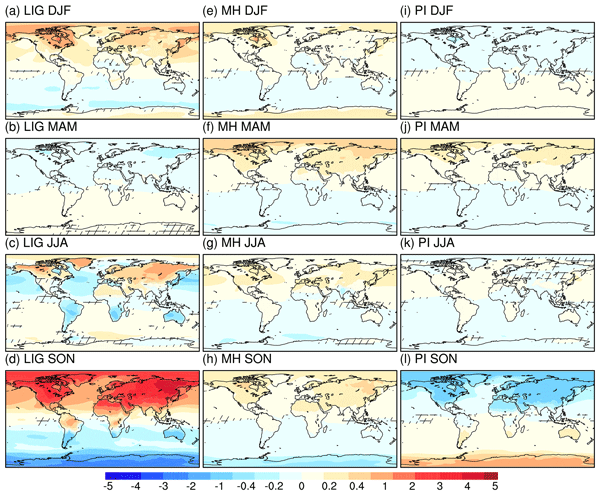
Xiaoxu Shi, Martin Werner, Carolin Krug, Chris M. Brierley, Anni Zhao, Endurance Igbinosa, Pascale Braconnot, Esther Brady, Jian Cao, Roberta D'Agostino, Johann Jungclaus, Xingxing Liu, Bette Otto-Bliesner, Dmitry Sidorenko, Robert Tomas, Evgeny M. Volodin, Hu Yang, Qiong Zhang, Weipeng Zheng, and Gerrit Lohmann
Clim. Past, 18, 1047–1070, https://doi.org/10.5194/cp-18-1047-2022, https://doi.org/10.5194/cp-18-1047-2022, 2022
Short summary
Short summary
Since the orbital parameters of the past are different from today, applying the modern calendar to the past climate can lead to an artificial bias in seasonal cycles. With the use of multiple model outputs, we found that such a bias is non-ignorable and should be corrected to ensure an accurate comparison between modeled results and observational records, as well as between simulated past and modern climates, especially for the Last Interglacial.
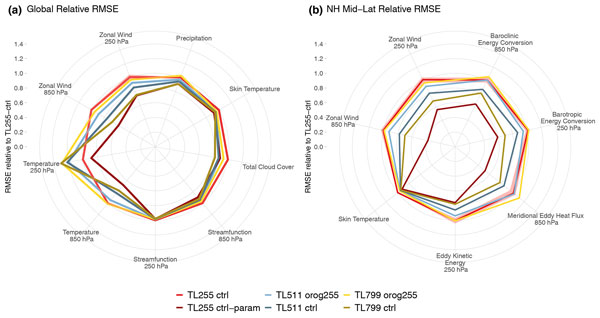
Paolo Davini, Federico Fabiano, and Irina Sandu
Weather Clim. Dynam., 3, 535–553, https://doi.org/10.5194/wcd-3-535-2022, https://doi.org/10.5194/wcd-3-535-2022, 2022
Short summary
Short summary
In climate models, improvements obtained in the winter mid-latitude circulation following horizontal resolution increase are mainly caused by the more detailed representation of the mean orography. A high-resolution climate model with low-resolution orography might underperform compared to a low-resolution model with low-resolution orography. The absence of proper model tuning at high resolution is considered the potential reason behind such lack of improvements.
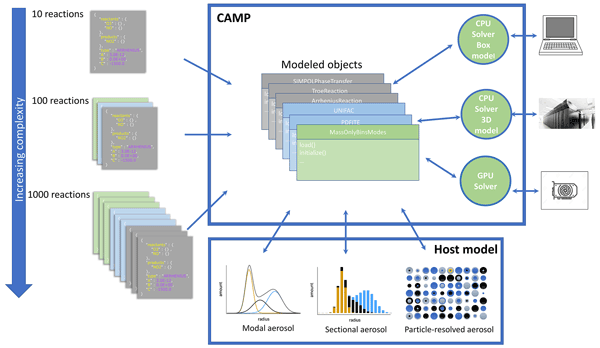
Matthew L. Dawson, Christian Guzman, Jeffrey H. Curtis, Mario Acosta, Shupeng Zhu, Donald Dabdub, Andrew Conley, Matthew West, Nicole Riemer, and Oriol Jorba
Geosci. Model Dev., 15, 3663–3689, https://doi.org/10.5194/gmd-15-3663-2022, https://doi.org/10.5194/gmd-15-3663-2022, 2022
Short summary
Short summary
Progress in identifying complex, mixed-phase physicochemical processes has resulted in an advanced understanding of the evolution of atmospheric systems but has also introduced a level of complexity that few atmospheric models were designed to handle. We present a flexible treatment for multiphase chemical processes for models of diverse scale, from box up to global models. This enables users to build a customized multiphase mechanism that is accessible to a much wider community.
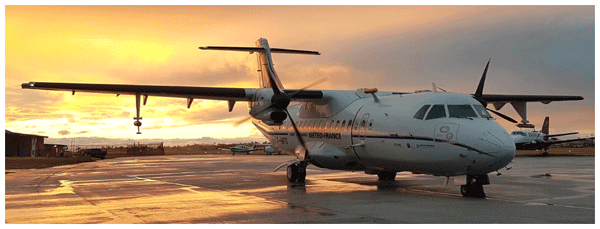
Sandrine Bony, Marie Lothon, Julien Delanoë, Pierre Coutris, Jean-Claude Etienne, Franziska Aemisegger, Anna Lea Albright, Thierry André, Hubert Bellec, Alexandre Baron, Jean-François Bourdinot, Pierre-Etienne Brilouet, Aurélien Bourdon, Jean-Christophe Canonici, Christophe Caudoux, Patrick Chazette, Michel Cluzeau, Céline Cornet, Jean-Philippe Desbios, Dominique Duchanoy, Cyrille Flamant, Benjamin Fildier, Christophe Gourbeyre, Laurent Guiraud, Tetyana Jiang, Claude Lainard, Christophe Le Gac, Christian Lendroit, Julien Lernould, Thierry Perrin, Frédéric Pouvesle, Pascal Richard, Nicolas Rochetin, Kevin Salaün, Alfons Schwarzenboeck, Guillaume Seurat, Bjorn Stevens, Julien Totems, Ludovic Touzé-Peiffer, Gilles Vergez, Jessica Vial, Leonie Villiger, and Raphaela Vogel
Earth Syst. Sci. Data, 14, 2021–2064, https://doi.org/10.5194/essd-14-2021-2022, https://doi.org/10.5194/essd-14-2021-2022, 2022
Short summary
Short summary
The French ATR42 research aircraft participated in the EUREC4A international field campaign that took place in 2020 over the tropical Atlantic, east of Barbados. We present the extensive instrumentation of the aircraft, the research flights and the different measurements. We show that the ATR measurements of humidity, wind, aerosols and cloudiness in the lower atmosphere are robust and consistent with each other. They will make it possible to advance understanding of cloud–climate interactions.
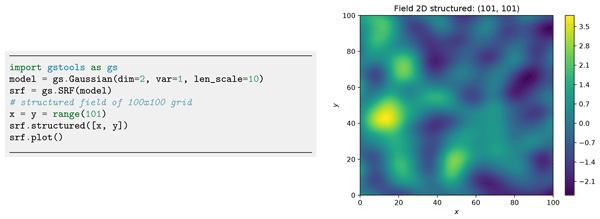
Sebastian Müller, Lennart Schüler, Alraune Zech, and Falk Heße
Geosci. Model Dev., 15, 3161–3182, https://doi.org/10.5194/gmd-15-3161-2022, https://doi.org/10.5194/gmd-15-3161-2022, 2022
Short summary
Short summary
The GSTools package provides a Python-based platform for geoostatistical applications. Salient features of GSTools are its random field generation, its kriging capabilities and its versatile covariance model. It is furthermore integrated with other Python packages, like PyKrige, ogs5py or scikit-gstat, and provides interfaces to meshio and PyVista. Four presented workflows showcase the abilities of GSTools.
Ralf Döscher, Mario Acosta, Andrea Alessandri, Peter Anthoni, Thomas Arsouze, Tommi Bergman, Raffaele Bernardello, Souhail Boussetta, Louis-Philippe Caron, Glenn Carver, Miguel Castrillo, Franco Catalano, Ivana Cvijanovic, Paolo Davini, Evelien Dekker, Francisco J. Doblas-Reyes, David Docquier, Pablo Echevarria, Uwe Fladrich, Ramon Fuentes-Franco, Matthias Gröger, Jost v. Hardenberg, Jenny Hieronymus, M. Pasha Karami, Jukka-Pekka Keskinen, Torben Koenigk, Risto Makkonen, François Massonnet, Martin Ménégoz, Paul A. Miller, Eduardo Moreno-Chamarro, Lars Nieradzik, Twan van Noije, Paul Nolan, Declan O'Donnell, Pirkka Ollinaho, Gijs van den Oord, Pablo Ortega, Oriol Tintó Prims, Arthur Ramos, Thomas Reerink, Clement Rousset, Yohan Ruprich-Robert, Philippe Le Sager, Torben Schmith, Roland Schrödner, Federico Serva, Valentina Sicardi, Marianne Sloth Madsen, Benjamin Smith, Tian Tian, Etienne Tourigny, Petteri Uotila, Martin Vancoppenolle, Shiyu Wang, David Wårlind, Ulrika Willén, Klaus Wyser, Shuting Yang, Xavier Yepes-Arbós, and Qiong Zhang
Geosci. Model Dev., 15, 2973–3020, https://doi.org/10.5194/gmd-15-2973-2022, https://doi.org/10.5194/gmd-15-2973-2022, 2022
Short summary
Short summary
The Earth system model EC-Earth3 is documented here. Key performance metrics show physical behavior and biases well within the frame known from recent models. With improved physical and dynamic features, new ESM components, community tools, and largely improved physical performance compared to the CMIP5 version, EC-Earth3 represents a clear step forward for the only European community ESM. We demonstrate here that EC-Earth3 is suited for a range of tasks in CMIP6 and beyond.
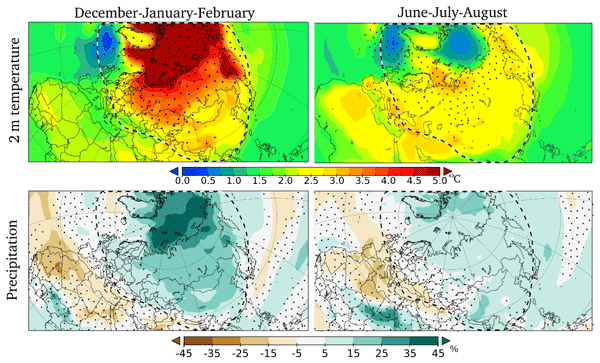
Hanna K. Lappalainen, Tuukka Petäjä, Timo Vihma, Jouni Räisänen, Alexander Baklanov, Sergey Chalov, Igor Esau, Ekaterina Ezhova, Matti Leppäranta, Dmitry Pozdnyakov, Jukka Pumpanen, Meinrat O. Andreae, Mikhail Arshinov, Eija Asmi, Jianhui Bai, Igor Bashmachnikov, Boris Belan, Federico Bianchi, Boris Biskaborn, Michael Boy, Jaana Bäck, Bin Cheng, Natalia Chubarova, Jonathan Duplissy, Egor Dyukarev, Konstantinos Eleftheriadis, Martin Forsius, Martin Heimann, Sirkku Juhola, Vladimir Konovalov, Igor Konovalov, Pavel Konstantinov, Kajar Köster, Elena Lapshina, Anna Lintunen, Alexander Mahura, Risto Makkonen, Svetlana Malkhazova, Ivan Mammarella, Stefano Mammola, Stephany Buenrostro Mazon, Outi Meinander, Eugene Mikhailov, Victoria Miles, Stanislav Myslenkov, Dmitry Orlov, Jean-Daniel Paris, Roberta Pirazzini, Olga Popovicheva, Jouni Pulliainen, Kimmo Rautiainen, Torsten Sachs, Vladimir Shevchenko, Andrey Skorokhod, Andreas Stohl, Elli Suhonen, Erik S. Thomson, Marina Tsidilina, Veli-Pekka Tynkkynen, Petteri Uotila, Aki Virkkula, Nadezhda Voropay, Tobias Wolf, Sayaka Yasunaka, Jiahua Zhang, Yubao Qiu, Aijun Ding, Huadong Guo, Valery Bondur, Nikolay Kasimov, Sergej Zilitinkevich, Veli-Matti Kerminen, and Markku Kulmala
Atmos. Chem. Phys., 22, 4413–4469, https://doi.org/10.5194/acp-22-4413-2022, https://doi.org/10.5194/acp-22-4413-2022, 2022
Short summary
Short summary
We summarize results during the last 5 years in the northern Eurasian region, especially from Russia, and introduce recent observations of the air quality in the urban environments in China. Although the scientific knowledge in these regions has increased, there are still gaps in our understanding of large-scale climate–Earth surface interactions and feedbacks. This arises from limitations in research infrastructures and integrative data analyses, hindering a comprehensive system analysis.

Angel Navarro Trastoy, Sebastian Strasser, Lauri Tuppi, Maksym Vasiuta, Markku Poutanen, Torsten Mayer-Gürr, and Heikki Järvinen
Geosci. Model Dev., 15, 2763–2771, https://doi.org/10.5194/gmd-15-2763-2022, https://doi.org/10.5194/gmd-15-2763-2022, 2022
Short summary
Short summary
Production of satellite products relies on information from different centers. By coupling a weather model and an orbit determination solver we eliminate the dependence on one of the centers. The coupling has proven to be possible in the first stage, where no formatting has been applied to any of the models involved. This opens a window for further development and improvement to a coupling that has proven to be as good as the predecessor model.

Beatriz M. Monge-Sanz, Alessio Bozzo, Nicholas Byrne, Martyn P. Chipperfield, Michail Diamantakis, Johannes Flemming, Lesley J. Gray, Robin J. Hogan, Luke Jones, Linus Magnusson, Inna Polichtchouk, Theodore G. Shepherd, Nils Wedi, and Antje Weisheimer
Atmos. Chem. Phys., 22, 4277–4302, https://doi.org/10.5194/acp-22-4277-2022, https://doi.org/10.5194/acp-22-4277-2022, 2022
Short summary
Short summary
The stratosphere is emerging as one of the keys to improve tropospheric weather and climate predictions. This study provides evidence of the role the stratospheric ozone layer plays in improving weather predictions at different timescales. Using a new ozone modelling approach suitable for high-resolution global models that provide operational forecasts from days to seasons, we find significant improvements in stratospheric meteorological fields and stratosphere–troposphere coupling.

Sara Pasqualetto, Luisa Cristini, and Thomas Jung
Geosci. Commun., 5, 87–100, https://doi.org/10.5194/gc-5-87-2022, https://doi.org/10.5194/gc-5-87-2022, 2022
Short summary
Short summary
Many projects in their reporting phase are required to provide a clear plan for evaluating the results of those efforts aimed at translating scientific results to a broader audience. This paper illustrates methodologies and strategies used in the framework of a European research project to assess the impact of knowledge transfer activities, both quantitatively and qualitatively, and provides recommendations and hints for developing a useful impact plan for scientific projects.

Michael Schäfer, Kevin Wolf, André Ehrlich, Christoph Hallbauer, Evelyn Jäkel, Friedhelm Jansen, Anna Elizabeth Luebke, Joshua Müller, Jakob Thoböll, Timo Röschenthaler, Bjorn Stevens, and Manfred Wendisch
Atmos. Meas. Tech., 15, 1491–1509, https://doi.org/10.5194/amt-15-1491-2022, https://doi.org/10.5194/amt-15-1491-2022, 2022
Short summary
Short summary
The new airborne thermal infrared imager VELOX is introduced. It measures two-dimensional fields of spectral thermal infrared radiance or brightness temperature within the large atmospheric window. The technical specifications as well as necessary calibration and correction procedures are presented. Example measurements from the first field deployment are analysed with respect to cloud coverage and cloud top altitude.
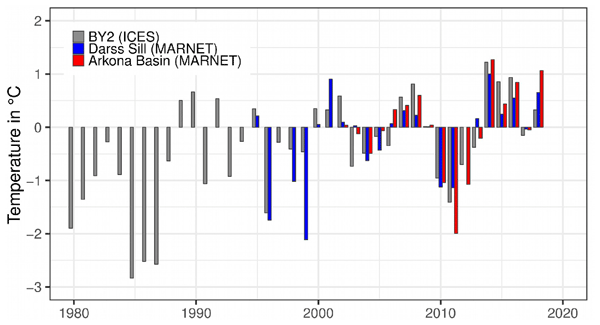
H. E. Markus Meier, Madline Kniebusch, Christian Dieterich, Matthias Gröger, Eduardo Zorita, Ragnar Elmgren, Kai Myrberg, Markus P. Ahola, Alena Bartosova, Erik Bonsdorff, Florian Börgel, Rene Capell, Ida Carlén, Thomas Carlund, Jacob Carstensen, Ole B. Christensen, Volker Dierschke, Claudia Frauen, Morten Frederiksen, Elie Gaget, Anders Galatius, Jari J. Haapala, Antti Halkka, Gustaf Hugelius, Birgit Hünicke, Jaak Jaagus, Mart Jüssi, Jukka Käyhkö, Nina Kirchner, Erik Kjellström, Karol Kulinski, Andreas Lehmann, Göran Lindström, Wilhelm May, Paul A. Miller, Volker Mohrholz, Bärbel Müller-Karulis, Diego Pavón-Jordán, Markus Quante, Marcus Reckermann, Anna Rutgersson, Oleg P. Savchuk, Martin Stendel, Laura Tuomi, Markku Viitasalo, Ralf Weisse, and Wenyan Zhang
Earth Syst. Dynam., 13, 457–593, https://doi.org/10.5194/esd-13-457-2022, https://doi.org/10.5194/esd-13-457-2022, 2022
Short summary
Short summary
Based on the Baltic Earth Assessment Reports of this thematic issue in Earth System Dynamics and recent peer-reviewed literature, current knowledge about the effects of global warming on past and future changes in the climate of the Baltic Sea region is summarised and assessed. The study is an update of the Second Assessment of Climate Change (BACC II) published in 2015 and focuses on the atmosphere, land, cryosphere, ocean, sediments, and the terrestrial and marine biosphere.
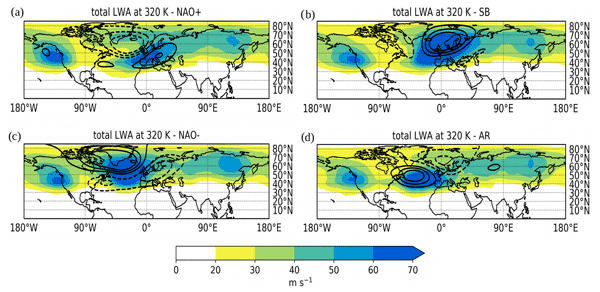
Paolo Ghinassi, Federico Fabiano, and Susanna Corti
Weather Clim. Dynam., 3, 209–230, https://doi.org/10.5194/wcd-3-209-2022, https://doi.org/10.5194/wcd-3-209-2022, 2022
Short summary
Short summary
In this work we examine the ability of global climate models in representing the atmospheric circulation in the upper troposphere, focusing on the eventual benefits of an increased horizontal resolution. Our results confirm that a higher horizontal resolution has a positive impact, especially in those models in which the resolution is increased in both the atmosphere and the ocean, whereas when the resolution is increased only in the atmosphere no substantial improvements are found.
Josep Cos, Francisco Doblas-Reyes, Martin Jury, Raül Marcos, Pierre-Antoine Bretonnière, and Margarida Samsó
Earth Syst. Dynam., 13, 321–340, https://doi.org/10.5194/esd-13-321-2022, https://doi.org/10.5194/esd-13-321-2022, 2022
Short summary
Short summary
The Mediterranean has been identified as being more affected by climate change than other regions. We find that amplified warming during summer and annual precipitation declines are expected for the 21st century and that the magnitude of the changes will mainly depend on greenhouse gas emissions. By applying a method giving more importance to models with greater performance and independence, we find that the differences between the last two community modelling efforts are reduced in the region.
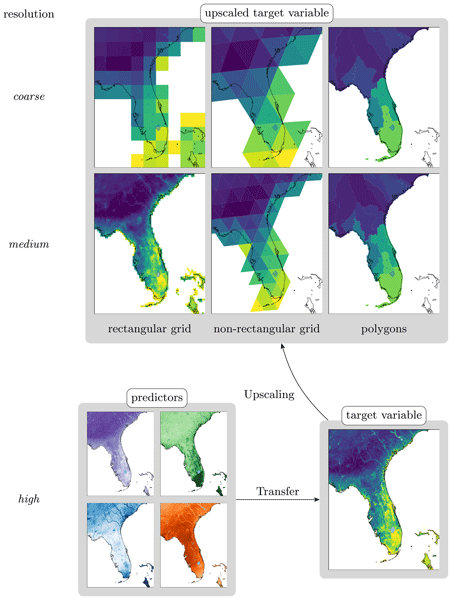
Robert Schweppe, Stephan Thober, Sebastian Müller, Matthias Kelbling, Rohini Kumar, Sabine Attinger, and Luis Samaniego
Geosci. Model Dev., 15, 859–882, https://doi.org/10.5194/gmd-15-859-2022, https://doi.org/10.5194/gmd-15-859-2022, 2022
Short summary
Short summary
The recently released multiscale parameter regionalization (MPR) tool enables
environmental modelers to efficiently use extensive datasets for model setups.
It flexibly ingests the datasets using user-defined data–parameter relationships
and rescales parameter fields to given model resolutions. Modern
land surface models especially benefit from MPR through increased transparency and
flexibility in modeling decisions. Thus, MPR empowers more sound and robust
simulations of the Earth system.
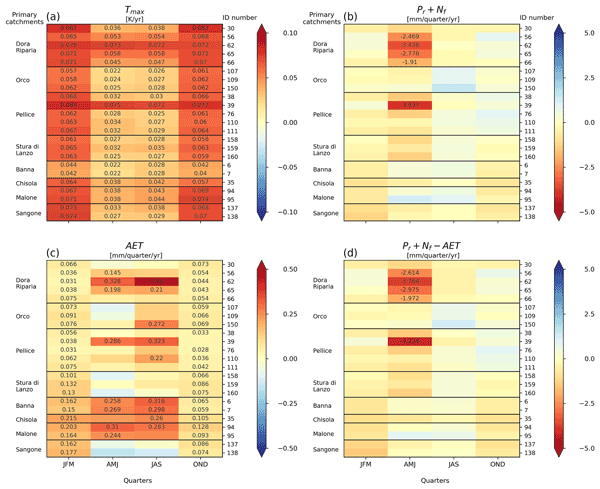
Elisa Brussolo, Elisa Palazzi, Jost von Hardenberg, Giulio Masetti, Gianna Vivaldo, Maurizio Previati, Davide Canone, Davide Gisolo, Ivan Bevilacqua, Antonello Provenzale, and Stefano Ferraris
Hydrol. Earth Syst. Sci., 26, 407–427, https://doi.org/10.5194/hess-26-407-2022, https://doi.org/10.5194/hess-26-407-2022, 2022
Short summary
Short summary
In this study, we evaluate the past, present and future quantity of groundwater potentially available for drinking purposes in the metropolitan area of Turin, north-western Italy. In order to effectively manage water resources, a knowledge of the water cycle components is necessary, including precipitation, evapotranspiration and subsurface reservoirs. All these components have been carefully evaluated in this paper, using observational datasets and modelling approaches.

Charles Pelletier, Thierry Fichefet, Hugues Goosse, Konstanze Haubner, Samuel Helsen, Pierre-Vincent Huot, Christoph Kittel, François Klein, Sébastien Le clec'h, Nicole P. M. van Lipzig, Sylvain Marchi, François Massonnet, Pierre Mathiot, Ehsan Moravveji, Eduardo Moreno-Chamarro, Pablo Ortega, Frank Pattyn, Niels Souverijns, Guillian Van Achter, Sam Vanden Broucke, Alexander Vanhulle, Deborah Verfaillie, and Lars Zipf
Geosci. Model Dev., 15, 553–594, https://doi.org/10.5194/gmd-15-553-2022, https://doi.org/10.5194/gmd-15-553-2022, 2022
Short summary
Short summary
We present PARASO, a circumpolar model for simulating the Antarctic climate. PARASO features five distinct models, each covering different Earth system subcomponents (ice sheet, atmosphere, land, sea ice, ocean). In this technical article, we describe how this tool has been developed, with a focus on the
coupling interfacesrepresenting the feedbacks between the distinct models used for contribution. PARASO is stable and ready to use but is still characterized by significant biases.
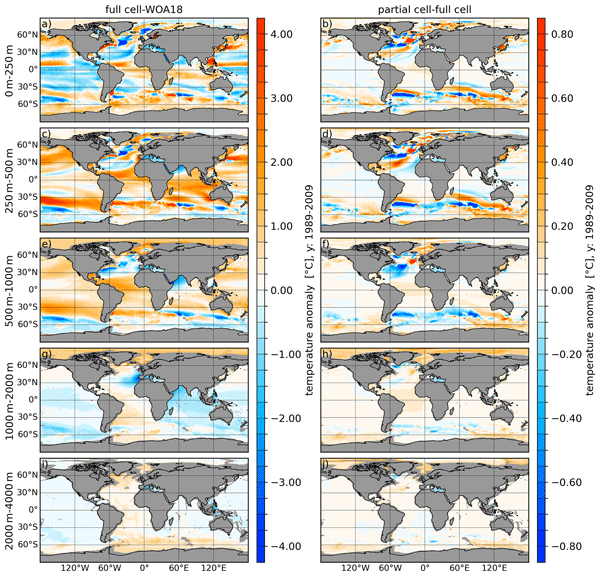
Patrick Scholz, Dmitry Sidorenko, Sergey Danilov, Qiang Wang, Nikolay Koldunov, Dmitry Sein, and Thomas Jung
Geosci. Model Dev., 15, 335–363, https://doi.org/10.5194/gmd-15-335-2022, https://doi.org/10.5194/gmd-15-335-2022, 2022
Short summary
Short summary
Structured-mesh ocean models are still the most mature in terms of functionality due to their long development history. However, unstructured-mesh ocean models have acquired new features and caught up in their functionality. This paper continues the work by Scholz et al. (2019) of documenting the features available in FESOM2.0. It focuses on the following two aspects: (i) partial bottom cells and embedded sea ice and (ii) dealing with mixing parameterisations enabled by using the CVMix package.
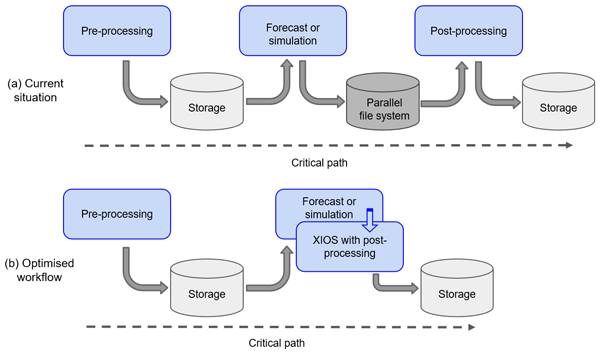
Xavier Yepes-Arbós, Gijs van den Oord, Mario C. Acosta, and Glenn D. Carver
Geosci. Model Dev., 15, 379–394, https://doi.org/10.5194/gmd-15-379-2022, https://doi.org/10.5194/gmd-15-379-2022, 2022
Short summary
Short summary
Climate prediction models produce a large volume of simulated data that sometimes might not be efficiently managed. In this paper we present an approach to address this issue by reducing the computing time and storage space. As a case study, we analyse the output writing process of the ECMWF atmospheric model called IFS, and we integrate into it a data writing tool called XIOS. The results suggest that the integration between the two components achieves an adequate computational performance.

Michael Peichl, Stephan Thober, Luis Samaniego, Bernd Hansjürgens, and Andreas Marx
Hydrol. Earth Syst. Sci., 25, 6523–6545, https://doi.org/10.5194/hess-25-6523-2021, https://doi.org/10.5194/hess-25-6523-2021, 2021
Short summary
Short summary
Using a statistical model that can also take complex systems into account, the most important factors affecting wheat yield in Germany are determined. Different spatial damage potentials are taken into account. In many parts of Germany, yield losses are caused by too much soil water in spring. Negative heat effects as well as damaging soil drought are identified especially for north-eastern Germany. The model is able to explain years with exceptionally high yields (2014) and losses (2003, 2018).
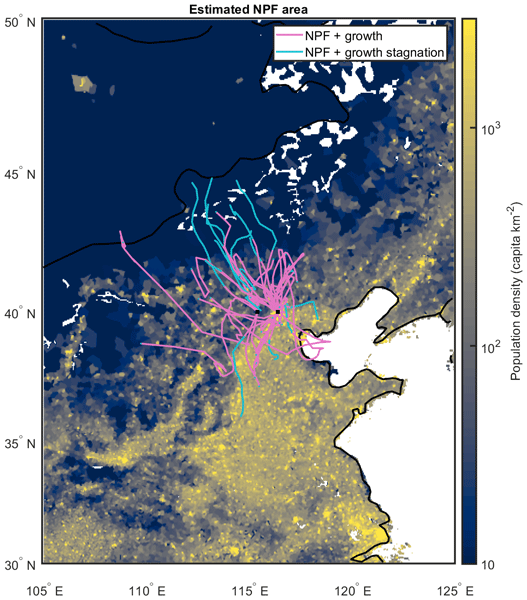
Ying Zhou, Simo Hakala, Chao Yan, Yang Gao, Xiaohong Yao, Biwu Chu, Tommy Chan, Juha Kangasluoma, Shahzad Gani, Jenni Kontkanen, Pauli Paasonen, Yongchun Liu, Tuukka Petäjä, Markku Kulmala, and Lubna Dada
Atmos. Chem. Phys., 21, 17885–17906, https://doi.org/10.5194/acp-21-17885-2021, https://doi.org/10.5194/acp-21-17885-2021, 2021
Short summary
Short summary
We characterized the connection between new particle formation (NPF) events in terms of frequency, intensity and growth at a near-highway location in central Beijing and at a background mountain site 80 km away. Due to the substantial contribution of NPF to the global aerosol budget, identifying the conditions that promote the occurrence of regional NPF events could help understand their contribution on a large scale and would improve their implementation in global models.
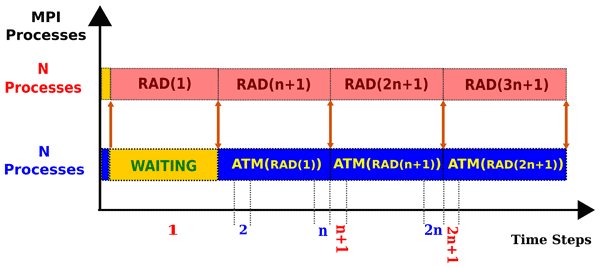
Mohammad Reza Heidari, Zhaoyang Song, Enrico Degregori, Jörg Behrens, and Hendryk Bockelmann
Geosci. Model Dev., 14, 7439–7457, https://doi.org/10.5194/gmd-14-7439-2021, https://doi.org/10.5194/gmd-14-7439-2021, 2021
Short summary
Short summary
To improve our understanding of climate system dynamics and their variability, the numerical atmospheric model ECHAM6 is used to simulate a complete glacial cycle over the past 120 000 years. However, performing such simulations takes a long time even on state-of-the-art supercomputers. To accelerate the model simulation, we propose calculating radiative transfer processes in parallel with adiabatic processes in the atmosphere, which reduces the simulation time by nearly half.
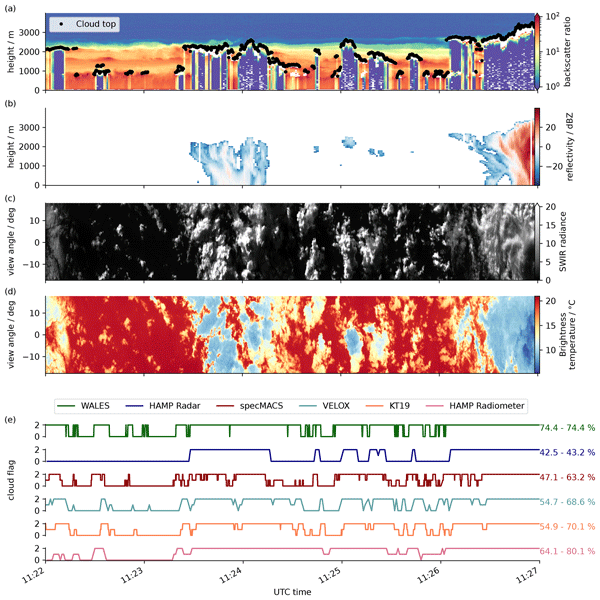
Heike Konow, Florian Ewald, Geet George, Marek Jacob, Marcus Klingebiel, Tobias Kölling, Anna E. Luebke, Theresa Mieslinger, Veronika Pörtge, Jule Radtke, Michael Schäfer, Hauke Schulz, Raphaela Vogel, Martin Wirth, Sandrine Bony, Susanne Crewell, André Ehrlich, Linda Forster, Andreas Giez, Felix Gödde, Silke Groß, Manuel Gutleben, Martin Hagen, Lutz Hirsch, Friedhelm Jansen, Theresa Lang, Bernhard Mayer, Mario Mech, Marc Prange, Sabrina Schnitt, Jessica Vial, Andreas Walbröl, Manfred Wendisch, Kevin Wolf, Tobias Zinner, Martin Zöger, Felix Ament, and Bjorn Stevens
Earth Syst. Sci. Data, 13, 5545–5563, https://doi.org/10.5194/essd-13-5545-2021, https://doi.org/10.5194/essd-13-5545-2021, 2021
Short summary
Short summary
The German research aircraft HALO took part in the research campaign EUREC4A in January and February 2020. The focus area was the tropical Atlantic east of the island of Barbados. We describe the characteristics of the 15 research flights, provide auxiliary information, derive combined cloud mask products from all instruments that observe clouds on board the aircraft, and provide code examples that help new users of the data to get started.
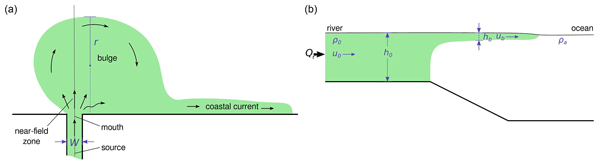
Vera Fofonova, Tuomas Kärnä, Knut Klingbeil, Alexey Androsov, Ivan Kuznetsov, Dmitry Sidorenko, Sergey Danilov, Hans Burchard, and Karen Helen Wiltshire
Geosci. Model Dev., 14, 6945–6975, https://doi.org/10.5194/gmd-14-6945-2021, https://doi.org/10.5194/gmd-14-6945-2021, 2021
Short summary
Short summary
We present a test case of river plume spreading to evaluate coastal ocean models. Our test case reveals the level of numerical mixing (due to parameterizations used and numerical treatment of processes in the model) and the ability of models to reproduce complex dynamics. The major result of our comparative study is that accuracy in reproducing the analytical solution depends less on the type of applied model architecture or numerical grid than it does on the type of advection scheme.

Geet George, Bjorn Stevens, Sandrine Bony, Robert Pincus, Chris Fairall, Hauke Schulz, Tobias Kölling, Quinn T. Kalen, Marcus Klingebiel, Heike Konow, Ashley Lundry, Marc Prange, and Jule Radtke
Earth Syst. Sci. Data, 13, 5253–5272, https://doi.org/10.5194/essd-13-5253-2021, https://doi.org/10.5194/essd-13-5253-2021, 2021
Short summary
Short summary
Dropsondes measure atmospheric parameters such as temperature, pressure, humidity and horizontal winds. The EUREC4A field campaign deployed 1215 dropsondes during January–February 2020 in the north Atlantic trade-wind region in order to characterize the thermodynamic and the dynamic structure of the atmosphere, primarily at horizontal scales of ~ 200 km. We present JOANNE, the dataset that provides these dropsonde measurements and thereby a rich characterization of the trade-wind atmosphere.
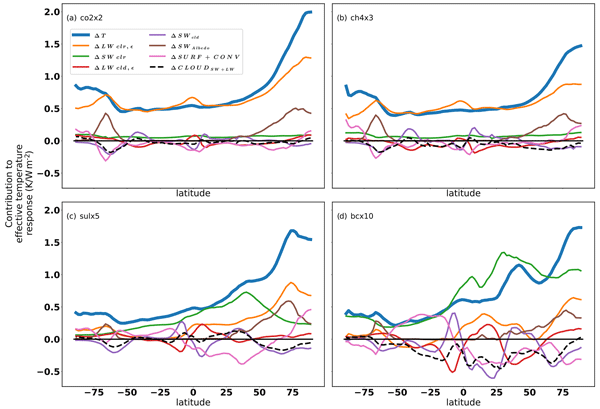
Kalle Nordling, Hannele Korhonen, Jouni Räisänen, Antti-Ilari Partanen, Bjørn H. Samset, and Joonas Merikanto
Atmos. Chem. Phys., 21, 14941–14958, https://doi.org/10.5194/acp-21-14941-2021, https://doi.org/10.5194/acp-21-14941-2021, 2021
Short summary
Short summary
Understanding the temperature responses to different climate forcing agents, such as greenhouse gases and aerosols, is crucial for understanding future regional climate changes. In climate models, the regional temperature responses vary for all forcing agents, but the causes of this variability are poorly understood. For all forcing agents, the main component contributing to variance in regional surface temperature responses between the climate models is the clear-sky longwave emissivity.
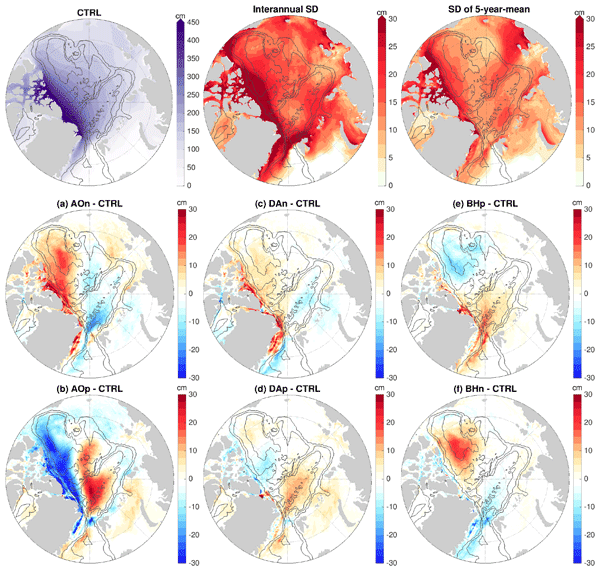
Qiang Wang, Sergey Danilov, Longjiang Mu, Dmitry Sidorenko, and Claudia Wekerle
The Cryosphere, 15, 4703–4725, https://doi.org/10.5194/tc-15-4703-2021, https://doi.org/10.5194/tc-15-4703-2021, 2021
Short summary
Short summary
Using simulations, we found that changes in ocean freshwater content induced by wind perturbations can significantly affect the Arctic sea ice drift, thickness, concentration and deformation rates years after the wind perturbations. The impact is through changes in sea surface height and surface geostrophic currents and the most pronounced in warm seasons. Such a lasting impact might become stronger in a warming climate and implies the importance of ocean initialization in sea ice prediction.
Cited articles
Abatzoglou, J. T., Williams, A. P., and Barbero, R.: Global Emergence of Anthropogenic Climate Change in Fire Weather Indices, Geophys. Res. Lett., 46, 326–336, https://doi.org/10.1029/2018GL080959, 2019.
Acosta, M. C., Palomas, S., Paronuzzi Ticco, S. V., Utrera, G., Biercamp, J., Bretonniere, P.-A., Budich, R., Castrillo, M., Caubel, A., Doblas-Reyes, F., Epicoco, I., Fladrich, U., Joussaume, S., Kumar Gupta, A., Lawrence, B., Le Sager, P., Lister, G., Moine, M.-P., Rioual, J.-C., Valcke, S., Zadeh, N., and Balaji, V.: The computational and energy cost of simulation and storage for climate science: lessons from CMIP6, Geosci. Model Dev., 17, 3081–3098, https://doi.org/10.5194/gmd-17-3081-2024, 2024.
Alsina-Ferrer, I. and Grayson, K.: DestinE-Climate-DT/one_pass: v0.8.0 (v0.8.0), Zenodo [code], https://doi.org/10.5281/zenodo.14591827, 2025.
Alvarez Fanjul, E., Ciliberti, S., Pearlman, J., Wilmer-Becker, K., Bahurel, P., Ardhuin, F., Arnaud, A., Azizzadenesheli, K., Aznar, R., Bell, M., Bertino, L., Behera, S., Brassington, G., Calewaert, J. B., Capet, A., Chassignet, E., Ciavatta, S., Cirano, M., Clementi, E., Cornacchia, L., Cossarini, G., Coro, G., Corney, S., Davidson, F., Drevillon, M., Drillet, Y., Dussurget, R., El Serafy, G., Fearon, G., Fennel, K., Ford, D., Le Galloudec, O., Huang, X., Lellouche, J. M., Heimbach, P., Hernandez, F., Hogan, P., Hoteit, I., Joseph, S., Josey, S., Le Traon, P.-Y., Libralato, S., Mancini, M., Martin, M., Matte, P., McConnell, T., Melet, A., Miyazawa, Y., Moore, A. M., Novellino, A., O'Donncha, F., Porter, A., Qiao, F., Regan, H., Robert-Jones, J., Sanikommu, S., Schiller, A., Siddorn, J., Sotillo, M. G., Staneva, J., Thomas-Courcoux, C., Thupaki, P., Tonani, M., Garcia Valdecasas, J. M., Veitch, J., Von Schuckmann, K., Wan, L., Wilkin, J., Zhong, A., and Zufic, R.: Promoting best practices in ocean forecasting through an Operational Readiness Level, Front. Mar. Sci., 11, 1443284, https://doi.org/10.3389/fmars.2024.1443284, 2024.
Arriola, L., Gaya i Àvila, A., Roura Adserias, F., Castrillo, M., Kinoshita, B., Alsina Ferrer, I., McClain, D., Andrés-Martínez, M., Beltrán Mora, D., Beyer, S., Al Turjman, M. H., and Gonzalez Yeregui, I.: DestinE-Climate-DT/Workflow: v5.1.2 (v5.1.2), Zenodo [code], https://doi.org/10.5281/zenodo.15607598, 2025.
Athanase, M., Sánchez-Benítez, A., Goessling, H. F., Pithan, F., and Jung, T.: Projected amplification of summer marine heatwaves in a warming Northeast Pacific Ocean, Commun. Earth Environ., 5, 53, https://doi.org/10.1038/s43247-024-01212-1, 2024.
Bauer, P., Stevens, B., and Hazeleger, W.: A digital twin of Earth for the green transition, Nat. Clim. Chang., 11, 80–83, https://doi.org/10.1038/s41558-021-00986-y, 2021a.
Bauer, P., Dueben, P. D., Hoefler, T., Quintino, T., Schulthess, T. C., and Wedi, N. P.: The digital revolution of Earth-system science, Nat. Comput. Sci., 1, 104–113, https://doi.org/10.1038/s43588-021-00023-0, 2021b.
Bauer, P., Dueben, P., Chantry, M., Doblas-Reyes, F., Hoefler, T., McGovern, A., and Stevens, B.: Deep learning and a changing economy in weather and climate prediction, Nat. Rev. Earth Environ., 4, 507–509, https://doi.org/10.1038/s43017-023-00468-z, 2023.
Baulenas, E., Bojovic, D., Urquiza, D., Terrado, M., Pickard, S., González, N., and St. Clair, A. L.: User Selection and Engagement for Climate Services Coproduction, Weather Clim. Soc., 15, 381–392, https://doi.org/10.1175/WCAS-D-22-0112.1, 2023.
Beltrán Mora, D., Kinoshita, B. P., Marciani, M. G., Lopes, E., Tenorio, L., Bretonniere, P.-A., Castrillo, M., Goitia, P., Gaya-Avila, A., Andrés-Martínez, M., Herrero, L., Puiggros, A., Baer, A., Roura Adserias, F., and Macchia, F.: Autosubmit (v4.1.14), Zenodo [code], https://doi.org/10.5281/zenodo.15590529, 2026.
Beech, N., Rackow, T., Semmler, T., and Jung, T.: Exploring the ocean mesoscale at reduced computational cost with FESOM 2.5: efficient modeling strategies applied to the Southern Ocean, Geosci. Model Dev., 17, 529–543, https://doi.org/10.5194/gmd-17-529-2024, 2024.
Betts, R. A., Belcher, S. E., Hermanson, L., Klein Tank, A., Lowe, J. A., Jones, C. D., Morice, C. P., Rayner, N. A., Scaife, A. A., and Stott, P. A.: Approaching 1.5 °C: how will we know we've reached this crucial warming mark?, Nature, 624, 33–35, https://doi.org/10.1038/d41586-023-03775-z, 2023.
Bevacqua, E., Schleussner, C. F., and Zscheischler, J.: A year above 1.5 °C signals that Earth is most probably within the 20-year period that will reach the Paris Agreement limit, Nat. Clim. Change, 15, 262–265, https://doi.org/10.1038/s41558-025-02246-9, 2025.
Bojovic, D., St. Clair, A. L., Christel, I., Terrado, M., Stanzel, P., Gonzalez, P., and Palin, E. J.: Engagement, involvement and empowerment: Three realms of a coproduction framework for climate services, Glob. Environ. Change, 68, 102271, https://doi.org/10.1016/j.gloenvcha.2021.102271, 2021.
Bracco, A., Brajard, J., Dijkstra, H. A., Hassanzadeh, P., Lessig, C., and Monteleoni, C.: Machine learning for the physics of climate, Nature Reviews Physics, 7, 6–20, https://doi.org/10.1038/s42254-024-00776-3, 2025.
Caprioli, S., Nurisso, M., Davini, P., von Hardenberg, J., Nazarova, N., Anerdi, C., Ghosh, S., Ghinassi, P., Cadau, M., Tovazzi, E., Koldunov, N., Massonnet, F., Rajput, M. M., Sayed, S., Sharma, T., Sunny, J., Kluft, L., Kinoshita, B., and Ortega, P.: AQUA-diagnostics: The diagnostics for model evaluation of the Application for QUality Assessment of the Destination Earth Climate DT, Zenodo [code], https://doi.org/10.5281/zenodo.17776618, 2026.
Collins, M., Beverley, J. D., Bracegirdle, T. J., Catto, J., McCrystall, M., Dittus, A., Freychet, N., Grist, J., Hegerl, G. C., Holland, P. R., Holmes, C., Josey, S. A., Joshi, M., Hawkins, E., Lo, E., Lord, N., Mitchell, D., Monerie, P.-A., Priestley, M. D. K., Scaife, A., Screen, J., Senior, N., Sexton, D., Shuckburgh, E., Siegert, S., Simpson, C., Stephenson, D. B., Sutton, R., Thompson, V., Wilcox, L. J., and Woollings, T.: Emerging signals of climate change from the equator to the poles: new insights into a warming world, Front. Sci., 2, 1340323, https://doi.org/10.3389/fsci.2024.1340323, 2024.
Dee, D., Obregon, A., and Buontempo, C.: Are our climate data fit for your purpose?, B. Am. Meteorol. Soc., 105, E1723–E1733, https://doi.org/10.1175/BAMS-D-23-0295.1, 2024.
DestinE: Destination Earth Climate DT dataset (Version 1), Destination Earth Data Lake (ECMWF/EUMETSAT) [data set], https://doi.org/10.21957/d3f982672e, 2025.
Doblas-Reyes, F. J., Sörensson, A. A., Almazroui, M., Dosio, A., Gutowski, W. J., Haarsma, R., Hamdi, R., Hewitson, B., Kwon, W.-T., Lamptey, B., Maraun, D., Stephenson, T. S., Takayabu, I., Terray, L., Turner, A., and Zuo, Z.: Linking global to regional climate change, in: Climate Change 2021: The Physical Science Basis, Contribution of Working Group I to the Sixth Assessment Report of the Intergovernmental Panel on Climate Change, edited by: Masson-Delmotte, V., Zhai, P., Pirani, A., Connors, S. L., Péan, C., Berger, S., Caud, N., Chen, Y., Goldfarb, L., Gomis, M. I., Huang, M., Leitzell, K., Lonnoy, E., Matthews, J. B. R., Maycock, T. K., Waterfield, T., Yelekçi, O., Yu, R., and Zhou, B., Cambridge University Press, Cambridge, UK and New York, NY, USA, 1363–1512, https://doi.org/10.1017/9781009157896.012, 2021.
Doblas-Reyes, F. J., Lera St Clair, A., Baldissera Pacchetti, M., Checchia, P., Cortekar, J., Klostermann, J. E. M., Krauß, W., Muñoz, Á. G., Mysiak, J., Paz, J., Terrado, M., Villwock, A., Volarev, M., and Zorita, S.: Standardisation of equitable climate services by supporting a community of practice, Climate Services, 36, 100520, https://doi.org/10.1016/j.cliser.2024.100520, 2024.
Donahue, A. S., Caldwell, P. M., Bertagna, L., Beydoun, H., Bogenschutz, P. A., Bradley, A. M., Clevenger, T. C., Foucar, J., Golaz, C., Guba, O., Hannah, W., Hillman, B. R., Johnson, J. N., Keen, N., Lin, W., Singh, B., Sreepathi, S., Taylor, M. A., Tian, J., Terai, C. R., Ullrich, P. A., Yuan, X., and Zhang, Y.: To exascale and beyond – The Simple Cloud-Resolving E3SM Atmosphere Model (SCREAM), a performance portable global atmosphere model for cloud-resolving scales, J. Adv. Model. Earth Syst., 16, e2024MS004314, https://doi.org/10.1029/2024MS004314, 2024.
Dunn, R. J. H., Willett, K. M., Morice, C. P., and Parker, D. E.: Pairwise homogeneity assessment of HadISD, Clim. Past, 10, 1501–1522, https://doi.org/10.5194/cp-10-1501-2014, 2014.
Dunne, J. P., Hewitt, H. T., Arblaster, J. M., Bonou, F., Boucher, O., Cavazos, T., Dingley, B., Durack, P. J., Hassler, B., Juckes, M., Miyakawa, T., Mizielinski, M., Naik, V., Nicholls, Z., O'Rourke, E., Pincus, R., Sanderson, B. M., Simpson, I. R., and Taylor, K. E.: An evolving Coupled Model Intercomparison Project phase 7 (CMIP7) and Fast Track in support of future climate assessment, Geosci. Model Dev., 18, 6671–6700, https://doi.org/10.5194/gmd-18-6671-2025, 2025.
ECMWF: IFS Documentation CY49R1 – Part I: Observations, European Centre for Medium-Range Weather Forecasts, https://doi.org/10.21957/fd16c61484, 2025a.
ECMWF: Pyodc documentation, European Centre for Medium-Range Weather Forecasts (ECMWF), https://pyodc.readthedocs.io/en/1.6.0/ (last access: 20 March 2026), 2025b.
EUCRA: European Climate Risk Assessment Report, EEA Report 01/2024, ISBN 978-92-9480-627-7, 2024.
Eyring, V., Bony, S., Meehl, G. A., Senior, C. A., Stevens, B., Stouffer, R. J., and Taylor, K. E.: Overview of the Coupled Model Intercomparison Project Phase 6 (CMIP6) experimental design and organization, Geosci. Model Dev., 9, 1937–1958, https://doi.org/10.5194/gmd-9-1937-2016, 2016.
Eyring, V., Gentine, P., Camps-Valls, G., Lawrence, D. M., and Reichstein, M.: AI-empowered next-generation multiscale climate modelling for mitigation and adaptation, Nat. Geosci., 17, 963–971, https://doi.org/10.1038/s41561-024-01527-w, 2024.
Fiedler, T., Pitman, A. J., Mackenzie, K., Wood, N., Jakob, C., and Perkins-Kirkpatrick, S. E.: Business risk and the emergence of climate analytics, Nat. Clim. Chang., 11, 87–94, https://doi.org/10.1038/s41558-020-00984-6, 2021.
Fouilloux, A.: ODB (Observational DataBase) and its usage at ECMWF, Twelfth Workshop on Meteorological Operational Systems, European Centre for Medium-Range Weather Forecasts, 2–6 November 2009, https://www.ecmwf.int/en/elibrary/74516-odb-observational-database-and-its-usage-ecmwf (last access: 10 April 2026), 2009.
Good, S. A., Martin, M. J., and Rayner, N. A.: EN4: Quality controlled ocean temperature and salinity profiles and monthly objective analyses with uncertainty estimates, J. Geophys. Res.-Oceans, 118, 6704–6716, https://doi.org/10.1002/2013JC009067, 2013.
Gorski, K. M., Hivon, E., Banday, A. J., Wandelt, B. D., Hansen, F. K., Reinecke, M., and Bartelmann, M.: HEALPix: A Framework for High-Resolution Discretization and Fast Analysis of Data Distributed on the Sphere, Astrophys. J., 622, 759–771, https://doi.org/10.1086/427976, 2005.
Grayson, K., Thober, S., Lacima-Nadolnik, A., Alsina-Ferrer, I., Lledó, L., Sharifi, E., and Doblas-Reyes, F.: Statistical summaries for streamed data from climate simulations: one-pass algorithms, Geosci. Model Dev., 18, 5873–5890, https://doi.org/10.5194/gmd-18-5873-2025, 2025.
Haarsma, R. J., Roberts, M. J., Vidale, P. L., Senior, C. A., Bellucci, A., Bao, Q., Chang, P., Corti, S., Fučkar, N. S., Guemas, V., von Hardenberg, J., Hazeleger, W., Kodama, C., Koenigk, T., Leung, L. R., Lu, J., Luo, J.-J., Mao, J., Mizielinski, M. S., Mizuta, R., Nobre, P., Satoh, M., Scoccimarro, E., Semmler, T., Small, J., and von Storch, J.-S.: High Resolution Model Intercomparison Project (HighResMIP v1.0) for CMIP6, Geosci. Model Dev., 9, 4185–4208, https://doi.org/10.5194/gmd-9-4185-2016, 2016.
Haine, C., Haus, U.-U., Martinasso, M., Pleiter, D., Tessier, F., Sarmany, D., Smart, S., Quintino, T., and Tate, A.: A middleware supporting data movement in complex and software-defined storage and memory architectures, in: High Performance Computing, Cham, 346–357, https://www.maestro-data.eu/a-middleware-supporting-data-movement-in-complex-and (last access: 20 March 2026), 2021.
Hallegatte, S.: Strategies to adapt to an uncertain climate change, Glob. Environ. Change, 19, 240–247, https://doi.org/10.1016/j.gloenvcha.2008.12.003, 2009.
Hanke, M., Redler, R., Holfeld, T., and Yastremsky, M.: YAC 1.2.0: new aspects for coupling software in Earth system modelling, Geosci. Model Dev., 9, 2755–2769, https://doi.org/10.5194/gmd-9-2755-2016, 2016.
Hazeleger, W., Aerts, J. P. M., Bauer, P., Bierkens, M. F. P., Camps-Valls, G., Dekker, M. M., Doblas-Reyes, F. J., Eyring, V., Finkenauer, C., Grundner, A., Hachinger, S., Hall, D. M., Hartmann, T., Iglesias-Suarez, F., Janssens, M., Jones, E. R., Kölling, T., Lees, M., Lhermitte, S., Van Nieuwpoort, R. V., Pahker, A.-K., Pellicer-Valero, O. J., Pijpers, F. P., Siibak, A., Spitzer, J., Stevens, B., Vasconcelos, V. V., and Vossepoel, F. C.: Digital twins of the Earth with and for humans, Commun. Earth Environ., 5, 463, https://doi.org/10.1038/s43247-024-01626-x, 2024.
Hersbach, H., Bell, B., Berrisford, P., Hirahara, S., Horányi, A., Muñoz-Sabater, J., Nicolas, J., Peubey, C., Radu, R., Schepers, D., Simmons, A., Soci, C., Abdalla, S., Abellan, X., Balsamo, G., Bechtold, P., Biavati, G., Bidlot, J., Bonavita, M., De Chiara, G., Dahlgren, P., Dee, D., Diamantakis, M., Dragani, R., Flemming, J., Forbes, R., Fuentes, M., Geer, A., Haimberger, L., Healy, S., Hogan, R. J., Hólm, E., Janisková, M., Keeley, S., Laloyaux, P., Lopez, P., Lupu, C., Radnoti, G., de Rosnay, P., Rozum, I., Vamborg, F., Villaume, S., and Thépaut, J.-N.: The ERA5 global reanalysis, Q. J. Roy. Meteor. Soc., 146, 1999–2049, https://doi.org/10.1002/qj.3803, 2020.
Hetzer, J., Forrest, M., Ribalaygua, J., Prado-López, C., and Hickler, T.: The fire weather in Europe: large-scale trends towards higher danger, Environ. Res. Lett., 19, 084017, https://doi.org/10.1088/1748-9326/ad5b09, 2024.
Hewitt, C. D. and Stone, R.: Climate services for managing societal risks and opportunities, Climate Services, 23, 100240, https://doi.org/10.1016/j.cliser.2021.100240, 2021.
Hoffmann, J., Bauer, P., Sandu, I., Wedi, N., Geenen, T., and Thiemert, D.: Destination Earth – A digital twin in support of climate services, Climate Services, 30, 100394, https://doi.org/10.1016/j.cliser.2023.100394, 2023.
Hohenegger, C., Korn, P., Linardakis, L., Redler, R., Schnur, R., Adamidis, P., Bao, J., Bastin, S., Behravesh, M., Bergemann, M., Biercamp, J., Bockelmann, H., Brokopf, R., Brüggemann, N., Casaroli, L., Chegini, F., Datseris, G., Esch, M., George, G., Giorgetta, M., Gutjahr, O., Haak, H., Hanke, M., Ilyina, T., Jahns, T., Jungclaus, J., Kern, M., Klocke, D., Kluft, L., Kölling, T., Kornblueh, L., Kosukhin, S., Kroll, C., Lee, J., Mauritsen, T., Mehlmann, C., Mieslinger, T., Naumann, A. K., Paccini, L., Peinado, A., Praturi, D. S., Putrasahan, D., Rast, S., Riddick, T., Roeber, N., Schmidt, H., Schulzweida, U., Schütte, F., Segura, H., Shevchenko, R., Singh, V., Specht, M., Stephan, C. C., von Storch, J.-S., Vogel, R., Wengel, C., Winkler, M., Ziemen, F., Marotzke, J., and Stevens, B.: ICON-Sapphire: simulating the components of the Earth system and their interactions at kilometer and subkilometer scales, Geosci. Model Dev., 16, 779–811, https://doi.org/10.5194/gmd-16-779-2023, 2023.
ICON partnership (DWD; MPI-M; DKRZ; KIT; C2SM): ICON release 2025.04, World Data Center for Climate (WDCC) at DKRZ [code], https://doi.org/10.35089/wdcc/iconrelease2025.04, 2025.
IPCC – Intergovernmental Panel On Climate Change: Climate Change 2021 – The Physical Science Basis: Working Group I Contribution to the Sixth Assessment Report of the Intergovernmental Panel on Climate Change, 1st edn., Cambridge University Press, https://doi.org/10.1017/9781009157896, 2023.
Jakob, C., Gettelman, A., and Pitman, A.: The need to operationalize climate modelling, Nat. Clim. Chang., 13, 1158–1160, https://doi.org/10.1038/s41558-023-01849-4, 2023.
John, A., Beyer, S., Athanase, M., Benítez, A. S., Goessling, H., Hossain, A., Nurisso, M., Aguridan, R., Andrés-Martínez, M., Gaya-Àvila, A., Cheedela, S. K., Geier, P., Ghosh, R., Hadade, I., Koldunov, N. V., Pedruzo-Bagazgoitia, X., Rackow, T., Sandu, I., Sidorenko, D., Streffing, J., Vitali, E., and Jung, T.: Global Storyline Simulations at the Kilometre-scale, J. Adv. Model. Earth Syst., https://doi.org/10.1029/2025MS005326, in press, 2026.
Jones, C. G., Adloff, F., Booth, B. B. B., Cox, P. M., Eyring, V., Friedlingstein, P., Frieler, K., Hewitt, H. T., Jeffery, H. A., Joussaume, S., Koenigk, T., Lawrence, B. N., O'Rourke, E., Roberts, M. J., Sanderson, B. M., Séférian, R., Somot, S., Vidale, P. L., van Vuuren, D., Acosta, M., Bentsen, M., Bernardello, R., Betts, R., Blockley, E., Boé, J., Bracegirdle, T., Braconnot, P., Brovkin, V., Buontempo, C., Doblas-Reyes, F., Donat, M., Epicoco, I., Falloon, P., Fiore, S., Frölicher, T., Fučkar, N. S., Gidden, M. J., Goessling, H. F., Graversen, R. G., Gualdi, S., Gutiérrez, J. M., Ilyina, T., Jacob, D., Jones, C. D., Juckes, M., Kendon, E., Kjellström, E., Knutti, R., Lowe, J., Mizielinski, M., Nassisi, P., Obersteiner, M., Regnier, P., Roehrig, R., Salas y Mélia, D., Schleussner, C.-F., Schulz, M., Scoccimarro, E., Terray, L., Thiemann, H., Wood, R. A., Yang, S., and Zaehle, S.: Bringing it all together: science priorities for improved understanding of Earth system change and to support international climate policy, Earth Syst. Dynam., 15, 1319–1351, https://doi.org/10.5194/esd-15-1319-2024, 2024.
Kadow, C., Hall, D. M., and Ulbrich, U.: Artificial intelligence reconstructs missing climate information, Nat. Geosci., 13, 408–413, https://doi.org/10.1038/s41561-020-0582-5, 2020.
Koldunov, N. and Jung, T.: Local climate services for all, courtesy of large language models, Commun. Earth Environ., 5, 13, https://doi.org/10.1038/s43247-023-01199-1, 2024.
Kotz, M., Levermann, A., and Wenz, L.: The effect of rainfall changes on economic production, Nature, 601, 223–227, https://doi.org/10.1038/s41586-021-04283-8, 2022.
Kruk, M. C., Parker, B., Marra, J. J., Werner, K., Heim, R., Vose, R., and Malsale, P.: Engaging with Users of Climate Information and the Coproduction of Knowledge, Weather Clim. Soc., 9, 839–849, https://doi.org/10.1175/WCAS-D-16-0127.1, 2017.
Kuznetsov, I., Jost, A. A., Pantiukhin, D., Shapkin, B., Jung, T., and Koldunov, N.: Transforming climate services with LLMs and multi-source data integration, npj Climate Action, 4, 97, https://doi.org/10.1038/s44168-025-00300-y, 2025.
Lacima-Nadolnik, A., Grayson, K., Roura-Adserias, F., Ghosh, S., Keller, K., Batlle, M., Gonzalez-Yeregi, I., Samsó-Cabré, M., Soret, A., and Doblas-Reyes, F. J.: Near-term streamed climate information from kilometre-scale global climate models for the wind energy sector, Energy and Climate Change, https://doi.org/10.2139/ssrn.5509245, submitted, 2026.
Lauer, A., Bock, L., Hassler, B., Jöckel, P., Ruhe, L., and Schlund, M.: Monitoring and benchmarking Earth system model simulations with ESMValTool v2.12.0, Geosci. Model Dev., 18, 1169–1188, https://doi.org/10.5194/gmd-18-1169-2025, 2025.
Lengfeld, K., Walawender, E., Winterrath, T., and Becker, A.: CatRaRE: A Catalogue of radar-based heavy rainfall events in Germany derived from 20 years of data, Meteorol. Z., 30, 469–487, https://doi.org/10.1127/metz/2021/1088, 2021.
Leo, S., Crusoe, M. R., Rodríguez-Navas, L., Sirvent, R., Kanitz, A., De Geest, P., Wittner, R., Pireddu, L., Garijo, D., Fernández, J. M., Colonnelli, I., Gallo, M., Ohta, T., Suetake, H., Capella-Gutierrez, S., De Wit, R., Kinoshita, B. P., and Soiland-Reyes, S.: Recording provenance of workflow runs with RO-Crate, PLoS ONE, 19, e0309210, https://doi.org/10.1371/journal.pone.0309210, 2024.
Leuridan, M., Hawkes, J., Smart, S., Danovaro, E., and Quintino, T.: Polytope: An Algorithm for Efficient Feature Extraction on Hypercubes, arXiv [preprint], https://doi.org/10.48550/arXiv.2306.11553, 2023.
Lledó, L., Torralba, V., Soret, A., Ramon, J., and Doblas-Reyes, F. J.: Seasonal forecasts of wind power generation, Renew. Energ., 143, 91–100, https://doi.org/10.1016/j.renene.2019.04.135, 2019.
Madec, G. and the NEMO System Team: NEMO Ocean Engine Reference Manual, Zenodo, https://doi.org/10.5281/zenodo.1464816, 2024.
Madonna, F., Tramutola, E., Sy, S., Serva, F., Proto, M., Rosoldi, M., Gagliardi, S., Amato, F., Marra, F., Fassò, A., Gardiner, T., and Thorne, P. W.: The New Radiosounding HARMonization (RHARM) Data Set of Homogenized Radiosounding Temperature, Humidity, and Wind Profiles With Uncertainties, J. Geophys. Res.-Atmos., 127, e2021JD035220, https://doi.org/10.1029/2021JD035220, 2022.
Manubens-Gil, D., Vegas-Regidor, J., Prodhomme, C., Mula-Valls, O., and Doblas-Reyes, F. J.: Seamless management of ensemble climate prediction experiments on HPC platforms, in: 2016 International Conference on High Performance Computing & Simulation (HPCS), 2016 International Conference on High Performance Computing & Simulation (HPCS), Innsbruck, Austria, 895–900, https://doi.org/10.1109/HPCSim.2016.7568429, 2016.
Moreton, S. M., Ferreira, D., Roberts, M. J., and Hewitt, H. T.: Evaluating surface eddy properties in coupled climate simulations with “eddy-present” and “eddy-rich” ocean resolution, Ocean Model., 147, 101567, https://doi.org/10.1016/j.ocemod.2020.101567, 2020.
Naik, V., Durack, P. J., Nicholls, Z., Buontempo, C., Dunne, J. P., Hewitt, H. T., Macintosh, C., and O'Rourke, E.: Climate models need more frequent releases of input data — here's how to do it, Nature, 644, 874–875, https://doi.org/10.1038/d41586-025-02642-3, 2025.
NEMO System Team: NEMO release-4.0 (release 4.0), Zenodo [code], https://doi.org/10.5281/zenodo.5566313, 2021.
NOAA: Advanced Microwave Sounding Unit-A, National Oceanic and Atmospheric Administration, https://www.ncei.noaa.gov/access/metadata/landing-page/bin/iso?id=gov.noaa.ncdc:C01681 (last access: 20 March 2026), 2025.
Nurisso, M., Caprioli, S., Davini, P., von Hardenberg, J., Nazarova, N., Ghosh, S., Ghinassi, P., Cadau, M., Tovazzi, E., Koldunov, N., Rajput, M. M., and Kinoshita, B.: AQUA-core: The core framework of the Application for QUality Assessment of the Destination Earth Climate DT, Zenodo [code], https://doi.org/10.5281/zenodo.14906075, 2026a.
Nurisso, M., Chandrasekar, A., Klocke, D., and Lacima-Nadolnik, A.: DestinE paper images repository (Version v1.3), Zenodo [code], https://doi.org/10.5281/zenodo.15655269, 2026b.
Orlove, B.: The concept of adaptation, Annu. Rev. Environ. Resour., 47, 535–581, https://doi.org/10.1146/annurev-environ-112320-095719, 2022.
Pitman, A. J., Fiedler, T., Ranger, N., Jakob, C., Ridder, N., Perkins-Kirkpatrick, S., Wood, N., and Abramowitz, G.: Acute climate risks in the financial system: examining the utility of climate model projections, Environ. Res.: Climate, 1, 025002, https://doi.org/10.1088/2752-5295/ac856f, 2022.
Polade, S. and Tollander de Balsch, J.: ClimateDT Wildfire FWI: v2.2.5, Zenodo [code], https://doi.org/10.5281/zenodo.15610494, 2025.
Rackow, T., Danilov, S., Goessling, H. F., Hellmer, H. H., Sein, D. V., Semmler, T., Sidorenko, D., and Jung, T.: Delayed Antarctic sea-ice decline in high-resolution climate change simulations, Nat. Commun., 13, 637, https://doi.org/10.1038/s41467-022-28259-y, 2022.
Rackow, T., Hegewald, J., Koldunov, N. V., Mogensen, K., Scholz, P., Sidorenko, D., and Streffing, J.: FESOM2.5 source code used in nextGEMS Cycle 3 simulations with IFS-FESOM, Zenodo [code], https://doi.org/10.5281/zenodo.10225420, 2023a.
Rackow, T., Becker, T., Forbes, R., and Fielding, M.: Source code changes to the Integrated Forecasting System (IFS) for nextGEMS simulations, Zenodo [code], https://doi.org/10.5281/zenodo.10223577, 2023b.
Rackow, T., Koldunov, N., Lessig, C., Sandu, I., Alexe, M., Chantry, M., Clare, M., Dramsch, J., Pappenberger, F., Pedruzo-Bagazgoitia, X., Tietsche, S., and Jung, T.: Robustness of AI-based weather forecasts in a changing climate, arXiv [preprint], https://doi.org/10.48550/arXiv.2409.18529, 2024.
Rackow, T., Pedruzo-Bagazgoitia, X., Becker, T., Milinski, S., Sandu, I., Aguridan, R., Bechtold, P., Beyer, S., Bidlot, J., Boussetta, S., Deconinck, W., Diamantakis, M., Dueben, P., Dutra, E., Forbes, R., Ghosh, R., Goessling, H. F., Hadade, I., Hegewald, J., Jung, T., Keeley, S., Kluft, L., Koldunov, N., Koldunov, A., Kölling, T., Kousal, J., Kühnlein, C., Maciel, P., Mogensen, K., Quintino, T., Polichtchouk, I., Reuter, B., Sármány, D., Scholz, P., Sidorenko, D., Streffing, J., Sützl, B., Takasuka, D., Tietsche, S., Valentini, M., Vannière, B., Wedi, N., Zampieri, L., and Ziemen, F.: Multi-year simulations at kilometre scale with the Integrated Forecasting System coupled to FESOM2.5 and NEMOv3.4, Geosci. Model Dev., 18, 33–69, https://doi.org/10.5194/gmd-18-33-2025, 2025.
Rapella, L., Faranda, D., Gaetani, M., Drobinski, P., and Ginesta, M.: Climate change on extreme winds already affects off-shore wind power availability in Europe, Environ. Res. Lett., 18, 034040, https://doi.org/10.1088/1748-9326/acbdb2, 2023.
Reichler, T. and Kim, J.: How well do coupled models simulate today's climate?, B. Am. Meteorol. Soc., 89, 303–312, https://doi.org/10.1175/BAMS-89-3-303, 2008.
Roberts, M. J., Reed, K. A., Bao, Q., Barsugli, J. J., Camargo, S. J., Caron, L.-P., Chang, P., Chen, C.-T., Christensen, H. M., Danabasoglu, G., Frenger, I., Fučkar, N. S., ul Hasson, S., Hewitt, H. T., Huang, H., Kim, D., Kodama, C., Lai, M., Leung, L.-Y. R., Mizuta, R., Nobre, P., Ortega, P., Paquin, D., Roberts, C. D., Scoccimarro, E., Seddon, J., Treguier, A. M., Tu, C.-Y., Ullrich, P. A., Vidale, P. L., Wehner, M. F., Zarzycki, C. M., Zhang, B., Zhang, W., and Zhao, M.: High-Resolution Model Intercomparison Project phase 2 (HighResMIP2) towards CMIP7, Geosci. Model Dev., 18, 1307–1332, https://doi.org/10.5194/gmd-18-1307-2025, 2025.
Rodrigues, R. R. and Shepherd, T. G.: Small is beautiful: climate-change science as if people mattered, PNAS Nexus, 1, pgac009, https://doi.org/10.1093/pnasnexus/pgac009, 2022.
Roura-Adserias, F. R.: DestinE-Climate-DT/energy_indicators: v2.0.2 (v2.0.2), Zenodo [code], https://doi.org/10.5281/zenodo.15609171, 2025.
Samaniego, L., Kumar, R., and Attinger, S.: Multiscale parameter regionalization of a grid-based hydrologic model at the mesoscale, Water Resour. Res., 46, 2008WR007327, https://doi.org/10.1029/2008WR007327, 2010.
Samaniego, L., Kumar, R., Zink, M., Cuntz, M., Mai, J., Thober, S., Schneider, C., Dalmasso, G., Musuuza, J., Rakovec, O., Craven, J., Schäfer, D., Prykhodko, V., Schrön, M., Spieler, D., Brenner, J., Langenberg, B., Schüler, L., Stisen, S., Cüneyd, M. Demirel, C. M., Jing, M., Kaluza, M., Schweppe, R., Shrestha, P. K., Döring, N., and Müller, S.: mhm-ufz/mHM: v5.13.1, Zenodo [code], https://doi.org/10.5281/zenodo.8279545, 2023.
Sánchez-Benítez, A., Goessling, H., Pithan, F., Semmler, T., and Jung, T.: The July 2019 European heat wave in a warmer climate: Storyline scenarios with a coupled model using spectral nudging, J. Climate, 35, 2373–2390, https://doi.org/10.1175/JCLI-D-21-0573.1, 2022.
Sandu, I.: Destination Earth's digital twins and digital twin engine – state of play, ECMWF Newsletter, 14–23, https://doi.org/10.21957/is1fc736jx, 2024.
Sarmany, D., Valentini, M., Maciel, P., Geier, P., Smart, S., Aguridan, R., Hawkes, J., and Quintino, T.: MultIO: A framework for message-driven data routing for weather and climate simulations, in: Proceedings of the Platform for Advanced Scientific Computing Conference, PASC '24: Platform for Advanced Scientific Computing Conference, Zurich Switzerland, 1–12, https://doi.org/10.1145/3659914.3659938, 2024.
Schubert, J. E., Mach, K. J., and Sanders, B. F.: National-Scale Flood Hazard Data Unfit for Urban Risk Management, Earths Future, 12, e2024EF004549, https://doi.org/10.1029/2024EF004549, 2024.
Segura, H., Hohenegger, C., Wengel, C., and Stevens, B.: Learning by doing: Seasonal and diurnal features of tropical precipitation in a global-coupled storm-resolving model, Geophys. Res. Lett., 49, e2022GL101796, https://doi.org/10.1029/2022GL101796, 2022.
Shaw, T. A., Arias, P. A., Collins, M., Coumou, D., Diedhiou, A., Garfinkel, C. I., Jain, S., Roxy, M. K., Kretschmer, M., Leung, L. R., Narsey, S., Martius, O., Seager, R., Shepherd, T. G., Sörensson, A. A., Stephenson, T., Taylor, M., and Wang, L.: Regional climate change: consensus, discrepancies, and ways forward, Front. Clim., 6, 1391634, https://doi.org/10.3389/fclim.2024.1391634, 2024.
Soares, P. M. M., Careto, J. A. M., Cardoso, R. M., Goergen, K., Katragkou, E., Sobolowski, S., Coppola, E., Ban, N., Belušić, D., Berthou, S., Caillaud, C., Dobler, A., Hodnebrog, Ø., Kartsios, S., Lenderink, G., Lorenz, T., Milovac, J., Feldmann, H., Pichelli, E., Truhetz, H., Demory, M. E., De Vries, H., Warrach-Sagi, K., Keuler, K., Raffa, M., Tölle, M., Sieck, K., and Bastin, S.: The added value of km-scale simulations to describe temperature over complex orography: the CORDEX FPS-Convection multi-model ensemble runs over the Alps, Clim. Dyn., 62, 4491–4514, https://doi.org/10.1007/s00382-022-06593-7, 2024.
Stevens, B.: A perspective on the future of CMIP, AGU Advances, 5, e2023AV001086, https://doi.org/10.1029/2023AV001086, 2024.
Streffing, J., Sidorenko, D., Semmler, T., Zampieri, L., Scholz, P., Andrés-Martínez, M., Koldunov, N., Rackow, T., Kjellsson, J., Goessling, H., Athanase, M., Wang, Q., Hegewald, J., Sein, D. V., Mu, L., Fladrich, U., Barbi, D., Gierz, P., Danilov, S., Juricke, S., Lohmann, G., and Jung, T.: AWI-CM3 coupled climate model: description and evaluation experiments for a prototype post-CMIP6 model, Geosci. Model Dev., 15, 6399–6427, https://doi.org/10.5194/gmd-15-6399-2022, 2022.
Tao, F. and Qi, Q.: Make more digital twins, Nature, 573, 490–491, https://doi.org/10.1038/d41586-019-02849-1, 2019.
Taylor, M., Caldwell, P. M., Bertagna, L., Clevenger, C., Donahue, A. S., Foucar, J. G., Guba, O., Hillman, B. R., Keen, N., Krishna, J., Norman, M. R., Sreepathi, S., Terai, C. R., White, J. B., Wu, D., Salinger, A. G., McCoy, R. B., Ruby Leung, L., and Bader, D. C.: The simple cloud-resolving E3SM atmosphere model running on the Frontier exascale system, Proceedings of the International Conference for High Performance Computing, Networking, Storage and Analysis, 1–11, https://doi.org/10.1145/3581784.3627044, 2023.
Thober, S., Cuntz, M., Kelbling, M., Kumar, R., Mai, J., and Samaniego, L.: The multiscale routing model mRM v1.0: simple river routing at resolutions from 1 to 50 km, Geosci. Model Dev., 12, 2501–2521, https://doi.org/10.5194/gmd-12-2501-2019, 2019.
Thober, S., Müller, S., and Kelbling, M.: DestinE-Climate-DT/BA: v0.5.6 – GMD paper reference release (v0.5.6), Zenodo [code], https://doi.org/10.5281/zenodo.18755253, 2026.
Touma, D., Stevenson, S., Lehner, F., and Coats, S.: Human-driven greenhouse gas and aerosol emissions cause distinct regional impacts on extreme fire weather, Nat. Commun., 12, 212, https://doi.org/10.1038/s41467-020-20570-w, 2021.
Tuppi, L., Bouvier, C., Räisänen, J., and Järvinen, H.: Observation operators for climate models (OBSALL), in: The Destination Earth digital twin for climate change adaptation, Zenodo [code], https://doi.org/10.5281/zenodo.15628903, 2025.
Uruchi, W., Castrillo, M., and Beltrán, D.: Autosubmit GUI: A Javascript-based Graphical User Interface to Monitor Experiments Workflow Execution, JOSS, 6, 3049, https://doi.org/10.21105/joss.03049, 2021.
Wedi, N., Bauer, P., Sandu, I., Hoffmann, J., Sheridan, S., Cereceda, R., Quintino, T., Thiemert, D., and Geenen, T.: Destination Earth: High-performance computing for weather and climate, Comput. Sci. Eng., 24, 29–37, https://doi.org/10.1109/MCSE.2023.3260519, 2022.
Wedi, N., Sandu, I., Bauer, P., Acosta, M., Andersen, R. C., Andrae, U., Auger, L., Balsamo, G., Baousis, V., Bennett, V., Bennett, A., Buontempo, C., Bretonnière, P.-A., Capell, R., Castrillo, M., Chantry, M., Chevallier, M., Correa, R., Davini, P., Denby, L., Doblas-Reyes, F.J., Dueben, P., Fischer, C., Frauen, C., Frogner, I.-L., Früh, B., Gascón, E., Gérard, E., Gorwits, O., Geenen, T., Grayson, K., Guenova-Rubio, N., Hadade, I., von Hardenberg, J., Haus, U.-U., Hawkes, J., Hirtl, M., Hoffmann, J., Horvath, K., Järvinen, H., Jung, T., Kann, A., Klocke, D., Koldunov, N., Kontkanen, J., Sievi-Korte, O., Kristiansen, J., Kuwertz, E., Mäkelä, J., Maljutenko, I., Manninen, P., McKnight, U. S., Milinski, S., Mueller, A., McNally, A., Modigliani, U., Narayanappa, D., Nielsen, K. P., Nipen, T., Nortamo, H., Peuch, V.-H., Polade, S., Quintino, T., Schicker, I., Reuter, B., Smart, S., Sleigh, M., Suttie, M., Termonia, P., Thober, S., Randriamampianina, R., Theeuwes, N., Thiemert, D., Vannière, B., Vannitsem, S., Wittmann, C., Yang, X., Pontaud, M., Stevens, B., and Pappenberger, F.: Implementing digital twin technology of the earth system in Destination Earth, Journal of the European Meteorological Society, 3, 100015, https://doi.org/10.1016/j.jemets.2025.100015, 2025.
Wilkinson, M. D., Dumontier, M., Aalbersberg, Ij. J., Appleton, G., Axton, M., Baak, A., Blomberg, N., Boiten, J.-W., Da Silva Santos, L. B., Bourne, P. E., Bouwman, J., Brookes, A. J., Clark, T., Crosas, M., Dillo, I., Dumon, O., Edmunds, S., Evelo, C. T., Finkers, R., Gonzalez-Beltran, A., Gray, A. J. G., Groth, P., Goble, C., Grethe, J. S., Heringa, J., 'T Hoen, P. A. C., Hooft, R., Kuhn, T., Kok, R., Kok, J., Lusher, S. J., Martone, M. E., Mons, A., Packer, A. L., Persson, B., Rocca-Serra, P., Roos, M., Van Schaik, R., Sansone, S.-A., Schultes, E., Sengstag, T., Slater, T., Strawn, G., Swertz, M. A., Thompson, M., Van Der Lei, J., Van Mulligen, E., Velterop, J., Waagmeester, A., Wittenburg, P., Wolstencroft, K., Zhao, J., and Mons, B.: The FAIR Guiding Principles for scientific data management and stewardship, Sci. Data, 3, 160018, https://doi.org/10.1038/sdata.2016.18, 2016.
Wright, L. and Davidson, S.: How to tell the difference between a model and a digital twin, Adv. Model. Simul. Eng. Sci., 7, 13, https://doi.org/10.1186/s40323-020-00147-4, 2020.
Editorial statement
Destination Earth is a breakthrough in the fidelity and scale of climate simulation. The simulation data this makes available, and the recurrent simulation approach to working with the vast quantity of data generated by very high resolution climate simulations, will change this field for ever. The result will be more accurate and fine-grained climate science far better able to inform policy and decision-making than has hitherto been possible.
Destination Earth is a breakthrough in the fidelity and scale of climate simulation. The...
Short summary
The Climate Change Adaptation Digital Twin (Climate DT) pioneers the operationalisation of global climate projections. It produces global simulations with local granularity for adaptation decision-making. Applications are embedded to generate tailored indicators. A unified workflow orchestrates all components in several supercomputers. Data management ensures consistency and streaming enables real-time use. It is a complementary innovation to initiatives like CMIP, CORDEX, and climate services.
The Climate Change Adaptation Digital Twin (Climate DT) pioneers the operationalisation of...


