
Articles | Volume 19, issue 14
https://doi.org/10.5194/gmd-19-6941-2026
© Author(s) 2026. This work is distributed under
the Creative Commons Attribution 4.0 License.
the Creative Commons Attribution 4.0 License.
Special issue:
https://doi.org/10.5194/gmd-19-6941-2026
© Author(s) 2026. This work is distributed under
the Creative Commons Attribution 4.0 License.
the Creative Commons Attribution 4.0 License.
Model experiment description paper
| 
29 Jul 2026
Model experiment description paper |
| 29 Jul 2026
| 29 Jul 2026
The TIPMIP Earth system model experiment protocol: phase 1

National Centre for Atmospheric Science, University of Leeds, Leeds, UK
Isaline Bossert
CNRM, Université de Toulouse, Météo-France, CNRS, Toulouse, France
Donovan P. Dennis
Earth Resilience Science Unit, Potsdam Institute for Climate Impact Research, Member of the Leibniz Association, Potsdam, Germany
Max Planck Institute of Geoanthropology, Jena, Germany
Hazel A. Jeffery
National Centre for Atmospheric Science, University of Leeds, Leeds, UK
Chris D. Jones
Met Office Hadley Centre, Exeter, UK
School of Geographical Sciences, University of Bristol, Bristol, UK
Torben Koenigk
Swedish Meteorological and Hydrological Institute, Norrköping, Sweden
Bolin Centre for Climate Research, Stockholm University, Stockholm, Sweden
Sina Loriani
Earth Resilience Science Unit, Potsdam Institute for Climate Impact Research, Member of the Leibniz Association, Potsdam, Germany
Max Planck Institute of Geoanthropology, Jena, Germany
Benjamin Sanderson
CICERO, Oslo, Norway
Roland Séférian
CNRM, Université de Toulouse, Météo-France, CNRS, Toulouse, France
Klaus Wyser
Swedish Meteorological and Hydrological Institute, Norrköping, Sweden
MERGE, Lund University, Lund, Sweden
Shuting Yang
National Centre for Climate Research, Danish Meteorological Institute, Copenhagen, Denmark
Manabu Abe
Research Institute for Global Change, Japan Agency for Marine-Earth Science and Technology, Yokohama, Japan
Sebastian Bathiany
Department of Earth System Modeling, School of Engineering and Design, Technical University of Munich, Munich, Germany
Potsdam Institute for Climate Impact Research, Member of the Leibniz Association, Potsdam, Germany
Pascale Braconnot
Laboratoire des Sciences du Climat et de l'Environnement, Institut Pierre-Simon Laplace, CNRS, CEA, Université de Versailles Saint-Quentin-en-Yvelines, Université Paris-Saclay, Gif-sur-Yvette, France
Victor Brovkin
Max Planck Institute for Meteorology, Hamburg, Germany
Center for Earth System Research and Sustainability, University of Hamburg, Hamburg, Germany
Friedrich A. Burger
Climate and Environmental Physics, University of Bern, Bern, Switzerland
Oeschger Centre for Climate Change Research, University of Bern, Bern, Switzerland
Patrica Cadule
LMD-IPSL, CNRS, Ecole normale supérieure/PSL, Sorbonne Université, Ecole Polytechnique, Paris, France
Frederic S. Castruccio
US National Science Foundation National Center for Atmospheric Research, Boulder, USA
Gokhan Danabasoglu
US National Science Foundation National Center for Atmospheric Research, Boulder, USA
Andrea Dittus
National Centre for Atmospheric Science, Department of Meteorology, University of Reading, Reading, UK
Jonathan F. Donges
Earth Resilience Science Unit, Potsdam Institute for Climate Impact Research, Member of the Leibniz Association, Potsdam, Germany
Department of Integrative Earth System Science, Max Planck Institute of Geoanthropology, Jena, Germany
Stockholm Resilience Centre, Stockholm University, Stockholm, Sweden
Friederike Fröb
Geophysical Institute, University of Bergen, Bergen, Norway
Bjerknes Centre for Climate Research, Bergen, Norway
Thomas L. Frölicher
Climate and Environmental Physics, University of Bern, Bern, Switzerland
Oeschger Centre for Climate Change Research, University of Bern, Bern, Switzerland
Goran Georgievski
Max Planck Institute for Meteorology, Hamburg, Germany
Chuncheng Guo
National Centre for Climate Research, Danish Meteorological Institute, Copenhagen, Denmark
US National Science Foundation, National Center for Atmospheric Research, Boulder, USA
Peter Lawrence
US National Science Foundation, National Center for Atmospheric Research, Boulder, USA
Paul Lerner
Department of Applied Physics and Applied Mathematics, Columbia University, New York, USA
NASA-Goddard Institute for Space Studies, New York, USA
José Licón-Saláiz
Earth Resilience Science Unit, Potsdam Institute for Climate Impact Research, Member of the Leibniz Association, Potsdam, Germany
Bette Otto-Bliesner
US National Science Foundation, National Center for Atmospheric Research, Boulder, USA
Anastasia Romanou
NASA-Goddard Institute for Space Studies, New York, USA
Department of Applied Physics and Applied Mathematics, Columbia University, New York, USA
Elena Shevliakova
National Oceanic and Atmospheric Administration, Geophysical Fluid Dynamic Laboratory, Princeton, USA
Yona Silvy
Climate and Environmental Physics, University of Bern, Bern, Switzerland
Oeschger Centre for Climate Change Research, University of Bern, Bern, Switzerland
Didier Swingedouw
Environnements et Paléoenvironnements Océaniques et Continentaux (EPOC), Université de Bordeaux, CNRS, Bordeaux, France
Jerry Tjiputra
NORCE Research AS, Bjerknes Centre for Climate Research, Bergen, Norway
Jeremy Walton
Met Office Hadley Centre, Exeter, UK
Andy Wiltshire
Met Office Hadley Centre, Exeter, UK
Global Systems Institute, University of Exeter, Exeter, UK
Ricarda Winkelmann
Max Planck Institute of Geoanthropology, Jena, Germany
Earth Resilience Science Unit, Potsdam Institute for Climate Impact Research, Member of the Leibniz Association, Potsdam, Germany
Richard Wood
Met Office Hadley Centre, Exeter, UK
Tokuta Yokohata
Earth System Division, National Institute for Environmental Studies, Tsukuba, Japan
Tilo Ziehn
CSIRO Environment, Aspendale, Australia
Related authors
Andreas Karpasitis, Manabu Abe, Isaline Bossert, Friederike Fröb, Thomas Frölicher, Panos Hadjinicolaou, Colin Jones, Roland Séférian, Tomas Torsvik, Jeremy Walton, Klaus Wyser, Tokuta Yokohata, and George Zittis
EGUsphere, https://doi.org/10.5194/egusphere-2026-5285, https://doi.org/10.5194/egusphere-2026-5285, 2026
This preprint is open for discussion and under review for Weather and Climate Dynamics (WCD).
Short summary
Short summary
The tropical atmosphere plays a key role in driving rainfall and influencing weather around the world. In this study, we used idealized simulations to examine how tropical rainfall and atmospheric circulation change as the planet warms. We found that the main tropical rain belt shifts closer to the Equator. Although vertical air motion becomes weaker, rainfall becomes more intense. These changes could affect regional rainfall patterns and climate regimes in other parts of the world.
Prince Xavier, Martin Willett, Tim Graham, Paul Earnshaw, Dan Copsey, Nikesh Narayan, Charline Marzin, Alistair Sellar, Duncan Ackerley, Adam Blaker, Ed Blockley, Alejandro Bodas-Salcedo, Andrew Bushell, Nakbin Choi, Xin Rong Chua, Catherine Guiavarc'h, Muhammad Hassim, Julian Heming, Debra Hudson, Sarah Ineson, Anthony Jones, Colin Jones, Richard Keane, Kiwook Kim, Jiyeong Kim, Till Kuhlbrodt, Myong-In Lee, Richard Levine, Chen Li, Gill Martin, Alex Megann, Anne Mccabe, Aurel Moise, Leighton Regayre, Jeff Ridley, Luke Roberts, Sandeep Sahany, Reinhard K. H. Schiemann, David Storkey, Warren Tennant, Lorenzo Tomassini, Yoko Tsushima, Graham P. Weedon, Alex West, Matthew C. Wheeler, Keith Williams, Xiaobing Zhou, and Hongyan Zhu
EGUsphere, https://doi.org/10.5194/egusphere-2026-4281, https://doi.org/10.5194/egusphere-2026-4281, 2026
Short summary
Short summary
GC5 is the Met Office's newest climate and weather model, combining an updated atmosphere/land component with an improved ocean and sea-ice component. Compared to its predecessor GC4, it better simulates global temperatures, winds, monsoons over India and SE Asia, and African weather, and forecasts tropical cyclones more accurately. Southern Ocean errors shrank too. Some tropical patterns and regional biases worsened slightly. A lower-resolution version will underpin the UK's Earth System Model.
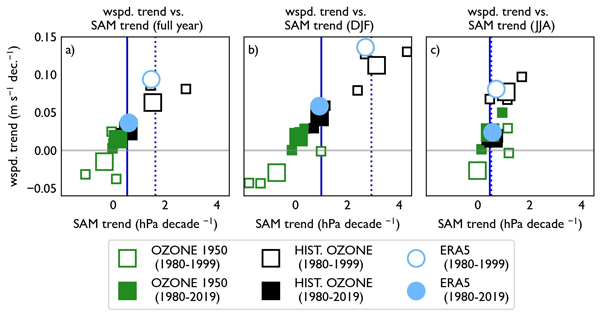
Tereza Jarníková, Colin Jones, Steven Rumbold, and Corinne Le Quéré
Earth Syst. Dynam., 17, 631–649, https://doi.org/10.5194/esd-17-631-2026, https://doi.org/10.5194/esd-17-631-2026, 2026
Short summary
Short summary
Southern Ocean winds drive global climate and have strengthened since 1980 due to Antarctic ozone depletion. We assessed which climate reconstructions best capture these changes using sea level pressure observations. We then used an Earth system model to attribute these changes between ozone and greenhouse gas emissions. Ozone depletion dominated past wind acceleration, but greenhouse gases will drive future changes after 2050.
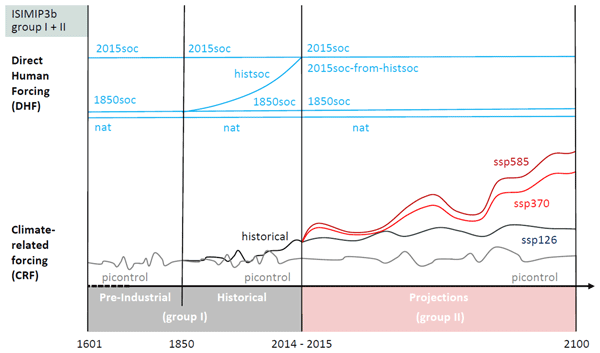
Katja Frieler, Stefan Lange, Jacob Schewe, Matthias Mengel, Simon Treu, Christian Otto, Jan Volkholz, Christopher P. O. Reyer, Stefanie Heinicke, Colin Jones, Julia L. Blanchard, Cheryl S. Harrison, Colleen M. Petrik, Tyler D. Eddy, Kelly Ortega-Cisneros, Camilla Novaglio, Ryan Heneghan, Derek P. Tittensor, Olivier Maury, Matthias Büchner, Thomas Vogt, Dánnell Quesada-Chacón, Kerry Emanuel, Chia-Ying Lee, Suzana J. Camargo, Linn Hamester, Jonas Jägermeyr, Sam Rabin, Jochen Klar, Iliusi D. Vega del Valle, Lisa Novak, Inga J. Sauer, Gitta Lasslop, Sarah Chadburn, Eleanor Burke, Angela Gallego-Sala, Noah Smith, Jinfeng Chang, Stijn Hantson, Chantelle Burton, Anne Gädeke, Fang Li, Simon N. Gosling, Hannes Müller Schmied, Fred Hattermann, Thomas Hickler, Rafael Marcé, Don Pierson, Wim Thiery, Daniel Mercado-Bettín, Robert Ladwig, Ana Isabel Ayala, Matthew Forrest, Michel Bechtold, Robert Reinecke, Inge de Graaf, Jed O. Kaplan, Alexander Koch, Matthieu Lengaigne, Rohini Kumar, and Maryna Strokal
Geosci. Model Dev., 19, 4095–4135, https://doi.org/10.5194/gmd-19-4095-2026, https://doi.org/10.5194/gmd-19-4095-2026, 2026
Short summary
Short summary
This paper describes the experiments and data sets necessary to run historic and future impact projections, and the underlying assumptions of future climate change as defined by the 3rd round of the ISIMIP Project (Inter-sectoral Impactmodel Intercomparison Project, isimip.org). ISIMIP provides a framework for cross-sectorally consistent climate impact simulations to contribute to a comprehensive and consistent picture of the world under different climate-change scenarios.
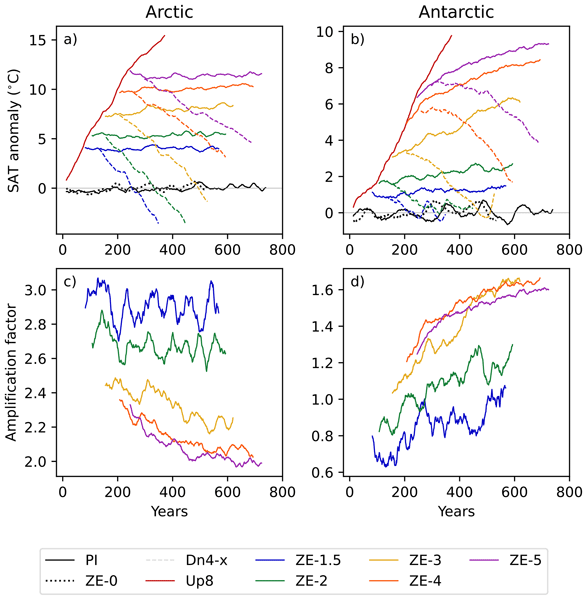
Robin S. Smith, Tarkan A. Bilge, Thomas J. Bracegirdle, Paul R. Holland, Till Kuhlbrodt, Charlotte Lang, Spencer Liddicoat, Tom Mitcham, Jane Mulcahy, Kaitlin A. Naughten, Andrew Orr, Julien Palmieri, Antony J. Payne, Steven Rumbold, Marc Stringer, Ranjini Swaminathan, Sarah Taylor, Jeremy Walton, and Colin Jones
Earth Syst. Dynam., 17, 475–493, https://doi.org/10.5194/esd-17-475-2026, https://doi.org/10.5194/esd-17-475-2026, 2026
Short summary
Short summary
There is a dangerous amount of uncertainty in our predictions of climate change in polar regions because some of feedbacks that might lead to changes that are too rapid for us to adapt to, or that cannot be reversed. We have run a set of simulations with a state-of-the-art Earth System Model that helps improve our understanding of how climate in these regions might change. Some of the aspects we investigate are reversible but many are not, especially those affecting ice sheets and sea level.
John W. Rostron, Alejandro Bodas-Salcedo, David M. H. Sexton, Colin G. Jones, Edward W. Blockley, Till Kuhlbrodt, Jane P. Mulcahy, Tamzin E. Palmer, Saloua Peatier, Mark A. Ringer, Steven T. Rumbold, Benjamin M. Sanderson, Yongming Tang, and Martin R. Willet
EGUsphere, https://doi.org/10.5194/egusphere-2026-1676, https://doi.org/10.5194/egusphere-2026-1676, 2026
Short summary
Short summary
The Met Office’s latest weather and climate model warms very strongly in response to increases in carbon dioxide. We created a modified version of the model with a more moderate warming response by adjusting key model parameters, using both automated methods and expert judgement. The new model matches historical temperatures more closely and is better suited for studies of long‑term climate, but has reduced overall accuracy when simulating the baseline climate.
Didier Swingedouw, Laura Jackson, Aixue Hu, Anastasia Romanou, Nicole C. Laureanti, Wilbert Weijer, Sina Loriani, Bette Otto-Bliesner, Ayako Abe-Ouchi, Lucas Almeida, Alessio Bellucci, Reyk Börner, Gokhan Danabasoglu, Donovan P. Dennis, Marion Devilliers, Sybren Drijfhout, Jonathan Donges, Friederike Fröb, Thomas L. Frölicher, Guillaume Gastineau, Heiko Goelzer, Chuncheng Guo, Urs Hofmann, Anna Höse, Colin Jones, Torben Koenigk, Ann Kristin Klose, Valerio Lembo, Jose Licon-Salaiz, Ken Mankoff, Virna Meccia, Irina Melnikova, Oliver Mehling, Laurie Menviel, Juliette Mignot, Jon I. Robson, Gavin A. Schmidt, Robin Smith, Yuchen Sun, Irene Trombini, Matteo Willeit, Richard Wood, Fanghua Wu, Lin Zhaohui, and Ricarda Winkelmann
EGUsphere, https://doi.org/10.5194/egusphere-2026-1698, https://doi.org/10.5194/egusphere-2026-1698, 2026
Short summary
Short summary
This study presents a plan for climate model experiments to better understand how changes in freshwater in the North Atlantic affect major ocean currents. We designed coordinated simulations to test their response to warming, added freshwater, and possible recovery after weakening. Comparing results across models and past climate evidence helps improve confidence in projections and assess risks of large ocean circulation changes.
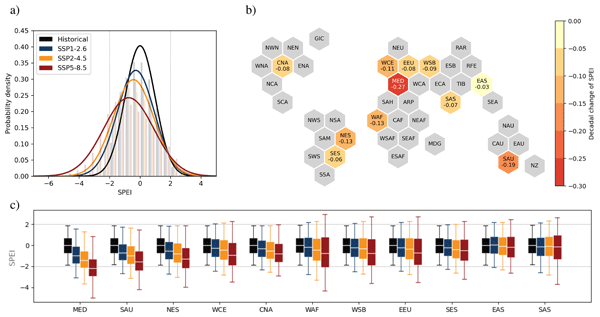
Lukas Lindenlaub, Katja Weigel, Birgit Hassler, Colin Jones, and Veronika Eyring
Earth Syst. Dynam., 17, 81–105, https://doi.org/10.5194/esd-17-81-2026, https://doi.org/10.5194/esd-17-81-2026, 2026
Short summary
Short summary
This study explores changes in drought characteristic based on projections by 18 different Earth system models. Their performance is evaluated by comparing historical simulations to observation based reanalysis. The analysis of a standardized drought index under different future scenarios revealed that the harvest area that is projected to experience extreme drought conditions towards the end of this century ranges from 10 % to 40 % depending on the emission scenario.
Ricarda Winkelmann, Donovan P. Dennis, Jonathan F. Donges, Sina Loriani, Ann Kristin Klose, Jesse F. Abrams, Jorge Alvarez-Solas, Torsten Albrecht, David Armstrong McKay, Sebastian Bathiany, Javier Blasco Navarro, Victor Brovkin, Eleanor Burke, Gokhan Danabasoglu, Reik V. Donner, Markus Drüke, Goran Georgievski, Heiko Goelzer, Anna B. Harper, Gabriele Hegerl, Marina Hirota, Aixue Hu, Laura C. Jackson, Colin Jones, Hyungjun Kim, Torben Koenigk, Peter Lawrence, Timothy M. Lenton, Hannah Liddy, José Licón-Saláiz, Maxence Menthon, Marisa Montoya, Jan Nitzbon, Sophie Nowicki, Bette Otto-Bliesner, Francesco Pausata, Stefan Rahmstorf, Karoline Ramin, Alexander Robinson, Johan Rockström, Anastasia Romanou, Boris Sakschewski, Christina Schädel, Steven Sherwood, Robin S. Smith, Norman J. Steinert, Didier Swingedouw, Matteo Willeit, Wilbert Weijer, Richard Wood, Klaus Wyser, and Shuting Yang
EGUsphere, https://doi.org/10.5194/egusphere-2025-1899, https://doi.org/10.5194/egusphere-2025-1899, 2025
Short summary
Short summary
The Tipping Points Modelling Intercomparison Project (TIPMIP) is an international collaborative effort to systematically assess tipping point risks in the Earth system using state-of-the-art coupled and stand-alone domain models. TIPMIP will provide a first global atlas of potential tipping dynamics, respective critical thresholds and key uncertainties, generating an important building block towards a comprehensive scientific basis for policy- and decision-making.
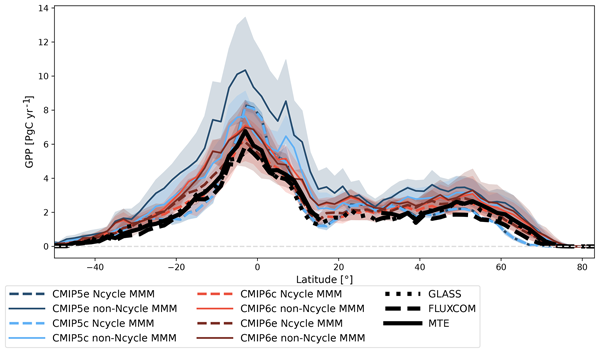
Bettina K. Gier, Manuel Schlund, Pierre Friedlingstein, Chris D. Jones, Colin Jones, Sönke Zaehle, and Veronika Eyring
Biogeosciences, 21, 5321–5360, https://doi.org/10.5194/bg-21-5321-2024, https://doi.org/10.5194/bg-21-5321-2024, 2024
Short summary
Short summary
This study investigates present-day carbon cycle variables in CMIP5 and CMIP6 simulations. Overall, CMIP6 models perform better but also show many remaining biases. A significant improvement in the simulation of photosynthesis in models with a nitrogen cycle is found, with only small differences between emission- and concentration-based simulations. Thus, we recommend using emission-driven simulations in CMIP7 by default and including the nitrogen cycle in all future carbon cycle models.
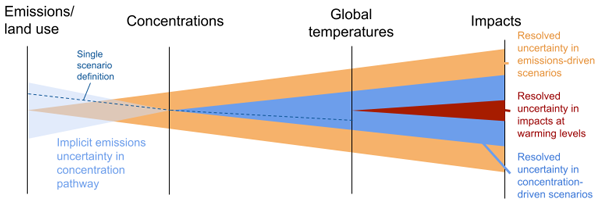
Benjamin M. Sanderson, Ben B. B. Booth, John Dunne, Veronika Eyring, Rosie A. Fisher, Pierre Friedlingstein, Matthew J. Gidden, Tomohiro Hajima, Chris D. Jones, Colin G. Jones, Andrew King, Charles D. Koven, David M. Lawrence, Jason Lowe, Nadine Mengis, Glen P. Peters, Joeri Rogelj, Chris Smith, Abigail C. Snyder, Isla R. Simpson, Abigail L. S. Swann, Claudia Tebaldi, Tatiana Ilyina, Carl-Friedrich Schleussner, Roland Séférian, Bjørn H. Samset, Detlef van Vuuren, and Sönke Zaehle
Geosci. Model Dev., 17, 8141–8172, https://doi.org/10.5194/gmd-17-8141-2024, https://doi.org/10.5194/gmd-17-8141-2024, 2024
Short summary
Short summary
We discuss how, in order to provide more relevant guidance for climate policy, coordinated climate experiments should adopt a greater focus on simulations where Earth system models are provided with carbon emissions from fossil fuels together with land use change instructions, rather than past approaches that have largely focused on experiments with prescribed atmospheric carbon dioxide concentrations. We discuss how these goals might be achieved in coordinated climate modeling experiments.

Colin G. Jones, Fanny Adloff, Ben B. B. Booth, Peter M. Cox, Veronika Eyring, Pierre Friedlingstein, Katja Frieler, Helene T. Hewitt, Hazel A. Jeffery, Sylvie Joussaume, Torben Koenigk, Bryan N. Lawrence, Eleanor O'Rourke, Malcolm J. Roberts, Benjamin M. Sanderson, Roland Séférian, Samuel Somot, Pier Luigi Vidale, Detlef van Vuuren, Mario Acosta, Mats Bentsen, Raffaele Bernardello, Richard Betts, Ed Blockley, Julien Boé, Tom Bracegirdle, Pascale Braconnot, Victor Brovkin, Carlo Buontempo, Francisco Doblas-Reyes, Markus Donat, Italo Epicoco, Pete Falloon, Sandro Fiore, Thomas Frölicher, Neven S. Fučkar, Matthew J. Gidden, Helge F. Goessling, Rune Grand Graversen, Silvio Gualdi, José M. Gutiérrez, Tatiana Ilyina, Daniela Jacob, Chris D. Jones, Martin Juckes, Elizabeth Kendon, Erik Kjellström, Reto Knutti, Jason Lowe, Matthew Mizielinski, Paola Nassisi, Michael Obersteiner, Pierre Regnier, Romain Roehrig, David Salas y Mélia, Carl-Friedrich Schleussner, Michael Schulz, Enrico Scoccimarro, Laurent Terray, Hannes Thiemann, Richard A. Wood, Shuting Yang, and Sönke Zaehle
Earth Syst. Dynam., 15, 1319–1351, https://doi.org/10.5194/esd-15-1319-2024, https://doi.org/10.5194/esd-15-1319-2024, 2024
Short summary
Short summary
We propose a number of priority areas for the international climate research community to address over the coming decade. Advances in these areas will both increase our understanding of past and future Earth system change, including the societal and environmental impacts of this change, and deliver significantly improved scientific support to international climate policy, such as future IPCC assessments and the UNFCCC Global Stocktake.
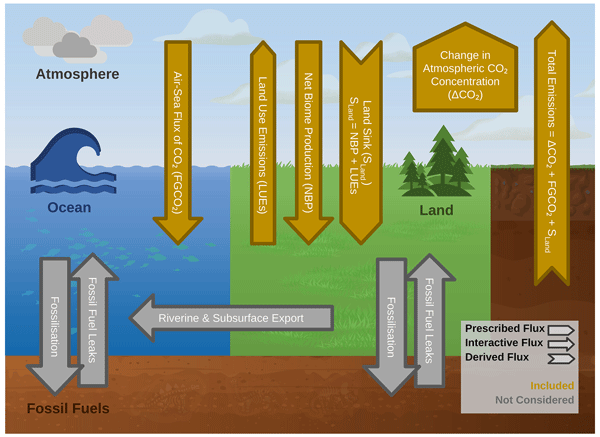
Lee de Mora, Ranjini Swaminathan, Richard P. Allan, Jerry C. Blackford, Douglas I. Kelley, Phil Harris, Chris D. Jones, Colin G. Jones, Spencer Liddicoat, Robert J. Parker, Tristan Quaife, Jeremy Walton, and Andrew Yool
Earth Syst. Dynam., 14, 1295–1315, https://doi.org/10.5194/esd-14-1295-2023, https://doi.org/10.5194/esd-14-1295-2023, 2023
Short summary
Short summary
We investigate the flux of carbon from the atmosphere into the land surface and ocean for multiple models and over a range of future scenarios. We did this by comparing simulations after the same change in the global-mean near-surface temperature. Using this method, we show that the choice of scenario can impact the carbon allocation to the land, ocean, and atmosphere. Scenarios with higher emissions reach the same warming levels sooner, but also with relatively more carbon in the atmosphere.
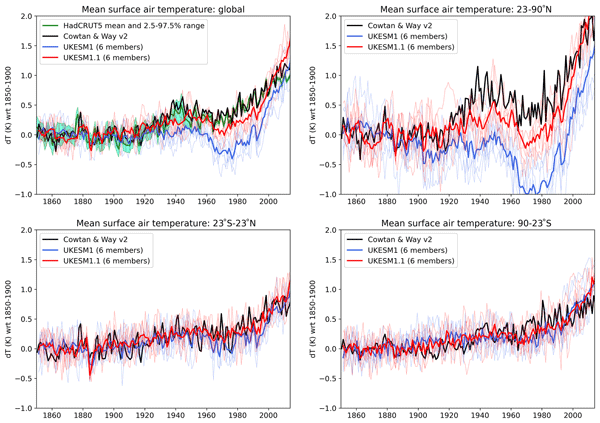
Jane P. Mulcahy, Colin G. Jones, Steven T. Rumbold, Till Kuhlbrodt, Andrea J. Dittus, Edward W. Blockley, Andrew Yool, Jeremy Walton, Catherine Hardacre, Timothy Andrews, Alejandro Bodas-Salcedo, Marc Stringer, Lee de Mora, Phil Harris, Richard Hill, Doug Kelley, Eddy Robertson, and Yongming Tang
Geosci. Model Dev., 16, 1569–1600, https://doi.org/10.5194/gmd-16-1569-2023, https://doi.org/10.5194/gmd-16-1569-2023, 2023
Short summary
Short summary
Recent global climate models simulate historical global mean surface temperatures which are too cold, possibly to due to excessive aerosol cooling. This raises questions about the models' ability to simulate important climate processes and reduces confidence in future climate predictions. We present a new version of the UK Earth System Model, which has an improved aerosols simulation and a historical temperature record. Interestingly, the long-term response to CO2 remains largely unchanged.
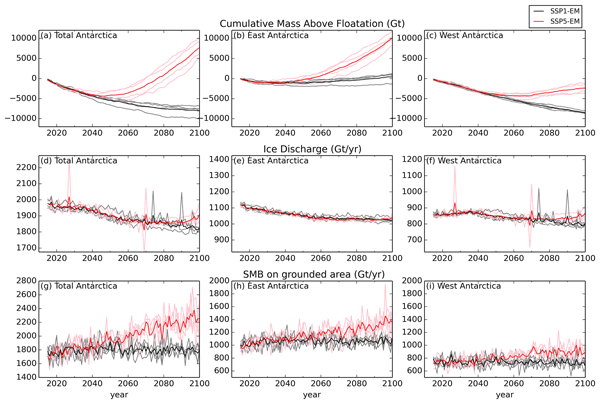
Antony Siahaan, Robin S. Smith, Paul R. Holland, Adrian Jenkins, Jonathan M. Gregory, Victoria Lee, Pierre Mathiot, Antony J. Payne, Jeff K. Ridley, and Colin G. Jones
The Cryosphere, 16, 4053–4086, https://doi.org/10.5194/tc-16-4053-2022, https://doi.org/10.5194/tc-16-4053-2022, 2022
Short summary
Short summary
The UK Earth System Model is the first to fully include interactions of the atmosphere and ocean with the Antarctic Ice Sheet. Under the low-greenhouse-gas SSP1–1.9 (Shared Socioeconomic Pathway) scenario, the ice sheet remains stable over the 21st century. Under the strong-greenhouse-gas SSP5–8.5 scenario, the model predicts strong increases in melting of large ice shelves and snow accumulation on the surface. The dominance of accumulation leads to a sea level fall at the end of the century.
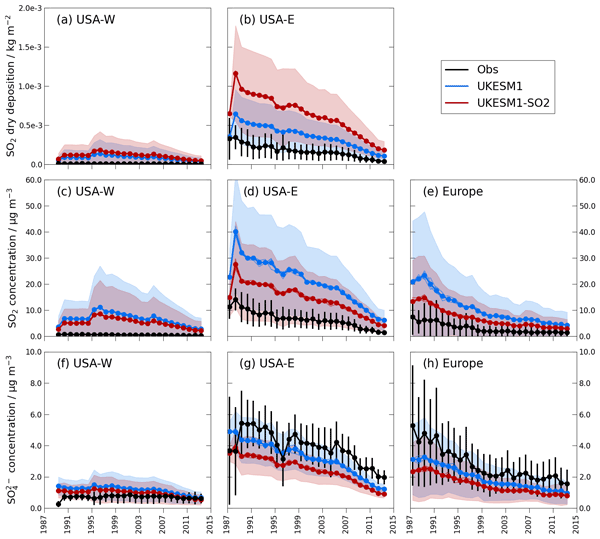
Catherine Hardacre, Jane P. Mulcahy, Richard J. Pope, Colin G. Jones, Steven T. Rumbold, Can Li, Colin Johnson, and Steven T. Turnock
Atmos. Chem. Phys., 21, 18465–18497, https://doi.org/10.5194/acp-21-18465-2021, https://doi.org/10.5194/acp-21-18465-2021, 2021
Short summary
Short summary
We investigate UKESM1's ability to represent the sulfur (S) cycle in the recent historical period. The S cycle is a key driver of historical radiative forcing. Earth system models such as UKESM1 should represent the S cycle well so that we can have confidence in their projections of future climate. We compare UKESM1 to observations of sulfur compounds, finding that the model generally performs well. We also identify areas for UKESM1’s development, focussing on how SO2 is removed from the air.
Vivek K. Arora, Chris D. Jones, Pierre Friedlingstein, Tatiana Ilyina, Guilherme L. Torres Mendonça, Benjamin Sanderson, Charles Koven, Heather Graven, Michio Kawamiya, Victor Brovkin, John Dunne, Forrest M. Hoffman, Julia Pongratz, James T. Randerson, Anastasia Romanou, Sönke Zaehle, and Kirsten Zickfeld
EGUsphere, https://doi.org/10.5194/egusphere-2026-5533, https://doi.org/10.5194/egusphere-2026-5533, 2026
This preprint is open for discussion and under review for Geoscientific Model Development (GMD).
Short summary
Short summary
Earth system models (ESM) are important tools for understanding how the Earth’s climate and carbon cycle interact, and how Earth system responds to anthropogenic CO2 emissions. The Coupled Climate-Carbon Cycle Model Intercomparison Project (C4MIP) compares Earth system models from around the world in context of climate and carbon cycle interactions. This manuscript describes the new set of experiments for C4MIP for the seventh phase of the coupled modelling intercomparison project (CMIP7).
Lena Nicola, Johanna Beckmann, Felicity S. McCormack, and Ricarda Winkelmann
EGUsphere, https://doi.org/10.5194/egusphere-2026-6030, https://doi.org/10.5194/egusphere-2026-6030, 2026
This preprint is open for discussion and under review for The Cryosphere (TC).
Short summary
Short summary
Record-breaking extreme events, including heatwaves leading to surface melt and extreme snowfall, have been observed in Antarctica in recent years. Such extreme events are generally expected to become more frequent and intense with anthropogenic climate change. Here, with a suite of numerical ice-sheet simulations, we explore the additional Antarctic contribution to future sea-level rise when including atmospheric temperature extremes of varying frequency and intensity in projections.
Charles Koven, Benjamin M. Sanderson, Abigail L. S. Swann, Victor Brovkin, John Dunne, Rosie A. Fisher, Tomohiro Hajima, Chris D. Jones, Spencer K. Liddicoat, Anastasia Romanou, Roland Séférian, Norman J. Steinert, Jerry Tjiputra, Tilo Ziehn, Tatiana Ilyina, Nancy Y. Kiang, David M. Lawrence, Peter Lawrence, Hongmei Li, Jorg Schwinger, and Lori T. Sentman
EGUsphere, https://doi.org/10.5194/egusphere-2026-5381, https://doi.org/10.5194/egusphere-2026-5381, 2026
This preprint is open for discussion and under review for Earth System Dynamics (ESD).
Short summary
Short summary
We use a set of climate models to ask how aspects of climate beyond global mean temperatures would differ if we first emit, and then remove, a given amount of CO2, compared to a case where the CO2 hadn't been emitted. We show that precipitation increases, and that land cools relative to the ocean. Models disagree on many of the finer-scale regional changes, but they do agree that many of the regional changes that occur under positive and then negative emissions also occur under zero emissions.
Norman Julius Steinert, Kirsten Zickfeld, Benjamin Mark Sanderson, Charles D. Koven, Nadine Mengis, Pia Rethmeier, and Jörg Schwinger
EGUsphere, https://doi.org/10.5194/egusphere-2026-5338, https://doi.org/10.5194/egusphere-2026-5338, 2026
This preprint is open for discussion and under review for Earth System Dynamics (ESD).
Short summary
Short summary
As 1.5°C pathways increasingly rely on temperature overshoot, this Perspective examines whether climate overshoot-induced effects can be reversed. We synthesize what drives climate reversibility in positive and negative emission pathways, proposing a typology of temperature responses beyond simple (ir)reversible categories. Current climate models suggest irreversible responses cannot be ruled out, underscoring the need for more nuanced assessment of overshoot-based mitigation risks.
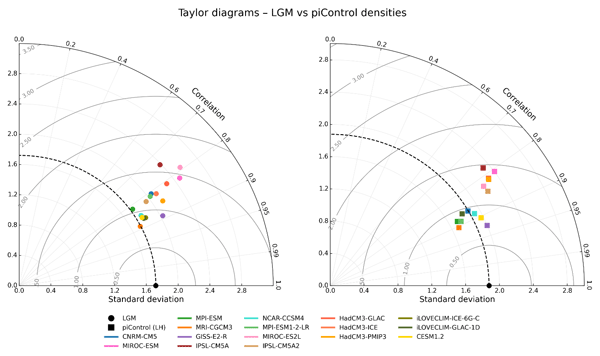
Héloïse Barathieu, Thibaut Caley, Masa Kageyama, Didier Swingedouw, and Pascale Braconnot
Clim. Past, 22, 1803–1832, https://doi.org/10.5194/cp-22-1803-2026, https://doi.org/10.5194/cp-22-1803-2026, 2026
Short summary
Short summary
This study evaluates climate model simulations of the Last Glacial Maximum using ocean surface density reconstructions from foraminiferal shells δ¹⁸O. Models capture global patterns but regional climate changes are less well simulated, especially in the North Indian Ocean. Tropical differences between reconstructions and model simulations are mainly driven by changes in ocean salinity linked to precipitation.
Jens Terhaar, Laurent Bopp, Pierre Friedlingstein, Thomas Frölicher, Helene Hollitzer, Tatiana Ilyina, Lester Kwiatkowski, Paul Lerner, Hongmei Li, Anastasia Romanou, Jörg Schwinger, Roland Séférian, and Aaron Wienkers
EGUsphere, https://doi.org/10.5194/egusphere-2026-5757, https://doi.org/10.5194/egusphere-2026-5757, 2026
This preprint is open for discussion and under review for Biogeosciences (BG).
Short summary
Short summary
The ocean absorbs about 30% of CO2 emissions, but how much it will keep absorbing as CO2 levels rise and the climate warms is highly uncertain. Combining climate models with observations, we show models underestimate both the ocean CO2 uptake with increasing atmospheric CO2 and how strongly this uptake weakens with warming, and that the two are linked. Our tighter estimate reduces uncertainty in how much emitted CO2 stays in the atmosphere, and in the warming caused by future emissions.
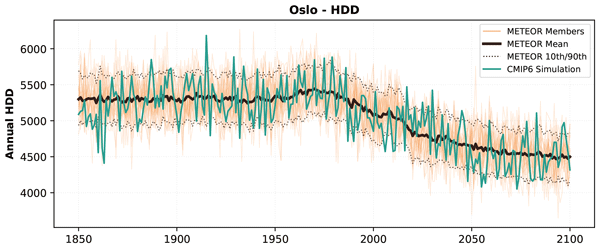
Benjamin M. Sanderson, Marit Sandstad, Maura Dewey, Norman Julius Steinert, and Johannes L. Fjeldså
Geosci. Model Dev., 19, 9263–9288, https://doi.org/10.5194/gmd-19-9263-2026, https://doi.org/10.5194/gmd-19-9263-2026, 2026
Short summary
Short summary
Planning for climate change requires understanding how climate and weather interact to drive possible impacts. We developed a tool that simulates realistic monthly climate patterns and translates them into useful measures like energy needs. It captures seasonal cycles and year-to-year variations to bridges the gap between global climate predictions and local planning, making climate risk assessment faster and more accessible.
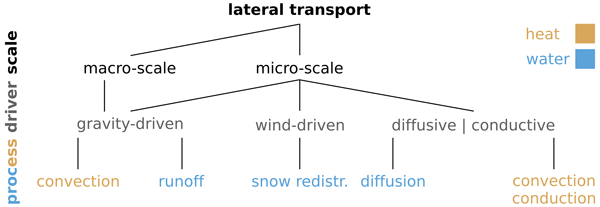
Philipp de Vrese, Tobias Stacke, Veronika Gayler, Helena Bergstedt, Clemens von Baeckmann, Melanie Thurner, Christian Beer, and Victor Brovkin
Geosci. Model Dev., 19, 9203–9234, https://doi.org/10.5194/gmd-19-9203-2026, https://doi.org/10.5194/gmd-19-9203-2026, 2026
Short summary
Short summary
The spatial variability in the land surface properties is often not captured by the resolution of land surface models. To overcome this limitation, most models subdivide the grid cells into fractions with homogeneous characteristics, for which the land processes are calculated separately. In reality, the fractions interact via the lateral exchange of water and heat, and the present manuscript details an approach to include these fluxes in the land component of the ICON modeling framework.
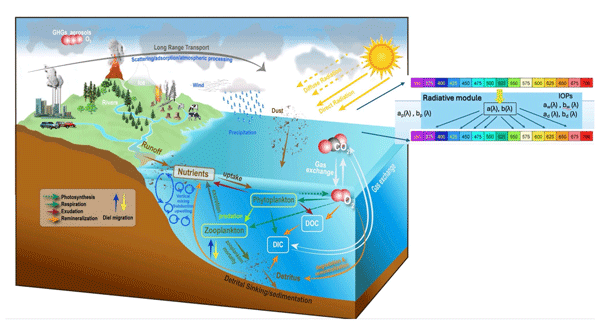
Anastasia Romanou, Paul Lerner, Joy Romanski, Nancy Y. Kiang, Igor Aleinov, Maxwell Kelley, Ron L. Miller, Gary Russell, Reto Ruedy, Gavin A. Schmidt, Maria Z. Hakuba, and Ou Wang
Geosci. Model Dev., 19, 9131–9176, https://doi.org/10.5194/gmd-19-9131-2026, https://doi.org/10.5194/gmd-19-9131-2026, 2026
Short summary
Short summary
This paper describes simulations of the present climate using the NASA Goddard Institute for Space Studies Earth System model. Major highlight is the capability to include complex interactions of the different components of the Earth System, including biology, and compare well with a wide variety of observations. We demonstrate that this model can be used to address present, past and future changes in the Earth system and their impacts and interactions with ecosystems.
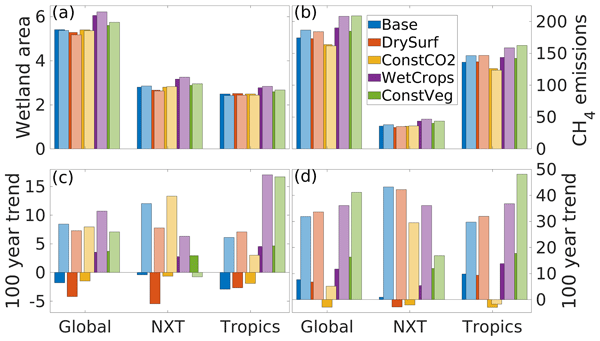
Stiig Wilkenskjeld, Thomas Kleinen, Tobias Stacke, and Victor Brovkin
Biogeosciences, 23, 6583–6598, https://doi.org/10.5194/bg-23-6583-2026, https://doi.org/10.5194/bg-23-6583-2026, 2026
Short summary
Short summary
Methane is the second most important greenhouse gas with high potential for short term reductions of human induced global warming. We model methane emissions from the most important and most uncertain natural source: wetlands. We investigate how a number of assumptions, including human impact on natural wetlands, influences the wetlands and their methane emissions. Of the tested influences we find the most important to be how humans are altering the soil surface.
Andreas Karpasitis, Manabu Abe, Isaline Bossert, Friederike Fröb, Thomas Frölicher, Panos Hadjinicolaou, Colin Jones, Roland Séférian, Tomas Torsvik, Jeremy Walton, Klaus Wyser, Tokuta Yokohata, and George Zittis
EGUsphere, https://doi.org/10.5194/egusphere-2026-5285, https://doi.org/10.5194/egusphere-2026-5285, 2026
This preprint is open for discussion and under review for Weather and Climate Dynamics (WCD).
Short summary
Short summary
The tropical atmosphere plays a key role in driving rainfall and influencing weather around the world. In this study, we used idealized simulations to examine how tropical rainfall and atmospheric circulation change as the planet warms. We found that the main tropical rain belt shifts closer to the Equator. Although vertical air motion becomes weaker, rainfall becomes more intense. These changes could affect regional rainfall patterns and climate regimes in other parts of the world.
Jerry F. Tjiputra, Dirk Olivié, Jörg Schwinger, Nadine Goris, Norman J. Steinert, Rosie Fisher, and Huiji Lee
EGUsphere, https://doi.org/10.5194/egusphere-2026-5188, https://doi.org/10.5194/egusphere-2026-5188, 2026
This preprint is open for discussion and under review for Earth System Dynamics (ESD).
Short summary
Short summary
Without radical changes in anthropogenic CO2 emissions, global warming will likely exceed 2 degrees. This study uses an Earth system model to investigate the physical and biogeochemical responses to stratospheric aerosol injection (SAI) to limit global warming. Depending on the deployment location, SAI influences the evolution of the Atlantic Meridional Overturning Circulation, which induces long-term spatially heterogeneous projected temperature and other climatic changes.
Lucas Ferreira Correa, Sebastian Bathiany, Yiannis Moustakis, and Julia Pongratz
EGUsphere, https://doi.org/10.5194/egusphere-2026-4899, https://doi.org/10.5194/egusphere-2026-4899, 2026
This preprint is open for discussion and under review for Earth System Dynamics (ESD).
Short summary
Short summary
Moisture recycling in the Amazon provides water essential for forest survival, but external pressures threaten this self-sustaining system. Using Earth System Model simulations, we analyzed hydroclimatic stress from deforestation and global warming. We found that 25 % deforestation can significantly stress over 70 % of the forest, increasing to 89 % when combined with 2 °C warming. Our findings show that forest loss and climate change can reinforce each other, raising the risk of forest dieback.
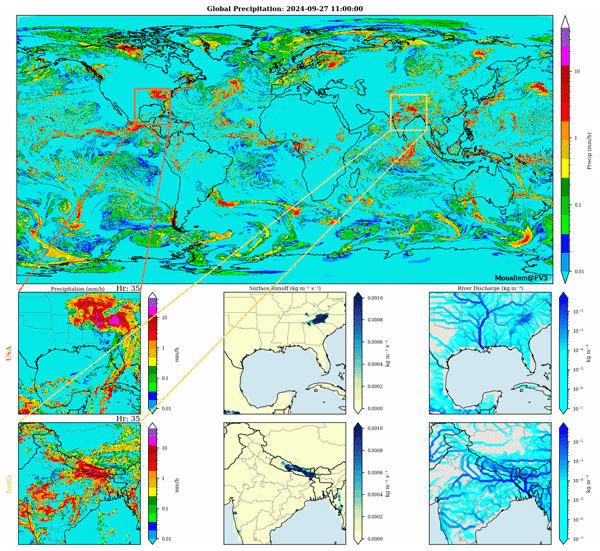
Joseph Mouallem, Sergey Malyshev, Zhihong Tan, Elena Shevliakova, Kun Gao, Lucas Harris, Rusty Benson, William Cooke, Niki Zadeh, and Lauren Chilutti
Geosci. Model Dev., 19, 8427–8446, https://doi.org/10.5194/gmd-19-8427-2026, https://doi.org/10.5194/gmd-19-8427-2026, 2026
Short summary
Short summary
We integrate GFDL's (Geophysical Fluid Dynamics Laboratory) land model in the high resolution global atmospheric model SHiELD (System for High-resolution modeling for Earth-to-Local Domains), unlocking new capabilities in simulating new suite of land-atmosphere conditions and extreme hydrological processes such as flooding. A single global simulation captures Hurricane Helene's 2024 landfall, including soil saturation, runoff generation, and river flooding in Western North Carolina, while simultaneously capturing an independent extreme rainfall and flooding event in Nepal.
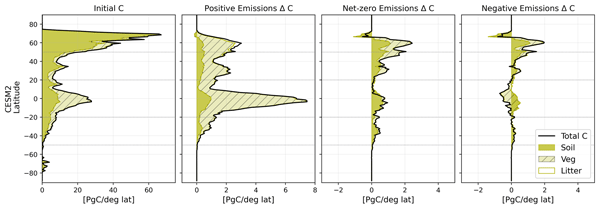
Abigail L. S. Swann, Charles D. Koven, Cristian Proistosecu, Rosie A. Fisher, Benjamin M. Sanderson, Victor Brovkin, Tomohiro Hajima, Chris D. Jones, Nancy Y. Kiang, David M. Lawrence, Spencer Liddicoat, Hannah Liddy, Anastasia Romanou, Roland Séférian, Lori T. Sentman, Norman J. Steinert, Jerry Tjiputra, and Tilo Ziehn
Earth Syst. Dynam., 17, 1237–1275, https://doi.org/10.5194/esd-17-1237-2026, https://doi.org/10.5194/esd-17-1237-2026, 2026
Short summary
Short summary
We analyzed simulations from Earth system models (ESM) with a constant rate of emissions, zero emissions, and negative emissions of CO2 to quantify the response of land carbon sinks. We found that under positive emissions vegetation in the tropics gained carbon. Under zero emissions and negative emissions most ESMs lost carbon from vegetation in the tropics but gained carbon in mid- and high-latitudes, mostly in soils. Our findings imply that tropical carbon is vulnerable under zero emissions.
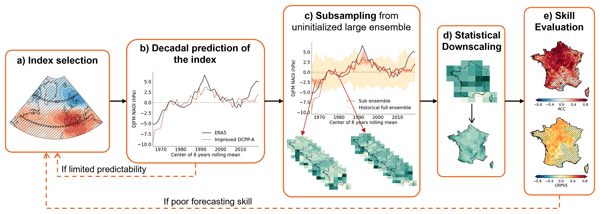
Joanne Couallier, Didier Swingedouw, Charlotte Sakarovitch, Théodore Raymond, and Ramdane Alkama
Earth Syst. Dynam., 17, 1177–1199, https://doi.org/10.5194/esd-17-1177-2026, https://doi.org/10.5194/esd-17-1177-2026, 2026
Short summary
Short summary
Reliable decadal predictions of regional precipitation are essential, yet they remain a major challenge. We present a framework that integrates decadal predictions of relevant large-scale modes to enhance prediction skill of precipitation at a fine scale resolution over France. Using North Atlantic Oscillation improves winter skill, and combining summer North Atlantic Oscillation with Atlantic Multidecadal Variability improves summer forecasts, offering useful information for climate services.

Mehdi Pasha Karami, Torben Koenigk, Shiyu Wang, René Navarro Labastida, Tim Kruschke, Aude Carréric, Pablo Ortega, Klaus Wyser, Ramon Fuentes Franco, Agatha M. de Boer, Marie Sicard, and Aitor Aldama Campino
Earth Syst. Dynam., 17, 1151–1176, https://doi.org/10.5194/esd-17-1151-2026, https://doi.org/10.5194/esd-17-1151-2026, 2026
Short summary
Short summary
This study uses a high-resolution global climate model to simulate future climate, with a particular focus on the Arctic and North Atlantic. The model projects a nearly ice-free Arctic by 2040. The paper also introduces a framework to diagnose deep-water formation (DWF) in the Labrador, Irminger, and Greenland Seas and to quantify their regional contributions to the Atlantic Meridional Overturning Circulation (AMOC), revealing how different ocean regions contribute to the weakening of AMOC in a warming climate.
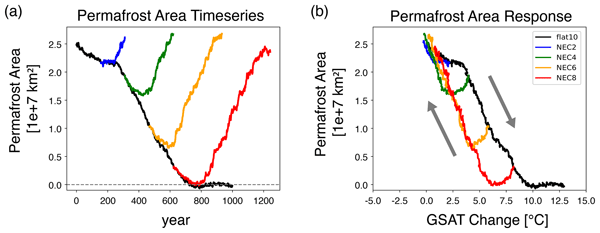
Natsuki Watanabe, Masahiro Watanabe, Tomohiro Hajima, Tokuta Yokohata, and Irina Melnikova
Earth Syst. Dynam., 17, 1135–1150, https://doi.org/10.5194/esd-17-1135-2026, https://doi.org/10.5194/esd-17-1135-2026, 2026
Short summary
Short summary
We investigated a response of permafrost using an Earth system model driven by an idealized overshooting carbon emission scenario, and found that the permafrost response to warming and cooling is reversible in the area but irreversible in its property. The permafrost response shows hysteresis, arising from a slow soil response tied to heat conductivity and specific heat of water phase change. A carbon release from thawed permafrost accounts for 0.6–41% of the cumulative carbon emission.
Eveline C. van der Linden, Klaus Wyser, Erwin Lambert, André Jüling, Dewi Le Bars, Sybren Drijfthout, and Irene Trombini
EGUsphere, https://doi.org/10.5194/egusphere-2026-4584, https://doi.org/10.5194/egusphere-2026-4584, 2026
Short summary
Short summary
As Antarctica loses more ice, increasing amounts of fresh water enter the ocean and can change Earth's climate. We used a climate model in which Antarctic ice loss responds to changing ocean conditions. We found that this feedback first increases warming near the ice shelves but later slows both Antarctic and global warming by changing the ocean, sea ice, and atmosphere. These results show that including these interactions is important for improving long-term sea-level and climate projections.
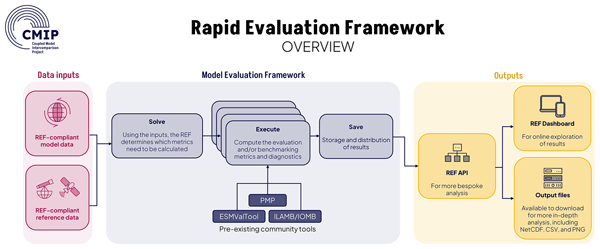
Forrest M. Hoffman, Birgit Hassler, Ranjini Swaminathan, Jared Lewis, Bouwe Andela, Nathan Collier, Dóra Hegedűs, Jiwoo Lee, Charlotte Pascoe, Mika Pflüger, Martina Stockhause, Paul Ullrich, Min Xu, Lisa Bock, Felicity Chun, Bettina K. Gier, Douglas I. Kelley, Axel Lauer, Julien Lenhardt, Manuel Schlund, Mohanan G. Sreeush, Katja Weigel, Ed Blockley, Rebecca Beadling, Romain Beucher, Demiso D. Dugassa, Valerio Lembo, Jianhua Lu, Swen Brands, Jerry Tjiputra, Elizaveta Malinina, Brian Medeiros, Enrico Scoccimarro, Jeremy Walton, Phil Kershaw, André Lanfer Marquez, Malcolm J. Roberts, Eleanor O'Rourke, Beth Dingley, Briony Turner, Helene Hewitt, and John P. Dunne
Geosci. Model Dev., 19, 7415–7455, https://doi.org/10.5194/gmd-19-7415-2026, https://doi.org/10.5194/gmd-19-7415-2026, 2026
Short summary
Short summary
The Rapid Evaluation Framework (REF) is a community-driven platform for benchmarking and performance assessment of Earth system models. Built upon four disparate community evaluation tools, the REF is designed to provide model-data comparisons for the Assessment Fast Track for the Seventh Phase of the Coupled Model Intercomparison Project. The REF will be run at the Earth System Grid Federation to enable model devleopers and scientists to quickly identify model biases and performance issues.
Reinhard K. H. Schiemann, Grenville Lister, Rosalyn Hatcher, Dan Hodson, Bryan Lawrence, Len Shaffrey, Jeff Cole, Andrea Dittus, Jenny Mecking, Jon Robson, Simon Wilson, Yevgeny Aksenov, Adam T. Blaker, Ben Harvey, Oscar Martínez-Alvarado, Annette Osprey, Stephanie Rynders, Sharar Ahmadi, Jake Aylmer, Laura Baker, David Case, Emanuele Silvio Gentile, Steve George, Kevin Hodges, Eliza Karlowska, Charlotte Lang, Hua Lu, Niamh O'Callaghan, Weronika Osmolska, Scott Osprey, Tony Phillips, David Schröder, Robin Smith, Andrew G. Turner, Steve Woolnough, Martin Andrews, Andrew Coward, Steven Hardiman, James Harle, John W. Rostron, David M. H. Sexton, Bablu Sinha, Jonny Williams, and Chris Wilson
EGUsphere, https://doi.org/10.5194/egusphere-2026-2281, https://doi.org/10.5194/egusphere-2026-2281, 2026
This preprint is open for discussion and under review for Geoscientific Model Development (GMD).
Short summary
Short summary
This paper presents a new large ensemble of climate model simulations: The CANARI HadGEM3 Large Ensemble (CANARI LE). The CANARI LE has a comparatively high resolution, provides sub-daily output on atmospheric pressure levels, and boundary conditions for driving regional model simulations. The CANARI LE is thus a community resource that lends itself for the study of physical coupled climate processes, weather systems, and impacts in a changing climate.
Hannah Prawitz, Luana Schwarz, Wolfram Barfuss, Sibel Eker, Johannes Halbe, and Jonathan Friedemann Donges
EGUsphere, https://doi.org/10.5194/egusphere-2026-3862, https://doi.org/10.5194/egusphere-2026-3862, 2026
This preprint is open for discussion and under review for Earth System Dynamics (ESD).
Short summary
Short summary
Human societies and the natural environment constantly shape one another, yet researchers usually study and model them separately. We reviewed 314 studies on global, two-way coupled social-environmental models and propose a typology to structure the field. While we find clear differences between the groups, models overall could be improved by better representing social-cultural dynamics, agent heterogeneity, diverse feedback loops, endogenous tipping dynamics, and cross-scale interactions.
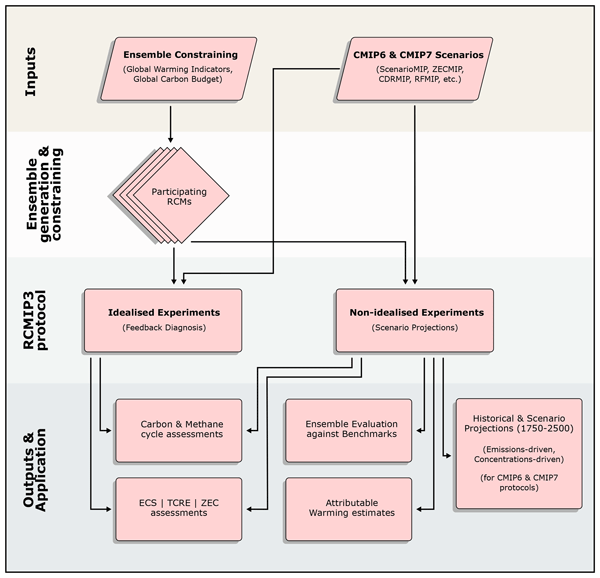
Alejandro Romero-Prieto, Marit Sandstad, Benjamin M. Sanderson, Zebedee R. J. Nicholls, Norman J. Steinert, Thomas Gasser, Camilla Mathison, Jarmo Kikstra, Thomas J. Aubry, Katsumasa Tanaka, Konstantin Weber, and Chris Smith
Geosci. Model Dev., 19, 7111–7133, https://doi.org/10.5194/gmd-19-7111-2026, https://doi.org/10.5194/gmd-19-7111-2026, 2026
Short summary
Short summary
Reduced-complexity models are an important tool in climate science, helping us understand and estimate future climate change. We present the experimental protocol for the next phase of the reduced-complexity model intercomparison project, which aims to compare results from many such models to better understand their behaviour. This knowledge will guide how these models are developed and used in the future, including in the upcoming Intergovernmental Panel on Climate Change (IPCC) assessment report (AR7).
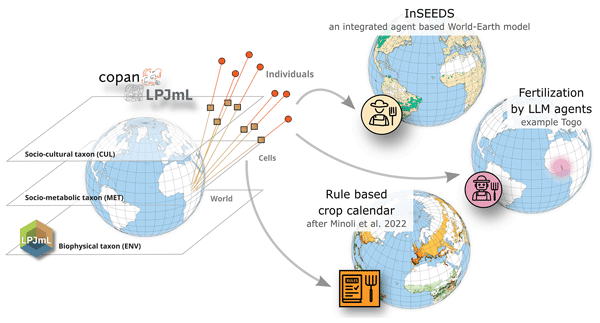
Jannes Breier, Luana Schwarz, Hannah Prawitz, Werner von Bloh, Christoph Müller, Stephen Björn Wirth, Max Bechthold, Dieter Gerten, and Jonathan F. Donges
Geosci. Model Dev., 19, 6829–6855, https://doi.org/10.5194/gmd-19-6829-2026, https://doi.org/10.5194/gmd-19-6829-2026, 2026
Short summary
Short summary
We present a new modelling framework that combines simulations of environmental change and human decision-making in an integrated approach. It allows researchers to explore how farming decisions affect land, water, and climate, and how these environmental changes influence future decisions. By connecting people and nature, it helps investigate food security, climate adaptation, and sustainability challenges, and supports the development of more realistic scenarios of future environmental change.
Juan Pablo Sierra, Pierre Brigode, Pape Saara Ngom, Pascale Braconnot, Christian Le Carlier De Veslud, Camille Bouchez, Sly Wongchuig, Mohamed Osman Awaleh, Mohamed Jalludin, Natacha Volto, Eric Chaumillon, and Marie Revel
EGUsphere, https://doi.org/10.5194/egusphere-2026-3724, https://doi.org/10.5194/egusphere-2026-3724, 2026
Short summary
Short summary
We studied multidecadal changes in water availability in the Awash Basin in Ethiopia using lakes as a natural indicator of regional climate. By combining a hydrological model with satellite/ground observations, we reconstructed lake history from 1985 to 2024. We find strong interannual variability linked to climate modes in the Pacific and Indian Oceans, and a strong increasing trend in lake size driven by changes in rainfall and evaporation linked to shifts in regional atmospheric circulation.
Prince Xavier, Martin Willett, Tim Graham, Paul Earnshaw, Dan Copsey, Nikesh Narayan, Charline Marzin, Alistair Sellar, Duncan Ackerley, Adam Blaker, Ed Blockley, Alejandro Bodas-Salcedo, Andrew Bushell, Nakbin Choi, Xin Rong Chua, Catherine Guiavarc'h, Muhammad Hassim, Julian Heming, Debra Hudson, Sarah Ineson, Anthony Jones, Colin Jones, Richard Keane, Kiwook Kim, Jiyeong Kim, Till Kuhlbrodt, Myong-In Lee, Richard Levine, Chen Li, Gill Martin, Alex Megann, Anne Mccabe, Aurel Moise, Leighton Regayre, Jeff Ridley, Luke Roberts, Sandeep Sahany, Reinhard K. H. Schiemann, David Storkey, Warren Tennant, Lorenzo Tomassini, Yoko Tsushima, Graham P. Weedon, Alex West, Matthew C. Wheeler, Keith Williams, Xiaobing Zhou, and Hongyan Zhu
EGUsphere, https://doi.org/10.5194/egusphere-2026-4281, https://doi.org/10.5194/egusphere-2026-4281, 2026
Short summary
Short summary
GC5 is the Met Office's newest climate and weather model, combining an updated atmosphere/land component with an improved ocean and sea-ice component. Compared to its predecessor GC4, it better simulates global temperatures, winds, monsoons over India and SE Asia, and African weather, and forecasts tropical cyclones more accurately. Southern Ocean errors shrank too. Some tropical patterns and regional biases worsened slightly. A lower-resolution version will underpin the UK's Earth System Model.
Amen Al-Yaari, Chris Smith, Yi Yao, Kjetil S. Aas, L. Ruby Leung, Min-Hui Lo, Sonali McDermid, Larissa Nazarenko, Yadu Pokhrel, Yusuke Satoh, Tokuta Yokohata, and Wim Thiery
EGUsphere, https://doi.org/10.5194/egusphere-2026-4199, https://doi.org/10.5194/egusphere-2026-4199, 2026
Short summary
Short summary
In this study, we use the Irrigation Model Intercomparison Project (IRRMIP) to provide the first multi-model quantification of irrigation-induced effective radiative forcing (ERF) across seven Earth system models over 1902–2014. We find that the global multi-model mean ERF is positive but small (~0.023 W m⁻²). This small global signal masks regional heterogeneity: South Asia and West Central Asia show higher positive ERF (~0.25 W m⁻²), while East Asia shows a negative signal (−0.03 W m⁻²).
Liam J. Cassidy, Andrew D. King, Josephine R. Brown, and Tilo Ziehn
EGUsphere, https://doi.org/10.5194/egusphere-2026-3644, https://doi.org/10.5194/egusphere-2026-3644, 2026
Short summary
Short summary
Human emissions of greenhouse gases have warmed the planet rapidly, and without reductions in emissions, it is likely that Earth will exceed 2°C global warming by 2100. Periods of net-negative emissions may be required to satisfy Paris Agreement goals. We explore climate change under net-zero and net-negative emissions using plausible future scenarios.
Katrina Macneill, Lucy Martin, Richard A. Wood, and Rowan Sutton
EGUsphere, https://doi.org/10.5194/egusphere-2026-3767, https://doi.org/10.5194/egusphere-2026-3767, 2026
This preprint is open for discussion and under review for Geoscience Communication (GC).
Short summary
Short summary
Climate science uses terms like “tipping points” that shape how people understand climate risks, but these words are not always interpreted as intended. Through focus groups, this study shows that people rely on everyday meanings and personal experience, which can lead to misunderstandings and varied emotional responses. It highlights the how clearer language can be used and introduces a practical glossary to support better communication.
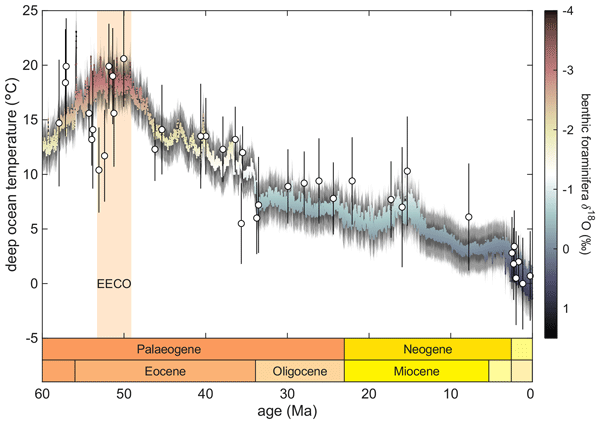
Daniel J. Lunt, Nicky M. Wright, Bram Vaes, Ulrich Salzmann, James W. B. Rae, Thomas Hickler, David K. Hutchinson, Julia Brugger, Jiang Zhu, Sebastian Steinig, A. Nele Meckler, Gordon N. Inglis, David Evans, Agatha M. de Boer, Bette L. Otto-Bliesner, Natalie Burls, Yurui Zhang, Appy Sluijs, Tammo Reichgelt, Igor Niezgodzki, Katrin Meissner, Jean-Baptiste Ladant, Fanni D. Kelemen, Matthew Huber, David R. Greenwood, Mattias Green, Flavia Boscolo-Galazzo, Manuel Tobias Blau, and Michiel Baatsen
Geosci. Model Dev., 19, 6143–6166, https://doi.org/10.5194/gmd-19-6143-2026, https://doi.org/10.5194/gmd-19-6143-2026, 2026
Short summary
Short summary
The early Eocene, about 50 million years ago, was a super-warm period of Earth's history, with high concentrations of carbon dioxide in the atmosphere. Here, we provide a framework and experimental design for climate modellers to carry out a coordinated project, simulating this period. This is the second phase of this project, and here we provide updated maps of the Earth's mountains and ocean floor, and vegetation, to enable more accurate modelling.
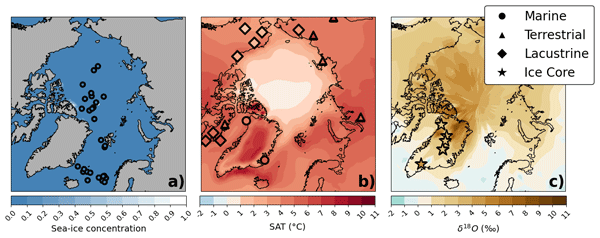
Louise C. Sime, Rachel Diamond, Christian Stepanek, Chris Brierley, David Schroeder, Masa Kageyama, Matthew Pollock, Irene Malmierca-Vallet, Ed Blockley, Alex West, Danny Feltham, Jeff Ridley, Pascale Braconnot, Charles J. R. Williams, Xiaoxu Shi, Bette L. Otto-Bliesner, Sophia I. Macarewich, Silvana Ramos Buarque, Qiong Zhang, Allegra LeGrande, Weipeng Zheng, Dabang Jiang, Polina Morozova, Chuncheng Guo, Zhongshi Zhang, Nicholas Yeung, Laurie Menviel, Sandeep Narayanasetti, Masakazu Yoshimori, Olivia Reeves, and Anni Zhao
Geosci. Model Dev., 19, 5881–5905, https://doi.org/10.5194/gmd-19-5881-2026, https://doi.org/10.5194/gmd-19-5881-2026, 2026
Short summary
Short summary
The Arctic may have lost its summer sea ice 127,000 years ago during a naturally warm period in Earth’s past. Climate models can be tested by recreating those conditions, with similar sunlight and greenhouse gas levels. Analysing the large sea ice changes in these simulations helps us understand how the Arctic might respond in the near future and improves how we test and trust our climate models.
Thomas L. Frölicher, Patrick Maier, Friedrich A. Burger, Yona Silvy, Didier Swingedouw, Urs Hofmann Elizondo, and Manon Berger
EGUsphere, https://doi.org/10.5194/egusphere-2026-3065, https://doi.org/10.5194/egusphere-2026-3065, 2026
Short summary
Short summary
We simulate climate and carbon-cycle responses to a strong AMOC weakening under a 2 °C stabilization pathway. A collapse to 20 % of preindustrial strength cools global climate by 0.8 °C and winter climate in Northern Europe by up to 5 °C, enhances ocean heat uptake and sea-level rise, and alters land and ocean carbon storage. The cooling temporarily increases the remaining carbon budget for limiting warming to 2 °C.
Jeanne Dombret, Hugo Bellenger, Xavier Perrot, Laëtitia Parc, Lester Kwiatkowski, Frédéric Chevallier, Laurent Bopp, Marion Gehlen, Roland Séférian, Sarah Berthet, and James C. Orr
Biogeosciences, 23, 4133–4143, https://doi.org/10.5194/bg-23-4133-2026, https://doi.org/10.5194/bg-23-4133-2026, 2026
Short summary
Short summary
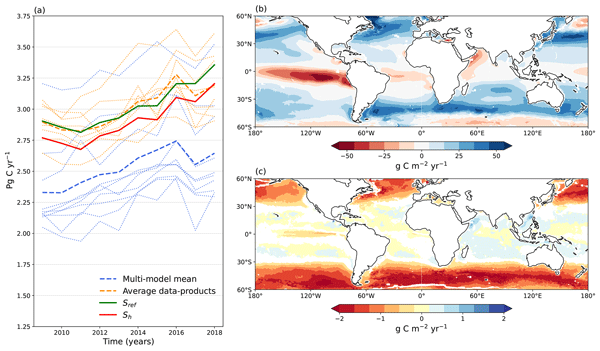
Estimates of ocean CO2 uptake based on atmospheric and oceanic observations typically rely on monthly averages, except for wind speed. Thus they neglect effects of shorter-term events such as storms, which are included in models. Here we account for the effect of this shorter-term variability on ocean carbon uptake and find that it is reduced, mainly because storms lower atmospheric pressure. This refinement closes the gap between data-based and model-based estimates by 25 %.
Patric J. L. Boardman, Joseph Clarke, Peter M. Cox, Chris Huntingford, Chris D. Jones, and Mark S. Williamson
Earth Syst. Dynam., 17, 829–841, https://doi.org/10.5194/esd-17-829-2026, https://doi.org/10.5194/esd-17-829-2026, 2026
Short summary
Short summary
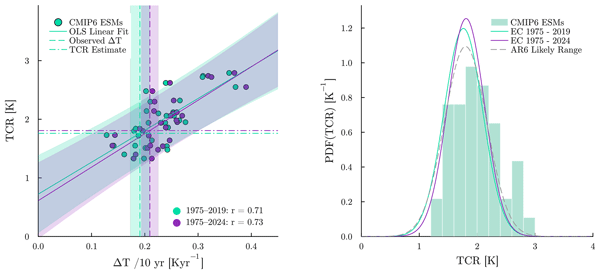
Climate sensitivity quantifies how much Earth warms for a given radiative forcing, and is often described by the Transient Climate Response (TCR) value. Although the Intergovernmental Panel on Climate Change (IPCC) estimates the most likely TCR to be 1.8 K, some models predict values >2.4 K. Record warmth in 2023–2024 raises questions as to whether the TCR may be larger than previously suggested. Using up-to-date data, we estimate the TCR to be ~1.8 K. We also show that future warming falls within the low–mid model range, making the 2°C Paris target still feasible.
Thomas Kleinen, Helena Bergstedt, Philipp de Vrese, Tobias Stacke, and Victor Brovkin
EGUsphere, https://doi.org/10.5194/egusphere-2026-3098, https://doi.org/10.5194/egusphere-2026-3098, 2026
Short summary
Short summary
The Arctic holds a large amount of carbon in frozen permafrost soils. Climate change will thaw the permafrost, leading to carbon decomposition and CO2 emission. Using a land surface model, we tested the effect of plant distribution changes in low, medium and high warming futures. If the plant distribution is allowed to adapt to a changed climate, biomass increases strongly, limiting carbon losses to ~70 PgC under high warming, and even a small net gain of carbon in low warming scenarios.
Kobe De Maeyer, Jakob Harteg, Jonathan F. Donges, Ricarda Winkelmann, and Sina Loriani
EGUsphere, https://doi.org/10.5194/egusphere-2026-3389, https://doi.org/10.5194/egusphere-2026-3389, 2026
Short summary
Short summary
Understanding Earth system dynamics requires comparing outputs from many models and variables. Yet identifying where and when datasets agree on significant changes remains a challenge. We developed methods that combine detected signals across models and variables into shared patterns in space and time, providing robust signals from large model ensembles. Applied to Amazon rainforest simulations, we show that conclusions about Earth system change depend critically on how evidence is synthesised.
Suki C. K. Wong, Galen A. McKinley, Richard Seager, Tess Wei-Ping Jacobson, Amanda Fay, Özgür Gürses, Nicolas Gruber, Tatiana Ilyina, Tereza Jarnikova, Laure Resplandy, Jörg Schwinger, and Roland Séférian
EGUsphere, https://doi.org/10.5194/egusphere-2026-3104, https://doi.org/10.5194/egusphere-2026-3104, 2026
Short summary
Short summary
The ocean absorbs nearly a third of human-made carbon dioxide, slowing climate change. This uptake varies from decade to decade for reasons we do not fully understand. Using a 66-year ocean carbon dataset, we found that the tropical Pacific and Southern Ocean drive this variability, in step with broader climate patterns across the Pacific. But these patterns cannot fully explain the recent weakening of the Southern Ocean sink, suggesting biological processes may also play an important role.
Gokhan Danabasoglu, Frederic S. Castruccio, Burcu Boza, Alice M. Barthel, Arne Biastoch, Adam Blaker, Alexandra Bozec, Diego Bruciaferri, Frank O. Bryan, Eric P. Chassignet, Yao Fu, Ian Grooms, Catherine Guiavarc'h, Hakase Hayashida, Andrew McC. Hogg, Ryan M. Holmes, Doroteaciro Iovino, Andrew E. Kiss, M. Susan Lozier, Gustavo Marques, Alex Megann, Franziska U. Schwarzkopf, Dave Storkey, Luke van Roekel, Jon Wolfe, Xiaobiao Xu, and Rong Zhang
Geosci. Model Dev., 19, 5071–5117, https://doi.org/10.5194/gmd-19-5071-2026, https://doi.org/10.5194/gmd-19-5071-2026, 2026
Short summary
Short summary
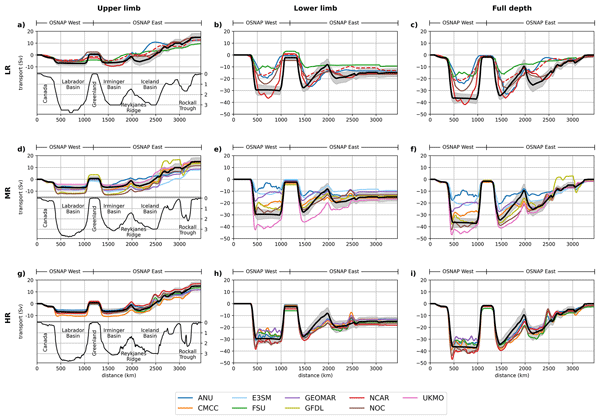
A comparison of simulated and observed overturning transports across the Overturning in the Subpolar North Atlantic Program sections is presented. Eighteen ocean simulations participate in the study with resolutions ranging from coarse to eddy-resolving. The simulated transports are in general agreement with observations, with better agreement at high resolution. Analyzing overturning circulations in both depth and density space together provides a more complete picture.
Piers M. Forster, Tristram Walsh, Chris Smith, William F. Lamb, Robin Lamboll, Christophe Cassou, Mathias Hauser, Zeke Hausfather, June-Yi Lee, Matthew D. Palmer, Karina von Schuckmann, Aimée B. A. Slangen, Sophie Szopa, Blair Trewin, Jeongeun Yun, Nathan P. Gillett, Stuart Jenkins, H. Damon Matthews, Krishnan Raghavan, Aurélien Ribes, Joeri Rogelj, Debbie Rosen, Xuebin Zhang, Myles Allen, Robbie M. Andrew, Chris Atkinson, Richard A. Betts, Antonio Bombelli, Samantha N. Burgess, Lijing Cheng, Helen E. Claxton, Pierre Friedlingstein, Thomas L. Frölicher, Catia M. Domingues, Thomas Gasser, Catherine H. Gregory, Rachel M. Hoesly, Daniel Huppmann, Masayoshi Ishii, Christopher Kadow, Alexia Karwat, John Kennedy, Rachel E. Killick, Mahesh V. M. Kovilakam, Paul B. Krummel, Xin Lan, Jean-François Lamarque, Aurélien Liné, Belén Martín-Míguez, Didier P. Monselesan, Colin Morice, Jens Mühle, Pino Mussak, Glen P. Peters, Anna Pirani, Julia Pongratz, Matthew Rigby, Robert Rohde, Abhishek Savita, Sonia I. Seneviratne, Steven J. Smith, Ghassan Taha, Caterina Tassone, Peter Thorne, Christopher Wells, Luke M. Western, Guido R. van der Werf, Susan E. Wijffels, Marco Zecchetto, Junting Zhong, Xiao-Ye Zhang, Valérie Masson-Delmotte, and Panmao Zhai
Earth Syst. Sci. Data, 18, 3889–3933, https://doi.org/10.5194/essd-18-3889-2026, https://doi.org/10.5194/essd-18-3889-2026, 2026
Short summary
Short summary
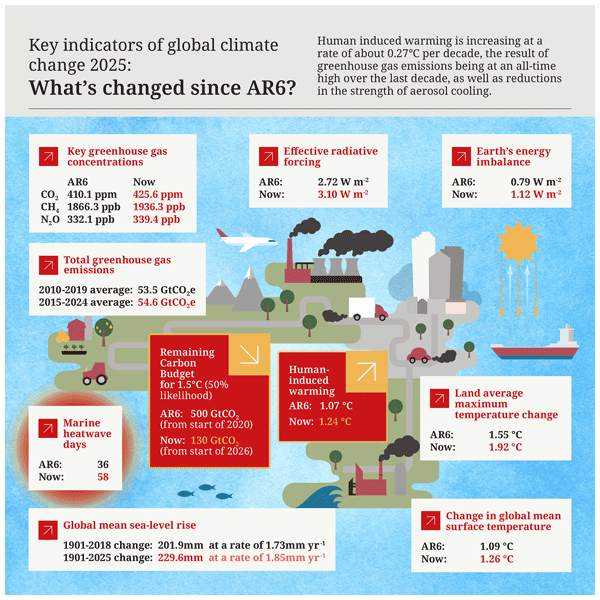
We give our annual update of key climate indicators. Our work quantifies the human contribution to global warming and the pace of climate change. This represents a large effort by the international community akin to an Intergovernmental Panel on Climate Change (IPCC) report.
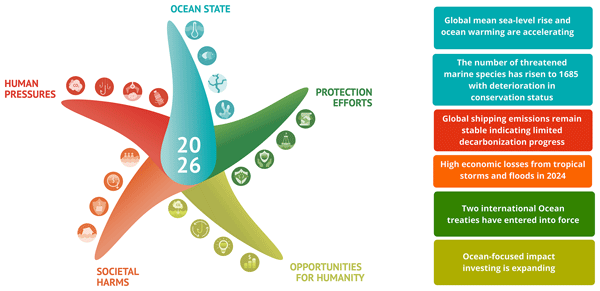
Marina Lévy, Karina von Schuckmann, Mahé Butel, William W. L. Cheung, Joachim Claudet, Thomas L. Frölicher, Patrice Guillotreau, Peter Haugan, Janine Adams, Diva Amon, Tamatoa Bambridge, Cynthia Barzuna, Bruno Blanke, Lijing Cheng, Sanae Chiba, Jorge Cortés, Pierre Friedlingstein, Jean-Pierre Gattuso, Stefan Gelcich, Jessica Gephart, Deborah Greaves, Audrey Hasson, Claire Jolly, Daoji Li, Yunne-Jai Shin, Aimée Slangen, Mere Takoko, Olivier Thébaud, Adrien Vincent, and Patrick Vincent
State Planet, 7-osr10, 1, https://doi.org/10.5194/sp-7-osr10-1-2026, https://doi.org/10.5194/sp-7-osr10-1-2026, 2026
Short summary
Short summary
The Starfish Barometer provides an annual, science-based synthesis of global Ocean-related developments, structured around five interconnected dimensions: the Ocean state, human pressures, societal harms, protection efforts, and opportunities for humanity. It is released each year on World Ocean Day. This article presents the second edition of the Barometer, which shows a growing gap between increasing human pressures on the Ocean and the efforts being made to protect it and drive change.
Tereza Jarníková, Colin Jones, Steven Rumbold, and Corinne Le Quéré
Earth Syst. Dynam., 17, 631–649, https://doi.org/10.5194/esd-17-631-2026, https://doi.org/10.5194/esd-17-631-2026, 2026
Short summary
Short summary
Southern Ocean winds drive global climate and have strengthened since 1980 due to Antarctic ozone depletion. We assessed which climate reconstructions best capture these changes using sea level pressure observations. We then used an Earth system model to attribute these changes between ozone and greenhouse gas emissions. Ozone depletion dominated past wind acceleration, but greenhouse gases will drive future changes after 2050.
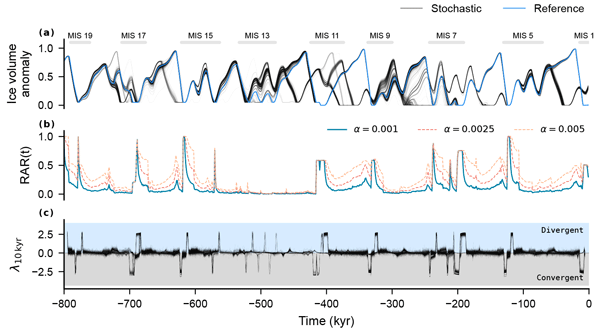
Jakob Harteg, Nico Wunderling, and Jonathan F. Donges
Earth Syst. Dynam., 17, 673–686, https://doi.org/10.5194/esd-17-673-2026, https://doi.org/10.5194/esd-17-673-2026, 2026
Short summary
Short summary
We investigate how resilient Earth’s climate system is to disturbances by analysing glacial-interglacial cycles using a simple climate model. By simulating small and large shocks to ice volume, we show that Earth’s climate more easily returns to its natural path during warm periods. These results improve our understanding of how Earth resilience varies over time in systems driven by external forces.
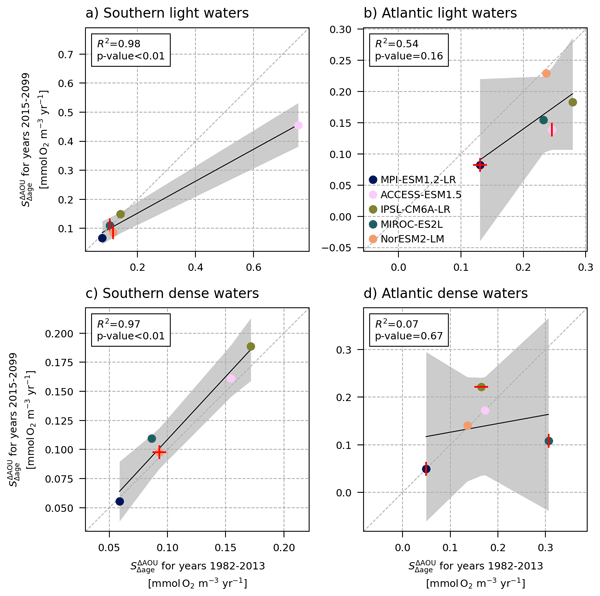
Damien Couespel, Xabier Davila, Nadine Goris, Emil Jeansson, Siv K. Lauvset, and Jerry Tjiputra
Biogeosciences, 23, 3433–3466, https://doi.org/10.5194/bg-23-3433-2026, https://doi.org/10.5194/bg-23-3433-2026, 2026
Short summary
Short summary
Remineralised carbon storage is projected to increase along the 21st century, but the magnitude of increase varies depending on the Earth system models. To constrain projections, we explore the relationship between remineralised carbon and deep ocean circulation. We show that the sensitivity of remineralised carbon to circulation slowdown varies considerably between models. More observational data and a larger model ensemble is needed to constrain projections of remineralised carbon storage.
Katja Frieler, Stefan Lange, Jacob Schewe, Matthias Mengel, Simon Treu, Christian Otto, Jan Volkholz, Christopher P. O. Reyer, Stefanie Heinicke, Colin Jones, Julia L. Blanchard, Cheryl S. Harrison, Colleen M. Petrik, Tyler D. Eddy, Kelly Ortega-Cisneros, Camilla Novaglio, Ryan Heneghan, Derek P. Tittensor, Olivier Maury, Matthias Büchner, Thomas Vogt, Dánnell Quesada-Chacón, Kerry Emanuel, Chia-Ying Lee, Suzana J. Camargo, Linn Hamester, Jonas Jägermeyr, Sam Rabin, Jochen Klar, Iliusi D. Vega del Valle, Lisa Novak, Inga J. Sauer, Gitta Lasslop, Sarah Chadburn, Eleanor Burke, Angela Gallego-Sala, Noah Smith, Jinfeng Chang, Stijn Hantson, Chantelle Burton, Anne Gädeke, Fang Li, Simon N. Gosling, Hannes Müller Schmied, Fred Hattermann, Thomas Hickler, Rafael Marcé, Don Pierson, Wim Thiery, Daniel Mercado-Bettín, Robert Ladwig, Ana Isabel Ayala, Matthew Forrest, Michel Bechtold, Robert Reinecke, Inge de Graaf, Jed O. Kaplan, Alexander Koch, Matthieu Lengaigne, Rohini Kumar, and Maryna Strokal
Geosci. Model Dev., 19, 4095–4135, https://doi.org/10.5194/gmd-19-4095-2026, https://doi.org/10.5194/gmd-19-4095-2026, 2026
Short summary
Short summary
This paper describes the experiments and data sets necessary to run historic and future impact projections, and the underlying assumptions of future climate change as defined by the 3rd round of the ISIMIP Project (Inter-sectoral Impactmodel Intercomparison Project, isimip.org). ISIMIP provides a framework for cross-sectorally consistent climate impact simulations to contribute to a comprehensive and consistent picture of the world under different climate-change scenarios.
Benjamin M. Sanderson, Marit Sandstad, Alejandro Romero-Prieto, Stuart Jenkins, Charles Koven, Glen Peters, Roland Séfèrian, Andrew H. MacDougall, Ashwin Seshadri, Victor Brovkin, John Dunne, Abigail L. S. Swann, Torben Koenigk, Rosie A. Fisher, David Hohn, Tatiana Ilyina, Chris D. Jones, Hongmei Li, Peter Lawrence, Spencer Liddicoat, Nadine Mengis, Anastasia Romanou, Lori T. Sentman, Chris Smith, Norman J. Steinert, Jerry Tjiputra, and Tilo Ziehn
EGUsphere, https://doi.org/10.5194/egusphere-2026-1875, https://doi.org/10.5194/egusphere-2026-1875, 2026
Short summary
Short summary
When humanity stops emitting carbon dioxide, will temperatures keep rising, stabilize, or fall? Our study reveals in most models, temperatures remain nearly stable, but this hides a balance between the warming in response to radiation imbalance, and the cooling due to uptake of carbon in the land and ocean. Understanding this balance helps refine how much more CO2 we can safely emit.
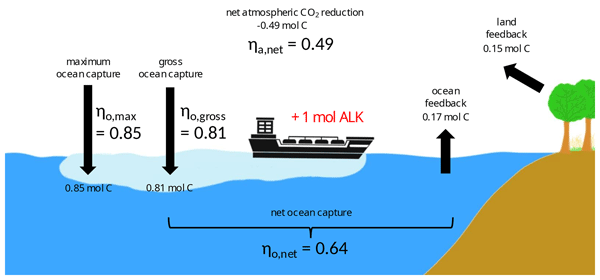
Hendrik Grosselindemann, Friedrich A. Burger, and Thomas L. Frölicher
Biogeosciences, 23, 3299–3321, https://doi.org/10.5194/bg-23-3299-2026, https://doi.org/10.5194/bg-23-3299-2026, 2026
Short summary
Short summary
We assess the long-term carbon cycle, climate and ocean acidification response of ocean alkalinity enhancement (OAE) using an emission-driven Earth system model across warming stabilization scenarios. OAE lowers atmospheric CO2 and produces a scenario-independent linear cooling. Gross carbon capture efficiency remains high, while net efficiencies decline over time due to carbon-cycle feedbacks. Ocean acidification mitigation by OAE is dominated by CO2 drawdown on long timescales.
Pierre Friedlingstein, Michael O'Sullivan, Matthew W. Jones, Robbie M. Andrew, Dorothee C. E. Bakker, Judith Hauck, Peter Landschützer, Corinne Le Quéré, Hongmei Li, Ingrid T. Luijkx, Glen P. Peters, Wouter Peters, Julia Pongratz, Clemens Schwingshackl, Stephen Sitch, Josep G. Canadell, Philippe Ciais, Kjetil Aas, Simone R. Alin, Peter Anthoni, Leticia Barbero, Nicholas R. Bates, Nicolas Bellouin, Alice Benoit-Cattin, Carla F. Berghoff, Raffaele Bernardello, Laurent Bopp, Ida Bagus Mandhara Brasika, Matthew A. Chamberlain, Naveen Chandra, Frédéric Chevallier, Louise P. Chini, Nathan O. Collier, Thomas H. Colligan, Margot Cronin, Laique M. Djeutchouang, Xinyu Dou, Matt P. Enright, Kazutaka Enyo, Michael Erb, Wiley Evans, Richard A. Feely, Liang Feng, Daniel J. Ford, Adrianna Foster, Filippa Fransner, Thomas Gasser, Marion Gehlen, Thanos Gkritzalis, Jefferson Goncalves De Souza, Giacomo Grassi, Luke Gregor, Nicolas Gruber, Bertrand Guenet, Özgür Gürses, Kirsty Harrington, Ian Harris, Jens Heinke, George C. Hurtt, Yosuke Iida, Tatiana Ilyina, Akihiko Ito, Andrew R. Jacobson, Atul K. Jain, Tereza Jarníková, Annika Jersild, Fei Jiang, Steve D. Jones, Etsushi Kato, Ralph F. Keeling, Kees Klein Goldewijk, Jürgen Knauer, Yawen Kong, Jan Ivar Korsbakken, Charles Koven, Taro Kunimitsu, Xin Lan, Junjie Liu, Zhiqiang Liu, Zhu Liu, Claire Lo Monaco, Lei Ma, Gregg Marland, Patrick C. McGuire, Galen A. McKinley, Joe R. Melton, Natalie Monacci, Erwan Monier, Eric J. Morgan, David R. Munro, Jens D. Müller, Shin-Ichiro Nakaoka, Lorna R. Nayagam, Yosuke Niwa, Tobias Nutzel, Are Olsen, Abdirahman M. Omar, Naiqing Pan, Sudhanshu Pandey, Denis Pierrot, Zhangcai Qin, Pierre Regnier, Gregor Rehder, Laure Resplandy, Alizée Roobaert, Thais M. Rosan, Christian Rödenbeck, Jörg Schwinger, Ingunn Skjelvan, T. Luke Smallman, Victoria Spada, Mohanan G. Sreeush, Qing Sun, Adrienne J. Sutton, Colm Sweeney, Didier Swingedouw, Roland Séférian, Shintaro Takao, Hiroaki Tatebe, Hanqin Tian, Xiangjun Tian, Bronte Tilbrook, Hiroyuki Tsujino, Francesco Tubiello, Erik van Ooijen, Guido R. van der Werf, Sebastiaan J. van de Velde, Anthony P. Walker, Rik Wanninkhof, Xiaojuan Yang, Wenping Yuan, Xu Yue, and Jiye Zeng
Earth Syst. Sci. Data, 18, 3211–3288, https://doi.org/10.5194/essd-18-3211-2026, https://doi.org/10.5194/essd-18-3211-2026, 2026
Short summary
Short summary
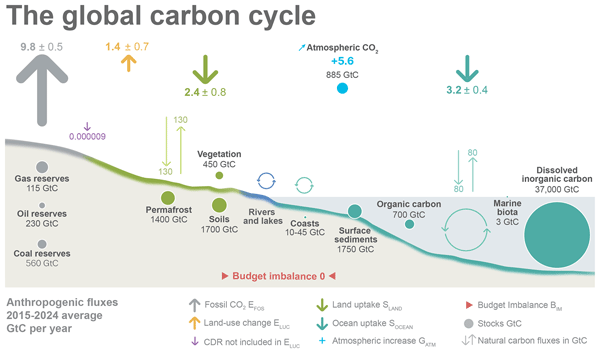
The Global Carbon Budget 2025 describes the methodology, main results, and datasets used to quantify the anthropogenic emissions of carbon dioxide (CO2) and their partitioning among the atmosphere, land ecosystems, and the ocean over the historical period (1750–2025). These living datasets are updated every year to provide the highest transparency and traceability in the reporting of CO2, the key driver of climate change.
Friedrich A. Burger, Urs Hofmann Elizondo, Hendrik Grosselindemann, and Thomas L. Frölicher
Biogeosciences, 23, 3279–3298, https://doi.org/10.5194/bg-23-3279-2026, https://doi.org/10.5194/bg-23-3279-2026, 2026
Short summary
Short summary
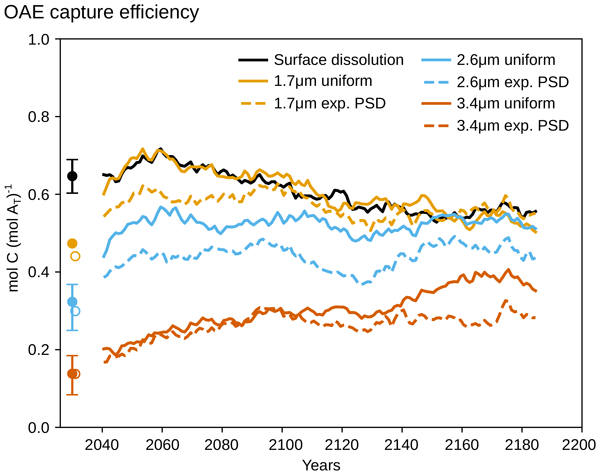
Ocean alkalinity enhancement is viewed as a promising option for carbon dioxide removal. When alkalinity is added in the open ocean through mineral powders, carbon uptake from the atmosphere is decreased when mineral particles sink before fully dissolving. Here we prescribe vertical alkalinity release profiles to an Earth system model. We show that carbon uptake may initially decrease by more than 75% when grain size doubles and that full uptake is delayed by centuries and spatially dispersed.
Jozef Skákala, Shubha Sathyendranath, Yuri Artioli, Deep S. Banerjee, Heather Bouman, Robert J. W. Brewin, Momme Butenschön, Stefano Ciavatta, Stephanie Dutkiewicz, Yanna Fidai, David Ford, Grinson George, Karen Guihou, Bror Jönsson, Marija Bačeković Koloper, Žarko Kovač, Lekshmi Krishnakumary, Gemma Kulk, Charlotte Laufkötter, Gennadi Lessin, Jann Paul Mattern, Angélique Melet, Alexandre Mignot, David Moffat, Fanny Monteiro, Mayra Rodriguez Bennadji, Cécile S. Rousseaux, Ranjini Swaminathan, Osvaldo Ulloa, and Jerry Tjiputra
Ocean Sci., 22, 1457–1481, https://doi.org/10.5194/os-22-1457-2026, https://doi.org/10.5194/os-22-1457-2026, 2026
Short summary
Short summary
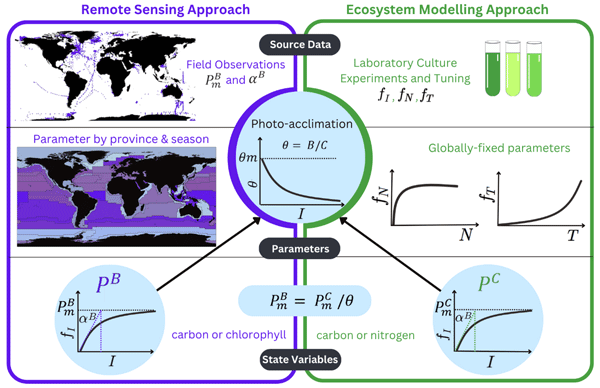
Marine primary production (PP) is a key component of the Earth's climate system, but its current estimates and future projections are highly uncertain. We review the PP uncertainties and discuss their sources both across the ecosystem and satellite models. We propose to reduce the PP uncertainties by better addressing the PP model structures and parametrizations. We also argue that for many models it is desirable to consider spatial and temporal variability in the model parameter values.
Andrea Rivosecchi, Andrea Dittus, Ed Hawkins, Reinhard Schiemann, and Erich Fischer
EGUsphere, https://doi.org/10.5194/egusphere-2026-1733, https://doi.org/10.5194/egusphere-2026-1733, 2026
Short summary
Short summary
We analysed 250-year global temperature trends under zero CO2 emissions in the UK Earth System Model. Stopping emissions while global temperatures remain below +2 °C limits the post-net-zero mean surface warming. Annual hot extremes cool regionally after zero emissions in the midlatitudes, due to the expansion of evergreen vegetation. However, in this framework vegetation change is largely unconstrained by modern land-use changes, highlighting a potential limitation of idealised model protocols.
Robin S. Smith, Tarkan A. Bilge, Thomas J. Bracegirdle, Paul R. Holland, Till Kuhlbrodt, Charlotte Lang, Spencer Liddicoat, Tom Mitcham, Jane Mulcahy, Kaitlin A. Naughten, Andrew Orr, Julien Palmieri, Antony J. Payne, Steven Rumbold, Marc Stringer, Ranjini Swaminathan, Sarah Taylor, Jeremy Walton, and Colin Jones
Earth Syst. Dynam., 17, 475–493, https://doi.org/10.5194/esd-17-475-2026, https://doi.org/10.5194/esd-17-475-2026, 2026
Short summary
Short summary
There is a dangerous amount of uncertainty in our predictions of climate change in polar regions because some of feedbacks that might lead to changes that are too rapid for us to adapt to, or that cannot be reversed. We have run a set of simulations with a state-of-the-art Earth System Model that helps improve our understanding of how climate in these regions might change. Some of the aspects we investigate are reversible but many are not, especially those affecting ice sheets and sea level.
Helen Werner, Dirk Scherler, Tancrède P. M. Leger, Guillaume Jouvet, and Ricarda Winkelmann
The Cryosphere, 20, 2469–2484, https://doi.org/10.5194/tc-20-2469-2026, https://doi.org/10.5194/tc-20-2469-2026, 2026
Short summary
Short summary
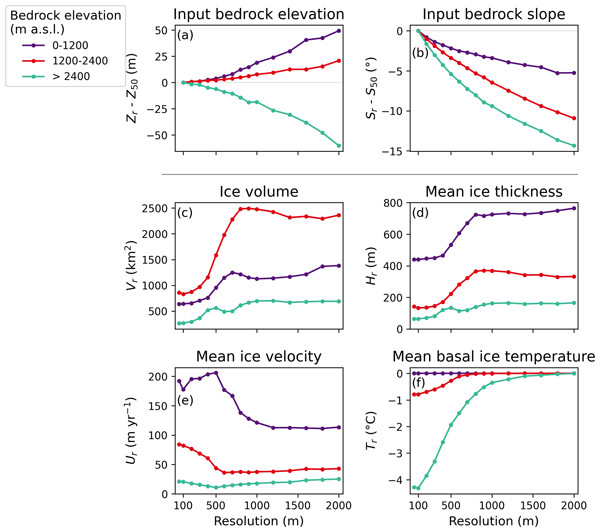
Coarse spatial resolutions reduce computational costs but poorly resolve complex topographies. Our simulations of an alpine ice field at 50 m to 2 km resolution show similar ice areas, yet much higher volumes at coarser resolutions. Resolutions of 300 m and finer accurately capture topographically constrained flow, while coarse resolutions flatten mountain slopes and peaks, affecting ice velocities, thickness, and thermal regimes which emphasizes the need for sufficiently high-resolution models.
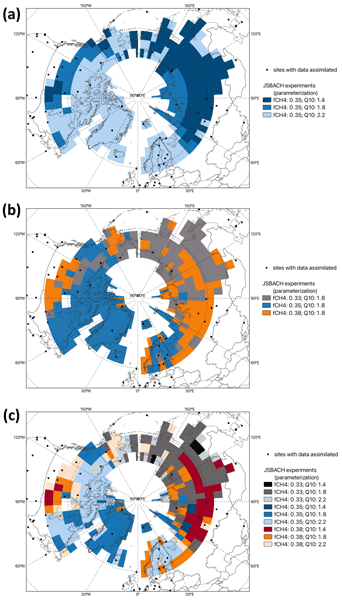
Luana S. Basso, Goran Georgievski, Victor Brovkin, Christian Beer, Christian Rödenbeck, and Mathias Göckede
Biogeosciences, 23, 2815–2830, https://doi.org/10.5194/bg-23-2815-2026, https://doi.org/10.5194/bg-23-2815-2026, 2026
Short summary
Short summary
This study examines how combining atmospheric inversion with process-based modelling can reduce discrepancies in estimates of Arctic wetland CH4 emissions. We conducted a series of inversion experiments, each incorporating CH4 wetland fluxes from process-based models with different CH4 production parameterizations. Our results showed that no single parameterization captures the complexity of Arctic–Boreal emissions; instead, region-specific adjustments are needed to reduce discrepancies.
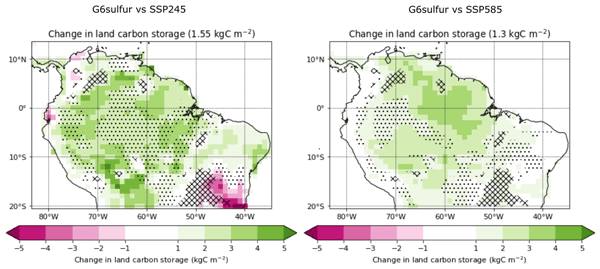
Isobel M. Parry, Paul D. L. Ritchie, Olivier Boucher, Peter M. Cox, James M. Haywood, Ulrike Niemeier, Roland Séférian, Simone Tilmes, and Daniele Visioni
Earth Syst. Dynam., 17, 387–414, https://doi.org/10.5194/esd-17-387-2026, https://doi.org/10.5194/esd-17-387-2026, 2026
Short summary
Short summary
Contrary to some expectations, results from the latest Earth System Models suggest that Solar Radiation Geoengineering could protect the Amazon rainforest from climate-driven dieback. Under Stratospheric Aerosol Injection, carbon storage in Amazonia was projected to increase by a mean of 10.8 % relative to a high CO2 emissions scenario, and even by 8.6% compared to a more conventional medium CO2 emissions scenario.
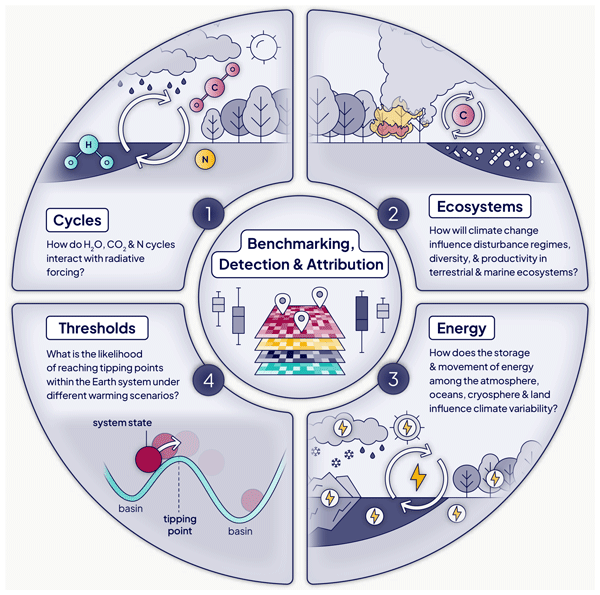
Mara Y. McPartland, Tomas Lovato, Charles Koven, Jamie D. Wilson, Briony Turner, Colleen M. Petrik, José Licón-Saláiz, Fang Li, Fanny Lhardy, Jaclyn Clement Kinney, Michio Kawamiya, Birgit Hassler, Nathan P. Gillett, Cheikh Modou Noreyni Fall, Christopher Danek, Chris M. Brierley, Ana Bastos, and Oliver Andrews
Geosci. Model Dev., 19, 2849–2880, https://doi.org/10.5194/gmd-19-2849-2026, https://doi.org/10.5194/gmd-19-2849-2026, 2026
Short summary
Short summary
The Coupled Model Intercomparison Project (CMIP) is an international consortium of climate modeling groups that produce coordinated experiments in order to evaluate human influence on the climate and test knowledge of Earth systems. This paper describes the data requested for Earth systems research in CMIP7. We detail the request for model output of the carbon cycle, the flows of energy among the atmosphere, land and the oceans, and interactions between these and the global climate.
John W. Rostron, Alejandro Bodas-Salcedo, David M. H. Sexton, Colin G. Jones, Edward W. Blockley, Till Kuhlbrodt, Jane P. Mulcahy, Tamzin E. Palmer, Saloua Peatier, Mark A. Ringer, Steven T. Rumbold, Benjamin M. Sanderson, Yongming Tang, and Martin R. Willet
EGUsphere, https://doi.org/10.5194/egusphere-2026-1676, https://doi.org/10.5194/egusphere-2026-1676, 2026
Short summary
Short summary
The Met Office’s latest weather and climate model warms very strongly in response to increases in carbon dioxide. We created a modified version of the model with a more moderate warming response by adjusting key model parameters, using both automated methods and expert judgement. The new model matches historical temperatures more closely and is better suited for studies of long‑term climate, but has reduced overall accuracy when simulating the baseline climate.
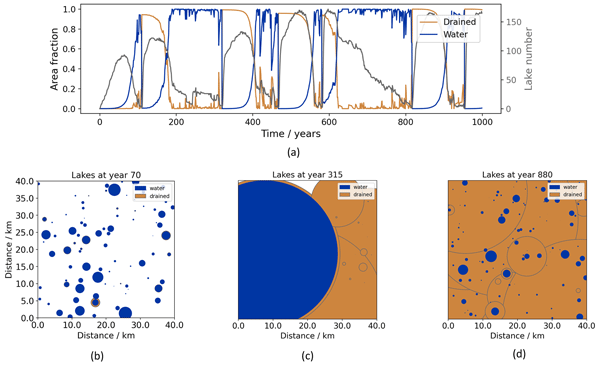
Constanze Reinken, Victor Brovkin, Philipp de Vrese, Ingmar Nitze, Helena Bergstedt, and Guido Grosse
The Cryosphere, 20, 1967–1995, https://doi.org/10.5194/tc-20-1967-2026, https://doi.org/10.5194/tc-20-1967-2026, 2026
Short summary
Short summary
Thermokarst lakes are dynamic features of ice-rich permafrost landscapes, altering energy, water and carbon cycles, but have so far mostly been modeled on site-level scale. A deterministic modelling approach would be challenging on larger scales due to the lack of extensive high-resolution data of sub-surface conditions. We therefore develop a conceptual stochastic model of thermokarst lake dynamics that treats the involved processes as probabilistic.
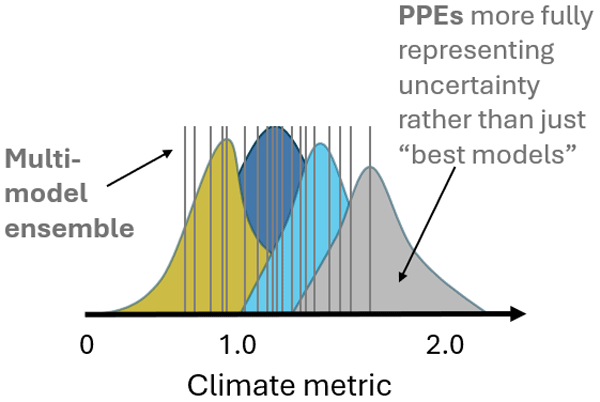
Ken S. Carslaw, Leighton A. Regayre, Ulrike Proske, Andrew Gettelman, David M. H. Sexton, Yun Qian, Lauren R. Marshall, Oliver Wild, Marcus van Lier-Walqui, Annika Oertel, Saloua Peatier, Ben Yang, Jill S. Johnson, Sihan Li, Daniel T. McCoy, Benjamin M. Sanderson, Christina J. Williamson, Gregory S. Elsaesser, Kuniko Yamazaki, and Ben B. B. Booth
Atmos. Chem. Phys., 26, 4651–4667, https://doi.org/10.5194/acp-26-4651-2026, https://doi.org/10.5194/acp-26-4651-2026, 2026
Short summary
Short summary
A major challenge in climate science is reducing projection uncertainty despite advances in models and observational constraints. Perturbed parameter ensembles (PPEs) offer a powerful tool to explore and reduce uncertainty by revealing model weaknesses and guiding development. PPEs are now widely applied across climate systems and scales. We argue they should be prioritized alongside complexity and resolution in model resource planning.
Didier Swingedouw, Laura Jackson, Aixue Hu, Anastasia Romanou, Nicole C. Laureanti, Wilbert Weijer, Sina Loriani, Bette Otto-Bliesner, Ayako Abe-Ouchi, Lucas Almeida, Alessio Bellucci, Reyk Börner, Gokhan Danabasoglu, Donovan P. Dennis, Marion Devilliers, Sybren Drijfhout, Jonathan Donges, Friederike Fröb, Thomas L. Frölicher, Guillaume Gastineau, Heiko Goelzer, Chuncheng Guo, Urs Hofmann, Anna Höse, Colin Jones, Torben Koenigk, Ann Kristin Klose, Valerio Lembo, Jose Licon-Salaiz, Ken Mankoff, Virna Meccia, Irina Melnikova, Oliver Mehling, Laurie Menviel, Juliette Mignot, Jon I. Robson, Gavin A. Schmidt, Robin Smith, Yuchen Sun, Irene Trombini, Matteo Willeit, Richard Wood, Fanghua Wu, Lin Zhaohui, and Ricarda Winkelmann
EGUsphere, https://doi.org/10.5194/egusphere-2026-1698, https://doi.org/10.5194/egusphere-2026-1698, 2026
Short summary
Short summary
This study presents a plan for climate model experiments to better understand how changes in freshwater in the North Atlantic affect major ocean currents. We designed coordinated simulations to test their response to warming, added freshwater, and possible recovery after weakening. Comparing results across models and past climate evidence helps improve confidence in projections and assess risks of large ocean circulation changes.
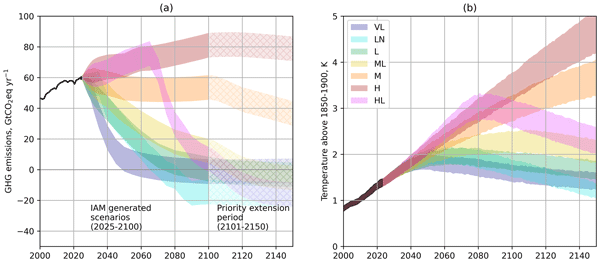
Detlef P. Van Vuuren, Brian C. O'Neill, Claudia Tebaldi, Benjamin M. Sanderson, Louise P. Chini, Pierre Friedlingstein, Tomoko Hasegawa, Keywan Riahi, Bala Govindasamy, Nico Bauer, Veronika Eyring, Cheikh M. N. Fall, Katja Frieler, Matthew J. Gidden, Laila K. Gohar, Annika Högner, Andrew D. Jones, Jarmo Kikstra, Andrew King, Reto Knutti, Elmar Kriegler, Peter Lawrence, Chris Lennard, Jason Lowe, Camilla Mathison, Shahbaz Mehmood, Zebedee Nicholls, Luciana F. Prado, Qiang Zhang, Steven K. Rose, Alex C. Ruane, Marit Sandstad, Carl-Friedrich Schleussner, Roland Seferian, Jana Sillmann, Chris Smith, Anna A. Sörensson, Swapna Panickal, Kaoru Tachiiri, Naomi Vaughan, Saritha S. Vishwanathan, Tokuta Yokohata, Marco Zecchetto, and Tilo Ziehn
Geosci. Model Dev., 19, 2627–2656, https://doi.org/10.5194/gmd-19-2627-2026, https://doi.org/10.5194/gmd-19-2627-2026, 2026
Short summary
Short summary
We propose a set of seven plausible 21st century emission scenarios, and their multi-century extensions, that will be used by the international community of climate modeling centers to produce the next generation of climate projections. These projections will support climate, impact and mitigation researchers, provide information to practitioners to address future risks from climate change, and contribute to policymakers’ considerations of the trade-offs among various levels of mitigation.
Tamara Emmerichs, Fabrice Lacroix, Victor Brovkin, Sönke Zaehle, Cheng Gong, Yu Zhu, Sofie Sjogersten, Carolina Voigt, Klaus Steenberg Larsen, and Eeva-Stiina Tuitila
EGUsphere, https://doi.org/10.5194/egusphere-2026-1514, https://doi.org/10.5194/egusphere-2026-1514, 2026
Short summary
Short summary
Shrubs use water and carbon differently and are expanding in warming tundra and grasslands, yet global models lack accuracy. We added two shrub types to a vegetation model including soil nutrients and carbon exchange. Half of the modeled shrubs showed good performance whereas their growth is 40 % higher as at grasses. Deciduous shrubs reduce nitrogen more than evergreens. Including shrubs improves Arctic carbon cycle predictions, revealing nitrogen limits cause underestimation in global models.
Isaline Bossert, Roland Séférian, Yeray Santana-Falcón, and Thibault Guinaldo
EGUsphere, https://doi.org/10.5194/egusphere-2026-993, https://doi.org/10.5194/egusphere-2026-993, 2026
Short summary
Short summary
The response of the ocean to net-zero emissions remains poorly understood. Using 300-year net-zero Earth system simulations, we show that sea surface temperature and marine heatwaves continue to reorganize long after emissions stop, with major departures from transient projections, implying underestimated long-term marine ecosystem risks.
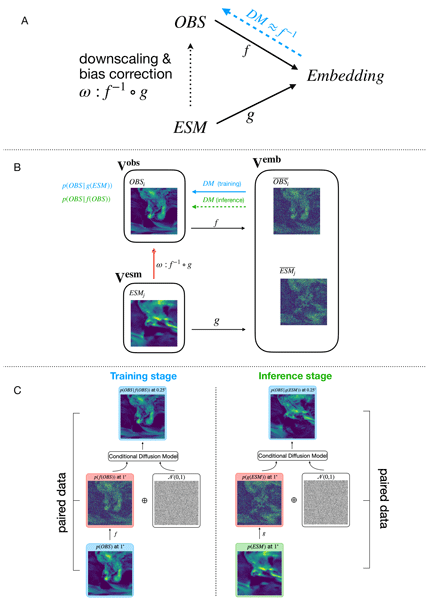
Michael Aich, Philipp Hess, Baoxiang Pan, Sebastian Bathiany, Yu Huang, and Niklas Boers
Geosci. Model Dev., 19, 1791–1808, https://doi.org/10.5194/gmd-19-1791-2026, https://doi.org/10.5194/gmd-19-1791-2026, 2026
Short summary
Short summary
Accurately simulating rainfall is essential to understand the impacts of climate change, especially extreme events such as floods and droughts. Climate models simulate the atmosphere at a coarse resolution and often misrepresent precipitation, leading to biased and overly smooth fields. We improve the precipitation using a machine learning model that is data-efficient, preserves key climate signals such as trends and variability, and significantly improves the representation of extreme events.
Bastian Ott, Jonathan F. Donges, and Johan Rockström
EGUsphere, https://doi.org/10.5194/egusphere-2026-79, https://doi.org/10.5194/egusphere-2026-79, 2026
Short summary
Short summary
Climate adaptation is crucial but its impacts on the Earth system are not well understood. Our study finds climate adaptation contributes ~26 % of annual greenhouse gas emissions, ~74 % of human freshwater withdrawals, and even affects the ozone layer. While some of these impacts are driven by climate change, the majority is likely fuelled by economic, demographic, and technological developments. These findings highlight the need to balance adaptation with respect for Earth system resilience.
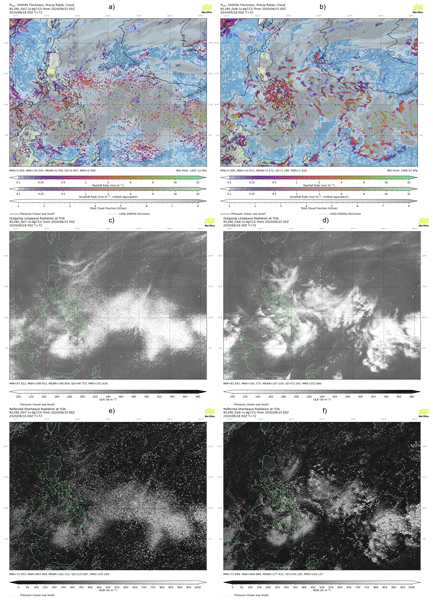
Martin Willett, Melissa Brooks, Andrew Bushell, Paul Earnshaw, Samantha Smith, Lorenzo Tomassini, Martin Best, Ian Boutle, Jennifer Brooke, John M. Edwards, Andrew D. Elvidge, Kalli Furtado, Catherine Hardacre, Andrew J. Hartley, Alan J. Hewitt, Ben Johnson, Adrian Lock, Andy Malcolm, Jane Mulcahy, Eike Müller, Ian A. Renfrew, Heather Rumbold, Gabriel G. Rooney, Alistair Sellar, Masashi Ujiie, Annelize van Niekerk, Andy Wiltshire, and Michael Whitall
Geosci. Model Dev., 19, 1473–1517, https://doi.org/10.5194/gmd-19-1473-2026, https://doi.org/10.5194/gmd-19-1473-2026, 2026
Short summary
Short summary
Global Atmosphere (GA) configurations of the Unified Model (UM) and Global Land (GL) configurations of Joint UK Land Environment Simulator (JULES) are developed for use in any global atmospheric modelling application. We describe a recent iteration of these configurations, GA8GL9, which includes improvements to the representation of convection and other physical processes. GA8GL9 is used for operational weather prediction in the UK and forms the basis for the next GA and GL configuration.
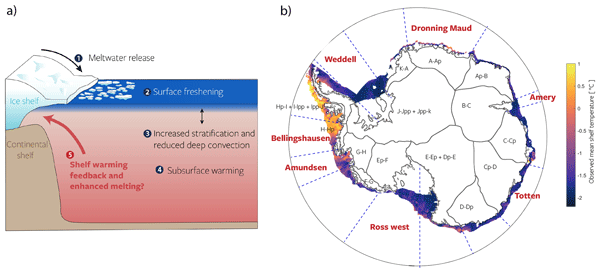
Morven Muilwijk, Tore Hattermann, Rebecca L. Beadling, Neil C. Swart, Aleksi Nummelin, Chuncheng Guo, David M. Chandler, Petra M. Langebroek, Shenjie Zhou, Pierre Dutrieux, Jia-Jia Chen, Christopher Danek, Matthew H. England, Stephen M. Griffies, F. Alexander Haumann, André Jüling, Ombeline Jouet, Qian Li, Torge Martin, John Marshall, Andrew G. Pauling, Ariaan Purich, Zihan Song, Inga J. Smith, Max Thomas, Irene Trombini, Eveline C. van der Linden, and Xiaoqi Xu
The Cryosphere, 20, 1087–1117, https://doi.org/10.5194/tc-20-1087-2026, https://doi.org/10.5194/tc-20-1087-2026, 2026
Short summary
Short summary
Antarctic meltwater affects ocean stratification and temperature, which in turn influences the rate of ice shelf melting – a coupling missing in most climate models. We analyze a suite of climate models with added meltwater to explore this feedback in different regions. While meltwater generally enhances ocean warming and melt, in West Antarctica most models simulate coastal cooling, suggesting a negative feedback that could slow future ice loss there.
John M. Anderies, Max Bechthold, Jonathan F. Donges, Ingo Fetzer, Nico Wunderling, Wolfram Barfuss, and Johan Rockström
EGUsphere, https://doi.org/10.5194/egusphere-2025-6345, https://doi.org/10.5194/egusphere-2025-6345, 2026
Short summary
Short summary
This paper explores a new approach to understanding human-Earth system resilience. It introduces a measure that estimates how likely a system is to reach a safe and just state. Available knowledge about how the system works, its boundaries, and potential disruptions centrally constrain the measure. It could help decision-makers strike a balance between gaining knowledge, building capacity to act, and taking practical measures to improve resilience in many different types of systems.
Jakob Harteg, Lukas Röhrich, Kobe De Maeyer, Julius Garbe, Boris Sakschewski, Ann Kristin Klose, Jonathan F. Donges, Ricarda Winkelmann, and Sina Loriani
EGUsphere, https://doi.org/10.5194/egusphere-2026-356, https://doi.org/10.5194/egusphere-2026-356, 2026
Short summary
Short summary
Climate systems can undergo abrupt, potentially irreversible changes with major impacts on ecosystems and societies, yet consistent tools to detect these transitions across different models are lacking. We present an open-source software package for systematically detecting where and when such changes occur in climate simulations and quantifying variation in transition timing. This enables robust comparison of abrupt changes across models and contributes to assessing climate-tipping risks.

Rémi Gaillard, Patricia Cadule, Philippe Peylin, Nicolas Vuichard, and Bertrand Guenet
Geosci. Model Dev., 19, 661–711, https://doi.org/10.5194/gmd-19-661-2026, https://doi.org/10.5194/gmd-19-661-2026, 2026
Short summary
Short summary
The release of carbon from thawing permafrost soils could amplify future climate warming. However, this feedback is highly uncertain because most Earth system models (ESM) do not represent permafrost carbon. We have improved the Institut Pierre-Simon Laplace ESM by including permafrost physical, carbon and nitrogen processes to better represent Arctic ecosystems. The model more accurately represents past and present permafrost physics and biogeochemistry, paving the way for future projections.
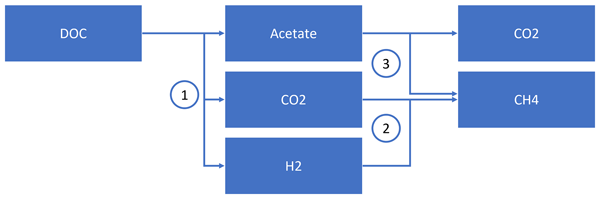
Marius Moser, Lara Kaiser, Victor Brovkin, and Christian Beer
Biogeosciences, 23, 605–621, https://doi.org/10.5194/bg-23-605-2026, https://doi.org/10.5194/bg-23-605-2026, 2026
Short summary
Short summary
Arctic warming might lead to increased carbon dioxide and methane emissions. Process-based prediction of their ratio is important for projecting the future carbon cycle. However, land surface models often assume a constant ratio. To overcome this limitation, we identify three core processes for representing methanogenesis accurately in land surface models: fermentation, acetoclastic methanogenesis, and hydrogenotrophic methanogenesis.
E. Keith Smith, Carl Folke, Niklas Kitzmann, Manjana Milkoreit, Per Olsson, Ricarda Winkelmann, Anne-Sophie Crépin, Christina Eder, Niklas Harring, Jobst Heitzig, Alexia Katsanidou, Timothy M. Lenton, Franz Mauelshagen, Kelton Minor, Ilona M. Otto, Armon Rezai, Jürgen Scheffran, Isabelle Stadelmann-Steffen, Rick van der Ploeg, Nico Wunderling, and Jonathan F. Donges
EGUsphere, https://doi.org/10.5194/egusphere-2026-177, https://doi.org/10.5194/egusphere-2026-177, 2026
This preprint is open for discussion and under review for Geoscientific Model Development (GMD).
Short summary
Short summary
Achieving climate and sustainability goals requires rapid, large-scale change. We introduce criticality – the likelihood a system is near a social tipping point – and critical agency – the capacity to shape those conditions. Our framework shows how coalitions and policies can trigger desired shifts and avoid harmful ones, linking complex systems theory with evidence to guide policymakers and practitioners.
Benjamin M. Sanderson, Susanne Baur, Carl-Freidrich Schleussner, Glen P. Peters, Shivika Mittal, Marit Sandstad, Steffen Kallbekken, Chris Smith, Sabine Fuss, Bas van Ruijven, Rosie A. Fisher, Joeri Rogelj, Roland Séférian, Bjørn Samset, Norman J. Steinert, Laurent Terray, and Jan Fuglestvedt
EGUsphere, https://doi.org/10.5194/egusphere-2026-28, https://doi.org/10.5194/egusphere-2026-28, 2026
Preprint archived
Short summary
Short summary
Solar Radiation Modification by adding aerosols to the stratosphere could rapidly and temporarily cool the Earth, but this speed creates unprecedented risks. Fast climate responses coupled with political instability create risks of failure to decarbonise, super-rapid climate change, and conflict. Idealized scenarios or conventional modeling tools could lead to systematic ignorance of these risks. We thus introduce a framework outlining what must be represented in future modeling and assessment.
Hidetaka Kobayashi, Tokuta Yokohata, Akitomo Yamamoto, Tomohiro Hajima, Hiroaki Tatebe, Akira Oka, and Keith B. Rodgers
EGUsphere, https://doi.org/10.5194/egusphere-2026-120, https://doi.org/10.5194/egusphere-2026-120, 2026
Short summary
Short summary
Using long-term MIROC-ES2L simulations under extended SSP scenarios to 2500, we show that ocean–atmosphere pCO2 disequilibrium exhibits strong scenario dependence. Low emissions lead to near equilibrium by 2100, whereas high emissions drive expanding oceanic CO2 supersaturation and declining buffering capacity. Marine ecosystem stress persists for centuries, reflecting the ocean’s long memory and limited reversibility.
Lukas Lindenlaub, Katja Weigel, Birgit Hassler, Colin Jones, and Veronika Eyring
Earth Syst. Dynam., 17, 81–105, https://doi.org/10.5194/esd-17-81-2026, https://doi.org/10.5194/esd-17-81-2026, 2026
Short summary
Short summary
This study explores changes in drought characteristic based on projections by 18 different Earth system models. Their performance is evaluated by comparing historical simulations to observation based reanalysis. The analysis of a standardized drought index under different future scenarios revealed that the harvest area that is projected to experience extreme drought conditions towards the end of this century ranges from 10 % to 40 % depending on the emission scenario.
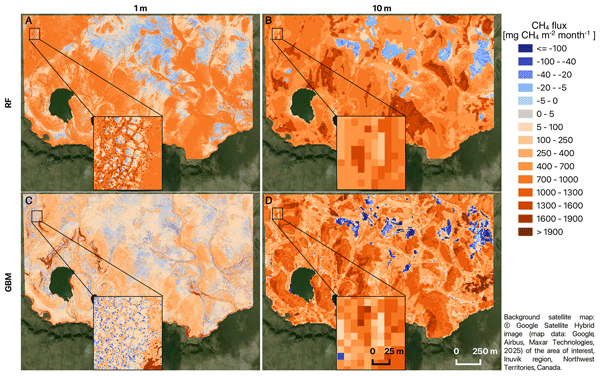
Kseniia Ivanova, Anna-Maria Virkkala, Victor Brovkin, Tobias Stacke, Barbara Widhalm, Annett Bartsch, Carolina Voigt, Oliver Sonnentag, and Mathias Göckede
Biogeosciences, 23, 233–262, https://doi.org/10.5194/bg-23-233-2026, https://doi.org/10.5194/bg-23-233-2026, 2026
Short summary
Short summary
We measured over 13,000 methane fluxes at a site in the Canadian Arctic and linked them with drone and free satellite images. We tested four machine-learning methods and two map scales. Metre-scale maps captured small wet and dry features that strongly affect methane release, while coarser maps blurred them. Different models shifted the monthly methane estimate. This helps choose the right data and tools to map methane, design monitoring networks, and check climate models.
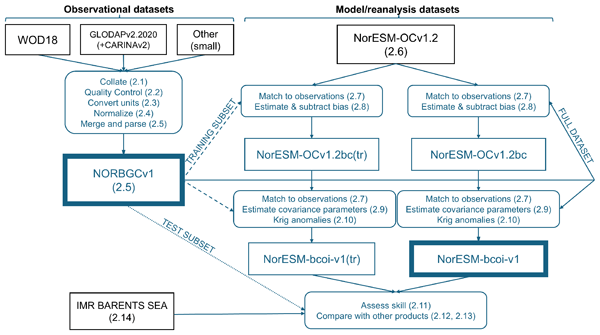
Philip J. Wallhead, Jörg Schwinger, Jerry Tjiputra, Trond Kristiansen, and Richard G. J. Bellerby
Earth Syst. Sci. Data, 17, 6763–6805, https://doi.org/10.5194/essd-17-6763-2025, https://doi.org/10.5194/essd-17-6763-2025, 2025
Short summary
Short summary
We developed a novel method to combine ocean data from observations and models, and applied it to produce gridded estimates of nutrients, oxygen, dissolved inorganic carbon and total alkalinity concentrations at latitudes >40° N and years 1980–2020. The new estimates showed improved accuracy and coverage relative to previous estimates, but highlighted remaining uncertainty in some poorly sampled regions. The work was largely motivated by a need for accurate input data for regional ocean models.
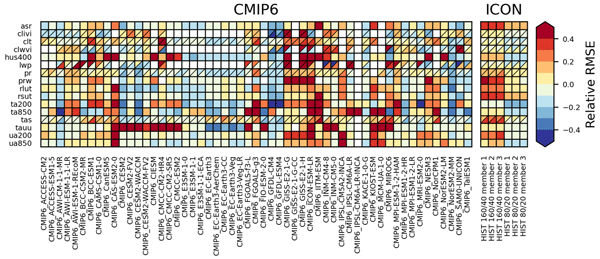
Wolfgang A. Müller, Stephan Lorenz, Trang V. Pham, Andrea Schneidereit, Renate Brokopf, Victor Brovkin, Nils Brüggemann, Fatemeh Chegini, Dietmar Dommenget, Kristina Fröhlich, Barbara Früh, Veronika Gayler, Helmuth Haak, Stefan Hagemann, Moritz Hanke, Tatiana Ilyina, Johann Jungclaus, Martin Köhler, Peter Korn, Luis Kornblueh, Clarissa A. Kroll, Julian Krüger, Karel Castro-Morales, Ulrike Niemeier, Holger Pohlmann, Iuliia Polkova, Roland Potthast, Thomas Riddick, Manuel Schlund, Tobias Stacke, Roland Wirth, Dakuan Yu, and Jochem Marotzke
Geosci. Model Dev., 18, 9385–9415, https://doi.org/10.5194/gmd-18-9385-2025, https://doi.org/10.5194/gmd-18-9385-2025, 2025
Short summary
Short summary
We provide a new Earth System model configuration framed into the ICON architecture, which provides the baseline for the next generation of climate predictions and projections (hereafter ICON XPP). Two resolutions of ICON XPP are presented that show high runtime performances making it suitable to run long integrations and large-ensemble experiments. ICON XPP similarly perform to CMIP6-class of climate models making it a good basis for climate forecasts and projections, and climate research.
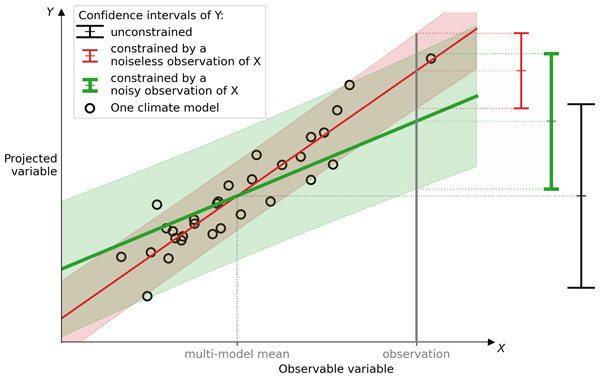
Valentin Portmann, Marie Chavent, and Didier Swingedouw
Geosci. Model Dev., 18, 9015–9038, https://doi.org/10.5194/gmd-18-9015-2025, https://doi.org/10.5194/gmd-18-9015-2025, 2025
Short summary
Short summary
The future climate is very uncertain due to the large dispersion in projections from numerical models. Observational constraints (OCs) decrease this uncertainty using real-world observations. The article proposes a new rigorous statistical OC model that provides updated estimates of confidence intervals as used in Intergovernmental Panel on Climate Change (IPCC) reports. It allows the use of multiple observations simultaneously and proposes an innovative and proper illustration of this OC approach.
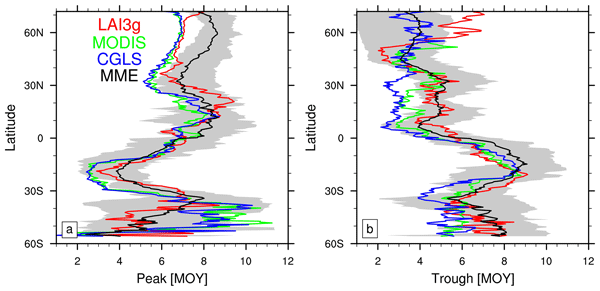
Daniele Peano, Deborah Hemming, Christine Delire, Yuanchao Fan, Hanna Lee, Stefano Materia, Julia E. M. S. Nabel, Taejin Park, David Wårlind, Andy Wiltshire, and Sönke Zaehle
Biogeosciences, 22, 7117–7135, https://doi.org/10.5194/bg-22-7117-2025, https://doi.org/10.5194/bg-22-7117-2025, 2025
Short summary
Short summary
Earth System Models are the principal tools for scientists to study past, present, and future climate changes. This work investigates the ability of a set of them to represent the observed changes in vegetation, which are vital to estimating the impact of future climate mitigation and adaptation strategies. This study highlights the main limitations in correctly representing vegetation variability. These tools still need further development to improve our understanding of future changes.
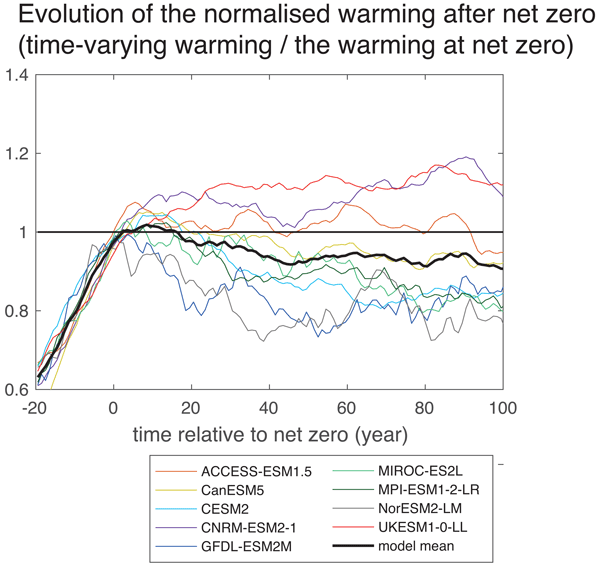
Richard G. Williams, Philip Goodwin, Paulo Ceppi, Chris D. Jones, and Andrew H. MacDougall
Biogeosciences, 22, 7167–7186, https://doi.org/10.5194/bg-22-7167-2025, https://doi.org/10.5194/bg-22-7167-2025, 2025
Short summary
Short summary
How the climate system responds when carbon emissions cease is an open question: some climate models reveal a slight warming, whereas most models reveal a slight cooling. The temperature response after net zero is connected via a new framework to quantify and compare the opposing thermal and carbon drivers. The climate response after net zero is controlled by how the planet takes up heat and radiates heat back to space, and how the land and ocean sequester carbon from the atmosphere.
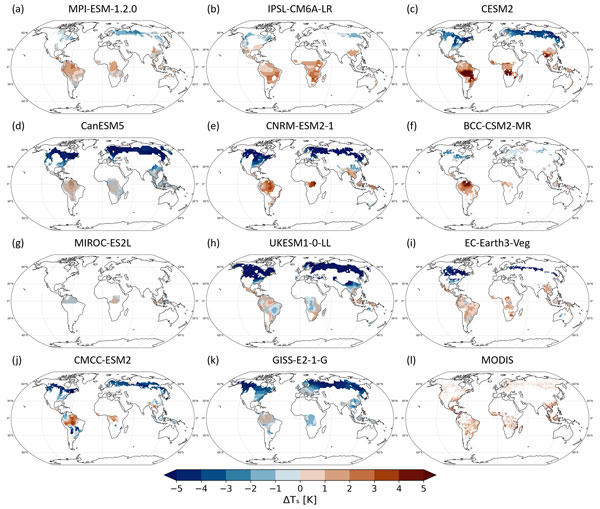
Nikolina Mileva, Julia Pongratz, Vivek K. Arora, Akihiko Ito, Sebastiaan Luyssaert, Sonali S. McDermid, Paul A. Miller, Daniele Peano, Roland Séférian, Yanwu Zhang, and Wolfgang Buermann
Earth Syst. Dynam., 16, 2137–2160, https://doi.org/10.5194/esd-16-2137-2025, https://doi.org/10.5194/esd-16-2137-2025, 2025
Short summary
Short summary
Despite forests being so important for mitigating climate change, there are still uncertainties about how much the changes in forest cover contribute to the cooling/warming of the climate. Climate models and real-world observations often disagree about the magnitude and even the direction of these changes. We constrain climate models scenarios of widespread deforestation with satellite and in-situ data and show that models still have difficulties representing the movement of heat and water.
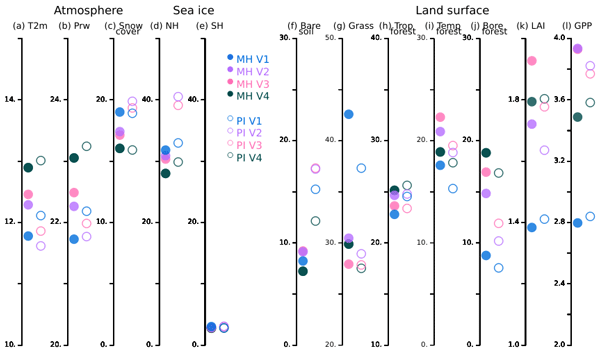
Pascale Braconnot, Nicolas Viovy, and Olivier Marti
Earth Syst. Dynam., 16, 2113–2136, https://doi.org/10.5194/esd-16-2113-2025, https://doi.org/10.5194/esd-16-2113-2025, 2025
Short summary
Short summary
This study highlights how the representation of the vegetation in a climate model triggers the atmospheric feedback controlling the top of the atmosphere radiative fluxes. Using simulations of the mid-Holocene and the preindustrial climates, we analyse cascading effects involving local snow-vegetation interactions, as well as tropical atmospheric water content. We show that photosynthesis plays a key role in shaping the seasonality of the climate response and differences between model versions
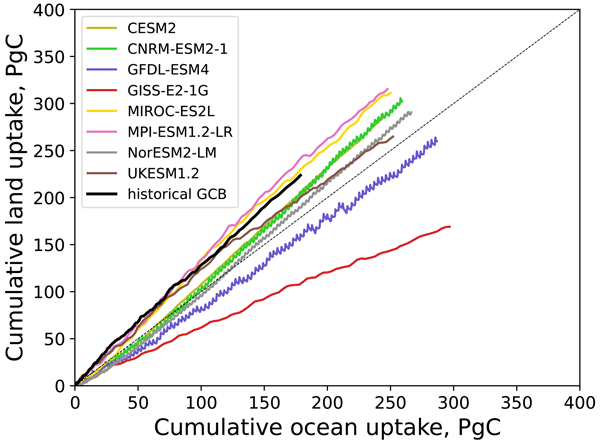
Victor Brovkin, Benjamin M. Sanderson, Noel G. Brizuela, Tomohiro Hajima, Tatiana Ilyina, Chris D. Jones, Charles Koven, David Lawrence, Peter Lawrence, Hongmei Li, Spencer Liddcoat, Anastasia Romanou, Roland Séférian, Lori T. Sentman, Abigail L. S. Swann, Jerry Tjiputra, Tilo Ziehn, and Alexander J. Winkler
Earth Syst. Dynam., 16, 2021–2034, https://doi.org/10.5194/esd-16-2021-2025, https://doi.org/10.5194/esd-16-2021-2025, 2025
Short summary
Short summary
Idealized experiments with Earth system models provide a basis for understanding the response of the carbon cycle to emissions. We show that most models exhibit a quasi-linear relationship between cumulative carbon uptake on land and in the ocean and hypothesize that this relationship does not depend on emission pathways. We reduce the coupled system to only one differential equation, which represents a powerful simplification of the Earth system dynamics as a function of fossil fuel emissions.
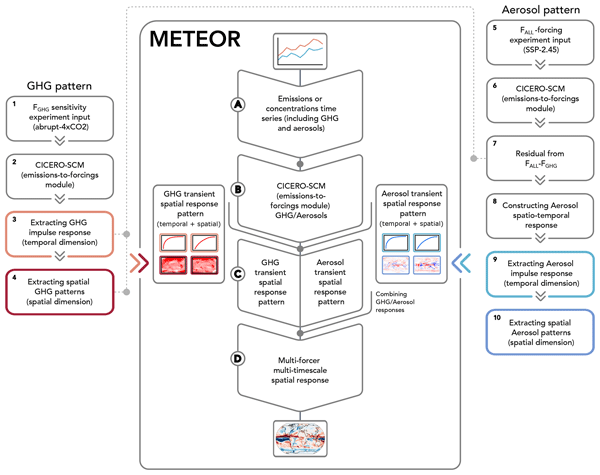
Marit Sandstad, Norman Julius Steinert, Susanne Baur, and Benjamin Mark Sanderson
Geosci. Model Dev., 18, 8269–8312, https://doi.org/10.5194/gmd-18-8269-2025, https://doi.org/10.5194/gmd-18-8269-2025, 2025
Short summary
Short summary
We present METEORv1.0.1, a climate model emulator, that can be trained on full spatially resolved and widely available climate model data to reproduce climate variables and make predictions from unseen emission trajectories. The methodology identifies patterns with timescales of impact for one or more forcers using idealised experiments and anomaly calculations. Results for precipitation and temperature show good model performance and can reproduce hysteresis for overshoot scenarios.
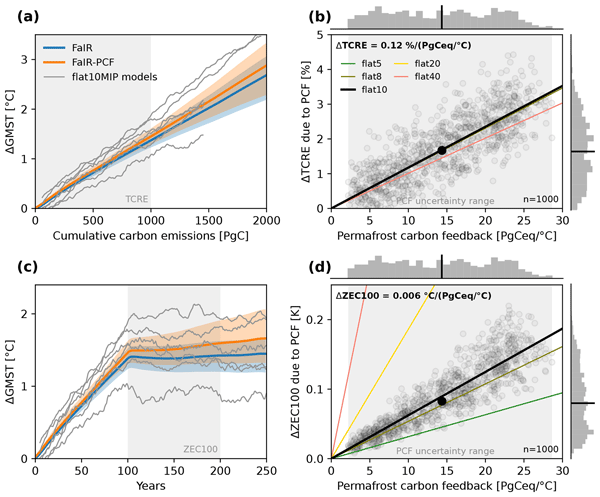
Norman J. Steinert and Benjamin M. Sanderson
Earth Syst. Dynam., 16, 1711–1721, https://doi.org/10.5194/esd-16-1711-2025, https://doi.org/10.5194/esd-16-1711-2025, 2025
Short summary
Short summary
In this study, we explore how carbon emissions from thawing permafrost, known as the permafrost carbon feedback, affect two important climate metrics: how much the Earth warms per amount of carbon we emit and how much warming continues after we stop emitting carbon. Our study tackles a major gap in how we estimate future climate change. Using simplified climate models, we find a generalizable relationship between the permafrost carbon feedback and its additional warming impact on climate.
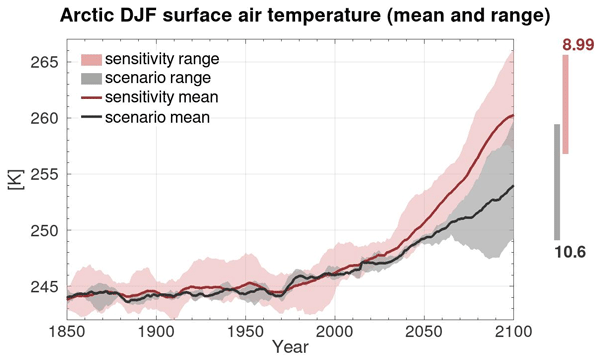
Lise Seland Graff, Jerry Tjiputra, Ada Gjermundsen, Andreas Born, Jens Boldingh Debernard, Heiko Goelzer, Yan-Chun He, Petra Margaretha Langebroek, Aleksi Nummelin, Dirk Olivié, Øyvind Seland, Trude Storelvmo, Mats Bentsen, Chuncheng Guo, Andrea Rosendahl, Dandan Tao, Thomas Toniazzo, Camille Li, Stephen Outten, and Michael Schulz
Earth Syst. Dynam., 16, 1671–1698, https://doi.org/10.5194/esd-16-1671-2025, https://doi.org/10.5194/esd-16-1671-2025, 2025
Short summary
Short summary
The magnitude of future Arctic amplification is highly uncertain. Using the Norwegian Earth System Model, we explore the effect of improving the representation of clouds, ocean eddies, the Greenland ice sheet, sea ice, and ozone on the projected Arctic winter warming in a coordinated experiment set. These improvements all lead to enhanced projected Arctic warming, with the largest changes found in the sea ice retreat regions and the largest uncertainty found on the Atlantic side.
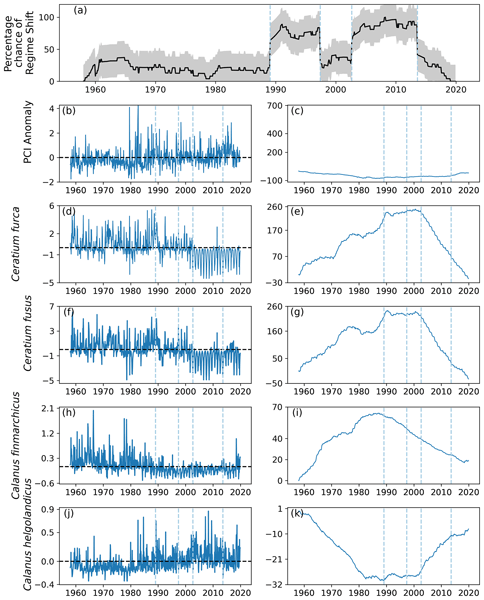
Paul Dees, Friederike Fröb, Beatriz Arellano-Nava, David G. Johns, and Christoph Heinze
Ocean Sci., 21, 2397–2417, https://doi.org/10.5194/os-21-2397-2025, https://doi.org/10.5194/os-21-2397-2025, 2025
Short summary
Short summary
In this paper we describe a novel methodology to automate the estimation of ecological regime shift probability in a single time series. We have applied this new methodology to the continuous plankton recorder dataset in the North Sea and have shown how the model is able to estimate the likelihood of a regime shift using abundance data of multiple phytoplankton and zooplankton species.
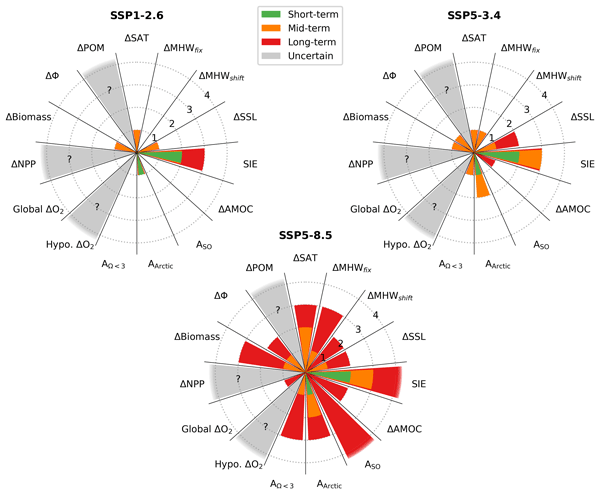
Timothée Bourgeois, Giang T. Tran, Aurich Jeltsch-Thömmes, Jörg Schwinger, Friederike Fröb, Thomas L. Frölicher, Thorsten Blenckner, Olivier Torres, Jean Negrel, David P. Keller, Andreas Oschlies, Laurent Bopp, and Fortunat Joos
Biogeosciences, 22, 5435–5462, https://doi.org/10.5194/bg-22-5435-2025, https://doi.org/10.5194/bg-22-5435-2025, 2025
Short summary
Short summary
Anthropogenic greenhouse gas emissions significantly impact ocean ecosystems through climate change and acidification, leading to either progressive or abrupt changes. This study maps the crossing of physical and ecological limits for various ocean impact metrics under three emission scenarios. Using Earth system models, we identify when these limits are exceeded, highlighting the urgent need for ambitious climate action to safeguard the world's oceans and ecosystems.
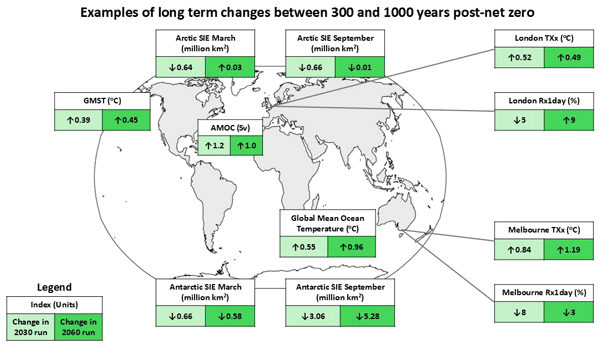
Andrew D. King, Nerilie J. Abram, Eduardo Alastrué de Asenjo, and Tilo Ziehn
Earth Syst. Dynam., 16, 1605–1609, https://doi.org/10.5194/esd-16-1605-2025, https://doi.org/10.5194/esd-16-1605-2025, 2025
Short summary
Short summary
It is vital that climate changes under net zero emissions are well understood to support decision making processes. Current modelling efforts are insufficient, partly due to limited simulation lengths. We propose a framework for 1000-year-long simulations that attempts to minimise computing resources by leveraging existing simulations. This will increase understanding of the implications of current climate policies for the Earth System over coming decades and centuries.
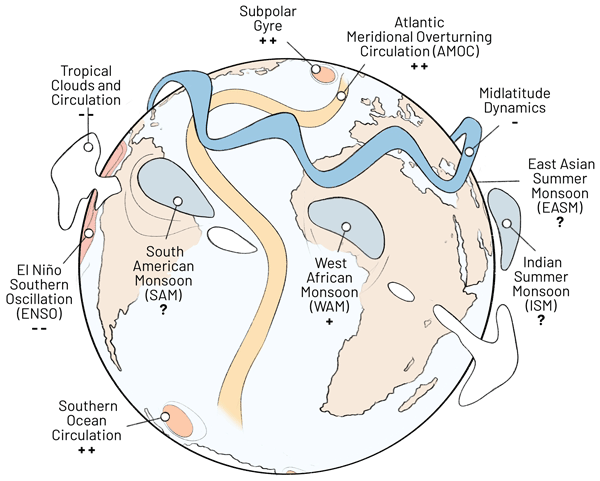
Sina Loriani, Yevgeny Aksenov, David I. Armstrong McKay, Govindasamy Bala, Andreas Born, Cristiano Mazur Chiessi, Henk A. Dijkstra, Jonathan F. Donges, Sybren Drijfhout, Matthew H. England, Alexey V. Fedorov, Laura C. Jackson, Kai Kornhuber, Gabriele Messori, Francesco S. R. Pausata, Stefanie Rynders, Jean-Baptiste Sallée, Bablu Sinha, Steven C. Sherwood, Didier Swingedouw, and Thejna Tharammal
Earth Syst. Dynam., 16, 1611–1653, https://doi.org/10.5194/esd-16-1611-2025, https://doi.org/10.5194/esd-16-1611-2025, 2025
Short summary
Short summary
In this work, we draw on palaeo-records, observations, and modelling studies to review tipping points in the ocean overturning circulations, monsoon systems, and global atmospheric circulations. We find indications for tipping in the ocean overturning circulations and the West African monsoon, with potentially severe impacts on the Earth system and humans. Tipping in the other considered systems is regarded as conceivable but is currently not sufficiently supported by evidence.
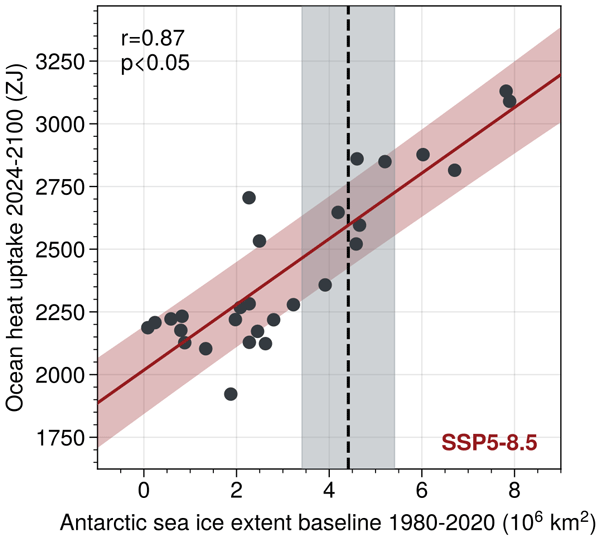
Linus Vogt, Casimir de Lavergne, Jean-Baptiste Sallée, Lester Kwiatkowski, Thomas L. Frölicher, and Jens Terhaar
Earth Syst. Dynam., 16, 1453–1482, https://doi.org/10.5194/esd-16-1453-2025, https://doi.org/10.5194/esd-16-1453-2025, 2025
Short summary
Short summary
Future projections of global ocean heat uptake (OHU) strongly differ between climate models. Here, we reveal an observational constraint on future OHU based on historical Antarctic sea ice extent observations. This emergent constraint is based on a coupling between sea ice, deep- and surface ocean temperatures, and cloud feedback. It implies an upward correction of 2024–2100 global OHU projections by up to 14 % and suggests that previous constraints have underestimated future warming.
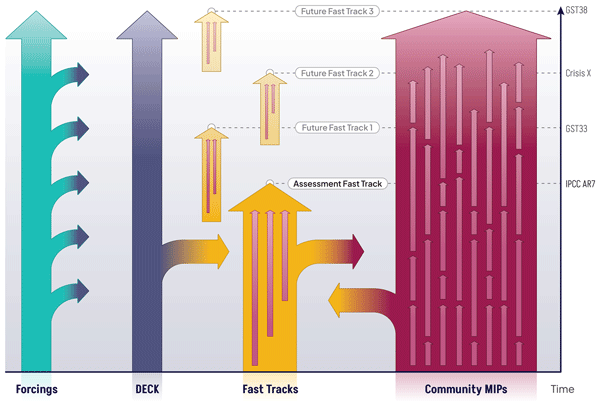
John P. Dunne, Helene T. Hewitt, Julie M. Arblaster, Frédéric Bonou, Olivier Boucher, Tereza Cavazos, Beth Dingley, Paul J. Durack, Birgit Hassler, Martin Juckes, Tomoki Miyakawa, Matt Mizielinski, Vaishali Naik, Zebedee Nicholls, Eleanor O'Rourke, Robert Pincus, Benjamin M. Sanderson, Isla R. Simpson, and Karl E. Taylor
Geosci. Model Dev., 18, 6671–6700, https://doi.org/10.5194/gmd-18-6671-2025, https://doi.org/10.5194/gmd-18-6671-2025, 2025
Short summary
Short summary
The seventh phase of the Coupled Model Intercomparison Project (CMIP7) coordinates efforts to answer key and timely climate science questions and facilitate delivery of relevant multi-model simulations for prediction and projection; characterization, attribution, and process understanding; and vulnerability, impact, and adaptation analysis. Key to the CMIP7 design are the mandatory Diagnostic, Evaluation and Characterization of Klima and optional Assessment Fast Track experiments.
Luana Schwarz, Jannes Breier, Hannah Prawitz, Max Bechthold, Werner von Bloh, Sara M. Constantino, Dieter Gerten, Jobst Heitzig, Ronja Hotz, Leander John, Christoph Müller, Johan Rockström, and Jonathan F. Donges
EGUsphere, https://doi.org/10.5194/egusphere-2025-4079, https://doi.org/10.5194/egusphere-2025-4079, 2025
Short summary
Short summary
We present a novel global model that links farmer decisions with ecological processes to explore how agricultural systems co-evolve. Unlike previous tools, it captures feedbacks between society and nature at up-to planetary scale. We find that conservation practices can restore soil health and support stable harvests. Adoption spreads through learning and norms, showing how regeneration at the farm scale can ripple outward, contributing to global sustainability and Earth system resilience.
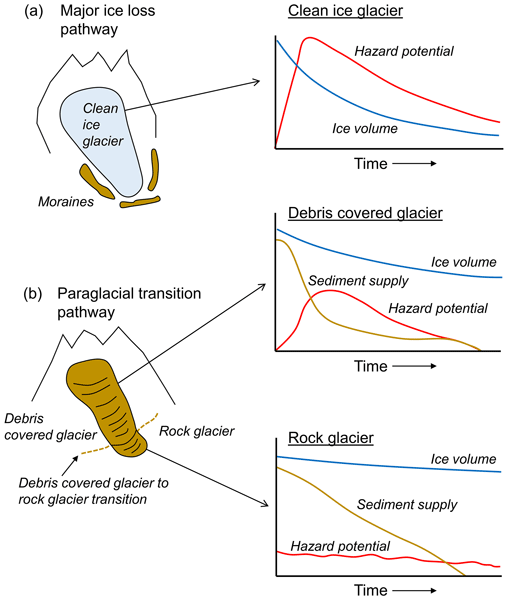
Stephan Harrison, Adina Racoviteanu, Sarah Shannon, Darren Jones, Karen Anderson, Neil Glasser, Jasper Knight, Anna Ranger, Arindan Mandal, Bramha Dutt Vishwakarma, Jeffrey S. Kargel, Dan Shugar, Umesh Haritashya, Dongfeng Li, Aristeidis Koutroulis, Klaus Wyser, and Sam Inglis
The Cryosphere, 19, 4113–4124, https://doi.org/10.5194/tc-19-4113-2025, https://doi.org/10.5194/tc-19-4113-2025, 2025
Short summary
Short summary
Climate change is leading to a global recession of mountain glaciers, and numerical modelling suggests that this will result in the rapid disappearance of many glaciers, impacting water supplies. However, an alternative scenario suggests that increased rock fall and debris flows to valley bottoms will cover glaciers with thick rock debris, slowing melting and transforming glaciers into rock–ice mixtures called rock glaciers. This paper explores these scenarios.
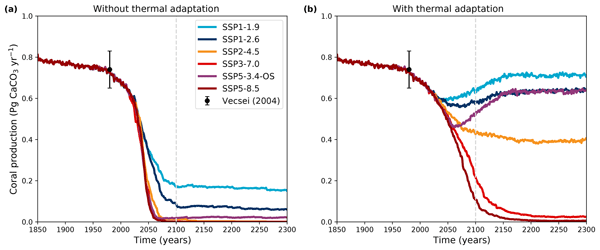
Nathaelle Bouttes, Lester Kwiatkowski, Elodie Bougeot, Manon Berger, Victor Brovkin, and Guy Munhoven
Biogeosciences, 22, 4531–4544, https://doi.org/10.5194/bg-22-4531-2025, https://doi.org/10.5194/bg-22-4531-2025, 2025
Short summary
Short summary
Coral reefs are under threat due to warming and ocean acidification. It is difficult to project future coral reef production due to uncertainties in climate models, socioeconomic scenarios and coral adaptation to warming. Here we have included a coral reef module within a climate model for the first time to evaluate the range of possible futures. We show that coral reef production decreases in most future scenarios, but in some cases coral reef carbonate production can persist.
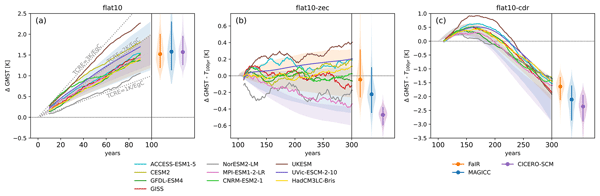
Benjamin M. Sanderson, Victor Brovkin, Rosie A. Fisher, David Hohn, Tatiana Ilyina, Chris D. Jones, Torben Koenigk, Charles Koven, Hongmei Li, David M. Lawrence, Peter Lawrence, Spencer Liddicoat, Andrew H. MacDougall, Nadine Mengis, Zebedee Nicholls, Eleanor O'Rourke, Anastasia Romanou, Marit Sandstad, Jörg Schwinger, Roland Séférian, Lori T. Sentman, Isla R. Simpson, Chris Smith, Norman J. Steinert, Abigail L. S. Swann, Jerry Tjiputra, and Tilo Ziehn
Geosci. Model Dev., 18, 5699–5724, https://doi.org/10.5194/gmd-18-5699-2025, https://doi.org/10.5194/gmd-18-5699-2025, 2025
Short summary
Short summary
This study investigates how climate models warm in response to simplified carbon emissions trajectories, refining the understanding of climate reversibility and commitment. Metrics are defined for warming response to cumulative emissions and for the cessation of emissions or ramp-down to net-zero and net-negative levels. Results indicate that previous concentration-driven experiments may have overstated the Zero Emissions Commitment due to emissions rates exceeding historical levels.
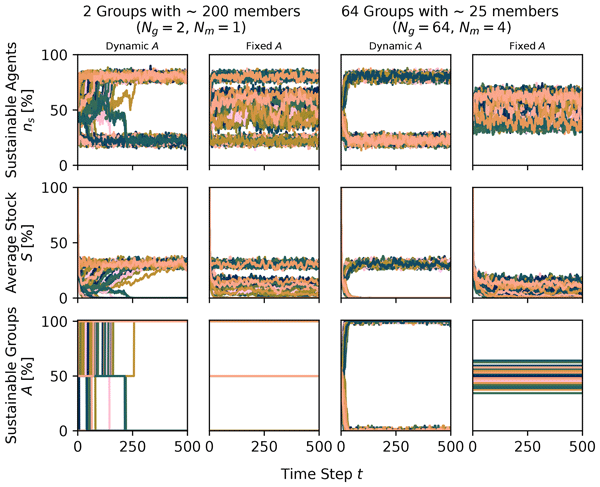
Max Bechthold, Wolfram Barfuss, André Butz, Jannes Breier, Sara M. Constantino, Jobst Heitzig, Luana Schwarz, Sanam N. Vardag, and Jonathan F. Donges
Earth Syst. Dynam., 16, 1365–1390, https://doi.org/10.5194/esd-16-1365-2025, https://doi.org/10.5194/esd-16-1365-2025, 2025
Short summary
Short summary
Social norms are a major influence on human behaviour. In natural resource use models, norms are often included in a simplistic way leading to “black or white” sustainability outcomes. We find that a dynamic representation of norms, including social groups, determines more nuanced states of the environment in a stylised model of resource use while also defining the success of attempts to manage the system, suggesting the importance of representing both aspects well in coupled models.
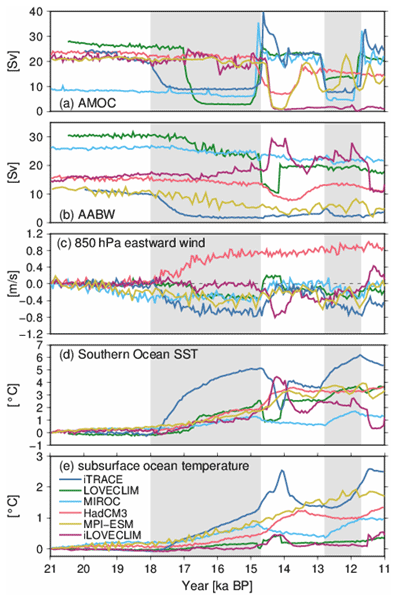
Takashi Obase, Laurie Menviel, Ayako Abe-Ouchi, Tristan Vadsaria, Ruza Ivanovic, Brooke Snoll, Sam Sherriff-Tadano, Paul J. Valdes, Lauren Gregoire, Marie-Luise Kapsch, Uwe Mikolajewicz, Nathaelle Bouttes, Didier Roche, Fanny Lhardy, Chengfei He, Bette Otto-Bliesner, Zhengyu Liu, and Wing-Le Chan
Clim. Past, 21, 1443–1463, https://doi.org/10.5194/cp-21-1443-2025, https://doi.org/10.5194/cp-21-1443-2025, 2025
Short summary
Short summary
This study analyses transient simulations of the last deglaciation performed by six climate models to understand the processes driving high-southern-latitude temperature changes. We find that atmospheric CO2 and AMOC (Atlantic Meridional Overturning Circulation) changes are the primary drivers of the warming and cooling during the middle stage of the deglaciation. The analysis highlights the model's sensitivity of CO2 and AMOC to meltwater and the meltwater history of temperature changes at high southern latitudes.
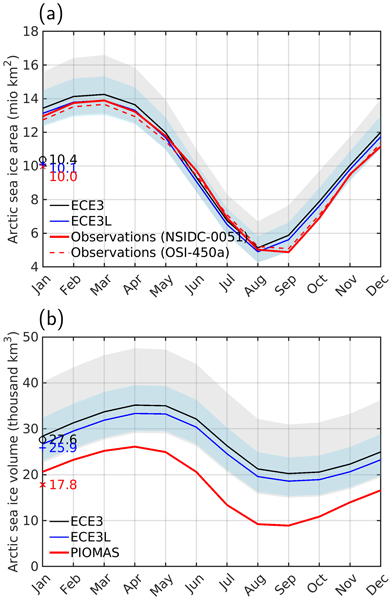
Tian Tian, Richard Davy, Leandro Ponsoni, and Shuting Yang
The Cryosphere, 19, 2751–2768, https://doi.org/10.5194/tc-19-2751-2025, https://doi.org/10.5194/tc-19-2751-2025, 2025
Short summary
Short summary
We introduced a modulating factor to the surface heat flux in the EC-Earth3 model to address the lack of parameterization for turbulent exchange over sea ice leads and correct the bias in Arctic sea ice. Three pairwise experiments showed that the amplified heat flux effectively reduces the overestimated sea ice, especially during cold periods, thereby improving agreement with observed and reanalysis data for sea ice area, volume, and ice edge, particularly in the North Atlantic sector.
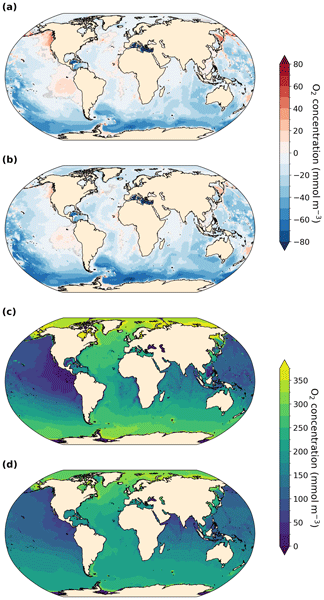
Bartholomé Duboc, Katrin J. Meissner, Laurie Menviel, Nicholas K. H. Yeung, Babette Hoogakker, Tilo Ziehn, and Matthew Chamberlain
Clim. Past, 21, 1093–1122, https://doi.org/10.5194/cp-21-1093-2025, https://doi.org/10.5194/cp-21-1093-2025, 2025
Short summary
Short summary
We use an earth system model to simulate ocean oxygen during two past warm periods, the Last Interglacial (∼ 129–115 ka) and Marine Isotope Stage (MIS) 9e (∼ 336–321 ka). The global ocean is overall less oxygenated compared to the preindustrial simulation. Large regions in the Mediterranean Sea are oxygen deprived in the Last Interglacial simulation, and to a lesser extent in the MIS 9e simulation, due to an intensification and expansion of the African monsoon and enhanced river runoff.
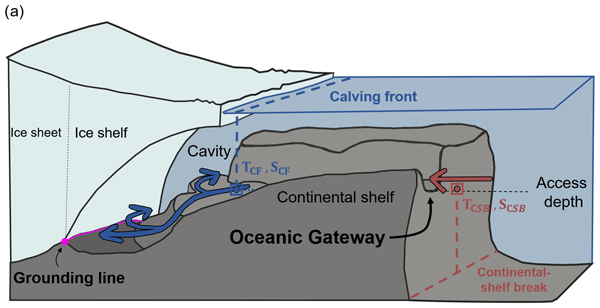
Lena Nicola, Ronja Reese, Moritz Kreuzer, Torsten Albrecht, and Ricarda Winkelmann
The Cryosphere, 19, 2263–2287, https://doi.org/10.5194/tc-19-2263-2025, https://doi.org/10.5194/tc-19-2263-2025, 2025
Short summary
Short summary
We identify potential oceanic gateways to Antarctic grounding lines based on high-resolution bathymetry data and examine the effect of access depths on ice-shelf melt rates. These gateways manifest the deepest topographic features that could channel warm water masses to the base of the ice sheet. We identify oceanic gateways in several Antarctic regions and estimate an upper bound of melt rate changes in case all warm water masses gain access to the cavities.
Ricarda Winkelmann, Donovan P. Dennis, Jonathan F. Donges, Sina Loriani, Ann Kristin Klose, Jesse F. Abrams, Jorge Alvarez-Solas, Torsten Albrecht, David Armstrong McKay, Sebastian Bathiany, Javier Blasco Navarro, Victor Brovkin, Eleanor Burke, Gokhan Danabasoglu, Reik V. Donner, Markus Drüke, Goran Georgievski, Heiko Goelzer, Anna B. Harper, Gabriele Hegerl, Marina Hirota, Aixue Hu, Laura C. Jackson, Colin Jones, Hyungjun Kim, Torben Koenigk, Peter Lawrence, Timothy M. Lenton, Hannah Liddy, José Licón-Saláiz, Maxence Menthon, Marisa Montoya, Jan Nitzbon, Sophie Nowicki, Bette Otto-Bliesner, Francesco Pausata, Stefan Rahmstorf, Karoline Ramin, Alexander Robinson, Johan Rockström, Anastasia Romanou, Boris Sakschewski, Christina Schädel, Steven Sherwood, Robin S. Smith, Norman J. Steinert, Didier Swingedouw, Matteo Willeit, Wilbert Weijer, Richard Wood, Klaus Wyser, and Shuting Yang
EGUsphere, https://doi.org/10.5194/egusphere-2025-1899, https://doi.org/10.5194/egusphere-2025-1899, 2025
Short summary
Short summary
The Tipping Points Modelling Intercomparison Project (TIPMIP) is an international collaborative effort to systematically assess tipping point risks in the Earth system using state-of-the-art coupled and stand-alone domain models. TIPMIP will provide a first global atlas of potential tipping dynamics, respective critical thresholds and key uncertainties, generating an important building block towards a comprehensive scientific basis for policy- and decision-making.
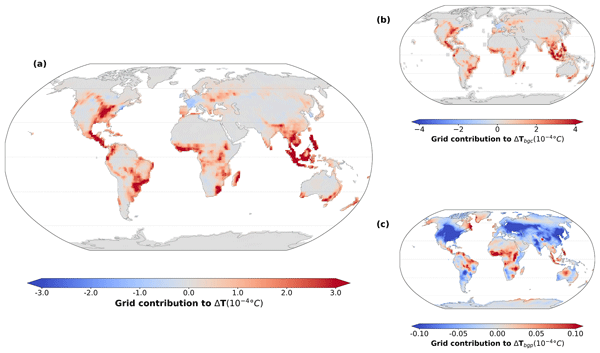
Amali A. Amali, Clemens Schwingshackl, Akihiko Ito, Alina Barbu, Christine Delire, Daniele Peano, David M. Lawrence, David Wårlind, Eddy Robertson, Edouard L. Davin, Elena Shevliakova, Ian N. Harman, Nicolas Vuichard, Paul A. Miller, Peter J. Lawrence, Tilo Ziehn, Tomohiro Hajima, Victor Brovkin, Yanwu Zhang, Vivek K. Arora, and Julia Pongratz
Earth Syst. Dynam., 16, 803–840, https://doi.org/10.5194/esd-16-803-2025, https://doi.org/10.5194/esd-16-803-2025, 2025
Short summary
Short summary
Our study explored the impact of anthropogenic land-use change (LUC) on climate dynamics, focusing on biogeophysical (BGP) and biogeochemical (BGC) effects using data from the Land Use Model Intercomparison Project (LUMIP) and the Coupled Model Intercomparison Project Phase 6 (CMIP6). We found that LUC-induced carbon emissions contribute to a BGC warming of 0.21 °C, with BGC effects dominating globally over BGP effects, which show regional variability. Our findings highlight discrepancies in model simulations and emphasize the need for improved representations of LUC processes.
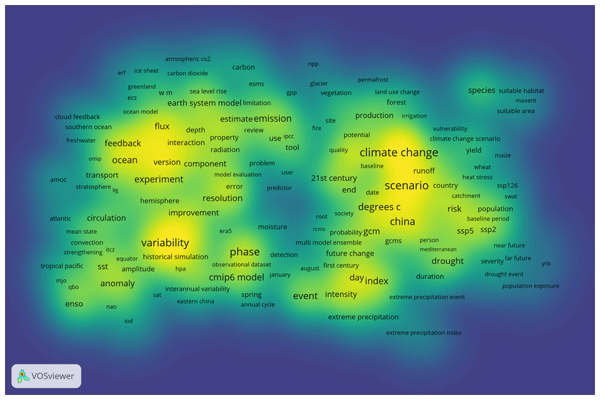
Martin Juckes, Karl E. Taylor, Fabrizio Antonio, David Brayshaw, Carlo Buontempo, Jian Cao, Paul J. Durack, Michio Kawamiya, Hyungjun Kim, Tomas Lovato, Chloe Mackallah, Matthew Mizielinski, Alessandra Nuzzo, Martina Stockhause, Daniele Visioni, Jeremy Walton, Briony Turner, Eleanor O'Rourke, and Beth Dingley
Geosci. Model Dev., 18, 2639–2663, https://doi.org/10.5194/gmd-18-2639-2025, https://doi.org/10.5194/gmd-18-2639-2025, 2025
Short summary
Short summary
The Baseline Climate Variables for Earth System Modelling (ESM-BCVs) are defined as a list of 135 variables which have high utility for the evaluation and exploitation of climate simulations. The list reflects the most frequently used variables from Earth system models based on an assessment of data publication and download records from the largest archive of global climate projects.
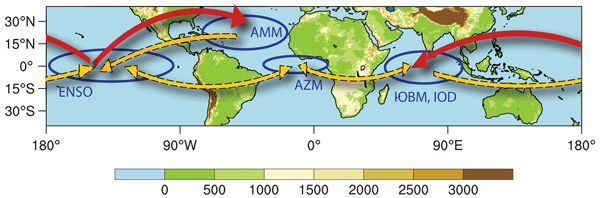
Ingo Richter, Ping Chang, Ping-Gin Chiu, Gokhan Danabasoglu, Takeshi Doi, Dietmar Dommenget, Guillaume Gastineau, Zoe E. Gillett, Aixue Hu, Takahito Kataoka, Noel S. Keenlyside, Fred Kucharski, Yuko M. Okumura, Wonsun Park, Malte F. Stuecker, Andréa S. Taschetto, Chunzai Wang, Stephen G. Yeager, and Sang-Wook Yeh
Geosci. Model Dev., 18, 2587–2608, https://doi.org/10.5194/gmd-18-2587-2025, https://doi.org/10.5194/gmd-18-2587-2025, 2025
Short summary
Short summary
Tropical ocean basins influence each other through multiple pathways and mechanisms, referred to here as tropical basin interaction (TBI). Many researchers have examined TBI using comprehensive climate models but have obtained conflicting results. This may be partly due to differences in experiment protocols and partly due to systematic model errors. The Tropical Basin Interaction Model Intercomparison Project (TBIMIP) aims to address this problem by designing a set of TBI experiments that will be performed by multiple models.
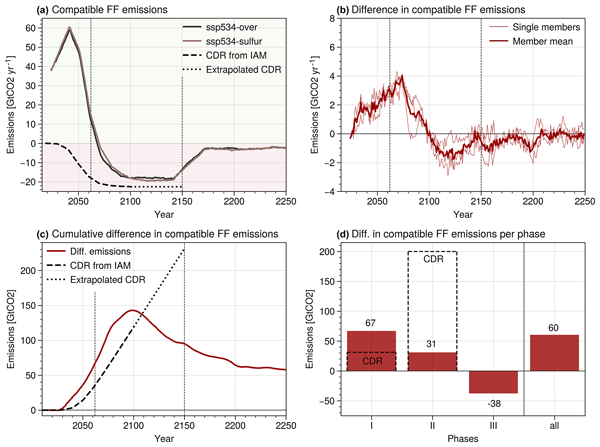
Susanne Baur, Benjamin M. Sanderson, Roland Séférian, and Laurent Terray
Earth Syst. Dynam., 16, 667–681, https://doi.org/10.5194/esd-16-667-2025, https://doi.org/10.5194/esd-16-667-2025, 2025
Short summary
Short summary
Stratospheric aerosol injection (SAI) could be used alongside mitigation to reduce global warming. Previous studies suggest that more atmospheric CO2 is taken up when SAI is deployed. Here, we look at the entire SAI deployment from start to after termination. We show how the initial CO2 uptake benefit, and hence lower mitigation burden, is reduced in later stages of SAI, where the reduction in natural CO2 uptake turns into an additional mitigation burden.
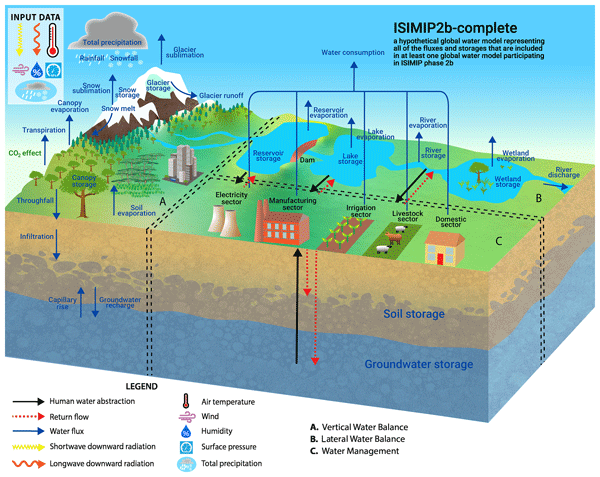
Hannes Müller Schmied, Simon Newland Gosling, Marlo Garnsworthy, Laura Müller, Camelia-Eliza Telteu, Atiq Kainan Ahmed, Lauren Seaby Andersen, Julien Boulange, Peter Burek, Jinfeng Chang, He Chen, Lukas Gudmundsson, Manolis Grillakis, Luca Guillaumot, Naota Hanasaki, Aristeidis Koutroulis, Rohini Kumar, Guoyong Leng, Junguo Liu, Xingcai Liu, Inga Menke, Vimal Mishra, Yadu Pokhrel, Oldrich Rakovec, Luis Samaniego, Yusuke Satoh, Harsh Lovekumar Shah, Mikhail Smilovic, Tobias Stacke, Edwin Sutanudjaja, Wim Thiery, Athanasios Tsilimigkras, Yoshihide Wada, Niko Wanders, and Tokuta Yokohata
Geosci. Model Dev., 18, 2409–2425, https://doi.org/10.5194/gmd-18-2409-2025, https://doi.org/10.5194/gmd-18-2409-2025, 2025
Short summary
Short summary
Global water models contribute to the evaluation of important natural and societal issues but are – as all models – simplified representation of reality. So, there are many ways to calculate the water fluxes and storages. This paper presents a visualization of 16 global water models using a standardized visualization and the pathway towards this common understanding. Next to academic education purposes, we envisage that these diagrams will help researchers, model developers, and data users.
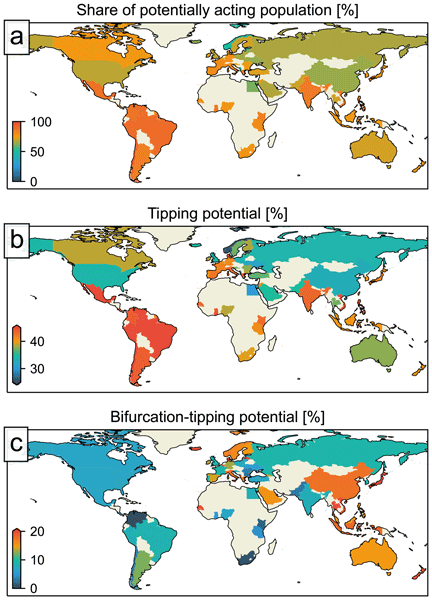
E. Keith Smith, Marc Wiedermann, Jonathan F. Donges, Jobst Heitzig, and Ricarda Winkelmann
Earth Syst. Dynam., 16, 545–564, https://doi.org/10.5194/esd-16-545-2025, https://doi.org/10.5194/esd-16-545-2025, 2025
Short summary
Short summary
Social tipping dynamics have received recent attention as a potential mechanism for effective climate actions – yet how such tipping dynamics could unfold remains largely unquantified. We explore how social tipping processes can develop by enabling necessary conditions (exemplified by climate change concern) and increased perceptions of localized impacts (sea level rise). The likelihood of social tipping varies regionally, mostly along areas with the highest exposure to persistent risks.
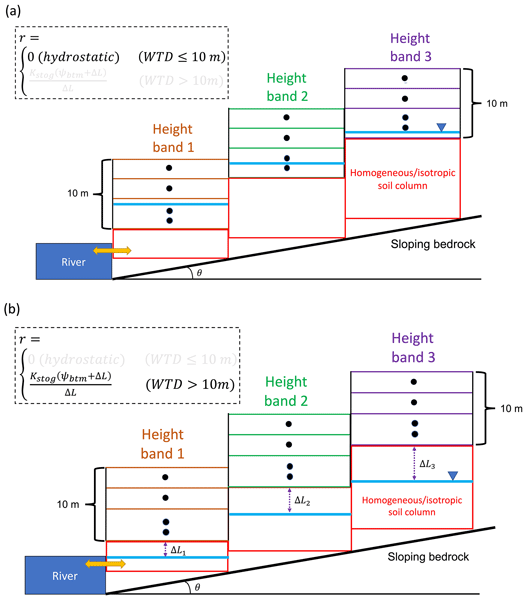
Minki Hong, Nathaniel Chaney, Sergey Malyshev, Enrico Zorzetto, Anthony Preucil, and Elena Shevliakova
Geosci. Model Dev., 18, 2275–2301, https://doi.org/10.5194/gmd-18-2275-2025, https://doi.org/10.5194/gmd-18-2275-2025, 2025
Short summary
Short summary
This study shows the significance of groundwater in resolving the coupled terrestrial water–energy cycle. LM4-SHARC (soil–hillslope aquifer–river continuum) describes the hillslope groundwater using its emergent properties, yielding noticeable improvements in soil moisture/temperature and groundwater discharge predictions. The implications of groundwater-mediated hydrologic interactions between hillslopes and streams need further exploration in the Earth system modeling community.
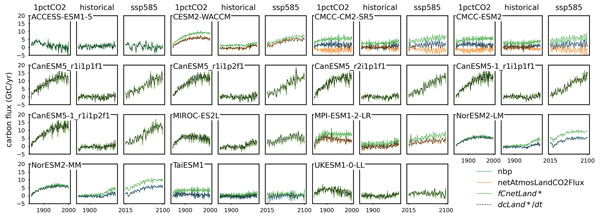
Gang Tang, Zebedee Nicholls, Chris Jones, Thomas Gasser, Alexander Norton, Tilo Ziehn, Alejandro Romero-Prieto, and Malte Meinshausen
Geosci. Model Dev., 18, 2111–2136, https://doi.org/10.5194/gmd-18-2111-2025, https://doi.org/10.5194/gmd-18-2111-2025, 2025
Short summary
Short summary
We analyzed carbon and nitrogen mass conservation in data from various Earth system models. Our findings reveal significant discrepancies between flux and pool size data, where cumulative imbalances can reach hundreds of gigatons of carbon or nitrogen. These imbalances appear primarily due to missing or inconsistently reported fluxes – especially for land-use and fire emissions. To enhance data quality, we recommend that future climate data protocols address this issue at the reporting stage.
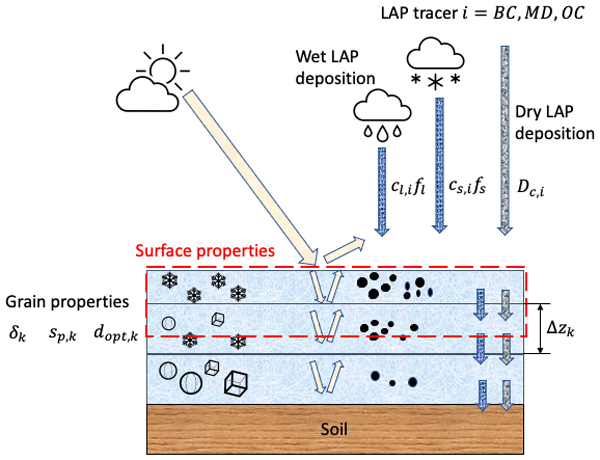
Enrico Zorzetto, Paul Ginoux, Sergey Malyshev, and Elena Shevliakova
The Cryosphere, 19, 1313–1334, https://doi.org/10.5194/tc-19-1313-2025, https://doi.org/10.5194/tc-19-1313-2025, 2025
Short summary
Short summary
Light-absorbing particle (LAP) deposition on snow leads to a darkening of the snow surface and can thus accelerate snow melt. Understanding the extent to which different types of LAPs contribute to snow melt is important to both predict changes in water availability and improve global climate model predictions. Here, we extend a recently developed snow model to account for the deposition of LAPs in the snowpack and evaluate the effect of snow darkening on accelerating snow melt.
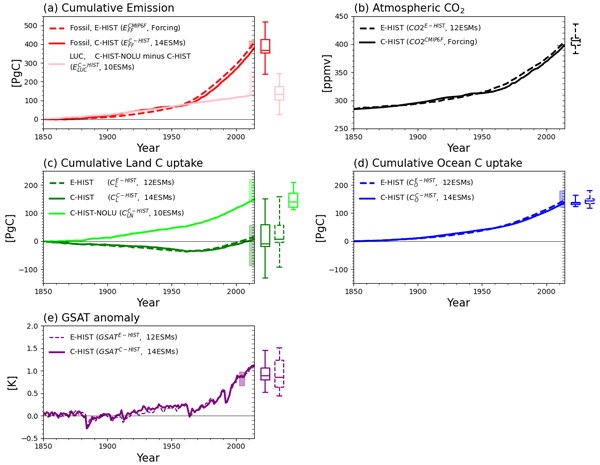
Tomohiro Hajima, Michio Kawamiya, Akihiko Ito, Kaoru Tachiiri, Chris D. Jones, Vivek Arora, Victor Brovkin, Roland Séférian, Spencer Liddicoat, Pierre Friedlingstein, and Elena Shevliakova
Biogeosciences, 22, 1447–1473, https://doi.org/10.5194/bg-22-1447-2025, https://doi.org/10.5194/bg-22-1447-2025, 2025
Short summary
Short summary
This study analyzes atmospheric CO2 concentrations and global carbon budgets simulated by multiple Earth system models, using several types of simulations (CO2 concentration- and emission-driven experiments). We successfully identified problems with regard to the global carbon budget in each model. We also found urgent issues with regard to land use change CO2 emissions that should be solved in the latest generation of models.
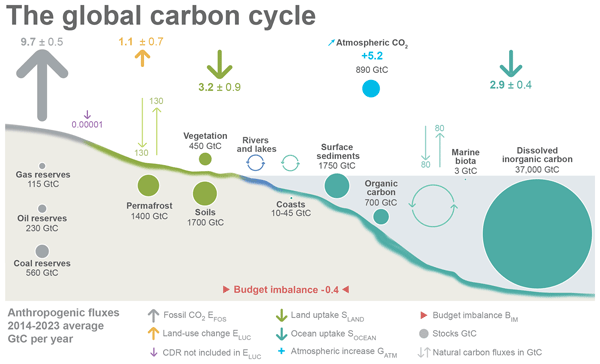
Pierre Friedlingstein, Michael O'Sullivan, Matthew W. Jones, Robbie M. Andrew, Judith Hauck, Peter Landschützer, Corinne Le Quéré, Hongmei Li, Ingrid T. Luijkx, Are Olsen, Glen P. Peters, Wouter Peters, Julia Pongratz, Clemens Schwingshackl, Stephen Sitch, Josep G. Canadell, Philippe Ciais, Robert B. Jackson, Simone R. Alin, Almut Arneth, Vivek Arora, Nicholas R. Bates, Meike Becker, Nicolas Bellouin, Carla F. Berghoff, Henry C. Bittig, Laurent Bopp, Patricia Cadule, Katie Campbell, Matthew A. Chamberlain, Naveen Chandra, Frédéric Chevallier, Louise P. Chini, Thomas Colligan, Jeanne Decayeux, Laique M. Djeutchouang, Xinyu Dou, Carolina Duran Rojas, Kazutaka Enyo, Wiley Evans, Amanda R. Fay, Richard A. Feely, Daniel J. Ford, Adrianna Foster, Thomas Gasser, Marion Gehlen, Thanos Gkritzalis, Giacomo Grassi, Luke Gregor, Nicolas Gruber, Özgür Gürses, Ian Harris, Matthew Hefner, Jens Heinke, George C. Hurtt, Yosuke Iida, Tatiana Ilyina, Andrew R. Jacobson, Atul K. Jain, Tereza Jarníková, Annika Jersild, Fei Jiang, Zhe Jin, Etsushi Kato, Ralph F. Keeling, Kees Klein Goldewijk, Jürgen Knauer, Jan Ivar Korsbakken, Xin Lan, Siv K. Lauvset, Nathalie Lefèvre, Zhu Liu, Junjie Liu, Lei Ma, Shamil Maksyutov, Gregg Marland, Nicolas Mayot, Patrick C. McGuire, Nicolas Metzl, Natalie M. Monacci, Eric J. Morgan, Shin-Ichiro Nakaoka, Craig Neill, Yosuke Niwa, Tobias Nützel, Lea Olivier, Tsuneo Ono, Paul I. Palmer, Denis Pierrot, Zhangcai Qin, Laure Resplandy, Alizée Roobaert, Thais M. Rosan, Christian Rödenbeck, Jörg Schwinger, T. Luke Smallman, Stephen M. Smith, Reinel Sospedra-Alfonso, Tobias Steinhoff, Qing Sun, Adrienne J. Sutton, Roland Séférian, Shintaro Takao, Hiroaki Tatebe, Hanqin Tian, Bronte Tilbrook, Olivier Torres, Etienne Tourigny, Hiroyuki Tsujino, Francesco Tubiello, Guido van der Werf, Rik Wanninkhof, Xuhui Wang, Dongxu Yang, Xiaojuan Yang, Zhen Yu, Wenping Yuan, Xu Yue, Sönke Zaehle, Ning Zeng, and Jiye Zeng
Earth Syst. Sci. Data, 17, 965–1039, https://doi.org/10.5194/essd-17-965-2025, https://doi.org/10.5194/essd-17-965-2025, 2025
Short summary
Short summary
The Global Carbon Budget 2024 describes the methodology, main results, and datasets used to quantify the anthropogenic emissions of carbon dioxide (CO2) and their partitioning among the atmosphere, land ecosystems, and the ocean over the historical period (1750–2024). These living datasets are updated every year to provide the highest transparency and traceability in the reporting of CO2, the key driver of climate change.
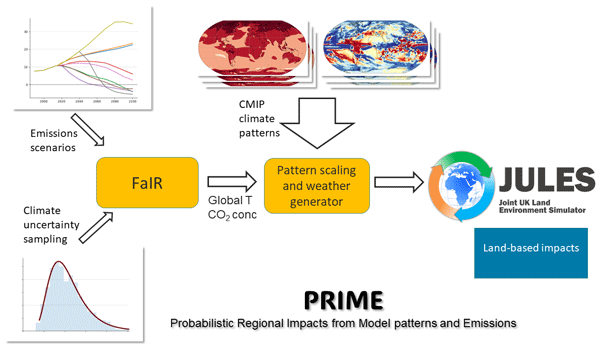
Camilla Mathison, Eleanor J. Burke, Gregory Munday, Chris D. Jones, Chris J. Smith, Norman J. Steinert, Andy J. Wiltshire, Chris Huntingford, Eszter Kovacs, Laila K. Gohar, Rebecca M. Varney, and Douglas McNeall
Geosci. Model Dev., 18, 1785–1808, https://doi.org/10.5194/gmd-18-1785-2025, https://doi.org/10.5194/gmd-18-1785-2025, 2025
Short summary
Short summary
We present PRIME (Probabilistic Regional Impacts from Model patterns and Emissions), which is designed to take new emissions scenarios and rapidly provide regional impact information. PRIME allows large ensembles to be run on multi-centennial timescales, including the analysis of many important variables for impact assessments. Our evaluation shows that PRIME reproduces the climate response for known scenarios, providing confidence in using PRIME for novel scenarios.
Marcos B. Sanches, Manoel Cardoso, Celso von Randow, Chris Jones, and Mathew Williams
EGUsphere, https://doi.org/10.5194/egusphere-2025-942, https://doi.org/10.5194/egusphere-2025-942, 2025
Preprint archived
Short summary
Short summary
This study examines South America's role in the global carbon cycle using flux and stock analyses from CMIP6 Earth System Models. We discuss the continent’s relevance, model-observation agreement, and the impacts of dry and wet years on major biomes. Additionally, we assess model results indicating that parts of South America could shift from carbon sinks to emitters, significantly affecting the global carbon balance.
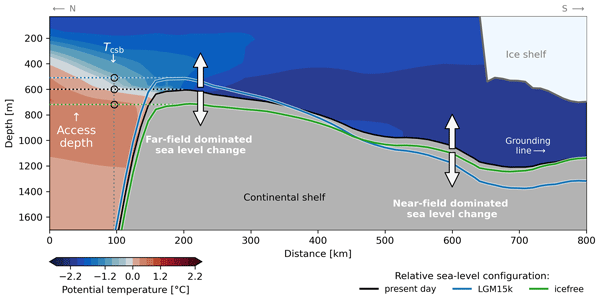
Moritz Kreuzer, Torsten Albrecht, Lena Nicola, Ronja Reese, and Ricarda Winkelmann
The Cryosphere, 19, 1181–1203, https://doi.org/10.5194/tc-19-1181-2025, https://doi.org/10.5194/tc-19-1181-2025, 2025
Short summary
Short summary
The study investigates how changing sea levels around Antarctica can potentially affect the melting of floating ice shelves. It utilizes numerical models for both the Antarctic Ice Sheet and the solid Earth, investigating features like troughs and sills that control the flow of ocean water onto the continental shelf. The research finds that compared to climatic changes, the effect of relative sea level on ice-shelf melting is small.
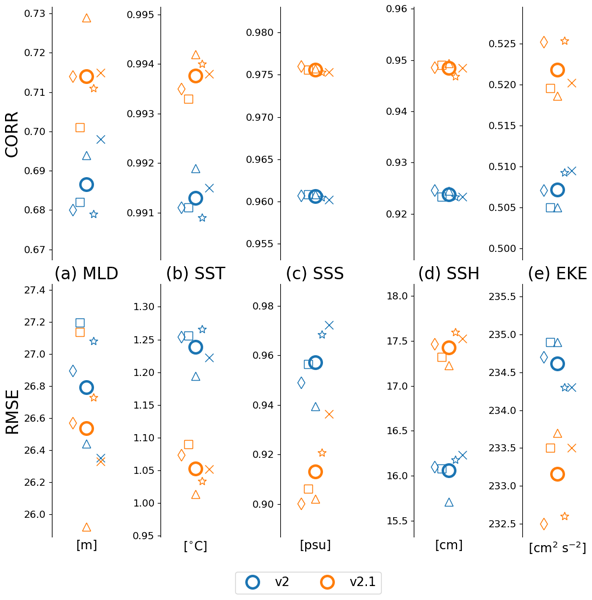
Katherine M. Smith, Alice M. Barthel, LeAnn M. Conlon, Luke P. Van Roekel, Anthony Bartoletti, Jean-Christophe Golaz, Chengzhu Zhang, Carolyn Branecky Begeman, James J. Benedict, Gautam Bisht, Yan Feng, Walter Hannah, Bryce E. Harrop, Nicole Jeffery, Wuyin Lin, Po-Lun Ma, Mathew E. Maltrud, Mark R. Petersen, Balwinder Singh, Qi Tang, Teklu Tesfa, Jonathan D. Wolfe, Shaocheng Xie, Xue Zheng, Karthik Balaguru, Oluwayemi Garuba, Peter Gleckler, Aixue Hu, Jiwoo Lee, Ben Moore-Maley, and Ana C. Ordoñez
Geosci. Model Dev., 18, 1613–1633, https://doi.org/10.5194/gmd-18-1613-2025, https://doi.org/10.5194/gmd-18-1613-2025, 2025
Short summary
Short summary
Version 2.1 of the U.S. Department of Energy's Energy Exascale Earth System Model (E3SM) adds the Fox-Kemper et al. (2011) mixed-layer eddy parameterization, which restratifies the ocean surface layer through an overturning streamfunction. Results include surface layer bias reduction in temperature, salinity, and sea ice extent in the North Atlantic; a small strengthening of the Atlantic meridional overturning circulation; and improvements to many atmospheric climatological variables.
Malcolm J. Roberts, Kevin A. Reed, Qing Bao, Joseph J. Barsugli, Suzana J. Camargo, Louis-Philippe Caron, Ping Chang, Cheng-Ta Chen, Hannah M. Christensen, Gokhan Danabasoglu, Ivy Frenger, Neven S. Fučkar, Shabeh ul Hasson, Helene T. Hewitt, Huanping Huang, Daehyun Kim, Chihiro Kodama, Michael Lai, Lai-Yung Ruby Leung, Ryo Mizuta, Paulo Nobre, Pablo Ortega, Dominique Paquin, Christopher D. Roberts, Enrico Scoccimarro, Jon Seddon, Anne Marie Treguier, Chia-Ying Tu, Paul A. Ullrich, Pier Luigi Vidale, Michael F. Wehner, Colin M. Zarzycki, Bosong Zhang, Wei Zhang, and Ming Zhao
Geosci. Model Dev., 18, 1307–1332, https://doi.org/10.5194/gmd-18-1307-2025, https://doi.org/10.5194/gmd-18-1307-2025, 2025
Short summary
Short summary
HighResMIP2 is a model intercomparison project focusing on high-resolution global climate models, that is, those with grid spacings of 25 km or less in the atmosphere and ocean, using simulations of decades to a century in length. We are proposing an update of our simulation protocol to make the models more applicable to key questions for climate variability and hazard in present-day and future projections and to build links with other communities to provide more robust climate information.
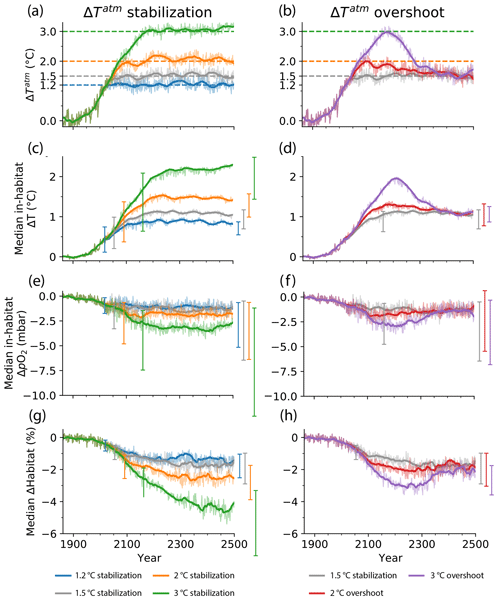
Anne L. Morée, Fabrice Lacroix, William W. L. Cheung, and Thomas L. Frölicher
Biogeosciences, 22, 1115–1133, https://doi.org/10.5194/bg-22-1115-2025, https://doi.org/10.5194/bg-22-1115-2025, 2025
Short summary
Short summary
Using novel Earth system model simulations and applying the Aerobic Growth Index, we show that only about half of the habitat loss for marine species is realized when temperature stabilization is initially reached. The maximum habitat loss happens over a century after peak warming in a temperature overshoot scenario peaking at 2 °C before stabilizing at 1.5 °C. We also emphasize that species adaptation may be key in mitigating the long-term impacts of temperature stabilization and overshoot.
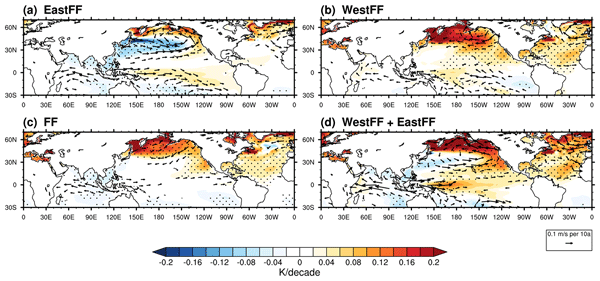
Chenrui Diao, Yangyang Xu, Aixue Hu, and Zhili Wang
Atmos. Chem. Phys., 25, 2167–2180, https://doi.org/10.5194/acp-25-2167-2025, https://doi.org/10.5194/acp-25-2167-2025, 2025
Short summary
Short summary
Industrial aerosol increases in Asia and reductions in North America and Europe in 1980–2020 influenced climate changes over the Pacific Ocean differently. Asian aerosols caused El Niño-like temperature patterns and slightly weakened the natural variation in the North Pacific, while reduced emissions of western countries led to extensive warming in middle–high latitudes of the North Pacific. Human impacts on the Pacific climate may change when emission reduction occurs over Asia in the future.
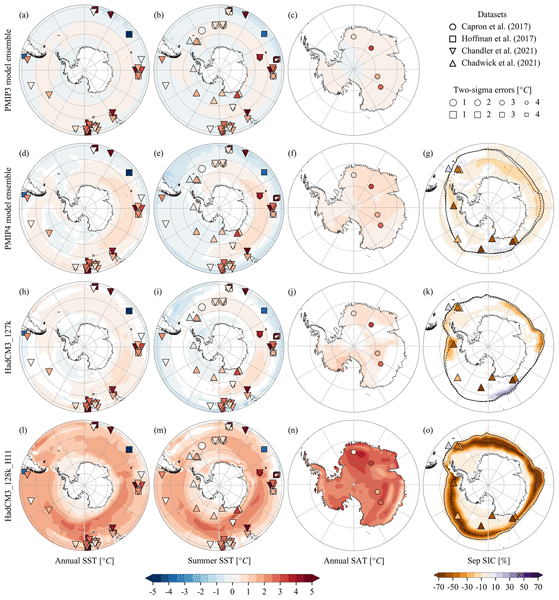
Qinggang Gao, Emilie Capron, Louise C. Sime, Rachael H. Rhodes, Rahul Sivankutty, Xu Zhang, Bette L. Otto-Bliesner, and Martin Werner
Clim. Past, 21, 419–440, https://doi.org/10.5194/cp-21-419-2025, https://doi.org/10.5194/cp-21-419-2025, 2025
Short summary
Short summary
Marine sediment and ice core records suggest a warmer Southern Ocean and Antarctica at the early last interglacial, ~127 000 years ago. However, when only forced by orbital parameters and greenhouse gas concentrations during that period, state-of-the-art climate models do not reproduce the magnitude of warming. Here we show that much of the warming at southern middle to high latitudes can be reproduced by a UK climate model, HadCM3, with a 3000-year freshwater forcing over the North Atlantic.
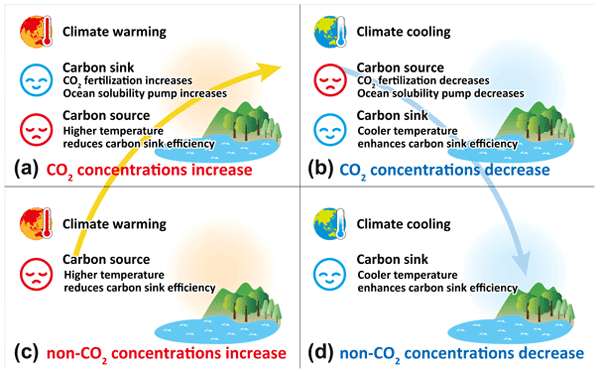
Irina Melnikova, Philippe Ciais, Katsumasa Tanaka, Hideo Shiogama, Kaoru Tachiiri, Tokuta Yokohata, and Olivier Boucher
Earth Syst. Dynam., 16, 257–273, https://doi.org/10.5194/esd-16-257-2025, https://doi.org/10.5194/esd-16-257-2025, 2025
Short summary
Short summary
Reducing non-CO2 greenhouse gases is important alongside CO2 for climate mitigation. Here, we look at how reducing their emissions compares to reducing CO2 using an Earth system model. While both types of gases contribute to warming, their regional climate impacts differ. Besides, the carbon cycle responds differently depending on whether climate change is driven by CO2 or non-CO2 gases. Considering both types of gases is important for carbon cycle analysis and climate mitigation strategies.
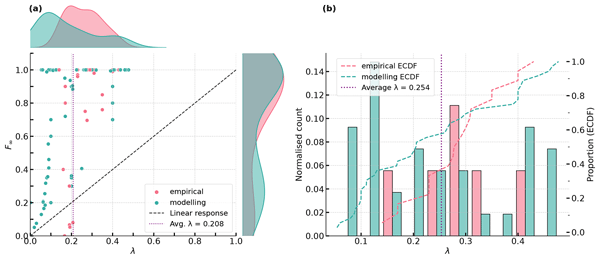
Jordan P. Everall, Fabian Tschofenig, Jonathan F. Donges, and Ilona M. Otto
Earth Syst. Dynam., 16, 189–214, https://doi.org/10.5194/esd-16-189-2025, https://doi.org/10.5194/esd-16-189-2025, 2025
Short summary
Short summary
A social tipping process is a large change in a social group that can be started by few people. Does the 80/20 rule apply here? We see if this is the case for human social groups. We find that, if the social conditions allow, change occurs when around 25 % of people engage. While tipping can happen between 10 % and 43 %, most cases tip by 40 %. However, tipping is not guaranteed: when people are resistant, trusted friend groups and context-appropriate messaging help the process along.

Lauren R. Marshall, Anja Schmidt, Andrew P. Schurer, Nathan Luke Abraham, Lucie J. Lücke, Rob Wilson, Kevin J. Anchukaitis, Gabriele C. Hegerl, Ben Johnson, Bette L. Otto-Bliesner, Esther C. Brady, Myriam Khodri, and Kohei Yoshida
Clim. Past, 21, 161–184, https://doi.org/10.5194/cp-21-161-2025, https://doi.org/10.5194/cp-21-161-2025, 2025
Short summary
Short summary
Large volcanic eruptions have caused temperature deviations over the past 1000 years; however, climate model results and reconstructions of surface cooling using tree rings do not match. We explore this mismatch using the latest models and find a better match to tree-ring reconstructions for some eruptions. Our results show that the way in which eruptions are simulated in models matters for the comparison to tree-rings, particularly regarding the spatial spread of volcanic aerosol.
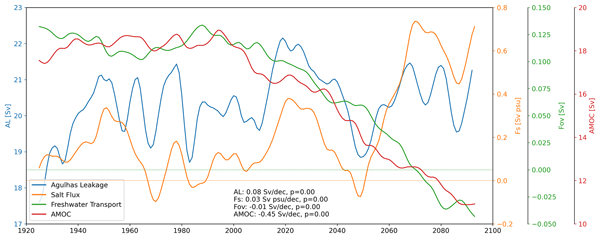
Hendrik Großelindemann, Frederic S. Castruccio, Gokhan Danabasoglu, and Arne Biastoch
Ocean Sci., 21, 93–112, https://doi.org/10.5194/os-21-93-2025, https://doi.org/10.5194/os-21-93-2025, 2025
Short summary
Short summary
This study investigates the Agulhas Leakage and examines its role in the global ocean circulation. It utilises a high-resolution Earth system model and a preindustrial climate to look at the response of the Agulhas Leakage to the wind field and the Atlantic Meridional Overturning Circulation (AMOC) and its evolution under climate change. The Agulhas Leakage could influence the stability of the AMOC, whose possible collapse would impact the climate in the Northern Hemisphere.
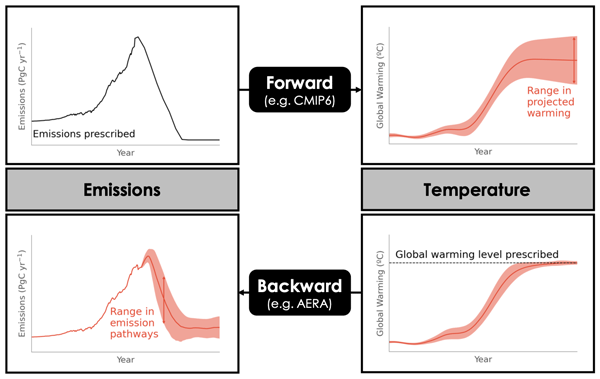
Yona Silvy, Thomas L. Frölicher, Jens Terhaar, Fortunat Joos, Friedrich A. Burger, Fabrice Lacroix, Myles Allen, Raffaele Bernardello, Laurent Bopp, Victor Brovkin, Jonathan R. Buzan, Patricia Cadule, Martin Dix, John Dunne, Pierre Friedlingstein, Goran Georgievski, Tomohiro Hajima, Stuart Jenkins, Michio Kawamiya, Nancy Y. Kiang, Vladimir Lapin, Donghyun Lee, Paul Lerner, Nadine Mengis, Estela A. Monteiro, David Paynter, Glen P. Peters, Anastasia Romanou, Jörg Schwinger, Sarah Sparrow, Eric Stofferahn, Jerry Tjiputra, Etienne Tourigny, and Tilo Ziehn
Earth Syst. Dynam., 15, 1591–1628, https://doi.org/10.5194/esd-15-1591-2024, https://doi.org/10.5194/esd-15-1591-2024, 2024
Short summary
Short summary
The adaptive emission reduction approach is applied with Earth system models to generate temperature stabilization simulations. These simulations provide compatible emission pathways and budgets for a given warming level, uncovering uncertainty ranges previously missing in the Coupled Model Intercomparison Project scenarios. These target-based emission-driven simulations offer a more coherent assessment across models for studying both the carbon cycle and its impacts under climate stabilization.
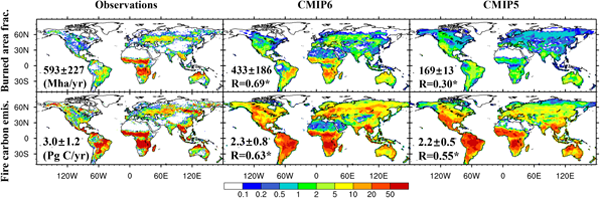
Fang Li, Xiang Song, Sandy P. Harrison, Jennifer R. Marlon, Zhongda Lin, L. Ruby Leung, Jörg Schwinger, Virginie Marécal, Shiyu Wang, Daniel S. Ward, Xiao Dong, Hanna Lee, Lars Nieradzik, Sam S. Rabin, and Roland Séférian
Geosci. Model Dev., 17, 8751–8771, https://doi.org/10.5194/gmd-17-8751-2024, https://doi.org/10.5194/gmd-17-8751-2024, 2024
Short summary
Short summary
This study provides the first comprehensive assessment of historical fire simulations from 19 Earth system models in phase 6 of the Coupled Model Intercomparison Project (CMIP6). Most models reproduce global totals, spatial patterns, seasonality, and regional historical changes well but fail to simulate the recent decline in global burned area and underestimate the fire response to climate variability. CMIP6 simulations address three critical issues of phase-5 models.
Bettina K. Gier, Manuel Schlund, Pierre Friedlingstein, Chris D. Jones, Colin Jones, Sönke Zaehle, and Veronika Eyring
Biogeosciences, 21, 5321–5360, https://doi.org/10.5194/bg-21-5321-2024, https://doi.org/10.5194/bg-21-5321-2024, 2024
Short summary
Short summary
This study investigates present-day carbon cycle variables in CMIP5 and CMIP6 simulations. Overall, CMIP6 models perform better but also show many remaining biases. A significant improvement in the simulation of photosynthesis in models with a nitrogen cycle is found, with only small differences between emission- and concentration-based simulations. Thus, we recommend using emission-driven simulations in CMIP7 by default and including the nitrogen cycle in all future carbon cycle models.
Benjamin M. Sanderson, Ben B. B. Booth, John Dunne, Veronika Eyring, Rosie A. Fisher, Pierre Friedlingstein, Matthew J. Gidden, Tomohiro Hajima, Chris D. Jones, Colin G. Jones, Andrew King, Charles D. Koven, David M. Lawrence, Jason Lowe, Nadine Mengis, Glen P. Peters, Joeri Rogelj, Chris Smith, Abigail C. Snyder, Isla R. Simpson, Abigail L. S. Swann, Claudia Tebaldi, Tatiana Ilyina, Carl-Friedrich Schleussner, Roland Séférian, Bjørn H. Samset, Detlef van Vuuren, and Sönke Zaehle
Geosci. Model Dev., 17, 8141–8172, https://doi.org/10.5194/gmd-17-8141-2024, https://doi.org/10.5194/gmd-17-8141-2024, 2024
Short summary
Short summary
We discuss how, in order to provide more relevant guidance for climate policy, coordinated climate experiments should adopt a greater focus on simulations where Earth system models are provided with carbon emissions from fossil fuels together with land use change instructions, rather than past approaches that have largely focused on experiments with prescribed atmospheric carbon dioxide concentrations. We discuss how these goals might be achieved in coordinated climate modeling experiments.
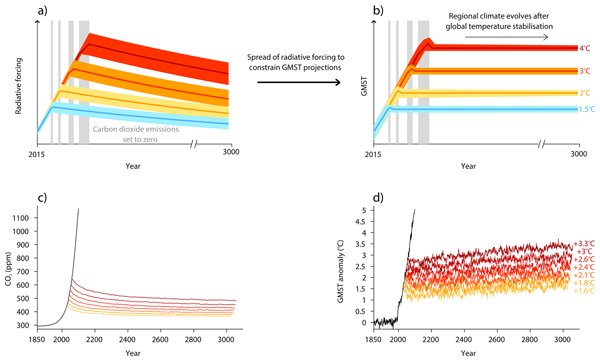
Andrew D. King, Tilo Ziehn, Matthew Chamberlain, Alexander R. Borowiak, Josephine R. Brown, Liam Cassidy, Andrea J. Dittus, Michael Grose, Nicola Maher, Seungmok Paik, Sarah E. Perkins-Kirkpatrick, and Aditya Sengupta
Earth Syst. Dynam., 15, 1353–1383, https://doi.org/10.5194/esd-15-1353-2024, https://doi.org/10.5194/esd-15-1353-2024, 2024
Short summary
Short summary
Governments are targeting net-zero emissions later this century with the aim of limiting global warming in line with the Paris Agreement. However, few studies explore the long-term consequences of reaching net-zero emissions and the effects of a delay in reaching net-zero. We use the Australian Earth system model to examine climate evolution under net-zero emissions. We find substantial changes which differ regionally, including continued Southern Ocean warming and Antarctic sea ice reduction.
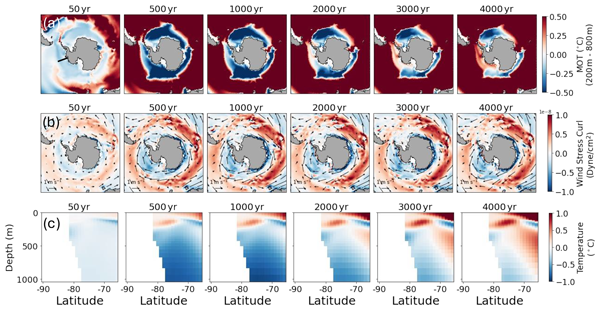
Mira Berdahl, Gunter R. Leguy, William H. Lipscomb, Bette L. Otto-Bliesner, Esther C. Brady, Robert A. Tomas, Nathan M. Urban, Ian Miller, Harriet Morgan, and Eric J. Steig
Clim. Past, 20, 2349–2371, https://doi.org/10.5194/cp-20-2349-2024, https://doi.org/10.5194/cp-20-2349-2024, 2024
Short summary
Short summary
Studying climate conditions near the Antarctic ice sheet (AIS) during Earth’s past warm periods informs us about how global warming may influence AIS ice loss. Using a global climate model, we investigate climate conditions near the AIS during the Last Interglacial (129 to 116 kyr ago), a period with warmer global temperatures and higher sea level than today. We identify the orbital and freshwater forcings that could cause ice loss and probe the mechanisms that lead to warmer climate conditions.
Colin G. Jones, Fanny Adloff, Ben B. B. Booth, Peter M. Cox, Veronika Eyring, Pierre Friedlingstein, Katja Frieler, Helene T. Hewitt, Hazel A. Jeffery, Sylvie Joussaume, Torben Koenigk, Bryan N. Lawrence, Eleanor O'Rourke, Malcolm J. Roberts, Benjamin M. Sanderson, Roland Séférian, Samuel Somot, Pier Luigi Vidale, Detlef van Vuuren, Mario Acosta, Mats Bentsen, Raffaele Bernardello, Richard Betts, Ed Blockley, Julien Boé, Tom Bracegirdle, Pascale Braconnot, Victor Brovkin, Carlo Buontempo, Francisco Doblas-Reyes, Markus Donat, Italo Epicoco, Pete Falloon, Sandro Fiore, Thomas Frölicher, Neven S. Fučkar, Matthew J. Gidden, Helge F. Goessling, Rune Grand Graversen, Silvio Gualdi, José M. Gutiérrez, Tatiana Ilyina, Daniela Jacob, Chris D. Jones, Martin Juckes, Elizabeth Kendon, Erik Kjellström, Reto Knutti, Jason Lowe, Matthew Mizielinski, Paola Nassisi, Michael Obersteiner, Pierre Regnier, Romain Roehrig, David Salas y Mélia, Carl-Friedrich Schleussner, Michael Schulz, Enrico Scoccimarro, Laurent Terray, Hannes Thiemann, Richard A. Wood, Shuting Yang, and Sönke Zaehle
Earth Syst. Dynam., 15, 1319–1351, https://doi.org/10.5194/esd-15-1319-2024, https://doi.org/10.5194/esd-15-1319-2024, 2024
Short summary
Short summary
We propose a number of priority areas for the international climate research community to address over the coming decade. Advances in these areas will both increase our understanding of past and future Earth system change, including the societal and environmental impacts of this change, and deliver significantly improved scientific support to international climate policy, such as future IPCC assessments and the UNFCCC Global Stocktake.
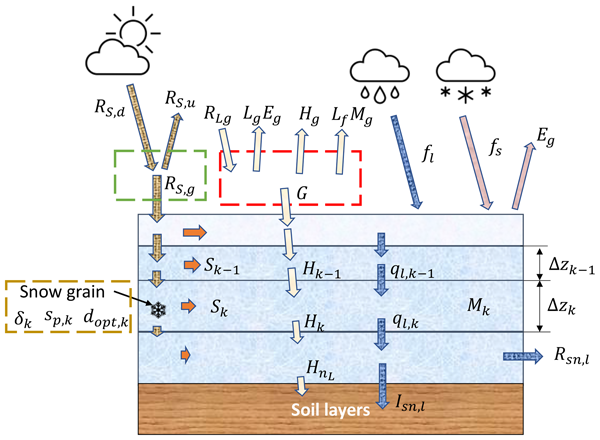
Enrico Zorzetto, Sergey Malyshev, Paul Ginoux, and Elena Shevliakova
Geosci. Model Dev., 17, 7219–7244, https://doi.org/10.5194/gmd-17-7219-2024, https://doi.org/10.5194/gmd-17-7219-2024, 2024
Short summary
Short summary
We describe a new snow scheme developed for use in global climate models, which simulates the interactions of snowpack with vegetation, atmosphere, and soil. We test the new snow model over a set of sites where in situ observations are available. We find that when compared to a simpler snow model, this model improves predictions of seasonal snow and of soil temperature under the snowpack, important variables for simulating both the hydrological cycle and the global climate system.
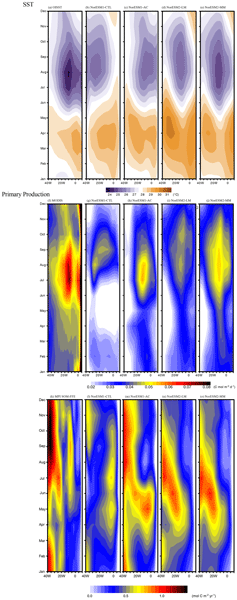
Shunya Koseki, Lander R. Crespo, Jerry Tjiputra, Filippa Fransner, Noel S. Keenlyside, and David Rivas
Biogeosciences, 21, 4149–4168, https://doi.org/10.5194/bg-21-4149-2024, https://doi.org/10.5194/bg-21-4149-2024, 2024
Short summary
Short summary
We investigated how the physical biases of an Earth system model influence the marine biogeochemical processes in the tropical Atlantic. With four different configurations of the model, we have shown that the versions with better SST reproduction tend to better represent the primary production and air–sea CO2 flux in terms of climatology, seasonal cycle, and response to climate variability.
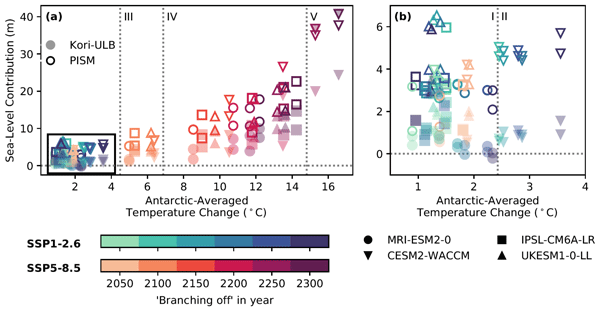
Ann Kristin Klose, Violaine Coulon, Frank Pattyn, and Ricarda Winkelmann
The Cryosphere, 18, 4463–4492, https://doi.org/10.5194/tc-18-4463-2024, https://doi.org/10.5194/tc-18-4463-2024, 2024
Short summary
Short summary
We systematically assess the long-term sea-level response from Antarctica to warming projected over the next centuries, using two ice-sheet models. We show that this committed Antarctic sea-level contribution is substantially higher than the transient sea-level change projected for the coming decades. A low-emission scenario already poses considerable risk of multi-meter sea-level increase over the next millennia, while additional East Antarctic ice loss unfolds under the high-emission pathway.
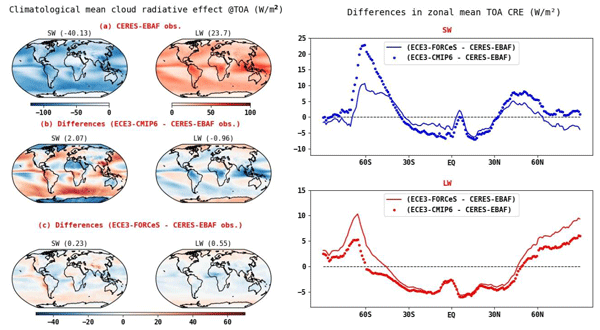
Manu Anna Thomas, Klaus Wyser, Shiyu Wang, Marios Chatziparaschos, Paraskevi Georgakaki, Montserrat Costa-Surós, Maria Gonçalves Ageitos, Maria Kanakidou, Carlos Pérez García-Pando, Athanasios Nenes, Twan van Noije, Philippe Le Sager, and Abhay Devasthale
Geosci. Model Dev., 17, 6903–6927, https://doi.org/10.5194/gmd-17-6903-2024, https://doi.org/10.5194/gmd-17-6903-2024, 2024
Short summary
Short summary
Aerosol–cloud interactions occur at a range of spatio-temporal scales. While evaluating recent developments in EC-Earth3-AerChem, this study aims to understand the extent to which the Twomey effect manifests itself at larger scales. We find a reduction in the warm bias over the Southern Ocean due to model improvements. While we see footprints of the Twomey effect at larger scales, the negative relationship between cloud droplet number and liquid water drives the shortwave radiative effect.
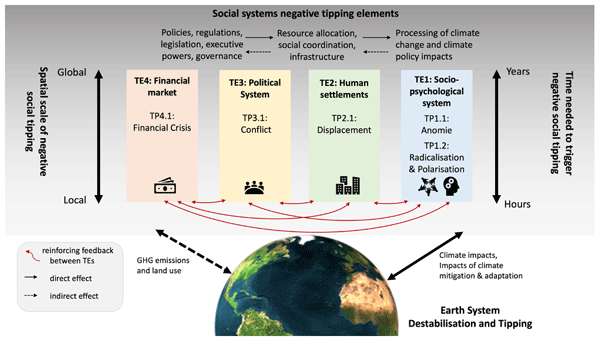
Viktoria Spaiser, Sirkku Juhola, Sara M. Constantino, Weisi Guo, Tabitha Watson, Jana Sillmann, Alessandro Craparo, Ashleigh Basel, John T. Bruun, Krishna Krishnamurthy, Jürgen Scheffran, Patricia Pinho, Uche T. Okpara, Jonathan F. Donges, Avit Bhowmik, Taha Yasseri, Ricardo Safra de Campos, Graeme S. Cumming, Hugues Chenet, Florian Krampe, Jesse F. Abrams, James G. Dyke, Stefanie Rynders, Yevgeny Aksenov, and Bryan M. Spears
Earth Syst. Dynam., 15, 1179–1206, https://doi.org/10.5194/esd-15-1179-2024, https://doi.org/10.5194/esd-15-1179-2024, 2024
Short summary
Short summary
In this paper, we identify potential negative social tipping points linked to Earth system destabilization and draw on related research to understand the drivers and likelihood of these negative social tipping dynamics, their potential effects on human societies and the Earth system, and the potential for cascading interactions and contribution to systemic risks.
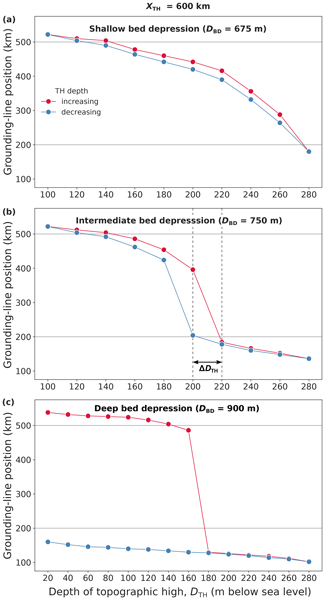
Johannes Feldmann, Anders Levermann, and Ricarda Winkelmann
The Cryosphere, 18, 4011–4028, https://doi.org/10.5194/tc-18-4011-2024, https://doi.org/10.5194/tc-18-4011-2024, 2024
Short summary
Short summary
Here we show in simplified simulations that the (ir)reversibility of the retreat of instability-prone, Antarctica-type glaciers can strongly depend on the depth of the bed depression they rest on. If it is sufficiently deep, then the destabilized glacier does not recover from its collapsed state. Our results suggest that glaciers resting on a wide and deep bed depression, such as Antarctica's Thwaites Glacier, are particularly susceptible to irreversible retreat.

Marit Sandstad, Borgar Aamaas, Ane Nordlie Johansen, Marianne Tronstad Lund, Glen Philip Peters, Bjørn Hallvard Samset, Benjamin Mark Sanderson, and Ragnhild Bieltvedt Skeie
Geosci. Model Dev., 17, 6589–6625, https://doi.org/10.5194/gmd-17-6589-2024, https://doi.org/10.5194/gmd-17-6589-2024, 2024
Short summary
Short summary
The CICERO-SCM has existed as a Fortran model since 1999 that calculates the radiative forcing and concentrations from emissions and is an upwelling diffusion energy balance model of the ocean that calculates temperature change. In this paper, we describe an updated version ported to Python and publicly available at https://github.com/ciceroOslo/ciceroscm (https://doi.org/10.5281/zenodo.10548720). This version contains functionality for parallel runs and automatic calibration.
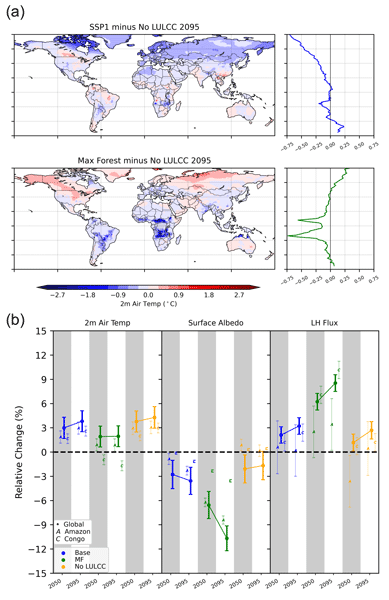
James A. King, James Weber, Peter Lawrence, Stephanie Roe, Abigail L. S. Swann, and Maria Val Martin
Biogeosciences, 21, 3883–3902, https://doi.org/10.5194/bg-21-3883-2024, https://doi.org/10.5194/bg-21-3883-2024, 2024
Short summary
Short summary
Tackling climate change by adding, restoring, or enhancing forests is gaining global support. However, it is important to investigate the broader implications of this. We used a computer model of the Earth to investigate a future where tree cover expanded as much as possible. We found that some tropical areas were cooler because of trees pumping water into the atmosphere, but this also led to soil and rivers drying. This is important because it might be harder to maintain forests as a result.

Nathaelle Bouttes, Lester Kwiatkowski, Manon Berger, Victor Brovkin, and Guy Munhoven
Geosci. Model Dev., 17, 6513–6528, https://doi.org/10.5194/gmd-17-6513-2024, https://doi.org/10.5194/gmd-17-6513-2024, 2024
Short summary
Short summary
Coral reefs are crucial for biodiversity, but they also play a role in the carbon cycle on long time scales of a few thousand years. To better simulate the future and past evolution of coral reefs and their effect on the global carbon cycle, hence on atmospheric CO2 concentration, it is necessary to include coral reefs within a climate model. Here we describe the inclusion of coral reef carbonate production in a carbon–climate model and its validation in comparison to existing modern data.
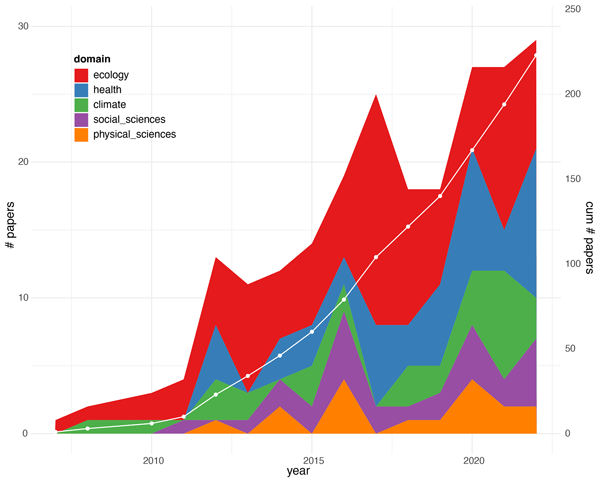
Vasilis Dakos, Chris A. Boulton, Joshua E. Buxton, Jesse F. Abrams, Beatriz Arellano-Nava, David I. Armstrong McKay, Sebastian Bathiany, Lana Blaschke, Niklas Boers, Daniel Dylewsky, Carlos López-Martínez, Isobel Parry, Paul Ritchie, Bregje van der Bolt, Larissa van der Laan, Els Weinans, and Sonia Kéfi
Earth Syst. Dynam., 15, 1117–1135, https://doi.org/10.5194/esd-15-1117-2024, https://doi.org/10.5194/esd-15-1117-2024, 2024
Short summary
Short summary
Tipping points are abrupt, rapid, and sometimes irreversible changes, and numerous approaches have been proposed to detect them in advance. Such approaches have been termed early warning signals and represent a set of methods for identifying changes in the underlying behaviour of a system across time or space that might indicate an approaching tipping point. Here, we review the literature to explore where, how, and which early warnings have been used in real-world case studies so far.
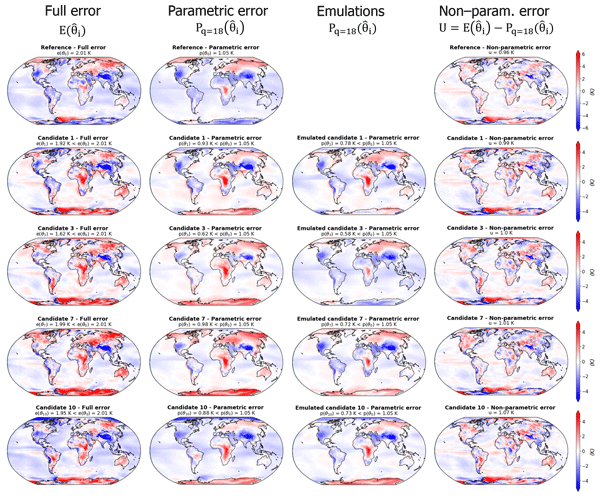
Saloua Peatier, Benjamin M. Sanderson, and Laurent Terray
Earth Syst. Dynam., 15, 987–1014, https://doi.org/10.5194/esd-15-987-2024, https://doi.org/10.5194/esd-15-987-2024, 2024
Short summary
Short summary
The calibration of Earth system model parameters is a high-dimensionality problem subject to data, time, and computational constraints. In this study, we propose a practical solution for finding diverse near-optimal solutions. We argue that the effective degrees of freedom in the model performance response to parameter input is relatively small. Comparably performing parameter configurations exist and showcase different trade-offs in model errors, providing insights for model development.
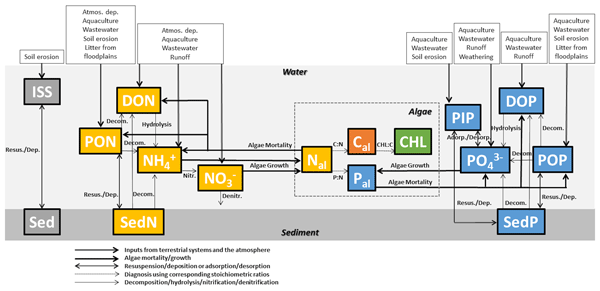
Minjin Lee, Charles A. Stock, John P. Dunne, and Elena Shevliakova
Geosci. Model Dev., 17, 5191–5224, https://doi.org/10.5194/gmd-17-5191-2024, https://doi.org/10.5194/gmd-17-5191-2024, 2024
Short summary
Short summary
Modeling global freshwater solid and nutrient loads, in both magnitude and form, is imperative for understanding emerging eutrophication problems. Such efforts, however, have been challenged by the difficulty of balancing details of freshwater biogeochemical processes with limited knowledge, input, and validation datasets. Here we develop a global freshwater model that resolves intertwined algae, solid, and nutrient dynamics and provide performance assessment against measurement-based estimates.
Xuanming Su, Kiyoshi Takahashi, Tokuta Yokohata, Katsumasa Tanaka, Shinichiro Fujimori, Jun'ya Takakura, Rintaro Yamaguchi, and Weiwei Xiong
EGUsphere, https://doi.org/10.5194/egusphere-2024-1640, https://doi.org/10.5194/egusphere-2024-1640, 2024
Preprint archived
Short summary
Short summary
We created a new model combining socioeconomic data and climate projections. Using multiple future scenarios, we calculated new costs for reducing emissions, estimated damage based on the latest impacts, and extended our analysis to the year 2450. Our results show different ways to control emissions and their effects on future temperatures. This highlights the importance of adapting climate policies to different economic growth scenarios for better long-term planning.
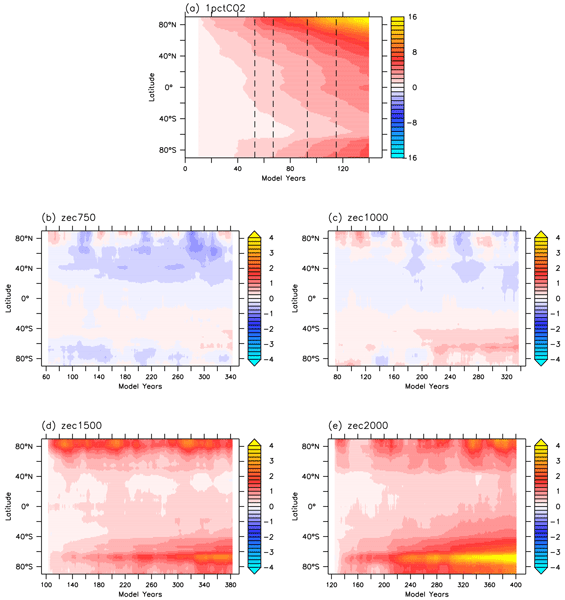
Matthew A. Chamberlain, Tilo Ziehn, and Rachel M. Law
Biogeosciences, 21, 3053–3073, https://doi.org/10.5194/bg-21-3053-2024, https://doi.org/10.5194/bg-21-3053-2024, 2024
Short summary
Short summary
This paper explores the climate processes that drive increasing global average temperatures in zero-emission commitment (ZEC) simulations despite decreasing atmospheric CO2. ACCESS-ESM1.5 shows the Southern Ocean to continue to warm locally in all ZEC simulations. In ZEC simulations that start after the emission of more than 1000 Pg of carbon, the influence of the Southern Ocean increases the global temperature.
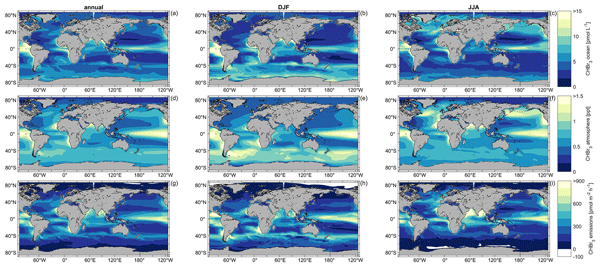
Dennis Booge, Jerry F. Tjiputra, Dirk J. L. Olivié, Birgit Quack, and Kirstin Krüger
Earth Syst. Dynam., 15, 801–816, https://doi.org/10.5194/esd-15-801-2024, https://doi.org/10.5194/esd-15-801-2024, 2024
Short summary
Short summary
Oceanic bromoform, produced by algae, is an important precursor of atmospheric bromine, highlighting the importance of implementing these emissions in climate models. The simulated mean oceanic concentrations align well with observations, while the mean atmospheric values are lower than the observed ones. Modelled annual mean emissions mostly occur from the sea to the air and are driven by oceanic concentrations, sea surface temperature, and wind speed, which depend on season and location.
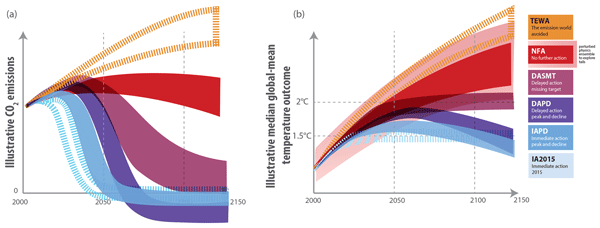
Malte Meinshausen, Carl-Friedrich Schleussner, Kathleen Beyer, Greg Bodeker, Olivier Boucher, Josep G. Canadell, John S. Daniel, Aïda Diongue-Niang, Fatima Driouech, Erich Fischer, Piers Forster, Michael Grose, Gerrit Hansen, Zeke Hausfather, Tatiana Ilyina, Jarmo S. Kikstra, Joyce Kimutai, Andrew D. King, June-Yi Lee, Chris Lennard, Tabea Lissner, Alexander Nauels, Glen P. Peters, Anna Pirani, Gian-Kasper Plattner, Hans Pörtner, Joeri Rogelj, Maisa Rojas, Joyashree Roy, Bjørn H. Samset, Benjamin M. Sanderson, Roland Séférian, Sonia Seneviratne, Christopher J. Smith, Sophie Szopa, Adelle Thomas, Diana Urge-Vorsatz, Guus J. M. Velders, Tokuta Yokohata, Tilo Ziehn, and Zebedee Nicholls
Geosci. Model Dev., 17, 4533–4559, https://doi.org/10.5194/gmd-17-4533-2024, https://doi.org/10.5194/gmd-17-4533-2024, 2024
Short summary
Short summary
The scientific community is considering new scenarios to succeed RCPs and SSPs for the next generation of Earth system model runs to project future climate change. To contribute to that effort, we reflect on relevant policy and scientific research questions and suggest categories for representative emission pathways. These categories are tailored to the Paris Agreement long-term temperature goal, high-risk outcomes in the absence of further climate policy and worlds “that could have been”.
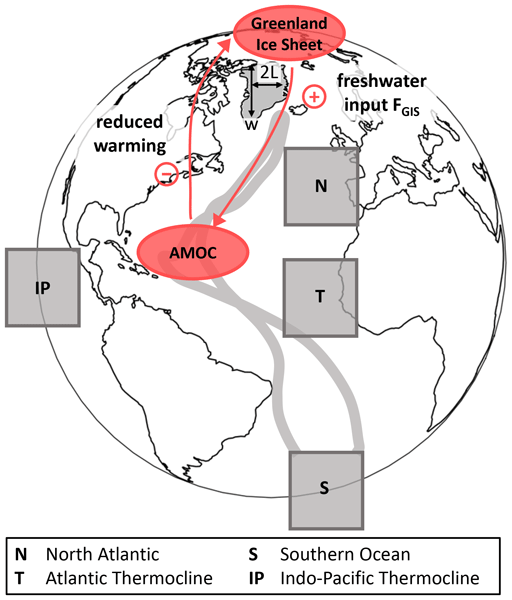
Ann Kristin Klose, Jonathan F. Donges, Ulrike Feudel, and Ricarda Winkelmann
Earth Syst. Dynam., 15, 635–652, https://doi.org/10.5194/esd-15-635-2024, https://doi.org/10.5194/esd-15-635-2024, 2024
Short summary
Short summary
We qualitatively study the long-term stability of the Greenland Ice Sheet and AMOC as tipping elements in the Earth system, which is largely unknown given their interaction in a positive–negative feedback loop. Depending on the timescales of ice loss and the position of the AMOC’s state relative to its critical threshold, we find distinct dynamic regimes of cascading tipping. These suggest that respecting safe rates of environmental change is necessary to mitigate potential domino effects.
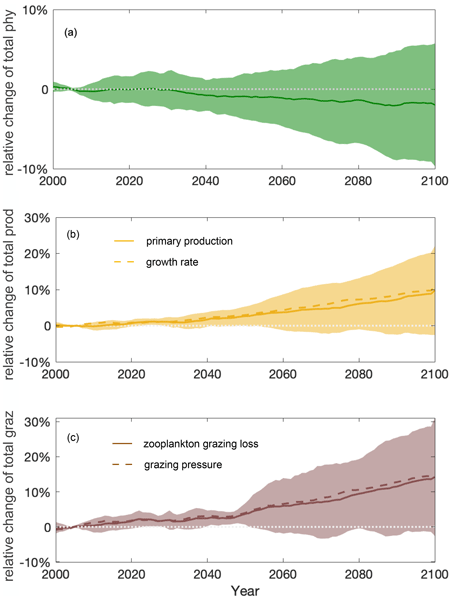
Tianfei Xue, Jens Terhaar, A. E. Friederike Prowe, Thomas L. Frölicher, Andreas Oschlies, and Ivy Frenger
Biogeosciences, 21, 2473–2491, https://doi.org/10.5194/bg-21-2473-2024, https://doi.org/10.5194/bg-21-2473-2024, 2024
Short summary
Short summary
Phytoplankton play a crucial role in marine ecosystems. However, climate change's impact on phytoplankton biomass remains uncertain, particularly in the Southern Ocean. In this region, phytoplankton biomass within the water column is likely to remain stable in response to climate change, as supported by models. This stability arises from a shallower mixed layer, favoring phytoplankton growth but also increasing zooplankton grazing due to phytoplankton concentration near the surface.
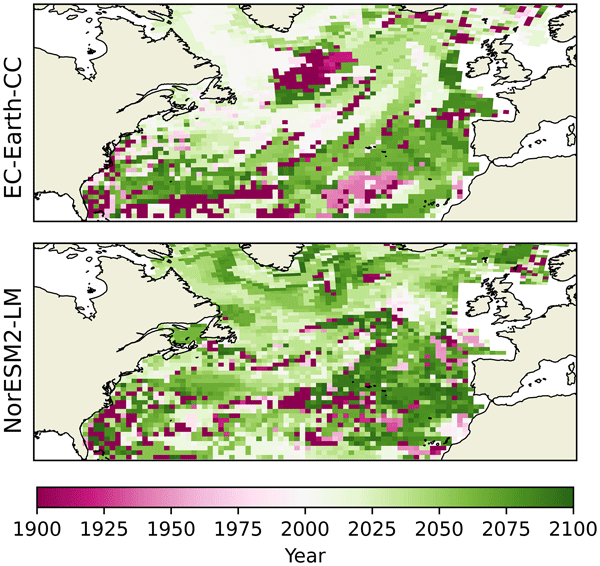
Jenny Hieronymus, Magnus Hieronymus, Matthias Gröger, Jörg Schwinger, Raffaele Bernadello, Etienne Tourigny, Valentina Sicardi, Itzel Ruvalcaba Baroni, and Klaus Wyser
Biogeosciences, 21, 2189–2206, https://doi.org/10.5194/bg-21-2189-2024, https://doi.org/10.5194/bg-21-2189-2024, 2024
Short summary
Short summary
The timing of the net primary production annual maxima in the North Atlantic in the period 1750–2100 is investigated using two Earth system models and the high-emissions scenario SSP5-8.5. It is found that, for most of the region, the annual maxima occur progressively earlier, with the most change occurring after the year 2000. Shifts in the seasonality of the primary production may impact the entire ecosystem, which highlights the need for long-term monitoring campaigns in this area.
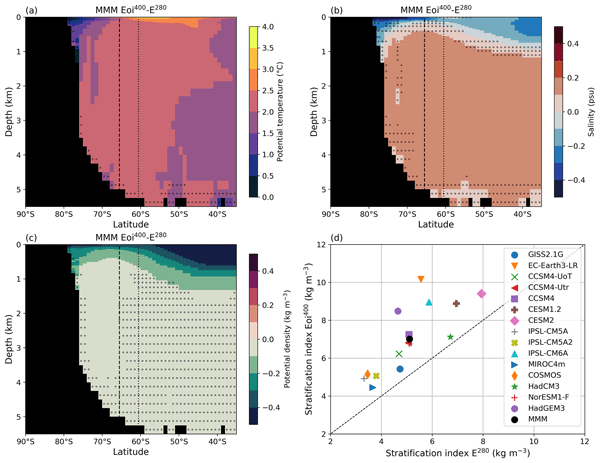
Julia E. Weiffenbach, Henk A. Dijkstra, Anna S. von der Heydt, Ayako Abe-Ouchi, Wing-Le Chan, Deepak Chandan, Ran Feng, Alan M. Haywood, Stephen J. Hunter, Xiangyu Li, Bette L. Otto-Bliesner, W. Richard Peltier, Christian Stepanek, Ning Tan, Julia C. Tindall, and Zhongshi Zhang
Clim. Past, 20, 1067–1086, https://doi.org/10.5194/cp-20-1067-2024, https://doi.org/10.5194/cp-20-1067-2024, 2024
Short summary
Short summary
Elevated atmospheric CO2 concentrations and a smaller Antarctic Ice Sheet during the mid-Pliocene (~ 3 million years ago) cause the Southern Ocean surface to become fresher and warmer, which affects the global ocean circulation. The CO2 concentration and the smaller Antarctic Ice Sheet both have a similar and approximately equal impact on the Southern Ocean. The conditions of the Southern Ocean in the mid-Pliocene could therefore be analogous to those in a future climate with smaller ice sheets.
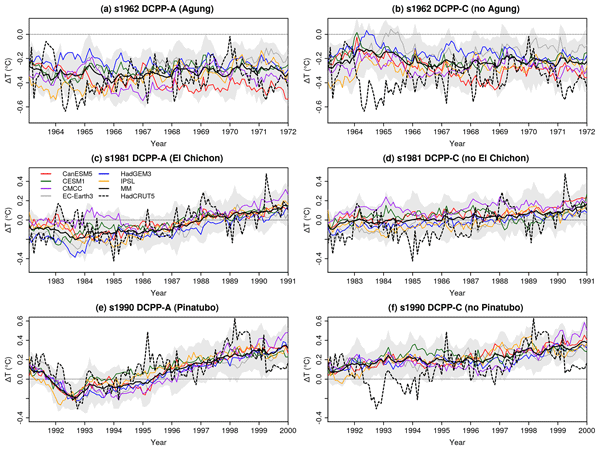
Roberto Bilbao, Pablo Ortega, Didier Swingedouw, Leon Hermanson, Panos Athanasiadis, Rosie Eade, Marion Devilliers, Francisco Doblas-Reyes, Nick Dunstone, An-Chi Ho, William Merryfield, Juliette Mignot, Dario Nicolì, Margarida Samsó, Reinel Sospedra-Alfonso, Xian Wu, and Stephen Yeager
Earth Syst. Dynam., 15, 501–525, https://doi.org/10.5194/esd-15-501-2024, https://doi.org/10.5194/esd-15-501-2024, 2024
Short summary
Short summary
In recent decades three major volcanic eruptions have occurred: Mount Agung in 1963, El Chichón in 1982 and Mount Pinatubo in 1991. In this article we explore the climatic impacts of these volcanic eruptions with a purposefully designed set of simulations from six CMIP6 decadal prediction systems. We analyse the radiative and dynamical responses and show that including the volcanic forcing in these predictions is important to reproduce the observed surface temperature variations.
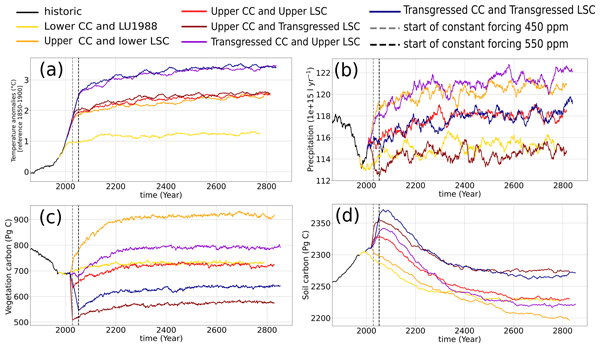
Markus Drüke, Wolfgang Lucht, Werner von Bloh, Stefan Petri, Boris Sakschewski, Arne Tobian, Sina Loriani, Sibyll Schaphoff, Georg Feulner, and Kirsten Thonicke
Earth Syst. Dynam., 15, 467–483, https://doi.org/10.5194/esd-15-467-2024, https://doi.org/10.5194/esd-15-467-2024, 2024
Short summary
Short summary
The planetary boundary framework characterizes major risks of destabilization of the Earth system. We use the comprehensive Earth system model POEM to study the impact of the interacting boundaries for climate change and land system change. Our study shows the importance of long-term effects on carbon dynamics and climate, as well as the need to investigate both boundaries simultaneously and to generally keep both boundaries within acceptable ranges to avoid a catastrophic scenario for humanity.
Maya Ben-Yami, Lana Blaschke, Sebastian Bathiany, and Niklas Boers
EGUsphere, https://doi.org/10.5194/egusphere-2024-1106, https://doi.org/10.5194/egusphere-2024-1106, 2024
Preprint archived
Short summary
Short summary
Recent work has used observations to find statistical signs that the Atlantic Meridional Overturning Circulation (AMOC) may be approaching a collapse. We find that in complex climate models in which the AMOC does not collapse before 2100, the statistical signs that are present in the observations are not found in the 1850–2014 equivalent model time series. This indicates that the observed statistical signs are not prone to false positives.
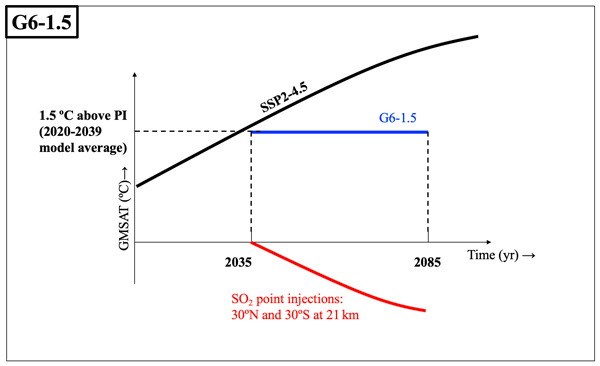
Daniele Visioni, Alan Robock, Jim Haywood, Matthew Henry, Simone Tilmes, Douglas G. MacMartin, Ben Kravitz, Sarah J. Doherty, John Moore, Chris Lennard, Shingo Watanabe, Helene Muri, Ulrike Niemeier, Olivier Boucher, Abu Syed, Temitope S. Egbebiyi, Roland Séférian, and Ilaria Quaglia
Geosci. Model Dev., 17, 2583–2596, https://doi.org/10.5194/gmd-17-2583-2024, https://doi.org/10.5194/gmd-17-2583-2024, 2024
Short summary
Short summary
This paper describes a new experimental protocol for the Geoengineering Model Intercomparison Project (GeoMIP). In it, we describe the details of a new simulation of sunlight reflection using the stratospheric aerosols that climate models are supposed to run, and we explain the reasons behind each choice we made when defining the protocol.
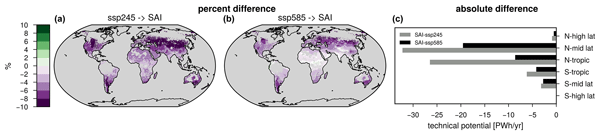
Susanne Baur, Benjamin M. Sanderson, Roland Séférian, and Laurent Terray
Earth Syst. Dynam., 15, 307–322, https://doi.org/10.5194/esd-15-307-2024, https://doi.org/10.5194/esd-15-307-2024, 2024
Short summary
Short summary
Most solar radiation modification (SRM) simulations assume no physical coupling between mitigation and SRM. We analyze the impact of SRM on photovoltaic (PV) and concentrated solar power (CSP) and find that almost all regions have reduced PV and CSP potential compared to a mitigated or unmitigated scenario, especially in the middle and high latitudes. This suggests that SRM could pose challenges for meeting energy demands with solar renewable resources.
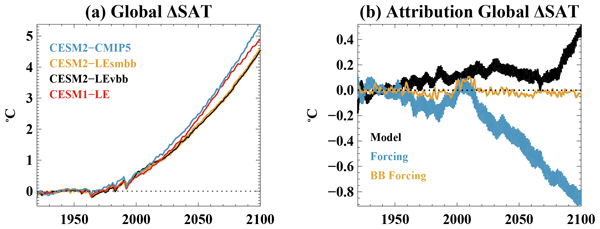
Marika M. Holland, Cecile Hannay, John Fasullo, Alexandra Jahn, Jennifer E. Kay, Michael Mills, Isla R. Simpson, William Wieder, Peter Lawrence, Erik Kluzek, and David Bailey
Geosci. Model Dev., 17, 1585–1602, https://doi.org/10.5194/gmd-17-1585-2024, https://doi.org/10.5194/gmd-17-1585-2024, 2024
Short summary
Short summary
Climate evolves in response to changing forcings, as prescribed in simulations. Models and forcings are updated over time to reflect new understanding. This makes it difficult to attribute simulation differences to either model or forcing changes. Here we present new simulations which enable the separation of model structure and forcing influence between two widely used simulation sets. Results indicate a strong influence of aerosol emission uncertainty on historical climate.
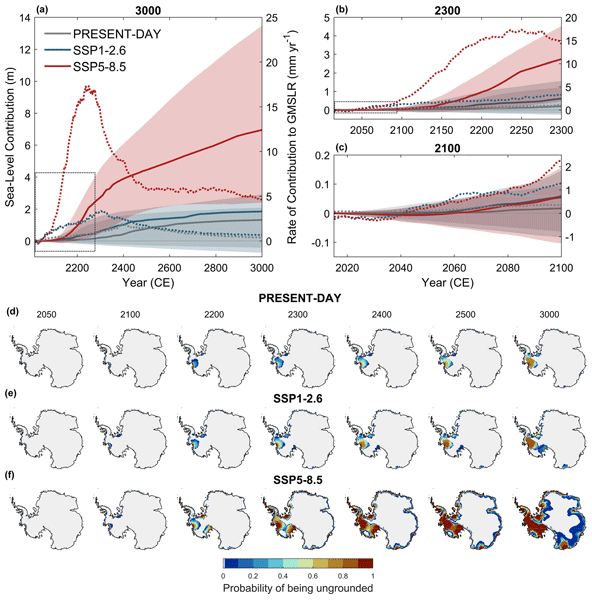
Violaine Coulon, Ann Kristin Klose, Christoph Kittel, Tamsin Edwards, Fiona Turner, Ricarda Winkelmann, and Frank Pattyn
The Cryosphere, 18, 653–681, https://doi.org/10.5194/tc-18-653-2024, https://doi.org/10.5194/tc-18-653-2024, 2024
Short summary
Short summary
We present new projections of the evolution of the Antarctic ice sheet until the end of the millennium, calibrated with observations. We show that the ocean will be the main trigger of future ice loss. As temperatures continue to rise, the atmosphere's role may shift from mitigating to amplifying Antarctic mass loss already by the end of the century. For high-emission scenarios, this may lead to substantial sea-level rise. Adopting sustainable practices would however reduce the rate of ice loss.
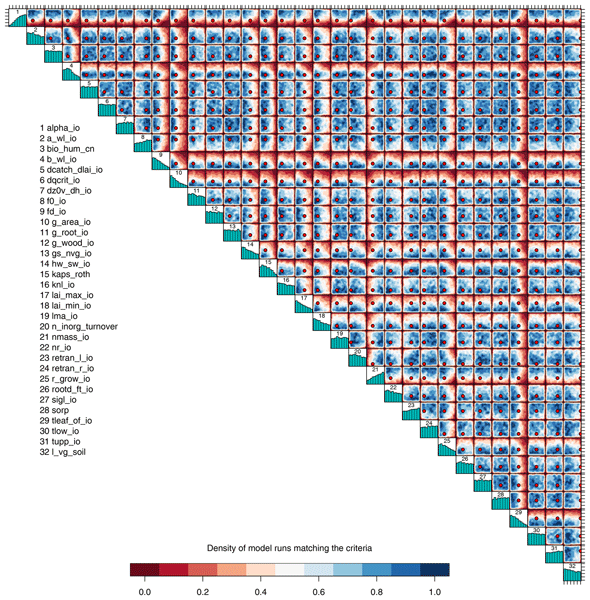
Douglas McNeall, Eddy Robertson, and Andy Wiltshire
Geosci. Model Dev., 17, 1059–1089, https://doi.org/10.5194/gmd-17-1059-2024, https://doi.org/10.5194/gmd-17-1059-2024, 2024
Short summary
Short summary
We can run simulations of the land surface and carbon cycle, using computer models to help us understand and predict climate change and its impacts. These simulations are not perfect reproductions of the real land surface, and that can make them less effective tools. We use new statistical and computational techniques to help us understand how different our models are from the real land surface, how to make them more realistic, and how well we can simulate past and future climate.
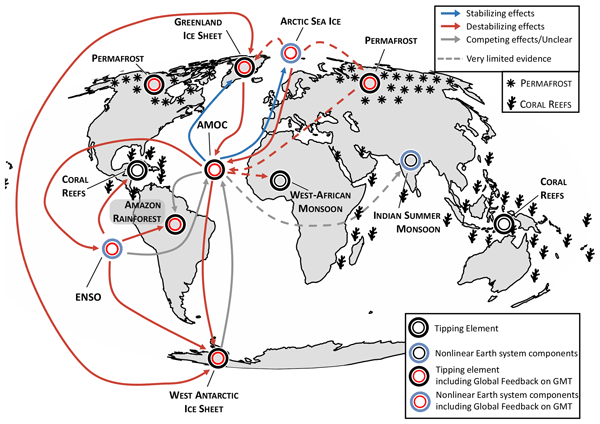
Nico Wunderling, Anna S. von der Heydt, Yevgeny Aksenov, Stephen Barker, Robbin Bastiaansen, Victor Brovkin, Maura Brunetti, Victor Couplet, Thomas Kleinen, Caroline H. Lear, Johannes Lohmann, Rosa Maria Roman-Cuesta, Sacha Sinet, Didier Swingedouw, Ricarda Winkelmann, Pallavi Anand, Jonathan Barichivich, Sebastian Bathiany, Mara Baudena, John T. Bruun, Cristiano M. Chiessi, Helen K. Coxall, David Docquier, Jonathan F. Donges, Swinda K. J. Falkena, Ann Kristin Klose, David Obura, Juan Rocha, Stefanie Rynders, Norman Julius Steinert, and Matteo Willeit
Earth Syst. Dynam., 15, 41–74, https://doi.org/10.5194/esd-15-41-2024, https://doi.org/10.5194/esd-15-41-2024, 2024
Short summary
Short summary
This paper maps out the state-of-the-art literature on interactions between tipping elements relevant for current global warming pathways. We find indications that many of the interactions between tipping elements are destabilizing. This means that tipping cascades cannot be ruled out on centennial to millennial timescales at global warming levels between 1.5 and 2.0 °C or on shorter timescales if global warming surpasses 2.0 °C.
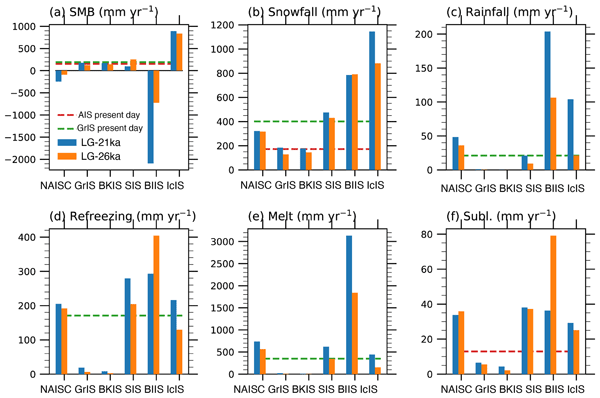
Sarah L. Bradley, Raymond Sellevold, Michele Petrini, Miren Vizcaino, Sotiria Georgiou, Jiang Zhu, Bette L. Otto-Bliesner, and Marcus Lofverstrom
Clim. Past, 20, 211–235, https://doi.org/10.5194/cp-20-211-2024, https://doi.org/10.5194/cp-20-211-2024, 2024
Short summary
Short summary
The Last Glacial Maximum (LGM) was the most recent period with large ice sheets in Europe and North America. We provide a detailed analysis of surface mass and energy components for two time periods that bracket the LGM: 26 and 21 ka BP. We use an earth system model which has been adopted for modern ice sheets. We find that all Northern Hemisphere ice sheets have a positive surface mass balance apart from the British and Irish ice sheets and the North American ice sheet complex.
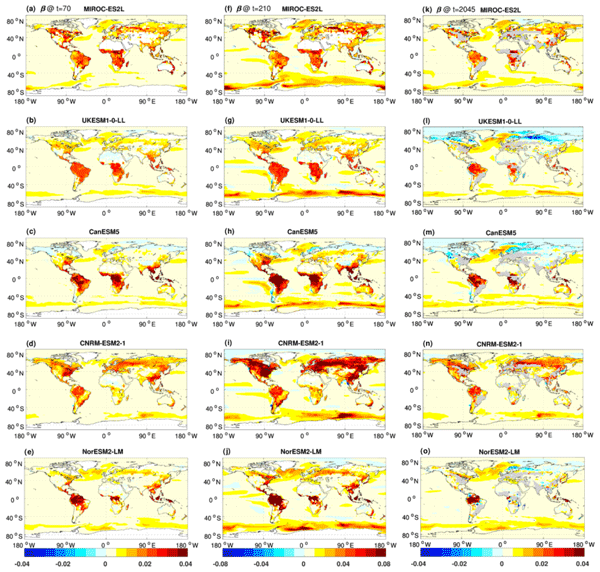
Ali Asaadi, Jörg Schwinger, Hanna Lee, Jerry Tjiputra, Vivek Arora, Roland Séférian, Spencer Liddicoat, Tomohiro Hajima, Yeray Santana-Falcón, and Chris D. Jones
Biogeosciences, 21, 411–435, https://doi.org/10.5194/bg-21-411-2024, https://doi.org/10.5194/bg-21-411-2024, 2024
Short summary
Short summary
Carbon cycle feedback metrics are employed to assess phases of positive and negative CO2 emissions. When emissions become negative, we find that the model disagreement in feedback metrics increases more strongly than expected from the assumption that the uncertainties accumulate linearly with time. The geographical patterns of such metrics over land highlight that differences in response between tropical/subtropical and temperate/boreal ecosystems are a major source of model disagreement.
Lee de Mora, Ranjini Swaminathan, Richard P. Allan, Jerry C. Blackford, Douglas I. Kelley, Phil Harris, Chris D. Jones, Colin G. Jones, Spencer Liddicoat, Robert J. Parker, Tristan Quaife, Jeremy Walton, and Andrew Yool
Earth Syst. Dynam., 14, 1295–1315, https://doi.org/10.5194/esd-14-1295-2023, https://doi.org/10.5194/esd-14-1295-2023, 2023
Short summary
Short summary
We investigate the flux of carbon from the atmosphere into the land surface and ocean for multiple models and over a range of future scenarios. We did this by comparing simulations after the same change in the global-mean near-surface temperature. Using this method, we show that the choice of scenario can impact the carbon allocation to the land, ocean, and atmosphere. Scenarios with higher emissions reach the same warming levels sooner, but also with relatively more carbon in the atmosphere.
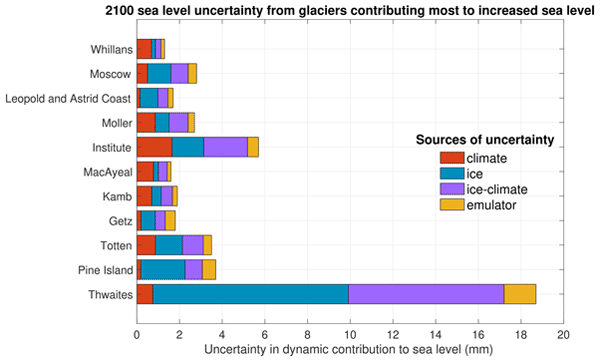
Hélène Seroussi, Vincent Verjans, Sophie Nowicki, Antony J. Payne, Heiko Goelzer, William H. Lipscomb, Ayako Abe-Ouchi, Cécile Agosta, Torsten Albrecht, Xylar Asay-Davis, Alice Barthel, Reinhard Calov, Richard Cullather, Christophe Dumas, Benjamin K. Galton-Fenzi, Rupert Gladstone, Nicholas R. Golledge, Jonathan M. Gregory, Ralf Greve, Tore Hattermann, Matthew J. Hoffman, Angelika Humbert, Philippe Huybrechts, Nicolas C. Jourdain, Thomas Kleiner, Eric Larour, Gunter R. Leguy, Daniel P. Lowry, Chistopher M. Little, Mathieu Morlighem, Frank Pattyn, Tyler Pelle, Stephen F. Price, Aurélien Quiquet, Ronja Reese, Nicole-Jeanne Schlegel, Andrew Shepherd, Erika Simon, Robin S. Smith, Fiammetta Straneo, Sainan Sun, Luke D. Trusel, Jonas Van Breedam, Peter Van Katwyk, Roderik S. W. van de Wal, Ricarda Winkelmann, Chen Zhao, Tong Zhang, and Thomas Zwinger
The Cryosphere, 17, 5197–5217, https://doi.org/10.5194/tc-17-5197-2023, https://doi.org/10.5194/tc-17-5197-2023, 2023
Short summary
Short summary
Mass loss from Antarctica is a key contributor to sea level rise over the 21st century, and the associated uncertainty dominates sea level projections. We highlight here the Antarctic glaciers showing the largest changes and quantify the main sources of uncertainty in their future evolution using an ensemble of ice flow models. We show that on top of Pine Island and Thwaites glaciers, Totten and Moscow University glaciers show rapid changes and a strong sensitivity to warmer ocean conditions.
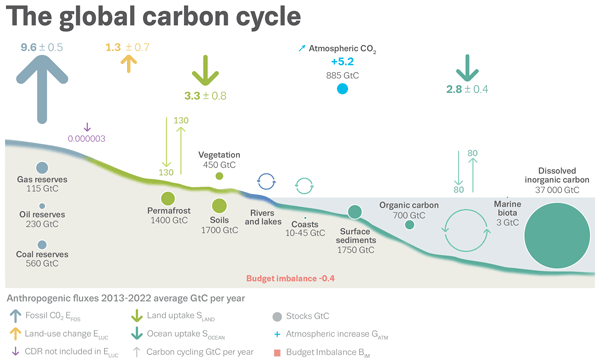
Pierre Friedlingstein, Michael O'Sullivan, Matthew W. Jones, Robbie M. Andrew, Dorothee C. E. Bakker, Judith Hauck, Peter Landschützer, Corinne Le Quéré, Ingrid T. Luijkx, Glen P. Peters, Wouter Peters, Julia Pongratz, Clemens Schwingshackl, Stephen Sitch, Josep G. Canadell, Philippe Ciais, Robert B. Jackson, Simone R. Alin, Peter Anthoni, Leticia Barbero, Nicholas R. Bates, Meike Becker, Nicolas Bellouin, Bertrand Decharme, Laurent Bopp, Ida Bagus Mandhara Brasika, Patricia Cadule, Matthew A. Chamberlain, Naveen Chandra, Thi-Tuyet-Trang Chau, Frédéric Chevallier, Louise P. Chini, Margot Cronin, Xinyu Dou, Kazutaka Enyo, Wiley Evans, Stefanie Falk, Richard A. Feely, Liang Feng, Daniel J. Ford, Thomas Gasser, Josefine Ghattas, Thanos Gkritzalis, Giacomo Grassi, Luke Gregor, Nicolas Gruber, Özgür Gürses, Ian Harris, Matthew Hefner, Jens Heinke, Richard A. Houghton, George C. Hurtt, Yosuke Iida, Tatiana Ilyina, Andrew R. Jacobson, Atul Jain, Tereza Jarníková, Annika Jersild, Fei Jiang, Zhe Jin, Fortunat Joos, Etsushi Kato, Ralph F. Keeling, Daniel Kennedy, Kees Klein Goldewijk, Jürgen Knauer, Jan Ivar Korsbakken, Arne Körtzinger, Xin Lan, Nathalie Lefèvre, Hongmei Li, Junjie Liu, Zhiqiang Liu, Lei Ma, Greg Marland, Nicolas Mayot, Patrick C. McGuire, Galen A. McKinley, Gesa Meyer, Eric J. Morgan, David R. Munro, Shin-Ichiro Nakaoka, Yosuke Niwa, Kevin M. O'Brien, Are Olsen, Abdirahman M. Omar, Tsuneo Ono, Melf Paulsen, Denis Pierrot, Katie Pocock, Benjamin Poulter, Carter M. Powis, Gregor Rehder, Laure Resplandy, Eddy Robertson, Christian Rödenbeck, Thais M. Rosan, Jörg Schwinger, Roland Séférian, T. Luke Smallman, Stephen M. Smith, Reinel Sospedra-Alfonso, Qing Sun, Adrienne J. Sutton, Colm Sweeney, Shintaro Takao, Pieter P. Tans, Hanqin Tian, Bronte Tilbrook, Hiroyuki Tsujino, Francesco Tubiello, Guido R. van der Werf, Erik van Ooijen, Rik Wanninkhof, Michio Watanabe, Cathy Wimart-Rousseau, Dongxu Yang, Xiaojuan Yang, Wenping Yuan, Xu Yue, Sönke Zaehle, Jiye Zeng, and Bo Zheng
Earth Syst. Sci. Data, 15, 5301–5369, https://doi.org/10.5194/essd-15-5301-2023, https://doi.org/10.5194/essd-15-5301-2023, 2023
Short summary
Short summary
The Global Carbon Budget 2023 describes the methodology, main results, and data sets used to quantify the anthropogenic emissions of carbon dioxide (CO2) and their partitioning among the atmosphere, land ecosystems, and the ocean over the historical period (1750–2023). These living datasets are updated every year to provide the highest transparency and traceability in the reporting of CO2, the key driver of climate change.
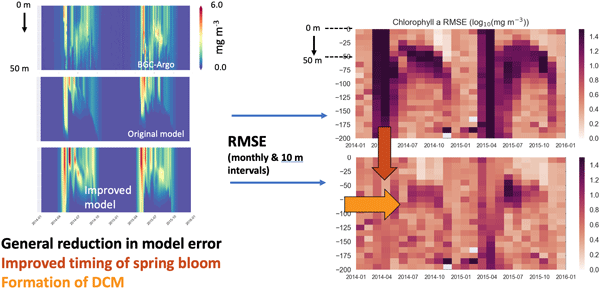
Veli Çağlar Yumruktepe, Erik Askov Mousing, Jerry Tjiputra, and Annette Samuelsen
Geosci. Model Dev., 16, 6875–6897, https://doi.org/10.5194/gmd-16-6875-2023, https://doi.org/10.5194/gmd-16-6875-2023, 2023
Short summary
Short summary
We present an along BGC-Argo track 1D modelling framework. The model physics is constrained by the BGC-Argo temperature and salinity profiles to reduce the uncertainties related to mixed layer dynamics, allowing the evaluation of the biogeochemical formulation and parameterization. We objectively analyse the model with BGC-Argo and satellite data and improve the model biogeochemical dynamics. We present the framework, example cases and routines for model improvement and implementations.
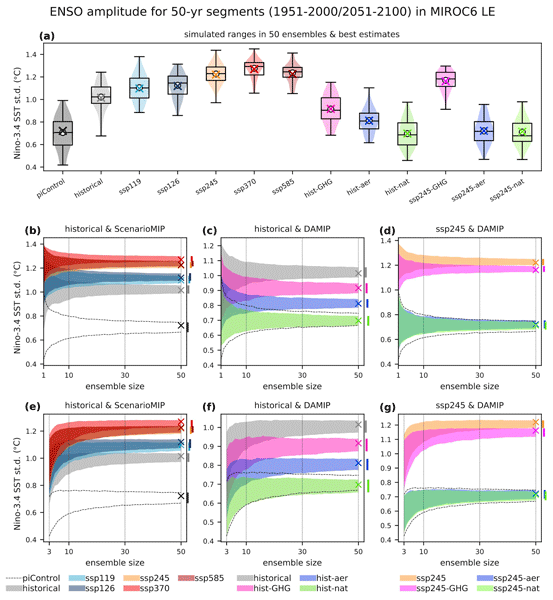
Hideo Shiogama, Hiroaki Tatebe, Michiya Hayashi, Manabu Abe, Miki Arai, Hiroshi Koyama, Yukiko Imada, Yu Kosaka, Tomoo Ogura, and Masahiro Watanabe
Earth Syst. Dynam., 14, 1107–1124, https://doi.org/10.5194/esd-14-1107-2023, https://doi.org/10.5194/esd-14-1107-2023, 2023
Short summary
Short summary
We produced one of the largest single model initial-condition ensembles thus far using the MIROC6 coupled atmosphere–ocean global climate model (MIROC6-LE). MIROC6-LE includes historical simulations, eight single forcing historical experiments, five future scenario experiments and three single forcing future experiments with 10- or 50-ensemble members. We describe the experimental design and show initial analyses. This dataset would be useful to a wide range of research communities.
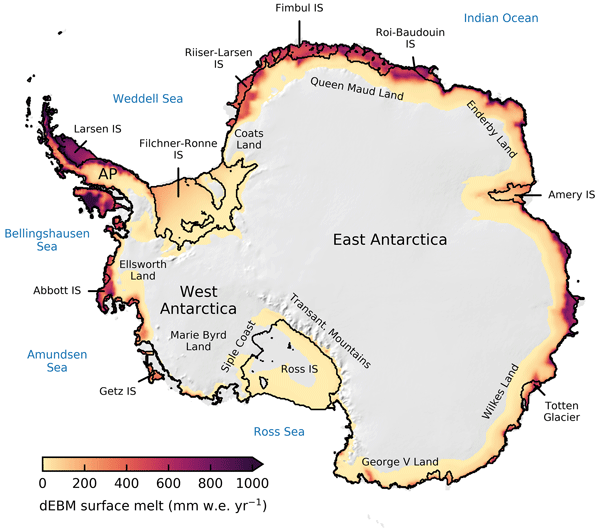
Julius Garbe, Maria Zeitz, Uta Krebs-Kanzow, and Ricarda Winkelmann
The Cryosphere, 17, 4571–4599, https://doi.org/10.5194/tc-17-4571-2023, https://doi.org/10.5194/tc-17-4571-2023, 2023
Short summary
Short summary
We adopt the novel surface module dEBM-simple in the Parallel Ice Sheet Model (PISM) to investigate the impact of atmospheric warming on Antarctic surface melt and long-term ice sheet dynamics. As an enhancement compared to traditional temperature-based melt schemes, the module accounts for changes in ice surface albedo and thus the melt–albedo feedback. Our results underscore the critical role of ice–atmosphere feedbacks in the future sea-level contribution of Antarctica on long timescales.

Alexandra M. Zuhr, Erik Loebel, Marek Muchow, Donovan Dennis, Luisa von Albedyll, Frigga Kruse, Heidemarie Kassens, Johanna Grabow, Dieter Piepenburg, Sören Brandt, Rainer Lehmann, Marlene Jessen, Friederike Krüger, Monika Kallfelz, Andreas Preußer, Matthias Braun, Thorsten Seehaus, Frank Lisker, Daniela Röhnert, and Mirko Scheinert
Polarforschung, 91, 73–80, https://doi.org/10.5194/polf-91-73-2023, https://doi.org/10.5194/polf-91-73-2023, 2023
Short summary
Short summary
Polar research is an interdisciplinary and multi-faceted field of research. Its diversity ranges from history to geology and geophysics to social sciences and education. This article provides insights into the different areas of German polar research. This was made possible by a seminar series, POLARSTUNDE, established in the summer of 2020 and organized by the German Society of Polar Research and the German National Committee of the Association of Polar Early Career Scientists (APECS Germany).
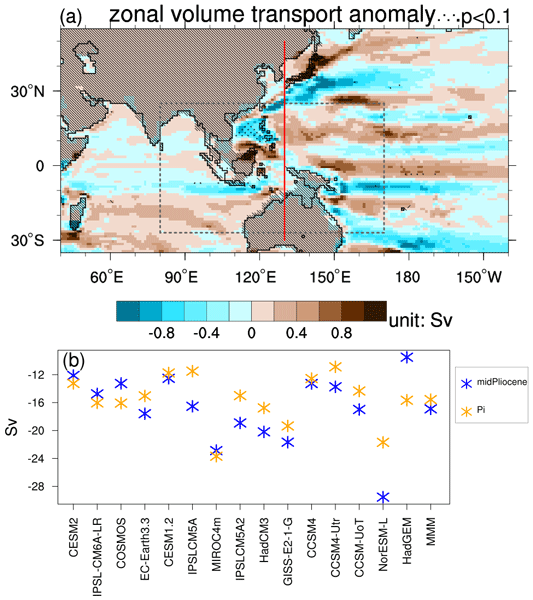
Xin Ren, Daniel J. Lunt, Erica Hendy, Anna von der Heydt, Ayako Abe-Ouchi, Bette Otto-Bliesner, Charles J. R. Williams, Christian Stepanek, Chuncheng Guo, Deepak Chandan, Gerrit Lohmann, Julia C. Tindall, Linda E. Sohl, Mark A. Chandler, Masa Kageyama, Michiel L. J. Baatsen, Ning Tan, Qiong Zhang, Ran Feng, Stephen Hunter, Wing-Le Chan, W. Richard Peltier, Xiangyu Li, Youichi Kamae, Zhongshi Zhang, and Alan M. Haywood
Clim. Past, 19, 2053–2077, https://doi.org/10.5194/cp-19-2053-2023, https://doi.org/10.5194/cp-19-2053-2023, 2023
Short summary
Short summary
We investigate the Maritime Continent climate in the mid-Piacenzian warm period and find it is warmer and wetter and the sea surface salinity is lower compared with preindustrial period. Besides, the fresh and warm water transfer through the Maritime Continent was stronger. In order to avoid undue influence from closely related models in the multimodel results, we introduce a new metric, the multi-cluster mean, which could reveal spatial signals that are not captured by the multimodel mean.
Christoph Heinze, Thorsten Blenckner, Peter Brown, Friederike Fröb, Anne Morée, Adrian L. New, Cara Nissen, Stefanie Rynders, Isabel Seguro, Yevgeny Aksenov, Yuri Artioli, Timothée Bourgeois, Friedrich Burger, Jonathan Buzan, B. B. Cael, Veli Çağlar Yumruktepe, Melissa Chierici, Christopher Danek, Ulf Dieckmann, Agneta Fransson, Thomas Frölicher, Giovanni Galli, Marion Gehlen, Aridane G. González, Melchor Gonzalez-Davila, Nicolas Gruber, Örjan Gustafsson, Judith Hauck, Mikko Heino, Stephanie Henson, Jenny Hieronymus, I. Emma Huertas, Fatma Jebri, Aurich Jeltsch-Thömmes, Fortunat Joos, Jaideep Joshi, Stephen Kelly, Nandini Menon, Precious Mongwe, Laurent Oziel, Sólveig Ólafsdottir, Julien Palmieri, Fiz F. Pérez, Rajamohanan Pillai Ranith, Juliano Ramanantsoa, Tilla Roy, Dagmara Rusiecka, J. Magdalena Santana Casiano, Yeray Santana-Falcón, Jörg Schwinger, Roland Séférian, Miriam Seifert, Anna Shchiptsova, Bablu Sinha, Christopher Somes, Reiner Steinfeldt, Dandan Tao, Jerry Tjiputra, Adam Ulfsbo, Christoph Völker, Tsuyoshi Wakamatsu, and Ying Ye
Biogeosciences Discuss., https://doi.org/10.5194/bg-2023-182, https://doi.org/10.5194/bg-2023-182, 2023
Revised manuscript not accepted
Short summary
Short summary
For assessing the consequences of human-induced climate change for the marine realm, it is necessary to not only look at gradual changes but also at abrupt changes of environmental conditions. We summarise abrupt changes in ocean warming, acidification, and oxygen concentration as the key environmental factors for ecosystems. Taking these abrupt changes into account requires greenhouse gas emissions to be reduced to a larger extent than previously thought to limit respective damage.
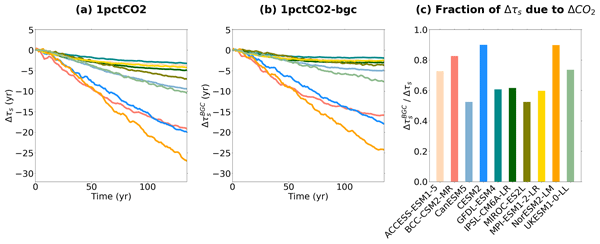
Rebecca M. Varney, Sarah E. Chadburn, Eleanor J. Burke, Simon Jones, Andy J. Wiltshire, and Peter M. Cox
Biogeosciences, 20, 3767–3790, https://doi.org/10.5194/bg-20-3767-2023, https://doi.org/10.5194/bg-20-3767-2023, 2023
Short summary
Short summary
This study evaluates soil carbon projections during the 21st century in CMIP6 Earth system models. In general, we find a reduced spread of changes in global soil carbon in CMIP6 compared to the previous CMIP5 generation. The reduced CMIP6 spread arises from an emergent relationship between soil carbon changes due to change in plant productivity and soil carbon changes due to changes in turnover time. We show that this relationship is consistent with false priming under transient climate change.
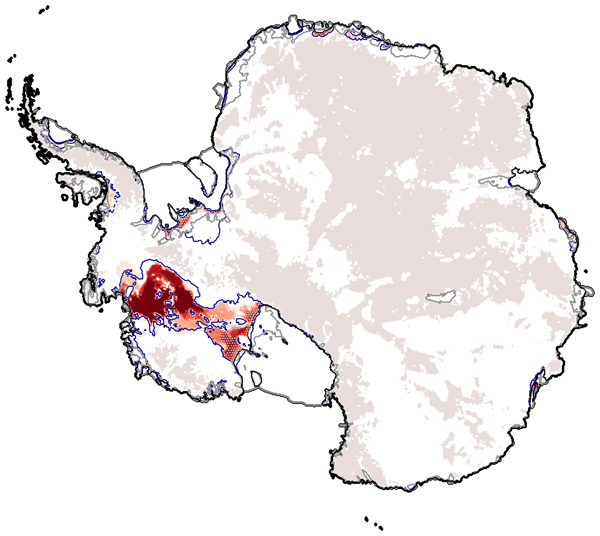
Ronja Reese, Julius Garbe, Emily A. Hill, Benoît Urruty, Kaitlin A. Naughten, Olivier Gagliardini, Gaël Durand, Fabien Gillet-Chaulet, G. Hilmar Gudmundsson, David Chandler, Petra M. Langebroek, and Ricarda Winkelmann
The Cryosphere, 17, 3761–3783, https://doi.org/10.5194/tc-17-3761-2023, https://doi.org/10.5194/tc-17-3761-2023, 2023
Short summary
Short summary
We use an ice sheet model to test where current climate conditions in Antarctica might lead. We find that present-day ocean and atmosphere conditions might commit an irreversible collapse of parts of West Antarctica which evolves over centuries to millennia. Importantly, this collapse is not irreversible yet.
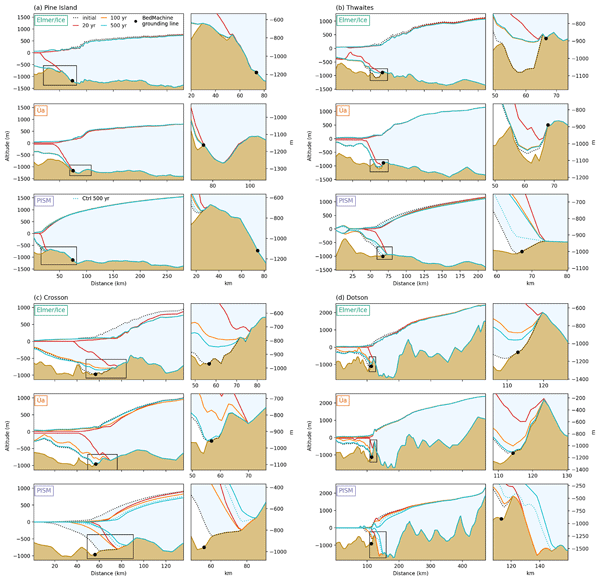
Emily A. Hill, Benoît Urruty, Ronja Reese, Julius Garbe, Olivier Gagliardini, Gaël Durand, Fabien Gillet-Chaulet, G. Hilmar Gudmundsson, Ricarda Winkelmann, Mondher Chekki, David Chandler, and Petra M. Langebroek
The Cryosphere, 17, 3739–3759, https://doi.org/10.5194/tc-17-3739-2023, https://doi.org/10.5194/tc-17-3739-2023, 2023
Short summary
Short summary
The grounding lines of the Antarctic Ice Sheet could enter phases of irreversible retreat or advance. We use three ice sheet models to show that the present-day locations of Antarctic grounding lines are reversible with respect to a small perturbation away from their current position. This indicates that present-day retreat of the grounding lines is not yet irreversible or self-enhancing.
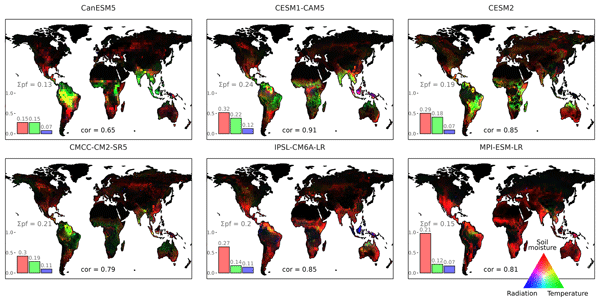
István Dunkl, Nicole Lovenduski, Alessio Collalti, Vivek K. Arora, Tatiana Ilyina, and Victor Brovkin
Biogeosciences, 20, 3523–3538, https://doi.org/10.5194/bg-20-3523-2023, https://doi.org/10.5194/bg-20-3523-2023, 2023
Short summary
Short summary
Despite differences in the reproduction of gross primary productivity (GPP) by Earth system models (ESMs), ESMs have similar predictability of the global carbon cycle. We found that, although GPP variability originates from different regions and is driven by different climatic variables across the ESMs, the ESMs rely on the same mechanisms to predict their own GPP. This shows that the predictability of the carbon cycle is limited by our understanding of variability rather than predictability.
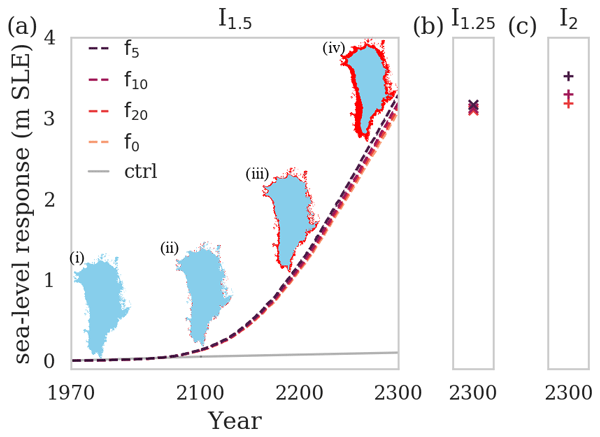
Johanna Beckmann and Ricarda Winkelmann
The Cryosphere, 17, 3083–3099, https://doi.org/10.5194/tc-17-3083-2023, https://doi.org/10.5194/tc-17-3083-2023, 2023
Short summary
Short summary
Over the past decade, Greenland has experienced several extreme melt events.
With progressing climate change, such extreme melt events can be expected to occur more frequently and potentially become more severe and persistent.
Strong melt events may considerably contribute to Greenland's mass loss, which in turn strongly determines future sea level rise. How important these extreme melt events could be in the future is assessed in this study for the first time.
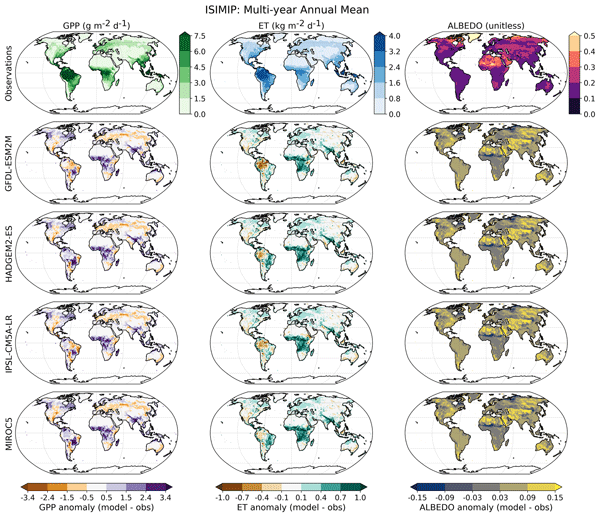
Camilla Mathison, Eleanor Burke, Andrew J. Hartley, Douglas I. Kelley, Chantelle Burton, Eddy Robertson, Nicola Gedney, Karina Williams, Andy Wiltshire, Richard J. Ellis, Alistair A. Sellar, and Chris D. Jones
Geosci. Model Dev., 16, 4249–4264, https://doi.org/10.5194/gmd-16-4249-2023, https://doi.org/10.5194/gmd-16-4249-2023, 2023
Short summary
Short summary
This paper describes and evaluates a new modelling methodology to quantify the impacts of climate change on water, biomes and the carbon cycle. We have created a new configuration and set-up for the JULES-ES land surface model, driven by bias-corrected historical and future climate model output provided by the Inter-Sectoral Impacts Model Intercomparison Project (ISIMIP). This allows us to compare projections of the impacts of climate change across multiple impact models and multiple sectors.
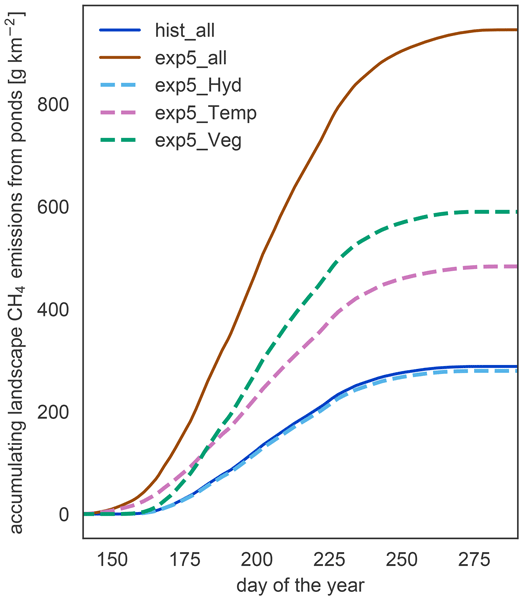
Zoé Rehder, Thomas Kleinen, Lars Kutzbach, Victor Stepanenko, Moritz Langer, and Victor Brovkin
Biogeosciences, 20, 2837–2855, https://doi.org/10.5194/bg-20-2837-2023, https://doi.org/10.5194/bg-20-2837-2023, 2023
Short summary
Short summary
We use a new model to investigate how methane emissions from Arctic ponds change with warming. We find that emissions increase substantially. Under annual temperatures 5 °C above present temperatures, pond methane emissions are more than 3 times higher than now. Most of this increase is caused by an increase in plant productivity as plants provide the substrate microbes used to produce methane. We conclude that vegetation changes need to be included in predictions of pond methane emissions.
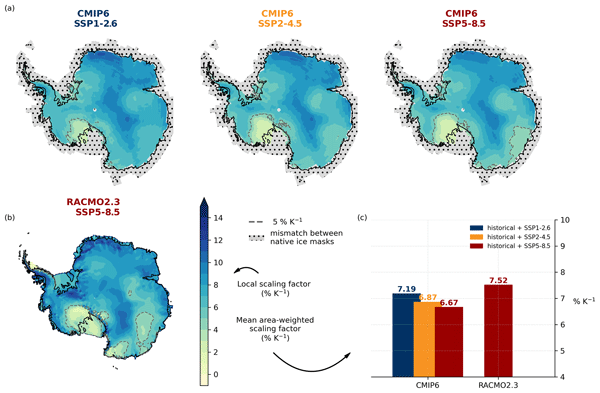
Lena Nicola, Dirk Notz, and Ricarda Winkelmann
The Cryosphere, 17, 2563–2583, https://doi.org/10.5194/tc-17-2563-2023, https://doi.org/10.5194/tc-17-2563-2023, 2023
Short summary
Short summary
For future sea-level projections, approximating Antarctic precipitation increases through temperature-scaling approaches will remain important, as coupled ice-sheet simulations with regional climate models remain computationally expensive, especially on multi-centennial timescales. We here revisit the relationship between Antarctic temperature and precipitation using different scaling approaches, identifying and explaining regional differences.
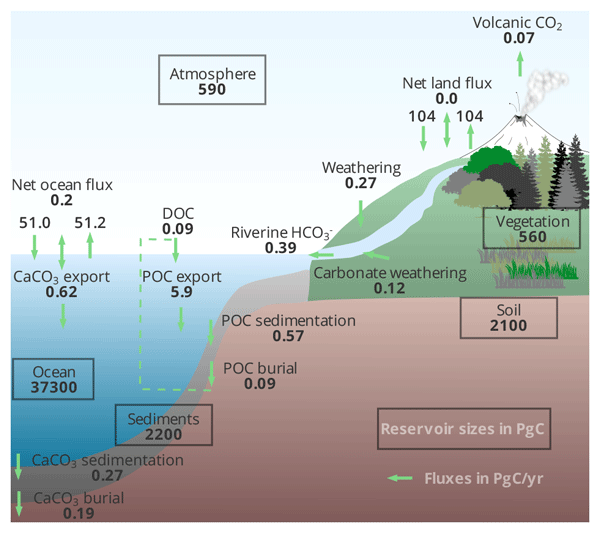
Matteo Willeit, Tatiana Ilyina, Bo Liu, Christoph Heinze, Mahé Perrette, Malte Heinemann, Daniela Dalmonech, Victor Brovkin, Guy Munhoven, Janine Börker, Jens Hartmann, Gibran Romero-Mujalli, and Andrey Ganopolski
Geosci. Model Dev., 16, 3501–3534, https://doi.org/10.5194/gmd-16-3501-2023, https://doi.org/10.5194/gmd-16-3501-2023, 2023
Short summary
Short summary
In this paper we present the carbon cycle component of the newly developed fast Earth system model CLIMBER-X. The model can be run with interactive atmospheric CO2 to investigate the feedbacks between climate and the carbon cycle on temporal scales ranging from decades to > 100 000 years. CLIMBER-X is expected to be a useful tool for studying past climate–carbon cycle changes and for the investigation of the long-term future evolution of the Earth system.
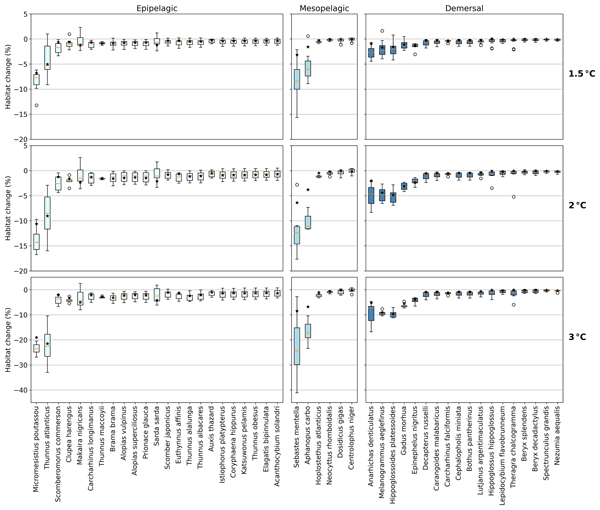
Anne L. Morée, Tayler M. Clarke, William W. L. Cheung, and Thomas L. Frölicher
Biogeosciences, 20, 2425–2454, https://doi.org/10.5194/bg-20-2425-2023, https://doi.org/10.5194/bg-20-2425-2023, 2023
Short summary
Short summary
Ocean temperature and oxygen shape marine habitats together with species’ characteristics. We calculated the impacts of projected 21st-century warming and oxygen loss on the contemporary habitat volume of 47 marine species and described the drivers of these impacts. Most species lose less than 5 % of their habitat at 2 °C of global warming, but some species incur losses 2–3 times greater than that. We also calculate which species may be most vulnerable to climate change and why this is the case.
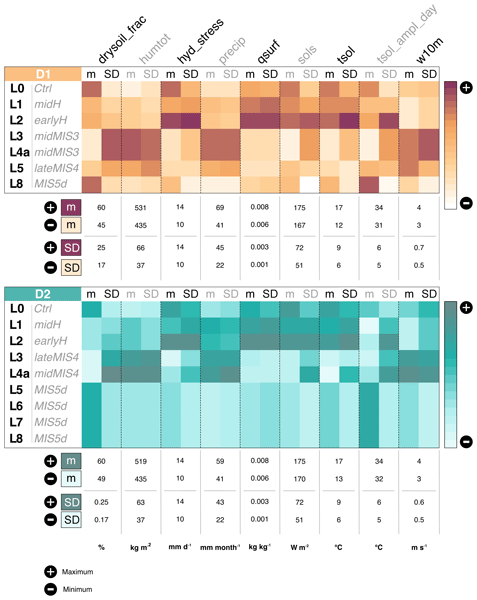
Léa Terray, Emmanuelle Stoetzel, Eslem Ben Arous, Masa Kageyama, Raphaël Cornette, and Pascale Braconnot
Clim. Past, 19, 1245–1263, https://doi.org/10.5194/cp-19-1245-2023, https://doi.org/10.5194/cp-19-1245-2023, 2023
Short summary
Short summary
The reconstruction of paleoenvironments has long been a subject of great interest, particularly to study past biodiversity. Paleoenvironmental proxies often show inconsistencies, and age estimations can vary depending on the method used. We demonstrate the ability of paleoclimate simulations to address these discrepancies, illustrating the strong potential of our cross-disciplinary consistency approach to refine the context of archeological and paleontological sites.
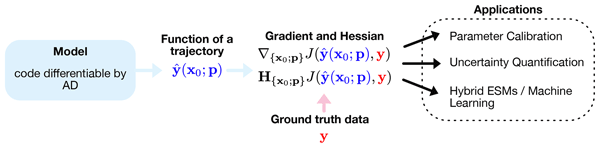
Maximilian Gelbrecht, Alistair White, Sebastian Bathiany, and Niklas Boers
Geosci. Model Dev., 16, 3123–3135, https://doi.org/10.5194/gmd-16-3123-2023, https://doi.org/10.5194/gmd-16-3123-2023, 2023
Short summary
Short summary
Differential programming is a technique that enables the automatic computation of derivatives of the output of models with respect to model parameters. Applying these techniques to Earth system modeling leverages the increasing availability of high-quality data to improve the models themselves. This can be done by either using calibration techniques that use gradient-based optimization or incorporating machine learning methods that can learn previously unresolved influences directly from data.
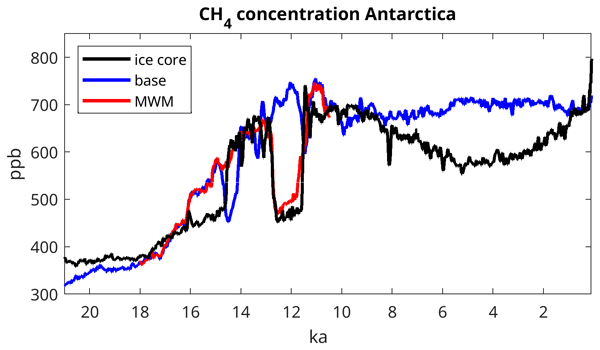
Thomas Kleinen, Sergey Gromov, Benedikt Steil, and Victor Brovkin
Clim. Past, 19, 1081–1099, https://doi.org/10.5194/cp-19-1081-2023, https://doi.org/10.5194/cp-19-1081-2023, 2023
Short summary
Short summary
We modelled atmospheric methane continuously from the last glacial maximum to the present using a state-of-the-art Earth system model. Our model results compare well with reconstructions from ice cores and improve our understanding of a very intriguing period of Earth system history, the deglaciation, when atmospheric methane changed quickly and strongly. Deglacial methane changes are driven by emissions from tropical wetlands, with wetlands in high northern latitudes being secondary.
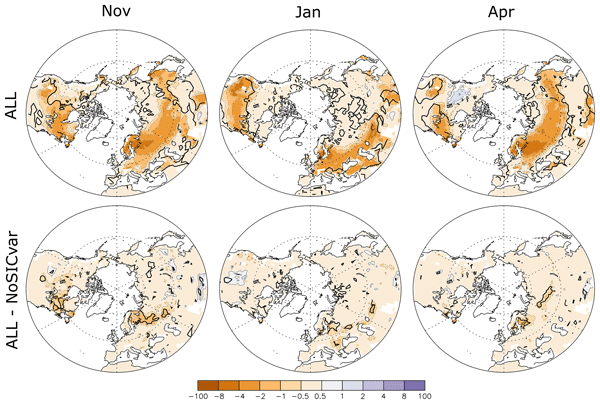
Guillaume Gastineau, Claude Frankignoul, Yongqi Gao, Yu-Chiao Liang, Young-Oh Kwon, Annalisa Cherchi, Rohit Ghosh, Elisa Manzini, Daniela Matei, Jennifer Mecking, Lingling Suo, Tian Tian, Shuting Yang, and Ying Zhang
The Cryosphere, 17, 2157–2184, https://doi.org/10.5194/tc-17-2157-2023, https://doi.org/10.5194/tc-17-2157-2023, 2023
Short summary
Short summary
Snow cover variability is important for many human activities. This study aims to understand the main drivers of snow cover in observations and models in order to better understand it and guide the improvement of climate models and forecasting systems. Analyses reveal a dominant role for sea surface temperature in the Pacific. Winter snow cover is also found to have important two-way interactions with the troposphere and stratosphere. No robust influence of the sea ice concentration is found.
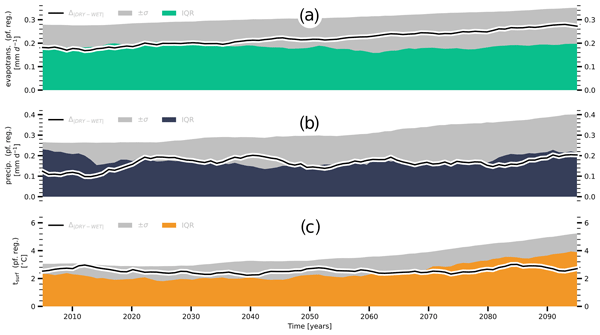
Philipp de Vrese, Goran Georgievski, Jesus Fidel Gonzalez Rouco, Dirk Notz, Tobias Stacke, Norman Julius Steinert, Stiig Wilkenskjeld, and Victor Brovkin
The Cryosphere, 17, 2095–2118, https://doi.org/10.5194/tc-17-2095-2023, https://doi.org/10.5194/tc-17-2095-2023, 2023
Short summary
Short summary
The current generation of Earth system models exhibits large inter-model differences in the simulated climate of the Arctic and subarctic zone. We used an adapted version of the Max Planck Institute (MPI) Earth System Model to show that differences in the representation of the soil hydrology in permafrost-affected regions could help explain a large part of this inter-model spread and have pronounced impacts on important elements of Earth systems as far to the south as the tropics.
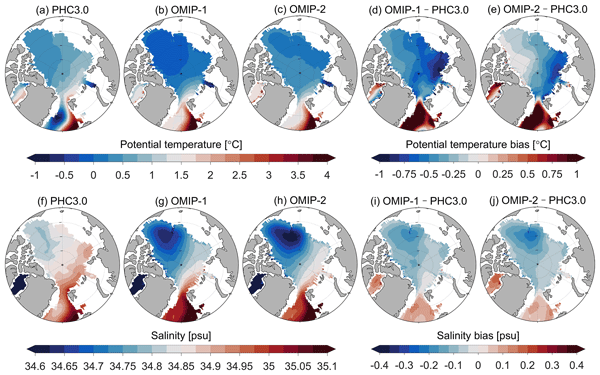
Qi Shu, Qiang Wang, Chuncheng Guo, Zhenya Song, Shizhu Wang, Yan He, and Fangli Qiao
Geosci. Model Dev., 16, 2539–2563, https://doi.org/10.5194/gmd-16-2539-2023, https://doi.org/10.5194/gmd-16-2539-2023, 2023
Short summary
Short summary
Ocean models are often used for scientific studies on the Arctic Ocean. Here the Arctic Ocean simulations by state-of-the-art global ocean–sea-ice models participating in the Ocean Model Intercomparison Project (OMIP) were evaluated. The simulations on Arctic Ocean hydrography, freshwater content, stratification, sea surface height, and gateway transports were assessed and the common biases were detected. The simulations forced by different atmospheric forcing were also evaluated.
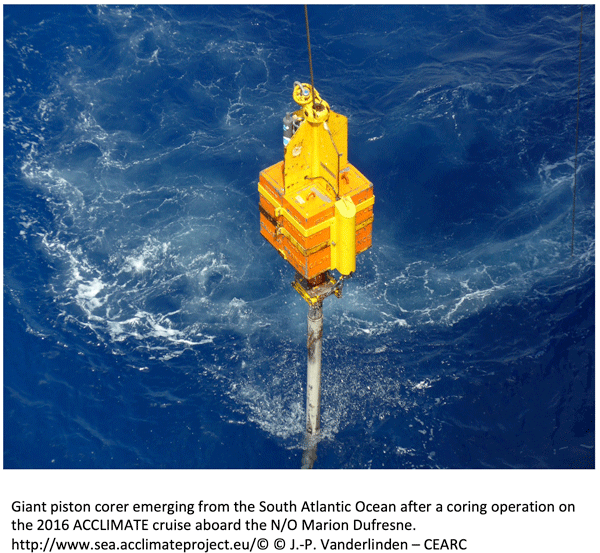
Claire Waelbroeck, Jerry Tjiputra, Chuncheng Guo, Kerim H. Nisancioglu, Eystein Jansen, Natalia Vázquez Riveiros, Samuel Toucanne, Frédérique Eynaud, Linda Rossignol, Fabien Dewilde, Elodie Marchès, Susana Lebreiro, and Silvia Nave
Clim. Past, 19, 901–913, https://doi.org/10.5194/cp-19-901-2023, https://doi.org/10.5194/cp-19-901-2023, 2023
Short summary
Short summary
The precise geometry and extent of Atlantic circulation changes that accompanied rapid climate changes of the last glacial period are still unknown. Here, we combine carbon isotopic records from 18 Atlantic sediment cores with numerical simulations and decompose the carbon isotopic change across a cold-to-warm transition into remineralization and circulation components. Our results show that the replacement of southern-sourced by northern-sourced water plays a dominant role below ~ 3000 m depth.
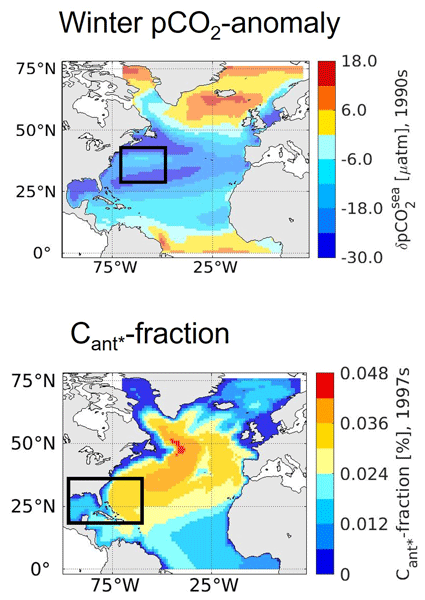
Nadine Goris, Klaus Johannsen, and Jerry Tjiputra
Geosci. Model Dev., 16, 2095–2117, https://doi.org/10.5194/gmd-16-2095-2023, https://doi.org/10.5194/gmd-16-2095-2023, 2023
Short summary
Short summary
Climate projections of a high-CO2 future are highly uncertain. A new study provides a novel approach to identifying key regions that dynamically explain the model uncertainty. To yield an accurate estimate of the future North Atlantic carbon uptake, we find that a correct simulation of the upper- and interior-ocean volume transport at 25–30° N is key. However, results indicate that models rarely perform well for both indicators and point towards inconsistencies within the model ensemble.
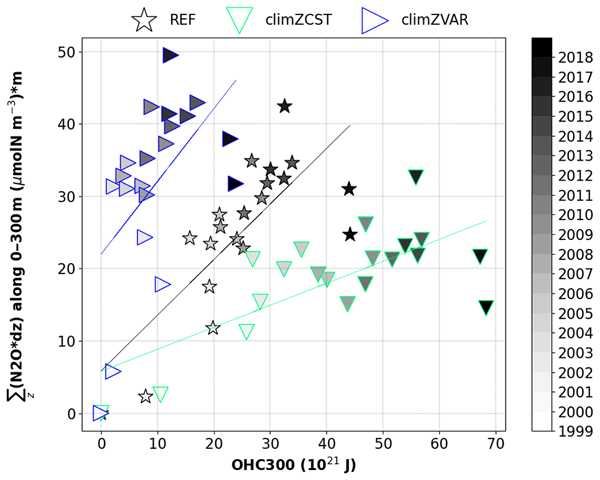
Sarah Berthet, Julien Jouanno, Roland Séférian, Marion Gehlen, and William Llovel
Earth Syst. Dynam., 14, 399–412, https://doi.org/10.5194/esd-14-399-2023, https://doi.org/10.5194/esd-14-399-2023, 2023
Short summary
Short summary
Phytoplankton absorbs the solar radiation entering the ocean surface and contributes to keeping the associated energy in surface waters. This natural effect is either not represented in the ocean component of climate models or its representation is simplified. An incomplete representation of this biophysical interaction affects the way climate models simulate ocean warming, which leads to uncertainties in projections of oceanic emissions of an important greenhouse gas (nitrous oxide).
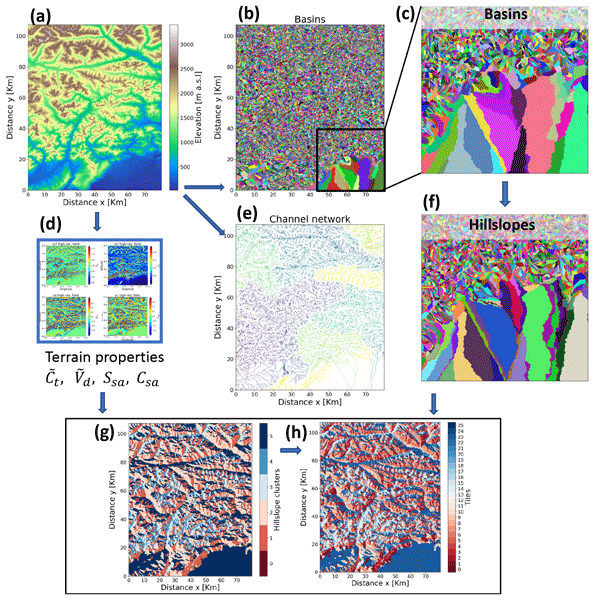
Enrico Zorzetto, Sergey Malyshev, Nathaniel Chaney, David Paynter, Raymond Menzel, and Elena Shevliakova
Geosci. Model Dev., 16, 1937–1960, https://doi.org/10.5194/gmd-16-1937-2023, https://doi.org/10.5194/gmd-16-1937-2023, 2023
Short summary
Short summary
In this paper we develop a methodology to model the spatial distribution of solar radiation received by land over mountainous terrain. The approach is designed to be used in Earth system models, where coarse grid cells hinder the description of fine-scale land–atmosphere interactions. We adopt a clustering algorithm to partition the land domain into a set of homogeneous sub-grid
tiles, and for each tile we evaluate solar radiation received by land based on terrain properties.
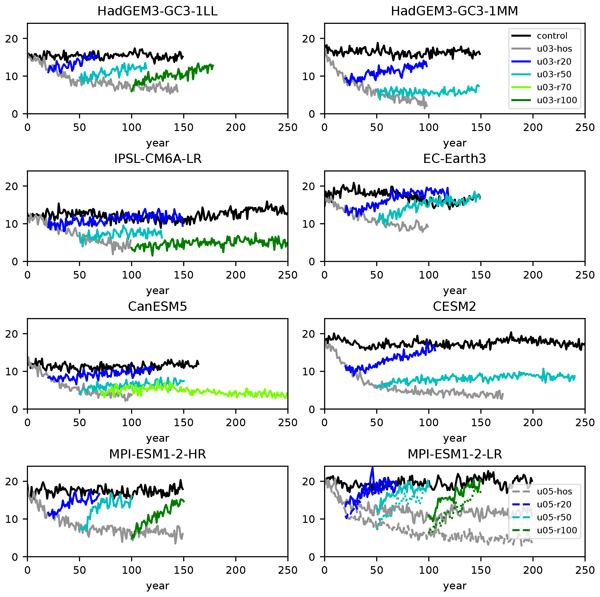
Laura C. Jackson, Eduardo Alastrué de Asenjo, Katinka Bellomo, Gokhan Danabasoglu, Helmuth Haak, Aixue Hu, Johann Jungclaus, Warren Lee, Virna L. Meccia, Oleg Saenko, Andrew Shao, and Didier Swingedouw
Geosci. Model Dev., 16, 1975–1995, https://doi.org/10.5194/gmd-16-1975-2023, https://doi.org/10.5194/gmd-16-1975-2023, 2023
Short summary
Short summary
The Atlantic meridional overturning circulation (AMOC) has an important impact on the climate. There are theories that freshening of the ocean might cause the AMOC to cross a tipping point (TP) beyond which recovery is difficult; however, it is unclear whether TPs exist in global climate models. Here, we outline a set of experiments designed to explore AMOC tipping points and sensitivity to additional freshwater input as part of the North Atlantic Hosing Model Intercomparison Project (NAHosMIP).
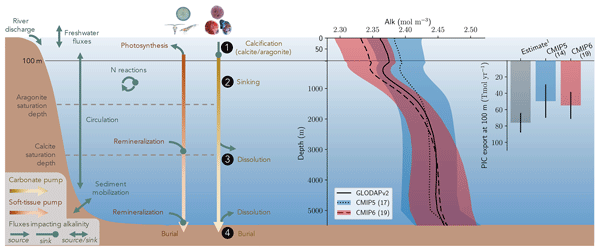
Alban Planchat, Lester Kwiatkowski, Laurent Bopp, Olivier Torres, James R. Christian, Momme Butenschön, Tomas Lovato, Roland Séférian, Matthew A. Chamberlain, Olivier Aumont, Michio Watanabe, Akitomo Yamamoto, Andrew Yool, Tatiana Ilyina, Hiroyuki Tsujino, Kristen M. Krumhardt, Jörg Schwinger, Jerry Tjiputra, John P. Dunne, and Charles Stock
Biogeosciences, 20, 1195–1257, https://doi.org/10.5194/bg-20-1195-2023, https://doi.org/10.5194/bg-20-1195-2023, 2023
Short summary
Short summary
Ocean alkalinity is critical to the uptake of atmospheric carbon and acidification in surface waters. We review the representation of alkalinity and the associated calcium carbonate cycle in Earth system models. While many parameterizations remain present in the latest generation of models, there is a general improvement in the simulated alkalinity distribution. This improvement is related to an increase in the export of biotic calcium carbonate, which closer resembles observations.
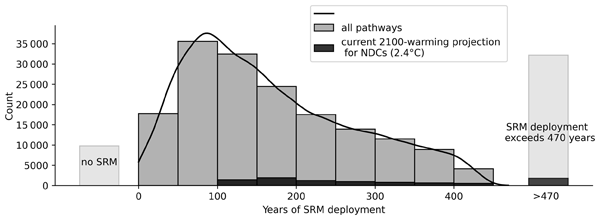
Susanne Baur, Alexander Nauels, Zebedee Nicholls, Benjamin M. Sanderson, and Carl-Friedrich Schleussner
Earth Syst. Dynam., 14, 367–381, https://doi.org/10.5194/esd-14-367-2023, https://doi.org/10.5194/esd-14-367-2023, 2023
Short summary
Short summary
Solar radiation modification (SRM) artificially cools global temperature without acting on the cause of climate change. This study looks at how long SRM would have to be deployed to limit warming to 1.5 °C and how this timeframe is affected by different levels of mitigation, negative emissions and climate uncertainty. None of the three factors alone can guarantee short SRM deployment. Due to their uncertainty at the time of SRM initialization, any deployment risks may be several centuries long.
Jane P. Mulcahy, Colin G. Jones, Steven T. Rumbold, Till Kuhlbrodt, Andrea J. Dittus, Edward W. Blockley, Andrew Yool, Jeremy Walton, Catherine Hardacre, Timothy Andrews, Alejandro Bodas-Salcedo, Marc Stringer, Lee de Mora, Phil Harris, Richard Hill, Doug Kelley, Eddy Robertson, and Yongming Tang
Geosci. Model Dev., 16, 1569–1600, https://doi.org/10.5194/gmd-16-1569-2023, https://doi.org/10.5194/gmd-16-1569-2023, 2023
Short summary
Short summary
Recent global climate models simulate historical global mean surface temperatures which are too cold, possibly to due to excessive aerosol cooling. This raises questions about the models' ability to simulate important climate processes and reduces confidence in future climate predictions. We present a new version of the UK Earth System Model, which has an improved aerosols simulation and a historical temperature record. Interestingly, the long-term response to CO2 remains largely unchanged.
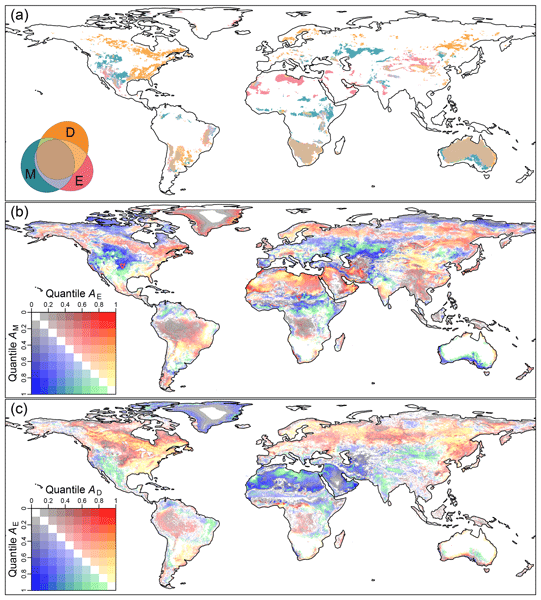
Zun Yin, Kirsten L. Findell, Paul Dirmeyer, Elena Shevliakova, Sergey Malyshev, Khaled Ghannam, Nina Raoult, and Zhihong Tan
Hydrol. Earth Syst. Sci., 27, 861–872, https://doi.org/10.5194/hess-27-861-2023, https://doi.org/10.5194/hess-27-861-2023, 2023
Short summary
Short summary
Land–atmosphere (L–A) interactions typically focus on daytime processes connecting the land state with the overlying atmospheric boundary layer. However, much prior L–A work used monthly or daily means due to the lack of daytime-only data products. Here we show that monthly smoothing can significantly obscure the L–A coupling signal, and including nighttime information can mute or mask the daytime processes of interest. We propose diagnosing L–A coupling within models or archiving subdaily data.
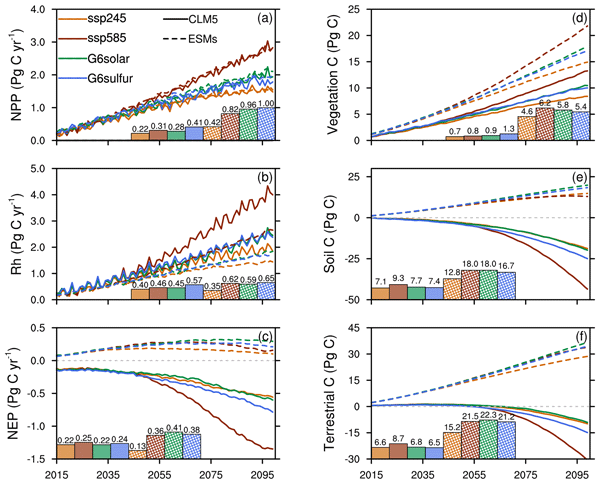
Yangxin Chen, Duoying Ji, Qian Zhang, John C. Moore, Olivier Boucher, Andy Jones, Thibaut Lurton, Michael J. Mills, Ulrike Niemeier, Roland Séférian, and Simone Tilmes
Earth Syst. Dynam., 14, 55–79, https://doi.org/10.5194/esd-14-55-2023, https://doi.org/10.5194/esd-14-55-2023, 2023
Short summary
Short summary
Solar geoengineering has been proposed as a way of counteracting the warming effects of increasing greenhouse gases by reflecting solar radiation. This work shows that solar geoengineering can slow down the northern-high-latitude permafrost degradation but cannot preserve the permafrost ecosystem as that under a climate of the same warming level without solar geoengineering.

Shuang Gao, Jörg Schwinger, Jerry Tjiputra, Ingo Bethke, Jens Hartmann, Emilio Mayorga, and Christoph Heinze
Biogeosciences, 20, 93–119, https://doi.org/10.5194/bg-20-93-2023, https://doi.org/10.5194/bg-20-93-2023, 2023
Short summary
Short summary
We assess the impact of riverine nutrients and carbon (C) on projected marine primary production (PP) and C uptake using a fully coupled Earth system model. Riverine inputs alleviate nutrient limitation and thus lessen the projected PP decline by up to 0.7 Pg C yr−1 globally. The effect of increased riverine C may be larger than the effect of nutrient inputs in the future on the projected ocean C uptake, while in the historical period increased nutrient inputs are considered the largest driver.
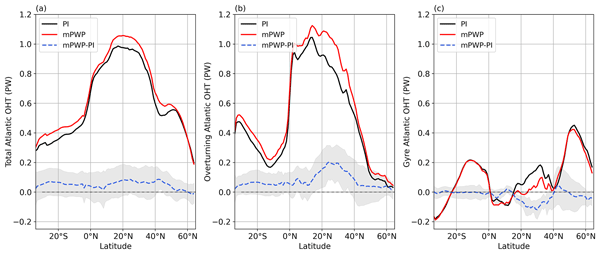
Julia E. Weiffenbach, Michiel L. J. Baatsen, Henk A. Dijkstra, Anna S. von der Heydt, Ayako Abe-Ouchi, Esther C. Brady, Wing-Le Chan, Deepak Chandan, Mark A. Chandler, Camille Contoux, Ran Feng, Chuncheng Guo, Zixuan Han, Alan M. Haywood, Qiang Li, Xiangyu Li, Gerrit Lohmann, Daniel J. Lunt, Kerim H. Nisancioglu, Bette L. Otto-Bliesner, W. Richard Peltier, Gilles Ramstein, Linda E. Sohl, Christian Stepanek, Ning Tan, Julia C. Tindall, Charles J. R. Williams, Qiong Zhang, and Zhongshi Zhang
Clim. Past, 19, 61–85, https://doi.org/10.5194/cp-19-61-2023, https://doi.org/10.5194/cp-19-61-2023, 2023
Short summary
Short summary
We study the behavior of the Atlantic Meridional Overturning Circulation (AMOC) in the mid-Pliocene. The mid-Pliocene was about 3 million years ago and had a similar CO2 concentration to today. We show that the stronger AMOC during this period relates to changes in geography and that this has a significant influence on ocean temperatures and heat transported northwards by the Atlantic Ocean. Understanding the behavior of the mid-Pliocene AMOC can help us to learn more about our future climate.

Benjamin M. Sanderson and Maria Rugenstein
Earth Syst. Dynam., 13, 1715–1736, https://doi.org/10.5194/esd-13-1715-2022, https://doi.org/10.5194/esd-13-1715-2022, 2022
Short summary
Short summary
Equilibrium climate sensitivity (ECS) is a measure of how much long-term warming should be expected in response to a change in greenhouse gas concentrations. It is generally calculated in climate models by extrapolating global average temperatures to a point of where the planet is no longer a net absorber of energy. Here we show that some climate models experience energy leaks which change as the planet warms, undermining the standard approach and biasing some existing model estimates of ECS.
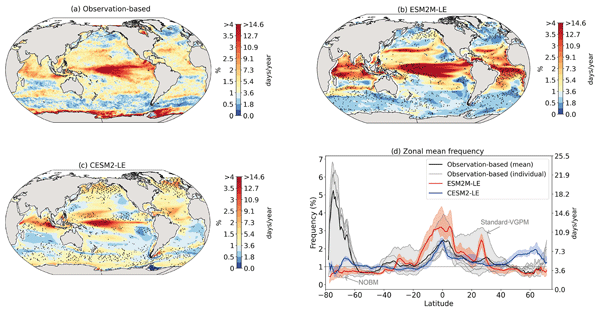
Natacha Le Grix, Jakob Zscheischler, Keith B. Rodgers, Ryohei Yamaguchi, and Thomas L. Frölicher
Biogeosciences, 19, 5807–5835, https://doi.org/10.5194/bg-19-5807-2022, https://doi.org/10.5194/bg-19-5807-2022, 2022
Short summary
Short summary
Compound events threaten marine ecosystems. Here, we investigate the potentially harmful combination of marine heatwaves with low phytoplankton productivity. Using satellite-based observations, we show that these compound events are frequent in the low latitudes. We then investigate the drivers of these compound events using Earth system models. The models share similar drivers in the low latitudes but disagree in the high latitudes due to divergent factors limiting phytoplankton production.

Stephanie Woodward, Alistair A. Sellar, Yongming Tang, Marc Stringer, Andrew Yool, Eddy Robertson, and Andy Wiltshire
Atmos. Chem. Phys., 22, 14503–14528, https://doi.org/10.5194/acp-22-14503-2022, https://doi.org/10.5194/acp-22-14503-2022, 2022
Short summary
Short summary
We describe the dust scheme in the UKESM1 Earth system model and show generally good agreement with observations. Comparing with the closely related HadGEM3-GC3.1 model, we show that dust differences are not only due to inter-model differences but also to the dust size distribution. Under climate change, HadGEM3-GC3.1 dust hardly changes, but UKESM1 dust decreases because that model includes the vegetation response which, in our models, has a bigger impact on dust than climate change itself.
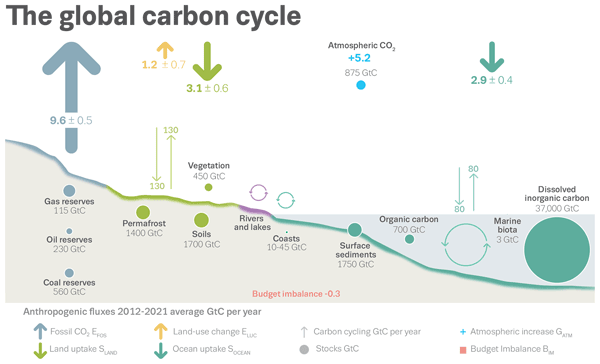
Pierre Friedlingstein, Michael O'Sullivan, Matthew W. Jones, Robbie M. Andrew, Luke Gregor, Judith Hauck, Corinne Le Quéré, Ingrid T. Luijkx, Are Olsen, Glen P. Peters, Wouter Peters, Julia Pongratz, Clemens Schwingshackl, Stephen Sitch, Josep G. Canadell, Philippe Ciais, Robert B. Jackson, Simone R. Alin, Ramdane Alkama, Almut Arneth, Vivek K. Arora, Nicholas R. Bates, Meike Becker, Nicolas Bellouin, Henry C. Bittig, Laurent Bopp, Frédéric Chevallier, Louise P. Chini, Margot Cronin, Wiley Evans, Stefanie Falk, Richard A. Feely, Thomas Gasser, Marion Gehlen, Thanos Gkritzalis, Lucas Gloege, Giacomo Grassi, Nicolas Gruber, Özgür Gürses, Ian Harris, Matthew Hefner, Richard A. Houghton, George C. Hurtt, Yosuke Iida, Tatiana Ilyina, Atul K. Jain, Annika Jersild, Koji Kadono, Etsushi Kato, Daniel Kennedy, Kees Klein Goldewijk, Jürgen Knauer, Jan Ivar Korsbakken, Peter Landschützer, Nathalie Lefèvre, Keith Lindsay, Junjie Liu, Zhu Liu, Gregg Marland, Nicolas Mayot, Matthew J. McGrath, Nicolas Metzl, Natalie M. Monacci, David R. Munro, Shin-Ichiro Nakaoka, Yosuke Niwa, Kevin O'Brien, Tsuneo Ono, Paul I. Palmer, Naiqing Pan, Denis Pierrot, Katie Pocock, Benjamin Poulter, Laure Resplandy, Eddy Robertson, Christian Rödenbeck, Carmen Rodriguez, Thais M. Rosan, Jörg Schwinger, Roland Séférian, Jamie D. Shutler, Ingunn Skjelvan, Tobias Steinhoff, Qing Sun, Adrienne J. Sutton, Colm Sweeney, Shintaro Takao, Toste Tanhua, Pieter P. Tans, Xiangjun Tian, Hanqin Tian, Bronte Tilbrook, Hiroyuki Tsujino, Francesco Tubiello, Guido R. van der Werf, Anthony P. Walker, Rik Wanninkhof, Chris Whitehead, Anna Willstrand Wranne, Rebecca Wright, Wenping Yuan, Chao Yue, Xu Yue, Sönke Zaehle, Jiye Zeng, and Bo Zheng
Earth Syst. Sci. Data, 14, 4811–4900, https://doi.org/10.5194/essd-14-4811-2022, https://doi.org/10.5194/essd-14-4811-2022, 2022
Short summary
Short summary
The Global Carbon Budget 2022 describes the datasets and methodology used to quantify the anthropogenic emissions of carbon dioxide (CO2) and their partitioning among the atmosphere, the land ecosystems, and the ocean. These living datasets are updated every year to provide the highest transparency and traceability in the reporting of CO2, the key driver of climate change.
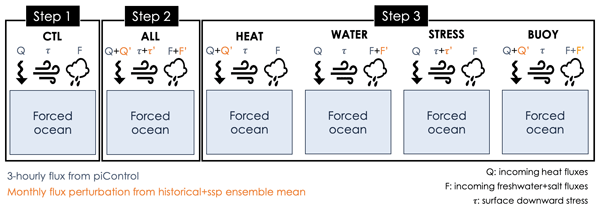
Yona Silvy, Clément Rousset, Eric Guilyardi, Jean-Baptiste Sallée, Juliette Mignot, Christian Ethé, and Gurvan Madec
Geosci. Model Dev., 15, 7683–7713, https://doi.org/10.5194/gmd-15-7683-2022, https://doi.org/10.5194/gmd-15-7683-2022, 2022
Short summary
Short summary
A modeling framework is introduced to understand and decompose the mechanisms causing the ocean temperature, salinity and circulation to change since the pre-industrial period and into 21st century scenarios of global warming. This framework aims to look at the response to changes in the winds and in heat and freshwater exchanges at the ocean interface in global climate models, throughout the 1850–2100 period, to unravel their individual effects on the changing physical structure of the ocean.
Antony Siahaan, Robin S. Smith, Paul R. Holland, Adrian Jenkins, Jonathan M. Gregory, Victoria Lee, Pierre Mathiot, Antony J. Payne, Jeff K. Ridley, and Colin G. Jones
The Cryosphere, 16, 4053–4086, https://doi.org/10.5194/tc-16-4053-2022, https://doi.org/10.5194/tc-16-4053-2022, 2022
Short summary
Short summary
The UK Earth System Model is the first to fully include interactions of the atmosphere and ocean with the Antarctic Ice Sheet. Under the low-greenhouse-gas SSP1–1.9 (Shared Socioeconomic Pathway) scenario, the ice sheet remains stable over the 21st century. Under the strong-greenhouse-gas SSP5–8.5 scenario, the model predicts strong increases in melting of large ice shelves and snow accumulation on the surface. The dominance of accumulation leads to a sea level fall at the end of the century.

Jens Terhaar, Thomas L. Frölicher, and Fortunat Joos
Biogeosciences, 19, 4431–4457, https://doi.org/10.5194/bg-19-4431-2022, https://doi.org/10.5194/bg-19-4431-2022, 2022
Short summary
Short summary
Estimates of the ocean sink of anthropogenic carbon vary across various approaches. We show that the global ocean carbon sink can be estimated by three parameters, two of which approximate the ocean ventilation in the Southern Ocean and the North Atlantic, and one of which approximates the chemical capacity of the ocean to take up carbon. With observations of these parameters, we estimate that the global ocean carbon sink is 10 % larger than previously assumed, and we cut uncertainties in half.
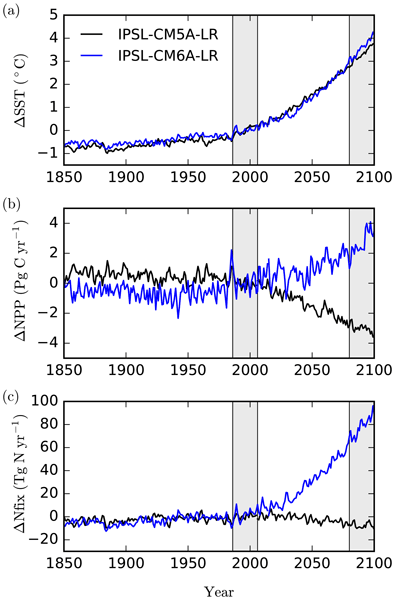
Laurent Bopp, Olivier Aumont, Lester Kwiatkowski, Corentin Clerc, Léonard Dupont, Christian Ethé, Thomas Gorgues, Roland Séférian, and Alessandro Tagliabue
Biogeosciences, 19, 4267–4285, https://doi.org/10.5194/bg-19-4267-2022, https://doi.org/10.5194/bg-19-4267-2022, 2022
Short summary
Short summary
The impact of anthropogenic climate change on the biological production of phytoplankton in the ocean is a cause for concern because its evolution could affect the response of marine ecosystems to climate change. Here, we identify biological N fixation and its response to future climate change as a key process in shaping the future evolution of marine phytoplankton production. Our results show that further study of how this nitrogen fixation responds to environmental change is essential.
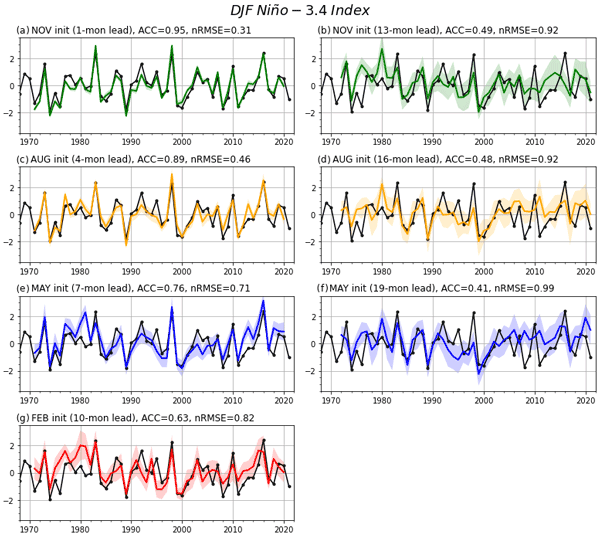
Stephen G. Yeager, Nan Rosenbloom, Anne A. Glanville, Xian Wu, Isla Simpson, Hui Li, Maria J. Molina, Kristen Krumhardt, Samuel Mogen, Keith Lindsay, Danica Lombardozzi, Will Wieder, Who M. Kim, Jadwiga H. Richter, Matthew Long, Gokhan Danabasoglu, David Bailey, Marika Holland, Nicole Lovenduski, Warren G. Strand, and Teagan King
Geosci. Model Dev., 15, 6451–6493, https://doi.org/10.5194/gmd-15-6451-2022, https://doi.org/10.5194/gmd-15-6451-2022, 2022
Short summary
Short summary
The Earth system changes over a range of time and space scales, and some of these changes are predictable in advance. Short-term weather forecasts are most familiar, but recent work has shown that it is possible to generate useful predictions several seasons or even a decade in advance. This study focuses on predictions over intermediate timescales (up to 24 months in advance) and shows that there is promising potential to forecast a variety of changes in the natural environment.
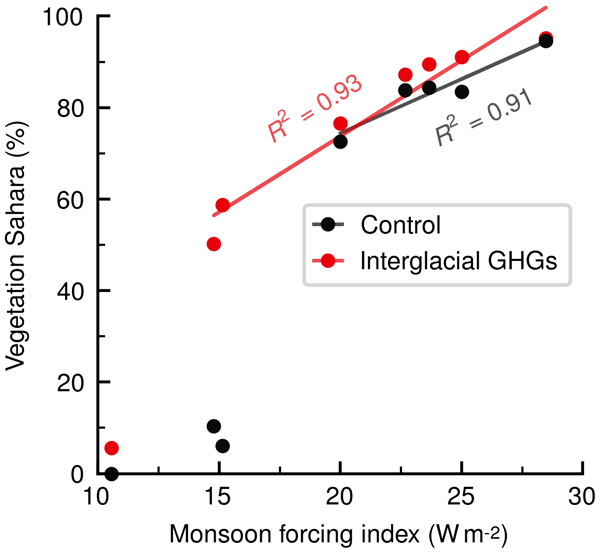
Mateo Duque-Villegas, Martin Claussen, Victor Brovkin, and Thomas Kleinen
Clim. Past, 18, 1897–1914, https://doi.org/10.5194/cp-18-1897-2022, https://doi.org/10.5194/cp-18-1897-2022, 2022
Short summary
Short summary
Using an Earth system model of intermediate complexity, we quantify contributions of the Earth's orbit, greenhouse gases (GHGs) and ice sheets to the strength of Saharan greening during late Quaternary African humid periods (AHPs). Orbital forcing is found as the dominant factor, having a critical threshold and accounting for most of the changes in the vegetation response. However, results suggest that GHGs may influence the orbital threshold and thus may play a pivotal role for future AHPs.
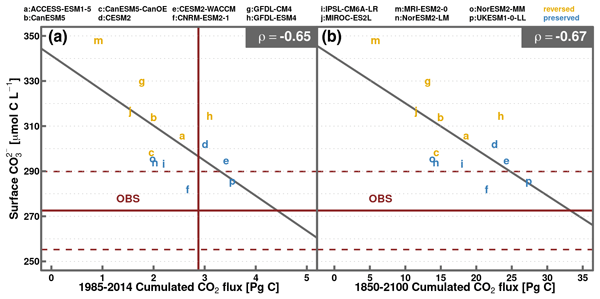
Pradeebane Vaittinada Ayar, Laurent Bopp, Jim R. Christian, Tatiana Ilyina, John P. Krasting, Roland Séférian, Hiroyuki Tsujino, Michio Watanabe, Andrew Yool, and Jerry Tjiputra
Earth Syst. Dynam., 13, 1097–1118, https://doi.org/10.5194/esd-13-1097-2022, https://doi.org/10.5194/esd-13-1097-2022, 2022
Short summary
Short summary
The El Niño–Southern Oscillation is the main driver for the natural variability of global atmospheric CO2. It modulates the CO2 fluxes in the tropical Pacific with anomalous CO2 influx during El Niño and outflux during La Niña. This relationship is projected to reverse by half of Earth system models studied here under the business-as-usual scenario. This study shows models that simulate a positive bias in surface carbonate concentrations simulate a shift in the ENSO–CO2 flux relationship.
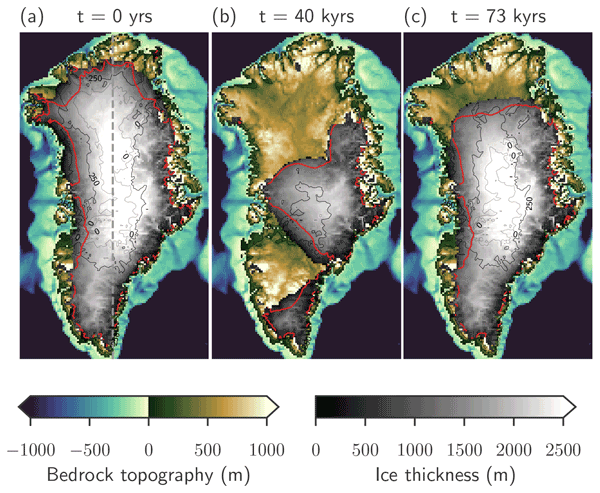
Maria Zeitz, Jan M. Haacker, Jonathan F. Donges, Torsten Albrecht, and Ricarda Winkelmann
Earth Syst. Dynam., 13, 1077–1096, https://doi.org/10.5194/esd-13-1077-2022, https://doi.org/10.5194/esd-13-1077-2022, 2022
Short summary
Short summary
The stability of the Greenland Ice Sheet under global warming is crucial. Here, using PISM, we study how the interplay of feedbacks between the ice sheet, the atmosphere and solid Earth affects the long-term response of the Greenland Ice Sheet under constant warming. Our findings suggest four distinct dynamic regimes of the Greenland Ice Sheet on the route to destabilization under global warming – from recovery via quasi-periodic oscillations in ice volume to ice sheet collapse.
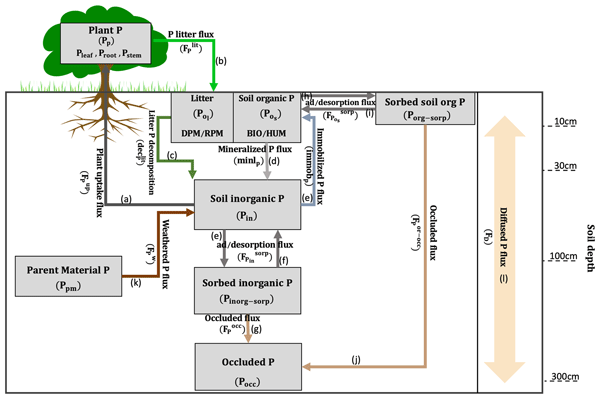
Mahdi André Nakhavali, Lina M. Mercado, Iain P. Hartley, Stephen Sitch, Fernanda V. Cunha, Raffaello di Ponzio, Laynara F. Lugli, Carlos A. Quesada, Kelly M. Andersen, Sarah E. Chadburn, Andy J. Wiltshire, Douglas B. Clark, Gyovanni Ribeiro, Lara Siebert, Anna C. M. Moraes, Jéssica Schmeisk Rosa, Rafael Assis, and José L. Camargo
Geosci. Model Dev., 15, 5241–5269, https://doi.org/10.5194/gmd-15-5241-2022, https://doi.org/10.5194/gmd-15-5241-2022, 2022
Short summary
Short summary
In tropical ecosystems, the availability of rock-derived elements such as P can be very low. Thus, without a representation of P cycling, tropical forest responses to rising atmospheric CO2 conditions in areas such as Amazonia remain highly uncertain. We introduced P dynamics and its interactions with the N and P cycles into the JULES model. Our results highlight the potential for high P limitation and therefore lower CO2 fertilization capacity in the Amazon forest with low-fertility soils.

Tanja Schlemm, Johannes Feldmann, Ricarda Winkelmann, and Anders Levermann
The Cryosphere, 16, 1979–1996, https://doi.org/10.5194/tc-16-1979-2022, https://doi.org/10.5194/tc-16-1979-2022, 2022
Short summary
Short summary
Marine cliff instability, if it exists, could dominate Antarctica's contribution to future sea-level rise. It is likely to speed up with ice thickness and thus would accelerate in most parts of Antarctica. Here, we investigate a possible mechanism that might stop cliff instability through cloaking by ice mélange. It is only a first step, but it shows that embayment geometry is, in principle, able to stop marine cliff instability in most parts of West Antarctica.
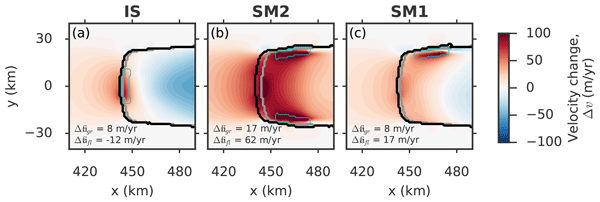
Johannes Feldmann, Ronja Reese, Ricarda Winkelmann, and Anders Levermann
The Cryosphere, 16, 1927–1940, https://doi.org/10.5194/tc-16-1927-2022, https://doi.org/10.5194/tc-16-1927-2022, 2022
Short summary
Short summary
We use a numerical model to simulate the flow of a simplified, buttressed Antarctic-type outlet glacier with an attached ice shelf. We find that after a few years of perturbation such a glacier responds much stronger to melting under the ice-shelf shear margins than to melting in the central fast streaming part of the ice shelf. This study explains the underlying physical mechanism which might gain importance in the future if melt rates under the Antarctic ice shelves continue to increase.
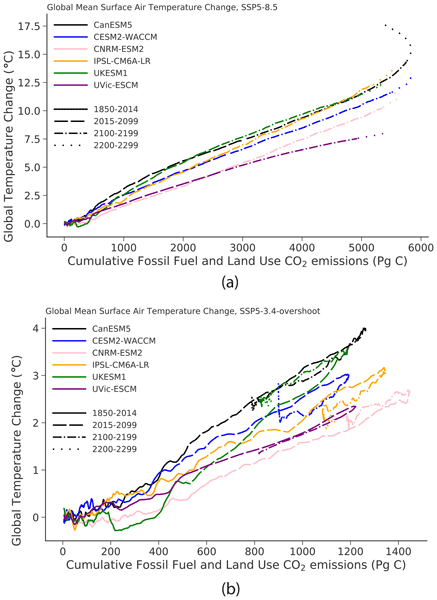
Charles D. Koven, Vivek K. Arora, Patricia Cadule, Rosie A. Fisher, Chris D. Jones, David M. Lawrence, Jared Lewis, Keith Lindsay, Sabine Mathesius, Malte Meinshausen, Michael Mills, Zebedee Nicholls, Benjamin M. Sanderson, Roland Séférian, Neil C. Swart, William R. Wieder, and Kirsten Zickfeld
Earth Syst. Dynam., 13, 885–909, https://doi.org/10.5194/esd-13-885-2022, https://doi.org/10.5194/esd-13-885-2022, 2022
Short summary
Short summary
We explore the long-term dynamics of Earth's climate and carbon cycles under a pair of contrasting scenarios to the year 2300 using six models that include both climate and carbon cycle dynamics. One scenario assumes very high emissions, while the second assumes a peak in emissions, followed by rapid declines to net negative emissions. We show that the models generally agree that warming is roughly proportional to carbon emissions but that many other aspects of the model projections differ.
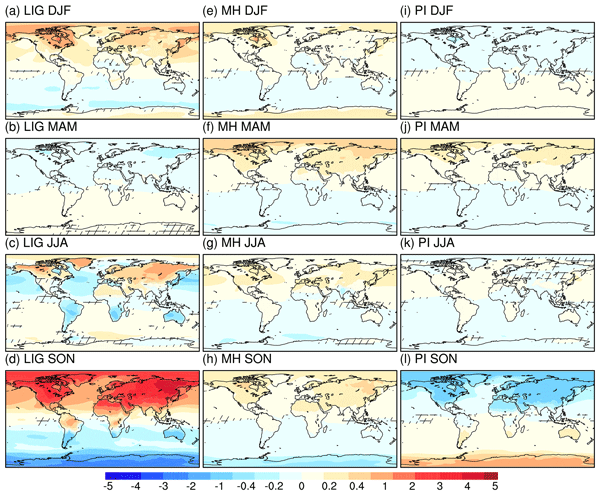
Xiaoxu Shi, Martin Werner, Carolin Krug, Chris M. Brierley, Anni Zhao, Endurance Igbinosa, Pascale Braconnot, Esther Brady, Jian Cao, Roberta D'Agostino, Johann Jungclaus, Xingxing Liu, Bette Otto-Bliesner, Dmitry Sidorenko, Robert Tomas, Evgeny M. Volodin, Hu Yang, Qiong Zhang, Weipeng Zheng, and Gerrit Lohmann
Clim. Past, 18, 1047–1070, https://doi.org/10.5194/cp-18-1047-2022, https://doi.org/10.5194/cp-18-1047-2022, 2022
Short summary
Short summary
Since the orbital parameters of the past are different from today, applying the modern calendar to the past climate can lead to an artificial bias in seasonal cycles. With the use of multiple model outputs, we found that such a bias is non-ignorable and should be corrected to ensure an accurate comparison between modeled results and observational records, as well as between simulated past and modern climates, especially for the Last Interglacial.
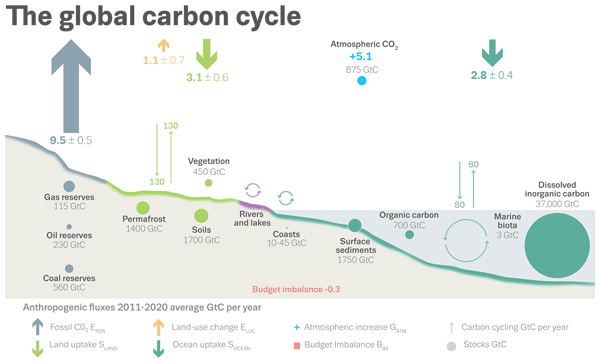
Pierre Friedlingstein, Matthew W. Jones, Michael O'Sullivan, Robbie M. Andrew, Dorothee C. E. Bakker, Judith Hauck, Corinne Le Quéré, Glen P. Peters, Wouter Peters, Julia Pongratz, Stephen Sitch, Josep G. Canadell, Philippe Ciais, Rob B. Jackson, Simone R. Alin, Peter Anthoni, Nicholas R. Bates, Meike Becker, Nicolas Bellouin, Laurent Bopp, Thi Tuyet Trang Chau, Frédéric Chevallier, Louise P. Chini, Margot Cronin, Kim I. Currie, Bertrand Decharme, Laique M. Djeutchouang, Xinyu Dou, Wiley Evans, Richard A. Feely, Liang Feng, Thomas Gasser, Dennis Gilfillan, Thanos Gkritzalis, Giacomo Grassi, Luke Gregor, Nicolas Gruber, Özgür Gürses, Ian Harris, Richard A. Houghton, George C. Hurtt, Yosuke Iida, Tatiana Ilyina, Ingrid T. Luijkx, Atul Jain, Steve D. Jones, Etsushi Kato, Daniel Kennedy, Kees Klein Goldewijk, Jürgen Knauer, Jan Ivar Korsbakken, Arne Körtzinger, Peter Landschützer, Siv K. Lauvset, Nathalie Lefèvre, Sebastian Lienert, Junjie Liu, Gregg Marland, Patrick C. McGuire, Joe R. Melton, David R. Munro, Julia E. M. S. Nabel, Shin-Ichiro Nakaoka, Yosuke Niwa, Tsuneo Ono, Denis Pierrot, Benjamin Poulter, Gregor Rehder, Laure Resplandy, Eddy Robertson, Christian Rödenbeck, Thais M. Rosan, Jörg Schwinger, Clemens Schwingshackl, Roland Séférian, Adrienne J. Sutton, Colm Sweeney, Toste Tanhua, Pieter P. Tans, Hanqin Tian, Bronte Tilbrook, Francesco Tubiello, Guido R. van der Werf, Nicolas Vuichard, Chisato Wada, Rik Wanninkhof, Andrew J. Watson, David Willis, Andrew J. Wiltshire, Wenping Yuan, Chao Yue, Xu Yue, Sönke Zaehle, and Jiye Zeng
Earth Syst. Sci. Data, 14, 1917–2005, https://doi.org/10.5194/essd-14-1917-2022, https://doi.org/10.5194/essd-14-1917-2022, 2022
Short summary
Short summary
The Global Carbon Budget 2021 describes the data sets and methodology used to quantify the emissions of carbon dioxide and their partitioning among the atmosphere, land, and ocean. These living data are updated every year to provide the highest transparency and traceability in the reporting of CO2, the key driver of climate change.
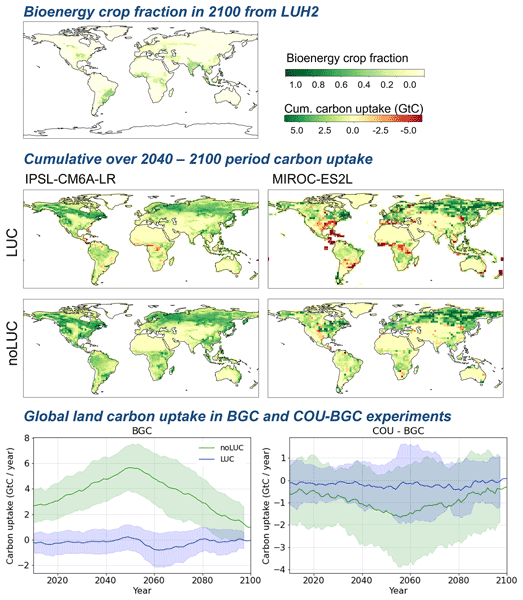
Irina Melnikova, Olivier Boucher, Patricia Cadule, Katsumasa Tanaka, Thomas Gasser, Tomohiro Hajima, Yann Quilcaille, Hideo Shiogama, Roland Séférian, Kaoru Tachiiri, Nicolas Vuichard, Tokuta Yokohata, and Philippe Ciais
Earth Syst. Dynam., 13, 779–794, https://doi.org/10.5194/esd-13-779-2022, https://doi.org/10.5194/esd-13-779-2022, 2022
Short summary
Short summary
The deployment of bioenergy crops for capturing carbon from the atmosphere facilitates global warming mitigation via generating negative CO2 emissions. Here, we explored the consequences of large-scale energy crops deployment on the land carbon cycle. The land-use change for energy crops leads to carbon emissions and loss of future potential increase in carbon uptake by natural ecosystems. This impact should be taken into account by the modeling teams and accounted for in mitigation policies.
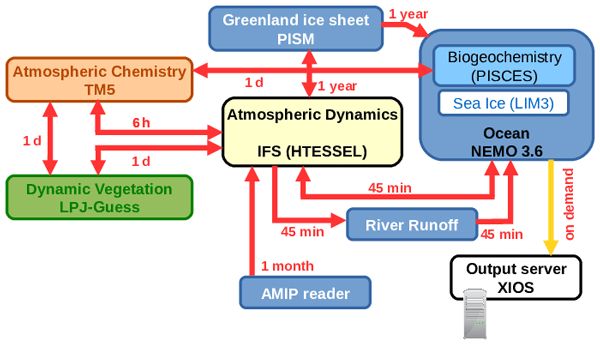
Ralf Döscher, Mario Acosta, Andrea Alessandri, Peter Anthoni, Thomas Arsouze, Tommi Bergman, Raffaele Bernardello, Souhail Boussetta, Louis-Philippe Caron, Glenn Carver, Miguel Castrillo, Franco Catalano, Ivana Cvijanovic, Paolo Davini, Evelien Dekker, Francisco J. Doblas-Reyes, David Docquier, Pablo Echevarria, Uwe Fladrich, Ramon Fuentes-Franco, Matthias Gröger, Jost v. Hardenberg, Jenny Hieronymus, M. Pasha Karami, Jukka-Pekka Keskinen, Torben Koenigk, Risto Makkonen, François Massonnet, Martin Ménégoz, Paul A. Miller, Eduardo Moreno-Chamarro, Lars Nieradzik, Twan van Noije, Paul Nolan, Declan O'Donnell, Pirkka Ollinaho, Gijs van den Oord, Pablo Ortega, Oriol Tintó Prims, Arthur Ramos, Thomas Reerink, Clement Rousset, Yohan Ruprich-Robert, Philippe Le Sager, Torben Schmith, Roland Schrödner, Federico Serva, Valentina Sicardi, Marianne Sloth Madsen, Benjamin Smith, Tian Tian, Etienne Tourigny, Petteri Uotila, Martin Vancoppenolle, Shiyu Wang, David Wårlind, Ulrika Willén, Klaus Wyser, Shuting Yang, Xavier Yepes-Arbós, and Qiong Zhang
Geosci. Model Dev., 15, 2973–3020, https://doi.org/10.5194/gmd-15-2973-2022, https://doi.org/10.5194/gmd-15-2973-2022, 2022
Short summary
Short summary
The Earth system model EC-Earth3 is documented here. Key performance metrics show physical behavior and biases well within the frame known from recent models. With improved physical and dynamic features, new ESM components, community tools, and largely improved physical performance compared to the CMIP5 version, EC-Earth3 represents a clear step forward for the only European community ESM. We demonstrate here that EC-Earth3 is suited for a range of tasks in CMIP6 and beyond.
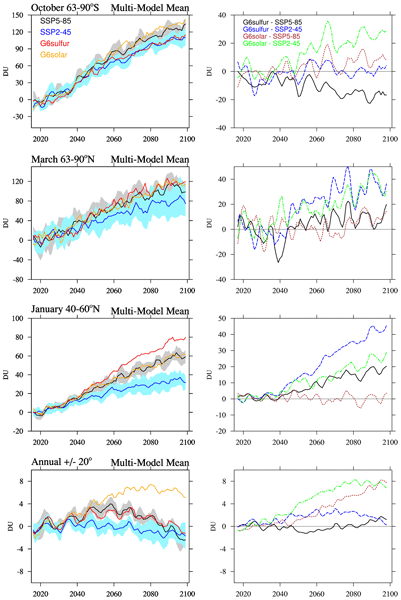
Simone Tilmes, Daniele Visioni, Andy Jones, James Haywood, Roland Séférian, Pierre Nabat, Olivier Boucher, Ewa Monica Bednarz, and Ulrike Niemeier
Atmos. Chem. Phys., 22, 4557–4579, https://doi.org/10.5194/acp-22-4557-2022, https://doi.org/10.5194/acp-22-4557-2022, 2022
Short summary
Short summary
This study assesses the impacts of climate interventions, using stratospheric sulfate aerosol and solar dimming on stratospheric ozone, based on three Earth system models with interactive stratospheric chemistry. The climate interventions have been applied to a high emission (baseline) scenario in order to reach global surface temperatures of a medium emission scenario. We find significant increases and decreases in total column ozone, depending on regions and seasons.
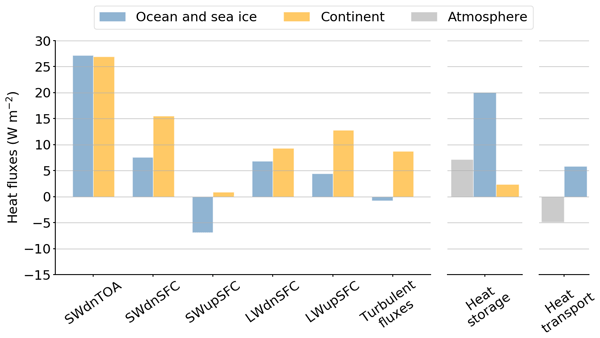
Marie Sicard, Masa Kageyama, Sylvie Charbit, Pascale Braconnot, and Jean-Baptiste Madeleine
Clim. Past, 18, 607–629, https://doi.org/10.5194/cp-18-607-2022, https://doi.org/10.5194/cp-18-607-2022, 2022
Short summary
Short summary
The Last Interglacial (129–116 ka) is characterised by an increased summer insolation over the Arctic region, which leads to a strong temperature rise. The aim of this study is to identify and quantify the main processes and feedback causing this Arctic warming. Using the IPSL-CM6A-LR model, we investigate changes in the energy budget relative to the pre-industrial period. We highlight the crucial role of Arctic sea ice cover, ocean and clouds on the Last Interglacial Arctic warming.
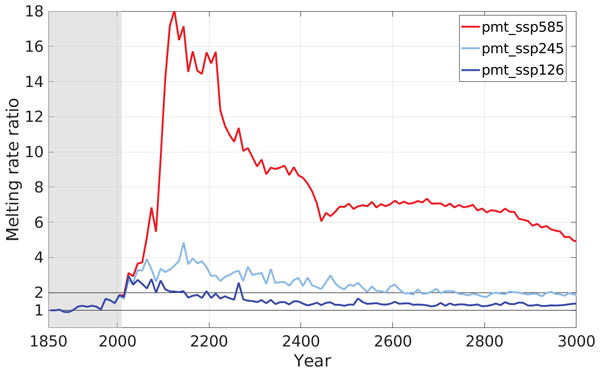
Stiig Wilkenskjeld, Frederieke Miesner, Paul P. Overduin, Matteo Puglini, and Victor Brovkin
The Cryosphere, 16, 1057–1069, https://doi.org/10.5194/tc-16-1057-2022, https://doi.org/10.5194/tc-16-1057-2022, 2022
Short summary
Short summary
Thawing permafrost releases carbon to the atmosphere, enhancing global warming. Part of the permafrost soils have been flooded by rising sea levels since the last ice age, becoming subsea permafrost (SSPF). The SSPF is less studied than the part on land. In this study we use a global model to obtain rates of thawing of SSPF under different future climate scenarios until the year 3000. After the year 2100 the scenarios strongly diverge, closely connected to the eventual disappearance of sea ice.
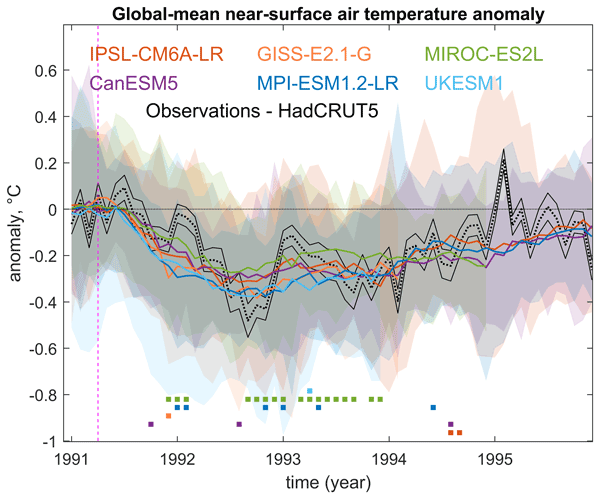
Davide Zanchettin, Claudia Timmreck, Myriam Khodri, Anja Schmidt, Matthew Toohey, Manabu Abe, Slimane Bekki, Jason Cole, Shih-Wei Fang, Wuhu Feng, Gabriele Hegerl, Ben Johnson, Nicolas Lebas, Allegra N. LeGrande, Graham W. Mann, Lauren Marshall, Landon Rieger, Alan Robock, Sara Rubinetti, Kostas Tsigaridis, and Helen Weierbach
Geosci. Model Dev., 15, 2265–2292, https://doi.org/10.5194/gmd-15-2265-2022, https://doi.org/10.5194/gmd-15-2265-2022, 2022
Short summary
Short summary
This paper provides metadata and first analyses of the volc-pinatubo-full experiment of CMIP6-VolMIP. Results from six Earth system models reveal significant differences in radiative flux anomalies that trace back to different implementations of volcanic forcing. Surface responses are in contrast overall consistent across models, reflecting the large spread due to internal variability. A second phase of VolMIP shall consider both aspects toward improved protocol for volc-pinatubo-full.
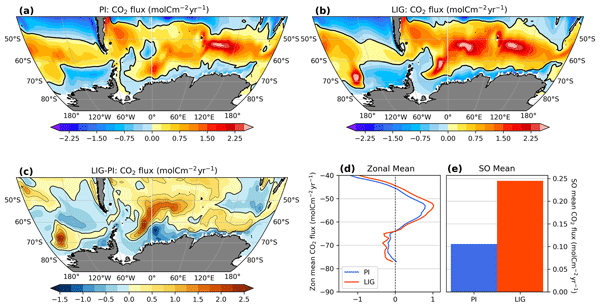
Dipayan Choudhury, Laurie Menviel, Katrin J. Meissner, Nicholas K. H. Yeung, Matthew Chamberlain, and Tilo Ziehn
Clim. Past, 18, 507–523, https://doi.org/10.5194/cp-18-507-2022, https://doi.org/10.5194/cp-18-507-2022, 2022
Short summary
Short summary
We investigate the effects of a warmer climate from the Earth's paleoclimate (last interglacial) on the marine carbon cycle of the Southern Ocean using a carbon-cycle-enabled state-of-the-art climate model. We find a 150 % increase in CO2 outgassing during this period, which results from competition between higher sea surface temperatures and weaker oceanic circulation. From this we unequivocally infer that the carbon uptake by the Southern Ocean will reduce under a future warming scenario.
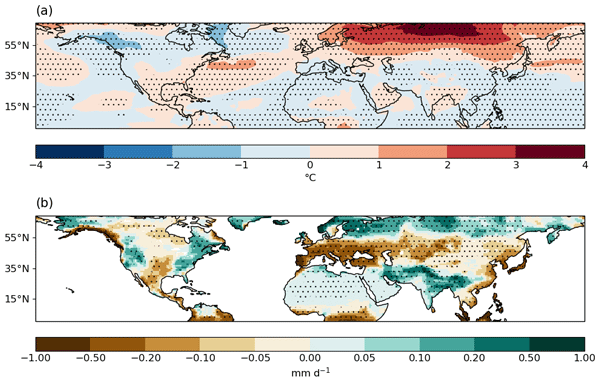
Andy Jones, Jim M. Haywood, Adam A. Scaife, Olivier Boucher, Matthew Henry, Ben Kravitz, Thibaut Lurton, Pierre Nabat, Ulrike Niemeier, Roland Séférian, Simone Tilmes, and Daniele Visioni
Atmos. Chem. Phys., 22, 2999–3016, https://doi.org/10.5194/acp-22-2999-2022, https://doi.org/10.5194/acp-22-2999-2022, 2022
Short summary
Short summary
Simulations by six Earth-system models of geoengineering by introducing sulfuric acid aerosols into the tropical stratosphere are compared. A robust impact on the northern wintertime North Atlantic Oscillation is found, exacerbating precipitation reduction over parts of southern Europe. In contrast, the models show no consistency with regard to impacts on the Quasi-Biennial Oscillation, although results do indicate a risk that the oscillation could become locked into a permanent westerly phase.
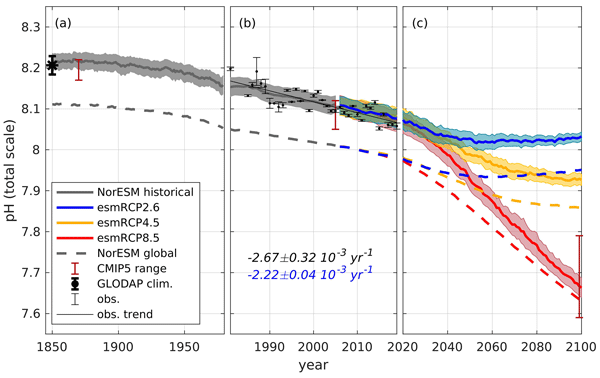
Filippa Fransner, Friederike Fröb, Jerry Tjiputra, Nadine Goris, Siv K. Lauvset, Ingunn Skjelvan, Emil Jeansson, Abdirahman Omar, Melissa Chierici, Elizabeth Jones, Agneta Fransson, Sólveig R. Ólafsdóttir, Truls Johannessen, and Are Olsen
Biogeosciences, 19, 979–1012, https://doi.org/10.5194/bg-19-979-2022, https://doi.org/10.5194/bg-19-979-2022, 2022
Short summary
Short summary
Ocean acidification, a direct consequence of the CO2 release by human activities, is a serious threat to marine ecosystems. In this study, we conduct a detailed investigation of the acidification of the Nordic Seas, from 1850 to 2100, by using a large set of samples taken during research cruises together with numerical model simulations. We estimate the effects of changes in different environmental factors on the rate of acidification and its potential effects on cold-water corals.
Léa Terray, Masa Kageyama, Emmanuelle Stoetzel, Eslem Ben Arous, Raphaël Cornette, and Pascale Braconnot
Clim. Past Discuss., https://doi.org/10.5194/cp-2021-185, https://doi.org/10.5194/cp-2021-185, 2022
Manuscript not accepted for further review
Short summary
Short summary
To reconstruct the paleoenvironmental and chronological context of archaeo/paleontological sites is a key step to understand the evolutionary history of past organisms. Paleoenvironmental proxies often show inconsistencies and age estimations can vary depending on the method used. We show the potential of paleoclimate simulations to address those discrepancies, illustrating the strong potential of our cross-disciplinary approach to refine the context of archaeo/paleontological sites.
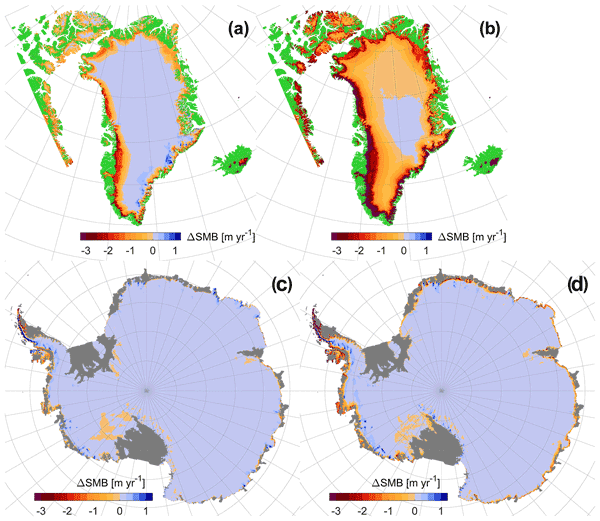
Fredrik Boberg, Ruth Mottram, Nicolaj Hansen, Shuting Yang, and Peter L. Langen
The Cryosphere, 16, 17–33, https://doi.org/10.5194/tc-16-17-2022, https://doi.org/10.5194/tc-16-17-2022, 2022
Short summary
Short summary
Using the regional climate model HIRHAM5, we compare two versions (v2 and v3) of the global climate model EC-Earth for the Greenland and Antarctica ice sheets. We are interested in the surface mass balance of the ice sheets due to its importance when making estimates of future sea level rise. We find that the end-of-century change in the surface mass balance for Antarctica is 420 Gt yr−1 (v2) and 80 Gt yr−1 (v3), and for Greenland it is −290 Gt yr−1 (v2) and −1640 Gt yr−1 (v3).
Catherine Hardacre, Jane P. Mulcahy, Richard J. Pope, Colin G. Jones, Steven T. Rumbold, Can Li, Colin Johnson, and Steven T. Turnock
Atmos. Chem. Phys., 21, 18465–18497, https://doi.org/10.5194/acp-21-18465-2021, https://doi.org/10.5194/acp-21-18465-2021, 2021
Short summary
Short summary
We investigate UKESM1's ability to represent the sulfur (S) cycle in the recent historical period. The S cycle is a key driver of historical radiative forcing. Earth system models such as UKESM1 should represent the S cycle well so that we can have confidence in their projections of future climate. We compare UKESM1 to observations of sulfur compounds, finding that the model generally performs well. We also identify areas for UKESM1’s development, focussing on how SO2 is removed from the air.
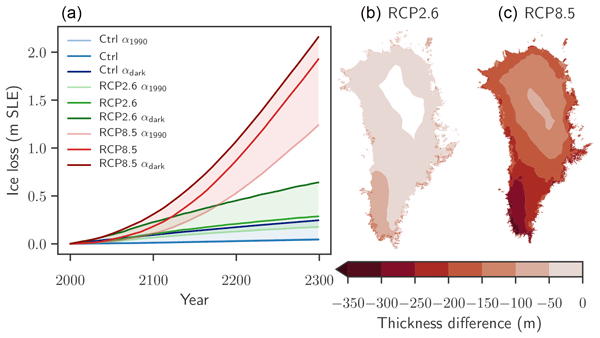
Maria Zeitz, Ronja Reese, Johanna Beckmann, Uta Krebs-Kanzow, and Ricarda Winkelmann
The Cryosphere, 15, 5739–5764, https://doi.org/10.5194/tc-15-5739-2021, https://doi.org/10.5194/tc-15-5739-2021, 2021
Short summary
Short summary
With the increasing melt of the Greenland Ice Sheet, which contributes to sea level rise, the surface of the ice darkens. The dark surfaces absorb more radiation and thus experience increased melt, resulting in the melt–albedo feedback. Using a simple surface melt model, we estimate that this positive feedback contributes to an additional 60 % ice loss in a high-warming scenario and additional 90 % ice loss for moderate warming. Albedo changes are important for Greenland’s future ice loss.
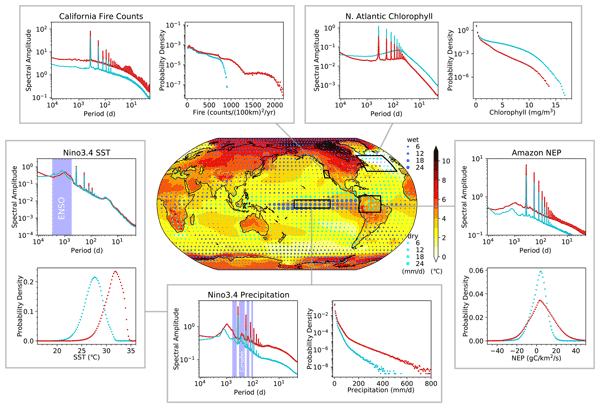
Keith B. Rodgers, Sun-Seon Lee, Nan Rosenbloom, Axel Timmermann, Gokhan Danabasoglu, Clara Deser, Jim Edwards, Ji-Eun Kim, Isla R. Simpson, Karl Stein, Malte F. Stuecker, Ryohei Yamaguchi, Tamás Bódai, Eui-Seok Chung, Lei Huang, Who M. Kim, Jean-François Lamarque, Danica L. Lombardozzi, William R. Wieder, and Stephen G. Yeager
Earth Syst. Dynam., 12, 1393–1411, https://doi.org/10.5194/esd-12-1393-2021, https://doi.org/10.5194/esd-12-1393-2021, 2021
Short summary
Short summary
A large ensemble of simulations with 100 members has been conducted with the state-of-the-art CESM2 Earth system model, using historical and SSP3-7.0 forcing. Our main finding is that there are significant changes in the variance of the Earth system in response to anthropogenic forcing, with these changes spanning a broad range of variables important to impacts for human populations and ecosystems.
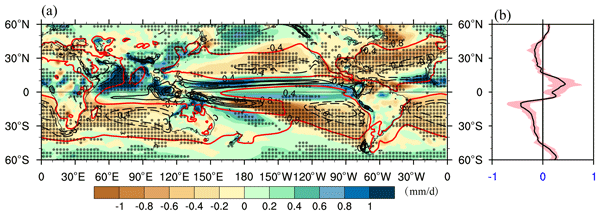
Zixuan Han, Qiong Zhang, Qiang Li, Ran Feng, Alan M. Haywood, Julia C. Tindall, Stephen J. Hunter, Bette L. Otto-Bliesner, Esther C. Brady, Nan Rosenbloom, Zhongshi Zhang, Xiangyu Li, Chuncheng Guo, Kerim H. Nisancioglu, Christian Stepanek, Gerrit Lohmann, Linda E. Sohl, Mark A. Chandler, Ning Tan, Gilles Ramstein, Michiel L. J. Baatsen, Anna S. von der Heydt, Deepak Chandan, W. Richard Peltier, Charles J. R. Williams, Daniel J. Lunt, Jianbo Cheng, Qin Wen, and Natalie J. Burls
Clim. Past, 17, 2537–2558, https://doi.org/10.5194/cp-17-2537-2021, https://doi.org/10.5194/cp-17-2537-2021, 2021
Short summary
Short summary
Understanding the potential processes responsible for large-scale hydrological cycle changes in a warmer climate is of great importance. Our study implies that an imbalance in interhemispheric atmospheric energy during the mid-Pliocene could have led to changes in the dynamic effect, offsetting the thermodynamic effect and, hence, altering mid-Pliocene hydroclimate cycling. Moreover, a robust westward shift in the Pacific Walker circulation can moisten the northern Indian Ocean.

István Dunkl, Aaron Spring, Pierre Friedlingstein, and Victor Brovkin
Earth Syst. Dynam., 12, 1413–1426, https://doi.org/10.5194/esd-12-1413-2021, https://doi.org/10.5194/esd-12-1413-2021, 2021
Short summary
Short summary
The variability in atmospheric CO2 is largely controlled by terrestrial carbon fluxes. These land–atmosphere fluxes are predictable for around 2 years, but the mechanisms providing the predictability are not well understood. By decomposing the predictability of carbon fluxes into individual contributors we were able to explain the spatial and seasonal patterns and the interannual variability of CO2 flux predictability.
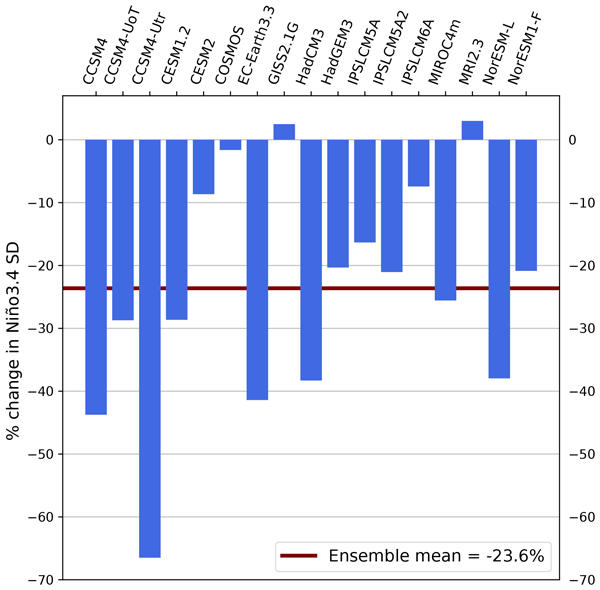
Arthur M. Oldeman, Michiel L. J. Baatsen, Anna S. von der Heydt, Henk A. Dijkstra, Julia C. Tindall, Ayako Abe-Ouchi, Alice R. Booth, Esther C. Brady, Wing-Le Chan, Deepak Chandan, Mark A. Chandler, Camille Contoux, Ran Feng, Chuncheng Guo, Alan M. Haywood, Stephen J. Hunter, Youichi Kamae, Qiang Li, Xiangyu Li, Gerrit Lohmann, Daniel J. Lunt, Kerim H. Nisancioglu, Bette L. Otto-Bliesner, W. Richard Peltier, Gabriel M. Pontes, Gilles Ramstein, Linda E. Sohl, Christian Stepanek, Ning Tan, Qiong Zhang, Zhongshi Zhang, Ilana Wainer, and Charles J. R. Williams
Clim. Past, 17, 2427–2450, https://doi.org/10.5194/cp-17-2427-2021, https://doi.org/10.5194/cp-17-2427-2021, 2021
Short summary
Short summary
In this work, we have studied the behaviour of El Niño events in the mid-Pliocene, a period of around 3 million years ago, using a collection of 17 climate models. It is an interesting period to study, as it saw similar atmospheric carbon dioxide levels to the present day. We find that the El Niño events were less strong in the mid-Pliocene simulations, when compared to pre-industrial climate. Our results could help to interpret El Niño behaviour in future climate projections.
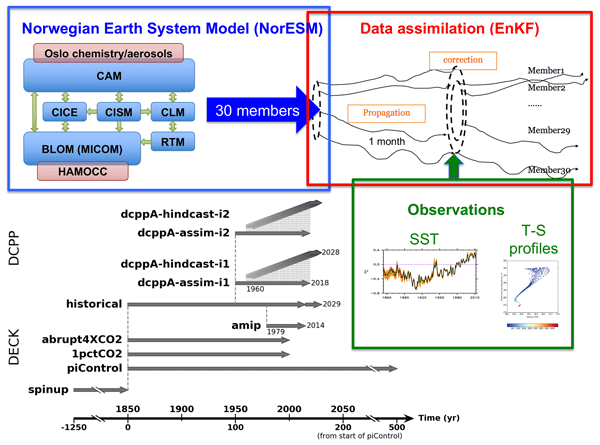
Ingo Bethke, Yiguo Wang, François Counillon, Noel Keenlyside, Madlen Kimmritz, Filippa Fransner, Annette Samuelsen, Helene Langehaug, Lea Svendsen, Ping-Gin Chiu, Leilane Passos, Mats Bentsen, Chuncheng Guo, Alok Gupta, Jerry Tjiputra, Alf Kirkevåg, Dirk Olivié, Øyvind Seland, Julie Solsvik Vågane, Yuanchao Fan, and Tor Eldevik
Geosci. Model Dev., 14, 7073–7116, https://doi.org/10.5194/gmd-14-7073-2021, https://doi.org/10.5194/gmd-14-7073-2021, 2021
Short summary
Short summary
The Norwegian Climate Prediction Model version 1 (NorCPM1) is a new research tool for performing climate reanalyses and seasonal-to-decadal climate predictions. It adds data assimilation capability to the Norwegian Earth System Model version 1 (NorESM1) and has contributed output to the Decadal Climate Prediction Project (DCPP) as part of the sixth Coupled Model Intercomparison Project (CMIP6). We describe the system and evaluate its baseline, reanalysis and prediction performance.
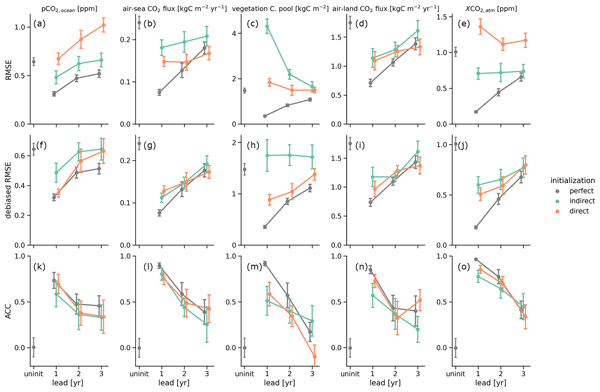
Aaron Spring, István Dunkl, Hongmei Li, Victor Brovkin, and Tatiana Ilyina
Earth Syst. Dynam., 12, 1139–1167, https://doi.org/10.5194/esd-12-1139-2021, https://doi.org/10.5194/esd-12-1139-2021, 2021
Short summary
Short summary
Numerical carbon cycle prediction models usually do not start from observed carbon states due to sparse observations. Instead, only physical climate is reconstructed, assuming that the carbon cycle follows indirectly. Here, we test in an idealized framework how well this indirect and direct reconstruction with perfect observations works. We find that indirect reconstruction works quite well and that improvements from the direct method are limited, strengthening the current indirect use.
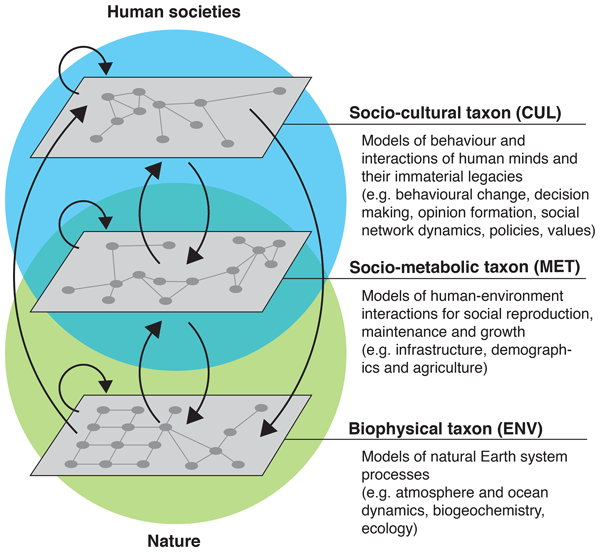
Jonathan F. Donges, Wolfgang Lucht, Sarah E. Cornell, Jobst Heitzig, Wolfram Barfuss, Steven J. Lade, and Maja Schlüter
Earth Syst. Dynam., 12, 1115–1137, https://doi.org/10.5194/esd-12-1115-2021, https://doi.org/10.5194/esd-12-1115-2021, 2021
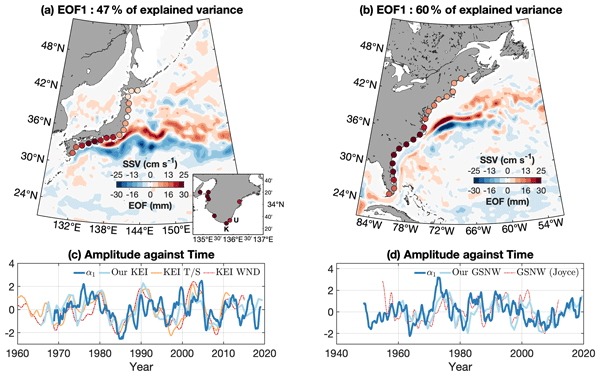
Samuel Tiéfolo Diabaté, Didier Swingedouw, Joël Jean-Marie Hirschi, Aurélie Duchez, Philip J. Leadbitter, Ivan D. Haigh, and Gerard D. McCarthy
Ocean Sci., 17, 1449–1471, https://doi.org/10.5194/os-17-1449-2021, https://doi.org/10.5194/os-17-1449-2021, 2021
Short summary
Short summary
The Gulf Stream and the Kuroshio are major currents of the North Atlantic and North Pacific, respectively. They transport warm water northward and are key components of the Earth climate system. For this study, we looked at how they affect the sea level of the coasts of Japan, the USA and Canada. We found that the inshore sea level
co-varies with the north-to-south shifts of the Gulf Stream and Kuroshio. In the paper, we discuss the physical mechanisms that could explain the agreement.
Cited articles
Allen, M. R., Frame, D. J., Huntingford, C., Jones, C. D., Lowe, J. A., Meinshausen, M., and Meinshausen, N.: Warming caused by cumulative carbon emissions towards the trillionth tonne, Nature, 458, 1163–1166, https://doi.org/10.1038/nature08019, 2009.
Allen, M. R., Friedlingstein, P., Girardin, C. A. J., Jenkins, S., Malhi, Y., Mitchell-Larson, E., Peters, G. P., and Rajamani, L.: Net Zero: Science, Origins, and Implications, Annu. Rev. Env. Resour., 47, 849–887, https://doi.org/10.1146/annurev-environ-112320-105050, 2022.
Andrews, T., Andrews, M. B., Bodas-Salcedo, A., Jones, G. S., Kuhlbrodt, T., Manners, J., Menary, M. B., Ridley, J., Ringer, M. A., Sellar, A. A., Senior, C. A., and Tang, Y.: Forcings, Feedbacks, and Climate Sensitivity in HadGEM3-GC3.1 and UKESM1, J. Adv. Model. Earth Sy., 11, 4377–4394, https://doi.org/10.1029/2019ms001866, 2019.
Armstrong McKay, D. I., Staal, A., Abrams, J. F., Winkelmann, R., Sakschewski, B., Loriani, S., Fetzer, I., Cornell, S. E., Rockström, J., and Lenton, T. M.: Exceeding 1.5 °C global warming could trigger multiple climate tipping points, Science, 377, https://doi.org/10.1126/science.abn7950, 2022.
Arora, V. K., Katavouta, A., Williams, R. G., Jones, C. D., Brovkin, V., Friedlingstein, P., Schwinger, J., Bopp, L., Boucher, O., Cadule, P., Chamberlain, M. A., Christian, J. R., Delire, C., Fisher, R. A., Hajima, T., Ilyina, T., Joetzjer, E., Kawamiya, M., Koven, C. D., Krasting, J. P., Law, R. M., Lawrence, D. M., Lenton, A., Lindsay, K., Pongratz, J., Raddatz, T., Séférian, R., Tachiiri, K., Tjiputra, J. F., Wiltshire, A., Wu, T., and Ziehn, T.: Carbon–concentration and carbon–climate feedbacks in CMIP6 models and their comparison to CMIP5 models, Biogeosciences, 17, 4173–4222, https://doi.org/10.5194/bg-17-4173-2020, 2020.
Ben-Yami, M., Good, P., Jackson, L. C., Crucifix, M., Hu, A., Saenko, O., Swingedouw, D., and Boers, N.: Impacts of AMOC Collapse on Monsoon Rainfall: A Multi-Model Comparison, Earths Future, 12, https://doi.org/10.1029/2023ef003959, 2024.
Bochow, N. and Boers, N.: The South American monsoon approaches a critical transition in response to deforestation, Sci. Adv., 9, https://doi.org/10.1126/sciadv.add9973, 2023.
Boers, N., Marwan, N., Barbosa, H. M. J., and Kurths, J.: A deforestation-induced tipping point for the South American monsoon system, Sci. Rep.-UK, 7, https://doi.org/10.1038/srep41489, 2017.
Booth, B. B. B., Jones, C. D., Collins, M., Totterdell, I. J., Cox, P. M., Sitch, S., Huntingford, C., Betts, R. A., Harris, G. R., and Lloyd, J.: High sensitivity of future global warming to land carbon cycle processes, Environ. Res. Lett., 7, 024002, https://doi.org/10.1088/1748-9326/7/2/024002, 2012.
Bossert, I.: The TIPMIP Earth system model experiment protocol: phase1-datasets for Figs. 2, 3 and 4: v1 (v1), Zenodo [code and data set], https://doi.org/10.5281/zenodo.17055322, 2025.
Boulton, C. A., Lenton, T. M., and Boers, N.: Pronounced loss of Amazon rainforest resilience since the early 2000s, Nat. Clim. Change, 12, 271–278, https://doi.org/10.1038/s41558-022-01287-8, 2022.
Burke, E. J., Zhang, Y., and Krinner, G.: Evaluating permafrost physics in the Coupled Model Intercomparison Project 6 (CMIP6) models and their sensitivity to climate change, The Cryosphere, 14, 3155–3174, https://doi.org/10.5194/tc-14-3155-2020, 2020.
Caesar, L., Rahmstorf, S., Robinson, A., Feulner, G., and Saba, V.: Observed fingerprint of a weakening Atlantic Ocean overturning circulation, Nature, 556, 191–196, https://doi.org/10.1038/s41586-018-0006-5, 2018.
Caesar, L., McCarthy, G. D., Thornalley, D. J. R., Cahill, N., and Rahmstorf, S.: Current Atlantic Meridional Overturning Circulation weakest in last millennium, Nat. Geosci., 14, 118–120, https://doi.org/10.1038/s41561-021-00699-z, 2021.
Cassidy, L. J., King, A. D., Brown, J. R., MacDougall, A. H., Ziehn, T., Min, S.-K., and Jones, C. D.: Regional temperature extremes and vulnerability under net zero CO2 emissions, Environ. Res. Lett., 19, 014051, https://doi.org/10.1088/1748-9326/ad114a, 2024.
Chamberlain, M. A., Ziehn, T., and Law, R. M.: The Southern Ocean as the climate's freight train – driving ongoing global warming under zero-emission scenarios with ACCESS-ESM1.5, Biogeosciences, 21, 3053–3073, https://doi.org/10.5194/bg-21-3053-2024, 2024.
Chapman, R., Sinet, S., and Ritchie, P. D. L.: Tipping mechanisms in a conceptual model of the Atlantic Meridional Overturning Circulation, Weather, 79, 316–323, https://doi.org/10.1002/wea.7609, 2024.
Chen, X. and Tung, K.-K.: Global surface warming enhanced by weak Atlantic overturning circulation, Nature, 559, 387–391, https://doi.org/10.1038/s41586-018-0320-y, 2018.
Chimuka, V. R. and Zickfeld, K.: Asymmetry in carbon cycle feedbacks and transient climate response under positive and negative CO2 emissions, EGUsphere [preprint], https://doi.org/10.5194/egusphere-2025-6405, 2026.
Cox, P. M., Betts, R. A., Jones, C. D., Spall, S. A., and Totterdell, I. J.: Acceleration of global warming due to carbon-cycle feedbacks in a coupled climate model, Nature, 408, 184–187, https://doi.org/10.1038/35041539, 2000.
Da Cruz, D. C., Benayas, J. M. R., Ferreira, G. C., Santos, S. R., and Schwartz, G.: An overview of forest loss and restoration in the Brazilian Amazon, New Forest., 52, 1–16, https://doi.org/10.1007/s11056-020-09777-3, 2021.
De Vrese, P. and Brovkin, V.: Timescales of the permafrost carbon cycle and legacy effects of temperature overshoot scenarios, Nat. Commun., 12, https://doi.org/10.1038/s41467-021-23010-5, 2021.
Defrance, D., Ramstein, G., Charbit, S., Vrac, M., Famien, A. M., Sultan, B., Swingedouw, D., Dumas, C., Gemenne, F., Alvarez-Solas, J., and Vanderlinden, J.-P.: Consequences of rapid ice sheet melting on the Sahelian population vulnerability, P. Natl. Acad. Sci. USA, 114, 6533–6538, https://doi.org/10.1073/pnas.1619358114, 2017.
DeVries, T., Holzer, M., and Primeau, F.: Recent increase in oceanic carbon uptake driven by weaker upper-ocean overturning, Nature, 542, 215–218, https://doi.org/10.1038/nature21068, 2017.
Drijfhout, S., Bathiany, S., Beaulieu, C., Brovkin, V., Claussen, M., Huntingford, C., Scheffer, M., Sgubin, G., and Swingedouw, D.: Catalogue of abrupt shifts in Intergovernmental Panel on Climate Change climate models, P. Natl. Acad. Sci. USA, 112, https://doi.org/10.1073/pnas.1511451112, 2015.
Dunne, J. P., John, J. G., Shevliakova, E., Stouffer, R. J., Krasting, J. P., Malyshev, S. L., Milly, P. C. D., Sentman, L. T., Adcroft, A. J., Cooke, W., Dunne, K. A., Griffies, S. M., Hallberg, R. W., Harrison, M. J., Levy, H., Wittenberg, A. T., Phillips, P. J., and Zadeh, N.: GFDL's ESM2 Global Coupled Climate–Carbon Earth System Models. Part II: Carbon System Formulation and Baseline Simulation Characteristics*, J. Climate, 26, 2247–2267, https://doi.org/10.1175/jcli-d-12-00150.1, 2013.
Dunne, J. P., Hewitt, H. T., Arblaster, J. M., Bonou, F., Boucher, O., Cavazos, T., Dingley, B., Durack, P. J., Hassler, B., Juckes, M., Miyakawa, T., Mizielinski, M., Naik, V., Nicholls, Z., O'Rourke, E., Pincus, R., Sanderson, B. M., Simpson, I. R., and Taylor, K. E.: An evolving Coupled Model Intercomparison Project phase 7 (CMIP7) and Fast Track in support of future climate assessment, Geosci. Model Dev., 18, 6671–6700, https://doi.org/10.5194/gmd-18-6671-2025, 2025.
Eyring, V., Bony, S., Meehl, G. A., Senior, C. A., Stevens, B., Stouffer, R. J., and Taylor, K. E.: Overview of the Coupled Model Intercomparison Project Phase 6 (CMIP6) experimental design and organization, Geosci. Model Dev., 9, 1937–1958, https://doi.org/10.5194/gmd-9-1937-2016, 2016.
Evin, G., Ribes, A., and Corre, L.: Assessing CMIP6 uncertainties at global warming levels, Clim. Dynam., 62, 8057–8072, https://doi.org/10.1007/s00382-024-07323-x, 2024.
Fankhauser, S., Smith, S. M., Allen, M., Axelsson, K., Hale, T., Hepburn, C., Kendall, J. M., Khosla, R., Lezaun, J., Mitchell-Larson, E., Obersteiner, M., Rajamani, L., Rickaby, R., Seddon, N., and Wetzer, T.: The meaning of net zero and how to get it right, Nat. Clim. Change, 12, 15–21, https://doi.org/10.1038/s41558-021-01245-w, 2022.
Feldmann, J. and Levermann, A.: Collapse of the West Antarctic Ice Sheet after local destabilization of the Amundsen Basin, P. Natl. Acad. Sci. USA, 112, 14191–14196, https://doi.org/10.1073/pnas.1512482112, 2015.
Fischer, E. M., Sippel, S., and Knutti, R.: Increasing probability of record-shattering climate extremes, Nat. Clim. Change, 11, 689–695, https://doi.org/10.1038/s41558-021-01092-9, 2021.
Flores, B. M., Montoya, E., Sakschewski, B., Nascimento, N., Staal, A., Betts, R. A., Levis, C., Lapola, D. M., Esquível-Muelbert, A., Jakovac, C., Nobre, C. A., Oliveira, R. S., Borma, L. S., Nian, D., Boers, N., Hecht, S. B., Ter Steege, H., Arieira, J., Lucas, I. L., Berenguer, E., Marengo, J. A., Gatti, L. V., Mattos, C. R. C., and Hirota, M.: Critical transitions in the Amazon forest system, Nature, 626, 555–564, https://doi.org/10.1038/s41586-023-06970-0, 2024.
Fons, E., Runge, J., Neubauer, D., and Lohmann, U.: Stratocumulus adjustments to aerosol perturbations disentangled with a causal approach, npj Clim. Atmos. Sci., 6, https://doi.org/10.1038/s41612-023-00452-w, 2023.
Foster, G. and Rahmstorf, S.: Global Warming Has Accelerated Significantly, Geophys. Res. Lett., 53, e2025GL118804, https://doi.org/10.1029/2025GL118804, 2026.
Franzke, C. L. E., Ciullo, A., Gilmore, E. A., Matias, D. M., Nagabhatla, N., Orlov, A., Paterson, S. K., Scheffran, J., and Sillmann, J.: Perspectives on tipping points in integrated models of the natural and human Earth system: cascading effects and telecoupling, Environ. Res. Lett., 17, 015004, https://doi.org/10.1088/1748-9326/ac42fd, 2022.
Fraser, N. J. and Cunningham, S. A.: 120 Years of AMOC Variability Reconstructed From Observations Using the Bernoulli Inverse, Geophys. Res. Lett., 48, https://doi.org/10.1029/2021gl093893, 2021.
Frieler, K., Volkholz, J., Lange, S., Schewe, J., Mengel, M., del Rocío Rivas López, M., Otto, C., Reyer, C. P. O., Karger, D. N., Malle, J. T., Treu, S., Menz, C., Blanchard, J. L., Harrison, C. S., Petrik, C. M., Eddy, T. D., Ortega-Cisneros, K., Novaglio, C., Rousseau, Y., Watson, R. A., Stock, C., Liu, X., Heneghan, R., Tittensor, D., Maury, O., Büchner, M., Vogt, T., Wang, T., Sun, F., Sauer, I. J., Koch, J., Vanderkelen, I., Jägermeyr, J., Müller, C., Rabin, S., Klar, J., Vega del Valle, I. D., Lasslop, G., Chadburn, S., Burke, E., Gallego-Sala, A., Smith, N., Chang, J., Hantson, S., Burton, C., Gädeke, A., Li, F., Gosling, S. N., Müller Schmied, H., Hattermann, F., Wang, J., Yao, F., Hickler, T., Marcé, R., Pierson, D., Thiery, W., Mercado-Bettín, D., Ladwig, R., Ayala-Zamora, A. I., Forrest, M., and Bechtold, M.: Scenario setup and forcing data for impact model evaluation and impact attribution within the third round of the Inter-Sectoral Impact Model Intercomparison Project (ISIMIP3a), Geosci. Model Dev., 17, 1–51, https://doi.org/10.5194/gmd-17-1-2024, 2024.
Fröb, F., Bourgeois, T., Goris, N., Schwinger, J., and Heinze, C.: Simulated Abrupt Shifts in Aerobic Habitats of Marine Species in the Past, Present, and Future, Earths Future, 12, https://doi.org/10.1029/2023ef004141, 2024.
Frölicher, T. L. and Joos, F.: Reversible and irreversible impacts of greenhouse gas emissions in multi-century projections with the NCAR global coupled carbon cycle-climate model, Clim. Dyna,, 35, 1439–1459, https://doi.org/10.1007/s00382-009-0727-0, 2010.
Frölicher, T. L. and Paynter, D. J.: Extending the relationship between global warming and cumulative carbon emissions to multi-millennial timescales, Environ. Res. Lett., 10, 075002, https://doi.org/10.1088/1748-9326/10/7/075002, 2015.
Garbe, J., Albrecht, T., Levermann, A., Donges, J. F., and Winkelmann, R.: The hysteresis of the Antarctic Ice Sheet, Nature, 585, 538–544, https://doi.org/10.1038/s41586-020-2727-5, 2020.
Gerten, D., Lucht, W., Ostberg, S., Heinke, J., Kowarsch, M., Kreft, H., Kundzewicz, Z. W., Rastgooy, J., Warren, R., and Schellnhuber, H. J.: Asynchronous exposure to global warming: freshwater resources and terrestrial ecosystems, Environ. Res. Lett., 8, 034032, https://doi.org/10.1088/1748-9326/8/3/034032, 2013.
Gidden, M. J., Riahi, K., Smith, S. J., Fujimori, S., Luderer, G., Kriegler, E., van Vuuren, D. P., van den Berg, M., Feng, L., Klein, D., Calvin, K., Doelman, J. C., Frank, S., Fricko, O., Harmsen, M., Hasegawa, T., Havlik, P., Hilaire, J., Hoesly, R., Horing, J., Popp, A., Stehfest, E., and Takahashi, K.: Global emissions pathways under different socioeconomic scenarios for use in CMIP6: a dataset of harmonized emissions trajectories through the end of the century, Geosci. Model Dev., 12, 1443–1475, https://doi.org/10.5194/gmd-12-1443-2019, 2019.
Gidden, M. J., Joshi, S., Armitage, J. J., Christ, A.-B., Boettcher, M., Brutschin, E., Köberle, A. C., Riahi, K., Schellnhuber, H. J., Schleussner, C.-F., and Rogelj, J.: A prudent planetary limit for geologic carbon storage, Nature, 645, 124–132, https://doi.org/10.1038/s41586-025-09423-y, 2025.
Gillett, N. P., Arora, V. K., Zickfeld, K., Marshall, S. J., and Merryfield, W. J.: Ongoing climate change following a complete cessation of carbon dioxide emissions, Nat. Geosci., 4, 83–87, https://doi.org/10.1038/ngeo1047, 2011.
Gillett, N. P., Kirchmeier-Young, M., Ribes, A., Shiogama, H., Hegerl, G. C., Knutti, R., Gastineau, G., John, J. G., Li, L., Nazarenko, L., Rosenbloom, N., Seland, Ø., Wu, T., Yukimoto, S., and Ziehn, T.: Constraining human contributions to observed warming since the pre-industrial period, Nat. Clim. Change, 11, 207–212, https://doi.org/10.1038/s41558-020-00965-9, 2021.
Golledge, N. R., Levy, R. H., McKay, R. M., and Naish, T. R.: East Antarctic ice sheet most vulnerable to Weddell Sea warming, Geophys. Res. Lett., 44, 2343–2351, https://doi.org/10.1002/2016gl072422, 2017.
Good, P., Jones, C., Lowe, J., Betts, R., Booth, B., and Huntingford, C.: Quantifying Environmental Drivers of Future Tropical Forest Extent, J. Climate, 24, 1337–1349, https://doi.org/10.1175/2010jcli3865.1, 2011.
Gregory, J. M., George, S. E., and Smith, R. S.: Large and irreversible future decline of the Greenland ice sheet, The Cryosphere, 14, 4299–4322, https://doi.org/10.5194/tc-14-4299-2020, 2020.
Heinze, C., Blenckner, T., Martins, H., Rusiecka, D., Döscher, R., Gehlen, M., Gruber, N., Holland, E., Hov, Ø., Joos, F., Matthews, J. B. R., Rødven, R., and Wilson, S.: The quiet crossing of ocean tipping points, P. Natl. Acad. Sci. USA, 118, https://doi.org/10.1073/pnas.2008478118, 2021.
Heinze, C., Blenckner, T., Brown, P., Fröb, F., Morée, A., New, A. L., Nissen, C., Rynders, S., Seguro, I., Aksenov, Y., Artioli, Y., Bourgeois, T., Burger, F., Buzan, J., Cael, B. B., Yumruktepe, V. Ç., Chierici, M., Danek, C., Dieckmann, U., Fransson, A., Frölicher, T., Galli, G., Gehlen, M., González, A. G., Gonzalez-Davila, M., Gruber, N., Gustafsson, Ö., Hauck, J., Heino, M., Henson, S., Hieronymus, J., Huertas, I. E., Jebri, F., Jeltsch-Thömmes, A., Joos, F., Joshi, J., Kelly, S., Menon, N., Mongwe, P., Oziel, L., Ólafsdottir, S., Palmieri, J., Pérez, F. F., Ranith, R. P., Ramanantsoa, J., Roy, T., Rusiecka, D., Santana Casiano, J. M., Santana-Falcón, Y., Schwinger, J., Séférian, R., Seifert, M., Shchiptsova, A., Sinha, B., Somes, C., Steinfeldt, R., Tao, D., Tjiputra, J., Ulfsbo, A., Völker, C., Wakamatsu, T., and Ye, Y.: Reviews and syntheses: Abrupt ocean biogeochemical change under human-made climatic forcing – warming, acidification, and deoxygenation, Biogeosciences Discuss. [preprint], https://doi.org/10.5194/bg-2023-182, 2023.
Held, I. M., Winton, M., Takahashi, K., Delworth, T., Zeng, F., and Vallis, G. K.: Probing the Fast and Slow Components of Global Warming by Returning Abruptly to Preindustrial Forcing, J. Climate, 23, 2418–2427, https://doi.org/10.1175/2009jcli3466.1, 2010.
Heuzé, C. and Jahn, A.: The first ice-free day in the Arctic Ocean could occur before 2030, Nat. Commun., 15, https://doi.org/10.1038/s41467-024-54508-3, 2024.
Höning, D., Willeit, M., Calov, R., Klemann, V., Bagge, M., and Ganopolski, A.: Multistability and Transient Response of the Greenland Ice Sheet to Anthropogenic CO2 Emissions, Geophys. Res. Lett., 50, https://doi.org/10.1029/2022gl101827, 2023.
Horton, D. E., Johnson, N. C., Singh, D., Swain, D. L., Rajaratnam, B., and Diffenbaugh, N. S.: Contribution of changes in atmospheric circulation patterns to extreme temperature trends, Nature, 522, 465–469, https://doi.org/10.1038/nature14550, 2015.
Hu, A., Otto-Bliesner, B. L., Meehl, G. A., Han, W., Morrill, C., Brady, E. C., and Briegleb, B.: Response of Thermohaline Circulation to Freshwater Forcing under Present-Day and LGM Conditions, J. Climate, 21, 2239–2258, https://doi.org/10.1175/2007jcli1985.1, 2008.
IPCC: The Ocean and Cryosphere in a Changing Climate: Special Report of the Intergovernmental Panel on Climate Change, 1st edn., Cambridge University Press, https://doi.org/10.1017/9781009157964, 2022a.
IPCC: Global Warming of 1.5 °C: IPCC Special Report on Impacts of Global Warming of 1.5 °C above Pre-industrial Levels in Context of Strengthening Response to Climate Change, Sustainable Development, and Efforts to Eradicate Poverty, 1st edn., Cambridge University Press, https://doi.org/10.1017/9781009157940, 2022b.
IPCC: Climate Change 2021 – The Physical Science Basis: Working Group I Contribution to the Sixth Assessment Report of the Intergovernmental Panel on Climate Change, 1st Edn., Cambridge University Press, https://doi.org/10.1017/9781009157896, 2023a.
IPCC: Climate Change 2023: Synthesis Report, Summary for Policymakers. Contribution of Working Groups I, II and III to the Sixth Assessment Report of the Intergovernmental Panel on Climate Change, IPCC, Geneva, Switzerland, https://doi.org/10.59327/ipcc/ar6-9789291691647.001, 2023b.
Jackson, L. C., Kahana, R., Graham, T., Ringer, M. A., Woollings, T., Mecking, J. V., and Wood, R. A.: Global and European climate impacts of a slowdown of the AMOC in a high resolution GCM, Clim. Dynam., 45, 3299–3316, https://doi.org/10.1007/s00382-015-2540-2, 2015.
Jackson, L. C., Alastrué de Asenjo, E., Bellomo, K., Danabasoglu, G., Haak, H., Hu, A., Jungclaus, J., Lee, W., Meccia, V. L., Saenko, O., Shao, A., and Swingedouw, D.: Understanding AMOC stability: the North Atlantic Hosing Model Intercomparison Project, Geosci. Model Dev., 16, 1975–1995, https://doi.org/10.5194/gmd-16-1975-2023, 2023.
Jaureguiberry, P., Titeux, N., Wiemers, M., Bowler, D. E., Coscieme, L., Golden, A. S., Guerra, C. A., Jacob, U., Takahashi, Y., Settele, J., Díaz, S., Molnár, Z., and Purvis, A.: The direct drivers of recent global anthropogenic biodiversity loss, Sci. Adv., 8, https://doi.org/10.1126/sciadv.abm9982, 2022.
Jeltsch-Thömmes, A., Stocker, T. F., and Joos, F.: Hysteresis of the Earth system under positive and negative CO2 emissions, Environ. Res. Lett., 15, 124026, https://doi.org/10.1088/1748-9326/abc4af, 2020.
Jensen, L., Gerdener, H., Eicker, A., Kusche, J., and Fiedler, S.: Observations indicate regionally misleading wetting and drying trends in CMIP6, npj Clim. Atmos. Sci., 7, https://doi.org/10.1038/s41612-024-00788-x, 2024.
Jones, C. D. and Friedlingstein, P.: Quantifying process-level uncertainty contributions to TCRE and carbon budgets for meeting Paris Agreement climate targets, Environ. Res. Lett., 15, 074019, https://doi.org/10.1088/1748-9326/ab858a, 2020.
Jones, C. D., Ciais, P., Davis, S. J., Friedlingstein, P., Gasser, T., Peters, G. P., Rogelj, J., Van Vuuren, D. P., Canadell, J. G., Cowie, A., Jackson, R. B., Jonas, M., Kriegler, E., Littleton, E., Lowe, J. A., Milne, J., Shrestha, G., Smith, P., Torvanger, A., and Wiltshire, A.: Simulating the Earth system response to negative emissions, Environ. Res. Lett., 11, 095012, https://doi.org/10.1088/1748-9326/11/9/095012, 2016.
Jones, C. D., Frölicher, T. L., Koven, C., MacDougall, A. H., Matthews, H. D., Zickfeld, K., Rogelj, J., Tokarska, K. B., Gillett, N. P., Ilyina, T., Meinshausen, M., Mengis, N., Séférian, R., Eby, M., and Burger, F. A.: The Zero Emissions Commitment Model Intercomparison Project (ZECMIP) contribution to C4MIP: quantifying committed climate changes following zero carbon emissions, Geosci. Model Dev., 12, 4375–4385, https://doi.org/10.5194/gmd-12-4375-2019, 2019.
Licon-Salaiz, J.: tipmip-methods/tipmip-data-req: v1.1.1 (v1.1.1), Zenodo [code], https://doi.org/10.5281/zenodo.15189530, 2025.
Keller, D. P., Lenton, A., Scott, V., Vaughan, N. E., Bauer, N., Ji, D., Jones, C. D., Kravitz, B., Muri, H., and Zickfeld, K.: The Carbon Dioxide Removal Model Intercomparison Project (CDRMIP): rationale and experimental protocol for CMIP6, Geosci. Model Dev., 11, 1133–1160, https://doi.org/10.5194/gmd-11-1133-2018, 2018.
Kilbourne, K. H., Wanamaker, A. D., Moffa-Sanchez, P., Reynolds, D. J., Amrhein, D. E., Butler, P. G., Gebbie, G., Goes, M., Jansen, M. F., Little, C. M., Mette, M., Moreno-Chamarro, E., Ortega, P., Otto-Bliesner, B. L., Rossby, T., Scourse, J., and Whitney, N. M.: Atlantic circulation change still uncertain, Nat. Geosci., 15, 165–167, https://doi.org/10.1038/s41561-022-00896-4, 2022.
Kim, S.-K. and An, S.-I.: Emergence of a climate oscillation in the Arctic Ocean due to global warming, Nat. Clim. Change, 14, 1268–1274, https://doi.org/10.1038/s41558-024-02171-3, 2024.
King, A. D., Lane, T. P., Henley, B. J., and Brown, J. R.: Global and regional impacts differ between transient and equilibrium warmer worlds, Nat. Clim. Change, 10, 42–47, https://doi.org/10.1038/s41558-019-0658-7, 2020.
King, A. D., Sniderman, J. M. K., Dittus, A. J., Brown, J. R., Hawkins, E., and Ziehn, T.: Studying climate stabilization at Paris Agreement levels, Nat. Clim. Change, 11, 1010–1013, https://doi.org/10.1038/s41558-021-01225-0, 2021.
King, A. D., Ziehn, T., Chamberlain, M., Borowiak, A. R., Brown, J. R., Cassidy, L., Dittus, A. J., Grose, M., Maher, N., Paik, S., Perkins-Kirkpatrick, S. E., and Sengupta, A.: Exploring climate stabilisation at different global warming levels in ACCESS-ESM-1.5, Earth Syst. Dynam., 15, 1353–1383, https://doi.org/10.5194/esd-15-1353-2024, 2024.
Kjellström, E., Nikulin, G., Strandberg, G., Christensen, O. B., Jacob, D., Keuler, K., Lenderink, G., van Meijgaard, E., Schär, C., Somot, S., Sørland, S. L., Teichmann, C., and Vautard, R.: European climate change at global mean temperature increases of 1.5 and 2 °C above pre-industrial conditions as simulated by the EURO-CORDEX regional climate models, Earth Syst. Dynam., 9, 459–478, https://doi.org/10.5194/esd-9-459-2018, 2018.
Klose, A. K., Karle, V., Winkelmann, R., and Donges, J. F.: Emergence of cascading dynamics in interacting tipping elements of ecology and climate, Roy. Soc. Open Sci., 7, 200599, https://doi.org/10.1098/rsos.200599, 2020.
Klose, A. K., Donges, J. F., Feudel, U., and Winkelmann, R.: Rate-induced tipping cascades arising from interactions between the Greenland Ice Sheet and the Atlantic Meridional Overturning Circulation, Earth Syst. Dynam., 15, 635–652, https://doi.org/10.5194/esd-15-635-2024, 2024.
Koenigk, T., Bärring, L., Matei, D., Nikulin, G., Strandberg, G., Tyrlis, E., Wang, S., and Wilcke, R.: On the contribution of internal climate variability to European future climate trends, Tellus A, 72, 1788901, https://doi.org/10.1080/16000870.2020.1788901, 2020.
Koven, C. D.: Boreal carbon loss due to poleward shift in low-carbon ecosystems, Nat. Geosci., 6, 452–456, https://doi.org/10.1038/ngeo1801, 2013.
Koven, C. D., Arora, V. K., Cadule, P., Fisher, R. A., Jones, C. D., Lawrence, D. M., Lewis, J., Lindsay, K., Mathesius, S., Meinshausen, M., Mills, M., Nicholls, Z., Sanderson, B. M., Séférian, R., Swart, N. C., Wieder, W. R., and Zickfeld, K.: Multi-century dynamics of the climate and carbon cycle under both high and net negative emissions scenarios, Earth Syst. Dynam., 13, 885–909, https://doi.org/10.5194/esd-13-885-2022, 2022.
Koven, C. D., Sanderson, B. M., and Swann, A. L. S.: Much of zero emissions commitment occurs before reaching net zero emissions, Environ. Res. Lett., 18, 014017, https://doi.org/10.1088/1748-9326/acab1a, 2023.
Krasting, J. P., Dunne, J. P., Shevliakova, E., and Stouffer, R. J.: Trajectory sensitivity of the transient climate response to cumulative carbon emissions, Geophys. Res. Lett., 41, 2520–2527, https://doi.org/10.1002/2013gl059141, 2014.
Kubelka, V., Sandercock, B. K., Székely, T., and Freckleton, R. P.: Animal migration to northern latitudes: environmental changes and increasing threats, Trends Ecol. Evol., 37, 30–41, https://doi.org/10.1016/j.tree.2021.08.010, 2022.
Kug, J.-S., Oh, J.-H., An, S.-I., Yeh, S.-W., Min, S.-K., Son, S.-W., Kam, J., Ham, Y.-G., and Shin, J.: Hysteresis of the intertropical convergence zone to CO2 forcing, Nat. Clim. Change, 12, 47–53, https://doi.org/10.1038/s41558-021-01211-6, 2022.
Lacroix, F., Burger, F. A., Silvy, Y., Schleussner, C., and Frölicher, T. L.: Persistently Elevated High-Latitude Ocean Temperatures and Global Sea Level Following Temporary Temperature Overshoots, Earths Future, 12, https://doi.org/10.1029/2024ef004862, 2024.
Lennard, C. J., Nikulin, G., Dosio, A., and Moufouma-Okia, W.: On the need for regional climate information over Africa under varying levels of global warming, Environ. Res. Lett., 13, 060401, https://doi.org/10.1088/1748-9326/aab2b4, 2018.
Lenton, T. M.: Arctic Climate Tipping Points, AMBIO, 41, 10–22, https://doi.org/10.1007/s13280-011-0221-x, 2012.
Lenton, T. M., Held, H., Kriegler, E., Hall, J. W., Lucht, W., Rahmstorf, S., and Schellnhuber, H. J.: Tipping elements in the Earth's climate system, P. Natl. Acad. Sci. USA, 105, 1786–1793, https://doi.org/10.1073/pnas.0705414105, 2008.
Lenton, T. M., Rockström, J., Gaffney, O., Rahmstorf, S., Richardson, K., Steffen, W., and Schellnhuber, H. J.: Climate tipping points – too risky to bet against, Nature, 575, 592–595, https://doi.org/10.1038/d41586-019-03595-0, 2019.
Lenton, T. M., Armstrong McKay, D. I., Loriani, S., Abrams, J. F., Lade, S. J., Donges, J. F., Milkoreit, M., Powell, T., Smith, S. R., Zimm, C., Buxton, J. E., Bailey, E., Laybourn, L., Ghadiali, A., and Dyke, J. G. (Eds.): The Global Tipping Points Report 2023, University of Exeter, Exeter, UK, https://doi.org/10.5281/zenodo.15188118, 2023.
Lenton, T. M., Abrams, J. F., Bartsch, A., Bathiany, S., Boulton, C. A., Buxton, J. E., Conversi, A., Cunliffe, A. M., Hebden, S., Lavergne, T., Poulter, B., Shepherd, A., Smith, T., Swingedouw, D., Winkelmann, R., and Boers, N.: Remotely sensing potential climate change tipping points across scales, Nat. Commun., 15, https://doi.org/10.1038/s41467-023-44609-w, 2024.
Lenton, T. M., Milkoreit, M., Willcock, S., Abrams, J. F., Armstrong, McKay, D. I., Buxton, J. E., Donges, J. F., Loriani, S., Wunderling, N., Alkemade, F., Barrett, M., Constantino, S., Powell, T., Smith, S. R., and Boulton, C. A., Pinho, P., Dijkstra, H. A. Pearce-Kelly, P., Roman Cuesta, R. M., Dennis, D. (Eds.): 2: The Global Tipping Points Report 2025, University of Exeter, Exeter, UK, https://doi.org/10.5281/zenodo.18163977, 2025.
Levermann, A. and Winkelmann, R.: A simple equation for the melt elevation feedback of ice sheets, The Cryosphere, 10, 1799–1807, https://doi.org/10.5194/tc-10-1799-2016, 2016.
Levermann, A., Clark, P. U., Marzeion, B., Milne, G. A., Pollard, D., Radic, V., and Robinson, A.: The multimillennial sea-level commitment of global warming, P. Natl. Acad. Sci. USA, 110, 13745–13750, https://doi.org/10.1073/pnas.1219414110, 2013.
Li, S., Huang, G., Li, X., Liu, J., and Fan, G.: An Assessment of the Antarctic Sea Ice Mass Budget Simulation in CMIP6 Historical Experiment, Front. Earth Sci., 9, https://doi.org/10.3389/feart.2021.649743, 2021.
Litzow, M. A. and Hunsicker, M. E.: Early warning signals, nonlinearity, and signs of hysteresis in real ecosystems, Ecosphere, 7, https://doi.org/10.1002/ecs2.1614, 2016.
Liu, W., Fedorov, A. V., Xie, S.-P., and Hu, S.: Climate impacts of a weakened Atlantic Meridional Overturning Circulation in a warming climate, Sci. Adv., 6, https://doi.org/10.1126/sciadv.aaz4876, 2020.
Liu-Helmersson, J., Stenlund, H., Wilder-Smith, A., and Rocklöv, J.: Vectorial Capacity of Aedes aegypti: Effects of Temperature and Implications for Global Dengue Epidemic Potential, PLoS One, 9, e89783, https://doi.org/10.1371/journal.pone.0089783, 2014.
Loeb, N. G., Thorsen, T. J., Kato, S., Rose, F. G., Hodnebrog, Ø., and Myhre, G.: Emerging hemispheric asymmetry of Earth's radiation, P. Natl. Acad. Sci. USA, 122, e2511595122, https://doi.org/10.1073/pnas.2511595122, 2025.
Lovejoy, T. E. and Nobre, C.: Amazon Tipping Point, Sci. Adv., 4, https://doi.org/10.1126/sciadv.aat2340, 2018.
MacDougall, A. H., Frölicher, T. L., Jones, C. D., Rogelj, J., Matthews, H. D., Zickfeld, K., Arora, V. K., Barrett, N. J., Brovkin, V., Burger, F. A., Eby, M., Eliseev, A. V., Hajima, T., Holden, P. B., Jeltsch-Thömmes, A., Koven, C., Mengis, N., Menviel, L., Michou, M., Mokhov, I. I., Oka, A., Schwinger, J., Séférian, R., Shaffer, G., Sokolov, A., Tachiiri, K., Tjiputra, J., Wiltshire, A., and Ziehn, T.: Is there warming in the pipeline? A multi-model analysis of the Zero Emissions Commitment from CO2, Biogeosciences, 17, 2987–3016, https://doi.org/10.5194/bg-17-2987-2020, 2020.
Matthews, H. D., Gillett, N. P., Stott, P. A., and Zickfeld, K.: The proportionality of global warming to cumulative carbon emissions, Nature, 459, 829–832, https://doi.org/10.1038/nature08047, 2009.
McCarthy, G. D. and Caesar, L.: Can we trust projections of AMOC weakening based on climate models that cannot reproduce the past?, Philos. T. R. Soc. A, 381, https://doi.org/10.1098/rsta.2022.0193, 2023.
Mecking, J. V., Drijfhout, S. S., Jackson, L. C., and Andrews, M. B.: The effect of model bias on Atlantic freshwater transport and implications for AMOC bi-stability, Tellus A, 69, 1299910, https://doi.org/10.1080/16000870.2017.1299910, 2017.
Menary, M. B., Robson, J., Allan, R. P., Booth, B. B. B., Cassou, C., Gastineau, G., Gregory, J., Hodson, D., Jones, C., Mignot, J., Ringer, M., Sutton, R., Wilcox, L., and Zhang, R.: Aerosol-Forced AMOC Changes in CMIP6 Historical Simulations, Geophys. Res. Lett., 47, https://doi.org/10.1029/2020gl088166, 2020.
Myksvoll, M. S., Britt Sandø, A., Tjiputra, J., Samuelsen, A., Çağlar Yumruktepe, V., Li, C., Mousing, E. A., Bettencourt, J. P. H., and Ottersen, G.: Key physical processes and their model representation for projecting climate impacts on subarctic Atlantic net primary production: A synthesis, Prog. Oceanogr., 217, 103084, https://doi.org/10.1016/j.pocean.2023.103084, 2023.
Natali, S. M., Holdren, J. P., Rogers, B. M., Treharne, R., Duffy, P. B., Pomerance, R., and MacDonald, E.: Permafrost carbon feedbacks threaten global climate goals, P. Natl. Acad. Sci. USA, 118, https://doi.org/10.1073/pnas.2100163118, 2021.
Naughten, K. A., Holland, P. R., and De Rydt, J.: Unavoidable future increase in West Antarctic ice-shelf melting over the twenty-first century, Nat. Clim. Change, 13, 1222–1228, https://doi.org/10.1038/s41558-023-01818-x, 2023.
Nitzbon, J., Schneider Von Deimling, T., Aliyeva, M., Chadburn, S. E., Grosse, G., Laboor, S., Lee, H., Lohmann, G., Steinert, N. J., Stuenzi, S. M., Werner, M., Westermann, S., and Langer, M.: No respite from permafrost-thaw impacts in the absence of a global tipping point, Nat. Clim. Change, 14, 573–585, https://doi.org/10.1038/s41558-024-02011-4, 2024.
Noël, B., Van Kampenhout, L., Lenaerts, J. T. M., Van De Berg, W. J., and Van Den Broeke, M. R.: A 21st Century Warming Threshold for Sustained Greenland Ice Sheet Mass Loss, Geophys. Res. Lett., 48, https://doi.org/10.1029/2020gl090471, 2021.
Notz, D. and SIMIP Community: Arctic Sea Ice in CMIP6, Geophys. Res. Lett., 47, https://doi.org/10.1029/2019gl086749, 2020.
O'Neill, B. C., Tebaldi, C., van Vuuren, D. P., Eyring, V., Friedlingstein, P., Hurtt, G., Knutti, R., Kriegler, E., Lamarque, J.-F., Lowe, J., Meehl, G. A., Moss, R., Riahi, K., and Sanderson, B. M.: The Scenario Model Intercomparison Project (ScenarioMIP) for CMIP6, Geosci. Model Dev., 9, 3461–3482, https://doi.org/10.5194/gmd-9-3461-2016, 2016.
Parry, I. M., Ritchie, P. D. L., and Cox, P. M.: Evidence of localised Amazon rainforest dieback in CMIP6 models, Earth Syst. Dynam., 13, 1667–1675, https://doi.org/10.5194/esd-13-1667-2022, 2022.
Pattyn, F., Ritz, C., Hanna, E., Asay-Davis, X., DeConto, R., Durand, G., Favier, L., Fettweis, X., Goelzer, H., Golledge, N. R., Kuipers Munneke, P., Lenaerts, J. T. M., Nowicki, S., Payne, A. J., Robinson, A., Seroussi, H., Trusel, L. D., and Van Den Broeke, M.: The Greenland and Antarctic ice sheets under 1.5 °C global warming, Nat. Clim. Change, 8, 1053–1061, https://doi.org/10.1038/s41558-018-0305-8, 2018.
Portmann, V., Chavent, M., and Swingedouw, D.: ClimLoco1.0: CLimate variable confidence Interval of Multivariate Linear Observational COnstraint, Geosci. Model Dev., 18, 9015–9038, https://doi.org/10.5194/gmd-18-9015-2025, 2025.
Quaas, J., Jia, H., Smith, C., Albright, A. L., Aas, W., Bellouin, N., Boucher, O., Doutriaux-Boucher, M., Forster, P. M., Grosvenor, D., Jenkins, S., Klimont, Z., Loeb, N. G., Ma, X., Naik, V., Paulot, F., Stier, P., Wild, M., Myhre, G., and Schulz, M.: Robust evidence for reversal of the trend in aerosol effective climate forcing, Atmos. Chem. Phys., 22, 12221–12239, https://doi.org/10.5194/acp-22-12221-2022, 2022.
Rahmstorf, S.: Is the Atlantic Overturning Circulation Approaching a Tipping Point?, Oceanog, https://doi.org/10.5670/oceanog.2024.501, 2024.
Randerson, J. T., Lindsay, K., Munoz, E., Fu, W., Moore, J. K., Hoffman, F. M., Mahowald, N. M., and Doney, S. C.: Multicentury changes in ocean and land contributions to the climate-carbon feedback, Global Biogeochem. Cy., 29, 744–759, https://doi.org/10.1002/2014gb005079, 2015.
Raupach, M. R., Gloor, M., Sarmiento, J. L., Canadell, J. G., Frölicher, T. L., Gasser, T., Houghton, R. A., Le Quéré, C., and Trudinger, C. M.: The declining uptake rate of atmospheric CO2 by land and ocean sinks, Biogeosciences, 11, 3453–3475, https://doi.org/10.5194/bg-11-3453-2014, 2014.
Reese, R., Garbe, J., Hill, E. A., Urruty, B., Naughten, K. A., Gagliardini, O., Durand, G., Gillet-Chaulet, F., Gudmundsson, G. H., Chandler, D., Langebroek, P. M., and Winkelmann, R.: The stability of present-day Antarctic grounding lines – Part 2: Onset of irreversible retreat of Amundsen Sea glaciers under current climate on centennial timescales cannot be excluded, The Cryosphere, 17, 3761–3783, https://doi.org/10.5194/tc-17-3761-2023, 2023.
Reisinger, A., Fuglestvedt, J. S., Pirani, A., Geden, O., Jones, C. D., Maharaj, S., Poloczanska, E. S., Morelli, A., Johansen, T. G., Adler, C., Betts, R. A., and Seneviratne, S. I.: Overshoot: A Conceptual Review of Exceeding and Returning to Global Warming of 1.5 °C, Annu. Rev. Env. Res., 50, 185–217, https://doi.org/10.1146/annurev-environ-111523-102029, 2025.
Ritchie, P. D. L., Smith, G. S., Davis, K. J., Fezzi, C., Halleck-Vega, S., Harper, A. B., Boulton, C. A., Binner, A. R., Day, B. H., Gallego-Sala, A. V., Mecking, J. V., Sitch, S. A., Lenton, T. M., and Bateman, I. J.: Shifts in national land use and food production in Great Britain after a climate tipping point, Nat. Food, 1, 76–83, https://doi.org/10.1038/s43016-019-0011-3, 2020.
Ritchie, P. D. L., Clarke, J. J., Cox, P. M., and Huntingford, C.: Overshooting tipping point thresholds in a changing climate, Nature, 592, 517–523, https://doi.org/10.1038/s41586-021-03263-2, 2021.
Ritchie, P. D. L., Alkhayuon, H., Cox, P. M., and Wieczorek, S.: Rate-induced tipping in natural and human systems, Earth Syst. Dynam., 14, 669–683, https://doi.org/10.5194/esd-14-669-2023, 2023.
Ritchie, P. D. L., Huntingford, C., and Cox, P.: ESD Ideas: Climate tipping is not instantaneous – the duration of an overshoot matters, Earth Syst. Dynam., 16, 1523-1526, https://doi.org/10.5194/esd-16-1523-2025, 2025.
Ritchie, P. D. L., Steinert, N. J., Abrams, J. F., Alkhayuon, H., Arnscheidt, C. W., Bochow, N., Chapman, R. R., Clarke, J., Dennis, D. P., Donges, J. F., Flores, B. M., Garbe, J., Högner, A., Huntingford, C., Lenton, T. M., Lohmann, J., Lux-Gottschalk, K., Milkoreit, M., Möller, T., Pearce-Kelly, P., Pereira, L., Quinn, C., Schleussner, C.-F., Stuenzi, S. M., Swingedouw, D., Van Der Laan, L. N., Zickfeld, K., and Wunderling, N.: The implications of overshooting 1.5 °C on Earth system tipping elements – a review, Environ. Res. Lett., 21, 043001, https://doi.org/10.1088/1748-9326/ae3cad, 2026.
Robinson, A., Calov, R., and Ganopolski, A.: Multistability and critical thresholds of the Greenland ice sheet, Nat. Clim. Change, 2, 429–432, https://doi.org/10.1038/nclimate1449, 2012.
Robson, J., Menary, M. B., Sutton, R. T., Mecking, J., Gregory, J. M., Jones, C., Sinha, B., Stevens, D. P., and Wilcox, L. J.: The Role of Anthropogenic Aerosol Forcing in the 1850–1985 Strengthening of the AMOC in CMIP6 Historical Simulations, J. Climate, 35, 3243–3263, https://doi.org/10.1175/jcli-d-22-0124.1, 2022.
Romanou, A., Rind, D., Jonas, J., Miller, R., Kelley, M., Russell, G., Orbe, C., Nazarenko, L., Latto, R., and Schmidt, G. A.: Stochastic Bifurcation of the North Atlantic Circulation under a Midrange Future Climate Scenario with the NASA-GISS ModelE, J. Climate, 36, 6141–6161, https://doi.org/10.1175/jcli-d-22-0536.1, 2023.
Romanou, A., Hegerl, G. C., Seneviratne, S. I., Abis, B., Bastos, A., Conversi, A., Landolfi, A., Kim, H., Lerner, P. E., Mekus, J., Otto-Bliesner, B. L., Pausata, F. S. R., Pinto, I., and Suarez-Guiterrez, L.: Extreme Events Contributing to Tipping Elements and Tipping Points, Surv. Geophys., 46, 375–420, https://doi.org/10.1007/s10712-024-09863-7, 2025.
Rooth, C.: Hydrology and ocean circulation, Prog. Oceanogr., 11, 131–149, https://doi.org/10.1016/0079-6611(82)90006-4, 1982.
Rugenstein, M., Bloch-Johnson, J., Gregory, J., Andrews, T., Mauritsen, T., Li, C., Frölicher, T. L., Paynter, D., Danabasoglu, G., Yang, S., Dufresne, J., Cao, L., Schmidt, G. A., Abe-Ouchi, A., Geoffroy, O., and Knutti, R.: Equilibrium Climate Sensitivity Estimated by Equilibrating Climate Models, Geophys. Res. Lett., 47, https://doi.org/10.1029/2019gl083898, 2020.
Sanderson, B. M., Brovkin, V., Fisher, R., Hohn, D., Ilyina, T., Jones, C., Koenigk, T., Koven, C., Li, H., Lawrence, D., Lawrence, P., Liddicoat, S., Macdougall, A., Mengis, N., Nicholls, Z., O'Rourke, E., Romanou, A., Sandstad, M., Schwinger, J., Seferian, R., Sentman, L., Simpson, I., Smith, C., Steinert, N., Swann, A., Tjiputra, J., and Ziehn, T.: flat10MIP: An emissions-driven experiment to diagnose the climate response to positive, zero, and negative CO2 emissions, Geosci. Model Dev., 18, 5699–5724, https://doi.org/10.5194/gmd-18-5699-2025, 2025.
Santana-Falcón, Y., Yamamoto, A., Lenton, A., Jones, C. D., Burger, F. A., John, J. G., Tjiputra, J., Schwinger, J., Kawamiya, M., Frölicher, T. L., Ziehn, T., and Séférian, R.: Irreversible loss in marine ecosystem habitability after a temperature overshoot, Commun. Earth Environ., 4, https://doi.org/10.1038/s43247-023-01002-1, 2023.
Scheffer, M., Carpenter, S. R., Dakos, V., and Van Nes, E. H.: Generic Indicators of Ecological Resilience: Inferring the Chance of a Critical Transition, Annu. Rev. Ecol. Evol. S., 46, 145–167, https://doi.org/10.1146/annurev-ecolsys-112414-054242, 2015.
Schleussner, C.-F., Ganti, G., Lejeune, Q., Zhu, B., Pfleiderer, P., Prütz, R., Ciais, P., Frölicher, T. L., Fuss, S., Gasser, T., Gidden, M. J., Kropf, C. M., Lacroix, F., Lamboll, R., Martyr, R., Maussion, F., McCaughey, J. W., Meinshausen, M., Mengel, M., Nicholls, Z., Quilcaille, Y., Sanderson, B., Seneviratne, S. I., Sillmann, J., Smith, C. J., Steinert, N. J., Theokritoff, E., Warren, R., Price, J., and Rogelj, J.: Overconfidence in climate overshoot, Nature, 634, 366–373, https://doi.org/10.1038/s41586-024-08020-9, 2024.
Schwinger, J. and Tjiputra, J.: Ocean Carbon Cycle Feedbacks Under Negative Emissions, Geophys. Res. Lett., 45, 5062–5070, https://doi.org/10.1029/2018gl077790, 2018.
Sgubin, G., Swingedouw, D., Drijfhout, S., Mary, Y., and Bennabi, A.: Abrupt cooling over the North Atlantic in modern climate models, Nat. Commun., 8, https://doi.org/10.1038/ncomms14375, 2017.
Sgubin, G., Swingedouw, D., García De Cortázar-Atauri, I., Ollat, N., and Van Leeuwen, C.: The Impact of Possible Decadal-Scale Cold Waves on Viticulture over Europe in a Context of Global Warming, Agronomy, 9, 397, https://doi.org/10.3390/agronomy9070397, 2019.
Silvy, Y., Frölicher, T. L., Terhaar, J., Joos, F., Burger, F. A., Lacroix, F., Allen, M., Bernardello, R., Bopp, L., Brovkin, V., Buzan, J. R., Cadule, P., Dix, M., Dunne, J., Friedlingstein, P., Georgievski, G., Hajima, T., Jenkins, S., Kawamiya, M., Kiang, N. Y., Lapin, V., Lee, D., Lerner, P., Mengis, N., Monteiro, E. A., Paynter, D., Peters, G. P., Romanou, A., Schwinger, J., Sparrow, S., Stofferahn, E., Tjiputra, J., Tourigny, E., and Ziehn, T.: AERA-MIP: emission pathways, remaining budgets, and carbon cycle dynamics compatible with 1.5 and 2 °C global warming stabilization, Earth Syst. Dynam., 15, 1591–1628, https://doi.org/10.5194/esd-15-1591-2024, 2024.
Smith, C. J. and Forster, P. M.: Suppressed Late-20th Century Warming in CMIP6 Models Explained by Forcing and Feedbacks, Geophys. Res. Lett., 48, https://doi.org/10.1029/2021gl094948, 2021.
Solomon, S.: The discovery of the Antarctic ozone hole, Nature, 575, 46–47, https://doi.org/10.1038/d41586-019-02837-5, 2019.
Soultan, A., Pavón-Jordán, D., Bradter, U., Sandercock, B. K., Hochachka, W. M., Johnston, A., Brommer, J., Gaget, E., Keller, V., Knaus, P., Aghababyan, K., Maxhuni, Q., Vintchevski, A., Nagy, K., Raudonikis, L., Balmer, D., Noble, D., Leitão, D., Øien, I. J., Shimmings, P., Sultanov, E., Caffrey, B., Boyla, K., Radišić, D., Lindström, Å., Velevski, M., Pladevall, C., Brotons, L., Karel, Š., Rajković, D. Z., Chodkiewicz, T., Wilk, T., Szép, T., Van Turnhout, C., Foppen, R., Burfield, I., Vikstrøm, T., Mazal, V. D., Eaton, M., Vorisek, P., Lehikoinen, A., Herrando, S., Kuzmenko, T., Bauer, H.-G., Kalyakin, M. V., Voltzit, O. V., Sjeničić, J., and Pärt, T.: The future distribution of wetland birds breeding in Europe validated against observed changes in distribution, Environ. Res. Lett., 17, 024025, https://doi.org/10.1088/1748-9326/ac4ebe, 2022.
Staal, A., Fetzer, I., Wang-Erlandsson, L., Bosmans, J. H. C., Dekker, S. C., Van Nes, E. H., Rockström, J., and Tuinenburg, O. A.: Hysteresis of tropical forests in the 21st century, Nat. Commun., 11, https://doi.org/10.1038/s41467-020-18728-7, 2020.
Stocker, T. F. and Schmittner, A.: Influence of CO2 emission rates on the stability of the thermohaline circulation, Nature, 388, 862–865, https://doi.org/10.1038/42224, 1997.
Stommel, H.: Thermohaline Convection with Two Stable Regimes of Flow, Tellus, 13, 224–230, https://doi.org/10.1111/j.2153-3490.1961.tb00079.x, 1961.
Swaminathan, R., Parker, R. J., Jones, C. G., Allan, R. P., Quaife, T., Kelley, D. I., de Mora, L., and Walton, J.: The Physical Climate at Global Warming Thresholds as Seen in the U.K. Earth System Model, J. Climate, 35, 29–48, https://doi.org/10.1175/JCLI-D-21-0234.1, 2022.
Swingedouw, D., Braconnot, P., Delecluse, P., Guilyardi, E., and Marti, O.: Quantifying the AMOC feedbacks during a 2×CO2 stabilization experiment with land-ice melting, Clim. Dynam., 29, 521–534, https://doi.org/10.1007/s00382-007-0250-0, 2007.
Swingedouw, D., Ifejika Speranza, C., Bartsch, A., Durand, G., Jamet, C., Beaugrand, G., and Conversi, A.: Early Warning from Space for a Few Key Tipping Points in Physical, Biological, and Social-Ecological Systems, Surv. Geophys., 41, 1237–1284, https://doi.org/10.1007/s10712-020-09604-6, 2020.
Swingedouw, D., Bily, A., Esquerdo, C., Borchert, L. F., Sgubin, G., Mignot, J., and Menary, M.: On the risk of abrupt changes in the North Atlantic subpolar gyre in CMIP6 models, Ann. NY Acad. Sci., 1504, 187–201, https://doi.org/10.1111/nyas.14659, 2021.
Tamarin-Brodsky, T., Hodges, K., Hoskins, B. J., and Shepherd, T. G.: Changes in Northern Hemisphere temperature variability shaped by regional warming patterns, Nat. Geosci., 13, 414–421, https://doi.org/10.1038/s41561-020-0576-3, 2020.
Taylor, P. C., Boeke, R. C., Boisvert, L. N., Feldl, N., Henry, M., Huang, Y., Langen, P. L., Liu, W., Pithan, F., Sejas, S. A., and Tan, I.: Process Drivers, Inter-Model Spread, and the Path Forward: A Review of Amplified Arctic Warming, Front. Earth Sci., 9, https://doi.org/10.3389/feart.2021.758361, 2022.
Tebaldi, C., Ranasinghe, R., Vousdoukas, M., Rasmussen, D. J., Vega-Westhoff, B., Kirezci, E., Kopp, R. E., Sriver, R., and Mentaschi, L.: Extreme sea levels at different global warming levels, Nat. Clim. Change, 11, 746–751, https://doi.org/10.1038/s41558-021-01127-1, 2021.
Terhaar, J., Frölicher, T. L., Aschwanden, M. T., Friedlingstein, P., and Joos, F.: Adaptive emission reduction approach to reach any global warming target, Nat. Clim. Change, 12, 1136–1142, https://doi.org/10.1038/s41558-022-01537-9, 2022.
Tokarska, K. B. and Zickfeld, K.: The effectiveness of net negative carbon dioxide emissions in reversing anthropogenic climate change, Environ. Res. Lett., 10, 094013, https://doi.org/10.1088/1748-9326/10/9/094013, 2015.
Turetsky, M. R., Abbott, B. W., Jones, M. C., Anthony, K. W., Olefeldt, D., Schuur, E. A. G., Grosse, G., Kuhry, P., Hugelius, G., Koven, C., Lawrence, D. M., Gibson, C., Sannel, A. B. K., and McGuire, A. D.: Carbon release through abrupt permafrost thaw, Nat. Geosci., 13, 138–143, https://doi.org/10.1038/s41561-019-0526-0, 2020.
Ureta, C., Ramírez-Barahona, S., Calderón-Bustamante, Ó., Cruz-Santiago, P., Gay-García, C., Swingedouw, D., Defrance, D., and Cuervo-Robayo, A. P.: Evaluation of animal and plant diversity suggests Greenland's thaw hastens the biodiversity crisis, Commun. Biol., 5, https://doi.org/10.1038/s42003-022-03943-3, 2022.
Vaittinada Ayar, P., Bopp, L., Christian, J. R., Ilyina, T., Krasting, J. P., Séférian, R., Tsujino, H., Watanabe, M., Yool, A., and Tjiputra, J.: Contrasting projections of the ENSO-driven CO2 flux variability in the equatorial Pacific under high-warming scenario, Earth Syst. Dynam., 13, 1097–1118, https://doi.org/10.5194/esd-13-1097-2022, 2022.
Valdes, P.: Built for stability, Nat. Geosci., 4, 414–416, https://doi.org/10.1038/ngeo1200, 2011.
Van Breedam, J., Goelzer, H., and Huybrechts, P.: Semi-equilibrated global sea-level change projections for the next 10 000 years, Earth Syst. Dynam., 11, 953–976, https://doi.org/10.5194/esd-11-953-2020, 2020.
Van Nes, E. H., Arani, B. M. S., Staal, A., Van Der Bolt, B., Flores, B. M., Bathiany, S., and Scheffer, M.: What Do You Mean, “Tipping Point”?, Trends Ecol. Evol., 31, 902–904, https://doi.org/10.1016/j.tree.2016.09.011, 2016.
van Vuuren, D., O'Neill, B., Tebaldi, C., Chini, L., Friedlingstein, P., Hasegawa, T., Riahi, K., Sanderson, B., Govindasamy, B., Bauer, N., Eyring, V., Fall, C., Frieler, K., Gidden, M., Gohar, L., Jones, A., King, A., Knutti, R., Kriegler, E., Lawrence, P., Lennard, C., Lowe, J., Mathison, C., Mehmood, S., Prado, L., Zhang, Q., Rose, S., Ruane, A., Schleussner, C.-F., Seferian, R., Sillmann, J., Smith, C., Sörensson, A., Panickal, S., Tachiiri, K., Vaughan, N., Vishwanathan, S., Yokohata, T., and Ziehn, T.: The Scenario Model Intercomparison Project for CMIP7 (ScenarioMIP-CMIP7), Geosci. Model Dev., 19, 2627–2656, https://doi.org/10.5194/gmd-19-2627-2026, 2026.
van Westen, R. M., Kliphuis, M., and Dijkstra, H. A.: Physics-based early warning signal shows that AMOC is on tipping course, Sci. Adv., 10, https://doi.org/10.1126/sciadv.adk1189, 2024a.
van Westen, R. M., Vanderborght, E. Y. P., Kliphuis, M., and Dijkstra, H. A.: Substantial Risk of 21st Century AMOC Tipping even under Moderate Climate Change, arXiv [preprint], https://doi.org/10.48550/ARXIV.2407.19909, 2024b.
Vasilakopoulos, P., Raitsos, D. E., Tzanatos, E., and Maravelias, C. D.: Resilience and regime shifts in a marine biodiversity hotspot, Sci. Rep.-UK, 7, https://doi.org/10.1038/s41598-017-13852-9, 2017.
WCRP Registered MIPs: https://wcrp-cmip.org/mips/#registered-mips, last access: 9 February 2026.
Wehrli, K., Luo, F., Hauser, M., Shiogama, H., Tokuda, D., Kim, H., Coumou, D., May, W., Le Sager, P., Selten, F., Martius, O., Vautard, R., and Seneviratne, S. I.: The ExtremeX global climate model experiment: investigating thermodynamic and dynamic processes contributing to weather and climate extremes, Earth Syst. Dynam., 13, 1167–1196, https://doi.org/10.5194/esd-13-1167-2022, 2022.
Wei, M., Li, S., Zhu, L., Lu, X., Li, H., and Feng, J.: Continuous Abrupt Vegetation Shifts in the Global Terrestrial Ecosystem, Ecol. Lett., 28, https://doi.org/10.1111/ele.70069, 2025.
Weijer, W., Cheng, W., Garuba, O. A., Hu, A., and Nadiga, B. T.: CMIP6 Models Predict Significant 21st Century Decline of the Atlantic Meridional Overturning Circulation, Geophys. Res. Lett., 47, https://doi.org/10.1029/2019gl086075, 2020.
Wilcox, L. J., Allen, R. J., Samset, B. H., Bollasina, M. A., Griffiths, P. T., Keeble, J., Lund, M. T., Makkonen, R., Merikanto, J., O'Donnell, D., Paynter, D. J., Persad, G. G., Rumbold, S. T., Takemura, T., Tsigaridis, K., Undorf, S., and Westervelt, D. M.: The Regional Aerosol Model Intercomparison Project (RAMIP), Geosci. Model Dev., 16, 4451–4479, https://doi.org/10.5194/gmd-16-4451-2023, 2023.
Williams, A. S. and Igel, A. L.: Cloud Top Radiative Cooling Rate Drives Non-Precipitating Stratiform Cloud Responses to Aerosol Concentration, Geophys. Res. Lett., 48, https://doi.org/10.1029/2021gl094740, 2021.
Williams, R. G., Goodwin, P., Ceppi, P., Jones, C. D., and MacDougall, A.: A normalised framework for the Zero Emissions Commitment, Biogeosciences, 22, 7167–7186, https://doi.org/10.5194/bg-22-7167-2025, 2025.
Winkelmann, R., Dennis, D. P., Donges, J. F., Loriani, S., Klose, A. K., Abrams, J. F., Alvarez-Solas, J., Albrecht, T., Armstrong McKay, D., Bathiany, S., Blasco Navarro, J., Brovkin, V., Burke, E., Danabasoglu, G., Donner, R. V., Drüke, M., Georgievski, G., Goelzer, H., Harper, A. B., Hegerl, G., Hirota, M., Hu, A., Jackson, L. C., Jones, C., Kim, H., Koenigk, T., Lawrence, P., Lenton, T. M., Liddy, H., Licón-Saláiz, J., Menthon, M., Montoya, M., Nitzbon, J., Nowicki, S., Otto-Bliesner, B., Pausata, F., Rahmstorf, S., Ramin, K., Robinson, A., Rockström, J., Romanou, A., Sakschewski, B., Schädel, C., Sherwood, S., Smith, R. S., Steinert, N. J., Swingedouw, D., Willeit, M., Weijer, W., Wood, R., Wyser, K., and Yang, S.: The Tipping Points Modelling Intercomparison Project (TIPMIP): Assessing tipping point risks in the Earth system, EGUsphere [preprint], https://doi.org/10.5194/egusphere-2025-1899, 2025.
Wunderling, N., Staal, A., Sakschewski, B., Hirota, M., Tuinenburg, O. A., Donges, J. F., Barbosa, H. M. J., and Winkelmann, R.: Recurrent droughts increase risk of cascading tipping events by outpacing adaptive capacities in the Amazon rainforest, P. Natl. Acad. Sci. USA, 119, https://doi.org/10.1073/pnas.2120777119, 2022.
Wunderling, N., von der Heydt, A. S., Aksenov, Y., Barker, S., Bastiaansen, R., Brovkin, V., Brunetti, M., Couplet, V., Kleinen, T., Lear, C. H., Lohmann, J., Roman-Cuesta, R. M., Sinet, S., Swingedouw, D., Winkelmann, R., Anand, P., Barichivich, J., Bathiany, S., Baudena, M., Bruun, J. T., Chiessi, C. M., Coxall, H. K., Docquier, D., Donges, J. F., Falkena, S. K. J., Klose, A. K., Obura, D., Rocha, J., Rynders, S., Steinert, N. J., and Willeit, M.: Climate tipping point interactions and cascades: a review, Earth Syst. Dynam., 15, 41–74, https://doi.org/10.5194/esd-15-41-2024, 2024.
Yuan, T., Song, H., Kramer, R., Oreopoulos, L., Raghuraman, S. P., Wood, R., and Chin, M.: Aerosol effective radiative forcing increases Earth’s energy imbalance in recent decades, Nat. Commun., https://doi.org/10.1038/s41467-026-72926-3, 2026.
Zickfeld, K. and Herrington, T.: The time lag between a carbon dioxide emission and maximum warming increases with 105 the size of the emission, Environ. Res. Lett., 10, 031001, https://doi.org/10.1088/1748-9326/10/3/031001, 2015.
Zickfeld, K., Azevedo, D., Mathesius, S., and Matthews, H. D.: Asymmetry in the climate–carbon cycle response to positive and negative CO2 emissions, Nat. Clim. Change, 11, 613–617, https://doi.org/10.1038/s41558-021-01061-2, 2021.
Short summary
We introduce a new Earth system model experiment protocol to help researchers understand how Earth might respond to positive, zero, and negative carbon emissions. This protocol enables different models to be compared following similar warming and cooling rates. Researchers use the models to explore how the Earth reacts to different climate futures, including the risk of tipping points being exceeded and whether changes can be reversed. The results will support improved long-term climate policy.
We introduce a new Earth system model experiment protocol to help researchers understand how...


Special issue