
Articles | Volume 19, issue 11
https://doi.org/10.5194/gmd-19-5071-2026
© Author(s) 2026. This work is distributed under
the Creative Commons Attribution 4.0 License.
the Creative Commons Attribution 4.0 License.
https://doi.org/10.5194/gmd-19-5071-2026
© Author(s) 2026. This work is distributed under
the Creative Commons Attribution 4.0 License.
the Creative Commons Attribution 4.0 License.
Model evaluation paper
| 
15 Jun 2026
Model evaluation paper |
| 15 Jun 2026
| 15 Jun 2026
Simulated and observed transport estimates across the Overturning in the Subpolar North Atlantic Program (OSNAP) sections

US National Science Foundation (NSF) National Center for Atmospheric Research (NCAR), Boulder, CO, USA
Frederic S. Castruccio
US National Science Foundation (NSF) National Center for Atmospheric Research (NCAR), Boulder, CO, USA
Burcu Boza
Eurasia Institute of Earth Sciences, Istanbul Technical University, Istanbul, Turkiye
Alice M. Barthel
US Department of Energy (DOE), Los Alamos National Laboratory (LANL), Los Alamos, NM, USA
Arne Biastoch
GEOMAR Helmholtz Centre for Ocean Research Kiel, Kiel, Germany
Kiel University, Kiel, Germany
Adam Blaker
National Oceanography Centre, Southampton, UK
Alexandra Bozec
Center for Ocean-Atmospheric Prediction Studies (COAPS), Florida State University, Tallahassee, FL, USA
Diego Bruciaferri
UK Met Office, Exeter, UK
Frank O. Bryan
US National Science Foundation (NSF) National Center for Atmospheric Research (NCAR), Boulder, CO, USA
Eric P. Chassignet
Center for Ocean-Atmospheric Prediction Studies (COAPS), Florida State University, Tallahassee, FL, USA
School of Earth and Atmospheric Sciences, Georgia Institute of Technology, Atlanta, GA, USA
College of Marine Science, University of South Florida, St. Petersburg, FL, USA
Ian Grooms
Applied Mathematics Department, University of Colorado Boulder, Boulder, CO, USA
Catherine Guiavarc'h
UK Met Office, Exeter, UK
Hakase Hayashida
Application Laboratory, Japan Agency for Marine-Earth Science and Technology, Yokohama, Japan
Andrew McC. Hogg
Research School of Earth Sciences and ARC Centre of Excellence for Climate Extremes, Australian National University, Canberra, Australia
Ryan M. Holmes
Australian Bureau of Meteorology, Sydney, Australia
Doroteaciro Iovino
Fondazione Centro Euro-Mediterraneo sui Cambiamenti Climatici (CMCC), Bologna, Italy
Andrew E. Kiss
Research School of Earth Sciences and ARC Centre of Excellence for Climate Extremes, Australian National University, Canberra, Australia
M. Susan Lozier
School of Earth and Atmospheric Sciences, Georgia Institute of Technology, Atlanta, GA, USA
Gustavo Marques
US National Science Foundation (NSF) National Center for Atmospheric Research (NCAR), Boulder, CO, USA
Alex Megann
National Oceanography Centre, Southampton, UK
Franziska U. Schwarzkopf
GEOMAR Helmholtz Centre for Ocean Research Kiel, Kiel, Germany
Dave Storkey
UK Met Office, Exeter, UK
Luke van Roekel
US Department of Energy (DOE), Los Alamos National Laboratory (LANL), Los Alamos, NM, USA
Jon Wolfe
US Department of Energy (DOE), Los Alamos National Laboratory (LANL), Los Alamos, NM, USA
Xiaobiao Xu
Center for Ocean-Atmospheric Prediction Studies (COAPS), Florida State University, Tallahassee, FL, USA
Rong Zhang
Program in Atmospheric and Oceanic Sciences, Princeton University, Princeton, NJ, USA
National Oceanic and Atmospheric Administration (NOAA) Geophysical Fluid Dynamics Laboratory (GFDL), Princeton, NJ, USA
Related authors
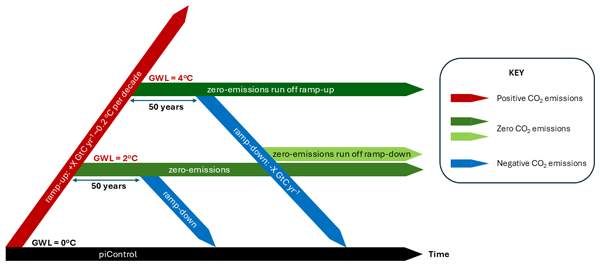
Colin Jones, Isaline Bossert, Donovan P. Dennis, Hazel A. Jeffery, Chris D. Jones, Torben Koenigk, Sina Loriani, Benjamin Sanderson, Roland Séférian, Klaus Wyser, Shuting Yang, Manabu Abe, Sebastian Bathiany, Pascale Braconnot, Victor Brovkin, Friedrich A. Burger, Patrica Cadule, Frederic S. Castruccio, Gokhan Danabasoglu, Andrea Dittus, Jonathan F. Donges, Friederike Fröb, Thomas L. Frölicher, Goran Georgievski, Chuncheng Guo, Aixue Hu, Peter Lawrence, Paul Lerner, José Licón-Saláiz, Bette Otto-Bliesner, Anastasia Romanou, Elena Shevliakova, Yona Silvy, Didier Swingedouw, Jerry Tjiputra, Jeremy Walton, Andy Wiltshire, Ricarda Winkelmann, Richard Wood, Tokuta Yokohata, and Tilo Ziehn
Geosci. Model Dev., 19, 6941–6966, https://doi.org/10.5194/gmd-19-6941-2026, https://doi.org/10.5194/gmd-19-6941-2026, 2026
Short summary
Short summary
We introduce a new Earth system model experiment protocol to help researchers understand how Earth might respond to positive, zero, and negative carbon emissions. This protocol enables different models to be compared following similar warming and cooling rates. Researchers use the models to explore how the Earth reacts to different climate futures, including the risk of tipping points being exceeded and whether changes can be reversed. The results will support improved long-term climate policy.
Didier Swingedouw, Laura Jackson, Aixue Hu, Anastasia Romanou, Nicole C. Laureanti, Wilbert Weijer, Sina Loriani, Bette Otto-Bliesner, Ayako Abe-Ouchi, Lucas Almeida, Alessio Bellucci, Reyk Börner, Gokhan Danabasoglu, Donovan P. Dennis, Marion Devilliers, Sybren Drijfhout, Jonathan Donges, Friederike Fröb, Thomas L. Frölicher, Guillaume Gastineau, Heiko Goelzer, Chuncheng Guo, Urs Hofmann, Anna Höse, Colin Jones, Torben Koenigk, Ann Kristin Klose, Valerio Lembo, Jose Licon-Salaiz, Ken Mankoff, Virna Meccia, Irina Melnikova, Oliver Mehling, Laurie Menviel, Juliette Mignot, Jon I. Robson, Gavin A. Schmidt, Robin Smith, Yuchen Sun, Irene Trombini, Matteo Willeit, Richard Wood, Fanghua Wu, Lin Zhaohui, and Ricarda Winkelmann
EGUsphere, https://doi.org/10.5194/egusphere-2026-1698, https://doi.org/10.5194/egusphere-2026-1698, 2026
Short summary
Short summary
This study presents a plan for climate model experiments to better understand how changes in freshwater in the North Atlantic affect major ocean currents. We designed coordinated simulations to test their response to warming, added freshwater, and possible recovery after weakening. Comparing results across models and past climate evidence helps improve confidence in projections and assess risks of large ocean circulation changes.
Ricarda Winkelmann, Donovan P. Dennis, Jonathan F. Donges, Sina Loriani, Ann Kristin Klose, Jesse F. Abrams, Jorge Alvarez-Solas, Torsten Albrecht, David Armstrong McKay, Sebastian Bathiany, Javier Blasco Navarro, Victor Brovkin, Eleanor Burke, Gokhan Danabasoglu, Reik V. Donner, Markus Drüke, Goran Georgievski, Heiko Goelzer, Anna B. Harper, Gabriele Hegerl, Marina Hirota, Aixue Hu, Laura C. Jackson, Colin Jones, Hyungjun Kim, Torben Koenigk, Peter Lawrence, Timothy M. Lenton, Hannah Liddy, José Licón-Saláiz, Maxence Menthon, Marisa Montoya, Jan Nitzbon, Sophie Nowicki, Bette Otto-Bliesner, Francesco Pausata, Stefan Rahmstorf, Karoline Ramin, Alexander Robinson, Johan Rockström, Anastasia Romanou, Boris Sakschewski, Christina Schädel, Steven Sherwood, Robin S. Smith, Norman J. Steinert, Didier Swingedouw, Matteo Willeit, Wilbert Weijer, Richard Wood, Klaus Wyser, and Shuting Yang
EGUsphere, https://doi.org/10.5194/egusphere-2025-1899, https://doi.org/10.5194/egusphere-2025-1899, 2025
Short summary
Short summary
The Tipping Points Modelling Intercomparison Project (TIPMIP) is an international collaborative effort to systematically assess tipping point risks in the Earth system using state-of-the-art coupled and stand-alone domain models. TIPMIP will provide a first global atlas of potential tipping dynamics, respective critical thresholds and key uncertainties, generating an important building block towards a comprehensive scientific basis for policy- and decision-making.
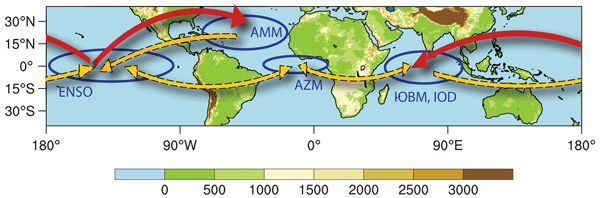
Ingo Richter, Ping Chang, Ping-Gin Chiu, Gokhan Danabasoglu, Takeshi Doi, Dietmar Dommenget, Guillaume Gastineau, Zoe E. Gillett, Aixue Hu, Takahito Kataoka, Noel S. Keenlyside, Fred Kucharski, Yuko M. Okumura, Wonsun Park, Malte F. Stuecker, Andréa S. Taschetto, Chunzai Wang, Stephen G. Yeager, and Sang-Wook Yeh
Geosci. Model Dev., 18, 2587–2608, https://doi.org/10.5194/gmd-18-2587-2025, https://doi.org/10.5194/gmd-18-2587-2025, 2025
Short summary
Short summary
Tropical ocean basins influence each other through multiple pathways and mechanisms, referred to here as tropical basin interaction (TBI). Many researchers have examined TBI using comprehensive climate models but have obtained conflicting results. This may be partly due to differences in experiment protocols and partly due to systematic model errors. The Tropical Basin Interaction Model Intercomparison Project (TBIMIP) aims to address this problem by designing a set of TBI experiments that will be performed by multiple models.
Malcolm J. Roberts, Kevin A. Reed, Qing Bao, Joseph J. Barsugli, Suzana J. Camargo, Louis-Philippe Caron, Ping Chang, Cheng-Ta Chen, Hannah M. Christensen, Gokhan Danabasoglu, Ivy Frenger, Neven S. Fučkar, Shabeh ul Hasson, Helene T. Hewitt, Huanping Huang, Daehyun Kim, Chihiro Kodama, Michael Lai, Lai-Yung Ruby Leung, Ryo Mizuta, Paulo Nobre, Pablo Ortega, Dominique Paquin, Christopher D. Roberts, Enrico Scoccimarro, Jon Seddon, Anne Marie Treguier, Chia-Ying Tu, Paul A. Ullrich, Pier Luigi Vidale, Michael F. Wehner, Colin M. Zarzycki, Bosong Zhang, Wei Zhang, and Ming Zhao
Geosci. Model Dev., 18, 1307–1332, https://doi.org/10.5194/gmd-18-1307-2025, https://doi.org/10.5194/gmd-18-1307-2025, 2025
Short summary
Short summary
HighResMIP2 is a model intercomparison project focusing on high-resolution global climate models, that is, those with grid spacings of 25 km or less in the atmosphere and ocean, using simulations of decades to a century in length. We are proposing an update of our simulation protocol to make the models more applicable to key questions for climate variability and hazard in present-day and future projections and to build links with other communities to provide more robust climate information.
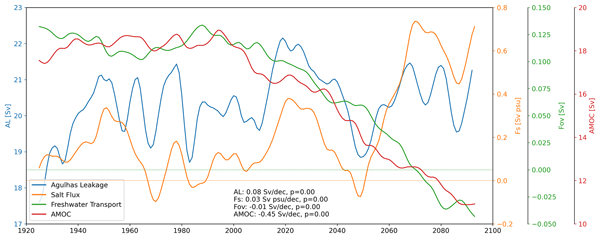
Hendrik Großelindemann, Frederic S. Castruccio, Gokhan Danabasoglu, and Arne Biastoch
Ocean Sci., 21, 93–112, https://doi.org/10.5194/os-21-93-2025, https://doi.org/10.5194/os-21-93-2025, 2025
Short summary
Short summary
This study investigates the Agulhas Leakage and examines its role in the global ocean circulation. It utilises a high-resolution Earth system model and a preindustrial climate to look at the response of the Agulhas Leakage to the wind field and the Atlantic Meridional Overturning Circulation (AMOC) and its evolution under climate change. The Agulhas Leakage could influence the stability of the AMOC, whose possible collapse would impact the climate in the Northern Hemisphere.
Laura C. Jackson, Eduardo Alastrué de Asenjo, Katinka Bellomo, Gokhan Danabasoglu, Helmuth Haak, Aixue Hu, Johann Jungclaus, Warren Lee, Virna L. Meccia, Oleg Saenko, Andrew Shao, and Didier Swingedouw
Geosci. Model Dev., 16, 1975–1995, https://doi.org/10.5194/gmd-16-1975-2023, https://doi.org/10.5194/gmd-16-1975-2023, 2023
Short summary
Short summary
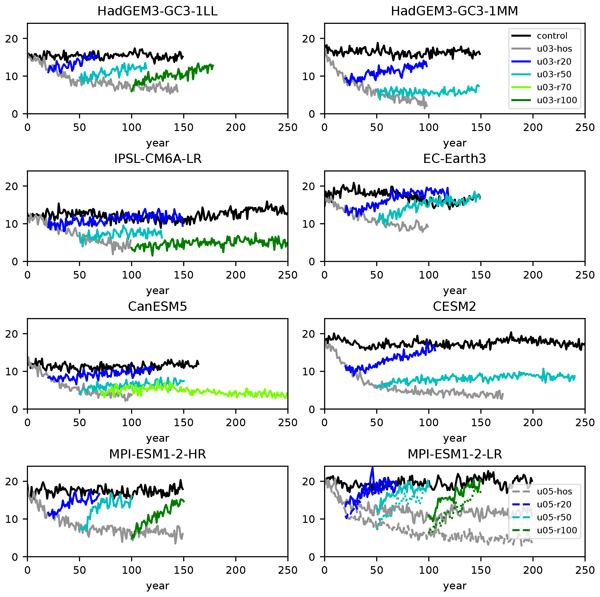
The Atlantic meridional overturning circulation (AMOC) has an important impact on the climate. There are theories that freshening of the ocean might cause the AMOC to cross a tipping point (TP) beyond which recovery is difficult; however, it is unclear whether TPs exist in global climate models. Here, we outline a set of experiments designed to explore AMOC tipping points and sensitivity to additional freshwater input as part of the North Atlantic Hosing Model Intercomparison Project (NAHosMIP).
Stephen G. Yeager, Nan Rosenbloom, Anne A. Glanville, Xian Wu, Isla Simpson, Hui Li, Maria J. Molina, Kristen Krumhardt, Samuel Mogen, Keith Lindsay, Danica Lombardozzi, Will Wieder, Who M. Kim, Jadwiga H. Richter, Matthew Long, Gokhan Danabasoglu, David Bailey, Marika Holland, Nicole Lovenduski, Warren G. Strand, and Teagan King
Geosci. Model Dev., 15, 6451–6493, https://doi.org/10.5194/gmd-15-6451-2022, https://doi.org/10.5194/gmd-15-6451-2022, 2022
Short summary
Short summary
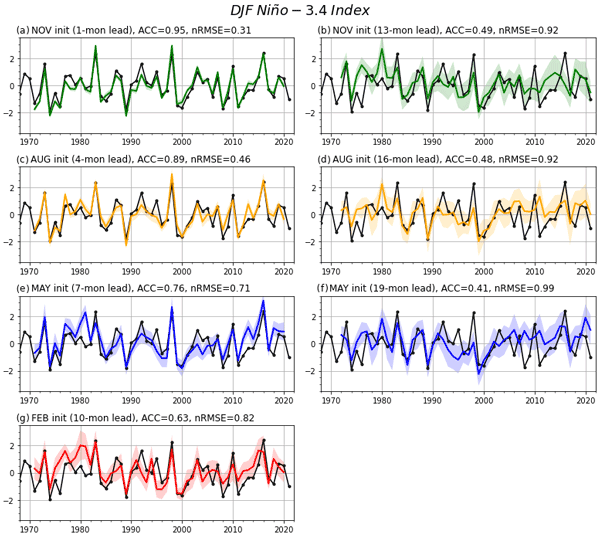
The Earth system changes over a range of time and space scales, and some of these changes are predictable in advance. Short-term weather forecasts are most familiar, but recent work has shown that it is possible to generate useful predictions several seasons or even a decade in advance. This study focuses on predictions over intermediate timescales (up to 24 months in advance) and shows that there is promising potential to forecast a variety of changes in the natural environment.
Keith B. Rodgers, Sun-Seon Lee, Nan Rosenbloom, Axel Timmermann, Gokhan Danabasoglu, Clara Deser, Jim Edwards, Ji-Eun Kim, Isla R. Simpson, Karl Stein, Malte F. Stuecker, Ryohei Yamaguchi, Tamás Bódai, Eui-Seok Chung, Lei Huang, Who M. Kim, Jean-François Lamarque, Danica L. Lombardozzi, William R. Wieder, and Stephen G. Yeager
Earth Syst. Dynam., 12, 1393–1411, https://doi.org/10.5194/esd-12-1393-2021, https://doi.org/10.5194/esd-12-1393-2021, 2021
Short summary
Short summary
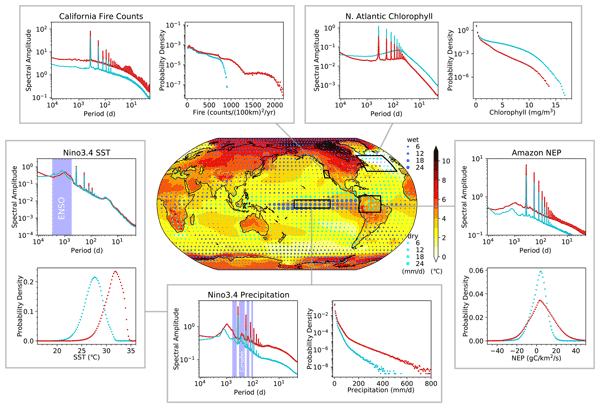
A large ensemble of simulations with 100 members has been conducted with the state-of-the-art CESM2 Earth system model, using historical and SSP3-7.0 forcing. Our main finding is that there are significant changes in the variance of the Earth system in response to anthropogenic forcing, with these changes spanning a broad range of variables important to impacts for human populations and ecosystems.
Yushi Morioka, Doroteaciro Iovino, Andrea Cipollone, Andrea Storto, Takeshi Doi, Masami Nonaka, and Swadhin K. Behera
EGUsphere, https://doi.org/10.5194/egusphere-2026-5070, https://doi.org/10.5194/egusphere-2026-5070, 2026
This preprint is open for discussion and under review for The Cryosphere (TC).
Short summary
Short summary
Arctic sea ice has been shrinking for the last four decades. As global warming continues, predicting summer sea ice is becoming more important. Here we create a seasonal forecast system using the SINTEX-F3 model. Results show that summer sea ice in the Barents-Kara Sea is best predicted when accurate sea ice and snow conditions are provided from spring. It is found that initial sea ice thickness acts as a memory for the climate system, enabling accurate summer sea ice prediction from spring.
Francesco Cocetta, Doroteaciro Iovino, Andrea Cipollone, and Daniela Flocco
EGUsphere, https://doi.org/10.5194/egusphere-2026-4349, https://doi.org/10.5194/egusphere-2026-4349, 2026
This preprint is open for discussion and under review for The Cryosphere (TC).
Short summary
Short summary
Arctic sea ice is rapidly changing toward a new climate state characterized by thinner and more seasonal ice. To understand these changes, we use reconstructions of ocean and sea ice states to investigate the transition zone between consolidated pack ice and open ocean. Our results show clear differences from central pack ice, highlighting the need for better representation in climate models and opening the path toward identifying specific indicators of its evolution.
Reinhard K. H. Schiemann, Grenville Lister, Rosalyn Hatcher, Dan Hodson, Bryan Lawrence, Len Shaffrey, Jeff Cole, Andrea Dittus, Jenny Mecking, Jon Robson, Simon Wilson, Yevgeny Aksenov, Adam T. Blaker, Ben Harvey, Oscar Martínez-Alvarado, Annette Osprey, Stephanie Rynders, Sharar Ahmadi, Jake Aylmer, Laura Baker, David Case, Emanuele Silvio Gentile, Steve George, Kevin Hodges, Eliza Karlowska, Charlotte Lang, Hua Lu, Niamh O'Callaghan, Weronika Osmolska, Scott Osprey, Tony Phillips, David Schröder, Robin Smith, Andrew G. Turner, Steve Woolnough, Martin Andrews, Andrew Coward, Steven Hardiman, James Harle, John W. Rostron, David M. H. Sexton, Bablu Sinha, Jonny Williams, and Chris Wilson
EGUsphere, https://doi.org/10.5194/egusphere-2026-2281, https://doi.org/10.5194/egusphere-2026-2281, 2026
This preprint is open for discussion and under review for Geoscientific Model Development (GMD).
Short summary
Short summary
This paper presents a new large ensemble of climate model simulations: The CANARI HadGEM3 Large Ensemble (CANARI LE). The CANARI LE has a comparatively high resolution, provides sub-daily output on atmospheric pressure levels, and boundary conditions for driving regional model simulations. The CANARI LE is thus a community resource that lends itself for the study of physical coupled climate processes, weather systems, and impacts in a changing climate.
Colin Jones, Isaline Bossert, Donovan P. Dennis, Hazel A. Jeffery, Chris D. Jones, Torben Koenigk, Sina Loriani, Benjamin Sanderson, Roland Séférian, Klaus Wyser, Shuting Yang, Manabu Abe, Sebastian Bathiany, Pascale Braconnot, Victor Brovkin, Friedrich A. Burger, Patrica Cadule, Frederic S. Castruccio, Gokhan Danabasoglu, Andrea Dittus, Jonathan F. Donges, Friederike Fröb, Thomas L. Frölicher, Goran Georgievski, Chuncheng Guo, Aixue Hu, Peter Lawrence, Paul Lerner, José Licón-Saláiz, Bette Otto-Bliesner, Anastasia Romanou, Elena Shevliakova, Yona Silvy, Didier Swingedouw, Jerry Tjiputra, Jeremy Walton, Andy Wiltshire, Ricarda Winkelmann, Richard Wood, Tokuta Yokohata, and Tilo Ziehn
Geosci. Model Dev., 19, 6941–6966, https://doi.org/10.5194/gmd-19-6941-2026, https://doi.org/10.5194/gmd-19-6941-2026, 2026
Short summary
Short summary
We introduce a new Earth system model experiment protocol to help researchers understand how Earth might respond to positive, zero, and negative carbon emissions. This protocol enables different models to be compared following similar warming and cooling rates. Researchers use the models to explore how the Earth reacts to different climate futures, including the risk of tipping points being exceeded and whether changes can be reversed. The results will support improved long-term climate policy.
Prince Xavier, Martin Willett, Tim Graham, Paul Earnshaw, Dan Copsey, Nikesh Narayan, Charline Marzin, Alistair Sellar, Duncan Ackerley, Adam Blaker, Ed Blockley, Alejandro Bodas-Salcedo, Andrew Bushell, Nakbin Choi, Xin Rong Chua, Catherine Guiavarc'h, Muhammad Hassim, Julian Heming, Debra Hudson, Sarah Ineson, Anthony Jones, Colin Jones, Richard Keane, Kiwook Kim, Jiyeong Kim, Till Kuhlbrodt, Myong-In Lee, Richard Levine, Chen Li, Gill Martin, Alex Megann, Anne Mccabe, Aurel Moise, Leighton Regayre, Jeff Ridley, Luke Roberts, Sandeep Sahany, Reinhard K. H. Schiemann, David Storkey, Warren Tennant, Lorenzo Tomassini, Yoko Tsushima, Graham P. Weedon, Alex West, Matthew C. Wheeler, Keith Williams, Xiaobing Zhou, and Hongyan Zhu
EGUsphere, https://doi.org/10.5194/egusphere-2026-4281, https://doi.org/10.5194/egusphere-2026-4281, 2026
This preprint is open for discussion and under review for Geoscientific Model Development (GMD).
Short summary
Short summary
GC5 is the Met Office's newest climate and weather model, combining an updated atmosphere/land component with an improved ocean and sea-ice component. Compared to its predecessor GC4, it better simulates global temperatures, winds, monsoons over India and SE Asia, and African weather, and forecasts tropical cyclones more accurately. Southern Ocean errors shrank too. Some tropical patterns and regional biases worsened slightly. A lower-resolution version will underpin the UK's Earth System Model.
Christopher Bladwell, Ryan M. Holmes, Jan D. Zika, Stephen M. Griffies, and Andrew E. Kiss
EGUsphere, https://doi.org/10.5194/egusphere-2026-3672, https://doi.org/10.5194/egusphere-2026-3672, 2026
This preprint is open for discussion and under review for Geoscientific Model Development (GMD).
Short summary
Short summary
To quantify climate change we compare long-term averages and not just day-to-day changes (weather). Climate simulations allow us to quantify the processes that contribute to climate change. However, the way these processes are conventionally analysed describes the change two instances of time, rather than the change in climate over long periods. We present an alternative way of quantifying how physical processes contribute to a changing climate, applying this method to an ocean model simulation.
Baylor Fox-Kemper, Patricia DeRepentigny, Anne Marie Treguier, Christian Stepanek, Eleanor O'Rourke, Chloe Mackallah, Alberto Meucci, Yevgeny Aksenov, Paul J. Durack, Nicole Feldl, Oluwayemi Garuba, Vanessa Hernaman, Céline Heuzé, Doroteaciro Iovino, Gaurav Madan, André L. Marquez, François Massonnet, Jenny Mecking, Dhrubajyoti Samanta, Patrick C. Taylor, Wan-Ling Tseng, and Martin Vancoppenolle
Geosci. Model Dev., 19, 6043–6078, https://doi.org/10.5194/gmd-19-6043-2026, https://doi.org/10.5194/gmd-19-6043-2026, 2026
Short summary
Short summary
The ocean and sea ice are central to Earth's climate system, influencing global heat and carbon cycles, weather patterns, and sea level rise. Here the earth system model variables needed for studies of the ocean and sea ice are prioritized and requested. These requested variables were developed through an international, community-based process.
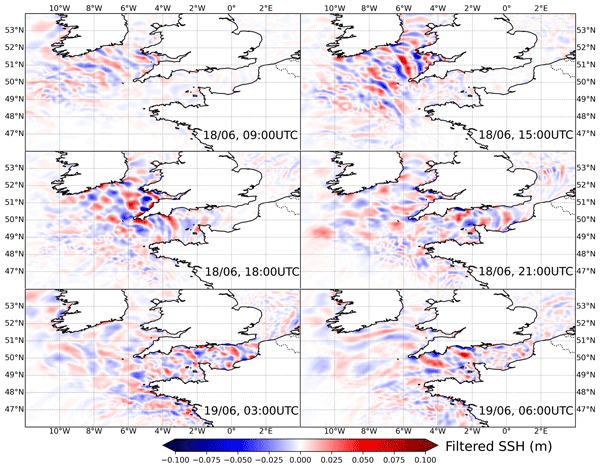
Nefeli Makrygianni, Ségolène Berthou, David L. A. Flack, Cindy Lebeaupin Brossier, Jonathan Beuvier, Juan Manuel Castillo, Emiliano Renzi, Clare O'Neill, Daniel Peláez-Zapata, Frederic Dias, Huw Lewis, and Diego Bruciaferri
Nat. Hazards Earth Syst. Sci., 26, 3185–3211, https://doi.org/10.5194/nhess-26-3185-2026, https://doi.org/10.5194/nhess-26-3185-2026, 2026
Short summary
Short summary
Meteotsunamis are rare but dangerous anomalous waves triggered by atmospheric disturbances, they are not currently forecast in Northwest Europe. We analysed the strongest recorded event on June 18, 2022, which reached 1 m amplitude. We showed high-resolution, high-frequency coupled models can represent such events up to three days ahead and help better understand their atmospheric triggers. These models, together with improved observations, can enhance early warnings and coastal safety.
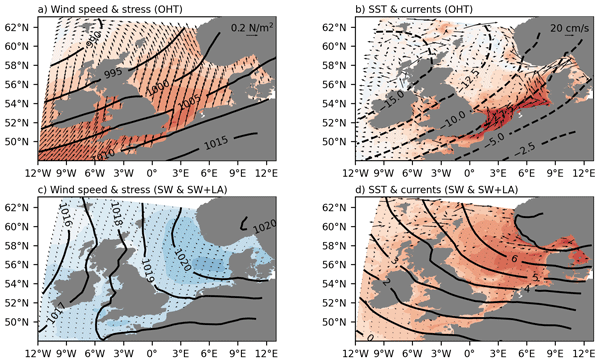
Tobias Schulzki, Franziska U. Schwarzkopf, and Arne Biastoch
Ocean Sci., 22, 2027–2058, https://doi.org/10.5194/os-22-2027-2026, https://doi.org/10.5194/os-22-2027-2026, 2026
Short summary
Short summary
Marine heatwaves are periods of unusually warm ocean temperatures that can affect ecosystems and weather. In the North Sea, they have become more frequent over recent decades, but their peak intensity has decreased in many areas. Our results show that marine heatwaves depend on both short-term weather and longer seasonal to decadal variability. The local atmospheric conditions play a key role in the German Bight.
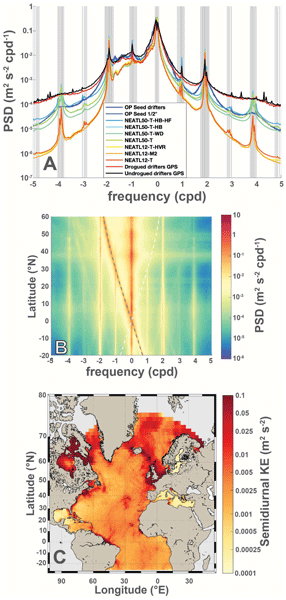
Rémi Laxenaire, Eric P. Chassignet, Xiaobiao Xu, Alan J. Wallcraft, Luna Hiron, Brian K. Arbic, Maarten C. Buijsman, Miguel Solano, and Shane Elipot
Geosci. Model Dev., 19, 5571–5599, https://doi.org/10.5194/gmd-19-5571-2026, https://doi.org/10.5194/gmd-19-5571-2026, 2026
Short summary
Short summary
Surface kinetic energy reflects the distribution of ocean circulation across temporal and spatial scales, shaping energy transfer and mixing in the upper ocean. In a series of North and Equatorial Atlantic numerical simulations, we show that the surface kinetic energy is sensitive to the model's choices in grid and seafloor resolution and to the tides and wind variability, offering guidance for the configuration of future ocean simulations.
Anna Christina Hans, Rebecca Hummels, Peter Brandt, Franziska U. Schwarzkopf, and Stephan Juricke
EGUsphere, https://doi.org/10.5194/egusphere-2026-2983, https://doi.org/10.5194/egusphere-2026-2983, 2026
This preprint is open for discussion and under review for Ocean Science (OS).
Short summary
Short summary
We mimic an observational array at 11°S in an ocean model to assess its capability to compute the temporal variability of the Atlantic Meridional Overturning Circulation. The current approaches based on bottom pressure sensors and measurements of the boundary currents explain large parts of the transport variability. Improvements can be achieved by also considering temperature and salinity data, while the potential of self-calibrating pressure sensors and inverted echo sounders is limited.
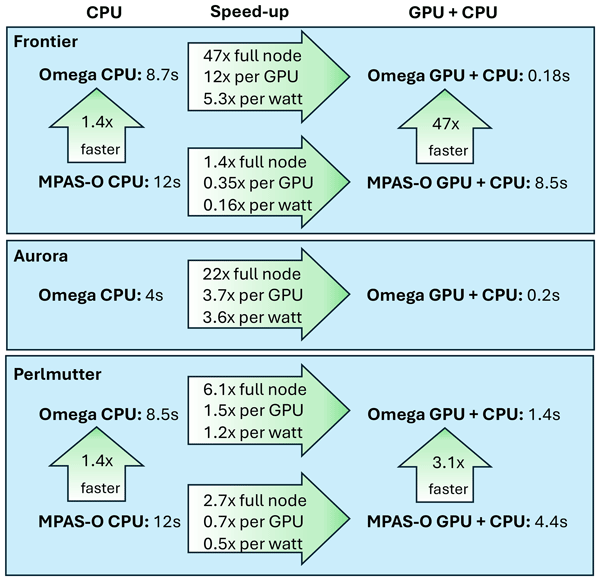
Mark R. Petersen, Xylar S. Asay-Davis, Alice M. Barthel, Carolyn Branecky Begeman, Siddhartha Bishnu, Steven R. Brus, Philip W. Jones, Hyun-Gyu Kang, Youngsung Kim, Azamat Mametjanov, Brian J. O'Neill, James R. Overfelt, Kieran K. Ringel, Katherine M. Smith, Sarat Sreepathi, Luke P. Van Roekel, and Maciej Waruszewski
Geosci. Model Dev., 19, 3569–3594, https://doi.org/10.5194/gmd-19-3569-2026, https://doi.org/10.5194/gmd-19-3569-2026, 2026
Short summary
Short summary
Ocean models are used to predict currents, temperature, and salinity of the earth's oceans, much like weather forecasting. As supercomputer hardware changes with evolving technology, models must be updated, and sometimes rewritten. Here we document Omega, a new ocean model that was designed to run on the world's fastest supercomputers. Testing shows that Omega accurately solves the model equations, and runs efficiently on many different computer architectures, including exascale computers.
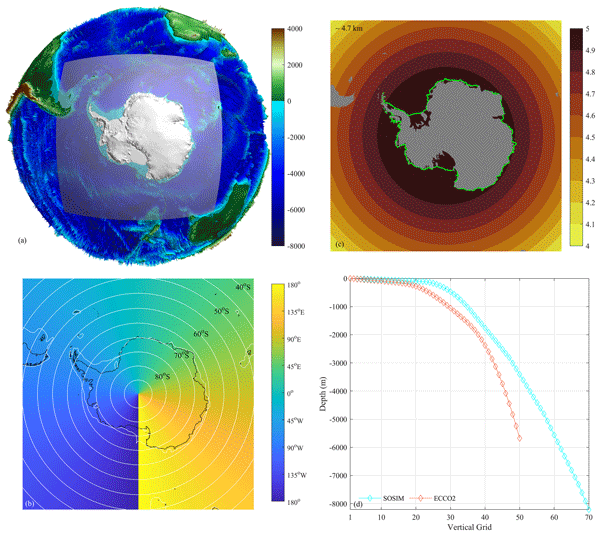
Chengyan Liu, Zhaomin Wang, Dake Chen, Xianxian Han, Hengling Leng, Xi Liang, Liangjun Yan, Xiang Li, Craig Stevens, Andrew McC. Hogg, Kazuya Kusahara, Kaihe Yamazaki, Kay I. Ohshima, Meng Zhou, Xiao Cheng, Dongxiao Wang, Changming Dong, Jiping Liu, Qinghua Yang, Xichen Li, Ruibo Lei, Minghu Ding, Zhaoru Zhang, Dujuan Kang, Di Qi, Tongya Liu, Jihai Dong, Lu An, Ru Chen, Tong Zhang, Xiaoming Hu, Bo Han, Haibo Bi, Qi Shu, Longjiang Mu, Shiming Xu, Hu Yang, Hailong Liu, Tingfeng Dou, Zhixuan Feng, Lei Zheng, Xueyuan Tang, Guitao Shi, Yongqing Cai, Bingrui Li, Yang Wu, Xia Lin, Wenjin Sun, Yu Liu, Kai Yu, Yu Zhang, Weizeng Shao, Xiaoyu Wang, Shaojun Zheng, Chengyi Yuan, Chunxia Zhou, Jian Liu, Yang Liu, Yue Xia, Xiaoyu Pan, Jiabao Zeng, Kechen Liu, Jiahao Fan, Chen Cheng, and Qi Li
Geosci. Model Dev., 19, 2985–3033, https://doi.org/10.5194/gmd-19-2985-2026, https://doi.org/10.5194/gmd-19-2985-2026, 2026
Short summary
Short summary
We developed a high-resolution computer model to simulate how the ocean, sea ice, and ice shelves interact around Antarctica. This helps us understand their critical role in global climate and sea-level rise. Our model successfully captures essential features like major currents and seasonal ice changes. Despite some remaining biases, it provides a useful tool for predicting future changes in this vital and rapidly evolving region.
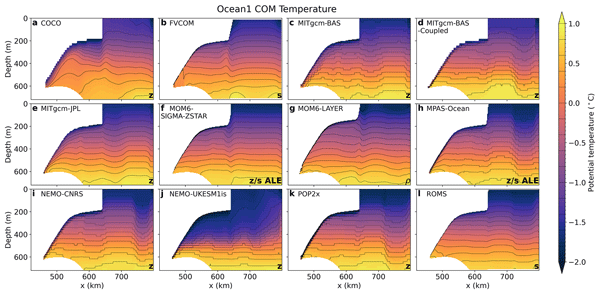
Claire K. Yung, Xylar S. Asay-Davis, Alistair Adcroft, Christopher Y. S. Bull, Jan De Rydt, Michael S. Dinniman, Benjamin K. Galton-Fenzi, Daniel Goldberg, David E. Gwyther, Robert Hallberg, Matthew Harrison, Tore Hattermann, David M. Holland, Denise Holland, Paul R. Holland, James R. Jordan, Nicolas C. Jourdain, Kazuya Kusahara, Gustavo Marques, Pierre Mathiot, Dimitris Menemenlis, Adele K. Morrison, Yoshihiro Nakayama, Olga Sergienko, Robin S. Smith, Alon Stern, Ralph Timmermann, and Qin Zhou
The Cryosphere, 20, 2053–2088, https://doi.org/10.5194/tc-20-2053-2026, https://doi.org/10.5194/tc-20-2053-2026, 2026
Short summary
Short summary
The second Ice Shelf-Ocean Model Intercomparison Project, ISOMIP+, compares 12 ice shelf-ocean models with a common, idealised, static configuration, aiming to assess inter-model variability. Models show similar basal melt rate patterns, ocean profiles and circulation but differ in ice-ocean boundary layer properties. Ice-ocean boundary layer representation is a key area for future work, as are realistic-domain ice sheet-ocean model intercomparisons.
Simona Masina, Andrea Cipollone, Doroteaciro Iovino, Stefania Ciliberti, Rita Lecci, Sergio Cretí, Vladyslav Lyubartsev, Giovanni Coppini, and Emanuela Clementi
EGUsphere, https://doi.org/10.5194/egusphere-2026-887, https://doi.org/10.5194/egusphere-2026-887, 2026
Short summary
Short summary
The paper presents GOFS16, an eddy-resolving global operational ocean and sea ice forecasting system which provides 6-day forecasts of three-dimensional temperature, salinity, currents, sea level, and sea ice properties. The system assimilates satellite and in situ observations using a 3D variational data assimilation scheme. Validation is conducted routinely using global and regional metrics. Results indicate that GOFS16 performs within the expected range of skill for current global systems.
Didier Swingedouw, Laura Jackson, Aixue Hu, Anastasia Romanou, Nicole C. Laureanti, Wilbert Weijer, Sina Loriani, Bette Otto-Bliesner, Ayako Abe-Ouchi, Lucas Almeida, Alessio Bellucci, Reyk Börner, Gokhan Danabasoglu, Donovan P. Dennis, Marion Devilliers, Sybren Drijfhout, Jonathan Donges, Friederike Fröb, Thomas L. Frölicher, Guillaume Gastineau, Heiko Goelzer, Chuncheng Guo, Urs Hofmann, Anna Höse, Colin Jones, Torben Koenigk, Ann Kristin Klose, Valerio Lembo, Jose Licon-Salaiz, Ken Mankoff, Virna Meccia, Irina Melnikova, Oliver Mehling, Laurie Menviel, Juliette Mignot, Jon I. Robson, Gavin A. Schmidt, Robin Smith, Yuchen Sun, Irene Trombini, Matteo Willeit, Richard Wood, Fanghua Wu, Lin Zhaohui, and Ricarda Winkelmann
EGUsphere, https://doi.org/10.5194/egusphere-2026-1698, https://doi.org/10.5194/egusphere-2026-1698, 2026
Short summary
Short summary
This study presents a plan for climate model experiments to better understand how changes in freshwater in the North Atlantic affect major ocean currents. We designed coordinated simulations to test their response to warming, added freshwater, and possible recovery after weakening. Comparing results across models and past climate evidence helps improve confidence in projections and assess risks of large ocean circulation changes.
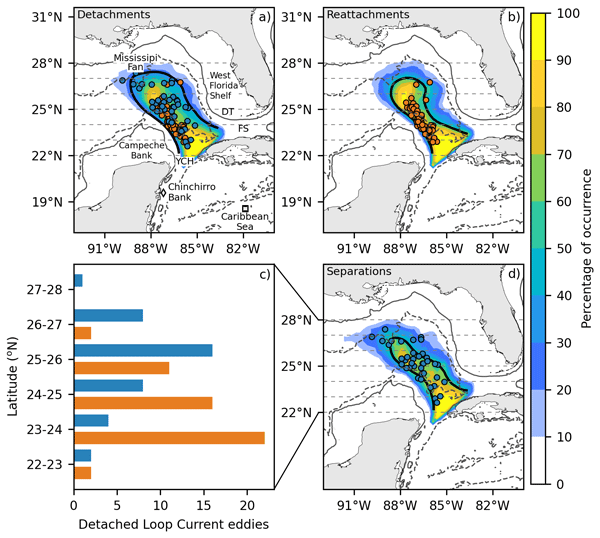
Marco Larrañaga, Julien Jouanno, Eric P. Chassignet, Giovanni Durante, Ilkyeong Ma, Julio Sheinbaum, and Lionel Renault
Ocean Sci., 22, 821–841, https://doi.org/10.5194/os-22-821-2026, https://doi.org/10.5194/os-22-821-2026, 2026
Short summary
Short summary
We analyze 29 years of satellite altimetry to investigate the detachment of Loop Current Eddies in the Gulf of Mexico. Over half of the Loop Current eddies reattach within a month, while 42 % separate and drift westward. Detachment requires the Loop Current to reach the Mississippi Fan and is strongly influenced by cyclonic eddies, whose configuration determines whether an eddy separates or reattaches to the Loop Current.
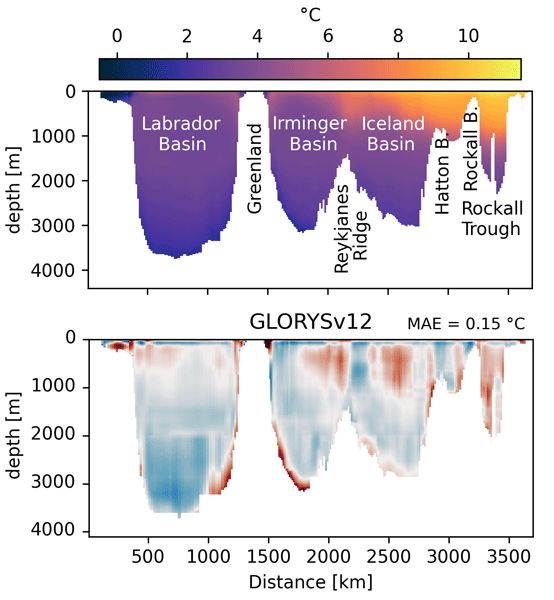
Susanna Winkelbauer, Isabella Winterer, Michael Mayer, Yao Fu, and Leopold Haimberger
Ocean Sci., 22, 629–651, https://doi.org/10.5194/os-22-629-2026, https://doi.org/10.5194/os-22-629-2026, 2026
Short summary
Short summary
Ocean reanalyses combine models and observations to reconstruct past ocean conditions. We evaluate their performance against measurements from the OSNAP (Overturning in the Subpolar North Atlantic Program) section. While reanalyses capture long-term averages and broad circulation patterns, they miss some more regional features and variability. This highlights both their value and their limitations, stressing the need for improved observations and higher-resolution models.
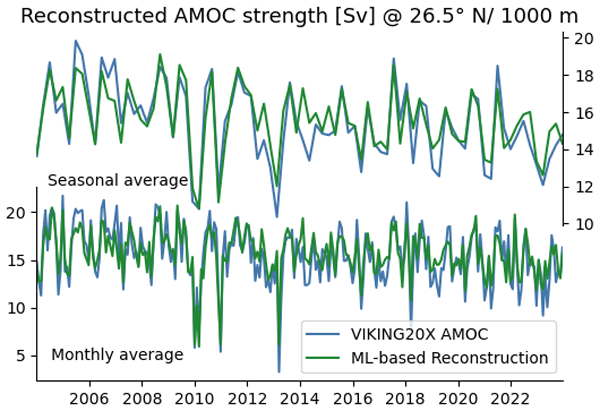
Yannick Wölker, Willi Rath, Matthias Renz, and Arne Biastoch
Ocean Sci., 21, 3541–3562, https://doi.org/10.5194/os-21-3541-2025, https://doi.org/10.5194/os-21-3541-2025, 2025
Short summary
Short summary
The Atlantic Meridional Overturning Circulation (AMOC) is a large current system that helps regulating Earth's climate. Monitoring the AMOC relies on fixed instruments anchored to the seafloor. This study explores, in a high-resolution model, whether data from Argo floats, autonomous drifters collecting hydrographic profiles, can be used to monitor the AMOC cost-effectively with the help of Machine Learning. Results suggest that Argo floats can extend AMOC monitoring beyond current fixed arrays.
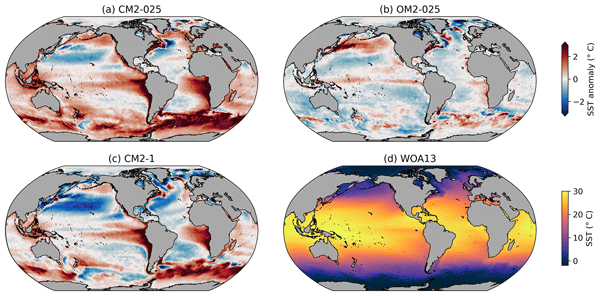
Wilma G. C. Huneke, Andrew McC. Hogg, Martin Dix, Daohua Bi, Arnold Sullivan, Shayne McGregor, Chiara M. Holgate, Siobhan P. O'Farrell, and Micael J. T. Oliveira
Geosci. Model Dev., 18, 9991–10015, https://doi.org/10.5194/gmd-18-9991-2025, https://doi.org/10.5194/gmd-18-9991-2025, 2025
Short summary
Short summary
A new configuration of the Australian Community Climate and Earth System Simulator coupled model, ACCESS-CM2, with a higher resolution ocean-sea ice component is introduced. The new version of the coupled climate model was designed to better capture smaller-scale ocean motions. While this configuration improves the representation of many aspects of the climate system, some biases from the existing lower-resolution version persist.
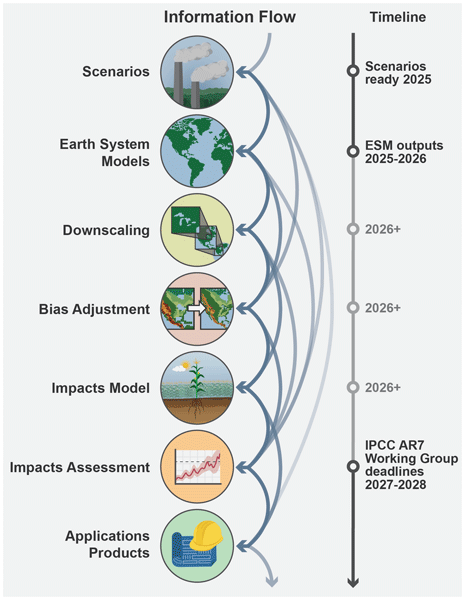
Alex C. Ruane, Charlotte L. Pascoe, Claas Teichmann, David J. Brayshaw, Carlo Buontempo, Ibrahima Diouf, Jesus Fernandez, Paula L. M. Gonzalez, Birgit Hassler, Vanessa Hernaman, Ulas Im, Doroteaciro Iovino, Martin Juckes, Iréne L. Lake, Timothy Lam, Xiaomao Lin, Jiafu Mao, Negin Nazarian, Sylvie Parey, Indrani Roy, Wan-Ling Tseng, Briony Turner, Andrew Wiebe, Lei Zhao, and Damaris Zurell
Geosci. Model Dev., 18, 9497–9540, https://doi.org/10.5194/gmd-18-9497-2025, https://doi.org/10.5194/gmd-18-9497-2025, 2025
Short summary
Short summary
This paper describes how the Coupled Model Intercomparison Project organized its 7th phase (CMIP7) to encourage the production of Earth system model outputs relevant for impacts and adaptation. Community engagement identified 13 opportunities for application across human and natural systems, 60 variable groups and 539 unique variables. We also show how simulations can more efficiently meet applications needs by targeting appropriate resolution, time slices, experiments and variable groups.
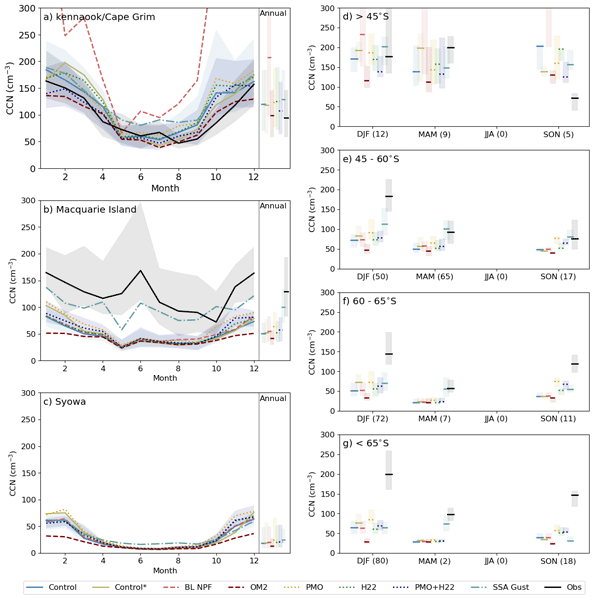
Sonya L. Fiddes, Matthew T. Woodhouse, Marc D. Mallet, Liam J. Lamprey, Ruhi S. Humphries, Alain Protat, Simon P. Alexander, Hakase Hayashida, Samuel Putland, Branka Miljevic, and Robyn Schofield
Atmos. Chem. Phys., 25, 16451–16477, https://doi.org/10.5194/acp-25-16451-2025, https://doi.org/10.5194/acp-25-16451-2025, 2025
Short summary
Short summary
The interaction between natural marine aerosols, clouds and radiation in the Southern Ocean is a major source of uncertainty in climate models. We evaluate the Australian climate model using aerosol observations and find it underestimates aerosol number often by over 50%. Model changes were tested to improve aerosol concentrations, but some of our changes had severe negative effects on the larger climate system, highlighting issues in aerosol-cloud interaction modelling.
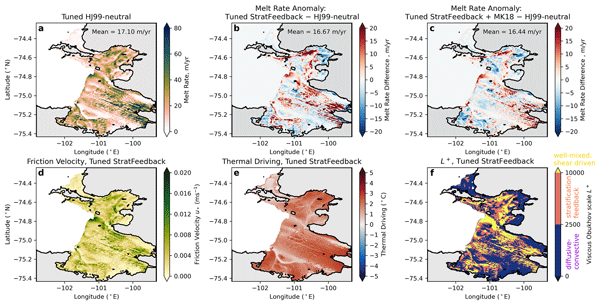
Claire K. Yung, Madelaine G. Rosevear, Adele K. Morrison, Andrew McC. Hogg, and Yoshihiro Nakayama
The Cryosphere, 19, 5827–5861, https://doi.org/10.5194/tc-19-5827-2025, https://doi.org/10.5194/tc-19-5827-2025, 2025
Short summary
Short summary
Ocean models are used to understand how the ocean interacts with the Antarctic Ice Sheet, but they are too coarse in resolution to capture the small-scale ocean processes driving melting and require a parameterisation to predict melt. Previous parameterisations ignore key processes occurring in some regions of Antarctica. We develop a parameterisation with the feedback of stratification on melting and test it in idealised and regional ocean models, finding changes to melt rate and circulation.
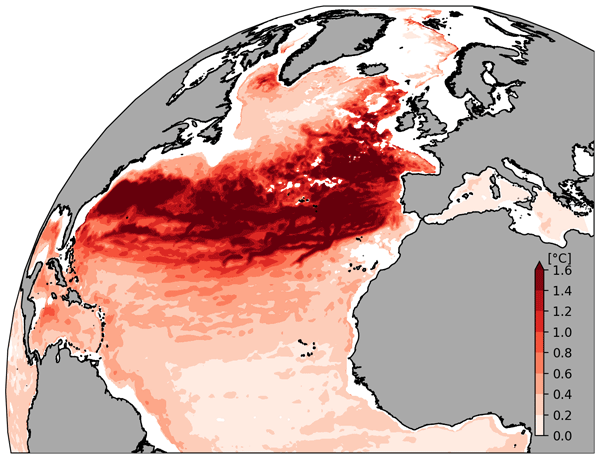
Tobias Schulzki, Franziska U. Schwarzkopf, and Arne Biastoch
Ocean Sci., 21, 2481–2504, https://doi.org/10.5194/os-21-2481-2025, https://doi.org/10.5194/os-21-2481-2025, 2025
Short summary
Short summary
Exceptionally high ocean temperatures can cause long-lasting damage to marine ecosystems. Most existing knowledge about such temperature extremes is focused on near-surface waters, yet ecosystems also thrive at greater depths. In this study, we present a comprehensive analysis of temperature extremes across the entire Atlantic Ocean, from the surface to the seafloor. Our findings underscore the importance of the ocean circulation in driving extreme temperature events.
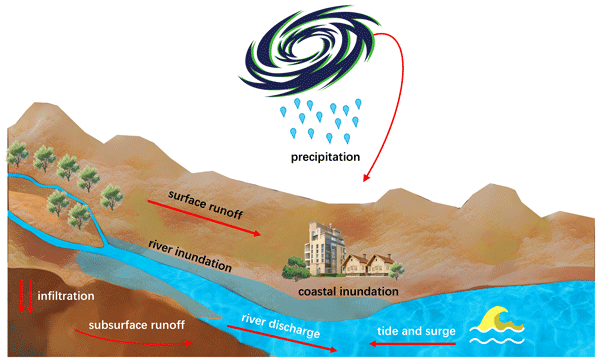
Dongyu Feng, Zeli Tan, Darren Engwirda, Jonathan D. Wolfe, Donghui Xu, Chang Liao, Gautam Bisht, James J. Benedict, Tian Zhou, Mithun Deb, Hong-Yi Li, and L. Ruby Leung
Nat. Hazards Earth Syst. Sci., 25, 3619–3639, https://doi.org/10.5194/nhess-25-3619-2025, https://doi.org/10.5194/nhess-25-3619-2025, 2025
Short summary
Short summary
Our study explores how riverine and coastal flooding during hurricanes is influenced by the interaction of atmosphere, land, river, and ocean conditions. Using an advanced Earth system model, we simulate Hurricane Irene to evaluate how meteorological and hydrological uncertainties affect flood modeling. Our findings reveal the importance of a multi-component modeling system, how hydrological conditions play critical roles in flood modeling, and greater flood risks if multiple factors are present.
Ricarda Winkelmann, Donovan P. Dennis, Jonathan F. Donges, Sina Loriani, Ann Kristin Klose, Jesse F. Abrams, Jorge Alvarez-Solas, Torsten Albrecht, David Armstrong McKay, Sebastian Bathiany, Javier Blasco Navarro, Victor Brovkin, Eleanor Burke, Gokhan Danabasoglu, Reik V. Donner, Markus Drüke, Goran Georgievski, Heiko Goelzer, Anna B. Harper, Gabriele Hegerl, Marina Hirota, Aixue Hu, Laura C. Jackson, Colin Jones, Hyungjun Kim, Torben Koenigk, Peter Lawrence, Timothy M. Lenton, Hannah Liddy, José Licón-Saláiz, Maxence Menthon, Marisa Montoya, Jan Nitzbon, Sophie Nowicki, Bette Otto-Bliesner, Francesco Pausata, Stefan Rahmstorf, Karoline Ramin, Alexander Robinson, Johan Rockström, Anastasia Romanou, Boris Sakschewski, Christina Schädel, Steven Sherwood, Robin S. Smith, Norman J. Steinert, Didier Swingedouw, Matteo Willeit, Wilbert Weijer, Richard Wood, Klaus Wyser, and Shuting Yang
EGUsphere, https://doi.org/10.5194/egusphere-2025-1899, https://doi.org/10.5194/egusphere-2025-1899, 2025
Short summary
Short summary
The Tipping Points Modelling Intercomparison Project (TIPMIP) is an international collaborative effort to systematically assess tipping point risks in the Earth system using state-of-the-art coupled and stand-alone domain models. TIPMIP will provide a first global atlas of potential tipping dynamics, respective critical thresholds and key uncertainties, generating an important building block towards a comprehensive scientific basis for policy- and decision-making.
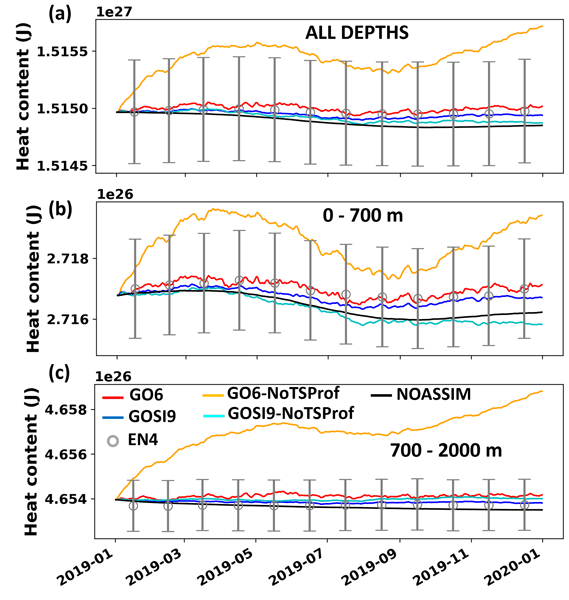
Davi Mignac, Jennifer Waters, Daniel J. Lea, Matthew J. Martin, James While, Anthony T. Weaver, Arthur Vidard, Catherine Guiavarc'h, Dave Storkey, David Ford, Edward W. Blockley, Jonathan Baker, Keith Haines, Martin R. Price, Michael J. Bell, and Richard Renshaw
Geosci. Model Dev., 18, 3405–3425, https://doi.org/10.5194/gmd-18-3405-2025, https://doi.org/10.5194/gmd-18-3405-2025, 2025
Short summary
Short summary
We describe major improvements of the Met Office's global ocean–sea ice forecasting system. The models and the way observations are used to improve the forecasts were changed, which led to a significant error reduction of 1 d forecasts. The new system performance in past conditions, where subsurface observations are scarce, was improved with more consistent ocean heat content estimates. The new system will be of better use for climate studies and will provide improved forecasts for end users.
Yann Drillet, Matthew Martin, Yosuke Fujii, Eric Chassignet, and Stefania Ciliberti
State Planet, 5-opsr, 2, https://doi.org/10.5194/sp-5-opsr-2-2025, https://doi.org/10.5194/sp-5-opsr-2-2025, 2025
Short summary
Short summary
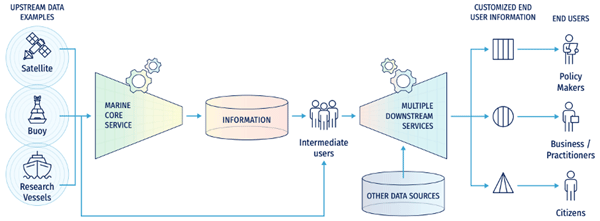
This article describes the various stages of research and development that have been carried out over the last few decades to produce an operational reference service for global ocean monitoring and forecasting.
Marina Tonani, Eric Chassignet, Mauro Cirano, Yasumasa Miyazawa, and Begoña Pérez Gómez
State Planet, 5-opsr, 3, https://doi.org/10.5194/sp-5-opsr-3-2025, https://doi.org/10.5194/sp-5-opsr-3-2025, 2025
Short summary
Short summary
This article provides an overview of the main characteristics of ocean forecast systems covering a limited region of the ocean. Their main components are described, as well as the spatial and temporal scales they resolve. The oceanic variables that these systems are able to predict are also explained. An overview of the main forecasting systems currently in operation is also provided.
Ibrahim Hoteit, Eric Chassignet, and Mike Bell
State Planet, 5-opsr, 21, https://doi.org/10.5194/sp-5-opsr-21-2025, https://doi.org/10.5194/sp-5-opsr-21-2025, 2025
Short summary
Short summary
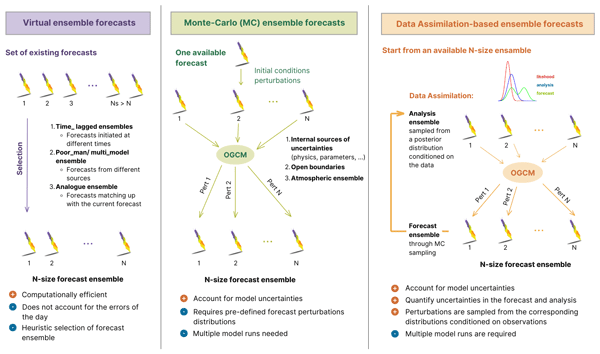
This paper explores how using multiple predictions instead of just one can improve ocean forecasts and help prepare for changes in ocean conditions. By combining different forecasts, scientists can better understand the uncertainty in predictions, leading to more reliable forecasts and better decision-making. This method is useful for responding to hazards like oil spills, improving climate forecasts, and supporting decision-making in fields like marine safety and resource management.
David Storkey, Pierre Mathiot, Michael J. Bell, Dan Copsey, Catherine Guiavarc'h, Helene T. Hewitt, Jeff Ridley, and Malcolm J. Roberts
Geosci. Model Dev., 18, 2725–2745, https://doi.org/10.5194/gmd-18-2725-2025, https://doi.org/10.5194/gmd-18-2725-2025, 2025
Short summary
Short summary
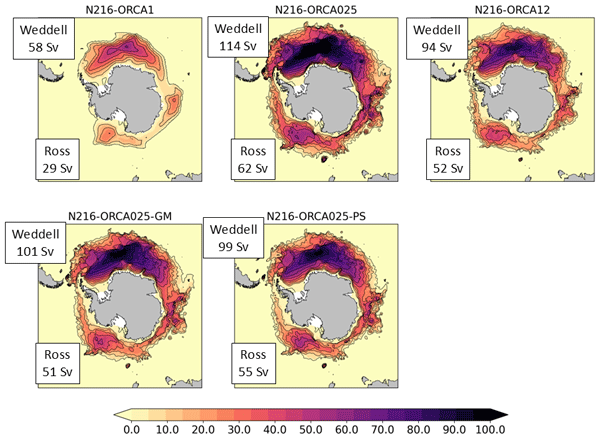
The Southern Ocean is a key region of the world ocean in the context of climate change studies. We show that the Met Office Hadley Centre coupled model with intermediate ocean resolution struggles to accurately simulate the Southern Ocean. Increasing the frictional drag that the seafloor exerts on ocean currents and introducing a representation of unresolved ocean eddies both appear to reduce the large-scale biases in this model.
Ingo Richter, Ping Chang, Ping-Gin Chiu, Gokhan Danabasoglu, Takeshi Doi, Dietmar Dommenget, Guillaume Gastineau, Zoe E. Gillett, Aixue Hu, Takahito Kataoka, Noel S. Keenlyside, Fred Kucharski, Yuko M. Okumura, Wonsun Park, Malte F. Stuecker, Andréa S. Taschetto, Chunzai Wang, Stephen G. Yeager, and Sang-Wook Yeh
Geosci. Model Dev., 18, 2587–2608, https://doi.org/10.5194/gmd-18-2587-2025, https://doi.org/10.5194/gmd-18-2587-2025, 2025
Short summary
Short summary
Tropical ocean basins influence each other through multiple pathways and mechanisms, referred to here as tropical basin interaction (TBI). Many researchers have examined TBI using comprehensive climate models but have obtained conflicting results. This may be partly due to differences in experiment protocols and partly due to systematic model errors. The Tropical Basin Interaction Model Intercomparison Project (TBIMIP) aims to address this problem by designing a set of TBI experiments that will be performed by multiple models.
Léo C. Aroucha, Joke F. Lübbecke, Peter Brandt, Franziska U. Schwarzkopf, and Arne Biastoch
Ocean Sci., 21, 661–678, https://doi.org/10.5194/os-21-661-2025, https://doi.org/10.5194/os-21-661-2025, 2025
Short summary
Short summary
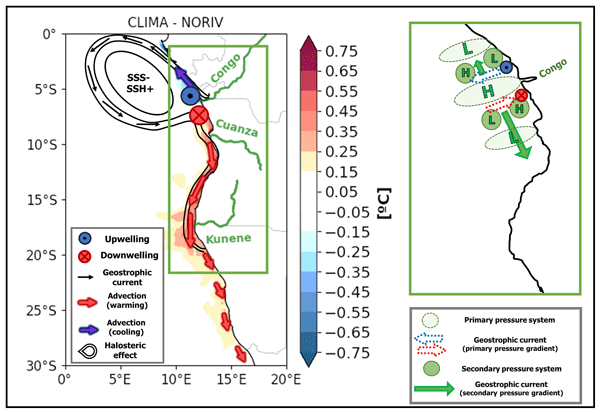
The west African coastal region sustains highly productive fisheries and marine ecosystems influenced by sea surface temperature. We use oceanic models to show that the freshwater input from land to ocean strengthens a surface northward (southward) coastal current north (south) of the Congo River mouth, promoting a transfer of cooler (warmer) waters to north (south) of the Congo discharge location. We highlight the significant impact of river discharge on ocean temperatures and circulation.
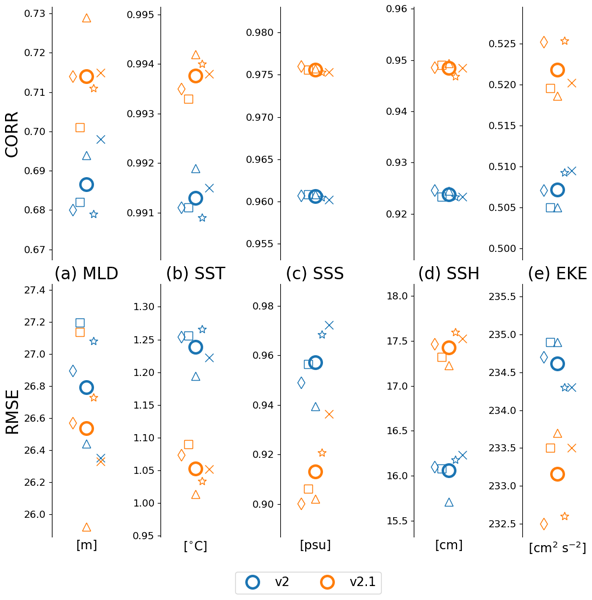
Katherine M. Smith, Alice M. Barthel, LeAnn M. Conlon, Luke P. Van Roekel, Anthony Bartoletti, Jean-Christophe Golaz, Chengzhu Zhang, Carolyn Branecky Begeman, James J. Benedict, Gautam Bisht, Yan Feng, Walter Hannah, Bryce E. Harrop, Nicole Jeffery, Wuyin Lin, Po-Lun Ma, Mathew E. Maltrud, Mark R. Petersen, Balwinder Singh, Qi Tang, Teklu Tesfa, Jonathan D. Wolfe, Shaocheng Xie, Xue Zheng, Karthik Balaguru, Oluwayemi Garuba, Peter Gleckler, Aixue Hu, Jiwoo Lee, Ben Moore-Maley, and Ana C. Ordoñez
Geosci. Model Dev., 18, 1613–1633, https://doi.org/10.5194/gmd-18-1613-2025, https://doi.org/10.5194/gmd-18-1613-2025, 2025
Short summary
Short summary
Version 2.1 of the U.S. Department of Energy's Energy Exascale Earth System Model (E3SM) adds the Fox-Kemper et al. (2011) mixed-layer eddy parameterization, which restratifies the ocean surface layer through an overturning streamfunction. Results include surface layer bias reduction in temperature, salinity, and sea ice extent in the North Atlantic; a small strengthening of the Atlantic meridional overturning circulation; and improvements to many atmospheric climatological variables.
Malcolm J. Roberts, Kevin A. Reed, Qing Bao, Joseph J. Barsugli, Suzana J. Camargo, Louis-Philippe Caron, Ping Chang, Cheng-Ta Chen, Hannah M. Christensen, Gokhan Danabasoglu, Ivy Frenger, Neven S. Fučkar, Shabeh ul Hasson, Helene T. Hewitt, Huanping Huang, Daehyun Kim, Chihiro Kodama, Michael Lai, Lai-Yung Ruby Leung, Ryo Mizuta, Paulo Nobre, Pablo Ortega, Dominique Paquin, Christopher D. Roberts, Enrico Scoccimarro, Jon Seddon, Anne Marie Treguier, Chia-Ying Tu, Paul A. Ullrich, Pier Luigi Vidale, Michael F. Wehner, Colin M. Zarzycki, Bosong Zhang, Wei Zhang, and Ming Zhao
Geosci. Model Dev., 18, 1307–1332, https://doi.org/10.5194/gmd-18-1307-2025, https://doi.org/10.5194/gmd-18-1307-2025, 2025
Short summary
Short summary
HighResMIP2 is a model intercomparison project focusing on high-resolution global climate models, that is, those with grid spacings of 25 km or less in the atmosphere and ocean, using simulations of decades to a century in length. We are proposing an update of our simulation protocol to make the models more applicable to key questions for climate variability and hazard in present-day and future projections and to build links with other communities to provide more robust climate information.
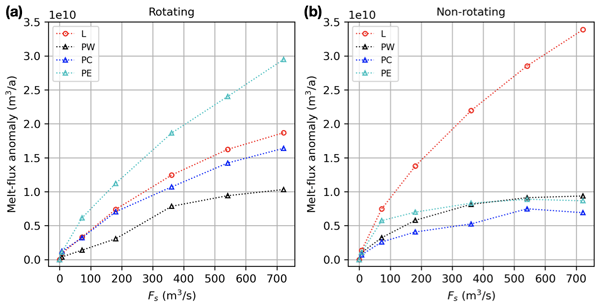
Irena Vaňková, Xylar Asay-Davis, Carolyn Branecky Begeman, Darin Comeau, Alexander Hager, Matthew Hoffman, Stephen F. Price, and Jonathan Wolfe
The Cryosphere, 19, 507–523, https://doi.org/10.5194/tc-19-507-2025, https://doi.org/10.5194/tc-19-507-2025, 2025
Short summary
Short summary
We study the effect of subglacial discharge on basal melting for Antarctic ice shelves. We find that the results from previous studies of vertical ice fronts and two-dimensional ice tongues do not translate to the rotating ice-shelf framework. The melt rate dependence on discharge is stronger in the rotating framework. Further, there is a substantial melt-rate sensitivity to the location of the discharge along the grounding line relative to the directionality of the Coriolis force.
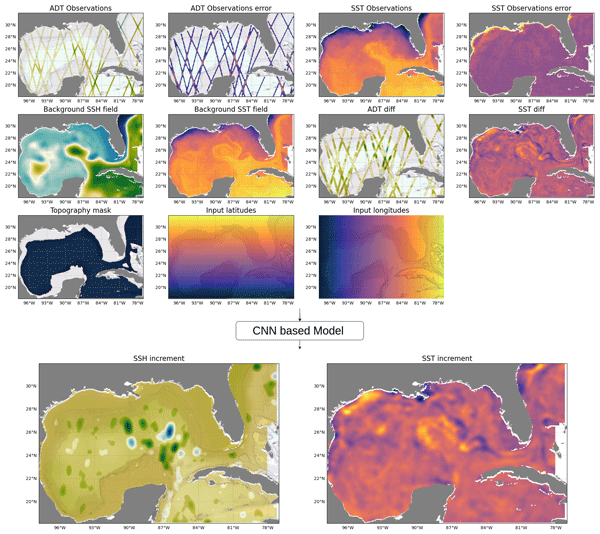
Olmo Zavala-Romero, Alexandra Bozec, Eric P. Chassignet, and Jose R. Miranda
Ocean Sci., 21, 113–132, https://doi.org/10.5194/os-21-113-2025, https://doi.org/10.5194/os-21-113-2025, 2025
Short summary
Short summary
This study shows AI can speed up data assimilation in ocean models. Researchers used convolutional neural networks (CNNs) to assimilate sea surface temperature and height observations in the Gulf of Mexico, learning to replicate corrections made by traditional, computationally expensive methods. CNN design and training window size significantly impacted accuracy, but the percentage of ocean pixels did not. These findings suggest CNNs may accelerate data assimilation in realistic settings.
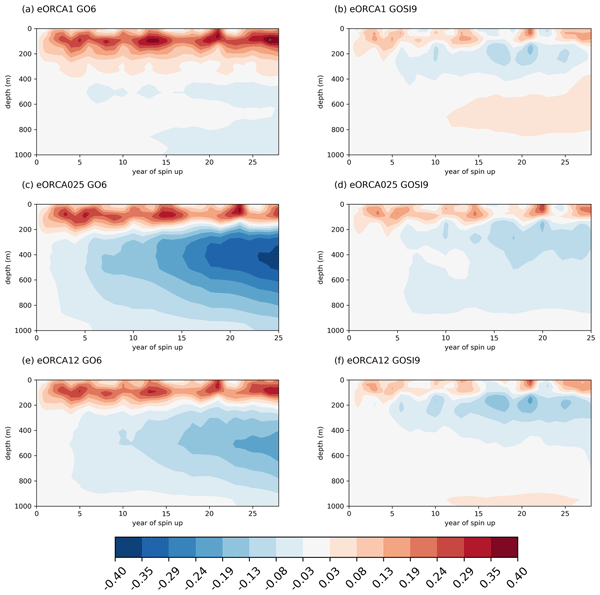
Catherine Guiavarc'h, David Storkey, Adam T. Blaker, Ed Blockley, Alex Megann, Helene Hewitt, Michael J. Bell, Daley Calvert, Dan Copsey, Bablu Sinha, Sophia Moreton, Pierre Mathiot, and Bo An
Geosci. Model Dev., 18, 377–403, https://doi.org/10.5194/gmd-18-377-2025, https://doi.org/10.5194/gmd-18-377-2025, 2025
Short summary
Short summary
The Global Ocean and Sea Ice configuration version 9 (GOSI9) is the new UK hierarchy of model configurations based on the Nucleus for European Modelling of the Ocean (NEMO) and available at three resolutions. It will be used for various applications, e.g. weather forecasting and climate prediction. It improves upon the previous version by reducing global temperature and salinity biases and enhancing the representation of Arctic sea ice and the Antarctic Circumpolar Current.
Hendrik Großelindemann, Frederic S. Castruccio, Gokhan Danabasoglu, and Arne Biastoch
Ocean Sci., 21, 93–112, https://doi.org/10.5194/os-21-93-2025, https://doi.org/10.5194/os-21-93-2025, 2025
Short summary
Short summary
This study investigates the Agulhas Leakage and examines its role in the global ocean circulation. It utilises a high-resolution Earth system model and a preindustrial climate to look at the response of the Agulhas Leakage to the wind field and the Atlantic Meridional Overturning Circulation (AMOC) and its evolution under climate change. The Agulhas Leakage could influence the stability of the AMOC, whose possible collapse would impact the climate in the Northern Hemisphere.
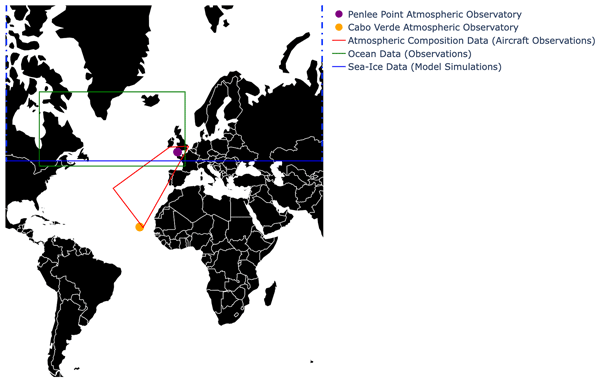
Alex T. Archibald, Bablu Sinha, Maria R. Russo, Emily Matthews, Freya A. Squires, N. Luke Abraham, Stephane J.-B. Bauguitte, Thomas J. Bannan, Thomas G. Bell, David Berry, Lucy J. Carpenter, Hugh Coe, Andrew Coward, Peter Edwards, Daniel Feltham, Dwayne Heard, Jim Hopkins, James Keeble, Elizabeth C. Kent, Brian A. King, Isobel R. Lawrence, James Lee, Claire R. Macintosh, Alex Megann, Bengamin I. Moat, Katie Read, Chris Reed, Malcolm J. Roberts, Reinhard Schiemann, David Schroeder, Timothy J. Smyth, Loren Temple, Navaneeth Thamban, Lisa Whalley, Simon Williams, Huihui Wu, and Mingxi Yang
Earth Syst. Sci. Data, 17, 135–164, https://doi.org/10.5194/essd-17-135-2025, https://doi.org/10.5194/essd-17-135-2025, 2025
Short summary
Short summary
Here, we present an overview of the data generated as part of the North Atlantic Climate System Integrated Study (ACSIS) programme that are available through dedicated repositories at the Centre for Environmental Data Analysis (CEDA; www.ceda.ac.uk) and the British Oceanographic Data Centre (BODC; bodc.ac.uk). The datasets described here cover the North Atlantic Ocean, the atmosphere above (it including its composition), and Arctic sea ice.
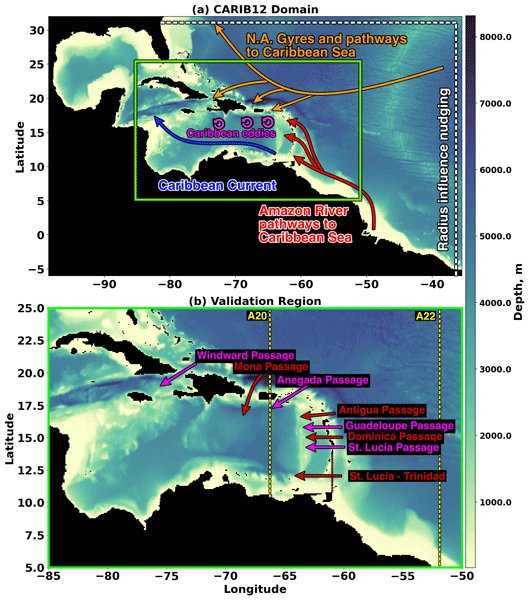
Giovanni Seijo-Ellis, Donata Giglio, Gustavo Marques, and Frank Bryan
Geosci. Model Dev., 17, 8989–9021, https://doi.org/10.5194/gmd-17-8989-2024, https://doi.org/10.5194/gmd-17-8989-2024, 2024
Short summary
Short summary
A CESM–MOM6 regional configuration of the Caribbean Sea was developed in response to the rising need for high-resolution models for climate impact studies. The configuration is validated for the period 2000–2020 and improves significant errors in a low-resolution model. Oceanic properties are well represented. Patterns of freshwater associated with the Amazon River are well captured, and the mean flows of ocean waters across multiple passages in the Caribbean Sea agree with observations.
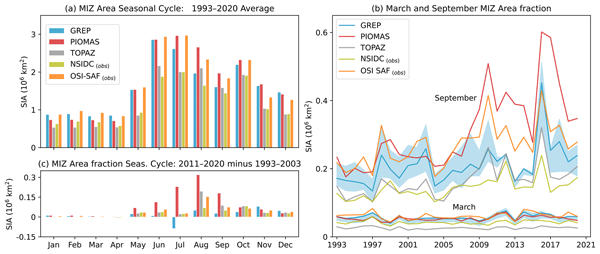
Francesco Cocetta, Lorenzo Zampieri, Julia Selivanova, and Doroteaciro Iovino
The Cryosphere, 18, 4687–4702, https://doi.org/10.5194/tc-18-4687-2024, https://doi.org/10.5194/tc-18-4687-2024, 2024
Short summary
Short summary
Arctic sea ice is thinning and retreating because of global warming. Thus, the region is transitioning to a new state featuring an expansion of the marginal ice zone, a region where mobile ice interacts with waves from the open ocean. By analyzing 30 years of sea ice reconstructions that combine numerical models and observations, this paper proves that an ensemble of global ocean and sea ice reanalyses is an adequate tool for investigating the changing Arctic sea ice cover.
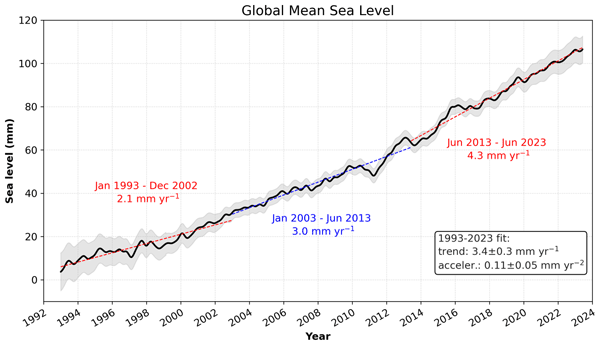
Karina von Schuckmann, Lorena Moreira, Mathilde Cancet, Flora Gues, Emmanuelle Autret, Jonathan Baker, Clément Bricaud, Romain Bourdalle-Badie, Lluis Castrillo, Lijing Cheng, Frederic Chevallier, Daniele Ciani, Alvaro de Pascual-Collar, Vincenzo De Toma, Marie Drevillon, Claudia Fanelli, Gilles Garric, Marion Gehlen, Rianne Giesen, Kevin Hodges, Doroteaciro Iovino, Simon Jandt-Scheelke, Eric Jansen, Melanie Juza, Ioanna Karagali, Thomas Lavergne, Simona Masina, Ronan McAdam, Audrey Minière, Helen Morrison, Tabea Rebekka Panteleit, Andrea Pisano, Marie-Isabelle Pujol, Ad Stoffelen, Sulian Thual, Simon Van Gennip, Pierre Veillard, Chunxue Yang, and Hao Zuo
State Planet, 4-osr8, 1, https://doi.org/10.5194/sp-4-osr8-1-2024, https://doi.org/10.5194/sp-4-osr8-1-2024, 2024
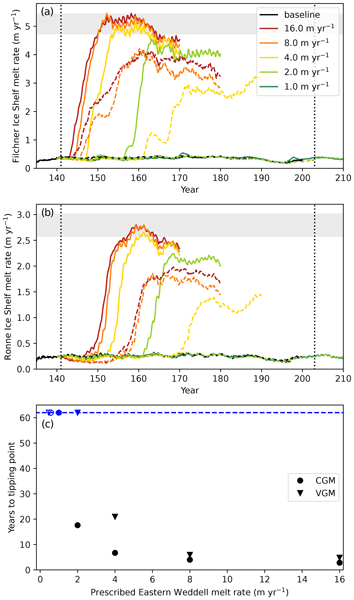
Matthew J. Hoffman, Carolyn Branecky Begeman, Xylar S. Asay-Davis, Darin Comeau, Alice Barthel, Stephen F. Price, and Jonathan D. Wolfe
The Cryosphere, 18, 2917–2937, https://doi.org/10.5194/tc-18-2917-2024, https://doi.org/10.5194/tc-18-2917-2024, 2024
Short summary
Short summary
The Filchner–Ronne Ice Shelf in Antarctica is susceptible to the intrusion of deep, warm ocean water that could increase the melting at the ice-shelf base by a factor of 10. We show that representing this potential melt regime switch in a low-resolution climate model requires careful treatment of iceberg melting and ocean mixing. We also demonstrate a possible ice-shelf melt domino effect where increased melting of nearby ice shelves can lead to the melt regime switch at Filchner–Ronne.
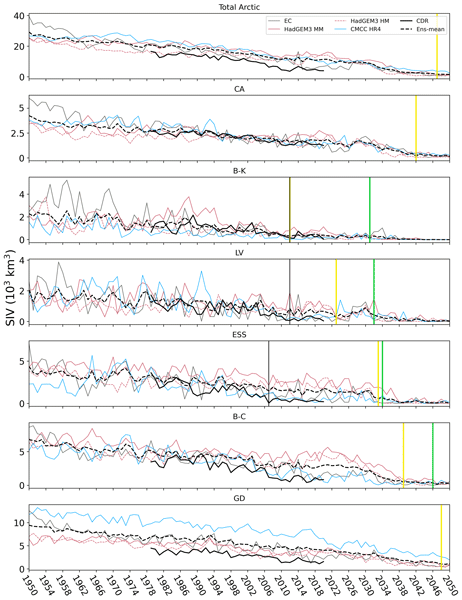
Julia Selivanova, Doroteaciro Iovino, and Francesco Cocetta
The Cryosphere, 18, 2739–2763, https://doi.org/10.5194/tc-18-2739-2024, https://doi.org/10.5194/tc-18-2739-2024, 2024
Short summary
Short summary
Climate models show differences in sea ice representation in comparison to observations. Increasing the model resolution is a recognized way to improve model realism and obtain more reliable future projections. We find no strong impact of resolution on sea ice representation; it rather depends on the analysed variable and the model used. By 2050, the marginal ice zone (MIZ) becomes a dominant feature of the Arctic ice cover, suggesting a shift to a new regime similar to that in Antarctica.
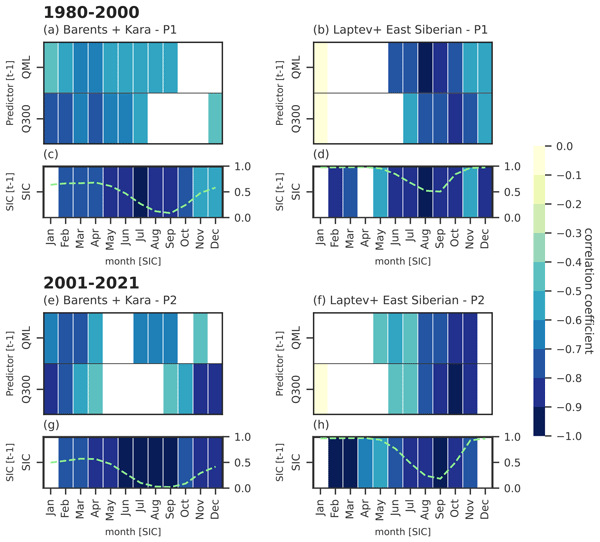
Elena Bianco, Doroteaciro Iovino, Simona Masina, Stefano Materia, and Paolo Ruggieri
The Cryosphere, 18, 2357–2379, https://doi.org/10.5194/tc-18-2357-2024, https://doi.org/10.5194/tc-18-2357-2024, 2024
Short summary
Short summary
Changes in ocean heat transport and surface heat fluxes in recent decades have altered the Arctic Ocean heat budget and caused warming of the upper ocean. Using two eddy-permitting ocean reanalyses, we show that this has important implications for sea ice variability. In the Arctic regional seas, upper-ocean heat content acts as an important precursor for sea ice anomalies on sub-seasonal timescales, and this link has strengthened since the 2000s.
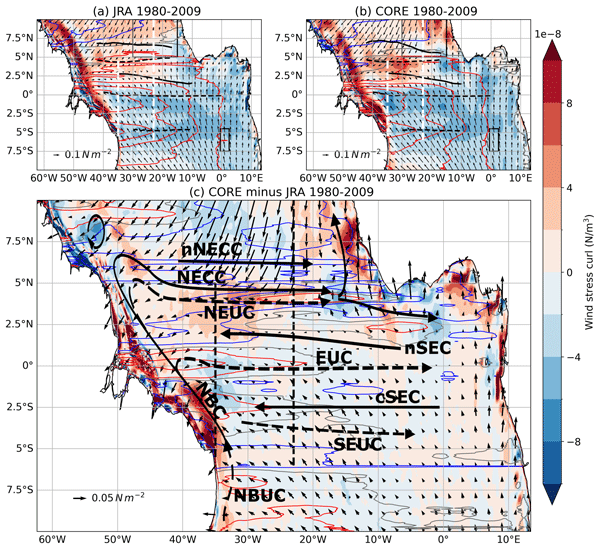
Kristin Burmeister, Franziska U. Schwarzkopf, Willi Rath, Arne Biastoch, Peter Brandt, Joke F. Lübbecke, and Mark Inall
Ocean Sci., 20, 307–339, https://doi.org/10.5194/os-20-307-2024, https://doi.org/10.5194/os-20-307-2024, 2024
Short summary
Short summary
We apply two different forcing products to a high-resolution ocean model to investigate their impact on the simulated upper-current field in the tropical Atlantic. Where possible, we compare the simulated results to long-term observations. We find large discrepancies between the two simulations regarding the wind and current fields. We propose that long-term observations, once they have reached a critical length, need to be used to test the quality of wind-driven simulations.
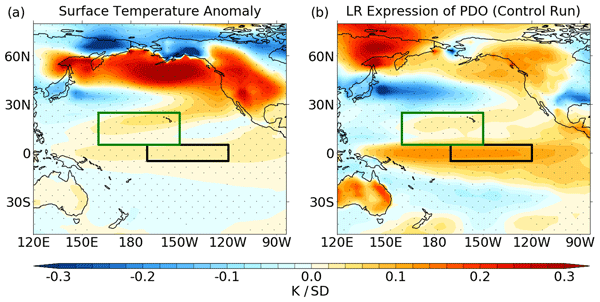
William J. Dow, Christine M. McKenna, Manoj M. Joshi, Adam T. Blaker, Richard Rigby, and Amanda C. Maycock
Weather Clim. Dynam., 5, 357–367, https://doi.org/10.5194/wcd-5-357-2024, https://doi.org/10.5194/wcd-5-357-2024, 2024
Short summary
Short summary
Changes to sea surface temperatures in the extratropical North Pacific are driven partly by patterns of local atmospheric circulation, such as the Aleutian Low. We show that an intensification of the Aleutian Low could contribute to small changes in temperatures across the equatorial Pacific via the initiation of two mechanisms. The effect, although significant, is unlikely to explain fully the recently observed multi-year shift of a pattern of climate variability across the wider Pacific.
Sara Calandrini, Darren Engwirda, and Luke Van Roekel
EGUsphere, https://doi.org/10.5194/egusphere-2024-472, https://doi.org/10.5194/egusphere-2024-472, 2024
Preprint withdrawn
Short summary
Short summary
Most modern ocean circulation models only consider the hydrostatic pressure, but for coastal phenomena nonhydrostatic effects become important, creating the need to include the nonhydrostatic pressure. In this work, we present a nonhydrostatic formulation for MPAS-Ocean (MPAS-O NH) and show its correctness on idealized benchmark test cases. MPAS-O NH is the first global nonhydrostatic model at variable resolution and is the first nonhydrostatic ocean model to be fully coupled in a climate model.
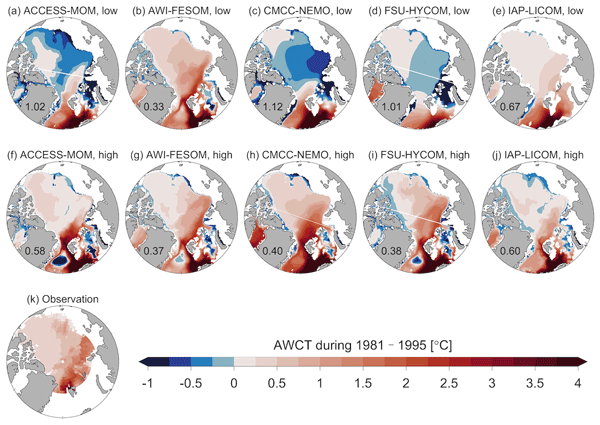
Qiang Wang, Qi Shu, Alexandra Bozec, Eric P. Chassignet, Pier Giuseppe Fogli, Baylor Fox-Kemper, Andy McC. Hogg, Doroteaciro Iovino, Andrew E. Kiss, Nikolay Koldunov, Julien Le Sommer, Yiwen Li, Pengfei Lin, Hailong Liu, Igor Polyakov, Patrick Scholz, Dmitry Sidorenko, Shizhu Wang, and Xiaobiao Xu
Geosci. Model Dev., 17, 347–379, https://doi.org/10.5194/gmd-17-347-2024, https://doi.org/10.5194/gmd-17-347-2024, 2024
Short summary
Short summary
Increasing resolution improves model skills in simulating the Arctic Ocean, but other factors such as parameterizations and numerics are at least of the same importance for obtaining reliable simulations.
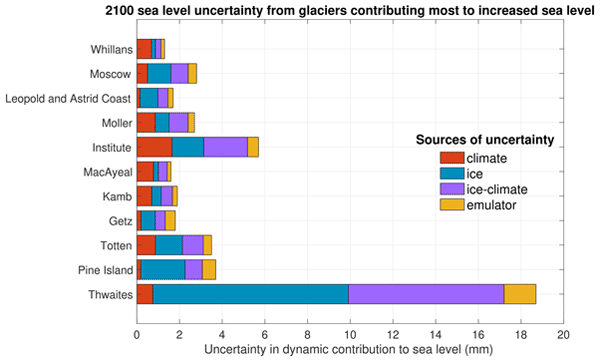
Hélène Seroussi, Vincent Verjans, Sophie Nowicki, Antony J. Payne, Heiko Goelzer, William H. Lipscomb, Ayako Abe-Ouchi, Cécile Agosta, Torsten Albrecht, Xylar Asay-Davis, Alice Barthel, Reinhard Calov, Richard Cullather, Christophe Dumas, Benjamin K. Galton-Fenzi, Rupert Gladstone, Nicholas R. Golledge, Jonathan M. Gregory, Ralf Greve, Tore Hattermann, Matthew J. Hoffman, Angelika Humbert, Philippe Huybrechts, Nicolas C. Jourdain, Thomas Kleiner, Eric Larour, Gunter R. Leguy, Daniel P. Lowry, Chistopher M. Little, Mathieu Morlighem, Frank Pattyn, Tyler Pelle, Stephen F. Price, Aurélien Quiquet, Ronja Reese, Nicole-Jeanne Schlegel, Andrew Shepherd, Erika Simon, Robin S. Smith, Fiammetta Straneo, Sainan Sun, Luke D. Trusel, Jonas Van Breedam, Peter Van Katwyk, Roderik S. W. van de Wal, Ricarda Winkelmann, Chen Zhao, Tong Zhang, and Thomas Zwinger
The Cryosphere, 17, 5197–5217, https://doi.org/10.5194/tc-17-5197-2023, https://doi.org/10.5194/tc-17-5197-2023, 2023
Short summary
Short summary
Mass loss from Antarctica is a key contributor to sea level rise over the 21st century, and the associated uncertainty dominates sea level projections. We highlight here the Antarctic glaciers showing the largest changes and quantify the main sources of uncertainty in their future evolution using an ensemble of ice flow models. We show that on top of Pine Island and Thwaites glaciers, Totten and Moscow University glaciers show rapid changes and a strong sensitivity to warmer ocean conditions.
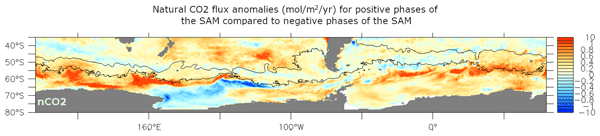
Laurie C. Menviel, Paul Spence, Andrew E. Kiss, Matthew A. Chamberlain, Hakase Hayashida, Matthew H. England, and Darryn Waugh
Biogeosciences, 20, 4413–4431, https://doi.org/10.5194/bg-20-4413-2023, https://doi.org/10.5194/bg-20-4413-2023, 2023
Short summary
Short summary
As the ocean absorbs 25% of the anthropogenic emissions of carbon, it is important to understand the impact of climate change on the flux of carbon between the ocean and the atmosphere. Here, we use a very high-resolution ocean, sea-ice, carbon cycle model to show that the capability of the Southern Ocean to uptake CO2 has decreased over the last 40 years due to a strengthening and poleward shift of the southern hemispheric westerlies. This trend is expected to continue over the coming century.
Doroteaciro Iovino, Pier Giuseppe Fogli, and Simona Masina
Geosci. Model Dev., 16, 6127–6159, https://doi.org/10.5194/gmd-16-6127-2023, https://doi.org/10.5194/gmd-16-6127-2023, 2023
Short summary
Short summary
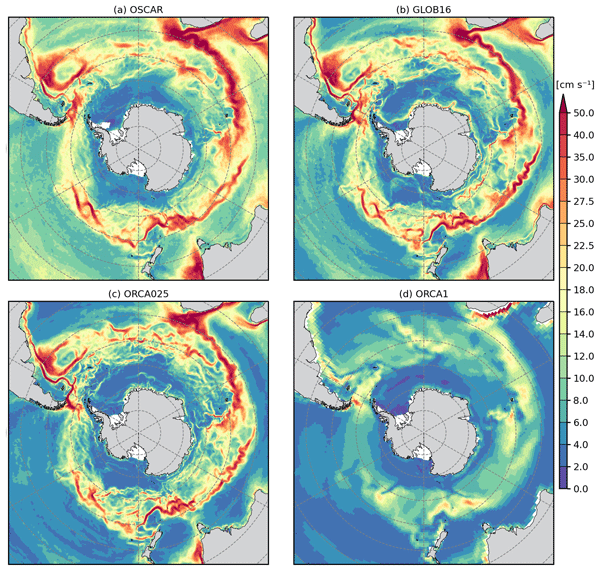
This paper describes the model performance of three global ocean–sea ice configurations, from non-eddying (1°) to eddy-rich (1/16°) resolutions. Model simulations are obtained following the Ocean Model Intercomparison Project phase 2 (OMIP2) protocol. We compare key global climate variables across the three models and against observations, emphasizing the relative advantages and disadvantages of running forced ocean–sea ice models at higher resolution.
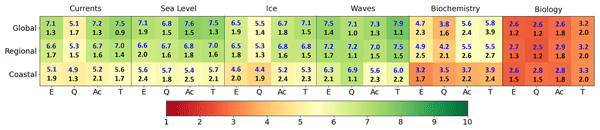
Stefania A. Ciliberti, Enrique Alvarez Fanjul, Jay Pearlman, Kirsten Wilmer-Becker, Pierre Bahurel, Fabrice Ardhuin, Alain Arnaud, Mike Bell, Segolene Berthou, Laurent Bertino, Arthur Capet, Eric Chassignet, Stefano Ciavatta, Mauro Cirano, Emanuela Clementi, Gianpiero Cossarini, Gianpaolo Coro, Stuart Corney, Fraser Davidson, Marie Drevillon, Yann Drillet, Renaud Dussurget, Ghada El Serafy, Katja Fennel, Marcos Garcia Sotillo, Patrick Heimbach, Fabrice Hernandez, Patrick Hogan, Ibrahim Hoteit, Sudheer Joseph, Simon Josey, Pierre-Yves Le Traon, Simone Libralato, Marco Mancini, Pascal Matte, Angelique Melet, Yasumasa Miyazawa, Andrew M. Moore, Antonio Novellino, Andrew Porter, Heather Regan, Laia Romero, Andreas Schiller, John Siddorn, Joanna Staneva, Cecile Thomas-Courcoux, Marina Tonani, Jose Maria Garcia-Valdecasas, Jennifer Veitch, Karina von Schuckmann, Liying Wan, John Wilkin, and Romane Zufic
State Planet, 1-osr7, 2, https://doi.org/10.5194/sp-1-osr7-2-2023, https://doi.org/10.5194/sp-1-osr7-2-2023, 2023
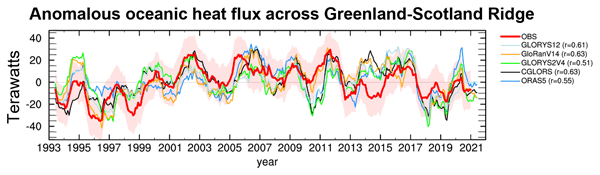
Michael Mayer, Takamasa Tsubouchi, Susanna Winkelbauer, Karin Margretha H. Larsen, Barbara Berx, Andreas Macrander, Doroteaciro Iovino, Steingrímur Jónsson, and Richard Renshaw
State Planet, 1-osr7, 14, https://doi.org/10.5194/sp-1-osr7-14-2023, https://doi.org/10.5194/sp-1-osr7-14-2023, 2023
Short summary
Short summary
This paper compares oceanic fluxes across the Greenland–Scotland Ridge (GSR) from ocean reanalyses to largely independent observational data. Reanalyses tend to underestimate the inflow of warm waters of subtropical Atlantic origin and hence oceanic heat transport across the GSR. Investigation of a strong negative heat transport anomaly around 2018 highlights the interplay of variability on different timescales and the need for long-term monitoring of the GSR to detect forced climate signals.
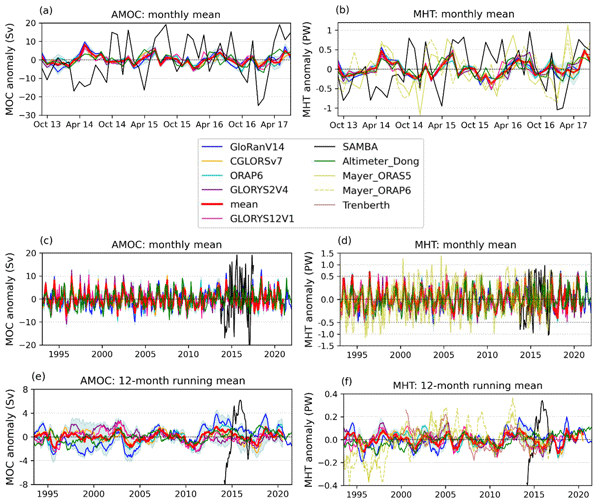
Jonathan Andrew Baker, Richard Renshaw, Laura Claire Jackson, Clotilde Dubois, Doroteaciro Iovino, Hao Zuo, Renellys C. Perez, Shenfu Dong, Marion Kersalé, Michael Mayer, Johannes Mayer, Sabrina Speich, and Tarron Lamont
State Planet, 1-osr7, 4, https://doi.org/10.5194/sp-1-osr7-4-2023, https://doi.org/10.5194/sp-1-osr7-4-2023, 2023
Short summary
Short summary
We use ocean reanalyses, in which ocean models are combined with observations, to infer past changes in ocean circulation and heat transport in the South Atlantic. Comparing these estimates with other observation-based estimates, we find differences in their trends, variability, and mean heat transport but closer agreement in their mean overturning strength. Ocean reanalyses can help us understand the cause of these differences, which could improve estimates of ocean transports in this region.
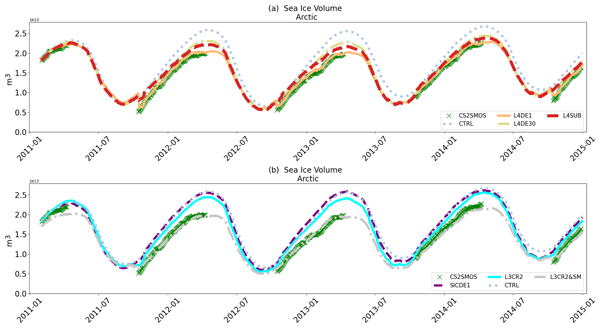
Andrea Cipollone, Deep Sankar Banerjee, Doroteaciro Iovino, Ali Aydogdu, and Simona Masina
Ocean Sci., 19, 1375–1392, https://doi.org/10.5194/os-19-1375-2023, https://doi.org/10.5194/os-19-1375-2023, 2023
Short summary
Short summary
Sea-ice volume is characterized by low predictability compared to the sea ice area or the extent. A joint initialization of the thickness and concentration using satellite data could improve the predictive power, although it is still absent in the present global analysis–reanalysis systems. This study shows a scheme to correct the two features together that can be easily extended to include ocean variables. The impact of such a joint initialization is shown and compared among different set-ups.
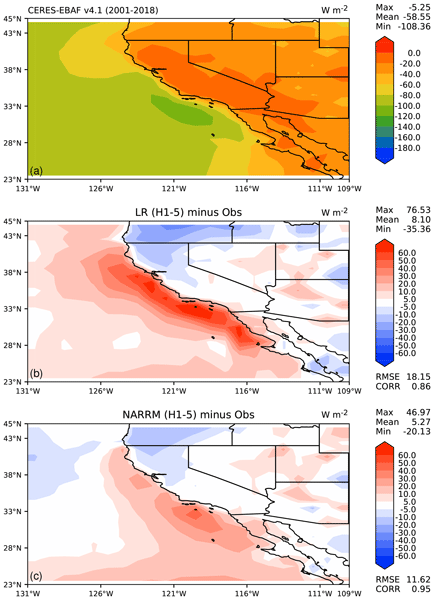
Qi Tang, Jean-Christophe Golaz, Luke P. Van Roekel, Mark A. Taylor, Wuyin Lin, Benjamin R. Hillman, Paul A. Ullrich, Andrew M. Bradley, Oksana Guba, Jonathan D. Wolfe, Tian Zhou, Kai Zhang, Xue Zheng, Yunyan Zhang, Meng Zhang, Mingxuan Wu, Hailong Wang, Cheng Tao, Balwinder Singh, Alan M. Rhoades, Yi Qin, Hong-Yi Li, Yan Feng, Yuying Zhang, Chengzhu Zhang, Charles S. Zender, Shaocheng Xie, Erika L. Roesler, Andrew F. Roberts, Azamat Mametjanov, Mathew E. Maltrud, Noel D. Keen, Robert L. Jacob, Christiane Jablonowski, Owen K. Hughes, Ryan M. Forsyth, Alan V. Di Vittorio, Peter M. Caldwell, Gautam Bisht, Renata B. McCoy, L. Ruby Leung, and David C. Bader
Geosci. Model Dev., 16, 3953–3995, https://doi.org/10.5194/gmd-16-3953-2023, https://doi.org/10.5194/gmd-16-3953-2023, 2023
Short summary
Short summary
High-resolution simulations are superior to low-resolution ones in capturing regional climate changes and climate extremes. However, uniformly reducing the grid size of a global Earth system model is too computationally expensive. We provide an overview of the fully coupled regionally refined model (RRM) of E3SMv2 and document a first-of-its-kind set of climate production simulations using RRM at an economic cost. The key to this success is our innovative hybrid time step method.
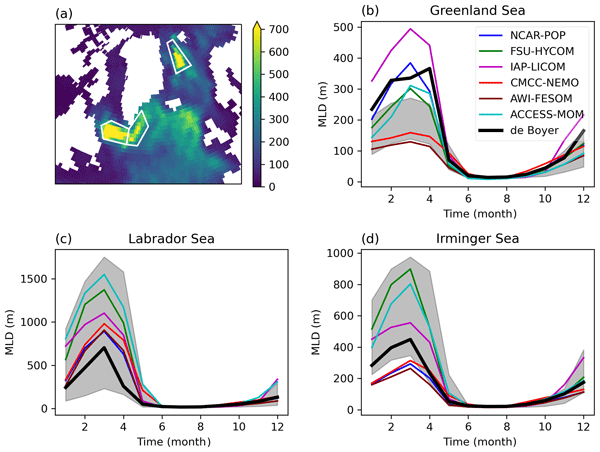
Anne Marie Treguier, Clement de Boyer Montégut, Alexandra Bozec, Eric P. Chassignet, Baylor Fox-Kemper, Andy McC. Hogg, Doroteaciro Iovino, Andrew E. Kiss, Julien Le Sommer, Yiwen Li, Pengfei Lin, Camille Lique, Hailong Liu, Guillaume Serazin, Dmitry Sidorenko, Qiang Wang, Xiaobio Xu, and Steve Yeager
Geosci. Model Dev., 16, 3849–3872, https://doi.org/10.5194/gmd-16-3849-2023, https://doi.org/10.5194/gmd-16-3849-2023, 2023
Short summary
Short summary
The ocean mixed layer is the interface between the ocean interior and the atmosphere and plays a key role in climate variability. We evaluate the performance of the new generation of ocean models for climate studies, designed to resolve
ocean eddies, which are the largest source of ocean variability and modulate the mixed-layer properties. We find that the mixed-layer depth is better represented in eddy-rich models but, unfortunately, not uniformly across the globe and not in all models.
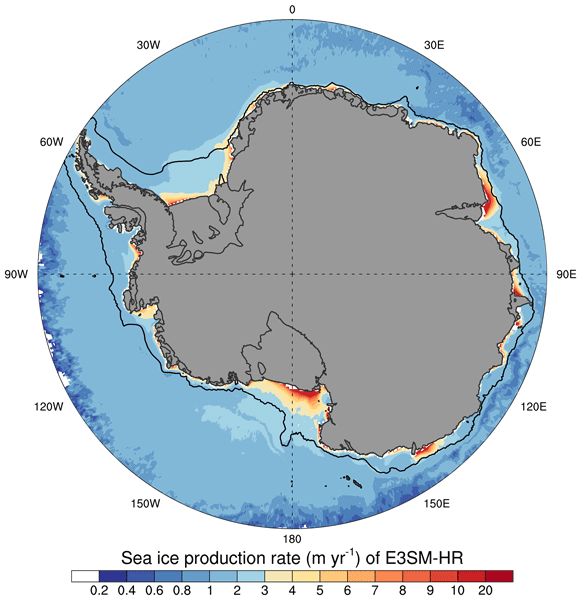
Hyein Jeong, Adrian K. Turner, Andrew F. Roberts, Milena Veneziani, Stephen F. Price, Xylar S. Asay-Davis, Luke P. Van Roekel, Wuyin Lin, Peter M. Caldwell, Hyo-Seok Park, Jonathan D. Wolfe, and Azamat Mametjanov
The Cryosphere, 17, 2681–2700, https://doi.org/10.5194/tc-17-2681-2023, https://doi.org/10.5194/tc-17-2681-2023, 2023
Short summary
Short summary
We find that E3SM-HR reproduces the main features of the Antarctic coastal polynyas. Despite the high amount of coastal sea ice production, the densest water masses are formed in the open ocean. Biases related to the lack of dense water formation are associated with overly strong atmospheric polar easterlies. Our results indicate that the large-scale polar atmospheric circulation must be accurately simulated in models to properly reproduce Antarctic dense water formation.
Laura C. Jackson, Eduardo Alastrué de Asenjo, Katinka Bellomo, Gokhan Danabasoglu, Helmuth Haak, Aixue Hu, Johann Jungclaus, Warren Lee, Virna L. Meccia, Oleg Saenko, Andrew Shao, and Didier Swingedouw
Geosci. Model Dev., 16, 1975–1995, https://doi.org/10.5194/gmd-16-1975-2023, https://doi.org/10.5194/gmd-16-1975-2023, 2023
Short summary
Short summary
The Atlantic meridional overturning circulation (AMOC) has an important impact on the climate. There are theories that freshening of the ocean might cause the AMOC to cross a tipping point (TP) beyond which recovery is difficult; however, it is unclear whether TPs exist in global climate models. Here, we outline a set of experiments designed to explore AMOC tipping points and sensitivity to additional freshwater input as part of the North Atlantic Hosing Model Intercomparison Project (NAHosMIP).
Jeff Polton, James Harle, Jason Holt, Anna Katavouta, Dale Partridge, Jenny Jardine, Sarah Wakelin, Julia Rulent, Anthony Wise, Katherine Hutchinson, David Byrne, Diego Bruciaferri, Enda O'Dea, Michela De Dominicis, Pierre Mathiot, Andrew Coward, Andrew Yool, Julien Palmiéri, Gennadi Lessin, Claudia Gabriela Mayorga-Adame, Valérie Le Guennec, Alex Arnold, and Clément Rousset
Geosci. Model Dev., 16, 1481–1510, https://doi.org/10.5194/gmd-16-1481-2023, https://doi.org/10.5194/gmd-16-1481-2023, 2023
Short summary
Short summary
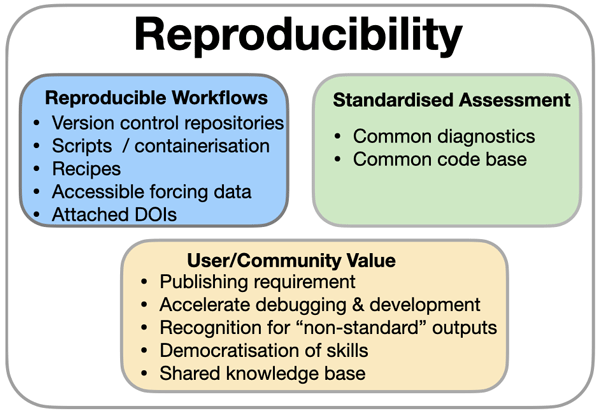
The aim is to increase the capacity of the modelling community to respond to societally important questions that require ocean modelling. The concept of reproducibility for regional ocean modelling is developed: advocating methods for reproducible workflows and standardised methods of assessment. Then, targeting the NEMO framework, we give practical advice and worked examples, highlighting key considerations that will the expedite development cycle and upskill the user community.
Olawale James Ikuyajolu, Luke Van Roekel, Steven R. Brus, Erin E. Thomas, Yi Deng, and Sarat Sreepathi
Geosci. Model Dev., 16, 1445–1458, https://doi.org/10.5194/gmd-16-1445-2023, https://doi.org/10.5194/gmd-16-1445-2023, 2023
Short summary
Short summary
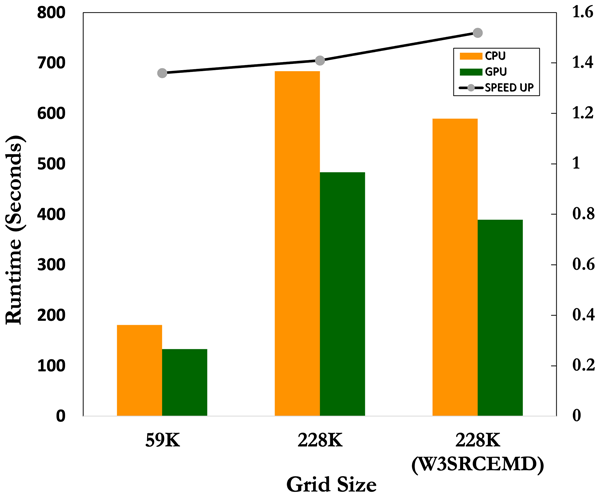
Wind-generated waves play an important role in modifying physical processes at the air–sea interface, but they have been traditionally excluded from climate models due to the high computational cost of running spectral wave models for climate simulations. To address this, our work identified and accelerated the computationally intensive section of WAVEWATCH III on GPU using OpenACC. This allows for high-resolution modeling of atmosphere–wave–ocean feedbacks in century-scale climate integrations.
Torge Martin and Arne Biastoch
Ocean Sci., 19, 141–167, https://doi.org/10.5194/os-19-141-2023, https://doi.org/10.5194/os-19-141-2023, 2023
Short summary
Short summary
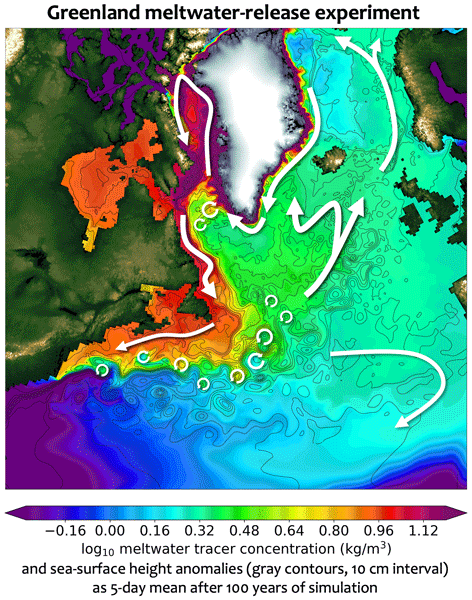
How is the ocean affected by continued Greenland Ice Sheet mass loss? We show in a systematic set of model experiments that atmospheric feedback needs to be accounted for as the large-scale ocean circulation is more than twice as sensitive to the meltwater otherwise. Coastal winds, boundary currents, and ocean eddies play a key role in redistributing the meltwater. Eddy paramterization helps the coarse simulation to perform better in the Labrador Sea but not in the North Atlantic Current region.
Diego Bruciaferri, Marina Tonani, Isabella Ascione, Fahad Al Senafi, Enda O'Dea, Helene T. Hewitt, and Andrew Saulter
Geosci. Model Dev., 15, 8705–8730, https://doi.org/10.5194/gmd-15-8705-2022, https://doi.org/10.5194/gmd-15-8705-2022, 2022
Short summary
Short summary
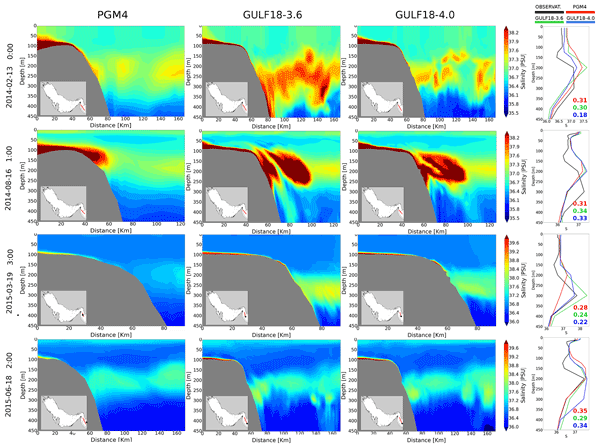
More accurate predictions of the Gulf's ocean dynamics are needed. We investigate the impact on the predictive skills of a numerical shelf sea model of the Gulf after changing a few key aspects. Increasing the lateral and vertical resolution and optimising the vertical coordinate system to best represent the leading physical processes at stake significantly improve the accuracy of the simulated dynamics. Additional work may be needed to get real benefit from using a more realistic bathymetry.
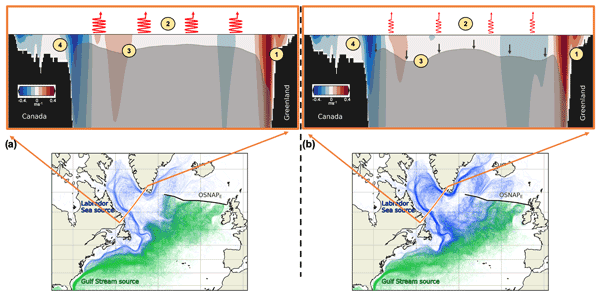
Alan D. Fox, Patricia Handmann, Christina Schmidt, Neil Fraser, Siren Rühs, Alejandra Sanchez-Franks, Torge Martin, Marilena Oltmanns, Clare Johnson, Willi Rath, N. Penny Holliday, Arne Biastoch, Stuart A. Cunningham, and Igor Yashayaev
Ocean Sci., 18, 1507–1533, https://doi.org/10.5194/os-18-1507-2022, https://doi.org/10.5194/os-18-1507-2022, 2022
Short summary
Short summary
Observations of the eastern subpolar North Atlantic in the 2010s show exceptional freshening and cooling of the upper ocean, peaking in 2016 with the lowest salinities recorded for 120 years. Using results from a high-resolution ocean model, supported by observations, we propose that the leading cause is reduced surface cooling over the preceding decade in the Labrador Sea, leading to increased outflow of less dense water and so to freshening and cooling of the eastern subpolar North Atlantic.
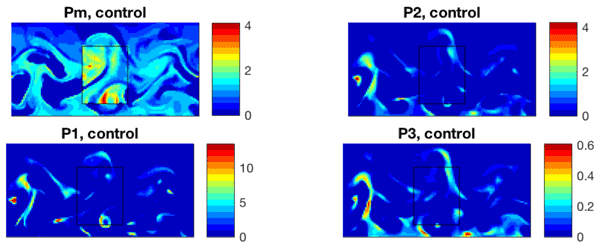
Sergey Kravtsov, Ilijana Mastilovic, Andrew McC. Hogg, William K. Dewar, and Jeffrey R. Blundell
Geosci. Model Dev., 15, 7449–7469, https://doi.org/10.5194/gmd-15-7449-2022, https://doi.org/10.5194/gmd-15-7449-2022, 2022
Short summary
Short summary
Climate is a complex system whose behavior is shaped by multitudes of processes operating on widely different spatial scales and timescales. In hierarchical modeling, one goes back and forth between highly idealized process models and state-of-the-art models coupling the entire range of climate subsystems to identify specific phenomena and understand their dynamics. The present contribution highlights an intermediate climate model focussing on midlatitude ocean–atmosphere interactions.
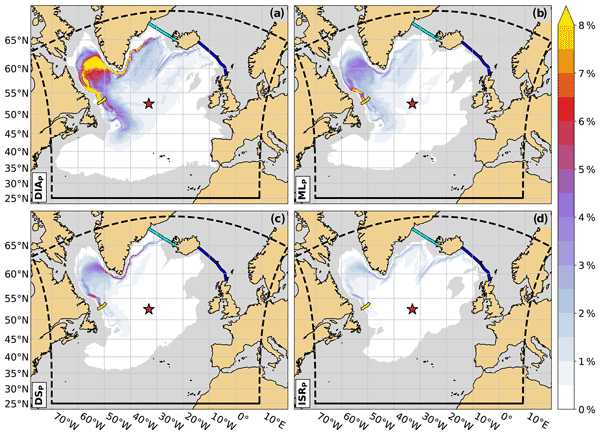
Jörg Fröhle, Patricia V. K. Handmann, and Arne Biastoch
Ocean Sci., 18, 1431–1450, https://doi.org/10.5194/os-18-1431-2022, https://doi.org/10.5194/os-18-1431-2022, 2022
Short summary
Short summary
Three deep-water masses pass the southern exit of the Labrador Sea. Usually they are defined by explicit density intervals linked to the formation region. We evaluate this relation in an ocean model by backtracking the paths the water follows for 40 years: 48 % densify without contact to the atmosphere, 24 % densify in contact with the atmosphere, and 19 % are from the Nordic Seas. All three contribute to a similar density range at 53° N with weak specific formation location characteristics.

Giulia Bonino, Doroteaciro Iovino, Laurent Brodeau, and Simona Masina
Geosci. Model Dev., 15, 6873–6889, https://doi.org/10.5194/gmd-15-6873-2022, https://doi.org/10.5194/gmd-15-6873-2022, 2022
Short summary
Short summary
The sea surface temperature (SST) is highly influenced by the transfer of energy driven by turbulent air–sea fluxes (TASFs). In the NEMO ocean general circulation model, TASFs are computed by means of bulk formulas. Bulk formulas require the choice of a given bulk parameterization, which influences the magnitudes of the TASFs. Our results show that parameterization-related SST differences are primarily sensitive to the wind stress differences across parameterizations.
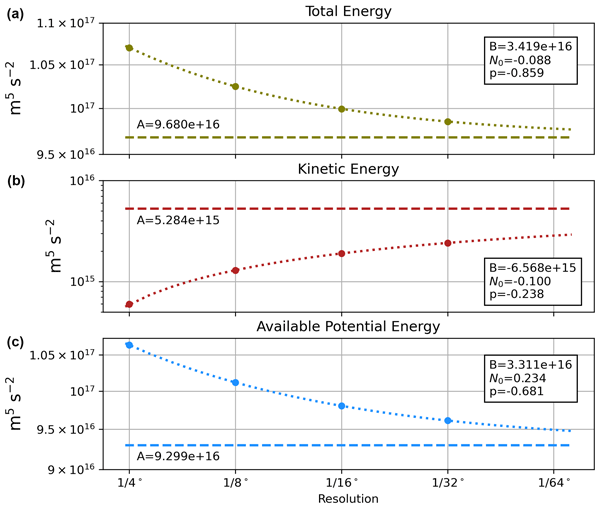
Gustavo M. Marques, Nora Loose, Elizabeth Yankovsky, Jacob M. Steinberg, Chiung-Yin Chang, Neeraja Bhamidipati, Alistair Adcroft, Baylor Fox-Kemper, Stephen M. Griffies, Robert W. Hallberg, Malte F. Jansen, Hemant Khatri, and Laure Zanna
Geosci. Model Dev., 15, 6567–6579, https://doi.org/10.5194/gmd-15-6567-2022, https://doi.org/10.5194/gmd-15-6567-2022, 2022
Short summary
Short summary
We present an idealized ocean model configuration and a set of simulations performed using varying horizontal grid spacing. While the model domain is idealized, it resembles important geometric features of the Atlantic and Southern oceans. The simulations described here serve as a framework to effectively study mesoscale eddy dynamics, to investigate the effect of mesoscale eddies on the large-scale dynamics, and to test and evaluate eddy parameterizations.
Stephen G. Yeager, Nan Rosenbloom, Anne A. Glanville, Xian Wu, Isla Simpson, Hui Li, Maria J. Molina, Kristen Krumhardt, Samuel Mogen, Keith Lindsay, Danica Lombardozzi, Will Wieder, Who M. Kim, Jadwiga H. Richter, Matthew Long, Gokhan Danabasoglu, David Bailey, Marika Holland, Nicole Lovenduski, Warren G. Strand, and Teagan King
Geosci. Model Dev., 15, 6451–6493, https://doi.org/10.5194/gmd-15-6451-2022, https://doi.org/10.5194/gmd-15-6451-2022, 2022
Short summary
Short summary
The Earth system changes over a range of time and space scales, and some of these changes are predictable in advance. Short-term weather forecasts are most familiar, but recent work has shown that it is possible to generate useful predictions several seasons or even a decade in advance. This study focuses on predictions over intermediate timescales (up to 24 months in advance) and shows that there is promising potential to forecast a variety of changes in the natural environment.
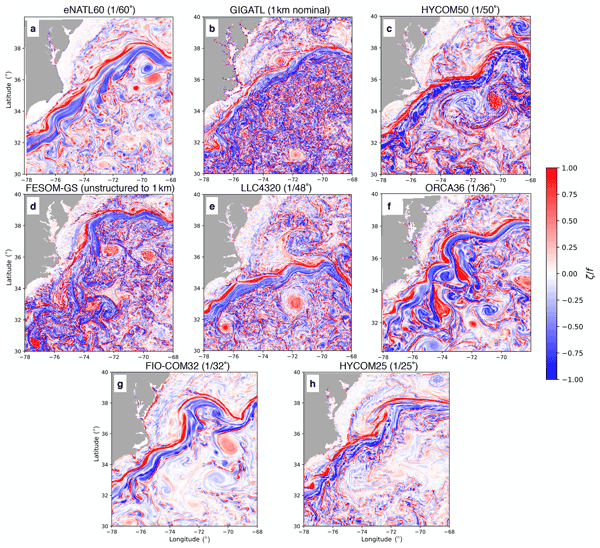
Takaya Uchida, Julien Le Sommer, Charles Stern, Ryan P. Abernathey, Chris Holdgraf, Aurélie Albert, Laurent Brodeau, Eric P. Chassignet, Xiaobiao Xu, Jonathan Gula, Guillaume Roullet, Nikolay Koldunov, Sergey Danilov, Qiang Wang, Dimitris Menemenlis, Clément Bricaud, Brian K. Arbic, Jay F. Shriver, Fangli Qiao, Bin Xiao, Arne Biastoch, René Schubert, Baylor Fox-Kemper, William K. Dewar, and Alan Wallcraft
Geosci. Model Dev., 15, 5829–5856, https://doi.org/10.5194/gmd-15-5829-2022, https://doi.org/10.5194/gmd-15-5829-2022, 2022
Short summary
Short summary
Ocean and climate scientists have used numerical simulations as a tool to examine the ocean and climate system since the 1970s. Since then, owing to the continuous increase in computational power and advances in numerical methods, we have been able to simulate increasing complex phenomena. However, the fidelity of the simulations in representing the phenomena remains a core issue in the ocean science community. Here we propose a cloud-based framework to inter-compare and assess such simulations.
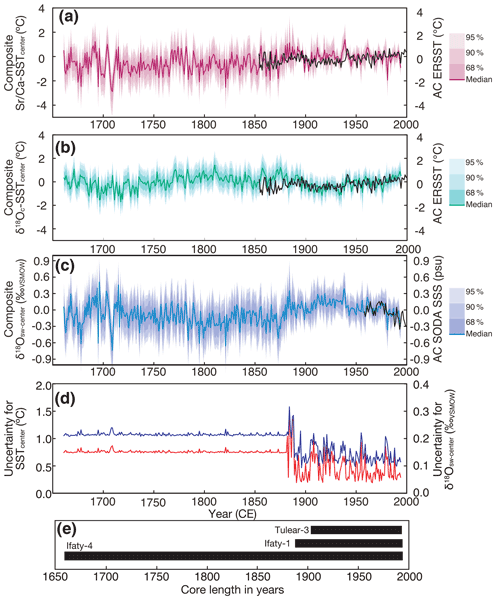
Jens Zinke, Takaaki K. Watanabe, Siren Rühs, Miriam Pfeiffer, Stefan Grab, Dieter Garbe-Schönberg, and Arne Biastoch
Clim. Past, 18, 1453–1474, https://doi.org/10.5194/cp-18-1453-2022, https://doi.org/10.5194/cp-18-1453-2022, 2022
Short summary
Short summary
Salinity is an important and integrative measure of changes to the water cycle steered by changes to the balance between rainfall and evaporation and by vertical and horizontal movements of water parcels by ocean currents. However, salinity measurements in our oceans are extremely sparse. To fill this gap, we have developed a 334-year coral record of seawater oxygen isotopes that reflects salinity changes in the globally important Agulhas Current system and reveals its main oceanic drivers.
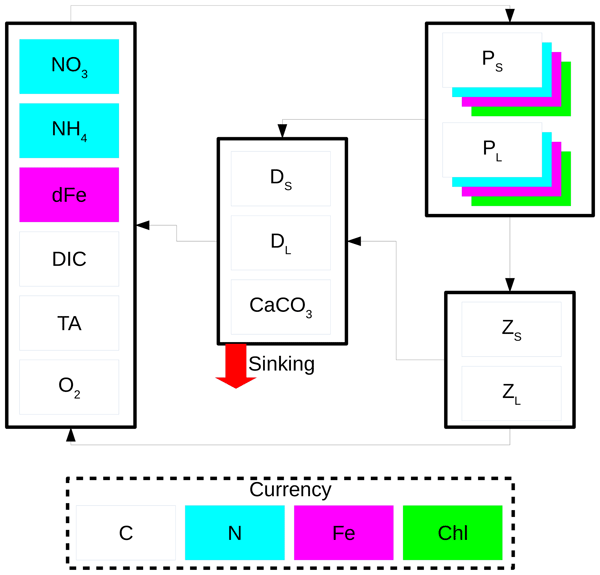
James R. Christian, Kenneth L. Denman, Hakase Hayashida, Amber M. Holdsworth, Warren G. Lee, Olivier G. J. Riche, Andrew E. Shao, Nadja Steiner, and Neil C. Swart
Geosci. Model Dev., 15, 4393–4424, https://doi.org/10.5194/gmd-15-4393-2022, https://doi.org/10.5194/gmd-15-4393-2022, 2022
Short summary
Short summary
The ocean chemistry and biology modules of the latest version of the Canadian Earth System Model (CanESM5) are described in detail and evaluated against observations and other Earth system models. In the basic CanESM5 model, ocean biogeochemistry is similar to CanESM2 but embedded in a new ocean circulation model. In addition, an entirely new model, the Canadian Ocean Ecosystem model (CanESM5-CanOE), was developed. The most significant difference is that CanOE explicitly includes iron.
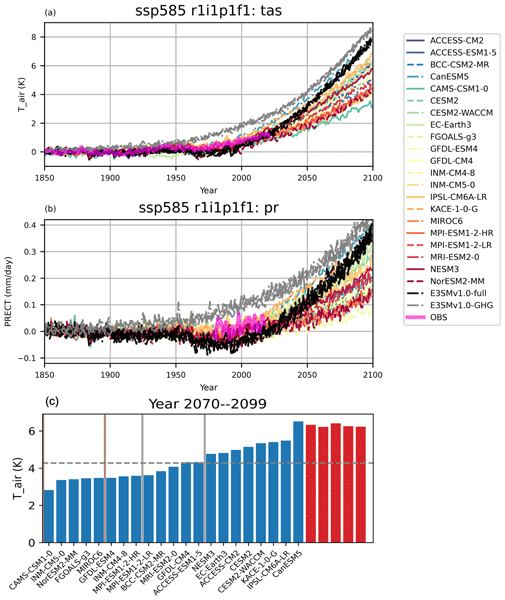
Xue Zheng, Qing Li, Tian Zhou, Qi Tang, Luke P. Van Roekel, Jean-Christophe Golaz, Hailong Wang, and Philip Cameron-Smith
Geosci. Model Dev., 15, 3941–3967, https://doi.org/10.5194/gmd-15-3941-2022, https://doi.org/10.5194/gmd-15-3941-2022, 2022
Short summary
Short summary
We document the model experiments for the future climate projection by E3SMv1.0. At the highest future emission scenario, E3SMv1.0 projects a strong surface warming with rapid changes in the atmosphere, ocean, sea ice, and land runoff. Specifically, we detect a significant polar amplification and accelerated warming linked to the unmasking of the aerosol effects. The impact of greenhouse gas forcing is examined in different climate components.
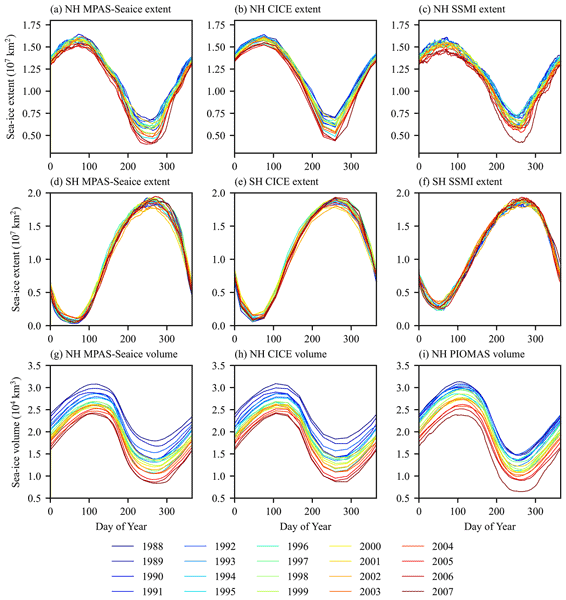
Adrian K. Turner, William H. Lipscomb, Elizabeth C. Hunke, Douglas W. Jacobsen, Nicole Jeffery, Darren Engwirda, Todd D. Ringler, and Jonathan D. Wolfe
Geosci. Model Dev., 15, 3721–3751, https://doi.org/10.5194/gmd-15-3721-2022, https://doi.org/10.5194/gmd-15-3721-2022, 2022
Short summary
Short summary
We present the dynamical core of the MPAS-Seaice model, which uses a mesh consisting of a Voronoi tessellation with polygonal cells. Such a mesh allows variable mesh resolution in different parts of the domain and the focusing of computational resources in regions of interest. We describe the velocity solver and tracer transport schemes used and examine errors generated by the model in both idealized and realistic test cases and examine the computational efficiency of the model.
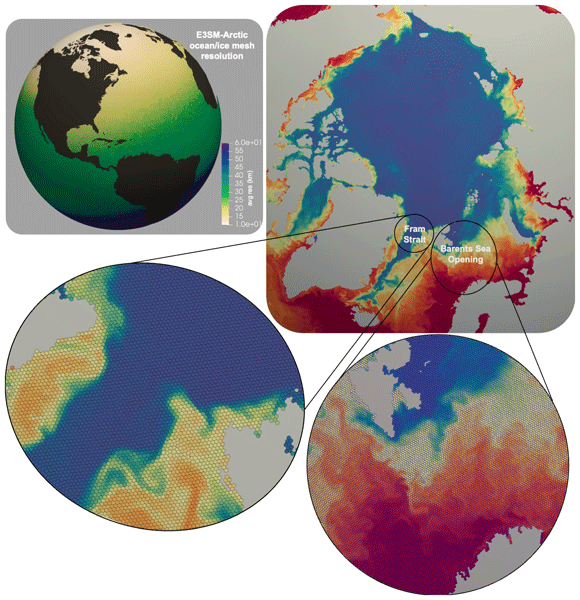
Milena Veneziani, Wieslaw Maslowski, Younjoo J. Lee, Gennaro D'Angelo, Robert Osinski, Mark R. Petersen, Wilbert Weijer, Anthony P. Craig, John D. Wolfe, Darin Comeau, and Adrian K. Turner
Geosci. Model Dev., 15, 3133–3160, https://doi.org/10.5194/gmd-15-3133-2022, https://doi.org/10.5194/gmd-15-3133-2022, 2022
Short summary
Short summary
We present an Earth system model (ESM) simulation, E3SM-Arctic-OSI, with a refined grid to better resolve the Arctic ocean and sea-ice system and low spatial resolution elsewhere. The configuration satisfactorily represents many aspects of the Arctic system and its interactions with the sub-Arctic, while keeping computational costs at a fraction of those necessary for global high-resolution ESMs. E3SM-Arctic can thus be an efficient tool to study Arctic processes on climate-relevant timescales.
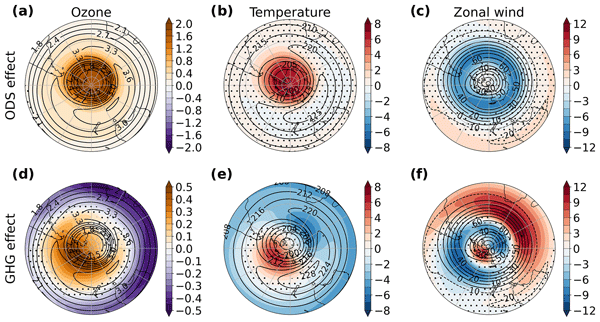
Ioana Ivanciu, Katja Matthes, Arne Biastoch, Sebastian Wahl, and Jan Harlaß
Weather Clim. Dynam., 3, 139–171, https://doi.org/10.5194/wcd-3-139-2022, https://doi.org/10.5194/wcd-3-139-2022, 2022
Short summary
Short summary
Greenhouse gas concentrations continue to increase, while the Antarctic ozone hole is expected to recover during the twenty-first century. We separate the effects of ozone recovery and of greenhouse gases on the Southern Hemisphere atmospheric and oceanic circulation, and we find that ozone recovery is generally reducing the impact of greenhouse gases, with the exception of certain regions of the stratosphere during spring, where the two effects reinforce each other.
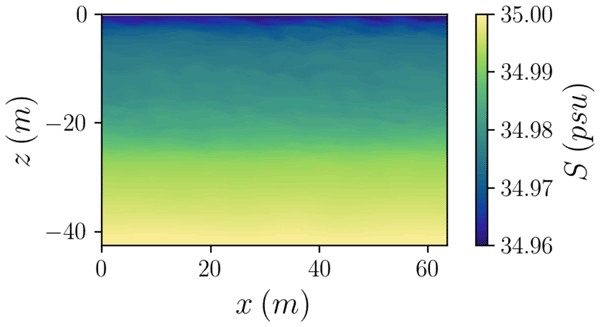
Carolyn Branecky Begeman, Xylar Asay-Davis, and Luke Van Roekel
The Cryosphere, 16, 277–295, https://doi.org/10.5194/tc-16-277-2022, https://doi.org/10.5194/tc-16-277-2022, 2022
Short summary
Short summary
This study uses ocean modeling at ultra-high resolution to study the small-scale ocean mixing that controls ice-shelf melting. It offers some insights into the relationship between ice-shelf melting and ocean temperature far from the ice base, which may help us project how fast ice will melt when ocean waters entering the cavity warm. This study adds to a growing body of research that indicates we need a more sophisticated treatment of ice-shelf melting in coarse-resolution ocean models.
Keith B. Rodgers, Sun-Seon Lee, Nan Rosenbloom, Axel Timmermann, Gokhan Danabasoglu, Clara Deser, Jim Edwards, Ji-Eun Kim, Isla R. Simpson, Karl Stein, Malte F. Stuecker, Ryohei Yamaguchi, Tamás Bódai, Eui-Seok Chung, Lei Huang, Who M. Kim, Jean-François Lamarque, Danica L. Lombardozzi, William R. Wieder, and Stephen G. Yeager
Earth Syst. Dynam., 12, 1393–1411, https://doi.org/10.5194/esd-12-1393-2021, https://doi.org/10.5194/esd-12-1393-2021, 2021
Short summary
Short summary
A large ensemble of simulations with 100 members has been conducted with the state-of-the-art CESM2 Earth system model, using historical and SSP3-7.0 forcing. Our main finding is that there are significant changes in the variance of the Earth system in response to anthropogenic forcing, with these changes spanning a broad range of variables important to impacts for human populations and ecosystems.
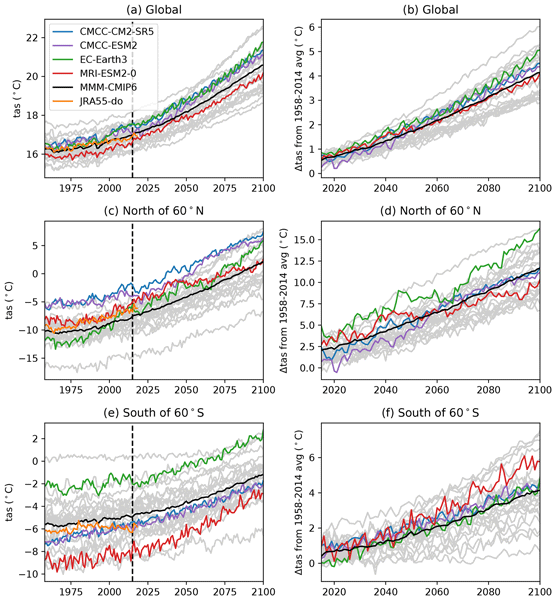
Hakase Hayashida, Meibing Jin, Nadja S. Steiner, Neil C. Swart, Eiji Watanabe, Russell Fiedler, Andrew McC. Hogg, Andrew E. Kiss, Richard J. Matear, and Peter G. Strutton
Geosci. Model Dev., 14, 6847–6861, https://doi.org/10.5194/gmd-14-6847-2021, https://doi.org/10.5194/gmd-14-6847-2021, 2021
Short summary
Short summary
Ice algae are tiny plants like phytoplankton but they grow within sea ice. In polar regions, both phytoplankton and ice algae are the foundation of marine ecosystems and play an important role in taking up carbon dioxide in the atmosphere. However, state-of-the-art climate models typically do not include ice algae, and therefore their role in the climate system remains unclear. This project aims to address this knowledge gap by coordinating a set of experiments using sea-ice–ocean models.
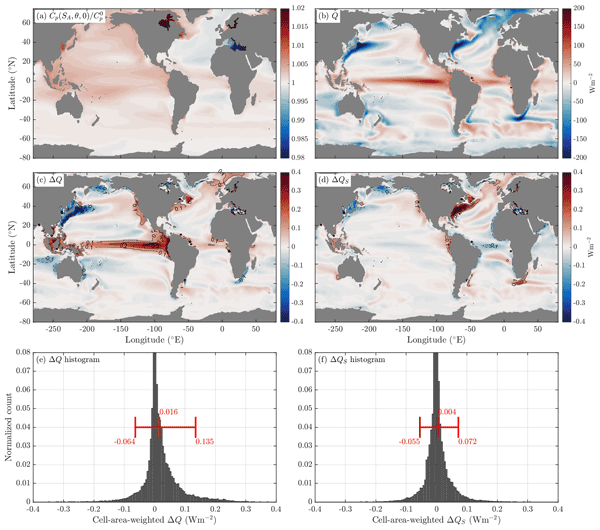
Trevor J. McDougall, Paul M. Barker, Ryan M. Holmes, Rich Pawlowicz, Stephen M. Griffies, and Paul J. Durack
Geosci. Model Dev., 14, 6445–6466, https://doi.org/10.5194/gmd-14-6445-2021, https://doi.org/10.5194/gmd-14-6445-2021, 2021
Short summary
Short summary
We show that the way that the air–sea heat flux is treated in ocean models means that the model's temperature variable should be interpreted as being Conservative Temperature, irrespective of whether the equation of state used in an ocean model is EOS-80 or TEOS-10.

Zofia Stanley, Ian Grooms, and William Kleiber
Nonlin. Processes Geophys., 28, 565–583, https://doi.org/10.5194/npg-28-565-2021, https://doi.org/10.5194/npg-28-565-2021, 2021
Short summary
Short summary
In weather forecasting, observations are incorporated into a model of the atmosphere through a process called data assimilation. Sometimes observations in one location may impact the weather forecast in another faraway location in undesirable ways. The impact of distant observations on the forecast is mitigated through a process called localization. We propose a new method for localization when a model has multiple length scales, as in a model spanning both the ocean and the atmosphere.
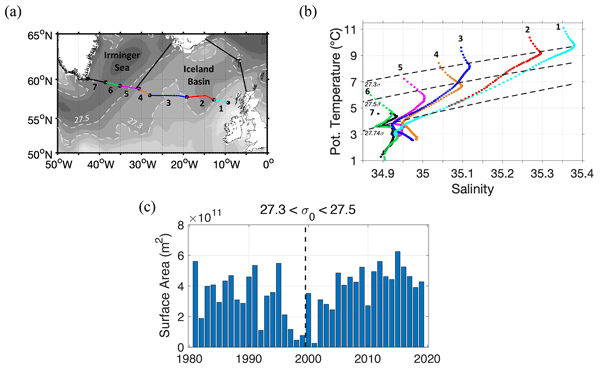
Tillys Petit, M. Susan Lozier, Simon A. Josey, and Stuart A. Cunningham
Ocean Sci., 17, 1353–1365, https://doi.org/10.5194/os-17-1353-2021, https://doi.org/10.5194/os-17-1353-2021, 2021
Short summary
Short summary
Recent work has highlighted the dominant role of the Irminger and Iceland basins in the production of North Atlantic Deep Water. From our analysis, we find that air–sea fluxes and the ocean surface density field are both key determinants of the buoyancy-driven transformation in the Iceland Basin. However, the spatial distribution of the subpolar mode water (SPMW) transformation is most sensitive to surface density changes as opposed to the direct influence of the air–sea fluxes.
Cited articles
Adcroft, A. and Campin, J.-M.: Rescaled height coordinates for accurate representation of free-surface flows in ocean circulation models, Ocean Model., 7, 269–284, https://doi.org/10.1016/j.ocemod.2003.09.003, 2004.
Adcroft, A., Hill, C., and Marshall, J.: Representation of topography by shaved cells in a height coordinate ocean model, Mon. Weather Rev., 125, 2293–2315, https://doi.org/10.1175/1520-0493(1997)125<2293:ROTBSC>2.0.CO;2, 1997.
Adcroft, A., Anderson, W., Balaji, V., Blanton, C., Bushuk, M., Dufour, C. O., Dunne, J. P., Griffies, S. M., Hallberg, R., Harrison, M. J., Held, I. M., Jansen, M. F., John, J. G., Krasting, J. P., Langenhorst, A. R., Legg, S., Liang, Z., McHugh, C., Radhakrishnan, A., Reichl, B. G., Rosati, T., Samuels, B. L., Shao, A., Stouffer, R., Winton, M., Wittenberg, A. T., Xiang, B., Zadeh, N., and Zhang, R.: The GFDL global ocean and sea ice model OM4.0: Model description and simulation features, J. Adv. Model. Earth Sy., 11, 3167–3211, https://doi.org/10.1029/2019MS001726, 2019.
Agarwal, N., Small, R. J., Bryan, F. O., Grooms, I., and Pegion, P. J.: Impact of stochastic ocean density corrections on air–sea flux variability, Geophys. Res. Lett., 50, e2023GL104248, 2023.
Amante, C. and Eakins, B. W.: ETOPO1 1 Arc-Minute Global Relief Model: Procedures, Data Sources and Analysis, NOAA Technical Memorandum NESDIS NGDC-24, 19 pp., https://doi.org/10.7289/V5C8276M, 2009.
Arakawa, A. and Hsu, Y.-J. G.: Energy conserving and potential-enstrophy dissipating schemes for the shallow water equations, Mon. Weather Rev., 118, 1960–1969, https://doi.org/10.1175/1520-0493(1990)118<1960:ECAPED>2.0.CO;2, 1990.
Arndt, J. E., Schenke, H. W., Jakobsson, M., Nitsche, F. O., Buys, G., Goleby, B., Rebesco, M., Bohoyo, F., Hong, J., Black, J., Greku, R., Udintsev, G., Barrios, F., Reynoso-Peralta, W., Taisei, M., and Wigley, R.: The International Bathymetric Chart of the Southern Ocean (IBCSO) Version 1.0 – A new bathymetric compilation covering circum-Antarctic waters, Geophys. Res. Lett., 40, 3111–3117, https://doi.org/10.1002/grl.50413, 2013.
Ballarotta, M., Drijfhout, S., Kuhlbrodt, T., and Doos, K.: The residual circulation of the Southern Ocean: Which spatio-temporal scales are needed? Ocean Model., 64, 46–55, https://doi.org/10.1016/j.ocemod.2013.01.005, 2013.
Barnier, B., Madec, G., Penduff, T., Molines, J., Treguir, A.-M., Le Sommer, J., Beckmann, A., Biastoch, A., Böning, C., Dengg, J., Derval, C., Durand, E., Gulev, S., Remy, E., Talandier, C., Theetten, S., Maltrud, M., McClean, J., and de Cuevas, B.: Impact of partial steps and momentum advection schemes in a global ocean circulation model at eddy permitting resolution, Ocean Dynam., 56, 543–567, https://doi.org/10.1007/s10236-006-0082-1, 2006.
Beckmann, A. and Doscher, R.: A method for improved representation of dense water spreading over topography in geopotential-coordinate models, J. Phys. Oceanogr., 27, 581–591, https://doi.org/10.1175/1520-0485(1997)027<0581:AMFIRO>2.0.CO;2, 1997.
Bell, M. J. and Bruciaferri, D.: Accurate calculation of pressure forces on cells defined by steeply sloping coordinates, EGU General Assembly 2022, Vienna, Austria, 23–27 May 2022, EGU22-5012, https://doi.org/10.5194/egusphere-egu22-5012, 2022.
Bi, D., Marsland, S., Uotila, P., O'Farrell, S., Fiedler, R., Sullivan, A., Griffies, S., Zhou, X., and Hirst, A.: ACCESS-OM: the ocean and sea-ice core of the ACCESS coupled model, Aust. Meteorol. Ocean., 63, 213–232, 2013.
Bi, D., Dix, M., Marsland, S., O'Farrell, S., Sullivan, A., Bodman, R., Law, R., Harman, I., Srbinovsky, J., Rashid, H. A., Dobrohotoff, P., Mackallah, C., Yan, H., Hirst, A., Savita, A., Dias, F. B., Woodhouse, M., Fiedler, R., and Heerdegen, A.: Configuration and spin-up of ACCESS-CM2, the new generation Australian Community Climate and Earth System Simulator Coupled Model, J. Southern Hemisphere Earth Sy. Sci., 70, 225–251, https://doi.org/10.1071%2Fes19040, 2020.
Biastoch, A., Schwarzkopf, F. U., Getzlaff, K., Rühs, S., Martin, T., Scheinert, M., Schulzki, T., Handmann, P., Hummels, R., and Böning, C. W.: Regional imprints of changes in the Atlantic Meridional Overturning Circulation in the eddy-rich ocean model VIKING20X, Ocean Sci., 17, 1177–1211, https://doi.org/10.5194/os-17-1177-2021, 2021.
Bitz, C. M. and Lipscomb, W. H.: An energy-conserving thermodynamic model of sea ice, J. Geophys. Res., 104, 15669–15677, 1999.
Bitz, C. M., Holland, M., Eby, M., and Weaver, A. J.: Simulating the ice-thickness distribution in a coupled climate model, J. Geophys. Res.-Oceans, 106, 2441–2463, https://doi.org/10.1029/1999JC000113, 2001.
Blanke, B. and Delecluse, P.: Variability of the tropical Atlantic Ocean simulated by a general circulation model with two different mixed layer physics, J. Phys. Oceanogr., 23, 1363–1388, 1993.
Bleck, R.: An oceanic general circulation model framed in hybrid isopycnic-Cartesian coordinates, Ocean Model., 4, 55–88, https://doi.org/10.1016/S1463-5003(01)00012-9, 2002.
Bodner, A. S., Fox-Kemper, B., Johnson, L., Van Roekel, L. P., McWilliams, J. C., Sullivan, P. P., Hall, P. S., and Dong, J.: Modifying the mixed layer eddy parameterization to include frontogenesis arrest by boundary layer turbulence, J. Phys. Oceanogr., 53, 323–339, https://doi.org/10.1175/JPO-D-21-0297.1, 2023.
Bouillon, S., Fichefet, T., Legat, V., and Madec, G.: The elastic–viscous–plastic method revisited, Ocean Model., 71, 2–12, https://doi.org/10.1016/j.ocemod.2013.05.013, 2013.
Boyer, T., Locarnini, R. A., Zweng, M. M., Mishonov, A. V., Reagan, J. R., Antonov, J. I., Garcia, H. E., Baranova, O. K., Johnson, D. R., Seidov, D., Biddle, M. M., and Hamilton, M.: Changes to calculations of the World Ocean Atlas 2013 for version 2, Technical Report, NOAA, http://data.nodc.noaa.gov/woa/WOA13/DOC/woa13v2_changes.pdf (last access: 8 June 2026), 2015.
Böning, C. W., Wagner, P., Handmann, P., Schwarzkopf, F. U., Getzlaff, K., and Biastoch, A.: Decadal changes in Atlantic overturning due to the excessive 1990s Labrador Sea convection, Nat. Commun., 14, 1–10, https://doi.org/10.1038/s41467-023-40323-9, 2023.
Bruciaferri, D., Shapiro, G. I., and Wobus, F.: A multi-envelope vertical coordinate system for numerical ocean modelling, Ocean Dynam., 68, 1239–1258, https://doi.org/10.1007/s10236-018-1189-x, 2018.
Bruciaferri, D., Guiavarc'h, C., Hewitt, H. T., Harle, J., Almansi, M., Mathiot, P., and Colombo, P.: Localized general vertical coordinates for quasi-Eulerian ocean models: The Nordic overflows test-case, J. Adv. Model. Earth Sy., 16, e2023MS003893, https://doi.org/10.1029/2023MS003893, 2024.
Bryden, H. L., Longworth, H. R., and Cunningham, S. A.: Slowing of the Atlantic meridional overturning circulation at 25° N, Nature, 438, 655–657, https://doi.org/10.1038/nature04385, 2005.
Bryden, H., Beunk, J., Drijfhout, S., Hazeleger, W., and Mecking, J.: Comparing observed and modelled components of the Atlantic Meridional Overturning Circulation at 26° N, Ocean Sci., 20, 589–599, https://doi.org/10.5194/os-20-589-2024, 2024.
Buckley, M. W. and Marshall, J.: Observations, inferences, and mechanisms of Atlantic meridional overturning circulation variability: A review, Rev. Geophys., 54, 5–63, https://doi.org/10.1002/2015RG000493, 2016.
Buckley, M. W., Lozier, M. S., Desbruyeres, D., and Evans, D. G.: Buoyancy forcing and the subpolar Atlantic meridional overturning circulation, Philos. T. R. Soc. A, 381, 20220181, https://doi.org/10.1098/rsta.2022.0181, 2023.
Caesar, L., Rahmstorf, S., Robinson, A., Feulner, G., and Saba, V.: Observed fingerprint of a weakening Atlantic Ocean overturning circulation, Nature, 556, 191–196, https://doi.org/10.1038/s41586-018-0006-5, 2018.
Caesar, L., McCarthy, G. D., Thornalley, D. J. R., Cahill, N., and Rahmstorf, S.: Current Atlantic meridional overturning circulation weakest in last millennium, Nat. Geosci., 14, 118–120, https://doi.org/10.1038/s41561-021-00699-z, 2021.
Campin, J.-M. and Goosse, H.: Parameterization of density-driven downsloping flow for a coarse-resolution ocean model in z-coordinate, Tellus A, 51, 412–430, https://doi.org/10.3402/tellusa.v51i3.13468, 1999.
Carnes, M. R.: Description and evaluation of GDEM-V3.0. Report number: NRL/MR/7330-09-9165, Naval Research Laboratory, United States, 2009.
Castruccio, F. S.: NCAR/metric: metric v0.1, Zenodo [code], https://doi.org/10.5281/zenodo.4708277, 2021.
Castruccio, F. S.: Copy of the Gibbs SeaWater (GSW) Oceanographic Toolbox of TEOS-10, Zenodo [code], https://doi.org/10.5281/zenodo.19955069, 2026a.
Castruccio, F. S.: Datasets to reproduce the figures in “Simulated and observed transport estimates across the Overturning in the Subpolar North Atlantic Program (OSNAP) section”, Zenodo [data set], https://doi.org/10.5281/zenodo.17457323, 2026b.
Chafik, L., Holliday, N. P., Bacon, S., and Rossby, T.: Irminger Sea is the center of action for subpolar AMOC variability, Geophys. Res. Lett., 49, e2022GL099133, https://doi.org/10.1029/2022GL099133, 2022.
Chassignet, E. P., Smith, L. T., Halliwell, G. R., and Bleck, R.: North Atlantic simulations with the Hybrid Coordinate Ocean Model (HYCOM): Impact of the vertical coordinate choice, reference pressure, and thermobaricity, J. Phys. Oceanogr., 33, 2504–2526, https://doi.org/10.1175/1520-0485(2003)033<2504:NASWTH>2.0.CO;2, 2003.
Chassignet, E. P., Yeager, S. G., Fox-Kemper, B., Bozec, A., Castruccio, F., Danabasoglu, G., Horvat, C., Kim, W. M., Koldunov, N., Li, Y., Lin, P., Liu, H., Sein, D. V., Sidorenko, D., Wang, Q., and Xu, X.: Impact of horizontal resolution on global ocean–sea ice model simulations based on the experimental protocols of the Ocean Model Intercomparison Project phase 2 (OMIP-2), Geosci. Model Dev., 13, 4595–4637, https://doi.org/10.5194/gmd-13-4595-2020, 2020.
Cheng, W., Chiang, J. C. H., and Zhang, D.: Atlantic meridional overturning circulation (AMOC) in CMIP5 models: RCP and historical simulations, J. Climate, 26, 7187–7197, https://doi.org/10.1175/JCLI-D-12-00496.1, 2013.
Cherchi, A., Fogli, P. G., Lovato, T., Peano, D., Iovino, D., Gualdi, S., Masina, S., Scoccimarro, E., Materia, S., Bellucci, A., and Navarra, A.: Global mean climate and main patterns of variability in the CMCC-CM2 coupled model, J. Adv. Model. Earth Sy., 11, 185–209, https://doi.org/10.1029/2018MS001369, 2019.
Cipollone, A., Storto, A., and Masina, S.: Implementing a parallel version of a variational scheme in a global assimilation system at eddy-resolving resolution, J. Atmos. Ocean. Tech., 37, 1865–1876, 2020.
Cox, M. D.: Isopycnal diffusion in a z-coordinate ocean model, Ocean Model., 74, 1–9, 1987.
Cunningham, S. A., Kanzow, T., Rayner, D., Baringer, M. O., Johns, W. E., Marotzke, J., Longworth, H. R., Grant, E. M., Hirschi, J. J.-M., Beal, L. M., Meinen, C. S., and Bryden, H. L.: Temporal variability of the Atlantic meridional overturning circulation at 26.5° N, Science, 317, 935–938, https://doi.org/10.1126/science.1141304, 2007.
Danabasoglu, G.: On multi-decadal variability of the Atlantic meridional overturning circulation in the Community Climate System Model version 3 (CCSM3), J. Climate, 21, 5524–5544, https://doi.org/10.1175/2008JCLI2019.1, 2008.
Danabasoglu, G. and Marshall, J.: Effects of vertical variations of thickness diffusivity in an ocean general circulation model, Ocean Model., 18, 122–141, https://doi.org/10.1016/j.ocemod.2007.03.006, 2007.
Danabasoglu, G., Ferrari, R., and McWilliams, J. C.: Sensitivity of an ocean general circulation model to a parameterization of near-surface eddy fluxes, J. Climate, 21, 1192–1208, https://doi.org/10.1175/2007JCLI1508.1, 2008.
Danabasoglu, G., Large, W. G., and Briegleb, B. P.: Climate impacts of parameterized Nordic Sea overflows, J. Geophys. Res., 115, C11005, https://doi.org/10.1029/2010JC006243, 2010.
Danabasoglu, G., Bates, S. C., Briegleb, B. P., Jayne, S. R., Jochum, M., Large, W. G., Peacock, S., and Yeager, S. G.: The CCSM4 ocean component, J. Climate, 25, 1361–1389, https://doi.org/10.1175/JCLI-D-11-00091.1, 2012a.
Danabasoglu, G., Yeager, S. G., Kwon, Y.-O., Tribbia, J. J., Phillips, A. S., and Hurrell, J. W.: Variability of the Atlantic meridional overturning circulation in CCSM4, J. Climate, 25, 5153–5172, https://doi.org/10.1175/JCLI-D-11-00463.1, 2012b.
Danabasoglu, G., Yeager, S. G., Bailey, D., Behrens, E., Bentsen, M., Bi, D., Biastoch, A., Böning, C., Bozec, A., Canuto, V. M., Cassou, C., Chassignet, E., Coward, A. C., Danilov, S., Diansky, N., Drange, H., Farneti, R., Fernandez, E., Fogli, P. G., Forget, G., Fujii, Y., Griffies, S. M., Gusev, A., Heimbach, P., Howard, A., Jung, T., Kelley, M., Large, W. G., Leboissetier, A., Lu, J., Madec, G., Marsland, S. J., Masina, S., Navarra, A., Nurser, A. J. G., Pirani, A., Salas y Mélia, D., Samuels, B. L., Scheinert, M., Sidorenko, D., Treguier, A.-M., Tsujino, H., Uotila, P., Valcke, S., Voldoire, A., and Wang, Q.: North Atlantic simulations in Coordinated Ocean-ice Reference Experiments phase II (CORE-II), Part I: Mean states, Ocean Model., 73, 76–107, https://doi.org/10.1016/j.ocemod.2013.10.005, 2014.
Danabasoglu, G., Yeager, S. G., Kim, W. M., Behrens, E., Bentsen, M., Bi, D., Biastoch, A., Bleck, R., Böning, C., Bozec, A., Canuto, V. M., Cassou, C., Chassignet, E., Coward, A. C., Danilov, S., Diansky, N., Drange, H., Farneti, R., Fernandez, E., Fogli, P. G., Forget, G., Fujii, Y., Griffies, S. M., Gusev, A., Heimbach, P., Howard, A., Ilicak, M., Jung, T., Karspeck, A., R., Kelley, M., Large, W. G., Leboissetier, A., Lu, J., Madec, M., Marsland, S. J., Masina, S., Navarra, A., Nurser, A. J. G., Pirani, A., Romanou, A., Salas y Melia, D., Samuels, B. L., Scheinert, M., Sidorenko, D., Sun, S., Treguier, A.-M., Tsujino, H., Uotila, P., Valcke, S., Voldoire, A., Wang, Q., and Yashayaev, I.: North Atlantic simulations in Coordinated Ocean-ice Reference Experiments phase II (CORE-II). Part II: Inter-annual to decadal variability, Ocean Model., 97, 65–90, https://doi.org/10.1016/j.ocemod.2015.11.007, 2016.
Danabasoglu, G., Landrum, L., Yeager, S. G., and Gent, P. R.: Robust and non-robust aspects of Atlantic meridional overturning circulation variability and mechanisms in the Community Earth System Model, J. Climate, 32, 7349–7369, https://doi.org/10.1175/JCLI-D-19-0026.1, 2019.
Danabasoglu, G., Lamarque, J.-F., Bacmeister, J., Bailey, D. A., DuVivier, A. K., Edwards, J., Emmons, L. K., Fasullo, J., Garcia, R., Gettelman, A., Hannay, C., Holland, M. M., Large, W. G., Lauritzen, P. H., Lawrence, D. M., Lenaerts, J. T. M., Lindsay, K., Lipscomb, W. H., Mills, M. J., Neale, R., Oleson, K. W., Otto-Bliesner, B., Phillips, A. S., Sacks, W., Tilmes, S., van Kampenhout, L., Vertenstein, M., Bertini, A., Dennis, J., Deser, C., Fischer, C., Fox-Kemper, B., Kay, J. E., Kinnison, D., Kushner, P. J., Larson, V. E., Long, M. C., Mickelson, S., Moore, J. K., Nienhouse, E., Polvani, L., Rasch, P. J., and Strand, W. G.: Community Earth System Model version 2 (CESM2), J. Adv. Model. Earth Sy., 12, e2019MS001916, https://doi.org/10.1029/2019MS001916, 2020.
Debreu, L., Vouland, C., and Blayo, E.: AGRIF: Adaptive grid refinement in Fortran, Comput. Geosci., 34, 8–13, 2008.
Doscher, R. and Beckmann, A.: Effects of a bottom boundary layer parameterization in a coarse-resolution model of the North Atlantic Ocean, J. Atmos. Ocean. Tech., 17, 698–707, https://doi.org/10.1175/1520-0426(2000)017<0698:EOABBL>2.0.CO;2, 2000.
Ferrari, R., McWilliams, J. C., Canuto, V. M., and Dubovikov, M.: Parameterization of eddy fluxes near oceanic boundaries, J. Climate, 21, 2770–2789, https://doi.org/10.1175/2007JCLI1510.1, 2008.
Ferrari, R., Griffies, S. M., Nurser, A. G., and Vallis, G. K.: A boundary-value problem for the parameterized mesoscale eddy transport, Ocean Model., 32, 143–156, https://doi.org/10.1016/j.ocemod.2010.01.004, 2010.
Ferreira, D., Marshall, J., and Heimbach, P.: Estimating eddy stresses by fitting dynamics to observations using a residual-mean ocean circulation model and its adjoint, J. Phys. Oceanogr., 35, https://doi.org/10.1175/JPO2785.1, 2005.
Fichefet, T. and Morales Maqueda, M. A.: Sensitivity of a global sea ice model to the treatment of ice thermodynamic and dynamics, J. Geophys. Res., 102, 12609–12646, 1997.
Fofonoff, N. P. and Millard Jr., R. C.: Algorithms for the computation of fundamental properties of seawater, Paris, France, UNESCO, UNESCO Technical Papers in Marine Sciences, 44, 53 pp., https://doi.org/10.25607/OBP-1450, 1983.
Fogli, P. G. and Iovino, D.: CMCC–CESM–NEMO: Toward the new CMCC Earth System Model, CMCC Research Paper no. 248, https://doi.org/10.2139/ssrn.2603176, 2014.
Fox-Kemper, B. and Menemenlis, D.: Can large eddy simulation techniques improve mesoscale rich ocean models?, Geophys. Monogr. Ser., 177, 319–337, 2008.
Fox-Kemper, B., Ferrari, R., and Hallberg, R.: Parameterization of mixed layer eddies. Part I: Theory and diagnosis, J. Phys. Oceanogr., 38, 1145–1165, https://doi.org/10.1175%2F2007JPO3792.1, 2008.
Fox-Kemper, B., Danabasoglu, G., Ferrari, R., Griffies, S. M., Hallberg, R. W., Holland, M. M., Maltrud, M. E., Peacock, S., and Samuels, B. L.: Parameterization of mixed layer eddies. III: Implementation and impact in global ocean climate simulations, Ocean Model., 39, 61–78, https://doi.org/10.1016/j.ocemod.2010.09.002, 2011.
Fox, A. D., Handmann, P., Schmidt, C., Fraser, N., Rühs, S., Sanchez-Franks, A., Martin, T., Oltmanns, M., Johnson, C., Rath, W., Holliday, N. P., Biastoch, A., Cunningham, S. A., and Yashayaev, I.: Exceptional freshening and cooling in the eastern subpolar North Atlantic caused by reduced Labrador Sea surface heat loss, Ocean Sci., 18, 1507–1533, https://doi.org/10.5194/os-18-1507-2022, 2022.
Fröhle, J., Handmann, P. V. K., and Biastoch, A.: Major sources of North Atlantic Deep Water in the subpolar North Atlantic from Lagrangian analyses in an eddy-rich ocean model, Ocean Sci., 18, 1431–1450, https://doi.org/10.5194/os-18-1431-2022, 2022.
Fu, Y., Lozier, M. S., Biló, T. C., Bower, A. S., Cunningham, S. A., Cyr, F., de Jong, M. F., deYoung, B., Drysdale, L., Fraser, N., Fried, N., Furey, H. H., Han, G., Handmann, P., Holliday, N. P., Holte, J., Inall, M. E., Johns, W. E., Jones, S., Karstensen, J., Li, F., Pacini, A., Pickart, R. S., Rayner, D., Straneo, F., and Yashayaev, I.: Seasonality of the meridional overturning circulation in the subpolar North Atlantic, Comm. Earth and Environment, 4, 181, https://doi.org/10.1038/s43247-023-00848-9, 2023.
Fu, Y., Lozier, M. S., Majumder, S., and Petit, T.: Water mass transformation and its relationship with the overturning circulation in the eastern subpolar North Atlantic, J. Geophys. Res.-Oceans, 129, https://doi.org/10.1029/2024JC021222, 2024.
Fu, Y., Lozier, M. S., Bower, A. S., Burmeister, K., Bilo, T. C., Cyr, F., Cunningham, S. A., DeYoung, B., Dilmahamod, A. F., de Jong, M. F., Fried, N., Holliday, N. P., Fraser, N. J., Johns, W. E., Li, F., Karstensen, J., Pickart, R. S., Straneo, F., and Yashayaev, I.: Characterizing the interannual variability of North Atlantic subpolar overturning, Geophys. Res. Lett., 52, e2025GL114672, https://doi.org/10.1029/2025GL114672, 2025a.
Fu, Y., Lozier, M. S., Bower, A., Burmeister, K., Bilo, T. C., Cyr, F., Cunningham, S. A., DeYoung, B., Dilmahamod, A. F., de Jong, M. F., Fried, N., Holliday, N. P., Fraser, N., Johns, W. E., Li, F., Karstensen, J., Pickart, R. S., Straneo, F., and Yashayaev, I.: Meridional overturning circulation observed by the Overturning in the Subpolar North Atlantic Program (OSNAP) array from August 2014 to July 2022, https://doi.org/10.35090/gatech/78023, 2025b.
Gaspar, P., Grégoris, Y., and Lefevre, J.-M.: A simple eddy kinetic energy model for simulations of the oceanic vertical mixing: Tests at station Papa and long-term upper ocean study site, J. Geophys. Res., 95, 16179–16193, https://doi.org/10.1029/jc095ic09p16179, 1990.
GEBCO Compilation Group: GEBCO 2023 Grid, NERC EDS British Oceanographic Data Centre NOC [data set], https://doi.org/10.5285/f98b053b-0cbc-6c23-e053-6c86abc0af7b, 2023.
Gent, P. R. and McWilliams, J. C.: Isopycnal mixing in ocean circulation models, J. Phys. Oceanogr., 20, 150–155, https://doi.org/10.1175/1520-0485(1990)020<0150:imiocm>2.0.co;2, 1990.
Girton, J. B. and Sanford, T. B.: Descent and modification of the overflow plume in the Denmark Strait, J. Phys. Oceanogr., 33, 1351–1363, https://doi.org/10.1175/1520-0485(2003)033<1351:DAMOTO>2.0.CO;2, 2003.
Golaz, J. C., Van Roekel, L. P., Zheng, X., Roberts, A. F., Wolfe, J. D., Lin, W., Bradley, A. M., Tang, Q., Maltrud, M. E., Forsyth, R. M., Zhang, C., Zhou, T., Zhang, K., Zender, C. S., Wu, M., Wang, H., Turner, A., K., Singh, B., Richter, J. H., Qin, Y., Petersen, M. R., Mametjanov, A., Ma, P. L., Larson, V. E., Krishna, J., Keen, N. D., Jeffery, N., Hunke, E. C., Hannah, W. M., Guba, O., Griffin, B. M., Feng, Y., Engwirda, D., Di Vittorio, A. V., Dang, C., Conlon, L. A. M., Chen, C. C. J., Brunke, M. A., Bisht, G., Benedict, J. J., Asay-Davis, X. S., Zhang, Y., Zhang, M., Zeng, X., Xie, S., Wolfram, P. J., Vo, T., Veneziani, M., Tesfa, T. K., Sreepathi, S., Salinger, A. G., Eyre, J. E. J. R., Prather, M. J., Mahajan, S., Li, Q., Jones, P. W., Jacob, R. L., Huebler, G. W., Huang, X., Hillman, B. R., Harrop, B. E., Foucar, J. G., Fang, Y., Comeau, D. S., Caldwell, P. M., Bartoletti, T., Balaguru, K., Taylor, M. A., McCoy, R. B., Leung, L. R., and Bader, D. C.: The DOE E3SM model version 2: Overview of the physical model and initial model evaluation, J. Adv. Model. Earth Sy., 14, e2022MS003156, https://doi.org/10.1029/2022MS003156, 2022.
Good, S. A., Martin, M. J., and Rayner, N. A.: EN4: Quality controlled ocean temperature and salinity profiles and monthly objective analyses with uncertainty estimates, J. Geophys. Res.-Oceans, 118, 6704–6716, https://doi.org/10.1002/2013JC009067, 2013.
Griffies, S. M.: The Gent-McWilliams skew flux, J. Phys. Oceanogr., 28, 831–841, https://doi.org/10.1175/1520-0485(1998)028%3C0831:TGMSF%3E2.0.CO;2, 1998.
Griffies, S. M.: Elements of the Modular Ocean Model (MOM) 5 (2012 release with updates), Technical Report 7, NOAA/Geophysical Fluid Dynamics Laboratory Ocean Group, https://mom-ocean.github.io/assets/pdfs/MOM5_manual.pdf (last access: 8 June 2026), 2012.
Griffies, S. M. and Hallberg, R. W.: Biharmonic friction with a Smagorinsky-like viscosity for use in large-scale eddy permitting ocean models, Mon. Weather Rev., 128, 2935–2946, https://doi.org/10.1175/1520-0493(2000)128<2935:BFWASL>2.0.CO;2, 2000.
Griffies, S. M., Gnanadesikan, A., Pacanowski, R. C., Larichev, V., Dukowicz, J. K., and Smith, R. D.: Isoneutral diffusion in a z-coordinate ocean model, J. Phys. Oceanogr., 28, 805–830, https://doi.org/10.1175/1520-0485(1998)028%3C0805:IDIAZC%3E2.0.CO;2, 1998.
Griffies, S. M., Gnanadesikan, A., Dixon, K. W., Dunne, J. P., Gerdes, R., Harrison, M. J., Rosati, A., Russell, J. L., Samuels, B. L., Spelman, M. J., Winton, M., and Zhang, R.: Formulation of an ocean model for global climate simulations, Ocean Sci., 1, 45–79, https://doi.org/10.5194/os-1-45-2005, 2005.
Griffies, S. M., Biastoch, A., Böning, C., Bryan, F., Danabasoglu, G., Chassignet, E. P., England, M. H., Gerdes, R., Haak, H., Hallberg, R. W., Hazeleger, W., Jungclaus, J., Large, W. G., Madec, G., Pirani, A., Samuels, B. L., Scheinert, M., Sen Gupta, A., Severijns, C. A., Simmons, H. L., Treguier, A. M., Winton, M., Yeager, S., and Yin, J.: Coordinated Ocean-ice Reference Experiments (COREs), Ocean Model. 26, 1–46, https://doi.org/10.1016/j.ocemod.2008.08.007, 2009.
Griffies, S. M., Danabasoglu, G., Durack, P. J., Adcroft, A. J., Balaji, V., Böning, C. W., Chassignet, E. P., Curchitser, E., Deshayes, J., Drange, H., Fox-Kemper, B., Gleckler, P. J., Gregory, J. M., Haak, H., Hallberg, R. W., Heimbach, P., Hewitt, H. T., Holland, D. M., Ilyina, T., Jungclaus, J. H., Komuro, Y., Krasting, J. P., Large, W. G., Marsland, S. J., Masina, S., McDougall, T. J., Nurser, A. J. G., Orr, J. C., Pirani, A., Qiao, F., Stouffer, R. J., Taylor, K. E., Treguier, A. M., Tsujino, H., Uotila, P., Valdivieso, M., Wang, Q., Winton, M., and Yeager, S. G.: OMIP contribution to CMIP6: experimental and diagnostic protocol for the physical component of the Ocean Model Intercomparison Project, Geosci. Model Dev., 9, 3231–3296, https://doi.org/10.5194/gmd-9-3231-2016, 2016.
Grooms, I.: Backscatter in energetically-constrained Leith parameterizations, Ocean Model., 186, 102265, https://doi.org/10.1016/j.ocemod.2023.102265, 2023.
Guiavarc'h, C., Storkey, D., Blaker, A. T., Blockley, E., Megann, A., Hewitt, H., Bell, M. J., Calvert, D., Copsey, D., Sinha, B., Moreton, S., Mathiot, P., and An, B.: GOSI9: UK Global Ocean and Sea Ice configurations, Geosci. Model Dev., 18, 377–403, https://doi.org/10.5194/gmd-18-377-2025, 2025.
Hallberg, R.: Using a resolution function to regulate parameterizations of oceanic mesoscale eddy effects, Ocean Model., 72, 92–103, https://doi.org/10.1016/j.ocemod.2013.08.007, 2013.
Held, I. M., Guo, H., Adcroft, A., Dunne, J. P., Horowitz, L. W., Krasting, J., Shevliakova, E., Winton, M., Zhao, M., Bushuk, M., Wittenberg, A. T., Wyman, B., Xiang, B., Zhang, R., Anderson, W., Balaji, V., Donner, L., Dunne, K., Durachta, J., Gauthier, P. P. G., Ginoux, P., Golaz, J.-C., Griffies, S. M., Hallberg, R., Harris, L., Harrison, M., Hurlin, W., John, J., Lin, P., Lin, S.-J., Malyshev, S., Menzel, R., Milly, P. C. D., Ming, Y., Naik, V., Paynter, D., Paulot, F., Rammaswamy, V., Reichl, B., Robinson, T., Rosati, A., Seman, C., Silvers, L. G., Underwood, S., and Zadeh, N.: Structure and performance of GFDL's CM4.0 climate model, J. Adv. Model. Earth Sy., 11, 3691–3727, https://doi.org/10.1029/2019MS001829, 2019.
Hirschi, J. J.-M., Barnier, B., Boening, C., Biastoch, A., Blaker, A. T., Coward, A., Danilov, S., Drijfhout, S., Getzlaff, K., Griffies, S. M., Hasumi, H., Hewitt, H., Iovino, D., Kawasaki, T., Kiss, A. E., Koldunov, N., Marzocchi, A., Mecking, J. V., Moat, B., Molines, J.-M., Myers, P. G., Penduff, T., Roberts, M., Treguier, A.-M., Sein, D. V., Sidorenko, D., Small, J., Spence, P., Thompson, L., Weijer, W., and Xu, X.: The Atlantic Meridional Overturning Circulation in high resolution models, J. Geophys. Res.-Oceans, 125, e2019JC015522, https://doi.org/10.1029/2019JC015522, 2020.
Hirt, C. W., Amsden, A. A., and Cook, J. L.: An arbitrary Lagrangian-Eulerian computing method for all flow speeds, J. Comput. Phys., 135, 203–216, https://doi.org/10.1006/jcph.1997.5702, 1997.
Huneke, W. G. C., Hogg, A. McC., Dix, M., Bi, D., Sullivan, A., McGregor, S., Holgate, C. M., O'Farrell, S. P., and Oliveira, M. J. T.: The ACCESS-CM2 climate model with a higher resolution ocean-sea ice component (1/4°), Geosci. Model Dev., 18, 9991–10015, https://doi.org/10.5194/gmd-18-9991-2025, 2025.
Hunke, E. C. and Dukowicz, J. K.: An elastic–viscous–plastic model for sea ice dynamics, J. Phys. Oceanogr., 27, 1849–1867, 1997.
Hunke, E. C. and Lipscomb, W. H.: CICE: the Los Alamos Sea Ice Model documentation and software user's manual version 4.1, Technical Report, LA-CC-06-012, 76 pp., https://github.com/CICE-Consortium/CICE-svn-trunk/releases/tag/cice-4.1 (last access: 8 June 2026), 2010.
Hunke, E. C., Hebert, D. A., and Lecomte, O.: Level-ice melt ponds in the Los Alamos sea ice model, CICE, Ocean Model., 71, 26–42, https://doi.org/10.1016/j.ocemod.2012.11.008, 2013.
Hunke, E. C., Lipscomb, W. H., Turner, A. K., Jeffery, N., and Elliott, S.: CICE: the Los Alamos Sea Ice Model documentation and software user's manual version 5.1, Technical Report LA-CC-06-012, Los Alamos National Laboratory, Los Alamos, NM 87545, https://doi.org/10.5281/zenodo.19207490, 2015.
IOC, IHO and BODC: Centenary Edition of the GEBCO Digital Atlas, published on CD-ROM on behalf of the Intergovernmental Oceanographic Commission and the International Hydrographic Organization as part of the General Bathymetric Chart of the Oceans, British Oceanographic Data Centre, Liverpool, UK, https://www.gebco.net/data-products/gebco-digital-atlas (last access: 8 June 2026), 2003.
Iovino, D., Masina, S., Storto, A., Cipollone, A., and Stepanov, V. N.: A 1/16° eddying simulation of the global NEMO sea-ice–ocean system, Geosci. Model Dev., 9, 2665–2684, https://doi.org/10.5194/gmd-9-2665-2016, 2016.
Iovino, D., Fogli, P. G., and Masina, S.: Evaluation of the CMCC global eddying ocean model for the Ocean Model Intercomparison Project (OMIP2), Geosci. Model Dev., 16, 6127–6159, https://doi.org/10.5194/gmd-16-6127-2023, 2023.
Jackett, D. R., McDougall, T. J., Feistel, R., Wright, D. G., and Griffies, S. M.: Algorithms for density, potential temperature, conservative temperature, and the freezing temperature of seawater, J. Atmos. Ocean. Tech., 23, 1709–1728, https://doi.org/10.1175/JTECH1946.1, 2006.
Jackson, L. C. and Petit, T.: North Atlantic overturning and water mass transformation in CMIP6 models, Clim. Dynam., https://doi.org/10.1007/s00382-022-06448-1, 2022.
Jackson, L. C., Dubois, C., Forget, G., Haines, K., Harrison, M., Iovino, D., Kohl, A., Mignac, D., Masina, S., Peterson, K. A., Piecuch, C. G., Roberts, C. D., Robson, J., Storto, A., Toyoda, T., Valdivieso, M., Wilson, C., Wang, Y., and Zuo, H.: The mean state and variability of the North Atlantic circulation: A perspective from ocean reanalyses, J. Geophys. Res.-Oceans, 124, 9141–9170, https://doi.org/10.1029/2019JC015210, 2019.
Jackson, L. C., Biastoch, A., Buckley, M. W., Desbruyeres, D., Frajka-Williams, E., Noat, B., and Robson, J.: The evolution of the North Atlantic meridional overturning circulation since 1980, Nat. Rev. Earth Environ., 3, 241–254, https://doi.org/10.1038/s43017-022-00263-2, 2022.
Jakobsson, M., Mayer, L., Coakley, B., Dowdeswell, J. A., Forbes, S., Fridman, B., Hodnesdal, H., Noormets, R., Pedersen, R., Rebesco, M., Schenke, H. W., Zarayskaya, Y., Accettella, D., Armstrong, A., Anderson, R. M., Bienhoff, P., Camerlenghi, A., Church, I., Edwards, M., Gardner, J. V., Hall, J. K., Hell, B., Hestvik, O., Kristoffersen, Y., Marcussen, C., Mohammad, R., Mosher, D., Nghiem, S. V., Pedrosa, M. T., Travaglini, P. G., and Weatherall, P.: The international bathymetric chart of the Arctic Ocean (IBCAO) Version 3.0, Geophys. Res. Lett., 39, https://doi.org/10.1029/2012GL052219, 2012.
Jansen, M. F., Adcroft, A. J., Hallberg, R., and Held, I. M.: Parameterization of eddy fluxes based on a mesoscale energy budget, Ocean Model., 92, 28–41, https://doi.org/10.1016/j.ocemod.2015.05.007, 2015.
Jayne, S. R.: The impact of abyssal mixing parameterizations in an ocean general circulation model, J. Phys. Oceanogr., 39, https://doi.org/10.1175/2009JPO4085.1, 2009.
Jochum, M.: Impact of latitudinal variations in vertical diffusivity on climate simulations, J. Geophys. Res., 114, C01010, https://doi.org/10.1029/2008JC005030, 2009.
Karspeck, A., Stammer, D., Kohl, A., Danabasoglu, G., Balmaseda, M., Smith, D. M., Fujii, Y., Zhang, S., Giese, B., Tsijino, H., and Rosati, A.: Comparison of the Atlantic meridional overturning circulation between 1960 and 2007 in six ocean reanalysis products, Clim. Dynam., 49, 957–982, https://doi.org/10.1007/s00382-015-2787-7, 2017.
Kenigson, J. S., Adcroft, A., Bachman, S. D., Castruccio, F., Grooms, I., Pegion, P., and Stanley, Z.: Parameterizing the impact of unresolved temperature variability on the large-scale density field: 2. Modeling, J. Adv. Model. Earth Sy., 14, e2021MS002844, 2022.
Kiss, A. and Hogg, A.: ACCESS-OM2 0.1 degree global model output (interannual forcing simulation, https://doi.org/10.25914/608097cb3433f, 2026.
Kiss, A. E., Hogg, A. Mc C., Hannah, N., Boeira Dias, F., Brassington, G. B., Chamberlain, M. A., Chapman, C., Dobrohotoff, P., Domingues, C. M., Duran, E. R., England, M. H., Fiedler, R., Griffies, S. M., Heerdegen, A., Heil, P., Holmes, R. M., Klocker, A., Marsland, S. J., Morrison, A. K., Munroe, J., Nikurashin, M., Oke, P. R., Pilo, G. S., Richet, O., Savita, A., Spence, P., Stewart, K. D., Ward, M. L., Wu, F., and Zhang, X.: ACCESS-OM2 v1.0: a global ocean–sea ice model at three resolutions, Geosci. Model Dev., 13, 401–442, https://doi.org/10.5194/gmd-13-401-2020, 2020.
Kobayashi, S., Ota, Y., Harada, Y., Ebita, A., Moriya, M., Onoda, H., Onogi, K., Kamahori, H., Kobayashi, C., Endo, H., Miyaoka, K., and Takahashi, K.: The JRA-55 reanalysis: General specifications and basic characteristics, J. Meteorol. Soc. Jpn., 93, 5–48, https://doi.org/10.2151/jmsj.2015-001, 2015.
Large, W. G. and Yeager, S. G.: Diurnal to decadal global forcing for ocean and sea-ice models: the data sets and flux climatologies, NCAR Technical Note, Boulder, Colorado, 112 pp., https://doi.org/10.5065/D6KK98Q6, 2004.
Large, W. G. and Yeager, S. G.: The global climatology of an interannually varying air – sea flux data set, Clim. Dynam., 33, 341–364, https://doi.org/10.1007/s00382-008-0441-3, 2009.
Large, W. G., McWilliams, J. C., and Doney, S. C.: Oceanic vertical mixing: A review and a model with a nonlocal boundary layer parameterization, Rev. Geophys., 32, 363–403, https://doi.org/10.1029/94RG01872, 1994.
Large, W. G., Patton, E. G., and Sullivan, P. P.: The diurnal cycle of entrainment and detrainment in LES of the Southern Ocean driven by observed surface fluxes and waves, J. Phys. Oceanogr., 51, 3253–3278, https://doi.org/10.1175/JPO-D-20-0308.1, 2021.
Larsen, J. C. and Sanford, T. B.: Florida current volume transports from voltage measurements, Science, 227, 302–304, https://doi.org/10.1126/science.227.4684.302, 1985.
Lee, H.-C., Rosati, A., and Spelman, M. J.: Barotropic tidal mixing effects in a coupled climate model: Oceanic conditions in the Northern Atlantic, Ocean Model., 11, 464–477, https://doi.org/10.1016/j.ocemod.2005.03.003, 2006.
Legg, S., Briegleb, B., Chang, Y., Chassignet, E. P., Danabasoglu, G., Ezer, T., Gordon, A. L., Griffies, S., Hallberg, R., Jackson, L., Large, W., Ozgokmen, T. M., Peters, H., Price, J., Riemenschneider, U., Wu, W., Xu, X., and Yang, J.: Improving oceanic overflow representation in climate models: The gravity current entrainment climate process team, B. Am. Meteorol. Soc., 90, 657–670, https://doi.org/10.1175/2008BAMS2667.1, 2009.
Li, F., Lozier, M. S., and Johns, W. E.: Calculating the meridional volume, heat and freshwater transports from an observing system in the subpolar North Atlantic: Observing system simulation experiment, J. Atmos. Ocean. Tech., 34, 1483–1500, https://doi.org/10.1175/JTECH-D-16-0247.1, 2017.
Li, F., Lozier, M. S., Danabasoglu, G., Holliday, N. P., Kwon, Y.-O., Romanou, A., Yeager, S. G., and Zhang, R.: Local and downstream relationships between Labrador Sea water volume and North Atlantic meridional overturning circulation variability, J. Climate, 32, 3883–3898, https://doi.org/10.1175/JCLI-D-18-0735.1, 2019.
Li, F., Lozier, M. S., Bacon, S., Bower, A. S., Cunningham, S. A., de Jong, M. F., de Young, B., Fraser, N., Fried, N., Han, G., Holliday, N. P., Holte, J., Houpert, L., Inall, M. E., Johns, W. E., Jones, S., Johnson, C., Karstensen, J., Le Bras, I. A., Lherminier, P., Lin, X., Mercier, H., Oltsmanns, M., Pacini, A., Petit, T., Pickart, R. S., Rayner, D., Straneo, F., Thierry, V., Visbeck, M., Yashayaev, I., and Zhou, C.: Subpolar North Atlantic western boundary density anomalies and meridional overturning circulation, Nat. Commun., 12, 3002, https://doi.org/10.1038/s41467-021-23350-2, 2021.
Li, Q., Webb, A., Fox-Kemper, B., Craig, A., Danabasoglu, G., Large, W. G., and Vertenstein, M.: Langmuir mixing effects on global climate: WAVEWATCH III in CESM, Ocean Model., 103, 145–160, https://doi.org/10.1016/j.ocemod.2015.07.020, 2016.
Lin, Y.-J., Rose, B. E., and Hwang, Y.-T.: Mean state AMOC affects AMOC weakening through subsurface warming in the Labrador Sea, J. Climate, 36, 3895–3915, https://doi.org/10.1175/JCLI-D-22-0464.1, 2023.
Locarnini, R. A., Mishonov, A. V., Antonov, J. I., Boyer, T. P., Garcia, H. E., Baranova, O. K., Zweng, M. M., Paver, C. R., Reagan, J. R., Johnson, D. R., Hamilton, M., and Seidov, D.: World Ocean Atlas 2013, vol. 1: Temperature, NOAA Atlas NESDIS 73, https://doi.org/10.7289/V55X26VD, 2013.
Locarnini, R. A., Mishonov, A. V., Baranova, O. K., Reagan, J. R., Boyer, T. P., Seidov, D., Wang, Z., Garcia, H. E., Bouchard, C., Cross, S. L., Paver, C. R., and Dukhovskoy, D.: World Ocean Atlas 2023, vol. 1: Temperature, https://doi.org/10.25923/54bh-1613, 2024.
Lovato, T., Peano, D., Butenschön, M., Materia, S., Iovino, D., Scoccimarro, E., Fogli, P. G., Cherchi, A., Bellucci, A., Gualdi, S., and Masina, S.: CMIP6 simulations with the CMCC Earth System Model (CMCC-ESM2), J. Adv. Model. Earth Sy., 14, e2021MS002814, https://doi.org/10.1029/2021MS002814, 2022.
Lozier, M. S.: Overturning in the subpolar North Atlantic: A review, Philos. T. R. Soc. A, 381, https://doi.org/10.1098/rsta.2022.0191, 2023.
Lozier, M. S., Bacon, S., Bower, A. S., Cunningham, S. A., de Jong, M. F., de Steur, L., DeYoung, B., Fischer, J., Gary, S. F., Greenan, B. J. W., Heimbach, P., Holliday, N. P., Houpert, L., Inall, M. E., Johns, W. E., Johnson, H. L., Karstensen. J., Li, F., Lin, X., Mackay, N., Marshall, D. P., Mercier, H., Myers, P. G., Pickart, R. S., Pillar, H. R., Straneo, F., Thierry, V., Weller, R. A., Williams, R. G., Wilson, C., Yang, J., Zhao, J., and Zika, J. D.: Overturning in the Subpolar North Atlantic Program: A new international ocean observing system, B. Am. Meteorol. Soc., 98, 737–752, https://doi.org/10.1175/BAMS-D-16-0057.1, 2017.
Lozier, M. S., Li, F., Bacon, S., Bahr, F., Bower, A. S., Cunningham, S. A., de Jong, M. F., de Steur, L., DeYoung, B., Fischer, J., Gary, S. F., Greenan, B. J. W., Holliday, N. P., Houk, A., Houpert, L., Inall, M. E., Johns, W. E., Johnson, H. L., Johnson, C., Karstensen, J., Koman, G., Le Bras, I. A., Lin, X., Mackay, N., Marshall, D. P., Mercier, H., Oltmanns, M., Pickart, R. S., Ramsey, A. L., Rayner, D., Straneo, F., Thierry, V., Torres, D. J., Williams, R. G., Wilson, C., Yang, J., Yashayaev, I., and Zhao, J.: A sea change in our view of overturning in the subpolar North Atlantic, Science, 363, 516–521, https://doi.org/10.1126/science.aau6592, 2019.
Lozier, M. S., Bower, A. S., Furey, H. H., Drouin, K. L., Xu, X., and Zhou, S.: Overflow water pathways in the North Atlantic, Prog. Oceanogr., 208, 102874, https://doi.org/10.1016/j.pocean.2022.102874, 2022.
Lynn, R. J. and Reid, J. L.: Characteristics of circulation of deep and abyssal waters, Deep-Sea Res., 15, 577–598, 1968.
Mackallah, C., Chamberlain, M. A., Law, R. M., Dix, M., Ziehn, T., Bi, D., Bodman, R., Brown, J. R., Dobrohotoff, P., Druken, K., Evans, B., Harman, I. N., Hayashida, H., Holmes, R., Kiss, A. E., Lenton, A., Liu, Y., Marsland, S., Meissner, K., Menviel, L., O'Farrell, S., Rashid, H. A., Ridzwan, S., Savita, A., Srbinovsky, J., Sullivan, A., Trenham, C., Vohralik, P. F., Wang, Y.-P., Williams, G., Woodhouse, M. T., and Yeung, N.: ACCESS datasets for CMIP6: Methodology and idealised experiments, J. Southern Hemisphere Earth Sy. Sci., 72, 93–116, https://doi.org/10.1071/ES21031, 2022.
Madec, G. and Imbard, M.: A global ocean mesh to overcome the North Pole singularity, Clim. Dynam., 12, 381–388, 1996.
Madec, G. and the NEMO Team: NEMO ocean engine – version 3.6. Note du Pôle de modélisation, Institut Pierre-Simon Laplace, 27, ISSN 1288-1619, 2016.
Madec, G. and System Team: Nemo Ocean Engine – version 4.0.1, Notes du Pole de modelisation de l'Institut Pierre-Simon Laplace (IPSL), 27, https://doi.org/10.5281/zenodo.3878122, 2019.
Marques, G. M., Shao, A. E., Bachman, S. D., Danabasoglu, G., and Bryan, F. O.: Representing eddy diffusion in the surface boundary layer of ocean models with general vertical coordinates, J. Adv. Model. Earth Sy., 15, e2023MS003751, https://doi.org/10.1029/2023MS003751, 2023.
Marshall, D. P., Maddison, J. R., and Berloff, P. S.: A framework for parameterizing eddy potential vorticity fluxes, J. Phys. Oceanogr., 42, 539–557, https://doi.org/10.1175/JPO-D-11-048.1, 2012.
Masina, S., Cipollone, A., Iovino, D., Ciliberti, S., Coppini, G., Lecci, R., Creti, S., Palermo, F., Viola, F., Lyubartsev, V., Baordo, F., Trotta, F., and Pinardi, N.: A global ocean eddying forecasting system at 1/16°, in: Advances in operational oceanography: expanding Europe's ocean observing and forecasting capacity, Proceedings of the 9th EuroGOOS International Conference, EuroGOOS, Brussels, Belgium, 3–5 May 2021, 524–531, https://doi.org/10.13155/83160, 2021.
Mauritzen, C., Price, J., Sanford, T., and Torres, D.: Circulation and mixing in the Faroese Channels, Deep-Sea Res. Pt. I, 52, 883–913, https://doi.org/10.1016/j.dsr.2004.11.018, 2005.
McDougall, T. J. and Barker, P. M.: Getting started with TEOS-10 and the Gibbs Seawater (GSW) Oceanographic Toolbox, 28 pp., SCOR/IAPSO WG127, ISBN 978-0-646-55621-5, 2011.
Meehl, G. A., Goddard, L., Boer, G., Burgman, R., Branstator, G., Cassou, C., Corti, S., Danabasoglu, G., Doblas-Reyes, F., Hawkins, E., Karspeck, A., Kimoto, M., Kumar, A., Matei, D., Mignot, J., Msadek, R., Navarra, A., Pohlmann, H., Rienecker, M., Rosati, A., Schneider, E., Smith, D., Sutton, R., Teng, H., van Oldenborgh, G. J., Vecchi, G., and Yeager, S.: Decadal climate prediction: An update from the trenches, B. Am. Meteorol. Soc., 95, 243–267, https://doi.org/10.1175/BAMS-D-12-00241.1, 2014.
Megann, A., Blaker, A., Josey, S., New, A., and Sinha, B.: 2021. Mechanisms for late 20th and early 21st century decadal AMOC variability, J. Geophys. Res.-Oceans, 126, e2021JC017865, https://doi.org/10.1029/2021JC017865, 2021.
Meinen, C. S., Baringer, M. O., and Garcia, R. F.: Florida current transport variability: An analysis of annual and longer-period signals, Deep-Sea Res. Pt. I, 57, 835–846, https://doi.org/10.1016/j.dsr.2010.04.001, 2010.
Meinen, C. S., Speich, S., Piola, A. R., Ansorge, I., Campos, E., Kersalé, M., Terre, T., Chidichimo, M. P., Lamont, T., Sato, O. T., Perez, R. C., Valla, D., van den Berg, M., Le Henaff, M., Dong, S., and Garzoli, S.: Meridional overturning circulation transport variability at 34.5° S during 2009–2017: Baroclinic and barotropic flows and the dueling influence of the boundaries, Geophys. Res. Lett., 45, 4180–4188, https://doi.org/10.1029/2018GL077408, 2018.
Menary, M. B., Jackson, L. C., and Lozier, M. S.: Reconciling the relationship between the AMOC and Labrador Sea in OSNAP observations and climate models, Geophys. Res. Lett., 47, e2020GL089793, https://doi.org/10.1029/2020GL089793, 2020.
Morlighem, M.: MEaSUREs BedMachine Antarctica (NSIDC-0756, Version 3), NASA National Snow and Ice Data Center Distributed Active Archive Center [data set], https://doi.org/10.5067/FPSU0V1MWUB6, 2022.
Msadek, R., Dixon, K. W., Delworth, T. L., and Hurlin, W.: Assessing the predictability of the Atlantic meridional overturning circulation and associated fingerprints, Geophys. Res. Lett., 37, L19608, https://doi.org/10.1029/2010GL044517, 2010.
Murray, R. J.: Explicit generation of orthogonal grids for ocean models, J. Comput. Phys., 126, 251–273, https://doi.org/10.1006/jcph.1996.0136, 1996.
NOAA: ETOPO Global Relief Model, https://www.ngdc.noaa.gov/mgg/global/etopo2.html (last access: 6 August 2018), 2006.
Ortega, P., Robson, J. I., Menary, M., Sutton, R. T., Blaker, A., Germe, A., Hirschi, J. J.-M., Sinha, B., Hermanson, L., and Yeager, S.: Labrador Sea subsurface density as a precursor of multidecadal variability in the North Atlantic: a multi-model study, Earth Syst. Dynam., 12, 419–438, https://doi.org/10.5194/esd-12-419-2021, 2021.
Pacanowski, R. C. and Gnanadesikan, A.: Transient response in a z-level ocean model that resolves topography with partial cells, Mon. Weather Rev., 126, 3248–3270, https://doi.org/10.1175/1520-0493(1998)126<3248:TRIAZL>2.0.CO;2, 1998.
Petersen, M. R., Jacobsen, D. W., Ringler, T. D., Hecht, M. W., and Maltrud, M. E.: Evaluation of the arbitrary Lagrangian–Eulerian vertical coordinate method in the MPAS-Ocean model, Ocean Model., 86, 93–113, 2015.
Petit, T., Lozier, M. S., Josey, S. A., and Cunningham, S. A.: Atlantic deep water formation occurs primarily in the Iceland Basin and Irminger Sea by local buoyancy forcing, Geophys. Res. Lett., 47, e2020GL091028, https://doi.org/10.1029/2020GL091028, 2020.
Petit, T., Lozier, M. S., Rühs, S., Handmann, P., and Biastoch, A.: Propagation and transformation of upper North Atlantic Deep Water from the subpolar gyre to 26.5° N, J. Geophys. Res.-Oceans, 128, e2023JC019726, https://doi.org/10.1029/2023JC019726, 2023.
Pickart, R. S. and Spall, M. A.: Impact of Labrador Sea convection on the North Atlantic meridional overturning circulation, J. Phys. Oceanogr., 37, 2207–2227, https://doi.org/10.1175/JPO3178.1, 2007.
Reagan, J. R., Seidov, D., Wang, Z., Dukhovskoy, D., Boyer, T. P., Locarnini, R. A., Baranova, O. K., Mishonov, A. V., Garcia, H. E., Bouchard, C., Cross, S. L., and Paver, C. R.: World Ocean Atlas 2023, vol. 2, Salinity, https://doi.org/10.25923/70qt-9574, 2024.
Redi, M. H.: Oceanic isopycnal mixing by coordinate rotation, J. Phys. Oceanogr., 12, 1154–1158, https://doi.org/10.1175/1520-0485(1982)012<1154:OIMBCR>2.0.CO;2, 1982.
Reichl, B. G. and Hallberg, R.: A simplified energetics based planetary boundary layer (ePBL) approach for ocean climate simulations, Ocean Model., 132, 112–129, https://doi.org/10.1016/j.ocemod.2018.10.004, 2018.
Riemenschneider, U. and Legg, S.: Regional simulations of the Faroe Bank Channel overflow in a level model, Ocean Model., 17, 93–122, https://doi.org/10.1016/j.ocemod.2007.01.003, 2007.
Rousset, C., Vancoppenolle, M., Madec, G., Fichefet, T., Flavoni, S., Barthélemy, A., Benshila, R., Chanut, J., Levy, C., Masson, S., and Vivier, F.: The Louvain-La-Neuve sea ice model LIM3.6: global and regional capabilities, Geosci. Model Dev., 8, 2991–3005, https://doi.org/10.5194/gmd-8-2991-2015, 2015.
Rühs, S., Oliver, E., Biastoch, A., Böning, C. W., Dowd, M., Getzlaff, K., and Myers, P. G.: Changing spatial patterns of deep convection in the subpolar North Atlantic, J. Geophys. Res., 126, e2021JC017245, https://doi.org/10.1029/2021JC017245, 2021.
Send, U., Lankhorst, M., and Kanzow, T.: Observation of decadal change in the Atlantic meridional overturning circulation using 10 years of continuous transport data, Geophys. Res. Lett., 38, 24606, https://doi.org/10.1029/2011GL049801, 2011.
Shao, A. E., Adcroft, A., Hallberg, R., and Griffies, S. M.: A general-coordinate, nonlocal neutral diffusion operator, J. Adv. Model. Earth Sy., 12, e2019MS001992, https://doi.org/10.1029/2019MS001992, 2020.
Shchepetkin, A. F.: An adaptive, Courant-number-dependent implicit scheme for vertical advection in oceanic modeling, Ocean Model., 91, 38–69, https://doi.org/10.1016/j.ocemod.2015.03.006, 2015.
Shchepetkin, A. F. and McWilliams, J. C.: A method for computing horizontal pressure-gradient force in an oceanic model with a nonaligned vertical coordinate, J. Geophys. Res., 108, 3090, https://doi.org/10.1029/2001JC001047, 2003.
Sidorenko, D., Danilov, S., Fofonova, V., Cabos, W., Koldunov, N., Scholz, P., Sein, D. V., and Wang, Q.: AMOC, water mass transformations, and their responses to changing resolution in the Finite-VolumE Sea Ice–Ocean Model, J. Adv. Model. Earth Sy., 12, e2020MS002317, https://doi.org/10.1029/2020MS002317, 2020.
Sidorenko, D., Danilov, S., Streffing, J., Fofonova, V., Goessling, H. F., Scholz, P., Wang, Q., Androsov, A., Cabos, W., Juricke, S., Koldunov, N., Rackow, T., Sein, D. V., and Jung, T.: AMOC variability and watermass transformations in the AWI climate model, J. Adv. Model. Earth Sy., 13, e2021MS002582, https://doi.org/10.1029/2021MS002582, 2021.
Simmons, H. L., Jayne, S. R., Laurent, L. C. S., and Weaver, A. J.: Tidally driven mixing in a numerical model of the ocean general circulation, Ocean Model., 6, 245–263, https://doi.org/10.1016/S1463-5003(03)00011-8, 2004.
Small, R. J., Bacmeister, J., Bailey, D., Baker, A., Bishop, S., Bryan, F., Caron, J., Dennis, J., Gent, P., Hsu, H., Jochum, M., Lawrence, D., Muñoz, E., DiNezio, P., Scheitlin, T., Tomas, R., Tribbia, J., Tseng, Y., and Vertenstein, M.: A new synoptic scale resolving global climate simulation using the Community Earth System Model, J. Adv. Model. Earth Sy., 6, 1065–1094, https://doi.org/10.1002/2014MS000363, 2014.
Smith, K. M., Barthel, A. M., Conlon, L. M., Van Roekel, L. P., Bartoletti, A., Golaz, J.-C., Zhang, C., Begeman, C. B., Benedict, J. J., Bisht, G., Feng, Y., Hannah, W., Harrop, B. E., Jeffery, N., Lin, W., Ma, P.-L., Maltrud, M. E., Petersen, M. R., Singh, B., Tang, Q., Tesfa, T., Wolfe, J. D., Xie, S., Zheng, X., Balaguru, K., Garuba, O., Gleckler, P., Hu, A., Lee, J., Moore-Maley, B., and Ordoñez, A. C.: The DOE E3SM version 2.1: overview and assessment of the impacts of parameterized ocean submesoscales, Geosci. Model Dev., 18, 1613–1633, https://doi.org/10.5194/gmd-18-1613-2025, 2025.
Smith, R., Jones, P., Briegleb, B., Bryan, F., Danabasoglu, G., Dennis, J., Dukowicz, J., Eden, C., Fox-Kemper, B., Gent, P., Hecht, M., Jayne, S., Jochum, M., Large, W., Maltrud, M., Norton, N., Peacock, S., Vertenstein, M., and Yeager, S.: The parallel ocean program (POP) reference manual: Ocean component of the community climate system model (CCSM) and Community Earth System Model (CESM), LANL Tech. Rep. LAUR-01853, 141 pp., https://n2t.org/ark:/85065/d70g3j4h (last access: 8 June 2026) 2010.
Solodoch, A., Stewart, A. L., Hogg, A. M., Morrison, A. K., Kiss, A. E., Thompson, A. F., Purkey, S. G., and Cimoli, L.: How does Antarctic Bottom Water cross the Southern Ocean?, Geophys. Res. Lett., 49, e2021GL097211, https://doi.org/10.1029/2021GL097211, 2022.
Spall, M. A.: Boundary currents and watermass transformation in marginal seas, J. Phys. Oceanogr., 34, 1197–1213, 2004.
Stanley, Z., Grooms, I., Kleiber, W., Bachman, S. D., Castruccio, F., and Adcroft, A.: Parameterizing the impact of unresolved temperature variability on the large-scale density field: Part 1. Theory, J. Adv. Model. Earth Sy., 12, e2020MS002185, https://doi.org/10.1029/2020MS002185, 2020.
Stewart, K. D., Hogg, A. M., Griffies, S. M., Heerdegen, A. P., Ward, M. L., Spence, P., and England, M. H.: Vertical resolution of baroclinic modes in global ocean models, Ocean Model., 113, 50–65, 2017.
Straneo, F.: On the connection between dense water formation, overturning, and poleward heat transport in a convective basin, J. Phys. Oceanogr., 36, 1822–1840, https://doi.org/10.1175/JPO2932.1, 2006.
Sun, Q., Whitney, M. M., Bryan, F. O., and Tseng, Y.: Assessing the skill of the improved treatment of riverine freshwater in the Community Earth System Model (CESM) relative to a new salinity climatology, J. Adv. Model. Earth Sy., 11, 1189–1206, https://doi.org/10.1029/2018MS001349, 2019.
Sutton, R. T., McCarthy, G. D., Robson, J., Sinha, B., Archibald, A. T., and Gray, L. J.: Atlantic multidecadal variability and the U. K. ACSIS program, B. Am. Meteorol. Soc., 99, 415–425, https://doi.org/10.1175/BAMS-D-16-0266.1, 2018.
Suzuki, T., Yamazaki, D., Tsujino, H., Komuro, Y., Nakano, H., and Urakawa, S.: A dataset of continental river discharge based on JRA-55 for use in a global ocean circulation model, J. Oceanogr., 74, 421–429, https://doi.org/10.1007/s10872-017-0458-5, 2018.
Teague, W. J., Carron, M. J., and Hogan, P. J.: A comparison between the Generalized Digital Environmental Model and Levitus climatologies, J. Geophys. Res., 95, 7167–7183, https://doi.org/10.1029/jc095ic05p07167, 1990.
Timmermann, R., Goosse, H., Madec, G., Fichefet, T., Ethe, C., and Dulière, V.: On the representation of high latitude processes in the ORCA-LIM global coupled sea ice–ocean model, Ocean Model., 8, 175–201, 2005.
Toole, J. M., Curry, R. G., Joyce, T. M., McCartney, M., and Peña-Molino, B.: Transport of the North Atlantic deep western boundary current about 39° N, 70° W: 2004–2008, Deep-Sea Res. Pt. II, 58, 1768–1780, https://doi.org/10.1016/j.dsr2.2010.10.058, 2011.
Tooth, O., Castruccio, F., and Roberts, C.: NCAR/metric: v0.2 (0.2), Zenodo [code], https://doi.org/10.5281/zenodo.17858479, 2025.
Tozer, B., Sandwell, D. T., Smith, W. H. F., Olson, C., Beale, J. R., and Wessel, P.: Global bathymetry and topography at 15 arc sec: SRTM15+, Earth and Space Science, 6, https://doi.org/10.1029/2019EA000658, 2019.
Treguier, A. M., de Boyer Montégut, C., Bozec, A., Chassignet, E. P., Fox-Kemper, B., McC. Hogg, A., Iovino, D., Kiss, A. E., Le Sommer, J., Li, Y., Lin, P., Lique, C., Liu, H., Serazin, G., Sidorenko, D., Wang, Q., Xu, X., and Yeager, S.: The mixed-layer depth in the Ocean Model Intercomparison Project (OMIP): impact of resolving mesoscale eddies, Geosci. Model Dev., 16, 3849–3872, https://doi.org/10.5194/gmd-16-3849-2023, 2023.
Tsujino, H., Urakawa, S., Nakano, H., Small, R. J., Kim, W. M., Yeager, S. G., Danabasoglu, G., Suzuki, T., Bamber, J. L., Bentsen, M., Böning, C. W., Bozec, A., Chassignet, E. P., Curchitser, E., Dias, F. B., Durack, P. J., Griffies, S. M., Harada, Y., Ilicak, M., Josey, S. A., Kobayashi, C., Kobayashi, S., Komuro, Y., Large, W. G., Sommer, J. L., Marsland, S. J., Masina, S., Scheinert, M., Tomita, H., Valdivieso, M., and Yamazaki, D.: JRA-55 based surface dataset for driving ocean – sea-ice models (JRA55-do), Ocean Model., 130, 79–139, https://doi.org/10.1016/j.ocemod.2018.07.002, 2018.
Tsujino, H., Urakawa, L. S., Griffies, S. M., Danabasoglu, G., Adcroft, A. J., Amaral, A. E., Arsouze, T., Bentsen, M., Bernardello, R., Böning, C. W., Bozec, A., Chassignet, E. P., Danilov, S., Dussin, R., Exarchou, E., Fogli, P. G., Fox-Kemper, B., Guo, C., Ilicak, M., Iovino, D., Kim, W. M., Koldunov, N., Lapin, V., Li, Y., Lin, P., Lindsay, K., Liu, H., Long, M. C., Komuro, Y., Marsland, S. J., Masina, S., Nummelin, A., Rieck, J. K., Ruprich-Robert, Y., Scheinert, M., Sicardi, V., Sidorenko, D., Suzuki, T., Tatebe, H., Wang, Q., Yeager, S. G., and Yu, Z.: Evaluation of global ocean–sea-ice model simulations based on the experimental protocols of the Ocean Model Intercomparison Project phase 2 (OMIP-2), Geosci. Model Dev., 13, 3643–3708, https://doi.org/10.5194/gmd-13-3643-2020, 2020.
Turner, A. K. and Hunke, E. C.: Impacts of a mushy-layer thermodynamic approach in global sea-ice simulations using the CICE sea-ice model, J. Geophys. Res.-Oceans, 120, 1253–1275, https://doi.org/10.1002/2014JC010358, 2015.
Uotila, P., Iovino, D., Vancoppenolle, M., Lensu, M., and Rousset, C.: Comparing sea ice, hydrography and circulation between NEMO3.6 LIM3 and LIM2, Geosci. Model Dev., 10, 1009–1031, https://doi.org/10.5194/gmd-10-1009-2017, 2017.
Valcke, S., Craig, T., and Coquart, L.: OASIS3-MCT User Guide: OASIS3-MCT 2.0. CERFACS/CNRS SUC URA No1875, CERFACS TR/CMGC/13/17, CERFACS/CNRS, 2013.
van Westen, R. M., Kliphuis, M., and Dijkstra, H. A.: Physics-based early warning signal shows that AMOC is on tipping course, Sci. Adv., 10, eadk1189, https://doi.org/10.1126/sciadv.adk1189, 2024.
Wang, Q., Shu, Q., Bozec, A., Chassignet, E. P., Fogli, P. G., Fox-Kemper, B., Hogg, A. Mc C., Iovino, D., Kiss, A. E., Koldunov, N., Le Sommer, J., Li, Y., Lin, P., Liu, H., Polyakov, I., Scholz, P., Sidorenko, D., Wang, S., and Xu, X.: Impact of increased resolution on Arctic Ocean simulations in Ocean Model Intercomparison Project phase 2 (OMIP-2) , Geosci. Model Dev., 17, 347–379, https://doi.org/10.5194/gmd-17-347-2024, 2024.
Weatherall, P., Marks, K. M., Jakobsson, M., Schmitt, T., Tani, S., Arndt, J. E., Rovere, M., Chayes, D., Ferrini, V., and Wigley, R.: A new digital bathymetric model of the world's oceans, Earth and Space, https://doi.org/10.1002/2015EA000107, 2015.
Weijer, W., Cheng, W., Garuba, O. A., Hu, A., and Nadiga, B. T.: CMIP6 models predict significant 21st century decline of the Atlantic Meridional Overturning Circulation, Geophys. Res. Lett., 47, e2019GL086075, https://doi.org/10.1029/2019GL086075, 2020.
Wright, D. G.: An equation of state for use in ocean models: Eckart's formula revisited, J. Atmos. Ocean. Tech., 14, 735–740, https://doi.org/10.1175/1520-0426(1997)014<0735:AEOSFU>2.0.CO;2, 1997.
Xu, X., Chassignet, E. P., and Wang, F.: On the variability of the Atlantic meridional overturning circulation transports in coupled CMIP5 simulations, Clim. Dynam., 52, 6511–6531, https://doi.org/10.1007/s00382-018-4529-0, 2019.
Xu, X., Chassignet, E. P., Firing, Y. L., and Donohue, K.: Antarctic Circumpolar Current transport through Drake Passage: What can we learn from comparing high-resolution model results to observations?, J. Geophys. Res.-Oceans, 125, e2020JC016365, https://doi.org/10.1029/2020JC016365, 2020.
Xu, X., Chassignet, E. P., Dong, S., and Baringer, M. O.: Transport structure of the South Atlantic Ocean derived from a high-resolution numerical model and observations, Front. Mar. Sci., 9, 811398, https://doi.org/10.3389/fmars.2022.811398, 2022.
Xu, X., Chassignet, E. P., and Wallcraft, A. J.: Impact of vertical resolution on representing baroclinic modes and water mass distribution in the North Atlantic, Ocean Model., 186, https://doi.org/10.1016/j.ocemod.2023.102261, 2023.
Yang, J., Li, J., and An, Q.: Deep Atlantic multidecadal variability, Geophys. Res. Lett., 51, e2023GL106367, https://doi.org/10.1029/2023GL106367, 2024.
Yeager, S. and Danabasoglu, G.: The origins of late 20th century variations in the large-scale North Atlantic circulation, J. Climate, 27, 3222–3247, https://doi.org/10.1175/JCLI-D-13-00125.1, 2014.
Yeager, S., Castruccio, F., Chang, P., Danabasoglu, G., Maroon, E., Small, J., Wang, H., Wu, L., and Zhang, S.: An outsized role for the Labrador Sea in the multidecadal variability of the Atlantic overturning circulation, Sci. Adv., 7, eabh3592, https://doi.org/10.1126/sciadv.abh3592, 2021.
Zalesak, S. T.: Fully multidimensional flux corrected transport algorithms for fluids, J. Comput. Phys., 31, 335–362, 1979.
Zhang, R. and Thomas, M.: Horizontal circulation across density surfaces contributes substantially to the long-term mean northern Atlantic meridional overturning circulation, Comm. Earth Environ., 2, 112, https://doi.org/10.1038/s43247-021-00182-y, 2021.
Zhang, R., Sutton, R., Danabasoglu, G., Kwon, Y.-O., Marsh, R., Yeager, S. G., Amrhein, D. E., and Little, C. M.: A review of the role of Atlantic meridional overturning circulation in Atlantic multidecadal variability and associated climate impacts, Rev. Geophys., 57, 316–375, https://doi.org/10.1029/2019RG000644, 2019.
Zhao, A., Robson, J., Sutton, R., Lai, M. W. K., Mecking, J. V., Yeager, S., and Petit, T.: Large diversity in AMOC variability across NEMO-based climate models, Clim. Dynam., 62, 3355–3374, https://doi.org/10.1007/s00382-023-07069-y, 2024.
Zou, S., Lozier, M. S., Li, F., Abernathey, R., and Jackson, L.: Density-compensated overturning in the Labrador Sea, Nat. Geosci., 13, 121–126, https://doi.org/10.1038/s41561-019-0517-1, 2020.
Zweng, M., Reagan, J., Antonov, J., Locarnini, R., Mishonov, A., Boyer, T., Garcia, H., Baranova, O., Johnson, D., Seidov, D., and Biddle, M.: World Ocean Atlas 2013, vol. 2: Salinity, NOAA Atlas NESDIS 74, 39 pp., https://doi.org/10.7289/V5251G4D, 2013.
Short summary
A comparison of simulated and observed overturning transports across the Overturning in the Subpolar North Atlantic Program sections is presented. Eighteen ocean simulations participate in the study with resolutions ranging from coarse to eddy-resolving. The simulated transports are in general agreement with observations, with better agreement at high resolution. Analyzing overturning circulations in both depth and density space together provides a more complete picture.
A comparison of simulated and observed overturning transports across the Overturning in the...


