
Articles | Volume 19, issue 10
https://doi.org/10.5194/gmd-19-4513-2026
© Author(s) 2026. This work is distributed under
the Creative Commons Attribution 4.0 License.
the Creative Commons Attribution 4.0 License.
https://doi.org/10.5194/gmd-19-4513-2026
© Author(s) 2026. This work is distributed under
the Creative Commons Attribution 4.0 License.
the Creative Commons Attribution 4.0 License.
Model evaluation paper
| 
27 May 2026
Model evaluation paper |
| 27 May 2026
| 27 May 2026
Simulation of wind and solar energy generation over California with E3SM SCREAM regionally refined models at 3.25 km and 800 m resolutions

Lawrence Livermore National Laboratory, Livermore, CA, USA
University of California, Davis, Davis, CA, USA
Lawrence Livermore National Laboratory, Livermore, CA, USA
Matthew Vincent Signorotti
Lawrence Livermore National Laboratory, Livermore, CA, USA
Hsiang-He Lee
Lawrence Livermore National Laboratory, Livermore, CA, USA
Peter Bogenschutz
Lawrence Livermore National Laboratory, Livermore, CA, USA
Minda Monteagudo
Lawrence Livermore National Laboratory, Livermore, CA, USA
Paul Aaron Ullrich
Lawrence Livermore National Laboratory, Livermore, CA, USA
University of California, Davis, Davis, CA, USA
Robert S. Arthur
Lawrence Livermore National Laboratory, Livermore, CA, USA
Stephen Po-Chedley
Lawrence Livermore National Laboratory, Livermore, CA, USA
Philip Cameron-Smith
Lawrence Livermore National Laboratory, Livermore, CA, USA
Jean-Paul Watson
Lawrence Livermore National Laboratory, Livermore, CA, USA
Related authors
Jishi Zhang, Peter Bogenschutz, Mark Taylor, and Philip Cameron-Smith
Geosci. Model Dev., 19, 795–826, https://doi.org/10.5194/gmd-19-795-2026, https://doi.org/10.5194/gmd-19-795-2026, 2026
Short summary
Short summary
We pushed a global cloud-resolving model to a novel 100 m setup over the San Francisco Bay Area using a regionally refined mesh. The model captured fine-scale air motions over complex terrain and coastal regions at large-eddy scales with comprehensive global modeling configuration, enabled by scale-aware turbulence parameterization. Performance tests demonstrated that graphics processing unit (GPU) acceleration make such high-resolution simulations feasible within practical timeframes.
Peter A. Bogenschutz, Jishi Zhang, Qi Tang, and Philip Cameron-Smith
Geosci. Model Dev., 17, 7029–7050, https://doi.org/10.5194/gmd-17-7029-2024, https://doi.org/10.5194/gmd-17-7029-2024, 2024
Short summary
Short summary
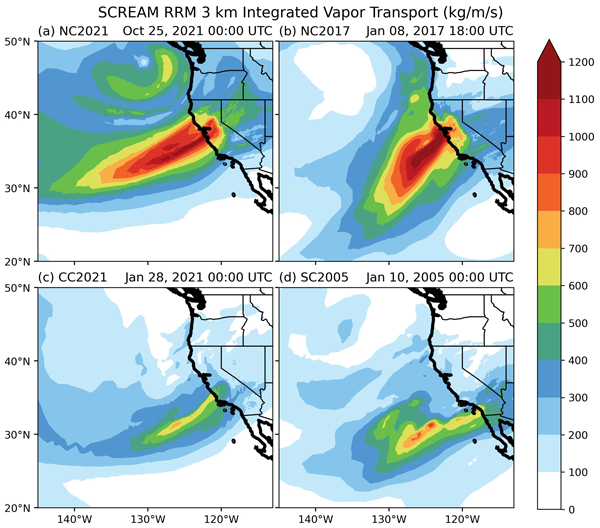
Using high-resolution and state-of-the-art modeling techniques we simulate five atmospheric river events for California to test the capability to represent precipitation for these events. We find that our model is able to capture the distribution of precipitation very well but suffers from overestimating the precipitation amounts over high elevation. Increasing the resolution further has no impact on reducing this bias, while increasing the domain size does have modest impacts.
Jishi Zhang, Peter Bogenschutz, Qi Tang, Philip Cameron-smith, and Chengzhu Zhang
Geosci. Model Dev., 17, 3687–3731, https://doi.org/10.5194/gmd-17-3687-2024, https://doi.org/10.5194/gmd-17-3687-2024, 2024
Short summary
Short summary
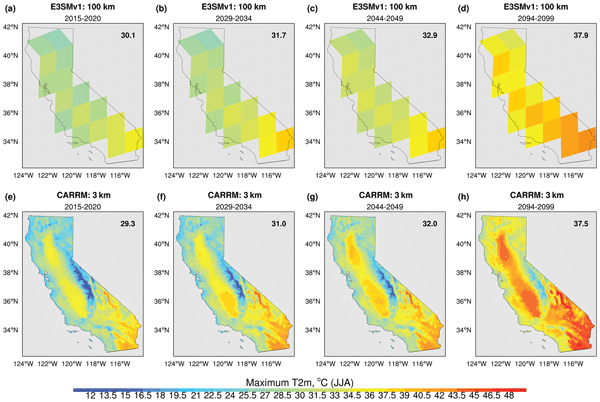
We developed a regionally refined climate model that allows resolved convection and performed a 20-year projection to the end of the century. The model has a resolution of 3.25 km in California, which allows us to predict climate with unprecedented accuracy, and a resolution of 100 km for the rest of the globe to achieve efficient, self-consistent simulations. The model produces superior results in reproducing climate patterns over California that typical modern climate models cannot resolve.
Timothy W. Juliano, Florian Tornow, Ann M. Fridlind, Andrew S. Ackerman, Gregory S. Elsaesser, Bart Geerts, Christian P. Lackner, David Painemal, Israel Silber, Mikhail Ovchinnikov, Gunilla Svensson, Michael Tjernström, Peng Wu, Alejandro Baró Pérez, Peter Bogenschutz, Dmitry Chechin, Kamal Kant Chandrakar, Jan Chylik, Andrey Debolskiy, Rostislav Fadeev, Anu Gupta, Luisa Ickes, Michail Karalis, Martin Köhler, Branko Kosović, Peter Kuma, Weiwei Li, Evgeny Mortikov, Hugh Morrison, Roel A. J. Neggers, Anna Possner, Tomi Raatikainen, Lea Raillard, Sami Romakkaniemi, Niklas Schnierstein, Shin-ichiro Shima, Nikita Silin, Mikhail Tolstykh, Étienne Vignon, Lulin Xue, Meng Zhang, and Xue Zheng
Atmos. Chem. Phys., 26, 13267–13302, https://doi.org/10.5194/acp-26-13267-2026, https://doi.org/10.5194/acp-26-13267-2026, 2026
Short summary
Short summary
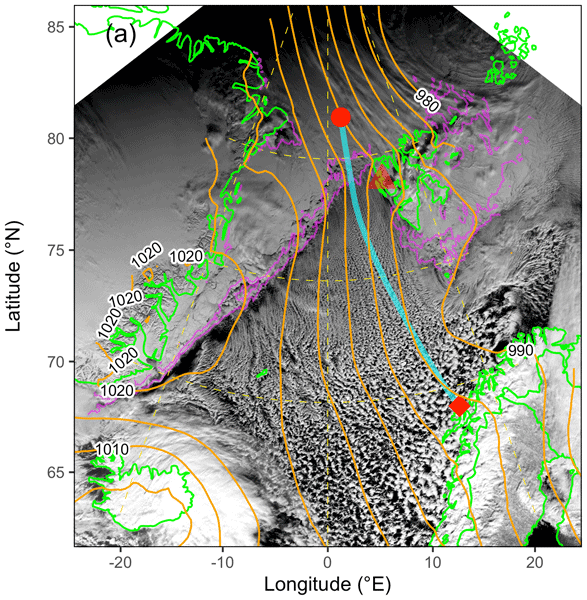
Models struggle to capture cloud and precipitation processes and their radiative effects in marine cold-air outbreaks. We use a quasi-Lagrangian framework to compare large-eddy simulation (LES) and single-column model (SCM) output with field and satellite observations. With fixed droplet and ice numbers, LES and SCM agree in liquid-only tests. In mixed-phase conditions, LES plausibly capture cloud thinning and breakup, while SCMs largely remain overcast and thereby miss cloud radiative effects.
Wen-Ying Wu, Rehenuma Lazin, Shiheng Duan, Mahjabeen Fatema Mitu, Paul Aaron Ullrich, Céline J. W. Bonfils, Hsi-Yen Ma, Giuliana Pallotta, and Christopher Scott Sherman
EGUsphere, https://doi.org/10.5194/egusphere-2026-3064, https://doi.org/10.5194/egusphere-2026-3064, 2026
This preprint is open for discussion and under review for Hydrology and Earth System Sciences (HESS).
Short summary
Short summary
We compared three flood models to better understand flooding in Northern California during 2019. Using the same rainfall data, we found that all models captured the water along river network but differed greatly in smaller rivers and floodplains. Some models predicted too much flooding, while others predicted too little. The study shows that comparing multiple models can improve flood prediction and help communities better prepare for future storms.
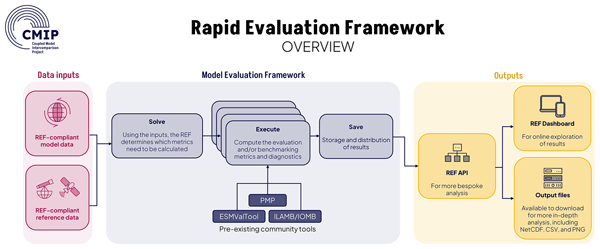
Forrest M. Hoffman, Birgit Hassler, Ranjini Swaminathan, Jared Lewis, Bouwe Andela, Nathan Collier, Dóra Hegedűs, Jiwoo Lee, Charlotte Pascoe, Mika Pflüger, Martina Stockhause, Paul Ullrich, Min Xu, Lisa Bock, Felicity Chun, Bettina K. Gier, Douglas I. Kelley, Axel Lauer, Julien Lenhardt, Manuel Schlund, Mohanan G. Sreeush, Katja Weigel, Ed Blockley, Rebecca Beadling, Romain Beucher, Demiso D. Dugassa, Valerio Lembo, Jianhua Lu, Swen Brands, Jerry Tjiputra, Elizaveta Malinina, Brian Medeiros, Enrico Scoccimarro, Jeremy Walton, Phil Kershaw, André Lanfer Marquez, Malcolm J. Roberts, Eleanor O'Rourke, Beth Dingley, Briony Turner, Helene Hewitt, and John P. Dunne
Geosci. Model Dev., 19, 7415–7455, https://doi.org/10.5194/gmd-19-7415-2026, https://doi.org/10.5194/gmd-19-7415-2026, 2026
Short summary
Short summary
The Rapid Evaluation Framework (REF) is a community-driven platform for benchmarking and performance assessment of Earth system models. Built upon four disparate community evaluation tools, the REF is designed to provide model-data comparisons for the Assessment Fast Track for the Seventh Phase of the Coupled Model Intercomparison Project. The REF will be run at the Earth System Grid Federation to enable model devleopers and scientists to quickly identify model biases and performance issues.
Pratapaditya Ghosh, Xue Zheng, Hassan Beydoun, Peter Bogenschutz, and Yunyan Zhang
EGUsphere, https://doi.org/10.5194/egusphere-2026-3700, https://doi.org/10.5194/egusphere-2026-3700, 2026
Short summary
Short summary
Marine low clouds play a crucial role in cooling Earth by reflecting sunlight, but storm-resolving models struggle to simulate them accurately. Using ship-based observations and machine learning, we identify which parameter combinations best reduce errors across different cloud types. We find that fixes effective for thick stratocumulus clouds do not work equally well for broken cumulus clouds, suggesting that improving these models requires different strategies for different cloud regimes.
Peter A. Bogenschutz, Yunyan Zhang, Hsi-Yen Ma, Cheng Tao, and Shaocheng Xie
EGUsphere, https://doi.org/10.5194/egusphere-2026-3667, https://doi.org/10.5194/egusphere-2026-3667, 2026
This preprint is open for discussion and under review for Geoscientific Model Development (GMD).
Short summary
Short summary
Weather and climate models are often tested using simplified simulations that prescribe exchanges between the land and atmosphere. We developed a method that allows these interactions to evolve naturally and evaluated it using observations from field sites in the United States and Brazil. We found that realistic land-atmosphere interactions are important for reproducing temperature and cloud biases, while many rainfall errors originate within the atmosphere model itself.
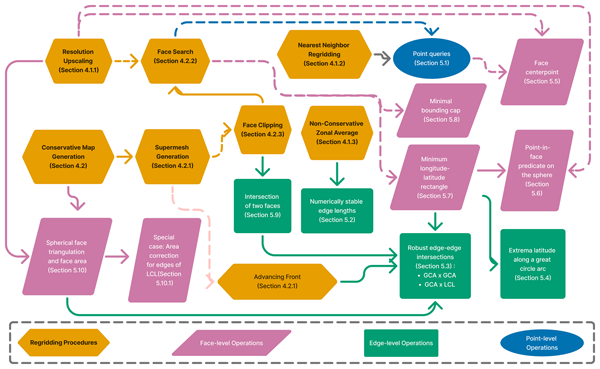
Hongyu Chen, Paul A. Ullrich, Julian Panetta, David Marsico, Moritz Hanke, Rajeev Jain, Chengzhu Zhang, and Robert L. Jacob
Geosci. Model Dev., 19, 6545–6570, https://doi.org/10.5194/gmd-19-6545-2026, https://doi.org/10.5194/gmd-19-6545-2026, 2026
Short summary
Short summary
Accurate data transfer between different grids is essential in climate and weather modeling. This study analyzes the geometric operations that underpin such transfers on the spherical Earth, identifies gaps and limitations in current methods, and introduces improved algorithms to ensure accuracy, reliability, and performance for next-generation modeling and data analysis systems.
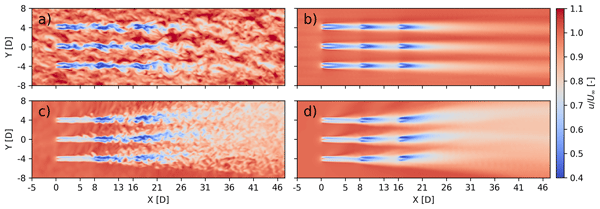
Adam S. Wise, Robert S. Arthur, Jeffrey D. Mirocha, Julie K. Lundquist, and Fotini K. Chow
Wind Energ. Sci., 11, 2543–2565, https://doi.org/10.5194/wes-11-2543-2026, https://doi.org/10.5194/wes-11-2543-2026, 2026
Short summary
Short summary
At night, wind farms can experience a wide range of intermittent wind events that can affect how much power is produced. We modeled a specific type of intermittent wind event that happens as the atmosphere gets colder and colder throughout a night. We identified a threshold to determine when these events impact wind farms and ultimately found that mainly the front of a wind farm tends to be most impacted by these sorts of events.
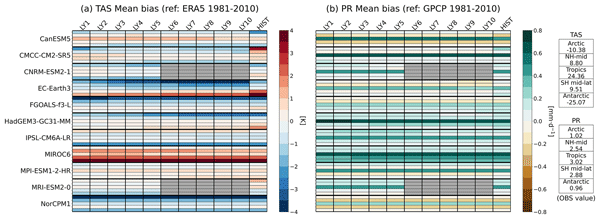
Jung Choi, Jiwoo Lee, Kristin Chang, Paul A. Ullrich, Peter J. Gleckler, and Sang-Yoon Jun
Geosci. Model Dev., 19, 6189–6206, https://doi.org/10.5194/gmd-19-6189-2026, https://doi.org/10.5194/gmd-19-6189-2026, 2026
Short summary
Short summary
As climate risks grow, society needs reliable predictions for the coming years and decades. We developed a framework to collectively compare climate prediction systems and examine their performances on global temperature, rainfall, and sea ice. As a complementary to traditional analyses, our new framework offers tracking evolution of model performance in simulation time, helping scientists and stakeholders better understand strengths and limits of decadal climate prediction.
Giuliana Pallotta, Shiheng Duan, Celine Bonfils, Jiwoo Lee, Seth Goodnight, and Paul Ullrich
EGUsphere, https://doi.org/10.48550/arXiv.2604.06567, https://doi.org/10.48550/arXiv.2604.06567, 2026
Short summary
Short summary
Deep-learning Earth system models (DL-ESMs) offer a computationally efficient alternative to traditional Earth system models, but their suitability for Earth system applications requires rigorous evaluation. We apply the PCMDI Metrics Package to assess ACE2 and NeuralGCM using climatology, variability, monsoon, and precipitation diagnostics, providing one of the first systematic Earth system model evaluations of DL-ESMs.
Aaron S. Donahue, Elynn Wu, W. Andre Perkins, Peter M. Caldwell, Christopher S. Bretherton, Finn Rebassoo, and Jean-Christophe Golaz
Geosci. Model Dev., 19, 4763–4774, https://doi.org/10.5194/gmd-19-4763-2026, https://doi.org/10.5194/gmd-19-4763-2026, 2026
Short summary
Short summary
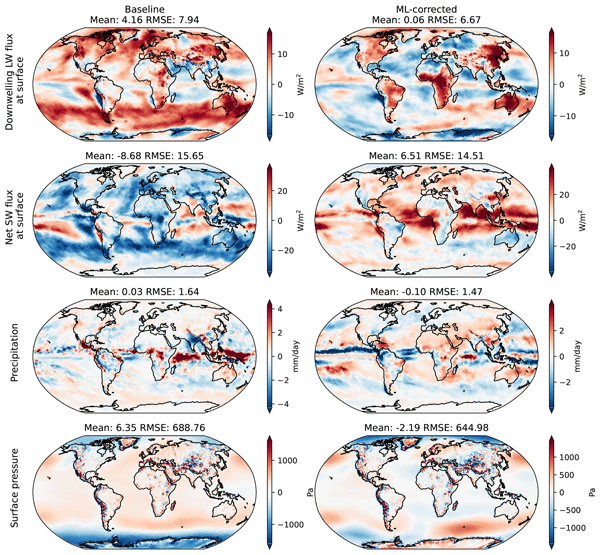
This study tested using machine learning to speed up detailed simulations in the SCREAM (Simple Cloud-Resolving E3SM Atmosphere Model) model. By training ML (machine learning) models to correct a simpler version of SCREAM, some results improved, but others did not. Technical challenges were addressed, and new tools were developed. The work shows promise for making simulations more efficient, though further improvements are needed.
Shaoyue Qiu, Xue Zheng, Peng Wu, Hsiang-He Lee, and Xiaoli Zhou
Atmos. Chem. Phys., 26, 1769–1794, https://doi.org/10.5194/acp-26-1769-2026, https://doi.org/10.5194/acp-26-1769-2026, 2026
Short summary
Short summary
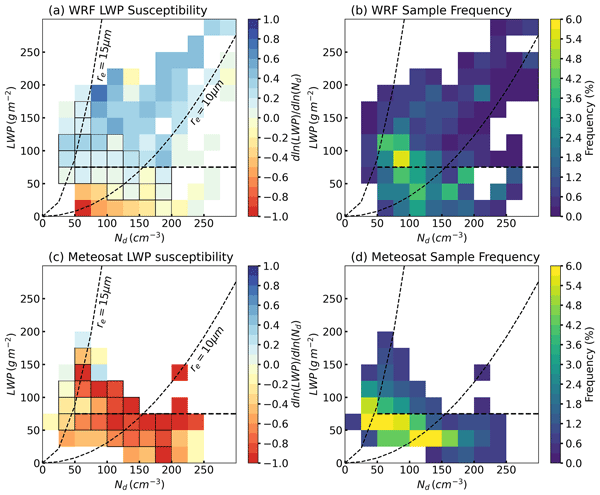
Model liquid water path (LWP) responses match satellite observations, showing decreased (increased) LWP for non-precipitating thin (precipitating) clouds, due to realistic simulations of non-precipitating and drizzling regimes. However, LWP increases for non-precipitating thick clouds, opposite to satellite-based decreases, due to excessive precipitation, moist bias in cloud-top humidity, and cloud droplet number–LWP relations from internal cloud processes, rather than aerosol-cloud interaction.
Jishi Zhang, Peter Bogenschutz, Mark Taylor, and Philip Cameron-Smith
Geosci. Model Dev., 19, 795–826, https://doi.org/10.5194/gmd-19-795-2026, https://doi.org/10.5194/gmd-19-795-2026, 2026
Short summary
Short summary
We pushed a global cloud-resolving model to a novel 100 m setup over the San Francisco Bay Area using a regionally refined mesh. The model captured fine-scale air motions over complex terrain and coastal regions at large-eddy scales with comprehensive global modeling configuration, enabled by scale-aware turbulence parameterization. Performance tests demonstrated that graphics processing unit (GPU) acceleration make such high-resolution simulations feasible within practical timeframes.
Timothy W. Juliano, Florian Tornow, Ann M. Fridlind, Andrew S. Ackerman, Gregory S. Elsaesser, Bart Geerts, Christian P. Lackner, David Painemal, Israel Silber, Mikhail Ovchinnikov, Gunilla Svensson, Michael Tjernström, Peng Wu, Alejandro Baró Pérez, Peter Bogenschutz, Dmitry Chechin, Kamal Kant Chandrakar, Jan Chylik, Andrey Debolskiy, Rostislav Fadeev, Anu Gupta, Luisa Ickes, Michail Karalis, Martin Köhler, Branko Kosović, Peter Kuma, Weiwei Li, Evgeny Mortikov, Hugh Morrison, Roel A. J. Neggers, Anna Possner, Tomi Raatikainen, Sami Romakkaniemi, Niklas Schnierstein, Shin-ichiro Shima, Nikita Silin, Mikhail Tolstykh, Lulin Xue, Meng Zhang, and Xue Zheng
EGUsphere, https://doi.org/10.5194/egusphere-2025-6217, https://doi.org/10.5194/egusphere-2025-6217, 2026
Preprint archived
Short summary
Short summary
Models struggle to capture cloud and precipitation processes and their radiative effects in marine cold-air outbreaks. We use a quasi-Lagrangian framework to compare large-eddy simulation (LES) and single-column model (SCM) output with field and satellite observations. With fixed droplet and ice numbers, LES and SCM agree in liquid-only tests. In mixed-phase conditions, LES plausibly capture cloud thinning and breakup, while SCMs largely remain overcast and thereby miss cloud radiative effects.
Naser Mahfouz, Hassan Beydoun, Johannes Mülmenstädt, Noel Keen, Adam C. Varble, Luca Bertagna, Peter Bogenschutz, Andrew Bradley, Matthew W. Christensen, T. Conrad Clevenger, Aaron Donahue, Jerome Fast, James Foucar, Jean-Christophe Golaz, Oksana Guba, Walter Hannah, Benjamin Hillman, Robert Jacob, Wuyin Lin, Po-Lun Ma, Yun Qian, Balwinder Singh, Christopher Terai, Hailong Wang, Mingxuan Wu, Kai Zhang, Andrew Gettelman, Mark Taylor, L. Ruby Leung, Peter Caldwell, and Susannah Burrows
Atmos. Chem. Phys., 25, 15105–15120, https://doi.org/10.5194/acp-25-15105-2025, https://doi.org/10.5194/acp-25-15105-2025, 2025
Short summary
Short summary
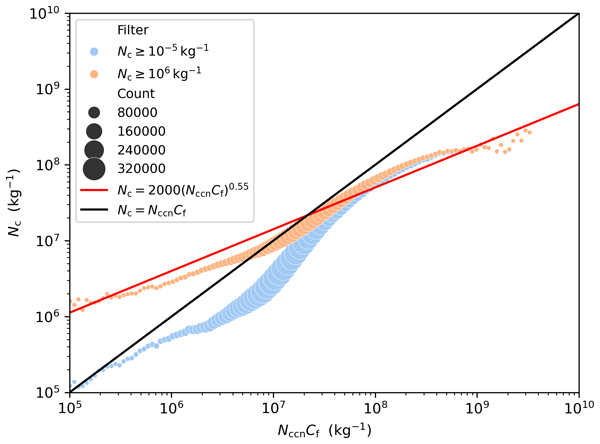
Our study assesses the aerosol effective radiative forcing in a global cloud-resolving atmosphere model at ultra-high resolution. We demonstrate that global aerosol forcing signal can be robustly reproduced across resolutions when aerosol activation processes are carefully parameterized. Further, we argue that simplified prescribed aerosol schemes will open the door for further process/mechanism studies under controlled conditions.
Matteo Puccioni, Sonia Wharton, Stephan F. J. De Wekker, Robert S. Arthur, Tianyi Li, Ye Liu, Sha Feng, Kyle Pressel, Raj K. Rai, Larry K. Berg, and Jerome D. Fast
Wind Energ. Sci. Discuss., https://doi.org/10.5194/wes-2025-215, https://doi.org/10.5194/wes-2025-215, 2025
Revised manuscript not accepted
Short summary
Short summary
A multi-wind Lidar campaign is conducted in a forest in the United States Southeast, a region featuring low wind resources due to the forest drag. Although the latter reduces the wind for hundreds of meters above ground, we found this effect to be negligible for heights above 8 times the tree height where the wind is dominated by local atmospheric events. This scenario opens to the development of taller turbines harvesting the wind farther away from the ground where the forest drag is minimal.
Ziming Ke, Qi Tang, Jean-Christophe Golaz, Xiaohong Liu, and Hailong Wang
Geosci. Model Dev., 18, 4137–4153, https://doi.org/10.5194/gmd-18-4137-2025, https://doi.org/10.5194/gmd-18-4137-2025, 2025
Short summary
Short summary
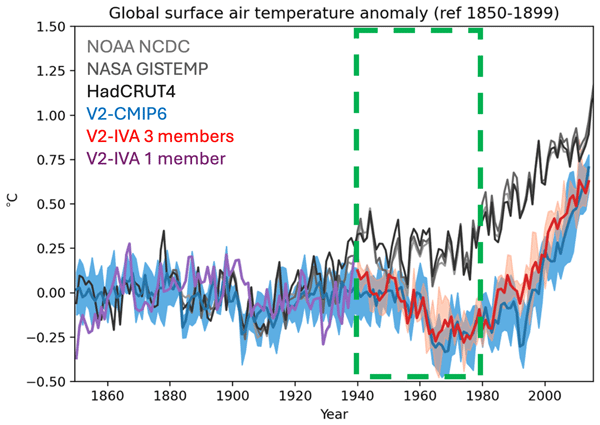
This study assesses volcanic aerosol representation in E3SM (Energy Exascale Earth System Model), showing that an emission-based approach moderately improves temperature variability and cloud responses compared to a prescribed forcing approach, yet significant bias persists.
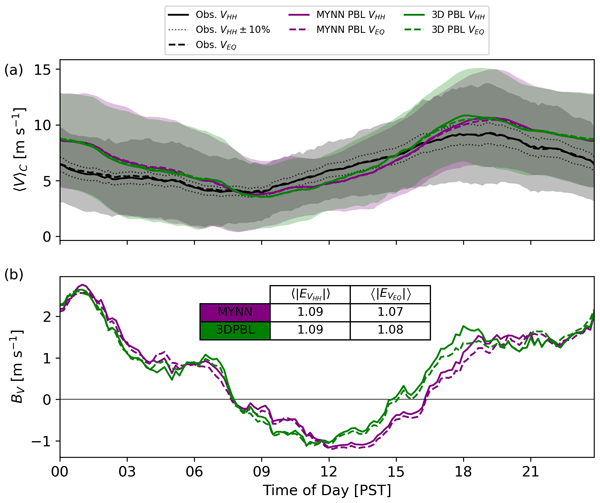
Robert S. Arthur, Alex Rybchuk, Timothy W. Juliano, Gabriel Rios, Sonia Wharton, Julie K. Lundquist, and Jerome D. Fast
Wind Energ. Sci., 10, 1187–1209, https://doi.org/10.5194/wes-10-1187-2025, https://doi.org/10.5194/wes-10-1187-2025, 2025
Short summary
Short summary
This paper evaluates a new model configuration for wind energy forecasting in complex terrain. We compare model results to observations in the Altamont Pass (California, USA), where wind channeling through a mountain gap leads to increased energy production. We demonstrate that the new model configuration performs similarly to a more established approach, with some evidence of improved wind speed predictions, and provide guidance for future model testing.
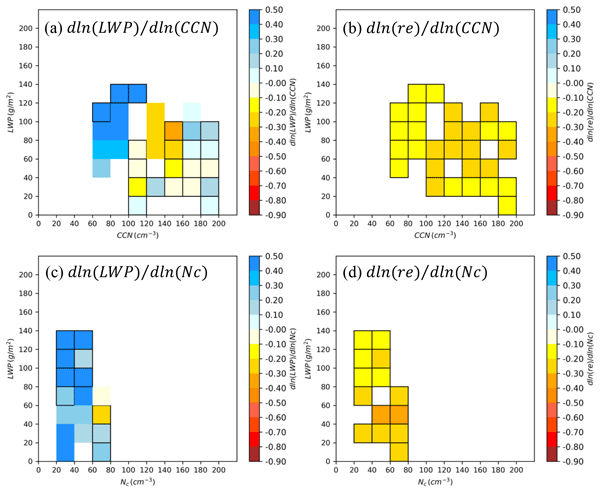
Hsiang-He Lee, Xue Zheng, Shaoyue Qiu, and Yuan Wang
Atmos. Chem. Phys., 25, 6069–6091, https://doi.org/10.5194/acp-25-6069-2025, https://doi.org/10.5194/acp-25-6069-2025, 2025
Short summary
Short summary
The study investigates how aerosol–cloud interactions affect warm boundary layer stratiform clouds over the eastern North Atlantic. High-resolution weather model simulations reveal that non-rain clouds at the edge of cloud systems are prone to evaporation, leading to an aerosol drying effect and a transition of aerosols back to the accumulation mode for future activation. The study shows that this dynamic behavior is often not adequately represented in most previous prescribed-aerosol simulations.
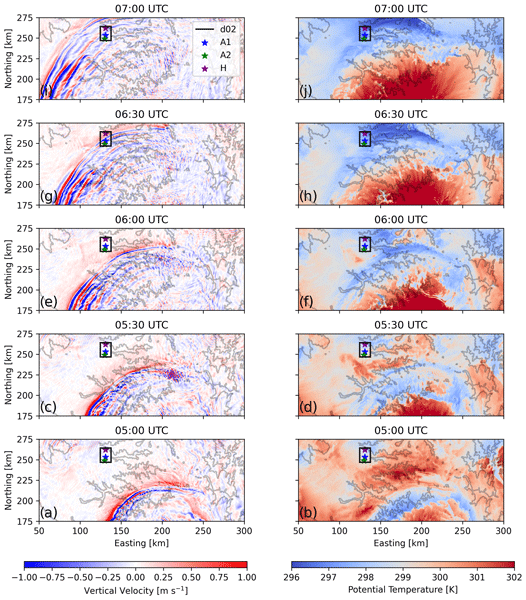
Adam S. Wise, Robert S. Arthur, Aliza Abraham, Sonia Wharton, Raghavendra Krishnamurthy, Rob Newsom, Brian Hirth, John Schroeder, Patrick Moriarty, and Fotini K. Chow
Wind Energ. Sci., 10, 1007–1032, https://doi.org/10.5194/wes-10-1007-2025, https://doi.org/10.5194/wes-10-1007-2025, 2025
Short summary
Short summary
Wind farms can be subject to rapidly changing weather events. In the United States Great Plains, some of these weather events can result in waves in the atmosphere that ultimately affect how much power a wind farm can produce. We modeled a specific event of waves observed in Oklahoma. We determined how to accurately model the event and analyzed how it affected a wind farm’s power production, finding that the waves both decreased power and made it more variable.
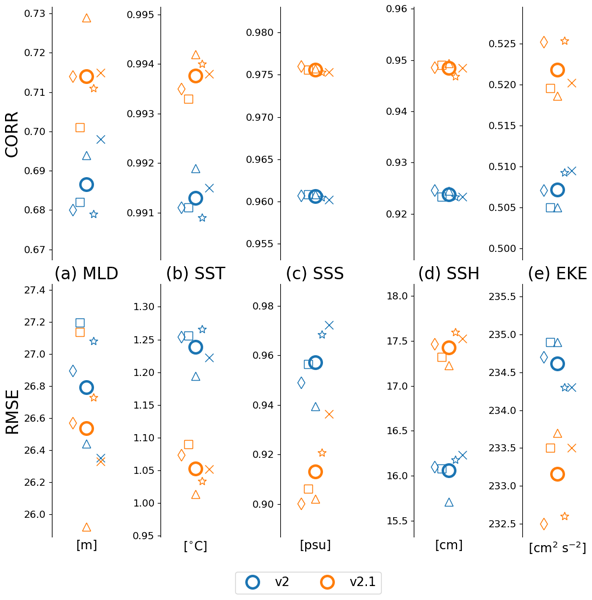
Katherine M. Smith, Alice M. Barthel, LeAnn M. Conlon, Luke P. Van Roekel, Anthony Bartoletti, Jean-Christophe Golaz, Chengzhu Zhang, Carolyn Branecky Begeman, James J. Benedict, Gautam Bisht, Yan Feng, Walter Hannah, Bryce E. Harrop, Nicole Jeffery, Wuyin Lin, Po-Lun Ma, Mathew E. Maltrud, Mark R. Petersen, Balwinder Singh, Qi Tang, Teklu Tesfa, Jonathan D. Wolfe, Shaocheng Xie, Xue Zheng, Karthik Balaguru, Oluwayemi Garuba, Peter Gleckler, Aixue Hu, Jiwoo Lee, Ben Moore-Maley, and Ana C. Ordoñez
Geosci. Model Dev., 18, 1613–1633, https://doi.org/10.5194/gmd-18-1613-2025, https://doi.org/10.5194/gmd-18-1613-2025, 2025
Short summary
Short summary
Version 2.1 of the U.S. Department of Energy's Energy Exascale Earth System Model (E3SM) adds the Fox-Kemper et al. (2011) mixed-layer eddy parameterization, which restratifies the ocean surface layer through an overturning streamfunction. Results include surface layer bias reduction in temperature, salinity, and sea ice extent in the North Atlantic; a small strengthening of the Atlantic meridional overturning circulation; and improvements to many atmospheric climatological variables.
Malcolm J. Roberts, Kevin A. Reed, Qing Bao, Joseph J. Barsugli, Suzana J. Camargo, Louis-Philippe Caron, Ping Chang, Cheng-Ta Chen, Hannah M. Christensen, Gokhan Danabasoglu, Ivy Frenger, Neven S. Fučkar, Shabeh ul Hasson, Helene T. Hewitt, Huanping Huang, Daehyun Kim, Chihiro Kodama, Michael Lai, Lai-Yung Ruby Leung, Ryo Mizuta, Paulo Nobre, Pablo Ortega, Dominique Paquin, Christopher D. Roberts, Enrico Scoccimarro, Jon Seddon, Anne Marie Treguier, Chia-Ying Tu, Paul A. Ullrich, Pier Luigi Vidale, Michael F. Wehner, Colin M. Zarzycki, Bosong Zhang, Wei Zhang, and Ming Zhao
Geosci. Model Dev., 18, 1307–1332, https://doi.org/10.5194/gmd-18-1307-2025, https://doi.org/10.5194/gmd-18-1307-2025, 2025
Short summary
Short summary
HighResMIP2 is a model intercomparison project focusing on high-resolution global climate models, that is, those with grid spacings of 25 km or less in the atmosphere and ocean, using simulations of decades to a century in length. We are proposing an update of our simulation protocol to make the models more applicable to key questions for climate variability and hazard in present-day and future projections and to build links with other communities to provide more robust climate information.
Bo Dong, Paul Ullrich, Jiwoo Lee, Peter Gleckler, Kristin Chang, and Travis A. O'Brien
Geosci. Model Dev., 18, 961–976, https://doi.org/10.5194/gmd-18-961-2025, https://doi.org/10.5194/gmd-18-961-2025, 2025
Short summary
Short summary
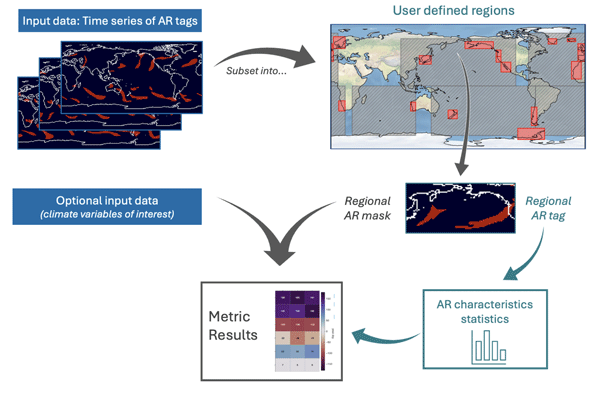
A metrics package designed for easy analysis of atmospheric river (AR) characteristics and statistics is presented. The tool is efficient for diagnosing systematic AR bias in climate models and useful for evaluating new AR characteristics in model simulations. In climate models, landfalling AR precipitation shows dry biases globally, and AR tracks are farther poleward (equatorward) in the North and South Atlantic (South Pacific and Indian Ocean).
Seung H. Baek, Paul A. Ullrich, Bo Dong, and Jiwoo Lee
Geosci. Model Dev., 17, 8665–8681, https://doi.org/10.5194/gmd-17-8665-2024, https://doi.org/10.5194/gmd-17-8665-2024, 2024
Short summary
Short summary
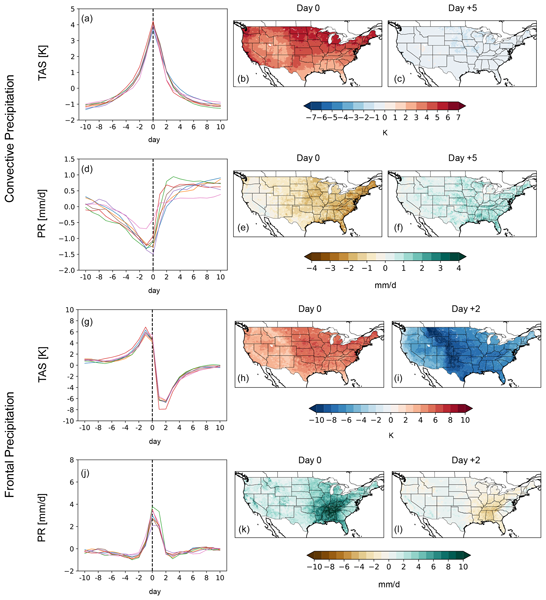
We evaluate downscaled products by examining locally relevant co-variances during precipitation events. Common statistical downscaling techniques preserve expected co-variances during convective precipitation (a stationary phenomenon). However, they dampen future intensification of frontal precipitation (a non-stationary phenomenon) captured in global climate models and dynamical downscaling. Our study quantifies a ramification of the stationarity assumption underlying statistical downscaling.
Peter A. Bogenschutz, Jishi Zhang, Qi Tang, and Philip Cameron-Smith
Geosci. Model Dev., 17, 7029–7050, https://doi.org/10.5194/gmd-17-7029-2024, https://doi.org/10.5194/gmd-17-7029-2024, 2024
Short summary
Short summary
Using high-resolution and state-of-the-art modeling techniques we simulate five atmospheric river events for California to test the capability to represent precipitation for these events. We find that our model is able to capture the distribution of precipitation very well but suffers from overestimating the precipitation amounts over high elevation. Increasing the resolution further has no impact on reducing this bias, while increasing the domain size does have modest impacts.
Jiwoo Lee, Peter J. Gleckler, Min-Seop Ahn, Ana Ordonez, Paul A. Ullrich, Kenneth R. Sperber, Karl E. Taylor, Yann Y. Planton, Eric Guilyardi, Paul Durack, Celine Bonfils, Mark D. Zelinka, Li-Wei Chao, Bo Dong, Charles Doutriaux, Chengzhu Zhang, Tom Vo, Jason Boutte, Michael F. Wehner, Angeline G. Pendergrass, Daehyun Kim, Zeyu Xue, Andrew T. Wittenberg, and John Krasting
Geosci. Model Dev., 17, 3919–3948, https://doi.org/10.5194/gmd-17-3919-2024, https://doi.org/10.5194/gmd-17-3919-2024, 2024
Short summary
Short summary
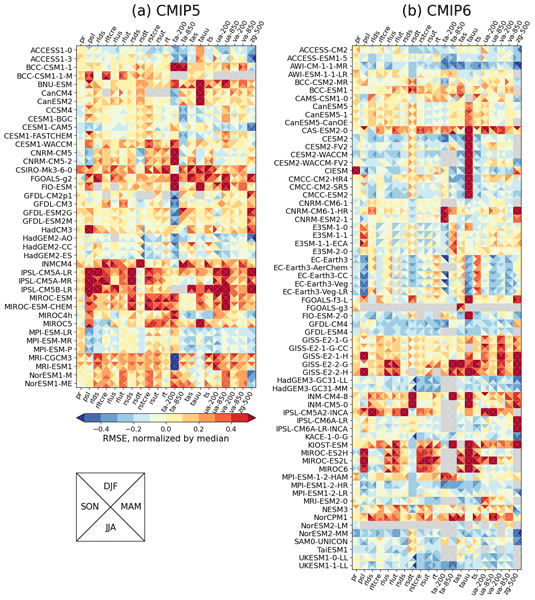
We introduce an open-source software, the PCMDI Metrics Package (PMP), developed for a comprehensive comparison of Earth system models (ESMs) with real-world observations. Using diverse metrics evaluating climatology, variability, and extremes simulated in thousands of simulations from the Coupled Model Intercomparison Project (CMIP), PMP aids in benchmarking model improvements across generations. PMP also enables efficient tracking of performance evolutions during ESM developments.
Jishi Zhang, Peter Bogenschutz, Qi Tang, Philip Cameron-smith, and Chengzhu Zhang
Geosci. Model Dev., 17, 3687–3731, https://doi.org/10.5194/gmd-17-3687-2024, https://doi.org/10.5194/gmd-17-3687-2024, 2024
Short summary
Short summary
We developed a regionally refined climate model that allows resolved convection and performed a 20-year projection to the end of the century. The model has a resolution of 3.25 km in California, which allows us to predict climate with unprecedented accuracy, and a resolution of 100 km for the rest of the globe to achieve efficient, self-consistent simulations. The model produces superior results in reproducing climate patterns over California that typical modern climate models cannot resolve.
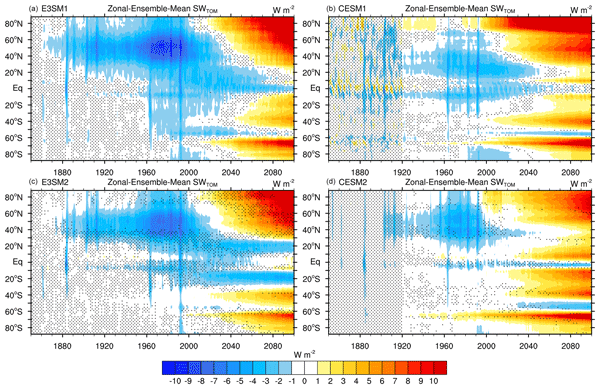
John T. Fasullo, Jean-Christophe Golaz, Julie M. Caron, Nan Rosenbloom, Gerald A. Meehl, Warren Strand, Sasha Glanville, Samantha Stevenson, Maria Molina, Christine A. Shields, Chengzhu Zhang, James Benedict, Hailong Wang, and Tony Bartoletti
Earth Syst. Dynam., 15, 367–386, https://doi.org/10.5194/esd-15-367-2024, https://doi.org/10.5194/esd-15-367-2024, 2024
Short summary
Short summary
Climate model large ensembles provide a unique and invaluable means for estimating the climate response to external forcing agents and quantify contrasts in model structure. Here, an overview of the Energy Exascale Earth System Model (E3SM) version 2 large ensemble is given along with comparisons to large ensembles from E3SM version 1 and versions 1 and 2 of the Community Earth System Model. The paper provides broad and important context for users of these ensembles.
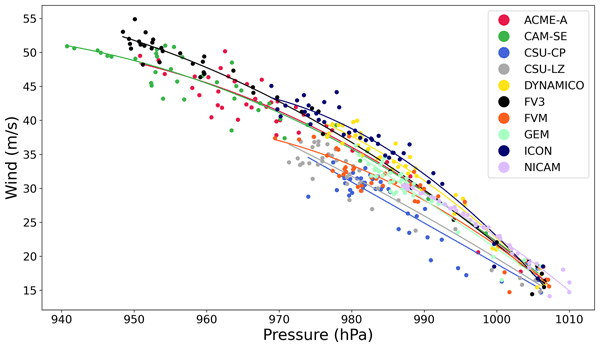
Justin L. Willson, Kevin A. Reed, Christiane Jablonowski, James Kent, Peter H. Lauritzen, Ramachandran Nair, Mark A. Taylor, Paul A. Ullrich, Colin M. Zarzycki, David M. Hall, Don Dazlich, Ross Heikes, Celal Konor, David Randall, Thomas Dubos, Yann Meurdesoif, Xi Chen, Lucas Harris, Christian Kühnlein, Vivian Lee, Abdessamad Qaddouri, Claude Girard, Marco Giorgetta, Daniel Reinert, Hiroaki Miura, Tomoki Ohno, and Ryuji Yoshida
Geosci. Model Dev., 17, 2493–2507, https://doi.org/10.5194/gmd-17-2493-2024, https://doi.org/10.5194/gmd-17-2493-2024, 2024
Short summary
Short summary
Accurate simulation of tropical cyclones (TCs) is essential to understanding their behavior in a changing climate. One way this is accomplished is through model intercomparison projects, where results from multiple climate models are analyzed to provide benchmark solutions for the wider climate modeling community. This study describes and analyzes the previously developed TC test case for nine climate models in an intercomparison project, providing solutions that aid in model development.
Hsiang-He Lee, Qi Tang, and Michael Prather
Geosci. Model Dev. Discuss., https://doi.org/10.5194/gmd-2023-203, https://doi.org/10.5194/gmd-2023-203, 2024
Revised manuscript not accepted
Short summary
Short summary
The E3SM Chemistry diagnostics package (ChemDyg) is a software tool, which is designed for the global climate model (E3SM) chemistry development. ChemDyg generates several diagnostic plots and tables for model-to-model and model-to-observation comparison, including 2-dimentional contour mapping plots, diurnal and annual cycle, time-series plots, and comprehensive processing tables. This paper is to introduce the details of each diagnostics set and its required input data formats in ChemDyg.
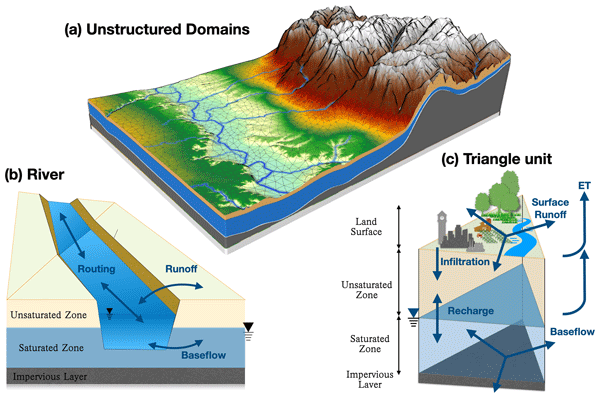
Lele Shu, Paul Ullrich, Xianhong Meng, Christopher Duffy, Hao Chen, and Zhaoguo Li
Geosci. Model Dev., 17, 497–527, https://doi.org/10.5194/gmd-17-497-2024, https://doi.org/10.5194/gmd-17-497-2024, 2024
Short summary
Short summary
Our team developed rSHUD v2.0, a toolkit that simplifies the use of the SHUD, a model simulating water movement in the environment. We demonstrated its effectiveness in two watersheds, one in the USA and one in China. The toolkit also facilitated the creation of the Global Hydrological Data Cloud, a platform for automatic data processing and model deployment, marking a significant advancement in hydrological research.
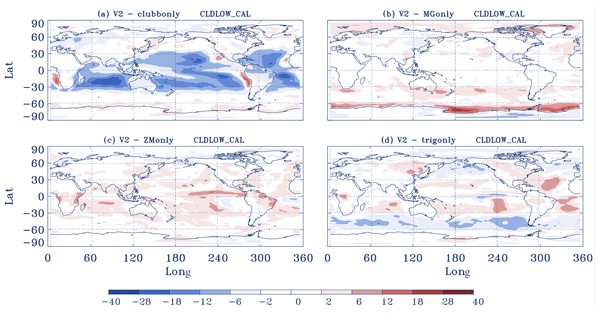
Yuying Zhang, Shaocheng Xie, Yi Qin, Wuyin Lin, Jean-Christophe Golaz, Xue Zheng, Po-Lun Ma, Yun Qian, Qi Tang, Christopher R. Terai, and Meng Zhang
Geosci. Model Dev., 17, 169–189, https://doi.org/10.5194/gmd-17-169-2024, https://doi.org/10.5194/gmd-17-169-2024, 2024
Short summary
Short summary
We performed systematic evaluation of clouds simulated in the Energy
Exascale Earth System Model (E3SMv2) to document model performance and understand what updates in E3SMv2 have caused changes in clouds from E3SMv1 to E3SMv2. We find that stratocumulus clouds along the subtropical west coast of continents are dramatically improved, primarily due to the retuning done in CLUBB. This study offers additional insights into clouds simulated in E3SMv2 and will benefit future E3SM developments.
Exascale Earth System Model (E3SMv2) to document model performance and understand what updates in E3SMv2 have caused changes in clouds from E3SMv1 to E3SMv2. We find that stratocumulus clouds along the subtropical west coast of continents are dramatically improved, primarily due to the retuning done in CLUBB. This study offers additional insights into clouds simulated in E3SMv2 and will benefit future E3SM developments.
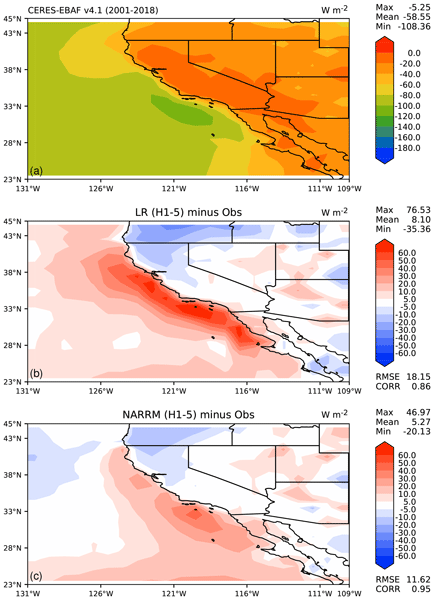
Qi Tang, Jean-Christophe Golaz, Luke P. Van Roekel, Mark A. Taylor, Wuyin Lin, Benjamin R. Hillman, Paul A. Ullrich, Andrew M. Bradley, Oksana Guba, Jonathan D. Wolfe, Tian Zhou, Kai Zhang, Xue Zheng, Yunyan Zhang, Meng Zhang, Mingxuan Wu, Hailong Wang, Cheng Tao, Balwinder Singh, Alan M. Rhoades, Yi Qin, Hong-Yi Li, Yan Feng, Yuying Zhang, Chengzhu Zhang, Charles S. Zender, Shaocheng Xie, Erika L. Roesler, Andrew F. Roberts, Azamat Mametjanov, Mathew E. Maltrud, Noel D. Keen, Robert L. Jacob, Christiane Jablonowski, Owen K. Hughes, Ryan M. Forsyth, Alan V. Di Vittorio, Peter M. Caldwell, Gautam Bisht, Renata B. McCoy, L. Ruby Leung, and David C. Bader
Geosci. Model Dev., 16, 3953–3995, https://doi.org/10.5194/gmd-16-3953-2023, https://doi.org/10.5194/gmd-16-3953-2023, 2023
Short summary
Short summary
High-resolution simulations are superior to low-resolution ones in capturing regional climate changes and climate extremes. However, uniformly reducing the grid size of a global Earth system model is too computationally expensive. We provide an overview of the fully coupled regionally refined model (RRM) of E3SMv2 and document a first-of-its-kind set of climate production simulations using RRM at an economic cost. The key to this success is our innovative hybrid time step method.
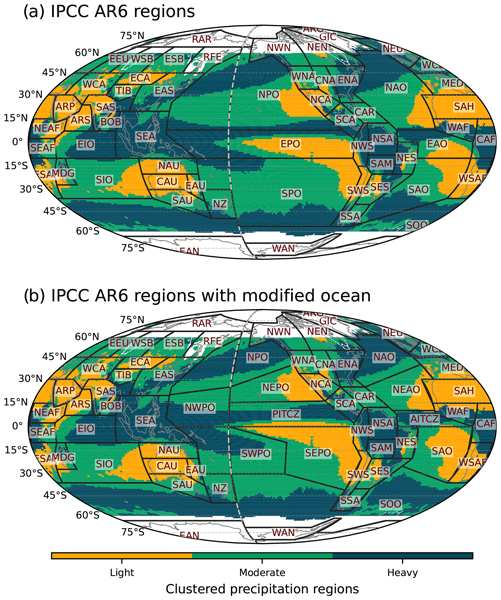
Min-Seop Ahn, Paul A. Ullrich, Peter J. Gleckler, Jiwoo Lee, Ana C. Ordonez, and Angeline G. Pendergrass
Geosci. Model Dev., 16, 3927–3951, https://doi.org/10.5194/gmd-16-3927-2023, https://doi.org/10.5194/gmd-16-3927-2023, 2023
Short summary
Short summary
We introduce a framework for regional-scale evaluation of simulated precipitation distributions with 62 climate reference regions and 10 metrics and apply it to evaluate CMIP5 and CMIP6 models against multiple satellite-based precipitation products. The common model biases identified in this study are mainly associated with the overestimated light precipitation and underestimated heavy precipitation. These biases persist from earlier-generation models and have been slightly improved in CMIP6.
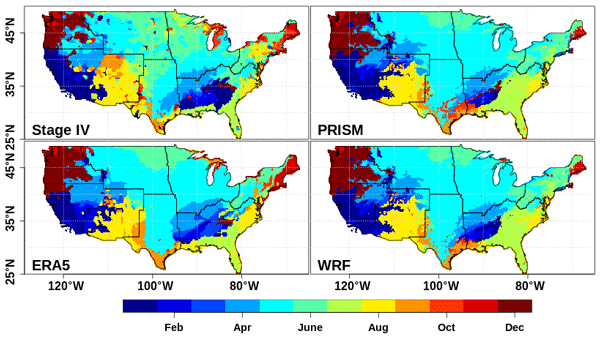
Abhishekh Kumar Srivastava, Paul Aaron Ullrich, Deeksha Rastogi, Pouya Vahmani, Andrew Jones, and Richard Grotjahn
Geosci. Model Dev., 16, 3699–3722, https://doi.org/10.5194/gmd-16-3699-2023, https://doi.org/10.5194/gmd-16-3699-2023, 2023
Short summary
Short summary
Stakeholders need high-resolution regional climate data for applications such as assessing water availability and mountain snowpack. This study examines 3 h and 24 h historical precipitation over the contiguous United States in the 12 km WRF version 4.2.1-based dynamical downscaling of the ERA5 reanalysis. WRF improves precipitation characteristics such as the annual cycle and distribution of the precipitation maxima, but it also displays regionally and seasonally varying precipitation biases.
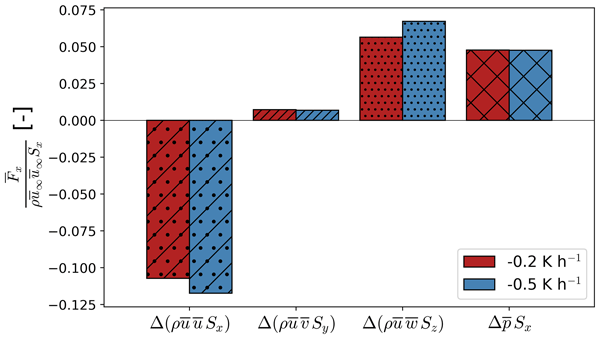
Miguel Sanchez Gomez, Julie K. Lundquist, Jeffrey D. Mirocha, and Robert S. Arthur
Wind Energ. Sci., 8, 1049–1069, https://doi.org/10.5194/wes-8-1049-2023, https://doi.org/10.5194/wes-8-1049-2023, 2023
Short summary
Short summary
The wind slows down as it approaches a wind plant; this phenomenon is called blockage. As a result, the turbines in the wind plant produce less power than initially anticipated. We investigate wind plant blockage for two atmospheric conditions. Blockage is larger for a wind plant compared to a stand-alone turbine. Also, blockage increases with atmospheric stability. Blockage is amplified by the vertical transport of horizontal momentum as the wind approaches the front-row turbines in the array.
Zeyu Xue, Paul Ullrich, and Lai-Yung Ruby Leung
Hydrol. Earth Syst. Sci., 27, 1909–1927, https://doi.org/10.5194/hess-27-1909-2023, https://doi.org/10.5194/hess-27-1909-2023, 2023
Short summary
Short summary
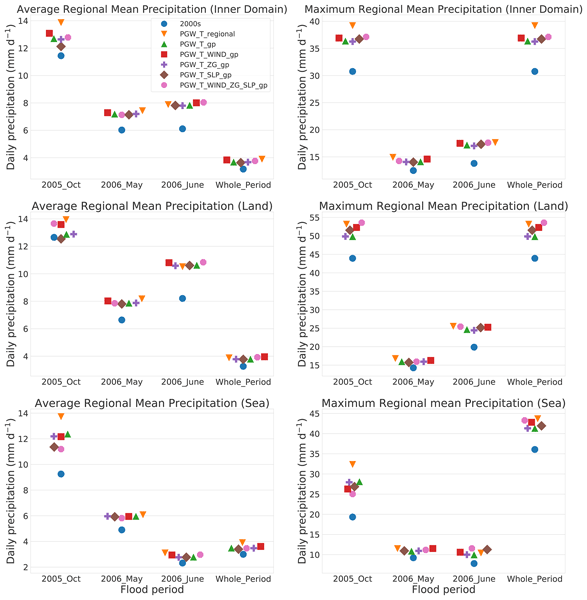
We examine the sensitivity and robustness of conclusions drawn from the PGW method over the NEUS by conducting multiple PGW experiments and varying the perturbation spatial scales and choice of perturbed meteorological variables to provide a guideline for this increasingly popular regional modeling method. Overall, we recommend PGW experiments be performed with perturbations to temperature or the combination of temperature and wind at the gridpoint scale, depending on the research question.
Dana L. McGuffin, Philip J. Cameron-Smith, Matthew A. Horsley, Brian J. Bauman, Wim De Vries, Denis Healy, Alex Pertica, Chris Shaffer, and Lance M. Simms
Atmos. Meas. Tech., 16, 2129–2144, https://doi.org/10.5194/amt-16-2129-2023, https://doi.org/10.5194/amt-16-2129-2023, 2023
Short summary
Short summary
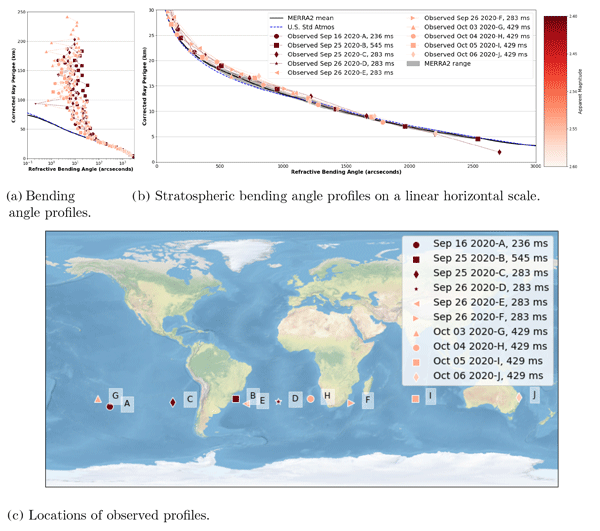
This work demonstrates the viability of a remote sensing technique using nanosatellites to measure stratospheric temperature. This measurement technique can probe the stratosphere and mesosphere at a fine vertical scale around the globe unlike other high-altitude measurement techniques, which would provide an opportunity to observe atmospheric gravity waves and turbulence. We analyze observations from two satellite platforms to provide a proof of concept and characterize measurement uncertainty.
Maria J. Chinita, Mikael Witte, Marcin J. Kurowski, Joao Teixeira, Kay Suselj, Georgios Matheou, and Peter Bogenschutz
Geosci. Model Dev., 16, 1909–1924, https://doi.org/10.5194/gmd-16-1909-2023, https://doi.org/10.5194/gmd-16-1909-2023, 2023
Short summary
Short summary
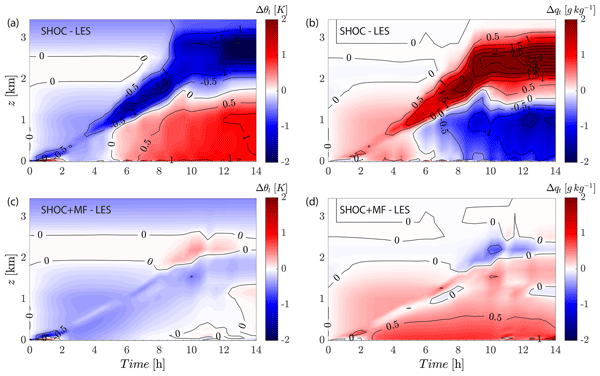
Low clouds are one of the largest sources of uncertainty in climate prediction. In this paper, we introduce the first version of the unified turbulence and shallow convection parameterization named SHOC+MF developed to improve the representation of shallow cumulus clouds in the Simple Cloud-Resolving E3SM Atmosphere Model (SCREAM). Here, we also show promising preliminary results in a single-column model framework for two benchmark cases of shallow cumulus convection.
David H. Marsico and Paul A. Ullrich
Geosci. Model Dev., 16, 1537–1551, https://doi.org/10.5194/gmd-16-1537-2023, https://doi.org/10.5194/gmd-16-1537-2023, 2023
Short summary
Short summary
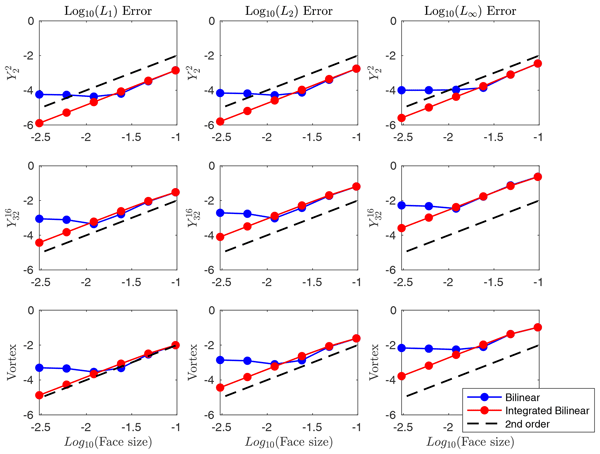
Climate models involve several different components, such as the atmosphere, ocean, and land models. Information needs to be exchanged, or remapped, between these models, and devising algorithms for performing this exchange is important for ensuring the accuracy of climate simulations. In this paper, we examine the efficacy of several traditional and novel approaches to remapping on the sphere and demonstrate where our approaches offer improvement.
Peter A. Bogenschutz, Hsiang-He Lee, Qi Tang, and Takanobu Yamaguchi
Geosci. Model Dev., 16, 335–352, https://doi.org/10.5194/gmd-16-335-2023, https://doi.org/10.5194/gmd-16-335-2023, 2023
Short summary
Short summary
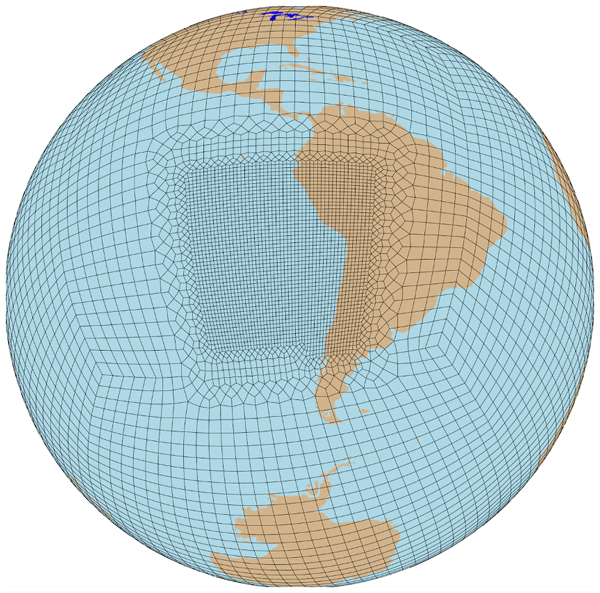
Models that are used to simulate and predict climate often have trouble representing specific cloud types, such as stratocumulus, that are particularly thin in the vertical direction. It has been found that increasing the model resolution can help improve this problem. In this paper, we develop a novel framework that increases the horizontal and vertical resolutions only for areas of the globe that contain stratocumulus, hence reducing the model runtime while providing better results.
Chengzhu Zhang, Jean-Christophe Golaz, Ryan Forsyth, Tom Vo, Shaocheng Xie, Zeshawn Shaheen, Gerald L. Potter, Xylar S. Asay-Davis, Charles S. Zender, Wuyin Lin, Chih-Chieh Chen, Chris R. Terai, Salil Mahajan, Tian Zhou, Karthik Balaguru, Qi Tang, Cheng Tao, Yuying Zhang, Todd Emmenegger, Susannah Burrows, and Paul A. Ullrich
Geosci. Model Dev., 15, 9031–9056, https://doi.org/10.5194/gmd-15-9031-2022, https://doi.org/10.5194/gmd-15-9031-2022, 2022
Short summary
Short summary
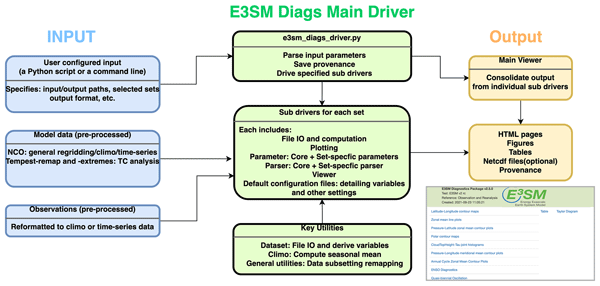
Earth system model (ESM) developers run automated analysis tools on data from candidate models to inform model development. This paper introduces a new Python package, E3SM Diags, that has been developed to support ESM development and use routinely in the development of DOE's Energy Exascale Earth System Model. This tool covers a set of essential diagnostics to evaluate the mean physical climate from simulations, as well as several process-oriented and phenomenon-based evaluation diagnostics.

Vijay S. Mahadevan, Jorge E. Guerra, Xiangmin Jiao, Paul Kuberry, Yipeng Li, Paul Ullrich, David Marsico, Robert Jacob, Pavel Bochev, and Philip Jones
Geosci. Model Dev., 15, 6601–6635, https://doi.org/10.5194/gmd-15-6601-2022, https://doi.org/10.5194/gmd-15-6601-2022, 2022
Short summary
Short summary
Coupled Earth system models require transfer of field data between multiple components with varying spatial resolutions to determine the correct climate behavior. We present the Metrics for Intercomparison of Remapping Algorithms (MIRA) protocol to evaluate the accuracy, conservation properties, monotonicity, and local feature preservation of four different remapper algorithms for various unstructured mesh problems of interest. Future extensions to more practical use cases are also discussed.
Kai Zhang, Wentao Zhang, Hui Wan, Philip J. Rasch, Steven J. Ghan, Richard C. Easter, Xiangjun Shi, Yong Wang, Hailong Wang, Po-Lun Ma, Shixuan Zhang, Jian Sun, Susannah M. Burrows, Manish Shrivastava, Balwinder Singh, Yun Qian, Xiaohong Liu, Jean-Christophe Golaz, Qi Tang, Xue Zheng, Shaocheng Xie, Wuyin Lin, Yan Feng, Minghuai Wang, Jin-Ho Yoon, and L. Ruby Leung
Atmos. Chem. Phys., 22, 9129–9160, https://doi.org/10.5194/acp-22-9129-2022, https://doi.org/10.5194/acp-22-9129-2022, 2022
Short summary
Short summary
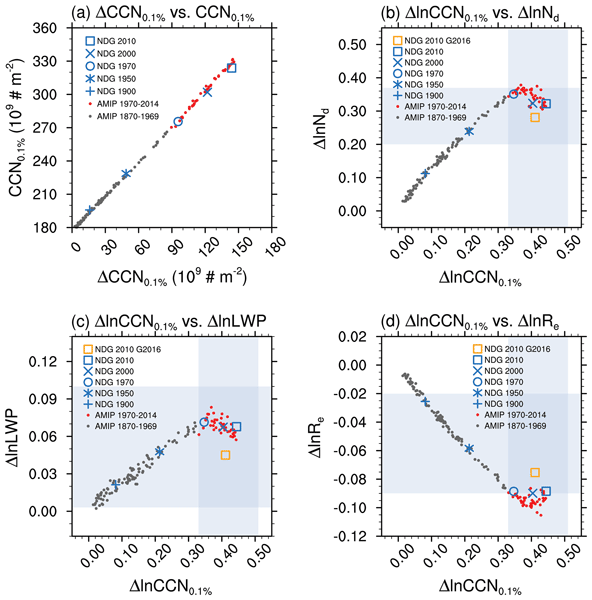
Here we analyze the effective aerosol forcing simulated by E3SM version 1 using both century-long free-running and short nudged simulations. The aerosol forcing in E3SMv1 is relatively large compared to other models, mainly due to the large indirect aerosol effect. Aerosol-induced changes in liquid and ice cloud properties in E3SMv1 have a strong correlation. The aerosol forcing estimates in E3SMv1 are sensitive to the parameterization changes in both liquid and ice cloud processes.
Xue Zheng, Qing Li, Tian Zhou, Qi Tang, Luke P. Van Roekel, Jean-Christophe Golaz, Hailong Wang, and Philip Cameron-Smith
Geosci. Model Dev., 15, 3941–3967, https://doi.org/10.5194/gmd-15-3941-2022, https://doi.org/10.5194/gmd-15-3941-2022, 2022
Short summary
Short summary
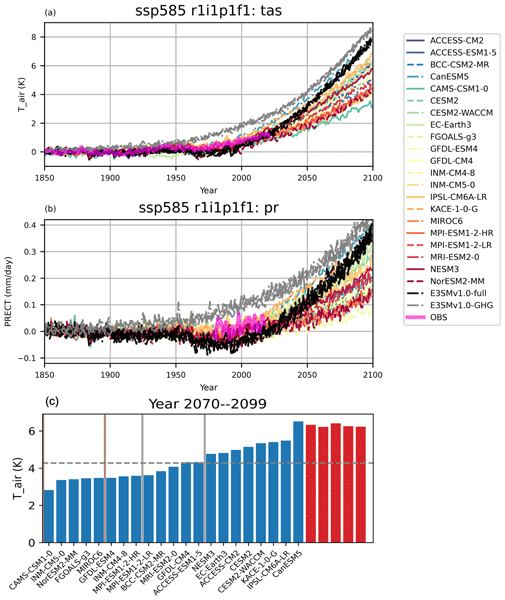
We document the model experiments for the future climate projection by E3SMv1.0. At the highest future emission scenario, E3SMv1.0 projects a strong surface warming with rapid changes in the atmosphere, ocean, sea ice, and land runoff. Specifically, we detect a significant polar amplification and accelerated warming linked to the unmasking of the aerosol effects. The impact of greenhouse gas forcing is examined in different climate components.
Po-Lun Ma, Bryce E. Harrop, Vincent E. Larson, Richard B. Neale, Andrew Gettelman, Hugh Morrison, Hailong Wang, Kai Zhang, Stephen A. Klein, Mark D. Zelinka, Yuying Zhang, Yun Qian, Jin-Ho Yoon, Christopher R. Jones, Meng Huang, Sheng-Lun Tai, Balwinder Singh, Peter A. Bogenschutz, Xue Zheng, Wuyin Lin, Johannes Quaas, Hélène Chepfer, Michael A. Brunke, Xubin Zeng, Johannes Mülmenstädt, Samson Hagos, Zhibo Zhang, Hua Song, Xiaohong Liu, Michael S. Pritchard, Hui Wan, Jingyu Wang, Qi Tang, Peter M. Caldwell, Jiwen Fan, Larry K. Berg, Jerome D. Fast, Mark A. Taylor, Jean-Christophe Golaz, Shaocheng Xie, Philip J. Rasch, and L. Ruby Leung
Geosci. Model Dev., 15, 2881–2916, https://doi.org/10.5194/gmd-15-2881-2022, https://doi.org/10.5194/gmd-15-2881-2022, 2022
Short summary
Short summary
An alternative set of parameters for E3SM Atmospheric Model version 1 has been developed based on a tuning strategy that focuses on clouds. When clouds in every regime are improved, other aspects of the model are also improved, even though they are not the direct targets for calibration. The recalibrated model shows a lower sensitivity to anthropogenic aerosols and surface warming, suggesting potential improvements to the simulated climate in the past and future.
Adam S. Wise, James M. T. Neher, Robert S. Arthur, Jeffrey D. Mirocha, Julie K. Lundquist, and Fotini K. Chow
Wind Energ. Sci., 7, 367–386, https://doi.org/10.5194/wes-7-367-2022, https://doi.org/10.5194/wes-7-367-2022, 2022
Short summary
Short summary
Wind turbine wake behavior in hilly terrain depends on various atmospheric conditions. We modeled a wind turbine located on top of a ridge in Portugal during typical nighttime and daytime atmospheric conditions and validated these model results with observational data. During nighttime conditions, the wake deflected downwards following the terrain. During daytime conditions, the wake deflected upwards. These results can provide insight into wind turbine siting and operation in hilly regions.
Cited articles
Arthur, R. S., Golaz, J.-C., Lee, H.-H., Wert, J., Signorotti, M., and Watson, J.-P.: High-resolution climate model datasets for energy infrastructure planning in a renewable-dependent future, J. Renew. Sustain. Ener., 17, 2025a. a
Arthur, R. S., Rybchuk, A., Juliano, T. W., Rios, G., Wharton, S., Lundquist, J. K., and Fast, J. D.: Evaluating mesoscale model predictions of diurnal speedup events in the Altamont Pass Wind Resource Area of California, Wind Energ. Sci., 10, 1187–1209, https://doi.org/10.5194/wes-10-1187-2025, 2025b. a, b, c
Bogenschutz, P. A., Zhang, J., Tang, Q., and Cameron-Smith, P.: Atmospheric-river-induced precipitation in California as simulated by the regionally refined Simple Convective Resolving E3SM Atmosphere Model (SCREAM) Version 0, Geosci. Model Dev., 17, 7029–7050, https://doi.org/10.5194/gmd-17-7029-2024, 2024. a, b, c, d
Bogenschutz, P. A. and Krueger, S. K.: A simplified PDF parameterization of subgrid‐scale clouds and turbulence for cloud‐resolving models, J. Adv. Model. Earth Sy., 5, 195–211, https://doi.org/10.1002/jame.20018, 2013. a
Bogenschutz, P. A., Eldred, C., and Caldwell, P. M.: Horizontal Resolution Sensitivity of the Simple Convection‐Permitting E3SM Atmosphere Model in a Doubly‐Periodic Configuration, J. Adv. Model. Earth Sy., 15, https://doi.org/10.1029/2022ms003466, 2023. a
Caldwell, P. M., Terai, C. R., Hillman, B., Keen, N. D., Bogenschutz, P., Lin, W., Beydoun, H., Taylor, M., Bertagna, L., Bradley, A. M., Clevenger, T. C., Donahue, A. S., Eldred, C., Foucar, J., Golaz, J. C., Guba, O., Jacob, R., Johnson, J., Krishna, J., Liu, W., Pressel, K., Salinger, A. G., Singh, B., Steyer, A., Ullrich, P., Wu, D., Yuan, X., Shpund, J., Ma, H. Y., and Zender, C. S.: Convection‐Permitting Simulations With the E3SM Global Atmosphere Model, J. Adv. Model. Earth Sy., 13, https://doi.org/10.1029/2021ms002544, 2021. a, b, c, d
Chen, S. Y., Goergen, K., Franssen, H. J. H., Winkler, C., Poll, S., Wahabou, Y. H. Z., Linssen, J., Vereecken, H., Stolten, D., and Heinrichs, H.: Higher Onshore Wind Energy Potentials Revealed by Kilometer-Scale Atmospheric Modeling, Geophys. Res. Lett., 51, https://doi.org/10.1029/2024GL110122, 2024. a
Chow, F., Schär, C., Ban, N., Lundquist, K., Schlemmer, L., and Shi, X.: Crossing Multiple Gray Zones in the Transition from Mesoscale to Microscale Simulation over Complex Terrain, Atmosphere, 10, https://doi.org/10.3390/atmos10050274, 2019. a
Davidson, M. R. and Millstein, D.: Limitations of reanalysis data for wind power applications, Wind Energy, 25, 1646–1653, 2022. a
Davis, N. N., Badger, J., Hahmann, A. N., Hansen, B. O., Mortensen, N. G., Kelly, M., Larsén, X. G., Olsen, B. T., Floors, R., Lizcano, G., Casso, P., Lacave, O., Bosch, A., Bauwens, I., Knight, O. J., Potter van Loon, A., Fox, R., Parvanyan, T., Krohn Hansen, S. B., Heathfield, D., Onninen, M., and Drummond, R.: The Global Wind Atlas: A High-Resolution Dataset of Climatologies and Associated Web-Based Application, B. Am. Meteorol. Soc., 104, E1507–E1525, https://doi.org/10.1175/BAMS-D-21-0075.1, 2023. a, b
Donahue, A. S., Caldwell, P. M., Bertagna, L., Beydoun, H., Bogenschutz, P. A., Bradley, A., Clevenger, T. C., Foucar, J., Golaz, C., and Guba, O.: To exascale and beyond – The Simple Cloud‐Resolving E3SM Atmosphere Model (SCREAM), a performance portable global atmosphere model for cloud‐resolving scales, J. Adv. Model. Earth Sy., 16, e2024MS004314, https://doi.org/10.1029/2024MS004314, 2024. a, b
Dowell, D. C., Alexander, C. R., James, E. P., Weygandt, S. S., Benjamin, S. G., Manikin, G. S., Blake, B. T., Brown, J. M., Olson, J. B., Hu, M., Smirnova, T. G., Ladwig, T., Kenyon, J. S., Ahmadov, R., Turner, D. D., Duda, J. D., and Alcott, T. I.: The High-Resolution Rapid Refresh (HRRR): An Hourly Updating Convection-Allowing Forecast Model. Part I: Motivation and System Description, Weather Forecast., 37, 1371–1395, https://doi.org/10.1175/waf-d-21-0151.1, 2022. a, b, c, d
Ellis, B. E., Pearre, N., and Swan, L.: Power ramp rates and variability of individual and aggregate photovoltaic systems using measured production data at the municipal scale, Sol. Energy, 220, 363–370, 2021. a
Frank, C. W., Pospichal, B., Wahl, S., Keller, J. D., Hense, A., and Crewell, S.: The added value of high resolution regional reanalyses for wind power applications, Renew. Energ., 148, 1094–1109, https://doi.org/10.1016/j.renene.2019.09.138, 2020. a, b
Gelaro, R., McCarty, W., Suárez, M. J., Todling, R., Molod, A., Takacs, L., Randles, C. A., Darmenov, A., Bosilovich, M. G., and Reichle, R.: The modern-era retrospective analysis for research and applications, version 2 (MERRA-2), J. Climate, 30, 5419–5454, 2017. a
Golaz, J. C., Caldwell, P. M., Van Roekel, L. P., Petersen, M. R., Tang, Q., Wolfe, J. D., Abeshu, G., Anantharaj, V., Asay-Davis, X. S., Bader, D. C., Baldwin, S. A., Bisht, G., Bogenschutz, P. A., Branstetter, M., Brunke, M. A., Brus, S. R., Burrows, S. M., Cameron-Smith, P. J., Donahue, A. S., Deakin, M., Easter, R. C., Evans, K. J., Feng, Y., Flanner, M., Foucar, J. G., Fyke, J. G., Griffin, B. M., Hannay, C., Harrop, B. E., Hoffman, M. J., Hunke, E. C., Jacob, R. L., Jacobsen, D. W., Jeffery, N., Jones, P. W., Keen, N. D., Klein, S. A., Larson, V. E., Leung, L. R., Li, H. Y., Lin, W. Y., Lipscomb, W. H., Ma, P. L., Mahajan, S., Maltrud, M. E., Mametjanov, A., McClean, J. L., McCoy, R. B., Neale, R. B., Price, S. F., Qian, Y., Rasch, P. J., Eyre, J. E. J. R., Riley, W. J., Ringler, T. D., Roberts, A. F., Roesler, E. L., Salinger, A. G., Shaheen, Z., Shi, X. Y., Singh, B., Tang, J. Y., Taylor, M. A., Thornton, P. E., Turner, A. K., Veneziani, M., Wan, H., Wang, H. L., Wang, S. L., Williams, D. N., Wolfram, P. J., Worley, P. H., Xie, S. C., Yang, Y., Yoon, J. H., Zelinka, M. D., Zender, C. S., Zeng, X. B., Zhang, C. Z., Zhang, K., Zhang, Y., Zheng, X., Zhou, T., and Zhu, Q.: The DOE E3SM Coupled Model Version 1: Overview and Evaluation at Standard Resolution, J. Adv. Model. Earth Sy., 11, 2089–2129, https://doi.org/10.1029/2018ms001603, 2019. a, b, c
Hersbach, H., Bell, B., Berrisford, P., Hirahara, S., Horányi, A., Muñoz‐Sabater, J., Nicolas, J., Peubey, C., Radu, R., and Schepers, D.: The ERA5 global reanalysis, Q. J. Roy. Meteor. Soc., 146, 1999–2049, 2020. a
Honnert, R., Efstathiou, G. A., Beare, R. J., Ito, J., Lock, A., Neggers, R., Plant, R. S., Shin, H. H., Tomassini, L., and Zhou, B. W.: The Atmospheric Boundary Layer and the “Gray Zone” of Turbulence: A Critical Review, J. Geophys. Res.-Atmos., 125, https://doi.org/10.1029/2019JD030317, 2020. a
Hunke, E., Lipscomb, W., Turner, A., Jeffery, N., and Elliott, S.: CICE: The Los Alamos sea ice model, documentation and software, Report, version 4.0, Tech. Rep. LA-CC-06-012, Los Alamos National Laboratory, https://www.osti.gov/biblio/1364126 (last access: 21 May 2026), 2008. a
IEA: Renewables 2024: Analysis and Forecast to 2030, Tech. rep., International Energy Agency, Paris, https://www.iea.org/reports/renewables-2024 (last access: 21 May 2026), 2024. a
IEA: Global Energy Review 2025, Tech. rep., International Energy Agency, Paris, https://www.iea.org/reports/global-energy-review-2025 (last access: 21 May 2026), 2025. a
Jourdier, B.: Evaluation of ERA5, MERRA-2, COSMO-REA6, NEWA and AROME to simulate wind power production over France, Adv. Sci. Res., 17, 63–77, https://doi.org/10.5194/asr-17-63-2020, 2020. a
Juliano, T. W., Jiménez, P. A., Eghdami, M., Haupt, S. E., and Martilli, A.: “Gray Zone” Simulations Using a Three-Dimensional Planetary Boundary Layer Parameterization in the Weather Research and Forecasting Model, Mon. Weather Rev., 150, 1585–1619, https://doi.org/10.1175/Mwr-D-21-0164.1, 2022. a
Kriegler, E., Bauer, N., Popp, A., Humpenöder, F., Leimbach, M., Strefler, J., Baumstark, L., Bodirsky, B. L., Hilaire, J., Klein, D., Mouratiadou, I., Weindl, I., Bertram, C., Dietrich, J.-P., Luderer, G., Pehl, M., Pietzcker, R., Piontek, F., Lotze-Campen, H., Biewald, A., Bonsch, M., Giannousakis, A., Kreidenweis, U., Müller, C., Rolinski, S., Schultes, A., Schwanitz, J., Stevanovic, M., Calvin, K., Emmerling, J., Fujimori, S., and Edenhofer, O.: Fossil-fueled development (SSP5): An energy and resource intensive scenario for the 21st century, Global Environ. Chang., 42, 297–315, https://doi.org/10.1016/j.gloenvcha.2016.05.015, 2017. a
Lauritzen, P. H., Bacmeister, J. T., Callaghan, P. F., and Taylor, M. A.: NCAR_Topo (v1.0): NCAR global model topography generation software for unstructured grids, Geosci. Model Dev., 8, 3975–3986, https://doi.org/10.5194/gmd-8-3975-2015, 2015. a
Lee, H. H., Arthur, R. S., Golaz, J. C., Signorotti, M. V., Wert, J. L., and Watson, J. P.: Using multiple high-resolution datasets to benchmark the Energy Exascale Earth System Model (E3SM) for renewable resource assessment, AIP Adv., 15, https://doi.org/10.1063/5.0274286, 2025. a, b, c, d, e, f, g, h
Leung, L. R., Bader, D. C., Taylor, M. A., and McCoy, R. B.: An Introduction to the E3SM Special Collection: Goals, Science Drivers, Development, and Analysis, J. Adv. Model. Earth Sy., 12, e2019MS001821, https://doi.org/10.1029/2019MS001821, 2020. a
Mahfouz, N., Beydoun, H., Mülmenstädt, J., Keen, N., Varble, A. C., Bertagna, L., Bogenschutz, P., Bradley, A., Christensen, M. W., Clevenger, T. C., Donahue, A., Fast, J., Foucar, J., Golaz, J.-C., Guba, O., Hannah, W., Hillman, B., Jacob, R., Lin, W., Ma, P.-L., Qian, Y., Singh, B., Terai, C., Wang, H., Wu, M., Zhang, K., Gettelman, A., Taylor, M., Leung, L. R., Caldwell, P., and Burrows, S.: Prescribing the aerosol effective radiative forcing in the Simple Cloud-Resolving E3SM Atmosphere Model v1, Atmos. Chem. Phys., 25, 15105–15120, https://doi.org/10.5194/acp-25-15105-2025, 2025. a
Mayer, M. J. and Gróf, G.: Extensive comparison of physical models for photovoltaic power forecasting, Appl. Energy, 283, 116239, https://doi.org/10.1016/j.apenergy.2020.116239, 2021. a
McKenna, R., Pfenninger, S., Heinrichs, H., Schmidt, J., Staffell, I., Bauer, C., Gruber, K., Hahmann, A. N., Jansen, M., and Klingler, M.: High-resolution large-scale onshore wind energy assessments: A review of potential definitions, methodologies and future research needs, Renew. Energ., 182, 659–684, 2022. a
Millstein, D., Bolinger, M., and Wiser, R.: What can surface wind observations tell us about interannual variation in wind energy output?, Wind Energy, 25, 1142–1150, https://doi.org/10.1002/we.2717, 2022. a, b
Morrison, H. and Milbrandt, J. A.: Parameterization of Cloud Microphysics Based on the Prediction of Bulk Ice Particle Properties. Part I: Scheme Description and Idealized Tests, J. Atmos. Sci., 72, 287–311, https://doi.org/10.1175/jas-d-14-0065.1, 2015. a
Pincus, R., Mlawer, E. J., and Delamere, J. S.: Balancing Accuracy, Efficiency, and Flexibility in Radiation Calculations for Dynamical Models, J. Adv. Model. Earth Sy., 11, 3074–3089, https://doi.org/10.1029/2019MS001621, 2019. a
Pronk, V., Bodini, N., Optis, M., Lundquist, J. K., Moriarty, P., Draxl, C., Purkayastha, A., and Young, E.: Can reanalysis products outperform mesoscale numerical weather prediction models in modeling the wind resource in simple terrain?, Wind Energ. Sci., 7, 487–504, https://doi.org/10.5194/wes-7-487-2022, 2022. a
Rand, J. T., Kramer, L. A., Garrity, C. P., Hoen, B., Diffendorfer, J. E., Hunt, H. E., and Spears, M.: A continuously updated, geospatially rectified database of utility-scale wind turbines in the United States, Scientific Data, 7, https://doi.org/10.1038/s41597-020-0353-6, 2020. a
Rodrigo, J. S., Arroyo, R. A. C., Moriarty, P., Churchfield, M., Kosovic, B., Réthoré, P. E., Hansen, K. S., Hahmann, A., Mirocha, J. D., and Rife, D.: Mesoscale to microscale wind farm flow modeling and evaluation, WIRES Energy Environ., 6, e214, https://doi.org/10.1002/wene.214, 2017. a
Ryberg, D. S., Caglayan, D. G., Schmitt, S., Linssen, J., Stolten, D., and Robinius, M.: The future of European onshore wind energy potential: Detailed distribution and simulation of advanced turbine designs, Energy, 182, 1222–1238, https://doi.org/10.1016/j.energy.2019.06.052, 2019. a, b
Shaw, W. J., Berg, L. K., Cline, J., Draxl, C., Djalalova, I., Grimit, E. P., Lundquist, J. K., Marquis, M., McCaa, J., Olson, J. B., Sivaraman, C., Sharp, J., and Wilczak, J. M.: The Second Wind Forecast Improvement Project (WFIP2): General Overview, B. Am. Meteorol. Soc., 100, 1687–1699, https://doi.org/10.1175/Bams-D-18-0036.1, 2019. a
Staadecker, M., Szinai, J., Sánchez-Pérez, P. A., Kurtz, S., and Hidalgo-Gonzalez, P.: The value of long-duration energy storage under various grid conditions in a zero-emissions future, Nat. Commun., 15, 9501, https://doi.org/10.1038/s41467-024-53274-6, 2024. a
Tang, Q., Klein, S. A., Xie, S., Lin, W., Golaz, J.-C., Roesler, E. L., Taylor, M. A., Rasch, P. J., Bader, D. C., Berg, L. K., Caldwell, P., Giangrande, S. E., Neale, R. B., Qian, Y., Riihimaki, L. D., Zender, C. S., Zhang, Y., and Zheng, X.: Regionally refined test bed in E3SM atmosphere model version 1 (EAMv1) and applications for high-resolution modeling, Geosci. Model Dev., 12, 2679–2706, https://doi.org/10.5194/gmd-12-2679-2019, 2019. a
Tang, Q., Golaz, J.-C., Van Roekel, L. P., Taylor, M. A., Lin, W., Hillman, B. R., Ullrich, P. A., Bradley, A. M., Guba, O., Wolfe, J. D., Zhou, T., Zhang, K., Zheng, X., Zhang, Y., Zhang, M., Wu, M., Wang, H., Tao, C., Singh, B., Rhoades, A. M., Qin, Y., Li, H.-Y., Feng, Y., Zhang, Y., Zhang, C., Zender, C. S., Xie, S., Roesler, E. L., Roberts, A. F., Mametjanov, A., Maltrud, M. E., Keen, N. D., Jacob, R. L., Jablonowski, C., Hughes, O. K., Forsyth, R. M., Di Vittorio, A. V., Caldwell, P. M., Bisht, G., McCoy, R. B., Leung, L. R., and Bader, D. C.: The fully coupled regionally refined model of E3SM version 2: overview of the atmosphere, land, and river results, Geosci. Model Dev., 16, 3953–3995, https://doi.org/10.5194/gmd-16-3953-2023, 2023. a, b
Tarroja, B., Mueller, F., and Samuelsen, S.: Solar power variability and spatial diversification: implications from an electric grid load balancing perspective, Int. J. Energ. Res., 37, 1002–1016, 2013. a
Taylor, M. A., Guba, O., Steyer, A., Ullrich, P. A., Hall, D. M., and Eldrid, C.: An Energy Consistent Discretization of the Nonhydrostatic Equations in Primitive Variables, J. Adv. Model. Earth Sy., 12, e2019MS001783, https://doi.org/10.1029/2019MS001783, 2020. a
Trenberth, K. E., Berry, J. C., and Buja, L. E.: Vertical interpolation and truncation of model-coordinate data, National Center for Atmospheric Research, Climate and Global Dynamics Division, https://doi.org/10.5065/D6HX19NH, 1993. a
Ullrich, P. and Roesler, E.: ClimateGlobalChange/squadgen: v1.2.2 (v1.2.2), Zenodo [code], https://doi.org/10.5281/zenodo.13241731, 2024. a
Ullrich, P. A. and Taylor, M. A.: Arbitrary-order conservative and consistent remapping and a theory of linear maps: Part I, Mon. Weather Rev., 143, 2419–2440, 2015. a
Ullrich, P. A., Devendran, D., and Johansen, H.: Arbitrary-order conservative and consistent remapping and a theory of linear maps: Part II, Mon. Weather Rev., 144, 1529–1549, 2016. a
Wang, M. N., Ullrich, P., and Millstein, D.: The future of wind energy in California: Future projections with the Variable-Resolution CESM, Renew. Energ., 127, 242–257, https://doi.org/10.1016/j.renene.2018.04.031, 2018. a
Watson, B.: Su Tung-P'o: Selections from a Sung Dynasty Poet, Columbia University Press, New York, 87–90, 1965. a
Wyngaard, J. C.: Toward numerical modeling in the “terra incognita”, J. Atmos. Sci., 61, 1816–1826, https://doi.org/10.1175/1520-0469(2004)061<1816:Tnmitt>2.0.Co;2, 2004. a
Zender, C. S.: Analysis of self-describing gridded geoscience data with netCDF Operators (NCO), Environ. Modell. Softw., 23, 1338–1342, 2008. a
Zhang, J.: Code, model, and analysis data for simulation of wind and solar energy generation over California with E3SM SCREAM regionally refined models at 3.25 km and 800 m resolutions, Zenodo [data set], https://doi.org/10.5281/zenodo.16809290, 2025. a
Zhang, J., Bogenschutz, P., Tang, Q., Cameron-smith, P., and Zhang, C.: Leveraging regional mesh refinement to simulate future climate projections for California using the Simplified Convection-Permitting E3SM Atmosphere Model Version 0, Geosci. Model Dev., 17, 3687–3731, https://doi.org/10.5194/gmd-17-3687-2024, 2024. a, b, c, d, e, f, g, h
Zhang, J., Bogenschutz, P., Taylor, M., and Cameron-Smith, P.: Zooming in: SCREAM at 100 m using regional refinement over the San Francisco Bay Area, Geosci. Model Dev., 19, 795–826, https://doi.org/10.5194/gmd-19-795-2026, 2026. a, b
Zheng, X., Li, Q., Zhou, T., Tang, Q., Van Roekel, L. P., Golaz, J.-C., Wang, H., and Cameron-Smith, P.: Description of historical and future projection simulations by the global coupled E3SMv1.0 model as used in CMIP6, Geosci. Model Dev., 15, 3941–3967, https://doi.org/10.5194/gmd-15-3941-2022, 2022. a
Short summary
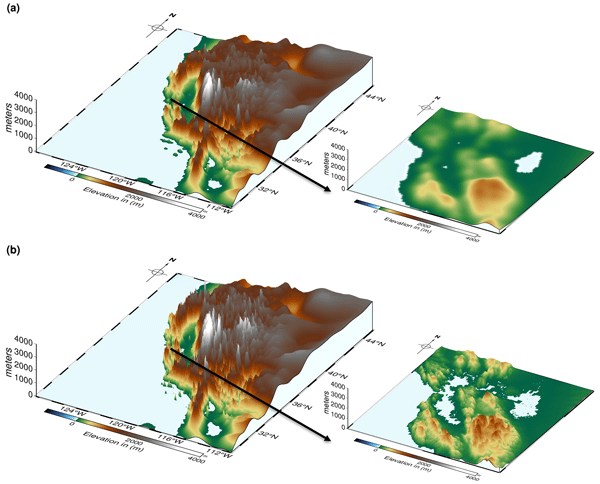
We ran a convection-permitting model with regional mesh refinement (3.25 km and 800 m) to simulate present-day wind and solar capacity factors over California, coupling it to an energy generation model. The high-resolution models captured realistic seasonal and diurnal cycles, with wind markedly better than a 25 km model and solar outperforming a 3 km operational forecast. We highlight the critical role of resolution, modeling assumptions, and data reliability in renewable energy assessment.
We ran a convection-permitting model with regional mesh refinement (3.25 km and 800 m) to...


