
Articles | Volume 11, issue 4
https://doi.org/10.5194/gmd-11-1229-2018
© Author(s) 2018. This work is distributed under
the Creative Commons Attribution 4.0 License.
https://doi.org/10.5194/gmd-11-1229-2018
© Author(s) 2018. This work is distributed under
the Creative Commons Attribution 4.0 License.
Model evaluation paper
| 
03 Apr 2018
Model evaluation paper |
| 03 Apr 2018
A 4.5 km resolution Arctic Ocean simulation with the global multi-resolution model FESOM 1.4
Alfred Wegener Institute Helmholtz Center for Polar and Marine
Research (AWI), Bremerhaven, Germany
Claudia Wekerle
Alfred Wegener Institute Helmholtz Center for Polar and Marine
Research (AWI), Bremerhaven, Germany
Sergey Danilov
Alfred Wegener Institute Helmholtz Center for Polar and Marine
Research (AWI), Bremerhaven, Germany
Jacobs University Bremen, Department of Mathematics & Logistics, Bremen, Germany
Xuezhu Wang
Hohai University, College of Oceanography,
Nanjing, China
Alfred Wegener Institute Helmholtz Center for Polar and Marine
Research (AWI), Bremerhaven, Germany
Thomas Jung
Alfred Wegener Institute Helmholtz Center for Polar and Marine
Research (AWI), Bremerhaven, Germany
University of Bremen, Department of Physics and Electrical Engineering, Bremen, Germany
Related authors
Ja-Yeon Moon, Jan Streffing, Sun-Seon Lee, Tido Semmler, Miguel Andrés-Martínez, Jiao Chen, Eun-Byeoul Cho, Jung-Eun Chu, Christian L. E. Franzke, Jan P. Gärtner, Rohit Ghosh, Jan Hegewald, Songyee Hong, Dae-Won Kim, Nikolay Koldunov, June-Yi Lee, Zihao Lin, Chao Liu, Svetlana N. Loza, Wonsun Park, Woncheol Roh, Dmitry V. Sein, Sahil Sharma, Dmitry Sidorenko, Jun-Hyeok Son, Malte F. Stuecker, Qiang Wang, Gyuseok Yi, Martina Zapponini, Thomas Jung, and Axel Timmermann
Earth Syst. Dynam., 16, 1103–1134, https://doi.org/10.5194/esd-16-1103-2025, https://doi.org/10.5194/esd-16-1103-2025, 2025
Short summary
Short summary
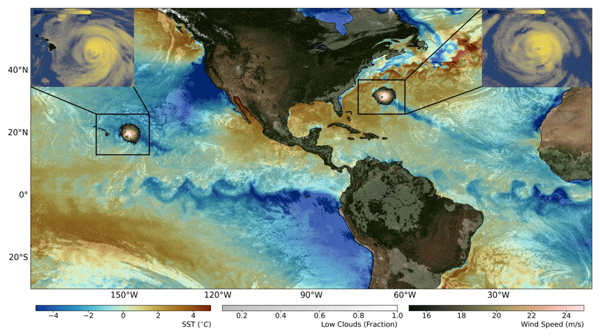
Based on a series of storm-resolving greenhouse warming simulations conducted with the AWI-CM3 model at 9 km global atmosphere and 4–25 km ocean resolution, we present new projections of regional climate change, modes of climate variability, and extreme events. The 10-year-long high-resolution simulations for the 2000s, 2030s, 2060s, and 2090s were initialized from a coarser-resolution transient run (31 km atmosphere) which follows the SSP5-8.5 greenhouse gas emission scenario from 1950–2100 CE.
Sergey Danilov, Carolin Mehlmann, Dmitry Sidorenko, and Qiang Wang
Geosci. Model Dev., 17, 2287–2297, https://doi.org/10.5194/gmd-17-2287-2024, https://doi.org/10.5194/gmd-17-2287-2024, 2024
Short summary
Short summary
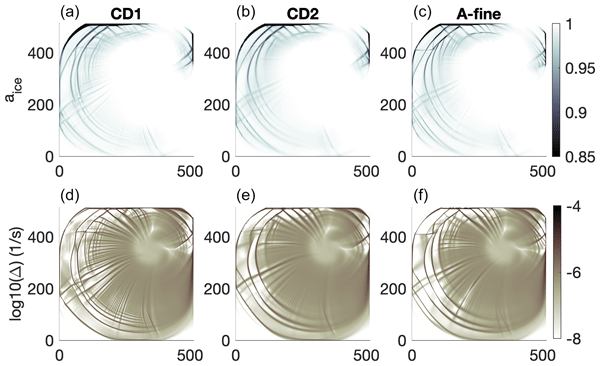
Sea ice models are a necessary component of climate models. At very high resolution they are capable of simulating linear kinematic features, such as leads, which are important for better prediction of heat exchanges between the ocean and atmosphere. Two new discretizations are described which improve the sea ice component of the Finite volumE Sea ice–Ocean Model (FESOM version 2) by allowing simulations of finer scales.
Qiang Wang, Qi Shu, Alexandra Bozec, Eric P. Chassignet, Pier Giuseppe Fogli, Baylor Fox-Kemper, Andy McC. Hogg, Doroteaciro Iovino, Andrew E. Kiss, Nikolay Koldunov, Julien Le Sommer, Yiwen Li, Pengfei Lin, Hailong Liu, Igor Polyakov, Patrick Scholz, Dmitry Sidorenko, Shizhu Wang, and Xiaobiao Xu
Geosci. Model Dev., 17, 347–379, https://doi.org/10.5194/gmd-17-347-2024, https://doi.org/10.5194/gmd-17-347-2024, 2024
Short summary
Short summary
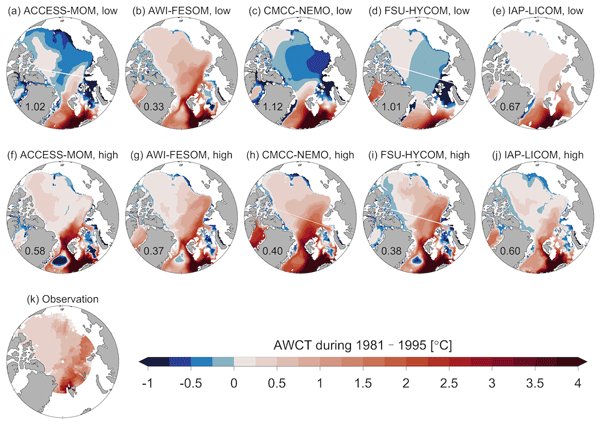
Increasing resolution improves model skills in simulating the Arctic Ocean, but other factors such as parameterizations and numerics are at least of the same importance for obtaining reliable simulations.
Xiaoxu Shi, Alexandre Cauquoin, Gerrit Lohmann, Lukas Jonkers, Qiang Wang, Hu Yang, Yuchen Sun, and Martin Werner
Geosci. Model Dev., 16, 5153–5178, https://doi.org/10.5194/gmd-16-5153-2023, https://doi.org/10.5194/gmd-16-5153-2023, 2023
Short summary
Short summary
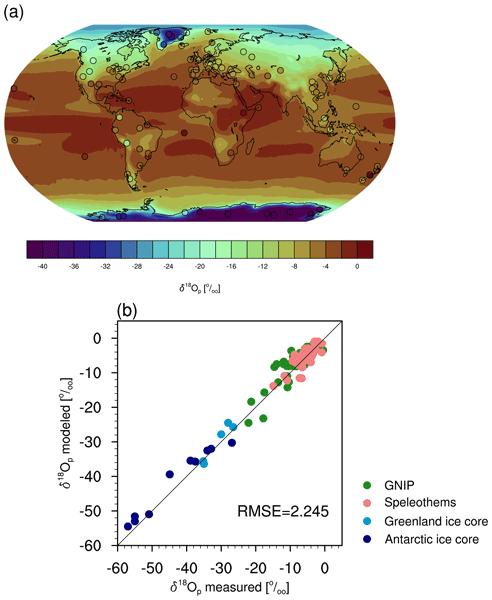
We developed a new climate model with isotopic capabilities and simulated the pre-industrial and mid-Holocene periods. Despite certain regional model biases, the modeled isotope composition is in good agreement with observations and reconstructions. Based on our analyses, the observed isotope–temperature relationship in polar regions may have a summertime bias. Using daily model outputs, we developed a novel isotope-based approach to determine the onset date of the West African summer monsoon.
Anne Marie Treguier, Clement de Boyer Montégut, Alexandra Bozec, Eric P. Chassignet, Baylor Fox-Kemper, Andy McC. Hogg, Doroteaciro Iovino, Andrew E. Kiss, Julien Le Sommer, Yiwen Li, Pengfei Lin, Camille Lique, Hailong Liu, Guillaume Serazin, Dmitry Sidorenko, Qiang Wang, Xiaobio Xu, and Steve Yeager
Geosci. Model Dev., 16, 3849–3872, https://doi.org/10.5194/gmd-16-3849-2023, https://doi.org/10.5194/gmd-16-3849-2023, 2023
Short summary
Short summary
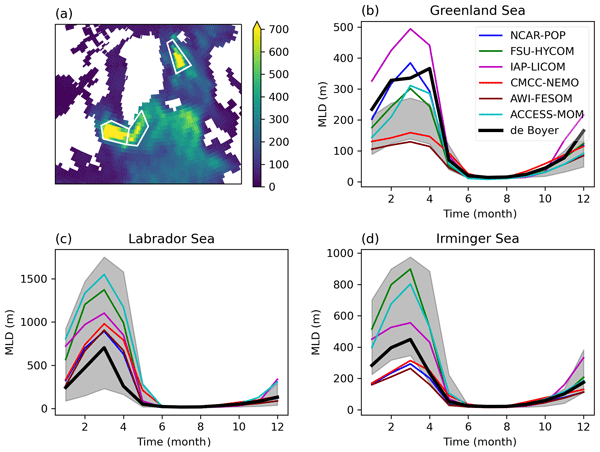
The ocean mixed layer is the interface between the ocean interior and the atmosphere and plays a key role in climate variability. We evaluate the performance of the new generation of ocean models for climate studies, designed to resolve
ocean eddies, which are the largest source of ocean variability and modulate the mixed-layer properties. We find that the mixed-layer depth is better represented in eddy-rich models but, unfortunately, not uniformly across the globe and not in all models.
Qi Shu, Qiang Wang, Chuncheng Guo, Zhenya Song, Shizhu Wang, Yan He, and Fangli Qiao
Geosci. Model Dev., 16, 2539–2563, https://doi.org/10.5194/gmd-16-2539-2023, https://doi.org/10.5194/gmd-16-2539-2023, 2023
Short summary
Short summary
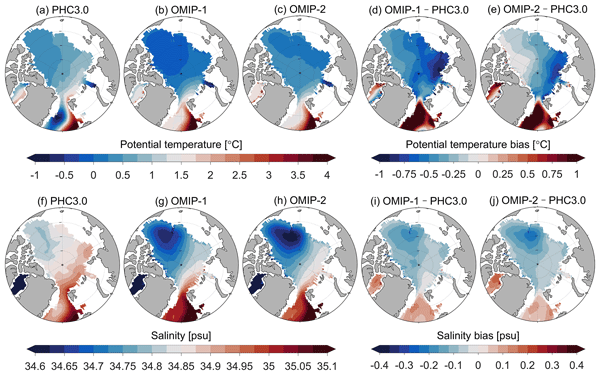
Ocean models are often used for scientific studies on the Arctic Ocean. Here the Arctic Ocean simulations by state-of-the-art global ocean–sea-ice models participating in the Ocean Model Intercomparison Project (OMIP) were evaluated. The simulations on Arctic Ocean hydrography, freshwater content, stratification, sea surface height, and gateway transports were assessed and the common biases were detected. The simulations forced by different atmospheric forcing were also evaluated.
Jan Streffing, Dmitry Sidorenko, Tido Semmler, Lorenzo Zampieri, Patrick Scholz, Miguel Andrés-Martínez, Nikolay Koldunov, Thomas Rackow, Joakim Kjellsson, Helge Goessling, Marylou Athanase, Qiang Wang, Jan Hegewald, Dmitry V. Sein, Longjiang Mu, Uwe Fladrich, Dirk Barbi, Paul Gierz, Sergey Danilov, Stephan Juricke, Gerrit Lohmann, and Thomas Jung
Geosci. Model Dev., 15, 6399–6427, https://doi.org/10.5194/gmd-15-6399-2022, https://doi.org/10.5194/gmd-15-6399-2022, 2022
Short summary
Short summary
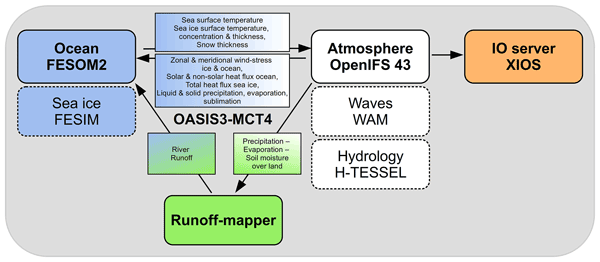
We developed a new atmosphere–ocean coupled climate model, AWI-CM3. Our model is significantly more computationally efficient than its predecessors AWI-CM1 and AWI-CM2. We show that the model, although cheaper to run, provides results of similar quality when modeling the historic period from 1850 to 2014. We identify the remaining weaknesses to outline future work. Finally we preview an improved simulation where the reduction in computational cost has to be invested in higher model resolution.
Takaya Uchida, Julien Le Sommer, Charles Stern, Ryan P. Abernathey, Chris Holdgraf, Aurélie Albert, Laurent Brodeau, Eric P. Chassignet, Xiaobiao Xu, Jonathan Gula, Guillaume Roullet, Nikolay Koldunov, Sergey Danilov, Qiang Wang, Dimitris Menemenlis, Clément Bricaud, Brian K. Arbic, Jay F. Shriver, Fangli Qiao, Bin Xiao, Arne Biastoch, René Schubert, Baylor Fox-Kemper, William K. Dewar, and Alan Wallcraft
Geosci. Model Dev., 15, 5829–5856, https://doi.org/10.5194/gmd-15-5829-2022, https://doi.org/10.5194/gmd-15-5829-2022, 2022
Short summary
Short summary
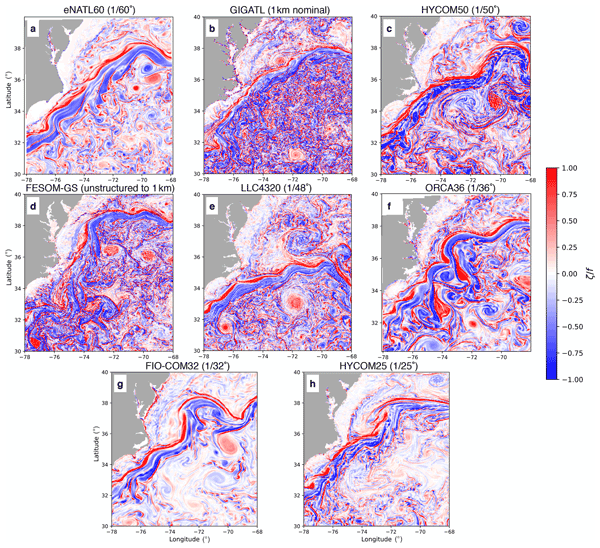
Ocean and climate scientists have used numerical simulations as a tool to examine the ocean and climate system since the 1970s. Since then, owing to the continuous increase in computational power and advances in numerical methods, we have been able to simulate increasing complex phenomena. However, the fidelity of the simulations in representing the phenomena remains a core issue in the ocean science community. Here we propose a cloud-based framework to inter-compare and assess such simulations.
Patrick Scholz, Dmitry Sidorenko, Sergey Danilov, Qiang Wang, Nikolay Koldunov, Dmitry Sein, and Thomas Jung
Geosci. Model Dev., 15, 335–363, https://doi.org/10.5194/gmd-15-335-2022, https://doi.org/10.5194/gmd-15-335-2022, 2022
Short summary
Short summary
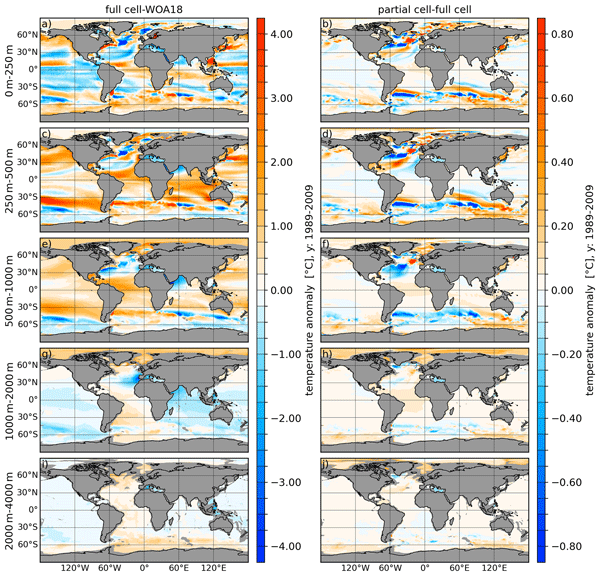
Structured-mesh ocean models are still the most mature in terms of functionality due to their long development history. However, unstructured-mesh ocean models have acquired new features and caught up in their functionality. This paper continues the work by Scholz et al. (2019) of documenting the features available in FESOM2.0. It focuses on the following two aspects: (i) partial bottom cells and embedded sea ice and (ii) dealing with mixing parameterisations enabled by using the CVMix package.
Torsten Kanzow, Rebecca A. McPherson, Claudia Wekerle, Wilken-Jon von Appen, Oliver Huhn, Donald A. Slater, and Andreas Münchow
EGUsphere, https://doi.org/10.5194/egusphere-2026-5184, https://doi.org/10.5194/egusphere-2026-5184, 2026
This preprint is open for discussion and under review for Ocean Science (OS).
Short summary
Short summary
Atlantic Water (AW) delivers heat to glaciers in Greenland, thereby causing melt. We reveal a cooling of the AW entering the world's largest fjord system, Kangertittivaq (East Greenland), after 2018. The cooling is present on the entire Northeast Greenland shelf, driven by cooling in the Nordic Seas. In the fjord, summertime glacier meltwater drives the flow of AW towards the prominent Daugaard Jensen Glacier. The cooling is as strong as the warming of AW at the fjord over the past half century.
Markus Reinert, Claudia Wekerle, Knut Klingbeil, Marvin Lorenz, and Hans Burchard
The Cryosphere, 20, 4563–4584, https://doi.org/10.5194/tc-20-4563-2026, https://doi.org/10.5194/tc-20-4563-2026, 2026
Short summary
Short summary
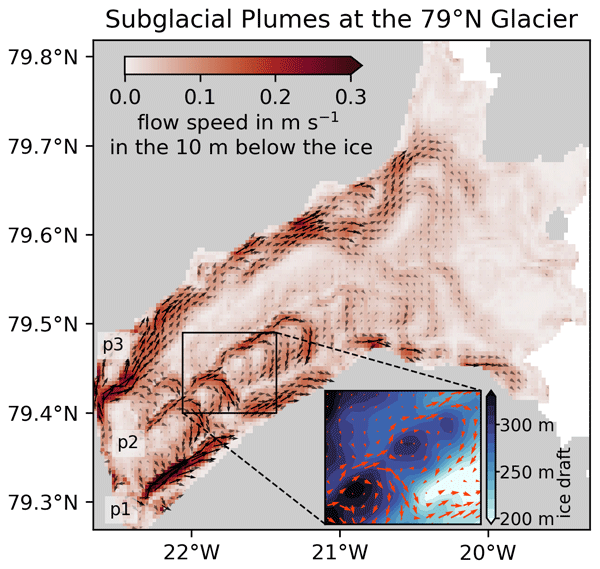
The Greenland Ice Sheet is an important contributor to global sea level rise. In northern Greenland, floating glacier tongues are primarily melted by ocean currents. These processes are difficult to observe, so we developed a realistic numerical model to study ocean-driven melting at Greenland's largest floating ice tongue, the 79° North Glacier. Our simulation reveals the details of the oceanic currents bringing warm water toward the ice base, melting and shaping the glacier tongue from below.
Heikki Järvinen, Jouni Räisänen, Lauri Tuppi, Clément Bouvier, Antonio Sanchez-Benitez, Juniper Tyree, Antti Toropainen, Paolo Davini, Francisco Doblas-Reyes, Thomas Jung, Daniel Klocke, Jenni Kontkanen, Sebastian Milinski, Matteo Nurisso, Himansu Kesari Pradhan, and Irina Sandu
EGUsphere, https://doi.org/10.5194/egusphere-2026-3364, https://doi.org/10.5194/egusphere-2026-3364, 2026
Short summary
Short summary
There is rich process-level variability present in the new-generation kilometre-scale climate simulations. The EU’s Climate Change Adaptation Digital Twin (Climate DT) integrates global Earth observing systems and observation modelling capabilities – until now common only in weather prediction – into operational climate simulation workflow. This provides a novel framework for precise evaluation of fine-scale details of simulation data and informing adaptation decisions at local (city) scales.
Rohit Ghosh, Suvarchal Kumar Cheedela, Sebastian Beyer, Nikolay Koldunov, Stella Berzina, Audrey Delpech, Svetlana Loza, Chathurika Wikramage, Stephy Libera, Matthias Aengenheyster, Amal John, Armelle Remedio, Patrick Scholz, Dmitry Sidorenko, Jan Streffing, Fabian Wachsmann, and Thomas Jung
EGUsphere, https://doi.org/10.5194/egusphere-2026-1289, https://doi.org/10.5194/egusphere-2026-1289, 2026
Short summary
Short summary
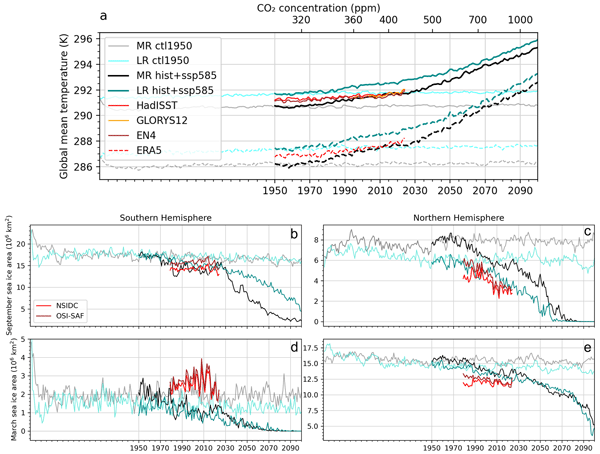
Understanding climate change requires detailed computer simulations of the Earth system. Here we present one of the first century-long global simulations in which both the atmosphere and ocean are represented at kilometre-scale resolution. Such simulations are extremely computationally demanding, but we demonstrate their feasibility and show that they can capture key climate patterns while representing important small-scale ocean processes.
Martina Zapponini, Tido Semmler, Jan Streffing, Thomas Rackow, Lettie A. Roach, and Thomas Jung
Geosci. Model Dev., 19, 3395–3425, https://doi.org/10.5194/gmd-19-3395-2026, https://doi.org/10.5194/gmd-19-3395-2026, 2026
Short summary
Short summary
This study evaluates the impact of grid resolution on long-term present and future climate runs using the Alfred Wegener Institute global model AWI-CM3. A higher-resolution setup (35 km atmosphere, eddy-permitting/resolving ocean) improves small-scale processes and long-term variability, across variables and regions, and can capture nonlinear ocean–atmosphere interactions often missed by Coupled Model Intercomparison Project (CMIP) models.
Francisco J. Doblas-Reyes, Jenni Kontkanen, Irina Sandu, Mario Acosta, Mohammed Hussam Al Turjmam, Ivan Alsina-Ferrer, Miguel Andrés-Martínez, Costanza Anerdi, Leo Arriola, Marvin Axness, Marc Batlle Martín, Peter Bauer, Tobias Becker, Daniel Beltrán, Sebastian Beyer, Hendryk Bockelmann, Pierre-Antoine Bretonnière, Sebastien Cabaniols, Silvia Caprioli, Miguel Castrillo, Aparna Chandrasekar, Suvarchal Cheedela, Victor Correal, Emanuele Danovaro, Paolo Davini, Jussi Enkovaara, Claudia Frauen, Barbara Früh, Aina Gaya Àvila, Paolo Ghinassi, Rohit Ghosh, Supriyo Ghosh, Iker González, Katherine Grayson, Matthew Griffith, Ioan Hadade, Christopher Haine, Carl Hartick, Utz-Uwe Haus, Shane Hearne, Heikki Järvinen, Bernat Jiménez, Amal John, Marlin Juchem, Thomas Jung, Jessica Kegel, Matthias Kelbling, Kai Keller, Bruno Kinoshita, Theresa Kiszler, Daniel Klocke, Lukas Kluft, Nikolay Koldunov, Tobias Kölling, Joonas Kolstela, Luis Kornblueh, Sergey Kosukhin, Aleksander Lacima-Nadolnik, Jeisson Javier Leal Rojas, Jonni Lehtiranta, Tuomas Lunttila, Anna Luoma, Pekka Manninen, Alexey Medvedev, Sebastian Milinski, Ali Mohammed, Sebastian Müller, Devaraju Naryanappa, Natalia Nazarova, Sami Niemelä, Bimochan Niraula, Henrik Nortamo, Aleksi Nummelin, Matteo Nurisso, Pablo Ortega, Stella Paronuzzi, Xabier Pedruzo-Bagazgoitia, Charles Pelletier, Carlos Peña, Suraj Polade, Himansu Kesari Pradhan, Rommel Quintanilla, Tiago Quintino, Thomas Rackow, Jouni Räisänen, Maqsood Mubarak Rajput, René Redler, Balthasar Reuter, Nuno Rocha Monteiro, Francesc Roura-Adserias, Silva Ruppert, Susan Sayed, Reiner Schnur, Tanvi Sharma, Dmitry Sidorenko, Outi Sievi-Korte, Albert Soret, Christian Steger, Bjorn Stevens, Jan Streffing, Jaleena Sunny, Luiggi Tenorio, Stephan Thober, Ulf Tigerstedt, Oriol Tinto, Juha Tonttila, Heikki Tuomenvirta, Lauri Tuppi, Ginka Van Thielen, Emanuele Vitali, Jost von Hardenberg, Ingo Wagner, Nils Wedi, Jan Wehner, Sven Willner, Xavier Yepes-Arbós, Florian Ziemen, and Janos Zimmermann
Geosci. Model Dev., 19, 2821–2848, https://doi.org/10.5194/gmd-19-2821-2026, https://doi.org/10.5194/gmd-19-2821-2026, 2026
Short summary
Short summary
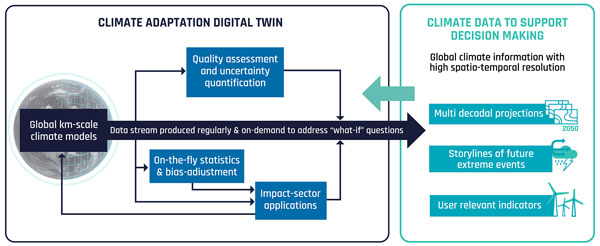
The Climate Change Adaptation Digital Twin (Climate DT) pioneers the operationalisation of global climate projections. It produces global simulations with local granularity for adaptation decision-making. Applications are embedded to generate tailored indicators. A unified workflow orchestrates all components in several supercomputers. Data management ensures consistency and streaming enables real-time use. It is a complementary innovation to initiatives like CMIP, CORDEX, and climate services.

Alejandra Quintanilla-Zurita, Benjamin Rabe, Claudia Wekerle, Torsten Kanzow, Ivan Kuznetsov, Sinhue Torres-Valdes, Enric Pallàs-Sanz, and Ying-Chih Fang
Ocean Sci., 22, 305–328, https://doi.org/10.5194/os-22-305-2026, https://doi.org/10.5194/os-22-305-2026, 2026
Short summary
Short summary
During a year-long Arctic expedition, we discovered nine underwater eddies beneath the sea ice in the central Arctic Ocean. These hidden structures form within a layered part of the ocean just below the surface and may reshape water layers and transport heat, freshwater, and nutrients. Using drifting ice platforms, we measured their size, depth, and motion to understand how they form.
Hans Segura, Xabier Pedruzo-Bagazgoitia, Philipp Weiss, Sebastian K. Müller, Thomas Rackow, Junhong Lee, Edgar Dolores-Tesillos, Imme Benedict, Matthias Aengenheyster, Razvan Aguridan, Gabriele Arduini, Alexander J. Baker, Jiawei Bao, Swantje Bastin, Eulàlia Baulenas, Tobias Becker, Sebastian Beyer, Hendryk Bockelmann, Nils Brüggemann, Lukas Brunner, Suvarchal K. Cheedela, Sushant Das, Jasper Denissen, Ian Dragaud, Piotr Dziekan, Madeleine Ekblom, Jan Frederik Engels, Monika Esch, Richard Forbes, Claudia Frauen, Lilli Freischem, Diego García-Maroto, Philipp Geier, Paul Gierz, Álvaro González-Cervera, Katherine Grayson, Matthew Griffith, Oliver Gutjahr, Helmuth Haak, Ioan Hadade, Kerstin Haslehner, Shabeh ul Hasson, Jan Hegewald, Lukas Kluft, Aleksei Koldunov, Nikolay Koldunov, Tobias Kölling, Shunya Koseki, Sergey Kosukhin, Josh Kousal, Peter Kuma, Arjun U. Kumar, Rumeng Li, Nicolas Maury, Maximilian Meindl, Sebastian Milinski, Kristian Mogensen, Bimochan Niraula, Jakub Nowak, Divya Sri Praturi, Ulrike Proske, Dian Putrasahan, René Redler, David Santuy, Domokos Sármány, Reiner Schnur, Patrick Scholz, Dmitry Sidorenko, Dorian Spät, Birgit Sützl, Daisuke Takasuka, Adrian Tompkins, Alejandro Uribe, Mirco Valentini, Menno Veerman, Aiko Voigt, Sarah Warnau, Fabian Wachsmann, Marta Wacławczyk, Nils Wedi, Karl-Hermann Wieners, Jonathan Wille, Marius Winkler, Yuting Wu, Florian Ziemen, Janos Zimmermann, Frida A.-M. Bender, Dragana Bojovic, Sandrine Bony, Simona Bordoni, Patrice Brehmer, Marcus Dengler, Emanuel Dutra, Saliou Faye, Erich Fischer, Chiel van Heerwaarden, Cathy Hohenegger, Heikki Järvinen, Markus Jochum, Thomas Jung, Johann H. Jungclaus, Noel S. Keenlyside, Daniel Klocke, Heike Konow, Martina Klose, Szymon Malinowski, Olivia Martius, Thorsten Mauritsen, Juan Pedro Mellado, Theresa Mieslinger, Elsa Mohino, Hanna Pawłowska, Karsten Peters-von Gehlen, Abdoulaye Sarré, Pajam Sobhani, Philip Stier, Lauri Tuppi, Pier Luigi Vidale, Irina Sandu, and Bjorn Stevens
Geosci. Model Dev., 18, 7735–7761, https://doi.org/10.5194/gmd-18-7735-2025, https://doi.org/10.5194/gmd-18-7735-2025, 2025
Short summary
Short summary
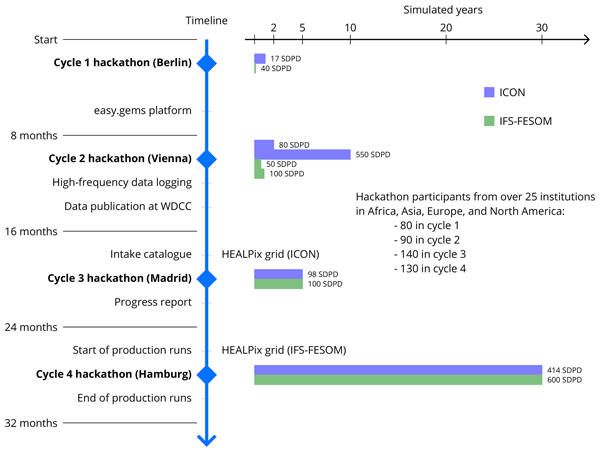
The Next Generation of Earth Modeling Systems project (nextGEMS) developed two Earth system models that use horizontal grid spacing of 10 km and finer, giving more fidelity to the representation of local phenomena, globally. In its fourth cycle, nextGEMS simulated the Earth System climate over the 2020–2049 period under the SSP3-7.0 scenario. Here, we provide an overview of nextGEMS, insights into the model development, and the realism of multi-decadal, kilometer-scale simulations.
Kacper Nowak, Sergey Danilov, Vasco Müller, and Caili Liu
Geosci. Model Dev., 18, 6541–6551, https://doi.org/10.5194/gmd-18-6541-2025, https://doi.org/10.5194/gmd-18-6541-2025, 2025
Short summary
Short summary
A new method called coarse-graining scale analysis is gaining traction as an alternative to Fourier analysis. However, it requires data to be on a regular grid. To address this, we present a high-performance Python package of the coarse-graining technique using discrete Laplacians. This method can handle any mesh type and is ideal for processing output directly from unstructured-mesh models. Computation is split into preparation and solving phases, with GPU acceleration ensuring fast processing.
Ja-Yeon Moon, Jan Streffing, Sun-Seon Lee, Tido Semmler, Miguel Andrés-Martínez, Jiao Chen, Eun-Byeoul Cho, Jung-Eun Chu, Christian L. E. Franzke, Jan P. Gärtner, Rohit Ghosh, Jan Hegewald, Songyee Hong, Dae-Won Kim, Nikolay Koldunov, June-Yi Lee, Zihao Lin, Chao Liu, Svetlana N. Loza, Wonsun Park, Woncheol Roh, Dmitry V. Sein, Sahil Sharma, Dmitry Sidorenko, Jun-Hyeok Son, Malte F. Stuecker, Qiang Wang, Gyuseok Yi, Martina Zapponini, Thomas Jung, and Axel Timmermann
Earth Syst. Dynam., 16, 1103–1134, https://doi.org/10.5194/esd-16-1103-2025, https://doi.org/10.5194/esd-16-1103-2025, 2025
Short summary
Short summary
Based on a series of storm-resolving greenhouse warming simulations conducted with the AWI-CM3 model at 9 km global atmosphere and 4–25 km ocean resolution, we present new projections of regional climate change, modes of climate variability, and extreme events. The 10-year-long high-resolution simulations for the 2000s, 2030s, 2060s, and 2090s were initialized from a coarser-resolution transient run (31 km atmosphere) which follows the SSP5-8.5 greenhouse gas emission scenario from 1950–2100 CE.
Torsten Kanzow, Angelika Humbert, Thomas Mölg, Mirko Scheinert, Matthias Braun, Hans Burchard, Francesca Doglioni, Philipp Hochreuther, Martin Horwath, Oliver Huhn, Maria Kappelsberger, Jürgen Kusche, Erik Loebel, Katrina Lutz, Ben Marzeion, Rebecca McPherson, Mahdi Mohammadi-Aragh, Marco Möller, Carolyne Pickler, Markus Reinert, Monika Rhein, Martin Rückamp, Janin Schaffer, Muhammad Shafeeque, Sophie Stolzenberger, Ralph Timmermann, Jenny Turton, Claudia Wekerle, and Ole Zeising
The Cryosphere, 19, 1789–1824, https://doi.org/10.5194/tc-19-1789-2025, https://doi.org/10.5194/tc-19-1789-2025, 2025
Short summary
Short summary
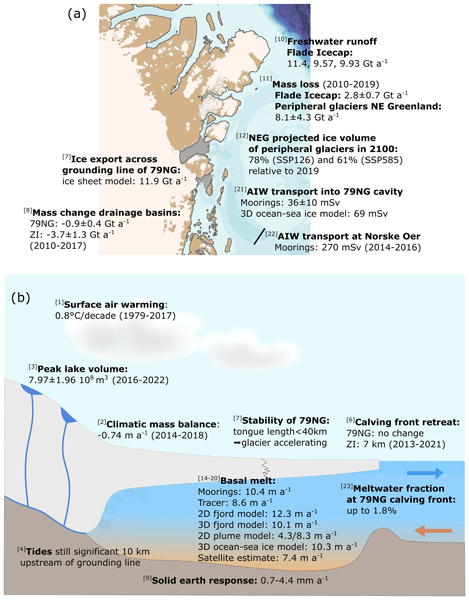
The Greenland Ice Sheet represents the second-largest contributor to global sea-level rise. We quantify atmosphere, ice and ocean processes related to the mass balance of glaciers in northeast Greenland, focusing on Greenland’s largest floating ice tongue, the 79° N Glacier. We find that together, the different in situ and remote sensing observations and model simulations reveal a consistent picture of a coupled atmosphere–ice sheet–ocean system that has entered a phase of major change.

Swantje Bastin, Aleksei Koldunov, Florian Schütte, Oliver Gutjahr, Marta Agnieszka Mrozowska, Tim Fischer, Radomyra Shevchenko, Arjun Kumar, Nikolay Koldunov, Helmuth Haak, Nils Brüggemann, Rebecca Hummels, Mia Sophie Specht, Johann Jungclaus, Sergey Danilov, Marcus Dengler, and Markus Jochum
Geosci. Model Dev., 18, 1189–1220, https://doi.org/10.5194/gmd-18-1189-2025, https://doi.org/10.5194/gmd-18-1189-2025, 2025
Short summary
Short summary
Vertical mixing is an important process, for example, for tropical sea surface temperature, but cannot be resolved by ocean models. Comparisons of mixing schemes and settings have usually been done with a single model, sometimes yielding conflicting results. We systematically compare two widely used schemes with different parameter settings in two different ocean models and show that most effects from mixing scheme parameter changes are model-dependent.
Thomas Rackow, Xabier Pedruzo-Bagazgoitia, Tobias Becker, Sebastian Milinski, Irina Sandu, Razvan Aguridan, Peter Bechtold, Sebastian Beyer, Jean Bidlot, Souhail Boussetta, Willem Deconinck, Michail Diamantakis, Peter Dueben, Emanuel Dutra, Richard Forbes, Rohit Ghosh, Helge F. Goessling, Ioan Hadade, Jan Hegewald, Thomas Jung, Sarah Keeley, Lukas Kluft, Nikolay Koldunov, Aleksei Koldunov, Tobias Kölling, Josh Kousal, Christian Kühnlein, Pedro Maciel, Kristian Mogensen, Tiago Quintino, Inna Polichtchouk, Balthasar Reuter, Domokos Sármány, Patrick Scholz, Dmitry Sidorenko, Jan Streffing, Birgit Sützl, Daisuke Takasuka, Steffen Tietsche, Mirco Valentini, Benoît Vannière, Nils Wedi, Lorenzo Zampieri, and Florian Ziemen
Geosci. Model Dev., 18, 33–69, https://doi.org/10.5194/gmd-18-33-2025, https://doi.org/10.5194/gmd-18-33-2025, 2025
Short summary
Short summary
Detailed global climate model simulations have been created based on a numerical weather prediction model, offering more accurate spatial detail down to the scale of individual cities ("kilometre-scale") and a better understanding of climate phenomena such as atmospheric storms, whirls in the ocean, and cracks in sea ice. The new model aims to provide globally consistent information on local climate change with greater precision, benefiting environmental planning and local impact modelling.
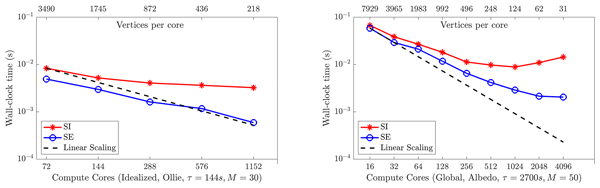
Tridib Banerjee, Patrick Scholz, Sergey Danilov, Knut Klingbeil, and Dmitry Sidorenko
Geosci. Model Dev., 17, 7051–7065, https://doi.org/10.5194/gmd-17-7051-2024, https://doi.org/10.5194/gmd-17-7051-2024, 2024
Short summary
Short summary
In this paper we propose a new alternative to one of the functionalities of the sea ice model FESOM2. The alternative we propose allows the model to capture and simulate fast changes in quantities like sea surface elevation more accurately. We also demonstrate that the new alternative is faster and more adept at taking advantages of highly parallelized computing infrastructure. We therefore show that this new alternative is a great addition to the sea ice model FESOM2.
Bjorn Stevens, Stefan Adami, Tariq Ali, Hartwig Anzt, Zafer Aslan, Sabine Attinger, Jaana Bäck, Johanna Baehr, Peter Bauer, Natacha Bernier, Bob Bishop, Hendryk Bockelmann, Sandrine Bony, Guy Brasseur, David N. Bresch, Sean Breyer, Gilbert Brunet, Pier Luigi Buttigieg, Junji Cao, Christelle Castet, Yafang Cheng, Ayantika Dey Choudhury, Deborah Coen, Susanne Crewell, Atish Dabholkar, Qing Dai, Francisco Doblas-Reyes, Dale Durran, Ayoub El Gaidi, Charlie Ewen, Eleftheria Exarchou, Veronika Eyring, Florencia Falkinhoff, David Farrell, Piers M. Forster, Ariane Frassoni, Claudia Frauen, Oliver Fuhrer, Shahzad Gani, Edwin Gerber, Debra Goldfarb, Jens Grieger, Nicolas Gruber, Wilco Hazeleger, Rolf Herken, Chris Hewitt, Torsten Hoefler, Huang-Hsiung Hsu, Daniela Jacob, Alexandra Jahn, Christian Jakob, Thomas Jung, Christopher Kadow, In-Sik Kang, Sarah Kang, Karthik Kashinath, Katharina Kleinen-von Königslöw, Daniel Klocke, Uta Kloenne, Milan Klöwer, Chihiro Kodama, Stefan Kollet, Tobias Kölling, Jenni Kontkanen, Steve Kopp, Michal Koran, Markku Kulmala, Hanna Lappalainen, Fakhria Latifi, Bryan Lawrence, June Yi Lee, Quentin Lejeun, Christian Lessig, Chao Li, Thomas Lippert, Jürg Luterbacher, Pekka Manninen, Jochem Marotzke, Satoshi Matsouoka, Charlotte Merchant, Peter Messmer, Gero Michel, Kristel Michielsen, Tomoki Miyakawa, Jens Müller, Ramsha Munir, Sandeep Narayanasetti, Ousmane Ndiaye, Carlos Nobre, Achim Oberg, Riko Oki, Tuba Özkan-Haller, Tim Palmer, Stan Posey, Andreas Prein, Odessa Primus, Mike Pritchard, Julie Pullen, Dian Putrasahan, Johannes Quaas, Krishnan Raghavan, Venkatachalam Ramaswamy, Markus Rapp, Florian Rauser, Markus Reichstein, Aromar Revi, Sonakshi Saluja, Masaki Satoh, Vera Schemann, Sebastian Schemm, Christina Schnadt Poberaj, Thomas Schulthess, Cath Senior, Jagadish Shukla, Manmeet Singh, Julia Slingo, Adam Sobel, Silvina Solman, Jenna Spitzer, Philip Stier, Thomas Stocker, Sarah Strock, Hang Su, Petteri Taalas, John Taylor, Susann Tegtmeier, Georg Teutsch, Adrian Tompkins, Uwe Ulbrich, Pier-Luigi Vidale, Chien-Ming Wu, Hao Xu, Najibullah Zaki, Laure Zanna, Tianjun Zhou, and Florian Ziemen
Earth Syst. Sci. Data, 16, 2113–2122, https://doi.org/10.5194/essd-16-2113-2024, https://doi.org/10.5194/essd-16-2113-2024, 2024
Short summary
Short summary
To manage Earth in the Anthropocene, new tools, new institutions, and new forms of international cooperation will be required. Earth Virtualization Engines is proposed as an international federation of centers of excellence to empower all people to respond to the immense and urgent challenges posed by climate change.
Sergey Danilov, Carolin Mehlmann, Dmitry Sidorenko, and Qiang Wang
Geosci. Model Dev., 17, 2287–2297, https://doi.org/10.5194/gmd-17-2287-2024, https://doi.org/10.5194/gmd-17-2287-2024, 2024
Short summary
Short summary
Sea ice models are a necessary component of climate models. At very high resolution they are capable of simulating linear kinematic features, such as leads, which are important for better prediction of heat exchanges between the ocean and atmosphere. Two new discretizations are described which improve the sea ice component of the Finite volumE Sea ice–Ocean Model (FESOM version 2) by allowing simulations of finer scales.
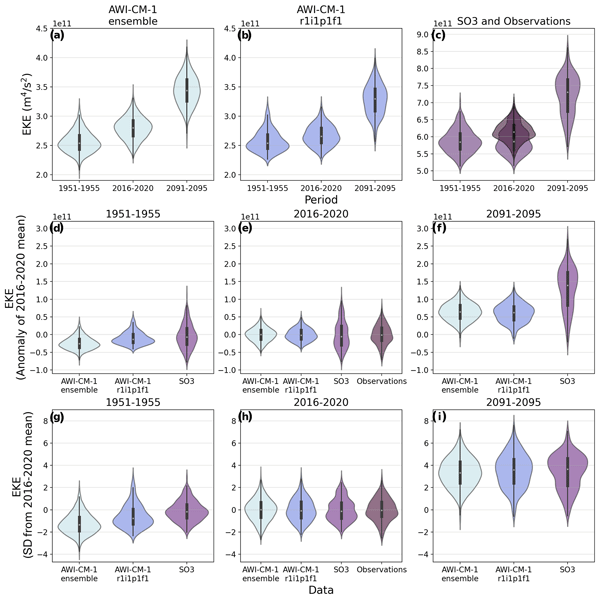
Nathan Beech, Thomas Rackow, Tido Semmler, and Thomas Jung
Geosci. Model Dev., 17, 529–543, https://doi.org/10.5194/gmd-17-529-2024, https://doi.org/10.5194/gmd-17-529-2024, 2024
Short summary
Short summary
Cost-reducing modeling strategies are applied to high-resolution simulations of the Southern Ocean in a changing climate. They are evaluated with respect to observations and traditional, lower-resolution modeling methods. The simulations effectively reproduce small-scale ocean flows seen in satellite data and are largely consistent with traditional model simulations after 4 °C of warming. Small-scale flows are found to intensify near bathymetric features and to become more variable.
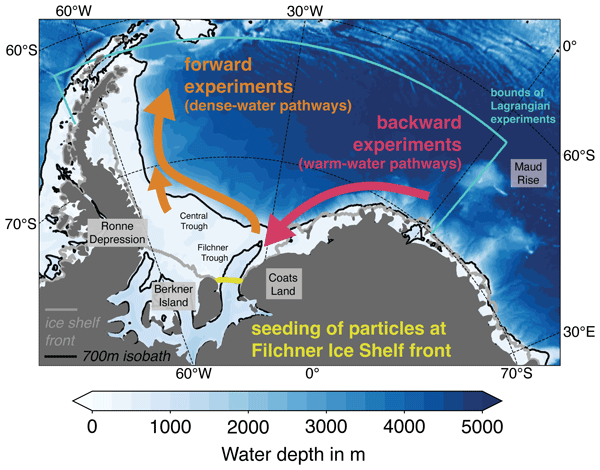
Cara Nissen, Ralph Timmermann, Mathias van Caspel, and Claudia Wekerle
Ocean Sci., 20, 85–101, https://doi.org/10.5194/os-20-85-2024, https://doi.org/10.5194/os-20-85-2024, 2024
Short summary
Short summary
The southeastern Weddell Sea is important for global ocean circulation due to the cross-shelf-break exchange of Dense Shelf Water and Warm Deep Water, but their exact circulation pathways remain elusive. Using Lagrangian model experiments in an eddy-permitting ocean model, we show how present circulation pathways and transit times of these water masses on the continental shelf are altered by 21st-century climate change, which has implications for local ice-shelf basal melt rates and ecosystems.
Qiang Wang, Qi Shu, Alexandra Bozec, Eric P. Chassignet, Pier Giuseppe Fogli, Baylor Fox-Kemper, Andy McC. Hogg, Doroteaciro Iovino, Andrew E. Kiss, Nikolay Koldunov, Julien Le Sommer, Yiwen Li, Pengfei Lin, Hailong Liu, Igor Polyakov, Patrick Scholz, Dmitry Sidorenko, Shizhu Wang, and Xiaobiao Xu
Geosci. Model Dev., 17, 347–379, https://doi.org/10.5194/gmd-17-347-2024, https://doi.org/10.5194/gmd-17-347-2024, 2024
Short summary
Short summary
Increasing resolution improves model skills in simulating the Arctic Ocean, but other factors such as parameterizations and numerics are at least of the same importance for obtaining reliable simulations.
Xiaoxu Shi, Alexandre Cauquoin, Gerrit Lohmann, Lukas Jonkers, Qiang Wang, Hu Yang, Yuchen Sun, and Martin Werner
Geosci. Model Dev., 16, 5153–5178, https://doi.org/10.5194/gmd-16-5153-2023, https://doi.org/10.5194/gmd-16-5153-2023, 2023
Short summary
Short summary
We developed a new climate model with isotopic capabilities and simulated the pre-industrial and mid-Holocene periods. Despite certain regional model biases, the modeled isotope composition is in good agreement with observations and reconstructions. Based on our analyses, the observed isotope–temperature relationship in polar regions may have a summertime bias. Using daily model outputs, we developed a novel isotope-based approach to determine the onset date of the West African summer monsoon.
Anne Marie Treguier, Clement de Boyer Montégut, Alexandra Bozec, Eric P. Chassignet, Baylor Fox-Kemper, Andy McC. Hogg, Doroteaciro Iovino, Andrew E. Kiss, Julien Le Sommer, Yiwen Li, Pengfei Lin, Camille Lique, Hailong Liu, Guillaume Serazin, Dmitry Sidorenko, Qiang Wang, Xiaobio Xu, and Steve Yeager
Geosci. Model Dev., 16, 3849–3872, https://doi.org/10.5194/gmd-16-3849-2023, https://doi.org/10.5194/gmd-16-3849-2023, 2023
Short summary
Short summary
The ocean mixed layer is the interface between the ocean interior and the atmosphere and plays a key role in climate variability. We evaluate the performance of the new generation of ocean models for climate studies, designed to resolve
ocean eddies, which are the largest source of ocean variability and modulate the mixed-layer properties. We find that the mixed-layer depth is better represented in eddy-rich models but, unfortunately, not uniformly across the globe and not in all models.
Qi Shu, Qiang Wang, Chuncheng Guo, Zhenya Song, Shizhu Wang, Yan He, and Fangli Qiao
Geosci. Model Dev., 16, 2539–2563, https://doi.org/10.5194/gmd-16-2539-2023, https://doi.org/10.5194/gmd-16-2539-2023, 2023
Short summary
Short summary
Ocean models are often used for scientific studies on the Arctic Ocean. Here the Arctic Ocean simulations by state-of-the-art global ocean–sea-ice models participating in the Ocean Model Intercomparison Project (OMIP) were evaluated. The simulations on Arctic Ocean hydrography, freshwater content, stratification, sea surface height, and gateway transports were assessed and the common biases were detected. The simulations forced by different atmospheric forcing were also evaluated.
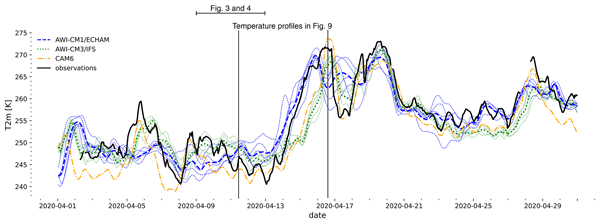
Felix Pithan, Marylou Athanase, Sandro Dahlke, Antonio Sánchez-Benítez, Matthew D. Shupe, Anne Sledd, Jan Streffing, Gunilla Svensson, and Thomas Jung
Geosci. Model Dev., 16, 1857–1873, https://doi.org/10.5194/gmd-16-1857-2023, https://doi.org/10.5194/gmd-16-1857-2023, 2023
Short summary
Short summary
Evaluating climate models usually requires long observational time series, but we present a method that also works for short field campaigns. We compare climate model output to observations from the MOSAiC expedition in the central Arctic Ocean. All models show how the arrival of a warm air mass warms the Arctic in April 2020, but two models do not show the response of snow temperature to the diurnal cycle. One model has too little liquid water and too much ice in clouds during cold days.
Jan Streffing, Dmitry Sidorenko, Tido Semmler, Lorenzo Zampieri, Patrick Scholz, Miguel Andrés-Martínez, Nikolay Koldunov, Thomas Rackow, Joakim Kjellsson, Helge Goessling, Marylou Athanase, Qiang Wang, Jan Hegewald, Dmitry V. Sein, Longjiang Mu, Uwe Fladrich, Dirk Barbi, Paul Gierz, Sergey Danilov, Stephan Juricke, Gerrit Lohmann, and Thomas Jung
Geosci. Model Dev., 15, 6399–6427, https://doi.org/10.5194/gmd-15-6399-2022, https://doi.org/10.5194/gmd-15-6399-2022, 2022
Short summary
Short summary
We developed a new atmosphere–ocean coupled climate model, AWI-CM3. Our model is significantly more computationally efficient than its predecessors AWI-CM1 and AWI-CM2. We show that the model, although cheaper to run, provides results of similar quality when modeling the historic period from 1850 to 2014. We identify the remaining weaknesses to outline future work. Finally we preview an improved simulation where the reduction in computational cost has to be invested in higher model resolution.
Takaya Uchida, Julien Le Sommer, Charles Stern, Ryan P. Abernathey, Chris Holdgraf, Aurélie Albert, Laurent Brodeau, Eric P. Chassignet, Xiaobiao Xu, Jonathan Gula, Guillaume Roullet, Nikolay Koldunov, Sergey Danilov, Qiang Wang, Dimitris Menemenlis, Clément Bricaud, Brian K. Arbic, Jay F. Shriver, Fangli Qiao, Bin Xiao, Arne Biastoch, René Schubert, Baylor Fox-Kemper, William K. Dewar, and Alan Wallcraft
Geosci. Model Dev., 15, 5829–5856, https://doi.org/10.5194/gmd-15-5829-2022, https://doi.org/10.5194/gmd-15-5829-2022, 2022
Short summary
Short summary
Ocean and climate scientists have used numerical simulations as a tool to examine the ocean and climate system since the 1970s. Since then, owing to the continuous increase in computational power and advances in numerical methods, we have been able to simulate increasing complex phenomena. However, the fidelity of the simulations in representing the phenomena remains a core issue in the ocean science community. Here we propose a cloud-based framework to inter-compare and assess such simulations.

Sara Pasqualetto, Luisa Cristini, and Thomas Jung
Geosci. Commun., 5, 87–100, https://doi.org/10.5194/gc-5-87-2022, https://doi.org/10.5194/gc-5-87-2022, 2022
Short summary
Short summary
Many projects in their reporting phase are required to provide a clear plan for evaluating the results of those efforts aimed at translating scientific results to a broader audience. This paper illustrates methodologies and strategies used in the framework of a European research project to assess the impact of knowledge transfer activities, both quantitatively and qualitatively, and provides recommendations and hints for developing a useful impact plan for scientific projects.
Patrick Scholz, Dmitry Sidorenko, Sergey Danilov, Qiang Wang, Nikolay Koldunov, Dmitry Sein, and Thomas Jung
Geosci. Model Dev., 15, 335–363, https://doi.org/10.5194/gmd-15-335-2022, https://doi.org/10.5194/gmd-15-335-2022, 2022
Short summary
Short summary
Structured-mesh ocean models are still the most mature in terms of functionality due to their long development history. However, unstructured-mesh ocean models have acquired new features and caught up in their functionality. This paper continues the work by Scholz et al. (2019) of documenting the features available in FESOM2.0. It focuses on the following two aspects: (i) partial bottom cells and embedded sea ice and (ii) dealing with mixing parameterisations enabled by using the CVMix package.
Vera Fofonova, Tuomas Kärnä, Knut Klingbeil, Alexey Androsov, Ivan Kuznetsov, Dmitry Sidorenko, Sergey Danilov, Hans Burchard, and Karen Helen Wiltshire
Geosci. Model Dev., 14, 6945–6975, https://doi.org/10.5194/gmd-14-6945-2021, https://doi.org/10.5194/gmd-14-6945-2021, 2021
Short summary
Short summary
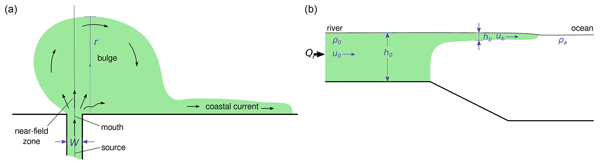
We present a test case of river plume spreading to evaluate coastal ocean models. Our test case reveals the level of numerical mixing (due to parameterizations used and numerical treatment of processes in the model) and the ability of models to reproduce complex dynamics. The major result of our comparative study is that accuracy in reproducing the analytical solution depends less on the type of applied model architecture or numerical grid than it does on the type of advection scheme.
Cited articles
Aagaard, K., and Carmack, E. C.: The role of sea ice and other fresh-water in the Arctic circulation, J. Geophys. Res., 94, 14485–14498, 1989.
Aagaard, K., Swift, J. H., and Carmack, E.: Thermohaline circulation in the Arctic mediterranean seas, J. Geophys. Res.-Oceans, 90, 4833–4846, 1985.
Aksenov, Y., Ivanov, V. V., Nurser, A. J. G., Bacon, S., Polyakov, I. V., Coward, A. C., Naveira-Garabato, A. C., and Beszczynska-Moeller, A.: The Arctic Circumpolar Boundary Current, J. Geophys. Res.-Oceans, 116, C09017, https://doi.org/10.1029/2003GL018080, 2011.
Aksenov, Y., Karcher, M., A. Proshutinsky, R. Gerdes, B. de Cuevas, E. Golubeva, F. Kauker, A. T. Nguyen, G. A. Platov, M. Wadley, E. Watanabe, A. C. Coward, and A. J. G. Nurser: Arctic pathways of Pacific Water: Arctic Ocean model intercomparison experiments, J. Geophys. Res.-Oceans, 121, 27–59, 2016.
Arrigo, K. R. and van Dijken, G. L.: Continued increases in Arctic Ocean primary production, Prog. Oceanogr., 136, 60–70, 2015.
Arzel, O., Fichefet, T., Goosse, H., and Dufresne, J.-L.: Causes and impacts of changes in the Arctic freshwater budget during the 20th and 21st centuries in an AOGCM, Clim. Dynam., 30, 37–58, 2008.
Beszczynska-Moeller, A., Fahrbach, E., Schauer, U., and Hansen, E.: Variability in Atlantic water temperature and transport at the entrance to the Arctic Ocean, 1997–2010, ICES J. Mar. Science, 69, 852–863, 2012.
Biastoch, A., Sein, D., Durgadoo, J. V., Wang, Q., and Danilov, S.: Simulating the Agulhas system in global ocean models – nesting vs. multi-resolution unstructured meshes, Ocean Model., 121, 117–131, https://doi.org/10.1016/j.ocemod.2017.12.002, 2018.
Carmack, E. C., Yamamoto-Kawai, M., Haine, T. W. N., Bacon, S., Bluhm, B. A., Lique, C., Melling, H., Polyakov, I. V., Straneo, F., Timmermans, M.-L., and Williams, W. J.: Freshwater and its role in the Arctic Marine System: Sources, disposition, storage, export, and physical and biogeochemical consequences in the Arctic and global oceans, J. Geophys. Res.-Biogeo., 121, 675–717, 2016.
Cavalieri, D. J. and Parkinson, C. L.: Arctic sea ice variability and trends, 1979–2010, The Cryosphere, 6, 881–889, https://doi.org/10.5194/tc-6-881-2012, 2012.
Chassignet, E. P., Hurlburt, H. E., Metzger, E. J., Smedstad, O. M., Cummings, J. A., Halliwell, G. R., Bleck, R., Baraille, R., Wallcraft, A. J., Lozano, C., Tolman, H. L., Srinivasan, A., Hankin, S., Cornillon, P., Weisberg, R., Barth, A., He, R., Werner, F., and Wilkin, J.: U.S. GODAE: Global Ocean Prediction with the HYbrid Coordinate Ocean Model (HYCOM), Oceanography, 22, 64–75, 2009.
Comiso, J. C.: Large decadal decline in the Arctic multiyear ice cover, J. Clim., 25, 1176–1193, 2012.
Curry, B., Lee, C. M., Petrie, B., Moritz, R. E., and Kwok, R.: Multiyear volume, liquid freshwater, and sea ice transports through Davis Strait, 2004–2010, J. Phys. Oceanogr., 44, 1244–1266, 2014.
Dai, A., Qian, T., Trenberth, K. E., and Milliman, J. D.: Changes in continental freshwater discharge from 1948 to 2004, J. Climate, 22, 2773–2792, 2009.
Danabasoglu, G., Yeager, S. G., Bailey, D., et al.: North Atlantic simulations in Coordinated Ocean-ice Reference Experiments phase {II} (CORE-II) – part i: Mean states, Ocean Model., 73, 76–107, 2014.
Danilov, S., Kivman, G., and Schroeter, J.: A finite-element ocean model: principles and evaluation, Ocean Model., 6, 125–150, 2004.
Danilov, S., Wang, Q., Timmermann, R., Iakovlev, N., Sidorenko, D., Kimmritz, M., Jung, T., and Schröter, J.: Finite-Element Sea Ice Model (FESIM), version 2, Geosci. Model Dev., 8, 1747–1761, https://doi.org/10.5194/gmd-8-1747-2015, 2015.
de Steur, L., Hansen, E., Mauritzen, C., Beszczynska-Möller, A., and Fahrbach, E.: Impact of recirculation on the East Greenland Current in Fram Strait: Results from moored current meter measurements between 1997 and 2009, Deep-Sea Res. Pt. I, 92, 26–40, 2014.
Dickson, R., Rudels, B., Dye, S., Karcher, M., Meincke, J., and Yashayaev, I.: Current estimates of freshwater flux through Arctic and subarctic seas, Prog. Oceanogr., 73, 210–230, 2007.
Dmitrenko, I. A., Polyakov, I. V., Kirillov, S. A., Timokhov, L. A., Frolov, I. E., Sokolov, V. T., Simmons, H. L., Ivanov, V. V., and Walsh, D.: Toward a warmer arctic ocean: Spreading of the early 21st century Atlantic Water warm anomaly along the Eurasian Basin margins, J. Geophys. Res.-Oceans, 113, C05023, https://doi.org/10.1029/2003GL018080, 2008.
Dmitrenko, I. A., Ivanov, V. V., Kirillov, S. A., Vinogradova, E. L., Torres-Valdes, S., and Bauch, D.: Properties of the Atlantic derived halocline waters over the Laptev Sea continental margin: Evidence from 2002 to 2009, J. Geophys. Res.-Oceans, 116, C10024, https://doi.org/10.1029/2011JC007269, 2011.
Dmitrenko, I. A., Rudels, B., Kirillov, S. A., Aksenov, Y. O., Lien, V. S., Ivanov, V. V., Schauer, U., Polyakov, I. V., Coward, A., and Barber, D. G.: Atlantic water flow into the Arctic Ocean through the St. Anna Trough in the northern Kara Sea, J. Geophys. Res.-Oceans, 120, 5158–5178, 2015.
Duffy, P. B., Eby, M., and Weaver, A. J.: Effects of sinking of salt rejected during formation of sea ice on results of an ocean-atmosphere-sea ice climate model, Geophys. Res. Lett., 26, 1739–1742, 1999.
Dupont, F., Higginson, S., Bourdallé-Badie, R., Lu, Y., Roy, F., Smith, G. C., Lemieux, J.-F., Garric, G., and Davidson, F.: A high-resolution ocean and sea-ice modelling system for the Arctic and North Atlantic oceans, Geosci. Model Dev., 8, 1577–1594, https://doi.org/10.5194/gmd-8-1577-2015, 2015.
Fetterer, F., K. Knowles, W. Meier, and M. Savoie: Sea Ice Index, Boulder, Colorado USA: National Snow and Ice Data Center, Digital media, updated daily, available at: https://nsidc.org/, 2016.
Fieg, K., Gerdes, R., Fahrbach, E., Beszczynska-Möller, A., and Schauer, U.: Simulation of oceanic volume transports through Fram Strait 1995–2005, Ocean Dynam., 60, 491–502, 2010.
Gascard, J.-C., Kergomard, C., Jeannin, P.-F., and Fily, M.: Diagnostic study of the Fram Strait marginal ice zone during summer from 1983 and 1984 Marginal Ice Zone Experiment Lagrangian observations, J. Geophys. Res.-Oceans, 93, 3613–3641, 1988.
Gent, P. R. and McWilliams, J. C.: Isopycnal mixing in ocean circulation models, J. Phys. Oceanogr., 20, 150–155, 1990.
Gerdes, R., Karcher, M. J., Kauker, F., and Schauer, U.: Causes and development of repeated Arctic Ocean warming events, Geophys. Res. Lett., 30, 1980, https://doi.org/10.1029/2003GL018080, 2003.
Giles, K. A., Laxon, S. W., Ridout, A. L., Wingham, D. J., and Bacon, S.: Western Arctic Ocean freshwater storage increased by wind-driven spin-up of the Beaufort Gyre, Nat. Geosci., 5, 194–197, 2012.
Goosse, H., Fichefet, T., and Campin, J. M.: The effects of the water flow through the Canadian Archipelago in a global ice-ocean model, Geophys. Res. Lett., 24, 1507–1510, 1997.
Griffies, S., Winton, M., Samuels, B., Danabasoglu, G., Yeager, S., Marlsand, S., Drange, H., and Bentsen, M.: Datasets and protocol for the CLIVAR WGOMD Coordinated Ocean-sea ice Reference Experiments (COREs), Tech. Rep. 21, WCRP Report, 2012.
Griffies, S. M.: The Gent-Mcwilliams skew flux, J. Phys. Oceanogr., 28, 831–841, 1998.
Griffies, S. M., Biastoch, A., Böning, C., Bryan, F., Danabasoglu, G., Chassignet, E. P., England, M. H., Gerdes, R., Haak, H., Hallberg, R. W., Hazeleger, W., Jungclaus, J., Large, W. G., Madec, G., Pirani, A., Samuels, B. L., Scheinert, M., Gupta, A. S., Severijns, C. A., Simmons, H. L., Treguier, A. M., Winton, M., Yeager, S., and Yin, J.: Coordinated Ocean-ice Reference Experiments (COREs), Ocean Model., 26, 1–46, 2009.
Griffies, S. M., Yin, J., Durack, P. J., et al.: An assessment of global and regional sea level for years 1993–2007 in a suite of interannual CORE-II simulations, Ocean Model., 78, 35–89, 2014.
Griffies, S. M., Winton, M., Anderson, W. G., Benson, R., Delworth, T. L., Dufour, C. O., Dunne, J. P., Goddard, P., Morrison, A. K., Rosati, A., Wittenberg, A. T., Yin, J., and Zhang, R.: Impacts on Ocean Heat from Transient Mesoscale Eddies in a Hierarchy of Climate Models, J. Climate, 28, 952–977, 2015.
Haarsma, R. J., Roberts, M. J., Vidale, P. L., Senior, C. A., Bellucci, A., Bao, Q., Chang, P., Corti, S., Fuckar, N. S., Guemas, V., von Hardenberg, J., Hazeleger, W., Kodama, C., Koenigk, T., Leung, L. R., Lu, J., Luo, J.-J., Mao, J., Mizielinski, M. S., Mizuta, R., Nobre, P., Satoh, M., Scoccimarro, E., Semmler, T., Small, J., and von Storch, J.-S.: High Resolution Model Intercomparison Project (HighResMIP v1.0) for CMIP6, Geosci. Model Dev., 9, 4185–4208, https://doi.org/10.5194/gmd-9-4185-2016, 2016.
Haid, V. and Timmermann, R.: Simulated heat flux and sea ice production at coastal polynyas in the southwestern Weddell Sea, J. Geophys. Res.-Oceans, 118, 2640–2652, 2013.
Haine, T., Curry, B., Gerdes, R., Hansen, E., Karcher, M., Lee, C., Rudels, B., Spreen, G., de Steur, L., Stewart, K., and Woodgate, R.: Arctic freshwater export: Status, mechanisms, and prospects, Global Planet. Change, 125, 13–35, 2015.
Hakkinen, S.: A simulation of thermohaline effects of a great salinity anomaly, J. Climate, 12, 1781–1795, 1999.
Hattermann, T., Isachsen, P. E., von Appen, W.-J., Albretsen, J., and Sundfjord, A.: Eddy-driven recirculation of Atlantic Water in Fram Strait, Geophys. Res. Lett., 43, 3406–3414, 2016.
Holland, M. M., Cecilia, M. B., Eby, M., and Weavr, A. J.: The role of ice–ocean interactions in the variability of the North Atlantic thermohaline circulation, J. Climate, 14, 656–675, 2001.
Holloway, G., Dupont, F., Golubeva, E., Haekkinen, S., Hunke, E., Jin, M., Karcher, M., Kauker, F., Maltrud, M., Maqueda, M. A. M., Maslowski, W., Platov, G., Stark, D., Steele, M., Suzuki, T., Wang, J., and Zhang, J.: Water properties and circulation in Arctic Ocean models, J. Geophys. Res.-Oceans, 112, C04S03, https://doi.org/10.1029/2006JC003642, 2007.
Hunke, E. and Dukowicz, J.: An elastic-viscous-plastic model for sea ice dynamics, J. Phys. Oceanogr., 27, 1849–1867, 1997.
Ilicak, M., Drange, H., Wang, Q., et al.: An assessment of the Arctic Ocean in a suite of interannual CORE-II simulations – Part III: Hydrography and fluxes, Ocean Model., 100, 141–161, 2016.
Iovino, D., Masina, S., Storto, A., Cipollone, A., and Stepanov, V. N.: A 1∕16° eddying simulation of the global NEMO sea-ice-socean system, Geosci. Model Dev., 9, 2665–2684, https://doi.org/10.5194/gmd-9-2665-2016, 2016.
Jahn, A. and Holland, M. M.: Implications of arctic sea ice changes for North Atlantic deep convection and the meridional overturning circulation in CCSM4-CMIP5 simulations, Geophys. Res. Lett., 40, 1206–1211, 2013.
Jahn, A., Aksenov, Y., de Cuevas, B. A., de Steur, L., Hakkinen, S., Hansen, E., Herbaut, C., Houssais, M. N., Karcher, M., Kauker, F., Lique, C., Nguyen, A., Pemberton, P., Worthen, D., and Zhang, J.: Arctic Ocean freshwater: How robust are model simulations?, J. Geophys. Res.-Oceans, 117, C00D16, https://doi.org/10.1029/2012JC007907, 2012.
Jakobsson, M., Macnab, R., Mayer, L., Anderson, R., Edwards, M., Hatzky, J., Schenke, H. W., and Johnson, P.: An improved bathymetric portrayal of the Arctic Ocean: Implications for ocean modeling and geological, geophysical and oceanographic analyses, Geophys. Res. Lett., 35, L07602, https://doi.org/10.1029/2008GL033520, 2008.
Johnson, M., Proshutinsky, A., Aksenov, Y., Nguyen, A. T., Lindsay, R., Haas, C., Zhang, J., Diansky, N., Kwok, R., Maslowski, W., Haekkinen, S., Ashik, I., and de Cuevas, B.: Evaluation of Arctic sea ice thickness simulated by Arctic Ocean Model Intercomparison Project models, J. Geophys. Res.-Oceans, 117, C00D13, https://doi.org/10.1029/2011JC007257, 2012.
Jungclaus, J. H., Haak, H., Latif, M., and Mikolajewicz, U.: Arctic-North Atlantic interactions and multidecadal variability of the meridional overturning circulation, J. Climate, 18, 4013–4031, 2005.
Karcher, M., Kauker, F., Gerdes, R., Hunke, E., and Zhang, J.: On the dynamics of Atlantic Water circulation in the Arctic Ocean, J. Geophys. Res.-Oceans, 112, C04S02, https://doi.org/10.1029/2006JC003630, 2007.
Karcher, M., Beszczynska-Moeller, A., Kauker, F., Gerdes, R., Heyen, S., Rudels, B., and Schauer, U.: Arctic Ocean warming and its consequences for the Denmark Strait overflow, J. Geophys. Res.-Oceans, 116, C02037, https://doi.org/10.1029/2010JC006265, 2011.
Karcher, M. J. and Oberhuber, J. M.: Pathways and modification of the upper and intermediate waters of the Arctic Ocean, J. Geophys. Res.-Oceans, 107, 3049, https://doi.org/10.1029/2000JC000530, 2002.
Karcher, M. J., Gerdes, R., Kauker, F., and Koberle, C.: Arctic warming: Evolution and spreading of the 1990s warm event in the Nordic seas and the Arctic Ocean, J. Geophys. Res.-Oceans, 108, 3034, https://doi.org/10.1029/2001JC001265, 2003.
Kawasaki, T. and Hasumi, H.: The inflow of Atlantic water at the Fram Strait and its interannual variability, J. Geophys. Res.-Oceans, 121, 502–519, 2015.
Koldunov, N. V., Serra, N., Köhl, A., Stammer, D., Henry, O., Cazenave, A., Prandi, P., Knudsen, P., Andersen, O. B., Gao, Y., and Johannessen, J.: Multimodel simulations of Arctic Ocean sea surface height variability in the period 1970–2009, J. Geophys. Res.-Oceans, 119, 8936–8954, 2014.
Kwok, R., Cunningham, G. F., Wensnahan, M., Rigor, I., Zwally, H. J., and Yi, D.: Thinning and volume loss of the Arctic Ocean sea ice cover: 2003–2008, J. Geophys. Res.-Oceans, 114, C07005, https://doi.org/10.1029/2009JC005312, 2009.
Large, W. G. and Yeager, S. G.: The global climatology of an interannually varying air-sea flux data set, Clim. Dynam., 33, 341–364, 2009.
Large, W. G., McWilliams, J. C., and S. C. Doney: Oceanic vertical mixing – a review and a model with a nonlocal boundary-layer parameterization, Rev. Geophys., 32, 363–403, 1994.
Laxon, S. W., Giles, K. A., Ridout, A. L., Wingham, D. J., Willatt, R., Cullen, R., Kwok, R., Schweiger, A., Zhang, J., Haas, C., Hendricks, S., Krishfield, R., Kurtz, N., Farrell, S., and Davidson, M.: CryoSat-2 estimates of Arctic sea ice thickness and volume, Geophys. Res. Lett., 40, 732–737, 2013.
Li, Z., Saad, Y., and Sosonkina, M.: pARMS: a parallel version of the algebraic recursive multilevel solver, Numer. Linear Algebr., 10, 485–509, 2003.
Lique, C. and Steele, M.: Where can we find a seasonal cycle of the Atlantic water temperature within the Arctic Basin?, J. Geophys. Res.-Oceans, 117, C03026, https://doi.org/10.1029/2011JC007612, 2012.
Lique, C. and Steele, M.: Seasonal to decadal variability of Arctic Ocean heat content: A model-based analysis and implications for autonomous observing systems, J. Geophys. Res.-Oceans, 118, 1673–1695, 2013.
Löhner, R., Morgan, K., Peraire, J., and Vahdati, M.: Finite-element flux-corrected transport (FEM-FCT) for the Euler and Navier-Stokes equations, Int. J. Numer. Methods Fluids, 7, 1093–1109, 1987.
Luneva, M. V., Aksenov, Y., Harle, J. D., and Holt, J. T.: The effects of tides on the water mass mixing and sea ice in the Arctic Ocean, J. Geophys. Res.-Oceans, 120, 6669–6699, 2015.
Manucharyan, G. E., Spall, M. A., and Thompson, A. F.: A theory of the wind-driven Beaufort Gyre variability, J. Phys. Oceanogr., 46, 3263–3278, 2016.
Marnela, M., Rudels, B., Houssais, M.-N., Beszczynska-Möller, A., and Eriksson, P. B.: Recirculation in the Fram Strait and transports of water in and north of the Fram Strait derived from CTD data, Ocean Sci., 9, 499–519, https://doi.org/10.5194/os-9-499-2013, 2013.
Maslowski, W., Marble, D., Walczowski, W., Schauer, U., Clement, J. L., and Semtner, A. J.: On climatological mass, heat, and salt transports through the Barents sea and Fram strait from a pan-Arctic coupled ice-ocean model simulation, J. Geophys. Res.-Oceans, 109, C03032, https://doi.org/10.1029/2001JC001039, 2004.
McPhee, M. G., Proshutinsky, A., Morison, J. H., Steele, M., and Alkire, M. B.: Rapid change in freshwater content of the Arctic Ocean, Geophys. Res. Lett., 36, L10602, https://doi.org/10.1029/2009GL037525, 2009.
Melling, H.: Exchanges of freshwater through the shallow straits of the North American Arctic, in: The Freshwater Budget of the Arctic Ocean, edited by: Lewis, E. L., Jones, E. P., Lemke, P., Prowse, T. D., and Wadhams, P., Springer, New York, 479–502, 2000.
Metzger, E. J., Smedstad, O. M., Thoppil, P. G., Hurlburt, H. E., Cummings, J. A., Wallcraft, A. J., Zamudio, L., Franklin, D. S., Posey, P. G., Phelps, M. W., Hogan, P. J., Bub, F. L., and DeHaan, C. J.: US Navy operational global ocean and Arctic ice prediction systems, Oceanography, 27, 32–43, 2014.
Morison, J., Kwok, R., Peralta-Ferriz, C., Alkire, M., Rigor, I., Andersen, R., and Steele, M.: Changing Arctic Ocean freshwater pathways, Nature, 481, 66–70, 2012.
Nguyen, A. T., Menemenlis, D., and Kwok, R.: Improved modeling of the Arctic halocline with a subgrid-scale brine rejection parameterization, J. Geophys. Res.-Oceans, 114, C11014, https://doi.org/10.1029/2008JC005121, 2009.
Nurser, A. J. G. and Bacon, S.: The Rossby radius in the Arctic Ocean, Ocean Sci., 10, 967–975, https://doi.org/10.5194/os-10-967-2014, 2014.
Oke, P. R., Griffin, D. A., Schiller, A., Matear, R. J., Fiedler, R., Mansbridge, J., Lenton, A., Cahill, M., Chamberlain, M. A., and Ridgway, K.: Evaluation of a near-global eddy-resolving ocean model, Geosci. Model Dev., 6, 591–615, https://doi.org/10.5194/gmd-6-591-2013, 2013.
Orvik, K. A. and Niiler, P.: Major pathways of Atlantic water in the northern North Atlantic and Nordic Seas toward Arctic, Geophys. Res. Lett., 29, 1896, https://doi.org/10.1029/2002GL015002, 2002.
Parkinson, C. and Washington, W.: A large-scale numerical model of sea ice, J. Geophys. Res.-Oceans, 84, 311–337, 1979.
Polyakov, I., Timokhov, L., Alexeev, V., Bacon, S., Dmitrenko, I., Fortier, L., Frolov, I., Gascard, J., Hansen, E., Ivanov, V., Laxon, S., Mauritzen C., Perovich, D., Shimada, K., Simmons, H., Sokolov, V., Steele, M., and Toole, J.: Arctic ocean warming contributes to reduced polar ice cap, J. Phys. Oceanogr., 40, 2743–2756, 2010.
Polyakov, I. V., Pnyushkov, A. V., and Timokhov, L. A.: Warming of the intermediate Atlantic Water of the Arctic Ocean in the 2000s, J. Climate, 25, 8362–8370, 2012.
Polyakov, I. V., Pnyushkov, A. V., Rember, R., Padman, L., Carmack, E. C., and Jackson, J. M.: Winter convection transports Atlantic Water heat to the surface layer in the eastern Arctic Ocean, J. Phys. Oceanogr., 43, 2142–2155, 2013a.
Polyakov, I. V., Bhatt, U. S., Walsh, J. E., Abrahamsen, E. P., Pnyushkov, A. V., and Wassmann, P. F.: Recent oceanic changes in the Arctic in the context of long-term observations, Ecol. Appl., 23, 1745–1764, 2013b.
Proshutinsky, A. and Kowalik, Z.: Preface to special section on Arctic Ocean Model Intercomparison Project (AOMIP) studies and results, J. Geophys. Res.-Oceans, 112, C04S01, https://doi.org/10.1029/2006JC004017, 2007.
Proshutinsky, A., Bourke, R. H., and McLaughlin, F. A.: The role of the Beaufort Gyre in Arctic climate variability: Seasonal to decadal climate scales, Geophys. Res. Lett., 29, 2100, https://doi.org/10.1029/2002GL015847, 2002.
Proshutinsky, A., Krishfield, R., Timmermans, M.-L., Toole, J., Carmack, E., McLaughlin, F., Williams, W. J., Zimmermann, S., Itoh, M., and Shimada, K.: Beaufort Gyre freshwater reservoir: State and variability from observations, J. Geophys. Res.-Oceans, 114, C00A10, https://doi.org/10.1029/2008JC005104, 2009.
Proshutinsky, A., Aksenov, Y., Kinney, J. C., Gerdes, R., Golubeva, E., Holland, D., Holloway, G., Jahn, A., Johnson, M., Popova, E., Steele, M., and Watanabe, E.: Recent Advances in Arctic Ocean Studies Employing Models from the Arctic Ocean Model Intercomparison Project, Oceanography, 24, 102–113, 2011.
Quadfasel, D., Gascard, J.-C., and Koltermann, K.-P.: Large-scale oceanography in Fram Strait during the 1984 Marginal Ice Zone Experiment, J. Geophys. Res.-Oceans, 92, 6719–6728, 1987.
Rabe, B., Karcher, M., Schauer, U., Toole, J. M., Krishfield, R. A., Pisarev, S., Kauker, F., Gerdes, R., and Kikuchi, T.: Assessment of Arctic Ocean freshwater content changes from the 1990s to the 2006-2008 period, Deep-Sea Res. Pt. I, 58, 173–185, 2011.
Rabe, B., Karcher, M., Kauker, F., Schauer, U., Toole, J. M., Krishfield, R. A., Pisarev, S., Kikuchi, T., and Su, J.: Arctic ocean basin liquid freshwater storage trend 1992–2012, Geophys. Res. Lett., 41, 961–968, 2014.
Redi, M. H.: Oceanic isopycnal mixing by coordinate rotation, J. Phys. Oceanogr., 12, 1154–1158, 1982.
Rippeth, T. P., Lincoln, B. J., Lenn, Y.-D., Green, J. A. M., Sundfjord, A., and Bacon, S.: Tide-mediated warming of Arctic halocline by Atlantic heat fluxes over rough topography, Nat. Geosci., 8, 191–194, 2015.
Roach, A. T., Aagaard, K., Pease, C., Salo, S. A., Weingartner, T., Pavlov, V., and Kulakov, M.: Direct measurements of transport and water properties through the Bering Strait, J. Geophys. Res.-Oceans, 100, 18443–18457, 1995.
Rudels, B.: Arctic Ocean circulation, processes and water masses: A description of observations and ideas with focus on the period prior to the International Polar Year 2007–2009, Prog. Oceanogr., 132, 22–67, 2015.
Rudels, B. and Friedrich, H.: The transformation of the Atlantic Water in the Arctic Ocean and their significance for the freshwaer budget, in: The Freshater Budget of the Arctic Ocean, edited by: Lewis, E. L., Jones, E. P., Lemke, P., Prowse, T. D., and Wadhams, P., Kluwer, 503–532, 2000.
Rudels, B., Jones, E. P., Anderson, L. G., and Kattner, G.: On the intermediate depth waters of the Arctic Ocean, in: The Polar Oceans and Their Role in Shaping the Global Environment, edited by: Johannessen, O. M., Muench, R. D., and Overland, J. E., American Geophysical Union, 33–46,, 1994.
Rudels, B., Anderson, L. G., and Jones E. P.: Formation and evolution of the surface mixed layer and halocline of the Arctic Ocean, J. Geophys. Res.-Oceans, 101, 8807–8821, 1996.
Saloranta, T. M. and Haugan, P. M.: Interannual variability in the hydrography of Atlantic water northwest of Svalbard, J. Geophys. Res.-Oceans, 106, 13931–13943, 2001.
Schauer, U., Rudels, B., Jones, E. P., Anderson, L. G., Muench, R. D., Björk, G., Swift, J. H., Ivanov, V., and Larsson, A.-M.: Confluence and redistribution of Atlantic water in the Nansen, Amundsen and Makarov basins, Ann. Geophys., 20, 257–273, https://doi.org/10.5194/angeo-20-257-2002, 2002.
Schauer, U., Beszczynska-Moeller, A., Walczowski, W., Fahrbach, E., Piechura, J., and Hansen, E.: Variation of measured heat flow through the Fram Strait between 1997 and 2006, in: Arctic-Subarctic Ocean Fluxes: Defining the Role of the Northern Seas in Climate, edited by: Dickson, R. R., Meincke, J., and Rhines, P., Springer, 65–85, 2008.
Scholz, P., Lohmann, G., Wang, Q., and Danilov, S.: Evaluation of a finite-element sea-ice ocean model (fesom) set-up to study the interannual to decadal variability in the deep-water formation rates, Ocean Dynam., 63, 347–370, 2013.
Schweiger, A., Lindsay, R., Zhang, J., Steele, M., Stern, H., and Kwok, R.: Uncertainty in modeled Arctic sea ice volume, J. Geophys. Res.-Oceans, 116, C00D06, https://doi.org/10.1029/2011JC007084, 2011.
Sein, D. V., Danilov, S., Biastoch, A., Durgadoo, J. V., Sidorenko, D., Harig, S., and Wang, Q.: Designing variable ocean model resolution based on the observed ocean variability, J. Adv. Model. Earth Sy., 8, 904–916, 2016.
Sein, D.V., Koldunov, N. V., Danilov, S., Wang, Q., Sidorenko, D., Fast, I., Rackow, T., Cabos, W., and Jung, T.: Ocean modeling on a mesh with resolution following the local Rossby radius, J. Adv. Model. Earth Sy., 9, 2601–2614, 2017.
Serreze, M. C. and Barry, R. G.: Processes and impacts of Arctic amplification: A research synthesis, Global Planet. Change, 77, 85–96, 2011.
Serreze, M. C., Barrett, A. P., Slater, A. G., Woodgate, R. A., Aagaard, K., Lammers, R. B., Steele, M., Moritz, R., Meredith, M., and Lee, C. M.: The large-scale freshwater cycle of the Arctic, J. Geophys. Res.-Oceans, 111, C11010, https://doi.org/10.1029/2005JC003424, 2006.
Skagseth, Ø., Furevik, T., Ingvaldsen, R., Mork, H. L. K., Orvik, K., and Ozhigi, V.: Volume and heat transports to the Arctic Ocean via the Norwegian and Barents Seas, in: Arctic-Subarctic Ocean Fluxes: Defining the Role of the Northern Seas in Climate, edited by: Dickson, R. R., Meincke, J., and Rhines, P., Springer, 45–64, 2008.
Smagorinsky, J.: General circulation experiments with the primitive equations: I. the basic experiment, Mon. Weather Rev., 91, 99–164, 1963.
Smedsrud, L. H., Ingvaldsen, R., Nilsen, J. E. Ø., and Skagseth, Ø.: Heat in the Barents Sea: transport, storage, and surface fluxes, Ocean Sci., 6, 219–234, https://doi.org/10.5194/os-6-219-2010, 2010.
Smedsrud, L. H., Esau, I., Ingvaldsen, R. B., Eldevik, T., Haugan, P. M., Li, C., Lien, V. S., Olsen, A., Omar, A. M., Ottera, O. H.,, Risebrobakken, Sando, A. B., Semenov, V. A., and Sorokina, S. A.: The role of the Barents Sea in the Arctic climate system, Rev. Geophys., 51, 415–449, 2013.
Smedsrud, L. H., Halvorsen, M. H., Stroeve, J. C., Zhang, R., and Kloster, K.: Fram Strait sea ice export variability and September Arctic sea ice extent over the last 80 years, The Cryosphere, 11, 65–79, https://doi.org/10.5194/tc-11-65-2017, 2017.
Steele, M., Morley, R., and Ermold, W.: PHC: A global ocean hydrography with a high quality Arctic Ocean, J. Climate, 14, 2079–2087, 2001.
Stroeve, J. C., Kattsov, V., Barrett, A., Serreze, M., Pavlova, T., Holland, M., and Meier, W. N.: Trends in Arctic sea ice extent from CMIP5, CMIP3 and observations, Geophys. Res. Lett., 39, L16502, https://doi.org/10.1029/2012GL052676, 2012.
Timmermann, R., Danilov, S., Schröter, J., Böning, C., Sidorenko, D. and Rollenhagen, K.: Ocean circulation and sea ice distribution in a finite element global sea ice-ocean model, Ocean Model., 27, 114–129, 2009.
Timmermann, R., Wang, Q., and Hellmer, H.: Ice-shelf basal melting in a global finite-element sea-ice/ice-shelf/ocean model, Ann. Glaciol., 53, 303–314, 2012.
Tremblay, J.-É., Anderson, L. G., Matrai, P., Coupel, P., Bélanger, S., Michel, C., and Reigstad, M.: Global and regional drivers of nutrient supply, primary production and CO2 drawdown in the changing Arctic Ocean, Prog. Oceanogr., 139, 171–196, 2015.
Tschudi, M. A., Curry, J. A., and Maslanik, J. A.: Characterization of springtime leads in the Beaufort/Chukchi Seas from airborne and satellite observations during FIRE/SHEBA, J. Geophys. Res.-Oceans, 107, 8034, https://doi.org/10.1029/2000JC000541, 2002.
Vihma, T.: Effects of Arctic sea ice decline on weather and climate: A review, Surv. Geophys., 35, 1175–1214, 2014.
von Appen, W.-J., Schauer, U., Hattermann, T., and Beszczynska-Möller, A.: Seasonal cycle of mesoscale instability of the West Spitsbergen Current, J. Phys. Oceanogr., 46, 1231–1254, 2016.
von Storch, J.-S., Eden, C., Fast, I., Haak, H., Hernández-Deckers, D., Maier-Reimer, E., Marotzke, J., and Stammer, D.: An Estimate of the Lorenz Energy Cycle for the World Ocean Based on the STORM/NCEP Simulation, J. Phys. Oceanogr., 42, 2185–2205, 2012.
Wadley, M. R. and Bigg, G. R.: Impact of flow through the Canadian Archipelago and Bering Strait on the north Atlantic and Arctic circulation: An ocean modelling study, Q. J. Roy. Meteor. Soc., 128, 2187–2203, 2002.
Wallace, J. M., Held, I. M., Thompson, D. W. J., Trenberth, K. E., and Walsh, J. E.: Global warming and winter weather, Science, 343, 729–730, 2014.
Wang, Q., Danilov, S., and Schröter, J.: Finite Element Ocean circulation Model based on triangular prismatic elements, with application in studying the effect of vertical discretization, J. Geophys. Res.-Oceans, 113, C05015, https://doi.org/10.1029/2007JC004482, 2008.
Wang, Q., Danilov, S., Fahrbach, E., Schröter, J., and Jung, T.: On the impact of wind forcing on the seasonal variability of Weddell Sea Bottom Water transport, Geophys. Res. Lett., 39, L06603, https://doi.org/10.1029/2012GL051198, 2012.
Wang, Q., Danilov, S., Sidorenko, D., Timmermann, R., Wekerle, C., Wang, X., Jung, T., and Schröter, J.: The Finite Element Sea Ice-Ocean Model (FESOM) v.1.4: formulation of an ocean general circulation model, Geosci. Model Dev., 7, 663–693, https://doi.org/10.5194/gmd-7-663-2014, 2014.
Wang, Q., Ilicak, M., Gerdes, R., et al.: An assessment of the Arctic Ocean in a suite of interannual CORE-II simulations – Part I: Sea ice and solid freshwater, Ocean Model., 99, 110–132, 2016a.
Wang, Q., Ilicak, M., Gerdes, R., et al.: An assessment of the Arctic Ocean in a suite of interannual CORE-II simulations – Part II: Liquid freshwater, Ocean Model., 99, 65–90, 2016b.
Wang, Q., Danilov, S., Jung, T., Kaleschke, L., and Wernecke, A.: Sea ice leads in the Arctic Ocean: Model assessment, interannual variability and trends, Geophys. Res. Lett., 43, 7019–7027, 2016c.
Wekerle, C., Wang, Q., Danilov, S., Jung, T., and Schröter, J.: The Canadian Arctic Archipelago throughflow in a multiresolution global model: Model assessment and the driving mechanism of interannual variability, J. Geophys. Res.-Oceans, 118, 4525–4541, 2013.
Wekerle, C., Wang, Q., Danilov, S., Schourup-Kristensen, V., von Appen, W.-J., and Jung, T.: Atlantic Water in the Nordic Seas: locally eddy-permitting ocean simulation in a global setup, J. Geophys. Res.-Oceans, 122, 914–940, 2017a.
Wekerle, C., Wang, Q., von Appen, W.-J., Danilov, S., Schourup-Kristensen, V., and Jung, T.: Eddy-resolving simulation of the Atlantic Water circulation in the Fram Strait with focus on the seasonal cycle, J. Geophys. Res.-Oceans, 122, 8385–8405, 2017b.
Woodgate, R. A. and Aagaard, K.: Revising the Bering Strait freshwater flux into the Arctic Ocean, Geophys. Res. Lett., 32, L02602, https://doi.org/10.1029/2004GL021747, 2005.
Woodgate, R. A., Aagaard, K., Muench, R. D., Gunn, J., Björk, G., Rudels, B., Roach, A. T., and Schauer, U.: The Arctic Ocean boundary current along the Eurasian slope and the adjacent Lomonosov Ridge: Water mass properties, transports and transformations from moored instruments, Deep-Sea Res. Pt, I, 48, 1757–1792, 2001.
Yang, J., Proshutinsky, A., and Lin, X.: Dynamics of an idealized Beaufort Gyre: 1. the effect of a small beta and lack of western boundaries, J. Geophys. Res.-Oceans, 121, 1249–1261, 2016.
Zhang, J. and Steele, M.: Effect of vertical mixing on the Atlantic Water layer circulation in the Arctic Ocean, J. Geophys. Res.-Oceans, 112, C04S04, https://doi.org/10.1029/2006JC003732, 2007.
Short summary
For developing a system for Arctic research, we evaluate the Arctic Ocean simulated by FESOM. We use two global meshes differing in the horizontal resolution only in the Arctic Ocean (24 vs. 4.5 km). The high resolution significantly improves the model's representation of the Arctic Ocean. The most pronounced improvement is in the Arctic intermediate layer. The high resolution also improves the ocean surface circulation, mainly through a better representation of the Canadian Arctic Archipelago.
For developing a system for Arctic research, we evaluate the Arctic Ocean simulated by FESOM. We...


Altmetrics
Final-revised paper
Preprint