Articles | Volume 14, issue 9
https://doi.org/10.5194/gmd-14-5507-2021
© Author(s) 2021. This work is distributed under
the Creative Commons Attribution 4.0 License.
https://doi.org/10.5194/gmd-14-5507-2021
© Author(s) 2021. This work is distributed under
the Creative Commons Attribution 4.0 License.
The Coastline Evolution Model 2D (CEM2D) V1.1
School of Geography, The University of Melbourne, Parkville,
Melbourne, VIC 3010, Australia
Tom Coulthard
Department of Geography, Geology and Environmental Science, University of Hull, Hull, HU6 7RX, UK
Andrew Barkwith
British Geological Survey, Environmental Science Centre, Keyworth,
Nottingham, NG12 5GG, UK
Daniel R. Parsons
Department of Geography, Geology and Environmental Science, University of Hull, Hull, HU6 7RX, UK
Susan Manson
Environment Agency, Crosskill House, Mill Lane, Beverley, HU17 9JW, UK
Related authors
No articles found.
Matthew T. Perks, Borbála Hortobágyi, Nick Everard, Susan Manson, Juliet Rowland, Andrew Large, and Andrew J. Russell
Hydrol. Earth Syst. Sci., 29, 3727–3743, https://doi.org/10.5194/hess-29-3727-2025, https://doi.org/10.5194/hess-29-3727-2025, 2025
Short summary
Short summary
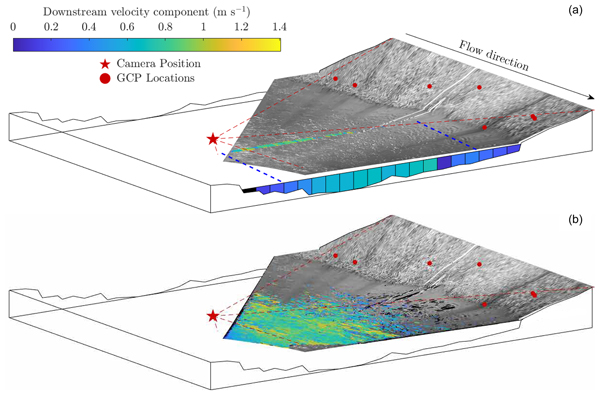
Accurate river flow measurements are essential for understanding river processes. This study evaluates the freely available software KLT-IV for automatic river surface velocity measurement. Analysing over 11 000 videos and comparing them with 274 traditional flow measurements, we find strong correlations (r² = 0.95–0.97) between KLT-IV and traditional methods. KLT-IV effectively estimates river flow with high accuracy, making it a valuable tool for autonomous water resource management.
Joshua M. Wolstenholme, Christopher J. Skinner, David Milan, Robert E. Thomas, and Daniel R. Parsons
Earth Surf. Dynam., 13, 647–663, https://doi.org/10.5194/esurf-13-647-2025, https://doi.org/10.5194/esurf-13-647-2025, 2025
Short summary
Short summary
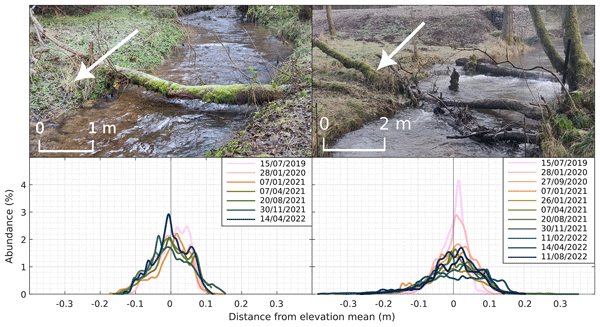
Leaky wooden dams are a popular form of natural flood management used to slow the flow of water by increasing floodplain connectivity whilst decreasing connectivity along the river profile. By monitoring two leaky wooden dams in North Yorkshire, UK, we present the geomorphological response to their installation, highlighting that the structures significantly increase channel complexity in response to different river flow conditions.
Joshua M. Wolstenholme, Christopher J. Skinner, David Milan, Robert E. Thomas, and Daniel R. Parsons
Geosci. Model Dev., 18, 1395–1411, https://doi.org/10.5194/gmd-18-1395-2025, https://doi.org/10.5194/gmd-18-1395-2025, 2025
Short summary
Short summary
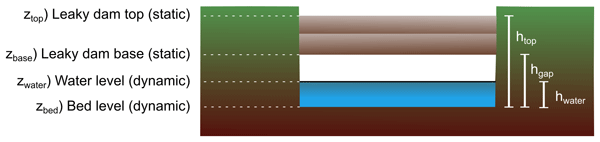
Leaky wooden dams are a type of natural flood management intervention that aims to reduce flood risk downstream by temporarily holding back water during a storm event and releasing it afterwards. These structures alter the river hydrology, and therefore the geomorphology, yet often this is excluded from numerical models. Here we show that by not simulating geomorphology, we are currently underestimating the efficacy of these structures to reduce the flood peak and store water.
Chayan Banerjee, Kien Nguyen, Clinton Fookes, Gregory Hancock, and Thomas Coulthard
Geosci. Model Dev., 18, 803–818, https://doi.org/10.5194/gmd-18-803-2025, https://doi.org/10.5194/gmd-18-803-2025, 2025
Short summary
Short summary
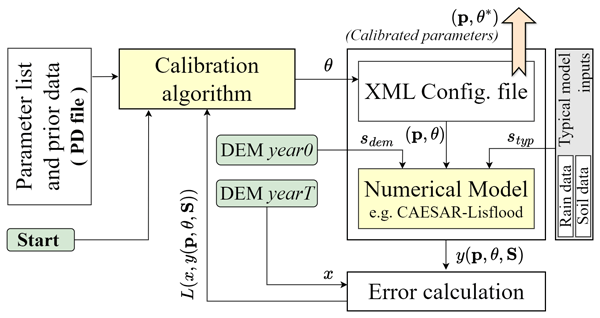
In geosciences, the reliance on numerical models necessitates the precise calibration of their parameters to effectively translate information from observed to unobserved settings. We introduce a generalizable framework for calibrating numerical models, with a case study of the geomorphological model CAESAR-Lisflood. This approach efficiently identifies the optimal set of parameters for a given numerical model, enabling retrospective and prospective analyses at various temporal resolutions.
Solomon H. Gebrechorkos, Julian Leyland, Simon J. Dadson, Sagy Cohen, Louise Slater, Michel Wortmann, Philip J. Ashworth, Georgina L. Bennett, Richard Boothroyd, Hannah Cloke, Pauline Delorme, Helen Griffith, Richard Hardy, Laurence Hawker, Stuart McLelland, Jeffrey Neal, Andrew Nicholas, Andrew J. Tatem, Ellie Vahidi, Yinxue Liu, Justin Sheffield, Daniel R. Parsons, and Stephen E. Darby
Hydrol. Earth Syst. Sci., 28, 3099–3118, https://doi.org/10.5194/hess-28-3099-2024, https://doi.org/10.5194/hess-28-3099-2024, 2024
Short summary
Short summary
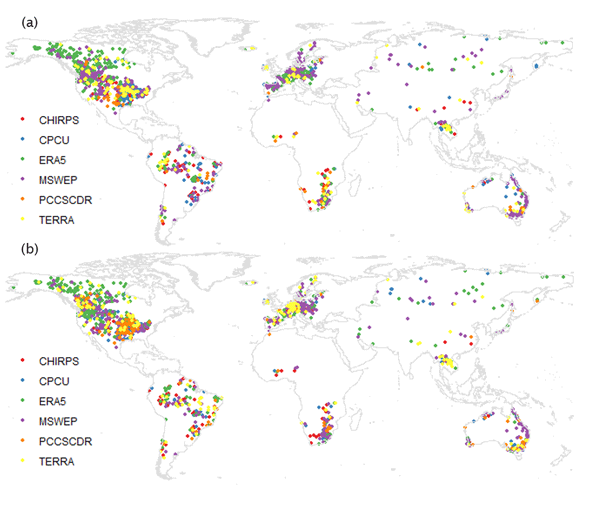
This study evaluated six high-resolution global precipitation datasets for hydrological modelling. MSWEP and ERA5 showed better performance, but spatial variability was high. The findings highlight the importance of careful dataset selection for river discharge modelling due to the lack of a universally superior dataset. Further improvements in global precipitation data products are needed.
Charlotte Lyddon, Nguyen Chien, Grigorios Vasilopoulos, Michael Ridgill, Sogol Moradian, Agnieszka Olbert, Thomas Coulthard, Andrew Barkwith, and Peter Robins
Nat. Hazards Earth Syst. Sci., 24, 973–997, https://doi.org/10.5194/nhess-24-973-2024, https://doi.org/10.5194/nhess-24-973-2024, 2024
Short summary
Short summary
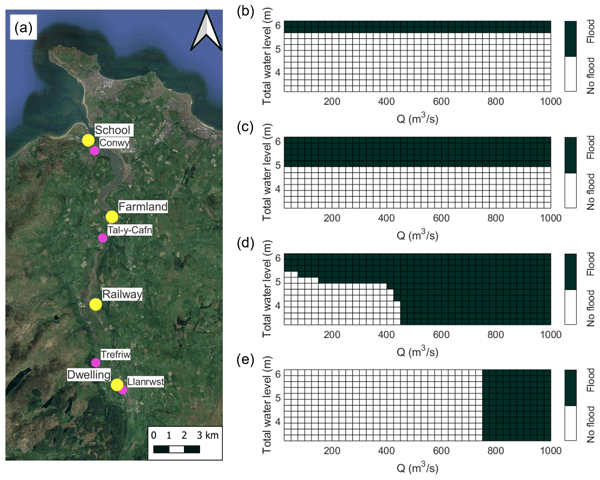
Recent storms in the UK, like Storm Ciara in 2020, show how vulnerable estuaries are to the combined effect of sea level and river discharge. We show the combinations of sea levels and river discharges that cause flooding in the Conwy estuary, N Wales. The results showed flooding was amplified under moderate conditions in the middle estuary and elsewhere sea state or river flow dominated the hazard. Combined sea and river thresholds can improve prediction and early warning of compound flooding.
Xuxu Wu, Jonathan Malarkey, Roberto Fernández, Jaco H. Baas, Ellen Pollard, and Daniel R. Parsons
Earth Surf. Dynam., 12, 231–247, https://doi.org/10.5194/esurf-12-231-2024, https://doi.org/10.5194/esurf-12-231-2024, 2024
Short summary
Short summary
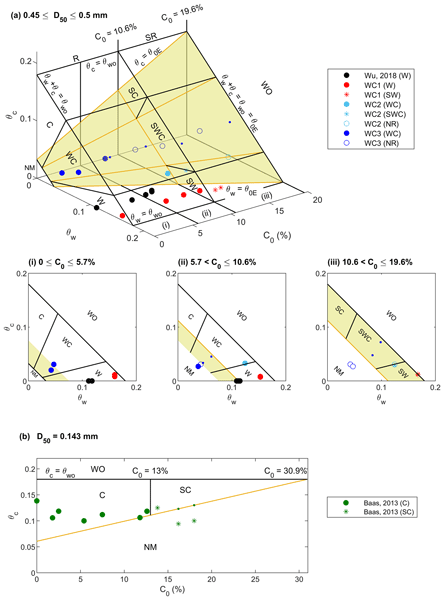
The seabed changes from flat to rippled in response to the frictional influence of waves and currents. This experimental study has shown that the speed of this change, the size of ripples that result and even whether ripples appear also depend on the amount of sticky mud present. This new classification on the basis of initial mud content should lead to improvements in models of seabed change in present environments by engineers and the interpretation of past environments by geologists.
Christopher J. Skinner and Thomas J. Coulthard
Earth Surf. Dynam., 11, 695–711, https://doi.org/10.5194/esurf-11-695-2023, https://doi.org/10.5194/esurf-11-695-2023, 2023
Short summary
Short summary
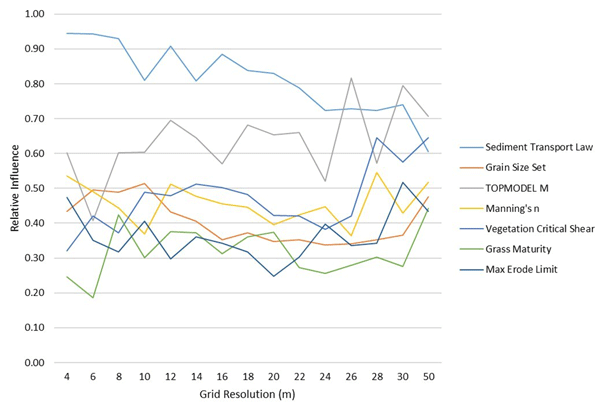
Landscape evolution models allow us to simulate the way the Earth's surface is shaped and help us to understand relevant processes, in turn helping us to manage landscapes better. The models typically represent the land surface using a grid of square cells of equal size, averaging heights in those squares. This study shows that the size chosen by the modeller for these grid cells is important, with larger sizes making sediment output events larger but less frequent.
Matthew D. Wilson and Thomas J. Coulthard
Geosci. Model Dev., 16, 2415–2436, https://doi.org/10.5194/gmd-16-2415-2023, https://doi.org/10.5194/gmd-16-2415-2023, 2023
Short summary
Short summary
During flooding, the sources of water that inundate a location can influence impacts such as pollution. However, methods to trace water sources in flood events are currently only available in complex, computationally expensive hydraulic models. We propose a simplified method which can be added to efficient, reduced-complexity model codes, enabling an improved understanding of flood dynamics and its impacts. We demonstrate its application for three sites at a range of spatial and temporal scales.
Elena Bastianon, Julie A. Hope, Robert M. Dorrell, and Daniel R. Parsons
Earth Surf. Dynam., 10, 1115–1140, https://doi.org/10.5194/esurf-10-1115-2022, https://doi.org/10.5194/esurf-10-1115-2022, 2022
Short summary
Short summary
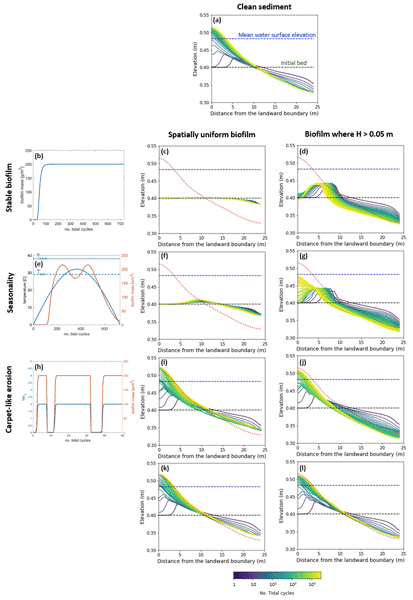
Biological activity in shallow tidal environments significantly influence sediment dynamics and morphology. Here, a bio-morphodynamic model is developed that accounts for hydro-climate variations in biofilm development to estimate the effect of biostabilisation on the bed. Results reveal that key parameters such as growth rate and temperature strongly influence the development of biofilm under a range of disturbance periodicities and intensities, shaping the channel equilibrium profile.
Chengbin Zou, Paul Carling, Zetao Feng, Daniel Parsons, and Xuanmei Fan
The Cryosphere Discuss., https://doi.org/10.5194/tc-2022-119, https://doi.org/10.5194/tc-2022-119, 2022
Manuscript not accepted for further review
Short summary
Short summary
Climate change is causing mountain lakes behind glacier barriers to drain through ice tunnels as catastrophe floods, threatening people and infrastructure downstream. Understanding of how process works can mitigate the impacts by providing advanced warnings. A laboratory study of ice tunnel development improved understanding of how floods evolve. The principles of ice tunnel development were defined numerically and can be used to better model natural floods leading to improved prediction.
Christopher R. Hackney, Grigorios Vasilopoulos, Sokchhay Heng, Vasudha Darbari, Samuel Walker, and Daniel R. Parsons
Earth Surf. Dynam., 9, 1323–1334, https://doi.org/10.5194/esurf-9-1323-2021, https://doi.org/10.5194/esurf-9-1323-2021, 2021
Short summary
Short summary
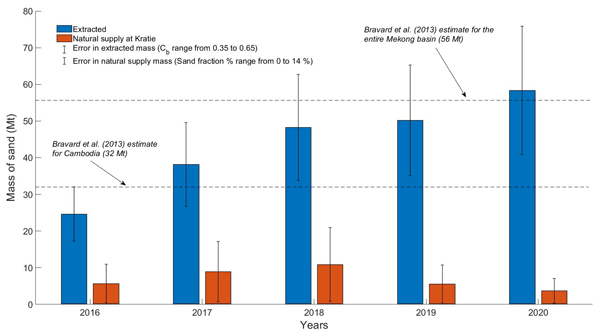
Unsustainable sand mining poses a threat to the stability of river channels. We use satellite imagery to estimate volumes of material removed from the Mekong River, Cambodia, over the period 2016–2020. We demonstrate that current rates of extraction now exceed previous estimates for the entire Mekong Basin and significantly exceed the volume of sand naturally transported by the river. Our work highlights the importance of satellite imagery in monitoring sand mining activity over large areas.
Sepehr Eslami, Piet Hoekstra, Herman W. J. Kernkamp, Nam Nguyen Trung, Dung Do Duc, Hung Nguyen Nghia, Tho Tran Quang, Arthur van Dam, Stephen E. Darby, Daniel R. Parsons, Grigorios Vasilopoulos, Lisanne Braat, and Maarten van der Vegt
Earth Surf. Dynam., 9, 953–976, https://doi.org/10.5194/esurf-9-953-2021, https://doi.org/10.5194/esurf-9-953-2021, 2021
Short summary
Short summary
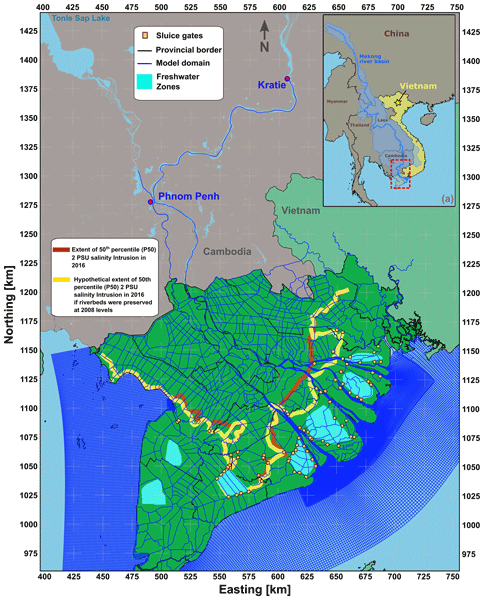
Increased salt intrusion jeopardizes freshwater supply to the Mekong Delta, and the current trends are often inaccurately associated with sea level rise. Using observations and models, we show that salinity is highly sensitive to ocean surge, tides, water demand, and upstream discharge. We show that anthropogenic riverbed incision has significantly amplified salt intrusion, exemplifying the importance of preserving sediment budget and riverbed levels to protect deltas against salt intrusion.
Cited articles
Antolínez, J. A. A., Méndez, F. J., Anderson, D., Ruggiero, P., and
Kaminsky, G. M.: Predicting Climate-Driven Coastlines With a Simple and
Efficient Multiscale Model, J. Geophys. Res.-Earth Surf.,
124, 1596–1624, https://doi.org/10.1029/2018JF004790, 2019.
Ashton, A. and Murray, B.: High-angle wave instability and emergent
shoreline shapes: 1. Modeling of sand waves, flying spits, and capes,
J. Geophys. Res., 111, F04011, https://doi.org/10.1029/2005JF000422,
2006a.
Ashton, A. and Murray, B.: High-angle wave instability and emergent
shoreline shapes: 2. Wave climate analysis and comparisons to nature,
J. Geophys. Res.-Earth Surf., 111, F04012, https://doi.org/10.1029/2005JF000423, 2006b.
Ashton, A., Murray, B., and Littlewood, R.: The response of spit shapes to
wave-angle climates, in: Coastal Sediments'07, edited by: Kraus, N. and
Rosati, N., American Society of Civil Engineers, New Orleans, LA, 2007.
Ashton, A., Murray, B., and Arnault, O.: Formation of coastline features by
large-scale instabilities induced by high-angle waves, Nature, 414,
296–300, https://doi.org/10.1038/35104541, 2001.
Bird, B.: Coastal Geomorphology: An Introduction, John Wiley & Sons,
2011.
Campolongo, F., Cariboni, J., and Saltelli, A.: An effective screening
design for sensitivity analysis of large models, Environ. Model.
Softw., 22, 1509–1518, https://doi.org/10.1016/J.ENVSOFT.2006.10.004, 2007.
Coulthard, T.: Landscape evolution models: a software review, Hydrol.
Process., 15, 165–173, https://doi.org/10.1002/hyp.426, 2001.
Dickson, M. E., Walkden, M. J. A., and Hall, J. W.: Systemic impacts of
climate change on an eroding coastal region over the twenty-first century,
Clim. Change, 84, 141–166, https://doi.org/10.1007/s10584-006-9200-9,
2007.
French, J., Payo, A., Murray, B., Orford, J., Eliot, M., and Cowell, P.:
Appropriate complexity for the prediction of coastal and estuarine
geomorphic behaviour at decadal to centennial scales, Geomorphology, 256,
3–16, https://doi.org/10.1016/j.geomorph.2015.10.005, 2015.
Gelfenbaum, G. and Kaminsky, G.: Large-scale coastal change in the Columbia
River littoral cell: An overview, Mar. Geol., 273, 1–10, https://doi.org/10.1016/j.margeo.2010.02.007, 2010.
Hallermeier, R.: Uses for a Calculated Limit Depth to Beach Erosion, Coast.
Eng., 1493–1512, https://doi.org/10.1061/9780872621909.090,
1978.
Hanson, H.: GENESIS: a generalized shoreline change numerical model, J. Coast. Res., 5, 1–27, 1989.
Hanson, H. and Kraus, N.: GENESIS: Generalized Model for Simulating
Shoreline Change. Report 1. Technical Reference, No. CERC-TR-89-19-1,
Coastal Engineering Research Center, Vicksburg, MS, 1989.
Hurst, M., Barkwith, A., Thomas, C., and Ellis, M.: Vector-based one-line
model for shoreline evolution: application to explore wave-climate control
on bay morphology, in: AGU Fall Meeting Abstracts, San Franciso, 15–19 December 2014.
Komar, P. D., Lanfredi, N., Baba, M., Dean, R. G., Dyer, K., Healy, T., Ibe,
A. C., Terwindt, J. H. J., and Thom, B. G.: The response of beaches to sea-level
changes – a review of predictive models, J. Coast. Res., 7,
895–921, 1991.
Leach, C.: CEM2D Source Code, Zenodo [code],
https://doi.org/10.5281/zenodo.3341888, 2019.
Leach, C., Coulthard, T., Barkwith, A., Parsons, D., and Manson, S.: CEM2D_Dataset, Zenodo [data set], https://doi.org/10.5281/zenodo.5242895, 2021.
Lesser, G., Roelvink, J., van Kester, J., and Stelling, G.: Development and
validation of a three-dimensional morphological model, Coast. Eng.,
51, 883–915, https://doi.org/10.1016/j.coastaleng.2004.07.014, 2004.
Lowe, J. A., Howard, T. P., Pardaens, A., Tinker, J., Holt, J., Wakelin, S.,
Milne, G., Leake, J., Wolf, J., Horsburgh, K., and Reeder, T.: UK Climate
Projections science report: Marine and coastal projections, Exeter, UK 2009.
McLean, R. and Kirk, R.: Relationships between grain size, size-sorting,
and foreshore slope on mixed sand – shingle beaches, New Zeal. J.
Geol. Geop., 12, 138–155, https://doi.org/10.1080/00288306.1969.10420231, 1969.
Morris, M.: Factorial sampling plans for preliminary computational
experiments, Technometrics, 33,, 161–174, https://doi.org/10.1080/00401706.1991.10484804, 1991.
Murray, B.: Reducing model complexity for explanation and prediction,
Geomorphology, 90, 178–191, https://doi.org/10.1016/j.geomorph.2006.10.020,
2007.
Nam, P., Larson, M., Hanson, H., and Hoan, Le X.: A numerical model of
nearshore waves, currents, and sediment transport, Coast. Eng.,
56, 1084–1096, https://doi.org/10.1016/j.coastaleng.2009.06.007, 2009.
Nicholls, R., Bradbury, A., Burningham, H., Dix, J., Ellis, M., French, J.,
Hall, J., Karunarathna, H., Lawn, J., Pan, S., Reeve, D., Rogers, B., Souza,
A., Stansby, P., Sutherland, J., Tarrant, O., Walkden, M., and Whitehouse,
R.: iCOASST – Integrating Coastal Sediment Systems, Coast. Eng.
Proc., 1, 100, https://doi.org/10.9753/icce.v33.sediment.100, 2012.
Nicholls, R., Birkemeier, W., and Hallermeier, R.: Application of the depth
of closure concept, Proceedings of the Coastal Engineering Conference, 4,
3874–3887, https://doi.org/10.9753/icce.v25, 1997.
Park, J.-Y. and Wells, J.: Longshore Transport at Cape Lookout, North
Carolina: Shoal Evolution and the Regional Sediment Budget, J.
Coast. Res., 211, 1–17, https://doi.org/10.2112/02051.1, 2005.
Pinet, P.: Invitation to Oceanography, Jones & Bartlett Publishers, 2011.
Robinet, A., Idier, D., Castelle, B., and Marieu, V.: A reduced-complexity
shoreline change model combining longshore and cross-shore processes: The
LX-Shore model, Environ. Model. Softw., 109, 1–16,
https://doi.org/10.1016/j.envsoft.2018.08.010, 2018.
Shaw, J., Fader, G. B., and Taylor, R. B.: Submerged early Holocene coastal and
terrestrial landforms on the inner shelves of Atlantic Canada, Quatern.
Int., 206, 24–34, https://doi.org/10.1016/j.quaint.2008.07.017,
2009.
Skinner, C. J., Coulthard, T. J., Schwanghart, W., Van De Wiel, M. J., and Hancock, G.: Global sensitivity analysis of parameter uncertainty in landscape evolution models, Geosci. Model Dev., 11, 4873–4888, https://doi.org/10.5194/gmd-11-4873-2018, 2018.
Stive, M. and de Vriend, H.: Modelling shoreface profile evolution, Mar.
Geol., 126, 235–248, https://doi.org/10.1016/0025-3227(95)00080-I, 1995.
Thomas, C. W., Murray, A. B., Ashton, A. D., Hurst, M. D., Barkwith, A. K. A. P., and Ellis, M. A.: Complex coastlines responding to climate change: do shoreline shapes reflect present forcing or “remember” the distant past?, Earth Surf. Dynam., 4, 871–884, https://doi.org/10.5194/esurf-4-871-2016, 2016.
Tucker, G. and Slingerland, R.: Erosional dynamics, flexural isostasy, and
long-lived escarpments: A numerical modeling study, J. Geophys. Res.-Sol. Ea., 99, 12229–12243, https://doi.org/10.1029/94JB00320, 1994.
Wainwright, J. and Mulligan, M.: Environmental Modelling: Finding
Simplicity in Complexity, Wiley-Blackwell, 2002.
Warren, I. and Bach, H.: MIKE 21: A Modelling System for Estuaries, Coastal
Waters and Seas, Environ. Softw., 7, 229–240, https://doi.org/10.1016/0266-9838(92)90006-P, 1992.
Willgoose, G., Bras, R., and Rodriguez-Iturbe, I.: Results from a new model
of river basin evolution', Earth Surf. Process. Land., 16,
237–254, https://doi.org/10.1002/esp.3290160305, 1991.
Wong, P., Losada, I., Gattuso, J., Hinkel, J., Khattabi, A., McInnes, K.,
Saito, Y., Sallenger, A., Nicholls, R., Santos, F., and Amez, S.: Coastal
systems and low-lying areas, in: Climate Change 2014 Impacts, Adaptation and
Vulnerability: Part A: Global and Sectoral Aspects, Contribution of Working
Group II to the Fifth Assessment Report of the
Intergovernmental Panel on Climate Change, edited by: Field, C. B., Barros, V. R., Dokken, D. J., Mach, K. J., Mastrandrea, M. D., Bilir, T. E., Chatterjee, M., Ebi, K. L., Estrada, Y. O., Genova, R. C., Girma, B., Kissel, E. S., Levy, A. N.,
MacCracken, S., Mastrandrea, P. R., and White, L. L., Cambridge University
Press, Cambridge, UK, New York, NY, USA, 361–409, 2014.
van Maanen, B., Barkwith, A., Bonaldo, D., Burningham, H., Murray, B., Payo,
A., Sutherland, J., Thornhill, G., Townend, I., van der Wegen, M., and
Walkden, M.: Simulating mesoscale coastal evolution for decadal coastal
management: A new framework integrating multiple, complementary modelling
approaches, Geomorphology, 256, 68–80, https://doi.org/10.1016/j.geomorph.2015.10.026,
2016.
Vitousek, S., Barnard, P. L., Limber, P., Erikson, L., and Cole, B.: A model
integrating longshore and cross-shore processes for predicting long-term
shoreline response to climate change, J. Geophys. Res.-Earth
Surf., 122, 782–806, https://doi.org/10.1002/2016JF004065, 2017.
Wright, L. and Short, A.: Morphodynamic variability of surf zones and
beaches: A synthesis, Mar. Geol., 56, 93–118, https://doi.org/10.1016/0025-3227(84)90008-2, 1984.
Ziliani, L., Surian, N., Coulthard, T., and Tarantola, S.:
Reduced-complexity modeling of braided rivers: Assessing model performance
by sensitivity analysis, calibration, and validation, J. Geophys. Res.-Earth Surf., 118, 2243–2262, https://doi.org/10.1002/jgrf.20154, 2013.

Short summary
Numerical models can be used to understand how coastal systems evolve over time, including likely responses to climate change. However, many existing models are aimed at simulating 10- to 100-year time periods do not represent a vertical dimension and are thus unable to include the effect of sea-level rise. The Coastline Evolution Model 2D (CEM2D) presented in this paper is an advance in this field, with the inclusion of the vertical coastal profile against which the water level can be altered.
Numerical models can be used to understand how coastal systems evolve over time, including...