Articles | Volume 19, issue 13
https://doi.org/10.5194/gmd-19-6043-2026
© Author(s) 2026. This work is distributed under
the Creative Commons Attribution 4.0 License.

Special issue:
https://doi.org/10.5194/gmd-19-6043-2026
© Author(s) 2026. This work is distributed under
the Creative Commons Attribution 4.0 License.
CMIP7 data request: ocean and sea ice priorities and opportunities

Department of Earth, Environmental, and Planetary Sciences (DEEPS), Brown University, Providence, Rhode Island, 02912, USA
Patricia DeRepentigny
Earth and Climate Research Center (ELIC), Earth and Life Institute (ELI), Université catholique de Louvain (UCLouvain), Louvain-la-Neuve, Belgium
Anne Marie Treguier
Laboratoire d'Océanographie Physique et Spatiale, University of Brest, CNRS, Ifremer, IRD, Brest, France
Christian Stepanek
Alfred Wegener Institute – Helmholtz Center for Polar and Marine Research, Bremerhaven, Germany
Eleanor O'Rourke
CMIP International Project Office, ECSAT, Harwell Science & Innovation Campus, Oxford, UK
Chloe Mackallah
Climate Science Centre, CSIRO Environment, Aspendale, VIC, Australia
Alberto Meucci
Climate Science Centre, CSIRO Environment, Aspendale, VIC, Australia
Department of Infrastructure Engineering, The University of Melbourne, Melbourne, VIC, Australia
Yevgeny Aksenov
National Oceanography Centre, Southampton, UK
Paul J. Durack
PCMDI, Lawrence Livermore National Laboratory (LLNL), Livermore, California, 94550, USA
Nicole Feldl
Department of Earth and Planetary Sciences, University of California, Santa Cruz, Santa Cruz, California, USA
Oluwayemi Garuba
Pacific Northwest National Laboratory, Richland, Washington, USA
Vanessa Hernaman
Pacific Northwest National Laboratory, Richland, Washington, USA
Céline Heuzé
Commonwealth Scientific and Industrial Research Organisation, Aspendale, Victoria 3195, Australia
Doroteaciro Iovino
Department of Earth Sciences, University of Gothenburg, Gothenburg, Sweden
Gaurav Madan
Foundation Euro-Mediterranean Centre on Climate Change (CMCC), Bologna, Italy
National Centre for Atmospheric Science, University of Reading, Reading, United Kingdom
André L. Marquez
Section for Meteorology and Ocean Sciences, University of Oslo, Oslo, Norway
François Massonnet
Earth and Climate Research Center (ELIC), Earth and Life Institute (ELI), Université catholique de Louvain (UCLouvain), Louvain-la-Neuve, Belgium
Jenny Mecking
National Oceanography Centre, Southampton, UK
Dhrubajyoti Samanta
Department of Earth System Numerical Modelling (DIMNT), National Institute for Space Research (INPE), Sao José dos Campos, Sao Paulo, Brazil
Patrick C. Taylor
Earth Observatory of Singapore, Nanyang Technological University, Singapore, Singapore
Wan-Ling Tseng
National Aeronautics and Space Administration (NASA), Langley Research Center, Hampton, Virginia, 23681, USA
Martin Vancoppenolle
Institute of Sustainable Development and Climate Policy, National Tsing Hua University, Hsinchu, Taiwan
Related authors
Peter W. Thorne, John M. Nicklas, John J. Kennedy, Bruce Calvert, Baylor Fox-Kemper, Mark T. Richardson, Adrian Simmons, Ed Hawkins, Robert Rhode, Kathryn Cowtan, Nerilie J. Abram, Axel Andersson, Simon Noone, Phillipe Marbaix, Nathan Lenssen, Dirk Olonscheck, Tristram Walsh, Stephen Outten, Ingo Bethke, Bjorn H. Samset, Chris Smith, Anna Pirani, Jan Fuglestvedt, Lavanya Rajamani, Richard A. Betts, Elizabeth C. Kent, Blair Trewin, Colin Morice, Tim Osborn, Samantha N. Burgess, Oliver Geden, Andrew Parnell, Piers M. Forster, Chris Hewitt, Zeke Hausfather, Valerie Masson-Delmotte, Jochem Marotzke, Nathan Gillett, Sonia I. Seneviratne, Gavin A. Schmidt, Duo Chan, Stefan Brönnimann, Andy Reisinger, Matthew Menne, Maisa Rojas Corradi, Christopher Kadow, Peter Huybers, David B. Stephenson, Emily Wallis, Joeri Rogelj, Andrew Schurer, Karen McKinnon, Panmao Zhai, Fatima Driouech, Wilfran Moufouma Okia, Saeed Vazifehkhah, Sophie Szopa, Christopher J. Merchant, Shoji Hirahara, Masayoshi Ishii, Francois A. Engelbrecht, Qingxiang Li, June-Yi Lee, Alex J. Cannon, Christophe Cassou, Karina von Schuckmann, Amir H. Delju, and Ellie Murtagh
Earth Syst. Sci. Data Discuss., https://doi.org/10.5194/essd-2025-825, https://doi.org/10.5194/essd-2025-825, 2026
Preprint under review for ESSD
Short summary
Short summary
We reassess the basis for determining the present level of long-term global warming. Unbiased estimates of both realised warming and anthropogenic warming are possible that approximate a 20-year retrospective mean. Our resulting estimates of 1.40 [1.23–1.58] °C (realised) and 1.34 [1.18–1.50] °C (anthropogenic) as at end of 2024 highlight the urgency of immediate, far-reaching and sustained climate mitigation actions if we are to meet the long term temperature goal of the Paris Agreement.
Peter Van Katwyk, Baylor Fox-Kemper, Sophie Nowicki, Hélène Seroussi, and Karianne J. Bergen
EGUsphere, https://doi.org/10.5194/egusphere-2025-4914, https://doi.org/10.5194/egusphere-2025-4914, 2025
Short summary
Short summary
We developed ISEFlow, a new climate emulator model that predicts how melting ice sheets in Greenland and Antarctica will contribute to future sea levels. Unlike past tools, it uses advanced machine learning to capture complex ice processes, distinguish between different greenhouse gas scenarios, and provide clearer estimates of uncertainty. This makes sea level projections more accurate and reliable, helping scientists and policymakers better plan for climate risks.
Peter Van Katwyk, Baylor Fox-Kemper, Sophie Nowicki, Hélène Seroussi, and Karianne J. Bergen
EGUsphere, https://doi.org/10.5194/egusphere-2025-870, https://doi.org/10.5194/egusphere-2025-870, 2025
Preprint archived
Short summary
Short summary
We present ISEFlow, a machine learning emulator that predicts how the melting of the Antarctic and Greenland ice sheets will contribute to sea level. ISEFlow is fast and accurate, allowing scientists to explore different climate scenarios with greater confidence. ISEFlow distinguishes between high and low emissions scenarios, helping us understand how today’s choices impact future sea levels. ISEFlow supports more reliable climate predictions and helps scientists study the future of ice sheets.
Xiaoyu Fan, Baylor Fox-Kemper, Nobuhiro Suzuki, Qing Li, Patrick Marchesiello, Peter P. Sullivan, and Paul S. Hall
Geosci. Model Dev., 17, 4095–4113, https://doi.org/10.5194/gmd-17-4095-2024, https://doi.org/10.5194/gmd-17-4095-2024, 2024
Short summary
Short summary
Simulations of the oceanic turbulent boundary layer using the nonhydrostatic CROCO ROMS and NCAR-LES models are compared. CROCO and the NCAR-LES are accurate in a similar manner, but CROCO’s additional features (e.g., nesting and realism) and its compressible turbulence formulation carry additional costs.
Qiang Wang, Qi Shu, Alexandra Bozec, Eric P. Chassignet, Pier Giuseppe Fogli, Baylor Fox-Kemper, Andy McC. Hogg, Doroteaciro Iovino, Andrew E. Kiss, Nikolay Koldunov, Julien Le Sommer, Yiwen Li, Pengfei Lin, Hailong Liu, Igor Polyakov, Patrick Scholz, Dmitry Sidorenko, Shizhu Wang, and Xiaobiao Xu
Geosci. Model Dev., 17, 347–379, https://doi.org/10.5194/gmd-17-347-2024, https://doi.org/10.5194/gmd-17-347-2024, 2024
Short summary
Short summary
Increasing resolution improves model skills in simulating the Arctic Ocean, but other factors such as parameterizations and numerics are at least of the same importance for obtaining reliable simulations.
Anne Marie Treguier, Clement de Boyer Montégut, Alexandra Bozec, Eric P. Chassignet, Baylor Fox-Kemper, Andy McC. Hogg, Doroteaciro Iovino, Andrew E. Kiss, Julien Le Sommer, Yiwen Li, Pengfei Lin, Camille Lique, Hailong Liu, Guillaume Serazin, Dmitry Sidorenko, Qiang Wang, Xiaobio Xu, and Steve Yeager
Geosci. Model Dev., 16, 3849–3872, https://doi.org/10.5194/gmd-16-3849-2023, https://doi.org/10.5194/gmd-16-3849-2023, 2023
Short summary
Short summary
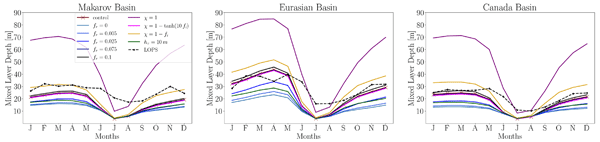
The ocean mixed layer is the interface between the ocean interior and the atmosphere and plays a key role in climate variability. We evaluate the performance of the new generation of ocean models for climate studies, designed to resolve
ocean eddies, which are the largest source of ocean variability and modulate the mixed-layer properties. We find that the mixed-layer depth is better represented in eddy-rich models but, unfortunately, not uniformly across the globe and not in all models.
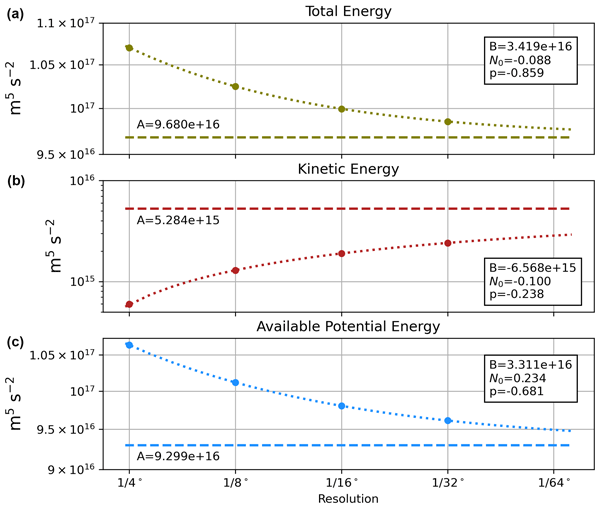
Gustavo M. Marques, Nora Loose, Elizabeth Yankovsky, Jacob M. Steinberg, Chiung-Yin Chang, Neeraja Bhamidipati, Alistair Adcroft, Baylor Fox-Kemper, Stephen M. Griffies, Robert W. Hallberg, Malte F. Jansen, Hemant Khatri, and Laure Zanna
Geosci. Model Dev., 15, 6567–6579, https://doi.org/10.5194/gmd-15-6567-2022, https://doi.org/10.5194/gmd-15-6567-2022, 2022
Short summary
Short summary
We present an idealized ocean model configuration and a set of simulations performed using varying horizontal grid spacing. While the model domain is idealized, it resembles important geometric features of the Atlantic and Southern oceans. The simulations described here serve as a framework to effectively study mesoscale eddy dynamics, to investigate the effect of mesoscale eddies on the large-scale dynamics, and to test and evaluate eddy parameterizations.
Takaya Uchida, Julien Le Sommer, Charles Stern, Ryan P. Abernathey, Chris Holdgraf, Aurélie Albert, Laurent Brodeau, Eric P. Chassignet, Xiaobiao Xu, Jonathan Gula, Guillaume Roullet, Nikolay Koldunov, Sergey Danilov, Qiang Wang, Dimitris Menemenlis, Clément Bricaud, Brian K. Arbic, Jay F. Shriver, Fangli Qiao, Bin Xiao, Arne Biastoch, René Schubert, Baylor Fox-Kemper, William K. Dewar, and Alan Wallcraft
Geosci. Model Dev., 15, 5829–5856, https://doi.org/10.5194/gmd-15-5829-2022, https://doi.org/10.5194/gmd-15-5829-2022, 2022
Short summary
Short summary
Ocean and climate scientists have used numerical simulations as a tool to examine the ocean and climate system since the 1970s. Since then, owing to the continuous increase in computational power and advances in numerical methods, we have been able to simulate increasing complex phenomena. However, the fidelity of the simulations in representing the phenomena remains a core issue in the ocean science community. Here we propose a cloud-based framework to inter-compare and assess such simulations.
Léna Champiot-Bayard, Lester Kwiatkowski, and Martin Vancoppenolle
Biogeosciences, 23, 4735–4758, https://doi.org/10.5194/bg-23-4735-2026, https://doi.org/10.5194/bg-23-4735-2026, 2026
Short summary
Short summary
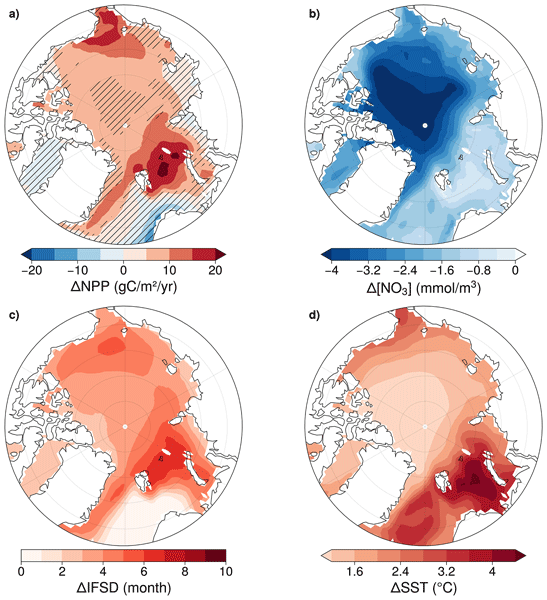
To investigate the future of primary production, we analyzed outputs from several climate models. Changes vary greatly from one region to another: some areas show large increases, while others experience little change or even declines. These differences reflect the balance between water temperature, light availability, and nutrient supply. We also found that the newer generation of climate models projects a much stronger increase than previous models, but with greater uncertainty.
Louise C. Sime, Rachel Diamond, Christian Stepanek, Chris Brierley, David Schroeder, Masa Kageyama, Matthew Pollock, Irene Malmierca-Vallet, Ed Blockley, Alex West, Danny Feltham, Jeff Ridley, Pascale Braconnot, Charles J. R. Williams, Xiaoxu Shi, Bette L. Otto-Bliesner, Sophia I. Macarewich, Silvana Ramos Buarque, Qiong Zhang, Allegra LeGrande, Weipeng Zheng, Dabang Jiang, Polina Morozova, Chuncheng Guo, Zhongshi Zhang, Nicholas Yeung, Laurie Menviel, Sandeep Narayanasetti, Masakazu Yoshimori, Olivia Reeves, and Anni Zhao
Geosci. Model Dev., 19, 5881–5905, https://doi.org/10.5194/gmd-19-5881-2026, https://doi.org/10.5194/gmd-19-5881-2026, 2026
Short summary
Short summary
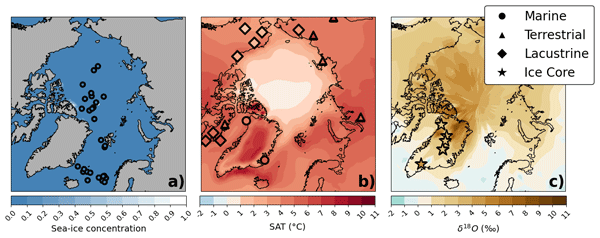
The Arctic may have lost its summer sea ice 127,000 years ago during a naturally warm period in Earth’s past. Climate models can be tested by recreating those conditions, with similar sunlight and greenhouse gas levels. Analysing the large sea ice changes in these simulations helps us understand how the Arctic might respond in the near future and improves how we test and trust our climate models.
Clemens Schannwell, Marie-Luise Kapsch, Matteo Willeit, Lars Ackermann, Gregor Knorr, Uta Krebs-Kanzow, Gerrit Lohmann, Katharina D. Six, Christian Stepanek, and Uwe Mikolajewicz
EGUsphere, https://doi.org/10.5194/egusphere-2026-3384, https://doi.org/10.5194/egusphere-2026-3384, 2026
This preprint is open for discussion and under review for Earth System Dynamics (ESD).
Short summary
Short summary
We present long-term future projections of the Greenland ice sheet based on three numerical models which all explicitly account for feedbacks between the climate and the Greenland ice sheet. We find that projections vary considerably across the models, particularly beyond 2100. The main reasons for this is the different modelled climate as well as how the modelled climate is translated into snowfall and melt in each of the models.
Céline Heuzé, Jonathan W. Rheinlænder, Tian Tian, and Carmen Hau Man Wong
The Cryosphere, 20, 3643–3682, https://doi.org/10.5194/tc-20-3643-2026, https://doi.org/10.5194/tc-20-3643-2026, 2026
Short summary
Short summary
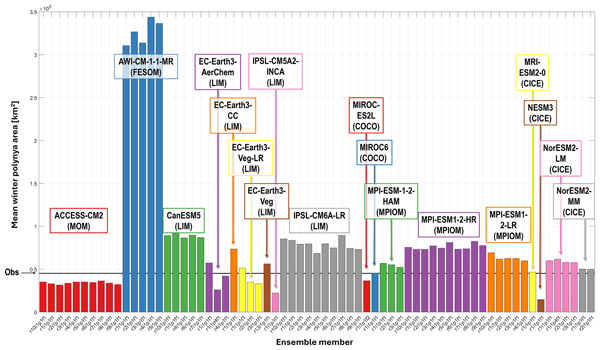
When the sea ice opens in winter in so-called “polynyas”, the entire climate system is affected from deep water ventilation to cloud formation, along with the ecosystem. In observations, winter Arctic polynyas have been increasing along with climate change. We here show that we cannot predict their future using global climate models as they do not represent winter Arctic polynyas correctly: they open over too large areas but too rarely, and for the wrong reason.
Gokhan Danabasoglu, Frederic S. Castruccio, Burcu Boza, Alice M. Barthel, Arne Biastoch, Adam Blaker, Alexandra Bozec, Diego Bruciaferri, Frank O. Bryan, Eric P. Chassignet, Yao Fu, Ian Grooms, Catherine Guiavarc'h, Hakase Hayashida, Andrew McC. Hogg, Ryan M. Holmes, Doroteaciro Iovino, Andrew E. Kiss, M. Susan Lozier, Gustavo Marques, Alex Megann, Franziska U. Schwarzkopf, Dave Storkey, Luke van Roekel, Jon Wolfe, Xiaobiao Xu, and Rong Zhang
Geosci. Model Dev., 19, 5071–5117, https://doi.org/10.5194/gmd-19-5071-2026, https://doi.org/10.5194/gmd-19-5071-2026, 2026
Short summary
Short summary
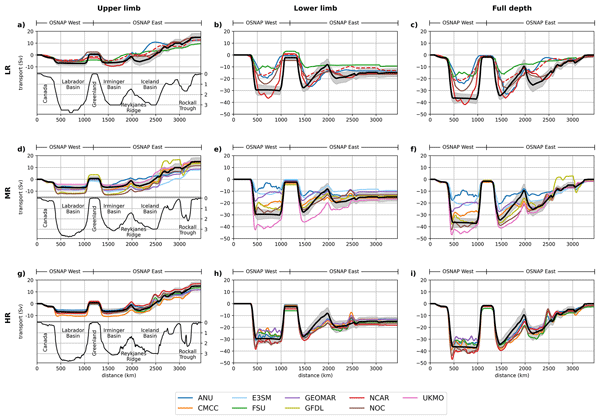
A comparison of simulated and observed overturning transports across the Overturning in the Subpolar North Atlantic Program sections is presented. Eighteen ocean simulations participate in the study with resolutions ranging from coarse to eddy-resolving. The simulated transports are in general agreement with observations, with better agreement at high resolution. Analyzing overturning circulations in both depth and density space together provides a more complete picture.
Hugues Goosse, Cecile Davrinche, Benjamin Richaud, Dániel Topál, Stephy Libera, Alberto C. Naveira Garabato, Alessandro Silvano, Martin Vancoppenolle, and Pablo Ortega
EGUsphere, https://doi.org/10.5194/egusphere-2026-1823, https://doi.org/10.5194/egusphere-2026-1823, 2026
This preprint is open for discussion and under review for The Cryosphere (TC).
Short summary
Short summary
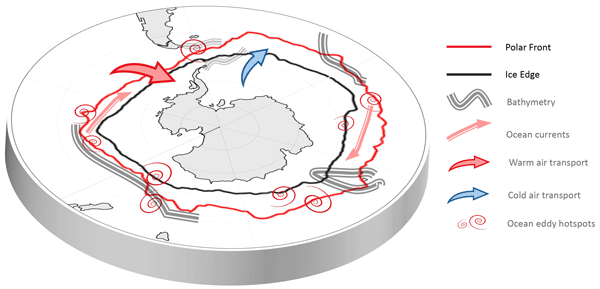
The variability of the winter sea ice edge is much higher in regions close to the main topographic features of the Southern Ocean than over the smoother abyssal plain. The oceanic bathymetry influences mesoscale eddy activity and the Antarctic Circumpolar Current jets, affecting both oceanic heat transport and sea ice velocity and subsequently sea ice variability.
Thomas J. Aubry, Matthew Toohey, Sujan Khanal, Man Mei Chim, Magali Verkerk, Ben Johnson, Anja Schmidt, Mahesh Kovilakam, Michael Sigl, Zebedee Nicholls, Larry Thomason, Vaishali Naik, Landon Rieger, Dominik Stiller, Elisa Ziegler, Paul Durack, and Isabel H. Smith
Geosci. Model Dev., 19, 3725–3756, https://doi.org/10.5194/gmd-19-3725-2026, https://doi.org/10.5194/gmd-19-3725-2026, 2026
Short summary
Short summary
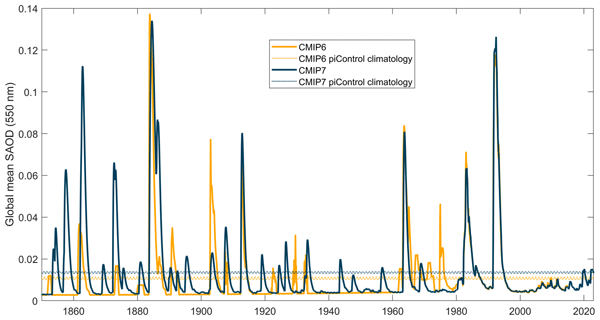
Climate forcings, such as solar radiation or anthropogenic greenhouse gases, are required to run global climate model simulations. Stratospheric aerosols, which mostly originate from large volcanic eruptions, are a key natural forcing. In this paper, we document the stratospheric aerosol forcing dataset that will feed the next generation (CMIP7) of climate models. Our dataset is very different from its predecessor (CMIP6), which might affect simulations of the 1850–2021 climate.
Yue Li, Gang Tang, Eleanor O'Rourke, Samar Minallah, Martim Mas e Braga, Sophie Nowicki, Robin S. Smith, David M. Lawrence, George C. Hurtt, Daniele Peano, Gesa Meyer, Birgit Hassler, Jiafu Mao, Yongkang Xue, and Martin Juckes
Geosci. Model Dev., 19, 3129–3155, https://doi.org/10.5194/gmd-19-3129-2026, https://doi.org/10.5194/gmd-19-3129-2026, 2026
Short summary
Short summary
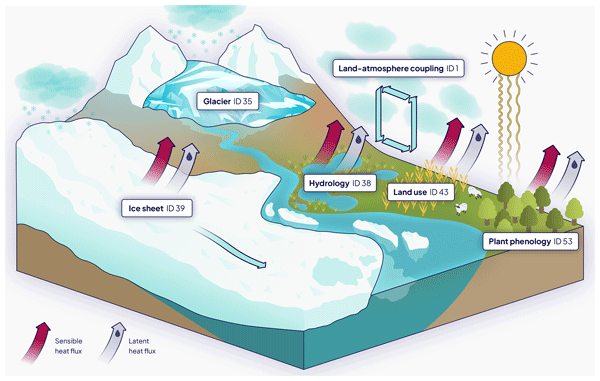
Land and Land Ice Theme Opportunities describe a list that contains 25 variable groups with 716 variables, which are potentially available to the broad scientific audience for performing analysis in land–atmosphere coupling, hydrological processes and freshwater systems, glacier and ice sheet mass balance and their influence on the sea levels, land use, and plant phenology.
Chloe Mackallah, Martin Juckes, James Anstey, Beth Dingley, Charlotte Pascoe, Gaëlle Rigoudy, Marie-Pierre Moine, Tomas Lovato, Alison Pamment, Martin Schupfner, Michio Kawamiya, Tommi Bergman, Charles Koven, Eleanor O'Rourke, Briony Turner, Daniel Ellis, and Matthew Mizielinski
EGUsphere, https://doi.org/10.5194/egusphere-2026-1641, https://doi.org/10.5194/egusphere-2026-1641, 2026
Short summary
Short summary
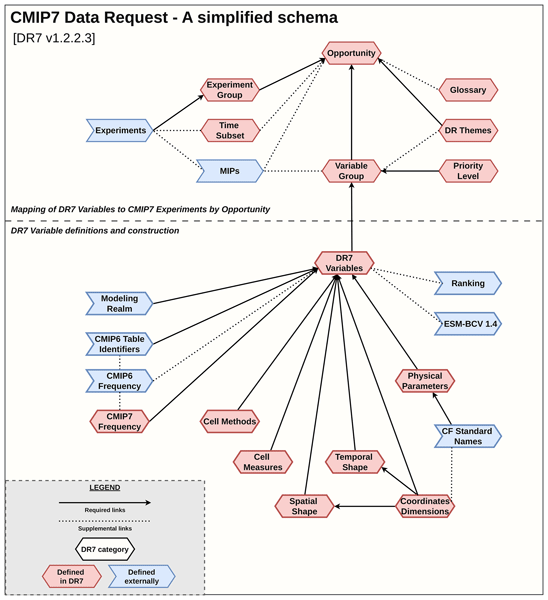
This paper describes the creation of a new set of output data requirements for upcoming global climate model experiments performed for CMIP7, an international climate modelling activity. Experts from the community helped to co-create a database that describes which data should be produced, and the scientific justifications behind these choices. It supports growing climate research and policy needs by linking experiments and variables to scientific objectives and real‑world applications.
Simona Masina, Andrea Cipollone, Doroteaciro Iovino, Stefania Ciliberti, Rita Lecci, Sergio Cretí, Vladyslav Lyubartsev, Giovanni Coppini, and Emanuela Clementi
EGUsphere, https://doi.org/10.5194/egusphere-2026-887, https://doi.org/10.5194/egusphere-2026-887, 2026
Short summary
Short summary
The paper presents GOFS16, an eddy-resolving global operational ocean and sea ice forecasting system which provides 6-day forecasts of three-dimensional temperature, salinity, currents, sea level, and sea ice properties. The system assimilates satellite and in situ observations using a 3D variational data assimilation scheme. Validation is conducted routinely using global and regional metrics. Results indicate that GOFS16 performs within the expected range of skill for current global systems.
Jinfei Wang, Maike Sonnewald, Noé Pirlet, François Massonnet, Hugues Goosse, Dake Chen, and Qinghua Yang
EGUsphere, https://doi.org/10.5194/egusphere-2026-1301, https://doi.org/10.5194/egusphere-2026-1301, 2026
Short summary
Short summary
Antarctic sea ice has shifted from expansion to rapid decline since 2016. Using model outputs and data mining, we identified six sea ice regimes, shaped by different dynamic and thermodynamic conditions. A coastal regime, featured by sea ice transport and new ice formation, has shown area loss since 1979, accelerating after 2016. This coastal regime and a pack ice regime together control overall sea ice variability. Our work offers a new framework for understanding Antarctic sea ice changes.
Harry Ashton-Key, Jennifer Mecking, Robert Marsh, Sybren Drijfhout, Marilena Oltmanns, and Alejandra Sanchez-Franks
EGUsphere, https://doi.org/10.5194/egusphere-2026-575, https://doi.org/10.5194/egusphere-2026-575, 2026
Short summary
Short summary
The North Atlantic ocean circulation is expected to weaken due to climate change. First signs of weakening are expected in the subpolar north, reverberating equatorward over years to decades, with unfolding consequences for the climate of Europe and beyond. As the pattern of weakening may provide an early warning of several years, we scrutinise leading climate models to show that the location and degree of weakening strongly depends on the model type and extent of climate change.
Benjamin Richaud, François Massonnet, Thierry Fichefet, Dániel Topál, Antoine Barthélemy, and David Docquier
The Cryosphere, 20, 791–810, https://doi.org/10.5194/tc-20-791-2026, https://doi.org/10.5194/tc-20-791-2026, 2026
Short summary
Short summary
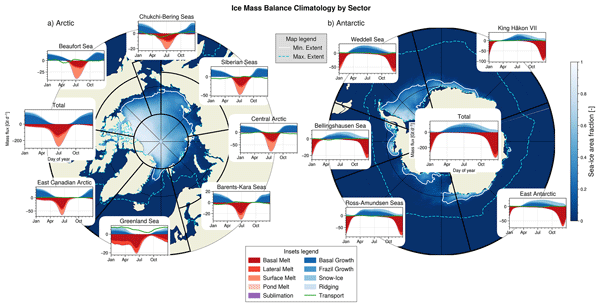
Sea ice covers in the Arctic and Antarctic experienced intense reduction during specific recent years. Using an ocean-sea ice model, we found similarities between hemispheres and years to explain the ice reduction, such as ice melt (or lack of growth) at the ice-ocean interface. Differences between years and regions are also evident, such as increased ice transport or snow precipitation. Our analysis highlights the importance of the ice-ocean interface to understand the sea ice mass budget.
Letizia Tedesco, Giulia Castellani, Pedro Duarte, Meibing Jin, Sebastien Moreau, Eric Mortenson, Benjamin Tobey Saenz, Nadja Steiner, and Martin Vancoppenolle
The Cryosphere, 20, 723–736, https://doi.org/10.5194/tc-20-723-2026, https://doi.org/10.5194/tc-20-723-2026, 2026
Short summary
Short summary
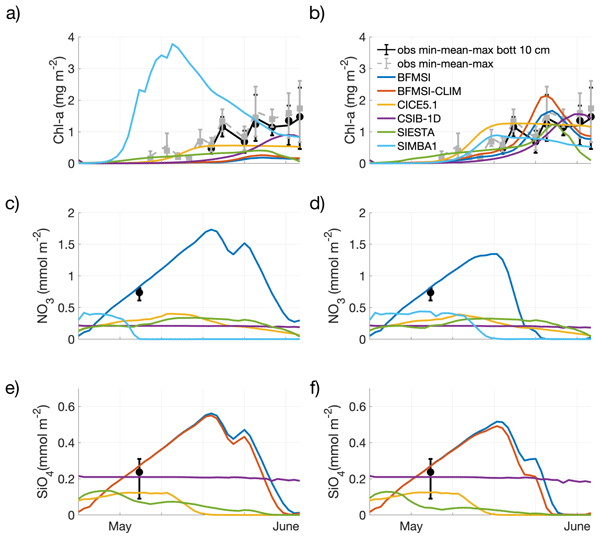
Sea ice hosts tiny algae that support polar marine life, yet their growth remains challenging to simulate. We tested six computer models using data from a 2015 Arctic drifting ice expedition to see how well they reproduced spring algae blooms and nutrient changes. While tuning helped models better match algae growth, nutrients remained difficult to capture. Our results highlight key challenges in representing fragile sea‑ice habitats that are expected to become more common as the Arctic warms.
Peter W. Thorne, John M. Nicklas, John J. Kennedy, Bruce Calvert, Baylor Fox-Kemper, Mark T. Richardson, Adrian Simmons, Ed Hawkins, Robert Rhode, Kathryn Cowtan, Nerilie J. Abram, Axel Andersson, Simon Noone, Phillipe Marbaix, Nathan Lenssen, Dirk Olonscheck, Tristram Walsh, Stephen Outten, Ingo Bethke, Bjorn H. Samset, Chris Smith, Anna Pirani, Jan Fuglestvedt, Lavanya Rajamani, Richard A. Betts, Elizabeth C. Kent, Blair Trewin, Colin Morice, Tim Osborn, Samantha N. Burgess, Oliver Geden, Andrew Parnell, Piers M. Forster, Chris Hewitt, Zeke Hausfather, Valerie Masson-Delmotte, Jochem Marotzke, Nathan Gillett, Sonia I. Seneviratne, Gavin A. Schmidt, Duo Chan, Stefan Brönnimann, Andy Reisinger, Matthew Menne, Maisa Rojas Corradi, Christopher Kadow, Peter Huybers, David B. Stephenson, Emily Wallis, Joeri Rogelj, Andrew Schurer, Karen McKinnon, Panmao Zhai, Fatima Driouech, Wilfran Moufouma Okia, Saeed Vazifehkhah, Sophie Szopa, Christopher J. Merchant, Shoji Hirahara, Masayoshi Ishii, Francois A. Engelbrecht, Qingxiang Li, June-Yi Lee, Alex J. Cannon, Christophe Cassou, Karina von Schuckmann, Amir H. Delju, and Ellie Murtagh
Earth Syst. Sci. Data Discuss., https://doi.org/10.5194/essd-2025-825, https://doi.org/10.5194/essd-2025-825, 2026
Preprint under review for ESSD
Short summary
Short summary
We reassess the basis for determining the present level of long-term global warming. Unbiased estimates of both realised warming and anthropogenic warming are possible that approximate a 20-year retrospective mean. Our resulting estimates of 1.40 [1.23–1.58] °C (realised) and 1.34 [1.18–1.50] °C (anthropogenic) as at end of 2024 highlight the urgency of immediate, far-reaching and sustained climate mitigation actions if we are to meet the long term temperature goal of the Paris Agreement.
Alex C. Ruane, Charlotte L. Pascoe, Claas Teichmann, David J. Brayshaw, Carlo Buontempo, Ibrahima Diouf, Jesus Fernandez, Paula L. M. Gonzalez, Birgit Hassler, Vanessa Hernaman, Ulas Im, Doroteaciro Iovino, Martin Juckes, Iréne L. Lake, Timothy Lam, Xiaomao Lin, Jiafu Mao, Negin Nazarian, Sylvie Parey, Indrani Roy, Wan-Ling Tseng, Briony Turner, Andrew Wiebe, Lei Zhao, and Damaris Zurell
Geosci. Model Dev., 18, 9497–9540, https://doi.org/10.5194/gmd-18-9497-2025, https://doi.org/10.5194/gmd-18-9497-2025, 2025
Short summary
Short summary
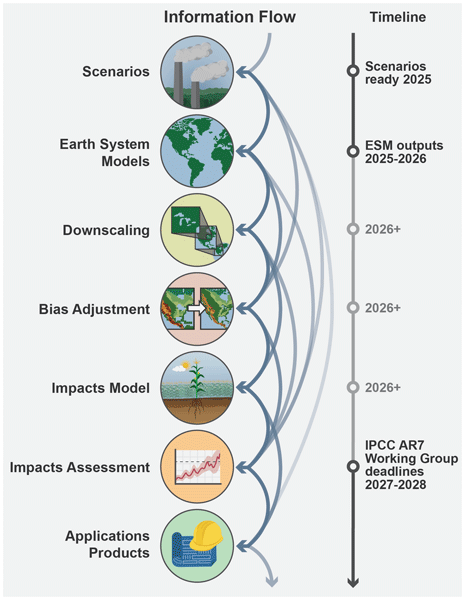
This paper describes how the Coupled Model Intercomparison Project organized its 7th phase (CMIP7) to encourage the production of Earth system model outputs relevant for impacts and adaptation. Community engagement identified 13 opportunities for application across human and natural systems, 60 variable groups and 539 unique variables. We also show how simulations can more efficiently meet applications needs by targeting appropriate resolution, time slices, experiments and variable groups.
Peter Van Katwyk, Baylor Fox-Kemper, Sophie Nowicki, Hélène Seroussi, and Karianne J. Bergen
EGUsphere, https://doi.org/10.5194/egusphere-2025-4914, https://doi.org/10.5194/egusphere-2025-4914, 2025
Short summary
Short summary
We developed ISEFlow, a new climate emulator model that predicts how melting ice sheets in Greenland and Antarctica will contribute to future sea levels. Unlike past tools, it uses advanced machine learning to capture complex ice processes, distinguish between different greenhouse gas scenarios, and provide clearer estimates of uncertainty. This makes sea level projections more accurate and reliable, helping scientists and policymakers better plan for climate risks.
Céline Heuzé and Carmen Hau Man Wong
The Cryosphere, 19, 6043–6058, https://doi.org/10.5194/tc-19-6043-2025, https://doi.org/10.5194/tc-19-6043-2025, 2025
Short summary
Short summary
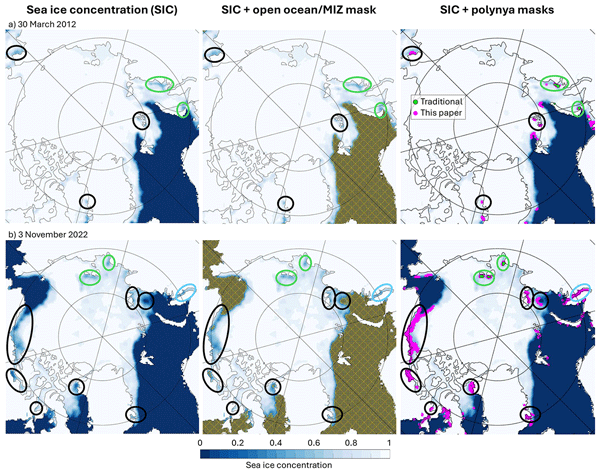
Polynyas are areas with no- or thin-ice within the ice pack. They play a crucial role for the Earth system, yet their monitoring in the Arctic is challenging because polynya detection is non-trivial. We here demonstrate that polynyas can successfully be detected with a novel, machine-learning based method. In fact, we argue that they are better detected than with traditional methods, which seem to fail as sea ice decreases because of climate change.
Hugues Goosse, Stephy Libera, Alberto C. Naveira Garabato, Benjamin Richaud, Alessandro Silvano, and Martin Vancoppenolle
The Cryosphere, 19, 5763–5779, https://doi.org/10.5194/tc-19-5763-2025, https://doi.org/10.5194/tc-19-5763-2025, 2025
Short summary
Short summary
The position of the winter sea ice edge in the Southern Ocean is strongly linked to the one of the Antarctic Circumpolar Current and thus to ocean bathymetry. This is due to the influence of the Antarctic Circumpolar Current on the southward heat flux that limits sea ice expansion, directly through oceanic processes and indirectly through its influence on atmospheric heat transport.
Fernanda DI Alzira Oliveira Matos, Dmitry Sidorenko, Xiaoxu Shi, Lars Ackermann, Janini Pereira, Gerrit Lohmann, and Christian Stepanek
Ocean Sci., 21, 2895–2914, https://doi.org/10.5194/os-21-2895-2025, https://doi.org/10.5194/os-21-2895-2025, 2025
Short summary
Short summary
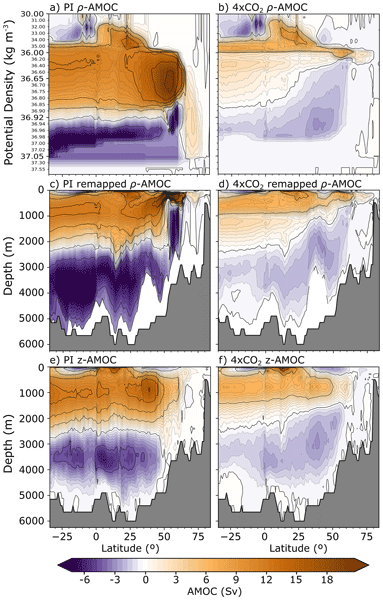
The Atlantic Meridional Overturning Circulation (AMOC) is responsible for about 25 % of the poleward ocean heat transport. Currently, the AMOC strength is mostly calculated in depth space (z-AMOC). However, we argue that, in warmer climates, the AMOC should be calculated in density space (ρ-AMOC). We performed simulations with CO2 forcing of 280 ppmv (PI) and 1120 ppmv of (4xCO2) and find that ρ-AMOC provides more physical and meaningful information about the AMOC in warmer climates.
Sina Loriani, Yevgeny Aksenov, David I. Armstrong McKay, Govindasamy Bala, Andreas Born, Cristiano Mazur Chiessi, Henk A. Dijkstra, Jonathan F. Donges, Sybren Drijfhout, Matthew H. England, Alexey V. Fedorov, Laura C. Jackson, Kai Kornhuber, Gabriele Messori, Francesco S. R. Pausata, Stefanie Rynders, Jean-Baptiste Sallée, Bablu Sinha, Steven C. Sherwood, Didier Swingedouw, and Thejna Tharammal
Earth Syst. Dynam., 16, 1611–1653, https://doi.org/10.5194/esd-16-1611-2025, https://doi.org/10.5194/esd-16-1611-2025, 2025
Short summary
Short summary
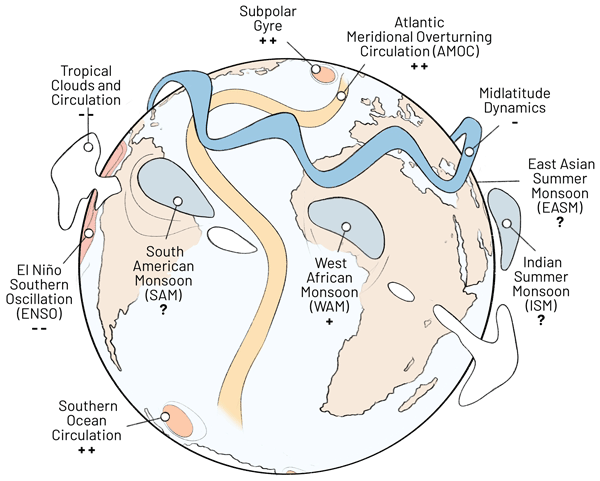
In this work, we draw on palaeo-records, observations, and modelling studies to review tipping points in the ocean overturning circulations, monsoon systems, and global atmospheric circulations. We find indications for tipping in the ocean overturning circulations and the West African monsoon, with potentially severe impacts on the Earth system and humans. Tipping in the other considered systems is regarded as conceivable but is currently not sufficiently supported by evidence.
Théo Brivoal, Virginie Guemas, Martin Vancoppenolle, Clément Rousset, and Bertrand Decharme
Geosci. Model Dev., 18, 6885–6902, https://doi.org/10.5194/gmd-18-6885-2025, https://doi.org/10.5194/gmd-18-6885-2025, 2025
Short summary
Short summary
Snow in polar regions is key to sea ice formation and the Earth's climate, but current climate models simplify snow cover on sea ice. This study integrates an intermediate-complexity snow-physics scheme into a sea ice model designed for climate applications. We show that modeling the temporal changes in properties such as the density and thermal conductivity of the snow layers leads to a more accurate representation of heat transfer between the underlying sea ice and the atmosphere.
John P. Dunne, Helene T. Hewitt, Julie M. Arblaster, Frédéric Bonou, Olivier Boucher, Tereza Cavazos, Beth Dingley, Paul J. Durack, Birgit Hassler, Martin Juckes, Tomoki Miyakawa, Matt Mizielinski, Vaishali Naik, Zebedee Nicholls, Eleanor O'Rourke, Robert Pincus, Benjamin M. Sanderson, Isla R. Simpson, and Karl E. Taylor
Geosci. Model Dev., 18, 6671–6700, https://doi.org/10.5194/gmd-18-6671-2025, https://doi.org/10.5194/gmd-18-6671-2025, 2025
Short summary
Short summary
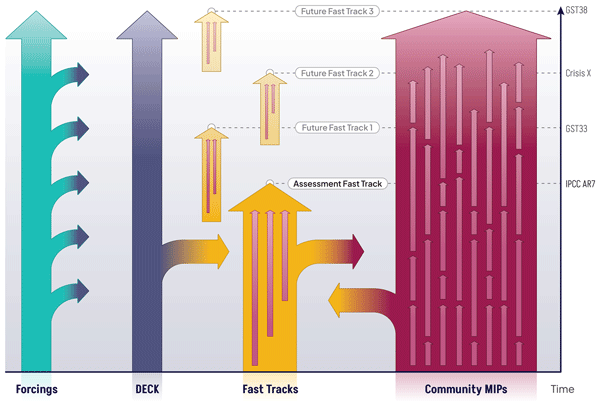
The seventh phase of the Coupled Model Intercomparison Project (CMIP7) coordinates efforts to answer key and timely climate science questions and facilitate delivery of relevant multi-model simulations for prediction and projection; characterization, attribution, and process understanding; and vulnerability, impact, and adaptation analysis. Key to the CMIP7 design are the mandatory Diagnostic, Evaluation and Characterization of Klima and optional Assessment Fast Track experiments.
Benjamin M. Sanderson, Victor Brovkin, Rosie A. Fisher, David Hohn, Tatiana Ilyina, Chris D. Jones, Torben Koenigk, Charles Koven, Hongmei Li, David M. Lawrence, Peter Lawrence, Spencer Liddicoat, Andrew H. MacDougall, Nadine Mengis, Zebedee Nicholls, Eleanor O'Rourke, Anastasia Romanou, Marit Sandstad, Jörg Schwinger, Roland Séférian, Lori T. Sentman, Isla R. Simpson, Chris Smith, Norman J. Steinert, Abigail L. S. Swann, Jerry Tjiputra, and Tilo Ziehn
Geosci. Model Dev., 18, 5699–5724, https://doi.org/10.5194/gmd-18-5699-2025, https://doi.org/10.5194/gmd-18-5699-2025, 2025
Short summary
Short summary
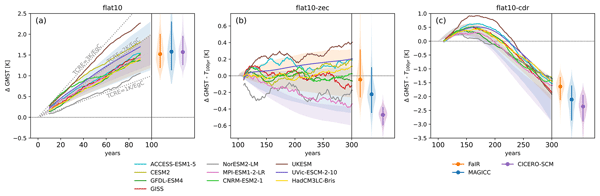
This study investigates how climate models warm in response to simplified carbon emissions trajectories, refining the understanding of climate reversibility and commitment. Metrics are defined for warming response to cumulative emissions and for the cessation of emissions or ramp-down to net-zero and net-negative levels. Results indicate that previous concentration-driven experiments may have overstated the Zero Emissions Commitment due to emissions rates exceeding historical levels.
Céline Heuzé, Linn Carlstedt, Lea Poropat, and Heather Reese
Ocean Sci., 21, 1813–1832, https://doi.org/10.5194/os-21-1813-2025, https://doi.org/10.5194/os-21-1813-2025, 2025
Short summary
Short summary
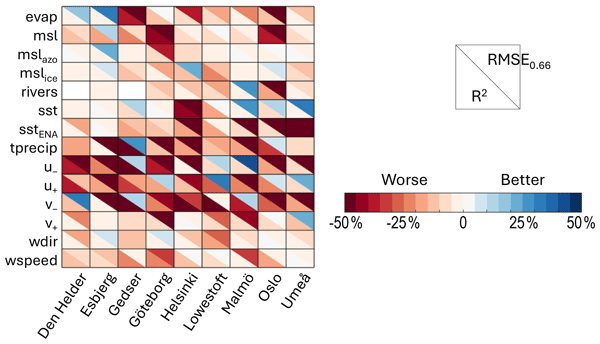
Extreme sea levels will worsen under climate change. In northern Europe, what drives these extreme events will not change, so determining these drivers is of use for planning coastal defences. Here, using two machine learning methods on hourly tide gauge and weather data at nine locations around the North and Baltic seas, we determine that the drivers of prolonged periods of high sea level are westerly winds, whereas the drivers of the most extreme peaks depend on the coastline geometry.
Annelies Sticker, François Massonnet, Thierry Fichefet, Patricia DeRepentigny, Alexandra Jahn, David Docquier, Christopher Wyburn-Powell, Daphne Quint, Erica Shivers, and Makayla Ortiz
The Cryosphere, 19, 3259–3277, https://doi.org/10.5194/tc-19-3259-2025, https://doi.org/10.5194/tc-19-3259-2025, 2025
Short summary
Short summary
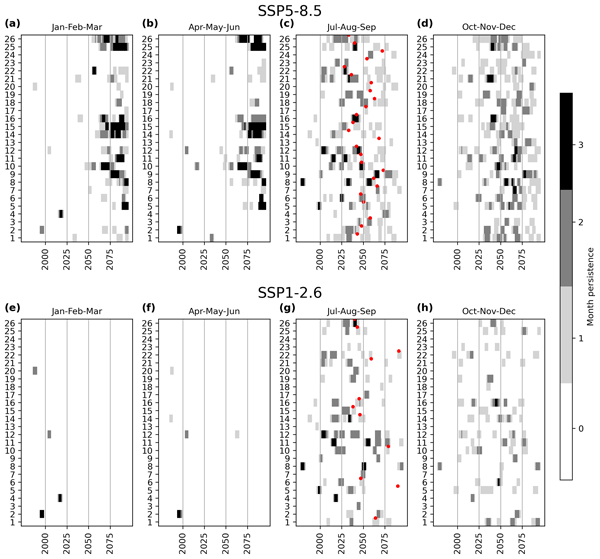
Our study analyzes rapid ice loss events (RILEs) in the Arctic, which are significant reductions in sea ice extent. RILEs are expected throughout the year, varying in frequency and duration with the seasons. Our research gives a year-round analysis of their characteristics in climate models and suggests that summer RILEs could begin before the middle of the century. Understanding these events is crucial as they can have profound impacts on the Arctic environment.
Cécile Osy, Sophie Opfergelt, Arsène Druel, and François Massonnet
EGUsphere, https://doi.org/10.5194/egusphere-2025-3680, https://doi.org/10.5194/egusphere-2025-3680, 2025
Preprint archived
Short summary
Short summary
The refreezing period of the active layer (the layer on top of the permafrost that freezes and thaws each year) is changing, with a delay of about five days over a large area in Siberia from 1950 to 2020 in the ERA5-Land reanalysis data. We investigate the drivers of this delay, and find that 2 m air temperature is the main driver of these changes at the large scale, which contrasts with field results in which snow cover is the main driver of changes in refreezing dynamics.
Florian Sauerland, Pierre-Vincent Huot, Sylvain Marchi, Thierry Fichefet, Hugues Goosse, Konstanze Haubner, François Klein, François Massonnet, Bianca Mezzina, Eduardo Moreno-Chamarro, Pablo Ortega, Frank Pattyn, Charles Pelletier, Deborah Verfaillie, Lars Zipf, and Nicole van Lipzig
EGUsphere, https://doi.org/10.5194/egusphere-2025-2889, https://doi.org/10.5194/egusphere-2025-2889, 2025
Short summary
Short summary
We simulated the Antarctic climate from 1985 to 2014. Our model is driven using the ERA-5 reanalysis for one simulation and the EC-Earth global climate model for three others. Most of the simulated trends, such as sea ice extent and precipitation over land, have opposite signs for the two drivers, but agree between the three EC-Earth driven simulations. We conclude that these opposing trends must be due to the different drivers, and that the climate over land is less predictable than over sea.
Forrest M. Hoffman, Birgit Hassler, Ranjini Swaminathan, Jared Lewis, Bouwe Andela, Nathaniel Collier, Dóra Hegedűs, Jiwoo Lee, Charlotte Pascoe, Mika Pflüger, Martina Stockhause, Paul Ullrich, Min Xu, Lisa Bock, Felicity Chun, Bettina K. Gier, Douglas I. Kelley, Axel Lauer, Julien Lenhardt, Manuel Schlund, Mohanan G. Sreeush, Katja Weigel, Ed Blockley, Rebecca Beadling, Romain Beucher, Demiso D. Dugassa, Valerio Lembo, Jianhua Lu, Swen Brands, Jerry Tjiputra, Elizaveta Malinina, Brian Mederios, Enrico Scoccimarro, Jeremy Walton, Philip Kershaw, André L. Marquez, Malcolm J. Roberts, Eleanor O’Rourke, Elisabeth Dingley, Briony Turner, Helene Hewitt, and John P. Dunne
EGUsphere, https://doi.org/10.5194/egusphere-2025-2685, https://doi.org/10.5194/egusphere-2025-2685, 2025
Short summary
Short summary
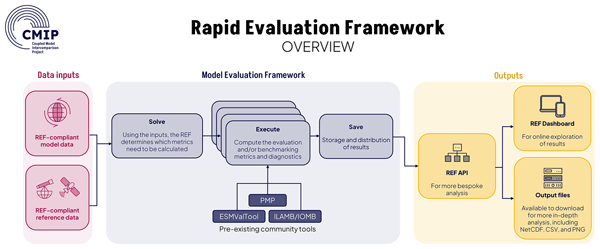
As Earth system models become more complex, rapid and comprehensive evaluation through comparison with observational data is necessary. The upcoming Assessment Fast Track for the Seventh Phase of the Coupled Model Intercomparison Project (CMIP7) will require fast analysis. This paper describes a new Rapid Evaluation Framework (REF) that was developed for the Assessment Fast Track that will be run at the Earth System Grid Federation (ESGF) to inform the community about the performance of models.
Katherine Shu-Min Li, Nadun Sinhabahu, Ben-Jei Tsuang, Fang-Chi Wu, Wan-Ling Tseng, Pei-Hsuan Kuo, Sying-Jyan Wang, Pang-Yen Liu, Jen-Her Chen, Bin-Ming Wang, Yung-Yao Lan, and Sun-Yuan Kung
EGUsphere, https://doi.org/10.5194/egusphere-2025-142, https://doi.org/10.5194/egusphere-2025-142, 2025
Short summary
Short summary
This study underscores the transformative potential of machine learning algorithms in environmental forecasting. The superior performance of Bi-LSTM in reducing SST bias, coupled with its broader applicability in time-series analysis, makes it a valuable tool for improving the accuracy and reliability of numerical weather prediction models.
Martin Juckes, Karl E. Taylor, Fabrizio Antonio, David Brayshaw, Carlo Buontempo, Jian Cao, Paul J. Durack, Michio Kawamiya, Hyungjun Kim, Tomas Lovato, Chloe Mackallah, Matthew Mizielinski, Alessandra Nuzzo, Martina Stockhause, Daniele Visioni, Jeremy Walton, Briony Turner, Eleanor O'Rourke, and Beth Dingley
Geosci. Model Dev., 18, 2639–2663, https://doi.org/10.5194/gmd-18-2639-2025, https://doi.org/10.5194/gmd-18-2639-2025, 2025
Short summary
Short summary
The Baseline Climate Variables for Earth System Modelling (ESM-BCVs) are defined as a list of 135 variables which have high utility for the evaluation and exploitation of climate simulations. The list reflects the most frequently used variables from Earth system models based on an assessment of data publication and download records from the largest archive of global climate projects.
Flor Vermassen, Clare Bird, Tirza M. Weitkamp, Kate F. Darling, Hanna Farnelid, Céline Heuzé, Allison Y. Hsiang, Salar Karam, Christian Stranne, Marcus Sundbom, and Helen K. Coxall
Biogeosciences, 22, 2261–2286, https://doi.org/10.5194/bg-22-2261-2025, https://doi.org/10.5194/bg-22-2261-2025, 2025
Short summary
Short summary
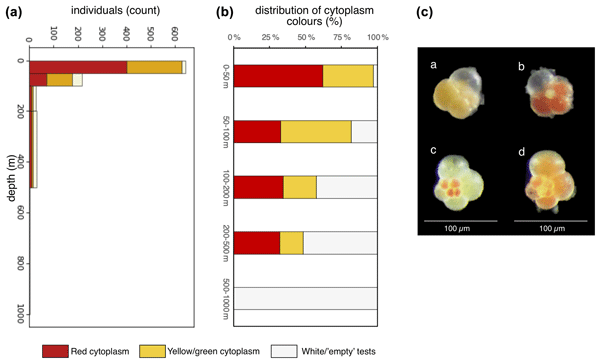
We provide the first systematic survey of planktonic foraminifera in the high Arctic Ocean. Our results describe the abundance and species composition under summer sea ice. They indicate that the polar specialist N. pachyderma is the only species present, with subpolar species absent. The data set will be a valuable reference for continued monitoring of the state of planktonic foraminifera communities as they respond to the ongoing sea-ice decline and the “Atlantification” of the Arctic Ocean.
Jerome Sauer, François Massonnet, Giuseppe Zappa, and Francesco Ragone
Earth Syst. Dynam., 16, 683–702, https://doi.org/10.5194/esd-16-683-2025, https://doi.org/10.5194/esd-16-683-2025, 2025
Short summary
Short summary
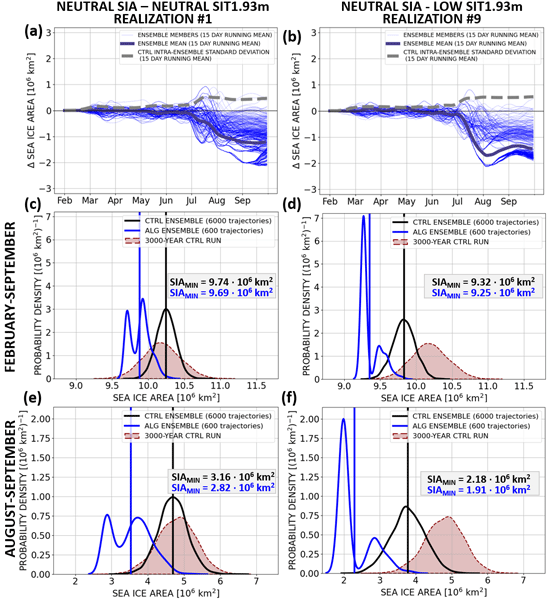
An obstacle in studying climate extremes is the lack of robust statistics. We use a rare event algorithm to gather robust statistics on extreme Arctic sea ice lows with probabilities below 0.1 % and to study drivers of events with amplitudes larger than observed in 2012. The work highlights that the most extreme sea ice reductions result from the combined effects of preconditioning and weather variability, emphasizing the need for thoughtful ensemble design when turning to real applications.
Carola Barrientos-Velasco, Christopher J. Cox, Hartwig Deneke, J. Brant Dodson, Anja Hünerbein, Matthew D. Shupe, Patrick C. Taylor, and Andreas Macke
Atmos. Chem. Phys., 25, 3929–3960, https://doi.org/10.5194/acp-25-3929-2025, https://doi.org/10.5194/acp-25-3929-2025, 2025
Short summary
Short summary
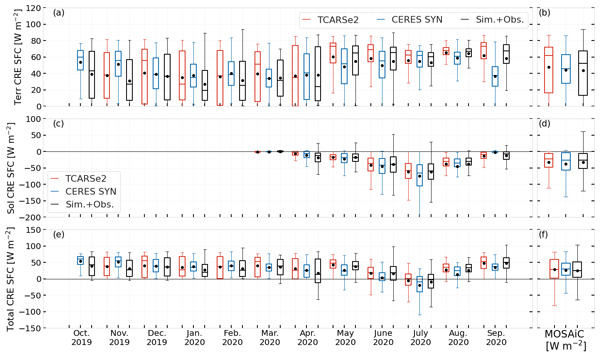
Understanding how clouds affect the climate, especially in the Arctic, is crucial. This study used data from the largest polar expedition in history, MOSAiC, and the CERES satellite to analyse the impact of clouds on radiation. Simulations showed accurate results, aligning with observations. Over the year, clouds caused the atmospheric surface system to lose 5.2 W m−² of radiative energy to space, while the surface gained 25 W m−² and the atmosphere cooled by 30.2 W m−².
Peter Van Katwyk, Baylor Fox-Kemper, Sophie Nowicki, Hélène Seroussi, and Karianne J. Bergen
EGUsphere, https://doi.org/10.5194/egusphere-2025-870, https://doi.org/10.5194/egusphere-2025-870, 2025
Preprint archived
Short summary
Short summary
We present ISEFlow, a machine learning emulator that predicts how the melting of the Antarctic and Greenland ice sheets will contribute to sea level. ISEFlow is fast and accurate, allowing scientists to explore different climate scenarios with greater confidence. ISEFlow distinguishes between high and low emissions scenarios, helping us understand how today’s choices impact future sea levels. ISEFlow supports more reliable climate predictions and helps scientists study the future of ice sheets.
Katherine M. Smith, Alice M. Barthel, LeAnn M. Conlon, Luke P. Van Roekel, Anthony Bartoletti, Jean-Christophe Golaz, Chengzhu Zhang, Carolyn Branecky Begeman, James J. Benedict, Gautam Bisht, Yan Feng, Walter Hannah, Bryce E. Harrop, Nicole Jeffery, Wuyin Lin, Po-Lun Ma, Mathew E. Maltrud, Mark R. Petersen, Balwinder Singh, Qi Tang, Teklu Tesfa, Jonathan D. Wolfe, Shaocheng Xie, Xue Zheng, Karthik Balaguru, Oluwayemi Garuba, Peter Gleckler, Aixue Hu, Jiwoo Lee, Ben Moore-Maley, and Ana C. Ordoñez
Geosci. Model Dev., 18, 1613–1633, https://doi.org/10.5194/gmd-18-1613-2025, https://doi.org/10.5194/gmd-18-1613-2025, 2025
Short summary
Short summary
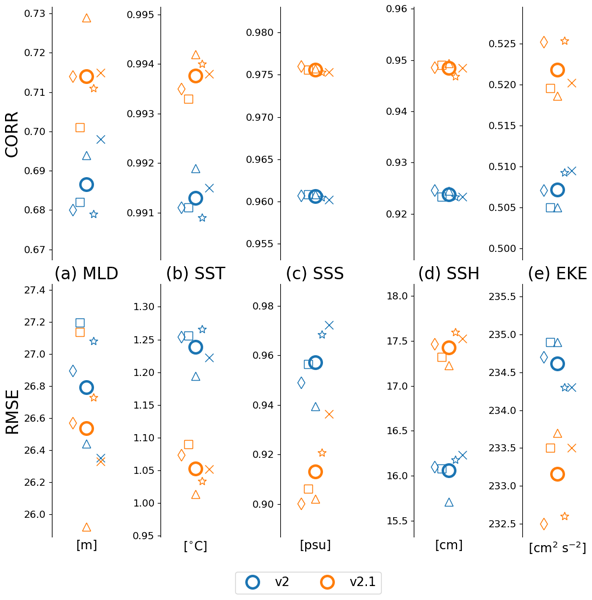
Version 2.1 of the U.S. Department of Energy's Energy Exascale Earth System Model (E3SM) adds the Fox-Kemper et al. (2011) mixed-layer eddy parameterization, which restratifies the ocean surface layer through an overturning streamfunction. Results include surface layer bias reduction in temperature, salinity, and sea ice extent in the North Atlantic; a small strengthening of the Atlantic meridional overturning circulation; and improvements to many atmospheric climatological variables.
Malcolm J. Roberts, Kevin A. Reed, Qing Bao, Joseph J. Barsugli, Suzana J. Camargo, Louis-Philippe Caron, Ping Chang, Cheng-Ta Chen, Hannah M. Christensen, Gokhan Danabasoglu, Ivy Frenger, Neven S. Fučkar, Shabeh ul Hasson, Helene T. Hewitt, Huanping Huang, Daehyun Kim, Chihiro Kodama, Michael Lai, Lai-Yung Ruby Leung, Ryo Mizuta, Paulo Nobre, Pablo Ortega, Dominique Paquin, Christopher D. Roberts, Enrico Scoccimarro, Jon Seddon, Anne Marie Treguier, Chia-Ying Tu, Paul A. Ullrich, Pier Luigi Vidale, Michael F. Wehner, Colin M. Zarzycki, Bosong Zhang, Wei Zhang, and Ming Zhao
Geosci. Model Dev., 18, 1307–1332, https://doi.org/10.5194/gmd-18-1307-2025, https://doi.org/10.5194/gmd-18-1307-2025, 2025
Short summary
Short summary
HighResMIP2 is a model intercomparison project focusing on high-resolution global climate models, that is, those with grid spacings of 25 km or less in the atmosphere and ocean, using simulations of decades to a century in length. We are proposing an update of our simulation protocol to make the models more applicable to key questions for climate variability and hazard in present-day and future projections and to build links with other communities to provide more robust climate information.
Wee Wei Khoo, Juliane Müller, Oliver Esper, Wenshen Xiao, Christian Stepanek, Paul Gierz, Gerrit Lohmann, Walter Geibert, Jens Hefter, and Gesine Mollenhauer
Clim. Past, 21, 299–326, https://doi.org/10.5194/cp-21-299-2025, https://doi.org/10.5194/cp-21-299-2025, 2025
Short summary
Short summary
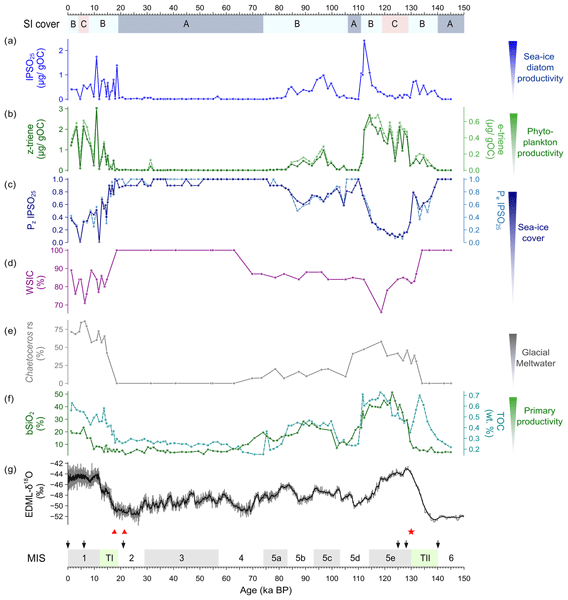
Using a multiproxy approach, we analyzed biomarkers and diatom assemblages from a marine sediment core from the Powell Basin, Weddell Sea. The results reveal the first continuous coastal Antarctic sea ice record since the Last Penultimate Glacial. Our findings contribute valuable insights into past glacial–interglacial sea ice responses to a changing climate and enhance our understanding of ocean–sea ice–ice shelf interactions and dynamics.
Paul J. Durack, Karl E. Taylor, Peter J. Gleckler, Gerald A. Meehl, Bryan N. Lawrence, Curt Covey, Ronald J. Stouffer, Guillaume Levavasseur, Atef Ben-Nasser, Sebastien Denvil, Martina Stockhause, Jonathan M. Gregory, Martin Juckes, Sasha K. Ames, Fabrizio Antonio, David C. Bader, John P. Dunne, Daniel Ellis, Veronika Eyring, Sandro L. Fiore, Sylvie Joussaume, Philip Kershaw, Jean-Francois Lamarque, Michael Lautenschlager, Jiwoo Lee, Chris F. Mauzey, Matthew Mizielinski, Paola Nassisi, Alessandra Nuzzo, Eleanor O’Rourke, Jeffrey Painter, Gerald L. Potter, Sven Rodriguez, and Dean N. Williams
EGUsphere, https://doi.org/10.5194/egusphere-2024-3729, https://doi.org/10.5194/egusphere-2024-3729, 2025
Short summary
Short summary
CMIP6 was the most expansive and ambitious Model Intercomparison Project (MIP), the latest in a history, extending four decades. CMIP engaged a growing community focused on improving climate understanding, and quantifying and attributing observed climate change being experienced today. The project's profound impact is due to the combining the latest climate science and technology, enabling the latest-generation climate simulations and increasing community attention in every successive phase.
Zhi Yang Koh, Benjamin S. Grandey, Dhrubajyoti Samanta, Adam D. Switzer, Benjamin P. Horton, Justin Dauwels, and Lock Yue Chew
Ocean Sci., 20, 1495–1511, https://doi.org/10.5194/os-20-1495-2024, https://doi.org/10.5194/os-20-1495-2024, 2024
Short summary
Short summary
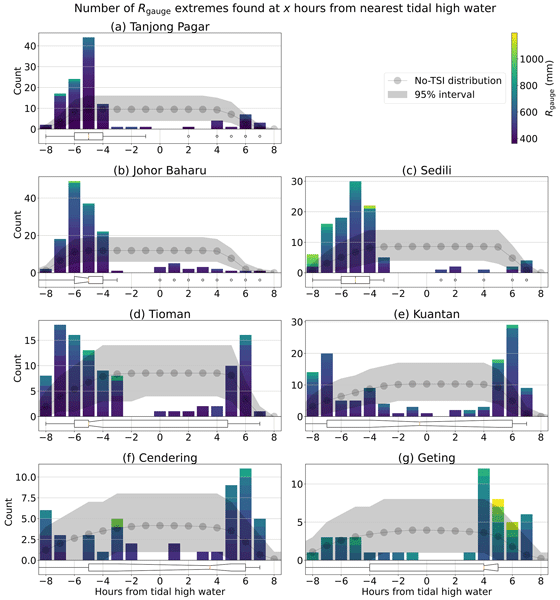
Identifying tide–surge interaction (TSI) is a complex task. We enhance existing statistical methods with a more-robust test that accounts for complex tides. We also develop a semi-empirical model to investigate the influence of one mechanism of TSI, tidal-phase alteration. We apply these techniques to tide-gauge records from Singapore and the east coast of Peninsular Malaysia. We find TSI at all studied locations: tidal-phase alteration can change the timing of large surges.
Sofia Allende, Anne Marie Treguier, Camille Lique, Clément de Boyer Montégut, François Massonnet, Thierry Fichefet, and Antoine Barthélemy
Geosci. Model Dev., 17, 7445–7466, https://doi.org/10.5194/gmd-17-7445-2024, https://doi.org/10.5194/gmd-17-7445-2024, 2024
Short summary
Short summary
We study the parameters of the turbulent-kinetic-energy mixed-layer-penetration scheme in the NEMO model with regard to sea-ice-covered regions of the Arctic Ocean. This evaluation reveals the impact of these parameters on mixed-layer depth, sea surface temperature and salinity, and ocean stratification. Our findings demonstrate significant impacts on sea ice thickness and sea ice concentration, emphasizing the need for accurately representing ocean mixing to understand Arctic climate dynamics.
Colin G. Jones, Fanny Adloff, Ben B. B. Booth, Peter M. Cox, Veronika Eyring, Pierre Friedlingstein, Katja Frieler, Helene T. Hewitt, Hazel A. Jeffery, Sylvie Joussaume, Torben Koenigk, Bryan N. Lawrence, Eleanor O'Rourke, Malcolm J. Roberts, Benjamin M. Sanderson, Roland Séférian, Samuel Somot, Pier Luigi Vidale, Detlef van Vuuren, Mario Acosta, Mats Bentsen, Raffaele Bernardello, Richard Betts, Ed Blockley, Julien Boé, Tom Bracegirdle, Pascale Braconnot, Victor Brovkin, Carlo Buontempo, Francisco Doblas-Reyes, Markus Donat, Italo Epicoco, Pete Falloon, Sandro Fiore, Thomas Frölicher, Neven S. Fučkar, Matthew J. Gidden, Helge F. Goessling, Rune Grand Graversen, Silvio Gualdi, José M. Gutiérrez, Tatiana Ilyina, Daniela Jacob, Chris D. Jones, Martin Juckes, Elizabeth Kendon, Erik Kjellström, Reto Knutti, Jason Lowe, Matthew Mizielinski, Paola Nassisi, Michael Obersteiner, Pierre Regnier, Romain Roehrig, David Salas y Mélia, Carl-Friedrich Schleussner, Michael Schulz, Enrico Scoccimarro, Laurent Terray, Hannes Thiemann, Richard A. Wood, Shuting Yang, and Sönke Zaehle
Earth Syst. Dynam., 15, 1319–1351, https://doi.org/10.5194/esd-15-1319-2024, https://doi.org/10.5194/esd-15-1319-2024, 2024
Short summary
Short summary
We propose a number of priority areas for the international climate research community to address over the coming decade. Advances in these areas will both increase our understanding of past and future Earth system change, including the societal and environmental impacts of this change, and deliver significantly improved scientific support to international climate policy, such as future IPCC assessments and the UNFCCC Global Stocktake.
Francesco Cocetta, Lorenzo Zampieri, Julia Selivanova, and Doroteaciro Iovino
The Cryosphere, 18, 4687–4702, https://doi.org/10.5194/tc-18-4687-2024, https://doi.org/10.5194/tc-18-4687-2024, 2024
Short summary
Short summary
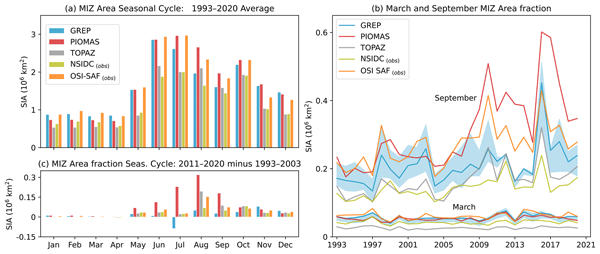
Arctic sea ice is thinning and retreating because of global warming. Thus, the region is transitioning to a new state featuring an expansion of the marginal ice zone, a region where mobile ice interacts with waves from the open ocean. By analyzing 30 years of sea ice reconstructions that combine numerical models and observations, this paper proves that an ensemble of global ocean and sea ice reanalyses is an adequate tool for investigating the changing Arctic sea ice cover.
Karina von Schuckmann, Lorena Moreira, Mathilde Cancet, Flora Gues, Emmanuelle Autret, Jonathan Baker, Clément Bricaud, Romain Bourdalle-Badie, Lluis Castrillo, Lijing Cheng, Frederic Chevallier, Daniele Ciani, Alvaro de Pascual-Collar, Vincenzo De Toma, Marie Drevillon, Claudia Fanelli, Gilles Garric, Marion Gehlen, Rianne Giesen, Kevin Hodges, Doroteaciro Iovino, Simon Jandt-Scheelke, Eric Jansen, Melanie Juza, Ioanna Karagali, Thomas Lavergne, Simona Masina, Ronan McAdam, Audrey Minière, Helen Morrison, Tabea Rebekka Panteleit, Andrea Pisano, Marie-Isabelle Pujol, Ad Stoffelen, Sulian Thual, Simon Van Gennip, Pierre Veillard, Chunxue Yang, and Hao Zuo
State Planet, 4-osr8, 1, https://doi.org/10.5194/sp-4-osr8-1-2024, https://doi.org/10.5194/sp-4-osr8-1-2024, 2024
Ed Blockley, Emma Fiedler, Jeff Ridley, Luke Roberts, Alex West, Dan Copsey, Daniel Feltham, Tim Graham, David Livings, Clement Rousset, David Schroeder, and Martin Vancoppenolle
Geosci. Model Dev., 17, 6799–6817, https://doi.org/10.5194/gmd-17-6799-2024, https://doi.org/10.5194/gmd-17-6799-2024, 2024
Short summary
Short summary
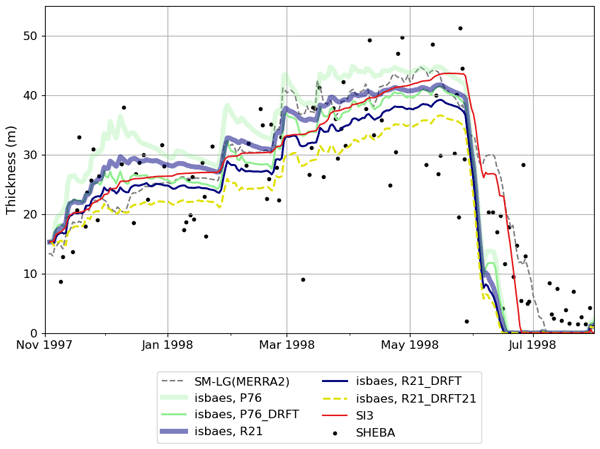
This paper documents the sea ice model component of the latest Met Office coupled model configuration, which will be used as the physical basis for UK contributions to CMIP7. Documentation of science options used in the configuration are given along with a brief model evaluation. This is the first UK configuration to use NEMO’s new SI3 sea ice model. We provide details on how SI3 was adapted to work with Met Office coupling methodology and documentation of coupling processes in the model.
Viktoria Spaiser, Sirkku Juhola, Sara M. Constantino, Weisi Guo, Tabitha Watson, Jana Sillmann, Alessandro Craparo, Ashleigh Basel, John T. Bruun, Krishna Krishnamurthy, Jürgen Scheffran, Patricia Pinho, Uche T. Okpara, Jonathan F. Donges, Avit Bhowmik, Taha Yasseri, Ricardo Safra de Campos, Graeme S. Cumming, Hugues Chenet, Florian Krampe, Jesse F. Abrams, James G. Dyke, Stefanie Rynders, Yevgeny Aksenov, and Bryan M. Spears
Earth Syst. Dynam., 15, 1179–1206, https://doi.org/10.5194/esd-15-1179-2024, https://doi.org/10.5194/esd-15-1179-2024, 2024
Short summary
Short summary
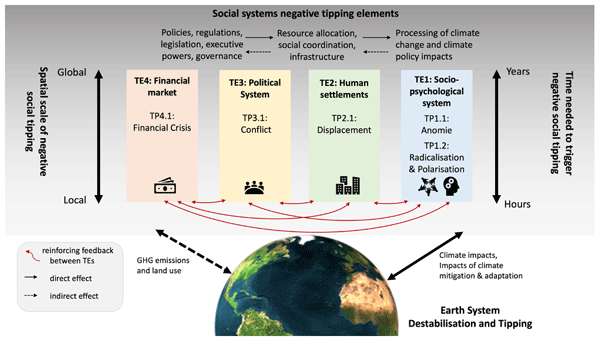
In this paper, we identify potential negative social tipping points linked to Earth system destabilization and draw on related research to understand the drivers and likelihood of these negative social tipping dynamics, their potential effects on human societies and the Earth system, and the potential for cascading interactions and contribution to systemic risks.
Bianca Mezzina, Hugues Goosse, François Klein, Antoine Barthélemy, and François Massonnet
The Cryosphere, 18, 3825–3839, https://doi.org/10.5194/tc-18-3825-2024, https://doi.org/10.5194/tc-18-3825-2024, 2024
Short summary
Short summary
We analyze years with extraordinarily low sea ice extent in Antarctica during summer, until the striking record in 2022. We highlight common aspects among these events, such as the fact that the exceptional melting usually occurs in two key regions and that it is related to winds with a similar direction. We also investigate whether the summer conditions are preceded by an unusual state of the sea ice during the previous winter, as well as the physical processes involved.
Salar Karam, Céline Heuzé, Mario Hoppmann, and Laura de Steur
Ocean Sci., 20, 917–930, https://doi.org/10.5194/os-20-917-2024, https://doi.org/10.5194/os-20-917-2024, 2024
Short summary
Short summary
A long-term mooring array in the Fram Strait allows for an evaluation of decadal trends in temperature in this major oceanic gateway into the Arctic. Since the 1980s, the deep waters of the Greenland Sea and the Eurasian Basin of the Arctic have warmed rapidly at a rate of 0.11°C and 0.05°C per decade, respectively, at a depth of 2500 m. We show that the temperatures of the two basins converged around 2017 and that the deep waters of the Greenland Sea are now a heat source for the Arctic Ocean.
Julia Selivanova, Doroteaciro Iovino, and Francesco Cocetta
The Cryosphere, 18, 2739–2763, https://doi.org/10.5194/tc-18-2739-2024, https://doi.org/10.5194/tc-18-2739-2024, 2024
Short summary
Short summary
Climate models show differences in sea ice representation in comparison to observations. Increasing the model resolution is a recognized way to improve model realism and obtain more reliable future projections. We find no strong impact of resolution on sea ice representation; it rather depends on the analysed variable and the model used. By 2050, the marginal ice zone (MIZ) becomes a dominant feature of the Arctic ice cover, suggesting a shift to a new regime similar to that in Antarctica.
Xiaoyu Fan, Baylor Fox-Kemper, Nobuhiro Suzuki, Qing Li, Patrick Marchesiello, Peter P. Sullivan, and Paul S. Hall
Geosci. Model Dev., 17, 4095–4113, https://doi.org/10.5194/gmd-17-4095-2024, https://doi.org/10.5194/gmd-17-4095-2024, 2024
Short summary
Short summary
Simulations of the oceanic turbulent boundary layer using the nonhydrostatic CROCO ROMS and NCAR-LES models are compared. CROCO and the NCAR-LES are accurate in a similar manner, but CROCO’s additional features (e.g., nesting and realism) and its compressible turbulence formulation carry additional costs.
Jiwoo Lee, Peter J. Gleckler, Min-Seop Ahn, Ana Ordonez, Paul A. Ullrich, Kenneth R. Sperber, Karl E. Taylor, Yann Y. Planton, Eric Guilyardi, Paul Durack, Celine Bonfils, Mark D. Zelinka, Li-Wei Chao, Bo Dong, Charles Doutriaux, Chengzhu Zhang, Tom Vo, Jason Boutte, Michael F. Wehner, Angeline G. Pendergrass, Daehyun Kim, Zeyu Xue, Andrew T. Wittenberg, and John Krasting
Geosci. Model Dev., 17, 3919–3948, https://doi.org/10.5194/gmd-17-3919-2024, https://doi.org/10.5194/gmd-17-3919-2024, 2024
Short summary
Short summary
We introduce an open-source software, the PCMDI Metrics Package (PMP), developed for a comprehensive comparison of Earth system models (ESMs) with real-world observations. Using diverse metrics evaluating climatology, variability, and extremes simulated in thousands of simulations from the Coupled Model Intercomparison Project (CMIP), PMP aids in benchmarking model improvements across generations. PMP also enables efficient tracking of performance evolutions during ESM developments.
Yung-Yao Lan, Huang-Hsiung Hsu, and Wan-Ling Tseng
Geosci. Model Dev., 17, 3897–3918, https://doi.org/10.5194/gmd-17-3897-2024, https://doi.org/10.5194/gmd-17-3897-2024, 2024
Short summary
Short summary
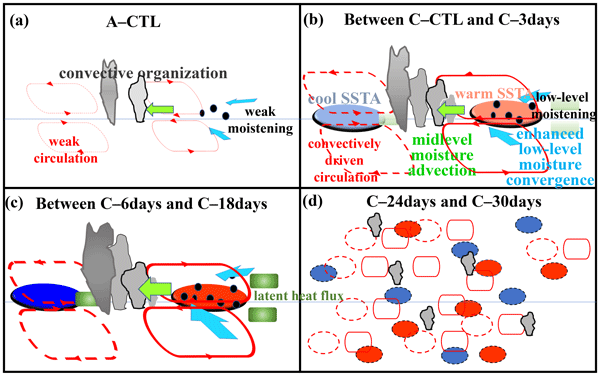
This study uses the CAM5–SIT coupled model to investigate the effects of SST feedback frequency on the MJO simulations with intervals at 30 min, 1, 3, 6, 12, 18, 24, and 30 d. The simulations become increasingly unrealistic as the frequency of the SST feedback decreases. Our results suggest that more spontaneous air--sea interaction (e.g., ocean response within 3 d in this study) with high vertical resolution in the ocean model is key to the realistic simulation of the MJO.
Elena Bianco, Doroteaciro Iovino, Simona Masina, Stefano Materia, and Paolo Ruggieri
The Cryosphere, 18, 2357–2379, https://doi.org/10.5194/tc-18-2357-2024, https://doi.org/10.5194/tc-18-2357-2024, 2024
Short summary
Short summary
Changes in ocean heat transport and surface heat fluxes in recent decades have altered the Arctic Ocean heat budget and caused warming of the upper ocean. Using two eddy-permitting ocean reanalyses, we show that this has important implications for sea ice variability. In the Arctic regional seas, upper-ocean heat content acts as an important precursor for sea ice anomalies on sub-seasonal timescales, and this link has strengthened since the 2000s.
Julia E. Weiffenbach, Henk A. Dijkstra, Anna S. von der Heydt, Ayako Abe-Ouchi, Wing-Le Chan, Deepak Chandan, Ran Feng, Alan M. Haywood, Stephen J. Hunter, Xiangyu Li, Bette L. Otto-Bliesner, W. Richard Peltier, Christian Stepanek, Ning Tan, Julia C. Tindall, and Zhongshi Zhang
Clim. Past, 20, 1067–1086, https://doi.org/10.5194/cp-20-1067-2024, https://doi.org/10.5194/cp-20-1067-2024, 2024
Short summary
Short summary
Elevated atmospheric CO2 concentrations and a smaller Antarctic Ice Sheet during the mid-Pliocene (~ 3 million years ago) cause the Southern Ocean surface to become fresher and warmer, which affects the global ocean circulation. The CO2 concentration and the smaller Antarctic Ice Sheet both have a similar and approximately equal impact on the Southern Ocean. The conditions of the Southern Ocean in the mid-Pliocene could therefore be analogous to those in a future climate with smaller ice sheets.
Yi-Chi Wang, Chia-Hao Chiang, Chiung-Jui Su, Ko-Chih Wang, Wan-Ling Tseng, Cheng-Ta Chen, and Hsin-Chien Liang
EGUsphere, https://doi.org/10.5194/egusphere-2024-1022, https://doi.org/10.5194/egusphere-2024-1022, 2024
Preprint archived
Short summary
Short summary
Our study introduces a deep learning model, the EDA, to refine rainfall data in Taiwan. This model significantly improves bias correction by integrating surface wind and topography data, crucial in areas like Taiwan where traditional methods fall short. The EDA excels in adjusting low-intensity and misplaced rainfall, enhancing water management, agriculture, and disaster prevention. This work showcases deep learning's potential to improve climate downscaling in complex terrains.
Harry Bryden, Jordi Beunk, Sybren Drijfhout, Wilco Hazeleger, and Jennifer Mecking
Ocean Sci., 20, 589–599, https://doi.org/10.5194/os-20-589-2024, https://doi.org/10.5194/os-20-589-2024, 2024
Short summary
Short summary
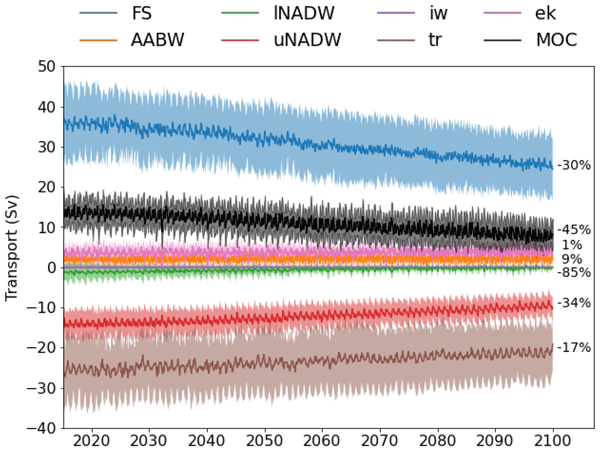
There is widespread interest in whether the Gulf Stream will decline under global warming. We analyse 19 coupled climate model projections of the AMOC over the 21st century. The model consensus is that the AMOC will decline by about 40 % due to reductions in northward Gulf Stream transport and southward deep western boundary current transport. Whilst the wind-driven Gulf Stream decreases by 4 Sv, most of the decrease in the Gulf Stream is due to a reduction of 7 Sv in its thermohaline component.
Lea Poropat, Dani Jones, Simon D. A. Thomas, and Céline Heuzé
Ocean Sci., 20, 201–215, https://doi.org/10.5194/os-20-201-2024, https://doi.org/10.5194/os-20-201-2024, 2024
Short summary
Short summary
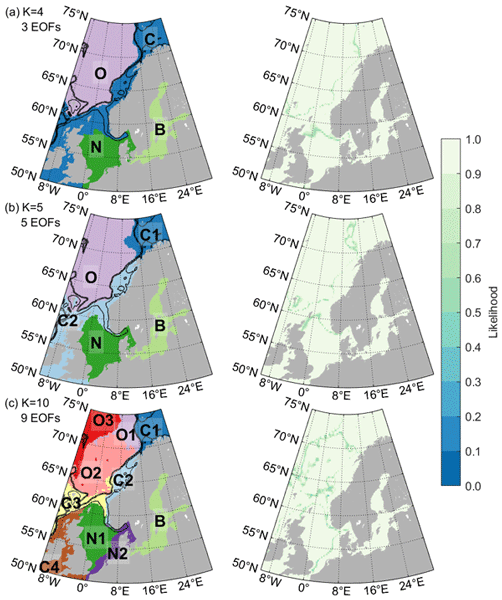
In this study we use a machine learning method called a Gaussian mixture model to divide part of the ocean (northwestern European seas and part of the Atlantic Ocean) into regions based on satellite observations of sea level. This helps us study each of these regions separately and learn more about what causes sea level changes there. We find that the ocean is first divided based on bathymetry and then based on other features such as water masses and typical atmospheric conditions.
Nico Wunderling, Anna S. von der Heydt, Yevgeny Aksenov, Stephen Barker, Robbin Bastiaansen, Victor Brovkin, Maura Brunetti, Victor Couplet, Thomas Kleinen, Caroline H. Lear, Johannes Lohmann, Rosa Maria Roman-Cuesta, Sacha Sinet, Didier Swingedouw, Ricarda Winkelmann, Pallavi Anand, Jonathan Barichivich, Sebastian Bathiany, Mara Baudena, John T. Bruun, Cristiano M. Chiessi, Helen K. Coxall, David Docquier, Jonathan F. Donges, Swinda K. J. Falkena, Ann Kristin Klose, David Obura, Juan Rocha, Stefanie Rynders, Norman Julius Steinert, and Matteo Willeit
Earth Syst. Dynam., 15, 41–74, https://doi.org/10.5194/esd-15-41-2024, https://doi.org/10.5194/esd-15-41-2024, 2024
Short summary
Short summary
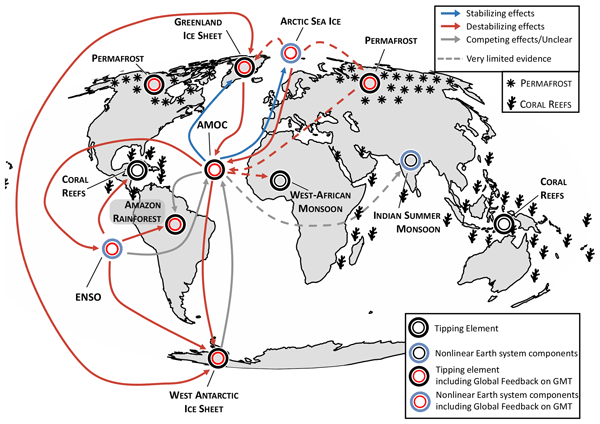
This paper maps out the state-of-the-art literature on interactions between tipping elements relevant for current global warming pathways. We find indications that many of the interactions between tipping elements are destabilizing. This means that tipping cascades cannot be ruled out on centennial to millennial timescales at global warming levels between 1.5 and 2.0 °C or on shorter timescales if global warming surpasses 2.0 °C.
Qiang Wang, Qi Shu, Alexandra Bozec, Eric P. Chassignet, Pier Giuseppe Fogli, Baylor Fox-Kemper, Andy McC. Hogg, Doroteaciro Iovino, Andrew E. Kiss, Nikolay Koldunov, Julien Le Sommer, Yiwen Li, Pengfei Lin, Hailong Liu, Igor Polyakov, Patrick Scholz, Dmitry Sidorenko, Shizhu Wang, and Xiaobiao Xu
Geosci. Model Dev., 17, 347–379, https://doi.org/10.5194/gmd-17-347-2024, https://doi.org/10.5194/gmd-17-347-2024, 2024
Short summary
Short summary
Increasing resolution improves model skills in simulating the Arctic Ocean, but other factors such as parameterizations and numerics are at least of the same importance for obtaining reliable simulations.
Céline Heuzé, Oliver Huhn, Maren Walter, Natalia Sukhikh, Salar Karam, Wiebke Körtke, Myriel Vredenborg, Klaus Bulsiewicz, Jürgen Sültenfuß, Ying-Chih Fang, Christian Mertens, Benjamin Rabe, Sandra Tippenhauer, Jacob Allerholt, Hailun He, David Kuhlmey, Ivan Kuznetsov, and Maria Mallet
Earth Syst. Sci. Data, 15, 5517–5534, https://doi.org/10.5194/essd-15-5517-2023, https://doi.org/10.5194/essd-15-5517-2023, 2023
Short summary
Short summary
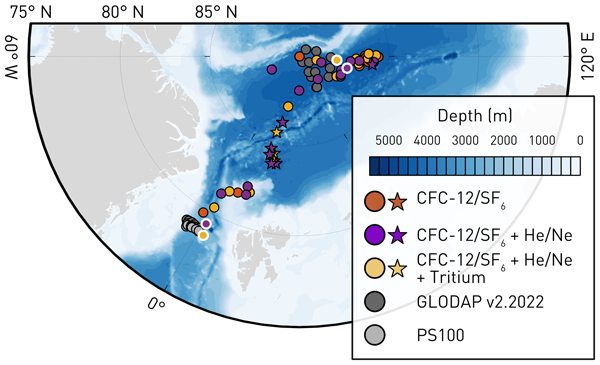
Gases dissolved in the ocean water not used by the ecosystem (or "passive tracers") are invaluable to track water over long distances and investigate the processes that modify its properties. Unfortunately, especially so in the ice-covered Arctic Ocean, such gas measurements are sparse. We here present a data set of several passive tracers (anthropogenic gases, noble gases and their isotopes) collected over the full ocean depth, weekly, during the 1-year drift in the Arctic during MOSAiC.
Benjamin S. Grandey, Zhi Yang Koh, Dhrubajyoti Samanta, Benjamin P. Horton, Justin Dauwels, and Lock Yue Chew
Geosci. Model Dev., 16, 6593–6608, https://doi.org/10.5194/gmd-16-6593-2023, https://doi.org/10.5194/gmd-16-6593-2023, 2023
Short summary
Short summary
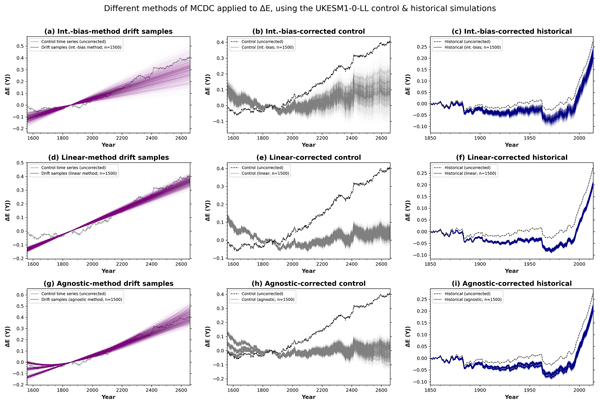
Global climate models are susceptible to spurious trends known as drift. Fortunately, drift can be corrected when analysing data produced by models. To explore the uncertainty associated with drift correction, we develop a new method: Monte Carlo drift correction. For historical simulations of thermosteric sea level rise, drift uncertainty is relatively large. When analysing data susceptible to drift, researchers should consider drift uncertainty.
Doroteaciro Iovino, Pier Giuseppe Fogli, and Simona Masina
Geosci. Model Dev., 16, 6127–6159, https://doi.org/10.5194/gmd-16-6127-2023, https://doi.org/10.5194/gmd-16-6127-2023, 2023
Short summary
Short summary
This paper describes the model performance of three global ocean–sea ice configurations, from non-eddying (1°) to eddy-rich (1/16°) resolutions. Model simulations are obtained following the Ocean Model Intercomparison Project phase 2 (OMIP2) protocol. We compare key global climate variables across the three models and against observations, emphasizing the relative advantages and disadvantages of running forced ocean–sea ice models at higher resolution.
Xin Ren, Daniel J. Lunt, Erica Hendy, Anna von der Heydt, Ayako Abe-Ouchi, Bette Otto-Bliesner, Charles J. R. Williams, Christian Stepanek, Chuncheng Guo, Deepak Chandan, Gerrit Lohmann, Julia C. Tindall, Linda E. Sohl, Mark A. Chandler, Masa Kageyama, Michiel L. J. Baatsen, Ning Tan, Qiong Zhang, Ran Feng, Stephen Hunter, Wing-Le Chan, W. Richard Peltier, Xiangyu Li, Youichi Kamae, Zhongshi Zhang, and Alan M. Haywood
Clim. Past, 19, 2053–2077, https://doi.org/10.5194/cp-19-2053-2023, https://doi.org/10.5194/cp-19-2053-2023, 2023
Short summary
Short summary
We investigate the Maritime Continent climate in the mid-Piacenzian warm period and find it is warmer and wetter and the sea surface salinity is lower compared with preindustrial period. Besides, the fresh and warm water transfer through the Maritime Continent was stronger. In order to avoid undue influence from closely related models in the multimodel results, we introduce a new metric, the multi-cluster mean, which could reveal spatial signals that are not captured by the multimodel mean.
Christoph Heinze, Thorsten Blenckner, Peter Brown, Friederike Fröb, Anne Morée, Adrian L. New, Cara Nissen, Stefanie Rynders, Isabel Seguro, Yevgeny Aksenov, Yuri Artioli, Timothée Bourgeois, Friedrich Burger, Jonathan Buzan, B. B. Cael, Veli Çağlar Yumruktepe, Melissa Chierici, Christopher Danek, Ulf Dieckmann, Agneta Fransson, Thomas Frölicher, Giovanni Galli, Marion Gehlen, Aridane G. González, Melchor Gonzalez-Davila, Nicolas Gruber, Örjan Gustafsson, Judith Hauck, Mikko Heino, Stephanie Henson, Jenny Hieronymus, I. Emma Huertas, Fatma Jebri, Aurich Jeltsch-Thömmes, Fortunat Joos, Jaideep Joshi, Stephen Kelly, Nandini Menon, Precious Mongwe, Laurent Oziel, Sólveig Ólafsdottir, Julien Palmieri, Fiz F. Pérez, Rajamohanan Pillai Ranith, Juliano Ramanantsoa, Tilla Roy, Dagmara Rusiecka, J. Magdalena Santana Casiano, Yeray Santana-Falcón, Jörg Schwinger, Roland Séférian, Miriam Seifert, Anna Shchiptsova, Bablu Sinha, Christopher Somes, Reiner Steinfeldt, Dandan Tao, Jerry Tjiputra, Adam Ulfsbo, Christoph Völker, Tsuyoshi Wakamatsu, and Ying Ye
Biogeosciences Discuss., https://doi.org/10.5194/bg-2023-182, https://doi.org/10.5194/bg-2023-182, 2023
Revised manuscript not accepted
Short summary
Short summary
For assessing the consequences of human-induced climate change for the marine realm, it is necessary to not only look at gradual changes but also at abrupt changes of environmental conditions. We summarise abrupt changes in ocean warming, acidification, and oxygen concentration as the key environmental factors for ecosystems. Taking these abrupt changes into account requires greenhouse gas emissions to be reduced to a larger extent than previously thought to limit respective damage.
Jonathan Andrew Baker, Richard Renshaw, Laura Claire Jackson, Clotilde Dubois, Doroteaciro Iovino, Hao Zuo, Renellys C. Perez, Shenfu Dong, Marion Kersalé, Michael Mayer, Johannes Mayer, Sabrina Speich, and Tarron Lamont
State Planet, 1-osr7, 4, https://doi.org/10.5194/sp-1-osr7-4-2023, https://doi.org/10.5194/sp-1-osr7-4-2023, 2023
Short summary
Short summary
We use ocean reanalyses, in which ocean models are combined with observations, to infer past changes in ocean circulation and heat transport in the South Atlantic. Comparing these estimates with other observation-based estimates, we find differences in their trends, variability, and mean heat transport but closer agreement in their mean overturning strength. Ocean reanalyses can help us understand the cause of these differences, which could improve estimates of ocean transports in this region.
Michael Mayer, Takamasa Tsubouchi, Susanna Winkelbauer, Karin Margretha H. Larsen, Barbara Berx, Andreas Macrander, Doroteaciro Iovino, Steingrímur Jónsson, and Richard Renshaw
State Planet, 1-osr7, 14, https://doi.org/10.5194/sp-1-osr7-14-2023, https://doi.org/10.5194/sp-1-osr7-14-2023, 2023
Short summary
Short summary
This paper compares oceanic fluxes across the Greenland–Scotland Ridge (GSR) from ocean reanalyses to largely independent observational data. Reanalyses tend to underestimate the inflow of warm waters of subtropical Atlantic origin and hence oceanic heat transport across the GSR. Investigation of a strong negative heat transport anomaly around 2018 highlights the interplay of variability on different timescales and the need for long-term monitoring of the GSR to detect forced climate signals.
Andrea Cipollone, Deep Sankar Banerjee, Doroteaciro Iovino, Ali Aydogdu, and Simona Masina
Ocean Sci., 19, 1375–1392, https://doi.org/10.5194/os-19-1375-2023, https://doi.org/10.5194/os-19-1375-2023, 2023
Short summary
Short summary
Sea-ice volume is characterized by low predictability compared to the sea ice area or the extent. A joint initialization of the thickness and concentration using satellite data could improve the predictive power, although it is still absent in the present global analysis–reanalysis systems. This study shows a scheme to correct the two features together that can be easily extended to include ocean variables. The impact of such a joint initialization is shown and compared among different set-ups.
Steve Delhaye, Rym Msadek, Thierry Fichefet, François Massonnet, and Laurent Terray
EGUsphere, https://doi.org/10.5194/egusphere-2023-1748, https://doi.org/10.5194/egusphere-2023-1748, 2023
Preprint archived
Short summary
Short summary
The climate impact of Arctic sea ice loss may depend on the region of sea ice loss and the methodology used to study this impact. This study uses two approaches across seven climate models to investigate the winter atmospheric circulation response to regional sea ice loss. Our findings indicate a consistent atmospheric circulation response to pan-Arctic sea ice loss in most models and across both approaches. In contrast, more uncertainty emerges in the responses linked to regional sea ice loss.
Yanan Wang, Byongjun Hwang, Adam William Bateson, Yevgeny Aksenov, and Christopher Horvat
The Cryosphere, 17, 3575–3591, https://doi.org/10.5194/tc-17-3575-2023, https://doi.org/10.5194/tc-17-3575-2023, 2023
Short summary
Short summary
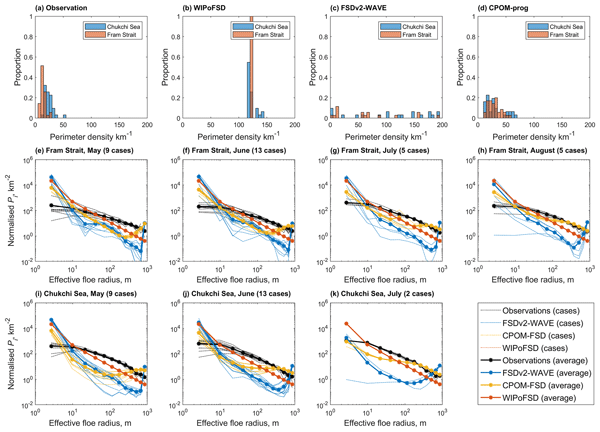
Sea ice is composed of small, discrete pieces of ice called floes, whose size distribution plays a critical role in the interactions between the sea ice, ocean and atmosphere. This study provides an assessment of sea ice models using new high-resolution floe size distribution observations, revealing considerable differences between them. These findings point not only to the limitations in models but also to the need for more high-resolution observations to validate and calibrate models.
Yi-Chi Wang, Wan-Ling Tseng, Yu-Luen Chen, Shih-Yu Lee, Huang-Hsiung Hsu, and Hsin-Chien Liang
Geosci. Model Dev., 16, 4599–4616, https://doi.org/10.5194/gmd-16-4599-2023, https://doi.org/10.5194/gmd-16-4599-2023, 2023
Short summary
Short summary
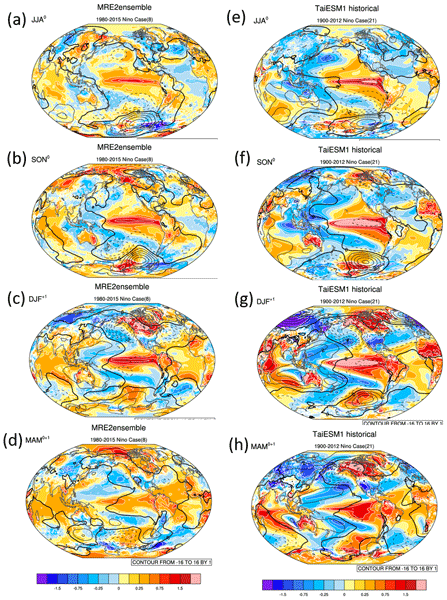
This study focuses on evaluating the performance of the Taiwan Earth System Model version 1 (TaiESM1) in simulating the El Niño–Southern Oscillation (ENSO), a significant tropical climate pattern with global impacts. Our findings reveal that TaiESM1 effectively captures several characteristics of ENSO, such as its seasonal variation and remote teleconnections. Its pronounced ENSO strength bias is also thoroughly investigated, aiming to gain insights to improve climate model performance.
Max Thomas, Briana Cate, Jack Garnett, Inga J. Smith, Martin Vancoppenolle, and Crispin Halsall
The Cryosphere, 17, 3193–3201, https://doi.org/10.5194/tc-17-3193-2023, https://doi.org/10.5194/tc-17-3193-2023, 2023
Short summary
Short summary
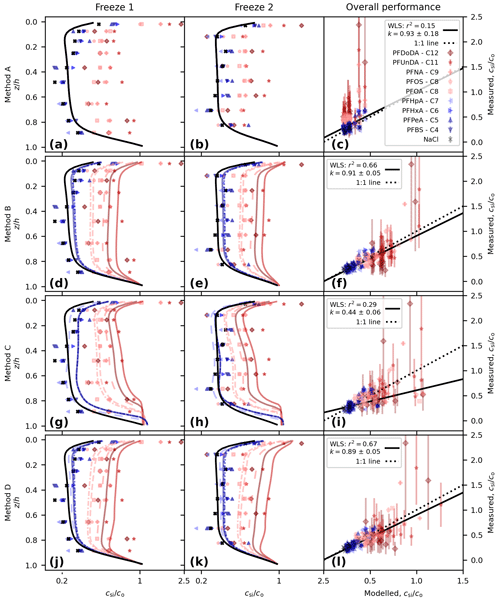
A recent study showed that pollutants can be enriched in growing sea ice beyond what we would expect from a perfectly dissolved chemical. We hypothesise that this effect is caused by the specific properties of the pollutants working in combination with fluid moving through the sea ice. To test our hypothesis, we replicate this behaviour in a sea-ice model and show that this type of modelling can be applied to predicting the transport of chemicals with complex behaviour in sea ice.
Mukesh Gupta, Leandro Ponsoni, Jean Sterlin, François Massonnet, and Thierry Fichefet
EGUsphere, https://doi.org/10.5194/egusphere-2023-1560, https://doi.org/10.5194/egusphere-2023-1560, 2023
Preprint archived
Short summary
Short summary
We explored the relationship of Arctic September minimum sea ice extent with mid-summer melt pond area fraction, under the present-day climate. We confirm through the advanced numerical modelling, with an explicit melt pond scheme in the global climate model, EC-EARTH3, that melt pond fraction in mid-summer (June–July, not May) shows a strong relationship with the Arctic September sea ice extent. Satellite-based inferences validated our findings of this association.
Anne Marie Treguier, Clement de Boyer Montégut, Alexandra Bozec, Eric P. Chassignet, Baylor Fox-Kemper, Andy McC. Hogg, Doroteaciro Iovino, Andrew E. Kiss, Julien Le Sommer, Yiwen Li, Pengfei Lin, Camille Lique, Hailong Liu, Guillaume Serazin, Dmitry Sidorenko, Qiang Wang, Xiaobio Xu, and Steve Yeager
Geosci. Model Dev., 16, 3849–3872, https://doi.org/10.5194/gmd-16-3849-2023, https://doi.org/10.5194/gmd-16-3849-2023, 2023
Short summary
Short summary
The ocean mixed layer is the interface between the ocean interior and the atmosphere and plays a key role in climate variability. We evaluate the performance of the new generation of ocean models for climate studies, designed to resolve
ocean eddies, which are the largest source of ocean variability and modulate the mixed-layer properties. We find that the mixed-layer depth is better represented in eddy-rich models but, unfortunately, not uniformly across the globe and not in all models.
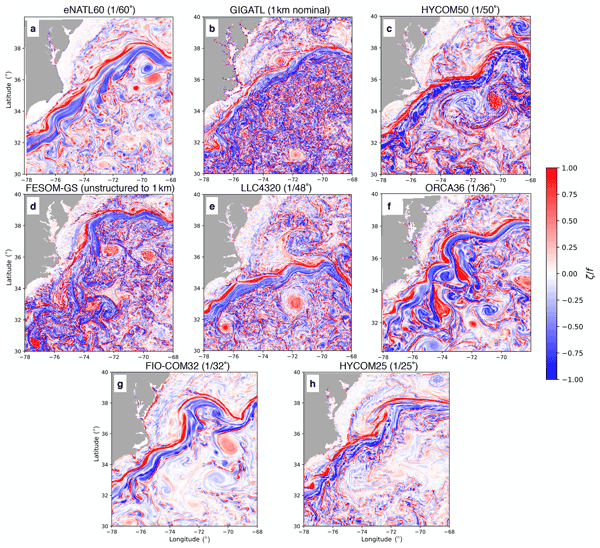
Katherine Hutchinson, Julie Deshayes, Christian Éthé, Clément Rousset, Casimir de Lavergne, Martin Vancoppenolle, Nicolas C. Jourdain, and Pierre Mathiot
Geosci. Model Dev., 16, 3629–3650, https://doi.org/10.5194/gmd-16-3629-2023, https://doi.org/10.5194/gmd-16-3629-2023, 2023
Short summary
Short summary
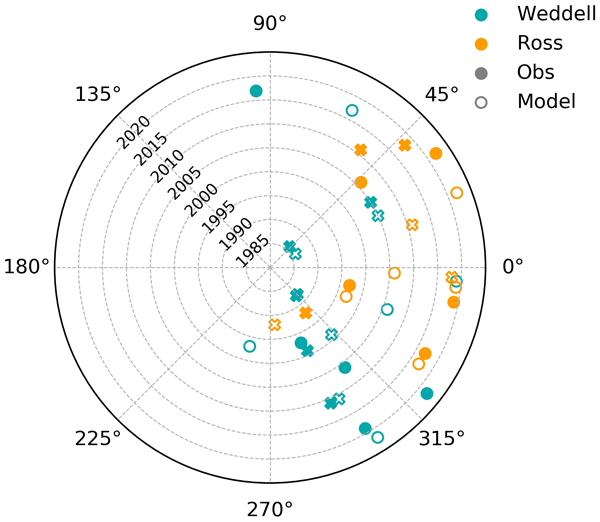
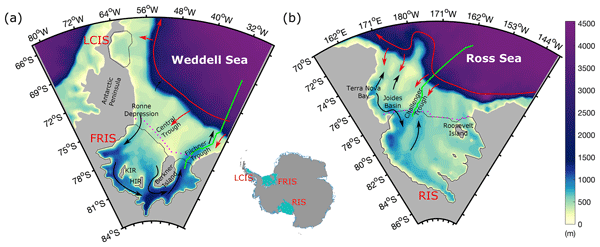
Bottom Water constitutes the lower half of the ocean’s overturning system and is primarily formed in the Weddell and Ross Sea in the Antarctic due to interactions between the atmosphere, ocean, sea ice and ice shelves. Here we use a global ocean 1° resolution model with explicit representation of the three large ice shelves important for the formation of the parent waters of Bottom Water. We find doing so reduces salt biases, improves water mass realism and gives realistic ice shelf melt rates.
Guillaume Gastineau, Claude Frankignoul, Yongqi Gao, Yu-Chiao Liang, Young-Oh Kwon, Annalisa Cherchi, Rohit Ghosh, Elisa Manzini, Daniela Matei, Jennifer Mecking, Lingling Suo, Tian Tian, Shuting Yang, and Ying Zhang
The Cryosphere, 17, 2157–2184, https://doi.org/10.5194/tc-17-2157-2023, https://doi.org/10.5194/tc-17-2157-2023, 2023
Short summary
Short summary
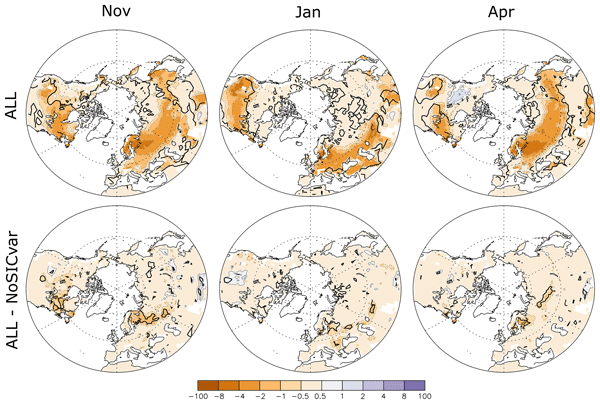
Snow cover variability is important for many human activities. This study aims to understand the main drivers of snow cover in observations and models in order to better understand it and guide the improvement of climate models and forecasting systems. Analyses reveal a dominant role for sea surface temperature in the Pacific. Winter snow cover is also found to have important two-way interactions with the troposphere and stratosphere. No robust influence of the sea ice concentration is found.
Rachel M. Walter, Hussein R. Sayani, Thomas Felis, Kim M. Cobb, Nerilie J. Abram, Ariella K. Arzey, Alyssa R. Atwood, Logan D. Brenner, Émilie P. Dassié, Kristine L. DeLong, Bethany Ellis, Julien Emile-Geay, Matthew J. Fischer, Nathalie F. Goodkin, Jessica A. Hargreaves, K. Halimeda Kilbourne, Hedwig Krawczyk, Nicholas P. McKay, Andrea L. Moore, Sujata A. Murty, Maria Rosabelle Ong, Riovie D. Ramos, Emma V. Reed, Dhrubajyoti Samanta, Sara C. Sanchez, Jens Zinke, and the PAGES CoralHydro2k Project Members
Earth Syst. Sci. Data, 15, 2081–2116, https://doi.org/10.5194/essd-15-2081-2023, https://doi.org/10.5194/essd-15-2081-2023, 2023
Short summary
Short summary
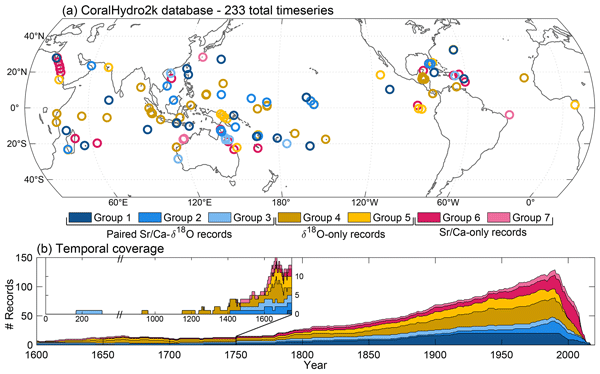
Accurately quantifying how the global hydrological cycle will change in the future remains challenging due to the limited availability of historical climate data from the tropics. Here we present the CoralHydro2k database – a new compilation of peer-reviewed coral-based climate records from the last 2000 years. This paper details the records included in the database and where the database can be accessed and demonstrates how the database can investigate past tropical climate variability.
Xia Lin, François Massonnet, Thierry Fichefet, and Martin Vancoppenolle
The Cryosphere, 17, 1935–1965, https://doi.org/10.5194/tc-17-1935-2023, https://doi.org/10.5194/tc-17-1935-2023, 2023
Short summary
Short summary
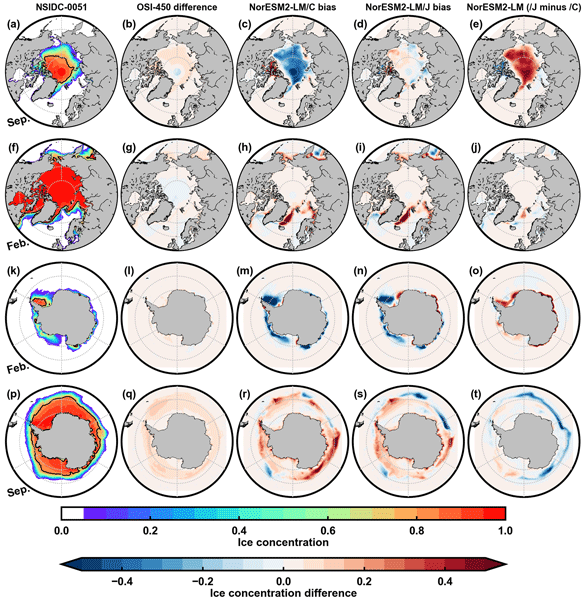
This study provides clues on how improved atmospheric reanalysis products influence sea ice simulations in ocean–sea ice models. The summer ice concentration simulation in both hemispheres can be improved with changed surface heat fluxes. The winter Antarctic ice concentration and the Arctic drift speed near the ice edge and the ice velocity direction simulations are improved with changed wind stress. The radiation fluxes and winds in atmospheric reanalyses are crucial for sea ice simulations.
Lauren E. Burton, Alan M. Haywood, Julia C. Tindall, Aisling M. Dolan, Daniel J. Hill, Ayako Abe-Ouchi, Wing-Le Chan, Deepak Chandan, Ran Feng, Stephen J. Hunter, Xiangyu Li, W. Richard Peltier, Ning Tan, Christian Stepanek, and Zhongshi Zhang
Clim. Past, 19, 747–764, https://doi.org/10.5194/cp-19-747-2023, https://doi.org/10.5194/cp-19-747-2023, 2023
Short summary
Short summary
Warm climates of the Pliocene (~ 3 million years ago) are similar to projections of the near future. We find elevated concentrations of atmospheric carbon dioxide to be the most important forcing for driving changes in Pliocene surface air temperature, sea surface temperature, and precipitation. However, changes caused by the nature of Pliocene ice sheets and orography are also important, affecting the extent to which we can use the Pliocene as an analogue for our warmer future.
Yafei Nie, Chengkun Li, Martin Vancoppenolle, Bin Cheng, Fabio Boeira Dias, Xianqing Lv, and Petteri Uotila
Geosci. Model Dev., 16, 1395–1425, https://doi.org/10.5194/gmd-16-1395-2023, https://doi.org/10.5194/gmd-16-1395-2023, 2023
Short summary
Short summary
State-of-the-art Earth system models simulate the observed sea ice extent relatively well, but this is often due to errors in the dynamic and other processes in the simulated sea ice changes cancelling each other out. We assessed the sensitivity of these processes simulated by the coupled ocean–sea ice model NEMO4.0-SI3 to 18 parameters. The performance of the model in simulating sea ice change processes was ultimately improved by adjusting the three identified key parameters.
Hugues Goosse, Sofia Allende Contador, Cecilia M. Bitz, Edward Blanchard-Wrigglesworth, Clare Eayrs, Thierry Fichefet, Kenza Himmich, Pierre-Vincent Huot, François Klein, Sylvain Marchi, François Massonnet, Bianca Mezzina, Charles Pelletier, Lettie Roach, Martin Vancoppenolle, and Nicole P. M. van Lipzig
The Cryosphere, 17, 407–425, https://doi.org/10.5194/tc-17-407-2023, https://doi.org/10.5194/tc-17-407-2023, 2023
Short summary
Short summary
Using idealized sensitivity experiments with a regional atmosphere–ocean–sea ice model, we show that sea ice advance is constrained by initial conditions in March and the retreat season is influenced by the magnitude of several physical processes, in particular by the ice–albedo feedback and ice transport. Atmospheric feedbacks amplify the response of the winter ice extent to perturbations, while some negative feedbacks related to heat conduction fluxes act on the ice volume.
Julia E. Weiffenbach, Michiel L. J. Baatsen, Henk A. Dijkstra, Anna S. von der Heydt, Ayako Abe-Ouchi, Esther C. Brady, Wing-Le Chan, Deepak Chandan, Mark A. Chandler, Camille Contoux, Ran Feng, Chuncheng Guo, Zixuan Han, Alan M. Haywood, Qiang Li, Xiangyu Li, Gerrit Lohmann, Daniel J. Lunt, Kerim H. Nisancioglu, Bette L. Otto-Bliesner, W. Richard Peltier, Gilles Ramstein, Linda E. Sohl, Christian Stepanek, Ning Tan, Julia C. Tindall, Charles J. R. Williams, Qiong Zhang, and Zhongshi Zhang
Clim. Past, 19, 61–85, https://doi.org/10.5194/cp-19-61-2023, https://doi.org/10.5194/cp-19-61-2023, 2023
Short summary
Short summary
We study the behavior of the Atlantic Meridional Overturning Circulation (AMOC) in the mid-Pliocene. The mid-Pliocene was about 3 million years ago and had a similar CO2 concentration to today. We show that the stronger AMOC during this period relates to changes in geography and that this has a significant influence on ocean temperatures and heat transported northwards by the Atlantic Ocean. Understanding the behavior of the mid-Pliocene AMOC can help us to learn more about our future climate.
Giulia Bonino, Doroteaciro Iovino, Laurent Brodeau, and Simona Masina
Geosci. Model Dev., 15, 6873–6889, https://doi.org/10.5194/gmd-15-6873-2022, https://doi.org/10.5194/gmd-15-6873-2022, 2022
Short summary
Short summary
The sea surface temperature (SST) is highly influenced by the transfer of energy driven by turbulent air–sea fluxes (TASFs). In the NEMO ocean general circulation model, TASFs are computed by means of bulk formulas. Bulk formulas require the choice of a given bulk parameterization, which influences the magnitudes of the TASFs. Our results show that parameterization-related SST differences are primarily sensitive to the wind stress differences across parameterizations.
Gustavo M. Marques, Nora Loose, Elizabeth Yankovsky, Jacob M. Steinberg, Chiung-Yin Chang, Neeraja Bhamidipati, Alistair Adcroft, Baylor Fox-Kemper, Stephen M. Griffies, Robert W. Hallberg, Malte F. Jansen, Hemant Khatri, and Laure Zanna
Geosci. Model Dev., 15, 6567–6579, https://doi.org/10.5194/gmd-15-6567-2022, https://doi.org/10.5194/gmd-15-6567-2022, 2022
Short summary
Short summary
We present an idealized ocean model configuration and a set of simulations performed using varying horizontal grid spacing. While the model domain is idealized, it resembles important geometric features of the Atlantic and Southern oceans. The simulations described here serve as a framework to effectively study mesoscale eddy dynamics, to investigate the effect of mesoscale eddies on the large-scale dynamics, and to test and evaluate eddy parameterizations.
Etienne Pauthenet, Loïc Bachelot, Kevin Balem, Guillaume Maze, Anne-Marie Tréguier, Fabien Roquet, Ronan Fablet, and Pierre Tandeo
Ocean Sci., 18, 1221–1244, https://doi.org/10.5194/os-18-1221-2022, https://doi.org/10.5194/os-18-1221-2022, 2022
Short summary
Short summary
Temperature and salinity profiles are essential for studying the ocean’s stratification, but there are not enough of these data. Satellites are able to measure daily maps of the surface ocean. We train a machine to learn the link between the satellite data and the profiles in the Gulf Stream region. We can then use this link to predict profiles at the high resolution of the satellite maps. Our prediction is fast to compute and allows us to get profiles at any locations only from surface data.
Takaya Uchida, Julien Le Sommer, Charles Stern, Ryan P. Abernathey, Chris Holdgraf, Aurélie Albert, Laurent Brodeau, Eric P. Chassignet, Xiaobiao Xu, Jonathan Gula, Guillaume Roullet, Nikolay Koldunov, Sergey Danilov, Qiang Wang, Dimitris Menemenlis, Clément Bricaud, Brian K. Arbic, Jay F. Shriver, Fangli Qiao, Bin Xiao, Arne Biastoch, René Schubert, Baylor Fox-Kemper, William K. Dewar, and Alan Wallcraft
Geosci. Model Dev., 15, 5829–5856, https://doi.org/10.5194/gmd-15-5829-2022, https://doi.org/10.5194/gmd-15-5829-2022, 2022
Short summary
Short summary
Ocean and climate scientists have used numerical simulations as a tool to examine the ocean and climate system since the 1970s. Since then, owing to the continuous increase in computational power and advances in numerical methods, we have been able to simulate increasing complex phenomena. However, the fidelity of the simulations in representing the phenomena remains a core issue in the ocean science community. Here we propose a cloud-based framework to inter-compare and assess such simulations.
Yung-Yao Lan, Huang-Hsiung Hsu, Wan-Ling Tseng, and Li-Chiang Jiang
Geosci. Model Dev., 15, 5689–5712, https://doi.org/10.5194/gmd-15-5689-2022, https://doi.org/10.5194/gmd-15-5689-2022, 2022
Short summary
Short summary
This study has shown that coupling a high-resolution 1-D ocean model (SIT 1.06) with the Community Atmosphere Model 5.3 (CAM5.3) significantly improves the simulation of the Madden–Julian Oscillation (MJO) over the standalone CAM5.3. Systematic sensitivity experiments resulted in more realistic simulations of the tropical MJO because they had better upper-ocean resolution, adequate upper-ocean thickness, coupling regions including the eastern Pacific and southern tropics, and a diurnal cycle.
Wan-Ling Tseng, Huang-Hsiung Hsu, Yung-Yao Lan, Wei-Liang Lee, Chia-Ying Tu, Pei-Hsuan Kuo, Ben-Jei Tsuang, and Hsin-Chien Liang
Geosci. Model Dev., 15, 5529–5546, https://doi.org/10.5194/gmd-15-5529-2022, https://doi.org/10.5194/gmd-15-5529-2022, 2022
Short summary
Short summary
We show that coupling a high-resolution one-column ocean model to three atmospheric general circulation models dramatically improves Madden–Julian oscillation (MJO) simulations. It suggests two major improvements to the coupling process in the preconditioning phase and strongest convection phase over the Maritime Continent. Our results demonstrate a simple but effective way to significantly improve MJO simulations and potentially seasonal to subseasonal prediction.
Adam William Bateson, Daniel L. Feltham, David Schröder, Yanan Wang, Byongjun Hwang, Jeff K. Ridley, and Yevgeny Aksenov
The Cryosphere, 16, 2565–2593, https://doi.org/10.5194/tc-16-2565-2022, https://doi.org/10.5194/tc-16-2565-2022, 2022
Short summary
Short summary
Numerical models are used to understand the mechanisms that drive the evolution of the Arctic sea ice cover. The sea ice cover is formed of pieces of ice called floes. Several recent studies have proposed variable floe size models to replace the standard model assumption of a fixed floe size. In this study we show the need to include floe fragmentation processes in these variable floe size models and demonstrate that model design can determine the impact of floe size on size ice evolution.
Steve Delhaye, Thierry Fichefet, François Massonnet, David Docquier, Rym Msadek, Svenya Chripko, Christopher Roberts, Sarah Keeley, and Retish Senan
Weather Clim. Dynam., 3, 555–573, https://doi.org/10.5194/wcd-3-555-2022, https://doi.org/10.5194/wcd-3-555-2022, 2022
Short summary
Short summary
It is unclear how the atmosphere will respond to a retreat of summer Arctic sea ice. Much attention has been paid so far to weather extremes at mid-latitude and in winter. Here we focus on the changes in extremes in surface air temperature and precipitation over the Arctic regions in summer during and following abrupt sea ice retreats. We find that Arctic sea ice loss clearly shifts the extremes in surface air temperature and precipitation over terrestrial regions surrounding the Arctic Ocean.
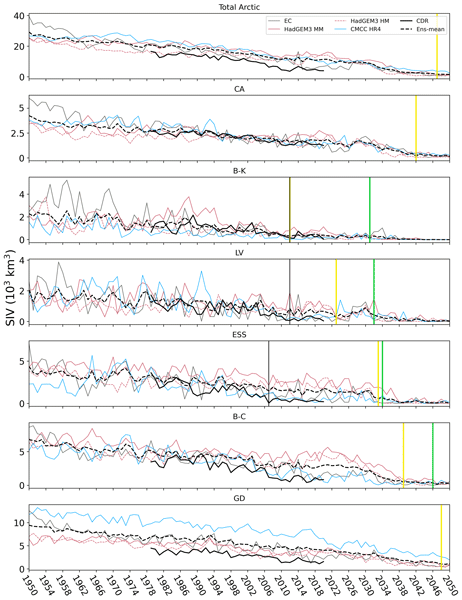
Ralf Döscher, Mario Acosta, Andrea Alessandri, Peter Anthoni, Thomas Arsouze, Tommi Bergman, Raffaele Bernardello, Souhail Boussetta, Louis-Philippe Caron, Glenn Carver, Miguel Castrillo, Franco Catalano, Ivana Cvijanovic, Paolo Davini, Evelien Dekker, Francisco J. Doblas-Reyes, David Docquier, Pablo Echevarria, Uwe Fladrich, Ramon Fuentes-Franco, Matthias Gröger, Jost v. Hardenberg, Jenny Hieronymus, M. Pasha Karami, Jukka-Pekka Keskinen, Torben Koenigk, Risto Makkonen, François Massonnet, Martin Ménégoz, Paul A. Miller, Eduardo Moreno-Chamarro, Lars Nieradzik, Twan van Noije, Paul Nolan, Declan O'Donnell, Pirkka Ollinaho, Gijs van den Oord, Pablo Ortega, Oriol Tintó Prims, Arthur Ramos, Thomas Reerink, Clement Rousset, Yohan Ruprich-Robert, Philippe Le Sager, Torben Schmith, Roland Schrödner, Federico Serva, Valentina Sicardi, Marianne Sloth Madsen, Benjamin Smith, Tian Tian, Etienne Tourigny, Petteri Uotila, Martin Vancoppenolle, Shiyu Wang, David Wårlind, Ulrika Willén, Klaus Wyser, Shuting Yang, Xavier Yepes-Arbós, and Qiong Zhang
Geosci. Model Dev., 15, 2973–3020, https://doi.org/10.5194/gmd-15-2973-2022, https://doi.org/10.5194/gmd-15-2973-2022, 2022
Short summary
Short summary
The Earth system model EC-Earth3 is documented here. Key performance metrics show physical behavior and biases well within the frame known from recent models. With improved physical and dynamic features, new ESM components, community tools, and largely improved physical performance compared to the CMIP5 version, EC-Earth3 represents a clear step forward for the only European community ESM. We demonstrate here that EC-Earth3 is suited for a range of tasks in CMIP6 and beyond.
Charles Pelletier, Thierry Fichefet, Hugues Goosse, Konstanze Haubner, Samuel Helsen, Pierre-Vincent Huot, Christoph Kittel, François Klein, Sébastien Le clec'h, Nicole P. M. van Lipzig, Sylvain Marchi, François Massonnet, Pierre Mathiot, Ehsan Moravveji, Eduardo Moreno-Chamarro, Pablo Ortega, Frank Pattyn, Niels Souverijns, Guillian Van Achter, Sam Vanden Broucke, Alexander Vanhulle, Deborah Verfaillie, and Lars Zipf
Geosci. Model Dev., 15, 553–594, https://doi.org/10.5194/gmd-15-553-2022, https://doi.org/10.5194/gmd-15-553-2022, 2022
Short summary
Short summary
We present PARASO, a circumpolar model for simulating the Antarctic climate. PARASO features five distinct models, each covering different Earth system subcomponents (ice sheet, atmosphere, land, sea ice, ocean). In this technical article, we describe how this tool has been developed, with a focus on the
coupling interfacesrepresenting the feedbacks between the distinct models used for contribution. PARASO is stable and ready to use but is still characterized by significant biases.
Zixuan Han, Qiong Zhang, Qiang Li, Ran Feng, Alan M. Haywood, Julia C. Tindall, Stephen J. Hunter, Bette L. Otto-Bliesner, Esther C. Brady, Nan Rosenbloom, Zhongshi Zhang, Xiangyu Li, Chuncheng Guo, Kerim H. Nisancioglu, Christian Stepanek, Gerrit Lohmann, Linda E. Sohl, Mark A. Chandler, Ning Tan, Gilles Ramstein, Michiel L. J. Baatsen, Anna S. von der Heydt, Deepak Chandan, W. Richard Peltier, Charles J. R. Williams, Daniel J. Lunt, Jianbo Cheng, Qin Wen, and Natalie J. Burls
Clim. Past, 17, 2537–2558, https://doi.org/10.5194/cp-17-2537-2021, https://doi.org/10.5194/cp-17-2537-2021, 2021
Short summary
Short summary
Understanding the potential processes responsible for large-scale hydrological cycle changes in a warmer climate is of great importance. Our study implies that an imbalance in interhemispheric atmospheric energy during the mid-Pliocene could have led to changes in the dynamic effect, offsetting the thermodynamic effect and, hence, altering mid-Pliocene hydroclimate cycling. Moreover, a robust westward shift in the Pacific Walker circulation can moisten the northern Indian Ocean.
Arthur M. Oldeman, Michiel L. J. Baatsen, Anna S. von der Heydt, Henk A. Dijkstra, Julia C. Tindall, Ayako Abe-Ouchi, Alice R. Booth, Esther C. Brady, Wing-Le Chan, Deepak Chandan, Mark A. Chandler, Camille Contoux, Ran Feng, Chuncheng Guo, Alan M. Haywood, Stephen J. Hunter, Youichi Kamae, Qiang Li, Xiangyu Li, Gerrit Lohmann, Daniel J. Lunt, Kerim H. Nisancioglu, Bette L. Otto-Bliesner, W. Richard Peltier, Gabriel M. Pontes, Gilles Ramstein, Linda E. Sohl, Christian Stepanek, Ning Tan, Qiong Zhang, Zhongshi Zhang, Ilana Wainer, and Charles J. R. Williams
Clim. Past, 17, 2427–2450, https://doi.org/10.5194/cp-17-2427-2021, https://doi.org/10.5194/cp-17-2427-2021, 2021
Short summary
Short summary
In this work, we have studied the behaviour of El Niño events in the mid-Pliocene, a period of around 3 million years ago, using a collection of 17 climate models. It is an interesting period to study, as it saw similar atmospheric carbon dioxide levels to the present day. We find that the El Niño events were less strong in the mid-Pliocene simulations, when compared to pre-industrial climate. Our results could help to interpret El Niño behaviour in future climate projections.
Trevor J. McDougall, Paul M. Barker, Ryan M. Holmes, Rich Pawlowicz, Stephen M. Griffies, and Paul J. Durack
Geosci. Model Dev., 14, 6445–6466, https://doi.org/10.5194/gmd-14-6445-2021, https://doi.org/10.5194/gmd-14-6445-2021, 2021
Short summary
Short summary
We show that the way that the air–sea heat flux is treated in ocean models means that the model's temperature variable should be interpreted as being Conservative Temperature, irrespective of whether the equation of state used in an ocean model is EOS-80 or TEOS-10.
Xia Lin, François Massonnet, Thierry Fichefet, and Martin Vancoppenolle
Geosci. Model Dev., 14, 6331–6354, https://doi.org/10.5194/gmd-14-6331-2021, https://doi.org/10.5194/gmd-14-6331-2021, 2021
Short summary
Short summary
This study introduces a new Sea Ice Evaluation Tool (SITool) to evaluate the model skills on the bipolar sea ice simulations by providing performance metrics and diagnostics. SITool is applied to evaluate the CMIP6 OMIP simulations. By changing the atmospheric forcing from CORE-II to JRA55-do data, many aspects of sea ice simulations are improved. SITool will be useful for helping teams managing various versions of a sea ice model or tracking the time evolution of model performance.
Sean Horvath, Linette Boisvert, Chelsea Parker, Melinda Webster, Patrick Taylor, and Robyn Boeke
The Cryosphere Discuss., https://doi.org/10.5194/tc-2021-297, https://doi.org/10.5194/tc-2021-297, 2021
Preprint withdrawn
Short summary
Short summary
Arctic sea ice has been experiencing a dramatic decline since the late 1970s. A database is presented that combines satellite observations with daily sea ice parcel drift tracks. This dataset consists of daily time series of sea ice parcel locations, sea ice and snow conditions, and atmospheric states. This has multiple applications for the scientific community that can shed light on the atmosphere-snow-sea ice interactions in the changing Arctic environment.
Martin Mohrmann, Céline Heuzé, and Sebastiaan Swart
The Cryosphere, 15, 4281–4313, https://doi.org/10.5194/tc-15-4281-2021, https://doi.org/10.5194/tc-15-4281-2021, 2021
Short summary
Short summary
Polynyas are large open-water areas within the sea ice. We developed a method to estimate their area, distribution and frequency for the Southern Ocean in climate models and observations. All models have polynyas along the coast but few do so in the open ocean, in contrast to observations. We examine potential atmospheric and oceanic drivers of open-water polynyas and discuss recently implemented schemes that may have improved some models' polynya representation.
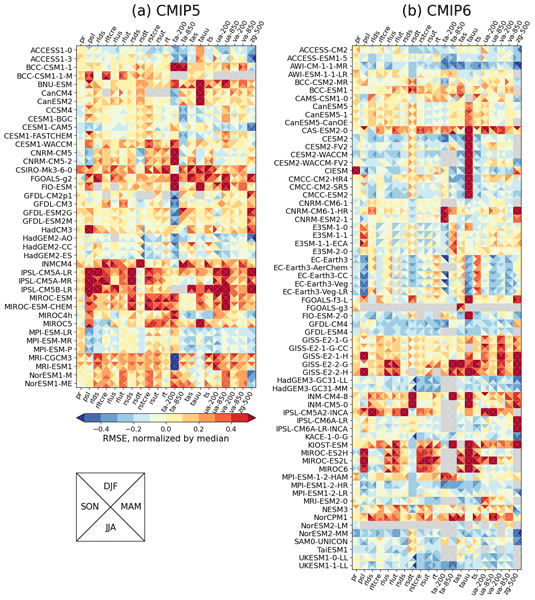
Ellen Berntell, Qiong Zhang, Qiang Li, Alan M. Haywood, Julia C. Tindall, Stephen J. Hunter, Zhongshi Zhang, Xiangyu Li, Chuncheng Guo, Kerim H. Nisancioglu, Christian Stepanek, Gerrit Lohmann, Linda E. Sohl, Mark A. Chandler, Ning Tan, Camille Contoux, Gilles Ramstein, Michiel L. J. Baatsen, Anna S. von der Heydt, Deepak Chandan, William Richard Peltier, Ayako Abe-Ouchi, Wing-Le Chan, Youichi Kamae, Charles J. R. Williams, Daniel J. Lunt, Ran Feng, Bette L. Otto-Bliesner, and Esther C. Brady
Clim. Past, 17, 1777–1794, https://doi.org/10.5194/cp-17-1777-2021, https://doi.org/10.5194/cp-17-1777-2021, 2021
Short summary
Short summary
The mid-Pliocene Warm Period (~ 3.2 Ma) is often considered an analogue for near-future climate projections, and model results from the PlioMIP2 ensemble show an increase of rainfall over West Africa and the Sahara region compared to pre-industrial conditions. Though previous studies of future projections show a west–east drying–wetting contrast over the Sahel, these results indicate a uniform rainfall increase over the Sahel in warm climates characterized by increased greenhouse gas forcing.
Amy Solomon, Céline Heuzé, Benjamin Rabe, Sheldon Bacon, Laurent Bertino, Patrick Heimbach, Jun Inoue, Doroteaciro Iovino, Ruth Mottram, Xiangdong Zhang, Yevgeny Aksenov, Ronan McAdam, An Nguyen, Roshin P. Raj, and Han Tang
Ocean Sci., 17, 1081–1102, https://doi.org/10.5194/os-17-1081-2021, https://doi.org/10.5194/os-17-1081-2021, 2021
Short summary
Short summary
Freshwater in the Arctic Ocean plays a critical role in the global climate system by impacting ocean circulations, stratification, mixing, and emergent regimes. In this review paper we assess how Arctic Ocean freshwater changed in the 2010s relative to the 2000s. Estimates from observations and reanalyses show a qualitative stabilization in the 2010s due to a compensation between a freshening of the Beaufort Gyre and a reduction in freshwater in the Amerasian and Eurasian basins.
J. Brant Dodson, Patrick C. Taylor, Richard H. Moore, David H. Bromwich, Keith M. Hines, Kenneth L. Thornhill, Chelsea A. Corr, Bruce E. Anderson, Edward L. Winstead, and Joseph R. Bennett
Atmos. Chem. Phys., 21, 11563–11580, https://doi.org/10.5194/acp-21-11563-2021, https://doi.org/10.5194/acp-21-11563-2021, 2021
Short summary
Short summary
Aircraft in situ observations of low-level Beaufort Sea cloud properties and thermodynamics from the ARISE campaign are compared with the Arctic System Reanalysis (ASR) to better understand deficiencies in simulated clouds. ASR produces too little cloud water, which coincides with being too warm and dry. In addition, ASR struggles to produce cloud water even in favorable thermodynamic conditions. A random sampling experiment also shows the effects of the limited aircraft sampling on the results.
Céline Heuzé, Lu Zhou, Martin Mohrmann, and Adriano Lemos
The Cryosphere, 15, 3401–3421, https://doi.org/10.5194/tc-15-3401-2021, https://doi.org/10.5194/tc-15-3401-2021, 2021
Short summary
Short summary
For navigation or science planning, knowing when sea ice will open in advance is a prerequisite. Yet, to date, routine spaceborne microwave observations of sea ice are unable to do so. We present the first method based on spaceborne infrared that can forecast an opening several days ahead. We develop it specifically for the Weddell Polynya, a large hole in the Antarctic winter ice cover that unexpectedly re-opened for the first time in 40 years in 2016, and determine why the polynya opened.
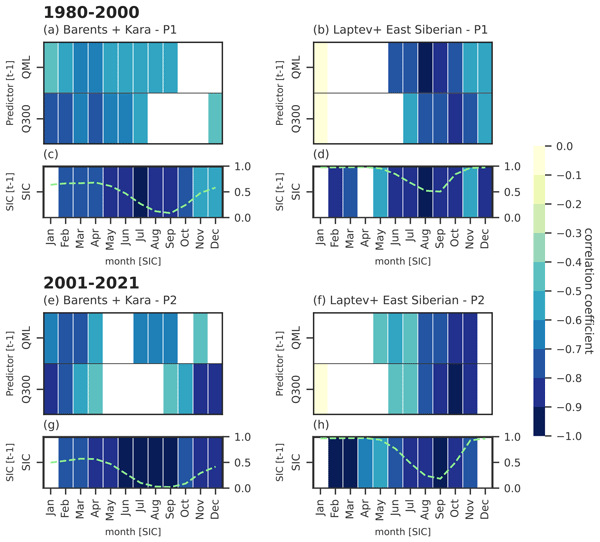
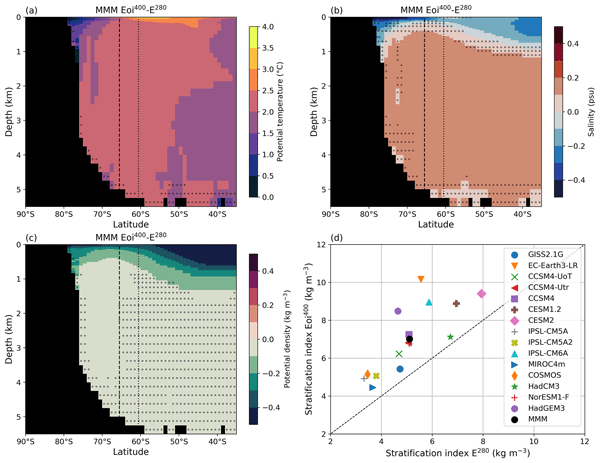
Cited articles
Abernathey, R. P., Cerovecki, I., Holland, P. R., Newsom, E., Mazloff, M., and Talley, L. D.: Water-mass transformation by sea ice in the upper branch of the Southern Ocean overturning, Nature Geoscience, 9, 596–601, 2016.
Ahmed, A., Fox-Kemper, B., Watkins, D. M., Wexler, D., and Wilhelmus, M. M.: Estuarine temperature variability: Integrating four decades of remote sensing observations and in-situ sea surface measurements, Remote Sensing of Environment, 322, 114643, https://doi.org/10.1016/j.rse.2025.114643, 2025.
Alberello, A., Bennetts, L. G., Onorato, M., Vichi, M., MacHutchon, K., Eayrs, C., Ntamba, B. N., Benetazzo, A., Bergamasco, F., Nelli, F., Pattani, R., Clarke, H., Tersigni, I., and Toffoli, A.: Three-dimensional imaging of waves and floes in the marginal ice zone during a cyclone, Nature Communications, 13, 4590, https://doi.org/10.1038/s41467-022-32036-2, 2022.
Anstey, J., Dingley, B., and Ellis, D.: CMIP-Data-Request/CMIP7_DReq_Content: Data request content for v1.2.2.3, Zenodo [code], https://doi.org/10.5281/zenodo.14774070, 2025.
Arbic, B. K.: Incorporating tides and internal gravity waves within global ocean general circulation models: A review, Progress in Oceanography, 206, 102824, https://doi.org/10.1016/j.pocean.2022.102824, 2022.
Armstrong McKay, D. I., Staal, A.,Abrams, J. F., Winkelmann, R., Sakschewski, B., Loriani, S., Fetzer, I., Cornell, S. E., Rockström, J., and Lenton, T. M.: Exceeding 1.5 C global warming could trigger multiple climate tipping points, Science, 377, eabn7950, https://doi.org/10.1126/science.abn7950, 2022.
Arrhenius, S.: XXXI. On the influence of carbonic acid in the air upon the temperature of the ground, The London, Edinburgh, and Dublin Philosophical Magazine and Journal of Science, 41, 237–276, 1896.
Babanin, A. V.: On a wave-induced turbulence and a wave-mixed upper ocean layer, Geophysical Research Letters, 33, https://doi.org/10.1029/2006GL027308, 2006.
Bao, Y., Song, Z., and Qiao, F.: FIO-ESM Version 2.0: Model Description and Evaluation, Journal of Geophysical Research: Oceans, 125, e2019JC016036, https://doi.org/10.1029/2019JC016036, 2020.
Barragán, J. M. and de Andrés, M.: Analysis and trends of the world's coastal cities and agglomerations, Ocean & Coastal Management, 114, 11–20, https://doi.org/10.1016/j.ocecoaman.2015.06.004, 2015.
Beech, N., Rackow, T., Semmler, T., Danilov, S., Wang, Q., and Jung, T.: Long-term evolution of ocean eddy activity in a warming world, Nature Climate Change, 12, 910–917, https://doi.org/10.1038/s41558-022-01478-3, 2022.
Belcher, S. E., Grant, A. A. L. M., Hanley, K. E., Fox-Kemper, B., Van Roekel, L., Sullivan, P. P., Large, W. G., Brown, A., Hines, A., Calvert, D., Rutgersson, A., Petterson, H., Bidlot, J., Janssen, P. A. E. M., and Polton, J. A.: A global perspective on Langmuir turbulence in the ocean surface boundary layer, Geophysical Research Letters, 39, L18605, https://doi.org/10.1029/2012GL052932, 2012.
Bellomo, K. and Mehling, O.: Impacts and state-dependence of AMOC weakening in a warming climate, Geophysical Research Letters, 51, e2023GL107624, https://doi.org/10.1029/2023GL107624, 2024.
Bennetts, L. G., Shakespeare, C. J., Vreugdenhil, C. A., Foppert, A., Gayen, B., Meyer, A., Morrison, A. K., Padman, L., Phillips, H. E., Stevens, C. L., Toffoli, A., Constantinou, N. C., Cusack, J. M., Cyriac, A., Doddridge, E. W., England, M. H., Evans, D. G., Heil, P., Hogg, A. M., Holmes, R. M., Huneke, W. G. C., Jones, N. L., Keating, S. R., Kiss, A. E., Kraitzman, N., Malyarenko, A., McConnochie, C. D., Meucci, A., Montiel, F., Neme, J., Nikurashin, M., Patel, R. S., Peng, J.-P., Rayson, M., Rosevear, M. G., Sohail, T., Spence, P., and Stanley, G. J.: Closing the Loops on Southern Ocean Dynamics: From the Circumpolar Current to Ice Shelves and From Bottom Mixing to Surface Waves, Reviews of Geophysics, 62, e2022RG000781, https://doi.org/10.1029/2022RG000781, 2024.
Bernier, N. B., Hemer, M., Mori, N., Appendini, C. M., Breivik, O., de Camargo, R., Casas-Prat, M., Duong, T. M., Haigh, I. D., Howard, T., Hernaman, V., Huizy, O., Irish, J. L., Kirezci, E., Kohno, N., Lee, J.-W., McInnes, K. L., Meyer, E. M., Marcos, M., Marsooli, R., Martin Oliva, A., Menendez, M., Moghimi, S., Muis, S., Polton, J. A., Pringle, W. J., Ranasinghe, R., Saillour, T., Smith, G., Tadesse, M. G., Swail, V., Tomoya, S., Voukouvalas, E., Wahl, T., Wang, P., Weisse, R., Westerink, J. J., Young, I., and Zhang, Y. J.: Storm surges and extreme sea levels: Review, establishment of model intercomparison and coordination of surge climate projection efforts (SurgeMIP), Weather and Climate Extremes, 45, 100689, https://doi.org/10.1016/j.wace.2024.100689, 2024.
Blanchard-Wrigglesworth, E., Brenner, S., Webster, M., Horvat, C., Foss, Ø., and Bitz, C. M.: Model biases in simulating extreme sea ice loss associated with the record January 2022 Arctic cyclone, Journal of Geophysical Research: Oceans, 129, e2024JC021127, https://doi.org/10.1029/2024JC021127, 2024.
Bograd, S. J., Jacox, M. G., Hazen, E. L., Lovecchio, E., Montes, I., Buil, M. P., Shannon, L. J., Sydeman, W. J., and Rykaczewski, R. R.: Climate change impacts on eastern boundary upwelling systems, Annual Review of Marine Science, 15, 303–328, https://doi.org/10.1146/annurev-marine-032122-021945, 2023.
Bradley, A. T. and Hewitt, I. J.: Tipping point in ice-sheet grounding-zone melting due to ocean water intrusion, Nature Geoscience, 17, 631–637, https://doi.org/10.1038/s41561-024-01465-7, 2024.
Brown, S. C., Wigley, T. M. L., Otto-Bliesner, B. L., Rahbek, C., and Fordham, D. A.: Persistent Quaternary climate refugia are hospices for biodiversity in the Anthropocene, Nature Climate Change, 10, 244–248, https://doi.org/10.1038/s41558-019-0682-7, 2020.
Brumer, S. E., Zappa, C. J., Brooks, I. M., Tamura, H., Brown, S. M., Blomquist, B. W., Fairall, C. W., and Cifuentes-Lorenzen, A.: Whitecap Coverage Dependence on Wind and Wave Statistics as Observed during SO GasEx and HiWinGS, Journal of Physical Oceanography, 47, 2211–2235, https://doi.org/10.1175/JPO-D-17-0005.1, 2017.
Brus, S. R., Wolfram, P. J., Van Roekel, L. P., and Meixner, J. D.: Unstructured global to coastal wave modeling for the Energy Exascale Earth System Model using WAVEWATCH III version 6.07, Geoscientific Model Development, 14, 2917–2938, https://doi.org/10.5194/gmd-14-2917-2021, 2021.
Burger, F. A., Terhaar, J., and Froelicher, T. L.: Compound marine heatwaves and ocean acidity extremes, Nature Communications, 13, 4722, https://doi.org/10.1038/s41467-022-32120-7, 2022.
Cardinale, C. J. and Rose, B. E. J.: The Increasing Efficiency of the Poleward Energy Transport Into the Arctic in a Warming Climate, Geophysical Research Letters, 50, e2022GL100834, https://doi.org/10.1029/2022GL100834, 2023.
Casas-Prat, M., Hemer, M. A., Dodet, G., Morim, J., Wang, X. L., Mori, N., Young, I., Erikson, L., Kamranzad, B., Kumar, P., Menéndez, M., and Feng, Y.: Wind-wave climate changes and their impacts, Nature Reviews Earth & Environment, 5, 23–42, https://doi.org/10.1038/s43017-023-00502-0, 2024.
Cavaleri, L., Fox-Kemper, B., and Hemer, M.: Wind Waves in the Coupled Climate System, Bulletin of the American Meteorological Society, 93, 1651–1661, https://doi.org/10.1175/BAMS-D-11-00170.1, 2012.
Chassignet, E. P., Yeager, S. G., Fox-Kemper, B., Bozec, A., Castruccio, F., Danabasoglu, G., Horvat, C., Kim, W. M., Koldunov, N., Li, Y., Lin, P., Liu, H., Sein, D. V., Sidorenko, D., Wang, Q., and Xu, X.: Impact of horizontal resolution on global ocean–sea ice model simulations based on the experimental protocols of the Ocean Model Intercomparison Project phase 2 (OMIP-2), Geoscientific Model Development, 13, 4595–4637, https://doi.org/10.5194/gmd-13-4595-2020, 2020.
Cheng, L., von Schuckmann, K., Abraham, J. P., Trenberth, K. E., Mann, M. E., Zanna, L., England, M. H., Zika, J. D., Fasullo, J. T., Yu, Y., Pan, Y., Zhu, J., Newsom, E. R., Bronselaer, B., and Lin, X.: Past and future ocean warming, Nature Reviews Earth & Environment, 3, 776–794, https://doi.org/10.1038/s43017-022-00345-1, 2022.
CMIP Model Benchmarking Task Team: CMIP7 Assessment Fast Track Diagnostics list for the Rapid Evaluation Framework, Zenodo [data set], https://doi.org/10.5281/zenodo.14284375, 2024.
Constable, A., Harper, S., Dawson, J., Holsman, K., Mustonen, T., Piepenburg, D., and Rost, B.: Cross-Chapter Paper 6: Polar Regions, in: Climate Change 2022: Impacts, Adaptation and Vulnerability. Contribution of Working Group II to the Sixth Assessment Report of the Intergovernmental Panel on Climate Change, edited by: Pörtner, H. O., Roberts, D. C., Tignor, M., Poloczanska, E. S., Mintenbeck, K., Alegría, A., Craig, M., Langsdorf, S., Löschke, S., Möller, V., Okem, A., and Rama, B., Cambridge University Press, Cambridge, UK and New York, USA, 2319–2368, ISBN 9781009325844, https://doi.org/10.1017/9781009325844.023, 2022.
Cooley, S., Schoeman, D., Bopp, L., Boyd, P., Donner, S., Ghebrehiwet, D. Y., Ito, S.-I.,Kiessling, W., Martinetto, P., Ojea, E., Racault, M.-F., Rost, B., and Skern-Mauritzen, M.: Chapter 3: Ocean and Coastal Ecosystems and their Services, in: Climate Change 2022: Impacts, Adaptation, and Vulnerability. Contribution of Working Group II to the Sixth Assessment Report of the Intergovernmental Panel on Climate Change, edited by: Pörtner, H. O., Roberts, D. C., Tignor, M., Poloczanska, E. S., Mintenbeck, K., Alegría, A., Craig, M., Langsdorf, S., Löschke, S., Möller, V., Okem, A., and Rama, B., Cambridge University Press, Cambridge, UK and New York, USA, 379–550, ISBN 9781009325844, https://doi.org/10.1017/9781009325844.005, 2022.
Cooper, V. T., Armour, K. C., Hakim, G. J., Tierney, J. E., Osman, M. B., Proistosescu, C., Dong, Y., Burls, N. J., Andrews, T., Amrhein, D. E., Zhu, J., Dong, W., Ming, Y., and Chmielowiec, P.: Last Glacial Maximum pattern effects reduce climate sensitivity estimates, Science Advances, 10, eadk9461, https://doi.org/10.1126/sciadv.adk9461, 2024.
Cosby, A. G., Lebakula, V., Smith, C. N., Wanik, D. K., Bergene, K., Rose, A. N., Swanson, D., and Bloom, D. E.: Accelerating growth of human coastal populations at the global and continent levels: 2000–2018, Scientific Reports, 14, 22489, https://doi.org/10.1038/s41598-024-73287-x, 2024.
Cox, T., Donohoe, A., Armour, K. C., Roe, G. H., and Frierson, D. M. W.: A New Method for Calculating Instantaneous Atmospheric Heat Transport, Journal of Climate, 37, 4337–4346, https://doi.org/10.1175/JCLI-D-23-0521.1, 2024.
Data Request Task Team: CMIP-Data-Request/CMIP7_DReq_Content: Data request content for v1.2, Zenodo [code], https://doi.org/10.5281/zenodo.15116894, 2025a.
Data Request Task Team: CMIP-Data-Request/CMIP7_DReq_Software: v1.4 CMIP7 data request software, Zenodo [code], https://doi.org/10.5281/zenodo.17993659, 2025b.
Danabasoglu, G., Lamarque, J.-F., Bacmeister, J., Bailey, D. A., DuVivier, A. K., Edwards, J., Emmons, L. K., Fasullo, J., Garcia, R., Gettelman, A., Hannay, C., Holland, M. M., Large, W. G., Lawrence, D. M., Lenaerts, J. T. M., Lindsay, K., Lipscomb, W. H., Mills, M. J., Neale, R., Oleson, K. W., Otto-Bliesner, B., Phillips, A. S., Sacks, W., Tilmes, S., van Kampenhout, L., Vertenstein, M., Bertini, A., Dennis, J., Deser, C., Fischer, C., Fox-Kemper, B., Kay, J. E., Kinnison, D., Kushner, P. J., Long, M. C., Mickelson, S., Moore, J. K., Nienhouse, E., Polvani, L., Rasch, P. J., and Strand, W. G.: The Community Earth System Model version 2 (CESM2), Journal of Advances in Modeling Earth Systems (JAMES), 12, e2019MS001916, https://doi.org/10.1029/2019MS001916, 2020.
de la Vega, E., Chalk, T. B., Wilson, P. A., Bysani, R. P., and Foster, G. L.: Atmospheric CO2 during the Mid-Piacenzian Warm Period and the M2 glaciation, Scientific Reports, 10, 11002, https://doi.org/10.1038/s41598-020-67154-8, 2020.
Deike, L. and Melville, W. K.: Gas Transfer by Breaking Waves, Geophysical Research Letters, 45, 10482–10492, https://doi.org/10.1029/2018GL078758, 2018.
Deike, L., Reichl, B. G., and Paulot, F.: A Mechanistic Sea Spray Generation Function Based on the Sea State and the Physics of Bubble Bursting, AGU Advances, 3, e2022AV000750, https://doi.org/10.1029/2022AV000750, 2022.
DeMott, P. J, Hill, T. C. J., McCluskey, C. S., Prather, K. A., Collins, D. B., Sullivan, R. C., Ruppel, M. J., Mason, R. H., Irish, V. E., Lee, T., Hwang, C. Y., Rhee, T. S., Snider, J. S., McMeeking, G. R., Dhaniyala, S., Lewis, E. R., Wentzell, J. J. B., Abbatt, J., Lee, C., Sultana, C. M., Ault, A. P., Axson, J. L., Martinez, M. D., Venero, I., Santos-Figueroa, G., Stokes, M. D., Deane, G. B., Mayol-Bracero, O. L., Grassian, V. H., Bertram, T. H., Bertram, A. K., Moffett, B. F., and Franc, G. D.: Sea spray aerosol as a unique source of ice nucleating particles, Proceedings of the National Academy of Sciences, 113, 5797–5803, https://doi.org/10.1073/pnas.1514034112, 2016.
Dingley, B., Anstey, J. A., Abalos, M., Abraham, C., Bergman, T., Bock, L., Fiddes, S., Hassler, B., Kramer, R. J., Luo, F., O'Connor, F. M., Šácha, P., Simpson, I. R., Wilcox, L. J., and Zelinka, M. D.: CMIP7 Data Request: Atmosphere Priorities and Opportunities, EGUsphere [preprint], https://doi.org/10.5194/egusphere-2025-3189, 2025.
Donohoe, A., Armour, K. C., Roe, G. H., Battisti, D. S., and Hahn, L.: The Partitioning of Meridional Heat Transport from the Last Glacial Maximum to CO2 Quadrupling in Coupled Climate Models, Journal of Climate, 33, 4141–4165, https://doi.org/10.1175/JCLI-D-19-0797.1, 2020.
Dörr, J., Årthun, M., Eldevik, T., and Sandø, A. B.: Expanding Influence of Atlantic and Pacific Ocean Heat Transport on Winter Sea-Ice Variability in a Warming Arctic, Journal of Geophysical Research: Oceans, 129, e2023JC019900, https://doi.org/10.1029/2023JC019900, 2024.
Dowsett, H. J., Foley, K. M., Stoll, D. K., Chandler, M. A., Sohl, L. E., Bentsen, M., Otto-Bliesner, B. L., Bragg, F. J., Chan, W.-L., Contoux, C., Dolan, A. M., Haywood, A. M., Jonas, J. A., Jost, A., Kamae, Y., Lohmann, G., Lunt, D. J., Nisancioglu, K. H., Abe-Ouchi, A., Ramstein, G., Riesselman, C. R., Robinson, M. M., Rosenbloom, N. A., Salzmann, U., Stepanek, C., Strother, S. L., Ueda, H., Yan, Q., and Zhang, Z.: Sea Surface Temperature of the mid-Piacenzian Ocean: A Data-Model Comparison, Scientific Reports, 3, 2013, https://doi.org/10.1038/srep02013, 2013.
Dunne, J. P., Hewitt, H. T., Arblaster, J. M., Bonou, F., Boucher, O., Cavazos, T., Dingley, B., Durack, P. J., Hassler, B., Juckes, M., Miyakawa, T., Mizielinski, M., Naik, V., Nicholls, Z., O'Rourke, E., Pincus, R., Sanderson, B. M., Simpson, I. R., and Taylor, K. E.: An evolving Coupled Model Intercomparison Project phase 7 (CMIP7) and Fast Track in support of future climate assessment, Geoscientific Model Development, 18, 6671–6700, https://doi.org/10.5194/gmd-18-6671-2025, 2025.
Eayrs, C., Li, X., Raphael, M. N., and Holland, D. M.: Rapid decline in Antarctic sea ice in recent years hints at future change, Nature Geoscience, 14, 460–464, https://doi.org/10.1038/s41561-021-00768-3, 2021.
ECMWF: IFS Documentation CY49R1 – Part VII: ECMWF Wave Model, Chap. 7, ECMWF, https://doi.org/10.21957/8315ddc858, 2024.
Eyring, V., Gillett, N., Achuta Rao, K., Barimalala, R., Barreiro Parrillo, M., Bellouin, N., Cassou, C., Durack, P., Kosaka, Y., McGregor, S., Min, S., Morgenstern, O., and Sun, Y.: Human Influence on the Climate System, in: Climate Change 2021: The Physical Science Basis. Contribution of Working Group I to the Sixth Assessment Report of the Intergovernmental Panel on Climate Change, edited by: Masson-Delmotte, V., Zhai, P., Pirani, A., Connors, S., Péan, C., Berger, S., Caud, N., Chen, Y., Goldfarb, L., Gomis, M., Huang, M., Leitzell, K., Lonnoy, E., Matthews, J., Maycock, T., Waterfield, T., Yelekçi, O., Yu, R., and Zhou, B., Cambridge University Press, Cambridge, United Kingdom and New York, NY, USA, 423–552, https://doi.org/10.1017/9781009157896.005, 2021.
Fox-Kemper, B.: Notions for the Motions of the Oceans, edited by: Chassignet, E. P., Pascual, A., Tintore, J., and Verron, J., New Frontiers in Operational Oceanography, 27, https://doi.org/10.17125/gov2018, 2018.
Fox-Kemper, B. and Anstey, J.: CMIP-Data-Request/CMIP7_DReq_Content: Data request content for v1.2.2.3 (csv version), Zenodo [data set], https://doi.org/10.5281/zenodo.18202918, 2026.
Fox-Kemper, B., Adcroft, A., Boening, Claus W., C. W., Chassignet, E. P., Curchitser, E., Danabasoglu, G., Eden, C., England, M. H., Gerdes, R., Greatbatch, R. J., Griffies, S. M., Hallberg, R. W., Hanert, E., Heimbach, P., Hewitt, H. T., Hill, C. N., Komuro, Y., Legg, S., Le Sommer, J., Masina, S., Marsland, S. J., Penny, S. G., Qiao, F., Ringler, T. D., Treguier, A. M., Tsujino, H., Uotila, P., and Yeager, S. G.: Challenges and Prospects in Ocean Circulation Models, Frontiers in Marine Science, 6, 65, https://doi.org/10.3389/fmars.2019.00065, 2019.
Fox-Kemper, B., Hewitt, H. T., Xiao, C., Adalgeirsdottir, G., Drijfhout, S. S., Edwards, T. L., Golledge, N. R., Hemer, M., Kopp, R. E., Krinner, G., Mix, A., Notz, D., Nowicki, S., Nurhati, I. S., Ruiz, L., Sallee, J.-B., Slangen, A. B. A., and Yu, Y.: Ocean, Cryosphere and Sea Level Change, in: Climate Change 2021: The Physical Science Basis. Contribution of Working Group I to the Sixth Assessment Report of the Intergovernmental Panel on Climate Change, edited by: Masson-Delmotte, V., Zhai, P., Pirani, A., Connors, S. L., Péan, C., Berger, S., Caud, N., Chen, Y., Goldfarb, L., Gomis, M. I., Huang, M., Leitzell, K., Lonnoy, E., Matthews, J. B. R., Maycock, T. K., Waterfield, T., Yelekçi, O., Yu, R., and Zhou, B., Cambridge University Press, United Kingdom and New York, NY, USA, 1211–1362, https://doi.org/10.1017/9781009157896.011, 2021a.
Fox-Kemper, B., Johnson, L., and Qiao, F.: Chapter 4 – Ocean Near-Surface Layers, in: Ocean Mixing, edited by: Meredith, M. P. and Naveira Garabato, A. C., Elsevier, 65–94, https://doi.org/10.1016/B978-0-12-821512-8.00011-6, 2021b.
Francis, J. A.: Why Are Arctic Linkages to Extreme Weather Still up in the Air?, Bulletin of the American Meteorological Society, 98, 2551–2557, https://doi.org/10.1175/BAMS-D-17-0006.1, 2017.
Frankignoul, C. and Hasselmann, K.: Stochastic climate models, Part II Application to sea-surface temperature anomalies and thermocline variability, Tellus, 29, 289–305, https://doi.org/10.3402/tellusa.v29i4.11362, 1977.
Frankignoul, C., Raillard, L., Ferster, B., and Kwon, Y.-O.: Arctic September Sea Ice Concentration Biases in CMIP6 Models and Their Relationships with Other Model Variables, Journal of Climate, 37, 4257–4274, https://doi.org/10.1175/JCLI-D-23-0452.1, 2024.
Gherardi, M. and Lagomarsino, M. C.: Characterizing the size and shape of sea ice floes, Scientific Reports, 5, 10226, https://doi.org/10.1038/srep10226, 2015.
Gomes, D. G. E., Ruzicka, J. J., Crozier, L. G., Huff, D. D., Brodeur, R. D., and Stewart, J. D.: Marine heatwaves disrupt ecosystem structure and function via altered food webs and energy flux, Nature Communications, 15, 1988, https://doi.org/10.1038/s41467-024-46263-2, 2024.
Graversen, R. G. and Burtu, M.: Arctic amplification enhanced by latent energy transport of atmospheric planetary waves, Quarterly Journal of the Royal Meteorological Society, 142, 2046–2054, https://doi.org/10.1002/qj.2802, 2016.
Griffies, S. M., Yin, J., Durack, P. J., Goddard, P., Bates, S. C., Behrens, E., Bentsen, M., Bi, D., Biastoch, A., Böning, C. W., Bozec, A., Chassignet, E., Danabasoglu, G., Danilov, S., Domingues, C. M., Drange, H., Farneti, R., Fernandez, E., Greatbatch, R. J., Holland, D. M., Ilicak, M., Large, W. G., Lorbacher, K., Lu, J., Marsland, S. J., Mishra, A., George Nurser, A., Salas y Mélia, D., Palter, J. B., Samuels, B. L., Schröter, J., Schwarzkopf, F. U., Sidorenko, D., Treguier, A. M., heng Tseng, Y., Tsujino, H., Uotila, P., Valcke, S., Voldoire, A., Wang, Q., Winton, M., and Zhang, X.: An assessment of global and regional sea level for years 1993–2007 in a suite of interannual CORE-II simulations, Ocean Modelling, 78, 35–89, https://doi.org/10.1016/j.ocemod.2014.03.004, 2014.
Griffies, S. M., Danabasoglu, G., Durack, P. J., Adcroft, A. J., Balaji, V., Böning, C. W., Chassignet, E. P., Curchitser, E., Deshayes, J., Drange, H., Fox-Kemper, B., Gleckler, P. J., Gregory, J. M., Haak, H., Hallberg, R. W., Heimbach, P., Hewitt, H. T., Holland, D. M., Ilyina, T., Jungclaus, J. H., Komuro, Y., Krasting, J. P., Large, W. G., Marsland, S. J., Masina, S., McDougall, T. J., Nurser, A. J. G., Orr, J. C., Pirani, A., Qiao, F., Stouffer, R. J., Taylor, K. E., Treguier, A. M., Tsujino, H., Uotila, P., Valdivieso, M., Wang, Q., Winton, M., and Yeager, S. G.: OMIP contribution to CMIP6: experimental and diagnostic protocol for the physical component of the Ocean Model Intercomparison Project, Geoscientific Model Development, 9, 3231–3296, https://doi.org/10.5194/gmd-9-3231-2016, 2016.
Gruber, N., Boyd, P. W., Frölicher, T. L., and Vogt, M.: Biogeochemical extremes and compound events in the ocean, Nature, 600, 395–407, https://doi.org/10.1038/s41586-021-03981-7, 2021.
Gruber, N., Bakker, D. C. E., DeVries, T., Gregor, L., Hauck, J., Landschützer, P., McKinley, G. A., and Müller, J. D.: Trends and variability in the ocean carbon sink, Nature Reviews Earth & Environment, 4, 119–134, https://doi.org/10.1038/s43017-022-00381-x, 2023.
Gulev, S., Thorne, P., Ahn, J., Dentener, F., Domingues, C., Gerland, S., Gong, D., Kaufman, D., Nnamchi, H., Quaas, J., Rivera, J., Sathyendranath, S., Smith, S., Trewin, B., von Schuckmann, K., and Vose, R.: Changing State of the Climate System, in: Climate Change 2021: The Physical Science Basis. Contribution of Working Group I to the Sixth Assessment Report of the Intergovernmental Panel on Climate Change, edited by: Masson-Delmotte, V., Zhai, P., Pirani, A., Connors, S., Péan, C., Berger, S., Caud, N., Chen, Y., Goldfarb, L., Gomis, M., Huang, M., Leitzell, K., Lonnoy, E., Matthews, J., Maycock, T., Waterfield, T., Yelekçi, O., Yu, R., and Zhou, B., Cambridge University Press, Cambridge, United Kingdom and New York, NY, USA, 287–422, https://doi.org/10.1017/9781009157896.004, 2021.
Hahn, L. C., Armour, K. C., Zelinka, M. D., Bitz, C. M., and Donohoe, A.: Contributions to Polar Amplification in CMIP5 and CMIP6 Models, Frontiers in Earth Science, 9, https://doi.org/10.3389/feart.2021.710036, 2021.
Han, W., Zhang, L., Meehl, G. A., Kido, S., Tozuka, T., Li, Y., McPhaden, M. J., Hu, A., Cazenave, A., Rosenbloom, N., Strand, G., West, B. J., and Xing, W.: Sea level extremes and compounding marine heatwaves in coastal Indonesia, Nature Communications, 13, 6410, https://doi.org/10.1038/s41467-022-34003-3, 2022.
Haywood, A. M., Tindall, J. C., Burton, L., Chandler, M. A., Dolan, A. M., Dowsett, H. J., Feng, R., Fletcher, T., Foley, K. M., Hill, D., Hunter, S., Otto-Bliesner, B., Lunt, D. J., Robinson, M. M., and Salzmann, U.: Pliocene model Intercomparison project phase 3 (PlioMIP3) – Science plan and experimental design, Global Planet. Change, 232, 104316, https://doi.org/10.1016/j.gloplacha.2023.104316, 2024.
Haywood, A. M., Valdes, P. J., Aze, T., Barlow, N., Burke, A., Dolan, A. M., von der Heydt, A. S., Hill, D. J., Jamieson, S. S. R., Otto-Bliesner, B. L., Salzmann, U., Saupe, E., and Voss, J.: What can Palaeoclimate Modelling do for you?, Earth Systems and Environment, 3, 1–18, https://doi.org/10.1007/s41748-019-00093-1, 2019.
He, F. and Clark, P. U.: Freshwater forcing of the Atlantic Meridional Overturning Circulation revisited, Nature Climate Change, 12, 449–454, https://doi.org/10.1038/s41558-022-01328-2, 2022.
Hemer, M. A., Fan, Y., Mori, N., Semedo, A., and Wang, X. L.: Projected changes in wave climate from a multi-model ensemble, Nature Climate Change, 3, 471–476, https://doi.org/10.1038/nclimate1791, 2013.
Heuzé, C. and Liu, H.: No Emergence of Deep Convection in the Arctic Ocean Across CMIP6 Models, Geophysical Research Letters, 51, e2023GL106499, https://doi.org/10.1029/2023GL106499, 2024.
Hewitt, H., Fox-Kemper, B., Pearson, B., Roberts, M., and Klocke, D.: The small scales of the ocean may hold the key to surprises, Nature Climate Change, https://doi.org/10.1038/s41558-022-01386-6, 2022.
Hewitt, H. T., Roberts, M., Mathiot, P., Biastoch, A., Blackley, E., Chassignet, E. P., Fox-Kemper, B., Hyder, P., Marshall, D. P., Popova, E., Treguier, A.-M., Zanna, L., Yool, A., Yu, Y., Beadling, R., Bell, M., Kuhlbrodt, T., Arsouze, T., Bellucci, A., Castruccio, F., Gan, B., Pustrasahan, D., Roberts, C. D., Van Roekel, L., and Zhiang, Q.: Resolving and Parameterising the Ocean Mesoscale in Earth System Models, Current Climate Change Reports, https://doi.org/10.1007/s40641-020-00164-w, 2020.
Himmich, K., Vancoppenolle, M., Stammerjohn, S., Bocquet, M., Madec, G., Sallée, J. B., and Fleury, S.: Thermodynamics drive post-2016 changes in the Antarctic sea ice seasonal cycle, Journal of Geophysical Research: Oceans, 129, e2024JC021112, https://doi.org/10.1029/2024JC021112, 2024.
Hobbs, W., Spence, P., Meyer, A., Schroeter, S., Fraser, A. D., Reid, P., Tian, T. R., Wang, Z., Liniger, G., Doddridge, E. W., and Boyd, P. W.: Observational Evidence for a Regime Shift in Summer Antarctic Sea Ice, Journal of Climate, 37, 2263–2275, https://doi.org/10.1175/JCLI-D-23-0479.1, 2024.
Hobday, A. J., Oliver, E. C., Gupta, A. S., Benthuysen, J. A., Donat, M. G., Holbrook, N. J., Moore, P. J., Thomsen, M. S., Wernberg, T., and Smale, D. A.: Categorizing and Naming Marine Heatwaves, Oceanography, 31, 162–173, https://doi.org/10.5670/oceanog.2018.205, 2018.
Hoffman, F. M., Hassler, B., Swaminathan, R., Lewis, J., Andela, B., Collier, N., Hegedűs, D., Lee, J., Pascoe, C., Pflüger, M., Stockhause, M., Ullrich, P., Xu, M., Bock, L., Chun, F., Gier, B. K., Kelley, D. I., Lauer, A., Lenhardt, J., Schlund, M., Sreeush, M. G., Weigel, K., Blockley, E., Beadling, R., Beucher, R., Dugassa, D. D., Lembo, V., Lu, J., Brands, S., Tjiputra, J., Malinina, E., Mederios, B., Scoccimarro, E., Walton, J., Kershaw, P., Marquez, A. L., Roberts, M. J., O’Rourke, E., Dingley, E., Turner, B., Hewitt, H., and Dunne, J. P.: Rapid Evaluation Framework for the CMIP7 Assessment Fast Track, EGUsphere [preprint], https://doi.org/10.5194/egusphere-2025-2685, 2025.
Holland, M. M. and Bitz, C. M.: Polar amplification of climate change in coupled models, Climate Dynamics, 21, 221–232, https://doi.org/10.1007/s00382-003-0332-6, 2003.
Holthuijsen, L. H.: Waves in Oceanic and Coastal Waters, Cambridge University Press, Cambridge, https://doi.org/10.1017/CBO9780511618536, 2007.
Hu, W., Fey, M., Zitnik, M., Dong, Y., Ren, H., Liu, B., Catasta, M., and Leskovec, J.: Open Graph Benchmark: Datasets for Machine Learning on Graphs, in: Advances in Neural Information Processing Systems, edited by: Larochelle, H., Ranzato, M., Hadsell, R., Balcan, M., and Lin, H., vol. 33, Curran Associates, Inc., 22118–22133, https://proceedings.neurips.cc/paper_files/paper/2020/file/fb60d411a5c5b72b2e7d3527cfc84fd0-Paper.pdf (last access: 21 June 2026), 2020.
Idier, D., Bertin, X., Thompson, P., and Pickering, M. D.: Interactions Between Mean Sea Level, Tide, Surge, Waves and Flooding: Mechanisms and Contributions to Sea Level Variations at the Coast, Surveys in Geophysics, 40, 1603–1630, https://doi.org/10.1007/s10712-019-09549-5, 2019.
IPCC: Climate Change 2021: The Physical Science Basis. Contribution of Working Group I to the Sixth Assessment Report of the Intergovernmental Panel on Climate Change, edited by: Masson-Delmotte, V., Zhai, P., Pirani, A., Connors, S. L., Péan, C., Berger, S., Caud, N., Chen, Y., Goldfarb, L., Gomis, M. I., Huang, M., Leitzell, K., Lonnoy, E., Matthews, J. B. R., Maycock, T. K., Waterfield, T., Yelekçi, O., Yu, R., and Zhou, B., Cambridge University Press, Cambridge, United Kingdom and New York, NY, USA, https://doi.org/10.1017/9781009157896, 2021a.
IPCC: Annex IV: Modes of Variability, in: Climate Change 2021: The Physical Science Basis. Contribution of Working Group I to the Sixth Assessment Report of the Intergovernmental Panel on Climate Change, edited by: Masson-Delmotte, V., Zhai, P., Pirani, A., Connors, S., Péan, C., Berger, S., Caud, N., Chen, Y., Goldfarb, L., Gomis, M., Huang, M., Leitzell, K., Lonnoy, E., Matthews, J., Maycock, T., Waterfield, T., Yelekçi, O., Yu, R., and Zhou, B., Cambridge University Press, Cambridge, United Kingdom and New York, NY, USA, 2153–2192, https://doi.org/10.1017/9781009157896.018, 2021b.
Jackson, L. C., Roberts, M. J., Hewitt, H. T., Iovino, D., Koenigk, T., Meccia, V. L., Roberts, C. D., Ruprich-Robert, Y., and Wood, R. A.: Impact of ocean resolution and mean state on the rate of AMOC weakening, Climate Dynamics 55, 1711–1732, https://doi.org/10.1007/s00382-020-05345-9, 2020.
Janssen, P. A. E. M.: Quasi-linear Theory of Wind-Wave Generation Applied to Wave Forecasting, Journal of Physical Oceanography, 21, 1631–1642, https://doi.org/10.1175/1520-0485(1991)021<1631:QLTOWW>2.0.CO;2, 1991.
Jevrejeva, S., Calafat, F. M., De Dominicis, M., Hirschi, J. J.-M., Mecking, J. V., Polton, J. A., Sinha, B., Wise, A., and Holt, J.: Challenges, advances and opportunities in regional sea level projections: The role of ocean-shelf dynamics, Earth's Future, 12, e2024EF004886, https://doi.org/10.1029/2024EF004886, 2024.
Johnson, G. C. and Lyman, J. M.: Warming trends increasingly dominate global ocean, Nature Climate Change, 10, 757–761, https://doi.org/10.1038/s41558-020-0822-0, 2020.
Johnson, G. C., Lumpkin, R., Boyer, T., Bringas, F., Cetinić, I., Chambers, D. P., Cheng, L., Dong, S., Feely, R. A., Fox-Kemper, B., Frajka-Williams, E., Franz, B. A., Fu, Y., Gao, M., Garg, J., Gilson, J., Goni, G., Hamlington, B. D., Hewitt, H. T., Hobbs, W. R., Hu, Z.-Z., Huang, B., Jevrejeva, S., Johns, W. E., Katsunari, S., Kennedy, J. J., Kersalé, M., Killick, R. E., Leuliette, E., Locarnini, R., Lozier, M. S., Lyman, J. M., Merrifield, M. A., Mishonov, A., Mitchum, G. T., Moat, B. I., Nerem, R. S., Notz, D., Perez, R. C., Purkey, S. G., Rayner, D., Reagan, J., Schmid, C., Siegel, D. A., Smeed, D. A., Stackhouse, P. W., Sweet, W., Thompson, P. R., Volkov, D. L., Wanninkhof, R., Weller, R. A., Wen, C., Westberry, T. K., Widlansky, M. J., Willis, J. K., Yu, L., and Zhang, H.-M.: Global oceans, Bulletin of the American Meteorological Society, 103, S143–S192, https://doi.org/10.1175/BAMS-D-22-0072.1, 2022.
Juckes, M., Taylor, K. E., Antonio, F., Brayshaw, D., Buontempo, C., Cao, J., Durack, P. J., Kawamiya, M., Kim, H., Lovato, T., Mackallah, C., Mizielinski, M., Nuzzo, A., Stockhause, M., Visioni, D., Walton, J., Turner, B., O'Rourke, E., and Dingley, B.: Baseline Climate Variables for Earth System Modelling, Geoscientific Model Development, 18, 2639–2663, https://doi.org/10.5194/gmd-18-2639-2025, 2025.
Jung, C., Sander, L., and Schindler, D.: Future global offshore wind energy under climate change and advanced wind turbine technology, Energy Conversion and Management, 321, 119075, https://doi.org/10.1016/j.enconman.2024.119075, 2024.
Kageyama, M., Sime, L. C., Sicard, M., Guarino, M.-V., de Vernal, A., Stein, R., Schroeder, D., Malmierca-Vallet, I., Abe-Ouchi, A., Bitz, C., Braconnot, P., Brady, E. C., Cao, J., Chamberlain, M. A., Feltham, D., Guo, C., LeGrande, A. N., Lohmann, G., Meissner, K. J., Menviel, L., Morozova, P., Nisancioglu, K. H., Otto-Bliesner, B. L., O'ishi, R., Ramos Buarque, S., Salas y Melia, D., Sherriff-Tadano, S., Stroeve, J., Shi, X., Sun, B., Tomas, R. A., Volodin, E., Yeung, N. K. H., Zhang, Q., Zhang, Z., Zheng, W., and Ziehn, T.: A multi-model CMIP6-PMIP4 study of Arctic sea ice at 127 ka: sea ice data compilation and model differences, Climate of the Past, 17, 37–62, https://doi.org/10.5194/cp-17-37-2021, 2021.
Kageyama, M., Braconnot, P., Chiessi, C. M., Rehfeld, K., Ait Brahim, Y., Dütsch, M., Gwinneth, B., Hou, A., Loutre, M.-F., Hendrizan, M., Meissner, K., Mongwe, P., Otto-Bliesner, B., Pezzi, L. P., Rovere, A., Seltzer, A., Sime, L., and Zhu, J.: Lessons from paleoclimates for recent and future climate change: opportunities and insights, Frontiers in Climate, 6, https://doi.org/10.3389/fclim.2024.1511997, 2024.
Kantha, L. H. and Clayson, C. A.: On the effect of surface gravity waves on mixing in the oceanic mixed layer, Ocean Model., 6.2, 101–124, 2004.
Keen, A., Blockley, E., Bailey, D. A., Boldingh Debernard, J., Bushuk, M., Delhaye, S., Docquier, D., Feltham, D., Massonnet, F., O'Farrell, S., Ponsoni, L., Rodriguez, J. M., Schroeder, D., Swart, N., Toyoda, T., Tsujino, H., Vancoppenolle, M., and Wyser, K.: An inter-comparison of the mass budget of the Arctic sea ice in CMIP6 models, The Cryosphere, 15, 951–982, https://doi.org/10.5194/tc-15-951-2021, 2021.
Kohout, A. L., Williams, M. J. M., Dean, S. M., and Meylan, M. H.: Storm-induced sea-ice breakup and the implications for ice extent, Nature, 509, 604-607, https://doi.org/10.1038/nature13262, 2014.
Kuang, H.-Y., Sun, S.-Z., Ye, Y.-F., Wang, S.-Y., Bi, H.-B., Chen, Z.-Q., and Cheng, X.: An assessment of the CMIP6 performance in simulating Arctic sea ice volume flux via Fram Strait, Advances in Climate Change Research, 15, 584–595, https://doi.org/10.1016/j.accre.2024.06.008, 2024.
Kulkarni, S., Deo, M. C., and Ghosh, S.: Framework for assessment of climate change impact on offshore wind energy, Meteorological Applications, 25, 94–104, https://doi.org/10.1002/met.1673, 2018.
Lavergne, T., Kern, S., Aaboe, S., Derby, L., Dybkjaer, G., Garric, G., Heil, P., Hendricks, S., Holfort, J., Howell, S., Key, J., Lieser, J. L., Maksym, T., Maslowski, W., Meier, W., Muñoz-Sabater, J., Nicolas, J., Özsoy, B., Rabe, B., Rack, W., Raphael, M., de Rosnay, P., Smolyanitsky, V., Tietsche, S., Ukita, J., Vichi, M., Wagner, P., Willmes, S., and Zhao, X.: A New Structure for the Sea Ice Essential Climate Variables of the Global Climate Observing System, Bulletin of the American Meteorological Society, 103, E1502–E1521, https://doi.org/10.1175/BAMS-D-21-0227.1, 2022.
Lee, Y. J., Watts, M., Maslowski, W., Kinney, J. C., and Osinski, R.: Assessment of the Pan-Arctic Accelerated Rate of Sea Ice Decline in CMIP6 Historical Simulations, Journal of Climate, 36, 6069–6089, https://doi.org/10.1175/JCLI-D-21-0539.1, 2023.
Li, Q. and Fox-Kemper, B.: Assessing the effects of Langmuir turbulence on the entrainment buoyancy flux in the ocean surface boundary layer, Journal of Physical Oceanography, 47, 2863–2886, https://doi.org/10.1175/JPO-D-17-0085.1, 2017.
Li, Q., Webb, A., Fox-Kemper, B., Craig, A., Danabasoglu, G., Large, W. G., and Vertenstein, M.: Langmuir Mixing Effects on Global Climate: WAVEWATCH III in CESM, Ocean Modelling, 103, 145–160, https://doi.org/10.1016/j.ocemod.2015.07.020, 2016.
Li, Q., Fox-Kemper, B., Breivik, O., and Webb, A.: Statistical Models of Global Langmuir Mixing, Ocean Modelling, 113, 95–114, https://doi.org/10.1016/j.ocemod.2017.03.016, 2017.
Li, Q., Reichl, B. G., Fox-Kemper, B., Adcroft, A. J., Belcher, S., Danabasoglu, G., Grant, A., Griffies, S. M., Hallberg, R. W., Hara, T., Harcourt, R., Kukulka, T., Large, W. G., McWilliams, J. C., Pearson, B., Sullivan, P., Roekel, L. V., Wang, P., and Zheng, Z.: Comparing Ocean Boundary Vertical Mixing Schemes Including Langmuir Turbulence, Journal of Advances in Modeling Earth Systems (JAMES), 11, 3545–3592, https://doi.org/10.1029/2019MS001810, 2019.
Li, S. and Liu, W.: Impacts of Arctic sea ice loss on global ocean circulations and interbasin ocean heat exchanges, Climate Dynamics, 59, 2701–2716, https://doi.org/10.1007/s00382-022-06241-0, 2022.
Li, Z., England, M. H., and Groeskamp, S.: Recent acceleration in global ocean heat accumulation by mode and intermediate waters, Nature Communications, 14, 6888, https://doi.org/10.1038/s41467-023-42468-z, 2023.
Linders, J. and Björk, G.: The melt-freeze cycle of the Arctic Ocean ice cover and its dependence on ocean stratification, Journal of Geophysical Research: Oceans, 118, 5963–5976, https://doi.org/10.1002/jgrc.20409, 2013.
Lobeto, H., Menendez, M., and Losada, I. J.: Future behavior of wind wave extremes due to climate change, Scientific Reports, 11, 7869, https://doi.org/10.1038/s41598-021-86524-4, 2021.
Lohmann, G., Knorr, G., Hossain, A., and Stepanek, C.: Effects of CO2 and Ocean Mixing on Miocene and Pliocene Temperature Gradients, Paleoceanography and Paleoclimatology, 37, e2020PA003953, https://doi.org/10.1029/2020PA003953, 2022.
Mackallah, C., Juckes, M., Anstey, J., Dingley, B., Pascoe, C., Rigoudy, G., Moine, M.-P., Lovato, T., Pamment, A., Schupfner, M., Kawamiya, M., Bergman, T., Koven, C., O'Rourke, E., Turner, B., Ellis, D., and Mizielinski, M.: CMIP7 Data Request: co-created guidance for the production of CMIP7 data [v1.2.2.3], EGUsphere [preprint], https://doi.org/10.5194/egusphere-2026-1641, 2026.
Manabe, S. and Stouffer, R. J.: Sensitivity of a global climate model to an increase of CO2 concentration in the atmosphere, Journal of Geophysical Research: Oceans, 85, 5529–5554, https://doi.org/10.1029/JC085iC10p05529, 1980.
Martínez-Moreno, J., Hogg, A. M., England, M. H., Constantinou, N. C., Kiss, A. E., and Morrison, A. K.: Global changes in oceanic mesoscale currents over the satellite altimetry record, Nature Climate Change, 11, 397–403, https://doi.org/10.1038/s41558-021-01006-9, 2021.
Massom, R. A., Scambos, T. A., Bennetts, L. G., Reid, P., Squire, V. A., and Stammerjohn, S. E.: Antarctic ice shelf disintegration triggered by sea ice loss and ocean swell, Nature, 558, 383–389, https://doi.org/10.1038/s41586-018-0212-1, 2018.
Masson-Delmotte, V., Schulz, M., Abe-Ouchi, A., Beer, J., Ganopolski, A., Rouco, J. F. G., Jansen, E., Lambeck, K., Luterbacher, J., Naish, T., Osborn, T., Otto-Bliesner, B., Quinn, T., Ramesh, R., Rojas, M., Shao, X., and Timmermann, A.: Information from Paleoclimate Archives, in: Climate Change 2013: The Physical Science Basis. Contribution of Working Group I to the Fifth Assessment Report of the Intergovernmental Panel on Climate Change, edited by: Stocker, T. F., Qin, D., Plattner, G.-K., Tignor, M., Allen, S. K., Boschung, J., Nauels, A., Xia, Y., Bex, V., and Midgley, P. M., Chap. 5, Cambridge University Press, Cambridge, United Kingdom and New York, USA, 383–464, https://doi.org/10.1017/CBO9781107415324.013, 2013.
Mayer, J., Mayer, M., and Haimberger, L.: Consistency and Homogeneity of Atmospheric Energy, Moisture, and Mass Budgets in ERA5, Journal of Climate, 34, 3955–3974, https://doi.org/10.1175/JCLI-D-20-0676.1, 2021.
McDougall, T. J., Barker, P. M., Holmes, R. M., Pawlowicz, R., Griffies, S. M., and Durack, P. J.: The interpretation of temperature and salinity variables in numerical ocean model output and the calculation of heat fluxes and heat content, Geoscientific Model Development, 14, 6445–6466, https://doi.org/10.5194/gmd-14-6445-2021, 2021.
Melet, A., van de Wal, R., Amores, A., Arns, A., Chaigneau, A. A., Dinu, I., Haigh, I. D., Hermans, T. H. J., Lionello, P., Marcos, M., Meier, H. E. M., Meyssignac, B., Palmer, M. D., Reese, R., Simpson, M. J. R., and Slangen, A. B. A.: Sea Level Rise in Europe: Observations and projections, in: Sea Level Rise in Europe: 1st Assessment Report of the Knowledge Hub on Sea Level Rise, edited by: Bart van den Hurk, Nadia Pinardi, Kate Larkin, Kristin Richter, Petra Manderscheid, and Thorsten Kiefer, Copernicus Publications, State Planet, 3-slre1, 4, https://doi.org/10.5194/sp-3-slre1-4-2024, 2024.
Menary, M. B., Jackson, L. C., and Lozier, M. S.: Reconciling the Relationship Between the AMOC and Labrador Sea in OSNAP Observations and Climate Models, Geophysical Research Letters, 47, e2020GL089793, https://doi.org/10.1029/2020GL089793, 2020.
Meucci, A., Young, I. R., Hemer, M., Kirezci, E., and Ranasinghe, R.: Projected 21st century changes in extreme wind-wave events, Science Advances, 6, eaaz7295, https://doi.org/10.1126/sciadv.aaz7295, 2020.
Meucci, A., Young, I. R., Trenham, C., and Hemer, M.: An 8-model ensemble of CMIP6-derived ocean surface wave climate, Scientific Data, 11, 100, https://doi.org/10.1038/s41597-024-02932-x, 2024.
Morim, J., Hemer, M., Wang, X. L., Cartwright, N., Trenham, C., Semedo, A., Young, I., Bricheno, L., Camus, P., Casas-Prat, M., Erikson, L., Mentaschi, L., Mori, N., Shimura, T., Timmermans, B., Aarnes, O., Breivik, Ø., Behrens, A., Dobrynin, M., Menendez, M., Staneva, J., Wehner, M., Wolf, J., Kamranzad, B., Webb, A., Stopa, J., and Andutta, F.: Robustness and uncertainties in global multivariate wind-wave climate projections, Nature Climate Change, 9, 711–718, https://doi.org/10.1038/s41558-019-0542-5, 2019.
Morrison, A. K., Griffies, S. M., Winton, M., Anderson, W. G., and Sarmiento, J. L.: Mechanisms of Southern Ocean Heat Uptake and Transport in a Global Eddying Climate Model, Journal of Climate, 29, 2059–2075, https://doi.org/10.1175/JCLI-D-15-0579.1, 2016.
Nanni, U., DeRepentigny, P., Lundén, A., Popovaitÿe, V., Shen, Y., Basaran, I. K., Neubern, N. D., Mascorda-Cabre, L., Bennett, A., Hansen, T. V., Holmes, F. A., Kavvatha, E., Meyer, A., Prakash, A., and Wołoszyn, A.: Redefining Arctic boundaries in a changing climate: interdisciplinary perspectives on governance strategies, Polar Geography, 47, 127–155, https://doi.org/10.1080/1088937X.2024.2359926, 2024.
Newman, M., Kiladis, G. N., Weickmann, K. M., Ralph, F. M., and Sardeshmukh, P. D.: Relative Contributions of Synoptic and Low- Frequency Eddies to Time-Mean Atmospheric Moisture Transport, Including the Role of Atmospheric Rivers, Journal of Climate, 25, 7341–7361, https://doi.org/10.1175/JCLI-D-11-00665.1, 2012.
Notz, D. and SIMIP Community: Arctic Sea Ice in CMIP6, Geophysical Research Letters, 47, e2019GL086749, https://doi.org/10.1029/2019GL086749, 2020.
Notz, D., Jahn, A., Holland, M., Hunke, E., Massonnet, F., Stroeve, J., Tremblay, B., and Vancoppenolle, M.: The CMIP6 Sea-Ice Model Intercomparison Project (SIMIP): understanding sea ice through climate-model simulations, Geoscientific Model Development, 9, 3427–3446, https://doi.org/10.5194/gmd-9-3427-2016, 2016.
O'Grady, J. G., Hemer, M. A., McInnes, K. L., Trenham, C. E., and Stephenson, A. G.: Projected incremental changes to extreme wind-driven wave heights for the twenty-first century, Scientific Reports, 11, 8826, https://doi.org/10.1038/s41598-021-87358-w, 2021.
Oliver, E. C., Benthuysen, J. A., Darmaraki, S., Donat, M. G., Hobday, A. J., Holbrook, N. J., Schlegel, R. W., and Sen Gupta, A.: Marine Heatwaves, Annual Review of Marine Science, 13, 313–342, https://doi.org/10.1146/annurev-marine-032720-095144, 2021.
Orr, J. C., Najjar, R. G., Aumont, O., Bopp, L., Bullister, J. L., Danabasoglu, G., Doney, S. C., Dunne, J. P., Dutay, J.-C., Graven, H., Griffies, S. M., John, J. G., Joos, F., Levin, I., Lindsay, K., Matear, R. J., McKinley, G. A., Mouchet, A., Oschlies, A., Romanou, A., Schlitzer, R., Tagliabue, A., Tanhua, T., and Yool, A.: Biogeochemical protocols and diagnostics for the CMIP6 Ocean Model Intercomparison Project (OMIP), Geoscientific Model Development, 10, 2169–2199, https://doi.org/10.5194/gmd-10-2169-2017, 2017.
OSI SAF: Sea ice index 1978–onwards, version 2.3, OSI-420, EUMETSAT Ocean and Sea Ice Satellite Application Facility, OSI SAF [data set], https://doi.org/10.15770/EUM_SAF_OSI_0022, 2025.
Parker, C. L., Mooney, P. A., Webster, M. A., and Boisvert, L. N.: The influence of recent and future climate change on spring Arctic cyclones, Nature Communications, 13, 6514, https://doi.org/10.1038/s41467-022-34126-7, 2022.
Previdi, M., Smith, K. L., and Polvani, L. M.: Arctic amplification of climate change: a review of underlying mechanisms, Environmental Research Letters, 16, 093003, https://doi.org/10.1088/1748-9326/ac1c29, 2021.
Purich, A. and Doddridge, E. W.: Record low Antarctic sea ice coverage indicates a new sea ice state, Communications Earth & Environment, 4, 314, https://doi.org/10.1038/s43247-023-00961-9, 2023.
Qiao, F., Song, Z., Bao, Y., Song, Y., Shu, Q., Huang, C., and Zhao, W.: Development and evaluation of an Earth System Model with surface gravity waves, Journal of Geophysical Research: Oceans, 118, 4514–4524, https://doi.org/10.1002/jgrc.20327, 2013.
Qiao, F., Yuan, Y., Deng, J., Dai, D., and Song, Z.: Wave–turbulence interaction-induced vertical mixing and its effects in ocean and climate models, Philosophical Transactions of the Royal Society A: Mathematical, Physical and Engineering Sciences, 374, 20150201, https://doi.org/10.1098/rsta.2015.0201, 2016.
Raji, I. D., Bender, E. M., Paullada, A., Denton, E., and Hanna, A.: AI and the Everything in the Whole Wide World Benchmark, arXiv [preprint], https://doi.org/10.48550/arXiv.2111.15366, 2021.
Reese, R., Garbe, J., Hill, E. A., Urruty, B., Naughten, K. A., Gagliardini, O., Durand, G., Gillet-Chaulet, F., Gudmundsson, G. H., Chandler, D., Langebroek, P. M., and Winkelmann, R.: The stability of present-day Antarctic grounding lines – Part 2: Onset of irreversible retreat of Amundsen Sea glaciers under current climate on centennial timescales cannot be excluded, The Cryosphere, 17, 3761–3783, https://doi.org/10.5194/tc-17-3761-2023, 2023.
Reichl, B. G. and Li, Q.: A Parameterization with a Constrained Potential Energy Conversion Rate of Vertical Mixing Due to Langmuir Turbulence, Journal of Physical Oceanography, 49, 2935–2959, https://doi.org/10.1175/JPO-D-18-0258.1, 2019.
Ren, A. S. and Rudnick, D. L.: Temperature and salinity extremes from 2014–2019 in the California Current System and its source waters, Communications Earth & Environment, 2, 62, https://doi.org/10.1038/s43247-021-00131-9, 2021.
Roach, L. A., Horvat, C., Dean, S. M., and Bitz, C. M.: An Emergent Sea Ice Floe Size Distribution in a Global Coupled Ocean-Sea Ice Model, Journal of Geophysical Research: Oceans, 123, 4322–4337, https://doi.org/10.1029/2017JC013692, 2018.
Roach, L. A., Dörr, J., Holmes, C. R., Massonnet, F., Blockley, E. W., Notz, D., Rackow, T., Raphael, M. N., O'Farrell, S. P., Bailey, D. A., and Bitz, C. M.: Antarctic Sea Ice Area in CMIP6, Geophysical Research Letters, 47, e2019GL086729, https://doi.org/10.1029/2019GL086729, 2020.
Ruane, A. C., Pascoe, C. L., Teichmann, C., Brayshaw, D. J., Buontempo, C., Diouf, I., Fernandez, J., Gonzalez, P. L. M., Hassler, B., Hernaman, V., Im, U., Iovino, D., Juckes, M., Lake, I. L., Lam, T., Lin, X., Mao, J., Nazarian, N., Parey, S., Roy, I., Tseng, W.-L., Turner, B., Wiebe, A., Zhao, L., and Zurell, D.: CMIP7 data request: impacts and adaptation priorities and opportunities, Geoscientific Model Development, 18, 9497–9540, https://doi.org/10.5194/gmd-18-9497-2025, 2025.
Rybczynski, N., Gosse, J. C., Richard Harington, C., Wogelius, R. A., Hidy, A. J., and Buckley, M.: Mid-Pliocene warm-period deposits in the High Arctic yield insight into camel evolution, Nature Communications, 4, 1550, https://doi.org/10.1038/ncomms2516, 2013.
Samanta, D., Vairagi, V., Richter, K., McDonagh, E. L., Karnauskas, K. B., Goodkin, N. F., Chew, L. Y., and Horton, B. P.: The role of anthropogenic forcings on historical sea-level change in the Indo-Pacific warm pool region, Earth's Future, 12, e2023EF003684, https://doi.org/10.1029/2023EF003684, 2024.
Screen, J. A., Deser, C., Smith, D. M., Zhang, X., Blackport, R., Kushner, P. J., Oudar, T., McCusker, K. E., and Sun, L.: Consistency and discrepancy in the atmospheric response toArctic sea-ice loss across climate models, Nature Geoscience, 11, 155–163, https://doi.org/10.1038/s41561-018-0059-y, 2018.
Sen Gupta, A., Stellema, A., Pontes, G. M., Taschetto, A. S., Vergés, A., and Rossi, V.: Future changes to the upper ocean Western Boundary Currents across two generations of climate models, Scientific Reports, 11, 9538, https://doi.org/10.1038/s41598-021-88934-w, 2021.
Sherriff-Tadano, S. and Klockmann, M.: PMIP contributions to understanding the deep ocean circulation of the Last Glacial Maximum, Past Global Changes Magazine, 29, 84–85, https://doi.org/10.22498/pages.29.2.84, 2021.
Sime, L. C., Diamond, R., Stepanek, C., Brierley, C., Schroeder, D., Kageyama, M., Malmierca-Vallet, I., Blockley, E., West, A., Feltham, D., Ridley, J., Braconnot, P., Williams, C. J. R., Shi, X., Otto-Bliesner, B. L., Macarewich, S. I., Ramos Buarque, S., Zhang, Q., LeGrande, A., Zheng, W., Jiang, D., Morozova, P., Guo, C., Zhang, Z., Yeung, N., Menviel, L., Narayanasetti, S., Reeves, O., Pollock, M., and Zhao, A.: A sea ice free Arctic: Assessment Fast Track abrupt-127k experimental protocol and motivation, EGUsphere [preprint], https://doi.org/10.5194/egusphere-2025-3531, 2025.
Slater, D. A. and Straneo, F.: Submarine melting of glaciers in Greenland amplified by atmospheric warming, Nature Geoscience, 15, 794–799, https://doi.org/10.1038/s41561-022-01035-9, 2022.
Smale, D. A., Wernberg, T., Oliver, E. C. J., Thomsen, M., Harvey, B. P., Straub, S. C., Burrows, M. T., Alexander, L. V., Benthuysen, J. A., Donat, M. G., Feng, M., Hobday, A. J., Holbrook, N. J., Perkins-Kirkpatrick, S. E., Scannell, H. A., Sen Gupta, A., Payne, B. L., and Moore, P. J.: Marine heatwaves threaten global biodiversity and the provision of ecosystem services, Nature Climate Change, 9, 306–312, https://doi.org/10.1038/s41558-019-0412-1, 2019.
Smith, K. E., Aubin, M., Burrows, M. T., Filbee-Dexter, K., Hobday, A. J., Holbrook, N. J., King, N. G., Moore, P. J., Sen Gupta, A., Thomsen, M., Wernberg, T., Wilson, E., and Smale, D. A.: Global impacts of marine heatwaves on coastal foundation species, Nature Communications, 15, 5052, https://doi.org/10.1038/s41467-024-49307-9, 2024.
Smith, K. E., Sen Gupta, A., Burrows, M. T., Filbee-Dexter, K., Hobday, A. J., Holbrook, N. J., Malan, N., Moore, P. J., Oliver, E. C. J., Thomsen, M. S., Wernberg, T., Zhao, Z., and Smale, D. A.: Ocean extremes as a stress test for marine ecosystems and society, Nature Climate Change, 1–5, https://doi.org/10.1038/s41558-025-02269-2, 2025.
Stevens, B.: A Perspective on the Future of CMIP, AGU Advances, 5, e2023AV001086, https://doi.org/10.1029/2023AV001086, 2024.
Stuecker, M. F.: The climate variability trio: stochastic fluctuations, El Niño, and the seasonal cycle, Geoscience Letters, 10, 51, https://doi.org/10.1186/s40562-023-00305-7, 2023.
Sun, D., Li, F., Jing, Z., Hu, S., and Zhang, B.: Frequent marine heatwaves hidden below the surface of the global ocean, Nature Geoscience, 16, 1099–1104, https://doi.org/10.1038/s41561-023-01325-w, 2023.
Sun, S., Pattyn, F., Simon, E. G., Albrecht, T., Cornford, S., Calov, R., Dumas, C., Gillet-Chaulet, F., Goelzer, H., Golledge, N. R., Greve, R., Hoffman, M. J., Humbert, A., Kazmierczak, E., Kleiner, T., Leguy, G. R., Lipscomb, W. H., Martin, D., Morlighem, M., Nowicki, S., Pollard, D., Price, S., Quiquet, A., Seroussi, H., Schlemm, T., Sutter, J., van de Wal, R. S. W., Winkelmann, R., and Zhang, T.: Antarctic ice sheet response to sudden and sustained ice-shelf collapse (ABUMIP), Journal of Glaciology, 66, 891–904, https://doi.org/10.1017/jog.2020.67, 2020.
Suzuki, N., Fox-Kemper, B., Hamlington, P. E., and Van Roekel, L. P.: Surface Waves Affect Frontogenesis, Journal of Geophysical Research-Oceans, 121, 1–28, https://doi.org/10.1002/2015JC011563, 2016.
Taylor, P. C., Boeke, R. C., Boisvert, L. N., Feldl, N., Henry, M., Huang, Y., Langen, P. L., Liu, W., Pithan, F., Sejas, S. A., and Tan, I.: Process Drivers, Inter-Model Spread, and the Path Forward: A Review of Amplified Arctic Warming, Frontiers in Earth Science, 9, https://doi.org/10.3389/feart.2021.758361, 2022.
Timmermans, M.-L. and Marshall, J.: Understanding Arctic Ocean Circulation: A Review of Ocean Dynamics in a Changing Climate, Journal of Geophysical Research: Oceans, 125, e2018JC014378, https://doi.org/10.1029/2018JC014378, 2020.
Treguier, A. M., de Boyer Montégut, C., Bozec, A., Chassignet, E. P., Fox-Kemper, B., McC. Hogg, A., Iovino, D., Kiss, A. E., Le Sommer, J., Li, Y., Lin, P., Lique, C., Liu, H., Serazin, G., Sidorenko, D., Wang, Q., Xu, X., and Yeager, S.: The mixed-layer depth in the Ocean Model Intercomparison Project (OMIP): impact of resolving mesoscale eddies, Geoscientific Model Development, 16, 3849–3872, https://doi.org/10.5194/gmd-16-3849-2023, 2023.
Trenberth, K. E.: The changing flow of energy through the climate system, Cambridge University Press, ISBN 978-1-108-97246-8, 2022.
Tseng, W.-L., Lin, C.-W., Wang, Y.-C., Hsu, H.-H., Chiu, K.-M., Wu, Y.-S., Hsieh, Y.-H., and Chen, Y.-T.: Evaluating constraints on offshore wind farm installation across the Taiwan Strait by exploring the influence of El Niño-Southern Oscillation on weather window assessment, Heliyon, 10, https://doi.org/10.1016/j.heliyon.2024.e40125, 2024.
Uchida, T., Le Sommer, J., Stern, C., Abernathey, R. P., Holdgraf, C., Albert, A., Brodeau, L., Chassignet, E. P., Xu, X., Gula, J., Roullet, G., Koldunov, N., Danilov, S., Wang, Q., Menemenlis, D., Bricaud, C., Arbic, B. K., Shriver, J. F., Qiao, F., Xiao, B., Biastoch, A., Schubert, R., Fox-Kemper, B., Dewar, W. K., and Wallcraft, A.: Cloud-based framework for inter-comparing submesoscale-permitting realistic ocean models, Geoscientific Model Development, 15, 5829–5856, https://doi.org/10.5194/gmd-15-5829-2022, 2022.
van de Wal, R., Melet, A., Bellafiore, D., Camus, P., Ferrarin, C., Oude Essink, G., Haigh, I. D., Lionello, P., Luijendijk, A., Toimil, A., Staneva, J., and Vousdoukas, M.: Sea Level Rise in Europe: Impacts and consequences, in: Sea Level Rise in Europe: 1st Assessment Report of the Knowledge Hub on Sea Level Rise (SLRE1), edited by: van den Hurk, B., Pinardi, N., Kiefer, T., Larkin, K., Manderscheid, P., and Richter, K., Copernicus Publications, State Planet, 3-slre1, 5, https://doi.org/10.5194/sp-3-slre1-5-2024, 2024.
Veron, F.: Ocean Spray, Annual Review of Fluid Mechanics, 47, 507–538, https://doi.org/10.1146/annurev-fluid-010814-014651, 2015.
Walter, R. M., Sayani, H. R., Felis, T., Cobb, K. M., Abram, N. J., Arzey, A. K., Atwood, A. R., Brenner, L. D., Dassié, É. P., DeLong, K. L., Ellis, B., Emile-Geay, J., Fischer, M. J., Goodkin, N. F., Hargreaves, J. A., Kilbourne, K. H., Krawczyk, H., McKay, N. P., Moore, A. L., Murty, S. A., Ong, M. R., Ramos, R. D., Reed, E. V., Samanta, D., Sanchez, S. C., Zinke, J., and the PAGES CoralHydro2k Project Members: The CoralHydro2k database: a global, actively curated compilation of coral δ18O and Sr Ca proxy records of tropical ocean hydrology and temperature for the Common Era, Earth System Science Data, 15, 2081–2116, https://doi.org/10.5194/essd-15-2081-2023, 2023.
Watts, M., Maslowski, W., Lee, Y. J., Kinney, J. C., and Osinski, R.: A Spatial Evaluation of Arctic Sea Ice and Regional Limitations in CMIP6 Historical Simulations, Journal of Climate, 34, 6399–6420, https://doi.org/10.1175/JCLI-D-20-0491.1, 2021.
Wen, Q., Zhu, C., Chen, D., Liu, M., Ning, L., Yan, M., Liu, J., and Liu, Z.: Separating direct heat flux forcing and freshwater feedback on AMOC change under global warming, Geophysical Research Letters, 50, e2023GL105478, https://doi.org/10.1029/2023GL105478, 2023.
Williams, R. G., Ceppi, P., Roussenov, V., Katavouta, A., and Meijers, A. J.: The role of the Southern Ocean in the global climate response to carbon emissions, Philosophical Transactions of the Royal Society A, 381, 20220062, https://doi.org/10.1098/rsta.2022.0062, 2023.
Woolf, D., Shutler, J., Goddijn-Murphy, L., Watson, A., Chapron, B., Nightingale, P., Donlon, C., Piskozub, J., Yelland, M., Ashton, I., Holding, T., Schuster, U., Girard-Ardhuin, F., Grouazel, A., Piolle, J.-F., Warren, M., Wrobel-Niedzwiecka, I., Land, P., Torres, R., Prytherch, J., Moat, B., Hanafin, J., Ardhuin, F., and Paul, F.: Key Uncertainties in the Recent Air-Sea Flux of CO2, Global Biogeochemical Cycles, 33, 1548–1563, https://doi.org/10.1029/2018GB006041, 2019.
Wu, L., Breivik, Ø., and Rutgersson, A.: Ocean-Wave-Atmosphere Interaction Processes in a Fully Coupled Modeling System, Journal of Advances in Modeling Earth Systems, 11, 3852–3874, https://doi.org/10.1029/2019MS001761, 2019.
Wu, Z., Ramsundar, B., Feinberg, E. N., Gomes, J., Geniesse, C., Pappu, A. S., Leswing, K., and Pande, V.: MoleculeNet: a benchmark for molecular machine learning, Chemical Science, 9, 513–530, 2018.
Wunderling, N., von der Heydt, A. S., Aksenov, Y., Barker, S., Bastiaansen, R., Brovkin, V., Brunetti, M., Couplet, V., Kleinen, T., Lear, C. H., Lohmann, J., Roman-Cuesta, R. M., Sinet, S., Swingedouw, D., Winkelmann, R., Anand, P., Barichivich, J., Bathiany, S., Baudena, M., Bruun, J. T., Chiessi, C. M., Coxall, H. K., Docquier, D., Donges, J. F., Falkena, S. K. J., Klose, A. K., Obura, D., Rocha, J., Rynders, S., Steinert, N. J., and Willeit, M.: Climate tipping point interactions and cascades: a review, Earth System Dynamics, 15, 41–74, https://doi.org/10.5194/esd-15-41-2024, 2024.
Young, I. R.: Wind Generated Ocean Waves, vol. 2, Elsevier Ocean Engineering Series, Elsevier, ISBN 0-08-043317-0, 1999.
Zampieri, L., Clemens-Sewall, D., Sledd, A., Hutter, N., and Holland, M.: Modeling the Winter Heat Conduction Through the Sea Ice System During MOSAiC, Geophysical Research Letters, 51, e2023GL106760, https://doi.org/10.1029/2023GL106760, 2024.
Zanowski, H., Jahn, A., and Holland, M. M.: Arctic Ocean Freshwater in CMIP6 Ensembles: Declining Sea Ice, Increasing Ocean Storage and Export, Journal of Geophysical Research: Oceans, 126, e2020JC016930, https://doi.org/10.1029/2020JC016930, 2021.
Zhang, P., Chen, G., Ting, M., Ruby Leung, L., Guan, B., and Li, L.: More frequent atmospheric rivers slow the seasonal recovery of Arctic sea ice, Nature Climate Change, 13, 266–273, https://doi.org/10.1038/s41558-023-01599-3, 2023.
Zhang, R., Sutton, R., Danabasoglu, G., Kwon, Y.-O., Marsh, R., Yeager, S. G., Amrhein, D. E., and Little, C. M.: A review of the role of the Atlantic meridional overturning circulation in Atlantic multidecadal variability and associated climate impacts, Reviews of Geophysics, 57, 316–375, https://doi.org/10.1029/2019RG000644, 2019.
Zhu, J., Poulsen, C. J., and Tierney, J. E.: Simulation of Eocene extreme warmth and high climate sensitivity through cloud feedbacks, Science Advances, 5, eaax1874, https://doi.org/10.1126/sciadv.aax1874, 2019.
Zhu, J., Poulsen, C. J., and Otto-Bliesner, B. L.: High climate sensitivity in CMIP6 model not supported by paleoclimate, Nature Climate Change, 10, 378–379, https://doi.org/10.1038/s41558-020-0764-6, 2020.
Short summary
The ocean and sea ice are central to Earth's climate system, influencing global heat and carbon cycles, weather patterns, and sea level rise. Here the earth system model variables needed for studies of the ocean and sea ice are prioritized and requested. These requested variables were developed through an international, community-based process.
The ocean and sea ice are central to Earth's climate system, influencing global heat and carbon...
Special issue