
Articles | Volume 19, issue 22
https://doi.org/10.5194/gmd-19-11103-2026
© Author(s) 2026. This work is distributed under
the Creative Commons Attribution 4.0 License.
the Creative Commons Attribution 4.0 License.
https://doi.org/10.5194/gmd-19-11103-2026
© Author(s) 2026. This work is distributed under
the Creative Commons Attribution 4.0 License.
the Creative Commons Attribution 4.0 License.
Development and technical paper
| 
20 Nov 2026
Development and technical paper |
| 20 Nov 2026
| 20 Nov 2026
The 4-mode Modal Aerosol Module in C+ + (MAM4xx) v1.0: representing prognostic aerosols in a global cloud-system resolving atmosphere model for GPU exascale computing
Jerome D. Fast
CORRESPONDING AUTHOR

Integrated Discovery Sciences Directorate, Pacific Northwest National Laboratory, Richland, Washington, USA
Balwinder Singh
Integrated Discovery Sciences Directorate, Pacific Northwest National Laboratory, Richland, Washington, USA
Oscar Diaz-Ibarra
Center for Computing Research, Sandia National Laboratory, New Mexico, USA
Jeff Johnson
Cohere Consulting LLC, Seattle, Washington, USA
Chandru Dhandapani
Integrated Discovery Sciences Directorate, Pacific Northwest National Laboratory, Richland, Washington, USA
Brian Gaudet
Integrated Discovery Sciences Directorate, Pacific Northwest National Laboratory, Richland, Washington, USA
Taufiq Hassan
Integrated Discovery Sciences Directorate, Pacific Northwest National Laboratory, Richland, Washington, USA
Meng Huang
Integrated Discovery Sciences Directorate, Pacific Northwest National Laboratory, Richland, Washington, USA
Jaelyn Litzinger
Integrated Discovery Sciences Directorate, Pacific Northwest National Laboratory, Richland, Washington, USA
James Overfelt
Center for Computing Research, Sandia National Laboratory, New Mexico, USA
Kyle Pressel
Integrated Discovery Sciences Directorate, Pacific Northwest National Laboratory, Richland, Washington, USA
Michael Schmidt
Center for Computing Research, Sandia National Laboratory, New Mexico, USA
Shuaiqi Tang
Integrated Discovery Sciences Directorate, Pacific Northwest National Laboratory, Richland, Washington, USA
School of Atmospheric Sciences, Nanjing University, Nanjing, China
Adam C. Varble
Integrated Discovery Sciences Directorate, Pacific Northwest National Laboratory, Richland, Washington, USA
Integrated Discovery Sciences Directorate, Pacific Northwest National Laboratory, Richland, Washington, USA
Mingxuan Wu
Integrated Discovery Sciences Directorate, Pacific Northwest National Laboratory, Richland, Washington, USA
Kai Zhang
Integrated Discovery Sciences Directorate, Pacific Northwest National Laboratory, Richland, Washington, USA
Po-Lun Ma
Integrated Discovery Sciences Directorate, Pacific Northwest National Laboratory, Richland, Washington, USA
Related authors
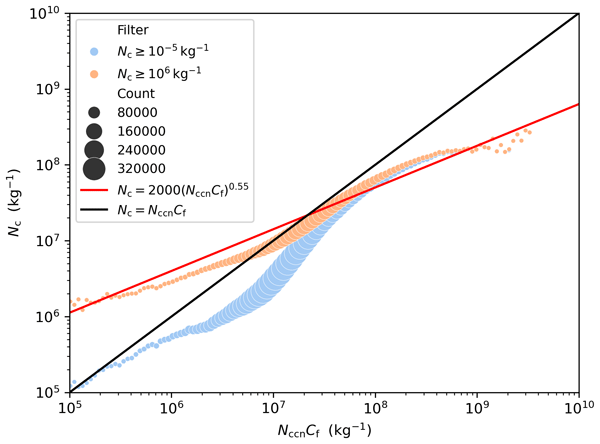
Naser Mahfouz, Hassan Beydoun, Johannes Mülmenstädt, Noel Keen, Adam C. Varble, Luca Bertagna, Peter Bogenschutz, Andrew Bradley, Matthew W. Christensen, T. Conrad Clevenger, Aaron Donahue, Jerome Fast, James Foucar, Jean-Christophe Golaz, Oksana Guba, Walter Hannah, Benjamin Hillman, Robert Jacob, Wuyin Lin, Po-Lun Ma, Yun Qian, Balwinder Singh, Christopher Terai, Hailong Wang, Mingxuan Wu, Kai Zhang, Andrew Gettelman, Mark Taylor, L. Ruby Leung, Peter Caldwell, and Susannah Burrows
Atmos. Chem. Phys., 25, 15105–15120, https://doi.org/10.5194/acp-25-15105-2025, https://doi.org/10.5194/acp-25-15105-2025, 2025
Short summary
Short summary
Our study assesses the aerosol effective radiative forcing in a global cloud-resolving atmosphere model at ultra-high resolution. We demonstrate that global aerosol forcing signal can be robustly reproduced across resolutions when aerosol activation processes are carefully parameterized. Further, we argue that simplified prescribed aerosol schemes will open the door for further process/mechanism studies under controlled conditions.
Matteo Puccioni, Sonia Wharton, Stephan F. J. De Wekker, Robert S. Arthur, Tianyi Li, Ye Liu, Sha Feng, Kyle Pressel, Raj K. Rai, Larry K. Berg, and Jerome D. Fast
Wind Energ. Sci. Discuss., https://doi.org/10.5194/wes-2025-215, https://doi.org/10.5194/wes-2025-215, 2025
Revised manuscript not accepted
Short summary
Short summary
A multi-wind Lidar campaign is conducted in a forest in the United States Southeast, a region featuring low wind resources due to the forest drag. Although the latter reduces the wind for hundreds of meters above ground, we found this effect to be negligible for heights above 8 times the tree height where the wind is dominated by local atmospheric events. This scenario opens to the development of taller turbines harvesting the wind farther away from the ground where the forest drag is minimal.
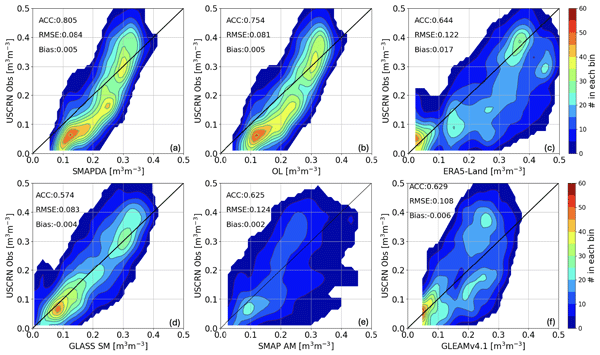
Sheng-Lun Tai, Zhao Yang, Brian Gaudet, Koichi Sakaguchi, Larry Berg, Colleen Kaul, Yun Qian, Ye Liu, and Jerome Fast
Earth Syst. Sci. Data, 17, 4587–4611, https://doi.org/10.5194/essd-17-4587-2025, https://doi.org/10.5194/essd-17-4587-2025, 2025
Short summary
Short summary
Our study created a high-resolution soil moisture dataset for the eastern US by integrating satellite data with a land surface model and advanced algorithms, achieving 1 km scale analyses. Validated against multiple in situ networks and analysis datasets, it demonstrated superior accuracy. This dataset is vital for understanding soil moisture dynamics, especially during droughts, and highlights the need to mitigate soil-type-dependent biases in the model.
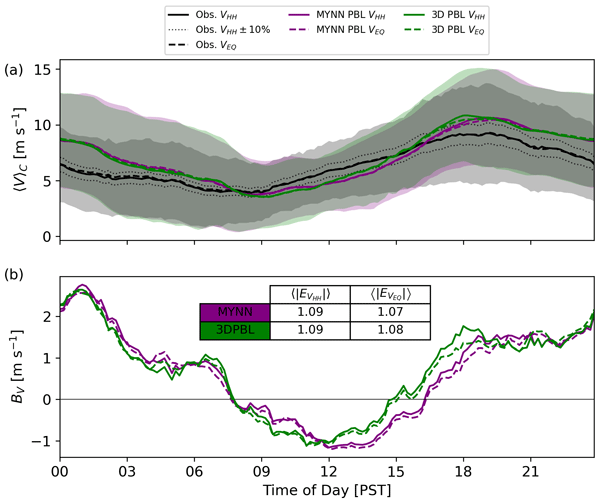
Robert S. Arthur, Alex Rybchuk, Timothy W. Juliano, Gabriel Rios, Sonia Wharton, Julie K. Lundquist, and Jerome D. Fast
Wind Energ. Sci., 10, 1187–1209, https://doi.org/10.5194/wes-10-1187-2025, https://doi.org/10.5194/wes-10-1187-2025, 2025
Short summary
Short summary
This paper evaluates a new model configuration for wind energy forecasting in complex terrain. We compare model results to observations in the Altamont Pass (California, USA), where wind channeling through a mountain gap leads to increased energy production. We demonstrate that the new model configuration performs similarly to a more established approach, with some evidence of improved wind speed predictions, and provide guidance for future model testing.
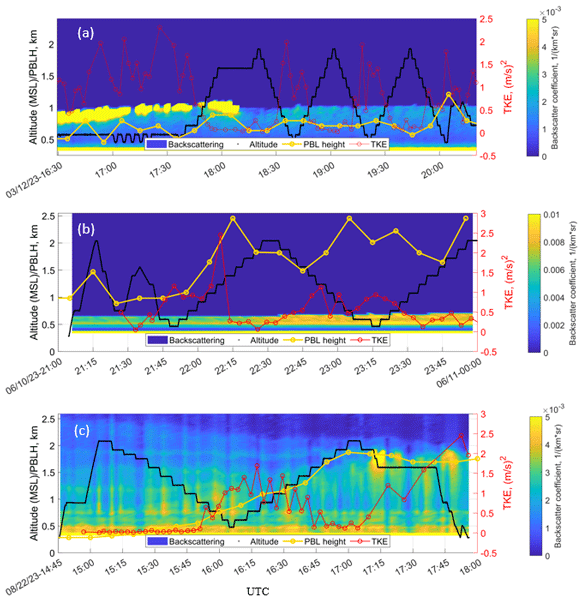
Fan Mei, Qi Zhang, Damao Zhang, Jerome D. Fast, Gourihar Kulkarni, Mikhail S. Pekour, Christopher R. Niedek, Susanne Glienke, Israel Silber, Beat Schmid, Jason M. Tomlinson, Hardeep S. Mehta, Xena Mansoura, Zezhen Cheng, Gregory W. Vandergrift, Nurun Nahar Lata, Swarup China, and Zihua Zhu
Atmos. Chem. Phys., 25, 3425–3444, https://doi.org/10.5194/acp-25-3425-2025, https://doi.org/10.5194/acp-25-3425-2025, 2025
Short summary
Short summary
This study highlights the unique capability of the ArcticShark, an uncrewed aerial system, in measuring vertically resolved atmospheric properties. Data from 32 research flights in 2023 reveal seasonal patterns and correlations with conventional measurements. The consistency and complementarity of in situ and remote sensing methods are highlighted. The study demonstrates the ArcticShark’s versatility in bridging data gaps and improving the understanding of vertical atmospheric structures.
Jerome D. Fast, Adam C. Varble, Fan Mei, Mikhail Pekour, Jason Tomlinson, Alla Zelenyuk, Art J. Sedlacek III, Maria Zawadowicz, and Louisa Emmons
Atmos. Chem. Phys., 24, 13477–13502, https://doi.org/10.5194/acp-24-13477-2024, https://doi.org/10.5194/acp-24-13477-2024, 2024
Short summary
Short summary
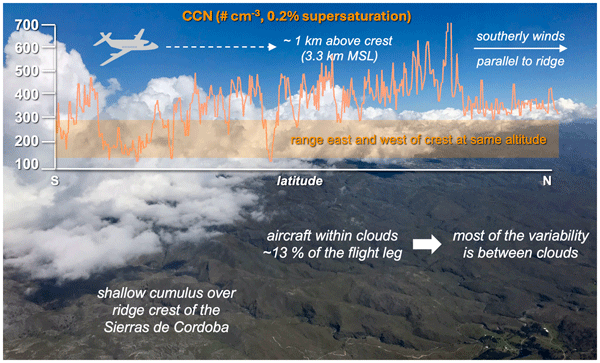
Aerosol property measurements recently collected on the ground and by a research aircraft in central Argentina during the Cloud, Aerosol, and Complex Terrain Interactions (CACTI) campaign exhibit large spatial and temporal variability. These measurements coupled with coincident meteorological information provide a valuable data set needed to evaluate and improve model predictions of aerosols in a traditionally data-sparse region of South America.
Fan Mei, Jennifer M. Comstock, Mikhail S. Pekour, Jerome D. Fast, Krista L. Gaustad, Beat Schmid, Shuaiqi Tang, Damao Zhang, John E. Shilling, Jason M. Tomlinson, Adam C. Varble, Jian Wang, L. Ruby Leung, Lawrence Kleinman, Scot Martin, Sebastien C. Biraud, Brian D. Ermold, and Kenneth W. Burk
Earth Syst. Sci. Data, 16, 5429–5448, https://doi.org/10.5194/essd-16-5429-2024, https://doi.org/10.5194/essd-16-5429-2024, 2024
Short summary
Short summary
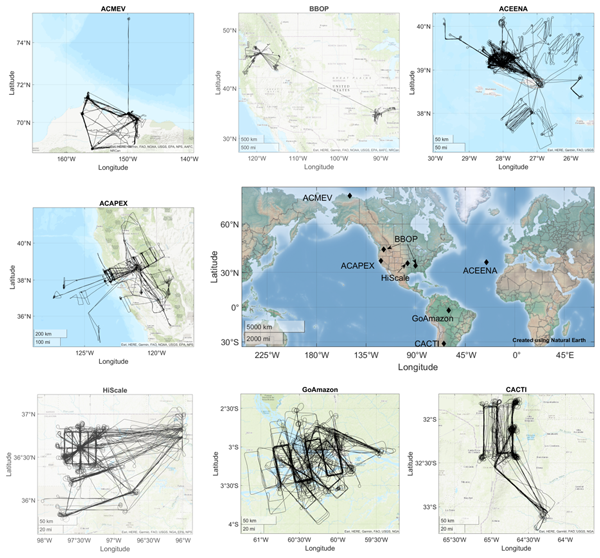
Our study explores a comprehensive dataset from airborne field studies (2013–2018) conducted using the US Department of Energy's Gulfstream 1 (G-1). The 236 flights span diverse regions, including the Arctic, US Southern Great Plains, US West Coast, eastern North Atlantic, Amazon Basin in Brazil, and Sierras de Córdoba range in Argentina. This dataset provides unique insights into atmospheric dynamics, aerosols, and clouds and makes data available in a more accessible format.
Matthew W. Christensen, Peng Wu, Adam C. Varble, Heng Xiao, and Jerome D. Fast
Atmos. Chem. Phys., 24, 6455–6476, https://doi.org/10.5194/acp-24-6455-2024, https://doi.org/10.5194/acp-24-6455-2024, 2024
Short summary
Short summary
Clouds are essential to keep Earth cooler by reflecting sunlight back to space. We show that an increase in aerosol concentration suppresses precipitation in clouds, causing them to accumulate water and expand in a polluted environment with stronger turbulence and radiative cooling. This process enhances their reflectance by 51 %. It is therefore prudent to account for cloud fraction changes in assessments of aerosol–cloud interactions to improve predictions of climate change.
Yang Wang, Chanakya Bagya Ramesh, Scott E. Giangrande, Jerome Fast, Xianda Gong, Jiaoshi Zhang, Ahmet Tolga Odabasi, Marcus Vinicius Batista Oliveira, Alyssa Matthews, Fan Mei, John E. Shilling, Jason Tomlinson, Die Wang, and Jian Wang
Atmos. Chem. Phys., 23, 15671–15691, https://doi.org/10.5194/acp-23-15671-2023, https://doi.org/10.5194/acp-23-15671-2023, 2023
Short summary
Short summary
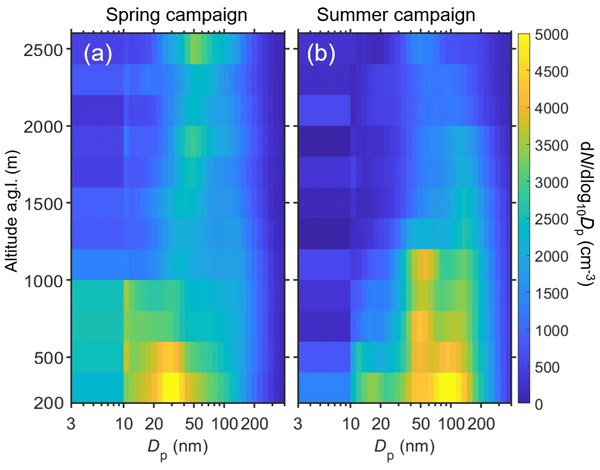
We report the vertical profiles of aerosol properties over the Southern Great Plains (SGP), a region influenced by shallow convective clouds, land–atmosphere interactions, boundary layer turbulence, and the aerosol life cycle. We examined the processes that drive the aerosol population and distribution in the lower troposphere over the SGP. This study helps improve our understanding of aerosol–cloud interactions and the model representation of aerosol processes.
Shuaiqi Tang, Adam C. Varble, Jerome D. Fast, Kai Zhang, Peng Wu, Xiquan Dong, Fan Mei, Mikhail Pekour, Joseph C. Hardin, and Po-Lun Ma
Geosci. Model Dev., 16, 6355–6376, https://doi.org/10.5194/gmd-16-6355-2023, https://doi.org/10.5194/gmd-16-6355-2023, 2023
Short summary
Short summary
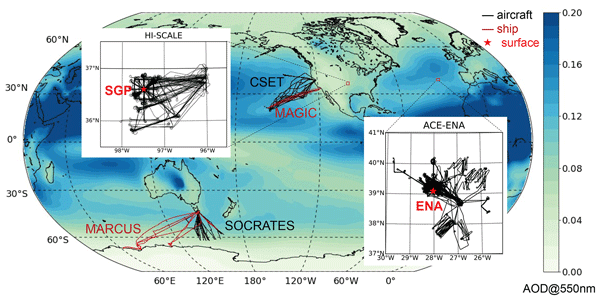
To assess the ability of Earth system model (ESM) predictions, we developed a tool called ESMAC Diags to understand how aerosols, clouds, and aerosol–cloud interactions are represented in ESMs. This paper describes its version 2 functionality. We compared the model predictions with measurements taken by planes, ships, satellites, and ground instruments over four regions across the world. Results show that this new tool can help identify model problems and guide future development of ESMs.
Adam C. Varble, Po-Lun Ma, Matthew W. Christensen, Johannes Mülmenstädt, Shuaiqi Tang, and Jerome Fast
Atmos. Chem. Phys., 23, 13523–13553, https://doi.org/10.5194/acp-23-13523-2023, https://doi.org/10.5194/acp-23-13523-2023, 2023
Short summary
Short summary
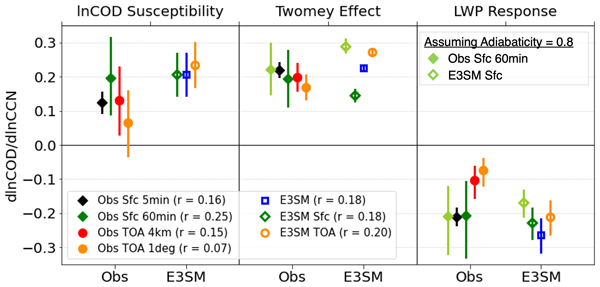
We evaluate how clouds change in response to changing atmospheric particle (aerosol) concentrations in a climate model and find that the model-predicted cloud brightness increases too much as aerosols increase because the cloud drop number increases too much. Excessive drizzle in the model mutes this difference. Many differences between observational and model estimates are explained by varying assumptions of how much liquid has been lost in clouds, which impacts the estimated cloud drop number.
Chupeng Zhang, Shangfei Hai, Yang Gao, Yuhang Wang, Shaoqing Zhang, Lifang Sheng, Bin Zhao, Shuxiao Wang, Jingkun Jiang, Xin Huang, Xiaojing Shen, Junying Sun, Aura Lupascu, Manish Shrivastava, Jerome D. Fast, Wenxuan Cheng, Xiuwen Guo, Ming Chu, Nan Ma, Juan Hong, Qiaoqiao Wang, Xiaohong Yao, and Huiwang Gao
Atmos. Chem. Phys., 23, 10713–10730, https://doi.org/10.5194/acp-23-10713-2023, https://doi.org/10.5194/acp-23-10713-2023, 2023
Short summary
Short summary
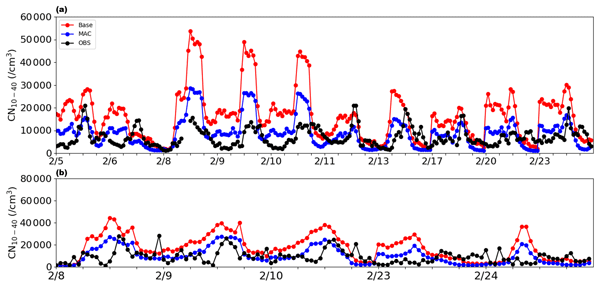
New particle formation is an important source of atmospheric particles, exerting critical influences on global climate. Numerical models are vital tools to understanding atmospheric particle evolution, which, however, suffer from large biases in simulating particle numbers. Here we improve the model chemical processes governing particle sizes and compositions. The improved model reveals substantial contributions of newly formed particles to climate through effects on cloud condensation nuclei.

Matthew W. Christensen, Po-Lun Ma, Peng Wu, Adam C. Varble, Johannes Mülmenstädt, and Jerome D. Fast
Atmos. Chem. Phys., 23, 2789–2812, https://doi.org/10.5194/acp-23-2789-2023, https://doi.org/10.5194/acp-23-2789-2023, 2023
Short summary
Short summary
An increase in aerosol concentration (tiny airborne particles) is shown to suppress rainfall and increase the abundance of droplets in clouds passing over Graciosa Island in the Azores. Cloud drops remain affected by aerosol for several days across thousands of kilometers in satellite data. Simulations from an Earth system model show good agreement, but differences in the amount of cloud water and its extent remain despite modifications to model parameters that control the warm-rain process.
Siegfried Schobesberger, Emma L. D'Ambro, Lejish Vettikkat, Ben H. Lee, Qiaoyun Peng, David M. Bell, John E. Shilling, Manish Shrivastava, Mikhail Pekour, Jerome Fast, and Joel A. Thornton
Atmos. Meas. Tech., 16, 247–271, https://doi.org/10.5194/amt-16-247-2023, https://doi.org/10.5194/amt-16-247-2023, 2023
Short summary
Short summary
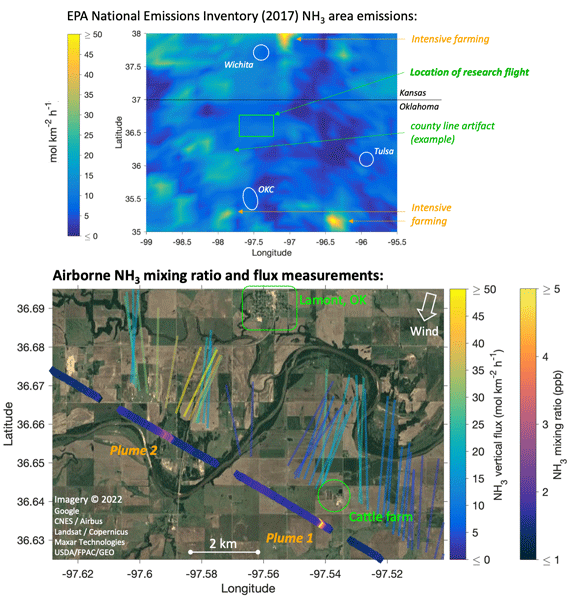
We present a new, highly sensitive technique for measuring atmospheric ammonia, an important trace gas that is emitted mainly by agriculture. We deployed the instrument on an aircraft during research flights over rural Oklahoma. Due to its fast response, we could analyze correlations with turbulent winds and calculate ammonia emissions from nearby areas at 1 to 2 km resolution. We observed high spatial variability and point sources that are not resolved in the US National Emissions Inventory.

Jerome D. Fast, David M. Bell, Gourihar Kulkarni, Jiumeng Liu, Fan Mei, Georges Saliba, John E. Shilling, Kaitlyn Suski, Jason Tomlinson, Jian Wang, Rahul Zaveri, and Alla Zelenyuk
Atmos. Chem. Phys., 22, 11217–11238, https://doi.org/10.5194/acp-22-11217-2022, https://doi.org/10.5194/acp-22-11217-2022, 2022
Short summary
Short summary
Recent aircraft measurements from the HI-SCALE campaign conducted over the Southern Great Plains (SGP) site in Oklahoma are used to quantify spatial variability of aerosol properties in terms of grid spacings typically used by weather and climate models. Surprisingly large horizontal gradients in aerosol properties were frequently observed in this rural area. This spatial variability can be used as an uncertainty range when comparing surface point measurements with model predictions.
Fan Mei, Mikhail S. Pekour, Darielle Dexheimer, Gijs de Boer, RaeAnn Cook, Jason Tomlinson, Beat Schmid, Lexie A. Goldberger, Rob Newsom, and Jerome D. Fast
Earth Syst. Sci. Data, 14, 3423–3438, https://doi.org/10.5194/essd-14-3423-2022, https://doi.org/10.5194/essd-14-3423-2022, 2022
Short summary
Short summary
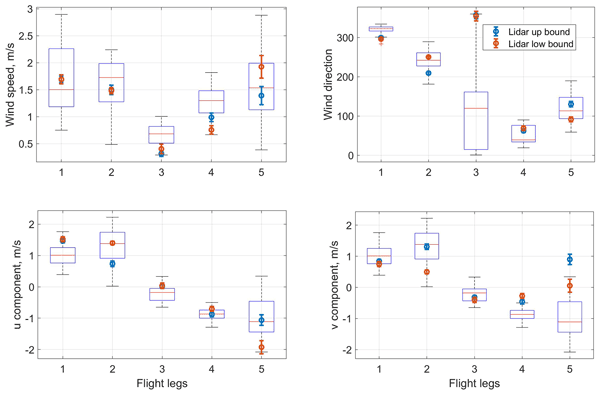
This work focuses on an expanding number of data sets observed using ARM TBS (133 flights) and UAS (seven flights) platforms by the Department of Energy (DOE) Atmospheric Radiation Measurement (ARM) user facility. These data streams provide new perspectives on spatial variability of atmospheric and surface parameters, helping to address critical science questions in Earth system science research, such as the aerosol–cloud interaction in the boundary layer.
Shuaiqi Tang, Jerome D. Fast, Kai Zhang, Joseph C. Hardin, Adam C. Varble, John E. Shilling, Fan Mei, Maria A. Zawadowicz, and Po-Lun Ma
Geosci. Model Dev., 15, 4055–4076, https://doi.org/10.5194/gmd-15-4055-2022, https://doi.org/10.5194/gmd-15-4055-2022, 2022
Short summary
Short summary
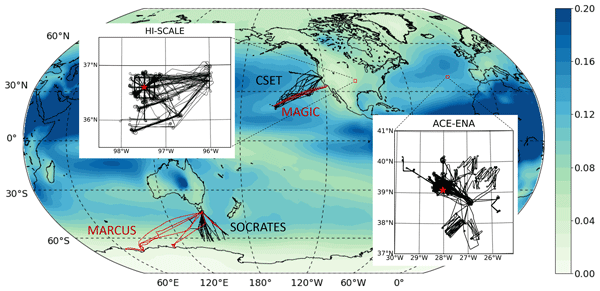
We developed an Earth system model (ESM) diagnostics package to compare various types of aerosol properties simulated in ESMs with aircraft, ship, and surface measurements from six field campaigns across spatial scales. The diagnostics package is coded and organized to be flexible and modular for future extension to other field campaign datasets and adapted to higher-resolution model simulations. Future releases will include comprehensive cloud and aerosol–cloud interaction diagnostics.
Po-Lun Ma, Bryce E. Harrop, Vincent E. Larson, Richard B. Neale, Andrew Gettelman, Hugh Morrison, Hailong Wang, Kai Zhang, Stephen A. Klein, Mark D. Zelinka, Yuying Zhang, Yun Qian, Jin-Ho Yoon, Christopher R. Jones, Meng Huang, Sheng-Lun Tai, Balwinder Singh, Peter A. Bogenschutz, Xue Zheng, Wuyin Lin, Johannes Quaas, Hélène Chepfer, Michael A. Brunke, Xubin Zeng, Johannes Mülmenstädt, Samson Hagos, Zhibo Zhang, Hua Song, Xiaohong Liu, Michael S. Pritchard, Hui Wan, Jingyu Wang, Qi Tang, Peter M. Caldwell, Jiwen Fan, Larry K. Berg, Jerome D. Fast, Mark A. Taylor, Jean-Christophe Golaz, Shaocheng Xie, Philip J. Rasch, and L. Ruby Leung
Geosci. Model Dev., 15, 2881–2916, https://doi.org/10.5194/gmd-15-2881-2022, https://doi.org/10.5194/gmd-15-2881-2022, 2022
Short summary
Short summary
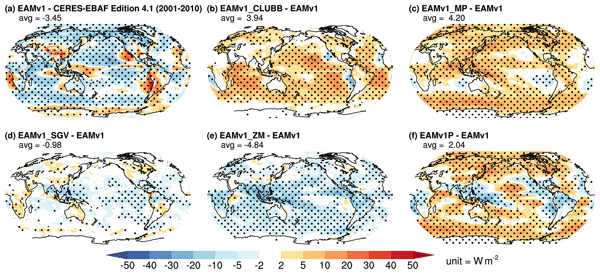
An alternative set of parameters for E3SM Atmospheric Model version 1 has been developed based on a tuning strategy that focuses on clouds. When clouds in every regime are improved, other aspects of the model are also improved, even though they are not the direct targets for calibration. The recalibrated model shows a lower sensitivity to anthropogenic aerosols and surface warming, suggesting potential improvements to the simulated climate in the past and future.
Johannes Mülmenstädt and Po-Lun Ma
Atmos. Chem. Phys., 26, 16465–16476, https://doi.org/10.5194/acp-26-16465-2026, https://doi.org/10.5194/acp-26-16465-2026, 2026
Short summary
Short summary
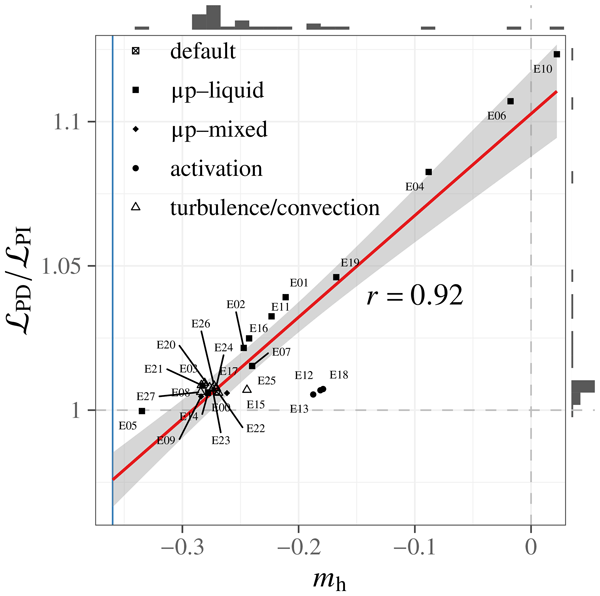
Aerosols emitted by human activities change the planetary energy budget by, among other mechanisms, changing how much liquid water is contained in clouds and thus their reflectance. Different lines of evidence (observations and models) disagree on the sign of the liquid water change even though they agree on the sign of the correlation between aerosols and liquid water in present-day internal variability. We show one way that observations can constrain models to resolve this disagreement.
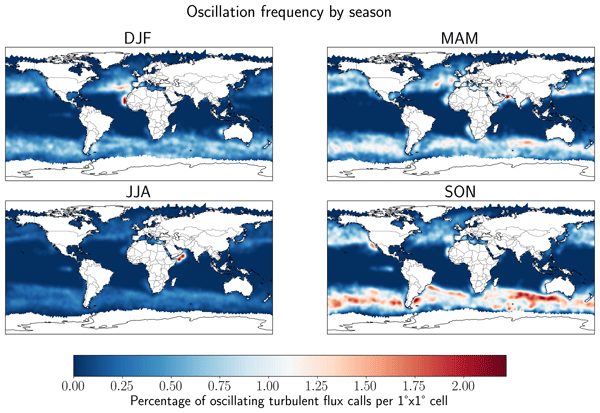
Justin Dong, Michael A. Brunke, Xubin Zeng, Carol S. Woodward, Hui Wan, and Christopher J. Vogl
Geosci. Model Dev., 19, 10957–10987, https://doi.org/10.5194/gmd-19-10957-2026, https://doi.org/10.5194/gmd-19-10957-2026, 2026
Short summary
Short summary
Accurately computing ocean–atmosphere turbulent fluxes, which measure the transfer of momentum, heat, and water between the Earth and its oceans, in Earth system models is important for overall model accuracy. Under certain meteorological conditions, the set of equations utilized in many Earth system models to parameterize these fluxes can have no solution or more than one solution. Modifying the equations to address these issues leads to substantial changes to the simulated turbulent fluxes.
Alexandra E. Ng, Manish Shrivastava, Brian Gaudet, Cenlin He, Zezhen Cheng, and William Vizuete
EGUsphere, https://doi.org/10.5194/egusphere-2026-5534, https://doi.org/10.5194/egusphere-2026-5534, 2026
Short summary
Short summary
Wildfire smoke contains dark particles called tar balls that absorb sunlight and warm the air, but air quality and climate models usually leave them out. We added tar balls to a model of the southeastern United States and compared it with aircraft and ground measurements. Including them, and accounting for the coatings that form around them, raised the sunlight absorbed by smoke by up to 6 %. Models that omit tar balls may therefore underestimate warming from wildfires.
Dongyu Feng, Zeli Tan, Donghui Xu, Jeffrey Johnson, and Gautam Bisht
EGUsphere, https://doi.org/10.5194/egusphere-2026-4859, https://doi.org/10.5194/egusphere-2026-4859, 2026
This preprint is open for discussion and under review for Geoscientific Model Development (GMD).
Short summary
Short summary
We developed the River Dynamical Core sediment model version 1.0 to help Earth system models represent how sediment transports across rivers and floodplains. Tests ranging from simple experiments to Hurricane Harvey show that the model keeps track of sediment accurately, agrees with an established comparison model, and captures major flood and sediment patterns. This gives researchers a practical tool for studying how storms move sediment from land to the ocean.
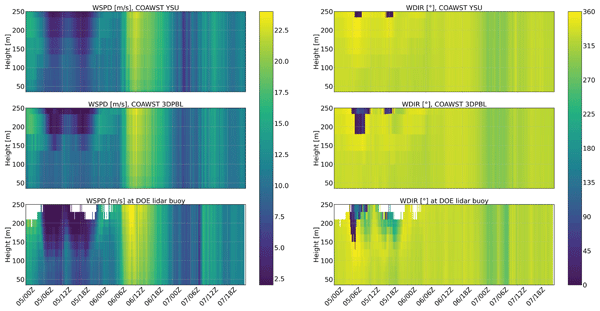
Eric A. Hendricks, Timothy W. Juliano, Branko Kosović, Sue Ellen Haupt, Brian J. Gaudet, and Geng Xia
Geosci. Model Dev., 19, 7369–7387, https://doi.org/10.5194/gmd-19-7369-2026, https://doi.org/10.5194/gmd-19-7369-2026, 2026
Short summary
Short summary
A three-dimensional planetary boundary layer (PBL) parameterization, suited for mesoscale model grid spacings of 100–1000 m with improved treatment of unresolved horizontal mixing, is added to a coupled atmosphere/wave modeling system and the first coupled simulations are executed using the parameterization. Simulations of a significant wind-wave event demonstrate that the new parameterization has similar behaviors as one-dimensional PBL parameterizations and compares well with observations.
Andrew Geiss, Johannes Mülmenstädt, Adam C. Varble, Matthew W. Christensen, and Heng Xiao
EGUsphere, https://doi.org/10.5194/egusphere-2026-4426, https://doi.org/10.5194/egusphere-2026-4426, 2026
Short summary
Short summary
Cloud droplet and liquid water concentrations change in response to atmospheric aerosols, affecting cloud brightness, lifetime, and ultimately the Earth's climate. This study examines how the relationship between droplet number and liquid water concentrations varies by cloud type. We find that cloud type can be used to explain most variance in liquid water between satellite-observed cloud scenes, but the influence of droplet concentration on water content is largely independent of cloud type.
Casey J. Wall, Adam C. Varble, Rusen Öktem, and David M. Romps
EGUsphere, https://doi.org/10.5194/egusphere-2026-3986, https://doi.org/10.5194/egusphere-2026-3986, 2026
Short summary
Short summary
The concept of warm-phase convective invigoration from aerosol-cloud interactions posits that polluted clouds form smaller and more numerous droplets than their non-polluted counterparts. This causes polluted cloud updrafts to consume moisture more readily, which ultimately leads to faster updrafts. This work develops a theoretical model of warm-phase convective invigoration and applies the model with aircraft measurements to infer how much the mechanism can invigorate cloud updrafts in nature.
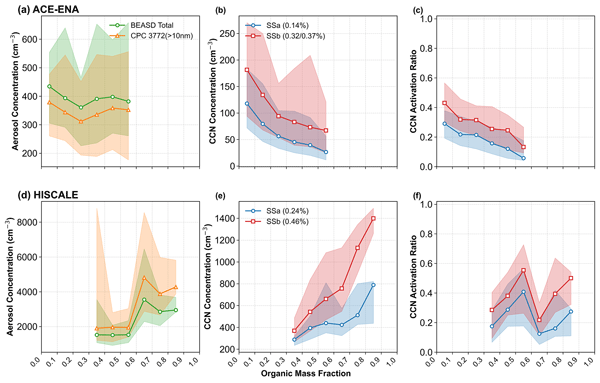
Guangxin Ai, Shuaiqi Tang, Hailong Wang, Fan Mei, and Minghuai Wang
Atmos. Chem. Phys., 26, 7967–7984, https://doi.org/10.5194/acp-26-7967-2026, https://doi.org/10.5194/acp-26-7967-2026, 2026
Short summary
Short summary
Tiny aerosol particles help form cloud droplets and can affect rainfall and climate, but their behavior is hard to predict. We used aircraft measurements over the ocean near the Azores and over the central United States to compare clean and polluted air. We found that particle size and chemical makeup together control how easily clouds form, and organic-rich particles often reduce droplet formation. These results can improve how weather and climate models represent clouds.
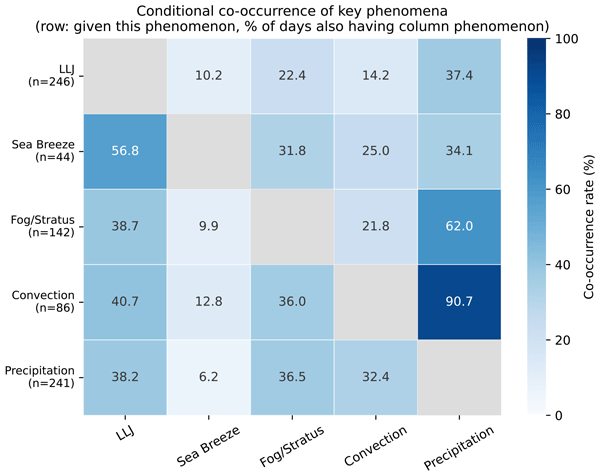
Nicola Bodini, Joseph Olson, Brian Gaudet, Giacomo Valerio Iungo, Mojtaba Shams Solari, Sayahnya Roy, Julie K. Lundquist, Nathan Agarwal, Timothy A. Myers, Bianca Adler, Jeffrey D. Mirocha, Eric James, Laura Bianco, James M. Wilczak, and David D. Turner
Wind Energ. Sci., 11, 1949–1961, https://doi.org/10.5194/wes-11-1949-2026, https://doi.org/10.5194/wes-11-1949-2026, 2026
Short summary
Short summary
To improve offshore wind forecasts, the Third Wind Forecast Improvement Project monitored the United States east coast for 18 months. We compiled a daily log of weather events using advanced scanners and expert notes. This public dataset identifies important wind patterns, helping scientists test computer models and choose specific cases to study.
Yanjie Liu, Xiaocong Wang, Yimin Liu, Shuaiqi Tang, and Hao Miao
Atmos. Chem. Phys., 26, 6763–6779, https://doi.org/10.5194/acp-26-6763-2026, https://doi.org/10.5194/acp-26-6763-2026, 2026
Short summary
Short summary
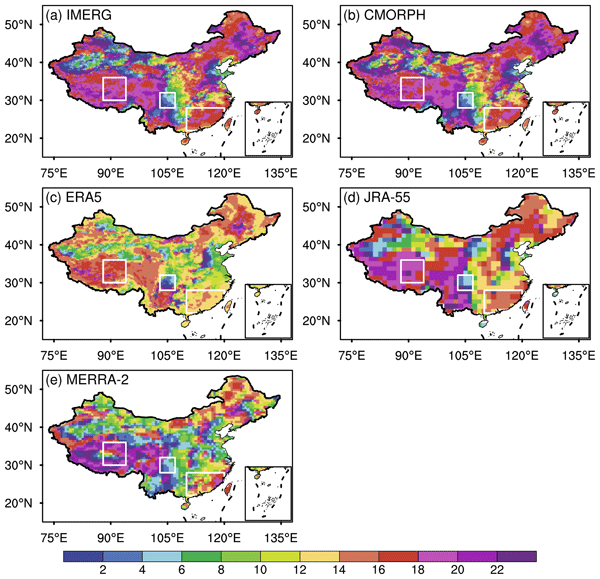
This study investigates how well operational models simulate the diurnal cycle of summer rainfall over China. Comparing three reanalyses shows all capture nocturnal precipitation peak but differ in afternoon rainfall timing: JRA‑55 and MERRA‑2 match observations better, while ERA5 exhibits a 3-hour phase advance. These differences are linked to how large-scale forcing is use in convection parameterization, underscoring the critical role of trigger on cumulus convection.
Mark R. Petersen, Xylar S. Asay-Davis, Alice M. Barthel, Carolyn Branecky Begeman, Siddhartha Bishnu, Steven R. Brus, Philip W. Jones, Hyun-Gyu Kang, Youngsung Kim, Azamat Mametjanov, Brian J. O'Neill, James R. Overfelt, Kieran K. Ringel, Katherine M. Smith, Sarat Sreepathi, Luke P. Van Roekel, and Maciej Waruszewski
Geosci. Model Dev., 19, 3569–3594, https://doi.org/10.5194/gmd-19-3569-2026, https://doi.org/10.5194/gmd-19-3569-2026, 2026
Short summary
Short summary
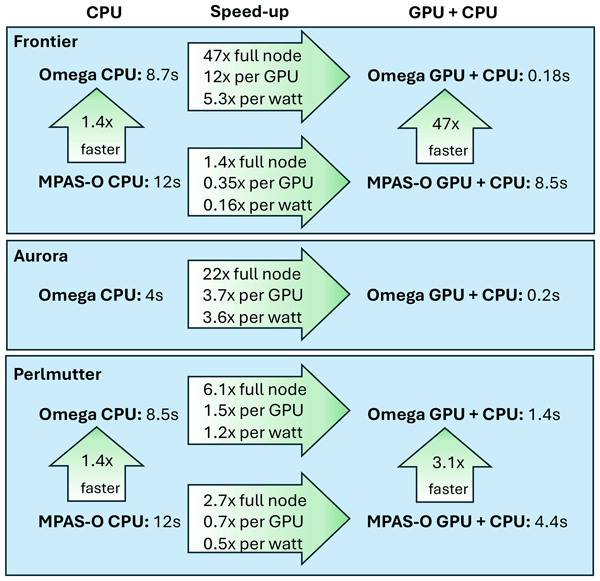
Ocean models are used to predict currents, temperature, and salinity of the earth's oceans, much like weather forecasting. As supercomputer hardware changes with evolving technology, models must be updated, and sometimes rewritten. Here we document Omega, a new ocean model that was designed to run on the world's fastest supercomputers. Testing shows that Omega accurately solves the model equations, and runs efficiently on many different computer architectures, including exascale computers.
Shixuan Zhang, L. Ruby Leung, Bryce E. Harrop, Aniruddha Bora, George Karniadakis, Khemraj Shukla, and Kai Zhang
Geosci. Model Dev., 19, 1937–1964, https://doi.org/10.5194/gmd-19-1937-2026, https://doi.org/10.5194/gmd-19-1937-2026, 2026
Short summary
Short summary
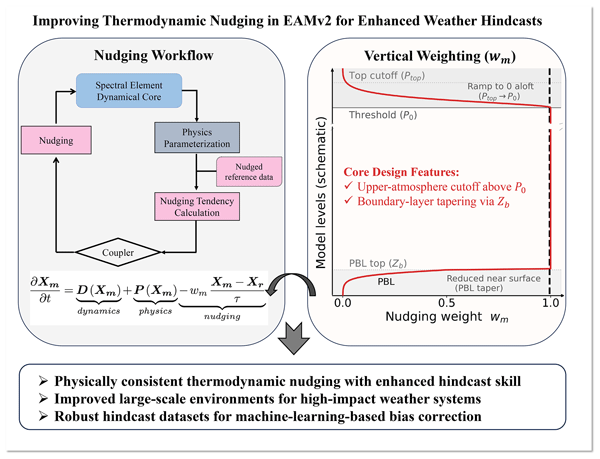
We developed a new method to guide the simulated atmosphere in an Earth system model so it better reflects real-world weather. By adjusting temperature and humidity, it reduces unwanted side effects and improves the realism of rainfall, energy flows, land–surface conditions, and extreme storms such as cyclones and atmospheric rivers. This makes the model more useful for testing its performance, understanding high-impact weather events, and creating reliable training data for machine learning.
Oscar H. Díaz-Ibarra, Samuel G. Frederick, Jeffrey H. Curtis, Zachary D'Aquino, Peter A. Bosler, Lekha Patel, Cosmin Safta, Matthew West, and Nicole Riemer
Geosci. Model Dev., 19, 1281–1299, https://doi.org/10.5194/gmd-19-1281-2026, https://doi.org/10.5194/gmd-19-1281-2026, 2026
Short summary
Short summary
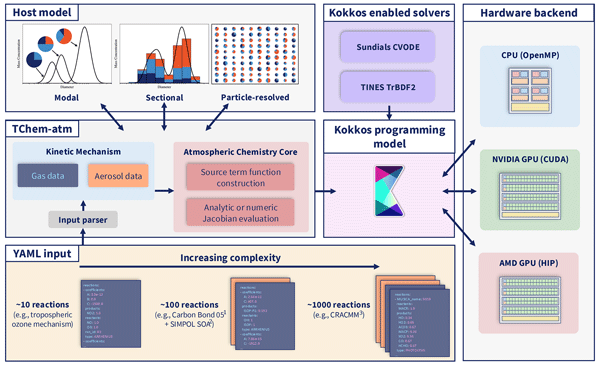
We developed TChem-atm, a new open-source tool for simulating atmospheric chemistry and aerosols. As models become more detailed, traditional methods are too slow. TChem-atm runs on both standard processors and graphics processors, making these simulations faster and more efficient. The tool provides a foundation for next-generation models that improve predictions of air quality and climate.
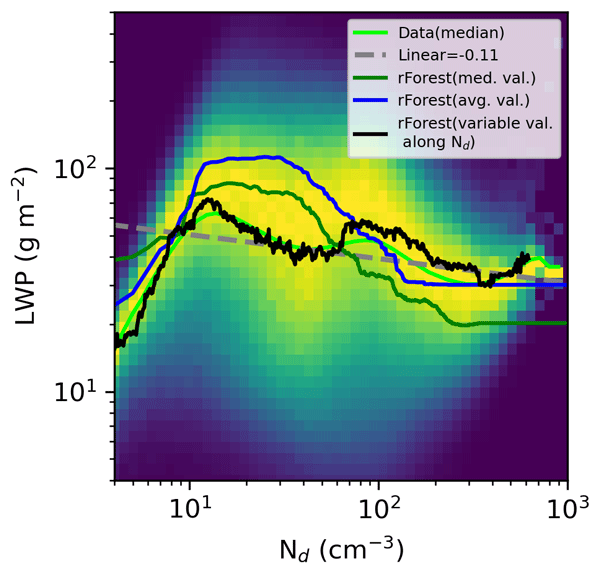
Matthew W. Christensen, Andrew Geiss, Adam C. Varble, and Po-Lun Ma
Atmos. Chem. Phys., 26, 59–76, https://doi.org/10.5194/acp-26-59-2026, https://doi.org/10.5194/acp-26-59-2026, 2026
Short summary
Short summary
We used satellite data and machine learning to better understand how tiny particles in the atmosphere affect clouds and their brightness. At higher spatial resolution, we discovered a new “M”-shaped pattern in the relationship between cloud water and droplet concentration unlike the inverted-V shape observed at coarsely gridded scales. Cloud water increases more with droplet concentration when rain is present. These findings support the development of next-generation atmospheric models.
Naser Mahfouz, Hassan Beydoun, Johannes Mülmenstädt, Noel Keen, Adam C. Varble, Luca Bertagna, Peter Bogenschutz, Andrew Bradley, Matthew W. Christensen, T. Conrad Clevenger, Aaron Donahue, Jerome Fast, James Foucar, Jean-Christophe Golaz, Oksana Guba, Walter Hannah, Benjamin Hillman, Robert Jacob, Wuyin Lin, Po-Lun Ma, Yun Qian, Balwinder Singh, Christopher Terai, Hailong Wang, Mingxuan Wu, Kai Zhang, Andrew Gettelman, Mark Taylor, L. Ruby Leung, Peter Caldwell, and Susannah Burrows
Atmos. Chem. Phys., 25, 15105–15120, https://doi.org/10.5194/acp-25-15105-2025, https://doi.org/10.5194/acp-25-15105-2025, 2025
Short summary
Short summary
Our study assesses the aerosol effective radiative forcing in a global cloud-resolving atmosphere model at ultra-high resolution. We demonstrate that global aerosol forcing signal can be robustly reproduced across resolutions when aerosol activation processes are carefully parameterized. Further, we argue that simplified prescribed aerosol schemes will open the door for further process/mechanism studies under controlled conditions.
Matteo Puccioni, Sonia Wharton, Stephan F. J. De Wekker, Robert S. Arthur, Tianyi Li, Ye Liu, Sha Feng, Kyle Pressel, Raj K. Rai, Larry K. Berg, and Jerome D. Fast
Wind Energ. Sci. Discuss., https://doi.org/10.5194/wes-2025-215, https://doi.org/10.5194/wes-2025-215, 2025
Revised manuscript not accepted
Short summary
Short summary
A multi-wind Lidar campaign is conducted in a forest in the United States Southeast, a region featuring low wind resources due to the forest drag. Although the latter reduces the wind for hundreds of meters above ground, we found this effect to be negligible for heights above 8 times the tree height where the wind is dominated by local atmospheric events. This scenario opens to the development of taller turbines harvesting the wind farther away from the ground where the forest drag is minimal.
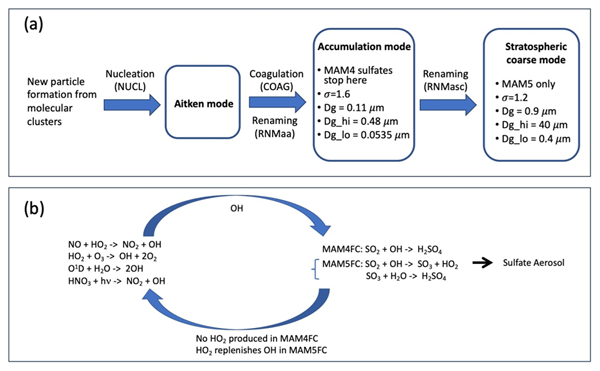
Allen Hu, Ziming Ke, Xiaohong Liu, Benjamin Wagman, Hunter Brown, Zheng Lu, Mingxuan Wu, Hailong Wang, Qi Tang, Diana Bull, Kara Peterson, and Shaocheng Xie
Atmos. Chem. Phys., 25, 12137–12157, https://doi.org/10.5194/acp-25-12137-2025, https://doi.org/10.5194/acp-25-12137-2025, 2025
Short summary
Short summary
Volcanic eruptions have major effects on atmospheric temperature and can be studied as a proxy for geo-engineering. The original aerosol module in the Energy Exascale Earth System Model v2 (E3SMv2) has problems simulating volcanic aerosols. We alter the aerosol module to simulate the 1991 Pinatubo eruption and implement a more complex chemistry scheme, producing results that better agree with observations. Process analyses of the volcanic aerosols help explain how they grow in the stratosphere.
Sheng-Lun Tai, Zhao Yang, Brian Gaudet, Koichi Sakaguchi, Larry Berg, Colleen Kaul, Yun Qian, Ye Liu, and Jerome Fast
Earth Syst. Sci. Data, 17, 4587–4611, https://doi.org/10.5194/essd-17-4587-2025, https://doi.org/10.5194/essd-17-4587-2025, 2025
Short summary
Short summary
Our study created a high-resolution soil moisture dataset for the eastern US by integrating satellite data with a land surface model and advanced algorithms, achieving 1 km scale analyses. Validated against multiple in situ networks and analysis datasets, it demonstrated superior accuracy. This dataset is vital for understanding soil moisture dynamics, especially during droughts, and highlights the need to mitigate soil-type-dependent biases in the model.
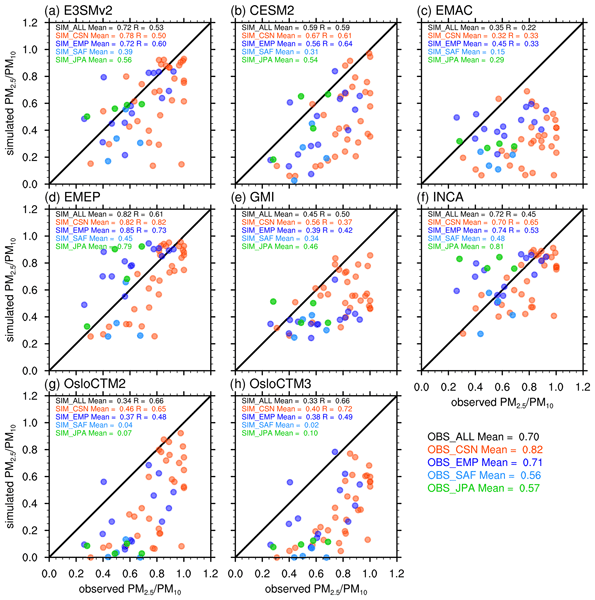
Mingxuan Wu, Hailong Wang, Zheng Lu, Xiaohong Liu, Huisheng Bian, David D. Cohen, Yan Feng, Mian Chin, Didier A. Hauglustaine, Vlassis A. Karydis, Marianne T. Lund, Gunnar Myhre, Andrea Pozzer, Michael Schulz, Ragnhild B. Skeie, Alexandra P. Tsimpidi, Svetlana G. Tsyro, and Shaocheng Xie
Atmos. Chem. Phys., 25, 10049–10074, https://doi.org/10.5194/acp-25-10049-2025, https://doi.org/10.5194/acp-25-10049-2025, 2025
Short summary
Short summary
A key challenge in simulating the life cycle of nitrate aerosol in global models is accurately representing the mass size distribution of nitrate aerosol, which lacks sufficient observational constraints. We found that most global models underestimate the mass fraction of fine-mode nitrate at the surface in all regions. Our study highlights the importance of gas–aerosol partitioning parameterization and the simulation of dust and sea salt in correctly simulating the mass size distribution of nitrate.
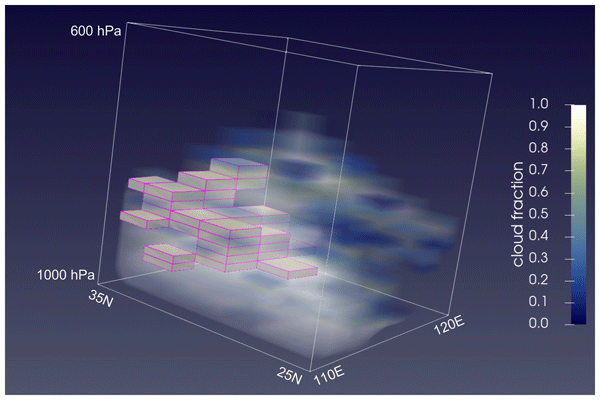
Hui Wan, Abhishek Yenpure, Berk Geveci, Richard C. Easter, Philip J. Rasch, Kai Zhang, and Xubin Zeng
Geosci. Model Dev., 18, 5655–5680, https://doi.org/10.5194/gmd-18-5655-2025, https://doi.org/10.5194/gmd-18-5655-2025, 2025
Short summary
Short summary
In the Energy Exascale Earth System Model version 2 (E3SMv2) and many other global models, the simulated anthropogenic aerosol effective radiative forcing is sensitive to the presence of clouds with very low droplet number concentrations. Numerical experiments presented in this paper indicate that mid- and high-latitude low-level stratus occurring under weak turbulence is a key cloud regime for investigating the causes of these very low cloud droplet number concentrations in E3SMv2.
Robert S. Arthur, Alex Rybchuk, Timothy W. Juliano, Gabriel Rios, Sonia Wharton, Julie K. Lundquist, and Jerome D. Fast
Wind Energ. Sci., 10, 1187–1209, https://doi.org/10.5194/wes-10-1187-2025, https://doi.org/10.5194/wes-10-1187-2025, 2025
Short summary
Short summary
This paper evaluates a new model configuration for wind energy forecasting in complex terrain. We compare model results to observations in the Altamont Pass (California, USA), where wind channeling through a mountain gap leads to increased energy production. We demonstrate that the new model configuration performs similarly to a more established approach, with some evidence of improved wind speed predictions, and provide guidance for future model testing.
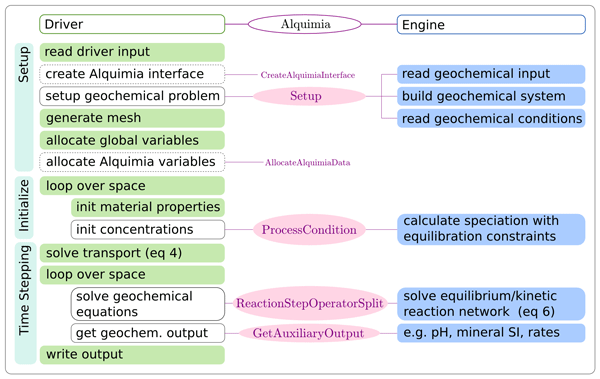
Sergi Molins, Benjamin J. Andre, Jeffrey N. Johnson, Glenn E. Hammond, Benjamin N. Sulman, Konstantin Lipnikov, Marcus S. Day, James J. Beisman, Daniil Svyatsky, Hang Deng, Peter C. Lichtner, Carl I. Steefel, and J. David Moulton
Geosci. Model Dev., 18, 3241–3263, https://doi.org/10.5194/gmd-18-3241-2025, https://doi.org/10.5194/gmd-18-3241-2025, 2025
Short summary
Short summary
Developing scientific software and making sure it functions properly requires a significant effort. As we advance our understanding of natural systems, however, there is the need to develop yet more complex models and codes. In this work, we present a piece of software that facilitates this work, specifically with regard to reactive processes. Existing tried-and-true codes are made available via this new interface, freeing up resources to focus on the new aspects of the problems at hand.
Fan Mei, Qi Zhang, Damao Zhang, Jerome D. Fast, Gourihar Kulkarni, Mikhail S. Pekour, Christopher R. Niedek, Susanne Glienke, Israel Silber, Beat Schmid, Jason M. Tomlinson, Hardeep S. Mehta, Xena Mansoura, Zezhen Cheng, Gregory W. Vandergrift, Nurun Nahar Lata, Swarup China, and Zihua Zhu
Atmos. Chem. Phys., 25, 3425–3444, https://doi.org/10.5194/acp-25-3425-2025, https://doi.org/10.5194/acp-25-3425-2025, 2025
Short summary
Short summary
This study highlights the unique capability of the ArcticShark, an uncrewed aerial system, in measuring vertically resolved atmospheric properties. Data from 32 research flights in 2023 reveal seasonal patterns and correlations with conventional measurements. The consistency and complementarity of in situ and remote sensing methods are highlighted. The study demonstrates the ArcticShark’s versatility in bridging data gaps and improving the understanding of vertical atmospheric structures.
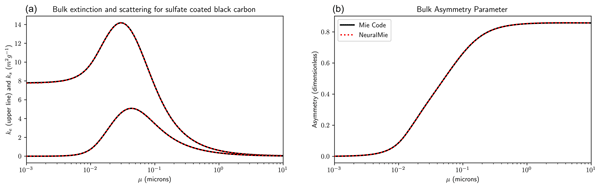
Andrew Geiss and Po-Lun Ma
Geosci. Model Dev., 18, 1809–1827, https://doi.org/10.5194/gmd-18-1809-2025, https://doi.org/10.5194/gmd-18-1809-2025, 2025
Short summary
Short summary
Particles in the Earth's atmosphere strongly impact the planet's energy budget, and atmosphere simulations require accurate representation of their interaction with light. This work introduces two approaches to represent light scattering by small particles. The first is a scattering simulator based on Mie theory implemented in Python. The second is a neural network emulator that is more accurate than existing methods and is fast enough to be used in climate and weather simulations.
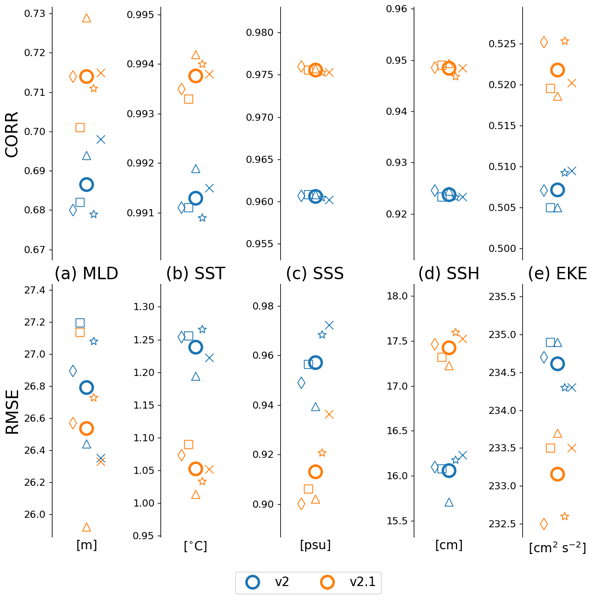
Katherine M. Smith, Alice M. Barthel, LeAnn M. Conlon, Luke P. Van Roekel, Anthony Bartoletti, Jean-Christophe Golaz, Chengzhu Zhang, Carolyn Branecky Begeman, James J. Benedict, Gautam Bisht, Yan Feng, Walter Hannah, Bryce E. Harrop, Nicole Jeffery, Wuyin Lin, Po-Lun Ma, Mathew E. Maltrud, Mark R. Petersen, Balwinder Singh, Qi Tang, Teklu Tesfa, Jonathan D. Wolfe, Shaocheng Xie, Xue Zheng, Karthik Balaguru, Oluwayemi Garuba, Peter Gleckler, Aixue Hu, Jiwoo Lee, Ben Moore-Maley, and Ana C. Ordoñez
Geosci. Model Dev., 18, 1613–1633, https://doi.org/10.5194/gmd-18-1613-2025, https://doi.org/10.5194/gmd-18-1613-2025, 2025
Short summary
Short summary
Version 2.1 of the U.S. Department of Energy's Energy Exascale Earth System Model (E3SM) adds the Fox-Kemper et al. (2011) mixed-layer eddy parameterization, which restratifies the ocean surface layer through an overturning streamfunction. Results include surface layer bias reduction in temperature, salinity, and sea ice extent in the North Atlantic; a small strengthening of the Atlantic meridional overturning circulation; and improvements to many atmospheric climatological variables.
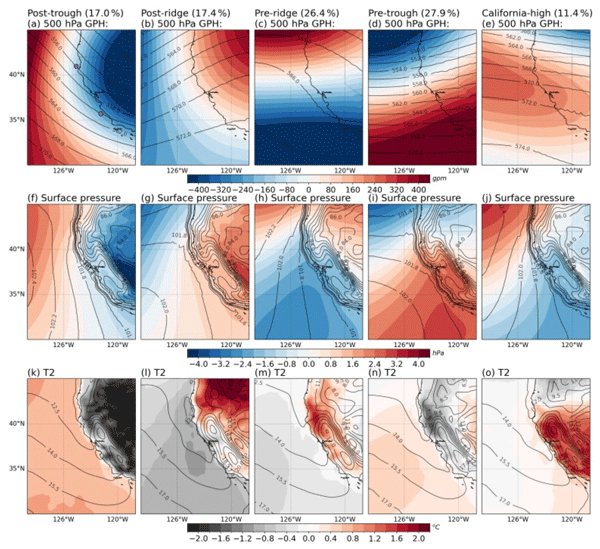
Ye Liu, Timothy W. Juliano, Raghavendra Krishnamurthy, Brian J. Gaudet, and Jungmin Lee
Wind Energ. Sci., 10, 483–495, https://doi.org/10.5194/wes-10-483-2025, https://doi.org/10.5194/wes-10-483-2025, 2025
Short summary
Short summary
Our study reveals how different weather patterns influence wind conditions off the US West Coast. We identified key weather patterns affecting wind speeds at potential wind farm sites using advanced machine learning. This research helps improve weather prediction models, making wind energy production more reliable and efficient.

Brandon M. Duran, Casey J. Wall, Nicholas J. Lutsko, Takuro Michibata, Po-Lun Ma, Yi Qin, Margaret L. Duffy, Brian Medeiros, and Matvey Debolskiy
Atmos. Chem. Phys., 25, 2123–2146, https://doi.org/10.5194/acp-25-2123-2025, https://doi.org/10.5194/acp-25-2123-2025, 2025
Short summary
Short summary
We use satellite simulator data generated by global climate models to investigate how aerosol particles impact the radiative properties of liquid clouds. Specifically, we quantify the radiative perturbations arising from aerosol-driven changes in the number density of cloud droplets, the vertically integrated cloud water mass, and the cloud amount. Our results show that, in models, aerosol effects on the number density of cloud droplets contribute the most to anthropogenic climate forcing.
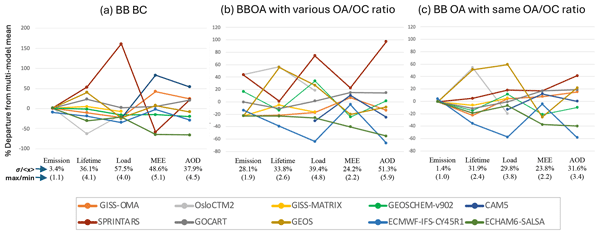
Mariya Petrenko, Ralph Kahn, Mian Chin, Susanne E. Bauer, Tommi Bergman, Huisheng Bian, Gabriele Curci, Ben Johnson, Johannes W. Kaiser, Zak Kipling, Harri Kokkola, Xiaohong Liu, Keren Mezuman, Tero Mielonen, Gunnar Myhre, Xiaohua Pan, Anna Protonotariou, Samuel Remy, Ragnhild Bieltvedt Skeie, Philip Stier, Toshihiko Takemura, Kostas Tsigaridis, Hailong Wang, Duncan Watson-Parris, and Kai Zhang
Atmos. Chem. Phys., 25, 1545–1567, https://doi.org/10.5194/acp-25-1545-2025, https://doi.org/10.5194/acp-25-1545-2025, 2025
Short summary
Short summary
We compared smoke plume simulations from 11 global models to each other and to satellite smoke amount observations aimed at constraining smoke source strength. In regions where plumes are thick and background aerosol is low, models and satellites compare well. However, the input emission inventory tends to underestimate in many places, and particle property and loss rate assumptions vary enormously among models, causing uncertainties that require systematic in situ measurements to resolve.
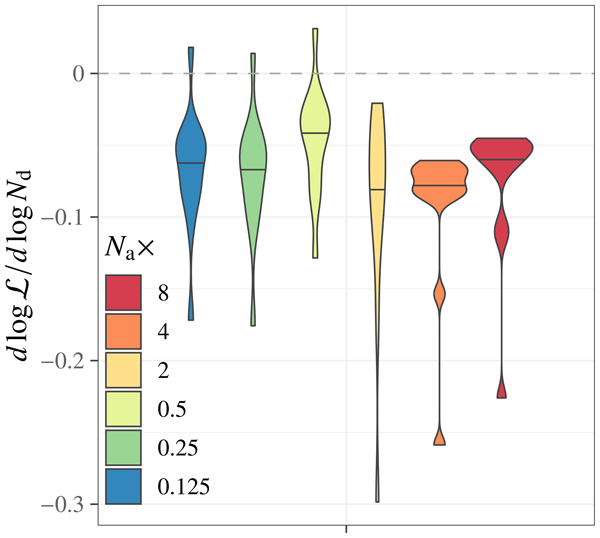
Johannes Mülmenstädt, Andrew S. Ackerman, Ann M. Fridlind, Meng Huang, Po-Lun Ma, Naser Mahfouz, Susanne E. Bauer, Susannah M. Burrows, Matthew W. Christensen, Sudhakar Dipu, Andrew Gettelman, L. Ruby Leung, Florian Tornow, Johannes Quaas, Adam C. Varble, Hailong Wang, Kai Zhang, and Youtong Zheng
Atmos. Chem. Phys., 24, 13633–13652, https://doi.org/10.5194/acp-24-13633-2024, https://doi.org/10.5194/acp-24-13633-2024, 2024
Short summary
Short summary
Stratocumulus clouds play a large role in Earth's climate by reflecting incoming solar energy back to space. Turbulence at stratocumulus cloud top mixes in dry, warm air, which can lead to cloud dissipation. This process is challenging for coarse-resolution global models to represent. We show that global models nevertheless agree well with our process understanding. Global models also think the process is less important for the climate than other lines of evidence have led us to conclude.
Jerome D. Fast, Adam C. Varble, Fan Mei, Mikhail Pekour, Jason Tomlinson, Alla Zelenyuk, Art J. Sedlacek III, Maria Zawadowicz, and Louisa Emmons
Atmos. Chem. Phys., 24, 13477–13502, https://doi.org/10.5194/acp-24-13477-2024, https://doi.org/10.5194/acp-24-13477-2024, 2024
Short summary
Short summary
Aerosol property measurements recently collected on the ground and by a research aircraft in central Argentina during the Cloud, Aerosol, and Complex Terrain Interactions (CACTI) campaign exhibit large spatial and temporal variability. These measurements coupled with coincident meteorological information provide a valuable data set needed to evaluate and improve model predictions of aerosols in a traditionally data-sparse region of South America.
Fan Mei, Jennifer M. Comstock, Mikhail S. Pekour, Jerome D. Fast, Krista L. Gaustad, Beat Schmid, Shuaiqi Tang, Damao Zhang, John E. Shilling, Jason M. Tomlinson, Adam C. Varble, Jian Wang, L. Ruby Leung, Lawrence Kleinman, Scot Martin, Sebastien C. Biraud, Brian D. Ermold, and Kenneth W. Burk
Earth Syst. Sci. Data, 16, 5429–5448, https://doi.org/10.5194/essd-16-5429-2024, https://doi.org/10.5194/essd-16-5429-2024, 2024
Short summary
Short summary
Our study explores a comprehensive dataset from airborne field studies (2013–2018) conducted using the US Department of Energy's Gulfstream 1 (G-1). The 236 flights span diverse regions, including the Arctic, US Southern Great Plains, US West Coast, eastern North Atlantic, Amazon Basin in Brazil, and Sierras de Córdoba range in Argentina. This dataset provides unique insights into atmospheric dynamics, aerosols, and clouds and makes data available in a more accessible format.
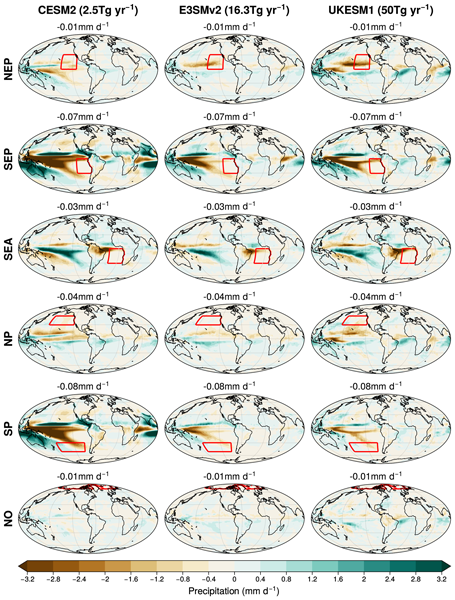
Philip J. Rasch, Haruki Hirasawa, Mingxuan Wu, Sarah J. Doherty, Robert Wood, Hailong Wang, Andy Jones, James Haywood, and Hansi Singh
Geosci. Model Dev., 17, 7963–7994, https://doi.org/10.5194/gmd-17-7963-2024, https://doi.org/10.5194/gmd-17-7963-2024, 2024
Short summary
Short summary
We introduce a protocol to compare computer climate simulations to better understand a proposed strategy intended to counter warming and climate impacts from greenhouse gas increases. This slightly changes clouds in six ocean regions to reflect more sunlight and cool the Earth. Example changes in clouds and climate are shown for three climate models. Cloud changes differ between the models, but precipitation and surface temperature changes are similar when their cooling effects are made similar.
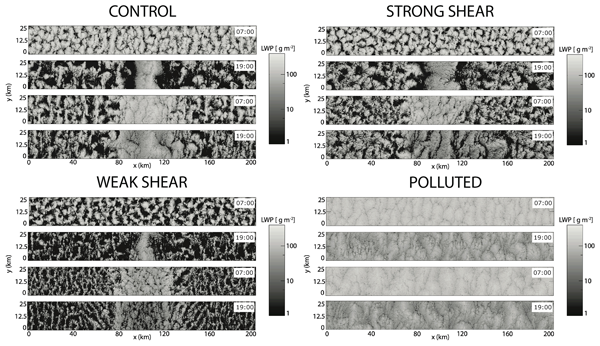
Lucas A. McMichael, Michael J. Schmidt, Robert Wood, Peter N. Blossey, and Lekha Patel
Geosci. Model Dev., 17, 7867–7888, https://doi.org/10.5194/gmd-17-7867-2024, https://doi.org/10.5194/gmd-17-7867-2024, 2024
Short summary
Short summary
Marine cloud brightening (MCB) is a climate intervention technique to potentially cool the climate. Climate models used to gauge regional climate impacts associated with MCB often assume large areas of the ocean are uniformly perturbed. However, a more realistic representation of MCB application would require information about how an injected particle plume spreads. This work aims to develop such a plume-spreading model.
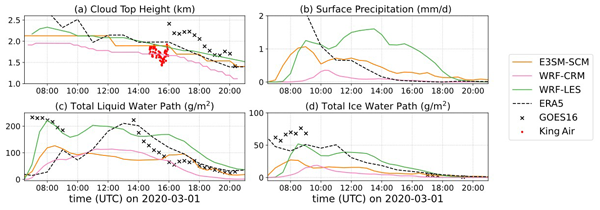
Shuaiqi Tang, Hailong Wang, Xiang-Yu Li, Jingyi Chen, Armin Sorooshian, Xubin Zeng, Ewan Crosbie, Kenneth L. Thornhill, Luke D. Ziemba, and Christiane Voigt
Atmos. Chem. Phys., 24, 10073–10092, https://doi.org/10.5194/acp-24-10073-2024, https://doi.org/10.5194/acp-24-10073-2024, 2024
Short summary
Short summary
We examined marine boundary layer clouds and their interactions with aerosols in the E3SM single-column model (SCM) for a case study. The SCM shows good agreement when simulating the clouds with high-resolution models. It reproduces the relationship between cloud droplet and aerosol particle number concentrations as produced in global models. However, the relationship between cloud liquid water and droplet number concentration is different, warranting further investigation.
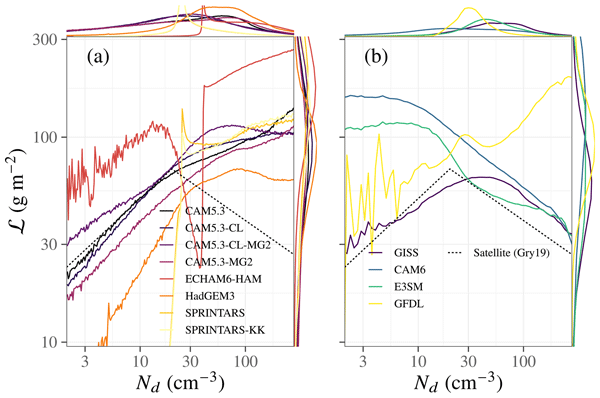
Johannes Mülmenstädt, Edward Gryspeerdt, Sudhakar Dipu, Johannes Quaas, Andrew S. Ackerman, Ann M. Fridlind, Florian Tornow, Susanne E. Bauer, Andrew Gettelman, Yi Ming, Youtong Zheng, Po-Lun Ma, Hailong Wang, Kai Zhang, Matthew W. Christensen, Adam C. Varble, L. Ruby Leung, Xiaohong Liu, David Neubauer, Daniel G. Partridge, Philip Stier, and Toshihiko Takemura
Atmos. Chem. Phys., 24, 7331–7345, https://doi.org/10.5194/acp-24-7331-2024, https://doi.org/10.5194/acp-24-7331-2024, 2024
Short summary
Short summary
Human activities release copious amounts of small particles called aerosols into the atmosphere. These particles change how much sunlight clouds reflect to space, an important human perturbation of the climate, whose magnitude is highly uncertain. We found that the latest climate models show a negative correlation but a positive causal relationship between aerosols and cloud water. This means we need to be very careful when we interpret observational studies that can only see correlation.
Matthew W. Christensen, Peng Wu, Adam C. Varble, Heng Xiao, and Jerome D. Fast
Atmos. Chem. Phys., 24, 6455–6476, https://doi.org/10.5194/acp-24-6455-2024, https://doi.org/10.5194/acp-24-6455-2024, 2024
Short summary
Short summary
Clouds are essential to keep Earth cooler by reflecting sunlight back to space. We show that an increase in aerosol concentration suppresses precipitation in clouds, causing them to accumulate water and expand in a polluted environment with stronger turbulence and radiative cooling. This process enhances their reflectance by 51 %. It is therefore prudent to account for cloud fraction changes in assessments of aerosol–cloud interactions to improve predictions of climate change.
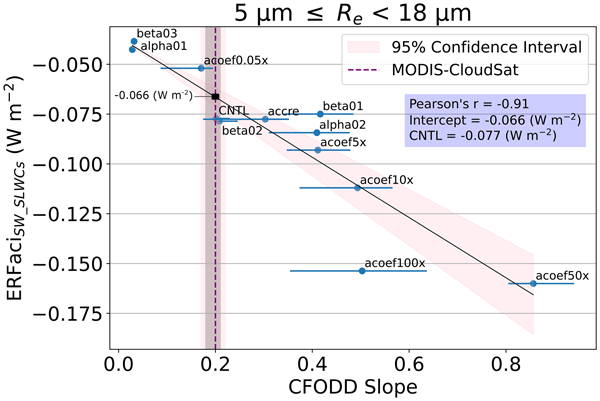
Charlotte M. Beall, Po-Lun Ma, Matthew W. Christensen, Johannes Mülmenstädt, Adam Varble, Kentaroh Suzuki, and Takuro Michibata
Atmos. Chem. Phys., 24, 5287–5302, https://doi.org/10.5194/acp-24-5287-2024, https://doi.org/10.5194/acp-24-5287-2024, 2024
Short summary
Short summary
Single-layer warm liquid clouds cover nearly one-third of the Earth's surface, and uncertainties regarding the impact of aerosols on their radiative properties pose a significant challenge to climate prediction. Here, we demonstrate how satellite observations can be used to constrain Earth system model estimates of the radiative forcing from the interactions of aerosols with clouds due to warm rain processes.
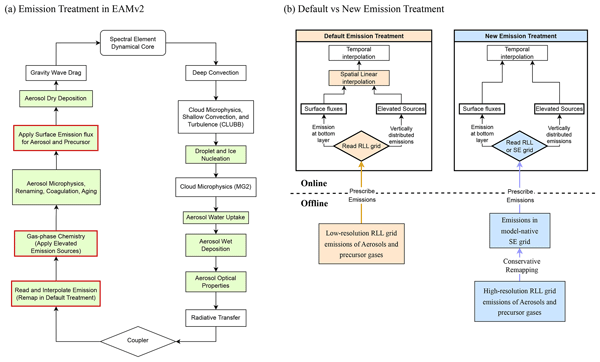
Taufiq Hassan, Kai Zhang, Jianfeng Li, Balwinder Singh, Shixuan Zhang, Hailong Wang, and Po-Lun Ma
Geosci. Model Dev., 17, 3507–3532, https://doi.org/10.5194/gmd-17-3507-2024, https://doi.org/10.5194/gmd-17-3507-2024, 2024
Short summary
Short summary
Anthropogenic aerosol emissions are an essential part of global aerosol models. Significant errors can exist from the loss of emission heterogeneity. We introduced an emission treatment that significantly improved aerosol emission heterogeneity in high-resolution model simulations, with improvements in simulated aerosol surface concentrations. The emission treatment will provide a more accurate representation of aerosol emissions and their effects on climate.
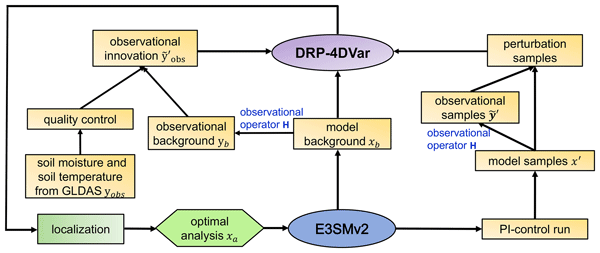
Pengfei Shi, L. Ruby Leung, Bin Wang, Kai Zhang, Samson M. Hagos, and Shixuan Zhang
Geosci. Model Dev., 17, 3025–3040, https://doi.org/10.5194/gmd-17-3025-2024, https://doi.org/10.5194/gmd-17-3025-2024, 2024
Short summary
Short summary
Improving climate predictions have profound socio-economic impacts. This study introduces a new weakly coupled land data assimilation (WCLDA) system for a coupled climate model. We demonstrate improved simulation of soil moisture and temperature in many global regions and throughout the soil layers. Furthermore, significant improvements are also found in reproducing the time evolution of the 2012 US Midwest drought. The WCLDA system provides the groundwork for future predictability studies.
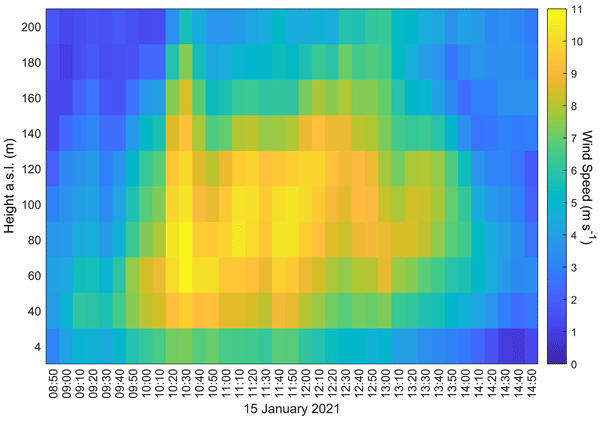
Lindsay M. Sheridan, Raghavendra Krishnamurthy, William I. Gustafson Jr., Ye Liu, Brian J. Gaudet, Nicola Bodini, Rob K. Newsom, and Mikhail Pekour
Wind Energ. Sci., 9, 741–758, https://doi.org/10.5194/wes-9-741-2024, https://doi.org/10.5194/wes-9-741-2024, 2024
Short summary
Short summary
In 2020, lidar-mounted buoys owned by the US Department of Energy (DOE) were deployed off the California coast in two wind energy lease areas and provided valuable year-long analyses of offshore low-level jet (LLJ) characteristics at heights relevant to wind turbines. In addition to the LLJ climatology, this work provides validation of LLJ representation in atmospheric models that are essential for assessing the potential energy yield of offshore wind farms.
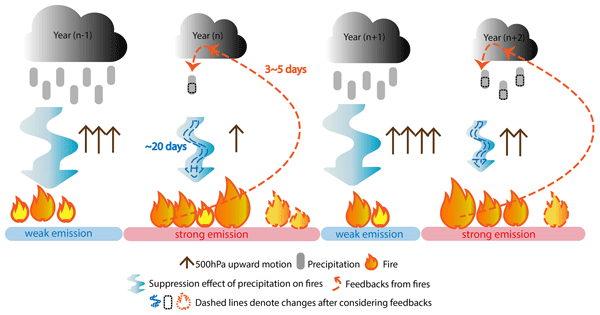
Yawen Liu, Yun Qian, Philip J. Rasch, Kai Zhang, Lai-yung Ruby Leung, Yuhang Wang, Minghuai Wang, Hailong Wang, Xin Huang, and Xiu-Qun Yang
Atmos. Chem. Phys., 24, 3115–3128, https://doi.org/10.5194/acp-24-3115-2024, https://doi.org/10.5194/acp-24-3115-2024, 2024
Short summary
Short summary
Fire management has long been a challenge. Here we report that spring-peak fire activity over southern Mexico and Central America (SMCA) has a distinct quasi-biennial signal by measuring multiple fire metrics. This signal is initially driven by quasi-biennial variability in precipitation and is further amplified by positive feedback of fire–precipitation interaction at short timescales. This work highlights the importance of fire–climate interactions in shaping fires on an interannual scale.
Yu Yao, Po-Lun Ma, Yi Qin, Matthew W. Christensen, Hui Wan, Kai Zhang, Balwinder Singh, Meng Huang, and Mikhail Ovchinnikov
EGUsphere, https://doi.org/10.5194/egusphere-2024-523, https://doi.org/10.5194/egusphere-2024-523, 2024
Preprint withdrawn
Short summary
Short summary
Giant aerosols have substantial effects on warm rain formation. However, it remains challenging to quantify the impact of giant particles at global scale. In this work, we applied earth system model to investigate its impacts by implementing new giant aerosol treatments to consider its physical process. We found this approach substantially affect liquid cloud and improved model's precipitation response to aerosols. Our findings demonstrate the significant impact of giant aerosols on climate.
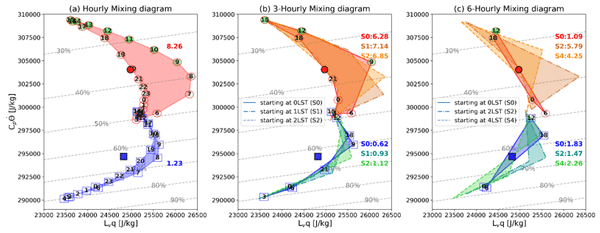
Kirsten L. Findell, Zun Yin, Eunkyo Seo, Paul A. Dirmeyer, Nathan P. Arnold, Nathaniel Chaney, Megan D. Fowler, Meng Huang, David M. Lawrence, Po-Lun Ma, and Joseph A. Santanello Jr.
Geosci. Model Dev., 17, 1869–1883, https://doi.org/10.5194/gmd-17-1869-2024, https://doi.org/10.5194/gmd-17-1869-2024, 2024
Short summary
Short summary
We outline a request for sub-daily data to accurately capture the process-level connections between land states, surface fluxes, and the boundary layer response. This high-frequency model output will allow for more direct comparison with observational field campaigns on process-relevant timescales, enable demonstration of inter-model spread in land–atmosphere coupling processes, and aid in targeted identification of sources of deficiencies and opportunities for improvement of the models.
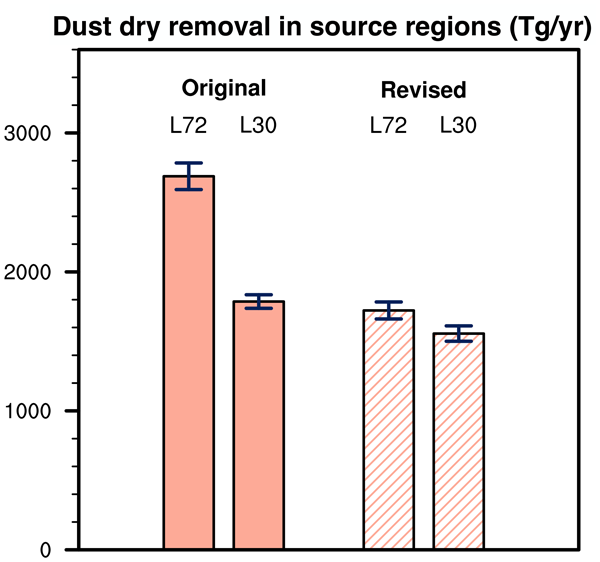
Hui Wan, Kai Zhang, Christopher J. Vogl, Carol S. Woodward, Richard C. Easter, Philip J. Rasch, Yan Feng, and Hailong Wang
Geosci. Model Dev., 17, 1387–1407, https://doi.org/10.5194/gmd-17-1387-2024, https://doi.org/10.5194/gmd-17-1387-2024, 2024
Short summary
Short summary
Sophisticated numerical models of the Earth's atmosphere include representations of many physical and chemical processes. In numerical simulations, these processes need to be calculated in a certain sequence. This study reveals the weaknesses of the sequence of calculations used for aerosol processes in a global atmosphere model. A revision of the sequence is proposed and its impacts on the simulated global aerosol climatology are evaluated.

Christopher J. Vogl, Hui Wan, Carol S. Woodward, and Quan M. Bui
Geosci. Model Dev., 17, 1409–1428, https://doi.org/10.5194/gmd-17-1409-2024, https://doi.org/10.5194/gmd-17-1409-2024, 2024
Short summary
Short summary
Generally speaking, accurate climate simulation requires an accurate evolution of the underlying mathematical equations on large computers. The equations are typically formulated and evolved in process groups. Process coupling refers to how the evolution of each group is combined with that of other groups to evolve the full set of equations for the whole atmosphere. This work presents a mathematical framework to evaluate methods without the need to first implement the methods.
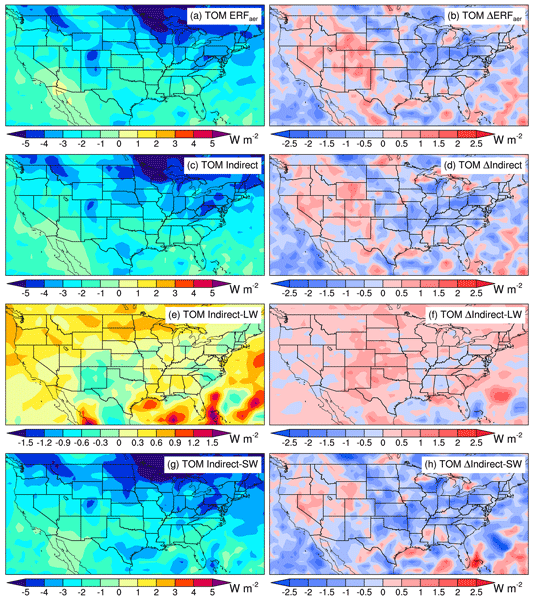
Jianfeng Li, Kai Zhang, Taufiq Hassan, Shixuan Zhang, Po-Lun Ma, Balwinder Singh, Qiyang Yan, and Huilin Huang
Geosci. Model Dev., 17, 1327–1347, https://doi.org/10.5194/gmd-17-1327-2024, https://doi.org/10.5194/gmd-17-1327-2024, 2024
Short summary
Short summary
By comparing E3SM simulations with and without regional refinement, we find that model horizontal grid spacing considerably affects the simulated aerosol mass budget, aerosol–cloud interactions, and the effective radiative forcing of anthropogenic aerosols. The study identifies the critical physical processes strongly influenced by model resolution. It also highlights the benefit of applying regional refinement in future modeling studies at higher or even convection-permitting resolutions.
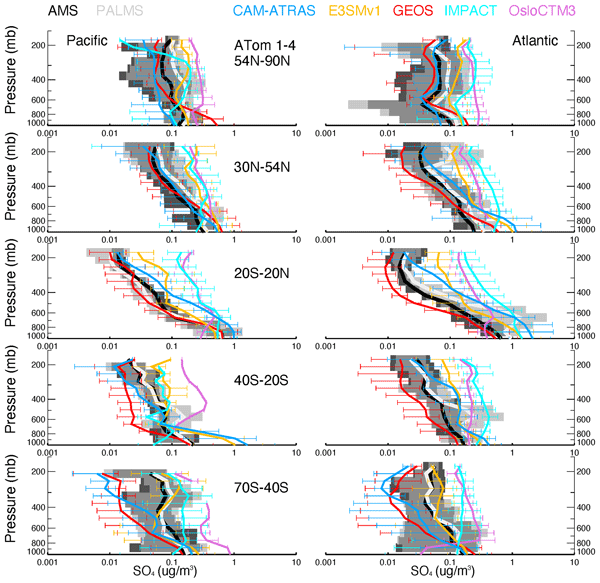
Huisheng Bian, Mian Chin, Peter R. Colarco, Eric C. Apel, Donald R. Blake, Karl Froyd, Rebecca S. Hornbrook, Jose Jimenez, Pedro Campuzano Jost, Michael Lawler, Mingxu Liu, Marianne Tronstad Lund, Hitoshi Matsui, Benjamin A. Nault, Joyce E. Penner, Andrew W. Rollins, Gregory Schill, Ragnhild B. Skeie, Hailong Wang, Lu Xu, Kai Zhang, and Jialei Zhu
Atmos. Chem. Phys., 24, 1717–1741, https://doi.org/10.5194/acp-24-1717-2024, https://doi.org/10.5194/acp-24-1717-2024, 2024
Short summary
Short summary
This work studies sulfur in the remote troposphere at global and seasonal scales using aircraft measurements and multi-model simulations. The goal is to understand the sulfur cycle over remote oceans, spread of model simulations, and observation–model discrepancies. Such an understanding and comparison with real observations are crucial to narrow down the uncertainties in model sulfur simulations and improve understanding of the sulfur cycle in atmospheric air quality, climate, and ecosystems.
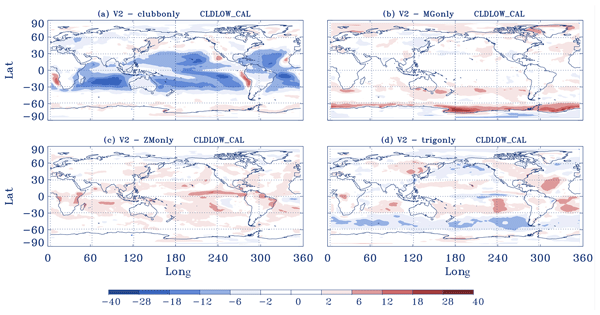
Yuying Zhang, Shaocheng Xie, Yi Qin, Wuyin Lin, Jean-Christophe Golaz, Xue Zheng, Po-Lun Ma, Yun Qian, Qi Tang, Christopher R. Terai, and Meng Zhang
Geosci. Model Dev., 17, 169–189, https://doi.org/10.5194/gmd-17-169-2024, https://doi.org/10.5194/gmd-17-169-2024, 2024
Short summary
Short summary
We performed systematic evaluation of clouds simulated in the Energy
Exascale Earth System Model (E3SMv2) to document model performance and understand what updates in E3SMv2 have caused changes in clouds from E3SMv1 to E3SMv2. We find that stratocumulus clouds along the subtropical west coast of continents are dramatically improved, primarily due to the retuning done in CLUBB. This study offers additional insights into clouds simulated in E3SMv2 and will benefit future E3SM developments.
Exascale Earth System Model (E3SMv2) to document model performance and understand what updates in E3SMv2 have caused changes in clouds from E3SMv1 to E3SMv2. We find that stratocumulus clouds along the subtropical west coast of continents are dramatically improved, primarily due to the retuning done in CLUBB. This study offers additional insights into clouds simulated in E3SMv2 and will benefit future E3SM developments.
Yang Wang, Chanakya Bagya Ramesh, Scott E. Giangrande, Jerome Fast, Xianda Gong, Jiaoshi Zhang, Ahmet Tolga Odabasi, Marcus Vinicius Batista Oliveira, Alyssa Matthews, Fan Mei, John E. Shilling, Jason Tomlinson, Die Wang, and Jian Wang
Atmos. Chem. Phys., 23, 15671–15691, https://doi.org/10.5194/acp-23-15671-2023, https://doi.org/10.5194/acp-23-15671-2023, 2023
Short summary
Short summary
We report the vertical profiles of aerosol properties over the Southern Great Plains (SGP), a region influenced by shallow convective clouds, land–atmosphere interactions, boundary layer turbulence, and the aerosol life cycle. We examined the processes that drive the aerosol population and distribution in the lower troposphere over the SGP. This study helps improve our understanding of aerosol–cloud interactions and the model representation of aerosol processes.
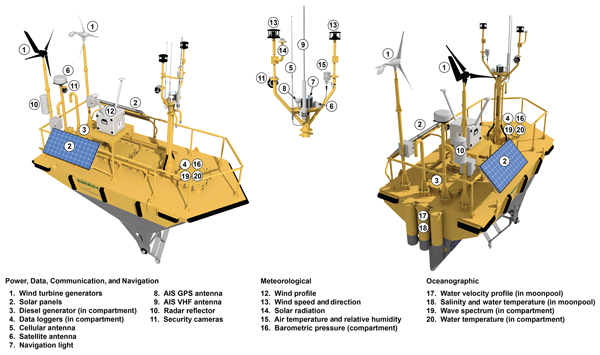
Raghavendra Krishnamurthy, Gabriel García Medina, Brian Gaudet, William I. Gustafson Jr., Evgueni I. Kassianov, Jinliang Liu, Rob K. Newsom, Lindsay M. Sheridan, and Alicia M. Mahon
Earth Syst. Sci. Data, 15, 5667–5699, https://doi.org/10.5194/essd-15-5667-2023, https://doi.org/10.5194/essd-15-5667-2023, 2023
Short summary
Short summary
Our understanding and ability to observe and model air–sea processes has been identified as a principal limitation to our ability to predict future weather. Few observations exist offshore along the coast of California. To improve our understanding of the air–sea transition zone and support the wind energy industry, two buoys with state-of-the-art equipment were deployed for 1 year. In this article, we present details of the post-processing, algorithms, and analyses.
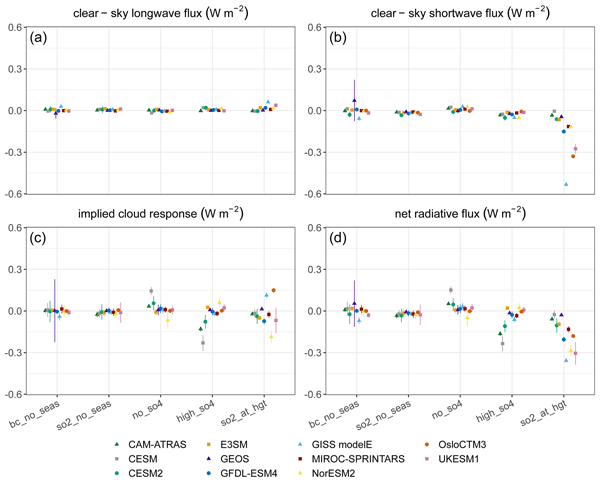
Hamza Ahsan, Hailong Wang, Jingbo Wu, Mingxuan Wu, Steven J. Smith, Susanne Bauer, Harrison Suchyta, Dirk Olivié, Gunnar Myhre, Hitoshi Matsui, Huisheng Bian, Jean-François Lamarque, Ken Carslaw, Larry Horowitz, Leighton Regayre, Mian Chin, Michael Schulz, Ragnhild Bieltvedt Skeie, Toshihiko Takemura, and Vaishali Naik
Atmos. Chem. Phys., 23, 14779–14799, https://doi.org/10.5194/acp-23-14779-2023, https://doi.org/10.5194/acp-23-14779-2023, 2023
Short summary
Short summary
We examine the impact of the assumed effective height of SO2 injection, SO2 and BC emission seasonality, and the assumed fraction of SO2 emissions injected as SO4 on climate and chemistry model results. We find that the SO2 injection height has a large impact on surface SO2 concentrations and, in some models, radiative flux. These assumptions are a
hiddensource of inter-model variability and may be leading to bias in some climate model results.
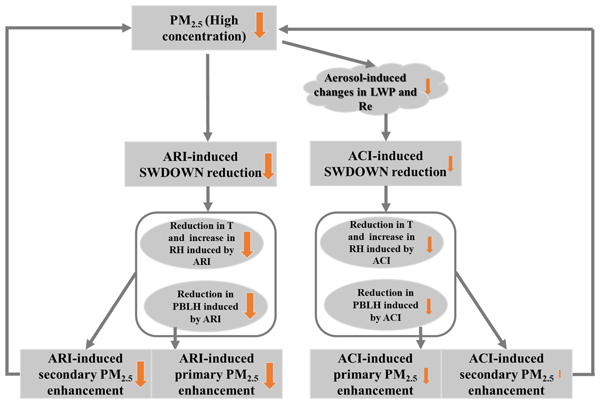
Da Gao, Bin Zhao, Shuxiao Wang, Yuan Wang, Brian Gaudet, Yun Zhu, Xiaochun Wang, Jiewen Shen, Shengyue Li, Yicong He, Dejia Yin, and Zhaoxin Dong
Atmos. Chem. Phys., 23, 14359–14373, https://doi.org/10.5194/acp-23-14359-2023, https://doi.org/10.5194/acp-23-14359-2023, 2023
Short summary
Short summary
Surface PM2.5 concentrations can be enhanced by aerosol–radiation interactions (ARIs) and aerosol–cloud interactions (ACIs). In this study, we found PM2.5 enhancement induced by ACIs shows a significantly smaller decrease ratio than that induced by ARIs in China with anthropogenic emission reduction from 2013 to 2021, making ACIs more important for enhancing PM2.5 concentrations. ACI-induced PM2.5 enhancement needs to be emphatically considered to meet the national PM2.5 air quality standard.
Shuaiqi Tang, Adam C. Varble, Jerome D. Fast, Kai Zhang, Peng Wu, Xiquan Dong, Fan Mei, Mikhail Pekour, Joseph C. Hardin, and Po-Lun Ma
Geosci. Model Dev., 16, 6355–6376, https://doi.org/10.5194/gmd-16-6355-2023, https://doi.org/10.5194/gmd-16-6355-2023, 2023
Short summary
Short summary
To assess the ability of Earth system model (ESM) predictions, we developed a tool called ESMAC Diags to understand how aerosols, clouds, and aerosol–cloud interactions are represented in ESMs. This paper describes its version 2 functionality. We compared the model predictions with measurements taken by planes, ships, satellites, and ground instruments over four regions across the world. Results show that this new tool can help identify model problems and guide future development of ESMs.
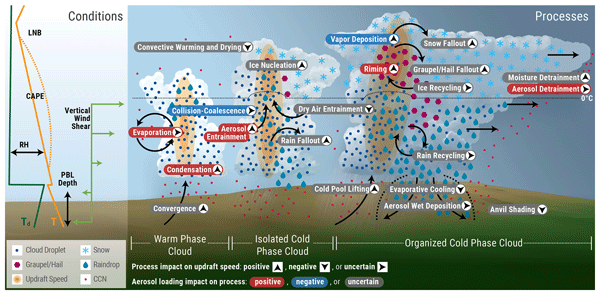
Adam C. Varble, Adele L. Igel, Hugh Morrison, Wojciech W. Grabowski, and Zachary J. Lebo
Atmos. Chem. Phys., 23, 13791–13808, https://doi.org/10.5194/acp-23-13791-2023, https://doi.org/10.5194/acp-23-13791-2023, 2023
Short summary
Short summary
As atmospheric particles called aerosols increase in number, the number of droplets in clouds tends to increase, which has been theorized to increase storm intensity. We critically evaluate the evidence for this theory, showing that flaws and limitations of previous studies coupled with unaddressed cloud process complexities draw it into question. We provide recommendations for future observations and modeling to overcome current uncertainties.
Adam C. Varble, Po-Lun Ma, Matthew W. Christensen, Johannes Mülmenstädt, Shuaiqi Tang, and Jerome Fast
Atmos. Chem. Phys., 23, 13523–13553, https://doi.org/10.5194/acp-23-13523-2023, https://doi.org/10.5194/acp-23-13523-2023, 2023
Short summary
Short summary
We evaluate how clouds change in response to changing atmospheric particle (aerosol) concentrations in a climate model and find that the model-predicted cloud brightness increases too much as aerosols increase because the cloud drop number increases too much. Excessive drizzle in the model mutes this difference. Many differences between observational and model estimates are explained by varying assumptions of how much liquid has been lost in clouds, which impacts the estimated cloud drop number.
Chupeng Zhang, Shangfei Hai, Yang Gao, Yuhang Wang, Shaoqing Zhang, Lifang Sheng, Bin Zhao, Shuxiao Wang, Jingkun Jiang, Xin Huang, Xiaojing Shen, Junying Sun, Aura Lupascu, Manish Shrivastava, Jerome D. Fast, Wenxuan Cheng, Xiuwen Guo, Ming Chu, Nan Ma, Juan Hong, Qiaoqiao Wang, Xiaohong Yao, and Huiwang Gao
Atmos. Chem. Phys., 23, 10713–10730, https://doi.org/10.5194/acp-23-10713-2023, https://doi.org/10.5194/acp-23-10713-2023, 2023
Short summary
Short summary
New particle formation is an important source of atmospheric particles, exerting critical influences on global climate. Numerical models are vital tools to understanding atmospheric particle evolution, which, however, suffer from large biases in simulating particle numbers. Here we improve the model chemical processes governing particle sizes and compositions. The improved model reveals substantial contributions of newly formed particles to climate through effects on cloud condensation nuclei.
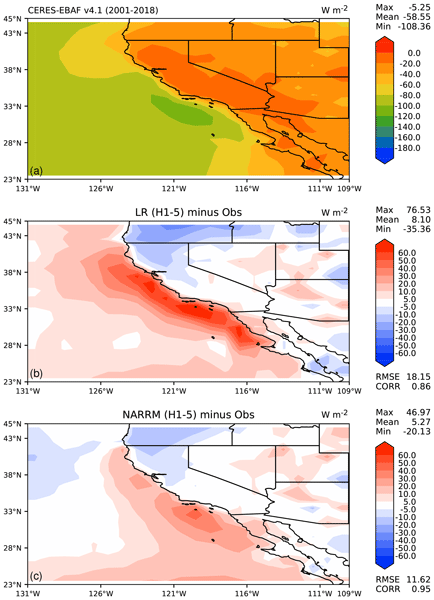
Qi Tang, Jean-Christophe Golaz, Luke P. Van Roekel, Mark A. Taylor, Wuyin Lin, Benjamin R. Hillman, Paul A. Ullrich, Andrew M. Bradley, Oksana Guba, Jonathan D. Wolfe, Tian Zhou, Kai Zhang, Xue Zheng, Yunyan Zhang, Meng Zhang, Mingxuan Wu, Hailong Wang, Cheng Tao, Balwinder Singh, Alan M. Rhoades, Yi Qin, Hong-Yi Li, Yan Feng, Yuying Zhang, Chengzhu Zhang, Charles S. Zender, Shaocheng Xie, Erika L. Roesler, Andrew F. Roberts, Azamat Mametjanov, Mathew E. Maltrud, Noel D. Keen, Robert L. Jacob, Christiane Jablonowski, Owen K. Hughes, Ryan M. Forsyth, Alan V. Di Vittorio, Peter M. Caldwell, Gautam Bisht, Renata B. McCoy, L. Ruby Leung, and David C. Bader
Geosci. Model Dev., 16, 3953–3995, https://doi.org/10.5194/gmd-16-3953-2023, https://doi.org/10.5194/gmd-16-3953-2023, 2023
Short summary
Short summary
High-resolution simulations are superior to low-resolution ones in capturing regional climate changes and climate extremes. However, uniformly reducing the grid size of a global Earth system model is too computationally expensive. We provide an overview of the fully coupled regionally refined model (RRM) of E3SMv2 and document a first-of-its-kind set of climate production simulations using RRM at an economic cost. The key to this success is our innovative hybrid time step method.
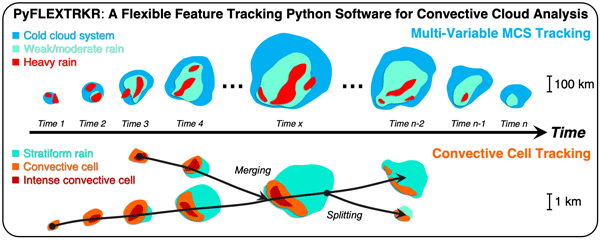
Zhe Feng, Joseph Hardin, Hannah C. Barnes, Jianfeng Li, L. Ruby Leung, Adam Varble, and Zhixiao Zhang
Geosci. Model Dev., 16, 2753–2776, https://doi.org/10.5194/gmd-16-2753-2023, https://doi.org/10.5194/gmd-16-2753-2023, 2023
Short summary
Short summary
PyFLEXTRKR is a flexible atmospheric feature tracking framework with specific capabilities to track convective clouds from a variety of observations and model simulations. The package has a collection of multi-object identification algorithms and has been optimized for large datasets. This paper describes the algorithms and demonstrates applications for tracking deep convective cells and mesoscale convective systems from observations and model simulations at a wide range of scales.
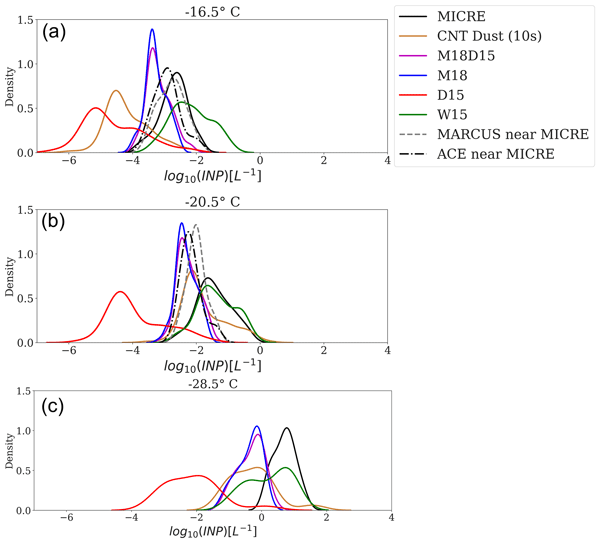
Aishwarya Raman, Thomas Hill, Paul J. DeMott, Balwinder Singh, Kai Zhang, Po-Lun Ma, Mingxuan Wu, Hailong Wang, Simon P. Alexander, and Susannah M. Burrows
Atmos. Chem. Phys., 23, 5735–5762, https://doi.org/10.5194/acp-23-5735-2023, https://doi.org/10.5194/acp-23-5735-2023, 2023
Short summary
Short summary
Ice-nucleating particles (INPs) play an important role in cloud processes and associated precipitation. Yet, INPs are not accurately represented in climate models. This study attempts to uncover these gaps by comparing model-simulated INP concentrations against field campaign measurements in the SO for an entire year, 2017–2018. Differences in INP concentrations and variability between the model and observations have major implications for modeling cloud properties in high latitudes.
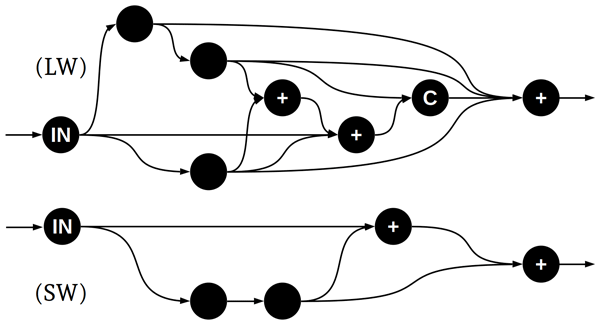
Andrew Geiss, Po-Lun Ma, Balwinder Singh, and Joseph C. Hardin
Geosci. Model Dev., 16, 2355–2370, https://doi.org/10.5194/gmd-16-2355-2023, https://doi.org/10.5194/gmd-16-2355-2023, 2023
Short summary
Short summary
Atmospheric aerosols play a critical role in Earth's climate, but it is too computationally expensive to directly model their interaction with radiation in climate simulations. This work develops a new neural-network-based parameterization of aerosol optical properties for use in the Energy Exascale Earth System Model that is much more accurate than the current one; it also introduces a unique model optimization method that involves randomly generating neural network architectures.
Matthew W. Christensen, Po-Lun Ma, Peng Wu, Adam C. Varble, Johannes Mülmenstädt, and Jerome D. Fast
Atmos. Chem. Phys., 23, 2789–2812, https://doi.org/10.5194/acp-23-2789-2023, https://doi.org/10.5194/acp-23-2789-2023, 2023
Short summary
Short summary
An increase in aerosol concentration (tiny airborne particles) is shown to suppress rainfall and increase the abundance of droplets in clouds passing over Graciosa Island in the Azores. Cloud drops remain affected by aerosol for several days across thousands of kilometers in satellite data. Simulations from an Earth system model show good agreement, but differences in the amount of cloud water and its extent remain despite modifications to model parameters that control the warm-rain process.
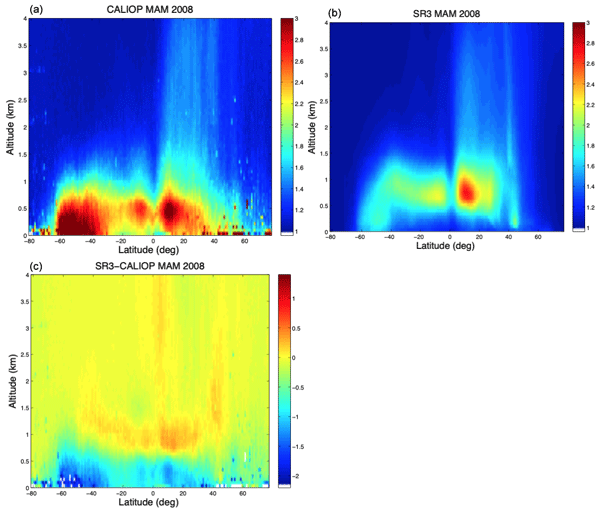
Marine Bonazzola, Hélène Chepfer, Po-Lun Ma, Johannes Quaas, David M. Winker, Artem Feofilov, and Nick Schutgens
Geosci. Model Dev., 16, 1359–1377, https://doi.org/10.5194/gmd-16-1359-2023, https://doi.org/10.5194/gmd-16-1359-2023, 2023
Short summary
Short summary
Aerosol has a large impact on climate. Using a lidar aerosol simulator ensures consistent comparisons between modeled and observed aerosol. We present a lidar aerosol simulator that applies a cloud masking and an aerosol detection threshold. We estimate the lidar signals that would be observed at 532 nm by the Cloud-Aerosol Lidar with Orthogonal Polarization overflying the atmosphere predicted by a climate model. Our comparison at the seasonal timescale shows a discrepancy in the Southern Ocean.

Lucas Schauer, Michael J. Schmidt, Nicholas B. Engdahl, Stephen D. Pankavich, David A. Benson, and Diogo Bolster
Geosci. Model Dev., 16, 833–849, https://doi.org/10.5194/gmd-16-833-2023, https://doi.org/10.5194/gmd-16-833-2023, 2023
Short summary
Short summary
We develop a multi-dimensional, parallelized domain decomposition strategy for mass-transfer particle tracking methods in two and three dimensions, investigate different procedures for decomposing the domain, and prescribe an optimal tiling based on physical problem parameters and the number of available CPU cores. For an optimally subdivided diffusion problem, the parallelized algorithm achieves nearly perfect linear speedup in comparison with the serial run-up to thousands of cores.
Siegfried Schobesberger, Emma L. D'Ambro, Lejish Vettikkat, Ben H. Lee, Qiaoyun Peng, David M. Bell, John E. Shilling, Manish Shrivastava, Mikhail Pekour, Jerome Fast, and Joel A. Thornton
Atmos. Meas. Tech., 16, 247–271, https://doi.org/10.5194/amt-16-247-2023, https://doi.org/10.5194/amt-16-247-2023, 2023
Short summary
Short summary
We present a new, highly sensitive technique for measuring atmospheric ammonia, an important trace gas that is emitted mainly by agriculture. We deployed the instrument on an aircraft during research flights over rural Oklahoma. Due to its fast response, we could analyze correlations with turbulent winds and calculate ammonia emissions from nearby areas at 1 to 2 km resolution. We observed high spatial variability and point sources that are not resolved in the US National Emissions Inventory.

Walter Hannah and Kyle Pressel
Geosci. Model Dev., 15, 8999–9013, https://doi.org/10.5194/gmd-15-8999-2022, https://doi.org/10.5194/gmd-15-8999-2022, 2022
Short summary
Short summary
A multiscale modeling framework couples two models of the atmosphere that each cover different scale ranges. Traditionally, fluctuations in the small-scale model are not transported by the flow on the large-scale model grid, but this is hypothesized to be responsible for a persistent, unphysical checkerboard pattern. A method is presented to facilitate the transport of these small-scale fluctuations, analogous to how small-scale clouds and turbulence are transported in the real atmosphere.

Longlei Li, Natalie M. Mahowald, Jasper F. Kok, Xiaohong Liu, Mingxuan Wu, Danny M. Leung, Douglas S. Hamilton, Louisa K. Emmons, Yue Huang, Neil Sexton, Jun Meng, and Jessica Wan
Geosci. Model Dev., 15, 8181–8219, https://doi.org/10.5194/gmd-15-8181-2022, https://doi.org/10.5194/gmd-15-8181-2022, 2022
Short summary
Short summary
This study advances mineral dust parameterizations in the Community Atmospheric Model (CAM; version 6.1). Efforts include 1) incorporating a more physically based dust emission scheme; 2) updating the dry deposition scheme; and 3) revising the gravitational settling velocity to account for dust asphericity. Substantial improvements achieved with these updates can help accurately quantify dust–climate interactions using CAM, such as the dust-radiation and dust–cloud interactions.
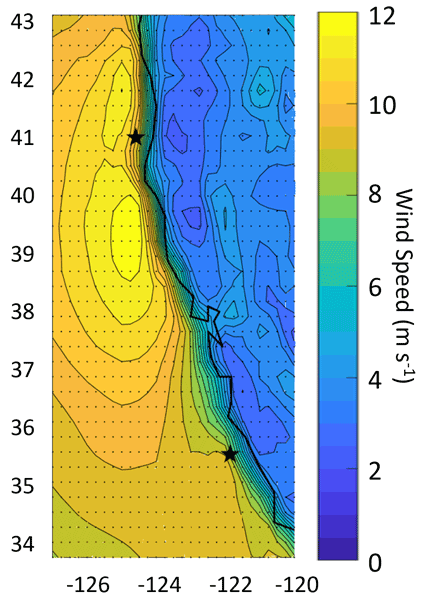
Lindsay M. Sheridan, Raghu Krishnamurthy, Gabriel García Medina, Brian J. Gaudet, William I. Gustafson Jr., Alicia M. Mahon, William J. Shaw, Rob K. Newsom, Mikhail Pekour, and Zhaoqing Yang
Wind Energ. Sci., 7, 2059–2084, https://doi.org/10.5194/wes-7-2059-2022, https://doi.org/10.5194/wes-7-2059-2022, 2022
Short summary
Short summary
Using observations from lidar buoys, five reanalysis and analysis models that support the wind energy community are validated offshore and at rotor-level heights along the California Pacific coast. The models are found to underestimate the observed wind resource. Occasions of large model error occur in conjunction with stable atmospheric conditions, wind speeds associated with peak turbine power production, and mischaracterization of the diurnal wind speed cycle in summer months.

Shixuan Zhang, Kai Zhang, Hui Wan, and Jian Sun
Geosci. Model Dev., 15, 6787–6816, https://doi.org/10.5194/gmd-15-6787-2022, https://doi.org/10.5194/gmd-15-6787-2022, 2022
Short summary
Short summary
This study investigates the nudging implementation in the EAMv1 model. We find that (1) revising the sequence of calculations and using higher-frequency constraining data to improve the performance of a simulation nudged to EAMv1’s own meteorology, (2) using the relocated nudging tendency and 3-hourly ERA5 reanalysis to obtain a better agreement between nudged simulations and observations, and (3) using wind-only nudging are recommended for the estimates of global mean aerosol effects.
Jerome D. Fast, David M. Bell, Gourihar Kulkarni, Jiumeng Liu, Fan Mei, Georges Saliba, John E. Shilling, Kaitlyn Suski, Jason Tomlinson, Jian Wang, Rahul Zaveri, and Alla Zelenyuk
Atmos. Chem. Phys., 22, 11217–11238, https://doi.org/10.5194/acp-22-11217-2022, https://doi.org/10.5194/acp-22-11217-2022, 2022
Short summary
Short summary
Recent aircraft measurements from the HI-SCALE campaign conducted over the Southern Great Plains (SGP) site in Oklahoma are used to quantify spatial variability of aerosol properties in terms of grid spacings typically used by weather and climate models. Surprisingly large horizontal gradients in aerosol properties were frequently observed in this rural area. This spatial variability can be used as an uncertainty range when comparing surface point measurements with model predictions.
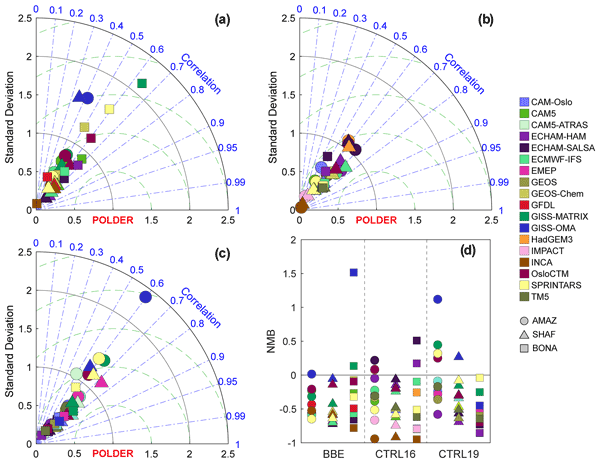
Qirui Zhong, Nick Schutgens, Guido van der Werf, Twan van Noije, Kostas Tsigaridis, Susanne E. Bauer, Tero Mielonen, Alf Kirkevåg, Øyvind Seland, Harri Kokkola, Ramiro Checa-Garcia, David Neubauer, Zak Kipling, Hitoshi Matsui, Paul Ginoux, Toshihiko Takemura, Philippe Le Sager, Samuel Rémy, Huisheng Bian, Mian Chin, Kai Zhang, Jialei Zhu, Svetlana G. Tsyro, Gabriele Curci, Anna Protonotariou, Ben Johnson, Joyce E. Penner, Nicolas Bellouin, Ragnhild B. Skeie, and Gunnar Myhre
Atmos. Chem. Phys., 22, 11009–11032, https://doi.org/10.5194/acp-22-11009-2022, https://doi.org/10.5194/acp-22-11009-2022, 2022
Short summary
Short summary
Aerosol optical depth (AOD) errors for biomass burning aerosol (BBA) are evaluated in 18 global models against satellite datasets. Notwithstanding biases in satellite products, they allow model evaluations. We observe large and diverse model biases due to errors in BBA. Further interpretations of AOD diversities suggest large biases exist in key processes for BBA which require better constraining. These results can contribute to further model improvement and development.
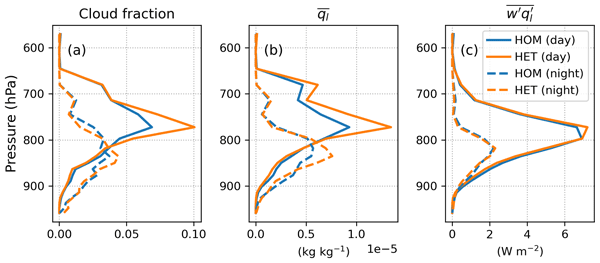
Meng Huang, Po-Lun Ma, Nathaniel W. Chaney, Dalei Hao, Gautam Bisht, Megan D. Fowler, Vincent E. Larson, and L. Ruby Leung
Geosci. Model Dev., 15, 6371–6384, https://doi.org/10.5194/gmd-15-6371-2022, https://doi.org/10.5194/gmd-15-6371-2022, 2022
Short summary
Short summary
The land surface in one grid cell may be diverse in character. This study uses an explicit way to account for that subgrid diversity in a state-of-the-art Earth system model (ESM) and explores its implications for the overlying atmosphere. We find that the shallow clouds are increased significantly with the land surface diversity. Our work highlights the importance of accurately representing the land surface and its interaction with the atmosphere in next-generation ESMs.
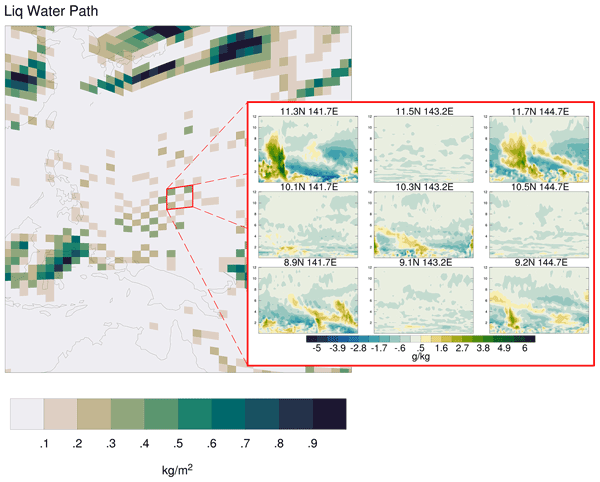
Walter Hannah, Kyle Pressel, Mikhail Ovchinnikov, and Gregory Elsaesser
Geosci. Model Dev., 15, 6243–6257, https://doi.org/10.5194/gmd-15-6243-2022, https://doi.org/10.5194/gmd-15-6243-2022, 2022
Short summary
Short summary
An unphysical checkerboard signal is identified in two configurations of the atmospheric component of E3SM. The signal is very persistent and visible after averaging years of data. The signal is very difficult to study because it is often mixed with realistic weather. A method is presented to detect checkerboard patterns and compare the model with satellite observations. The causes of the signal are identified, and a solution for one configuration is discussed.
Fan Mei, Mikhail S. Pekour, Darielle Dexheimer, Gijs de Boer, RaeAnn Cook, Jason Tomlinson, Beat Schmid, Lexie A. Goldberger, Rob Newsom, and Jerome D. Fast
Earth Syst. Sci. Data, 14, 3423–3438, https://doi.org/10.5194/essd-14-3423-2022, https://doi.org/10.5194/essd-14-3423-2022, 2022
Short summary
Short summary
This work focuses on an expanding number of data sets observed using ARM TBS (133 flights) and UAS (seven flights) platforms by the Department of Energy (DOE) Atmospheric Radiation Measurement (ARM) user facility. These data streams provide new perspectives on spatial variability of atmospheric and surface parameters, helping to address critical science questions in Earth system science research, such as the aerosol–cloud interaction in the boundary layer.
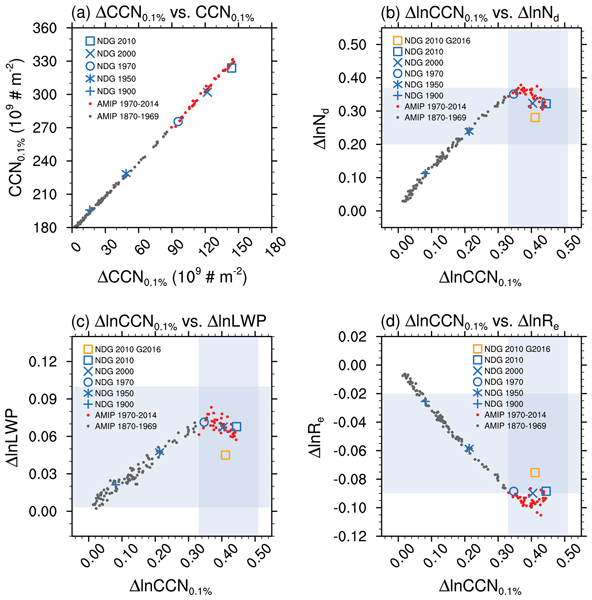
Kai Zhang, Wentao Zhang, Hui Wan, Philip J. Rasch, Steven J. Ghan, Richard C. Easter, Xiangjun Shi, Yong Wang, Hailong Wang, Po-Lun Ma, Shixuan Zhang, Jian Sun, Susannah M. Burrows, Manish Shrivastava, Balwinder Singh, Yun Qian, Xiaohong Liu, Jean-Christophe Golaz, Qi Tang, Xue Zheng, Shaocheng Xie, Wuyin Lin, Yan Feng, Minghuai Wang, Jin-Ho Yoon, and L. Ruby Leung
Atmos. Chem. Phys., 22, 9129–9160, https://doi.org/10.5194/acp-22-9129-2022, https://doi.org/10.5194/acp-22-9129-2022, 2022
Short summary
Short summary
Here we analyze the effective aerosol forcing simulated by E3SM version 1 using both century-long free-running and short nudged simulations. The aerosol forcing in E3SMv1 is relatively large compared to other models, mainly due to the large indirect aerosol effect. Aerosol-induced changes in liquid and ice cloud properties in E3SMv1 have a strong correlation. The aerosol forcing estimates in E3SMv1 are sensitive to the parameterization changes in both liquid and ice cloud processes.
Shuaiqi Tang, Jerome D. Fast, Kai Zhang, Joseph C. Hardin, Adam C. Varble, John E. Shilling, Fan Mei, Maria A. Zawadowicz, and Po-Lun Ma
Geosci. Model Dev., 15, 4055–4076, https://doi.org/10.5194/gmd-15-4055-2022, https://doi.org/10.5194/gmd-15-4055-2022, 2022
Short summary
Short summary
We developed an Earth system model (ESM) diagnostics package to compare various types of aerosol properties simulated in ESMs with aircraft, ship, and surface measurements from six field campaigns across spatial scales. The diagnostics package is coded and organized to be flexible and modular for future extension to other field campaign datasets and adapted to higher-resolution model simulations. Future releases will include comprehensive cloud and aerosol–cloud interaction diagnostics.
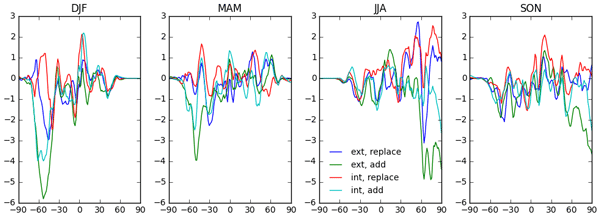
Susannah M. Burrows, Richard C. Easter, Xiaohong Liu, Po-Lun Ma, Hailong Wang, Scott M. Elliott, Balwinder Singh, Kai Zhang, and Philip J. Rasch
Atmos. Chem. Phys., 22, 5223–5251, https://doi.org/10.5194/acp-22-5223-2022, https://doi.org/10.5194/acp-22-5223-2022, 2022
Short summary
Short summary
Sea spray particles are composed of a mixture of salts and organic substances from oceanic microorganisms. In prior work, our team developed an approach connecting sea spray chemistry to ocean biology, called OCEANFILMS. Here we describe its implementation within an Earth system model, E3SM. We show that simulated sea spray chemistry is consistent with observed seasonal cycles and that sunlight reflected by simulated Southern Ocean clouds increases, consistent with analysis of satellite data.

Hui Wan, Kai Zhang, Philip J. Rasch, Vincent E. Larson, Xubin Zeng, Shixuan Zhang, and Ross Dixon
Geosci. Model Dev., 15, 3205–3231, https://doi.org/10.5194/gmd-15-3205-2022, https://doi.org/10.5194/gmd-15-3205-2022, 2022
Short summary
Short summary
This paper describes a tool embedded in a global climate model for sampling atmospheric conditions and monitoring physical processes as a numerical simulation is being carried out. The tool facilitates process-level model evaluation by allowing the users to select a wide range of quantities and processes to monitor at run time without having to do tedious ad hoc coding.
Po-Lun Ma, Bryce E. Harrop, Vincent E. Larson, Richard B. Neale, Andrew Gettelman, Hugh Morrison, Hailong Wang, Kai Zhang, Stephen A. Klein, Mark D. Zelinka, Yuying Zhang, Yun Qian, Jin-Ho Yoon, Christopher R. Jones, Meng Huang, Sheng-Lun Tai, Balwinder Singh, Peter A. Bogenschutz, Xue Zheng, Wuyin Lin, Johannes Quaas, Hélène Chepfer, Michael A. Brunke, Xubin Zeng, Johannes Mülmenstädt, Samson Hagos, Zhibo Zhang, Hua Song, Xiaohong Liu, Michael S. Pritchard, Hui Wan, Jingyu Wang, Qi Tang, Peter M. Caldwell, Jiwen Fan, Larry K. Berg, Jerome D. Fast, Mark A. Taylor, Jean-Christophe Golaz, Shaocheng Xie, Philip J. Rasch, and L. Ruby Leung
Geosci. Model Dev., 15, 2881–2916, https://doi.org/10.5194/gmd-15-2881-2022, https://doi.org/10.5194/gmd-15-2881-2022, 2022
Short summary
Short summary
An alternative set of parameters for E3SM Atmospheric Model version 1 has been developed based on a tuning strategy that focuses on clouds. When clouds in every regime are improved, other aspects of the model are also improved, even though they are not the direct targets for calibration. The recalibrated model shows a lower sensitivity to anthropogenic aerosols and surface warming, suggesting potential improvements to the simulated climate in the past and future.

Yang Shi, Xiaohong Liu, Mingxuan Wu, Xi Zhao, Ziming Ke, and Hunter Brown
Atmos. Chem. Phys., 22, 2909–2935, https://doi.org/10.5194/acp-22-2909-2022, https://doi.org/10.5194/acp-22-2909-2022, 2022
Short summary
Short summary
We perform a modeling study to evaluate the contribution to Arctic dust loading and ice-nucleating particle (INP) population from high-latitude local and low-latitude dust. High-latitude dust has a large contribution in the lower troposphere, while low-latitude dust dominates the upper troposphere. The high-latitude dust INPs result in a net cooling effect on the Arctic surface by glaciating mixed-phase clouds. Our results highlight the contribution of high-latitude dust to the Arctic climate.
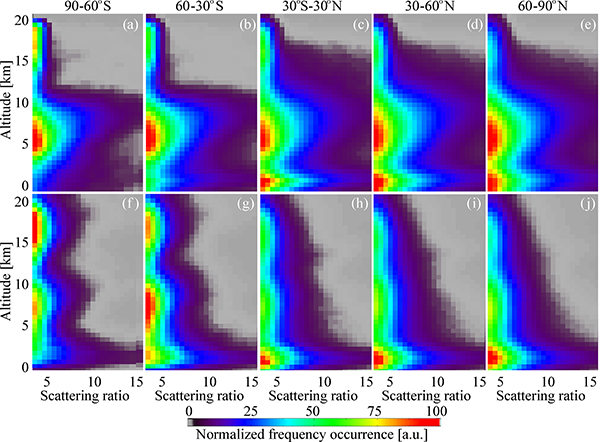
Artem G. Feofilov, Hélène Chepfer, Vincent Noël, Rodrigo Guzman, Cyprien Gindre, Po-Lun Ma, and Marjolaine Chiriaco
Atmos. Meas. Tech., 15, 1055–1074, https://doi.org/10.5194/amt-15-1055-2022, https://doi.org/10.5194/amt-15-1055-2022, 2022
Short summary
Short summary
Space-borne lidars have been providing invaluable information of atmospheric optical properties since 2006, and new lidar missions are on the way to ensure continuous observations. In this work, we compare the clouds estimated from space-borne ALADIN and CALIOP lidar observations. The analysis of collocated data shows that the agreement between the retrieved clouds is good up to 3 km height. Above that, ALADIN detects 40 % less clouds than CALIOP, except for polar stratospheric clouds (PSCs).

Matthew W. Christensen, Andrew Gettelman, Jan Cermak, Guy Dagan, Michael Diamond, Alyson Douglas, Graham Feingold, Franziska Glassmeier, Tom Goren, Daniel P. Grosvenor, Edward Gryspeerdt, Ralph Kahn, Zhanqing Li, Po-Lun Ma, Florent Malavelle, Isabel L. McCoy, Daniel T. McCoy, Greg McFarquhar, Johannes Mülmenstädt, Sandip Pal, Anna Possner, Adam Povey, Johannes Quaas, Daniel Rosenfeld, Anja Schmidt, Roland Schrödner, Armin Sorooshian, Philip Stier, Velle Toll, Duncan Watson-Parris, Robert Wood, Mingxi Yang, and Tianle Yuan
Atmos. Chem. Phys., 22, 641–674, https://doi.org/10.5194/acp-22-641-2022, https://doi.org/10.5194/acp-22-641-2022, 2022
Short summary
Short summary
Trace gases and aerosols (tiny airborne particles) are released from a variety of point sources around the globe. Examples include volcanoes, industrial chimneys, forest fires, and ship stacks. These sources provide opportunistic experiments with which to quantify the role of aerosols in modifying cloud properties. We review the current state of understanding on the influence of aerosol on climate built from the wide range of natural and anthropogenic laboratories investigated in recent decades.
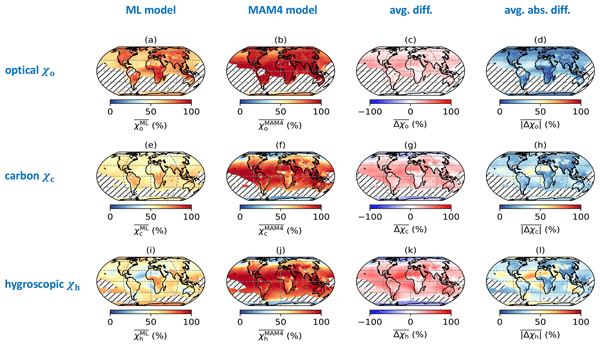
Zhonghua Zheng, Matthew West, Lei Zhao, Po-Lun Ma, Xiaohong Liu, and Nicole Riemer
Atmos. Chem. Phys., 21, 17727–17741, https://doi.org/10.5194/acp-21-17727-2021, https://doi.org/10.5194/acp-21-17727-2021, 2021
Short summary
Short summary
Aerosol mixing state is an important emergent property that affects aerosol radiative forcing and aerosol–cloud interactions, but it has not been easy to constrain this property globally. We present a framework for evaluating the error in aerosol mixing state induced by aerosol representation assumptions, which is one of the important contributors to structural uncertainty in aerosol models. Our study provides insights into potential improvements to model process representation for aerosols.
Cited articles
Abdul-Razzak, H. and Ghan, S. J.: A parameterization of aerosol activation 2. Multiple aerosol types, J. Geophys. Res., 105, 6837–6844, https://doi.org/10.1029/1999JD901161, 2000.
Bellouin, N., Quaas, J., Gryspeerdt, E., Kinne, S., Stier, P., Watson-Parris, D., Boucher, O., Carslaw, K. S., Christensen, M., Daniau, A. L., Dufresne, J. L., Feingold, G., Fiedler, S., Forster, P., Gettelman, A., Haywood, J. M., Lohmann, U., Malavelle, F., Mauritsen, T., McCoy, D. T., Myhre, G., Mülmenstädt, J., Neubauer, D., Possner, A., Rugenstein, M., Sato, Y., Schulz, M., Schwartz, S. E., Sourdeval, O., Storelvmo, T., Toll, V., Winker, D., and Stevens, B.: Bounding global aerosol radiative forcing of climate change, Rev. Geophys., 58, https://doi.org/10.1029/2019rg000660, 2020.
Bercos-Hickey, E., Mahfouz, N., Keen, N. D., Patricola-DiRosario, C. M., Hannah, W. M., Beydoun, H., Wehner, M. F., Lin, W., Terai, C. R., and Hillman, B.: Simulating hurricane Katrina in the Simple Cloud-Resolving E3SM Atmosphere Model v1, J. Adv. Model. Earth Sy., 17, e2025MS005210, https://doi.org/10.1029/2025MS005210, 2025.
Block, K., Haghighatnasab, M., Partridge, D. G., Stier, P., and Quaas, J.: Cloud condensation nuclei concentrations derived from the CAMS reanalysis, Earth Syst. Sci. Data, 16, 443–470, https://doi.org/10.5194/essd-16-443-2024, 2024.
Bogenschutz, P. A. and Krueger, S. K.: A simplified PDF parameterization of subgrid-scale clouds and turbulence for cloud-resolving models, J. Adv. Model. Earth Sy., 5, 195–211, https://doi.org/10.1002/jame.20018, 2013.
Bogenschutz, P. A., Eldred, C., and Caldwell, P. M.: Horizontal resolution sensitivity of the simple convection-permitting E3SM atmosphere model in a doubly-periodic configuration, J. Adv. Model. Earth Sy., 15, e2022MS003466, https://doi.org/10.1029/2022MS003466, 2023.
Buchard, V., Randles, C. A., da Silva, A. M., Darmenov, A., Colarco, P. R., Govindaraju, R., Ferrare, R., Hair, J., Beyersdorf, A. J., Ziemba, L. D., and Yu, H.: The MERRA-2 aerosol reanalysis, 1980 onward. Part II: Evaluation and case studies, J. Climate, 30, 6851–6872, https://doi.org/10.1175/JCLI-D-16-0613.1, 2017.
Caldwell, P. M., Terai, C. R., Hillman, B., Keen, N. D., Bogenschutz, P., Lin, W., Beydoun, H., Taylor, M., Bertagna, L., Bradley, A. M., Clevenger, T. C., Donahue, A. S., Eldred, C., Foucar, J., Golaz, J.-C., Guba, O., Jacob, R., Johnson, J., Krishna, J., Liu, W., Pressel, K., Salinger, A. G., Singh, B., Steyer, A., Ullrich, P., Wu, D., Yuan, X., Shpund, J., Ma, H.-Y., and Zender, C. S.: Convection-permitting simulations with the E3SM global atmosphere model, J. Adv. Model. Earth Sy., 13, e2021MS002544, https://doi.org/10.1029/2021MS002544, 2021.
Chao, L.-W., Zelinka, M. D., Terai, C. R., Beydoun, H., Hillman, B. R., Keen, N. D., Caldwell, P. M., and Klein, S. A.: Evaluating Mean State Cloud Properties in the Simple Cloud-Resolving E3SM Atmosphere Model (SCREAM), J. Adv. Model. Earth Sy., 17, e2025MS005133, https://doi.org/10.1029/2025MS005133, 2025.
Chin, M., Ginoux, P., Kinne, S., Torres, O., Holben, B. N., Duncan, B. N., Martin, R. V., Logan, J. A., Higurashi, A., and Nakajima, T.: Tropospheric aerosol optical thickness from the GOCART model and comparisons with satellite and sun photometer measurements, J. Atmos. Sci., 59, 461–483, https://doi.org/10.1175/1520-0469(2002)059<0461:TAOTFT>2.0.CO;2, 2002.
Christensen, M. W., Ma, P.-L., Wu, P., Varble, A. C., Mülmenstädt, J., and Fast, J. D.: Evaluation of aerosol–cloud interactions in E3SM using a Lagrangian framework, Atmos. Chem. Phys., 23, 2789–2812, https://doi.org/10.5194/acp-23-2789-2023, 2023.
Darmenov, A. and da Silva, A. M.: The Quick Fire Emissions Dataset (QFED) – Documentation of versions 2.1, 2.2 and 2.4, Technical Report Series on Global Modeling and Data Assimilation, edited by: Koster, R. D., NASANASA/TM–2015–104606, 212, https://ntrs.nasa.gov/citations/20180005253 (last access: 17 November 2026), 2015.
Donahue, A. S., Caldwell, P. M., Bertagna, L., Beydoun, H., Bogenschutz, P. A., Bradley, A. M., Clevenger, T. C., Foucar, J., Golaz, C., Guba, O., Hannah,W., Hillman, B. R., Johnson, J. N., Keen, N., Lin, W., Singh, B., Sreepathi, S., Taylor, M. A., Tian, J., Terai, C. R., Ullrich, P. A., Yuan, X., and Zhang, Y.: To exascale and beyond – The Simple Cloud-Resolving E3SM Atmosphere Model (SCREAM), a performance portable global atmosphere model for cloud-resolving scales, J. Adv. Model. Earth Sy., 16, e2024MS004314, https://doi.org/10.1029/2024MS004314, 2024.
Fast, J. D., Berg, L. K., Alexander, L., Bell, D., D'Ambro, E., Hubbe, J., Kuang, C., Liu, J., Long, C., Matthews, A., Mei, F., Newsom, R., Pekour, M., Pinterich, T., Schmid, B., Schobesberger, S., Shilling, J., Smith, J., Springston, S., Suski, K., Thornton, J. A., Tomlinson, J., Wang, J., Xiao, H., and Zelenyuk, A.: Overview of the HI-SCALE field campaign: A new perspective on shallow convective clouds, B. Am. Meteorol. Soc., 100, 821–840, https://doi.org/10.1175/BAMS-D-18-0030.1, 2019.
Fast, J. D., Singh, B., Diaz-Ibarra, O., Johnson, J., Dhandapani, C., Gaudet, B., Hassan, T., Huang, M., Litzinger, J., Overfelt, J., Pressel, K., Schmidt, M., Tang, S., Varble, A. C., Wan, H., Wu, M., Zhang, K., and Ma, P.-L.: E3SM with the 4-mode Modal Aerosol Module in C
Forster, P., Storelvmo, T., Armour, K., Collins, W., Dufresne, J. L., Frame, D. Lunt, D. L., Mauritsen, T., Palmer, M. D., Watanabe, M., Wild, M., and Zhang, H.: The Earth's energy budget, climate feedbacks, and climate sensitivity, in: Climate change 2021: The physical science basis. Contribution of working group I to the sixth assessment report of the intergovernmental panel on climate change, Chap. 7, Cambridge University Press, https://doi.org/10.1017/9781009157896.009, 2021.
Geiss, A. and Ma, P.-L.: NeuralMie (v1.0): an aerosol optics emulator, Geosci. Model Dev., 18, 1809–1827, https://doi.org/10.5194/gmd-18-1809-2025, 2025.
Gelaro, R., McCarty, W., Suárez, M. J., Todling, R., Molod, A., Takacs, L., Randles, C., Darmenov, A., Bosilovich, M. G., Reichle, R., Wargan, K., Coy, L., Cullather, R., Draper, C., Akella, S., Buchard, V., Conaty, A., da Silva, A., Gu, W., Kim, G.-K., Koster, R., Lucchesi, R., Merkova, D., Nielsen, J. E., Partyka, G., Pawson, S., Putman, W., Rienecker, M., Schubert, S. D., Sienkiewicz, M., and Zhao, B.: The Modern-Era Retrospective Analysis for Research and Applications, Version 2 (MERRA-2), J. Climate, 30, 5419–5454, https://doi.org/10.1175/JCLI-D-16-0758.1, 2017.
Golaz, J.-C., Van Roekel, L. P., Zheng, X., Roberts, A. F., Wolfe, J. D., Lin, W., Bradley, A. M., Tang, Q., Maltrud, M. E., Forsyth, R. M., Zhang, C., Zhou, T., Zhang, K., Zender, C. S., Wu, M., Wang, H., Turner, A. K., Singh, B., Richter, J. H., Qin, Y., Petersen, M.R., Mametjanov, A., Ma, P.-L., Larson, V. E., Krishna, J., Keen, N. D., Jeffery, N., Hunke, E. C., Hannah, W. M., Guba, O., Griffin, B. M., Feng, Y., Engwirda, D., Di Vittorio, A. V., Dang, C., Conlon, L. M., Chen, C.-C.-J., Brunke, M. A., Bisht, G., Benedict, J. J., Asay-Davis, X. S., Zhang, Y., Zhang, M., Zeng, X., Xie, S., Wolfram, P. J., Vo, T., Veneziani, M., Tesfa, T. K., Sreepathi, S., Salinger, A. G., Eyre, J. E. J . R., Prather, M. R., Mahajan, S., Li, Q., Jones, P. W., Jacob, R. L., Huebler, G. W., Huang, X., Hillman, B. R., Harrop, B. E., Foucar, J. G., Fang, Y., Comeau, D. S., Caldwell, P. M., Bartoletti, T., Balaguru, K., Taylor, M. A., McCoy, R. B., Leung, L. R., and Bader, D. C.: The DOE E3SM model version 2: Overview of the physical model and initial model evaluation, J. Adv. Model. Earth Sy., 14, e2022MS003156, https://doi.org/10.1029/2022MS003156, 2022.
Kang, L., Marchand, R., Ma, P.-L., Huang, M., Wood, R., Jongebloed, U., and Alexander, B.: Impacts of DMS emissions and chemistry on E3SMv2 simulated cloud droplet numbers and aerosol concentrations over the Southern Ocean, J. Adv. Model. Earth Sy., 17, e2024MS004683, https://doi.org/10.1029/2024MS004683, 2025.
Hassan, T., Zhang, K., Li, J., Singh, B., Zhang, S., Wang, H., and Ma, P.-L.: Impacts of spatial heterogeneity of anthropogenic aerosol emissions in a regionally refined global aerosol–climate model, Geosci. Model Dev., 17, 3507–3532, https://doi.org/10.5194/gmd-17-3507-2024, 2024.
Hersbach, H., Bell, B., Berrisford, P., Hirahara, S., Horányi, A., Muñoz-Sabater, J., Nicolas, J., Peubey, C., Radu, R., Schepers, D., Simmons, A., Soci, C., Abdalla, S., Abellan, X., Balsamo, G., Bechtold, P., Biavati, G., Bidlot, J., Bonavita, M., De Chiara, G., Dahlgren, P., Dee, D., Diamantakis, M., Dragani, R., Flemming, J., Forbes, R., Fuentes, M., Geer, A., Haimberger, L., Healy, S., Hogan, R. J., Hólm, E., Janisková, M., Keeley, S., Laloyaux, P., Lopez, P., Lupu, C., Radnoti, G., de Rosnay, P., Rozum, I., Vamborg, F., Villaume, S., and Thépaut, J.-N.: The ERA5global reanalysis, Q. J. Roy. Meteor. Soc., 146, 1999–2049, https://doi.org/10.1002/qj.3803, 2020.
Huang, M., Ma, P.-L., Varble, A. C., Fast, J. D., Hassan, T., Li, J., Qin, Y., Tang, S., Ullrich, P. A., and Yao, Y.: Evaluation of E3SM simulated aerosols and aerosol-cloud interactions across GCM and convection-permitting scales, J. Adv. Model. Earth Sy., 17, e2025MS005288, https://doi.org/10.1029/2025MS005288, 2025.
Keller, C. A., Knowland, K. E., Duncan, B. N., Liu, J., Anderson, D. C., Das, S., Lucchesi, R. A., Lundgren, E. W., Nicely, J. M., Nielsen, E., Ott, L. E., Saunders, E., Strode, S. A., Wales, P. A., Jacob, D. J., and Pawson, S.: Description of the NASA GEOS Composition Forecast Modeling System GEOS-CF v1.0, J. Adv. Model. Earth Sy., 13, e2020MS002413, https://doi.org/10.1029/2020MS002413, 2021.
Khain, A., Lynn, B., and Gavze, E.: Effect of mutual cloud–aerosol interaction on a mesoscale convective system, J. Atmos. Sci., 82, 2693–2710, https://doi.org/10.1175/JAS-D-25-0056.1, 2025.
Klocke, D., Frauen, C., Engels, J. F., Alexeev, D., Redler, R., Schnur, R., Haak, H., Kornblueh, L., Brüggemann, N., Chegini, F., Römmer, M., Hoffmann, L., Griessbach, S., Bode, M., Coles, J., Gila, M., Sawyer, W., Calotoiu, A., Budanaz, Y., Mazumder, P., Copik, M., Weber, B., Herten, A., Bockelmann, H., Hoefler, T., Hohenegger, C., and Stevens, B.: in: Proceedings of the International Conference for High Performance Computing, Networking, Storage and Analysis, 125–136, https://doi.org/10.1145/3712285.3771789, 2025.
Larson, V. E., Golaz, J.-C., and Cotton, W. R.: Small-scale and mesoscale variability in cloudy boundary layers: Joint probability density functions, J. Atmos. Sci., 59, 3519–3539, https://doi.org/10.1175/1520-0469(2002)059<3519:SSAMVI>2.0.CO;2, 2002.
Liu, X., Easter, R. C., Ghan, S. J., Zaveri, R., Rasch, P., Shi, X., Lamarque, J.-F., Gettelman, A., Morrison, H., Vitt, F., Conley, A., Park, S., Neale, R., Hannay, C., Ekman, A. M. L., Hess, P., Mahowald, N., Collins, W., Iacono, M. J., Bretherton, C. S., Flanner, M. G., and Mitchell, D.: Toward a minimal representation of aerosols in climate models: description and evaluation in the Community Atmosphere Model CAM5, Geosci. Model Dev., 5, 709–739, https://doi.org/10.5194/gmd-5-709-2012, 2012.
Liu, X., Ma, P.-L., Wang, H., Tilmes, S., Singh, B., Easter, R. C., Ghan, S. J., and Rasch, P. J.: Description and evaluation of a new four-mode version of the Modal Aerosol Module (MAM4) within version 5.3 of the Community Atmosphere Model, Geosci. Model Dev., 9, 505–522, https://doi.org/10.5194/gmd-9-505-2016, 2016.
Lu, Z., Liu, X., Ke, Z., Zhang, K., Ma, P.-L., and Fan, J.: Incorporating an interactive fire plume-rise model in the DOE's energy exascale earth system model version 1 (E3SMv1) and examining aerosol radiative effect, J. Adv. Model. Earth Sy., 16, e2023MS003818, https://doi.org/10.1029/2023MS003818, 2024.
Ma, P.-L., Rasch, P. J., Fast, J. D., Easter, R. C., Gustafson Jr., W. I., Liu, X., Ghan, S. J., and Singh, B.: Assessing the CAM5 physics suite in the WRF-Chem model: implementation, resolution sensitivity, and a first evaluation for a regional case study, Geosci. Model Dev., 7, 755–778, https://doi.org/10.5194/gmd-7-755-2014, 2014.
Mahfouz, N., Beydoun, H., Mülmenstädt, J., Keen, N., Varble, A. C., Bertagna, L., Bogenschutz, P., Bradley, A., Christensen, M. W., Clevenger, T. C., Donahue, A., Fast, J., Foucar, J., Golaz, J.-C., Guba, O., Hannah, W., Hillman, B., Jacob, R., Lin, W., Ma, P.-L., Qian, Y., Singh, B., Terai, C., Wang, H., Wu, M., Zhang, K., Gettelman, A., Taylor, M., Leung, L. R., Caldwell, P., and Burrows, S.: Prescribing the aerosol effective radiative forcing in the Simple Cloud-Resolving E3SM Atmosphere Model v1, Atmos. Chem. Phys., 25, 15105–15120, https://doi.org/10.5194/acp-25-15105-2025, 2025.
McCoy, D. T., Field, P., Gordon, H., Elsaesser, G. S., and Grosvenor, D. P.: Untangling causality in midlatitude aerosol–cloud adjustments, Atmos. Chem. Phys., 20, 4085–4103, https://doi.org/10.5194/acp-20-4085-2020, 2020.
Mills, M. J., Richter, J. H., Tilmes, S., Kravitz, B., MacMartin, D. G., Glanville, A. A., Tribbia, J. J., Lamarque, J.-F., Vitt, F., Schmidt, A., Gettelman, A., Hannay, C., Bacmeister, J. T., and Kinnison, D. E.: Radiative and chemical response to interactive stratospheric sulfate aerosols in fully coupled CESM1(WACCM), J. Geophys. Res.-Atmos., 122, https://doi.org/10.1002/2017JD027006, 2017.
Morrison, H. and Gettelman, A.: A new two-moment bulk stratiform cloud microphysics scheme in the Community Atmosphere Model, version 3 (CAM3). Part I: Description and numerical tests, J. Climate, 21, 3642–3659, https://doi.org/10.1175/2008JCLI2105.1, 2008.
Morrison, H. and Milbrandt, J. A.: Parameterization of cloud microphysics based on the prediction of bulk ice particle properties. Part I: Scheme description and idealized tests, J. Atmos. Sci., 72, 287–311, https://doi.org/10.1175/JAS-D-14-0065.1, 2015.
Parworth, C., Fast, J. D., Mei, F., Shippert, T., Sivaraman, C., Tilp, A., Watson, T., and Zhang, Q.: Long-term measurements of submicrometer aerosol chemistry at the ARM Southern Great Plains (SGP) site using an Aerosol Chemical Speciation Monitor (ACSM), Atmos. Environ., 106, 45–55, https://doi.org/10.1016/j.atmosenv.2015.01.060, 2015.
Petters, M. D. and Kreidenweis, S. M.: A single parameter representation of hygroscopic growth and cloud condensation nucleus activity, Atmos. Chem. Phys., 7, 1961–1971, https://doi.org/10.5194/acp-7-1961-2007, 2007.
Pincus, R., Mlawer, E. J., and Delamere, J. S.: Balancing accuracy, efficiency, and flexibility in radiation calculations for dynamical models, J. Adv. Model. Earth Sy., 11, 3074–3089, https://doi.org/10.1029/2019MS001621, 2019.
Randles, C. A., da Silva, A. M., Buchard, V., Colarco, P. R., Darmenov, A., Govindaraju, R., Smirnov, A., Holben, B., Ferrare, R., Hair, J., Shinozuka, Y., and Flynn, C. J.: The MERRA-2 aerosol reanalysis, 1980 onward, Part I: System description and data assimilation evaluation, J. Climate, 30, 6823–6850, https://doi.org/10.1175/JCLI-D-16-0609.1, 2017.
Sand, M., Samset, B. H., Myhre, G., Gliß, J., Bauer, S. E., Bian, H., Chin, M., Checa-Garcia, R., Ginoux, P., Kipling, Z., Kirkevåg, A., Kokkola, H., Le Sager, P., Lund, M. T., Matsui, H., van Noije, T., Olivié, D. J. L., Remy, S., Schulz, M., Stier, P., Stjern, C. W., Takemura, T., Tsigaridis, K., Tsyro, S. G., and Watson-Parris, D.: Aerosol absorption in global models from AeroCom phase III, Atmos. Chem. Phys., 21, 15929–15947, https://doi.org/10.5194/acp-21-15929-2021, 2021.
Shan, Y., Fan, J., Zhang, K., Shpund, J., Terai, C., Zhang, G. J., Song, X., Chen, C. C. J., Lin, W. Liu, X., Shrivastava, M., Wang, H., and Xie, S.: Improving aerosol radiative forcing and climate in E3SM: Impacts of new cloud microphysics and improved wet removal treatments, J. Adv. Model. Earth Sy., 16, e2023MS004059, https://doi.org/10.1029/2023MS004059, 2024.
Shi, Y., Liu, X., Wu, C., Lu, Z., Zhang, K., and Ma, P.-L.: Representing anthropogenic dust from agricultural sources in E3SMv1: Implementation, evaluation, and assessment of the radiative forcing, J. Adv. Model. Earth Sy., 17, e2023MS003925, https://doi.org/10.1029/2023MS003925, 2025.
Silva, S. J., Ma, P.-L., Hardin, J. C., and Rothenberg, D.: Physically regularized machine learning emulators of aerosol activation, Geosci. Model Dev., 14, 3067–3077, https://doi.org/10.5194/gmd-14-3067-2021, 2021.
Stanford, M. W., Varble, A. C., Feng, Z., Fast, J., Gustafson Jr., W. I., Glienke, S., Hardin, J. C., and Zhang. Z.: Excessive convective precipitation formation caused by warm-phase bulk microphysical scheme biases: Multi-platform observational diagnosis, J. Geophys. Res., 131, e2026JD047076, https://doi.org/10.1029/2026JD047076, 2026.
Stevens, B., Satoh, M., Auger, L., Biercamp, J., Bretherton, C. S., Chen, X., Düben, P., Judt, F., Khairoutdinov, M., Klocke, D., Kodama, C., Kornblueh, L., Lin, S.-J., Neumann, P., Putman, W. M., Röber, N., Shibuya, R., Vanniere, B., Vidale, P. L., Wedi, N., and Zhou, L.: DYAMOND: the DYnamics of the Atmospheric general circulation Modeled On Non-hydrostatic Domains, Prog. Earth Planet. Sci., 6, 61, https://doi.org/10.1186/s40645-019-0304-z, 2019.
Stokes, G. M. and Schwartz, S. E.: The Atmospheric Radiation Measurement (ARM) program: Programmatic background and design of the cloud and radiation testbed, B. Am. Meteorol. Soc., 75, 1201–1221, https://doi.org/10.1175/1520-0477(1994)075<1201:TARMPP>2.0.CO;2, 1994.
Su, T., Zhang, Y., Ma, H.-Y., Varble, A. C., and Bogenshutz, P. A.: Convective biases in the US DOE global storm-resolving model: Insights from regionally refined simulations during the CACTI campaign, J. Geophys. Res., 131, e2025JD045449, https://doi.org/10.1029/2025JD045449, 2026.
Tang, S., Fast, J. D., Zhang, K., Hardin, J. C., Varble, A. C., Shilling, J. E., Mei, F., Zawadowicz, M. A., and Ma, P.-L.: Earth System Model Aerosol–Cloud Diagnostics (ESMAC Diags) package, version 1: assessing E3SM aerosol predictions using aircraft, ship, and surface measurements, Geosci. Model Dev., 15, 4055–4076, https://doi.org/10.5194/gmd-15-4055-2022, 2022.
Tang, S., Varble, A. C., Fast, J. D., Zhang, K., Wu, P., Dong, X., Mei, F., Pekour, M., Hardin, J. C., and Ma, P.-L.: Earth System Model Aerosol–Cloud Diagnostics (ESMAC Diags) package, version 2: assessing aerosols, clouds, and aerosol–cloud interactions via field campaign and long-term observations, Geosci. Model Dev., 16, 6355–6376, https://doi.org/10.5194/gmd-16-6355-2023, 2023.
Taylor, M., Caldwell, P. M., Bertagna, L., Clevenger, C., Donahue, A., Foucar, J., Guba, J., Hillman, B. R., Keen, N., Krishna, J., Norman, M. R, Sreepathi, S., Terai, C. R., White, J. B., Wu, D., Salinger, A. G., McCoy, R. B., Leung, L. R., and Bader, D. C.: The Simple Cloud-Resolving E3SM Atmosphere Model running on the Frontier exascale system, in: Proceedings of the International Conference for High Performance Computing, Networking, Storage and Analysis, Association for Computing Machinery, https://dl.acm.org/doi/10.1145/3581784.3627044 (last access: 17 November 2026), 2023.
Terai, C. R., Pritchard, M. S., Blossey, P., and Bretherson, C. S.: The impact of resolving subkilometer processes on aerosol-cloud interactions of low-level clouds in global model simulations, J. Adv. Model. Earth Sy., 20, e2020MS002274, https://doi.org/10.1029/2020MS002274, 2020.
Terai, C. R., Keen, N. D., Caldwell, P. M., Beydoun, H., Bogenschutz, P. A., Chao, L.-W., Hillman, B. R., Ma, H.-Y., Zelika, M. D., Bertanga, L., Bradley, A. M., Clevenger, T. C., Donahue, A. S., Foucar, J., Golaz, J.-C., Guba, O., Hannah, W., Lee, J., Lin, W., Mahfouz, N., Mülmenstädt, J., Salinger, A. G., Singh, B., Sreepathi, S., Qin, Y., Taylor, M. A., Ullrich, P. A., Wu, W.-Y., Yuan, X., Zender, C. S., and Zhang, Y.: Radiative, hydrologic, and circulation responses to warming in Cess-Potter simulations using the global 3.25 km SCREAM, J. Adv. Model. Earth Sy., 17, e2024MS004930, https://doi.org/10.1029/2024MS004930, 2025.
Tian, J., Zhang, Y., Klein, S. A., Terai, C. R., Caldwell, P. M., Beydoun, H., Bogenschutz, P., Ma, H.-Y., and Donahue, A. S.: How well does the DOE global storm resolving model simulate clouds and precipitation over the Amazon?, Geophys. Res. Lett., 51, e2023GL108113, https://doi.org/10.1029/2023GL108113, 2024.
Tilmes, S., Mills, M. J., Zhu, Y., Bardeen, C. G., Vitt, F., Yu, P., Fillmore, D., Liu, X., Toon, B., and Deshler, T.: Description and performance of a sectional aerosol microphysical model in the Community Earth System Model (CESM2), Geosci. Model Dev., 16, 6087–6125, https://doi.org/10.5194/gmd-16-6087-2023, 2023.
Trott, C. R., Lebrun-Grandié, D., Arndt, D., Ciesko, J., Dang, V., Ellingwood, N., Gayatri, R., Harvey, E., Hollman, D. S., Ibanez, D., Liber, N., Madsen, J., Miles, J., Poliakoff, D., Powell, A., Rajamanickam, S., Simberg, M., Sunderland, D., Turcksin, B., and Wilke, J.: Kokkos3: Programming model extensions for the exascale era, IEEE T. Parall. Distr., 33, 805–817, https://doi.org/10.1109/TPDS.2021.3097283, 2022.
Twomey, S.: Pollution and the planetary albedo, Atmos. Environ., 8, 1251–1256, 1974.
van der Werf, G. R., Randerson, J. T., Giglio, L., van Leeuwen, T. T., Chen, Y., Rogers, B. M., Mu, M., van Marle, M. J. E., Morton, D. C., Collatz, G. J., Yokelson, R. J., and Kasibhatla, P. S.: Global fire emissions estimates during 1997–2016, Earth Syst. Sci. Data, 9, 697–720, https://doi.org/10.5194/essd-9-697-2017, 2017.
Varble, A. C., Ma, P.-L., Christensen, M. W., Mülmenstädt, J., Tang, S., and Fast, J.: Evaluation of liquid cloud albedo susceptibility in E3SM using coupled eastern North Atlantic surface and satellite retrievals, Atmos. Chem. Phys., 23, 13523–13553, https://doi.org/10.5194/acp-23-13523-2023, 2023.
Wang, H., Easter, R. C., Zhang, R., Ma, P. L., Singh, B., Zhang, K., Ganguly, D., Rasch, P. J., Burrows, S. M., Ghan, S. J., Lou, S., Qian, Y., Yang, Y., Feng, Y., Flanner, M., Leung, L. R., Liu, X., Shrivastava, M., Sun, J., Tang, Q., Xie, S., and Yoo, J.-H.: Aerosols in the E3SM Version 1: New developments and their impacts on radiative forcing, J. Adv. Model. Earth Sy., 12, e2019MS001851, https://doi.org/10.1029/2019MS001851, 2020.
Wang, H., Wu, M., Ke, Z., Feng, Y., Shrivastava, M., Tang, Q., Wan, H., Liu, X., Easter, R. C., Lin, W., Singh, B., Terai, C. R., Burrows, S. M., Fan, J., Ma, P.-L., Mahfouz, N., Mülmenstädt, J., Qian, Y., Shan, Y., Zhang, K., Zhang, Y., Leung, L. R., Xie, S., and Rasch, P. J.: Overview of aerosols in the E3SM Version 3: New model features and their impacts, J. Adv. Model. Earth Sy., 18, e2025MS005733, https://doi.org/10.1029/2025MS005733, 2026.
Wang, W., Liu, X., Lin, G., Lu, Z., and Wu, C.: The Impact of model horizontal resolution on aerosol modeling over East Asia using variable-resolution CESM2, J. Geophys. Res., 130, e2025JD043518, https://doi.org/10.1029/2025JD043518, 2025.
Wang, Y., Ma, P. L., Peng, J., Zhang, R., Jiang, J. H., Easter, R. C., and Yung, Y. L.: Constraining aging processes of black carbon in the Community Atmosphere Model using environmental chamber measurements, J. Adv. Model. Earth Sy., 10, 2514–2526, https://doi.org/10.1029/2018MS001387, 2018.
Weiss, P., Herbert, R., and Stier, P.: ICON-HAM-lite 1.0: simulating the Earth system with interactive aerosols at kilometer scales, Geosci. Model Dev., 18, 3877–3894, https://doi.org/10.5194/gmd-18-3877-2025, 2025.
Wu, M., Wang, H., Easter, R. C., Lu, Z., Liu, X., Singh, B., Ma, P. L., Tang, Q., Zaveri, R. A., Ke, Z., Zhang, R., Emmons, L. K., Tilmes, S., Dibb, J. E., Zheng, X., Xie, S., and Ruby Leung, L. R.: Development and evaluation of E3SM-MOSAIC: Spatial distributions and radiative effects of nitrate aerosol, J. Adv. Model. Earth Sy., 14, e2022MS00357, https://doi.org/10.1029/2022MS003157, 2022.
Zhang, Z., Varble, A. C., Feng, Z., Marquis, J., Hardin, J., and Zipser, E.: Dependencies of simulated convective cell and system growth biases on atmospheric instability and model resolution, J. Geophys. Res.-Atmos., 129, e2024JD041090, https://doi.org/10.1029/2024JD041090, 2024.
Zhao, B., Donahue, N. M., Zhang, K., Mao, L., Shrivastava, M., Ma, P. L., Shen, J., Wang, S., Sun, J., Gordon, H., Tang, S., Fast, J. D., Wang, M., Gao, Y., Yan, C., Singh, B., Li, Z., Huang, L., Lou, S., Lin, G., Wang, H., Jiang, J., Ding, A., Nie, W., Qi, X., Chi, X., and Wang, L.: Global variability in atmospheric new particle formation mechanisms, Nature, 631, 98–105, https://doi.org/10.1038/s41586-024-07547-1, 2024.
Short summary
We ported a prognostic representation of aerosols to C++ and integrated it into an Earth system model that runs on powerful GPU supercomputers. The code conversion approach keeps the same detailed physics as the Fortran version, was carefully tested, and results show that new code produces aerosol simulations consistent with real‑world data over the central U.S. in spring 2016. Future work will optimize the code for GPUs so to reduce the overall computational time.
We ported a prognostic representation of aerosols to C++ and integrated it into an Earth system...


Altmetrics
Final-revised paper
Preprint