
Articles | Volume 19, issue 14
https://doi.org/10.5194/gmd-19-6545-2026
© Author(s) 2026. This work is distributed under
the Creative Commons Attribution 4.0 License.
the Creative Commons Attribution 4.0 License.
https://doi.org/10.5194/gmd-19-6545-2026
© Author(s) 2026. This work is distributed under
the Creative Commons Attribution 4.0 License.
the Creative Commons Attribution 4.0 License.
Review and perspective paper
| 
21 Jul 2026
Review and perspective paper |
| 21 Jul 2026
| 21 Jul 2026
Accurate and robust geometric algorithms for regridding on the sphere
Hongyu Chen
Computer Science Graduate Group, University of California, Davis, Davis, CA, USA

Department of Land, Air and Water Resources, University of California, Davis, Davis, CA, USA
Physical and Life Sciences Directorate, Lawrence Livermore National Laboratory, Livermore, CA, USA
Julian Panetta
Department of Computer Science, University of California, Davis, Davis, CA, USA
David Marsico
NOAA Physical Sciences Laboratory, Boulder, CO, USA
Cooperative Institute for Research in Environmental Sciences, University of Colorado Boulder, Boulder, CO, USA
Moritz Hanke
Application Support, Deutsches Klimarechenzentrum, Hamburg, Germany
Rajeev Jain
Argonne National Laboratory, Lemont, IL, USA
Chengzhu Zhang
Physical and Life Sciences Directorate, Lawrence Livermore National Laboratory, Livermore, CA, USA
Robert L. Jacob
Argonne National Laboratory, Lemont, IL, USA
Related authors
No articles found.
Wen-Ying Wu, Rehenuma Lazin, Shiheng Duan, Mahjabeen Fatema Mitu, Paul Aaron Ullrich, Céline J. W. Bonfils, Hsi-Yen Ma, Giuliana Pallotta, and Christopher Scott Sherman
EGUsphere, https://doi.org/10.5194/egusphere-2026-3064, https://doi.org/10.5194/egusphere-2026-3064, 2026
This preprint is open for discussion and under review for Hydrology and Earth System Sciences (HESS).
Short summary
Short summary
We compared three flood models to better understand flooding in Northern California during 2019. Using the same rainfall data, we found that all models captured the water along river network but differed greatly in smaller rivers and floodplains. Some models predicted too much flooding, while others predicted too little. The study shows that comparing multiple models can improve flood prediction and help communities better prepare for future storms.
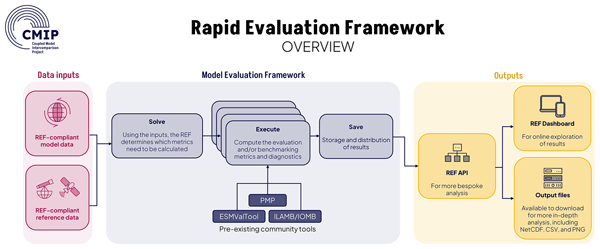
Forrest M. Hoffman, Birgit Hassler, Ranjini Swaminathan, Jared Lewis, Bouwe Andela, Nathan Collier, Dóra Hegedűs, Jiwoo Lee, Charlotte Pascoe, Mika Pflüger, Martina Stockhause, Paul Ullrich, Min Xu, Lisa Bock, Felicity Chun, Bettina K. Gier, Douglas I. Kelley, Axel Lauer, Julien Lenhardt, Manuel Schlund, Mohanan G. Sreeush, Katja Weigel, Ed Blockley, Rebecca Beadling, Romain Beucher, Demiso D. Dugassa, Valerio Lembo, Jianhua Lu, Swen Brands, Jerry Tjiputra, Elizaveta Malinina, Brian Medeiros, Enrico Scoccimarro, Jeremy Walton, Phil Kershaw, André Lanfer Marquez, Malcolm J. Roberts, Eleanor O'Rourke, Beth Dingley, Briony Turner, Helene Hewitt, and John P. Dunne
Geosci. Model Dev., 19, 7415–7455, https://doi.org/10.5194/gmd-19-7415-2026, https://doi.org/10.5194/gmd-19-7415-2026, 2026
Short summary
Short summary
The Rapid Evaluation Framework (REF) is a community-driven platform for benchmarking and performance assessment of Earth system models. Built upon four disparate community evaluation tools, the REF is designed to provide model-data comparisons for the Assessment Fast Track for the Seventh Phase of the Coupled Model Intercomparison Project. The REF will be run at the Earth System Grid Federation to enable model devleopers and scientists to quickly identify model biases and performance issues.
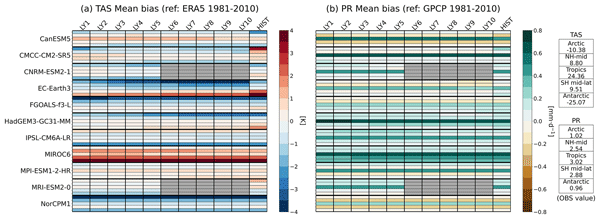
Jung Choi, Jiwoo Lee, Kristin Chang, Paul A. Ullrich, Peter J. Gleckler, and Sang-Yoon Jun
Geosci. Model Dev., 19, 6189–6206, https://doi.org/10.5194/gmd-19-6189-2026, https://doi.org/10.5194/gmd-19-6189-2026, 2026
Short summary
Short summary
As climate risks grow, society needs reliable predictions for the coming years and decades. We developed a framework to collectively compare climate prediction systems and examine their performances on global temperature, rainfall, and sea ice. As a complementary to traditional analyses, our new framework offers tracking evolution of model performance in simulation time, helping scientists and stakeholders better understand strengths and limits of decadal climate prediction.
Giuliana Pallotta, Shiheng Duan, Celine Bonfils, Jiwoo Lee, Seth Goodnight, and Paul Ullrich
EGUsphere, https://doi.org/10.48550/arXiv.2604.06567, https://doi.org/10.48550/arXiv.2604.06567, 2026
Short summary
Short summary
Deep-learning Earth system models (DL-ESMs) offer a computationally efficient alternative to traditional Earth system models, but their suitability for Earth system applications requires rigorous evaluation. We apply the PCMDI Metrics Package to assess ACE2 and NeuralGCM using climatology, variability, monsoon, and precipitation diagnostics, providing one of the first systematic Earth system model evaluations of DL-ESMs.
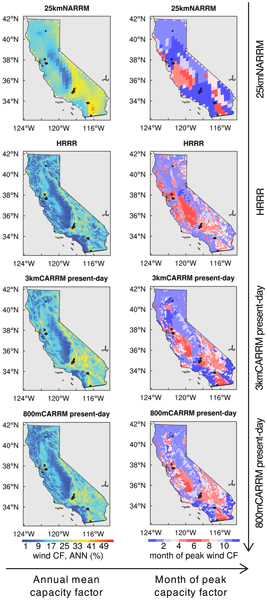
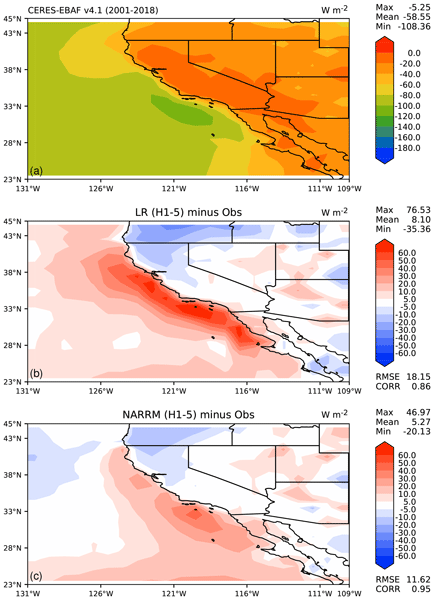
Jishi Zhang, Jean-Christophe Golaz, Matthew Vincent Signorotti, Hsiang-He Lee, Peter Bogenschutz, Minda Monteagudo, Paul Aaron Ullrich, Robert S. Arthur, Stephen Po-Chedley, Philip Cameron-Smith, and Jean-Paul Watson
Geosci. Model Dev., 19, 4513–4545, https://doi.org/10.5194/gmd-19-4513-2026, https://doi.org/10.5194/gmd-19-4513-2026, 2026
Short summary
Short summary
We ran a convection-permitting model with regional mesh refinement (3.25 km and 800 m) to simulate present-day wind and solar capacity factors over California, coupling it to an energy generation model. The high-resolution models captured realistic seasonal and diurnal cycles, with wind markedly better than a 25 km model and solar outperforming a 3 km operational forecast. We highlight the critical role of resolution, modeling assumptions, and data reliability in renewable energy assessment.
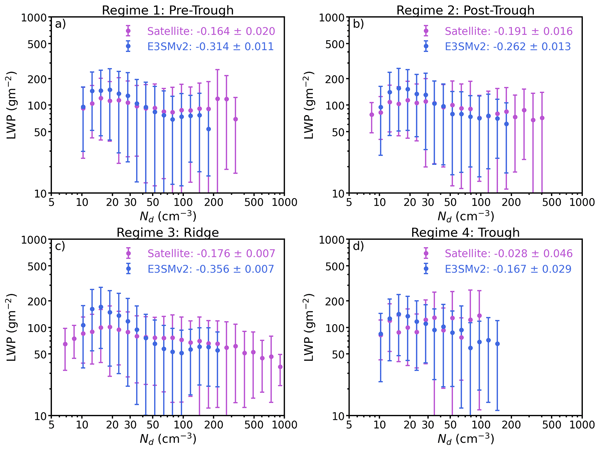
Xiaojian Zheng, Yan Feng, David Painemal, Meng Zhang, Shaocheng Xie, Zhujun Li, Robert Jacob, and Bethany Lusch
Atmos. Chem. Phys., 25, 17473–17499, https://doi.org/10.5194/acp-25-17473-2025, https://doi.org/10.5194/acp-25-17473-2025, 2025
Short summary
Short summary
This study used satellite observations and climate model simulations to examine how aerosols affect marine clouds over the Eastern North Atlantic. Cloud responses to aerosols differed significantly across meteorological regimes. The model captured overall trends but exaggerated cloud responses, performing better for shallower than deeper clouds. The results highlight the need to untangle aerosol effects from meteorology and improve cloud process representation in climate models.
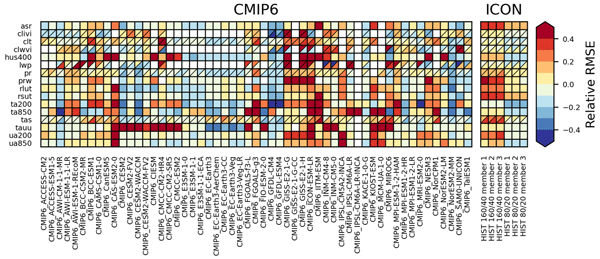
Wolfgang A. Müller, Stephan Lorenz, Trang V. Pham, Andrea Schneidereit, Renate Brokopf, Victor Brovkin, Nils Brüggemann, Fatemeh Chegini, Dietmar Dommenget, Kristina Fröhlich, Barbara Früh, Veronika Gayler, Helmuth Haak, Stefan Hagemann, Moritz Hanke, Tatiana Ilyina, Johann Jungclaus, Martin Köhler, Peter Korn, Luis Kornblueh, Clarissa A. Kroll, Julian Krüger, Karel Castro-Morales, Ulrike Niemeier, Holger Pohlmann, Iuliia Polkova, Roland Potthast, Thomas Riddick, Manuel Schlund, Tobias Stacke, Roland Wirth, Dakuan Yu, and Jochem Marotzke
Geosci. Model Dev., 18, 9385–9415, https://doi.org/10.5194/gmd-18-9385-2025, https://doi.org/10.5194/gmd-18-9385-2025, 2025
Short summary
Short summary
We provide a new Earth System model configuration framed into the ICON architecture, which provides the baseline for the next generation of climate predictions and projections (hereafter ICON XPP). Two resolutions of ICON XPP are presented that show high runtime performances making it suitable to run long integrations and large-ensemble experiments. ICON XPP similarly perform to CMIP6-class of climate models making it a good basis for climate forecasts and projections, and climate research.
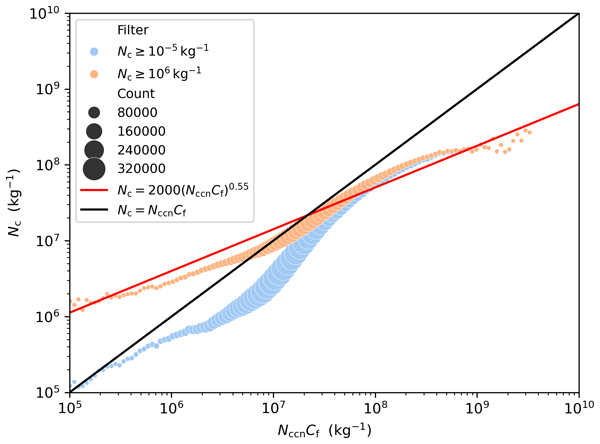
Naser Mahfouz, Hassan Beydoun, Johannes Mülmenstädt, Noel Keen, Adam C. Varble, Luca Bertagna, Peter Bogenschutz, Andrew Bradley, Matthew W. Christensen, T. Conrad Clevenger, Aaron Donahue, Jerome Fast, James Foucar, Jean-Christophe Golaz, Oksana Guba, Walter Hannah, Benjamin Hillman, Robert Jacob, Wuyin Lin, Po-Lun Ma, Yun Qian, Balwinder Singh, Christopher Terai, Hailong Wang, Mingxuan Wu, Kai Zhang, Andrew Gettelman, Mark Taylor, L. Ruby Leung, Peter Caldwell, and Susannah Burrows
Atmos. Chem. Phys., 25, 15105–15120, https://doi.org/10.5194/acp-25-15105-2025, https://doi.org/10.5194/acp-25-15105-2025, 2025
Short summary
Short summary
Our study assesses the aerosol effective radiative forcing in a global cloud-resolving atmosphere model at ultra-high resolution. We demonstrate that global aerosol forcing signal can be robustly reproduced across resolutions when aerosol activation processes are carefully parameterized. Further, we argue that simplified prescribed aerosol schemes will open the door for further process/mechanism studies under controlled conditions.
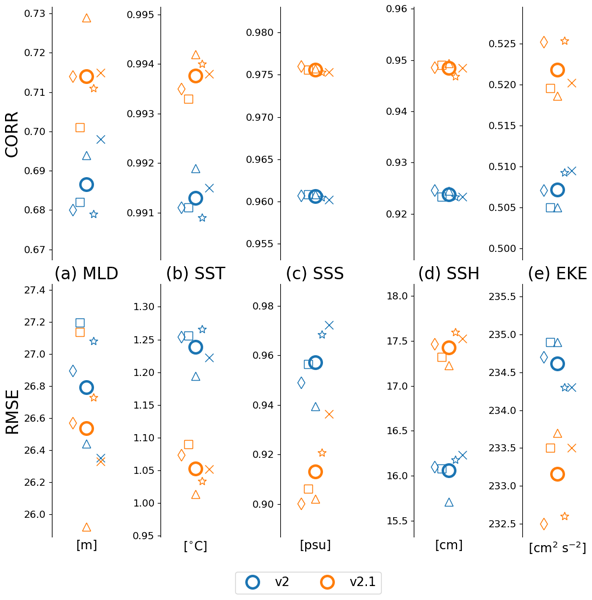
Katherine M. Smith, Alice M. Barthel, LeAnn M. Conlon, Luke P. Van Roekel, Anthony Bartoletti, Jean-Christophe Golaz, Chengzhu Zhang, Carolyn Branecky Begeman, James J. Benedict, Gautam Bisht, Yan Feng, Walter Hannah, Bryce E. Harrop, Nicole Jeffery, Wuyin Lin, Po-Lun Ma, Mathew E. Maltrud, Mark R. Petersen, Balwinder Singh, Qi Tang, Teklu Tesfa, Jonathan D. Wolfe, Shaocheng Xie, Xue Zheng, Karthik Balaguru, Oluwayemi Garuba, Peter Gleckler, Aixue Hu, Jiwoo Lee, Ben Moore-Maley, and Ana C. Ordoñez
Geosci. Model Dev., 18, 1613–1633, https://doi.org/10.5194/gmd-18-1613-2025, https://doi.org/10.5194/gmd-18-1613-2025, 2025
Short summary
Short summary
Version 2.1 of the U.S. Department of Energy's Energy Exascale Earth System Model (E3SM) adds the Fox-Kemper et al. (2011) mixed-layer eddy parameterization, which restratifies the ocean surface layer through an overturning streamfunction. Results include surface layer bias reduction in temperature, salinity, and sea ice extent in the North Atlantic; a small strengthening of the Atlantic meridional overturning circulation; and improvements to many atmospheric climatological variables.
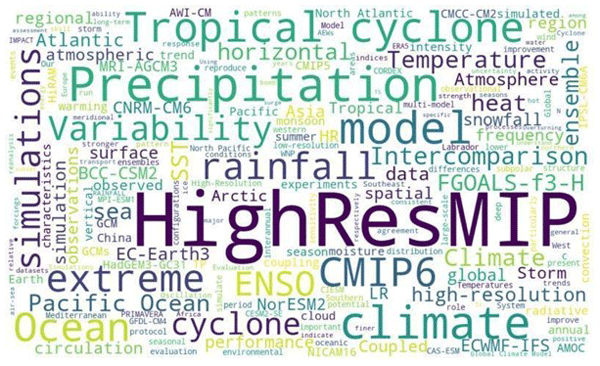
Malcolm J. Roberts, Kevin A. Reed, Qing Bao, Joseph J. Barsugli, Suzana J. Camargo, Louis-Philippe Caron, Ping Chang, Cheng-Ta Chen, Hannah M. Christensen, Gokhan Danabasoglu, Ivy Frenger, Neven S. Fučkar, Shabeh ul Hasson, Helene T. Hewitt, Huanping Huang, Daehyun Kim, Chihiro Kodama, Michael Lai, Lai-Yung Ruby Leung, Ryo Mizuta, Paulo Nobre, Pablo Ortega, Dominique Paquin, Christopher D. Roberts, Enrico Scoccimarro, Jon Seddon, Anne Marie Treguier, Chia-Ying Tu, Paul A. Ullrich, Pier Luigi Vidale, Michael F. Wehner, Colin M. Zarzycki, Bosong Zhang, Wei Zhang, and Ming Zhao
Geosci. Model Dev., 18, 1307–1332, https://doi.org/10.5194/gmd-18-1307-2025, https://doi.org/10.5194/gmd-18-1307-2025, 2025
Short summary
Short summary
HighResMIP2 is a model intercomparison project focusing on high-resolution global climate models, that is, those with grid spacings of 25 km or less in the atmosphere and ocean, using simulations of decades to a century in length. We are proposing an update of our simulation protocol to make the models more applicable to key questions for climate variability and hazard in present-day and future projections and to build links with other communities to provide more robust climate information.
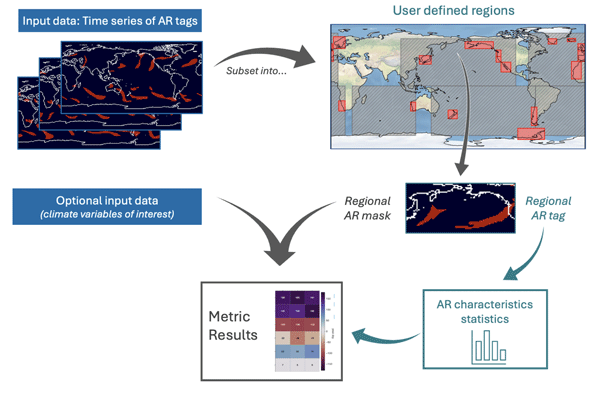
Bo Dong, Paul Ullrich, Jiwoo Lee, Peter Gleckler, Kristin Chang, and Travis A. O'Brien
Geosci. Model Dev., 18, 961–976, https://doi.org/10.5194/gmd-18-961-2025, https://doi.org/10.5194/gmd-18-961-2025, 2025
Short summary
Short summary
A metrics package designed for easy analysis of atmospheric river (AR) characteristics and statistics is presented. The tool is efficient for diagnosing systematic AR bias in climate models and useful for evaluating new AR characteristics in model simulations. In climate models, landfalling AR precipitation shows dry biases globally, and AR tracks are farther poleward (equatorward) in the North and South Atlantic (South Pacific and Indian Ocean).
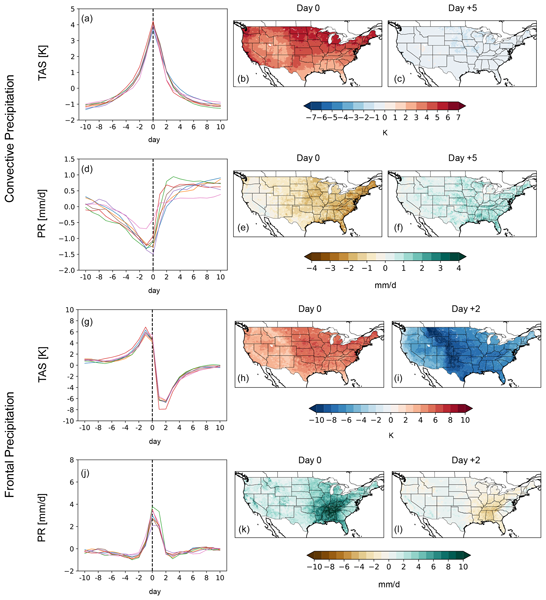
Seung H. Baek, Paul A. Ullrich, Bo Dong, and Jiwoo Lee
Geosci. Model Dev., 17, 8665–8681, https://doi.org/10.5194/gmd-17-8665-2024, https://doi.org/10.5194/gmd-17-8665-2024, 2024
Short summary
Short summary
We evaluate downscaled products by examining locally relevant co-variances during precipitation events. Common statistical downscaling techniques preserve expected co-variances during convective precipitation (a stationary phenomenon). However, they dampen future intensification of frontal precipitation (a non-stationary phenomenon) captured in global climate models and dynamical downscaling. Our study quantifies a ramification of the stationarity assumption underlying statistical downscaling.
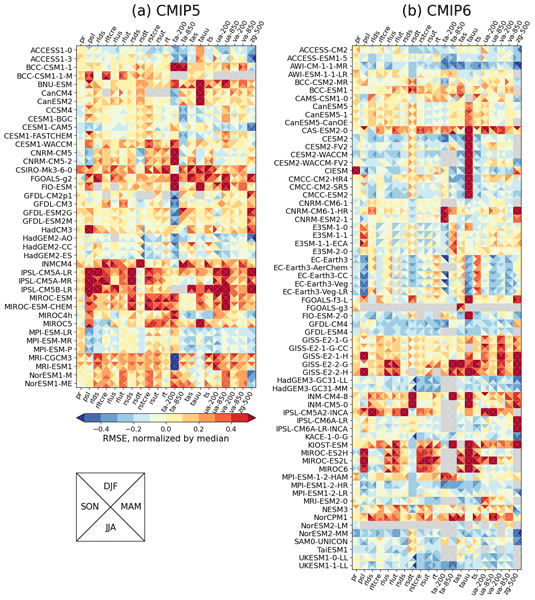
Jiwoo Lee, Peter J. Gleckler, Min-Seop Ahn, Ana Ordonez, Paul A. Ullrich, Kenneth R. Sperber, Karl E. Taylor, Yann Y. Planton, Eric Guilyardi, Paul Durack, Celine Bonfils, Mark D. Zelinka, Li-Wei Chao, Bo Dong, Charles Doutriaux, Chengzhu Zhang, Tom Vo, Jason Boutte, Michael F. Wehner, Angeline G. Pendergrass, Daehyun Kim, Zeyu Xue, Andrew T. Wittenberg, and John Krasting
Geosci. Model Dev., 17, 3919–3948, https://doi.org/10.5194/gmd-17-3919-2024, https://doi.org/10.5194/gmd-17-3919-2024, 2024
Short summary
Short summary
We introduce an open-source software, the PCMDI Metrics Package (PMP), developed for a comprehensive comparison of Earth system models (ESMs) with real-world observations. Using diverse metrics evaluating climatology, variability, and extremes simulated in thousands of simulations from the Coupled Model Intercomparison Project (CMIP), PMP aids in benchmarking model improvements across generations. PMP also enables efficient tracking of performance evolutions during ESM developments.
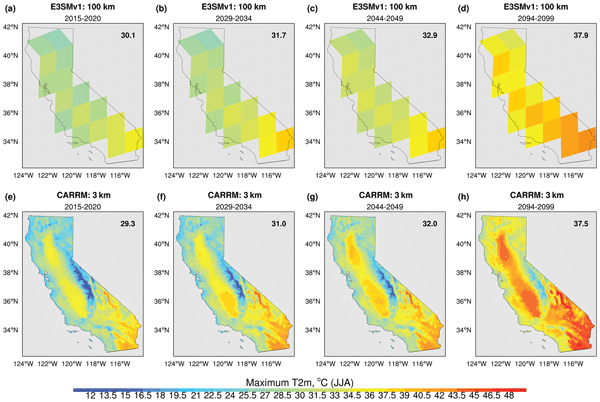
Jishi Zhang, Peter Bogenschutz, Qi Tang, Philip Cameron-smith, and Chengzhu Zhang
Geosci. Model Dev., 17, 3687–3731, https://doi.org/10.5194/gmd-17-3687-2024, https://doi.org/10.5194/gmd-17-3687-2024, 2024
Short summary
Short summary
We developed a regionally refined climate model that allows resolved convection and performed a 20-year projection to the end of the century. The model has a resolution of 3.25 km in California, which allows us to predict climate with unprecedented accuracy, and a resolution of 100 km for the rest of the globe to achieve efficient, self-consistent simulations. The model produces superior results in reproducing climate patterns over California that typical modern climate models cannot resolve.
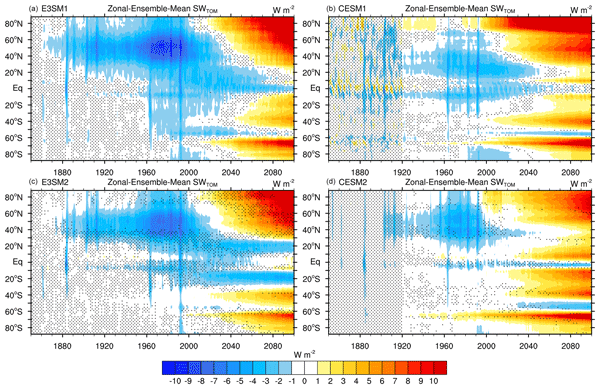
John T. Fasullo, Jean-Christophe Golaz, Julie M. Caron, Nan Rosenbloom, Gerald A. Meehl, Warren Strand, Sasha Glanville, Samantha Stevenson, Maria Molina, Christine A. Shields, Chengzhu Zhang, James Benedict, Hailong Wang, and Tony Bartoletti
Earth Syst. Dynam., 15, 367–386, https://doi.org/10.5194/esd-15-367-2024, https://doi.org/10.5194/esd-15-367-2024, 2024
Short summary
Short summary
Climate model large ensembles provide a unique and invaluable means for estimating the climate response to external forcing agents and quantify contrasts in model structure. Here, an overview of the Energy Exascale Earth System Model (E3SM) version 2 large ensemble is given along with comparisons to large ensembles from E3SM version 1 and versions 1 and 2 of the Community Earth System Model. The paper provides broad and important context for users of these ensembles.
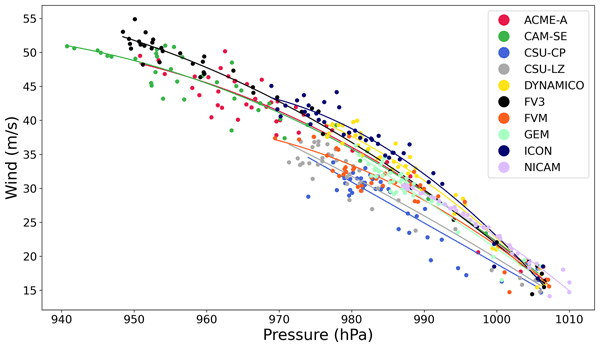
Justin L. Willson, Kevin A. Reed, Christiane Jablonowski, James Kent, Peter H. Lauritzen, Ramachandran Nair, Mark A. Taylor, Paul A. Ullrich, Colin M. Zarzycki, David M. Hall, Don Dazlich, Ross Heikes, Celal Konor, David Randall, Thomas Dubos, Yann Meurdesoif, Xi Chen, Lucas Harris, Christian Kühnlein, Vivian Lee, Abdessamad Qaddouri, Claude Girard, Marco Giorgetta, Daniel Reinert, Hiroaki Miura, Tomoki Ohno, and Ryuji Yoshida
Geosci. Model Dev., 17, 2493–2507, https://doi.org/10.5194/gmd-17-2493-2024, https://doi.org/10.5194/gmd-17-2493-2024, 2024
Short summary
Short summary
Accurate simulation of tropical cyclones (TCs) is essential to understanding their behavior in a changing climate. One way this is accomplished is through model intercomparison projects, where results from multiple climate models are analyzed to provide benchmark solutions for the wider climate modeling community. This study describes and analyzes the previously developed TC test case for nine climate models in an intercomparison project, providing solutions that aid in model development.
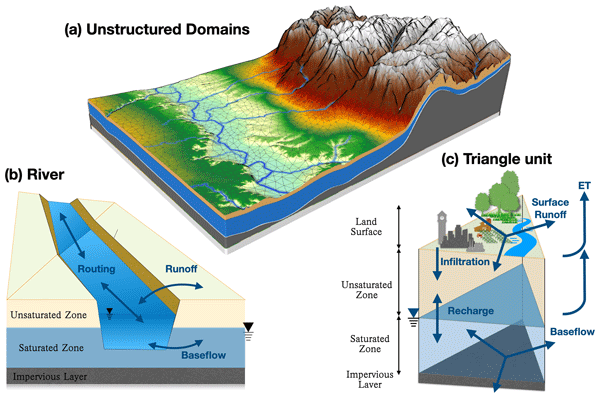
Lele Shu, Paul Ullrich, Xianhong Meng, Christopher Duffy, Hao Chen, and Zhaoguo Li
Geosci. Model Dev., 17, 497–527, https://doi.org/10.5194/gmd-17-497-2024, https://doi.org/10.5194/gmd-17-497-2024, 2024
Short summary
Short summary
Our team developed rSHUD v2.0, a toolkit that simplifies the use of the SHUD, a model simulating water movement in the environment. We demonstrated its effectiveness in two watersheds, one in the USA and one in China. The toolkit also facilitated the creation of the Global Hydrological Data Cloud, a platform for automatic data processing and model deployment, marking a significant advancement in hydrological research.
Qi Tang, Jean-Christophe Golaz, Luke P. Van Roekel, Mark A. Taylor, Wuyin Lin, Benjamin R. Hillman, Paul A. Ullrich, Andrew M. Bradley, Oksana Guba, Jonathan D. Wolfe, Tian Zhou, Kai Zhang, Xue Zheng, Yunyan Zhang, Meng Zhang, Mingxuan Wu, Hailong Wang, Cheng Tao, Balwinder Singh, Alan M. Rhoades, Yi Qin, Hong-Yi Li, Yan Feng, Yuying Zhang, Chengzhu Zhang, Charles S. Zender, Shaocheng Xie, Erika L. Roesler, Andrew F. Roberts, Azamat Mametjanov, Mathew E. Maltrud, Noel D. Keen, Robert L. Jacob, Christiane Jablonowski, Owen K. Hughes, Ryan M. Forsyth, Alan V. Di Vittorio, Peter M. Caldwell, Gautam Bisht, Renata B. McCoy, L. Ruby Leung, and David C. Bader
Geosci. Model Dev., 16, 3953–3995, https://doi.org/10.5194/gmd-16-3953-2023, https://doi.org/10.5194/gmd-16-3953-2023, 2023
Short summary
Short summary
High-resolution simulations are superior to low-resolution ones in capturing regional climate changes and climate extremes. However, uniformly reducing the grid size of a global Earth system model is too computationally expensive. We provide an overview of the fully coupled regionally refined model (RRM) of E3SMv2 and document a first-of-its-kind set of climate production simulations using RRM at an economic cost. The key to this success is our innovative hybrid time step method.
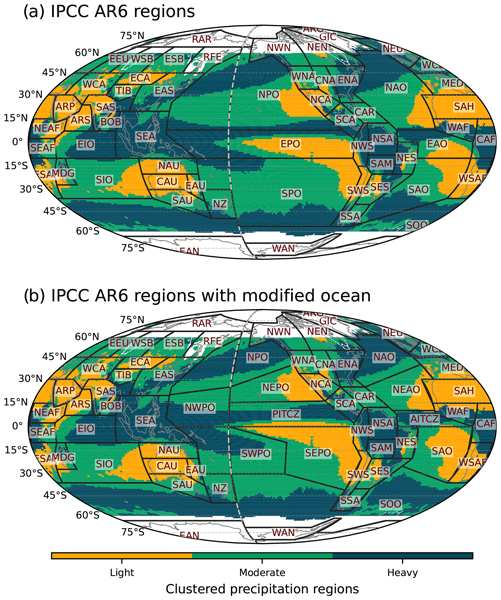
Min-Seop Ahn, Paul A. Ullrich, Peter J. Gleckler, Jiwoo Lee, Ana C. Ordonez, and Angeline G. Pendergrass
Geosci. Model Dev., 16, 3927–3951, https://doi.org/10.5194/gmd-16-3927-2023, https://doi.org/10.5194/gmd-16-3927-2023, 2023
Short summary
Short summary
We introduce a framework for regional-scale evaluation of simulated precipitation distributions with 62 climate reference regions and 10 metrics and apply it to evaluate CMIP5 and CMIP6 models against multiple satellite-based precipitation products. The common model biases identified in this study are mainly associated with the overestimated light precipitation and underestimated heavy precipitation. These biases persist from earlier-generation models and have been slightly improved in CMIP6.
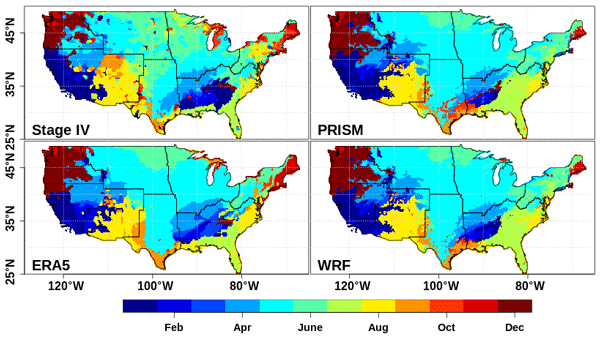
Abhishekh Kumar Srivastava, Paul Aaron Ullrich, Deeksha Rastogi, Pouya Vahmani, Andrew Jones, and Richard Grotjahn
Geosci. Model Dev., 16, 3699–3722, https://doi.org/10.5194/gmd-16-3699-2023, https://doi.org/10.5194/gmd-16-3699-2023, 2023
Short summary
Short summary
Stakeholders need high-resolution regional climate data for applications such as assessing water availability and mountain snowpack. This study examines 3 h and 24 h historical precipitation over the contiguous United States in the 12 km WRF version 4.2.1-based dynamical downscaling of the ERA5 reanalysis. WRF improves precipitation characteristics such as the annual cycle and distribution of the precipitation maxima, but it also displays regionally and seasonally varying precipitation biases.
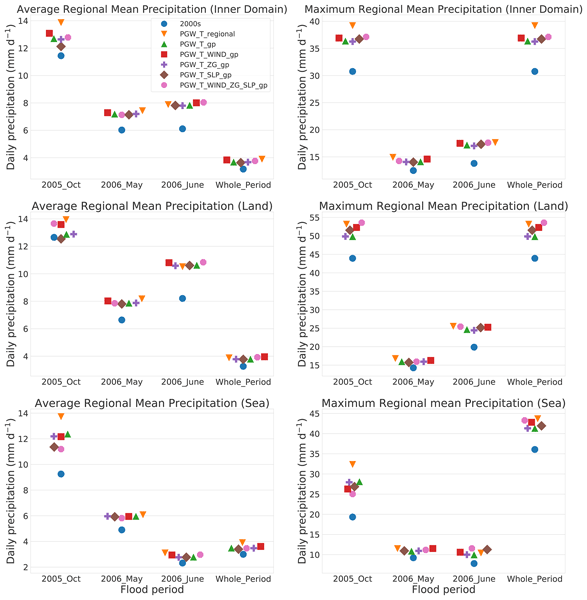
Zeyu Xue, Paul Ullrich, and Lai-Yung Ruby Leung
Hydrol. Earth Syst. Sci., 27, 1909–1927, https://doi.org/10.5194/hess-27-1909-2023, https://doi.org/10.5194/hess-27-1909-2023, 2023
Short summary
Short summary
We examine the sensitivity and robustness of conclusions drawn from the PGW method over the NEUS by conducting multiple PGW experiments and varying the perturbation spatial scales and choice of perturbed meteorological variables to provide a guideline for this increasingly popular regional modeling method. Overall, we recommend PGW experiments be performed with perturbations to temperature or the combination of temperature and wind at the gridpoint scale, depending on the research question.
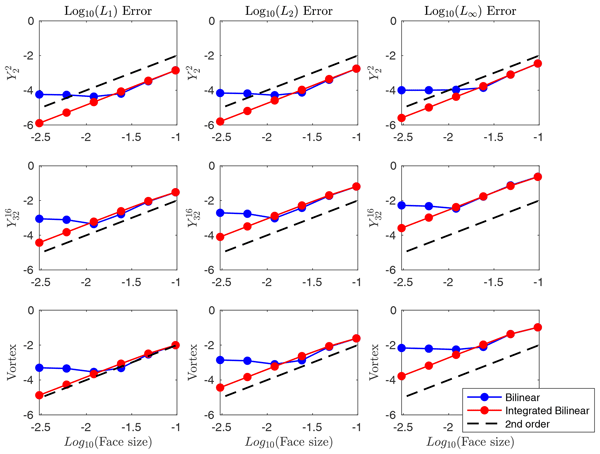
David H. Marsico and Paul A. Ullrich
Geosci. Model Dev., 16, 1537–1551, https://doi.org/10.5194/gmd-16-1537-2023, https://doi.org/10.5194/gmd-16-1537-2023, 2023
Short summary
Short summary
Climate models involve several different components, such as the atmosphere, ocean, and land models. Information needs to be exchanged, or remapped, between these models, and devising algorithms for performing this exchange is important for ensuring the accuracy of climate simulations. In this paper, we examine the efficacy of several traditional and novel approaches to remapping on the sphere and demonstrate where our approaches offer improvement.
Cathy Hohenegger, Peter Korn, Leonidas Linardakis, René Redler, Reiner Schnur, Panagiotis Adamidis, Jiawei Bao, Swantje Bastin, Milad Behravesh, Martin Bergemann, Joachim Biercamp, Hendryk Bockelmann, Renate Brokopf, Nils Brüggemann, Lucas Casaroli, Fatemeh Chegini, George Datseris, Monika Esch, Geet George, Marco Giorgetta, Oliver Gutjahr, Helmuth Haak, Moritz Hanke, Tatiana Ilyina, Thomas Jahns, Johann Jungclaus, Marcel Kern, Daniel Klocke, Lukas Kluft, Tobias Kölling, Luis Kornblueh, Sergey Kosukhin, Clarissa Kroll, Junhong Lee, Thorsten Mauritsen, Carolin Mehlmann, Theresa Mieslinger, Ann Kristin Naumann, Laura Paccini, Angel Peinado, Divya Sri Praturi, Dian Putrasahan, Sebastian Rast, Thomas Riddick, Niklas Roeber, Hauke Schmidt, Uwe Schulzweida, Florian Schütte, Hans Segura, Radomyra Shevchenko, Vikram Singh, Mia Specht, Claudia Christine Stephan, Jin-Song von Storch, Raphaela Vogel, Christian Wengel, Marius Winkler, Florian Ziemen, Jochem Marotzke, and Bjorn Stevens
Geosci. Model Dev., 16, 779–811, https://doi.org/10.5194/gmd-16-779-2023, https://doi.org/10.5194/gmd-16-779-2023, 2023
Short summary
Short summary
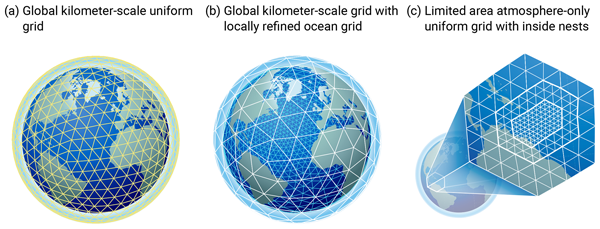
Models of the Earth system used to understand climate and predict its change typically employ a grid spacing of about 100 km. Yet, many atmospheric and oceanic processes occur on much smaller scales. In this study, we present a new model configuration designed for the simulation of the components of the Earth system and their interactions at kilometer and smaller scales, allowing an explicit representation of the main drivers of the flow of energy and matter by solving the underlying equations.
Leonidas Linardakis, Irene Stemmler, Moritz Hanke, Lennart Ramme, Fatemeh Chegini, Tatiana Ilyina, and Peter Korn
Geosci. Model Dev., 15, 9157–9176, https://doi.org/10.5194/gmd-15-9157-2022, https://doi.org/10.5194/gmd-15-9157-2022, 2022
Short summary
Short summary
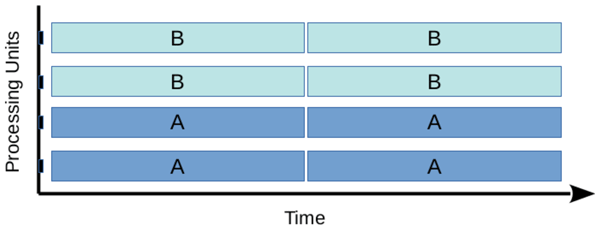
In Earth system modelling, we are facing the challenge of making efficient use of very large machines, with millions of cores. To meet this challenge we will need to employ multi-level and multi-dimensional parallelism. Component concurrency, being a function parallel technique, offers an additional dimension to the traditional data-parallel approaches. In this paper we examine the behaviour of component concurrency and identify the conditions for its optimal application.
Chengzhu Zhang, Jean-Christophe Golaz, Ryan Forsyth, Tom Vo, Shaocheng Xie, Zeshawn Shaheen, Gerald L. Potter, Xylar S. Asay-Davis, Charles S. Zender, Wuyin Lin, Chih-Chieh Chen, Chris R. Terai, Salil Mahajan, Tian Zhou, Karthik Balaguru, Qi Tang, Cheng Tao, Yuying Zhang, Todd Emmenegger, Susannah Burrows, and Paul A. Ullrich
Geosci. Model Dev., 15, 9031–9056, https://doi.org/10.5194/gmd-15-9031-2022, https://doi.org/10.5194/gmd-15-9031-2022, 2022
Short summary
Short summary
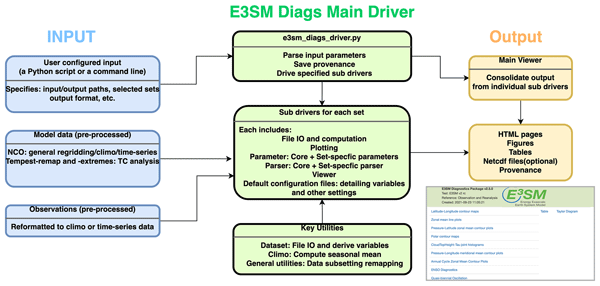
Earth system model (ESM) developers run automated analysis tools on data from candidate models to inform model development. This paper introduces a new Python package, E3SM Diags, that has been developed to support ESM development and use routinely in the development of DOE's Energy Exascale Earth System Model. This tool covers a set of essential diagnostics to evaluate the mean physical climate from simulations, as well as several process-oriented and phenomenon-based evaluation diagnostics.

Vijay S. Mahadevan, Jorge E. Guerra, Xiangmin Jiao, Paul Kuberry, Yipeng Li, Paul Ullrich, David Marsico, Robert Jacob, Pavel Bochev, and Philip Jones
Geosci. Model Dev., 15, 6601–6635, https://doi.org/10.5194/gmd-15-6601-2022, https://doi.org/10.5194/gmd-15-6601-2022, 2022
Short summary
Short summary
Coupled Earth system models require transfer of field data between multiple components with varying spatial resolutions to determine the correct climate behavior. We present the Metrics for Intercomparison of Remapping Algorithms (MIRA) protocol to evaluate the accuracy, conservation properties, monotonicity, and local feature preservation of four different remapper algorithms for various unstructured mesh problems of interest. Future extensions to more practical use cases are also discussed.
Cited articles
Aitelhad, A.: On spherical barycentric coordinates, arXiv [preprint], https://doi.org/10.48550/arXiv.2204.12923, 2022. a
Alexandrov, V.: Using Stokes' Theorem on the Sphere (Problem 10957), Problems and Solutions, American Mathematical Monthly, https://doi.org/10.2307/4145233, 2002. a
Arakawa, A. and Lamb, V. R.: Computational Design of the Basic Dynamical Processes of the UCLA General Circulation Model, in: Methods in Computational Physics: Advances in Research and Applications, Vol. 17, edited by: Chang, J., Elsevier, https://doi.org/10.1016/B978-0-12-460817-7.50009-4, 1977. a
Attene, M.: Indirect Predicates for Geometric Constructions, Comput. Aided Design, 126, 102856, https://doi.org/10.1016/j.cad.2020.102856, 2020. a, b, c
Barth, T. and Jespersen, D.: The design and application of upwind schemes on unstructured meshes, in: 27th Aerospace Sciences Meeting, p. 366, https://doi.org/10.2514/6.1989-366, 1989. a
Bensad, A. E. and Ikemakhen, A.: A general construction of spherical barycentric coordinates and applications, J. Comput. Appl. Math., 422, 114945, https://doi.org/10.1016/j.cam.2022.114945, 2023. a
Bentley and Ottmann: Algorithms for Reporting and Counting Geometric Intersections, IEEE T. Comput., C-28, 643–647, https://doi.org/10.1109/TC.1979.1675432, 1979. a
Berberich, E., Fogel, E., Halperin, D., Kerber, M., and Setter, O.: Arrangements on Parametric Surfaces II: Concretizations and Applications, Mathematics in Computer Science, 4, 67–91, https://doi.org/10.1007/s11786-010-0043-4, 2010. a
Bevis, M. and Chatelain, J.-L.: Locating a point on a spherical surface relative to a spherical polygon, Math. Geol., 21, 811–828, https://doi.org/10.1007/BF00894449, 1989. a
Bradley, A. M., Bosler, P. A., Guba, O., Taylor, M. A., and Barnett, G. A.: Communication-Efficient Property Preservation in Tracer Transport, SIAM J. Sci. Comput., 41, C161–C193, https://doi.org/10.1137/18M1165414, 2019. a
Brock, J. E.: The Inertia Tensor for a Spherical Triangle, J. Appl. Mech., 42, 239–239, https://doi.org/10.1115/1.3423535, 1975. a
Caroli, M., de Castro, P. M. M., Loriot, S., Rouiller, O., Teillaud, M., and Wormser, C.: Robust and efficient delaunay triangulations of points on or close to a sphere, in: Proceedings of the 9th International Conference on Experimental Algorithms, SEA'10, Springer-Verlag, Berlin, Heidelberg, 462–473, ISBN 3642131921, https://doi.org/10.1007/978-3-642-13193-6_39, 2010. a, b
Castro, P., Cazals, F., Loriot, S., and Teillaud, M.: Design of the CGAL 3D Spherical Kernel and application to arrangements of circles on a sphere, Comput. Geom., 42, 536–550, https://doi.org/10.1016/j.comgeo.2008.10.003, 2009. a, b
Cazals, F. and Loriot, S.: Computing the arrangement of circles on a sphere, with applications in structural biology, Comput. Geom., 42, 551–565, https://doi.org/10.1016/j.comgeo.2008.10.004, 2009. a
Chalela, M., Sillero, E., Pereyra, L., Garcia, M. A., Cabral, J. B., Lares, M., and Merchán, M.: GriSPy: A Python package for fixed-radius nearest neighbors search, Astron. Comput., 34, 100443, https://doi.org/10.1016/j.ascom.2020.100443, 2021. a
Chen, H.: Reproducibility Archive for “Accurate and Robust Geometric Algorithms for Regridding on the Sphere”, Zenodo [code, data], https://doi.org/10.5281/zenodo.17916264, 2025. a
Chen, H.: AccuSphGeom: Accurate and Robust Spherical Geometry Algorithms, Zenodo [code], https://doi.org/10.5281/zenodo.19896472, 2026. a, b
Chern, A. and Ishida, S.: Area Formula for Spherical Polygons via Prequantization, SIAM Journal on Applied Algebra and Geometry, 8, 782–796, https://doi.org/10.1137/23M1565255, 2024. a
Deconinck, W., Bauer, P., Diamantakis, M., Hamrud, M., Kühnlein, C., Maciel, P., Mengaldo, G., Quintino, T., Raoult, B., Smolarkiewicz, P. K., and Wedi, N. P.: Atlas : A library for numerical weather prediction and climate modelling, Comput. Phys. Commun., 220, 188 – 204, https://doi.org/10.1016/j.cpc.2017.07.006, 2017. a
E3SM Development Team: Recommended Mapping Procedures for E3SM Atmosphere Grids, https://e3sm.atlassian.net/wiki/spaces/DOC/pages/178848194/Recommended+Mapping+Procedures+for+E3SM+Atmosphere+Grids (last access: 15 July 2025), 2025. a
E3SM Project: Energy Exascale Earth System Model (E3SM), DOECODE [code] https://doi.org/10.11578/E3SM/dc.20240301.3, 2024. a
Edelsbrunner, H. and Mücke, E. P.: Simulation of simplicity: a technique to cope with degenerate cases in geometric algorithms, ACM Trans. Graph., 9, 66–104, https://doi.org/10.1145/77635.77639, 1990. a
ESMF Development Team: Earth System Modeling Framework (ESMF), Zenodo [code], https://doi.org/10.5281/zenodo.11205526, 2002–2025. a
Farrell, P., Piggott, M., Pain, C., Gorman, G., and Wilson, C.: Conservative interpolation between unstructured meshes via supermesh construction, Comput. Method. Appl. M., 198, 2632–2642, https://doi.org/10.1016/j.cma.2009.03.004, 2009. a
Flemming, J.: A Simple Linear-Time Algorithm for Smallest Enclosing Circles on the (Hemi)Sphere, arXiv [preprint], https://doi.org/10.48550/arXiv.2407.19840, 2024a. a, b, c
Flemming, J.: secots: Smallest Enclosing Circles on the Sphere, GitHub [code], https://github.com/jeflem/secots (last access: 8 July 2025), 2024b. a
Foley, J. D., van Dam, A., Feiner, S. K., and Hughes, J. F.: Computer Graphics: Principles and Practice, Addison–Wesley Systems Programming Series, Addison-Wesley, Reading, MA, 2nd edn., ISBN 0-201-12110-7, 1990. a
Fricke, J.: Points on Hemispheres, arXiv [preprint], https://doi.org/10.48550/arXiv.math/0610140, 2006. a
GEOS contributors: GEOS computational geometry library, Open Source Geospatial Foundation, Zenodo [code], https://doi.org/10.5281/zenodo.11396894, 2025. a
Girard, A.: Invention nouvelle en algèbre, Jean Petit, The Hague, contains the first statement of the spherical‐excess area formula, https://archive.org/details/bub_gb_JMQoAAAAcAAJ (last access: 3 February 2026), 1629. a
Gorski, K., Hivon, E., Banday, A., Wandelt, B., Hansen, F., Reinecke, M., and Bartelman, M.: HEALPix: A Framework for High-Resolution Discretization and Fast Analysis of Data Distributed on the Sphere, Astrophys. J., 622, https://doi.org/10.1086/427976, 2004. a
Graillat, S.: Accurate Floating-Point Product and Exponentiation, IEEE T. Comput., 58, 994–1000, https://doi.org/10.1109/TC.2008.215, 2009. a
Greiner, G. and Hormann, K.: Efficient clipping of arbitrary polygons, ACM Trans. Graph., 17, 71–83, https://doi.org/10.1145/274363.274364, 1998. a
Gu, H., Zong, Z., and Hung, K.: A modified superconvergent patch recovery method and its application to large deformation problems, Finite Elem. Anal. Des., 40, 665–687, https://doi.org/10.1016/S0168-874X(03)00109-4, 2004. a
Higham, N. J.: Accuracy and Stability of Numerical Algorithms, Society for Industrial and Applied Mathematics, 2nd edn., https://doi.org/10.1137/1.9780898718027, 2002. a
Hokenek, E., Montoye, R., and Cook, P.: Second-generation RISC floating point with multiply-add fused, IEEE J. Solid-St. Circ., 25, 1207–1213, https://doi.org/10.1109/4.62143, 1990. a
Hormann, K. and Agathos, A.: The point in polygon problem for arbitrary polygons, Comput. Geom. Theory Appl., 20, 131–144, https://doi.org/10.1016/S0925-7721(01)00012-8, 2001. a, b, c
IEEE: IEEE Standard for Floating-Point Arithmetic, IEEE Std 754-2008, 70 pp., https://doi.org/10.1109/IEEESTD.2008.4610935, 2008. a
Jeannerod, C.-P., Louvet, N., and Muller, J.-M.: Further Analysis of Kahan's Algorithm for the Accurate Computation of 2 × 2 Determinants, Math. Comput., 82, 2245–2264, https://doi.org/10.1090/S0025-5718-2013-02679-8, 2013. a, b
Jones, F.: Honors Calculus, Chapter 13: Stokes' Theorem, Course notes, Rice University, https://people.iith.ac.in/ashok/Maths_Lectures/TutorialB/Vec_Cal1.pdf (last access: 3 February 2026), 2002. a
Jones, P. W.: First- and Second-Order Conservative Remapping Schemes for Grids in Spherical Coordinates, Mon. Weather Rev., 127, 2204–2210, https://doi.org/10.1175/1520-0493(1999)127<2204:FASOCR>2.0.CO;2, 1999. a
Jonville, G., Piacentini, A., Valcke, S., and Hanke, M.: YAC in OASIS: Interpolation and Grid Support Developments, Tech. Rep. TR-CMGC-24-182, CERFACS, https://cerfacs.fr/wp-content/uploads/2024/12/TR-CMGC-24-182_yac_in_oasis.pdf (last access: 3 February 2026), 2024. a
Kahan, W.: On the Cost of Floating-Point Computation without Extra-Precise Arithmetic, Tech. rep., University of California, Berkeley, http://www.cs.berkeley.edu/~wkahan/Qdrtcs.pdf (last access: 3 February 2026), 2004. a
Khoei, A. and Gharehbaghi, S.: The superconvergence patch recovery technique and data transfer operators in 3D plasticity problems, Finite Elem. Anal. Des., 43, 630–648, https://doi.org/10.1016/j.finel.2007.01.002, 2007. a
Knuth, D. E.: The Art of Computer Programming, Vol. 2, 3rd edn., Seminumerical Algorithms, Addison-Wesley Longman Publishing Co., Inc., USA, ISBN 0201896842, 1997. a
Knyazev, A. V. and Argentati, M. E.: Principal Angles between Subspaces in an A-Based Scalar Product: Algorithms and Perturbation Estimates, SIAM J. Sci. Comput., 23, 2008–2040, https://doi.org/10.1137/S1064827500377332, 2002. a
Kritsikis, E., Aechtner, M., Meurdesoif, Y., and Dubos, T.: Conservative interpolation between general spherical meshes, Geosci. Model Dev., 10, 425–431, https://doi.org/10.5194/gmd-10-425-2017, 2017. a, b, c, d
Langer, T., Belyaev, A., and Seidel, H.-P.: Spherical Barycentric Coordinates, in: Proceedings of the Eurographics Symposium on Geometry Processing, edited by: Polthier, K. and Sheffer, A., Eurographics Association, Cagliari, Sardinia, Italy, 81–88, https://doi.org/10.2312/SGP/SGP06/081-088, 2006. a
Lauritzen, P. H. and Nair, R. D.: Monotone and Conservative Cascade Remapping between Spherical Grids (CaRS): Regular Latitude–Longitude and Cubed-Sphere Grids, Mon. Weather Rev., 136, 1416–1432, https://doi.org/10.1175/2007MWR2181.1, 2008. a
Lehner, B., Roth, A., Huber, M., Anand, M., Grill, G., Osterkamp, N., Tubbesing, R., Warmedinger, L., and Thieme, M.: HydroSHEDS v2.0 – Refined global river network and catchment delineations from TanDEM-X elevation data, EGU General Assembly 2021, online, 19–30 April 2021, EGU21-9277, https://doi.org/10.5194/egusphere-egu21-9277, 2021. a
Li, Y. and Jiao, X.: ARPIST: Provably accurate and stable numerical integration over spherical triangles, J. Comput. Appl. Math., 420, 114822, https://doi.org/10.1016/j.cam.2022.114822, 2023. a, b
Li, Z. and Sun, J. W.: Winding-based Point-Inclusion Tests for Spherical Polygons, Math. Geosci., https://doi.org/10.1007/s11004-026-10282-0, 2026. a
L’Huilier, S. A. J.: Solution de quelques problèmes de géométrie sphérique, Mémoires de l’Académie Impériale des Sciences de Saint-Pétersbourg, 4, 143–169, 1784. a
Madec, G. and Imbard, M.: A global ocean mesh to overcome the North Pole singularity, Clim. Dynam., 12, 381–388, https://doi.org/10.1007/BF00211684, 1996. a
Madec, G. and the NEMO System Team: NEMO Ocean Engine Reference Manual, Zenodo [code], https://doi.org/10.5281/zenodo.1464816, 2024. a
Mahadevan, V. S., Grindeanu, I., Jacob, R., and Sarich, J.: Improving climate model coupling through a complete mesh representation: a case study with E3SM (v1) and MOAB (v5.x), Geosci. Model Dev., 13, 2355–2377, https://doi.org/10.5194/gmd-13-2355-2020, 2020. a, b
Mahadevan, V. S., Guerra, J. E., Jiao, X., Kuberry, P., Li, Y., Ullrich, P., Marsico, D., Jacob, R., Bochev, P., and Jones, P.: Metrics for Intercomparison of Remapping Algorithms (MIRA) protocol applied to Earth system models, Geosci. Model Dev., 15, 6601–6635, https://doi.org/10.5194/gmd-15-6601-2022, 2022. a
Martínez, F., Rueda, A. J., and Feito, F. R.: A new algorithm for computing Boolean operations on polygons, Comput. Geosci., 35, 1177–1185, https://doi.org/10.1016/j.cageo.2008.08.009, 2009. a, b
Montoye, R. K., Hokenek, E., and Runyon, S. L.: Design of the IBM RISC System/6000 floating-point execution unit, IBM J. Res. Dev., 34, 59–70, https://doi.org/10.1147/rd.341.0059, 1990. a
Naszódi, M.: Flavors of Translative Coverings, in: New Trends in Intuitive Geometry, Vol. 27, Bolyai Society Mathematical Studies, Springer, 335–358, https://doi.org/10.1007/978-3-662-57413-3_14, 2018. a
Ogita, T., Rump, S. M., and Oishi, S.: Accurate Sum and Dot Product, SIAM J. Sci. Comput., 26, 1955–1988, https://doi.org/10.1137/030601818, 2005. a, b
Rump, S.: Fast and Accurate Computation of the Euclidean Norm of a Vector, Jpn. J. Ind. Appl. Math., 40, https://doi.org/10.1007/s13160-023-00593-8, 2023. a, b
Schirra, S.: Precision and robustness in geometric computations, in: Algorithmic Foundations of Geographic Information Systems, edited by: van Kreveld, M., Nievergelt, J., Roos, T., and Widmayer, P., Springer Berlin Heidelberg, Berlin, Heidelberg, 255–287, ISBN 978-3-540-69653-7, https://doi.org/10.1007/3-540-63818-0_9, 1997. a
Schulzweida, U.: CDO User Guide, Zenodo [code], https://doi.org/10.5281/zenodo.10020800, 2023. a
Shamos, M. I. and Hoey, D.: Geometric intersection problems, in: 17th Annual Symposium on Foundations of Computer Science (FOCS), IEEE, 208–215, https://doi.org/10.1109/SFCS.1976.16, 1976. a
Shewchuk, J. R.: Triangle: Engineering a 2D Quality Mesh Generator and Delaunay Triangulator, in: Applied Computational Geometry: Towards Geometric Engineering, edited by: Lin, M. C. and Manocha, D., vol. 1148, Lecture Notes in Computer Science, Springer-Verlag, 203–222, https://doi.org/10.1007/BFb0014497, 1996. a
Shewchuk, J. R.: Lecture Notes on Geometric Robustness, University of California at Berkeley, https://people.eecs.berkeley.edu/~jrs/meshpapers/robnotes.pdf (last access: 3 February 2026), 2013. a
Snyder, J. P.: Map Projections: A Working Manual, no. 1395 in U.S. Geological Survey Professional Paper, U.S. Government Printing Office, Washington, DC, https://doi.org/10.3133/pp1395, 1987. a
Souvaine, D. L.: Line Segment Intersection Using a Sweep Line Algorithm, tufts University lecture notes, https://www.cs.tufts.edu/comp/163/notes05/seg_intersection_handout.pdf (last access: 3 February 2026), 2008. a
Stevens, B., Satoh, M., Auger, L., Biercamp, J., Bretherton, C., Chen, X., Düben, P., Judt, F., Khairoutdinov, M., Klocke, D., Kodama, C., Kornblueh, L., Lin, S.-J., Neumann, P., Putman, W., Röber, N., Shibuya, R., Vannière, B., Vidale, P., and Zhou, L.: DYAMOND: the DYnamics of the Atmospheric general circulation Modeled On Non-hydrostatic Domains, Progress in Earth and Planetary Science, 6, 61, https://doi.org/10.1186/s40645-019-0304-z, 2019. a
Sutherland, I. E. and Hodgman, G. W.: Reentrant polygon clipping, Commun. ACM, 17, 32–42, https://doi.org/10.1145/360767.360802, 1974. a, b
Tarboton, D. G.: A new method for the determination of flow directions and upslope areas in grid digital elevation models, Water Resour. Res., 33, 309–319, https://doi.org/10.1029/96WR03137, 1997. a
Tarboton, D. G.: TauDEM 5.3.7: Terrain Analysis Using Digital Elevation Models, Utah State University, David Tarboton Hydrology Research Group, https://hydrology.usu.edu/taudem/taudem5/ (last access: 3 February 2026), 2016. a
Taylor, K. E.: Truly conserving with conservative remapping methods, Geosci. Model Dev., 17, 415–430, https://doi.org/10.5194/gmd-17-415-2024, 2024. a, b, c, d
Ullrich, P., Lauritzen, P., and Jablonowski, C.: Geometrically Exact Conservative Remapping (GECoRe): Regular Latitude-Longitude and Cubed-Sphere Grids, Mon. Weather Rev., 137, 1721–1741, https://doi.org/10.1175/2008MWR2817.1, 2009. a
UXarray Organization: UXarray (v2024.03.0), project Raijin & Project SEATS, Zenodo [code], https://doi.org/10.5281/zenodo.10895493, 2024. a, b
Valcke, S. and Piacentini, A.: Analysis of SCRIP conservative remapping in OASIS3-MCT – Part A, Technical report, CECI, Université de Toulouse, CNRS, CERFACS, Toulouse, France – TR-CMGC-19-129, https://cnrs.hal.science/hal-04730859 (last access: 3 February 2026), 2019. a
Valcke, S., Piacentini, A., and Jonville, G.: Benchmarking of Regridding Libraries Used in Earth System Modelling: SCRIP, YAC, ESMF and XIOS, Tech. Rep. TR-CMGC-21-14, CERFACS, https://cerfacs.fr/wp-content/uploads/2021/11/Globc_TR_Valcke_21_145_regridding_analysis_final.pdf (last access: 3 February 2026), 2021. a, b, c, d, e, f, g, h
Vatti, B. R.: A generic solution to polygon clipping, Commun. ACM, 35, 56–63, https://doi.org/10.1145/129902.129906, 1992. a
Virtanen, P., Gommers, R., Oliphant, T., Haberland, M., Reddy, T., Cournapeau, D., Burovski, E., Peterson, P., Weckesser, W., Bright, J., Walt, S., Brett, M., Wilson, J., Millman, K., Mayorov, N., Nelson, A., Jones, E., Kern, R., Larson, E., and Vázquez-Baeza, Y.: SciPy 1.0: fundamental algorithms for scientific computing in Python, Nat. Methods, 17, 1–12, https://doi.org/10.1038/s41592-019-0686-2, 2020. a
Wachspress: A Rational Finite Element Basis, J. Lubr. Technol., 98, 635–635, https://doi.org/10.1115/1.3452953, 1976. a
Weiler, K.: An incremental angle point in polygon test, Academic Press Professional, Inc., USA, 16–23, ISBN 0123361559, 1994. a
Weiler, K. and Atherton, P.: Hidden surface removal using polygon area sorting, SIGGRAPH Comput. Graph., 11, 214–222, https://doi.org/10.1145/965141.563896, 1977. a
Wein, R., Berberich, E., Fogel, E., Halperin, D., Hemmer, M., Salzman, O., and Zukerman, B.: 2D Arrangements, in: CGAL User and Reference Manual, CGAL Editorial Board, 6.0.1 edn., https://doc.cgal.org/6.0.1/Manual/packages.html#PkgArrangementOnSurface2 (last access: 3 February 2026), 2024. a, b, c, d, e
Welzl, E.: Smallest enclosing disks (balls and ellipsoids), in: New Results and New Trends in Computer Science, edited by: Maurer, H., Springer Berlin Heidelberg, Berlin, Heidelberg, 359–370, ISBN 978-3-540-46457-0, 1991. a
Willmott, C., Rowe, C., and Philpot, W.: Small-Scale Climate Maps: A Sensitivity Analysis of Some Common Assumptions Associated with Grid-Point Interpolation and Contouring, Am. Cartographer, 12, 5–16, https://doi.org/10.1559/152304085783914686, 1985. a
XIOS Development Team: XIOS – XML-IO-Server, https://forge.ipsl.jussieu.fr/ioserver/wiki (last access: 1 July 2025), 2025. a
Editorial statement
Regridding is one of the most common operations in geoscientific modeling and data analysis. However, regridding algorithms are rarely documented together or systematically compared in a manner that elucidates their relative strengths and appropriate use. This review paper addressed this gap.
Regridding is one of the most common operations in geoscientific modeling and data analysis....
Short summary
Accurate data transfer between different grids is essential in climate and weather modeling. This study analyzes the geometric operations that underpin such transfers on the spherical Earth, identifies gaps and limitations in current methods, and introduces improved algorithms to ensure accuracy, reliability, and performance for next-generation modeling and data analysis systems.
Accurate data transfer between different grids is essential in climate and weather modeling....


