
Articles | Volume 19, issue 8
https://doi.org/10.5194/gmd-19-3129-2026
© Author(s) 2026. This work is distributed under
the Creative Commons Attribution 4.0 License.
the Creative Commons Attribution 4.0 License.
Special issue:
https://doi.org/10.5194/gmd-19-3129-2026
© Author(s) 2026. This work is distributed under
the Creative Commons Attribution 4.0 License.
the Creative Commons Attribution 4.0 License.
Methods for assessment of models
| 
22 Apr 2026
Methods for assessment of models |
| 22 Apr 2026
| 22 Apr 2026
CMIP7 data request: land and land ice priorities and opportunities
Department of Geography, University of California, Los Angeles, 90095, USA
Gang Tang
School of Geography, Earth and Atmospheric Sciences, The University of Melbourne, 3010 Melbourne, Australia
Department of Biogeochemical Signals, Max Planck Institute for Biogeochemistry, Jena, Germany
Eleanor O'Rourke
CMIP International Project Office, ECSAT, Harwell Science & Innovation Campus, OX11 0FD, UK
Samar Minallah
Climate and Global Dynamics Laboratory, NSF National Center for Atmospheric Research, Boulder, CO 80301, USA
Martim Mas e Braga
British Antarctic Survey, Cambridge, CB3 0ET, UK
Sophie Nowicki
Department of Earth Sciences, University at Buffalo, Buffalo, 14260, USA
Robin S. Smith
National Centre for Atmospheric Science, Department of Meteorology, University of Reading, Reading, RG6 6ES, UK
David M. Lawrence
Climate and Global Dynamics Laboratory, NSF National Center for Atmospheric Research, Boulder, CO 80301, USA
George C. Hurtt
Department of Geographical Sciences, University of Maryland, College Park, 21403, USA
Daniele Peano
CMCC Foundation – Euro-Mediterranean Center on Climate Change, 40127 Bologna, Italy
Gesa Meyer
Environment and Climate Change Canada, Climate Research Division, Victoria, V8N 1V8, Canada
Birgit Hassler
Deutsches Zentrum für Luft- und Raumfahrt (DLR), Institut für Physik der Atmosphäre, 82234 Weßling, Germany
Jiafu Mao
Environmental Sciences Division, Oak Ridge National Laboratory, Oak Ridge, TN 37830, USA
Yongkang Xue
Department of Geography, University of California, Los Angeles, 90095, USA
Martin Juckes
Department of Physics, University of Oxford, Oxford, UK
UKRI STFC, Didcot, UK
Related authors
No articles found.
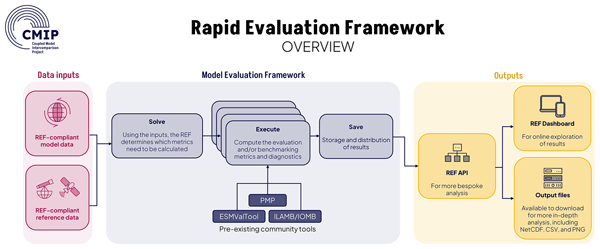
Forrest M. Hoffman, Birgit Hassler, Ranjini Swaminathan, Jared Lewis, Bouwe Andela, Nathan Collier, Dóra Hegedűs, Jiwoo Lee, Charlotte Pascoe, Mika Pflüger, Martina Stockhause, Paul Ullrich, Min Xu, Lisa Bock, Felicity Chun, Bettina K. Gier, Douglas I. Kelley, Axel Lauer, Julien Lenhardt, Manuel Schlund, Mohanan G. Sreeush, Katja Weigel, Ed Blockley, Rebecca Beadling, Romain Beucher, Demiso D. Dugassa, Valerio Lembo, Jianhua Lu, Swen Brands, Jerry Tjiputra, Elizaveta Malinina, Brian Medeiros, Enrico Scoccimarro, Jeremy Walton, Phil Kershaw, André Lanfer Marquez, Malcolm J. Roberts, Eleanor O'Rourke, Beth Dingley, Briony Turner, Helene Hewitt, and John P. Dunne
Geosci. Model Dev., 19, 7415–7455, https://doi.org/10.5194/gmd-19-7415-2026, https://doi.org/10.5194/gmd-19-7415-2026, 2026
Short summary
Short summary
The Rapid Evaluation Framework (REF) is a community-driven platform for benchmarking and performance assessment of Earth system models. Built upon four disparate community evaluation tools, the REF is designed to provide model-data comparisons for the Assessment Fast Track for the Seventh Phase of the Coupled Model Intercomparison Project. The REF will be run at the Earth System Grid Federation to enable model devleopers and scientists to quickly identify model biases and performance issues.
Reinhard K. H. Schiemann, Grenville Lister, Rosalyn Hatcher, Dan Hodson, Bryan Lawrence, Len Shaffrey, Jeff Cole, Andrea Dittus, Jenny Mecking, Jon Robson, Simon Wilson, Yevgeny Aksenov, Adam T. Blaker, Ben Harvey, Oscar Martínez-Alvarado, Annette Osprey, Stephanie Rynders, Sharar Ahmadi, Jake Aylmer, Laura Baker, David Case, Emanuele Silvio Gentile, Steve George, Kevin Hodges, Eliza Karlowska, Charlotte Lang, Hua Lu, Niamh O'Callaghan, Weronika Osmolska, Scott Osprey, Tony Phillips, David Schröder, Robin Smith, Andrew G. Turner, Steve Woolnough, Martin Andrews, Andrew Coward, Steven Hardiman, James Harle, John W. Rostron, David M. H. Sexton, Bablu Sinha, Jonny Williams, and Chris Wilson
EGUsphere, https://doi.org/10.5194/egusphere-2026-2281, https://doi.org/10.5194/egusphere-2026-2281, 2026
This preprint is open for discussion and under review for Geoscientific Model Development (GMD).
Short summary
Short summary
This paper presents a new large ensemble of climate model simulations: The CANARI HadGEM3 Large Ensemble (CANARI LE). The CANARI LE has a comparatively high resolution, provides sub-daily output on atmospheric pressure levels, and boundary conditions for driving regional model simulations. The CANARI LE is thus a community resource that lends itself for the study of physical coupled climate processes, weather systems, and impacts in a changing climate.
Matthias Cuntz, Stephan Thober, Anne Verhoef, Yijian Zeng, Aaron Boone, Agnès Ducharne, Sujan Koirala, David M. Lawrence, Philipp de Vrese, Carsten Montzka, Sonia I. Seneviratne, Harry Vereecken, Dani Or, Salma Tafasca, Naoki Mizukami, Rich Ellis, Patrick C. McGuire, and Lukas Gudmundsson
EGUsphere, https://doi.org/10.5194/egusphere-2026-4223, https://doi.org/10.5194/egusphere-2026-4223, 2026
Short summary
Short summary
Land surface models (LSMs) are essential tools to analyze future climate change. Here we pushed state-of-the-art LSMs out of their comfort zone revealing hidden connections between processes encoded into the models. The LSMs reacted differently due to complex, sometimes counter-intuitive interactions of different water fluxes. We identified surface runoff and soil evaporation as the two main reasons behind model differences, which should be improved by using more mechanistic descriptions.
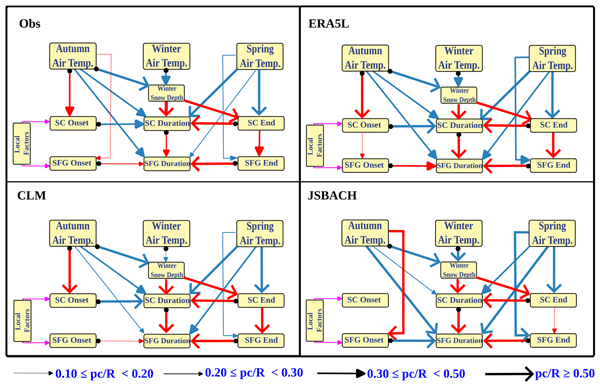
Mittal Parmar, Kristina Fröhlich, Antonella Sanna, Tobias Stacke, Marianna Benassi, Zhicheng Luo, Daniele Peano, and Bodo Ahrens
The Cryosphere, 20, 4157–4184, https://doi.org/10.5194/tc-20-4157-2026, https://doi.org/10.5194/tc-20-4157-2026, 2026
Short summary
Short summary
Seasonally frozen ground strongly influences land–atmosphere interactions, yet its simulation remains uncertain in land surface models. This study evaluates 2 standalone LSM simulations forced by reanalysis data (1986-2022) and validates results against reference observations at 26 Russian sites. Results show contrasting biases linked to snow insulation and freeze–thaw processes, highlighting the need for improved snow and soil parameterizations.
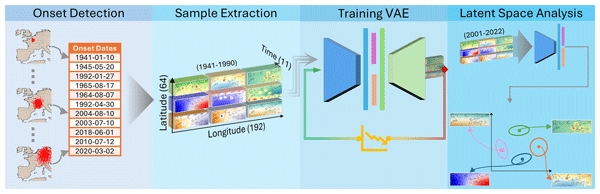
Aytaç Paçal, Birgit Hassler, Katja Weigel, Miguel-Ángel Fernández-Torres, Gustau Camps-Valls, and Veronika Eyring
Earth Syst. Dynam., 17, 955–986, https://doi.org/10.5194/esd-17-955-2026, https://doi.org/10.5194/esd-17-955-2026, 2026
Short summary
Short summary
Heatwaves are among the deadliest natural hazards, yet their evolving atmospheric drivers remain unclear. We apply an unsupervised machine learning model to reanalysis data to identify multivariate heatwave patterns over Europe. The model captures seasonally distinct regimes and reveals significant shifts between historical and recent events across all seasons, highlighting changes in heatwave dynamics over time.
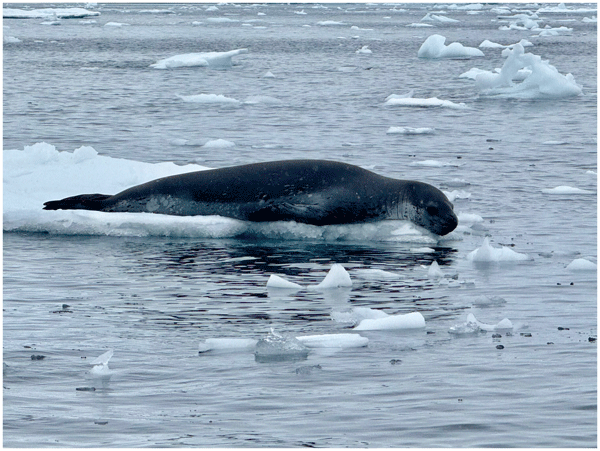
Baylor Fox-Kemper, Patricia DeRepentigny, Anne Marie Treguier, Christian Stepanek, Eleanor O'Rourke, Chloe Mackallah, Alberto Meucci, Yevgeny Aksenov, Paul J. Durack, Nicole Feldl, Oluwayemi Garuba, Vanessa Hernaman, Céline Heuzé, Doroteaciro Iovino, Gaurav Madan, André L. Marquez, François Massonnet, Jenny Mecking, Dhrubajyoti Samanta, Patrick C. Taylor, Wan-Ling Tseng, and Martin Vancoppenolle
Geosci. Model Dev., 19, 6043–6078, https://doi.org/10.5194/gmd-19-6043-2026, https://doi.org/10.5194/gmd-19-6043-2026, 2026
Short summary
Short summary
The ocean and sea ice are central to Earth's climate system, influencing global heat and carbon cycles, weather patterns, and sea level rise. Here the earth system model variables needed for studies of the ocean and sea ice are prioritized and requested. These requested variables were developed through an international, community-based process.
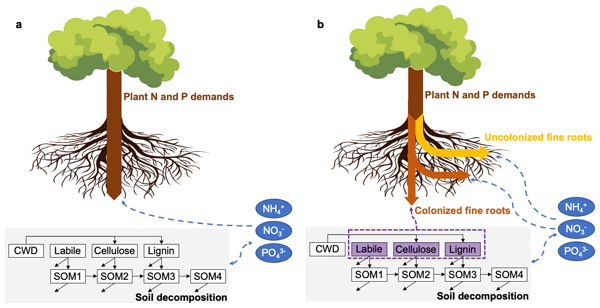
Yaoping Wang, Daniel M. Ricciuto, Jiafu Mao, Sören E. Weber, Verity G. Salmon, Xiaoying Shi, Xiaojuan Yang, Natalie A. Griffiths, Paul J. Hanson, Anthony P. Walker, Jonathan Stelling, Katherine Duchesneau, Camille E. Defrenne, Jeffrey M. Warren, Stephen D. Sebestyen, Kyle J. Pearson, Keith Oleheiser, Joshua M. Birkebak, Mark Guilliams, Misha B. Krassovski, Melanie A. Mayes, and Peter E. Thornton
Geosci. Model Dev., 19, 5827–5855, https://doi.org/10.5194/gmd-19-5827-2026, https://doi.org/10.5194/gmd-19-5827-2026, 2026
Short summary
Short summary
Boreal peatlands store much of the global soil carbon and the service is closely related to nutrient cycling. This study improved a major land surface model to better represent how plants gain nitrogen and phosphorus through fine roots and mycorrhizal association. The new model more accurately captured observed carbon fluxes than the default model at an experimental site in Minnesota, and suggests shifts in nutrient uptake strategy mitigates transition from carbon sink to source under warming.
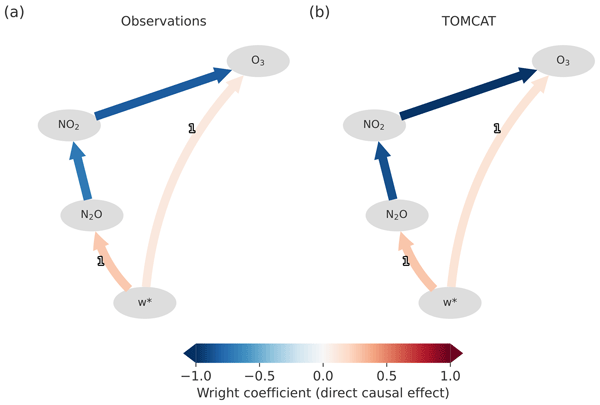
Evgenia Galytska, Birgit Hassler, Carlo Arosio, Martyn P. Chipperfield, Sandip S. Dhomse, Kimberlee Dubé, Wuhu Feng, Fernando Iglesias-Suarez, and Jakob Runge
Atmos. Chem. Phys., 26, 8185–8209, https://doi.org/10.5194/acp-26-8185-2026, https://doi.org/10.5194/acp-26-8185-2026, 2026
Short summary
Short summary
We explore how chemical and dynamical processes shape ozone in the tropical middle stratosphere using satellite data and a chemistry-transport model. We apply a framework to identify cause–effect relationships and estimate their strength. For 2004-2021 monthly data, we detect an indirect pathway controlling ozone variability, with effects increasing after two–three months. We further assess how different wind regimes influence this pathway.
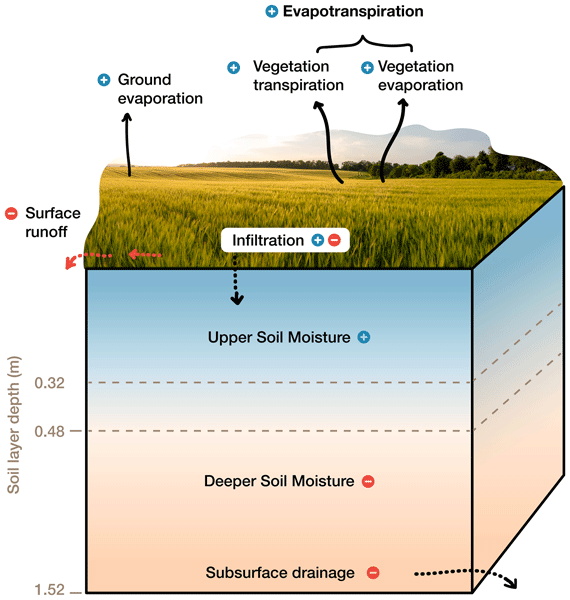
Inne Vanderkelen, Marie-Estelle Demory, Sean Swenson, David M. Lawrence, Benjamin D. Stocker, Myke Koopmans, and Édouard L. Davin
Biogeosciences, 23, 3829–3854, https://doi.org/10.5194/bg-23-3829-2026, https://doi.org/10.5194/bg-23-3829-2026, 2026
Short summary
Short summary
Soil carbon sequestration supports climate mitigation and may enhance water availability. Using a global land model, we show that increased soil organic carbon improves water retention in the root zone and reduces runoff, particularly in dry, sandy regions. Although hydrological changes are modest, they are systematic and suggest co-benefits for vegetation productivity and ecosystem resilience in water-limited areas.
Axel Lauer, Manuel Schlund, Lisa Bock, Birgit Hassler, Gunnar Behrens, Bettina Gier, Lukas Lindenlaub, Stephan Lorenz, Jan-Hendrik Malles, Wolfgang A. Müller, Trang van Pham, Katja Weigel, Guang Zeng, and Veronika Eyring
EGUsphere, https://doi.org/10.5194/egusphere-2026-2288, https://doi.org/10.5194/egusphere-2026-2288, 2026
Short summary
Short summary
ICONEval is a new framework to facilitate researchers to continuously monitor and check their climate models during the development phase. It builds on the ESMValTool software package to run tests verifying that the results are plausible, follow physical laws, and that the model has sufficient skill in reproducing the observed climate. An important aim is to make it easier to spot model errors early, for example when implementing new model components that use machine learning.
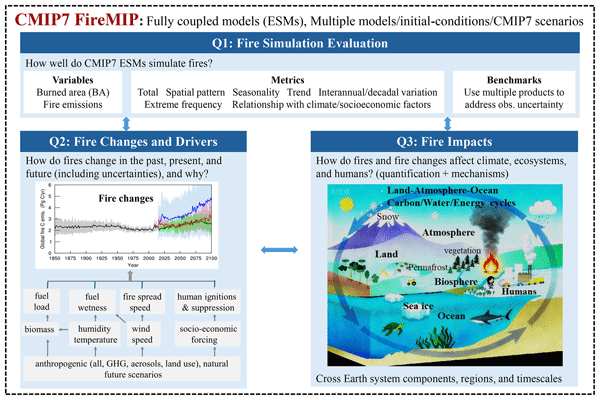
Fang Li, David M. Lawrence, Brendan M. Rogers, Chantelle Burton, Huilin Huang, Yiquan Jiang, Johannes W. Kaiser, Matthew Kasoar, Hanna Lee, Ruby Leung, Lars Nieradzik, Aihui Wang, Daniel S. Ward, Ligeer Ce, Yangchun Li, Zhongda Lin, Apostolos Voulgarakis, and Yongkang Xue
Geosci. Model Dev., 19, 3989–4007, https://doi.org/10.5194/gmd-19-3989-2026, https://doi.org/10.5194/gmd-19-3989-2026, 2026
Short summary
Short summary
Extreme fire events are increasing, and fires are projected to rise across most regions, posing growing risks to ecosystems and society. As a key Earth system process, fire is now modeled in most Earth System Models (ESMs). FireMIP (Fire Modeling Intercomparison Project) within CMIP7 will evaluate fire simulations in state‑of‑the‑art ESMs, project future fire changes, and provide quantitative, process‑based understanding of fire's role in the Earth system.
Pierre Friedlingstein, Michael O'Sullivan, Matthew W. Jones, Robbie M. Andrew, Dorothee C. E. Bakker, Judith Hauck, Peter Landschützer, Corinne Le Quéré, Hongmei Li, Ingrid T. Luijkx, Glen P. Peters, Wouter Peters, Julia Pongratz, Clemens Schwingshackl, Stephen Sitch, Josep G. Canadell, Philippe Ciais, Kjetil Aas, Simone R. Alin, Peter Anthoni, Leticia Barbero, Nicholas R. Bates, Nicolas Bellouin, Alice Benoit-Cattin, Carla F. Berghoff, Raffaele Bernardello, Laurent Bopp, Ida Bagus Mandhara Brasika, Matthew A. Chamberlain, Naveen Chandra, Frédéric Chevallier, Louise P. Chini, Nathan O. Collier, Thomas H. Colligan, Margot Cronin, Laique M. Djeutchouang, Xinyu Dou, Matt P. Enright, Kazutaka Enyo, Michael Erb, Wiley Evans, Richard A. Feely, Liang Feng, Daniel J. Ford, Adrianna Foster, Filippa Fransner, Thomas Gasser, Marion Gehlen, Thanos Gkritzalis, Jefferson Goncalves De Souza, Giacomo Grassi, Luke Gregor, Nicolas Gruber, Bertrand Guenet, Özgür Gürses, Kirsty Harrington, Ian Harris, Jens Heinke, George C. Hurtt, Yosuke Iida, Tatiana Ilyina, Akihiko Ito, Andrew R. Jacobson, Atul K. Jain, Tereza Jarníková, Annika Jersild, Fei Jiang, Steve D. Jones, Etsushi Kato, Ralph F. Keeling, Kees Klein Goldewijk, Jürgen Knauer, Yawen Kong, Jan Ivar Korsbakken, Charles Koven, Taro Kunimitsu, Xin Lan, Junjie Liu, Zhiqiang Liu, Zhu Liu, Claire Lo Monaco, Lei Ma, Gregg Marland, Patrick C. McGuire, Galen A. McKinley, Joe R. Melton, Natalie Monacci, Erwan Monier, Eric J. Morgan, David R. Munro, Jens D. Müller, Shin-Ichiro Nakaoka, Lorna R. Nayagam, Yosuke Niwa, Tobias Nutzel, Are Olsen, Abdirahman M. Omar, Naiqing Pan, Sudhanshu Pandey, Denis Pierrot, Zhangcai Qin, Pierre Regnier, Gregor Rehder, Laure Resplandy, Alizée Roobaert, Thais M. Rosan, Christian Rödenbeck, Jörg Schwinger, Ingunn Skjelvan, T. Luke Smallman, Victoria Spada, Mohanan G. Sreeush, Qing Sun, Adrienne J. Sutton, Colm Sweeney, Didier Swingedouw, Roland Séférian, Shintaro Takao, Hiroaki Tatebe, Hanqin Tian, Xiangjun Tian, Bronte Tilbrook, Hiroyuki Tsujino, Francesco Tubiello, Erik van Ooijen, Guido R. van der Werf, Sebastiaan J. van de Velde, Anthony P. Walker, Rik Wanninkhof, Xiaojuan Yang, Wenping Yuan, Xu Yue, and Jiye Zeng
Earth Syst. Sci. Data, 18, 3211–3288, https://doi.org/10.5194/essd-18-3211-2026, https://doi.org/10.5194/essd-18-3211-2026, 2026
Short summary
Short summary
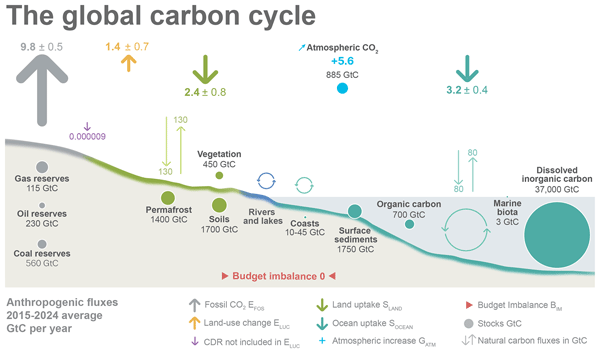
The Global Carbon Budget 2025 describes the methodology, main results, and datasets used to quantify the anthropogenic emissions of carbon dioxide (CO2) and their partitioning among the atmosphere, land ecosystems, and the ocean over the historical period (1750–2025). These living datasets are updated every year to provide the highest transparency and traceability in the reporting of CO2, the key driver of climate change.
Robin S. Smith, Tarkan A. Bilge, Thomas J. Bracegirdle, Paul R. Holland, Till Kuhlbrodt, Charlotte Lang, Spencer Liddicoat, Tom Mitcham, Jane Mulcahy, Kaitlin A. Naughten, Andrew Orr, Julien Palmieri, Antony J. Payne, Steven Rumbold, Marc Stringer, Ranjini Swaminathan, Sarah Taylor, Jeremy Walton, and Colin Jones
Earth Syst. Dynam., 17, 475–493, https://doi.org/10.5194/esd-17-475-2026, https://doi.org/10.5194/esd-17-475-2026, 2026
Short summary
Short summary
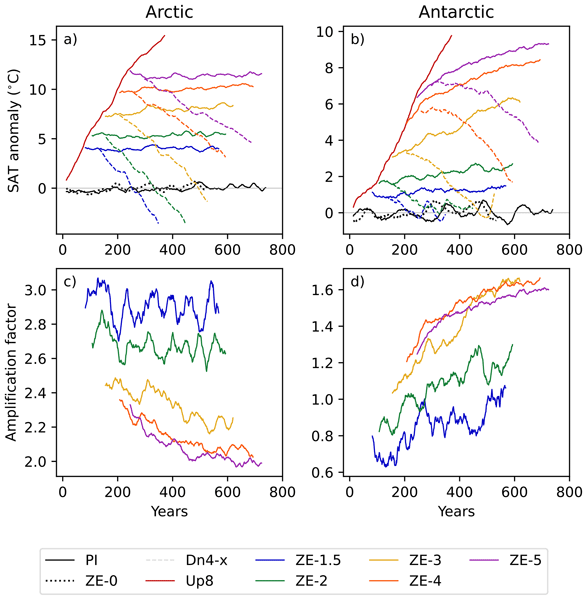
There is a dangerous amount of uncertainty in our predictions of climate change in polar regions because some of feedbacks that might lead to changes that are too rapid for us to adapt to, or that cannot be reversed. We have run a set of simulations with a state-of-the-art Earth System Model that helps improve our understanding of how climate in these regions might change. Some of the aspects we investigate are reversible but many are not, especially those affecting ice sheets and sea level.
Violet L. Patterson, Lauren J. Gregoire, Ruza F. Ivanovic, Niall Gandy, Stephen Cornford, Jonathan Owen, Sam Sherriff-Tadano, and Robin S. Smith
The Cryosphere, 20, 2589–2628, https://doi.org/10.5194/tc-20-2589-2026, https://doi.org/10.5194/tc-20-2589-2026, 2026
Short summary
Short summary
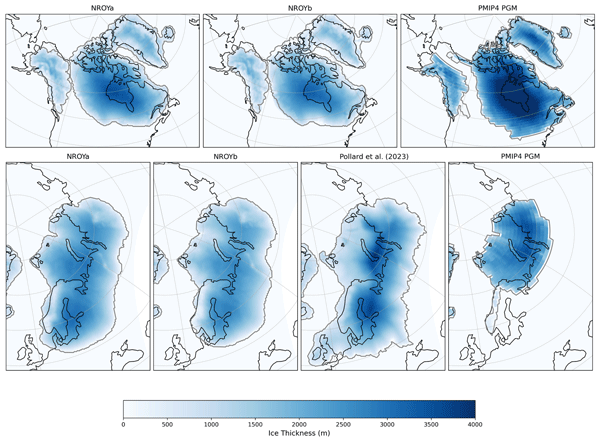
Simulations of the last two glacial periods are ran using a computer model in which the atmosphere and ice sheets interact. The model is able to produce ice sheet volumes, extents and dynamics in good agreement with data. Sensitivity analysis is undertaken and shows the Northern Hemisphere ice sheet size is particularly sensitive to the albedo of the ice in the model but the different ice sheets display different sensitivities to other processes.
Elias C. Massoud, Nathan Collier, Yaoping Wang, Jiafu Mao, Adrian Harpold, Steven A. Kannenberg, Gerbrand Koren, Mukesh Kumar, Pushpendra Raghav, Pallav Ray, Mingjie Shi, Jing Tao, Sreedevi P. Vasu, Huiqi Wang, Qing Zhu, and Forrest M. Hoffman
Geosci. Model Dev., 19, 3427–3453, https://doi.org/10.5194/gmd-19-3427-2026, https://doi.org/10.5194/gmd-19-3427-2026, 2026
Short summary
Short summary
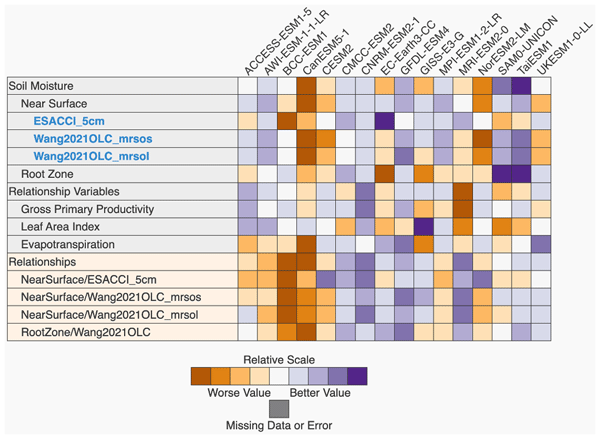
Soil moisture helps control how plants grow and how land exchanges water and energy with the atmosphere. We evaluated how well 16 Earth System Models represent soil moisture and its links to plant activity using a benchmarking system and observational data. Many models simulate surface soil moisture well but show larger errors deeper in the soil and in colder regions. Models that represent plant–soil water interactions more directly better capture how ecosystems respond to water availability.
Beth Dingley, James A. Anstey, Marta Abalos, Carsten Abraham, Tommi Bergman, Lisa Bock, Sonya Fiddes, Birgit Hassler, Ryan J. Kramer, Fei Luo, Fiona M. O'Connor, Petr Šácha, Isla R. Simpson, Laura J. Wilcox, and Mark D. Zelinka
Geosci. Model Dev., 19, 2945–2984, https://doi.org/10.5194/gmd-19-2945-2026, https://doi.org/10.5194/gmd-19-2945-2026, 2026
Short summary
Short summary
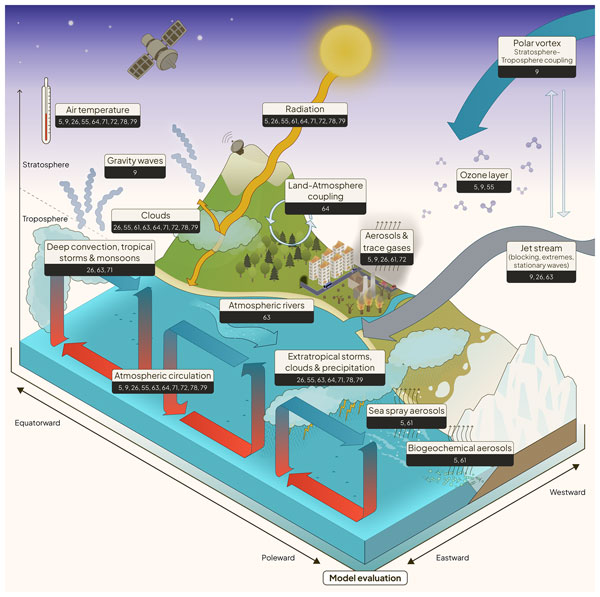
This manuscript defines as a list of variables and scientific opportunities which are requested from the Coupled Model Intercomparison Project Phase 7 (CMIP7) Assessment Fast Track to address open atmospheric science questions. The list reflects the output of a large public community engagement effort, coordinated across autumn 2025 through to summer 2025.
Mara Y. McPartland, Tomas Lovato, Charles Koven, Jamie D. Wilson, Briony Turner, Colleen M. Petrik, José Licón-Saláiz, Fang Li, Fanny Lhardy, Jaclyn Clement Kinney, Michio Kawamiya, Birgit Hassler, Nathan P. Gillett, Cheikh Modou Noreyni Fall, Christopher Danek, Chris M. Brierley, Ana Bastos, and Oliver Andrews
Geosci. Model Dev., 19, 2849–2880, https://doi.org/10.5194/gmd-19-2849-2026, https://doi.org/10.5194/gmd-19-2849-2026, 2026
Short summary
Short summary
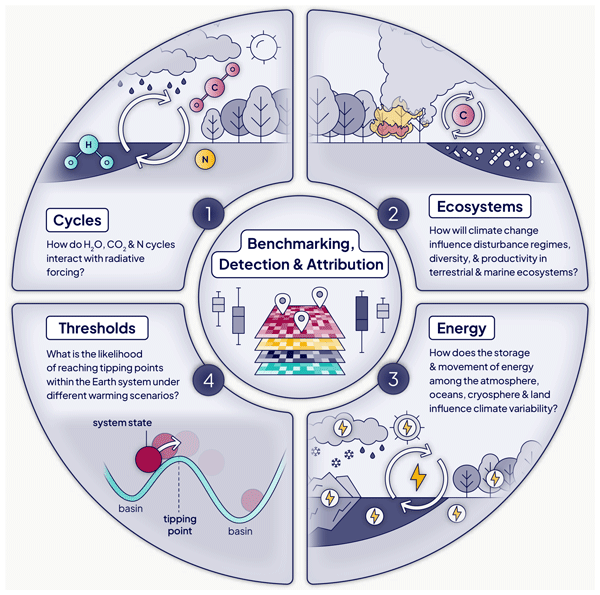
The Coupled Model Intercomparison Project (CMIP) is an international consortium of climate modeling groups that produce coordinated experiments in order to evaluate human influence on the climate and test knowledge of Earth systems. This paper describes the data requested for Earth systems research in CMIP7. We detail the request for model output of the carbon cycle, the flows of energy among the atmosphere, land and the oceans, and interactions between these and the global climate.
Chloe Mackallah, Martin Juckes, James Anstey, Beth Dingley, Charlotte Pascoe, Gaëlle Rigoudy, Marie-Pierre Moine, Tomas Lovato, Alison Pamment, Martin Schupfner, Michio Kawamiya, Tommi Bergman, Charles Koven, Eleanor O'Rourke, Briony Turner, Daniel Ellis, and Matthew Mizielinski
EGUsphere, https://doi.org/10.5194/egusphere-2026-1641, https://doi.org/10.5194/egusphere-2026-1641, 2026
Short summary
Short summary
This paper describes the creation of a new set of output data requirements for upcoming global climate model experiments performed for CMIP7, an international climate modelling activity. Experts from the community helped to co-create a database that describes which data should be produced, and the scientific justifications behind these choices. It supports growing climate research and policy needs by linking experiments and variables to scientific objectives and real‑world applications.
Claire K. Yung, Xylar S. Asay-Davis, Alistair Adcroft, Christopher Y. S. Bull, Jan De Rydt, Michael S. Dinniman, Benjamin K. Galton-Fenzi, Daniel Goldberg, David E. Gwyther, Robert Hallberg, Matthew Harrison, Tore Hattermann, David M. Holland, Denise Holland, Paul R. Holland, James R. Jordan, Nicolas C. Jourdain, Kazuya Kusahara, Gustavo Marques, Pierre Mathiot, Dimitris Menemenlis, Adele K. Morrison, Yoshihiro Nakayama, Olga Sergienko, Robin S. Smith, Alon Stern, Ralph Timmermann, and Qin Zhou
The Cryosphere, 20, 2053–2088, https://doi.org/10.5194/tc-20-2053-2026, https://doi.org/10.5194/tc-20-2053-2026, 2026
Short summary
Short summary
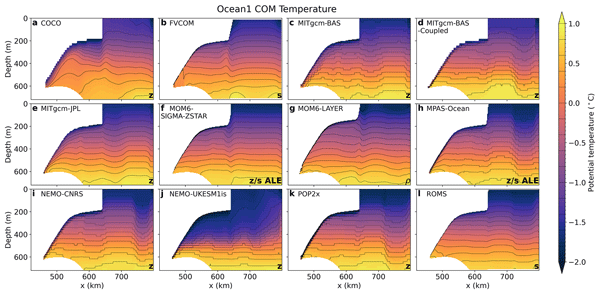
The second Ice Shelf-Ocean Model Intercomparison Project, ISOMIP+, compares 12 ice shelf-ocean models with a common, idealised, static configuration, aiming to assess inter-model variability. Models show similar basal melt rate patterns, ocean profiles and circulation but differ in ice-ocean boundary layer properties. Ice-ocean boundary layer representation is a key area for future work, as are realistic-domain ice sheet-ocean model intercomparisons.
Didier Swingedouw, Laura Jackson, Aixue Hu, Anastasia Romanou, Nicole C. Laureanti, Wilbert Weijer, Sina Loriani, Bette Otto-Bliesner, Ayako Abe-Ouchi, Lucas Almeida, Alessio Bellucci, Reyk Börner, Gokhan Danabasoglu, Donovan P. Dennis, Marion Devilliers, Sybren Drijfhout, Jonathan Donges, Friederike Fröb, Thomas L. Frölicher, Guillaume Gastineau, Heiko Goelzer, Chuncheng Guo, Urs Hofmann, Anna Höse, Colin Jones, Torben Koenigk, Ann Kristin Klose, Valerio Lembo, Jose Licon-Salaiz, Ken Mankoff, Virna Meccia, Irina Melnikova, Oliver Mehling, Laurie Menviel, Juliette Mignot, Jon I. Robson, Gavin A. Schmidt, Robin Smith, Yuchen Sun, Irene Trombini, Matteo Willeit, Richard Wood, Fanghua Wu, Lin Zhaohui, and Ricarda Winkelmann
EGUsphere, https://doi.org/10.5194/egusphere-2026-1698, https://doi.org/10.5194/egusphere-2026-1698, 2026
Short summary
Short summary
This study presents a plan for climate model experiments to better understand how changes in freshwater in the North Atlantic affect major ocean currents. We designed coordinated simulations to test their response to warming, added freshwater, and possible recovery after weakening. Comparing results across models and past climate evidence helps improve confidence in projections and assess risks of large ocean circulation changes.
Abigail L. S. Swann, Charles D. Koven, Cristian Proistosecu, Rosie A. Fisher, Benjamin M. Sanderson, Victor Brovkin, Tomohiro Hajima, Chris D. Jones, Nancy Y. Kiang, David M. Lawrence, Spencer Liddicoat, Hannah Liddy, Anastasia Romanou, Roland Séférian, Lori T. Sentman, Norman J. Steinert, Jerry Tjiputra, and Tilo Ziehn
EGUsphere, https://doi.org/10.5194/egusphere-2026-1673, https://doi.org/10.5194/egusphere-2026-1673, 2026
Short summary
Short summary
We analyzed simulations from Earth system models (ESM) with a constant rate of emissions, zero emissions, and negative emissions of CO2 to quantify the response of land carbon sinks. We found that under positive emissions vegetation in the tropics gained carbon. Under zero emissions and negative emissions most ESMs lost carbon from vegetation in the tropics but gained carbon in mid- and high-latitudes, mostly in soils. Our findings imply that tropical carbon is vulnerable under zero emissions.
Konstantin Gregor, Benjamin F. Meyer, Tillmann Gaida, Victor Justo Vasquez, Karina Bett-Williams, Matthew Forrest, João P. Darela-Filho, Sam Rabin, Marcos Longo, Joe R. Melton, Johan Nord, Peter Anthoni, Vladislav Bastrikov, Thomas Colligan, Christine Delire, Michael C. Dietze, George Hurtt, Akihiko Ito, Lasse T. Keetz, Jürgen Knauer, Johannes Köster, Tzu-Shun Lin, Lei Ma, Marie Minvielle, Stefan Olin, Sebastian Ostberg, Hao Shi, Reiner Schnur, Qing Sun, Peter E. Thornton, and Anja Rammig
Geosci. Model Dev., 19, 2407–2436, https://doi.org/10.5194/gmd-19-2407-2026, https://doi.org/10.5194/gmd-19-2407-2026, 2026
Short summary
Short summary
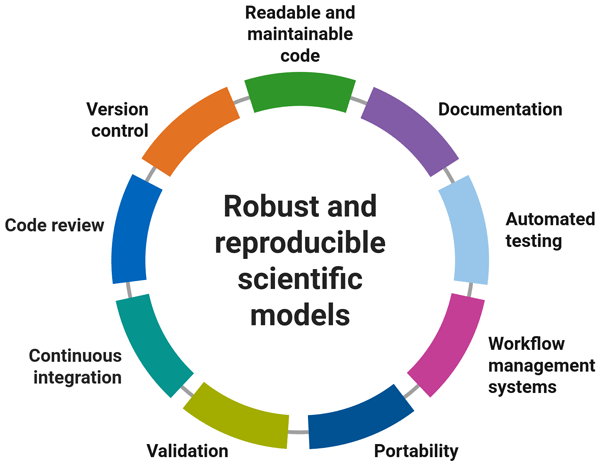
Geoscientific models are crucial for understanding Earth’s processes. However, they sometimes do not adhere to highest software quality standards, and scientific results are often hard to reproduce due to the complexity of the workflows. Here we gather the expertise of 20 modeling groups and software engineers to define best practices for making geoscientific models maintainable, usable, and reproducible. We conclude with an open-source example serving as a reference for modeling communities.
Jörg Schwinger, Leon Merfort, Nico Bauer, Raffaele Bernadello, Momme Butenschön, Timothée Bourgeois, Matthew J. Gidden, Shraddha Gupta, Hanna Lee, Nadine Mengis, Yiannis Moustakis, Helene Muri, Lars Nieradzik, Daniele Peano, Julia Pongratz, Pascal Sauer, Etienne Tourigny, and David Wårlind
EGUsphere, https://doi.org/10.5194/egusphere-2026-833, https://doi.org/10.5194/egusphere-2026-833, 2026
Short summary
Short summary
Earth system models can simulate CO2 removal by representing the activity that removes CO2 from the atmosphere, e.g. growing bioenergy crops for energy production with CCS or enhancing the surface oceans’ alkalinity. We describe a simulation framework, spanning the modeling chain from integrated assessment to Earth system models, that allows separating the intrinsic efficiency of CDR options from the overall atmospheric CO2 reduction, the latter including the effect of carbon-cycle feedbacks.
Sean Davis, William Ball, Yue Jia, Gabriel Chiodo, Justin Alsing, James Keeble, Hideharu Akiyoshi, Carlo Arosio, Ewa Bednarz, Andreas Chrysanthou, Melanie Coldewey-Egbers, Robert Damadeo, Sandip Dhomse, Mohamadou Diallo, Simone Dietmuller, Roland Eichinger, Stacey Frith, Birgit Hassler, Michaela Hegglin, Daan Hubert, Patrick Jöckel, Béatrice Josse, Natalya Kramarova, Diego Loyola, Eliane Maillard Barras, Marion Marchand, Olaf Morgenstern, David Plummer, Robert Portmann, Karen Rosenlof, Alexei Rozanov, Viktoria Sofieva, Johannes Staehelin, Timofei Sukhodolov, Kleareti Tourpali, Ronald Van der A, H. J. Ray Wang, Krzysztof Wargan, Shingo Watanabe, Mark Weber, Jeannette Wild, Yousuke Yamashita, and Jerry Ziemke
EGUsphere, https://doi.org/10.5194/egusphere-2026-532, https://doi.org/10.5194/egusphere-2026-532, 2026
Short summary
Short summary
This study investigates how tropical ozone levels have changed since 2000 in chemistry climate models and satellite observations to determine how well they agree with one another, and to see if current trends can help predict future levels. At some, satellite records disagree significantly on the magnitude of ozone changes. The study shows a connection between recent ozone trends and future ozone levels, suggesting that satellite measurements could help constrain future ozone changes.
Lukas Lindenlaub, Katja Weigel, Birgit Hassler, Colin Jones, and Veronika Eyring
Earth Syst. Dynam., 17, 81–105, https://doi.org/10.5194/esd-17-81-2026, https://doi.org/10.5194/esd-17-81-2026, 2026
Short summary
Short summary
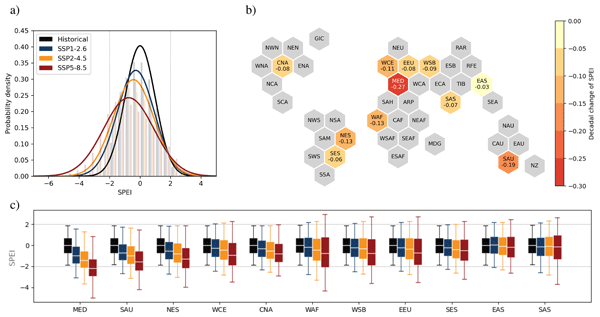
This study explores changes in drought characteristic based on projections by 18 different Earth system models. Their performance is evaluated by comparing historical simulations to observation based reanalysis. The analysis of a standardized drought index under different future scenarios revealed that the harvest area that is projected to experience extreme drought conditions towards the end of this century ranges from 10 % to 40 % depending on the emission scenario.

Jon Cranko Page, Martin G. De Kauwe, Andy J. Pitman, Isaac R. Towers, Gabriele Arduini, Martin J. Best, Craig R. Ferguson, Jürgen Knauer, Hyungjun Kim, David M. Lawrence, Tomoko Nitta, Keith W. Oleson, Catherine Ottlé, Anna Ukkola, Nicholas Vuichard, Xiaoni Wang-Faivre, and Gab Abramowitz
Biogeosciences, 23, 263–282, https://doi.org/10.5194/bg-23-263-2026, https://doi.org/10.5194/bg-23-263-2026, 2026
Short summary
Short summary
This paper used a large dataset of observations, machine learning predictions, and computer model simulations to test how well land surface models represent the water, energy, and carbon cycles. We found that the models work well under "normal" weather but do not meet performance expectations during coinciding extreme conditions. Since these extremes are relatively rare, targeted model improvements could deliver major performance gains.
Jingyu Wang, Gabriel Chiodo, Blanca Ayarzagüena, William T. Ball, Mohamadou Diallo, Birgit Hassler, James Keeble, Peer Nowack, Clara Orbe, Sandro Vattioni, and Timofei Sukhodolov
Atmos. Chem. Phys., 25, 17819–17844, https://doi.org/10.5194/acp-25-17819-2025, https://doi.org/10.5194/acp-25-17819-2025, 2025
Short summary
Short summary
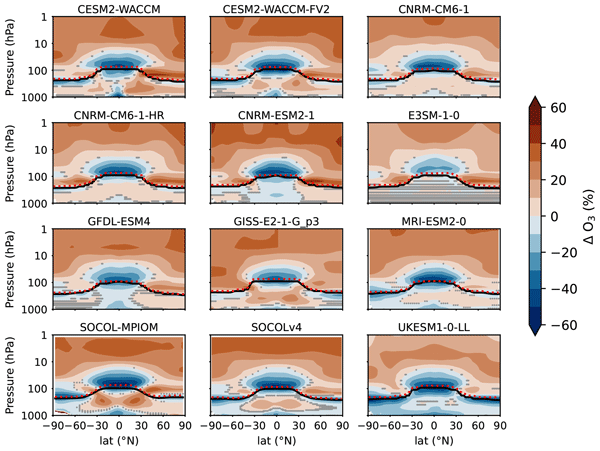
We analyzed the ozone response under elevated CO2 using the data from CMIP6 DECK experiments. We then examined the relations between ozone response and changes in temperature and circulation to identify the drivers of ozone change. The climate feedback of ozone is investigated through offline calculations and by comparing models with and without interactive chemistry. We find that ozone–climate interactions are important for Earth system models and thus should be considered in future model development.
Alex C. Ruane, Charlotte L. Pascoe, Claas Teichmann, David J. Brayshaw, Carlo Buontempo, Ibrahima Diouf, Jesus Fernandez, Paula L. M. Gonzalez, Birgit Hassler, Vanessa Hernaman, Ulas Im, Doroteaciro Iovino, Martin Juckes, Iréne L. Lake, Timothy Lam, Xiaomao Lin, Jiafu Mao, Negin Nazarian, Sylvie Parey, Indrani Roy, Wan-Ling Tseng, Briony Turner, Andrew Wiebe, Lei Zhao, and Damaris Zurell
Geosci. Model Dev., 18, 9497–9540, https://doi.org/10.5194/gmd-18-9497-2025, https://doi.org/10.5194/gmd-18-9497-2025, 2025
Short summary
Short summary
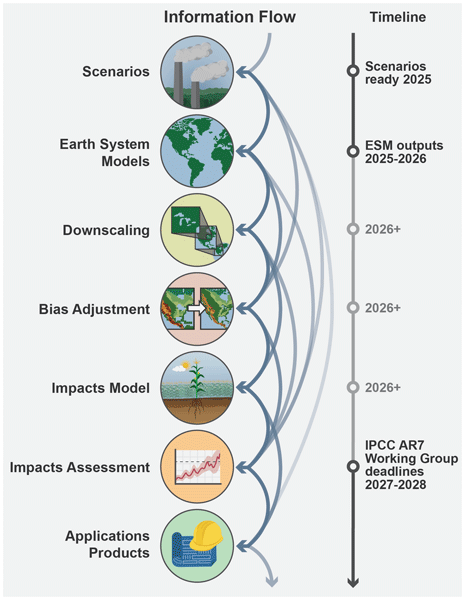
This paper describes how the Coupled Model Intercomparison Project organized its 7th phase (CMIP7) to encourage the production of Earth system model outputs relevant for impacts and adaptation. Community engagement identified 13 opportunities for application across human and natural systems, 60 variable groups and 539 unique variables. We also show how simulations can more efficiently meet applications needs by targeting appropriate resolution, time slices, experiments and variable groups.
Iris Mužić, Øivind Hodnebrog, Yeliz A. Yilmaz, Terje K. Berntsen, Jana Sillmann, David M. Lawrence, and Paul A. Dirmeyer
Adv. Stat. Clim. Meteorol. Oceanogr., 11, 273–292, https://doi.org/10.5194/ascmo-11-273-2025, https://doi.org/10.5194/ascmo-11-273-2025, 2025
Short summary
Short summary
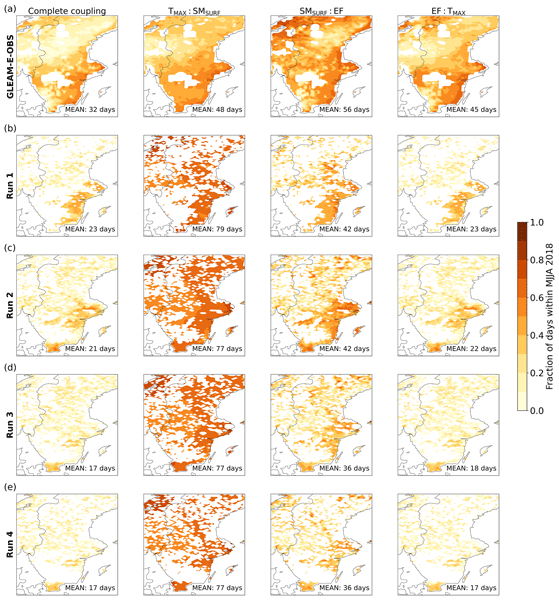
This study investigates soil moisture–temperature coupling during the extreme warm conditions in May–August 2018 in southern and central Sweden using the merged GLEAM-E-OBS dataset and four simulations from the Weather Research and Forecasting model coupled with the Community Terrestrial Systems Model (WRF-CTSM). Based on changes in surface soil moisture, evaporative fraction, and daily maximum 2 m temperature, on average across the region and five datasets, the coupling lasted for 22 d.
Peter Van Katwyk, Baylor Fox-Kemper, Sophie Nowicki, Hélène Seroussi, and Karianne J. Bergen
EGUsphere, https://doi.org/10.5194/egusphere-2025-4914, https://doi.org/10.5194/egusphere-2025-4914, 2025
Short summary
Short summary
We developed ISEFlow, a new climate emulator model that predicts how melting ice sheets in Greenland and Antarctica will contribute to future sea levels. Unlike past tools, it uses advanced machine learning to capture complex ice processes, distinguish between different greenhouse gas scenarios, and provide clearer estimates of uncertainty. This makes sea level projections more accurate and reliable, helping scientists and policymakers better plan for climate risks.
Daniele Peano, Deborah Hemming, Christine Delire, Yuanchao Fan, Hanna Lee, Stefano Materia, Julia E. M. S. Nabel, Taejin Park, David Wårlind, Andy Wiltshire, and Sönke Zaehle
Biogeosciences, 22, 7117–7135, https://doi.org/10.5194/bg-22-7117-2025, https://doi.org/10.5194/bg-22-7117-2025, 2025
Short summary
Short summary
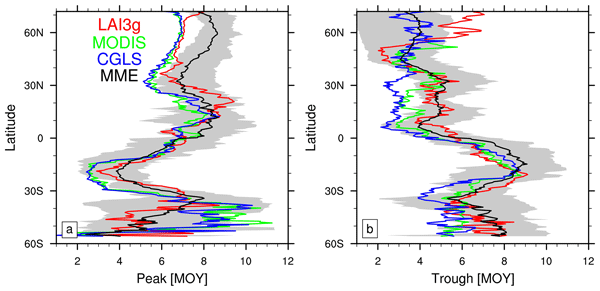
Earth System Models are the principal tools for scientists to study past, present, and future climate changes. This work investigates the ability of a set of them to represent the observed changes in vegetation, which are vital to estimating the impact of future climate mitigation and adaptation strategies. This study highlights the main limitations in correctly representing vegetation variability. These tools still need further development to improve our understanding of future changes.
Nikolina Mileva, Julia Pongratz, Vivek K. Arora, Akihiko Ito, Sebastiaan Luyssaert, Sonali S. McDermid, Paul A. Miller, Daniele Peano, Roland Séférian, Yanwu Zhang, and Wolfgang Buermann
Earth Syst. Dynam., 16, 2137–2160, https://doi.org/10.5194/esd-16-2137-2025, https://doi.org/10.5194/esd-16-2137-2025, 2025
Short summary
Short summary
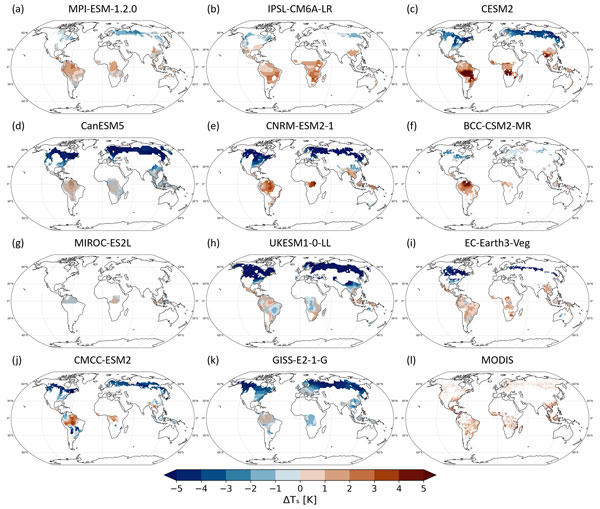
Despite forests being so important for mitigating climate change, there are still uncertainties about how much the changes in forest cover contribute to the cooling/warming of the climate. Climate models and real-world observations often disagree about the magnitude and even the direction of these changes. We constrain climate models scenarios of widespread deforestation with satellite and in-situ data and show that models still have difficulties representing the movement of heat and water.
Victor Brovkin, Benjamin M. Sanderson, Noel G. Brizuela, Tomohiro Hajima, Tatiana Ilyina, Chris D. Jones, Charles Koven, David Lawrence, Peter Lawrence, Hongmei Li, Spencer Liddcoat, Anastasia Romanou, Roland Séférian, Lori T. Sentman, Abigail L. S. Swann, Jerry Tjiputra, Tilo Ziehn, and Alexander J. Winkler
Earth Syst. Dynam., 16, 2021–2034, https://doi.org/10.5194/esd-16-2021-2025, https://doi.org/10.5194/esd-16-2021-2025, 2025
Short summary
Short summary
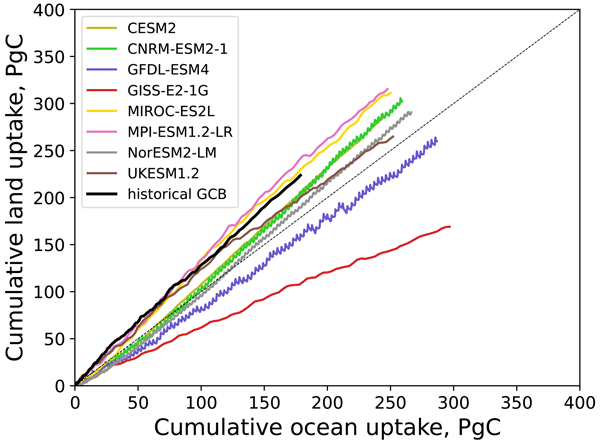
Idealized experiments with Earth system models provide a basis for understanding the response of the carbon cycle to emissions. We show that most models exhibit a quasi-linear relationship between cumulative carbon uptake on land and in the ocean and hypothesize that this relationship does not depend on emission pathways. We reduce the coupled system to only one differential equation, which represents a powerful simplification of the Earth system dynamics as a function of fossil fuel emissions.
Gavin A. Schmidt, Kenneth D. Mankoff, Jonathan L. Bamber, Clara Burgard, Dustin Carroll, David M. Chandler, Violaine Coulon, Benjamin J. Davison, Matthew H. England, Paul R. Holland, Nicolas C. Jourdain, Qian Li, Juliana M. Marson, Pierre Mathiot, Clive R. McMahon, Twila A. Moon, Ruth Mottram, Sophie Nowicki, Anna Olivé Abelló, Andrew G. Pauling, Thomas Rackow, and Damien Ringeisen
Geosci. Model Dev., 18, 8333–8361, https://doi.org/10.5194/gmd-18-8333-2025, https://doi.org/10.5194/gmd-18-8333-2025, 2025
Short summary
Short summary
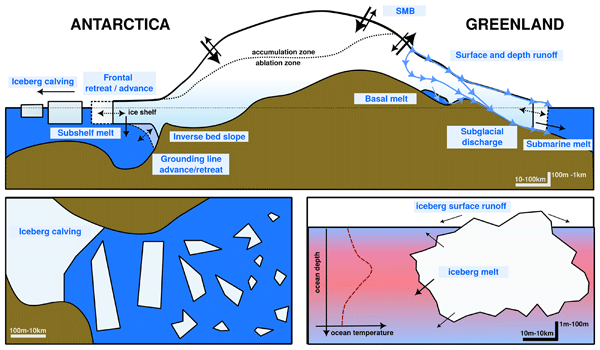
The impact of increasing mass loss from the Greenland and Antarctic ice sheets has not so far been included in historical climate model simulations. This paper describes the protocols and data available for modeling groups to add this anomalous freshwater to their ocean modules to better represent the impacts of these fluxes on ocean circulation, sea ice, salinity and sea level.
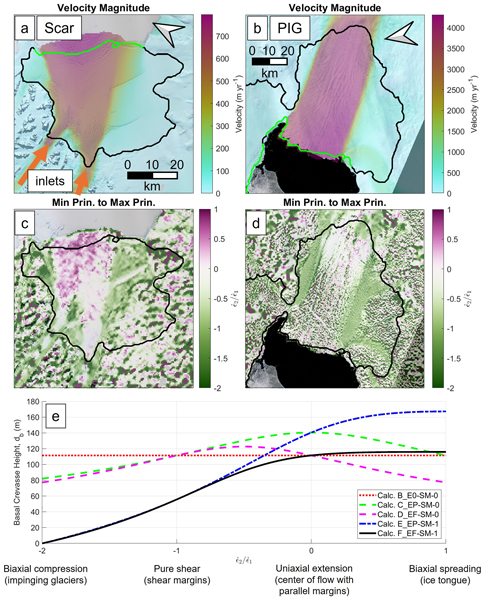
Benjamin Reynolds, Sophie Nowicki, and Kristin Poinar
The Cryosphere, 19, 5045–5073, https://doi.org/10.5194/tc-19-5045-2025, https://doi.org/10.5194/tc-19-5045-2025, 2025
Short summary
Short summary
Stress in glaciers, ice sheets, and ice shelves causes crevasses, which are important drivers of retreat and sea level rise. We find that different assumptions found in the literature lead to significantly (up to a factor of 2) different crevasse depths and recommend a calculation based on observed ice flow patterns. We find that other stress calculations likely overpredict ice shelf vulnerability to hydrofracture.

Donald A. Slater, Eleanor Johnstone, Martim Mas e Braga, Neil J. Fraser, Tom Cowton, and Mark Inall
Geosci. Model Dev., 18, 7475–7500, https://doi.org/10.5194/gmd-18-7475-2025, https://doi.org/10.5194/gmd-18-7475-2025, 2025
Short summary
Short summary
Glacial fjords connect ice sheets to the ocean, controlling heat delivery to glaciers, which impacts ice sheet melt, and freshwater discharge to the ocean, affecting ocean circulation. However, their dynamics are not captured in large-scale climate models. We designed a simplified, computationally efficient model – FjordRPM – that accurately captures key fjord processes. It has direct applications for improving projections of ice melt, ocean circulation, and sea level rise.
Johanna Beckmann, Ronja Reese, Felicity S. McCormack, Sue Cook, Lawrence Bird, Dawid Gwyther, Daniel Richards, Matthias Scheiter, Yu Wang, Hélène Seroussi, Ayako Abe‐Ouchi, Torsten Albrecht, Jorge Alvarez‐Solas, Xylar S. Asay‐Davis, Jean‐Baptiste Barre, Constantijn J. Berends, Jorge Bernales, Javier Blasco, Justine Caillet, David M. Chandler, Violaine Coulon, Richard Cullather, Christophe Dumas, Benjamin K. Galton‐Fenzi, Julius Garbe, Fabien Gillet‐Chaulet, Rupert Gladstone, Heiko Goelzer, Nicholas R. Golledge, Ralf Greve, G. Hilmar Gudmundsson, Holly Kyeore Han, Trevor R. Hillebrand, Matthew J. Hoffman, Philippe Huybrechts, Nicolas C. Jourdain, Ann Kristin Klose, Petra M. Langebroek, Gunter R. Leguy, William H. Lipscomb, Daniel P. Lowry, Pierre Mathiot, Marisa Montoya, Mathieu Morlighem, Sophie Nowicki, Frank Pattyn, Antony J. Payne, Tyler Pelle, Aurélien Quiquet, Alexander Robinson, Leopekka Saraste, Erika G. Simon, Sainan Sun, Jake P. Twarog, Luke D. Trusel, Benoit Urruty, Jonas Van Breedam, Roderik S. W. van de Wal, Chen Zhao, and Thomas Zwinger
EGUsphere, https://doi.org/10.5194/egusphere-2025-4069, https://doi.org/10.5194/egusphere-2025-4069, 2025
Short summary
Short summary
Antarctica holds enough ice to raise sea levels by many meters, but its future is uncertain. Warm ocean water melts ice shelves from below, letting inland ice flow faster into the sea. By 2300, Antarctica could add 0.6–4.4 m to sea levels. Our study identifies two key factors—how strongly shelves melt and how the ice responds. These explain much of the range, and refining them in models may improve future predictions.
Naoki Mizukami, Samar Minallah, Cenlin He, Chayan Roychoudhury, William Y.Y. Cheng, and Rajesh Kumar
EGUsphere, https://doi.org/10.5194/egusphere-2025-4586, https://doi.org/10.5194/egusphere-2025-4586, 2025
Short summary
Short summary
We examined how air pollution particles that darken snow affect water resources in High Mountain Asia, a region that supplies rivers vital to millions of populations. Using computer models, we found that these particles cause snow to melt two weeks to a month earlier, shifting when water becomes available. This leads to more runoff at first but less later in the year, slightly reducing annual river flow. The findings highlight the need to link air pollution control with water management.
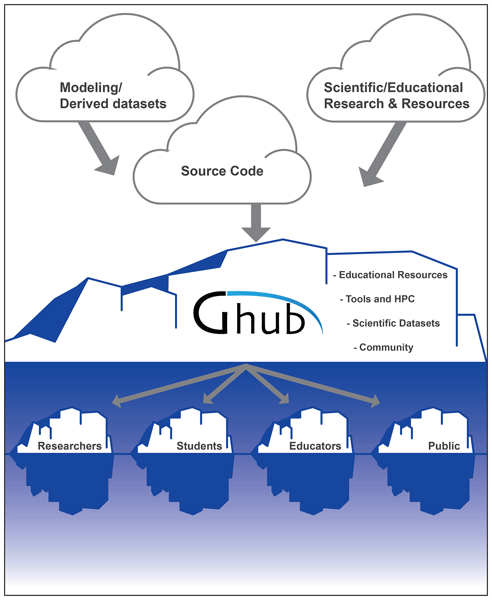
Joseph P. Tulenko, Sophie A. Goliber, Renette Jones-Ivey, Justin Quinn, Abani Patra, Kristin Poinar, Sophie Nowicki, Beata M. Csatho, and Jason P. Briner
The Cryosphere, 19, 4327–4333, https://doi.org/10.5194/tc-19-4327-2025, https://doi.org/10.5194/tc-19-4327-2025, 2025
Short summary
Short summary
Ghub is an online platform that hosts tools, datasets, and educational resources related to ice sheet science. These resources are provided by ice sheet researchers and allow other researchers, students, educators, and interested members of the general public to analyze, visualize, and download datasets that researchers use to study past and present ice sheet behavior. We describe how users can interact with Ghub, showcase some available resources, and describe the future of the Ghub project.
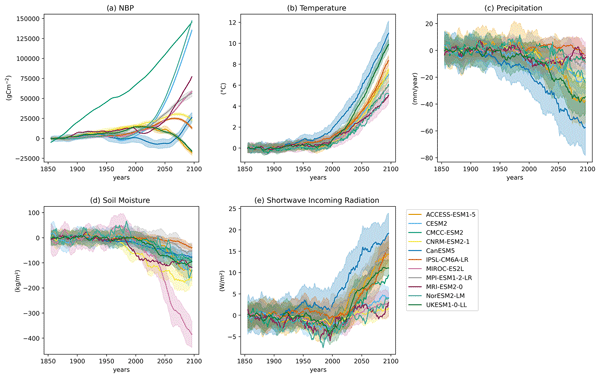
Matteo Mastropierro, Daniele Peano, and Davide Zanchettin
Biogeosciences, 22, 5231–5246, https://doi.org/10.5194/bg-22-5231-2025, https://doi.org/10.5194/bg-22-5231-2025, 2025
Short summary
Short summary
We analyse how Earth system models represent vegetation carbon flux variability in the Amazon. By assessing environmental factors influencing vegetation, we identified CO2 fertilization, photosynthetic sensitivity to solar radiation and heterotrophic respiration as key sources of model uncertainty under climate change. We also identified a stronger El Niño–Southern Oscillation (ENSO)-driven temperature impact under global warming. Reducing these uncertainties will enhance the reliability of tropical carbon–climate projections.
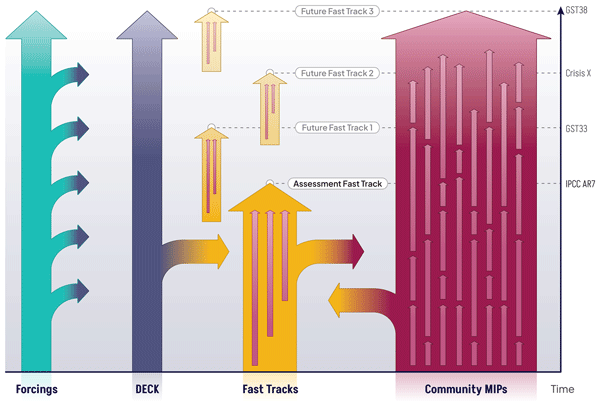
John P. Dunne, Helene T. Hewitt, Julie M. Arblaster, Frédéric Bonou, Olivier Boucher, Tereza Cavazos, Beth Dingley, Paul J. Durack, Birgit Hassler, Martin Juckes, Tomoki Miyakawa, Matt Mizielinski, Vaishali Naik, Zebedee Nicholls, Eleanor O'Rourke, Robert Pincus, Benjamin M. Sanderson, Isla R. Simpson, and Karl E. Taylor
Geosci. Model Dev., 18, 6671–6700, https://doi.org/10.5194/gmd-18-6671-2025, https://doi.org/10.5194/gmd-18-6671-2025, 2025
Short summary
Short summary
The seventh phase of the Coupled Model Intercomparison Project (CMIP7) coordinates efforts to answer key and timely climate science questions and facilitate delivery of relevant multi-model simulations for prediction and projection; characterization, attribution, and process understanding; and vulnerability, impact, and adaptation analysis. Key to the CMIP7 design are the mandatory Diagnostic, Evaluation and Characterization of Klima and optional Assessment Fast Track experiments.
Libo Wang, Lawrence Mudryk, Joe R. Melton, Colleen Mortimer, Jason Cole, Gesa Meyer, Paul Bartlett, and Mickaël Lalande
Geosci. Model Dev., 18, 6597–6621, https://doi.org/10.5194/gmd-18-6597-2025, https://doi.org/10.5194/gmd-18-6597-2025, 2025
Short summary
Short summary
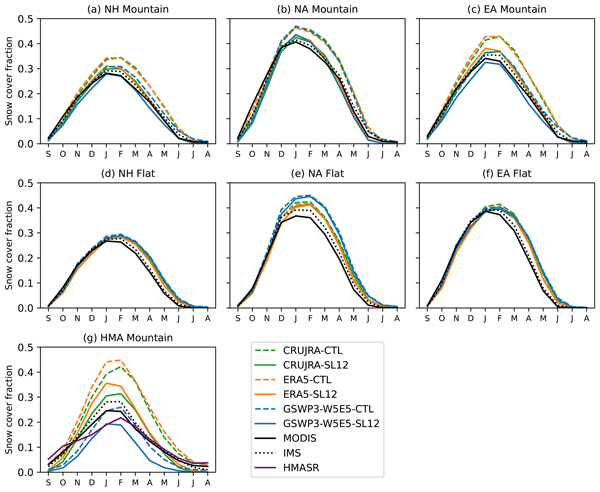
This study shows that an alternate snow cover fraction parameterization significantly improves snow simulation by CLASSIC in mountainous areas for all three choices of meteorological datasets. Annual mean bias, unbiased root mean squared area, and correlation improve by 75 %, 32 %, and 7 % when evaluated with MODIS observations over the Northern Hemisphere. We also link relative biases in the meteorological forcing data to differences in simulated snow water equivalent and snow cover fraction.
Trevor Martin Sloughter, Zebedee Nicholls, Gang Tang, Thomas Kleinen, Zhen Zhang, and Joeri Rogelj
EGUsphere, https://doi.org/10.5194/egusphere-2025-3873, https://doi.org/10.5194/egusphere-2025-3873, 2025
Short summary
Short summary
High resolution models of the earth system exhibit some disagreement and uncertainty on future methane emissions from natural sources, in particular wetlands, with some studies predicting wetlands alone could be very significant sources over the 21st century. Modelling these emissions as a response to global temperature is one option for simple models to approximate the climate impact of wetlands. The effect is a small increase in overall temperatures and a widening of the uncertainty range.
Benjamin M. Sanderson, Victor Brovkin, Rosie A. Fisher, David Hohn, Tatiana Ilyina, Chris D. Jones, Torben Koenigk, Charles Koven, Hongmei Li, David M. Lawrence, Peter Lawrence, Spencer Liddicoat, Andrew H. MacDougall, Nadine Mengis, Zebedee Nicholls, Eleanor O'Rourke, Anastasia Romanou, Marit Sandstad, Jörg Schwinger, Roland Séférian, Lori T. Sentman, Isla R. Simpson, Chris Smith, Norman J. Steinert, Abigail L. S. Swann, Jerry Tjiputra, and Tilo Ziehn
Geosci. Model Dev., 18, 5699–5724, https://doi.org/10.5194/gmd-18-5699-2025, https://doi.org/10.5194/gmd-18-5699-2025, 2025
Short summary
Short summary
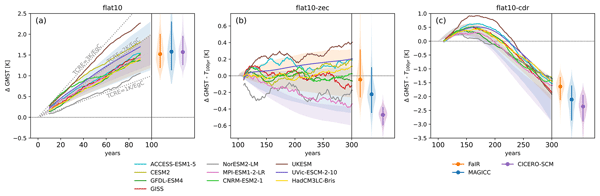
This study investigates how climate models warm in response to simplified carbon emissions trajectories, refining the understanding of climate reversibility and commitment. Metrics are defined for warming response to cumulative emissions and for the cessation of emissions or ramp-down to net-zero and net-negative levels. Results indicate that previous concentration-driven experiments may have overstated the Zero Emissions Commitment due to emissions rates exceeding historical levels.
Samar Minallah, William H. Lipscomb, Gunter Leguy, and Harry Zekollari
Geosci. Model Dev., 18, 5467–5486, https://doi.org/10.5194/gmd-18-5467-2025, https://doi.org/10.5194/gmd-18-5467-2025, 2025
Short summary
Short summary
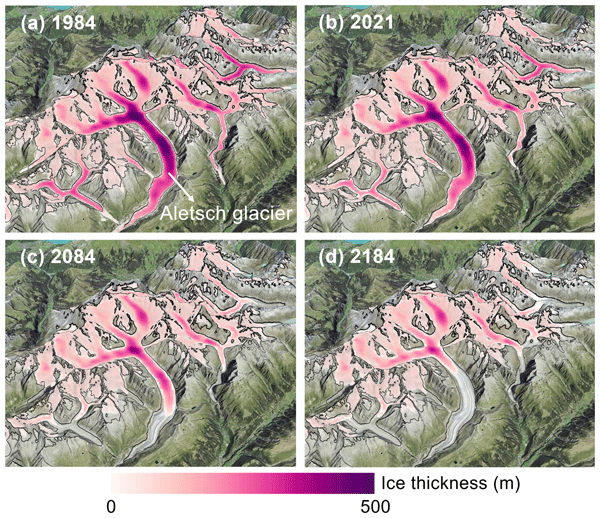
We developed a new modeling framework within an Earth system model to study mountain glacier evolution under different climate scenarios, applied here to the European Alps. Substantial Alpine glacier mass loss is projected under current climate conditions, with near-total loss under further warming. This is the first use of a 3D, higher-order ice-flow model for regional glacier simulations, enabling assessment of coupled land ice–Earth system processes.
Ida Bagus Mandhara Brasika, Pierre Friedlingstein, Stephen Sitch, Michael O'Sullivan, Maria Carolina Duran-Rojas, Thais Michele Rosan, Kees Klein Goldewijk, Julia Pongratz, Clemens Schwingshackl, Louise P. Chini, and George C. Hurtt
Biogeosciences, 22, 3547–3561, https://doi.org/10.5194/bg-22-3547-2025, https://doi.org/10.5194/bg-22-3547-2025, 2025
Short summary
Short summary
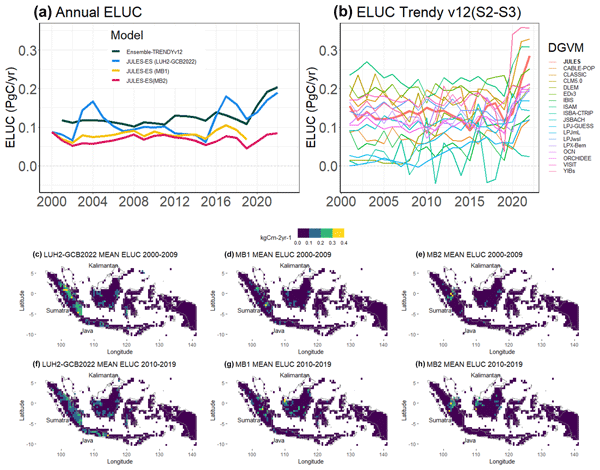
Indonesia is the world's third-highest carbon emitter from land use change. However, there are uncertainties in the carbon emissions of Indonesia. Our best estimate of carbon emissions from land use change in Indonesia is 0.12 ± 0.02 PgC/yr with a steady trend. Despite many uncertainties created by drivers, models, and products, we also found robust agreements between these models and products. All agree that Indonesian carbon emissions from LULCC (land use and land cover change) have had no decreasing trend for the last 2 decades.
Manuel Schlund, Bouwe Andela, Jörg Benke, Ruth Comer, Birgit Hassler, Emma Hogan, Peter Kalverla, Axel Lauer, Bill Little, Saskia Loosveldt Tomas, Francesco Nattino, Patrick Peglar, Valeriu Predoi, Stef Smeets, Stephen Worsley, Martin Yeo, and Klaus Zimmermann
Geosci. Model Dev., 18, 4009–4021, https://doi.org/10.5194/gmd-18-4009-2025, https://doi.org/10.5194/gmd-18-4009-2025, 2025
Short summary
Short summary
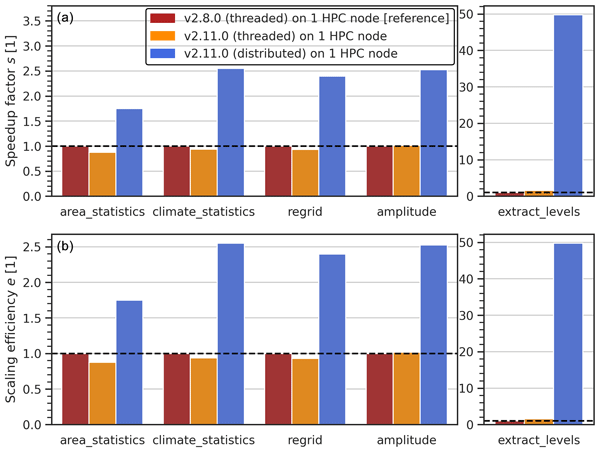
The Earth System Model Evaluation Tool (ESMValTool) is a community diagnostics and performance metrics tool for the evaluation of Earth system models. Here, we describe recent significant improvements of ESMValTool’s computational efficiency including parallel, out-of-core, and distributed computing. Evaluations with the enhanced version of ESMValTool are faster, use less computational resources, and can handle input data larger than the available memory.
Ricarda Winkelmann, Donovan P. Dennis, Jonathan F. Donges, Sina Loriani, Ann Kristin Klose, Jesse F. Abrams, Jorge Alvarez-Solas, Torsten Albrecht, David Armstrong McKay, Sebastian Bathiany, Javier Blasco Navarro, Victor Brovkin, Eleanor Burke, Gokhan Danabasoglu, Reik V. Donner, Markus Drüke, Goran Georgievski, Heiko Goelzer, Anna B. Harper, Gabriele Hegerl, Marina Hirota, Aixue Hu, Laura C. Jackson, Colin Jones, Hyungjun Kim, Torben Koenigk, Peter Lawrence, Timothy M. Lenton, Hannah Liddy, José Licón-Saláiz, Maxence Menthon, Marisa Montoya, Jan Nitzbon, Sophie Nowicki, Bette Otto-Bliesner, Francesco Pausata, Stefan Rahmstorf, Karoline Ramin, Alexander Robinson, Johan Rockström, Anastasia Romanou, Boris Sakschewski, Christina Schädel, Steven Sherwood, Robin S. Smith, Norman J. Steinert, Didier Swingedouw, Matteo Willeit, Wilbert Weijer, Richard Wood, Klaus Wyser, and Shuting Yang
EGUsphere, https://doi.org/10.5194/egusphere-2025-1899, https://doi.org/10.5194/egusphere-2025-1899, 2025
Short summary
Short summary
The Tipping Points Modelling Intercomparison Project (TIPMIP) is an international collaborative effort to systematically assess tipping point risks in the Earth system using state-of-the-art coupled and stand-alone domain models. TIPMIP will provide a first global atlas of potential tipping dynamics, respective critical thresholds and key uncertainties, generating an important building block towards a comprehensive scientific basis for policy- and decision-making.
Amali A. Amali, Clemens Schwingshackl, Akihiko Ito, Alina Barbu, Christine Delire, Daniele Peano, David M. Lawrence, David Wårlind, Eddy Robertson, Edouard L. Davin, Elena Shevliakova, Ian N. Harman, Nicolas Vuichard, Paul A. Miller, Peter J. Lawrence, Tilo Ziehn, Tomohiro Hajima, Victor Brovkin, Yanwu Zhang, Vivek K. Arora, and Julia Pongratz
Earth Syst. Dynam., 16, 803–840, https://doi.org/10.5194/esd-16-803-2025, https://doi.org/10.5194/esd-16-803-2025, 2025
Short summary
Short summary
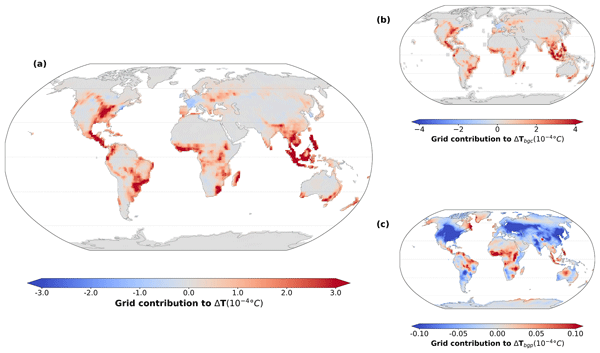
Our study explored the impact of anthropogenic land-use change (LUC) on climate dynamics, focusing on biogeophysical (BGP) and biogeochemical (BGC) effects using data from the Land Use Model Intercomparison Project (LUMIP) and the Coupled Model Intercomparison Project Phase 6 (CMIP6). We found that LUC-induced carbon emissions contribute to a BGC warming of 0.21 °C, with BGC effects dominating globally over BGP effects, which show regional variability. Our findings highlight discrepancies in model simulations and emphasize the need for improved representations of LUC processes.
Edna Johanna Molina Bacca, Miodrag Stevanović, Benjamin Leon Bodirsky, Jonathan Cornelis Doelman, Louise Parsons Chini, Jan Volkholz, Katja Frieler, Christopher Paul Oliver Reyer, George Hurtt, Florian Humpenöder, Kristine Karstens, Jens Heinke, Christoph Müller, Jan Philipp Dietrich, Hermann Lotze-Campen, Elke Stehfest, and Alexander Popp
Earth Syst. Dynam., 16, 753–801, https://doi.org/10.5194/esd-16-753-2025, https://doi.org/10.5194/esd-16-753-2025, 2025
Short summary
Short summary
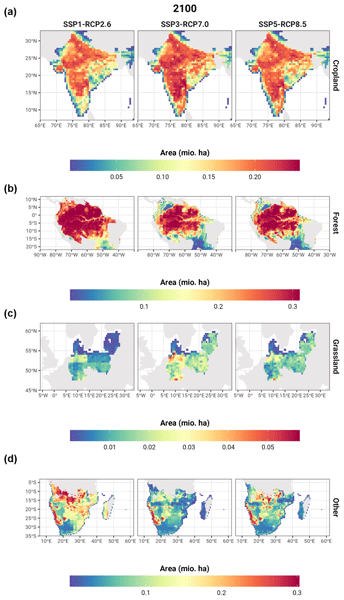
Land-use change projections are vital for impact studies. This study compares updated land-use model projections, including CO2 fertilization among other upgrades, from the MAgPIE and IMAGE models under three scenarios, highlighting differences, uncertainty hotspots, and harmonization effects. Key findings include reduced bioenergy crop demand projections and differences in grassland area allocation and sizes, with socioeconomic–climate scenarios' largest effect on variance starting in 2030.
Martin Juckes, Karl E. Taylor, Fabrizio Antonio, David Brayshaw, Carlo Buontempo, Jian Cao, Paul J. Durack, Michio Kawamiya, Hyungjun Kim, Tomas Lovato, Chloe Mackallah, Matthew Mizielinski, Alessandra Nuzzo, Martina Stockhause, Daniele Visioni, Jeremy Walton, Briony Turner, Eleanor O'Rourke, and Beth Dingley
Geosci. Model Dev., 18, 2639–2663, https://doi.org/10.5194/gmd-18-2639-2025, https://doi.org/10.5194/gmd-18-2639-2025, 2025
Short summary
Short summary
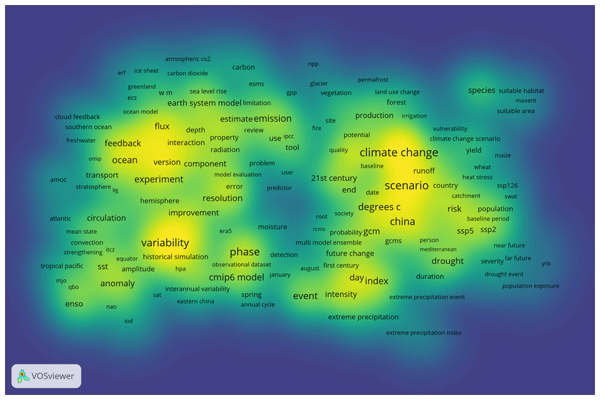
The Baseline Climate Variables for Earth System Modelling (ESM-BCVs) are defined as a list of 135 variables which have high utility for the evaluation and exploitation of climate simulations. The list reflects the most frequently used variables from Earth system models based on an assessment of data publication and download records from the largest archive of global climate projects.
Gang Tang, Zebedee Nicholls, Alexander Norton, Sönke Zaehle, and Malte Meinshausen
Geosci. Model Dev., 18, 2193–2230, https://doi.org/10.5194/gmd-18-2193-2025, https://doi.org/10.5194/gmd-18-2193-2025, 2025
Short summary
Short summary
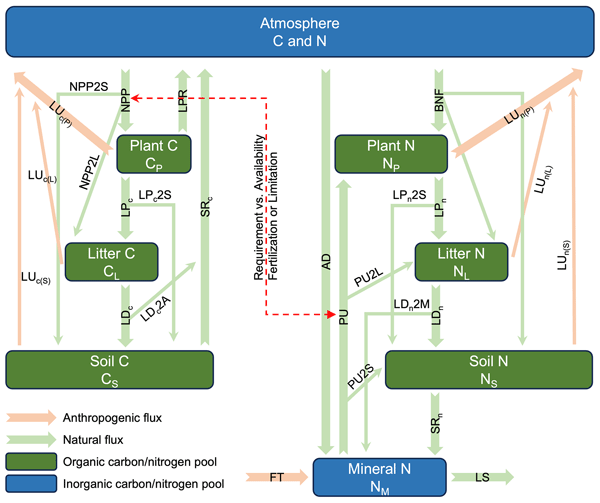
We studied carbon–nitrogen coupling in Earth system models by developing a global carbon–nitrogen cycle model (CNit v1.0) within the widely used emulator MAGICC. CNit effectively reproduced the global carbon–nitrogen cycle dynamics observed in complex models. Our results show persistent nitrogen limitations on plant growth (net primary production) from 1850 to 2100, suggesting that nitrogen deficiency may constrain future land carbon sequestration.
Gang Tang, Zebedee Nicholls, Chris Jones, Thomas Gasser, Alexander Norton, Tilo Ziehn, Alejandro Romero-Prieto, and Malte Meinshausen
Geosci. Model Dev., 18, 2111–2136, https://doi.org/10.5194/gmd-18-2111-2025, https://doi.org/10.5194/gmd-18-2111-2025, 2025
Short summary
Short summary
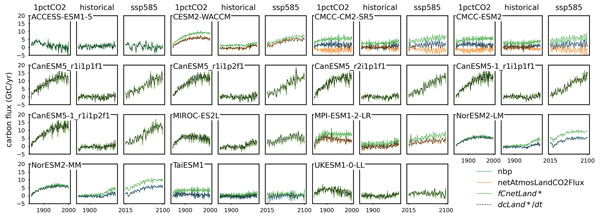
We analyzed carbon and nitrogen mass conservation in data from various Earth system models. Our findings reveal significant discrepancies between flux and pool size data, where cumulative imbalances can reach hundreds of gigatons of carbon or nitrogen. These imbalances appear primarily due to missing or inconsistently reported fluxes – especially for land-use and fire emissions. To enhance data quality, we recommend that future climate data protocols address this issue at the reporting stage.
Peter Van Katwyk, Baylor Fox-Kemper, Sophie Nowicki, Hélène Seroussi, and Karianne J. Bergen
EGUsphere, https://doi.org/10.5194/egusphere-2025-870, https://doi.org/10.5194/egusphere-2025-870, 2025
Preprint archived
Short summary
Short summary
We present ISEFlow, a machine learning emulator that predicts how the melting of the Antarctic and Greenland ice sheets will contribute to sea level. ISEFlow is fast and accurate, allowing scientists to explore different climate scenarios with greater confidence. ISEFlow distinguishes between high and low emissions scenarios, helping us understand how today’s choices impact future sea levels. ISEFlow supports more reliable climate predictions and helps scientists study the future of ice sheets.
Pierre Friedlingstein, Michael O'Sullivan, Matthew W. Jones, Robbie M. Andrew, Judith Hauck, Peter Landschützer, Corinne Le Quéré, Hongmei Li, Ingrid T. Luijkx, Are Olsen, Glen P. Peters, Wouter Peters, Julia Pongratz, Clemens Schwingshackl, Stephen Sitch, Josep G. Canadell, Philippe Ciais, Robert B. Jackson, Simone R. Alin, Almut Arneth, Vivek Arora, Nicholas R. Bates, Meike Becker, Nicolas Bellouin, Carla F. Berghoff, Henry C. Bittig, Laurent Bopp, Patricia Cadule, Katie Campbell, Matthew A. Chamberlain, Naveen Chandra, Frédéric Chevallier, Louise P. Chini, Thomas Colligan, Jeanne Decayeux, Laique M. Djeutchouang, Xinyu Dou, Carolina Duran Rojas, Kazutaka Enyo, Wiley Evans, Amanda R. Fay, Richard A. Feely, Daniel J. Ford, Adrianna Foster, Thomas Gasser, Marion Gehlen, Thanos Gkritzalis, Giacomo Grassi, Luke Gregor, Nicolas Gruber, Özgür Gürses, Ian Harris, Matthew Hefner, Jens Heinke, George C. Hurtt, Yosuke Iida, Tatiana Ilyina, Andrew R. Jacobson, Atul K. Jain, Tereza Jarníková, Annika Jersild, Fei Jiang, Zhe Jin, Etsushi Kato, Ralph F. Keeling, Kees Klein Goldewijk, Jürgen Knauer, Jan Ivar Korsbakken, Xin Lan, Siv K. Lauvset, Nathalie Lefèvre, Zhu Liu, Junjie Liu, Lei Ma, Shamil Maksyutov, Gregg Marland, Nicolas Mayot, Patrick C. McGuire, Nicolas Metzl, Natalie M. Monacci, Eric J. Morgan, Shin-Ichiro Nakaoka, Craig Neill, Yosuke Niwa, Tobias Nützel, Lea Olivier, Tsuneo Ono, Paul I. Palmer, Denis Pierrot, Zhangcai Qin, Laure Resplandy, Alizée Roobaert, Thais M. Rosan, Christian Rödenbeck, Jörg Schwinger, T. Luke Smallman, Stephen M. Smith, Reinel Sospedra-Alfonso, Tobias Steinhoff, Qing Sun, Adrienne J. Sutton, Roland Séférian, Shintaro Takao, Hiroaki Tatebe, Hanqin Tian, Bronte Tilbrook, Olivier Torres, Etienne Tourigny, Hiroyuki Tsujino, Francesco Tubiello, Guido van der Werf, Rik Wanninkhof, Xuhui Wang, Dongxu Yang, Xiaojuan Yang, Zhen Yu, Wenping Yuan, Xu Yue, Sönke Zaehle, Ning Zeng, and Jiye Zeng
Earth Syst. Sci. Data, 17, 965–1039, https://doi.org/10.5194/essd-17-965-2025, https://doi.org/10.5194/essd-17-965-2025, 2025
Short summary
Short summary
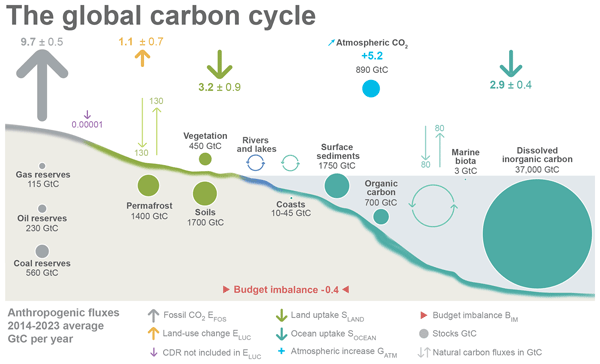
The Global Carbon Budget 2024 describes the methodology, main results, and datasets used to quantify the anthropogenic emissions of carbon dioxide (CO2) and their partitioning among the atmosphere, land ecosystems, and the ocean over the historical period (1750–2024). These living datasets are updated every year to provide the highest transparency and traceability in the reporting of CO2, the key driver of climate change.
Axel Lauer, Lisa Bock, Birgit Hassler, Patrick Jöckel, Lukas Ruhe, and Manuel Schlund
Geosci. Model Dev., 18, 1169–1188, https://doi.org/10.5194/gmd-18-1169-2025, https://doi.org/10.5194/gmd-18-1169-2025, 2025
Short summary
Short summary
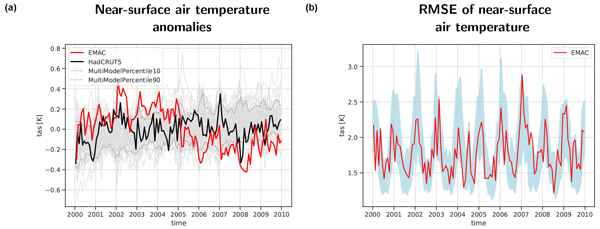
Earth system models are important tools to improve our understanding of current climate and to project climate change. Thus, it is crucial to understand possible shortcomings in the models. New features of the ESMValTool software package allow one to compare and visualize a model's performance with respect to reproducing observations in the context of other climate models in an easy and user-friendly way. We aim to help model developers assess and monitor climate simulations more efficiently.
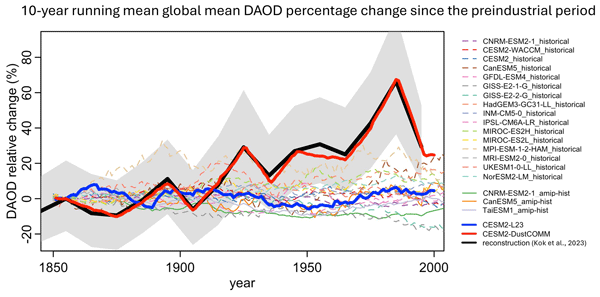
Danny M. Leung, Jasper F. Kok, Longlei Li, David M. Lawrence, Natalie M. Mahowald, Simone Tilmes, and Erik Kluzek
Atmos. Chem. Phys., 25, 2311–2331, https://doi.org/10.5194/acp-25-2311-2025, https://doi.org/10.5194/acp-25-2311-2025, 2025
Short summary
Short summary
This study derives a gridded dust emission dataset for 1841–2000 by employing a combination of observed dust from core records and reanalyzed global dust cycle constraints. We evaluate the ability of global models to replicate the observed historical dust variability by using the emission dataset to force a historical simulation in an Earth system model. We show that prescribing our emissions forces the model to better match observations than other mechanistic models.
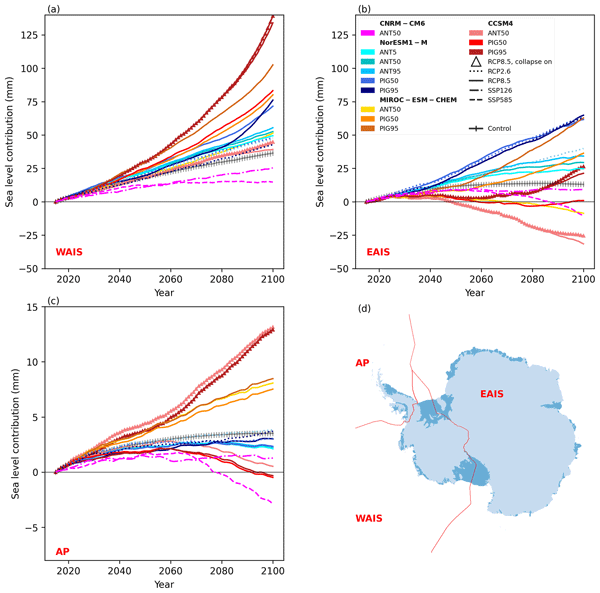
James F. O'Neill, Tamsin L. Edwards, Daniel F. Martin, Courtney Shafer, Stephen L. Cornford, Hélène L. Seroussi, Sophie Nowicki, Mira Adhikari, and Lauren J. Gregoire
The Cryosphere, 19, 541–563, https://doi.org/10.5194/tc-19-541-2025, https://doi.org/10.5194/tc-19-541-2025, 2025
Short summary
Short summary
We use an ice sheet model to simulate the Antarctic contribution to sea level over the 21st century under a range of future climates and varying how sensitive the ice sheet is to different processes. We find that ocean temperatures increase and more snow falls on the ice sheet under stronger warming scenarios. When the ice sheet is sensitive to ocean warming, ocean melt-driven loss exceeds snowfall-driven gains, meaning that the sea level contribution is greater with more climate warming.
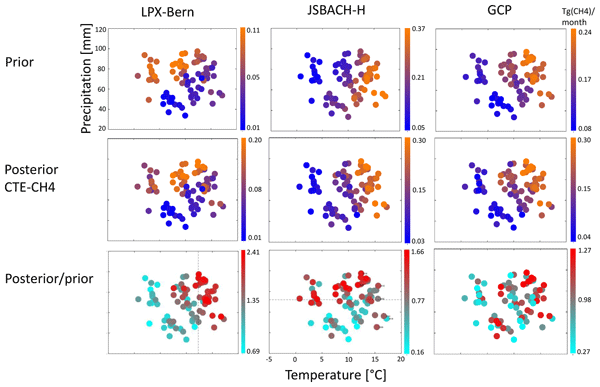
Tuula Aalto, Aki Tsuruta, Jarmo Mäkelä, Jurek Müller, Maria Tenkanen, Eleanor Burke, Sarah Chadburn, Yao Gao, Vilma Mannisenaho, Thomas Kleinen, Hanna Lee, Antti Leppänen, Tiina Markkanen, Stefano Materia, Paul A. Miller, Daniele Peano, Olli Peltola, Benjamin Poulter, Maarit Raivonen, Marielle Saunois, David Wårlind, and Sönke Zaehle
Biogeosciences, 22, 323–340, https://doi.org/10.5194/bg-22-323-2025, https://doi.org/10.5194/bg-22-323-2025, 2025
Short summary
Short summary
Wetland methane responses to temperature and precipitation were studied in a boreal wetland-rich region in northern Europe using ecosystem models, atmospheric inversions, and upscaled flux observations. The ecosystem models differed in their responses to temperature and precipitation and in their seasonality. However, multi-model means, inversions, and upscaled fluxes had similar seasonality, and they suggested co-limitation by temperature and precipitation.
Paul J. Durack, Karl E. Taylor, Peter J. Gleckler, Gerald A. Meehl, Bryan N. Lawrence, Curt Covey, Ronald J. Stouffer, Guillaume Levavasseur, Atef Ben-Nasser, Sebastien Denvil, Martina Stockhause, Jonathan M. Gregory, Martin Juckes, Sasha K. Ames, Fabrizio Antonio, David C. Bader, John P. Dunne, Daniel Ellis, Veronika Eyring, Sandro L. Fiore, Sylvie Joussaume, Philip Kershaw, Jean-Francois Lamarque, Michael Lautenschlager, Jiwoo Lee, Chris F. Mauzey, Matthew Mizielinski, Paola Nassisi, Alessandra Nuzzo, Eleanor O’Rourke, Jeffrey Painter, Gerald L. Potter, Sven Rodriguez, and Dean N. Williams
EGUsphere, https://doi.org/10.5194/egusphere-2024-3729, https://doi.org/10.5194/egusphere-2024-3729, 2025
Short summary
Short summary
CMIP6 was the most expansive and ambitious Model Intercomparison Project (MIP), the latest in a history, extending four decades. CMIP engaged a growing community focused on improving climate understanding, and quantifying and attributing observed climate change being experienced today. The project's profound impact is due to the combining the latest climate science and technology, enabling the latest-generation climate simulations and increasing community attention in every successive phase.
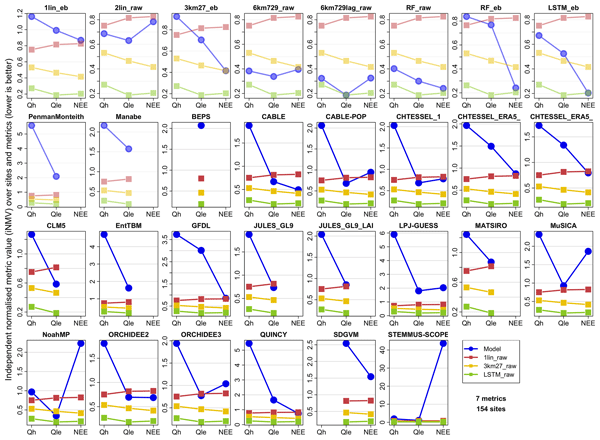
Gab Abramowitz, Anna Ukkola, Sanaa Hobeichi, Jon Cranko Page, Mathew Lipson, Martin G. De Kauwe, Samuel Green, Claire Brenner, Jonathan Frame, Grey Nearing, Martyn Clark, Martin Best, Peter Anthoni, Gabriele Arduini, Souhail Boussetta, Silvia Caldararu, Kyeungwoo Cho, Matthias Cuntz, David Fairbairn, Craig R. Ferguson, Hyungjun Kim, Yeonjoo Kim, Jürgen Knauer, David Lawrence, Xiangzhong Luo, Sergey Malyshev, Tomoko Nitta, Jerome Ogee, Keith Oleson, Catherine Ottlé, Phillipe Peylin, Patricia de Rosnay, Heather Rumbold, Bob Su, Nicolas Vuichard, Anthony P. Walker, Xiaoni Wang-Faivre, Yunfei Wang, and Yijian Zeng
Biogeosciences, 21, 5517–5538, https://doi.org/10.5194/bg-21-5517-2024, https://doi.org/10.5194/bg-21-5517-2024, 2024
Short summary
Short summary
This paper evaluates land models – computer-based models that simulate ecosystem dynamics; land carbon, water, and energy cycles; and the role of land in the climate system. It uses machine learning and AI approaches to show that, despite the complexity of land models, they do not perform nearly as well as they could given the amount of information they are provided with about the prediction problem.
Benjamin M. Sanderson, Ben B. B. Booth, John Dunne, Veronika Eyring, Rosie A. Fisher, Pierre Friedlingstein, Matthew J. Gidden, Tomohiro Hajima, Chris D. Jones, Colin G. Jones, Andrew King, Charles D. Koven, David M. Lawrence, Jason Lowe, Nadine Mengis, Glen P. Peters, Joeri Rogelj, Chris Smith, Abigail C. Snyder, Isla R. Simpson, Abigail L. S. Swann, Claudia Tebaldi, Tatiana Ilyina, Carl-Friedrich Schleussner, Roland Séférian, Bjørn H. Samset, Detlef van Vuuren, and Sönke Zaehle
Geosci. Model Dev., 17, 8141–8172, https://doi.org/10.5194/gmd-17-8141-2024, https://doi.org/10.5194/gmd-17-8141-2024, 2024
Short summary
Short summary
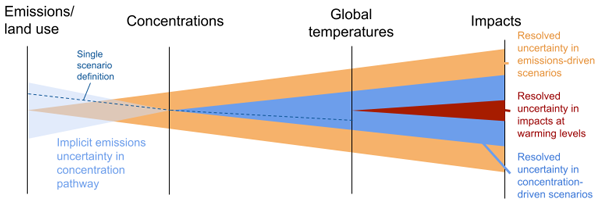
We discuss how, in order to provide more relevant guidance for climate policy, coordinated climate experiments should adopt a greater focus on simulations where Earth system models are provided with carbon emissions from fossil fuels together with land use change instructions, rather than past approaches that have largely focused on experiments with prescribed atmospheric carbon dioxide concentrations. We discuss how these goals might be achieved in coordinated climate modeling experiments.

Colin G. Jones, Fanny Adloff, Ben B. B. Booth, Peter M. Cox, Veronika Eyring, Pierre Friedlingstein, Katja Frieler, Helene T. Hewitt, Hazel A. Jeffery, Sylvie Joussaume, Torben Koenigk, Bryan N. Lawrence, Eleanor O'Rourke, Malcolm J. Roberts, Benjamin M. Sanderson, Roland Séférian, Samuel Somot, Pier Luigi Vidale, Detlef van Vuuren, Mario Acosta, Mats Bentsen, Raffaele Bernardello, Richard Betts, Ed Blockley, Julien Boé, Tom Bracegirdle, Pascale Braconnot, Victor Brovkin, Carlo Buontempo, Francisco Doblas-Reyes, Markus Donat, Italo Epicoco, Pete Falloon, Sandro Fiore, Thomas Frölicher, Neven S. Fučkar, Matthew J. Gidden, Helge F. Goessling, Rune Grand Graversen, Silvio Gualdi, José M. Gutiérrez, Tatiana Ilyina, Daniela Jacob, Chris D. Jones, Martin Juckes, Elizabeth Kendon, Erik Kjellström, Reto Knutti, Jason Lowe, Matthew Mizielinski, Paola Nassisi, Michael Obersteiner, Pierre Regnier, Romain Roehrig, David Salas y Mélia, Carl-Friedrich Schleussner, Michael Schulz, Enrico Scoccimarro, Laurent Terray, Hannes Thiemann, Richard A. Wood, Shuting Yang, and Sönke Zaehle
Earth Syst. Dynam., 15, 1319–1351, https://doi.org/10.5194/esd-15-1319-2024, https://doi.org/10.5194/esd-15-1319-2024, 2024
Short summary
Short summary
We propose a number of priority areas for the international climate research community to address over the coming decade. Advances in these areas will both increase our understanding of past and future Earth system change, including the societal and environmental impacts of this change, and deliver significantly improved scientific support to international climate policy, such as future IPCC assessments and the UNFCCC Global Stocktake.
Sabin I. Taranu, David M. Lawrence, Yoshihide Wada, Ting Tang, Erik Kluzek, Sam Rabin, Yi Yao, Steven J. De Hertog, Inne Vanderkelen, and Wim Thiery
Geosci. Model Dev., 17, 7365–7399, https://doi.org/10.5194/gmd-17-7365-2024, https://doi.org/10.5194/gmd-17-7365-2024, 2024
Short summary
Short summary
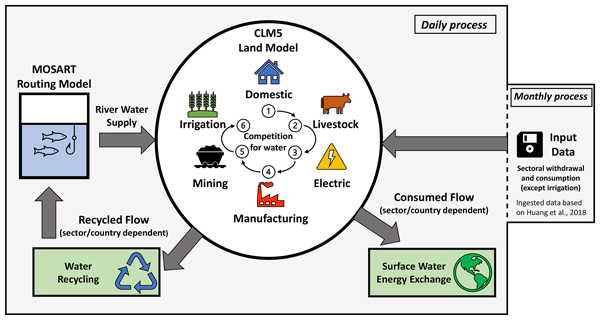
In this study, we improved a climate model by adding the representation of water use sectors such as domestic, industry, and agriculture. This new feature helps us understand how water is used and supplied in various areas. We tested our model from 1971 to 2010 and found that it accurately identifies areas with water scarcity. By modelling the competition between sectors when water availability is limited, the model helps estimate the intensity and extent of individual sectors' water shortages.
Cecile B. Menard, Sirpa Rasmus, Ioanna Merkouriadi, Gianpaolo Balsamo, Annett Bartsch, Chris Derksen, Florent Domine, Marie Dumont, Dorothee Ehrich, Richard Essery, Bruce C. Forbes, Gerhard Krinner, David Lawrence, Glen Liston, Heidrun Matthes, Nick Rutter, Melody Sandells, Martin Schneebeli, and Sari Stark
The Cryosphere, 18, 4671–4686, https://doi.org/10.5194/tc-18-4671-2024, https://doi.org/10.5194/tc-18-4671-2024, 2024
Short summary
Short summary
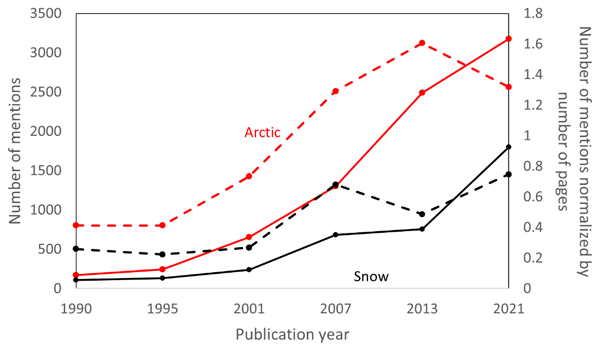
Computer models, like those used in climate change studies, are written by modellers who have to decide how best to construct the models in order to satisfy the purpose they serve. Using snow modelling as an example, we examine the process behind the decisions to understand what motivates or limits modellers in their decision-making. We find that the context in which research is undertaken is often more crucial than scientific limitations. We argue for more transparency in our research practice.
Violet L. Patterson, Lauren J. Gregoire, Ruza F. Ivanovic, Niall Gandy, Jonathan Owen, Robin S. Smith, Oliver G. Pollard, Lachlan C. Astfalck, and Paul J. Valdes
Clim. Past, 20, 2191–2218, https://doi.org/10.5194/cp-20-2191-2024, https://doi.org/10.5194/cp-20-2191-2024, 2024
Short summary
Short summary
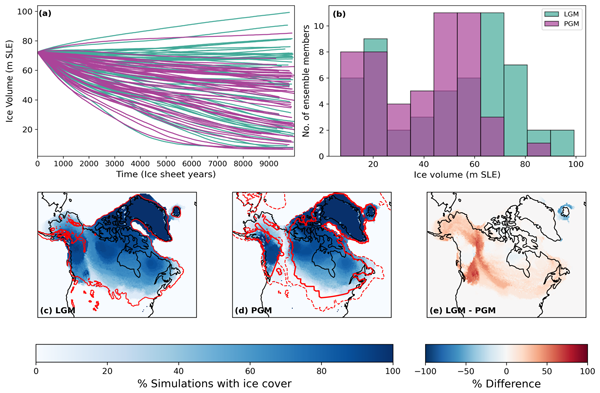
Simulations of the last two glacial periods are run using a computer model in which the atmosphere and ice sheets interact. The results show that the initial conditions used in the simulations are the primary reason for the difference in simulated North American ice sheet volume between each period. Thus, the climate leading up to the glacial maxima and other factors, such as vegetation, are important contributors to the differences in the ice sheets at the Last and Penultimate glacial maxima.
Zheng Xiang, Yongkang Xue, Weidong Guo, Melannie D. Hartman, Ye Liu, and William J. Parton
Geosci. Model Dev., 17, 6437–6464, https://doi.org/10.5194/gmd-17-6437-2024, https://doi.org/10.5194/gmd-17-6437-2024, 2024
Short summary
Short summary
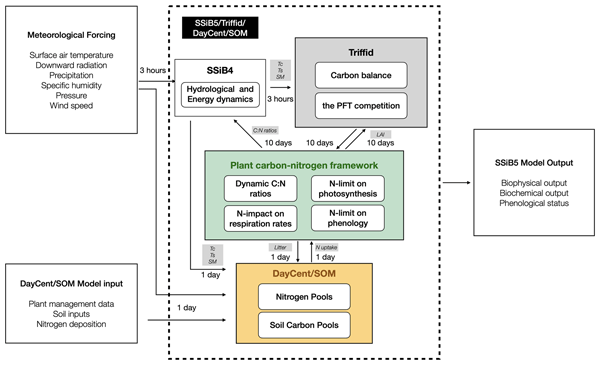
A process-based plant carbon (C)–nitrogen (N) interface coupling framework has been developed which mainly focuses on plant resistance and N-limitation effects on photosynthesis, plant respiration, and plant phenology. A dynamic C / N ratio is introduced to represent plant resistance and self-adjustment. The framework has been implemented in a coupled biophysical-ecosystem–biogeochemical model, and testing results show a general improvement in simulating plant properties with this framework.
Sam Sherriff-Tadano, Ruza Ivanovic, Lauren Gregoire, Charlotte Lang, Niall Gandy, Jonathan Gregory, Tamsin L. Edwards, Oliver Pollard, and Robin S. Smith
Clim. Past, 20, 1489–1512, https://doi.org/10.5194/cp-20-1489-2024, https://doi.org/10.5194/cp-20-1489-2024, 2024
Short summary
Short summary
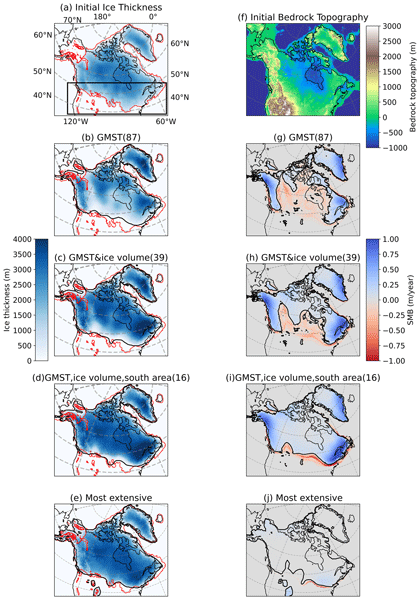
Ensemble simulations of the climate and ice sheets of the Last Glacial Maximum (LGM) are performed with a new coupled climate–ice sheet model. Results show a strong sensitivity of the North American ice sheet to the albedo scheme, while the Greenland ice sheet appeared more sensitive to basal sliding schemes. Our result implies a potential connection between the North American ice sheet at the LGM and the future Greenland ice sheet through the albedo scheme.
Kirsten L. Findell, Zun Yin, Eunkyo Seo, Paul A. Dirmeyer, Nathan P. Arnold, Nathaniel Chaney, Megan D. Fowler, Meng Huang, David M. Lawrence, Po-Lun Ma, and Joseph A. Santanello Jr.
Geosci. Model Dev., 17, 1869–1883, https://doi.org/10.5194/gmd-17-1869-2024, https://doi.org/10.5194/gmd-17-1869-2024, 2024
Short summary
Short summary
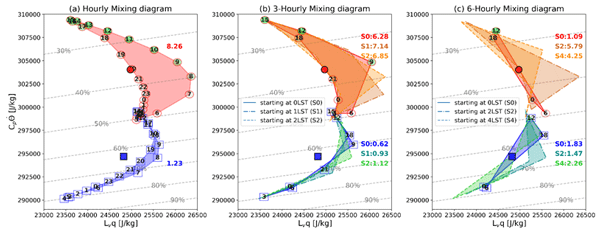
We outline a request for sub-daily data to accurately capture the process-level connections between land states, surface fluxes, and the boundary layer response. This high-frequency model output will allow for more direct comparison with observational field campaigns on process-relevant timescales, enable demonstration of inter-model spread in land–atmosphere coupling processes, and aid in targeted identification of sources of deficiencies and opportunities for improvement of the models.
Danny M. Leung, Jasper F. Kok, Longlei Li, Natalie M. Mahowald, David M. Lawrence, Simone Tilmes, Erik Kluzek, Martina Klose, and Carlos Pérez García-Pando
Atmos. Chem. Phys., 24, 2287–2318, https://doi.org/10.5194/acp-24-2287-2024, https://doi.org/10.5194/acp-24-2287-2024, 2024
Short summary
Short summary
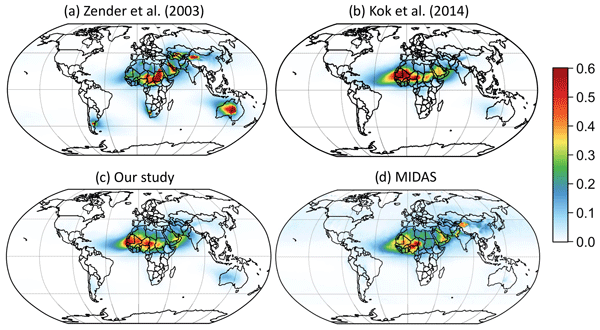
This study uses a premier Earth system model to evaluate a new desert dust emission scheme proposed in our companion paper. We show that our scheme accounts for more dust emission physics, hence matching better against observations than other existing dust emission schemes do. Our scheme's dust emissions also couple tightly with meteorology, hence likely improving the modeled dust sensitivity to climate change. We believe this work is vital for improving dust representation in climate models.
Rongyun Tang, Mingzhou Jin, Jiafu Mao, Daniel M. Ricciuto, Anping Chen, and Yulong Zhang
Geosci. Model Dev., 17, 1525–1542, https://doi.org/10.5194/gmd-17-1525-2024, https://doi.org/10.5194/gmd-17-1525-2024, 2024
Short summary
Short summary
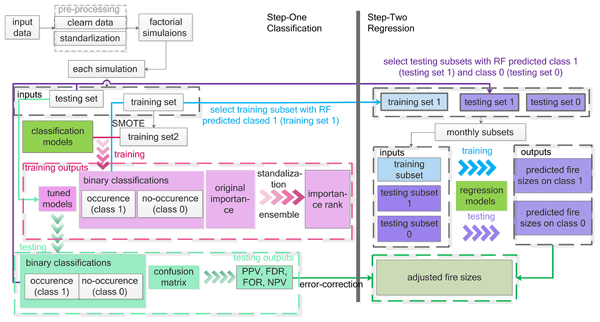
Carbon-rich boreal peatlands are at risk of burning. The reproducibility and predictability of rare peatland fire events are investigated by constructing a two-step error-correcting machine learning framework to tackle such complex systems. Fire occurrence and impacts are highly predictable with our approach. Factor-controlling simulations revealed that temperature, moisture, and freeze–thaw cycles control boreal peatland fires, indicating thermal impacts on causing peat fires.
Kelsey T. Foster, Wu Sun, Yoichi P. Shiga, Jiafu Mao, and Anna M. Michalak
Biogeosciences, 21, 869–891, https://doi.org/10.5194/bg-21-869-2024, https://doi.org/10.5194/bg-21-869-2024, 2024
Short summary
Short summary
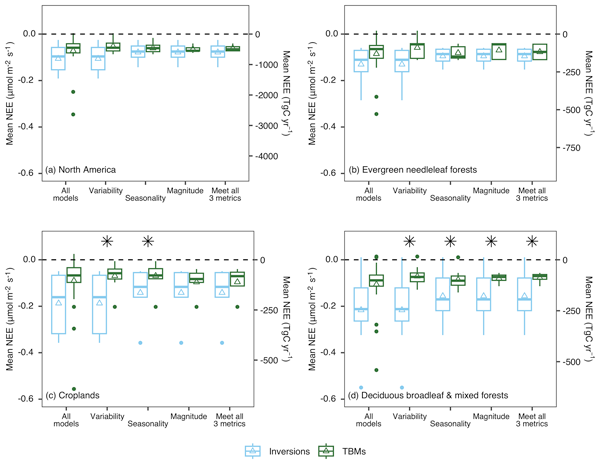
Assessing agreement between bottom-up and top-down methods across spatial scales can provide insights into the relationship between ensemble spread (difference across models) and model accuracy (difference between model estimates and reality). We find that ensemble spread is unlikely to be a good indicator of actual uncertainty in the North American carbon balance. However, models that are consistent with atmospheric constraints show stronger agreement between top-down and bottom-up estimates.
Victoria R. Dutch, Nick Rutter, Leanne Wake, Oliver Sonnentag, Gabriel Hould Gosselin, Melody Sandells, Chris Derksen, Branden Walker, Gesa Meyer, Richard Essery, Richard Kelly, Phillip Marsh, Julia Boike, and Matteo Detto
Biogeosciences, 21, 825–841, https://doi.org/10.5194/bg-21-825-2024, https://doi.org/10.5194/bg-21-825-2024, 2024
Short summary
Short summary
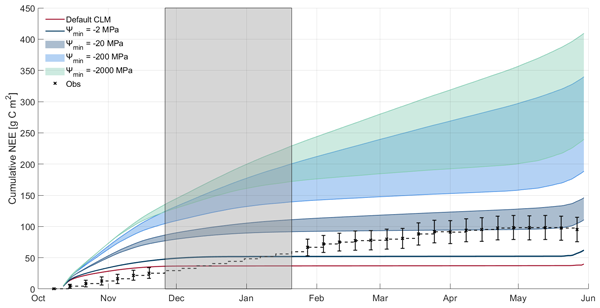
We undertake a sensitivity study of three different parameters on the simulation of net ecosystem exchange (NEE) during the snow-covered non-growing season at an Arctic tundra site. Simulations are compared to eddy covariance measurements, with near-zero NEE simulated despite observed CO2 release. We then consider how to parameterise the model better in Arctic tundra environments on both sub-seasonal timescales and cumulatively throughout the snow-covered non-growing season.
Chao Wang, Stephen Leisz, Li Li, Xiaoying Shi, Jiafu Mao, Yi Zheng, and Anping Chen
Earth Syst. Dynam., 15, 75–90, https://doi.org/10.5194/esd-15-75-2024, https://doi.org/10.5194/esd-15-75-2024, 2024
Short summary
Short summary
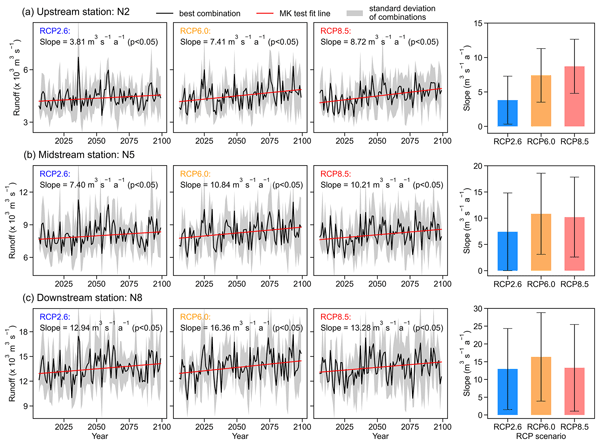
Climate change can significantly impact river runoff; however, predicting future runoff is challenging. Using historical runoff gauge data to evaluate model performances in runoff simulations for the Mekong River, we quantify future runoff changes in the Mekong River with the best simulation combination. Results suggest a significant increase in the annual runoff, along with varied seasonal distributions, thus heightening the need for adapted water resource management measures.
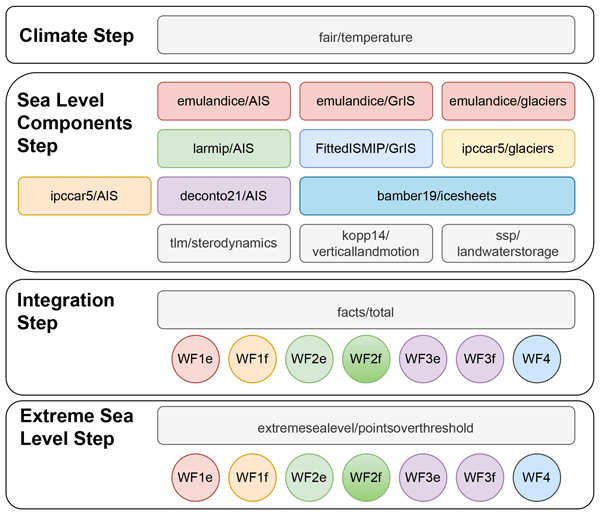
Robert E. Kopp, Gregory G. Garner, Tim H. J. Hermans, Shantenu Jha, Praveen Kumar, Alexander Reedy, Aimée B. A. Slangen, Matteo Turilli, Tamsin L. Edwards, Jonathan M. Gregory, George Koubbe, Anders Levermann, Andre Merzky, Sophie Nowicki, Matthew D. Palmer, and Chris Smith
Geosci. Model Dev., 16, 7461–7489, https://doi.org/10.5194/gmd-16-7461-2023, https://doi.org/10.5194/gmd-16-7461-2023, 2023
Short summary
Short summary
Future sea-level rise projections exhibit multiple forms of uncertainty, all of which must be considered by scientific assessments intended to inform decision-making. The Framework for Assessing Changes To Sea-level (FACTS) is a new software package intended to support assessments of global mean, regional, and extreme sea-level rise. An early version of FACTS supported the development of the IPCC Sixth Assessment Report sea-level projections.
Dominik Fahrner, Donald Slater, Aman KC, Claudia Cenedese, David A. Sutherland, Ellyn Enderlin, Femke de Jong, Kristian K. Kjeldsen, Michael Wood, Peter Nienow, Sophie Nowicki, and Till Wagner
Earth Syst. Sci. Data Discuss., https://doi.org/10.5194/essd-2023-411, https://doi.org/10.5194/essd-2023-411, 2023
Preprint withdrawn
Short summary
Short summary
Marine-terminating glaciers can lose mass through frontal ablation, which comprises submarine and surface melting, and iceberg calving. We estimate frontal ablation for 49 marine-terminating glaciers in Greenland by combining existing, satellite derived data and calculating volume change near the glacier front over time. The dataset offers exciting opportunities to study the influence of climate forcings on marine-terminating glaciers in Greenland over multi-decadal timescales.
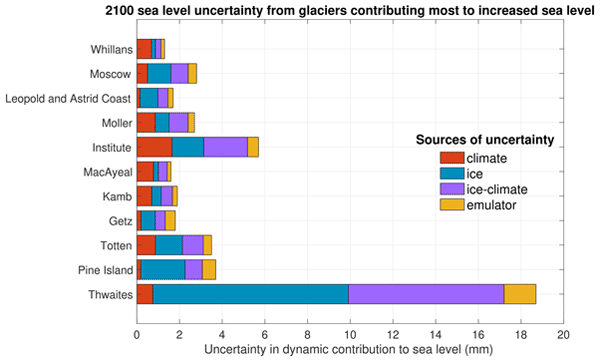
Hélène Seroussi, Vincent Verjans, Sophie Nowicki, Antony J. Payne, Heiko Goelzer, William H. Lipscomb, Ayako Abe-Ouchi, Cécile Agosta, Torsten Albrecht, Xylar Asay-Davis, Alice Barthel, Reinhard Calov, Richard Cullather, Christophe Dumas, Benjamin K. Galton-Fenzi, Rupert Gladstone, Nicholas R. Golledge, Jonathan M. Gregory, Ralf Greve, Tore Hattermann, Matthew J. Hoffman, Angelika Humbert, Philippe Huybrechts, Nicolas C. Jourdain, Thomas Kleiner, Eric Larour, Gunter R. Leguy, Daniel P. Lowry, Chistopher M. Little, Mathieu Morlighem, Frank Pattyn, Tyler Pelle, Stephen F. Price, Aurélien Quiquet, Ronja Reese, Nicole-Jeanne Schlegel, Andrew Shepherd, Erika Simon, Robin S. Smith, Fiammetta Straneo, Sainan Sun, Luke D. Trusel, Jonas Van Breedam, Peter Van Katwyk, Roderik S. W. van de Wal, Ricarda Winkelmann, Chen Zhao, Tong Zhang, and Thomas Zwinger
The Cryosphere, 17, 5197–5217, https://doi.org/10.5194/tc-17-5197-2023, https://doi.org/10.5194/tc-17-5197-2023, 2023
Short summary
Short summary
Mass loss from Antarctica is a key contributor to sea level rise over the 21st century, and the associated uncertainty dominates sea level projections. We highlight here the Antarctic glaciers showing the largest changes and quantify the main sources of uncertainty in their future evolution using an ensemble of ice flow models. We show that on top of Pine Island and Thwaites glaciers, Totten and Moscow University glaciers show rapid changes and a strong sensitivity to warmer ocean conditions.
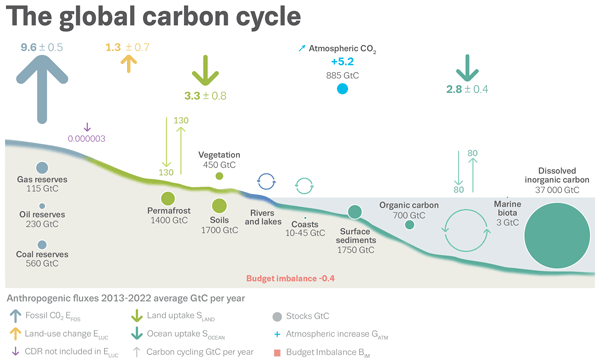
Pierre Friedlingstein, Michael O'Sullivan, Matthew W. Jones, Robbie M. Andrew, Dorothee C. E. Bakker, Judith Hauck, Peter Landschützer, Corinne Le Quéré, Ingrid T. Luijkx, Glen P. Peters, Wouter Peters, Julia Pongratz, Clemens Schwingshackl, Stephen Sitch, Josep G. Canadell, Philippe Ciais, Robert B. Jackson, Simone R. Alin, Peter Anthoni, Leticia Barbero, Nicholas R. Bates, Meike Becker, Nicolas Bellouin, Bertrand Decharme, Laurent Bopp, Ida Bagus Mandhara Brasika, Patricia Cadule, Matthew A. Chamberlain, Naveen Chandra, Thi-Tuyet-Trang Chau, Frédéric Chevallier, Louise P. Chini, Margot Cronin, Xinyu Dou, Kazutaka Enyo, Wiley Evans, Stefanie Falk, Richard A. Feely, Liang Feng, Daniel J. Ford, Thomas Gasser, Josefine Ghattas, Thanos Gkritzalis, Giacomo Grassi, Luke Gregor, Nicolas Gruber, Özgür Gürses, Ian Harris, Matthew Hefner, Jens Heinke, Richard A. Houghton, George C. Hurtt, Yosuke Iida, Tatiana Ilyina, Andrew R. Jacobson, Atul Jain, Tereza Jarníková, Annika Jersild, Fei Jiang, Zhe Jin, Fortunat Joos, Etsushi Kato, Ralph F. Keeling, Daniel Kennedy, Kees Klein Goldewijk, Jürgen Knauer, Jan Ivar Korsbakken, Arne Körtzinger, Xin Lan, Nathalie Lefèvre, Hongmei Li, Junjie Liu, Zhiqiang Liu, Lei Ma, Greg Marland, Nicolas Mayot, Patrick C. McGuire, Galen A. McKinley, Gesa Meyer, Eric J. Morgan, David R. Munro, Shin-Ichiro Nakaoka, Yosuke Niwa, Kevin M. O'Brien, Are Olsen, Abdirahman M. Omar, Tsuneo Ono, Melf Paulsen, Denis Pierrot, Katie Pocock, Benjamin Poulter, Carter M. Powis, Gregor Rehder, Laure Resplandy, Eddy Robertson, Christian Rödenbeck, Thais M. Rosan, Jörg Schwinger, Roland Séférian, T. Luke Smallman, Stephen M. Smith, Reinel Sospedra-Alfonso, Qing Sun, Adrienne J. Sutton, Colm Sweeney, Shintaro Takao, Pieter P. Tans, Hanqin Tian, Bronte Tilbrook, Hiroyuki Tsujino, Francesco Tubiello, Guido R. van der Werf, Erik van Ooijen, Rik Wanninkhof, Michio Watanabe, Cathy Wimart-Rousseau, Dongxu Yang, Xiaojuan Yang, Wenping Yuan, Xu Yue, Sönke Zaehle, Jiye Zeng, and Bo Zheng
Earth Syst. Sci. Data, 15, 5301–5369, https://doi.org/10.5194/essd-15-5301-2023, https://doi.org/10.5194/essd-15-5301-2023, 2023
Short summary
Short summary
The Global Carbon Budget 2023 describes the methodology, main results, and data sets used to quantify the anthropogenic emissions of carbon dioxide (CO2) and their partitioning among the atmosphere, land ecosystems, and the ocean over the historical period (1750–2023). These living datasets are updated every year to provide the highest transparency and traceability in the reporting of CO2, the key driver of climate change.
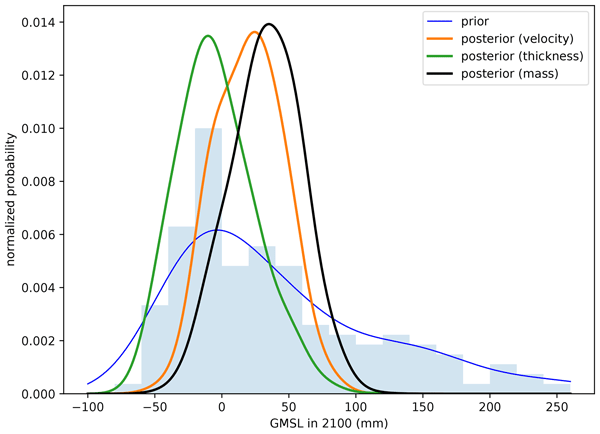
Denis Felikson, Sophie Nowicki, Isabel Nias, Beata Csatho, Anton Schenk, Michael J. Croteau, and Bryant Loomis
The Cryosphere, 17, 4661–4673, https://doi.org/10.5194/tc-17-4661-2023, https://doi.org/10.5194/tc-17-4661-2023, 2023
Short summary
Short summary
We narrow the spread in model simulations of the Greenland Ice Sheet using velocity change, dynamic thickness change, and mass change observations. We find that the type of observation chosen can lead to significantly different calibrated probability distributions. Further work is required to understand how to best calibrate ensembles of ice sheet simulations because this will improve probability distributions of projected sea-level rise, which is crucial for coastal planning and adaptation.
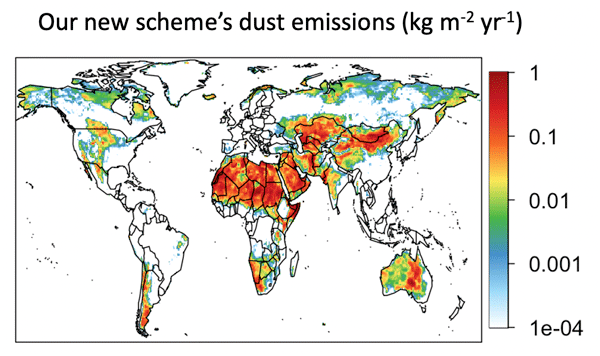
Danny M. Leung, Jasper F. Kok, Longlei Li, Gregory S. Okin, Catherine Prigent, Martina Klose, Carlos Pérez García-Pando, Laurent Menut, Natalie M. Mahowald, David M. Lawrence, and Marcelo Chamecki
Atmos. Chem. Phys., 23, 6487–6523, https://doi.org/10.5194/acp-23-6487-2023, https://doi.org/10.5194/acp-23-6487-2023, 2023
Short summary
Short summary
Desert dust modeling is important for understanding climate change, as dust regulates the atmosphere's greenhouse effect and radiation. This study formulates and proposes a more physical and realistic desert dust emission scheme for global and regional climate models. By considering more aeolian processes in our emission scheme, our simulations match better against dust observations than existing schemes. We believe this work is vital in improving dust representation in climate models.
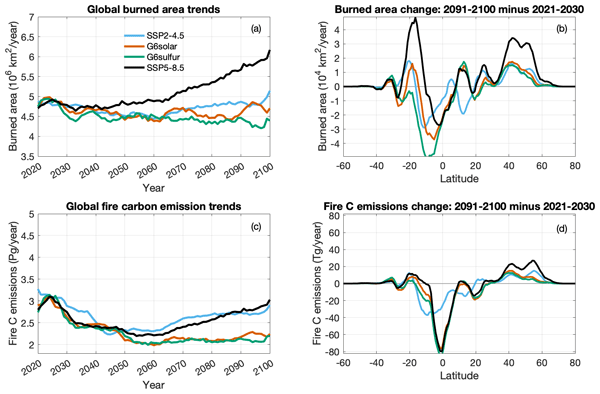
Wenfu Tang, Simone Tilmes, David M. Lawrence, Fang Li, Cenlin He, Louisa K. Emmons, Rebecca R. Buchholz, and Lili Xia
Atmos. Chem. Phys., 23, 5467–5486, https://doi.org/10.5194/acp-23-5467-2023, https://doi.org/10.5194/acp-23-5467-2023, 2023
Short summary
Short summary
Globally, total wildfire burned area is projected to increase over the 21st century under scenarios without geoengineering and decrease under the two geoengineering scenarios. Geoengineering reduces fire by decreasing surface temperature and wind speed and increasing relative humidity and soil water. However, geoengineering also yields reductions in precipitation, which offset some of the fire reduction.
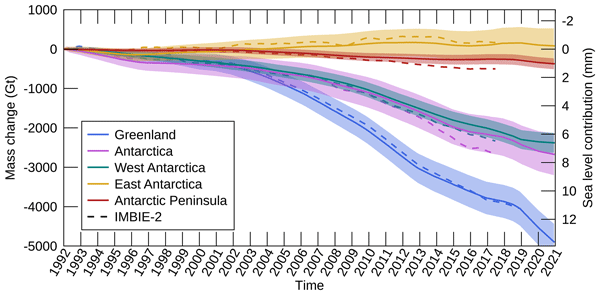
Inès N. Otosaka, Andrew Shepherd, Erik R. Ivins, Nicole-Jeanne Schlegel, Charles Amory, Michiel R. van den Broeke, Martin Horwath, Ian Joughin, Michalea D. King, Gerhard Krinner, Sophie Nowicki, Anthony J. Payne, Eric Rignot, Ted Scambos, Karen M. Simon, Benjamin E. Smith, Louise S. Sørensen, Isabella Velicogna, Pippa L. Whitehouse, Geruo A, Cécile Agosta, Andreas P. Ahlstrøm, Alejandro Blazquez, William Colgan, Marcus E. Engdahl, Xavier Fettweis, Rene Forsberg, Hubert Gallée, Alex Gardner, Lin Gilbert, Noel Gourmelen, Andreas Groh, Brian C. Gunter, Christopher Harig, Veit Helm, Shfaqat Abbas Khan, Christoph Kittel, Hannes Konrad, Peter L. Langen, Benoit S. Lecavalier, Chia-Chun Liang, Bryant D. Loomis, Malcolm McMillan, Daniele Melini, Sebastian H. Mernild, Ruth Mottram, Jeremie Mouginot, Johan Nilsson, Brice Noël, Mark E. Pattle, William R. Peltier, Nadege Pie, Mònica Roca, Ingo Sasgen, Himanshu V. Save, Ki-Weon Seo, Bernd Scheuchl, Ernst J. O. Schrama, Ludwig Schröder, Sebastian B. Simonsen, Thomas Slater, Giorgio Spada, Tyler C. Sutterley, Bramha Dutt Vishwakarma, Jan Melchior van Wessem, David Wiese, Wouter van der Wal, and Bert Wouters
Earth Syst. Sci. Data, 15, 1597–1616, https://doi.org/10.5194/essd-15-1597-2023, https://doi.org/10.5194/essd-15-1597-2023, 2023
Short summary
Short summary
By measuring changes in the volume, gravitational attraction, and ice flow of Greenland and Antarctica from space, we can monitor their mass gain and loss over time. Here, we present a new record of the Earth’s polar ice sheet mass balance produced by aggregating 50 satellite-based estimates of ice sheet mass change. This new assessment shows that the ice sheets have lost (7.5 x 10¹²) t of ice between 1992 and 2020, contributing 21 mm to sea level rise.
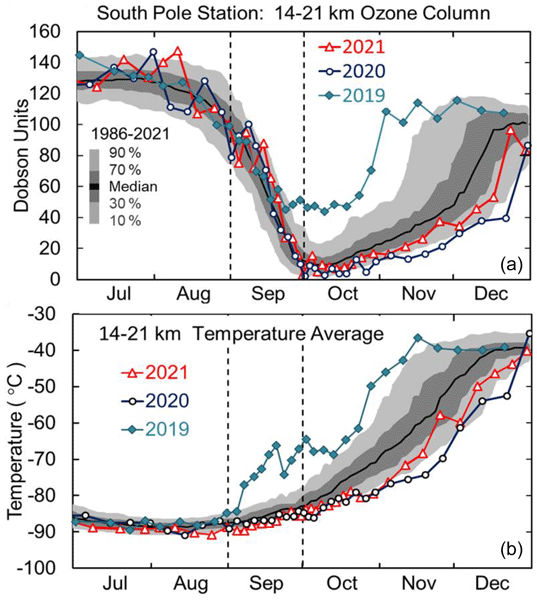
Bryan J. Johnson, Patrick Cullis, John Booth, Irina Petropavlovskikh, Glen McConville, Birgit Hassler, Gary A. Morris, Chance Sterling, and Samuel Oltmans
Atmos. Chem. Phys., 23, 3133–3146, https://doi.org/10.5194/acp-23-3133-2023, https://doi.org/10.5194/acp-23-3133-2023, 2023
Short summary
Short summary
In 1986, soon after the discovery of the Antarctic ozone hole, NOAA began year-round ozonesonde observations at South Pole Station to measure vertical profiles of ozone and temperature from the surface to 35 km. Balloon-borne ozonesondes launched at this unique site allow for tracking all phases of the yearly springtime ozone hole beginning in late winter and after sunrise, when rapid ozone depletion begins over the South Pole throughout the month of September.
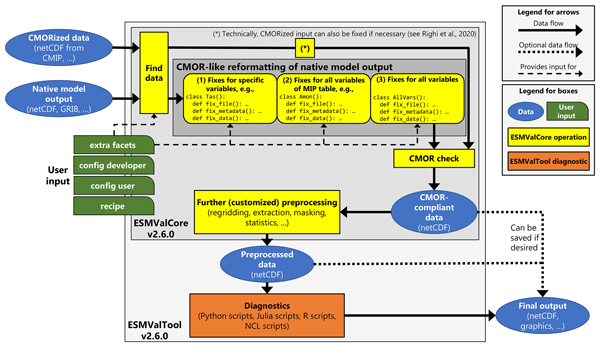
Manuel Schlund, Birgit Hassler, Axel Lauer, Bouwe Andela, Patrick Jöckel, Rémi Kazeroni, Saskia Loosveldt Tomas, Brian Medeiros, Valeriu Predoi, Stéphane Sénési, Jérôme Servonnat, Tobias Stacke, Javier Vegas-Regidor, Klaus Zimmermann, and Veronika Eyring
Geosci. Model Dev., 16, 315–333, https://doi.org/10.5194/gmd-16-315-2023, https://doi.org/10.5194/gmd-16-315-2023, 2023
Short summary
Short summary
The Earth System Model Evaluation Tool (ESMValTool) is a community diagnostics and performance metrics tool for routine evaluation of Earth system models. Originally, ESMValTool was designed to process reformatted output provided by large model intercomparison projects like the Coupled Model Intercomparison Project (CMIP). Here, we describe a new extension of ESMValTool that allows for reading and processing native climate model output, i.e., data that have not been reformatted before.
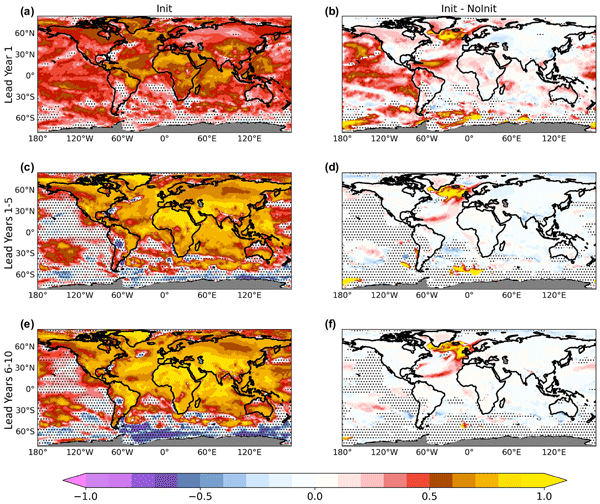
Dario Nicolì, Alessio Bellucci, Paolo Ruggieri, Panos J. Athanasiadis, Stefano Materia, Daniele Peano, Giusy Fedele, Riccardo Hénin, and Silvio Gualdi
Geosci. Model Dev., 16, 179–197, https://doi.org/10.5194/gmd-16-179-2023, https://doi.org/10.5194/gmd-16-179-2023, 2023
Short summary
Short summary
Decadal climate predictions, obtained by constraining the initial condition of a dynamical model through a truthful estimate of the observed climate state, provide an accurate assessment of the near-term climate and are useful for informing decision-makers on future climate-related risks. The predictive skill for key variables is assessed from the operational decadal prediction system compared with non-initialized historical simulations so as to quantify the added value of initialization.
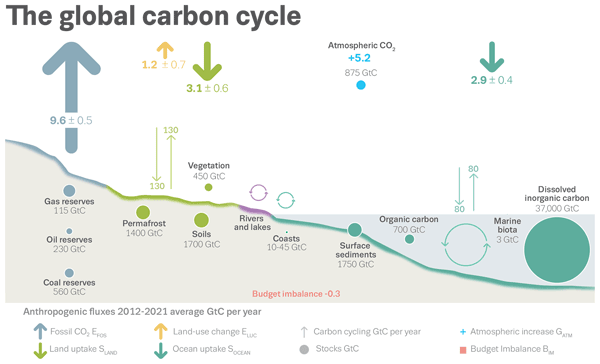
Pierre Friedlingstein, Michael O'Sullivan, Matthew W. Jones, Robbie M. Andrew, Luke Gregor, Judith Hauck, Corinne Le Quéré, Ingrid T. Luijkx, Are Olsen, Glen P. Peters, Wouter Peters, Julia Pongratz, Clemens Schwingshackl, Stephen Sitch, Josep G. Canadell, Philippe Ciais, Robert B. Jackson, Simone R. Alin, Ramdane Alkama, Almut Arneth, Vivek K. Arora, Nicholas R. Bates, Meike Becker, Nicolas Bellouin, Henry C. Bittig, Laurent Bopp, Frédéric Chevallier, Louise P. Chini, Margot Cronin, Wiley Evans, Stefanie Falk, Richard A. Feely, Thomas Gasser, Marion Gehlen, Thanos Gkritzalis, Lucas Gloege, Giacomo Grassi, Nicolas Gruber, Özgür Gürses, Ian Harris, Matthew Hefner, Richard A. Houghton, George C. Hurtt, Yosuke Iida, Tatiana Ilyina, Atul K. Jain, Annika Jersild, Koji Kadono, Etsushi Kato, Daniel Kennedy, Kees Klein Goldewijk, Jürgen Knauer, Jan Ivar Korsbakken, Peter Landschützer, Nathalie Lefèvre, Keith Lindsay, Junjie Liu, Zhu Liu, Gregg Marland, Nicolas Mayot, Matthew J. McGrath, Nicolas Metzl, Natalie M. Monacci, David R. Munro, Shin-Ichiro Nakaoka, Yosuke Niwa, Kevin O'Brien, Tsuneo Ono, Paul I. Palmer, Naiqing Pan, Denis Pierrot, Katie Pocock, Benjamin Poulter, Laure Resplandy, Eddy Robertson, Christian Rödenbeck, Carmen Rodriguez, Thais M. Rosan, Jörg Schwinger, Roland Séférian, Jamie D. Shutler, Ingunn Skjelvan, Tobias Steinhoff, Qing Sun, Adrienne J. Sutton, Colm Sweeney, Shintaro Takao, Toste Tanhua, Pieter P. Tans, Xiangjun Tian, Hanqin Tian, Bronte Tilbrook, Hiroyuki Tsujino, Francesco Tubiello, Guido R. van der Werf, Anthony P. Walker, Rik Wanninkhof, Chris Whitehead, Anna Willstrand Wranne, Rebecca Wright, Wenping Yuan, Chao Yue, Xu Yue, Sönke Zaehle, Jiye Zeng, and Bo Zheng
Earth Syst. Sci. Data, 14, 4811–4900, https://doi.org/10.5194/essd-14-4811-2022, https://doi.org/10.5194/essd-14-4811-2022, 2022
Short summary
Short summary
The Global Carbon Budget 2022 describes the datasets and methodology used to quantify the anthropogenic emissions of carbon dioxide (CO2) and their partitioning among the atmosphere, the land ecosystems, and the ocean. These living datasets are updated every year to provide the highest transparency and traceability in the reporting of CO2, the key driver of climate change.
Zheng Xiang, Yongkang Xue, Weidong Guo, Melannie D. Hartman, Ye Liu, and William J. Parton
EGUsphere, https://doi.org/10.5194/egusphere-2022-1111, https://doi.org/10.5194/egusphere-2022-1111, 2022
Preprint archived
Short summary
Short summary
A process-based plant Carbon (C)-Nitrogen (N) interface coupling framework has been developed, which mainly focuses on the plant resistance and N limitation effects on photosynthesis, plant respiration, and plant phenology. A dynamic C / N ratio is introduced to represent plant resistance and self-adjustment. The framework has been implemented in a coupled biophysical-ecosystem-biogeochemical model and testing results show a general improvement in simulating plant properties with this framework.
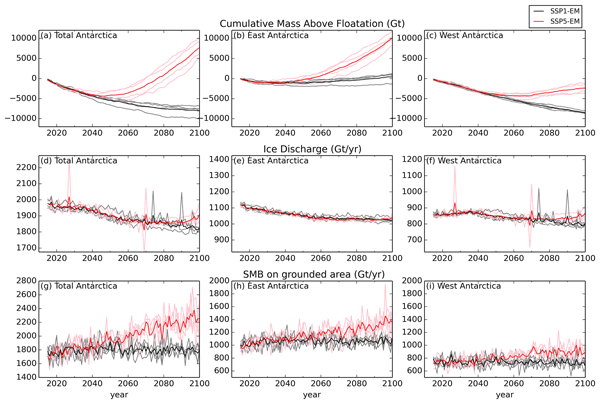
Antony Siahaan, Robin S. Smith, Paul R. Holland, Adrian Jenkins, Jonathan M. Gregory, Victoria Lee, Pierre Mathiot, Antony J. Payne, Jeff K. Ridley, and Colin G. Jones
The Cryosphere, 16, 4053–4086, https://doi.org/10.5194/tc-16-4053-2022, https://doi.org/10.5194/tc-16-4053-2022, 2022
Short summary
Short summary
The UK Earth System Model is the first to fully include interactions of the atmosphere and ocean with the Antarctic Ice Sheet. Under the low-greenhouse-gas SSP1–1.9 (Shared Socioeconomic Pathway) scenario, the ice sheet remains stable over the 21st century. Under the strong-greenhouse-gas SSP5–8.5 scenario, the model predicts strong increases in melting of large ice shelves and snow accumulation on the surface. The dominance of accumulation leads to a sea level fall at the end of the century.

Joseph A. MacGregor, Winnie Chu, William T. Colgan, Mark A. Fahnestock, Denis Felikson, Nanna B. Karlsson, Sophie M. J. Nowicki, and Michael Studinger
The Cryosphere, 16, 3033–3049, https://doi.org/10.5194/tc-16-3033-2022, https://doi.org/10.5194/tc-16-3033-2022, 2022
Short summary
Short summary
Where the bottom of the Greenland Ice Sheet is frozen and where it is thawed is not well known, yet knowing this state is increasingly important to interpret modern changes in ice flow there. We produced a second synthesis of knowledge of the basal thermal state of the ice sheet using airborne and satellite observations and numerical models. About one-third of the ice sheet’s bed is likely thawed; two-fifths is likely frozen; and the remainder is too uncertain to specify.

Inne Vanderkelen, Shervan Gharari, Naoki Mizukami, Martyn P. Clark, David M. Lawrence, Sean Swenson, Yadu Pokhrel, Naota Hanasaki, Ann van Griensven, and Wim Thiery
Geosci. Model Dev., 15, 4163–4192, https://doi.org/10.5194/gmd-15-4163-2022, https://doi.org/10.5194/gmd-15-4163-2022, 2022
Short summary
Short summary
Human-controlled reservoirs have a large influence on the global water cycle. However, dam operations are rarely represented in Earth system models. We implement and evaluate a widely used reservoir parametrization in a global river-routing model. Using observations of individual reservoirs, the reservoir scheme outperforms the natural lake scheme. However, both schemes show a similar performance due to biases in runoff timing and magnitude when using simulated runoff.
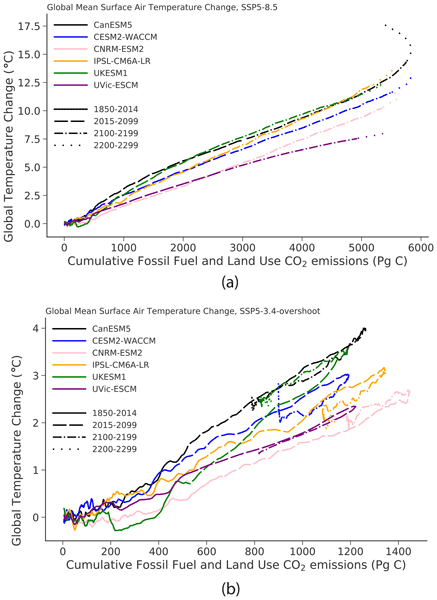
Charles D. Koven, Vivek K. Arora, Patricia Cadule, Rosie A. Fisher, Chris D. Jones, David M. Lawrence, Jared Lewis, Keith Lindsay, Sabine Mathesius, Malte Meinshausen, Michael Mills, Zebedee Nicholls, Benjamin M. Sanderson, Roland Séférian, Neil C. Swart, William R. Wieder, and Kirsten Zickfeld
Earth Syst. Dynam., 13, 885–909, https://doi.org/10.5194/esd-13-885-2022, https://doi.org/10.5194/esd-13-885-2022, 2022
Short summary
Short summary
We explore the long-term dynamics of Earth's climate and carbon cycles under a pair of contrasting scenarios to the year 2300 using six models that include both climate and carbon cycle dynamics. One scenario assumes very high emissions, while the second assumes a peak in emissions, followed by rapid declines to net negative emissions. We show that the models generally agree that warming is roughly proportional to carbon emissions but that many other aspects of the model projections differ.
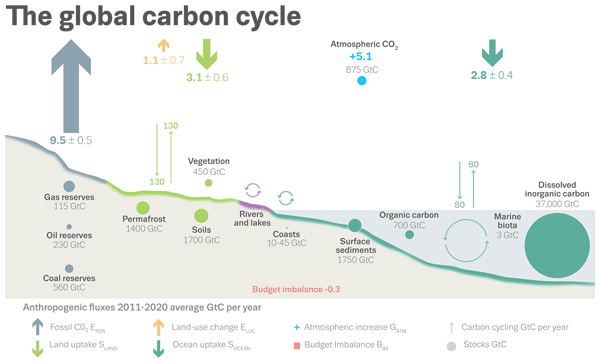
Pierre Friedlingstein, Matthew W. Jones, Michael O'Sullivan, Robbie M. Andrew, Dorothee C. E. Bakker, Judith Hauck, Corinne Le Quéré, Glen P. Peters, Wouter Peters, Julia Pongratz, Stephen Sitch, Josep G. Canadell, Philippe Ciais, Rob B. Jackson, Simone R. Alin, Peter Anthoni, Nicholas R. Bates, Meike Becker, Nicolas Bellouin, Laurent Bopp, Thi Tuyet Trang Chau, Frédéric Chevallier, Louise P. Chini, Margot Cronin, Kim I. Currie, Bertrand Decharme, Laique M. Djeutchouang, Xinyu Dou, Wiley Evans, Richard A. Feely, Liang Feng, Thomas Gasser, Dennis Gilfillan, Thanos Gkritzalis, Giacomo Grassi, Luke Gregor, Nicolas Gruber, Özgür Gürses, Ian Harris, Richard A. Houghton, George C. Hurtt, Yosuke Iida, Tatiana Ilyina, Ingrid T. Luijkx, Atul Jain, Steve D. Jones, Etsushi Kato, Daniel Kennedy, Kees Klein Goldewijk, Jürgen Knauer, Jan Ivar Korsbakken, Arne Körtzinger, Peter Landschützer, Siv K. Lauvset, Nathalie Lefèvre, Sebastian Lienert, Junjie Liu, Gregg Marland, Patrick C. McGuire, Joe R. Melton, David R. Munro, Julia E. M. S. Nabel, Shin-Ichiro Nakaoka, Yosuke Niwa, Tsuneo Ono, Denis Pierrot, Benjamin Poulter, Gregor Rehder, Laure Resplandy, Eddy Robertson, Christian Rödenbeck, Thais M. Rosan, Jörg Schwinger, Clemens Schwingshackl, Roland Séférian, Adrienne J. Sutton, Colm Sweeney, Toste Tanhua, Pieter P. Tans, Hanqin Tian, Bronte Tilbrook, Francesco Tubiello, Guido R. van der Werf, Nicolas Vuichard, Chisato Wada, Rik Wanninkhof, Andrew J. Watson, David Willis, Andrew J. Wiltshire, Wenping Yuan, Chao Yue, Xu Yue, Sönke Zaehle, and Jiye Zeng
Earth Syst. Sci. Data, 14, 1917–2005, https://doi.org/10.5194/essd-14-1917-2022, https://doi.org/10.5194/essd-14-1917-2022, 2022
Short summary
Short summary
The Global Carbon Budget 2021 describes the data sets and methodology used to quantify the emissions of carbon dioxide and their partitioning among the atmosphere, land, and ocean. These living data are updated every year to provide the highest transparency and traceability in the reporting of CO2, the key driver of climate change.
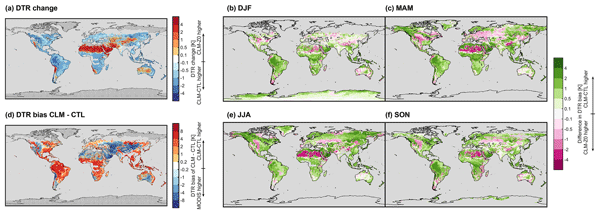
Ronny Meier, Edouard L. Davin, Gordon B. Bonan, David M. Lawrence, Xiaolong Hu, Gregory Duveiller, Catherine Prigent, and Sonia I. Seneviratne
Geosci. Model Dev., 15, 2365–2393, https://doi.org/10.5194/gmd-15-2365-2022, https://doi.org/10.5194/gmd-15-2365-2022, 2022
Short summary
Short summary
We revise the roughness of the land surface in the CESM climate model. Guided by observational data, we increase the surface roughness of forests and decrease that of bare soil, snow, ice, and crops. These modifications alter simulated temperatures and wind speeds at and above the land surface considerably, in particular over desert regions. The revised model represents the diurnal variability of the land surface temperature better compared to satellite observations over most regions.
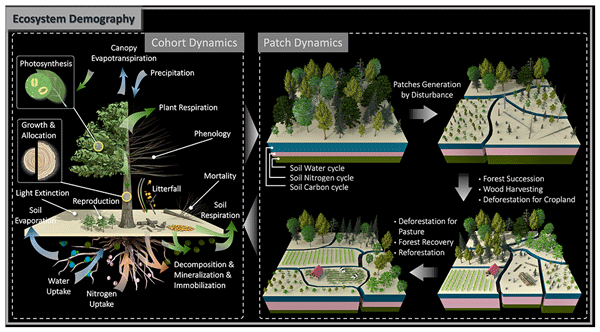
Lei Ma, George Hurtt, Lesley Ott, Ritvik Sahajpal, Justin Fisk, Rachel Lamb, Hao Tang, Steve Flanagan, Louise Chini, Abhishek Chatterjee, and Joseph Sullivan
Geosci. Model Dev., 15, 1971–1994, https://doi.org/10.5194/gmd-15-1971-2022, https://doi.org/10.5194/gmd-15-1971-2022, 2022
Short summary
Short summary
We present a global version of the Ecosystem Demography (ED) model which can track vegetation 3-D structure and scale up ecological processes from individual vegetation to ecosystem scale. Model evaluation against multiple benchmarking datasets demonstrated the model’s capability to simulate global vegetation dynamics across a range of temporal and spatial scales. With this version, ED has the potential to be linked with remote sensing observations to address key scientific questions.
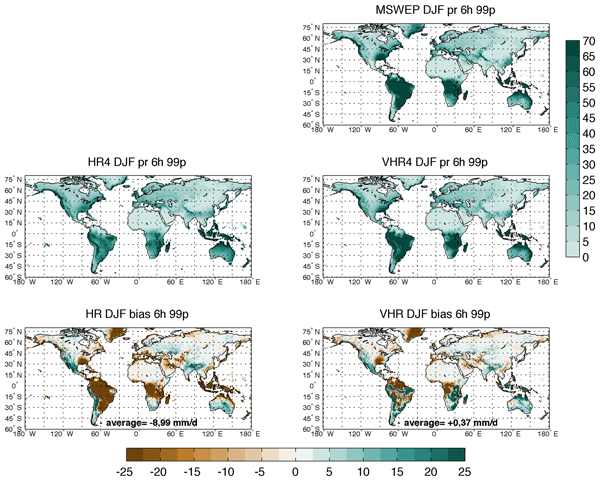
Enrico Scoccimarro, Daniele Peano, Silvio Gualdi, Alessio Bellucci, Tomas Lovato, Pier Giuseppe Fogli, and Antonio Navarra
Geosci. Model Dev., 15, 1841–1854, https://doi.org/10.5194/gmd-15-1841-2022, https://doi.org/10.5194/gmd-15-1841-2022, 2022
Short summary
Short summary
This study evaluated the ability of the CMCC-CM2 climate model participating to the last CMIP6 effort, in representing extreme events of precipitation and temperature at the daily and 6-hourly frequencies. The 1/4° resolution version of the atmospheric model provides better results than the version at 1° resolution for temperature extremes, at both time frequencies. For precipitation extremes, especially at the daily time frequency, the higher resolution does not improve model results.
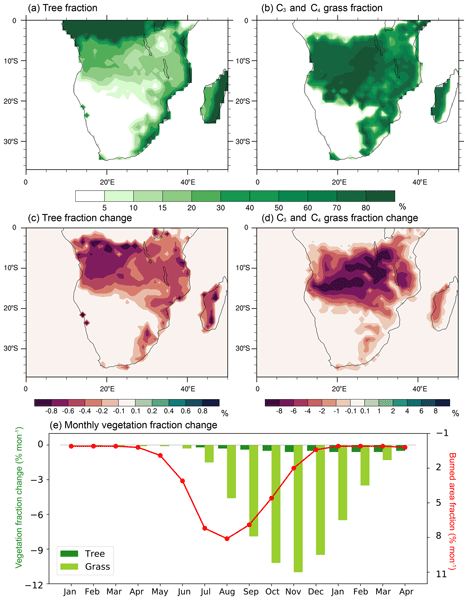
Huilin Huang, Yongkang Xue, Ye Liu, Fang Li, and Gregory S. Okin
Geosci. Model Dev., 14, 7639–7657, https://doi.org/10.5194/gmd-14-7639-2021, https://doi.org/10.5194/gmd-14-7639-2021, 2021
Short summary
Short summary
This study applies a fire-coupled dynamic vegetation model to quantify fire impact at monthly to annual scales. We find fire reduces grass cover by 4–8 % annually for widespread areas in south African savanna and reduces tree cover by 1 % at the periphery of tropical Congolese rainforest. The grass cover reduction peaks at the beginning of the rainy season, which quickly diminishes before the next fire season. In contrast, the reduction of tree cover is irreversible within one growing season.

Martim Mas e Braga, Richard Selwyn Jones, Jennifer C. H. Newall, Irina Rogozhina, Jane L. Andersen, Nathaniel A. Lifton, and Arjen P. Stroeven
The Cryosphere, 15, 4929–4947, https://doi.org/10.5194/tc-15-4929-2021, https://doi.org/10.5194/tc-15-4929-2021, 2021
Short summary
Short summary
Mountains higher than the ice surface are sampled to know when the ice reached the sampled elevation, which can be used to guide numerical models. This is important to understand how much ice will be lost by ice sheets in the future. We use a simple model to understand how ice flow around mountains affects the ice surface topography and show how much this influences results from field samples. We also show that models need a finer resolution over mountainous areas to better match field samples.
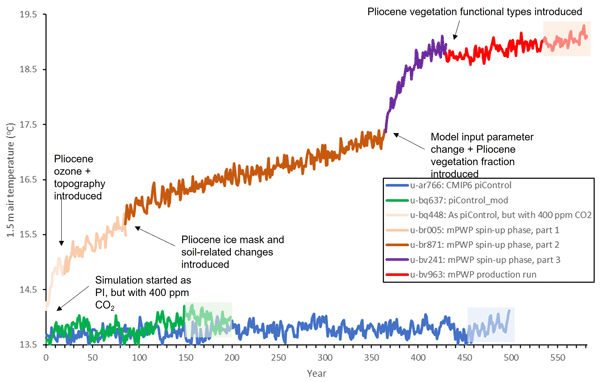
Charles J. R. Williams, Alistair A. Sellar, Xin Ren, Alan M. Haywood, Peter Hopcroft, Stephen J. Hunter, William H. G. Roberts, Robin S. Smith, Emma J. Stone, Julia C. Tindall, and Daniel J. Lunt
Clim. Past, 17, 2139–2163, https://doi.org/10.5194/cp-17-2139-2021, https://doi.org/10.5194/cp-17-2139-2021, 2021
Short summary
Short summary
Computer simulations of the geological past are an important tool to improve our understanding of climate change. We present results from a simulation of the mid-Pliocene (approximately 3 million years ago) using the latest version of the UK’s climate model. The simulation reproduces temperatures as expected and shows some improvement relative to previous versions of the same model. The simulation is, however, arguably too warm when compared to other models and available observations.
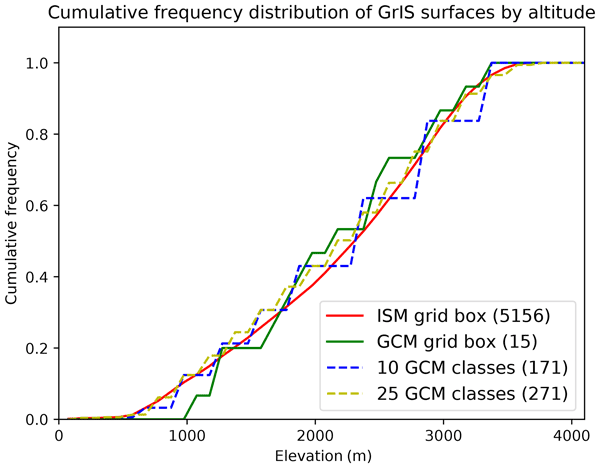
Robin S. Smith, Steve George, and Jonathan M. Gregory
Geosci. Model Dev., 14, 5769–5787, https://doi.org/10.5194/gmd-14-5769-2021, https://doi.org/10.5194/gmd-14-5769-2021, 2021
Short summary
Short summary
Many of the complex computer models used to study the physics of the natural world treat ice sheets as fixed and unchanging, capable of only simple interactions with the rest of the climate. This is partly because it is technically very difficult to usefully do anything more realistic. We have adapted a climate model so it can be joined together with a dynamical model of the Greenland ice sheet. This gives us a powerful tool to help us better understand how ice sheets and the climate interact.
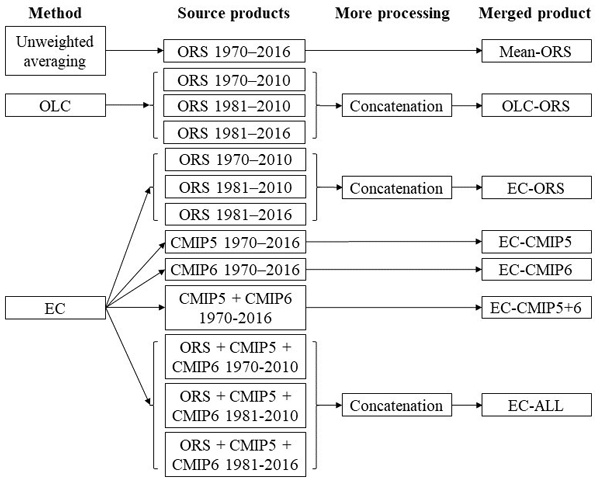
Yaoping Wang, Jiafu Mao, Mingzhou Jin, Forrest M. Hoffman, Xiaoying Shi, Stan D. Wullschleger, and Yongjiu Dai
Earth Syst. Sci. Data, 13, 4385–4405, https://doi.org/10.5194/essd-13-4385-2021, https://doi.org/10.5194/essd-13-4385-2021, 2021
Short summary
Short summary
We developed seven global soil moisture datasets (1970–2016, monthly, half-degree, and multilayer) by merging a wide range of data sources, including in situ and satellite observations, reanalysis, offline land surface model simulations, and Earth system model simulations. Given the great value of long-term, multilayer, gap-free soil moisture products to climate research and applications, we believe this paper and the presented datasets would be of interest to many different communities.
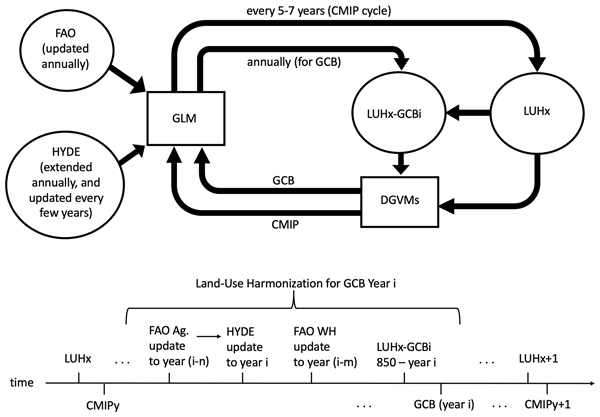
Louise Chini, George Hurtt, Ritvik Sahajpal, Steve Frolking, Kees Klein Goldewijk, Stephen Sitch, Raphael Ganzenmüller, Lei Ma, Lesley Ott, Julia Pongratz, and Benjamin Poulter
Earth Syst. Sci. Data, 13, 4175–4189, https://doi.org/10.5194/essd-13-4175-2021, https://doi.org/10.5194/essd-13-4175-2021, 2021
Short summary
Short summary
Carbon emissions from land-use change are a large and uncertain component of the global carbon cycle. The Land-Use Harmonization 2 (LUH2) dataset was developed as an input to carbon and climate simulations and has been updated annually for the Global Carbon Budget (GCB) assessments. Here we discuss the methodology for producing these annual LUH2 updates and describe the 2019 version which used new cropland and grazing land data inputs for the globally important region of Brazil.
Cited articles
Abrams, J. F., Lade, S. J., Donges, J. F., and Buxton, J. E.: Section 2: Tipping Points Impacts, in: The Global Tipping Points Report 2023., edited by: Lenton, T. M., Armstrong McKay, D. I., Loriani, S., Abrams, J. F., Lade, S. J., Donges, J. F., Milkoreit, M., Powell, T., Smith, S. R., Zimm, C., Buxton, J. E., Laybourn, L., Ghadiali, A., and Dyke, G., University of Exeter, Exeter, UK, https://report-2023.global-tipping-points.org/summary-report/narrative-summary/ (last access: 17 April 2026), 2023.
Albrecht, T., Bagge, M., and Klemann, V.: Feedback mechanisms controlling Antarctic glacial-cycle dynamics simulated with a coupled ice sheet–solid Earth model, The Cryosphere, 18, 4233–4255, https://doi.org/10.5194/tc-18-4233-2024, 2024.
Al-Yaari, A., Ducharne, A., Thiery, W., Cheruy, F., and Lawrence, D.: The role of irrigation expansion on historical climate change: Insights from CMIP6, Earth's Future, 10, e2022EF002859, https://doi.org/10.1029/2022EF002859, 2022.
Anav, A., Friedlingstein, P., Kidston, M., Bopp, L., Ciais, P., Cox, P., Jones, C., Jung, M., Myneni, R., and Zhu, Z.: Evaluating the land and ocean components of the global carbon cycle in the CMIP5 Earth System models, J. Climate, 26, 6801–6843, https://doi.org/10.1175/jcli-d-12-00417.1, 2013.
Armstrong McKay, D. I., Staal, A., Abrams, J. F., Winkelmann, R., Sakschewski, B., Loriani, S., Fetzer, I., Cornell, S. E., Rockström, J., and Lenton, T. M.: Exceeding 1.5 °C global warming could trigger multiple climate tipping points, Science, 377, eabn7950, https://doi.org/10.1126/science.abn7950, 2022.
Balch, J. K., Abatzoglou, J. T., Joseph, M. B., Koontz, M. J., Mahood, A. L., McGlinchy, J., Cattau, M. E., and Williams, A. P.: Warming weakens the night-time barrier to global fire, Nature, 602, 442–448, https://doi.org/10.1038/s41586-021-04325-1, 2022.
Biess, B., Gudmundsson, L., and Seneviratne, S. I.: Assessing global and regional trends in spatially co-occurring hot or wet annual maxima under climate change, Earth's Future, 12, e2023EF004114, https://doi.org/10.1029/2023EF004114, 2024.
Boysen, L. R., Brovkin, V., Pongratz, J., Lawrence, D. M., Lawrence, P., Vuichard, N., Peylin, P., Liddicoat, S., Hajima, T., Zhang, Y., Rocher, M., Delire, C., Séférian, R., Arora, V. K., Nieradzik, L., Anthoni, P., Thiery, W., Laguë, M. M., Lawrence, D., and Lo, M.-H.: Global climate response to idealized deforestation in CMIP6 models, Biogeosciences, 17, 5615–5638, https://doi.org/10.5194/bg-17-5615-2020, 2020.
Briley, L., Rood, R., and Notaro, M.: Large lakes in climate models: A Great Lakes case study on the usability of CMIP5, J. Great Lakes Res., 47, https://doi.org/10.1016/j.jglr.2021.01.010, 2021.
Burke, E. J., Zhang, Y., and Krinner, G.: Evaluating permafrost physics in the Coupled Model Intercomparison Project 6 (CMIP6) models and their sensitivity to climate change, The Cryosphere, 14, 3155–3174, https://doi.org/10.5194/tc-14-3155-2020, 2020.
Chauhan, T., Devanand, A., Roxy, M. K., Ashok, K., and Ghosh, S.: River interlinking alters land–atmosphere feedback and changes the Indian summer monsoon, Nat. Commun., 14, 5928, https://doi.org/10.1038/s41467-023-41668-x, 2023.
Chen, X., Wang, J., Pan, F., Song, Y., Liang, J., Huang, N., Jiang, K., Gao, R., Men, J., Bi, P., Zhang, F., Huang, Z., Huang, B., and Pan, Z.: Land-atmosphere feedback exacerbated the mega heatwave and drought over the Yangtze River Basin of China during summer 2022, Agr. Forest Meteorol., 361, 110321, https://doi.org/10.1016/j.agrformet.2024.110321, 2025.
Clark, M. P., Fan, Y., Lawrence, D. M., Adam, J. C., Bolster, D., Gochis, D. J., Hooper, R. P., Kumar, M., Leung, L. R., Mackay, D. S., Maxwell, R. M., Shen, C., Swenson, S. C., and Zeng, X.: Improving the representation of hydrologic processes in Earth System Models, Water Resour. Res., 51, 5929–5956, https://doi.org/10.1002/2015wr017096, 2015.
CMIP Model Benchmarking Task Team: CMIP AR7 Fast Track Diagnostics list for the Rapid Evaluation Framework, Zenodo [data set], https://doi.org/10.5281/zenodo.14284375, 2024.
Cook, B. I., Mankin, J. S., Marvel, K., Williams, A. P., Smerdon, J. E., and Anchukaiti, K. J.: Twenty-first Century drought projections in the CMIP6 forcing scenarios, Earth's Future, 8, e2019EF001461, https://doi.org/10.1029/2019EF001461, 2020.
Davies, B., McNabb, R., Bendle, J., Carrivick, J., Ely, J., Holt, T., Markle, B., McNeil, C., Nicholson, L., and Pelto, M.: Accelerating glacier volume loss on Juneau Icefield driven by hypsometry and melt-accelerating feedbacks, Nat. Commun., 15, 5099, https://doi.org/10.1038/s41467-024-49269-y, 2024.
Data Request Task Team: CMIP-Data-Request/CMIP7_DReq_Content: Data request content for v1.0beta (released 21 Oct 2024) (v1.0beta), Zenodo [code], https://doi.org/10.5281/zenodo.14832540, 2024a.
Data Request Task Team: CMIP-Data-Request/CMIP7_DReq_Content: Data request content for v1.0 (released 22 Nov 2024) (v1.0), Zenodo [code], https://doi.org/10.5281/zenodo.14832541, 2024b.
Data Request Task Team: CMIP-Data-Request/CMIP7_DReq_Content: Data request content for v1.1 (released 30 Jan 2025) (v1.1), Zenodo [code], https://doi.org/10.5281/zenodo.14774071, 2025a.
Data Request Task Team: CMIP-Data-Request/CMIP7_DReq_Content: Data request content for v1.2 (released 1 Apr 2025) (v1.2), Zenodo [code], https://doi.org/10.5281/zenodo.15116894, 2025b.
Data Request Task Team: CMIP-Data-Request/CMIP7_DReq_Content: Data request content for v1.2.1 (released 26 Apr 2025) (v1.2.1), Zenodo [code], https://doi.org/10.5281/zenodo.15288187, 2025c.
Data Request Task Team: CMIP-Data-Request/CMIP7_DReq_Content: Data request content for v1.2.2.3 (released 19 Dec 2025) (v1.2.2.3), Zenodo [data set], https://doi.org/10.5281/zenodo.17986580, 2025d.
De Rydt, J., Jourdain, N. C., Nakayama, Y., van Caspel, M., Timmermann, R., Mathiot, P., Asay-Davis, X. S., Seroussi, H., Dutrieux, P., Galton-Fenzi, B., Holland, D., and Reese, R.: Experimental design for the Marine Ice Sheet–Ocean Model Intercomparison Project – phase 2 (MISOMIP2), Geosci. Model Dev., 17, 7105–7139, https://doi.org/10.5194/gmd-17-7105-2024, 2024.
Dingley, B., Anstey, J. A., Abalos, M., Abraham, C., Bergman, T., Bock, L., Fiddes, S., Hassler, B., Kramer, R. J., Luo, F., O'Connor, F. M., Šácha, P., Simpson, I. R., Wilcox, L. J., and Zelinka, M. D.: CMIP7 Data Request: atmosphere priorities and opportunities, Geosci. Model Dev., 19, 2945–2984, https://doi.org/10.5194/gmd-19-2945-2026, 2026.
Dirmeyer, P., Balsamo, G., Blyth, E, Morrison, R., and Cooper, H.: Land-Atmosphere Interactions Exacerbated the Drought and Heatwave Over Northern Europe During Summer 2018, AGU Adv., 2, https://doi.org/10.1029/2020AV000283, 2021.
Dong, W., Krasting, J. P., and Guo, H.: Analysis of precipitation diurnal cycle and variance in multiple observations, CMIP6 models, and a series of GFDL-AM4.0 simulations, J. Climate, 36, 8637–8655, https://doi.org/10.1175/JCLI-D-23-0268.1, 2023.
Drenkhan, F., Buytaert, W., Mackay, J. D., Barrand, N. E., Hannah, D. M., and Huggel, C.: Looking beyond glaciers to understand mountain water security, Nat. Sustain., 6, 130–138, https://doi.org/10.1038/s41893-022-00996-4, 2023.
Dunne, J. P., Hewitt, H. T., Arblaster, J. M., Bonou, F., Boucher, O., Cavazos, T., Dingley, B., Durack, P. J., Hassler, B., Juckes, M., Miyakawa, T., Mizielinski, M., Naik, V., Nicholls, Z., O'Rourke, E., Pincus, R., Sanderson, B. M., Simpson, I. R., and Taylor, K. E.: An evolving Coupled Model Intercomparison Project phase 7 (CMIP7) and Fast Track in support of future climate assessment, Geosci. Model Dev., 18, 6671–6700, https://doi.org/10.5194/gmd-18-6671-2025, 2025.
Edwards, T. L., Nowicki, S., Marzeion, B., Hock, R., Goelzer, H., Seroussi, H., Jourdain, N. C., Slater, D. A., Turner, F. E., Smith, C. J., McKenna, C. M., Simon, E., Abe-Ouchi, A., Gregory, J. M., Larour, E., Lipscomb, W. H., Payne, A. J., Shepherd, A., Agosta, C., Alexander, P., Albrecht, T., Anderson, B., Asay-Davis, X., Aschwanden, A., Barthel, A., Bliss, A., Calov, R., Chambers, C., Champollion, N., Choi, Y., Cullather, R., Cuzzone, J., Dumas, C., Felikson, D., Fettweis, X., Fujita, K., Galton-Fenzi, B. K., Gladstone, R., Golledge, N. R., Greve, R., Hattermann, T., Hoffman, M. J., Humbert, A., Huss, M., Huybrechts, P., Immerzeel, W., Kleiner, T., Kraaijenbrink, P., Clec'h, S. L., Lee, V., Leguy, G. R., Little, C. M., Lowry, D. P., Malles, J.-H., Martin, D. F., Maussion, F., Morlighem, M., O'Neill, J. F., Nias, I., Pattyn, F., Pelle, T., Price, S. F., Quiquet, A., Radić, V., Reese, R., Rounce, D. R., Rückamp, M., Sakai, A., Shafer, C., Schlegel, N.-J., Shannon, S., Smith, R. S., Straneo, F., Sun, S., Tarasov, L., Trusel, L. D., Van Breedam, J., Van De Wal, R., Van Den Broeke, M., Winkelmann, R., Zekollari, H., Zhao, C., Zhang, T., and Zwinger, T.: Projected land ice contributions to twenty-first-century sea level rise, Nature, 593, 74–82, https://doi.org/10.1038/s41586-021-03302-y, 2021.
Eyring, V., Bony, S., Meehl, G. A., Senior, C. A., Stevens, B., Stouffer, R. J., and Taylor, K. E.: Overview of the Coupled Model Intercomparison Project Phase 6 (CMIP6) experimental design and organization, Geosci. Model Dev., 9, 1937–1958, https://doi.org/10.5194/gmd-9-1937-2016, 2016.
Eyring, V., Gillett, N. P., Achuta Rao, K. M., Barimalala, R., Barreiro Parrillo, M., Bellouin, N., Cassou, C., Durack, P. J., Kosaka, Y., McGregor, S., Min, S., Morgenstern, O., and Sun, Y. Human Influence on the Climate System, in: Climate Change 2021: The Physical Science Basis, Contribution of Working Group I to the Sixth Assessment Report of the Intergovernmental Panel on Climate Change, edited by: Masson-Delmotte, V., Zhai, P., Pirani, A., Connors, S. L., Péan, C., Berger, S., Caud, N., Chen, Y., Goldfarb, L., Gomis, M. I., Huang, M., Leitzell, K., Lonnoy, E., Matthews, J. B. R., Maycock, T. K., Waterfield, T., Yelekçi, O., Yu, R., and Zhou, B., Cambridge University Press, Cambridge, UK and New York, NY, USA, 423–552, https://doi.org/10.1017/9781009157896.005, 2021.
Fan, Y., Clark, M., Lawrence, D. M., Swenson, S., Band, L. E., Brantley, S. L., Brooks, P. D., Dietrich, D. E., Flores, A., Grant, G., Kirchner, J. W., Mackay, D. S., McDonnell, J. J., Milly, P. C. D., Sullivan, P. L., Tague, C., Ajami, H., Chaney, N., Hartmann, A., Hazenberg, P., McNamara, J., Pelletier, J., Perket, J., Rouholahnejad-Freund, E., Wagener, T., Zeng, X., Beighley, E., Buzan, J., Huang, M., Livneh, B., Mohanty, B. P., Nijssen, B., Safeeq, M., Shen, C., van Verseveld, W., Volk, J., and Yamazaki, D.: Hillslope hydrology in global change research and Earth system modeling, Water Resour. Res., 55, 1737–1772, https://doi.org/10.1029/2018WR023903, 2019.
Findell, K., Gentine, P., Lintner, B., and Guillod, B.: Data Length Requirements for Observational Estimates of Land-Atmosphere Coupling Strength, J. Hydrometeorol., 16, 150406064716003, https://doi.org/10.1175/JHM-D-14-0131.1, 2015.
Findell, K. L., Gentine, P., Lintner, B. R., and Kerr, C.: Probability of afternoon precipitation in eastern United States and Mexico enhanced by high evaporation, Nat. Geosci., 4, 434–439, 2011.
Findell, K. L., Yin, Z., Seo, E., Dirmeyer, P. A., Arnold, N. P., Chaney, N., Fowler, M. D., Huang, M., Lawrence, D. M., Ma, P.-L., and Santanello Jr., J. A.: Accurate assessment of land–atmosphere coupling in climate models requires high-frequency data output, Geosci. Model Dev., 17, 1869–1883, https://doi.org/10.5194/gmd-17-1869-2024, 2024.
Fisher, R. A., Koven, C. D., Anderegg, W. R. L., Bradley, O. C., Dietze, M. C., Farrior, C. E., Holm, J. A., Hurtt, G. C., Knox, R. G., Lawrence, P. J., Lichstein, J. W., Longo, M., Matheny, A. M., Medvigy, D., Muller-Landau, H. C., Powell, T. L., Serbin, S. P., Sato, H., Shuman, J. K., Smith, B., Trugman, A. T., Viskari, T., Verbeeck, H., Weng, E., Xu, C., Xu, X., Zhang, T., and Moorcroft, P. R.: Vegetation demographics in Earth System Models: A review of progress and priorities, Global Change Biol., 24, 35–54, https://doi.org/10.1111/gcb.13910, 2018.
Fox-Kemper, B., Hewitt, H. T., Xiao, C., Aðalgeirsdóttir, G., Drijfhout, S. S., Edwards, T. L., Golledge, N. R., Hemer, M., Kopp, R. E., Krinner, G., Mix, A., Notz, D., Nowicki, S., Nurhati, I. S., Ruiz, L., Sallée, J.-B., Slangen, A. B. A., and Yu, Y.: Ocean, Cryosphere and Sea Level Change, in: Climate Change 2021: The Physical Science Basis, Contribution of Working Group I to the Sixth Assessment Report of the Intergovernmental Panel on Climate Change, edited by: Masson-Delmotte, V., Zhai, P., Pirani, A., Connors, S. L., Péan, C., Berger, S., Caud, N., Chen, Y., Goldfarb, L., Gomis, M. I., Huang, M., Leitzell, K., Lonnoy, E., Matthews, J. B. R., Maycock, T. K., Waterfield, T., Yelekçi, O., Yu, R., and Zhou, B., Cambridge University Press, Cambridge, UK and New York, NY, USA, 1211–1362, https://doi.org/10.1017/9781009157896.011, 2021.
Golledge, N. R., Keller, E. D., Gomez, N., Naughten, K. A., Bernales, J., Trusel, L. D., and Edwards, T. L.: Global environmental consequences of twenty-first-century ice-sheet melt, Nature, 566, 65–72, https://doi.org/10.1038/s41586-019-0889-9, 2019.
Gregory, J. M., White, N. J., Church, J. A., Bierkens, M. F. P., Box, J. E., van den Broeke, M. R., Cogley, J. G., Fettweis, X., Hanna, E., Huybrechts, P., Konikow, L. F., Leclercq, P. W., Marzeion, B., Oerlemans, J., Tamisiea, M. E., Wada, Y., Wake, L. M., and van de Wal, R. S. W.: Twentieth-Century Global-Mean Sea Level Rise: Is the Whole Greater than the Sum of the Parts?, J. Climate, 26, 4476–4499, https://doi.org/10.1175/JCLI-D-12-00319.1, 2013.
Hassell, D., Gregory, J., Blower, J., Lawrence, B. N., and Taylor, K. E.: A data model of the Climate and Forecast metadata conventions (CF-1.6) with a software implementation (cf-python v2.1). Geosci. Model Dev., 10, 4619–4646, https://doi.org/10.5194/gmd-10-4619-2017, 2017.
Herrera-Estrada, J. E., Martinez, J. A., Dominguez, F., Findell, K. L., Wood, E. F., and Sheffield, J.: Reduced Moisture Transport Linked to Drought Propagation Across North America, Geophys. Res. Lett., 46, 5243–5253, https://doi.org/10.1029/2019GL082475, 2019.
Hock, R. and Truffer, M.: Glacier hazards: Will they change in the future?, Arct. Antarct. Alp. Res., 56, https://doi.org/10.1080/15230430.2024.2335991, 2024.
Hock, R., Bliss, A., Marzeion, B., Giesen, R. H., Hirabayashi, Y., Huss, M., Radić, V., and Slangen, A. B.: GlacierMIP – A model intercomparison of global-scale glacier mass-balance models and projections, J. Glaciol., 65, 453–467, https://doi.org/10.1017/jog.2019.22, 2019a.
Hock, R., Rasul, G., Adler, C., Cáceres, B., Gruber, S., Hirabayashi, Y., Jackson, M., Kääb, A., Kang, S., Kutuzov, S., Milner, A., Molau, U., Morin, S., Orlove, B., and Steltzer, H.: High Mountain Areas, in: IPCC Special Report on the Ocean and Cryosphere in a Changing Climate, edited by: Pörtner, H.-O., Roberts, D. C., Masson-Delmotte, V., Zhai, P., Tignor, M., Poloczanska, E., Mintenbeck, K., Alegría, A., Nicolai, M., Okem, A., Petzold, J., Rama, B., and Weyer, N. M., Cambridge University Press, Cambridge, UK and New York, NY, USA, 131–202, https://doi.org/10.1017/9781009157964.004, 2019b.
Hoffman, F. M., Hassler, B., Swaminathan, R., Lewis, J., Andela, B., Collier, N., Hegedűs, D., Lee, J., Pascoe, C., Pflüger, M., Stockhause, M., Ullrich, P., Xu, M., Bock, L., Chun, F., Gier, B. K., Kelley, D. I., Lauer, A., Lenhardt, J., Schlund, M., Sreeush, M. G., Weigel, K., Blockley, E., Beadling, R., Beucher, R., Dugassa, D. D., Lembo, V., Lu, J., Brands, S., Tjiputra, J., Malinina, E., Mederios, B., Scoccimarro, E., Walton, J., Kershaw, P., Marquez, A. L., Roberts, M. J., O'Rourke, E., Dingley, E., Turner, B., Hewitt, H., and Dunne, J. P.: Rapid Evaluation Framework for the CMIP7 Assessment Fast Track, EGUsphere [preprint], https://doi.org/10.5194/egusphere-2025-2685, 2025.
Hogan, J., Lichstein, J., Helmer, E., Craig, M., Fricke, E., Henrich, V., Kannenberg, S. A., Koven, C. D., Goldewjik, K. K., Lapola, D. M., Li, Y., Malhi, Y., Quinn, J., Roe, S., Terrer, C., Vilanova, E., Walker, A. P., Zhu, K., and Ellis, E. C.: Anthromes and forest carbon responses to global change, Plants People Planet, 7, 1027–1042, https://doi.org/10.1002/ppp3.10609, 2025.
Houghton, R. A., House, J. I., Pongratz, J., van der Werf, G. R., DeFries, R. S., Hansen, M. C., Le Quéré, C., and Ramankutty, N.: Carbon emissions from land use and land-cover change, Biogeosciences, 9, 5125–5142, https://doi.org/10.5194/bg-9-5125-2012, 2012.
Huntington, T. G.: Evidence for intensification of the global water cycle: Review and synthesis, J. Hydrol., 319, 83–95, https://doi.org/10.1016/j.jhydrol.2005.07.003, 2005.
Hurtt, G. C., Chini, L., Sahajpal, R., Frolking, S., Bodirsky, B. L., Calvin, K., Doelman, J. C., Fisk, J., Fujimori, S., Klein Goldewijk, K., Hasegawa, T., Havlik, P., Heinimann, A., Humpenöder, F., Jungclaus, J., Kaplan, J. O., Kennedy, J., Krisztin, T., Lawrence, D., Lawrence, P., Ma, L., Mertz, O., Pongratz, J., Popp, A., Poulter, B., Riahi, K., Shevliakova, E., Stehfest, E., Thornton, P., Tubiello, F. N., van Vuuren, D. P., and Zhang, X.: Harmonization of global land use change and management for the period 850–2100 (LUH2) for CMIP6, Geosci. Model Dev., 13, 5425–5464, https://doi.org/10.5194/gmd-13-5425-2020, 2020.
Huss, M. and Hock, R.: Global-scale hydrological response to future glacier mass loss, Nat. Clim. Change, 8, 135–140, https://doi.org/10.1038/s41558-017-0049-x, 2018.
IPCC: IPCC Special Report on the Ocean and Cryosphere in a Changing Climate, edited bu: Pörtner, H.-O., Roberts, D. C., Masson-Delmotte, V., Zhai, P., Tignor, M., Poloczanska, E., Mintenbeck, K., Alegría, A., Nicolai, M., Okem, A., Petzold, J., Rama, B., and Weyer, N. M., Cambridge University Press, Cambridge, UK and New York, NY, USA, 755 pp., https://doi.org/10.1017/9781009157964, 2019.
Jolly, W. M., Nemani, R., and Running, S. W.: A generalized, bioclimatic index to predict foliar phenology in response to climate, Global Change Biol., 11, 619–632, https://doi.org/10.1111/j.1365-2486.2005.00930.x, 2005.
Juckes, M., Taylor, K. E., Durack, P. J., Lawrence, B., Mizielinski, M. S., Pamment, A., Peterschmitt, J. Y., Rixen, M., and Sénési, S.: The CMIP6 data request (DREQ, version 01.00.31), Geosci. Model Dev., 13, 201–224, https://doi.org/10.5194/gmd-13-201-2020, 2020.
Juckes, M., Taylor, K. E., Antonio, F., Brayshaw, D., Buontempo, C., Cao, J., Durack, P. J., Kawamiya, M., Kim, H., Lovato, T., Mackallah, C., Mizielinski, M., Nuzzo, A., Stockhause, M., Visioni, D., Walton, J., Turner, B., O'Rourke, E., and Dingley, B.: Baseline Climate Variables for Earth System Modelling, Geosci. Model Dev., 18, 2639–2663, https://doi.org/10.5194/gmd-18-2639-2025, 2025.
Kageyama, M., Braconnot, P., Harrison, S. P., Haywood, A. M., Jungclaus, J. H., Otto-Bliesner, B. L., Peterschmitt, J.-Y., Abe-Ouchi, A., Albani, S., Bartlein, P. J., Brierley, C., Crucifix, M., Dolan, A., Fernandez-Donado, L., Fischer, H., Hopcroft, P. O., Ivanovic, R. F., Lambert, F., Lunt, D. J., Mahowald, N. M., Peltier, W. R., Phipps, S. J., Roche, D. M., Schmidt, G. A., Tarasov, L., Valdes, P. J., Zhang, Q., and Zhou, T.: The PMIP4 contribution to CMIP6 – Part 1: Overview and over-arching analysis plan, Geosci. Model Dev., 11, 1033–1057, https://doi.org/10.5194/gmd-11-1033-2018, 2018.
Keenan, T. F., Gray, J., Friedl, M. A., Toomey, M., Bohrer, G., Hollinger, D. Y., Munger, J. W., O'Keefe, J., Schmid, H. P., Wing, I. S., Yang, B., and Richardson, A. D.: Net carbon uptake has increased through warming-induced changes in temperate forest phenology, Nat. Clim. Change, 4, 598–604, https://doi.org/10.1038/NCLIMATE2253, 2014.
Kennedy, D., Swenson, S., Oleson, K. W., Lawrence, D. M., Fisher, R., Lola da Costa, A. C., and Gentine, P.: Implementing plant hydraulics in the Community Land Model, version 5, J. Adv. Model. Earth Syst., 11, 485–513, https://doi.org/10.1029/2018MS001500, 2019.
Konapala, G., Mishra, A. K., Wada, Y., and Mann, M. E.: Climate change will affect global water availability through compounding changes in seasonal precipitation and evaporation, Nat. Commun., 11, https://doi.org/10.1038/s41467-020-16757-w, 2020.
Koster, R. D., Dirmeyer, P. A., Guo, Z., Bonan, G., Chan, E., Cox, P., Gordon, C. T., Kanae, S., Kowalczyk, E., Lawrence, D., Liu, P., Lu, C. H., Malyshev, S., McAvaney, B., Mitchell, K., Mocko, D., Oki, T., Oleson, K., Pitman, A., Sud, Y. C., Taylor, C. M., Verseghy, D., Vasic, R., Xue, Y., and Yamada, T.: Regions of strong coupling between soil moisture and precipitation, Science, 305, 1138–1140, https://doi.org/10.1126/science.1100217, 2004.
Kouki, K., Räisänen, P., Luojus, K., Luomaranta, A., and Riihelä, A.: Evaluation of Northern Hemisphere snow water equivalent in CMIP6 models during 1982–2014, The Cryosphere, 16, 1007–1030, https://doi.org/10.5194/tc-16-1007-2022, 2022.
Koven, C. D., Riley, W. J., and Stern, A.: Analysis of Permafrost Thermal Dynamics and Response to Climate Change in the CMIP5 Earth System Models, J. Climate, 26, 1877–1900, https://doi.org/10.1175/JCLI-D-12-00228.1, 2013.
Koven, C. D., Knox, R. G., Fisher, R. A., Chambers, J. Q., Christoffersen, B. O., Davies, S. J., Detto, M., Dietze, M. C., Faybishenko, B., Holm, J., Huang, M., Kovenock, M., Kueppers, L. M., Lemieux, G., Massoud, E., McDowell, N. G., Muller-Landau, H. C., Needham, J. F., Norby, R. J., Powell, T., Rogers, A., Serbin, S. P., Shuman, J. K., Swann, A. L. S., Varadharajan, C., Walker, A. P., Wright, S. J., and Xu, C.: Benchmarking and parameter sensitivity of physiological and vegetation dynamics using the Functionally Assembled Terrestrial Ecosystem Simulator (FATES) at Barro Colorado Island, Panama, Biogeosciences, 17, 3017–3044, https://doi.org/10.5194/bg-17-3017-2020, 2020.
Krinner, G., Derksen, C., Essery, R., Flanner, M., Hagemann, S., Clark, M., Hall, A., Rott, H., Brutel-Vuilmet, C., Kim, H., Ménard, C. B., Mudryk, L., Thackeray, C., Wang, L., Arduini, G., Balsamo, G., Bartlett, P., Boike, J., Boone, A., Chéruy, F., Colin, J., Cuntz, M., Dai, Y., Decharme, B., Derry, J., Ducharne, A., Dutra, E., Fang, X., Fierz, C., Ghattas, J., Gusev, Y., Haverd, V., Kontu, A., Lafaysse, M., Law, R., Lawrence, D., Li, W., Marke, T., Marks, D., Ménégoz, M., Nasonova, O., Nitta, T., Niwano, M., Pomeroy, J., Raleigh, M. S., Schaedler, G., Semenov, V., Smirnova, T. G., Stacke, T., Strasser, U., Svenson, S., Turkov, D., Wang, T., Wever, N., Yuan, H., Zhou, W., and Zhu, D.: ESM-SnowMIP: assessing snow models and quantifying snow-related climate feedbacks, Geosci. Model Dev., 11, 5027–5049, https://doi.org/10.5194/gmd-11-5027-2018, 2018.
Lawrence, D., Coe, M., Walker, W., Verchot, L., and Vandecar, K.: The Unseen Effects of Deforestation: Biophysical Effects on Climate, Front. Forests Global Change, 5, https://doi.org/10.3389/ffgc.2022.756115, 2022.
Lawrence, D. M., Hurtt, G. C., Arneth, A., Brovkin, V., Calvin, K. V., Jones, A. D., Jones, C. D., Lawrence, P. J., de Noblet-Ducoudré, N., Pongratz, J., Seneviratne, S. I., and Shevliakova, E.: The Land Use Model Intercomparison Project (LUMIP) contribution to CMIP6: rationale and experimental design, Geosci. Model Dev., 9, 2973–2998, https://doi.org/10.5194/gmd-9-2973-2016, 2016.
Lee, J.-Y., Marotzke, J., Bala, G., Cao, L., Corti, S., Dunne, J. P., Engelbrecht, F., Fischer, E., Fyfe, J. C., Jones, C., Maycock, A., Mutemi, J., Ndiaye, O., Panickal, S., and Zhou, T.: Future Global Climate: Scenario-Based Projections and Near-Term Information, in: Climate Change 2021: The Physical Science Basis, Contribution of Working Group I to the Sixth Assessment Report of the Intergovernmental Panel on Climate Change, edited by: Masson-Delmotte, V., Zhai, P., Pirani, A., Connors, S. L., Péan, C., Berger, S., Caud, N., Chen, Y., Goldfarb, L., Gomis, M. I., Huang, M., Leitzell, K., Lonnoy, E., Matthews, J. B. R., Maycock, T. K., Waterfield, T., Yelekçi, O., Yu, R., and Zhou, B., Cambridge University Press, Cambridge, UK and New York, NY, USA, 553–672, https://doi.org/10.1017/9781009157896.006, 2021.
Lehner, F., Wood, A. W., Vano, J. A., Lawrence, D. M., Clark, M. P., and Mankin, J. S.: The potential to reduce uncertainty in regional runoff projections from climate models, Nat. Clim. Change, 9, 926–933, https://doi.org/10.1038/s41558-019-0639-x, 2019.
Lei, M., Li, J., Zhang, L., Deng, C., Li, Y., and He, J.: Inconsistent frequency trends between hourly and daily precipitation during warm season in mainland of China, Geophys. Res. Lett., 49, https://doi.org/10.1029/2022GL100277, 2022.
Li, L., Yang, Z.-L., Matheny, A. M., Zheng, H., Swenson, S. C., Lawrence, D. M., Barlage, M., Yan, B., McDowell, N. G., and Leung, L. R.: Representation of plant hydraulics in the Noah-MP land surface model: Model development and multiscale evaluation, J. Adv. Model. Earth Syst., 13, e2020MS002214, https://doi.org/10.1029/2020MS002214, 2021.
Li, L., Fang, Y., Zheng, Z., Shi, M., Longo, M., Koven, C. D., Holm, J. A., Fisher, R. A., McDowell, N. G., Chambers, J., and Leung, L. R.: A machine learning approach targeting parameter estimation for plant functional type coexistence modeling using ELM-FATES (v2.0), Geosci. Model Dev., 16, 4017–4040, https://doi.org/10.5194/gmd-16-4017-2023, 2023a.
Li, Q., Sun, S., and Xue, Y.: Analyses and development of a hierarchy of frozen soil models for cold region study, J. Geophys. Res.-Atmos., 115, D03107, https://doi.org/10.1029/2009JD012530, 2010.
Li, X., Melaas, E., Carrillo, C. M., Ault, T., Richardson, A. D., Lawrence, P., Friedlingstein, M. A., Seyednasrollah, B., Lawrence, D. M., and Young, A. M.: A comparison of land surface phenology in the Northern Hemisphere derived from satellite remote sensing and the Community Land Model, J. Hydrometeorol., 23, 859–873, https://doi.org/10.1175/JHM-D-21-0169.1, 2022a.
Li, X., Ault, T., Evans, C. P., Lehner, F., Carrillo, C. M., Donnelly, A., Crimmins, T., Gallinat, A. S., and Schwartz, M. D.: Diverging Northern Hemisphere Trends in meteorological versus ecological Indicators of spring onset in CMIP6, Geophys. Res. Lett., 50, https://doi.org/10.1029/2023gl102833, 2023b.
Li, X., Ault, T., Richardson, A. D., Frolking, S., Herrera, D. A., Friedl, M. A., Carrillo, C. M., and Evans, C. P.: Northern hemisphere land–atmosphere feedback from prescribed plant phenology in CESM, J. Climate, https://doi.org/10.1175/jcli-d-23-0179.1, in press, 2024a.
Li, X., Carrillo, C. M., Ault, T., Richardson, A. D., Friedl, M. A., and Frolking, S.: Evaluation of leaf phenology of different vegetation types from local to hemispheric scale in CLM, J. Geophys. Res.-Biogeo., 129, https://doi.org/10.1029/2024jg008261, 2024b.
Li, Y., Brando, P. M., Morton, D. C., Lawrence, D. M., Yang, H., and Randerson, J. T.: Deforestation-induced climate change reduces carbon storage in remaining tropical forests, Nat. Commun., 13, 1964, https://doi.org/10.1038/s41467-022-29601-0, 2022b.
Li, Y., Huang, B., Tan, C., Zhang, X., Cherubini, F., and Rust, H. W.: Investigating the global and regional response of drought to idealized deforestation using multiple global climate models, Hydrol. Earth Syst. Sci., 29, 1637–1658, https://doi.org/10.5194/hess-29-1637-2025, 2025a.
Li, Y., Tang, G., Nowicki, S., Smith R. S., Minallah, S., and CMIP Data Request Land and Land-ice Author Team members: Schematic Diagram Illustrating the Land and Land Ice Theme Opportunities in CMIP7 Assessment Fast Track Data Request, Zenodo [data set], https://doi.org/10.5281/zenodo.15681951, 2025b.
Lombardozzi, D. L., Wieder, W. R., Keppel-Aleks, G., Lai, J., Luo, Z., Sun, Y., Simpson, I. R., Lawrence, D. M., Bonan, G. B., Lin, X., Koven, C. D., Friedlingstein, P., and Lindsay, K.: Agricultural fertilization significantly enhances amplitude of land–atmosphere CO2 exchange, Nat. Commun., 16, 1742, https://doi.org/10.1038/s41467-025-56730-z, 2025.
Lösing, M., Ebbing, J., and Szwillus, W.: Geothermal Heat Flux in Antarctica: Assessing Models and Observations by Bayesian Inversion, Front. Earth Sci., 8, 105, https://doi.org/10.3389/feart.2020.00105, 2020.
Luo, K., Wang, X., de Jong, M., and Flannigan, M.: Drought triggers and sustains overnight fires in North America, Nature, 627, 321–327, https://doi.org/10.1038/s41586-024-07028-5, 2024a.
Luo, X., Ge, J., Cao, Y., Liu, Y., Yang, L., Wang, S., and Guo, W.: Local and nonlocal biophysical effects of historical land use and land cover changes in CMIP6 models and the intermodel uncertainty, Earth's Future, 12, e2023EF004220, https://doi.org/10.1029/2023EF004220, 2024b.
Mackallah, C., Juckes, M., Anstey, J., Dingley, B., Pascoe, C., Rigoudy, G., Moine, M.-P., Lovato, T., Pamment, A., Schupfner, M., Kawamiya, M., Bergman, T., Koven, C., O'Rourke, E., Turner, B., Ellis, D., and Mizielinski, M.: CMIP7 Data Request: co-created guidance for the production of CMIP7 data [v1.2.2.3], EGUsphere [preprint], https://doi.org/10.5194/egusphere-2026-1641, 2026.
Mao, J., Fu, W., Shi, X., Ricciuto, D. M., Fisher, J. B., Dickinson, R. E., Wei, Y., Shem, W., Piao, S., Wang, K., and Schwalm, C. R.,: Disentangling climatic and anthropogenic controls on global terrestrial evapotranspiration trends, Environ. Res. Lett., 10, 094008, https://doi.org/10.1088/1748-9326/10/9/094008, 2015.
Marsh, H., Jin, H., Duan, Z., Holst, J., Eklundh, L., and Zhang, W.: Plant Phenology Index leveraging over conventional vegetation indices to establish a new remote sensing benchmark of GPP for northern ecosystems, Int. J. Appl. Earth Obs. Geoinf., 136, 104289, https://doi.org/10.1016/j.jag.2024.104289, 2025.
Marzeion, B., Hock, R., Anderson, B., Bliss, A., Champollion, N., Fujita, K., Huss, M., Immerzeel, W., Kraaijenbrink, P., Malles, J.-H., Maussion, F., Radic, V., Rounce, D. R., Sakai, A., Shannon, S., van de Wal, R., and Zekollari, H.: Partitioning the Uncertainty of Ensemble Projections of Global Glacier Mass Change, Earth's Future, 12, e2019EF001470, https://doi.org/10.1029/2019EF001470, 2020.
McPartland, M. Y., Lovato, T., Koven, C., Wilson, J. D., Turner, B., Petrik, C. M., Licón-Saláiz, J., Li, F., Lhardy, F., Clement Kinney, J., Kawamiya, M., Hassler, B., Gillett, N. P., Fall, C. M. N., Danek, C., Brierley, C. M., Bastos, A., and Andrews, O.: CMIP7 data request: Earth system priorities and opportunities, Geosci. Model Dev., 19, 2849–2880, https://doi.org/10.5194/gmd-19-2849-2026, 2026.
Michalek, A. T., Villarini, G., and Husic, A.: Climate change projected to impact structural hillslope connectivity at the global scale, Nat. Commun., 14, 6788, https://doi.org/10.1038/s41467-023-42384-2, 2023.
Milner, A. M., Khamis, K., Battin, T. J., Brittain, J. E., Barrand, N. E., Füreder, L., Cauvy-Fraunié, S., Gíslason, G. M., Jacobsen, D., Hannah, D. M., Hodson, A. J., Hood, E., Lencioni, V., Ólafsson, J. S., Robinson, C. T., Tranter, M., and Brown, L. E.: Glacier shrinkage driving global changes in downstream systems, P. Natl. Acad. Sci. USA, 114, 9770–9778, https://doi.org/10.1073/pnas.1619807114, 2017.
Minallah, S. and Steiner, A. L.: Analysis of the Atmospheric Water Cycle for the Laurentian Great Lakes Region Using CMIP6 Models, J. Climate, 34, 4693–4710, https://doi.org/10.1175/JCLI-D-20-0751.1, 2021.
Munier, S., Carrer, D., Planque, C., Camacho, F., Albergel, C., and Calvet, J.-C.: Satellite Leaf Area Index: Global Scale Analysis of the Tendencies Per Vegetation Type Over the Last 17 Years, Remote Sens., 10, 424, https://doi.org/10.3390/rs10030424, 2018.
Murray-Tortarolo, G., Anav, A., Friedlingstein, P., Sitch, S., Piao, S., Zhu, Z., Poulter, B., Zaehle, S., Ahlström, A., Lomas, M., Levis, S., Viovy, N., and Zeng, N.: Evaluation of land surface models in reproducing satellite-derived LAI over the high-latitude northern hemisphere. Part I: uncoupled DGVMs, Remote Sens., 5, 4819–4838, https://doi.org/10.3390/rs5104819, 2013.
Negrón-Juárez, R., Wehner, M., Dias, M., Ullrich, P., Chambers, J., and Riley, W.: Coupled model intercomparison project phase 6 (CMIP6) high resolution model intercomparison project (HighResMIP) bias in extreme rainfall drives underestimation of amazonian precipitation, Environ. Res. Commun., 6, https://doi.org/10.1088/2515-7620/ad6ff9, 2024.
Norris, J., Hall, A., Neelin,, J., Thackeray, C., and Chen, D.: Evaluation of the Tail of the Probability Distribution of Daily and Subdaily Precipitation in CMIP6 Models, J. Climate, 34, 1–61, https://doi.org/10.1175/JCLI-D-20-0182.1, 2021.
Notaro, M., Jorns, J., and Briley, L.: Representation of Lake–Atmosphere Interactions and Lake-Effect Snowfall in the Laurentian Great Lakes Basin among HighResMIP Global Climate Models, J. Atmos. Sci., 79, 1325–1347, https://doi.org/10.1175/JAS-D-21-0249.1, 2022.
Nowicki, S., Goelzer, H., Seroussi, H., Payne, A. J., Lipscomb, W. H., Abe-Ouchi, A., Agosta, C., Alexander, P., Asay-Davis, X. S., Barthel, A., Bracegirdle, T. J., Cullather, R., Felikson, D., Fettweis, X., Gregory, J. M., Hattermann, T., Jourdain, N. C., Kuipers Munneke, P., Larour, E., Little, C. M., Morlighem, M., Nias, I., Shepherd, A., Simon, E., Slater, D., Smith, R. S., Straneo, F., Trusel, L. D., van den Broeke, M. R., and van de Wal, R.: Experimental protocol for sea level projections from ISMIP6 stand-alone ice sheet models, The Cryosphere, 14, 2331–2368, https://doi.org/10.5194/tc-14-2331-2020, 2020.
Nowicki, S., Payne, A. J., Seroussi, H. L., Goelzer, H., Asay-Davis, X., Smith, R. S., and Csatho, B. M.: Preparing for the Ice Sheet Model Intercomparison Project for CMIP7 (ISMIP7), AGU Fall Meeting Abstracts, 38, C31D-038, 2024.
Nowicki, S. M. J., Payne, A., Larour, E., Seroussi, H., Goelzer, H., Lipscomb, W., Gregory, J., Abe-Ouchi, A., and Shepherd, A.: Ice Sheet Model Intercomparison Project (ISMIP6) contribution to CMIP6, Geosci. Model Dev., 9, 4521–4545, https://doi.org/10.5194/gmd-9-4521-2016, 2016.
Oppenheimer, M., Glavovic, B. C., Hinkel, J., van de Wal, R., Magnan, A. K., Abd-Elgawad, A., Cai, R., Cifuentes-Jara, M., DeConto, R. M., Ghosh, T., Hay, J., Isla, F., Marzeion, B., Meyssignac, B., and Sebesvari, Z.: Sea Level Rise and Implications for Low-Lying Islands, Coasts and Communities, in: IPCC Special Report on the Ocean and Cryosphere in a Changing Climate, edited by: Pörtner, H.-O., Roberts, D. C., Masson-Delmotte, V., Zhai, P., Tignor, M., Poloczanska, E., Mintenbeck, K., Alegría, A., Nicolai, M., Okem, A., Petzold, J., Rama, B., and Weyer, N. M., Cambridge University Press, Cambridge, UK and New York, NY, USA, 321–445, https://doi.org/10.1017/9781009157964.006, 2019.
O'Rourke, E.: CMIP6 Community Survey Results, Zenodo, https://doi.org/10.5281/zenodo.8113057, 2023.
Park, T., Ganguly, S., Tømmervik, H., Euskirchen, E. S., Høgda, K.-A., Karlsen, S. R., Brovkin, V., Nemani, R. R., and Myneni, R. B.: Changes in growing season duration and productivity of northern vegetation inferred from long-term remote sensing data, Environ. Res. Lett., 11, 084001, https://doi.org/10.1088/1748-9326/11/8/084001, 2016.
Park, C. Y., Takahashi, K., Fujimori, S., Jansakoo, T., Burton, C., Huang, H., Kou-Giesbrecht, S., Reyer, C. P. O., Mengel, M., Burke, E., Li, F., Hantson, S., Takakura, J., Lee, D. K., and Hasegawa, T.: Attributing human mortality from fire PM2.5 to climate change, Nat. Clim. Change, 14, 1193–1200, https://doi.org/10.1038/s41558-024-02149-1, 2024.
Peano, D., Materia, S., Collalti, A., Alessandri, A., Anav, A., Bombelli, A., and Gualdi, S: Global variability of simulated and observed vegetation growing season, J. Geophys. Res.-Biogeo., 124, 3569–3587, https://doi.org/10.1029/2018JG004881, 2019.
Peano, D., Hemming, D., Materia, S., Delire, C., Fan, Y., Joetzjer, E., Lee, H., Nabel, J. E. M. S., Park, T., Peylin, P., Wårlind, D., Wiltshire, A., and Zaehle, S.: Plant phenology evaluation of CRESCENDO land surface models – Part 1: Start and end of the growing season, Biogeosciences, 18, 2405–2428, https://doi.org/10.5194/bg-18-2405-2021, 2021.
Peano, D., Hemming, D., Delire, C., Fan, Y., Lee, H., Materia, S., Nabel, J. E. M. S., Park, T., Wårlind, D., Wiltshire, A., and Zaehle, S.: Plant phenology evaluation of CRESCENDO land surface models using satellite-derived Leaf Area Index – Part 2: Seasonal trough, peak, and amplitude, Biogeosciences, 22, 7117–7135, https://doi.org/10.5194/bg-22-7117-2025, 2025.
RGI Consortium: Randolph Glacier Inventory – A Dataset of Global Glacier Outlines, Version 7.0, NSIDC: National Snow and Ice Data Center [data set], https://doi.org/10.5067/f6jmovy5navz, 2023.
Richardson, A. D., Anderson, R. S., Arain, M. A., Barr, A. G., Bohrer, G., Chen, G., Chen, J. M., Ciais, P., Davis, K. J., Desai, A. R., Dietze, M. C., Dragoni, D., Garrity, S. R., Gough, C. M., Grant, R., Hollinger, D. Y., Margolis, H. A., McCaughey, H., Migliavacca, M., Monson, R. K., Munger, J. W., Poulter, B., Raczka, B. M., Ricciuto, D. M., Sahoo, A. K., Schaefer, K., Tian, H., Vargas, R., Verbeeck, H., Xiao, J., and Xue, Y.: Terrestrial biosphere models need better representation of vegetation phenology: results from the North American Carbon Program Site Synthesis, Global Change Biol., 18, 566–584, https://doi.org/10.1111/j.1365-2486.2011.02562.x, 2012.
Richardson, A. D., Keenan, T. F., Migliavacca, M., Ryu, Y., Sonnentag, O., and Toomey, M.: Climate change, phenology, and phenological control of vegetation feedbacks to the climate system, Agr. Forest Meteorol., 169, 156–173, https://doi.org/10.1016/j.agrformet.2012.09.012, 2013.
Richardson, K., Steffen, W., Lucht, W., Bendtsen, J., Cornell, S. E., Donges, J. F., Drüke, M., Fetzer, I., Bala, G., Von Bloh, W., and Feulner, G.: Earth beyond six of nine planetary boundaries, Sci. Adv., 9, eadh2458, https://doi.org/10.1126/sciadv.adh2458, 2023.
Righi, M., Andela, B., Eyring, V., Lauer, A., Predoi, V., Schlund, M., Vegas-Regidor, J., Bock, L., Brötz, B., de Mora, L., and Diblen, F.: Earth System model evaluation tool (ESMValTool) v2.0 – technical overview, Geosci. Model Dev., 13, 1179–1199, https://doi.org/10.5194/gmd-13-1179-2020, 2020.
Roberts, M. J., Reed, K. A., Bao, Q., Barsugli, J. J., Camargo, S. J., Caron, L.-P., Chang, P., Chen, C.-T., Christensen, H. M., Danabasoglu, G., Frenger, I., Fučkar, N. S., ul Hasson, S., Hewitt, H. T., Huang, H., Kim, D., Kodama, C., Lai, M., Leung, L.-Y. R., Mizuta, R., Nobre, P., Ortega, P., Paquin, D., Roberts, C. D., Scoccimarro, E., Seddon, J., Treguier, A. M., Tu, C.-Y., Ullrich, P. A., Vidale, P. L., Wehner, M. F., Zarzycki, C. M., Zhang, B., Zhang, W., and Zhao, M.: High-Resolution Model Intercomparison Project phase 2 (HighResMIP2) towards CMIP7, Geosci. Model Dev., 18, 1307–1332, https://doi.org/10.5194/gmd-18-1307-2025, 2025.
Ruane, A. C., Pascoe, C. L., Teichmann, C., Brayshaw, D. J., Buontempo, C., Diouf, I., Fernandez, J., Gonzalez, P. L. M., Hassler, B., Hernaman, V., Im, U., Iovino, D., Juckes, M., Lake, I. L., Lam, T., Lin, X., Mao, J., Nazarian, N., Parey, S., Roy, I., Tseng, W.-L., Turner, B., Wiebe, A., Zhao, L., and Zurell, D.: CMIP7 data request: impacts and adaptation priorities and opportunities, Geosci. Model Dev., 18, 9497–9540, https://doi.org/10.5194/gmd-18-9497-2025, 2025.
Santanello, J. A., Peters-Lidard, C. D., Kumar, S. V., Alonge, C., and Tao, W.-K.: A modeling and observational framework for diagnosing local Land–Atmosphere coupling on diurnal time scales, J. Hydrometeorol., 10, 577–599, https://doi.org/10.1175/2009jhm1066.1, 2009.
Santanello, J. A., Peters-Lidard, C. D., and Kumar, S. V.: Diagnosing the sensitivity of local Land–Atmosphere coupling via the soil Moisture–Boundary layer interaction, J. Hydrometeorol., 12, 766–786, https://doi.org/10.1175/jhm-d-10-05014.1, 2011.
Schumacher, D. L., Keune, J., Dirmeyer, P., and Miralles, D.: Drought self-propagation in drylands due to land–atmosphere feedbacks, Nat. Geosci., 15, 262–268, https://doi.org/10.1038/s41561-022-00912-7, 2022.
Seneviratne, S. I., Lüthi, D., Litschi, M., and Schär, C.: Land-atmosphere coupling and climate change in Europe, Nature, 443, 205–209, https://doi.org/10.1038/nature05095, 2006.
Seo, E. and Dirmeyer, P. A.: Understanding the diurnal cycle of land–atmosphere interactions from flux site observations, Hydrol. Earth Syst. Sci., 26, 5411–5429, https://doi.org/10.5194/hess-26-5411-2022, 2022.
Shrestha, M., Koike, T., Hirabayashi, Y., Xue, Y., Wang, L., Rasul, G., and Ahmad, B.: Integrated simulation of snow and glacier melt in water and energy balance-based, distributed hydrological modeling framework at Hunza River Basin of Pakistan Karakoram region, J. Geophys. Res.-Atmos., 120, 4889–4919, https://doi.org/10.1002/2014jd022666, 2015.
Song, X., Wang, D.-Y., Li, F., and Zeng, X.-D.: Evaluating the performance of CMIP6 Earth system models in simulating global vegetation structure and distribution, Adv. Clim. Change Res., 12, 584–595, https://doi.org/10.1016/j.accre.2021.06.008, 2021.
Sterling, S., Ducharne, A., and Polcher, J.: The impact of global land-cover change on the terrestrial water cycle, Nat. Clim. Change, 3, 385–390, https://doi.org/10.1038/nclimate1690, 2013.
Stokes, C. R., Abram, N. J., Bentley, M. J., Edwards, T. L., England, M. H., Foppert, A., Jamieson, S. S. R., Jones, R. S., King, M. A., Lenaerts, J. T. M., Medley, B., Miles, B. W. J., Paxman, G. J. G., Ritz, C., Van De Flierdt, T., and Whitehouse, P. L.: Response of the East Antarctic Ice Sheet to past and future climate change, Nature, 608, 275–286, https://doi.org/10.1038/s41586-022-04946-0, 2022.
Sun, Q., Whitney, M. M., Bryan, F. O., and Tseng, Y.-H.: A box model for representing estuarine physical processes in Earth system models, Ocean Model., 112, 139–153, https://doi.org/10.1016/j.ocemod.2017.03.004, 2017.
Sun, S., Jin, J., and Xue, Y.: A simplified layer snow model for global and regional studies, J. Geophys. Res.-Atmos., 104, 19587–19597, 1999.
Swart, N. C., Martin, T., Beadling, R., Chen, J.-J., Danek, C., England, M. H., Farneti, R., Griffies, S. M., Hattermann, T., Hauck, J., Haumann, F. A., Jüling, A., Li, Q., Marshall, J., Muilwijk, M., Pauling, A. G., Purich, A., Smith, I. J., and Thomas, M.: The Southern Ocean Freshwater Input from Antarctica (SOFIA) Initiative: scientific objectives and experimental design, Geosci. Model Dev., 16, 7289–7309, https://doi.org/10.5194/gmd-16-7289-2023, 2023.
Tang, G., Nicholls, Z., Jones, C., Gasser, T., Norton, A., Ziehn, T., Romero-Prieto, A., and Meinshausen, M.: Investigating carbon and nitrogen conservation in reported CMIP6 Earth system model data, Geosci. Model Dev., 18, 2111–2136, https://doi.org/10.5194/gmd-18-2111-2025, 2025a.
Tang, G., Nicholls, Z., Norton, A., Zaehle, S., and Meinshausen, M.: Synthesizing global carbon–nitrogen coupling effects – the MAGICC coupled carbon–nitrogen cycle model v1.0, Geosci. Model Dev., 18, 2193–2230, https://doi.org/10.5194/gmd-18-2193-2025, 2025b.
Tang, G., Zaehle, S., Nicholls, Z., Norton, A., Ziehn, T., and Meinshausen, M.: Understanding the drivers of carbon–nitrogen cycle variability in CMIP6 ESMs with MAGICC CNit v2.0: Model and calibration updates, J. Adv. Model. Earth Syst., 18, e2025MS005270, https://doi.org/10.1029/2025MS005270, 2026.
Tang, T., Lee, X., Zhang, K., Cai, L., Lawrence, D. M., and Shevliakova, E.: Biophysical Impact of Land-Use and Land-Cover Change on Subgrid Temperature in CMIP6 Models, J. Hydrometeorol., 24, 373–388, https://doi.org/10.1175/JHM-D-22-0073.1, 2023.
te Wierik, S. A., Cammeraat, E. L., Gupta, J., and Artzy-Randrup, Y. A.: Reviewing the impact of land use and land-use change on moisture recycling and precipitation patterns, Water Resour. Res., 57, e2020WR029234, https://doi.org/10.1029/2020WR029234, 2021.
Vanderkelen, I., Gharari, S., Mizukami, N., Clark, M. P., Lawrence, D. M., Swenson, S., Pokhrel, Y., Hanasaki, N., van Griensven, A., and Thiery, W.: Evaluating a reservoir parametrization in the vector-based global routing model mizuRoute (v2.0.1) for Earth system model coupling, Geosci. Model Dev., 15, 4163–4192, https://doi.org/10.5194/gmd-15-4163-2022, 2022.
Van Westen, R. M., Kliphuis, M., and Dijkstra, H. A.: Physics-based early warning signal shows that AMOC is on tipping course, Sci. Adv., 10, https://doi.org/10.1126/sciadv.adk1189, 2024.
Vettoretti, G., Nuterman, R., and Jochum, M.: Impacts of Parameterizing Estuary Mixing on the Large-Scale Circulations in the Community Earth System Model, J. Climate, 37, 4461–4479, https://doi.org/10.1175/JCLI-D-23-0365.1, 2024.
Walton, J., Swaminathan, R., Jones, C., Dittus, A., Liddicoat, S., Rumbold, S., and Smith, R.: Assessing the Realism of the TIPMIP ESM idealized Experiment Protocol, EGU General Assembly 2025, Vienna, Austria, 27 April–2 May 2025, EGU25-4403, https://doi.org/10.5194/egusphere-egu25-4403, 2025.
Wang, L., Zhou, J., Qi, J., Sun, L., Yang, K., Tian, L., Lin, Y., Liu, W., Shrestha, M., Xue, Y., Koike, T., Ma, Y., Li, X., Chen, Y., Chen, D., Piao, S., and Lu, H.: Development of a land surface model with coupled snow and frozen soil physics, Water Resour. Res., 53, 5085–5103, https://doi.org/10.1002/2017wr020451, 2017.
Wehner, M., Lee, J., Risser, M., Ullrich, P., Gleckler, P., and Collins, W. D.: Evaluation of extreme sub-daily precipitation in high-resolution global climate model simulations, Philos. Trans. A Math. Phys. Eng. Sci., 379, 20190545, https://doi.org/10.1098/rsta.2019.0545, 2021.
Whitehouse, P. L.: Glacial isostatic adjustment modelling: historical perspectives, recent advances, and future directions, Earth Surf. Dynam., 6, 401–429, https://doi.org/10.5194/esurf-6-401-2018, 2018.
Winkelmann, R., Dennis, D. P., Donges, J. F., Loriani, S., Klose, A. K., Abrams, J. F., Alvarez-Solas, J., Albrecht, T., Armstrong McKay, D., Bathiany, S., Blasco Navarro, J., Brovkin, V., Burke, E., Danabasoglu, G., Donner, R. V., Drüke, M., Georgievski, G., Goelzer, H., Harper, A. B., Hegerl, G., Hirota, M., Hu, A., Jackson, L. C., Jones, C., Kim, H., Koenigk, T., Lawrence, P., Lenton, T. M., Liddy, H., Licón-Saláiz, J., Menthon, M., Montoya, M., Nitzbon, J., Nowicki, S., Otto-Bliesner, B., Pausata, F., Rahmstorf, S., Ramin, K., Robinson, A., Rockström, J., Romanou, A., Sakschewski, B., Schädel, C., Sherwood, S., Smith, R. S., Steinert, N. J., Swingedouw, D., Willeit, M., Weijer, W., Wood, R., Wyser, K., and Yang, S.: The Tipping Points Modelling Intercomparison Project (TIPMIP): Assessing tipping point risks in the Earth system, EGUsphere [preprint], https://doi.org/10.5194/egusphere-2025-1899, 2025.
Winkler, A. J., Myneni, R. B., Hannart, A., Sitch, S., Haverd, V., Lombardozzi, D., Arora, V. K., Pongratz, J., Nabel, J. E. M. S., Goll, D. S., Kato, E., Tian, H., Arneth, A., Friedlingstein, P., Jain, A. K., Zaehle, S., and Brovkin, V.: Slowdown of the greening trend in natural vegetation with further rise in atmospheric CO2, Biogeosciences, 18, 4985–5010, https://doi.org/10.5194/bg-18-4985-2021, 2021.
Wolken, G. J., Liljedahl, A. K., Brubaker, M., Coe, J. A., Fiske, G., Hvidtfeldt Christiansen, H., Jacquemart, M., Jones, B. M., Kääb, A., Løvholt, F., Natali, S., Rudy, A. C. A., and Streletskiy, D.: Glacier and Permafrost Hazards, NOAA, https://doi.org/10.25923/v40r-0956, 2021.
Wu, J. and Dirmeyer, P. A.: Drought Demise Attribution Over CONUS, J. Geophys. Res.-Atmos., 125, e2019JD031255, https://doi.org/10.1029/2019jd031255, 2020.
Wu, R., Lo, M., and Scanlon, B. R.: The Annual Cycle of Terrestrial Water Storage Anomalies in CMIP6 Models Evaluated against GRACE Data, J. Climate, 34, 8205–8217, https://doi.org/10.1175/JCLI-D-21-0021.1, 2021.
Xu, X., Medvigy, D., Powers, J. S., Becknell, J. M., and Guan, K.: Diversity in plant hydraulic traits explains seasonal and inter-annual variations of vegetation dynamics in seasonally dry tropical forests, New Phytol., 212, 80–95, https://doi.org/10.1111/nph.14009, 2016.
Yao, Y., Ciais, P., Joetzjer, E., Hong, S., Li, W., Zhu, L., and Viovy, N.: Future drought-induced tree mortality risk in Amazon rainforest, Earth's Future, 12, e2023EF003740, https://doi.org/10.1029/2023EF003740, 2024.
Yao, Y., Ducharne, A., Cook, B. I., De Hertog, S. J., Aas, K. S., Arboleda-Obando, P. F., Buzan, J., Colin, J., Costantini, M., Decharme, B., Lawrence, D. M., Lawrence, P., Leung, L. R., Lo, M.-H., Devaraju, N., Wieder, W. R., Wu, R.-J., Zhou, T., Jägermeyr, J., McDermid, S., Pokhrel, Y., Elling, M., Hanasaki, N., Muñoz, P., Nazarenko, L. S., Otta, K., Satoh, Y., Yokohata, T., Jin, L., Wang, X., Mishra, V., Ghosh, S., and Thiery, W.: Impacts of irrigation expansion on moist-heat stress based on IRRMIP results, Nat. Commun., 16, https://doi.org/10.1038/s41467-025-56356-1, 2025.
Yoon, D., Kang, T., Cha, D.-H., Song, C. K., Lee, M. I., Min, K. H., Kim, J., Chun, J. A., and Seo, E.: Role of land–atmosphere interaction in the 2016 Northeast Asia heat wave: Impact of soil moisture initialization, J. Geophys. Res.-Atmos., 128, e2022JD037718, https://doi.org/10.1029/2022JD037718, 2023.
Yu, L., Xue, Y., and Diallo, I.: Vegetation greening in China and its effect on summer regional climate, Sci. Bull., 66, 13–17, https://doi.org/10.1016/j.scib.2020.09.003, 2021.
Yuan, K., Zhu, Q., Riley, W. J., Li, F., and Wu, H.: Understanding and reducing the uncertainties of land surface energy flux partitioning within CMIP6 land models, Agr. Forest Meteorol., 319, 108920, https://doi.org/10.1016/j.agrformet.2022.108920, 2022.
Zhang, H., Zhang, F., Zhang, G., and Yan, W.: Why do CMIP6 models fail to simulate snow depth in terms of temporal change and high mountain snow of China skillfully?, Geophys. Res. Lett., 49, e2022GL098888, https://doi.org/10.1029/2022GL098888, 2022.
Zhao, W., Zhu, B., Davis, S. J., Ciais, P., Hong, C., Liu, Z., and Gentine, P.: Reliance on fossil fuels increases during extreme temperature events in the continental United States, Commun. Earth Environ., 4, 473, https://doi.org/10.1038/s43247-023-01147-z, 2023.
Zhu, Z., Piao, S., Myneni, R. B., Huang, M., Zeng, Z., Canadell, J. G., Ciais, P., Sitch, S., Friedlingstein, P., Arneth, A., and Cao, C.: Greening of the Earth and its drivers, Nat. Clim. Change, 6, 791–795, https://doi.org/10.1038/nclimate3004, 2016.
Short summary
Land and Land Ice Theme Opportunities describe a list that contains 25 variable groups with 716 variables, which are potentially available to the broad scientific audience for performing analysis in land–atmosphere coupling, hydrological processes and freshwater systems, glacier and ice sheet mass balance and their influence on the sea levels, land use, and plant phenology.
Land and Land Ice Theme Opportunities describe a list that contains 25 variable groups with 716...


Special issue