the Creative Commons Attribution 4.0 License.
the Creative Commons Attribution 4.0 License.
 | 17 Apr 2026
The coupled Southern Ocean–Sea ice–Ice shelf Model (SOSIM v1.0): configuration and evaluation

Zhaomin Wang
Dake Chen
Xianxian Han
Hengling Leng
Liangjun Yan
Xiang Li
Craig Stevens
Andrew McC. Hogg
Kazuya Kusahara
Kaihe Yamazaki
Kay I. Ohshima
Meng Zhou
Xiao Cheng
Dongxiao Wang
Changming Dong
Jiping Liu
Qinghua Yang
Xichen Li
Ruibo Lei
Minghu Ding
Zhaoru Zhang
Dujuan Kang
Di Qi
Tongya Liu
Jihai Dong
Ru Chen
Tong Zhang
Xiaoming Hu
Bo Han
Haibo Bi
Longjiang Mu
Shiming Xu
Hu Yang
Hailong Liu
Tingfeng Dou
Zhixuan Feng
Lei Zheng
Xueyuan Tang
Guitao Shi
Yongqing Cai
Bingrui Li
Xia Lin
Wenjin Sun
Yu Liu
Kai Yu
Yu Zhang
Weizeng Shao
Xiaoyu Wang
Shaojun Zheng
Chengyi Yuan
Chunxia Zhou
Jian Liu
Yue Xia
Xiaoyu Pan
Jiabao Zeng
Kechen Liu
Jiahao Fan
Chen Cheng
Qi Li
Related authors

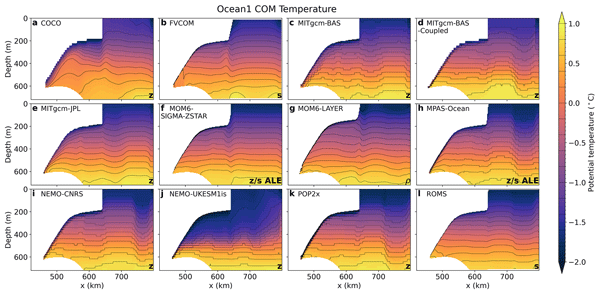
The second Ice Shelf-Ocean Model Intercomparison Project, ISOMIP+, compares 12 ice shelf-ocean models with a common, idealised, static configuration, aiming to assess inter-model variability. Models show similar basal melt rate patterns, ocean profiles and circulation but differ in ice-ocean boundary layer properties. Ice-ocean boundary layer representation is a key area for future work, as are realistic-domain ice sheet-ocean model intercomparisons.

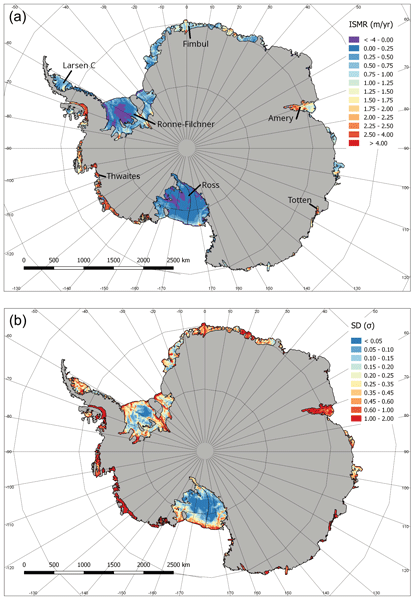
Quantifying melt and freeze beneath Antarctica’s floating ice shelves is vital to understanding present-day ice-sheet behavior and its potential to contribute to future sea-level rise. We compare 10 ice-shelf/ocean computer simulations with satellite data, providing the first multi-model estimate of melting and refreezing driven by the ocean. This new estimate offers a valuable tool for assessing ice-shelf roles in current and future ice-sheet changes, informing coastal adaptation strategies.
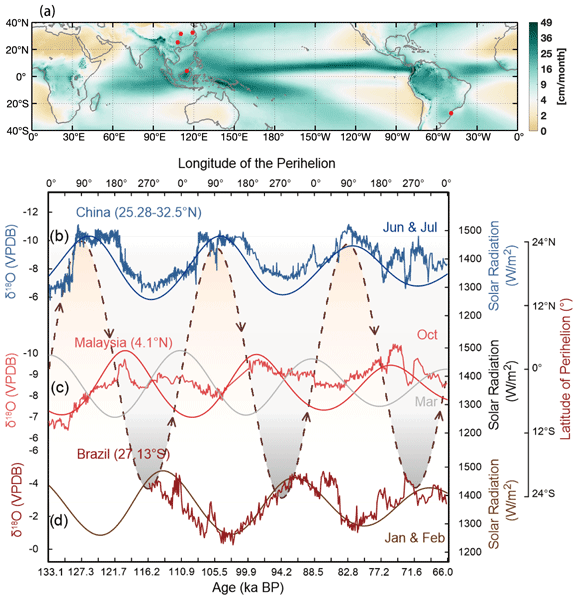
For 1 century, the hemispheric summer insolation is proposed as a key pacemaker of astronomical climate change. However, an increasing number of geologic records reveal that the low-latitude hydrological cycle shows asynchronous precessional evolutions that are very often out of phase with the summer insolation. Here, we propose that the astronomically driven low-latitude hydrological cycle is not paced by summer insolation but by shifting perihelion.
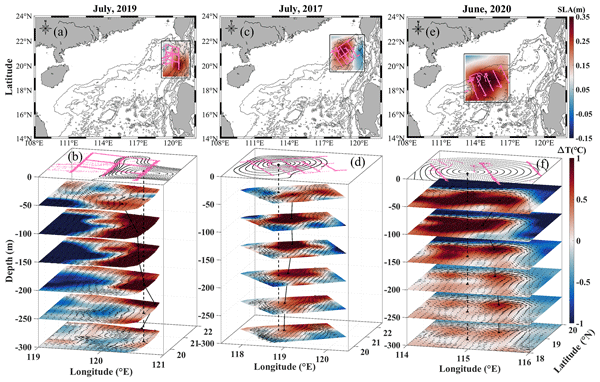
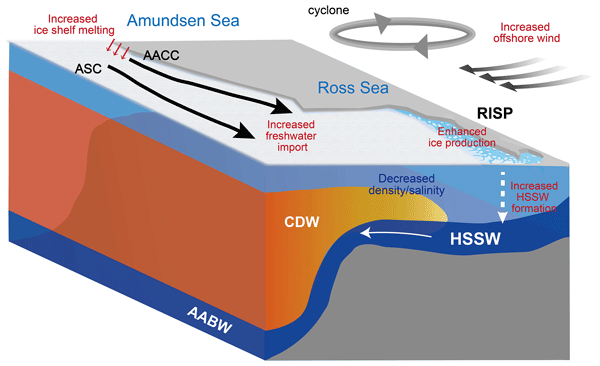
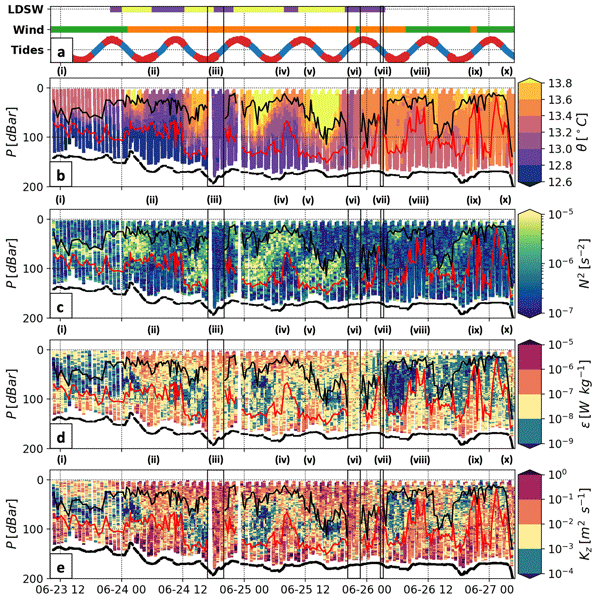
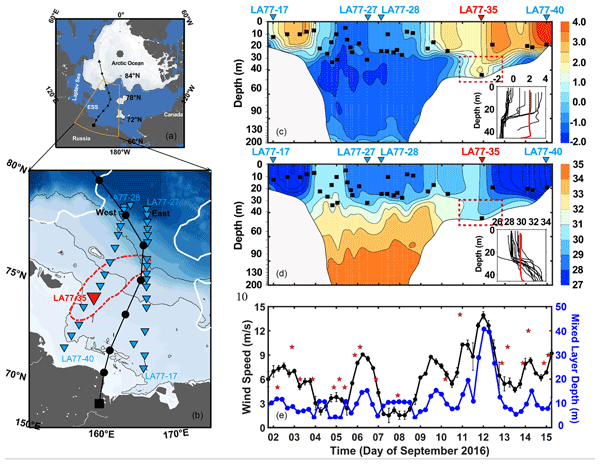
The East Siberian Sea has nearly 80 % of the subsea permafrost worldwide. The cold layer with a temperature around −1.5 ºC above the seafloor prevents heat transporting from above to melt permafrost and release methane from sediments. However, we observed a warming trend at the seafloor caused by wave-induced vertical mixing in the shelf. The intensified mixing can transport enormous heat downward, leading to warming of more than 3 °C at the bottom, putting the subsea permafrost at high risk.
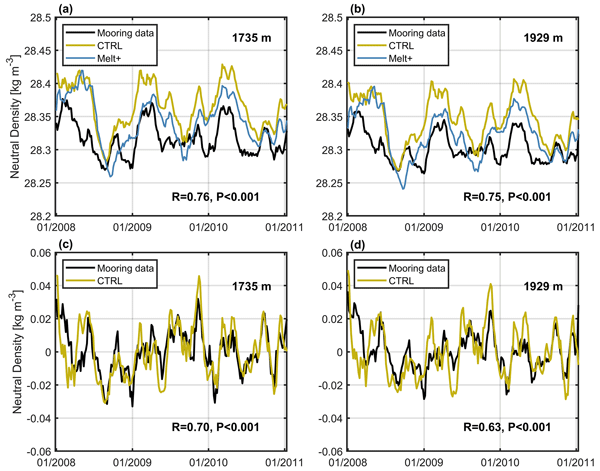



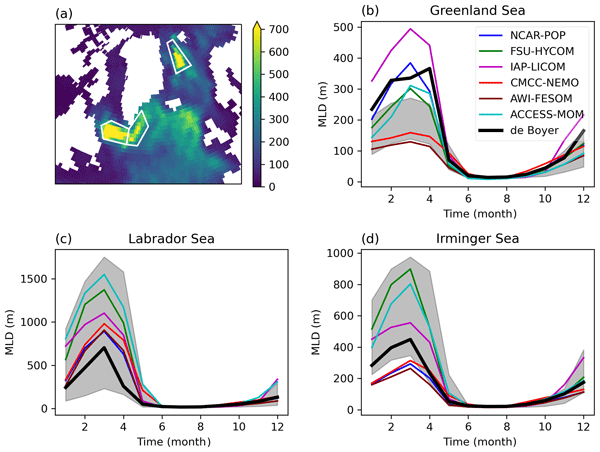
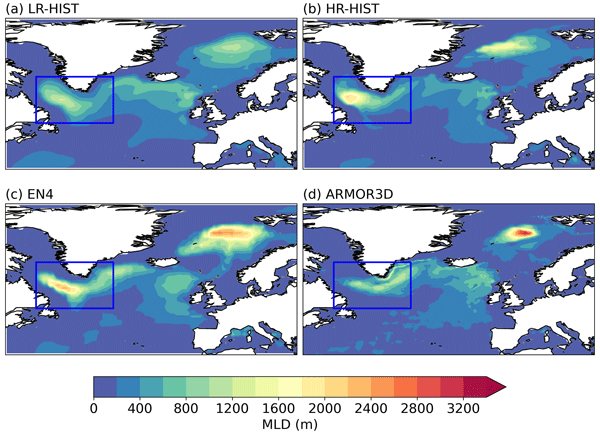
ocean eddies, which are the largest source of ocean variability and modulate the mixed-layer properties. We find that the mixed-layer depth is better represented in eddy-rich models but, unfortunately, not uniformly across the globe and not in all models.
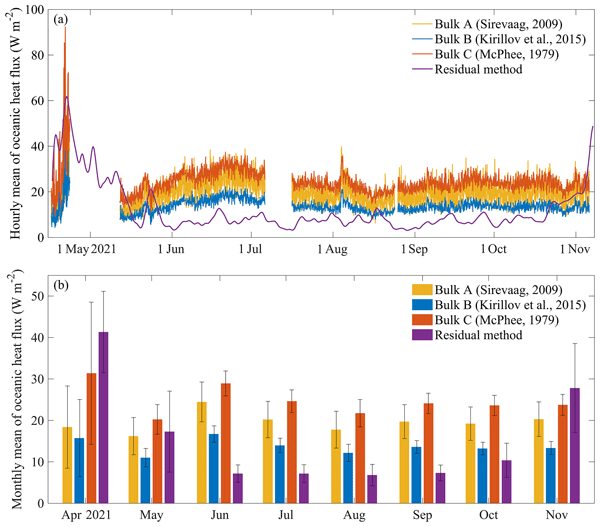

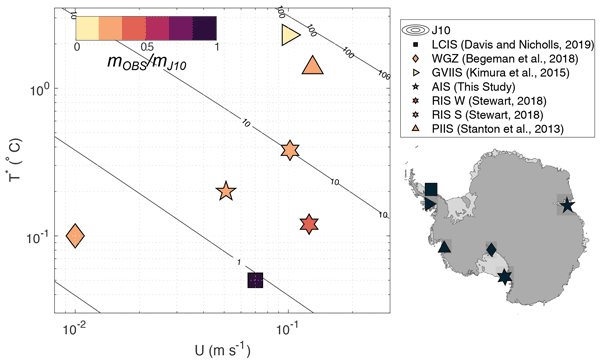
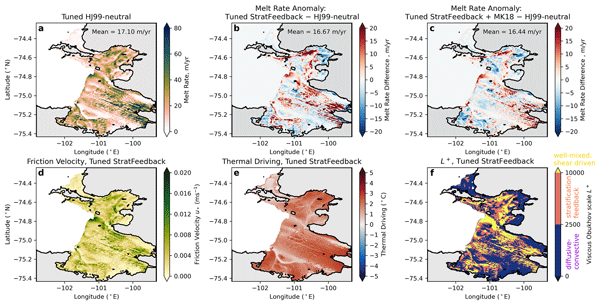
parameterisations) and show that these parameterisations overestimate melting when the ocean is warm and/or currents are weak.