
Articles | Volume 18, issue 23
https://doi.org/10.5194/gmd-18-9767-2025
© Author(s) 2025. This work is distributed under
the Creative Commons Attribution 4.0 License.
the Creative Commons Attribution 4.0 License.
https://doi.org/10.5194/gmd-18-9767-2025
© Author(s) 2025. This work is distributed under
the Creative Commons Attribution 4.0 License.
the Creative Commons Attribution 4.0 License.
Model description paper
| 
09 Dec 2025
Model description paper |
| 09 Dec 2025
| 09 Dec 2025
QuadTune version 1: a regional tuner for global atmospheric models

University of Wisconsin – Milwaukee, Milwaukee, WI, USA
Pacific Northwest National Laboratory, Richland, WA, USA
Zhun Guo
National Key Laboratory of Earth System Numerical Modeling and Application, Institute of Atmospheric Physics, Chinese Academy of Sciences, Beijing, China
Benjamin A. Stephens
National Center for Atmospheric Research, Boulder, CO, USA
Colin Zarzycki
Department of Meteorology and Atmospheric Science, The Pennsylvania State University, University Park, PA, USA
Gerhard Dikta
Department of Medical Engineering and Technomathematics, Fachhochschule Aachen, Jülich, Germany
Yun Qian
Pacific Northwest National Laboratory, Richland, WA, USA
Shaocheng Xie
Lawrence Livermore National Laboratory, Livermore, CA, USA
Related authors
Gunther Huebler, Vincent E. Larson, John M. Dennis, and Sheri A. Voelz
Geosci. Model Dev., 19, 3783–3800, https://doi.org/10.5194/gmd-19-3783-2026, https://doi.org/10.5194/gmd-19-3783-2026, 2026
Short summary
Short summary
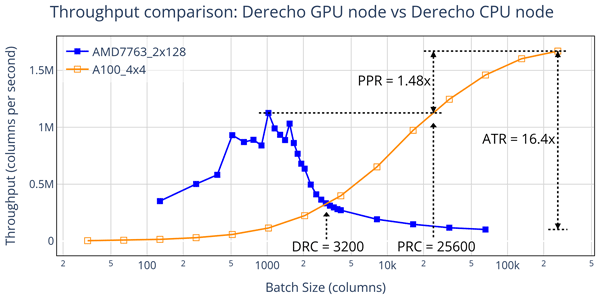
Central processing units (CPUs) and graphics processing units (GPUs) are different devices that suit different kinds of work. Using a climate modeling component, we provide a clearer way to tell which device type is faster for a given task. This matters because runs usually use only one device type. Our results are actionable: they guide device choice, report performance gains fairly, highlight code areas to improve, and show how code structure and optimization can change conclusions.
Meng Huang, Po-Lun Ma, Nathaniel W. Chaney, Dalei Hao, Gautam Bisht, Megan D. Fowler, Vincent E. Larson, and L. Ruby Leung
Geosci. Model Dev., 15, 6371–6384, https://doi.org/10.5194/gmd-15-6371-2022, https://doi.org/10.5194/gmd-15-6371-2022, 2022
Short summary
Short summary
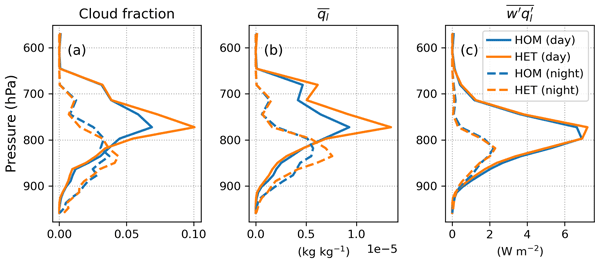
The land surface in one grid cell may be diverse in character. This study uses an explicit way to account for that subgrid diversity in a state-of-the-art Earth system model (ESM) and explores its implications for the overlying atmosphere. We find that the shallow clouds are increased significantly with the land surface diversity. Our work highlights the importance of accurately representing the land surface and its interaction with the atmosphere in next-generation ESMs.

Hui Wan, Kai Zhang, Philip J. Rasch, Vincent E. Larson, Xubin Zeng, Shixuan Zhang, and Ross Dixon
Geosci. Model Dev., 15, 3205–3231, https://doi.org/10.5194/gmd-15-3205-2022, https://doi.org/10.5194/gmd-15-3205-2022, 2022
Short summary
Short summary
This paper describes a tool embedded in a global climate model for sampling atmospheric conditions and monitoring physical processes as a numerical simulation is being carried out. The tool facilitates process-level model evaluation by allowing the users to select a wide range of quantities and processes to monitor at run time without having to do tedious ad hoc coding.
Jungmin Lee, Coleman Kendrick, Debojyoti Ghosh, Aaron Lattanzi, Inyeob La, Emily de Jong, Hassan Beydoun, Seong Soo Yum, Shaocheng Xie, and Katie Lundquist
EGUsphere, https://doi.org/10.5194/egusphere-2026-5922, https://doi.org/10.5194/egusphere-2026-5922, 2026
This preprint is open for discussion and under review for Geoscientific Model Development (GMD).
Short summary
Short summary
We improved a computer model to simulate clouds in a laboratory chamber and compared its results with experiments. The model captured key patterns, including smaller droplets and greater competition for water vapor as more airborne particles were added. This tool helps researchers study how particles influence clouds and could support better cloud representation in weather and climate models.
Peter A. Bogenschutz, Yunyan Zhang, Hsi-Yen Ma, Cheng Tao, and Shaocheng Xie
EGUsphere, https://doi.org/10.5194/egusphere-2026-3667, https://doi.org/10.5194/egusphere-2026-3667, 2026
This preprint is open for discussion and under review for Geoscientific Model Development (GMD).
Short summary
Short summary
Weather and climate models are often tested using simplified simulations that prescribe exchanges between the land and atmosphere. We developed a method that allows these interactions to evolve naturally and evaluated it using observations from field sites in the United States and Brazil. We found that realistic land-atmosphere interactions are important for reproducing temperature and cloud biases, while many rainfall errors originate within the atmosphere model itself.
Gunther Huebler, Vincent E. Larson, John M. Dennis, and Sheri A. Voelz
Geosci. Model Dev., 19, 3783–3800, https://doi.org/10.5194/gmd-19-3783-2026, https://doi.org/10.5194/gmd-19-3783-2026, 2026
Short summary
Short summary
Central processing units (CPUs) and graphics processing units (GPUs) are different devices that suit different kinds of work. Using a climate modeling component, we provide a clearer way to tell which device type is faster for a given task. This matters because runs usually use only one device type. Our results are actionable: they guide device choice, report performance gains fairly, highlight code areas to improve, and show how code structure and optimization can change conclusions.
Tian Zhou, Yun Qian, and L. Ruby Leung
EGUsphere, https://doi.org/10.5194/egusphere-2026-2237, https://doi.org/10.5194/egusphere-2026-2237, 2026
Short summary
Short summary
AI can now write scientific analysis code that looks correct but quietly produces wrong results. We tested whether asking the assistant to assemble analyses from a library of validated building blocks, rather than write code from scratch, makes it more reliable. Across six language models and seven Earth science tasks, free code writing succeeded only about five percent of the time while the constrained approach exceeded eighty percent, suggesting trust needs guardrails.
Ken S. Carslaw, Leighton A. Regayre, Ulrike Proske, Andrew Gettelman, David M. H. Sexton, Yun Qian, Lauren R. Marshall, Oliver Wild, Marcus van Lier-Walqui, Annika Oertel, Saloua Peatier, Ben Yang, Jill S. Johnson, Sihan Li, Daniel T. McCoy, Benjamin M. Sanderson, Christina J. Williamson, Gregory S. Elsaesser, Kuniko Yamazaki, and Ben B. B. Booth
Atmos. Chem. Phys., 26, 4651–4667, https://doi.org/10.5194/acp-26-4651-2026, https://doi.org/10.5194/acp-26-4651-2026, 2026
Short summary
Short summary
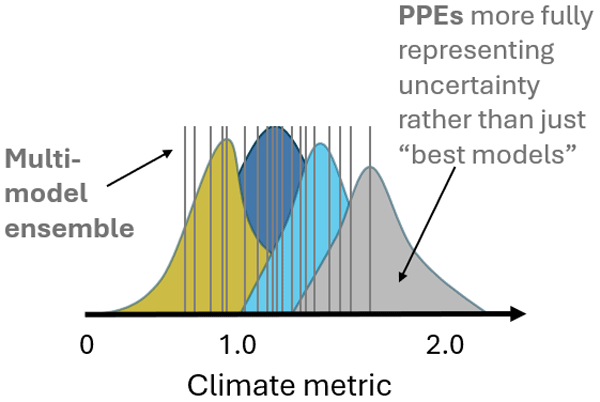
A major challenge in climate science is reducing projection uncertainty despite advances in models and observational constraints. Perturbed parameter ensembles (PPEs) offer a powerful tool to explore and reduce uncertainty by revealing model weaknesses and guiding development. PPEs are now widely applied across climate systems and scales. We argue they should be prioritized alongside complexity and resolution in model resource planning.
Xiaojian Zheng, Yan Feng, David Painemal, Meng Zhang, Shaocheng Xie, Zhujun Li, Robert Jacob, and Bethany Lusch
Atmos. Chem. Phys., 25, 17473–17499, https://doi.org/10.5194/acp-25-17473-2025, https://doi.org/10.5194/acp-25-17473-2025, 2025
Short summary
Short summary
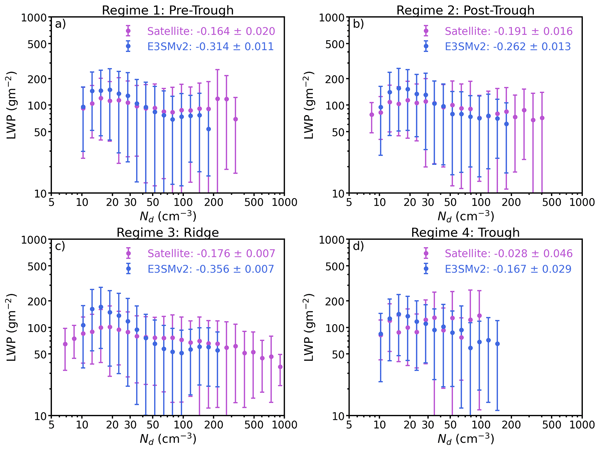
This study used satellite observations and climate model simulations to examine how aerosols affect marine clouds over the Eastern North Atlantic. Cloud responses to aerosols differed significantly across meteorological regimes. The model captured overall trends but exaggerated cloud responses, performing better for shallower than deeper clouds. The results highlight the need to untangle aerosol effects from meteorology and improve cloud process representation in climate models.
Naser Mahfouz, Hassan Beydoun, Johannes Mülmenstädt, Noel Keen, Adam C. Varble, Luca Bertagna, Peter Bogenschutz, Andrew Bradley, Matthew W. Christensen, T. Conrad Clevenger, Aaron Donahue, Jerome Fast, James Foucar, Jean-Christophe Golaz, Oksana Guba, Walter Hannah, Benjamin Hillman, Robert Jacob, Wuyin Lin, Po-Lun Ma, Yun Qian, Balwinder Singh, Christopher Terai, Hailong Wang, Mingxuan Wu, Kai Zhang, Andrew Gettelman, Mark Taylor, L. Ruby Leung, Peter Caldwell, and Susannah Burrows
Atmos. Chem. Phys., 25, 15105–15120, https://doi.org/10.5194/acp-25-15105-2025, https://doi.org/10.5194/acp-25-15105-2025, 2025
Short summary
Short summary
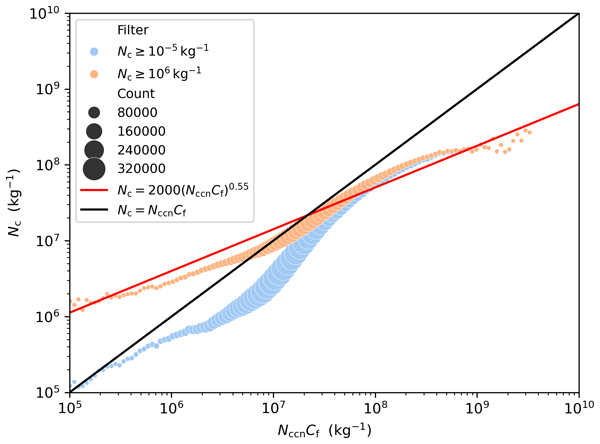
Our study assesses the aerosol effective radiative forcing in a global cloud-resolving atmosphere model at ultra-high resolution. We demonstrate that global aerosol forcing signal can be robustly reproduced across resolutions when aerosol activation processes are carefully parameterized. Further, we argue that simplified prescribed aerosol schemes will open the door for further process/mechanism studies under controlled conditions.
Allen Hu, Ziming Ke, Xiaohong Liu, Benjamin Wagman, Hunter Brown, Zheng Lu, Mingxuan Wu, Hailong Wang, Qi Tang, Diana Bull, Kara Peterson, and Shaocheng Xie
Atmos. Chem. Phys., 25, 12137–12157, https://doi.org/10.5194/acp-25-12137-2025, https://doi.org/10.5194/acp-25-12137-2025, 2025
Short summary
Short summary
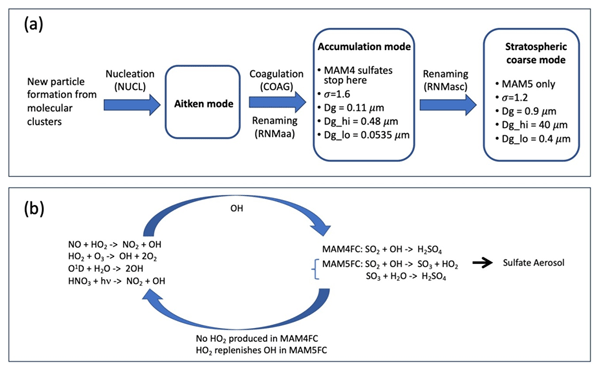
Volcanic eruptions have major effects on atmospheric temperature and can be studied as a proxy for geo-engineering. The original aerosol module in the Energy Exascale Earth System Model v2 (E3SMv2) has problems simulating volcanic aerosols. We alter the aerosol module to simulate the 1991 Pinatubo eruption and implement a more complex chemistry scheme, producing results that better agree with observations. Process analyses of the volcanic aerosols help explain how they grow in the stratosphere.
Sheng-Lun Tai, Zhao Yang, Brian Gaudet, Koichi Sakaguchi, Larry Berg, Colleen Kaul, Yun Qian, Ye Liu, and Jerome Fast
Earth Syst. Sci. Data, 17, 4587–4611, https://doi.org/10.5194/essd-17-4587-2025, https://doi.org/10.5194/essd-17-4587-2025, 2025
Short summary
Short summary
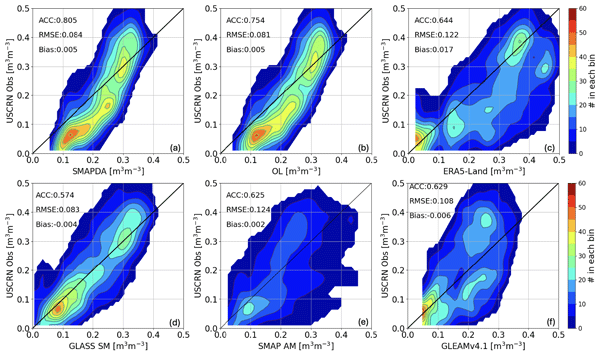
Our study created a high-resolution soil moisture dataset for the eastern US by integrating satellite data with a land surface model and advanced algorithms, achieving 1 km scale analyses. Validated against multiple in situ networks and analysis datasets, it demonstrated superior accuracy. This dataset is vital for understanding soil moisture dynamics, especially during droughts, and highlights the need to mitigate soil-type-dependent biases in the model.
Mingxuan Wu, Hailong Wang, Zheng Lu, Xiaohong Liu, Huisheng Bian, David D. Cohen, Yan Feng, Mian Chin, Didier A. Hauglustaine, Vlassis A. Karydis, Marianne T. Lund, Gunnar Myhre, Andrea Pozzer, Michael Schulz, Ragnhild B. Skeie, Alexandra P. Tsimpidi, Svetlana G. Tsyro, and Shaocheng Xie
Atmos. Chem. Phys., 25, 10049–10074, https://doi.org/10.5194/acp-25-10049-2025, https://doi.org/10.5194/acp-25-10049-2025, 2025
Short summary
Short summary
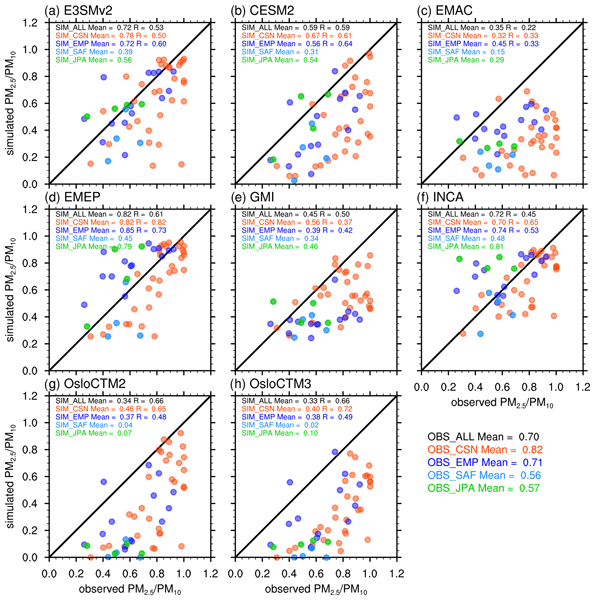
A key challenge in simulating the life cycle of nitrate aerosol in global models is accurately representing the mass size distribution of nitrate aerosol, which lacks sufficient observational constraints. We found that most global models underestimate the mass fraction of fine-mode nitrate at the surface in all regions. Our study highlights the importance of gas–aerosol partitioning parameterization and the simulation of dust and sea salt in correctly simulating the mass size distribution of nitrate.
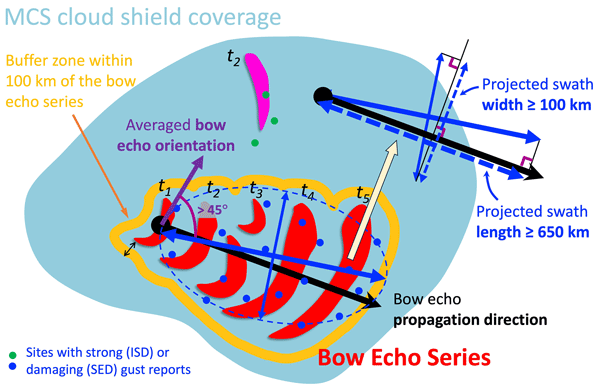
Jianfeng Li, Andrew Geiss, Zhe Feng, L. Ruby Leung, Yun Qian, and Wenjun Cui
Earth Syst. Sci. Data, 17, 3721–3740, https://doi.org/10.5194/essd-17-3721-2025, https://doi.org/10.5194/essd-17-3721-2025, 2025
Short summary
Short summary
We developed a high-resolution (4 km and hourly) observational derecho dataset over the United States east of the Rocky Mountains from 2004 to 2021 by using a mesoscale convective system dataset, bow echoes detected by a machine learning method, hourly gust speeds, and physically based identification criteria.
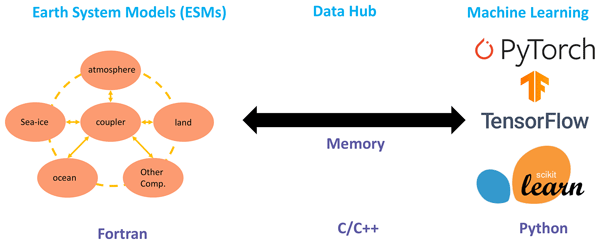
Tao Zhang, Cyril Morcrette, Meng Zhang, Wuyin Lin, Shaocheng Xie, Ye Liu, Kwinten Van Weverberg, and Joana Rodrigues
Geosci. Model Dev., 18, 1917–1928, https://doi.org/10.5194/gmd-18-1917-2025, https://doi.org/10.5194/gmd-18-1917-2025, 2025
Short summary
Short summary
Earth system models (ESMs) struggle with the uncertainties associated with parameterizing subgrid physics. Machine learning (ML) algorithms offer a solution by learning the important relationships and features from high-resolution models. To incorporate ML parameterizations into ESMs, we develop a Fortran–Python interface that allows for calling Python functions within Fortran-based ESMs. Through two case studies, this interface demonstrates its feasibility, modularity, and effectiveness.
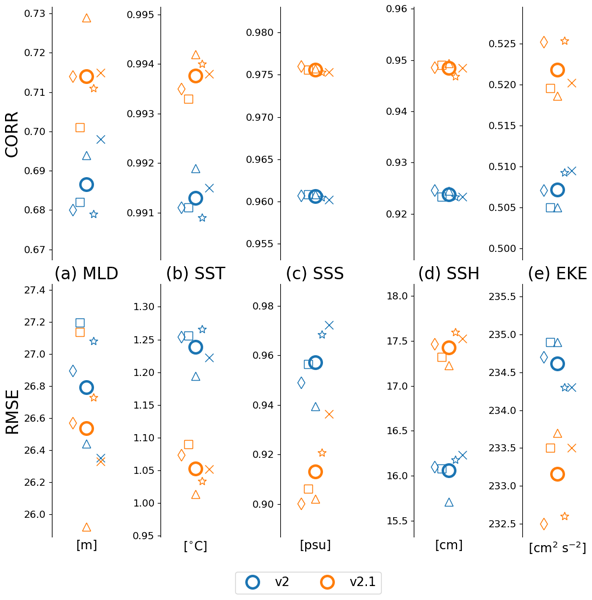
Katherine M. Smith, Alice M. Barthel, LeAnn M. Conlon, Luke P. Van Roekel, Anthony Bartoletti, Jean-Christophe Golaz, Chengzhu Zhang, Carolyn Branecky Begeman, James J. Benedict, Gautam Bisht, Yan Feng, Walter Hannah, Bryce E. Harrop, Nicole Jeffery, Wuyin Lin, Po-Lun Ma, Mathew E. Maltrud, Mark R. Petersen, Balwinder Singh, Qi Tang, Teklu Tesfa, Jonathan D. Wolfe, Shaocheng Xie, Xue Zheng, Karthik Balaguru, Oluwayemi Garuba, Peter Gleckler, Aixue Hu, Jiwoo Lee, Ben Moore-Maley, and Ana C. Ordoñez
Geosci. Model Dev., 18, 1613–1633, https://doi.org/10.5194/gmd-18-1613-2025, https://doi.org/10.5194/gmd-18-1613-2025, 2025
Short summary
Short summary
Version 2.1 of the U.S. Department of Energy's Energy Exascale Earth System Model (E3SM) adds the Fox-Kemper et al. (2011) mixed-layer eddy parameterization, which restratifies the ocean surface layer through an overturning streamfunction. Results include surface layer bias reduction in temperature, salinity, and sea ice extent in the North Atlantic; a small strengthening of the Atlantic meridional overturning circulation; and improvements to many atmospheric climatological variables.
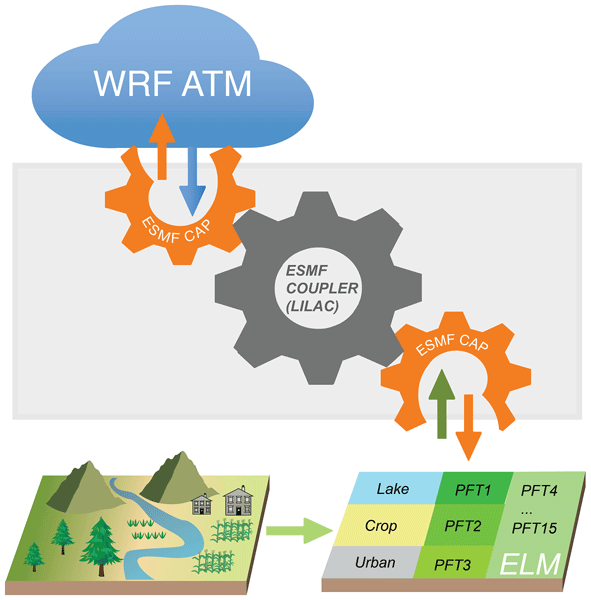
Huilin Huang, Yun Qian, Gautam Bisht, Jiali Wang, Tirthankar Chakraborty, Dalei Hao, Jianfeng Li, Travis Thurber, Balwinder Singh, Zhao Yang, Ye Liu, Pengfei Xue, William J. Sacks, Ethan Coon, and Robert Hetland
Geosci. Model Dev., 18, 1427–1443, https://doi.org/10.5194/gmd-18-1427-2025, https://doi.org/10.5194/gmd-18-1427-2025, 2025
Short summary
Short summary
We integrate the E3SM Land Model (ELM) with the WRF model through the Lightweight Infrastructure for Land Atmosphere Coupling (LILAC) Earth System Modeling Framework (ESMF). This framework includes a top-level driver, LILAC, for variable communication between WRF and ELM and ESMF caps for ELM initialization, execution, and finalization. The LILAC–ESMF framework maintains the integrity of the ELM's source code structure and facilitates the transfer of future ELM model developments to WRF-ELM.
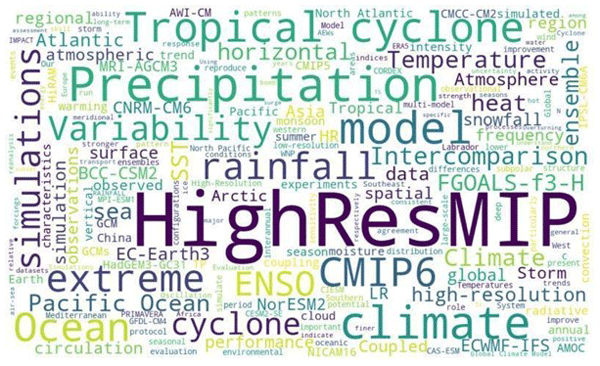
Malcolm J. Roberts, Kevin A. Reed, Qing Bao, Joseph J. Barsugli, Suzana J. Camargo, Louis-Philippe Caron, Ping Chang, Cheng-Ta Chen, Hannah M. Christensen, Gokhan Danabasoglu, Ivy Frenger, Neven S. Fučkar, Shabeh ul Hasson, Helene T. Hewitt, Huanping Huang, Daehyun Kim, Chihiro Kodama, Michael Lai, Lai-Yung Ruby Leung, Ryo Mizuta, Paulo Nobre, Pablo Ortega, Dominique Paquin, Christopher D. Roberts, Enrico Scoccimarro, Jon Seddon, Anne Marie Treguier, Chia-Ying Tu, Paul A. Ullrich, Pier Luigi Vidale, Michael F. Wehner, Colin M. Zarzycki, Bosong Zhang, Wei Zhang, and Ming Zhao
Geosci. Model Dev., 18, 1307–1332, https://doi.org/10.5194/gmd-18-1307-2025, https://doi.org/10.5194/gmd-18-1307-2025, 2025
Short summary
Short summary
HighResMIP2 is a model intercomparison project focusing on high-resolution global climate models, that is, those with grid spacings of 25 km or less in the atmosphere and ocean, using simulations of decades to a century in length. We are proposing an update of our simulation protocol to make the models more applicable to key questions for climate variability and hazard in present-day and future projections and to build links with other communities to provide more robust climate information.
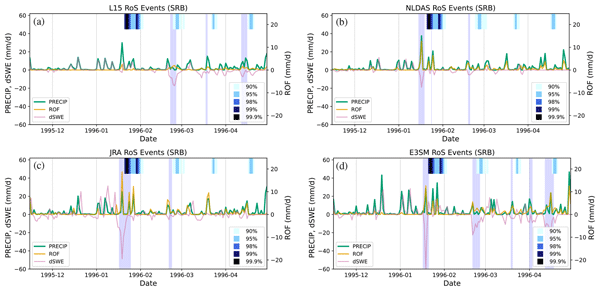
Colin M. Zarzycki, Benjamin D. Ascher, Alan M. Rhoades, and Rachel R. McCrary
Nat. Hazards Earth Syst. Sci., 24, 3315–3335, https://doi.org/10.5194/nhess-24-3315-2024, https://doi.org/10.5194/nhess-24-3315-2024, 2024
Short summary
Short summary
We developed an automated workflow to detect rain-on-snow events, which cause flooding in the northeastern United States, in climate data. Analyzing the Susquehanna River basin, this technique identified known events affecting river flow. Comparing four gridded datasets revealed variations in event frequency and severity, driven by different snowmelt and runoff estimates. This highlights the need for accurate climate data in flood management and risk prediction for these compound extremes.
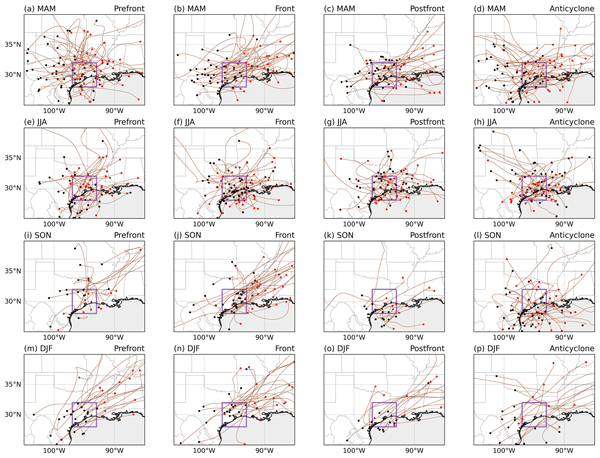
Ye Liu, Yun Qian, Larry K. Berg, Zhe Feng, Jianfeng Li, Jingyi Chen, and Zhao Yang
Atmos. Chem. Phys., 24, 8165–8181, https://doi.org/10.5194/acp-24-8165-2024, https://doi.org/10.5194/acp-24-8165-2024, 2024
Short summary
Short summary
Deep convection under various large-scale meteorological patterns (LSMPs) shows distinct precipitation features. In southeastern Texas, mesoscale convective systems (MCSs) contribute significantly to precipitation year-round, while isolated deep convection (IDC) is prominent in summer and fall. Self-organizing maps (SOMs) reveal convection can occur without large-scale lifting or moisture convergence. MCSs and IDC events have distinct life cycles influenced by specific LSMPs.
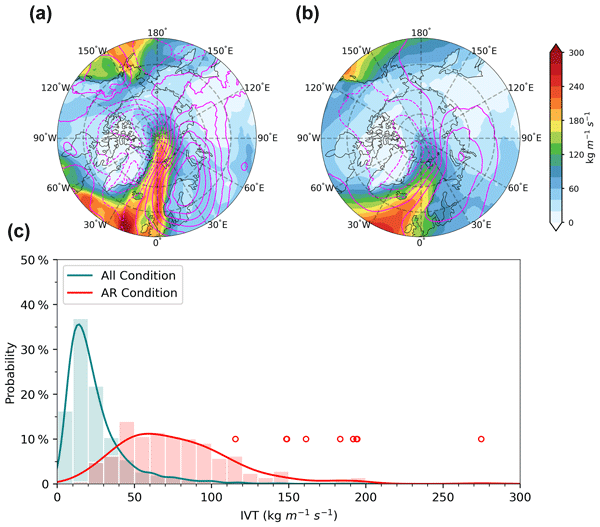
Weiming Ma, Hailong Wang, Gang Chen, Yun Qian, Ian Baxter, Yiling Huo, and Mark W. Seefeldt
Atmos. Chem. Phys., 24, 4451–4472, https://doi.org/10.5194/acp-24-4451-2024, https://doi.org/10.5194/acp-24-4451-2024, 2024
Short summary
Short summary
Extreme warming events with surface temperature going above 0°C can occur in the high-Arctic winter. Although reanalysis data show that these events were short-lived and occurred rarely during 1980–2021, they have become more frequent, stronger, and longer lasting latterly. A dipole pattern, comprising high- and low-pressure systems, is found to be the key in driving them. These findings have implications for the recent changes in sea ice, hydrological cycle, and ecosystem over the Arctic.
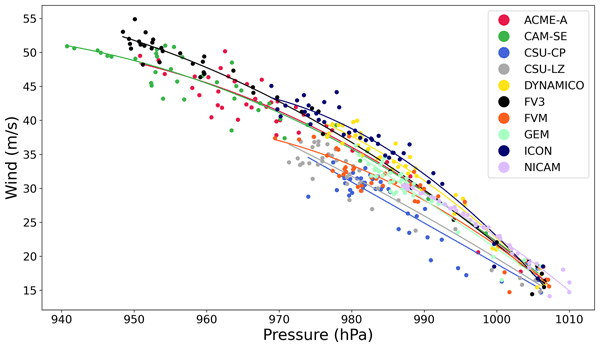
Justin L. Willson, Kevin A. Reed, Christiane Jablonowski, James Kent, Peter H. Lauritzen, Ramachandran Nair, Mark A. Taylor, Paul A. Ullrich, Colin M. Zarzycki, David M. Hall, Don Dazlich, Ross Heikes, Celal Konor, David Randall, Thomas Dubos, Yann Meurdesoif, Xi Chen, Lucas Harris, Christian Kühnlein, Vivian Lee, Abdessamad Qaddouri, Claude Girard, Marco Giorgetta, Daniel Reinert, Hiroaki Miura, Tomoki Ohno, and Ryuji Yoshida
Geosci. Model Dev., 17, 2493–2507, https://doi.org/10.5194/gmd-17-2493-2024, https://doi.org/10.5194/gmd-17-2493-2024, 2024
Short summary
Short summary
Accurate simulation of tropical cyclones (TCs) is essential to understanding their behavior in a changing climate. One way this is accomplished is through model intercomparison projects, where results from multiple climate models are analyzed to provide benchmark solutions for the wider climate modeling community. This study describes and analyzes the previously developed TC test case for nine climate models in an intercomparison project, providing solutions that aid in model development.
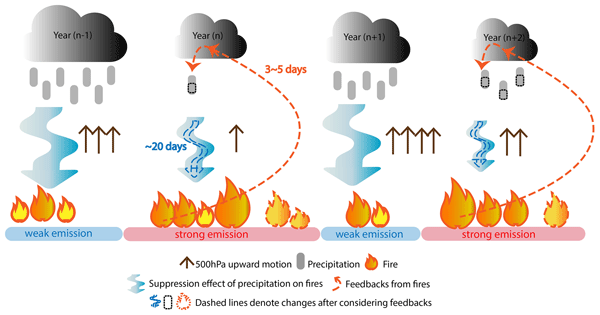
Yawen Liu, Yun Qian, Philip J. Rasch, Kai Zhang, Lai-yung Ruby Leung, Yuhang Wang, Minghuai Wang, Hailong Wang, Xin Huang, and Xiu-Qun Yang
Atmos. Chem. Phys., 24, 3115–3128, https://doi.org/10.5194/acp-24-3115-2024, https://doi.org/10.5194/acp-24-3115-2024, 2024
Short summary
Short summary
Fire management has long been a challenge. Here we report that spring-peak fire activity over southern Mexico and Central America (SMCA) has a distinct quasi-biennial signal by measuring multiple fire metrics. This signal is initially driven by quasi-biennial variability in precipitation and is further amplified by positive feedback of fire–precipitation interaction at short timescales. This work highlights the importance of fire–climate interactions in shaping fires on an interannual scale.
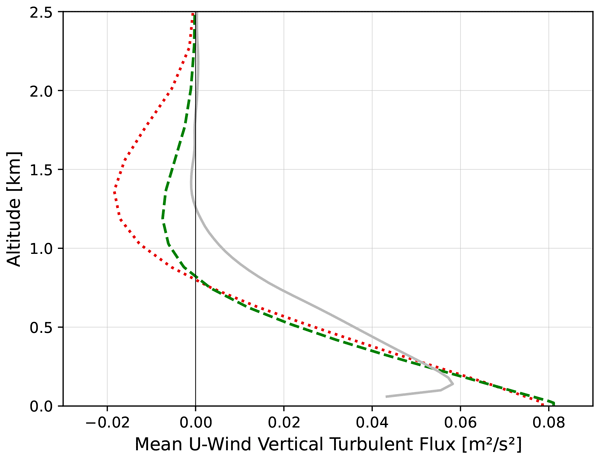
Skyler Graap and Colin M. Zarzycki
Geosci. Model Dev., 17, 1627–1650, https://doi.org/10.5194/gmd-17-1627-2024, https://doi.org/10.5194/gmd-17-1627-2024, 2024
Short summary
Short summary
A key target for improving climate models is how low, bright clouds are predicted over tropical oceans, since they have important consequences for the Earth's energy budget. A climate model has been updated to improve the physical realism of the treatment of how momentum is moved up and down in the atmosphere. By comparing this updated model to real-world observations from balloon launches, it can be shown to more accurately depict atmospheric structure in trade-wind areas close to the Equator.
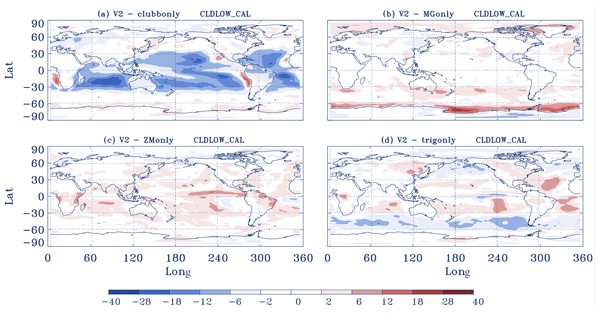
Yuying Zhang, Shaocheng Xie, Yi Qin, Wuyin Lin, Jean-Christophe Golaz, Xue Zheng, Po-Lun Ma, Yun Qian, Qi Tang, Christopher R. Terai, and Meng Zhang
Geosci. Model Dev., 17, 169–189, https://doi.org/10.5194/gmd-17-169-2024, https://doi.org/10.5194/gmd-17-169-2024, 2024
Short summary
Short summary
We performed systematic evaluation of clouds simulated in the Energy
Exascale Earth System Model (E3SMv2) to document model performance and understand what updates in E3SMv2 have caused changes in clouds from E3SMv1 to E3SMv2. We find that stratocumulus clouds along the subtropical west coast of continents are dramatically improved, primarily due to the retuning done in CLUBB. This study offers additional insights into clouds simulated in E3SMv2 and will benefit future E3SM developments.
Exascale Earth System Model (E3SMv2) to document model performance and understand what updates in E3SMv2 have caused changes in clouds from E3SMv1 to E3SMv2. We find that stratocumulus clouds along the subtropical west coast of continents are dramatically improved, primarily due to the retuning done in CLUBB. This study offers additional insights into clouds simulated in E3SMv2 and will benefit future E3SM developments.
Qi Tang, Jean-Christophe Golaz, Luke P. Van Roekel, Mark A. Taylor, Wuyin Lin, Benjamin R. Hillman, Paul A. Ullrich, Andrew M. Bradley, Oksana Guba, Jonathan D. Wolfe, Tian Zhou, Kai Zhang, Xue Zheng, Yunyan Zhang, Meng Zhang, Mingxuan Wu, Hailong Wang, Cheng Tao, Balwinder Singh, Alan M. Rhoades, Yi Qin, Hong-Yi Li, Yan Feng, Yuying Zhang, Chengzhu Zhang, Charles S. Zender, Shaocheng Xie, Erika L. Roesler, Andrew F. Roberts, Azamat Mametjanov, Mathew E. Maltrud, Noel D. Keen, Robert L. Jacob, Christiane Jablonowski, Owen K. Hughes, Ryan M. Forsyth, Alan V. Di Vittorio, Peter M. Caldwell, Gautam Bisht, Renata B. McCoy, L. Ruby Leung, and David C. Bader
Geosci. Model Dev., 16, 3953–3995, https://doi.org/10.5194/gmd-16-3953-2023, https://doi.org/10.5194/gmd-16-3953-2023, 2023
Short summary
Short summary
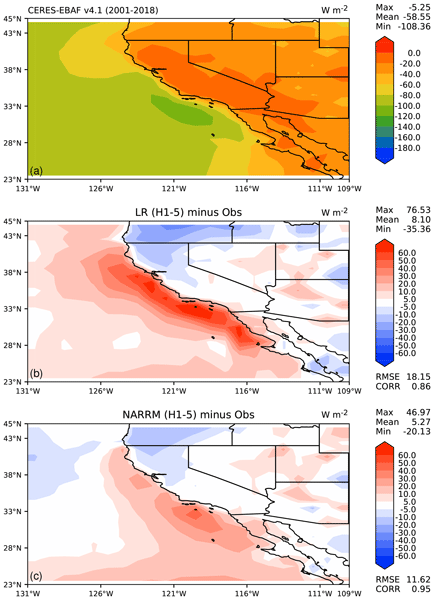
High-resolution simulations are superior to low-resolution ones in capturing regional climate changes and climate extremes. However, uniformly reducing the grid size of a global Earth system model is too computationally expensive. We provide an overview of the fully coupled regionally refined model (RRM) of E3SMv2 and document a first-of-its-kind set of climate production simulations using RRM at an economic cost. The key to this success is our innovative hybrid time step method.
Koichi Sakaguchi, L. Ruby Leung, Colin M. Zarzycki, Jihyeon Jang, Seth McGinnis, Bryce E. Harrop, William C. Skamarock, Andrew Gettelman, Chun Zhao, William J. Gutowski, Stephen Leak, and Linda Mearns
Geosci. Model Dev., 16, 3029–3081, https://doi.org/10.5194/gmd-16-3029-2023, https://doi.org/10.5194/gmd-16-3029-2023, 2023
Short summary
Short summary
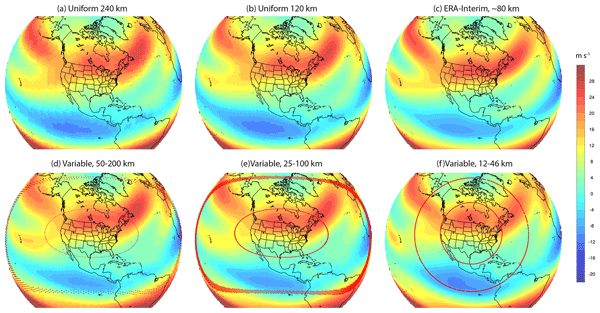
We document details of the regional climate downscaling dataset produced by a global variable-resolution model. The experiment is unique in that it follows a standard protocol designed for coordinated experiments of regional models. We found negligible influence of post-processing on statistical analysis, importance of simulation quality outside of the target region, and computational challenges that our model code faced due to rapidly changing super computer systems.

Chandan Sarangi, Yun Qian, L. Ruby Leung, Yang Zhang, Yufei Zou, and Yuhang Wang
Atmos. Chem. Phys., 23, 1769–1783, https://doi.org/10.5194/acp-23-1769-2023, https://doi.org/10.5194/acp-23-1769-2023, 2023
Short summary
Short summary
We show that for air quality, the densely populated eastern US may see even larger impacts of wildfires due to long-distance smoke transport and associated positive climatic impacts, partially compensating the improvements from regulations on anthropogenic emissions. This study highlights the tension between natural and anthropogenic contributions and the non-local nature of air pollution that complicate regulatory strategies for improving future regional air quality for human health.
Dalei Hao, Gautam Bisht, Karl Rittger, Edward Bair, Cenlin He, Huilin Huang, Cheng Dang, Timbo Stillinger, Yu Gu, Hailong Wang, Yun Qian, and L. Ruby Leung
Geosci. Model Dev., 16, 75–94, https://doi.org/10.5194/gmd-16-75-2023, https://doi.org/10.5194/gmd-16-75-2023, 2023
Short summary
Short summary
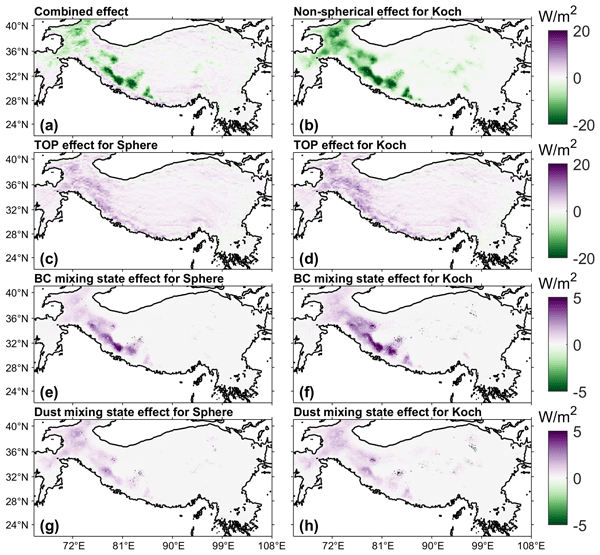
Snow with the highest albedo of land surface plays a vital role in Earth’s surface energy budget and water cycle. This study accounts for the impacts of snow grain shape and mixing state of light-absorbing particles with snow on snow albedo in the E3SM land model. The findings advance our understanding of the role of snow grain shape and mixing state of LAP–snow in land surface processes and offer guidance for improving snow simulations and radiative forcing estimates in Earth system models.
Chengzhu Zhang, Jean-Christophe Golaz, Ryan Forsyth, Tom Vo, Shaocheng Xie, Zeshawn Shaheen, Gerald L. Potter, Xylar S. Asay-Davis, Charles S. Zender, Wuyin Lin, Chih-Chieh Chen, Chris R. Terai, Salil Mahajan, Tian Zhou, Karthik Balaguru, Qi Tang, Cheng Tao, Yuying Zhang, Todd Emmenegger, Susannah Burrows, and Paul A. Ullrich
Geosci. Model Dev., 15, 9031–9056, https://doi.org/10.5194/gmd-15-9031-2022, https://doi.org/10.5194/gmd-15-9031-2022, 2022
Short summary
Short summary
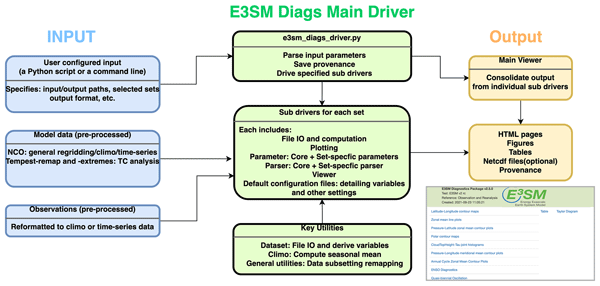
Earth system model (ESM) developers run automated analysis tools on data from candidate models to inform model development. This paper introduces a new Python package, E3SM Diags, that has been developed to support ESM development and use routinely in the development of DOE's Energy Exascale Earth System Model. This tool covers a set of essential diagnostics to evaluate the mean physical climate from simulations, as well as several process-oriented and phenomenon-based evaluation diagnostics.
Huilin Huang, Yun Qian, Ye Liu, Cenlin He, Jianyu Zheng, Zhibo Zhang, and Antonis Gkikas
Atmos. Chem. Phys., 22, 15469–15488, https://doi.org/10.5194/acp-22-15469-2022, https://doi.org/10.5194/acp-22-15469-2022, 2022
Short summary
Short summary
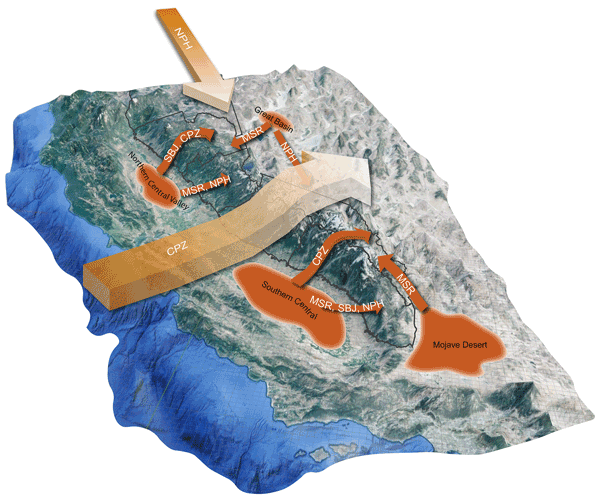
Using a clustering method developed in the field of artificial neural networks, we identify four typical dust transport patterns across the Sierra Nevada, associated with the mesoscale and regional-scale wind circulations. Our results highlight the connection between dust transport and dominant weather patterns, which can be used to understand dust transport in a changing climate.
Meng Huang, Po-Lun Ma, Nathaniel W. Chaney, Dalei Hao, Gautam Bisht, Megan D. Fowler, Vincent E. Larson, and L. Ruby Leung
Geosci. Model Dev., 15, 6371–6384, https://doi.org/10.5194/gmd-15-6371-2022, https://doi.org/10.5194/gmd-15-6371-2022, 2022
Short summary
Short summary
The land surface in one grid cell may be diverse in character. This study uses an explicit way to account for that subgrid diversity in a state-of-the-art Earth system model (ESM) and explores its implications for the overlying atmosphere. We find that the shallow clouds are increased significantly with the land surface diversity. Our work highlights the importance of accurately representing the land surface and its interaction with the atmosphere in next-generation ESMs.
Kai Zhang, Wentao Zhang, Hui Wan, Philip J. Rasch, Steven J. Ghan, Richard C. Easter, Xiangjun Shi, Yong Wang, Hailong Wang, Po-Lun Ma, Shixuan Zhang, Jian Sun, Susannah M. Burrows, Manish Shrivastava, Balwinder Singh, Yun Qian, Xiaohong Liu, Jean-Christophe Golaz, Qi Tang, Xue Zheng, Shaocheng Xie, Wuyin Lin, Yan Feng, Minghuai Wang, Jin-Ho Yoon, and L. Ruby Leung
Atmos. Chem. Phys., 22, 9129–9160, https://doi.org/10.5194/acp-22-9129-2022, https://doi.org/10.5194/acp-22-9129-2022, 2022
Short summary
Short summary
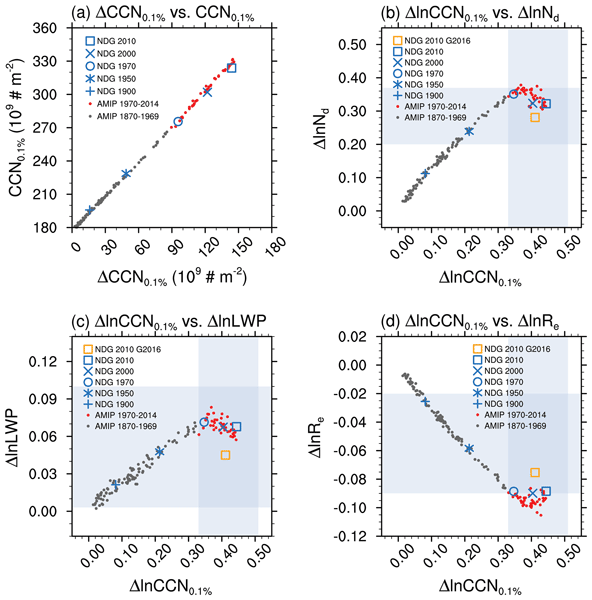
Here we analyze the effective aerosol forcing simulated by E3SM version 1 using both century-long free-running and short nudged simulations. The aerosol forcing in E3SMv1 is relatively large compared to other models, mainly due to the large indirect aerosol effect. Aerosol-induced changes in liquid and ice cloud properties in E3SMv1 have a strong correlation. The aerosol forcing estimates in E3SMv1 are sensitive to the parameterization changes in both liquid and ice cloud processes.
Aurore Voldoire, Romain Roehrig, Hervé Giordani, Robin Waldman, Yunyan Zhang, Shaocheng Xie, and Marie-Nöelle Bouin
Geosci. Model Dev., 15, 3347–3370, https://doi.org/10.5194/gmd-15-3347-2022, https://doi.org/10.5194/gmd-15-3347-2022, 2022
Short summary
Short summary
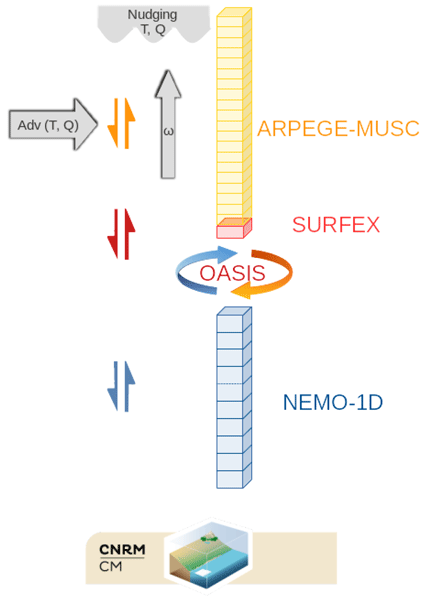
A single-column version of the global climate model CNRM-CM6-1 has been designed to ease development and validation of the model physics at the air–sea interface in a simplified environment. This model is then used to assess the ability to represent the sea surface temperature diurnal cycle. We conclude that the sea surface temperature diurnal variability is reasonably well represented in CNRM-CM6-1 with a 1 h coupling time step and the upper-ocean model resolution of 1 m.
Hui Wan, Kai Zhang, Philip J. Rasch, Vincent E. Larson, Xubin Zeng, Shixuan Zhang, and Ross Dixon
Geosci. Model Dev., 15, 3205–3231, https://doi.org/10.5194/gmd-15-3205-2022, https://doi.org/10.5194/gmd-15-3205-2022, 2022
Short summary
Short summary
This paper describes a tool embedded in a global climate model for sampling atmospheric conditions and monitoring physical processes as a numerical simulation is being carried out. The tool facilitates process-level model evaluation by allowing the users to select a wide range of quantities and processes to monitor at run time without having to do tedious ad hoc coding.
Po-Lun Ma, Bryce E. Harrop, Vincent E. Larson, Richard B. Neale, Andrew Gettelman, Hugh Morrison, Hailong Wang, Kai Zhang, Stephen A. Klein, Mark D. Zelinka, Yuying Zhang, Yun Qian, Jin-Ho Yoon, Christopher R. Jones, Meng Huang, Sheng-Lun Tai, Balwinder Singh, Peter A. Bogenschutz, Xue Zheng, Wuyin Lin, Johannes Quaas, Hélène Chepfer, Michael A. Brunke, Xubin Zeng, Johannes Mülmenstädt, Samson Hagos, Zhibo Zhang, Hua Song, Xiaohong Liu, Michael S. Pritchard, Hui Wan, Jingyu Wang, Qi Tang, Peter M. Caldwell, Jiwen Fan, Larry K. Berg, Jerome D. Fast, Mark A. Taylor, Jean-Christophe Golaz, Shaocheng Xie, Philip J. Rasch, and L. Ruby Leung
Geosci. Model Dev., 15, 2881–2916, https://doi.org/10.5194/gmd-15-2881-2022, https://doi.org/10.5194/gmd-15-2881-2022, 2022
Short summary
Short summary
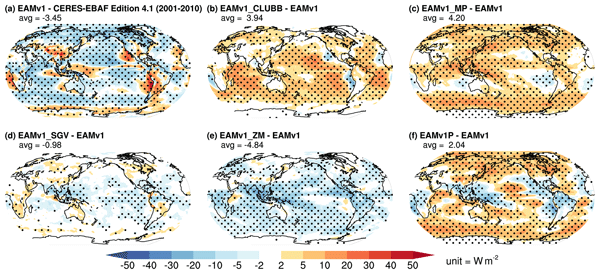
An alternative set of parameters for E3SM Atmospheric Model version 1 has been developed based on a tuning strategy that focuses on clouds. When clouds in every regime are improved, other aspects of the model are also improved, even though they are not the direct targets for calibration. The recalibrated model shows a lower sensitivity to anthropogenic aerosols and surface warming, suggesting potential improvements to the simulated climate in the past and future.

Sally S.-C. Wang, Yun Qian, L. Ruby Leung, and Yang Zhang
Atmos. Chem. Phys., 22, 3445–3468, https://doi.org/10.5194/acp-22-3445-2022, https://doi.org/10.5194/acp-22-3445-2022, 2022
Short summary
Short summary
This study develops an interpretable machine learning (ML) model predicting monthly PM2.5 fire emission over the contiguous US at 0.25° resolution and compares the prediction skills of the ML and process-based models. The comparison facilitates attributions of model biases and better understanding of the strengths and uncertainties in the two types of models at regional scales, for informing future model development and their applications in fire emission projection.
Ye Liu, Yun Qian, and Larry K. Berg
Wind Energ. Sci., 7, 37–51, https://doi.org/10.5194/wes-7-37-2022, https://doi.org/10.5194/wes-7-37-2022, 2022
Short summary
Short summary
Uncertainties in initial conditions (ICs) decrease the accuracy of wind speed forecasts. We find that IC uncertainties can alter wind speed by modulating the weather system. IC uncertainties in local thermal gradient and large-scale circulation jointly contribute to wind speed forecast uncertainties. Wind forecast accuracy in the Columbia River Basin is confined by initial uncertainties in a few specific regions, providing useful information for more intense measurement and modeling studies.
Cited articles
Bellprat, O., Kotlarski, S., Lüthi, D., and Schär, C.: Objective calibration of regional climate models, Journal of Geophysical Research: Atmospheres, 117, D23115, https://doi.org/10.1029/2012JD018262, 2012. a, b
Cleary, E., Garbuno-Inigo, A., Lan, S., Schneider, T., and Stuart, A. M.: Calibrate, emulate, sample, Journal of Computational Physics, 424, 109 716, https://doi.org/10.1016/j.jcp.2020.109716, 2021. a
Dagon, K., Sanderson, B. M., Fisher, R. A., and Lawrence, D. M.: A machine learning approach to emulation and biophysical parameter estimation with the Community Land Model, version 5, Advances in Statistical Climatology, Meteorology and Oceanography, 6, 223–244, 2020. a
Dunbar, O. R., Garbuno-Inigo, A., Schneider, T., and Stuart, A. M.: Calibration and uncertainty quantification of convective parameters in an idealized GCM, Journal of Advances in Modeling Earth Systems, 13, e2020MS002 454, https://doi.org/10.1029/2020MS002454, 2021. a
Eidhammer, T., Gettelman, A., Thayer-Calder, K., Watson-Parris, D., Elsaesser, G., Morrison, H., van Lier-Walqui, M., Song, C., and McCoy, D.: An Extensible Perturbed Parameter Ensemble (PPE) for the Community Atmosphere Model Version 6, EGUsphere, 2024, 1–27, https://doi.org/10.5194/gmd-17-7835-2024, 2024. a
Elsaesser, G. S., van Lier-Walqui, M., Yang, Q., Kelley, M., Ackerman, A. S., Fridlind, A. M., Cesana, G. V., Schmidt, G. A., Wu, J., Behrangi, A., Camargo, S. J., De1, B., Inoue, K., Leitmann‐Niimi, N. M., and Strong, J. D. O.: Using machine learning to generate a GISS ModelE calibrated physics ensemble (CPE), Journal of Advances in Modeling Earth Systems, 17, e2024MS004 713, https://doi.org/10.1029/2024MS004713, 2025. a, b, c, d, e, f
Golaz, J.-C., Larson, V. E., and Cotton, W. R.: A PDF-based model for boundary layer clouds. Part I: Method and model description, J. Atmos. Sci., 59, 3540–3551, 2002. a
Golaz, J.-C., Van Roekel, L. P., Zheng, X., Roberts, A. F., Wolfe, J. D., Lin, W., Bradley, A. M., Tang, Q., Maltrud, M. E., Forsyth, R. M., Zhang, C., Zhou, T., Zhang, K., Zender, C. S., Wu, M., Wang, H., Turner, A. K., Singh, B., Richter, J. H., Qin, Y., Petersen, M. R., Mametjanov, A., Ma, P.-L., Larson, V. E., Krishna, J., Keen, N. D., Jeffery, N., Hunke, E. C., Hannah, W. M., Guba, O., Griffin, B. M., Feng, Y., Engwirda, D., Vittorio, A. V. D., Dang, C., Conlon, L. M., Chen, C.-C.-J., Brunke, M. A., Bisht, G., Benedict, J. J., Asay-Davis, X. S., Zhang, Y., Zhang, M., Zeng, X., Xie, S., Wolfram, P. J., Vo, T., Veneziani, M., Tesfa, T. K., Sreepathi, S., Salinger, A. G., Eyre, J. E. J. R., Prather, M. J., Mahajan, S., Li, Q., Jones, P. W., Jacob, R. L., Huebler, G. W., Huang, X., Hillman, B. R., Harrop, B. E., Foucar, J. G., Fang, Y., Comeau, D. S., Caldwell, P. M., Bartoletti1, T., Balaguru, K., Taylor, M. A., McCoy, R. B., Leung, L. R., and Bader, D. C.: The DOE E3SM model version 2: Overview of the physical model and initial model evaluation, Journal of Advances in Modeling Earth Systems, 14, e2022MS003 156, https://doi.org/10.1029/2022MS003156, 2022. a
Guo, Z., Wang, M., Qian, Y., Larson, V. E., Ghan, S., Ovchinnikov, M., Bogenschutz, P., Zhao, C., Lin, G., and Zhou, T.: A Sensitivity Study of cloud properties to CLUBB Parameters in the Single Column Community Atmosphere Model (SCAM5), J. Adv. Model. Earth Syst., 6, 829–858, 2014. a
Guo, Z., Griffin, B. M., Domke, S., and Larson, V. E.: A parameterization of turbulent dissipation and pressure damping time scales in stably stratified inversions, and its effects on low clouds in global simulations, J. Adv. Model. Earth Syst., 13, e2020MS002 278, https://doi.org/10.1029/2020MS002278, 2021. a, b, c, d
Guo, Z., Griffin, B. M., and Larson, V. E.: larson-group/v3atm: Pre-EAMv3 code used in 2025 QuadTune v1 paper, https://doi.org/10.5281/zenodo.15121834, 2025. a
Hastie, T., Tibshirani, R., Friedman, J. H., and Friedman, J. H.: The elements of statistical learning: data mining, inference, and prediction, vol. 2, Springer, ISBN 978-0387848570, 2009. a
Hourdin, F., Williamson, D., Rio, C., Couvreux, F., Roehrig, R., Villefranque, N., Musat, I., Fairhead, L., Diallo, F. B., and Volodina, V.: Process-based climate model development harnessing machine learning: II. Model calibration from single column to global, Journal of Advances in Modeling Earth Systems, 13, e2020MS002 225, https://doi.org/10.1029/2020MS002225, 2021. a
Jackson, C., Xia, Y., Sen, M. K., and Stoffa, P. L.: Optimal parameter and uncertainty estimation of a land surface model: A case study using data from Cabauw, Netherlands, Journal of Geophysical Research: Atmospheres, 108, 4583, https://doi.org/10.1029/2002JD002991, 2003. a
Jackson, C., Sen, M. K., and Stoffa, P. L.: An Efficient Stochastic Bayesian Approach to Optimal Parameter and Uncertainty Estimation for Climate Model Predictions, J. Climate, 17, 2828–2841, 2004. a
James, G., Witten, D., Hastie, T., and Tibshirani, R.: An introduction to statistical learning, Springer, New York, ISBN 978-1461471370, 426 pp., 2013. a
Kennedy, D., Dagon, K., Lawrence, D., Fisher, R., Sanderson, B., Collier, N., Hoffman, F., Koven, C., Kluzek, E., Levis, S., Lu, X., Oleson, K. W., Zarakas, C. M., Cheng, Y., Foster, A. C., Fowler, M. D., Hawkins, L. R., Kavoo, T., Kumar, S., Newman, A. J., Lawrence, P. J., Li, F., Lombardozzi, D. L., Luo, Y., Shuman, J. K., Swann, A. L. S., Swenson, S. C., Tang, G., Wieder, W. R., and Wood, A. W.: One-at-a-time parameter perturbation ensemble of the Community Land Model, version 5.1, Journal of Advances in Modeling Earth Systems, 17, e2024MS004 715, https://doi.org/10.1029/2024MS004715, 2025. a
Lanczos, C.: Applied analysis, Courier Corporation, ISBN 978-0486656564, 1988. a
Larson, V. E.: CLUBB-SILHS: A parameterization of subgrid variability in the atmosphere, https://doi.org/10.48550/arXiv.1711.03675, arXiv preprint arXiv:1711.03675, 2017. a, b
Larson, V. E., Guo, Z., Stephens, B. A., Wittwer, N. N., and Hasenauer, L.: larson-group/quadtune: Tuning code used in 1st revision of 2025 QuadTune v1 GMD paper, https://doi.org/10.5281/zenodo.17215920, 2025. a
Li, S., Rupp, D. E., Hawkins, L., Mote, P. W., McNeall, D., Sparrow, S. N., Wallom, D. C. H., Betts, R. A., and Wettstein, J. J.: Reducing climate model biases by exploring parameter space with large ensembles of climate model simulations and statistical emulation, Geoscientific Model Development, 12, 3017–3043, https://doi.org/10.5194/gmd-12-3017-2019, 2019. a
Linardatos, P., Papastefanopoulos, V., and Kotsiantis, S.: Explainable AI: A review of machine learning interpretability methods, Entropy, 23, 18, https://doi.org/10.3390/e23010018, 2020. a
Loeb, N. G., Doelling, D. R., Wang, H., Su, W., Nguyen, C., Corbett, J. G., Liang, L., Mitrescu, C., Rose, F. G., and Kato, S.: Clouds and the earth’s radiant energy system (CERES) energy balanced and filled (EBAF) top-of-atmosphere (TOA) edition-4.0 data product, Journal of climate, 31, 895–918, 2018. a
Ma, P.-L., Harrop, B. E., Larson, V. E., Neale, R., Gettelman, A., Morrison, H., Wang, H., Zhang, K., Klein, S. A., Zelinka, M. D., Zhang, Y., Qian, Y., Yoon, J., Jones, C. R., Huang, M., Tai, S.-L., Singh, B., Bogenschutz, P. A., Zheng, X., Lin, W., Quaas, J., Chepfer, H., Brunke, M. A., Zeng, X., Muelmenstaedt, J., Hagos, S., Zhang, Z., Song, H., Liu, X., Wan, H., Wang, J., Caldwell, P. M., Fan, J., Berg, L. K., Fast, J. D., Taylor, M. A., Golaz, J.-C., Xie, S., Rasch, P. J., and Leung, L. R.: Better calibration of cloud parameterizations and subgrid effects increases the fidelity of E3SM Atmosphere Model version 1, Journal of Advances in Modeling Earth Systems, 15, 2881–2916, https://doi.org/10.5194/gmd-15-2881-2022, 2022. a
Mauritsen, T., Stevens, B., Roeckner, E., Crueger, T., Esch, M., Giorgetta, M., Haak, H., Jungclaus, J., Klocke, D., Matei, D., Mikolajewicz, U., Notz, D., Pincus, R., Schmidt, H., and Tomassini, L.: Tuning the climate of a global model, Journal of advances in modeling Earth systems, 4, M00A01, https://doi.org/10.1029/2012MS000154, 2012. a
Nardi, K. M., Zarzycki, C. M., Larson, V. E., and Bryan, G. H.: Assessing the Sensitivity of the Tropical Cyclone Boundary Layer to the Parameterization of Momentum Flux in the Community Earth System Model, Monthly Weather Review, 150, 883–906, https://doi.org/10.1175/MWR-D-21-0186.1, 2022. a
Nardi, K. M., Zarzycki, C. M., and Larson, V. E.: A Method for Interpreting the Role of Parameterized Turbulence on Global Metrics in the Community Earth System Model, Journal of Advances in Modeling Earth Systems, 16, e2024MS004 482, https://doi.org/10.1029/2024MS004482, 2024. a
Petrov, S., Will, A., and Geyer, B.: Linear Meta-Model optimization for regional climate models (LiMMo version 1.0), Geoscientific Model Development, 18, 6177–6194, 2025. a
Powell, M. J.: An efficient method for finding the minimum of a function of several variables without calculating derivatives, The Computer Journal, 7, 155–162, 1964. a
Qian, Y., Wan, H., Yang, B., Golaz, J.-C., Harrop, B., Hou, Z., Larson, V. E., Leung, L. R., Lin, G., Lin, W., Ma, P.-L., Ma, H.-Y., Rasch, P., Singh, B., Wang, H., Xie, S., and Zhang, K.: Parametric sensitivity and uncertainty quantification in the version 1 of E3SM atmosphere model based on short perturbed parameter ensemble simulations, Journal of Geophysical Research: Atmospheres, 123, 13–46, https://doi.org/10.1029/2018JD028927, 2018. a, b
Qian, Y., Guo, Z., Larson, V. E., Leung, L. R., Lin, W., Ma, P.-L., Wan, H., Wang, H., Xiao, H., Xie, S., Yang, B., Zhang, K., Zhang, S., and Zhang, Y.: Region and cloud regime dependence of parametric sensitivity in E3SM atmosphere model, Climate Dynamics, 62, 1517–1533, https://doi.org/10.1007/s00382-023-06977-3, 2024. a
Rasch, P., Xie, S., Ma, P.-L., Lin, W., Wang, H., Tang, Q., Burrows, S., Caldwell, P., Zhang, K., Easter, R., Cameron-Smith, P., Singh, B., Wan, H., Golaz, J.-C., Harrop, B. E., Roesler, E., Bacmeister, J., Larson, V. E., Evans, K. J., Qian, Y., Taylor, M., Leung, L. R., Zhang, Y., Brent, L., Branstetter, M., Hannay, C., Mahajan, S., Mametjanov, A., Neale, R., Richter, J. H., Yoon, J.-H., Zender, C. S., Bader, D., Flanner, M., Foucar, J. G., Jacob, R., Keen, N., Klein, S. A., Liu, X., Salinger, A., Shrivastava, M., and Yang, Y.: An overview of the atmospheric component of the Energy Exascale Earth System Model, Journal of Advances in Modeling Earth Systems, 11, 2377–2411, https://doi.org/10.1029/2019MS001629, 2019. a
Regayre, L. A., Deaconu, L., Grosvenor, D. P., Sexton, D. M., Symonds, C., Langton, T., Watson-Paris, D., Mulcahy, J. P., Pringle, K. J., Richardson, M., et al.: Identifying climate model structural inconsistencies allows for tight constraint of aerosol radiative forcing, Atmospheric Chemistry and Physics, 23, 8749–8768, 2023. a
Ross, S.: Probability and statistics for engineers and scientists, Elsevier, New Delhi, 16, 686, 2009. a
Rostron, J. W., Sexton, D. M., Furtado, K., and Tsushima, Y.: A clearer view of systematic errors in model development: two practical approaches using perturbed parameter ensembles, Climate Dynamics, 63, 1–17, 2025. a
Salter, J. M., Williamson, D. B., Scinocca, J., and Kharin, V.: Uncertainty quantification for computer models with spatial output using calibration-optimal bases, Journal of the American Statistical Association, 114, 528, https://doi.org/10.1080/01621459.2018.1514306, 2019. a
Terai, C. R., Xie, S., Song, X., Chen, C.-C., Fan, J., Zhang, G. J., Richter, J. H., Shpund, J., Lin, W., Golaz, J.-C., Larson, V. E., Moncrieff, M. W., Shan, Y., Zhang, C., Zhang, K., and Zhang, Y.: Impact of microphysics and convection schemes on the mean-state and variability of clouds and precipitation in the E3SM Atmosphere Model, Journal of Advances in Modeling Earth Systems, 17, e2024MS004 569, https://doi.org/10.1029/2024MS004569, 2025. a
Vitart, F.: Evolution of ECMWF sub-seasonal forecast skill scores, Quarterly Journal of the Royal Meteorological Society, 140, 1889–1899, 2014. a
Xie, S., Terai, C. R., Wang, H., Tang, Q., Fan, J., Burrows, S., Lin, W., Wu, M., Song, X., Zhang, Y., Taylor, M. A., Golaz, J. C., Benedict, J. J., Chen, C. C. J., Feng, Y., Hannah, W. M., Ke, Z., Shan, Y., Larson, V. E., Liu, X., Prather, M. J., Richter, J. H., Shrivastava, M., Wan, H., Zhang, G. J., Zhang, K., Bradley, A. M., Cameron Smith, P., Damiano, L., Debusschere, B. J., Donahue, A. S., Easter, R. C., Eldred, M. S., Griffin, B. M., Guba, O., Guo, Z., Huang, X., Lee, J., Lee, H. H., Lou, S., Mahfouz, N., Moncrieff, M., Mülmenstädt, J., Qian, Y., Rasool, Q. Z., Roberts, A. F., Santos, S. P., Sargsyan, K., Shpund, J., Singh, B., Tao, C., Xie, J., Yang, Y., Zeng, X., Zhang, C., Zhang, M., Zhang, S., Zhang, T., Zheng, X., Jacob, R. L., Leung, L. R., McCoy, R. B., and Bader, D. C.: The Energy Exascale Earth System Model Version 3: 1. Overview of the Atmospheric Component, Journal of Advances in Modeling Earth Systems, 17, e2025MS005 120, https://doi.org/10.1029/2025MS005120, 2025. a
Yang, B., Qian, Y., Lin, G., Leung, R., and Zhang, Y.: Some issues in uncertainty quantification and parameter tuning: A case study of convective parameterization scheme in the WRF regional climate model, Atmospheric Chemistry and Physics, 12, 2409–2427, 2012. a
Yarger, D., Wagman, B. M., Chowdhary, K., and Shand, L.: Autocalibration of the E3SM version 2 atmosphere model using a PCA-based surrogate for spatial fields, Journal of Advances in Modeling Earth Systems, 16, e2023MS003 961, https://doi.org/10.1029/2023MS003961, 2024. a, b
Zhang, S., Vogl, C. J., Larson, V. E., Bui, Q. M., Wan, H., Rasch, P. J., and Woodward, C. S.: Removing numerical pathologies in a turbulence parameterization through convergence testing, Journal of Advances in Modeling Earth Systems, 15, e2023MS003 633, https://doi.org/10.1029/2023MS003633, 2023. a, b
Zou, L., Qian, Y., Zhou, T., and Yang, B.: Parameter tuning and calibration of RegCM3 with MIT–Emanuel cumulus parameterization scheme over CORDEX East Asia domain, Journal of Climate, 27, 7687–7701, 2014. a
Short summary
Global models of the atmosphere contain errors that lead to inaccurate simulations. A software tool ("QuadTune") is presented that attempts to mitigate errors related to suboptimal parameter values. It also displays diagnostic plots that provide hints about where structural errors might lie in the model.
Global models of the atmosphere contain errors that lead to inaccurate simulations. A software...


