
Articles | Volume 19, issue 8
https://doi.org/10.5194/gmd-19-3477-2026
© Author(s) 2026. This work is distributed under
the Creative Commons Attribution 4.0 License.
the Creative Commons Attribution 4.0 License.
Special issue:
https://doi.org/10.5194/gmd-19-3477-2026
© Author(s) 2026. This work is distributed under
the Creative Commons Attribution 4.0 License.
the Creative Commons Attribution 4.0 License.
Model experiment description paper
| 
28 Apr 2026
Model experiment description paper |
| 28 Apr 2026
| 28 Apr 2026
AerChemMIP2 – unraveling the role of reactive gases, aerosol particles, and land use for air quality and climate change in CMIP7
Stephanie Fiedler
CORRESPONDING AUTHOR

Institute of Environmental Physics, University Heidelberg, Heidelberg, Germany
Fiona M. O'Connor
UK Met Office Hadley Centre, FitzRoy Road, Exeter, United Kingdom
Department of Mathematics & Statistics, Global Systems Institute, University of Exeter, Exeter, United Kingdom
Duncan Watson-Parris
Scripps Institution of Oceanography and Halıcıoğlu Data Science Institute, University of California – San Diego, San Diego, CA, USA
Robert J. Allen
Department of Earth and Planetary Sciences, University of California Riverside, Riverside, CA, USA
William J. Collins
Department of Meteorology, University of Reading, Reading, United Kingdom
Paul T. Griffiths
School of Chemistry, University of Bristol, Bristol, United Kingdom
Matthew Kasoar
Leverhulme Centre for Wildfires, Environment and Society, Department of Physics, Imperial College London, London, United Kingdom
Jarmo Kikstra
Energy, Climate and Environment (ECE) Program, International Institute for Applied Systems Analysis (IIASA), Laxenburg, Austria
Jasper F. Kok
Department of Atmospheric and Oceanic Sciences, University of California – Los Angeles, Los Angeles, CA, USA
Lee T. Murray
Department of Earth and Environmental Sciences, University of Rochester, Rochester, NY, USA
Fabien Paulot
NOAA Geophysical Fluid Dynamics Laboratory, Princeton, NJ, USA
Maria Sand
CICERO Center for International Climate Research, Oslo, Norway
Steven T. Turnock
UK Met Office Hadley Centre, FitzRoy Road, Exeter, United Kingdom
MetOffice@Leeds, School of Earth and Environment, University of Leeds, Leeds, United Kingdom
James Weber
Department of Meteorology, University of Reading, Reading, United Kingdom
Laura J. Wilcox
National Centre for Atmospheric Science, University of Reading, Reading, United Kingdom
Vaishali Naik
NOAA Geophysical Fluid Dynamics Laboratory, Princeton, NJ, USA
Related authors
Paul T. Griffiths, Laura J. Wilcox, Robert J. Allen, Vaishali Naik, Fiona M. O'Connor, Michael Prather, Alex Archibald, Florence Brown, Makoto Deushi, William Collins, Stephanie Fiedler, Naga Oshima, Lee T. Murray, Bjørn H. Samset, Chris Smith, Steven Turnock, Duncan Watson-Parris, and Paul J. Young
Atmos. Chem. Phys., 25, 8289–8328, https://doi.org/10.5194/acp-25-8289-2025, https://doi.org/10.5194/acp-25-8289-2025, 2025
Short summary
Short summary
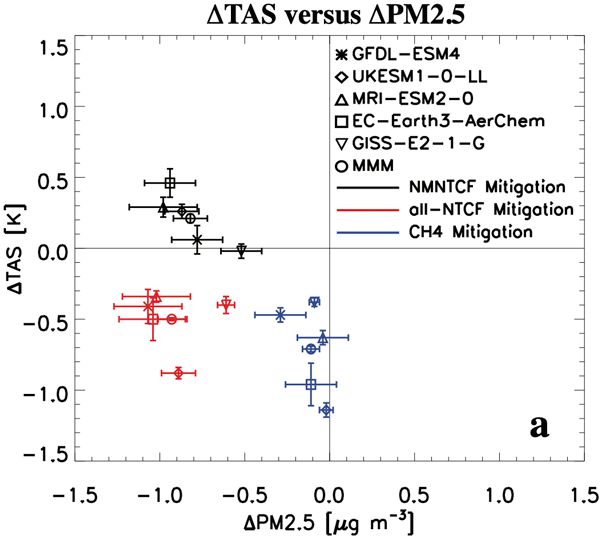
The Aerosol Chemistry Model Intercomparison Project (AerChemMIP) aimed to quantify the climate and air quality impacts of aerosols and chemically reactive gases. We review its contribution to AR6 (Sixth Assessment Report of the Intergovernmental Panel on Climate Change) and the wider understanding of the role of these species in climate and climate change. We identify challenges and provide recommendations to improve the utility and uptake of climate model data, detailed summary tables of CMIP6 models, experiments, and emergent diagnostics.
Domenico Cimini, Rémi Gandoin, Stephanie Fiedler, Claudia Acquistapace, Andrea Balotti, Sabrina Gentile, Edoardo Geraldi, Christine Knist, Pauline Martinet, Saverio T. Nilo, Giandomenico Pace, Bernhard Pospichal, and Filomena Romano
Atmos. Meas. Tech., 18, 2041–2067, https://doi.org/10.5194/amt-18-2041-2025, https://doi.org/10.5194/amt-18-2041-2025, 2025
Short summary
Short summary
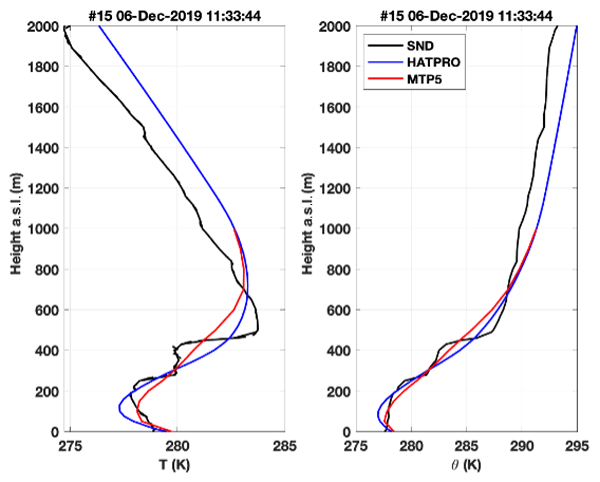
Atmospheric stability indicates whether air vertical motion is dumped or amplified. This is important for wind energy applications as it affects wind turbine wakes and thus the yield of wind parks. The paper provides an assessment of stability metrics measured by ground-based microwave radiometers in different climatological conditions and instrument types, onshore and offshore. Results indicate that special precaution may be required offshore to achieve typical onshore performances.
Stephanie Fiedler, Vaishali Naik, Fiona M. O'Connor, Christopher J. Smith, Paul Griffiths, Ryan J. Kramer, Toshihiko Takemura, Robert J. Allen, Ulas Im, Matthew Kasoar, Angshuman Modak, Steven Turnock, Apostolos Voulgarakis, Duncan Watson-Parris, Daniel M. Westervelt, Laura J. Wilcox, Alcide Zhao, William J. Collins, Michael Schulz, Gunnar Myhre, and Piers M. Forster
Geosci. Model Dev., 17, 2387–2417, https://doi.org/10.5194/gmd-17-2387-2024, https://doi.org/10.5194/gmd-17-2387-2024, 2024
Short summary
Short summary
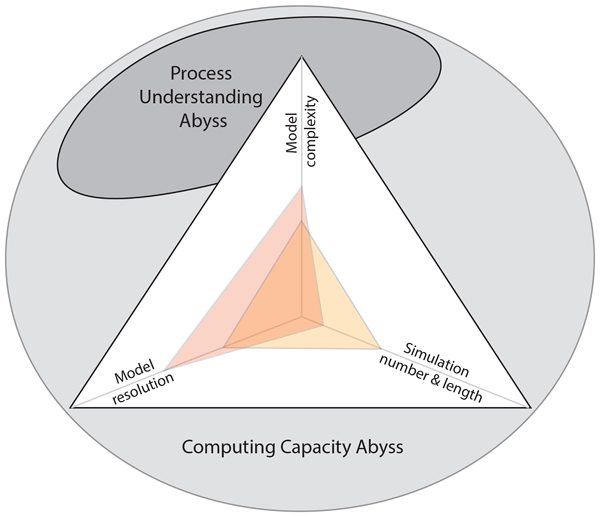
Climate scientists want to better understand modern climate change. Thus, climate model experiments are performed and compared. The results of climate model experiments differ, as assessed in the latest Intergovernmental Panel on Climate Change (IPCC) assessment report. This article gives insights into the challenges and outlines opportunities for further improving the understanding of climate change. It is based on views of a group of experts in atmospheric composition–climate interactions.
Mahdi Boroughani, Fahimeh Mirchooli, Mojtaba Hadavifar, and Stephanie Fiedler
SOIL, 9, 411–423, https://doi.org/10.5194/soil-9-411-2023, https://doi.org/10.5194/soil-9-411-2023, 2023
Short summary
Short summary
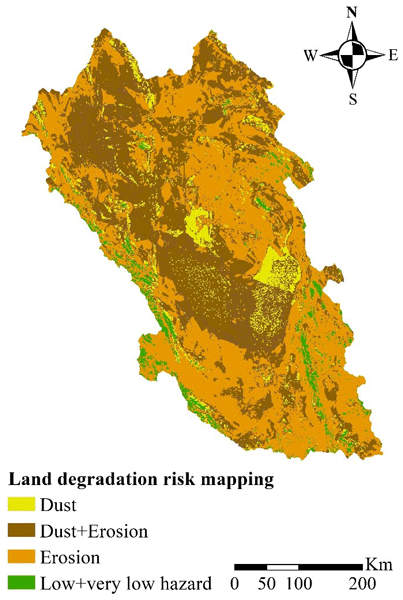
The present study used several different datasets, conducted a field survey, and paired the data with three different machine learning algorithms to construct spatial maps for areas at risk of land degradation for the Lut watershed in Iran. According to the land degradation map, almost the entire study region is at risk. A large fraction of 43 % of the area is prone to both high wind-driven and water-driven soil erosion.
Mark Reyers, Stephanie Fiedler, Patrick Ludwig, Christoph Böhm, Volker Wennrich, and Yaping Shao
Clim. Past, 19, 517–532, https://doi.org/10.5194/cp-19-517-2023, https://doi.org/10.5194/cp-19-517-2023, 2023
Short summary
Short summary
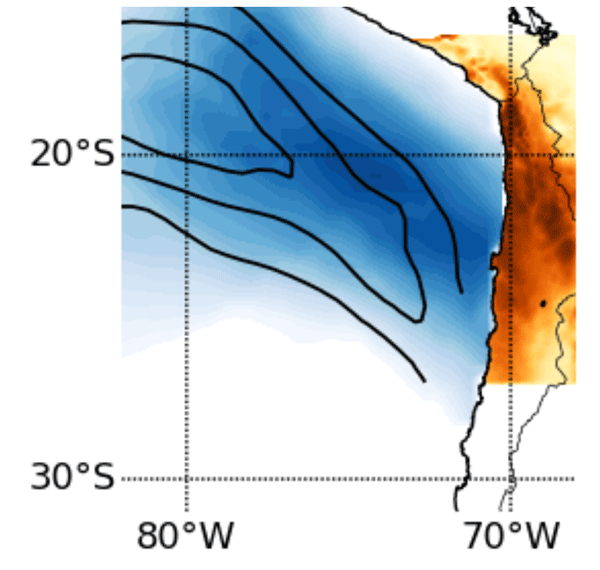
In this study we performed high-resolution climate model simulations for the hyper-arid Atacama Desert for the mid-Pliocene (3.2 Ma). The aim is to uncover the atmospheric processes that are involved in the enhancement of strong rainfall events during this period. We find that strong upper-level moisture fluxes (so-called moisture conveyor belts) originating in the tropical eastern Pacific are the main driver for increased rainfall in the mid-Pliocene.
Eduardo Weide Luiz and Stephanie Fiedler
Wind Energ. Sci., 7, 1575–1591, https://doi.org/10.5194/wes-7-1575-2022, https://doi.org/10.5194/wes-7-1575-2022, 2022
Short summary
Short summary
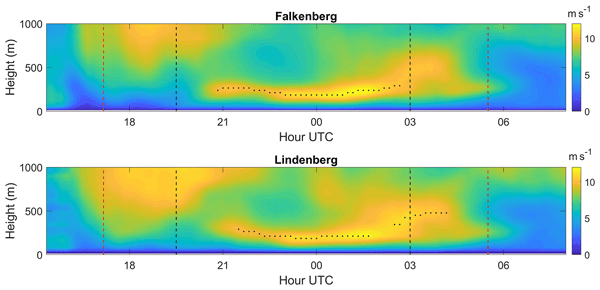
This work analyses a meteorological event, called nocturnal low-level jets (NLLJs), defined as high wind speeds relatively close to the surface. There were positive and negative impacts from NLLJs. While NLLJs increased the mean power production, they also increased the variability in the wind with height. Our results imply that long NLLJ events are also larger, affecting many wind turbines at the same time. Short NLLJ events are more local, having stronger effects on power variability.
Julian Steinheuer, Carola Detring, Frank Beyrich, Ulrich Löhnert, Petra Friederichs, and Stephanie Fiedler
Atmos. Meas. Tech., 15, 3243–3260, https://doi.org/10.5194/amt-15-3243-2022, https://doi.org/10.5194/amt-15-3243-2022, 2022
Short summary
Short summary
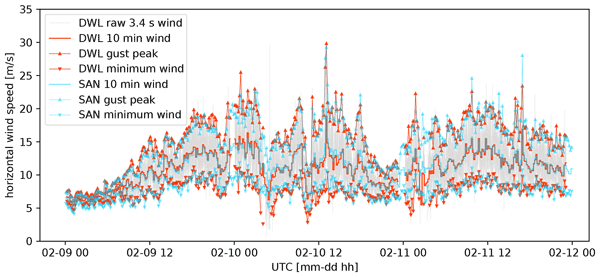
Doppler wind lidars (DWLs) allow the determination of wind profiles with high vertical resolution and thus provide an alternative to meteorological towers. We address the question of whether wind gusts can be derived since they are short-lived phenomena. Therefore, we compare different DWL configurations and develop a new method applicable to all of them. A fast continuous scanning mode that completes a full observation cycle within 3.4 s is found to be the best-performing configuration.
Dominik Paprotny, Maksym Bondarenko, Evgeny Noi, Andrew J. Tatem, Katja Frieler, Inga Sauer, Samir KC, Rob Dellink, Jarmo S. Kikstra, and Laurence Hawker
EGUsphere, https://doi.org/10.5194/egusphere-2026-5045, https://doi.org/10.5194/egusphere-2026-5045, 2026
This preprint is open for discussion and under review for Geoscientific Model Development (GMD).
Short summary
Short summary
Direct human forcings are important input variables for earth system and climate impact models, describing societal influence on changes to climate and related risks. Here, we present a new multisource dataset consistently describing the spatial and temporal dynamics of the two most important direct human forcings: population and economic production. It enables, for instance, process-based impact simulations across sectors, impact attribution research, risk assessment and socio-hydrology.
Jianyu Zheng, Hongbin Yu, Chamara Rajapakse, Mian Chin, Michael Schulz, Yves Balkanski, Susanne E. Bauer, Huisheng Bian, Peter Colarco, Dongchul Kim, Ramiro Checa-Garcia, Yevgeny Derimian, Oleg Dubovik, Paul Ginoux, Zak Kipling, Jasper F. Kok, Harri Kokkola, Philippe Le Sager, Lei Li, Marianne Tronstad Lund, Gunnar Myhre, Hitoshi Matsui, Dirk J. L. Olivie, Samuel Remy, Oyvind Seland, Qianqian Song, Toshihiko Takemura, Qian Tan, Kostas Tsigaridis, Twan van Noije, David Winker, Bin Xie, Hua Zhang, Xindan Zhang, and Zhibo Zhang
EGUsphere, https://doi.org/10.5194/egusphere-2026-4322, https://doi.org/10.5194/egusphere-2026-4322, 2026
This preprint is open for discussion and under review for Atmospheric Chemistry and Physics (ACP).
Short summary
Short summary
Winds carry vast amounts of Saharan dust across the Atlantic Ocean, influencing climate, air quality, and ocean ecosystems. Within the Aerosol Comparisons between Observations and Models (AeroCom) project, we evaluated 17 numerical models against observations. Models deposit dust too quickly, so too little reaches the Caribbean. Better simulations require emitting larger particles, treating their non-spherical shapes, and capturing processes that keep dust aloft during transport.
Natalie Mahowald, Hannah Liddy, Jennifer Marlon, Kostas Tsigaridis, Gisela Winckler, Douglas Hamilton, Jasper Kok, Michael Sigl, Jordan Abell, Adwoa Aboagye-Okyere, Joe Adabouk Amooli, Samuel Albani, Susanne Bauer, Emilie Beaudon, Hunter Brown, Nathan Chellman, Nicolás Cosentino, Nathalie Goodkin, Christopher Guiterman, Stijn Hantson, Chengfei He, Aviva Intveld, Jed Kaplan, Jeremy Klavans, Fabrice Lambert, Haobo Liu, Marie-France Loutre, Joe McConnell, Zachary McGraw, Keren Mezuman, Ron Miller, Nicholas O’Mara, Maria Rosabelle Ong, Gavin Schmidt, Richard Vachula, Lily Wu, and Bingqing Zhang
EGUsphere, https://doi.org/10.5194/egusphere-2026-4532, https://doi.org/10.5194/egusphere-2026-4532, 2026
This preprint is open for discussion and under review for Atmospheric Chemistry and Physics (ACP).
Short summary
Short summary
Aerosols are poorly known in past climates, and yet it is very important to understand how aerosols are changing in different climates. In this paper we review available proxy data and modeling approaches to characterize aerosols in past climates. In addition, we propose future studies that can help improve our understanding.
Matthew L. Loman, Lee T. Murray, Peter D. Ivatt, Róisín Commane, Andrew Hallward-Driemeier, Raghav Dhall, Eric M. Leibensperger, Nicholas Balasus, Lucas Estrada, Melissa P. Sulprizio, Maryann R. Sargent, and Felix Vogel
EGUsphere, https://doi.org/10.5194/egusphere-2026-3153, https://doi.org/10.5194/egusphere-2026-3153, 2026
Short summary
Short summary
We evaluate methane emissions and their trends in New York State based on observations of methane from 29 sites, including four new long-term sites. These observations are most sensitive to emissions in southeastern New York State, including New York City. We find regional trends and biases in some locations, including underestimated emissions in the New York City area. Our results also demonstrate that policy-relevant validation of methane emissions needs a combination of observation platforms.
Wah Kin Michael Lai, Jon Robson, Laura Wilcox, Nick Dunstone, and Rowan Sutton
Atmos. Chem. Phys., 26, 11255–11279, https://doi.org/10.5194/acp-26-11255-2026, https://doi.org/10.5194/acp-26-11255-2026, 2026
Short summary
Short summary
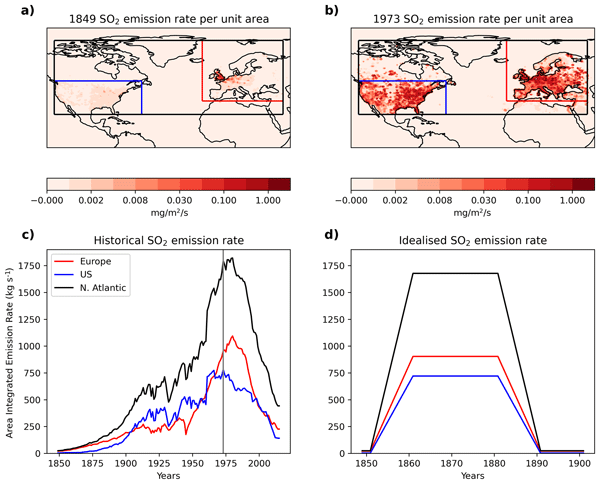
In a climate model at two different resolutions, sulphate aerosols are shown to induce a fast cooling followed by a delayed warming in the subpolar North Atlantic. The delayed warming is stronger at higher resolution due to a stronger Atlantic Meridional Overturning Circulation (AMOC) response. This difference is due to the lower resolution model having more sea ice which insulates the ocean, showing that the North Atlantic response to external forcing is sensitive to regional differences.
Ben Adam, Rayne Holland, Daniel Van Hoomissen, James B. Burkholder, M. Anwar H. Khan, Paul Griffiths, Jens Mühle, Dudley Shallcross, and Matt Rigby
Atmos. Chem. Phys., 26, 10979–10996, https://doi.org/10.5194/acp-26-10979-2026, https://doi.org/10.5194/acp-26-10979-2026, 2026
Short summary
Short summary
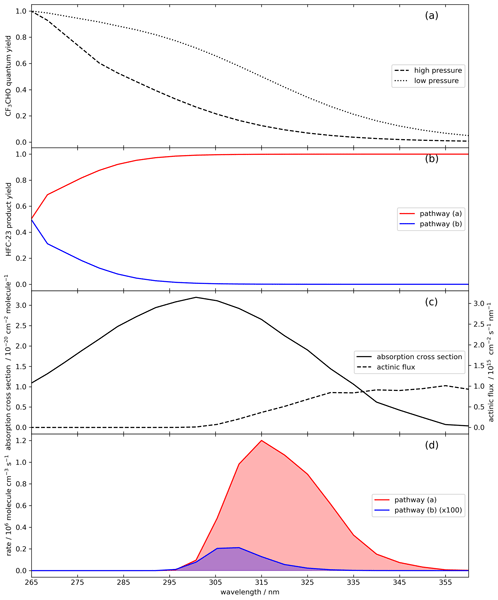
Some man-made gases emitted into the atmosphere can break down to form a powerful greenhouse gas called HFC-23 (hydrofluorocarbons). In this study, we use a full three-dimensional model of the atmosphere and its chemistry to improve on previous work and determine how much HFC-23 is produced from this route. Our model estimates HFC-23 production ten times lower than previously suggested, confirming that this source is a very small contributor to the total amount of HFC-23 in the atmosphere.
Alex M. Mason, Matthew Henry, Haruki Hirasawa, Fiona M. O'Connor, and James Haywood
Atmos. Chem. Phys., 26, 10861–10879, https://doi.org/10.5194/acp-26-10861-2026, https://doi.org/10.5194/acp-26-10861-2026, 2026
Short summary
Short summary
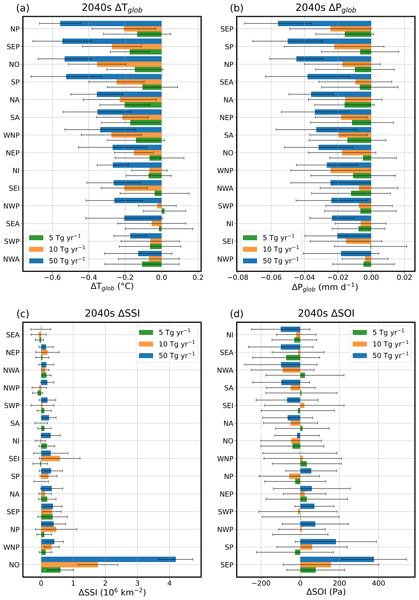
Marine Cloud Brightening (MCB) proposes the spraying of sea salt particles into marine clouds to cool the planet. MCB in midlatitude regions in models gave a relatively even climate response. We use 42 simulations of MCB to target several climate responses. Two optimised combinations are compared to a midlatitude MCB simulation, which improved sea ice restoration and the temperature response pattern, highlighting the importance of high latitude MCB for MCB optimisation in this model.
Alejandro Romero-Prieto, Marit Sandstad, Benjamin M. Sanderson, Zebedee R. J. Nicholls, Norman J. Steinert, Thomas Gasser, Camilla Mathison, Jarmo Kikstra, Thomas J. Aubry, Katsumasa Tanaka, Konstantin Weber, and Chris Smith
Geosci. Model Dev., 19, 7111–7133, https://doi.org/10.5194/gmd-19-7111-2026, https://doi.org/10.5194/gmd-19-7111-2026, 2026
Short summary
Short summary
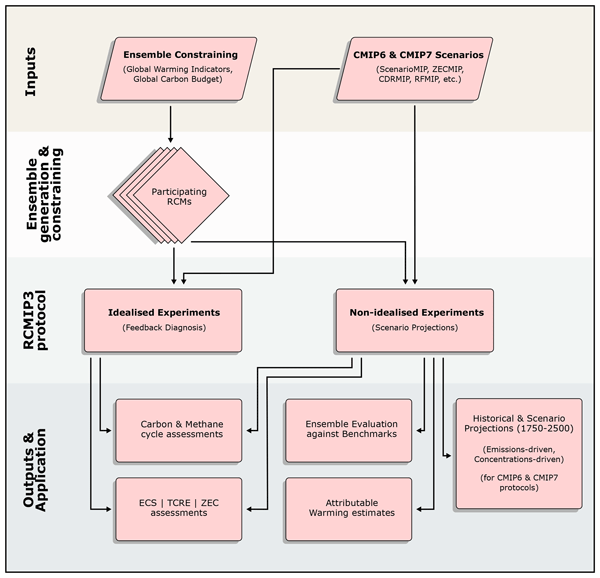
Reduced-complexity models are an important tool in climate science, helping us understand and estimate future climate change. We present the experimental protocol for the next phase of the reduced-complexity model intercomparison project, which aims to compare results from many such models to better understand their behaviour. This knowledge will guide how these models are developed and used in the future, including in the upcoming Intergovernmental Panel on Climate Change (IPCC) assessment report (AR7).
Ruth M. Doherty, Zhenze Liu, Massimo Vieno, Oliver Wild, Fiona M. O'Connor, Steven T. Turnock, Christina M. Hood, Jenny R. Stocker, Mathew R. Heal, Dwayne E. Heard, Emma G. Sands, David J. Carruthers, and Lisa K. Whalley
Atmos. Chem. Phys., 26, 10115–10147, https://doi.org/10.5194/acp-26-10115-2026, https://doi.org/10.5194/acp-26-10115-2026, 2026
Short summary
Short summary
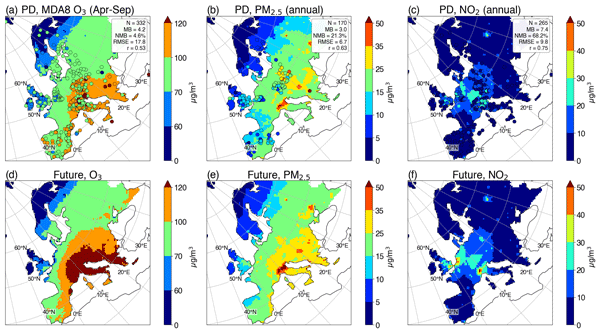
We use innovative coupled modelling to quantify how natural emissions, chemistry, deposition and transport influence climate change responses of air pollutants from continental to urban scales across Europe. We highlight uncertainties in climate-sensitive biogenic emissions as key to future projections of ozone and fine particulate matter. High resolution modelling is essential for evaluating the benefits and trade-offs of climate change for achieving WHO air quality targets and guidelines.
Ellen H. Davenport, J. Varan Madan, Rebecca Gjini, Jared Brzenski, Benjamin Crawford, Nick Ho, Tien-Yiao Hsu, Yueshan Liang, Zhixing Liu, Veeramakali Manivannan, Eric Pham, Rohith Vutukuru, Andrew I. L. Williams, Zhiqi Yang, Rose Yu, Nicholas J. Lutsko, Stephan Hoyer, and Duncan Watson-Parris
Geosci. Model Dev., 19, 6451–6466, https://doi.org/10.5194/gmd-19-6451-2026, https://doi.org/10.5194/gmd-19-6451-2026, 2026
Short summary
Short summary
We introduce version 1.1 of the JAX Circulation Model (JCM), an open-source atmosphere model. JCM is written in JAX, a framework for high-performance Python code that supports automatic differentiation (automated calculation of how sensitive any program output is to any input). JCM's differentiability and modular design make it easier to train, test, and combine physical-theory-based and data-driven model components, thus providing a flexible and modern platform to facilitate climate research.
Hailing Jia, David Neubauer, Yusuf Bhatti, Duncan Watson-Parris, Philip Stier, Johannes Quaas, Daniel Partridge, Ardit Arifi, Anne Kubin, Athanasios Nenes, Muhammed Irfan, Ulas Im, Carl Svenhag, Nick Schutgens, Bastiaan van Diedenhoven, Sylvaine Ferrachat, Ulrike Lohmann, Ina Tegen, Alice Henkes, Guangliang Fu, and Otto Hasekamp
EGUsphere, https://doi.org/10.5194/egusphere-2026-3275, https://doi.org/10.5194/egusphere-2026-3275, 2026
Short summary
Short summary
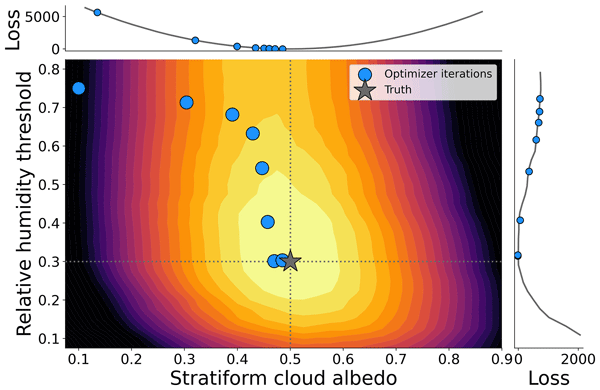
Tiny aerosol particles affect Earth’s climate by interacting with clouds and sunlight, but their impact remains uncertain. Combining climate model simulations and emulators, we explored millions of model variants across different aerosol and cloud settings to identify the causes of the uncertainty. We found that aerosol emissions and cloud convection are key contributors. Our work suggests that better integration of existing observations could help reduce these uncertainties in the future.
Srinath Krishnan, Ragnhild Bieltvedt Skeie, Øivind Hodnebrog, Gunnar Myhre, Maria Sand, Marit Sandstad, Hannah Bryant, Didier A. Hauglustaine, Fabien Paulot, Michael Prather, and David Stevenson
Atmos. Chem. Phys., 26, 9509–9539, https://doi.org/10.5194/acp-26-9509-2026, https://doi.org/10.5194/acp-26-9509-2026, 2026
Short summary
Short summary
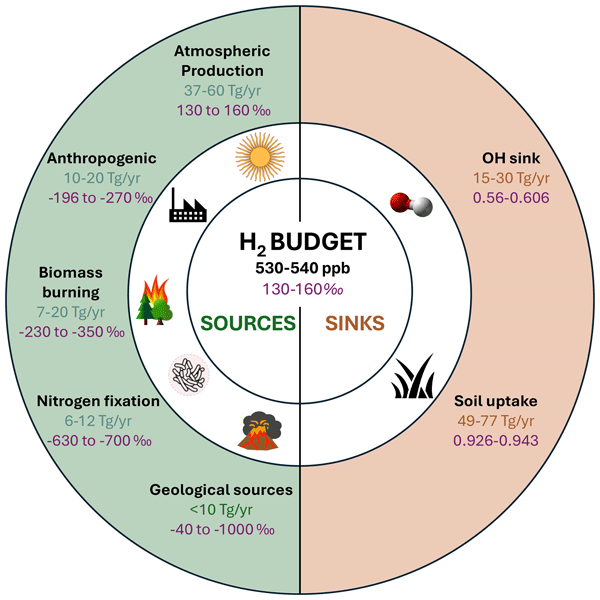
Hydrogen (H2) is an indirect greenhouse gas that can affect climate through chemical reactions in the atmosphere. To better understand this impact, it is important to constrain the sources and sinks of hydrogen. Using a suite of three-dimensional and one-dimensional models, we find that atmospheric production of hydrogen is 37–60 Tg/yr and that the geological source of H2 is much smaller than suggested. More field and isotopic measurements are needed to improve these estimates.
Alkiviadis Kalisoras, Prodromos Zanis, Aristeidis K. Georgoulias, Dimitris Akritidis, Robert J. Allen, and Vaishali Naik
Atmos. Chem. Phys., 26, 9413–9441, https://doi.org/10.5194/acp-26-9413-2026, https://doi.org/10.5194/acp-26-9413-2026, 2026
Short summary
Short summary
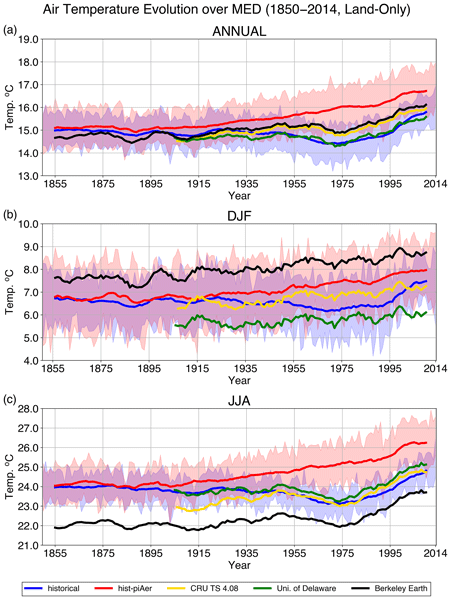
The Mediterranean region has experienced enhanced warming in the last decades resulting from emission changes of anthropogenic aerosols. In this work, we investigate changes in near-surface temperature over the Mediterranean throughout 1850–2014 using climate model simulations and try to connect them with changes in the Earth's radiative budget and atmospheric circulation.
Feifei Luo, Manoj Joshi, Bjørn H. Samset, Laura J. Wilcox, Camilla W. Stjern, Robert J. Allen, Yan-Ning Kuo, Wei Hua, and Shuanglin Li
EGUsphere, https://doi.org/10.5194/egusphere-2026-3301, https://doi.org/10.5194/egusphere-2026-3301, 2026
Short summary
Short summary
This study examines if this impact changes in a warmer world. Using a climate model, we compare identical Asian emissions under cooler and 1 K warmer climates. Aerosols reduce extreme rainfall in both, but more strongly over northern India in the warmer climate. A warmer, stabler atmosphere weakens circulation that partly offsets aerosol drying in cooler conditions. Continued warming may strengthen this drying over parts of Asia, while future pollution cuts could amplify heavy rainfall.
Emma Sands, Fiona M. O'Connor, James Weber, Ruth M. Doherty, and Richard J. Pope
Atmos. Chem. Phys., 26, 8553–8573, https://doi.org/10.5194/acp-26-8553-2026, https://doi.org/10.5194/acp-26-8553-2026, 2026
Short summary
Short summary
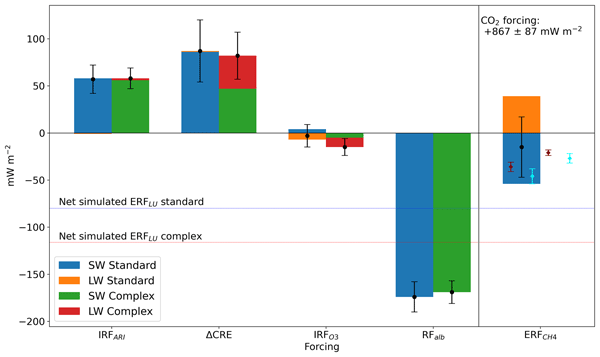
Land use impacts climate through changes in atmospheric composition but the relative importance of various pathways is uncertain. We use a model to separate the forcing from pre-industrial to present-day land use change into contributions from various greenhouse gases, aerosol effects, and surface albedo change. The inclusion of updated processes highlights the role of changes in cloud properties. The carbon dioxide forcing dominates, but other processes have substantial regional impacts.
Sophie Wynn, Duncan Watson-Parris, Brandon M. Duran, and Johannes Mülmenstädt
EGUsphere, https://doi.org/10.5194/egusphere-2026-2811, https://doi.org/10.5194/egusphere-2026-2811, 2026
Short summary
Short summary
Climate models use uncertain parameters to represent aerosol–cloud processes. To identify which parameters are most important, commonly scientists a multitude of simulations where these parameters are varied uniformly. We show that restricting our analysis to simulations matching the base cloud state gives a different and more meaningful answer about which parameters drive the forcing related to aerosol-cloud interactions.

João C. M. Teixeira, Chantelle Burton, Douglas I. Kelley, Gerd A. Folberth, Fiona M. O'Connor, Richard A. Betts, and Apostolos Voulgarakis
Earth Syst. Dynam., 17, 739–767, https://doi.org/10.5194/esd-17-739-2026, https://doi.org/10.5194/esd-17-739-2026, 2026
Short summary
Short summary
Burned area has declined globally since the late 1990s, especially in tropical savannas, yet many climate models miss this trend because they poorly represent human fire use and suppression. We tested whether adding a simple link to human development improves a fire model. This reduced large regional errors and better captured downward trends in several areas, though it increased global underestimation and reduced variability. Human influence is key, but simple assumptions have trade-offs.
Bosi Sheng, Massimo A. Bollasina, Alexandre S. Gagnon, Laura J. Wilcox, Thomas P. S. Reynolds, Christopher T. S. Beckett, Haolin Wang, Qingxiang Li, Pierre Nabat, Robert J. Allen, Bjørn H. Samset, Joonas Merikanto, Geeta G. Persad, Toshihiko Takemura, Kostas Tsigaridis, Sharar Ahmadi, Maxwell T. Elling, Knut von Salzen, Daniel M. Westervelt, Naga Oshima, and Tsuyoshi Koshiro
EGUsphere, https://doi.org/10.5194/egusphere-2026-2198, https://doi.org/10.5194/egusphere-2026-2198, 2026
Short summary
Short summary
Observational records indicate that austral summer rainfall over southern Africa experienced substantial wetting during the late 20th century, followed by pronounced drying over the past two decades. We show that East Asian sulphate aerosol emissions played a key role in shaping these rainfall trends. These findings have important implications for reducing uncertainties in regional rainfall projections and for understanding their links to ecosystem changes.
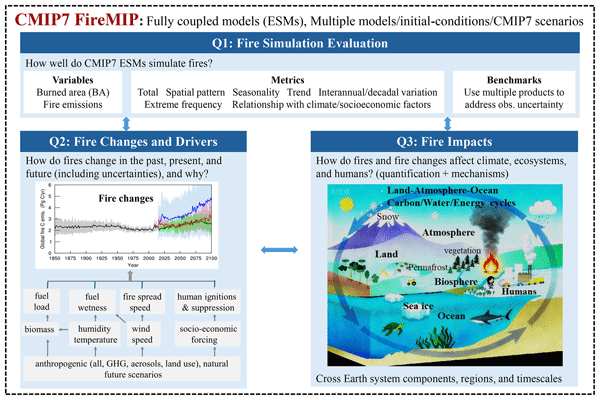
Fang Li, David M. Lawrence, Brendan M. Rogers, Chantelle Burton, Huilin Huang, Yiquan Jiang, Johannes W. Kaiser, Matthew Kasoar, Hanna Lee, Ruby Leung, Lars Nieradzik, Aihui Wang, Daniel S. Ward, Ligeer Ce, Yangchun Li, Zhongda Lin, Apostolos Voulgarakis, and Yongkang Xue
Geosci. Model Dev., 19, 3989–4007, https://doi.org/10.5194/gmd-19-3989-2026, https://doi.org/10.5194/gmd-19-3989-2026, 2026
Short summary
Short summary
Extreme fire events are increasing, and fires are projected to rise across most regions, posing growing risks to ecosystems and society. As a key Earth system process, fire is now modeled in most Earth System Models (ESMs). FireMIP (Fire Modeling Intercomparison Project) within CMIP7 will evaluate fire simulations in state‑of‑the‑art ESMs, project future fire changes, and provide quantitative, process‑based understanding of fire's role in the Earth system.
Eliza K. Duncan, George Jordan, Paul Kim, James M. Haywood, Duncan Watson-Parris, Ben Johnson, Alistair Sellar, Zak Kipling, João Teixeira, Florent Malavelle, and Daniel G. Partridge
EGUsphere, https://doi.org/10.5194/egusphere-2026-1043, https://doi.org/10.5194/egusphere-2026-1043, 2026
Short summary
Short summary
The 2014–15 Holuhraun eruption offers a natural experiment to assess how well climate models can capture the changes in aerosol associated with the plume. We investigate the aerosol lifecycle during transport to identify key differences in climate models' representation of aerosol processes, which could affect the models’ ability to capture changes in cloud properties. Our study highlights the importance of the representation of boundary layer nucleation processes in climate models.
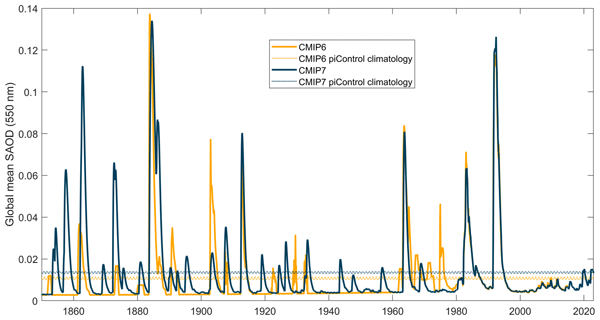
Thomas J. Aubry, Matthew Toohey, Sujan Khanal, Man Mei Chim, Magali Verkerk, Ben Johnson, Anja Schmidt, Mahesh Kovilakam, Michael Sigl, Zebedee Nicholls, Larry Thomason, Vaishali Naik, Landon Rieger, Dominik Stiller, Elisa Ziegler, Paul Durack, and Isabel H. Smith
Geosci. Model Dev., 19, 3725–3756, https://doi.org/10.5194/gmd-19-3725-2026, https://doi.org/10.5194/gmd-19-3725-2026, 2026
Short summary
Short summary
Climate forcings, such as solar radiation or anthropogenic greenhouse gases, are required to run global climate model simulations. Stratospheric aerosols, which mostly originate from large volcanic eruptions, are a key natural forcing. In this paper, we document the stratospheric aerosol forcing dataset that will feed the next generation (CMIP7) of climate models. Our dataset is very different from its predecessor (CMIP6), which might affect simulations of the 1850–2021 climate.
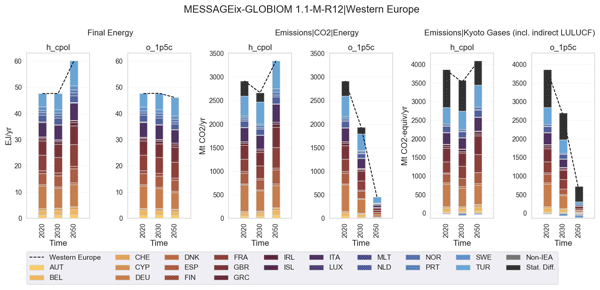
Fabio Sferra, Bas van Ruijven, Keywan Riahi, Philip Hackstock, Florian Maczek, Jarmo S. Kikstra, and Reinhard Haas
Geosci. Model Dev., 19, 3157–3191, https://doi.org/10.5194/gmd-19-3157-2026, https://doi.org/10.5194/gmd-19-3157-2026, 2026
Short summary
Short summary
Integrated Assessment Models are widely used by researchers to assess future emissions and the performance of climate policies. Bringing together insights from these models with information at the country level has remained difficult, as they usually provide results for a limited number of highly aggregated regions. We address this issue by presenting a novel algorithm designed to downscale regional outcomes to the country level and show the results for a current policy and a 1.5C scenario.
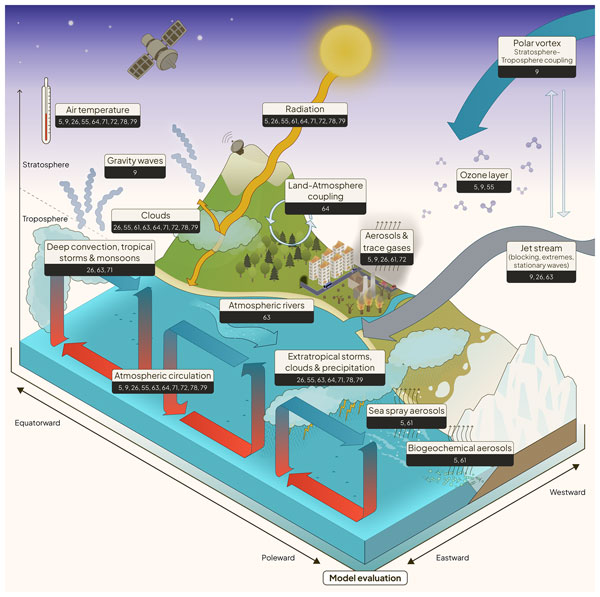
Beth Dingley, James A. Anstey, Marta Abalos, Carsten Abraham, Tommi Bergman, Lisa Bock, Sonya Fiddes, Birgit Hassler, Ryan J. Kramer, Fei Luo, Fiona M. O'Connor, Petr Šácha, Isla R. Simpson, Laura J. Wilcox, and Mark D. Zelinka
Geosci. Model Dev., 19, 2945–2984, https://doi.org/10.5194/gmd-19-2945-2026, https://doi.org/10.5194/gmd-19-2945-2026, 2026
Short summary
Short summary
This manuscript defines as a list of variables and scientific opportunities which are requested from the Coupled Model Intercomparison Project Phase 7 (CMIP7) Assessment Fast Track to address open atmospheric science questions. The list reflects the output of a large public community engagement effort, coordinated across autumn 2025 through to summer 2025.
Detlef P. Van Vuuren, Brian C. O'Neill, Claudia Tebaldi, Benjamin M. Sanderson, Louise P. Chini, Pierre Friedlingstein, Tomoko Hasegawa, Keywan Riahi, Bala Govindasamy, Nico Bauer, Veronika Eyring, Cheikh M. N. Fall, Katja Frieler, Matthew J. Gidden, Laila K. Gohar, Annika Högner, Andrew D. Jones, Jarmo Kikstra, Andrew King, Reto Knutti, Elmar Kriegler, Peter Lawrence, Chris Lennard, Jason Lowe, Camilla Mathison, Shahbaz Mehmood, Zebedee Nicholls, Luciana F. Prado, Qiang Zhang, Steven K. Rose, Alex C. Ruane, Marit Sandstad, Carl-Friedrich Schleussner, Roland Seferian, Jana Sillmann, Chris Smith, Anna A. Sörensson, Swapna Panickal, Kaoru Tachiiri, Naomi Vaughan, Saritha S. Vishwanathan, Tokuta Yokohata, Marco Zecchetto, and Tilo Ziehn
Geosci. Model Dev., 19, 2627–2656, https://doi.org/10.5194/gmd-19-2627-2026, https://doi.org/10.5194/gmd-19-2627-2026, 2026
Short summary
Short summary
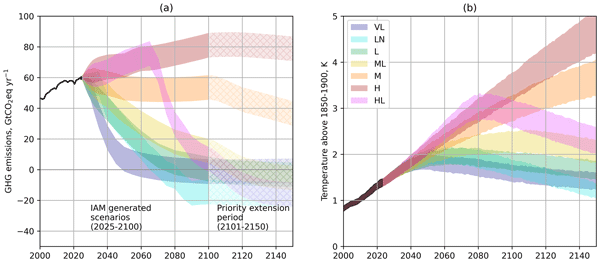
We propose a set of seven plausible 21st century emission scenarios, and their multi-century extensions, that will be used by the international community of climate modeling centers to produce the next generation of climate projections. These projections will support climate, impact and mitigation researchers, provide information to practitioners to address future risks from climate change, and contribute to policymakers’ considerations of the trade-offs among various levels of mitigation.
Gunnar Myhre, Øivind Hodnebrog, Srinath Krishnan, Maria Sand, Marit Sandstad, Ragnhild B. Skeie, Lieven Clarisse, Bruno Franco, Dylan B. Millet, Kelley C. Wells, Alexander Archibald, Hannah N. Bryant, Alex T. Chaudhri, David S. Stevenson, Didier Hauglustaine, Michael Prather, J. Christopher Kaiser, Dirk J. L. Olivie, Michael Schulz, Oliver Wild, Ye Wang, Thérèse Salameh, Jason E. Williams, Philippe Le Sager, Fabien Paulot, Kostas Tsigaridis, and Haley E. Plaas
Geosci. Model Dev., 19, 2577–2591, https://doi.org/10.5194/gmd-19-2577-2026, https://doi.org/10.5194/gmd-19-2577-2026, 2026
Short summary
Short summary
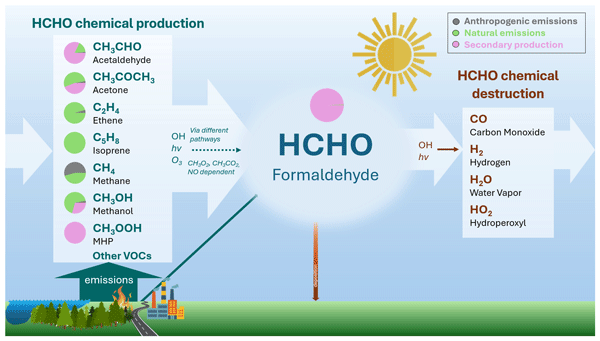
Volatile organic compounds (VOCs) affect air quality and climate, but their behavior in the atmosphere is still uncertain. We launched a global research effort to compare how different models represent these compounds and to improve their accuracy. By analyzing model results alongside observations and satellite data, we aim to better understand the atmospheric composition of these compounds.
Tim Butler, Tabish Ansari, Claudio A. Belis, Elisa Bergas-Masso, Willem van Caspel, Hilde Fagerli, Johannes Flemming, Marta Garcia Vivanco, Paul Griffiths, Douglas S. Hamilton, Coralina Hernandez Trujillo, Lena Höglund-Isaksson, Vincent Huijnen, Matthew Kasoar, Johannes W. Kaiser, Gerbrand Koren, Zbigniew Klimont, Florian Lindl, Aura Lupascu, Mariano Mertens, Martijn Schaap, Steven T. Turnock, Oliver Wild, Philipp Weiss, Jacek Kaminski, Rosa Wu, and Terry Keating
EGUsphere, https://doi.org/10.5194/egusphere-2026-1367, https://doi.org/10.5194/egusphere-2026-1367, 2026
Short summary
Short summary
Air pollution travels across continents, meaning emissions in one region can affect air quality far away. To better understand this, scientists from many groups are planning to run coordinated computer simulations of the atmosphere. By comparing results across models and emission scenarios, the planned study will show how pollution moves between regions and which sources matter most, helping governments design more effective air quality policies.
Xu-Cheng He, Nathan Luke Abraham, Han Ding, Maria R. Russo, Daniel P. Grosvenor, Yao Ge, Xuemei Wang, Anthony C. Jones, Pedro Campuzano-Jost, Benjamin Nault, Agnieszka Kupc, Donald Blake, Jose L. Jimenez, Christina J. Williamson, James Weber, Alexander T. Archibald, and Hamish Gordon
Atmos. Chem. Phys., 26, 3805–3851, https://doi.org/10.5194/acp-26-3805-2026, https://doi.org/10.5194/acp-26-3805-2026, 2026
Short summary
Short summary
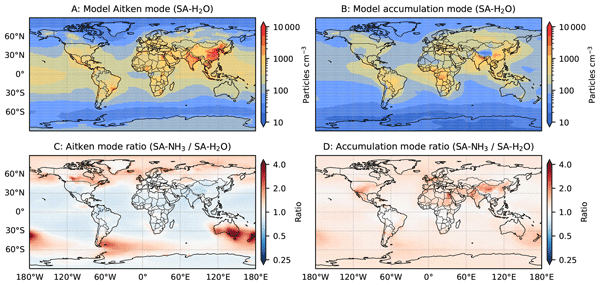
Aerosols affect clouds and climate. However, current climate models still struggle to simulate them accurately. We used aircraft data from a global mission to evaluate how well the UK Earth System Model represents aerosols and their precursors. Our results show that the model misses key formation processes in clean ocean regions, suggesting that future improvements should focus on better representing how aerosols form naturally in the atmosphere.
Chang Su, Massimo Bollasina, James Weber, and David Stevenson
EGUsphere, https://doi.org/10.5194/egusphere-2026-836, https://doi.org/10.5194/egusphere-2026-836, 2026
Short summary
Short summary
Hot weather can strongly increase surface ozone, a harmful air pollutant, but the reasons differ between urban and rural areas. We studied a large city and a nearby rural region in eastern China using air quality observations and simplified chemistry modelling. We found that heat-driven plant emissions dominate ozone increases in the city, while chemical nitrogen cycling is key in the rural area. Our results help identify heat-resilient air pollution control strategies under climate change.
William James Collins, Øivind Hodnebrog, Keith Peter Shine, and James B. Burkholder
EGUsphere, https://doi.org/10.5194/egusphere-2026-674, https://doi.org/10.5194/egusphere-2026-674, 2026
Short summary
Short summary
The global warming potential (GWP) is a commonly used metric for relating the climate impact of emissions of a gas relative to that for carbon dioxide. We show that previous calculations have systematically underestimated these values by applying calculations of radiative forcing efficiency appropriate to changes in surface mole fractions rather than changes in the mass-weighted mean mole fraction in the atmosphere.
Megan A. J. Brown, Nicola J. Warwick, Nathan Luke Abraham, Paul T. Griffiths, Steve T. Rumbold, Gerd A. Folberth, Fiona M. O'Connor, Hannah Bryant, and Alex T. Archibald
Geosci. Model Dev., 19, 1537–1557, https://doi.org/10.5194/gmd-19-1537-2026, https://doi.org/10.5194/gmd-19-1537-2026, 2026
Short summary
Short summary
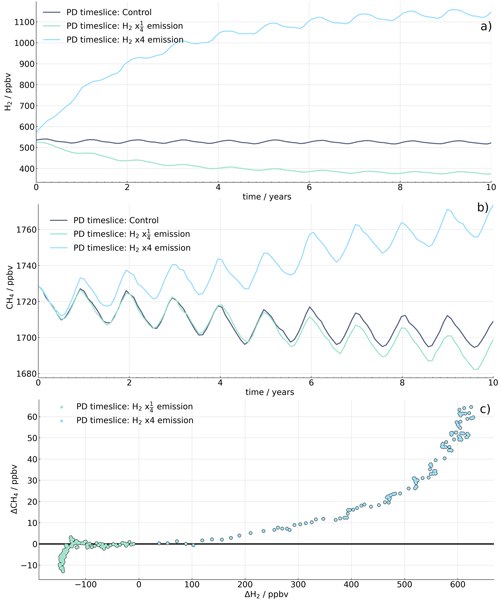
Hydrogen (H2) is an indirect greenhouse gas by increasing methane (CH4) lifetime. Interaction between H2 and CH4 is important for hydrogen’s global warming potential (GWP). Global models do not represent this interaction well; H2 or CH4 are prescribed at the surface. We implement an interactive H2 scheme into a global model coupled with interactive CH4. We simulate scenarios demonstrating its capability, improving model performance and more accurately representing H2-CH4 interaction.
Maria P. Velásquez-García, Richard J. Pope, Steven T. Turnock, Chetan Deva, David P. Moore, Guilherme Mataveli, Steve R. Arnold, Ruth M. Doherty, and Martyn P. Chipperfield
Biogeosciences, 23, 1341–1364, https://doi.org/10.5194/bg-23-1341-2026, https://doi.org/10.5194/bg-23-1341-2026, 2026
Short summary
Short summary
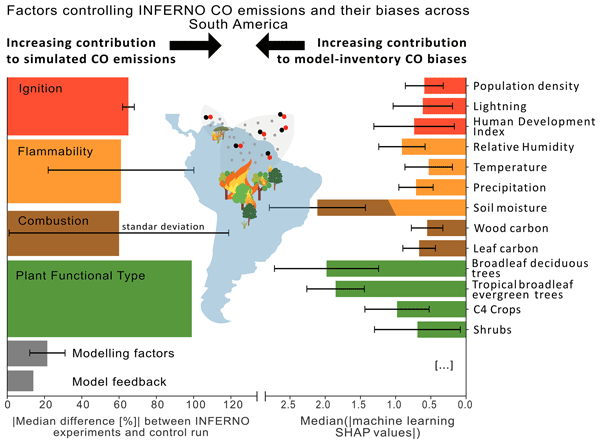
Incorporating fire simulation into climate models is crucial for accurately representing interactions between fires, ecosystems, and climate, thereby enhancing climate projections. In South America, the INFERNO (Interactive Fires and Emissions algorithm for Natural Environments) fire model broadly captures CO emissions in active fire zones, e.g., the Amazon Arc of Deforestation. Still, it tends to overestimate emissions in tree-rich ecosystems, where INFERNO is too sensitive to low soil moisture, and to underestimate emissions in less tree-abundant ecosystems.
Jie Zhang, Kalli Furtado, Steven T. Turnock, Yixiong Lu, Tongwen Wu, Fang Zhang, Xiaoge Xin, and Yuyun Liu
Atmos. Chem. Phys., 26, 2175–2189, https://doi.org/10.5194/acp-26-2175-2026, https://doi.org/10.5194/acp-26-2175-2026, 2026
Short summary
Short summary
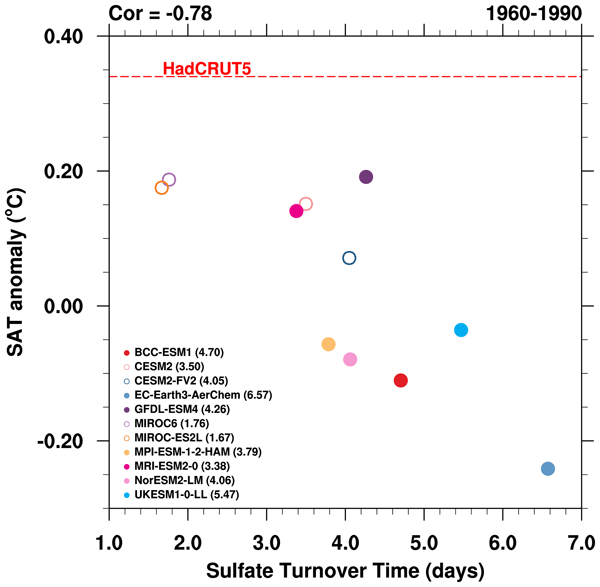
Aerosol cooling has been identified as a key driver of the cold biases in CMIP6 (sixth Coupled Model Inter-comparison Project) models. We demonstrate the critical role of sulfate burden anomaly and the contribution of sulfur removal processes. Faster sulfate deposition directly lowers atmospheric sulfate levels, while enhanced SO₂ deposition reduces the precursor for sulfate formation. The systematically short sulfate lifetime implies that model improvements should focus on SO₂ deposition processes, rather than sulfate deposition.
William J. Collins, John S. Daniel, Martyn P. Chipperfield, Martin Cussac, Makoto Deushi, Gregory Faluvegi, Paul Griffiths, Øivind Hodnebrog, Larry W. Horowitz, James Keeble, Douglas Kinnison, Vaishali Naik, Fiona M. O'Connor, Drew Shindell, Simone Tilmes, Kostas Tsigaridis, Zihao Wang, and James Weber
EGUsphere, https://doi.org/10.5194/egusphere-2025-6033, https://doi.org/10.5194/egusphere-2025-6033, 2026
Short summary
Short summary
Ozone depleting substances (ODSs) are also greenhouse gases that cause global warming. However, their destruction of ozone contributes a global cooling. We have used results from climate models that include atmospheric chemistry and found that the cooling effect of the ozone depletion diagnosed in the models was larger than that calculated using a standard method. We find that some ODSs have a net cooling effect whereas for others the warming effect is significantly reduced.
Yusuf A. Bhatti, Duncan Watson-Parris, Leighton A. Regayre, Hailing Jia, David Neubauer, Ulas Im, Carl Svenhag, Nick Schutgens, Athanasios Tsikerdekis, Athanasios Nenes, Muhammed Irfan, Bastiaan van Diedenhoven, Ardit Arifi, Guangliang Fu, and Otto P. Hasekamp
Atmos. Chem. Phys., 26, 269–293, https://doi.org/10.5194/acp-26-269-2026, https://doi.org/10.5194/acp-26-269-2026, 2026
Short summary
Short summary
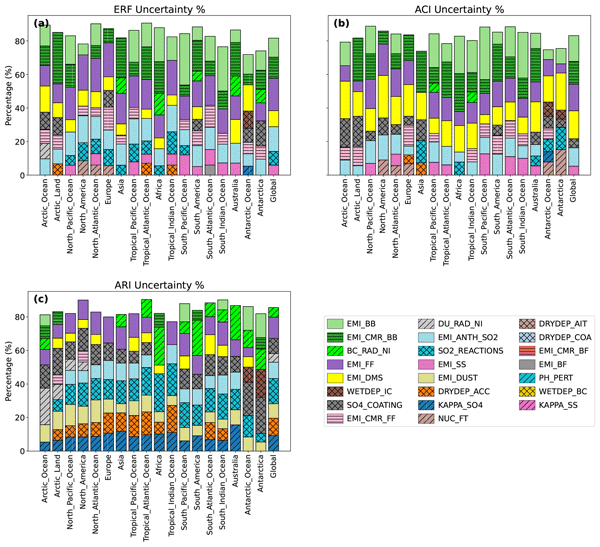
Aerosols (small airborne particles) impact Earth's climate, but their extent is unknown. By running climate model simulations and using machine learning to emulate millions of additional variants with different settings, we found that natural emissions like sea spray and sulfur are key sources of uncertainty in climate predictions. Our work shows that understanding these natural processes better can help improve climate models and make future climate projections more accurate.
Zhenze Liu, Ke Li, Oliver Wild, Ruth M. Doherty, Fiona M. O’Connor, and Steven T. Turnock
Atmos. Chem. Phys., 25, 16969–16981, https://doi.org/10.5194/acp-25-16969-2025, https://doi.org/10.5194/acp-25-16969-2025, 2025
Short summary
Short summary
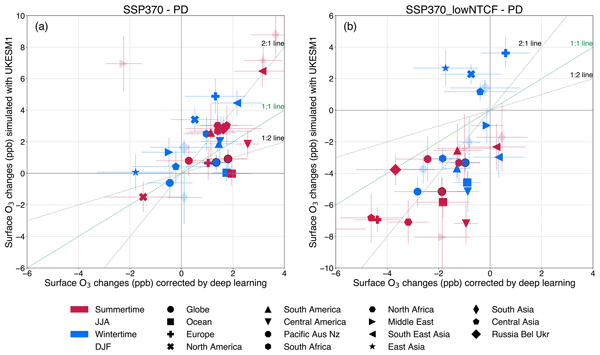
Chemistry-climate models have advanced substantially over the decades, yet they still exhibit substantial systematic biases in simulating atmospheric composition due to gaps in our understanding of underlying processes. We improve the predictions of an Earth system model using deep learning, and evaluate the performance of difference types of statistical models. We find that simulations of future surface ozone are likely to become less accurate under a warmer climate.
Sebastian H. M. Hickman, Makoto M. Kelp, Paul T. Griffiths, Kelsey Doerksen, Kazuyuki Miyazaki, Elyse A. Pennington, Gerbrand Koren, Fernando Iglesias-Suarez, Martin G. Schultz, Kai-Lan Chang, Owen R. Cooper, Alex Archibald, Roberto Sommariva, David Carlson, Hantao Wang, J. Jason West, and Zhenze Liu
Geosci. Model Dev., 18, 8777–8800, https://doi.org/10.5194/gmd-18-8777-2025, https://doi.org/10.5194/gmd-18-8777-2025, 2025
Short summary
Short summary
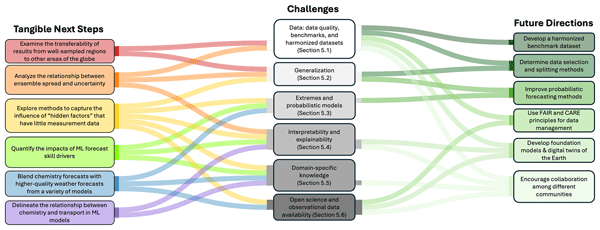
Machine learning is being more widely used across environmental and climate science. This work reviews the use of machine learning in tropospheric ozone research, focusing on three main application areas in which significant progress has been made. Common challenges in using machine learning across the three areas are highlighted, and future directions for the field are indicated.
Sini Talvinen, Paul Kim, Emanuele Tovazzi, Eemeli Holopainen, Roxana Cremer, Thomas Kühn, Harri Kokkola, Zak Kipling, David Neubauer, João C. Teixeira, Alistair Sellar, Duncan Watson-Parris, Yang Yang, Jialei Zhu, Srinath Krishnan, Annele Virtanen, and Daniel G. Partridge
Atmos. Chem. Phys., 25, 14449–14478, https://doi.org/10.5194/acp-25-14449-2025, https://doi.org/10.5194/acp-25-14449-2025, 2025
Short summary
Short summary
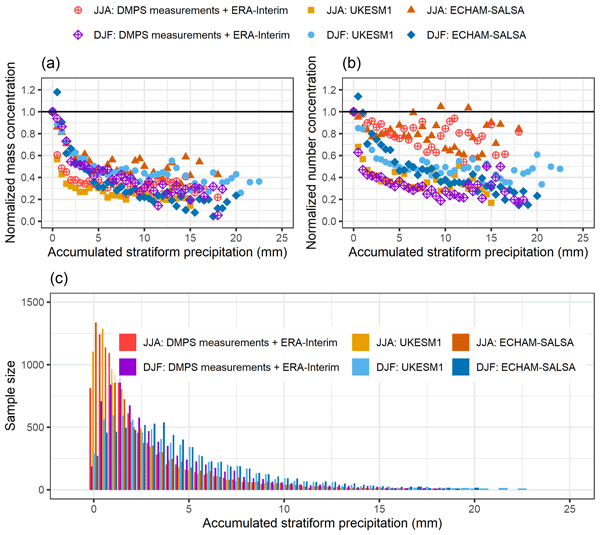
Climate models struggle to predict how clouds and aerosols interact, affecting Earth’s energy balance. This study compares models to observations to see how they describe effects of clouds and rain on aerosols. While both models show similar overall trends, seasonal differences emerged. These, however, align with differences in key variables participating in cloud formation. The study provides insights on how to improve the representation of aerosol-cloud interactions in climate models.
George Jordan, Florent Malavelle, Jim Haywood, Ying Chen, Ben Johnson, Daniel Partridge, Amy Peace, Eliza Duncan, Duncan Watson-Parris, David Neubauer, Anton Laakso, Martine Michou, and Pierre Nabat
Atmos. Chem. Phys., 25, 13393–13428, https://doi.org/10.5194/acp-25-13393-2025, https://doi.org/10.5194/acp-25-13393-2025, 2025
Short summary
Short summary
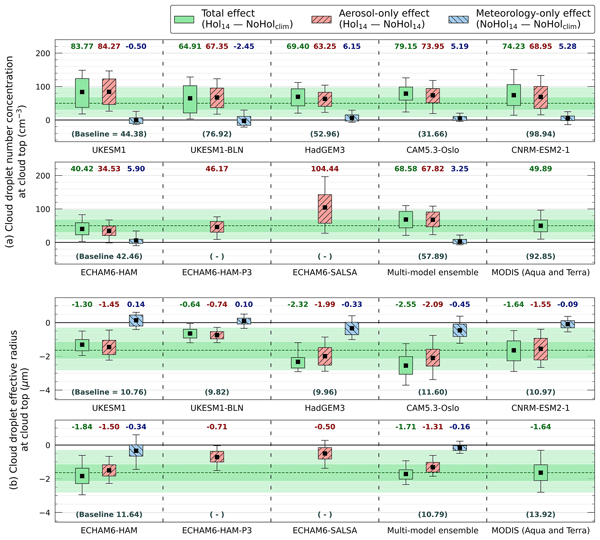
The 2014–15 Holuhraun eruption created a vast aerosol plume that acted as a natural experiment to assess how well climate models capture changes in cloud properties due to increased aerosol. We find that climate models represent the observed shift to smaller, more numerous cloud droplets well. However, climate models diverge in their aerosol-induced changes to large-scale cloud properties, particularly cloud liquid water content. Our study shows that Holuhraun had a cooling effect on the Earth.
Dandan Zhang, Randall V. Martin, Xuan Liu, Aaron van Donkelaar, Christopher R. Oxford, Yanshun Li, Jun Meng, Danny M. Leung, Jasper F. Kok, Longlei Li, Haihui Zhu, Jay R. Turner, Yu Yan, Michael Brauer, Yinon Rudich, and Eli Windwer
Geosci. Model Dev., 18, 6767–6803, https://doi.org/10.5194/gmd-18-6767-2025, https://doi.org/10.5194/gmd-18-6767-2025, 2025
Short summary
Short summary
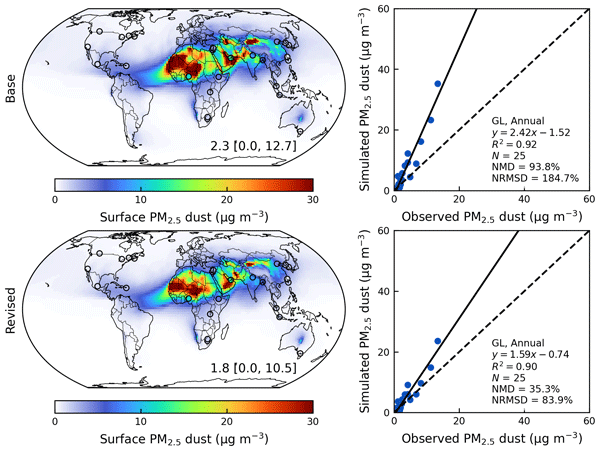
This study develops the fine mineral dust simulation in GEOS-Chem by: 1) implementing a new dust emission scheme with further refinements; 2) revisiting the size distribution of emitted dust; 3) explicitly tracking fine dust for emission, transport and deposition in 4 size bins; 4) updating the parametrization for below-cloud scavenging. All revisions significantly reduce the overestimation of surface fine dust from 94 % to 35 % while retaining comparable skill in representing columnar abundance.
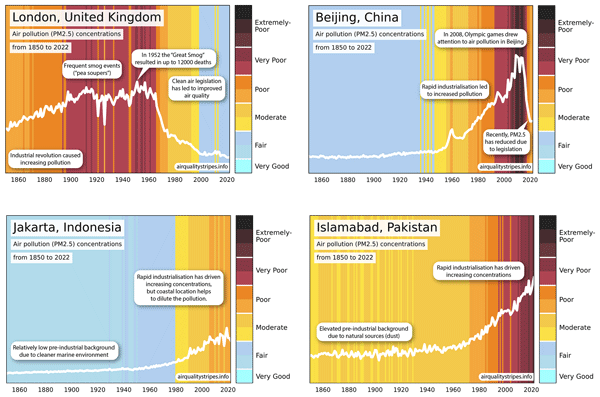
Kirsty J. Pringle, Richard Rigby, Steven T. Turnock, Carly L. Reddington, Meruyert Shayakhmetova, Malcolm Illingworth, Denis Barclay, Neil Chue Hong, Ed Hawkins, Douglas S. Hamilton, Ethan Brain, and James B. McQuaid
Geosci. Commun., 8, 229–236, https://doi.org/10.5194/gc-8-229-2025, https://doi.org/10.5194/gc-8-229-2025, 2025
Short summary
Short summary
The Air Quality Stripes images visualise historical changes in particulate matter air pollution in over 150 cities worldwide. The project celebrates significant improvements in air quality in regions like Europe, North America, and China while highlighting the urgent need for action in areas such as central Asia. Designed to raise awareness, the images aim to inspire discussions about the critical impact of air pollution and the global inequalities it causes.
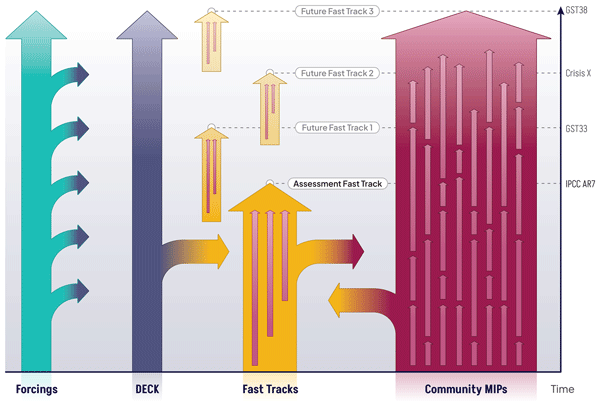
John P. Dunne, Helene T. Hewitt, Julie M. Arblaster, Frédéric Bonou, Olivier Boucher, Tereza Cavazos, Beth Dingley, Paul J. Durack, Birgit Hassler, Martin Juckes, Tomoki Miyakawa, Matt Mizielinski, Vaishali Naik, Zebedee Nicholls, Eleanor O'Rourke, Robert Pincus, Benjamin M. Sanderson, Isla R. Simpson, and Karl E. Taylor
Geosci. Model Dev., 18, 6671–6700, https://doi.org/10.5194/gmd-18-6671-2025, https://doi.org/10.5194/gmd-18-6671-2025, 2025
Short summary
Short summary
The seventh phase of the Coupled Model Intercomparison Project (CMIP7) coordinates efforts to answer key and timely climate science questions and facilitate delivery of relevant multi-model simulations for prediction and projection; characterization, attribution, and process understanding; and vulnerability, impact, and adaptation analysis. Key to the CMIP7 design are the mandatory Diagnostic, Evaluation and Characterization of Klima and optional Assessment Fast Track experiments.
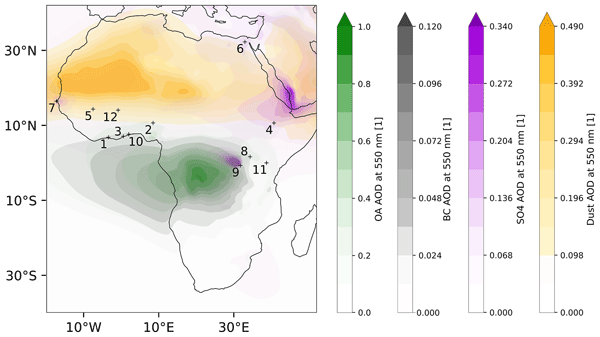
Catherine A. Toolan, Joe Adabouk Amooli, Laura J. Wilcox, Bjørn H. Samset, Andrew G. Turner, and Daniel M. Westervelt
Atmos. Chem. Phys., 25, 10523–10557, https://doi.org/10.5194/acp-25-10523-2025, https://doi.org/10.5194/acp-25-10523-2025, 2025
Short summary
Short summary
Our research explores how well air pollution and rainfall patterns in Africa are represented in current climate models by comparing model data to observations from 1981 to 2023. While most models capture seasonal air quality changes well, they struggle to replicate the distribution of non-dust pollutants and certain rainfall patterns, especially over east Africa. Improving these models is crucial for better climate predictions and preparing for future risks.
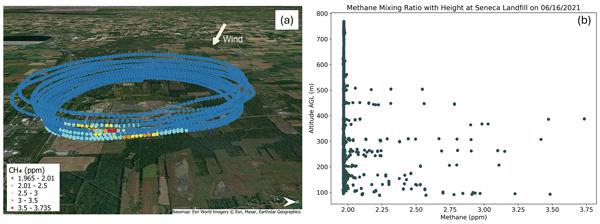
Alexandra M. Catena, Mackenzie L. Smith, Lee T. Murray, Eric M. Leibensperger, Jie Zhang, Margaret J. Schwab, and James J. Schwab
Earth Syst. Sci. Data, 17, 4555–4568, https://doi.org/10.5194/essd-17-4555-2025, https://doi.org/10.5194/essd-17-4555-2025, 2025
Short summary
Short summary
Methane and carbon dioxide emission rates were calculated for facilities across several sectors in New York State using aerial observations. Of the sampled facilities, landfills dominated the methane emission rates, while combustion facilities had the highest carbon dioxide emission rates, followed by landfills. The self-reported Environmental Protection Agency (EPA) inventory mostly underestimates landfill methane emissions, apart from a few facilities with comparable numbers.
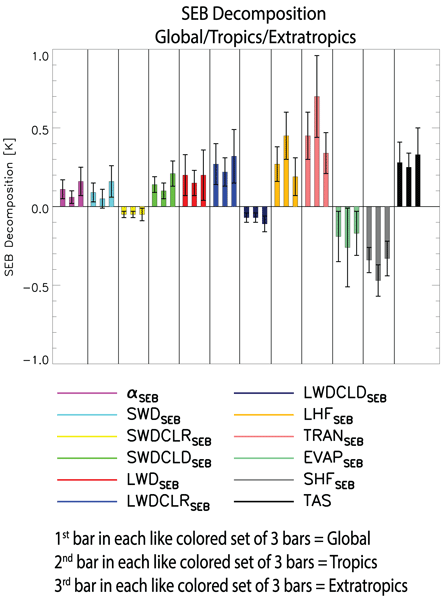
Robert J. Allen
Atmos. Chem. Phys., 25, 10361–10378, https://doi.org/10.5194/acp-25-10361-2025, https://doi.org/10.5194/acp-25-10361-2025, 2025
Short summary
Short summary
Climate models are analyzed to quantify the biogeophysical and biogeochemical effects of carbon fertilization at the time of atmospheric carbon dioxide quadrupling under both a preindustrial and a warmer background climate. The biogeophysical effects lead to relatively weak warming largely due to reduced canopy transpiration. Biogeochemical cooling associated with enhanced land carbon storage dominates. Similar results are obtained under both background climates but with some nuances.
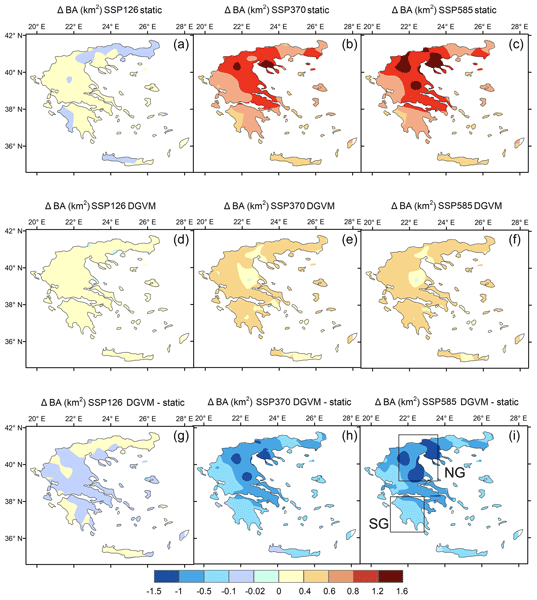
Anastasios Rovithakis, Eleanor Burke, Chantelle Burton, Matthew Kasoar, Manolis G. Grillakis, Konstantinos D. Seiradakis, and Apostolos Voulgarakis
Nat. Hazards Earth Syst. Sci., 25, 3185–3200, https://doi.org/10.5194/nhess-25-3185-2025, https://doi.org/10.5194/nhess-25-3185-2025, 2025
Short summary
Short summary
We used a land surface computer model to forecast how climate change will impact wildfires in Greece. Our results show a significant increase in future burnt area due to hotter, drier climate. Allowing vegetation to change with the climate lessens this increase overall, since fire is no longer igniting in areas already burnt, and it even led to projected decreases in the agricultural areas in the north of the country.
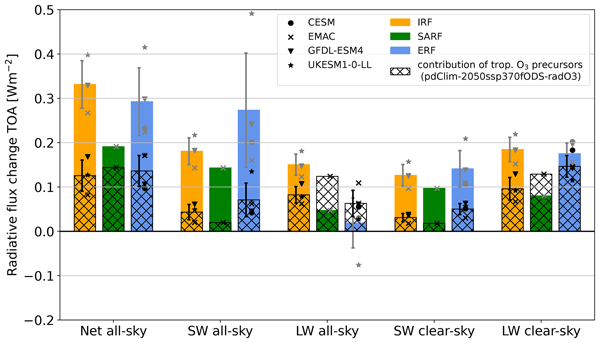
William J. Collins, Fiona M. O'Connor, Rachael E. Byrom, Øivind Hodnebrog, Patrick Jöckel, Mariano Mertens, Gunnar Myhre, Matthias Nützel, Dirk Olivié, Ragnhild Bieltvedt Skeie, Laura Stecher, Larry W. Horowitz, Vaishali Naik, Gregory Faluvegi, Ulas Im, Lee T. Murray, Drew Shindell, Kostas Tsigaridis, Nathan Luke Abraham, and James Keeble
Atmos. Chem. Phys., 25, 9031–9060, https://doi.org/10.5194/acp-25-9031-2025, https://doi.org/10.5194/acp-25-9031-2025, 2025
Short summary
Short summary
We used 7 climate models that include atmospheric chemistry and find that in a scenario with weak controls on air quality, the warming effects (over 2015 to 2050) of decreases in ozone-depleting substances and increases in air quality pollutants are approximately equal and would make ozone the second highest contributor to warming over this period. We find that for stratospheric ozone recovery, the standard measure of climate effects underestimates a more comprehensive measure.
Oliver Perkins, Olivia Haas, Matthew Kasoar, Apostolos Voulgarakis, and James D. A. Millington
EGUsphere, https://doi.org/10.5194/egusphere-2025-3728, https://doi.org/10.5194/egusphere-2025-3728, 2025
Short summary
Short summary
Humans impact fire indirectly through climate change, but also directly through land use and different fire management strategies. We compare two recently-developed models of global burned area with very different assumptions about the role of direct human impacts on fire. We contrast their future projections and explore the implications of differences between them for climate change adaptation and fire science more broadly.
Paul T. Griffiths, Laura J. Wilcox, Robert J. Allen, Vaishali Naik, Fiona M. O'Connor, Michael Prather, Alex Archibald, Florence Brown, Makoto Deushi, William Collins, Stephanie Fiedler, Naga Oshima, Lee T. Murray, Bjørn H. Samset, Chris Smith, Steven Turnock, Duncan Watson-Parris, and Paul J. Young
Atmos. Chem. Phys., 25, 8289–8328, https://doi.org/10.5194/acp-25-8289-2025, https://doi.org/10.5194/acp-25-8289-2025, 2025
Short summary
Short summary
The Aerosol Chemistry Model Intercomparison Project (AerChemMIP) aimed to quantify the climate and air quality impacts of aerosols and chemically reactive gases. We review its contribution to AR6 (Sixth Assessment Report of the Intergovernmental Panel on Climate Change) and the wider understanding of the role of these species in climate and climate change. We identify challenges and provide recommendations to improve the utility and uptake of climate model data, detailed summary tables of CMIP6 models, experiments, and emergent diagnostics.
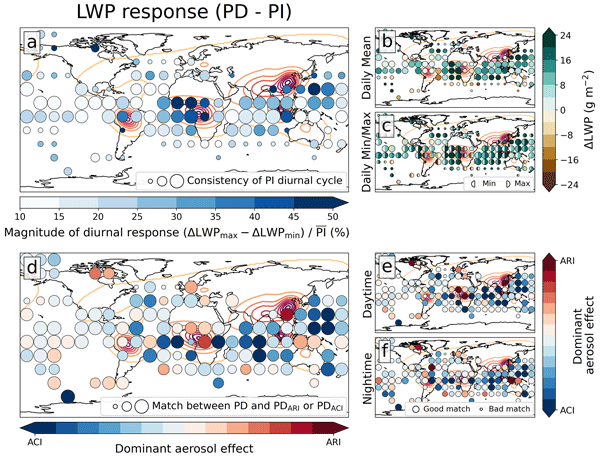
Ross J. Herbert, Andrew I. L. Williams, Philipp Weiss, Duncan Watson-Parris, Elisabeth Dingley, Daniel Klocke, and Philip Stier
Atmos. Chem. Phys., 25, 7789–7814, https://doi.org/10.5194/acp-25-7789-2025, https://doi.org/10.5194/acp-25-7789-2025, 2025
Short summary
Short summary
Clouds exist at scales that climate models struggle to represent, limiting our knowledge of how climate change may impact clouds. Here we use a new kilometer-scale global model representing an important step towards the necessary scale. We focus on how aerosol particles modify clouds, radiation, and precipitation. We find the magnitude and manner of responses tend to vary from region to region, highlighting the potential of global kilometer-scale simulations and a need to represent aerosols in climate models.
Feifei Luo, Bjørn H. Samset, Camilla W. Stjern, Manoj Joshi, Laura J. Wilcox, Robert J. Allen, Wei Hua, and Shuanglin Li
Atmos. Chem. Phys., 25, 7647–7667, https://doi.org/10.5194/acp-25-7647-2025, https://doi.org/10.5194/acp-25-7647-2025, 2025
Short summary
Short summary
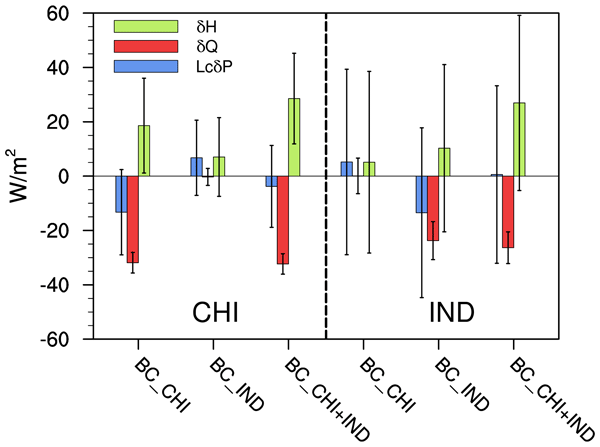
Black carbon (BC) aerosol is emitted from the incomplete combustion of biomass and fossil fuels. We found that Asian BC leads to strong local cooling and drying. Reductions in precipitation primarily depend on the thermodynamic effects due to solar radiation absorption by BC. The combined thermodynamic and dynamic effects shape the spatial pattern of precipitation responses to Asian BC. These results help us further understand the impact of emissions of anthropogenic aerosols on Asian climate.
Emma Sands, Ruth M. Doherty, Fiona M. O'Connor, Richard J. Pope, James Weber, and Daniel P. Grosvenor
Atmos. Chem. Phys., 25, 7269–7297, https://doi.org/10.5194/acp-25-7269-2025, https://doi.org/10.5194/acp-25-7269-2025, 2025
Short summary
Short summary
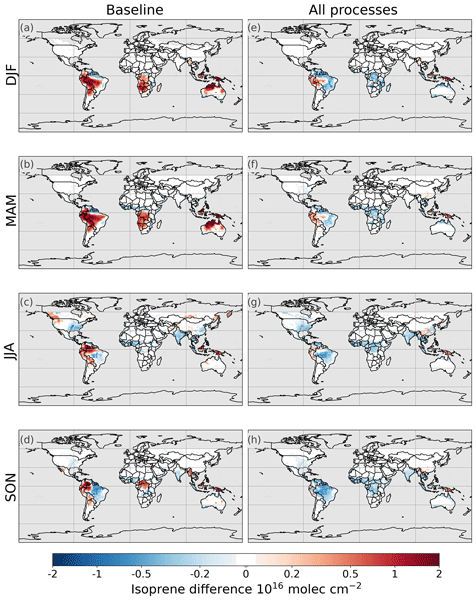
We perform a detailed satellite–model comparison for isoprene, formaldehyde and aerosol optical depth in an Earth system model. We quantify the impacts of several processes that affect how biosphere–atmosphere interactions influence atmospheric chemistry and aerosols. Our findings highlight that the aerosol direct effect is sensitive to the processes studied. These results can inform future investigations of how the biosphere can affect atmospheric composition and climate.
Steven T. Turnock, Dimitris Akritidis, Larry Horowitz, Mariano Mertens, Andrea Pozzer, Carly L. Reddington, Hantao Wang, Putian Zhou, and Fiona O'Connor
Atmos. Chem. Phys., 25, 7111–7136, https://doi.org/10.5194/acp-25-7111-2025, https://doi.org/10.5194/acp-25-7111-2025, 2025
Short summary
Short summary
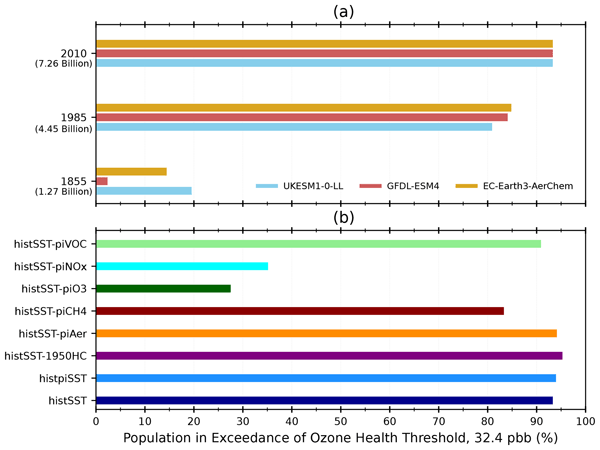
We assess the drivers behind changes in peak-season surface ozone concentrations and risks to human health between 1850 and 2014. Substantial increases in surface ozone have occurred over this period, resulting in an increased risk to human health, driven mainly by increases in anthropogenic NOx emissions and global CH4 concentrations. Fixing anthropogenic NOx emissions at 1850 values in the near-present-day period can eliminate the risk to human health associated with exposure to surface ozone.
Piers M. Forster, Chris Smith, Tristram Walsh, William F. Lamb, Robin Lamboll, Christophe Cassou, Mathias Hauser, Zeke Hausfather, June-Yi Lee, Matthew D. Palmer, Karina von Schuckmann, Aimée B. A. Slangen, Sophie Szopa, Blair Trewin, Jeongeun Yun, Nathan P. Gillett, Stuart Jenkins, H. Damon Matthews, Krishnan Raghavan, Aurélien Ribes, Joeri Rogelj, Debbie Rosen, Xuebin Zhang, Myles Allen, Lara Aleluia Reis, Robbie M. Andrew, Richard A. Betts, Alex Borger, Jiddu A. Broersma, Samantha N. Burgess, Lijing Cheng, Pierre Friedlingstein, Catia M. Domingues, Marco Gambarini, Thomas Gasser, Johannes Gütschow, Masayoshi Ishii, Christopher Kadow, John Kennedy, Rachel E. Killick, Paul B. Krummel, Aurélien Liné, Didier P. Monselesan, Colin Morice, Jens Mühle, Vaishali Naik, Glen P. Peters, Anna Pirani, Julia Pongratz, Jan C. Minx, Matthew Rigby, Robert Rohde, Abhishek Savita, Sonia I. Seneviratne, Peter Thorne, Christopher Wells, Luke M. Western, Guido R. van der Werf, Susan E. Wijffels, Valérie Masson-Delmotte, and Panmao Zhai
Earth Syst. Sci. Data, 17, 2641–2680, https://doi.org/10.5194/essd-17-2641-2025, https://doi.org/10.5194/essd-17-2641-2025, 2025
Short summary
Short summary
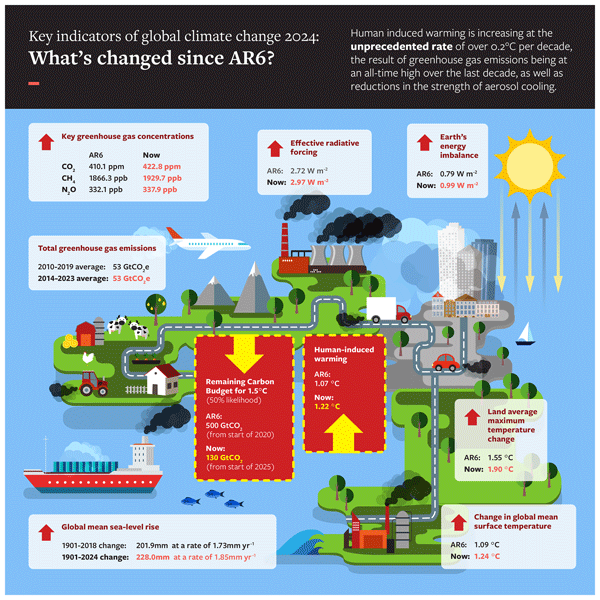
In a rapidly changing climate, evidence-based decision-making benefits from up-to-date and timely information. Here we compile monitoring datasets to track real-world changes over time. To make our work relevant to policymakers, we follow methods from the Intergovernmental Panel on Climate Change (IPCC). Human activities are increasing the Earth's energy imbalance and driving faster sea-level rise compared to the IPCC assessment.
Ragnhild Bieltvedt Skeie, Marit Sandstad, Srinath Krishnan, Gunnar Myhre, and Maria Sand
Atmos. Chem. Phys., 25, 4929–4942, https://doi.org/10.5194/acp-25-4929-2025, https://doi.org/10.5194/acp-25-4929-2025, 2025
Short summary
Short summary
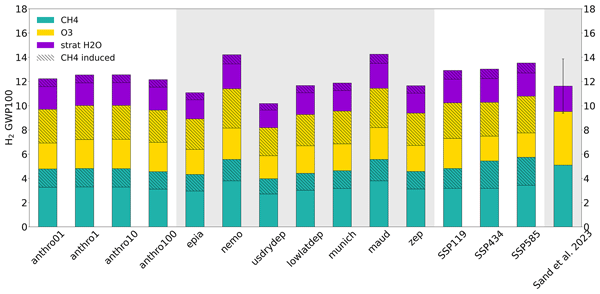
Hydrogen leakages can alter the amount of climate gases in the atmosphere and hence have a climate impact. In this study we investigate, using an atmospheric chemistry model, how this indirect climate effect differs with different amounts of leakages and with where the hydrogen leaks and if this effect changes in the future. The effect is largest for emissions far from areas where hydrogen is removed from the atmosphere by the soil, but these are not relevant locations for a future hydrogen economy.
Domenico Cimini, Rémi Gandoin, Stephanie Fiedler, Claudia Acquistapace, Andrea Balotti, Sabrina Gentile, Edoardo Geraldi, Christine Knist, Pauline Martinet, Saverio T. Nilo, Giandomenico Pace, Bernhard Pospichal, and Filomena Romano
Atmos. Meas. Tech., 18, 2041–2067, https://doi.org/10.5194/amt-18-2041-2025, https://doi.org/10.5194/amt-18-2041-2025, 2025
Short summary
Short summary
Atmospheric stability indicates whether air vertical motion is dumped or amplified. This is important for wind energy applications as it affects wind turbine wakes and thus the yield of wind parks. The paper provides an assessment of stability metrics measured by ground-based microwave radiometers in different climatological conditions and instrument types, onshore and offshore. Results indicate that special precaution may be required offshore to achieve typical onshore performances.
Duncan Watson-Parris, Laura J. Wilcox, Camilla W. Stjern, Robert J. Allen, Geeta Persad, Massimo A. Bollasina, Annica M. L. Ekman, Carley E. Iles, Manoj Joshi, Marianne T. Lund, Daniel McCoy, Daniel M. Westervelt, Andrew I. L. Williams, and Bjørn H. Samset
Atmos. Chem. Phys., 25, 4443–4454, https://doi.org/10.5194/acp-25-4443-2025, https://doi.org/10.5194/acp-25-4443-2025, 2025
Short summary
Short summary
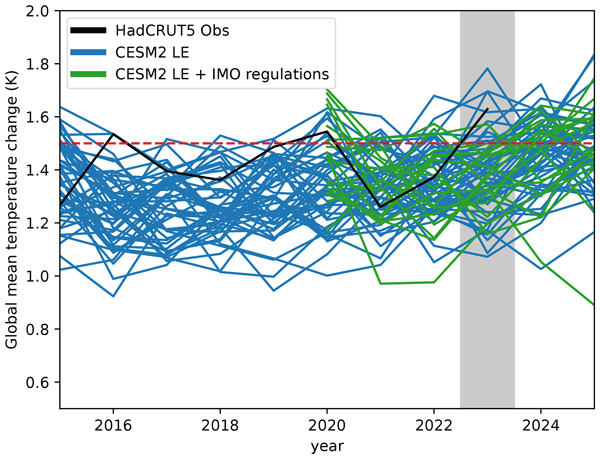
In 2020, regulations by the International Maritime Organization aimed to reduce aerosol emissions from ships. These aerosols previously had a cooling effect, which the regulations might reduce, revealing more greenhouse gas warming. Here we find that, while there is regional warming, the global 2020–2040 temperature rise is only +0.03 °C. This small change is difficult to distinguish from natural climate variability, indicating the regulations have had a limited effect on observed warming to date.
Ngoc Thi Nhu Do, Kengo Sudo, Akihiko Ito, Louisa K. Emmons, Vaishali Naik, Kostas Tsigaridis, Øyvind Seland, Gerd A. Folberth, and Douglas I. Kelley
Geosci. Model Dev., 18, 2079–2109, https://doi.org/10.5194/gmd-18-2079-2025, https://doi.org/10.5194/gmd-18-2079-2025, 2025
Short summary
Short summary
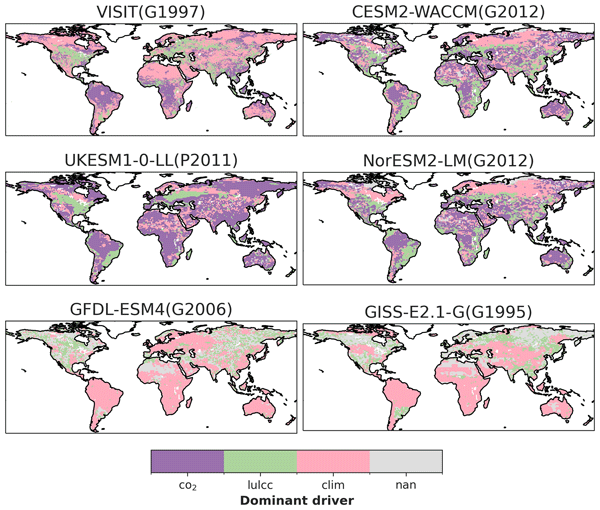
Understanding historical isoprene emission changes is important for predicting future climate, but trends and their controlling factors remain uncertain. This study shows that long-term isoprene trends vary among Earth system models mainly due to partially incorporating CO2 effects and land cover changes rather than to climate. Future models that refine these factors’ effects on isoprene emissions, along with long-term observations, are essential for better understanding plant–climate interactions.
Peer Nowack and Duncan Watson-Parris
Atmos. Chem. Phys., 25, 2365–2384, https://doi.org/10.5194/acp-25-2365-2025, https://doi.org/10.5194/acp-25-2365-2025, 2025
Short summary
Short summary
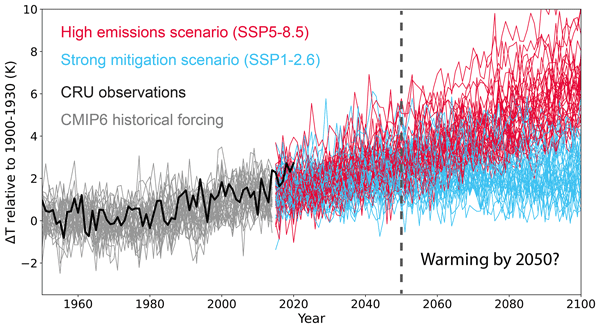
In our article, we review uncertainties in global climate change projections and current methods using Earth observations as constraints, which is crucial for climate risk assessments and for informing society. We then discuss how machine learning can advance the field, discussing recent work that provides potentially stronger and more robust links between observed data and future climate projections. We further discuss the challenges of applying machine learning to climate science.
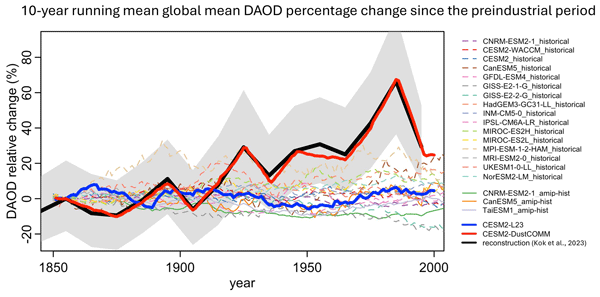
Danny M. Leung, Jasper F. Kok, Longlei Li, David M. Lawrence, Natalie M. Mahowald, Simone Tilmes, and Erik Kluzek
Atmos. Chem. Phys., 25, 2311–2331, https://doi.org/10.5194/acp-25-2311-2025, https://doi.org/10.5194/acp-25-2311-2025, 2025
Short summary
Short summary
This study derives a gridded dust emission dataset for 1841–2000 by employing a combination of observed dust from core records and reanalyzed global dust cycle constraints. We evaluate the ability of global models to replicate the observed historical dust variability by using the emission dataset to force a historical simulation in an Earth system model. We show that prescribing our emissions forces the model to better match observations than other mechanistic models.
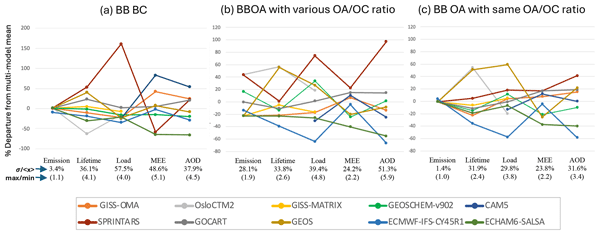
Mariya Petrenko, Ralph Kahn, Mian Chin, Susanne E. Bauer, Tommi Bergman, Huisheng Bian, Gabriele Curci, Ben Johnson, Johannes W. Kaiser, Zak Kipling, Harri Kokkola, Xiaohong Liu, Keren Mezuman, Tero Mielonen, Gunnar Myhre, Xiaohua Pan, Anna Protonotariou, Samuel Remy, Ragnhild Bieltvedt Skeie, Philip Stier, Toshihiko Takemura, Kostas Tsigaridis, Hailong Wang, Duncan Watson-Parris, and Kai Zhang
Atmos. Chem. Phys., 25, 1545–1567, https://doi.org/10.5194/acp-25-1545-2025, https://doi.org/10.5194/acp-25-1545-2025, 2025
Short summary
Short summary
We compared smoke plume simulations from 11 global models to each other and to satellite smoke amount observations aimed at constraining smoke source strength. In regions where plumes are thick and background aerosol is low, models and satellites compare well. However, the input emission inventory tends to underestimate in many places, and particle property and loss rate assumptions vary enormously among models, causing uncertainties that require systematic in situ measurements to resolve.
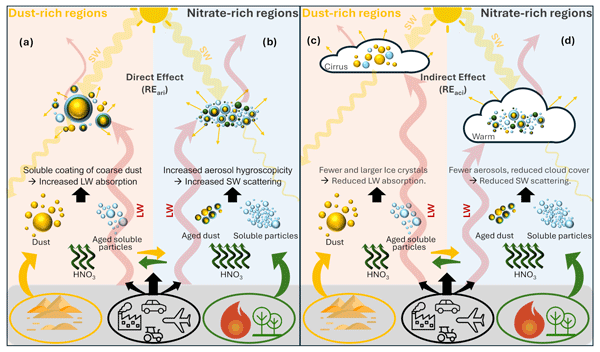
Alexandros Milousis, Klaus Klingmüller, Alexandra P. Tsimpidi, Jasper F. Kok, Maria Kanakidou, Athanasios Nenes, and Vlassis A. Karydis
Atmos. Chem. Phys., 25, 1333–1351, https://doi.org/10.5194/acp-25-1333-2025, https://doi.org/10.5194/acp-25-1333-2025, 2025
Short summary
Short summary
This study investigates the impact of dust on the global radiative effect of nitrate aerosols. The results indicate both positive and negative regional shortwave and longwave radiative effects due to aerosol–radiation interactions and cloud adjustments. The global average net REari and REaci of nitrate aerosols are −0.11 and +0.17 W m−2, respectively, mainly affecting the shortwave spectrum. Sensitivity simulations evaluated the influence of mineral dust composition and emissions on the results.
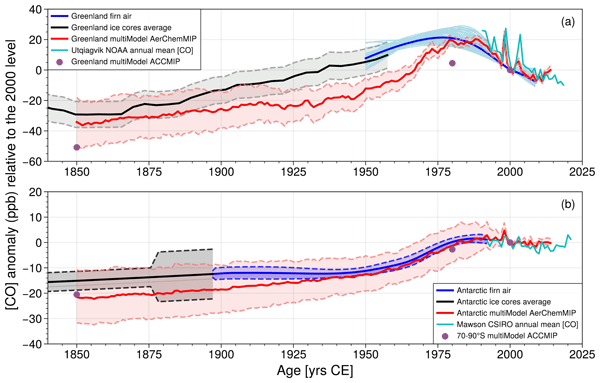
Xavier Faïn, Sophie Szopa, Vaishali Naïk, Patricia Martinerie, David M. Etheridge, Rachael H. Rhodes, Cathy M. Trudinger, Vasilii V. Petrenko, Kévin Fourteau, and Philip Place
Atmos. Chem. Phys., 25, 1105–1119, https://doi.org/10.5194/acp-25-1105-2025, https://doi.org/10.5194/acp-25-1105-2025, 2025
Short summary
Short summary
Carbon monoxide (CO) plays a crucial role in the atmosphere's oxidizing capacity. In this study, we analyse how historical (1850–2014) [CO] outputs from state-of-the-art global chemistry–climate models over Greenland and Antarctica are able to capture both absolute values and trends recorded in multi-site ice archives. A disparity in [CO] growth rates emerges in the Northern Hemisphere between models and observations from 1920–1975 CE, possibly linked to uncertainties in CO emission factors.
Maria R. Russo, Sadie L. Bartholomew, David Hassell, Alex M. Mason, Erica Neininger, A. James Perman, David A. J. Sproson, Duncan Watson-Parris, and Nathan Luke Abraham
Geosci. Model Dev., 18, 181–191, https://doi.org/10.5194/gmd-18-181-2025, https://doi.org/10.5194/gmd-18-181-2025, 2025
Short summary
Short summary
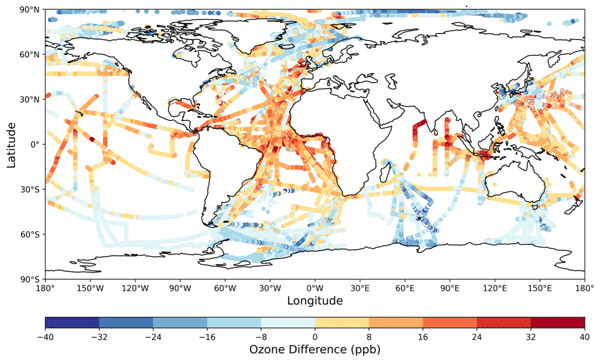
Observational data and modelling capabilities have expanded in recent years, but there are still barriers preventing these two data sources from being used in synergy. Proper comparison requires generating, storing, and handling a large amount of data. This work describes the first step in the development of a new set of software tools, the VISION toolkit, which can enable the easy and efficient integration of observational and model data required for model evaluation.
Alcide Zhao, Laura J. Wilcox, and Claire L. Ryder
Atmos. Chem. Phys., 24, 13385–13402, https://doi.org/10.5194/acp-24-13385-2024, https://doi.org/10.5194/acp-24-13385-2024, 2024
Short summary
Short summary
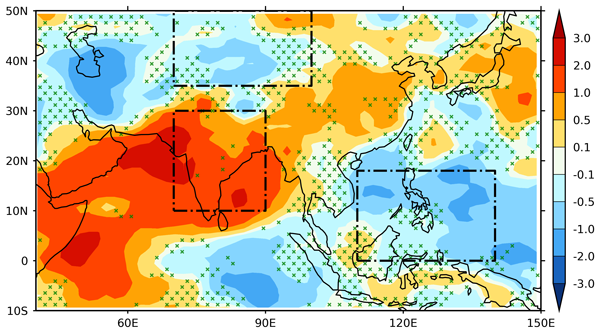
Climate models include desert dust aerosols, which cause atmospheric heating and can change circulation patterns. We assess the effect of dust on the Indian and east Asian summer monsoons through multi-model experiments isolating the effect of dust in current climate models for the first time. Dust atmospheric heating results in a southward shift of western Pacific equatorial rainfall and an enhanced Indian summer monsoon. This shows the importance of accurate dust representation in models.
Flossie Brown, Gerd Folberth, Stephen Sitch, Paulo Artaxo, Marijn Bauters, Pascal Boeckx, Alexander W. Cheesman, Matteo Detto, Ninong Komala, Luciana Rizzo, Nestor Rojas, Ines dos Santos Vieira, Steven Turnock, Hans Verbeeck, and Alfonso Zambrano
Atmos. Chem. Phys., 24, 12537–12555, https://doi.org/10.5194/acp-24-12537-2024, https://doi.org/10.5194/acp-24-12537-2024, 2024
Short summary
Short summary
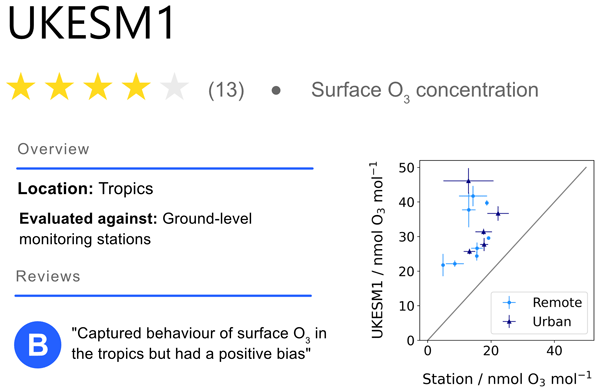
Ozone is a pollutant that is detrimental to human and plant health. Ozone monitoring sites in the tropics are limited, so models are often used to understand ozone exposure. We use measurements from the tropics to evaluate ozone from the UK Earth system model, UKESM1. UKESM1 is able to capture the pattern of ozone in the tropics, except in southeast Asia, although it systematically overestimates it at all sites. This work highlights that UKESM1 can capture seasonal and hourly variability.
Trude Eidhammer, Andrew Gettelman, Katherine Thayer-Calder, Duncan Watson-Parris, Gregory Elsaesser, Hugh Morrison, Marcus van Lier-Walqui, Ci Song, and Daniel McCoy
Geosci. Model Dev., 17, 7835–7853, https://doi.org/10.5194/gmd-17-7835-2024, https://doi.org/10.5194/gmd-17-7835-2024, 2024
Short summary
Short summary
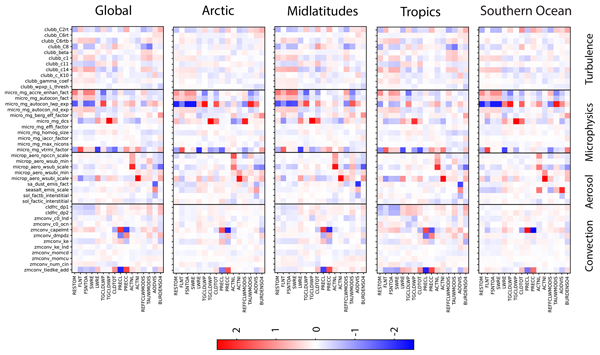
We describe a dataset where 45 parameters related to cloud processes in the Community Earth System Model version 2 (CESM2) Community Atmosphere Model version 6 (CAM6) are perturbed. Three sets of perturbed parameter ensembles (263 members) were created: current climate, preindustrial aerosol loading and future climate with sea surface temperature increased by 4 K.
Robert J. Allen, Xueying Zhao, Cynthia A. Randles, Ryan J. Kramer, Bjørn H. Samset, and Christopher J. Smith
Atmos. Chem. Phys., 24, 11207–11226, https://doi.org/10.5194/acp-24-11207-2024, https://doi.org/10.5194/acp-24-11207-2024, 2024
Short summary
Short summary
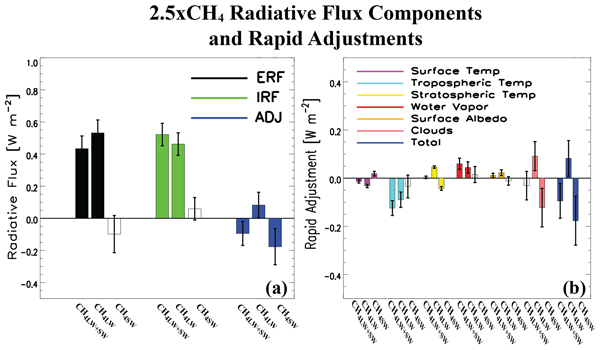
Present-day methane shortwave absorption mutes 28% (7–55%) of the surface warming associated with its longwave absorption. The precipitation increase associated with the longwave radiative effects of the present-day methane perturbation is also muted by shortwave absorption but not significantly so. Methane shortwave absorption also impacts the magnitude of its climate feedback parameter, largely through the cloud feedback.
Emma Sands, Richard J. Pope, Ruth M. Doherty, Fiona M. O'Connor, Chris Wilson, and Hugh Pumphrey
Atmos. Chem. Phys., 24, 11081–11102, https://doi.org/10.5194/acp-24-11081-2024, https://doi.org/10.5194/acp-24-11081-2024, 2024
Short summary
Short summary
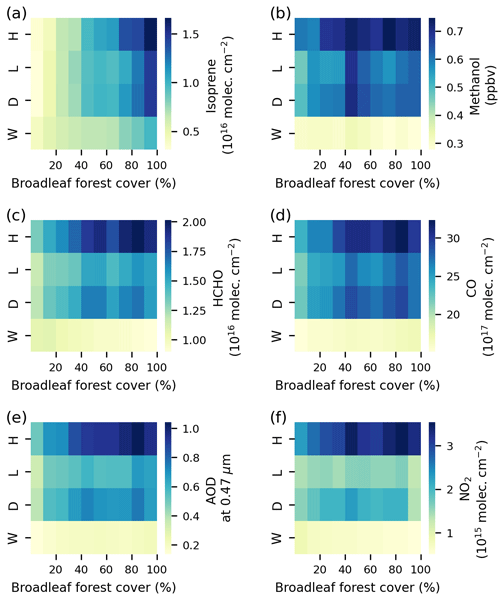
Changes in vegetation alongside biomass burning impact regional atmospheric composition and air quality. Using satellite remote sensing, we find a clear linear relationship between forest cover and isoprene and a pronounced non-linear relationship between burned area and nitrogen dioxide in the southern Amazon, a region of substantial deforestation. These quantified relationships can be used for model evaluation and further exploration of biosphere-atmosphere interactions in Earth System Models.
Connor J. Clayton, Daniel R. Marsh, Steven T. Turnock, Ailish M. Graham, Kirsty J. Pringle, Carly L. Reddington, Rajesh Kumar, and James B. McQuaid
Atmos. Chem. Phys., 24, 10717–10740, https://doi.org/10.5194/acp-24-10717-2024, https://doi.org/10.5194/acp-24-10717-2024, 2024
Short summary
Short summary
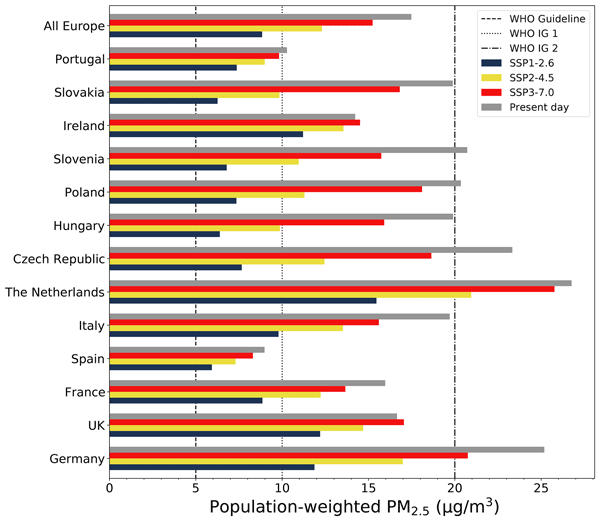
We demonstrate that strong climate mitigation could improve air quality in Europe; however, less ambitious mitigation does not result in these co-benefits. We use a high-resolution atmospheric chemistry model. This allows us to demonstrate how this varies across European countries and analyse the underlying chemistry. This may help policy-facing researchers understand which sectors and regions need to be prioritised to achieve strong air quality co-benefits of climate mitigation.
James A. King, James Weber, Peter Lawrence, Stephanie Roe, Abigail L. S. Swann, and Maria Val Martin
Biogeosciences, 21, 3883–3902, https://doi.org/10.5194/bg-21-3883-2024, https://doi.org/10.5194/bg-21-3883-2024, 2024
Short summary
Short summary
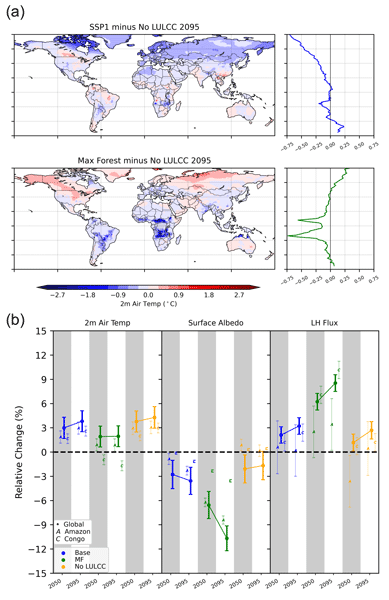
Tackling climate change by adding, restoring, or enhancing forests is gaining global support. However, it is important to investigate the broader implications of this. We used a computer model of the Earth to investigate a future where tree cover expanded as much as possible. We found that some tropical areas were cooler because of trees pumping water into the atmosphere, but this also led to soil and rivers drying. This is important because it might be harder to maintain forests as a result.
Pierluigi Renan Guaita, Riccardo Marzuoli, Leiming Zhang, Steven Turnock, Gerbrand Koren, Oliver Wild, Paola Crippa, and Giacomo Alessandro Gerosa
EGUsphere, https://doi.org/10.5194/egusphere-2024-2573, https://doi.org/10.5194/egusphere-2024-2573, 2024
Preprint archived
Short summary
Short summary
This study assesses the global impact of tropospheric ozone on wheat crops in the 21st century under various climate scenarios. The research highlights that ozone damage to wheat varies by region and depends on both ozone levels and climate. Vulnerable regions include East Asia, Northern Europe, and the Southern and Eastern edges of the Tibetan Plateau. Our results emphasize the need of policies to reduce ozone levels and mitigate climate change to protect global food security.
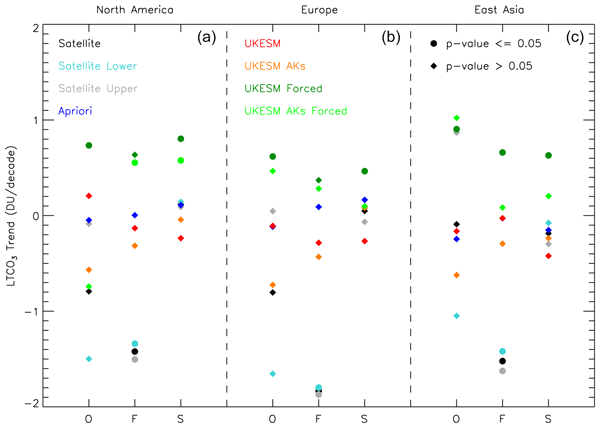
Richard J. Pope, Fiona M. O'Connor, Mohit Dalvi, Brian J. Kerridge, Richard Siddans, Barry G. Latter, Brice Barret, Eric Le Flochmoen, Anne Boynard, Martyn P. Chipperfield, Wuhu Feng, Matilda A. Pimlott, Sandip S. Dhomse, Christian Retscher, Catherine Wespes, and Richard Rigby
Atmos. Chem. Phys., 24, 9177–9195, https://doi.org/10.5194/acp-24-9177-2024, https://doi.org/10.5194/acp-24-9177-2024, 2024
Short summary
Short summary
Ozone is a potent air pollutant in the lower troposphere, with adverse impacts on human health. Satellite records of tropospheric ozone currently show large-scale inconsistencies in long-term trends. Our detailed study of the potential factors (e.g. satellite errors, where the satellite can observe ozone) potentially driving these inconsistencies found that, in North America, Europe, and East Asia, the underlying trends are typically small with large uncertainties.
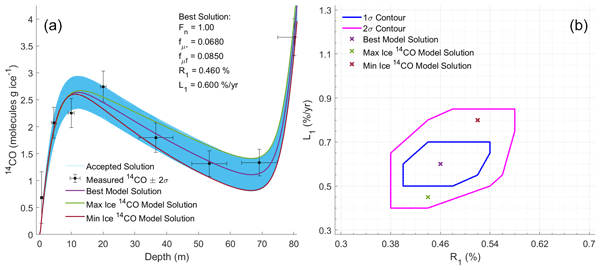
Benjamin Hmiel, Vasilii V. Petrenko, Christo Buizert, Andrew M. Smith, Michael N. Dyonisius, Philip Place, Bin Yang, Quan Hua, Ross Beaudette, Jeffrey P. Severinghaus, Christina Harth, Ray F. Weiss, Lindsey Davidge, Melisa Diaz, Matthew Pacicco, James A. Menking, Michael Kalk, Xavier Faïn, Alden Adolph, Isaac Vimont, and Lee T. Murray
The Cryosphere, 18, 3363–3382, https://doi.org/10.5194/tc-18-3363-2024, https://doi.org/10.5194/tc-18-3363-2024, 2024
Short summary
Short summary
The main aim of this research is to improve understanding of carbon-14 that is produced by cosmic rays in ice sheets. Measurements of carbon-14 in ice cores can provide a range of useful information (age of ice, past atmospheric chemistry, past cosmic ray intensity). Our results show that almost all (>99 %) of carbon-14 that is produced in the upper layer of ice sheets is rapidly lost to the atmosphere. Our results also provide better estimates of carbon-14 production rates in deeper ice.
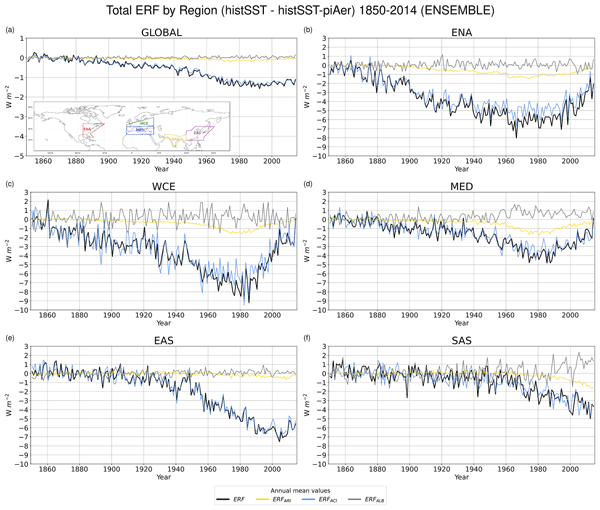
Alkiviadis Kalisoras, Aristeidis K. Georgoulias, Dimitris Akritidis, Robert J. Allen, Vaishali Naik, Chaincy Kuo, Sophie Szopa, Pierre Nabat, Dirk Olivié, Twan van Noije, Philippe Le Sager, David Neubauer, Naga Oshima, Jane Mulcahy, Larry W. Horowitz, and Prodromos Zanis
Atmos. Chem. Phys., 24, 7837–7872, https://doi.org/10.5194/acp-24-7837-2024, https://doi.org/10.5194/acp-24-7837-2024, 2024
Short summary
Short summary
Effective radiative forcing (ERF) is a metric for estimating how human activities and natural agents change the energy flow into and out of the Earth’s climate system. We investigate the anthropogenic aerosol ERF, and we estimate the contribution of individual processes to the total ERF using simulations from Earth system models within the Coupled Model Intercomparison Project Phase 6 (CMIP6). Our findings highlight that aerosol–cloud interactions drive ERF variability during the last 150 years.
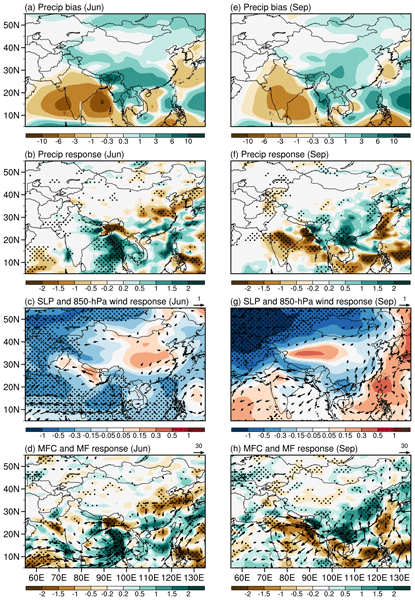
Zhen Liu, Massimo A. Bollasina, and Laura J. Wilcox
Atmos. Chem. Phys., 24, 7227–7252, https://doi.org/10.5194/acp-24-7227-2024, https://doi.org/10.5194/acp-24-7227-2024, 2024
Short summary
Short summary
The aerosol impact on monsoon precipitation and circulation is strongly influenced by a model-simulated spatio-temporal variability in the climatological monsoon precipitation across Asia, which critically modulates the efficacy of aerosol–cloud–precipitation interactions, the predominant driver of the total aerosol response. There is a strong interplay between South Asia and East Asia monsoon precipitation biases and their relative predominance in driving the overall monsoon response.
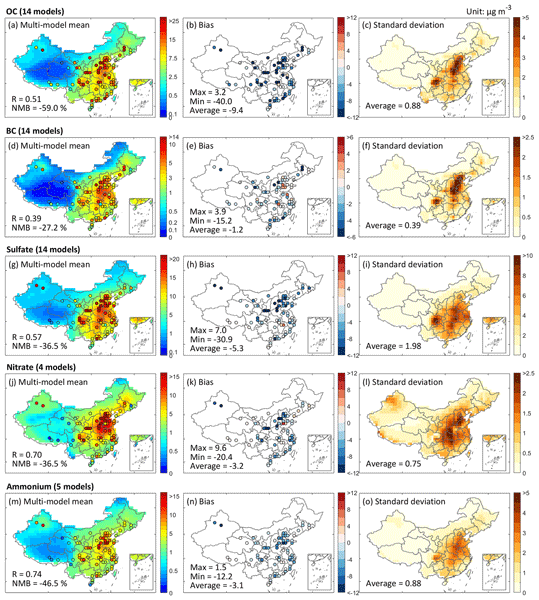
Fangxuan Ren, Jintai Lin, Chenghao Xu, Jamiu A. Adeniran, Jingxu Wang, Randall V. Martin, Aaron van Donkelaar, Melanie S. Hammer, Larry W. Horowitz, Steven T. Turnock, Naga Oshima, Jie Zhang, Susanne Bauer, Kostas Tsigaridis, Øyvind Seland, Pierre Nabat, David Neubauer, Gary Strand, Twan van Noije, Philippe Le Sager, and Toshihiko Takemura
Geosci. Model Dev., 17, 4821–4836, https://doi.org/10.5194/gmd-17-4821-2024, https://doi.org/10.5194/gmd-17-4821-2024, 2024
Short summary
Short summary
We evaluate the performance of 14 CMIP6 ESMs in simulating total PM2.5 and its 5 components over China during 2000–2014. PM2.5 and its components are underestimated in almost all models, except that black carbon (BC) and sulfate are overestimated in two models, respectively. The underestimation is the largest for organic carbon (OC) and the smallest for BC. Models reproduce the observed spatial pattern for OC, sulfate, nitrate and ammonium well, yet the agreement is poorer for BC.
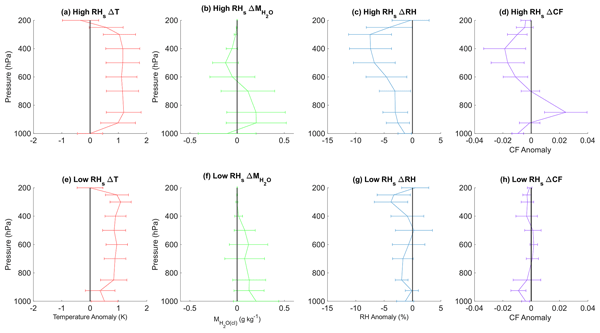
James L. Gomez, Robert J. Allen, and King-Fai Li
Atmos. Chem. Phys., 24, 6937–6963, https://doi.org/10.5194/acp-24-6937-2024, https://doi.org/10.5194/acp-24-6937-2024, 2024
Short summary
Short summary
Wildfires in California (CA) have grown very large during the past 20 years. These fires emit sunlight-absorbing aerosols. Analyzing observational data, our study finds that aerosols emitted from large fires in northern CA spread throughout CA and Nevada and heat the atmosphere. This heating is consistent with larger-than-normal temperatures and dry conditions. Further study is needed to determine how much the aerosols heat the atmosphere and whether they are drying the atmosphere as well.
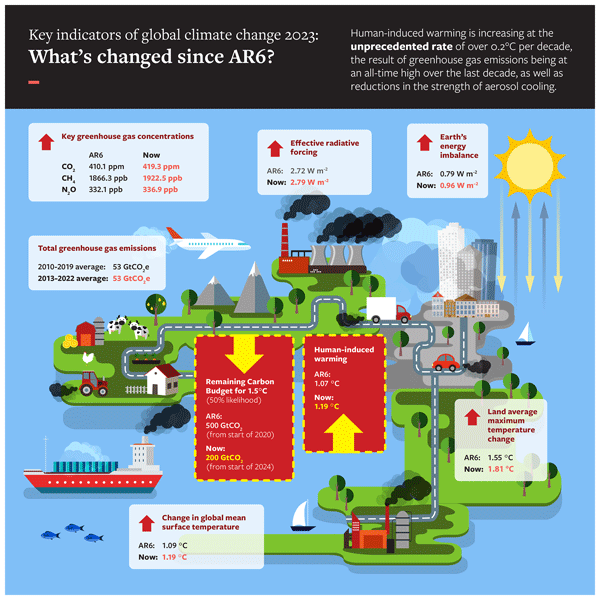
Piers M. Forster, Chris Smith, Tristram Walsh, William F. Lamb, Robin Lamboll, Bradley Hall, Mathias Hauser, Aurélien Ribes, Debbie Rosen, Nathan P. Gillett, Matthew D. Palmer, Joeri Rogelj, Karina von Schuckmann, Blair Trewin, Myles Allen, Robbie Andrew, Richard A. Betts, Alex Borger, Tim Boyer, Jiddu A. Broersma, Carlo Buontempo, Samantha Burgess, Chiara Cagnazzo, Lijing Cheng, Pierre Friedlingstein, Andrew Gettelman, Johannes Gütschow, Masayoshi Ishii, Stuart Jenkins, Xin Lan, Colin Morice, Jens Mühle, Christopher Kadow, John Kennedy, Rachel E. Killick, Paul B. Krummel, Jan C. Minx, Gunnar Myhre, Vaishali Naik, Glen P. Peters, Anna Pirani, Julia Pongratz, Carl-Friedrich Schleussner, Sonia I. Seneviratne, Sophie Szopa, Peter Thorne, Mahesh V. M. Kovilakam, Elisa Majamäki, Jukka-Pekka Jalkanen, Margreet van Marle, Rachel M. Hoesly, Robert Rohde, Dominik Schumacher, Guido van der Werf, Russell Vose, Kirsten Zickfeld, Xuebin Zhang, Valérie Masson-Delmotte, and Panmao Zhai
Earth Syst. Sci. Data, 16, 2625–2658, https://doi.org/10.5194/essd-16-2625-2024, https://doi.org/10.5194/essd-16-2625-2024, 2024
Short summary
Short summary
This paper tracks some key indicators of global warming through time, from 1850 through to the end of 2023. It is designed to give an authoritative estimate of global warming to date and its causes. We find that in 2023, global warming reached 1.3 °C and is increasing at over 0.2 °C per decade. This is caused by all-time-high greenhouse gas emissions.
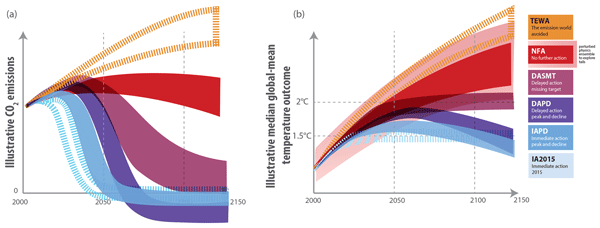
Malte Meinshausen, Carl-Friedrich Schleussner, Kathleen Beyer, Greg Bodeker, Olivier Boucher, Josep G. Canadell, John S. Daniel, Aïda Diongue-Niang, Fatima Driouech, Erich Fischer, Piers Forster, Michael Grose, Gerrit Hansen, Zeke Hausfather, Tatiana Ilyina, Jarmo S. Kikstra, Joyce Kimutai, Andrew D. King, June-Yi Lee, Chris Lennard, Tabea Lissner, Alexander Nauels, Glen P. Peters, Anna Pirani, Gian-Kasper Plattner, Hans Pörtner, Joeri Rogelj, Maisa Rojas, Joyashree Roy, Bjørn H. Samset, Benjamin M. Sanderson, Roland Séférian, Sonia Seneviratne, Christopher J. Smith, Sophie Szopa, Adelle Thomas, Diana Urge-Vorsatz, Guus J. M. Velders, Tokuta Yokohata, Tilo Ziehn, and Zebedee Nicholls
Geosci. Model Dev., 17, 4533–4559, https://doi.org/10.5194/gmd-17-4533-2024, https://doi.org/10.5194/gmd-17-4533-2024, 2024
Short summary
Short summary
The scientific community is considering new scenarios to succeed RCPs and SSPs for the next generation of Earth system model runs to project future climate change. To contribute to that effort, we reflect on relevant policy and scientific research questions and suggest categories for representative emission pathways. These categories are tailored to the Paris Agreement long-term temperature goal, high-risk outcomes in the absence of further climate policy and worlds “that could have been”.
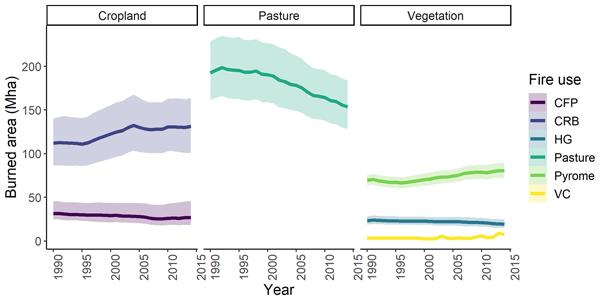
Oliver Perkins, Matthew Kasoar, Apostolos Voulgarakis, Cathy Smith, Jay Mistry, and James D. A. Millington
Geosci. Model Dev., 17, 3993–4016, https://doi.org/10.5194/gmd-17-3993-2024, https://doi.org/10.5194/gmd-17-3993-2024, 2024
Short summary
Short summary
Wildfire is often presented in the media as a danger to human life. Yet globally, millions of people’s livelihoods depend on using fire as a tool. So, patterns of fire emerge from interactions between humans, land use, and climate. This complexity means scientists cannot yet reliably say how fire will be impacted by climate change. So, we developed a new model that represents globally how people use and manage fire. The model reveals the extent and diversity of how humans live with and use fire.
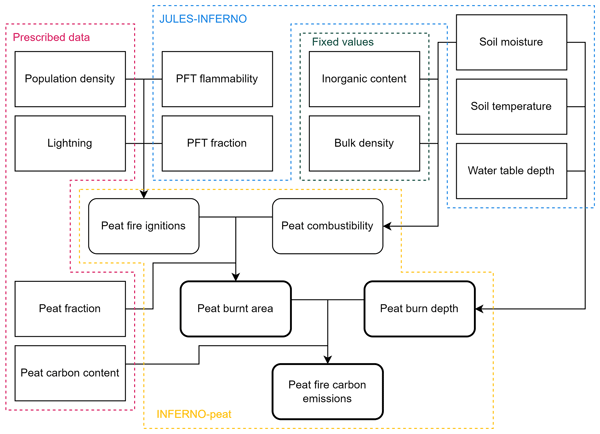
Katie R. Blackford, Matthew Kasoar, Chantelle Burton, Eleanor Burke, Iain Colin Prentice, and Apostolos Voulgarakis
Geosci. Model Dev., 17, 3063–3079, https://doi.org/10.5194/gmd-17-3063-2024, https://doi.org/10.5194/gmd-17-3063-2024, 2024
Short summary
Short summary
Peatlands are globally important stores of carbon which are being increasingly threatened by wildfires with knock-on effects on the climate system. Here we introduce a novel peat fire parameterization in the northern high latitudes to the INFERNO global fire model. Representing peat fires increases annual burnt area across the high latitudes, alongside improvements in how we capture year-to-year variation in burning and emissions.
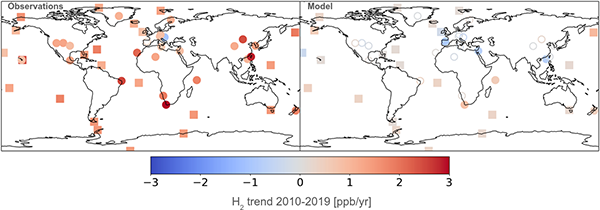
Fabien Paulot, Gabrielle Pétron, Andrew M. Crotwell, and Matteo B. Bertagni
Atmos. Chem. Phys., 24, 4217–4229, https://doi.org/10.5194/acp-24-4217-2024, https://doi.org/10.5194/acp-24-4217-2024, 2024
Short summary
Short summary
New data from the National Oceanic and Atmospheric Administration show that hydrogen (H2) concentrations increased from 2010 to 2019, which is consistent with the simulated increase in H2 photochemical production (mainly from methane). But this cannot be reconciled with the expected decrease (increase) in H2 anthropogenic emissions (soil deposition) in the same period. This shows gaps in our knowledge of the H2 biogeochemical cycle that must be resolved to quantify the impact of higher H2 usage.
Stephanie Fiedler, Vaishali Naik, Fiona M. O'Connor, Christopher J. Smith, Paul Griffiths, Ryan J. Kramer, Toshihiko Takemura, Robert J. Allen, Ulas Im, Matthew Kasoar, Angshuman Modak, Steven Turnock, Apostolos Voulgarakis, Duncan Watson-Parris, Daniel M. Westervelt, Laura J. Wilcox, Alcide Zhao, William J. Collins, Michael Schulz, Gunnar Myhre, and Piers M. Forster
Geosci. Model Dev., 17, 2387–2417, https://doi.org/10.5194/gmd-17-2387-2024, https://doi.org/10.5194/gmd-17-2387-2024, 2024
Short summary
Short summary
Climate scientists want to better understand modern climate change. Thus, climate model experiments are performed and compared. The results of climate model experiments differ, as assessed in the latest Intergovernmental Panel on Climate Change (IPCC) assessment report. This article gives insights into the challenges and outlines opportunities for further improving the understanding of climate change. It is based on views of a group of experts in atmospheric composition–climate interactions.
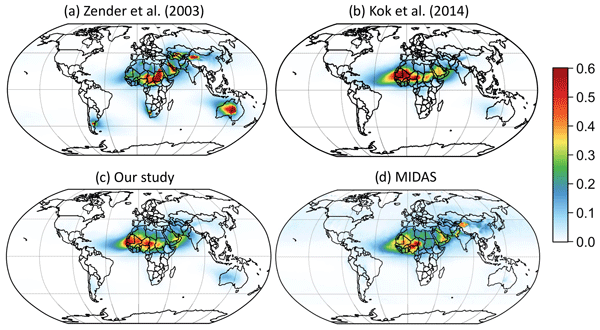
Danny M. Leung, Jasper F. Kok, Longlei Li, Natalie M. Mahowald, David M. Lawrence, Simone Tilmes, Erik Kluzek, Martina Klose, and Carlos Pérez García-Pando
Atmos. Chem. Phys., 24, 2287–2318, https://doi.org/10.5194/acp-24-2287-2024, https://doi.org/10.5194/acp-24-2287-2024, 2024
Short summary
Short summary
This study uses a premier Earth system model to evaluate a new desert dust emission scheme proposed in our companion paper. We show that our scheme accounts for more dust emission physics, hence matching better against observations than other existing dust emission schemes do. Our scheme's dust emissions also couple tightly with meteorology, hence likely improving the modeled dust sensitivity to climate change. We believe this work is vital for improving dust representation in climate models.
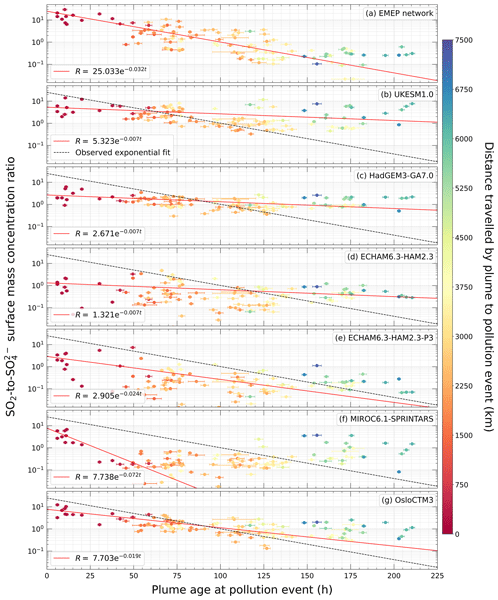
George Jordan, Florent Malavelle, Ying Chen, Amy Peace, Eliza Duncan, Daniel G. Partridge, Paul Kim, Duncan Watson-Parris, Toshihiko Takemura, David Neubauer, Gunnar Myhre, Ragnhild Skeie, Anton Laakso, and James Haywood
Atmos. Chem. Phys., 24, 1939–1960, https://doi.org/10.5194/acp-24-1939-2024, https://doi.org/10.5194/acp-24-1939-2024, 2024
Short summary
Short summary
The 2014–15 Holuhraun eruption caused a huge aerosol plume in an otherwise unpolluted region, providing a chance to study how aerosol alters cloud properties. This two-part study uses observations and models to quantify this relationship’s impact on the Earth’s energy budget. Part 1 suggests the models capture the observed spatial and chemical evolution of the plume, yet no model plume is exact. Understanding these differences is key for Part 2, where changes to cloud properties are explored.
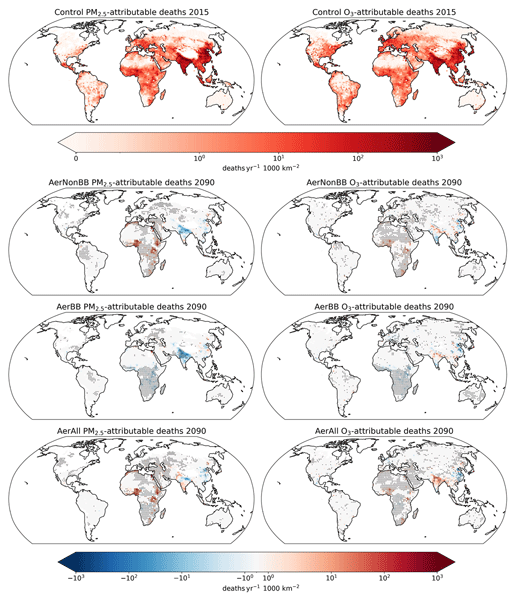
Christopher D. Wells, Matthew Kasoar, Majid Ezzati, and Apostolos Voulgarakis
Atmos. Chem. Phys., 24, 1025–1039, https://doi.org/10.5194/acp-24-1025-2024, https://doi.org/10.5194/acp-24-1025-2024, 2024
Short summary
Short summary
Human-driven emissions of air pollutants, mostly caused by burning fossil fuels, impact both the climate and human health. Millions of deaths each year are caused by air pollution globally, and the future trends are uncertain. Here, we use a global climate model to study the effect of African pollutant emissions on surface level air pollution, and resultant impacts on human health, in several future emission scenarios. We find much lower health impacts under cleaner, lower-emission futures.
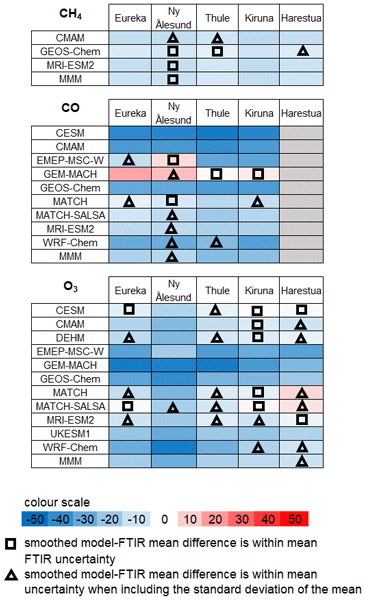
Victoria A. Flood, Kimberly Strong, Cynthia H. Whaley, Kaley A. Walker, Thomas Blumenstock, James W. Hannigan, Johan Mellqvist, Justus Notholt, Mathias Palm, Amelie N. Röhling, Stephen Arnold, Stephen Beagley, Rong-You Chien, Jesper Christensen, Makoto Deushi, Srdjan Dobricic, Xinyi Dong, Joshua S. Fu, Michael Gauss, Wanmin Gong, Joakim Langner, Kathy S. Law, Louis Marelle, Tatsuo Onishi, Naga Oshima, David A. Plummer, Luca Pozzoli, Jean-Christophe Raut, Manu A. Thomas, Svetlana Tsyro, and Steven Turnock
Atmos. Chem. Phys., 24, 1079–1118, https://doi.org/10.5194/acp-24-1079-2024, https://doi.org/10.5194/acp-24-1079-2024, 2024
Short summary
Short summary
It is important to understand the composition of the Arctic atmosphere and how it is changing. Atmospheric models provide simulations that can inform policy. This study examines simulations of CH4, CO, and O3 by 11 models. Model performance is assessed by comparing results matched in space and time to measurements from five high-latitude ground-based infrared spectrometers. This work finds that models generally underpredict the concentrations of these gases in the Arctic troposphere.
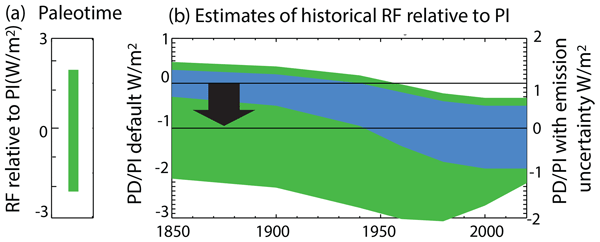
Natalie M. Mahowald, Longlei Li, Samuel Albani, Douglas S. Hamilton, and Jasper F. Kok
Atmos. Chem. Phys., 24, 533–551, https://doi.org/10.5194/acp-24-533-2024, https://doi.org/10.5194/acp-24-533-2024, 2024
Short summary
Short summary
Estimating past aerosol radiative effects and their uncertainties is an important topic in climate science. Aerosol radiative effects propagate into large uncertainties in estimates of how present and future climate evolves with changing greenhouse gas emissions. A deeper understanding of how aerosols interacted with the atmospheric energy budget under past climates is hindered in part by a lack of relevant paleo-observations and in part because less attention has been paid to the problem.
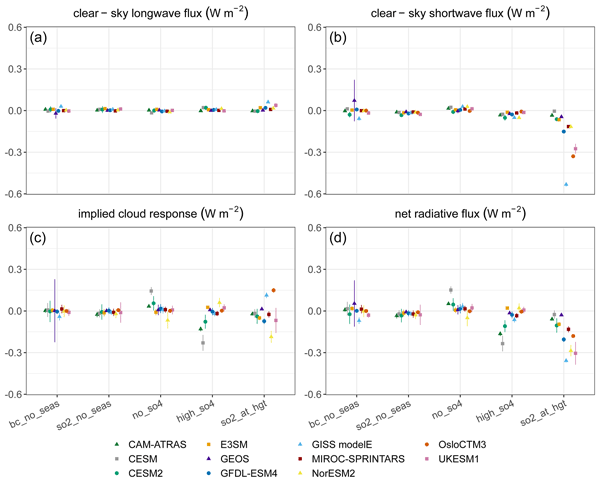
Hamza Ahsan, Hailong Wang, Jingbo Wu, Mingxuan Wu, Steven J. Smith, Susanne Bauer, Harrison Suchyta, Dirk Olivié, Gunnar Myhre, Hitoshi Matsui, Huisheng Bian, Jean-François Lamarque, Ken Carslaw, Larry Horowitz, Leighton Regayre, Mian Chin, Michael Schulz, Ragnhild Bieltvedt Skeie, Toshihiko Takemura, and Vaishali Naik
Atmos. Chem. Phys., 23, 14779–14799, https://doi.org/10.5194/acp-23-14779-2023, https://doi.org/10.5194/acp-23-14779-2023, 2023
Short summary
Short summary
We examine the impact of the assumed effective height of SO2 injection, SO2 and BC emission seasonality, and the assumed fraction of SO2 emissions injected as SO4 on climate and chemistry model results. We find that the SO2 injection height has a large impact on surface SO2 concentrations and, in some models, radiative flux. These assumptions are a
hiddensource of inter-model variability and may be leading to bias in some climate model results.
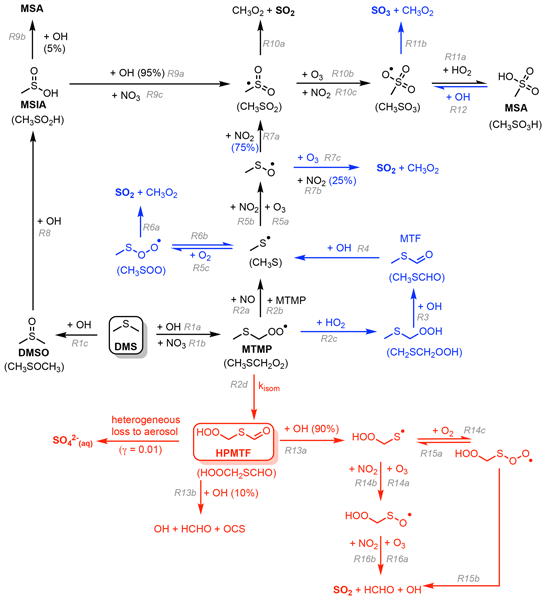
Ben A. Cala, Scott Archer-Nicholls, James Weber, N. Luke Abraham, Paul T. Griffiths, Lorrie Jacob, Y. Matthew Shin, Laura E. Revell, Matthew Woodhouse, and Alexander T. Archibald
Atmos. Chem. Phys., 23, 14735–14760, https://doi.org/10.5194/acp-23-14735-2023, https://doi.org/10.5194/acp-23-14735-2023, 2023
Short summary
Short summary
Dimethyl sulfide (DMS) is an important trace gas emitted from the ocean recognised as setting the sulfate aerosol background, but its oxidation is complex. As a result representation in chemistry-climate models is greatly simplified. We develop and compare a new mechanism to existing mechanisms via a series of global and box model experiments. Our studies show our updated DMS scheme is a significant improvement but significant variance exists between mechanisms.
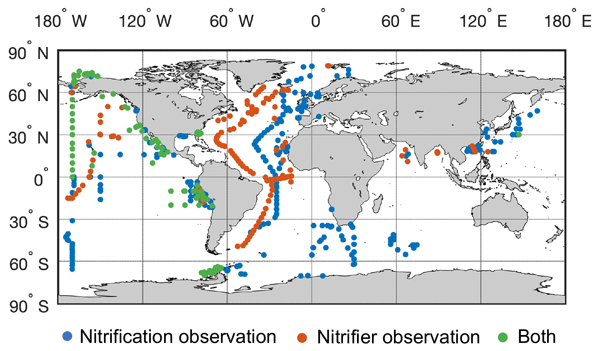
Weiyi Tang, Bess B. Ward, Michael Beman, Laura Bristow, Darren Clark, Sarah Fawcett, Claudia Frey, François Fripiat, Gerhard J. Herndl, Mhlangabezi Mdutyana, Fabien Paulot, Xuefeng Peng, Alyson E. Santoro, Takuhei Shiozaki, Eva Sintes, Charles Stock, Xin Sun, Xianhui S. Wan, Min N. Xu, and Yao Zhang
Earth Syst. Sci. Data, 15, 5039–5077, https://doi.org/10.5194/essd-15-5039-2023, https://doi.org/10.5194/essd-15-5039-2023, 2023
Short summary
Short summary
Nitrification and nitrifiers play an important role in marine nitrogen and carbon cycles by converting ammonium to nitrite and nitrate. Nitrification could affect microbial community structure, marine productivity, and the production of nitrous oxide – a powerful greenhouse gas. We introduce the newly constructed database of nitrification and nitrifiers in the marine water column and guide future research efforts in field observations and model development of nitrification.
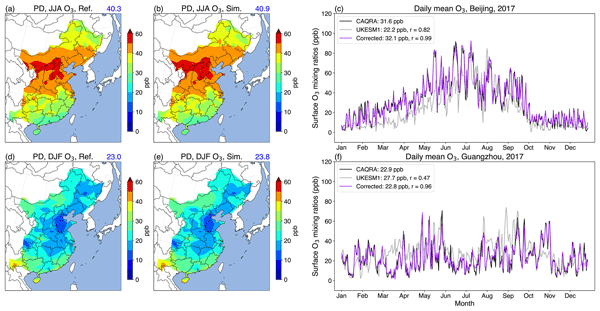
Zhenze Liu, Oliver Wild, Ruth M. Doherty, Fiona M. O'Connor, and Steven T. Turnock
Atmos. Chem. Phys., 23, 13755–13768, https://doi.org/10.5194/acp-23-13755-2023, https://doi.org/10.5194/acp-23-13755-2023, 2023
Short summary
Short summary
We investigate the impact of net-zero policies on surface ozone pollution in China. A chemistry–climate model is used to simulate ozone changes driven by local and external emissions, methane, and warmer climates. A deep learning model is applied to generate more robust ozone projection, and we find that the benefits of net-zero policies may be overestimated with the chemistry–climate model. Nevertheless, it is clear that the policies can still substantially reduce ozone pollution in future.
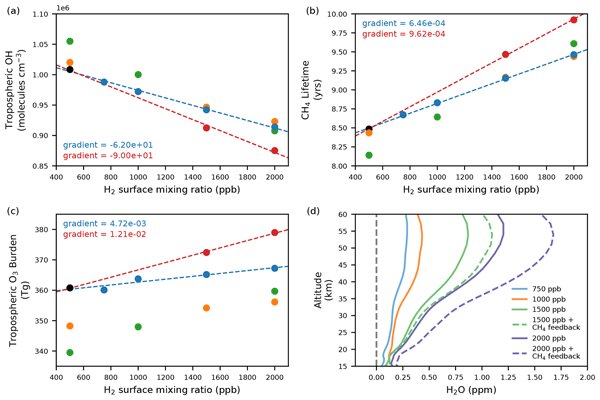
Nicola J. Warwick, Alex T. Archibald, Paul T. Griffiths, James Keeble, Fiona M. O'Connor, John A. Pyle, and Keith P. Shine
Atmos. Chem. Phys., 23, 13451–13467, https://doi.org/10.5194/acp-23-13451-2023, https://doi.org/10.5194/acp-23-13451-2023, 2023
Short summary
Short summary
A chemistry–climate model has been used to explore the atmospheric response to changes in emissions of hydrogen and other species associated with a shift from fossil fuel to hydrogen use. Leakage of hydrogen results in indirect global warming, offsetting greenhouse gas emission reductions from reduced fossil fuel use. To maximise the benefit of hydrogen as an energy source, hydrogen leakage and emissions of methane, carbon monoxide and nitrogen oxides should be minimised.
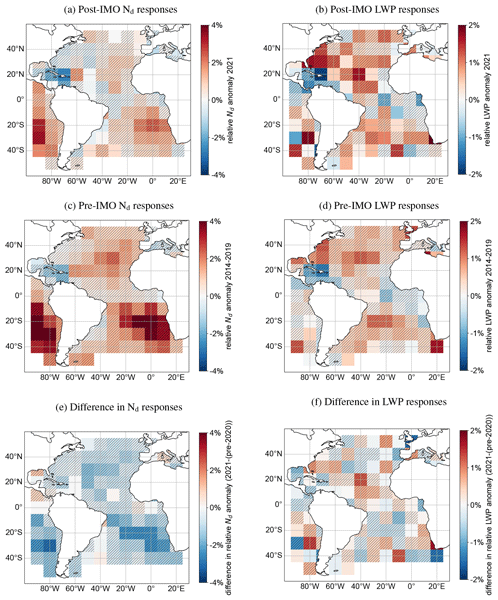
Peter Manshausen, Duncan Watson-Parris, Matthew W. Christensen, Jukka-Pekka Jalkanen, and Philip Stier
Atmos. Chem. Phys., 23, 12545–12555, https://doi.org/10.5194/acp-23-12545-2023, https://doi.org/10.5194/acp-23-12545-2023, 2023
Short summary
Short summary
Aerosol from burning fuel changes cloud properties, e.g., the number of droplets and the content of water. Here, we study how clouds respond to different amounts of shipping aerosol. Droplet numbers increase linearly with increasing aerosol over a broad range until they stop increasing, while the amount of liquid water always increases, independently of emission amount. These changes in cloud properties can make them reflect more or less sunlight, which is important for the earth's climate.
Joao Carlos Martins Teixeira, Chantelle Burton, Douglas I. Kelly, Gerd A. Folberth, Fiona M. O'Connor, Richard A. Betts, and Apostolos Voulgarakis
Biogeosciences Discuss., https://doi.org/10.5194/bg-2023-136, https://doi.org/10.5194/bg-2023-136, 2023
Revised manuscript not accepted
Short summary
Short summary
Representing socio-economic impacts on fires is crucial to underpin the confidence in global fire models. Introducing these into INFERNO, reduces biases and improves the modelled burnt area (BA) trends when compared to observations. Including socio-economic factors in the representation of fires in Earth System Models is important for realistically simulating BA, quantifying trends in the recent past, and for understanding the main drivers of those at regional scales.
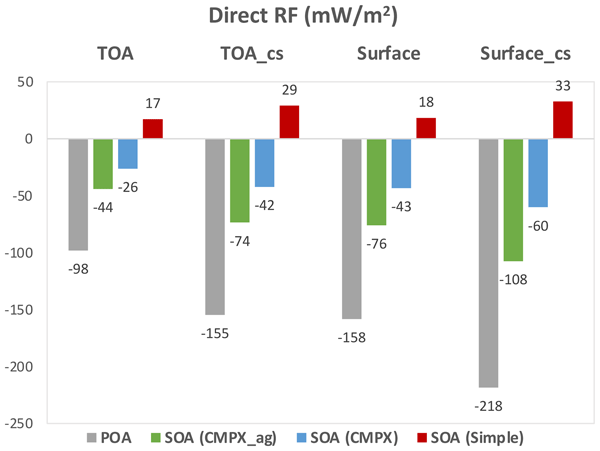
Yiqi Zheng, Larry W. Horowitz, Raymond Menzel, David J. Paynter, Vaishali Naik, Jingyi Li, and Jingqiu Mao
Atmos. Chem. Phys., 23, 8993–9007, https://doi.org/10.5194/acp-23-8993-2023, https://doi.org/10.5194/acp-23-8993-2023, 2023
Short summary
Short summary
Biogenic secondary organic aerosols (SOAs) account for a large fraction of fine aerosol at the global scale. Using long-term measurements and a climate model, we investigate anthropogenic impacts on biogenic SOA at both decadal and centennial timescales. Results show that despite reductions in biogenic precursor emissions, SOA has been strongly amplified by anthropogenic emissions since the preindustrial era and exerts a cooling radiative forcing.
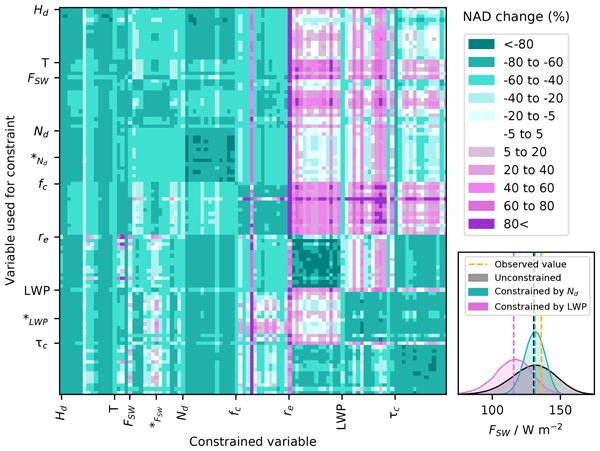
Leighton A. Regayre, Lucia Deaconu, Daniel P. Grosvenor, David M. H. Sexton, Christopher Symonds, Tom Langton, Duncan Watson-Paris, Jane P. Mulcahy, Kirsty J. Pringle, Mark Richardson, Jill S. Johnson, John W. Rostron, Hamish Gordon, Grenville Lister, Philip Stier, and Ken S. Carslaw
Atmos. Chem. Phys., 23, 8749–8768, https://doi.org/10.5194/acp-23-8749-2023, https://doi.org/10.5194/acp-23-8749-2023, 2023
Short summary
Short summary
Aerosol forcing of Earth’s energy balance has persisted as a major cause of uncertainty in climate simulations over generations of climate model development. We show that structural deficiencies in a climate model are exposed by comprehensively exploring parametric uncertainty and that these deficiencies limit how much the model uncertainty can be reduced through observational constraint. This provides a future pathway towards building models with greater physical realism and lower uncertainty.
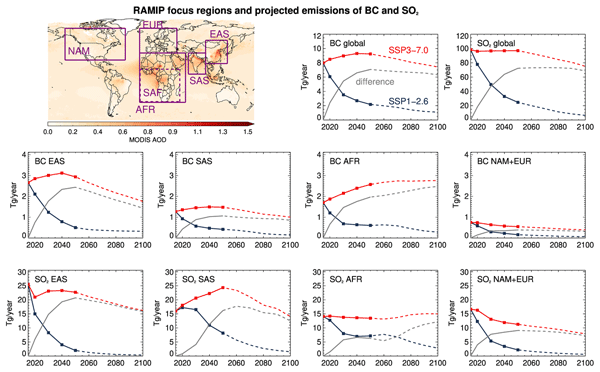
Laura J. Wilcox, Robert J. Allen, Bjørn H. Samset, Massimo A. Bollasina, Paul T. Griffiths, James Keeble, Marianne T. Lund, Risto Makkonen, Joonas Merikanto, Declan O'Donnell, David J. Paynter, Geeta G. Persad, Steven T. Rumbold, Toshihiko Takemura, Kostas Tsigaridis, Sabine Undorf, and Daniel M. Westervelt
Geosci. Model Dev., 16, 4451–4479, https://doi.org/10.5194/gmd-16-4451-2023, https://doi.org/10.5194/gmd-16-4451-2023, 2023
Short summary
Short summary
Changes in anthropogenic aerosol emissions have strongly contributed to global and regional climate change. However, the size of these regional impacts and the way they arise are still uncertain. With large changes in aerosol emissions a possibility over the next few decades, it is important to better quantify the potential role of aerosol in future regional climate change. The Regional Aerosol Model Intercomparison Project will deliver experiments designed to facilitate this.
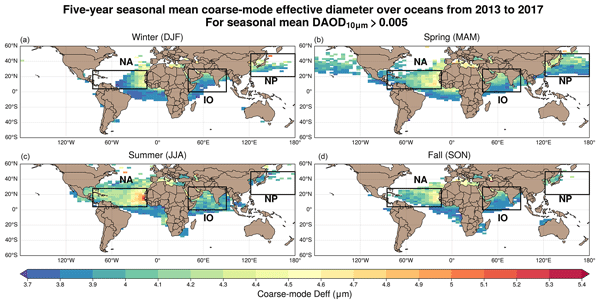
Jianyu Zheng, Zhibo Zhang, Hongbin Yu, Anne Garnier, Qianqian Song, Chenxi Wang, Claudia Di Biagio, Jasper F. Kok, Yevgeny Derimian, and Claire Ryder
Atmos. Chem. Phys., 23, 8271–8304, https://doi.org/10.5194/acp-23-8271-2023, https://doi.org/10.5194/acp-23-8271-2023, 2023
Short summary
Short summary
We developed a multi-year satellite-based retrieval of dust optical depth at 10 µm and the coarse-mode dust effective diameter over global oceans. It reveals climatological coarse-mode dust transport patterns and regional differences over the North Atlantic, the Indian Ocean and the North Pacific.
Mahdi Boroughani, Fahimeh Mirchooli, Mojtaba Hadavifar, and Stephanie Fiedler
SOIL, 9, 411–423, https://doi.org/10.5194/soil-9-411-2023, https://doi.org/10.5194/soil-9-411-2023, 2023
Short summary
Short summary
The present study used several different datasets, conducted a field survey, and paired the data with three different machine learning algorithms to construct spatial maps for areas at risk of land degradation for the Lut watershed in Iran. According to the land degradation map, almost the entire study region is at risk. A large fraction of 43 % of the area is prone to both high wind-driven and water-driven soil erosion.
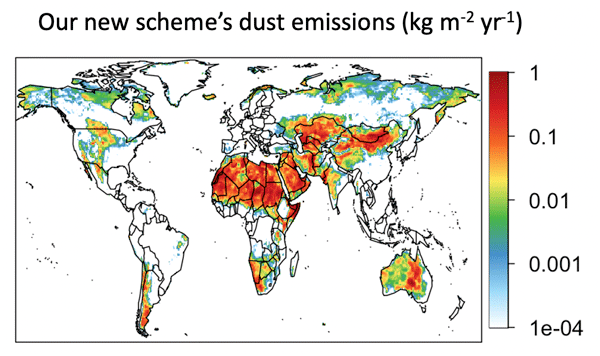
Danny M. Leung, Jasper F. Kok, Longlei Li, Gregory S. Okin, Catherine Prigent, Martina Klose, Carlos Pérez García-Pando, Laurent Menut, Natalie M. Mahowald, David M. Lawrence, and Marcelo Chamecki
Atmos. Chem. Phys., 23, 6487–6523, https://doi.org/10.5194/acp-23-6487-2023, https://doi.org/10.5194/acp-23-6487-2023, 2023
Short summary
Short summary
Desert dust modeling is important for understanding climate change, as dust regulates the atmosphere's greenhouse effect and radiation. This study formulates and proposes a more physical and realistic desert dust emission scheme for global and regional climate models. By considering more aeolian processes in our emission scheme, our simulations match better against dust observations than existing schemes. We believe this work is vital in improving dust representation in climate models.
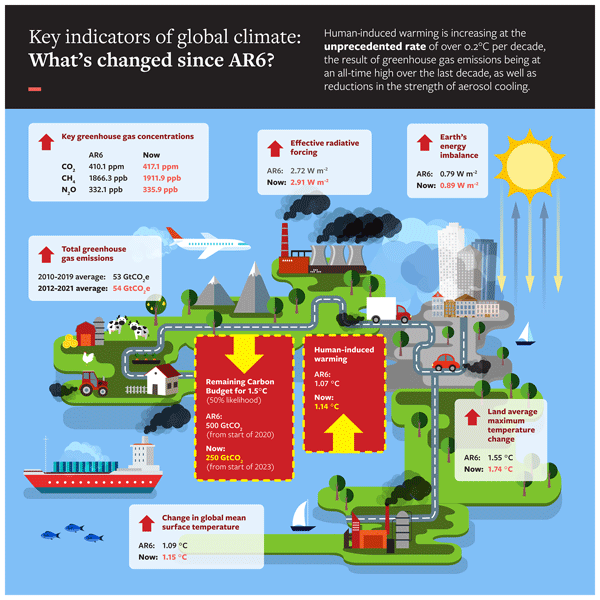
Piers M. Forster, Christopher J. Smith, Tristram Walsh, William F. Lamb, Robin Lamboll, Mathias Hauser, Aurélien Ribes, Debbie Rosen, Nathan Gillett, Matthew D. Palmer, Joeri Rogelj, Karina von Schuckmann, Sonia I. Seneviratne, Blair Trewin, Xuebin Zhang, Myles Allen, Robbie Andrew, Arlene Birt, Alex Borger, Tim Boyer, Jiddu A. Broersma, Lijing Cheng, Frank Dentener, Pierre Friedlingstein, José M. Gutiérrez, Johannes Gütschow, Bradley Hall, Masayoshi Ishii, Stuart Jenkins, Xin Lan, June-Yi Lee, Colin Morice, Christopher Kadow, John Kennedy, Rachel Killick, Jan C. Minx, Vaishali Naik, Glen P. Peters, Anna Pirani, Julia Pongratz, Carl-Friedrich Schleussner, Sophie Szopa, Peter Thorne, Robert Rohde, Maisa Rojas Corradi, Dominik Schumacher, Russell Vose, Kirsten Zickfeld, Valérie Masson-Delmotte, and Panmao Zhai
Earth Syst. Sci. Data, 15, 2295–2327, https://doi.org/10.5194/essd-15-2295-2023, https://doi.org/10.5194/essd-15-2295-2023, 2023
Short summary
Short summary
This is a critical decade for climate action, but there is no annual tracking of the level of human-induced warming. We build on the Intergovernmental Panel on Climate Change assessment reports that are authoritative but published infrequently to create a set of key global climate indicators that can be tracked through time. Our hope is that this becomes an important annual publication that policymakers, media, scientists and the public can refer to.

Maria Rosa Russo, Brian John Kerridge, Nathan Luke Abraham, James Keeble, Barry Graham Latter, Richard Siddans, James Weber, Paul Thomas Griffiths, John Adrian Pyle, and Alexander Thomas Archibald
Atmos. Chem. Phys., 23, 6169–6196, https://doi.org/10.5194/acp-23-6169-2023, https://doi.org/10.5194/acp-23-6169-2023, 2023
Short summary
Short summary
Tropospheric ozone is an important component of the Earth system as it can affect both climate and air quality. In this work we use observed tropospheric ozone derived from satellite observations and compare it to tropospheric ozone from model simulations. Our aim is to investigate recent changes (2005–2018) in tropospheric ozone in the North Atlantic region and to understand what factors are driving such changes.
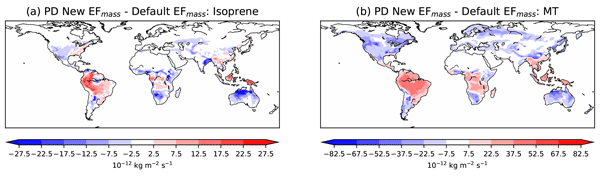
James Weber, James A. King, Katerina Sindelarova, and Maria Val Martin
Geosci. Model Dev., 16, 3083–3101, https://doi.org/10.5194/gmd-16-3083-2023, https://doi.org/10.5194/gmd-16-3083-2023, 2023
Short summary
Short summary
The emissions of volatile organic compounds from vegetation (BVOCs) influence atmospheric composition and contribute to certain gases and aerosols (tiny airborne particles) which play a role in climate change. BVOC emissions are likely to change in the future due to changes in climate and land use. Therefore, accurate simulation of BVOC emission is important, and this study describes an update to the simulation of BVOC emissions in the United Kingdom Earth System Model (UKESM).
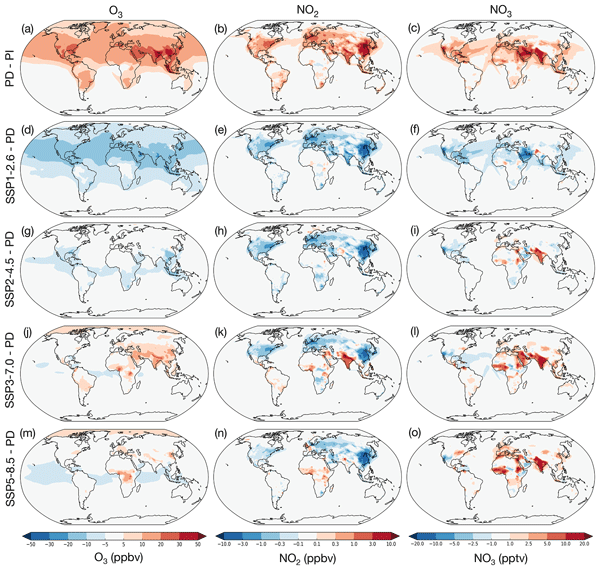
Scott Archer-Nicholls, Rachel Allen, Nathan L. Abraham, Paul T. Griffiths, and Alex T. Archibald
Atmos. Chem. Phys., 23, 5801–5813, https://doi.org/10.5194/acp-23-5801-2023, https://doi.org/10.5194/acp-23-5801-2023, 2023
Short summary
Short summary
The nitrate radical is a major oxidant at nighttime, but much less is known about it than about the other oxidants ozone and OH. We use Earth system model calculations to show how the nitrate radical has changed in abundance from 1850–2014 and to 2100 under a range of different climate and emission scenarios. Depending on the emissions and climate scenario, significant increases are projected with implications for the oxidation of volatile organic compounds and the formation of fine aerosol.
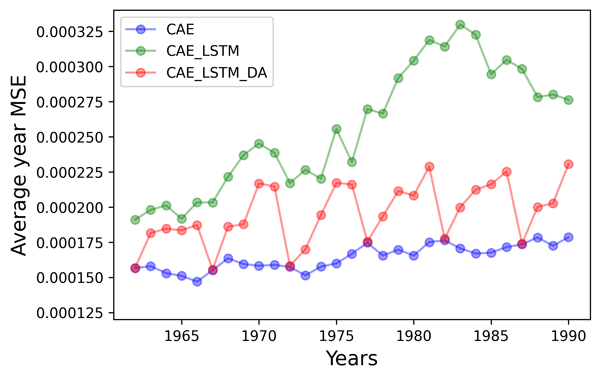
Caili Zhong, Sibo Cheng, Matthew Kasoar, and Rossella Arcucci
Nat. Hazards Earth Syst. Sci., 23, 1755–1768, https://doi.org/10.5194/nhess-23-1755-2023, https://doi.org/10.5194/nhess-23-1755-2023, 2023
Short summary
Short summary
This paper introduces a digital twin fire model using machine learning techniques to improve the efficiency of global wildfire predictions. The proposed model also manages to efficiently adjust the prediction results thanks to data assimilation techniques. The proposed digital twin runs 500 times faster than the current state-of-the-art physics-based model.
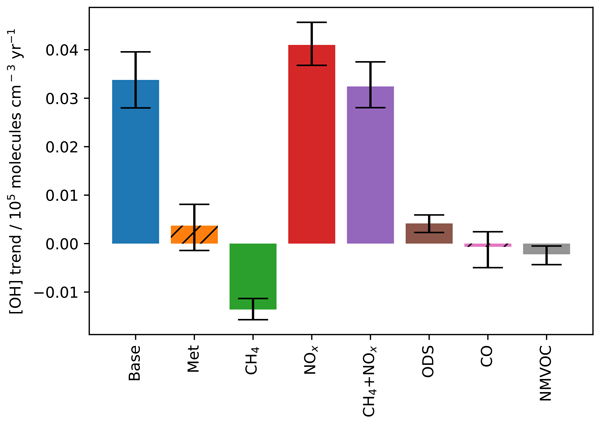
Glen Chua, Vaishali Naik, and Larry Wayne Horowitz
Atmos. Chem. Phys., 23, 4955–4975, https://doi.org/10.5194/acp-23-4955-2023, https://doi.org/10.5194/acp-23-4955-2023, 2023
Short summary
Short summary
The hydroxyl radical (OH) is an atmospheric
detergent, removing air pollutants and greenhouse gases like methane from the atmosphere. Thus, understanding how it is changing and responding to its various drivers is important for air quality and climate. We found that OH has increased by about 5 % globally from 1980 to 2014 in our model, mostly driven by increasing nitrogen oxide (NOx) emissions. This suggests potential climate tradeoffs from air quality policies solely targeting NOx emissions.
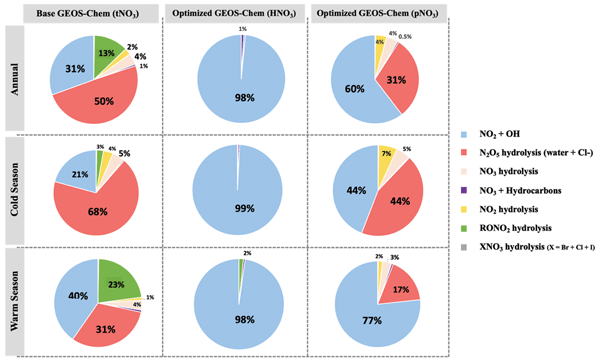
Heejeong Kim, Wendell W. Walters, Claire Bekker, Lee T. Murray, and Meredith G. Hastings
Atmos. Chem. Phys., 23, 4203–4219, https://doi.org/10.5194/acp-23-4203-2023, https://doi.org/10.5194/acp-23-4203-2023, 2023
Short summary
Short summary
Atmospheric nitrate has an important impact on human and ecosystem health. We evaluated atmospheric nitrate formation pathways in the northeastern US utilizing oxygen isotope compositions, which indicated a significant difference between the phases of nitrate (i.e., gas vs. particle). Comparing the observations with model simulations indicated that N2O5 hydrolysis chemistry was overpredicted. Our study has important implications for improving atmospheric chemistry model representation.
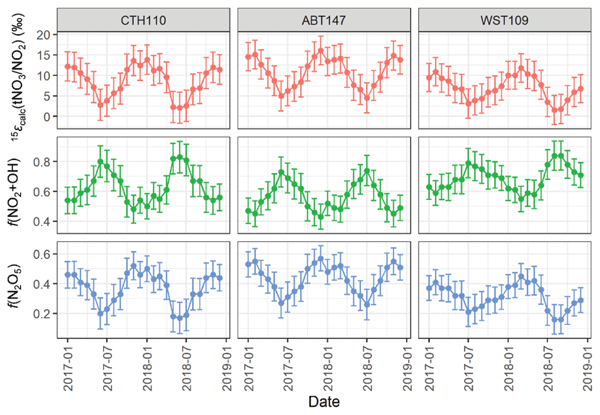
Claire Bekker, Wendell W. Walters, Lee T. Murray, and Meredith G. Hastings
Atmos. Chem. Phys., 23, 4185–4201, https://doi.org/10.5194/acp-23-4185-2023, https://doi.org/10.5194/acp-23-4185-2023, 2023
Short summary
Short summary
Nitrate is a critical component of the atmosphere that degrades air quality and ecosystem health. We have investigated the nitrogen isotope compositions of nitrate from deposition samples collected across the northeastern United States. Spatiotemporal variability in the nitrogen isotope compositions was found to track with nitrate formation chemistry. Our results highlight that nitrogen isotope compositions may be a robust tool for improving model representation of nitrate chemistry.

Christopher D. Wells, Matthew Kasoar, Nicolas Bellouin, and Apostolos Voulgarakis
Atmos. Chem. Phys., 23, 3575–3593, https://doi.org/10.5194/acp-23-3575-2023, https://doi.org/10.5194/acp-23-3575-2023, 2023
Short summary
Short summary
The climate is altered by greenhouse gases and air pollutant particles, and such emissions are likely to change drastically in the future over Africa. Air pollutants do not travel far, so their climate effect depends on where they are emitted. This study uses a climate model to find the climate impacts of future African pollutant emissions being either high or low. The particles absorb and scatter sunlight, causing the ground nearby to be cooler, but elsewhere the increased heat causes warming.
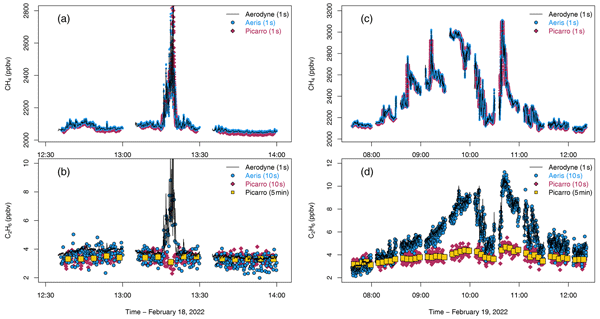
Róisín Commane, Andrew Hallward-Driemeier, and Lee T. Murray
Atmos. Meas. Tech., 16, 1431–1441, https://doi.org/10.5194/amt-16-1431-2023, https://doi.org/10.5194/amt-16-1431-2023, 2023
Short summary
Short summary
Methane / ethane ratios can be used to identify and partition the different sources of methane, especially in areas with natural gas mixed with biogenic methane emissions, such as cities. We tested three commercially available laser-based analyzers for sensitivity, precision, size, power requirement, ease of use on mobile platforms, and expertise needed to operate the instrument, and we make recommendations for use in various situations.
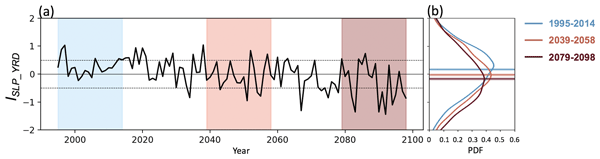
Zixuan Jia, Carlos Ordóñez, Ruth M. Doherty, Oliver Wild, Steven T. Turnock, and Fiona M. O'Connor
Atmos. Chem. Phys., 23, 2829–2842, https://doi.org/10.5194/acp-23-2829-2023, https://doi.org/10.5194/acp-23-2829-2023, 2023
Short summary
Short summary
This study investigates the influence of the winter large-scale circulation on daily concentrations of PM2.5 and their sensitivity to emissions. The new proposed circulation index can effectively distinguish different levels of air pollution and explain changes in PM2.5 sensitivity to emissions from local and surrounding regions. We then project future changes in PM2.5 concentrations using this index and find an increase in PM2.5 concentrations over the region due to climate change.
Mark Reyers, Stephanie Fiedler, Patrick Ludwig, Christoph Böhm, Volker Wennrich, and Yaping Shao
Clim. Past, 19, 517–532, https://doi.org/10.5194/cp-19-517-2023, https://doi.org/10.5194/cp-19-517-2023, 2023
Short summary
Short summary
In this study we performed high-resolution climate model simulations for the hyper-arid Atacama Desert for the mid-Pliocene (3.2 Ma). The aim is to uncover the atmospheric processes that are involved in the enhancement of strong rainfall events during this period. We find that strong upper-level moisture fluxes (so-called moisture conveyor belts) originating in the tropical eastern Pacific are the main driver for increased rainfall in the mid-Pliocene.
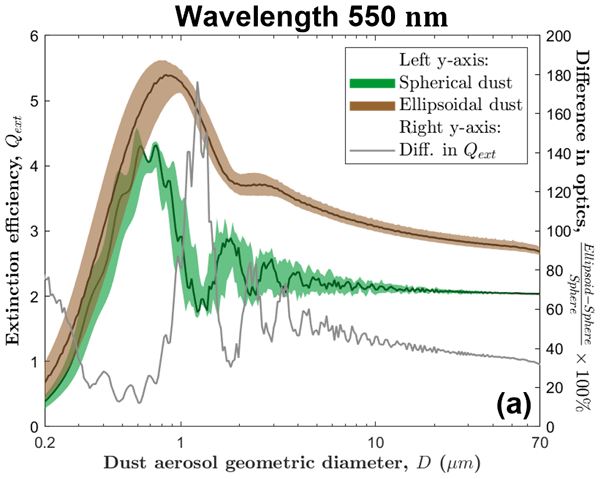
Yue Huang, Jasper F. Kok, Masanori Saito, and Olga Muñoz
Atmos. Chem. Phys., 23, 2557–2577, https://doi.org/10.5194/acp-23-2557-2023, https://doi.org/10.5194/acp-23-2557-2023, 2023
Short summary
Short summary
Global aerosol models and remote sensing retrievals use dust optical models with inconsistent and inaccurate dust shape approximations. Here, we present a new dust optical model constrained by measured dust shape distributions. This new dust optical model is an improvement on the current dust optical models used in models and retrieval algorithms, as quantified by comparisons against laboratory and field observations of dust optics.
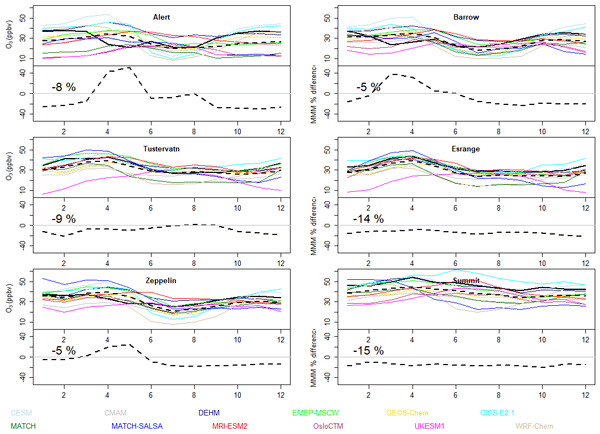
Cynthia H. Whaley, Kathy S. Law, Jens Liengaard Hjorth, Henrik Skov, Stephen R. Arnold, Joakim Langner, Jakob Boyd Pernov, Garance Bergeron, Ilann Bourgeois, Jesper H. Christensen, Rong-You Chien, Makoto Deushi, Xinyi Dong, Peter Effertz, Gregory Faluvegi, Mark Flanner, Joshua S. Fu, Michael Gauss, Greg Huey, Ulas Im, Rigel Kivi, Louis Marelle, Tatsuo Onishi, Naga Oshima, Irina Petropavlovskikh, Jeff Peischl, David A. Plummer, Luca Pozzoli, Jean-Christophe Raut, Tom Ryerson, Ragnhild Skeie, Sverre Solberg, Manu A. Thomas, Chelsea Thompson, Kostas Tsigaridis, Svetlana Tsyro, Steven T. Turnock, Knut von Salzen, and David W. Tarasick
Atmos. Chem. Phys., 23, 637–661, https://doi.org/10.5194/acp-23-637-2023, https://doi.org/10.5194/acp-23-637-2023, 2023
Short summary
Short summary
This study summarizes recent research on ozone in the Arctic, a sensitive and rapidly warming region. We find that the seasonal cycles of near-surface atmospheric ozone are variable depending on whether they are near the coast, inland, or at high altitude. Several global model simulations were evaluated, and we found that because models lack some of the ozone chemistry that is important for the coastal Arctic locations, they do not accurately simulate ozone there.
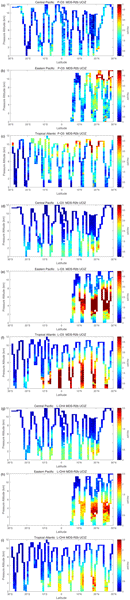
Hao Guo, Clare M. Flynn, Michael J. Prather, Sarah A. Strode, Stephen D. Steenrod, Louisa Emmons, Forrest Lacey, Jean-Francois Lamarque, Arlene M. Fiore, Gus Correa, Lee T. Murray, Glenn M. Wolfe, Jason M. St. Clair, Michelle Kim, John Crounse, Glenn Diskin, Joshua DiGangi, Bruce C. Daube, Roisin Commane, Kathryn McKain, Jeff Peischl, Thomas B. Ryerson, Chelsea Thompson, Thomas F. Hanisco, Donald Blake, Nicola J. Blake, Eric C. Apel, Rebecca S. Hornbrook, James W. Elkins, Eric J. Hintsa, Fred L. Moore, and Steven C. Wofsy
Atmos. Chem. Phys., 23, 99–117, https://doi.org/10.5194/acp-23-99-2023, https://doi.org/10.5194/acp-23-99-2023, 2023
Short summary
Short summary
We have prepared a unique and unusual result from the recent ATom aircraft mission: a measurement-based derivation of the production and loss rates of ozone and methane over the ocean basins. These are the key products of chemistry models used in assessments but have thus far lacked observational metrics. It also shows the scales of variability of atmospheric chemical rates and provides a major challenge to the atmospheric models.
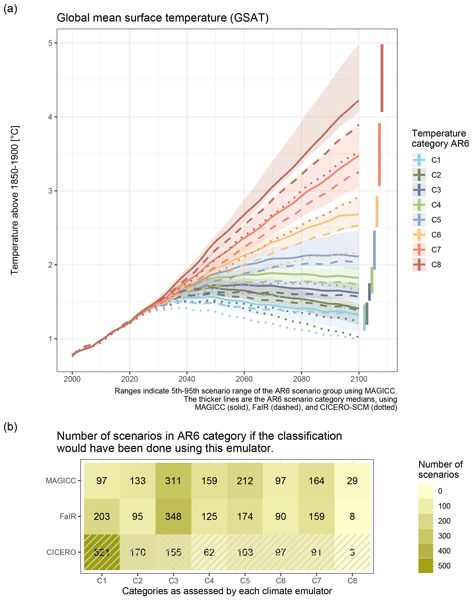
Jarmo S. Kikstra, Zebedee R. J. Nicholls, Christopher J. Smith, Jared Lewis, Robin D. Lamboll, Edward Byers, Marit Sandstad, Malte Meinshausen, Matthew J. Gidden, Joeri Rogelj, Elmar Kriegler, Glen P. Peters, Jan S. Fuglestvedt, Ragnhild B. Skeie, Bjørn H. Samset, Laura Wienpahl, Detlef P. van Vuuren, Kaj-Ivar van der Wijst, Alaa Al Khourdajie, Piers M. Forster, Andy Reisinger, Roberto Schaeffer, and Keywan Riahi
Geosci. Model Dev., 15, 9075–9109, https://doi.org/10.5194/gmd-15-9075-2022, https://doi.org/10.5194/gmd-15-9075-2022, 2022
Short summary
Short summary
Assessing hundreds or thousands of emission scenarios in terms of their global mean temperature implications requires standardised procedures of infilling, harmonisation, and probabilistic temperature assessments. We here present the open-source
climate-assessmentworkflow that was used in the IPCC AR6 Working Group III report. The paper provides key insight for anyone wishing to understand the assessment of climate outcomes of mitigation pathways in the context of the Paris Agreement.
Leighton A. Regayre, Lucia Deaconu, Daniel P. Grosvenor, David Sexton, Christopher C. Symonds, Tom Langton, Duncan Watson-Paris, Jane P. Mulcahy, Kirsty J. Pringle, Mark Richardson, Jill S. Johnson, John Rostron, Hamish Gordon, Grenville Lister, Philip Stier, and Ken S. Carslaw
EGUsphere, https://doi.org/10.5194/egusphere-2022-1330, https://doi.org/10.5194/egusphere-2022-1330, 2022
Preprint archived
Short summary
Short summary
We show that potential structural deficiencies in a climate model can be exposed by comprehensively exploring its parametric uncertainty, and that these deficiencies limit how much the model uncertainty can be reduced through observational constraint. Combined consideration of parametric and structural uncertainties provides a future pathway towards building models that have greater physical realism and lower uncertainty.

Longlei Li, Natalie M. Mahowald, Jasper F. Kok, Xiaohong Liu, Mingxuan Wu, Danny M. Leung, Douglas S. Hamilton, Louisa K. Emmons, Yue Huang, Neil Sexton, Jun Meng, and Jessica Wan
Geosci. Model Dev., 15, 8181–8219, https://doi.org/10.5194/gmd-15-8181-2022, https://doi.org/10.5194/gmd-15-8181-2022, 2022
Short summary
Short summary
This study advances mineral dust parameterizations in the Community Atmospheric Model (CAM; version 6.1). Efforts include 1) incorporating a more physically based dust emission scheme; 2) updating the dry deposition scheme; and 3) revising the gravitational settling velocity to account for dust asphericity. Substantial improvements achieved with these updates can help accurately quantify dust–climate interactions using CAM, such as the dust-radiation and dust–cloud interactions.
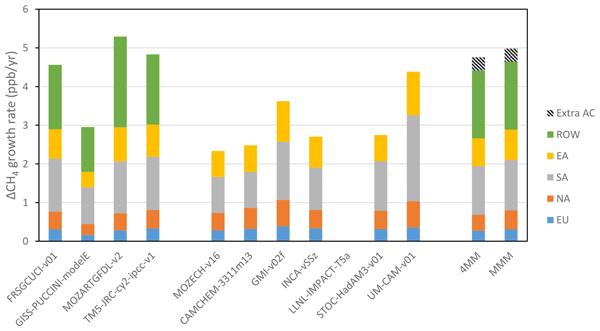
David S. Stevenson, Richard G. Derwent, Oliver Wild, and William J. Collins
Atmos. Chem. Phys., 22, 14243–14252, https://doi.org/10.5194/acp-22-14243-2022, https://doi.org/10.5194/acp-22-14243-2022, 2022
Short summary
Short summary
Atmospheric methane’s growth rate rose by 50 % in 2020 relative to 2019. Lower nitrogen oxide (NOx) emissions tend to increase methane’s atmospheric residence time; lower carbon monoxide (CO) and non-methane volatile organic compound (NMVOC) emissions decrease its lifetime. Combining model sensitivities with emission changes, we find that COVID-19 lockdown emission reductions can explain over half the observed increases in methane in 2020.
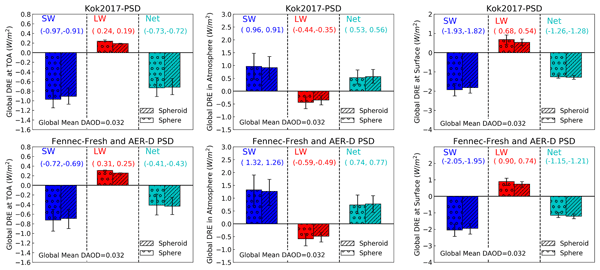
Qianqian Song, Zhibo Zhang, Hongbin Yu, Jasper F. Kok, Claudia Di Biagio, Samuel Albani, Jianyu Zheng, and Jiachen Ding
Atmos. Chem. Phys., 22, 13115–13135, https://doi.org/10.5194/acp-22-13115-2022, https://doi.org/10.5194/acp-22-13115-2022, 2022
Short summary
Short summary
This study developed a dataset that enables us to efficiently calculate dust direct radiative effect (DRE, i.e., cooling or warming our planet) for any given dust size distribution in addition to three sets of dust mineral components and two dust shapes. We demonstrate and validate the method of using this dataset to calculate dust DRE. Moreover, using this dataset we found that dust mineral composition is a more important factor in determining dust DRE than dust size and shape.
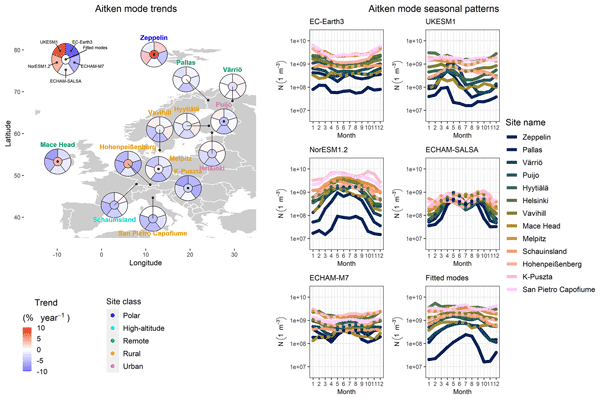
Ville Leinonen, Harri Kokkola, Taina Yli-Juuti, Tero Mielonen, Thomas Kühn, Tuomo Nieminen, Simo Heikkinen, Tuuli Miinalainen, Tommi Bergman, Ken Carslaw, Stefano Decesari, Markus Fiebig, Tareq Hussein, Niku Kivekäs, Radovan Krejci, Markku Kulmala, Ari Leskinen, Andreas Massling, Nikos Mihalopoulos, Jane P. Mulcahy, Steffen M. Noe, Twan van Noije, Fiona M. O'Connor, Colin O'Dowd, Dirk Olivie, Jakob B. Pernov, Tuukka Petäjä, Øyvind Seland, Michael Schulz, Catherine E. Scott, Henrik Skov, Erik Swietlicki, Thomas Tuch, Alfred Wiedensohler, Annele Virtanen, and Santtu Mikkonen
Atmos. Chem. Phys., 22, 12873–12905, https://doi.org/10.5194/acp-22-12873-2022, https://doi.org/10.5194/acp-22-12873-2022, 2022
Short summary
Short summary
We provide the first extensive comparison of detailed aerosol size distribution trends between in situ observations from Europe and five different earth system models. We investigated aerosol modes (nucleation, Aitken, and accumulation) separately and were able to show the differences between measured and modeled trends and especially their seasonal patterns. The differences in model results are likely due to complex effects of several processes instead of certain specific model features.
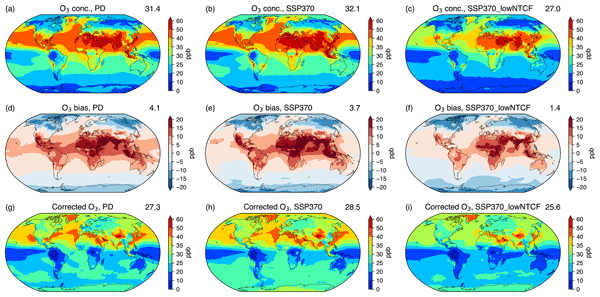
Zhenze Liu, Ruth M. Doherty, Oliver Wild, Fiona M. O'Connor, and Steven T. Turnock
Atmos. Chem. Phys., 22, 12543–12557, https://doi.org/10.5194/acp-22-12543-2022, https://doi.org/10.5194/acp-22-12543-2022, 2022
Short summary
Short summary
Weaknesses in process representation in chemistry–climate models lead to biases in simulating surface ozone and to uncertainty in projections of future ozone change. We develop a deep learning model to demonstrate the feasibility of ozone bias correction and show its capability in providing improved assessments of the impacts of climate and emission changes on future air quality, along with valuable information to guide future model development.
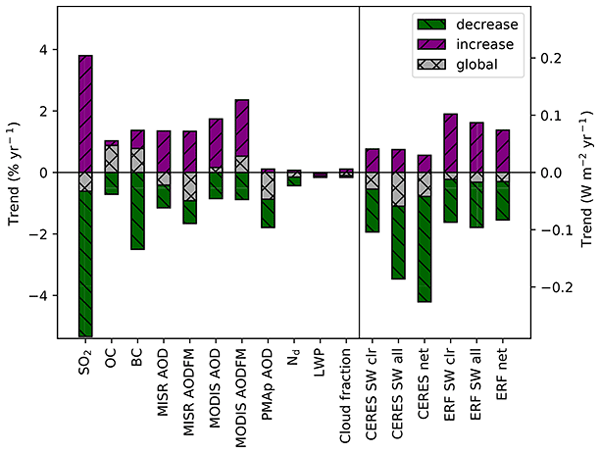
Johannes Quaas, Hailing Jia, Chris Smith, Anna Lea Albright, Wenche Aas, Nicolas Bellouin, Olivier Boucher, Marie Doutriaux-Boucher, Piers M. Forster, Daniel Grosvenor, Stuart Jenkins, Zbigniew Klimont, Norman G. Loeb, Xiaoyan Ma, Vaishali Naik, Fabien Paulot, Philip Stier, Martin Wild, Gunnar Myhre, and Michael Schulz
Atmos. Chem. Phys., 22, 12221–12239, https://doi.org/10.5194/acp-22-12221-2022, https://doi.org/10.5194/acp-22-12221-2022, 2022
Short summary
Short summary
Pollution particles cool climate and offset part of the global warming. However, they are washed out by rain and thus their effect responds quickly to changes in emissions. We show multiple datasets to demonstrate that aerosol emissions and their concentrations declined in many regions influenced by human emissions, as did the effects on clouds. Consequently, the cooling impact on the Earth energy budget became smaller. This change in trend implies a relative warming.
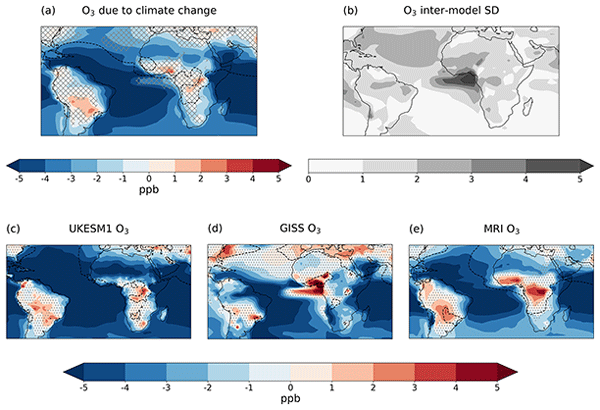
Flossie Brown, Gerd A. Folberth, Stephen Sitch, Susanne Bauer, Marijn Bauters, Pascal Boeckx, Alexander W. Cheesman, Makoto Deushi, Inês Dos Santos Vieira, Corinne Galy-Lacaux, James Haywood, James Keeble, Lina M. Mercado, Fiona M. O'Connor, Naga Oshima, Kostas Tsigaridis, and Hans Verbeeck
Atmos. Chem. Phys., 22, 12331–12352, https://doi.org/10.5194/acp-22-12331-2022, https://doi.org/10.5194/acp-22-12331-2022, 2022
Short summary
Short summary
Surface ozone can decrease plant productivity and impair human health. In this study, we evaluate the change in surface ozone due to climate change over South America and Africa using Earth system models. We find that if the climate were to change according to the worst-case scenario used here, models predict that forested areas in biomass burning locations and urban populations will be at increasing risk of ozone exposure, but other areas will experience a climate benefit.
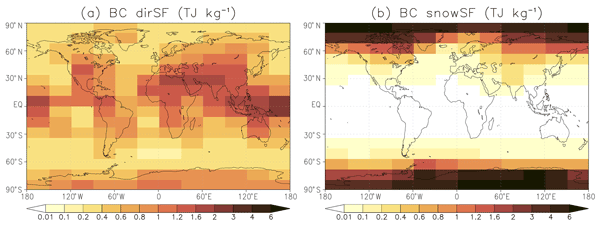
Petri Räisänen, Joonas Merikanto, Risto Makkonen, Mikko Savolahti, Alf Kirkevåg, Maria Sand, Øyvind Seland, and Antti-Ilari Partanen
Atmos. Chem. Phys., 22, 11579–11602, https://doi.org/10.5194/acp-22-11579-2022, https://doi.org/10.5194/acp-22-11579-2022, 2022
Short summary
Short summary
A climate model is used to evaluate how the radiative forcing (RF) associated with black carbon (BC) emissions depends on the latitude, longitude, and seasonality of emissions. It is found that both the direct RF (BC absorption of solar radiation in air) and snow RF (BC absorption in snow/ice) depend strongly on the emission region and season. The results suggest that, for a given mass of BC emitted, climatic impacts are likely to be largest for high-latitude emissions due to the large snow RF.
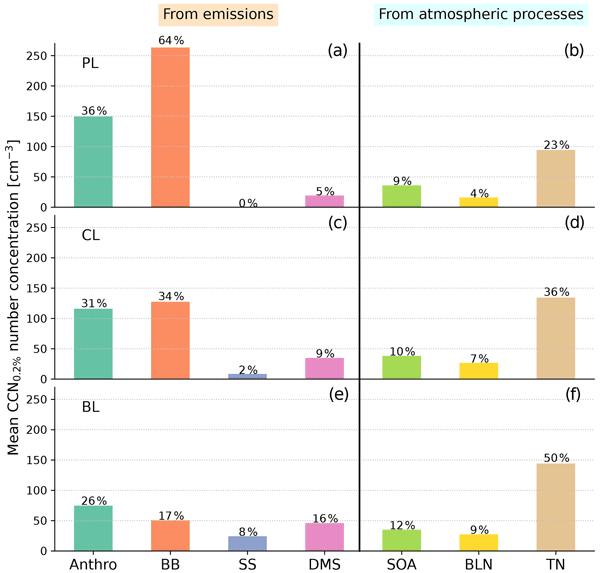
Haochi Che, Philip Stier, Duncan Watson-Parris, Hamish Gordon, and Lucia Deaconu
Atmos. Chem. Phys., 22, 10789–10807, https://doi.org/10.5194/acp-22-10789-2022, https://doi.org/10.5194/acp-22-10789-2022, 2022
Short summary
Short summary
Extensive stratocumulus clouds over the south-eastern Atlantic (SEA) can lead to a cooling effect on the climate. A key pathway by which aerosols affect cloud properties is by acting as cloud condensation nuclei (CCN). Here, we investigated the source attribution of CCN in the SEA as well as the cloud responses. Our results show that aerosol nucleation contributes most to CCN in the marine boundary layer. In terms of emissions, anthropogenic sources contribute most to the CCN and cloud droplets.
Eduardo Weide Luiz and Stephanie Fiedler
Wind Energ. Sci., 7, 1575–1591, https://doi.org/10.5194/wes-7-1575-2022, https://doi.org/10.5194/wes-7-1575-2022, 2022
Short summary
Short summary
This work analyses a meteorological event, called nocturnal low-level jets (NLLJs), defined as high wind speeds relatively close to the surface. There were positive and negative impacts from NLLJs. While NLLJs increased the mean power production, they also increased the variability in the wind with height. Our results imply that long NLLJ events are also larger, affecting many wind turbines at the same time. Short NLLJ events are more local, having stronger effects on power variability.
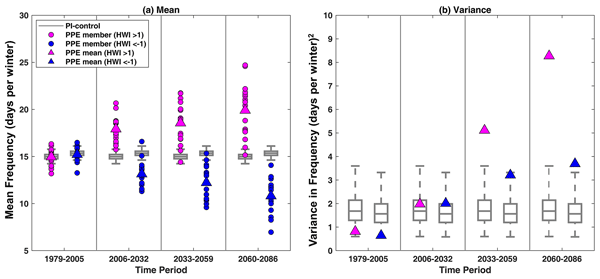
Shipra Jain, Ruth M. Doherty, David Sexton, Steven Turnock, Chaofan Li, Zixuan Jia, Zongbo Shi, and Lin Pei
Atmos. Chem. Phys., 22, 7443–7460, https://doi.org/10.5194/acp-22-7443-2022, https://doi.org/10.5194/acp-22-7443-2022, 2022
Short summary
Short summary
We provide a range of future projections of winter haze and clear conditions over the North China Plain (NCP) using multiple simulations from a climate model for the high-emission scenario (RCP8.5). The frequency of haze conducive weather is likely to increase whereas the frequency of clear weather is likely to decrease in future. The total number of hazy days for a given winter can be as much as ˜3.5 times higher than the number of clear days over the NCP.
Julian Steinheuer, Carola Detring, Frank Beyrich, Ulrich Löhnert, Petra Friederichs, and Stephanie Fiedler
Atmos. Meas. Tech., 15, 3243–3260, https://doi.org/10.5194/amt-15-3243-2022, https://doi.org/10.5194/amt-15-3243-2022, 2022
Short summary
Short summary
Doppler wind lidars (DWLs) allow the determination of wind profiles with high vertical resolution and thus provide an alternative to meteorological towers. We address the question of whether wind gusts can be derived since they are short-lived phenomena. Therefore, we compare different DWL configurations and develop a new method applicable to all of them. A fast continuous scanning mode that completes a full observation cycle within 3.4 s is found to be the best-performing configuration.
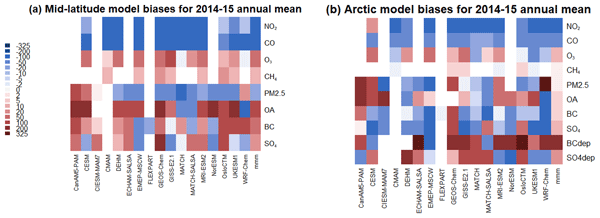
Cynthia H. Whaley, Rashed Mahmood, Knut von Salzen, Barbara Winter, Sabine Eckhardt, Stephen Arnold, Stephen Beagley, Silvia Becagli, Rong-You Chien, Jesper Christensen, Sujay Manish Damani, Xinyi Dong, Konstantinos Eleftheriadis, Nikolaos Evangeliou, Gregory Faluvegi, Mark Flanner, Joshua S. Fu, Michael Gauss, Fabio Giardi, Wanmin Gong, Jens Liengaard Hjorth, Lin Huang, Ulas Im, Yugo Kanaya, Srinath Krishnan, Zbigniew Klimont, Thomas Kühn, Joakim Langner, Kathy S. Law, Louis Marelle, Andreas Massling, Dirk Olivié, Tatsuo Onishi, Naga Oshima, Yiran Peng, David A. Plummer, Olga Popovicheva, Luca Pozzoli, Jean-Christophe Raut, Maria Sand, Laura N. Saunders, Julia Schmale, Sangeeta Sharma, Ragnhild Bieltvedt Skeie, Henrik Skov, Fumikazu Taketani, Manu A. Thomas, Rita Traversi, Kostas Tsigaridis, Svetlana Tsyro, Steven Turnock, Vito Vitale, Kaley A. Walker, Minqi Wang, Duncan Watson-Parris, and Tahya Weiss-Gibbons
Atmos. Chem. Phys., 22, 5775–5828, https://doi.org/10.5194/acp-22-5775-2022, https://doi.org/10.5194/acp-22-5775-2022, 2022
Short summary
Short summary
Air pollutants, like ozone and soot, play a role in both global warming and air quality. Atmospheric models are often used to provide information to policy makers about current and future conditions under different emissions scenarios. In order to have confidence in those simulations, in this study we compare simulated air pollution from 18 state-of-the-art atmospheric models to measured air pollution in order to assess how well the models perform.
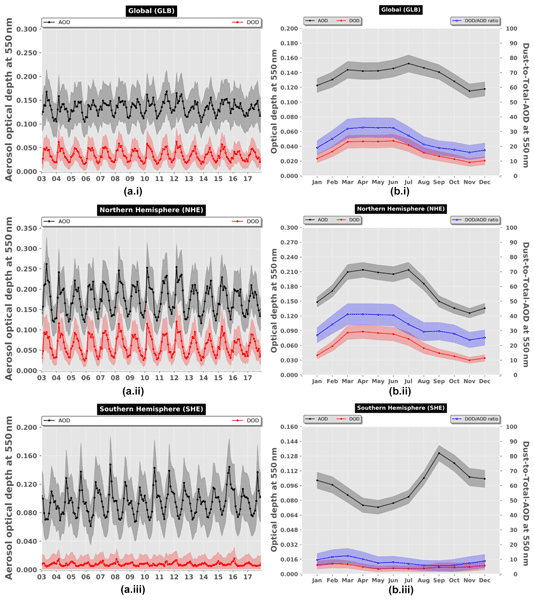
Antonis Gkikas, Emmanouil Proestakis, Vassilis Amiridis, Stelios Kazadzis, Enza Di Tomaso, Eleni Marinou, Nikos Hatzianastassiou, Jasper F. Kok, and Carlos Pérez García-Pando
Atmos. Chem. Phys., 22, 3553–3578, https://doi.org/10.5194/acp-22-3553-2022, https://doi.org/10.5194/acp-22-3553-2022, 2022
Short summary
Short summary
We present a comprehensive climatological analysis of dust optical depth (DOD) relying on the MIDAS dataset. MIDAS provides columnar mid-visible (550 nm) DOD at fine spatial resolution (0.1° × 0.1°) over a 15-year period (2003–2017). In the current study, the analysis is performed at various spatial (from regional to global) and temporal (from months to years) scales. More specifically, focus is given to specific regions hosting the major dust sources as well as downwind areas of the planet.

Henry Bowman, Steven Turnock, Susanne E. Bauer, Kostas Tsigaridis, Makoto Deushi, Naga Oshima, Fiona M. O'Connor, Larry Horowitz, Tongwen Wu, Jie Zhang, Dagmar Kubistin, and David D. Parrish
Atmos. Chem. Phys., 22, 3507–3524, https://doi.org/10.5194/acp-22-3507-2022, https://doi.org/10.5194/acp-22-3507-2022, 2022
Short summary
Short summary
A full understanding of ozone in the troposphere requires investigation of its temporal variability over all timescales. Model simulations show that the northern midlatitude ozone seasonal cycle shifted with industrial development (1850–2014), with an increasing magnitude and a later summer peak. That shift reached a maximum in the mid-1980s, followed by a reversal toward the preindustrial cycle. The few available observations, beginning in the 1970s, are consistent with the model simulations.
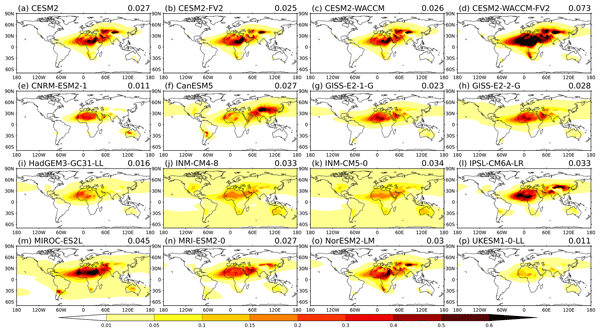
Alcide Zhao, Claire L. Ryder, and Laura J. Wilcox
Atmos. Chem. Phys., 22, 2095–2119, https://doi.org/10.5194/acp-22-2095-2022, https://doi.org/10.5194/acp-22-2095-2022, 2022
Short summary
Short summary
The CMIP6 models' simulated dust processes are getting more uncertain as models become more sophisticated. Of particular challenge are the links between dust cycles and optical properties, and we recommend more detailed output relating to dust cycles in future intercomparison projects to constrain such links. Also, models struggle to capture certain key regional dust processes such as dust accumulation along the slope of the Himalayas and dust seasonal cycles in North China and North America.

Zhenze Liu, Ruth M. Doherty, Oliver Wild, Fiona M. O'Connor, and Steven T. Turnock
Atmos. Chem. Phys., 22, 1209–1227, https://doi.org/10.5194/acp-22-1209-2022, https://doi.org/10.5194/acp-22-1209-2022, 2022
Short summary
Short summary
Tropospheric ozone is important to future air quality and climate, and changing emissions and climate influence ozone. We investigate the evolution of ozone and ozone sensitivity from the present day (2004–2014) to the future (2045–2055) and explore the main drivers of ozone changes from global and regional perspectives. This helps guide suitable emission control strategies to mitigate ozone pollution.

Matthew W. Christensen, Andrew Gettelman, Jan Cermak, Guy Dagan, Michael Diamond, Alyson Douglas, Graham Feingold, Franziska Glassmeier, Tom Goren, Daniel P. Grosvenor, Edward Gryspeerdt, Ralph Kahn, Zhanqing Li, Po-Lun Ma, Florent Malavelle, Isabel L. McCoy, Daniel T. McCoy, Greg McFarquhar, Johannes Mülmenstädt, Sandip Pal, Anna Possner, Adam Povey, Johannes Quaas, Daniel Rosenfeld, Anja Schmidt, Roland Schrödner, Armin Sorooshian, Philip Stier, Velle Toll, Duncan Watson-Parris, Robert Wood, Mingxi Yang, and Tianle Yuan
Atmos. Chem. Phys., 22, 641–674, https://doi.org/10.5194/acp-22-641-2022, https://doi.org/10.5194/acp-22-641-2022, 2022
Short summary
Short summary
Trace gases and aerosols (tiny airborne particles) are released from a variety of point sources around the globe. Examples include volcanoes, industrial chimneys, forest fires, and ship stacks. These sources provide opportunistic experiments with which to quantify the role of aerosols in modifying cloud properties. We review the current state of understanding on the influence of aerosol on climate built from the wide range of natural and anthropogenic laboratories investigated in recent decades.
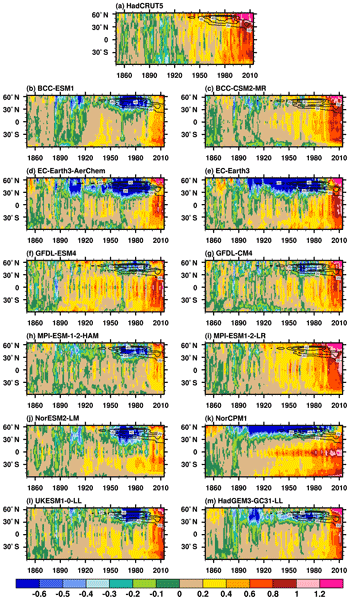
Jie Zhang, Kalli Furtado, Steven T. Turnock, Jane P. Mulcahy, Laura J. Wilcox, Ben B. Booth, David Sexton, Tongwen Wu, Fang Zhang, and Qianxia Liu
Atmos. Chem. Phys., 21, 18609–18627, https://doi.org/10.5194/acp-21-18609-2021, https://doi.org/10.5194/acp-21-18609-2021, 2021
Short summary
Short summary
The CMIP6 ESMs systematically underestimate TAS anomalies in the NH midlatitudes, especially from 1960 to 1990. The anomalous cooling is concurrent in time and space with anthropogenic SO2 emissions. The spurious drop in TAS is attributed to the overestimated aerosol concentrations. The aerosol forcing sensitivity cannot well explain the inter-model spread of PHC biases. And the cloud-amount term accounts for most of the inter-model spread in aerosol forcing sensitivity.
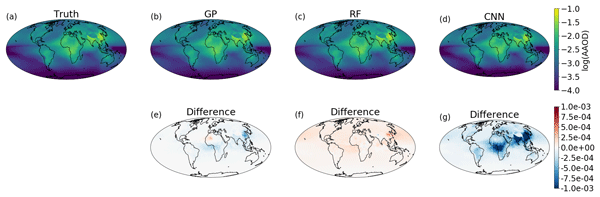
Duncan Watson-Parris, Andrew Williams, Lucia Deaconu, and Philip Stier
Geosci. Model Dev., 14, 7659–7672, https://doi.org/10.5194/gmd-14-7659-2021, https://doi.org/10.5194/gmd-14-7659-2021, 2021
Short summary
Short summary
The Earth System Emulator (ESEm) provides a fast and flexible framework for emulating a wide variety of Earth science datasets and tools for constraining (or tuning) models of any complexity. Three distinct use cases are presented that demonstrate the utility of ESEm and provide some insight into the use of machine learning for emulation in these different settings. The open-source Python package is freely available so that it might become a valuable tool for the community.
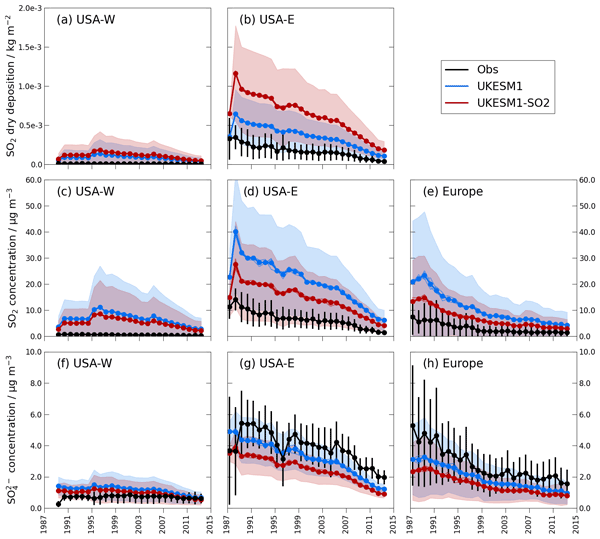
Catherine Hardacre, Jane P. Mulcahy, Richard J. Pope, Colin G. Jones, Steven T. Rumbold, Can Li, Colin Johnson, and Steven T. Turnock
Atmos. Chem. Phys., 21, 18465–18497, https://doi.org/10.5194/acp-21-18465-2021, https://doi.org/10.5194/acp-21-18465-2021, 2021
Short summary
Short summary
We investigate UKESM1's ability to represent the sulfur (S) cycle in the recent historical period. The S cycle is a key driver of historical radiative forcing. Earth system models such as UKESM1 should represent the S cycle well so that we can have confidence in their projections of future climate. We compare UKESM1 to observations of sulfur compounds, finding that the model generally performs well. We also identify areas for UKESM1’s development, focussing on how SO2 is removed from the air.
Paola Formenti, Claudia Di Biagio, Yue Huang, Jasper Kok, Marc Daniel Mallet, Damien Boulanger, and Mathieu Cazaunau
Atmos. Meas. Tech. Discuss., https://doi.org/10.5194/amt-2021-403, https://doi.org/10.5194/amt-2021-403, 2021
Publication in AMT not foreseen
Short summary
Short summary
This paper provides with standardized correction factors for the measurements of the most common instruments used in the atmosphere to measure the concentration per size of aerosol particles. These correction factors are provided to users with supplementary information for their use.
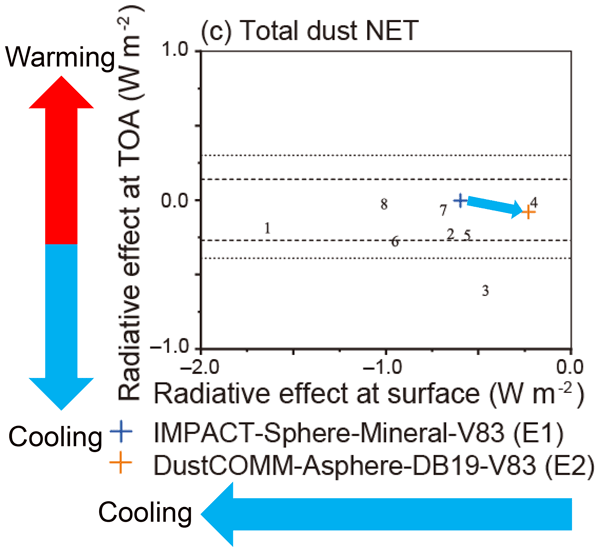
Akinori Ito, Adeyemi A. Adebiyi, Yue Huang, and Jasper F. Kok
Atmos. Chem. Phys., 21, 16869–16891, https://doi.org/10.5194/acp-21-16869-2021, https://doi.org/10.5194/acp-21-16869-2021, 2021
Short summary
Short summary
We improve the simulated dust properties of size-resolved dust concentration and particle shape. The improved simulation suggests much less atmospheric radiative heating near the major source regions, because of enhanced longwave warming at the surface by the synergy of coarser size and aspherical shape. Less intensified atmospheric heating could substantially modify the vertical temperature profile in Earth system models and thus has important implications for the projection of dust feedback.
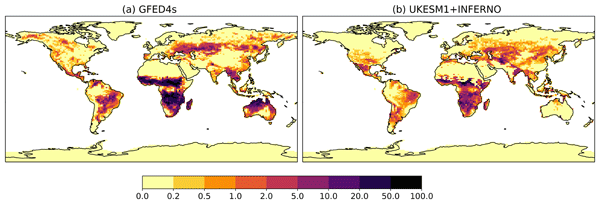
João C. Teixeira, Gerd A. Folberth, Fiona M. O'Connor, Nadine Unger, and Apostolos Voulgarakis
Geosci. Model Dev., 14, 6515–6539, https://doi.org/10.5194/gmd-14-6515-2021, https://doi.org/10.5194/gmd-14-6515-2021, 2021
Short summary
Short summary
Fire constitutes a key process in the Earth system, being driven by climate as well as affecting climate. However, studies on the effects of fires on atmospheric composition and climate have been limited to date. This work implements and assesses the coupling of an interactive fire model with atmospheric composition, comparing it to an offline approach. This approach shows good performance at a global scale. However, regional-scale limitations lead to a bias in modelling fire emissions.
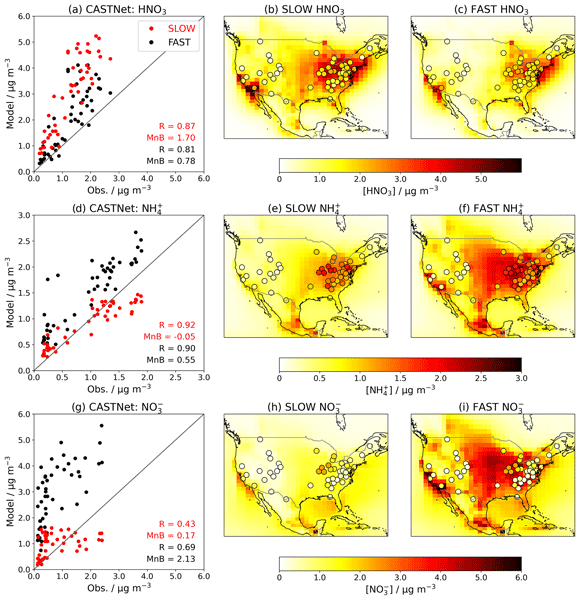
Anthony C. Jones, Adrian Hill, Samuel Remy, N. Luke Abraham, Mohit Dalvi, Catherine Hardacre, Alan J. Hewitt, Ben Johnson, Jane P. Mulcahy, and Steven T. Turnock
Atmos. Chem. Phys., 21, 15901–15927, https://doi.org/10.5194/acp-21-15901-2021, https://doi.org/10.5194/acp-21-15901-2021, 2021
Short summary
Short summary
Ammonium nitrate is hard to model because it forms and evaporates rapidly. One approach is to relate its equilibrium concentration to temperature, humidity, and the amount of nitric acid and ammonia gases. Using this approach, we limit the rate at which equilibrium is reached using various condensation rates in a climate model. We show that ammonium nitrate concentrations are highly sensitive to the condensation rate. Our results will help improve the representation of nitrate in climate models.
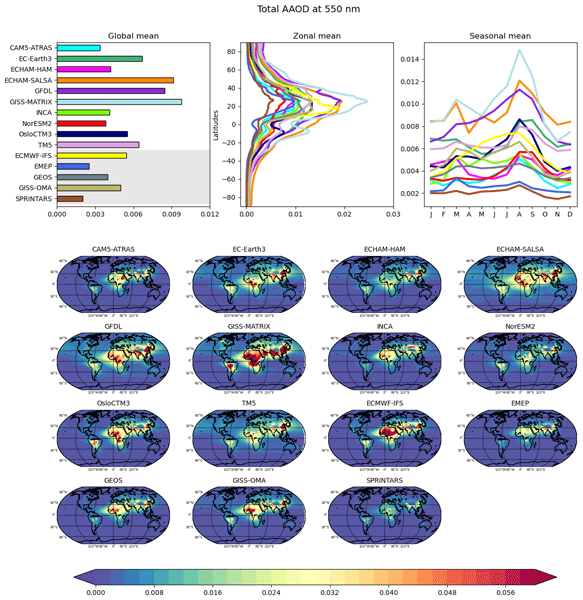
Maria Sand, Bjørn H. Samset, Gunnar Myhre, Jonas Gliß, Susanne E. Bauer, Huisheng Bian, Mian Chin, Ramiro Checa-Garcia, Paul Ginoux, Zak Kipling, Alf Kirkevåg, Harri Kokkola, Philippe Le Sager, Marianne T. Lund, Hitoshi Matsui, Twan van Noije, Dirk J. L. Olivié, Samuel Remy, Michael Schulz, Philip Stier, Camilla W. Stjern, Toshihiko Takemura, Kostas Tsigaridis, Svetlana G. Tsyro, and Duncan Watson-Parris
Atmos. Chem. Phys., 21, 15929–15947, https://doi.org/10.5194/acp-21-15929-2021, https://doi.org/10.5194/acp-21-15929-2021, 2021
Short summary
Short summary
Absorption of shortwave radiation by aerosols can modify precipitation and clouds but is poorly constrained in models. A total of 15 different aerosol models from AeroCom phase III have reported total aerosol absorption, and for the first time, 11 of these models have reported in a consistent experiment the contributions to absorption from black carbon, dust, and organic aerosol. Here, we document the model diversity in aerosol absorption.
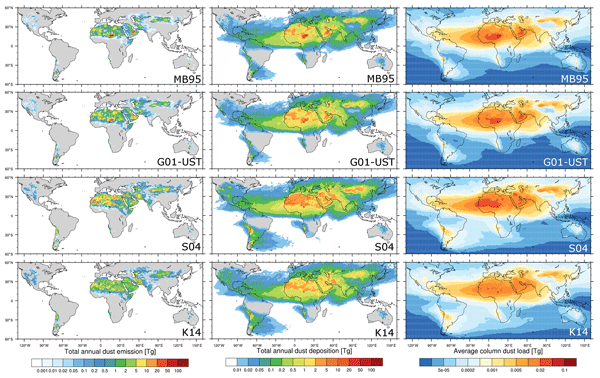
Martina Klose, Oriol Jorba, María Gonçalves Ageitos, Jeronimo Escribano, Matthew L. Dawson, Vincenzo Obiso, Enza Di Tomaso, Sara Basart, Gilbert Montané Pinto, Francesca Macchia, Paul Ginoux, Juan Guerschman, Catherine Prigent, Yue Huang, Jasper F. Kok, Ron L. Miller, and Carlos Pérez García-Pando
Geosci. Model Dev., 14, 6403–6444, https://doi.org/10.5194/gmd-14-6403-2021, https://doi.org/10.5194/gmd-14-6403-2021, 2021
Short summary
Short summary
Mineral soil dust is a major atmospheric airborne particle type. We present and evaluate MONARCH, a model used for regional and global dust-weather prediction. An important feature of the model is that it allows different approximations to represent dust, ranging from more simplified to more complex treatments. Using these different treatments, MONARCH can help us better understand impacts of dust in the Earth system, such as its interactions with radiation.
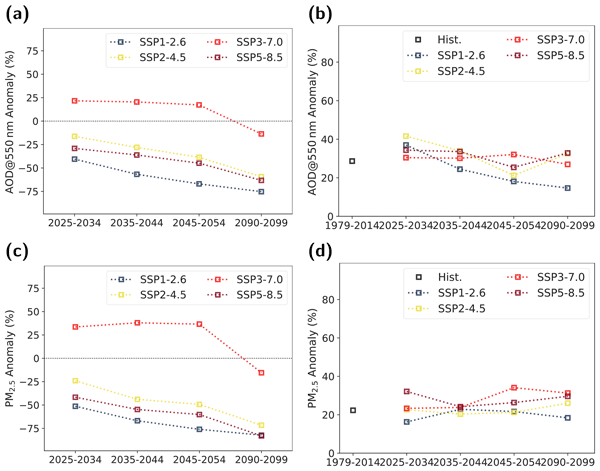
Liang Guo, Laura J. Wilcox, Massimo Bollasina, Steven T. Turnock, Marianne T. Lund, and Lixia Zhang
Atmos. Chem. Phys., 21, 15299–15308, https://doi.org/10.5194/acp-21-15299-2021, https://doi.org/10.5194/acp-21-15299-2021, 2021
Short summary
Short summary
Severe haze remains serious over Beijing despite emissions decreasing since 2008. Future haze changes in four scenarios are studied. The pattern conducive to haze weather increases with the atmospheric warming caused by the accumulation of greenhouse gases. However, the actual haze intensity, measured by either PM2.5 or optical depth, decreases with aerosol emissions. We show that only using the weather pattern index to predict the future change of Beijing haze is insufficient.
Cited articles
Abatzoglou, J. T., Williams, A. P., and Barbero, R.: Global Emergence of Anthropogenic Climate Change in Fire Weather Indices, Geophys. Res. Lett., 46, 326–336, https://doi.org/10.1029/2018GL080959, 2019. a
Adebiyi, A., Kok, J. F., Murray, B. J., Ryder, C. L., Stuut, J.-B. W., Kahn, R. A., Knippertz, P., Formenti, P., Mahowald, N. M., Pérez García-Pando, C., Klose, M., Ansmann, A., Samset, B. H., Ito, A., Balkanski, Y., Di Biagio, C., Romanias, M. N., Huang, Y., and Meng, J.: A review of coarse mineral dust in the Earth system, Aeolian Res., 60, 100849, https://doi.org/10.1016/j.aeolia.2022.100849, 2023. a
Akritidis, D., Bacer, S., Zanis, P., Georgoulias, A. K., Chowdhury, S., Horowitz, L. W., Naik, V., O'Connor, F. M., Keeble, J., Sager, P. L., van Noije, T., Zhou, P., Turnock, S., West, J. J., Lelieveld, J., and Pozzer, A.: Strong increase in mortality attributable to ozone pollution under a climate change and demographic scenario, Environ. Res. Lett., 19, 024041, https://doi.org/10.1088/1748-9326/ad2162, 2024. a, b
Allen, R. J. and Sherwood, S. C.: The impact of natural versus anthropogenic aerosols on atmospheric circulation in the Community Atmosphere Model, Clim. Dynam., 36, 1959–1978, 2011. a
Allen, R. J., Turnock, S., Nabat, P., Neubauer, D., Lohmann, U., Olivié, D., Oshima, N., Michou, M., Wu, T., Zhang, J., Takemura, T., Schulz, M., Tsigaridis, K., Bauer, S. E., Emmons, L., Horowitz, L., Naik, V., van Noije, T., Bergman, T., Lamarque, J.-F., Zanis, P., Tegen, I., Westervelt, D. M., Le Sager, P., Good, P., Shim, S., O'Connor, F., Akritidis, D., Georgoulias, A. K., Deushi, M., Sentman, L. T., John, J. G., Fujimori, S., and Collins, W. J.: Climate and air quality impacts due to mitigation of non-methane near-term climate forcers, Atmos. Chem. Phys., 20, 9641–9663, https://doi.org/10.5194/acp-20-9641-2020, 2020. a, b, c, d
Allen, R. J., Horowitz, L. W., Naik, V., Oshima, N., O'Connor, F. M., Turnock, S., Shim, S., Sager, P. L., van Noije, T., Tsigaridis, K., Bauer, S. E., Sentman, L. T., John, J. G., Broderick, C., Deushi, M., Folberth, G. A., Fujimori, S., and Collins, W. J.: Significant climate benefits from near-term climate forcer mitigation in spite of aerosol reductions, Environ. Res. Lett., https://doi.org/10.1088/1748-9326/abe06b, 2021. a, b, c, d, e
Allen, R. J., Samset, B. H., Wilcox, L. J., and Fisher, R. A.: Are Northern Hemisphere boreal forest fires more sensitive to future aerosol mitigation than to greenhouse gas–driven warming?, Sci. Adv., 10, eadl4007, https://doi.org/10.1126/sciadv.adl4007, 2024. a
Anstey, J. and Ellis, D.: CMIP-Data-Request/CMIP7_DReq_Content: Data request content for v1.2, Zenodo [code], https://doi.org/10.5281/zenodo.15103902, 2025. a
Bellouin, N., Quaas, J., Gryspeerdt, E., Kinne, S., Stier, P., Watson-Parris, D., Boucher, O., Carslaw, K. S., Christensen, M., Daniau, A.-L., Dufresne, J.-L., Feingold, G., Fiedler, S., Forster, P., Gettelman, A., Haywood, J. M., Lohmann, U., Malavelle, F., Mauritsen, T., McCoy, D. T., Myhre, G., Mülmenstädt, J., Neubauer, D., Possner, A., Rugenstein, M., Sato, Y., Schulz, M., Schwartz, S. E., Sourdeval, O., Storelvmo, T., Toll, V., Winker, D., and Stevens, B.: Bounding Global Aerosol Radiative Forcing of Climate Change, Rev. Geophys., 58, e2019RG000660, https://doi.org/10.1029/2019RG000660, 2020. a, b, c, d, e, f
Betts, R. A.: Offset of the potential carbon sink from boreal forestation by decreases in surface albedo, Nature, 408, 187–190, https://doi.org/10.1038/35041545, 2000. a
Bonan, G. B.: Forests, climate, and public policy: A 500-year interdisciplinary odyssey, Annu. Rev. Ecol. Evol. Sys., 47, 97–121, 2016. a
Bony, S., Stevens, B., Frierson, D. M., Jakob, C., Kageyama, M., Pincus, R., Shepherd, T. G., Sherwood, S. C., Siebesma, A. P., Sobel, A. H., and Watanabe, M.: Clouds, circulation and climate sensitivity, Nat. Geosci., 8, 261–268, 2015. a
Booth, B. B., Dunstone, N. J., Halloran, P. R., Andrews, T., and Bellouin, N.: Aerosols implicated as a prime driver of twentieth-century North Atlantic climate variability, Nature, 484, 228–232, 2012. a
Brown, M. A. J., Warwick, N. J., Abraham, N. L., Griffiths, P. T., Rumbold, S. T., Folberth, G. A., O'Connor, F. M., Bryant, H., and Archibald, A. T.: Development of fully interactive hydrogen with methane in UKESM1.0, Geosci. Model Dev., 19, 1537–1557, https://doi.org/10.5194/gmd-19-1537-2026, 2026. a, b
Burton, C., Lampe, S., Kelley, D. I., Thiery, W., Hantson, S., Christidis, N., Gudmundsson, L., Forrest, M., Burke, E., Chang, J., Huang, H., Ito, A., Kou-Giesbrecht, S., Lasslop, G., Li, W., Nieradzik, L., Li, F., Chen, Y., Randerson, J., Reyer, C. P. O., and Mengel, M.: Global burned area increasingly explained by climate change, Nat. Clim. Change, 14, 1186–1192, https://doi.org/10.1038/s41558-024-02140-w, 2024. a
CAMS: Copernicus Atmosphere Monitoring Service (CAMS) global biomass burning emissions based on fire radiative power (GFAS), Copernicus Atmosphere Monitoring Service (CAMS) Atmosphere Data Store [data set], https://doi.org/10.24381/a05253c7, 2022. a
Carslaw, K. S., Lee, L. A., Reddington, C. L., Pringle, K. J., Rap, A., Forster, P. M., Mann, G. W., Spracklen, D. V., Woodhouse, M. T., Regayre, L. A., and Pierce, J. R.: Large contribution of natural aerosols to uncertainty in indirect forcing, Nature, 503, 67–71, https://doi.org/10.1038/nature12674, 2013. a, b
Cheesman, A. W., Brown, F., Artaxo, P., Farha, M. N., Folberth, G. A., Hayes, F. J., Heinrich, V. H. A., Hill, T. C., Mercado, L. M., Oliver, R. J., O'Sullivan, M., Uddling, J., Cernusak, L. A., and Sitch, S.: Reduced productivity and carbon drawdown of tropical forests from ground-level ozone exposure, Nat. Geosci., 17, 1003–1007, https://doi.org/10.1038/s41561-024-01530-1, 2024. a
Chua, G., Naik, V., Paulot, F., Feng, J., and Horowitz, L. W.: Impact of Future Methane Emission Trajectories on Atmospheric Composition and Climate in a Future Hydrogen Economy, Earth's Future, 13, e2025EF006254, https://doi.org/10.1029/2025EF006254, 2025. a
Collins, W. J., Lamarque, J.-F., Schulz, M., Boucher, O., Eyring, V., Hegglin, M. I., Maycock, A., Myhre, G., Prather, M., Shindell, D., and Smith, S. J.: AerChemMIP: quantifying the effects of chemistry and aerosols in CMIP6, Geosci. Model Dev., 10, 585–607, https://doi.org/10.5194/gmd-10-585-2017, 2017. a, b, c, d, e, f, g, h, i, j, k
Collins, W. J., Daniel, J. S., Chipperfield, M. P., Cussac, M., Deushi, M., Faluvegi, G., Griffiths, P., Hodnebrog, Ø., Horowitz, L. W., Keeble, J., Kinnison, D., Naik, V., O'Connor, F. M., Shindell, D., Tilmes, S., Tsigaridis, K., Wang, Z., and Weber, J.: Indirect climate forcing from ozone depleting substances, EGUsphere [preprint], https://doi.org/10.5194/egusphere-2025-6033, 2026. a
Cox, P. M.: Description of the “TRIFFID” dynamic global vegetation model, Hadley Centre Technical Note HCTN, NO. 024, 2001. a
Delworth, T. L., Cooke, W. F., Adcroft, A., Bushuk, M., Chen, J.-H., Dunne, K. A., Ginoux, P., Gudgel, R., Hallberg, R. W., Harris, L., Harrison, M. J., Johnson, N., Kapnick, S. B., Lin, S.-J., Lu, F., Malyshev, S., Milly, P. C., Murakami, H., Naik, V., Pascale, S., Paynter, D., Rosati, A., Schwarzkopf, M., Shevliakova, E., Underwood, S., Wittenberg, A. T., Xiang, B., Yang, X., Zeng, F., Zhang, H., Zhang, L., and Zhao, M.: SPEAR: The Next Generation GFDL Modeling System for Seasonal to Multidecadal Prediction and Projection, J. Adv. Model. Earth Sy., 12, e2019MS001895, https://doi.org/10.1029/2019MS001895, 2020. a
Deser, C., Lehner, F., Rodgers, K. B., Ault, T., Delworth, T. L., DiNezio, P. N., Fiore, A., Frankignoul, C., Fyfe, J. C., Horton, D. E., Kay, J. E., Knutti, R., Lovenduski, N. S., Marotzke, J., McKinnon, K. A., Minobe, S., Randerson, J., Screen, J. A., Simpson, I. R., and Ting, M.: Insights from Earth system model initial-condition large ensembles and future prospects, Nat. Clim. Change, 10, 277–286, https://doi.org/10.1038/s41558-020-0731-2, 2020a. a
Dingley, B., Anstey, J. A., Abalos, M., Abraham, C., Bergman, T., Bock, L., Fiddes, S., Hassler, B., Kramer, R. J., Luo, F., O'Connor, F. M., Šácha, P., Simpson, I. R., Wilcox, L. J., and Zelinka, M. D.: CMIP7 Data Request: atmosphere priorities and opportunities, Geosci. Model Dev., 19, 2945–2984, https://doi.org/10.5194/gmd-19-2945-2026, 2026. a, b, c, d
Doherty, R. M., O'Connor, F. M., and Turnock, S. T.: Projections of Future Air Quality Are Uncertain. But Which Source of Uncertainty Is Most Important?, J. Geophys. Res.-Atmos., 127, e2022JD037948, https://doi.org/10.1029/2022JD037948, 2022. a
Dowdy, A. J., Ye, H., Pepler, A., Thatcher, M., Osbrough, S. L., Evans, J. P., Di Virgilio, G., and McCarthy, N.: Future changes in extreme weather and pyroconvection risk factors for Australian wildfires, Sci. Rep., 9, 10073, https://doi.org/10.1038/s41598-019-46362-x, 2019. a
Dunne, J. P., Horowitz, L. W., Adcroft, A. J., Ginoux, P., Held, I. M., John, J. G., Krasting, J. P., Malyshev, S., Naik, V., Paulot, F., Shevliakova, E., Stock, C. A., Zadeh, N., Balaji, V., Blanton, C., Dunne, K. A., Dupuis, C., Durachta, J., Dussin, R., Gauthier, P. P. G., Griffies, S. M., Guo, H., Hallberg, R. W., Harrison, M., He, J., Hurlin, W., McHugh, C., Menzel, R., Milly, P. C. D., Nikonov, S., Paynter, D. J., Ploshay, J., Radhakrishnan, A., Rand, K., Reichl, B. G., Robinson, T., Schwarzkopf, D. M., Sentman, L. T., Underwood, S., Vahlenkamp, H., Winton, M., Wittenberg, A. T., Wyman, B., Zeng, Y., and Zhao, M.: The GFDL Earth System Model Version 4.1 (GFDL-ESM 4.1): Overall Coupled Model Description and Simulation Characteristics, J. Adv. Model. Earth Sy., 12, e2019MS002015, https://doi.org/10.1029/2019MS002015, 2020. a
Dunne, J. P., Hewitt, H. T., Arblaster, J. M., Bonou, F., Boucher, O., Cavazos, T., Dingley, B., Durack, P. J., Hassler, B., Juckes, M., Miyakawa, T., Mizielinski, M., Naik, V., Nicholls, Z., O'Rourke, E., Pincus, R., Sanderson, B. M., Simpson, I. R., and Taylor, K. E.: An evolving Coupled Model Intercomparison Project phase 7 (CMIP7) and Fast Track in support of future climate assessment, Geosci. Model Dev., 18, 6671–6700, https://doi.org/10.5194/gmd-18-6671-2025, 2025. a, b, c, d, e, f, g, h
Durack, P. J., Naik, V., Nicholls, Z., O’Rourke, E., Turner, B., Buontempo, C., Brookshaw, A., Goddard, C., MacIntosh, C., Hewitt, H., and Dunne, J.: Earth System Forcing for CMIP7 and Beyond, B. Am. Meteorol. Soc., 106, E1580–E1588, https://doi.org/10.1175/BAMS-D-25-0119.1, 2025. a
Earl, N. and Simmonds, I.: Spatial and Temporal Variability and Trends in 2001–2016 Global Fire Activity, J. Geophys. Res.-Atmos., 123, 2524–2536, https://doi.org/10.1002/2017JD027749, 2018. a
ESGF input4MIPs: UCLA 1.0.2: DustCOMM historical dust emissions based on Kok et al. (2023) and Leung et al. (2024b) – source_id: UCLA-1-0-2-increasing, Earth system grid federation (ESGF) [data set], https://esgf-data2.llnl.gov/thredds/dodsC/user_pub_work/input4MIPs/CMIP6Plus/AerChemMIP2/UCLA/UCLA-1-0-2-increasing/atmos/yr/dustscalefactor/gm/v20250226/dustscalefactor_input4MIPs_emissions_AerChemMIP2_UCLA-1-0-2-increasing_gm_2001-2100.nc (last access: 1 November 2025), 2025. a
Esquivel-Elizondo, S., Hormaza Mejia, A., Sun, T., Shrestha, E., Hamburg, S. P., and Ocko, I. B.: Wide range in estimates of hydrogen emissions from infrastructure, Front. Energ. Res., 11, https://doi.org/10.3389/fenrg.2023.1207208, 2023. a
Evan, A. T., Flamant, C., Fiedler, S., and Doherty, O.: An analysis of aeolian dust in climate models, Geophys. Res. Lett., 41, 5996–6001, https://doi.org/10.1002/2014GL060545, 2014. a, b
Eyring, V., Bony, S., Meehl, G. A., Senior, C. A., Stevens, B., Stouffer, R. J., and Taylor, K. E.: Overview of the Coupled Model Intercomparison Project Phase 6 (CMIP6) experimental design and organization, Geosci. Model Dev., 9, 1937–1958, https://doi.org/10.5194/gmd-9-1937-2016, 2016. a
Fasullo, J. T., Lamarque, J.-F., Hannay, C., Rosenbloom, N., Tilmes, S., DeRepentigny, P., Jahn, A., and Deser, C.: Spurious Late Historical-Era Warming in CESM2 Driven by Prescribed Biomass Burning Emissions, Geophys. Res. Lett., 49, e2021GL097420, https://doi.org/10.1029/2021GL097420, 2022. a
Fiedler, S. and Putrasahan, D.: How does the North Atlantic SST pattern respond to anthropogenic aerosols in the 1970s and 2000s?, Geophys. Res. Lett., 48, e2020GL092142, https://doi.org/10.1029/2020GL092142, 2021. a, b
Fiedler, S., Crueger, T., D'Agostino, R., Peters, K., Becker, T., Leutwyler, D., Paccini, L., Burdanowitz, J., Buehler, S. A., Cortes, A. U., Dauhut, T., Dommenget, D., Fraedrich, K., Jungandreas, L., Maher, N., Naumann, A. K., Rugenstein, M., Sakradzija, M., Schmidt, H., Sielmann, F., Stephan, C., Timmreck, C., Zhu, X., and Stevens, B.: Simulated Tropical Precipitation Assessed across Three Major Phases of the Coupled Model Intercomparison Project (CMIP), Mon. Weather Rev., 148, 3653–3680, https://doi.org/10.1175/MWR-D-19-0404.1, 2020. a
Fiedler, S., van Noije, T., Smith, C. J., Boucher, O., Dufresne, J.-L., Kirkevåg, A., Olivié, D., Pinto, R., Reerink, T., Sima, A., and Schulz, M.: Historical Changes and Reasons for Model Differences in Anthropogenic Aerosol Forcing in CMIP6, Geophys. Res. Lett., 50, e2023GL104848, https://doi.org/10.1029/2023GL104848, 2023. a
Fiedler, S., Naik, V., O'Connor, F. M., Smith, C. J., Griffiths, P., Kramer, R. J., Takemura, T., Allen, R. J., Im, U., Kasoar, M., Modak, A., Turnock, S., Voulgarakis, A., Watson-Parris, D., Westervelt, D. M., Wilcox, L. J., Zhao, A., Collins, W. J., Schulz, M., Myhre, G., and Forster, P. M.: Interactions between atmospheric composition and climate change – progress in understanding and future opportunities from AerChemMIP, PDRMIP, and RFMIP, Geosci. Model Dev., 17, 2387–2417, https://doi.org/10.5194/gmd-17-2387-2024, 2024. a, b
Fiedler, S., Pham, T. V., Schlund, M., Wahl, S., Sudarchikova, N., Bischof, S., and Hoesly, R. M.: First Analysis of Climate Forcing and Response to Updated Historical Anthropogenic Aerosol With the New CMIP7 Model ICON XPP, J. Adv. Model. Earth Sy., 17, e2025MS005067, https://doi.org/10.1029/2025MS005067, 2025. a
Fiore, A. M., Jacob, D. J., Field, B. D., Streets, D. G., Fernandes, S. D., and Jang, C.: Linking ozone pollution and climate change: The case for controlling methane, Geophys. Res. Lett., 29, 25-1–25-4, https://doi.org/10.1029/2002GL015601, 2002. a
Fiore, A. M., Naik, V., and Leibensperger, E. M.: Air Quality and Climate Connections, J. Air Waste Manage., 65, 645–685, https://doi.org/10.1080/10962247.2015.1040526, 2015. a, b
Fiore, A. M., Milly, G. P., Hancock, S. E., Quiñones, L., Bowden, J. H., Helstrom, E., Lamarque, J.-F., Schnell, J., West, J. J., and Xu, Y.: Characterizing Changes in Eastern U.S. Pollution Events in a Warming World, J. Geophys. Res.-Atmos., 127, e2021JD035985, https://doi.org/10.1029/2021JD035985, e2021JD035985 2021JD035985, 2022. a
Folberth, G. A., Staniaszek, Z., Archibald, A. T., Gedney, N., Griffiths, P. T., Jones, C. D., O’Connor, F. M., Parker, R. J., Sellar, A. A., and Wiltshire, A.: Description and Evaluation of an Emission-Driven and Fully Coupled Methane Cycle in UKESM1, J. Adv. Model. Earth Sy., 14, e2021MS002982, https://doi.org/10.1029/2021MS002982, 2022. a
Fu, T.-M. and Tian, H.: Climate Change Penalty to Ozone Air Quality: Review of Current Understandings and Knowledge Gaps, Curr. Pollut. Rep., 5, 159–171, https://doi.org/10.1007/s40726-019-00115-6, 2019. a, b
Galizia, L. F., Barbero, R., Rodrigues, M., Ruffault, J., Pimont, F., and Curt, T.: Global Warming Reshapes European Pyroregions, Earth's Future, 11, e2022EF003182, https://doi.org/10.1029/2022EF003182, 2023. a
Galmarini, S., Koffi, B., Solazzo, E., Keating, T., Hogrefe, C., Schulz, M., Benedictow, A., Griesfeller, J. J., Janssens-Maenhout, G., Carmichael, G., Fu, J., and Dentener, F.: Technical note: Coordination and harmonization of the multi-scale, multi-model activities HTAP2, AQMEII3, and MICS-Asia3: simulations, emission inventories, boundary conditions, and model output formats, Atmos. Chem. Phys., 17, 1543–1555, https://doi.org/10.5194/acp-17-1543-2017, 2017. a
Gillett, N. P., Simpson, I. R., Hegerl, G., Knutti, R., Mitchell, D., Ribes, A., Shiogama, H., Stone, D., Tebaldi, C., Wolski, P., Zhang, W., and Arora, V. K.: The Detection and Attribution Model Intercomparison Project (DAMIP v2.0) contribution to CMIP7, Geosci. Model Dev., 18, 4399–4416, https://doi.org/10.5194/gmd-18-4399-2025, 2025. a, b, c
Goita, E. G., Beagle, E. A., Nasta, A. N., Wissmiller, D. L., Ravikumar, A., and Webber, M. E.: Effect of hydrogen leakage on the life cycle climate impacts of hydrogen supply chains, Commun. Earth Environ., 6, 160, https://doi.org/10.1038/s43247-025-02141-3, 2025. a
Gomez, J., Allen, R. J., Turnock, S. T., Horowitz, L. W., Tsigaridis, K., Bauer, S. E., Olivié, D., Thomson, E. S., and Ginoux, P.: The projected future degradation in air quality is caused by more abundant natural aerosols in a warmer world, Commun. Earth Environ., 4, 22, https://doi.org/10.1038/s43247-023-00688-7, 2023. a
Griffiths, P. T., Wilcox, L. J., Allen, R. J., Naik, V., O'Connor, F. M., Prather, M., Archibald, A., Brown, F., Deushi, M., Collins, W., Fiedler, S., Oshima, N., Murray, L. T., Samset, B. H., Smith, C., Turnock, S., Watson-Parris, D., and Young, P. J.: Opinion: The role of AerChemMIP in advancing climate and air quality research, Atmos. Chem. Phys., 25, 8289–8328, https://doi.org/10.5194/acp-25-8289-2025, 2025. a, b, c, d, e, f, g
Guendelman, I., Merlis, T. M., Cheng, K.-Y., Harris, L. M., Bretherton, C. S., Bolot, M., Zhou, L., Kaltenbaugh, A., Clark, S. K., and Fueglistaler, S.: The Precipitation Response to Warming and CO2 Increase: A Comparison of a Global Storm Resolving Model and CMIP6 Models, Geophys. Res. Lett., 51, e2023GL107008, https://doi.org/10.1029/2023GL107008, 2024. a
Guenther, A. B., Jiang, X., Heald, C. L., Sakulyanontvittaya, T., Duhl, T., Emmons, L. K., and Wang, X.: The Model of Emissions of Gases and Aerosols from Nature version 2.1 (MEGAN2.1): an extended and updated framework for modeling biogenic emissions, Geosci. Model Dev., 5, 1471–1492, https://doi.org/10.5194/gmd-5-1471-2012, 2012. a
Guo, L., Wilcox, L. J., Bollasina, M., Turnock, S. T., Lund, M. T., and Zhang, L.: Competing effects of aerosol reductions and circulation changes for future improvements in Beijing haze, Atmos. Chem. Phys., 21, 15299–15308, https://doi.org/10.5194/acp-21-15299-2021, 2021. a
Hamilton, D., Kasoar, M., Bergas-Massó, E., Dalmonech, D., Hantson, S., Lasslop, G., Voulgarakis, A., and Wells, C.: Global Warming Increases Fire Emissions but Resulting Aerosol Forcing is Uncertain, Research Square [preprint], https://doi.org/10.21203/rs.3.rs-4567012/v1, 2024. a
Hamilton, D. S., Hantson, S., Scott, C., Kaplan, J. O., Pringle, K., Nieradzik, L. P., Rap, A., Folberth, G., Spracklen, D. V., and Carslaw, K.: Reassessment of pre-industrial fire emissions strongly affects anthropogenic aerosol forcing, Nat. Commun., 9, 3182, https://doi.org/10.1038/s41467-018-05592-9, 2018. a
Heyblom, K. B., Singh, H. A., Rasch, P. J., and DeRepentigny, P.: Increased Variability of Biomass Burning Emissions in CMIP6 Amplifies Hydrologic Cycle in the CESM2 Large Ensemble, Geophys. Res. Lett., 49, e2021GL096868, https://doi.org/10.1029/2021GL096868, 2022. a
Heyblom, K. B., Singh, H. A., Rasch, P. J., and Hirasawa, H.: Variability in Biomass Burning Emissions Weakens Aerosol Forcing Due To Nonlinear Aerosol-Cloud Interactions, Geophys. Res. Lett., 50, e2022GL102685, https://doi.org/10.1029/2022GL102685, 2023. a
Hooper, J. and Marx, S.: A global doubling of dust emissions during the Anthropocene?, Global Planet. Change, 169, 70–91, https://doi.org/10.1016/j.gloplacha.2018.07.003, 2018. a
Horowitz, L. W., Naik, V., Paulot, F., Ginoux, P. A., Dunne, J. P., Mao, J., Schnell, J., Chen, X., He, J., John, J. G., Lin, M., Lin, P., Malyshev, S., Paynter, D., Shevliakova, E., and Zhao, M.: The GFDL Global Atmospheric Chemistry-Climate Model AM4.1: Model Description and Simulation Characteristics, J. Adv. Model. Earth Sy., 12, e2019MS002032, https://doi.org/10.1029/2019MS002032, 2020. a
Huneeus, N., Schulz, M., Balkanski, Y., Griesfeller, J., Prospero, J., Kinne, S., Bauer, S., Boucher, O., Chin, M., Dentener, F., Diehl, T., Easter, R., Fillmore, D., Ghan, S., Ginoux, P., Grini, A., Horowitz, L., Koch, D., Krol, M. C., Landing, W., Liu, X., Mahowald, N., Miller, R., Morcrette, J.-J., Myhre, G., Penner, J., Perlwitz, J., Stier, P., Takemura, T., and Zender, C. S.: Global dust model intercomparison in AeroCom phase I, Atmos. Chem. Phys., 11, 7781–7816, https://doi.org/10.5194/acp-11-7781-2011, 2011. a
IPCC: Climate Change 2021: The Physical Science Basis. Contribution of Working Group I to the Sixth Assessment Report of the Intergovernmental Panel on Climate Change, edited by: Masson-Delmotte, V., Zhai, P., Pirani, A., Connors, S. L., Péan, C., Berger, S., Caud, N., Chen, Y., Goldfarb, L., Gomis, M. I., Huang, M., Leitzell, K., Lonnoy, E., Matthews, J. B. R., Maycock, T. K., Waterfield, T., Yelekçi, O., Yu, R., and Zhou, B., Cambridge University Press, Cambridge, United Kingdom and New York, NY, USA, https://doi.org/10.1017/9781009157896, 2021. a
Jain, S., Doherty, R. M., Sexton, D., Turnock, S., Li, C., Jia, Z., Shi, Z., and Pei, L.: Future projections of daily haze-conducive and clear weather conditions over the North China Plain using a perturbed parameter ensemble, Atmos. Chem. Phys., 22, 7443–7460, https://doi.org/10.5194/acp-22-7443-2022, 2022. a
Jones, A. C., Hill, A., Remy, S., Abraham, N. L., Dalvi, M., Hardacre, C., Hewitt, A. J., Johnson, B., Mulcahy, J. P., and Turnock, S. T.: Exploring the sensitivity of atmospheric nitrate concentrations to nitric acid uptake rate using the Met Office's Unified Model, Atmos. Chem. Phys., 21, 15901–15927, https://doi.org/10.5194/acp-21-15901-2021, 2021. a
Jones, M. W., Abatzoglou, J. T., Veraverbeke, S., Andela, N., Lasslop, G., Forkel, M., Smith, A. J. P., Burton, C., Betts, R. A., van der Werf, G. R., Sitch, S., Canadell, J. G., Santín, C., Kolden, C., Doerr, S. H., and Le Quéré, C.: Global and Regional Trends and Drivers of Fire Under Climate Change, Rev. Geophys., 60, e2020RG000726, https://doi.org/10.1029/2020RG000726, 2022. a, b, c
Jones, M. W., Veraverbeke, S., Andela, N., Doerr, S. H., Kolden, C., Mataveli, G., Pettinari, M. L., Quéré, C. L., Rosan, T. M., van der Werf, G. R., van Wees, D., and Abatzoglou, J. T.: Global rise in forest fire emissions linked to climate change in the extratropics, Science, 386, eadl5889, https://doi.org/10.1126/science.adl5889, 2024. a, b
Juckes, M., Taylor, K. E., Antonio, F., Brayshaw, D., Buontempo, C., Cao, J., Durack, P. J., Kawamiya, M., Kim, H., Lovato, T., Mackallah, C., Mizielinski, M., Nuzzo, A., Stockhause, M., Visioni, D., Walton, J., Turner, B., O'Rourke, E., and Dingley, B.: Baseline Climate Variables for Earth System Modelling, Geosci. Model Dev., 18, 2639–2663, https://doi.org/10.5194/gmd-18-2639-2025, 2025. a
Kaiser, J. W., Heil, A., Andreae, M. O., Benedetti, A., Chubarova, N., Jones, L., Morcrette, J.-J., Razinger, M., Schultz, M. G., Suttie, M., and van der Werf, G. R.: Biomass burning emissions estimated with a global fire assimilation system based on observed fire radiative power, Biogeosciences, 9, 527–554, https://doi.org/10.5194/bg-9-527-2012, 2012. a, b
Kang, S. M., Xie, S.-P., Deser, C., and Xiang, B.: Zonal mean and shift modes of historical climate response to evolving aerosol distribution, Sci. Bull., 66, 2405–2411, https://doi.org/10.1016/j.scib.2021.07.013, 2021. a
Kelley, M., Schmidt, G. A., Nazarenko, L. S., Bauer, S. E., Ruedy, R., Russell, G. L., Ackerman, A. S., Aleinov, I., Bauer, M., Bleck, R., Canuto, V., Cesana, G., Cheng, Y., Clune, T. L., Cook, B. I., Cruz, C. A., Del Genio, A. D., Elsaesser, G. S., Faluvegi, G., Kiang, N. Y., Kim, D., Lacis, A. A., Leboissetier, A., LeGrande, A. N., Lo, K. K., Marshall, J., Matthews, E. E., McDermid, S., Mezuman, K., Miller, R. L., Murray, L. T., Oinas, V., Orbe, C., García-Pando, C. P., Perlwitz, J. P., Puma, M. J., Rind, D., Romanou, A., Shindell, D. T., Sun, S., Tausnev, N., Tsigaridis, K., Tselioudis, G., Weng, E., Wu, J., and Yao, M.-S.: GISS-E2.1: Configurations and Climatology, J. Adv. Model. Earth Sy., 12, e2019MS002025, https://doi.org/10.1029/2019MS002025, 2020. a
Kok, J. F., Ward, D. S., Mahowald, N. M., and Evan, A. T.: Global and regional importance of the direct dust-climate feedback, Nat. Commun., 9, 241, https://doi.org/10.1038/s41467-017-02620-y, 2018. a
Kok, J. F., Adebiyi, A. A., Albani, S., Balkanski, Y., Checa-Garcia, R., Chin, M., Colarco, P. R., Hamilton, D. S., Huang, Y., Ito, A., Klose, M., Leung, D. M., Li, L., Mahowald, N. M., Miller, R. L., Obiso, V., Pérez García-Pando, C., Rocha-Lima, A., Wan, J. S., and Whicker, C. A.: Improved representation of the global dust cycle using observational constraints on dust properties and abundance, Atmos. Chem. Phys., 21, 8127–8167, https://doi.org/10.5194/acp-21-8127-2021, 2021a. a
Kok, J. F., Adebiyi, A. A., Albani, S., Balkanski, Y., Checa-Garcia, R., Chin, M., Colarco, P. R., Hamilton, D. S., Huang, Y., Ito, A., Klose, M., Li, L., Mahowald, N. M., Miller, R. L., Obiso, V., Pérez García-Pando, C., Rocha-Lima, A., and Wan, J. S.: Contribution of the world's main dust source regions to the global cycle of desert dust, Atmos. Chem. Phys., 21, 8169–8193, https://doi.org/10.5194/acp-21-8169-2021, 2021b. a
Kramer, R., Smith, C., and Andrews, T.: The Radiative Forcing Model Intercomparison Project (RFMIP2.0) for CMIP7, EGUsphere [preprint], https://doi.org/10.5194/egusphere-2025-4378, 2025. a, b, c
Li, F., Lawrence, D., Rogers, B., Burton, C., Huang, H., Jiang, Y., Kaiser, J., Kasoar, M., Lee, H., Leung, R., Nieradzik, L., Wang, A., Ward, D., Ce, L., Li, Y., Lin, Z., Voulgarakis, A., and Xue, Y.: The Fire Modeling Intercomparison Project (FireMIP) for CMIP7, EGUsphere [preprint], https://doi.org/10.5194/egusphere-2025-6115, 2025. a, b
Lund, M. T., Myhre, G., Skeie, R. B., Samset, B. H., and Klimont, Z.: Implications of differences between recent anthropogenic aerosol emission inventories for diagnosed AOD and radiative forcing from 1990 to 2019, Atmos. Chem. Phys., 23, 6647–6662, https://doi.org/10.5194/acp-23-6647-2023, 2023. a
Mahowald, N. M. and Luo, C.: A less dusty future?, Geophys. Res. Lett., 30, https://doi.org/10.1029/2003GL017880, 2003. a
Mahowald, N. M., Kloster, S., Engelstaedter, S., Moore, J. K., Mukhopadhyay, S., McConnell, J. R., Albani, S., Doney, S. C., Bhattacharya, A., Curran, M. A. J., Flanner, M. G., Hoffman, F. M., Lawrence, D. M., Lindsay, K., Mayewski, P. A., Neff, J., Rothenberg, D., Thomas, E., Thornton, P. E., and Zender, C. S.: Observed 20th century desert dust variability: impact on climate and biogeochemistry, Atmos. Chem. Phys., 10, 10875–10893, https://doi.org/10.5194/acp-10-10875-2010, 2010. a
Martin, D., Tomida, M., and Meacham, B.: Environmental impact of fire, Fire Sci. Rev., 5, 1–21, 2016. a
McKay, D. I. A., Staal, A., Abrams, J. F., Winkelmann, R., Sakschewski, B., Loriani, S., Fetzer, I., Cornell, S. E., Rockström, J., and Lenton, T. M.: Exceeding 1.5°C global warming could trigger multiple climate tipping points, Science, 377, eabn7950, https://doi.org/10.1126/science.abn7950, 2022. a
Monerie, P.-A., Wilcox, L. J., and Turner, A. G.: Effects of Anthropogenic Aerosol and Greenhouse Gas Emissions on Northern Hemisphere Monsoon Precipitation: Mechanisms and Uncertainty, J. Climate, 35, 2305–2326, https://doi.org/10.1175/JCLI-D-21-0412.1, 2022. a, b
Murray, L. T., Leibensperger, E. M., Mickley, L. J., and Tai, A. P. K.: Estimating future climate change impacts on human mortality and crop yields via air pollution, P. Natl. Acad. Sci. USA, 121, e2400117121, https://doi.org/10.1073/pnas.2400117121, 2024. a, b
Myhre, G., Forster, P. M., Samset, B. H., Odnebrog, Sillmann, J., Aalbergsjø, S. G., Andrews, T., Boucher, O., Faluvegi, G., Fläschner, D., Iversen, T., Kasoar, M., Kharin, V., Kirkevag, A., Lamarque, J. F., Olivié, D., Richardson, T. B., Shindell, D., Shine, K. P., Stjern, C. W., Takemura, T., Voulgarakis, A., and Zwiers, F.: PDRMIP: A precipitation driver and response model intercomparison project-protocol and preliminary results, B. Am. Meteorol. Soc., 98, 1185–1198, https://doi.org/10.1175/BAMS-D-16-0019.1, 2017. a
Myhre, G., Kramer, R. J., Smith, C. J., Hodnebrog, Forster, P., Soden, B. J., Samset, B. H., Stjern, C. W., Andrews, T., Boucher, O., Faluvegi, G., Fläschner, D., Kasoar, M., Kirkevåg, A., Lamarque, J. F., Olivié, D., Richardson, T., Shindell, D., Stier, P., Takemura, T., Voulgarakis, A., and Watson-Parris, D.: Quantifying the Importance of Rapid Adjustments for Global Precipitation Changes, Geophys. Res. Lett., 45, 11399–11405, https://doi.org/10.1029/2018GL079474, 2018. a
Myhre, G., Jouan, C., Stjern, C. W., and Hodnebrog, Ø.: Strong contribution from sensible heat to global precipitation increase in climate models is not supported by observational based data, F. Climate, 6, https://doi.org/10.3389/fclim.2024.1383337, 2024. a
Naumann, A. K., Esch, M., and Stevens, B.: How the representation of microphysical processes affects tropical condensate in the global storm-resolving model ICON, Atmos. Chem. Phys., 25, 6429–6444, https://doi.org/10.5194/acp-25-6429-2025, 2025. a
Nguyen, D.-H., Lin, C., Vu, C.-T., Cheruiyot, N. K., Nguyen, M. K., Le, T. H., Lukkhasorn, W., Vo, T.-D.-H., and Bui, X.-T.: Tropospheric ozone and NOx: A review of worldwide variation and meteorological influences, Environ. Technol. Innovat., 28, 102809, https://doi.org/10.1016/j.eti.2022.102809, 2022. a
Ocko, I. B. and Hamburg, S. P.: Climate consequences of hydrogen emissions, Atmos. Chem. Phys., 22, 9349–9368, https://doi.org/10.5194/acp-22-9349-2022, 2022. a
O'Connor, F. M., Boucher, O., Gedney, N., Jones, C. D., Folberth, G. A., Coppell, R., Friedlingstein, P., Collins, W. J., Chappellaz, J., Ridley, J., and Johnson, C. E.: Possible role of wetlands, permafrost, and methane hydrates in the methane cycle under future climate change: A review, Rev. Geophys., 48, https://doi.org/10.1029/2010RG000326, 2010. a
O'Connor, F. M., Abraham, N. L., Dalvi, M., Folberth, G. A., Griffiths, P. T., Hardacre, C., Johnson, B. T., Kahana, R., Keeble, J., Kim, B., Morgenstern, O., Mulcahy, J. P., Richardson, M., Robertson, E., Seo, J., Shim, S., Teixeira, J. C., Turnock, S. T., Williams, J., Wiltshire, A. J., Woodward, S., and Zeng, G.: Assessment of pre-industrial to present-day anthropogenic climate forcing in UKESM1, Atmos. Chem. Phys., 21, 1211–1243, https://doi.org/10.5194/acp-21-1211-2021, 2021. a, b
O’Connor, F. M., Johnson, B. T., Jamil, O., Andrews, T., Mulcahy, J. P., and Manners, J.: Apportionment of the Pre-Industrial to Present-Day Climate Forcing by Methane Using UKESM1: The Role of the Cloud Radiative Effect, J. Adv. Model. Earth Sy., 14, e2022MS002991, https://doi.org/10.1029/2022MS002991, 2022. a
Paulot, F., Paynter, D., Naik, V., Malyshev, S., Menzel, R., and Horowitz, L. W.: Global modeling of hydrogen using GFDL-AM4.1: Sensitivity of soil removal and radiative forcing, Int. J. Hydrogen Energ., 46, 13446–13460, https://doi.org/10.1016/j.ijhydene.2021.01.088, 2021. a
Paulot, F., Pétron, G., Crotwell, A. M., and Bertagni, M. B.: Reanalysis of NOAA H2 observations: implications for the H2 budget, Atmos. Chem. Phys., 24, 4217–4229, https://doi.org/10.5194/acp-24-4217-2024, 2024. a, b
Persad, G., Samset, B. H., Wilcox, L. J., Allen, R. J., Bollasina, M. A., Booth, B. B. B., Bonfils, C., Crocker, T., Joshi, M., Lund, M. T., Marvel, K., Merikanto, J., Nordling, K., Undorf, S., van Vuuren, D. P., Westervelt, D. M., and Zhao, A.: Rapidly evolving aerosol emissions are a dangerous omission from near-term climate risk assessments, Environ. Res. Clim., 2, 032001, https://doi.org/10.1088/2752-5295/acd6af, 2023. a, b
Pincus, R., Forster, P. M., and Stevens, B.: The Radiative Forcing Model Intercomparison Project (RFMIP): experimental protocol for CMIP6, Geosci. Model Dev., 9, 3447–3460, https://doi.org/10.5194/gmd-9-3447-2016, 2016. a, b
Prospero, J. M. and Lamb, P. J.: African droughts and dust transport to the Caribbean: Climate change implications, Science, 302, 1024–1027, 2003. a
Pu, B. and Ginoux, P.: Projection of American dustiness in the late 21st century due to climate change, Sci. Rep., 7, 5553, https://doi.org/10.1038/s41598-017-05431-9, 2017. a
Respati, M. R., Dommenget, D., Segura, H., and Stassen, C.: Diagnosing drivers of tropical precipitation biases in coupled climate model simulations, Clim. Dynam., 62, 8691–8709, 2024. a
Sand, M.and Skeie, R. B., Sandstad, M., Krishnan, S., Myhre, G., Bryant, H., Derwent, R., Hauglustaine, D., Paulot, F., Prather, M., and Stevenson, D.: A multi-model assessment of the Global Warming Potential of hydrogen, Commun. Earth Environ., 4, 203, https://doi.org/10.1038/s43247-023-00857-8, 2023. a, b
Sanderson, B. M., Booth, B. B. B., Dunne, J., Eyring, V., Fisher, R. A., Friedlingstein, P., Gidden, M. J., Hajima, T., Jones, C. D., Jones, C. G., King, A., Koven, C. D., Lawrence, D. M., Lowe, J., Mengis, N., Peters, G. P., Rogelj, J., Smith, C., Snyder, A. C., Simpson, I. R., Swann, A. L. S., Tebaldi, C., Ilyina, T., Schleussner, C.-F., Séférian, R., Samset, B. H., van Vuuren, D., and Zaehle, S.: The need for carbon-emissions-driven climate projections in CMIP7, Geosci. Model Dev., 17, 8141–8172, https://doi.org/10.5194/gmd-17-8141-2024, 2024. a, b
Schaeffer, R., Schipper, E. L. F., Ospina, D., Mirazo, P., Alencar, A., Anvari, M., Artaxo, P., Biresselioglu, M. E., Blome, T., Boeckmann, M., Brink, E., Broadgate, W., Bustamante, M., Cai, W., Canadell, J. G., Cardinale, R., Chidichimo, M. P., Ditlevsen, P., Eicker, U., Feron, S., Fikru, M. G., Fuss, S., Gaye, A. T., Örjan Gustafsson, Harring, N., He, C., Hebden, S., Heilemann, A., Hirota, M., Janardhanan, N., Juhola, S., Jung, T. Y., Kejun, J., Şiir Kilkiș, Kumarasinghe, N., Lapola, D., Lee, J.-Y., Levis, C., Lusambili, A., Maasakkers, J. D., MacIntosh, C., Mahmood, J., Mankin, J. S., Marchegiani, P., Martin, M., Mukherji, A., Muñoz-Erickson, T. A., Niazi, Z., Nyangon, J., Pandipati, S., Perera, A. T., Persad, G., Åsa Persson, Redman, A., Riipinen, I., Rockström, J., Roffe, S., Roy, J., Sakschewski, B., Samset, B. H., Schlosser, P., Sharifi, A., Shih, W.-Y., Sioen, G. B., Sokona, Y., Stammer, D., Suk, S., Thiam, D., Thompson, V., Tullos, E., van Westen, R. M., Vargas Falla, A. M., Vecellio, D. J., Worden, J., Wu, H. C., Xu, C., Yang, Y., Zachariah, M., Zhang, Z., and Ziervogel, G.: Ten new insights in climate science 2024, One Earth, 101285, https://doi.org/10.1016/j.oneear.2025.101285, 2025. a
Schmidt, G. A., Andrews, T., Bauer, S. E., Durack, P. J., Loeb, N. G., Ramaswamy, V., Arnold, N. P., Bosilovich, M. G., Cole, J., Horowitz, L. W., Johnson, G. C., Lyman, J. M., Medeiros, B., Michibata, T., Olonscheck, D., Paynter, D., Raghuraman, S. P., Schulz, M., Takasuka, D., Tallapragada, V., Taylor, P. C., and Ziehn, T.: CERESMIP: a climate modeling protocol to investigate recent trends in the Earth's Energy Imbalance, Front. Clim., 5, https://doi.org/10.3389/fclim.2023.1202161, 2023. a
Schnell, J. L. and Prather, M. J.: Co-occurrence of extremes in surface ozone, particulate matter, and temperature over eastern North America, P. Natl. Acad. Sci. USA, 114, 2854–2859, https://doi.org/10.1073/pnas.1614453114, 2017. a
Seinfeld, J. H. and Pandis, S. N.: Atmospheric chemistry and physics : from air pollution to climate change, Wiley, ISBN 0-585-31934-0, 1998. a
Sellar, A. A., Jones, C. G., Mulcahy, J. P., Tang, Y., Yool, A., Wiltshire, A., O'Connor, F. M., Stringer, M., Hill, R., Palmieri, J., Woodward, S., de Mora, L., Kuhlbrodt, T., Rumbold, S. T., Kelley, D. I., Ellis, R., Johnson, C. E., Walton, J., Abraham, N. L., Andrews, M. B., Andrews, T., Archibald, A. T., Berthou, S., Burke, E., Blockley, E., Carslaw, K., Dalvi, M., Edwards, J., Folberth, G. A., Gedney, N., Griffiths, P. T., Harper, A. B., Hendry, M. A., Hewitt, A. J., Johnson, B., Jones, A., Jones, C. D., Keeble, J., Liddicoat, S., Morgenstern, O., Parker, R. J., Predoi, V., Robertson, E., Siahaan, A., Smith, R. S., Swaminathan, R., Woodhouse, M. T., Zeng, G., and Zerroukat, M.: UKESM1: Description and Evaluation of the U.K. Earth System Model, J. Adv. Model. Earth Sy., 11, 4513–4558, https://doi.org/10.1029/2019MS001739, 2019. a
Shao, Y., Wyrwoll, K.-H., Chappell, A., Huang, J., Lin, Z., McTainsh, G. H., Mikami, M., Tanaka, T. Y., Wang, X., and Yoon, S.: Dust cycle: An emerging core theme in Earth system science, Aeolian Res., 2, 181–204, https://doi.org/10.1016/j.aeolia.2011.02.001, 2011. a
Shao, Y., Klose, M., and Wyrwoll, K.-H.: Recent global dust trend and connections to climate forcing, J. Geophys. Res.-Atmos., 118, 11107–11118, https://doi.org/10.1002/jgrd.50836, 2013. a
Simpson, I. R., Rosenbloom, N., Danabasoglu, G., Deser, C., Yeager, S. G., McCluskey, C. S., Yamaguchi, R., Lamarque, J.-F., Tilmes, S., Mills, M. J., and Rodgers, K. B.: The CESM2 Single-Forcing Large Ensemble and Comparison to CESM1: Implications for Experimental Design, J. Climate, 36, 5687–5711, https://doi.org/10.1175/JCLI-D-22-0666.1, 2023. a, b
Smith, C. J., Kramer, R. J., Myhre, G., Alterskjær, K., Collins, W., Sima, A., Boucher, O., Dufresne, J.-L., Nabat, P., Michou, M., Yukimoto, S., Cole, J., Paynter, D., Shiogama, H., O'Connor, F. M., Robertson, E., Wiltshire, A., Andrews, T., Hannay, C., Miller, R., Nazarenko, L., Kirkevåg, A., Olivié, D., Fiedler, S., Lewinschal, A., Mackallah, C., Dix, M., Pincus, R., and Forster, P. M.: Effective radiative forcing and adjustments in CMIP6 models, Atmos. Chem. Phys., 20, 9591–9618, https://doi.org/10.5194/acp-20-9591-2020, 2020. a
Stevens, B. and Bony, S.: What Are Climate Models Missing?, Science, 340, 1053–1054, https://doi.org/10.1126/science.1237554, 2013. a
Stevenson, D. S., Young, P. J., Naik, V., Lamarque, J.-F., Shindell, D. T., Voulgarakis, A., Skeie, R. B., Dalsoren, S. B., Myhre, G., Berntsen, T. K., Folberth, G. A., Rumbold, S. T., Collins, W. J., MacKenzie, I. A., Doherty, R. M., Zeng, G., van Noije, T. P. C., Strunk, A., Bergmann, D., Cameron-Smith, P., Plummer, D. A., Strode, S. A., Horowitz, L., Lee, Y. H., Szopa, S., Sudo, K., Nagashima, T., Josse, B., Cionni, I., Righi, M., Eyring, V., Conley, A., Bowman, K. W., Wild, O., and Archibald, A.: Tropospheric ozone changes, radiative forcing and attribution to emissions in the Atmospheric Chemistry and Climate Model Intercomparison Project (ACCMIP), Atmos. Chem. Phys., 13, 3063–3085, https://doi.org/10.5194/acp-13-3063-2013, 2013. a
Stevenson, D. S., Zhao, A., Naik, V., O'Connor, F. M., Tilmes, S., Zeng, G., Murray, L. T., Collins, W. J., Griffiths, P. T., Shim, S., Horowitz, L. W., Sentman, L. T., and Emmons, L.: Trends in global tropospheric hydroxyl radical and methane lifetime since 1850 from AerChemMIP, Atmos. Chem. Phys., 20, 12905–12920, https://doi.org/10.5194/acp-20-12905-2020, 2020. a, b
Szopa, S., Naik, V., Adhikary, B., Artaxo, P., Berntsen, T., Collins, W., Fuzzi, S., Gallardo, L., Kiendler-Scharr, A., Klimont, Z., Liao, H., Unger, N., and Zanis, P.: Short-Lived Climate Forcers, Cambridge University Press, Cambridge, United Kingdom and New York, NY, USA, 817–922, https://doi.org/10.1017/9781009157896.008, 2021. a, b, c
Tegen, I., Werner, M., Harrison, S. P., and Kohfeld, K. E.: Relative importance of climate and land use in determining present and future global soil dust emission, Geophys. Res. Lett., 31, https://doi.org/10.1029/2003GL019216, 2004. a
Thornhill, G., Collins, W., Olivié, D., Skeie, R. B., Archibald, A., Bauer, S., Checa-Garcia, R., Fiedler, S., Folberth, G., Gjermundsen, A., Horowitz, L., Lamarque, J.-F., Michou, M., Mulcahy, J., Nabat, P., Naik, V., O'Connor, F. M., Paulot, F., Schulz, M., Scott, C. E., Séférian, R., Smith, C., Takemura, T., Tilmes, S., Tsigaridis, K., and Weber, J.: Climate-driven chemistry and aerosol feedbacks in CMIP6 Earth system models, Atmos. Chem. Phys., 21, 1105–1126, https://doi.org/10.5194/acp-21-1105-2021, 2021a. a, b
Thornhill, G. D., Collins, W. J., Kramer, R. J., Olivié, D., Skeie, R. B., O'Connor, F. M., Abraham, N. L., Checa-Garcia, R., Bauer, S. E., Deushi, M., Emmons, L. K., Forster, P. M., Horowitz, L. W., Johnson, B., Keeble, J., Lamarque, J.-F., Michou, M., Mills, M. J., Mulcahy, J. P., Myhre, G., Nabat, P., Naik, V., Oshima, N., Schulz, M., Smith, C. J., Takemura, T., Tilmes, S., Wu, T., Zeng, G., and Zhang, J.: Effective radiative forcing from emissions of reactive gases and aerosols – a multi-model comparison, Atmos. Chem. Phys., 21, 853–874, https://doi.org/10.5194/acp-21-853-2021, 2021b. a
Tilmes, S., Mills, M. J., Zhu, Y., Bardeen, C. G., Vitt, F., Yu, P., Fillmore, D., Liu, X., Toon, B., and Deshler, T.: Description and performance of a sectional aerosol microphysical model in the Community Earth System Model (CESM2), Geosci. Model Dev., 16, 6087–6125, https://doi.org/10.5194/gmd-16-6087-2023, 2023. a
Turnock, S. T., Smith, S., and O’Connor, F.: The impact of climate mitigation measures on near term climate forcers, Environ. Res. Lett., 14, 104013, https://doi.org/10.1088/1748-9326/ab4222, 2019. a
Turnock, S. T., Allen, R. J., Andrews, M., Bauer, S. E., Deushi, M., Emmons, L., Good, P., Horowitz, L., John, J. G., Michou, M., Nabat, P., Naik, V., Neubauer, D., O'Connor, F. M., Olivié, D., Oshima, N., Schulz, M., Sellar, A., Shim, S., Takemura, T., Tilmes, S., Tsigaridis, K., Wu, T., and Zhang, J.: Historical and future changes in air pollutants from CMIP6 models, Atmos. Chem. Phys., 20, 14547–14579, https://doi.org/10.5194/acp-20-14547-2020, 2020. a, b
Turnock, S. T., Allen, R., Archibald, A. T., Dalvi, M., Folberth, G., Griffiths, P. T., Keeble, J., Robertson, E., and O'Connor, F. M.: The Future Climate and Air Quality Response From Different Near-Term Climate Forcer, Climate, and Land-Use Scenarios Using UKESM1, Earth's Future, 10, e2022EF002687, https://doi.org/10.1029/2022EF002687, 2022. a, b, c
van Marle, M. J. E., Kloster, S., Magi, B. I., Marlon, J. R., Daniau, A.-L., Field, R. D., Arneth, A., Forrest, M., Hantson, S., Kehrwald, N. M., Knorr, W., Lasslop, G., Li, F., Mangeon, S., Yue, C., Kaiser, J. W., and van der Werf, G. R.: Historic global biomass burning emissions for CMIP6 (BB4CMIP) based on merging satellite observations with proxies and fire models (1750–2015), Geosci. Model Dev., 10, 3329–3357, https://doi.org/10.5194/gmd-10-3329-2017, 2017. a, b, c, d
van Vuuren, D., O'Neill, B., Tebaldi, C., Chini, L., Friedlingstein, P., Hasegawa, T., Riahi, K., Sanderson, B., Govindasamy, B., Bauer, N., Eyring, V., Fall, C., Frieler, K., Gidden, M., Gohar, L., Jones, A., King, A., Knutti, R., Kriegler, E., Lawrence, P., Lennard, C., Lowe, J., Mathison, C., Mehmood, S., Prado, L., Zhang, Q., Rose, S., Ruane, A., Schleussner, C.-F., Seferian, R., Sillmann, J., Smith, C., Sörensson, A., Panickal, S., Tachiiri, K., Vaughan, N., Vishwanathan, S., Yokohata, T., and Ziehn, T.: The Scenario Model Intercomparison Project for CMIP7 (ScenarioMIP-CMIP7) , EGUsphere [preprint], https://doi.org/10.5194/egusphere-2024-3765, 2025. a, b, c, d, e, f, g, h, i
Verdone, M. and Seidl, A.: Time, space, place, and the Bonn Challenge global forest restoration target, Restor. Ecol., 25, 903–911, https://doi.org/10.1111/rec.12512, 2017. a
Visioni, D., Robock, A., Roberts, K. E., Lee, W., Henry, M., Duffey, A., Hirasawa, H., Chegwidden, O., and Sipra, H.: Finalizing experimental protocols for the Geoengineering Model Intercomparison Project (GeoMIP) contribution to CMIP7, B. Am. Meteorol. Soc., BAMS-D-25-0191.1, https://doi.org/10.1175/BAMS-D-25-0191.1, 2025. a
Voulgarakis, A., Marlier, M. E., Faluvegi, G., Shindell, D. T., Tsigaridis, K., and Mangeon, S.: Interannual variability of tropospheric trace gases and aerosols: The role of biomass burning emissions, J. Geophys. Res.-Atmos., 120, 7157–7173, https://doi.org/10.1002/2014JD022926, 2015. a
Ward, D. S., Kloster, S., Mahowald, N. M., Rogers, B. M., Randerson, J. T., and Hess, P. G.: The changing radiative forcing of fires: global model estimates for past, present and future, Atmos. Chem. Phys., 12, 10857–10886, https://doi.org/10.5194/acp-12-10857-2012, 2012. a, b
Warwick, N. J., Archibald, A. T., Griffiths, P. T., Keeble, J., O'Connor, F. M., Pyle, J. A., and Shine, K. P.: Atmospheric composition and climate impacts of a future hydrogen economy, Atmospheric Chemistry and Physics, 23, 13451–13467, https://doi.org/10.5194/acp-23-13451-2023, 2023. a, b
Watson-Parris, D., Bellouin, N., Deaconu, L. T., Schutgens, N. A. J., Yoshioka, M., Regayre, L. A., Pringle, K. J., Johnson, J. S., Smith, C. J., Carslaw, K. S., and Stier, P.: Constraining Uncertainty in Aerosol Direct Forcing, Geophys. Res. Lett., 47, https://doi.org/10.1029/2020gl087141, 2020. a
Watson-Parris, D., Rao, Y., Olivié, D., Seland, Ø., Nowack, P., Camps-Valls, G., Stier, P., Bouabid, S., Dewey, M., Fons, E., Gonzalez, J., Harder, P., Jeggle, K., Lenhardt, J., Manshausen, P., Novitasari, M., Ricard, L., and Roesch, C.: ClimateBench v1.0: A Benchmark for Data-Driven Climate Projections, J. Adv. Model. Earth Sy., 14, e2021MS002954, https://doi.org/10.1029/2021MS002954, 2022. a
Webb, M. J., Andrews, T., Bodas-Salcedo, A., Bony, S., Bretherton, C. S., Chadwick, R., Chepfer, H., Douville, H., Good, P., Kay, J. E., Klein, S. A., Marchand, R., Medeiros, B., Siebesma, A. P., Skinner, C. B., Stevens, B., Tselioudis, G., Tsushima, Y., and Watanabe, M.: The Cloud Feedback Model Intercomparison Project (CFMIP) contribution to CMIP6, Geosci. Model Dev., 10, 359–384, https://doi.org/10.5194/gmd-10-359-2017, 2017. a, b
Weber, J., Archer-Nicholls, S., Abraham, N. L., Shin, Y. M., Griffiths, P., Grosvenor, D. P., Scott, C. E., and Archibald, A. T.: Chemistry-driven changes strongly influence climate forcing from vegetation emissions, Nat. Commun., 13, https://doi.org/10.1038/s41467-022-34944-9, 2022. a
Weber, J., King, J. A., Abraham, N. L., Grosvenor, D. P., Smith, C. J., Shin, Y. M., Lawrence, P., Roe, S., Beerling, D. J., and Martin, M. V.: Chemistry-albedo feedbacks offset up to a third of forestation's CO2 removal benefits, Science, 383, 860–864, https://doi.org/10.1126/science.adg6196, 2024. a, b, c
White, K., Liu, D., and Persad, G.: Absence of Aerosol Indirect Effect Dependence on Background Climate State in NCAR CESM2, J. Climate, 38, 147–163, https://doi.org/10.1175/JCLI-D-23-0755.1, 2025. a
Wiedinmyer, C. and Emmons, L.: Fire Inventory from NCAR version 2 Fire Emission, NSF National Center for Atmospheric Research [data set], https://doi.org/10.5065/XNPA-AF09, 2022. a
Wiedinmyer, C., Kimura, Y., McDonald-Buller, E. C., Emmons, L. K., Buchholz, R. R., Tang, W., Seto, K., Joseph, M. B., Barsanti, K. C., Carlton, A. G., and Yokelson, R.: The Fire Inventory from NCAR version 2.5: an updated global fire emissions model for climate and chemistry applications, Geosci. Model Dev., 16, 3873–3891, https://doi.org/10.5194/gmd-16-3873-2023, 2023. a, b
Wilcox, L. J., Liu, Z., Samset, B. H., Hawkins, E., Lund, M. T., Nordling, K., Undorf, S., Bollasina, M., Ekman, A. M. L., Krishnan, S., Merikanto, J., and Turner, A. G.: Accelerated increases in global and Asian summer monsoon precipitation from future aerosol reductions, Atmos. Chem. Phys., 20, 11955–11977, https://doi.org/10.5194/acp-20-11955-2020, 2020. a, b
Wilcox, L. J., Allen, R. J., Samset, B. H., Bollasina, M. A., Griffiths, P. T., Keeble, J., Lund, M. T., Makkonen, R., Merikanto, J., O'Donnell, D., Paynter, D. J., Persad, G. G., Rumbold, S. T., Takemura, T., Tsigaridis, K., Undorf, S., and Westervelt, D. M.: The Regional Aerosol Model Intercomparison Project (RAMIP), Geosci. Model Dev., 16, 4451–4479, https://doi.org/10.5194/gmd-16-4451-2023, 2023. a, b
Wood, R., Vogt, M. A., and McCoy, I. L.: Aggressive Aerosol Mitigation Policies Reduce Chances of Keeping Global Warming to Below 2C, Earth's Future, 12, e2023EF004233, https://doi.org/10.1029/2023EF004233, 2024. a, b
Xie, X., Myhre, G., Shindell, D., Faluvegi, G., Takemura, T., Voulgarakis, A., Shi, Z., Li, X., Xie, X., Liu, H., Liu, X., and Liu, Y.: Anthropogenic sulfate aerosol pollution in South and East Asia induces increased summer precipitation over arid Central Asia, Commun. Earth Environ., 3, 328, https://doi.org/10.1038/s43247-022-00660-x, 2022. a
Xu, R., Ye, T., Huang, W., Yue, X., Morawska, L., Abramson, M. J., Chen, G., Yu, P., Liu, Y., Yang, Z., Hales, S., Lavigne, E., Saldiva, P. H. N., Coelho, M. S. Z. S., Matus, P., Roye, D., Klompmaker, J., Mistry, M., Breitner, S., Zeka, A., Raz, R., Tong, S., Johnston, F. H., Schwartz, J., Gasparrini, A., Guo, Y., and Li, S.: Global, regional, and national mortality burden attributable to air pollution from landscape fires: a health impact assessment study, Lancet, 404, 2447–2459, 2024. a
Xue, T., Geng, G., Li, J., Han, Y., Guo, Q., Kelly, F. J., Wooster, M. J., Wang, H., Jiangtulu, B., Duan, X., Wanga, B., and Zhu, T.: Associations between exposure to landscape fire smoke and child mortality in low-income and middle-income countries: a matched case-control study, Lancet Planet. Hlth., 5, e588–e598, 2021. a
Zanis, P., Akritidis, D., Turnock, S., Naik, V., Szopa, S., Georgoulias, A. K., Bauer, S. E., Deushi, M., Horowitz, L. W., Keeble, J., Le Sager, P., O'Connor, F. M., Oshima, N., Tsigaridis, K., and van Noije, T.: Climate change penalty and benefit on surface ozone: A global perspective based on CMIP6 earth system models, Environ. Res. Lett., 17, 024014, https://doi.org/10.1088/1748-9326/ac4a34, 2022. a, b, c
Zhang, B. and Liu, P.: Reconstructed Black Carbon Emissions from 1750 to 2010 using Ice Core Records and Inverse modeling, Harvard Dataverse, V1 [data set], https://doi.org/10.7910/DVN/KB0ESS, 2024. a
Zhang, B., Chellman, N. J., Kaplan, J. O., Mickley, L. J., Ito, T., Wang, X., Wensman, S. M., McCrimmon, D., Steffensen, J. P., McConnell, J. R., and and Liu, P.: Improved biomass burning emissions from 1750 to 2010 using ice core records and inverse modeling, Nat. Commun., 15, 3651, https://doi.org/10.1038/s41467-024-47864-7, 2024. a, b
Zhao, A., Ryder, C. L., and Wilcox, L. J.: How well do the CMIP6 models simulate dust aerosols?, Atmos. Chem. Phys., 22, 2095–2119, https://doi.org/10.5194/acp-22-2095-2022, 2022. a
Zheng, B., Ciais, P., Chevallier, F., Chuvieco, E., Chen, Y., and Yang, H.: Increasing forest fire emissions despite the decline in global burned area, Sci. Adv., 7, eabh2646, https://doi.org/10.1126/sciadv.abh2646, 2021. a, b
Zhong, Q., Schutgens, N., Veraverbeke, S., and van der Werf, G. R.: Increasing aerosol emissions from boreal biomass burning exacerbate Arctic warming, Nat. Clim. Change, 1–7, https://doi.org/10.1038/s41558-024-02176-y, 2024. a
Short summary
The Aerosol and Chemistry Model Intercomparison Project phase two (AerChemMIP2) allows the community to compare results from contemporary Earth system models. AerChemMIP2 is asking modelling centres to perform experiments following the same protocol. It includes experiments for enabling new science and for tracking progress. Model output will be used for addressing research and policy questions about anthropogenic and natural drivers of climate change, and the impacts on air quality.
The Aerosol and Chemistry Model Intercomparison Project phase two (AerChemMIP2) allows the...


Special issue