
Articles | Volume 19, issue 7
https://doi.org/10.5194/gmd-19-2945-2026
© Author(s) 2026. This work is distributed under
the Creative Commons Attribution 4.0 License.
the Creative Commons Attribution 4.0 License.
Special issue:
https://doi.org/10.5194/gmd-19-2945-2026
© Author(s) 2026. This work is distributed under
the Creative Commons Attribution 4.0 License.
the Creative Commons Attribution 4.0 License.
Model experiment description paper
| 
17 Apr 2026
Model experiment description paper |
| 17 Apr 2026
| 17 Apr 2026
CMIP7 Data Request: atmosphere priorities and opportunities
Beth Dingley
CORRESPONDING AUTHOR

CMIP International Project Office, ECSAT, Harwell Science & Innovation Campus, Didcot, UK
James A. Anstey
Canadian Centre for Climate Modelling and Analysis, Environment and Climate Change Canada, Victoria, British Columbia, Canada
Marta Abalos
Earth Physics and Astrophysics Department, Faculty of Physics, Universidad Complutense de Madrid, Madrid, Spain
Carsten Abraham
Canadian Centre for Climate Modelling and Analysis, Environment and Climate Change Canada, Victoria, British Columbia, Canada
School of Earth and Ocean Sciences, University of Victoria, Victoria, British Columbia, Canada
Tommi Bergman
Climate System Research, Finnish Meteorological Institute, Helsinki, Finland
Lisa Bock
Deutsches Zentrum für Luft-und Raumfahrt (DLR), Institut für Physik der Atmosphäre, Oberpfaffenhofen, Germany
Sonya Fiddes
Australian Antarctic Program Partnership, Institute for Marine and Antarctic Studies, University of Tasmania, Hobart, AU, Australia
Birgit Hassler
Deutsches Zentrum für Luft-und Raumfahrt (DLR), Institut für Physik der Atmosphäre, Oberpfaffenhofen, Germany
Ryan J. Kramer
Geophysical Fluid Dynamics Laboratory, NOAA, Princeton, NJ, USA
Centre for Climate Research Singapore (CCRS), Meteorological Service Singapore (MSS), Singapore
Institute for Environmental Studies, VU University Amsterdam, Amsterdam, the Netherlands
R&D Weather and Climate, Royal Netherlands Meteorological Institute (KNMI), De Bilt, the Netherlands
Fiona M. O'Connor
Met Office Hadley Centre, Exeter, United Kingdom
Department of Mathematics & Statistics, Global Systems Institute, University of Exeter, Exeter, United Kingdom
Petr Šácha
Department of Atmospheric Physics, Faculty of Mathematics and Physics, Charles University, Prague, Czech Republic
Isla R. Simpson
Climate and Global Dynamics Laboratory, NSF National Center for Atmospheric Research, Boulder, CO, USA
Laura J. Wilcox
National Centre for Atmospheric Science, University of Reading, Reading, UK
Mark D. Zelinka
Lawrence Livermore National Laboratory, Livermore, CA, USA
Related authors
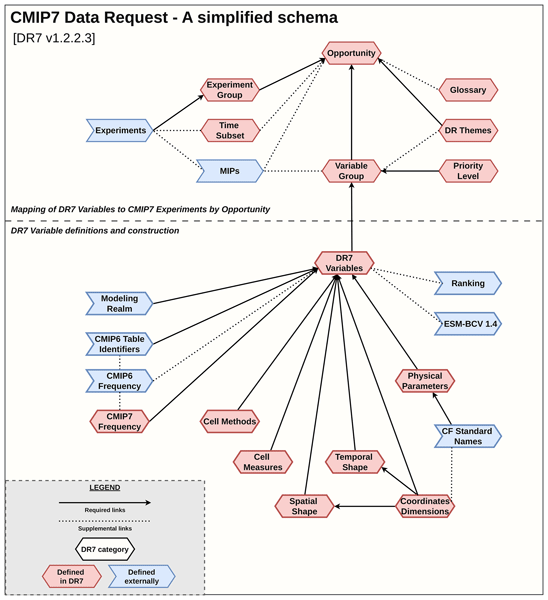
Chloe Mackallah, Martin Juckes, James Anstey, Beth Dingley, Charlotte Pascoe, Gaëlle Rigoudy, Marie-Pierre Moine, Tomas Lovato, Alison Pamment, Martin Schupfner, Michio Kawamiya, Tommi Bergman, Charles Koven, Eleanor O'Rourke, Briony Turner, Daniel Ellis, and Matthew Mizielinski
Geosci. Model Dev., 19, 8053–8079, https://doi.org/10.5194/gmd-19-8053-2026, https://doi.org/10.5194/gmd-19-8053-2026, 2026
Short summary
Short summary
This paper describes the creation of a new set of output data requirements for upcoming global climate model experiments performed for CMIP7, an international climate modelling activity. Experts from the community helped to co-create a database that describes which data should be produced, and the scientific justifications behind these choices. It supports growing climate research and policy needs by linking experiments and variables to scientific objectives and real‑world applications.
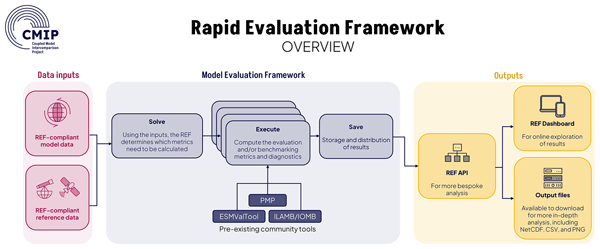
Forrest M. Hoffman, Birgit Hassler, Ranjini Swaminathan, Jared Lewis, Bouwe Andela, Nathan Collier, Dóra Hegedűs, Jiwoo Lee, Charlotte Pascoe, Mika Pflüger, Martina Stockhause, Paul Ullrich, Min Xu, Lisa Bock, Felicity Chun, Bettina K. Gier, Douglas I. Kelley, Axel Lauer, Julien Lenhardt, Manuel Schlund, Mohanan G. Sreeush, Katja Weigel, Ed Blockley, Rebecca Beadling, Romain Beucher, Demiso D. Dugassa, Valerio Lembo, Jianhua Lu, Swen Brands, Jerry Tjiputra, Elizaveta Malinina, Brian Medeiros, Enrico Scoccimarro, Jeremy Walton, Phil Kershaw, André Lanfer Marquez, Malcolm J. Roberts, Eleanor O'Rourke, Beth Dingley, Briony Turner, Helene Hewitt, and John P. Dunne
Geosci. Model Dev., 19, 7415–7455, https://doi.org/10.5194/gmd-19-7415-2026, https://doi.org/10.5194/gmd-19-7415-2026, 2026
Short summary
Short summary
The Rapid Evaluation Framework (REF) is a community-driven platform for benchmarking and performance assessment of Earth system models. Built upon four disparate community evaluation tools, the REF is designed to provide model-data comparisons for the Assessment Fast Track for the Seventh Phase of the Coupled Model Intercomparison Project. The REF will be run at the Earth System Grid Federation to enable model devleopers and scientists to quickly identify model biases and performance issues.
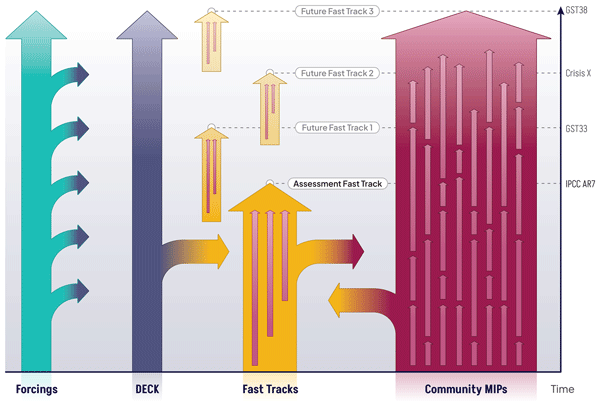
John P. Dunne, Helene T. Hewitt, Julie M. Arblaster, Frédéric Bonou, Olivier Boucher, Tereza Cavazos, Beth Dingley, Paul J. Durack, Birgit Hassler, Martin Juckes, Tomoki Miyakawa, Matt Mizielinski, Vaishali Naik, Zebedee Nicholls, Eleanor O'Rourke, Robert Pincus, Benjamin M. Sanderson, Isla R. Simpson, and Karl E. Taylor
Geosci. Model Dev., 18, 6671–6700, https://doi.org/10.5194/gmd-18-6671-2025, https://doi.org/10.5194/gmd-18-6671-2025, 2025
Short summary
Short summary
The seventh phase of the Coupled Model Intercomparison Project (CMIP7) coordinates efforts to answer key and timely climate science questions and facilitate delivery of relevant multi-model simulations for prediction and projection; characterization, attribution, and process understanding; and vulnerability, impact, and adaptation analysis. Key to the CMIP7 design are the mandatory Diagnostic, Evaluation and Characterization of Klima and optional Assessment Fast Track experiments.
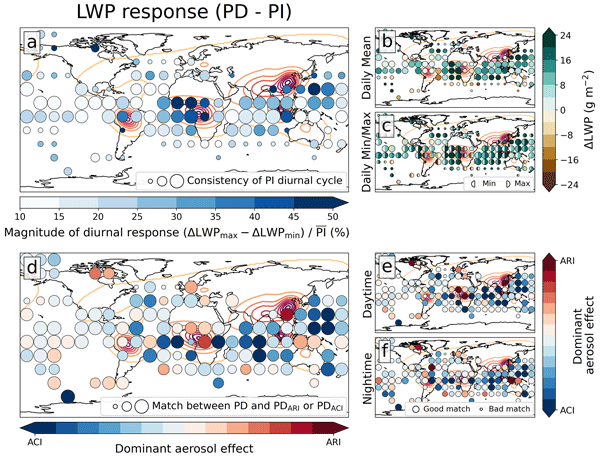
Ross J. Herbert, Andrew I. L. Williams, Philipp Weiss, Duncan Watson-Parris, Elisabeth Dingley, Daniel Klocke, and Philip Stier
Atmos. Chem. Phys., 25, 7789–7814, https://doi.org/10.5194/acp-25-7789-2025, https://doi.org/10.5194/acp-25-7789-2025, 2025
Short summary
Short summary
Clouds exist at scales that climate models struggle to represent, limiting our knowledge of how climate change may impact clouds. Here we use a new kilometer-scale global model representing an important step towards the necessary scale. We focus on how aerosol particles modify clouds, radiation, and precipitation. We find the magnitude and manner of responses tend to vary from region to region, highlighting the potential of global kilometer-scale simulations and a need to represent aerosols in climate models.
Martin Juckes, Karl E. Taylor, Fabrizio Antonio, David Brayshaw, Carlo Buontempo, Jian Cao, Paul J. Durack, Michio Kawamiya, Hyungjun Kim, Tomas Lovato, Chloe Mackallah, Matthew Mizielinski, Alessandra Nuzzo, Martina Stockhause, Daniele Visioni, Jeremy Walton, Briony Turner, Eleanor O'Rourke, and Beth Dingley
Geosci. Model Dev., 18, 2639–2663, https://doi.org/10.5194/gmd-18-2639-2025, https://doi.org/10.5194/gmd-18-2639-2025, 2025
Short summary
Short summary
The Baseline Climate Variables for Earth System Modelling (ESM-BCVs) are defined as a list of 135 variables which have high utility for the evaluation and exploitation of climate simulations. The list reflects the most frequently used variables from Earth system models based on an assessment of data publication and download records from the largest archive of global climate projects.
Massimo Martina, Anahí Villalba-Pradas, Šimon Bartoň, and Petr Šácha
Atmos. Chem. Phys., 26, 13845–13860, https://doi.org/10.5194/acp-26-13845-2026, https://doi.org/10.5194/acp-26-13845-2026, 2026
Short summary
Short summary
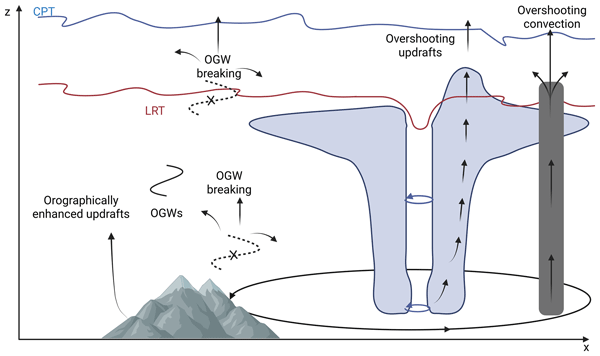
Our work presents a previously undocumented mechanism for stratosphere-troposphere exchange, which is triggered by the interaction of typhoons with the underlying orography. This interaction induces the rapid and efficient transport of emissions from the boundary layer to the tropical tropopause and stratosphere. Our study has significant implications for the development of climate models in terms of parameterization schemes and for our understanding of pollution transport in tropical regions.
Sean M. Davis, William T. Ball, Yue Jia, Gabriel Chiodo, Justin A. Alsing, James Keeble, Hideharu Akiyoshi, Carlo Arosio, Ewa M. Bednarz, Andreas Chrysanthou, Melanie Coldewey-Egbers, Robert Damadeo, Sandip Dhomse, Mohamadou A. Diallo, Simone Dietmuller, Roland Eichinger, Stacey Frith, Birgit Hassler, Michaela I. Hegglin, Daan Hubert, Patrick Jöckel, Béatrice Josse, Natalya Kramarova, Diego Loyola, Eliane Maillard Barras, Marion Marchand, Olaf Morgenstern, David Plummer, Robert W. Portmann, Karen H. Rosenlof, Alexei Rozanov, Viktoria F. Sofieva, Johannes Staehelin, Timofei Sukhodolov, Kleareti Tourpali, Ronald J. Van der A, H. J. Ray Wang, Krzysztof Wargan, Shingo Watanabe, Mark Weber, Jeannette D. Wild, Yousuke Yamashita, and Jerry Ziemke
Atmos. Chem. Phys., 26, 13817–13843, https://doi.org/10.5194/acp-26-13817-2026, https://doi.org/10.5194/acp-26-13817-2026, 2026
Short summary
Short summary
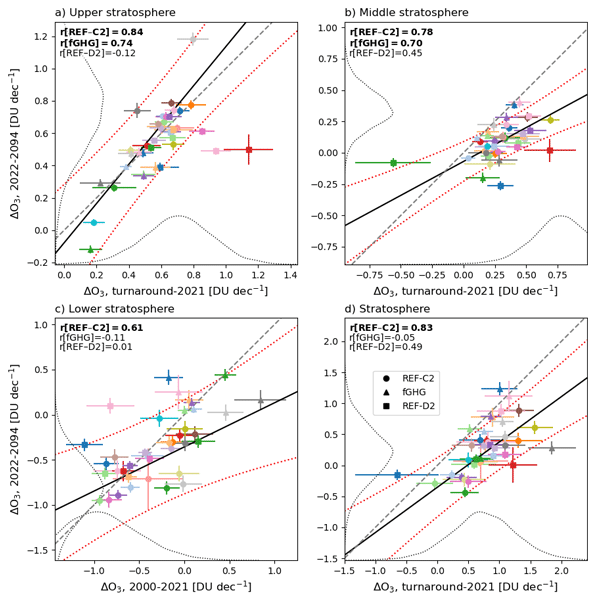
This study investigates tropical ozone changes in models and satellite observations to determine how well they agree and whether observations can constrain model projections. At some levels, satellite records disagree significantly on the magnitude of ozone changes. While early and late 21st century trends are correlated across models, suggesting a potential emergent constraint, the spread in observations means they are unable to provide guidance on the credibility of model projections.
Axel Lauer, Manuel Schlund, Lisa Bock, Birgit Hassler, Gunnar Behrens, Bettina Gier, Lukas Lindenlaub, Stephan Lorenz, Jan-Hendrik Malles, Wolfgang A. Müller, Trang van Pham, Katja Weigel, Guang Zeng, and Veronika Eyring
Geosci. Model Dev., 19, 8731–8754, https://doi.org/10.5194/gmd-19-8731-2026, https://doi.org/10.5194/gmd-19-8731-2026, 2026
Short summary
Short summary
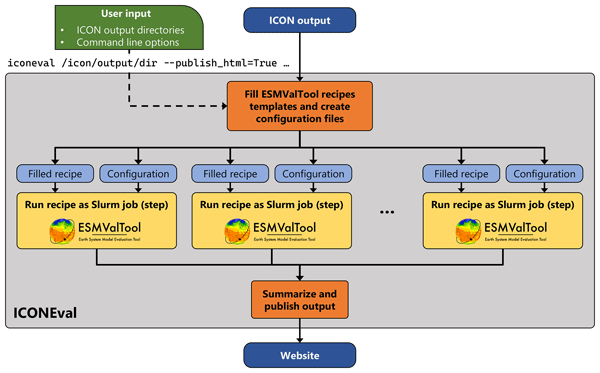
ICONEval is a new framework to facilitate researchers to continuously monitor and check their climate models during the development phase. It builds on the ESMValTool software package to run tests verifying that the results are plausible, follow physical laws, and that the model has sufficient skill in reproducing the observed climate. An important aim is to make it easier to spot model errors early, for example when implementing new model components that use machine learning.
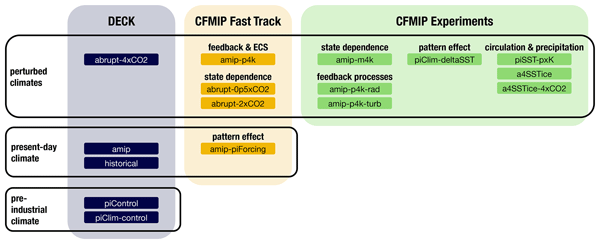
Paulo Ceppi, Alejandro Bodas-Salcedo, Mark D. Zelinka, Timothy Andrews, Florent Brient, Robin Chadwick, An-Zhuo Dai, Jonathan M. Gregory, Yen-Ting Hwang, Sarah M. Kang, Jennifer E. Kay, Thorsten Mauritsen, Tomoo Ogura, George Tselioudis, Masahiro Watanabe, Mark J. Webb, and Allison A. Wing
Geosci. Model Dev., 19, 8693–8708, https://doi.org/10.5194/gmd-19-8693-2026, https://doi.org/10.5194/gmd-19-8693-2026, 2026
Short summary
Short summary
Clouds constitute a key uncertainty for climate change projections. The Cloud Feedback Model Intercomparison Project (CFMIP) aims to address this challenge by evaluating and understanding clouds and their impacts on atmospheric circulation, precipitation, and climate sensitivity. The present paper describes the CFMIP experiment protocol for the Coupled Model Intercomparison Project phase 7 (CMIP7), and discusses the accompanying science questions and opportunities for progress.
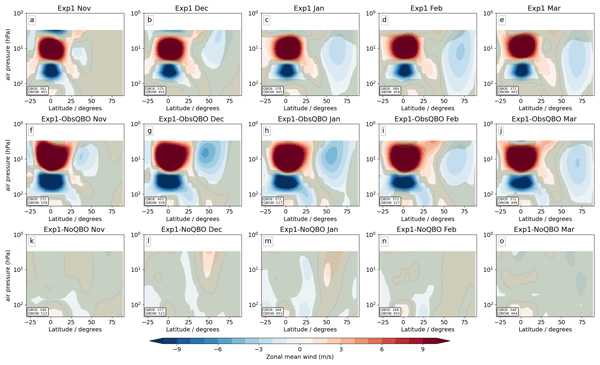
Martin B. Andrews, Neal Butchart, James A. Anstey, Ewa Bednarz, Dillon Elsbury, Jorge L. García-Franco, Vinay Kumar, Froila M. Palmeiro, Natasha E. Trencham, Kohei Yoshida, Zhaoyang Chai, Dong-Chan Hong, Kai Huang, Aleena M. Jaison, Yoshio Kawatani, Jeff R. Knight, Pu Lin, François Lott, Yixiong Lu, Hiroaki Naoe, Scott M. Osprey, Jadwiga H. Richter, Federico Serva, Seok-Woo Son, Qi Tang, Shingo Watanabe, and Jinbo Xie
Weather Clim. Dynam., 7, 1797–1820, https://doi.org/10.5194/wcd-7-1797-2026, https://doi.org/10.5194/wcd-7-1797-2026, 2026
Short summary
Short summary
The observed winds in the upper atmosphere over the equator have alternating easterly and westerly regions that descend towards the lower atmosphere before dissipating, with a period of approximately 28 months. This is known as the Quasi-Biennial Oscillation (QBO). The QBO is known to influence remote regions of the atmosphere. This paper details the results of multi-model experiments where the QBO is nudged towards the observed QBO allowing the assessment of these remote connections.
Megan D. Fowler, Richard B. Neale, Cecile Hannay, David M. Lawrence, Adam S. Phillips, Isla R. Simpson, and Gustavo Marques
EGUsphere, https://doi.org/10.5194/egusphere-2026-4558, https://doi.org/10.5194/egusphere-2026-4558, 2026
This preprint is open for discussion and under review for Geoscientific Model Development (GMD).
Short summary
Short summary
The development of a coupled Earth System Model is a complex one, necessitating the tracking of model behavior throughout. Here, we document the evolution in one such model with respect to the El Nino Southern Oscillation (ENSO). We assess the performance of simulated ENSO across 60+ development simulations, measured against both observations and previous model versions. This study represents an initial stepping stone in establishing an open and transparent process in model development.
Dominika Hájková, Aleš Kuchař, and Petr Šácha
EGUsphere, https://doi.org/10.5194/egusphere-2026-5319, https://doi.org/10.5194/egusphere-2026-5319, 2026
This preprint is open for discussion and under review for Weather and Climate Dynamics (WCD).
Short summary
Short summary
Stratospheric polar vortex is one the most important parts of the winter stratospheric circulation. Its stability is hard to simulate and differs between general circulation models. Here, we show how the intermodel differences of parameterized orographic gravity wave drag influence propagation and breaking of resolved planetary waves; and consequently how it is connected to vortex stability. For this we use the geometry of polar vortex, potential vorticity as well as northern annular mode index.
Chloe Mackallah, Martin Juckes, James Anstey, Beth Dingley, Charlotte Pascoe, Gaëlle Rigoudy, Marie-Pierre Moine, Tomas Lovato, Alison Pamment, Martin Schupfner, Michio Kawamiya, Tommi Bergman, Charles Koven, Eleanor O'Rourke, Briony Turner, Daniel Ellis, and Matthew Mizielinski
Geosci. Model Dev., 19, 8053–8079, https://doi.org/10.5194/gmd-19-8053-2026, https://doi.org/10.5194/gmd-19-8053-2026, 2026
Short summary
Short summary
This paper describes the creation of a new set of output data requirements for upcoming global climate model experiments performed for CMIP7, an international climate modelling activity. Experts from the community helped to co-create a database that describes which data should be produced, and the scientific justifications behind these choices. It supports growing climate research and policy needs by linking experiments and variables to scientific objectives and real‑world applications.
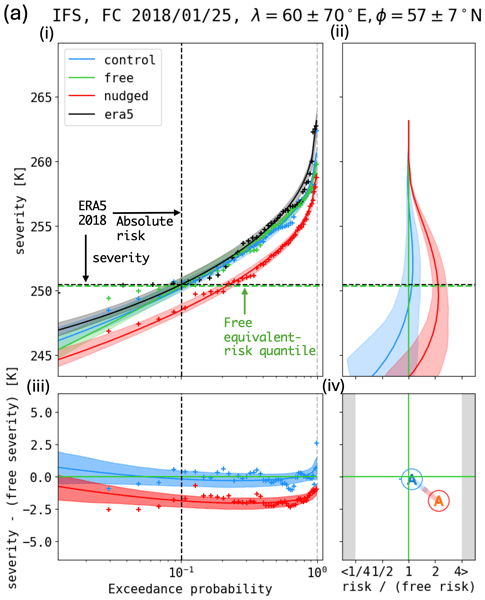
William J. M. Seviour, Justin Finkel, Philip Rupp, Regan Mudhar, Amy H. Butler, Chaim I. Garfinkel, Peter Hitchcock, Blanca Ayarzagüena, Dong-Chan Hong, Yu-Kyung Hyun, Hera Kim, Eun-Pa Lim, Daniel De Maeseneire, Gabriele Messori, Gerbrand Koren, Michael Sigmond, Isla R. Simpson, and Seok-Woo Son
Weather Clim. Dynam., 7, 1405–1423, https://doi.org/10.5194/wcd-7-1405-2026, https://doi.org/10.5194/wcd-7-1405-2026, 2026
Short summary
Short summary
Variability of the stratospheric polar vortex is thought to play a role in driving weather extremes, but quantifying this role for a given event has proved challenging. Using a new set of perturbed subseasonal forecast experiments from 7 modelling centres, we determine the stratospheric contribution to the risk and severity of three recent extreme weather events. The forecast-based methodology that we develop is applicable to understanding a range of other drivers of weather extremes.
Forrest M. Hoffman, Birgit Hassler, Ranjini Swaminathan, Jared Lewis, Bouwe Andela, Nathan Collier, Dóra Hegedűs, Jiwoo Lee, Charlotte Pascoe, Mika Pflüger, Martina Stockhause, Paul Ullrich, Min Xu, Lisa Bock, Felicity Chun, Bettina K. Gier, Douglas I. Kelley, Axel Lauer, Julien Lenhardt, Manuel Schlund, Mohanan G. Sreeush, Katja Weigel, Ed Blockley, Rebecca Beadling, Romain Beucher, Demiso D. Dugassa, Valerio Lembo, Jianhua Lu, Swen Brands, Jerry Tjiputra, Elizaveta Malinina, Brian Medeiros, Enrico Scoccimarro, Jeremy Walton, Phil Kershaw, André Lanfer Marquez, Malcolm J. Roberts, Eleanor O'Rourke, Beth Dingley, Briony Turner, Helene Hewitt, and John P. Dunne
Geosci. Model Dev., 19, 7415–7455, https://doi.org/10.5194/gmd-19-7415-2026, https://doi.org/10.5194/gmd-19-7415-2026, 2026
Short summary
Short summary
The Rapid Evaluation Framework (REF) is a community-driven platform for benchmarking and performance assessment of Earth system models. Built upon four disparate community evaluation tools, the REF is designed to provide model-data comparisons for the Assessment Fast Track for the Seventh Phase of the Coupled Model Intercomparison Project. The REF will be run at the Earth System Grid Federation to enable model devleopers and scientists to quickly identify model biases and performance issues.
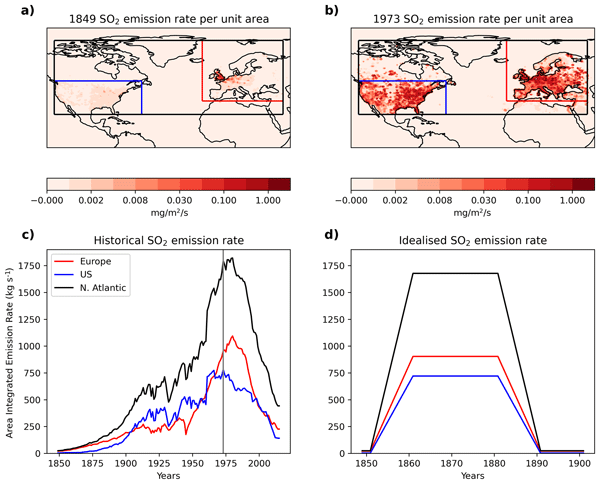
Wah Kin Michael Lai, Jon Robson, Laura Wilcox, Nick Dunstone, and Rowan Sutton
Atmos. Chem. Phys., 26, 11255–11279, https://doi.org/10.5194/acp-26-11255-2026, https://doi.org/10.5194/acp-26-11255-2026, 2026
Short summary
Short summary
In a climate model at two different resolutions, sulphate aerosols are shown to induce a fast cooling followed by a delayed warming in the subpolar North Atlantic. The delayed warming is stronger at higher resolution due to a stronger Atlantic Meridional Overturning Circulation (AMOC) response. This difference is due to the lower resolution model having more sea ice which insulates the ocean, showing that the North Atlantic response to external forcing is sensitive to regional differences.
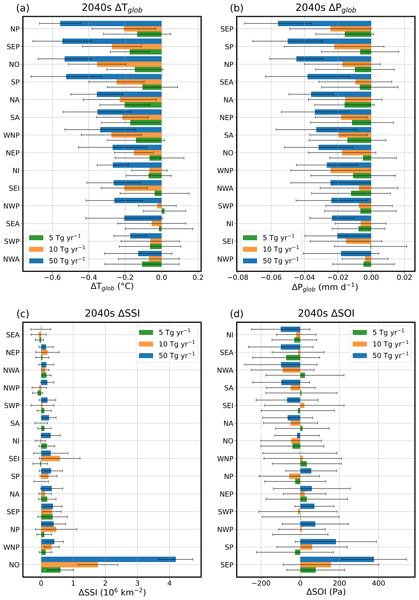
Alex M. Mason, Matthew Henry, Haruki Hirasawa, Fiona M. O'Connor, and James Haywood
Atmos. Chem. Phys., 26, 10861–10879, https://doi.org/10.5194/acp-26-10861-2026, https://doi.org/10.5194/acp-26-10861-2026, 2026
Short summary
Short summary
Marine Cloud Brightening (MCB) proposes the spraying of sea salt particles into marine clouds to cool the planet. MCB in midlatitude regions in models gave a relatively even climate response. We use 42 simulations of MCB to target several climate responses. Two optimised combinations are compared to a midlatitude MCB simulation, which improved sea ice restoration and the temperature response pattern, highlighting the importance of high latitude MCB for MCB optimisation in this model.
Colleen Marie Golja, Marianna Linz, Ewa Monika Bednarz, Daniele Visioni, Ben Kravitz, John A. Dykema, Michelle E. Frazer, Anthony C. Jones, Isla R. Simpson, and Shingo Watanabe
EGUsphere, https://doi.org/10.5194/egusphere-2026-4200, https://doi.org/10.5194/egusphere-2026-4200, 2026
Short summary
Short summary
Adding reflective particles to the stratosphere has been proposed to cool the planet, but how the resulting lower-stratospheric heating affects the broader climate remains unclear. This study simulates idealized lower-stratospheric heating across five climate models finding large inter-model differences in the stratospheric and surface response. The results highlight ways in which these differences may be explained by biases in the stratospheric climatological mean state.
Aleena M. Jaison, Lesley J. Gray, Scott M. Osprey, James A. Anstey, Martin B. Andrews, Neal Butchart, Zhaoyang Chai, Dong-Chan Hong, Kai Huang, Yoshio Kawatani, Jeff R. Knight, Pu Lin, Francois Lott, Yixiong Lu, Hiroaki Naoe, Jadwiga H. Richter, Nan Rosenbloom, Federico Serva, Anne K. Smith, Seok-Woo Son, Qi Tang, Shingo Watanabe, Jinbo Xie, and Kohei Yoshida
EGUsphere, https://doi.org/10.5194/egusphere-2026-4135, https://doi.org/10.5194/egusphere-2026-4135, 2026
Short summary
Short summary
The tropical upper stratosphere has winds that switch between westerly and easterly every six months known as the semi-annual oscillation (SAO). Climate models commonly show an easterly bias in the SAO. We analysed data from many models to test if correcting the biases in winds lower in the stratosphere could improve SAO. We find correcting the lower-level wind biases reduces the SAO easterly bias, though further improvements, such as better representation of atmospheric waves, are still needed.
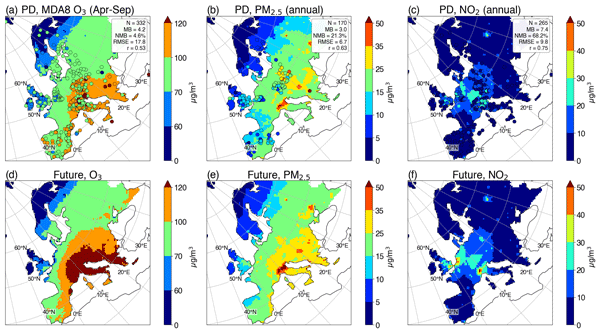
Ruth M. Doherty, Zhenze Liu, Massimo Vieno, Oliver Wild, Fiona M. O'Connor, Steven T. Turnock, Christina M. Hood, Jenny R. Stocker, Mathew R. Heal, Dwayne E. Heard, Emma G. Sands, David J. Carruthers, and Lisa K. Whalley
Atmos. Chem. Phys., 26, 10115–10147, https://doi.org/10.5194/acp-26-10115-2026, https://doi.org/10.5194/acp-26-10115-2026, 2026
Short summary
Short summary
We use innovative coupled modelling to quantify how natural emissions, chemistry, deposition and transport influence climate change responses of air pollutants from continental to urban scales across Europe. We highlight uncertainties in climate-sensitive biogenic emissions as key to future projections of ozone and fine particulate matter. High resolution modelling is essential for evaluating the benefits and trade-offs of climate change for achieving WHO air quality targets and guidelines.
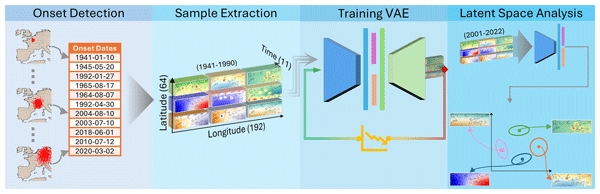
Aytaç Paçal, Birgit Hassler, Katja Weigel, Miguel-Ángel Fernández-Torres, Gustau Camps-Valls, and Veronika Eyring
Earth Syst. Dynam., 17, 955–986, https://doi.org/10.5194/esd-17-955-2026, https://doi.org/10.5194/esd-17-955-2026, 2026
Short summary
Short summary
Heatwaves are among the deadliest natural hazards, yet their evolving atmospheric drivers remain unclear. We apply an unsupervised machine learning model to reanalysis data to identify multivariate heatwave patterns over Europe. The model captures seasonally distinct regimes and reveals significant shifts between historical and recent events across all seasons, highlighting changes in heatwave dynamics over time.
Kai Huang, Chang-Hyun Park, Seung-Yoon Back, Jorge L. García-Franco, Hera Kim, Pu Lin, Scott Osprey, Jadwiga Richter, Chih-Chieh Chen, Seok-Woo Son, Shigeo Yoden, Yuna Lim, Neal Butchart, James Anstey, Yoshio Kawatani, Martin B. Andrews, Francois Lott, Yixiong Lu, Zhaoyang Chai, Nan Rosenbloom, Qi Tang, Jinbo Xie, Federico Serva, Dong-Chan Hong, Shingo Watanabe, Aleena M. Jaison, Hiroaki Naoe, and Kohei Yoshida
EGUsphere, https://doi.org/10.5194/egusphere-2026-3744, https://doi.org/10.5194/egusphere-2026-3744, 2026
Short summary
Short summary
The tropical atmosphere has large-scale wind and rainfall patterns shaping weather worldwide. Winds high above the tropics are thought to influence a major tropical rainfall system, but climate models fail to reproduce this link. We tested 12 climate models after constraining their high-altitude winds to match observations. Although the winds then matched, the models failed to capture the tropical response, as they did not realistically simulate it. Improving this is key to better prediction.
Zhangcheng Pei, Sonya L. Fiddes, Marc D. Mallet, Matthew T. Woodhouse, Simon P. Alexander, Alain Protat, Kalli Furtado, and Paul R. Field
EGUsphere, https://doi.org/10.5194/egusphere-2026-3541, https://doi.org/10.5194/egusphere-2026-3541, 2026
This preprint is open for discussion and under review for Atmospheric Chemistry and Physics (ACP).
Short summary
Short summary
Climate models misrepresent Southern Ocean clouds, causing warming biases. Using ship data, we updated a weather model to test how sea spray affects cloud ice. Adding realistic ocean particles prevents deep clouds from freezing too fast, correcting sunlight trasmissions. Yet, shallow clouds remain flawed due to missing moisture. Thus, accurate climate predictions require improving both aerosol-cloud interactions and large-scale weather dynamics.
Feifei Luo, Manoj Joshi, Bjørn H. Samset, Laura J. Wilcox, Camilla W. Stjern, Robert J. Allen, Yan-Ning Kuo, Wei Hua, and Shuanglin Li
EGUsphere, https://doi.org/10.5194/egusphere-2026-3301, https://doi.org/10.5194/egusphere-2026-3301, 2026
Short summary
Short summary
This study examines if this impact changes in a warmer world. Using a climate model, we compare identical Asian emissions under cooler and 1 K warmer climates. Aerosols reduce extreme rainfall in both, but more strongly over northern India in the warmer climate. A warmer, stabler atmosphere weakens circulation that partly offsets aerosol drying in cooler conditions. Continued warming may strengthen this drying over parts of Asia, while future pollution cuts could amplify heavy rainfall.

João C. M. Teixeira, Chantelle Burton, Douglas I. Kelley, Gerd A. Folberth, Fiona M. O'Connor, Richard A. Betts, and Apostolos Voulgarakis
Earth Syst. Dynam., 17, 739–767, https://doi.org/10.5194/esd-17-739-2026, https://doi.org/10.5194/esd-17-739-2026, 2026
Short summary
Short summary
Burned area has declined globally since the late 1990s, especially in tropical savannas, yet many climate models miss this trend because they poorly represent human fire use and suppression. We tested whether adding a simple link to human development improves a fire model. This reduced large regional errors and better captured downward trends in several areas, though it increased global underestimation and reduced variability. Human influence is key, but simple assumptions have trade-offs.
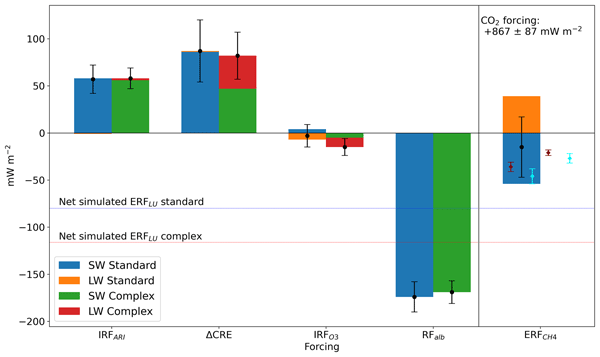
Emma Sands, Fiona M. O'Connor, James Weber, Ruth M. Doherty, and Richard J. Pope
Atmos. Chem. Phys., 26, 8553–8573, https://doi.org/10.5194/acp-26-8553-2026, https://doi.org/10.5194/acp-26-8553-2026, 2026
Short summary
Short summary
Land use impacts climate through changes in atmospheric composition but the relative importance of various pathways is uncertain. We use a model to separate the forcing from pre-industrial to present-day land use change into contributions from various greenhouse gases, aerosol effects, and surface albedo change. The inclusion of updated processes highlights the role of changes in cloud properties. The carbon dioxide forcing dominates, but other processes have substantial regional impacts.
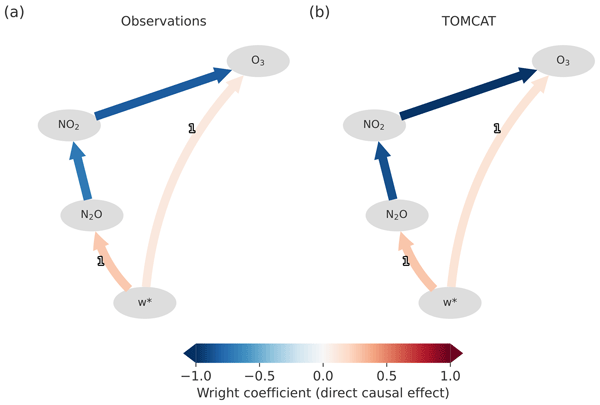
Evgenia Galytska, Birgit Hassler, Carlo Arosio, Martyn P. Chipperfield, Sandip S. Dhomse, Kimberlee Dubé, Wuhu Feng, Fernando Iglesias-Suarez, and Jakob Runge
Atmos. Chem. Phys., 26, 8185–8209, https://doi.org/10.5194/acp-26-8185-2026, https://doi.org/10.5194/acp-26-8185-2026, 2026
Short summary
Short summary
We explore how chemical and dynamical processes shape ozone in the tropical middle stratosphere using satellite data and a chemistry-transport model. We apply a framework to identify cause–effect relationships and estimate their strength. For 2004-2021 monthly data, we detect an indirect pathway controlling ozone variability, with effects increasing after two–three months. We further assess how different wind regimes influence this pathway.
Hyun-Kyu Lee, James A. Anstey, Hye-Yeong Chun, Shingo Watanabe, Francois Lott, Zhaoyang Chai, Yixiong Lu, Qi Tang, Jinbo Xie, Dong-Chan Hong, Seok-Woo Son, Federico Serva, Pu Lin, Martin B. Andrews, Neal Butchart, Aleena M. Jaison, Jeff R. Knight, Scott Osprey, Hiroaki Naoe, Kohei Yoshida, Yoshio Kawatani, and Jadwiga H. Richter
EGUsphere, https://doi.org/10.5194/egusphere-2026-2856, https://doi.org/10.5194/egusphere-2026-2856, 2026
Short summary
Short summary
This study investigates the systematic biases in equatorial wave forcing of the quasi-biennial oscillation (QBO) by comparing internally generated and bias-corrected experiments using a multi-model ensemble. Although nudging effectively mitigates QBO biases, systematic biases in wave forcing are not fully resolved. The equatorial wave forcing in the lower stratosphere remains weaker than that in reanalyses, while an eastward wave forcing bias is observed in the mid-to-upper stratosphere.
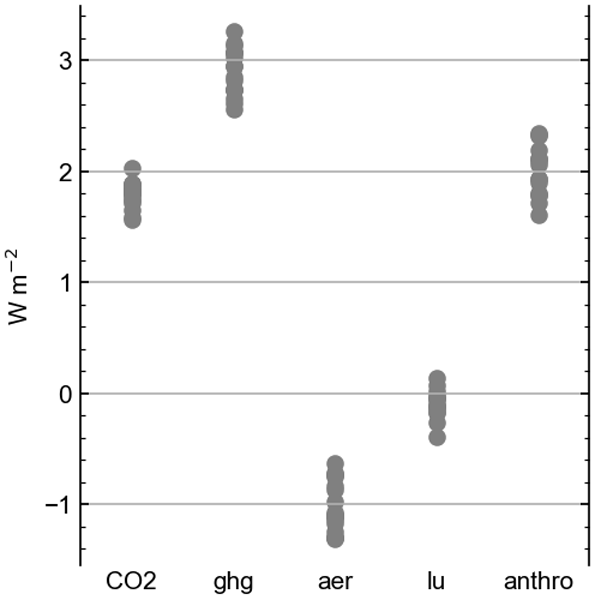
Ryan J. Kramer, Chris Smith, and Timothy Andrews
Geosci. Model Dev., 19, 4447–4466, https://doi.org/10.5194/gmd-19-4447-2026, https://doi.org/10.5194/gmd-19-4447-2026, 2026
Short summary
Short summary
Natural or anthropogenic activities can cause a perturbation in Earth's radiative energy budget known as a radiative forcing, which induces a climate response. Diagnosing radiative forcing and its uncertainty is foundational to understanding past and future climate change. Here we outline the protocol for the second iteration of the Radiative Forcing Model Intercomparison Project (RFMIP2.0), which provides a standardized method for diagnosing radiative forcing across Global Climate Models.
Bosi Sheng, Massimo A. Bollasina, Alexandre S. Gagnon, Laura J. Wilcox, Thomas P. S. Reynolds, Christopher T. S. Beckett, Haolin Wang, Qingxiang Li, Pierre Nabat, Robert J. Allen, Bjørn H. Samset, Joonas Merikanto, Geeta G. Persad, Toshihiko Takemura, Kostas Tsigaridis, Sharar Ahmadi, Maxwell T. Elling, Knut von Salzen, Daniel M. Westervelt, Naga Oshima, and Tsuyoshi Koshiro
EGUsphere, https://doi.org/10.5194/egusphere-2026-2198, https://doi.org/10.5194/egusphere-2026-2198, 2026
Short summary
Short summary
Observational records indicate that austral summer rainfall over southern Africa experienced substantial wetting during the late 20th century, followed by pronounced drying over the past two decades. We show that East Asian sulphate aerosol emissions played a key role in shaping these rainfall trends. These findings have important implications for reducing uncertainties in regional rainfall projections and for understanding their links to ecosystem changes.
James A. Anstey, Neal Butchart, Scott Osprey, Yoshio Kawatani, Kevin Hamilton, Jadwiga H. Richter, Tim Stockdale, Martin B. Andrews, Zhaoyang Chai, Paolo Davini, Dong-Chan Hong, Kai Huang, Aleena M. Jaison, Tobias Kerzenmacher, Jeff R. Knight, Pu Lin, Francois Lott, Yixiong Lu, Hiroaki Naoe, Federico Serva, Isla Simpson, Seok-Woo Son, Qi Tang, Shingo Watanabe, Jinbo Xie, and Kohei Yoshida
EGUsphere, https://doi.org/10.5194/egusphere-2026-1165, https://doi.org/10.5194/egusphere-2026-1165, 2026
Short summary
Short summary
We describe experiments where modelled tropical stratosphere winds are adjusted by "nudging" them toward realistic time-evolving eastward and westward Quasi-Biennial Oscillation (QBO) winds. The effects of this bias correction on other atmospheric processes, such as the stratospheric polar vortex or tropical waves that force the QBO, can then be assessed. We describe details of the experiments, the multi-model ensemble that has performed them, and basic validation of the nudging response.
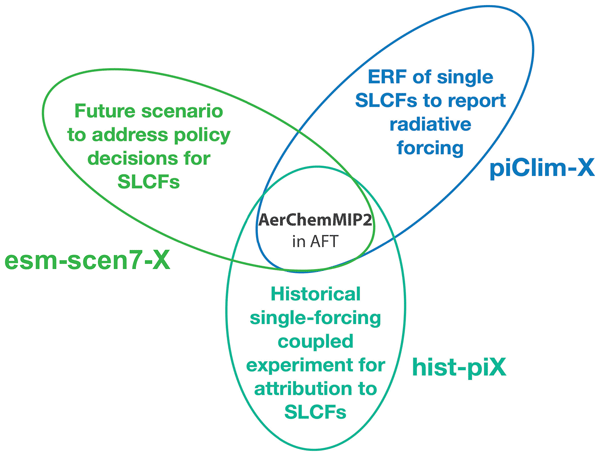
Stephanie Fiedler, Fiona M. O'Connor, Duncan Watson-Parris, Robert J. Allen, William J. Collins, Paul T. Griffiths, Matthew Kasoar, Jarmo Kikstra, Jasper F. Kok, Lee T. Murray, Fabien Paulot, Maria Sand, Steven T. Turnock, James Weber, Laura J. Wilcox, and Vaishali Naik
Geosci. Model Dev., 19, 3477–3508, https://doi.org/10.5194/gmd-19-3477-2026, https://doi.org/10.5194/gmd-19-3477-2026, 2026
Short summary
Short summary
The Aerosol and Chemistry Model Intercomparison Project phase two (AerChemMIP2) allows the community to compare results from contemporary Earth system models. AerChemMIP2 is asking modelling centres to perform experiments following the same protocol. It includes experiments for enabling new science and for tracking progress. Model output will be used for addressing research and policy questions about anthropogenic and natural drivers of climate change, and the impacts on air quality.
Arundathi Chandrasekharan, Tommi Bergman, Kalle Nordling, Meryem Bouchahmoud, Joonas Merikanto, and Risto Makkonen
EGUsphere, https://doi.org/10.5194/egusphere-2026-2122, https://doi.org/10.5194/egusphere-2026-2122, 2026
Short summary
Short summary
This study examines how well CMIP6 models and the chemistry transport model TM5 simulate Arctic aerosols, using data collected during the MOSAiC expedition. Additionally, the study includes a sensitivity analysis to identify the sources of any inaccuracies in the model results. The findings offer suggestions for improving model performance in the Arctic and highlight areas that need further research.
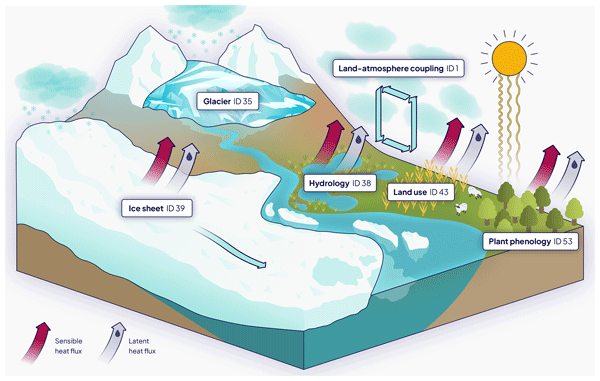
Yue Li, Gang Tang, Eleanor O'Rourke, Samar Minallah, Martim Mas e Braga, Sophie Nowicki, Robin S. Smith, David M. Lawrence, George C. Hurtt, Daniele Peano, Gesa Meyer, Birgit Hassler, Jiafu Mao, Yongkang Xue, and Martin Juckes
Geosci. Model Dev., 19, 3129–3155, https://doi.org/10.5194/gmd-19-3129-2026, https://doi.org/10.5194/gmd-19-3129-2026, 2026
Short summary
Short summary
Land and Land Ice Theme Opportunities describe a list that contains 25 variable groups with 716 variables, which are potentially available to the broad scientific audience for performing analysis in land–atmosphere coupling, hydrological processes and freshwater systems, glacier and ice sheet mass balance and their influence on the sea levels, land use, and plant phenology.
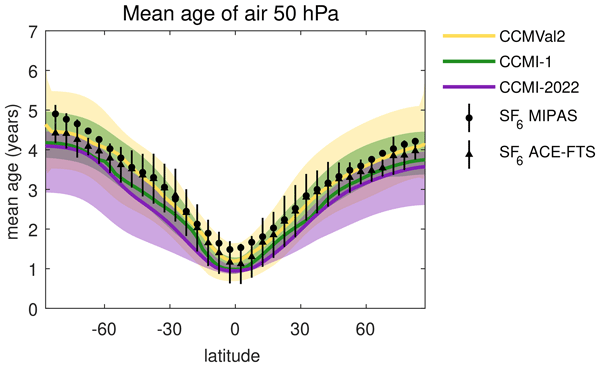
Marta Abalos, Thomas Birner, Andreas Chrysanthou, Sean Davis, Alvaro de la Cámara, Sandip Dhomse, Hella Garny, Michaela I. Hegglin, Daan Hubert, Oksana Ivaniha, James Keeble, Marianna Linz, Daniele Minganti, Jessica Neu, David Plummer, Laura Saunders, Kasturi Shah, Gabriele Stiller, Kleareti Tourpali, Darryn Waugh, Nathan Luke Abraham, Hideharu Akiyoshi, Martyn P. Chipperfield, Patrick Jöckel, Béatrice Josse, Marion Marchand, Patrick Martineau, Olaf Morgenstern, Timofei Sukhodolov, Shingo Watanabe, and Yousuke Yamashita
Atmos. Chem. Phys., 26, 5249–5291, https://doi.org/10.5194/acp-26-5249-2026, https://doi.org/10.5194/acp-26-5249-2026, 2026
Short summary
Short summary
Accurate representation of stratospheric transport in Chemistry-Climate Models is essential for reliable climate projections. This study evaluates three generations of models using observational data and reanalyses, identifying persistent biases and their potential causes. Some biases persist or even worsen in newer models. These findings highlight key limitations and inform efforts to improve models and advance understanding through process-based studies and enhanced observations.
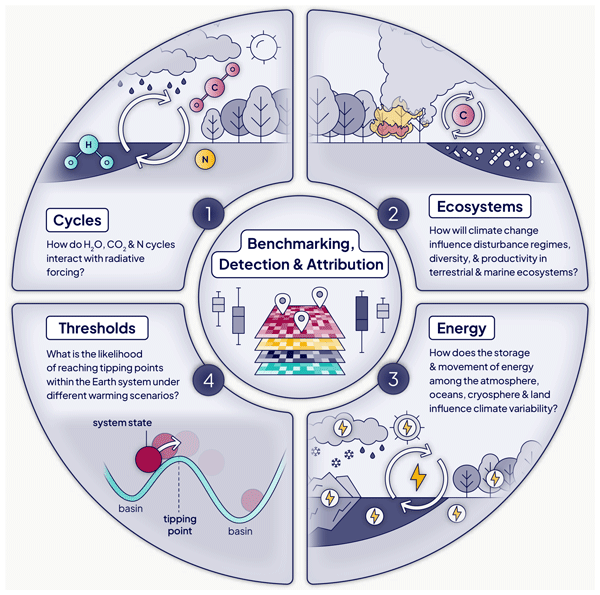
Mara Y. McPartland, Tomas Lovato, Charles Koven, Jamie D. Wilson, Briony Turner, Colleen M. Petrik, José Licón-Saláiz, Fang Li, Fanny Lhardy, Jaclyn Clement Kinney, Michio Kawamiya, Birgit Hassler, Nathan P. Gillett, Cheikh Modou Noreyni Fall, Christopher Danek, Chris M. Brierley, Ana Bastos, and Oliver Andrews
Geosci. Model Dev., 19, 2849–2880, https://doi.org/10.5194/gmd-19-2849-2026, https://doi.org/10.5194/gmd-19-2849-2026, 2026
Short summary
Short summary
The Coupled Model Intercomparison Project (CMIP) is an international consortium of climate modeling groups that produce coordinated experiments in order to evaluate human influence on the climate and test knowledge of Earth systems. This paper describes the data requested for Earth systems research in CMIP7. We detail the request for model output of the carbon cycle, the flows of energy among the atmosphere, land and the oceans, and interactions between these and the global climate.
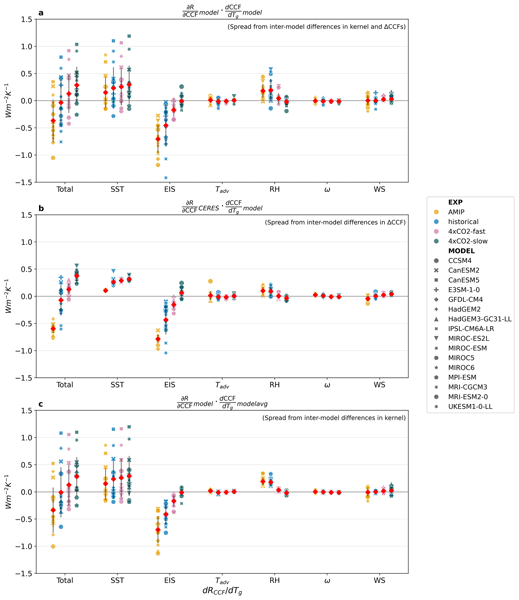
Rachel Yuen Sum Tam, Timothy A. Myers, Mark D. Zelinka, Cristian Proistosescu, Yuan-Jen Lin, and Kate Marvel
Atmos. Chem. Phys., 26, 4289–4311, https://doi.org/10.5194/acp-26-4289-2026, https://doi.org/10.5194/acp-26-4289-2026, 2026
Short summary
Short summary
This work identifies the key driver to the change of present and future climate response, known as the pattern effect, by breaking down low-cloud feedback as the radiative changes to meteorology and the meteorology changes to warming using a cloud controlling factor framework. We identify inversion strength in the Southern Ocean and the South East Pacific as the main driver to the pattern effect, and larger uncertainty remains in the sensitivities of radiative flux to meteorology.
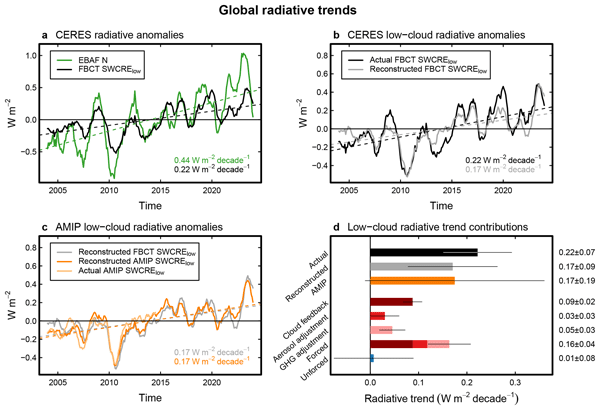
Paulo Ceppi, Sarah Wilson Kemsley, Hendrik Andersen, Timothy Andrews, Ryan J. Kramer, Peer Nowack, Casey J. Wall, and Mark D. Zelinka
Atmos. Chem. Phys., 26, 4153–4171, https://doi.org/10.5194/acp-26-4153-2026, https://doi.org/10.5194/acp-26-4153-2026, 2026
Short summary
Short summary
Recent decades have seen a marked decrease in global low-level cloud cover, leading to more sunlight heating the Earth. This trend is poorly understood, raising the concern that clouds may amplify global warming more than previously thought. We show that the cloud decrease is mostly caused by human forcing on climate, and that it agrees with previous estimates of how clouds respond to decreasing aerosol pollution, increasing greenhouse gas concentration, and their effects on global temperature.
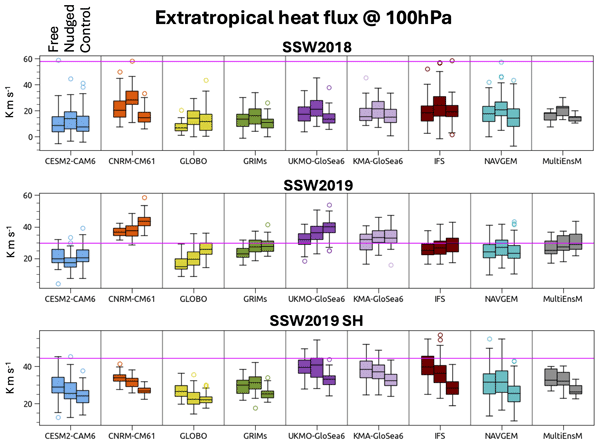
Blanca Ayarzagüena, Amy H. Butler, Peter Hitchcock, Chaim I. Garfinkel, Zac D. Lawrence, Wuhan Ning, Philip Rupp, Zheng Wu, Hilla Afargan-Gerstman, Natalia Calvo, Alvaro de la Cámara, Martin Jucker, Gerbrand Koren, Daniel De Maeseneire, Gloria L. Manney, Marisol Osman, Masakazu Taguchi, Cory Barton, Dong-Chan Hong, Yu-Kyung Hyun, Hera Kim, Jeff Knight, Piero Malguzzi, Daniele Mastrangelo, Jiyoung Oh, Inna Polichtchouk, Jadwiga H. Richter, Isla R. Simpson, Seok-Woo Son, Damien Specq, and Tim Stockdale
Weather Clim. Dynam., 7, 411–437, https://doi.org/10.5194/wcd-7-411-2026, https://doi.org/10.5194/wcd-7-411-2026, 2026
Short summary
Short summary
Sudden Stratospheric Warmings (SSWs) are known to follow a sustained wave dissipation in the stratosphere, which depends on both the tropospheric and stratospheric states. However, the relative role of each state is still unclear. Using a new set of subseasonal to seasonal forecasts, we show that the stratospheric state does not drastically affect the precursors of three recent SSWs, but modulates the stratospheric wave activity, with impacts depending on SSW features.
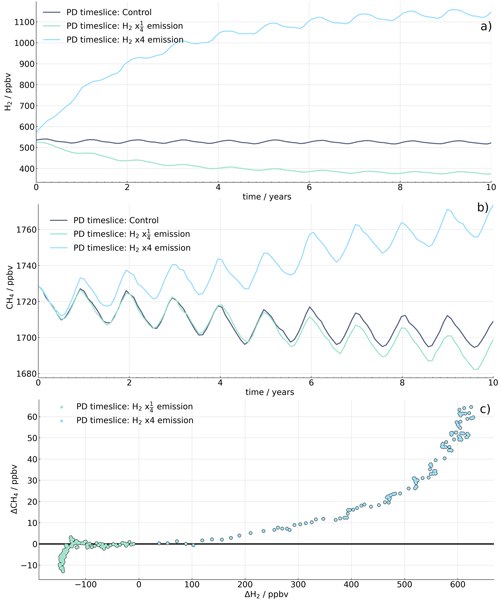
Megan A. J. Brown, Nicola J. Warwick, Nathan Luke Abraham, Paul T. Griffiths, Steve T. Rumbold, Gerd A. Folberth, Fiona M. O'Connor, Hannah Bryant, and Alex T. Archibald
Geosci. Model Dev., 19, 1537–1557, https://doi.org/10.5194/gmd-19-1537-2026, https://doi.org/10.5194/gmd-19-1537-2026, 2026
Short summary
Short summary
Hydrogen (H2) is an indirect greenhouse gas by increasing methane (CH4) lifetime. Interaction between H2 and CH4 is important for hydrogen’s global warming potential (GWP). Global models do not represent this interaction well; H2 or CH4 are prescribed at the surface. We implement an interactive H2 scheme into a global model coupled with interactive CH4. We simulate scenarios demonstrating its capability, improving model performance and more accurately representing H2-CH4 interaction.
Radek Zajíček, Zuzana Procházková, and Petr Šácha
EGUsphere, https://doi.org/10.5194/egusphere-2026-909, https://doi.org/10.5194/egusphere-2026-909, 2026
Short summary
Short summary
We compare resolved gravity wave drag from high-resolution reanalysis data with parameterized drag from global climate model simulations. Our results show strong similarity between parameterized and resolved drag, but their interactions with Rossby waves differ markedly. This discrepancy suggests that current climate models may misrepresent gravity wave influences on atmospheric circulation and highlight the need to improve gravity wave parameterizations for more reliable climate predictions.
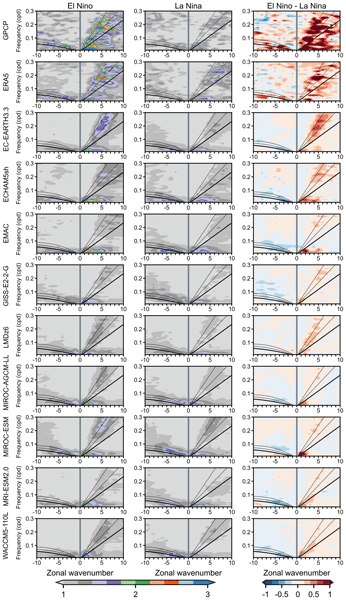
Dillon Elsbury, Federico Serva, Julie M. Caron, Seung-Yoon Back, Clara Orbe, Jadwiga H. Richter, James A. Anstey, Neal Butchart, Chih-Chieh Chen, Javier García-Serrano, Anne Glanville, Yoshio Kawatani, Tobias Kerzenmacher, Francois Lott, Hiroaki Naoe, Scott Osprey, Froila M. Palmeiro, Seok-Woo Son, Masakazu Taguchi, Stefan Versick, Shingo Watanabe, and Kohei Yoshida
Weather Clim. Dynam., 7, 317–339, https://doi.org/10.5194/wcd-7-317-2026, https://doi.org/10.5194/wcd-7-317-2026, 2026
Short summary
Short summary
We used climate models to test how constant El Niño and La Niña ocean conditions shape the Madden-Julian Oscillation during northern winter. El Niño made this weather pattern move faster, while La Niña slowed it down. The Quasi-Biennial Oscillation, a repeating wind pattern high in the atmosphere, had little effect. This shows that long-lasting ocean conditions mainly drive the changes we found.
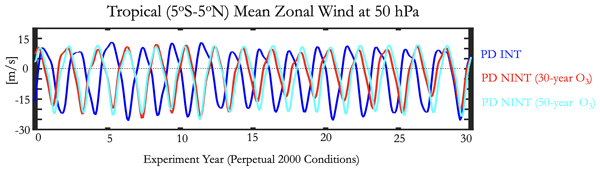
Clara Orbe, Alison Ming, Gabriel Chiodo, Michael Prather, Mohamadou Diallo, Qi Tang, Andreas Chrysanthou, Hiroaki Naoe, Xin Zhou, Irina Thaler, Dillon Elsbury, Ewa Bednarz, Jonathon S. Wright, Aaron Match, Shingo Watanabe, James Anstey, Tobias Kerzenmacher, Stefan Versick, Marion Marchand, Feng Li, and James Keeble
Geosci. Model Dev., 19, 773–794, https://doi.org/10.5194/gmd-19-773-2026, https://doi.org/10.5194/gmd-19-773-2026, 2026
Short summary
Short summary
The quasi-biennial oscillation (QBO) is the main source of wind fluctuations in the tropical stratosphere, which can couple to surface climate. However, models do a poor job of simulating the QBO in the lower stratosphere, for reasons that remain unclear. One possibility is that models do not completely represent how ozone influences the QBO-associated wind variations. Here we propose a multi-model framework for assessing how ozone influences the QBO in recent past and future climates.
William J. Collins, John S. Daniel, Martyn P. Chipperfield, Martin Cussac, Makoto Deushi, Gregory Faluvegi, Paul Griffiths, Øivind Hodnebrog, Larry W. Horowitz, James Keeble, Douglas Kinnison, Vaishali Naik, Fiona M. O'Connor, Drew Shindell, Simone Tilmes, Kostas Tsigaridis, Zihao Wang, and James Weber
EGUsphere, https://doi.org/10.5194/egusphere-2025-6033, https://doi.org/10.5194/egusphere-2025-6033, 2026
Short summary
Short summary
Ozone depleting substances (ODSs) are also greenhouse gases that cause global warming. However, their destruction of ozone contributes a global cooling. We have used results from climate models that include atmospheric chemistry and found that the cooling effect of the ozone depletion diagnosed in the models was larger than that calculated using a standard method. We find that some ODSs have a net cooling effect whereas for others the warming effect is significantly reduced.
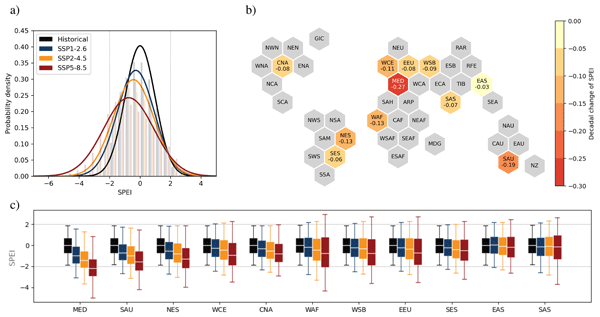
Lukas Lindenlaub, Katja Weigel, Birgit Hassler, Colin Jones, and Veronika Eyring
Earth Syst. Dynam., 17, 81–105, https://doi.org/10.5194/esd-17-81-2026, https://doi.org/10.5194/esd-17-81-2026, 2026
Short summary
Short summary
This study explores changes in drought characteristic based on projections by 18 different Earth system models. Their performance is evaluated by comparing historical simulations to observation based reanalysis. The analysis of a standardized drought index under different future scenarios revealed that the harvest area that is projected to experience extreme drought conditions towards the end of this century ranges from 10 % to 40 % depending on the emission scenario.
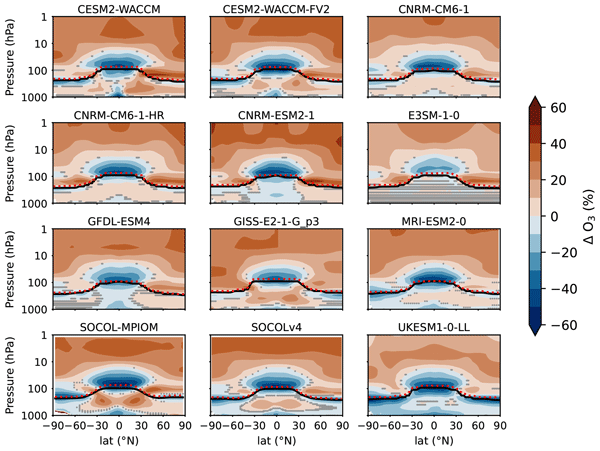
Jingyu Wang, Gabriel Chiodo, Blanca Ayarzagüena, William T. Ball, Mohamadou Diallo, Birgit Hassler, James Keeble, Peer Nowack, Clara Orbe, Sandro Vattioni, and Timofei Sukhodolov
Atmos. Chem. Phys., 25, 17819–17844, https://doi.org/10.5194/acp-25-17819-2025, https://doi.org/10.5194/acp-25-17819-2025, 2025
Short summary
Short summary
We analyzed the ozone response under elevated CO2 using the data from CMIP6 DECK experiments. We then examined the relations between ozone response and changes in temperature and circulation to identify the drivers of ozone change. The climate feedback of ozone is investigated through offline calculations and by comparing models with and without interactive chemistry. We find that ozone–climate interactions are important for Earth system models and thus should be considered in future model development.
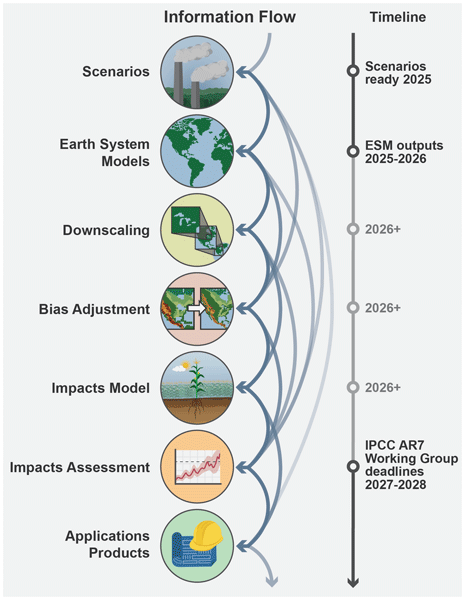
Alex C. Ruane, Charlotte L. Pascoe, Claas Teichmann, David J. Brayshaw, Carlo Buontempo, Ibrahima Diouf, Jesus Fernandez, Paula L. M. Gonzalez, Birgit Hassler, Vanessa Hernaman, Ulas Im, Doroteaciro Iovino, Martin Juckes, Iréne L. Lake, Timothy Lam, Xiaomao Lin, Jiafu Mao, Negin Nazarian, Sylvie Parey, Indrani Roy, Wan-Ling Tseng, Briony Turner, Andrew Wiebe, Lei Zhao, and Damaris Zurell
Geosci. Model Dev., 18, 9497–9540, https://doi.org/10.5194/gmd-18-9497-2025, https://doi.org/10.5194/gmd-18-9497-2025, 2025
Short summary
Short summary
This paper describes how the Coupled Model Intercomparison Project organized its 7th phase (CMIP7) to encourage the production of Earth system model outputs relevant for impacts and adaptation. Community engagement identified 13 opportunities for application across human and natural systems, 60 variable groups and 539 unique variables. We also show how simulations can more efficiently meet applications needs by targeting appropriate resolution, time slices, experiments and variable groups.
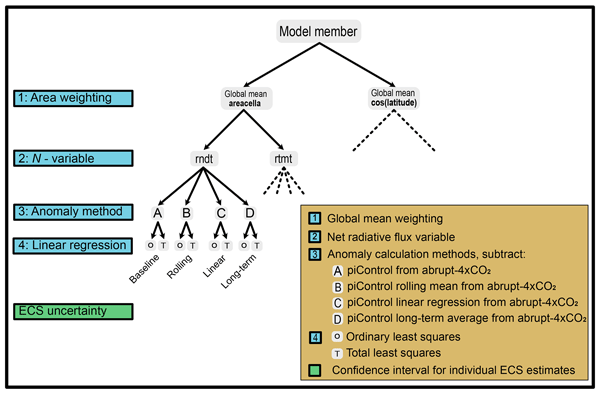
Anna Zehrung, Andrew D. King, Zebedee Nicholls, Mark D. Zelinka, and Malte Meinshausen
Geosci. Model Dev., 18, 9433–9450, https://doi.org/10.5194/gmd-18-9433-2025, https://doi.org/10.5194/gmd-18-9433-2025, 2025
Short summary
Short summary
The Gregory method is a common approach for calculating the equilibrium climate sensitivity (ECS). However, studies which apply this method lack transparency in how model data is processed prior to calculating the ECS, inhibiting replicability. Different choices of global weighting, net radiative flux variable, anomaly calculation, and linear regression fit can affect the ECS estimates. We investigate the impact of these choices and propose a standardised method for future ECS calculations.
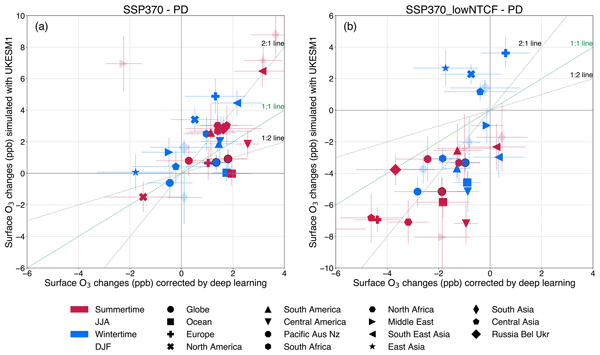
Zhenze Liu, Ke Li, Oliver Wild, Ruth M. Doherty, Fiona M. O’Connor, and Steven T. Turnock
Atmos. Chem. Phys., 25, 16969–16981, https://doi.org/10.5194/acp-25-16969-2025, https://doi.org/10.5194/acp-25-16969-2025, 2025
Short summary
Short summary
Chemistry-climate models have advanced substantially over the decades, yet they still exhibit substantial systematic biases in simulating atmospheric composition due to gaps in our understanding of underlying processes. We improve the predictions of an Earth system model using deep learning, and evaluate the performance of difference types of statistical models. We find that simulations of future surface ozone are likely to become less accurate under a warmer climate.
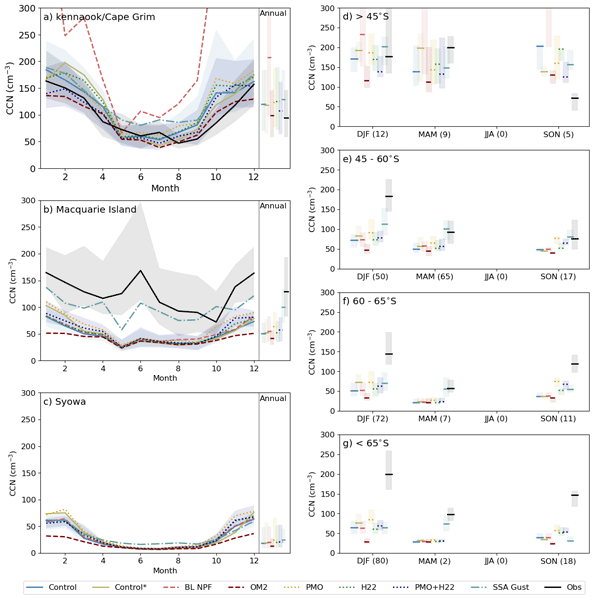
Sonya L. Fiddes, Matthew T. Woodhouse, Marc D. Mallet, Liam J. Lamprey, Ruhi S. Humphries, Alain Protat, Simon P. Alexander, Hakase Hayashida, Samuel Putland, Branka Miljevic, and Robyn Schofield
Atmos. Chem. Phys., 25, 16451–16477, https://doi.org/10.5194/acp-25-16451-2025, https://doi.org/10.5194/acp-25-16451-2025, 2025
Short summary
Short summary
The interaction between natural marine aerosols, clouds and radiation in the Southern Ocean is a major source of uncertainty in climate models. We evaluate the Australian climate model using aerosol observations and find it underestimates aerosol number often by over 50%. Model changes were tested to improve aerosol concentrations, but some of our changes had severe negative effects on the larger climate system, highlighting issues in aerosol-cloud interaction modelling.
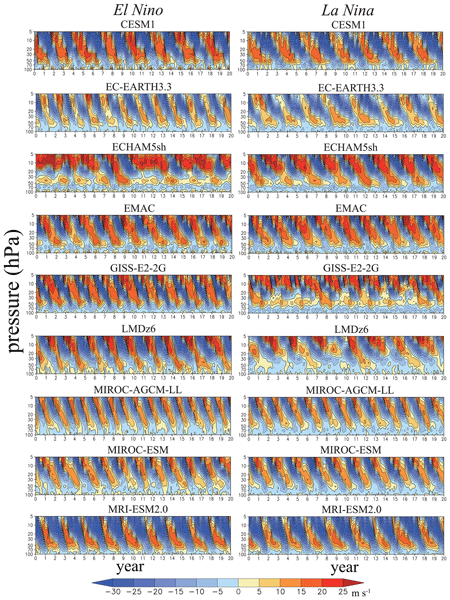
Yoshio Kawatani, Kevin Hamilton, Shingo Watanabe, Masakazu Taguchi, Federico Serva, James A. Anstey, Jadwiga H. Richter, Neal Butchart, Clara Orbe, Scott M. Osprey, Hiroaki Naoe, Dillon Elsbury, Chih-Chieh Chen, Javier García-Serrano, Anne Glanville, Tobias Kerzenmacher, François Lott, Froila M. Palmeiro, Mijeong Park, Stefan Versick, and Kohei Yoshida
Weather Clim. Dynam., 6, 1045–1073, https://doi.org/10.5194/wcd-6-1045-2025, https://doi.org/10.5194/wcd-6-1045-2025, 2025
Short summary
Short summary
The Quasi-Biennial Oscillation (QBO) of the tropical stratospheric mean winds has been relatively steady over the 7 decades it has been observed, but there are always cycle-to-cycle variations. This study used several global atmospheric models to investigate systematic modulation of the QBO by the El Niño/La Niña cycle. All models simulated shorter periods during El Niño, in agreement with observations. By contrast, the models disagreed even on the sign of the El Niño effect on QBO amplitude.
John P. Dunne, Helene T. Hewitt, Julie M. Arblaster, Frédéric Bonou, Olivier Boucher, Tereza Cavazos, Beth Dingley, Paul J. Durack, Birgit Hassler, Martin Juckes, Tomoki Miyakawa, Matt Mizielinski, Vaishali Naik, Zebedee Nicholls, Eleanor O'Rourke, Robert Pincus, Benjamin M. Sanderson, Isla R. Simpson, and Karl E. Taylor
Geosci. Model Dev., 18, 6671–6700, https://doi.org/10.5194/gmd-18-6671-2025, https://doi.org/10.5194/gmd-18-6671-2025, 2025
Short summary
Short summary
The seventh phase of the Coupled Model Intercomparison Project (CMIP7) coordinates efforts to answer key and timely climate science questions and facilitate delivery of relevant multi-model simulations for prediction and projection; characterization, attribution, and process understanding; and vulnerability, impact, and adaptation analysis. Key to the CMIP7 design are the mandatory Diagnostic, Evaluation and Characterization of Klima and optional Assessment Fast Track experiments.
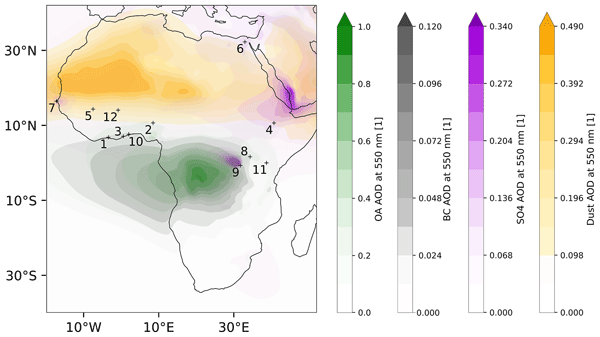
Catherine A. Toolan, Joe Adabouk Amooli, Laura J. Wilcox, Bjørn H. Samset, Andrew G. Turner, and Daniel M. Westervelt
Atmos. Chem. Phys., 25, 10523–10557, https://doi.org/10.5194/acp-25-10523-2025, https://doi.org/10.5194/acp-25-10523-2025, 2025
Short summary
Short summary
Our research explores how well air pollution and rainfall patterns in Africa are represented in current climate models by comparing model data to observations from 1981 to 2023. While most models capture seasonal air quality changes well, they struggle to replicate the distribution of non-dust pollutants and certain rainfall patterns, especially over east Africa. Improving these models is crucial for better climate predictions and preparing for future risks.
Zuzana Procházková, Radek Zajíček, and Petr Šácha
Weather Clim. Dynam., 6, 927–947, https://doi.org/10.5194/wcd-6-927-2025, https://doi.org/10.5194/wcd-6-927-2025, 2025
Short summary
Short summary
In this work, we compute and analyze resolved gravity wave drag in high-resolution reanalysis data. Studying gravity waves with a realistic dataset helps us to understand them better and potentially improve climate projections. Part of our results supports a key hypothesis governing the vertical distribution of parameterized gravity wave drag in climate models; however, we also provide evidence of the strong influence of horizontal wave propagation, a mechanism that is currently missing in the models.
Benjamin M. Sanderson, Victor Brovkin, Rosie A. Fisher, David Hohn, Tatiana Ilyina, Chris D. Jones, Torben Koenigk, Charles Koven, Hongmei Li, David M. Lawrence, Peter Lawrence, Spencer Liddicoat, Andrew H. MacDougall, Nadine Mengis, Zebedee Nicholls, Eleanor O'Rourke, Anastasia Romanou, Marit Sandstad, Jörg Schwinger, Roland Séférian, Lori T. Sentman, Isla R. Simpson, Chris Smith, Norman J. Steinert, Abigail L. S. Swann, Jerry Tjiputra, and Tilo Ziehn
Geosci. Model Dev., 18, 5699–5724, https://doi.org/10.5194/gmd-18-5699-2025, https://doi.org/10.5194/gmd-18-5699-2025, 2025
Short summary
Short summary
This study investigates how climate models warm in response to simplified carbon emissions trajectories, refining the understanding of climate reversibility and commitment. Metrics are defined for warming response to cumulative emissions and for the cessation of emissions or ramp-down to net-zero and net-negative levels. Results indicate that previous concentration-driven experiments may have overstated the Zero Emissions Commitment due to emissions rates exceeding historical levels.
William J. Collins, Fiona M. O'Connor, Rachael E. Byrom, Øivind Hodnebrog, Patrick Jöckel, Mariano Mertens, Gunnar Myhre, Matthias Nützel, Dirk Olivié, Ragnhild Bieltvedt Skeie, Laura Stecher, Larry W. Horowitz, Vaishali Naik, Gregory Faluvegi, Ulas Im, Lee T. Murray, Drew Shindell, Kostas Tsigaridis, Nathan Luke Abraham, and James Keeble
Atmos. Chem. Phys., 25, 9031–9060, https://doi.org/10.5194/acp-25-9031-2025, https://doi.org/10.5194/acp-25-9031-2025, 2025
Short summary
Short summary
We used 7 climate models that include atmospheric chemistry and find that in a scenario with weak controls on air quality, the warming effects (over 2015 to 2050) of decreases in ozone-depleting substances and increases in air quality pollutants are approximately equal and would make ozone the second highest contributor to warming over this period. We find that for stratospheric ozone recovery, the standard measure of climate effects underestimates a more comprehensive measure.
Paul T. Griffiths, Laura J. Wilcox, Robert J. Allen, Vaishali Naik, Fiona M. O'Connor, Michael Prather, Alex Archibald, Florence Brown, Makoto Deushi, William Collins, Stephanie Fiedler, Naga Oshima, Lee T. Murray, Bjørn H. Samset, Chris Smith, Steven Turnock, Duncan Watson-Parris, and Paul J. Young
Atmos. Chem. Phys., 25, 8289–8328, https://doi.org/10.5194/acp-25-8289-2025, https://doi.org/10.5194/acp-25-8289-2025, 2025
Short summary
Short summary
The Aerosol Chemistry Model Intercomparison Project (AerChemMIP) aimed to quantify the climate and air quality impacts of aerosols and chemically reactive gases. We review its contribution to AR6 (Sixth Assessment Report of the Intergovernmental Panel on Climate Change) and the wider understanding of the role of these species in climate and climate change. We identify challenges and provide recommendations to improve the utility and uptake of climate model data, detailed summary tables of CMIP6 models, experiments, and emergent diagnostics.
Ross J. Herbert, Andrew I. L. Williams, Philipp Weiss, Duncan Watson-Parris, Elisabeth Dingley, Daniel Klocke, and Philip Stier
Atmos. Chem. Phys., 25, 7789–7814, https://doi.org/10.5194/acp-25-7789-2025, https://doi.org/10.5194/acp-25-7789-2025, 2025
Short summary
Short summary
Clouds exist at scales that climate models struggle to represent, limiting our knowledge of how climate change may impact clouds. Here we use a new kilometer-scale global model representing an important step towards the necessary scale. We focus on how aerosol particles modify clouds, radiation, and precipitation. We find the magnitude and manner of responses tend to vary from region to region, highlighting the potential of global kilometer-scale simulations and a need to represent aerosols in climate models.
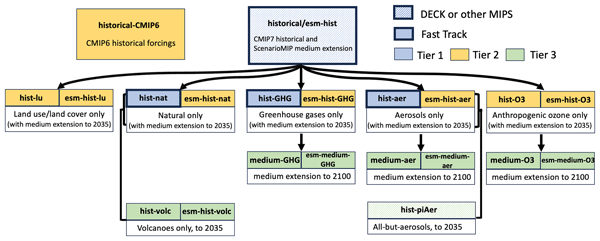
Nathan P. Gillett, Isla R. Simpson, Gabi Hegerl, Reto Knutti, Dann Mitchell, Aurélien Ribes, Hideo Shiogama, Dáithí Stone, Claudia Tebaldi, Piotr Wolski, Wenxia Zhang, and Vivek K. Arora
Geosci. Model Dev., 18, 4399–4416, https://doi.org/10.5194/gmd-18-4399-2025, https://doi.org/10.5194/gmd-18-4399-2025, 2025
Short summary
Short summary
Climate model simulations of the response to human and natural influences together, natural climate influences alone and greenhouse gases alone are key to quantifying human influence on the climate. The last set of such coordinated simulations underpinned key findings in the last Intergovernmental Panel on Climate Change (IPCC) report. Here we propose a new set of such simulations to be used in the next generation of attribution studies and to underpin the next IPCC report.
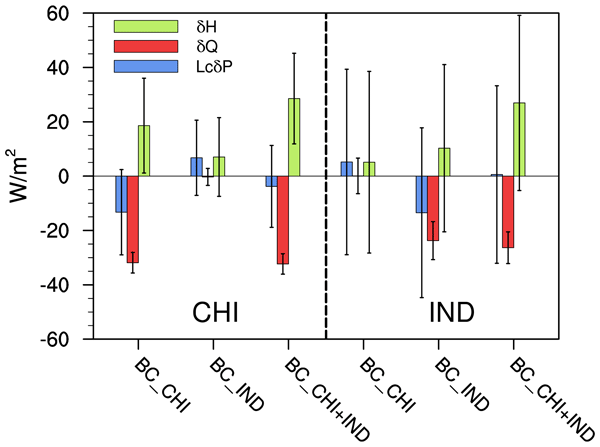
Feifei Luo, Bjørn H. Samset, Camilla W. Stjern, Manoj Joshi, Laura J. Wilcox, Robert J. Allen, Wei Hua, and Shuanglin Li
Atmos. Chem. Phys., 25, 7647–7667, https://doi.org/10.5194/acp-25-7647-2025, https://doi.org/10.5194/acp-25-7647-2025, 2025
Short summary
Short summary
Black carbon (BC) aerosol is emitted from the incomplete combustion of biomass and fossil fuels. We found that Asian BC leads to strong local cooling and drying. Reductions in precipitation primarily depend on the thermodynamic effects due to solar radiation absorption by BC. The combined thermodynamic and dynamic effects shape the spatial pattern of precipitation responses to Asian BC. These results help us further understand the impact of emissions of anthropogenic aerosols on Asian climate.
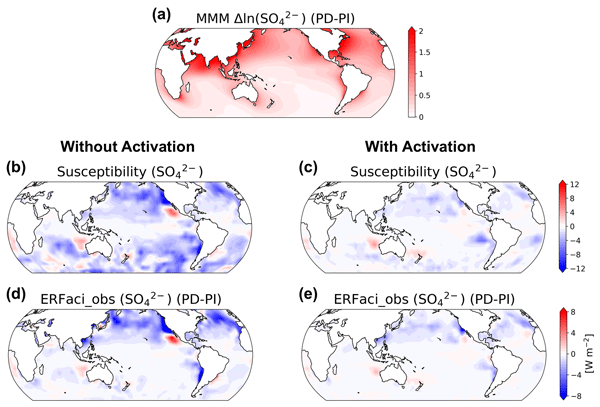
Chanyoung Park, Brian J. Soden, Ryan J. Kramer, Tristan S. L'Ecuyer, and Haozhe He
Atmos. Chem. Phys., 25, 7299–7313, https://doi.org/10.5194/acp-25-7299-2025, https://doi.org/10.5194/acp-25-7299-2025, 2025
Short summary
Short summary
This study addresses the long-standing challenge of quantifying the impact of aerosol–cloud interactions. Using satellite observations, reanalysis data, and a "perfect-model" cross-validation, we show that explicitly accounting for aerosol–cloud droplet activation rates is key to accurately estimating ERFaci (effective radiative forcing due to aerosol–cloud interactions). Our results indicate a smaller and less uncertain ERFaci than previously assessed, implying the reduced role of aerosol–cloud interactions in shaping climate sensitivity.
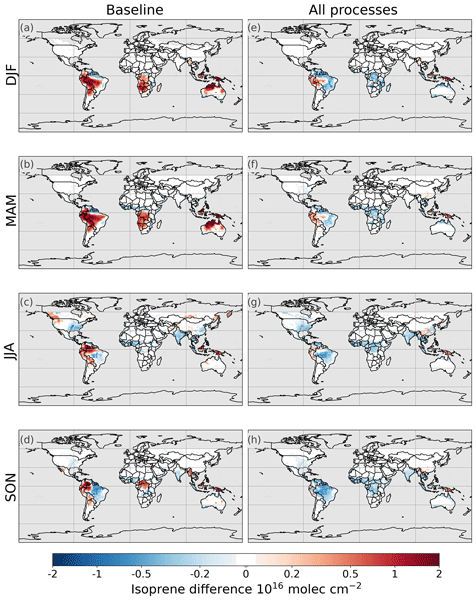
Emma Sands, Ruth M. Doherty, Fiona M. O'Connor, Richard J. Pope, James Weber, and Daniel P. Grosvenor
Atmos. Chem. Phys., 25, 7269–7297, https://doi.org/10.5194/acp-25-7269-2025, https://doi.org/10.5194/acp-25-7269-2025, 2025
Short summary
Short summary
We perform a detailed satellite–model comparison for isoprene, formaldehyde and aerosol optical depth in an Earth system model. We quantify the impacts of several processes that affect how biosphere–atmosphere interactions influence atmospheric chemistry and aerosols. Our findings highlight that the aerosol direct effect is sensitive to the processes studied. These results can inform future investigations of how the biosphere can affect atmospheric composition and climate.
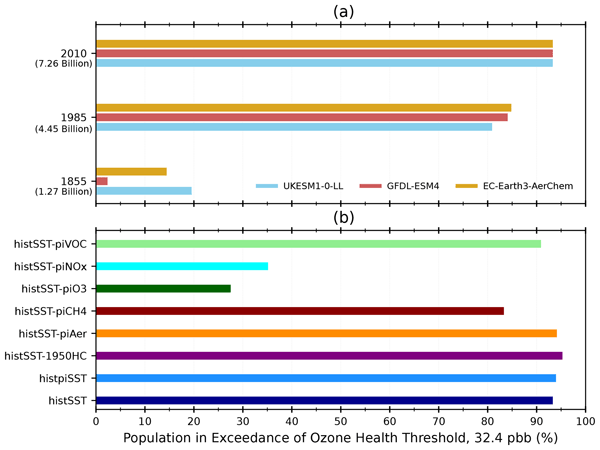
Steven T. Turnock, Dimitris Akritidis, Larry Horowitz, Mariano Mertens, Andrea Pozzer, Carly L. Reddington, Hantao Wang, Putian Zhou, and Fiona O'Connor
Atmos. Chem. Phys., 25, 7111–7136, https://doi.org/10.5194/acp-25-7111-2025, https://doi.org/10.5194/acp-25-7111-2025, 2025
Short summary
Short summary
We assess the drivers behind changes in peak-season surface ozone concentrations and risks to human health between 1850 and 2014. Substantial increases in surface ozone have occurred over this period, resulting in an increased risk to human health, driven mainly by increases in anthropogenic NOx emissions and global CH4 concentrations. Fixing anthropogenic NOx emissions at 1850 values in the near-present-day period can eliminate the risk to human health associated with exposure to surface ozone.
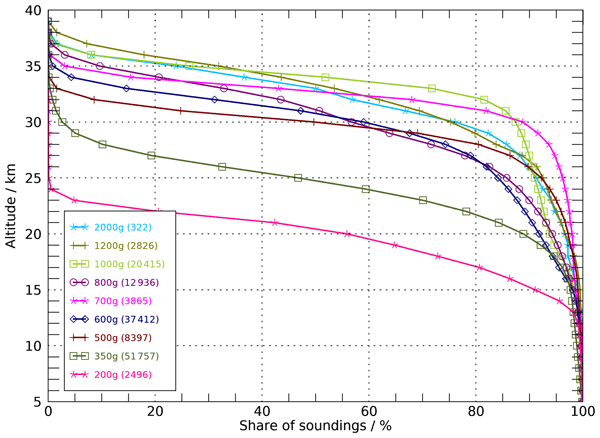
Masatomo Fujiwara, Bomin Sun, Anthony Reale, Domenico Cimini, Salvatore Larosa, Lori Borg, Christoph von Rohden, Michael Sommer, Ruud Dirksen, Marion Maturilli, Holger Vömel, Rigel Kivi, Bruce Ingleby, Ryan J. Kramer, Belay Demoz, Fabio Madonna, Fabien Carminati, Owen Lewis, Brett Candy, Christopher Thomas, David Edwards, Noersomadi, Kensaku Shimizu, and Peter Thorne
Atmos. Meas. Tech., 18, 2919–2955, https://doi.org/10.5194/amt-18-2919-2025, https://doi.org/10.5194/amt-18-2919-2025, 2025
Short summary
Short summary
We assess and illustrate the benefits of high-altitude attainment of balloon-borne radiosonde soundings up to and beyond 10 hPa level from various aspects. We show that the extra costs and technical challenges involved in consistent attainment of high ascents are more than outweighed by the benefits for a broad variety of real-time and delayed-mode applications. Consistent attainment of high ascents should therefore be pursued across the balloon observational network.
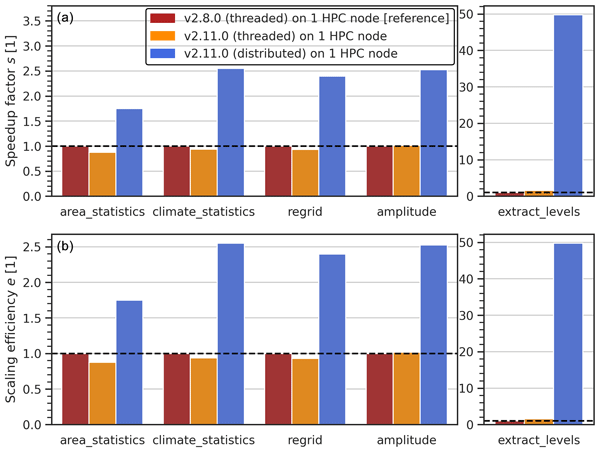
Manuel Schlund, Bouwe Andela, Jörg Benke, Ruth Comer, Birgit Hassler, Emma Hogan, Peter Kalverla, Axel Lauer, Bill Little, Saskia Loosveldt Tomas, Francesco Nattino, Patrick Peglar, Valeriu Predoi, Stef Smeets, Stephen Worsley, Martin Yeo, and Klaus Zimmermann
Geosci. Model Dev., 18, 4009–4021, https://doi.org/10.5194/gmd-18-4009-2025, https://doi.org/10.5194/gmd-18-4009-2025, 2025
Short summary
Short summary
The Earth System Model Evaluation Tool (ESMValTool) is a community diagnostics and performance metrics tool for the evaluation of Earth system models. Here, we describe recent significant improvements of ESMValTool’s computational efficiency including parallel, out-of-core, and distributed computing. Evaluations with the enhanced version of ESMValTool are faster, use less computational resources, and can handle input data larger than the available memory.
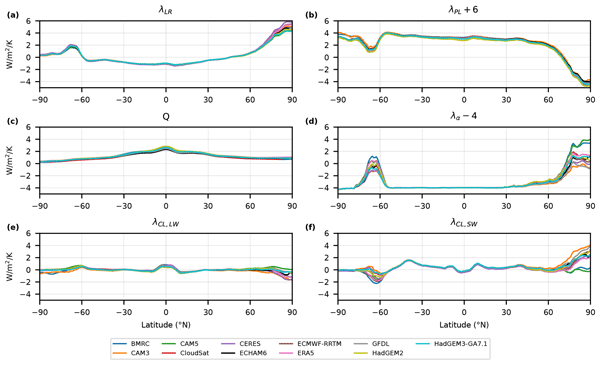
Tyler P. Janoski, Ivan Mitevski, Ryan J. Kramer, Michael Previdi, and Lorenzo M. Polvani
Geosci. Model Dev., 18, 3065–3079, https://doi.org/10.5194/gmd-18-3065-2025, https://doi.org/10.5194/gmd-18-3065-2025, 2025
Short summary
Short summary
We developed ClimKern, a Python package and radiative kernel repository, to simplify calculating radiative feedbacks and make climate sensitivity studies more reproducible. Testing of ClimKern with sample climate model data reveals that radiative kernel choice may be more important than previously thought, especially in polar regions. Our work highlights the need for kernel sensitivity analyses to be included in future studies.
Martin Juckes, Karl E. Taylor, Fabrizio Antonio, David Brayshaw, Carlo Buontempo, Jian Cao, Paul J. Durack, Michio Kawamiya, Hyungjun Kim, Tomas Lovato, Chloe Mackallah, Matthew Mizielinski, Alessandra Nuzzo, Martina Stockhause, Daniele Visioni, Jeremy Walton, Briony Turner, Eleanor O'Rourke, and Beth Dingley
Geosci. Model Dev., 18, 2639–2663, https://doi.org/10.5194/gmd-18-2639-2025, https://doi.org/10.5194/gmd-18-2639-2025, 2025
Short summary
Short summary
The Baseline Climate Variables for Earth System Modelling (ESM-BCVs) are defined as a list of 135 variables which have high utility for the evaluation and exploitation of climate simulations. The list reflects the most frequently used variables from Earth system models based on an assessment of data publication and download records from the largest archive of global climate projects.
Suqi Guo, Felix Havermann, Steven J. De Hertog, Fei Luo, Iris Manola, Thomas Raddatz, Hongmei Li, Wim Thiery, Quentin Lejeune, Carl-Friedrich Schleussner, David Wårlind, Lars Nieradzik, and Julia Pongratz
Earth Syst. Dynam., 16, 631–666, https://doi.org/10.5194/esd-16-631-2025, https://doi.org/10.5194/esd-16-631-2025, 2025
Short summary
Short summary
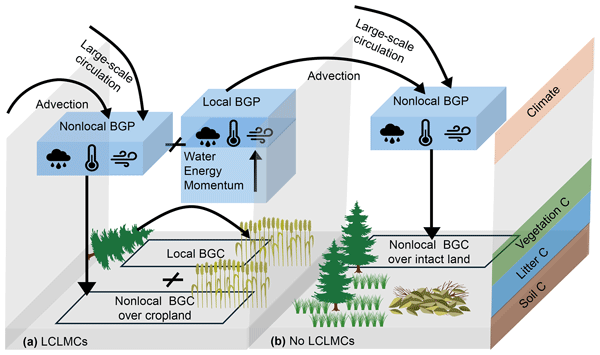
Land cover and land management changes (LCLMCs) can alter climate even in intact areas, causing carbon changes in remote areas. This study is the first to assess these effects, finding they substantially alter global carbon dynamics, changing terrestrial stocks by up to dozens of gigatonnes. These results are vital for scientific and policy assessments, given the expected role of LCLMCs in achieving the Paris Agreement's goal to limit global warming below 1.5 °C.
Kevin Debeire, Lisa Bock, Peer Nowack, Jakob Runge, and Veronika Eyring
Earth Syst. Dynam., 16, 607–630, https://doi.org/10.5194/esd-16-607-2025, https://doi.org/10.5194/esd-16-607-2025, 2025
Short summary
Short summary
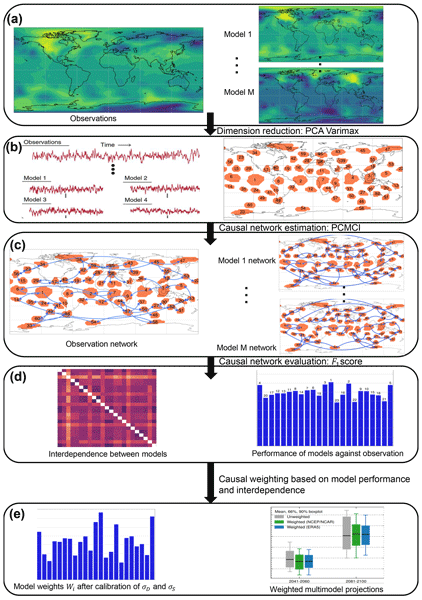
Projecting future precipitation is essential for preparing for climate change, but current climate models still have large uncertainties, especially over land. This study presents a new method to improve precipitation projections by identifying which models best capture key climate patterns. By giving more weight to models that better represent these patterns, our approach leads to more reliable future precipitation projections over land.
Duncan Watson-Parris, Laura J. Wilcox, Camilla W. Stjern, Robert J. Allen, Geeta Persad, Massimo A. Bollasina, Annica M. L. Ekman, Carley E. Iles, Manoj Joshi, Marianne T. Lund, Daniel McCoy, Daniel M. Westervelt, Andrew I. L. Williams, and Bjørn H. Samset
Atmos. Chem. Phys., 25, 4443–4454, https://doi.org/10.5194/acp-25-4443-2025, https://doi.org/10.5194/acp-25-4443-2025, 2025
Short summary
Short summary
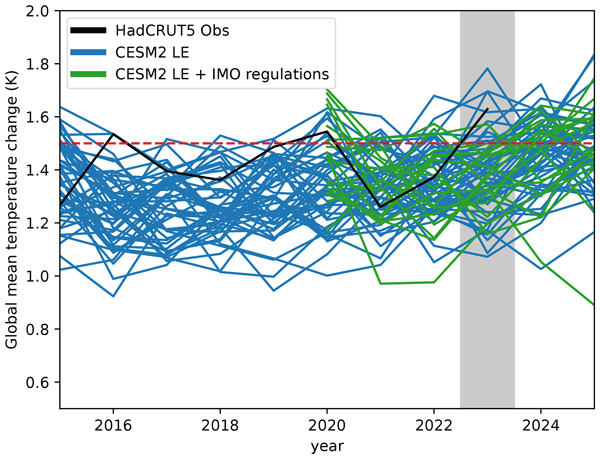
In 2020, regulations by the International Maritime Organization aimed to reduce aerosol emissions from ships. These aerosols previously had a cooling effect, which the regulations might reduce, revealing more greenhouse gas warming. Here we find that, while there is regional warming, the global 2020–2040 temperature rise is only +0.03 °C. This small change is difficult to distinguish from natural climate variability, indicating the regulations have had a limited effect on observed warming to date.
Axel Lauer, Lisa Bock, Birgit Hassler, Patrick Jöckel, Lukas Ruhe, and Manuel Schlund
Geosci. Model Dev., 18, 1169–1188, https://doi.org/10.5194/gmd-18-1169-2025, https://doi.org/10.5194/gmd-18-1169-2025, 2025
Short summary
Short summary
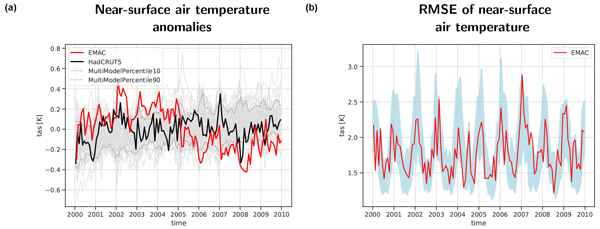
Earth system models are important tools to improve our understanding of current climate and to project climate change. Thus, it is crucial to understand possible shortcomings in the models. New features of the ESMValTool software package allow one to compare and visualize a model's performance with respect to reproducing observations in the context of other climate models in an easy and user-friendly way. We aim to help model developers assess and monitor climate simulations more efficiently.
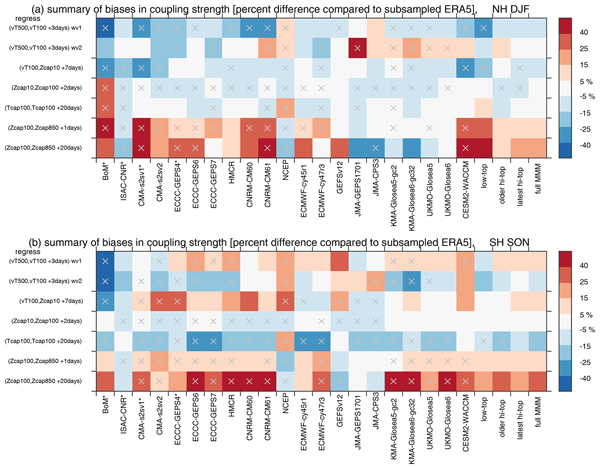
Chaim I. Garfinkel, Zachary D. Lawrence, Amy H. Butler, Etienne Dunn-Sigouin, Irene Erner, Alexey Y. Karpechko, Gerbrand Koren, Marta Abalos, Blanca Ayarzagüena, David Barriopedro, Natalia Calvo, Alvaro de la Cámara, Andrew Charlton-Perez, Judah Cohen, Daniela I. V. Domeisen, Javier García-Serrano, Neil P. Hindley, Martin Jucker, Hera Kim, Robert W. Lee, Simon H. Lee, Marisol Osman, Froila M. Palmeiro, Inna Polichtchouk, Jian Rao, Jadwiga H. Richter, Chen Schwartz, Seok-Woo Son, Masakazu Taguchi, Nicholas L. Tyrrell, Corwin J. Wright, and Rachel W.-Y. Wu
Weather Clim. Dynam., 6, 171–195, https://doi.org/10.5194/wcd-6-171-2025, https://doi.org/10.5194/wcd-6-171-2025, 2025
Short summary
Short summary
Variability in the extratropical stratosphere and troposphere is coupled, and because of the longer timescales characteristic of the stratosphere, this allows for a window of opportunity for surface prediction. This paper assesses whether models used for operational prediction capture these coupling processes accurately. We find that most processes are too weak; however downward coupling from the lower stratosphere to the near surface is too strong.
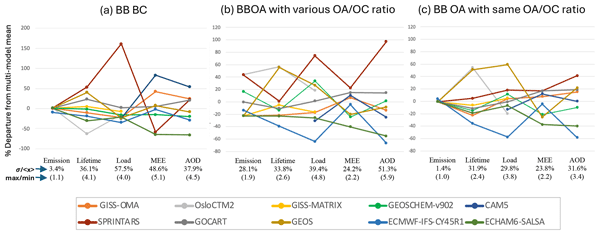
Mariya Petrenko, Ralph Kahn, Mian Chin, Susanne E. Bauer, Tommi Bergman, Huisheng Bian, Gabriele Curci, Ben Johnson, Johannes W. Kaiser, Zak Kipling, Harri Kokkola, Xiaohong Liu, Keren Mezuman, Tero Mielonen, Gunnar Myhre, Xiaohua Pan, Anna Protonotariou, Samuel Remy, Ragnhild Bieltvedt Skeie, Philip Stier, Toshihiko Takemura, Kostas Tsigaridis, Hailong Wang, Duncan Watson-Parris, and Kai Zhang
Atmos. Chem. Phys., 25, 1545–1567, https://doi.org/10.5194/acp-25-1545-2025, https://doi.org/10.5194/acp-25-1545-2025, 2025
Short summary
Short summary
We compared smoke plume simulations from 11 global models to each other and to satellite smoke amount observations aimed at constraining smoke source strength. In regions where plumes are thick and background aerosol is low, models and satellites compare well. However, the input emission inventory tends to underestimate in many places, and particle property and loss rate assumptions vary enormously among models, causing uncertainties that require systematic in situ measurements to resolve.
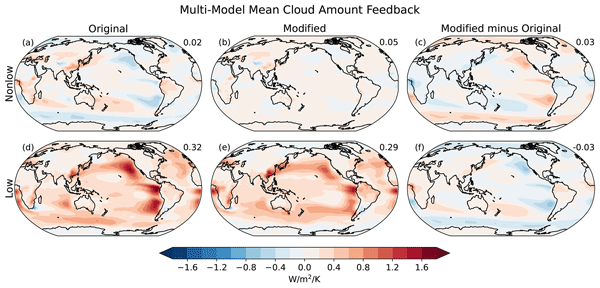
Mark D. Zelinka, Li-Wei Chao, Timothy A. Myers, Yi Qin, and Stephen A. Klein
Atmos. Chem. Phys., 25, 1477–1495, https://doi.org/10.5194/acp-25-1477-2025, https://doi.org/10.5194/acp-25-1477-2025, 2025
Short summary
Short summary
Clouds lie at the heart of uncertainty in both climate sensitivity and radiative forcing, making it imperative to properly diagnose their radiative effects. Here we provide a recommended methodology and code base for the community to use in performing such diagnoses using cloud radiative kernels. We show that properly accounting for changes in obscuration of lower-level clouds by upper-level clouds is important for accurate diagnosis and attribution of cloud feedbacks and adjustments.
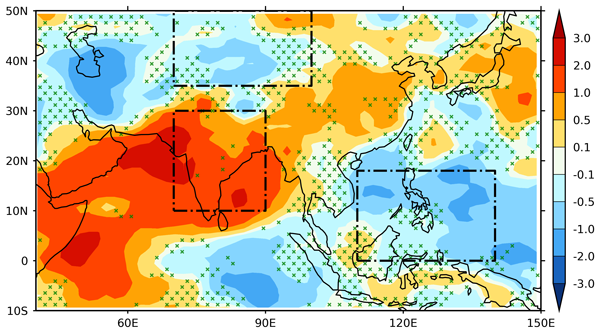
Alcide Zhao, Laura J. Wilcox, and Claire L. Ryder
Atmos. Chem. Phys., 24, 13385–13402, https://doi.org/10.5194/acp-24-13385-2024, https://doi.org/10.5194/acp-24-13385-2024, 2024
Short summary
Short summary
Climate models include desert dust aerosols, which cause atmospheric heating and can change circulation patterns. We assess the effect of dust on the Indian and east Asian summer monsoons through multi-model experiments isolating the effect of dust in current climate models for the first time. Dust atmospheric heating results in a southward shift of western Pacific equatorial rainfall and an enhanced Indian summer monsoon. This shows the importance of accurate dust representation in models.
Benjamin M. Sanderson, Ben B. B. Booth, John Dunne, Veronika Eyring, Rosie A. Fisher, Pierre Friedlingstein, Matthew J. Gidden, Tomohiro Hajima, Chris D. Jones, Colin G. Jones, Andrew King, Charles D. Koven, David M. Lawrence, Jason Lowe, Nadine Mengis, Glen P. Peters, Joeri Rogelj, Chris Smith, Abigail C. Snyder, Isla R. Simpson, Abigail L. S. Swann, Claudia Tebaldi, Tatiana Ilyina, Carl-Friedrich Schleussner, Roland Séférian, Bjørn H. Samset, Detlef van Vuuren, and Sönke Zaehle
Geosci. Model Dev., 17, 8141–8172, https://doi.org/10.5194/gmd-17-8141-2024, https://doi.org/10.5194/gmd-17-8141-2024, 2024
Short summary
Short summary
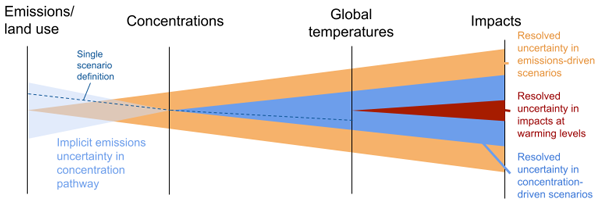
We discuss how, in order to provide more relevant guidance for climate policy, coordinated climate experiments should adopt a greater focus on simulations where Earth system models are provided with carbon emissions from fossil fuels together with land use change instructions, rather than past approaches that have largely focused on experiments with prescribed atmospheric carbon dioxide concentrations. We discuss how these goals might be achieved in coordinated climate modeling experiments.
Robert J. Allen, Xueying Zhao, Cynthia A. Randles, Ryan J. Kramer, Bjørn H. Samset, and Christopher J. Smith
Atmos. Chem. Phys., 24, 11207–11226, https://doi.org/10.5194/acp-24-11207-2024, https://doi.org/10.5194/acp-24-11207-2024, 2024
Short summary
Short summary
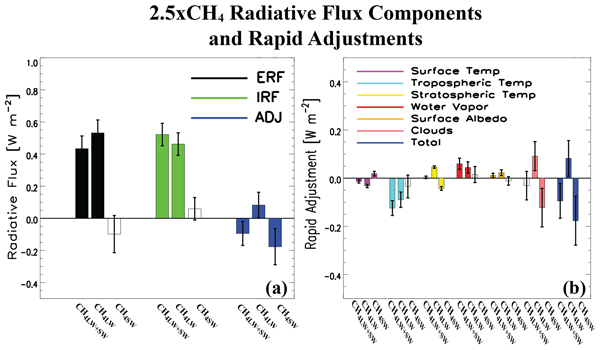
Present-day methane shortwave absorption mutes 28% (7–55%) of the surface warming associated with its longwave absorption. The precipitation increase associated with the longwave radiative effects of the present-day methane perturbation is also muted by shortwave absorption but not significantly so. Methane shortwave absorption also impacts the magnitude of its climate feedback parameter, largely through the cloud feedback.
Emma Sands, Richard J. Pope, Ruth M. Doherty, Fiona M. O'Connor, Chris Wilson, and Hugh Pumphrey
Atmos. Chem. Phys., 24, 11081–11102, https://doi.org/10.5194/acp-24-11081-2024, https://doi.org/10.5194/acp-24-11081-2024, 2024
Short summary
Short summary
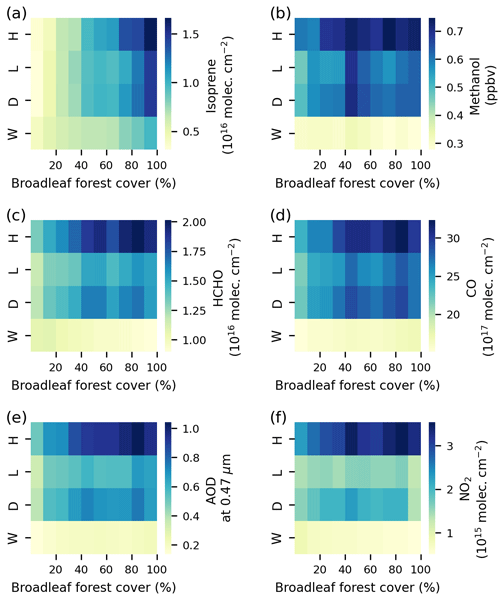
Changes in vegetation alongside biomass burning impact regional atmospheric composition and air quality. Using satellite remote sensing, we find a clear linear relationship between forest cover and isoprene and a pronounced non-linear relationship between burned area and nitrogen dioxide in the southern Amazon, a region of substantial deforestation. These quantified relationships can be used for model evaluation and further exploration of biosphere-atmosphere interactions in Earth System Models.
Richard J. Pope, Fiona M. O'Connor, Mohit Dalvi, Brian J. Kerridge, Richard Siddans, Barry G. Latter, Brice Barret, Eric Le Flochmoen, Anne Boynard, Martyn P. Chipperfield, Wuhu Feng, Matilda A. Pimlott, Sandip S. Dhomse, Christian Retscher, Catherine Wespes, and Richard Rigby
Atmos. Chem. Phys., 24, 9177–9195, https://doi.org/10.5194/acp-24-9177-2024, https://doi.org/10.5194/acp-24-9177-2024, 2024
Short summary
Short summary
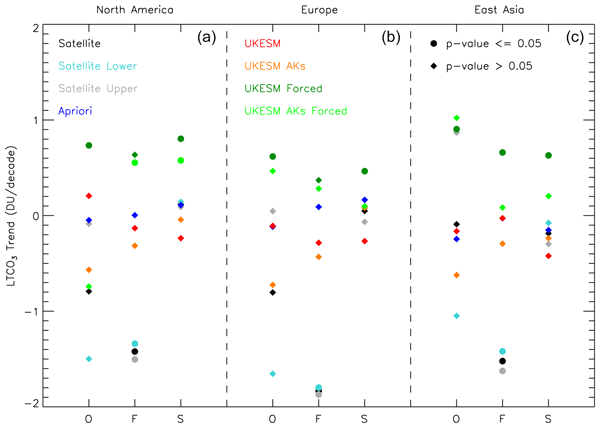
Ozone is a potent air pollutant in the lower troposphere, with adverse impacts on human health. Satellite records of tropospheric ozone currently show large-scale inconsistencies in long-term trends. Our detailed study of the potential factors (e.g. satellite errors, where the satellite can observe ozone) potentially driving these inconsistencies found that, in North America, Europe, and East Asia, the underlying trends are typically small with large uncertainties.
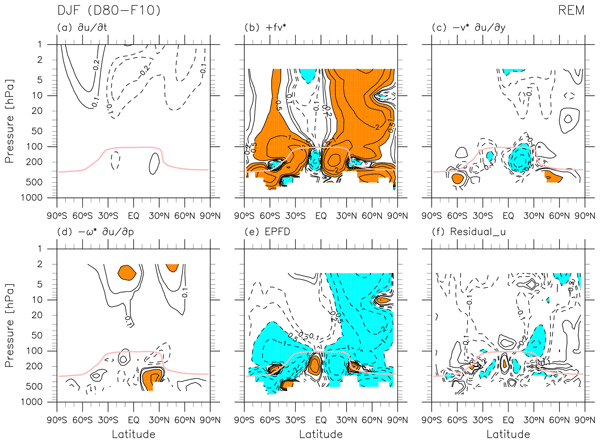
Masatomo Fujiwara, Patrick Martineau, Jonathon S. Wright, Marta Abalos, Petr Šácha, Yoshio Kawatani, Sean M. Davis, Thomas Birner, and Beatriz M. Monge-Sanz
Atmos. Chem. Phys., 24, 7873–7898, https://doi.org/10.5194/acp-24-7873-2024, https://doi.org/10.5194/acp-24-7873-2024, 2024
Short summary
Short summary
A climatology of the major variables and terms of the transformed Eulerian-mean (TEM) momentum and thermodynamic equations from four global atmospheric reanalyses is evaluated. The spread among reanalysis TEM momentum balance terms is around 10 % in Northern Hemisphere winter and up to 50 % in Southern Hemisphere winter. The largest uncertainties in the thermodynamic equation (about 50 %) are in the vertical advection, which does not show a structure consistent with the differences in heating.
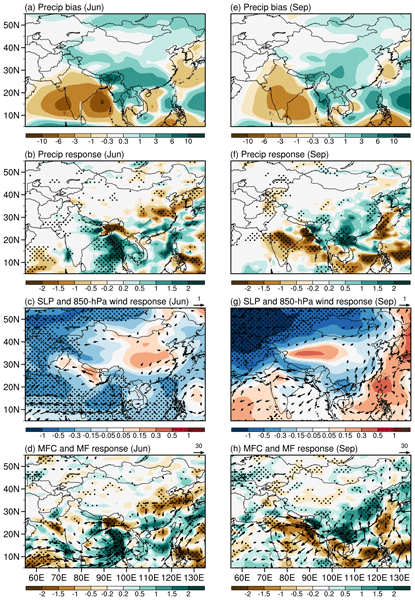
Zhen Liu, Massimo A. Bollasina, and Laura J. Wilcox
Atmos. Chem. Phys., 24, 7227–7252, https://doi.org/10.5194/acp-24-7227-2024, https://doi.org/10.5194/acp-24-7227-2024, 2024
Short summary
Short summary
The aerosol impact on monsoon precipitation and circulation is strongly influenced by a model-simulated spatio-temporal variability in the climatological monsoon precipitation across Asia, which critically modulates the efficacy of aerosol–cloud–precipitation interactions, the predominant driver of the total aerosol response. There is a strong interplay between South Asia and East Asia monsoon precipitation biases and their relative predominance in driving the overall monsoon response.
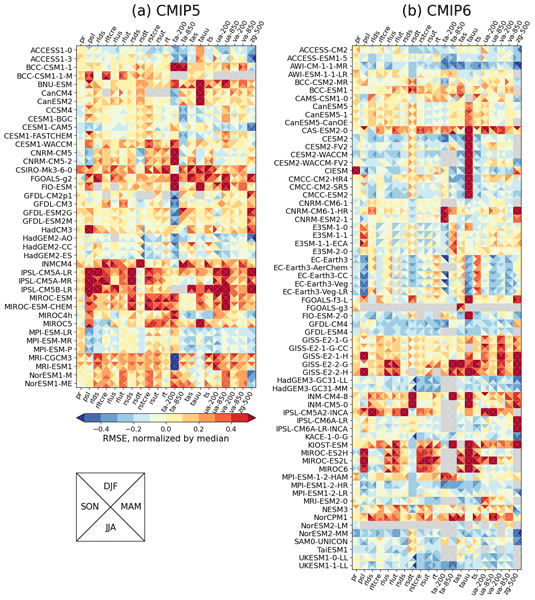
Jiwoo Lee, Peter J. Gleckler, Min-Seop Ahn, Ana Ordonez, Paul A. Ullrich, Kenneth R. Sperber, Karl E. Taylor, Yann Y. Planton, Eric Guilyardi, Paul Durack, Celine Bonfils, Mark D. Zelinka, Li-Wei Chao, Bo Dong, Charles Doutriaux, Chengzhu Zhang, Tom Vo, Jason Boutte, Michael F. Wehner, Angeline G. Pendergrass, Daehyun Kim, Zeyu Xue, Andrew T. Wittenberg, and John Krasting
Geosci. Model Dev., 17, 3919–3948, https://doi.org/10.5194/gmd-17-3919-2024, https://doi.org/10.5194/gmd-17-3919-2024, 2024
Short summary
Short summary
We introduce an open-source software, the PCMDI Metrics Package (PMP), developed for a comprehensive comparison of Earth system models (ESMs) with real-world observations. Using diverse metrics evaluating climatology, variability, and extremes simulated in thousands of simulations from the Coupled Model Intercomparison Project (CMIP), PMP aids in benchmarking model improvements across generations. PMP also enables efficient tracking of performance evolutions during ESM developments.
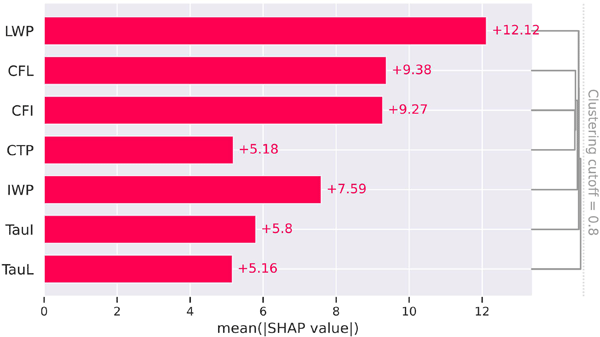
Sonya L. Fiddes, Marc D. Mallet, Alain Protat, Matthew T. Woodhouse, Simon P. Alexander, and Kalli Furtado
Geosci. Model Dev., 17, 2641–2662, https://doi.org/10.5194/gmd-17-2641-2024, https://doi.org/10.5194/gmd-17-2641-2024, 2024
Short summary
Short summary
In this study we present an evaluation that considers complex, non-linear systems in a holistic manner. This study uses XGBoost, a machine learning algorithm, to predict the simulated Southern Ocean shortwave radiation bias in the ACCESS model using cloud property biases as predictors. We then used a novel feature importance analysis to quantify the role that each cloud bias plays in predicting the radiative bias, laying the foundation for advanced Earth system model evaluation and development.
Stephanie Fiedler, Vaishali Naik, Fiona M. O'Connor, Christopher J. Smith, Paul Griffiths, Ryan J. Kramer, Toshihiko Takemura, Robert J. Allen, Ulas Im, Matthew Kasoar, Angshuman Modak, Steven Turnock, Apostolos Voulgarakis, Duncan Watson-Parris, Daniel M. Westervelt, Laura J. Wilcox, Alcide Zhao, William J. Collins, Michael Schulz, Gunnar Myhre, and Piers M. Forster
Geosci. Model Dev., 17, 2387–2417, https://doi.org/10.5194/gmd-17-2387-2024, https://doi.org/10.5194/gmd-17-2387-2024, 2024
Short summary
Short summary
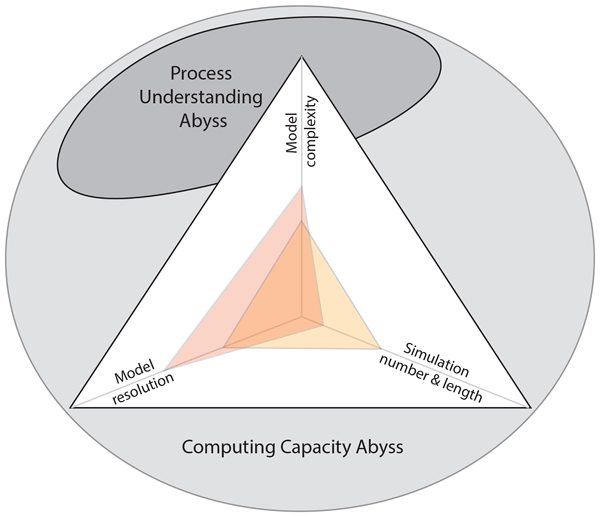
Climate scientists want to better understand modern climate change. Thus, climate model experiments are performed and compared. The results of climate model experiments differ, as assessed in the latest Intergovernmental Panel on Climate Change (IPCC) assessment report. This article gives insights into the challenges and outlines opportunities for further improving the understanding of climate change. It is based on views of a group of experts in atmospheric composition–climate interactions.
Steven J. De Hertog, Carmen E. Lopez-Fabara, Ruud van der Ent, Jessica Keune, Diego G. Miralles, Raphael Portmann, Sebastian Schemm, Felix Havermann, Suqi Guo, Fei Luo, Iris Manola, Quentin Lejeune, Julia Pongratz, Carl-Friedrich Schleussner, Sonia I. Seneviratne, and Wim Thiery
Earth Syst. Dynam., 15, 265–291, https://doi.org/10.5194/esd-15-265-2024, https://doi.org/10.5194/esd-15-265-2024, 2024
Short summary
Short summary
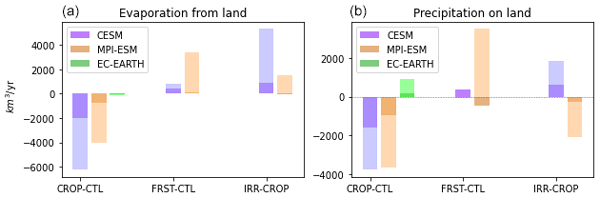
Changes in land use are crucial to achieve lower global warming. However, despite their importance, the effects of these changes on moisture fluxes are poorly understood. We analyse land cover and management scenarios in three climate models involving cropland expansion, afforestation, and irrigation. Results show largely consistent influences on moisture fluxes, with cropland expansion causing a drying and reduced local moisture recycling, while afforestation and irrigation show the opposite.
Marika M. Holland, Cecile Hannay, John Fasullo, Alexandra Jahn, Jennifer E. Kay, Michael Mills, Isla R. Simpson, William Wieder, Peter Lawrence, Erik Kluzek, and David Bailey
Geosci. Model Dev., 17, 1585–1602, https://doi.org/10.5194/gmd-17-1585-2024, https://doi.org/10.5194/gmd-17-1585-2024, 2024
Short summary
Short summary
Climate evolves in response to changing forcings, as prescribed in simulations. Models and forcings are updated over time to reflect new understanding. This makes it difficult to attribute simulation differences to either model or forcing changes. Here we present new simulations which enable the separation of model structure and forcing influence between two widely used simulation sets. Results indicate a strong influence of aerosol emission uncertainty on historical climate.
Woon Mi Kim, Santos J. González-Rojí, Isla R. Simpson, and Daniel Kennedy
EGUsphere, https://doi.org/10.5194/egusphere-2024-252, https://doi.org/10.5194/egusphere-2024-252, 2024
Preprint archived
Short summary
Short summary
This study investigates temporal characteristics and typical circulation conditions associated with onsets and terminations of soil moisture droughts in Europe. More understanding of drought onsets and terminations can aid in improving early predictions for devastating intense droughts.
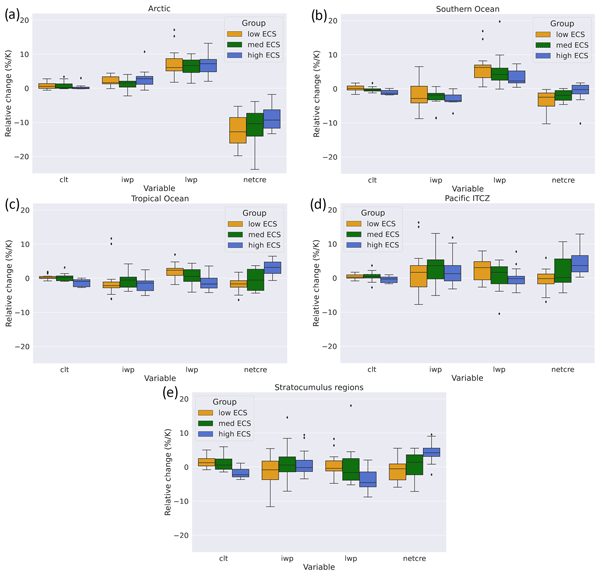
Lisa Bock and Axel Lauer
Atmos. Chem. Phys., 24, 1587–1605, https://doi.org/10.5194/acp-24-1587-2024, https://doi.org/10.5194/acp-24-1587-2024, 2024
Short summary
Short summary
Climate model simulations still show a large range of effective climate sensitivity (ECS) with high uncertainties. An important contribution to ECS is cloud climate feedback. We investigate the representation of cloud physical and radiative properties from Coupled Model Intercomparison Project models grouped by ECS. We compare the simulated cloud properties of today’s climate from three ECS groups and quantify how the projected changes in cloud properties and cloud radiative effects differ.
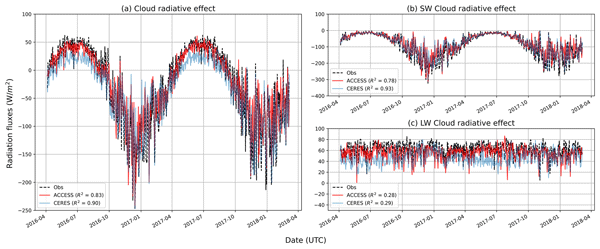
Zhangcheng Pei, Sonya L. Fiddes, W. John R. French, Simon P. Alexander, Marc D. Mallet, Peter Kuma, and Adrian McDonald
Atmos. Chem. Phys., 23, 14691–14714, https://doi.org/10.5194/acp-23-14691-2023, https://doi.org/10.5194/acp-23-14691-2023, 2023
Short summary
Short summary
In this paper, we use ground-based observations to evaluate a climate model and a satellite product in simulating surface radiation and investigate how radiation biases are influenced by cloud properties over the Southern Ocean. We find that significant radiation biases exist in both the model and satellite. The cloud fraction and cloud occurrence play an important role in affecting radiation biases. We suggest further development for the model and satellite using ground-based observations.
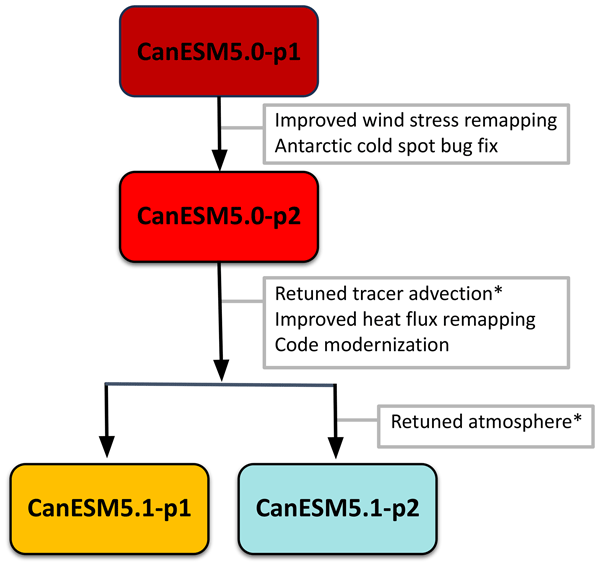
Michael Sigmond, James Anstey, Vivek Arora, Ruth Digby, Nathan Gillett, Viatcheslav Kharin, William Merryfield, Catherine Reader, John Scinocca, Neil Swart, John Virgin, Carsten Abraham, Jason Cole, Nicolas Lambert, Woo-Sung Lee, Yongxiao Liang, Elizaveta Malinina, Landon Rieger, Knut von Salzen, Christian Seiler, Clint Seinen, Andrew Shao, Reinel Sospedra-Alfonso, Libo Wang, and Duo Yang
Geosci. Model Dev., 16, 6553–6591, https://doi.org/10.5194/gmd-16-6553-2023, https://doi.org/10.5194/gmd-16-6553-2023, 2023
Short summary
Short summary
We present a new activity which aims to organize the analysis of biases in the Canadian Earth System model (CanESM) in a systematic manner. Results of this “Analysis for Development” (A4D) activity includes a new CanESM version, CanESM5.1, which features substantial improvements regarding the simulation of dust and stratospheric temperatures, a second CanESM5.1 variant with reduced climate sensitivity, and insights into potential avenues to reduce various other model biases.
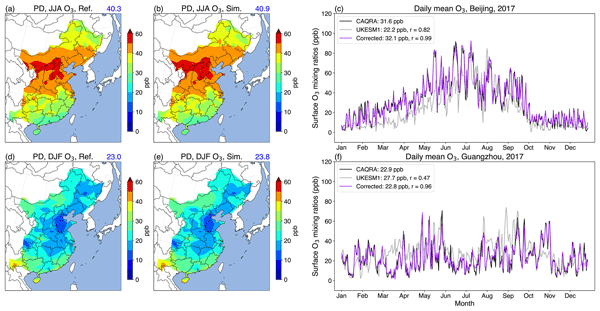
Zhenze Liu, Oliver Wild, Ruth M. Doherty, Fiona M. O'Connor, and Steven T. Turnock
Atmos. Chem. Phys., 23, 13755–13768, https://doi.org/10.5194/acp-23-13755-2023, https://doi.org/10.5194/acp-23-13755-2023, 2023
Short summary
Short summary
We investigate the impact of net-zero policies on surface ozone pollution in China. A chemistry–climate model is used to simulate ozone changes driven by local and external emissions, methane, and warmer climates. A deep learning model is applied to generate more robust ozone projection, and we find that the benefits of net-zero policies may be overestimated with the chemistry–climate model. Nevertheless, it is clear that the policies can still substantially reduce ozone pollution in future.
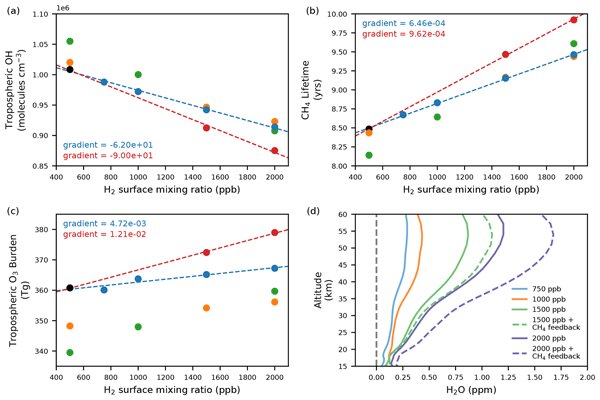
Nicola J. Warwick, Alex T. Archibald, Paul T. Griffiths, James Keeble, Fiona M. O'Connor, John A. Pyle, and Keith P. Shine
Atmos. Chem. Phys., 23, 13451–13467, https://doi.org/10.5194/acp-23-13451-2023, https://doi.org/10.5194/acp-23-13451-2023, 2023
Short summary
Short summary
A chemistry–climate model has been used to explore the atmospheric response to changes in emissions of hydrogen and other species associated with a shift from fossil fuel to hydrogen use. Leakage of hydrogen results in indirect global warming, offsetting greenhouse gas emission reductions from reduced fossil fuel use. To maximise the benefit of hydrogen as an energy source, hydrogen leakage and emissions of methane, carbon monoxide and nitrogen oxides should be minimised.
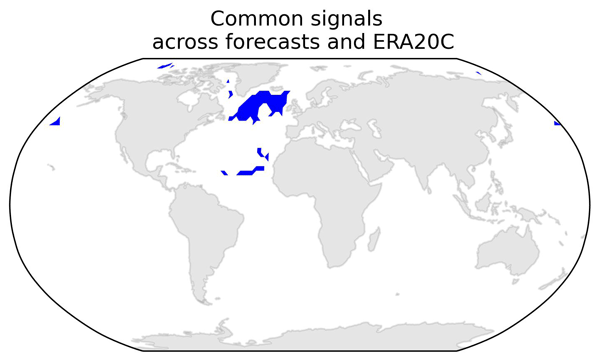
Kristian Strommen, Tim Woollings, Paolo Davini, Paolo Ruggieri, and Isla R. Simpson
Weather Clim. Dynam., 4, 853–874, https://doi.org/10.5194/wcd-4-853-2023, https://doi.org/10.5194/wcd-4-853-2023, 2023
Short summary
Short summary
We present evidence which strongly suggests that decadal variations in the intensity of the North Atlantic winter jet stream can be predicted by current forecast models but that decadal variations in its position appear to be unpredictable. It is argued that this skill at predicting jet intensity originates from the slow, predictable variability in sea surface temperatures in the sub-polar North Atlantic.
Joao Carlos Martins Teixeira, Chantelle Burton, Douglas I. Kelly, Gerd A. Folberth, Fiona M. O'Connor, Richard A. Betts, and Apostolos Voulgarakis
Biogeosciences Discuss., https://doi.org/10.5194/bg-2023-136, https://doi.org/10.5194/bg-2023-136, 2023
Revised manuscript not accepted
Short summary
Short summary
Representing socio-economic impacts on fires is crucial to underpin the confidence in global fire models. Introducing these into INFERNO, reduces biases and improves the modelled burnt area (BA) trends when compared to observations. Including socio-economic factors in the representation of fires in Earth System Models is important for realistically simulating BA, quantifying trends in the recent past, and for understanding the main drivers of those at regional scales.
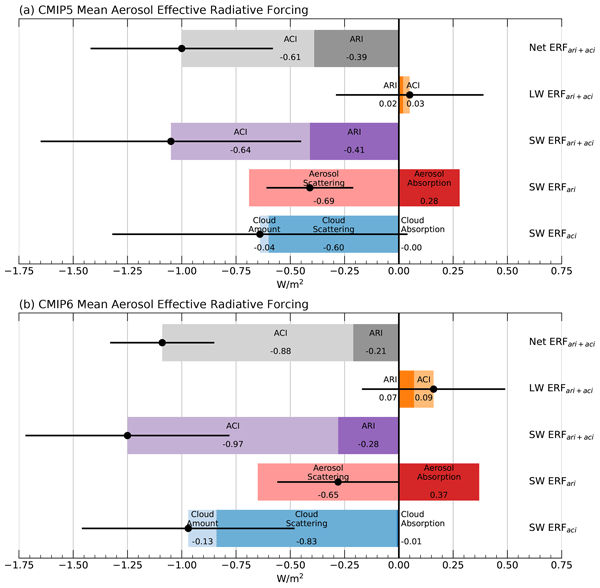
Mark D. Zelinka, Christopher J. Smith, Yi Qin, and Karl E. Taylor
Atmos. Chem. Phys., 23, 8879–8898, https://doi.org/10.5194/acp-23-8879-2023, https://doi.org/10.5194/acp-23-8879-2023, 2023
Short summary
Short summary
The primary uncertainty in how strongly Earth's climate has been perturbed by human activities comes from the unknown radiative impact of aerosol changes. Accurately quantifying these forcings – and their sub-components – in climate models is crucial for understanding the past and future simulated climate. In this study we describe biases in previously published estimates of aerosol radiative forcing in climate models and provide corrected estimates along with code for users to compute them.
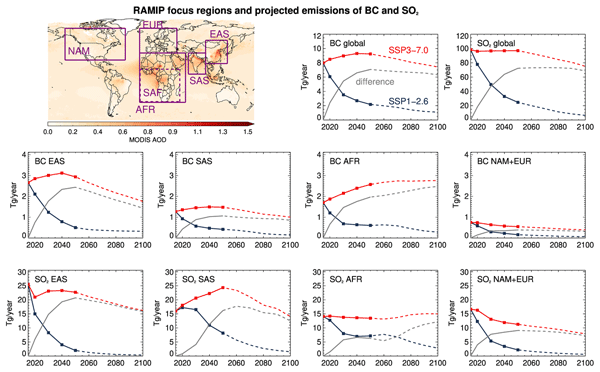
Laura J. Wilcox, Robert J. Allen, Bjørn H. Samset, Massimo A. Bollasina, Paul T. Griffiths, James Keeble, Marianne T. Lund, Risto Makkonen, Joonas Merikanto, Declan O'Donnell, David J. Paynter, Geeta G. Persad, Steven T. Rumbold, Toshihiko Takemura, Kostas Tsigaridis, Sabine Undorf, and Daniel M. Westervelt
Geosci. Model Dev., 16, 4451–4479, https://doi.org/10.5194/gmd-16-4451-2023, https://doi.org/10.5194/gmd-16-4451-2023, 2023
Short summary
Short summary
Changes in anthropogenic aerosol emissions have strongly contributed to global and regional climate change. However, the size of these regional impacts and the way they arise are still uncertain. With large changes in aerosol emissions a possibility over the next few decades, it is important to better quantify the potential role of aerosol in future regional climate change. The Regional Aerosol Model Intercomparison Project will deliver experiments designed to facilitate this.
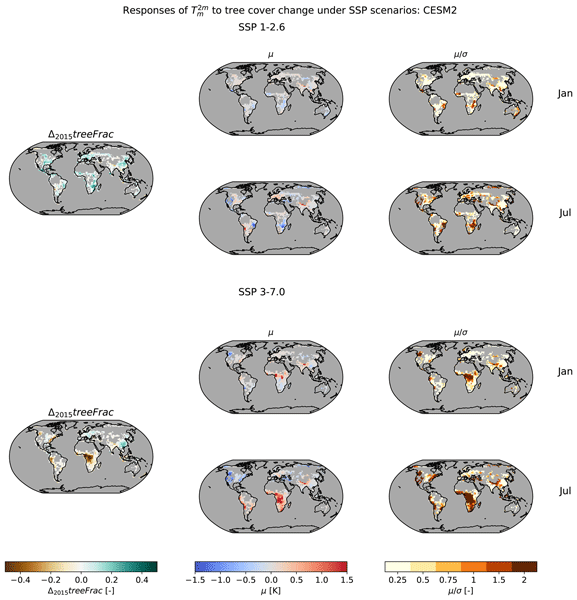
Shruti Nath, Lukas Gudmundsson, Jonas Schwaab, Gregory Duveiller, Steven J. De Hertog, Suqi Guo, Felix Havermann, Fei Luo, Iris Manola, Julia Pongratz, Sonia I. Seneviratne, Carl F. Schleussner, Wim Thiery, and Quentin Lejeune
Geosci. Model Dev., 16, 4283–4313, https://doi.org/10.5194/gmd-16-4283-2023, https://doi.org/10.5194/gmd-16-4283-2023, 2023
Short summary
Short summary
Tree cover changes play a significant role in climate mitigation and adaptation. Their regional impacts are key in informing national-level decisions and prioritising areas for conservation efforts. We present a first step towards exploring these regional impacts using a simple statistical device, i.e. emulator. The emulator only needs to train on climate model outputs representing the maximal impacts of aff-, re-, and deforestation, from which it explores plausible in-between outcomes itself.
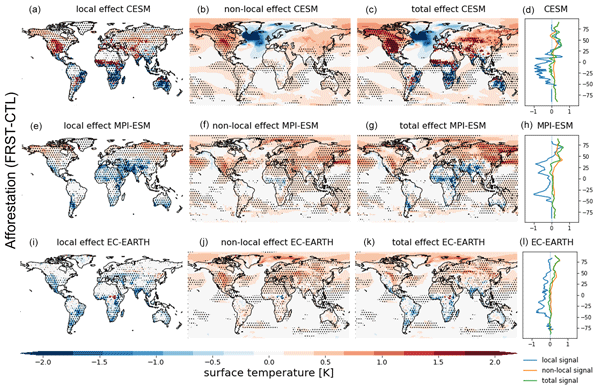
Steven J. De Hertog, Felix Havermann, Inne Vanderkelen, Suqi Guo, Fei Luo, Iris Manola, Dim Coumou, Edouard L. Davin, Gregory Duveiller, Quentin Lejeune, Julia Pongratz, Carl-Friedrich Schleussner, Sonia I. Seneviratne, and Wim Thiery
Earth Syst. Dynam., 14, 629–667, https://doi.org/10.5194/esd-14-629-2023, https://doi.org/10.5194/esd-14-629-2023, 2023
Short summary
Short summary
Land cover and land management changes are important strategies for future land-based mitigation. We investigate the climate effects of cropland expansion, afforestation, irrigation and wood harvesting using three Earth system models. Results show that these have important implications for surface temperature where the land cover and/or management change occur and in remote areas. Idealized afforestation causes global warming, which might offset the cooling effect from enhanced carbon uptake.
Steven J. De Hertog, Carmen E. Lopez-Fabara, Ruud van der Ent, Jessica Keune, Diego G. Miralles, Raphael Portmann, Sebastian Schemm, Felix Havermann, Suqi Guo, Fei Luo, Iris Manola, Quentin Lejeune, Julia Pongratz, Carl-Friedrich Schleussner, Sonia I. Seneviratne, and Wim Thiery
EGUsphere, https://doi.org/10.5194/egusphere-2023-953, https://doi.org/10.5194/egusphere-2023-953, 2023
Preprint archived
Short summary
Short summary
Land cover and management changes can affect the climate and water availability. In this study we use climate model simulations of extreme global land cover changes (afforestation, deforestation) and land management changes (irrigation) to understand the effects on the global water cycle and local to continental water availability. We show that cropland expansion generally leads to higher evaporation and lower amounts of precipitation and afforestation and irrigation expansion to the opposite.
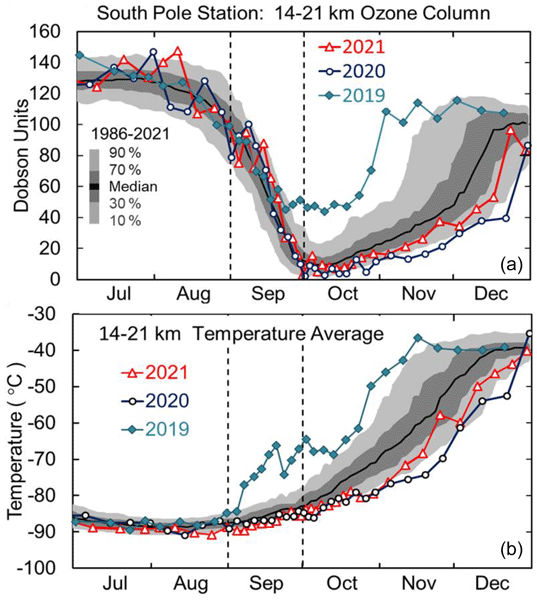
Bryan J. Johnson, Patrick Cullis, John Booth, Irina Petropavlovskikh, Glen McConville, Birgit Hassler, Gary A. Morris, Chance Sterling, and Samuel Oltmans
Atmos. Chem. Phys., 23, 3133–3146, https://doi.org/10.5194/acp-23-3133-2023, https://doi.org/10.5194/acp-23-3133-2023, 2023
Short summary
Short summary
In 1986, soon after the discovery of the Antarctic ozone hole, NOAA began year-round ozonesonde observations at South Pole Station to measure vertical profiles of ozone and temperature from the surface to 35 km. Balloon-borne ozonesondes launched at this unique site allow for tracking all phases of the yearly springtime ozone hole beginning in late winter and after sunrise, when rapid ozone depletion begins over the South Pole throughout the month of September.
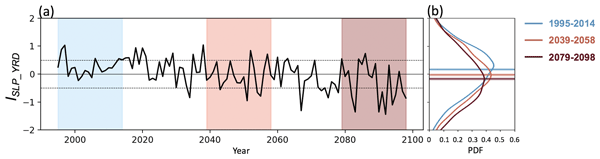
Zixuan Jia, Carlos Ordóñez, Ruth M. Doherty, Oliver Wild, Steven T. Turnock, and Fiona M. O'Connor
Atmos. Chem. Phys., 23, 2829–2842, https://doi.org/10.5194/acp-23-2829-2023, https://doi.org/10.5194/acp-23-2829-2023, 2023
Short summary
Short summary
This study investigates the influence of the winter large-scale circulation on daily concentrations of PM2.5 and their sensitivity to emissions. The new proposed circulation index can effectively distinguish different levels of air pollution and explain changes in PM2.5 sensitivity to emissions from local and surrounding regions. We then project future changes in PM2.5 concentrations using this index and find an increase in PM2.5 concentrations over the region due to climate change.
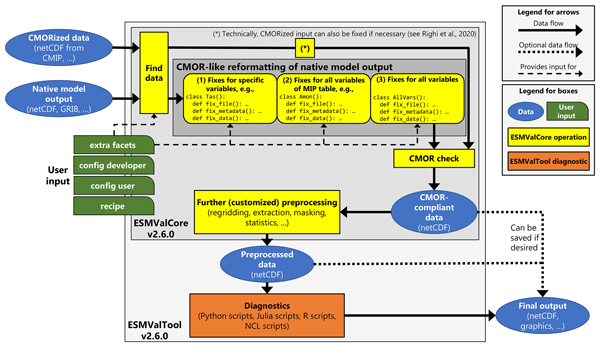
Manuel Schlund, Birgit Hassler, Axel Lauer, Bouwe Andela, Patrick Jöckel, Rémi Kazeroni, Saskia Loosveldt Tomas, Brian Medeiros, Valeriu Predoi, Stéphane Sénési, Jérôme Servonnat, Tobias Stacke, Javier Vegas-Regidor, Klaus Zimmermann, and Veronika Eyring
Geosci. Model Dev., 16, 315–333, https://doi.org/10.5194/gmd-16-315-2023, https://doi.org/10.5194/gmd-16-315-2023, 2023
Short summary
Short summary
The Earth System Model Evaluation Tool (ESMValTool) is a community diagnostics and performance metrics tool for routine evaluation of Earth system models. Originally, ESMValTool was designed to process reformatted output provided by large model intercomparison projects like the Coupled Model Intercomparison Project (CMIP). Here, we describe a new extension of ESMValTool that allows for reading and processing native climate model output, i.e., data that have not been reformatted before.
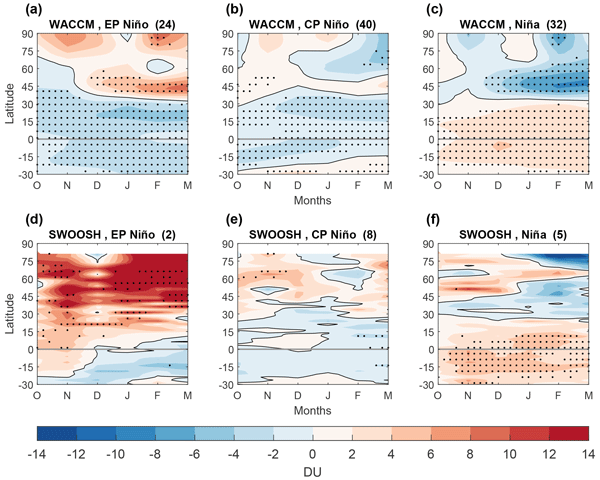
Samuel Benito-Barca, Natalia Calvo, and Marta Abalos
Atmos. Chem. Phys., 22, 15729–15745, https://doi.org/10.5194/acp-22-15729-2022, https://doi.org/10.5194/acp-22-15729-2022, 2022
Short summary
Short summary
The impact of different El Niño flavors (eastern (EP) and central (CP) Pacific El Niño) and La Niña on the stratospheric ozone is studied in a state-of-the-art chemistry–climate model. Ozone reduces in the tropics and increases in the extratropics when an EP El Niño event occurs, the opposite of La Niña. However, CP El Niño has no impact on extratropical ozone. These ozone variations are driven by changes in the stratospheric transport circulation, with an important contribution of mixing.
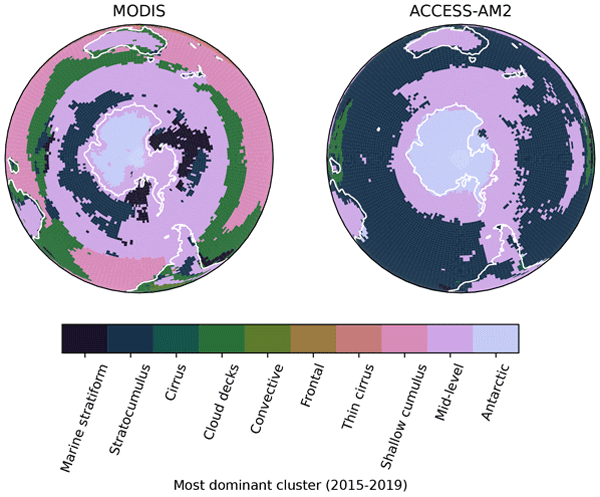
Sonya L. Fiddes, Alain Protat, Marc D. Mallet, Simon P. Alexander, and Matthew T. Woodhouse
Atmos. Chem. Phys., 22, 14603–14630, https://doi.org/10.5194/acp-22-14603-2022, https://doi.org/10.5194/acp-22-14603-2022, 2022
Short summary
Short summary
Climate models have difficulty simulating Southern Ocean clouds, impacting how much sunlight reaches the surface. We use machine learning to group different cloud types observed from satellites and simulated in a climate model. We find the model does a poor job of simulating the same cloud type as what the satellite shows and, even when it does, the cloud properties and amount of reflected sunlight are incorrect. We have a lot of work to do to model clouds correctly over the Southern Ocean.
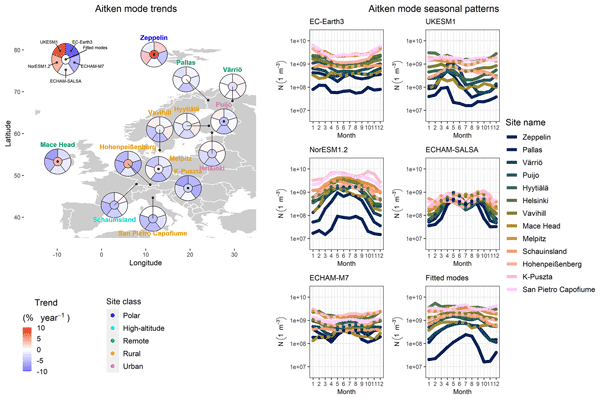
Ville Leinonen, Harri Kokkola, Taina Yli-Juuti, Tero Mielonen, Thomas Kühn, Tuomo Nieminen, Simo Heikkinen, Tuuli Miinalainen, Tommi Bergman, Ken Carslaw, Stefano Decesari, Markus Fiebig, Tareq Hussein, Niku Kivekäs, Radovan Krejci, Markku Kulmala, Ari Leskinen, Andreas Massling, Nikos Mihalopoulos, Jane P. Mulcahy, Steffen M. Noe, Twan van Noije, Fiona M. O'Connor, Colin O'Dowd, Dirk Olivie, Jakob B. Pernov, Tuukka Petäjä, Øyvind Seland, Michael Schulz, Catherine E. Scott, Henrik Skov, Erik Swietlicki, Thomas Tuch, Alfred Wiedensohler, Annele Virtanen, and Santtu Mikkonen
Atmos. Chem. Phys., 22, 12873–12905, https://doi.org/10.5194/acp-22-12873-2022, https://doi.org/10.5194/acp-22-12873-2022, 2022
Short summary
Short summary
We provide the first extensive comparison of detailed aerosol size distribution trends between in situ observations from Europe and five different earth system models. We investigated aerosol modes (nucleation, Aitken, and accumulation) separately and were able to show the differences between measured and modeled trends and especially their seasonal patterns. The differences in model results are likely due to complex effects of several processes instead of certain specific model features.
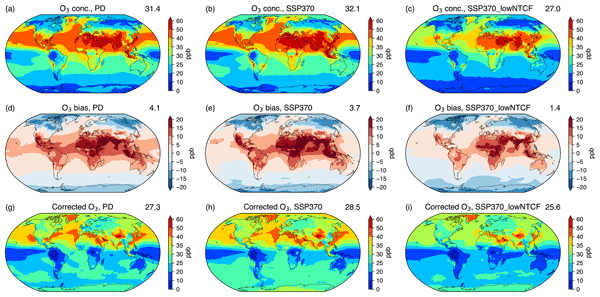
Zhenze Liu, Ruth M. Doherty, Oliver Wild, Fiona M. O'Connor, and Steven T. Turnock
Atmos. Chem. Phys., 22, 12543–12557, https://doi.org/10.5194/acp-22-12543-2022, https://doi.org/10.5194/acp-22-12543-2022, 2022
Short summary
Short summary
Weaknesses in process representation in chemistry–climate models lead to biases in simulating surface ozone and to uncertainty in projections of future ozone change. We develop a deep learning model to demonstrate the feasibility of ozone bias correction and show its capability in providing improved assessments of the impacts of climate and emission changes on future air quality, along with valuable information to guide future model development.
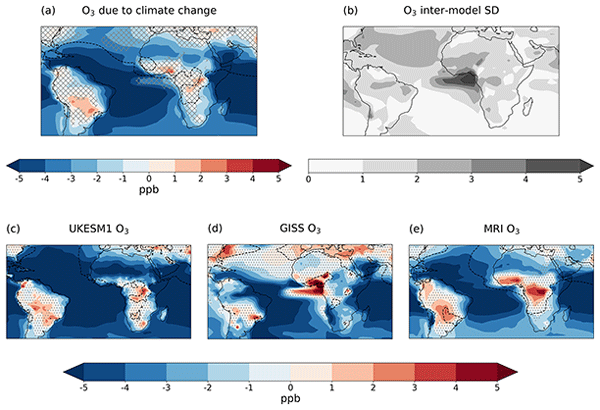
Flossie Brown, Gerd A. Folberth, Stephen Sitch, Susanne Bauer, Marijn Bauters, Pascal Boeckx, Alexander W. Cheesman, Makoto Deushi, Inês Dos Santos Vieira, Corinne Galy-Lacaux, James Haywood, James Keeble, Lina M. Mercado, Fiona M. O'Connor, Naga Oshima, Kostas Tsigaridis, and Hans Verbeeck
Atmos. Chem. Phys., 22, 12331–12352, https://doi.org/10.5194/acp-22-12331-2022, https://doi.org/10.5194/acp-22-12331-2022, 2022
Short summary
Short summary
Surface ozone can decrease plant productivity and impair human health. In this study, we evaluate the change in surface ozone due to climate change over South America and Africa using Earth system models. We find that if the climate were to change according to the worst-case scenario used here, models predict that forested areas in biomass burning locations and urban populations will be at increasing risk of ozone exposure, but other areas will experience a climate benefit.

Steven J. De Hertog, Felix Havermann, Inne Vanderkelen, Suqi Guo, Fei Luo, Iris Manola, Dim Coumou, Edouard L. Davin, Gregory Duveiller, Quentin Lejeune, Julia Pongratz, Carl-Friedrich Schleussner, Sonia I. Seneviratne, and Wim Thiery
Earth Syst. Dynam., 13, 1305–1350, https://doi.org/10.5194/esd-13-1305-2022, https://doi.org/10.5194/esd-13-1305-2022, 2022
Short summary
Short summary
Land cover and land management changes are important strategies for future land-based mitigation. We investigate the climate effects of cropland expansion, afforestation, irrigation, and wood harvesting using three Earth system models. Results show that these have important implications for surface temperature where the land cover and/or management change occurs and in remote areas. Idealized afforestation causes global warming, which might offset the cooling effect from enhanced carbon uptake.
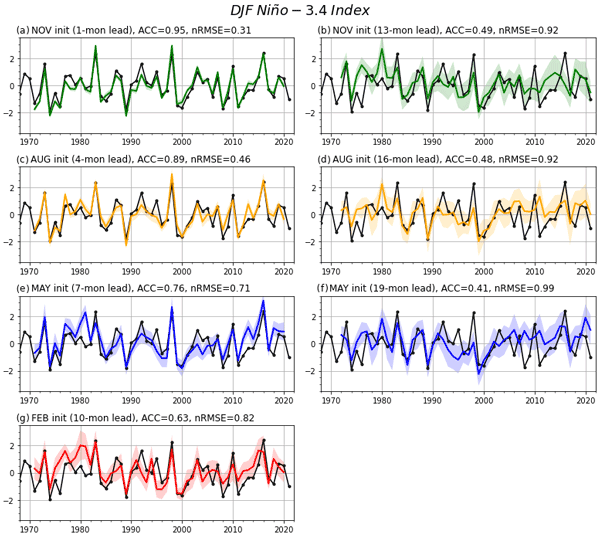
Stephen G. Yeager, Nan Rosenbloom, Anne A. Glanville, Xian Wu, Isla Simpson, Hui Li, Maria J. Molina, Kristen Krumhardt, Samuel Mogen, Keith Lindsay, Danica Lombardozzi, Will Wieder, Who M. Kim, Jadwiga H. Richter, Matthew Long, Gokhan Danabasoglu, David Bailey, Marika Holland, Nicole Lovenduski, Warren G. Strand, and Teagan King
Geosci. Model Dev., 15, 6451–6493, https://doi.org/10.5194/gmd-15-6451-2022, https://doi.org/10.5194/gmd-15-6451-2022, 2022
Short summary
Short summary
The Earth system changes over a range of time and space scales, and some of these changes are predictable in advance. Short-term weather forecasts are most familiar, but recent work has shown that it is possible to generate useful predictions several seasons or even a decade in advance. This study focuses on predictions over intermediate timescales (up to 24 months in advance) and shows that there is promising potential to forecast a variety of changes in the natural environment.
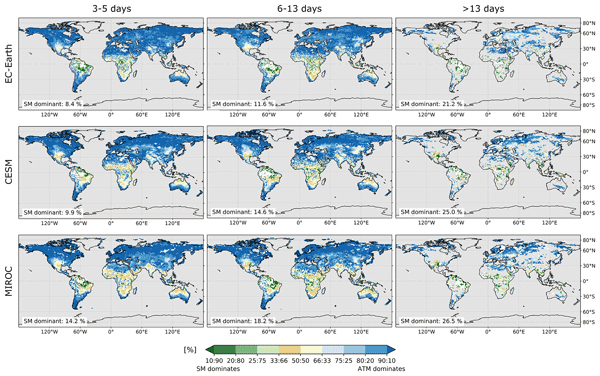
Kathrin Wehrli, Fei Luo, Mathias Hauser, Hideo Shiogama, Daisuke Tokuda, Hyungjun Kim, Dim Coumou, Wilhelm May, Philippe Le Sager, Frank Selten, Olivia Martius, Robert Vautard, and Sonia I. Seneviratne
Earth Syst. Dynam., 13, 1167–1196, https://doi.org/10.5194/esd-13-1167-2022, https://doi.org/10.5194/esd-13-1167-2022, 2022
Short summary
Short summary
The ExtremeX experiment was designed to unravel the contribution of processes leading to the occurrence of recent weather and climate extremes. Global climate simulations are carried out with three models. The results show that in constrained experiments, temperature anomalies during heatwaves are well represented, although climatological model biases remain. Further, a substantial contribution of both atmospheric circulation and soil moisture to heat extremes is identified.
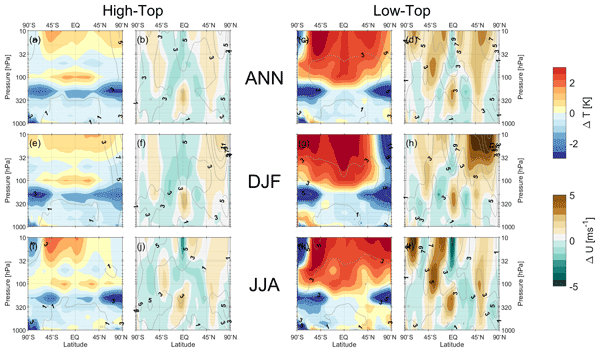
Zachary D. Lawrence, Marta Abalos, Blanca Ayarzagüena, David Barriopedro, Amy H. Butler, Natalia Calvo, Alvaro de la Cámara, Andrew Charlton-Perez, Daniela I. V. Domeisen, Etienne Dunn-Sigouin, Javier García-Serrano, Chaim I. Garfinkel, Neil P. Hindley, Liwei Jia, Martin Jucker, Alexey Y. Karpechko, Hera Kim, Andrea L. Lang, Simon H. Lee, Pu Lin, Marisol Osman, Froila M. Palmeiro, Judith Perlwitz, Inna Polichtchouk, Jadwiga H. Richter, Chen Schwartz, Seok-Woo Son, Irene Erner, Masakazu Taguchi, Nicholas L. Tyrrell, Corwin J. Wright, and Rachel W.-Y. Wu
Weather Clim. Dynam., 3, 977–1001, https://doi.org/10.5194/wcd-3-977-2022, https://doi.org/10.5194/wcd-3-977-2022, 2022
Short summary
Short summary
Forecast models that are used to predict weather often struggle to represent the Earth’s stratosphere. This may impact their ability to predict surface weather weeks in advance, on subseasonal-to-seasonal (S2S) timescales. We use data from many S2S forecast systems to characterize and compare the stratospheric biases present in such forecast models. These models have many similar stratospheric biases, but they tend to be worse in systems with low model tops located within the stratosphere.
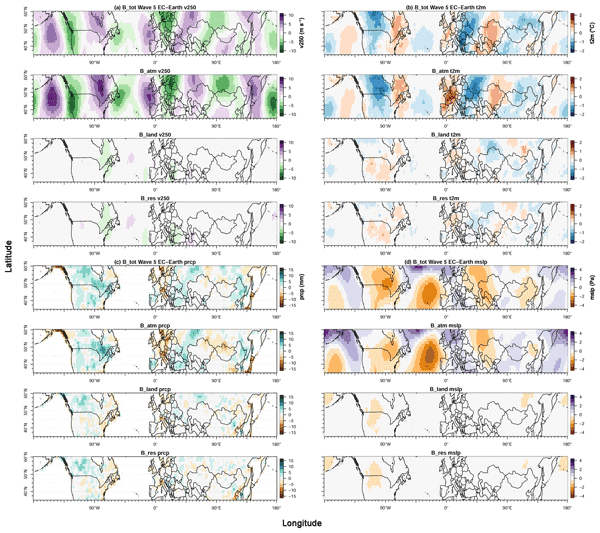
Fei Luo, Frank Selten, Kathrin Wehrli, Kai Kornhuber, Philippe Le Sager, Wilhelm May, Thomas Reerink, Sonia I. Seneviratne, Hideo Shiogama, Daisuke Tokuda, Hyungjun Kim, and Dim Coumou
Weather Clim. Dynam., 3, 905–935, https://doi.org/10.5194/wcd-3-905-2022, https://doi.org/10.5194/wcd-3-905-2022, 2022
Short summary
Short summary
Recent studies have identified the weather systems in observational data, where wave patterns with high-magnitude values that circle around the whole globe in either wavenumber 5 or wavenumber 7 are responsible for the extreme events. In conclusion, we find that the climate models are able to reproduce the large-scale atmospheric circulation patterns as well as their associated surface variables such as temperature, precipitation, and sea level pressure.
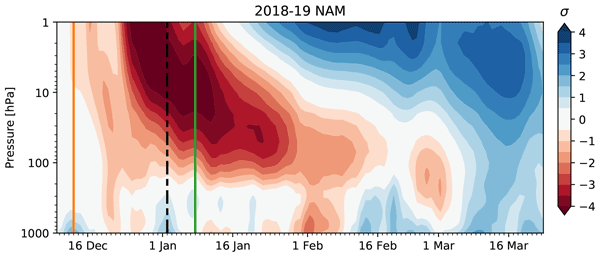
Peter Hitchcock, Amy Butler, Andrew Charlton-Perez, Chaim I. Garfinkel, Tim Stockdale, James Anstey, Dann Mitchell, Daniela I. V. Domeisen, Tongwen Wu, Yixiong Lu, Daniele Mastrangelo, Piero Malguzzi, Hai Lin, Ryan Muncaster, Bill Merryfield, Michael Sigmond, Baoqiang Xiang, Liwei Jia, Yu-Kyung Hyun, Jiyoung Oh, Damien Specq, Isla R. Simpson, Jadwiga H. Richter, Cory Barton, Jeff Knight, Eun-Pa Lim, and Harry Hendon
Geosci. Model Dev., 15, 5073–5092, https://doi.org/10.5194/gmd-15-5073-2022, https://doi.org/10.5194/gmd-15-5073-2022, 2022
Short summary
Short summary
This paper describes an experimental protocol focused on sudden stratospheric warmings to be carried out by subseasonal forecast modeling centers. These will allow for inter-model comparisons of these major disruptions to the stratospheric polar vortex and their impacts on the near-surface flow. The protocol will lead to new insights into the contribution of the stratosphere to subseasonal forecast skill and new approaches to the dynamical attribution of extreme events.
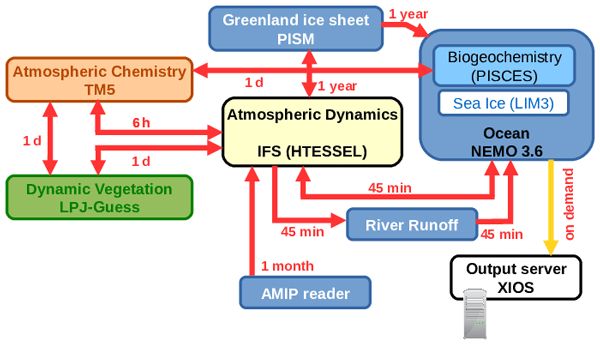
Ralf Döscher, Mario Acosta, Andrea Alessandri, Peter Anthoni, Thomas Arsouze, Tommi Bergman, Raffaele Bernardello, Souhail Boussetta, Louis-Philippe Caron, Glenn Carver, Miguel Castrillo, Franco Catalano, Ivana Cvijanovic, Paolo Davini, Evelien Dekker, Francisco J. Doblas-Reyes, David Docquier, Pablo Echevarria, Uwe Fladrich, Ramon Fuentes-Franco, Matthias Gröger, Jost v. Hardenberg, Jenny Hieronymus, M. Pasha Karami, Jukka-Pekka Keskinen, Torben Koenigk, Risto Makkonen, François Massonnet, Martin Ménégoz, Paul A. Miller, Eduardo Moreno-Chamarro, Lars Nieradzik, Twan van Noije, Paul Nolan, Declan O'Donnell, Pirkka Ollinaho, Gijs van den Oord, Pablo Ortega, Oriol Tintó Prims, Arthur Ramos, Thomas Reerink, Clement Rousset, Yohan Ruprich-Robert, Philippe Le Sager, Torben Schmith, Roland Schrödner, Federico Serva, Valentina Sicardi, Marianne Sloth Madsen, Benjamin Smith, Tian Tian, Etienne Tourigny, Petteri Uotila, Martin Vancoppenolle, Shiyu Wang, David Wårlind, Ulrika Willén, Klaus Wyser, Shuting Yang, Xavier Yepes-Arbós, and Qiong Zhang
Geosci. Model Dev., 15, 2973–3020, https://doi.org/10.5194/gmd-15-2973-2022, https://doi.org/10.5194/gmd-15-2973-2022, 2022
Short summary
Short summary
The Earth system model EC-Earth3 is documented here. Key performance metrics show physical behavior and biases well within the frame known from recent models. With improved physical and dynamic features, new ESM components, community tools, and largely improved physical performance compared to the CMIP5 version, EC-Earth3 represents a clear step forward for the only European community ESM. We demonstrate here that EC-Earth3 is suited for a range of tasks in CMIP6 and beyond.
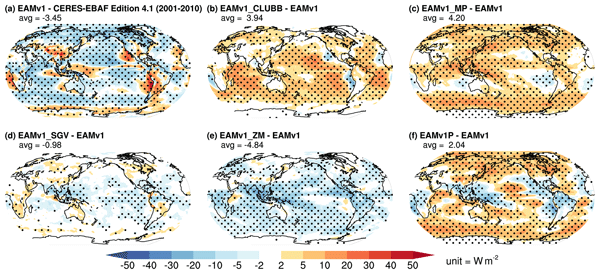
Po-Lun Ma, Bryce E. Harrop, Vincent E. Larson, Richard B. Neale, Andrew Gettelman, Hugh Morrison, Hailong Wang, Kai Zhang, Stephen A. Klein, Mark D. Zelinka, Yuying Zhang, Yun Qian, Jin-Ho Yoon, Christopher R. Jones, Meng Huang, Sheng-Lun Tai, Balwinder Singh, Peter A. Bogenschutz, Xue Zheng, Wuyin Lin, Johannes Quaas, Hélène Chepfer, Michael A. Brunke, Xubin Zeng, Johannes Mülmenstädt, Samson Hagos, Zhibo Zhang, Hua Song, Xiaohong Liu, Michael S. Pritchard, Hui Wan, Jingyu Wang, Qi Tang, Peter M. Caldwell, Jiwen Fan, Larry K. Berg, Jerome D. Fast, Mark A. Taylor, Jean-Christophe Golaz, Shaocheng Xie, Philip J. Rasch, and L. Ruby Leung
Geosci. Model Dev., 15, 2881–2916, https://doi.org/10.5194/gmd-15-2881-2022, https://doi.org/10.5194/gmd-15-2881-2022, 2022
Short summary
Short summary
An alternative set of parameters for E3SM Atmospheric Model version 1 has been developed based on a tuning strategy that focuses on clouds. When clouds in every regime are improved, other aspects of the model are also improved, even though they are not the direct targets for calibration. The recalibrated model shows a lower sensitivity to anthropogenic aerosols and surface warming, suggesting potential improvements to the simulated climate in the past and future.

Henry Bowman, Steven Turnock, Susanne E. Bauer, Kostas Tsigaridis, Makoto Deushi, Naga Oshima, Fiona M. O'Connor, Larry Horowitz, Tongwen Wu, Jie Zhang, Dagmar Kubistin, and David D. Parrish
Atmos. Chem. Phys., 22, 3507–3524, https://doi.org/10.5194/acp-22-3507-2022, https://doi.org/10.5194/acp-22-3507-2022, 2022
Short summary
Short summary
A full understanding of ozone in the troposphere requires investigation of its temporal variability over all timescales. Model simulations show that the northern midlatitude ozone seasonal cycle shifted with industrial development (1850–2014), with an increasing magnitude and a later summer peak. That shift reached a maximum in the mid-1980s, followed by a reversal toward the preindustrial cycle. The few available observations, beginning in the 1970s, are consistent with the model simulations.
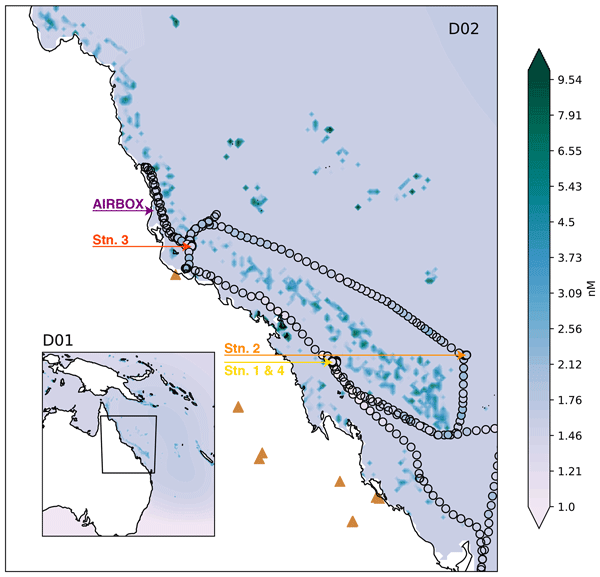
Sonya L. Fiddes, Matthew T. Woodhouse, Steve Utembe, Robyn Schofield, Simon P. Alexander, Joel Alroe, Scott D. Chambers, Zhenyi Chen, Luke Cravigan, Erin Dunne, Ruhi S. Humphries, Graham Johnson, Melita D. Keywood, Todd P. Lane, Branka Miljevic, Yuko Omori, Alain Protat, Zoran Ristovski, Paul Selleck, Hilton B. Swan, Hiroshi Tanimoto, Jason P. Ward, and Alastair G. Williams
Atmos. Chem. Phys., 22, 2419–2445, https://doi.org/10.5194/acp-22-2419-2022, https://doi.org/10.5194/acp-22-2419-2022, 2022
Short summary
Short summary
Coral reefs have been found to produce the climatically relevant chemical compound dimethyl sulfide (DMS). It has been suggested that corals can modify their environment via the production of DMS. We use an atmospheric chemistry model to test this theory at a regional scale for the first time. We find that it is unlikely that coral-reef-derived DMS has an influence over local climate, in part due to the proximity to terrestrial and anthropogenic aerosol sources.
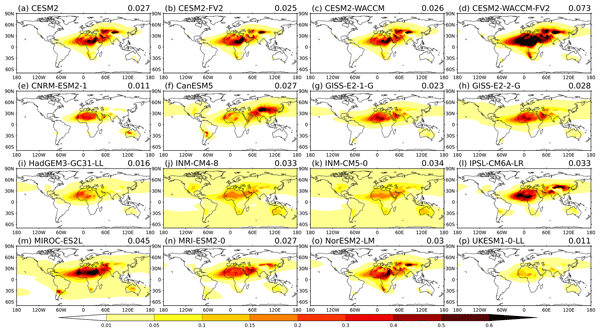
Alcide Zhao, Claire L. Ryder, and Laura J. Wilcox
Atmos. Chem. Phys., 22, 2095–2119, https://doi.org/10.5194/acp-22-2095-2022, https://doi.org/10.5194/acp-22-2095-2022, 2022
Short summary
Short summary
The CMIP6 models' simulated dust processes are getting more uncertain as models become more sophisticated. Of particular challenge are the links between dust cycles and optical properties, and we recommend more detailed output relating to dust cycles in future intercomparison projects to constrain such links. Also, models struggle to capture certain key regional dust processes such as dust accumulation along the slope of the Himalayas and dust seasonal cycles in North China and North America.
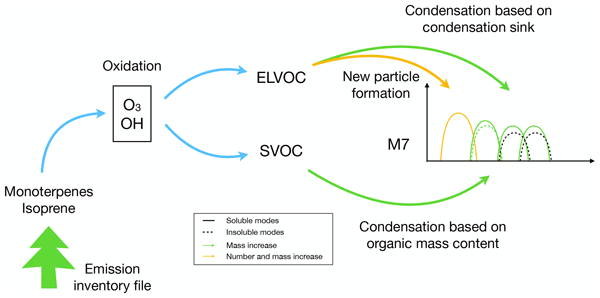
Tommi Bergman, Risto Makkonen, Roland Schrödner, Erik Swietlicki, Vaughan T. J. Phillips, Philippe Le Sager, and Twan van Noije
Geosci. Model Dev., 15, 683–713, https://doi.org/10.5194/gmd-15-683-2022, https://doi.org/10.5194/gmd-15-683-2022, 2022
Short summary
Short summary
We describe in this paper the implementation of a process-based secondary organic aerosol and new particle formation scheme within the chemistry transport model TM5-MP version 1.2. The performance of the model simulations for the year 2010 is evaluated against in situ observations, ground-based remote sensing and satellite retrievals. Overall, the simulated aerosol fields are improved, although in some areas the model shows a decline in performance.

Zhenze Liu, Ruth M. Doherty, Oliver Wild, Fiona M. O'Connor, and Steven T. Turnock
Atmos. Chem. Phys., 22, 1209–1227, https://doi.org/10.5194/acp-22-1209-2022, https://doi.org/10.5194/acp-22-1209-2022, 2022
Short summary
Short summary
Tropospheric ozone is important to future air quality and climate, and changing emissions and climate influence ozone. We investigate the evolution of ozone and ozone sensitivity from the present day (2004–2014) to the future (2045–2055) and explore the main drivers of ozone changes from global and regional perspectives. This helps guide suitable emission control strategies to mitigate ozone pollution.
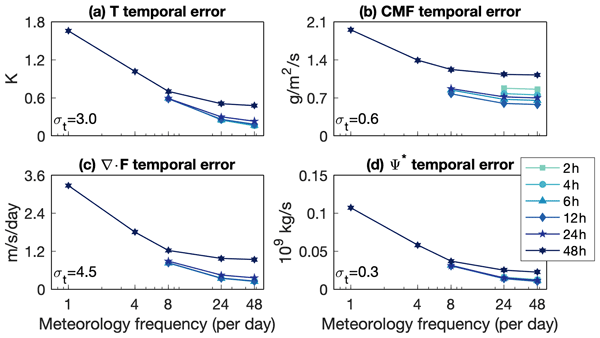
Nicholas A. Davis, Patrick Callaghan, Isla R. Simpson, and Simone Tilmes
Atmos. Chem. Phys., 22, 197–214, https://doi.org/10.5194/acp-22-197-2022, https://doi.org/10.5194/acp-22-197-2022, 2022
Short summary
Short summary
Specified dynamics schemes attempt to constrain the atmospheric circulation in a climate model to isolate the role of transport in chemical variability, evaluate model physics, and interpret field campaign observations. We show that the specified dynamics scheme in CESM2 erroneously suppresses convection and induces circulation errors that project onto errors in tracers, even using the most optimal settings. Development of a more sophisticated scheme is necessary for future progress.
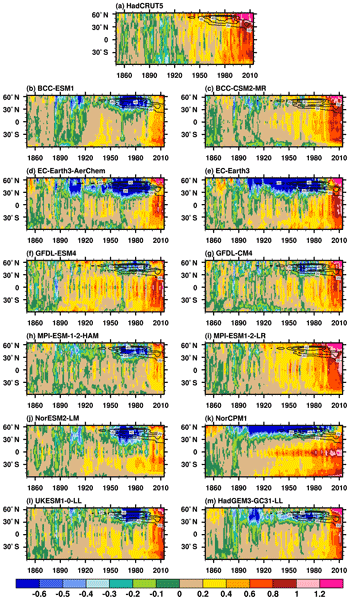
Jie Zhang, Kalli Furtado, Steven T. Turnock, Jane P. Mulcahy, Laura J. Wilcox, Ben B. Booth, David Sexton, Tongwen Wu, Fang Zhang, and Qianxia Liu
Atmos. Chem. Phys., 21, 18609–18627, https://doi.org/10.5194/acp-21-18609-2021, https://doi.org/10.5194/acp-21-18609-2021, 2021
Short summary
Short summary
The CMIP6 ESMs systematically underestimate TAS anomalies in the NH midlatitudes, especially from 1960 to 1990. The anomalous cooling is concurrent in time and space with anthropogenic SO2 emissions. The spurious drop in TAS is attributed to the overestimated aerosol concentrations. The aerosol forcing sensitivity cannot well explain the inter-model spread of PHC biases. And the cloud-amount term accounts for most of the inter-model spread in aerosol forcing sensitivity.
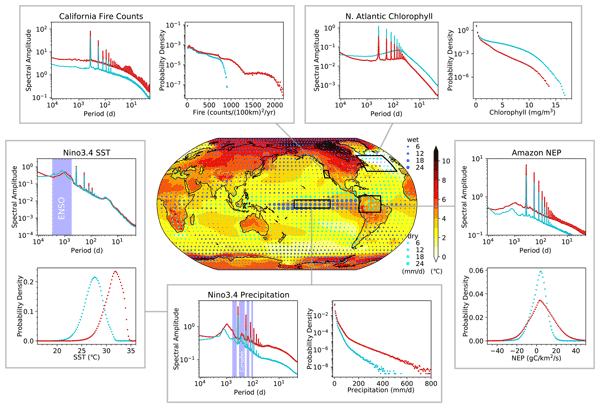
Keith B. Rodgers, Sun-Seon Lee, Nan Rosenbloom, Axel Timmermann, Gokhan Danabasoglu, Clara Deser, Jim Edwards, Ji-Eun Kim, Isla R. Simpson, Karl Stein, Malte F. Stuecker, Ryohei Yamaguchi, Tamás Bódai, Eui-Seok Chung, Lei Huang, Who M. Kim, Jean-François Lamarque, Danica L. Lombardozzi, William R. Wieder, and Stephen G. Yeager
Earth Syst. Dynam., 12, 1393–1411, https://doi.org/10.5194/esd-12-1393-2021, https://doi.org/10.5194/esd-12-1393-2021, 2021
Short summary
Short summary
A large ensemble of simulations with 100 members has been conducted with the state-of-the-art CESM2 Earth system model, using historical and SSP3-7.0 forcing. Our main finding is that there are significant changes in the variance of the Earth system in response to anthropogenic forcing, with these changes spanning a broad range of variables important to impacts for human populations and ecosystems.
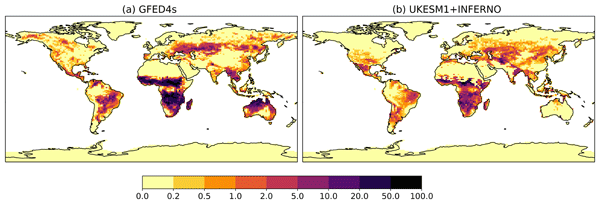
João C. Teixeira, Gerd A. Folberth, Fiona M. O'Connor, Nadine Unger, and Apostolos Voulgarakis
Geosci. Model Dev., 14, 6515–6539, https://doi.org/10.5194/gmd-14-6515-2021, https://doi.org/10.5194/gmd-14-6515-2021, 2021
Short summary
Short summary
Fire constitutes a key process in the Earth system, being driven by climate as well as affecting climate. However, studies on the effects of fires on atmospheric composition and climate have been limited to date. This work implements and assesses the coupling of an interactive fire model with atmospheric composition, comparing it to an offline approach. This approach shows good performance at a global scale. However, regional-scale limitations lead to a bias in modelling fire emissions.
Cited articles
Abalos, M., Calvo, N., Benito-Barca, S., Garny, H., Hardiman, S. C., Lin, P., Andrews, M. B., Butchart, N., Garcia, R., Orbe, C., Saint-Martin, D., Watanabe, S., and Yoshida, K.: The Brewer–Dobson circulation in CMIP6, Atmos. Chem. Phys., 21, 13571–13591, https://doi.org/10.5194/acp-21-13571-2021, 2021.
Andrews, T., Bodas-Salcedo, A., Gregory, J. M., Dong, Y., Armour, K. C., Paynter, D., Lin, P., Modak, A., Mauritsen, T., Cole, J. N. S., Medeiros, B., Benedict, J. J., Douville, H., Roehrig, R., Koshiro, T., Kawai, H., Ogura, T., Dufresne, J., Allan, R. P., and Liu, C.: On the Effect of Historical SST Patterns on Radiative Feedback, J. Geophys. Res.-Atmos., 127, e2022JD036675, https://doi.org/10.1029/2022JD036675, 2022.
Anstey, J. A., Butchart, N., Hamilton, K., and Osprey, S. M.: The SPARC Quasi-Biennial Oscillation initiative, Q. J. Roy. Meteor. Soc., 148, 1455–1458, https://doi.org/10.1002/qj.3820, 2022.
Armour, K. C., Bitz, C. M., and Roe, G. H.: Time-Varying Climate Sensitivity from Regional Feedbacks, J. Climate, 26, 4518–4534, https://doi.org/10.1175/JCLI-D-12-00544.1, 2013.
Ayarzagüena, B., Charlton-Perez, A. J., Butler, A. H., Hitchcock, P., Simpson, I. R., Polvani, L. M., Butchart, N., Gerber, E. P., Gray, L., Hassler, B., Lin, P., Lott, F., Manzini, E., Mizuta, R., Orbe, C., Osprey, S., Saint-Martin, D., Sigmond, M., Taguchi, M., Volodin, E. M., and Watanabe, S.: Uncertainty in the Response of Sudden Stratospheric Warmings and Stratosphere-Troposphere Coupling to Quadrupled CO2 Concentrations in CMIP6 Models, J. Geophys. Res.-Atmos., 125, e2019JD032345, https://doi.org/10.1029/2019JD032345, 2020.
Baldwin, M. P., Ayarzagüena, B., Birner, T., Butchart, N., Butler, A. H., Charlton-Perez, A. J., Domeisen, D. I. V., Garfinkel, C. I., Garny, H., Gerber, E. P., Hegglin, M. I., Langematz, U., and Pedatella, N. M.: Sudden Stratospheric Warmings, Rev. Geophys., 59, e2020RG000708, https://doi.org/10.1029/2020RG000708, 2021.
Bellouin, N., Quaas, J., Gryspeerdt, E., Kinne, S., Stier, P., Watson-Parris, D., Boucher, O., Carslaw, K. S., Christensen, M., Daniau, A. -L., Dufresne, J. -L., Feingold, G., Fiedler, S., Forster, P., Gettelman, A., Haywood, J. M., Lohmann, U., Malavelle, F., Mauritsen, T., McCoy, D. T., Myhre, G., Mülmenstädt, J., Neubauer, D., Possner, A., Rugenstein, M., Sato, Y., Schulz, M., Schwartz, S. E., Sourdeval, O., Storelvmo, T., Toll, V., Winker, D., and Stevens, B.: Bounding Global Aerosol Radiative Forcing of Climate Change, Rev. Geophys., 58, e2019RG000660, https://doi.org/10.1029/2019RG000660, 2020.
Bjordal, J., Storelvmo, T., Alterskjær, K., and Carlsen, T.: Equilibrium climate sensitivity above 5 °C plausible due to state-dependent cloud feedback, Nat. Geosci., 13, 718–721, https://doi.org/10.1038/s41561-020-00649-1, 2020.
Bloch-Johnson, J., Rugenstein, M., Stolpe, M. B., Rohrschneider, T., Zheng, Y., and Gregory, J. M.: Climate Sensitivity Increases Under Higher CO2 Levels Due to Feedback Temperature Dependence, Geophys. Res. Lett., 48, e2020GL089074, https://doi.org/10.1029/2020GL089074, 2021.
Bock, L. and Lauer, A.: Cloud properties and their projected changes in CMIP models with low to high climate sensitivity, Atmos. Chem. Phys., 24, 1587–1605, https://doi.org/10.5194/acp-24-1587-2024, 2024.
Bodas-Salcedo, A., Webb, M. J., Bony, S., Chepfer, H., Dufresne, J.-L., Klein, S. A., Zhang, Y., Marchand, R., Haynes, J. M., Pincus, R., and John, V. O.: COSP: Satellite simulation software for model assessment, B. Am. Meteorol. Soc., 92, 1023–1043, https://doi.org/10.1175/2011BAMS2856.1, 2011.
Bodas-Salcedo, A., Hill, P. G., Furtado, K., Williams, K. D., Field, P. R., Manners, J. C., Hyder, P., and Kato, S.: Large Contribution of Supercooled Liquid Clouds to the Solar Radiation Budget of the Southern Ocean, J. Climate, 29, 4213–4228, https://doi.org/10.1175/JCLI-D-15-0564.1, 2016.
Bony, S. and Dufresne, J.: Marine boundary layer clouds at the heart of tropical cloud feedback uncertainties in climate models, Geophys. Res. Lett., 32, 2005GL023851, https://doi.org/10.1029/2005GL023851, 2005.
Bony, S., Stevens, B., Frierson, D. M. W., Jakob, C., Kageyama, M., Pincus, R., Shepherd, T. G., Sherwood, S. C., Siebesma, A. P., Sobel, A. H., Watanabe, M., and Webb, M. J.: Clouds, circulation and climate sensitivity, Nat. Geosci., 8, 261–268, https://doi.org/10.1038/ngeo2398, 2015.
Breul, P., Ceppi, P., and Nowack, P.: The importance of stratocumulus clouds for projected warming patterns and circulation changes, Atmos. Chem. Phys., 25, 11991–12005, https://doi.org/10.5194/acp-25-11991-2025, 2025.
Byrne, M. P.: Amplified warming of extreme temperatures over tropical land, Nat. Geosci., 14, 837–841, https://doi.org/10.1038/s41561-021-00828-8, 2021.
Castanheira, J. M. and Marques, C. A. F.: Biases of the Barotropic Atmospheric Circulation Variability in CMIP6 Models, J. Climate, 35, 5071–5085, https://doi.org/10.1175/JCLI-D-21-0581.1, 2022.
Ceppi, P. and Hartmann, D. L.: Clouds and the Atmospheric Circulation Response to Warming, J. Climate, 29, 783–799, https://doi.org/10.1175/JCLI-D-15-0394.1, 2016.
Cess, R. D., Potter, G. L., Blanchet, J. P., Boer, G. J., Ghan, S. J., Kiehl, J. T., Le Treut, H., Li, Z.-X., Liang, X.-Z., Mitchell, J. F. B., Morcrette, J.-J., Randall, D. A., Riches, M. R., Roeckner, E., Schlese, U., Slingo, A., Taylor, K. E., Washington, W. M., Wetherald, R. T., and Yagai, I.: Interpretation of Cloud-Climate Feedback as Produced by 14 Atmospheric General Circulation Models, Science, 245, 513–516, https://doi.org/10.1126/science.245.4917.513, 1989.
Chemke, R. and Coumou, D.: Human influence on the recent weakening of storm tracks in boreal summer, npj Clim. Atmos. Sci., 7, 86, https://doi.org/10.1038/s41612-024-00640-2, 2024.
CMIP Model Benchmarking Task Team: CMIP7 Assessment Fast Track Diagnostics list for the Rapid Evaluation Framework, Zenodo [data set], https://doi.org/10.5281/ZENODO.14284375, 2024.
Climate Model Benchmarking Task Team: Climate Model Benchmarking, https://wcrp-cmip.org/cmip7-task-teams/model-benchmarking/, last access: 24 November 2025.
Collins, W. J., Lamarque, J.-F., Schulz, M., Boucher, O., Eyring, V., Hegglin, M. I., Maycock, A., Myhre, G., Prather, M., Shindell, D., and Smith, S. J.: AerChemMIP: quantifying the effects of chemistry and aerosols in CMIP6, Geosci. Model Dev., 10, 585–607, https://doi.org/10.5194/gmd-10-585-2017, 2017.
Data Request Task Team: CMIP-Data-Request/CMIP7_DReq_Content: Data request content for v1.0 (released 22 Nov 2024), Zenodo [data set], https://doi.org/10.5281/ZENODO.14832541, 2024a.
Data Request Task Team: CMIP-Data-Request/CMIP7_DReq_Content: Data request content for v1.0beta (released 21 Oct 2024), Zenodo [data set], https://doi.org/10.5281/ZENODO.14832540, 2024b.
Data Request Task Team: CMIP-Data-Request/CMIP7_DReq_Content, Zenodo [data set], https://doi.org/10.5281/zenodo.14774070, 2025a.
Data Request Task Team: CMIP-Data-Request/CMIP7_DReq_Content: Data request content for v1.2, Zenodo [data set], https://doi.org/10.5281/ZENODO.15116894, 2025b.
Data Request Task Team: CMIP-Data-Request/CMIP7_DReq_Content: Data request content for v1.2.2.3, Zenodo [data set], https://doi.org/10.5281/zenodo.17986580, 2025c.
De, B., Tselioudis, G., and Polvani, L. M.: Improved representation of atmospheric dynamics in CMIP6 models removes climate sensitivity dependence on Hadley cell climatological extent, Atmos. Sci. Lett., 23, e1073, https://doi.org/10.1002/asl.1073, 2022.
Ding, X., Chen, G., and Ma, W.: Stratosphere-Troposphere Coupling of Extreme Stratospheric Wave Activity in CMIP6 Models, J. Geophys. Res.-Atmos., 128, e2023JD038811, https://doi.org/10.1029/2023JD038811, 2023.
Dingley, B., Anstey, J., and CMIP Data Request Atmosphere author team members: Atmospheric processes included in the CMIP7 Assessment Fast Track Data Request, Zenodo [data set], https://doi.org/10.5281/ZENODO.15681840, 2025.
Domeisen, D. I. V. and Butler, A. H.: Stratospheric drivers of extreme events at the Earth's surface, Commun. Earth Environ., 1, 59, https://doi.org/10.1038/s43247-020-00060-z, 2020.
Dunne, J. P., Hewitt, H. T., Arblaster, J. M., Bonou, F., Boucher, O., Cavazos, T., Dingley, B., Durack, P. J., Hassler, B., Juckes, M., Miyakawa, T., Mizielinski, M., Naik, V., Nicholls, Z., O'Rourke, E., Pincus, R., Sanderson, B. M., Simpson, I. R., and Taylor, K. E.: An evolving Coupled Model Intercomparison Project phase 7 (CMIP7) and Fast Track in support of future climate assessment, Geosci. Model Dev., 18, 6671–6700, https://doi.org/10.5194/gmd-18-6671-2025, 2025.
Durack, P. J., Taylor, K. E., Gleckler, P. J., Meehl, G. A., Lawrence, B. N., Covey, C., Stouffer, R. J., Levavasseur, G., Ben-Nasser, A., Denvil, S., Stockhause, M., Gregory, J. M., Juckes, M., Ames, S. K., Antonio, F., Bader, D. C., Dunne, J. P., Ellis, D., Eyring, V., Fiore, S. L., Joussaume, S., Kershaw, P., Lamarque, J.-F., Lautenschlager, M., Lee, J., Mauzey, C. F., Mizielinski, M., Nassisi, P., Nuzzo, A., O’Rourke, E., Painter, J., Potter, G. L., Rodriguez, S., and Williams, D. N.: The Coupled Model Intercomparison Project (CMIP): Reviewing project history, evolution, infrastructure and implementation, EGUsphere [preprint], https://doi.org/10.5194/egusphere-2024-3729, 2025.
DynVar: WCRP-APARC – DynVarMIP data availability, https://aparc-climate.org/activities/dynvar/, last access: 14 April 2026.
Edwards, P. N.: A Brief History of Atmospheric General Circulation Modeling, in: International Geophysics, Academic Press, 70, 67–90, https://doi.org/10.1016/S0074-6142(00)80050-9, 2000.
ESGF Data Statistics: https://esgf-ui.cmcc.it/esgf-dashboard-ui/cmip6.html, last access: 6 December 2025.
Eyring, V., Bony, S., Meehl, G. A., Senior, C. A., Stevens, B., Stouffer, R. J., and Taylor, K. E.: Overview of the Coupled Model Intercomparison Project Phase 6 (CMIP6) experimental design and organization, Geosci. Model Dev., 9, 1937–1958, https://doi.org/10.5194/gmd-9-1937-2016, 2016.
Eyring, V., Gillett, N. P., Achuta Rao, K. M., Barimalala, R., Barreiro Parrillo, M., Bellouin, N., Cassou, C., Durack, P. J., Kosaka, Y., McGregor, S., Min, S., Morgenstern, O., and Sun, Y.: Human Influence on the Climate System, in: Climate Change 2021: The Physical Science Basis. Contribution of Working Group I to the Sixth Assessment Report of the Intergovernmental Panel on Climate Change, edited by: Masson-Delmotte, V., Zhai, P., Pirani, A., Connors, S. L., Péan, C., Berger, S., Caud, N., Chen, Y., Goldfarb, L., Gomis, M. I., Huang, M., Leitzell, K., Lonnoy, E., Matthews, J. B. R., Maycock, T. K., Waterfield, T., Yelekçi, O., Yu, R., and Zhou, B., Cambridge University Press, Cambridge, United Kingdom and New York, NY, USA, 423–552, https://doi.org/10.1017/9781009157896.005, 2021.
Fiddes, S. L., Woodhouse, M. T., Mallet, M. D., Lamprey, L. J., Humphries, R. S., Protat, A., Alexander, S. P., Hayashida, H., Putland, S., Miljevic, B., and Schofield, R.: The ACCESS-AM2 climate model underestimates aerosol concentration in the Southern Ocean; improving aerosol representation could be problematic for the global energy balance, Atmos. Chem. Phys., 25, 16451–16477, https://doi.org/10.5194/acp-25-16451-2025, 2025.
Fiedler, S., Naik, V., O'Connor, F. M., Smith, C. J., Griffiths, P., Kramer, R. J., Takemura, T., Allen, R. J., Im, U., Kasoar, M., Modak, A., Turnock, S., Voulgarakis, A., Watson-Parris, D., Westervelt, D. M., Wilcox, L. J., Zhao, A., Collins, W. J., Schulz, M., Myhre, G., and Forster, P. M.: Interactions between atmospheric composition and climate change – progress in understanding and future opportunities from AerChemMIP, PDRMIP, and RFMIP, Geosci. Model Dev., 17, 2387–2417, https://doi.org/10.5194/gmd-17-2387-2024, 2024.
Fiedler, S., O'Connor, F. M., Watson-Parris, D., Allen, R. J., Collins, W. J., Griffiths, P. T., Kasoar, M., Kikstra, J., Kok, J. F., Murray, L. T., Paulot, F., Sand, M., Turnock, S., Weber, J., Wilcox, L. J., and Naik, V.: AerChemMIP2 – Unraveling the role of reactive gases, aerosol particles, and land use for air quality and climate change in CMIP7, EGUsphere [preprint], https://doi.org/10.5194/egusphere-2025-5669, 2025.
Fiore, S., Nassisi, P., Nuzzo, A., Mirto, M., Cinquini, L., Williams, D., and Aliosio, G.: A climate change community gateway for data usage & data archive metrics across the earth system grid federation, in: CEUR WORKSHOP PROCEEDING, CEUR-WS, https://hdl.handle.net/11572/329932 (last access: 14 April 2026), 2021.
Forster, P., Storelvmo, T., Armour, K., Collins, W., Dufresne, J.-L., Frame, D., Lunt, D. J., Mauritsen, T., Palmer, M. D., Watanabe, M., Wild, M., and Zhang, H.: The Earth's Energy Budget, Climate Feedbacks, and Climate Sensitivity, in: Climate Change 2021: The Physical Science Basis. Contribution of Working Group I to the Sixth Assessment Report of the Intergovernmental Panel on Climate Change, edited by: Masson-Delmotte, V., Zhai, P., Pirani, A., Connors, S. L., Péan, C., Berger, S., Caud, N., Chen, Y., Goldfarb, L., Gomis, M. I., Huang, M., Leitzell, K., Lonnoy, E., Matthews, J. B. R., Maycock, T. K., Waterfield, T., Yelekçi, O., Yu, R., and Zhou, B., Cambridge University Press, Cambridge, United Kingdom and New York, NY, USA, 923–1054, https://doi.org/10.1017/9781009157896.009, 2021.
Gerber, E. P. and Manzini, E.: The Dynamics and Variability Model Intercomparison Project (DynVarMIP) for CMIP6: assessing the stratosphere–troposphere system, Geosci. Model Dev., 9, 3413–3425, https://doi.org/10.5194/gmd-9-3413-2016, 2016.
Gillett, N. P., Simpson, I. R., Hegerl, G., Knutti, R., Mitchell, D., Ribes, A., Shiogama, H., Stone, D., Tebaldi, C., Wolski, P., Zhang, W., and Arora, V. K.: The Detection and Attribution Model Intercomparison Project (DAMIP v2.0) contribution to CMIP7, Geosci. Model Dev., 18, 4399–4416, https://doi.org/10.5194/gmd-18-4399-2025, 2025.
Gregory, J. and Webb, M.: Tropospheric Adjustment Induces a Cloud Component in CO2 Forcing, J. Climate, 21, 58–71, https://doi.org/10.1175/2007JCLI1834.1, 2008.
Griffiths, P. T., Wilcox, L. J., Allen, R. J., Naik, V., O'Connor, F. M., Prather, M., Archibald, A., Brown, F., Deushi, M., Collins, W., Fiedler, S., Oshima, N., Murray, L. T., Samset, B. H., Smith, C., Turnock, S., Watson-Parris, D., and Young, P. J.: Opinion: The role of AerChemMIP in advancing climate and air quality research, Atmos. Chem. Phys., 25, 8289–8328, https://doi.org/10.5194/acp-25-8289-2025, 2025.
Grise, K. M. and Polvani, L. M.: Southern Hemisphere Cloud–Dynamics Biases in CMIP5 Models and Their Implications for Climate Projections, J. Climate, 27, 6074–6092, https://doi.org/10.1175/JCLI-D-14-00113.1, 2014.
Hájková, D. and Šácha, P.: Parameterized orographic gravity wave drag and dynamical effects in CMIP6 models, Clim. Dynam., 62, 2259–2284, https://doi.org/10.1007/s00382-023-07021-0, 2024.
Hall, R. J., Mitchell, D. M., Seviour, W. J. M., and Wright, C. J.: Persistent Model Biases in the CMIP6 Representation of Stratospheric Polar Vortex Variability, J. Geophys. Res.-Atmos., 126, e2021JD034759, https://doi.org/10.1029/2021JD034759, 2021.
Hassell, D., Gregory, J., Blower, J., Lawrence, B. N., and Taylor, K. E.: A data model of the Climate and Forecast metadata conventions (CF-1.6) with a software implementation (cf-python v2.1), Geosci. Model Dev., 10, 4619–4646, https://doi.org/10.5194/gmd-10-4619-2017, 2017.
Hassler, B., Hoffman, F. M., Beadling, R., Blockley, E., Huang, B., Lee, J., Lembo, V., Lewis, J., Lu, J., Madaus, L., Malinina, E., Medeiros, B., Pokam, W., Scoccimarro, E., and Swaminathan, R.: Systematic benchmarking of climate models: Methodologies, applications, and new directions, Rev. Geophys., 64, e2025RG000891, https://doi.org/10.1029/2025RG000891, 2026.
Haynes, P., Hitchcock, P., Hitchman, M., Yoden, S., Hendon, H., Kiladis, G., Kodera, K., and Simpson, I.: The Influence of the Stratosphere on the Tropical Troposphere, J. Meteorol. Soc. Jpn., 99, 803–845, https://doi.org/10.2151/jmsj.2021-040, 2021.
Hoffman, F. M., Hassler, B., Swaminathan, R., Lewis, J., Andela, B., Collier, N., Hegedűs, D., Lee, J., Pascoe, C., Pflüger, M., Stockhause, M., Ullrich, P., Xu, M., Bock, L., Chun, F., Gier, B. K., Kelley, D. I., Lauer, A., Lenhardt, J., Schlund, M., Sreeush, M. G., Weigel, K., Blockley, E., Beadling, R., Beucher, R., Dugassa, D. D., Lembo, V., Lu, J., Brands, S., Tjiputra, J., Malinina, E., Mederios, B., Scoccimarro, E., Walton, J., Kershaw, P., Marquez, A. L., Roberts, M. J., O’Rourke, E., Dingley, E., Turner, B., Hewitt, H., and Dunne, J. P.: Rapid Evaluation Framework for the CMIP7 Assessment Fast Track, EGUsphere [preprint], https://doi.org/10.5194/egusphere-2025-2685, 2025.
Hyder, P., Edwards, J. M., Allan, R. P., Hewitt, H. T., Bracegirdle, T. J., Gregory, J. M., Wood, R. A., Meijers, A. J. S., Mulcahy, J., Field, P., Furtado, K., Bodas-Salcedo, A., Williams, K. D., Copsey, D., Josey, S. A., Liu, C., Roberts, C. D., Sanchez, C., Ridley, J., Thorpe, L., Hardiman, S. C., Mayer, M., Berry, D. I., and Belcher, S. E.: Critical Southern Ocean climate model biases traced to atmospheric model cloud errors, Nat. Commun., 9, 3625, https://doi.org/10.1038/s41467-018-05634-2, 2018.
Intergovernmental Panel On Climate Change (IPCC): Climate Change 2021 – The Physical Science Basis: Working Group I Contribution to the Sixth Assessment Report of the Intergovernmental Panel on Climate Change, 1st Edn., Cambridge University Press, https://doi.org/10.1017/9781009157896, 2023.
Jakob, C., Gettelman, A., and Pitman, A.: The need to operationalize climate modelling, Nat. Clim. Change, 13, 1158–1160, https://doi.org/10.1038/s41558-023-01849-4, 2023.
Juckes, M., Taylor, K. E., Antonio, F., Brayshaw, D., Buontempo, C., Cao, J., Durack, P. J., Kawamiya, M., Kim, H., Lovato, T., Mackallah, C., Mizielinski, M., Nuzzo, A., Stockhause, M., Visioni, D., Walton, J., Turner, B., O'Rourke, E., and Dingley, B.: Baseline Climate Variables for Earth System Modelling, Geosci. Model Dev., 18, 2639–2663, https://doi.org/10.5194/gmd-18-2639-2025, 2025.
Kamae, Y., Watanabe, M., Ogura, T., Yoshimori, M., and Shiogama, H.: Rapid Adjustments of Cloud and Hydrological Cycle to Increasing CO2: a Review, Curr. Clim. Change Rep., 1, 103–113, https://doi.org/10.1007/s40641-015-0007-5, 2015.
Karpechko, A. Yu., Afargan-Gerstman, H., Butler, A. H., Domeisen, D. I. V., Kretschmer, M., Lawrence, Z., Manzini, E., Sigmond, M., Simpson, I. R., and Wu, Z.: Northern Hemisphere Stratosphere-Troposphere Circulation Change in CMIP6 Models: 1. Inter-Model Spread and Scenario Sensitivity, J. Geophys. Res.-Atmos., 127, e2022JD036992, https://doi.org/10.1029/2022JD036992, 2022.
Karpechko, A. Yu., Wu, Z., Simpson, I. R., Kretschmer, M., Afargan-Gerstman, H., Butler, A. H., Domeisen, D. I. V., Garny, H., Lawrence, Z., Manzini, E., and Sigmond, M.: Northern Hemisphere Stratosphere-Troposphere Circulation Change in CMIP6 Models: 2. Mechanisms and Sources of the Spread, J. Geophys. Res.-Atmos., 129, e2024JD040823, https://doi.org/10.1029/2024JD040823, 2024.
Kelleher, M. K. and Grise, K. M.: Examining Southern Ocean Cloud Controlling Factors on Daily Time Scales and Their Connections to Midlatitude Weather Systems, J. Climate, 32, 5145–5160, https://doi.org/10.1175/JCLI-D-18-0840.1, 2019.
Kim, H., Kang, S. M., Kay, J. E., and Xie, S.-P.: Subtropical clouds key to Southern Ocean teleconnections to the tropical Pacific, P. Natl. Acad. Sci. USA, 119, e2200514119, https://doi.org/10.1073/pnas.2200514119, 2022.
Lauer, A., Bock, L., Hassler, B., Schröder, M., and Stengel, M.: Cloud Climatologies from Global Climate Models – A Comparison of CMIP5 and CMIP6 Models with Satellite Data, J. Climate, 36, 281–311, https://doi.org/10.1175/JCLI-D-22-0181.1, 2023.
Lutsko, N. J., Luongo, M. T., Wall, C. J., and Myers, T. A.: Correlation Between Cloud Adjustments and Cloud Feedbacks Responsible for Larger Range of Climate Sensitivities in CMIP6, J. Geophys. Res.-Atmos., 127, e2022JD037486, https://doi.org/10.1029/2022JD037486, 2022.
Mace, G. G., Benson, S., Humphries, R., Gombert, P. M., and Sterner, E.: Natural marine cloud brightening in the Southern Ocean, Atmos. Chem. Phys., 23, 1677–1685, https://doi.org/10.5194/acp-23-1677-2023, 2023.
Mace, G. G., Benson, S., Sterner, E., Protat, A., Humphries, R., and Hallar, A. G.: The Association Between Cloud Droplet Number over the Summer Southern Ocean and Air Mass History, J. Geophys. Res.-Atmos., 129, e2023JD040673, https://doi.org/10.1029/2023JD040673, 2024.
Mackallah, C., Juckes, M., Anstey, J., Dingley, B., Pascoe, C., Rigoudy, G., Moine, M.-P., Lovato, T., Pamment, A., Schupfner, M., Kawamiya, M., Bergman, T., Koven, C., O'Rourke, E., Turner, B., Ellis, D., and Mizielinski, M.: CMIP7 Data Request: co-created guidance for the production of CMIP7 data [v1.2.2.3], EGUsphere [preprint], https://doi.org/10.5194/egusphere-2026-1641, 2026.
Mallet, M. D., Humphries, R. S., Fiddes, S. L., Alexander, S. P., Altieri, K., Angot, H., Anilkumar, N., Bartels-Rausch, T., Creamean, J., Dall'Osto, M., Dommergue, A., Frey, M., Henning, S., Lannuzel, D., Lapere, R., Mace, G. G., Mahajan, A. S., McFarquhar, G. M., Meiners, K. M., Miljevic, B., Peeken, I., Protat, A., Schmale, J., Steiner, N., Sellegri, K., Simó, R., Thomas, J. L., Willis, M. D., Winton, V. H. L., and Woodhouse, M. T.: Untangling the influence of Antarctic and Southern Ocean life on clouds, Elem. Sci. Anth., 11, 00130, https://doi.org/10.1525/elementa.2022.00130, 2023.
Martin, Z., Son, S.-W., Butler, A., Hendon, H., Kim, H., Sobel, A., Yoden, S., and Zhang, C.: The influence of the quasi-biennial oscillation on the Madden–Julian oscillation, Nat. Rev. Earth Environ., 2, 477–489, https://doi.org/10.1038/s43017-021-00173-9, 2021.
Meehl, G. A.: Global Coupled General Circulation Models, B. Am. Meteorol. Soc., 76, 951–957, https://doi.org/10.1175/1520-0477-76.6.951, 1995.
Myers, T. A., Mechoso, C. R., and DeFlorio, M. J.: Importance of positive cloud feedback for tropical Atlantic interhemispheric climate variability, Clim. Dynam., 51, 1707–1717, https://doi.org/10.1007/s00382-017-3978-1, 2018.
Niu, Q., McCluskey, C., and McFarquhar, G. M.: Marine Boundary Layer Cloud Condensation Nuclei Bias Over the Southern Ocean: Comparisons Between the Community Atmosphere Model 6 and Field Observations, J. Geophys. Res.-Atmos., 130, e2024JD042734, https://doi.org/10.1029/2024JD042734, 2025.
obs4MIPs – Observations for Model Intercomparison Projects: https://pcmdi.github.io/obs4MIPs/, last access: 24 November 2025.
O'Rourke, E.: CMIP6 Community Survey Results, Zenodo, https://doi.org/10.5281/ZENODO.11654909, 2024.
Peixóto, J. P. and Oort, A. H.: Physics of climate, Rev. Mod. Phys., 56, 365–429, https://doi.org/10.1103/RevModPhys.56.365, 1984.
Phillips, N. A.: The general circulation of the atmosphere: A numerical experiment, Q. J. Roy. Meteor. Soc., 82, 535–539, https://doi.org/10.1002/qj.49708235422, 1956.
Poletti, A. N., Frierson, D. M. W., and Armour, K. C.: Why Do CO2 Quadrupling Simulations Warm More Than Twice as Much as CO2 Doubling Simulations in CMIP6?, Geophys. Res. Lett., 51, e2023GL107320, https://doi.org/10.1029/2023GL107320, 2024.
Randall, D. A., Bitz, C. M., Danabasoglu, G., Denning, A. S., Gent, P. R., Gettelman, A., Griffies, S. M., Lynch, P., Morrison, H., Pincus, R., and Thuburn, J.: 100 Years of Earth System Model Development, Meteorol. Monogr., 59, 12.1–12.66, https://doi.org/10.1175/AMSMONOGRAPHS-D-18-0018.1, 2019.
Rao, J. and Garfinkel, C. I.: CMIP5/6 models project little change in the statistical characteristics of sudden stratospheric warmings in the 21st century, Environ. Res. Lett., 16, 034024, https://doi.org/10.1088/1748-9326/abd4fe, 2021a.
Rao, J. and Garfinkel, C. I.: Projected changes of stratospheric final warmings in the Northern and Southern Hemispheres by CMIP5/6 models, Clim. Dynam., 56, 3353–3371, https://doi.org/10.1007/s00382-021-05647-6, 2021b.
Rao, J., Garfinkel, C. I., Wu, T., Lu, Y., and Chu, M.: Mean State of the Northern Hemisphere Stratospheric Polar Vortex in Three Generations of CMIP Models, J. Climate, 35, 4603–4625, https://doi.org/10.1175/JCLI-D-21-0694.1, 2022.
Regayre, L. A., Schmale, J., Johnson, J. S., Tatzelt, C., Baccarini, A., Henning, S., Yoshioka, M., Stratmann, F., Gysel-Beer, M., Grosvenor, D. P., and Carslaw, K. S.: The value of remote marine aerosol measurements for constraining radiative forcing uncertainty, Atmos. Chem. Phys., 20, 10063–10072, https://doi.org/10.5194/acp-20-10063-2020, 2020.
Ruane, A. C., Teichmann, C., Arnell, N. W., Carter, T. R., Ebi, K. L., Frieler, K., Goodess, C. M., Hewitson, B., Horton, R., Kovats, R. S., Lotze, H. K., Mearns, L. O., Navarra, A., Ojima, D. S., Riahi, K., Rosenzweig, C., Themessl, M., and Vincent, K.: The Vulnerability, Impacts, Adaptation and Climate Services Advisory Board (VIACS AB v1.0) contribution to CMIP6, Geosci. Model Dev., 9, 3493–3515, https://doi.org/10.5194/gmd-9-3493-2016, 2016.
Ruane, A. C., Pascoe, C. L., Teichmann, C., Brayshaw, D. J., Buontempo, C., Diouf, I., Fernandez, J., Gonzalez, P. L. M., Hassler, B., Hernaman, V., Im, U., Iovino, D., Juckes, M., Lake, I. L., Lam, T., Lin, X., Mao, J., Nazarian, N., Parey, S., Roy, I., Tseng, W.-L., Turner, B., Wiebe, A., Zhao, L., and Zurell, D.: CMIP7 data request: impacts and adaptation priorities and opportunities, Geosci. Model Dev., 18, 9497–9540, https://doi.org/10.5194/gmd-18-9497-2025, 2025.
Rugenstein, M., Zelinka, M., Karnauskas, K., Ceppi, P., and Andrews, T.: Patterns of Surface Warming Matter for Climate Sensitivity, Eos, 104, https://doi.org/10.1029/2023EO230411, 2023.
Russell, J. E., Bantges, R. J., Brindley, H. E., and Bodas-Salcedo, A.: GERB Obs4MIPs: a dataset for evaluating diurnal and monthly variations in top-of-atmosphere radiative fluxes in climate models, Earth Syst. Sci. Data, 16, 4243–4266, https://doi.org/10.5194/essd-16-4243-2024, 2024.
Schmidt, G. A., Andrews, T., Bauer, S. E., Durack, P. J., Loeb, N. G., Ramaswamy, V., Arnold, N. P., Bosilovich, M. G., Cole, J., Horowitz, L. W., Johnson, G. C., Lyman, J. M., Medeiros, B., Michibata, T., Olonscheck, D., Paynter, D., Raghuraman, S. P., Schulz, M., Takasuka, D., Tallapragada, V., Taylor, P. C., and Ziehn, T.: CERESMIP: a climate modeling protocol to investigate recent trends in the Earth's Energy Imbalance, Front. Clim., 5, 1202161, https://doi.org/10.3389/fclim.2023.1202161, 2023.
Schuddeboom, A. J. and McDonald, A. J.: The Southern Ocean Radiative Bias, Cloud Compensating Errors, and Equilibrium Climate Sensitivity in CMIP6 Models, J. Geophys. Res.-Atmos., 126, e2021JD035310, https://doi.org/10.1029/2021JD035310, 2021.
Shaw, T. A., Arblaster, J. M., Birner, T., Butler, A. H., Domeisen, D. I. V., Garfinkel, C. I., Garny, H., Grise, K. M., and Karpechko, A. Yu.: Emerging Climate Change Signals in Atmospheric Circulation, AGU Adv., 5, e2024AV001297, https://doi.org/10.1029/2024AV001297, 2024a.
Shaw, T. A., Arias, P. A., Collins, M., Coumou, D., Diedhiou, A., Garfinkel, C. I., Jain, S., Roxy, M. K., Kretschmer, M., Leung, L. R., Narsey, S., Martius, O., Seager, R., Shepherd, T. G., Sörensson, A. A., Stephenson, T., Taylor, M., and Wang, L.: Regional climate change: consensus, discrepancies, and ways forward, Front. Clim., 6, 1391634, https://doi.org/10.3389/fclim.2024.1391634, 2024b.
Shepherd, T. G.: Atmospheric circulation as a source of uncertainty in climate change projections, Nat. Geosci., 7, 703–708, https://doi.org/10.1038/ngeo2253, 2014.
Simpson, I. R., Bacmeister, J., Neale, R. B., Hannay, C., Gettelman, A., Garcia, R. R., Lauritzen, P. H., Marsh, D. R., Mills, M. J., Medeiros, B., and Richter, J. H.: An Evaluation of the Large-Scale Atmospheric Circulation and Its Variability in CESM2 and Other CMIP Models, J. Geophys. Res.-Atmos., 125, e2020JD032835, https://doi.org/10.1029/2020JD032835, 2020.
Smith, C. J., Kramer, R. J., Myhre, G., Alterskjær, K., Collins, W., Sima, A., Boucher, O., Dufresne, J.-L., Nabat, P., Michou, M., Yukimoto, S., Cole, J., Paynter, D., Shiogama, H., O'Connor, F. M., Robertson, E., Wiltshire, A., Andrews, T., Hannay, C., Miller, R., Nazarenko, L., Kirkevåg, A., Olivié, D., Fiedler, S., Lewinschal, A., Mackallah, C., Dix, M., Pincus, R., and Forster, P. M.: Effective radiative forcing and adjustments in CMIP6 models, Atmos. Chem. Phys., 20, 9591–9618, https://doi.org/10.5194/acp-20-9591-2020, 2020.
Soden, B. J., Held, I. M., Colman, R., Shell, K. M., Kiehl, J. T., and Shields, C. A.: Quantifying Climate Feedbacks Using Radiative Kernels, J. Climate, 21, 3504–3520, https://doi.org/10.1175/2007JCLI2110.1, 2008.
Stevens, B.: A Perspective on the Future of CMIP, AGU Adv., 5, e2023AV001086, https://doi.org/10.1029/2023AV001086, 2024.
Swales, D. J., Pincus, R., and Bodas-Salcedo, A.: The Cloud Feedback Model Intercomparison Project Observational Simulator Package: Version 2, Geosci. Model Dev., 11, 77–81, https://doi.org/10.5194/gmd-11-77-2018, 2018.
Turner, B., Dingley, B., O'Rourke, E., Juckes, M., Mackallah, C., and Anstey, J.: CMIP7 Data Request: Public Consultation Guidance supporting information, Zenodo [data set], https://doi.org/10.5281/ZENODO.13224743, 2024.
Van Vuuren, D. P., O'Neill, B. C., Tebaldi, C., Sanderson, B. M., Chini, L. P., Friedlingstein, P., Hasegawa, T., Riahi, K., Govindasamy, B., Bauer, N., Eyring, V., Fall, C. M. N., Frieler, K., Gidden, M. J., Gohar, L. K., Högner, A., Jones, A. D., Kikstra, J., King, A., Knutti, R., Kriegler, E., Lawrence, P., Lennard, C., Lowe, J., Mathison, C., Mehmood, S., Nicholls, Z., Prado, L. F., Zhang, Q., Rose, S. K., Ruane, A. C., Sandstad, M., Schleussner, C.-F., Seferian, R., Sillmann, J., Smith, C., Sörensson, A. A., Panickal, S., Tachiiri, K., Vaughan, N., Vishwanathan, S. S., Yokohata, T., Zecchetto, M., and Ziehn, T.: The Scenario Model Intercomparison Project for CMIP7 (ScenarioMIP-CMIP7), Geosci. Model Dev., 19, 2627–2656, https://doi.org/10.5194/gmd-19-2627-2026, 2026.
Vial, J., Dufresne, J.-L., and Bony, S.: On the interpretation of inter-model spread in CMIP5 climate sensitivity estimates, Clim. Dynam., 41, 3339–3362, https://doi.org/10.1007/s00382-013-1725-9, 2013.
Wall, C. J., Paynter, D., Qin, Y., Debolskiy, M., Duffy, M. L., Michibata, T., Duran, B. M., Lutsko, N. J., Ma, P.-L., Medeiros, B., Storelvmo, T., and Zhao, M.: Decomposing Cloud Radiative Feedbacks by Cloud-Top Phase, J. Climate, 38, 4023–4043, https://doi.org/10.1175/JCLI-D-24-0538.1, 2025.
Watson-Parris, D. and Smith, C. J.: Large uncertainty in future warming due to aerosol forcing, Nat. Clim. Change, 12, 1111–1113, https://doi.org/10.1038/s41558-022-01516-0, 2022.
Weart, S.: The development of general circulation models of climate, St. Hist. Phil. Sci., 41, 208–217, https://doi.org/10.1016/j.shpsb.2010.06.002, 2010.
Webb, M. J., Lock, A. P., and Ogura, T.: What Are the Main Causes of Positive Subtropical Low Cloud Feedbacks in Climate Models?, J. Adv. Model. Earth Sy., 16, e2023MS003716, https://doi.org/10.1029/2023MS003716, 2024.
WCRP-CMIP: CMIP7 Data Request: Call for Atmosphere theme paper co-authors, https://wcrp-cmip.org/cmip7-atmosphere-call/, last access: 6 December 2025.
WMO (World Meteorological Organization): Scientific Assessment of Ozone Depletion: 2022, WMO, Geneva, ISBN 978-9914-733-97-6, 2022.
Wu, Z. and Reichler, T.: Variations in the Frequency of Stratospheric Sudden Warmings in CMIP5 and CMIP6 and Possible Causes, J. Climate, 33, 10305–10320, https://doi.org/10.1175/JCLI-D-20-0104.1, 2020.
Zelinka, M. D., Klein, S. A., and Hartmann, D. L.: Computing and Partitioning Cloud Feedbacks Using Cloud Property Histograms. Part I: Cloud Radiative Kernels, J. Climate, 25, 3715–3735, https://doi.org/10.1175/JCLI-D-11-00248.1, 2012a.
Zelinka, M. D., Klein, S. A., and Hartmann, D. L.: Computing and Partitioning Cloud Feedbacks Using Cloud Property Histograms. Part II: Attribution to Changes in Cloud Amount, Altitude, and Optical Depth, J. Climate, 25, 3736–3754, https://doi.org/10.1175/JCLI-D-11-00249.1, 2012b.
Zelinka, M. D., Klein, S. A., Taylor, K. E., Andrews, T., Webb, M. J., Gregory, J. M., and Forster, P. M.: Contributions of Different Cloud Types to Feedbacks and Rapid Adjustments in CMIP5, J. Climate, 26, 5007–5027, https://doi.org/10.1175/JCLI-D-12-00555.1, 2013.
Zelinka, M. D., Myers, T. A., McCoy, D. T., Po-Chedley, S., Caldwell, P. M., Ceppi, P., Klein, S. A., and Taylor, K. E.: Causes of Higher Climate Sensitivity in CMIP6 Models, Geophys. Res. Lett., 47, e2019GL085782, https://doi.org/10.1029/2019GL085782, 2020.
Zhang, Y. and Boos, W. R.: An upper bound for extreme temperatures over midlatitude land, P. Natl. Acad. Sci. USA, 120, e2215278120, https://doi.org/10.1073/pnas.2215278120, 2023.
Zhao, S., Zhang, J., Zhang, C., Xu, M., Keeble, J., Wang, Z., and Xia, X.: Evaluating Long-Term Variability of the Arctic Stratospheric Polar Vortex Simulated by CMIP6 Models, Remote Sens., 14, 4701, https://doi.org/10.3390/rs14194701, 2022.
Short summary
This manuscript defines as a list of variables and scientific opportunities which are requested from the Coupled Model Intercomparison Project Phase 7 (CMIP7) Assessment Fast Track to address open atmospheric science questions. The list reflects the output of a large public community engagement effort, coordinated across autumn 2025 through to summer 2025.
This manuscript defines as a list of variables and scientific opportunities which are requested...


Special issue