
Articles | Volume 19, issue 7
https://doi.org/10.5194/gmd-19-2849-2026
© Author(s) 2026. This work is distributed under
the Creative Commons Attribution 4.0 License.
the Creative Commons Attribution 4.0 License.
Special issue:
https://doi.org/10.5194/gmd-19-2849-2026
© Author(s) 2026. This work is distributed under
the Creative Commons Attribution 4.0 License.
the Creative Commons Attribution 4.0 License.
Methods for assessment of models
| 
15 Apr 2026
Methods for assessment of models |
| 15 Apr 2026
| 15 Apr 2026
CMIP7 data request: Earth system priorities and opportunities
Mara Y. McPartland
CORRESPONDING AUTHOR

Institute for Earth System Science and Remote Sensing, Leipzig University, 04103 Leipzig, Germany
Tomas Lovato
CMCC Foundation – Euro-Mediterranean Center on Climate Change, Viale B. Pichat, 6, 40127 Bologna, Italy
Charles Koven
Climate and Ecosystem Sciences Division, Lawrence Berkeley National Laboratory, 1 Cyclotron Rd, Berkeley, CA 94720, USA
Jamie D. Wilson
Department of Earth, Ocean and Ecological Sciences, University of Liverpool, 4 Brownlow Street, Liverpool, L69 3GP, UK
Briony Turner
CMIP International Project Office, European Space Agency, Harwell, Didcot, OX11 OFD, UK
Colleen M. Petrik
Scripps Institution of Oceanography, University of California San Diego, 9500 Gilman Drive, La Jolla, CA 92107, USA
José Licón-Saláiz
Potsdam Institute for Climate Impact Research, Telegraphenberg A31, 14473 Potsdam, Germany
State Key Laboratory of Earth System Numerical Modeling and Application, Institute of Atmospheric Physics, Chinese Academy of Sciences, No. 81 Beichen West Road, Chaoyang District, Beijing, China
International Center for Climate and Environment Sciences, Institute of Atmospheric Physics, Chinese Academy of Sciences, No. 81 Beichen West Road, Chaoyang District, Beijing, China
Fanny Lhardy
Laboratoire de Géologie de Lyon Terre – Planètes – Environnement, Ecole Normale Supérieure de Lyon, 46, allée d'Italie, 69007 Lyon, France
Jaclyn Clement Kinney
Department of Oceanography, Naval Postgraduate School, 833 Dyer Road, Monterey, CA 93943, USA
Michio Kawamiya
Research Institute for Global Change, Japan Agency for Marine-Earth Science and Technology, 3173-25, Showamachi, Kanazawa-ku, Yokohama, Japan
Advanced Institute for Marine Ecosystem Change, Tohoku University, Sendai, Japan
Birgit Hassler
Deutsches Zentrum für Luft- und Raumfahrt (DLR), Institut für Physik der Atmosphäre, Oberpfaffenhofen, Germany
Nathan P. Gillett
Canadian Centre for Climate Modelling and Analysis, Environment and Climate Change Canada, 2474 Arbutus Road, Victoria, BC, V8N 1V8, Canada
Cheikh Modou Noreyni Fall
Laboratoire de Physique de l'Atmosphère et de l'Océan Siméon Fongang (LPAOSF), École Supérieure Polytechnique (ESP), Univ. Cheikh Anta Diop, Fann, Dakar, Senegal
Christopher Danek
Alfred Wegener Institute, Helmholtz Centre for Polar and Marine Research, Am Handelshafen 12, 27570 Bremerhaven, Germany
Chris M. Brierley
Department of Geography, University College London, Gower St, London, WC1E 6Bt, UK
Ana Bastos
Institute for Earth System Science and Remote Sensing, Leipzig University, 04103 Leipzig, Germany
Oliver Andrews
Department of Environment and Geography, University of York, Wentworth Way, University of York, York, YO10 5DD, UK
Related authors
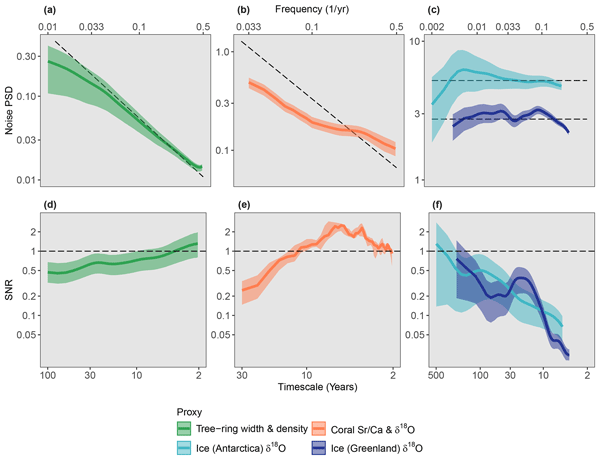
Mara Y. McPartland, Thomas Münch, Andrew M. Dolman, Raphaël Hébert, and Thomas Laepple
Clim. Past, 21, 1917–1931, https://doi.org/10.5194/cp-21-1917-2025, https://doi.org/10.5194/cp-21-1917-2025, 2025
Short summary
Short summary
Paleoclimate proxy records contain a combination of climate signals and non-climatic noise. This noise can affect year-to-year variations, or introduce uncertainty on medium and long timescales. Proxies contain different types, or "colors" of noise stemming from the diverse physical and biological processes that go into their creation. We show how non-climatic noise affects tree rings, corals and ice cores. We aim to improve representations of noise in paleoclimate research activities.
Vivek K. Arora, Chris D. Jones, Pierre Friedlingstein, Tatiana Ilyina, Guilherme L. Torres Mendonça, Benjamin Sanderson, Charles Koven, Heather Graven, Michio Kawamiya, Victor Brovkin, John Dunne, Forrest M. Hoffman, Julia Pongratz, James T. Randerson, Anastasia Romanou, Sönke Zaehle, and Kirsten Zickfeld
EGUsphere, https://doi.org/10.5194/egusphere-2026-5533, https://doi.org/10.5194/egusphere-2026-5533, 2026
This preprint is open for discussion and under review for Geoscientific Model Development (GMD).
Short summary
Short summary
Earth system models (ESM) are important tools for understanding how the Earth’s climate and carbon cycle interact, and how Earth system responds to anthropogenic CO2 emissions. The Coupled Climate-Carbon Cycle Model Intercomparison Project (C4MIP) compares Earth system models from around the world in context of climate and carbon cycle interactions. This manuscript describes the new set of experiments for C4MIP for the seventh phase of the coupled modelling intercomparison project (CMIP7).
Charles Koven, Benjamin M. Sanderson, Abigail L. S. Swann, Victor Brovkin, John Dunne, Rosie A. Fisher, Tomohiro Hajima, Chris D. Jones, Spencer K. Liddicoat, Anastasia Romanou, Roland Séférian, Norman J. Steinert, Jerry Tjiputra, Tilo Ziehn, Tatiana Ilyina, Nancy Y. Kiang, David M. Lawrence, Peter Lawrence, Hongmei Li, Jorg Schwinger, and Lori T. Sentman
EGUsphere, https://doi.org/10.5194/egusphere-2026-5381, https://doi.org/10.5194/egusphere-2026-5381, 2026
This preprint is open for discussion and under review for Earth System Dynamics (ESD).
Short summary
Short summary
We use a set of climate models to ask how aspects of climate beyond global mean temperatures would differ if we first emit, and then remove, a given amount of CO2, compared to a case where the CO2 hadn't been emitted. We show that precipitation increases, and that land cools relative to the ocean. Models disagree on many of the finer-scale regional changes, but they do agree that many of the regional changes that occur under positive and then negative emissions also occur under zero emissions.
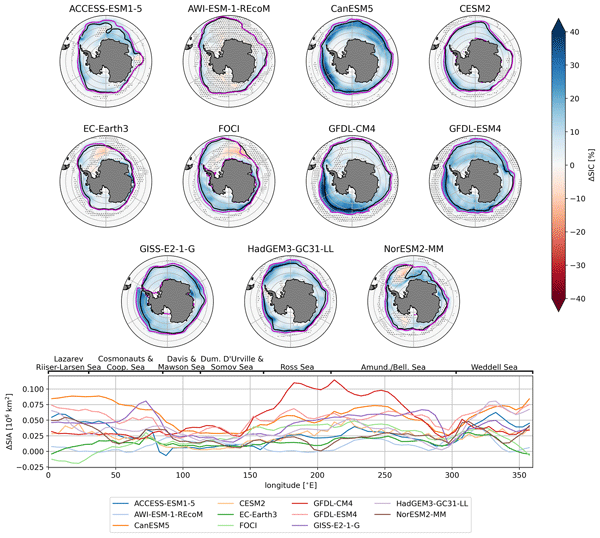
Andrew G. Pauling, Inga J. Smith, Torge Martin, Jeff K. Ridley, David P. Stevens, Max Thomas, Rebecca L. Beadling, Christopher Danek, Tore Hattermann, Qian Li, John Marshall, Morven Muilwijk, Ariaan Purich, and Neil C. Swart
The Cryosphere, 20, 5761–5783, https://doi.org/10.5194/tc-20-5761-2026, https://doi.org/10.5194/tc-20-5761-2026, 2026
Short summary
Short summary
Climate models typically do not include meltwater entering the Southern Ocean due to Antarctic ice sheet mass loss. Previous work shows this meltwater drives sea ice growth, but the varying responses have been difficult to compare across models. We ran 11 climate models using the same meltwater input and found a wide range of sea ice responses depending on the background state in each model. Understanding this uncertainty in response is important for future projections of Antarctic sea ice.
Norman Julius Steinert, Kirsten Zickfeld, Benjamin Mark Sanderson, Charles D. Koven, Nadine Mengis, Pia Rethmeier, and Jörg Schwinger
EGUsphere, https://doi.org/10.5194/egusphere-2026-5338, https://doi.org/10.5194/egusphere-2026-5338, 2026
This preprint is open for discussion and under review for Earth System Dynamics (ESD).
Short summary
Short summary
As 1.5°C pathways increasingly rely on temperature overshoot, this Perspective examines whether climate overshoot-induced effects can be reversed. We synthesize what drives climate reversibility in positive and negative emission pathways, proposing a typology of temperature responses beyond simple (ir)reversible categories. Current climate models suggest irreversible responses cannot be ruled out, underscoring the need for more nuanced assessment of overshoot-based mitigation risks.
Jiawen Zhu, Linyang Guo, Matvey V. Debolskiy, Kjetil S. Aas, Lei Cai, Fang Li, Sebastian Westermann, and Hanna Lee
EGUsphere, https://doi.org/10.5194/egusphere-2026-4332, https://doi.org/10.5194/egusphere-2026-4332, 2026
This preprint is open for discussion and under review for Geoscientific Model Development (GMD).
Short summary
Short summary
Frozen ground across the Arctic stores large amounts of carbon and supports fragile ecosystems. We improved a computer model to include excess ice and compared it with two other model setups. All showed that this excess ice can slow warming at first, but their estimates of excess ice loss, soil change, and plant growth differed greatly. Better comparisons between models are needed to improve predictions of Arctic change and its effects on the global climate.
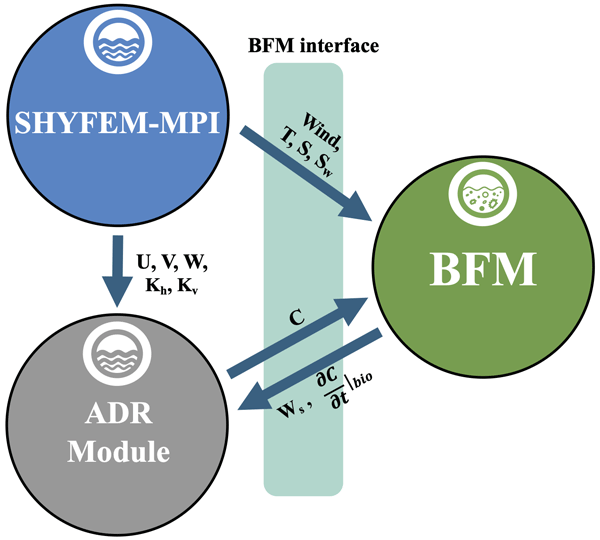
Jacopo Alessandri, Giulia Bonino, Tomas Lovato, Momme Butenschön, Lorenzo Mentaschi, Giorgia Verri, Ivan Federico, and Nadia Pinardi
Geosci. Model Dev., 19, 9301–9324, https://doi.org/10.5194/gmd-19-9301-2026, https://doi.org/10.5194/gmd-19-9301-2026, 2026
Short summary
Short summary
Coastal seas are strongly shaped by complex coastlines, shallow depths, and inputs from rivers, which influence marine life and water quality. This study introduces a new high-resolution modelling system that combines ocean circulation and marine ecosystem processes on unstructured grids. Applied to the northern Adriatic Sea, the model realistically captures seasonal changes in key biogeochemical variables, offering improved tools to support coastal environmental management.
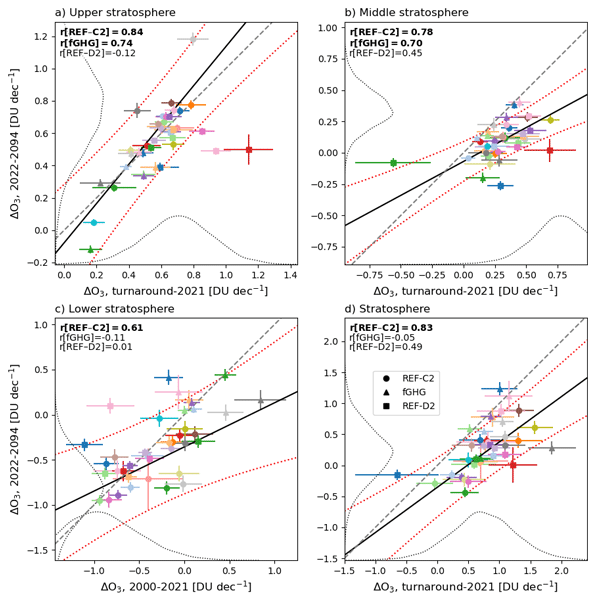
Sean M. Davis, William T. Ball, Yue Jia, Gabriel Chiodo, Justin A. Alsing, James Keeble, Hideharu Akiyoshi, Carlo Arosio, Ewa M. Bednarz, Andreas Chrysanthou, Melanie Coldewey-Egbers, Robert Damadeo, Sandip Dhomse, Mohamadou A. Diallo, Simone Dietmuller, Roland Eichinger, Stacey Frith, Birgit Hassler, Michaela I. Hegglin, Daan Hubert, Patrick Jöckel, Béatrice Josse, Natalya Kramarova, Diego Loyola, Eliane Maillard Barras, Marion Marchand, Olaf Morgenstern, David Plummer, Robert W. Portmann, Karen H. Rosenlof, Alexei Rozanov, Viktoria F. Sofieva, Johannes Staehelin, Timofei Sukhodolov, Kleareti Tourpali, Ronald J. Van der A, H. J. Ray Wang, Krzysztof Wargan, Shingo Watanabe, Mark Weber, Jeannette D. Wild, Yousuke Yamashita, and Jerry Ziemke
Atmos. Chem. Phys., 26, 13817–13843, https://doi.org/10.5194/acp-26-13817-2026, https://doi.org/10.5194/acp-26-13817-2026, 2026
Short summary
Short summary
This study investigates tropical ozone changes in models and satellite observations to determine how well they agree and whether observations can constrain model projections. At some levels, satellite records disagree significantly on the magnitude of ozone changes. While early and late 21st century trends are correlated across models, suggesting a potential emergent constraint, the spread in observations means they are unable to provide guidance on the credibility of model projections.
Myriam Terristi, Sebastian Sippel, Benjamin D. Stocker, and Ana Bastos
EGUsphere, https://doi.org/10.5194/egusphere-2026-5509, https://doi.org/10.5194/egusphere-2026-5509, 2026
This preprint is open for discussion and under review for Earth System Dynamics (ESD).
Short summary
Short summary
Satellite records reveal a paradox: vegetation is greening across much of the world even as water scarcity intensifies. Using 24 years of global observations, we followed vegetation throughout dry periods rather than treating droughts as isolated events. Greenness often rose at first, then declined as water shortages deepened. Extreme droughts also shifted many ecosystems towards water limitation, revealing a growing vulnerability beneath the global greening trend.
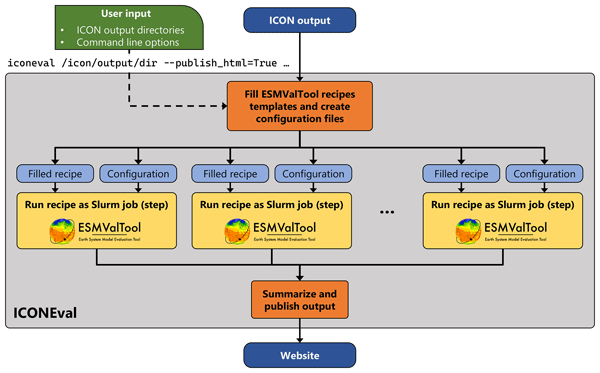
Axel Lauer, Manuel Schlund, Lisa Bock, Birgit Hassler, Gunnar Behrens, Bettina Gier, Lukas Lindenlaub, Stephan Lorenz, Jan-Hendrik Malles, Wolfgang A. Müller, Trang van Pham, Katja Weigel, Guang Zeng, and Veronika Eyring
Geosci. Model Dev., 19, 8731–8754, https://doi.org/10.5194/gmd-19-8731-2026, https://doi.org/10.5194/gmd-19-8731-2026, 2026
Short summary
Short summary
ICONEval is a new framework to facilitate researchers to continuously monitor and check their climate models during the development phase. It builds on the ESMValTool software package to run tests verifying that the results are plausible, follow physical laws, and that the model has sufficient skill in reproducing the observed climate. An important aim is to make it easier to spot model errors early, for example when implementing new model components that use machine learning.
Benedict Blackledge, Oliver Andrews, Rory Bingham, Urmi Ninad, and J. A. Mattias Green
EGUsphere, https://doi.org/10.5194/egusphere-2026-5168, https://doi.org/10.5194/egusphere-2026-5168, 2026
This preprint is open for discussion and under review for Biogeosciences (BG).
Short summary
Short summary
“Bi-decadal” oscillations in dissolved oxygen, observed near Northern Japan, have been attributed to both tidal mixing and non-tidal regional climate variability. Instead of a more traditional correlational analysis, we use causal discovery to estimate which processes are causal of, rather than merely associate with, dissolved oxygen. Tidal processes are likely causing these oscillations, but large uncertainties exist around the intermediate dynamics within the Sea of Okhotsk.
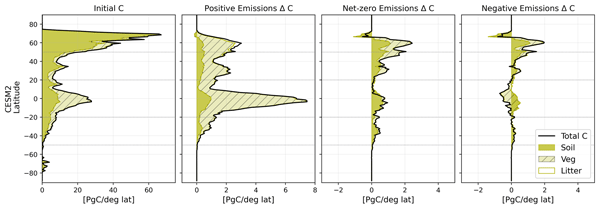
Abigail L. S. Swann, Charles D. Koven, Cristian Proistosecu, Rosie A. Fisher, Benjamin M. Sanderson, Victor Brovkin, Tomohiro Hajima, Chris D. Jones, Nancy Y. Kiang, David M. Lawrence, Spencer Liddicoat, Hannah Liddy, Anastasia Romanou, Roland Séférian, Lori T. Sentman, Norman J. Steinert, Jerry Tjiputra, and Tilo Ziehn
Earth Syst. Dynam., 17, 1237–1275, https://doi.org/10.5194/esd-17-1237-2026, https://doi.org/10.5194/esd-17-1237-2026, 2026
Short summary
Short summary
We analyzed simulations from Earth system models (ESM) with a constant rate of emissions, zero emissions, and negative emissions of CO2 to quantify the response of land carbon sinks. We found that under positive emissions vegetation in the tropics gained carbon. Under zero emissions and negative emissions most ESMs lost carbon from vegetation in the tropics but gained carbon in mid- and high-latitudes, mostly in soils. Our findings imply that tropical carbon is vulnerable under zero emissions.
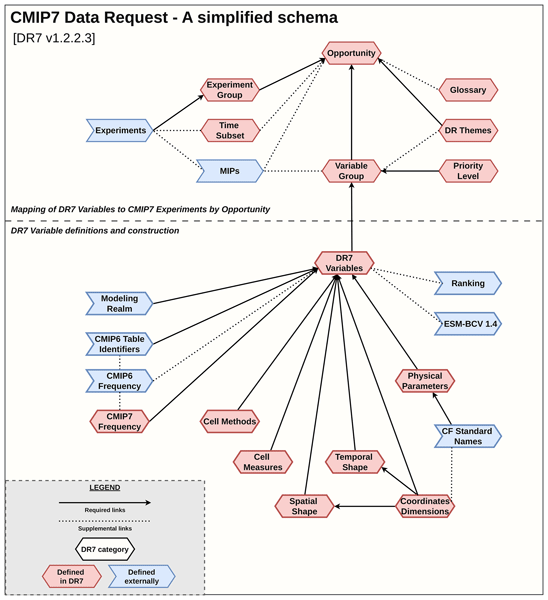
Chloe Mackallah, Martin Juckes, James Anstey, Beth Dingley, Charlotte Pascoe, Gaëlle Rigoudy, Marie-Pierre Moine, Tomas Lovato, Alison Pamment, Martin Schupfner, Michio Kawamiya, Tommi Bergman, Charles Koven, Eleanor O'Rourke, Briony Turner, Daniel Ellis, and Matthew Mizielinski
Geosci. Model Dev., 19, 8053–8079, https://doi.org/10.5194/gmd-19-8053-2026, https://doi.org/10.5194/gmd-19-8053-2026, 2026
Short summary
Short summary
This paper describes the creation of a new set of output data requirements for upcoming global climate model experiments performed for CMIP7, an international climate modelling activity. Experts from the community helped to co-create a database that describes which data should be produced, and the scientific justifications behind these choices. It supports growing climate research and policy needs by linking experiments and variables to scientific objectives and real‑world applications.
Marina Friedel, Johanna Beikert, Ana Bastos, Nora Linscheid, and Marlene Kretschmer
EGUsphere, https://doi.org/10.5194/egusphere-2026-4689, https://doi.org/10.5194/egusphere-2026-4689, 2026
This preprint is open for discussion and under review for Earth System Dynamics (ESD).
Short summary
Short summary
We show that the winter Northern Hemisphere stratospheric polar vortex (SPV) – strong stratospheric winds shaping European winter weather – impacts vegetation across Europe from winter into summer. We establish the mechanisms linking winter SPV to summertime vegetation, and show that in France's breadbasket region, SPV anomalies translate into measurable crop yield anomalies. Winter SPV thus emerges as an underappreciated long-lead precursor of European vegetation and crop yield.
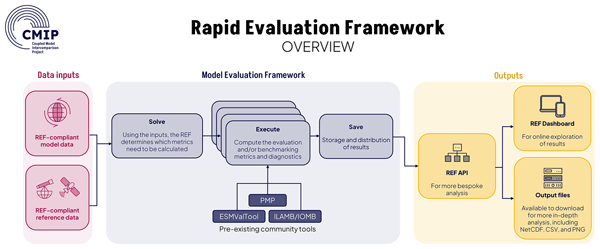
Forrest M. Hoffman, Birgit Hassler, Ranjini Swaminathan, Jared Lewis, Bouwe Andela, Nathan Collier, Dóra Hegedűs, Jiwoo Lee, Charlotte Pascoe, Mika Pflüger, Martina Stockhause, Paul Ullrich, Min Xu, Lisa Bock, Felicity Chun, Bettina K. Gier, Douglas I. Kelley, Axel Lauer, Julien Lenhardt, Manuel Schlund, Mohanan G. Sreeush, Katja Weigel, Ed Blockley, Rebecca Beadling, Romain Beucher, Demiso D. Dugassa, Valerio Lembo, Jianhua Lu, Swen Brands, Jerry Tjiputra, Elizaveta Malinina, Brian Medeiros, Enrico Scoccimarro, Jeremy Walton, Phil Kershaw, André Lanfer Marquez, Malcolm J. Roberts, Eleanor O'Rourke, Beth Dingley, Briony Turner, Helene Hewitt, and John P. Dunne
Geosci. Model Dev., 19, 7415–7455, https://doi.org/10.5194/gmd-19-7415-2026, https://doi.org/10.5194/gmd-19-7415-2026, 2026
Short summary
Short summary
The Rapid Evaluation Framework (REF) is a community-driven platform for benchmarking and performance assessment of Earth system models. Built upon four disparate community evaluation tools, the REF is designed to provide model-data comparisons for the Assessment Fast Track for the Seventh Phase of the Coupled Model Intercomparison Project. The REF will be run at the Earth System Grid Federation to enable model devleopers and scientists to quickly identify model biases and performance issues.
Colin Jones, Isaline Bossert, Donovan P. Dennis, Hazel A. Jeffery, Chris D. Jones, Torben Koenigk, Sina Loriani, Benjamin Sanderson, Roland Séférian, Klaus Wyser, Shuting Yang, Manabu Abe, Sebastian Bathiany, Pascale Braconnot, Victor Brovkin, Friedrich A. Burger, Patrica Cadule, Frederic S. Castruccio, Gokhan Danabasoglu, Andrea Dittus, Jonathan F. Donges, Friederike Fröb, Thomas L. Frölicher, Goran Georgievski, Chuncheng Guo, Aixue Hu, Peter Lawrence, Paul Lerner, José Licón-Saláiz, Bette Otto-Bliesner, Anastasia Romanou, Elena Shevliakova, Yona Silvy, Didier Swingedouw, Jerry Tjiputra, Jeremy Walton, Andy Wiltshire, Ricarda Winkelmann, Richard Wood, Tokuta Yokohata, and Tilo Ziehn
Geosci. Model Dev., 19, 6941–6966, https://doi.org/10.5194/gmd-19-6941-2026, https://doi.org/10.5194/gmd-19-6941-2026, 2026
Short summary
Short summary
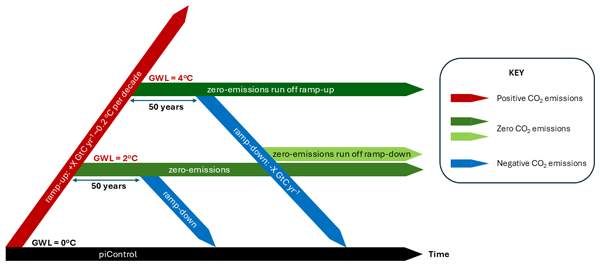
We introduce a new Earth system model experiment protocol to help researchers understand how Earth might respond to positive, zero, and negative carbon emissions. This protocol enables different models to be compared following similar warming and cooling rates. Researchers use the models to explore how the Earth reacts to different climate futures, including the risk of tipping points being exceeded and whether changes can be reversed. The results will support improved long-term climate policy.
Xiulin Gao, Jessica Katz, Charles D. Koven, Adam Hanbury-Brown, and Lara M. Kueppers
EGUsphere, https://doi.org/10.5194/egusphere-2026-3850, https://doi.org/10.5194/egusphere-2026-3850, 2026
This preprint is open for discussion and under review for Biogeosciences (BG).
Short summary
Short summary
We developed a new prescribed fire model and adapted an existing thinning model to represent forest health treatments in a vegetation demography model. Comparisons with post-treatment vegetation and fuel data from three sites suggest that the model captures key ecological processes shaping treatment effects on wildfire risk and carbon balance, as well as the differences between thinning and prescribed fire. This feature supports future studies of climate-vegetation-fire-human interactions.
Aytaç Paçal, Birgit Hassler, Katja Weigel, Miguel-Ángel Fernández-Torres, Gustau Camps-Valls, and Veronika Eyring
Earth Syst. Dynam., 17, 955–986, https://doi.org/10.5194/esd-17-955-2026, https://doi.org/10.5194/esd-17-955-2026, 2026
Short summary
Short summary
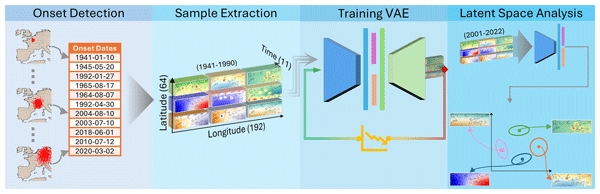
Heatwaves are among the deadliest natural hazards, yet their evolving atmospheric drivers remain unclear. We apply an unsupervised machine learning model to reanalysis data to identify multivariate heatwave patterns over Europe. The model captures seasonally distinct regimes and reveals significant shifts between historical and recent events across all seasons, highlighting changes in heatwave dynamics over time.
Louise C. Sime, Rachel Diamond, Christian Stepanek, Chris Brierley, David Schroeder, Masa Kageyama, Matthew Pollock, Irene Malmierca-Vallet, Ed Blockley, Alex West, Danny Feltham, Jeff Ridley, Pascale Braconnot, Charles J. R. Williams, Xiaoxu Shi, Bette L. Otto-Bliesner, Sophia I. Macarewich, Silvana Ramos Buarque, Qiong Zhang, Allegra LeGrande, Weipeng Zheng, Dabang Jiang, Polina Morozova, Chuncheng Guo, Zhongshi Zhang, Nicholas Yeung, Laurie Menviel, Sandeep Narayanasetti, Masakazu Yoshimori, Olivia Reeves, and Anni Zhao
Geosci. Model Dev., 19, 5881–5905, https://doi.org/10.5194/gmd-19-5881-2026, https://doi.org/10.5194/gmd-19-5881-2026, 2026
Short summary
Short summary
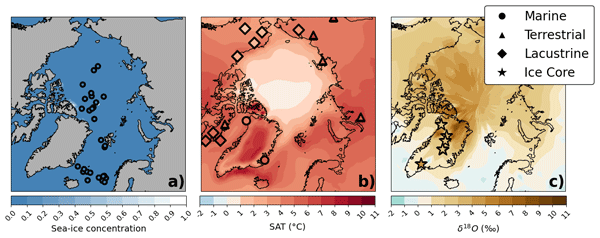
The Arctic may have lost its summer sea ice 127,000 years ago during a naturally warm period in Earth’s past. Climate models can be tested by recreating those conditions, with similar sunlight and greenhouse gas levels. Analysing the large sea ice changes in these simulations helps us understand how the Arctic might respond in the near future and improves how we test and trust our climate models.
Tim Stripp, Zhixuan Guo, Pierre Friedlingstein, Michael O’Sullivan, Stephen Sitch, Ana Bastos, Philippe Ciais, Jefferson Goncalves de Souza, Akihiko Ito, Wei Li, and Lei Ma
EGUsphere, https://doi.org/10.5194/egusphere-2026-3584, https://doi.org/10.5194/egusphere-2026-3584, 2026
Short summary
Short summary
Fire is a key process within the Earth system, yet it is often poorly represented in land carbon cycle models used to estimate how much carbon land ecosystems absorb from the atmosphere. We improved these models by applying long-term burned area data reconstructed from satellite observations. This reduced biases and uncertainty in fire carbon emission estimates and improved estimates of land carbon uptake, implying this method could enhance global and regional carbon budget estimates.
Peng Zhou, Jieming Chou, Li Dan, Jean-François Lamarque, Muhammad Bilal, Fang Li, Mengting Sun, Rebecca Buchholz, Desneiges Murray, Zhaoxiang Cao, Jing Peng, Kai Li, Fuqiang Yang, Wei Pan, Jinyan Chen, and Liwen Xing
Geosci. Model Dev., 19, 5491–5513, https://doi.org/10.5194/gmd-19-5491-2026, https://doi.org/10.5194/gmd-19-5491-2026, 2026
Short summary
Short summary
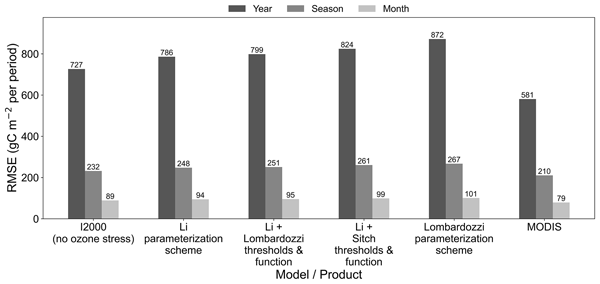
We assessed the impact of ozone damage representations in a land-surface model on simulations of vegetation productivity. Results varied depending on how ozone effects were triggered and how vegetation recovery was modeled. Schemes that incorporated vegetation-specific thresholds and memory effects on photosynthesis and water loss more accurately reflected spatial patterns, indicating directions for enhancing model realism and improving projections of ecosystem responses to ozone pollution.
Franziska Müller, Laura Eifler, Felix Cremer, Pieter Beck, Gustau Camps-Valls, and Ana Bastos
Nat. Hazards Earth Syst. Sci., 26, 2785–2815, https://doi.org/10.5194/nhess-26-2785-2026, https://doi.org/10.5194/nhess-26-2785-2026, 2026
Short summary
Short summary
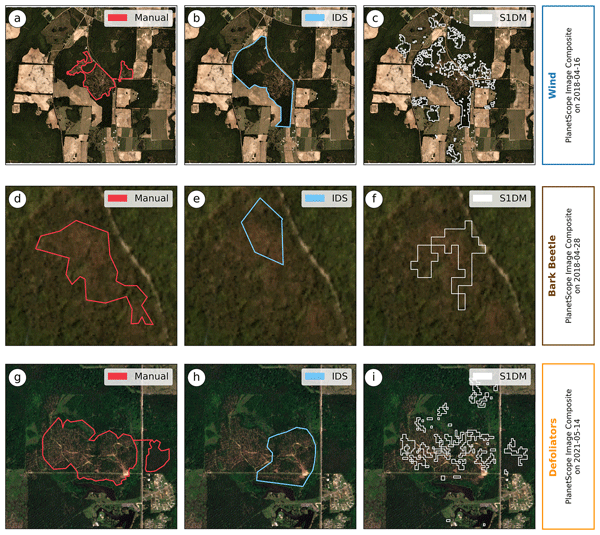
Forest health is increasingly threatened, but disturbances like wind damage and insect outbreaks are hard to track. Our Sentinel-1 Disturbance Mapping (S1DM) approach combines satellite radar with survey data, improving detection for wind and bark beetle impacts and often spotting them earlier. Defoliators remain difficult to capture, but this method strengthens monitoring and supports better forest management.
Evgenia Galytska, Birgit Hassler, Carlo Arosio, Martyn P. Chipperfield, Sandip S. Dhomse, Kimberlee Dubé, Wuhu Feng, Fernando Iglesias-Suarez, and Jakob Runge
Atmos. Chem. Phys., 26, 8185–8209, https://doi.org/10.5194/acp-26-8185-2026, https://doi.org/10.5194/acp-26-8185-2026, 2026
Short summary
Short summary
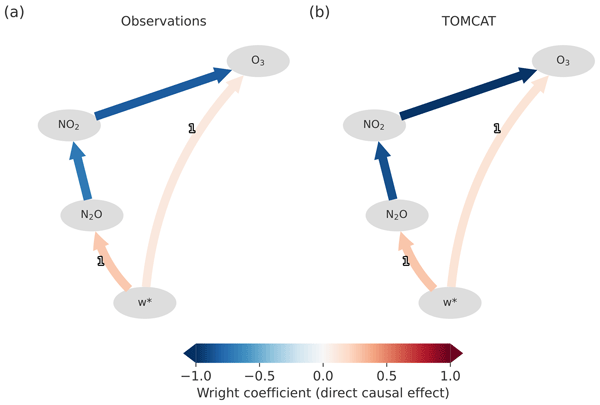
We explore how chemical and dynamical processes shape ozone in the tropical middle stratosphere using satellite data and a chemistry-transport model. We apply a framework to identify cause–effect relationships and estimate their strength. For 2004-2021 monthly data, we detect an indirect pathway controlling ozone variability, with effects increasing after two–three months. We further assess how different wind regimes influence this pathway.
Piers M. Forster, Tristram Walsh, Chris Smith, William F. Lamb, Robin Lamboll, Christophe Cassou, Mathias Hauser, Zeke Hausfather, June-Yi Lee, Matthew D. Palmer, Karina von Schuckmann, Aimée B. A. Slangen, Sophie Szopa, Blair Trewin, Jeongeun Yun, Nathan P. Gillett, Stuart Jenkins, H. Damon Matthews, Krishnan Raghavan, Aurélien Ribes, Joeri Rogelj, Debbie Rosen, Xuebin Zhang, Myles Allen, Robbie M. Andrew, Chris Atkinson, Richard A. Betts, Antonio Bombelli, Samantha N. Burgess, Lijing Cheng, Helen E. Claxton, Pierre Friedlingstein, Thomas L. Frölicher, Catia M. Domingues, Thomas Gasser, Catherine H. Gregory, Rachel M. Hoesly, Daniel Huppmann, Masayoshi Ishii, Christopher Kadow, Alexia Karwat, John Kennedy, Rachel E. Killick, Mahesh V. M. Kovilakam, Paul B. Krummel, Xin Lan, Jean-François Lamarque, Aurélien Liné, Belén Martín-Míguez, Didier P. Monselesan, Colin Morice, Jens Mühle, Pino Mussak, Glen P. Peters, Anna Pirani, Julia Pongratz, Matthew Rigby, Robert Rohde, Abhishek Savita, Sonia I. Seneviratne, Steven J. Smith, Ghassan Taha, Caterina Tassone, Peter Thorne, Christopher Wells, Luke M. Western, Guido R. van der Werf, Susan E. Wijffels, Marco Zecchetto, Junting Zhong, Xiao-Ye Zhang, Valérie Masson-Delmotte, and Panmao Zhai
Earth Syst. Sci. Data, 18, 3889–3933, https://doi.org/10.5194/essd-18-3889-2026, https://doi.org/10.5194/essd-18-3889-2026, 2026
Short summary
Short summary
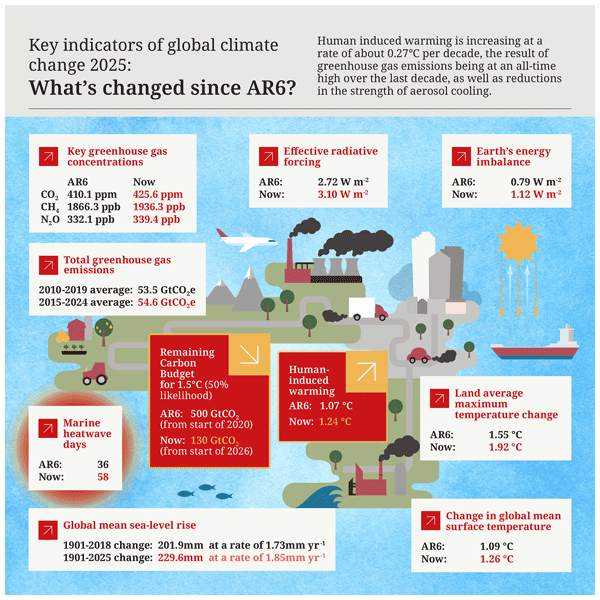
We give our annual update of key climate indicators. Our work quantifies the human contribution to global warming and the pace of climate change. This represents a large effort by the international community akin to an Intergovernmental Panel on Climate Change (IPCC) report.
Zachary James Robbins, Lucas Tiede, Charlie Koven, Ryan Knox, Nate McDowell, and Chonggang Xu
EGUsphere, https://doi.org/10.5194/egusphere-2026-2433, https://doi.org/10.5194/egusphere-2026-2433, 2026
This preprint is open for discussion and under review for Geoscientific Model Development (GMD).
Short summary
Short summary
We put forth a new framework, CRAFT, that provides by which to more robustly estimate complex earth surface and ecology model parameters from observational data using machine learning and Bayesian statistics. For the complex FATES-HYDRO plant hydrodynamics model, we find this does a good job capturing synthetic parameters and model parameter sensitivity. We provide the software for this to be useful for a wide range of models.
Anna T. Schackow, Susan C. Steele-Dunne, David T. Milodowski, Jean-Marc Limousin, and Ana Bastos
Biogeosciences, 23, 3365–3386, https://doi.org/10.5194/bg-23-3365-2026, https://doi.org/10.5194/bg-23-3365-2026, 2026
Short summary
Short summary
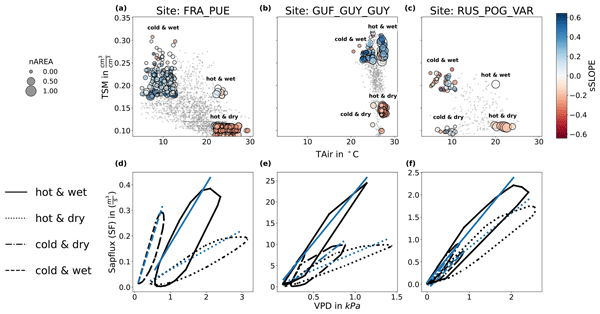
Plants regulate how much water they lose and how much carbon they take in, but rising heat and dryness make this balance harder. We studied how water movement inside plant stems changes during the day and relates to dryness in the air and soil. By analyzing these daily patterns, we identified signals of stress that could be tracked not only with sensors in plants but also from satellites, offering new ways to monitor global vegetation health.
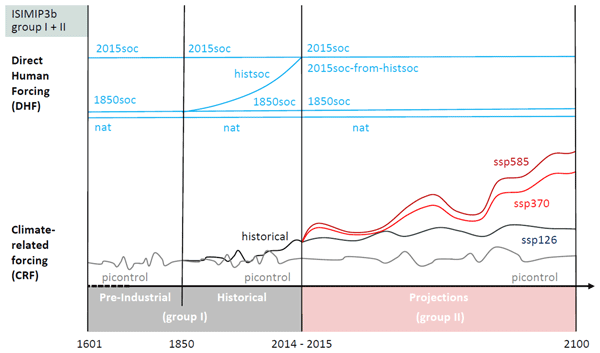
Katja Frieler, Stefan Lange, Jacob Schewe, Matthias Mengel, Simon Treu, Christian Otto, Jan Volkholz, Christopher P. O. Reyer, Stefanie Heinicke, Colin Jones, Julia L. Blanchard, Cheryl S. Harrison, Colleen M. Petrik, Tyler D. Eddy, Kelly Ortega-Cisneros, Camilla Novaglio, Ryan Heneghan, Derek P. Tittensor, Olivier Maury, Matthias Büchner, Thomas Vogt, Dánnell Quesada-Chacón, Kerry Emanuel, Chia-Ying Lee, Suzana J. Camargo, Linn Hamester, Jonas Jägermeyr, Sam Rabin, Jochen Klar, Iliusi D. Vega del Valle, Lisa Novak, Inga J. Sauer, Gitta Lasslop, Sarah Chadburn, Eleanor Burke, Angela Gallego-Sala, Noah Smith, Jinfeng Chang, Stijn Hantson, Chantelle Burton, Anne Gädeke, Fang Li, Simon N. Gosling, Hannes Müller Schmied, Fred Hattermann, Thomas Hickler, Rafael Marcé, Don Pierson, Wim Thiery, Daniel Mercado-Bettín, Robert Ladwig, Ana Isabel Ayala, Matthew Forrest, Michel Bechtold, Robert Reinecke, Inge de Graaf, Jed O. Kaplan, Alexander Koch, Matthieu Lengaigne, Rohini Kumar, and Maryna Strokal
Geosci. Model Dev., 19, 4095–4135, https://doi.org/10.5194/gmd-19-4095-2026, https://doi.org/10.5194/gmd-19-4095-2026, 2026
Short summary
Short summary
This paper describes the experiments and data sets necessary to run historic and future impact projections, and the underlying assumptions of future climate change as defined by the 3rd round of the ISIMIP Project (Inter-sectoral Impactmodel Intercomparison Project, isimip.org). ISIMIP provides a framework for cross-sectorally consistent climate impact simulations to contribute to a comprehensive and consistent picture of the world under different climate-change scenarios.
Benjamin M. Sanderson, Marit Sandstad, Alejandro Romero-Prieto, Stuart Jenkins, Charles Koven, Glen Peters, Roland Séfèrian, Andrew H. MacDougall, Ashwin Seshadri, Victor Brovkin, John Dunne, Abigail L. S. Swann, Torben Koenigk, Rosie A. Fisher, David Hohn, Tatiana Ilyina, Chris D. Jones, Hongmei Li, Peter Lawrence, Spencer Liddicoat, Nadine Mengis, Anastasia Romanou, Lori T. Sentman, Chris Smith, Norman J. Steinert, Jerry Tjiputra, and Tilo Ziehn
EGUsphere, https://doi.org/10.5194/egusphere-2026-1875, https://doi.org/10.5194/egusphere-2026-1875, 2026
Short summary
Short summary
When humanity stops emitting carbon dioxide, will temperatures keep rising, stabilize, or fall? Our study reveals in most models, temperatures remain nearly stable, but this hides a balance between the warming in response to radiation imbalance, and the cooling due to uptake of carbon in the land and ocean. Understanding this balance helps refine how much more CO2 we can safely emit.
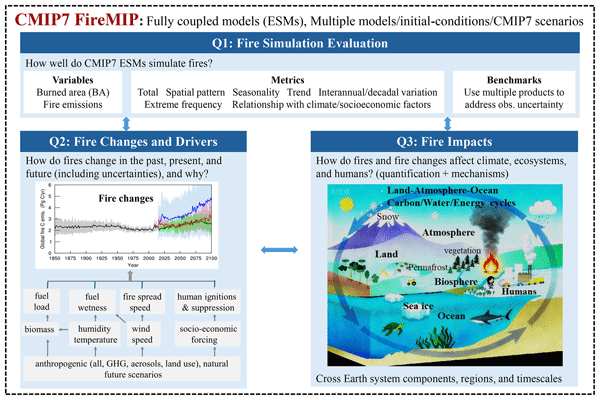
Fang Li, David M. Lawrence, Brendan M. Rogers, Chantelle Burton, Huilin Huang, Yiquan Jiang, Johannes W. Kaiser, Matthew Kasoar, Hanna Lee, Ruby Leung, Lars Nieradzik, Aihui Wang, Daniel S. Ward, Ligeer Ce, Yangchun Li, Zhongda Lin, Apostolos Voulgarakis, and Yongkang Xue
Geosci. Model Dev., 19, 3989–4007, https://doi.org/10.5194/gmd-19-3989-2026, https://doi.org/10.5194/gmd-19-3989-2026, 2026
Short summary
Short summary
Extreme fire events are increasing, and fires are projected to rise across most regions, posing growing risks to ecosystems and society. As a key Earth system process, fire is now modeled in most Earth System Models (ESMs). FireMIP (Fire Modeling Intercomparison Project) within CMIP7 will evaluate fire simulations in state‑of‑the‑art ESMs, project future fire changes, and provide quantitative, process‑based understanding of fire's role in the Earth system.
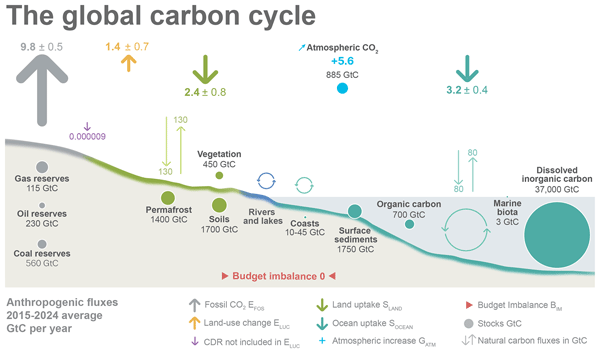
Pierre Friedlingstein, Michael O'Sullivan, Matthew W. Jones, Robbie M. Andrew, Dorothee C. E. Bakker, Judith Hauck, Peter Landschützer, Corinne Le Quéré, Hongmei Li, Ingrid T. Luijkx, Glen P. Peters, Wouter Peters, Julia Pongratz, Clemens Schwingshackl, Stephen Sitch, Josep G. Canadell, Philippe Ciais, Kjetil Aas, Simone R. Alin, Peter Anthoni, Leticia Barbero, Nicholas R. Bates, Nicolas Bellouin, Alice Benoit-Cattin, Carla F. Berghoff, Raffaele Bernardello, Laurent Bopp, Ida Bagus Mandhara Brasika, Matthew A. Chamberlain, Naveen Chandra, Frédéric Chevallier, Louise P. Chini, Nathan O. Collier, Thomas H. Colligan, Margot Cronin, Laique M. Djeutchouang, Xinyu Dou, Matt P. Enright, Kazutaka Enyo, Michael Erb, Wiley Evans, Richard A. Feely, Liang Feng, Daniel J. Ford, Adrianna Foster, Filippa Fransner, Thomas Gasser, Marion Gehlen, Thanos Gkritzalis, Jefferson Goncalves De Souza, Giacomo Grassi, Luke Gregor, Nicolas Gruber, Bertrand Guenet, Özgür Gürses, Kirsty Harrington, Ian Harris, Jens Heinke, George C. Hurtt, Yosuke Iida, Tatiana Ilyina, Akihiko Ito, Andrew R. Jacobson, Atul K. Jain, Tereza Jarníková, Annika Jersild, Fei Jiang, Steve D. Jones, Etsushi Kato, Ralph F. Keeling, Kees Klein Goldewijk, Jürgen Knauer, Yawen Kong, Jan Ivar Korsbakken, Charles Koven, Taro Kunimitsu, Xin Lan, Junjie Liu, Zhiqiang Liu, Zhu Liu, Claire Lo Monaco, Lei Ma, Gregg Marland, Patrick C. McGuire, Galen A. McKinley, Joe R. Melton, Natalie Monacci, Erwan Monier, Eric J. Morgan, David R. Munro, Jens D. Müller, Shin-Ichiro Nakaoka, Lorna R. Nayagam, Yosuke Niwa, Tobias Nutzel, Are Olsen, Abdirahman M. Omar, Naiqing Pan, Sudhanshu Pandey, Denis Pierrot, Zhangcai Qin, Pierre Regnier, Gregor Rehder, Laure Resplandy, Alizée Roobaert, Thais M. Rosan, Christian Rödenbeck, Jörg Schwinger, Ingunn Skjelvan, T. Luke Smallman, Victoria Spada, Mohanan G. Sreeush, Qing Sun, Adrienne J. Sutton, Colm Sweeney, Didier Swingedouw, Roland Séférian, Shintaro Takao, Hiroaki Tatebe, Hanqin Tian, Xiangjun Tian, Bronte Tilbrook, Hiroyuki Tsujino, Francesco Tubiello, Erik van Ooijen, Guido R. van der Werf, Sebastiaan J. van de Velde, Anthony P. Walker, Rik Wanninkhof, Xiaojuan Yang, Wenping Yuan, Xu Yue, and Jiye Zeng
Earth Syst. Sci. Data, 18, 3211–3288, https://doi.org/10.5194/essd-18-3211-2026, https://doi.org/10.5194/essd-18-3211-2026, 2026
Short summary
Short summary
The Global Carbon Budget 2025 describes the methodology, main results, and datasets used to quantify the anthropogenic emissions of carbon dioxide (CO2) and their partitioning among the atmosphere, land ecosystems, and the ocean over the historical period (1750–2025). These living datasets are updated every year to provide the highest transparency and traceability in the reporting of CO2, the key driver of climate change.
Guohua Liu, Philippe Ciais, Shengli Tao, Hui Yang, Chenwei Xiao, and Ana Bastos
Earth Syst. Sci. Data Discuss., https://doi.org/10.5194/essd-2026-246, https://doi.org/10.5194/essd-2026-246, 2026
Preprint under review for ESSD
Short summary
Short summary
We developed a long-term, moderate-resolution global dataset of forest above ground biomass, from satellite radar data and machine learning. The significance of this dataset lies in its ability to provide a continuous, moderate-resolution view of biomass carbon dynamics, offering a valuable resource for supporting studies of climate change, disturbance, and land use, and will help improve Earth System models and future carbon cycle.
Esther Karin Bender, Matvey Debolskiy, Kjetil Aas, Sebastian Westermann, Fang Li, Jiawen Zhu, and Hanna Lee
EGUsphere, https://doi.org/10.5194/egusphere-2026-1039, https://doi.org/10.5194/egusphere-2026-1039, 2026
Short summary
Short summary
This paper introduces a new method to represent ice-rich permafrost soils in the Community Land Model used for climate prediction. The approach includes key processes previously missing, enabling simulation of rapid thaw events from ground-ice melt. It improves representation of soil temperature, hydrology, and landscape dynamics, leading to more accurate future greenhouse-gas estimates.
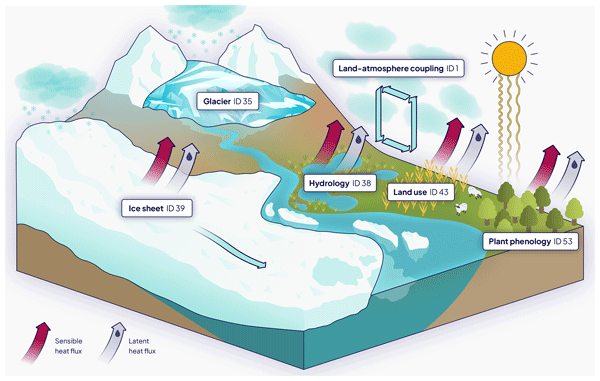
Yue Li, Gang Tang, Eleanor O'Rourke, Samar Minallah, Martim Mas e Braga, Sophie Nowicki, Robin S. Smith, David M. Lawrence, George C. Hurtt, Daniele Peano, Gesa Meyer, Birgit Hassler, Jiafu Mao, Yongkang Xue, and Martin Juckes
Geosci. Model Dev., 19, 3129–3155, https://doi.org/10.5194/gmd-19-3129-2026, https://doi.org/10.5194/gmd-19-3129-2026, 2026
Short summary
Short summary
Land and Land Ice Theme Opportunities describe a list that contains 25 variable groups with 716 variables, which are potentially available to the broad scientific audience for performing analysis in land–atmosphere coupling, hydrological processes and freshwater systems, glacier and ice sheet mass balance and their influence on the sea levels, land use, and plant phenology.
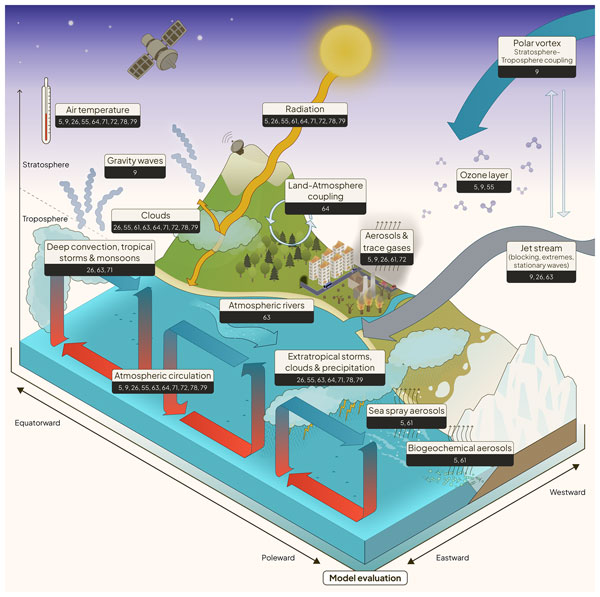
Beth Dingley, James A. Anstey, Marta Abalos, Carsten Abraham, Tommi Bergman, Lisa Bock, Sonya Fiddes, Birgit Hassler, Ryan J. Kramer, Fei Luo, Fiona M. O'Connor, Petr Šácha, Isla R. Simpson, Laura J. Wilcox, and Mark D. Zelinka
Geosci. Model Dev., 19, 2945–2984, https://doi.org/10.5194/gmd-19-2945-2026, https://doi.org/10.5194/gmd-19-2945-2026, 2026
Short summary
Short summary
This manuscript defines as a list of variables and scientific opportunities which are requested from the Coupled Model Intercomparison Project Phase 7 (CMIP7) Assessment Fast Track to address open atmospheric science questions. The list reflects the output of a large public community engagement effort, coordinated across autumn 2025 through to summer 2025.
Didier Swingedouw, Laura Jackson, Aixue Hu, Anastasia Romanou, Nicole C. Laureanti, Wilbert Weijer, Sina Loriani, Bette Otto-Bliesner, Ayako Abe-Ouchi, Lucas Almeida, Alessio Bellucci, Reyk Börner, Gokhan Danabasoglu, Donovan P. Dennis, Marion Devilliers, Sybren Drijfhout, Jonathan Donges, Friederike Fröb, Thomas L. Frölicher, Guillaume Gastineau, Heiko Goelzer, Chuncheng Guo, Urs Hofmann, Anna Höse, Colin Jones, Torben Koenigk, Ann Kristin Klose, Valerio Lembo, Jose Licon-Salaiz, Ken Mankoff, Virna Meccia, Irina Melnikova, Oliver Mehling, Laurie Menviel, Juliette Mignot, Jon I. Robson, Gavin A. Schmidt, Robin Smith, Yuchen Sun, Irene Trombini, Matteo Willeit, Richard Wood, Fanghua Wu, Lin Zhaohui, and Ricarda Winkelmann
EGUsphere, https://doi.org/10.5194/egusphere-2026-1698, https://doi.org/10.5194/egusphere-2026-1698, 2026
Short summary
Short summary
This study presents a plan for climate model experiments to better understand how changes in freshwater in the North Atlantic affect major ocean currents. We designed coordinated simulations to test their response to warming, added freshwater, and possible recovery after weakening. Comparing results across models and past climate evidence helps improve confidence in projections and assess risks of large ocean circulation changes.
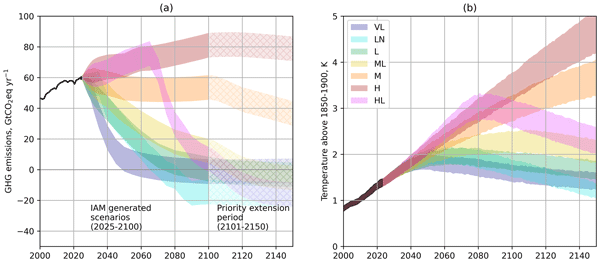
Detlef P. Van Vuuren, Brian C. O'Neill, Claudia Tebaldi, Benjamin M. Sanderson, Louise P. Chini, Pierre Friedlingstein, Tomoko Hasegawa, Keywan Riahi, Bala Govindasamy, Nico Bauer, Veronika Eyring, Cheikh M. N. Fall, Katja Frieler, Matthew J. Gidden, Laila K. Gohar, Annika Högner, Andrew D. Jones, Jarmo Kikstra, Andrew King, Reto Knutti, Elmar Kriegler, Peter Lawrence, Chris Lennard, Jason Lowe, Camilla Mathison, Shahbaz Mehmood, Zebedee Nicholls, Luciana F. Prado, Qiang Zhang, Steven K. Rose, Alex C. Ruane, Marit Sandstad, Carl-Friedrich Schleussner, Roland Seferian, Jana Sillmann, Chris Smith, Anna A. Sörensson, Swapna Panickal, Kaoru Tachiiri, Naomi Vaughan, Saritha S. Vishwanathan, Tokuta Yokohata, Marco Zecchetto, and Tilo Ziehn
Geosci. Model Dev., 19, 2627–2656, https://doi.org/10.5194/gmd-19-2627-2026, https://doi.org/10.5194/gmd-19-2627-2026, 2026
Short summary
Short summary
We propose a set of seven plausible 21st century emission scenarios, and their multi-century extensions, that will be used by the international community of climate modeling centers to produce the next generation of climate projections. These projections will support climate, impact and mitigation researchers, provide information to practitioners to address future risks from climate change, and contribute to policymakers’ considerations of the trade-offs among various levels of mitigation.
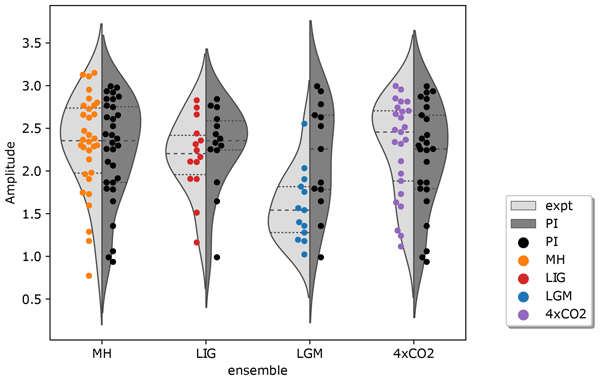
Anni Zhao, Chris Brierley, Venni Arra-Kastrati, Xiaoxu Shi, and Yongyun Hu
Clim. Past, 22, 689–708, https://doi.org/10.5194/cp-22-689-2026, https://doi.org/10.5194/cp-22-689-2026, 2026
Short summary
Short summary
The North Atlantic Oscillation has large impacts on the European climate, whose future behaviour remains uncertain. We assess the NAO response in three past experiments (midHolocene, lig127k, lgm) and an abrupt quadrupled CO2 experiment (abrupt4xCO2). Our results show that NAO weakens (enhances) in response to cooling (warming), while it is not sensitive to orbital configurations. The associated teleconnections change consistently with the theory and are sensitive to the change in NAO amplitude.

Samuel Upton, Markus Reichstein, Wouter Peters, Santiago Botía, Jacob A. Nelson, Sophia Walther, Martin Jung, Fabian Gans, László Haszpra, and Ana Bastos
Atmos. Chem. Phys., 26, 2561–2595, https://doi.org/10.5194/acp-26-2561-2026, https://doi.org/10.5194/acp-26-2561-2026, 2026
Short summary
Short summary
We create a hybrid ecosystem-level carbon flux model using both eddy-covariance observations and observations of the atmospheric mole fraction of CO2 at three tall-tower observatories. Our study uses an atmospheric transport model (STILT) to connect the atmospheric signal to the ecosystem-level model. We show that this inclusion of atmospheric information meaningfully improves the model's representation of the interannual variability of the global net flux of CO2.
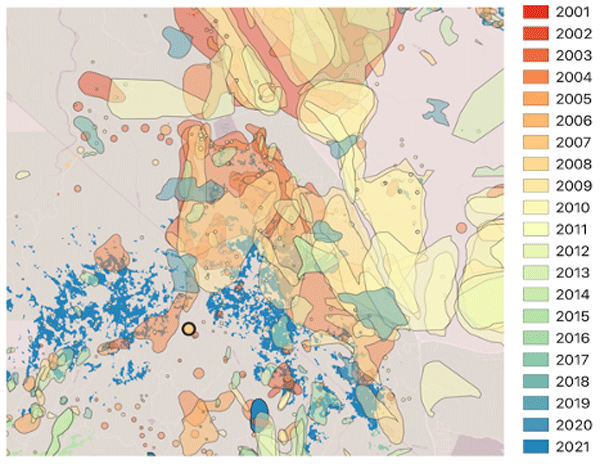
Laura Eifler, Franziska Müller, and Ana Bastos
Biogeosciences, 23, 1291–1325, https://doi.org/10.5194/bg-23-1291-2026, https://doi.org/10.5194/bg-23-1291-2026, 2026
Short summary
Short summary
Forests provide ecosystem services and biodiversity, but they are increasingly affected by disturbances. We evaluate five forest disturbance datasets across the Unites States to assess their consistency in space, timing, and disturbance agents. While datasets show good agreement in disturbance timing, spatial overlap and agent attribution differ substantially. This emphasizes the need for enhanced data quality assessment, integration, and accuracy to better understand forest disturbances.
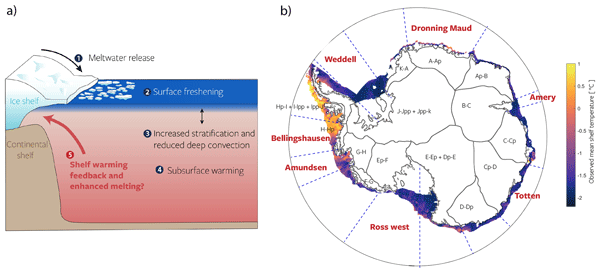
Morven Muilwijk, Tore Hattermann, Rebecca L. Beadling, Neil C. Swart, Aleksi Nummelin, Chuncheng Guo, David M. Chandler, Petra M. Langebroek, Shenjie Zhou, Pierre Dutrieux, Jia-Jia Chen, Christopher Danek, Matthew H. England, Stephen M. Griffies, F. Alexander Haumann, André Jüling, Ombeline Jouet, Qian Li, Torge Martin, John Marshall, Andrew G. Pauling, Ariaan Purich, Zihan Song, Inga J. Smith, Max Thomas, Irene Trombini, Eveline C. van der Linden, and Xiaoqi Xu
The Cryosphere, 20, 1087–1117, https://doi.org/10.5194/tc-20-1087-2026, https://doi.org/10.5194/tc-20-1087-2026, 2026
Short summary
Short summary
Antarctic meltwater affects ocean stratification and temperature, which in turn influences the rate of ice shelf melting – a coupling missing in most climate models. We analyze a suite of climate models with added meltwater to explore this feedback in different regions. While meltwater generally enhances ocean warming and melt, in West Antarctica most models simulate coastal cooling, suggesting a negative feedback that could slow future ice loss there.
Peter W. Thorne, John M. Nicklas, John J. Kennedy, Bruce Calvert, Baylor Fox-Kemper, Mark T. Richardson, Adrian Simmons, Ed Hawkins, Robert Rhode, Kathryn Cowtan, Nerilie J. Abram, Axel Andersson, Simon Noone, Phillipe Marbaix, Nathan Lenssen, Dirk Olonscheck, Tristram Walsh, Stephen Outten, Ingo Bethke, Bjorn H. Samset, Chris Smith, Anna Pirani, Jan Fuglestvedt, Lavanya Rajamani, Richard A. Betts, Elizabeth C. Kent, Blair Trewin, Colin Morice, Tim Osborn, Samantha N. Burgess, Oliver Geden, Andrew Parnell, Piers M. Forster, Chris Hewitt, Zeke Hausfather, Valerie Masson-Delmotte, Jochem Marotzke, Nathan Gillett, Sonia I. Seneviratne, Gavin A. Schmidt, Duo Chan, Stefan Brönnimann, Andy Reisinger, Matthew Menne, Maisa Rojas Corradi, Christopher Kadow, Peter Huybers, David B. Stephenson, Emily Wallis, Joeri Rogelj, Andrew Schurer, Karen McKinnon, Panmao Zhai, Fatima Driouech, Wilfran Moufouma Okia, Saeed Vazifehkhah, Sophie Szopa, Christopher J. Merchant, Shoji Hirahara, Masayoshi Ishii, Francois A. Engelbrecht, Qingxiang Li, June-Yi Lee, Alex J. Cannon, Christophe Cassou, Karina von Schuckmann, Amir H. Delju, and Ellie Murtagh
Earth Syst. Sci. Data Discuss., https://doi.org/10.5194/essd-2025-825, https://doi.org/10.5194/essd-2025-825, 2026
Preprint under review for ESSD
Short summary
Short summary
We reassess the basis for determining the present level of long-term global warming. Unbiased estimates of both realised warming and anthropogenic warming are possible that approximate a 20-year retrospective mean. Our resulting estimates of 1.40 [1.23–1.58] °C (realised) and 1.34 [1.18–1.50] °C (anthropogenic) as at end of 2024 highlight the urgency of immediate, far-reaching and sustained climate mitigation actions if we are to meet the long term temperature goal of the Paris Agreement.
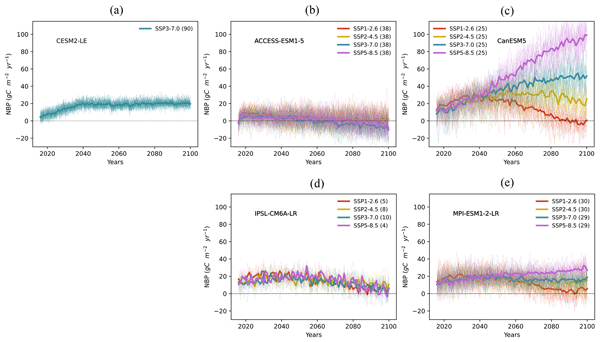
Na Li, Sebastian Sippel, Nora Linscheid, Miguel D. Mahecha, Markus Reichstein, and Ana Bastos
Biogeosciences, 23, 767–792, https://doi.org/10.5194/bg-23-767-2026, https://doi.org/10.5194/bg-23-767-2026, 2026
Short summary
Short summary
We study when anthropogenic signal becomes detectable in the global land carbon sink, which has risen since the 1950s due to CO₂ fertilization and mid- to high-latitude warming. The signal emerges earlier at the global than at regional scales. Future scenarios (2016–2100) take longer to detect than the historical period (1851–2014) because the signal is weaker relative to larger natural variability. Removing circulation-induced variability with dynamical adjustment shortens the detection time.
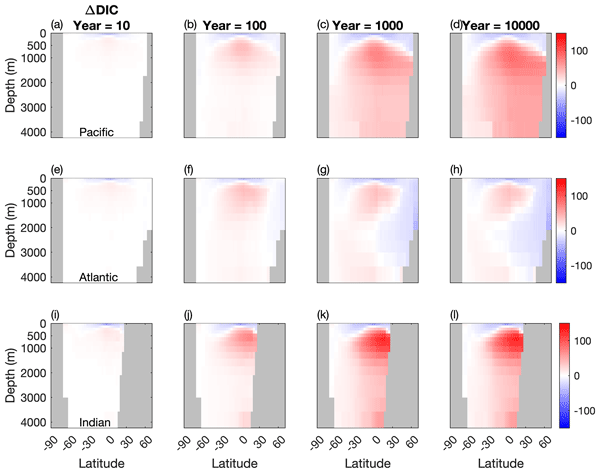
Marco Puglia, Thomas S. Bibby, Jamie D. Wilson, and Ben A. Ward
Biogeosciences, 23, 463–476, https://doi.org/10.5194/bg-23-463-2026, https://doi.org/10.5194/bg-23-463-2026, 2026
Short summary
Short summary
Mixotrophs use both photosynthesis and predation as source of nutrition. Simulations show they can increase ocean carbon storage, but long-term effects are not yet understood. Using a low-resolution ocean-ecology model that ran for 10,000 years, we compared simulations with and without mixotrophs. Mixotrophs increased global carbon storage by trapping more organic carbon in the ocean interior, although interactions with the ocean circulation offset these effects in the North Atlantic.
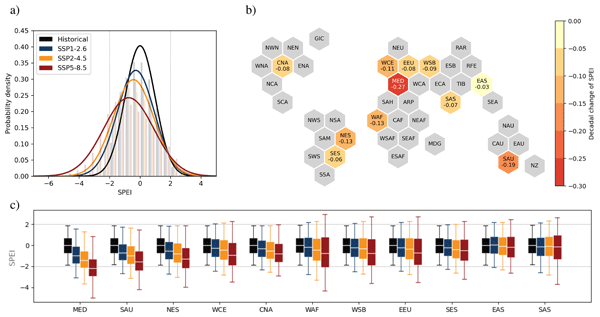
Lukas Lindenlaub, Katja Weigel, Birgit Hassler, Colin Jones, and Veronika Eyring
Earth Syst. Dynam., 17, 81–105, https://doi.org/10.5194/esd-17-81-2026, https://doi.org/10.5194/esd-17-81-2026, 2026
Short summary
Short summary
This study explores changes in drought characteristic based on projections by 18 different Earth system models. Their performance is evaluated by comparing historical simulations to observation based reanalysis. The analysis of a standardized drought index under different future scenarios revealed that the harvest area that is projected to experience extreme drought conditions towards the end of this century ranges from 10 % to 40 % depending on the emission scenario.
Jean-Francois Lamarque, Pierre Friedlingstein, Brian Osias, Steve Strongin, Venkatramani Balaji, Kevin W. Bowman, Josep G. Canadell, Philippe Ciais, Heidi Cullen, Kenneth J. Davis, Scott C. Doney, Kevin R. Gurney, Alicia R. Karspeck, Charles D. Koven, Galen McKinley, Glen P. Peters, Julia Pongratz, Britt Stephens, and Colm Sweeney
EGUsphere, https://doi.org/10.5194/egusphere-2025-6457, https://doi.org/10.5194/egusphere-2025-6457, 2026
Short summary
Short summary
This Perspective highlights requirements to scale the carbon credit market and enable the growth in climate solutions funded through such market. The requirements are on the understanding of the value of the proposed carbon credit projects, and on the availability of a verification system. This verification becomes particularly relevant as the carbon credit market scales to significant impacts on CO2 (or other greenhouse gases), such that attribution to collective actions can be identified.
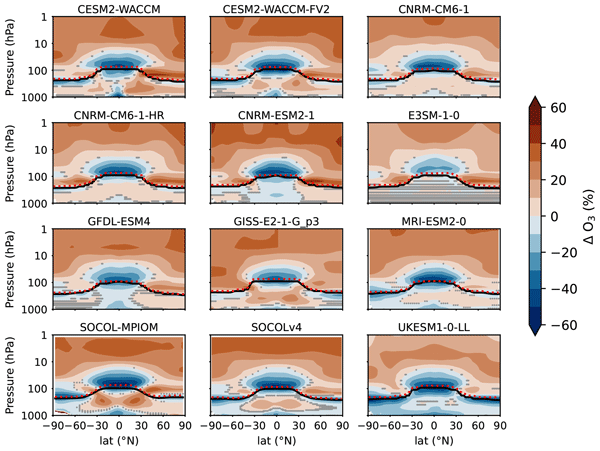
Jingyu Wang, Gabriel Chiodo, Blanca Ayarzagüena, William T. Ball, Mohamadou Diallo, Birgit Hassler, James Keeble, Peer Nowack, Clara Orbe, Sandro Vattioni, and Timofei Sukhodolov
Atmos. Chem. Phys., 25, 17819–17844, https://doi.org/10.5194/acp-25-17819-2025, https://doi.org/10.5194/acp-25-17819-2025, 2025
Short summary
Short summary
We analyzed the ozone response under elevated CO2 using the data from CMIP6 DECK experiments. We then examined the relations between ozone response and changes in temperature and circulation to identify the drivers of ozone change. The climate feedback of ozone is investigated through offline calculations and by comparing models with and without interactive chemistry. We find that ozone–climate interactions are important for Earth system models and thus should be considered in future model development.
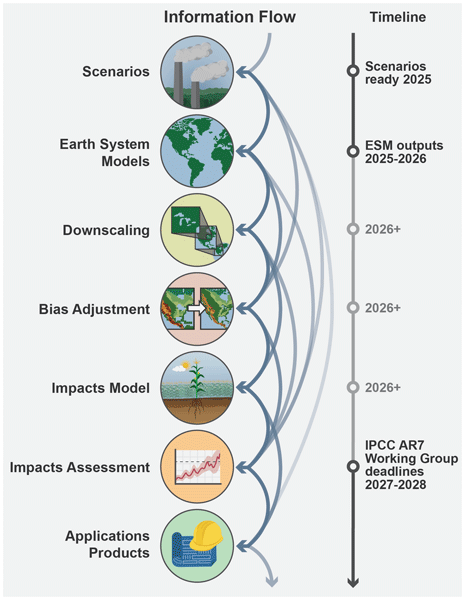
Alex C. Ruane, Charlotte L. Pascoe, Claas Teichmann, David J. Brayshaw, Carlo Buontempo, Ibrahima Diouf, Jesus Fernandez, Paula L. M. Gonzalez, Birgit Hassler, Vanessa Hernaman, Ulas Im, Doroteaciro Iovino, Martin Juckes, Iréne L. Lake, Timothy Lam, Xiaomao Lin, Jiafu Mao, Negin Nazarian, Sylvie Parey, Indrani Roy, Wan-Ling Tseng, Briony Turner, Andrew Wiebe, Lei Zhao, and Damaris Zurell
Geosci. Model Dev., 18, 9497–9540, https://doi.org/10.5194/gmd-18-9497-2025, https://doi.org/10.5194/gmd-18-9497-2025, 2025
Short summary
Short summary
This paper describes how the Coupled Model Intercomparison Project organized its 7th phase (CMIP7) to encourage the production of Earth system model outputs relevant for impacts and adaptation. Community engagement identified 13 opportunities for application across human and natural systems, 60 variable groups and 539 unique variables. We also show how simulations can more efficiently meet applications needs by targeting appropriate resolution, time slices, experiments and variable groups.
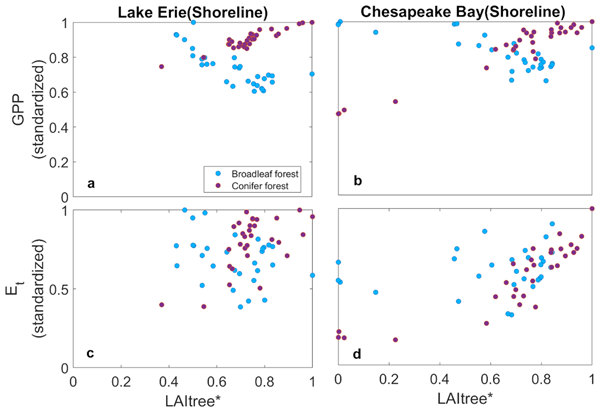
Junyan Ding, Nate McDowell, Vanessa Bailey, Nate Conroy, Donnie J. Day, Yilin Fang, Kenneth M. Kemner, Matthew L. Kirwan, Charlie D. Koven, Matthew Kovach, Patrick Megonigal, Kendalynn A. Morris, Teri O'Meara, Stephanie C. Pennington, Roberta B. Peixoto, Peter Thornton, Mike Weintraub, Peter Regier, Leticia Sandoval, Fausto Machado-Silva, Alice Stearns, Nick Ward, and Stephanie J. Wilson
Biogeosciences, 22, 6963–6978, https://doi.org/10.5194/bg-22-6963-2025, https://doi.org/10.5194/bg-22-6963-2025, 2025
Short summary
Short summary
We used a vegetation model to study why coastal forests are dying due to rising water levels and what happens to the ecosystem when marshes take over. We found that tree death is mainly caused by water-damaged roots, leading to major changes in the environment, such as reduced water use and carbon storage. Our study helps explain how coastal ecosystems are shifting and offers new ideas to explore in future field research.
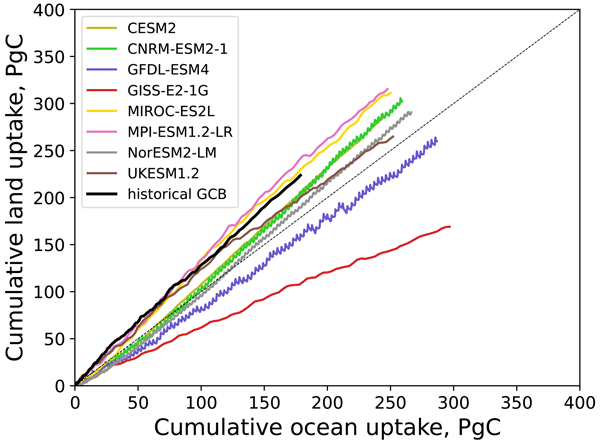
Victor Brovkin, Benjamin M. Sanderson, Noel G. Brizuela, Tomohiro Hajima, Tatiana Ilyina, Chris D. Jones, Charles Koven, David Lawrence, Peter Lawrence, Hongmei Li, Spencer Liddcoat, Anastasia Romanou, Roland Séférian, Lori T. Sentman, Abigail L. S. Swann, Jerry Tjiputra, Tilo Ziehn, and Alexander J. Winkler
Earth Syst. Dynam., 16, 2021–2034, https://doi.org/10.5194/esd-16-2021-2025, https://doi.org/10.5194/esd-16-2021-2025, 2025
Short summary
Short summary
Idealized experiments with Earth system models provide a basis for understanding the response of the carbon cycle to emissions. We show that most models exhibit a quasi-linear relationship between cumulative carbon uptake on land and in the ocean and hypothesize that this relationship does not depend on emission pathways. We reduce the coupled system to only one differential equation, which represents a powerful simplification of the Earth system dynamics as a function of fossil fuel emissions.
Mara Y. McPartland, Thomas Münch, Andrew M. Dolman, Raphaël Hébert, and Thomas Laepple
Clim. Past, 21, 1917–1931, https://doi.org/10.5194/cp-21-1917-2025, https://doi.org/10.5194/cp-21-1917-2025, 2025
Short summary
Short summary
Paleoclimate proxy records contain a combination of climate signals and non-climatic noise. This noise can affect year-to-year variations, or introduce uncertainty on medium and long timescales. Proxies contain different types, or "colors" of noise stemming from the diverse physical and biological processes that go into their creation. We show how non-climatic noise affects tree rings, corals and ice cores. We aim to improve representations of noise in paleoclimate research activities.
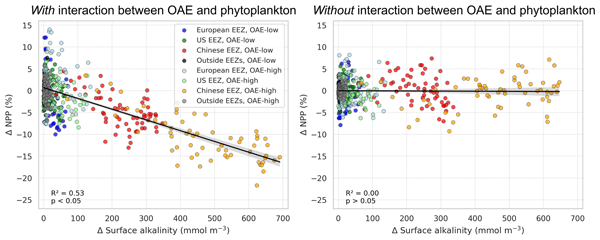
Miriam Seifert, Christopher Danek, Christoph Völker, and Judith Hauck
Biogeosciences, 22, 5897–5919, https://doi.org/10.5194/bg-22-5897-2025, https://doi.org/10.5194/bg-22-5897-2025, 2025
Short summary
Short summary
Ocean alkalinity enhancement (OAE) can help to remove CO2 from the atmosphere. Yet, our study is the first to investigate the link between OAE and phytoplankton in an Earth system model. We show that OAE can indirectly decrease primary production and that biological feedbacks can modify the efficiency of OAE. Our study provides hints for ecological risks of OAE and the quantification of carbon drawdown and can serve as a kick start for other models to consider OAE–ecosystem interactions.
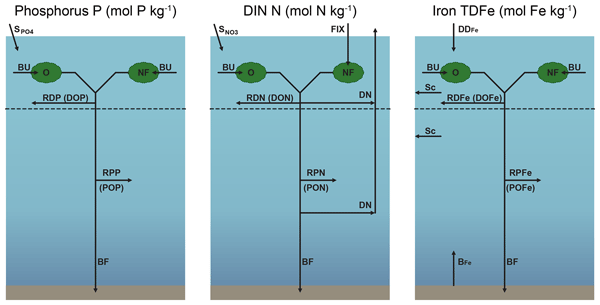
David A. Stappard, Jamie D. Wilson, Andrew Yool, and Toby Tyrrell
Geosci. Model Dev., 18, 6805–6834, https://doi.org/10.5194/gmd-18-6805-2025, https://doi.org/10.5194/gmd-18-6805-2025, 2025
Short summary
Short summary
This research explores nutrient limitations in oceanic primary production. While traditional experiments identify the immediate limiting nutrient at specific locations, this study aims to identify the ultimate limiting nutrient (ULN), which governs long-term productivity. A mathematical model incorporating nitrogen, phosphorus, and iron nutrient cycles is used. The model's results are compared with ocean observational data to assess its effectiveness in investigating the ULN.
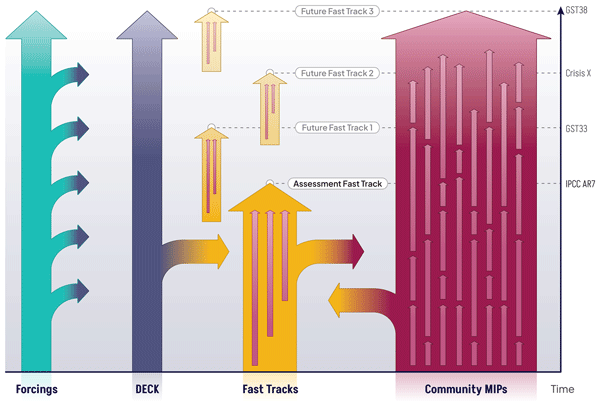
John P. Dunne, Helene T. Hewitt, Julie M. Arblaster, Frédéric Bonou, Olivier Boucher, Tereza Cavazos, Beth Dingley, Paul J. Durack, Birgit Hassler, Martin Juckes, Tomoki Miyakawa, Matt Mizielinski, Vaishali Naik, Zebedee Nicholls, Eleanor O'Rourke, Robert Pincus, Benjamin M. Sanderson, Isla R. Simpson, and Karl E. Taylor
Geosci. Model Dev., 18, 6671–6700, https://doi.org/10.5194/gmd-18-6671-2025, https://doi.org/10.5194/gmd-18-6671-2025, 2025
Short summary
Short summary
The seventh phase of the Coupled Model Intercomparison Project (CMIP7) coordinates efforts to answer key and timely climate science questions and facilitate delivery of relevant multi-model simulations for prediction and projection; characterization, attribution, and process understanding; and vulnerability, impact, and adaptation analysis. Key to the CMIP7 design are the mandatory Diagnostic, Evaluation and Characterization of Klima and optional Assessment Fast Track experiments.
Friedrich J. Bohn, Giles B. Sioen, Ana Bastos, Yolandi Ernst, Marcin P. Jarzebski, Niak S. Koh, Romina Martin, Anja Rammig, Alex Godoy-Faúndez, Alexandros Gasparatos, Alvaro G. Gutiérrez, Amanda J. Aceituno, Andra-Ioana Horcea-Milcu, Andrea Marais-Potgieter, Ayyoob Sharifi, Caroline Howe, Cornelia B. Krug, Eduardo E. Acosta, Emmanuel F. Nzunda, Erik Andersson, Hans-Otto Pörtner, Helen Sooväli-Sepping, Ishihara Hiroe, Ivan Palmegiani, Kaera Coetzer, Kirsten Thonike, Krizler Tanalgo, Lisa Biber-Freudenberger, Nicholas O. Oguge, Mi S. Park, Milena Gross, Pablo De La Cruz, Paula R. Prist, Peng Bi, Rivera Diego, Roman Isaac, Rosemary McFarlane, Sinikka J. Paulus, Stefanie Burkhart, Sung-Ching Lee, Susanne Müller, Uchi D. Terhile, Wan-Yu Shih, William K. Smith, Viola Hakkarainen, Virginia Murray, Yuki Yoshida, Yohannes T. Damtew, and Zeenat Niazi
EGUsphere, https://doi.org/10.5194/egusphere-2025-3619, https://doi.org/10.5194/egusphere-2025-3619, 2025
Short summary
Short summary
The aim of this series is to provide decision-makers with valuable insights into the current state of biosphere research. Firstly, it is intended to ensure the flow of information between the comprehensive assessment reports of the IPCC and IPBES. On the other hand, it is intended to support economic and political decisions closely related to the biosphere with scientifically sound findings – including uncertainties – and comprehensive polysolutions, helping to solve the earth system polycrisis.
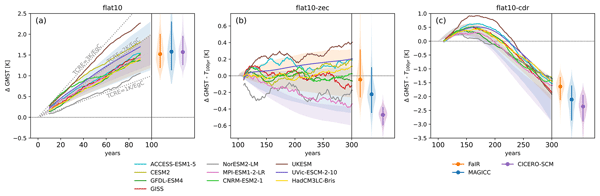
Benjamin M. Sanderson, Victor Brovkin, Rosie A. Fisher, David Hohn, Tatiana Ilyina, Chris D. Jones, Torben Koenigk, Charles Koven, Hongmei Li, David M. Lawrence, Peter Lawrence, Spencer Liddicoat, Andrew H. MacDougall, Nadine Mengis, Zebedee Nicholls, Eleanor O'Rourke, Anastasia Romanou, Marit Sandstad, Jörg Schwinger, Roland Séférian, Lori T. Sentman, Isla R. Simpson, Chris Smith, Norman J. Steinert, Abigail L. S. Swann, Jerry Tjiputra, and Tilo Ziehn
Geosci. Model Dev., 18, 5699–5724, https://doi.org/10.5194/gmd-18-5699-2025, https://doi.org/10.5194/gmd-18-5699-2025, 2025
Short summary
Short summary
This study investigates how climate models warm in response to simplified carbon emissions trajectories, refining the understanding of climate reversibility and commitment. Metrics are defined for warming response to cumulative emissions and for the cessation of emissions or ramp-down to net-zero and net-negative levels. Results indicate that previous concentration-driven experiments may have overstated the Zero Emissions Commitment due to emissions rates exceeding historical levels.
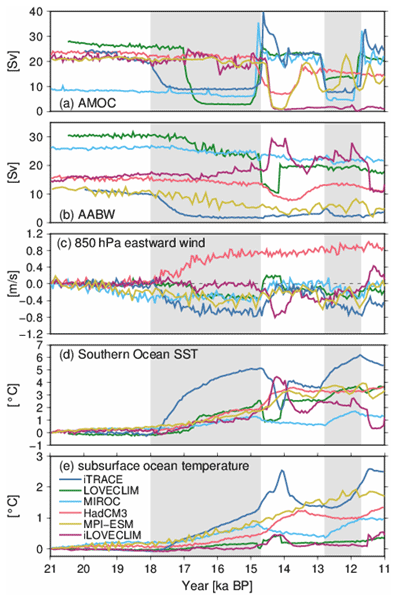
Takashi Obase, Laurie Menviel, Ayako Abe-Ouchi, Tristan Vadsaria, Ruza Ivanovic, Brooke Snoll, Sam Sherriff-Tadano, Paul J. Valdes, Lauren Gregoire, Marie-Luise Kapsch, Uwe Mikolajewicz, Nathaelle Bouttes, Didier Roche, Fanny Lhardy, Chengfei He, Bette Otto-Bliesner, Zhengyu Liu, and Wing-Le Chan
Clim. Past, 21, 1443–1463, https://doi.org/10.5194/cp-21-1443-2025, https://doi.org/10.5194/cp-21-1443-2025, 2025
Short summary
Short summary
This study analyses transient simulations of the last deglaciation performed by six climate models to understand the processes driving high-southern-latitude temperature changes. We find that atmospheric CO2 and AMOC (Atlantic Meridional Overturning Circulation) changes are the primary drivers of the warming and cooling during the middle stage of the deglaciation. The analysis highlights the model's sensitivity of CO2 and AMOC to meltwater and the meltwater history of temperature changes at high southern latitudes.
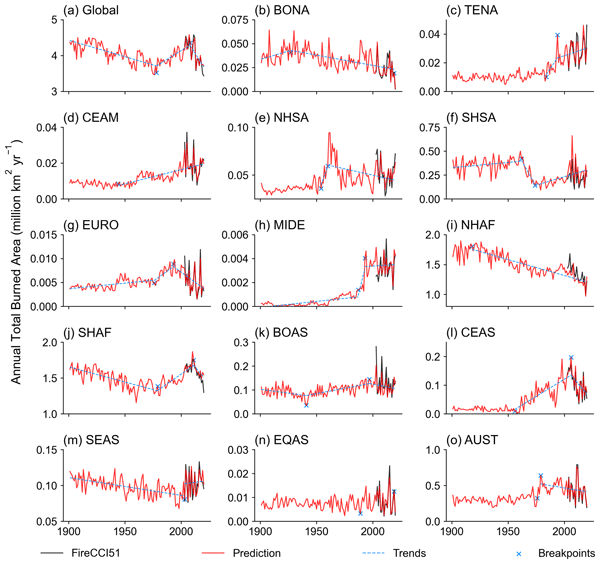
Zhixuan Guo, Wei Li, Philippe Ciais, Stephen Sitch, Guido R. van der Werf, Simon P. K. Bowring, Ana Bastos, Florent Mouillot, Jiaying He, Minxuan Sun, Lei Zhu, Xiaomeng Du, Nan Wang, and Xiaomeng Huang
Earth Syst. Sci. Data, 17, 3599–3618, https://doi.org/10.5194/essd-17-3599-2025, https://doi.org/10.5194/essd-17-3599-2025, 2025
Short summary
Short summary
To address the limitations of short time spans in satellite data and spatiotemporal discontinuity in site records, we reconstructed global monthly burned area maps at a 0.5° resolution for 1901–2020 using machine learning models. The global burned area is predicted at 3.46 × 10⁶–4.58 × 10⁶ km² per year, showing a decline from 1901 to 1978, an increase from 1978 to 2008 and a sharper decrease from 2008 to 2020. This dataset provides a benchmark for studies on fire ecology and the carbon cycle.
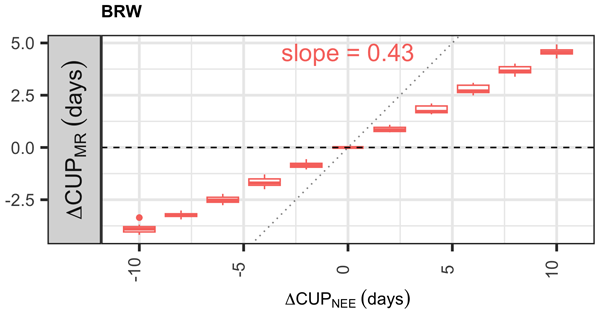
Theertha Kariyathan, Ana Bastos, Markus Reichstein, Wouter Peters, and Julia Marshall
Atmos. Chem. Phys., 25, 7863–7878, https://doi.org/10.5194/acp-25-7863-2025, https://doi.org/10.5194/acp-25-7863-2025, 2025
Short summary
Short summary
The carbon uptake period (CUP) is the time period when land absorbs more CO2 than it emits. While atmospheric CO2 mole fraction measurements can be used to assess CUP changes, atmospheric transport and asynchronous timing across regions reduce the accuracy of the estimates. Forward model experiments show that only ~ 50 % of prescribed shifts in CUP timing applied to surface fluxes (ΔCUPNEE) are captured in simulated CO2 mole fraction data at monitoring sites like the Barrow Atmospheric Baseline Observatory.
Guohua Liu, Philippe Ciais, Shengli Tao, Hui Yang, and Ana Bastos
Earth Syst. Sci. Data Discuss., https://doi.org/10.5194/essd-2025-330, https://doi.org/10.5194/essd-2025-330, 2025
Manuscript not accepted for further review
Short summary
Short summary
We have developed a long-term and high-resolution global map of above-ground biomass changes from 1993 to 2020 using radar data and machine learning approach. This dataset can help understand the effects of disturbances, land-use changes, and extreme events on global carbon cycle, and enhance the representation of these processes in Earth System Models.
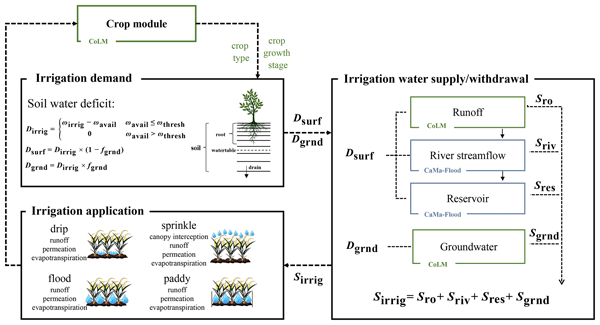
Shulei Zhang, Hongbin Liang, Fang Li, Xingjie Lu, and Yongjiu Dai
Hydrol. Earth Syst. Sci., 29, 3119–3143, https://doi.org/10.5194/hess-29-3119-2025, https://doi.org/10.5194/hess-29-3119-2025, 2025
Short summary
Short summary
This study enhances irrigation modeling in the Common Land Model by capturing the full irrigation process, detailing water supplies from various sources, and enabling bidirectional coupling between water demand and supply. The proposed model accurately simulates irrigation water withdrawals, energy fluxes, river flow, and crop yields. It offers insights into irrigation-related climate impacts and water scarcity, contributing to sustainable water management and improved Earth system modeling.
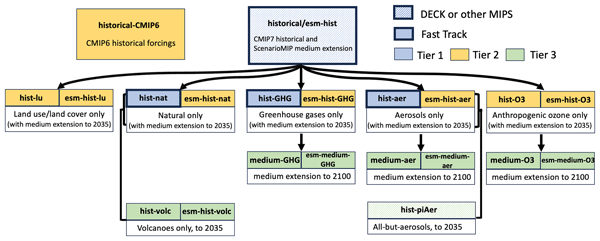
Nathan P. Gillett, Isla R. Simpson, Gabi Hegerl, Reto Knutti, Dann Mitchell, Aurélien Ribes, Hideo Shiogama, Dáithí Stone, Claudia Tebaldi, Piotr Wolski, Wenxia Zhang, and Vivek K. Arora
Geosci. Model Dev., 18, 4399–4416, https://doi.org/10.5194/gmd-18-4399-2025, https://doi.org/10.5194/gmd-18-4399-2025, 2025
Short summary
Short summary
Climate model simulations of the response to human and natural influences together, natural climate influences alone and greenhouse gases alone are key to quantifying human influence on the climate. The last set of such coordinated simulations underpinned key findings in the last Intergovernmental Panel on Climate Change (IPCC) report. Here we propose a new set of such simulations to be used in the next generation of attribution studies and to underpin the next IPCC report.
Samantha Siedlecki, Stanley Nmor, Gennadi Lessin, Kelly Kearney, Subhadeep Rakshit, Colleen Petrik, Jessica Luo, Cristina Schultz, Dalton Sasaki, Kayla Gillen, Anh Pham, Christopher Somes, Damian Brady, Jeremy Testa, Christophe Rabouille, Isa Elegbede, and Olivier Sulpis
EGUsphere, https://doi.org/10.5194/egusphere-2025-1846, https://doi.org/10.5194/egusphere-2025-1846, 2025
Preprint archived
Short summary
Short summary
Benthic biogeochemical models are essential for simulating seafloor carbon cycling and climate feedbacks, yet vary widely in structure and assumptions. This paper introduces SedBGC_MIP, a community initiative to compare existing models, refine key processes, and assess uncertainty. We highlight discrepancies through case studies and introduce needs including observational benchmarks. Ultimately, we seek to improve climate and resource projections.
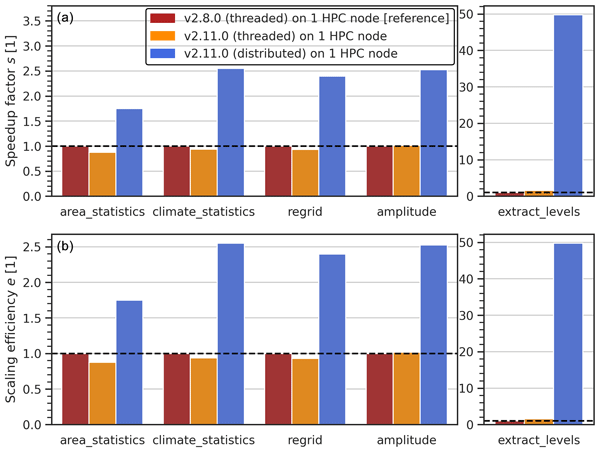
Manuel Schlund, Bouwe Andela, Jörg Benke, Ruth Comer, Birgit Hassler, Emma Hogan, Peter Kalverla, Axel Lauer, Bill Little, Saskia Loosveldt Tomas, Francesco Nattino, Patrick Peglar, Valeriu Predoi, Stef Smeets, Stephen Worsley, Martin Yeo, and Klaus Zimmermann
Geosci. Model Dev., 18, 4009–4021, https://doi.org/10.5194/gmd-18-4009-2025, https://doi.org/10.5194/gmd-18-4009-2025, 2025
Short summary
Short summary
The Earth System Model Evaluation Tool (ESMValTool) is a community diagnostics and performance metrics tool for the evaluation of Earth system models. Here, we describe recent significant improvements of ESMValTool’s computational efficiency including parallel, out-of-core, and distributed computing. Evaluations with the enhanced version of ESMValTool are faster, use less computational resources, and can handle input data larger than the available memory.
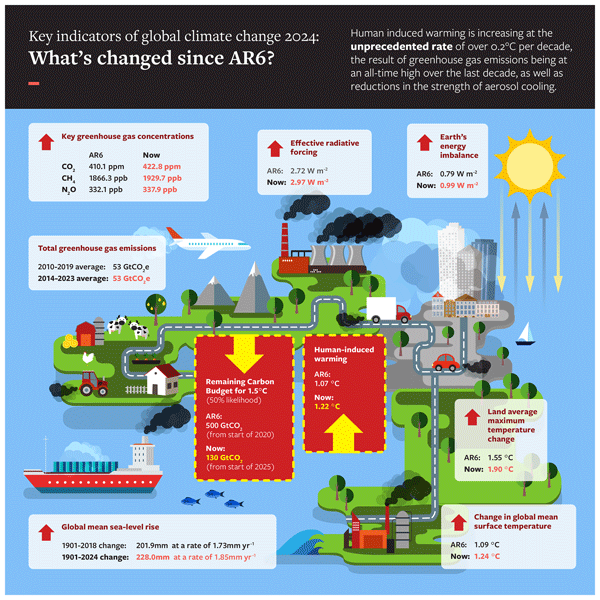
Piers M. Forster, Chris Smith, Tristram Walsh, William F. Lamb, Robin Lamboll, Christophe Cassou, Mathias Hauser, Zeke Hausfather, June-Yi Lee, Matthew D. Palmer, Karina von Schuckmann, Aimée B. A. Slangen, Sophie Szopa, Blair Trewin, Jeongeun Yun, Nathan P. Gillett, Stuart Jenkins, H. Damon Matthews, Krishnan Raghavan, Aurélien Ribes, Joeri Rogelj, Debbie Rosen, Xuebin Zhang, Myles Allen, Lara Aleluia Reis, Robbie M. Andrew, Richard A. Betts, Alex Borger, Jiddu A. Broersma, Samantha N. Burgess, Lijing Cheng, Pierre Friedlingstein, Catia M. Domingues, Marco Gambarini, Thomas Gasser, Johannes Gütschow, Masayoshi Ishii, Christopher Kadow, John Kennedy, Rachel E. Killick, Paul B. Krummel, Aurélien Liné, Didier P. Monselesan, Colin Morice, Jens Mühle, Vaishali Naik, Glen P. Peters, Anna Pirani, Julia Pongratz, Jan C. Minx, Matthew Rigby, Robert Rohde, Abhishek Savita, Sonia I. Seneviratne, Peter Thorne, Christopher Wells, Luke M. Western, Guido R. van der Werf, Susan E. Wijffels, Valérie Masson-Delmotte, and Panmao Zhai
Earth Syst. Sci. Data, 17, 2641–2680, https://doi.org/10.5194/essd-17-2641-2025, https://doi.org/10.5194/essd-17-2641-2025, 2025
Short summary
Short summary
In a rapidly changing climate, evidence-based decision-making benefits from up-to-date and timely information. Here we compile monitoring datasets to track real-world changes over time. To make our work relevant to policymakers, we follow methods from the Intergovernmental Panel on Climate Change (IPCC). Human activities are increasing the Earth's energy imbalance and driving faster sea-level rise compared to the IPCC assessment.
Ricarda Winkelmann, Donovan P. Dennis, Jonathan F. Donges, Sina Loriani, Ann Kristin Klose, Jesse F. Abrams, Jorge Alvarez-Solas, Torsten Albrecht, David Armstrong McKay, Sebastian Bathiany, Javier Blasco Navarro, Victor Brovkin, Eleanor Burke, Gokhan Danabasoglu, Reik V. Donner, Markus Drüke, Goran Georgievski, Heiko Goelzer, Anna B. Harper, Gabriele Hegerl, Marina Hirota, Aixue Hu, Laura C. Jackson, Colin Jones, Hyungjun Kim, Torben Koenigk, Peter Lawrence, Timothy M. Lenton, Hannah Liddy, José Licón-Saláiz, Maxence Menthon, Marisa Montoya, Jan Nitzbon, Sophie Nowicki, Bette Otto-Bliesner, Francesco Pausata, Stefan Rahmstorf, Karoline Ramin, Alexander Robinson, Johan Rockström, Anastasia Romanou, Boris Sakschewski, Christina Schädel, Steven Sherwood, Robin S. Smith, Norman J. Steinert, Didier Swingedouw, Matteo Willeit, Wilbert Weijer, Richard Wood, Klaus Wyser, and Shuting Yang
EGUsphere, https://doi.org/10.5194/egusphere-2025-1899, https://doi.org/10.5194/egusphere-2025-1899, 2025
Short summary
Short summary
The Tipping Points Modelling Intercomparison Project (TIPMIP) is an international collaborative effort to systematically assess tipping point risks in the Earth system using state-of-the-art coupled and stand-alone domain models. TIPMIP will provide a first global atlas of potential tipping dynamics, respective critical thresholds and key uncertainties, generating an important building block towards a comprehensive scientific basis for policy- and decision-making.
Friedrich J. Bohn, Ana Bastos, Romina Martin, Anja Rammig, Niak Sian Koh, Giles B. Sioen, Bram Buscher, Louise Carver, Fabrice DeClerck, Moritz Drupp, Robert Fletcher, Matthew Forrest, Alexandros Gasparatos, Alex Godoy-Faúndez, Gregor Hagedorn, Martin C. Hänsel, Jessica Hetzer, Thomas Hickler, Cornelia B. Krug, Stasja Koot, Xiuzhen Li, Amy Luers, Shelby Matevich, H. Damon Matthews, Ina C. Meier, Mirco Migliavacca, Awaz Mohamed, Sungmin O, David Obura, Ben Orlove, Rene Orth, Laura Pereira, Markus Reichstein, Lerato Thakholi, Peter H. Verburg, and Yuki Yoshida
Biogeosciences, 22, 2425–2460, https://doi.org/10.5194/bg-22-2425-2025, https://doi.org/10.5194/bg-22-2425-2025, 2025
Short summary
Short summary
An interdisciplinary collaboration of 36 international researchers from 35 institutions highlights recent findings in biosphere research. Within eight themes, they discuss issues arising from climate change and other anthropogenic stressors and highlight the co-benefits of nature-based solutions and ecosystem services. Based on an analysis of these eight topics, we have synthesized four overarching insights.
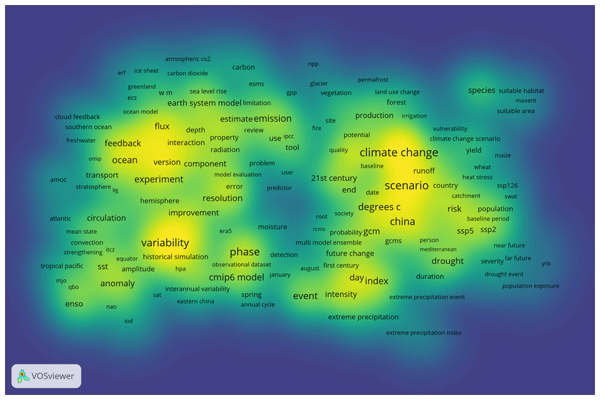
Martin Juckes, Karl E. Taylor, Fabrizio Antonio, David Brayshaw, Carlo Buontempo, Jian Cao, Paul J. Durack, Michio Kawamiya, Hyungjun Kim, Tomas Lovato, Chloe Mackallah, Matthew Mizielinski, Alessandra Nuzzo, Martina Stockhause, Daniele Visioni, Jeremy Walton, Briony Turner, Eleanor O'Rourke, and Beth Dingley
Geosci. Model Dev., 18, 2639–2663, https://doi.org/10.5194/gmd-18-2639-2025, https://doi.org/10.5194/gmd-18-2639-2025, 2025
Short summary
Short summary
The Baseline Climate Variables for Earth System Modelling (ESM-BCVs) are defined as a list of 135 variables which have high utility for the evaluation and exploitation of climate simulations. The list reflects the most frequently used variables from Earth system models based on an assessment of data publication and download records from the largest archive of global climate projects.
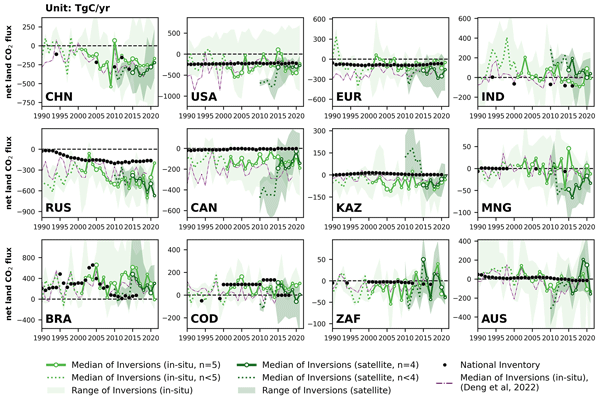
Zhu Deng, Philippe Ciais, Liting Hu, Adrien Martinez, Marielle Saunois, Rona L. Thompson, Kushal Tibrewal, Wouter Peters, Brendan Byrne, Giacomo Grassi, Paul I. Palmer, Ingrid T. Luijkx, Zhu Liu, Junjie Liu, Xuekun Fang, Tengjiao Wang, Hanqin Tian, Katsumasa Tanaka, Ana Bastos, Stephen Sitch, Benjamin Poulter, Clément Albergel, Aki Tsuruta, Shamil Maksyutov, Rajesh Janardanan, Yosuke Niwa, Bo Zheng, Joël Thanwerdas, Dmitry Belikov, Arjo Segers, and Frédéric Chevallier
Earth Syst. Sci. Data, 17, 1121–1152, https://doi.org/10.5194/essd-17-1121-2025, https://doi.org/10.5194/essd-17-1121-2025, 2025
Short summary
Short summary
This study reconciles national greenhouse gas (GHG) inventories with updated atmospheric inversion results to evaluate discrepancies for three principal GHG fluxes at the national level. Compared to our previous study, new satellite-based CO2 inversions were included and an updated mask of managed lands was used, improving agreement for Brazil and Canada. The proposed methodology can be regularly applied as a check to assess the gap between top-down inversions and bottom-up inventories.
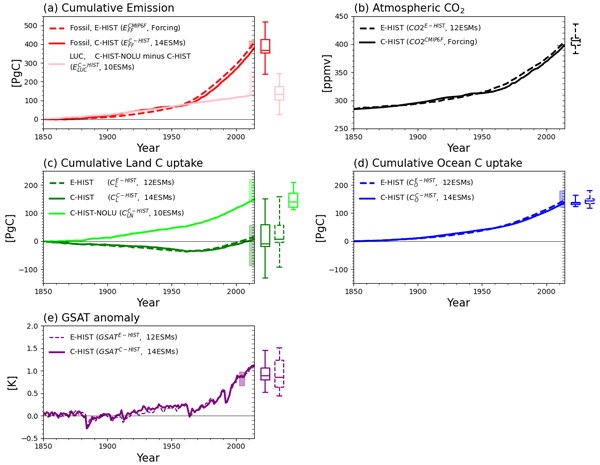
Tomohiro Hajima, Michio Kawamiya, Akihiko Ito, Kaoru Tachiiri, Chris D. Jones, Vivek Arora, Victor Brovkin, Roland Séférian, Spencer Liddicoat, Pierre Friedlingstein, and Elena Shevliakova
Biogeosciences, 22, 1447–1473, https://doi.org/10.5194/bg-22-1447-2025, https://doi.org/10.5194/bg-22-1447-2025, 2025
Short summary
Short summary
This study analyzes atmospheric CO2 concentrations and global carbon budgets simulated by multiple Earth system models, using several types of simulations (CO2 concentration- and emission-driven experiments). We successfully identified problems with regard to the global carbon budget in each model. We also found urgent issues with regard to land use change CO2 emissions that should be solved in the latest generation of models.
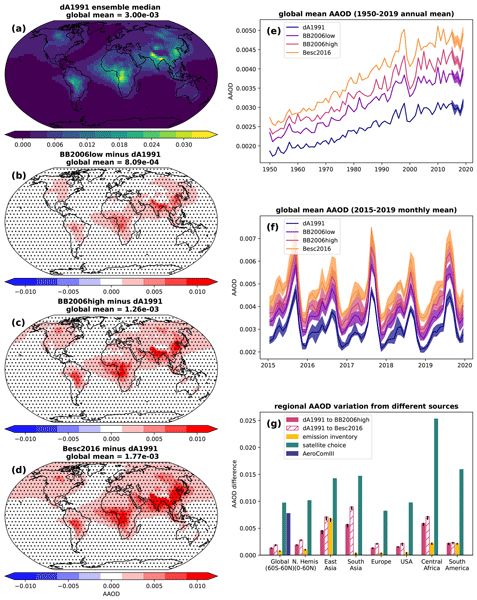
Ruth A. R. Digby, Knut von Salzen, Adam H. Monahan, Nathan P. Gillett, and Jiangnan Li
Atmos. Chem. Phys., 25, 3109–3130, https://doi.org/10.5194/acp-25-3109-2025, https://doi.org/10.5194/acp-25-3109-2025, 2025
Short summary
Short summary
The refractive index of black carbon (BCRI), which determines how much energy black carbon absorbs and scatters, is difficult to measure, and different climate models use different values. We show that varying the BCRI across commonly used values can increase absorbing aerosol optical depth by 42 % and the warming effect from interactions between black carbon and radiation by 47 %, an appreciable fraction of the overall spread between models reported in recent literature assessments.
Axel Lauer, Lisa Bock, Birgit Hassler, Patrick Jöckel, Lukas Ruhe, and Manuel Schlund
Geosci. Model Dev., 18, 1169–1188, https://doi.org/10.5194/gmd-18-1169-2025, https://doi.org/10.5194/gmd-18-1169-2025, 2025
Short summary
Short summary
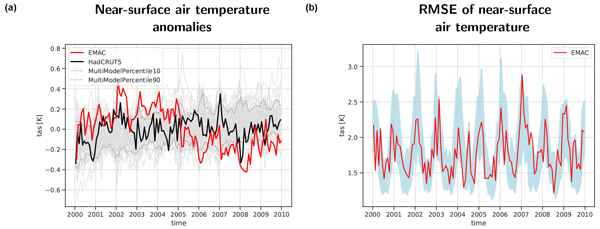
Earth system models are important tools to improve our understanding of current climate and to project climate change. Thus, it is crucial to understand possible shortcomings in the models. New features of the ESMValTool software package allow one to compare and visualize a model's performance with respect to reproducing observations in the context of other climate models in an easy and user-friendly way. We aim to help model developers assess and monitor climate simulations more efficiently.
István Dunkl, Ana Bastos, and Tatiana Ilyina
Earth Syst. Dynam., 16, 151–167, https://doi.org/10.5194/esd-16-151-2025, https://doi.org/10.5194/esd-16-151-2025, 2025
Short summary
Short summary
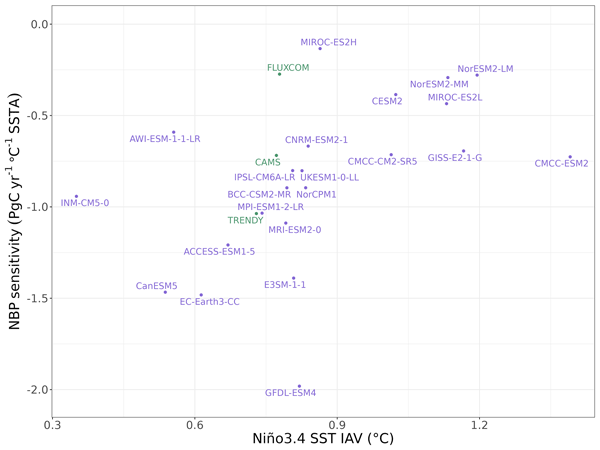
While the El Niño–Southern Oscillation, a climate mode, has a similar impact on CO2 growth rates across Earth system models, there is significant uncertainty in the processes behind this relationship. We found a compensatory effect that masks differences in the sensitivity of carbon fluxes to climate anomalies and observed that the carbon fluxes contributing to global CO2 anomalies originate from different regions and are caused by different drivers.
Yona Silvy, Thomas L. Frölicher, Jens Terhaar, Fortunat Joos, Friedrich A. Burger, Fabrice Lacroix, Myles Allen, Raffaele Bernardello, Laurent Bopp, Victor Brovkin, Jonathan R. Buzan, Patricia Cadule, Martin Dix, John Dunne, Pierre Friedlingstein, Goran Georgievski, Tomohiro Hajima, Stuart Jenkins, Michio Kawamiya, Nancy Y. Kiang, Vladimir Lapin, Donghyun Lee, Paul Lerner, Nadine Mengis, Estela A. Monteiro, David Paynter, Glen P. Peters, Anastasia Romanou, Jörg Schwinger, Sarah Sparrow, Eric Stofferahn, Jerry Tjiputra, Etienne Tourigny, and Tilo Ziehn
Earth Syst. Dynam., 15, 1591–1628, https://doi.org/10.5194/esd-15-1591-2024, https://doi.org/10.5194/esd-15-1591-2024, 2024
Short summary
Short summary
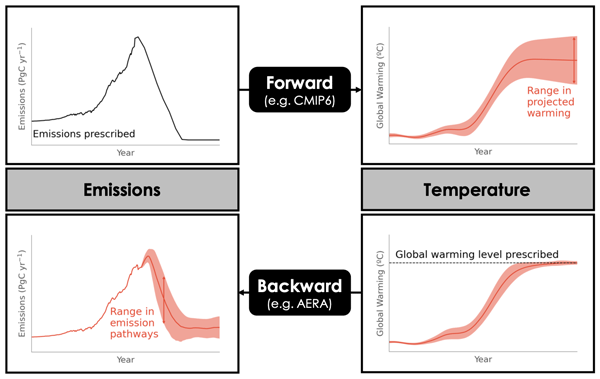
The adaptive emission reduction approach is applied with Earth system models to generate temperature stabilization simulations. These simulations provide compatible emission pathways and budgets for a given warming level, uncovering uncertainty ranges previously missing in the Coupled Model Intercomparison Project scenarios. These target-based emission-driven simulations offer a more coherent assessment across models for studying both the carbon cycle and its impacts under climate stabilization.
Fang Li, Xiang Song, Sandy P. Harrison, Jennifer R. Marlon, Zhongda Lin, L. Ruby Leung, Jörg Schwinger, Virginie Marécal, Shiyu Wang, Daniel S. Ward, Xiao Dong, Hanna Lee, Lars Nieradzik, Sam S. Rabin, and Roland Séférian
Geosci. Model Dev., 17, 8751–8771, https://doi.org/10.5194/gmd-17-8751-2024, https://doi.org/10.5194/gmd-17-8751-2024, 2024
Short summary
Short summary
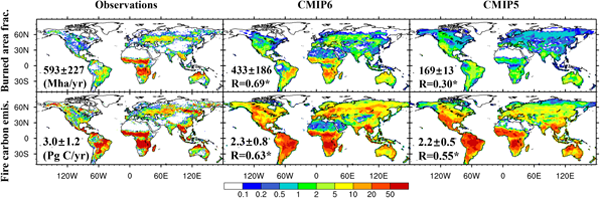
This study provides the first comprehensive assessment of historical fire simulations from 19 Earth system models in phase 6 of the Coupled Model Intercomparison Project (CMIP6). Most models reproduce global totals, spatial patterns, seasonality, and regional historical changes well but fail to simulate the recent decline in global burned area and underestimate the fire response to climate variability. CMIP6 simulations address three critical issues of phase-5 models.
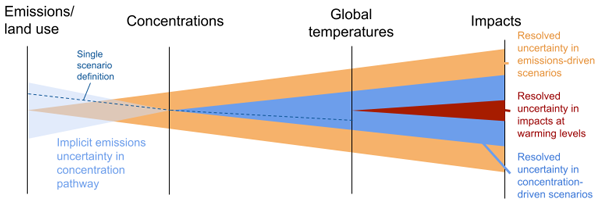
Benjamin M. Sanderson, Ben B. B. Booth, John Dunne, Veronika Eyring, Rosie A. Fisher, Pierre Friedlingstein, Matthew J. Gidden, Tomohiro Hajima, Chris D. Jones, Colin G. Jones, Andrew King, Charles D. Koven, David M. Lawrence, Jason Lowe, Nadine Mengis, Glen P. Peters, Joeri Rogelj, Chris Smith, Abigail C. Snyder, Isla R. Simpson, Abigail L. S. Swann, Claudia Tebaldi, Tatiana Ilyina, Carl-Friedrich Schleussner, Roland Séférian, Bjørn H. Samset, Detlef van Vuuren, and Sönke Zaehle
Geosci. Model Dev., 17, 8141–8172, https://doi.org/10.5194/gmd-17-8141-2024, https://doi.org/10.5194/gmd-17-8141-2024, 2024
Short summary
Short summary
We discuss how, in order to provide more relevant guidance for climate policy, coordinated climate experiments should adopt a greater focus on simulations where Earth system models are provided with carbon emissions from fossil fuels together with land use change instructions, rather than past approaches that have largely focused on experiments with prescribed atmospheric carbon dioxide concentrations. We discuss how these goals might be achieved in coordinated climate modeling experiments.
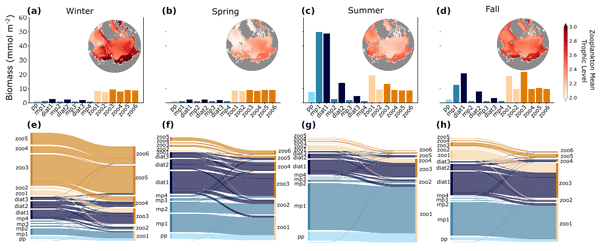
Gabriela Negrete-García, Jessica Y. Luo, Colleen M. Petrik, Manfredi Manizza, and Andrew D. Barton
Biogeosciences, 21, 4951–4973, https://doi.org/10.5194/bg-21-4951-2024, https://doi.org/10.5194/bg-21-4951-2024, 2024
Short summary
Short summary
The Arctic Ocean experiences significant seasonal and year-to-year changes, impacting marine plankton populations. Using a plankton community model, we studied these effects on plankton communities and their influence on fish production. Our findings revealed earlier plankton blooms, shifts towards more carnivorous zooplankton, and increased fishery potential during summertime, especially in warmer years with less ice, highlighting the delicate balance of Arctic ecosystems.
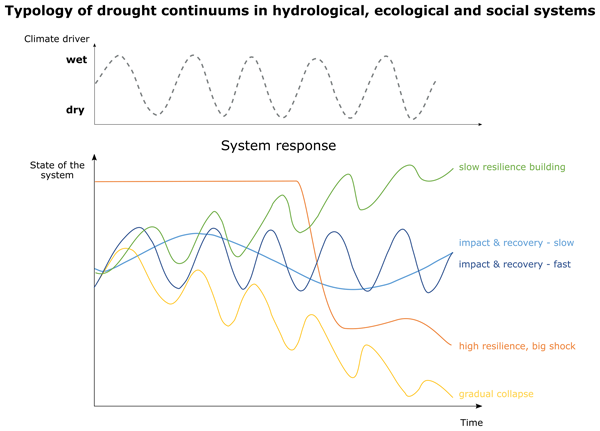
Anne F. Van Loon, Sarra Kchouk, Alessia Matanó, Faranak Tootoonchi, Camila Alvarez-Garreton, Khalid E. A. Hassaballah, Minchao Wu, Marthe L. K. Wens, Anastasiya Shyrokaya, Elena Ridolfi, Riccardo Biella, Viorica Nagavciuc, Marlies H. Barendrecht, Ana Bastos, Louise Cavalcante, Franciska T. de Vries, Margaret Garcia, Johanna Mård, Ileen N. Streefkerk, Claudia Teutschbein, Roshanak Tootoonchi, Ruben Weesie, Valentin Aich, Juan P. Boisier, Giuliano Di Baldassarre, Yiheng Du, Mauricio Galleguillos, René Garreaud, Monica Ionita, Sina Khatami, Johanna K. L. Koehler, Charles H. Luce, Shreedhar Maskey, Heidi D. Mendoza, Moses N. Mwangi, Ilias G. Pechlivanidis, Germano G. Ribeiro Neto, Tirthankar Roy, Robert Stefanski, Patricia Trambauer, Elizabeth A. Koebele, Giulia Vico, and Micha Werner
Nat. Hazards Earth Syst. Sci., 24, 3173–3205, https://doi.org/10.5194/nhess-24-3173-2024, https://doi.org/10.5194/nhess-24-3173-2024, 2024
Short summary
Short summary
Drought is a creeping phenomenon but is often still analysed and managed like an isolated event, without taking into account what happened before and after. Here, we review the literature and analyse five cases to discuss how droughts and their impacts develop over time. We find that the responses of hydrological, ecological, and social systems can be classified into four types and that the systems interact. We provide suggestions for further research and monitoring, modelling, and management.
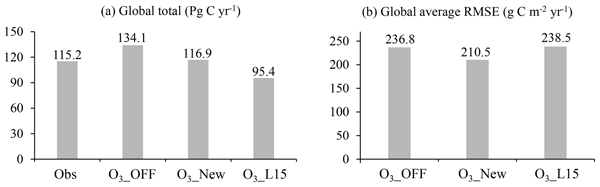
Fang Li, Zhimin Zhou, Samuel Levis, Stephen Sitch, Felicity Hayes, Zhaozhong Feng, Peter B. Reich, Zhiyi Zhao, and Yanqing Zhou
Geosci. Model Dev., 17, 6173–6193, https://doi.org/10.5194/gmd-17-6173-2024, https://doi.org/10.5194/gmd-17-6173-2024, 2024
Short summary
Short summary
A new scheme is developed to model the surface ozone damage to vegetation in regional and global process-based models. Based on 4210 data points from ozone experiments, it accurately reproduces statistically significant linear or nonlinear photosynthetic and stomatal responses to ozone in observations for all vegetation types. It also enables models to implicitly capture the variability in plant ozone tolerance and the shift among species within a vegetation type.
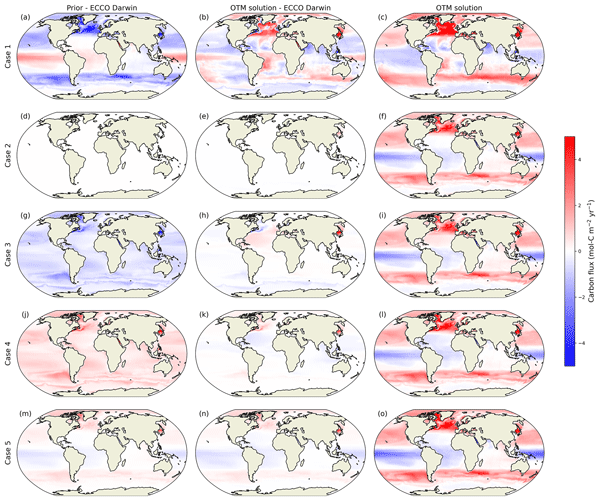
Neill Mackay, Taimoor Sohail, Jan David Zika, Richard G. Williams, Oliver Andrews, and Andrew James Watson
Geosci. Model Dev., 17, 5987–6005, https://doi.org/10.5194/gmd-17-5987-2024, https://doi.org/10.5194/gmd-17-5987-2024, 2024
Short summary
Short summary
The ocean absorbs carbon dioxide from the atmosphere, mitigating climate change, but estimates of the uptake do not always agree. There is a need to reconcile these differing estimates and to improve our understanding of ocean carbon uptake. We present a new method for estimating ocean carbon uptake and test it with model data. The method effectively diagnoses the ocean carbon uptake from limited data and therefore shows promise for reconciling different observational estimates.
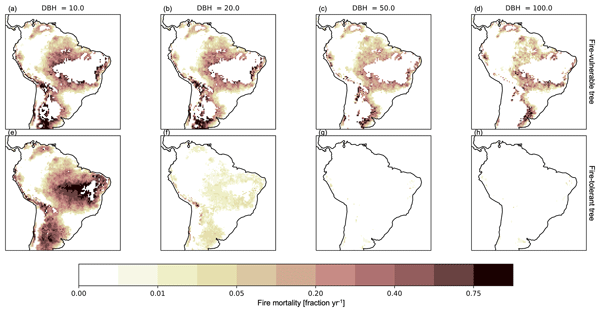
Jacquelyn K. Shuman, Rosie A. Fisher, Charles Koven, Ryan Knox, Lara Kueppers, and Chonggang Xu
Geosci. Model Dev., 17, 4643–4671, https://doi.org/10.5194/gmd-17-4643-2024, https://doi.org/10.5194/gmd-17-4643-2024, 2024
Short summary
Short summary
We adapt a fire behavior and effects module for use in a size-structured vegetation demographic model to test how climate, fire regime, and fire-tolerance plant traits interact to determine the distribution of tropical forests and grasslands. Our model captures the connection between fire disturbance and plant fire-tolerance strategies in determining plant distribution and provides a useful tool for understanding the vulnerability of these areas under changing conditions across the tropics.
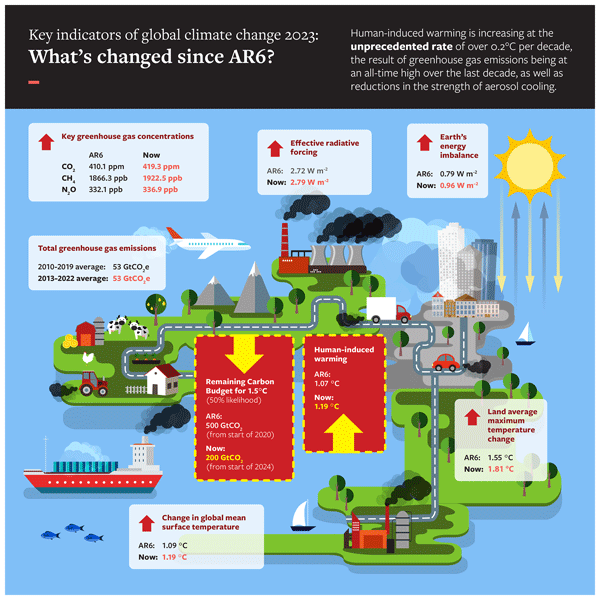
Piers M. Forster, Chris Smith, Tristram Walsh, William F. Lamb, Robin Lamboll, Bradley Hall, Mathias Hauser, Aurélien Ribes, Debbie Rosen, Nathan P. Gillett, Matthew D. Palmer, Joeri Rogelj, Karina von Schuckmann, Blair Trewin, Myles Allen, Robbie Andrew, Richard A. Betts, Alex Borger, Tim Boyer, Jiddu A. Broersma, Carlo Buontempo, Samantha Burgess, Chiara Cagnazzo, Lijing Cheng, Pierre Friedlingstein, Andrew Gettelman, Johannes Gütschow, Masayoshi Ishii, Stuart Jenkins, Xin Lan, Colin Morice, Jens Mühle, Christopher Kadow, John Kennedy, Rachel E. Killick, Paul B. Krummel, Jan C. Minx, Gunnar Myhre, Vaishali Naik, Glen P. Peters, Anna Pirani, Julia Pongratz, Carl-Friedrich Schleussner, Sonia I. Seneviratne, Sophie Szopa, Peter Thorne, Mahesh V. M. Kovilakam, Elisa Majamäki, Jukka-Pekka Jalkanen, Margreet van Marle, Rachel M. Hoesly, Robert Rohde, Dominik Schumacher, Guido van der Werf, Russell Vose, Kirsten Zickfeld, Xuebin Zhang, Valérie Masson-Delmotte, and Panmao Zhai
Earth Syst. Sci. Data, 16, 2625–2658, https://doi.org/10.5194/essd-16-2625-2024, https://doi.org/10.5194/essd-16-2625-2024, 2024
Short summary
Short summary
This paper tracks some key indicators of global warming through time, from 1850 through to the end of 2023. It is designed to give an authoritative estimate of global warming to date and its causes. We find that in 2023, global warming reached 1.3 °C and is increasing at over 0.2 °C per decade. This is caused by all-time-high greenhouse gas emissions.
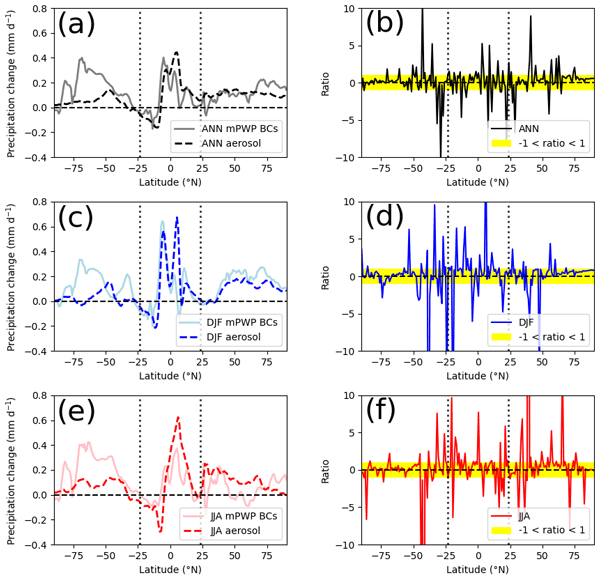
Anni Zhao, Ran Feng, Chris M. Brierley, Jian Zhang, and Yongyun Hu
Clim. Past, 20, 1195–1211, https://doi.org/10.5194/cp-20-1195-2024, https://doi.org/10.5194/cp-20-1195-2024, 2024
Short summary
Short summary
We analyse simulations with idealised aerosol scenarios to examine the importance of aerosol forcing on mPWP precipitation and how aerosol uncertainty could explain the data–model mismatch. We find further warming, a narrower and stronger ITCZ, and monsoon domain rainfall change after removal of industrial emissions. Aerosols have more impacts on tropical precipitation than the mPWP boundary conditions. This highlights the importance of prescribed aerosol scenarios in simulating mPWP climate.
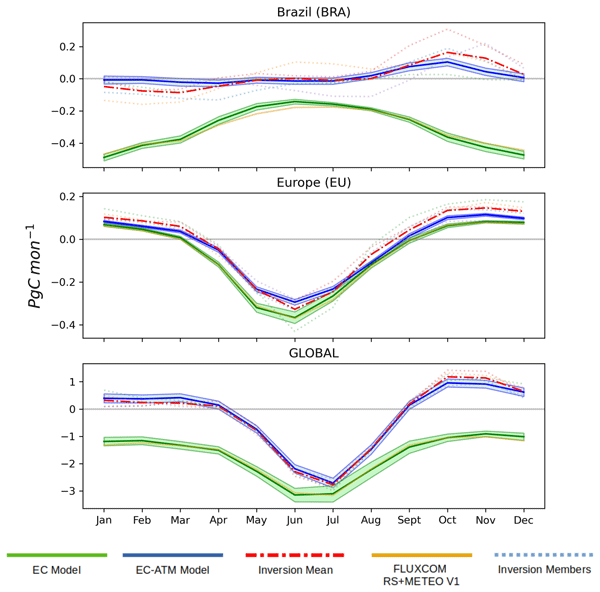
Samuel Upton, Markus Reichstein, Fabian Gans, Wouter Peters, Basil Kraft, and Ana Bastos
Atmos. Chem. Phys., 24, 2555–2582, https://doi.org/10.5194/acp-24-2555-2024, https://doi.org/10.5194/acp-24-2555-2024, 2024
Short summary
Short summary
Data-driven eddy-covariance upscaled estimates of the global land–atmosphere net CO2 exchange (NEE) show important mismatches with regional and global estimates based on atmospheric information. To address this, we create a model with a dual constraint based on bottom-up eddy-covariance data and top-down atmospheric inversion data. Our model overcomes shortcomings of each approach, producing improved NEE estimates from local to global scale, helping to reduce uncertainty in the carbon budget.
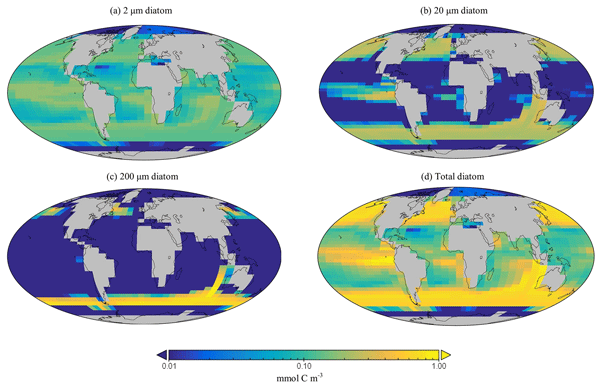
Aaron A. Naidoo-Bagwell, Fanny M. Monteiro, Katharine R. Hendry, Scott Burgan, Jamie D. Wilson, Ben A. Ward, Andy Ridgwell, and Daniel J. Conley
Geosci. Model Dev., 17, 1729–1748, https://doi.org/10.5194/gmd-17-1729-2024, https://doi.org/10.5194/gmd-17-1729-2024, 2024
Short summary
Short summary
As an extension to the EcoGEnIE 1.0 Earth system model that features a diverse plankton community, EcoGEnIE 1.1 includes siliceous plankton diatoms and also considers their impact on biogeochemical cycles. With updates to existing nutrient cycles and the introduction of the silicon cycle, we see improved model performance relative to observational data. Through a more functionally diverse plankton community, the new model enables more comprehensive future study of ocean ecology.
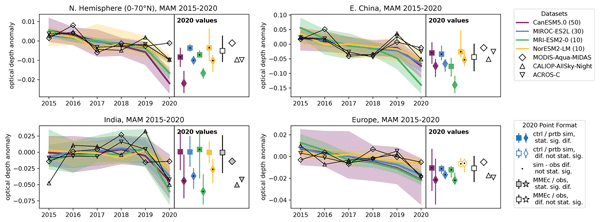
Ruth A. R. Digby, Nathan P. Gillett, Adam H. Monahan, Knut von Salzen, Antonis Gkikas, Qianqian Song, and Zhibo Zhang
Atmos. Chem. Phys., 24, 2077–2097, https://doi.org/10.5194/acp-24-2077-2024, https://doi.org/10.5194/acp-24-2077-2024, 2024
Short summary
Short summary
The COVID-19 lockdowns reduced aerosol emissions. We ask whether these reductions affected regional aerosol optical depth (AOD) and compare the observed changes to predictions from Earth system models. Only India has an observed AOD reduction outside of typical variability. Models overestimate the response in some regions, but when key biases have been addressed, the agreement is improved. Our results suggest that current models can realistically predict the effects of future emission changes.
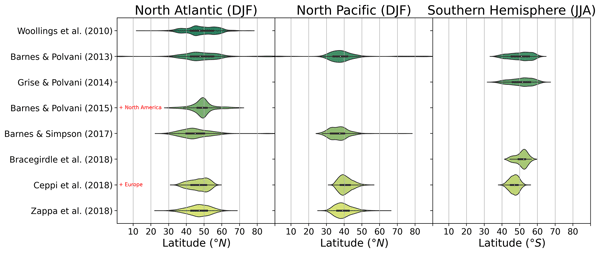
Tom Keel, Chris Brierley, and Tamsin Edwards
Geosci. Model Dev., 17, 1229–1247, https://doi.org/10.5194/gmd-17-1229-2024, https://doi.org/10.5194/gmd-17-1229-2024, 2024
Short summary
Short summary
Jet streams are an important control on surface weather as their speed and shape can modify the properties of weather systems. Establishing trends in the operation of jet streams may provide some indication of the future of weather in a warming world. Despite this, it has not been easy to establish trends, as many methods have been used to characterise them in data. We introduce a tool containing various implementations of jet stream statistics and algorithms that works in a standardised manner.
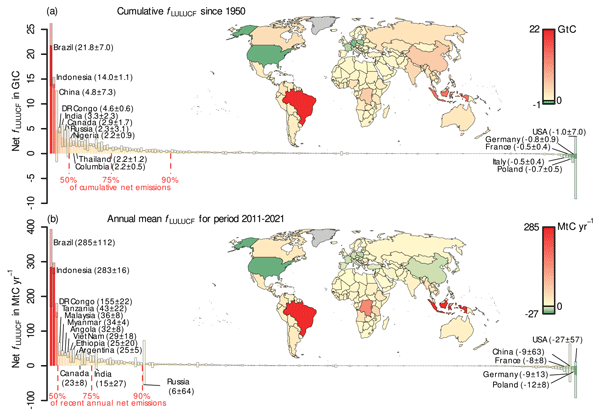
Wolfgang Alexander Obermeier, Clemens Schwingshackl, Ana Bastos, Giulia Conchedda, Thomas Gasser, Giacomo Grassi, Richard A. Houghton, Francesco Nicola Tubiello, Stephen Sitch, and Julia Pongratz
Earth Syst. Sci. Data, 16, 605–645, https://doi.org/10.5194/essd-16-605-2024, https://doi.org/10.5194/essd-16-605-2024, 2024
Short summary
Short summary
We provide and compare country-level estimates of land-use CO2 fluxes from a variety and large number of models, bottom-up estimates, and country reports for the period 1950–2021. Although net fluxes are small in many countries, they are often composed of large compensating emissions and removals. In many countries, the estimates agree well once their individual characteristics are accounted for, but in other countries, including some of the largest emitters, substantial uncertainties exist.
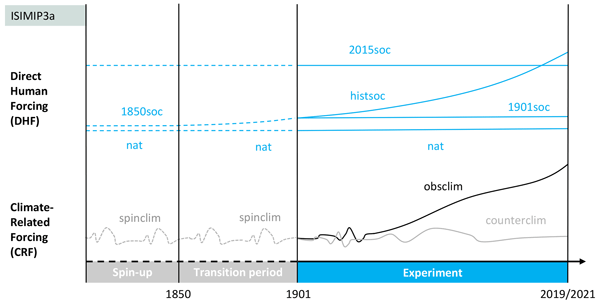
Katja Frieler, Jan Volkholz, Stefan Lange, Jacob Schewe, Matthias Mengel, María del Rocío Rivas López, Christian Otto, Christopher P. O. Reyer, Dirk Nikolaus Karger, Johanna T. Malle, Simon Treu, Christoph Menz, Julia L. Blanchard, Cheryl S. Harrison, Colleen M. Petrik, Tyler D. Eddy, Kelly Ortega-Cisneros, Camilla Novaglio, Yannick Rousseau, Reg A. Watson, Charles Stock, Xiao Liu, Ryan Heneghan, Derek Tittensor, Olivier Maury, Matthias Büchner, Thomas Vogt, Tingting Wang, Fubao Sun, Inga J. Sauer, Johannes Koch, Inne Vanderkelen, Jonas Jägermeyr, Christoph Müller, Sam Rabin, Jochen Klar, Iliusi D. Vega del Valle, Gitta Lasslop, Sarah Chadburn, Eleanor Burke, Angela Gallego-Sala, Noah Smith, Jinfeng Chang, Stijn Hantson, Chantelle Burton, Anne Gädeke, Fang Li, Simon N. Gosling, Hannes Müller Schmied, Fred Hattermann, Jida Wang, Fangfang Yao, Thomas Hickler, Rafael Marcé, Don Pierson, Wim Thiery, Daniel Mercado-Bettín, Robert Ladwig, Ana Isabel Ayala-Zamora, Matthew Forrest, and Michel Bechtold
Geosci. Model Dev., 17, 1–51, https://doi.org/10.5194/gmd-17-1-2024, https://doi.org/10.5194/gmd-17-1-2024, 2024
Short summary
Short summary
Our paper provides an overview of all observational climate-related and socioeconomic forcing data used as input for the impact model evaluation and impact attribution experiments within the third round of the Inter-Sectoral Impact Model Intercomparison Project. The experiments are designed to test our understanding of observed changes in natural and human systems and to quantify to what degree these changes have already been induced by climate change.
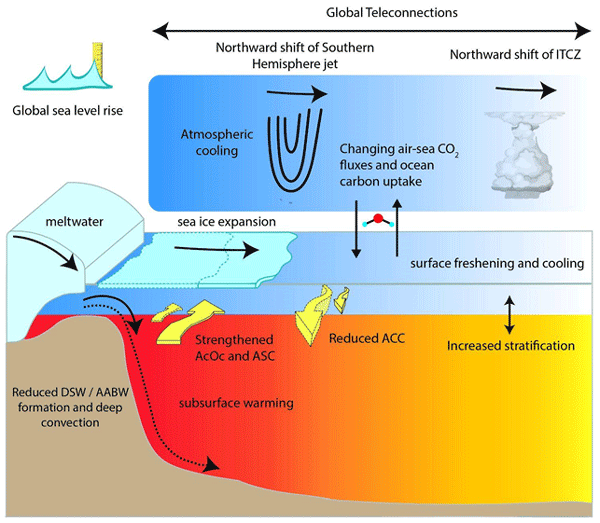
Neil C. Swart, Torge Martin, Rebecca Beadling, Jia-Jia Chen, Christopher Danek, Matthew H. England, Riccardo Farneti, Stephen M. Griffies, Tore Hattermann, Judith Hauck, F. Alexander Haumann, André Jüling, Qian Li, John Marshall, Morven Muilwijk, Andrew G. Pauling, Ariaan Purich, Inga J. Smith, and Max Thomas
Geosci. Model Dev., 16, 7289–7309, https://doi.org/10.5194/gmd-16-7289-2023, https://doi.org/10.5194/gmd-16-7289-2023, 2023
Short summary
Short summary
Current climate models typically do not include full representation of ice sheets. As the climate warms and the ice sheets melt, they add freshwater to the ocean. This freshwater can influence climate change, for example by causing more sea ice to form. In this paper we propose a set of experiments to test the influence of this missing meltwater from Antarctica using multiple different climate models.
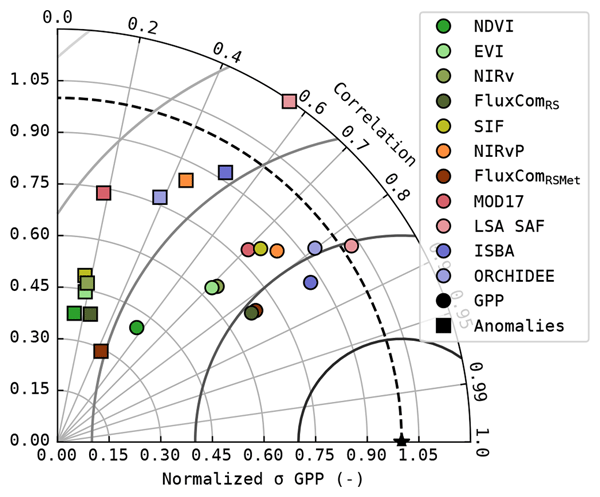
Jan De Pue, Sebastian Wieneke, Ana Bastos, José Miguel Barrios, Liyang Liu, Philippe Ciais, Alirio Arboleda, Rafiq Hamdi, Maral Maleki, Fabienne Maignan, Françoise Gellens-Meulenberghs, Ivan Janssens, and Manuela Balzarolo
Biogeosciences, 20, 4795–4818, https://doi.org/10.5194/bg-20-4795-2023, https://doi.org/10.5194/bg-20-4795-2023, 2023
Short summary
Short summary
The gross primary production (GPP) of the terrestrial biosphere is a key source of variability in the global carbon cycle. To estimate this flux, models can rely on remote sensing data (RS-driven), meteorological data (meteo-driven) or a combination of both (hybrid). An intercomparison of 11 models demonstrated that RS-driven models lack the sensitivity to short-term anomalies. Conversely, the simulation of soil moisture dynamics and stress response remains a challenge in meteo-driven models.
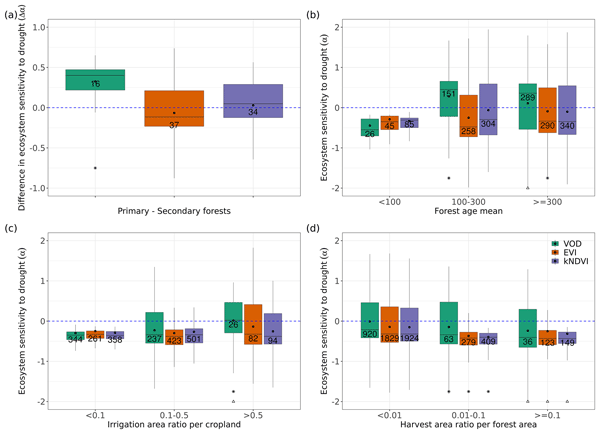
Chenwei Xiao, Sönke Zaehle, Hui Yang, Jean-Pierre Wigneron, Christiane Schmullius, and Ana Bastos
Earth Syst. Dynam., 14, 1211–1237, https://doi.org/10.5194/esd-14-1211-2023, https://doi.org/10.5194/esd-14-1211-2023, 2023
Short summary
Short summary
Ecosystem resistance reflects their susceptibility during adverse conditions and can be changed by land management. We estimate ecosystem resistance to drought and temperature globally. We find a higher resistance to drought in forests compared to croplands and an evident loss of resistance to drought when primary forests are converted to secondary forests or they are harvested. Old-growth trees tend to be more resistant in some forests and crops benefit from irrigation during drought periods.
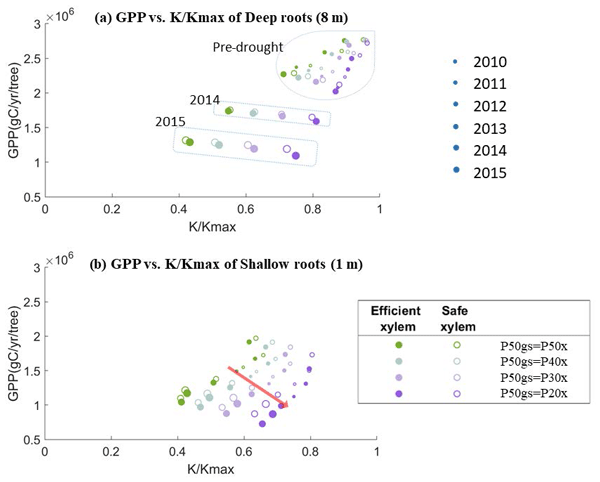
Junyan Ding, Polly Buotte, Roger Bales, Bradley Christoffersen, Rosie A. Fisher, Michael Goulden, Ryan Knox, Lara Kueppers, Jacquelyn Shuman, Chonggang Xu, and Charles D. Koven
Biogeosciences, 20, 4491–4510, https://doi.org/10.5194/bg-20-4491-2023, https://doi.org/10.5194/bg-20-4491-2023, 2023
Short summary
Short summary
We used a vegetation model to investigate how the different combinations of plant rooting depths and the sensitivity of leaves and stems to drying lead to differential responses of a pine forest to drought conditions in California, USA. We found that rooting depths are the strongest control in that ecosystem. Deep roots allow trees to fully utilize the soil water during a normal year but result in prolonged depletion of soil moisture during a severe drought and hence a high tree mortality risk.
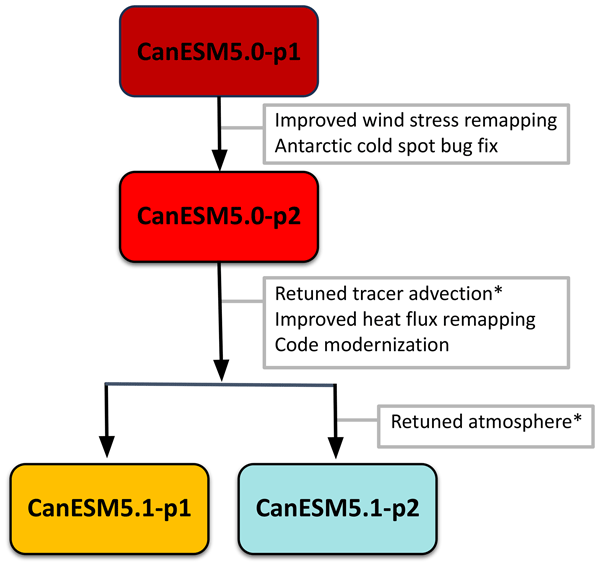
Michael Sigmond, James Anstey, Vivek Arora, Ruth Digby, Nathan Gillett, Viatcheslav Kharin, William Merryfield, Catherine Reader, John Scinocca, Neil Swart, John Virgin, Carsten Abraham, Jason Cole, Nicolas Lambert, Woo-Sung Lee, Yongxiao Liang, Elizaveta Malinina, Landon Rieger, Knut von Salzen, Christian Seiler, Clint Seinen, Andrew Shao, Reinel Sospedra-Alfonso, Libo Wang, and Duo Yang
Geosci. Model Dev., 16, 6553–6591, https://doi.org/10.5194/gmd-16-6553-2023, https://doi.org/10.5194/gmd-16-6553-2023, 2023
Short summary
Short summary
We present a new activity which aims to organize the analysis of biases in the Canadian Earth System model (CanESM) in a systematic manner. Results of this “Analysis for Development” (A4D) activity includes a new CanESM version, CanESM5.1, which features substantial improvements regarding the simulation of dust and stratospheric temperatures, a second CanESM5.1 variant with reduced climate sensitivity, and insights into potential avenues to reduce various other model biases.
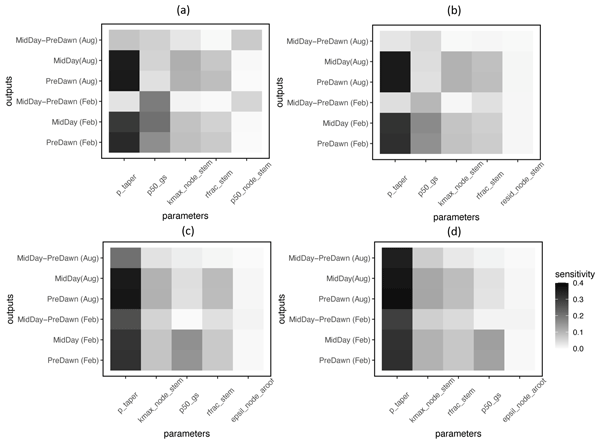
Chonggang Xu, Bradley Christoffersen, Zachary Robbins, Ryan Knox, Rosie A. Fisher, Rutuja Chitra-Tarak, Martijn Slot, Kurt Solander, Lara Kueppers, Charles Koven, and Nate McDowell
Geosci. Model Dev., 16, 6267–6283, https://doi.org/10.5194/gmd-16-6267-2023, https://doi.org/10.5194/gmd-16-6267-2023, 2023
Short summary
Short summary
We introduce a plant hydrodynamic model for the U.S. Department of Energy (DOE)-sponsored model, the Functionally Assembled Terrestrial Ecosystem Simulator (FATES). To better understand this new model system and its functionality in tropical forest ecosystems, we conducted a global parameter sensitivity analysis at Barro Colorado Island, Panama. We identified the key parameters that affect the simulated plant hydrodynamics to guide both modeling and field campaign studies.
Christoph Heinze, Thorsten Blenckner, Peter Brown, Friederike Fröb, Anne Morée, Adrian L. New, Cara Nissen, Stefanie Rynders, Isabel Seguro, Yevgeny Aksenov, Yuri Artioli, Timothée Bourgeois, Friedrich Burger, Jonathan Buzan, B. B. Cael, Veli Çağlar Yumruktepe, Melissa Chierici, Christopher Danek, Ulf Dieckmann, Agneta Fransson, Thomas Frölicher, Giovanni Galli, Marion Gehlen, Aridane G. González, Melchor Gonzalez-Davila, Nicolas Gruber, Örjan Gustafsson, Judith Hauck, Mikko Heino, Stephanie Henson, Jenny Hieronymus, I. Emma Huertas, Fatma Jebri, Aurich Jeltsch-Thömmes, Fortunat Joos, Jaideep Joshi, Stephen Kelly, Nandini Menon, Precious Mongwe, Laurent Oziel, Sólveig Ólafsdottir, Julien Palmieri, Fiz F. Pérez, Rajamohanan Pillai Ranith, Juliano Ramanantsoa, Tilla Roy, Dagmara Rusiecka, J. Magdalena Santana Casiano, Yeray Santana-Falcón, Jörg Schwinger, Roland Séférian, Miriam Seifert, Anna Shchiptsova, Bablu Sinha, Christopher Somes, Reiner Steinfeldt, Dandan Tao, Jerry Tjiputra, Adam Ulfsbo, Christoph Völker, Tsuyoshi Wakamatsu, and Ying Ye
Biogeosciences Discuss., https://doi.org/10.5194/bg-2023-182, https://doi.org/10.5194/bg-2023-182, 2023
Revised manuscript not accepted
Short summary
Short summary
For assessing the consequences of human-induced climate change for the marine realm, it is necessary to not only look at gradual changes but also at abrupt changes of environmental conditions. We summarise abrupt changes in ocean warming, acidification, and oxygen concentration as the key environmental factors for ecosystems. Taking these abrupt changes into account requires greenhouse gas emissions to be reduced to a larger extent than previously thought to limit respective damage.
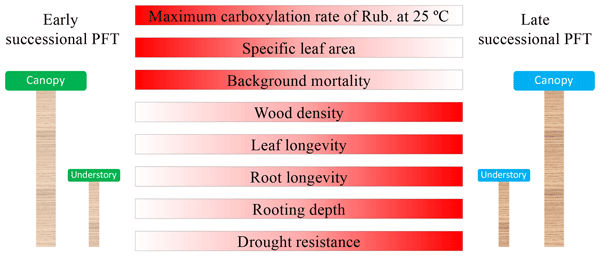
Lingcheng Li, Yilin Fang, Zhonghua Zheng, Mingjie Shi, Marcos Longo, Charles D. Koven, Jennifer A. Holm, Rosie A. Fisher, Nate G. McDowell, Jeffrey Chambers, and L. Ruby Leung
Geosci. Model Dev., 16, 4017–4040, https://doi.org/10.5194/gmd-16-4017-2023, https://doi.org/10.5194/gmd-16-4017-2023, 2023
Short summary
Short summary
Accurately modeling plant coexistence in vegetation demographic models like ELM-FATES is challenging. This study proposes a repeatable method that uses machine-learning-based surrogate models to optimize plant trait parameters in ELM-FATES. Our approach significantly improves plant coexistence modeling, thus reducing errors. It has important implications for modeling ecosystem dynamics in response to climate change.
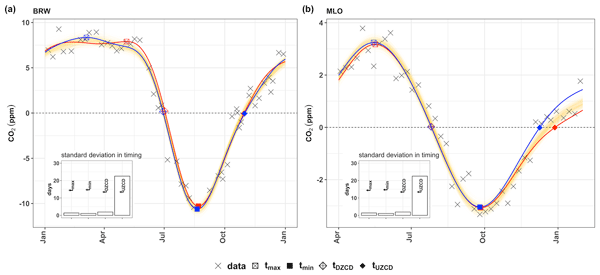
Theertha Kariyathan, Ana Bastos, Julia Marshall, Wouter Peters, Pieter Tans, and Markus Reichstein
Atmos. Meas. Tech., 16, 3299–3312, https://doi.org/10.5194/amt-16-3299-2023, https://doi.org/10.5194/amt-16-3299-2023, 2023
Short summary
Short summary
The timing and duration of the carbon uptake period (CUP) are sensitive to the occurrence of major phenological events, which are influenced by recent climate change. This study presents an ensemble-based approach for quantifying the timing and duration of the CUP and their uncertainty when derived from atmospheric CO2 measurements with noise and gaps. The CUP metrics derived with the approach are more robust and have less uncertainty than when estimated with the conventional methods.
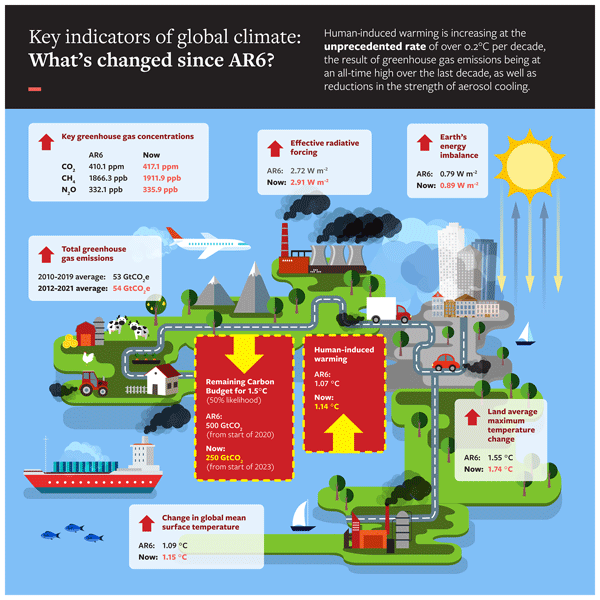
Piers M. Forster, Christopher J. Smith, Tristram Walsh, William F. Lamb, Robin Lamboll, Mathias Hauser, Aurélien Ribes, Debbie Rosen, Nathan Gillett, Matthew D. Palmer, Joeri Rogelj, Karina von Schuckmann, Sonia I. Seneviratne, Blair Trewin, Xuebin Zhang, Myles Allen, Robbie Andrew, Arlene Birt, Alex Borger, Tim Boyer, Jiddu A. Broersma, Lijing Cheng, Frank Dentener, Pierre Friedlingstein, José M. Gutiérrez, Johannes Gütschow, Bradley Hall, Masayoshi Ishii, Stuart Jenkins, Xin Lan, June-Yi Lee, Colin Morice, Christopher Kadow, John Kennedy, Rachel Killick, Jan C. Minx, Vaishali Naik, Glen P. Peters, Anna Pirani, Julia Pongratz, Carl-Friedrich Schleussner, Sophie Szopa, Peter Thorne, Robert Rohde, Maisa Rojas Corradi, Dominik Schumacher, Russell Vose, Kirsten Zickfeld, Valérie Masson-Delmotte, and Panmao Zhai
Earth Syst. Sci. Data, 15, 2295–2327, https://doi.org/10.5194/essd-15-2295-2023, https://doi.org/10.5194/essd-15-2295-2023, 2023
Short summary
Short summary
This is a critical decade for climate action, but there is no annual tracking of the level of human-induced warming. We build on the Intergovernmental Panel on Climate Change assessment reports that are authoritative but published infrequently to create a set of key global climate indicators that can be tracked through time. Our hope is that this becomes an important annual publication that policymakers, media, scientists and the public can refer to.
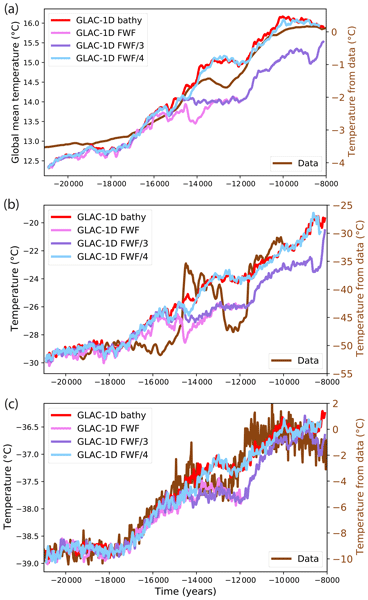
Nathaelle Bouttes, Fanny Lhardy, Aurélien Quiquet, Didier Paillard, Hugues Goosse, and Didier M. Roche
Clim. Past, 19, 1027–1042, https://doi.org/10.5194/cp-19-1027-2023, https://doi.org/10.5194/cp-19-1027-2023, 2023
Short summary
Short summary
The last deglaciation is a period of large warming from 21 000 to 9000 years ago, concomitant with ice sheet melting. Here, we evaluate the impact of different ice sheet reconstructions and different processes linked to their changes. Changes in bathymetry and coastlines, although not often accounted for, cannot be neglected. Ice sheet melt results in freshwater into the ocean with large effects on ocean circulation, but the timing cannot explain the observed abrupt climate changes.
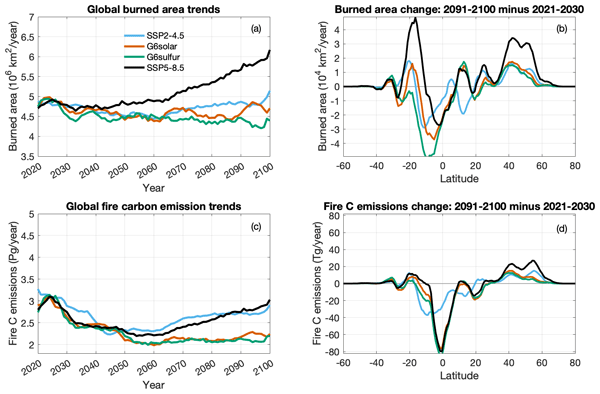
Wenfu Tang, Simone Tilmes, David M. Lawrence, Fang Li, Cenlin He, Louisa K. Emmons, Rebecca R. Buchholz, and Lili Xia
Atmos. Chem. Phys., 23, 5467–5486, https://doi.org/10.5194/acp-23-5467-2023, https://doi.org/10.5194/acp-23-5467-2023, 2023
Short summary
Short summary
Globally, total wildfire burned area is projected to increase over the 21st century under scenarios without geoengineering and decrease under the two geoengineering scenarios. Geoengineering reduces fire by decreasing surface temperature and wind speed and increasing relative humidity and soil water. However, geoengineering also yields reductions in precipitation, which offset some of the fire reduction.
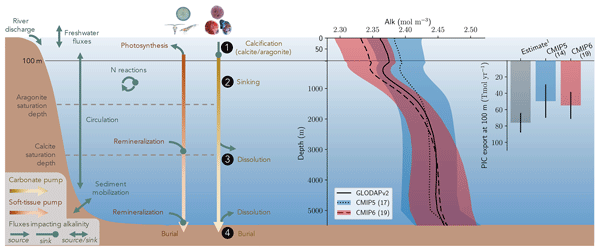
Alban Planchat, Lester Kwiatkowski, Laurent Bopp, Olivier Torres, James R. Christian, Momme Butenschön, Tomas Lovato, Roland Séférian, Matthew A. Chamberlain, Olivier Aumont, Michio Watanabe, Akitomo Yamamoto, Andrew Yool, Tatiana Ilyina, Hiroyuki Tsujino, Kristen M. Krumhardt, Jörg Schwinger, Jerry Tjiputra, John P. Dunne, and Charles Stock
Biogeosciences, 20, 1195–1257, https://doi.org/10.5194/bg-20-1195-2023, https://doi.org/10.5194/bg-20-1195-2023, 2023
Short summary
Short summary
Ocean alkalinity is critical to the uptake of atmospheric carbon and acidification in surface waters. We review the representation of alkalinity and the associated calcium carbonate cycle in Earth system models. While many parameterizations remain present in the latest generation of models, there is a general improvement in the simulated alkalinity distribution. This improvement is related to an increase in the export of biotic calcium carbonate, which closer resembles observations.
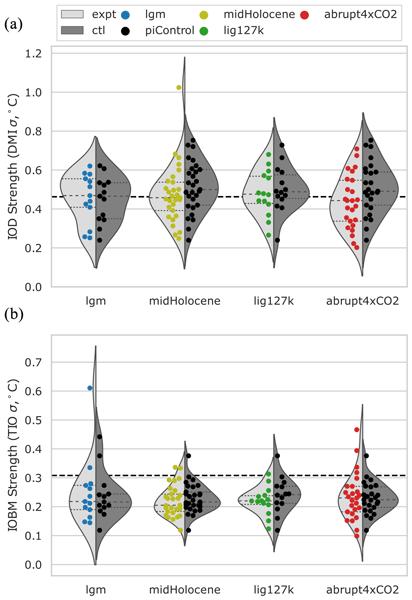
Chris Brierley, Kaustubh Thirumalai, Edward Grindrod, and Jonathan Barnsley
Clim. Past, 19, 681–701, https://doi.org/10.5194/cp-19-681-2023, https://doi.org/10.5194/cp-19-681-2023, 2023
Short summary
Short summary
Year-to-year variations in the weather conditions over the Indian Ocean have important consequences for the substantial fraction of the Earth's population that live near it. This work looks at how these variations respond to climate change – both past and future. The models rarely agree, suggesting a weak, uncertain response to climate change.
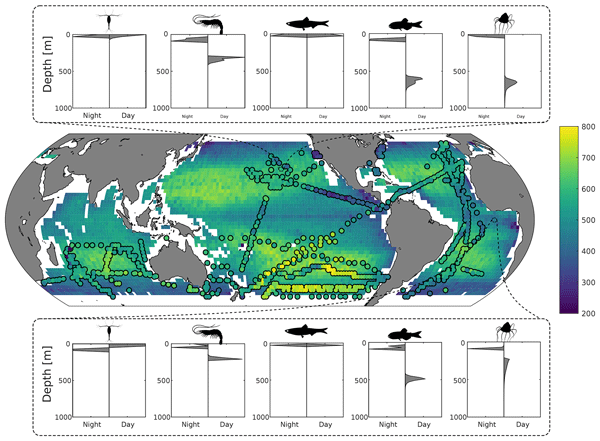
Jérôme Pinti, Tim DeVries, Tommy Norin, Camila Serra-Pompei, Roland Proud, David A. Siegel, Thomas Kiørboe, Colleen M. Petrik, Ken H. Andersen, Andrew S. Brierley, and André W. Visser
Biogeosciences, 20, 997–1009, https://doi.org/10.5194/bg-20-997-2023, https://doi.org/10.5194/bg-20-997-2023, 2023
Short summary
Short summary
Large numbers of marine organisms such as zooplankton and fish perform daily vertical migration between the surface (at night) and the depths (in the daytime). This fascinating migration is important for the carbon cycle, as these organisms actively bring carbon to depths where it is stored away from the atmosphere for a long time. Here, we quantify the contributions of different animals to this carbon drawdown and storage and show that fish are important to the biological carbon pump.
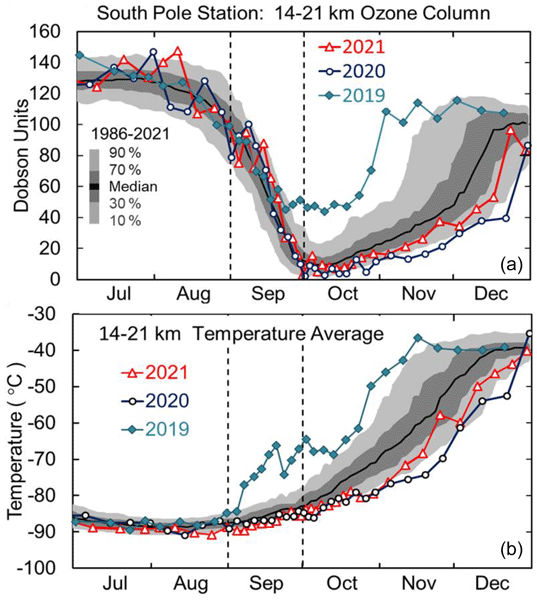
Bryan J. Johnson, Patrick Cullis, John Booth, Irina Petropavlovskikh, Glen McConville, Birgit Hassler, Gary A. Morris, Chance Sterling, and Samuel Oltmans
Atmos. Chem. Phys., 23, 3133–3146, https://doi.org/10.5194/acp-23-3133-2023, https://doi.org/10.5194/acp-23-3133-2023, 2023
Short summary
Short summary
In 1986, soon after the discovery of the Antarctic ozone hole, NOAA began year-round ozonesonde observations at South Pole Station to measure vertical profiles of ozone and temperature from the surface to 35 km. Balloon-borne ozonesondes launched at this unique site allow for tracking all phases of the yearly springtime ozone hole beginning in late winter and after sunrise, when rapid ozone depletion begins over the South Pole throughout the month of September.

Rui Ying, Fanny M. Monteiro, Jamie D. Wilson, and Daniela N. Schmidt
Geosci. Model Dev., 16, 813–832, https://doi.org/10.5194/gmd-16-813-2023, https://doi.org/10.5194/gmd-16-813-2023, 2023
Short summary
Short summary
Planktic foraminifera are marine-calcifying zooplankton; their shells are widely used to measure past temperature and productivity. We developed ForamEcoGEnIE 2.0 to simulate the four subgroups of this organism. We found that the relative abundance distribution agrees with marine sediment core-top data and that carbon export and biomass are close to sediment trap and plankton net observations respectively. This model provides the opportunity to study foraminiferal ecology in any geological era.
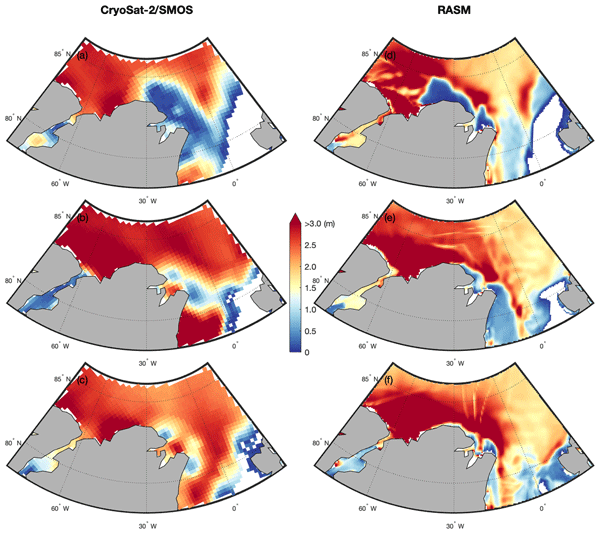
Younjoo J. Lee, Wieslaw Maslowski, John J. Cassano, Jaclyn Clement Kinney, Anthony P. Craig, Samy Kamal, Robert Osinski, Mark W. Seefeldt, Julienne Stroeve, and Hailong Wang
The Cryosphere, 17, 233–253, https://doi.org/10.5194/tc-17-233-2023, https://doi.org/10.5194/tc-17-233-2023, 2023
Short summary
Short summary
During 1979–2020, four winter polynyas occurred in December 1986 and February 2011, 2017, and 2018 north of Greenland. Instead of ice melting due to the anomalous warm air intrusion, the extreme wind forcing resulted in greater ice transport offshore. Based on the two ensemble runs, representing a 1980s thicker ice vs. a 2010s thinner ice, a dominant cause of these winter polynyas stems from internal variability of atmospheric forcing rather than from the forced response to a warming climate.
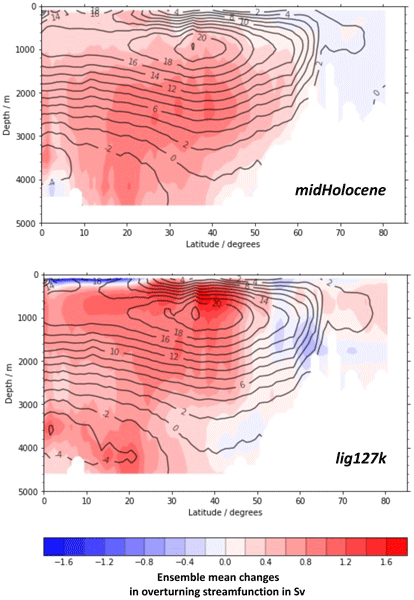
Zhiyi Jiang, Chris Brierley, David Thornalley, and Sophie Sax
Clim. Past, 19, 107–121, https://doi.org/10.5194/cp-19-107-2023, https://doi.org/10.5194/cp-19-107-2023, 2023
Short summary
Short summary
This work looks at a series of model simulations of two past warm climates. We focus on the deep overturning circulation in the Atlantic Ocean. We show that there are no robust changes in the overall strength of the circulation. We also show that the circulation hardly plays a role in changes in the surface climate across the globe.
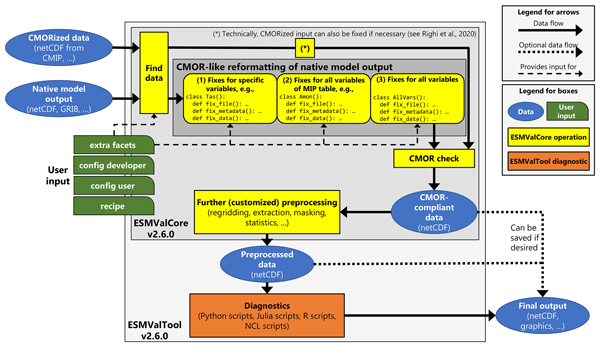
Manuel Schlund, Birgit Hassler, Axel Lauer, Bouwe Andela, Patrick Jöckel, Rémi Kazeroni, Saskia Loosveldt Tomas, Brian Medeiros, Valeriu Predoi, Stéphane Sénési, Jérôme Servonnat, Tobias Stacke, Javier Vegas-Regidor, Klaus Zimmermann, and Veronika Eyring
Geosci. Model Dev., 16, 315–333, https://doi.org/10.5194/gmd-16-315-2023, https://doi.org/10.5194/gmd-16-315-2023, 2023
Short summary
Short summary
The Earth System Model Evaluation Tool (ESMValTool) is a community diagnostics and performance metrics tool for routine evaluation of Earth system models. Originally, ESMValTool was designed to process reformatted output provided by large model intercomparison projects like the Coupled Model Intercomparison Project (CMIP). Here, we describe a new extension of ESMValTool that allows for reading and processing native climate model output, i.e., data that have not been reformatted before.
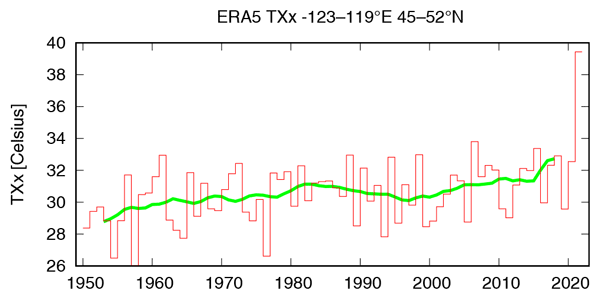
Sjoukje Y. Philip, Sarah F. Kew, Geert Jan van Oldenborgh, Faron S. Anslow, Sonia I. Seneviratne, Robert Vautard, Dim Coumou, Kristie L. Ebi, Julie Arrighi, Roop Singh, Maarten van Aalst, Carolina Pereira Marghidan, Michael Wehner, Wenchang Yang, Sihan Li, Dominik L. Schumacher, Mathias Hauser, Rémy Bonnet, Linh N. Luu, Flavio Lehner, Nathan Gillett, Jordis S. Tradowsky, Gabriel A. Vecchi, Chris Rodell, Roland B. Stull, Rosie Howard, and Friederike E. L. Otto
Earth Syst. Dynam., 13, 1689–1713, https://doi.org/10.5194/esd-13-1689-2022, https://doi.org/10.5194/esd-13-1689-2022, 2022
Short summary
Short summary
In June 2021, the Pacific Northwest of the US and Canada saw record temperatures far exceeding those previously observed. This attribution study found such a severe heat wave would have been virtually impossible without human-induced climate change. Assuming no nonlinear interactions, such events have become at least 150 times more common, are about 2 °C hotter and will become even more common as warming continues. Therefore, adaptation and mitigation are urgently needed to prepare society.
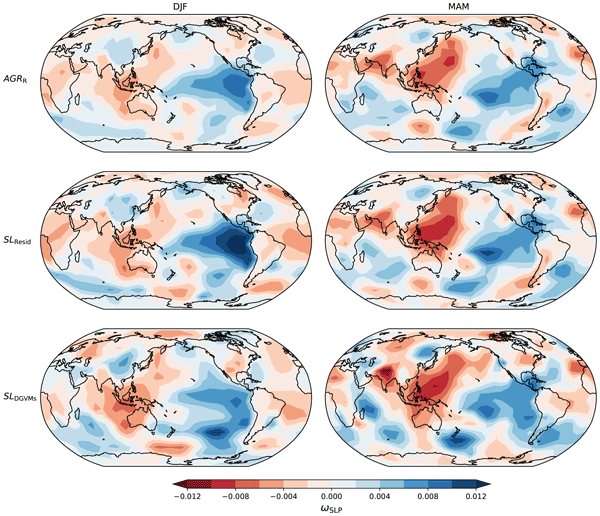
Na Li, Sebastian Sippel, Alexander J. Winkler, Miguel D. Mahecha, Markus Reichstein, and Ana Bastos
Earth Syst. Dynam., 13, 1505–1533, https://doi.org/10.5194/esd-13-1505-2022, https://doi.org/10.5194/esd-13-1505-2022, 2022
Short summary
Short summary
Quantifying the imprint of large-scale atmospheric circulation dynamics and associated carbon cycle responses is key to improving our understanding of carbon cycle dynamics. Using a statistical model that relies on spatiotemporal sea level pressure as a proxy for large-scale atmospheric circulation, we quantify the fraction of interannual variability in atmospheric CO2 growth rate and the land CO2 sink that are driven by atmospheric circulation variability.
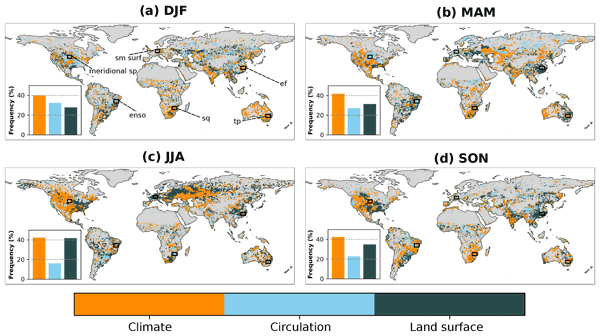
Melissa Ruiz-Vásquez, Sungmin O, Alexander Brenning, Randal D. Koster, Gianpaolo Balsamo, Ulrich Weber, Gabriele Arduini, Ana Bastos, Markus Reichstein, and René Orth
Earth Syst. Dynam., 13, 1451–1471, https://doi.org/10.5194/esd-13-1451-2022, https://doi.org/10.5194/esd-13-1451-2022, 2022
Short summary
Short summary
Subseasonal forecasts facilitate early warning of extreme events; however their predictability sources are not fully explored. We find that global temperature forecast errors in many regions are related to climate variables such as solar radiation and precipitation, as well as land surface variables such as soil moisture and evaporative fraction. A better representation of these variables in the forecasting and data assimilation systems can support the accuracy of temperature forecasts.
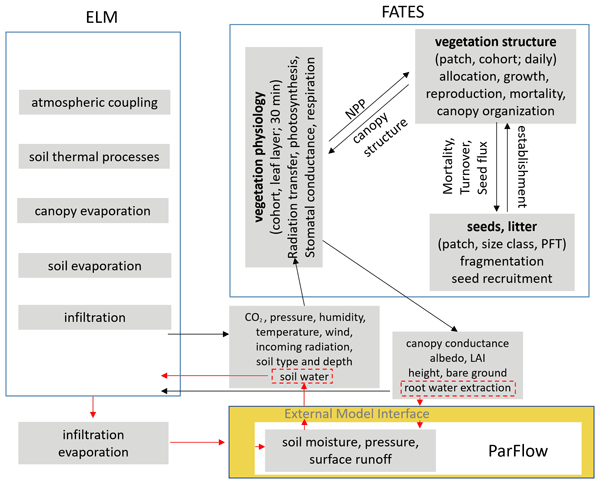
Yilin Fang, L. Ruby Leung, Charles D. Koven, Gautam Bisht, Matteo Detto, Yanyan Cheng, Nate McDowell, Helene Muller-Landau, S. Joseph Wright, and Jeffrey Q. Chambers
Geosci. Model Dev., 15, 7879–7901, https://doi.org/10.5194/gmd-15-7879-2022, https://doi.org/10.5194/gmd-15-7879-2022, 2022
Short summary
Short summary
We develop a model that integrates an Earth system model with a three-dimensional hydrology model to explicitly resolve hillslope topography and water flow underneath the land surface to understand how local-scale hydrologic processes modulate vegetation along water availability gradients. Our coupled model can be used to improve the understanding of the diverse impact of local heterogeneity and water flux on nutrient availability and plant communities.
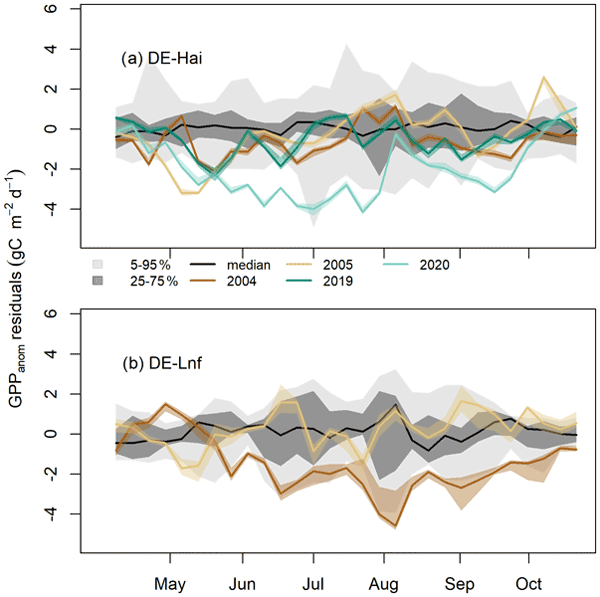
Xin Yu, René Orth, Markus Reichstein, Michael Bahn, Anne Klosterhalfen, Alexander Knohl, Franziska Koebsch, Mirco Migliavacca, Martina Mund, Jacob A. Nelson, Benjamin D. Stocker, Sophia Walther, and Ana Bastos
Biogeosciences, 19, 4315–4329, https://doi.org/10.5194/bg-19-4315-2022, https://doi.org/10.5194/bg-19-4315-2022, 2022
Short summary
Short summary
Identifying drought legacy effects is challenging because they are superimposed on variability driven by climate conditions in the recovery period. We develop a residual-based approach to quantify legacies on gross primary productivity (GPP) from eddy covariance data. The GPP reduction due to legacy effects is comparable to the concurrent effects at two sites in Germany, which reveals the importance of legacy effects. Our novel methodology can be used to quantify drought legacies elsewhere.
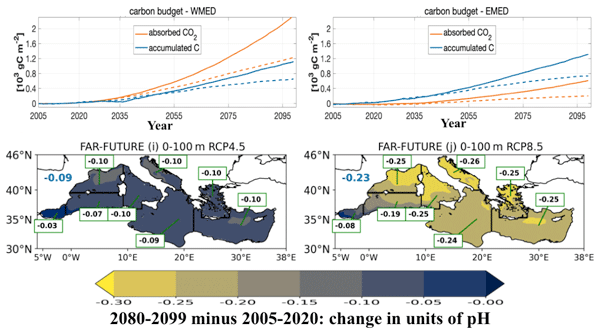
Marco Reale, Gianpiero Cossarini, Paolo Lazzari, Tomas Lovato, Giorgio Bolzon, Simona Masina, Cosimo Solidoro, and Stefano Salon
Biogeosciences, 19, 4035–4065, https://doi.org/10.5194/bg-19-4035-2022, https://doi.org/10.5194/bg-19-4035-2022, 2022
Short summary
Short summary
Future projections under the RCP8.5 and RCP4.5 emission scenarios of the Mediterranean Sea biogeochemistry at the end of the 21st century show different levels of decline in nutrients, oxygen and biomasses and an acidification of the water column. The signal intensity is stronger under RCP8.5 and in the eastern Mediterranean. Under RCP4.5, after the second half of the 21st century, biogeochemical variables show a recovery of the values observed at the beginning of the investigated period.
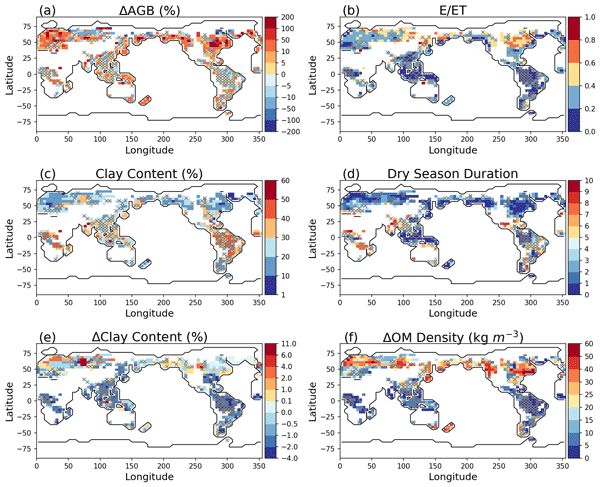
Yilin Fang, L. Ruby Leung, Ryan Knox, Charlie Koven, and Ben Bond-Lamberty
Geosci. Model Dev., 15, 6385–6398, https://doi.org/10.5194/gmd-15-6385-2022, https://doi.org/10.5194/gmd-15-6385-2022, 2022
Short summary
Short summary
Accounting for water movement in the soil and water transport within the plant is important for plant growth in Earth system modeling. We implemented different numerical approaches for a plant hydrodynamic model and compared their impacts on the simulated aboveground biomass (AGB) at single points and globally. We found care should be taken when discretizing the number of soil layers for numerical simulations as it can significantly affect AGB if accuracy and computational costs are of concern.
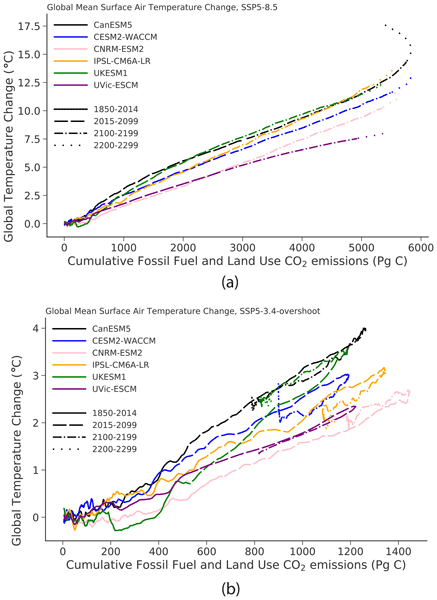
Charles D. Koven, Vivek K. Arora, Patricia Cadule, Rosie A. Fisher, Chris D. Jones, David M. Lawrence, Jared Lewis, Keith Lindsay, Sabine Mathesius, Malte Meinshausen, Michael Mills, Zebedee Nicholls, Benjamin M. Sanderson, Roland Séférian, Neil C. Swart, William R. Wieder, and Kirsten Zickfeld
Earth Syst. Dynam., 13, 885–909, https://doi.org/10.5194/esd-13-885-2022, https://doi.org/10.5194/esd-13-885-2022, 2022
Short summary
Short summary
We explore the long-term dynamics of Earth's climate and carbon cycles under a pair of contrasting scenarios to the year 2300 using six models that include both climate and carbon cycle dynamics. One scenario assumes very high emissions, while the second assumes a peak in emissions, followed by rapid declines to net negative emissions. We show that the models generally agree that warming is roughly proportional to carbon emissions but that many other aspects of the model projections differ.
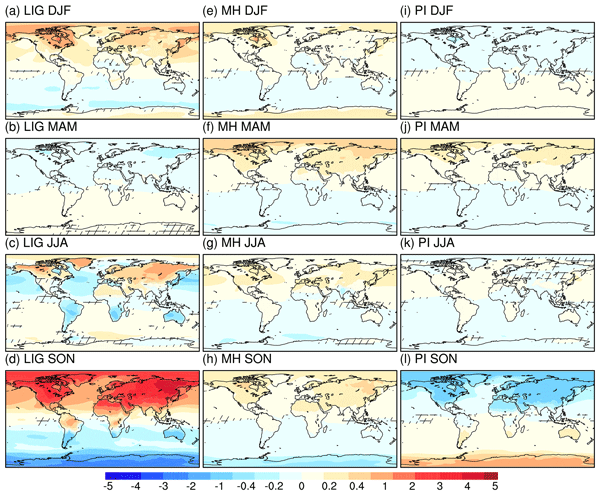
Xiaoxu Shi, Martin Werner, Carolin Krug, Chris M. Brierley, Anni Zhao, Endurance Igbinosa, Pascale Braconnot, Esther Brady, Jian Cao, Roberta D'Agostino, Johann Jungclaus, Xingxing Liu, Bette Otto-Bliesner, Dmitry Sidorenko, Robert Tomas, Evgeny M. Volodin, Hu Yang, Qiong Zhang, Weipeng Zheng, and Gerrit Lohmann
Clim. Past, 18, 1047–1070, https://doi.org/10.5194/cp-18-1047-2022, https://doi.org/10.5194/cp-18-1047-2022, 2022
Short summary
Short summary
Since the orbital parameters of the past are different from today, applying the modern calendar to the past climate can lead to an artificial bias in seasonal cycles. With the use of multiple model outputs, we found that such a bias is non-ignorable and should be corrected to ensure an accurate comparison between modeled results and observational records, as well as between simulated past and modern climates, especially for the Last Interglacial.
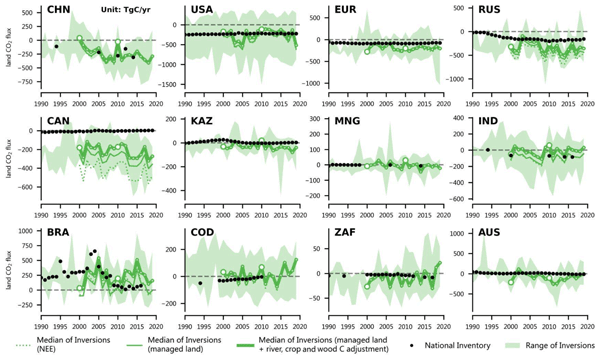
Zhu Deng, Philippe Ciais, Zitely A. Tzompa-Sosa, Marielle Saunois, Chunjing Qiu, Chang Tan, Taochun Sun, Piyu Ke, Yanan Cui, Katsumasa Tanaka, Xin Lin, Rona L. Thompson, Hanqin Tian, Yuanzhi Yao, Yuanyuan Huang, Ronny Lauerwald, Atul K. Jain, Xiaoming Xu, Ana Bastos, Stephen Sitch, Paul I. Palmer, Thomas Lauvaux, Alexandre d'Aspremont, Clément Giron, Antoine Benoit, Benjamin Poulter, Jinfeng Chang, Ana Maria Roxana Petrescu, Steven J. Davis, Zhu Liu, Giacomo Grassi, Clément Albergel, Francesco N. Tubiello, Lucia Perugini, Wouter Peters, and Frédéric Chevallier
Earth Syst. Sci. Data, 14, 1639–1675, https://doi.org/10.5194/essd-14-1639-2022, https://doi.org/10.5194/essd-14-1639-2022, 2022
Short summary
Short summary
In support of the global stocktake of the Paris Agreement on climate change, we proposed a method for reconciling the results of global atmospheric inversions with data from UNFCCC national greenhouse gas inventories (NGHGIs). Here, based on a new global harmonized database that we compiled from the UNFCCC NGHGIs and a comprehensive framework presented in this study to process the results of inversions, we compared their results of carbon dioxide (CO2), methane (CH4), and nitrous oxide (N2O).
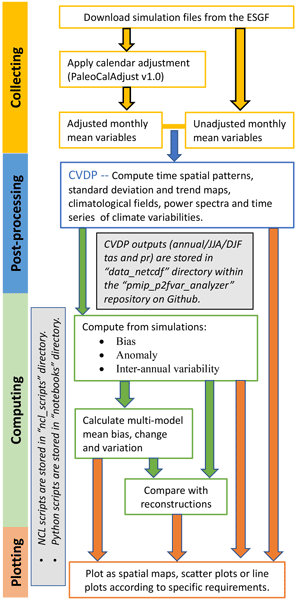
Anni Zhao, Chris M. Brierley, Zhiyi Jiang, Rachel Eyles, Damián Oyarzún, and Jose Gomez-Dans
Geosci. Model Dev., 15, 2475–2488, https://doi.org/10.5194/gmd-15-2475-2022, https://doi.org/10.5194/gmd-15-2475-2022, 2022
Short summary
Short summary
We describe the way that our group have chosen to perform our recent analyses of the Palaeoclimate Modelling Intercomparison Project ensemble simulations. We document the approach used to obtain and curate the simulations, process those outputs via the Climate Variability Diagnostics Package, and then continue through to compute ensemble-wide statistics and create figures. We also provide interim data from all steps, the codes used and the ability for users to perform their own analyses.
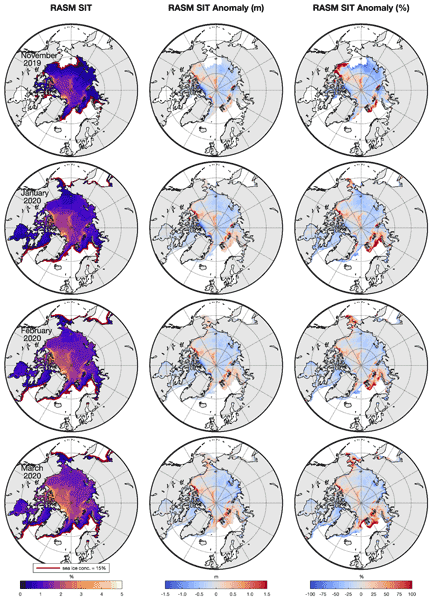
Klaus Dethloff, Wieslaw Maslowski, Stefan Hendricks, Younjoo J. Lee, Helge F. Goessling, Thomas Krumpen, Christian Haas, Dörthe Handorf, Robert Ricker, Vladimir Bessonov, John J. Cassano, Jaclyn Clement Kinney, Robert Osinski, Markus Rex, Annette Rinke, Julia Sokolova, and Anja Sommerfeld
The Cryosphere, 16, 981–1005, https://doi.org/10.5194/tc-16-981-2022, https://doi.org/10.5194/tc-16-981-2022, 2022
Short summary
Short summary
Sea ice thickness anomalies during the MOSAiC (Multidisciplinary drifting Observatory for the Study of Arctic Climate) winter in January, February and March 2020 were simulated with the coupled Regional Arctic climate System Model (RASM) and compared with CryoSat-2/SMOS satellite data. Hindcast and ensemble simulations indicate that the sea ice anomalies are driven by nonlinear interactions between ice growth processes and wind-driven sea-ice transports, with dynamics playing a dominant role.
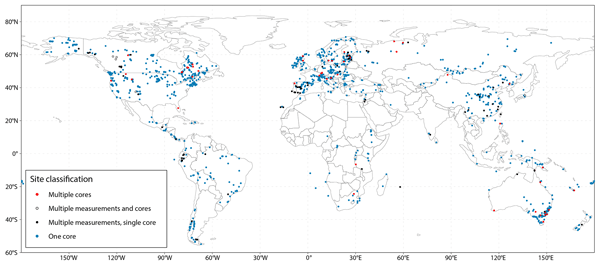
Sandy P. Harrison, Roberto Villegas-Diaz, Esmeralda Cruz-Silva, Daniel Gallagher, David Kesner, Paul Lincoln, Yicheng Shen, Luke Sweeney, Daniele Colombaroli, Adam Ali, Chéïma Barhoumi, Yves Bergeron, Tatiana Blyakharchuk, Přemysl Bobek, Richard Bradshaw, Jennifer L. Clear, Sambor Czerwiński, Anne-Laure Daniau, John Dodson, Kevin J. Edwards, Mary E. Edwards, Angelica Feurdean, David Foster, Konrad Gajewski, Mariusz Gałka, Michelle Garneau, Thomas Giesecke, Graciela Gil Romera, Martin P. Girardin, Dana Hoefer, Kangyou Huang, Jun Inoue, Eva Jamrichová, Nauris Jasiunas, Wenying Jiang, Gonzalo Jiménez-Moreno, Monika Karpińska-Kołaczek, Piotr Kołaczek, Niina Kuosmanen, Mariusz Lamentowicz, Martin Lavoie, Fang Li, Jianyong Li, Olga Lisitsyna, José Antonio López-Sáez, Reyes Luelmo-Lautenschlaeger, Gabriel Magnan, Eniko Katalin Magyari, Alekss Maksims, Katarzyna Marcisz, Elena Marinova, Jenn Marlon, Scott Mensing, Joanna Miroslaw-Grabowska, Wyatt Oswald, Sebastián Pérez-Díaz, Ramón Pérez-Obiol, Sanna Piilo, Anneli Poska, Xiaoguang Qin, Cécile C. Remy, Pierre J. H. Richard, Sakari Salonen, Naoko Sasaki, Hieke Schneider, William Shotyk, Migle Stancikaite, Dace Šteinberga, Normunds Stivrins, Hikaru Takahara, Zhihai Tan, Liva Trasune, Charles E. Umbanhowar, Minna Väliranta, Jüri Vassiljev, Xiayun Xiao, Qinghai Xu, Xin Xu, Edyta Zawisza, Yan Zhao, Zheng Zhou, and Jordan Paillard
Earth Syst. Sci. Data, 14, 1109–1124, https://doi.org/10.5194/essd-14-1109-2022, https://doi.org/10.5194/essd-14-1109-2022, 2022
Short summary
Short summary
We provide a new global data set of charcoal preserved in sediments that can be used to examine how fire regimes have changed during past millennia and to investigate what caused these changes. The individual records have been standardised, and new age models have been constructed to allow better comparison across sites. The data set contains 1681 records from 1477 sites worldwide.
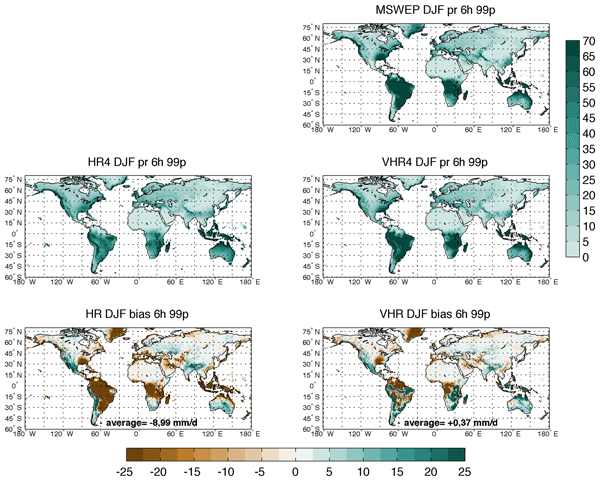
Enrico Scoccimarro, Daniele Peano, Silvio Gualdi, Alessio Bellucci, Tomas Lovato, Pier Giuseppe Fogli, and Antonio Navarra
Geosci. Model Dev., 15, 1841–1854, https://doi.org/10.5194/gmd-15-1841-2022, https://doi.org/10.5194/gmd-15-1841-2022, 2022
Short summary
Short summary
This study evaluated the ability of the CMCC-CM2 climate model participating to the last CMIP6 effort, in representing extreme events of precipitation and temperature at the daily and 6-hourly frequencies. The 1/4° resolution version of the atmospheric model provides better results than the version at 1° resolution for temperature extremes, at both time frequencies. For precipitation extremes, especially at the daily time frequency, the higher resolution does not improve model results.
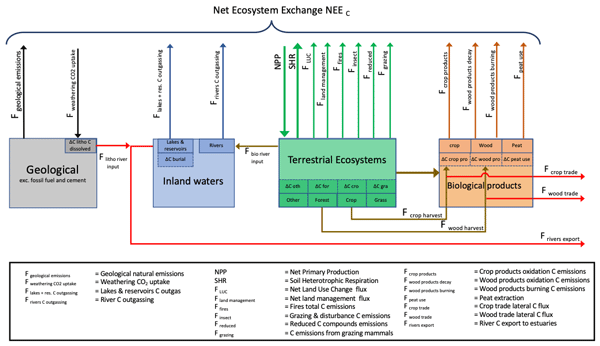
Philippe Ciais, Ana Bastos, Frédéric Chevallier, Ronny Lauerwald, Ben Poulter, Josep G. Canadell, Gustaf Hugelius, Robert B. Jackson, Atul Jain, Matthew Jones, Masayuki Kondo, Ingrid T. Luijkx, Prabir K. Patra, Wouter Peters, Julia Pongratz, Ana Maria Roxana Petrescu, Shilong Piao, Chunjing Qiu, Celso Von Randow, Pierre Regnier, Marielle Saunois, Robert Scholes, Anatoly Shvidenko, Hanqin Tian, Hui Yang, Xuhui Wang, and Bo Zheng
Geosci. Model Dev., 15, 1289–1316, https://doi.org/10.5194/gmd-15-1289-2022, https://doi.org/10.5194/gmd-15-1289-2022, 2022
Short summary
Short summary
The second phase of the Regional Carbon Cycle Assessment and Processes (RECCAP) will provide updated quantification and process understanding of CO2, CH4, and N2O emissions and sinks for ten regions of the globe. In this paper, we give definitions, review different methods, and make recommendations for estimating different components of the total land–atmosphere carbon exchange for each region in a consistent and complete approach.
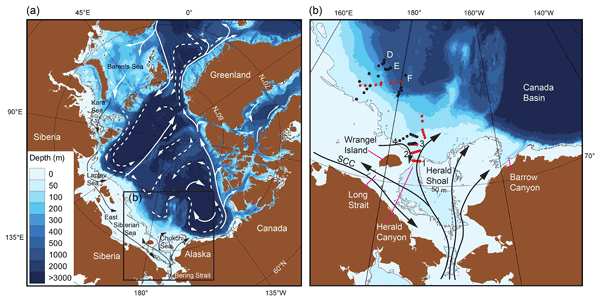
Jaclyn Clement Kinney, Karen M. Assmann, Wieslaw Maslowski, Göran Björk, Martin Jakobsson, Sara Jutterström, Younjoo J. Lee, Robert Osinski, Igor Semiletov, Adam Ulfsbo, Irene Wåhlström, and Leif G. Anderson
Ocean Sci., 18, 29–49, https://doi.org/10.5194/os-18-29-2022, https://doi.org/10.5194/os-18-29-2022, 2022
Short summary
Short summary
We use data crossing Herald Canyon in the Chukchi Sea collected in 2008 and 2014 together with numerical modelling to investigate the circulation in the western Chukchi Sea. A large fraction of water from the Chukchi Sea enters the East Siberian Sea south of Wrangel Island and circulates in an anticyclonic direction around the island. To assess the differences between years, we use numerical modelling results, which show that high-frequency variability dominates the flow in Herald Canyon.
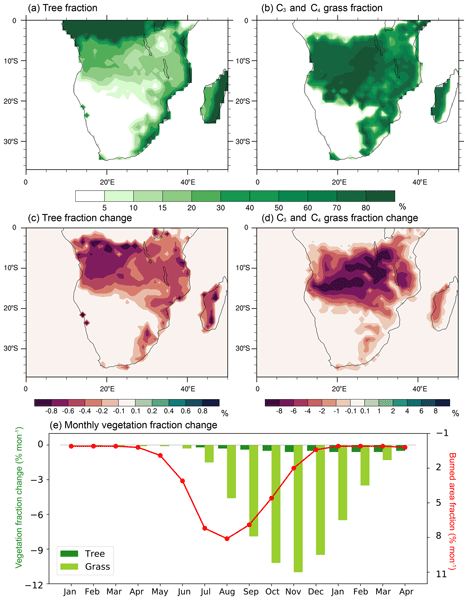
Huilin Huang, Yongkang Xue, Ye Liu, Fang Li, and Gregory S. Okin
Geosci. Model Dev., 14, 7639–7657, https://doi.org/10.5194/gmd-14-7639-2021, https://doi.org/10.5194/gmd-14-7639-2021, 2021
Short summary
Short summary
This study applies a fire-coupled dynamic vegetation model to quantify fire impact at monthly to annual scales. We find fire reduces grass cover by 4–8 % annually for widespread areas in south African savanna and reduces tree cover by 1 % at the periphery of tropical Congolese rainforest. The grass cover reduction peaks at the beginning of the rainy season, which quickly diminishes before the next fire season. In contrast, the reduction of tree cover is irreversible within one growing season.
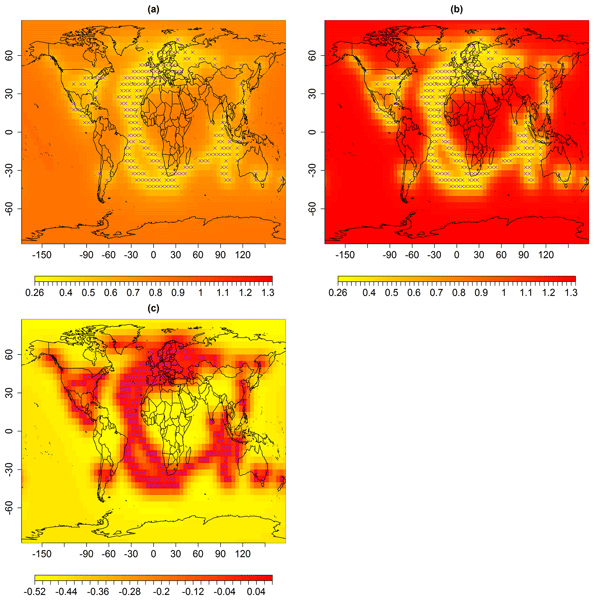
Maryam Ilyas, Douglas Nychka, Chris Brierley, and Serge Guillas
Atmos. Meas. Tech., 14, 7103–7121, https://doi.org/10.5194/amt-14-7103-2021, https://doi.org/10.5194/amt-14-7103-2021, 2021
Short summary
Short summary
Instrumental temperature records are fundamental to climate science. There are spatial gaps in the distribution of these measurements across the globe. This lack of spatial coverage introduces coverage error. In this research, a methodology is developed and used to quantify the coverage errors. It results in a data product that, for the first time, provides a full description of both the spatial coverage uncertainties along with the uncertainties in the modeling of these spatial gaps.
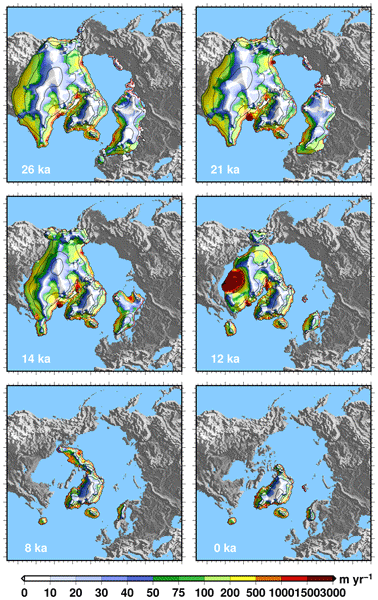
Aurélien Quiquet, Didier M. Roche, Christophe Dumas, Nathaëlle Bouttes, and Fanny Lhardy
Clim. Past, 17, 2179–2199, https://doi.org/10.5194/cp-17-2179-2021, https://doi.org/10.5194/cp-17-2179-2021, 2021
Short summary
Short summary
In this paper we discuss results obtained with a set of coupled ice-sheet–climate model experiments for the last 26 kyrs. The model displays a large sensitivity of the oceanic circulation to the amount of the freshwater flux resulting from ice sheet melting. Ice sheet geometry changes alone are not enough to lead to abrupt climate events, and rapid warming at high latitudes is here only reported during abrupt oceanic circulation recoveries that occurred when accounting for freshwater flux.
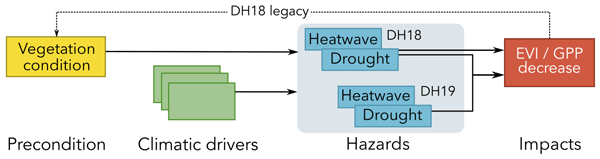
Ana Bastos, René Orth, Markus Reichstein, Philippe Ciais, Nicolas Viovy, Sönke Zaehle, Peter Anthoni, Almut Arneth, Pierre Gentine, Emilie Joetzjer, Sebastian Lienert, Tammas Loughran, Patrick C. McGuire, Sungmin O, Julia Pongratz, and Stephen Sitch
Earth Syst. Dynam., 12, 1015–1035, https://doi.org/10.5194/esd-12-1015-2021, https://doi.org/10.5194/esd-12-1015-2021, 2021
Short summary
Short summary
Temperate biomes in Europe are not prone to recurrent dry and hot conditions in summer. However, these conditions may become more frequent in the coming decades. Because stress conditions can leave legacies for many years, this may result in reduced ecosystem resilience under recurrent stress. We assess vegetation vulnerability to the hot and dry summers in 2018 and 2019 in Europe and find the important role of inter-annual legacy effects from 2018 in modulating the impacts of the 2019 event.
Cited articles
Allan, R. P., Barlow, M., Byrne, M. P., Cherchi, A., Douville, H., Fowler, H. J., Gan, T. Y., Pendergrass, A. G., Rosenfeld, D., Swann, A. L. S., Wilcox, L. J., and Zolina, O.: Advances in understanding large-scale responses of the water cycle to climate change, Ann. NY Acad. Sci., 1472, 49–75, https://doi.org/10.1111/nyas.14337, 2020.
Allen, M. R., Frame, D. J., Huntingford, C., Jones, C. D., Lowe, J. A., Meinshausen, M., and Meinshausen, N.: Warming caused by cumulative carbon emissions towards the trillionth tonne, Nature, 458, 1163–1166, https://doi.org/10.1038/nature08019, 2009.
Anstey, J., Dingley, B., and Ellis, D.: CMIP-Data-Request/CMIP7_DReq_Content: Data request content for v1.2.2.3, Zenodo [data set], https://doi.org/10.5281/zenodo.17986580, 2025.
Archer, D.: Fate of fossil fuel CO2 in geologic time, J. Geophys. Res.-Oceans, 110, https://doi.org/10.1029/2004JC002625, 2005.
Armstrong McKay, D. I., Staal, A., Abrams, J. F., Winkelmann, R., Sakschewski, B., Loriani, S., Fetzer, I., Cornell, S. E., Rockström, J., and Lenton, T. M.: Exceeding 1.5 °C global warming could trigger multiple climate tipping points, Science, 377, eabn7950, https://doi.org/10.1126/science.abn7950, 2022.
Arneth, A., Sitch, S., Pongratz, J., Stocker, B. D., Ciais, P., Poulter, B., Bayer, A. D., Bondeau, A., Calle, L., Chini, L. P., Gasser, T., Fader, M., Friedlingstein, P., Kato, E., Li, W., Lindeskog, M., Nabel, J. E. M. S., Pugh, T. a. M., Robertson, E., Viovy, N., Yue, C., and Zaehle, S.: Historical carbon dioxide emissions caused by land-use changes are possibly larger than assumed, Nat. Geosci., 10, 79–84, https://doi.org/10.1038/ngeo2882, 2017.
Arora, V. K., Boer, G. J., Friedlingstein, P., Eby, M., Jones, C. D., Christian, J. R., Bonan, G., Bopp, L., Brovkin, V., Cadule, P., Hajima, T., Ilyina, T., Lindsay, K., Tjiputra, J. F., and Wu, T.: Carbon–Concentration and Carbon–Climate Feedbacks in CMIP5 Earth System Models, J. Climate, 26, 5289–5314, https://doi.org/10.1175/JCLI-D-12-00494.1, 2013.
Arora, V. K., Katavouta, A., Williams, R. G., Jones, C. D., Brovkin, V., Friedlingstein, P., Schwinger, J., Bopp, L., Boucher, O., Cadule, P., Chamberlain, M. A., Christian, J. R., Delire, C., Fisher, R. A., Hajima, T., Ilyina, T., Joetzjer, E., Kawamiya, M., Koven, C. D., Krasting, J. P., Law, R. M., Lawrence, D. M., Lenton, A., Lindsay, K., Pongratz, J., Raddatz, T., Séférian, R., Tachiiri, K., Tjiputra, J. F., Wiltshire, A., Wu, T., and Ziehn, T.: Carbon–concentration and carbon–climate feedbacks in CMIP6 models and their comparison to CMIP5 models, Biogeosciences, 17, 4173–4222, https://doi.org/10.5194/bg-17-4173-2020, 2020.
Arumugam, R., Guichard, F., and Lutscher, F.: Early warning indicators capture catastrophic transitions driven by explicit rates of environmental change, Ecology, 105, e4240, https://doi.org/10.1002/ecy.4240, 2024.
Bauer, S. E., Tsigaridis, K., Faluvegi, G., Nazarenko, L., Miller, R. L., Kelley, M., and Schmidt, G.: The Turning Point of the Aerosol Era, J. Adv. Model. Earth Syst., 14, e2022MS003070, https://doi.org/10.1029/2022MS003070, 2022.
Bellouin, N., Quaas, J., Gryspeerdt, E., Kinne, S., Stier, P., Watson-Parris, D., Boucher, O., Carslaw, K. S., Christensen, M., Daniau, A.-L., Dufresne, J.-L., Feingold, G., Fiedler, S., Forster, P., Gettelman, A., Haywood, J. M., Lohmann, U., Malavelle, F., Mauritsen, T., McCoy, D. T., Myhre, G., Mülmenstädt, J., Neubauer, D., Possner, A., Rugenstein, M., Sato, Y., Schulz, M., Schwartz, S. E., Sourdeval, O., Storelvmo, T., Toll, V., Winker, D., and Stevens, B.: Bounding Global Aerosol Radiative Forcing of Climate Change, Rev. Geophys., 58, e2019RG000660, https://doi.org/10.1029/2019RG000660, 2020.
Ben-Yami, M., Morr, A., Bathiany, S., and Boers, N.: Uncertainties too large to predict tipping times of major Earth system components from historical data, Sci. Adv., 10, eadl4841, https://doi.org/10.1126/sciadv.adl4841, 2024.
Blanchard, J. L., Novaglio, C., Maury, O., Harrison, C. S., Petrik, C. M., Fierro-Arcos, D., Ortega-Cisneros, K., Bryndum-Buchholz, A., Eddy, T. D., Heneghan, R., Roberts, K., Schewe, J., Bianchi, D., Guiet, J., Daniel van Denderen, P., Palacios-Abrantes, J., Liu, X., Stock, C. A., Rousseau, Y., Büchner, M., Adekoya, E. O., Bulman, C., Cheung, W., Christensen, V., Coll, M., Capitani, L., Datta, S., Fulton, E. A., Fuster, A., Garza, V., Lengaigne, M., Lindmark, M., Murphy, K., Ouled-Cheikh, J., Prasad, S. S., Oliveros-Ramos, R., Reum, J. C., Rynne, N., Scherrer, K. J. N., Shin, Y.-J., Steenbeek, J., Woodworth-Jefcoats, P., Wu, Y.-L., and Tittensor, D. P.: Detecting, Attributing, and Projecting Global Marine Ecosystem and Fisheries Change: FishMIP 2.0, Earth's Future, 12, e2023EF004402, https://doi.org/10.1029/2023EF004402, 2024.
Boer, G. J., Smith, D. M., Cassou, C., Doblas-Reyes, F., Danabasoglu, G., Kirtman, B., Kushnir, Y., Kimoto, M., Meehl, G. A., Msadek, R., Mueller, W. A., Taylor, K. E., Zwiers, F., Rixen, M., Ruprich-Robert, Y., and Eade, R.: The Decadal Climate Prediction Project (DCPP) contribution to CMIP6, Geosci. Model Dev., 9, 3751–3777, https://doi.org/10.5194/gmd-9-3751-2016, 2016.
Bonan, G. B., Lucier, O., Coen, D. R., Foster, A. C., Shuman, J. K., Laguë, M. M., Swann, A. L. S., Lombardozzi, D. L., Wieder, W. R., Dahlin, K. M., Rocha, A. V., and SanClements, M. D.: Reimagining Earth in the Earth System, J. Adv. Model. Earth Syst., 16, e2023MS004017, https://doi.org/10.1029/2023MS004017, 2024.
Bopp, L., Resplandy, L., Orr, J. C., Doney, S. C., Dunne, J. P., Gehlen, M., Halloran, P., Heinze, C., Ilyina, T., Séférian, R., Tjiputra, J., and Vichi, M.: Multiple stressors of ocean ecosystems in the 21st century: projections with CMIP5 models, Biogeosciences, 10, 6225–6245, https://doi.org/10.5194/bg-10-6225-2013, 2013.
Boucher, O., Servonnat, J., Albright, A. L., Aumont, O., Balkanski, Y., Bastrikov, V., Bekki, S., Bonnet, R., Bony, S., Bopp, L., Braconnot, P., Brockmann, P., Cadule, P., Caubel, A., Cheruy, F., Codron, F., Cozic, A., Cugnet, D., D'Andrea, F., Davini, P., de Lavergne, C., Denvil, S., Deshayes, J., Devilliers, M., Ducharne, A., Dufresne, J.-L., Dupont, E., Éthé, C., Fairhead, L., Falletti, L., Flavoni, S., Foujols, M.-A., Gardoll, S., Gastineau, G., Ghattas, J., Grandpeix, J.-Y., Guenet, B., Guez, E., Lionel, Guilyardi, E., Guimberteau, M., Hauglustaine, D., Hourdin, F., Idelkadi, A., Joussaume, S., Kageyama, M., Khodri, M., Krinner, G., Lebas, N., Levavasseur, G., Lévy, C., Li, L., Lott, F., Lurton, T., Luyssaert, S., Madec, G., Madeleine, J.-B., Maignan, F., Marchand, M., Marti, O., Mellul, L., Meurdesoif, Y., Mignot, J., Musat, I., Ottlé, C., Peylin, P., Planton, Y., Polcher, J., Rio, C., Rochetin, N., Rousset, C., Sepulchre, P., Sima, A., Swingedouw, D., Thiéblemont, R., Traore, A. K., Vancoppenolle, M., Vial, J., Vialard, J., Viovy, N., and Vuichard, N.: Presentation and Evaluation of the IPSL-CM6A-LR Climate Model, J. Adv. Model. Earth Syst., 12, e2019MS002010, https://doi.org/10.1029/2019MS002010, 2020.
Bourgeois, T., Orr, J. C., Resplandy, L., Terhaar, J., Ethé, C., Gehlen, M., and Bopp, L.: Coastal-ocean uptake of anthropogenic carbon, Biogeosciences, 13, 4167–4185, https://doi.org/10.5194/bg-13-4167-2016, 2016.
Bowman, D. M. J. S., Balch, J. K., Artaxo, P., Bond, W. J., Carlson, J. M., Cochrane, M. A., D'Antonio, C. M., DeFries, R. S., Doyle, J. C., Harrison, S. P., Johnston, F. H., Keeley, J. E., Krawchuk, M. A., Kull, C. A., Marston, J. B., Moritz, M. A., Prentice, I. C., Roos, C. I., Scott, A. C., Swetnam, T. W., van der Werf, G. R., and Pyne, S. J.: Fire in the Earth System, Science, 324, 481–484, https://doi.org/10.1126/science.1163886, 2009.
Boysen, L. R., Brovkin, V., Wårlind, D., Peano, D., Lansø, A. S., Delire, C., Burke, E., Poeplau, C., and Don, A.: Evaluation of soil carbon dynamics after forest cover change in CMIP6 land models using chronosequences, Environ. Res. Lett., 16, 074030, https://doi.org/10.1088/1748-9326/ac0be1, 2021.
Bradley, A. T. and Hewitt, I. J.: Tipping point in ice-sheet grounding-zone melting due to ocean water intrusion, Nat. Geosci., 17, 631–637, https://doi.org/10.1038/s41561-024-01465-7, 2024.
Buchanan, P. J. and Tagliabue, A.: The Regional Importance of Oxygen Demand and Supply for Historical Ocean Oxygen Trends, Geophys. Res. Lett., 48, e2021GL094797, https://doi.org/10.1029/2021GL094797, 2021.
Canadell, J. G., Monteiro, P. M. S., Costa, M. H., Cotrim da Cunha, L., Cox, P. M., Eliseev, A. V., Henson, S., Ishii, M., Jaccard, S., Koven, C., Lohila, A., Patra, P. K., Piao, S., Rogelj, J., Syampungani, S., Zaehle, S., and Zickfeld, K.: Global Carbon and other Biogeochemical Cycles and Feedbacks, in: Climate Change 2021: The Physical Science Basis. Contribution of Working Group I to the Sixth Assessment Report of the Intergovernmental Panel on Climate Change, edited by: Masson-Delmotte, V., Zhai, P., Pirani, A., Connors, S. L., Péan, C., Berger, S., Caud, N., Chen, Y., Goldfarb, L., Gomis, M. I., Huang, M., Leitzell, K., Lonnoy, E., Matthews, J. B. R., Maycock, T. K., Waterfield, T., Yelekçi, O., Yu, R., and Zhou, B., Cambridge University Press, Cambridge, UK and New York, NY, USA, 673–816, https://doi.org/10.1017/9781009157896.007, 2021.
Clyne, M., Lamarque, J.-F., Mills, M. J., Khodri, M., Ball, W., Bekki, S., Dhomse, S. S., Lebas, N., Mann, G., Marshall, L., Niemeier, U., Poulain, V., Robock, A., Rozanov, E., Schmidt, A., Stenke, A., Sukhodolov, T., Timmreck, C., Toohey, M., Tummon, F., Zanchettin, D., Zhu, Y., and Toon, O. B.: Model physics and chemistry causing intermodel disagreement within the VolMIP-Tambora Interactive Stratospheric Aerosol ensemble, Atmos. Chem. Phys., 21, 3317–3343, https://doi.org/10.5194/acp-21-3317-2021, 2021.
CMIP Model Benchmarking Task Team: CMIP AR7 Fast Track Diagnostics list for the Rapid Evaluation Framework, Zenodo [data set], https://doi.org/10.5281/zenodo.14284375, 2024.
Cocco, V., Joos, F., Steinacher, M., Frölicher, T. L., Bopp, L., Dunne, J., Gehlen, M., Heinze, C., Orr, J., Oschlies, A., Schneider, B., Segschneider, J., and Tjiputra, J.: Oxygen and indicators of stress for marine life in multi-model global warming projections, Biogeosciences, 10, 1849–1868, https://doi.org/10.5194/bg-10-1849-2013, 2013.
Collier, N., Hoffman, F. M., Lawrence, D. M., Keppel-Aleks, G., Koven, C. D., Riley, W. J., Mu, M., and Randerson, J. T.: The International Land Model Benchmarking (ILAMB) System: Design, Theory, and Implementation, J. Adv. Model. Earth Syst., 10, 2731–2754, https://doi.org/10.1029/2018MS001354, 2018.
Dai, M., Su, J., Zhao, Y., Hofmann, E. E., Cao, Z., Cai, W.-J., Gan, J., Lacroix, F., Laruelle, G. G., Meng, F., Müller, J. D., Regnier, P. A. G., Wang, G., and Wang, Z.: Carbon Fluxes in the Coastal Ocean: Synthesis, Boundary Processes, and Future Trends, Annu. Rev. Earth Planet. Sci., 50, 593–626, https://doi.org/10.1146/annurev-earth-032320-090746, 2022.
Data Request Task Team: CMIP-Data-Request/CMIP7_DReq_Content: Data request content for v1.2.1, Zenodo [data set], https://doi.org/10.5281/zenodo.15288187, 2025.
Data Request Team: CMIP-Data-Request/CMIP7_DReq_Content: Data request content for v1.2, Zenodo [data set], https://doi.org/10.5281/zenodo.15116894, 2025.
Davies-Barnard, T., Meyerholt, J., Zaehle, S., Friedlingstein, P., Brovkin, V., Fan, Y., Fisher, R. A., Jones, C. D., Lee, H., Peano, D., Smith, B., Wårlind, D., and Wiltshire, A. J.: Nitrogen cycling in CMIP6 land surface models: progress and limitations, Biogeosciences, 17, 5129–5148, https://doi.org/10.5194/bg-17-5129-2020, 2020.
Degroot, D., Anchukaitis, K., Bauch, M., Burnham, J., Carnegy, F., Cui, J., de Luna, K., Guzowski, P., Hambrecht, G., Huhtamaa, H., Izdebski, A., Kleemann, K., Moesswilde, E., Neupane, N., Newfield, T., Pei, Q., Xoplaki, E., and Zappia, N.: Towards a rigorous understanding of societal responses to climate change, Nature, 591, 539–550, https://doi.org/10.1038/s41586-021-03190-2, 2021.
DeVries, T.: The Ocean Carbon Cycle, Annu. Rev. Environ. Resour., 47, 317–341, https://doi.org/10.1146/annurev-environ-120920-111307, 2022.
Dietz, S., Rising, J., Stoerk, T., and Wagner, G.: Economic impacts of tipping points in the climate system, P. Natl. Acad. Sci. USA, 118, e2103081118, https://doi.org/10.1073/pnas.2103081118, 2021.
Dingley, B., Anstey, J. A., Abalos, M., Abraham, C., Bergman, T., Bock, L., Fiddes, S., Hassler, B., Kramer, R. J., Luo, F., O'Connor, F. M., Šácha, P., Simpson, I. R., Wilcox, L. J., and Zelinka, M. D.: CMIP7 Data Request: Atmosphere Priorities and Opportunities, EGUsphere [preprint], https://doi.org/10.5194/egusphere-2025-3189, 2025.
Ditlevsen, P. and Ditlevsen, S.: Warning of a forthcoming collapse of the Atlantic meridional overturning circulation, Nat. Commun., 14, 4254, https://doi.org/10.1038/s41467-023-39810-w, 2023.
Domingues, C. M., Church, J. A., White, N. J., Gleckler, P. J., Wijffels, S. E., Barker, P. M., and Dunn, J. R.: Improved estimates of upper-ocean warming and multi-decadal sea-level rise, Nature, 453, 1090–1093, https://doi.org/10.1038/nature07080, 2008.
Doney, S. C., Ruckelshaus, M., Duffy, J. E., Barry, J. P., Chan, F., English, C. A., Galindo, H. M., Grebmeier, J. M., Hollowed, A. B., Knowlton, N., Polovina, J., Rabalais, N. N., Sydeman, W. J., and Talley, L. D.: Climate Change Impacts on Marine Ecosystems, Annu. Rev. Mar. Sci., 4, 11–37, https://doi.org/10.1146/annurev-marine-041911-111611, 2012.
Doney, S. C., Wolfe, W. H., McKee, D. C., and Fuhrman, J. G.: The Science, Engineering, and Validation of Marine Carbon Dioxide Removal and Storage, Annu. Rev. Mar. Sci., 17, 55–81, https://doi.org/10.1146/annurev-marine-040523-014702, 2025.
Douville, H., Raghavan, K., Renwick, J., Allan, R. P., Arias, P. A., Barlow, M., Cerezo-Mota, R., Cherchi, A., Gan, T. Y., Gergis, J., Jiang, D., Khan, A., Pokam Mba, W., Rosenfeld, D., Tierney, J., and Zolina, O.: Water Cycle Changes, in: Climate Change 2021: The Physical Science Basis, Contribution of Working Group I to the Sixth Assessment Report of the Intergovernmental Panel on Climate Change, edited by: Masson-Delmotte, V., Zhai, P., Pirani, A., Connors, S. L., Péan, C., Berger, S., Caud, N., Chen, Y., Goldfarb, L., Gomis, M. I., Huang, M., Leitzell, K., Lonnoy, E., Matthews, J. B. R., Maycock, T. K., Waterfield, T., Yelekçi, O., Yu, R., and Zhou, B., Cambridge University Press, Cambridge, UK and New York, NY, USA, 1055–1210, https://doi.org/10.1017/9781009157896.010, 2021.
Drijfhout, S., Angevaare, J. R., Mecking, J., van Westen, R. M., and Rahmstorf, S.: Shutdown of northern Atlantic overturning after 2100 following deep mixing collapse in CMIP6 projections, Environ. Res. Lett., 20, 094062, https://doi.org/10.1088/1748-9326/adfa3b, 2025.
Dugdale, R. C. and Goering, J. J.: Uptake of New and Regenerated Forms of Nitrogen in Primary Productivity, Limnol. Oceanogr., 12, 196–206, https://doi.org/10.4319/lo.1967.12.2.0196, 1967.
Dunne, J. P., Hewitt, H. T., Arblaster, J. M., Bonou, F., Boucher, O., Cavazos, T., Dingley, B., Durack, P. J., Hassler, B., Juckes, M., Miyakawa, T., Mizielinski, M., Naik, V., Nicholls, Z., O'Rourke, E., Pincus, R., Sanderson, B. M., Simpson, I. R., and Taylor, K. E.: An evolving Coupled Model Intercomparison Project phase 7 (CMIP7) and Fast Track in support of future climate assessment, Geosci. Model Dev., 18, 6671–6700, https://doi.org/10.5194/gmd-18-6671-2025, 2025.
Durack, P. J., Naik, V., Nicholls, Z., O'Rourke, E., Turner, B., Buontempo, C., Brookshaw, A., Goddard, C., MacIntosh, C., Hewitt, H., and Dunne, J.: Earth system forcing for CMIP7 and beyond, B. Am. Meteorol. Soc., 106, E1580–E1588, https://doi.org/10.1175/BAMS-D-25-0119.1, 2025a.
Durack, P. J., Taylor, K. E., Gleckler, P. J., Meehl, G. A., Lawrence, B. N., Covey, C., Stouffer, R. J., Levavasseur, G., Ben-Nasser, A., Denvil, S., Stockhause, M., Gregory, J. M., Juckes, M., Ames, S. K., Antonio, F., Bader, D. C., Dunne, J. P., Ellis, D., Eyring, V., Fiore, S. L., Joussaume, S., Kershaw, P., Lamarque, J.-F., Lautenschlager, M., Lee, J., Mauzey, C. F., Mizielinski, M., Nassisi, P., Nuzzo, A., O'Rourke, E., Painter, J., Potter, G. L., Rodriguez, S., and Williams, D. N.: The Coupled Model Intercomparison Project (CMIP): Reviewing project history, evolution, infrastructure and implementation, EGUsphere [preprint], https://doi.org/10.5194/egusphere-2024-3729, 2025b.
Egerer, S., Lawrence, D. M., Lawrence, P. J., Argles, A., Arora, V., Barbu, A. L., Harman, I. N., Miller, P. A., Raddatz, T., Vuichard, N., Wårlind, D., Ziehn, T., and Pongratz, J.: Forestation in CMIP6: wide model spread in tree cover and land carbon uptake, Environ. Res. Lett., 20, 054033, https://doi.org/10.1088/1748-9326/adc93e, 2025.
Egleston, E. S., Sabine, C. L., and Morel, F. M. M.: Revelle revisited: Buffer factors that quantify the response of ocean chemistry to changes in DIC and alkalinity, Global Biogeochem. Cy., 24, https://doi.org/10.1029/2008GB003407, 2010.
Eppley, R. W. and Peterson, B. J.: Particulate organic matter flux and planktonic new production in the deep ocean, Nature, 282, 677–680, https://doi.org/10.1038/282677a0, 1979.
Eyring, V., Bony, S., Meehl, G. A., Senior, C. A., Stevens, B., Stouffer, R. J., and Taylor, K. E.: Overview of the Coupled Model Intercomparison Project Phase 6 (CMIP6) experimental design and organization, Geosci. Model Dev., 9, 1937–1958, https://doi.org/10.5194/gmd-9-1937-2016, 2016.
Eyring, V., Gillett, N. P., Achuta Rao, K. M., Barimalala, R., Barreiro Parrillo, M., Bellouin, N., Cassou, C., Durack, P. J., Kosaka, Y., McGregor, S., M, in: Climate Change 2021: The Physical Science Basis, Contribution of Working Group I to the Sixth Assessment Report of the Intergovernmental Panel on Climate Change, edited by: Masson-Delmotte, V., Zhai, P., Pirani, A., Connors, S. L., Péan, C., Berger, S., Caud, N., Chen, Y., Goldfarb, L., Gomis, M. I., Huang, M., Leitzell, K., Lonnoy, E., Matthews, J. B. R., Maycock, T. K., Waterfield, T., Yelekçi, O., Yu, R., and Zhou, B., Cambridge University Press, Cambridge, UK and New York, NY, USA, 423–552, https://doi.org/10.1017/9781009157896.00, 2021.
Fiedler, S., van Noije, T., Smith, C. J., Boucher, O., Dufresne, J.-L., Kirkevåg, A., Olivié, D., Pinto, R., Reerink, T., Sima, A., and Schulz, M.: Historical Changes and Reasons for Model Differences in Anthropogenic Aerosol Forcing in CMIP6, Geophys. Res. Lett., 50, e2023GL104848, https://doi.org/10.1029/2023GL104848, 2023.
Fisher, R. A. and Koven, C. D.: Perspectives on the Future of Land Surface Models and the Challenges of Representing Complex Terrestrial Systems, J. Adv. Model. Earth Syst., 12, e2018MS001453, https://doi.org/10.1029/2018MS001453, 2020.
Fleischer, K., Rammig, A., De Kauwe, M. G., Walker, A. P., Domingues, T. F., Fuchslueger, L., Garcia, S., Goll, D. S., Grandis, A., Jiang, M., Haverd, V., Hofhansl, F., Holm, J. A., Kruijt, B., Leung, F., Medlyn, B. E., Mercado, L. M., Norby, R. J., Pak, B., von Randow, C., Quesada, C. A., Schaap, K. J., Valverde-Barrantes, O. J., Wang, Y.-P., Yang, X., Zaehle, S., Zhu, Q., and Lapola, D. M.: Amazon forest response to CO2 fertilization dependent on plant phosphorus acquisition, Nat. Geosci., 12, 736–741, https://doi.org/10.1038/s41561-019-0404-9, 2019.
Forster, P., Storelvmo, T., Armour, K., Collins, W., Dufresne, J.-L., Frame, D., Lunt, D. J., Mauritsen, T., Palmer, M. D., Watanabe, M., Wild, M., and Zhang, H.: The Earth's Energy Budget, Climate Feedbacks, and Climate Sensitivity, in: Climate Change 2021: The Physical Science Basis, Contribution of Working Group I to the Sixth Assessment Report of the Intergovernmental Panel on Climate Change, edited by: Masson-Delmotte, V., Zhai, P., Pirani, A., Connors, S. L., Péan, C., Berger, S., Caud, N., Chen, Y., Goldfarb, L., Gomis, M. I., Huang, M., Leitzell, K., Lonnoy, E., Matthews, J. B. R., Maycock, T. K., Waterfield, T., Yelekçi, O., Yu, R., and Zhou, B., Cambridge University Press, Cambridge, UK and New York, NY, USA, 923–1054, https://doi.org/10.1017/9781009157896.009, 2021.
Fox-Kemper, B., DeRepentigny, P., Treguier, A. M., Stepanek, C., O'Rourke, E., Mackallah, C., Meucci, A., Aksenov, Y., Durack, P. J., Feldl, N., Hernaman, V., Heuzé, C., Iovino, D., Madan, G., Marquez, A. L., Massonnet, F., Mecking, J., Samanta, D., Taylor, P. C., Tseng, W.-L., and Vancoppenolle, M.: CMIP7 Data Request: Ocean and Sea Ice Priorities and Opportunities, EGUsphere [preprint], https://doi.org/10.5194/egusphere-2025-3083, 2025.
Friedlingstein, P., Cox, P., Betts, R., Bopp, L., Bloh, W. von, Brovkin, V., Cadule, P., Doney, S., Eby, M., Fung, I., Bala, G., John, J., Jones, C., Joos, F., Kato, T., Kawamiya, M., Knorr, W., Lindsay, K., Matthews, H. D., Raddatz, T., Rayner, P., Reick, C., Roeckner, E., Schnitzler, K.-G., Schnur, R., Strassmann, K., Weaver, A. J., Yoshikawa, C., and Zeng, N.: Climate–Carbon Cycle Feedback Analysis: Results from the C4MIP Model Intercomparison, J. Climate, 19, 3337–3353, https://doi.org/10.1175/JCLI3800.1, 2006.
Fu, W., Moore, J. K., Primeau, F., Collier, N., Ogunro, O. O., Hoffman, F. M., and Randerson, J. T.: Evaluation of Ocean Biogeochemistry and Carbon Cycling in CMIP Earth System Models With the International Ocean Model Benchmarking (IOMB) Software System, J. Geophys. Res.-Oceans, 127, e2022JC018965, https://doi.org/10.1029/2022JC018965, 2022.
Fyfe, J. C., Kharin, V. V., Santer, B. D., Cole, J. N. S., and Gillett, N. P.: Significant impact of forcing uncertainty in a large ensemble of climate model simulations, P. Natl. Acad. Sci. USA, 118, e2016549118, https://doi.org/10.1073/pnas.2016549118, 2021.
Gehlen, M., Séférian, R., Jones, D. O. B., Roy, T., Roth, R., Barry, J., Bopp, L., Doney, S. C., Dunne, J. P., Heinze, C., Joos, F., Orr, J. C., Resplandy, L., Segschneider, J., and Tjiputra, J.: Projected pH reductions by 2100 might put deep North Atlantic biodiversity at risk, Biogeosciences, 11, 6955–6967, https://doi.org/10.5194/bg-11-6955-2014, 2014.
Gier, B. K., Schlund, M., Friedlingstein, P., Jones, C. D., Jones, C., Zaehle, S., and Eyring, V.: Representation of the terrestrial carbon cycle in CMIP6, Biogeosciences, 21, 5321–5360, https://doi.org/10.5194/bg-21-5321-2024, 2024.
Gillett, N. P., Shiogama, H., Funke, B., Hegerl, G., Knutti, R., Matthes, K., Santer, B. D., Stone, D., and Tebaldi, C.: The Detection and Attribution Model Intercomparison Project (DAMIP v1.0) contribution to CMIP6, Geosci. Model Dev., 9, 3685–3697, https://doi.org/10.5194/gmd-9-3685-2016, 2016.
Gillett, N. P., Simpson, I. R., Hegerl, G., Knutti, R., Mitchell, D., Ribes, A., Shiogama, H., Stone, D., Tebaldi, C., Wolski, P., Zhang, W., and Arora, V. K.: The Detection and Attribution Model Intercomparison Project (DAMIP v2.0) contribution to CMIP7, Geosci. Model Dev., 18, 4399–4416, https://doi.org/10.5194/gmd-18-4399-2025, 2025.
Gooya, P., Swart, N. C., and Landschützer, P.: Improving GCM-Based Decadal Ocean Carbon Flux Predictions Using Observationally-Constrained Statistical Models, Earth's Future, 12, e2023EF004204, https://doi.org/10.1029/2023EF004204, 2024.
Hansen, J. E., Sato, M., Simons, L., Nazarenko, L. S., Sangha, I., Kharecha, P., Zachos, J. C., von Schuckmann, K., Loeb, N. G., Osman, M. B., Jin, Q., Tselioudis, G., Jeong, E., Lacis, A., Ruedy, R., Russell, G., Cao, J., and Li, J.: Global warming in the pipeline, Oxford Open Clim. Change, 3, kgad008, https://doi.org/10.1093/oxfclm/kgad008, 2023.
Hansen, J. E., Kharecha, P., Sato, M., Tselioudis, G., Kelly, J., Bauer, S. E., Ruedy, R., Jeong, E., Jin, Q., Rignot, E., Velicogna, I., Schoeberl, M. R., von Schuckmann, K., Amponsem, J., Cao, J., Keskinen, A., Li, J., and Pokela, A.: Global Warming Has Accelerated: Are the United Nations and the Public Well-Informed?, Environment: Sci. Policy Sustain. Dev., 67, 6–44, https://doi.org/10.1080/00139157.2025.2434494, 2025.
Hartung, K., Bastos, A., Chini, L., Ganzenmüller, R., Havermann, F., Hurtt, G. C., Loughran, T., Nabel, J. E. M. S., Nützel, T., Obermeier, W. A., and Pongratz, J.: Bookkeeping estimates of the net land-use change flux – a sensitivity study with the CMIP6 land-use dataset, Earth Syst. Dynam., 12, 763–782, https://doi.org/10.5194/esd-12-763-2021, 2021.
Hayashida, H., Jin, M., Steiner, N. S., Swart, N. C., Watanabe, E., Fiedler, R., Hogg, A. M., Kiss, A. E., Matear, R. J., and Strutton, P. G.: Ice Algae Model Intercomparison Project phase 2 (IAMIP2), Geosci. Model Dev., 14, 6847–6861, https://doi.org/10.5194/gmd-14-6847-2021, 2021.
Henson, S., Baker, C. A., Halloran, P., McQuatters-Gollop, A., Painter, S., Planchat, A., and Tagliabue, A.: Knowledge Gaps in Quantifying the Climate Change Response of Biological Storage of Carbon in the Ocean, Earth's Future, 12, e2023EF004375, https://doi.org/10.1029/2023EF004375, 2024.
Henson, S. A., Cael, B. B., Allen, S. R., and Dutkiewicz, S.: Future phytoplankton diversity in a changing climate, Nat. Commun., 12, 5372, https://doi.org/10.1038/s41467-021-25699-w, 2021.
Henson, S. A., Laufkötter, C., Leung, S., Giering, S. L. C., Palevsky, H. I., and Cavan, E. L.: Uncertain response of ocean biological carbon export in a changing world, Nat. Geosci., 15, 248–254, https://doi.org/10.1038/s41561-022-00927-0, 2022.
Hilmi, N., Chami, R., Sutherland, M. D., Hall-Spencer, J. M., Lebleu, L., Benitez, M. B., and Levin, L. A.: The Role of Blue Carbon in Climate Change Mitigation and Carbon Stock Conservation, Front. Clim., 3, https://doi.org/10.3389/fclim.2021.710546, 2021.
Hoffman, F. M., Hassler, B., Swaminathan, R., Lewis, J., Andela, B., Collier, N., Hegedűs, D., Lee, J., Pascoe, C., Pflüger, M., Stockhause, M., Ullrich, P., Xu, M., Bock, L., Chun, F., Gier, B. K., Kelley, D. I., Lauer, A., Lenhardt, J., Schlund, M., Sreeush, M. G., Weigel, K., Blockley, E., Beadling, R., Beucher, R., Dugassa, D. D., Lembo, V., Lu, J., Brands, S., Tjiputra, J., Malinina, E., Mederios, B., Scoccimarro, E., Walton, J., Kershaw, P., Marquez, A. L., Roberts, M. J., O'Rourke, E., Dingley, E., Turner, B., Hewitt, H., and Dunne, J. P.: Rapid Evaluation Framework for the CMIP7 Assessment Fast Track, EGUsphere [preprint], https://doi.org/10.5194/egusphere-2025-2685, 2025.
Iles, C. E., Samset, B. H., Sandstad, M., Schuhen, N., Wilcox, L. J., and Lund, M. T.: Strong regional trends in extreme weather over the next two decades under high- and low-emissions pathways, Nat. Geosci., 17, 845–850, https://doi.org/10.1038/s41561-024-01511-4, 2024.
IPCC – Intergovernmental Panel on Climate Change: Climate Change 2021 – The Physical Science Basis: Working Group I Contribution to the Sixth Assessment Report of the Intergovernmental Panel on Climate Change, Cambridge University Press, Cambridge, https://doi.org/10.1017/9781009157896, 2021.
Ito, A., Hajima, T., Lawrence, D. M., Brovkin, V., Delire, C., Guenet, B., Jones, C. D., Malyshev, S., Materia, S., McDermid, S. P., Peano, D., Pongratz, J., Robertson, E., Shevliakova, E., Vuichard, N., Wårlind, D., Wiltshire, A., and Ziehn, T.: Soil carbon sequestration simulated in CMIP6-LUMIP models: implications for climatic mitigation, Environ. Res. Lett., 15, 124061, https://doi.org/10.1088/1748-9326/abc912, 2020.
Jain, S., Scaife, A. A., Shepherd, T. G., Deser, C., Dunstone, N., Schmidt, G. A., Trenberth, K. E., and Turkington, T.: Importance of internal variability for climate model assessment, npj Clim. Atmos. Sci., 6, 1–7, https://doi.org/10.1038/s41612-023-00389-0, 2023.
Jiang, L.-Q., Dunne, J., Carter, B. R., Tjiputra, J. F., Terhaar, J., Sharp, J. D., Olsen, A., Alin, S., Bakker, D. C. E., Feely, R. A., Gattuso, J.-P., Hogan, P., Ilyina, T., Lange, N., Lauvset, S. K., Lewis, E. R., Lovato, T., Palmieri, J., Santana-Falcón, Y., Schwinger, J., Séférian, R., Strand, G., Swart, N., Tanhua, T., Tsujino, H., Wanninkhof, R., Watanabe, M., Yamamoto, A., and Ziehn, T.: Global Surface Ocean Acidification Indicators From 1750 to 2100, J. Adv. Model. Earth Syst., 15, e2022MS003563, https://doi.org/10.1029/2022MS003563, 2023.
Jones, C., Bossert, I., Dennis, D. P., Jeffery, H., Jones, C. D., Koenigk, T., Loriani, S., Sanderson, B., Séférian, R., Wyser, K., Yang, S., Abe, M., Bathiany, S., Braconnot, P., Brovkin, V., Burger, F. A., Cadule, P., Castruccio, F. S., Danabasoglu, G., Dittus, A., Donges, J. F., Fröb, F., Frölicher, T., Georgievski, G., Guo, C., Hu, A., Lawrence, P., Lerner, P., Licón-Saláiz, J., Otto-Bliesner, B., Romanou, A., Shevliakova, E., Silvy, Y., Swingedouw, D., Tjiputra, J., Walton, J., Wiltshire, A., Winkelmann, R., Wood, R., Yokohata, T., and Ziehn, T.: The TIPMIP Earth system model experiment protocol: phase 1, EGUsphere [preprint], https://doi.org/10.5194/egusphere-2025-3604, 2025.
Jones, C. D.: So What Is in an Earth System Model?, J. Adv. Model. Earth Syst., 12, e2019MS001967, https://doi.org/10.1029/2019MS001967, 2020.
Jones, C. D., Arora, V., Friedlingstein, P., Bopp, L., Brovkin, V., Dunne, J., Graven, H., Hoffman, F., Ilyina, T., John, J. G., Jung, M., Kawamiya, M., Koven, C., Pongratz, J., Raddatz, T., Randerson, J. T., and Zaehle, S.: C4MIP – The Coupled Climate–Carbon Cycle Model Intercomparison Project: experimental protocol for CMIP6, Geosci. Model Dev., 9, 2853–2880, https://doi.org/10.5194/gmd-9-2853-2016, 2016.
Jones, C. D., Ziehn, T., Anand, J., Bastos, A., Burke, E., Canadell, J. G., Cardoso, M., Ernst, Y., Jain, A. K., Jeong, S., Keller, E. D., Kondo, M., Lauerwald, R., Lin, T.-S., Murray-Tortarolo, G., Nabuurs, G.-J., O'Sullivan, M., Poulter, B., Qin, X., von Randow, C., Sanches, M., Schepaschenko, D., Shvidenko, A., Smallman, T. L., Tian, H., Villalobos, Y., Wang, X., and Yun, J.: RECCAP2 Future Component: Consistency and Potential for Regional Assessment to Constrain Global Projections, AGU Adv., 4, e2023AV001024, https://doi.org/10.1029/2023AV001024, 2023.
Jones, C. G., Adloff, F., Booth, B. B. B., Cox, P. M., Eyring, V., Friedlingstein, P., Frieler, K., Hewitt, H. T., Jeffery, H. A., Joussaume, S., Koenigk, T., Lawrence, B. N., O'Rourke, E., Roberts, M. J., Sanderson, B. M., Séférian, R., Somot, S., Vidale, P. L., van Vuuren, D., Acosta, M., Bentsen, M., Bernardello, R., Betts, R., Blockley, E., Boé, J., Bracegirdle, T., Braconnot, P., Brovkin, V., Buontempo, C., Doblas-Reyes, F., Donat, M., Epicoco, I., Falloon, P., Fiore, S., Frölicher, T., Fučkar, N. S., Gidden, M. J., Goessling, H. F., Graversen, R. G., Gualdi, S., Gutiérrez, J. M., Ilyina, T., Jacob, D., Jones, C. D., Juckes, M., Kendon, E., Kjellström, E., Knutti, R., Lowe, J., Mizielinski, M., Nassisi, P., Obersteiner, M., Regnier, P., Roehrig, R., Salas y Mélia, D., Schleussner, C.-F., Schulz, M., Scoccimarro, E., Terray, L., Thiemann, H., Wood, R. A., Yang, S., and Zaehle, S.: Bringing it all together: science priorities for improved understanding of Earth system change and to support international climate policy, Earth Syst. Dynam., 15, 1319–1351, https://doi.org/10.5194/esd-15-1319-2024, 2024.
Juckes, M., Taylor, K. E., Antonio, F., Brayshaw, D., Buontempo, C., Cao, J., Durack, P. J., Kawamiya, M., Kim, H., Lovato, T., Mackallah, C., Mizielinski, M., Nuzzo, A., Stockhause, M., Visioni, D., Walton, J., Turner, B., O'Rourke, E., and Dingley, B.: Baseline Climate Variables for Earth System Modelling, Geosci. Model Dev., 18, 2639–2663, https://doi.org/10.5194/gmd-18-2639-2025, 2025.
Kageyama, M., Braconnot, P., Harrison, S. P., Haywood, A. M., Jungclaus, J. H., Otto-Bliesner, B. L., Peterschmitt, J.-Y., Abe-Ouchi, A., Albani, S., Bartlein, P. J., Brierley, C., Crucifix, M., Dolan, A., Fernandez-Donado, L., Fischer, H., Hopcroft, P. O., Ivanovic, R. F., Lambert, F., Lunt, D. J., Mahowald, N. M., Peltier, W. R., Phipps, S. J., Roche, D. M., Schmidt, G. A., Tarasov, L., Valdes, P. J., Zhang, Q., and Zhou, T.: The PMIP4 contribution to CMIP6 – Part 1: Overview and over-arching analysis plan, Geosci. Model Dev., 11, 1033–1057, https://doi.org/10.5194/gmd-11-1033-2018, 2018.
Kim, H. H., Laufkötter, C., Lovato, T., Doney, S. C., and Ducklow, H. W.: Projected 21st-century changes in marine heterotrophic bacteria under climate change, Front. Microbiol., 14, https://doi.org/10.3389/fmicb.2023.1049579, 2023.
Kleinen, T., Gromov, S., Steil, B., and Brovkin, V.: Atmospheric methane underestimated in future climate projections, Environ. Res. Lett., 16, 094006, https://doi.org/10.1088/1748-9326/ac1814, 2021.
Kou-Giesbrecht, S. and Arora, V. K.: Compensatory Effects Between CO2, Nitrogen Deposition, and Nitrogen Fertilization in Terrestrial Biosphere Models Without Nitrogen Compromise Projections of the Future Terrestrial Carbon Sink, Geophys. Res. Lett., 50, e2022GL102618, https://doi.org/10.1029/2022GL102618, 2023.
Koven, C. D., Hugelius, G., Lawrence, D. M., and Wieder, W. R.: Higher climatological temperature sensitivity of soil carbon in cold than warm climates, Nat. Clim. Change, 7, 817–822, https://doi.org/10.1038/nclimate3421, 2017.
Koven, C. D., Arora, V. K., Cadule, P., Fisher, R. A., Jones, C. D., Lawrence, D. M., Lewis, J., Lindsay, K., Mathesius, S., Meinshausen, M., Mills, M., Nicholls, Z., Sanderson, B. M., Séférian, R., Swart, N. C., Wieder, W. R., and Zickfeld, K.: Multi-century dynamics of the climate and carbon cycle under both high and net negative emissions scenarios, Earth Syst. Dynam., 13, 885–909, https://doi.org/10.5194/esd-13-885-2022, 2022.
Kuehn, C.: A mathematical framework for critical transitions: Bifurcations, fast–slow systems and stochastic dynamics, Physica D, 240, 1020–1035, https://doi.org/10.1016/j.physd.2011.02.012, 2011.
Kwiatkowski, L. and Orr, J. C.: Diverging seasonal extremes for ocean acidification during the twenty-first century, Nat. Clim. Change, 8, 141–145, https://doi.org/10.1038/s41558-017-0054-0, 2018.
Kwiatkowski, L., Torres, O., Bopp, L., Aumont, O., Chamberlain, M., Christian, J. R., Dunne, J. P., Gehlen, M., Ilyina, T., John, J. G., Lenton, A., Li, H., Lovenduski, N. S., Orr, J. C., Palmieri, J., Santana-Falcón, Y., Schwinger, J., Séférian, R., Stock, C. A., Tagliabue, A., Takano, Y., Tjiputra, J., Toyama, K., Tsujino, H., Watanabe, M., Yamamoto, A., Yool, A., and Ziehn, T.: Twenty-first century ocean warming, acidification, deoxygenation, and upper-ocean nutrient and primary production decline from CMIP6 model projections, Biogeosciences, 17, 3439–3470, https://doi.org/10.5194/bg-17-3439-2020, 2020.
Laepple, T., Ziegler, E., Weitzel, N., Hébert, R., Ellerhoff, B., Schoch, P., Martrat, B., Bothe, O., Moreno-Chamarro, E., Chevalier, M., Herbert, A., and Rehfeld, K.: Regional but not global temperature variability underestimated by climate models at supradecadal timescales, Nat. Geosci., 16, 958–966, https://doi.org/10.1038/s41561-023-01299-9, 2023.
Lannuzel, D., Tedesco, L., van Leeuwe, M., Campbell, K., Flores, H., Delille, B., Miller, L., Stefels, J., Assmy, P., Bowman, J., Brown, K., Castellani, G., Chierici, M., Crabeck, O., Damm, E., Else, B., Fransson, A., Fripiat, F., Geilfus, N.-X., Jacques, C., Jones, E., Kaartokallio, H., Kotovitch, M., Meiners, K., Moreau, S., Nomura, D., Peeken, I., Rintala, J.-M., Steiner, N., Tison, J.-L., Vancoppenolle, M., Van der Linden, F., Vichi, M., and Wongpan, P.: The future of Arctic sea-ice biogeochemistry and ice-associated ecosystems, Nat. Clim. Change, 10, 983–992, https://doi.org/10.1038/s41558-020-00940-4, 2020.
Laruelle, G. G., Cai, W.-J., Hu, X., Gruber, N., Mackenzie, F. T., and Regnier, P.: Continental shelves as a variable but increasing global sink for atmospheric carbon dioxide, Nat. Commun., 9, 454, https://doi.org/10.1038/s41467-017-02738-z, 2018.
Lea, J. M., Fitt, R. N. L., Brough, S., Carr, G., Dick, J., Jones, N., and Webster, R. J.: Making climate reanalysis and CMIP6 data processing easy: two “point-and-click” cloud based user interfaces for environmental and ecological studies, Front. Environ. Sci., 12, https://doi.org/10.3389/fenvs.2024.1294446, 2024.
Lenton, T. M., Held, H., Kriegler, E., Hall, J. W., Lucht, W., Rahmstorf, S., and Schellnhuber, H. J.: Tipping elements in the Earth's climate system, P. Natl. Acad. Sci. USA, 105, 1786–1793, https://doi.org/10.1073/pnas.0705414105, 2008.
Li, F. and Lawrence, D. M.: Role of Fire in the Global Land Water Budget during the Twentieth Century due to Changing Ecosystems, J. Climate, 30, 1893–1908, https://doi.org/10.1175/JCLI-D-16-0460.1, 2017.
Li, F., Song, X., Harrison, S. P., Marlon, J. R., Lin, Z., Leung, L. R., Schwinger, J., Marécal, V., Wang, S., Ward, D. S., Dong, X., Lee, H., Nieradzik, L., Rabin, S. S., and Séférian, R.: Evaluation of global fire simulations in CMIP6 Earth system models, Geosci. Model Dev., 17, 8751–8771, https://doi.org/10.5194/gmd-17-8751-2024, 2024.
Li, F., Lawrence, D., Rogers, B., Burton, C., Huang, H., Jiang, Y., Kaiser, J., Kasoar, M., Lee, H., Leung, R., Nieradzik, L., Wang, A., Ward, D., Ce, L., Li, Y., Lin, Z., Voulgarakis, A., and Xue, Y.: The Fire Modeling Intercomparison Project (FireMIP) for CMIP7, EGUsphere [preprint], https://doi.org/10.5194/egusphere-2025-6115, 2025a.
Li, H., Ilyina, T., Müller, W. A., and Sienz, F.: Decadal predictions of the North Atlantic CO2 uptake, Nat. Commun., 7, 11076, https://doi.org/10.1038/ncomms11076, 2016.
Li, Y., Tang, G., O'Rourke, E., Minallah, S., e Braga, M. M., Nowicki, S., Smith, R. S., Lawrence, D. M., Hurtt, G. C., Peano, D., Meyer, G., Hassler, B., Mao, J., Xue, Y., and Juckes, M.: CMIP7 Data Request: Land and Land Ice Priorities and Opportunities, EGUsphere [preprint], https://doi.org/10.5194/egusphere-2025-3207, 2025b.
Liao, E., Resplandy, L., Liu, J., and Bowman, K. W.: Future Weakening of the ENSO Ocean Carbon Buffer Under Anthropogenic Forcing, Geophys. Res. Lett., 48, e2021GL094021, https://doi.org/10.1029/2021GL094021, 2021.
Liddicoat, S. K., Wiltshire, A. J., Jones, C. D., Arora, V. K., Brovkin, V., Cadule, P., Hajima, T., Lawrence, D. M., Pongratz, J., Schwinger, J., Séférian, R., Tjiputra, J. F., and Ziehn, T.: Compatible Fossil Fuel CO2 Emissions in the CMIP6 Earth System Models' Historical and Shared Socioeconomic Pathway Experiments of the Twenty-First Century, J. Climate, 34, 2853–2875, https://doi.org/10.1175/JCLI-D-19-0991.1, 2021.
Lovato, T., Peano, D., Butenschön, M., Materia, S., Iovino, D., Scoccimarro, E., Fogli, P. G., Cherchi, A., Bellucci, A., Gualdi, S., Masina, S., and Navarra, A.: CMIP6 Simulations With the CMCC Earth System Model (CMCC-ESM2), J. Adv. Model. Earth Syst., 14, e2021MS002814, https://doi.org/10.1029/2021MS002814, 2022.
Mackallah, C., Juckes, M., Anstey, J., Dingley, B., Pascoe, C., Rigoudy, G., Moine, M.-P., Lovato, T., Pamment, A., Schupfner, M., Kawamiya, M., Bergman, T., Koven, C., O'Rourke, E., Turner, B., Ellis, D., and Mizielinski, M.: CMIP7 Data Request: co-created guidance for the production of CMIP7 data [v1.2.2.3], EGUsphere [preprint], https://doi.org/10.5194/egusphere-2026-1641, 2026.
Matthews, H. D., Gillett, N. P., Stott, P. A., and Zickfeld, K.: The proportionality of global warming to cumulative carbon emissions, Nature, 459, 829–832, https://doi.org/10.1038/nature08047, 2009.
Meinshausen, M., Wigley, T. M. L., and Raper, S. C. B.: Emulating atmosphere-ocean and carbon cycle models with a simpler model, MAGICC6 – Part 2: Applications, Atmos. Chem. Phys., 11, 1457–1471, https://doi.org/10.5194/acp-11-1457-2011, 2011a.
Meinshausen, M., Raper, S. C. B., and Wigley, T. M. L.: Emulating coupled atmosphere-ocean and carbon cycle models with a simpler model, MAGICC6 – Part 1: Model description and calibration, Atmos. Chem. Phys., 11, 1417–1456, https://doi.org/10.5194/acp-11-1417-2011, 2011b.
Michaelowa, A., Honegger, M., Poralla, M., Winkler, M., Dalfiume, S., and Nayak, A.: International carbon markets for carbon dioxide removal, PLOS Clim., 2, e0000118, https://doi.org/10.1371/journal.pclm.0000118, 2023.
Notz, D. and SIMIP Community: Arctic Sea Ice in CMIP6, Geophys. Res. Lett., 47, e2019GL086749, https://doi.org/10.1029/2019GL086749, 2020.
O'Neill, B. C., Tebaldi, C., van Vuuren, D. P., Eyring, V., Friedlingstein, P., Hurtt, G., Knutti, R., Kriegler, E., Lamarque, J.-F., Lowe, J., Meehl, G. A., Moss, R., Riahi, K., and Sanderson, B. M.: The Scenario Model Intercomparison Project (ScenarioMIP) for CMIP6, Geosci. Model Dev., 9, 3461–3482, https://doi.org/10.5194/gmd-9-3461-2016, 2016.
Onyutha, C., Asiimwe, A., Ayugi, B., Ngoma, H., Ongoma, V., and Tabari, H.: Observed and Future Precipitation and Evapotranspiration in Water Management Zones of Uganda: CMIP6 Projections, Atmosphere, 12, 887, https://doi.org/10.3390/atmos12070887, 2021.
Orr, J. C., Najjar, R. G., Aumont, O., Bopp, L., Bullister, J. L., Danabasoglu, G., Doney, S. C., Dunne, J. P., Dutay, J.-C., Graven, H., Griffies, S. M., John, J. G., Joos, F., Levin, I., Lindsay, K., Matear, R. J., McKinley, G. A., Mouchet, A., Oschlies, A., Romanou, A., Schlitzer, R., Tagliabue, A., Tanhua, T., and Yool, A.: Biogeochemical protocols and diagnostics for the CMIP6 Ocean Model Intercomparison Project (OMIP), Geosci. Model Dev., 10, 2169–2199, https://doi.org/10.5194/gmd-10-2169-2017, 2017.
Ortega-Cisneros, K., Fierros-Arcos, D., Lindmark, M., Novaglio, C., Woodworth-Jefcoats, P., Eddy, T. D., Coll, M., Fulton, E., Oliveros-Ramos, R., Reum, J., Shin, Y.-J., Bulman, C., Capitani, L., Datta, S., Murphy, K., Rogers, A., Shannon, L., Whitehouse, G. A., Adekoya, E., Dias, B. S., Fuster-Alonso, A., Hansen, C., Husson, B., McGregor, V., Morell, A., Morzaria Luna, H.-N., Ouled-Cheikh, J., Ruzicka, J., Steenbeek, J., Stollberg, I., Subramaniam, R. C., Tulloch, V., Bryndum-Buchholz, A., Harrison, C. S., Heneghan, R., Maury, O., Pozo Buil, M., Schewe, J., Tittensor, D. P., Townsend, H., and Blanchard, J. L.: An Integrated Global-To-Regional Scale Workflow for Simulating Climate Change Impacts on Marine Ecosystems, Earth's Future, 13, e2024EF004826, https://doi.org/10.1029/2024EF004826, 2025.
Parry, I. M., Ritchie, P. D. L., and Cox, P. M.: Evidence of localised Amazon rainforest dieback in CMIP6 models, Earth Syst. Dynam., 13, 1667–1675, https://doi.org/10.5194/esd-13-1667-2022, 2022.
Persad, G. G.: The dependence of aerosols' global and local precipitation impacts on the emitting region, Atmos. Chem. Phys., 23, 3435–3452, https://doi.org/10.5194/acp-23-3435-2023, 2023.
Petrik, C. M., Luo, J. Y., Heneghan, R. F., Everett, J. D., Harrison, C. S., and Richardson, A. J.: Assessment and Constraint of Mesozooplankton in CMIP6 Earth System Models, Global Biogeochem. Cy., 36, e2022GB007367, https://doi.org/10.1029/2022GB007367, 2022.
Petrini, M., Scherrenberg, M. D. W., Muntjewerf, L., Vizcaino, M., Sellevold, R., Leguy, G. R., Lipscomb, W. H., and Goelzer, H.: A topographically controlled tipping point for complete Greenland ice sheet melt, The Cryosphere, 19, 63–81, https://doi.org/10.5194/tc-19-63-2025, 2025.
Planchat, A., Kwiatkowski, L., Bopp, L., Torres, O., Christian, J. R., Butenschön, M., Lovato, T., Séférian, R., Chamberlain, M. A., Aumont, O., Watanabe, M., Yamamoto, A., Yool, A., Ilyina, T., Tsujino, H., Krumhardt, K. M., Schwinger, J., Tjiputra, J., Dunne, J. P., and Stock, C.: The representation of alkalinity and the carbonate pump from CMIP5 to CMIP6 Earth system models and implications for the carbon cycle, Biogeosciences, 20, 1195–1257, https://doi.org/10.5194/bg-20-1195-2023, 2023.
Pugh, T. A. M., Rademacher, T., Shafer, S. L., Steinkamp, J., Barichivich, J., Beckage, B., Haverd, V., Harper, A., Heinke, J., Nishina, K., Rammig, A., Sato, H., Arneth, A., Hantson, S., Hickler, T., Kautz, M., Quesada, B., Smith, B., and Thonicke, K.: Understanding the uncertainty in global forest carbon turnover, Biogeosciences, 17, 3961–3989, https://doi.org/10.5194/bg-17-3961-2020, 2020.
Qiu, H., Hao, D., Zeng, Y., Zhang, X., and Chen, M.: Global and northern-high-latitude net ecosystem production in the 21st century from CMIP6 experiments, Earth Syst. Dynam., 14, 1–16, https://doi.org/10.5194/esd-14-1-2023, 2023.
Quaas, J., Jia, H., Smith, C., Albright, A. L., Aas, W., Bellouin, N., Boucher, O., Doutriaux-Boucher, M., Forster, P. M., Grosvenor, D., Jenkins, S., Klimont, Z., Loeb, N. G., Ma, X., Naik, V., Paulot, F., Stier, P., Wild, M., Myhre, G., and Schulz, M.: Robust evidence for reversal of the trend in aerosol effective climate forcing, Atmos. Chem. Phys., 22, 12221–12239, https://doi.org/10.5194/acp-22-12221-2022, 2022.
Quilcaille, Y., Batibeniz, F., Ribeiro, A. F. S., Padrón, R. S., and Seneviratne, S. I.: Fire weather index data under historical and shared socioeconomic pathway projections in the 6th phase of the Coupled Model Intercomparison Project from 1850 to 2100, Earth Syst. Sci. Data, 15, 2153–2177, https://doi.org/10.5194/essd-15-2153-2023, 2023.
Rabin, S. S., Melton, J. R., Lasslop, G., Bachelet, D., Forrest, M., Hantson, S., Kaplan, J. O., Li, F., Mangeon, S., Ward, D. S., Yue, C., Arora, V. K., Hickler, T., Kloster, S., Knorr, W., Nieradzik, L., Spessa, A., Folberth, G. A., Sheehan, T., Voulgarakis, A., Kelley, D. I., Prentice, I. C., Sitch, S., Harrison, S., and Arneth, A.: The Fire Modeling Intercomparison Project (FireMIP), phase 1: experimental and analytical protocols with detailed model descriptions, Geosci. Model Dev., 10, 1175–1197, https://doi.org/10.5194/gmd-10-1175-2017, 2017.
Riahi, K., van Vuuren, D. P., Kriegler, E., Edmonds, J., O'Neill, B. C., Fujimori, S., Bauer, N., Calvin, K., Dellink, R., Fricko, O., Lutz, W., Popp, A., Cuaresma, J. C., Kc, S., Leimbach, M., Jiang, L., Kram, T., Rao, S., Emmerling, J., Ebi, K., Hasegawa, T., Havlik, P., Humpenöder, F., Da Silva, L. A., Smith, S., Stehfest, E., Bosetti, V., Eom, J., Gernaat, D., Masui, T., Rogelj, J., Strefler, J., Drouet, L., Krey, V., Luderer, G., Harmsen, M., Takahashi, K., Baumstark, L., Doelman, J. C., Kainuma, M., Klimont, Z., Marangoni, G., Lotze-Campen, H., Obersteiner, M., Tabeau, A., and Tavoni, M.: The Shared Socioeconomic Pathways and their energy, land use, and greenhouse gas emissions implications: An overview, Global Environ. Change, 42, 153–168, https://doi.org/10.1016/j.gloenvcha.2016.05.009, 2017.
Richardson, T. B., Forster, P. M., Andrews, T., and Parker, D. J.: Understanding the Rapid Precipitation Response to CO2 and Aerosol Forcing on a Regional Scale, J. Climate, 29, 583–594, https://doi.org/10.1175/JCLI-D-15-0174.1, 2016.
Ritchie, P. D. L., Clarke, J. J., Cox, P. M., and Huntingford, C.: Overshooting tipping point thresholds in a changing climate, Nature, 592, 517–523, https://doi.org/10.1038/s41586-021-03263-2, 2021.
Roberts, M. J., Reed, K. A., Bao, Q., Barsugli, J. J., Camargo, S. J., Caron, L.-P., Chang, P., Chen, C.-T., Christensen, H. M., Danabasoglu, G., Frenger, I., Fučkar, N. S., ul Hasson, S., Hewitt, H. T., Huang, H., Kim, D., Kodama, C., Lai, M., Leung, L.-Y. R., Mizuta, R., Nobre, P., Ortega, P., Paquin, D., Roberts, C. D., Scoccimarro, E., Seddon, J., Treguier, A. M., Tu, C.-Y., Ullrich, P. A., Vidale, P. L., Wehner, M. F., Zarzycki, C. M., Zhang, B., Zhang, W., and Zhao, M.: High-Resolution Model Intercomparison Project phase 2 (HighResMIP2) towards CMIP7, Geosci. Model Dev., 18, 1307–1332, https://doi.org/10.5194/gmd-18-1307-2025, 2025.
Rohr, T., Richardson, A. J., Lenton, A., Chamberlain, M. A., and Shadwick, E. H.: Zooplankton grazing is the largest source of uncertainty for marine carbon cycling in CMIP6 models, Commun. Earth Environ., 4, 1–22, https://doi.org/10.1038/s43247-023-00871-w, 2023.
Ruane, A. C., Pascoe, C. L., Teichmann, C., Brayshaw, D. J., Buontempo, C., Diouf, I., Fernandez, J., Gonzalez, P. L. M., Hassler, B., Hernaman, V., Im, U., Iovino, D., Juckes, M., Lake, I. L., Lam, T., Lin, X., Mao, J., Nazarian, N., Parey, S., Roy, I., Tseng, W.-L., Turner, B., Wiebe, A., Zhao, L., and Zurell, D.: CMIP7 data request: impacts and adaptation priorities and opportunities, Geosci. Model Dev., 18, 9497–9540, https://doi.org/10.5194/gmd-18-9497-2025, 2025.
Ryan-Keogh, T. J., Tagliabue, A., and Thomalla, S. J.: Global decline in net primary production underestimated by climate models, Commun. Earth Environ., 6, 75, https://doi.org/10.1038/s43247-025-02051-4, 2025.
Samset, B. H., Wilcox, L. J., and Allen, R. J.: Broader research efforts and assessments needed to uncover the complex climate effects of regional changes in aerosol emissions, PLOS Clim., 3, e0000508, https://doi.org/10.1371/journal.pclm.0000508, 2024.
Sanderson, B. M., Booth, B. B. B., Dunne, J., Eyring, V., Fisher, R. A., Friedlingstein, P., Gidden, M. J., Hajima, T., Jones, C. D., Jones, C. G., King, A., Koven, C. D., Lawrence, D. M., Lowe, J., Mengis, N., Peters, G. P., Rogelj, J., Smith, C., Snyder, A. C., Simpson, I. R., Swann, A. L. S., Tebaldi, C., Ilyina, T., Schleussner, C.-F., Séférian, R., Samset, B. H., van Vuuren, D., and Zaehle, S.: The need for carbon-emissions-driven climate projections in CMIP7, Geosci. Model Dev., 17, 8141–8172, https://doi.org/10.5194/gmd-17-8141-2024, 2024.
Scheff, J. D., Calvano, S. E., and Androulakis, I. P.: Predicting critical transitions in a model of systemic inflammation, J. Theor. Biol., 338, 9–15, https://doi.org/10.1016/j.jtbi.2013.08.011, 2013.
Scheffer, M., Carpenter, S., Foley, J. A., Folke, C., and Walker, B.: Catastrophic shifts in ecosystems, Nature, 413, 591–596, https://doi.org/10.1038/35098000, 2001.
Scheffer, M., Bascompte, J., Brock, W. A., Brovkin, V., Carpenter, S. R., Dakos, V., Held, H., van Nes, E. H., Rietkerk, M., and Sugihara, G.: Early-warning signals for critical transitions, Nature, 461, 53–59, https://doi.org/10.1038/nature08227, 2009.
Schleussner, C.-F., Ganti, G., Lejeune, Q., Zhu, B., Pfleiderer, P., Prütz, R., Ciais, P., Frölicher, T. L., Fuss, S., Gasser, T., Gidden, M. J., Kropf, C. M., Lacroix, F., Lamboll, R., Martyr, R., Maussion, F., McCaughey, J. W., Meinshausen, M., Mengel, M., Nicholls, Z., Quilcaille, Y., Sanderson, B., Seneviratne, S. I., Sillmann, J., Smith, C. J., Steinert, N. J., Theokritoff, E., Warren, R., Price, J., and Rogelj, J.: Overconfidence in climate overshoot, Nature, 634, 366–373, https://doi.org/10.1038/s41586-024-08020-9, 2024.
Schmidt, G. A., Shindell, D. T., and Tsigaridis, K.: Reconciling warming trends, Nat. Geosci., 7, 158–160, https://doi.org/10.1038/ngeo2105, 2014.
Schuur, E. A. G., Abbott, B. W., Commane, R., Ernakovich, J., Euskirchen, E., Hugelius, G., Grosse, G., Jones, M., Koven, C., Leshyk, V., Lawrence, D., Loranty, M. M., Mauritz, M., Olefeldt, D., Natali, S., Rodenhizer, H., Salmon, V., Schädel, C., Strauss, J., Treat, C., and Turetsky, M.: Permafrost and Climate Change: Carbon Cycle Feedbacks From the Warming Arctic, Annu. Rev. Environ. Resour., 47, 343–371, https://doi.org/10.1146/annurev-environ-012220-011847, 2022.
Séférian, R., Nabat, P., Michou, M., Saint-Martin, D., Voldoire, A., Colin, J., Decharme, B., Delire, C., Berthet, S., Chevallier, M., Sénési, S., Franchisteguy, L., Vial, J., Mallet, M., Joetzjer, E., Geoffroy, O., Guérémy, J.-F., Moine, M.-P., Msadek, R., Ribes, A., Rocher, M., Roehrig, R., Salas-y-Mélia, D., Sanchez, E., Terray, L., Valcke, S., Waldman, R., Aumont, O., Bopp, L., Deshayes, J., Éthé, C., and Madec, G.: Evaluation of CNRM Earth System Model, CNRM-ESM2-1: Role of Earth System Processes in Present-Day and Future Climate, J. Adv. Model. Earth Syst., 11, 4182–4227, https://doi.org/10.1029/2019MS001791, 2019.
Séférian, R., Berthet, S., Yool, A., Palmiéri, J., Bopp, L., Tagliabue, A., Kwiatkowski, L., Aumont, O., Christian, J., Dunne, J., Gehlen, M., Ilyina, T., John, J. G., Li, H., Long, M. C., Luo, J. Y., Nakano, H., Romanou, A., Schwinger, J., Stock, C., Santana-Falcón, Y., Takano, Y., Tjiputra, J., Tsujino, H., Watanabe, M., Wu, T., Wu, F., and Yamamoto, A.: Tracking Improvement in Simulated Marine Biogeochemistry Between CMIP5 and CMIP6, Curr. Clim. Change Rep., 6, 95–119, https://doi.org/10.1007/s40641-020-00160-0, 2020.
Shao, M., Fernando, N., Zhu, J., Zhao, G., Kao, S.-C., Zhao, B., Roberts, E., and Gao, H.: Estimating Future Surface Water Availability Through an Integrated Climate-Hydrology-Management Modeling Framework at a Basin Scale Under CMIP6 Scenarios, Water Resour. Res., 59, e2022WR034099, https://doi.org/10.1029/2022WR034099, 2023.
Smith, D. M., Scaife, A. A., Boer, G. J., Caian, M., Doblas-Reyes, F. J., Guemas, V., Hawkins, E., Hazeleger, W., Hermanson, L., Ho, C. K., Ishii, M., Kharin, V., Kimoto, M., Kirtman, B., Lean, J., Matei, D., Merryfield, W. J., Müller, W. A., Pohlmann, H., Rosati, A., Wouters, B., and Wyser, K.: Real-time multi-model decadal climate predictions, Clim. Dynam., 41, 2875–2888, https://doi.org/10.1007/s00382-012-1600-0, 2013.
Song, X., Wang, D.-Y., Li, F., and Zeng, X.-D.: Evaluating the performance of CMIP6 Earth system models in simulating global vegetation structure and distribution, Adv. Clim. Change Res., 12, 584–595, https://doi.org/10.1016/j.accre.2021.06.008, 2021.
Spafford, L. and MacDougall, A. H.: Validation of terrestrial biogeochemistry in CMIP6 Earth system models: a review, Geosci. Model Dev., 14, 5863–5889, https://doi.org/10.5194/gmd-14-5863-2021, 2021.
Steffen, W., Rockström, J., Richardson, K., Lenton, T. M., Folke, C., Liverman, D., Summerhayes, C. P., Barnosky, A. D., Cornell, S. E., Crucifix, M., Donges, J. F., Fetzer, I., Lade, S. J., Scheffer, M., Winkelmann, R., and Schellnhuber, H. J.: Trajectories of the Earth System in the Anthropocene, P. Natl. Acad. Sci. USA, 115, 8252–8259, https://doi.org/10.1073/pnas.1810141115, 2018.
Stephens, G., Polcher, J., Zeng, X., van Oevelen, P., Poveda, G., Bosilovich, M., Ahn, M.-H., Balsamo, G., Duan, Q., Hegerl, G., Jakob, C., Lamptey, B., Leung, R., Piles, M., Su, Z., Dirmeyer, P., Findell, K. L., Verhoef, A., Ek, M., L'Ecuyer, T., Roca, R., Nazemi, A., Dominguez, F., Klocke, D., and Bony, S.: The First 30 Years of GEWEX, B. Am. Meteorol. Soc., 104, E126–E157, https://doi.org/10.1175/BAMS-D-22-0061.1, 2023.
Stier, P., van den Heever, S. C., Christensen, M. W., Gryspeerdt, E., Dagan, G., Saleeby, S. M., Bollasina, M., Donner, L., Emanuel, K., Ekman, A. M. L., Feingold, G., Field, P., Forster, P., Haywood, J., Kahn, R., Koren, I., Kummerow, C., L'Ecuyer, T., Lohmann, U., Ming, Y., Myhre, G., Quaas, J., Rosenfeld, D., Samset, B., Seifert, A., Stephens, G., and Tao, W.-K.: Multifaceted aerosol effects on precipitation, Nat. Geosci., 17, 719–732, https://doi.org/10.1038/s41561-024-01482-6, 2024.
Stock, C. A., Dunne, J. P., Fan, S., Ginoux, P., John, J., Krasting, J. P., Laufkötter, C., Paulot, F., and Zadeh, N.: Ocean Biogeochemistry in GFDL's Earth System Model 4.1 and Its Response to Increasing Atmospheric CO2, J. Adv. Model. Earth Syst., 12, e2019MS002043, https://doi.org/10.1029/2019MS002043, 2020.
Stoffel, M., Corona, C., and St. George, S.: The next massive volcano eruption will cause climate chaos – and we are unprepared, Nature, 635, 286–289, https://doi.org/10.1038/d41586-024-03680-z, 2024.
Swingedouw, D., Bily, A., Esquerdo, C., Borchert, L. F., Sgubin, G., Mignot, J., and Menary, M.: On the risk of abrupt changes in the North Atlantic subpolar gyre in CMIP6 models, Ann. NY Acad. Sci., 1504, 187–201, https://doi.org/10.1111/nyas.14659, 2021.
Takano, Y., Ilyina, T., Tjiputra, J., Eddebbar, Y. A., Berthet, S., Bopp, L., Buitenhuis, E., Butenschön, M., Christian, J. R., Dunne, J. P., Gröger, M., Hayashida, H., Hieronymus, J., Koenigk, T., Krasting, J. P., Long, M. C., Lovato, T., Nakano, H., Palmieri, J., Schwinger, J., Séférian, R., Suntharalingam, P., Tatebe, H., Tsujino, H., Urakawa, S., Watanabe, M., and Yool, A.: Simulations of ocean deoxygenation in the historical era: insights from forced and coupled models, Front. Mar. Sci., 10, https://doi.org/10.3389/fmars.2023.1139917, 2023.
Tang, G., Nicholls, Z., Jones, C., Gasser, T., Norton, A., Ziehn, T., Romero-Prieto, A., and Meinshausen, M.: Investigating carbon and nitrogen conservation in reported CMIP6 Earth system model data, Geosci. Model Dev., 18, 2111–2136, https://doi.org/10.5194/gmd-18-2111-2025, 2025.
Terpstra, S., Falkena, S. K. J., Bastiaansen, R., Bathiany, S., Dijkstra, H. A., and von der Heydt, A. S.: Assessment of Abrupt Shifts in CMIP6 Models Using Edge Detection, AGU Adv., 6, e2025AV001698, https://doi.org/10.1029/2025AV001698, 2025.
Tittensor, D. P., Eddy, T. D., Lotze, H. K., Galbraith, E. D., Cheung, W., Barange, M., Blanchard, J. L., Bopp, L., Bryndum-Buchholz, A., Büchner, M., Bulman, C., Carozza, D. A., Christensen, V., Coll, M., Dunne, J. P., Fernandes, J. A., Fulton, E. A., Hobday, A. J., Huber, V., Jennings, S., Jones, M., Lehodey, P., Link, J. S., Mackinson, S., Maury, O., Niiranen, S., Oliveros-Ramos, R., Roy, T., Schewe, J., Shin, Y.-J., Silva, T., Stock, C. A., Steenbeek, J., Underwood, P. J., Volkholz, J., Watson, J. R., and Walker, N. D.: A protocol for the intercomparison of marine fishery and ecosystem models: Fish-MIP v1.0, Geosci. Model Dev., 11, 1421–1442, https://doi.org/10.5194/gmd-11-1421-2018, 2018.
Tittensor, D. P., Novaglio, C., Harrison, C. S., Heneghan, R. F., Barrier, N., Bianchi, D., Bopp, L., Bryndum-Buchholz, A., Britten, G. L., Büchner, M., Cheung, W. W. L., Christensen, V., Coll, M., Dunne, J. P., Eddy, T. D., Everett, J. D., Fernandes-Salvador, J. A., Fulton, E. A., Galbraith, E. D., Gascuel, D., Guiet, J., John, J. G., Link, J. S., Lotze, H. K., Maury, O., Ortega-Cisneros, K., Palacios-Abrantes, J., Petrik, C. M., du Pontavice, H., Rault, J., Richardson, A. J., Shannon, L., Shin, Y.-J., Steenbeek, J., Stock, C. A., and Blanchard, J. L.: Next-generation ensemble projections reveal higher climate risks for marine ecosystems, Nat. Clim. Change, 11, 973–981, https://doi.org/10.1038/s41558-021-01173-9, 2021.
Trenberth, K. E.: Water Cycles and Climate Change, in: Global Environmental Change, edited by: Freedman, B., Springer Netherlands, Dordrecht, 31–37, https://doi.org/10.1007/978-94-007-5784-4_30, 2014.
Turner, B., Dingley, B., and O'Rourke, E.: CMIP7 Data Request: Public Consultation Guidance supporting information, Zenodo [data set], https://doi.org/10.5281/zenodo.13150954, 2024.
Vancoppenolle, M. and Tedesco, L.: Numerical models of sea ice biogeochemistry, in: Sea Ice, John Wiley & Sons, Ltd, 492–515, https://doi.org/10.1002/9781118778371.ch20, 2017.
Van Vuuren, D. P., O'Neill, B. C., Tebaldi, C., Sanderson, B. M., Chini, L. P., Friedlingstein, P., Hasegawa, T., Riahi, K., Govindasamy, B., Bauer, N., Eyring, V., Fall, C. M. N., Frieler, K., Gidden, M. J., Gohar, L. K., Högner, A., Jones, A. D., Kikstra, J., King, A., Knutti, R., Kriegler, E., Lawrence, P., Lennard, C., Lowe, J., Mathison, C., Mehmood, S., Nicholls, Z., Prado, L. F., Zhang, Q., Rose, S. K., Ruane, A. C., Sandstad, M., Schleussner, C.-F., Seferian, R., Sillmann, J., Smith, C., Sörensson, A. A., Panickal, S., Tachiiri, K., Vaughan, N., Vishwanathan, S. S., Yokohata, T., Zecchetto, M., and Ziehn, T.: The Scenario Model Intercomparison Project for CMIP7 (ScenarioMIP-CMIP7), Geosci. Model Dev., 19, 2627–2656, https://doi.org/10.5194/gmd-19-2627-2026, 2026.
van Westen, R. M., Kliphuis, M., and Dijkstra, H. A.: Physics-based early warning signal shows that AMOC is on tipping course, Sci. Adv., 10, eadk1189, https://doi.org/10.1126/sciadv.adk1189, 2024.
Varney, R. M., Chadburn, S. E., Burke, E. J., and Cox, P. M.: Evaluation of soil carbon simulation in CMIP6 Earth system models, Biogeosciences, 19, 4671–4704, https://doi.org/10.5194/bg-19-4671-2022, 2022.
Visioni, D., Kravitz, B., Robock, A., Tilmes, S., Haywood, J., Boucher, O., Lawrence, M., Irvine, P., Niemeier, U., Xia, L., Chiodo, G., Lennard, C., Watanabe, S., Moore, J. C., and Muri, H.: Opinion: The scientific and community-building roles of the Geoengineering Model Intercomparison Project (GeoMIP) – past, present, and future, Atmos. Chem. Phys., 23, 5149–5176, https://doi.org/10.5194/acp-23-5149-2023, 2023.
Weiss, R. F.: Carbon dioxide in water and seawater: the solubility of a non-ideal gas, Mar. Chem., 2, 203–215, https://doi.org/10.1016/0304-4203(74)90015-2, 1974.
Williams, A. I. L., Stier, P., Dagan, G., and Watson-Parris, D.: Strong control of effective radiative forcing by the spatial pattern of absorbing aerosol, Nat. Clim. Change, 12, 735–742, https://doi.org/10.1038/s41558-022-01415-4, 2022.
Willis, M., Lannuzel, D., Else, B., Angot, H., Campbell, K., Crabeck, O., Delille, B., Hayashida, H., Lizotte, M., Loose, B., Meiners, K., Miller, L., Moreau, S., Nomura, D., Prytherch, J., Schmale, J., Steiner, N., Tedesco, L., and Thomas, J.: Polar oceans and sea ice in a changing climate, Elementa, 11, https://doi.org/10.1525/elementa.2023.00056, 2023.
Wilson, J. D., Andrews, O., Katavouta, A., de Melo Viríssimo, F., Death, R. M., Adloff, M., Baker, C. A., Blackledge, B., Goldsworth, F. W., Kennedy-Asser, A. T., Liu, Q., Sieradzan, K. R., Vosper, E., and Ying, R.: The biological carbon pump in CMIP6 models: 21st century trends and uncertainties, P. Natl. Acad. Sci. USA, 119, e2204369119, https://doi.org/10.1073/pnas.2204369119, 2022.
WMO: Global Annual to Decadal Climate Update (2024–2028), https://wmo.int/publication-series/wmo-global-annual-decadal-climate-update-2024-2028 (last access: 5 March 2025), 2024.
Wunderling, N., Winkelmann, R., Rockström, J., Loriani, S., Armstrong McKay, D. I., Ritchie, P. D. L., Sakschewski, B., and Donges, J. F.: Global warming overshoots increase risks of climate tipping cascades in a network model, Nat. Clim. Change, 13, 75–82, https://doi.org/10.1038/s41558-022-01545-9, 2023.
Wunderling, N., von der Heydt, A. S., Aksenov, Y., Barker, S., Bastiaansen, R., Brovkin, V., Brunetti, M., Couplet, V., Kleinen, T., Lear, C. H., Lohmann, J., Roman-Cuesta, R. M., Sinet, S., Swingedouw, D., Winkelmann, R., Anand, P., Barichivich, J., Bathiany, S., Baudena, M., Bruun, J. T., Chiessi, C. M., Coxall, H. K., Docquier, D., Donges, J. F., Falkena, S. K. J., Klose, A. K., Obura, D., Rocha, J., Rynders, S., Steinert, N. J., and Willeit, M.: Climate tipping point interactions and cascades: a review, Earth Syst. Dynam., 15, 41–74, https://doi.org/10.5194/esd-15-41-2024, 2024.
Zanchettin, D., Timmreck, C., Khodri, M., Schmidt, A., Toohey, M., Abe, M., Bekki, S., Cole, J., Fang, S.-W., Feng, W., Hegerl, G., Johnson, B., Lebas, N., LeGrande, A. N., Mann, G. W., Marshall, L., Rieger, L., Robock, A., Rubinetti, S., Tsigaridis, K., and Weierbach, H.: Effects of forcing differences and initial conditions on inter-model agreement in the VolMIP volc-pinatubo-full experiment, Geosci. Model Dev., 15, 2265–2292, https://doi.org/10.5194/gmd-15-2265-2022, 2022.
Zhang, W., Zhou, T., and Wu, P.: Anthropogenic amplification of precipitation variability over the past century, Science, 385, 427–432, https://doi.org/10.1126/science.adp0212, 2024.
Zhao, A., Ryder, C. L., and Wilcox, L. J.: How well do the CMIP6 models simulate dust aerosols?, Atmos. Chem. Phys., 22, 2095–2119, https://doi.org/10.5194/acp-22-2095-2022, 2022.
Zheng, B., Ciais, P., Chevallier, F., Chuvieco, E., Chen, Y., and Yang, H.: Increasing forest fire emissions despite the decline in global burned area, Sci. Adv., 7, eabh2646, https://doi.org/10.1126/sciadv.abh2646, 2021.
Zickfeld, K., Eby, M., Matthews, H. D., and Weaver, A. J.: Setting cumulative emissions targets to reduce the risk of dangerous climate change, P. Natl. Acad. Sci. USA, 106, 16129–16134, https://doi.org/10.1073/pnas.0805800106, 2009.
Short summary
The Coupled Model Intercomparison Project (CMIP) is an international consortium of climate modeling groups that produce coordinated experiments in order to evaluate human influence on the climate and test knowledge of Earth systems. This paper describes the data requested for Earth systems research in CMIP7. We detail the request for model output of the carbon cycle, the flows of energy among the atmosphere, land and the oceans, and interactions between these and the global climate.
The Coupled Model Intercomparison Project (CMIP) is an international consortium of climate...


Special issue