
Articles | Volume 19, issue 18
https://doi.org/10.5194/gmd-19-8535-2026
© Author(s) 2026. This work is distributed under
the Creative Commons Attribution 4.0 License.
the Creative Commons Attribution 4.0 License.
https://doi.org/10.5194/gmd-19-8535-2026
© Author(s) 2026. This work is distributed under
the Creative Commons Attribution 4.0 License.
the Creative Commons Attribution 4.0 License.
Model description paper
| 
15 Sep 2026
Model description paper |
| 15 Sep 2026
| 15 Sep 2026
Km-scale regional coupled system in the Northwest European shelf for weather and climate applications: RCS-UKC4
Ségolène Berthou
CORRESPONDING AUTHOR

Met Office, Exeter, United Kingdom
Juan Manuel Castillo
Met Office, Exeter, United Kingdom
Vivian Fraser-Leonhardt
Meteorology department, University of Reading, Reading, United Kingdom
Sana Mahmood
Met Office, Exeter, United Kingdom
School of geographical Science, University of Bristol, Bristol, United Kingdom
Nefeli Makrygianni
Met Office, Exeter, United Kingdom
Alex Arnold
Met Office, Exeter, United Kingdom
Claudio Sanchez
Met Office, Exeter, United Kingdom
Huw W. Lewis
Met Office, Exeter, United Kingdom
Dale Partridge
Plymouth Marine Laboratory, Plymouth, United Kingdom
Martin Best
Met Office, Exeter, United Kingdom
Lucy Bricheno
National Oceanography Centre, Liverpool, United Kingdom
Helen Davies
UK Centre for Ecology & Hydrology, Wallingford, United Kingdom
Douglas B. Clark
UK Centre for Ecology & Hydrology, Wallingford, United Kingdom
James R. Clark
Plymouth Marine Laboratory, Plymouth, United Kingdom
Jeff A. Polton
National Oceanography Centre, Liverpool, United Kingdom
Andrew Saulter
Met Office, Exeter, United Kingdom
Chris J. Short
Met Office Hadley Centre, Exeter, United Kingdom
Jonathan Tinker
Met Office, Exeter, United Kingdom
Simon Tucker
Met Office Hadley Centre, Exeter, United Kingdom
Maisie Wright
Met Office Hadley Centre, Exeter, United Kingdom
Related authors
Piyali Goswami, Ségolène Berthou, Theodore G. Shepherd, Ambrogio Volonté, Sana Mahmood, Juan Manuel Castillo, Anne-Christine Péquignet, Yong-June Park, Mark Worsfold, Regina Rodrigues, and Magdalena A. Balmaseda
Nat. Hazards Earth Syst. Sci., 26, 3213–3230, https://doi.org/10.5194/nhess-26-3213-2026, https://doi.org/10.5194/nhess-26-3213-2026, 2026
Short summary
Short summary
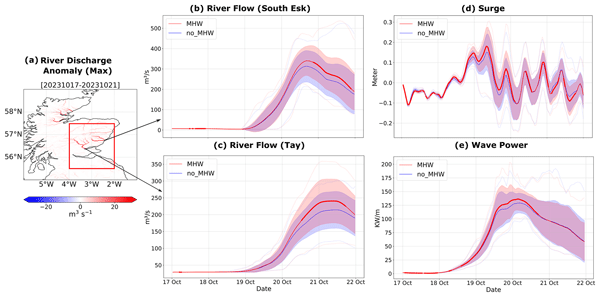
We examined how a marine heatwave - period of unusually warm ocean conditions - affected flooding and coastal erosion during a storm in northwest Europe. Using a state-of-the-art regional coupled model at km-scale, we compared simulations with and without the marine heatwave to isolate its effects on the storm hazards. Warmer shallow seas intensified rainfall, winds and surface depression of the storm, which integrated into larger increases of surge, wave power and river flows.
Nefeli Makrygianni, Ségolène Berthou, David L. A. Flack, Cindy Lebeaupin Brossier, Jonathan Beuvier, Juan Manuel Castillo, Emiliano Renzi, Clare O'Neill, Daniel Peláez-Zapata, Frederic Dias, Huw Lewis, and Diego Bruciaferri
Nat. Hazards Earth Syst. Sci., 26, 3185–3211, https://doi.org/10.5194/nhess-26-3185-2026, https://doi.org/10.5194/nhess-26-3185-2026, 2026
Short summary
Short summary
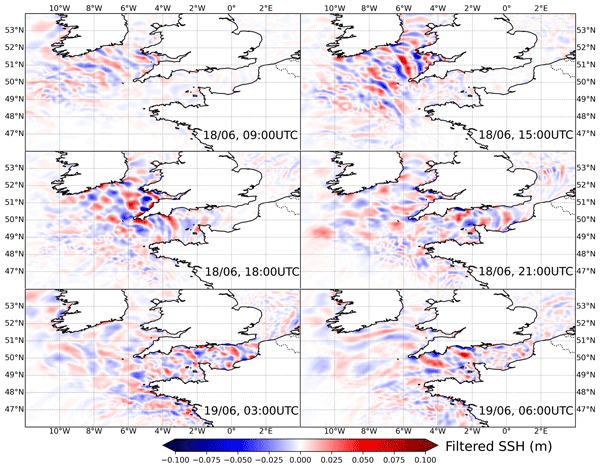
Meteotsunamis are rare but dangerous anomalous waves triggered by atmospheric disturbances, they are not currently forecast in Northwest Europe. We analysed the strongest recorded event on June 18, 2022, which reached 1 m amplitude. We showed high-resolution, high-frequency coupled models can represent such events up to three days ahead and help better understand their atmospheric triggers. These models, together with improved observations, can enhance early warnings and coastal safety.
Dale Partridge, Ségolène Berthou, Rebecca Millington, James R. Clark, Lucy Bricheno, Juan Manuel Castillo, Julia Rulent, and Huw Lewis
Ocean Sci., 22, 345–366, https://doi.org/10.5194/os-22-345-2026, https://doi.org/10.5194/os-22-345-2026, 2026
Short summary
Short summary
Phytoplankton blooms are governed by the availability of light and nutrients, both of which are affected by mixing in the upper layers of the ocean, which is impacted by wave activity on the surface. Most numerical ocean models estimate waves through a parameterisation, here we explicitly resolve waves through a coupled wave model to examine the impact on the strength and timing of phytoplankton blooms, particular during storms when wave activity is elevated.
Mike Bush, David L. A. Flack, Huw W. Lewis, Sylvia I. Bohnenstengel, Chris J. Short, Charmaine Franklin, Adrian P. Lock, Martin Best, Paul Field, Anne McCabe, Kwinten Van Weverberg, Segolene Berthou, Ian Boutle, Jennifer K. Brooke, Seb Cole, Shaun Cooper, Gareth Dow, John Edwards, Anke Finnenkoetter, Kalli Furtado, Kate Halladay, Kirsty Hanley, Margaret A. Hendry, Adrian Hill, Aravindakshan Jayakumar, Richard W. Jones, Humphrey Lean, Joshua C. K. Lee, Andy Malcolm, Marion Mittermaier, Saji Mohandas, Stuart Moore, Cyril Morcrette, Rachel North, Aurore Porson, Susan Rennie, Nigel Roberts, Belinda Roux, Claudio Sanchez, Chun-Hsu Su, Simon Tucker, Simon Vosper, David Walters, James Warner, Stuart Webster, Mark Weeks, Jonathan Wilkinson, Michael Whitall, Keith D. Williams, and Hugh Zhang
Geosci. Model Dev., 18, 3819–3855, https://doi.org/10.5194/gmd-18-3819-2025, https://doi.org/10.5194/gmd-18-3819-2025, 2025
Short summary
Short summary
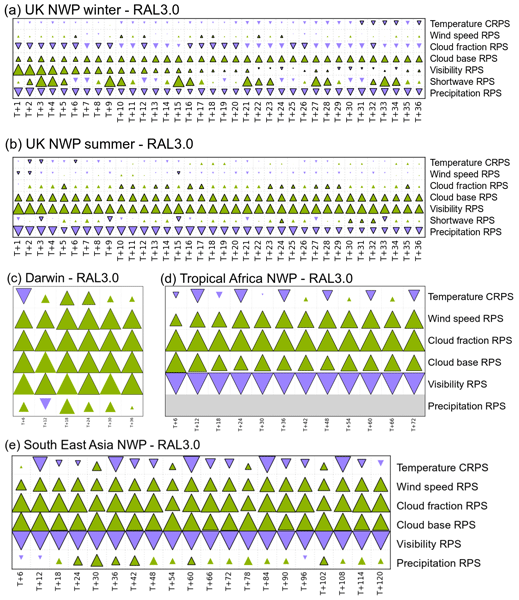
RAL configurations define settings for the Unified Model atmosphere and Joint UK Land Environment Simulator. The third version of the Regional Atmosphere and Land (RAL3) science configuration for kilometre- and sub-kilometre-scale modelling represents a major advance compared to previous versions (RAL2) by delivering a common science definition for applications in tropical and mid-latitude regions. RAL3 has more realistic precipitation distributions and an improved representation of clouds and visibility.
Ségolène Berthou, John Siddorn, Vivian Fraser-Leonhardt, Pierre-Yves Le Traon, and Ibrahim Hoteit
State Planet, 5-opsr, 20, https://doi.org/10.5194/sp-5-opsr-20-2025, https://doi.org/10.5194/sp-5-opsr-20-2025, 2025
Short summary
Short summary
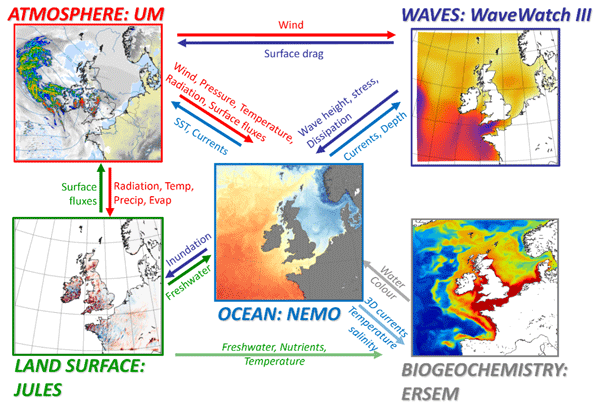
Ocean forecasting is traditionally done independently from atmospheric, wave, or river modelling. We discuss the benefits and challenges of bringing all these modelling systems together for ocean forecasting.
Geert Lenderink, Nikolina Ban, Erwan Brisson, Ségolène Berthou, Virginia Edith Cortés-Hernández, Elizabeth Kendon, Hayley J. Fowler, and Hylke de Vries
Hydrol. Earth Syst. Sci., 29, 1201–1220, https://doi.org/10.5194/hess-29-1201-2025, https://doi.org/10.5194/hess-29-1201-2025, 2025
Short summary
Short summary
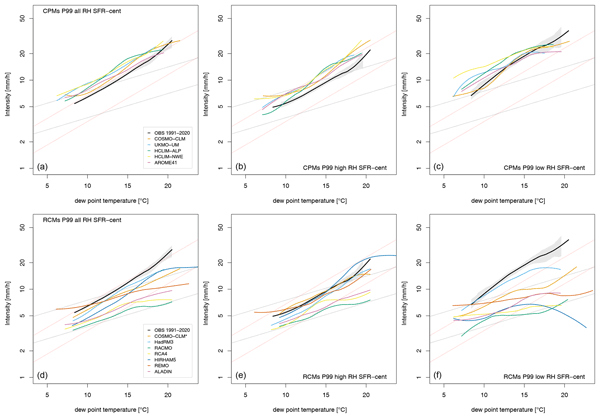
Future extreme rainfall events are influenced by changes in both absolute and relative humidity. The impact of increasing absolute humidity is reasonably well understood, but the role of relative humidity decreases over land remains largely unknown. Using hourly observations from France and the Netherlands, we find that lower relative humidity generally leads to more intense rainfall extremes. This relation is only captured well in recently developed convection-permitting climate models.
Claudio Sánchez, Suzanne Gray, Ambrogio Volonté, Florian Pantillon, Ségolène Berthou, and Silvio Davolio
Weather Clim. Dynam., 5, 1429–1455, https://doi.org/10.5194/wcd-5-1429-2024, https://doi.org/10.5194/wcd-5-1429-2024, 2024
Short summary
Short summary
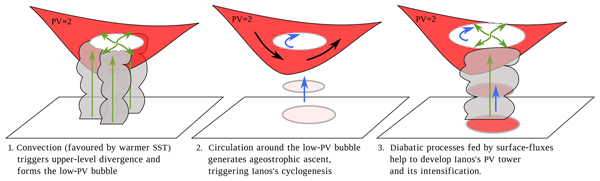
Medicane Ianos was a very intense cyclone that led to harmful impacts over Greece. We explore what processes are important for the forecasting of Medicane Ianos, with the use of the Met Office weather model. There was a preceding precipitation event before Ianos’s birth, whose energetics generated a bubble in the tropopause. This bubble created the necessary conditions for Ianos to emerge and strengthen, and the processes are enhanced in simulations with a warmer Mediterranean Sea.
Stefania A. Ciliberti, Enrique Alvarez Fanjul, Jay Pearlman, Kirsten Wilmer-Becker, Pierre Bahurel, Fabrice Ardhuin, Alain Arnaud, Mike Bell, Segolene Berthou, Laurent Bertino, Arthur Capet, Eric Chassignet, Stefano Ciavatta, Mauro Cirano, Emanuela Clementi, Gianpiero Cossarini, Gianpaolo Coro, Stuart Corney, Fraser Davidson, Marie Drevillon, Yann Drillet, Renaud Dussurget, Ghada El Serafy, Katja Fennel, Marcos Garcia Sotillo, Patrick Heimbach, Fabrice Hernandez, Patrick Hogan, Ibrahim Hoteit, Sudheer Joseph, Simon Josey, Pierre-Yves Le Traon, Simone Libralato, Marco Mancini, Pascal Matte, Angelique Melet, Yasumasa Miyazawa, Andrew M. Moore, Antonio Novellino, Andrew Porter, Heather Regan, Laia Romero, Andreas Schiller, John Siddorn, Joanna Staneva, Cecile Thomas-Courcoux, Marina Tonani, Jose Maria Garcia-Valdecasas, Jennifer Veitch, Karina von Schuckmann, Liying Wan, John Wilkin, and Romane Zufic
State Planet, 1-osr7, 2, https://doi.org/10.5194/sp-1-osr7-2-2023, https://doi.org/10.5194/sp-1-osr7-2-2023, 2023
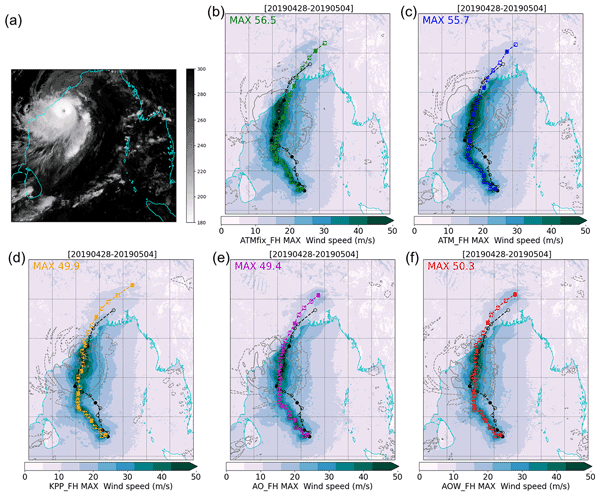
Juan Manuel Castillo, Huw W. Lewis, Akhilesh Mishra, Ashis Mitra, Jeff Polton, Ashley Brereton, Andrew Saulter, Alex Arnold, Segolene Berthou, Douglas Clark, Julia Crook, Ananda Das, John Edwards, Xiangbo Feng, Ankur Gupta, Sudheer Joseph, Nicholas Klingaman, Imranali Momin, Christine Pequignet, Claudio Sanchez, Jennifer Saxby, and Maria Valdivieso da Costa
Geosci. Model Dev., 15, 4193–4223, https://doi.org/10.5194/gmd-15-4193-2022, https://doi.org/10.5194/gmd-15-4193-2022, 2022
Short summary
Short summary
A new environmental modelling system has been developed to represent the effect of feedbacks between atmosphere, land, and ocean in the Indian region. Different approaches to simulating tropical cyclones Titli and Fani are demonstrated. It is shown that results are sensitive to the way in which the ocean response to cyclone evolution is captured in the system. Notably, we show how a more rigorous formulation for the near-surface energy budget can be included when air–sea coupling is included.
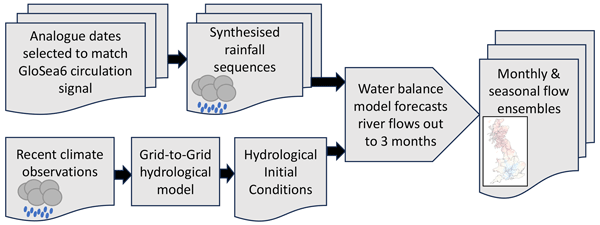
Mark D. Rhodes-Smith, Victoria A. Bell, Nicky Stringer, Helen Baron, Helen Davies, and Jeff Knight
Hydrol. Earth Syst. Sci., 30, 6189–6206, https://doi.org/10.5194/hess-30-6189-2026, https://doi.org/10.5194/hess-30-6189-2026, 2026
Short summary
Short summary
River flow forecasts up to three months ahead can allow early preparations for future floods and droughts. We test a new forecasting system using weather forecasts made by selecting historical weather patterns that match current conditions and running them through a simulation of Great Britain's rivers. Our tests show that this system performs particularly well in the winter and spring, in northern Scotland and in southern England. We now use this system to produce forecasts regularly.
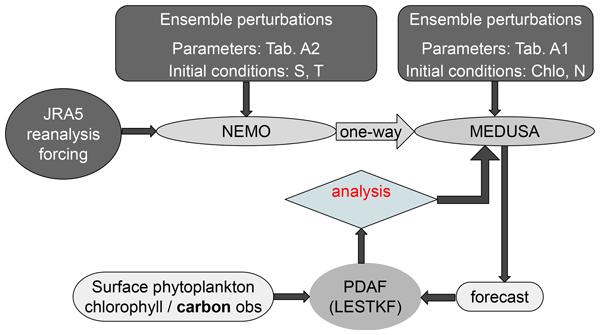
Yumeng Chen, Dale Partridge, and Lars Nerger
Geosci. Model Dev., 19, 7589–7613, https://doi.org/10.5194/gmd-19-7589-2026, https://doi.org/10.5194/gmd-19-7589-2026, 2026
Short summary
Short summary
Operational marine ecosystem forecasts traditionally rely on combining phytoplankton chlorophyll observations with model forecasts. However, using our newly developed ensemble data assimilation system, we demonstrate that assimilating phytoplankton carbon data leads to more balanced phytoplankton estimates and adjusts estimates of global ocean carbon.
Andressa Andrade Cardoso, Suzanne L. Gray, Ambrogio Volonté, Ben J. Harvey, and Claudio Sánchez
EGUsphere, https://doi.org/10.5194/egusphere-2026-4757, https://doi.org/10.5194/egusphere-2026-4757, 2026
Short summary
Short summary
We studied whether high-resolution weather models that simulate thunderstorm clouds directly, rather than estimating their effects, improve forecasts of hazardous Mediterranean storms. Unlike more typical Mediterranean storms, tropical-cyclone-like medicanes became much stronger in the high-resolution simulations. However, the results also depended on how physical processes were represented, showing that more accurate forecasts require both better model design and higher resolution.
Chris Huntingford, Rebecca J. Oliver, Lina M. Mercado, Stephen A. Sitch, Douglas B. Clark, Annikki Mäkelä, Carolina Mayoral, and Richard J. Norby
EGUsphere, https://doi.org/10.5194/egusphere-2026-4392, https://doi.org/10.5194/egusphere-2026-4392, 2026
This preprint is open for discussion and under review for Biogeosciences (BG).
Short summary
Short summary
Understanding carbon allocation among land-surface components in a changing climate is important, but it remains poorly understood. As a surrogate for missing knowledge and related equations, optimal allocation hypotheses are proposed. Makela et al. (2008) propose foliage nitrogen adjusted to maximise gross primary productivity. We add to that framework models of photosynthesis and respiration, creating an optimal structure that responds to different near-surface meteorological conditions.
Jake Patrick Keller, Oscar Martínez-Alvarado, Ben J. Harvey, Claudio Sanchez, and Benoît Vannière
EGUsphere, https://doi.org/10.5194/egusphere-2026-4273, https://doi.org/10.5194/egusphere-2026-4273, 2026
Short summary
Short summary
Storm Daniel led to severe flooding in Greece and Bulgaria, followed by a catastrophic flood in Derna, Libya. We establish that the event was difficult to predict because small errors in the track of Hurricane Franklin over the Atlantic several days earlier grew into large differences in forecasts over Europe. This study highlights the need for improved operational global weather forecasts and raises awareness of the early warning signs that can lead to high-impact weather.
Wenyao Gan, Martin Best, Pier Luigi Vidale, I. Colin Prentice, and Sandy P. Harrison
EGUsphere, https://doi.org/10.5194/egusphere-2026-2804, https://doi.org/10.5194/egusphere-2026-2804, 2026
Short summary
Short summary
Plants dynamically adjust their photosynthetic capacity as environmental conditions change, but most land models represent this with fixed parameters set separately for each plant type. We added a simple optimality-based photosynthesis scheme to the Joint UK Land Environment Simulator, allowing photosynthetic capacity to acclimate, and tested it against flux-tower observations together with the standard setups. The new scheme improves simulated carbon uptake without worsening energy fluxes.
Rajesh Kumar, Claudio Sanchez, Juan Manuel Castillo, Jian-Guo Li, Bijoy Thompson, Pratiman Patel, Alvin Ng, Kaushik Sasmal, Kalli Furtado, Hailin Yan, Liu Jianyu, and Hugh Zhang
EGUsphere, https://doi.org/10.5194/egusphere-2026-2024, https://doi.org/10.5194/egusphere-2026-2024, 2026
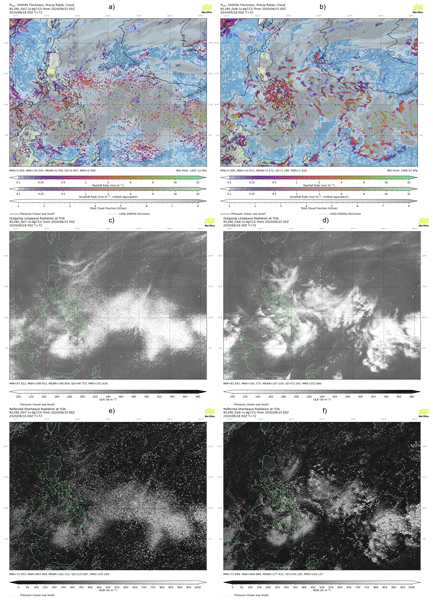
Short summary
Short summary
Weather over Southeast Asia is shaped by complex interactions between the air, ocean, and waves. We developed a high-resolution model that links these processes to better understand and predict rainfall patterns in the region. The results show that ocean–atmosphere interactions improve the representation and prediction of squall events that affect daily life in Singapore and surrounding regions. This work supports more accurate weather forecasting in the region.
Piyali Goswami, Ségolène Berthou, Theodore G. Shepherd, Ambrogio Volonté, Sana Mahmood, Juan Manuel Castillo, Anne-Christine Péquignet, Yong-June Park, Mark Worsfold, Regina Rodrigues, and Magdalena A. Balmaseda
Nat. Hazards Earth Syst. Sci., 26, 3213–3230, https://doi.org/10.5194/nhess-26-3213-2026, https://doi.org/10.5194/nhess-26-3213-2026, 2026
Short summary
Short summary
We examined how a marine heatwave - period of unusually warm ocean conditions - affected flooding and coastal erosion during a storm in northwest Europe. Using a state-of-the-art regional coupled model at km-scale, we compared simulations with and without the marine heatwave to isolate its effects on the storm hazards. Warmer shallow seas intensified rainfall, winds and surface depression of the storm, which integrated into larger increases of surge, wave power and river flows.
Nefeli Makrygianni, Ségolène Berthou, David L. A. Flack, Cindy Lebeaupin Brossier, Jonathan Beuvier, Juan Manuel Castillo, Emiliano Renzi, Clare O'Neill, Daniel Peláez-Zapata, Frederic Dias, Huw Lewis, and Diego Bruciaferri
Nat. Hazards Earth Syst. Sci., 26, 3185–3211, https://doi.org/10.5194/nhess-26-3185-2026, https://doi.org/10.5194/nhess-26-3185-2026, 2026
Short summary
Short summary
Meteotsunamis are rare but dangerous anomalous waves triggered by atmospheric disturbances, they are not currently forecast in Northwest Europe. We analysed the strongest recorded event on June 18, 2022, which reached 1 m amplitude. We showed high-resolution, high-frequency coupled models can represent such events up to three days ahead and help better understand their atmospheric triggers. These models, together with improved observations, can enhance early warnings and coastal safety.
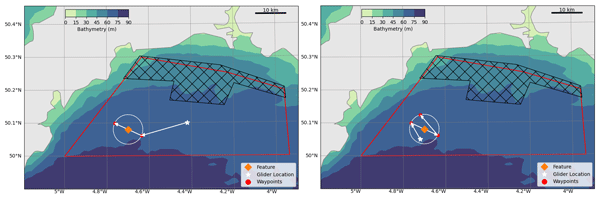
Dale Partridge, Deep Banerjee, David Ford, Ke Wang, Jozef Skákala, Juliane Wihsgott, Prathyush P. Menon, Susan Kay, Daniel Clewley, Andrea Rochner, Emma Sullivan, and Matthew Palmer
Ocean Sci., 22, 2083–2100, https://doi.org/10.5194/os-22-2083-2026, https://doi.org/10.5194/os-22-2083-2026, 2026
Short summary
Short summary
This study outlines the development and testing of a Digital Twin Ocean (DTO) framework, aimed at improving coastal ocean forecasts through the use of autonomous underwater gliders. A fleet of gliders were deployed in the western English Channel during August–September 2024 to collect measurements of temperature, salinity, chlorophyll and oxygen, aiming to track the movement of the harmful algal bloom Karenia mikimotoi.
Martin R. Willett, Melissa E. Brooks, Andrew Bushell, Paul Earnshaw, Charline Marzin, Samantha Smith, Lorenzo Tomassini, Nathan Luke Abraham, Martin Best, John M. Edwards, Kalli Furtado, Catherine Hardacre, Alan J. Hewitt, Ben Johnson, Adrian Lock, Jane P. Mulcahy, James Manners, Alistair Sellar, Peter Sheridan, Warren Tennant, Kwinten Van Weverberg, Vidya Varma, and Michael Whitall
EGUsphere, https://doi.org/10.5194/egusphere-2026-2425, https://doi.org/10.5194/egusphere-2026-2425, 2026
Short summary
Short summary
Global Atmosphere and Land (GAL) configurations of the Unified Model (UM) and JULES are developed for use in any global atmospheric modelling application. We describe the latest version, GAL9. We compare GAL9 with its predecessor and show that it gives improved forecasts of weather and climate. GAL9 has been used for weather forecasts in the UK from early 2026 and it will be used to study the Earth's climate.
Ehsan Modiri, Oldrich Rakovec, Pallav Kumar Shrestha, Almudena García-García, Leandro Avila, Katie Blackford, Elizabeth Cooper, Bram Droppers, Paolo Filippucci, Milan Fischer, Matěj Orság, Pietro Stradiotti, Luca Brocca, Douglas B. Clark, Wouter Dorigo, Stefan Kollet, Jian Peng, Niko Wanders, and Luis Samaniego
EGUsphere, https://doi.org/10.5194/egusphere-2026-1012, https://doi.org/10.5194/egusphere-2026-1012, 2026
Short summary
Short summary
Drought impacts water supply, agriculture, and ecosystems, yet hydrological models often disagree on when and where drought occurs. This study tested whether satellite observations can improve how models represent soil moisture drought in the Rhine River basin. Using several models and major drought events, we show that satellite data improve spatial realism and reveal important differences among models, helping to better understand uncertainty in drought monitoring and early warning.
Martin Willett, Melissa Brooks, Andrew Bushell, Paul Earnshaw, Samantha Smith, Lorenzo Tomassini, Martin Best, Ian Boutle, Jennifer Brooke, John M. Edwards, Andrew D. Elvidge, Kalli Furtado, Catherine Hardacre, Andrew J. Hartley, Alan J. Hewitt, Ben Johnson, Adrian Lock, Andy Malcolm, Jane Mulcahy, Eike Müller, Ian A. Renfrew, Heather Rumbold, Gabriel G. Rooney, Alistair Sellar, Masashi Ujiie, Annelize van Niekerk, Andy Wiltshire, and Michael Whitall
Geosci. Model Dev., 19, 1473–1517, https://doi.org/10.5194/gmd-19-1473-2026, https://doi.org/10.5194/gmd-19-1473-2026, 2026
Short summary
Short summary
Global Atmosphere (GA) configurations of the Unified Model (UM) and Global Land (GL) configurations of Joint UK Land Environment Simulator (JULES) are developed for use in any global atmospheric modelling application. We describe a recent iteration of these configurations, GA8GL9, which includes improvements to the representation of convection and other physical processes. GA8GL9 is used for operational weather prediction in the UK and forms the basis for the next GA and GL configuration.
Dale Partridge, Ségolène Berthou, Rebecca Millington, James R. Clark, Lucy Bricheno, Juan Manuel Castillo, Julia Rulent, and Huw Lewis
Ocean Sci., 22, 345–366, https://doi.org/10.5194/os-22-345-2026, https://doi.org/10.5194/os-22-345-2026, 2026
Short summary
Short summary
Phytoplankton blooms are governed by the availability of light and nutrients, both of which are affected by mixing in the upper layers of the ocean, which is impacted by wave activity on the surface. Most numerical ocean models estimate waves through a parameterisation, here we explicitly resolve waves through a coupled wave model to examine the impact on the strength and timing of phytoplankton blooms, particular during storms when wave activity is elevated.

Jon Cranko Page, Martin G. De Kauwe, Andy J. Pitman, Isaac R. Towers, Gabriele Arduini, Martin J. Best, Craig R. Ferguson, Jürgen Knauer, Hyungjun Kim, David M. Lawrence, Tomoko Nitta, Keith W. Oleson, Catherine Ottlé, Anna Ukkola, Nicholas Vuichard, Xiaoni Wang-Faivre, and Gab Abramowitz
Biogeosciences, 23, 263–282, https://doi.org/10.5194/bg-23-263-2026, https://doi.org/10.5194/bg-23-263-2026, 2026
Short summary
Short summary
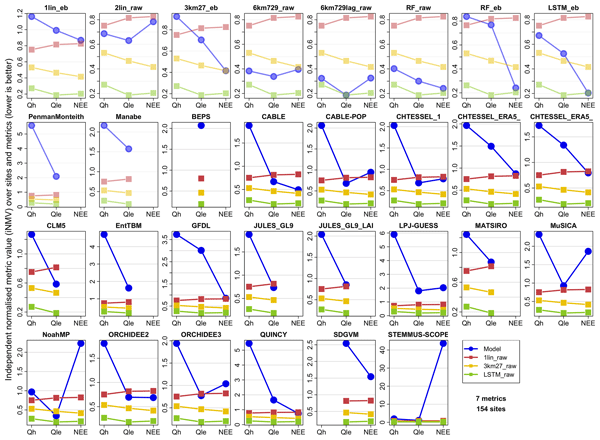
This paper used a large dataset of observations, machine learning predictions, and computer model simulations to test how well land surface models represent the water, energy, and carbon cycles. We found that the models work well under "normal" weather but do not meet performance expectations during coinciding extreme conditions. Since these extremes are relatively rare, targeted model improvements could deliver major performance gains.
Jozef Skákala, David Ford, Keith Haines, Amos Lawless, Matthew J. Martin, Philip Browne, Marcin Chrust, Stefano Ciavatta, Alison Fowler, Daniel Lea, Matthew Palmer, Andrea Rochner, Jennifer Waters, Hao Zuo, Deep S. Banerjee, Mike Bell, Davi M. Carneiro, Yumeng Chen, Susan Kay, Dale Partridge, Martin Price, Richard Renshaw, Georgy Shapiro, and James While
Ocean Sci., 21, 1709–1734, https://doi.org/10.5194/os-21-1709-2025, https://doi.org/10.5194/os-21-1709-2025, 2025
Short summary
Short summary
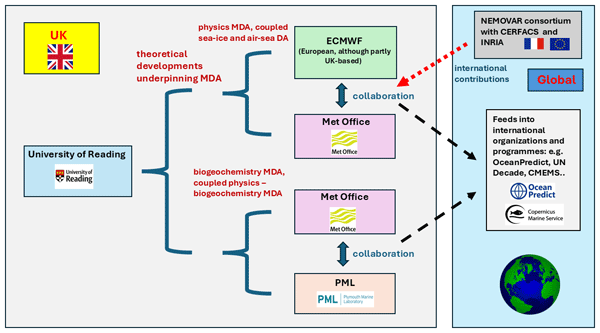
UK marine data assimilation (MDA) involves a closely collaborating research community. In this paper, we offer both an overview of the state of the art and a vision for the future across all of the main areas of UK MDA, ranging from physics to biogeochemistry to coupled DA. We discuss the current UK MDA stakeholder applications, highlight theoretical developments needed to advance our systems, and reflect upon upcoming opportunities with respect to hardware and observational missions.
Mike Bush, David L. A. Flack, Huw W. Lewis, Sylvia I. Bohnenstengel, Chris J. Short, Charmaine Franklin, Adrian P. Lock, Martin Best, Paul Field, Anne McCabe, Kwinten Van Weverberg, Segolene Berthou, Ian Boutle, Jennifer K. Brooke, Seb Cole, Shaun Cooper, Gareth Dow, John Edwards, Anke Finnenkoetter, Kalli Furtado, Kate Halladay, Kirsty Hanley, Margaret A. Hendry, Adrian Hill, Aravindakshan Jayakumar, Richard W. Jones, Humphrey Lean, Joshua C. K. Lee, Andy Malcolm, Marion Mittermaier, Saji Mohandas, Stuart Moore, Cyril Morcrette, Rachel North, Aurore Porson, Susan Rennie, Nigel Roberts, Belinda Roux, Claudio Sanchez, Chun-Hsu Su, Simon Tucker, Simon Vosper, David Walters, James Warner, Stuart Webster, Mark Weeks, Jonathan Wilkinson, Michael Whitall, Keith D. Williams, and Hugh Zhang
Geosci. Model Dev., 18, 3819–3855, https://doi.org/10.5194/gmd-18-3819-2025, https://doi.org/10.5194/gmd-18-3819-2025, 2025
Short summary
Short summary
RAL configurations define settings for the Unified Model atmosphere and Joint UK Land Environment Simulator. The third version of the Regional Atmosphere and Land (RAL3) science configuration for kilometre- and sub-kilometre-scale modelling represents a major advance compared to previous versions (RAL2) by delivering a common science definition for applications in tropical and mid-latitude regions. RAL3 has more realistic precipitation distributions and an improved representation of clouds and visibility.
Ségolène Berthou, John Siddorn, Vivian Fraser-Leonhardt, Pierre-Yves Le Traon, and Ibrahim Hoteit
State Planet, 5-opsr, 20, https://doi.org/10.5194/sp-5-opsr-20-2025, https://doi.org/10.5194/sp-5-opsr-20-2025, 2025
Short summary
Short summary
Ocean forecasting is traditionally done independently from atmospheric, wave, or river modelling. We discuss the benefits and challenges of bringing all these modelling systems together for ocean forecasting.
Geert Lenderink, Nikolina Ban, Erwan Brisson, Ségolène Berthou, Virginia Edith Cortés-Hernández, Elizabeth Kendon, Hayley J. Fowler, and Hylke de Vries
Hydrol. Earth Syst. Sci., 29, 1201–1220, https://doi.org/10.5194/hess-29-1201-2025, https://doi.org/10.5194/hess-29-1201-2025, 2025
Short summary
Short summary
Future extreme rainfall events are influenced by changes in both absolute and relative humidity. The impact of increasing absolute humidity is reasonably well understood, but the role of relative humidity decreases over land remains largely unknown. Using hourly observations from France and the Netherlands, we find that lower relative humidity generally leads to more intense rainfall extremes. This relation is only captured well in recently developed convection-permitting climate models.
Gab Abramowitz, Anna Ukkola, Sanaa Hobeichi, Jon Cranko Page, Mathew Lipson, Martin G. De Kauwe, Samuel Green, Claire Brenner, Jonathan Frame, Grey Nearing, Martyn Clark, Martin Best, Peter Anthoni, Gabriele Arduini, Souhail Boussetta, Silvia Caldararu, Kyeungwoo Cho, Matthias Cuntz, David Fairbairn, Craig R. Ferguson, Hyungjun Kim, Yeonjoo Kim, Jürgen Knauer, David Lawrence, Xiangzhong Luo, Sergey Malyshev, Tomoko Nitta, Jerome Ogee, Keith Oleson, Catherine Ottlé, Phillipe Peylin, Patricia de Rosnay, Heather Rumbold, Bob Su, Nicolas Vuichard, Anthony P. Walker, Xiaoni Wang-Faivre, Yunfei Wang, and Yijian Zeng
Biogeosciences, 21, 5517–5538, https://doi.org/10.5194/bg-21-5517-2024, https://doi.org/10.5194/bg-21-5517-2024, 2024
Short summary
Short summary
This paper evaluates land models – computer-based models that simulate ecosystem dynamics; land carbon, water, and energy cycles; and the role of land in the climate system. It uses machine learning and AI approaches to show that, despite the complexity of land models, they do not perform nearly as well as they could given the amount of information they are provided with about the prediction problem.
Claudio Sánchez, Suzanne Gray, Ambrogio Volonté, Florian Pantillon, Ségolène Berthou, and Silvio Davolio
Weather Clim. Dynam., 5, 1429–1455, https://doi.org/10.5194/wcd-5-1429-2024, https://doi.org/10.5194/wcd-5-1429-2024, 2024
Short summary
Short summary
Medicane Ianos was a very intense cyclone that led to harmful impacts over Greece. We explore what processes are important for the forecasting of Medicane Ianos, with the use of the Met Office weather model. There was a preceding precipitation event before Ianos’s birth, whose energetics generated a bubble in the tropopause. This bubble created the necessary conditions for Ianos to emerge and strengthen, and the processes are enhanced in simulations with a warmer Mediterranean Sea.
Florian Pantillon, Silvio Davolio, Elenio Avolio, Carlos Calvo-Sancho, Diego Saul Carrió, Stavros Dafis, Emanuele Silvio Gentile, Juan Jesus Gonzalez-Aleman, Suzanne Gray, Mario Marcello Miglietta, Platon Patlakas, Ioannis Pytharoulis, Didier Ricard, Antonio Ricchi, Claudio Sanchez, and Emmanouil Flaounas
Weather Clim. Dynam., 5, 1187–1205, https://doi.org/10.5194/wcd-5-1187-2024, https://doi.org/10.5194/wcd-5-1187-2024, 2024
Short summary
Short summary
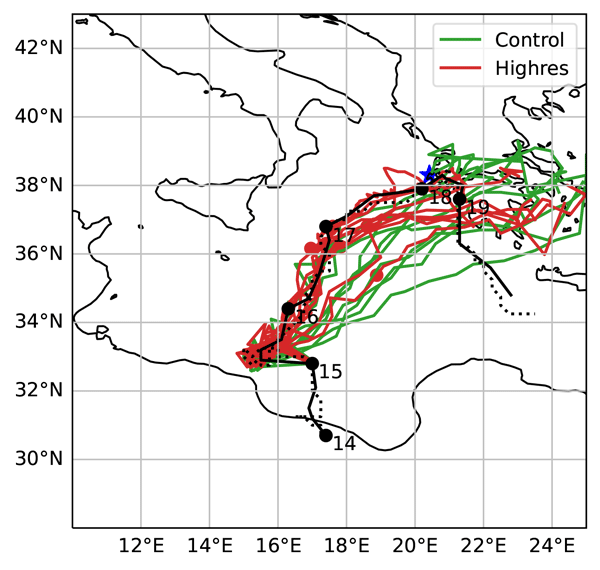
Cyclone Ianos of September 2020 was a high-impact but poorly predicted medicane (Mediterranean hurricane). A community effort of numerical modelling provides robust results to improve prediction. It is found that the representation of local thunderstorms controlled the interaction of Ianos with a jet stream at larger scales and its subsequent evolution. The results help us understand the peculiar dynamics of medicanes and provide guidance for the next generation of weather and climate models.
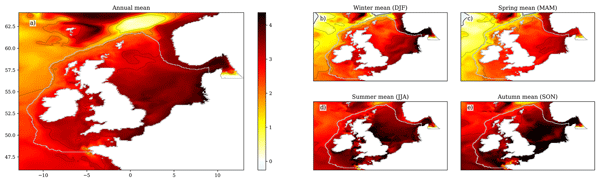
Jonathan Tinker, Matthew D. Palmer, Benjamin J. Harrison, Enda O'Dea, David M. H. Sexton, Kuniko Yamazaki, and John W. Rostron
Ocean Sci., 20, 835–885, https://doi.org/10.5194/os-20-835-2024, https://doi.org/10.5194/os-20-835-2024, 2024
Short summary
Short summary
The northwest European shelf (NWS) seas are economically and environmentally important but poorly represented in global climate models (GCMs). We combine use of a shelf sea model with GCM output to provide improved 21st century projections of the NWS. We project a NWS warming of 3.11 °C and freshening of −1.01, and we provide uncertainty estimates. We calculate the climate signal emergence and consider warming levels. We have released our data for the UK's Climate Change Risk Assessment.

Emma Howard, Steven Woolnough, Nicholas Klingaman, Daniel Shipley, Claudio Sanchez, Simon C. Peatman, Cathryn E. Birch, and Adrian J. Matthews
Geosci. Model Dev., 17, 3815–3837, https://doi.org/10.5194/gmd-17-3815-2024, https://doi.org/10.5194/gmd-17-3815-2024, 2024
Short summary
Short summary
This paper describes a coupled atmosphere–mixed-layer ocean simulation setup that will be used to study weather processes in Southeast Asia. The set-up has been used to compare high-resolution simulations, which are able to partially resolve storms, to coarser simulations, which cannot. We compare the model performance at representing variability of rainfall and sea surface temperatures across length scales between the coarse and fine models.
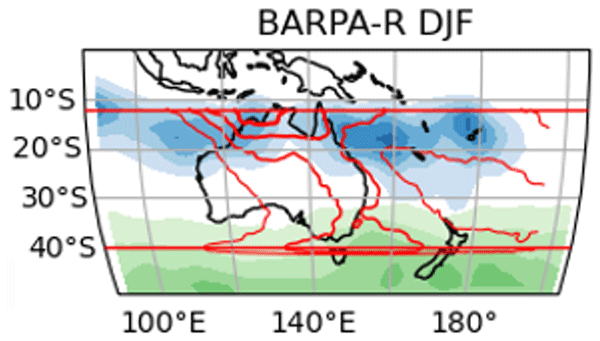
Emma Howard, Chun-Hsu Su, Christian Stassen, Rajashree Naha, Harvey Ye, Acacia Pepler, Samuel S. Bell, Andrew J. Dowdy, Simon O. Tucker, and Charmaine Franklin
Geosci. Model Dev., 17, 731–757, https://doi.org/10.5194/gmd-17-731-2024, https://doi.org/10.5194/gmd-17-731-2024, 2024
Short summary
Short summary
The BARPA-R modelling configuration has been developed to produce high-resolution climate hazard projections within the Australian region. When using boundary driving data from quasi-observed historical conditions, BARPA-R shows good performance with errors generally on par with reanalysis products. BARPA-R also captures trends, known modes of climate variability, large-scale weather processes, and multivariate relationships.
Stefania A. Ciliberti, Enrique Alvarez Fanjul, Jay Pearlman, Kirsten Wilmer-Becker, Pierre Bahurel, Fabrice Ardhuin, Alain Arnaud, Mike Bell, Segolene Berthou, Laurent Bertino, Arthur Capet, Eric Chassignet, Stefano Ciavatta, Mauro Cirano, Emanuela Clementi, Gianpiero Cossarini, Gianpaolo Coro, Stuart Corney, Fraser Davidson, Marie Drevillon, Yann Drillet, Renaud Dussurget, Ghada El Serafy, Katja Fennel, Marcos Garcia Sotillo, Patrick Heimbach, Fabrice Hernandez, Patrick Hogan, Ibrahim Hoteit, Sudheer Joseph, Simon Josey, Pierre-Yves Le Traon, Simone Libralato, Marco Mancini, Pascal Matte, Angelique Melet, Yasumasa Miyazawa, Andrew M. Moore, Antonio Novellino, Andrew Porter, Heather Regan, Laia Romero, Andreas Schiller, John Siddorn, Joanna Staneva, Cecile Thomas-Courcoux, Marina Tonani, Jose Maria Garcia-Valdecasas, Jennifer Veitch, Karina von Schuckmann, Liying Wan, John Wilkin, and Romane Zufic
State Planet, 1-osr7, 2, https://doi.org/10.5194/sp-1-osr7-2-2023, https://doi.org/10.5194/sp-1-osr7-2-2023, 2023
William Stanley Torgerson, Juliane Schwendike, Andrew Ross, and Chris Short
EGUsphere, https://doi.org/10.5194/egusphere-2023-1272, https://doi.org/10.5194/egusphere-2023-1272, 2023
Preprint archived
Short summary
Short summary
Two types of fluctuations were studied in Hurricane Irma (2017) using model simulations. The first type of fluctuation, the eyewall replacement cycle, has a Hurricane’s eyewall replaced by a second outer eyewall that develops further out. The other type of fluctuation has no replacement of the eyewall but a disruption to its structure instead.
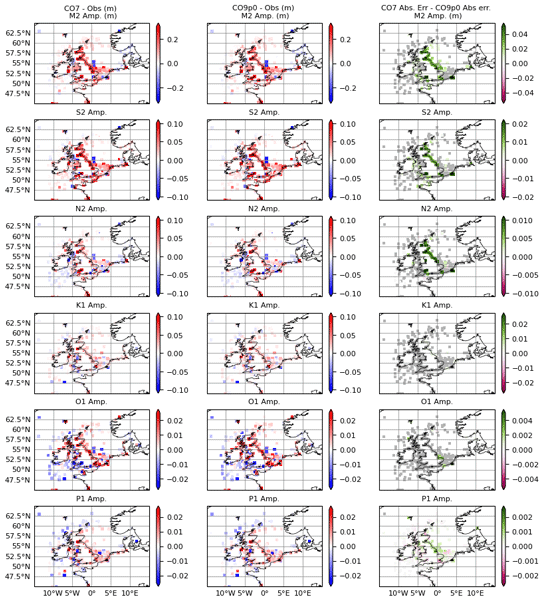
David Byrne, Jeff Polton, Enda O'Dea, and Joanne Williams
Geosci. Model Dev., 16, 3749–3764, https://doi.org/10.5194/gmd-16-3749-2023, https://doi.org/10.5194/gmd-16-3749-2023, 2023
Short summary
Short summary
Validation is a crucial step during the development of models for ocean simulation. The purpose of validation is to assess how accurate a model is. It is most commonly done by comparing output from a model to actual observations. In this paper, we introduce and demonstrate usage of the COAsT Python package to standardise the validation process for physical ocean models. We also discuss our five guiding principles for standardised validation.
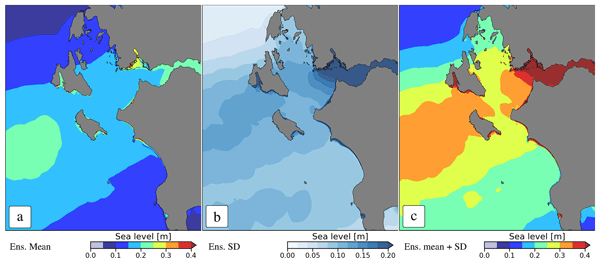
Christian Ferrarin, Florian Pantillon, Silvio Davolio, Marco Bajo, Mario Marcello Miglietta, Elenio Avolio, Diego S. Carrió, Ioannis Pytharoulis, Claudio Sanchez, Platon Patlakas, Juan Jesús González-Alemán, and Emmanouil Flaounas
Nat. Hazards Earth Syst. Sci., 23, 2273–2287, https://doi.org/10.5194/nhess-23-2273-2023, https://doi.org/10.5194/nhess-23-2273-2023, 2023
Short summary
Short summary
The combined use of meteorological and ocean models enabled the analysis of extreme sea conditions driven by Medicane Ianos, which hit the western coast of Greece on 18 September 2020, flooding and damaging the coast. The large spread associated with the ensemble highlighted the high model uncertainty in simulating such an extreme weather event. The different simulations have been used for outlining hazard scenarios that represent a fundamental component of the coastal risk assessment.
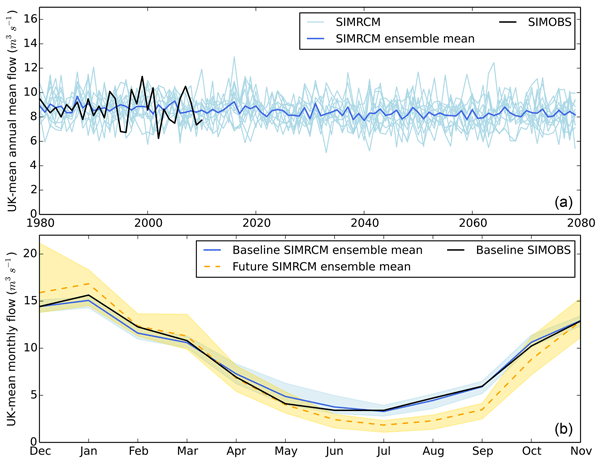
Alison L. Kay, Victoria A. Bell, Helen N. Davies, Rosanna A. Lane, and Alison C. Rudd
Earth Syst. Sci. Data, 15, 2533–2546, https://doi.org/10.5194/essd-15-2533-2023, https://doi.org/10.5194/essd-15-2533-2023, 2023
Short summary
Short summary
Climate change will affect the water cycle, including river flows and soil moisture. We have used both observational data (1980–2011) and the latest UK climate projections (1980–2080) to drive a national-scale grid-based hydrological model. The data, covering Great Britain and Northern Ireland, suggest potential future decreases in summer flows, low flows, and summer/autumn soil moisture, and possible future increases in winter and high flows. Society must plan how to adapt to such impacts.
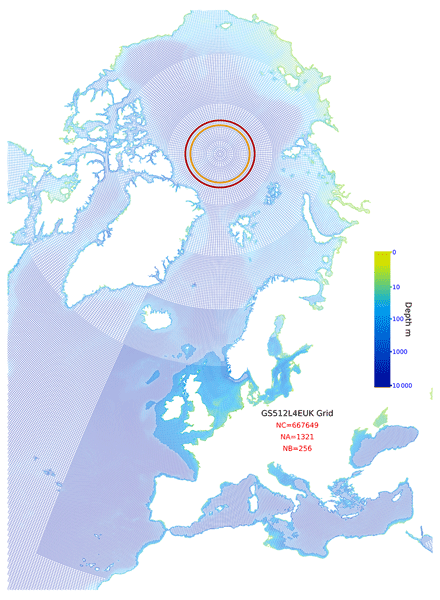
Nieves G. Valiente, Andrew Saulter, Breogan Gomez, Christopher Bunney, Jian-Guo Li, Tamzin Palmer, and Christine Pequignet
Geosci. Model Dev., 16, 2515–2538, https://doi.org/10.5194/gmd-16-2515-2023, https://doi.org/10.5194/gmd-16-2515-2023, 2023
Short summary
Short summary
We document the Met Office operational global and regional wave models which provide wave forecasts up to 7 d ahead. Our models present coarser resolution offshore to higher resolution near the coastline. The increased resolution led to replication of the extremes but to some overestimation during modal conditions. If currents are included, wave directions and long period swells near the coast are significantly improved. New developments focus on the optimisation of the models with resolution.

William Torgerson, Juliane Schwendike, Andrew Ross, and Chris J. Short
Weather Clim. Dynam., 4, 331–359, https://doi.org/10.5194/wcd-4-331-2023, https://doi.org/10.5194/wcd-4-331-2023, 2023
Short summary
Short summary
We investigated intensity fluctuations that occurred during the rapid intensification of Hurricane Irma (2017) to understand their effects on the storm structure. Using high-resolution model simulations, we found that the fluctuations were caused by local regions of strong ascent just outside the eyewall that disrupted the storm, leading to a larger and more symmetrical storm eye. This alters the location and intensity of the strongest winds in the storm and hence the storm's impact.

Heather S. Rumbold, Richard J. J. Gilham, and Martin J. Best
Geosci. Model Dev., 16, 1875–1886, https://doi.org/10.5194/gmd-16-1875-2023, https://doi.org/10.5194/gmd-16-1875-2023, 2023
Short summary
Short summary
The Joint UK Land Environment Simulator (JULES) uses a tiled representation of land cover but can only model a single dominant soil type within a grid box; hence there is no representation of sub-grid soil heterogeneity. This paper evaluates a new surface–soil tiling scheme in JULES and demonstrates the impacts of the scheme using several soil tiling approaches. Results show that soil tiling has an impact on the water and energy exchanges due to the way vegetation accesses the soil moisture.
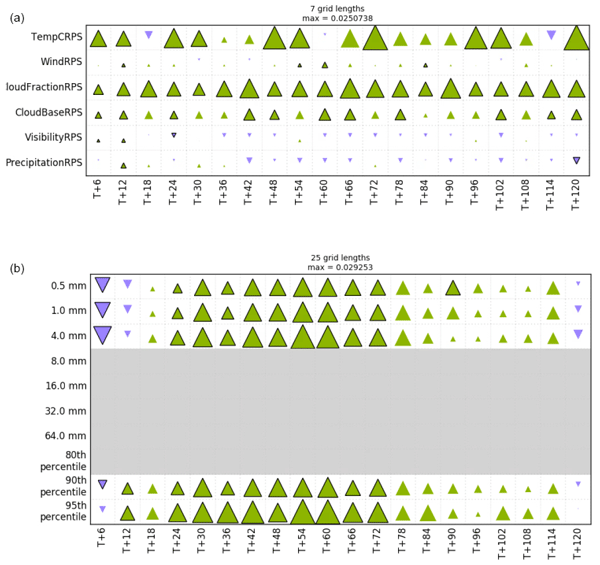
Mike Bush, Ian Boutle, John Edwards, Anke Finnenkoetter, Charmaine Franklin, Kirsty Hanley, Aravindakshan Jayakumar, Huw Lewis, Adrian Lock, Marion Mittermaier, Saji Mohandas, Rachel North, Aurore Porson, Belinda Roux, Stuart Webster, and Mark Weeks
Geosci. Model Dev., 16, 1713–1734, https://doi.org/10.5194/gmd-16-1713-2023, https://doi.org/10.5194/gmd-16-1713-2023, 2023
Short summary
Short summary
Building on the baseline of RAL1, the RAL2 science configuration is used for regional modelling around the UM partnership and in operations at the Met Office. RAL2 has been tested in different parts of the world including Australia, India and the UK. RAL2 increases medium and low cloud amounts in the mid-latitudes compared to RAL1, leading to improved cloud forecasts and a reduced diurnal cycle of screen temperature. There is also a reduction in the frequency of heavier precipitation rates.
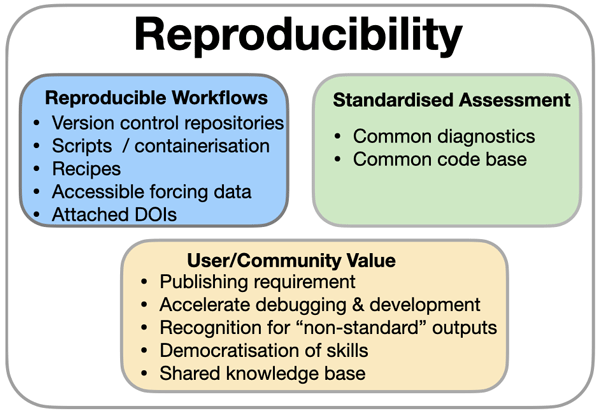
Jeff Polton, James Harle, Jason Holt, Anna Katavouta, Dale Partridge, Jenny Jardine, Sarah Wakelin, Julia Rulent, Anthony Wise, Katherine Hutchinson, David Byrne, Diego Bruciaferri, Enda O'Dea, Michela De Dominicis, Pierre Mathiot, Andrew Coward, Andrew Yool, Julien Palmiéri, Gennadi Lessin, Claudia Gabriela Mayorga-Adame, Valérie Le Guennec, Alex Arnold, and Clément Rousset
Geosci. Model Dev., 16, 1481–1510, https://doi.org/10.5194/gmd-16-1481-2023, https://doi.org/10.5194/gmd-16-1481-2023, 2023
Short summary
Short summary
The aim is to increase the capacity of the modelling community to respond to societally important questions that require ocean modelling. The concept of reproducibility for regional ocean modelling is developed: advocating methods for reproducible workflows and standardised methods of assessment. Then, targeting the NEMO framework, we give practical advice and worked examples, highlighting key considerations that will the expedite development cycle and upskill the user community.

Thibault Hallouin, Richard J. Ellis, Douglas B. Clark, Simon J. Dadson, Andrew G. Hughes, Bryan N. Lawrence, Grenville M. S. Lister, and Jan Polcher
Geosci. Model Dev., 15, 9177–9196, https://doi.org/10.5194/gmd-15-9177-2022, https://doi.org/10.5194/gmd-15-9177-2022, 2022
Short summary
Short summary
A new framework for modelling the water cycle in the land system has been implemented. It considers the hydrological cycle as three interconnected components, bringing flexibility in the choice of the physical processes and their spatio-temporal resolutions. It is designed to foster collaborations between land surface, hydrological, and groundwater modelling communities to develop the next-generation of land system models for integration in Earth system models.
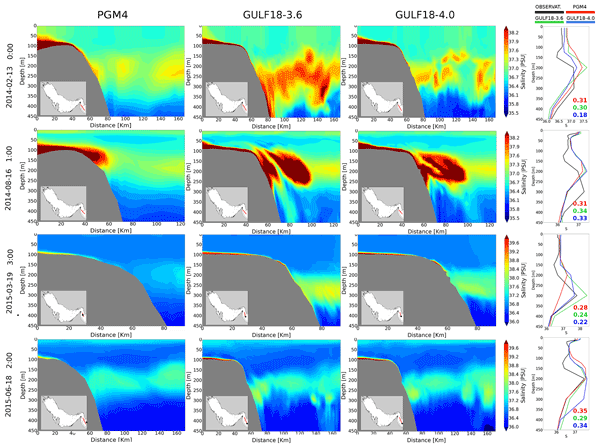
Diego Bruciaferri, Marina Tonani, Isabella Ascione, Fahad Al Senafi, Enda O'Dea, Helene T. Hewitt, and Andrew Saulter
Geosci. Model Dev., 15, 8705–8730, https://doi.org/10.5194/gmd-15-8705-2022, https://doi.org/10.5194/gmd-15-8705-2022, 2022
Short summary
Short summary
More accurate predictions of the Gulf's ocean dynamics are needed. We investigate the impact on the predictive skills of a numerical shelf sea model of the Gulf after changing a few key aspects. Increasing the lateral and vertical resolution and optimising the vertical coordinate system to best represent the leading physical processes at stake significantly improve the accuracy of the simulated dynamics. Additional work may be needed to get real benefit from using a more realistic bathymetry.
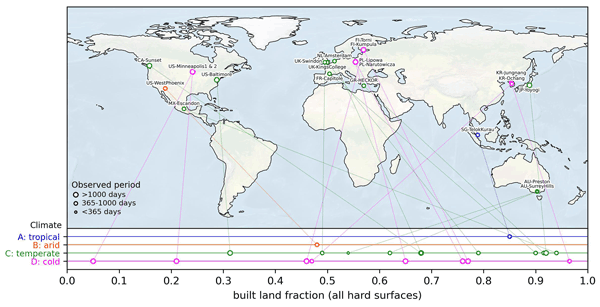
Mathew Lipson, Sue Grimmond, Martin Best, Winston T. L. Chow, Andreas Christen, Nektarios Chrysoulakis, Andrew Coutts, Ben Crawford, Stevan Earl, Jonathan Evans, Krzysztof Fortuniak, Bert G. Heusinkveld, Je-Woo Hong, Jinkyu Hong, Leena Järvi, Sungsoo Jo, Yeon-Hee Kim, Simone Kotthaus, Keunmin Lee, Valéry Masson, Joseph P. McFadden, Oliver Michels, Wlodzimierz Pawlak, Matthias Roth, Hirofumi Sugawara, Nigel Tapper, Erik Velasco, and Helen Claire Ward
Earth Syst. Sci. Data, 14, 5157–5178, https://doi.org/10.5194/essd-14-5157-2022, https://doi.org/10.5194/essd-14-5157-2022, 2022
Short summary
Short summary
We describe a new openly accessible collection of atmospheric observations from 20 cities around the world, capturing 50 site years. The observations capture local meteorology (temperature, humidity, wind, etc.) and the energy fluxes between the land and atmosphere (e.g. radiation and sensible and latent heat fluxes). These observations can be used to improve our understanding of urban climate processes and to test the accuracy of urban climate models.
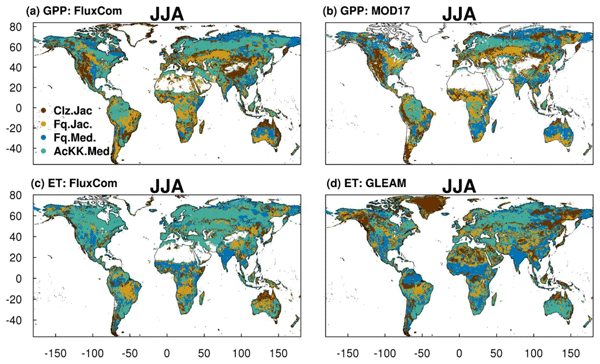
Rebecca J. Oliver, Lina M. Mercado, Doug B. Clark, Chris Huntingford, Christopher M. Taylor, Pier Luigi Vidale, Patrick C. McGuire, Markus Todt, Sonja Folwell, Valiyaveetil Shamsudheen Semeena, and Belinda E. Medlyn
Geosci. Model Dev., 15, 5567–5592, https://doi.org/10.5194/gmd-15-5567-2022, https://doi.org/10.5194/gmd-15-5567-2022, 2022
Short summary
Short summary
We introduce new representations of plant physiological processes into a land surface model. Including new biological understanding improves modelled carbon and water fluxes for the present in tropical and northern-latitude forests. Future climate simulations demonstrate the sensitivity of photosynthesis to temperature is important for modelling carbon cycle dynamics in a warming world. Accurate representation of these processes in models is necessary for robust predictions of climate change.
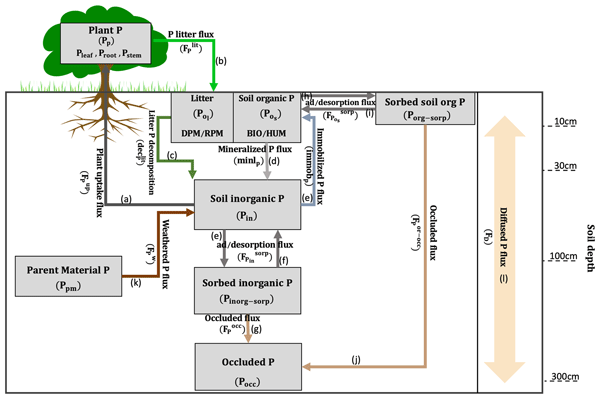
Mahdi André Nakhavali, Lina M. Mercado, Iain P. Hartley, Stephen Sitch, Fernanda V. Cunha, Raffaello di Ponzio, Laynara F. Lugli, Carlos A. Quesada, Kelly M. Andersen, Sarah E. Chadburn, Andy J. Wiltshire, Douglas B. Clark, Gyovanni Ribeiro, Lara Siebert, Anna C. M. Moraes, Jéssica Schmeisk Rosa, Rafael Assis, and José L. Camargo
Geosci. Model Dev., 15, 5241–5269, https://doi.org/10.5194/gmd-15-5241-2022, https://doi.org/10.5194/gmd-15-5241-2022, 2022
Short summary
Short summary
In tropical ecosystems, the availability of rock-derived elements such as P can be very low. Thus, without a representation of P cycling, tropical forest responses to rising atmospheric CO2 conditions in areas such as Amazonia remain highly uncertain. We introduced P dynamics and its interactions with the N and P cycles into the JULES model. Our results highlight the potential for high P limitation and therefore lower CO2 fertilization capacity in the Amazon forest with low-fertility soils.
Toby R. Marthews, Simon J. Dadson, Douglas B. Clark, Eleanor M. Blyth, Garry D. Hayman, Dai Yamazaki, Olivia R. E. Becher, Alberto Martínez-de la Torre, Catherine Prigent, and Carlos Jiménez
Hydrol. Earth Syst. Sci., 26, 3151–3175, https://doi.org/10.5194/hess-26-3151-2022, https://doi.org/10.5194/hess-26-3151-2022, 2022
Short summary
Short summary
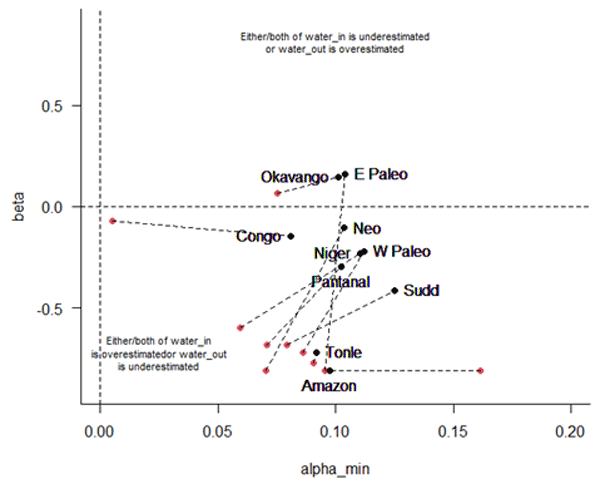
Reliable data on global inundated areas remain uncertain. By matching a leading global data product on inundation extents (GIEMS) against predictions from a global hydrodynamic model (CaMa-Flood), we found small but consistent and non-random biases in well-known tropical wetlands (Sudd, Pantanal, Amazon and Congo). These result from known limitations in the data and the models used, which shows us how to improve our ability to make critical predictions of inundation events in the future.
Juan Manuel Castillo, Huw W. Lewis, Akhilesh Mishra, Ashis Mitra, Jeff Polton, Ashley Brereton, Andrew Saulter, Alex Arnold, Segolene Berthou, Douglas Clark, Julia Crook, Ananda Das, John Edwards, Xiangbo Feng, Ankur Gupta, Sudheer Joseph, Nicholas Klingaman, Imranali Momin, Christine Pequignet, Claudio Sanchez, Jennifer Saxby, and Maria Valdivieso da Costa
Geosci. Model Dev., 15, 4193–4223, https://doi.org/10.5194/gmd-15-4193-2022, https://doi.org/10.5194/gmd-15-4193-2022, 2022
Short summary
Short summary
A new environmental modelling system has been developed to represent the effect of feedbacks between atmosphere, land, and ocean in the Indian region. Different approaches to simulating tropical cyclones Titli and Fani are demonstrated. It is shown that results are sensitive to the way in which the ocean response to cyclone evolution is captured in the system. Notably, we show how a more rigorous formulation for the near-surface energy budget can be included when air–sea coupling is included.

Julia Rulent, Lucy M. Bricheno, J. A. Mattias Green, Ivan D. Haigh, and Huw Lewis
Nat. Hazards Earth Syst. Sci., 21, 3339–3351, https://doi.org/10.5194/nhess-21-3339-2021, https://doi.org/10.5194/nhess-21-3339-2021, 2021
Short summary
Short summary
High coastal total water levels (TWLs) can lead to flooding and hazardous conditions for coastal communities and environment. In this research we are using numerical models to study the interactions between the three main components of the TWL (waves, tides, and surges) on UK and Irish coasts during winter 2013/14. The main finding of this research is that extreme waves and surges can indeed happen together, even at high tide, but they often occurred simultaneously 2–3 h before high tide.
Cited articles
Ardhuin, F., Rogers, E., Babanin, A. V., Filipot, J. F., Magne, R., Roland, A., van der Westhuysen, A., Queffeulou, P., Lefevre, J. M., Aouf, L., and Collard, F.: Semiempirical Dissipation Source Functions for Ocean Waves, Part I: Definition, Calibration, and Validation, J. Phys. Oceanogr., 40, 1917–1941, https://doi.org/10.1175/2010JPO4324.1, 2010.
Barrett, P., Abel, S., Lean, H., Price, J., Stein, T., Stirling, A., and Darlington, T.: WesCon 2023: Wessex UK Summertime Convection Field Campaign, EGU21, https://doi.org/10.5194/EGUSPHERE-EGU21-2357, 2021.
Berthou, S.: RCS-UKC4 configuration paper data and code, Zenodo [data set], https://doi.org/10.5281/zenodo.22286990, 2025.
Berthou, S., Renshaw, R., Smyth, T., Tinker, J., Grist, J. P., Wihsgott, J. U., Jones, S., Inall, M., Nolan, G., Berx, B., Arnold, A., Blunn, L. P., Castillo, J. M., Cotterill, D., Daly, E., Dow, G., Gómez, B., Fraser-Leonhardt, V., Hirschi, J. J.-M., Lewis, H. W., Mahmood, S., and Worsfold, M.: Exceptional atmospheric conditions in June 2023 generated a northwest European marine heatwave which contributed to breaking land temperature records, Commun. Earth Environ., 5, 287, https://doi.org/10.1038/s43247-024-01413-8, 2024.
Berthou, S., Siddorn, J., Fraser-Leonhardt, V., Le Traon, P.-Y., and Hoteit, I.: Towards Earth system modelling: coupled ocean forecasting, State Planet, 5-opsr, 20, https://doi.org/10.5194/sp-5-opsr-20-2025, 2025.
Best, M. J., Beljaars, A., Polcher, J., and Viterbo, P.: A Proposed Structure for Coupling Tiled Surfaces with the Planetary Boundary Layer, J. Hydrometeorol., 5, 1271–1278, https://doi.org/10.1175/JHM-382.1, 2004.
Best, M. J., Pryor, M., Clark, D. B., Rooney, G. G., Essery, R. L. H., Ménard, C. B., Edwards, J. M., Hendry, M. A., Porson, A., Gedney, N., Mercado, L. M., Sitch, S., Blyth, E., Boucher, O., Cox, P. M., Grimmond, C. S. B., and Harding, R. J.: The Joint UK Land Environment Simulator (JULES), model description – Part 1: Energy and water fluxes, Geosci. Model Dev., 4, 677–699, https://doi.org/10.5194/gmd-4-677-2011, 2011.
Bidlot, J. R.: Enhancing tropical cyclone forecasts, ECMWF Newsletter, https://doi.org/10.21957/k0w4fp581h, 2020.
Brooks, R. H. and Corey, A. T.: Hydraulic properties of porous media, Hydrological Papers 3, Colorado State Univ., Fort Collins, https://mountainscholar.org/items/3c7b98df-13e3-486c-9d1e-949a7a869f76 (last access: 10 September 2026), 1964.
Brown, A. R., Milton, S., Cullen, M., Golding, B., Mitchell, J., and Shelly, A.: Unified modelling and prediction of weather and climate: a 25 year journey, Bull. Am. Meteorol. Soc., 93, 1865–1877, https://doi.org/10.1175/BAMS-D-12-00018.1, 2012.
Bruciaferri, D., Tonani, M., Lewis, H. W., Siddorn, J. R., Saulter, A., Castillo Sanchez, J. M., Valiente, N. G., Conley, D., Sykes, P., Ascione, I., and McConnell, N.: The Impact of Ocean-Wave Coupling on the Upper Ocean Circulation During Storm Events, J. Geophys. Res. Oceans, 126, e2021JC017343, https://doi.org/10.1029/2021JC017343, 2021.
Bruggeman, J. and Bolding, K.: A general framework for aquatic biogeochemical models, Environ. Model. Softw., 61, 249–265, https://doi.org/10.1016/j.envsoft.2014.04.002, 2014.
Bush, M., Allen, T., Bain, C., Boutle, I., Edwards, J., Finnenkoetter, A., Franklin, C., Hanley, K., Lean, H., Lock, A., Manners, J., Mittermaier, M., Morcrette, C., North, R., Petch, J., Short, C., Vosper, S., Walters, D., Webster, S., Weeks, M., Wilkinson, J., Wood, N., and Zerroukat, M.: The first Met Office Unified Model–JULES Regional Atmosphere and Land configuration, RAL1, Geosci. Model Dev., 13, 1999–2029, https://doi.org/10.5194/gmd-13-1999-2020, 2020.
Bush, M., Boutle, I., Edwards, J., Finnenkoetter, A., Franklin, C., Hanley, K., Jayakumar, A., Lewis, H., Lock, A., Mittermaier, M., Mohandas, S., North, R., Porson, A., Roux, B., Webster, S., and Weeks, M.: The second Met Office Unified Model–JULES Regional Atmosphere and Land configuration, RAL2, Geosci. Model Dev., 16, 1713–1734, https://doi.org/10.5194/gmd-16-1713-2023, 2023.
Bush, M., Flack, D. L. A., Lewis, H. W., Bohnenstengel, S. I., Short, C. J., Franklin, C., Lock, A. P., Best, M., Field, P., McCabe, A., Van Weverberg, K., Berthou, S., Boutle, I., Brooke, J. K., Cole, S., Cooper, S., Dow, G., Edwards, J., Finnenkoetter, A., Furtado, K., Halladay, K., Hanley, K., Hendry, M. A., Hill, A., Jayakumar, A., Jones, R. W., Lean, H., Lee, J. C. K., Malcolm, A., Mittermaier, M., Mohandas, S., Moore, S., Morcrette, C., North, R., Porson, A., Rennie, S., Roberts, N., Roux, B., Sanchez, C., Su, C.-H., Tucker, S., Vosper, S., Walters, D., Warner, J., Webster, S., Weeks, M., Wilkinson, J., Whitall, M., Williams, K. D., and Zhang, H.: The third Met Office Unified Model–JULES Regional Atmosphere and Land Configuration, RAL3, Geosci. Model Dev., 18, 3819–3855, https://doi.org/10.5194/gmd-18-3819-2025, 2025.
Butenschön, M., Clark, J., Aldridge, J. N., Allen, J. I., Artioli, Y., Blackford, J., Bruggeman, J., Cazenave, P., Ciavatta, S., Kay, S., Lessin, G., van Leeuwen, S., van der Molen, J., de Mora, L., Polimene, L., Sailley, S., Stephens, N., and Torres, R.: ERSEM 15.06: a generic model for marine biogeochemistry and the ecosystem dynamics of the lower trophic levels, Geosci. Model Dev., 9, 1293–1339, https://doi.org/10.5194/gmd-9-1293-2016, 2016.
Castillo, J. M., Lewis, H. W., Mishra, A., Mitra, A., Polton, J., Brereton, A., Saulter, A., Arnold, A., Berthou, S., Clark, D., Crook, J., Das, A., Edwards, J., Feng, X., Gupta, A., Joseph, S., Klingaman, N., Momin, I., Pequignet, C., Sanchez, C., Saxby, J., and Valdivieso da Costa, M.: The Regional Coupled Suite (RCS-IND1): application of a flexible regional coupled modelling framework to the Indian region at kilometre scale, Geosci. Model Dev., 15, 4193–4223, https://doi.org/10.5194/gmd-15-4193-2022, 2022.
Cavaleri, L., Abdalla, S., Benetazzo, A., Bertotti, L., Bidlot, J.-R., Breivik, Ø., Carniel, S., Jensen, R. E., Portilla-Yandun, J., Rogers, W. E., Roland, A., Sanchez-Arcilla, A., Smith, J. M., Staneva, J., Toledo, Y., van Vledder, G. Ph., and van der Westhuysen, A. J.: Wave modelling in coastal and inner seas, Prog. Oceanogr., 167, 164–233, https://doi.org/10.1016/j.pocean.2018.03.010, 2018.
Cullen, M. J. P.: The unified forecast/climate model, Meteorol. Mag., 122, 81–94, 1993.
de Boyer Montégut, C., Madec, G., Fischer, A. S., Lazar, A., and Iudicone, D.: Mixed layer depth over the global ocean: An examination of profile data and a profile-based climatology, J. Geophys. Res. Oceans, 109, https://doi.org/10.1029/2004JC002378, 2004.
Donelan, M. A.: On the decrease of the oceanic drag coefficient in high winds, J. Geophys. Res. Oceans, 123, 1485–1501, 2018.
Durnford, D., Fortin, V., Smith, G. C., Archambault, B., Deacu, D., Dupont, F., Dyck, S., Martinez, Y., Klyszejko, E., MacKay, M., Liu, L., Pellerin, P., Pietroniro, A., Roy, F., Vu, V., Winter, B., Yu, W., Spence, C., Bruxer, J., and Dickhout, J.: Toward an Operational Water Cycle Prediction System for the Great Lakes and St. Lawrence River, Bull. Am. Meteorol. Soc., 99, 521–546, https://doi.org/10.1175/BAMS-D-16-0155.1, 2018.
EU Copernicus Marine Service Information (CMEMS): Atlantic- European North West Shelf-Wave Physics Reanalysis, Marine Data Store (MDS) [data set], https://doi.org/10.48670/moi-00060, 2025.
Fallmann, J., Lewis, H., Sanchez, J. C., and Lock, A.: Impact of high-resolution ocean–atmosphere coupling on fog formation over the North Sea, Q. J. R. Meteorol. Soc., 145, 1180–1201, https://doi.org/10.1002/qj.3488, 2019.
Field, P. R., Hill, A., Shipway, B., Furtado, K., Wilkinson, J., Miltenberger, A., Gordon, H., Grosvenor, D. P., Stevens, R., and Van Weverberg, K.: Implementation of a double moment cloud microphysics scheme in the UK met office regional numerical weather prediction model, Q. J. R. Meteorol. Soc., 149, 703–739, https://doi.org/10.1002/qj.4414, 2023.
Fortin, V., Abaza, M., Anctil, F., and Turcotte, R.: Why Should Ensemble Spread Match the RMSE of the Ensemble Mean?, J. Hydrometeorol., 15, 1708–1713, https://doi.org/10.1175/JHM-D-14-0008.1, 2014.
Gedney, N. and Cox, P. M.: The sensitivity of global climate model simulations to the representation of soil moisture heterogeneity, J. Hydrometeorol., 4, 1265–1275, 2003.
Gentile, E. S., Gray, S. L., Barlow, J. F., Lewis, H. W., and Edwards, J. M.: The Impact of Atmosphere–Ocean–Wave Coupling on the Near-Surface Wind Speed in Forecasts of Extratropical Cyclones, Boundary Layer Meteorol., 180, 105–129, https://doi.org/10.1007/s10546-021-00614-4, 2021.
Gentile, E. S., Gray, S. L., and Lewis, H. W.: The sensitivity of probabilistic convective-scale forecasts of an extratropical cyclone to atmosphere–ocean–wave coupling, Q. J. R. Meteorol. Soc., 148, 685–710, https://doi.org/10.1002/qj.4225, 2022.
Good, S., Fiedler, E., Mao, C., Martin, M. J., Maycock, A., Reid, R., Roberts-Jones, J., Searle, T., Waters, J., While, J., and Worsfold, M.: The Current Configuration of the OSTIA System for Operational Production of Foundation Sea Surface Temperature and Ice Concentration Analyses, Remote Sens. (Basel)., 12, https://doi.org/10.3390/rs12040720, 2020.
Goswami, P., Berthou, S., Shepherd, T. G., Volonté, A., Mahmood, S., Castillo, J. M., Péquignet, A.-C., Park, Y.-J., Worsfold, M., Rodrigues, R., and Balmaseda, M. A.: Marine heatwave amplifies extreme multi-hazards of extratropical cyclone Babet, Nat. Hazards Earth Syst. Sci., 26, 3213–3230, https://doi.org/10.5194/nhess-26-3213-2026, 2026.
Graham, J. A., O'Dea, E., Holt, J., Polton, J., Hewitt, H. T., Furner, R., Guihou, K., Brereton, A., Arnold, A., Wakelin, S., Castillo Sanchez, J. M., and Mayorga Adame, C. G.: AMM15: a new high-resolution NEMO configuration for operational simulation of the European north-west shelf, Geosci. Model Dev., 11, 681–696, https://doi.org/10.5194/gmd-11-681-2018, 2018.
Guiavarc'h, C., Roberts-Jones, J., Harris, C., Lea, D. J., Ryan, A., and Ascione, I.: Assessment of ocean analysis and forecast from an atmosphere–ocean coupled data assimilation operational system, Ocean Sci., 15, 1307–1326, https://doi.org/10.5194/os-15-1307-2019, 2019.
Hersbach, H., Bell, B., Berrisford, P., Hirahara, S., Horányi, A., Muñoz-Sabater, J., Nicolas, J., Peubey, C., Radu, R., Schepers, D., Simmons, A., Soci, C., Abdalla, S., Abellan, X., Balsamo, G., Bechtold, P., Biavati, G., Bidlot, J., Bonavita, M., De Chiara, G., Dahlgren, P., Dee, D., Diamantakis, M., Dragani, R., Flemming, J., Forbes, R., Fuentes, M., Geer, A., Haimberger, L., Healy, S., Hogan, R. J., Hólm, E., Janisková, M., Keeley, S., Laloyaux, P., Lopez, P., Lupu, C., Radnoti, G., de Rosnay, P., Rozum, I., Vamborg, F., Villaume, S., and Thépaut, J.-N.: The ERA5 global reanalysis, Q. J. R. Meteorol. Soc., 146, 1999–2049, https://doi.org/10.1002/qj.3803, 2020.
Holt, J., Hyder, P., Ashworth, M., Harle, J., Hewitt, H. T., Liu, H., New, A. L., Pickles, S., Porter, A., Popova, E., Allen, J. I., Siddorn, J., and Wood, R.: Prospects for improving the representation of coastal and shelf seas in global ocean models, Geosci. Model Dev., 10, 499–523, https://doi.org/10.5194/gmd-10-499-2017, 2017.
Janssen, P. A. E. M.: Quasi-linear theory of wind-wave generation applied to wave forecasting, J. Phys. Oceanogr., 21, 1631–1642, https://doi.org/10.1175/1520-0485(1991)021<1631:QLTOWW>2.0.CO;2, 1991.
Janssen, P.: The interaction of ocean waves and wind, Cambridge University Press, https://doi.org/10.1017/CBO9780511525018, 2004.
Kendon, E. J., Rowell, D. P., and Jones, R. G.: Mechanisms and reliability of future projected changes in daily precipitation, Clim. Dyn., 35, 489–509, https://doi.org/10.1007/s00382-009-0639-z, 2010.
Komaromi, W. A., Reinecke, P. A., Doyle, J. D., and Moskaitis, J. R.: The Naval Research Laboratory's Coupled Ocean–Atmosphere Mesoscale Prediction System-Tropical Cyclone Ensemble (COAMPS-TC Ensemble), Weather Forecast., 36, 499–517, https://doi.org/10.1175/WAF-D-20-0038.1, 2021.
Lea, D. J., While, J., Martin, M. J., Weaver, A., Storto, A., and Chrust, M.: A new global ocean ensemble system at the Met Office: Assessing the impact of hybrid data assimilation and inflation settings, Q. J. R. Meteorol. Soc., 148, 1996–2030, https://doi.org/10.1002/qj.4292, 2022.
Lewis, C., Smyth, T., Williams, D., Neumann, J., and Cloke, H.: Meteotsunami in the United Kingdom: the hidden hazard, Nat. Hazards Earth Syst. Sci., 23, 2531–2546, https://doi.org/10.5194/nhess-23-2531-2023, 2023.
Lewis, H. W., Manuel Castillo Sanchez, J., Graham, J., Saulter, A., Bornemann, J., Arnold, A., Fallmann, J., Harris, C., Pearson, D., Ramsdale, S., Martínez-De La Torre, A., Bricheno, L., Blyth, E., Bell, V. A., Davies, H., Marthews, T. R., O'Neill, C., Rumbold, H., O'Dea, E., Brereton, A., Guihou, K., Hines, A., Butenschon, M., Dadson, S. J., Palmer, T., Holt, J., Reynard, N., Best, M., Edwards, J., and Siddorn, J.: The UKC2 regional coupled environmental prediction system, Geosci. Model Dev., 11, 1–42, https://doi.org/10.5194/gmd-11-1-2018, 2018.
Lewis, H. W., Castillo Sanchez, J. M., Siddorn, J., King, R. R., Tonani, M., Saulter, A., Sykes, P., Pequignet, A.-C., Weedon, G. P., Palmer, T., Staneva, J., and Bricheno, L.: Can wave coupling improve operational regional ocean forecasts for the north-west European Shelf?, Ocean Sci., 15, 669–690, https://doi.org/10.5194/os-15-669-2019, 2019a.
Lewis, H. W., Castillo Sanchez, J. M., Arnold, A., Fallmann, J., Saulter, A., Graham, J., Bush, M., Siddorn, J., Palmer, T., Lock, A., Edwards, J., Bricheno, L., Martínez-de la Torre, A., and Clark, J.: The UKC3 regional coupled environmental prediction system, Geosci. Model Dev., 12, 2357–2400, https://doi.org/10.5194/gmd-12-2357-2019, 2019b.
Lewis, H. W. and Dadson, S. J.: A regional coupled approach to water cycle prediction during winter 2013/14 in the United Kingdom, Hydrol. Process., 35, e14438, https://doi.org/10.1002/hyp.14438, 2021.
Li, J. G.: Hybrid multi-grid parallelisation of WAVEWATCH III model on spherical multiple-cell grids, J. Parallel Distrib. Comput., 167, 187–198, https://doi.org/10.1016/J.JPDC.2022.05.002, 2022.
MacLachlan, C., Arribas, A., Peterson, D., Maidens, A., Fereday, D., Scaife, A. A., Gordon, M., Vellinga, M., Williams, A., Comer, R. E., Camp, J., Xavier, P., and Madec, G.: Global Seasonal forecast system version 5 (GloSea5): a high-resolution seasonal forecast system, Q. J. R. Meteorol. Soc., 141, 1072–1084, https://doi.org/10.1002/qj.2396, 2015.
Madec, G. and the NEMO System Team: NEMO Ocean Engine Reference Manual, Zenodo, https://doi.org/10.5281/zenodo.3878122, 2019.
Mahmood, S., Lewis, H., Arnold, A., Castillo, J., Sanchez, C., and Harris, C.: The impact of time-varying sea surface temperature on UK regional atmosphere forecasts, Meteorol. Appl., 28, e1983, https://doi.org/10.1002/met.1983, 2021.
Makrygianni, N., Berthou, S., Flack, D. L. A., Lebeaupin Brossier, C., Beuvier, J., Castillo, J. M., Renzi, E., O'Neill, C., Peláez-Zapata, D., Dias, F., Lewis, H., and Bruciaferri, D.: Representation of meteotsunamis in km-scale regional simulations coupled at high frequency, Nat. Hazards Earth Syst. Sci., 26, 3185–3211, https://doi.org/10.5194/nhess-26-3185-2026, 2026.
Moore, R. J.: The probability distributed principle and runoff production at point and basin scales, Hydrolog. Sci. J., 30, 273–297, 1985.
Oliver, H., Shin, M., Matthews, D., Sanders, O., Bartholomew, S., Clark, A., Fitzpatrick, B., van Haren, R., Hut, R., and Drost, N.: Workflow Automation for Cycling Systems, Comput. Sci. Eng., 21, 7–21, https://doi.org/10.1109/MCSE.2019.2906593, 2019.
Partridge, D., Berthou, S., Millington, R., Clark, J. R., Bricheno, L., Castillo, J. M., Rulent, J., and Lewis, H.: Impact of waves on phytoplankton activity on the Northwest European Shelf: insights from observations and km-scale coupled models, Ocean Sci., 22, 345–366, https://doi.org/10.5194/os-22-345-2026, 2026.
Patmore, R., O'Dea, E., Bruciaferri, D., Wakelin, S., Harle, J., Wise, A., Byrne, D., and Polton, J.: JMMP-Group/CO_AMM15: CO9_p2.0, Zenodo [code], https://doi.org/10.5281/zenodo.8171688, 2023.
Porson, A. N., Carr, J. M., Hagelin, S., Darvell, R., North, R., Walters, D., Mylne, K. R., Mittermaier, M. P., Willington, S., and Macpherson, B.: Recent upgrades to the Met Office convective-scale ensemble: An hourly time-lagged 5-day ensemble, Q. J. R. Meteorol. Soc., 146, 3245–3265, https://doi.org/10.1002/qj.3844, 2020.
Renault, L. and Marchesiello, P.: Ocean tides can drag the atmosphere and cause tidal winds over broad continental shelves, Commun. Earth Environ., 3, 1–7, https://doi.org/10.1038/s43247-022-00403-y, 2022.
Renzi, E., Bergin, C., Kokina, T., Pelaez-Zapata, D. S., Giles, D., and Dias, F.: Meteotsunamis and other anomalous “tidal surge” events in Western Europe in Summer 2022, Phys. Fluids, 35, 46605, https://doi.org/10.1063/5.0139220, 2023.
Ruti, P. M., Somot, S., Giorgi, F., Dubois, C., Flaounas, E., Obermann, A., Dell'Aquila, A., Pisacane, G., Harzallah, A., Lombardi, E., Ahrens, B., Akhtar, N., Alias, A., Arsouze, T., Aznar, R., Bastin, S., Bartholy, J., Béranger, K., Beuvier, J., Bouffies-Cloché, S., Brauch, J., Cabos, W., Calmanti, S., Calvet, J. C., Carillo, A., Conte, D., Coppola, E., Djurdjevic, V., Drobinski, P., Elizalde-Arellano, A., Gaertner, M., Galàn, P., Gallardo, C., Gualdi, S., Goncalves, M., Jorba, O., Jordà, G., L'Heveder, B., Lebeaupin-Brossier, C., Li, L., Liguori, G., Lionello, P., Maciàs, D., Nabat, P., Önol, B., Raikovic, B., Ramage, K., Sevault, F., Sannino, G., Struglia, M. V., Sanna, A., Torma, C., and Vervatis, V.: Med-CORDEX initiative for Mediterranean climate studies, Bull. Am. Meteorol. Soc., 97, 1187–1208, https://doi.org/10.1175/BAMS-D-14-00176.1, 2016.
Sheldon, L., Czaja, A., Vannière, B., Morcrette, C., Sohet, B., Casado, M., and Smith, D.: A “warm path” for Gulf Stream–troposphere interactions, Tellus A: Dyn. Meteorol. Oceanogr., 69, 1299397, https://doi.org/10.1080/16000870.2017.1299397, 2017.
Shin, M., Fitzpatrick, B., Matthews, D., Pillinger, T., Whitehouse, S., Cresswell, P., Clark, A., Oxley, S., Dix, M., Sharp, R., and Mancell, J.: metomi/fcm: (2021.05.0), Zenodo [code], https://doi.org/10.5281/zenodo.4775250, 2021.
Shin, M., Fitzpatrick, B., Clark, A., Sanders, O., Pillinger, T., Dutta, R., Bartholomew, S. L., Whitehouse, S., Matthews, D., Oxley, S., Trzeciak, T., Valters, D., Oliver, H. J., Mancell, J., Hall, M., Coleman, T., Shepherd, H., Osprey, A., Seddon, J., Theodorakis, D., Joe, R., Abram, J., Dix, M., Sharp, R., metofcm, Frost, J., Dawson, M., and Cresswell, P.: metomi/rose: Rose 2.4.2, Zenodo [code], https://doi.org/10.5281/zenodo.15169210, 2025.
Skákala, J., Bruggeman, J., Ford, D., Wakelin, S., Akpınar, A., Hull, T., Kaiser, J., Loveday, B. R., O'Dea, E., Williams, C. A. J., and Ciavatta, S.: The impact of ocean biogeochemistry on physics and its consequences for modelling shelf seas, Ocean Model. (Oxf)., 172, 101976, https://doi.org/10.1016/j.ocemod.2022.101976, 2022.
Smith, R. N. B.: A scheme for predicting layer clouds and their water content in a general circulation model, Q. J. R. Meteorol. Soc., 116, 435–460, 1990.
Somot, S., Ruti, P., Ahrens, B., Coppola, E., Jordà, G., Sannino, G., and Solmon, F.: Editorial for the Med-CORDEX special issue, Clim. Dyn., 51, 771–777, https://doi.org/10.1007/s00382-018-4325-x, 2018.
Tennant, W. and Beare, S.: New schemes to perturb sea-surface temperature and soil moisture content in MOGREPS, Q. J. R. Meteorol. Soc., 140, 1150–1160, https://doi.org/10.1002/qj.2202, 2014.
Thompson, B., Sanchez, C., Heng, B. C. P., Kumar, R., Liu, J., Huang, X.-Y., and Tkalich, P.: Development of a MetUM (v 11.1) and NEMO (v 3.6) coupled operational forecast model for the Maritime Continent – Part 1: Evaluation of ocean forecasts, Geosci. Model Dev., 14, 1081–1100, https://doi.org/10.5194/gmd-14-1081-2021, 2021.
Thompson, J., Renzi, E., Sibley, A., and Tappin, D. R.: UK meteotsunamis: a revision and update on events and their frequency, Weather, 75, 281–287, https://doi.org/10.1002/WEA.3741, 2020.
Tolman, H. L. and the WWIII development group: User Manual and System Documentation of WAVEWATCH III® Version 4.18, https://polar.ncep.noaa.gov/waves/wavewatch/manual.v4.18.pdf (last access: 10 September 2026), 2014.
Tonani, M., Sykes, P., King, R. R., McConnell, N., Péquignet, A.-C., O'Dea, E., Graham, J. A., Polton, J., and Siddorn, J.: The impact of a new high-resolution ocean model on the Met Office North-West European Shelf forecasting system, Ocean Sci., 15, 1133–1158, https://doi.org/10.5194/os-15-1133-2019, 2019.
Valcke, S.: The OASIS3 coupler: a European climate modelling community software, Geosci. Model Dev., 6, 373–388, https://doi.org/10.5194/gmd-6-373-2013, 2013.
Valiente, N. G., Saulter, A., Edwards, J. M., Lewis, H. W., Castillo Sanchez, J. M., Bruciaferri, D., Bunney, C., and Siddorn, J.: The Impact of Wave Model Source Terms and Coupling Strategies to Rapidly Developing Waves across the North-West European Shelf during Extreme Events, J. Mar. Sci. Eng., 9, https://doi.org/10.3390/jmse9040403, 2021.
Valiente, N. G., Saulter, A., Gomez, B., Bunney, C., Li, J.-G., Palmer, T., and Pequignet, C.: The Met Office operational wave forecasting system: the evolution of the regional and global models, Geosci. Model Dev., 16, 2515–2538, https://doi.org/10.5194/gmd-16-2515-2023, 2023.
van Genuchten, M. T.: A Closed-form Equation for Predicting the Hydraulic Conductivity of Unsaturated Soils, Soil Sci. Soc. Am. J., 44, 892–898, https://doi.org/10.2136/sssaj1980.03615995004400050002x, 1980.
Vannière, B., Czaja, A., Dacre, H., and Woollings, T.: A “Cold Path” for the Gulf Stream–Troposphere Connection, J. Clim., 30, 1363–1379, https://doi.org/10.1175/JCLI-D-15-0749.1, 2017.
Wahle, K., Staneva, J., Koch, W., Fenoglio-Marc, L., Ho-Hagemann, H. T. M., and Stanev, E. V.: An atmosphere–wave regional coupled model: improving predictions of wave heights and surface winds in the southern North Sea, Ocean Sci., 13, 289–301, https://doi.org/10.5194/os-13-289-2017, 2017.
Wakelin, S. L., Holt, J. T., Blackford, J. C., Allen, J. I., Butenschön, M., and Artioli, Y.: Modeling the carbon fluxes of the northwest European continental shelf: Validation and budgets, J. Geophys. Res. Oceans, 117, https://doi.org/10.1029/2011JC007402, 2012.
Weedon, G. P., Robinson, E. L., Bloomfield, J. P., Turner, S., Crane, E. J., and Best, M. J.: Geological controls of discharge variability in the Thames Basin, UK from cross-spectral analyses: Observations versus modelling, J. Hydrol. (Amst)., 625, 130104, https://doi.org/10.1016/j.jhydrol.2023.130104, 2023.
Weverberg, K. Van, Morcrette, C. J., Boutle, I., Furtado, K., and Field, P. R.: A Bimodal Diagnostic Cloud Fraction Parameterization, Part I: Motivating Analysis and Scheme Description, Mon. Weather Rev., 149, 841–857, https://doi.org/10.1175/MWR-D-20-0224.1, 2021.
Williams, D. A., Schultz, D. M., Horsburgh, K. J., and Hughes, C. W.: An 8-yr Meteotsunami Climatology across Northwest Europe: 2010–17, J. Phys. Oceanogr., 51, 1145–1161, https://doi.org/10.1175/JPO-D-20-0175.1, 2021.
Wilson, D. R. and Ballard, S. P.: A microphysically based precipitation scheme for the UK Meteorological Office Unified Model, Q. J. R. Meteorol. Soc., 125, 1607–1636, https://doi.org/10.1002/qj.49712555707, 1999.
Short summary
The UK’s new RCS-UKC4 (Regional Coupled Suite – UK Coupled domain version 4) system combines atmosphere, ocean, waves, land, rivers, and biogeochemistry models to improve coastal weather and climate predictions. It offers better storm wave predictions, more accurate river flows, and captures rapid sea-level changes. These advances help predict multiple hazards more reliably, supporting safer communities and helping better planning.
The UK’s new RCS-UKC4 (Regional Coupled Suite – UK Coupled domain version 4) system combines...


