
Articles | Volume 19, issue 10
https://doi.org/10.5194/gmd-19-4331-2026
© Author(s) 2026. This work is distributed under
the Creative Commons Attribution 4.0 License.
the Creative Commons Attribution 4.0 License.
https://doi.org/10.5194/gmd-19-4331-2026
© Author(s) 2026. This work is distributed under
the Creative Commons Attribution 4.0 License.
the Creative Commons Attribution 4.0 License.
Development and technical paper
| 
21 May 2026
Development and technical paper |
| 21 May 2026
| 21 May 2026
Development of a next-generation general ocean circulation model for the Great Lakes

Cooperative Institute for Great Lakes Research, University of Michigan, Ann Arbor, MI, USA
David J. Cannon
Cooperative Institute for Great Lakes Research, University of Michigan, Ann Arbor, MI, USA
Peter Alsip
NOAA Great Lakes Environmental Research Laboratory, Ann Arbor, MI, USA
He Wang
University Corporation for Atmospheric Research, Boulder, CO, USA
Jia Wang
NOAA Great Lakes Environmental Research Laboratory, Ann Arbor, MI, USA
Theresa Cordero
NOAA Geophysical Fluid Dynamics Laboratory, Princeton, NJ, USA
Robert W. Hallberg
NOAA Geophysical Fluid Dynamics Laboratory, Princeton, NJ, USA
Charles A. Stock
NOAA Geophysical Fluid Dynamics Laboratory, Princeton, NJ, USA
Joseph A. Langan
NOAA Great Lakes Environmental Research Laboratory, Ann Arbor, MI, USA
Related authors
No articles found.
Michael Jacox, Dmitry Dukhovskoy, Jessie Liu, Michael Alexander, Elizabeth Drenkard, Andrew Ross, Natalie Freeman, Dillon Amaya, Steven Bograd, Allison Cluett, Nicole Lovenduski, Samuel Mogen, Mercedes Pozo Buil, Charles Stock, Wei Cheng, Albert Hermann, Liwei Jia, Nathaniel Johnson, Kelly Kearney, Colleen McHugh, and Darren Pilcher
EGUsphere, https://doi.org/10.5194/egusphere-2026-5844, https://doi.org/10.5194/egusphere-2026-5844, 2026
This preprint is open for discussion and under review for Ocean Science (OS).
Short summary
Short summary
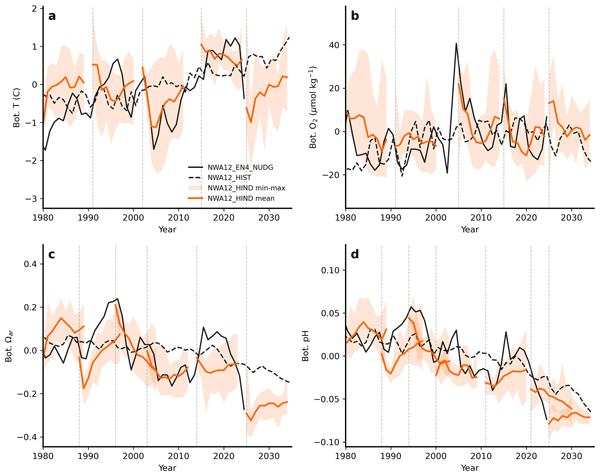
We present a new system to predict conditions in the Northeast Pacific Ocean up to one year in advance. By comparing past forecasts with ocean measurements, we show that we can accurately predict temperature and oxygen levels several months in advance. These predictions will soon be available to the public, enabling coastal communities, managers, and industries to make better proactive decisions.
Vimal Koul, Andrew C. Ross, Charles Stock, Liping Zhang, Andrew T. Wittenberg, and Thomas Delworth
Ocean Sci., 22, 3017–3036, https://doi.org/10.5194/os-22-3017-2026, https://doi.org/10.5194/os-22-3017-2026, 2026
Short summary
Short summary
Predicting coastal ocean conditions years ahead has been difficult due to complex regional dynamics. This work shows we can forecast bottom temperature, oxygen, and acidity up to a decade ahead for the Northeast US Shelf. Our forecasts indicate increasing Labrador water may accelerate acidification, threatening shell-forming organisms. This provides a foundation for early warning systems to help communities and fisheries adapt proactively.
Andrew Ross, Charles Stock, Vimal Koul, Liwei Jia, Nathaniel Johnson, and Colleen McHugh
EGUsphere, https://doi.org/10.5194/egusphere-2026-5262, https://doi.org/10.5194/egusphere-2026-5262, 2026
This preprint is open for discussion and under review for Ocean Science (OS).
Short summary
Short summary
This paper examines the accuracy of forecasts of ocean oxygen and acidity, both critical for the healthy functioning of fish and marine ecosystems, along the continental shelf off the Northeast U.S. coastline. The forecasts are produced using a novel numerical model able to resolve fine oceanographic details. Comparison with a reference dataset shows that the model often accurately predicts oxygen and acidity up to several months in advance.
Joseph K. Ansong, Brian K. Arbic, Romain Bourdalle-Badié, Clément Bricaud, Jérôme Chanut, Dimitris Menemenlis, Richard D. Ray, Michael Schindelegger, Alan J. Wallcraft, He Wang, Alistair J. Adcroft, Frédéric Briol, Maarten C. Buijsman, Loren Carrère, Eric P. Chassignet, Gerald Dibarboure, Robert W. Hallberg, Christopher N. Hill, Ariane Koch-Larrouy, Florent Lyard, Matthew R. Mazloff, An T. Nguyen, Nicolas Picot, Rui M. Ponte, and Jay F. Shriver
EGUsphere, https://doi.org/10.5194/egusphere-2026-5064, https://doi.org/10.5194/egusphere-2026-5064, 2026
This preprint is open for discussion and under review for Ocean Science (OS).
Short summary
Short summary
We assess how well four high-resolution global ocean models reproduce surface and internal tides compared with satellite observations. Some models produce internal tides that are too strong, but including energy loss over rough seafloor improves their accuracy. Longer model records and higher resolution also improve agreement with observations. We further identify errors in the tidal forcing of widely used MITgcm simulations that reduce the accuracy of their simulated tides.
Dmitry S. Dukhovskoy, Theresa Cordero, Katherine Hedstrom, Michael Alexander, Michael Jacox, Robert Hallberg, Matthew Harrison, and Jessie Liu
Geosci. Model Dev., 19, 7169–7196, https://doi.org/10.5194/gmd-19-7169-2026, https://doi.org/10.5194/gmd-19-7169-2026, 2026
Short summary
Short summary
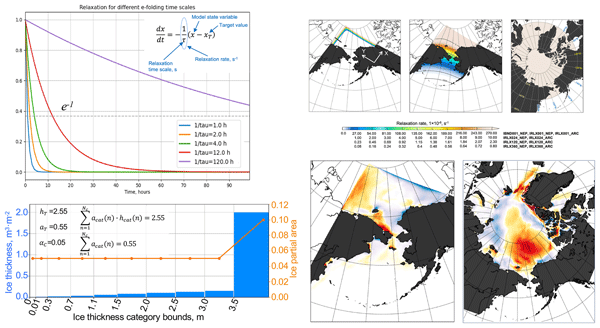
Regional sea ice models often struggle to represent sea ice near model domain boundaries, where errors can accumulate over time. We implemented and tested a method that gradually adjusts simulated sea ice toward prescribed conditions while preserving a realistic evolution of the ice cover. Experiments in the Arctic and Northeast Pacific show improved sea ice simulations and ocean surface conditions, providing a practical tool for regional forecasting and research applications.
Gabriela Negrete García, Dax Matthews, Charles A. Stock, Brian Powell, Ryan R. Rykaczewski, Kisei Tanaka, Hannah Barkley, Tobias Friedrich, Jessica Y. Luo, Andrew C. Ross, and Yi-Cheng Teng
EGUsphere, https://doi.org/10.5194/egusphere-2026-1877, https://doi.org/10.5194/egusphere-2026-1877, 2026
This preprint is open for discussion and under review for Geoscientific Model Development (GMD).
Short summary
Short summary
Ocean waters near the Hawaiian Islands support billions of dollars in fisheries, tourism, and coral reefs, yet managing these resources requires understanding ocean dynamics at multiple scales. We developed and tested a high-resolution ocean model for the central North Pacific against satellite data, long-term ocean monitoring, and coral temperatures. The model reliably reproduced key patterns across all scales, offering a tool for forecasting fish habitat, reef health, and ocean acidification.
Xiao Liu, John P. Dunne, Liwei Jia, Charles A. Stock, Xiaosong Yang, Matthew J. Harrison, Liping Zhang, and Anthony Rosati
EGUsphere, https://doi.org/10.5194/egusphere-2026-4194, https://doi.org/10.5194/egusphere-2026-4194, 2026
Short summary
Short summary
This study uses NOAA GFDL’s SPEAR model to improve predictions of how the ocean absorbs human emitted CO2. While standard models capture long-term trends, they struggle with yearly fluctuations. Researchers found that "initializing" the model with observed data significantly boosts their prediction accuracy for up to two years. This framework helps separate the predictions of natural variability from human-driven carbon changes, a vital step for verifying future marine carbon removal efforts.
Dongmin Kim, Andrew C. Ross, Sang-Ik Shin, Fabian A. Gomez, Jasmin G. John, Denis L. Volkov, Sang-Ki Lee, Michael A. Alexander, and Charles A. Stock
Ocean Sci., 22, 1987–2009, https://doi.org/10.5194/os-22-1987-2026, https://doi.org/10.5194/os-22-1987-2026, 2026
Short summary
Short summary
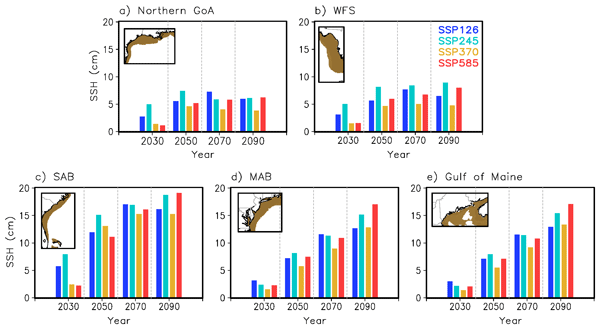
Using high-resolution Modular Ocean Model version 6, we projected Northwest Atlantic changes under four future emission scenarios. Results show a weakening Gulf Stream reduces upwelling, causing significant shelf warming and salinification. This also leads to dynamic sea-level rise along the US East Coast, particularly in the South Atlantic Bight, with critical implications for marine ecosystems and coastal risks.
Nicole Cristine Laureanti, Enrique Curchitser, Katherine Hedstrom, Alistair Adcroft, Robert Hallberg, Matthew J. Harrison, Raphael Dussin, Sin Chan Chou, Paulo Nobre, Emanuel Giarolla, and Rosio Camayo
Geosci. Model Dev., 19, 3109–3128, https://doi.org/10.5194/gmd-19-3109-2026, https://doi.org/10.5194/gmd-19-3109-2026, 2026
Short summary
Short summary
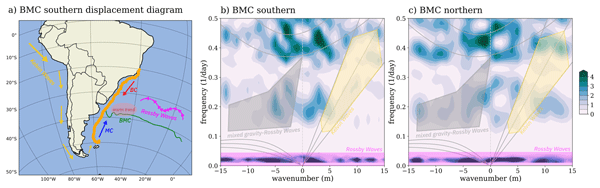
This study investigates the variability of currents in the Southwestern Atlantic Ocean using a high-resolution simulation. Particularly in the Brazil-Malvinas Confluence (BMC), it finds that the southward movement of the BMC, induced by the warming trends in the region, is balanced by northward flow from the Malvinas Current and Pacific Waves. The analysis also examines the intense northward displacement of the North Brazil Current, where inconsistencies in the simulation affect its evolution.
Inseong Chang, Young Ho Kim, Young-Gyu Park, Hyunkeun Jin, Gyundo Pak, Andrew C. Ross, and Robert Hallberg
Geosci. Model Dev., 19, 3053–3074, https://doi.org/10.5194/gmd-19-3053-2026, https://doi.org/10.5194/gmd-19-3053-2026, 2026
Short summary
Short summary
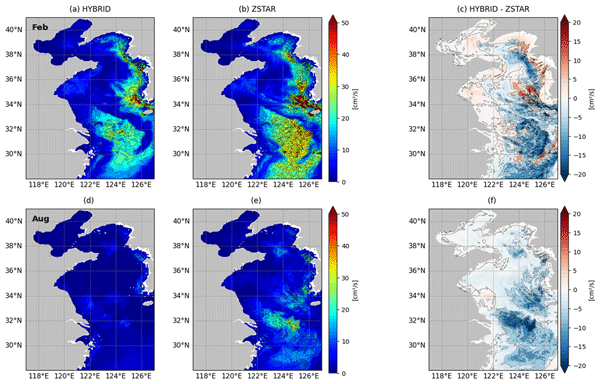
This study assesses how vertical coordinate choice shapes barotropic and baroclinic tide simulations in a high-resolution, MOM6 (Modular Ocean Model version 6) regional model. Focusing on the Yellow Sea under realistic forcing and seasonal stratification, we compare z* and z*-isopycnal hybrid to quantify coordinate-dependent impacts on tidal energetics and vertical structure. The results underscore that vertical representation is critical for accurately reproducing coastal stratification and tide–stratification interactions.
Claire K. Yung, Xylar S. Asay-Davis, Alistair Adcroft, Christopher Y. S. Bull, Jan De Rydt, Michael S. Dinniman, Benjamin K. Galton-Fenzi, Daniel Goldberg, David E. Gwyther, Robert Hallberg, Matthew Harrison, Tore Hattermann, David M. Holland, Denise Holland, Paul R. Holland, James R. Jordan, Nicolas C. Jourdain, Kazuya Kusahara, Gustavo Marques, Pierre Mathiot, Dimitris Menemenlis, Adele K. Morrison, Yoshihiro Nakayama, Olga Sergienko, Robin S. Smith, Alon Stern, Ralph Timmermann, and Qin Zhou
The Cryosphere, 20, 2053–2088, https://doi.org/10.5194/tc-20-2053-2026, https://doi.org/10.5194/tc-20-2053-2026, 2026
Short summary
Short summary
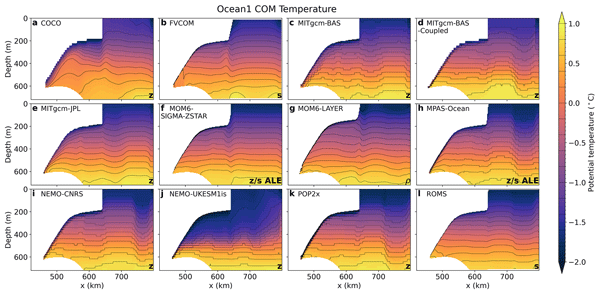
The second Ice Shelf-Ocean Model Intercomparison Project, ISOMIP+, compares 12 ice shelf-ocean models with a common, idealised, static configuration, aiming to assess inter-model variability. Models show similar basal melt rate patterns, ocean profiles and circulation but differ in ice-ocean boundary layer properties. Ice-ocean boundary layer representation is a key area for future work, as are realistic-domain ice sheet-ocean model intercomparisons.
Anthony Chen, He Wang, Brian Arbic, and Robert Krasny
EGUsphere, https://doi.org/10.48550/arXiv.2602.01416, https://doi.org/10.48550/arXiv.2602.01416, 2026
Short summary
Short summary
Self Attraction and Loading (SAL) is an important force that affects many oceanic motions, including tides. Computing SAL is challenging and ocean models neglected to include the impacts of SAL for a long time. Recent work has proposed a method for incorporating the effects of SAL, but the method has several limitations that limit the accuracy. This work proposes an alternative method. Tests of this new method in an ocean model indicate that it reduces the amount of error in the modeled tides.

Inseong Chang, Young Ho Kim, Young-Gyu Park, Hyunkeun Jin, Gyundo Pak, Andrew C. Ross, and Robert Hallberg
Geosci. Model Dev., 19, 187–216, https://doi.org/10.5194/gmd-19-187-2026, https://doi.org/10.5194/gmd-19-187-2026, 2026
Short summary
Short summary
We conducted sensitivity experiments to examine how different vertical coordinates influence the representation of water masses and tides using a high-resolution regional ocean model for the Northwest Pacific. We found that the choice of vertical coordinate strongly affects the degree of artificial mixing, which in turn changes how well the model reproduces key ocean features. This highlights the importance of selecting a vertical coordinate when developing regional ocean models.
Vivek Seelanki, Wei Cheng, Phyllis J. Stabeno, Albert J. Hermann, Elizabeth J. Drenkard, Charles A. Stock, and Katherine Hedstrom
Geosci. Model Dev., 18, 7681–7705, https://doi.org/10.5194/gmd-18-7681-2025, https://doi.org/10.5194/gmd-18-7681-2025, 2025
Short summary
Short summary
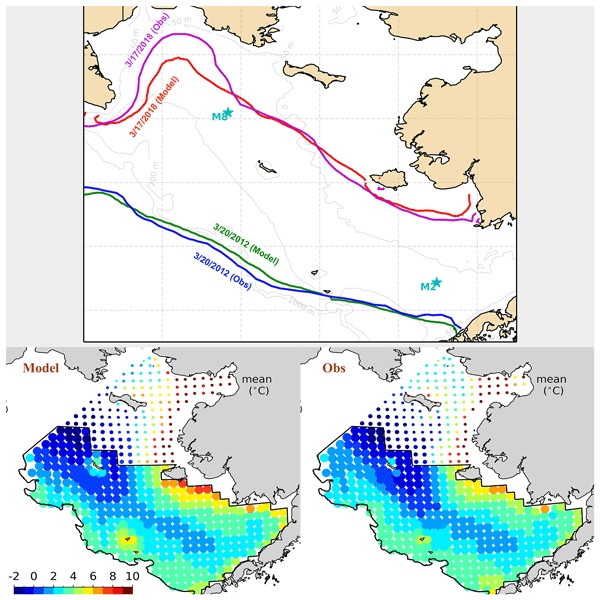
Both physical and ecosystem properties of the ocean are rapidly changing. These changes anticipating ecosystem responses to environmental change and effectively managing marine. The model-based predictions and their performance in the historical states of the ocean must be carefully evaluated against observations. In this study a coupled ocean and sea-ice simulation during 1993–2018 using observations. We focus on the Bering Sea shelf, which is the largest productive ecosystem in the US.
Enhui Liao, Laure Resplandy, Fan Yang, Yangyang Zhao, Sam Ditkovsky, Manon Malsang, Jenna Pearson, Andrew C. Ross, Robert Hallberg, and Charles Stock
Geosci. Model Dev., 18, 6553–6596, https://doi.org/10.5194/gmd-18-6553-2025, https://doi.org/10.5194/gmd-18-6553-2025, 2025
Short summary
Short summary
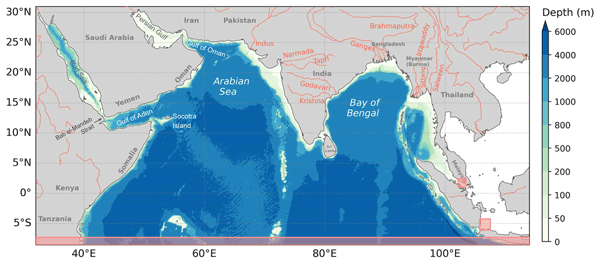
The northern Indian Ocean is central to the livelihoods and economies of countries that comprise about one-third of the world's population. We present a high-resolution (~10 km) ocean model that simulates seasonal and year-to-year variability in ocean, including currents, oxygen levels, and phytoplankton growth. This model is a powerful tool to study how climate change and human activities influence the northern Indian Ocean, which can be used for marine resource applications and management.
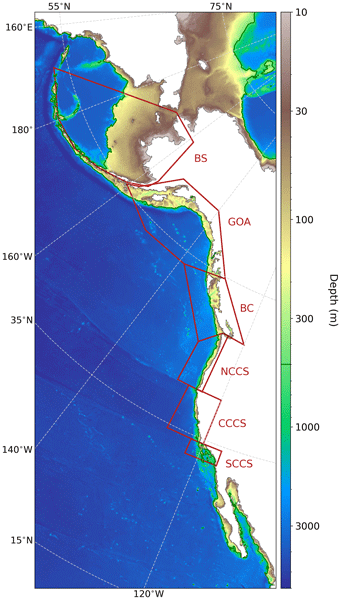
Elizabeth J. Drenkard, Charles A. Stock, Andrew C. Ross, Yi-Cheng Teng, Theresa Cordero, Wei Cheng, Alistair Adcroft, Enrique Curchitser, Raphael Dussin, Robert Hallberg, Claudine Hauri, Katherine Hedstrom, Albert Hermann, Michael G. Jacox, Kelly A. Kearney, Rémi Pagès, Darren J. Pilcher, Mercedes Pozo Buil, Vivek Seelanki, and Niki Zadeh
Geosci. Model Dev., 18, 5245–5290, https://doi.org/10.5194/gmd-18-5245-2025, https://doi.org/10.5194/gmd-18-5245-2025, 2025
Short summary
Short summary
We made a new regional ocean model to assist fisheries and ecosystem managers in making decisions in the Northeast Pacific Ocean (NEP). We found that the model did well simulating past ocean conditions like temperature and nutrient and oxygen levels and can even reproduce metrics used by, and important to, ecosystem managers.
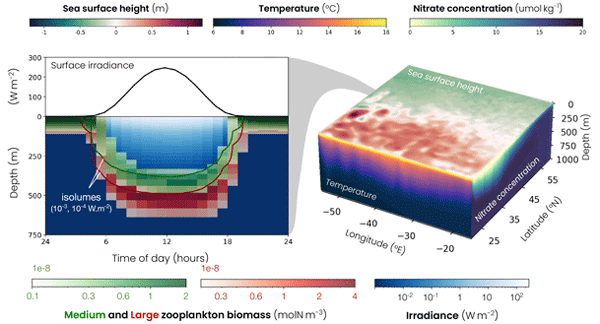
Mathieu A. Poupon, Laure Resplandy, Jessica Garwood, Charles Stock, Niki Zadeh, and Jessica Y. Luo
Ocean Sci., 21, 851–875, https://doi.org/10.5194/os-21-851-2025, https://doi.org/10.5194/os-21-851-2025, 2025
Short summary
Short summary
Zooplankton diel vertical migration (DVM) shapes ocean biogeochemical cycles. We present a new DVM model that reproduces migration depths observed in the North Atlantic Ocean. We show that chlorophyll shading contributes to reducing zooplankton migration depth and mainly controls its spatial and temporal variability. Thus, high chlorophyll concentrations may limit carbon sequestration caused by zooplankton migration despite the general abundance of zooplankton migration in these environments.
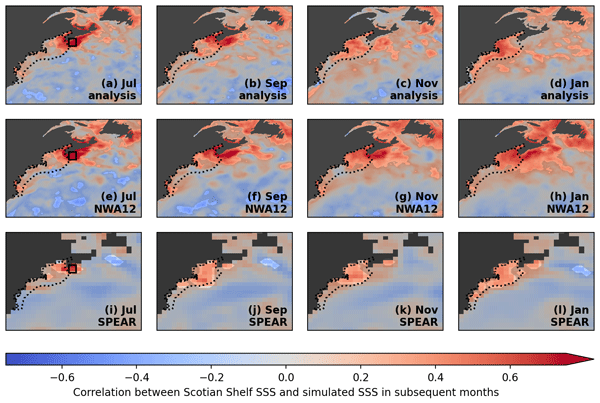
Andrew C. Ross, Charles A. Stock, Vimal Koul, Thomas L. Delworth, Feiyu Lu, Andrew Wittenberg, and Michael A. Alexander
Ocean Sci., 20, 1631–1656, https://doi.org/10.5194/os-20-1631-2024, https://doi.org/10.5194/os-20-1631-2024, 2024
Short summary
Short summary
In this paper, we use a high-resolution regional ocean model to downscale seasonal ocean forecasts from the Seamless System for Prediction and EArth System Research (SPEAR) model of the Geophysical Fluid Dynamics Laboratory (GFDL). We find that the downscaled model has significantly higher prediction skill in many cases.
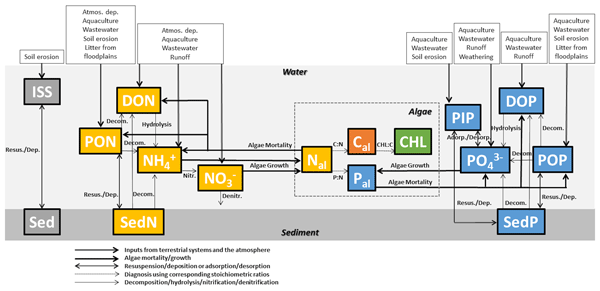
Minjin Lee, Charles A. Stock, John P. Dunne, and Elena Shevliakova
Geosci. Model Dev., 17, 5191–5224, https://doi.org/10.5194/gmd-17-5191-2024, https://doi.org/10.5194/gmd-17-5191-2024, 2024
Short summary
Short summary
Modeling global freshwater solid and nutrient loads, in both magnitude and form, is imperative for understanding emerging eutrophication problems. Such efforts, however, have been challenged by the difficulty of balancing details of freshwater biogeochemical processes with limited knowledge, input, and validation datasets. Here we develop a global freshwater model that resolves intertwined algae, solid, and nutrient dynamics and provide performance assessment against measurement-based estimates.
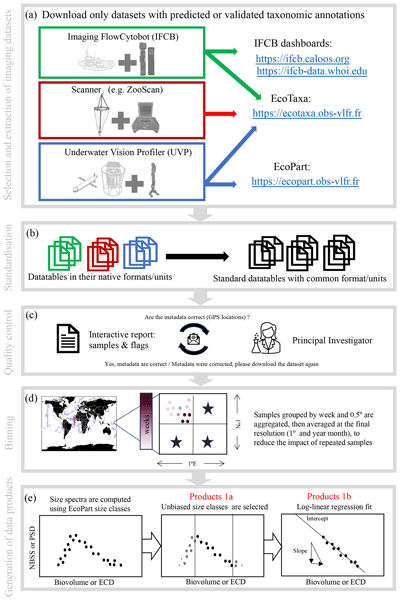
Mathilde Dugenne, Marco Corrales-Ugalde, Jessica Y. Luo, Rainer Kiko, Todd D. O'Brien, Jean-Olivier Irisson, Fabien Lombard, Lars Stemmann, Charles Stock, Clarissa R. Anderson, Marcel Babin, Nagib Bhairy, Sophie Bonnet, Francois Carlotti, Astrid Cornils, E. Taylor Crockford, Patrick Daniel, Corinne Desnos, Laetitia Drago, Amanda Elineau, Alexis Fischer, Nina Grandrémy, Pierre-Luc Grondin, Lionel Guidi, Cecile Guieu, Helena Hauss, Kendra Hayashi, Jenny A. Huggett, Laetitia Jalabert, Lee Karp-Boss, Kasia M. Kenitz, Raphael M. Kudela, Magali Lescot, Claudie Marec, Andrew McDonnell, Zoe Mériguet, Barbara Niehoff, Margaux Noyon, Thelma Panaïotis, Emily Peacock, Marc Picheral, Emilie Riquier, Collin Roesler, Jean-Baptiste Romagnan, Heidi M. Sosik, Gretchen Spencer, Jan Taucher, Chloé Tilliette, and Marion Vilain
Earth Syst. Sci. Data, 16, 2971–2999, https://doi.org/10.5194/essd-16-2971-2024, https://doi.org/10.5194/essd-16-2971-2024, 2024
Short summary
Short summary
Plankton and particles influence carbon cycling and energy flow in marine ecosystems. We used three types of novel plankton imaging systems to obtain size measurements from a range of plankton and particle sizes and across all major oceans. Data were compiled and cross-calibrated from many thousands of images, showing seasonal and spatial changes in particle size structure in different ocean basins. These datasets form the first release of the Pelagic Size Structure database (PSSdb).
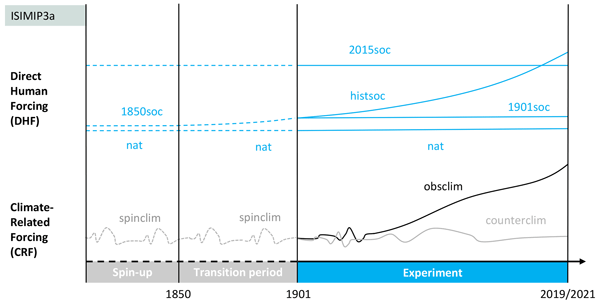
Katja Frieler, Jan Volkholz, Stefan Lange, Jacob Schewe, Matthias Mengel, María del Rocío Rivas López, Christian Otto, Christopher P. O. Reyer, Dirk Nikolaus Karger, Johanna T. Malle, Simon Treu, Christoph Menz, Julia L. Blanchard, Cheryl S. Harrison, Colleen M. Petrik, Tyler D. Eddy, Kelly Ortega-Cisneros, Camilla Novaglio, Yannick Rousseau, Reg A. Watson, Charles Stock, Xiao Liu, Ryan Heneghan, Derek Tittensor, Olivier Maury, Matthias Büchner, Thomas Vogt, Tingting Wang, Fubao Sun, Inga J. Sauer, Johannes Koch, Inne Vanderkelen, Jonas Jägermeyr, Christoph Müller, Sam Rabin, Jochen Klar, Iliusi D. Vega del Valle, Gitta Lasslop, Sarah Chadburn, Eleanor Burke, Angela Gallego-Sala, Noah Smith, Jinfeng Chang, Stijn Hantson, Chantelle Burton, Anne Gädeke, Fang Li, Simon N. Gosling, Hannes Müller Schmied, Fred Hattermann, Jida Wang, Fangfang Yao, Thomas Hickler, Rafael Marcé, Don Pierson, Wim Thiery, Daniel Mercado-Bettín, Robert Ladwig, Ana Isabel Ayala-Zamora, Matthew Forrest, and Michel Bechtold
Geosci. Model Dev., 17, 1–51, https://doi.org/10.5194/gmd-17-1-2024, https://doi.org/10.5194/gmd-17-1-2024, 2024
Short summary
Short summary
Our paper provides an overview of all observational climate-related and socioeconomic forcing data used as input for the impact model evaluation and impact attribution experiments within the third round of the Inter-Sectoral Impact Model Intercomparison Project. The experiments are designed to test our understanding of observed changes in natural and human systems and to quantify to what degree these changes have already been induced by climate change.
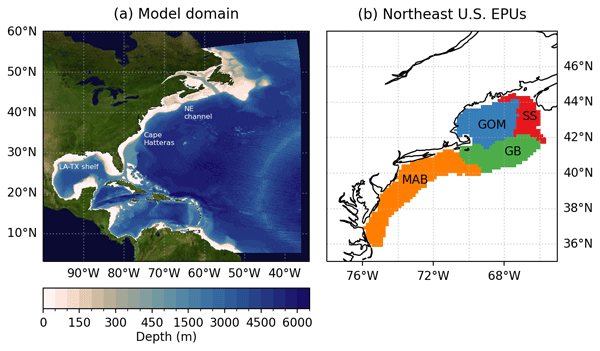
Andrew C. Ross, Charles A. Stock, Alistair Adcroft, Enrique Curchitser, Robert Hallberg, Matthew J. Harrison, Katherine Hedstrom, Niki Zadeh, Michael Alexander, Wenhao Chen, Elizabeth J. Drenkard, Hubert du Pontavice, Raphael Dussin, Fabian Gomez, Jasmin G. John, Dujuan Kang, Diane Lavoie, Laure Resplandy, Alizée Roobaert, Vincent Saba, Sang-Ik Shin, Samantha Siedlecki, and James Simkins
Geosci. Model Dev., 16, 6943–6985, https://doi.org/10.5194/gmd-16-6943-2023, https://doi.org/10.5194/gmd-16-6943-2023, 2023
Short summary
Short summary
We evaluate a model for northwest Atlantic Ocean dynamics and biogeochemistry that balances high resolution with computational economy by building on the new regional features in the MOM6 ocean model and COBALT biogeochemical model. We test the model's ability to simulate impactful historical variability and find that the model simulates the mean state and variability of most features well, which suggests the model can provide information to inform living-marine-resource applications.
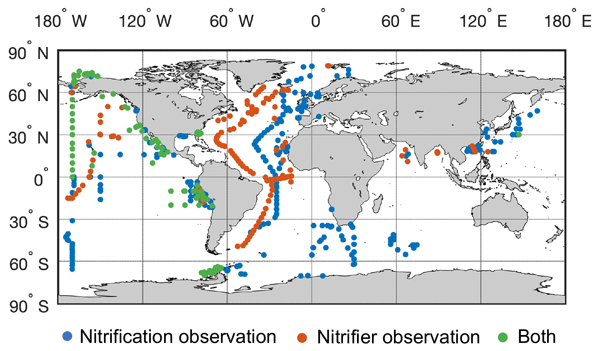
Weiyi Tang, Bess B. Ward, Michael Beman, Laura Bristow, Darren Clark, Sarah Fawcett, Claudia Frey, François Fripiat, Gerhard J. Herndl, Mhlangabezi Mdutyana, Fabien Paulot, Xuefeng Peng, Alyson E. Santoro, Takuhei Shiozaki, Eva Sintes, Charles Stock, Xin Sun, Xianhui S. Wan, Min N. Xu, and Yao Zhang
Earth Syst. Sci. Data, 15, 5039–5077, https://doi.org/10.5194/essd-15-5039-2023, https://doi.org/10.5194/essd-15-5039-2023, 2023
Short summary
Short summary
Nitrification and nitrifiers play an important role in marine nitrogen and carbon cycles by converting ammonium to nitrite and nitrate. Nitrification could affect microbial community structure, marine productivity, and the production of nitrous oxide – a powerful greenhouse gas. We introduce the newly constructed database of nitrification and nitrifiers in the marine water column and guide future research efforts in field observations and model development of nitrification.
Fabian A. Gomez, Sang-Ki Lee, Charles A. Stock, Andrew C. Ross, Laure Resplandy, Samantha A. Siedlecki, Filippos Tagklis, and Joseph E. Salisbury
Earth Syst. Sci. Data, 15, 2223–2234, https://doi.org/10.5194/essd-15-2223-2023, https://doi.org/10.5194/essd-15-2223-2023, 2023
Short summary
Short summary
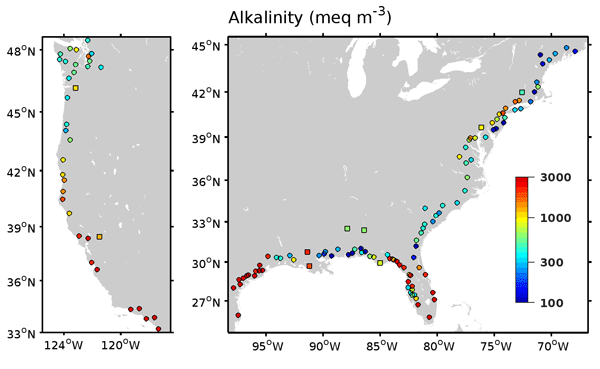
We present a river chemistry and discharge dataset for 140 rivers in the United States, which integrates information from the Water Quality Database of the US Geological Survey (USGS), the USGS’s Surface-Water Monthly Statistics for the Nation, and the U.S. Army Corps of Engineers. This dataset includes dissolved inorganic carbon and alkalinity, two key properties to characterize the carbonate system, as well as nutrient concentrations, such as nitrate, phosphate, and silica.
Alban Planchat, Lester Kwiatkowski, Laurent Bopp, Olivier Torres, James R. Christian, Momme Butenschön, Tomas Lovato, Roland Séférian, Matthew A. Chamberlain, Olivier Aumont, Michio Watanabe, Akitomo Yamamoto, Andrew Yool, Tatiana Ilyina, Hiroyuki Tsujino, Kristen M. Krumhardt, Jörg Schwinger, Jerry Tjiputra, John P. Dunne, and Charles Stock
Biogeosciences, 20, 1195–1257, https://doi.org/10.5194/bg-20-1195-2023, https://doi.org/10.5194/bg-20-1195-2023, 2023
Short summary
Short summary
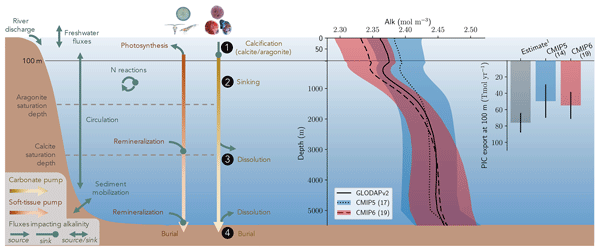
Ocean alkalinity is critical to the uptake of atmospheric carbon and acidification in surface waters. We review the representation of alkalinity and the associated calcium carbonate cycle in Earth system models. While many parameterizations remain present in the latest generation of models, there is a general improvement in the simulated alkalinity distribution. This improvement is related to an increase in the export of biotic calcium carbonate, which closer resembles observations.
Gustavo M. Marques, Nora Loose, Elizabeth Yankovsky, Jacob M. Steinberg, Chiung-Yin Chang, Neeraja Bhamidipati, Alistair Adcroft, Baylor Fox-Kemper, Stephen M. Griffies, Robert W. Hallberg, Malte F. Jansen, Hemant Khatri, and Laure Zanna
Geosci. Model Dev., 15, 6567–6579, https://doi.org/10.5194/gmd-15-6567-2022, https://doi.org/10.5194/gmd-15-6567-2022, 2022
Short summary
Short summary
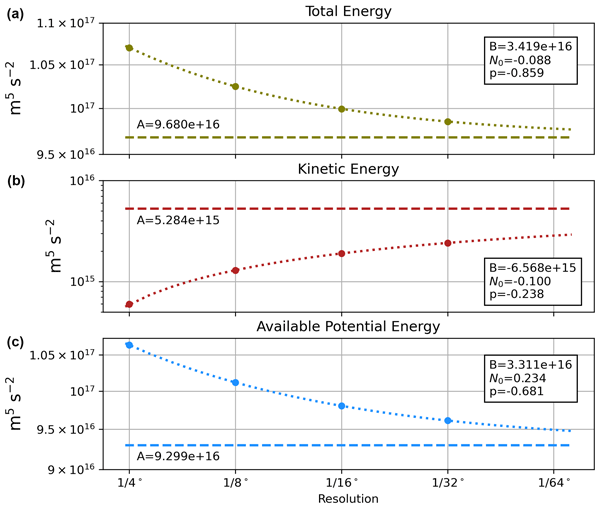
We present an idealized ocean model configuration and a set of simulations performed using varying horizontal grid spacing. While the model domain is idealized, it resembles important geometric features of the Atlantic and Southern oceans. The simulations described here serve as a framework to effectively study mesoscale eddy dynamics, to investigate the effect of mesoscale eddies on the large-scale dynamics, and to test and evaluate eddy parameterizations.
Cited articles
Abdelhady, H. U., Fujisaki-Manome, A., Cannon, D., Gronewold, A., and Wang, J.: Climate change-induced amplification of extreme temperatures in large lakes, Commun. Earth Environ., 6, 375, https://doi.org/10.1038/s43247-025-02341-x, 2025a.
Abdelhady, H. U., Cannon, D., Fujisaki-Manome, A., Gronewold, A., and Wang, J.: The spatiotemporal dynamics of heatwaves and cold-spells in Earth's largest freshwater systems, Geophys. Res. Lett., 52, e2025GL116548, https://doi.org/10.1029/2025GL116548, 2025b.
Abdolali, A., Banihashemi, S., Alves, J. H., Roland, A., Hesser, T. J., Anderson Bryant, M., and McKee Smith, J.: Great Lakes wave forecast system on high-resolution unstructured meshes, Geosci. Model Dev., 17, 1023–1039, https://doi.org/10.5194/gmd-17-1023-2024, 2024.
Adcroft, A. and Campin, J.-M.: Rescaled height coordinates for accurate representation of free-surface flows in ocean circulation models, Ocean Model. (Oxf)., 7, 269–284, https://doi.org/10.1016/j.ocemod.2003.09.003, 2004.
Adcroft, A., Anderson, W., Balaji, V., Blanton, C., Bushuk, M., Dufour, C. O., Dunne, J. P., Griffies, S. M., Hallberg, R., Harrison, M. J., Held, I. M., Jansen, M. F., John, J. G., Krasting, J. P., Langenhorst, A. R., Legg, S., Liang, Z., McHugh, C., Radhakrishnan, A., Reichl, B. G., Rosati, T., Samuels, B. L., Shao, A., Stouffer, R., Winton, M., Wittenberg, A. T., Xiang, B., Zadeh, N., and Zhang, R.: The GFDL Global Ocean and Sea Ice Model OM4.0: Model Description and Simulation Features, J. Adv. Model. Earth Sy., 11, 3167–3211, https://doi.org/10.1029/2019MS001726, 2019.
Anderson, E. J. and Schwab, D. J.: Predicting the oscillating bi-directional exchange flow in the Straits of Mackinac, J. Great Lakes Res., 39, 663–671, 2013.
Anderson, E. J. and Schwab, D. J.: Meteorological influence on summertime baroclinic exchange in the S traits of M ackinac, J. Geophys. Res.-Oceans, 122, 2171–2182, 2017.
Anderson, E. J., Stow, C. A., Gronewold, A. D., Mason, L. A., McCormick, M. J., Qian, S. S., Ruberg, S. A., Beadle, K., Constant, S. A., and Hawley, N.: Seasonal overturn and stratification changes drive deep-water warming in one of Earth's largest lakes, Nat. Commun., 12, 1688, https://doi.org/10.1038/s41467-021-21971-1, 2021.
Arakawa, A. and Lamb, V. R.: Computational design of the basic dynamical processes of the UCLA general circulation model, https://doi.org/10.1016/B978-0-12-460817-7.50009-4, 1977.
Audzijonyte, A., Pethybridge, H., Porobic, J., Gorton, R., Kaplan, I., and Fulton, E. A.: Atlantis: A spatially explicit end-to-end marine ecosystem model with dynamically integrated physics, ecology and socio-economic modules, Methods Ecol. Evol., 10, 1814–1819, 2019.
Bai, X., Wang, J., Schwab, D. J., Yang, Y., Luo, L., Leshkevich, G. A., and Liu, S.: Modeling 1993–2008 climatology of seasonal general circulation and thermal structure in the Great Lakes using FVCOM, Ocean Model. (Oxf)., 65, 40–63, https://doi.org/10.1016/j.ocemod.2013.02.003, 2013.
Beletsky, D. and Schwab, D. J.: Modeling circulation and thermal structure in Lake Michigan: Annual cycle and interannual variability, J. Geophys. Res.-Oceans, 106, 19745–19771, https://doi.org/10.1029/2000JC000691, 2001.
Beletsky, D., Saylor, J. H., and Schwab, D. J.: Mean circulation in the Great Lakes, J. Great Lakes Res., 25, 78–93, 1999.
Beletsky, D., Schwab, D., and McCormick, M.: Modeling the 1998–2003 summer circulation and thermal structure in Lake Michigan, J. Geophys. Res.-Oceans, 111, https://doi.org/10.1029/2005JC003222, 2006.
Benjamin, S. G., Weygandt, S. S., Brown, J. M., Hu, M., Alexander, C. R., Smirnova, T. G., Olson, J. B., James, E. P., Dowell, D. C., and Grell, G. A.: A North American hourly assimilation and model forecast cycle: The Rapid Refresh, Mon. Weather Rev., 144, 1669–1694, 2016.
Bergstedt, R. A., Argyle, R. L., Seelye, J. G., Scribner, K. T., and Curtis, G. L.: In situ determination of the annual thermal habitat use by lake trout (Salvelinus namaycush) in Lake Huron, J. Great Lakes Res., 29, 347–361, 2003.
Bleck, R.: Ocean modeling in isopycnic coordinates, in: Ocean modeling and parameterization, edited by: Chassignet, E. P. and Verron, J., Springer, 423–448, https://doi.org/10.1007/978-94-011-5096-5_18, 1998.
Bleck, R.: An oceanic general circulation model framed in hybrid isopycnic-Cartesian coordinates, Ocean Model. (Oxf)., 4, 55–88, https://doi.org/10.1016/S1463-5003(01)00012-9, 2002.
Bleck, R., Rooth, C., Hu, D., and Smith, L. T.: Salinity-driven Thermocline Transients in a Wind- and Thermohaline-forced Isopycnic Coordinate Model of the North Atlantic, J. Phys. Oceanogr., 22, 1486–1505, https://doi.org/10.1175/1520-0485(1992)022<1486:SDTTIA>2.0.CO;2, 1992.
Blumberg, A. F. and Mellor, G. L.: A description of a three-dimensional coastal ocean circulation model, in: Three-dimensional coastal ocean models, American Geophysical Union, Washington D.C., 4, 1–16, https://doi.org/10.1029/CO004, 1987.
Bodner, A. S., Fox-Kemper, B., Johnson, L., Van Roekel, L. P., McWilliams, J. C., Sullivan, P. P., Hall, P. S., and Dong, J.: Modifying the Mixed Layer Eddy Parameterization to Include Frontogenesis Arrest by Boundary Layer Turbulence, J. Phys. Oceanogr., 53, 323–339, https://doi.org/10.1175/JPO-D-21-0297.1, 2023.
Briegleb, P. and Light, B.: A Delta-Eddington mutiple scattering parameterization for solar radiation in the sea ice component of the community climate system model, NCAR Technical Note Nos. NCAR/TN-472+STR), National Center of Atmospheric Research, https://doi.org/10.5065/D6B27S71, 2007.
Briley, L. J., Rood, R. B., and Notaro, M.: Large lakes in climate models: A Great Lakes case study on the usability of CMIP5, J. Great Lakes Res., 47, 405–418, https://doi.org/10.1016/j.jglr.2021.01.010, 2021.
Cai, X., Zhang, Y. J., Shen, J., Wang, H., Wang, Z., Qin, Q., and Ye, F.: A Numerical Study of Hypoxia in Chesapeake Bay Using an Unstructured Grid Model: Validation and Sensitivity to Bathymetry Representation, JAWRA J. Am. Water Resour. As., 58, 898–921, https://doi.org/10.1111/1752-1688.12887, 2022.
Cannon, D., Fujisaki-Manome, A., Wang, J., Kessler, J., and Chu, P.: Modeling changes in ice dynamics and subsurface thermal structure in Lake Michigan-Huron between 1979 and 2021, Ocean Dynam., 73, 201–218, https://doi.org/10.1007/s10236-023-01544-0, 2023.
Cannon, D., Wang, J., Fujisaki-Manome, A., Kessler, J., Ruberg, S., and Constant, S.: Investigating Multidecadal Trends in Ice Cover and Subsurface Temperatures in the Laurentian Great Lakes Using a Coupled Hydrodynamic–Ice Model, J. Climate, 37, 1249–1276, https://doi.org/10.1175/JCLI-D-23-0092.1, 2024.
Cannon, D. J. and Troy, C. D.: Observations of turbulence and mean flow in the low-energy hypolimnetic boundary layer of a large lake, Limnol. Oceanogr., 63, 2762–2776, https://doi.org/10.1002/lno.11007, 2018.
Cannon, D. J., Troy, C. D., Liao, Q., and Bootsma, H. A.: Ice-Free Radiative Convection Drives Spring Mixing in a Large Lake, Geophys. Res. Lett., 46, 6811–6820, https://doi.org/10.1029/2019GL082916, 2019.
Cannon, D. J., Troy, C., Bootsma, H., Liao, Q., and MacLellan-Hurd, R.: Characterizing the seasonal variability of hypolimnetic mixing in a large, deep lake, J. Geophys. Res.-Oceans, 126, e2021JC017533, https://doi.org/10.1029/2021JC017533, 2021.
Chen, C., Liu, H., and Beardsley, R.: An Unstructured Grid, Finite-Volume, Three-Dimensional, Primitive Equations Ocean Model: Application to Coastal Ocean and Estuaries, J. Atmos. Ocean. Tech., 20, 159–186, https://doi.org/10.1175/1520-0426(2003)020<0159:AUGFVT>2.0.CO;2, 2003.
Choi, J. M., Troy, C. D., and Hawley, N.: Shear dispersion from near-inertial internal Poincaré waves in large lakes, Limnol. Oceanogr., 60, 2222–2235, https://doi.org/10.1002/lno.10163, 2015.
Cline, T. J., Bennington, V., and Kitchell, J. F.: Climate change expands the spatial extent and duration of preferred thermal habitat for Lake Superior fishes, PLOS One, 8, e62279, https://doi.org/10.1371/journal.pone.0062279, 2013.
Delworth, T. L., Cooke, W. F., Adcroft, A., Bushuk, M., Chen, J.-H., Dunne, K. A., Ginoux, P., Gudgel, R., Hallberg, R. W., Harris, L., Harrison, M. J., Johnson, N., Kapnick, S. B., Lin, S.-J., Lu, F., Malyshev, S., Milly, P. C., Murakami, H., Naik, V., Pascale, S., Paynter, D., Rosati, A., Schwarzkopf, M. D., Shevliakova, E., Underwood, S., Wittenberg, A. T., Xiang, B., Yang, X., Zeng, F., Zhang, H., Zhang, L., and Zhao, M.: SPEAR: The Next Generation GFDL Modeling System for Seasonal to Multidecadal Prediction and Projection, J. Adv. Model. Earth Sy., 12, e2019MS001895, https://doi.org/10.1029/2019MS001895, 2020.
Ding, Z., Zhu, J., Chen, B., and Bao, D.: A Two-Way Nesting Unstructured Quadrilateral Grid, Finite-Differencing, Estuarine and Coastal Ocean Model with High-Order Interpolation Schemes, J. Mar. Sci. Eng., 9, https://doi.org/10.3390/jmse9030335, 2021.
Drenkard, E. J., Stock, C. A., Ross, A. C., Teng, Y.-C., Cordero, T., Cheng, W., Adcroft, A., Curchitser, E., Dussin, R., Hallberg, R., Hauri, C., Hedstrom, K., Hermann, A., Jacox, M. G., Kearney, K. A., Pagès, R., Pilcher, D. J., Pozo Buil, M., Seelanki, V., and Zadeh, N.: A regional physical–biogeochemical ocean model for marine resource applications in the Northeast Pacific (MOM6-COBALT-NEP10k v1.0), Geosci. Model Dev., 18, 5245–5290, https://doi.org/10.5194/gmd-18-5245-2025, 2025.
Dunne, J. P., Horowitz, L. W., Adcroft, A. J., Ginoux, P., Held, I. M., John, J. G., Krasting, J. P., Malyshev, S., Naik, V., Paulot, F., Shevliakova, E., Stock, C. A., Zadeh, N., Balaji, V., Blanton, C., Dunne, K. A., Dupuis, C., Durachta, J., Dussin, R., Gauthier, P. P. G., Griffies, S. M., Guo, H., Hallberg, R. W., Harrison, M., He, J., Hurlin, W., McHugh, C., Menzel, R., Milly, P. C. D., Nikonov, S., Paynter, D. J., Ploshay, J., Radhakrishnan, A., Rand, K., Reichl, B. G., Robinson, T., Schwarzkopf, D. M., Sentman, L. T., Underwood, S., Vahlenkamp, H., Winton, M., Wittenberg, A. T., Wyman, B., Zeng, Y., and Zhao, M.: The GFDL Earth System Model Version 4.1 (GFDL-ESM 4.1): Overall Coupled Model Description and Simulation Characteristics, J. Adv. Model. Earth Sy., 12, e2019MS002015, https://doi.org/10.1029/2019MS002015, 2020.
Ganju, N. K., Brush, M. J., Rashleigh, B., Aretxabaleta, A. L., Del Barrio, P., Grear, J. S., Harris, L. A., Lake, S. J., McCardell, G., and O'Donnell, J.: Progress and challenges in coupled hydrodynamic-ecological estuarine modeling, Estuar. and Coast., 39, 311–332, 2016.
Griffies, S. M. and Hallberg, R. W.: Biharmonic friction with a Smagorinsky-like viscosity for use in large-scale eddy-permitting ocean models, Mon. Weather Rev., 128, 2935–2946, 2000.
Griffies, S. M., Stouffer, R. J., Adcroft, A. J., Bryan, K., Dixon, K. W., Hallberg, R., Harrison, M. J., Pacanowski, R. C., and Rosati, A.: A historical introduction to MOM, 9, https://www.gfdl.noaa.gov/wp-content/uploads/2019/04/mom_history_2017.09.19.pdf (last access: 23 December 2025), 2015.
Gurvan, M., Bourdallé-Badie, R., Bricaud, C., Bruciaferri, D., Calvert, D., Chanut, J., Clementi, E., Coward, A., Delrosso, D., and Ethé, C.: NEMO ocean engine, Zenodo, https://doi.org/10.5281/zenodo.3878122, 2017.
Hallberg, R. and Adcroft, A.: Reconciling estimates of the free surface height in Lagrangian vertical coordinate ocean models with mode-split time stepping, Ocean Model. (Oxf)., 29, 15–26, 2009.
Hecky, R. E., Smith, R. E. H., Barton, D. R., Guildford, S. J., Taylor, W. D., Charlton, M. N., and Howell, T.: The nearshore phosphorus shunt: a consequence of ecosystem engineering by dreissenids in the Laurentian Great Lakes, Can. J. Fish. Aquat. Sci., 61, 1285–1293, 2004.
Held, I. M., Guo, H., Adcroft, A., Dunne, J. P., Horowitz, L. W., Krasting, J., Shevliakova, E., Winton, M., Zhao, M., and Bushuk, M.: Structure and performance of GFDL's CM4.0 climate model, J. Adv. Model. Earth Sy., 11, 3691–3727, 2019.
Hersbach, H., Bell, B., Berrisford, P., Hirahara, S., Horányi, A., Muñoz-Sabater, J., Nicolas, J., Peubey, C., Radu, R., Schepers, D., Simmons, A., Soci, C., Abdalla, S., Abellan, X., Balsamo, G., Bechtold, P., Biavati, G., Bidlot, J., Bonavita, M., De Chiara, G., Dahlgren, P., Dee, D., Diamantakis, M., Dragani, R., Flemming, J., Forbes, R., Fuentes, M., Geer, A., Haimberger, L., Healy, S., Hogan, R. J., Hólm, E., Janisková, M., Keeley, S., Laloyaux, P., Lopez, P., Lupu, C., Radnoti, G., de Rosnay, P., Rozum, I., Vamborg, F., Villaume, S., and Thépaut, J.-N.: The ERA5 global reanalysis, Q. J. Roy. Meteor. Soc., 146, 1999–2049, https://doi.org/10.1002/qj.3803, 2020.
Hibler III, W. D.: A dynamic thermodynamic sea ice model, J. Phys. Oceanogr., 9, 815–846, 1979.
Hodges, B. R.: Numerical Techniques in CWR-ELCOM (code release v.1), CWR Manuscript WP, The University of Western Australia: Nedlands, Australia, 1422, 2000.
Hunke, E. C. and Dukowicz, J. K.: An elastic–viscous–plastic model for sea ice dynamics, J. Phys. Oceanogr., 27, 1849–1867, 1997.
IGLD: Establishment of International Great Lakes Datum (1985), Coordinating committee on Great Lakes Basic Hydraulic and Hydrologic Data, 1985.
Ishikawa, M., Gonzalez, W., Golyjeswski, O., Sales, G., Rigotti, J. A., Bleninger, T., Mannich, M., and Lorke, A.: Effects of dimensionality on the performance of hydrodynamic models for stratified lakes and reservoirs, Geosci. Model Dev., 15, 2197–2220, https://doi.org/10.5194/gmd-15-2197-2022, 2022.
Kelley, J. G. W., Chen, Y., Anderson, E. J., Lang, G. A., and Peng, M.: Upgrade of NOS Lake Michigan and Lake Huron operational forecast systems to FVCOM: model development and hindcast skill assessment, Silver Spring, National Oceanic and Atmospheric Administration, https://doi.org/10.25923/mmyb-qh56, 2020.
Klump, J. V., Brunner, S. L., Grunert, B. K., Kaster, J. L., Weckerly, K., Houghton, E. M., Kennedy, J. A., and Valenta, T. J.: Evidence of persistent, recurring summertime hypoxia in Green Bay, Lake Michigan, J. Great Lakes Res., 44, 841–850, 2018.
Lee, J., Lee, J., Yun, S.-L., and Kim, S.-K.: Three-Dimensional Unstructured Grid Finite-Volume Model for Coastal and Estuarine Circulation and Its Application, Water (Basel), 12, https://doi.org/10.3390/w12102752, 2020.
Legg, S., Hallberg, R. W., and Girton, J. B.: Comparison of entrainment in overflows simulated by z-coordinate, isopycnal and non-hydrostatic models, Ocean Model. (Oxf)., 11, 69–97, https://doi.org/10.1016/j.ocemod.2004.11.006, 2006.
Li, J., Ianaiev, V., Huff, A., Zalusky, J., Ozersky, T., and Katsev, S.: Benthic invaders control the phosphorus cycle in the world's largest freshwater ecosystem, P. Natl. Acad. Sci. USA, 118, e2008223118, https://doi.org/10.1073/pnas.2008223118, 2021.
Liao, E., Resplandy, L., Yang, F., Zhao, Y., Ditkovsky, S., Malsang, M., Pearson, J., Ross, A. C., Hallberg, R., and Stock, C.: A high-resolution physical-biogeochemical model for marine resource applications in the Northern Indian Ocean (MOM6-COBALT-IND12 v1.0), EGUsphere [preprint], https://doi.org/10.5194/egusphere-2024-3646, 2025.
Mellor, G. and Blumberg, A.: Wave breaking and ocean surface layer thermal response, J. Phys. Oceanogr., 34, 693–698, 2004.
Mellor, G. L., Oey, L.-Y., and Ezer, T.: Sigma coordinate pressure gradient errors and the seamount problem, J. Atmos. Ocean. Tech., 15, 1122–1131, 1998.
Mesinger, F., DiMego, G., Kalnay, E., Mitchell, K., Shafran, P. C., Ebisuzaki, W., Jović, D., Woollen, J., Rogers, E., and Berbery, E. H.: North American regional reanalysis, B. Am. Meteorol. Soc., 87, 343–360, 2006.
Müller, B., Bryant, L. D., Matzinger, A., and Wüest, A.: Hypolimnetic oxygen depletion in eutrophic lakes, Environ. Sci. Technol., 46, 9964–9971, 2012.
NOAA-GFDL: MOM6, GitHub [code], https://github.com/mom-ocean/MOM6, last access: 23 December 2025a.
NOAA-GFDL: NOAA-GFDL, GitHub [code], https://github.com/NOAA-GFDL/MOM6, last access: 23 December 2025b.
NOAA-GFDL: NOAA-GFDL, GitHub [code], https://github.com/NOAA-GFDL, last access: 23 December 2025c.
Notaro, M., Jorns, J., and Briley, L.: Representation of Lake–Atmosphere Interactions and Lake-Effect Snowfall in the Laurentian Great Lakes Basin among HighResMIP Global Climate Models, J. Atmos. Sci., 79, 1325–1347, 2022.
Prakash, A., Zhou, Q., Hattermann, T., Bao, W., Graversen, R., and Kirchner, N.: A nested high-resolution unstructured grid 3-D ocean-sea ice-ice shelf setup for numerical investigations of the Petermann ice shelf and fjord, MethodsX, 9, 101668, https://doi.org/10.1016/j.mex.2022.101668, 2022.
Raju, M., Cannon, D., Alsip, P., Wang, H., Wang, J., Cordero, T., Hallberg, R. W., Stock, C. A., and Langan, J. A.: Model output and analysis codes for “Development of a next-generation general ocean circulation model for the Great Lakes”, Zenodo [data set], https://doi.org/10.5281/zenodo.18091176, 2025.
Raju, M., Cannon, D., Alsip, P., Wang, H., Wang, J., Cordero, T., Hallberg, R. W., Stock, C. A., and Langan, J. A.: Model input for “Development of a next-generation general ocean circulation model for the Great Lakes” submitted to Geoscientific Model Development, Zenodo [data set], https://doi.org/10.5281/zenodo.18291944, 2026a.
Raju, M., Cannon, D., Alsip, P., Wang, H., Wang, J., Cordero, T., Hallberg, R. W., Stock, C. A., and Langan, J. A.: Model source code for “ Development of a next- generation general ocean circulation model for the Great Lakes”, Zenodo [code], https://doi.org/10.5281/zenodo.18291850, 2026b.
Raju, M., Cannon, D., Alsip, P., Wang, H., Wang, J., Cordero, T., Hallberg, R. W., Stock, C. A., and Langan, J. A.: User guide on installation, setup of Modular Ocean Model version 6.0 – Sea Ice Simulator version 2.0, MOM6-SIS2 used in “Development of a next- generation general ocean circulation model for the Great Lakes”, Zenodo [code], https://doi.org/10.5281/zenodo.18275689, 2026c.
Reichl, B. G. and Hallberg, R.: A simplified energetics based planetary boundary layer (ePBL) approach for ocean climate simulations, Ocean Model. (Oxf)., 132, 112–129, https://doi.org/10.1016/j.ocemod.2018.10.004, 2018.
Ross, A. C., Stock, C. A., Adcroft, A., Curchitser, E., Hallberg, R., Harrison, M. J., Hedstrom, K., Zadeh, N., Alexander, M., Chen, W., Drenkard, E. J., du Pontavice, H., Dussin, R., Gomez, F., John, J. G., Kang, D., Lavoie, D., Resplandy, L., Roobaert, A., Saba, V., Shin, S.-I., Siedlecki, S., and Simkins, J.: A high-resolution physical–biogeochemical model for marine resource applications in the northwest Atlantic (MOM6-COBALT-NWA12 v1.0), Geosci. Model Dev., 16, 6943–6985, https://doi.org/10.5194/gmd-16-6943-2023, 2023.
Rowe, M. D., Anderson, E. J., Wang, J., and Vanderploeg, H. A.: Modeling the effect of invasive quagga mussels on the spring phytoplankton bloom in Lake Michigan, J. Great Lakes Res., 41, 49–65, 2015.
Rowe, M. D., Anderson, E. J., Vanderploeg, H. A., Pothoven, S. A., Elgin, A. K., Wang, J., and Yousef, F.: Influence of invasive quagga mussels, phosphorus loads, and climate on spatial and temporal patterns of productivity in Lake Michigan: A biophysical modeling study, Limnol. Oceanogr., 62, 2629–2649, 2017.
Rowe, M. D., Anderson, E. J., Beletsky, D., Stow, C. A., Moegling, S. D., Chaffin, J. D., May, J. C., Collingsworth, P. D., Jabbari, A., and Ackerman, J. D.: Coastal Upwelling Influences Hypoxia Spatial Patterns and Nearshore Dynamics in Lake Erie, J. Geophys. Res.-Oceans, 124, 6154–6175, https://doi.org/10.1029/2019JC015192, 2019.
Schwab, D. J., Leshkevich, G. A., and Muhr, G. C.: Satellite measurements of surface water temperature in the Great Lakes: Great Lakes Coastwatch, J. Great Lakes Res., 18, 247–258, 1992.
Seelanki, V., Cheng, W., Stabeno, P. J., Hermann, A. J., Drenkard, E. J., Stock, C. A., and Hedstrom, K.: Evaluation of a coupled ocean and sea-ice model (MOM6-NEP10k) over the Bering Sea and its sensitivity to turbulence decay scales, EGUsphere [preprint], https://doi.org/10.5194/egusphere-2025-1229, 2025.
Seijo-Ellis, G., Giglio, D., Marques, G., and Bryan, F.: CARIB12: a regional Community Earth System Model/Modular Ocean Model 6 configuration of the Caribbean Sea, Geosci. Model Dev., 17, 8989–9021, https://doi.org/10.5194/gmd-17-8989-2024, 2024.
Sharma, A., Hamlet, A. F., Fernando, H. J. S., Catlett, C. E., Horton, D. E., Kotamarthi, V. R., Kristovich, D. A. R., Packman, A. I., Tank, J. L., and Wuebbles, D. J.: The Need for an Integrated Land-Lake-Atmosphere Modeling System, Exemplified by North America's Great Lakes Region, Earths Future, 6, 1366–1379, https://doi.org/10.1029/2018EF000870, 2018.
Smagorinsky, J.: General circulation experiments with the primitive equations: I. The basic experiment, Mon. Weather Rev., 91, 99–164, 1963.
Staniforth, A. and Thuburn, J.: Horizontal grids for global weather and climate prediction models: a review, Q. J. Roy. Meteor. Soc., 138, 1–26, https://doi.org/10.1002/qj.958, 2012.
Stock, C. A., Dunne, J. P., and John, J. G.: Global-scale carbon and energy flows through the marine planktonic food web: An analysis with a coupled physical–biological model, Prog. Oceanogr., 120, 1–28, https://doi.org/10.1016/j.pocean.2013.07.001, 2014.
Stow, C. A., Rowe, M. D., Godwin, C. M., Mason, L. A., Alsip, P. J., Kraus, R. T., Johengen, T. H., and Constant, S. A.: Lake Erie hypoxia spatial and temporal dynamics present challenges for assessing progress toward water quality goals, J. Great Lakes Res., 49, 981–992, 2023.
Trotta, F., Fenu, E., Pinardi, N., Bruciaferri, D., Giacomelli, L., Federico, I., and Coppini, G.: A Structured and Unstructured grid Relocatable ocean platform for Forecasting (SURF), Deep-Sea Research Pt. II, 133, 54–75, https://doi.org/10.1016/j.dsr2.2016.05.004, 2016.
Trumpickas, J., Shuter, B. J., Minns, C. K., and Cyr, H.: Characterizing patterns of nearshore water temperature variation in the North American Great Lakes and assessing sensitivities to climate change, J. Great Lakes Res., 41, 53–64, 2015.
Vanderploeg, H. A., Liebig, J. R., Nalepa, T. F., Fahnenstiel, G. L., and Pothoven, S. A.: Dreissena and the disappearance of the spring phytoplankton bloom in Lake Michigan, J. Great Lakes Res., 36, 50–59, 2010.
Warner, D. M. and Lesht, B. M.: Relative importance of phosphorus, invasive mussels and climate for patterns in chlorophyll a and primary production in Lakes Michigan and Huron, Freshwater Biol., 60, 1029–1043, 2015.
Xue, P., Pal, J. S., Ye, X., Lenters, J. D., Huang, C., and Chu, P. Y.: Improving the Simulation of Large Lakes in Regional Climate Modeling: Two-Way Lake–Atmosphere Coupling with a 3D Hydrodynamic Model of the Great Lakes, J. Climate, 30, 1605–1627, https://doi.org/10.1175/JCLI-D-16-0225.1, 2017.
Ye, F., Zhang, Y. J., Wang, H. V, Friedrichs, M. A. M., Irby, I. D., Alteljevich, E., Valle-Levinson, A., Wang, Z., Huang, H., Shen, J., and Du, J.: A 3D unstructured-grid model for Chesapeake Bay: Importance of bathymetry, Ocean Model. (Oxf)., 127, 16–39, https://doi.org/10.1016/j.ocemod.2018.05.002, 2018.
Zhang, Y. J., Ye, F., Stanev, E. V., and Grashorn, S.: Seamless cross-scale modeling with SCHISM, Ocean Model. (Oxf)., 102, 64–81, 2016.
Zhang, Y. J., Wu, C., Anderson, J., Danilov, S., Wang, Q., Liu, Y., and Wang, Q.: Lake ice simulation using a 3D unstructured grid model, Ocean Dynam., 73, 219–230, https://doi.org/10.1007/s10236-023-01549-9, 2023.
Zhang, Y. J., Anderson, J., Wu, C. H., Beletsky, D., Liu, Y., Huang, W., Anderson, E. J., Moghimi, S., and Myers, E.: Cross-scale prediction for the Laurentian Great Lakes, Ocean Model. (Oxf)., 194, 102512, https://doi.org/10.1016/j.ocemod.2025.102512, 2025.
Short summary
This study developed the Modular Ocean Model version 6.0 coupled with Sea Ice Simulator version 2.0 for the Great Lakes, validated against observations and an operational model. This study also tested two vertical coordinate systems, z* and hybrid. The model reproduced lake physics with good skill. The hybrid vertical coordinate improved thermocline representation and preserved deep cold-water during stratification, demonstrating the model’s suitability for large freshwater systems.
This study developed the Modular Ocean Model version 6.0 coupled with Sea Ice Simulator version...


