
Articles | Volume 19, issue 10
https://doi.org/10.5194/gmd-19-4071-2026
© Author(s) 2026. This work is distributed under
the Creative Commons Attribution 4.0 License.
the Creative Commons Attribution 4.0 License.
https://doi.org/10.5194/gmd-19-4071-2026
© Author(s) 2026. This work is distributed under
the Creative Commons Attribution 4.0 License.
the Creative Commons Attribution 4.0 License.
Development and technical paper
| 
19 May 2026
Development and technical paper |
| 19 May 2026
| 19 May 2026
PALM-meteo 2.8: Processor of PALM meteorological input data

Institute of Computer Science, Czech Academy of Sciences, Pod Vodárenskou věží 271/2, 182 00 Prague 8, Czech Republic
Michal Belda
Department of Atmospheric Physics, Faculty of Mathematics and Physics, Charles University Prague, V Holešovičkách 2, 180 00, Prague 8, Czech Republic
Martin Bureš
Institute of Computer Science, Czech Academy of Sciences, Pod Vodárenskou věží 271/2, 182 00 Prague 8, Czech Republic
Kryštof Eben
Institute of Computer Science, Czech Academy of Sciences, Pod Vodárenskou věží 271/2, 182 00 Prague 8, Czech Republic
Jan Geletič
Institute of Computer Science, Czech Academy of Sciences, Pod Vodárenskou věží 271/2, 182 00 Prague 8, Czech Republic
Department of Atmospheric Physics, Faculty of Mathematics and Physics, Charles University Prague, V Holešovičkách 2, 180 00, Prague 8, Czech Republic
Jelena Radović
Department of Atmospheric Physics, Faculty of Mathematics and Physics, Charles University Prague, V Holešovičkách 2, 180 00, Prague 8, Czech Republic
Hynek Řezníček
Institute of Computer Science, Czech Academy of Sciences, Pod Vodárenskou věží 271/2, 182 00 Prague 8, Czech Republic
Department of Physics, Technical University of Liberec, Studentská 1402/2, 461 17 Liberec 1, Czech Republic
Jaroslav Resler
Institute of Computer Science, Czech Academy of Sciences, Pod Vodárenskou věží 271/2, 182 00 Prague 8, Czech Republic
Related authors
Jaroslav Resler, Michal Belda, Martin Bureš, Kryštof Eben, Vladimír Fuka, Jan Geletič, Josef Keder, Pavel Krč, Veronika Květoňová, Tereza Pikousová, Jelena Radović, Hynek Řezníček, Petra Tesařová, and Ondřej Vlček
EGUsphere, https://doi.org/10.5194/egusphere-2026-5699, https://doi.org/10.5194/egusphere-2026-5699, 2026
This preprint is open for discussion and under review for Geoscientific Model Development (GMD).
Short summary
Short summary
Road traffic is a major source of air pollution in the cities but moving vehicles also strongly influence the air flow and temperature. The PALM model system enables detailed simulations of thermal comfort and air quality in urban environments. The new integrated PALM-Traffic model extends this with the impact of moving cars. By evaluating against observations we show that adding these processes significantly improves modelled wind flow and it also influences modelled air quality.
Jelena Radović, Michal Belda, Martin Bureš, Kryštof Eben, Jan Geletič, Jakub Jura, Pavel Krč, Hynek Řezníček, and Jaroslav Resler
Geosci. Model Dev., 19, 6001–6026, https://doi.org/10.5194/gmd-19-6001-2026, https://doi.org/10.5194/gmd-19-6001-2026, 2026
Short summary
Short summary
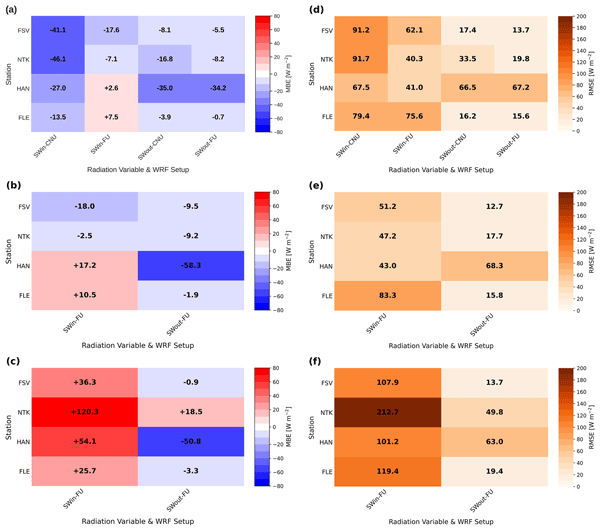
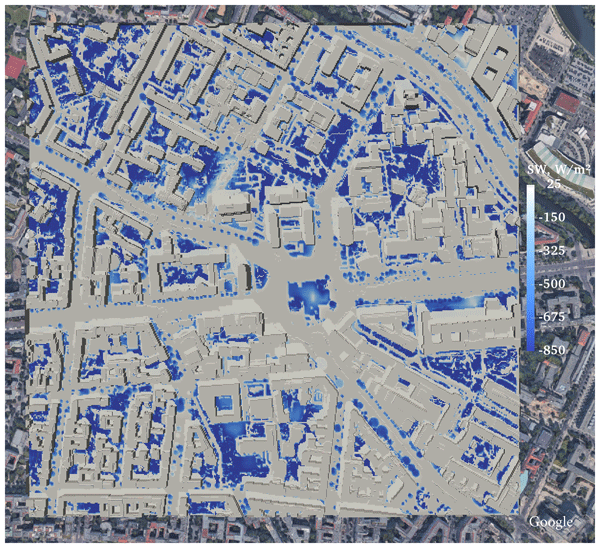
In this experiment, the Parallelized Large-Eddy Simulation Model (PALM)’s performance in simulating incoming and outgoing short-wave radiation in a densely built, highly heterogeneous urban environment was validated. In particular, we assessed whether the micro-scale model realistically resolves the effects of three-dimensional urban morphology and vegetation on short-wave radiation, including its propagation, shading, reflection, and attenuation within the simulated domain.
Petra Bauerová, Josef Keder, Adriana Šindelářová, Ondřej Vlček, William Patiño, Pavel Krč, Jan Geletič, Hynek Řezníček, Martin Bureš, Kryštof Eben, Michal Belda, Jelena Radović, Vladimír Fuka, Radek Jareš, Igor Esau, and Jaroslav Resler
Atmos. Chem. Phys., 25, 4477–4504, https://doi.org/10.5194/acp-25-4477-2025, https://doi.org/10.5194/acp-25-4477-2025, 2025
Short summary
Short summary
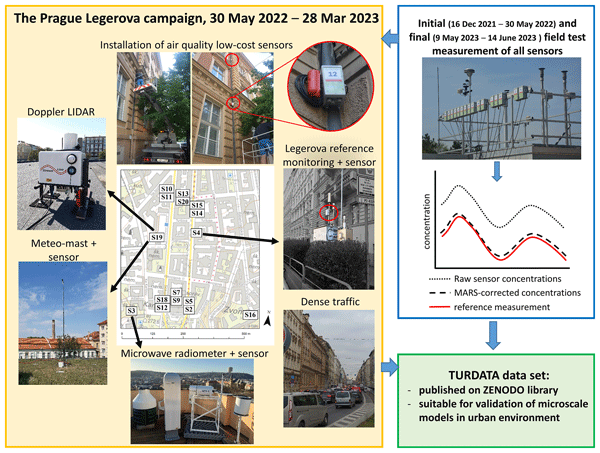
The study explored urban air quality in Prague using low-cost sensors and highlighted the multivariate adaptive regression splines (MARS) correction method's effectiveness in enhancing accuracy. Results showed traffic's impact on nitrogen dioxide levels and atmospheric dynamics on particulate matter. The research confirmed MARS-corrected sensors as cost-effective for monitoring, despite challenges like sensor ageing and data quality control.
Jaroslav Resler, Petra Bauerová, Michal Belda, Martin Bureš, Kryštof Eben, Vladimír Fuka, Jan Geletič, Radek Jareš, Jan Karel, Josef Keder, Pavel Krč, William Patiño, Jelena Radović, Hynek Řezníček, Matthias Sühring, Adriana Šindelářová, and Ondřej Vlček
Geosci. Model Dev., 17, 7513–7537, https://doi.org/10.5194/gmd-17-7513-2024, https://doi.org/10.5194/gmd-17-7513-2024, 2024
Short summary
Short summary
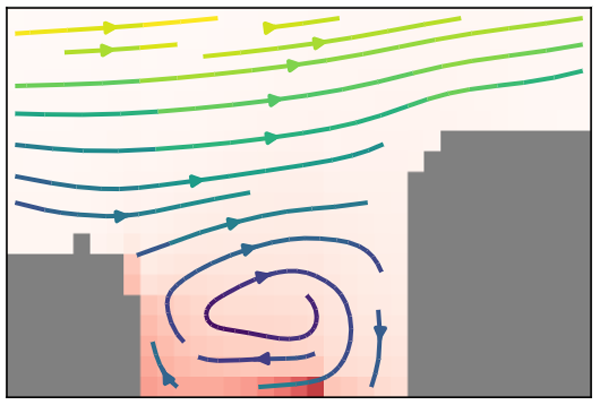
Detailed modeling of urban air quality in stable conditions is a challenge. We show the unprecedented sensitivity of a large eddy simulation (LES) model to meteorological boundary conditions and model parameters in an urban environment under stable conditions. We demonstrate the crucial role of boundary conditions for the comparability of results with observations. The study reveals a strong sensitivity of the results to model parameters and model numerical instabilities during such conditions.
Michal Belda, Nina Benešová, Jaroslav Resler, Peter Huszár, Ondřej Vlček, Pavel Krč, Jan Karlický, Pavel Juruš, and Kryštof Eben
Geosci. Model Dev., 17, 3867–3878, https://doi.org/10.5194/gmd-17-3867-2024, https://doi.org/10.5194/gmd-17-3867-2024, 2024
Short summary
Short summary
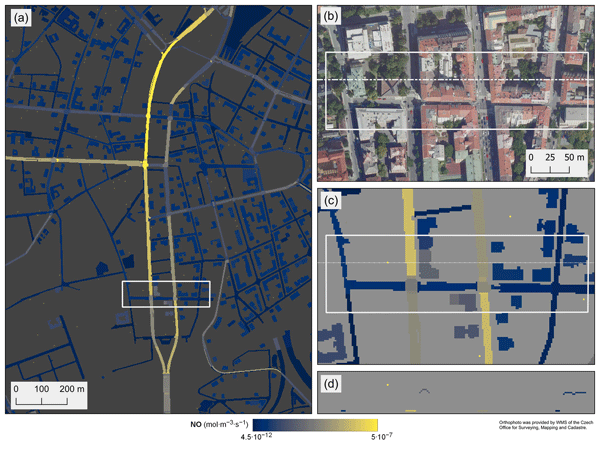
For modeling atmospheric chemistry, it is necessary to provide data on emissions of pollutants. These can come from various sources and in various forms, and preprocessing of the data to be ingestible by chemistry models can be quite challenging. We developed the FUME processor to use a database layer that internally transforms all input data into a rigid structure, facilitating further processing to allow for emission processing from the continental to the street scale.
Jelena Radović, Michal Belda, Jaroslav Resler, Kryštof Eben, Martin Bureš, Jan Geletič, Pavel Krč, Hynek Řezníček, and Vladimír Fuka
Geosci. Model Dev., 17, 2901–2927, https://doi.org/10.5194/gmd-17-2901-2024, https://doi.org/10.5194/gmd-17-2901-2024, 2024
Short summary
Short summary
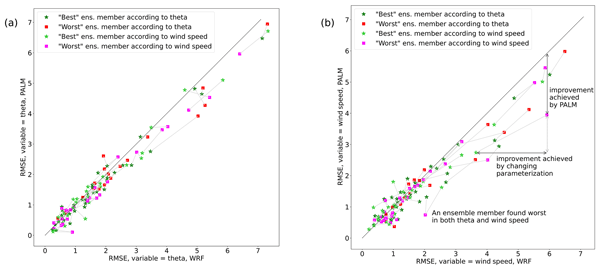
Boundary conditions are of crucial importance for numerical model (e.g., PALM) validation studies and have a large influence on the model results, especially when studying the atmosphere of real, complex, and densely built urban environments. Our experiments with different driving conditions for the large-eddy simulation model PALM show its strong dependency on boundary conditions, which is important for the proper separation of errors coming from the boundary conditions and the model itself.
Mohamed H. Salim, Sebastian Schubert, Jaroslav Resler, Pavel Krč, Björn Maronga, Farah Kanani-Sühring, Matthias Sühring, and Christoph Schneider
Geosci. Model Dev., 15, 145–171, https://doi.org/10.5194/gmd-15-145-2022, https://doi.org/10.5194/gmd-15-145-2022, 2022
Short summary
Short summary
Radiative transfer processes are the main energy transport mechanism in urban areas which influence the surface energy budget and drive local convection. We show here the importance of each process to help modellers decide on how much detail they should include in their models to parameterize radiative transfer in urban areas. We showed how the flow field may change in response to these processes and the essential processes needed to assure acceptable quality of the numerical simulations.
Jaroslav Resler, Michal Belda, Martin Bureš, Kryštof Eben, Vladimír Fuka, Jan Geletič, Josef Keder, Pavel Krč, Veronika Květoňová, Tereza Pikousová, Jelena Radović, Hynek Řezníček, Petra Tesařová, and Ondřej Vlček
EGUsphere, https://doi.org/10.5194/egusphere-2026-5699, https://doi.org/10.5194/egusphere-2026-5699, 2026
This preprint is open for discussion and under review for Geoscientific Model Development (GMD).
Short summary
Short summary
Road traffic is a major source of air pollution in the cities but moving vehicles also strongly influence the air flow and temperature. The PALM model system enables detailed simulations of thermal comfort and air quality in urban environments. The new integrated PALM-Traffic model extends this with the impact of moving cars. By evaluating against observations we show that adding these processes significantly improves modelled wind flow and it also influences modelled air quality.
Jelena Radović, Michal Belda, Martin Bureš, Kryštof Eben, Jan Geletič, Jakub Jura, Pavel Krč, Hynek Řezníček, and Jaroslav Resler
Geosci. Model Dev., 19, 6001–6026, https://doi.org/10.5194/gmd-19-6001-2026, https://doi.org/10.5194/gmd-19-6001-2026, 2026
Short summary
Short summary
In this experiment, the Parallelized Large-Eddy Simulation Model (PALM)’s performance in simulating incoming and outgoing short-wave radiation in a densely built, highly heterogeneous urban environment was validated. In particular, we assessed whether the micro-scale model realistically resolves the effects of three-dimensional urban morphology and vegetation on short-wave radiation, including its propagation, shading, reflection, and attenuation within the simulated domain.
Petra Bauerová, Josef Keder, Adriana Šindelářová, Ondřej Vlček, William Patiño, Pavel Krč, Jan Geletič, Hynek Řezníček, Martin Bureš, Kryštof Eben, Michal Belda, Jelena Radović, Vladimír Fuka, Radek Jareš, Igor Esau, and Jaroslav Resler
Atmos. Chem. Phys., 25, 4477–4504, https://doi.org/10.5194/acp-25-4477-2025, https://doi.org/10.5194/acp-25-4477-2025, 2025
Short summary
Short summary
The study explored urban air quality in Prague using low-cost sensors and highlighted the multivariate adaptive regression splines (MARS) correction method's effectiveness in enhancing accuracy. Results showed traffic's impact on nitrogen dioxide levels and atmospheric dynamics on particulate matter. The research confirmed MARS-corrected sensors as cost-effective for monitoring, despite challenges like sensor ageing and data quality control.
Jaroslav Resler, Petra Bauerová, Michal Belda, Martin Bureš, Kryštof Eben, Vladimír Fuka, Jan Geletič, Radek Jareš, Jan Karel, Josef Keder, Pavel Krč, William Patiño, Jelena Radović, Hynek Řezníček, Matthias Sühring, Adriana Šindelářová, and Ondřej Vlček
Geosci. Model Dev., 17, 7513–7537, https://doi.org/10.5194/gmd-17-7513-2024, https://doi.org/10.5194/gmd-17-7513-2024, 2024
Short summary
Short summary
Detailed modeling of urban air quality in stable conditions is a challenge. We show the unprecedented sensitivity of a large eddy simulation (LES) model to meteorological boundary conditions and model parameters in an urban environment under stable conditions. We demonstrate the crucial role of boundary conditions for the comparability of results with observations. The study reveals a strong sensitivity of the results to model parameters and model numerical instabilities during such conditions.
Michal Belda, Nina Benešová, Jaroslav Resler, Peter Huszár, Ondřej Vlček, Pavel Krč, Jan Karlický, Pavel Juruš, and Kryštof Eben
Geosci. Model Dev., 17, 3867–3878, https://doi.org/10.5194/gmd-17-3867-2024, https://doi.org/10.5194/gmd-17-3867-2024, 2024
Short summary
Short summary
For modeling atmospheric chemistry, it is necessary to provide data on emissions of pollutants. These can come from various sources and in various forms, and preprocessing of the data to be ingestible by chemistry models can be quite challenging. We developed the FUME processor to use a database layer that internally transforms all input data into a rigid structure, facilitating further processing to allow for emission processing from the continental to the street scale.
Jelena Radović, Michal Belda, Jaroslav Resler, Kryštof Eben, Martin Bureš, Jan Geletič, Pavel Krč, Hynek Řezníček, and Vladimír Fuka
Geosci. Model Dev., 17, 2901–2927, https://doi.org/10.5194/gmd-17-2901-2024, https://doi.org/10.5194/gmd-17-2901-2024, 2024
Short summary
Short summary
Boundary conditions are of crucial importance for numerical model (e.g., PALM) validation studies and have a large influence on the model results, especially when studying the atmosphere of real, complex, and densely built urban environments. Our experiments with different driving conditions for the large-eddy simulation model PALM show its strong dependency on boundary conditions, which is important for the proper separation of errors coming from the boundary conditions and the model itself.
Lukáš Bartík, Peter Huszár, Jan Karlický, Ondřej Vlček, and Kryštof Eben
Atmos. Chem. Phys., 24, 4347–4387, https://doi.org/10.5194/acp-24-4347-2024, https://doi.org/10.5194/acp-24-4347-2024, 2024
Short summary
Short summary
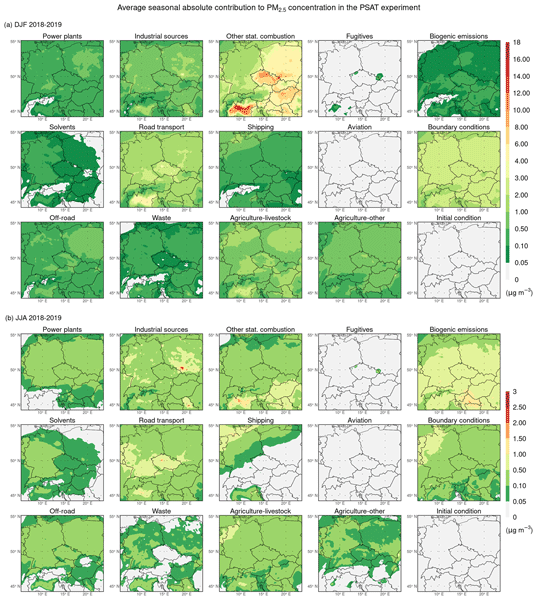
The presented study deals with the attribution of fine particulate matter (PM2.5) concentrations to anthropogenic emissions over Central Europe using regional-scale models. It calculates the present-day contributions of different emissions sectors to concentrations of PM2.5 and its secondary components. Moreover, the study investigates the effect of chemical nonlinearities by using multiple source attribution methods and secondary organic aerosol calculation methods.
Anne Sophie Daloz, Clemens Schwingshackl, Priscilla Mooney, Susanna Strada, Diana Rechid, Edouard L. Davin, Eleni Katragkou, Nathalie de Noblet-Ducoudré, Michal Belda, Tomas Halenka, Marcus Breil, Rita M. Cardoso, Peter Hoffmann, Daniela C. A. Lima, Ronny Meier, Pedro M. M. Soares, Giannis Sofiadis, Gustav Strandberg, Merja H. Toelle, and Marianne T. Lund
The Cryosphere, 16, 2403–2419, https://doi.org/10.5194/tc-16-2403-2022, https://doi.org/10.5194/tc-16-2403-2022, 2022
Short summary
Short summary
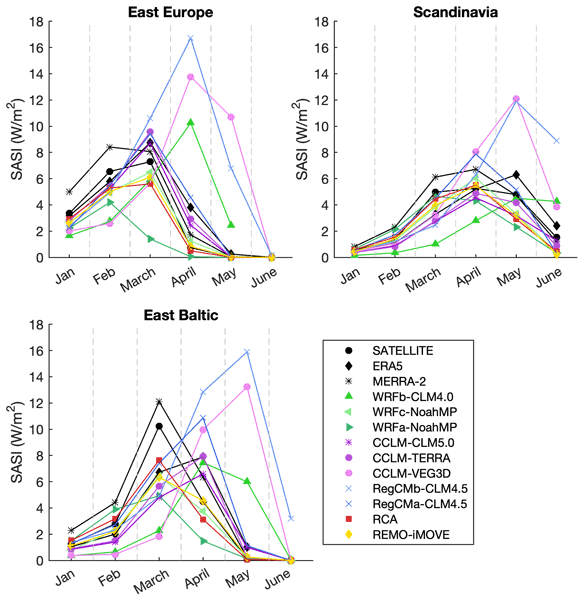
Snow plays a major role in the regulation of the Earth's surface temperature. Together with climate change, rising temperatures are already altering snow in many ways. In this context, it is crucial to better understand the ability of climate models to represent snow and snow processes. This work focuses on Europe and shows that the melting season in spring still represents a challenge for climate models and that more work is needed to accurately simulate snow–atmosphere interactions.
Mohamed H. Salim, Sebastian Schubert, Jaroslav Resler, Pavel Krč, Björn Maronga, Farah Kanani-Sühring, Matthias Sühring, and Christoph Schneider
Geosci. Model Dev., 15, 145–171, https://doi.org/10.5194/gmd-15-145-2022, https://doi.org/10.5194/gmd-15-145-2022, 2022
Short summary
Short summary
Radiative transfer processes are the main energy transport mechanism in urban areas which influence the surface energy budget and drive local convection. We show here the importance of each process to help modellers decide on how much detail they should include in their models to parameterize radiative transfer in urban areas. We showed how the flow field may change in response to these processes and the essential processes needed to assure acceptable quality of the numerical simulations.
Cited articles
Baklanov, A., Schlünzen, K., Suppan, P., Baldasano, J., Brunner, D., Aksoyoglu, S., Carmichael, G., Douros, J., Flemming, J., Forkel, R., Galmarini, S., Gauss, M., Grell, G., Hirtl, M., Joffre, S., Jorba, O., Kaas, E., Kaasik, M., Kallos, G., Kong, X., Korsholm, U., Kurganskiy, A., Kushta, J., Lohmann, U., Mahura, A., Manders-Groot, A., Maurizi, A., Moussiopoulos, N., Rao, S. T., Savage, N., Seigneur, C., Sokhi, R. S., Solazzo, E., Solomos, S., Sørensen, B., Tsegas, G., Vignati, E., Vogel, B., and Zhang, Y.: Online coupled regional meteorology chemistry models in Europe: current status and prospects, Atmos. Chem. Phys., 14, 317–398, https://doi.org/10.5194/acp-14-317-2014, 2014. a
Baklanov, A., Grimmond, C. S. B., Carlson, D., Terblanche, D., Tang, X., Bouchet, V., Lee, B., Langendijk, G., Kolli, R. K., and Hovsepyan, A.: From urban meteorology, climate and environment research to integrated city services, Urban Clim., 23, 330–341, https://doi.org/10.1016/j.uclim.2017.05.004, 2018. a
Barber, C. B., Dobkin, D. P., and Huhdanpaa, H.: The quickhull algorithm for convex hulls, ACM T. Math. Software, 22, 469–483, 1996. a
Belda, M., Resler, J., Geletič, J., Krč, P., Maronga, B., Sühring, M., Kurppa, M., Kanani-Sühring, F., Fuka, V., Eben, K., Benešová, N., and Auvinen, M.: Sensitivity analysis of the PALM model system 6.0 in the urban environment, Geosci. Model Dev., 14, 4443–4464, https://doi.org/10.5194/gmd-14-4443-2021, 2021. a, b
Damian, V., Sandu, A., Damian, M., Potra, F., and Carmichael, G. R.: The kinetic preprocessor KPP-a software environment for solving chemical kinetics, Comput. Chem. Eng., 26, 1567–1579, 2002. a
Dauxois, T., Peacock, T., Bauer, P., Caulfield, C. P., Cenedese, C., Gorlé, C., Haller, G., Ivey, G. N., Linden, P. F., Meiburg, E., Pinardi, N., Vriend, N. M., and Woods, A. W.: Confronting Grand Challenges in environmental fluid mechanics, Phys. Rev. Fluids, 6, https://doi.org/10.1103/physrevfluids.6.020501, 2021. a
Deutscher Wetterdienst: Pamore – Retrieving archived forecast model data, https://www.dwd.de/EN/ourservices/pamore/pamore.html, last access: August 2025. a
Digital and Information Agency: Open Data Catalogue of the Czech Republic, https://data.gov.cz/datasets?query=%C4%8Cesk%C3%BD%20hydrometeorologick%C3%BD%20%C3%BAstav (last access: August 2025), 2025. a
Ehrhard, J., Khatib, I. A., Winkler, C., Kunz, R., Moussiopoulos, N., and Ernst, G.: The microscale model MIMO: development and assessment, J. Wind Eng. Ind., 85, 163–176, https://doi.org/10.1016/S0167-6105(99)00137-3, 2000. a
Esau, I., Belda, M., Miles, V., Geletič, J., Resler, J., Krč, P., Bauerová, P., Bureš, M., Eben, K., Fuka, V., Jareš, R., Karel, J., Keder, J., Patiño, W., Pettersson, L. H., Radović, J., Řezníček, H., Šindelářová, A., and Vlček, O.: A city-scale turbulence-resolving model as an essential element of integrated urban services, Urban Climate, 56, 102059, https://doi.org/10.1016/j.uclim.2024.102059, 2024. a
Free Software Foundation: GNU General Public License version 3, https://opensource.org/license/GPL-3.0 (last access: August 2025), 2007. a
Fröhlich, D. and Matzarakis, A.: Calculating human thermal comfort and thermal stress in the PALM model system 6.0, Geosci. Model Dev., 13, 3055–3065, https://doi.org/10.5194/gmd-13-3055-2020, 2020. a
Gehrke, K. F., Sühring, M., and Maronga, B.: Modeling of land–surface interactions in the PALM model system 6.0: land surface model description, first evaluation, and sensitivity to model parameters, Geosci. Model Dev., 14, 5307–5329, https://doi.org/10.5194/gmd-14-5307-2021, 2021. a
Geletič, J., Lehnert, M., Krč, P., Resler, J., and Krayenhoff, E. S.: High-Resolution Modelling of Thermal Exposure during a Hot Spell: A Case Study Using PALM-4U in Prague, Czech Republic, Atmosphere, 12, https://doi.org/10.3390/atmos12020175, 2021. a
Geletič, J., Lehnert, M., Resler, J., Krč, P., Middel, A., Krayenhoff, S. E., and Krüger, E.: High-fidelity simulation of the effects of street trees, green roofs and green walls on the distribution of thermal exposure in Prague-Dejvice, Build. Environ., 223, 109484, https://doi.org/10.1016/j.buildenv.2022.109484, 2022. a
Geletič, J., Lehnert, M., Resler, J., Krč, P., Bureš, M., Urban, A., and Krayenhoff, S. E.: Heat exposure variations and mitigation in a densely populated neighborhood during a hot day: Towards a people-oriented approach to urban climate management, Build. Environ., 242, 110564, https://doi.org/10.1016/j.buildenv.2023.110564, 2023. a
Gery, M. W., Whitten, G. Z., Killus, J. P., and Dodge, M. C.: A photochemical kinetics mechanism for urban and regional scale computer modeling, J. Geophys. Res.-Atmos., 94, 12925–12956, 1989. a
González, J. E., Ramamurthy, P., Bornstein, R. D., Chen, F., Bou-Zeid, E. R., Ghandehari, M., Luvall, J., Mitra, C., and Niyogi, D.: Urban climate and resiliency: A synthesis report of state of the art and future research directions, Urban Climate, 38, 100858, https://doi.org/10.1016/j.uclim.2021.100858, 2021. a
Gronemeier, T., Surm, K., Harms, F., Leitl, B., Maronga, B., and Raasch, S.: Evaluation of the dynamic core of the PALM model system 6.0 in a neutrally stratified urban environment: comparison between LES and wind-tunnel experiments, Geosci. Model Dev., 14, 3317–3333, https://doi.org/10.5194/gmd-14-3317-2021, 2021. a
Hamdi, R., Kusaka, H., Doan, Q.-V., Cai, P., He, H., Luo, G., Kuang, W., Caluwaerts, S., Duchêne, F., Van Schaeybroek, B., and Termonia, P.: The State-of-the-Art of Urban Climate Change Modeling and Observations, Earth Systems and Environment, 4, 631–646, https://doi.org/10.1007/s41748-020-00193-3, 2020. a
Hellsten, A., Ketelsen, K., Sühring, M., Auvinen, M., Maronga, B., Knigge, C., Barmpas, F., Tsegas, G., Moussiopoulos, N., and Raasch, S.: A nested multi-scale system implemented in the large-eddy simulation model PALM model system 6.0, Geosci. Model Dev., 14, 3185–3214, https://doi.org/10.5194/gmd-14-3185-2021, 2021. a
Janků, Z., Belda, M., Bureš, M., Krč, P., Lehnert, M., Resler, J., Řezníček, H., Krayenhoff, E., Krüger, E., and Geletič, J.: Towards climate-responsible tree positioning: Detailed effects of trees on heat exposure in complex urban environments, Urban For. Urban Green., 101, 128500, https://doi.org/10.1016/j.ufug.2024.128500, 2024. a
Kadasch, E., Sühring, M., Gronemeier, T., and Raasch, S.: Mesoscale nesting interface of the PALM model system 6.0, Geosci. Model Dev., 14, 5435–5465, https://doi.org/10.5194/gmd-14-5435-2021, 2021. a, b, c, d
Kadaverugu, R., Sharma, A., Matli, C., and Biniwale, R.: High Resolution Urban Air Quality Modeling by Coupling CFD and Mesoscale Models: a Review, Asia Pac. J. Atmos. Sci., 55, 539–556, https://doi.org/10.1007/s13143-019-00110-3, 2019. a
Karttunen, S., Sühring, M., O'Connor, E., and Järvi, L.: PALM-SLUrb v24.04: a single-layer urban canopy model for the PALM model system – model description and first evaluation, Geosci. Model Dev., 18, 5725–5757, https://doi.org/10.5194/gmd-18-5725-2025, 2025. a
Khan, B., Banzhaf, S., Chan, E. C., Forkel, R., Kanani-Sühring, F., Ketelsen, K., Kurppa, M., Maronga, B., Mauder, M., Raasch, S., Russo, E., Schaap, M., and Sühring, M.: Development of an atmospheric chemistry model coupled to the PALM model system 6.0: implementation and first applications, Geosci. Model Dev., 14, 1171–1193, https://doi.org/10.5194/gmd-14-1171-2021, 2021. a
Krč, P., Resler, J., Sühring, M., Schubert, S., Salim, M. H., and Fuka, V.: Radiative Transfer Model 3.0 integrated into the PALM model system 6.0, Geosci. Model Dev., 14, 3095–3120, https://doi.org/10.5194/gmd-14-3095-2021, 2021. a
Krč, P., Bureš, M., Resler, J., Belda, M., German Meteorological Service, and European Centre for Medium-Range Weather Forecasts: Dataset for paper PALM-meteo 2.6: Processor of PALM meteorological input data, Zenodo [data set], https://doi.org/10.5281/zenodo.16925022, 2025a. a
Krč, P., Resler, J., Bureš, M., and Belda, M.: PALM-meteo, GitHub [code], https://github.com/PALM-tools/palmmeteo (last access: August 2025), 2025b. a
Krč, P., Bureš, M., Resler, J., and Belda, M.: PALM-meteo: processor of meteorological input data for the PALM model system (2.8.0), Zenodo [code], https://doi.org/10.5281/zenodo.19088859, 2026. a
Lin, D., Khan, B., Katurji, M., Bird, L., Faria, R., and Revell, L. E.: WRF4PALM v1.0: a mesoscale dynamical driver for the microscale PALM model system 6.0, Geosci. Model Dev., 14, 2503–2524, https://doi.org/10.5194/gmd-14-2503-2021, 2021. a
Maronga, B., Gryschka, M., Heinze, R., Hoffmann, F., Kanani-Sühring, F., Keck, M., Ketelsen, K., Letzel, M. O., Sühring, M., and Raasch, S.: The Parallelized Large-Eddy Simulation Model (PALM) version 4.0 for atmospheric and oceanic flows: model formulation, recent developments, and future perspectives, Geosci. Model Dev., 8, 2515–2551, https://doi.org/10.5194/gmd-8-2515-2015, 2015. a
Maronga, B., Banzhaf, S., Burmeister, C., Esch, T., Forkel, R., Fröhlich, D., Fuka, V., Gehrke, K. F., Geletič, J., Giersch, S., Gronemeier, T., Groß, G., Heldens, W., Hellsten, A., Hoffmann, F., Inagaki, A., Kadasch, E., Kanani-Sühring, F., Ketelsen, K., Khan, B. A., Knigge, C., Knoop, H., Krč, P., Kurppa, M., Maamari, H., Matzarakis, A., Mauder, M., Pallasch, M., Pavlik, D., Pfafferott, J., Resler, J., Rissmann, S., Russo, E., Salim, M., Schrempf, M., Schwenkel, J., Seckmeyer, G., Schubert, S., Sühring, M., von Tils, R., Vollmer, L., Ward, S., Witha, B., Wurps, H., Zeidler, J., and Raasch, S.: Overview of the PALM model system 6.0, Geosci. Model Dev., 13, 1335–1372, https://doi.org/10.5194/gmd-13-1335-2020, 2020. a, b, c
Masson, V., Lemonsu, A., Hidalgo, J., and Voogt, J.: Urban Climates and Climate Change, Annu. Rev. Environ. Resour., 45, 411–444, https://doi.org/10.1146/annurev-environ-012320-083623, 2020. a
Max-Planck – Institut für Meteorologie: Climate Data Operators: A large tool set for working on climate and NWP model data, https://code.mpimet.mpg.de/projects/cdo (last access: August 2025), 2025. a
NSF Unidata: MetPy v1.7.0 is a collection of tools in Python for reading, visualizing, and performing calculations with weather data, https://www.unidata.ucar.edu/software/metpy (last access: August 2025), 2025. a
PALM developers: PALM release on PALM GitLab server, https://gitlab.palm-model.org/releases/palm_model_system/-/releases (last access: August 2025), 2025. a
Patiño, W. R., Vlček, O., Bauerová, P., Belda, M., Bureš, M., Eben, K., Fuka, V., Geletič, J., Jareš, R., Karel, J., Keder, J., Krč, P., Radović, J., Řezníček, H., Šindelářová, A., and Resler, J.: On the suitability of dispersion models of varying degree of complexity for air quality assessment and urban planning, Build. Environ., 264, 111892, https://doi.org/10.1016/j.buildenv.2024.111892, 2024. a
PROJ: PROJ, generic coordinate transformation software, https://proj.org (last access: August 2025), 2025. a
Radović, J., Belda, M., Resler, J., Eben, K., Bureš, M., Geletič, J., Krč, P., Řezníček, H., and Fuka, V.: Challenges of constructing and selecting the “perfect” boundary conditions for the large-eddy simulation model PALM, Geosci. Model Dev., 17, 2901–2927, https://doi.org/10.5194/gmd-17-2901-2024, 2024. a, b, c, d, e
Resler, J., Krč, P., Belda, M., Juruš, P., Benešová, N., Lopata, J., Vlček, O., Damašková, D., Eben, K., Derbek, P., Maronga, B., and Kanani-Sühring, F.: PALM-USM v1.0: A new urban surface model integrated into the PALM large-eddy simulation model, Geosci. Model Dev., 10, 3635–3659, https://doi.org/10.5194/gmd-10-3635-2017, 2017. a, b
Resler, J., Eben, K., Geletič, J., Krč, P., Rosecký, M., Sühring, M., Belda, M., Fuka, V., Halenka, T., Huszár, P., Karlický, J., Benešová, N., Ďoubalová, J., Honzáková, K., Keder, J., Nápravníková, Š., and Vlček, O.: Validation of the PALM model system 6.0 in a real urban environment: a case study in Dejvice, Prague, the Czech Republic, Geosci. Model Dev., 14, 4797–4842, https://doi.org/10.5194/gmd-14-4797-2021, 2021. a, b, c, d
Resler, J., Bauerová, P., Belda, M., Bureš, M., Eben, K., Fuka, V., Geletič, J., Jareš, R., Karel, J., Keder, J., Krč, P., Patiño, W., Radović, J., Řezníček, H., Sühring, M., Šindelářová, A., and Vlček, O.: Challenges of high-fidelity air quality modeling in urban environments – PALM sensitivity study during stable conditions, Geosci. Model Dev., 17, 7513–7537, https://doi.org/10.5194/gmd-17-7513-2024, 2024. a, b, c, d, e
Řezníček, H., Geletič, J., Bureš, B., Krč, P., Resler, R., Vrbová, K., Trush, A., Michálek, P., Beneš, L., and Sühring, M.: Different boundary conditions for LES solver Palm 6.0 used for ABL in tunnel experiment, Programs and Algorithms of Numerical Mathematics 21, 21, 209–218, https://doi.org/10.21136/panm.2022.19, 2023. a
Řezníček, H., Geletič, J., Belda, M., Beneš, L., Bureš, M., Eben, K., Fuka, V., Krč, P., Michálek, P., Patiño, W., Radović, J., Sühring, M., Vlček, O., and Resler, J.: Analysis of the complex role of trees in street canyons using a large-eddy simulation model, Q. J. Roy. Meteor. Soc., 151, https://doi.org/10.1002/qj.4954, 2025. a
San Jose, R. and Perez-Camanyo, J. L.: High-resolution impacts of green areas on air quality in Madrid, Air Qual. Atmos. Hlth., 16, 37–48, https://doi.org/10.1007/s11869-022-01263-3, 2022. a
Snyder, J. P.: Map projections: A working manual, Tech. rep., U.S. Geological Survey, Washington, D.C., report, https://doi.org/10.3133/pp1395, 1987. a
Talbot, C., Bou-Zeid, E., and Smith, J.: Nested Mesoscale Large-Eddy Simulations with WRF: Performance in Real Test Cases, J. Hydrometeorol., 13, 1421–1441, https://doi.org/10.1175/JHM-D-11-048.1, 2012. a
Vogel, J., Stadler, S., Chockalingam, G., Afshari, A., Henning, J., and Winkler, M.: SanDyPALM v1.0: static and dynamic drivers for the PALM model to facilitate urban microclimate simulations, Geosci. Model Dev., 18, 6063–6094, https://doi.org/10.5194/gmd-18-6063-2025, 2025. a
Wang, Y., Adebayo, F. F., Crank, P. J., Krayenhoff, E. S., and Geletič, J.: Evaluating the PALM-4U representation of outdoor urban thermal exposure in a humid continental climate using MaRTy, in: 12th International Conference on Urban Climate, https://doi.org/10.5194/icuc12-547, 2025. a
Wiersema, D. J., Lundquist, K. A., and Chow, F. K.: Mesoscale to Microscale Simulations over Complex Terrain with the Immersed Boundary Method in the Weather Research and Forecasting Model, Mon. Weather Rev., 148, 577–595, https://doi.org/10.1175/MWR-D-19-0071.1, 2020. a
Wong, N. H., He, Y., Nguyen, N. S., Raghavan, S. V., Martin, M., Hii, D. J. C., Yu, Z., and Deng, J.: An integrated multiscale urban microclimate model for the urban thermal environment, Urban Climate, 35, 100730, https://doi.org/10.1016/j.uclim.2020.100730, 2021. a
Wyszogrodzki, A. A., Miao, S., and Chen, F.: Evaluation of the coupling between mesoscale-WRF and LES‐EULAG models for simulating fine-scale urban dispersion, Atmos. Res., 118, 324–345, https://doi.org/10.1016/j.atmosres.2012.07.023, 2012. a
Xie, Z.-T. and Castro, I. P.: Efficient Generation of Inflow Conditions for Large Eddy Simulation of Street-Scale Flows, Flow Turbul, Combust., 81, 449–470, https://doi.org/10.1007/s10494-008-9151-5, 2008. a
Yang, S., Wang, L., Stathopoulos, T., and Marey, A. M.: Urban microclimate and its impact on built environment – A review, Build. Environ, 238, 110334, https://doi.org/10.1016/j.buildenv.2023.110334, 2023. a
Zängl, G., Reinert, D., Rípodas, P., and Baldauf, M.: The ICON (ICOsahedral Non-hydrostatic) modelling framework of DWD and MPI-M: Description of the non-hydrostatic dynamical core, Q. J. Roy. Meteor. Soc., 141, 563–579, https://doi.org/10.1002/qj.2378, 2015. a
Žuvela-Aloise, M., Hahn, C., and Hollósi, B.: Evaluation of city-scale PALM model simulations and intra-urban thermal variability in Vienna, Austria using operational and crowdsourced data, Urban Climate, 59, 102245, https://doi.org/10.1016/j.uclim.2024.102245, 2025. a
Short summary
PALM is a highly versatile open-source microscale atmospheric modelling system. One of its most useful applications is modelling detailed street-level urban climate, e.g. for evaluation of climate change adaptation and mitigation measures in cities. However, to produce real-case microscale simulations, they need to be forced by real or realistic weather conditions. The presented tool enables PALM to use meteorological inputs from a large selection of meteorological models and other sources.
PALM is a highly versatile open-source microscale atmospheric modelling system. One of its most...


