
Articles | Volume 19, issue 9
https://doi.org/10.5194/gmd-19-3725-2026
© Author(s) 2026. This work is distributed under
the Creative Commons Attribution 4.0 License.
the Creative Commons Attribution 4.0 License.
https://doi.org/10.5194/gmd-19-3725-2026
© Author(s) 2026. This work is distributed under
the Creative Commons Attribution 4.0 License.
the Creative Commons Attribution 4.0 License.
Development and technical paper
| 
08 May 2026
Development and technical paper |
| 08 May 2026
| 08 May 2026
Stratospheric aerosol forcing for CMIP7 – Part 1: optical properties for pre-industrial, historical, and scenario simulations
Thomas J. Aubry
CORRESPONDING AUTHOR

Department of Earth and Environmental Sciences, University of Exeter, Penryn, UK
now at: Department of Earth Sciences, University of Oxford, Oxford, UK
Matthew Toohey
Institute of Space and Atmospheric Studies, University of Saskatchewan, Saskatoon, S7N 5A2, Canada
Sujan Khanal
Institute of Space and Atmospheric Studies, University of Saskatchewan, Saskatoon, S7N 5A2, Canada
Man Mei Chim
Department of Mathematics and Statistics, University of Exeter, Exeter, UK
Magali Verkerk
Department of Earth and Environmental Sciences, University of Exeter, Penryn, UK
now at: Department of Earth Sciences, University of Oxford, Oxford, UK
Ben Johnson
Met Office Hadley Centre, Exeter, UK
Anja Schmidt
Institute of Atmospheric Physics (IPA), German Aerospace Center (DLR), Oberpfaffenhofen, Germany
Meteorological Institute, Ludwig Maximilian University of Munich, Munich, Germany
Mahesh Kovilakam
NASA Langley Research Center, Hampton, Virginia, USA
ADNET Systems Inc, Bethesda, MD, USA
Michael Sigl
Institute of History & Oeschger Centre for Climate Change Research, University of Bern, Bern, Switzerland
now at: NOAA Geophysical Fluid Dynamics Laboratory, Princeton, NJ, USA
Zebedee Nicholls
Climate Resource, Berlin, Germany
Energy, Climate and Environment Program, International Institute for Applied Systems Analysis (IIASA), 2361 Laxenburg, Austria
School of Geography, Earth and Atmospheric Sciences, The University of Melbourne, Melbourne, Victoria, Australia
Larry Thomason
NASA Langley Research Center, Hampton, Virginia, USA
retired
Vaishali Naik
NOAA Geophysical Fluid Dynamics Laboratory, Princeton, NJ, USA
Landon Rieger
Environment and Climate Change Canada, Victoria BC, CA
Dominik Stiller
Department of Atmospheric and Climate Science, University of Washington, Seattle, WA, USA
Elisa Ziegler
Department of Geosciences, University of Tübingen, Tübingen, Germany
Paul Durack
Program for Climate Model Diagnosis and Intercomparison (PCMDI), Lawrence Livermore National Laboratory, Livermore, CA, USA
Oceans Institute, University of Western Australia, 64 Fairway, Crawley, Perth, WA 6009, Australia
Department of Water and Environmental Regulation, Prime House, 8 Davidson Terrace, Joondalup, WA 6919, Australia
Isabel H. Smith
Department of Earth and Environmental Sciences, University of Exeter, Penryn, UK
now at: Department of Earth Sciences, University of Oxford, Oxford, UK
Related authors
Man Mei Chim, Dominik Stiller, Elisa Ziegler, Thomas J. Aubry, Lucas Boissel, Sébastien Guillet, Brennan Rodgers, Matthew Toohey, Christine Pohl, and Alexei Rozanov
EGUsphere, https://doi.org/10.5194/egusphere-2026-4193, https://doi.org/10.5194/egusphere-2026-4193, 2026
Short summary
Short summary
Stratospheric aerosols from explosive volcanic eruptions are a major climate forcer. We compare the stratospheric aerosol forcing for the next phase of coordinated climate model experiments (CMIP7) against complementary datasets, such as observations of lunar eclipses, stellar extinction, and from satellites. We highlight the potential value of combining observational constraints from complementary datasets with the extensive CMIP7 volcanic emission inventory to refine future forcing data.
Man Mei Chim, Nathan Luke Abraham, Thomas J. Aubry, Ben Johnson, Hella Garny, Susan Solomon, and Anja Schmidt
Atmos. Chem. Phys., 26, 6781–6797, https://doi.org/10.5194/acp-26-6781-2026, https://doi.org/10.5194/acp-26-6781-2026, 2026
Short summary
Short summary
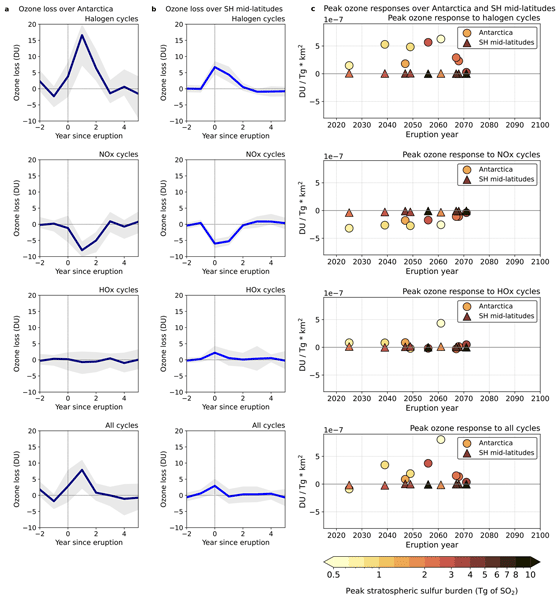
Sulfate aerosols from explosive eruptions can provide surfaces for chemical reactions destroying ozone. Assessing the effects of volcanic sulfate aerosols is crucial for understanding future ozone recovery. We find sporadic eruptions can induce a small delay in stratospheric ozone recovery by a few years over Antarctica and Southern Hemisphere mid-latitudes. Our results highlight the importance to continuously monitor atmospheric composition and processes to understand changes in ozone recovery.
Thomas J. Aubry, Michael Sigl, Matthew Toohey, Man Mei Chim, Magali Verkerk, Anja Schmidt, and Simon A. Carn
EGUsphere, https://doi.org/10.5194/egusphere-2026-546, https://doi.org/10.5194/egusphere-2026-546, 2026
Short summary
Short summary
We document the historical (1750–2023) volcanic sulfur dioxide emission dataset created for phase 7 of the Coupled Model Intercomparison Project, which is a set of coordinated climate model experiments run by modelling center worldwide. Our dataset underpins the stratospheric aerosol optical property dataset which will be used as input by most climate models. However, models with interactive stratospheric aerosol capability can directly input our emission dataset to run CMIP7 experiments.
Magali Verkerk, Thomas J. Aubry, Chris Smith, Peter O. Hopcroft, Michael Sigl, Jessica E. Tierney, Kevin Anchukaitis, Matthew Osman, Anja Schmidt, and Matthew Toohey
Clim. Past, 21, 1755–1778, https://doi.org/10.5194/cp-21-1755-2025, https://doi.org/10.5194/cp-21-1755-2025, 2025
Short summary
Short summary
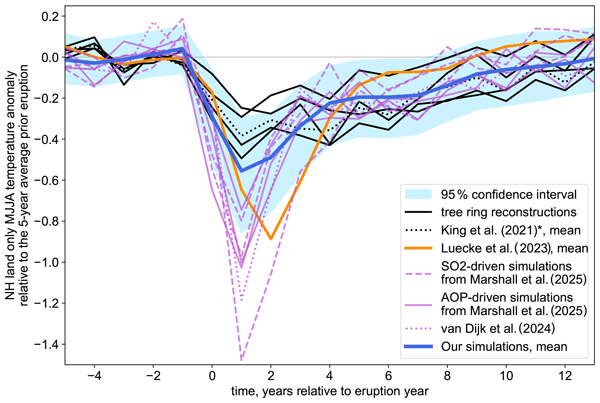
Large volcanic eruptions can trigger global cooling, affecting human societies. Using ice-core records and simple climate model to simulate volcanic effect over the last 8500 years, we show that volcanic eruptions cool the climate by 0.12 °C on average. By comparing model results with temperature recorded by tree rings over the last 1000 years, we demonstrate that our models can predict the large-scale cooling caused by volcanic eruptions and can be used in cases of large eruptions in the future.
Jean-Paul Vernier, Thomas J. Aubry, Claudia Timmreck, Anja Schmidt, Lieven Clarisse, Fred Prata, Nicolas Theys, Andrew T. Prata, Graham Mann, Hyundeok Choi, Simon Carn, Richard Rigby, Susan C. Loughlin, and John A. Stevenson
Atmos. Chem. Phys., 24, 5765–5782, https://doi.org/10.5194/acp-24-5765-2024, https://doi.org/10.5194/acp-24-5765-2024, 2024
Short summary
Short summary
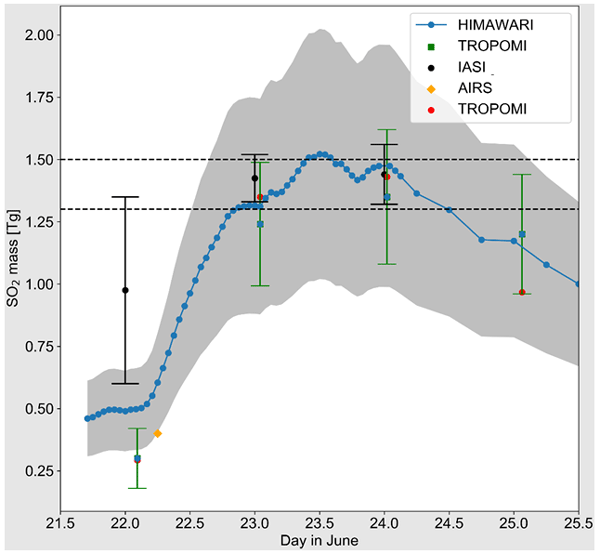
The 2019 Raikoke eruption (Kamchatka, Russia) generated one of the largest emissions of particles and gases into the stratosphere since the 1991 Mt. Pinatubo eruption. The Volcano Response (VolRes) initiative, an international effort, provided a platform for the community to share information about this eruption and assess its climate impact. The eruption led to a minor global surface cooling of 0.02 °C in 2020 which is negligible relative to warming induced by human greenhouse gas emissions.
Nicolai Meinshausen, Malte Meinshausen, Jared Lewis, Zebedee R. J. Nicholls, Sarah Schöngart, Alister Self, Xinwei Shen, Karla Spiller, and Elisabeth Vogel
EGUsphere, https://doi.org/10.5194/egusphere-2026-5176, https://doi.org/10.5194/egusphere-2026-5176, 2026
This preprint is open for discussion and under review for Geoscientific Model Development (GMD).
Short summary
Short summary
To help societies prepare for climate change, we built a fast climate model combining climate science and machine learning. It produces projections of temperature, precipitation, humidity and seven other climate variables across many emissions futures, aligned with observations and IPCC warming ranges. Applied to Iran, it shows that human-caused climate change strongly influenced the severe 2025 drought and projects rising drought risk, supporting faster regional risk assessment and planning.
Trevor Sloughter, Zebedee Nicholls, Gang Tang, Thomas Kleinen, Zhen Zhang, and Joeri Rogelj
Geosci. Model Dev., 19, 9063–9076, https://doi.org/10.5194/gmd-19-9063-2026, https://doi.org/10.5194/gmd-19-9063-2026, 2026
Short summary
Short summary
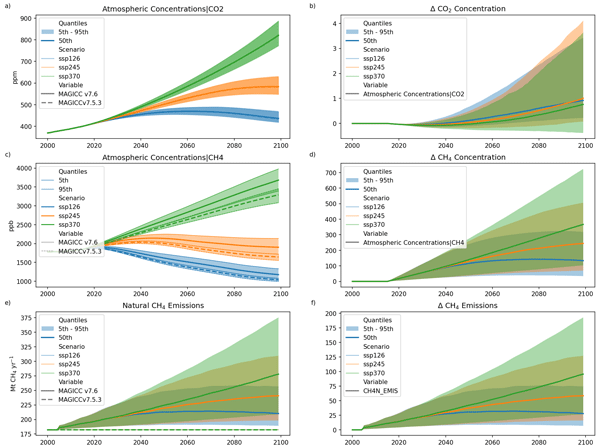
High resolution models of the earth system exhibit some disagreement and uncertainty on future methane emissions from natural sources, in particular wetlands, with some studies predicting wetlands alone could be very significant sources over the 21st century. Modelling these emissions as a response to global temperature is one option for simple models to approximate the climate impact of wetlands. The effect is a small increase in overall temperatures and a widening of the uncertainty range.

Juliette Lavoie, Aude Carreric, Alistair Duffey, Giovanni Chellini, and Elisa Ziegler
Geosci. Model Dev., 19, 8977–8994, https://doi.org/10.5194/gmd-19-8977-2026, https://doi.org/10.5194/gmd-19-8977-2026, 2026
Short summary
Short summary
The Coupled Model Intercomparison Project (CMIP) is a large collaborative project to better understand the Earth’s climate system. The data produced through this project is downloaded by users around the world. In this paper, we analyze the patterns of downloads and the usage of this massive dataset. From this analysis, we make some recommendations for future data production and usage tracking.
Alexander Mattin, Simon J. Barker, V. Holly L. Winton, Andrea Burke, William Hutchison, Patrick J. Sugden, Kirstin Krüger, Alexa R. Van Eaton, Larry G. Mastin, Michael Sigl, Eric W. Wolff, Shuji Fujita, Kumiko Goto-Azuma, Ikumi Oyabu, Motohiro Hirabayashi, Anders Svensson, Magali Verkerk, Colin J. N. Wilson, Stephen B. Piva, Nels A. Iverson, Nelia W. Dunbar, Helle A. Kjær, Nancy A. N. Bertler, Mirko Severi, Andrei V. Kurbatov, and Dominic A. Winski
EGUsphere, https://doi.org/10.5194/egusphere-2026-3434, https://doi.org/10.5194/egusphere-2026-3434, 2026
This preprint is open for discussion and under review for Climate of the Past (CP).
Short summary
Short summary
This study presents evidence of the ~25.3 Ōruanui supereruption preserved in Antarctic ice cores. Glaciochemical signals and volcanic ash were identified across multiple sites, revealing regional differences in volcanic transport, deposition, and preservation. Combining ice core records with climate model simulations, we show the eruption likely caused substantial short-term global cooling and atmospheric change but was unlikely to trigger long-term climate shifts.
Vaughan T. J. Phillips, Sanne M. H. de Jong, Robert Garvey, Martin K. Skoglund, Torbjörn Ahlström, Fredrik Charpentier Ljungqvist, Mikael Pontarp, Joacim Rocklöv, Matthew Toohey, Jun-Ichi Yano, Helene Castenbrandt, Carl-Johan Fraenkel, Adam Linder, Henrik Sjödin, and Jesper Sjolte
EGUsphere, https://doi.org/10.5194/egusphere-2026-5195, https://doi.org/10.5194/egusphere-2026-5195, 2026
This preprint is open for discussion and under review for Climate of the Past (CP).
Short summary
Short summary
We investigate how volcanic eruptions may have amplified plague pandemics through climate-driven harvest failure and malnutrition. Using a model linking climate, food production, nutrition and disease, we find that the eruptions of 536 and 540 CE could have greatly increased mortality during the Justinianic Plague. The results suggest that food shortages and human movement were important in shaping the pandemic's severity and spread.
Alexander Nauels, Tessa Möller, Victor Couplet, Robert E. Kopp, Praveen Kumar, Matthias Mengel, Gregory Munday, Zebedee R. J. Nicholls, Lennart Ramme, Aimée B. A. Slangen, Chris Smith, Jennifer H. Weeks, and Tony E. Wong
EGUsphere, https://doi.org/10.5194/egusphere-2026-3874, https://doi.org/10.5194/egusphere-2026-3874, 2026
This preprint is open for discussion and under review for Geoscientific Model Development (GMD).
Short summary
Short summary
Sea levels will keep rising for centuries, so coastal planning needs long-term outlooks. For the first time, we brought together seven simplified models, called emulators, and combined their estimates of future sea level rise to year 2300, including a scenario with strong temperature overshoot before returning to 1.5 °C of warming. The emulators differ most over how much ice Antarctica will lose. Even if global temperatures fall again, extra sea level rise stays locked in for centuries.
Rob Wilson, Ignacio Mundo, Lauren Marshall, Emily Reid, Michael Sigl, Anja Schmidt, Claudia Timmreck, Shih-Wei Fang, Rory Abernethy, Valerie Daux, and Ricardo Villalba
EGUsphere, https://doi.org/10.5194/egusphere-2026-4785, https://doi.org/10.5194/egusphere-2026-4785, 2026
This preprint is open for discussion and under review for Climate of the Past (CP).
Short summary
Short summary
We use tree rings from southern South America to reconstruct summer temperatures back to 1382, providing the first long-term Southern Hemisphere record that clearly captures volcanic cooling. Our results, supported by climate models, show that major tropical eruptions caused substantial cooling in northern Patagonia, but little cooling in Tasmania and New Zealand. The study highlights the importance of tree-ring density measurements for understanding past volcanic impacts on climate.
Natalie Mahowald, Hannah Liddy, Jennifer Marlon, Kostas Tsigaridis, Gisela Winckler, Douglas Hamilton, Jasper Kok, Michael Sigl, Jordan Abell, Adwoa Aboagye-Okyere, Joe Adabouk Amooli, Samuel Albani, Susanne Bauer, Emilie Beaudon, Hunter Brown, Nathan Chellman, Nicolás Cosentino, Nathalie Goodkin, Christopher Guiterman, Stijn Hantson, Chengfei He, Aviva Intveld, Jed Kaplan, Jeremy Klavans, Fabrice Lambert, Haobo Liu, Marie-France Loutre, Joe McConnell, Zachary McGraw, Keren Mezuman, Ron Miller, Nicholas O’Mara, Maria Rosabelle Ong, Gavin Schmidt, Richard Vachula, Lily Wu, and Bingqing Zhang
EGUsphere, https://doi.org/10.5194/egusphere-2026-4532, https://doi.org/10.5194/egusphere-2026-4532, 2026
This preprint is open for discussion and under review for Atmospheric Chemistry and Physics (ACP).
Short summary
Short summary
Aerosols are poorly known in past climates, and yet it is very important to understand how aerosols are changing in different climates. In this paper we review available proxy data and modeling approaches to characterize aerosols in past climates. In addition, we propose future studies that can help improve our understanding.
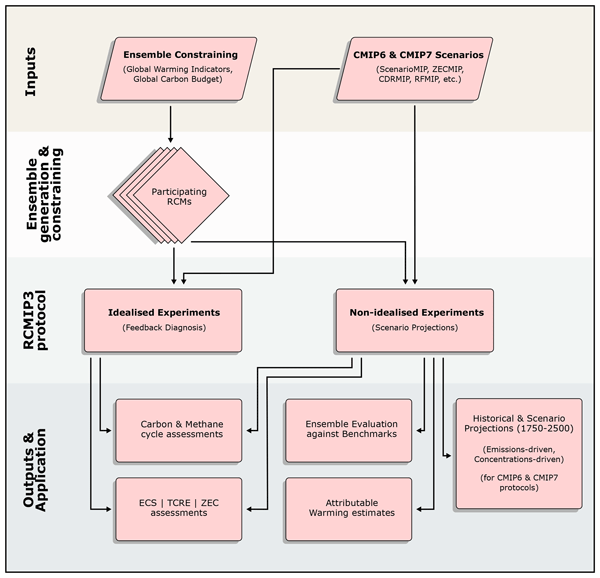
Alejandro Romero-Prieto, Marit Sandstad, Benjamin M. Sanderson, Zebedee R. J. Nicholls, Norman J. Steinert, Thomas Gasser, Camilla Mathison, Jarmo Kikstra, Thomas J. Aubry, Katsumasa Tanaka, Konstantin Weber, and Chris Smith
Geosci. Model Dev., 19, 7111–7133, https://doi.org/10.5194/gmd-19-7111-2026, https://doi.org/10.5194/gmd-19-7111-2026, 2026
Short summary
Short summary
Reduced-complexity models are an important tool in climate science, helping us understand and estimate future climate change. We present the experimental protocol for the next phase of the reduced-complexity model intercomparison project, which aims to compare results from many such models to better understand their behaviour. This knowledge will guide how these models are developed and used in the future, including in the upcoming Intergovernmental Panel on Climate Change (IPCC) assessment report (AR7).
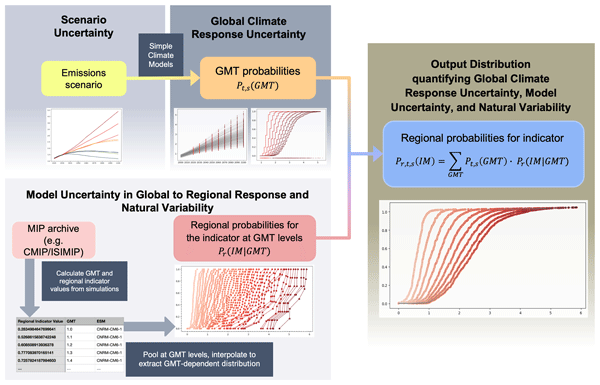
Niklas Schwind, Mahé Perrette, Edward Byers, Annika Högner, Quentin Lejeune, Tessa Möller, Zebedee Nicholls, Peter Pfleiderer, Sarah Schöngart, Michaela Werning, and Carl-Friedrich Schleussner
Geosci. Model Dev., 19, 6797–6828, https://doi.org/10.5194/gmd-19-6797-2026, https://doi.org/10.5194/gmd-19-6797-2026, 2026
Short summary
Short summary
We study how regional climate and climate impact indicators may respond to different emissions scenarios. Their possible outcomes are shaped by uncertainties in future emissions, global warming, regional effects of global warming, and the chaotic climate system. We introduce RIME-X (Rapid Impact Model Emulator Extended), an emulator that combines multiple tools and datasets to estimate probabilistically how any emissions path may influence regional outcomes.
Man Mei Chim, Dominik Stiller, Elisa Ziegler, Thomas J. Aubry, Lucas Boissel, Sébastien Guillet, Brennan Rodgers, Matthew Toohey, Christine Pohl, and Alexei Rozanov
EGUsphere, https://doi.org/10.5194/egusphere-2026-4193, https://doi.org/10.5194/egusphere-2026-4193, 2026
Short summary
Short summary
Stratospheric aerosols from explosive volcanic eruptions are a major climate forcer. We compare the stratospheric aerosol forcing for the next phase of coordinated climate model experiments (CMIP7) against complementary datasets, such as observations of lunar eclipses, stellar extinction, and from satellites. We highlight the potential value of combining observational constraints from complementary datasets with the extensive CMIP7 volcanic emission inventory to refine future forcing data.
Baylor Fox-Kemper, Patricia DeRepentigny, Anne Marie Treguier, Christian Stepanek, Eleanor O'Rourke, Chloe Mackallah, Alberto Meucci, Yevgeny Aksenov, Paul J. Durack, Nicole Feldl, Oluwayemi Garuba, Vanessa Hernaman, Céline Heuzé, Doroteaciro Iovino, Gaurav Madan, André L. Marquez, François Massonnet, Jenny Mecking, Dhrubajyoti Samanta, Patrick C. Taylor, Wan-Ling Tseng, and Martin Vancoppenolle
Geosci. Model Dev., 19, 6043–6078, https://doi.org/10.5194/gmd-19-6043-2026, https://doi.org/10.5194/gmd-19-6043-2026, 2026
Short summary
Short summary
The ocean and sea ice are central to Earth's climate system, influencing global heat and carbon cycles, weather patterns, and sea level rise. Here the earth system model variables needed for studies of the ocean and sea ice are prioritized and requested. These requested variables were developed through an international, community-based process.
Matthias Kohl, Christoph Brühl, Holger Tost, Christos Xenofontos, Theodoros Christoudias, Sergey Gromov, Oliver Appel, Stephan Borrmann, Adam Bourassa, Pedro Campunzano-Jost, Yafang Cheng, Oliver Eppers, Karl D. Froyd, Bruna A. Holanda, Jose L. Jimenez, Patrick Jöckel, Philipp Joppe, Katharina Kaiser, Joseph M. Katich, Klaus Klingmüller, Franziska Köllner, Agnieszka Kupc, Anna Martin, Christopher Pöhlker, Mira L. Pöhlker, Ulrich Pöschl, Landon Rieger, Samuel Ruhl, Gregory P. Schill, Johannes Schneider, Christiane Schulz, Joshua P. Schwarz, Alexandra P. Tsimpidi, Ryan Vella, Christina J. Williamson, Yifan Yang, Daniel Zawada, Jos Lelieveld, and Andrea Pozzer
EGUsphere, https://doi.org/10.5194/egusphere-2026-3649, https://doi.org/10.5194/egusphere-2026-3649, 2026
Short summary
Short summary
Aerosols are crucial for Earth's climate, yet their vertical distribution remains poorly understood. We present first consistent global simulations of aerosol distributions and composition from the Earth's surface to the stratosphere, validated by extensive observations. Key findings include a global minimum in aerosol mass in the free troposphere, a significant contribution of organic aerosol in the lower stratosphere, and limited transport of primary particles to the stratosphere.
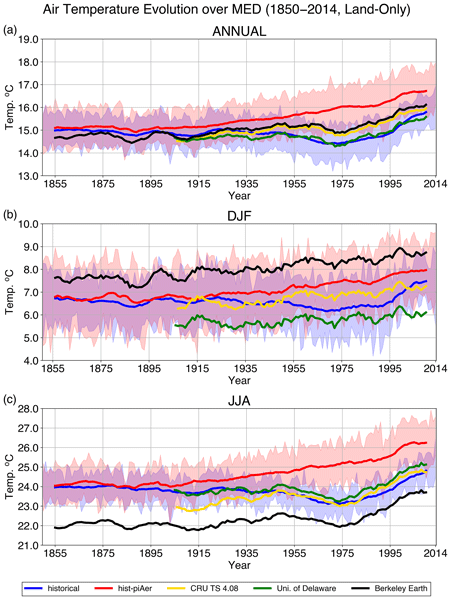
Alkiviadis Kalisoras, Prodromos Zanis, Aristeidis K. Georgoulias, Dimitris Akritidis, Robert J. Allen, and Vaishali Naik
Atmos. Chem. Phys., 26, 9413–9441, https://doi.org/10.5194/acp-26-9413-2026, https://doi.org/10.5194/acp-26-9413-2026, 2026
Short summary
Short summary
The Mediterranean region has experienced enhanced warming in the last decades resulting from emission changes of anthropogenic aerosols. In this work, we investigate changes in near-surface temperature over the Mediterranean throughout 1850–2014 using climate model simulations and try to connect them with changes in the Earth's radiative budget and atmospheric circulation.
Jan-Steffen Fischer, Stefanos Fasoulas, Matthias Nützel, and Anja Schmidt
EGUsphere, https://doi.org/10.5194/egusphere-2026-3050, https://doi.org/10.5194/egusphere-2026-3050, 2026
This preprint is open for discussion and under review for Geoscientific Model Development (GMD).
Short summary
Short summary
For the calculation of emission inventories of rocket launches we developed the Launch Emission Assessment Tool (LEAT). LEAT is the first open-source emission calculation tool for rocket launch emissions that calculates individual launches and their emissions depending on the launch vehicle and trajectory. LEAT enables the therefore user to develop own trajectory and emission inventories as a basis for estimating the (global) effects of rocket launch emissions.
Evelien J. C. van Dijk, Felix Riede, Claudia Timmreck, Kirstin Krüger, and Michael Sigl
EGUsphere, https://doi.org/10.5194/egusphere-2026-3266, https://doi.org/10.5194/egusphere-2026-3266, 2026
Short summary
Short summary
We simulate one of the largest eruptions of the Holocene to study the impacts on global climate and society. The simulations reveal severe and diverging climate anomalies in different regions. This likely had significant impact on the main regions of human settlements, with crop failures due to drought, and potential flooding in areas with extreme precipitation. Studying very large eruptions is important for understanding the risks of these events, that the world is ill-prepared for.
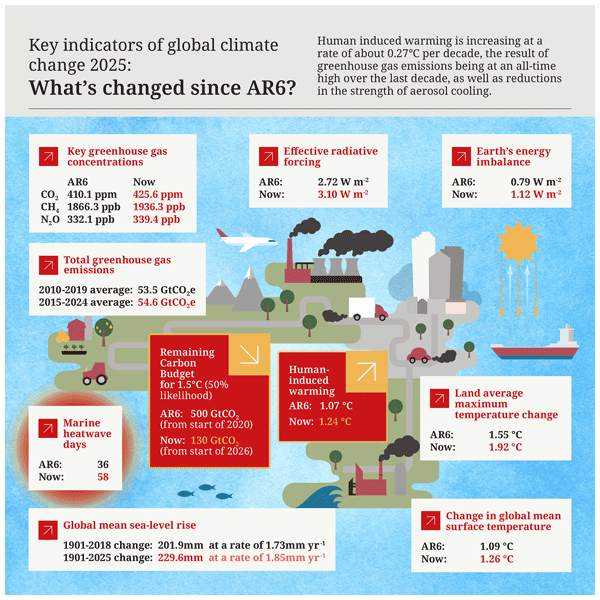
Piers M. Forster, Tristram Walsh, Chris Smith, William F. Lamb, Robin Lamboll, Christophe Cassou, Mathias Hauser, Zeke Hausfather, June-Yi Lee, Matthew D. Palmer, Karina von Schuckmann, Aimée B. A. Slangen, Sophie Szopa, Blair Trewin, Jeongeun Yun, Nathan P. Gillett, Stuart Jenkins, H. Damon Matthews, Krishnan Raghavan, Aurélien Ribes, Joeri Rogelj, Debbie Rosen, Xuebin Zhang, Myles Allen, Robbie M. Andrew, Chris Atkinson, Richard A. Betts, Antonio Bombelli, Samantha N. Burgess, Lijing Cheng, Helen E. Claxton, Pierre Friedlingstein, Thomas L. Frölicher, Catia M. Domingues, Thomas Gasser, Catherine H. Gregory, Rachel M. Hoesly, Daniel Huppmann, Masayoshi Ishii, Christopher Kadow, Alexia Karwat, John Kennedy, Rachel E. Killick, Mahesh V. M. Kovilakam, Paul B. Krummel, Xin Lan, Jean-François Lamarque, Aurélien Liné, Belén Martín-Míguez, Didier P. Monselesan, Colin Morice, Jens Mühle, Pino Mussak, Glen P. Peters, Anna Pirani, Julia Pongratz, Matthew Rigby, Robert Rohde, Abhishek Savita, Sonia I. Seneviratne, Steven J. Smith, Ghassan Taha, Caterina Tassone, Peter Thorne, Christopher Wells, Luke M. Western, Guido R. van der Werf, Susan E. Wijffels, Marco Zecchetto, Junting Zhong, Xiao-Ye Zhang, Valérie Masson-Delmotte, and Panmao Zhai
Earth Syst. Sci. Data, 18, 3889–3933, https://doi.org/10.5194/essd-18-3889-2026, https://doi.org/10.5194/essd-18-3889-2026, 2026
Short summary
Short summary
We give our annual update of key climate indicators. Our work quantifies the human contribution to global warming and the pace of climate change. This represents a large effort by the international community akin to an Intergovernmental Panel on Climate Change (IPCC) report.
Martin R. Willett, Melissa E. Brooks, Andrew Bushell, Paul Earnshaw, Charline Marzin, Samantha Smith, Lorenzo Tomassini, Nathan Luke Abraham, Martin Best, John M. Edwards, Kalli Furtado, Catherine Hardacre, Alan J. Hewitt, Ben Johnson, Adrian Lock, Jane P. Mulcahy, James Manners, Alistair Sellar, Peter Sheridan, Warren Tennant, Kwinten Van Weverberg, Vidya Varma, and Michael Whitall
EGUsphere, https://doi.org/10.5194/egusphere-2026-2425, https://doi.org/10.5194/egusphere-2026-2425, 2026
Short summary
Short summary
Global Atmosphere and Land (GAL) configurations of the Unified Model (UM) and JULES are developed for use in any global atmospheric modelling application. We describe the latest version, GAL9. We compare GAL9 with its predecessor and show that it gives improved forecasts of weather and climate. GAL9 has been used for weather forecasts in the UK from early 2026 and it will be used to study the Earth's climate.
Josh Smith, Matthew Henry, Masaru Yoshioka, Ben Johnson, and Jim Haywood
EGUsphere, https://doi.org/10.5194/egusphere-2026-2654, https://doi.org/10.5194/egusphere-2026-2654, 2026
Short summary
Short summary
In 2020, new international rules cut sulphur in shipping fuels by roughly eighty percent, removing particles that had been brightening clouds over the oceans and reflecting sunlight. Using a climate model, we tested how this loss of cooling has been calculated and found that recent studies have
likely underestimated the resulting warming by a factor of two to four. This means cleaner shipping fuels may be contributing more to recent global warming than previously recognised.
likely underestimated the resulting warming by a factor of two to four. This means cleaner shipping fuels may be contributing more to recent global warming than previously recognised.
Man Mei Chim, Nathan Luke Abraham, Thomas J. Aubry, Ben Johnson, Hella Garny, Susan Solomon, and Anja Schmidt
Atmos. Chem. Phys., 26, 6781–6797, https://doi.org/10.5194/acp-26-6781-2026, https://doi.org/10.5194/acp-26-6781-2026, 2026
Short summary
Short summary
Sulfate aerosols from explosive eruptions can provide surfaces for chemical reactions destroying ozone. Assessing the effects of volcanic sulfate aerosols is crucial for understanding future ozone recovery. We find sporadic eruptions can induce a small delay in stratospheric ozone recovery by a few years over Antarctica and Southern Hemisphere mid-latitudes. Our results highlight the importance to continuously monitor atmospheric composition and processes to understand changes in ozone recovery.
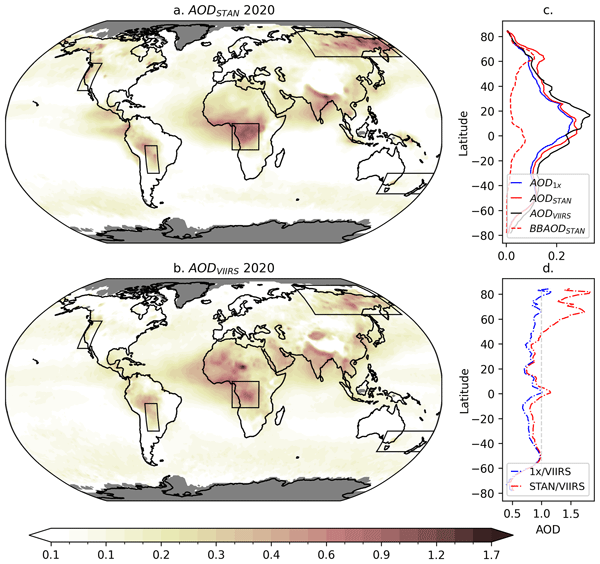
Elizabeth Quaye, Ben T. Johnson, James M. Haywood, Guido R. van der Werf, Roland Vernooij, Stephen A. Sitch, and Tom Eames
Atmos. Chem. Phys., 26, 6629–6654, https://doi.org/10.5194/acp-26-6629-2026, https://doi.org/10.5194/acp-26-6629-2026, 2026
Short summary
Short summary
We find aerosol optical depths in a global climate model are overestimated during extreme wildfire events if emissions are scaled up by a factor of two, typically applied to improve simulated aerosol on seasonal–annual timescales. We propose a technique where a variable scaling factor is determined by fuel consumption, improving correlation in five fire-affected areas. We explore the impact of this change on aerosol radiative effects, during extreme events and on broader space and time scales.
Eliza K. Duncan, George Jordan, Paul Kim, James M. Haywood, Duncan Watson-Parris, Ben Johnson, Alistair Sellar, Zak Kipling, João Teixeira, Florent Malavelle, and Daniel G. Partridge
EGUsphere, https://doi.org/10.5194/egusphere-2026-1043, https://doi.org/10.5194/egusphere-2026-1043, 2026
Short summary
Short summary
The 2014–15 Holuhraun eruption offers a natural experiment to assess how well climate models can capture the changes in aerosol associated with the plume. We investigate the aerosol lifecycle during transport to identify key differences in climate models' representation of aerosol processes, which could affect the models’ ability to capture changes in cloud properties. Our study highlights the importance of the representation of boundary layer nucleation processes in climate models.
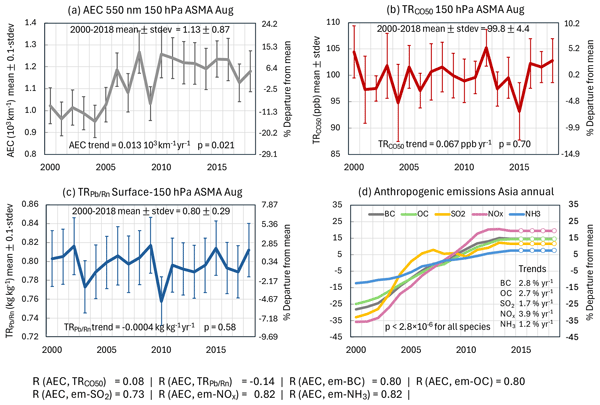
Mian Chin, Jonathon S. Wright, Huisheng Bian, Qian Tan, Xiaohua Pan, Toshihiko Takemura, Hitoshi Matsui, Kostas Tsigaridis, Susanne Bauer, Paul Ginoux, Yiran Peng, Zengyuan Guo, Suvarna Fadnavis, Anton Laakso, John P. Burrows, Ghassan Taha, Jayanta Kar, Alexei Rozanov, Carlo Arosio, Landon Rieger, and Adam Bourassa
Atmos. Chem. Phys., 26, 6035–6059, https://doi.org/10.5194/acp-26-6035-2026, https://doi.org/10.5194/acp-26-6035-2026, 2026
Short summary
Short summary
Aerosols in the upper troposphere influence weather and climate. The Asian summer monsoon efficiently transports surface pollutants upward, shaping aerosol amounts and variability in the upper troposphere. Using multiple global models, this study finds a summertime increase in upper-tropospheric aerosols at 1.2 % per year from 2000 to 2018 over Asia, consistent with rising pollutant emissions in Asia, while year-to-year changes are mainly driven by climate variability affecting monsoon dynamics.
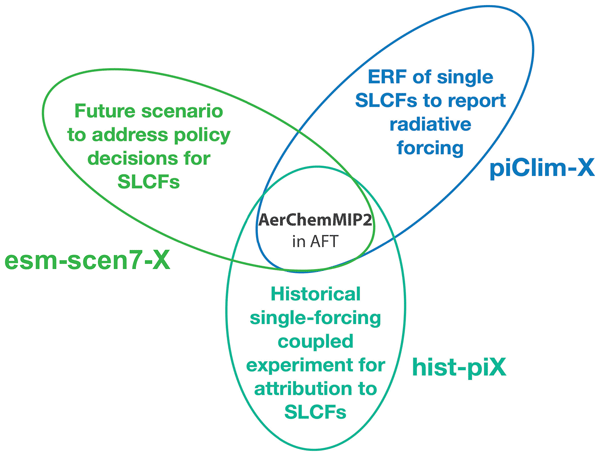
Stephanie Fiedler, Fiona M. O'Connor, Duncan Watson-Parris, Robert J. Allen, William J. Collins, Paul T. Griffiths, Matthew Kasoar, Jarmo Kikstra, Jasper F. Kok, Lee T. Murray, Fabien Paulot, Maria Sand, Steven T. Turnock, James Weber, Laura J. Wilcox, and Vaishali Naik
Geosci. Model Dev., 19, 3477–3508, https://doi.org/10.5194/gmd-19-3477-2026, https://doi.org/10.5194/gmd-19-3477-2026, 2026
Short summary
Short summary
The Aerosol and Chemistry Model Intercomparison Project phase two (AerChemMIP2) allows the community to compare results from contemporary Earth system models. AerChemMIP2 is asking modelling centres to perform experiments following the same protocol. It includes experiments for enabling new science and for tracking progress. Model output will be used for addressing research and policy questions about anthropogenic and natural drivers of climate change, and the impacts on air quality.
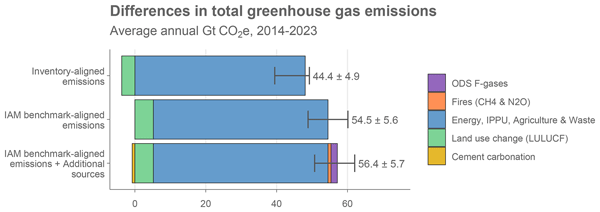
William F. Lamb, Robbie M. Andrew, Matthew Jones, Zebedee Nicholls, Glen P. Peters, Chris Smith, Marielle Saunois, Giacomo Grassi, Julia Pongratz, Steven J. Smith, Francesco N. Tubiello, Monica Crippa, Matthew Gidden, Pierre Friedlingstein, Jan Minx, and Piers M. Forster
Earth Syst. Sci. Data, 18, 2549–2572, https://doi.org/10.5194/essd-18-2549-2026, https://doi.org/10.5194/essd-18-2549-2026, 2026
Short summary
Short summary
This study explores why global greenhouse gas (GHG) emissions estimates vary. Key reasons include different coverage of gases and sectors, varying definitions of anthropogenic land use change emissions, and the Paris Agreement not covering all emission sources. The study highlights three main ways emissions data is reported, each with different objectives and resulting in varying global emission totals. It emphasizes the need for transparency in choosing datasets and setting assessment scopes.
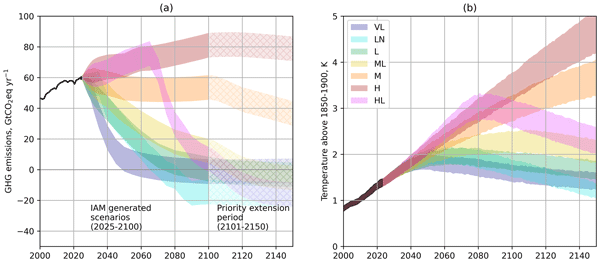
Detlef P. Van Vuuren, Brian C. O'Neill, Claudia Tebaldi, Benjamin M. Sanderson, Louise P. Chini, Pierre Friedlingstein, Tomoko Hasegawa, Keywan Riahi, Bala Govindasamy, Nico Bauer, Veronika Eyring, Cheikh M. N. Fall, Katja Frieler, Matthew J. Gidden, Laila K. Gohar, Annika Högner, Andrew D. Jones, Jarmo Kikstra, Andrew King, Reto Knutti, Elmar Kriegler, Peter Lawrence, Chris Lennard, Jason Lowe, Camilla Mathison, Shahbaz Mehmood, Zebedee Nicholls, Luciana F. Prado, Qiang Zhang, Steven K. Rose, Alex C. Ruane, Marit Sandstad, Carl-Friedrich Schleussner, Roland Seferian, Jana Sillmann, Chris Smith, Anna A. Sörensson, Swapna Panickal, Kaoru Tachiiri, Naomi Vaughan, Saritha S. Vishwanathan, Tokuta Yokohata, Marco Zecchetto, and Tilo Ziehn
Geosci. Model Dev., 19, 2627–2656, https://doi.org/10.5194/gmd-19-2627-2026, https://doi.org/10.5194/gmd-19-2627-2026, 2026
Short summary
Short summary
We propose a set of seven plausible 21st century emission scenarios, and their multi-century extensions, that will be used by the international community of climate modeling centers to produce the next generation of climate projections. These projections will support climate, impact and mitigation researchers, provide information to practitioners to address future risks from climate change, and contribute to policymakers’ considerations of the trade-offs among various levels of mitigation.
Moritz Adam, Elisa Ziegler, Björn Gonzalez, Nils Weitzel, and Kira Rehfeld
EGUsphere, https://doi.org/10.5194/egusphere-2026-626, https://doi.org/10.5194/egusphere-2026-626, 2026
Short summary
Short summary
As plants take up Carbon Dioxide from the atmosphere, they buffer climate change. They are vulnerable to extreme weather and climate. When temperature and moisture extremes happen simultaneously, they strongly affect how plants grow. We use complex computer models to understand impacts of extremes on plants. We compared the models to observations. The models do well globally and okay in many regions. Locally, they need improvement because modeling how water moves through the soil is difficult.
Martin Willett, Melissa Brooks, Andrew Bushell, Paul Earnshaw, Samantha Smith, Lorenzo Tomassini, Martin Best, Ian Boutle, Jennifer Brooke, John M. Edwards, Andrew D. Elvidge, Kalli Furtado, Catherine Hardacre, Andrew J. Hartley, Alan J. Hewitt, Ben Johnson, Adrian Lock, Andy Malcolm, Jane Mulcahy, Eike Müller, Ian A. Renfrew, Heather Rumbold, Gabriel G. Rooney, Alistair Sellar, Masashi Ujiie, Annelize van Niekerk, Andy Wiltshire, and Michael Whitall
Geosci. Model Dev., 19, 1473–1517, https://doi.org/10.5194/gmd-19-1473-2026, https://doi.org/10.5194/gmd-19-1473-2026, 2026
Short summary
Short summary
Global Atmosphere (GA) configurations of the Unified Model (UM) and Global Land (GL) configurations of Joint UK Land Environment Simulator (JULES) are developed for use in any global atmospheric modelling application. We describe a recent iteration of these configurations, GA8GL9, which includes improvements to the representation of convection and other physical processes. GA8GL9 is used for operational weather prediction in the UK and forms the basis for the next GA and GL configuration.
Thomas J. Aubry, Michael Sigl, Matthew Toohey, Man Mei Chim, Magali Verkerk, Anja Schmidt, and Simon A. Carn
EGUsphere, https://doi.org/10.5194/egusphere-2026-546, https://doi.org/10.5194/egusphere-2026-546, 2026
Short summary
Short summary
We document the historical (1750–2023) volcanic sulfur dioxide emission dataset created for phase 7 of the Coupled Model Intercomparison Project, which is a set of coordinated climate model experiments run by modelling center worldwide. Our dataset underpins the stratospheric aerosol optical property dataset which will be used as input by most climate models. However, models with interactive stratospheric aerosol capability can directly input our emission dataset to run CMIP7 experiments.
William J. Collins, John S. Daniel, Martyn P. Chipperfield, Martin Cussac, Makoto Deushi, Gregory Faluvegi, Paul Griffiths, Øivind Hodnebrog, Larry W. Horowitz, James Keeble, Douglas Kinnison, Vaishali Naik, Fiona M. O'Connor, Drew Shindell, Simone Tilmes, Kostas Tsigaridis, Zihao Wang, and James Weber
EGUsphere, https://doi.org/10.5194/egusphere-2025-6033, https://doi.org/10.5194/egusphere-2025-6033, 2026
Short summary
Short summary
Ozone depleting substances (ODSs) are also greenhouse gases that cause global warming. However, their destruction of ozone contributes a global cooling. We have used results from climate models that include atmospheric chemistry and found that the cooling effect of the ozone depletion diagnosed in the models was larger than that calculated using a standard method. We find that some ODSs have a net cooling effect whereas for others the warming effect is significantly reduced.
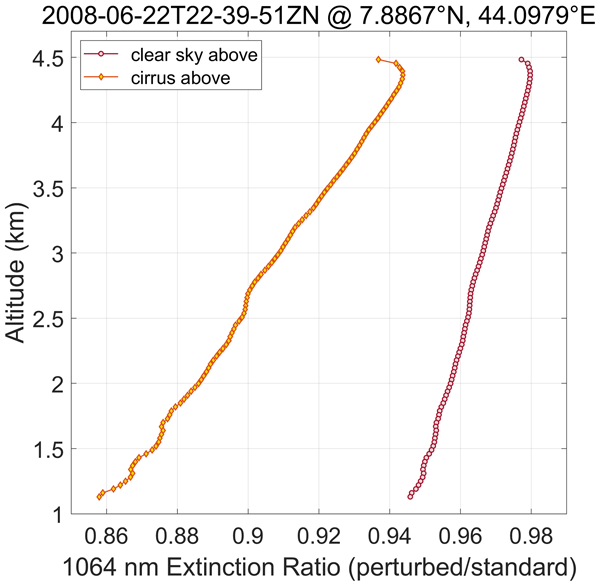
Jayanta Kar, Mark A. Vaughan, Robert P. Damadeo, Mahesh Kovilakam, Jason L. Tackett, and Charles R. Trepte
Atmos. Meas. Tech., 19, 277–292, https://doi.org/10.5194/amt-19-277-2026, https://doi.org/10.5194/amt-19-277-2026, 2026
Short summary
Short summary
This paper assesses biases in the 1064 nm calibration of the Cloud Aerosol Lidar with Orthogonal Polarization (CALIOP) due to signal attenuation differences at 1064 and 532 nm caused by stratospheric aerosols. Multi-channel measurements from the Stratospheric Aerosol and Gas Experiment suggest the bias ranges from 1 %–2 % for background conditions to over 5 % for high aerosol loads. Implications for CALIOP 1064 nm extinction retrievals and cascading errors in multi-layer scenes are discussed.
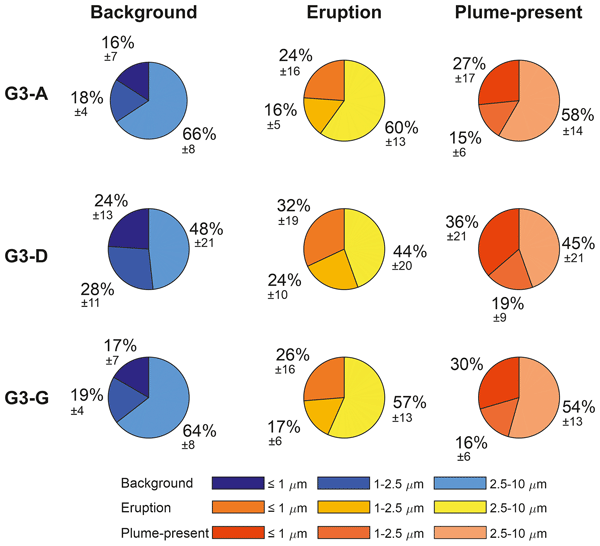
Rachel C. W. Whitty, Evgenia Ilyinskaya, Melissa A. Pfeffer, Ragnar H. Thrastarson, Þorsteinn Johannsson, Sara Barsotti, Tjarda J. Roberts, Guðni M. Gilbert, Tryggvi Hjörvar, Anja Schmidt, Daniela Fecht, and Grétar G. Sæmundsson
Atmos. Chem. Phys., 26, 313–347, https://doi.org/10.5194/acp-26-313-2026, https://doi.org/10.5194/acp-26-313-2026, 2026
Short summary
Short summary
We studied air pollution caused by volcanic emissions, a poorly understood hazard in populated areas. We present a large dataset of high-quality measurements of sulfur dioxide gas and fine aerosol particulate matter collected during ongoing series of eruptions in Iceland. We revealed rapid, localized changes in pollutant concentrations at ground level, with implications for assessing population exposure during volcanic eruptions.
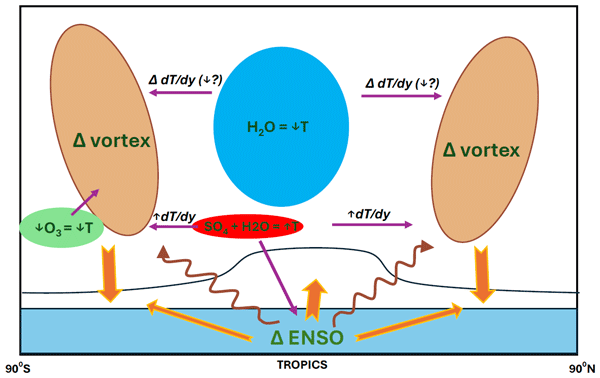
Ewa M. Bednarz, Amy H. Butler, Xinyue Wang, Zhihong Zhuo, Wandi Yu, Georgiy Stenchikov, Matthew Toohey, and Yunqian Zhu
Atmos. Chem. Phys., 26, 197–215, https://doi.org/10.5194/acp-26-197-2026, https://doi.org/10.5194/acp-26-197-2026, 2026
Short summary
Short summary
We investigate whether the 2022 Hunga eruption could affect surface climate via indirect pathways using large ensembles of Earth System Model simulations. These suggest that the eruption could have a non-negligible influence on regional surface climate, and we discuss the mechanisms via which such an influence could occur but also highlight that the forcing is relatively weak compared to natural climate variability which significantly hinders the detection of such impacts in the real world.
Hazel Vernier, Demilson Quintao, Bruno Biazon, Eduardo Landulfo, Giovanni Souza, Amanda Santos, Fabio Lopes, Alex Mendes, José da Matta, Pinheiro Damaris, Benoit Grosslin, Maria Paulete, Maria de Fátima Andrade, Neeraj Rastogi, Akhil Raj, Hongyu Liu, Mahesh Kovilakam, Suvarna Fadnavis, Frank Wienhold, Mathieu Colombier, Chris Boone, Gwenael Berthet, Nicolas Dumelie, Lilian Joly, and Jean-Paul Vernier
EGUsphere, https://doi.org/10.5194/egusphere-2025-6226, https://doi.org/10.5194/egusphere-2025-6226, 2026
Preprint archived
Short summary
Short summary
This paper shows unique balloon measurements from Brazil within the Hunga volcanic plume eight months after the eruption. The chemical analysis of samples collected reveal new insights on volcanic aerosol composition and suggest the presence of marine aerosols.
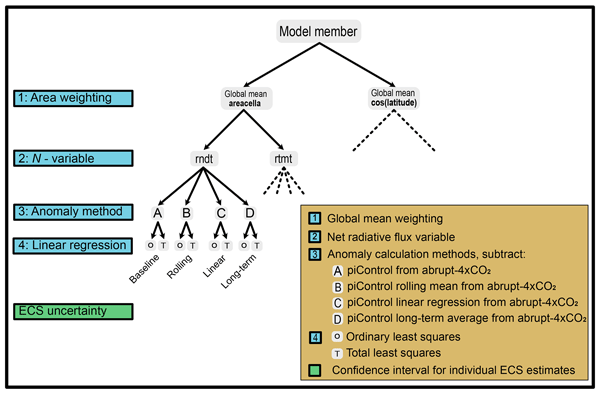
Anna Zehrung, Andrew D. King, Zebedee Nicholls, Mark D. Zelinka, and Malte Meinshausen
Geosci. Model Dev., 18, 9433–9450, https://doi.org/10.5194/gmd-18-9433-2025, https://doi.org/10.5194/gmd-18-9433-2025, 2025
Short summary
Short summary
The Gregory method is a common approach for calculating the equilibrium climate sensitivity (ECS). However, studies which apply this method lack transparency in how model data is processed prior to calculating the ECS, inhibiting replicability. Different choices of global weighting, net radiative flux variable, anomaly calculation, and linear regression fit can affect the ECS estimates. We investigate the impact of these choices and propose a standardised method for future ECS calculations.
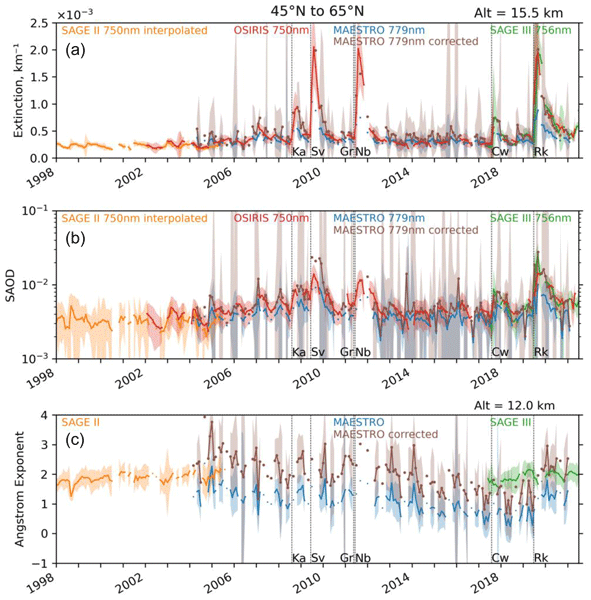
Sujan Khanal, Matthew Toohey, Adam Bourassa, C. Thomas McElroy, Christopher Sioris, and Kaley A. Walker
Atmos. Meas. Tech., 18, 6835–6852, https://doi.org/10.5194/amt-18-6835-2025, https://doi.org/10.5194/amt-18-6835-2025, 2025
Short summary
Short summary
Measurements of stratospheric aerosol from the Measurement of Aerosol Extinction in the Stratosphere and Troposphere Retrieved by Occultation (MAESTRO) instrument are compared to other measurements to assess their scientific value. We find that medians of MAESTRO measurements binned by month and latitude show reasonable correlation with other data sets, with notable increases after volcanic eruptions, and that biases in the data can be alleviated through a simple correction technique. Used with care, MAESTRO aerosol measurements provide information that can complement other data sets.
Monica Sharma, Mattia Righi, Johannes Hendricks, Anja Schmidt, Daniel Sauer, and Volker Grewe
Geosci. Model Dev., 18, 8485–8510, https://doi.org/10.5194/gmd-18-8485-2025, https://doi.org/10.5194/gmd-18-8485-2025, 2025
Short summary
Short summary
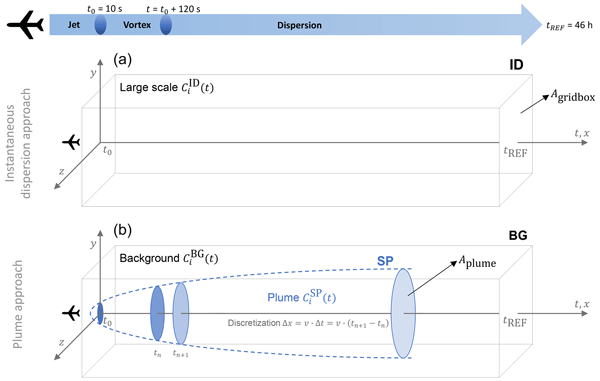
A plume model is developed to simulate aerosol microphysics in a dispersing aircraft plume, including interactions between ice crystals and aerosols in vortex regime. Compared to an instantaneous dispersion approach, the plume approach estimates 15 % lower aviation aerosol number concentrations, due to more efficient coagulation at plume scale. The model is sensitive to background conditions and initialization parameters, such as ice crystal number concentration and fuel sulfur content.
Eric J. Mei, Gregory J. Hakim, Max Taniguchi-King, Dominik Stiller, and Alexander J. Turner
Atmos. Chem. Phys., 25, 15033–15045, https://doi.org/10.5194/acp-25-15033-2025, https://doi.org/10.5194/acp-25-15033-2025, 2025
Short summary
Short summary
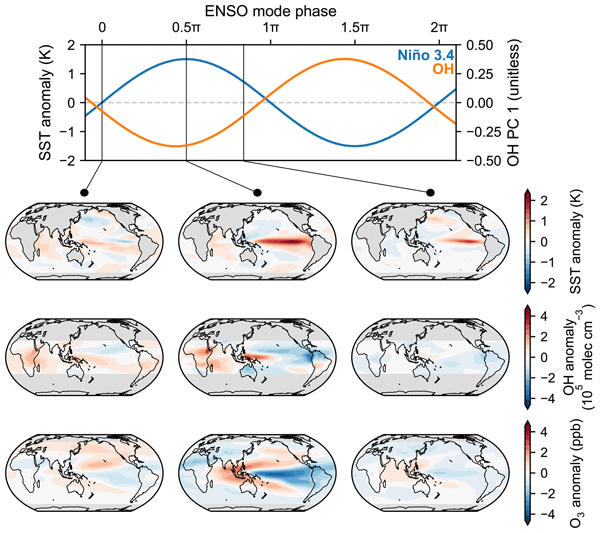
Chemistry-climate models are used to investigate how physical climate influences the composition of the atmosphere but are slow and expensive to run. We train a linear inverse model that can replicate the behavior of chemistry-climate models at low computational cost. It captures how large-scale climate features like El Niño affect atmospheric composition and can make accurate forecasts up to a year ahead. This model enables fast hypothesis testing and estimates of past atmospheric composition.
Natalie G. Ratcliffe, Claire L. Ryder, Nicolas Bellouin, Anthony Jones, Ben Johnson, Stephanie Woodward, Lisa-Maria Wieland, Josef Gasteiger, and Bernadett Weinzierl
EGUsphere, https://doi.org/10.5194/egusphere-2025-5143, https://doi.org/10.5194/egusphere-2025-5143, 2025
Short summary
Short summary
Observations show large dust particles travel much further than expected, which is not replicated in weather and climate models. We use a climate model to understand which processes dominantly impact large particle transport, and find that modelled large particle transport agrees with observations best after reducing the particle gravitational settling by ~ 80 %. We prove the presence of processes not represented accurately or at all in the model which act on large particles in the real-world.
Daniel Letros, Liam Graham, Adam Bourassa, Doug Degenstein, Paul Loewen, Landon Rieger, and Nick Lloyd
Atmos. Meas. Tech., 18, 6185–6210, https://doi.org/10.5194/amt-18-6185-2025, https://doi.org/10.5194/amt-18-6185-2025, 2025
Short summary
Short summary
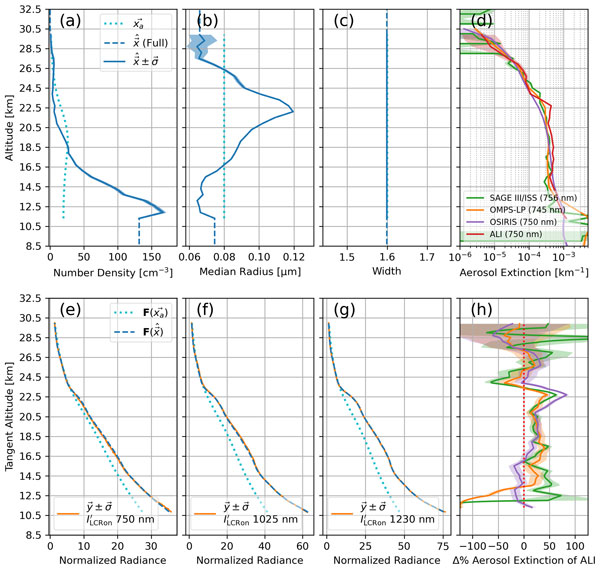
The Aerosol Limb Imager (ALI) is an optical instrument which measures stratospheric aerosols. These aerosols are of interest to atmospheric science as they have a significant impact on the Earth's climate. ALI has the ability to measure the polarization of atmospheric light over a wide spectral range, which is a novel ability for the measurement ALI uses. We demonstrate and discuss ALI capability and how the polarized information may improve aerosol information for this type of measurement.
George Jordan, Florent Malavelle, Jim Haywood, Ying Chen, Ben Johnson, Daniel Partridge, Amy Peace, Eliza Duncan, Duncan Watson-Parris, David Neubauer, Anton Laakso, Martine Michou, and Pierre Nabat
Atmos. Chem. Phys., 25, 13393–13428, https://doi.org/10.5194/acp-25-13393-2025, https://doi.org/10.5194/acp-25-13393-2025, 2025
Short summary
Short summary
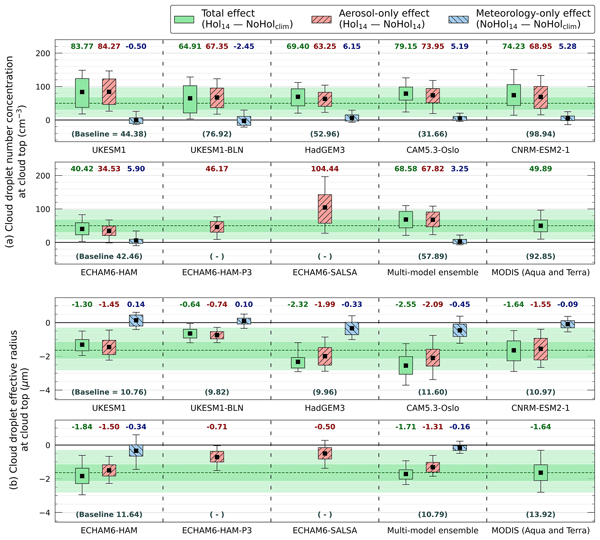
The 2014–15 Holuhraun eruption created a vast aerosol plume that acted as a natural experiment to assess how well climate models capture changes in cloud properties due to increased aerosol. We find that climate models represent the observed shift to smaller, more numerous cloud droplets well. However, climate models diverge in their aerosol-induced changes to large-scale cloud properties, particularly cloud liquid water content. Our study shows that Holuhraun had a cooling effect on the Earth.
Magali Verkerk, Thomas J. Aubry, Chris Smith, Peter O. Hopcroft, Michael Sigl, Jessica E. Tierney, Kevin Anchukaitis, Matthew Osman, Anja Schmidt, and Matthew Toohey
Clim. Past, 21, 1755–1778, https://doi.org/10.5194/cp-21-1755-2025, https://doi.org/10.5194/cp-21-1755-2025, 2025
Short summary
Short summary
Large volcanic eruptions can trigger global cooling, affecting human societies. Using ice-core records and simple climate model to simulate volcanic effect over the last 8500 years, we show that volcanic eruptions cool the climate by 0.12 °C on average. By comparing model results with temperature recorded by tree rings over the last 1000 years, we demonstrate that our models can predict the large-scale cooling caused by volcanic eruptions and can be used in cases of large eruptions in the future.
John P. Dunne, Helene T. Hewitt, Julie M. Arblaster, Frédéric Bonou, Olivier Boucher, Tereza Cavazos, Beth Dingley, Paul J. Durack, Birgit Hassler, Martin Juckes, Tomoki Miyakawa, Matt Mizielinski, Vaishali Naik, Zebedee Nicholls, Eleanor O'Rourke, Robert Pincus, Benjamin M. Sanderson, Isla R. Simpson, and Karl E. Taylor
Geosci. Model Dev., 18, 6671–6700, https://doi.org/10.5194/gmd-18-6671-2025, https://doi.org/10.5194/gmd-18-6671-2025, 2025
Short summary
Short summary
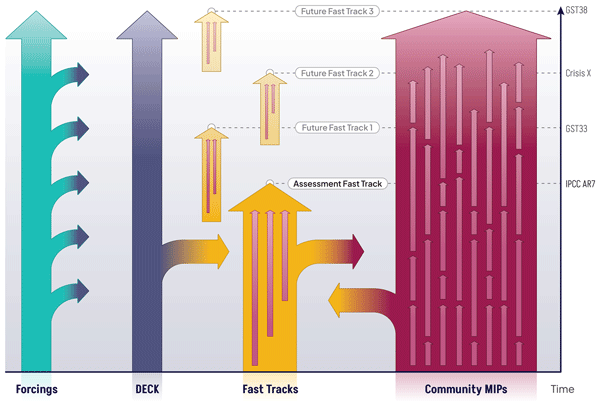
The seventh phase of the Coupled Model Intercomparison Project (CMIP7) coordinates efforts to answer key and timely climate science questions and facilitate delivery of relevant multi-model simulations for prediction and projection; characterization, attribution, and process understanding; and vulnerability, impact, and adaptation analysis. Key to the CMIP7 design are the mandatory Diagnostic, Evaluation and Characterization of Klima and optional Assessment Fast Track experiments.
Roberto Bilbao, Thomas J. Aubry, Matthew Toohey, Pablo Ortega, Vladimir Lapin, and Etienne Tourigny
Geosci. Model Dev., 18, 6239–6254, https://doi.org/10.5194/gmd-18-6239-2025, https://doi.org/10.5194/gmd-18-6239-2025, 2025
Short summary
Short summary
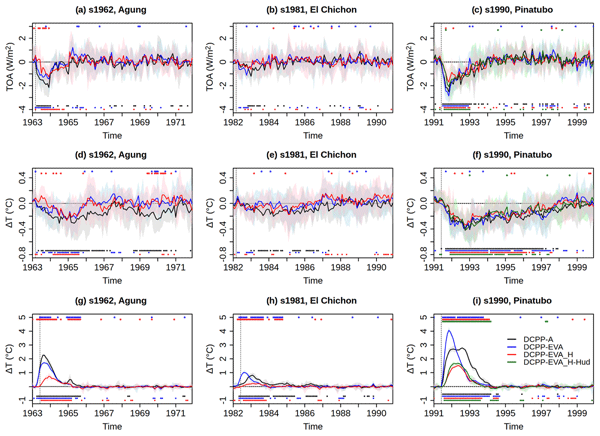
Large volcanic eruptions are unpredictable and can have significant climatic impacts. If one occurs, operational decadal forecasts will become invalid and must be rerun including the volcanic forcing. By analyzing the climate response in EC-Earth3 retrospective predictions, we show that idealised forcings produced with two simple models could be used in operational decadal forecasts to account for the radiative impacts of the next major volcanic eruption.
Benjamin M. Sanderson, Victor Brovkin, Rosie A. Fisher, David Hohn, Tatiana Ilyina, Chris D. Jones, Torben Koenigk, Charles Koven, Hongmei Li, David M. Lawrence, Peter Lawrence, Spencer Liddicoat, Andrew H. MacDougall, Nadine Mengis, Zebedee Nicholls, Eleanor O'Rourke, Anastasia Romanou, Marit Sandstad, Jörg Schwinger, Roland Séférian, Lori T. Sentman, Isla R. Simpson, Chris Smith, Norman J. Steinert, Abigail L. S. Swann, Jerry Tjiputra, and Tilo Ziehn
Geosci. Model Dev., 18, 5699–5724, https://doi.org/10.5194/gmd-18-5699-2025, https://doi.org/10.5194/gmd-18-5699-2025, 2025
Short summary
Short summary
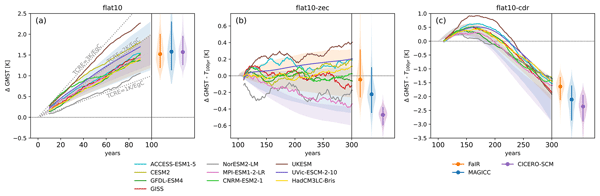
This study investigates how climate models warm in response to simplified carbon emissions trajectories, refining the understanding of climate reversibility and commitment. Metrics are defined for warming response to cumulative emissions and for the cessation of emissions or ramp-down to net-zero and net-negative levels. Results indicate that previous concentration-driven experiments may have overstated the Zero Emissions Commitment due to emissions rates exceeding historical levels.
Yunqian Zhu, Hideharu Akiyoshi, Valentina Aquila, Elizabeth Asher, Ewa M. Bednarz, Slimane Bekki, Christoph Brühl, Amy H. Butler, Parker Case, Simon Chabrillat, Gabriel Chiodo, Margot Clyne, Peter R. Colarco, Sandip Dhomse, Lola Falletti, Eric Fleming, Ben Johnson, Andrin Jörimann, Mahesh Kovilakam, Gerbrand Koren, Ales Kuchar, Nicolas Lebas, Qing Liang, Cheng-Cheng Liu, Graham Mann, Michael Manyin, Marion Marchand, Olaf Morgenstern, Paul Newman, Luke D. Oman, Freja F. Østerstrøm, Yifeng Peng, David Plummer, Ilaria Quaglia, William Randel, Samuel Rémy, Takashi Sekiya, Stephen Steenrod, Timofei Sukhodolov, Simone Tilmes, Kostas Tsigaridis, Rei Ueyama, Daniele Visioni, Xinyue Wang, Shingo Watanabe, Yousuke Yamashita, Pengfei Yu, Wandi Yu, Jun Zhang, and Zhihong Zhuo
Geosci. Model Dev., 18, 5487–5512, https://doi.org/10.5194/gmd-18-5487-2025, https://doi.org/10.5194/gmd-18-5487-2025, 2025
Short summary
Short summary
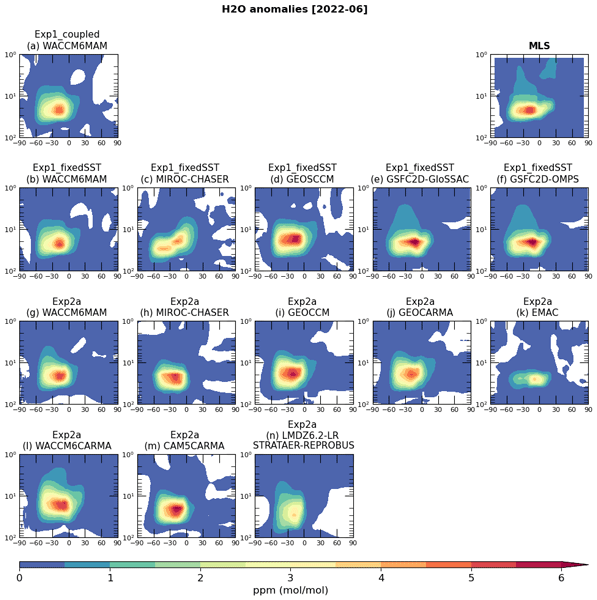
To understand the climate impact of the 2022 Hunga volcanic eruption, we developed a climate model–observation comparison project. The paper describes the protocols and models that participate in the experiments. We designed several experiments to achieve our goals of this activity: (1) to evaluate the climate model performance and (2) to understand the Earth system responses to this eruption.
William J. Collins, Fiona M. O'Connor, Rachael E. Byrom, Øivind Hodnebrog, Patrick Jöckel, Mariano Mertens, Gunnar Myhre, Matthias Nützel, Dirk Olivié, Ragnhild Bieltvedt Skeie, Laura Stecher, Larry W. Horowitz, Vaishali Naik, Gregory Faluvegi, Ulas Im, Lee T. Murray, Drew Shindell, Kostas Tsigaridis, Nathan Luke Abraham, and James Keeble
Atmos. Chem. Phys., 25, 9031–9060, https://doi.org/10.5194/acp-25-9031-2025, https://doi.org/10.5194/acp-25-9031-2025, 2025
Short summary
Short summary
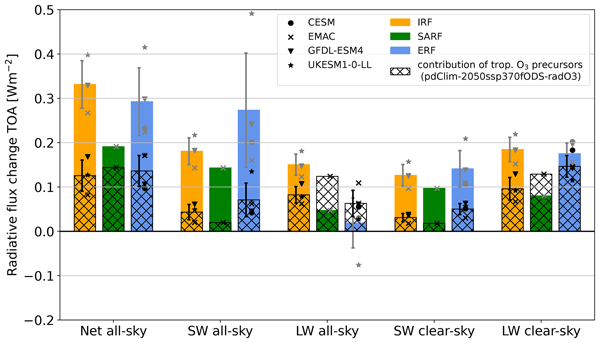
We used 7 climate models that include atmospheric chemistry and find that in a scenario with weak controls on air quality, the warming effects (over 2015 to 2050) of decreases in ozone-depleting substances and increases in air quality pollutants are approximately equal and would make ozone the second highest contributor to warming over this period. We find that for stratospheric ozone recovery, the standard measure of climate effects underestimates a more comprehensive measure.
Paul T. Griffiths, Laura J. Wilcox, Robert J. Allen, Vaishali Naik, Fiona M. O'Connor, Michael Prather, Alex Archibald, Florence Brown, Makoto Deushi, William Collins, Stephanie Fiedler, Naga Oshima, Lee T. Murray, Bjørn H. Samset, Chris Smith, Steven Turnock, Duncan Watson-Parris, and Paul J. Young
Atmos. Chem. Phys., 25, 8289–8328, https://doi.org/10.5194/acp-25-8289-2025, https://doi.org/10.5194/acp-25-8289-2025, 2025
Short summary
Short summary
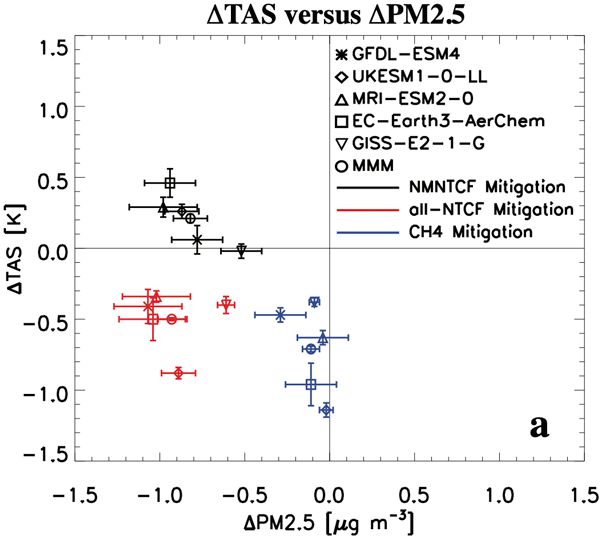
The Aerosol Chemistry Model Intercomparison Project (AerChemMIP) aimed to quantify the climate and air quality impacts of aerosols and chemically reactive gases. We review its contribution to AR6 (Sixth Assessment Report of the Intergovernmental Panel on Climate Change) and the wider understanding of the role of these species in climate and climate change. We identify challenges and provide recommendations to improve the utility and uptake of climate model data, detailed summary tables of CMIP6 models, experiments, and emergent diagnostics.
Nicholas Ernest, Larry W. Thomason, and Terry Deshler
Atmos. Meas. Tech., 18, 2957–2968, https://doi.org/10.5194/amt-18-2957-2025, https://doi.org/10.5194/amt-18-2957-2025, 2025
Short summary
Short summary
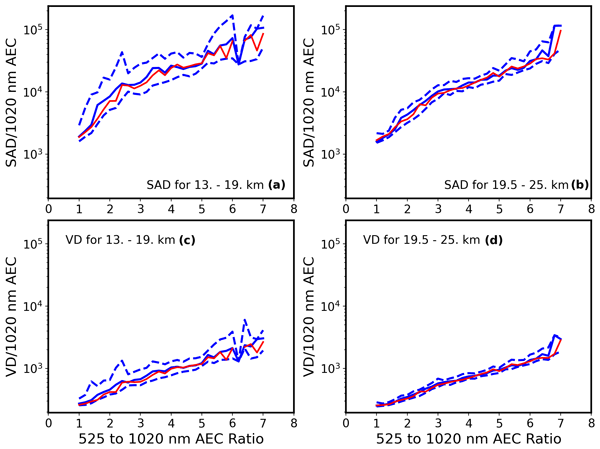
We use balloon-borne measurements of aerosol size distribution (ASD) made by the University of Wyoming (UW) to derive distributions which are representative of the ASDs that underlie measurements made by the Stratospheric Aerosol and Gas Experiment II (SAGE II). A simple single-mode log-normal distribution has in the past been used to derive ASD from SAGE II data; here we derive bimodal log-normal distributions, reproducing median aerosol properties measured by UW.
Piers M. Forster, Chris Smith, Tristram Walsh, William F. Lamb, Robin Lamboll, Christophe Cassou, Mathias Hauser, Zeke Hausfather, June-Yi Lee, Matthew D. Palmer, Karina von Schuckmann, Aimée B. A. Slangen, Sophie Szopa, Blair Trewin, Jeongeun Yun, Nathan P. Gillett, Stuart Jenkins, H. Damon Matthews, Krishnan Raghavan, Aurélien Ribes, Joeri Rogelj, Debbie Rosen, Xuebin Zhang, Myles Allen, Lara Aleluia Reis, Robbie M. Andrew, Richard A. Betts, Alex Borger, Jiddu A. Broersma, Samantha N. Burgess, Lijing Cheng, Pierre Friedlingstein, Catia M. Domingues, Marco Gambarini, Thomas Gasser, Johannes Gütschow, Masayoshi Ishii, Christopher Kadow, John Kennedy, Rachel E. Killick, Paul B. Krummel, Aurélien Liné, Didier P. Monselesan, Colin Morice, Jens Mühle, Vaishali Naik, Glen P. Peters, Anna Pirani, Julia Pongratz, Jan C. Minx, Matthew Rigby, Robert Rohde, Abhishek Savita, Sonia I. Seneviratne, Peter Thorne, Christopher Wells, Luke M. Western, Guido R. van der Werf, Susan E. Wijffels, Valérie Masson-Delmotte, and Panmao Zhai
Earth Syst. Sci. Data, 17, 2641–2680, https://doi.org/10.5194/essd-17-2641-2025, https://doi.org/10.5194/essd-17-2641-2025, 2025
Short summary
Short summary
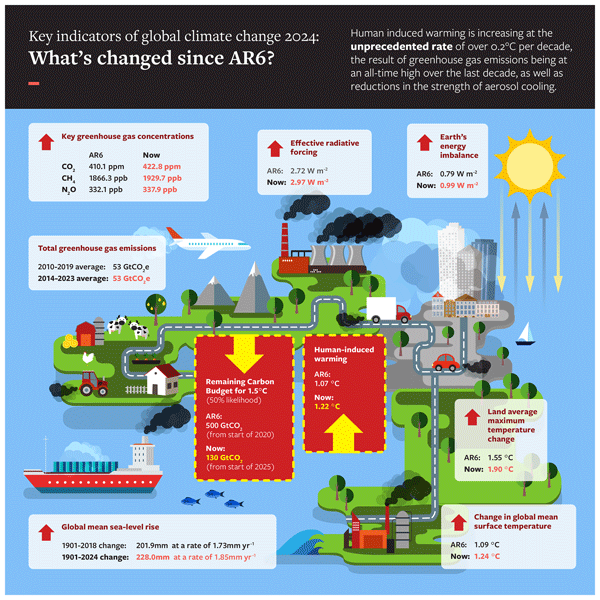
In a rapidly changing climate, evidence-based decision-making benefits from up-to-date and timely information. Here we compile monitoring datasets to track real-world changes over time. To make our work relevant to policymakers, we follow methods from the Intergovernmental Panel on Climate Change (IPCC). Human activities are increasing the Earth's energy imbalance and driving faster sea-level rise compared to the IPCC assessment.
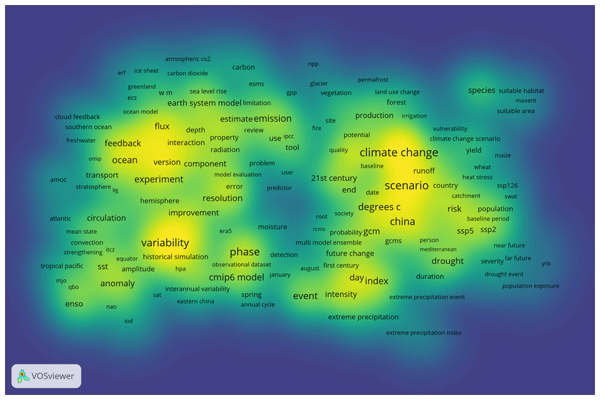
Martin Juckes, Karl E. Taylor, Fabrizio Antonio, David Brayshaw, Carlo Buontempo, Jian Cao, Paul J. Durack, Michio Kawamiya, Hyungjun Kim, Tomas Lovato, Chloe Mackallah, Matthew Mizielinski, Alessandra Nuzzo, Martina Stockhause, Daniele Visioni, Jeremy Walton, Briony Turner, Eleanor O'Rourke, and Beth Dingley
Geosci. Model Dev., 18, 2639–2663, https://doi.org/10.5194/gmd-18-2639-2025, https://doi.org/10.5194/gmd-18-2639-2025, 2025
Short summary
Short summary
The Baseline Climate Variables for Earth System Modelling (ESM-BCVs) are defined as a list of 135 variables which have high utility for the evaluation and exploitation of climate simulations. The list reflects the most frequently used variables from Earth system models based on an assessment of data publication and download records from the largest archive of global climate projects.
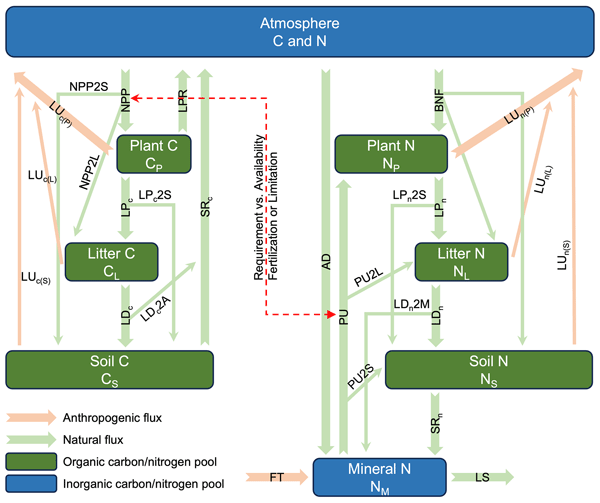
Gang Tang, Zebedee Nicholls, Alexander Norton, Sönke Zaehle, and Malte Meinshausen
Geosci. Model Dev., 18, 2193–2230, https://doi.org/10.5194/gmd-18-2193-2025, https://doi.org/10.5194/gmd-18-2193-2025, 2025
Short summary
Short summary
We studied carbon–nitrogen coupling in Earth system models by developing a global carbon–nitrogen cycle model (CNit v1.0) within the widely used emulator MAGICC. CNit effectively reproduced the global carbon–nitrogen cycle dynamics observed in complex models. Our results show persistent nitrogen limitations on plant growth (net primary production) from 1850 to 2100, suggesting that nitrogen deficiency may constrain future land carbon sequestration.
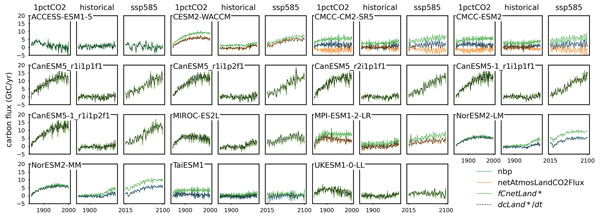
Gang Tang, Zebedee Nicholls, Chris Jones, Thomas Gasser, Alexander Norton, Tilo Ziehn, Alejandro Romero-Prieto, and Malte Meinshausen
Geosci. Model Dev., 18, 2111–2136, https://doi.org/10.5194/gmd-18-2111-2025, https://doi.org/10.5194/gmd-18-2111-2025, 2025
Short summary
Short summary
We analyzed carbon and nitrogen mass conservation in data from various Earth system models. Our findings reveal significant discrepancies between flux and pool size data, where cumulative imbalances can reach hundreds of gigatons of carbon or nitrogen. These imbalances appear primarily due to missing or inconsistently reported fluxes – especially for land-use and fire emissions. To enhance data quality, we recommend that future climate data protocols address this issue at the reporting stage.
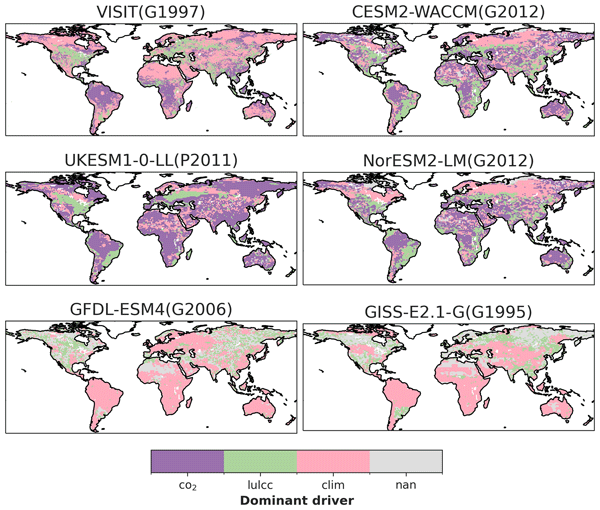
Ngoc Thi Nhu Do, Kengo Sudo, Akihiko Ito, Louisa K. Emmons, Vaishali Naik, Kostas Tsigaridis, Øyvind Seland, Gerd A. Folberth, and Douglas I. Kelley
Geosci. Model Dev., 18, 2079–2109, https://doi.org/10.5194/gmd-18-2079-2025, https://doi.org/10.5194/gmd-18-2079-2025, 2025
Short summary
Short summary
Understanding historical isoprene emission changes is important for predicting future climate, but trends and their controlling factors remain uncertain. This study shows that long-term isoprene trends vary among Earth system models mainly due to partially incorporating CO2 effects and land cover changes rather than to climate. Future models that refine these factors’ effects on isoprene emissions, along with long-term observations, are essential for better understanding plant–climate interactions.
Matthew Toohey, Yue Jia, Sujan Khanal, and Susann Tegtmeier
Atmos. Chem. Phys., 25, 3821–3839, https://doi.org/10.5194/acp-25-3821-2025, https://doi.org/10.5194/acp-25-3821-2025, 2025
Short summary
Short summary
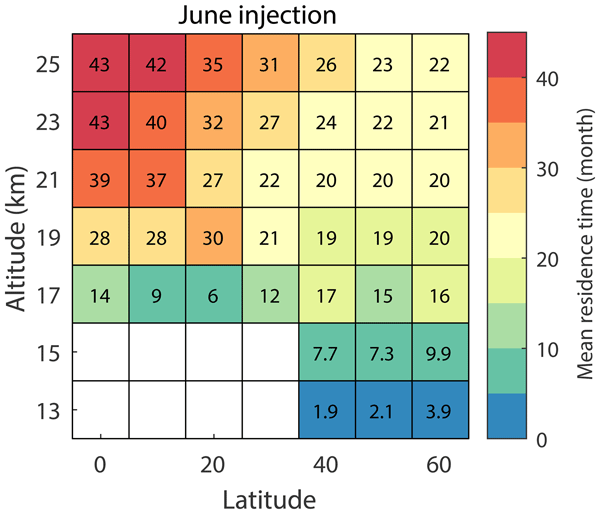
The climate impact of volcanic eruptions depends in part on how long aerosols spend in the stratosphere. We develop a conceptual model for stratospheric aerosol lifetime in terms of production and decay timescales, as well as a lag between injection and decay. We find residence time depends strongly on injection height in the lower stratosphere. We show that the lifetime of stratospheric aerosol from the 1991 Pinatubo eruption is around 22 months, significantly longer than is commonly reported.
Hazel Vernier, Demilson Quintão, Bruno Biazon, Eduardo Landulfo, Giovanni Souza, V. Amanda Santos, J. S. Fabio Lopes, C. P. Alex Mendes, A. S. José da Matta, K. Pinheiro Damaris, Benoit Grosslin, P. M. P. Maria Jorge, Maria de Fátima Andrade, Neeraj Rastogi, Akhil Raj, Hongyu Liu, Mahesh Kovilakam, Suvarna Fadnavis, Frank G. Wienhold, Mathieu Colombier, D. Chris Boone, Gwenael Berthet, Nicolas Dumelie, Lilian Joly, and Jean-Paul Vernier
EGUsphere, https://doi.org/10.5194/egusphere-2025-924, https://doi.org/10.5194/egusphere-2025-924, 2025
Preprint withdrawn
Short summary
Short summary
The eruption of Hunga Tonga-Hunga Ha'apai injected large amounts of water vapor and sea salt into the stratosphere, altering traditional views of volcanic aerosols. Using balloon-borne samplers, we collected aerosol samples and found high levels of sea salt and calcium, suggesting sulfate depletion due to gypsum formation. These findings highlight the need to consider sea salt in climate models to better predict volcanic impacts on the atmosphere and climate.
Felix Wrana, Terry Deshler, Christian Löns, Larry W. Thomason, and Christian von Savigny
Atmos. Chem. Phys., 25, 3717–3736, https://doi.org/10.5194/acp-25-3717-2025, https://doi.org/10.5194/acp-25-3717-2025, 2025
Short summary
Short summary
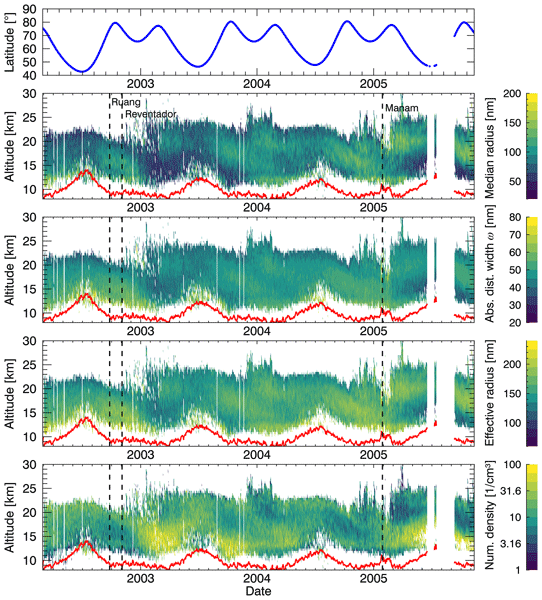
There is a natural and globally occurring layer of small droplets (aerosols) at roughly 20 km altitude in the atmosphere. In this work, the size of these droplets is calculated from satellite measurements for the years 2002 to 2005, which is important for the aerosol cooling effect on Earth's climate. These years are interesting because there were no large volcanic eruptions that would change the background state of the aerosols. The results are compared to reliable balloon-borne measurements.
Elisa Ziegler, Nils Weitzel, Jean-Philippe Baudouin, Marie-Luise Kapsch, Uwe Mikolajewicz, Lauren Gregoire, Ruza Ivanovic, Paul J. Valdes, Christian Wirths, and Kira Rehfeld
Clim. Past, 21, 627–659, https://doi.org/10.5194/cp-21-627-2025, https://doi.org/10.5194/cp-21-627-2025, 2025
Short summary
Short summary
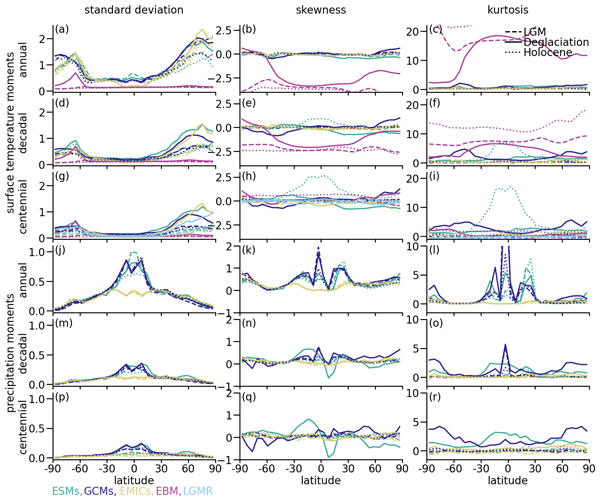
During the Last Deglaciation, global surface temperature rose by about 4–7 °C over several millennia. We show that changes in year-to-year up to century-to-century fluctuations of temperature and precipitation during the Deglaciation were mostly larger than during either the preceding or succeeding more stable periods in 15 climate model simulations. The analysis demonstrates how ice sheets, meltwater, and volcanism influence simulated variability to inform future simulation protocols.
Mariya Petrenko, Ralph Kahn, Mian Chin, Susanne E. Bauer, Tommi Bergman, Huisheng Bian, Gabriele Curci, Ben Johnson, Johannes W. Kaiser, Zak Kipling, Harri Kokkola, Xiaohong Liu, Keren Mezuman, Tero Mielonen, Gunnar Myhre, Xiaohua Pan, Anna Protonotariou, Samuel Remy, Ragnhild Bieltvedt Skeie, Philip Stier, Toshihiko Takemura, Kostas Tsigaridis, Hailong Wang, Duncan Watson-Parris, and Kai Zhang
Atmos. Chem. Phys., 25, 1545–1567, https://doi.org/10.5194/acp-25-1545-2025, https://doi.org/10.5194/acp-25-1545-2025, 2025
Short summary
Short summary
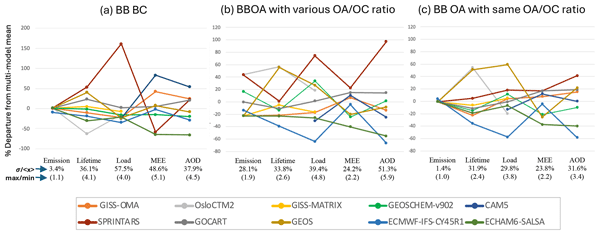
We compared smoke plume simulations from 11 global models to each other and to satellite smoke amount observations aimed at constraining smoke source strength. In regions where plumes are thick and background aerosol is low, models and satellites compare well. However, the input emission inventory tends to underestimate in many places, and particle property and loss rate assumptions vary enormously among models, causing uncertainties that require systematic in situ measurements to resolve.
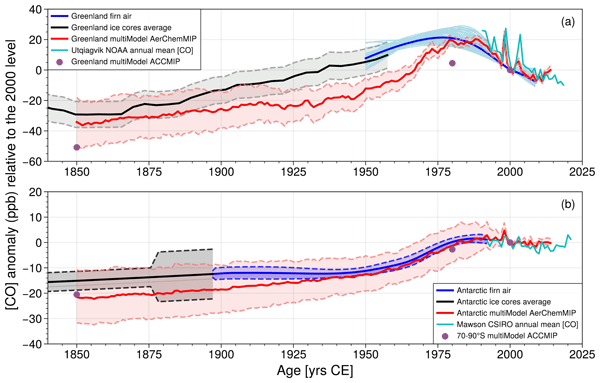
Xavier Faïn, Sophie Szopa, Vaishali Naïk, Patricia Martinerie, David M. Etheridge, Rachael H. Rhodes, Cathy M. Trudinger, Vasilii V. Petrenko, Kévin Fourteau, and Philip Place
Atmos. Chem. Phys., 25, 1105–1119, https://doi.org/10.5194/acp-25-1105-2025, https://doi.org/10.5194/acp-25-1105-2025, 2025
Short summary
Short summary
Carbon monoxide (CO) plays a crucial role in the atmosphere's oxidizing capacity. In this study, we analyse how historical (1850–2014) [CO] outputs from state-of-the-art global chemistry–climate models over Greenland and Antarctica are able to capture both absolute values and trends recorded in multi-site ice archives. A disparity in [CO] growth rates emerges in the Northern Hemisphere between models and observations from 1920–1975 CE, possibly linked to uncertainties in CO emission factors.

Lauren R. Marshall, Anja Schmidt, Andrew P. Schurer, Nathan Luke Abraham, Lucie J. Lücke, Rob Wilson, Kevin J. Anchukaitis, Gabriele C. Hegerl, Ben Johnson, Bette L. Otto-Bliesner, Esther C. Brady, Myriam Khodri, and Kohei Yoshida
Clim. Past, 21, 161–184, https://doi.org/10.5194/cp-21-161-2025, https://doi.org/10.5194/cp-21-161-2025, 2025
Short summary
Short summary
Large volcanic eruptions have caused temperature deviations over the past 1000 years; however, climate model results and reconstructions of surface cooling using tree rings do not match. We explore this mismatch using the latest models and find a better match to tree-ring reconstructions for some eruptions. Our results show that the way in which eruptions are simulated in models matters for the comparison to tree-rings, particularly regarding the spatial spread of volcanic aerosol.
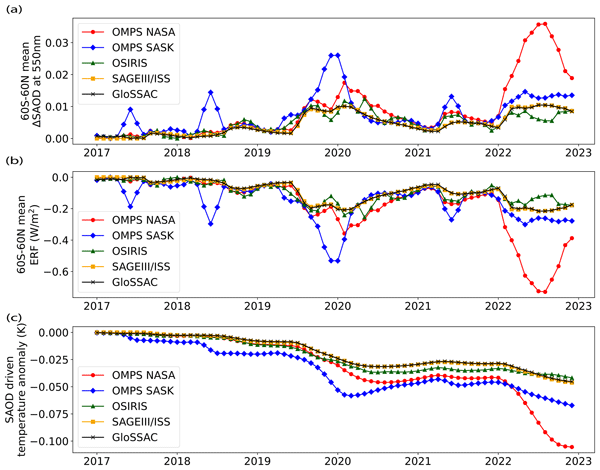
Mahesh Kovilakam, Larry W. Thomason, Magali Verkerk, Thomas Aubry, and Travis N. Knepp
Atmos. Chem. Phys., 25, 535–553, https://doi.org/10.5194/acp-25-535-2025, https://doi.org/10.5194/acp-25-535-2025, 2025
Short summary
Short summary
The Global Space-based Stratospheric Aerosol Climatology (GloSSAC) is essential for understanding and modeling the climatic impacts of stratospheric aerosols, comprising data from various space-based measurements. Here, we examine the Ozone Mapping and Profiler Suite Limb Profiler (OMPS-LP) against other data sets, particularly the Stratospheric Aerosol and Gas Experiment (SAGE) III/ISS, to discern differences and explore the applicability of OMPS data within the GloSSAC framework.
Paul J. Durack, Karl E. Taylor, Peter J. Gleckler, Gerald A. Meehl, Bryan N. Lawrence, Curt Covey, Ronald J. Stouffer, Guillaume Levavasseur, Atef Ben-Nasser, Sebastien Denvil, Martina Stockhause, Jonathan M. Gregory, Martin Juckes, Sasha K. Ames, Fabrizio Antonio, David C. Bader, John P. Dunne, Daniel Ellis, Veronika Eyring, Sandro L. Fiore, Sylvie Joussaume, Philip Kershaw, Jean-Francois Lamarque, Michael Lautenschlager, Jiwoo Lee, Chris F. Mauzey, Matthew Mizielinski, Paola Nassisi, Alessandra Nuzzo, Eleanor O’Rourke, Jeffrey Painter, Gerald L. Potter, Sven Rodriguez, and Dean N. Williams
EGUsphere, https://doi.org/10.5194/egusphere-2024-3729, https://doi.org/10.5194/egusphere-2024-3729, 2025
Short summary
Short summary
CMIP6 was the most expansive and ambitious Model Intercomparison Project (MIP), the latest in a history, extending four decades. CMIP engaged a growing community focused on improving climate understanding, and quantifying and attributing observed climate change being experienced today. The project's profound impact is due to the combining the latest climate science and technology, enabling the latest-generation climate simulations and increasing community attention in every successive phase.
Evelien J. C. van Dijk, Christoph C. Raible, Michael Sigl, Johann Jungclaus, and Heinz Wanner
Clim. Past Discuss., https://doi.org/10.5194/cp-2024-79, https://doi.org/10.5194/cp-2024-79, 2024
Manuscript not accepted for further review
Short summary
Short summary
The temperature in the past 4000 years consisted of warm and cold periods, initiated by external forcing. But, these periods are not consistent through time and space. We use climate models and reconstructions to study to which extent the periods are reflected in the European climate. We find that on local scales, the chaotic nature of the climate system is larger than the external forcing. This study shows that these periods have to be used very carefully when studying a local site.
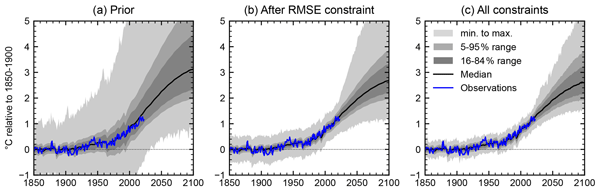
Chris Smith, Donald P. Cummins, Hege-Beate Fredriksen, Zebedee Nicholls, Malte Meinshausen, Myles Allen, Stuart Jenkins, Nicholas Leach, Camilla Mathison, and Antti-Ilari Partanen
Geosci. Model Dev., 17, 8569–8592, https://doi.org/10.5194/gmd-17-8569-2024, https://doi.org/10.5194/gmd-17-8569-2024, 2024
Short summary
Short summary
Climate projections are only useful if the underlying models that produce them are well calibrated and can reproduce observed climate change. We formalise a software package that calibrates the open-source FaIR simple climate model to full-complexity Earth system models. Observations, including historical warming, and assessments of key climate variables such as that of climate sensitivity are used to constrain the model output.
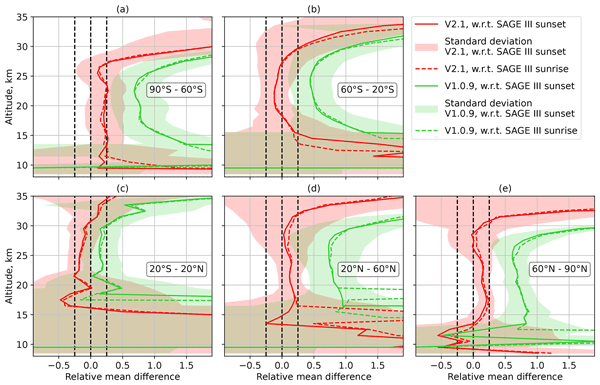
Alexei Rozanov, Christine Pohl, Carlo Arosio, Adam Bourassa, Klaus Bramstedt, Elizaveta Malinina, Landon Rieger, and John P. Burrows
Atmos. Meas. Tech., 17, 6677–6695, https://doi.org/10.5194/amt-17-6677-2024, https://doi.org/10.5194/amt-17-6677-2024, 2024
Short summary
Short summary
We developed a new algorithm to retrieve vertical distributions of aerosol extinction coefficients in the stratosphere. The algorithm is applied to measurements of scattered solar light from the spaceborne OMPS-LP (Ozone Mapper and Profiler Suite Limb Profiler) instrument. The retrieval results are compared to data from other spaceborne instruments and used to investigate the evolution of the aerosol plume following the eruption of the Hunga Tonga–Hunga Ha'apai volcano in January 2022.
Jingmin Li, Mattia Righi, Johannes Hendricks, Christof G. Beer, Ulrike Burkhardt, and Anja Schmidt
Atmos. Chem. Phys., 24, 12727–12747, https://doi.org/10.5194/acp-24-12727-2024, https://doi.org/10.5194/acp-24-12727-2024, 2024
Short summary
Short summary
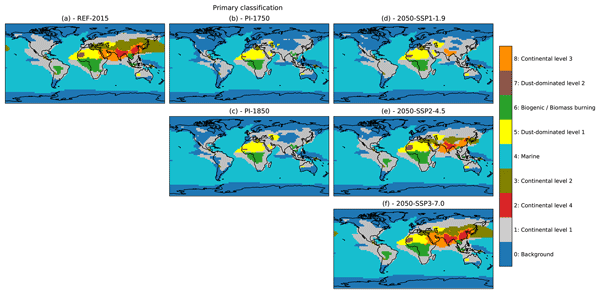
Aiming to understand underlying patterns and trends in aerosols, we characterize the spatial patterns and long-term evolution of lower tropospheric aerosols by clustering multiple aerosol properties from preindustrial times to the year 2050 under three Shared
Socioeconomic Pathway scenarios. The results provide a clear and condensed picture of the spatial extent and distribution of aerosols for different time periods and emission scenarios.
Socioeconomic Pathway scenarios. The results provide a clear and condensed picture of the spatial extent and distribution of aerosols for different time periods and emission scenarios.
Viktoria F. Sofieva, Alexei Rozanov, Monika Szelag, John P. Burrows, Christian Retscher, Robert Damadeo, Doug Degenstein, Landon A. Rieger, and Adam Bourassa
Earth Syst. Sci. Data, 16, 5227–5241, https://doi.org/10.5194/essd-16-5227-2024, https://doi.org/10.5194/essd-16-5227-2024, 2024
Short summary
Short summary
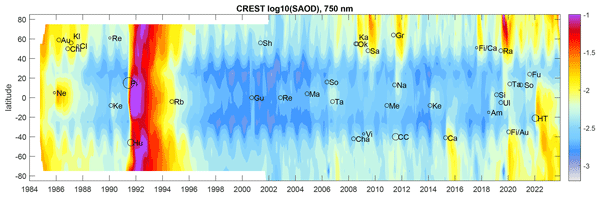
Climate-related studies need information about the distribution of stratospheric aerosols, which influence the energy balance of the Earth’s atmosphere. In this work, we present a merged dataset of vertically resolved stratospheric aerosol extinction coefficients, which is derived from data of six limb and occultation satellite instruments. The created aerosol climate record covers the period from October 1984 to December 2023. It can be used in various climate-related studies.
Natalie G. Ratcliffe, Claire L. Ryder, Nicolas Bellouin, Stephanie Woodward, Anthony Jones, Ben Johnson, Lisa-Maria Wieland, Maximilian Dollner, Josef Gasteiger, and Bernadett Weinzierl
Atmos. Chem. Phys., 24, 12161–12181, https://doi.org/10.5194/acp-24-12161-2024, https://doi.org/10.5194/acp-24-12161-2024, 2024
Short summary
Short summary
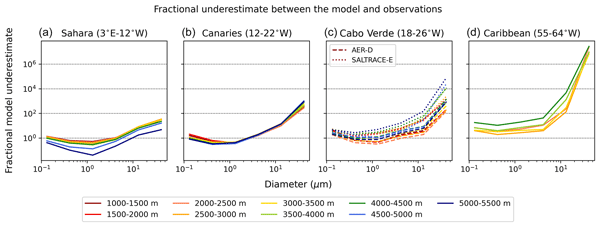
Large mineral dust particles are more abundant in the atmosphere than expected and have different impacts on the environment than small particles, which are better represented in climate models. We use aircraft measurements to assess a climate model representation of large-dust transport. We find that the model underestimates the amount of large dust at all stages of transport and that fast removal of the large particles increases this underestimation with distance from the Sahara.
Christine Pohl, Felix Wrana, Alexei Rozanov, Terry Deshler, Elizaveta Malinina, Christian von Savigny, Landon A. Rieger, Adam E. Bourassa, and John P. Burrows
Atmos. Meas. Tech., 17, 4153–4181, https://doi.org/10.5194/amt-17-4153-2024, https://doi.org/10.5194/amt-17-4153-2024, 2024
Short summary
Short summary
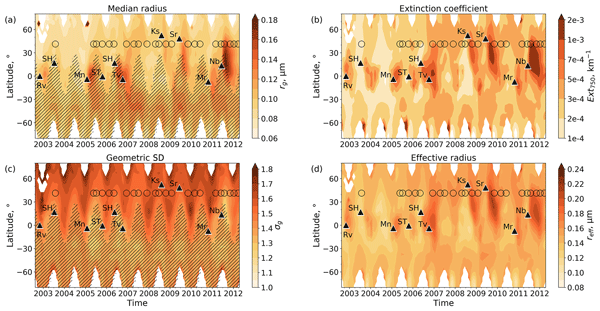
Knowledge of stratospheric aerosol characteristics is important for understanding chemical and climate aerosol feedbacks. Two particle size distribution parameters, the aerosol extinction coefficient and the effective radius, are obtained from SCIAMACHY limb observations. The aerosol characteristics show good agreement with independent data sets from balloon-borne and satellite observations. This data set expands the limited knowledge of stratospheric aerosol characteristics.
Alkiviadis Kalisoras, Aristeidis K. Georgoulias, Dimitris Akritidis, Robert J. Allen, Vaishali Naik, Chaincy Kuo, Sophie Szopa, Pierre Nabat, Dirk Olivié, Twan van Noije, Philippe Le Sager, David Neubauer, Naga Oshima, Jane Mulcahy, Larry W. Horowitz, and Prodromos Zanis
Atmos. Chem. Phys., 24, 7837–7872, https://doi.org/10.5194/acp-24-7837-2024, https://doi.org/10.5194/acp-24-7837-2024, 2024
Short summary
Short summary
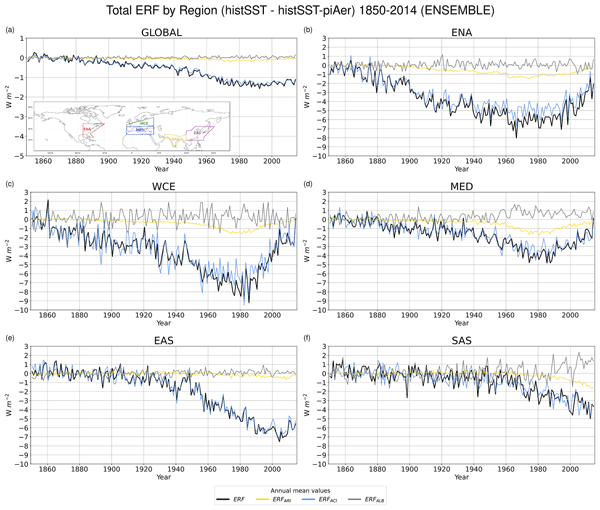
Effective radiative forcing (ERF) is a metric for estimating how human activities and natural agents change the energy flow into and out of the Earth’s climate system. We investigate the anthropogenic aerosol ERF, and we estimate the contribution of individual processes to the total ERF using simulations from Earth system models within the Coupled Model Intercomparison Project Phase 6 (CMIP6). Our findings highlight that aerosol–cloud interactions drive ERF variability during the last 150 years.
Moritz Günther, Hauke Schmidt, Claudia Timmreck, and Matthew Toohey
Atmos. Chem. Phys., 24, 7203–7225, https://doi.org/10.5194/acp-24-7203-2024, https://doi.org/10.5194/acp-24-7203-2024, 2024
Short summary
Short summary
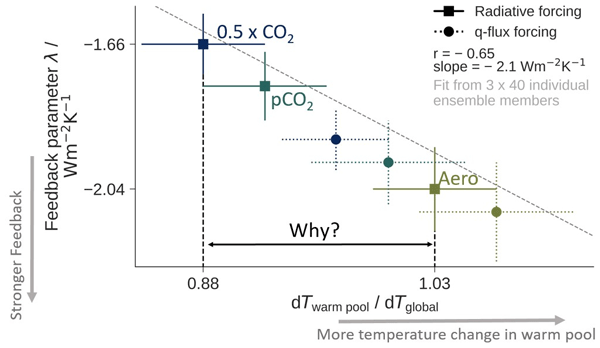
Stratospheric aerosol has been shown to cause pronounced cooling in the tropical Indian and western Pacific oceans. Using a climate model, we show that this arises from enhanced meridional energy export via the stratosphere. The aerosol causes stratospheric heating and thus an acceleration of the Brewer–Dobson circulation that accomplishes this transport. Our findings highlight the importance of circulation adjustments and surface perspectives on forcing for understanding temperature responses.
Robert P. Damadeo, Viktoria F. Sofieva, Alexei Rozanov, and Larry W. Thomason
Atmos. Meas. Tech., 17, 3669–3678, https://doi.org/10.5194/amt-17-3669-2024, https://doi.org/10.5194/amt-17-3669-2024, 2024
Short summary
Short summary
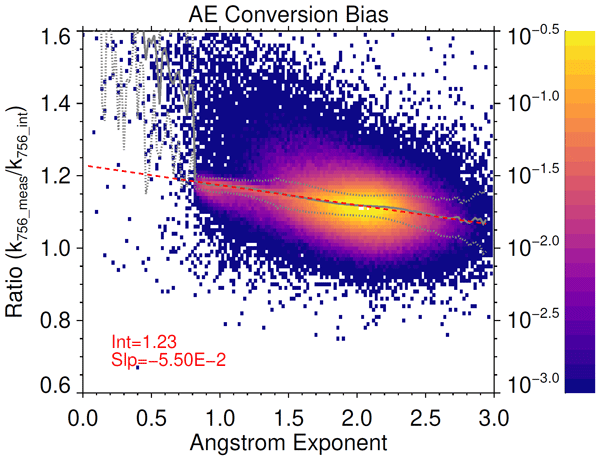
Comparing different aerosol data sets for scientific studies often requires converting aerosol extinction data between different wavelengths. A common approximation for the spectral behavior of aerosol is the Ångström formula; however, this introduces biases. Using measurements across many different wavelengths from a single instrument, we derive an empirical relationship to both characterize this bias and offer a correction for other studies that may employ this analysis approach.
Piers M. Forster, Chris Smith, Tristram Walsh, William F. Lamb, Robin Lamboll, Bradley Hall, Mathias Hauser, Aurélien Ribes, Debbie Rosen, Nathan P. Gillett, Matthew D. Palmer, Joeri Rogelj, Karina von Schuckmann, Blair Trewin, Myles Allen, Robbie Andrew, Richard A. Betts, Alex Borger, Tim Boyer, Jiddu A. Broersma, Carlo Buontempo, Samantha Burgess, Chiara Cagnazzo, Lijing Cheng, Pierre Friedlingstein, Andrew Gettelman, Johannes Gütschow, Masayoshi Ishii, Stuart Jenkins, Xin Lan, Colin Morice, Jens Mühle, Christopher Kadow, John Kennedy, Rachel E. Killick, Paul B. Krummel, Jan C. Minx, Gunnar Myhre, Vaishali Naik, Glen P. Peters, Anna Pirani, Julia Pongratz, Carl-Friedrich Schleussner, Sonia I. Seneviratne, Sophie Szopa, Peter Thorne, Mahesh V. M. Kovilakam, Elisa Majamäki, Jukka-Pekka Jalkanen, Margreet van Marle, Rachel M. Hoesly, Robert Rohde, Dominik Schumacher, Guido van der Werf, Russell Vose, Kirsten Zickfeld, Xuebin Zhang, Valérie Masson-Delmotte, and Panmao Zhai
Earth Syst. Sci. Data, 16, 2625–2658, https://doi.org/10.5194/essd-16-2625-2024, https://doi.org/10.5194/essd-16-2625-2024, 2024
Short summary
Short summary
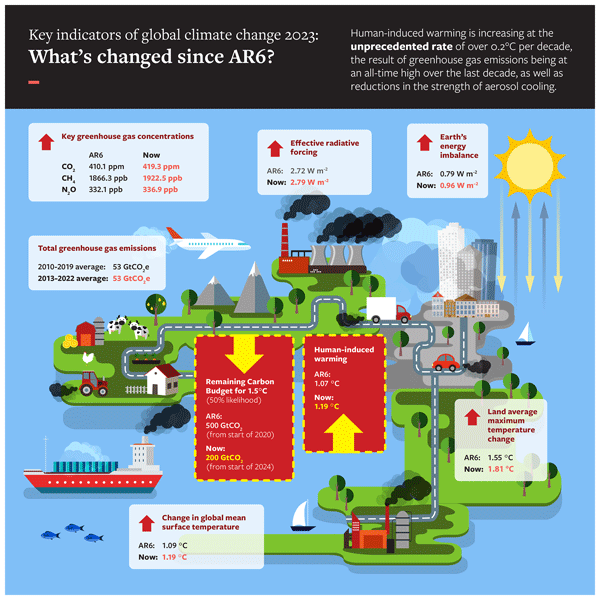
This paper tracks some key indicators of global warming through time, from 1850 through to the end of 2023. It is designed to give an authoritative estimate of global warming to date and its causes. We find that in 2023, global warming reached 1.3 °C and is increasing at over 0.2 °C per decade. This is caused by all-time-high greenhouse gas emissions.
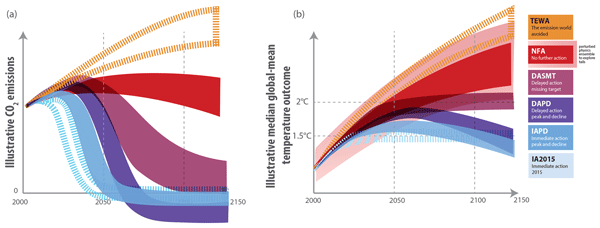
Malte Meinshausen, Carl-Friedrich Schleussner, Kathleen Beyer, Greg Bodeker, Olivier Boucher, Josep G. Canadell, John S. Daniel, Aïda Diongue-Niang, Fatima Driouech, Erich Fischer, Piers Forster, Michael Grose, Gerrit Hansen, Zeke Hausfather, Tatiana Ilyina, Jarmo S. Kikstra, Joyce Kimutai, Andrew D. King, June-Yi Lee, Chris Lennard, Tabea Lissner, Alexander Nauels, Glen P. Peters, Anna Pirani, Gian-Kasper Plattner, Hans Pörtner, Joeri Rogelj, Maisa Rojas, Joyashree Roy, Bjørn H. Samset, Benjamin M. Sanderson, Roland Séférian, Sonia Seneviratne, Christopher J. Smith, Sophie Szopa, Adelle Thomas, Diana Urge-Vorsatz, Guus J. M. Velders, Tokuta Yokohata, Tilo Ziehn, and Zebedee Nicholls
Geosci. Model Dev., 17, 4533–4559, https://doi.org/10.5194/gmd-17-4533-2024, https://doi.org/10.5194/gmd-17-4533-2024, 2024
Short summary
Short summary
The scientific community is considering new scenarios to succeed RCPs and SSPs for the next generation of Earth system model runs to project future climate change. To contribute to that effort, we reflect on relevant policy and scientific research questions and suggest categories for representative emission pathways. These categories are tailored to the Paris Agreement long-term temperature goal, high-risk outcomes in the absence of further climate policy and worlds “that could have been”.
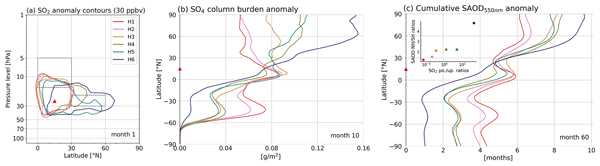
Zhihong Zhuo, Herman F. Fuglestvedt, Matthew Toohey, and Kirstin Krüger
Atmos. Chem. Phys., 24, 6233–6249, https://doi.org/10.5194/acp-24-6233-2024, https://doi.org/10.5194/acp-24-6233-2024, 2024
Short summary
Short summary
This work simulated volcanic eruptions with varied eruption source parameters under different initial conditions with a fully coupled Earth system model. We show that initial atmospheric conditions control the meridional distribution of volcanic volatiles and modulate volcanic forcing and subsequent climate and environmental impacts of tropical and Northern Hemisphere extratropical eruptions. This highlights the potential for predicting these impacts as early as the first post-eruption month.
Jean-Paul Vernier, Thomas J. Aubry, Claudia Timmreck, Anja Schmidt, Lieven Clarisse, Fred Prata, Nicolas Theys, Andrew T. Prata, Graham Mann, Hyundeok Choi, Simon Carn, Richard Rigby, Susan C. Loughlin, and John A. Stevenson
Atmos. Chem. Phys., 24, 5765–5782, https://doi.org/10.5194/acp-24-5765-2024, https://doi.org/10.5194/acp-24-5765-2024, 2024
Short summary
Short summary
The 2019 Raikoke eruption (Kamchatka, Russia) generated one of the largest emissions of particles and gases into the stratosphere since the 1991 Mt. Pinatubo eruption. The Volcano Response (VolRes) initiative, an international effort, provided a platform for the community to share information about this eruption and assess its climate impact. The eruption led to a minor global surface cooling of 0.02 °C in 2020 which is negligible relative to warming induced by human greenhouse gas emissions.
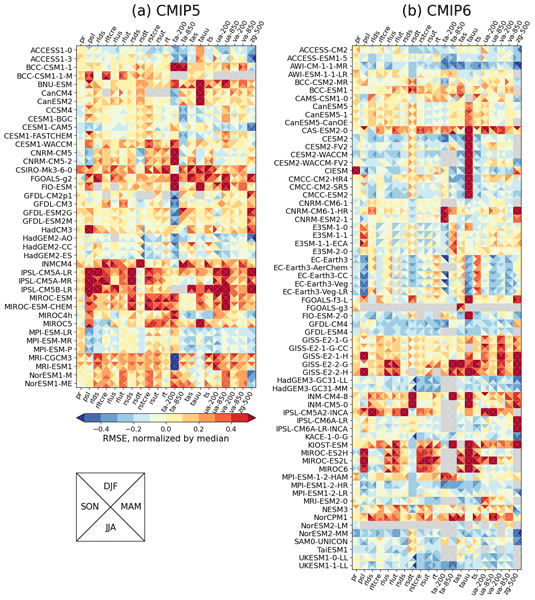
Jiwoo Lee, Peter J. Gleckler, Min-Seop Ahn, Ana Ordonez, Paul A. Ullrich, Kenneth R. Sperber, Karl E. Taylor, Yann Y. Planton, Eric Guilyardi, Paul Durack, Celine Bonfils, Mark D. Zelinka, Li-Wei Chao, Bo Dong, Charles Doutriaux, Chengzhu Zhang, Tom Vo, Jason Boutte, Michael F. Wehner, Angeline G. Pendergrass, Daehyun Kim, Zeyu Xue, Andrew T. Wittenberg, and John Krasting
Geosci. Model Dev., 17, 3919–3948, https://doi.org/10.5194/gmd-17-3919-2024, https://doi.org/10.5194/gmd-17-3919-2024, 2024
Short summary
Short summary
We introduce an open-source software, the PCMDI Metrics Package (PMP), developed for a comprehensive comparison of Earth system models (ESMs) with real-world observations. Using diverse metrics evaluating climatology, variability, and extremes simulated in thousands of simulations from the Coupled Model Intercomparison Project (CMIP), PMP aids in benchmarking model improvements across generations. PMP also enables efficient tracking of performance evolutions during ESM developments.

Christina V. Brodowsky, Timofei Sukhodolov, Gabriel Chiodo, Valentina Aquila, Slimane Bekki, Sandip S. Dhomse, Michael Höpfner, Anton Laakso, Graham W. Mann, Ulrike Niemeier, Giovanni Pitari, Ilaria Quaglia, Eugene Rozanov, Anja Schmidt, Takashi Sekiya, Simone Tilmes, Claudia Timmreck, Sandro Vattioni, Daniele Visioni, Pengfei Yu, Yunqian Zhu, and Thomas Peter
Atmos. Chem. Phys., 24, 5513–5548, https://doi.org/10.5194/acp-24-5513-2024, https://doi.org/10.5194/acp-24-5513-2024, 2024
Short summary
Short summary
The aerosol layer is an essential part of the climate system. We characterize the sulfur budget in a volcanically quiescent (background) setting, with a special focus on the sulfate aerosol layer using, for the first time, a multi-model approach. The aim is to identify weak points in the representation of the atmospheric sulfur budget in an intercomparison of nine state-of-the-art coupled global circulation models.
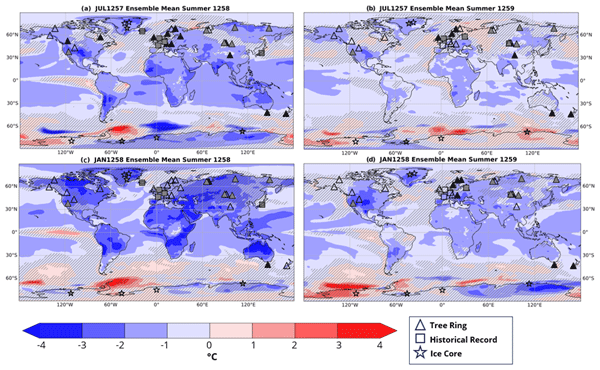
Laura Wainman, Lauren R. Marshall, and Anja Schmidt
Clim. Past, 20, 951–968, https://doi.org/10.5194/cp-20-951-2024, https://doi.org/10.5194/cp-20-951-2024, 2024
Short summary
Short summary
The Mt Samalas eruption had global-scale impacts on climate and has been linked to historical events throughout latter half of the 13th century. Using model simulations and multi-proxy data, we constrain the year and season of the eruption to summer 1257 and investigate the regional-scale variability in surface cooling following the eruption. We also evaluate our model-to-proxy comparison framework and discuss current limitations of the approach.
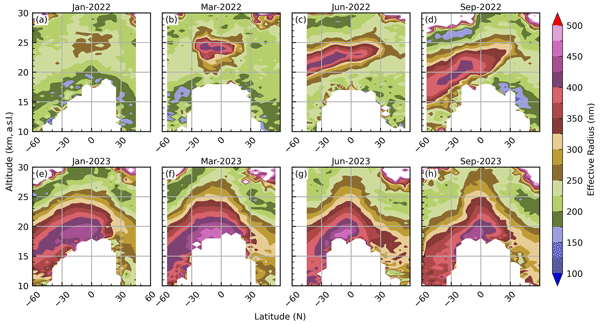
Travis N. Knepp, Mahesh Kovilakam, Larry Thomason, and Stephen J. Miller
Atmos. Meas. Tech., 17, 2025–2054, https://doi.org/10.5194/amt-17-2025-2024, https://doi.org/10.5194/amt-17-2025-2024, 2024
Short summary
Short summary
An algorithm is presented to derive a new SAGE III/ISS (Stratospheric Aerosol and Gas Experiment III on the International Space Station) Level-2 product: the size distribution of stratospheric particles. This is a significant improvement over previous techniques in that we now provide uncertainty estimates for all inferred parameters. We also evaluated the stability of this method in retrieving bimodal distribution parameters. We present a special application to the 2022 eruption of Hunga Tonga.
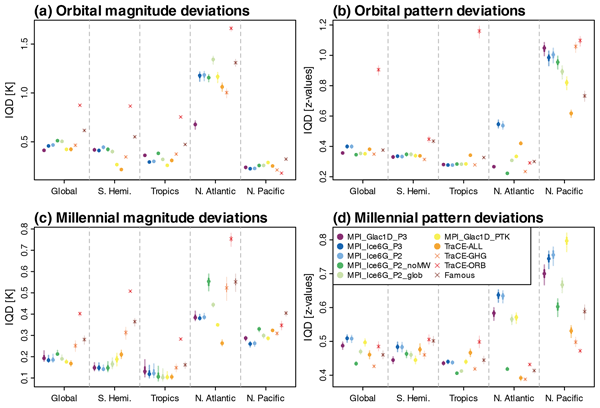
Nils Weitzel, Heather Andres, Jean-Philippe Baudouin, Marie-Luise Kapsch, Uwe Mikolajewicz, Lukas Jonkers, Oliver Bothe, Elisa Ziegler, Thomas Kleinen, André Paul, and Kira Rehfeld
Clim. Past, 20, 865–890, https://doi.org/10.5194/cp-20-865-2024, https://doi.org/10.5194/cp-20-865-2024, 2024
Short summary
Short summary
The ability of climate models to faithfully reproduce past warming episodes is a valuable test considering potentially large future warming. We develop a new method to compare simulations of the last deglaciation with temperature reconstructions. We find that reconstructions differ more between regions than simulations, potentially due to deficiencies in the simulation design, models, or reconstructions. Our work is a promising step towards benchmarking simulations of past climate transitions.
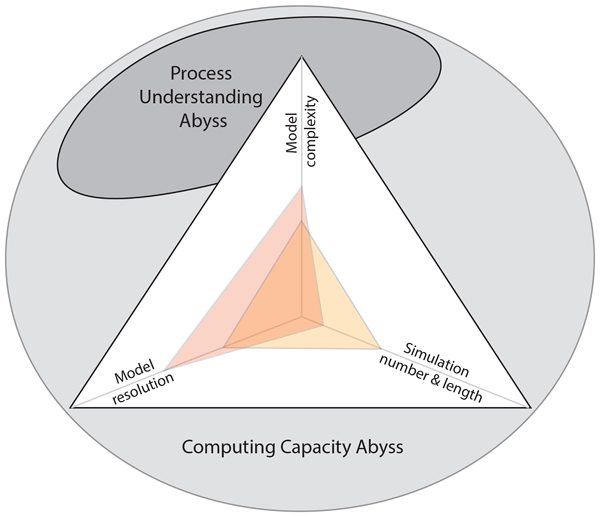
Stephanie Fiedler, Vaishali Naik, Fiona M. O'Connor, Christopher J. Smith, Paul Griffiths, Ryan J. Kramer, Toshihiko Takemura, Robert J. Allen, Ulas Im, Matthew Kasoar, Angshuman Modak, Steven Turnock, Apostolos Voulgarakis, Duncan Watson-Parris, Daniel M. Westervelt, Laura J. Wilcox, Alcide Zhao, William J. Collins, Michael Schulz, Gunnar Myhre, and Piers M. Forster
Geosci. Model Dev., 17, 2387–2417, https://doi.org/10.5194/gmd-17-2387-2024, https://doi.org/10.5194/gmd-17-2387-2024, 2024
Short summary
Short summary
Climate scientists want to better understand modern climate change. Thus, climate model experiments are performed and compared. The results of climate model experiments differ, as assessed in the latest Intergovernmental Panel on Climate Change (IPCC) assessment report. This article gives insights into the challenges and outlines opportunities for further improving the understanding of climate change. It is based on views of a group of experts in atmospheric composition–climate interactions.
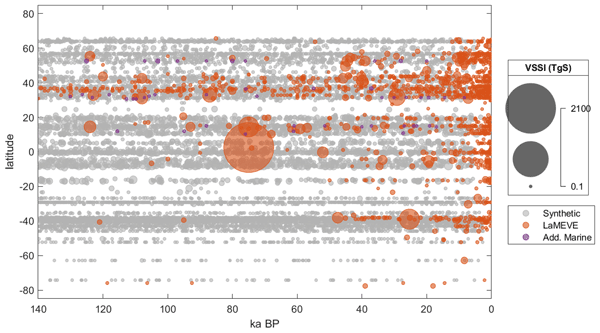
Julie Christin Schindlbeck-Belo, Matthew Toohey, Marion Jegen, Steffen Kutterolf, and Kira Rehfeld
Earth Syst. Sci. Data, 16, 1063–1081, https://doi.org/10.5194/essd-16-1063-2024, https://doi.org/10.5194/essd-16-1063-2024, 2024
Short summary
Short summary
Volcanic forcing of climate resulting from major explosive eruptions is a dominant natural driver of past climate variability. To support model studies of the potential impacts of explosive volcanism on climate variability across timescales, we present an ensemble reconstruction of volcanic stratospheric sulfur injection over the last 140 000 years that is based primarily on tephra records.
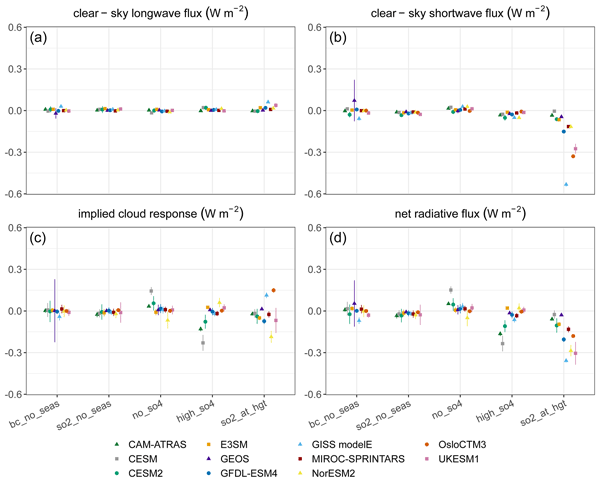
Hamza Ahsan, Hailong Wang, Jingbo Wu, Mingxuan Wu, Steven J. Smith, Susanne Bauer, Harrison Suchyta, Dirk Olivié, Gunnar Myhre, Hitoshi Matsui, Huisheng Bian, Jean-François Lamarque, Ken Carslaw, Larry Horowitz, Leighton Regayre, Mian Chin, Michael Schulz, Ragnhild Bieltvedt Skeie, Toshihiko Takemura, and Vaishali Naik
Atmos. Chem. Phys., 23, 14779–14799, https://doi.org/10.5194/acp-23-14779-2023, https://doi.org/10.5194/acp-23-14779-2023, 2023
Short summary
Short summary
We examine the impact of the assumed effective height of SO2 injection, SO2 and BC emission seasonality, and the assumed fraction of SO2 emissions injected as SO4 on climate and chemistry model results. We find that the SO2 injection height has a large impact on surface SO2 concentrations and, in some models, radiative flux. These assumptions are a
hiddensource of inter-model variability and may be leading to bias in some climate model results.
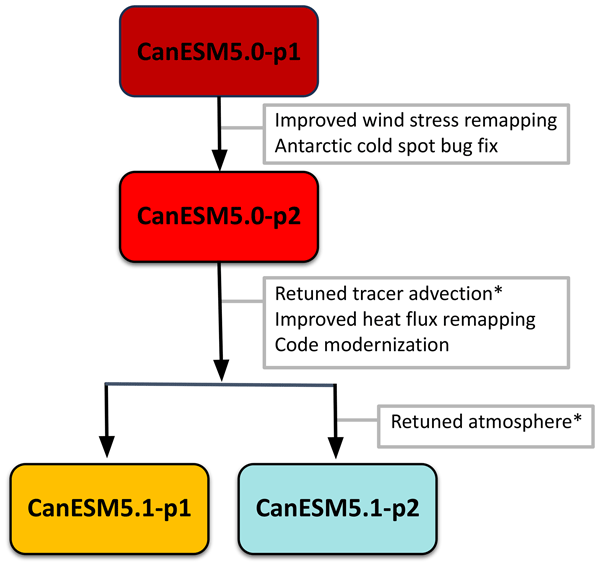
Michael Sigmond, James Anstey, Vivek Arora, Ruth Digby, Nathan Gillett, Viatcheslav Kharin, William Merryfield, Catherine Reader, John Scinocca, Neil Swart, John Virgin, Carsten Abraham, Jason Cole, Nicolas Lambert, Woo-Sung Lee, Yongxiao Liang, Elizaveta Malinina, Landon Rieger, Knut von Salzen, Christian Seiler, Clint Seinen, Andrew Shao, Reinel Sospedra-Alfonso, Libo Wang, and Duo Yang
Geosci. Model Dev., 16, 6553–6591, https://doi.org/10.5194/gmd-16-6553-2023, https://doi.org/10.5194/gmd-16-6553-2023, 2023
Short summary
Short summary
We present a new activity which aims to organize the analysis of biases in the Canadian Earth System model (CanESM) in a systematic manner. Results of this “Analysis for Development” (A4D) activity includes a new CanESM version, CanESM5.1, which features substantial improvements regarding the simulation of dust and stratospheric temperatures, a second CanESM5.1 variant with reduced climate sensitivity, and insights into potential avenues to reduce various other model biases.
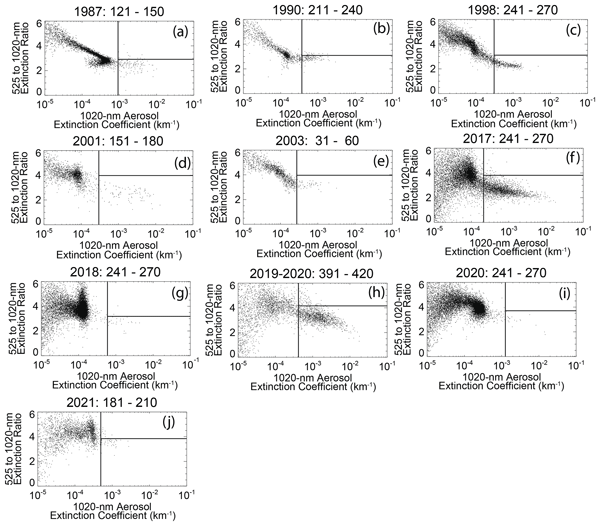
Larry W. Thomason and Travis Knepp
Atmos. Chem. Phys., 23, 10361–10381, https://doi.org/10.5194/acp-23-10361-2023, https://doi.org/10.5194/acp-23-10361-2023, 2023
Short summary
Short summary
We examine space-based observations of stratospheric aerosol to infer the presence of episodic smoke perturbations. We find that smoke's optical properties often show a consistent behavior but vary somewhat from event to event. We also find that the rate of smoke events observed in the 1984–2005 period is about half the rate of similar observations in the period from 2017 to the present; however, with such low overall rates, inferring change between the periods is difficult.
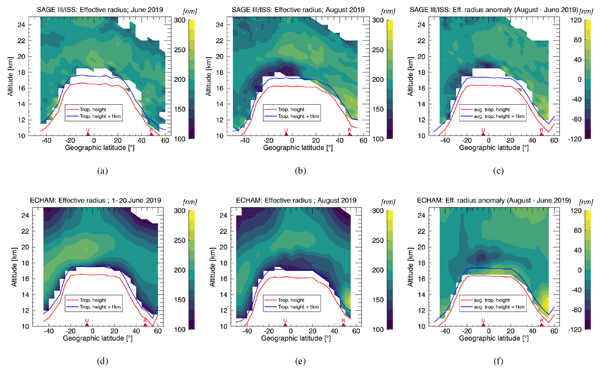
Felix Wrana, Ulrike Niemeier, Larry W. Thomason, Sandra Wallis, and Christian von Savigny
Atmos. Chem. Phys., 23, 9725–9743, https://doi.org/10.5194/acp-23-9725-2023, https://doi.org/10.5194/acp-23-9725-2023, 2023
Short summary
Short summary
The stratospheric aerosol layer is a naturally occurring and permanent layer of aerosol, in this case very small droplets of mostly sulfuric acid and water, that has a cooling effect on our climate. To quantify this effect and for our general understanding of stratospheric microphysical processes, knowledge of the size of those aerosol particles is needed. Using satellite measurements and atmospheric models we show that some volcanic eruptions can lead to on average smaller aerosol sizes.
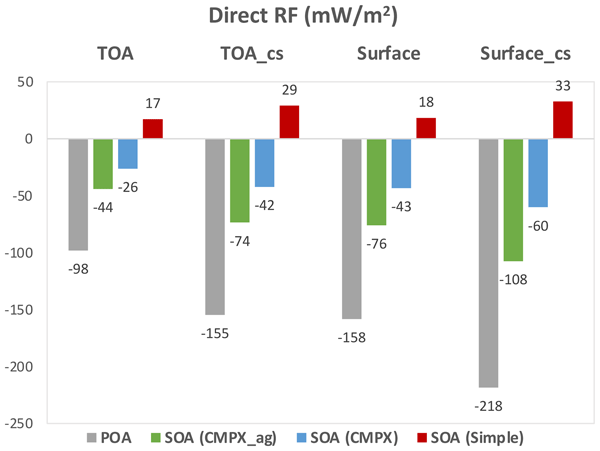
Yiqi Zheng, Larry W. Horowitz, Raymond Menzel, David J. Paynter, Vaishali Naik, Jingyi Li, and Jingqiu Mao
Atmos. Chem. Phys., 23, 8993–9007, https://doi.org/10.5194/acp-23-8993-2023, https://doi.org/10.5194/acp-23-8993-2023, 2023
Short summary
Short summary
Biogenic secondary organic aerosols (SOAs) account for a large fraction of fine aerosol at the global scale. Using long-term measurements and a climate model, we investigate anthropogenic impacts on biogenic SOA at both decadal and centennial timescales. Results show that despite reductions in biogenic precursor emissions, SOA has been strongly amplified by anthropogenic emissions since the preindustrial era and exerts a cooling radiative forcing.
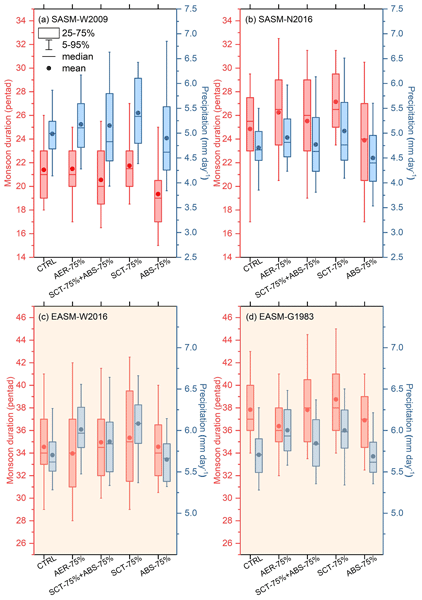
Chenwei Fang, Jim M. Haywood, Ju Liang, Ben T. Johnson, Ying Chen, and Bin Zhu
Atmos. Chem. Phys., 23, 8341–8368, https://doi.org/10.5194/acp-23-8341-2023, https://doi.org/10.5194/acp-23-8341-2023, 2023
Short summary
Short summary
The responses of Asian summer monsoon duration and intensity to air pollution mitigation are identified given the net-zero future. We show that reducing scattering aerosols makes the rainy season longer and stronger across South Asia and East Asia but that absorbing aerosol reduction has the opposite effect. Our results hint at distinct monsoon responses to emission controls that target different aerosols.
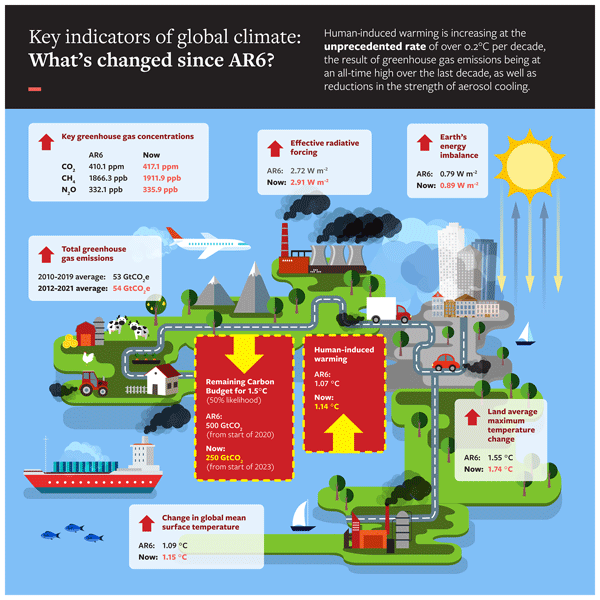
Piers M. Forster, Christopher J. Smith, Tristram Walsh, William F. Lamb, Robin Lamboll, Mathias Hauser, Aurélien Ribes, Debbie Rosen, Nathan Gillett, Matthew D. Palmer, Joeri Rogelj, Karina von Schuckmann, Sonia I. Seneviratne, Blair Trewin, Xuebin Zhang, Myles Allen, Robbie Andrew, Arlene Birt, Alex Borger, Tim Boyer, Jiddu A. Broersma, Lijing Cheng, Frank Dentener, Pierre Friedlingstein, José M. Gutiérrez, Johannes Gütschow, Bradley Hall, Masayoshi Ishii, Stuart Jenkins, Xin Lan, June-Yi Lee, Colin Morice, Christopher Kadow, John Kennedy, Rachel Killick, Jan C. Minx, Vaishali Naik, Glen P. Peters, Anna Pirani, Julia Pongratz, Carl-Friedrich Schleussner, Sophie Szopa, Peter Thorne, Robert Rohde, Maisa Rojas Corradi, Dominik Schumacher, Russell Vose, Kirsten Zickfeld, Valérie Masson-Delmotte, and Panmao Zhai
Earth Syst. Sci. Data, 15, 2295–2327, https://doi.org/10.5194/essd-15-2295-2023, https://doi.org/10.5194/essd-15-2295-2023, 2023
Short summary
Short summary
This is a critical decade for climate action, but there is no annual tracking of the level of human-induced warming. We build on the Intergovernmental Panel on Climate Change assessment reports that are authoritative but published infrequently to create a set of key global climate indicators that can be tracked through time. Our hope is that this becomes an important annual publication that policymakers, media, scientists and the public can refer to.
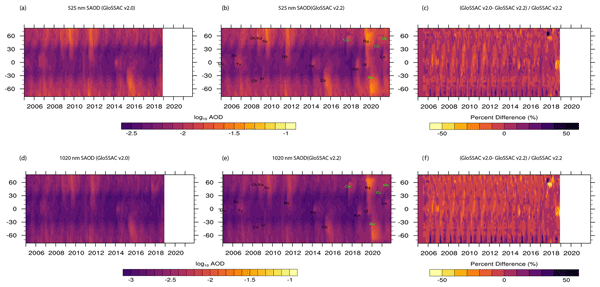
Mahesh Kovilakam, Larry Thomason, and Travis Knepp
Atmos. Meas. Tech., 16, 2709–2731, https://doi.org/10.5194/amt-16-2709-2023, https://doi.org/10.5194/amt-16-2709-2023, 2023
Short summary
Short summary
The paper describes SAGE III/ISS aerosol/cloud categorization and its implications on Global Space-based Stratospheric Aerosol Climatology (GloSSAC). The presence of data from the SAGE type of multi-wavelength measurements is important in GloSSAC. The new aerosol/cloud categorization method described in this paper will help retain more measurements, particularly in the lower stratosphere during and following a volcanic event and other processes.
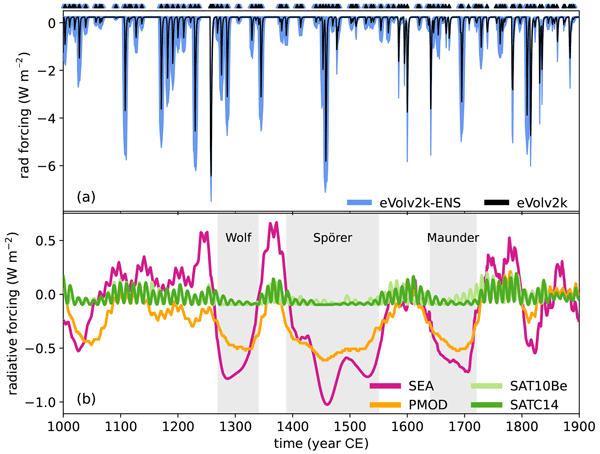
Lucie J. Lücke, Andrew P. Schurer, Matthew Toohey, Lauren R. Marshall, and Gabriele C. Hegerl
Clim. Past, 19, 959–978, https://doi.org/10.5194/cp-19-959-2023, https://doi.org/10.5194/cp-19-959-2023, 2023
Short summary
Short summary
Evidence from tree rings and ice cores provides incomplete information about past volcanic eruptions and the Sun's activity. We model past climate with varying solar and volcanic scenarios and compare it to reconstructed temperature. We confirm that the Sun's influence was small and that uncertain volcanic activity can strongly influence temperature shortly after the eruption. On long timescales, independent data sources closely agree, increasing our confidence in understanding of past climate.

Flossie Brown, Lauren Marshall, Peter H. Haynes, Rolando R. Garcia, Thomas Birner, and Anja Schmidt
Atmos. Chem. Phys., 23, 5335–5353, https://doi.org/10.5194/acp-23-5335-2023, https://doi.org/10.5194/acp-23-5335-2023, 2023
Short summary
Short summary
Large-magnitude volcanic eruptions have the potential to alter large-scale circulation patterns, such as the quasi-biennial oscillation (QBO). The QBO is an oscillation of the tropical stratospheric zonal winds between easterly and westerly directions. Using a climate model, we show that large-magnitude eruptions can delay the progression of the QBO, with a much longer delay when the shear is easterly than when it is westerly. Such delays may affect weather and transport of atmospheric gases.
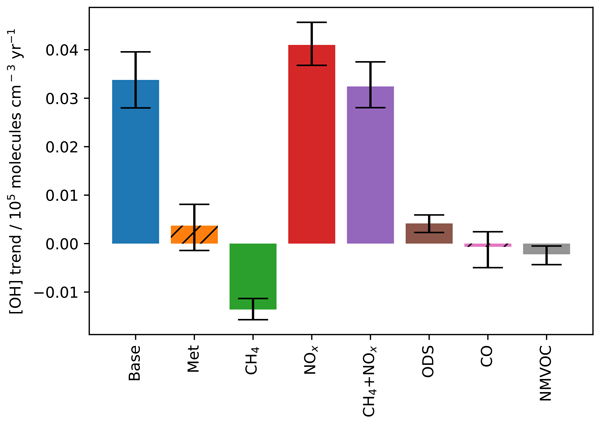
Glen Chua, Vaishali Naik, and Larry Wayne Horowitz
Atmos. Chem. Phys., 23, 4955–4975, https://doi.org/10.5194/acp-23-4955-2023, https://doi.org/10.5194/acp-23-4955-2023, 2023
Short summary
Short summary
The hydroxyl radical (OH) is an atmospheric
detergent, removing air pollutants and greenhouse gases like methane from the atmosphere. Thus, understanding how it is changing and responding to its various drivers is important for air quality and climate. We found that OH has increased by about 5 % globally from 1980 to 2014 in our model, mostly driven by increasing nitrogen oxide (NOx) emissions. This suggests potential climate tradeoffs from air quality policies solely targeting NOx emissions.
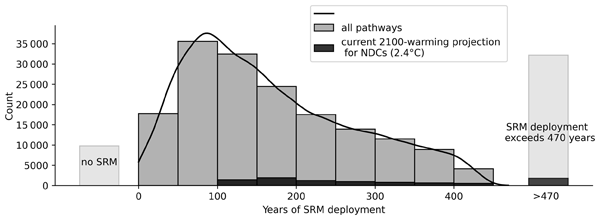
Susanne Baur, Alexander Nauels, Zebedee Nicholls, Benjamin M. Sanderson, and Carl-Friedrich Schleussner
Earth Syst. Dynam., 14, 367–381, https://doi.org/10.5194/esd-14-367-2023, https://doi.org/10.5194/esd-14-367-2023, 2023
Short summary
Short summary
Solar radiation modification (SRM) artificially cools global temperature without acting on the cause of climate change. This study looks at how long SRM would have to be deployed to limit warming to 1.5 °C and how this timeframe is affected by different levels of mitigation, negative emissions and climate uncertainty. None of the three factors alone can guarantee short SRM deployment. Due to their uncertainty at the time of SRM initialization, any deployment risks may be several centuries long.
Christian Wirths, Elisa Ziegler, and Kira Rehfeld
EGUsphere, https://doi.org/10.5194/egusphere-2023-86, https://doi.org/10.5194/egusphere-2023-86, 2023
Preprint archived
Short summary
Short summary
We compare Holocene temperature trends from reconstructions and global climate models of different complexities. We find that models of all complexities disagree with mid-Holocene trends in reconstructions, and we show that this disagreement is largely independent of the type of reconstruction. From our results we conclude that a seasonal bias in the reconstructions is unlikely as a full explanation for the disagreement.
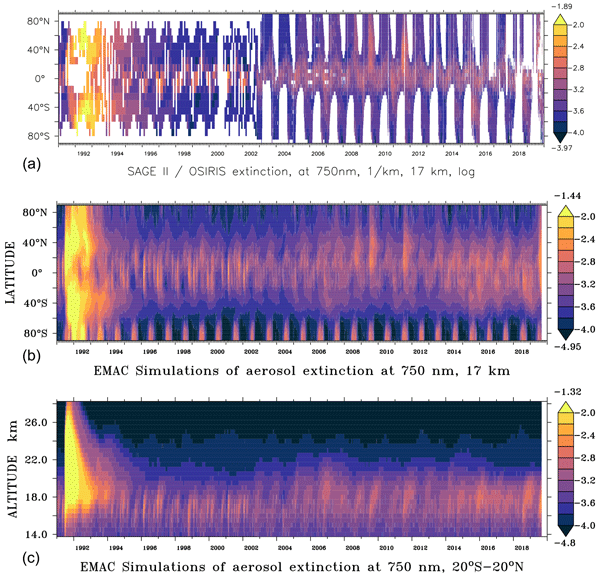
Jennifer Schallock, Christoph Brühl, Christine Bingen, Michael Höpfner, Landon Rieger, and Jos Lelieveld
Atmos. Chem. Phys., 23, 1169–1207, https://doi.org/10.5194/acp-23-1169-2023, https://doi.org/10.5194/acp-23-1169-2023, 2023
Short summary
Short summary
We characterized the influence of volcanic aerosols for the period 1990–2019 and established a volcanic SO2 emission inventory that includes more than 500 eruptions. From limb-based satellite observations of SO2 and extinction, we derive 3D plumes of SO2 perturbations and injected mass by a novel method. We calculate instantaneous radiative forcing with a comprehensive chemisty climate model. Our results show that smaller eruptions can also contribute to the stratospheric aerosol forcing.
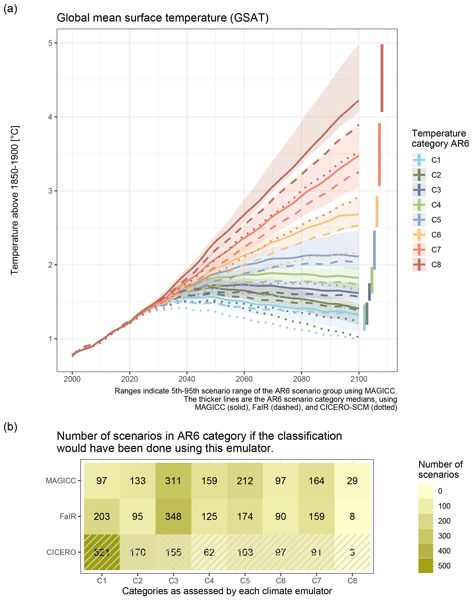
Jarmo S. Kikstra, Zebedee R. J. Nicholls, Christopher J. Smith, Jared Lewis, Robin D. Lamboll, Edward Byers, Marit Sandstad, Malte Meinshausen, Matthew J. Gidden, Joeri Rogelj, Elmar Kriegler, Glen P. Peters, Jan S. Fuglestvedt, Ragnhild B. Skeie, Bjørn H. Samset, Laura Wienpahl, Detlef P. van Vuuren, Kaj-Ivar van der Wijst, Alaa Al Khourdajie, Piers M. Forster, Andy Reisinger, Roberto Schaeffer, and Keywan Riahi
Geosci. Model Dev., 15, 9075–9109, https://doi.org/10.5194/gmd-15-9075-2022, https://doi.org/10.5194/gmd-15-9075-2022, 2022
Short summary
Short summary
Assessing hundreds or thousands of emission scenarios in terms of their global mean temperature implications requires standardised procedures of infilling, harmonisation, and probabilistic temperature assessments. We here present the open-source
climate-assessmentworkflow that was used in the IPCC AR6 Working Group III report. The paper provides key insight for anyone wishing to understand the assessment of climate outcomes of mitigation pathways in the context of the Paris Agreement.
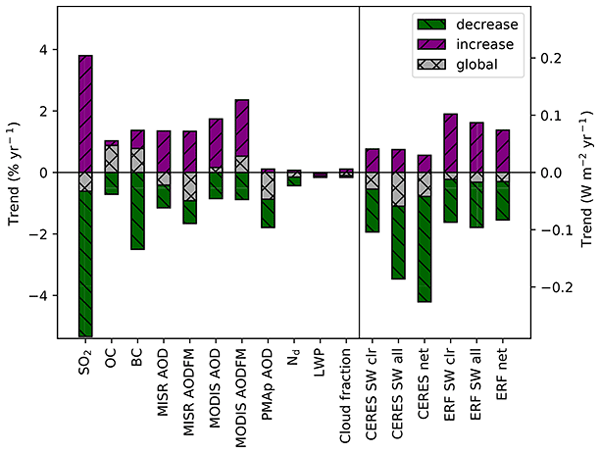
Johannes Quaas, Hailing Jia, Chris Smith, Anna Lea Albright, Wenche Aas, Nicolas Bellouin, Olivier Boucher, Marie Doutriaux-Boucher, Piers M. Forster, Daniel Grosvenor, Stuart Jenkins, Zbigniew Klimont, Norman G. Loeb, Xiaoyan Ma, Vaishali Naik, Fabien Paulot, Philip Stier, Martin Wild, Gunnar Myhre, and Michael Schulz
Atmos. Chem. Phys., 22, 12221–12239, https://doi.org/10.5194/acp-22-12221-2022, https://doi.org/10.5194/acp-22-12221-2022, 2022
Short summary
Short summary
Pollution particles cool climate and offset part of the global warming. However, they are washed out by rain and thus their effect responds quickly to changes in emissions. We show multiple datasets to demonstrate that aerosol emissions and their concentrations declined in many regions influenced by human emissions, as did the effects on clouds. Consequently, the cooling impact on the Earth energy budget became smaller. This change in trend implies a relative warming.
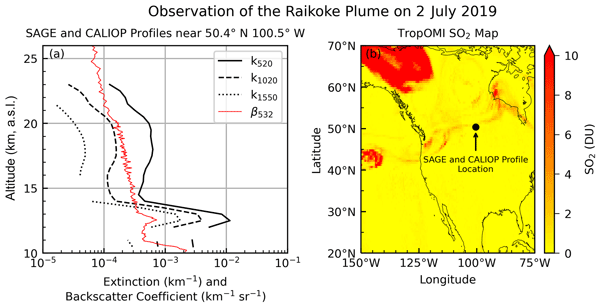
Travis N. Knepp, Larry Thomason, Mahesh Kovilakam, Jason Tackett, Jayanta Kar, Robert Damadeo, and David Flittner
Atmos. Meas. Tech., 15, 5235–5260, https://doi.org/10.5194/amt-15-5235-2022, https://doi.org/10.5194/amt-15-5235-2022, 2022
Short summary
Short summary
We used aerosol profiles from the SAGE III/ISS instrument to develop an aerosol classification method that was tested on four case-study events (two volcanic, two fire) and supported with CALIOP aerosol products. The method worked well in identifying smoke and volcanic aerosol in the stratosphere for these events. Raikoke is presented as a demonstration of the limitations of this method.
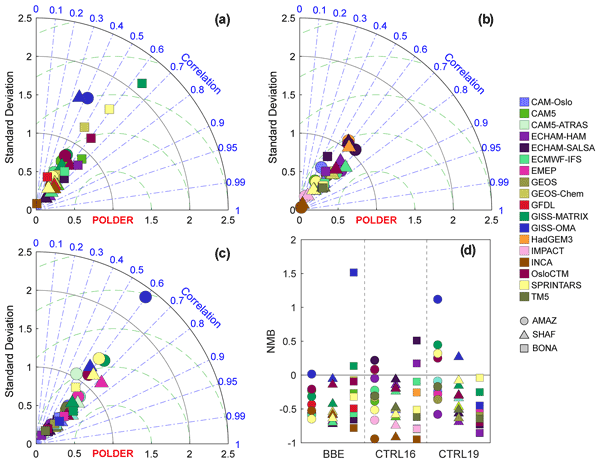
Qirui Zhong, Nick Schutgens, Guido van der Werf, Twan van Noije, Kostas Tsigaridis, Susanne E. Bauer, Tero Mielonen, Alf Kirkevåg, Øyvind Seland, Harri Kokkola, Ramiro Checa-Garcia, David Neubauer, Zak Kipling, Hitoshi Matsui, Paul Ginoux, Toshihiko Takemura, Philippe Le Sager, Samuel Rémy, Huisheng Bian, Mian Chin, Kai Zhang, Jialei Zhu, Svetlana G. Tsyro, Gabriele Curci, Anna Protonotariou, Ben Johnson, Joyce E. Penner, Nicolas Bellouin, Ragnhild B. Skeie, and Gunnar Myhre
Atmos. Chem. Phys., 22, 11009–11032, https://doi.org/10.5194/acp-22-11009-2022, https://doi.org/10.5194/acp-22-11009-2022, 2022
Short summary
Short summary
Aerosol optical depth (AOD) errors for biomass burning aerosol (BBA) are evaluated in 18 global models against satellite datasets. Notwithstanding biases in satellite products, they allow model evaluations. We observe large and diverse model biases due to errors in BBA. Further interpretations of AOD diversities suggest large biases exist in key processes for BBA which require better constraining. These results can contribute to further model improvement and development.
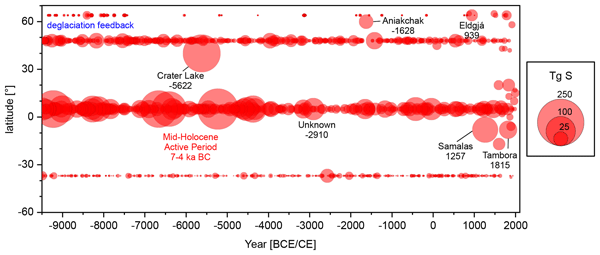
Michael Sigl, Matthew Toohey, Joseph R. McConnell, Jihong Cole-Dai, and Mirko Severi
Earth Syst. Sci. Data, 14, 3167–3196, https://doi.org/10.5194/essd-14-3167-2022, https://doi.org/10.5194/essd-14-3167-2022, 2022
Short summary
Short summary
Volcanism is a key driver of climate. Based on ice cores from Greenland and Antarctica, we reconstruct its climate impact potential over the Holocene. By aligning records on a well-dated chronology from Antarctica, we resolve long-standing inconsistencies in the dating of past volcanic eruptions. We reconstruct 850 eruptions (which, in total, injected 7410 Tg of sulfur in the stratosphere) and estimate how they changed the opacity of the atmosphere, a prerequisite for climate model simulations.
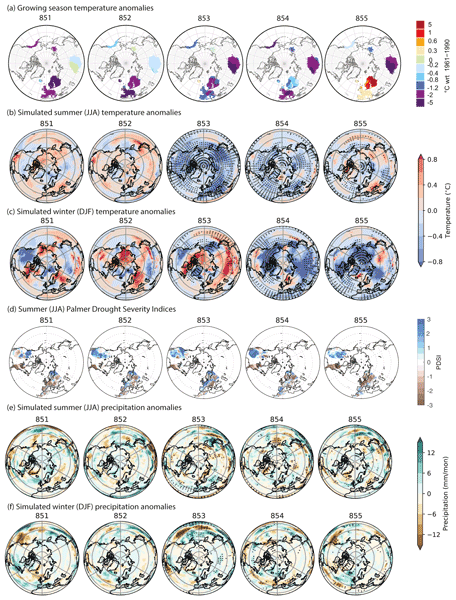
Helen Mackay, Gill Plunkett, Britta J. L. Jensen, Thomas J. Aubry, Christophe Corona, Woon Mi Kim, Matthew Toohey, Michael Sigl, Markus Stoffel, Kevin J. Anchukaitis, Christoph Raible, Matthew S. M. Bolton, Joseph G. Manning, Timothy P. Newfield, Nicola Di Cosmo, Francis Ludlow, Conor Kostick, Zhen Yang, Lisa Coyle McClung, Matthew Amesbury, Alistair Monteath, Paul D. M. Hughes, Pete G. Langdon, Dan Charman, Robert Booth, Kimberley L. Davies, Antony Blundell, and Graeme T. Swindles
Clim. Past, 18, 1475–1508, https://doi.org/10.5194/cp-18-1475-2022, https://doi.org/10.5194/cp-18-1475-2022, 2022
Short summary
Short summary
We assess the climatic and societal impact of the 852/3 CE Alaska Mount Churchill eruption using environmental reconstructions, historical records and climate simulations. The eruption is associated with significant Northern Hemisphere summer cooling, despite having only a moderate sulfate-based climate forcing potential; however, evidence of a widespread societal response is lacking. We discuss the difficulties of confirming volcanic impacts of a single eruption even when it is precisely dated.
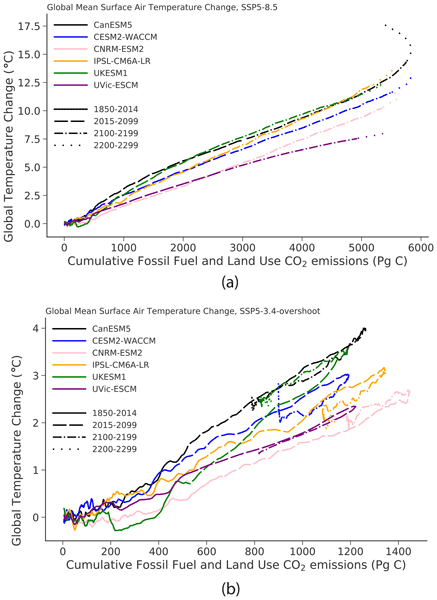
Charles D. Koven, Vivek K. Arora, Patricia Cadule, Rosie A. Fisher, Chris D. Jones, David M. Lawrence, Jared Lewis, Keith Lindsay, Sabine Mathesius, Malte Meinshausen, Michael Mills, Zebedee Nicholls, Benjamin M. Sanderson, Roland Séférian, Neil C. Swart, William R. Wieder, and Kirsten Zickfeld
Earth Syst. Dynam., 13, 885–909, https://doi.org/10.5194/esd-13-885-2022, https://doi.org/10.5194/esd-13-885-2022, 2022
Short summary
Short summary
We explore the long-term dynamics of Earth's climate and carbon cycles under a pair of contrasting scenarios to the year 2300 using six models that include both climate and carbon cycle dynamics. One scenario assumes very high emissions, while the second assumes a peak in emissions, followed by rapid declines to net negative emissions. We show that the models generally agree that warming is roughly proportional to carbon emissions but that many other aspects of the model projections differ.
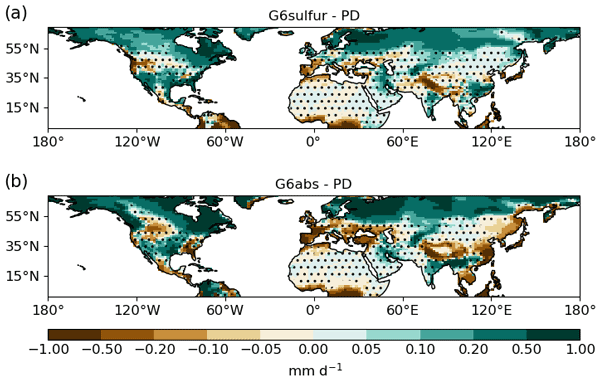
Jim M. Haywood, Andy Jones, Ben T. Johnson, and William McFarlane Smith
Atmos. Chem. Phys., 22, 6135–6150, https://doi.org/10.5194/acp-22-6135-2022, https://doi.org/10.5194/acp-22-6135-2022, 2022
Short summary
Short summary
Simulations are presented investigating the influence of moderately absorbing aerosol in the stratosphere to combat the impacts of climate change. A number of detrimental impacts are noted compared to sulfate aerosol, including (i) reduced cooling efficiency, (ii) increased deficits in global precipitation, (iii) delays in the recovery of the stratospheric ozone hole, and (iv) disruption of the stratospheric circulation and the wintertime storm tracks that impact European precipitation.
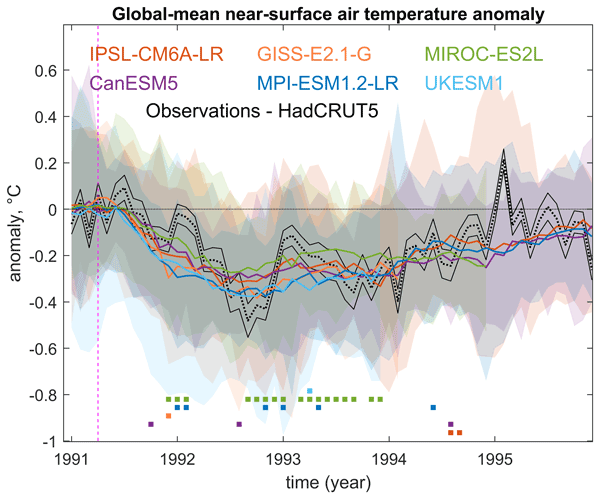
Davide Zanchettin, Claudia Timmreck, Myriam Khodri, Anja Schmidt, Matthew Toohey, Manabu Abe, Slimane Bekki, Jason Cole, Shih-Wei Fang, Wuhu Feng, Gabriele Hegerl, Ben Johnson, Nicolas Lebas, Allegra N. LeGrande, Graham W. Mann, Lauren Marshall, Landon Rieger, Alan Robock, Sara Rubinetti, Kostas Tsigaridis, and Helen Weierbach
Geosci. Model Dev., 15, 2265–2292, https://doi.org/10.5194/gmd-15-2265-2022, https://doi.org/10.5194/gmd-15-2265-2022, 2022
Short summary
Short summary
This paper provides metadata and first analyses of the volc-pinatubo-full experiment of CMIP6-VolMIP. Results from six Earth system models reveal significant differences in radiative flux anomalies that trace back to different implementations of volcanic forcing. Surface responses are in contrast overall consistent across models, reflecting the large spread due to internal variability. A second phase of VolMIP shall consider both aspects toward improved protocol for volc-pinatubo-full.
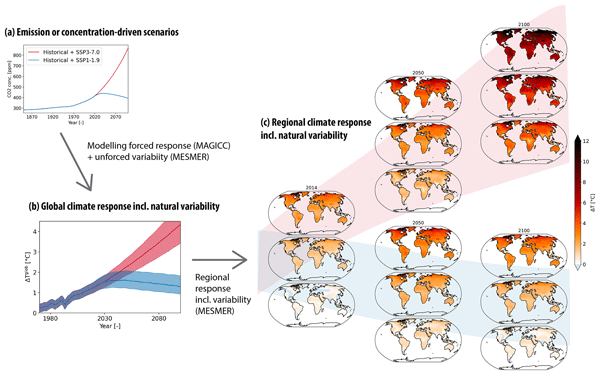
Lea Beusch, Zebedee Nicholls, Lukas Gudmundsson, Mathias Hauser, Malte Meinshausen, and Sonia I. Seneviratne
Geosci. Model Dev., 15, 2085–2103, https://doi.org/10.5194/gmd-15-2085-2022, https://doi.org/10.5194/gmd-15-2085-2022, 2022
Short summary
Short summary
We introduce the first chain of computationally efficient Earth system model (ESM) emulators to translate user-defined greenhouse gas emission pathways into regional temperature change time series accounting for all major sources of climate change projection uncertainty. By combining the global mean emulator MAGICC with the spatially resolved emulator MESMER, we can derive ESM-specific and constrained probabilistic emulations to rapidly provide targeted climate information at the local scale.
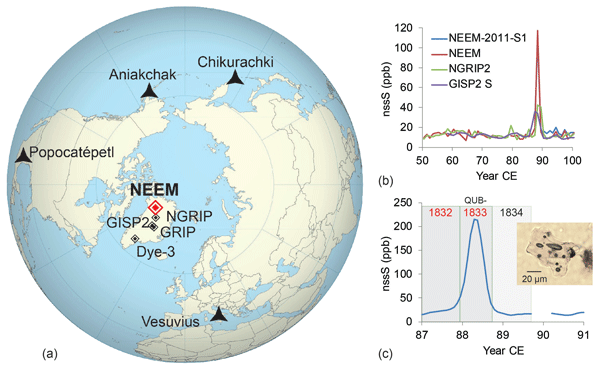
Gill Plunkett, Michael Sigl, Hans F. Schwaiger, Emma L. Tomlinson, Matthew Toohey, Joseph R. McConnell, Jonathan R. Pilcher, Takeshi Hasegawa, and Claus Siebe
Clim. Past, 18, 45–65, https://doi.org/10.5194/cp-18-45-2022, https://doi.org/10.5194/cp-18-45-2022, 2022
Short summary
Short summary
We report the identification of volcanic ash associated with a sulfate layer in Greenland ice cores previously thought to have been from the Vesuvius 79 CE eruption and which had been used to confirm the precise dating of the Greenland ice-core chronology. We find that the tephra was probably produced by an eruption in Alaska. We show the importance of verifying sources of volcanic signals in ice cores through ash analysis to avoid errors in dating ice cores and interpreting volcanic impacts.

Anne Dallmeyer, Martin Claussen, Stephan J. Lorenz, Michael Sigl, Matthew Toohey, and Ulrike Herzschuh
Clim. Past, 17, 2481–2513, https://doi.org/10.5194/cp-17-2481-2021, https://doi.org/10.5194/cp-17-2481-2021, 2021
Short summary
Short summary
Using the comprehensive Earth system model, MPI-ESM1.2, we explore the global Holocene vegetation changes and interpret them in terms of the Holocene climate change. The model results reveal that most of the Holocene vegetation transitions seen outside the high northern latitudes can be attributed to modifications in the intensity of the global summer monsoons.
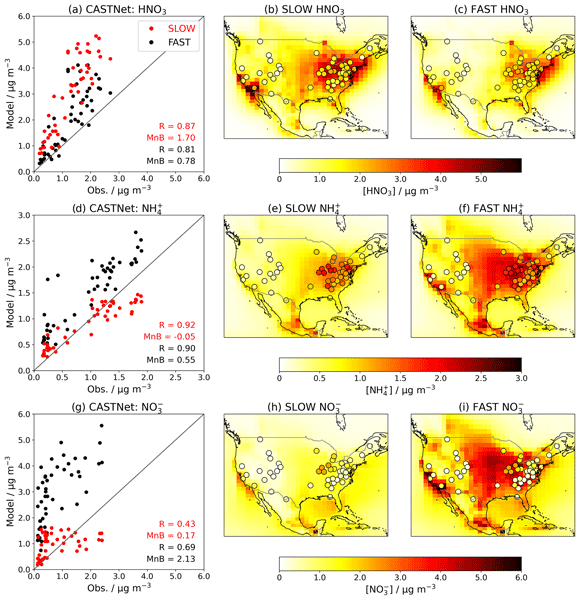
Anthony C. Jones, Adrian Hill, Samuel Remy, N. Luke Abraham, Mohit Dalvi, Catherine Hardacre, Alan J. Hewitt, Ben Johnson, Jane P. Mulcahy, and Steven T. Turnock
Atmos. Chem. Phys., 21, 15901–15927, https://doi.org/10.5194/acp-21-15901-2021, https://doi.org/10.5194/acp-21-15901-2021, 2021
Short summary
Short summary
Ammonium nitrate is hard to model because it forms and evaporates rapidly. One approach is to relate its equilibrium concentration to temperature, humidity, and the amount of nitric acid and ammonia gases. Using this approach, we limit the rate at which equilibrium is reached using various condensation rates in a climate model. We show that ammonium nitrate concentrations are highly sensitive to the condensation rate. Our results will help improve the representation of nitrate in climate models.
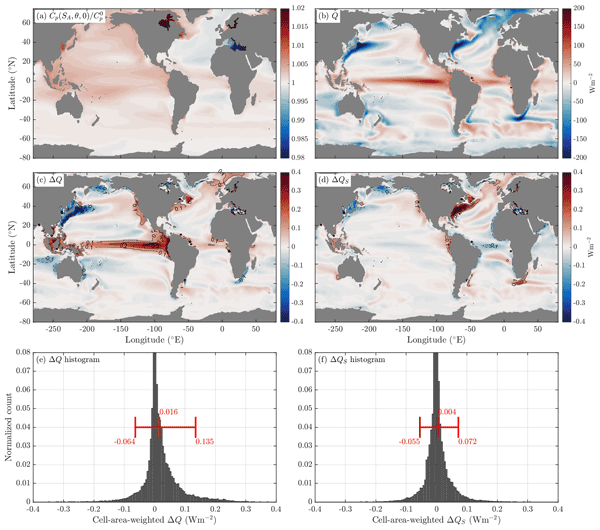
Trevor J. McDougall, Paul M. Barker, Ryan M. Holmes, Rich Pawlowicz, Stephen M. Griffies, and Paul J. Durack
Geosci. Model Dev., 14, 6445–6466, https://doi.org/10.5194/gmd-14-6445-2021, https://doi.org/10.5194/gmd-14-6445-2021, 2021
Short summary
Short summary
We show that the way that the air–sea heat flux is treated in ocean models means that the model's temperature variable should be interpreted as being Conservative Temperature, irrespective of whether the equation of state used in an ocean model is EOS-80 or TEOS-10.
Cited articles
Akima, H.: A new method of interpolation and smooth curve fitting based on local procedures, J. ACM, 17, 589–602, https://doi.org/10.1145/321607.321609, 1970.
Antuña-Marrero, J.-C., Mann, G. W., Keckhut, P., Avdyushin, S., Nardi, B., and Thomason, L. W.: Shipborne lidar measurements showing the progression of the tropical reservoir of volcanic aerosol after the June 1991 Pinatubo eruption, Earth Syst. Sci. Data, 12, 2843–2851, https://doi.org/10.5194/essd-12-2843-2020, 2020.
Antuña-Marrero, J.-C., Mann, G. W., Barnes, J., Rodríguez-Vega, A., Shallcross, S., Dhomse, S. S., Fiocco, G., and Grams, G. W.: Recovery of the first ever multi-year lidar dataset of the stratospheric aerosol layer, from Lexington, MA, and Fairbanks, AK, January 1964 to July 1965, Earth Syst. Sci. Data, 13, 4407–4423, https://doi.org/10.5194/essd-13-4407-2021, 2021.
Antuña-Marrero, J.-C., Mann, G. W., Barnes, J., Calle, A., Dhomse, S. S., Cachorro, V. E., Deshler, T., Li, Z., Sharma, N., and Elterman, L.: The recovery and re-calibration of a 13-month aerosol extinction profiles dataset from Searchlight observations from New Mexico, after the 1963 Agung eruption, Atmosphere, 15, 635, https://doi.org/10.3390/atmos15060635, 2024.
APARC: The Hunga Volcanic Eruption Atmospheric Impacts Report, edited by: Zhu, Y., Mann, G., Newman, P. A., and Randel, W., APARC Report No. 11, WCRP-10/2025, https://doi.org/10.34734/FZJ-2025-05237, 2025.
Arfeuille, F., Weisenstein, D., Mack, H., Rozanov, E., Peter, T., and Brönnimann, S.: Volcanic forcing for climate modeling: a new microphysics-based data set covering years 1600–present, Clim. Past, 10, 359–375, https://doi.org/10.5194/cp-10-359-2014, 2014.
Aubry, T.: Scripts and source datasets for CMIP7 stratospheric aerosol forcing datasets (v2.2.1) (version 2.2.1), Zenodo [code and data set], https://doi.org/10.5281/zenodo.17295697, 2025.
Aubry, T. and CMIP Climate Forcing Task Team – Stratospheric aerosol team: CMIP7 historical stratospheric aerosol optical properties and stratospheric volcanic sulfur emissions: version 2.2.1 dataset and preliminary documentation (version 2.2.1), Zenodo [data set], https://doi.org/10.5281/zenodo.15556388, 2025.
Aubry, T. J., Toohey, M., Marshall, L., Schmidt, A., and Jellinek, A. M.: A new volcanic stratospheric sulfate aerosol forcing emulator (EVA_H): Comparison with interactive stratospheric aerosol models, J. Geophys. Res.-Atmos., 125, e2019JD031303, https://doi.org/10.1029/2019JD031303, 2020.
Aubry, T. J., Staunton-Sykes, J., Marshall, L. R., Haywood, J., Abraham, N. L., and Schmidt, A.: Climate change modulates the stratospheric volcanic sulfate aerosol lifecycle and radiative forcing from tropical eruptions, Nat. Commun., 12, 4708, https://doi.org/10.1038/s41467-021-24943-7, 2021a.
Aubry, T. J., Engwell, S., Bonadonna, C., Carazzo, G., Scollo, S., Van Eaton, A. R., Taylor, I. A., Jessop, D., Eychenne, J., Gouhier, M., Mastin, L. G., Wallace, K. L., Biass, S., Bursik, M., Grainger, R. G., Jellinek, A. M., and Schmidt, A.: The Independent Volcanic Eruption Source Parameter Archive (IVESPA, version 1.0): A new observational database to support explosive eruptive column model validation and development, J. Volcanol. Geoth. Res., https://doi.org/10.1016/j.jvolgeores.2021.107295, 2021b.
Aubry, T. J., Sigl, M., Toohey, M., Chim, M. M., Verkerk, M., Schmidt, A., and Carn, S. A.: Stratospheric aerosol forcing for CMIP7 (part 2): Volcanic sulfur dioxide emissions, EGUsphere [preprint], https://doi.org/10.5194/egusphere-2026-546, 2026.
Bethke, I., Outten, S., Otterå, O. H., Hawkins, E., Wagner, S., Sigl, M., and Thorne, P.: Potential volcanic impacts on future climate variability, Nat. Clim. Change, 7, 799–805, https://doi.org/10.1038/nclimate3394, 2017.
Biermann, U. M., Luo, B. P., and Peter, Th.: Absorption spectra and optical constants of binary and ternary solutions of H2SO4, HNO3, and H2O in the mid infrared at atmospheric temperatures, J. Phys. Chem. A, 104, 783–793, https://doi.org/10.1021/jp992349i, 2000.
Bilbao, R., Aubry, T. J., Toohey, M., Ortega, P., Lapin, V., and Tourigny, E.: The sensitivity of EC-Earth3 decadal predictions to the choice of volcanic forcing dataset: insights for the next major eruption, Geosci. Model Dev., 18, 6239–6254, https://doi.org/10.5194/gmd-18-6239-2025, 2025.
Bourassa, A. E., Robock, A., Randel, W. J., Deshler, T., Rieger, L. A., Lloyd, N. D., Llewellyn, E. J., and Degenstein, D. A.: Large volcanic aerosol load in the stratosphere linked to Asian monsoon transport, Science, 337, 78–81, https://doi.org/10.1126/science.1219371, 2012.
Bovensmann, H., Burrows, J. P., Buchwitz, M., Frerick, J., Noël, S., Rozanov, V. V., Chance, K. V., and Goede, A. P. H.: SCIAMACHY: Mission objectives and measurement modes, J. Atmos. Sci., 56, 127–150, https://doi.org/10.1175/1520-0469(1999)056, 1999.
Brodowsky, C. V., Sukhodolov, T., Chiodo, G., Aquila, V., Bekki, S., Dhomse, S. S., Höpfner, M., Laakso, A., Mann, G. W., Niemeier, U., Pitari, G., Quaglia, I., Rozanov, E., Schmidt, A., Sekiya, T., Tilmes, S., Timmreck, C., Vattioni, S., Visioni, D., Yu, P., Zhu, Y., and Peter, T.: Analysis of the global atmospheric background sulfur budget in a multi-model framework, Atmos. Chem. Phys., 24, 5513–5548, https://doi.org/10.5194/acp-24-5513-2024, 2024.
Burke, A., Moore, K. A., Sigl, M., Nita, D. C., McConnell, J. R., and Adkins, J. F.: Stratospheric eruptions from tropical and extra-tropical volcanoes constrained using high-resolution sulfur isotopes in ice cores, Earth Planet. Sc. Lett., 521, 113–119, https://doi.org/10.1016/j.epsl.2019.06.006, 2019.
Carn, S. A., Clarisse, L., and Prata, A. J.: Multi-decadal satellite measurements of global volcanic degassing, J. Volcanol. Geoth. Res., 311, 99–134, https://doi.org/10.1016/j.jvolgeores.2016.01.002, 2016.
Carn, S. A., Fioletov, V. E., McLinden, C. A., Li, C., and Krotkov, N. A.: A decade of global volcanic SO2 emissions measured from space, Sci. Rep., 7, 44095, https://doi.org/10.1038/srep44095, 2017.
Carn, S.: Multi-Satellite Volcanic Sulfur Dioxide L4 Long-Term Global Database V4 (MSVOLSO2L4_4), NASA/GSFC DISC, https://disc.gsfc.nasa.gov/datasets/MSVOLSO2L4_4/summary (last access: 10 April 2026), 2022.
Carslaw, K. S., Lee, L. A., Reddington, C. L., Pringle, K. J., Rap, A., Forster, P. M., Mann, G. W., Spracklen, D. V., Woodhouse, M. T., Regayre, L. A., and Pierce, J. R.: Large contribution of natural aerosols to uncertainty in indirect forcing, Nature, 503, 67–71, https://doi.org/10.1038/nature12674, 2013.
Chim, M. M., Aubry, T. J., Abraham, N. L., Marshall, L., Mulcahy, J., Walton, J., and Schmidt, A.: Climate projections very likely underestimate future volcanic forcing and its climatic effects, Geophys. Res. Lett., 50, e2023GL103743, https://doi.org/10.1029/2023GL103743, 2023.
Chim, M. M., Aubry, T. J., Smith, C., and Schmidt, A.: Neglecting future sporadic volcanic eruptions underestimates climate uncertainty, Commun. Earth Environ., 6, 236, https://doi.org/10.1038/s43247-025-02208-1, 2025.
Clyne, M., Lamarque, J.-F., Mills, M. J., Khodri, M., Ball, W., Bekki, S., Dhomse, S. S., Lebas, N., Mann, G., Marshall, L., Niemeier, U., Poulain, V., Robock, A., Rozanov, E., Schmidt, A., Stenke, A., Sukhodolov, T., Timmreck, C., Toohey, M., Tummon, F., Zanchettin, D., Zhu, Y., and Toon, O. B.: Model physics and chemistry causing intermodel disagreement within the VolMIP-Tambora Interactive Stratospheric Aerosol ensemble, Atmos. Chem. Phys., 21, 3317–3343, https://doi.org/10.5194/acp-21-3317-2021, 2021.
Crowley, T. J. and Unterman, M. B.: Technical details concerning development of a 1200 yr proxy index for global volcanism, Earth Syst. Sci. Data, 5, 187–197, https://doi.org/10.5194/essd-5-187-2013, 2013.
Damany-Pearce, L., Johnson, B., Wells, A., Osborne, M., Allan, J., Belcher, C., Jones, A. and Haywood, J.: Australian wildfires cause the largest stratospheric warming since Pinatubo and extend the lifetime of the Antarctic ozone hole, Sci. Rep., 12, 12665, https://doi.org/10.1038/s41598-022-15794-3, 2022.
Davis, N. A., Visioni, D., Garcia, R. R., Kinnison, D. E., Marsh, D. R., Mills, M., Richter, J. H., Tilmes, S., Bardeen, C. G., Gettelman, A., Glanville, A. A., MacMartin, D. G., Smith, A. K., and Vitt, F.: Climate, variability, and climate sensitivity of “Middle Atmosphere” chemistry configurations of the Community Earth System Model Version 2, Whole Atmosphere Community Climate Model Version 6 (CESM2(WACCM6)), J. Adv. Model. Earth Sy., 15, e2022MS003579, https://doi.org/10.1029/2022MS003579, 2023.
Deshler, T., Johnson, B. J., and Rozier, W. R.: Balloonborne measurements of Pinatubo aerosol during 1991 and 1992 at 41° N: Vertical profiles, size distribution, and volatility, Geophys. Res. Lett., 20, 1435–1438, https://doi.org/10.1029/93GL01337, 1993.
Dhomse, S. S., Mann, G. W., Antuña Marrero, J. C., Shallcross, S. E., Chipperfield, M. P., Carslaw, K. S., Marshall, L., Abraham, N. L., and Johnson, C. E.: Evaluating the simulated radiative forcings, aerosol properties, and stratospheric warmings from the 1963 Mt Agung, 1982 El Chichón, and 1991 Mt Pinatubo volcanic aerosol clouds, Atmos. Chem. Phys., 20, 13627–13654, https://doi.org/10.5194/acp-20-13627-2020, 2020.
Dunne, J. P., Hewitt, H. T., Arblaster, J. M., Bonou, F., Boucher, O., Cavazos, T., Dingley, B., Durack, P. J., Hassler, B., Juckes, M., Miyakawa, T., Mizielinski, M., Naik, V., Nicholls, Z., O'Rourke, E., Pincus, R., Sanderson, B. M., Simpson, I. R., and Taylor, K. E.: An evolving Coupled Model Intercomparison Project phase 7 (CMIP7) and Fast Track in support of future climate assessment, Geosci. Model Dev., 18, 6671–6700, https://doi.org/10.5194/gmd-18-6671-2025, 2025.
Durack, P. J., Taylor, K. E., Eyring, V., Ames, S. K., Hoang, T., Nadeau, D., Doutriaux, C., Stockhause, M., and Gleckler, P. J.: Toward standardized data sets for climate model experimentation, Eos, 99, https://doi.org/10.1029/2018EO101751, 2018.
Durack, P. J., Naik, V., Nicholls, Z., O'Rourke, E., Turner, B., Buontempo, C., Brookshaw, A., Goddard, C., MacIntosh, C., Hewitt, H., and Dunne, J.: Earth system forcing for CMIP7 and beyond, B. Am. Meteorol. Soc., 106, E1580–E1588, https://doi.org/10.1175/BAMS-D-25-0119.1, 2025.
Engwell, S., Aubry, T. J., Bonadonna, C., Mastin, L. G., Carazzo, C., Van Eaton, A. R., Jessop, D., Grainger, R. G., Scollo, S., Taylor, I. A., Jellinek, A. M., and Schmidt, A.: New insights into the relationship between mass eruption rate and volcanic column height based on the IVESPA dataset, Geophys. Res. Lett., 50, https://doi.org/10.1029/2022GL102633, 2023.
Eyring, V., Bony, S., Meehl, G. A., Senior, C. A., Stevens, B., Stouffer, R. J., and Taylor, K. E.: Overview of the Coupled Model Intercomparison Project Phase 6 (CMIP6) experimental design and organization, Geosci. Model Dev., 9, 1937–1958, https://doi.org/10.5194/gmd-9-1937-2016, 2016.
Fang, S.-W., Sigl, M., Toohey, M., Jungclaus, J., Zanchettin, D., and Timmreck, C.: The role of small to moderate volcanic eruptions in the early 19th century climate, Geophys. Res. Lett., 50, e2023GL105307, https://doi.org/10.1029/2023GL105307, 2023.
Flynn, C. M. and Mauritsen, T.: On the climate sensitivity and historical warming evolution in recent coupled model ensembles, Atmos. Chem. Phys., 20, 7829–7842, https://doi.org/10.5194/acp-20-7829-2020, 2020.
Gabriel, I., Plunkett, G., Abbott, P. M., Behrens, M., Burke, A., Chellman, N., Cook, E., Fleitmann, D., Hörhold, M., Hutchison, W., and McConnell, J. R.: Decadal-to-centennial increases of volcanic aerosols from Iceland challenge the concept of a Medieval Quiet Period, Commun. Earth Environ., 5, 194, https://doi.org/10.1038/s43247-024-01350-6, 2024.
Gao, C., Oman, L., Robock, A., and Stenchikov, G. L.: Atmospheric volcanic loading derived from bipolar ice cores: Accounting for the spatial distribution of volcanic deposition, J. Geophys. Res., 112, D09109, https://doi.org/10.1029/2006JD007461, 2007.
Gao, C., Robock, A., and Ammann, C.: Volcanic forcing of climate over the past 1500 years: An improved ice core-based index for climate models, J. Geophys. Res., 113, D23111, https://doi.org/10.1029/2008JD010239, 2008.
Gao, C. Y., Naik, V., Horowitz, L. W., Ginoux, P., Paulot, F., Dunne, J., Mills, M., Aquila, V., and Colarco, P.: Volcanic drivers of stratospheric sulfur in GFDL ESM4, J. Adv. Model. Earth Sy., 15, e2022MS003532, https://doi.org/10.1029/2022MS003532, 2023.
Gillett, N. P., Shiogama, H., Funke, B., Hegerl, G., Knutti, R., Matthes, K., Santer, B. D., Stone, D., and Tebaldi, C.: The Detection and Attribution Model Intercomparison Project (DAMIP v1.0) contribution to CMIP6, Geosci. Model Dev., 9, 3685–3697, https://doi.org/10.5194/gmd-9-3685-2016, 2016.
Global Volcanism Program: Volcanoes of the World (v. 5.3.1; 6 Aug 2025) [Database], Smithsonian Institution, https://doi.org/10.5479/si.GVP.VOTW5-2025.5.3, 2025.
Guillet, S., Corona, C., Oppenheimer, C., Lavigne, F., Khodri, M., Ludlow, F., Sigl, M., Toohey, M., Atkins, P. S., Yang, Z., and Muranaka, T.: Lunar eclipses illuminate timing and climate impact of medieval volcanism, Nature, 616, 90–95, https://doi.org/10.1038/s41586-023-05751-z, 2023.
Guo, S., Bluth, G. J. S., Rose, W. I., Watson, I. M., and Prata, A. J.: Re-evaluation of SO2 release of the 15 June 1991 Pinatubo eruption using ultraviolet and infrared satellite sensors, Geochem. Geophy. Geosy., 5, Q04001, https://doi.org/10.1029/2003GC000654, 2004.
Hannigan, J. W., Ortega, I., Shams, S. B., Blumenstock, T., Campbell, J. E., Conway, S., Flood, V., Garcia, O., Griffith, D., Grutter, M., and Hase, F.: Global atmospheric OCS trend analysis from 22 NDACC stations, J. Geophys. Res.-Atmos., 127, e2021JD035764, https://doi.org/10.1029/2021JD035764, 2022.
Hewitt, H. T., Flato, G., O'Rourke, E., Dunne, J. P., Adloff, F., Arblaster, J. M., Bonou, F., Boucher, O., Cavazos, T., Dingley, B., and Durack, P. J.: Towards provision of regularly updated climate data from the Coupled Model Intercomparison Project, PLOS Climate, 4, e0000708, https://doi.org/10.1371/journal.pclm.0000708, 2025.
Hummel, J. R., Shettle, E. P., and Longtin, D. R.: A new background stratospheric aerosol model for use in atmospheric radiation models, OptiMetrics scientific report No. OMI298, https://apps.dtic.mil/sti/tr/pdf/ADA210110.pdf (last access: 10 April 2026), 1988.
IPCC: Climate Change 2021: The Physical Science Basis, Contribution of Working Group I to the Sixth Assessment Report of the Intergovernmental Panel on Climate Change, edited by: Masson-Delmotte, V., Zhai, P., Pirani, A., Connors, S. L., Péan, C., Berger, S., Caud, N., Chen, Y., Goldfarb, L., Gomis, M. I., Huang, M., Leitzell, K., Lonnoy, E., Matthews, J. B. R., Maycock, T. K., Waterfield, T., Yelekçi, O., Yu, R., and Zhou, B., Cambridge University Press, Cambridge, United Kingdom and New York, NY, USA, 2391 pp., https://doi.org/10.1017/9781009157896, 2021.
Jenkins, S., Smith, C., Allen, M., and Grainger, R.: Tonga eruption increases chance of temporary surface temperature anomaly above 1.5 °C, Nat. Clim. Change, 13, 127–129, https://doi.org/10.1038/s41558-022-01568-2, 2023.
Jongebloed, U. A., Schauer, A. J., Cole-Dai, J., Larrick, C. G., Wood, R., Fischer, T. P., Carn, S. A., Salimi, S., Edouard, S. R., Zhai, S., and Geng, L.: Underestimated passive volcanic sulfur degassing implies overestimated anthropogenic aerosol forcing, Geophys. Res. Lett., 50, e2022GL102061, https://doi.org/10.1029/2022GL102061, 2023.
Jörimann, A., Sukhodolov, T., Luo, B., Chiodo, G., Mann, G., and Peter, T.: REtrieval Method for optical and physical Aerosol Properties in the stratosphere (REMAPv1), Geosci. Model Dev., 18, 6023–6041, https://doi.org/10.5194/gmd-18-6023-2025, 2025.
Jungclaus, J. H., Bard, E., Baroni, M., Braconnot, P., Cao, J., Chini, L. P., Egorova, T., Evans, M., González-Rouco, J. F., Goosse, H., Hurtt, G. C., Joos, F., Kaplan, J. O., Khodri, M., Klein Goldewijk, K., Krivova, N., LeGrande, A. N., Lorenz, S. J., Luterbacher, J., Man, W., Maycock, A. C., Meinshausen, M., Moberg, A., Muscheler, R., Nehrbass-Ahles, C., Otto-Bliesner, B. I., Phipps, S. J., Pongratz, J., Rozanov, E., Schmidt, G. A., Schmidt, H., Schmutz, W., Schurer, A., Shapiro, A. I., Sigl, M., Smerdon, J. E., Solanki, S. K., Timmreck, C., Toohey, M., Usoskin, I. G., Wagner, S., Wu, C.-J., Yeo, K. L., Zanchettin, D., Zhang, Q., and Zorita, E.: The PMIP4 contribution to CMIP6 – Part 3: The last millennium, scientific objective, and experimental design for the PMIP4 past1000 simulations, Geosci. Model Dev., 10, 4005–4033, https://doi.org/10.5194/gmd-10-4005-2017, 2017.
Kar, J., Lee, K.-P., Vaughan, M. A., Tackett, J. L., Trepte, C. R., Winker, D. M., Lucker, P. L., and Getzewich, B. J.: CALIPSO level 3 stratospheric aerosol profile product: version 1.00 algorithm description and initial assessment, Atmos. Meas. Tech., 12, 6173–6191, https://doi.org/10.5194/amt-12-6173-2019, 2019.
Ke, Z., Tang, Q., Golaz, J.-C., Liu, X., and Wang, H.: Assessing the climate impact of an improved volcanic sulfate aerosol representation in E3SM, Geosci. Model Dev., 18, 4137–4153, https://doi.org/10.5194/gmd-18-4137-2025, 2025.
Khanal, S., Toohey, M., Bourassa, A., McElroy, C. T., Sioris, C., and Walker, K. A.: Assessment of ACE-MAESTRO v3.13 multi-wavelength stratospheric aerosol extinction measurements, Atmos. Meas. Tech., 18, 6835–6852, https://doi.org/10.5194/amt-18-6835-2025, 2025.
Kloss, C., Berthet, G., Sellitto, P., Ploeger, F., Bucci, S., Khaykin, S., Jégou, F., Taha, G., Thomason, L. W., Barret, B., Le Flochmoen, E., von Hobe, M., Bossolasco, A., Bègue, N., and Legras, B.: Transport of the 2017 Canadian wildfire plume to the tropics via the Asian monsoon circulation, Atmos. Chem. Phys., 19, 13547–13567, https://doi.org/10.5194/acp-19-13547-2019, 2019.
Kloss, C., Berthet, G., Sellitto, P., Ploeger, F., Taha, G., Tidiga, M., Eremenko, M., Bossolasco, A., Jégou, F., Renard, J.-B., and Legras, B.: Stratospheric aerosol layer perturbation caused by the 2019 Raikoke and Ulawun eruptions and their radiative forcing, Atmos. Chem. Phys., 21, 535–560, https://doi.org/10.5194/acp-21-535-2021, 2021.
Kovilakam, M., Thomason, L. W., Ernest, N., Rieger, L., Bourassa, A., and Millán, L.: The Global Space-based Stratospheric Aerosol Climatology (version 2.0): 1979–2018, Earth Syst. Sci. Data, 12, 2607–2634, https://doi.org/10.5194/essd-12-2607-2020, 2020.
Kovilakam, M., Thomason, L. W., Verkerk, M., Aubry, T., and Knepp, T. N.: OMPS-LP aerosol extinction coefficients and their applicability in GloSSAC, Atmos. Chem. Phys., 25, 535–553, https://doi.org/10.5194/acp-25-535-2025, 2025.
Kremser, S., Thomason, L. W., von Hobe, M., Hermann, M., Deshler, T., Timmreck, C., Toohey, M., Stenke, A., Schwarz, J. P., Weigel, R., Fueglistaler, S., Prata, F. J., Vernier, J. P., Schlager, H., Barnes, J. E., Antuna-Marrero, J. C., Fairlie, D., Palm, M., Mahieu, E., Notholt, J., Rex, M., Bingen, C., Vanhellemont, F., Bourassa, A., Plane, J. M. C., Klocke, D., Carn, S. A., Clarisse, L., Trickl, T., Neely, R., James, A. D., Rieger, L., Wilson, J. C., and Meland, B.: Stratospheric aerosol – Observations, processes, and impact on climate, Rev. Geophys., 54, 278–335, https://doi.org/10.1002/2015RG000511, 2016.
Leach, N. J., Jenkins, S., Nicholls, Z., Smith, C. J., Lynch, J., Cain, M., Walsh, T., Wu, B., Tsutsui, J., and Allen, M. R.: FaIRv2.0.0: a generalized impulse response model for climate uncertainty and future scenario exploration, Geosci. Model Dev., 14, 3007–3036, https://doi.org/10.5194/gmd-14-3007-2021, 2021.
Lee, G., Burke, A., Hutchison, W., Sugden, P., Smith, C., McConnell, J. R., Sigl, M., Oppenheimer, C., Rasmussen, S. O., Steffensen, J. P., and Lee, S. R.: Phasing and climate forcing potential of the Millennium Eruption of Mt. Baekdu, Commun. Earth Environ., 5, 549, https://doi.org/10.1038/s43247-024-01713-z, 2024.
LeGrande, A., Tsigaridis, K., and Bauer, S.: Role of atmospheric chemistry in the climate impacts of stratospheric volcanic injections, Nat. Geosci., 9, 652–655, https://doi.org/10.1038/ngeo2771, 2016.
Luo, B.: SAGE-3λv4: Stratospheric aerosol data for use in CMIP6 models, ETH Research Collection [data set], https://doi.org/10.3929/ethz-b-000715155, previously distributed through ftp://iacftp.ethz.ch/pub_read/luo/CMIP6_SAD_radForcing_v4.0.0 (last access: 8 June 2025), 2017.
Luo, B.: Stratospheric aerosol data for use in CMIP6 models – data description [data description], ftp://iacftp.ethz.ch/pub_read/luo/CMIP6/Readme_Data_Description.pdf (last access: 17 February 2023), 2018.
Marshall, L. R., Smith, C. J., Forster, P. M., Aubry, T. J., Andrews, T., and Schmidt, A.: Large variations in volcanic aerosol forcing efficiency due to eruption source parameters and rapid adjustments, Geophys. Res. Lett., 47, e2020GL090241, https://doi.org/10.1029/2020GL090241, 2020.
Marshall, L. R., Maters, E. C., Schmidt, A., Timmreck, C., Robock, A., and Toohey, M.: Volcanic effects on climate: Recent advances and future avenues, B. Volcanol., 84, 54, https://doi.org/10.1007/s00445-022-01559-3, 2022.
Millán, L., Santee, M. L., Lambert, A., Livesey, N. J., Werner, F., Schwartz, M. J., Pumphrey, H. C., Manney, G. L., Wang, Y., Su, H., and Wu, L.: The Hunga Tonga-Hunga Ha'apai hydration of the stratosphere, Geophys. Res. Lett., 49, e2022GL099381, https://doi.org/10.1029/2022GL099381, 2022.
Mills, M. J., Schmidt, A., Easter, R., Solomon, S., Kinnison, D. E., Ghan, S. J., Neely, R. R., Marsh, D. R., Conley, A., Bardeen, C. G., and Gettelman, A.: Global volcanic aerosol properties derived from emissions, 1990–2014, using CESM1(WACCM), J. Geophys. Res.-Atmos., 121, 2332–2348, https://doi.org/10.1002/2015JD024290, 2016.
Murphy, D. M., Abou-Ghanem, M., Cziczo, D. J., Froyd, K. D., Jacquot, J., Lawler, M. J., Maloney, C., Plane, J. M. C., Ross, M. N., Schill, G. P., and Shen, X.: Metals from spacecraft reentry in stratospheric aerosol particles, P. Natl. Acad. Sci. USA, 120, e2313374120, https://doi.org/10.1073/pnas.2313374120, 2023.
Muser, L. O., Hoshyaripour, G. A., Bruckert, J., Horváth, Á., Malinina, E., Wallis, S., Prata, F. J., Rozanov, A., von Savigny, C., Vogel, H., and Vogel, B.: Particle aging and aerosol–radiation interaction affect volcanic plume dispersion: evidence from the Raikoke 2019 eruption, Atmos. Chem. Phys., 20, 15015–15036, https://doi.org/10.5194/acp-20-15015-2020, 2020.
Naik, V., Durack, P. J., Nicholls, Z., Buontempo, C., Dunne, J. P., Hewitt, H. T., Macintosh, C., and O'Rourke, E.: Climate models need more frequent releases of input data – here's how to do it, Nature, 644, 874–875, https://doi.org/10.1038/d41586-025-02642-3, 2025.
NASA/LARC/SD/ASDC: Global Space-based Stratospheric Aerosol Climatology Version 2.22, NASA Langley Atmospheric Science Data Center DAAC [data set], https://doi.org/10.5067/GLOSSAC-L3-V2.22, 2023.
NASA/LARC/SD/ASDC: Global Space-based Stratospheric Aerosol Climatology Version 2.23, NASA Langley Atmospheric Science Data Center DAAC [data set], https://doi.org/10.5067/GLOSSAC-L3-V2.23, 2025.
Neely III, R. R. and Schmidt, A.: VolcanEESM (Volcanic Emissions for Earth System Models): Volcanic sulphur dioxide (SO2) emissions database from 1850 to present. Centre for Environmental Data Analysis [data set], http://catalogue.ceda.ac.uk/uuid/bfbd5ec825fa422f9a858b14ae7b2a0d (last access: 10 April 2026), 2016.
Nicholls, Z. R. J., Meinshausen, M., Lewis, J., Gieseke, R., Dommenget, D., Dorheim, K., Fan, C.-S., Fuglestvedt, J. S., Gasser, T., Golüke, U., Goodwin, P., Hartin, C., Hope, A. P., Kriegler, E., Leach, N. J., Marchegiani, D., McBride, L. A., Quilcaille, Y., Rogelj, J., Salawitch, R. J., Samset, B. H., Sandstad, M., Shiklomanov, A. N., Skeie, R. B., Smith, C. J., Smith, S., Tanaka, K., Tsutsui, J., and Xie, Z.: Reduced Complexity Model Intercomparison Project Phase 1: introduction and evaluation of global-mean temperature response, Geosci. Model Dev., 13, 5175–5190, https://doi.org/10.5194/gmd-13-5175-2020, 2020.
O'Neill, B. C., Tebaldi, C., van Vuuren, D. P., Eyring, V., Friedlingstein, P., Hurtt, G., Knutti, R., Kriegler, E., Lamarque, J.-F., Lowe, J., Meehl, G. A., Moss, R., Riahi, K., and Sanderson, B. M.: The Scenario Model Intercomparison Project (ScenarioMIP) for CMIP6, Geosci. Model Dev., 9, 3461–3482, https://doi.org/10.5194/gmd-9-3461-2016, 2016.
Palmer, K. F. and Williams, D.: Optical constants of sulfuric acid; Application to the clouds of Venus, Appl. Optics, 14, 208–219, https://doi.org/10.1364/AO.14.000208, 1975.
Peterson, D. A., Fromm, M. D., McRae, R. H., Campbell, J. R., Hyer, E. J., Taha, G., Camacho, C. P., Kablick III, G. P., Schmidt, C. C., and DeLand, M. T.: Australia's Black Summer pyrocumulonimbus super outbreak reveals potential for increasingly extreme stratospheric smoke events, npj Clim. Atmos. Sci., 4, 38, https://doi.org/10.1038/s41612-021-00192-9, 2021.
Peterson, D. A., Berman, M. T., Fromm, M. D., Servranckx, R., Julstrom, W. J., Hyer, E. J., Campbell, J. R., McHardy, T. M., and Lambert, A.: Worldwide inventory reveals the frequency and variability of pyrocumulonimbus and stratospheric smoke plumes during 2013–2023, npj Clim. Atmos. Sci., 8, 325, https://doi.org/10.1038/s41612-025-01188-5, 2025.
Plunkett, G., Sigl, M., McConnell, J. R., Pilcher, J. R., and Chellman, N. J.: The significance of volcanic ash in Greenland ice cores during the Common Era, Quaternary Sci. Rev., 301, 107936, https://doi.org/10.1016/j.quascirev.2022.107936, 2023.
Pohl, C., Wrana, F., Rozanov, A., Deshler, T., Malinina, E., von Savigny, C., Rieger, L. A., Bourassa, A. E., and Burrows, J. P.: Stratospheric aerosol characteristics from SCIAMACHY limb observations: two-parameter retrieval, Atmos. Meas. Tech., 17, 4153–4181, https://doi.org/10.5194/amt-17-4153-2024, 2024.
Quaglia, I., Timmreck, C., Niemeier, U., Visioni, D., Pitari, G., Brodowsky, C., Brühl, C., Dhomse, S. S., Franke, H., Laakso, A., Mann, G. W., Rozanov, E., and Sukhodolov, T.: Interactive stratospheric aerosol models' response to different amounts and altitudes of SO2 injection during the 1991 Pinatubo eruption, Atmos. Chem. Phys., 23, 921–948, https://doi.org/10.5194/acp-23-921-2023, 2023.
Rieger, L. A., Zawada, D. J., Bourassa, A. E., and Degenstein, D. A.: A multiwavelength retrieval approach for improved OSIRIS aerosol extinction retrievals, J. Geophys. Res.-Atmos., 124, 7286–7307, https://doi.org/10.1029/2018JD029897, 2019.
Rienecker, M. M., Suarez, M. J., Gelaro, R., Todling, R., Bacmeister, J., Liu, E., Bosilovich, M. G., Schubert, S. D., Takacs, L., Kim, G. K., Bloom, S., Chen, J. Y., Collins, D., Conaty, A., Da Silva, A., Gu, W., Joiner, J., Koster, R. D., Lucchesi, R., Molod, A., Owens, T., Pawson, S., Pegion, P., Redder, C. R., Reichle, R., Robertson, F. R., Ruddick, A. G., Sienkiewicz, M., and Woollen, J.: MERRA: NASA's Modern-Era Retrospective Analysis for Research and Applications, J. Climate, 24, 3624–3648, https://doi.org/10.1175/JCLI-D-11-00015.1, 2011.
Romero-Prieto, A., Sandstad, M., Sanderson, B. M., Nicholls, Z. R. J., Steinert, N. J., Gasser, T., Mathison, C., Kikstra, J., Aubry, T. J., and Smith, C.: Reduced Complexity Model Intercomparison Project Phase 3: Experimental protocol for coordinated constraining and evaluation of Reduced-Complexity Models, EGUsphere [preprint], https://doi.org/10.5194/egusphere-2025-5775, 2025.
Salawitch, R. J., Smith, J. B., Selkirk, H., Wargan, K., Chipperfield, M. P., Hossaini, R., Levelt, P. F., Livesey, N. J., McBride, L. A., Millán, L. F., and Moyer, E.: The imminent data desert: The future of stratospheric monitoring in a rapidly changing world, B. Am. Meteorol. Soc., 106, E540–E563, https://doi.org/10.1175/BAMS-D-23-0281.1, 2025.
Sandvik, O. S., Friberg, J., Martinsson, B. G., van Velthoven, P. F., Hermann, M., and Zahn, A.: Intercomparison of in-situ aircraft and satellite aerosol measurements in the stratosphere, Sci. Rep., 9, 15576, https://doi.org/10.1038/s41598-019-52089-6, 2019.
Santer, B. D., Solomon, S., Bonfils, C., Zelinka, M. D., Painter, J. F., Beltran, F., Fyfe, J. C., Johannesson, G., Mears, C., Ridley, D. A., and Vernier, J. P.: Observed multivariable signals of late 20th and early 21st century volcanic activity, Geophys. Res. Lett., 42, 500–509, https://doi.org/10.1002/2014GL062366, 2015.
Sato, M., Hansen, J. E., McCormick, M. P., and Pollack, J. B.: Stratospheric aerosol optical depths, 1850–1990, J. Geophys. Res., 98, 22987–22994, https://doi.org/10.1029/93JD02553, 1993.
Schmidt, A., Carslaw, K. S., Mann, G. W., Rap, A., Pringle, K. J., Spracklen, D. V., Wilson, M., and Forster, P. M.: Importance of tropospheric volcanic aerosol for indirect radiative forcing of climate, Atmos. Chem. Phys., 12, 7321–7339, https://doi.org/10.5194/acp-12-7321-2012, 2012.
Schmidt, A., Mills, M. J., Ghan, S., Gregory, J. M., Allan, R. P., Andrews, T., Bardeen, C. G., Conley, A., Forster, P. M., Gettelman, A., and Portmann, R. W.: Volcanic radiative forcing from 1979 to 2015, J. Geophys. Res.-Atmos., 123, 12491–12508, https://doi.org/10.1029/2018JD028776, 2018.
Schneider, J., Weigel, R., Klimach, T., Dragoneas, A., Appel, O., Hünig, A., Molleker, S., Köllner, F., Clemen, H.-C., Eppers, O., Hoppe, P., Hoor, P., Mahnke, C., Krämer, M., Rolf, C., Grooß, J.-U., Zahn, A., Obersteiner, F., Ravegnani, F., Ulanovsky, A., Schlager, H., Scheibe, M., Diskin, G. S., DiGangi, J. P., Nowak, J. B., Zöger, M., and Borrmann, S.: Aircraft-based observation of meteoric material in lower-stratospheric aerosol particles between 15 and 68° N, Atmos. Chem. Phys., 21, 989–1013, https://doi.org/10.5194/acp-21-989-2021, 2021.
Schoeberl, M. R., Wang, Y., Taha, G., Zawada, D. J., Ueyama, R., and Dessler, A.: Evolution of the climate forcing during the two years after the Hunga Tonga-Hunga Ha'apai eruption, J. Geophys. Res.-Atmos., 129, e2024JD041296, https://doi.org/10.1029/2024JD041296, 2024.
Sellar, A. A., Jones, C. G., Mulcahy, J. P., Tang, Y., Yool, A., Wiltshire, A., O'Connor, F. M., Stringer, M., Hill, R., Palmieri, J., Woodward, S., de Mora, L., Kuhlbrodt, T., Rumbold, S. T., Kelley, D. I., Ellis, R., Johnson, C. E., Walton, J., Abraham, N. L., Andrews, M. B., Andrews, T., Archibald, A. T., Berthou, S., Burke, E., Blockley, E., Carslaw, K., Dalvi, M., Edwards, J., Folberth, G. A., Gedney, N., Griffiths, P. T., Harper, A. B., Hendry, M. A., Hewitt, A. J., Johnson, B., Jones, A., Jones, C. D., Keeble, J., Liddicoat, S., Morgenstern, O., Parker, R. J., Predoi, V., Robertson, E., Siahaan, A., Smith, R. S., Swaminathan, R., Woodhouse, M. T., Zeng, G., and Zerroukat, M.: UKESM1: Description and evaluation of the U.K. Earth System Model, J. Adv. Model. Earth Sy., 11, 4513–4558, https://doi.org/10.1029/2019MS001739, 2019.
Sellitto, P., Podglajen, A., Belhadji, R., Boichu, M., Carboni, E., Cuesta, J., Duchamp, C., Kloss, C., Siddans, R., Bègue, N., and Blarel, L.: The unexpected radiative impact of the Hunga Tonga eruption of 15th January 2022, Commun. Earth Environ., 3, 288, https://doi.org/10.1038/s43247-022-00618-z, 2022.
Serva, F., Christiansen, B., Davini, P., Von Hardenberg, J., Van Den Oord, G., Reerink, T. J., Wyser, K., and Yang, S.: Changes in stratospheric dynamics simulated by the EC-Earth model from CMIP5 to CMIP6, J. Adv. Model. Earth Sy., 16, e2023MS003756, https://doi.org/10.1029/2023MS003756, 2024.
Sheng, J.-X., Weisenstein, D. K., Luo, B.-P., Rozanov, E., Stenke, A., Anet, J., Bingemer, H., and Peter, T.: Global atmospheric sulfur budget under volcanically quiescent conditions: Aerosol-chemistry-climate model predictions and validation, J. Geophys. Res.-Atmos., 120, 256–276, https://doi.org/10.1002/2014JD021985, 2015.
Sigl, M., Winstrup, M., McConnell, J. R., Welten, K. C., Plunkett, G., Ludlow, F., Büntgen, U., Caffee, M., Chellman, N., Dahl-Jensen, D., Fischer, H., Kipfstuhl, S., Kostick, C., Maselli, O. J., Mekhaldi, F., Mulvaney, R., Muscheler, R., Pasteris, D. R., Pilcher, J. R., Salzer, M., Schüpbach, S., Steffensen, J. P., Vinther, B. M., and Woodruff, T. E.: Timing and climate forcing of volcanic eruptions for the past 2500 years, Nature, 523, 543–549, https://doi.org/10.1038/nature14565, 2015.
Sigl, M., Toohey, M., McConnell, J. R., Cole-Dai, J., and Severi, M.: Volcanic stratospheric sulfur injections and aerosol optical depth during the Holocene (past 11 500 years) from a bipolar ice-core array, Earth Syst. Sci. Data, 14, 3167–3196, https://doi.org/10.5194/essd-14-3167-2022, 2022.
Smith, C. J., Forster, P. M., Allen, M., Leach, N., Millar, R. J., Passerello, G. A., and Regayre, L. A.: FAIR v1.3: a simple emissions-based impulse response and carbon cycle model, Geosci. Model Dev., 11, 2273–2297, https://doi.org/10.5194/gmd-11-2273-2018, 2018.
Smith, C., Cummins, D. P., Fredriksen, H.-B., Nicholls, Z., Meinshausen, M., Allen, M., Jenkins, S., Leach, N., Mathison, C., and Partanen, A.-I.: fair-calibrate v1.4.1: calibration, constraining, and validation of the FaIR simple climate model for reliable future climate projections, Geosci. Model Dev., 17, 8569–8592, https://doi.org/10.5194/gmd-17-8569-2024, 2024.
Sofieva, V. F., Rozanov, A., Szelag, M., Burrows, J. P., Retscher, C., Damadeo, R., Degenstein, D., Rieger, L. A., and Bourassa, A.: CREST: a Climate Data Record of Stratospheric Aerosols, Earth Syst. Sci. Data, 16, 5227–5241, https://doi.org/10.5194/essd-16-5227-2024, 2024.
Sospedra-Alfonso, R., Merryfield, W., Toohey, M., Timmreck, C., Vernier, J., Bethke, I., Wang, Y., Bilbao, R., Donat, M., Ortega, P., Cole, J., Lee, W., Delworth, T., Paynter, D., Zeng, F., Zhang, L., Khodri, M., Mignot, J., Swingedouw, D., Torres, O., Hu, S., Man, W., Zuo, M., Hermanson, L., Smith, D., Kataoka, T., and Tatebe, H.: Decadal prediction centers prepare for a major volcanic eruption, B. Am. Meteorol. Soc., 105, E2496–E2524, https://doi.org/10.1175/BAMS-D-23-0111.1, 2024.
SPARC (Stratosphere-troposphere Processes And their Role in Climate): Assessment of stratospheric aerosol properties (ASAP) (WCRP-124, WMO/TD No. 1295, SPARC Rep. 4), https://aparc-climate.org/publications/sparc-report-no-4/ (last access: 10 April 2026), 2006.
Stenchikov, G., Ukhov, A., and Osipov, S.: Modeling the radiative forcing and atmospheric temperature perturbations caused by the 2022 Hunga volcano explosion, J. Geophys. Res.-Atmos., 130, e2024JD041940, https://doi.org/10.1029/2024JD041940, 2025.
Stocker, M., Ladstädter, F., Wilhelmsen, H., and Steiner, A. K.: Quantifying stratospheric temperature signals and climate imprints from post-2000 volcanic eruptions, Geophys. Res. Lett., 46, 12486–12494, https://doi.org/10.1029/2019GL084396, 2019.
Stothers, R. B.: Major optical depth perturbations to the stratosphere from volcanic eruptions: Pyrheliometric period, 1881–1960, J. Geophys. Res., 101, 3901–3920, https://doi.org/10.1029/95JD03237, 1996.
Stothers, R. B.: Major optical depth perturbations to the stratosphere from volcanic eruptions: Stellar extinction period, 1961–1978, J. Geophys. Res., 106, 2993–3003, https://doi.org/10.1029/2000JD900652, 2001.
Stothers, R. B.: Three centuries of observation of stratospheric transparency, Climatic Change, 83, 515–521, https://doi.org/10.1007/s10584-007-9238-3, 2007.
Sumlin, B. J., Heinson, W. R., and Chakrabarty, R. K.: Retrieving the aerosol complex refractive index using PyMieScatt: A Mie computational package with visualization capabilities, J. Quant. Spectrosc. Ra., 205, 127–134, https://doi.org/10.1016/j.jqsrt.2017.10.012, 2018.
Taylor, K. E., Stouffer, R. J., and Meehl, G. A.: An overview of CMIP5 and the experiment design, B. Am. Meteorol. Soc., 93, 485–498, https://doi.org/10.1175/BAMS-D-11-00094.1, 2012.
Timmreck, C., Mann, G. W., Aquila, V., Hommel, R., Lee, L. A., Schmidt, A., Brühl, C., Carn, S., Chin, M., Dhomse, S. S., Diehl, T., English, J. M., Mills, M. J., Neely, R., Sheng, J., Toohey, M., and Weisenstein, D.: The Interactive Stratospheric Aerosol Model Intercomparison Project (ISA-MIP): motivation and experimental design, Geosci. Model Dev., 11, 2581–2608, https://doi.org/10.5194/gmd-11-2581-2018, 2018.
Thomason, L. W., Ernest, N., Millán, L., Rieger, L., Bourassa, A., Vernier, J.-P., Manney, G., Luo, B., Arfeuille, F., and Peter, T.: A global space-based stratospheric aerosol climatology: 1979–2016, Earth Syst. Sci. Data, 10, 469–492, https://doi.org/10.5194/essd-10-469-2018, 2018.
Thomason, L. W., Kovilakam, M., Schmidt, A., von Savigny, C., Knepp, T., and Rieger, L.: Evidence for the predictability of changes in the stratospheric aerosol size following volcanic eruptions of diverse magnitudes using space-based instruments, Atmos. Chem. Phys., 21, 1143–1158, https://doi.org/10.5194/acp-21-1143-2021, 2021.
Toohey, M. and Sigl, M.: Volcanic stratospheric sulfur injections and aerosol optical depth from 500 BCE to 1900 CE, Earth Syst. Sci. Data, 9, 809–831, https://doi.org/10.5194/essd-9-809-2017, 2017.
Toohey, M., Stevens, B., Schmidt, H., and Timmreck, C.: Easy Volcanic Aerosol (EVA v1.0): an idealized forcing generator for climate simulations, Geosci. Model Dev., 9, 4049–4070, https://doi.org/10.5194/gmd-9-4049-2016, 2016.
Ukhov, A., Stenchikov, G., Osipov, S., Krotkov, N., Gorkavyi, N., Li, C., Dubovik, O., and Lopatin, A.: Inverse modeling of the initial stage of the 1991 Pinatubo volcanic cloud accounting for radiative feedback of volcanic ash, J. Geophys. Res.-Atmos., 128, e2022JD038446, https://doi.org/10.1029/2022JD038446, 2023.
Verkerk, M., Aubry, T. J., Smith, C., Hopcroft, P. O., Sigl, M., Tierney, J. E., Anchukaitis, K., Osman, M., Schmidt, A., and Toohey, M.: Using reduced-complexity volcanic aerosol and climate models to produce large ensemble simulations of Holocene temperature, Clim. Past, 21, 1755–1778, https://doi.org/10.5194/cp-21-1755-2025, 2025.
Vernier, J.-P., Aubry, T. J., Timmreck, C., Schmidt, A., Clarisse, L., Prata, F., Theys, N., Prata, A. T., Mann, G., Choi, H., Carn, S., Rigby, R., Loughlin, S. C., and Stevenson, J. A.: The 2019 Raikoke eruption as a testbed used by the Volcano Response group for rapid assessment of volcanic atmospheric impacts, Atmos. Chem. Phys., 24, 5765–5782, https://doi.org/10.5194/acp-24-5765-2024, 2024.
Visioni, D., MacMartin, D. G., Kravitz, B., Boucher, O., Jones, A., Lurton, T., Martine, M., Mills, M. J., Nabat, P., Niemeier, U., Séférian, R., and Tilmes, S.: Identifying the sources of uncertainty in climate model simulations of solar radiation modification with the G6sulfur and G6solar Geoengineering Model Intercomparison Project (GeoMIP) simulations, Atmos. Chem. Phys., 21, 10039–10063, https://doi.org/10.5194/acp-21-10039-2021, 2021.
Wrana, F., Niemeier, U., Thomason, L. W., Wallis, S., and von Savigny, C.: Stratospheric aerosol size reduction after volcanic eruptions, Atmos. Chem. Phys., 23, 9725–9743, https://doi.org/10.5194/acp-23-9725-2023, 2023.
Yu, P., Portmann, R. W., Peng, Y., Liu, C. C., Zhu, Y., Asher, E., Bai, Z., Lu, Y., Bian, J., Mills, M., and Schmidt, A.: Radiative forcing from the 2014–2022 volcanic and wildfire injections, Geophys. Res. Lett., 50, e2023GL103791, https://doi.org/10.1029/2023GL103791, 2023.
Zanchettin, D., Khodri, M., Timmreck, C., Toohey, M., Schmidt, A., Gerber, E. P., Hegerl, G., Robock, A., Pausata, F. S. R., Ball, W. T., Bauer, S. E., Bekki, S., Dhomse, S. S., LeGrande, A. N., Mann, G. W., Marshall, L., Mills, M., Marchand, M., Niemeier, U., Poulain, V., Rozanov, E., Rubino, A., Stenke, A., Tsigaridis, K., and Tummon, F.: The Model Intercomparison Project on the climatic response to Volcanic forcing (VolMIP): experimental design and forcing input data for CMIP6, Geosci. Model Dev., 9, 2701–2719, https://doi.org/10.5194/gmd-9-2701-2016, 2016.
Zhang, J., Furtado, K., Turnock, S. T., Mulcahy, J. P., Wilcox, L. J., Booth, B. B., Sexton, D., Wu, T., Zhang, F., and Liu, Q.: The role of anthropogenic aerosols in the anomalous cooling from 1960 to 1990 in the CMIP6 Earth system models, Atmos. Chem. Phys., 21, 18609–18627, https://doi.org/10.5194/acp-21-18609-2021, 2021.
Short summary
Climate forcings, such as solar radiation or anthropogenic greenhouse gases, are required to run global climate model simulations. Stratospheric aerosols, which mostly originate from large volcanic eruptions, are a key natural forcing. In this paper, we document the stratospheric aerosol forcing dataset that will feed the next generation (CMIP7) of climate models. Our dataset is very different from its predecessor (CMIP6), which might affect simulations of the 1850–2021 climate.
Climate forcings, such as solar radiation or anthropogenic greenhouse gases, are required to run...


