
Articles | Volume 18, issue 23
https://doi.org/10.5194/gmd-18-9497-2025
© Author(s) 2025. This work is distributed under
the Creative Commons Attribution 4.0 License.
the Creative Commons Attribution 4.0 License.
Special issue:
https://doi.org/10.5194/gmd-18-9497-2025
© Author(s) 2025. This work is distributed under
the Creative Commons Attribution 4.0 License.
the Creative Commons Attribution 4.0 License.
Development and technical paper
| 
04 Dec 2025
Development and technical paper |
| 04 Dec 2025
| 04 Dec 2025
CMIP7 data request: impacts and adaptation priorities and opportunities

NASA Goddard Institute for Space Studies, New York, 10025 USA
Charlotte L. Pascoe
UKRI Science and Technology Facilities Council, Harwell, Didcot, OX11 0QX, UK
Claas Teichmann
Climate Service Center Germany (GERICS), Helmholtz-Zentrum Hereon, 20095 Hamburg, Germany
David J. Brayshaw
Department of Meteorology, University of Reading, Reading, RG6 6ET, United Kingdom
Carlo Buontempo
European Centre for Medium-Range Weather Forecast (ECMWF), 53175 Bonn, Germany
Ibrahima Diouf
University Cheikh Anta Diop (UCAD), Dakar, Senegal
The University of Labé (UL), Labé, Guinea
Jesus Fernandez
Instituto de Física de Cantabria (IFCA), CSIC-Universidad de Cantabria, 39005 Santander, Spain
Paula L. M. Gonzalez
Met Office, Exeter, EX1 3PB, United Kingdom
Birgit Hassler
Deutsches Zentrum für Luft- und Raumfahrt (DLR), Institut für Physik der Atmosphäre, Oberpfaffenhofen, Germany
Vanessa Hernaman
Climate Intelligence, Commonwealth Scientific and Industrial Research Organisation, Aspendale, Victoria 3195, Australia
Department of Environmental Science/iClimate, Aarhus University, Roskilde, 4000, Denmark
Doroteaciro Iovino
Foundation Euro-Mediterranean Center on Climate Change, CMCC, Bologna, 40131, Italy
Martin Juckes
Kellogg College, University of Oxford, Oxford, OX2 6PN, UK
UKRI STFC, Harwell Campus, Didcot, OX11 0QX, UK
National Centre for Atmospheric Science, Leeds, UK
Iréne L. Lake
Swedish Meteorological and Hydrological Institution, SMHI 601 76 Norrköping, Sweden
Timothy Lam
Potsdam Institute for Climate Impact Research (PIK), 14473 Potsdam, Germany
Xiaomao Lin
Kansas Climate Center, Kansas State University, Manhattan, 66506, Kansas, USA
Jiafu Mao
Environmental Sciences Division, Oak Ridge National Laboratory, Oak Ridge, TN 37830, USA
Negin Nazarian
School of Built Environment, University of New South Wales, Sydney, NSW 2052, Australia
Australian Research Council Centre of Excellence for Climate Extremes, Kensington, NSW 2052, Australia
Australian Research Council Centre of Excellence for the 21st Century Weather, Kensington, NSW 2052, Australia
Sylvie Parey
Electricité de France, EDF Lab Saclay, 91120 Palaiseau, France
Indrani Roy
Department of Earth Sciences, University College London, London, WC1E 6BT, UK
Wan-Ling Tseng
Ocean Center, National Taiwan University, 10617 Taipei, Taiwan
Briony Turner
CMIP International Project Office, European Space Agency, Harwell, Didcot OX11 OFD, UK
Andrew Wiebe
Riskthinking.AI, Toronto M6G 2K9, Canada
Department of Civil and Environmental Engineering, The Grainger College of Engineering, University of Illinois Urbana-Champaign, Urbana, Illinois 61801, USA
Damaris Zurell
Institute of Biochemistry and Biology, University of Potsdam, 14469 Potsdam, Germany
Related authors
Michiel Kallenberg, Dilli Paudel, Stella Ofori-Ampofo, Hilmy Baja, Ron van Bree, Aike Potze, Pratishtha Poudel, Abdelrahman Saleh, Weston Anderson, Malte von Bloh, Andres Castellano, Oumnia Ennaji, Raed Hamed, Rahel Laudien, Donghoon Lee, Inti Luna, Dainius Masiliūnas, Michele Meroni, Janet Mumo Mutuku, Siyabusa Mkuhlani, Jonathan Richetti, Alex C. Ruane, Ritvik Sahajpal, Guanyuan Shuai, Vasileios Sitokonstantinou, Rogério de S. Nóia-Júnior, Amit Kumar Srivastava, Robert Strong, Lily-belle Sweet, Petar Vojnović, Allard de Wit, Maximilian Zachow, and Ioannis N. Athanasiadis
Earth Syst. Sci. Data, 18, 3997–4018, https://doi.org/10.5194/essd-18-3997-2026, https://doi.org/10.5194/essd-18-3997-2026, 2026
Short summary
Short summary
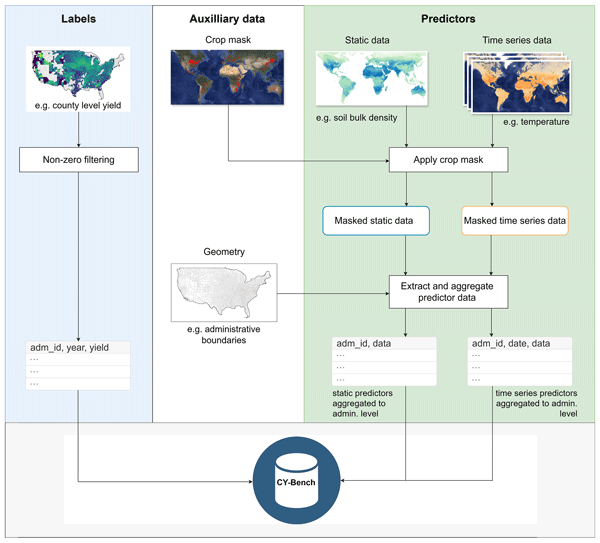
Improving crop yield predictions is crucial for food security. Prior research relied on case studies, making it hard to compare methods and track progress. We introduce CY-Bench (Crop Yield Benchmark), a global dataset for forecasting maize and wheat yields across diverse farming systems in over 25 countries. It includes standardized weather, soil, and satellite data, curated by a diverse set of experts. CY-Bench supports the development of tools to help decision-makers plan for food security.
Detlef P. Van Vuuren, Brian C. O'Neill, Claudia Tebaldi, Benjamin M. Sanderson, Louise P. Chini, Pierre Friedlingstein, Tomoko Hasegawa, Keywan Riahi, Bala Govindasamy, Nico Bauer, Veronika Eyring, Cheikh M. N. Fall, Katja Frieler, Matthew J. Gidden, Laila K. Gohar, Annika Högner, Andrew D. Jones, Jarmo Kikstra, Andrew King, Reto Knutti, Elmar Kriegler, Peter Lawrence, Chris Lennard, Jason Lowe, Camilla Mathison, Shahbaz Mehmood, Zebedee Nicholls, Luciana F. Prado, Qiang Zhang, Steven K. Rose, Alex C. Ruane, Marit Sandstad, Carl-Friedrich Schleussner, Roland Seferian, Jana Sillmann, Chris Smith, Anna A. Sörensson, Swapna Panickal, Kaoru Tachiiri, Naomi Vaughan, Saritha S. Vishwanathan, Tokuta Yokohata, Marco Zecchetto, and Tilo Ziehn
Geosci. Model Dev., 19, 2627–2656, https://doi.org/10.5194/gmd-19-2627-2026, https://doi.org/10.5194/gmd-19-2627-2026, 2026
Short summary
Short summary
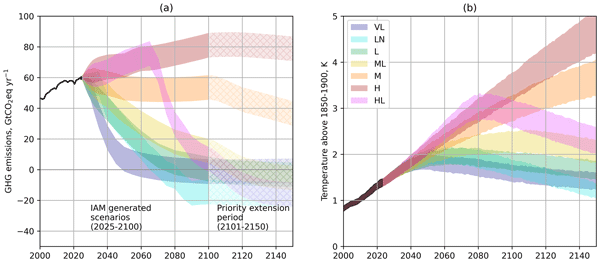
We propose a set of seven plausible 21st century emission scenarios, and their multi-century extensions, that will be used by the international community of climate modeling centers to produce the next generation of climate projections. These projections will support climate, impact and mitigation researchers, provide information to practitioners to address future risks from climate change, and contribute to policymakers’ considerations of the trade-offs among various levels of mitigation.
Jose Rafael Guarin, Jonas Jägermeyr, Elizabeth A. Ainsworth, Fabio A. A. Oliveira, Senthold Asseng, Kenneth Boote, Joshua Elliott, Lisa Emberson, Ian Foster, Gerrit Hoogenboom, David Kelly, Alex C. Ruane, and Katrina Sharps
Geosci. Model Dev., 17, 2547–2567, https://doi.org/10.5194/gmd-17-2547-2024, https://doi.org/10.5194/gmd-17-2547-2024, 2024
Short summary
Short summary
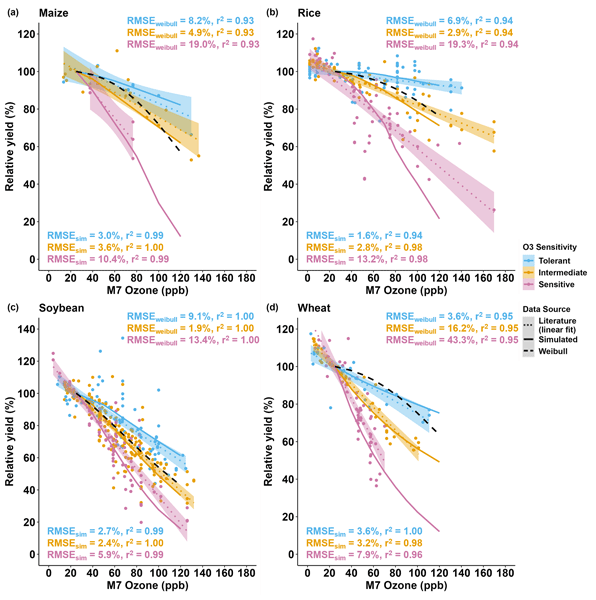
The effects of ozone (O3) stress on crop photosynthesis and leaf senescence were added to maize, rice, soybean, and wheat crop models. The modified models reproduced growth and yields under different O3 levels measured in field experiments and reported in the literature. The combined interactions between O3 and additional stresses were reproduced with the new models. These updated crop models can be used to simulate impacts of O3 stress under future climate change and air pollution scenarios.
Sean M. Davis, William T. Ball, Yue Jia, Gabriel Chiodo, Justin A. Alsing, James Keeble, Hideharu Akiyoshi, Carlo Arosio, Ewa M. Bednarz, Andreas Chrysanthou, Melanie Coldewey-Egbers, Robert Damadeo, Sandip Dhomse, Mohamadou A. Diallo, Simone Dietmuller, Roland Eichinger, Stacey Frith, Birgit Hassler, Michaela I. Hegglin, Daan Hubert, Patrick Jöckel, Béatrice Josse, Natalya Kramarova, Diego Loyola, Eliane Maillard Barras, Marion Marchand, Olaf Morgenstern, David Plummer, Robert W. Portmann, Karen H. Rosenlof, Alexei Rozanov, Viktoria F. Sofieva, Johannes Staehelin, Timofei Sukhodolov, Kleareti Tourpali, Ronald J. Van der A, H. J. Ray Wang, Krzysztof Wargan, Shingo Watanabe, Mark Weber, Jeannette D. Wild, Yousuke Yamashita, and Jerry Ziemke
Atmos. Chem. Phys., 26, 13817–13843, https://doi.org/10.5194/acp-26-13817-2026, https://doi.org/10.5194/acp-26-13817-2026, 2026
Short summary
Short summary
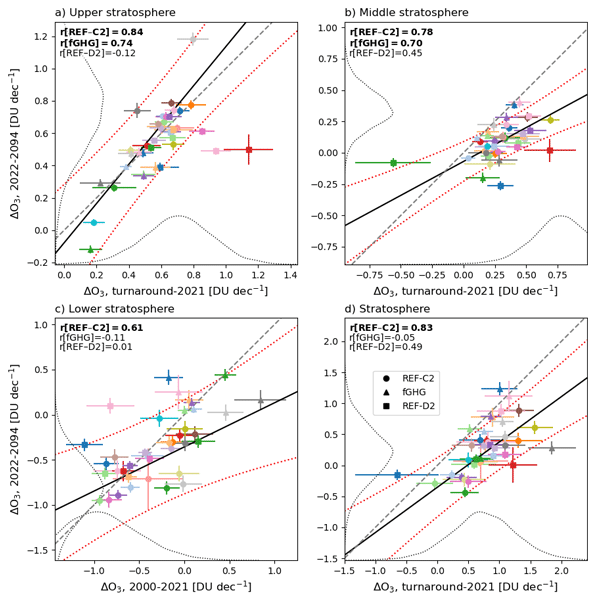
This study investigates tropical ozone changes in models and satellite observations to determine how well they agree and whether observations can constrain model projections. At some levels, satellite records disagree significantly on the magnitude of ozone changes. While early and late 21st century trends are correlated across models, suggesting a potential emergent constraint, the spread in observations means they are unable to provide guidance on the credibility of model projections.
Axel Lauer, Manuel Schlund, Lisa Bock, Birgit Hassler, Gunnar Behrens, Bettina Gier, Lukas Lindenlaub, Stephan Lorenz, Jan-Hendrik Malles, Wolfgang A. Müller, Trang van Pham, Katja Weigel, Guang Zeng, and Veronika Eyring
Geosci. Model Dev., 19, 8731–8754, https://doi.org/10.5194/gmd-19-8731-2026, https://doi.org/10.5194/gmd-19-8731-2026, 2026
Short summary
Short summary
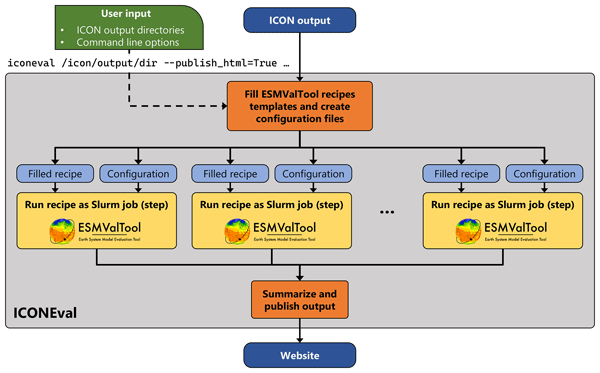
ICONEval is a new framework to facilitate researchers to continuously monitor and check their climate models during the development phase. It builds on the ESMValTool software package to run tests verifying that the results are plausible, follow physical laws, and that the model has sufficient skill in reproducing the observed climate. An important aim is to make it easier to spot model errors early, for example when implementing new model components that use machine learning.
Iraklis Kyriakidis, Vasileios Pavlidis, Maria Gkolemi, Zina Mitraka, Nektarios Chrysoulakis, Josipa Milovac, Jesus Fernandez, and Eleni Katragkou
Geosci. Model Dev., 19, 8709–8729, https://doi.org/10.5194/gmd-19-8709-2026, https://doi.org/10.5194/gmd-19-8709-2026, 2026
Short summary
Short summary
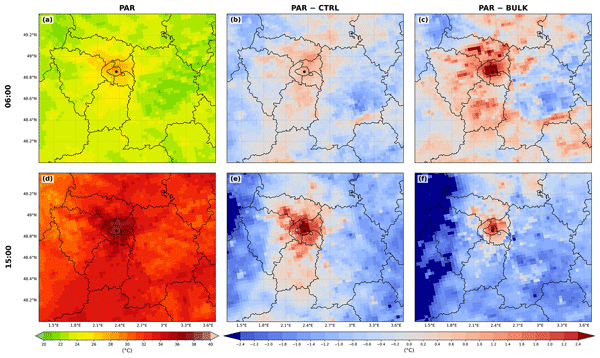
This study introduces a novel approach to incorporating city-specific EO (Earth Observation) data into an urban canopy model named BEP-BEM (Building Effect Parameterization-Building Energy Model) integrated in WRF (Weather Research and Forecasting). We highlight the added value given by BEP-BEM in the representation of the urban processes compared to a slab urban bulk approach. The implementation of the EO data improved specific aspects of the model performance.
Yi-Hui Wang, Yi-Chi Wang, Wan-Ling Tseng, and Yueh-Shyuan Wu
Wind Energ. Sci. Discuss., https://doi.org/10.5194/wes-2026-121, https://doi.org/10.5194/wes-2026-121, 2026
Preprint under review for WES
Short summary
Short summary
Taiwan is rapidly expanding offshore wind energy, but strong winds often halt construction and repairs. Using 60 years of data, we studied how calm periods suitable for offshore work vary over time and found they are shaped mainly by regional wind patterns, with influence from climate linkages in summer, the primary operational season. Recent summers have been unusually calm, which may not continue. These findings can help planners to anticipate delays, lower costs, and meet energy targets.
Xiaoying Shi, Daniel M. Ricciuto, Yaoping Wang, Joe R. Melton, Fortunat Joos, Yiqi Luo, Xiaofeng Xu, Dafeng Hui, Qianlai Zhuang, Chunjing Qiu, Hongxing He, Siya Shao, Xingjie Lu, Yongjiu Dai, Akihiko Ito, Qing Sun, Nitin Chaudhary, Ayesha Hussain, Mousong Wu, Jian Zhou, Jingwei Zhang, Ye Yuan, Rachael H. Turton, Eleanor J. Burke, Jiafu Mao, Yuefeng Hao, Natalie A. Griffiths, Verity Salmon, Paul J. Hanson, Melanie A. Mayes, and Peter E. Thornton
EGUsphere, https://doi.org/10.5194/egusphere-2026-5193, https://doi.org/10.5194/egusphere-2026-5193, 2026
This preprint is open for discussion and under review for Biogeosciences (BG).
Short summary
Short summary
Northern peatlands store vast amounts of carbon, but their response to climate change remains uncertain. We compared 15 ecosystem models with observations from a long-term warming and elevated carbon dioxide experiment in Minnesota. Models differed widely in their carbon responses, reflecting differences in ecosystem processes and model parameters. The results identify priorities for improving peatland models and projections of future carbon–climate feedbacks.
Santiago José Elías Velazco, Natalie Briscoe, Lauren Buckley, Juliano Sarmento Cabral, Francisco Cervantes Peralta, Rob Cooke, Admir Cesar de Oliveira Junior, Simon Ferrier, Samuel J. L. Gascoigne, Lucas da Cunha Godoy, Gurutzeta Guillera-Arroita, Nick J. B. Isaac, Dirk Nikolaus Karger, Raya Keuth, Carolyn J. Lundquist, Cory Merow, Andy Purvis, Katrin Schifferle, Alice E. Semple, Josep M. Serra-Diaz, Justin M. J. Travis, Brendan A. Wintle, Damaris Zurell, Mark C. Urban, and Greta Bocedi
EGUsphere, https://doi.org/10.5194/egusphere-2026-5033, https://doi.org/10.5194/egusphere-2026-5033, 2026
This preprint is open for discussion and under review for Geoscientific Model Development (GMD).
Short summary
Short summary
We propose a model intercomparison protocol to compare ecological models—from correlative to process-based models—at regional scales. Our protocol tests models against historical presence and abundance data while projecting future scenarios under land-use and climate shifts. This protocol advances regional biodiversity model intercomparisons and could reveal which models, processes, and drivers determine historical and future biodiversity dynamics.
Chloe Mackallah, Martin Juckes, James Anstey, Beth Dingley, Charlotte Pascoe, Gaëlle Rigoudy, Marie-Pierre Moine, Tomas Lovato, Alison Pamment, Martin Schupfner, Michio Kawamiya, Tommi Bergman, Charles Koven, Eleanor O'Rourke, Briony Turner, Daniel Ellis, and Matthew Mizielinski
Geosci. Model Dev., 19, 8053–8079, https://doi.org/10.5194/gmd-19-8053-2026, https://doi.org/10.5194/gmd-19-8053-2026, 2026
Short summary
Short summary
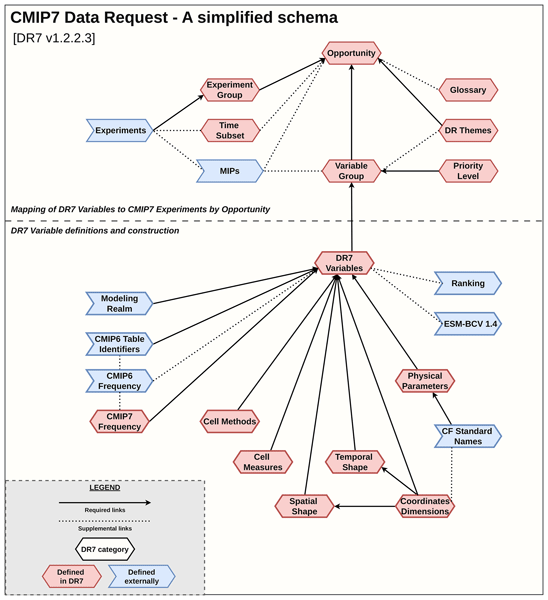
This paper describes the creation of a new set of output data requirements for upcoming global climate model experiments performed for CMIP7, an international climate modelling activity. Experts from the community helped to co-create a database that describes which data should be produced, and the scientific justifications behind these choices. It supports growing climate research and policy needs by linking experiments and variables to scientific objectives and real‑world applications.
Yushi Morioka, Doroteaciro Iovino, Andrea Cipollone, Andrea Storto, Takeshi Doi, Masami Nonaka, and Swadhin K. Behera
EGUsphere, https://doi.org/10.5194/egusphere-2026-5070, https://doi.org/10.5194/egusphere-2026-5070, 2026
This preprint is open for discussion and under review for The Cryosphere (TC).
Short summary
Short summary
Arctic sea ice has been shrinking for the last four decades. As global warming continues, predicting summer sea ice is becoming more important. Here we create a seasonal forecast system using the SINTEX-F3 model. Results show that summer sea ice in the Barents-Kara Sea is best predicted when accurate sea ice and snow conditions are provided from spring. It is found that initial sea ice thickness acts as a memory for the climate system, enabling accurate summer sea ice prediction from spring.
Francesco Cocetta, Doroteaciro Iovino, Andrea Cipollone, and Daniela Flocco
EGUsphere, https://doi.org/10.5194/egusphere-2026-4349, https://doi.org/10.5194/egusphere-2026-4349, 2026
This preprint is open for discussion and under review for The Cryosphere (TC).
Short summary
Short summary
Arctic sea ice is rapidly changing toward a new climate state characterized by thinner and more seasonal ice. To understand these changes, we use reconstructions of ocean and sea ice states to investigate the transition zone between consolidated pack ice and open ocean. Our results show clear differences from central pack ice, highlighting the need for better representation in climate models and opening the path toward identifying specific indicators of its evolution.
Forrest M. Hoffman, Birgit Hassler, Ranjini Swaminathan, Jared Lewis, Bouwe Andela, Nathan Collier, Dóra Hegedűs, Jiwoo Lee, Charlotte Pascoe, Mika Pflüger, Martina Stockhause, Paul Ullrich, Min Xu, Lisa Bock, Felicity Chun, Bettina K. Gier, Douglas I. Kelley, Axel Lauer, Julien Lenhardt, Manuel Schlund, Mohanan G. Sreeush, Katja Weigel, Ed Blockley, Rebecca Beadling, Romain Beucher, Demiso D. Dugassa, Valerio Lembo, Jianhua Lu, Swen Brands, Jerry Tjiputra, Elizaveta Malinina, Brian Medeiros, Enrico Scoccimarro, Jeremy Walton, Phil Kershaw, André Lanfer Marquez, Malcolm J. Roberts, Eleanor O'Rourke, Beth Dingley, Briony Turner, Helene Hewitt, and John P. Dunne
Geosci. Model Dev., 19, 7415–7455, https://doi.org/10.5194/gmd-19-7415-2026, https://doi.org/10.5194/gmd-19-7415-2026, 2026
Short summary
Short summary
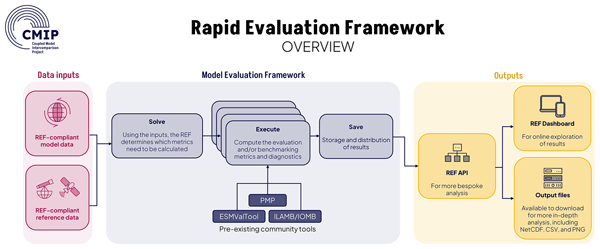
The Rapid Evaluation Framework (REF) is a community-driven platform for benchmarking and performance assessment of Earth system models. Built upon four disparate community evaluation tools, the REF is designed to provide model-data comparisons for the Assessment Fast Track for the Seventh Phase of the Coupled Model Intercomparison Project. The REF will be run at the Earth System Grid Federation to enable model devleopers and scientists to quickly identify model biases and performance issues.
Patrick C. Taylor, Armin Sorooshian, Rei Ueyama, Sebastian Schmidt, Ihab Abboud, Quincy Allison, Kevin Barry, Sebastian Becker, Holly A. Bender, Joseph R. Bennett, James B. Blair, Niklas Bohn, Linette Boisvert, Matthew D. Brown, Roelof Bruintjes, Anthony Bucholtz, Megan Buzanowicz, Brian Cairns, Filippo Calì Quaglia, Eduard Chemyakin, Bo Chen, Gao Chen, Hong Chen, Yu-Wen Chen, Zezhen Cheng, Swarup China, Dan Chirica, Yonghoon Choi, Peter Colarco, Brian Collister, Ewan Crosbie, Maurice J. Cross, Janet Daniels, Paul DeMott, Joshua P. DiGangi, Alcide Giorgio di Sarra, Glenn S. Diskin, Erica K. Dolinar, Eva-Lou Edwards, Samuel Ephraim, Nikolaos Evangeliou, Romanos Foskinis, Francesca Gallo, Lan Gao, José Luis Gómez-Amo, Daisy Gonzalez, Christine Groot Zwaaftink, Pawan Gupta, Ivan Heckman, Michael Hendrickson, Miguel Ricardo A. Hilario, Ken Hirata, Michelle Hofton, Andrew L. Holen, Ulas Im, Alia L. Khan, Ralph Kahn, Alexei V. Korolev, Sonia Kreidenweis, Thomas Krumpen, Nathan Kurtz, Leslie Lait, Bradley Lamkin, Jack Landy, Nurun Nahar Lata, Paul Lawson, Samuel LeBlanc, Sean Leavor, Jing Li, Thorsten Markus, Hal Maring, Andreas H. Massling, Camille Mavis, Flynn McGinnity, Kerry Meyer, Gabriel Mojica, Richard H. Moore, Parker Morris, Giovanni Muscari, Vikas Nataraja, Amin R. Nehrir, Athanasios Nenes, Edward P. Nowottnick, Matteo Ottaviani, Chelsea Parker, Ryan Patnaude, Michael Perez, Russell J. Perkins, Colten Peterson, Alek Petty, Stevie Phothisane, Chris Polashenski, Kerri A. Pratt, Kayla M. Preisler, John Prytherch, David Rabine, Jens Redemann, Ju-Mee Ryoo, Joseph S. Schlosser, Vanessa Selimovic, Michael A. Shook, Morgan Silverman, Henrik Skov, Alexander Smirnov, Cassidy Soloff, Amy Solomon, Snorre Stamnes, Azusa Takeishi, David R. Thompson, K. Lee Thornhill, Rachel Tilling, Michael Tjernström, Monica Tosco, Pedro C. Valdelomar, David Van Gilst, Jian Wang, Zhien Wang, Andrzej Wasilewski, Manfred Wendisch, Brent Wilder, Edward L. Winstead, Albert Wu, Peng Xian, Lauren M. Zamora, Jiaoshi Zhang, Lei Zhang, Lu Zhang, Luke Ziemba, and Paquita Zuidema
Earth Syst. Sci. Data Discuss., https://doi.org/10.5194/essd-2026-241, https://doi.org/10.5194/essd-2026-241, 2026
Preprint under review for ESSD
Short summary
Short summary
This article summarizes the data sets collected during the Arctic Radiation Cloud aerosol Sea ice Interaction eXperiment (ARCSIX), NASA's most comprehensive Arctic field campaign to date. The overarching goal was to quantify the contributions of surface, clouds, aerosol particles, and precipitation to summer sea ice melt. This paper describes the ARCSIX implementation including the flight strategy, instruments, complementary data sets, access, and usage details.
Hailing Jia, David Neubauer, Yusuf Bhatti, Duncan Watson-Parris, Philip Stier, Johannes Quaas, Daniel Partridge, Ardit Arifi, Anne Kubin, Athanasios Nenes, Muhammed Irfan, Ulas Im, Carl Svenhag, Nick Schutgens, Bastiaan van Diedenhoven, Sylvaine Ferrachat, Ulrike Lohmann, Ina Tegen, Alice Henkes, Guangliang Fu, and Otto Hasekamp
EGUsphere, https://doi.org/10.5194/egusphere-2026-3275, https://doi.org/10.5194/egusphere-2026-3275, 2026
Short summary
Short summary
Tiny aerosol particles affect Earth’s climate by interacting with clouds and sunlight, but their impact remains uncertain. Combining climate model simulations and emulators, we explored millions of model variants across different aerosol and cloud settings to identify the causes of the uncertainty. We found that aerosol emissions and cloud convection are key contributors. Our work suggests that better integration of existing observations could help reduce these uncertainties in the future.
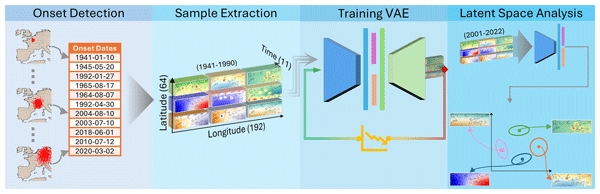
Aytaç Paçal, Birgit Hassler, Katja Weigel, Miguel-Ángel Fernández-Torres, Gustau Camps-Valls, and Veronika Eyring
Earth Syst. Dynam., 17, 955–986, https://doi.org/10.5194/esd-17-955-2026, https://doi.org/10.5194/esd-17-955-2026, 2026
Short summary
Short summary
Heatwaves are among the deadliest natural hazards, yet their evolving atmospheric drivers remain unclear. We apply an unsupervised machine learning model to reanalysis data to identify multivariate heatwave patterns over Europe. The model captures seasonally distinct regimes and reveals significant shifts between historical and recent events across all seasons, highlighting changes in heatwave dynamics over time.
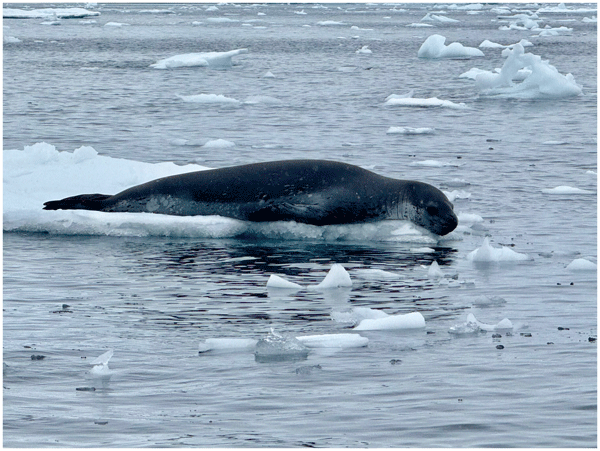
Baylor Fox-Kemper, Patricia DeRepentigny, Anne Marie Treguier, Christian Stepanek, Eleanor O'Rourke, Chloe Mackallah, Alberto Meucci, Yevgeny Aksenov, Paul J. Durack, Nicole Feldl, Oluwayemi Garuba, Vanessa Hernaman, Céline Heuzé, Doroteaciro Iovino, Gaurav Madan, André L. Marquez, François Massonnet, Jenny Mecking, Dhrubajyoti Samanta, Patrick C. Taylor, Wan-Ling Tseng, and Martin Vancoppenolle
Geosci. Model Dev., 19, 6043–6078, https://doi.org/10.5194/gmd-19-6043-2026, https://doi.org/10.5194/gmd-19-6043-2026, 2026
Short summary
Short summary
The ocean and sea ice are central to Earth's climate system, influencing global heat and carbon cycles, weather patterns, and sea level rise. Here the earth system model variables needed for studies of the ocean and sea ice are prioritized and requested. These requested variables were developed through an international, community-based process.
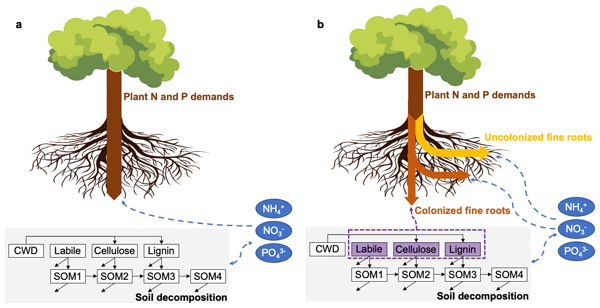
Yaoping Wang, Daniel M. Ricciuto, Jiafu Mao, Sören E. Weber, Verity G. Salmon, Xiaoying Shi, Xiaojuan Yang, Natalie A. Griffiths, Paul J. Hanson, Anthony P. Walker, Jonathan Stelling, Katherine Duchesneau, Camille E. Defrenne, Jeffrey M. Warren, Stephen D. Sebestyen, Kyle J. Pearson, Keith Oleheiser, Joshua M. Birkebak, Mark Guilliams, Misha B. Krassovski, Melanie A. Mayes, and Peter E. Thornton
Geosci. Model Dev., 19, 5827–5855, https://doi.org/10.5194/gmd-19-5827-2026, https://doi.org/10.5194/gmd-19-5827-2026, 2026
Short summary
Short summary
Boreal peatlands store much of the global soil carbon and the service is closely related to nutrient cycling. This study improved a major land surface model to better represent how plants gain nitrogen and phosphorus through fine roots and mycorrhizal association. The new model more accurately captured observed carbon fluxes than the default model at an experimental site in Minnesota, and suggests shifts in nutrient uptake strategy mitigates transition from carbon sink to source under warming.
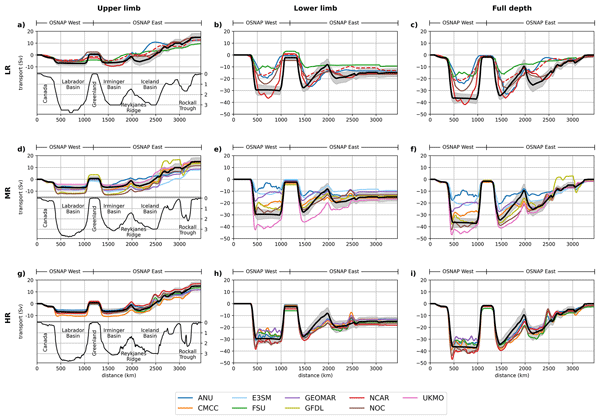
Gokhan Danabasoglu, Frederic S. Castruccio, Burcu Boza, Alice M. Barthel, Arne Biastoch, Adam Blaker, Alexandra Bozec, Diego Bruciaferri, Frank O. Bryan, Eric P. Chassignet, Yao Fu, Ian Grooms, Catherine Guiavarc'h, Hakase Hayashida, Andrew McC. Hogg, Ryan M. Holmes, Doroteaciro Iovino, Andrew E. Kiss, M. Susan Lozier, Gustavo Marques, Alex Megann, Franziska U. Schwarzkopf, Dave Storkey, Luke van Roekel, Jon Wolfe, Xiaobiao Xu, and Rong Zhang
Geosci. Model Dev., 19, 5071–5117, https://doi.org/10.5194/gmd-19-5071-2026, https://doi.org/10.5194/gmd-19-5071-2026, 2026
Short summary
Short summary
A comparison of simulated and observed overturning transports across the Overturning in the Subpolar North Atlantic Program sections is presented. Eighteen ocean simulations participate in the study with resolutions ranging from coarse to eddy-resolving. The simulated transports are in general agreement with observations, with better agreement at high resolution. Analyzing overturning circulations in both depth and density space together provides a more complete picture.
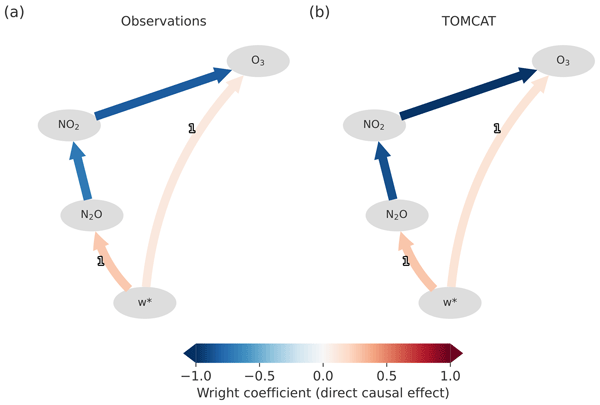
Evgenia Galytska, Birgit Hassler, Carlo Arosio, Martyn P. Chipperfield, Sandip S. Dhomse, Kimberlee Dubé, Wuhu Feng, Fernando Iglesias-Suarez, and Jakob Runge
Atmos. Chem. Phys., 26, 8185–8209, https://doi.org/10.5194/acp-26-8185-2026, https://doi.org/10.5194/acp-26-8185-2026, 2026
Short summary
Short summary
We explore how chemical and dynamical processes shape ozone in the tropical middle stratosphere using satellite data and a chemistry-transport model. We apply a framework to identify cause–effect relationships and estimate their strength. For 2004-2021 monthly data, we detect an indirect pathway controlling ozone variability, with effects increasing after two–three months. We further assess how different wind regimes influence this pathway.
Michiel Kallenberg, Dilli Paudel, Stella Ofori-Ampofo, Hilmy Baja, Ron van Bree, Aike Potze, Pratishtha Poudel, Abdelrahman Saleh, Weston Anderson, Malte von Bloh, Andres Castellano, Oumnia Ennaji, Raed Hamed, Rahel Laudien, Donghoon Lee, Inti Luna, Dainius Masiliūnas, Michele Meroni, Janet Mumo Mutuku, Siyabusa Mkuhlani, Jonathan Richetti, Alex C. Ruane, Ritvik Sahajpal, Guanyuan Shuai, Vasileios Sitokonstantinou, Rogério de S. Nóia-Júnior, Amit Kumar Srivastava, Robert Strong, Lily-belle Sweet, Petar Vojnović, Allard de Wit, Maximilian Zachow, and Ioannis N. Athanasiadis
Earth Syst. Sci. Data, 18, 3997–4018, https://doi.org/10.5194/essd-18-3997-2026, https://doi.org/10.5194/essd-18-3997-2026, 2026
Short summary
Short summary
Improving crop yield predictions is crucial for food security. Prior research relied on case studies, making it hard to compare methods and track progress. We introduce CY-Bench (Crop Yield Benchmark), a global dataset for forecasting maize and wheat yields across diverse farming systems in over 25 countries. It includes standardized weather, soil, and satellite data, curated by a diverse set of experts. CY-Bench supports the development of tools to help decision-makers plan for food security.
Moetasim Ashfaq, Erika Coppola, Chris Lennard, Claas Teichmann, Deeksha Rastogi, Elias Massoud, Erasmo Buonomo, Eun-Soon Im, George Zittis, Jason P. Evans, Jesus Fernandez, Katherine J. Evans, Maria Leidinice da Silva, Marianna Adinolfi, Melissa Bukovsky, Rosmeri Porfirio da Rocha, Shabeh ul Hasson, Silvina A. Solman, Stefan Sobolowski, Sushant Das, Swen Brands, Tereza Cavazos, Thanh Ngo-Duc, and Xuejie Gao
EGUsphere, https://doi.org/10.5194/egusphere-2026-2649, https://doi.org/10.5194/egusphere-2026-2649, 2026
Short summary
Short summary
Producing reliable regional climate projections requires carefully selecting which global climate models drive them. We developed a transparent and reproducible framework to identify a balanced, representative subset of models for the Coordinated Regional Climate Downscaling Experiment, a major international effort to generate high-resolution climate projections worldwide. While designed for this initiative, the framework is broadly applicable to other models sub-selection efforts.
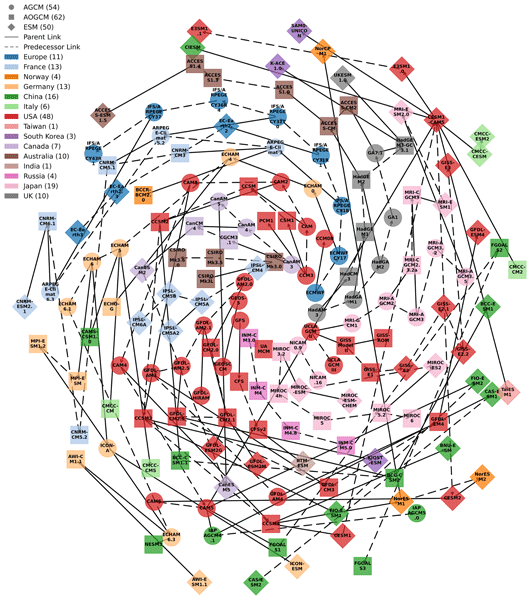
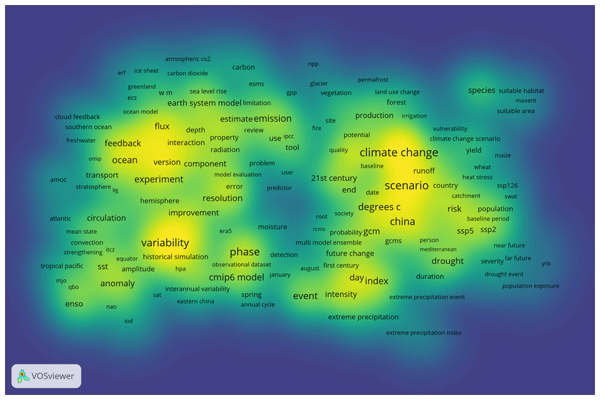
Anja Katzenberger, Jhayron S. Pérez-Carrasquilla, Keighan Gemmell, Evgenia Galytska, Christine Leclerc, Punya P, Indrani Roy, Arianna Varuolo-Clarke, Milica Tošić, and Nina Črnivec
Earth Syst. Dynam., 17, 495–532, https://doi.org/10.5194/esd-17-495-2026, https://doi.org/10.5194/esd-17-495-2026, 2026
Short summary
Short summary
Multi-model ensembles are a key approach in climate model analysis, but their use involves many complex considerations. In this work, we review relevant literature and synthesize existing studies to contribute to the development of guidelines for designing and conducting ensemble analyses. This is complemented by a collection of useful resources and a discussion of emerging trends, supported by statistics tracing the number of publications.
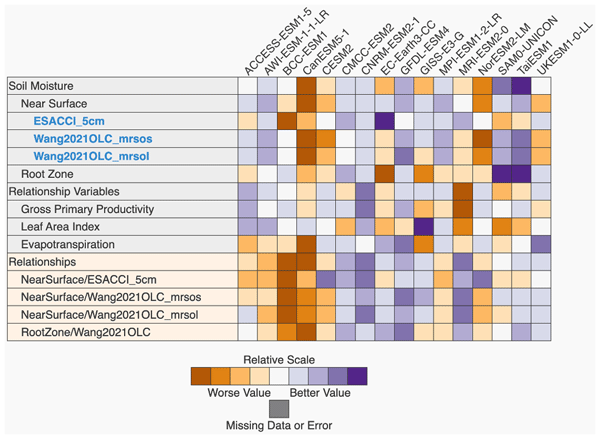
Elias C. Massoud, Nathan Collier, Yaoping Wang, Jiafu Mao, Adrian Harpold, Steven A. Kannenberg, Gerbrand Koren, Mukesh Kumar, Pushpendra Raghav, Pallav Ray, Mingjie Shi, Jing Tao, Sreedevi P. Vasu, Huiqi Wang, Qing Zhu, and Forrest M. Hoffman
Geosci. Model Dev., 19, 3427–3453, https://doi.org/10.5194/gmd-19-3427-2026, https://doi.org/10.5194/gmd-19-3427-2026, 2026
Short summary
Short summary
Soil moisture helps control how plants grow and how land exchanges water and energy with the atmosphere. We evaluated how well 16 Earth System Models represent soil moisture and its links to plant activity using a benchmarking system and observational data. Many models simulate surface soil moisture well but show larger errors deeper in the soil and in colder regions. Models that represent plant–soil water interactions more directly better capture how ecosystems respond to water availability.
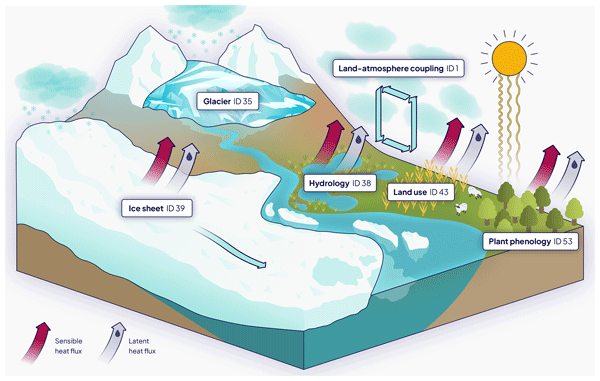
Yue Li, Gang Tang, Eleanor O'Rourke, Samar Minallah, Martim Mas e Braga, Sophie Nowicki, Robin S. Smith, David M. Lawrence, George C. Hurtt, Daniele Peano, Gesa Meyer, Birgit Hassler, Jiafu Mao, Yongkang Xue, and Martin Juckes
Geosci. Model Dev., 19, 3129–3155, https://doi.org/10.5194/gmd-19-3129-2026, https://doi.org/10.5194/gmd-19-3129-2026, 2026
Short summary
Short summary
Land and Land Ice Theme Opportunities describe a list that contains 25 variable groups with 716 variables, which are potentially available to the broad scientific audience for performing analysis in land–atmosphere coupling, hydrological processes and freshwater systems, glacier and ice sheet mass balance and their influence on the sea levels, land use, and plant phenology.
Paula L. M. Gonzalez, Duncan Ackerley, Eloise Matthews, Dan Suri, Emily Wallace, Matthew Wheeler, Jason A. Lowe, and Daisy Harley-Nyang
Earth Syst. Sci. Data Discuss., https://doi.org/10.5194/essd-2026-181, https://doi.org/10.5194/essd-2026-181, 2026
Revised manuscript accepted for ESSD
Short summary
Short summary
The Named Storms Catalogue is the first dataset to systematically evaluate ten years of UK storm naming using carefully designed metrics developed with Met Office meteorologists. It reveals how storms evolved and the hazards they created, enabling unprecedented comparison, ranking, and insight. The work introduces the dataset, showcases three case studies, and explores current and future uses with a view to helping experts and responders better understand and manage storm impacts.
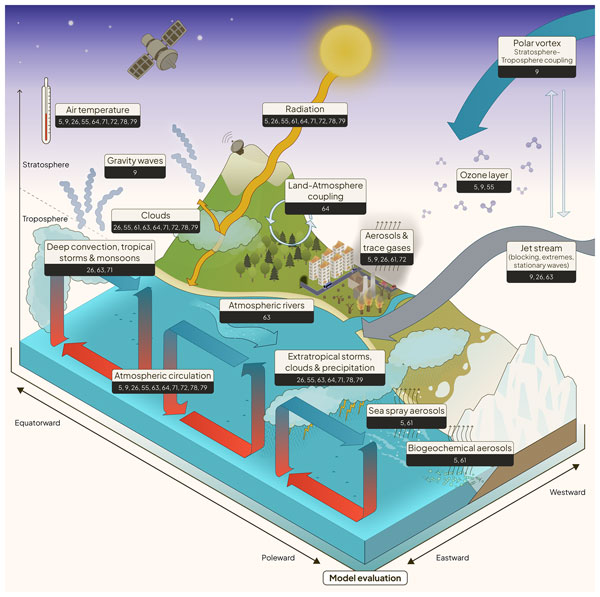
Beth Dingley, James A. Anstey, Marta Abalos, Carsten Abraham, Tommi Bergman, Lisa Bock, Sonya Fiddes, Birgit Hassler, Ryan J. Kramer, Fei Luo, Fiona M. O'Connor, Petr Šácha, Isla R. Simpson, Laura J. Wilcox, and Mark D. Zelinka
Geosci. Model Dev., 19, 2945–2984, https://doi.org/10.5194/gmd-19-2945-2026, https://doi.org/10.5194/gmd-19-2945-2026, 2026
Short summary
Short summary
This manuscript defines as a list of variables and scientific opportunities which are requested from the Coupled Model Intercomparison Project Phase 7 (CMIP7) Assessment Fast Track to address open atmospheric science questions. The list reflects the output of a large public community engagement effort, coordinated across autumn 2025 through to summer 2025.
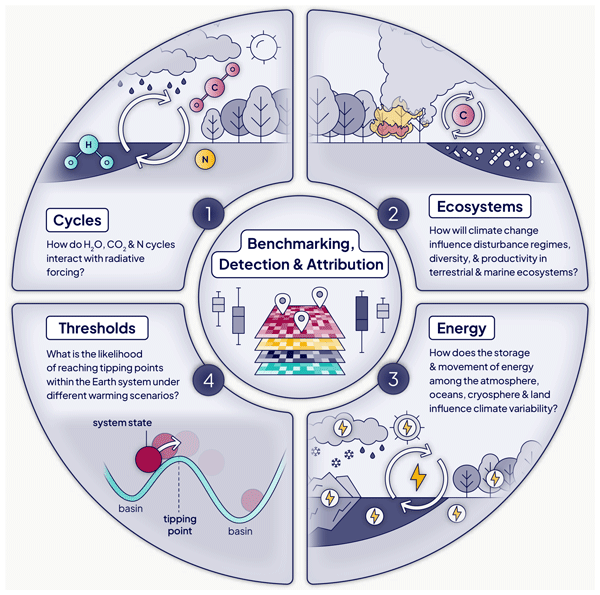
Mara Y. McPartland, Tomas Lovato, Charles Koven, Jamie D. Wilson, Briony Turner, Colleen M. Petrik, José Licón-Saláiz, Fang Li, Fanny Lhardy, Jaclyn Clement Kinney, Michio Kawamiya, Birgit Hassler, Nathan P. Gillett, Cheikh Modou Noreyni Fall, Christopher Danek, Chris M. Brierley, Ana Bastos, and Oliver Andrews
Geosci. Model Dev., 19, 2849–2880, https://doi.org/10.5194/gmd-19-2849-2026, https://doi.org/10.5194/gmd-19-2849-2026, 2026
Short summary
Short summary
The Coupled Model Intercomparison Project (CMIP) is an international consortium of climate modeling groups that produce coordinated experiments in order to evaluate human influence on the climate and test knowledge of Earth systems. This paper describes the data requested for Earth systems research in CMIP7. We detail the request for model output of the carbon cycle, the flows of energy among the atmosphere, land and the oceans, and interactions between these and the global climate.
Simona Masina, Andrea Cipollone, Doroteaciro Iovino, Stefania Ciliberti, Rita Lecci, Sergio Cretí, Vladyslav Lyubartsev, Giovanni Coppini, and Emanuela Clementi
EGUsphere, https://doi.org/10.5194/egusphere-2026-887, https://doi.org/10.5194/egusphere-2026-887, 2026
Short summary
Short summary
The paper presents GOFS16, an eddy-resolving global operational ocean and sea ice forecasting system which provides 6-day forecasts of three-dimensional temperature, salinity, currents, sea level, and sea ice properties. The system assimilates satellite and in situ observations using a 3D variational data assimilation scheme. Validation is conducted routinely using global and regional metrics. Results indicate that GOFS16 performs within the expected range of skill for current global systems.
Detlef P. Van Vuuren, Brian C. O'Neill, Claudia Tebaldi, Benjamin M. Sanderson, Louise P. Chini, Pierre Friedlingstein, Tomoko Hasegawa, Keywan Riahi, Bala Govindasamy, Nico Bauer, Veronika Eyring, Cheikh M. N. Fall, Katja Frieler, Matthew J. Gidden, Laila K. Gohar, Annika Högner, Andrew D. Jones, Jarmo Kikstra, Andrew King, Reto Knutti, Elmar Kriegler, Peter Lawrence, Chris Lennard, Jason Lowe, Camilla Mathison, Shahbaz Mehmood, Zebedee Nicholls, Luciana F. Prado, Qiang Zhang, Steven K. Rose, Alex C. Ruane, Marit Sandstad, Carl-Friedrich Schleussner, Roland Seferian, Jana Sillmann, Chris Smith, Anna A. Sörensson, Swapna Panickal, Kaoru Tachiiri, Naomi Vaughan, Saritha S. Vishwanathan, Tokuta Yokohata, Marco Zecchetto, and Tilo Ziehn
Geosci. Model Dev., 19, 2627–2656, https://doi.org/10.5194/gmd-19-2627-2026, https://doi.org/10.5194/gmd-19-2627-2026, 2026
Short summary
Short summary
We propose a set of seven plausible 21st century emission scenarios, and their multi-century extensions, that will be used by the international community of climate modeling centers to produce the next generation of climate projections. These projections will support climate, impact and mitigation researchers, provide information to practitioners to address future risks from climate change, and contribute to policymakers’ considerations of the trade-offs among various levels of mitigation.
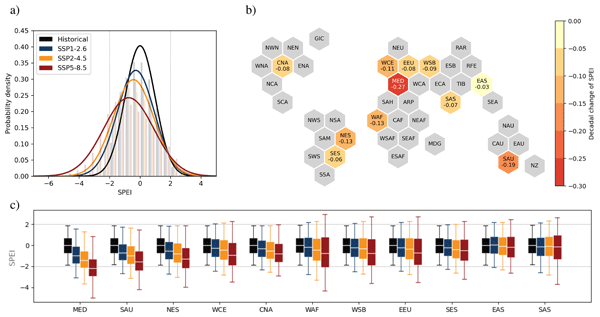
Lukas Lindenlaub, Katja Weigel, Birgit Hassler, Colin Jones, and Veronika Eyring
Earth Syst. Dynam., 17, 81–105, https://doi.org/10.5194/esd-17-81-2026, https://doi.org/10.5194/esd-17-81-2026, 2026
Short summary
Short summary
This study explores changes in drought characteristic based on projections by 18 different Earth system models. Their performance is evaluated by comparing historical simulations to observation based reanalysis. The analysis of a standardized drought index under different future scenarios revealed that the harvest area that is projected to experience extreme drought conditions towards the end of this century ranges from 10 % to 40 % depending on the emission scenario.
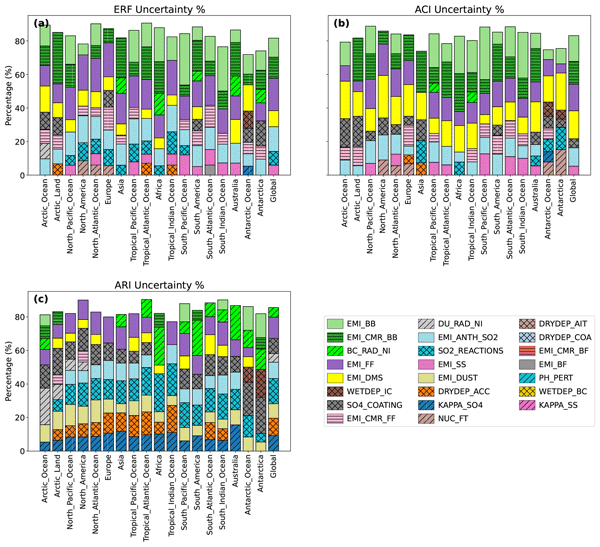
Yusuf A. Bhatti, Duncan Watson-Parris, Leighton A. Regayre, Hailing Jia, David Neubauer, Ulas Im, Carl Svenhag, Nick Schutgens, Athanasios Tsikerdekis, Athanasios Nenes, Muhammed Irfan, Bastiaan van Diedenhoven, Ardit Arifi, Guangliang Fu, and Otto P. Hasekamp
Atmos. Chem. Phys., 26, 269–293, https://doi.org/10.5194/acp-26-269-2026, https://doi.org/10.5194/acp-26-269-2026, 2026
Short summary
Short summary
Aerosols (small airborne particles) impact Earth's climate, but their extent is unknown. By running climate model simulations and using machine learning to emulate millions of additional variants with different settings, we found that natural emissions like sea spray and sulfur are key sources of uncertainty in climate predictions. Our work shows that understanding these natural processes better can help improve climate models and make future climate projections more accurate.
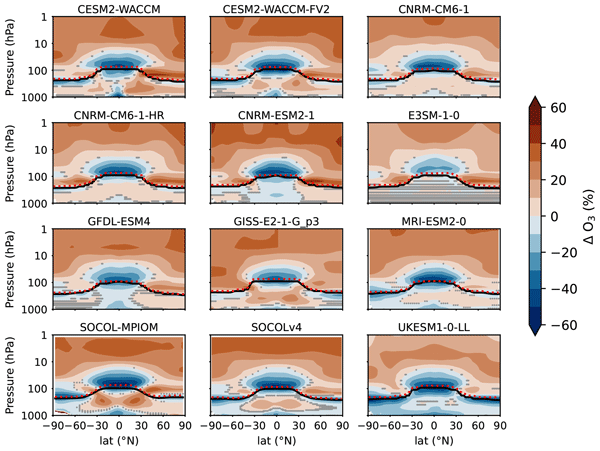
Jingyu Wang, Gabriel Chiodo, Blanca Ayarzagüena, William T. Ball, Mohamadou Diallo, Birgit Hassler, James Keeble, Peer Nowack, Clara Orbe, Sandro Vattioni, and Timofei Sukhodolov
Atmos. Chem. Phys., 25, 17819–17844, https://doi.org/10.5194/acp-25-17819-2025, https://doi.org/10.5194/acp-25-17819-2025, 2025
Short summary
Short summary
We analyzed the ozone response under elevated CO2 using the data from CMIP6 DECK experiments. We then examined the relations between ozone response and changes in temperature and circulation to identify the drivers of ozone change. The climate feedback of ozone is investigated through offline calculations and by comparing models with and without interactive chemistry. We find that ozone–climate interactions are important for Earth system models and thus should be considered in future model development.
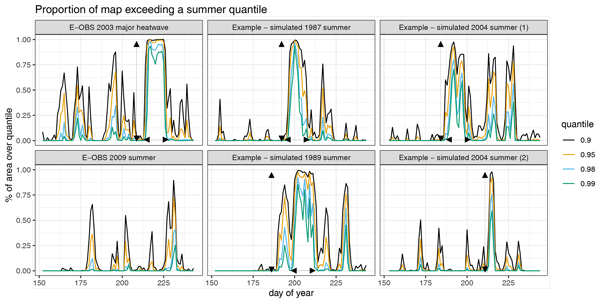
Caroline Cognot, Liliane Bel, David Métivier, and Sylvie Parey
Adv. Stat. Clim. Meteorol. Oceanogr., 11, 203–228, https://doi.org/10.5194/ascmo-11-203-2025, https://doi.org/10.5194/ascmo-11-203-2025, 2025
Short summary
Short summary
Weather generators efficiently create realistic weather data based on historical records. This study introduces a daily temperature generator for large regions, separating deterministic factors (trends, seasonality) from random variations modeled using space-time interactions. Validated on French weather station data, it replicates observed patterns, including heatwaves. It offers a practical solution for generating realistic weather data, for applications such as climate impact assessments.
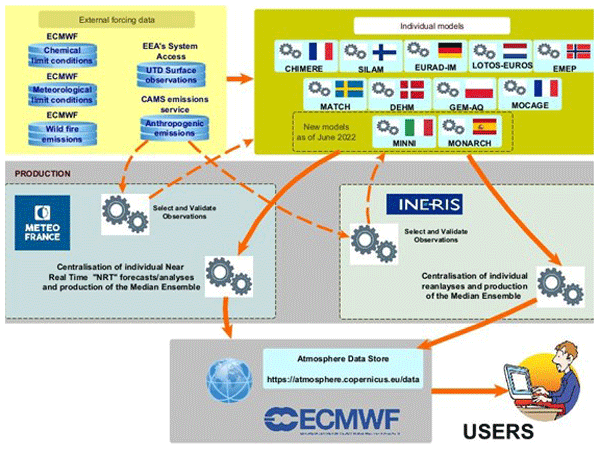
Augustin Colette, Gaëlle Collin, François Besson, Etienne Blot, Vincent Guidard, Frédérik Meleux, Adrien Royer, Valentin Petiot, Claire Miller, Oihana Fermond, Alizé Jeant, Mario Adani, Joaquim Arteta, Anna Benedictow, Robert Bergström, Dene Bowdalo, Jorgen Brandt, Gino Briganti, Ana C. Carvalho, Jesper Heile Christensen, Florian Couvidat, Ilaria D'Elia, Massimo D'Isidoro, Hugo Denier van der Gon, Gaël Descombes, Enza Di Tomaso, John Douros, Jeronimo Escribano, Henk Eskes, Hilde Fagerli, Yalda Fatahi, Johannes Flemming, Elmar Friese, Lise Frohn, Michael Gauss, Camilla Geels, Guido Guarnieri, Marc Guevara, Antoine Guion, Jonathan Guth, Risto Hänninen, Kaj Hansen, Ulas Im, Ruud Janssen, Marine Jeoffrion, Mathieu Joly, Luke Jones, Oriol Jorba, Evgeni Kadantsev, Michael Kahnert, Jacek W. Kaminski, Rostislav Kouznetsov, Richard Kranenburg, Jeroen Kuenen, Anne Caroline Lange, Joachim Langner, Victor Lannuque, Francesca Macchia, Astrid Manders, Mihaela Mircea, Agnes Nyiri, Miriam Olid, Carlos Pérez García-Pando, Yuliia Palamarchuk, Antonio Piersanti, Blandine Raux, Miha Razinger, Lennard Robertson, Arjo Segers, Martijn Schaap, Pilvi Siljamo, David Simpson, Mikhail Sofiev, Anders Stangel, Joanna Struzewska, Carles Tena, Renske Timmermans, Thanos Tsikerdekis, Svetlana Tsyro, Svyatoslav Tyuryakov, Anthony Ung, Andreas Uppstu, Alvaro Valdebenito, Peter van Velthoven, Lina Vitali, Zhuyun Ye, Vincent-Henri Peuch, and Laurence Rouïl
Geosci. Model Dev., 18, 6835–6883, https://doi.org/10.5194/gmd-18-6835-2025, https://doi.org/10.5194/gmd-18-6835-2025, 2025
Short summary
Short summary
The Copernicus Atmosphere Monitoring Service – Regional Production delivers daily forecasts, analyses, and reanalyses of air quality in Europe. The service relies on a distributed modelling production by 11 leading European modelling teams following stringent requirements with an operational design that has no equivalent in the world. All the products are free, open, and quality-assured and disseminated with a high level of reliability.
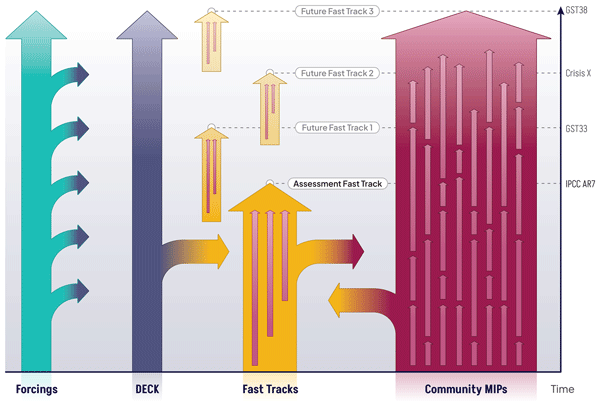
John P. Dunne, Helene T. Hewitt, Julie M. Arblaster, Frédéric Bonou, Olivier Boucher, Tereza Cavazos, Beth Dingley, Paul J. Durack, Birgit Hassler, Martin Juckes, Tomoki Miyakawa, Matt Mizielinski, Vaishali Naik, Zebedee Nicholls, Eleanor O'Rourke, Robert Pincus, Benjamin M. Sanderson, Isla R. Simpson, and Karl E. Taylor
Geosci. Model Dev., 18, 6671–6700, https://doi.org/10.5194/gmd-18-6671-2025, https://doi.org/10.5194/gmd-18-6671-2025, 2025
Short summary
Short summary
The seventh phase of the Coupled Model Intercomparison Project (CMIP7) coordinates efforts to answer key and timely climate science questions and facilitate delivery of relevant multi-model simulations for prediction and projection; characterization, attribution, and process understanding; and vulnerability, impact, and adaptation analysis. Key to the CMIP7 design are the mandatory Diagnostic, Evaluation and Characterization of Klima and optional Assessment Fast Track experiments.
Emmanuel Gobet, David Métivier, and Sylvie Parey
Adv. Stat. Clim. Meteorol. Oceanogr., 11, 159–201, https://doi.org/10.5194/ascmo-11-159-2025, https://doi.org/10.5194/ascmo-11-159-2025, 2025
Short summary
Short summary
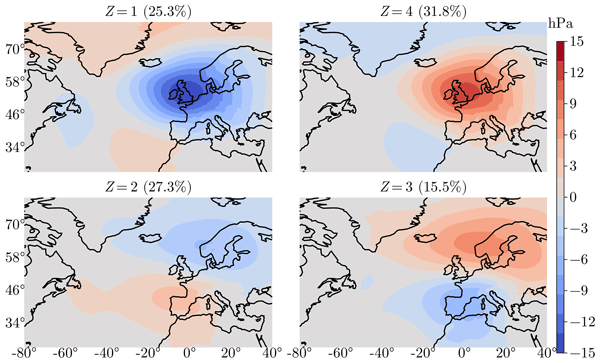
Stochastic weather generators (SWGs) are statistical models used to study climate variability. We design an interpretable multisite SWG for precipitation, capable of learning large-scale weather regimes solely from French observational data. The model reproduces extreme events like droughts and heavy rain and is applied to climate models under historical and Representative Concentration Pathway (RCP) scenarios. This type of model aims to assess large-scale weather risks, such as those impacting energy systems and agriculture.
William J. Collins, Fiona M. O'Connor, Rachael E. Byrom, Øivind Hodnebrog, Patrick Jöckel, Mariano Mertens, Gunnar Myhre, Matthias Nützel, Dirk Olivié, Ragnhild Bieltvedt Skeie, Laura Stecher, Larry W. Horowitz, Vaishali Naik, Gregory Faluvegi, Ulas Im, Lee T. Murray, Drew Shindell, Kostas Tsigaridis, Nathan Luke Abraham, and James Keeble
Atmos. Chem. Phys., 25, 9031–9060, https://doi.org/10.5194/acp-25-9031-2025, https://doi.org/10.5194/acp-25-9031-2025, 2025
Short summary
Short summary
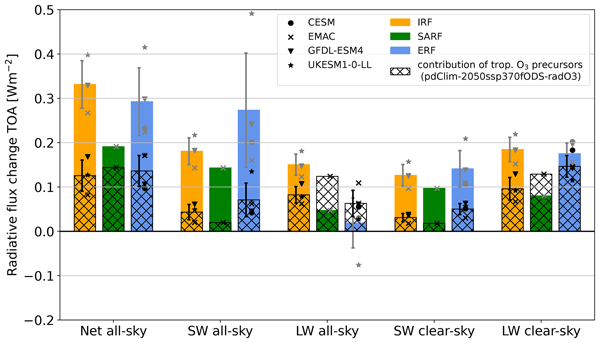
We used 7 climate models that include atmospheric chemistry and find that in a scenario with weak controls on air quality, the warming effects (over 2015 to 2050) of decreases in ozone-depleting substances and increases in air quality pollutants are approximately equal and would make ozone the second highest contributor to warming over this period. We find that for stratospheric ozone recovery, the standard measure of climate effects underestimates a more comprehensive measure.
Wanmin Gong, Stephen R. Beagley, Kenjiro Toyota, Henrik Skov, Jesper Heile Christensen, Alex Lupu, Diane Pendlebury, Junhua Zhang, Ulas Im, Yugo Kanaya, Alfonso Saiz-Lopez, Roberto Sommariva, Peter Effertz, John W. Halfacre, Nis Jepsen, Rigel Kivi, Theodore K. Koenig, Katrin Müller, Claus Nordstrøm, Irina Petropavlovskikh, Paul B. Shepson, William R. Simpson, Sverre Solberg, Ralf M. Staebler, David W. Tarasick, Roeland Van Malderen, and Mika Vestenius
Atmos. Chem. Phys., 25, 8355–8405, https://doi.org/10.5194/acp-25-8355-2025, https://doi.org/10.5194/acp-25-8355-2025, 2025
Short summary
Short summary
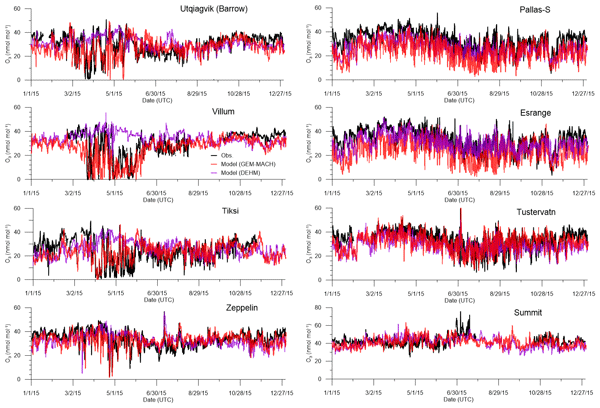
This study showed that the springtime O3 depletion plays a critical role in driving the surface O3 seasonal cycle in the central Arctic. The O3 depletion events, while occurring most notably within the lowest few hundred metres above the Arctic Ocean, can induce a 5–7 % loss in the pan-Arctic tropospheric O3 burden during springtime. The study also found enhancements in O3 and NOy (mostly peroxyacetyl nitrate) concentrations in the Arctic due to northern boreal wildfires, particularly at higher altitudes.
Manuel Schlund, Bouwe Andela, Jörg Benke, Ruth Comer, Birgit Hassler, Emma Hogan, Peter Kalverla, Axel Lauer, Bill Little, Saskia Loosveldt Tomas, Francesco Nattino, Patrick Peglar, Valeriu Predoi, Stef Smeets, Stephen Worsley, Martin Yeo, and Klaus Zimmermann
Geosci. Model Dev., 18, 4009–4021, https://doi.org/10.5194/gmd-18-4009-2025, https://doi.org/10.5194/gmd-18-4009-2025, 2025
Short summary
Short summary
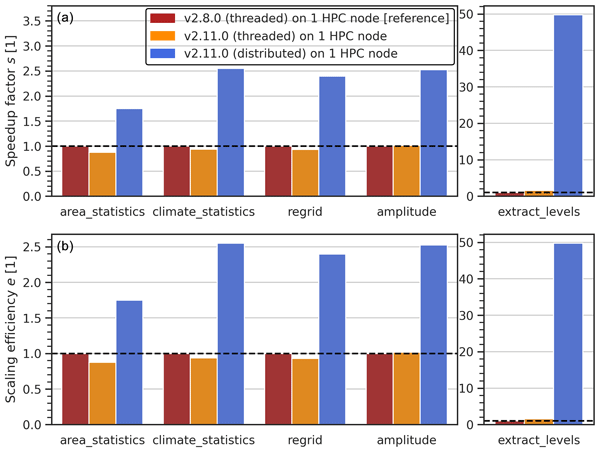
The Earth System Model Evaluation Tool (ESMValTool) is a community diagnostics and performance metrics tool for the evaluation of Earth system models. Here, we describe recent significant improvements of ESMValTool’s computational efficiency including parallel, out-of-core, and distributed computing. Evaluations with the enhanced version of ESMValTool are faster, use less computational resources, and can handle input data larger than the available memory.
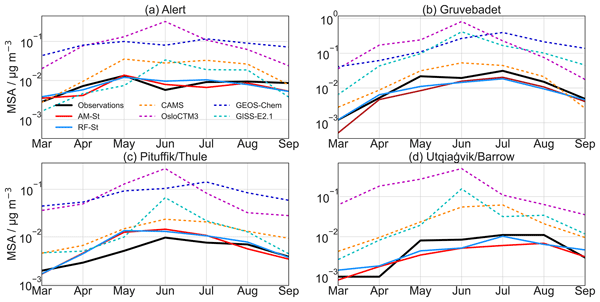
Jakob Boyd Pernov, William H. Aeberhard, Michele Volpi, Eliza Harris, Benjamin Hohermuth, Sakiko Ishino, Ragnhild B. Skeie, Stephan Henne, Ulas Im, Patricia K. Quinn, Lucia M. Upchurch, and Julia Schmale
Atmos. Chem. Phys., 25, 6497–6537, https://doi.org/10.5194/acp-25-6497-2025, https://doi.org/10.5194/acp-25-6497-2025, 2025
Short summary
Short summary
Particulate methanesulfonic acid (MSAp) is vital for the Arctic climate system. Numerical models struggle to reproduce the MSAp seasonal cycle. We evaluate three numerical models and one reanalysis product’s ability to simulate MSAp. We develop data-driven models for MSAp at four Arctic stations. The data-driven models outperform the numerical models and reanalysis product and identified precursor source-, chemical-processing-, and removal-related features as being important for modeling MSAp.
Katherine Shu-Min Li, Nadun Sinhabahu, Ben-Jei Tsuang, Fang-Chi Wu, Wan-Ling Tseng, Pei-Hsuan Kuo, Sying-Jyan Wang, Pang-Yen Liu, Jen-Her Chen, Bin-Ming Wang, Yung-Yao Lan, and Sun-Yuan Kung
EGUsphere, https://doi.org/10.5194/egusphere-2025-142, https://doi.org/10.5194/egusphere-2025-142, 2025
Preprint archived
Short summary
Short summary
This study underscores the transformative potential of machine learning algorithms in environmental forecasting. The superior performance of Bi-LSTM in reducing SST bias, coupled with its broader applicability in time-series analysis, makes it a valuable tool for improving the accuracy and reliability of numerical weather prediction models.
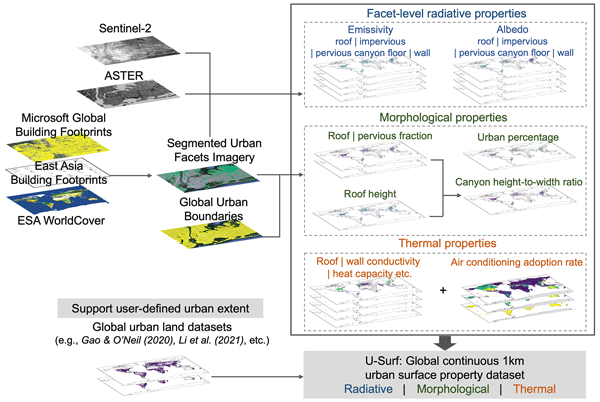
Yifan Cheng, Lei Zhao, TC Chakraborty, Keith Oleson, Matthias Demuzere, Xiaoping Liu, Yangzi Che, Weilin Liao, Yuyu Zhou, and Xinchang “Cathy” Li
Earth Syst. Sci. Data, 17, 2147–2174, https://doi.org/10.5194/essd-17-2147-2025, https://doi.org/10.5194/essd-17-2147-2025, 2025
Short summary
Short summary
The absence of globally consistent and spatially continuous urban surface input has long hindered large-scale high-resolution urban climate modeling. Using remote sensing, cloud computing, and machine learning, we developed U-Surf, a 1 km dataset providing key urban surface properties worldwide. U-Surf enhances urban representation across scales and supports kilometer-scale urban-resolving Earth system modeling unprecedentedly, with broader applications in urban studies and beyond.
Martin Juckes, Karl E. Taylor, Fabrizio Antonio, David Brayshaw, Carlo Buontempo, Jian Cao, Paul J. Durack, Michio Kawamiya, Hyungjun Kim, Tomas Lovato, Chloe Mackallah, Matthew Mizielinski, Alessandra Nuzzo, Martina Stockhause, Daniele Visioni, Jeremy Walton, Briony Turner, Eleanor O'Rourke, and Beth Dingley
Geosci. Model Dev., 18, 2639–2663, https://doi.org/10.5194/gmd-18-2639-2025, https://doi.org/10.5194/gmd-18-2639-2025, 2025
Short summary
Short summary
The Baseline Climate Variables for Earth System Modelling (ESM-BCVs) are defined as a list of 135 variables which have high utility for the evaluation and exploitation of climate simulations. The list reflects the most frequently used variables from Earth system models based on an assessment of data publication and download records from the largest archive of global climate projects.
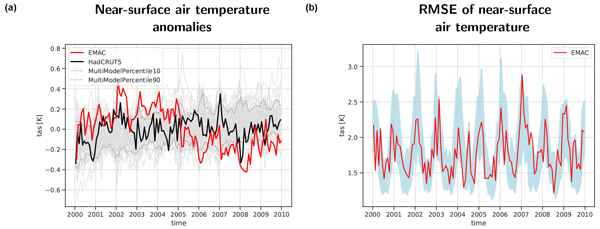
Axel Lauer, Lisa Bock, Birgit Hassler, Patrick Jöckel, Lukas Ruhe, and Manuel Schlund
Geosci. Model Dev., 18, 1169–1188, https://doi.org/10.5194/gmd-18-1169-2025, https://doi.org/10.5194/gmd-18-1169-2025, 2025
Short summary
Short summary
Earth system models are important tools to improve our understanding of current climate and to project climate change. Thus, it is crucial to understand possible shortcomings in the models. New features of the ESMValTool software package allow one to compare and visualize a model's performance with respect to reproducing observations in the context of other climate models in an easy and user-friendly way. We aim to help model developers assess and monitor climate simulations more efficiently.
Paul J. Durack, Karl E. Taylor, Peter J. Gleckler, Gerald A. Meehl, Bryan N. Lawrence, Curt Covey, Ronald J. Stouffer, Guillaume Levavasseur, Atef Ben-Nasser, Sebastien Denvil, Martina Stockhause, Jonathan M. Gregory, Martin Juckes, Sasha K. Ames, Fabrizio Antonio, David C. Bader, John P. Dunne, Daniel Ellis, Veronika Eyring, Sandro L. Fiore, Sylvie Joussaume, Philip Kershaw, Jean-Francois Lamarque, Michael Lautenschlager, Jiwoo Lee, Chris F. Mauzey, Matthew Mizielinski, Paola Nassisi, Alessandra Nuzzo, Eleanor O’Rourke, Jeffrey Painter, Gerald L. Potter, Sven Rodriguez, and Dean N. Williams
EGUsphere, https://doi.org/10.5194/egusphere-2024-3729, https://doi.org/10.5194/egusphere-2024-3729, 2025
Short summary
Short summary
CMIP6 was the most expansive and ambitious Model Intercomparison Project (MIP), the latest in a history, extending four decades. CMIP engaged a growing community focused on improving climate understanding, and quantifying and attributing observed climate change being experienced today. The project's profound impact is due to the combining the latest climate science and technology, enabling the latest-generation climate simulations and increasing community attention in every successive phase.

Colin G. Jones, Fanny Adloff, Ben B. B. Booth, Peter M. Cox, Veronika Eyring, Pierre Friedlingstein, Katja Frieler, Helene T. Hewitt, Hazel A. Jeffery, Sylvie Joussaume, Torben Koenigk, Bryan N. Lawrence, Eleanor O'Rourke, Malcolm J. Roberts, Benjamin M. Sanderson, Roland Séférian, Samuel Somot, Pier Luigi Vidale, Detlef van Vuuren, Mario Acosta, Mats Bentsen, Raffaele Bernardello, Richard Betts, Ed Blockley, Julien Boé, Tom Bracegirdle, Pascale Braconnot, Victor Brovkin, Carlo Buontempo, Francisco Doblas-Reyes, Markus Donat, Italo Epicoco, Pete Falloon, Sandro Fiore, Thomas Frölicher, Neven S. Fučkar, Matthew J. Gidden, Helge F. Goessling, Rune Grand Graversen, Silvio Gualdi, José M. Gutiérrez, Tatiana Ilyina, Daniela Jacob, Chris D. Jones, Martin Juckes, Elizabeth Kendon, Erik Kjellström, Reto Knutti, Jason Lowe, Matthew Mizielinski, Paola Nassisi, Michael Obersteiner, Pierre Regnier, Romain Roehrig, David Salas y Mélia, Carl-Friedrich Schleussner, Michael Schulz, Enrico Scoccimarro, Laurent Terray, Hannes Thiemann, Richard A. Wood, Shuting Yang, and Sönke Zaehle
Earth Syst. Dynam., 15, 1319–1351, https://doi.org/10.5194/esd-15-1319-2024, https://doi.org/10.5194/esd-15-1319-2024, 2024
Short summary
Short summary
We propose a number of priority areas for the international climate research community to address over the coming decade. Advances in these areas will both increase our understanding of past and future Earth system change, including the societal and environmental impacts of this change, and deliver significantly improved scientific support to international climate policy, such as future IPCC assessments and the UNFCCC Global Stocktake.
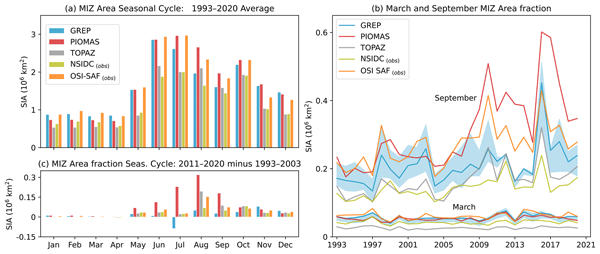
Francesco Cocetta, Lorenzo Zampieri, Julia Selivanova, and Doroteaciro Iovino
The Cryosphere, 18, 4687–4702, https://doi.org/10.5194/tc-18-4687-2024, https://doi.org/10.5194/tc-18-4687-2024, 2024
Short summary
Short summary
Arctic sea ice is thinning and retreating because of global warming. Thus, the region is transitioning to a new state featuring an expansion of the marginal ice zone, a region where mobile ice interacts with waves from the open ocean. By analyzing 30 years of sea ice reconstructions that combine numerical models and observations, this paper proves that an ensemble of global ocean and sea ice reanalyses is an adequate tool for investigating the changing Arctic sea ice cover.
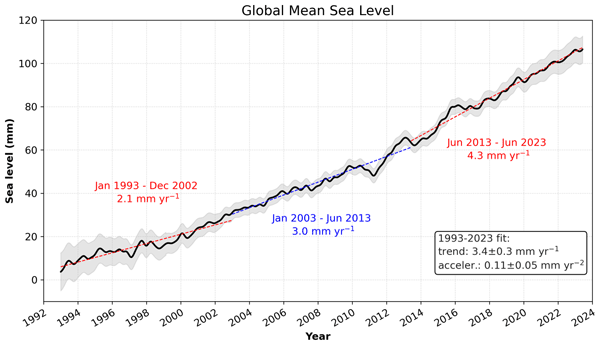
Karina von Schuckmann, Lorena Moreira, Mathilde Cancet, Flora Gues, Emmanuelle Autret, Jonathan Baker, Clément Bricaud, Romain Bourdalle-Badie, Lluis Castrillo, Lijing Cheng, Frederic Chevallier, Daniele Ciani, Alvaro de Pascual-Collar, Vincenzo De Toma, Marie Drevillon, Claudia Fanelli, Gilles Garric, Marion Gehlen, Rianne Giesen, Kevin Hodges, Doroteaciro Iovino, Simon Jandt-Scheelke, Eric Jansen, Melanie Juza, Ioanna Karagali, Thomas Lavergne, Simona Masina, Ronan McAdam, Audrey Minière, Helen Morrison, Tabea Rebekka Panteleit, Andrea Pisano, Marie-Isabelle Pujol, Ad Stoffelen, Sulian Thual, Simon Van Gennip, Pierre Veillard, Chunxue Yang, and Hao Zuo
State Planet, 4-osr8, 1, https://doi.org/10.5194/sp-4-osr8-1-2024, https://doi.org/10.5194/sp-4-osr8-1-2024, 2024
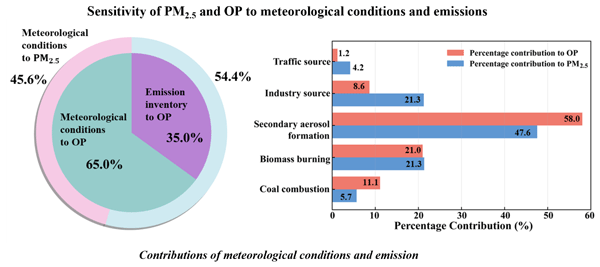
Jiemei Liu, Jesper H. Christensen, Zhuyun Ye, Shikui Dong, Camilla Geels, Jørgen Brandt, Athanasios Nenes, Yuan Yuan, and Ulas Im
Atmos. Chem. Phys., 24, 10849–10867, https://doi.org/10.5194/acp-24-10849-2024, https://doi.org/10.5194/acp-24-10849-2024, 2024
Short summary
Short summary
China was chosen as an example to conduct a quantitative analysis using the Danish Eulerian Hemispheric Model (DEHM) system with meteorological input from the Weather Research and Forecasting (WRF) model. Meteorological conditions and emission inventories contributed 46 % (65 %) and 54 % (35 %) to the variations in PM2.5 concentrations (oxidative potential – OP), respectively, highlighting secondary aerosol formation and biomass burning as the primary contributors to PM2.5 and OP levels.
Paula L. M. Gonzalez, Lesley J. Gray, Stergios Misios, Scott Osprey, and Hedi Ma
EGUsphere, https://doi.org/10.5194/egusphere-2024-2487, https://doi.org/10.5194/egusphere-2024-2487, 2024
Preprint archived
Short summary
Short summary
This study has examined a set of reanalyses, both modern and 20th Century, to evaluate the robustness of the signatures of the 11-yr solar cycle in the North Atlantic climate. We find a robust response to the 11-yr solar cycle over the North Atlantic sector with a positive SLP anomaly north of the Azores region at lags of +2–3 years following solar maximum. An ocean reanalysis dataset shows that thermal inertia of the ocean could explain the lag in the SC response.
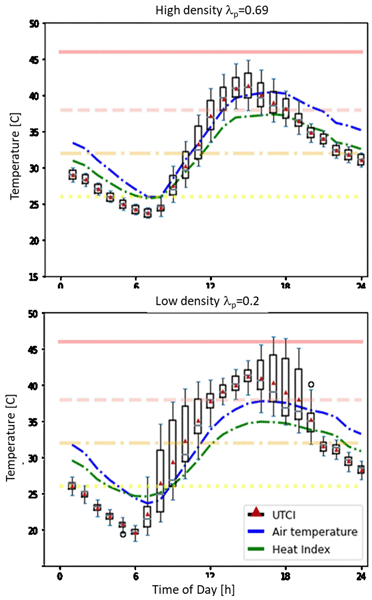
Alberto Martilli, Negin Nazarian, E. Scott Krayenhoff, Jacob Lachapelle, Jiachen Lu, Esther Rivas, Alejandro Rodriguez-Sanchez, Beatriz Sanchez, and José Luis Santiago
Geosci. Model Dev., 17, 5023–5039, https://doi.org/10.5194/gmd-17-5023-2024, https://doi.org/10.5194/gmd-17-5023-2024, 2024
Short summary
Short summary
Here, we present a model that quantifies the thermal stress and its microscale variability at a city scale with a mesoscale model. This tool can have multiple applications, from early warnings of extreme heat to the vulnerable population to the evaluation of the effectiveness of heat mitigation strategies. It is the first model that includes information on microscale variability in a mesoscale model, something that is essential for fully evaluating heat stress.
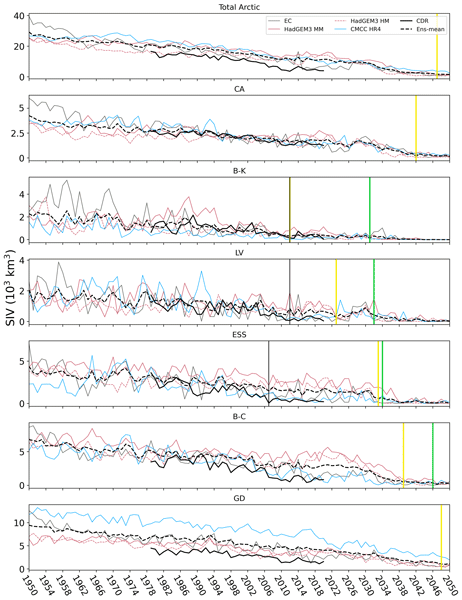
Julia Selivanova, Doroteaciro Iovino, and Francesco Cocetta
The Cryosphere, 18, 2739–2763, https://doi.org/10.5194/tc-18-2739-2024, https://doi.org/10.5194/tc-18-2739-2024, 2024
Short summary
Short summary
Climate models show differences in sea ice representation in comparison to observations. Increasing the model resolution is a recognized way to improve model realism and obtain more reliable future projections. We find no strong impact of resolution on sea ice representation; it rather depends on the analysed variable and the model used. By 2050, the marginal ice zone (MIZ) becomes a dominant feature of the Arctic ice cover, suggesting a shift to a new regime similar to that in Antarctica.
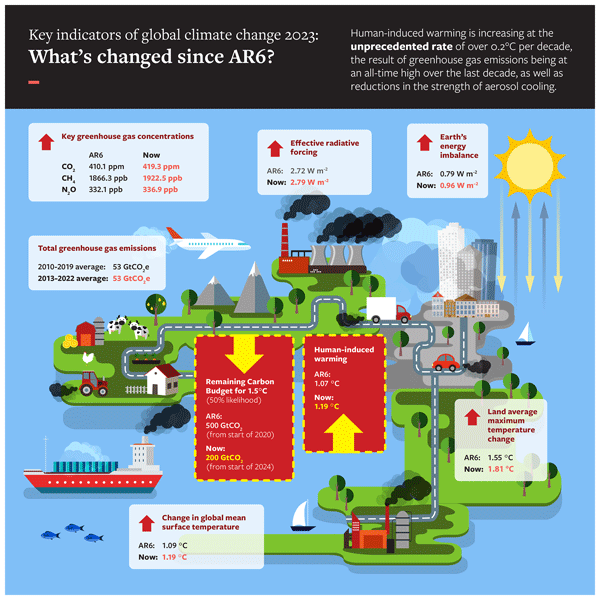
Piers M. Forster, Chris Smith, Tristram Walsh, William F. Lamb, Robin Lamboll, Bradley Hall, Mathias Hauser, Aurélien Ribes, Debbie Rosen, Nathan P. Gillett, Matthew D. Palmer, Joeri Rogelj, Karina von Schuckmann, Blair Trewin, Myles Allen, Robbie Andrew, Richard A. Betts, Alex Borger, Tim Boyer, Jiddu A. Broersma, Carlo Buontempo, Samantha Burgess, Chiara Cagnazzo, Lijing Cheng, Pierre Friedlingstein, Andrew Gettelman, Johannes Gütschow, Masayoshi Ishii, Stuart Jenkins, Xin Lan, Colin Morice, Jens Mühle, Christopher Kadow, John Kennedy, Rachel E. Killick, Paul B. Krummel, Jan C. Minx, Gunnar Myhre, Vaishali Naik, Glen P. Peters, Anna Pirani, Julia Pongratz, Carl-Friedrich Schleussner, Sonia I. Seneviratne, Sophie Szopa, Peter Thorne, Mahesh V. M. Kovilakam, Elisa Majamäki, Jukka-Pekka Jalkanen, Margreet van Marle, Rachel M. Hoesly, Robert Rohde, Dominik Schumacher, Guido van der Werf, Russell Vose, Kirsten Zickfeld, Xuebin Zhang, Valérie Masson-Delmotte, and Panmao Zhai
Earth Syst. Sci. Data, 16, 2625–2658, https://doi.org/10.5194/essd-16-2625-2024, https://doi.org/10.5194/essd-16-2625-2024, 2024
Short summary
Short summary
This paper tracks some key indicators of global warming through time, from 1850 through to the end of 2023. It is designed to give an authoritative estimate of global warming to date and its causes. We find that in 2023, global warming reached 1.3 °C and is increasing at over 0.2 °C per decade. This is caused by all-time-high greenhouse gas emissions.
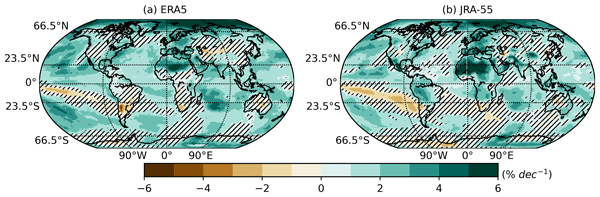
Nenghan Wan, Xiaomao Lin, Roger A. Pielke Sr., Xubin Zeng, and Amanda M. Nelson
Hydrol. Earth Syst. Sci., 28, 2123–2137, https://doi.org/10.5194/hess-28-2123-2024, https://doi.org/10.5194/hess-28-2123-2024, 2024
Short summary
Short summary
Global warming occurs at a rate of 0.21 K per decade, resulting in about 9.5 % K−1 of water vapor response to temperature from 1993 to 2021. Terrestrial areas experienced greater warming than the ocean, with a ratio of 2 : 1. The total precipitable water change in response to surface temperature changes showed a variation around 6 % K−1–8 % K−1 in the 15–55° N latitude band. Further studies are needed to identify the mechanisms leading to different water vapor responses.
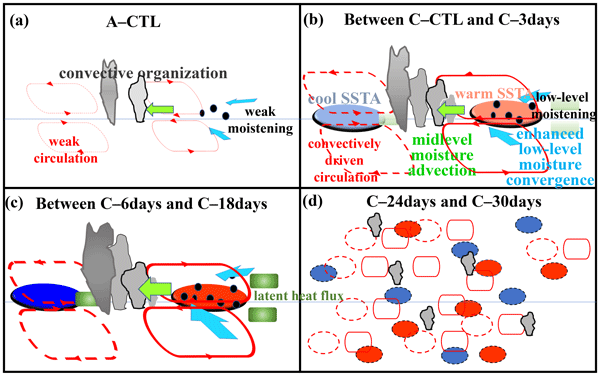
Yung-Yao Lan, Huang-Hsiung Hsu, and Wan-Ling Tseng
Geosci. Model Dev., 17, 3897–3918, https://doi.org/10.5194/gmd-17-3897-2024, https://doi.org/10.5194/gmd-17-3897-2024, 2024
Short summary
Short summary
This study uses the CAM5–SIT coupled model to investigate the effects of SST feedback frequency on the MJO simulations with intervals at 30 min, 1, 3, 6, 12, 18, 24, and 30 d. The simulations become increasingly unrealistic as the frequency of the SST feedback decreases. Our results suggest that more spontaneous air--sea interaction (e.g., ocean response within 3 d in this study) with high vertical resolution in the ocean model is key to the realistic simulation of the MJO.
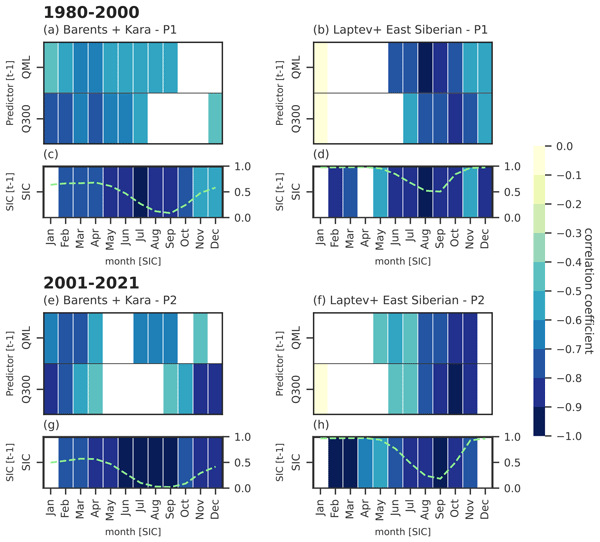
Elena Bianco, Doroteaciro Iovino, Simona Masina, Stefano Materia, and Paolo Ruggieri
The Cryosphere, 18, 2357–2379, https://doi.org/10.5194/tc-18-2357-2024, https://doi.org/10.5194/tc-18-2357-2024, 2024
Short summary
Short summary
Changes in ocean heat transport and surface heat fluxes in recent decades have altered the Arctic Ocean heat budget and caused warming of the upper ocean. Using two eddy-permitting ocean reanalyses, we show that this has important implications for sea ice variability. In the Arctic regional seas, upper-ocean heat content acts as an important precursor for sea ice anomalies on sub-seasonal timescales, and this link has strengthened since the 2000s.
Yi-Chi Wang, Chia-Hao Chiang, Chiung-Jui Su, Ko-Chih Wang, Wan-Ling Tseng, Cheng-Ta Chen, and Hsin-Chien Liang
EGUsphere, https://doi.org/10.5194/egusphere-2024-1022, https://doi.org/10.5194/egusphere-2024-1022, 2024
Preprint archived
Short summary
Short summary
Our study introduces a deep learning model, the EDA, to refine rainfall data in Taiwan. This model significantly improves bias correction by integrating surface wind and topography data, crucial in areas like Taiwan where traditional methods fall short. The EDA excels in adjusting low-intensity and misplaced rainfall, enhancing water management, agriculture, and disaster prevention. This work showcases deep learning's potential to improve climate downscaling in complex terrains.
Jose Rafael Guarin, Jonas Jägermeyr, Elizabeth A. Ainsworth, Fabio A. A. Oliveira, Senthold Asseng, Kenneth Boote, Joshua Elliott, Lisa Emberson, Ian Foster, Gerrit Hoogenboom, David Kelly, Alex C. Ruane, and Katrina Sharps
Geosci. Model Dev., 17, 2547–2567, https://doi.org/10.5194/gmd-17-2547-2024, https://doi.org/10.5194/gmd-17-2547-2024, 2024
Short summary
Short summary
The effects of ozone (O3) stress on crop photosynthesis and leaf senescence were added to maize, rice, soybean, and wheat crop models. The modified models reproduced growth and yields under different O3 levels measured in field experiments and reported in the literature. The combined interactions between O3 and additional stresses were reproduced with the new models. These updated crop models can be used to simulate impacts of O3 stress under future climate change and air pollution scenarios.
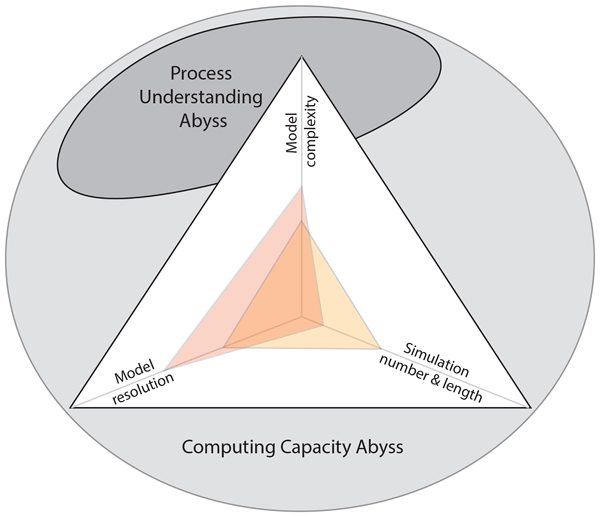
Stephanie Fiedler, Vaishali Naik, Fiona M. O'Connor, Christopher J. Smith, Paul Griffiths, Ryan J. Kramer, Toshihiko Takemura, Robert J. Allen, Ulas Im, Matthew Kasoar, Angshuman Modak, Steven Turnock, Apostolos Voulgarakis, Duncan Watson-Parris, Daniel M. Westervelt, Laura J. Wilcox, Alcide Zhao, William J. Collins, Michael Schulz, Gunnar Myhre, and Piers M. Forster
Geosci. Model Dev., 17, 2387–2417, https://doi.org/10.5194/gmd-17-2387-2024, https://doi.org/10.5194/gmd-17-2387-2024, 2024
Short summary
Short summary
Climate scientists want to better understand modern climate change. Thus, climate model experiments are performed and compared. The results of climate model experiments differ, as assessed in the latest Intergovernmental Panel on Climate Change (IPCC) assessment report. This article gives insights into the challenges and outlines opportunities for further improving the understanding of climate change. It is based on views of a group of experts in atmospheric composition–climate interactions.
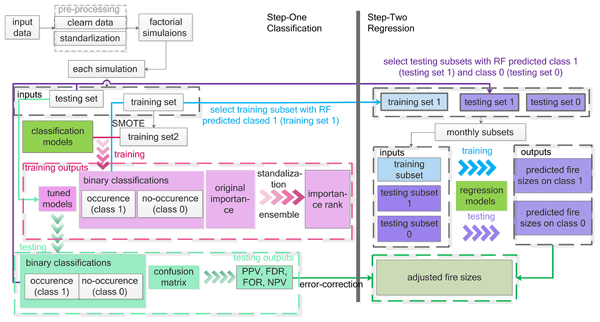
Rongyun Tang, Mingzhou Jin, Jiafu Mao, Daniel M. Ricciuto, Anping Chen, and Yulong Zhang
Geosci. Model Dev., 17, 1525–1542, https://doi.org/10.5194/gmd-17-1525-2024, https://doi.org/10.5194/gmd-17-1525-2024, 2024
Short summary
Short summary
Carbon-rich boreal peatlands are at risk of burning. The reproducibility and predictability of rare peatland fire events are investigated by constructing a two-step error-correcting machine learning framework to tackle such complex systems. Fire occurrence and impacts are highly predictable with our approach. Factor-controlling simulations revealed that temperature, moisture, and freeze–thaw cycles control boreal peatland fires, indicating thermal impacts on causing peat fires.
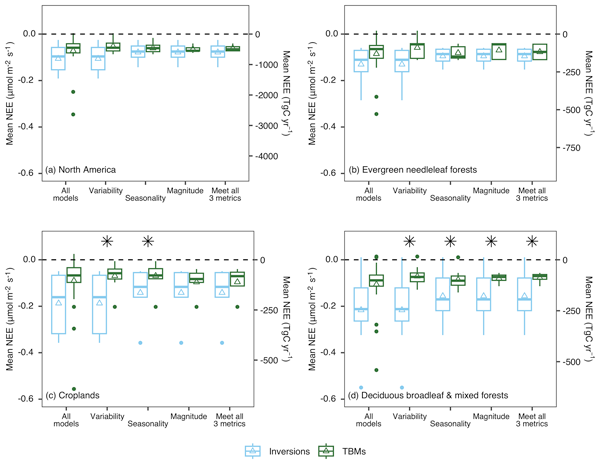
Kelsey T. Foster, Wu Sun, Yoichi P. Shiga, Jiafu Mao, and Anna M. Michalak
Biogeosciences, 21, 869–891, https://doi.org/10.5194/bg-21-869-2024, https://doi.org/10.5194/bg-21-869-2024, 2024
Short summary
Short summary
Assessing agreement between bottom-up and top-down methods across spatial scales can provide insights into the relationship between ensemble spread (difference across models) and model accuracy (difference between model estimates and reality). We find that ensemble spread is unlikely to be a good indicator of actual uncertainty in the North American carbon balance. However, models that are consistent with atmospheric constraints show stronger agreement between top-down and bottom-up estimates.
Chao Wang, Stephen Leisz, Li Li, Xiaoying Shi, Jiafu Mao, Yi Zheng, and Anping Chen
Earth Syst. Dynam., 15, 75–90, https://doi.org/10.5194/esd-15-75-2024, https://doi.org/10.5194/esd-15-75-2024, 2024
Short summary
Short summary
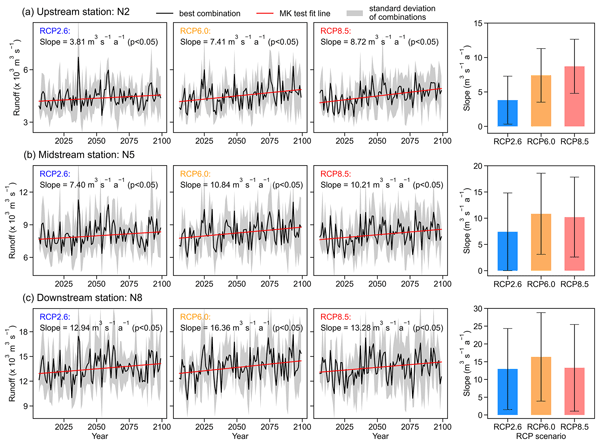
Climate change can significantly impact river runoff; however, predicting future runoff is challenging. Using historical runoff gauge data to evaluate model performances in runoff simulations for the Mekong River, we quantify future runoff changes in the Mekong River with the best simulation combination. Results suggest a significant increase in the annual runoff, along with varied seasonal distributions, thus heightening the need for adapted water resource management measures.
Qiang Wang, Qi Shu, Alexandra Bozec, Eric P. Chassignet, Pier Giuseppe Fogli, Baylor Fox-Kemper, Andy McC. Hogg, Doroteaciro Iovino, Andrew E. Kiss, Nikolay Koldunov, Julien Le Sommer, Yiwen Li, Pengfei Lin, Hailong Liu, Igor Polyakov, Patrick Scholz, Dmitry Sidorenko, Shizhu Wang, and Xiaobiao Xu
Geosci. Model Dev., 17, 347–379, https://doi.org/10.5194/gmd-17-347-2024, https://doi.org/10.5194/gmd-17-347-2024, 2024
Short summary
Short summary
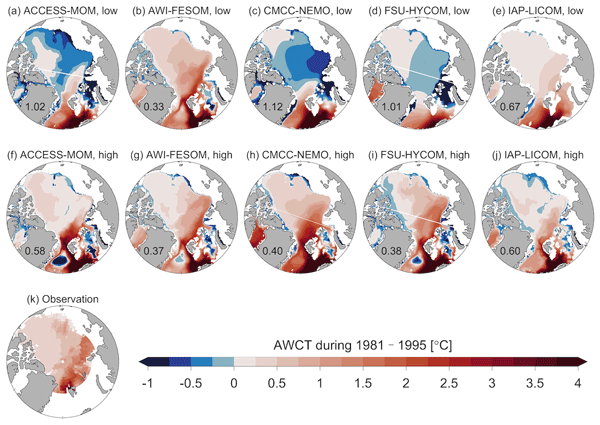
Increasing resolution improves model skills in simulating the Arctic Ocean, but other factors such as parameterizations and numerics are at least of the same importance for obtaining reliable simulations.
Doroteaciro Iovino, Pier Giuseppe Fogli, and Simona Masina
Geosci. Model Dev., 16, 6127–6159, https://doi.org/10.5194/gmd-16-6127-2023, https://doi.org/10.5194/gmd-16-6127-2023, 2023
Short summary
Short summary
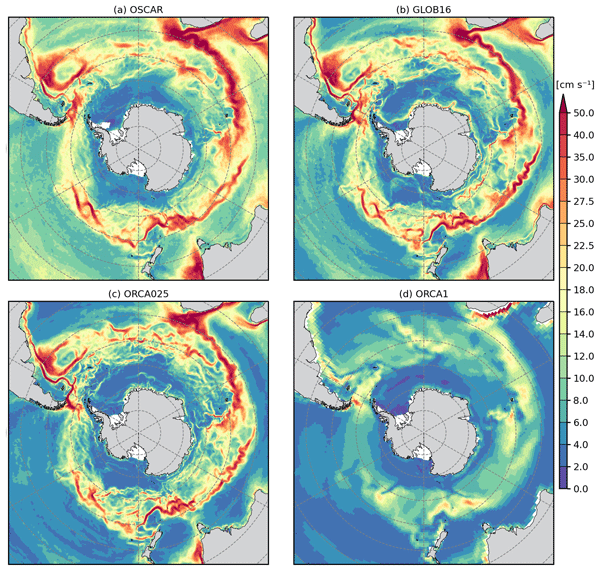
This paper describes the model performance of three global ocean–sea ice configurations, from non-eddying (1°) to eddy-rich (1/16°) resolutions. Model simulations are obtained following the Ocean Model Intercomparison Project phase 2 (OMIP2) protocol. We compare key global climate variables across the three models and against observations, emphasizing the relative advantages and disadvantages of running forced ocean–sea ice models at higher resolution.
Michael Mayer, Takamasa Tsubouchi, Susanna Winkelbauer, Karin Margretha H. Larsen, Barbara Berx, Andreas Macrander, Doroteaciro Iovino, Steingrímur Jónsson, and Richard Renshaw
State Planet, 1-osr7, 14, https://doi.org/10.5194/sp-1-osr7-14-2023, https://doi.org/10.5194/sp-1-osr7-14-2023, 2023
Short summary
Short summary
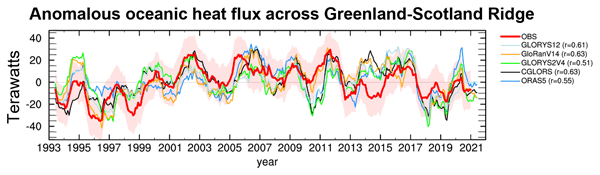
This paper compares oceanic fluxes across the Greenland–Scotland Ridge (GSR) from ocean reanalyses to largely independent observational data. Reanalyses tend to underestimate the inflow of warm waters of subtropical Atlantic origin and hence oceanic heat transport across the GSR. Investigation of a strong negative heat transport anomaly around 2018 highlights the interplay of variability on different timescales and the need for long-term monitoring of the GSR to detect forced climate signals.
Jonathan Andrew Baker, Richard Renshaw, Laura Claire Jackson, Clotilde Dubois, Doroteaciro Iovino, Hao Zuo, Renellys C. Perez, Shenfu Dong, Marion Kersalé, Michael Mayer, Johannes Mayer, Sabrina Speich, and Tarron Lamont
State Planet, 1-osr7, 4, https://doi.org/10.5194/sp-1-osr7-4-2023, https://doi.org/10.5194/sp-1-osr7-4-2023, 2023
Short summary
Short summary
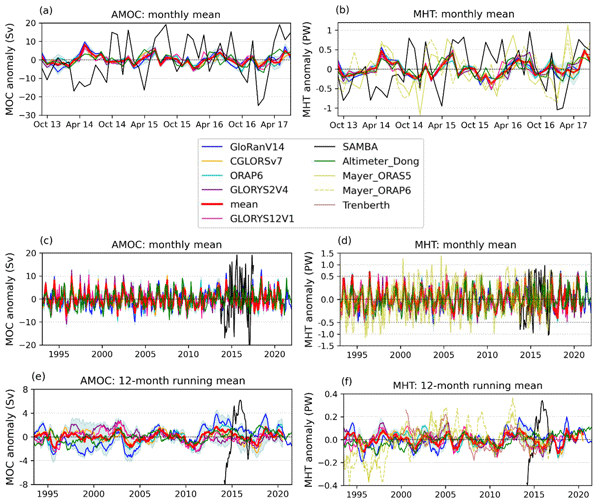
We use ocean reanalyses, in which ocean models are combined with observations, to infer past changes in ocean circulation and heat transport in the South Atlantic. Comparing these estimates with other observation-based estimates, we find differences in their trends, variability, and mean heat transport but closer agreement in their mean overturning strength. Ocean reanalyses can help us understand the cause of these differences, which could improve estimates of ocean transports in this region.
Andrea Cipollone, Deep Sankar Banerjee, Doroteaciro Iovino, Ali Aydogdu, and Simona Masina
Ocean Sci., 19, 1375–1392, https://doi.org/10.5194/os-19-1375-2023, https://doi.org/10.5194/os-19-1375-2023, 2023
Short summary
Short summary
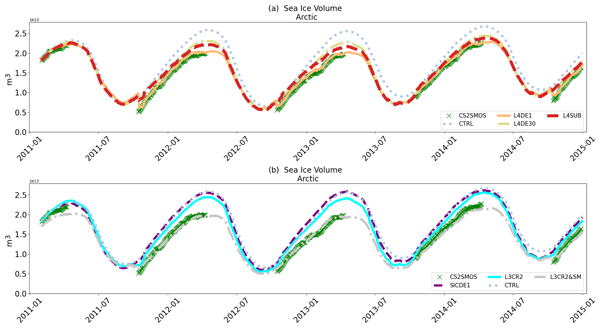
Sea-ice volume is characterized by low predictability compared to the sea ice area or the extent. A joint initialization of the thickness and concentration using satellite data could improve the predictive power, although it is still absent in the present global analysis–reanalysis systems. This study shows a scheme to correct the two features together that can be easily extended to include ocean variables. The impact of such a joint initialization is shown and compared among different set-ups.
Yi-Chi Wang, Wan-Ling Tseng, Yu-Luen Chen, Shih-Yu Lee, Huang-Hsiung Hsu, and Hsin-Chien Liang
Geosci. Model Dev., 16, 4599–4616, https://doi.org/10.5194/gmd-16-4599-2023, https://doi.org/10.5194/gmd-16-4599-2023, 2023
Short summary
Short summary
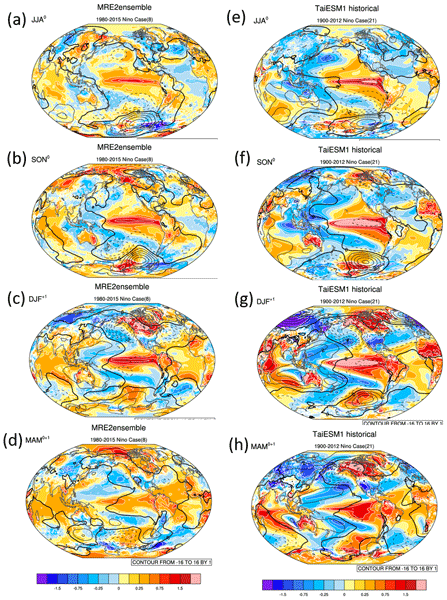
This study focuses on evaluating the performance of the Taiwan Earth System Model version 1 (TaiESM1) in simulating the El Niño–Southern Oscillation (ENSO), a significant tropical climate pattern with global impacts. Our findings reveal that TaiESM1 effectively captures several characteristics of ENSO, such as its seasonal variation and remote teleconnections. Its pronounced ENSO strength bias is also thoroughly investigated, aiming to gain insights to improve climate model performance.
Anne Marie Treguier, Clement de Boyer Montégut, Alexandra Bozec, Eric P. Chassignet, Baylor Fox-Kemper, Andy McC. Hogg, Doroteaciro Iovino, Andrew E. Kiss, Julien Le Sommer, Yiwen Li, Pengfei Lin, Camille Lique, Hailong Liu, Guillaume Serazin, Dmitry Sidorenko, Qiang Wang, Xiaobio Xu, and Steve Yeager
Geosci. Model Dev., 16, 3849–3872, https://doi.org/10.5194/gmd-16-3849-2023, https://doi.org/10.5194/gmd-16-3849-2023, 2023
Short summary
Short summary
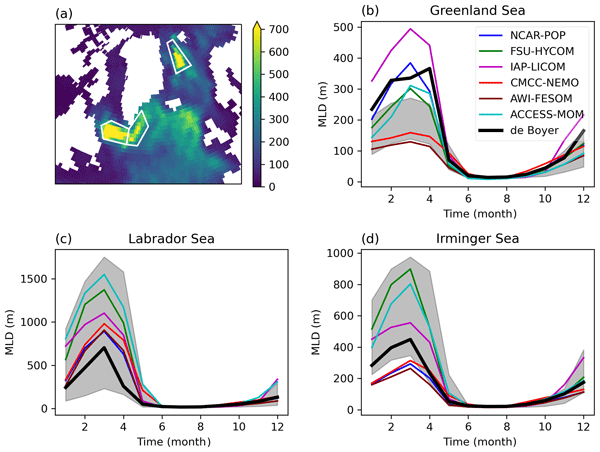
The ocean mixed layer is the interface between the ocean interior and the atmosphere and plays a key role in climate variability. We evaluate the performance of the new generation of ocean models for climate studies, designed to resolve
ocean eddies, which are the largest source of ocean variability and modulate the mixed-layer properties. We find that the mixed-layer depth is better represented in eddy-rich models but, unfortunately, not uniformly across the globe and not in all models.
Bryan J. Johnson, Patrick Cullis, John Booth, Irina Petropavlovskikh, Glen McConville, Birgit Hassler, Gary A. Morris, Chance Sterling, and Samuel Oltmans
Atmos. Chem. Phys., 23, 3133–3146, https://doi.org/10.5194/acp-23-3133-2023, https://doi.org/10.5194/acp-23-3133-2023, 2023
Short summary
Short summary
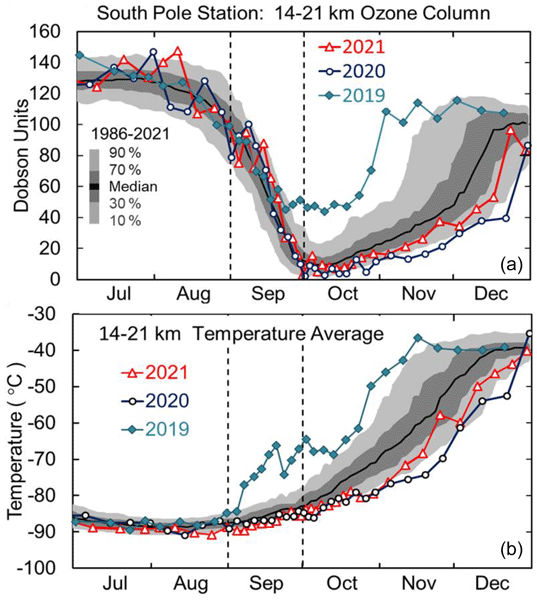
In 1986, soon after the discovery of the Antarctic ozone hole, NOAA began year-round ozonesonde observations at South Pole Station to measure vertical profiles of ozone and temperature from the surface to 35 km. Balloon-borne ozonesondes launched at this unique site allow for tracking all phases of the yearly springtime ozone hole beginning in late winter and after sunrise, when rapid ozone depletion begins over the South Pole throughout the month of September.
Fa Li, Qing Zhu, William J. Riley, Lei Zhao, Li Xu, Kunxiaojia Yuan, Min Chen, Huayi Wu, Zhipeng Gui, Jianya Gong, and James T. Randerson
Geosci. Model Dev., 16, 869–884, https://doi.org/10.5194/gmd-16-869-2023, https://doi.org/10.5194/gmd-16-869-2023, 2023
Short summary
Short summary
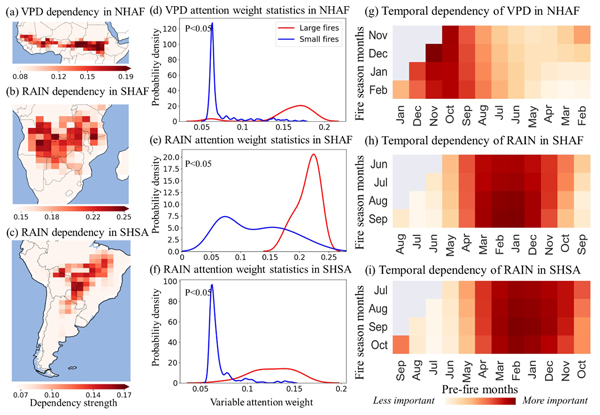
We developed an interpretable machine learning model to predict sub-seasonal and near-future wildfire-burned area over African and South American regions. We found strong time-lagged controls (up to 6–8 months) of local climate wetness on burned areas. A skillful use of such time-lagged controls in machine learning models results in highly accurate predictions of wildfire-burned areas; this will also help develop relevant early-warning and management systems for tropical wildfires.
Nenghan Wan, Xiaozhen Xiong, Gerard J. Kluitenberg, J. M. Shawn Hutchinson, Robert Aiken, Haidong Zhao, and Xiaomao Lin
Atmos. Chem. Phys., 23, 711–724, https://doi.org/10.5194/acp-23-711-2023, https://doi.org/10.5194/acp-23-711-2023, 2023
Short summary
Short summary
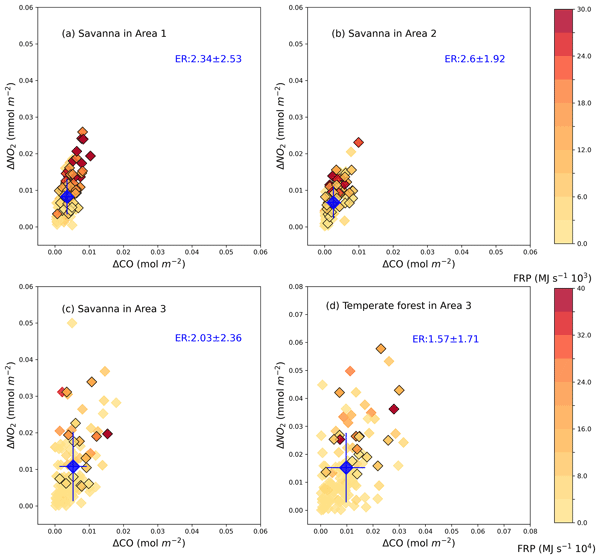
This study used new TROPOMI measurements of NO2 and CO to characterize regional biomass burning characteristics and efficiency. We found that the NO2 / CO emission ratio was consistent with recent studies over temperate forest fires but slightly lower in savanna vegetation fires. Our results can help identify the relative contribution of smoldering and flaming activities as well as their impacts on the regional atmospheric composition and air quality.
Cynthia H. Whaley, Kathy S. Law, Jens Liengaard Hjorth, Henrik Skov, Stephen R. Arnold, Joakim Langner, Jakob Boyd Pernov, Garance Bergeron, Ilann Bourgeois, Jesper H. Christensen, Rong-You Chien, Makoto Deushi, Xinyi Dong, Peter Effertz, Gregory Faluvegi, Mark Flanner, Joshua S. Fu, Michael Gauss, Greg Huey, Ulas Im, Rigel Kivi, Louis Marelle, Tatsuo Onishi, Naga Oshima, Irina Petropavlovskikh, Jeff Peischl, David A. Plummer, Luca Pozzoli, Jean-Christophe Raut, Tom Ryerson, Ragnhild Skeie, Sverre Solberg, Manu A. Thomas, Chelsea Thompson, Kostas Tsigaridis, Svetlana Tsyro, Steven T. Turnock, Knut von Salzen, and David W. Tarasick
Atmos. Chem. Phys., 23, 637–661, https://doi.org/10.5194/acp-23-637-2023, https://doi.org/10.5194/acp-23-637-2023, 2023
Short summary
Short summary
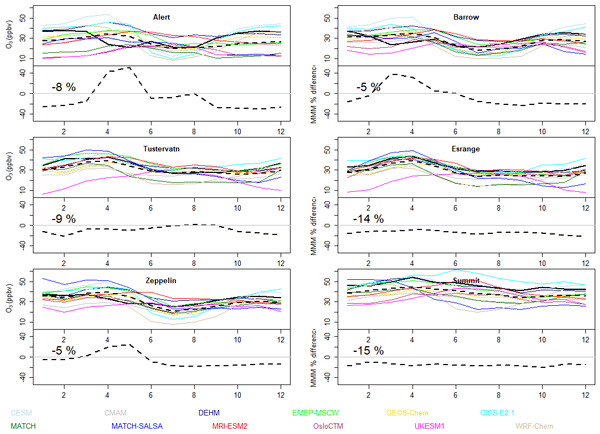
This study summarizes recent research on ozone in the Arctic, a sensitive and rapidly warming region. We find that the seasonal cycles of near-surface atmospheric ozone are variable depending on whether they are near the coast, inland, or at high altitude. Several global model simulations were evaluated, and we found that because models lack some of the ozone chemistry that is important for the coastal Arctic locations, they do not accurately simulate ozone there.
Manuel Schlund, Birgit Hassler, Axel Lauer, Bouwe Andela, Patrick Jöckel, Rémi Kazeroni, Saskia Loosveldt Tomas, Brian Medeiros, Valeriu Predoi, Stéphane Sénési, Jérôme Servonnat, Tobias Stacke, Javier Vegas-Regidor, Klaus Zimmermann, and Veronika Eyring
Geosci. Model Dev., 16, 315–333, https://doi.org/10.5194/gmd-16-315-2023, https://doi.org/10.5194/gmd-16-315-2023, 2023
Short summary
Short summary
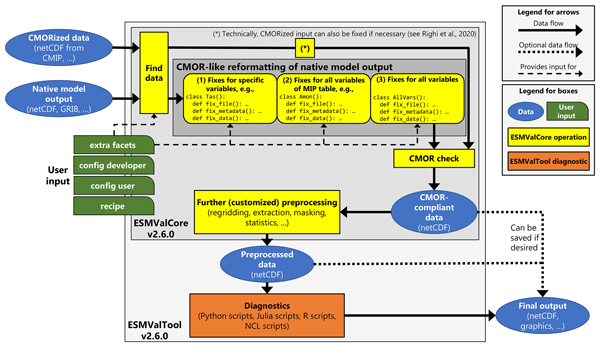
The Earth System Model Evaluation Tool (ESMValTool) is a community diagnostics and performance metrics tool for routine evaluation of Earth system models. Originally, ESMValTool was designed to process reformatted output provided by large model intercomparison projects like the Coupled Model Intercomparison Project (CMIP). Here, we describe a new extension of ESMValTool that allows for reading and processing native climate model output, i.e., data that have not been reformatted before.

Giulia Bonino, Doroteaciro Iovino, Laurent Brodeau, and Simona Masina
Geosci. Model Dev., 15, 6873–6889, https://doi.org/10.5194/gmd-15-6873-2022, https://doi.org/10.5194/gmd-15-6873-2022, 2022
Short summary
Short summary
The sea surface temperature (SST) is highly influenced by the transfer of energy driven by turbulent air–sea fluxes (TASFs). In the NEMO ocean general circulation model, TASFs are computed by means of bulk formulas. Bulk formulas require the choice of a given bulk parameterization, which influences the magnitudes of the TASFs. Our results show that parameterization-related SST differences are primarily sensitive to the wind stress differences across parameterizations.

Jorge Baño-Medina, Rodrigo Manzanas, Ezequiel Cimadevilla, Jesús Fernández, Jose González-Abad, Antonio S. Cofiño, and José Manuel Gutiérrez
Geosci. Model Dev., 15, 6747–6758, https://doi.org/10.5194/gmd-15-6747-2022, https://doi.org/10.5194/gmd-15-6747-2022, 2022
Short summary
Short summary
Deep neural networks are used to produce downscaled regional climate change projections over Europe for temperature and precipitation for the first time. The resulting dataset, DeepESD, is analyzed against state-of-the-art downscaling methodologies, reproducing more accurately the observed climate in the historical period and showing plausible future climate change signals with low computational requirements.
Yung-Yao Lan, Huang-Hsiung Hsu, Wan-Ling Tseng, and Li-Chiang Jiang
Geosci. Model Dev., 15, 5689–5712, https://doi.org/10.5194/gmd-15-5689-2022, https://doi.org/10.5194/gmd-15-5689-2022, 2022
Short summary
Short summary
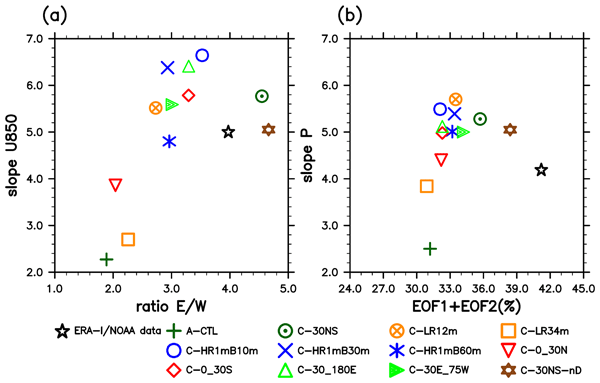
This study has shown that coupling a high-resolution 1-D ocean model (SIT 1.06) with the Community Atmosphere Model 5.3 (CAM5.3) significantly improves the simulation of the Madden–Julian Oscillation (MJO) over the standalone CAM5.3. Systematic sensitivity experiments resulted in more realistic simulations of the tropical MJO because they had better upper-ocean resolution, adequate upper-ocean thickness, coupling regions including the eastern Pacific and southern tropics, and a diurnal cycle.
Wan-Ling Tseng, Huang-Hsiung Hsu, Yung-Yao Lan, Wei-Liang Lee, Chia-Ying Tu, Pei-Hsuan Kuo, Ben-Jei Tsuang, and Hsin-Chien Liang
Geosci. Model Dev., 15, 5529–5546, https://doi.org/10.5194/gmd-15-5529-2022, https://doi.org/10.5194/gmd-15-5529-2022, 2022
Short summary
Short summary
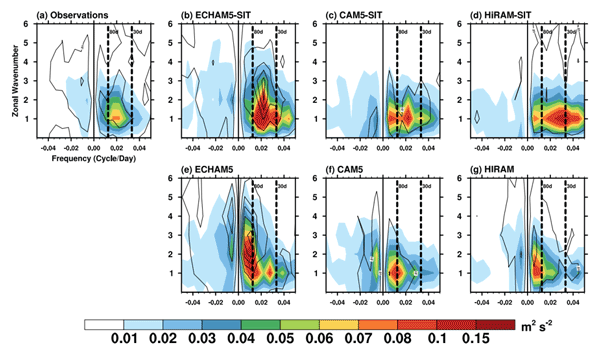
We show that coupling a high-resolution one-column ocean model to three atmospheric general circulation models dramatically improves Madden–Julian oscillation (MJO) simulations. It suggests two major improvements to the coupling process in the preconditioning phase and strongest convection phase over the Maritime Continent. Our results demonstrate a simple but effective way to significantly improve MJO simulations and potentially seasonal to subseasonal prediction.
Hannah C. Bloomfield, David J. Brayshaw, Matthew Deakin, and David Greenwood
Earth Syst. Sci. Data, 14, 2749–2766, https://doi.org/10.5194/essd-14-2749-2022, https://doi.org/10.5194/essd-14-2749-2022, 2022
Short summary
Short summary
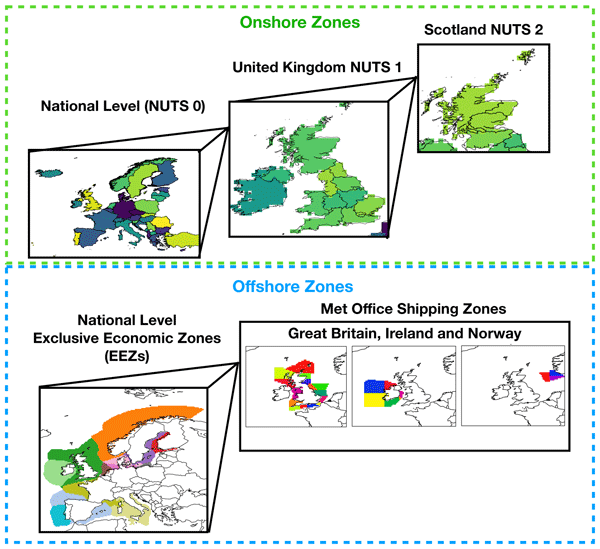
There is a global increase in renewable generation to meet carbon targets and reduce the impacts of climate change. Renewable generation and electricity demand depend on the weather. This means there is a need for high-quality weather data for energy system modelling. We present a new European-level, 70-year dataset which has been specifically designed to support the energy sector. We provide hourly, sub-national climate outputs and include the impacts of near-term climate change.
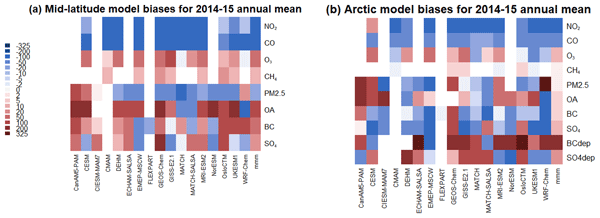
Cynthia H. Whaley, Rashed Mahmood, Knut von Salzen, Barbara Winter, Sabine Eckhardt, Stephen Arnold, Stephen Beagley, Silvia Becagli, Rong-You Chien, Jesper Christensen, Sujay Manish Damani, Xinyi Dong, Konstantinos Eleftheriadis, Nikolaos Evangeliou, Gregory Faluvegi, Mark Flanner, Joshua S. Fu, Michael Gauss, Fabio Giardi, Wanmin Gong, Jens Liengaard Hjorth, Lin Huang, Ulas Im, Yugo Kanaya, Srinath Krishnan, Zbigniew Klimont, Thomas Kühn, Joakim Langner, Kathy S. Law, Louis Marelle, Andreas Massling, Dirk Olivié, Tatsuo Onishi, Naga Oshima, Yiran Peng, David A. Plummer, Olga Popovicheva, Luca Pozzoli, Jean-Christophe Raut, Maria Sand, Laura N. Saunders, Julia Schmale, Sangeeta Sharma, Ragnhild Bieltvedt Skeie, Henrik Skov, Fumikazu Taketani, Manu A. Thomas, Rita Traversi, Kostas Tsigaridis, Svetlana Tsyro, Steven Turnock, Vito Vitale, Kaley A. Walker, Minqi Wang, Duncan Watson-Parris, and Tahya Weiss-Gibbons
Atmos. Chem. Phys., 22, 5775–5828, https://doi.org/10.5194/acp-22-5775-2022, https://doi.org/10.5194/acp-22-5775-2022, 2022
Short summary
Short summary
Air pollutants, like ozone and soot, play a role in both global warming and air quality. Atmospheric models are often used to provide information to policy makers about current and future conditions under different emissions scenarios. In order to have confidence in those simulations, in this study we compare simulated air pollution from 18 state-of-the-art atmospheric models to measured air pollution in order to assess how well the models perform.

Patricia Tarín-Carrasco, Ulas Im, Camilla Geels, Laura Palacios-Peña, and Pedro Jiménez-Guerrero
Atmos. Chem. Phys., 22, 3945–3965, https://doi.org/10.5194/acp-22-3945-2022, https://doi.org/10.5194/acp-22-3945-2022, 2022
Short summary
Short summary
The evidence of the effects of atmospheric pollution (and particularly fine particulate matter, PM2.5) on human mortality is now unquestionable. Here, 895 000 annual premature deaths (PD) are estimated for the present (1991–2010), which increases to 1 540 000 in the year 2050 due to the ageing of the European population. The implementation of a mitigation scenario (80 % of the energy production in Europe from renewable sources) could lead to a decrease of over 60 000 annual PD for the year 2050.
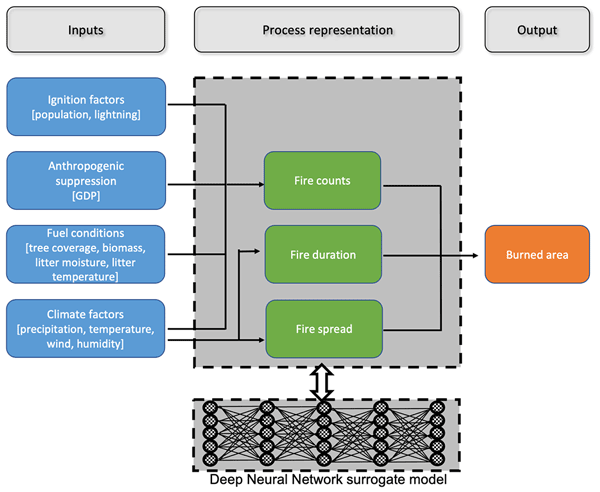
Qing Zhu, Fa Li, William J. Riley, Li Xu, Lei Zhao, Kunxiaojia Yuan, Huayi Wu, Jianya Gong, and James Randerson
Geosci. Model Dev., 15, 1899–1911, https://doi.org/10.5194/gmd-15-1899-2022, https://doi.org/10.5194/gmd-15-1899-2022, 2022
Short summary
Short summary
Wildfire is a devastating Earth system process that burns about 500 million hectares of land each year. It wipes out vegetation including trees, shrubs, and grasses and causes large losses of economic assets. However, modeling the spatial distribution and temporal changes of wildfire activities at a global scale is challenging. This study built a machine-learning-based wildfire surrogate model within an existing Earth system model and achieved high accuracy.
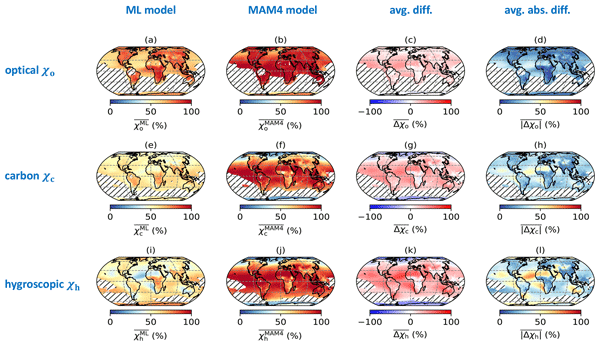
Zhonghua Zheng, Matthew West, Lei Zhao, Po-Lun Ma, Xiaohong Liu, and Nicole Riemer
Atmos. Chem. Phys., 21, 17727–17741, https://doi.org/10.5194/acp-21-17727-2021, https://doi.org/10.5194/acp-21-17727-2021, 2021
Short summary
Short summary
Aerosol mixing state is an important emergent property that affects aerosol radiative forcing and aerosol–cloud interactions, but it has not been easy to constrain this property globally. We present a framework for evaluating the error in aerosol mixing state induced by aerosol representation assumptions, which is one of the important contributors to structural uncertainty in aerosol models. Our study provides insights into potential improvements to model process representation for aerosols.
Cited articles
Baño-Medina, J., Iturbide, M., Fernández, J., and Gutiérrez, J. M.: Transferability and Explainability of Deep Learning Emulators for Regional Climate Model Projections: Perspectives for Future Applications, Artificial Intelligence for the Earth Systems, 3, https://doi.org/10.1175/AIES-D-23-0099.1, 2024.
Bernier, N. B., Hemer, M., Mori, N., Appendini, C. M., Breivik, O., de Camargo, R., Casas-Prat, M., Duong, T.M., Haigh, I. D., Howard, T., Hernaman, V., Huizy, O., Irish, J. L., Kirezci, E., Kohno, N., Lee, J.-W., McInnes, K. L., Meyer, E. M. I., Marcos, M., Marsooli, R., Martin Oliva, A., Menendez, M., Moghimi, S., Muis, S., Polton, J. A., Pringle, W. J., Ranasinghe, R., Saillour, T., Smith, G., Getachew Tadesse, M., Swail, V., Tomoya, S., Voukouvalas, E., Wahl, T., Wang, P., Weisse, R., Westerink, J. J., Young, I., and Zhang, Y. J.: Storm surges and extreme sea levels: Review, establishment of model intercomparison and coordination of surge climate projection efforts (SurgeMIP), Weather and Climate Extremes, 45, 100689, https://doi.org/10.1016/j.wace.2024.100689, 2024.
Bezner Kerr, R., Hasegawa, T., Lasco, R. D., Bhatt, I. D., Deryng, D., Farrell, A., Gurney-Smith, H., Ju, H., Lluch-Cota, S. E., Nelson, G., Neufeldt, H., and Thornton, P. K.: Food, Fibre, and other Ecosystem Products, in: Climate Change 2022: Impacts, Adaptation and Vulnerability, Contribution of Working Group II to the Intergovernmental Panel on Climate Change Sixth Assessment Report, edited by: Pörtner, H.-O., Roberts, D. C., Tignor, M., Poloczanska, E. S., Mintenbeck, K., Alegría, A., Craig, M., Langsdorf, S., Löschke, S., Möller, V., Okem, A., and Rama, B., Cambridge University Press, 713–906, https://doi.org/10.1017/9781009325844.007, 2022.
Birch, E. L., and Wachter, S. M.: Global Urbanization, University of Pennsylvania Press, Philadelphia, USA, 384 pp., ISBN 978-0-8122-4284-3, 2011.
Bloomfield, H. C., Brayshaw, D. J., Shaffrey, L. C., Coker, P. J., and Thornton, H. E.: Quantifying the increasing sensitivity of power systems to climate variability, Environmental Research Letters, 11, 124025, https://doi.org/10.1088/1748-9326/11/12/124025, 2016.
Bloomfield, H. C., Gonzalez, P. L. M., Lundquist, J. K., Stoop, L. P., Browell, J., Dargaville, R., M. De Felice, Gruber, K., Hilbers, A., Kies, A., Panteli, M., Thornton, H. E., Wohland, J., Zeyringer, M., and Brayshaw, D. J.: The importance of weather and climate to energy systems: a workshop on next generation challenges in energy–climate modeling, Bulletin of the American Meteorological Society, 102, E159–E167, https://doi.org/10.1175/BAMS-D-20-0256.1, 2021.
Boer, G. J., Smith, D. M., Cassou, C., Doblas-Reyes, F., Danabasoglu, G., Kirtman, B., Kushnir, Y., Kimoto, M., Meehl, G. A., Msadek, R., Mueller, W. A., Taylor, K. E., Zwiers, F., Rixen, M., Ruprich-Robert, Y., and Eade, R.: The Decadal Climate Prediction Project (DCPP) contribution to CMIP6, Geosci. Model Dev., 9, 3751–3777, https://doi.org/10.5194/gmd-9-3751-2016, 2016.
Briscoe, N. J., Morris, S. D., Mathewson, P. D., Buckley, L. B., Jusup, M., Levy, O., Maclean, I. M. D., Pincebourde, S., Riddell, E. A., Roberts, J. A., Schouten, R., Sears, M. W., and Kearney, M. R.: Mechanistic forecasts of species responses to climate change: The promise of biophysical ecology, Global Change Biology, 29, 1451–1470, https://doi.org/10.1111/gcb.16557, 2023.
Cao, C., Lee, X., Liu, S., Schultz, N., Xiao, W., Zhang, M., and Zhao, L.: Urban heat islands in China enhanced by haze pollution, Nat. Commun., 7, 12509, https://doi.org/10.1038/ncomms12509, 2016.
Caretta, M. A., Mukherji, A., Arfanuzzaman, M., Betts, R. A., Gelfan, A., Hirabayashi, Y., Lissner, T. K., Liu, J., Lopez Gunn, E., Morgan, R., Mwanga, S., and Supratid, S.: Water, in: Climate Change 2022: Impacts, Adaptation and Vulnerability, Contribution of Working Group II to the Sixth Assessment Report of the Intergovernmental Panel on Climate Change, edited by: Pörtner, H.-O., Roberts, D. C., Tignor, M., Poloczanska, E. S., Mintenbeck, K., Alegría, A., Craig, M., Langsdorf, S., Löschke, S., Möller, V., Okem, A., and Rama, B., Cambridge University Press, Cambridge, UK and New York, NY, USA, 551–712, https://doi.org/10.1017/9781009325844.006, 2022.
Chakraborty, T., Venter, Z. S., Demuzere, M., Zhan, W., Gao, J., Zhao, L., and Qian, Y.: Large disagreements in estimates of urban land across scales and their implications, Nat. Commun., 15, 9165, https://doi.org/10.6084/m9.figshare.25225535, 2024.
Chan, W. C. H., Shepherd, T. G., Facer-Childs, K., Darch, G., and Arnell, N. W.: Storylines of UK drought based on the 2010–2012 event, Hydrol. Earth Syst. Sci., 26, 1755–1777, https://doi.org/10.5194/hess-26-1755-2022, 2022.
CMIP Model Benchmarking Task Team: CMIP AR7 Fast Track Diagnostics list for the Rapid Evaluation Framework, Zenodo [data set], https://doi.org/10.5281/zenodo.14284375, 2024.
Connors, S., Dionne, M., Hanák, G., Musulin, R., Aellen, N., Amjad, M., Bowen, S., Carrascal, D.R., Coppola, E., Dal Moro, E., Dosio, A., Faria, S. H., Gan, T. Y., Gomis, M., Gutiérrez, J. M., Hope, P., Kopp, R., Krakovska, S., Leitzell, K., Maraun, D., Masson-Delmotte, V., Matthews, R., Maycock, T., Paddam, S., Plattner, G. K., Pui, A., Rahimi, M., Ranasinghe, R., Rogelj, J., Ruane, A. C., Szopa, S., Turner, A., Vautard, R., Velichkova, Y., Weigel, A., and Zhang, X.: Climate Science: A Summary for Actuaries: What the IPCC Climate Change Report 2021 Means for the Actuarial Profession, International Actuarial Association, https://actuaries.org/paper/climate-science-a-summary-for-actuaries/ (last access: 25 November 2025), 2022.
Cooley, S., Schoeman, D., Bopp, L., Boyd, P., Donner, S., Ghebrehiwet, D. Y., Ito, S. I., Kiessling, W., Martinetto, P., Ojea, E., Racault, M. F., Rost, B., and Skern-Mauritzen, M.: Oceans and Coastal Ecosystems and Their Services, in: Climate Change 2022: Impacts, Adaptation and Vulnerability, Contribution of Working Group II to the Sixth Assessment Report of the Intergovernmental Panel on Climate Changeedited by: Pörtner, H.-O., Roberts, D. C., Tignor, M., Poloczanska, E. S., Mintenbeck, K., Alegría, A., Craig, M., Langsdorf, S., Löschke, S., Möller, V., Okem, A., and Rama, B., Cambridge University Press, Cambridge, UK and New York, NY, USA, 379–550, https://doi.org/10.1017/9781009325844.005, 2022.
Craig, M. T., Wohland, J., Stoop, L. P., Kies, A., Pickering, B., Bloomfield, H. C., Browell, J., De Felice, M., Dent, C. J., Deroubaix, A., Frischmuth, F., Gonzalez, P. L. M., Grochowicz, A., Gruber, K., Härtel, P., Kittel, M., Kotzur, L., Labuhn, I., Lundquist, J. K., Pflugradt, N., van der Wiel, K., Zeyringer, M., and Brayshaw, D. J.: Overcoming the disconnect between energy system and climate modeling, Joule, 6, 1405–1417, https://doi.org/10.1016/j.joule.2022.05.010, 2022.
Creutzig, F., Baiocchi, G., Bierkandt, R., Pichler, P. P., and Seto, K. C.: Global typology of urban energy use and potentials for an urbanization mitigation wedge, Proc. Natl. Acad. Sci, 112, 6283–6288, https://doi.org/10.1073/pnas.1315545112, 2015.
Data Request Task Team: CMIP-Data-Request/CMIP7_DReq_Content: Data request content for v1.2 (v1.2), Zenodo [data set], https://doi.org/10.5281/zenodo.15116894, 2025a.
Data Request Task Team: CMIP-Data-Request/CMIP7_DReq_Content: Data request content for v1.2.1 (v1.2.1), Zenodo [data set], https://doi.org/10.5281/zenodo.15288187, 2025b.
de Abreu, V. H. S., Santos, A. S., and Monteiro, T. G. M.: Climate change impacts on the road transport infrastructure: A systematic review on adaptation measures, Sustainability, 14, 8864, https://doi.org/10.3390/su14148864, 2022.
Dingley, B., Anstey, J. A., Abalos, M., Abraham, C., Bergman, T., Bock, L., Fiddes, S., Hassler, B., Kramer, R. J., Luo, F., O'Connor, F. M., Šácha, P., Simpson, I. R., Wilcox, L. J., and Zelinka, M. D.: CMIP7 Data Request: Atmosphere Priorities and Opportunities, EGUsphere [preprint], https://doi.org/10.5194/egusphere-2025-3189, 2025.
Doblas-Reyes, F. J., Sörensson, A. A., Almazroui, M., Dosio, A., Gutowski, W. J., Haarsma, R., Hamdi, R., Hewitson, B., Kwon, W.-T., Lamptey, B. L., Maraun, D., Stephenson, T. S., Takayabu, I., Terray, L., Turner, A., and Zuo, Z.: Linking Global to Regional Climate Change. In Climate Change 2021: The Physical Science Basis. Contribution of Working Group I to the Sixth Assessment Report of the Intergovernmental Panel on Climate Change, edited by: Masson-Delmotte, V., Zhai, P., Pirani, A., Connors, S. L., Péan, C., Berger, S., Caud, N., Chen, Y., Goldfarb, L., Gomis, M. I., Huang, M., Leitzell, K., Lonnoy, E., Matthews, J. B. R., Maycock, T. K., Waterfield, T., Yelekçi, O., Yu, R., and Zhou B., Cambridge University Press, Cambridge, United Kingdom and New York, NY, USA, 1363–1512, https://doi.org/10.1017/9781009157896.012, 2021.
Dodman, D., Hayward, B., Pelling, M., Castan Broto, V., Chow, W., Chu, E., Dawson, R., Khirfan, L., McPhearson, T., Prakash, A., Zheng, Y., and Ziervogel, G.: Cities, Settlements and Key Infrastructure, In: Climate Change 2022: Impacts, Adaptation and Vulnerability, Contribution of Working Group II to the Sixth Assessment Report of the Intergovernmental Panel on Climate Changeedited by: Pörtner, H.-O., Roberts, D. C., Tignor, M., Poloczanska, E. S., Mintenbeck, K., Alegría, A., Craig, M., Langsdorf, S., Löschke, S., Möller, V., Okem, A., and Rama, B., Cambridge University Press, Cambridge, UK and New York, NY, USA, 907–1040, https://doi.org/10.1017/9781009325844.008, 2022.
Doney, S. C., Ruckelshaus, M., Emmett Duffy, J., Barry, J. P., Chan, F., English, C. A., Galindo, H. M., Grebmeier, J. M., Hollowed, A. B., Knowlton, N., Polovina, J., Rabalais, N. N., Sydeman, W. J., and Talley, L. D.: Climate change impacts on marine ecosystems, Annual Review of Marine Science, 1, 11–37, https://doi.org/10.1146/annurev-marine-041911-111611, 2012.
Dubus, L., Brayshaw, D. J., Huertas-Hernando, D., Radu, D., Sharp, J., Zappa, W., and Stoop, L. P.: Towards a future-proof climate database for European energy system studies, Environmental Research Letters, 17, 121001, https://doi.org/10.1088/1748-9326/aca1d3, 2022.
Dunne, J. P., Hewitt, H. T., Arblaster, J. M., Bonou, F., Boucher, O., Cavazos, T., Dingley, B., Durack, P. J., Hassler, B., Juckes, M., Miyakawa, T., Mizielinski, M., Naik, V., Nicholls, Z., O'Rourke, E., Pincus, R., Sanderson, B. M., Simpson, I. R., and Taylor, K. E.: An evolving Coupled Model Intercomparison Project phase 7 (CMIP7) and Fast Track in support of future climate assessment, Geosci. Model Dev., 18, 6671–6700, https://doi.org/10.5194/gmd-18-6671-2025, 2025.
Eyring, V., Bony, S., Meehl, G. A., Senior, C. A., Stevens, B., Stouffer, R. J., and Taylor, K. E.: Overview of the Coupled Model Intercomparison Project Phase 6 (CMIP6) experimental design and organization, Geosci. Model Dev., 9, 1937–1958, https://doi.org/10.5194/gmd-9-1937-2016, 2016.
Eyring, V., Cox, P. M., Flato, G. M., Gleckler, P. J., Abramowitz, G., Caldwell, P., Collins, W. D., Gier, B. K., Hall, A. D., Hoffman, F. M., Hurrt, C., G., Jahn, A., Jones, D. C., Klein, S. A., Krasting, J. P., Kwiatkowski, L., Lorenz, R., Maloney, E., Meehl, G. A., Pendergrass, A. G., Pincus, R., Ruane, A. C., Russell, J. L., Sanderson, B., M., Santer, B. D., Sherwood, S. C., Simpson, I. R., Stouffer, R. J., and Williamson, M. S.: Taking climate model evaluation to the next level, Nature Clim. Change, 9, 102–110, https://doi.org/10.1038/s41558-018-0355-y, 2019.
Eyring, V., Gillett, N. P., Achuta Rao, K. M., Barimalala, R., Barreiro Parrillo, M., Bellouin, N., Cassou, C., Durack, P. J., Kosaka, Y., McGregor, S., Min, S., Morgenstern, O., and Sun, Y.: Human Influence on the Climate System, in: Climate Change 2021: The Physical Science Basis, Contribution of Working Group I to the Sixth Assessment Report of the Intergovernmental Panel on Climate Change, edited by: Masson-Delmotte, V., Zhai, P., Pirani, A., Connors, S. L., Péan, C., Berger, S., Caud, N., Chen, Y., Goldfarb, L., Gomis, M. I., Huang, M., Leitzell, K., Lonnoy, E., Matthews, J. B. R., Maycock, T. K., Waterfield, T., Yelekçi, O., Yu, R., and Zhou, B., Cambridge University Press, Cambridge, United Kingdom and New York, NY, USA, 423–552, https://doi.org/10.1017/9781009157896.005, 2021.
Ferrier, S., Ninan, K. N., Leadley, P., Alkemade, R., Kolomytsev, G., Moraes, M., and Joly, C.: technical report of the methodological assessment of scenarios and models of biodiversity and ecosystem services; Work programme of the Platform: scenarios and models of biodiversity and ecosystem services (deliverable 3á (c)), Note by the Secretariat, https://www.ipbes.net/resource-file/5371 (last access: 25 November 2025), 2016.
Fox-Kemper, B., Hewitt, H. T., Xiao, C., Adalgeirsdottir, G., Drijfhout, S. S., Edwards, T. L., Golledge, N. R., Hemer, M., Kopp, R. E., Krinner, G., Mix, A., Notz, D., Nowicki, S., Nurhati, I. S., Ruiz, L., Sallee, J.-B., Slangen, A. B. A., and Yu, Y.: Ocean, Cryosphere and Sea Level Change, in: Climate Change 2021: The Physical Science Basis. Contribution of Working Group I to the Sixth Assessment Report of the Intergovernmental Panel on Climate Change, edited by: Masson-Delmotte, V., Zhai, P., Pirani, A., Connors, S. L., Péan, C., Berger, S., Caud, N., Chen, Y., Goldfarb, L., Gomis, M. I., Huang, M., Leitzell, K., Lonnoy, E., Matthews, J. B. R., Maycock, T. K., Waterfield, T., Yelekçi, O., Yu, R., and Zhou, B., Cambridge University Press, United Kingdom and New York, NY, USA, 1211–1362, https://doi.org/10.1017/9781009157896.011, 2021.
Fox-Kemper, B., DeRepentigny, P., Treguier, A. M., Stepanek, C., O'Rourke, E., Mackallah, C., Meucci, A., Aksenov, Y., Durack, P. J., Feldl, N., Hernaman, V., Heuzé, C., Iovino, D., Madan, G., Marquez, A. L., Massonnet, F., Mecking, J., Samanta, D., Taylor, P. C., Tseng, W.-L., and Vancoppenolle, M.: CMIP7 Data Request: Ocean and Sea Ice Priorities and Opportunities, EGUsphere [preprint], https://doi.org/10.5194/egusphere-2025-3083, 2025.
Frieler, K., Volkholz, J., Lange, S., Schewe, J., Mengel, M., del Rocío Rivas López, M., Otto, C., Reyer, C. P. O., Karger, D. N., Malle, J. T., Treu, S., Menz, C., Blanchard, J. L., Harrison, C. S., Petrik, C. M., Eddy, T. D., Ortega-Cisneros, K., Novaglio, C., Rousseau, Y., Watson, R. A., Stock, C., Liu, X., Heneghan, R., Tittensor, D., Maury, O., Büchner, M., Vogt, T., Wang, T., Sun, F., Sauer, I. J., Koch, J., Vanderkelen, I., Jägermeyr, J., Müller, C., Rabin, S., Klar, J., Vega del Valle, I. D., Lasslop, G., Chadburn, S., Burke, E., Gallego-Sala, A., Smith, N., Chang, J., Hantson, S., Burton, C., Gädeke, A., Li, F., Gosling, S. N., Müller Schmied, H., Hattermann, F., Wang, J., Yao, F., Hickler, T., Marcé, R., Pierson, D., Thiery, W., Mercado-Bettín, D., Ladwig, R., Ayala-Zamora, A. I., Forrest, M., and Bechtold, M.: Scenario setup and forcing data for impact model evaluation and impact attribution within the third round of the Inter-Sectoral Impact Model Intercomparison Project (ISIMIP3a), Geosci. Model Dev., 17, 1–51, https://doi.org/10.5194/gmd-17-1-2024, 2024.
Gelaro, R., McCarty, W., Suárez, M. J., Todling, R., Molod, A., Takacs, L., Randles, C. A., Darmenov, A., Bosilovich, M. G., Reichle, R., Wargan, K., Coy, L., Cullather, R., Draper, C., Akella, S., Buchard, V., Conaty, A., da Silva, A. M., Gu, W., Kim, G.-K., Koster, R., Lucchesi, R., Merkova, D., Nielsen, J. E., Partyka, G., Pawson, S., Putman, W., Rienecker, M., Schubert, S. D., Sienkiewicz, M., and Zhao, B.: The Modern-Era Retrospective Analysis for Research and Applications, version 2 (MERRA-2), J. Climate, 30, 5419–5454, https://doi.org/10.1175/JCLI-D-16-0758.1, 2017.
Georgescu, M., Broadbent, A. M., Wang, M., Krayenhoff, E. S., and Moustaoui, M.: Precipitation response to climate change and urban development over the continental United States, Environ. Res. Lett., 16, 044001, https://doi.org/10.1088/1748-9326/abd8ac, 2021.
Giorgi, F.: Thirty Years of Regional Climate Modeling: Where Are We and Where Are We Going next?, Journal of Geophysical Research: Atmospheres, 124, 5696–5723, https://doi.org/10.1029/2018JD030094, 2019.
Giroud, A.: World Investment Report 2023: Investing in sustainable energy for all, J. Int. Bus. Policy, 7, 128–131, https://doi.org/10.1057/s42214-023-00178-9, 2024.
Gratton, G. B., Williams, P. D., Padhra, A., and Rapsomanikis, S.: Reviewing the impacts of climate change on air transport operations, The Aeronautical Journal, 126, 209–221, https://doi.org/10.1017/aer.2021.109, 2022.
Gruber, N., Boyd, P. W., Frölicher, T. L., and Vogt, M.: Biogeochemical extremes and compound events in the ocean, Nature, 600, 395–407, https://doi.org/10.1038/s41586-021-03981-7, 2021.
Grünig, M., Rammer, W., Albrich, K., André, F., Augustynczik, A. L., Bohn, F., Bouwman, M., Bugmann, H., Collalti, A., Cristal, I., Dalmonech, D., De Caceres, M., De Coligny, F., Dobor, L., Dollinger, C., Forrester, D. I., Garcia-Gonzalo, J., González, J. R., Hiltner, U., Hlásny, T., Honkaniemi, J., Huber, N., Jonard, M., Maria Jönsson, A., Lagergren, F., Nieberg, M., Mina, M., Mohren, F., Moos, C., Morin, X., Muys, B., Peltoniemi, M., Reyer, C. P., Storms, I., Thom, D., Toïgo, M., and Seidl, R. A.: Harmonized database of European forest simulations under climate change, Data in Brief, Elsevier BV, 54, 110384, https://doi.org/10.1016/j.dib.2024.110384, 2024.
Gutowski Jr., W. J., Giorgi, F., Timbal, B., Frigon, A., Jacob, D., Kang, H.-S., Raghavan, K., Lee, B., Lennard, C., Nikulin, G., O'Rourke, E., Rixen, M., Solman, S., Stephenson, T., and Tangang, F.: WCRP COordinated Regional Downscaling EXperiment (CORDEX): a diagnostic MIP for CMIP6, Geosci. Model Dev., 9, 4087–4095, https://doi.org/10.5194/gmd-9-4087-2016, 2016.
Hasegawa, T., Fujimori, S., Havlík, P., Valin, H., Bodirsky, B. L., Doelman, J. C., Fellmann, T., Kyle, P., Koopman, J. F. L., Lotze-Campen, H., Mason-D'Croz, D., Ochi, Y., Pérez Domínguez, I., Stehfest, E., Sulser, T. B., Tabeau, A., Takahashi, K., Takakura, J., van Meijl, H., van Zeist, W.-J., Weibe, K., and Witzke, P.: Risk of increased food insecurity under stringent global climate change mitigation policy, Nature Climate Change, 8, 699–703, https://doi.org/10.1038/s41558-018-0230-x, 2018.
Hassan, Q., Viktor, P., Al-Musawi, T. J., Ali, B. M., Algburi, S., Alzoubi, H. M., Al-Jiboory, A. K., Sameen, A. Z., Salman, H. M., and Jaszczur, M.: The renewable energy role in the global energy Transformations, Renewable Energy Focus, 48, 100545, https://doi.org/10.1016/j.ref.2024.100545, 2024.
Hof, C., Voskamp, A., Biber, M. F., Böhning-Gaese, K., Engelhardt, E. K., Niamir, A., Willis, S. G., and Hickler, T.: Bioenergy cropland expansion may offset positive effects of climate change mitigation for global vertebrate diversity, Proceedings of the National Academy of Sciences, 115, 13294–13299, https://doi.org/10.1073/pnas.1807745115, 2018.
Hoffman, F. M., Hassler, B., Swaminathan, R., Lewis, J., Andela, B., Collier, N., Hegedűs, D., Lee, J., Pascoe, C., Pflüger, M., Stockhause, M., Ullrich, P., Xu, M., Bock, L., Chun, F., Gier, B. K., Kelley, D. I., Lauer, A., Lenhardt, J., Schlund, M., Sreeush, M. G., Weigel, K., Blockley, E., Beadling, R., Beucher, R., Dugassa, D. D., Lembo, V., Lu, J., Brands, S., Tjiputra, J., Malinina, E., Mederios, B., Scoccimarro, E., Walton, J., Kershaw, P., Marquez, A. L., Roberts, M. J., O'Rourke, E., Dingley, E., Turner, B., Hewitt, H., and Dunne, J. P.: Rapid Evaluation Framework for the CMIP7 Assessment Fast Track, EGUsphere [preprint], https://doi.org/10.5194/egusphere-2025-2685, 2025.
Holbrook, N. J., Hernaman, V., Koshiba, S., Lako, J., Katjar, J. B., Amosa, P., and Singh, A.: Impacts of marine heatwaves on tropical western and central Pacific Island nations and their communities, Global and Planetary Change, 208, 103680, https://doi.org/10.1016/j.gloplacha.2021.103680, 2022.
IEA: World Energy Investment 2024, IEA, Paris, https://www.iea.org/reports/world-energy-investment-2024 (last access: 25 November 2025), 2024.
Im, U., Geels, C., Hanninen, R., Kukkonen, J., Rao, S., Ruuhela, R., Sofiev, M., Schaller, N., Hodnebrog, Ø., Sillmann, J., Schwingshackl, C., Christensen, J. H., Bojariu, R., and Aunan, K.: Reviewing the links and feedbacks between climate change and air pollution in Europe, Front. Environ. Sci., 10, 954045, https://doi.org/10.3389/fenvs.2022.954045, 2022.
Im, U., Bauer, S. E. Frohn, L. M., Geels, C., Tsigaridis, K., and Brandt, J.: Present-day and future PM2.5 and O3-related global and regional premature mortality in the EVAv6.0 health impact assessment model, Environment Research, 216, 114702, https://doi.org/10.1016/j.envres.2022.114702, 2023.
IPCC: Climate Change 2021 – The Physical Science Basis, Contribution of Working Group I to the Sixth Assessment Report of the Intergovernmental Panel on Climate Change, edited by: Masson-Delmotte, V., Zhai, P., Pirani, A., Connors, S. L., Péan, C., Berger, S., Caud, N., Chen, Y., Goldfarb, L., Gomis, M. I., Huang, M., Leitzell, K., Lonnoy, E., Matthews, J. B. R., Maycock, T. K., Waterfield, T., Yelekçi, O., Yu, R., and Zhou, B., Cambridge University Press, Cambridge, UK and New York, NY, USA, https://doi.org/10.1017/9781009157896.001, 2021.
IPCC: Climate Change 2023: Synthesis Report, Contribution of Working Groups I, II and III to the Sixth Assessment Report of the Intergovernmental Panel on Climate Change, edited by: Core Writing Team, H. Lee and J. Romero, IPCC, Geneva, Switzerland, 184 pp., https://doi.org/10.59327/IPCC/AR6-9789291691647, 2023.
Jägermeyr, J., Müller, C., Ruane, A. C., Elliott, J., Balkovic, J., Castillo, O., Faye, B., Foster, I., Folberth, C., Franke, J. A., Fuchs, K., Guarin, J., Heinke, J., Hoogenboom, G., Iizumi, T., Kain, A. K., Kelly, D., Khabarov, N., Lange, S., Lin, T.-S., Liu, W., Mialyk, O., Minoli, S., Moyer, E. J., Okada, M., Phillips, M., Porter, C., Rabin, S., Scheer, C., Schneider, J. M., Schyns, J. F., Skalsky, R., Smerald, A., Stella, T., Stephens, H., Webber, H., Zabel, F., and Rosenzweig, C.: Climate impacts on global agriculture emerge earlier in new generation of climate and crop models, Nat. Food, 11, 873–885, https://doi.org/10.1038/s43016-021-00400-y, 2021.
Jones, C. G., Adloff, F., Booth, B. B. B., Cox, P. M., Eyring, V., Friedlingstein, P., Frieler, K., Hewitt, H. T., Jeffery, H. A., Joussaume, S., Koenigk, T., Lawrence, B. N., O'Rourke, E., Roberts, M. J., Sanderson, B. M., Séférian, R., Somot, S., Vidale, P. L., van Vuuren, D., Acosta, M., Bentsen, M., Bernardello, R., Betts, R., Blockley, E., Boé, J., Bracegirdle, T., Braconnot, P., Brovkin, V., Buontempo, C., Doblas-Reyes, F., Donat, M., Epicoco, I., Falloon, P., Fiore, S., Frölicher, T., Fučkar, N. S., Gidden, M. J., Goessling, H. F., Graversen, R. G., Gualdi, S., Gutiérrez, J. M., Ilyina, T., Jacob, D., Jones, C. D., Juckes, M., Kendon, E., Kjellström, E., Knutti, R., Lowe, J., Mizielinski, M., Nassisi, P., Obersteiner, M., Regnier, P., Roehrig, R., Salas y Mélia, D., Schleussner, C.-F., Schulz, M., Scoccimarro, E., Terray, L., Thiemann, H., Wood, R. A., Yang, S., and Zaehle, S.: Bringing it all together: science priorities for improved understanding of Earth system change and to support international climate policy, Earth Syst. Dynam., 15, 1319–1351, https://doi.org/10.5194/esd-15-1319-2024, 2024.
Karger, D. N., Conrad, O., Böhner, J., Kawohl, T., Kreft, H., Soria-Auza, R. W., Zimmermann, N. E., Linder, H. P., and Kessler, M.: Climatologies at high resolution for the earth's land surface areas, Sci. Data, 4, 170122, https://doi.org/10.1038/sdata.2017.122, 2017.
Karger, D. N., Lange, S., Hari, C., Reyer, C. P. O., Conrad, O., Zimmermann, N. E., and Frieler, K.: CHELSA-W5E5: daily 1 km meteorological forcing data for climate impact studies, Earth Syst. Sci. Data, 15, 2445–2464, https://doi.org/10.5194/essd-15-2445-2023, 2023.
Karger, D. N., Schmatz, D. R., Dettling, G., and Zimmermann, N. E.: High-resolution monthly precipitation and temperature time series from 2006 to 2100, Sci. Data, 7, 248, https://doi.org/10.1038/s41597-020-00587-y, 2020.
Kashinath, K., Mustafa, M., Albert, A., Wu, J.-L., Jiang, C., Esmaeilzadeh, S., Azizzadenesheli, K., Wang, R., Chattopadhyay, A., Singh, A., Manepalli, A., Chirila, D., Yu, R., Walters, R., White, B., Xiao, H., Tchelepi, H. A., Marcus, P., Anandkumar, A., Hassanzadeh, P., and Prabhat: Physics-informed machine learning: case studies for weather and climate modelling, Philosophical Transactions of the Royal Society A, 379, 20200093, https://doi.org/10.1098/rsta.2020.0093, 2021.
Kim, H., Rosa, I. M. D., Alkemade, R., Leadley, P., Hurtt, G., Popp, A., van Vuuren, D. P., Anthoni, P., Arneth, A., Baisero, D., Caton, E., Chaplin-Kramer, R., Chini, L., De Palma, A., Di Fulvio, F., Di Marco, M., Espinoza, F., Ferrier, S., Fujimori, S., Gonzalez, R. E., Gueguen, M., Guerra, C., Harfoot, M., Harwood, T. D., Hasegawa, T., Haverd, V., Havlík, P., Hellweg, S., Hill, S. L. L., Hirata, A., Hoskins, A. J., Janse, J. H., Jetz, W., Johnson, J. A., Krause, A., Leclère, D., Martins, I. S., Matsui, T., Merow, C., Obersteiner, M., Ohashi, H., Poulter, B., Purvis, A., Quesada, B., Rondinini, C., Schipper, A. M., Sharp, R., Takahashi, K., Thuiller, W., Titeux, N., Visconti, P., Ware, C., Wolf, F., and Pereira, H. M.: A protocol for an intercomparison of biodiversity and ecosystem services models using harmonized land-use and climate scenarios, Geosci. Model Dev., 11, 4537–4562, https://doi.org/10.5194/gmd-11-4537-2018, 2018.
Kinney, P. L., Schwartz, J., Pascal, M., Petkova, E., Le Tertre, A., Medina, S., and Vautard, R.: Winter season mortality: Will climate warming bring benefits?, Environmental Research Letters, 10, 064016, https://doi.org/10.1088/1748-9326/10/6/064016, 2015.
Knutson, T. R. and Ploshay, J. J.: Detection of anthropogenic influence on a summertime heat stress index, Climatic Change, 138, 25–39, https://doi.org/10.1007/s10584-016-1708-z, 2016.
Lange, S.: Trend-preserving bias adjustment and statistical downscaling with ISIMIP3BASD (v1.0), Geosci. Model Dev., 12, 3055–3070, https://doi.org/10.5194/gmd-12-3055-2019, 2019.
Lawrence, D. M., Hurtt, G. C., Arneth, A., Brovkin, V., Calvin, K. V., Jones, A. D., Jones, C. D., Lawrence, P. J., de Noblet-Ducoudré, N., Pongratz, J., Seneviratne, S. I., and Shevliakova, E.: The Land Use Model Intercomparison Project (LUMIP) contribution to CMIP6: rationale and experimental design, Geosci. Model Dev., 9, 2973–2998, https://doi.org/10.5194/gmd-9-2973-2016, 2016.
Lee, S. H., Williams, P. D., and Frame, T. H.: Increased shear in the North Atlantic upper-level jet stream over the past four decades, Nature, 572, 639–642, https://doi.org/10.1038/s41586-019-1465-z, 2019.
Lengaigne, M., Pang, S., Silvy, Y., Danielli, V., Gopika, S., Sadhvi, K., Rousset, C., Ethé, C., Person, R., Madec, G., Barrier, N., Maury, O., Menkes, C., Nicol, S., Gorgues, T., Melet, A., Guihou, K., and Vialard, J.: An ocean-only framework for correcting future CMIP oceanic projections from their present-day biases, ESS Open Archive, https://doi.org/10.22541/essoar.172019498.89258365/v1, 2024.
Li, X. C., Zhao, L., Qin, Y., Oleson, K., and Zhang, Y.: Elevated urban energy risks due to climate-driven biophysical feedbacks, Nat. Clim. Change, 14, 1056–1063, https://doi.org/10.1038/s41558-024-02108-w, 2024.
Li, Y., Tang, G., O'Rourke, E., Minallah, S., e Braga, M. M., Nowicki, S., Smith, R. S., Lawrence, D. M., Hurtt, G. C., Peano, D., Meyer, G., Hassler, B., Mao, J., Xue, Y., and Juckes, M.: CMIP7 Data Request: Land and Land Ice Priorities and Opportunities, EGUsphere [preprint], https://doi.org/10.5194/egusphere-2025-3207, 2025.
Lin, Y.-K., Chang, C.-K., Li, M.-H., Wu, Y.-C., and Wang, Y.-C.: High-temperature indices associated with mortality and outpatient visits: Characterizing the association with elevated temperature, Science of The Total Environment, 427–428, 41–49, https://doi.org/10.1016/j.scitotenv.2012.04.039, 2012.
Mackallah, C., Juckes, M., Anstey, J., Pascoe, C., Rigoudy, G., Moine, M.-P., Lovato, T., Pamment, A., Kawamiya, M., Bergman, T., Schupfner, M., Koven, C., Lam, T., Dingley, B., O'Rourke, E., Turner, B., Ellis, D., and Mizielinski, M.: CMIP7 Data Request: a transparent community-led approach leveraging interactive web tools and enhanced CMIP governance, in preparation, 2025.
Mahadevia, D., Delgado Ramos, G. C., Barnes, J., Fitzgerald, J., Kamei, M., and Lanza, K.: Learning from COVID-19 for Climate-Ready Urban Transformation, in: Climate Change and Cities: Third Assessment Report of the Urban Climate Change Research Network, edited by: Solecki, W., Pathak, M., Barata, M., Barau, A., Dombrov, M., and Rosenzweig, C., Cambridge University Press, Cambridge, https://doi.org/10.1017/9781009527279, 2025.
Mankin, J. S., Lehner, F., Coats, S., and McKinnon, K. A.: The value of initial condition large ensembles to robust adaptation decision-making, Earth's Future, 8, e2012EF001610, https://doi.org/10.1029/2020EF001610, 2020.
Maraun, D., Huth, R., Gutiérrez, J. M., Martín, D. S., Dubrovsky, M., Fischer, A., Hertig, E., Soares, P. M. M., Bartholy, J., Pongrácz, R., Widmann, M., Casado, M. J., Ramos, P., and Bedia, J.: The VALUE perfect predictor experiment: Evaluation of temporal variability, International Journal of Climatology, 39, 3786–3818, https://doi.org/10.1002/joc.5222, 2019.
Mbow, C., Rosenzweig, C., Barioni, L. G., Benton, T. G., Herrero, M., Krishnapillai, M., Pradhan, P., Rivera-Ferre, M. G., Sapkota, T., Tubiello, F. N., Xu, Y., and Smith, P.: Food Security, In: Climate Change and Land: an IPCC Special Report on Climate Change, Desertification, Land Degradation, Sustainable Land Management, Food Security, and Greenhouse Gas Fluxes in Terrestrial Ecosystems, edited by: Shukla, P. R., Skea, J., Buendia, E. C., Masson-Delmotte, V., Pörtner, H.-O., Roberts, D. C., Zhai, P., Slade, R., Connors, S., van Diemen, R., Ferrat, M., Haughey, E., Luz, S., Neogi, S., Pathak, M., Petzold, J., Portugal Pereira, J., Vyas, P., Huntley, E., Kissick, K., Belkacemi, M., and Malley, J., Cambridge University Press, Cambridge, UK and New York, NY, USA, https://doi.org/10.1017/9781009157988.007, 2019.
McPartland, M. Y., Lovato, T., Koven, C. D., Wilson, J. D., Turner, B., Petrik, C. M., Licón-Saláiz, J., Li, F., Lhardy, F., Clement Kinney, J., Kawamiya, M., Hassler, B., Gillett, N. P., Fall, C. M. N., Danek, C., Brierley, C. M., Bastos, A., and Andrews, O.: CMIP7 Data Request: Earth System Priorities and Opportunities, EGUsphere [preprint], https://doi.org/10.5194/egusphere-2025-3246, 2025.
Molina, M. J., O'Brien, T. A., Anderson, G., Ashfaq, M., Bennett, K. E., Collins, W. D., Dagon, K., Restrepo, J. M., and Ullrich, P. A.: A review of recent and emerging machine learning applications for climate variability and weather phenomena, Artificial Intelligence for the Earth Systems, 2, 220086, https://doi.org/10.1175/AIES-D-22-0086.1, 2023.
Nemry, F. and Demirel, H.: Impacts of Climate Change on Transport: A focus on road and rail transport infrastructures, European commission, joint research centre (JRC), Institute for prospective technological studies (IPTS), 89, https://doi.org/10.2791/15504, 2012.
Orru, H., Ebi, K. L., and Forsberg, B.: The Interplay of Climate Change and Air Pollution on Health, Current Environmental Health Reports, 4, 504–513, https://doi.org/10.1007/s40572-017-0168-6, 2017.
Palin, E. J., Thornton, H. E., Mathison, C. T., McCarthy, R. E., Clark, R. T., and Dora, J.: Future projections of temperature-related climate change impacts on the railway network of Great Britain, Climatic Change, 120, 71–93, https://doi.org/10.1007/s10584-013-0810-8, 2013.
Palin, E. J., Stipanovic Oslakovic, I., Gavin, K., and Quinn, A.: Implications of climate change for railway infrastructure, Wiley Interdisciplinary Reviews: Climate Change, 12, e728, https://doi.org/10.1002/wcc.728, 2021.
Parmesan, C., Morecroft, M. D., Trisurat, Y., Adrian, R., Anshari, G. Z., Arneth, A., Gao, Q., Gonzalez, P., Harris, R., Price, J., Stevens, N., and Talukdarr, G. H.: Terrestrial and Freshwater Ecosystems and Their Services, In: Climate Change 2022: Impacts, Adaptation and Vulnerability. Contribution of Working Group II to the Sixth Assessment Report of the Intergovernmental Panel on Climate Change, edited by: Pörtner, H.-O., Roberts, D. C., Tignor, M., Poloczanska, E. S., Mintenbeck, K., Alegría, A., Craig, M., Langsdorf, S., Löschke, S., Möller, V., Okem, A., and Rama, B., Cambridge University Press, Cambridge, UK and New York, NY, USA, 197–377, https://doi.org/10.1017/9781009325844.004, 2022.
Pereira, H. M., Martins, I. S., Rosa, I. M. D., Kim, H., Leadley, P., Popp, A., van Vuuren, D. P., Hurtt, G., Quoss, L., Arneth, A., Baisero, D., Bakkenes, M., Chaplin-Kramer, R., Chini, L., Marco, M. D., Ferrier, S., Fujimori, S., Guerra, C. A., Harfoot, M., Harwood, T. D., Hasegawa, T., Haverd, V., Havlík, P., Hellweg, S., Hilbers, J. P., Hill, S. L. L., Hirata, A., Hoskins, A. J., Humpenöder, F., Janse, J. H., Jetz, W., Johnson, J. A., Krause, A., Leclère, D., Matsui, T., Meijer, J. R., Merow, C., Obersteiner, M., Ohashi, H., Palma, A. D., Poulter, B., Purvis, A., Quesada, B., Rondinini, C., Schipper, A. M., Settele, J., Sharp, R., Stehfest, E., Strassburg, B. B. N., Takahashi, K., Talluto, L., Thuiller, W., Titeux, N., Visconti, P., Ware, C., Wolf, F., and Alkemade, R.: Global trends and scenarios for terrestrial biodiversity and ecosystem services from 1900 to 2050, Science, 384, 458–465, https://doi.org/10.1126/science.adn3441, 2024.
Ranasinghe, R., Ruane, A. C., Vautard, R., Arnell, N., Coppola, E., Cruz, F. A., Dessai, S., Islam, A. S., Rahimi, M., Ruiz Carrascal, D., Sillmann, J., Sylla, M. B., Tebaldi, C., Wang, W., and Zaaboul, R.: Chapter 12: Climate change information for regional impact and for risk assessment, in: Climate Change 2021: The Physical Science Basis, Contribution of Working Group I to the Sixth Assessment Report of the Intergovernmental Panel on Climate Change, edited by: Masson-Delmotte, V., Zhai, P., Pirani, A., Connors, S. L., Péan, C., Berger, S., Caud, N., Chen, Y., Goldfarb, L., Gomis, M. I., Huang, M., Leitzell, K., Lonnoy, E., Matthews, J. B. R., Maycock, T. K., Waterfield, T., Yelekçi, O., Yu, R., and Zhou, B., Cambridge University Press, 1767–1926, https://doi.org/10.1017/9781009157896.014, 2021.
Roberts, M. J., Reed, K. A., Bao, Q., Barsugli, J. J., Camargo, S. J., Caron, L.-P., Chang, P., Chen, C.-T., Christensen, H. M., Danabasoglu, G., Frenger, I., Fučkar, N. S., ul Hasson, S., Hewitt, H. T., Huang, H., Kim, D., Kodama, C., Lai, M., Leung, L.-Y. R., Mizuta, R., Nobre, P., Ortega, P., Paquin, D., Roberts, C. D., Scoccimarro, E., Seddon, J., Treguier, A. M., Tu, C.-Y., Ullrich, P. A., Vidale, P. L., Wehner, M. F., Zarzycki, C. M., Zhang, B., Zhang, W., and Zhao, M.: High-Resolution Model Intercomparison Project phase 2 (HighResMIP2) towards CMIP7, Geosci. Model Dev., 18, 1307–1332, https://doi.org/10.5194/gmd-18-1307-2025, 2025.
Rosenzweig, C., Jones, J. W., Hatfield, J. L., Ruane, A. C., Boote, K. J., Thorburn, P., Antle, J. M., Nelson, G. C., Porter, C., Janssen, S., Asseng, S., Basso, B., Ewert, F., Wallach, D., Baigorria, G., and Winter, J. M.: The Agricultural Model Intercomparison and Improvement Project (AgMIP): Protocols and pilot studies, Agric. Forest Meteorol., 170, 166–182, https://doi.org/10.1016/j.agrformet.2012.09.011, 2013.
Rosenzweig, C., Solecki, W., Romero-Lankao, P., Mehrotra, S., Dhakal, S., and Ali Ibrahim, S. (Eds.): Climate Change and Cities: Second Assessment Report of the Urban Climate Change Research Network, Cambridge University Press, https://doi.org/10.1017/9781316563878.007, 2018.
Ruane, A. C. and Kozlowski, N.: Climate Information Flow for Impacts and Adaptation (Version 6), Zenodo, https://doi.org/10.5281/zenodo.15888031, 2025.
Ruane, A. C., Teichmann, C., Arnell, N. W., Carter, T. R., Ebi, K. L., Frieler, K., Goodess, C. M., Hewitson, B., Horton, R., Kovats, R. S., Lotze, H. K., Mearns, L. O., Navarra, A., Ojima, D. S., Riahi, K., Rosenzweig, C., Themessl, M., and Vincent, K.: The Vulnerability, Impacts, Adaptation and Climate Services Advisory Board (VIACS AB v1.0) contribution to CMIP6, Geosci. Model Dev., 9, 3493–3515, https://doi.org/10.5194/gmd-9-3493-2016, 2016.
Ruane, A. C., Rosenzweig, C., Asseng, S., Boote, K. J., Elliott, J., Ewert, F., Jones, J. W., Martre, P., McDermid, S., Müller, C., Snyder, A., and Thorburn, P. J.: An AgMIP framework for improved agricultural representation in IAMs, Environ, Res. Lett., 12, 125003, https://doi.org/10.1088/1748-9326/aa8da6, 2017.
Ruane, A. C., Vautard, R., Ranasinghe, R., Sillmann, J., Coppola, E., Arnell, N., Cruz, F. A., Dessai, S., Iles, C. E., Islam, A. K. M. S., Jones, R. G., Rahimi, M., Ruiz Carrascal, D., Seneviratne, S. I., Servonnat, J., Sörensson, A. A., Sylla, M. B., Tebaldi, C., Wang, W., and Zaaboul, R.: The Climatic Impact-Driver framework for assessment of risk-relevant climate information, Earth's Future, 10, e2022EF002803, https://doi.org/10.1029/2022EF002803, 2022.
Ruane, A. C., Phillips, M., Jägermeyr, J., and Müller, C.: Non-linear climate change impacts on crop yields may mislead stakeholders, Earth's Future, 12, e2023EF003842, https://doi.org/10.1029/2023EF003842, 2024.
Ruane, A. C., Dingley, B., and Turner, B.: Community engagement during Impacts and Adaptation CMIP7 Data Request process, Zenodo, https://doi.org/10.5281/zenodo.15834319, 2025.
Schneider, A., Friedl, M. A., and Potere, D.: A new map of global urban extent from MODIS satellite data, Environ. Res. Lett., 4, 044003, https://doi.org/10.1088/1748-9326/4/4/044003, 2009.
Schneider, A., Friedl, M. A., and Potere, D.: Mapping global urban areas using MODIS 500-m data: New methods and datasets based on “urban ecoregions”, Remote Sens. Environ., 114, 1733–1746, https://doi.org/10.1016/j.rse.2010.03.003, 2010.
Seto, K. C., Dhakal, S., Bigio, A., Blanco, H., Delgado, G. C., Dewar, D., Huang, L., Kabisch, N., Kraas, F., Little, R., Olazabal, M., and Romanelli, M.: Human settlements, infrastructure and spatial planning, in: Climate Change 2014: Mitigation of Climate Change. Contribution of Working Group III to the Fifth Assessment Report of the Intergovernmental Panel on Climate Change, edited by: Edenhofer, O., Pichs-Madruga, R., Sokona, Y., Farahani, E., Kadner, S., Seyboth, K., Adler, A., Baum, I., Brunner, S., Eickemeier, P., Kriemann, B., Savolainen, J., Schlömer, S., von Stechow, C., Zwickel, T., and Minx, J. C., Cambridge University Press, Cambridge, UK and New York, NY, USA, https://doi.org/10.1017/CBO9781107415416.018, 2014.
Simpson, C. H., Brousse, O., Ebi, K. L., and Heaviside, C.: Commonly used indices disagree about the effect of moisture on heat stress, npj Clim. Atmos. Sci., 6, 78, https://doi.org/10.1038/s41612-023-00408-0, 2023.
Stuart, L., Hobbins, M., Neibuhr, E., Ruane, A. C., Pulwarty, R., Hoell, A., Thiaw, W., Rosenzweig, C., Muñoz-Arriola, F., Jahn, M., and Farrar, M.: Enhancing global food security: Opportunities for the American Meteorological Society, Bull. Amer. Meteorol. Soc., 125, E760–E777, https://doi.org/10.1175/BAMS-D-22-0106.1, 2024.
Sweet, L.-B., Athanasiadis, I. N., van Bree, R., Castellano, A., Martre, P., Paudel, D., Ruane, A. C., and Zscheischler, J.: Transdisciplinary coordination is essential for advancing agricultural modeling with machine learning, One Earth, 8, 101233, https://doi.org/10.1016/j.oneear.2025.101233, 2025.
Staiger, H., Laschewski, G., and Matzarakis, A.: Selection of Appropriate Thermal Indices for Applications in Human Biometeorological Studies, Atmosphere, 10, 18, https://doi.org/10.3390/atmos10010018, 2019.
Taylor, J. W. and Buizza, R.: Using weather ensemble predictions in electricity demand forecasting, International Journal of Forecasting, 19, 57–70, https://doi.org/10.1016/S0169-2070(01)00123-6, 2003.
Tebaldi, C., Aðalgeirsdóttir, G., Drijfhout, S., Dunne, J., Edwards, T. L., Fischer, E., Fyfe, J. C., Jones, R., Kopp, R. E., Koven, C., Krinner, G., Otto, F., Ruane, A. C., Seneviratne, S. I., Sillmann, J., Szopa, S., and Prodromos, Z.: The hazard components of representative key risks. The physical climate perspective, Clim. Risk Manag., 40, 100516, https://doi.org/10.1016/j.crm.2023.100516, 2023.
Thrasher, B., Khajehei, S., Kim, J. B., and Brosnan, I.: NASA Earth Exchange Downscaled Climate Projections 30 Arcseconds CMIP6, Sci. Data, 11, 1346, https://doi.org/10.1038/s41597-024-04188-x, 2024.
Thrasher, B., Wang, W., Michaelis, A., Melton, F., Lee, T., and Nemani, R.: NASA Global Daily Downscaled Projections, CMIP6, Sci. Data, 9, 262, https://doi.org/10.1038/s41597-022-01393-4, 2022.
Tittensor, D. P., Eddy, T. D., Lotze, H. K., Galbraith, E. D., Cheung, W., Barange, M., Blanchard, J. L., Bopp, L., Bryndum-Buchholz, A., Büchner, M., Bulman, C., Carozza, D. A., Christensen, V., Coll, M., Dunne, J. P., Fernandes, J. A., Fulton, E. A., Hobday, A. J., Huber, V., Jennings, S., Jones, M., Lehodey, P., Link, J. S., Mackinson, S., Maury, O., Niiranen, S., Oliveros-Ramos, R., Roy, T., Schewe, J., Shin, Y.-J., Silva, T., Stock, C. A., Steenbeek, J., Underwood, P. J., Volkholz, J., Watson, J. R., and Walker, N. D.: A protocol for the intercomparison of marine fishery and ecosystem models: Fish-MIP v1.0, Geosci. Model Dev., 11, 1421–1442, https://doi.org/10.5194/gmd-11-1421-2018, 2018.
Tittensor, D. P., Novaglio, C., Harrison, C. S., Heneghan, R. F., Barrier, N., Bianchi, D., Bopp, L., Bryndum-Buchholz, A., Britten, G. L., Büchner, M., Cheung, W. W. L., Christensen, V., Coll, M., Dunne, J. P., Eddy, T. D., Everett, J. D., Fernandes-Salvador, J. A., Fulton, E. A., Galbraith, E. D., Gascuel, D., Guiet, J., John, J. G., Link, J. S., Lotze, H. K., Maury, O., Ortega-Cisneros, K., Palacios-Abrantes, J., Petrik, C. M., du Pontavice, H., Rault, J., Richardson, A. J., Shannon, L., Shin, Y.-J., Steenbeek, J., Stock, C. A., and Blanchard, J. L.: Next-generation ensemble projections reveal higher climate risks for marine ecosystems, Nature Climate Change, 11, 973–981, https://doi.org/10.1038/s41558-021-01173-9, 2021.
UK Climate Change Committee: Understanding climate risks to UK infrastructure-Evaluation of the third round of the Adaptation, 81, https://www.theccc.org.uk/wp-content/uploads/2022/07/Understanding-climate-risks-to-UK-infrastructure-Evaluation-of-the-third-round-of-the-Adaptation-Reporting-Power.pdf (last access: 25 November 2025), 2022.
Vanos, J. K., Baldwin, J. W., Jay, O., and Ebi, K. L.: Simplicity lacks robustness when projecting heat-health outcomes in a changing climate, Nature Communications, 11, 6079, https://doi.org/10.1038/s41467-020-19994-1, 2020.
van Vuuren, D., O'Neill, B., Tebaldi, C., Chini, L., Friedlingstein, P., Hasegawa, T., Riahi, K., Sanderson, B., Govindasamy, B., Bauer, N., Eyring, V., Fall, C., Frieler, K., Gidden, M., Gohar, L., Jones, A., King, A., Knutti, R., Kriegler, E., Lawrence, P., Lennard, C., Lowe, J., Mathison, C., Mehmood, S., Prado, L., Zhang, Q., Rose, S., Ruane, A., Schleussner, C.-F., Seferian, R., Sillmann, J., Smith, C., Sörensson, A., Panickal, S., Tachiiri, K., Vaughan, N., Vishwanathan, S., Yokohata, T., and Ziehn, T.: The Scenario Model Intercomparison Project for CMIP7 (ScenarioMIP-CMIP7) , EGUsphere [preprint], https://doi.org/10.5194/egusphere-2024-3765, 2025.
Wang, B., Jägermeyr, J., O'Leary, G. J., Wallach, D., Ruane, A. C., Feng, P., Li, L., Liu, D. L., Waters, C., Yu, Q., Asseng, S., and Rosenzweig, C.: Pathways to identify and reduce uncertainties in agricultural climate impact assessments, Nat. Food, 5, 550–556, https://doi.org/10.1038/s43016-024-01014-w, 2024.
Wang, H.-Y., Shen, S.-F., Chen, Y.-S., Kiang, Y.-K., and Heino, M.: Life histories determine divergent population trends for fishes under climate warming, Nat. Commun., 11, 4088, https://doi.org/10.1038/s41467-020-17937-4, 2020.
Williams, P. D. and Joshi, M. M.: Intensification of winter transatlantic aviation turbulence in response to climate change, Nature Climate Change, 3, 644–648, https://doi.org/10.1038/nclimate1866, 2013.
Williams, P. D. and Joshi, M. M.: Clear-air turbulence in a changing climate, Aviation Turbulence: processes, detection, prediction, 465–480, https://doi.org/10.1007/978-3-319-23630-8_23, 2016.
WMO: WMO guidelines on the calculation of climate normal, WMO-1203, 29, ISBN: 978-92-63-11203-3, https://library.wmo.int/records/item/55797-wmo-guidelines-on-the-calculation-of-climate-normals (last access: 25 November 2025), 2017.
WMO: 2022 State of Climate Services: Energy, World Meteorological Organization (WMO), 1301, 52, https://library.wmo.int/records/item/58116-2022-state-of-climate-services (last access: 25 November 2025), 2022.
World Meteorological Organization (WMO): 2024 State of Climate Services, Five-year Progress Report (2019–2024), WMO-No. 1363, 168 pp., https://library.wmo.int/idurl/4/69061 (last access: 26 November 2025), 2024.
Yu, Y., Mao, J., Wullschleger, S. D., Chen, A., Shi, X., Wang, Y., Hoffman, F. M., Zhang, Y., and Pierce, E.: Machine learning–based observation-constrained projections reveal elevated global socioeconomic risks from wildfire, Nat. Commun., 13, 1250, https://doi.org/10.1038/s41467-022-28853-0, 2022.
Zabel, F. and Poschlod, B.: The Teddy tool v1.1: temporal disaggregation of daily climate model data for climate impact analysis, Geosci. Model Dev., 16, 5383–5399, https://doi.org/10.5194/gmd-16-5383-2023, 2023.
Zeyringer, M., Price, J., Fais, B., Li, P. H., and Sharp, E.: Designing low-carbon power systems for Great Britain in 2050 that are robust to the spatiotemporal and inter-annual variability of weather, Nature Energy, 3, 395–403, https://doi.org/10.1038/s41560-018-0128-x, 2018.
Zhao, L., Lee, X., Smith, R. B., and Oleson, K.: Strong contributions of local background climate to urban heat islands, Nature, 511, 216–219, https://doi.org/10.1038/nature13462, 2014.
Zhao, L., Oppenheimer, M., Zhu, Q., Baldwin, J. W., Ebi, K. L., Bou-Zeid, E., Guan, K., and Liu, X.: Interactions between urban heat islands and heat waves, Environ. Res. Lett., 13, 034003, https://doi.org/10.1088/1748-9326/aa9f73, 2018.
Zhang, K., Cao, C., Chu, H., Zhao, L., Zhao, J., and Lee, X.: Increased heat risk in wet climate induced by urban humid heat, Nature, 617, 738–742, https://doi.org/10.1038/s41586-023-05911-1, 2023.
Zheng, Z., Zhao, L., and Oleson, K. W.: Large model structural uncertainty in global projections of urban heat waves, Nat. Commun., 12, 3736, https://doi.org/10.1038/s41467-021-24113-9, 2021.
Zurell, D., Graham, C. H., Gallien, L., Thuiller, W., and Zimmermann, N. E.: Long-distance migratory birds threatened by multiple independent risks from global change, Nature Climate Change, 8, 992–996, https://doi.org/10.1038/s41558-018-0312-9, 2018.
Short summary
This paper describes how the Coupled Model Intercomparison Project organized its 7th phase (CMIP7) to encourage the production of Earth system model outputs relevant for impacts and adaptation. Community engagement identified 13 opportunities for application across human and natural systems, 60 variable groups and 539 unique variables. We also show how simulations can more efficiently meet applications needs by targeting appropriate resolution, time slices, experiments and variable groups.
This paper describes how the Coupled Model Intercomparison Project organized its 7th phase...


Special issue