
Articles | Volume 19, issue 19
https://doi.org/10.5194/gmd-19-9463-2026
© Author(s) 2026. This work is distributed under
the Creative Commons Attribution 4.0 License.
the Creative Commons Attribution 4.0 License.
https://doi.org/10.5194/gmd-19-9463-2026
© Author(s) 2026. This work is distributed under
the Creative Commons Attribution 4.0 License.
the Creative Commons Attribution 4.0 License.
Development and technical paper
| 
07 Oct 2026
Development and technical paper |
| 07 Oct 2026
| 07 Oct 2026
Benchmarking a new urban scheme in the ORCHIDEE 2.2 land surface model
Morgane Lalonde
CORRESPONDING AUTHOR

LATMOS/IPSL, UVSQ Université Paris-Saclay, Sorbonne Université, CNRS, Guyancourt, France
Sorbonne Université, CNRS, EPHE, UMR METIS, Paris, France
Institute for Atmospheric and Climate Science, ETH Zürich, Zurich, Switzerland
Sophie Bastin
LATMOS/IPSL, UVSQ Université Paris-Saclay, Sorbonne Université, CNRS, Guyancourt, France
Ludovic Oudin
Sorbonne Université, CNRS, EPHE, UMR METIS, Paris, France
Pedro Felipe Arboleda-Obando
Sorbonne Université, CNRS, EPHE, UMR METIS, Paris, France
Agnès Ducharne
Sorbonne Université, CNRS, EPHE, UMR METIS, Paris, France
Related authors
Andreas F. Prein, Praveen K. Pothapakula, Christian Zeman, Morgane Lalonde, Marius Rixen, Anurag Dipankar, Matthieu Leclair, and Andreas Jocksch
Geosci. Model Dev., 19, 5277–5303, https://doi.org/10.5194/gmd-19-5277-2026, https://doi.org/10.5194/gmd-19-5277-2026, 2026
Short summary
Short summary
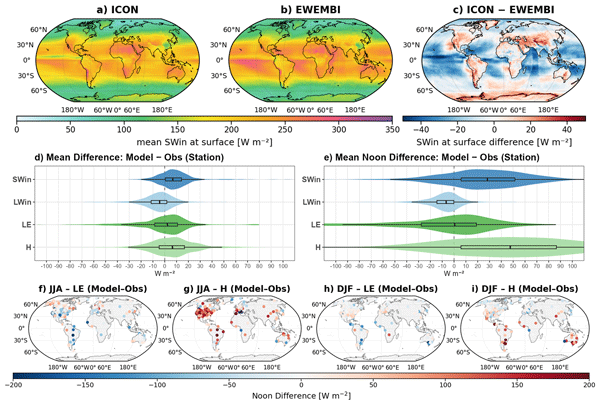
We produce one of the world's most detailed global weather and climate simulations, spanning 4 years and enabling the direct representation of storms rather than approximations. This allows the capture of dangerous events such as strong wind gusts, heavy rain, and powerful tropical and mid-latitude storms everywhere on Earth. Our results show major improvements over traditional climate models, but also reveal remaining challenges in representing large, organized storm systems in the tropics.
Pierre Tiengou, Agnès Ducharne, and Frédérique Cheruy
Earth Syst. Dynam., 17, 843–876, https://doi.org/10.5194/esd-17-843-2026, https://doi.org/10.5194/esd-17-843-2026, 2026
Short summary
Short summary
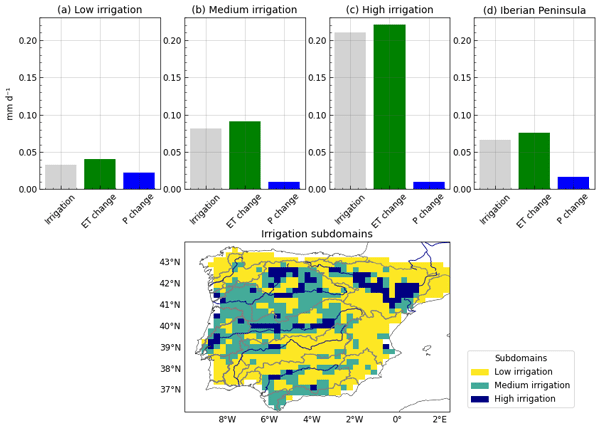
This study analyses simulations of regional climate over the Iberian Peninsula, with and without an explicit simulation of irrigation. It shows that the model matches observations much better with irrigation, particularly river discharge and evapotranspiration. The presence of simulated irrigation also makes the air cooler over irrigated areas and more humid over the whole Peninsula, leading to increases in rainfall, mostly located in the mountains that surround the highly irrigated Ebro Valley.
Andreas F. Prein, Praveen K. Pothapakula, Christian Zeman, Morgane Lalonde, Marius Rixen, Anurag Dipankar, Matthieu Leclair, and Andreas Jocksch
Geosci. Model Dev., 19, 5277–5303, https://doi.org/10.5194/gmd-19-5277-2026, https://doi.org/10.5194/gmd-19-5277-2026, 2026
Short summary
Short summary
We produce one of the world's most detailed global weather and climate simulations, spanning 4 years and enabling the direct representation of storms rather than approximations. This allows the capture of dangerous events such as strong wind gusts, heavy rain, and powerful tropical and mid-latitude storms everywhere on Earth. Our results show major improvements over traditional climate models, but also reveal remaining challenges in representing large, organized storm systems in the tropics.
Eric Sauquet, Guillaume Evin, Sonia Siauve, Ryma Aissat, Patrick Arnaud, Maud Bérel, Jérémie Bonneau, Flora Branger, Yvan Caballero, François Colléoni, Agnès Ducharne, Joël Gailhard, Florence Habets, Frédéric Hendrickx, Louis Héraut, Benoît Hingray, Peng Huang, Tristan Jaouen, Alexis Jeantet, Sandra Lanini, Matthieu Le Lay, Claire Magand, Louise Mimeau, Céline Monteil, Simon Munier, Charles Perrin, Olivier Robelin, Fabienne Rousset, Jean-Michel Soubeyroux, Laurent Strohmenger, Guillaume Thirel, Flore Tocquer, Yves Tramblay, Jean-Pierre Vergnes, and Jean-Philippe Vidal
Hydrol. Earth Syst. Sci., 30, 2277–2300, https://doi.org/10.5194/hess-30-2277-2026, https://doi.org/10.5194/hess-30-2277-2026, 2026
Short summary
Short summary
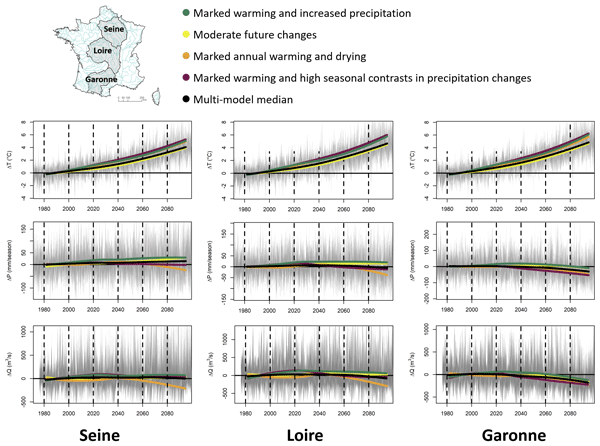
The Explore2 project has provided an unprecedented set of hydrological projections in terms of the number of hydrological models used and the spatial and temporal resolution. The results have been made available through various media. Under the high-emission scenario, the hydrological models mostly agree on the decrease in seasonal flows in the south of France, confirming its hotspot status, and on the decrease in summer flows throughout France, with the exception of the northern part of France.
Guillaume Evin, Benoit Hingray, Guillaume Thirel, Agnès Ducharne, Laurent Strohmenger, Lola Corre, Yves Tramblay, Jean-Philippe Vidal, Jérémie Bonneau, François Colleoni, Joël Gailhard, Florence Habets, Frédéric Hendrickx, Louis Héraut, Peng Huang, Matthieu Le Lay, Claire Magand, Paola Marson, Céline Monteil, Simon Munier, Alix Reverdy, Jean-Michel Soubeyroux, Yoann Robin, Jean-Pierre Vergnes, Mathieu Vrac, and Eric Sauquet
Hydrol. Earth Syst. Sci., 30, 1023–1051, https://doi.org/10.5194/hess-30-1023-2026, https://doi.org/10.5194/hess-30-1023-2026, 2026
Short summary
Short summary
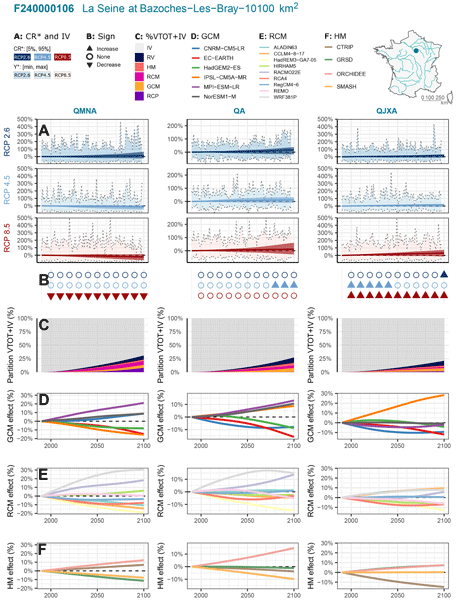
Explore2 provides hydrological projections for 1,735 French catchments. Using QUALYPSO (Quasi-Ergodic Analysis of Climate Projections Using Data Augmentation), this study assesses uncertainties, including internal variability. By the end of the century, low flows are projected to decline in southern France under high emissions, while other indicators remain uncertain. Emission scenarios and regional climate models are key uncertainty sources. Internal variability is often as large as climate-driven changes.

Zacharie Titus, Marine Bonazzola, Hélène Chepfer, Artem G. Feofilov, Marie-Laure Roussel, Benjamin Witschas, and Sophie Bastin
Atmos. Chem. Phys., 26, 443–475, https://doi.org/10.5194/acp-26-443-2026, https://doi.org/10.5194/acp-26-443-2026, 2026
Short summary
Short summary
Aeolus spaceborne Doppler Wind Lidar observes perfectly co-located vertical profiles of clouds and vertical profiles of horizontal wind that can be used to study cloud-wind interactions. At regional scale, we show that over the Indian Ocean, high cloud fractions increase when the Tropical Easterly Jet is active. At a smaller scale, we observe for the first time from space differences in the wind profiles within the cloud and its surrounding clear sky, that can be imputed to convective motions.
Pedro Felipe Arboleda-Obando, Agnès Ducharne, Frédérique Cheruy, and Josefine Ghattas
Earth Syst. Dynam., 16, 2201–2223, https://doi.org/10.5194/esd-16-2201-2025, https://doi.org/10.5194/esd-16-2201-2025, 2025
Short summary
Short summary
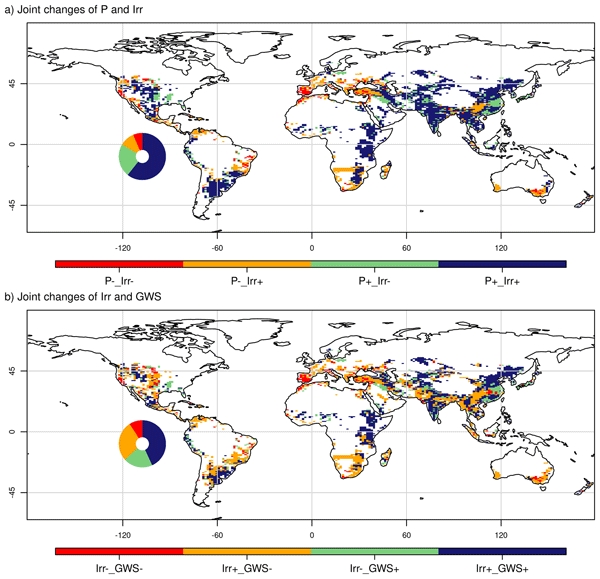
The evolution of irrigation under climate change is analyzed between 1950 and 2100. Results indicate that the influence of irrigation on evapotranspiration in irrigated areas increases in the future (compared to an historical period). Also, the effect of irrigation on water resources is also higher in the future than in the historical period. Finally, we identify areas where future hydroclimate conditions can limit irrigation, or areas where irrigation can increase tensions around water use.
Pierre Brigode and Ludovic Oudin
Hydrol. Earth Syst. Sci., 29, 5535–5553, https://doi.org/10.5194/hess-29-5535-2025, https://doi.org/10.5194/hess-29-5535-2025, 2025
Short summary
Short summary
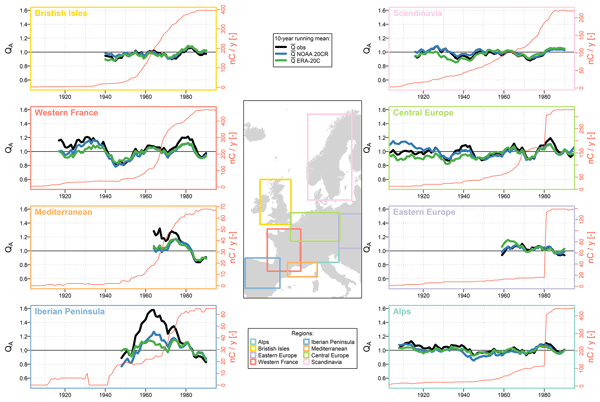
We analyzed how well two global climate datasets can simulate river flows across Europe over the last 150 years. Our results show good performance overall, revealing important long-term changes in water availability and extreme events, like floods, in different regions. This research helps us better understand past and future water trends, providing insights to manage resources and address the challenges posed by climate change.
Elodie Salmon, Bertrand Guenet, and Agnès Ducharne
EGUsphere, https://doi.org/10.5194/egusphere-2025-3511, https://doi.org/10.5194/egusphere-2025-3511, 2025
Short summary
Short summary
Soil organic carbon stockage is a key process to mitigate climate change and is intertwined with soil temperature and moisture and of other secondary soil properties. This study shows the significance of secondary drivers in the relationship between soil moisture and microbial efficiency in soil organic carbon degradation. Using empirical relationships in a global ecosystem model enhanced significantly the heterogeneous spatial pattern of soil organic carbon stock and carbon dioxide fluxes.
Maurin Zouzoua, Sophie Bastin, Fabienne Lohou, Marie Lothon, Marjolaine Chiriaco, Mathilde Jome, Cécile Mallet, Laurent Barthes, and Guylaine Canut
Geosci. Model Dev., 18, 3211–3239, https://doi.org/10.5194/gmd-18-3211-2025, https://doi.org/10.5194/gmd-18-3211-2025, 2025
Short summary
Short summary
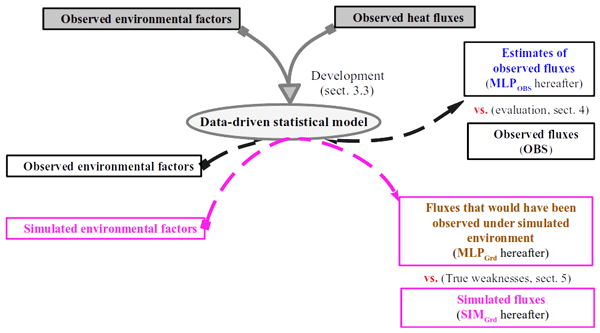
This study proposes using a statistical model to freeze errors due to differences in environmental forcing when evaluating the surface turbulent heat fluxes from numerical simulations with observations. The statistical model is first built with observations and then applied to the simulated environment to generate possibly observed fluxes. This novel method provides insight into differently evaluating the numerical formulation of turbulent heat fluxes with a long period of observational data.
Peng Huang, Agnès Ducharne, Lucia Rinchiuso, Jan Polcher, Laure Baratgin, Vladislav Bastrikov, and Eric Sauquet
Hydrol. Earth Syst. Sci., 28, 4455–4476, https://doi.org/10.5194/hess-28-4455-2024, https://doi.org/10.5194/hess-28-4455-2024, 2024
Short summary
Short summary
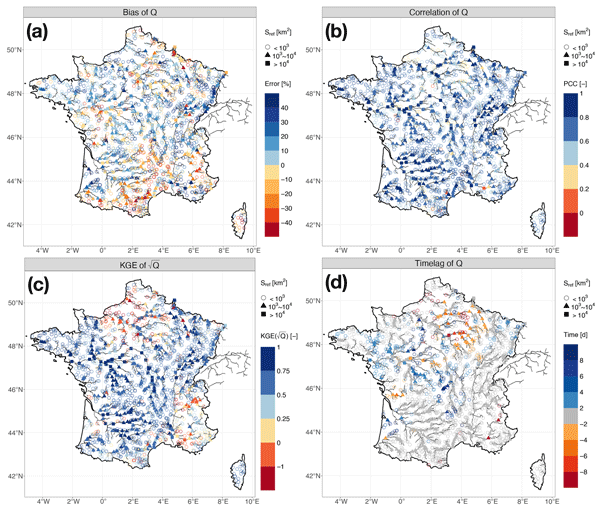
We conducted a high-resolution hydrological simulation from 1959 to 2020 across France. We used a simple trial-and-error calibration to reduce the biases of the simulated water budget compared to observations. The selected simulation satisfactorily reproduces water fluxes, including their spatial contrasts and temporal trends. This work offers a reliable historical overview of water resources and a robust configuration for climate change impact analysis at the nationwide scale of France.
Pedro Felipe Arboleda-Obando, Agnès Ducharne, Zun Yin, and Philippe Ciais
Geosci. Model Dev., 17, 2141–2164, https://doi.org/10.5194/gmd-17-2141-2024, https://doi.org/10.5194/gmd-17-2141-2024, 2024
Short summary
Short summary
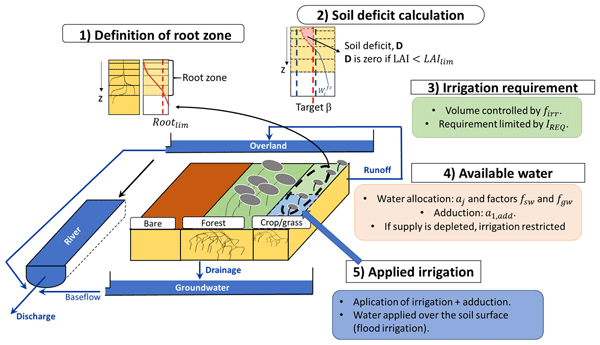
We show a new irrigation scheme included in the ORCHIDEE land surface model. The new irrigation scheme restrains irrigation due to water shortage, includes water adduction, and represents environmental limits and facilities to access water, due to representing infrastructure in a simple way. Our results show that the new irrigation scheme helps simulate acceptable land surface conditions and fluxes in irrigated areas, even if there are difficulties due to shortcomings and limited information.
Thibault Lemaitre-Basset, Ludovic Oudin, Guillaume Thirel, and Lila Collet
Hydrol. Earth Syst. Sci., 26, 2147–2159, https://doi.org/10.5194/hess-26-2147-2022, https://doi.org/10.5194/hess-26-2147-2022, 2022
Short summary
Short summary
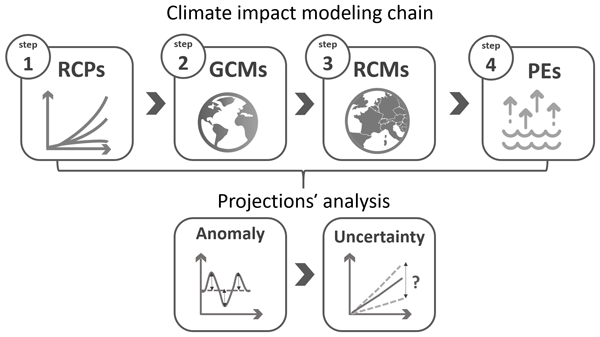
Increasing temperature will impact evaporation and water resource management. Hydrological models are fed with an estimation of the evaporative demand of the atmosphere, called potential evapotranspiration (PE). The objectives of this study were (1) to compute the future PE anomaly over France and (2) to determine the impact of the choice of the method to estimate PE. Our results show that all methods present similar future trends. No method really stands out from the others.
Tom Gleeson, Thorsten Wagener, Petra Döll, Samuel C. Zipper, Charles West, Yoshihide Wada, Richard Taylor, Bridget Scanlon, Rafael Rosolem, Shams Rahman, Nurudeen Oshinlaja, Reed Maxwell, Min-Hui Lo, Hyungjun Kim, Mary Hill, Andreas Hartmann, Graham Fogg, James S. Famiglietti, Agnès Ducharne, Inge de Graaf, Mark Cuthbert, Laura Condon, Etienne Bresciani, and Marc F. P. Bierkens
Geosci. Model Dev., 14, 7545–7571, https://doi.org/10.5194/gmd-14-7545-2021, https://doi.org/10.5194/gmd-14-7545-2021, 2021
Short summary
Short summary
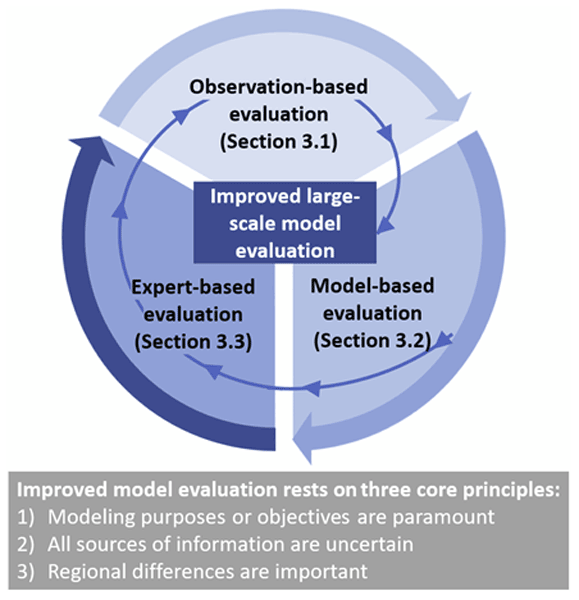
Groundwater is increasingly being included in large-scale (continental to global) land surface and hydrologic simulations. However, it is challenging to evaluate these simulations because groundwater is
hiddenunderground and thus hard to measure. We suggest using multiple complementary strategies to assess the performance of a model (
model evaluation).
Axel P. Belemtougri, Agnès Ducharne, and Harouna Karambiri
Proc. IAHS, 384, 19–23, https://doi.org/10.5194/piahs-384-19-2021, https://doi.org/10.5194/piahs-384-19-2021, 2021
Oscar Javier Rojas Muñoz, Marjolaine Chiriaco, Sophie Bastin, and Justine Ringard
Atmos. Chem. Phys., 21, 15699–15723, https://doi.org/10.5194/acp-21-15699-2021, https://doi.org/10.5194/acp-21-15699-2021, 2021
Short summary
Short summary
A method is developed and evaluated to quantify each process that affects hourly 2 m temperature variations on a local scale, based almost exclusively on observations retrieved from an observatory near the Paris region. Each term involved in surface temperature variations is estimated, and its contribution and importance are also assessed. It is found that clouds are the main modulator on hourly temperature variations for most hours of the day, and thus their characterization is addressed.
Cited articles
Arboleda-Obando, P. F.: Feedback from groundwater and irrigation on past and future climate simulated by the IPSL climate model, PhD, Sorbonne Université, Paris, France, https://theses.hal.science/tel-04079831 (last access: 30 September 2026), 2023.
Arjdal, K.: Modeling the surface-atmosphere coupling in the Moroccan semi-arid plains in the context of climate change, PhD, Institut Polytechnique de Paris et Université Mohammed VI Polytechnique, Benguerir, Marocco, https://theses.hal.science/tel-04601815 (last access: 30 September 2026), 2023.
Barella-Ortiz, A., Polcher, J., Tuzet, A., and Laval, K.: Potential evaporation estimation through an unstressed surface-energy balance and its sensitivity to climate change, Hydrol. Earth Syst. Sci., 17, 4625–4639, https://doi.org/10.5194/hess-17-4625-2013, 2013.
Barlage, M., Chen, F., Rasmussen, R., Zhang, Z., and Miguez-Macho, G.: The Importance of Scale-Dependent Groundwater Processes in Land-Atmosphere Interactions Over the Central United States, Geophys. Res. Lett., 48, e2020GL092171, https://doi.org/10.1029/2020GL092171, 2021.
Barlow, J. F.: Progress in observing and modelling the urban boundary layer. Urban Climate, ICUC8: The 8th International Conference on Urban Climate and the 10th Symposium on the Urban Environment, 10, 216–240, https://doi.org/10.1016/j.uclim.2014.03.011, 2014.
Bernabé, A., Bernard, J., Musy, M., Andrieu, H., Bocher, E., Calmet, I., Kéravec, P., and Rosant, J.-M.: Radiative and heat storage properties of the urban fabric derived from analysis of surface forms, Urban Climate, 12, 205–218, https://doi.org/10.1016/j.uclim.2015.04.001, 2015.
Best, M. J., Abramowitz, G., Johnson, H. R., Pitman, A. J., Balsamo, G., Boone, A., Cuntz, M., Decharme, B., Dirmeyer, P. A., Dong, J., Ek, M., Guo, Z., Haverd, V., Van Den Hurk, B. J. J., Nearing, G. S., Pak, B., Peters-Lidard, C., Santanello, J. A., Stevens, L., and Vuichard, N.: The Plumbing of Land Surface Models: Benchmarking Model Performance, J. Hydrometeorol., 16, 1425–1442, https://doi.org/10.1175/JHM-D-14-0158.1, 2015.
Best, M. J. and Grimmond, C. S. B.: Key Conclusions of the First International Urban Land Surface Model Comparison Project, B. Am. Meteorol. Soc., 96, 805–819, https://doi.org/10.1175/BAMS-D-14-00122.1, 2015.
Bhaskar, A. S., Beesley, L., Burns, M. J., Fletcher, T. D., Hamel, P., Oldham, C. E., and Roy, A. H.: Will it rise or will it fall? Managing the complex effects of urbanization on base flow, Freshw. Sci., 35, 293–310, https://doi.org/10.1086/685084, 2016.
Blyth, E. M., Arora, V. K., Clark, D. B., Dadson, S. J., De Kauwe, M. G., Lawrence, D. M., Melton, J. R., Pongratz, J., Turton, R. H., Yoshimura, K., and Yuan, H.: Advances in Land Surface Modelling, Curr. Clim. Change Rep., 7, 45–71, https://doi.org/10.1007/s40641-021-00171-5, 2021.
Boucher, O., Servonnat, J., Albright, A. L., Aumont, O., Balkanski, Y., Bastrikov, V., Bekki, S., Bonnet, R., Bony, S., Bopp, L., Braconnot, P., Brockmann, P., Cadule, P., Caubel, A., Cheruy, F., Codron, F., Cozic, A., Cugnet, D., D'Andrea, F., Davini, P., De Lavergne, C., Denvil, S., Deshayes, J., Devilliers, M., Ducharne, A., Dufresne, J., Dupont, E., Éthé, C., Fairhead, L., Falletti, L., Flavoni, S., Foujols, M., Gardoll, S., Gastineau, G., Ghattas, J., Grandpeix, J., Guenet, B., Guez, L., E., Guilyardi, E., Guimberteau, M., Hauglustaine, D., Hourdin, F., Idelkadi, A., Joussaume, S., Kageyama, M., Khodri, M., Krinner, G., Lebas, N., Levavasseur, G., Lévy, C., Li, L., Lott, F., Lurton, T., Luyssaert, S., Madec, G., Madeleine, J., Maignan, F., Marchand, M., Marti, O., Mellul, L., Meurdesoif, Y., Mignot, J., Musat, I., Ottlé, C., Peylin, P., Planton, Y., Polcher, J., Rio, C., Rochetin, N., Rousset, C., Sepulchre, P., Sima, A., Swingedouw, D., Thiéblemont, R., Traore, A.K., Vancoppenolle, M., Vial, J., Vialard, J., Viovy, N., and Vuichard, N.: Presentation and Evaluation of the IPSL-CM6A-LR Climate Model, J. Adv. Model. Earth Sy., 12, e2019MS002010, https://doi.org/10.1029/2019MS002010, 2020.
Buckingham, E.: Studies on the movement of soil moisture, US Dept. Agic. Bur. Soils Bull., 38, https://archive.org/details/studiesonmovemen38buck/page/n1/mode/2up (last access: 30 September 2026), 1907.
Campoy, A.: Influence de l'hydrologie souterraine sur la modélisation du climat à l'échelle régionale et globale, PhD, Université Pierre et Marie Curie, Paris, France, https://theses.hal.science/tel-00934826 (last access: 30 September 2026), 2013.
Chéruy, F.: Etude par modélisation des interactions surface-atmosphère à l'échelle globale (HDR), Sorbonne Université, Paris, France, 2018.
Ching, J., Mills, G., Bechtel, B., See, L., Feddema, J., Wang, X., Ren, C., Brousse, O., Martilli, A., Neophytou, M., Mouzourides, P., Stewart, I., Hanna, A., Ng, E., Foley, M., Alexander, P., Aliaga, D., Niyogi, D., Shreevastava, A., Bhalachandran, P., Masson, V., Hidalgo, J., Fung, J., Andrade, M., Baklanov, A., Dai, W., Milcinski, G., Demuzere, M., Brunsell, N., Pesaresi, M., Miao, S., Mu, Q., Chen, F., and Theeuwes, N.: WUDAPT: An Urban Weather, Climate, and Environmental Modeling Infrastructure for the Anthropocene, B. Am. Meteorol. Soc., 99, 1907–1924, https://doi.org/10.1175/BAMS-D-16-0236.1, 2018.
Darcy, H.: Les fontaines publiques de la ville de Dijon: exposition et application des principes à suivre et des formules à employer dans les questions de distribution d'eau, Victor Dalmont, Paris, France, https://archive.org/details/bub_gb_zCI4EpPPO1YC (last access: 30 September 2026), 1856.
De Rosnay, P., Polcher, J., Bruen, M., and Laval, K.: Impact of a physically based soil water flow and soil-plant interaction representation for modeling large-scale land surface processes, J. Geophys. Res., 107, https://doi.org/10.1029/2001JD000634, 2002.
Doms, G., Förstner, J., Heise, E., Reinhardt, T., Ritter, B., and Schrodin, R.: A Description of the Nonhydrostatic Regional COSMO-Model, Deutscher Wetterdienst (DWD), Offenbach, Germany, for the Consortium for Small-Scale Modelling (COSMO), https://www.dwd.de/EN/ourservices/cosmo_documentation/pdf_docu_v5_05/2_cosmo_physics_5_05_en.pdf?__blob=publicationFile&v=2 (last access: 30 September 2026), 2011.
d'Orgeval, T.: Impact du changement climatique sur le cycle de l'eau en Afrique de l'Ouest : modélisation et incertitudes, PhD, Université Pierre et Marie Curie, Paris, France, https://primo.sorbonne-universite.fr/permalink/33BSU_INST/1tgv902/alma991002633079806616 (last access: 30 September 2026), 2006.
d'Orgeval, T., Polcher, J., and de Rosnay, P.: Sensitivity of the West African hydrological cycle in ORCHIDEE to infiltration processes, Hydrol. Earth Syst. Sci., 12, 1387–1401, https://doi.org/10.5194/hess-12-1387-2008, 2008.
Ducharne, A., Maignan, F., Vuichard, N., Ghattas, J., Wang, F., Peylin, P., Polcher, J., Guimberteau, M., Maugis, P., Tafasca, S., Tootchi, A., Verhoef, A., and Mizuochi, H.: The hydrol module of ORCHIDEE: scientific documentation, https://forge.ipsl.fr/orchidee/attachment/wiki/Documentation/eqs_hydrol_25April2018_Ducharne.pdf (last access: 30 September 2026), 2018.
European Environment Agency: Copernicus Land Monitoring Service (CLMS): Urban Atlas Land Cover/Land Use and Street Tree Layer 2012 and 2018 – Product User Manual, version 6.3 (No. 6.3.1), https://library.land.copernicus.eu/products/Urban_Atlas_Land_Cover-Land_Use_and_Street_Tree_Layer_2012_and_2018_PUM_v6.pdf (last access: 30 September 2026), 2020.
Fisher, R. A. and Koven, C. D.: Perspectives on the Future of Land Surface Models and the Challenges of Representing Complex Terrestrial Systems, J. Adv. Model. Earth Sy., 12, e2018MS001453, https://doi.org/10.1029/2018MS001453, 2020.
Fletcher, T. D., Andrieu, H., and Hamel, P.: Understanding, management and modelling of urban hydrology and its consequences for receiving waters: A state of the art, Adv. Water Resour., 51, 261–279, https://doi.org/10.1016/j.advwatres.2012.09.001, 2013.
Green, W. H. and Ampt, G. A.: Studies on Soil Phyics, J. Agr. Sci., 4, 1–24, https://doi.org/10.1017/S0021859600001441, 1911.
Güneralp, B., Reba, M., Hales, B. U., Wentz, E. A., and Seto, K. C.: Trends in urban land expansion, density, and land transitions from 1970 to 2010: a global synthesis, Environ. Res. Lett., 15, 044015, https://doi.org/10.1088/1748-9326/ab6669, 2020.
Hamilton, I. G., Davies, M., Steadman, P., Stone, A., Ridley, I., and Evans, S.: The significance of the anthropogenic heat emissions of London's buildings: A comparison against captured shortwave solar radiation, Build. Environ., 44, 807–817, https://doi.org/10.1016/j.buildenv.2008.05.024, 2009.
He, C., Valayamkunnath, P., Barlage, M., Chen, F., Gochis, D., Cabell, R., Schneider, T., Rasmussen, R., Niu, G.-Y., Yang, Z.-L., Niyogi, D., and Ek, M.: The Community Noah-MP Land Surface Modeling System Technical Description Version 5.0, NCAR/UCAR, https://doi.org/10.5065/EW8G-YR95, 2023.
Hertwig, D., Grimmond, S., Hendry, M. A., Saunders, B., Wang, Z., Jeoffrion, M., Vidale, P. L., McGuire, P. C., Bohnenstengel, S. I., Ward, H. C., and Kotthaus, S.: Urban signals in high-resolution weather and climate simulations: role of urban land-surface characterisation, Theor. Appl. Climatol., 142, 701–728, https://doi.org/10.1007/s00704-020-03294-1, 2020.
Jacobson, C. R.: Identification and quantification of the hydrological impacts of imperviousness in urban catchments: A review, J. Environ. Manage., 92, 1438–1448, https://doi.org/10.1016/j.jenvman.2011.01.018, 2011.
Jin, L., Schubert, S., Fenner, D., Meier, F., and Schneider, C.: Integration of a Building Energy Model in an Urban Climate Model and its Application, Bound.-Lay. Meteorol., 178, 249–281, https://doi.org/10.1007/s10546-020-00569-y, 2021.
Johra, H.: Thermal properties of building materials – Review and database. Department of the Built Environment, Aalborg University, https://doi.org/10.54337/aau456230861, 2021.
Jongen, H. J., Lipson, M., Teuling, A. J., Grimmond, S., Baik, J.-J., Best, M., Demuzere, M., Fortuniak, K., Huang, Y., De Kauwe, M. G., Li, R., McNorton, J., Meili, N., Oleson, K., Park, S.-B., Sun, T., Tsiringakis, A., Varentsov, M., Wang, C., Wang, Z.-H., and Steeneveld, G. J.: The Water Balance Representation in Urban-PLUMBER Land Surface Models, J. Adv. Model. Earth Sy., 16, e2024MS004231, https://doi.org/10.1029/2024MS004231, 2024.
Jongen, H. J., Lipson, M., Teuling, A. J., Grimmond, S., Best, M., Baik, J.-J., Demuzere, M., Fortuniak, K., Huang, Y., De Kauwe, M., Meili, N., Park, S.-B., Wang, C., Wang, Z., and Steeneveld, G. J.: Surface Runoff Discrepancy in Urban-PLUMBER Land Surface Models, Geophys. Res. Lett., 53, e2026GL122048, https://doi.org/10.1029/2026GL122048, 2026.
Karsisto, P., Fortelius, C., Demuzere, M., Grimmond, C. S. B., Oleson, K. W., Kouznetsov, R., Masson, V., and Järvi, L.: Seasonal surface urban energy balance and wintertime stability simulated using three land-surface models in the high-latitude city Helsinki, Q. J. Roy. Meteor. Soc., 142, 401–417, https://doi.org/10.1002/qj.2659, 2016.
Kotopouleas, A., Giridharan, R., Nikolopoulou, M., Watkins, R., and Yeninarcilar, M.: Experimental investigation of the impact of urban fabric on canyon albedo using a 1:10 scaled physical model, Sol. Energy, 230, 449–461, https://doi.org/10.1016/j.solener.2021.09.074, 2021.
Krayenhoff, E. S., Christen, A., Martilli, A., and Oke, T. R.: A Multi-layer Radiation Model for Urban Neighbourhoods with Trees, Bound.-Lay. Meteorol., 151, 139–178, https://doi.org/10.1007/s10546-013-9883-1, 2014.
Krinner, G., Viovy, N., de Noblet-Ducoudré, N., Ogée, J., Polcher, J., Friedlingstein, P., Ciais, P., Sitch, S., and Prentice, I. C.: A dynamic global vegetation model for studies of the coupled atmosphere-biosphere system, Global Biogeochem. Cy., 19, https://doi.org/10.1029/2003GB002199, 2005.
Kusaka, H., Kondo, H., Kikegawa, Y., and Kimura, F.: A Simple Single-Layer Urban Canopy Model For Atmospheric Models: Comparison With Multi-Layer And Slab Models, Bound.-Lay. Meteorol., 101, 329–358, https://doi.org/10.1023/A:1019207923078, 2001.
Lalonde, M., Bastin, S., Oudin, L., Arboleda Obando, P. F., and Ducharne, A.: Simulations – Benchmarking a new urban scheme in the ORCHIDEE 2.2 land surface model, Zenodo [data set], https://doi.org/10.5281/zenodo.22894416, 2026a.
Lalonde, M., Bastin, S., Oudin, L., Arboleda Obando, P. F., and Ducharne, A.: Scripts – Benchmarking a new urban scheme in the ORCHIDEE 2.2 land surface model, Zenodo [code], https://doi.org/10.5281/zenodo.22934329, 2026b.
Lalonde, M., Bastin, S., Oudin, L., Arboleda-Obando, P., and Ducharne, A.: Source Code – Benchmarking a new urban scheme in the ORCHIDEE 2.2 land surface model, Zenodo [code], https://doi.org/10.5281/zenodo.18413342, 2026c.
Langendijk, G. S., Halenka, T., Hoffmann, P., Adinolfi, M., Aldama Campino, A., Asselin, O., Bastin, S., Bechtel, B., Belda, M., Bushenkova, A., Campanale, A., Chun, K. P., Constantinidou, K., Coppola, E., Demuzere, M., Doan, Q.-V., Evans, J., Feldmann, H., Fernandez, J., Fita, L., Hadjinicolaou, P., Hamdi, R., Hundhausen, M., Grawe, D., Johannsen, F., Milovac, J., Katragkou, E., Kerroumi, N. E. I., Kotlarski, S., Le Roy, B., Lemonsu, A., Lennard, C., Lipson, M., Mandal, S., Muñoz Pabón, L. E., Pavlidis, V., Pietikäinen, J.-P., Raffa, M., Raluy-López, E., Rechid, D., Ito, R., Schulz, J.-P., Soares, P. M. M., Takane, Y., Teichmann, C., Thatcher, M., Top, S., Van Schaeybroeck, B., Wang, F., and Yuan, J.: Towards better understanding the urban environment and its interactions with regional climate change – The WCRP CORDEX Flagship Pilot Study URB-RCC, Urban Climate, 58, 102165, https://doi.org/10.1016/j.uclim.2024.102165, 2024.
Lawrence, D. M., Fisher, R. A., Koven, C. D., Oleson, K. W., Swenson, S.C., Bonan, G., Collier, N., Ghimire, B., Van Kampenhout, L., Kennedy, D., Kluzek, E., Lawrence, P. J., Li, F., Li, H., Lombardozzi, D., Riley, W. J., Sacks, W. J., Shi, M., Vertenstein, M., Wieder, W. R., Xu, C., Ali, A. A., Badger, A.M., Bisht, G., Van Den Broeke, M., Brunke, M. A., Burns, S. P., Buzan, J., Clark, M., Craig, A., Dahlin, K., Drewniak, B., Fisher, J. B., Flanner, M., Fox, A. M., Gentine, P., Hoffman, F., Keppel-Aleks, G., Knox, R., Kumar, S., Lenaerts, J., Leung, L. R., Lipscomb, W. H., Lu, Y., Pandey, A., Pelletier, J. D., Perket, J., Randerson, J. T., Ricciuto, D. M., Sanderson, B. M., Slater, A., Subin, Z. M., Tang, J., Thomas, R. Q., Val Martin, M., and Zeng, X.: The Community Land Model Version 5: Description of New Features, Benchmarking, and Impact of Forcing Uncertainty, J. Adv. Model. Earth Sy., 11, 4245–4287, https://doi.org/10.1029/2018MS001583, 2019.
Lemonsu, A., Masson, V., and Berthier, E.: Improvement of the hydrological component of an urban soil–vegetation–atmosphere–transfer model, Hydrol. Process., 21, 2100–2111, https://doi.org/10.1002/hyp.6373, 2007.
Lemonsu, A., Masson, V., Shashua-Bar, L., Erell, E., and Pearlmutter, D.: Inclusion of vegetation in the Town Energy Balance model for modelling urban green areas, Geosci. Model Dev., 5, 1377–1393, https://doi.org/10.5194/gmd-5-1377-2012, 2012.
Lindberg, F., Olofson, K. F. G., Sun, T., Grimmond, C. S. B., and Feigenwinter, C.: Urban storage heat flux variability explored using satellite, meteorological and geodata, Theor. Appl. Climatol., 141, 271–284, https://doi.org/10.1007/s00704-020-03189-1, 2020.
Lipson, M., Grimmond, S., Best, M., Chow, W., Christen, A., Chrysoulakis, N., Coutts, A., Crawford, B., Earl, S., Evans, J., Fortuniak, K., Heusinkveld, B. G., Hong, J.-W., Hong, J., Järvi, L., Jo, S., Kim, Y.-H., Kotthaus, S., Lee, K., Masson, V., McFadden, J. P., Michels, O., Pawlak, W., Roth, M., Sugawara, H., Tapper, N., Velasco, E., and Ward, H. C.: Data for “Harmonized gap-filled dataset from 20 urban flux tower sites” for the Urban-PLUMBER project, Zenodo [data set], https://doi.org/10.5281/zenodo.7104984, 2022a.
Lipson, M., Grimmond, S., Best, M., Chow, W. T. L., Christen, A., Chrysoulakis, N., Coutts, A., Crawford, B., Earl, S., Evans, J., Fortuniak, K., Heusinkveld, B. G., Hong, J.-W., Hong, J., Järvi, L., Jo, S., Kim, Y.-H., Kotthaus, S., Lee, K., Masson, V., McFadden, J. P., Michels, O., Pawlak, W., Roth, M., Sugawara, H., Tapper, N., Velasco, E., and Ward, H. C.: Harmonized gap-filled datasets from 20 urban flux tower sites, Earth Syst. Sci. Data, 14, 5157–5178, https://doi.org/10.5194/essd-14-5157-2022, 2022b.
Lipson, M., Grimmond, S., Best, M., Abramowitz, G., Coutts, A., Tapper, N., Baik, J.-J., Beyers, M., Blunn, L., Boussetta, S., Bou-Zeid, E., De Kauwe, M. G., de Munck, C., Demuzere, M., Fatichi, S., Fortuniak, K., Han, B.-S., Hendry, M. A., Kikegawa, Y., Kondo, H., Lee, D.-I., Lee, S.-H., Lemonsu, A., Machado, T., Manoli, G., Martilli, A., Masson, V., McNorton, J., Meili, N., Meyer, D., Nice, K. A., Oleson, K., Park, S.-B., Roth, M., Schoetter, R., Simón-Moral, A., Steeneveld, G.-J., Sun, T., Takane, Y., Thatcher, M., Tsiringakis, A., Varentsov, M., Wang, C., Wang, Z.-H., and Pitman, A. J.: Evaluation of 30 urban land surface models in the Urban-PLUMBER project: Phase 1 results, Q. J. Roy. Meteor. Soc., 150, 126–169, https://doi.org/10.1002/qj.4589, 2024.
Loridan, T. and Grimmond, C. S. B.: Characterization of Energy Flux Partitioning in Urban Environments: Links with Surface Seasonal Properties, J. Appl. Meteorol. Clim., 51, 219–241, https://doi.org/10.1175/JAMC-D-11-038.1, 2012.
Lucas-Picher, P., Argüeso, D., Brisson, E., Tramblay, Y., Berg, P., Lemonsu, A., Kotlarski, S., and Caillaud, C.: Convection-permitting modeling with regional climate models: Latest developments and next steps, WIREs Clim. Change, 12, e731, https://doi.org/10.1002/wcc.731, 2021.
Lurton, T., Balkanski, Y., Bastrikov, V., Bekki, S., Bopp, L., Braconnot, P., Brockmann, P., Cadule, P., Contoux, C., Cozic, A., Cugnet, D., Dufresne, J.-L., Éthé, C., Foujols, M.-A., Ghattas, J., Hauglustaine, D., Hu, R.-M., Kageyama, M., Khodri, M., Lebas, N., Levavasseur, G., Marchand, M., Ottlé, C., Peylin, P., Sima, A., Szopa, S., Thiéblemont, R., Vuichard, N., and Boucher, O.: Implementation of the CMIP6 Forcing Data in the IPSL-CM6A-LR Model, J. Adv. Model. Earth Sy., 12, e2019MS001940, https://doi.org/10.1029/2019MS001940, 2020.
Martilli, A., Clappier, A., and Rotach, M. W.: An Urban Surface Exchange Parameterisation for Mesoscale Models, Bound.-Lay. Meteorol., 104, 261–304, https://doi.org/10.1023/A:1016099921195, 2002.
Masson, V.: A Physically-Based Scheme For The Urban Energy Budget In Atmospheric Models, Bound.-Lay. Meteorol., 94, 357–397, https://doi.org/10.1023/A:1002463829265, 2000.
Masson, V., Le Moigne, P., Martin, E., Faroux, S., Alias, A., Alkama, R., Belamari, S., Barbu, A., Boone, A., Bouyssel, F., Brousseau, P., Brun, E., Calvet, J.-C., Carrer, D., Decharme, B., Delire, C., Donier, S., Essaouini, K., Gibelin, A.-L., Giordani, H., Habets, F., Jidane, M., Kerdraon, G., Kourzeneva, E., Lafaysse, M., Lafont, S., Lebeaupin Brossier, C., Lemonsu, A., Mahfouf, J.-F., Marguinaud, P., Mokhtari, M., Morin, S., Pigeon, G., Salgado, R., Seity, Y., Taillefer, F., Tanguy, G., Tulet, P., Vincendon, B., Vionnet, V., and Voldoire, A.: The SURFEXv7.2 land and ocean surface platform for coupled or offline simulation of earth surface variables and fluxes, Geosci. Model Dev., 6, 929–960, https://doi.org/10.5194/gmd-6-929-2013, 2013.
Mauder, M., Foken, T., and Cuxart, J.: Surface-Energy-Balance Closure over Land: A Review, Bound.-Lay. Meteorol., 177, 395–426, https://doi.org/10.1007/s10546-020-00529-6, 2020.
Michau, Y., Lemonsu, A., Lucas-Picher, P., Bastin, S., Caillaud, C., de Vries, H., Adinolfi, M., Raffa, M., Katragkou, E., and Coppola, E.: Projected evolution of the Urban climate and heatwaves using an ensemble of convection-permitting regional climate models, Climatic Change, 178, 154, https://doi.org/10.1007/s10584-025-03990-9, 2025.
Mualem, Y.: A new model for predicting the hydraulic conductivity of unsaturated porous media, Water Resour. Res., 12, 513–522, https://doi.org/10.1029/WR012i003p00513, 1976.
Myrup, L. O.: A Numerical Model of the Urban Heat Island, J. Appl. Meteorol. Clim., 8, 908–918, https://doi.org/10.1175/1520-0450(1969)008<0908:ANMOTU>2.0.CO;2, 1969.
Niu, G.-Y., Yang, Z.-L., Mitchell, K. E., Chen, F., Ek, M. B., Barlage, M., Kumar, A., Manning, K., Niyogi, D., Rosero, E., Tewari, M., and Xia, Y.: The community Noah land surface model with multiparameterization options (Noah-MP): 1. Model description and evaluation with local-scale measurements, J. Geophys. Res.-Atmos., 116, https://doi.org/10.1029/2010JD015139, 2011.
Oke, T. R.: The urban energy balance, Prog. Phys. Geog., 12, 471–508, https://doi.org/10.1177/030913338801200401, 1988.
Oleson, K., Bonan, G. B., Feddema, J., Vertenstein, M., and Grimmond, C. S. B.: An Urban Parameterization for a Global Climate Model. Part I: Formulation and Evaluation for Two Cities, J. Appl. Meteorol. Clim., 47, 1038–1060, https://doi.org/10.1175/2007JAMC1597.1, 2008.
Oudin, L., Salavati, B., Furusho-Percot, C., Ribstein, P., and Saadi, M.: Hydrological impacts of urbanization at the catchment scale. J. Hydrol., 559, 774–786, https://doi.org/10.1016/j.jhydrol.2018.02.064, 2018.
Prein, A. F., Pothapakula, P. K., Zeman, C., Lalonde, M., Rixen, M., Dipankar, A., Leclair, M., and Jocksch, A.: From single storms to large-scale waves: a multi-year kilometer-scale global simulation, Geosci. Model Dev., 19, 5277–5303, https://doi.org/10.5194/gmd-19-5277-2026, 2026.
Qin, Y.: Urban canyon albedo and its implication on the use of reflective cool pavements, Energ. Buildings, 96, 86–94, https://doi.org/10.1016/j.enbuild.2015.03.005, 2015.
Raddatz, T. J., Reick, C. H., Knorr, W., Kattge, J., Roeckner, E., Schnur, R., Schnitzler, K.-G., Wetzel, P., and Jungclaus, J.: Will the tropical land biosphere dominate the climate–carbon cycle feedback during the twenty-first century?, Clim. Dynam., 29, 565–574, https://doi.org/10.1007/s00382-007-0247-8, 2007.
Redon, E., Lemonsu, A., and Masson, V.: An urban trees parameterization for modeling microclimatic variables and thermal comfort conditions at street level with the Town Energy Balance model (TEB-SURFEX v8.0), Geosci. Model Dev., 13, 385–399, https://doi.org/10.5194/gmd-13-385-2020, 2020.
Rigo, G. and Parlow, E.: Modelling the ground heat flux of an urban area using remote sensing data, Theor. Appl. Climatol., 90, 185–199, 2007.
Saadi, M., Oudin, L., and Ribstein, P.: Crossing the rural–urban boundary in hydrological modelling: How do conceptual rainfall–runoff models handle the specificities of urbanized catchments?, Hydrol. Process., 34, 3331–3346, https://doi.org/10.1002/hyp.13808, 2020.
Schär, C., Fuhrer, O., Arteaga, A., Ban, N., Charpilloz, C., Girolamo, S. D., Hentgen, L., Hoefler, T., Lapillonne, X., Leutwyler, D., Osterried, K., Panosetti, D., Rüdisühli, S., Schlemmer, L., Schulthess, T. C., Sprenger, M., Ubbiali, S., and Wernli, H.: Kilometer-Scale Climate Models: Prospects and Challenges, B. Am. Meteorol. Soc., 101, E567–E587, https://doi.org/10.1175/BAMS-D-18-0167.1, 2020.
Seto, K. C., Güneralp, B., and Hutyra, L. R.: Global forecasts of urban expansion to 2030 and direct impacts on biodiversity and carbon pools, P. Natl. Acad. Sci., 109, 16083–16088, https://doi.org/10.1073/pnas.1211658109, 2012.
Shahi, N. K., Polcher, J., Bastin, S., Pennel, R., and Fita, L.: Assessment of the spatio-temporal variability of the added value on precipitation of convection-permitting simulation over the Iberian Peninsula using the RegIPSL regional earth system model, Clim. Dynam., 59, 471, https://doi.org/10.1007/s00382-022-06138-y, 2022.
Stavropulos-Laffaille, X., Chancibault, K., Brun, J.-M., Lemonsu, A., Masson, V., Boone, A., and Andrieu, H.: Improvements to the hydrological processes of the Town Energy Balance model (TEB-Veg, SURFEX v7.3) for urban modelling and impact assessment, Geosci. Model Dev., 11, 4175–4194, https://doi.org/10.5194/gmd-11-4175-2018, 2018.
Stavropulos-Laffaille, X., Chancibault, K., Andrieu, H., Lemonsu, A., Calmet, I., Keravec, P., and Masson, V.: Coupling detailed urban energy and water budgets with TEB-Hydro model: Towards an assessment tool for nature based solution performances, Urban Climate, 39, 100925, https://doi.org/10.1016/j.uclim.2021.100925, 2021.
Stevens, B., Satoh, M., Auger, L., Biercamp, J., Bretherton, C. S., Chen, X., Düben, P., Judt, F., Khairoutdinov, M., Klocke, D., Kodama, C., Kornblueh, L., Lin, S.-J., Neumann, P., Putman, W. M., Röber, N., Shibuya, R., Vanniere, B., Vidale, P. L., Wedi, N., and Zhou, L.: DYAMOND: the DYnamics of the Atmospheric general circulation Modeled On Non-hydrostatic Domains, Prog. Earth Planet Sc., 6, 61, https://doi.org/10.1186/s40645-019-0304-z, 2019.
Sun, Y., Zhang, N., Ao, X., and Gao, Y.: Numerical Studies on the Influence of Building Morphology on Urban Canopy Wind Speed, J. Adv. Model. Earth Sy., 16, e2023MS003881, https://doi.org/10.1029/2023MS003881, 2024.
Tafasca, S., Ducharne, A., and Valentin, C.: Weak sensitivity of the terrestrial water budget to global soil texture maps in the ORCHIDEE land surface model, Hydrol. Earth Syst. Sci., 24, 3753–3774, https://doi.org/10.5194/hess-24-3753-2020, 2020.
Van Genuchten, M. T.: A Closed-form Equation for Predicting the Hydraulic Conductivity of Unsaturated Soils, Soil Sci. Soc. Am. J., 44, 892–898, https://doi.org/10.2136/sssaj1980.03615995004400050002x, 1980.
Verhoef, A., Zeng, Y., Agam, N., Best, M., Bonetti, S., Boussetta, S., Chaney, N., Cuntz, M., Edwards, J., Gupta, S., Heitman, J., Huang, M., Jarvis, N., Jiang, S., Kandala, R., Kiałka, F., Lian, T., Mu, M., Nemes, A., Paulus, S. J., Raoult, N., Reddy, K. N., Romano, N., Sabot, M., Vanderborght, J., van der Ploeg, M., van Oevelen, P., Wang, Yong, Wang, Yunquan, Weber, T. K. D., Marthews, T., and Weihermüller, L.: Rethinking Soils in Land Surface Models, B. Am. Meteorol. Soc., 107, E665–E674, https://doi.org/10.1175/BAMS-D-26-0003.1, 2026.
Wonorahardjo, S., Sutjahja, I. M., Mardiyati, Y., Andoni, H., Thomas, D., Achsani, R. A., and Steven, S.: Characterising thermal behaviour of buildings and its effect on urban heat island in tropical areas, Int. J. Energy Environ. Eng., 11, 129–142, https://doi.org/10.1007/s40095-019-00317-0, 2020.
Wouters, H., Demuzere, M., Ridder, K. D., and Van Lipzig, N. P. M.: The impact of impervious water-storage parametrization on urban climate modelling, Urban Climate, 11, 24–50, https://doi.org/10.1016/j.uclim.2014.11.005, 2015.
Wouters, H., Demuzere, M., Blahak, U., Fortuniak, K., Maiheu, B., Camps, J., Tielemans, D., and van Lipzig, N. P. M.: The efficient urban canopy dependency parametrization (SURY) v1.0 for atmospheric modelling: description and application with the COSMO-CLM model for a Belgian summer, Geosci. Model Dev., 9, 3027–3054, https://doi.org/10.5194/gmd-9-3027-2016, 2016.
Zhao, L., Oleson, K., Bou-Zeid, E., Krayenhoff, E. S., Bray, A., Zhu, Q., Zheng, Z., Chen, C., and Oppenheimer, M.: Global multi-model projections of local urban climates, Nat. Clim. Change, 11, 152–157, https://doi.org/10.1038/s41558-020-00958-8, 2021.
Short summary
Some climate models still represent cities as if they were natural ground. For one of these models, we built a new way to represent cities. The update includes how reflective surfaces are, building height, stored heat, and how much ground is sealed. The novelty is to treat sealed ground not only at the surface, but also below it. Tested at twenty urban sites, the new version better represents exchanges of energy between the ground and the air, supporting more reliable urban climate studies.
Some climate models still represent cities as if they were natural ground. For one of these...


