
Articles | Volume 19, issue 18
https://doi.org/10.5194/gmd-19-9063-2026
© Author(s) 2026. This work is distributed under
the Creative Commons Attribution 4.0 License.
the Creative Commons Attribution 4.0 License.
https://doi.org/10.5194/gmd-19-9063-2026
© Author(s) 2026. This work is distributed under
the Creative Commons Attribution 4.0 License.
the Creative Commons Attribution 4.0 License.
Model description paper
| 
24 Sep 2026
Model description paper |
| 24 Sep 2026
| 24 Sep 2026
Natural methane emissions feedbacks in MAGICC v. 7.6
Trevor Sloughter
CORRESPONDING AUTHOR

Centre for Environmental Policy, Imperial College London, SW20 8RP London, United Kingdom
Department of Geography, University of Exeter, EX4 4QJ Exeter, United Kingdom
Zebedee Nicholls
International Institute for Applied Systems Analysis, 2361 Laxenburg, Austria
Gang Tang
School of Geography, Earth and Atmospheric Sciences, The University of Melbourne, Melbourne, Australia
Department of Biogeochemical Signals, Max Planck Institute for Biogeochemistry, Jena, Germany
Thomas Kleinen
Max Planck Institute for Meteorology, 20146 Hamburg, Germany
Zhen Zhang
Institute of Tibetan Plateau Research, Chinese Academy of Sciences, 100101 Beijing, China
Joeri Rogelj
Centre for Environmental Policy, Imperial College London, SW20 8RP London, United Kingdom
International Institute for Applied Systems Analysis, 2361 Laxenburg, Austria
Grantham Institute for Climate Change and the Environment, Imperial College London, SW7 2AZ London, United Kingdom
Related authors
No articles found.
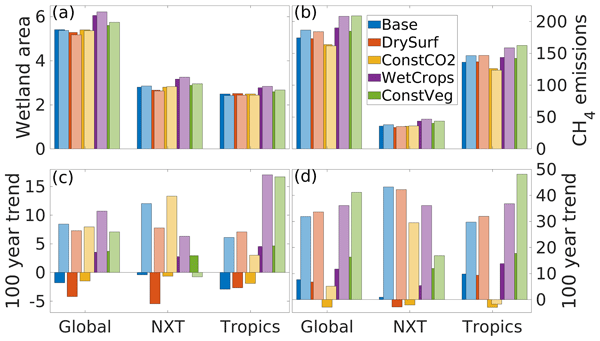
Stiig Wilkenskjeld, Thomas Kleinen, Tobias Stacke, and Victor Brovkin
Biogeosciences, 23, 6583–6598, https://doi.org/10.5194/bg-23-6583-2026, https://doi.org/10.5194/bg-23-6583-2026, 2026
Short summary
Short summary
Methane is the second most important greenhouse gas with high potential for short term reductions of human induced global warming. We model methane emissions from the most important and most uncertain natural source: wetlands. We investigate how a number of assumptions, including human impact on natural wetlands, influences the wetlands and their methane emissions. Of the tested influences we find the most important to be how humans are altering the soil surface.

Jiawei Jiang, Zhifeng Yan, Jinshi Jian, Jesper Riis Christiansen, Xinchu Wang, Ren-Min Yang, Zhen Zhang, and Philippe Ciais
Earth Syst. Sci. Data, 18, 6783–6797, https://doi.org/10.5194/essd-18-6783-2026, https://doi.org/10.5194/essd-18-6783-2026, 2026
Short summary
Short summary
Soil methane uptake represents the second-largest sink of atmospheric methane but the field observations have not yet been systematically compiled. Here, we compiled an open global soil methane uptake database from the 1980s, covering most regions in multi-timescale along with the soil moisture and temperature data. The data show strong seasonal changes and different controls across biomes, helping improve climate estimates, models, and satellite evaluations.
Alexander Nauels, Tessa Möller, Victor Couplet, Robert E. Kopp, Praveen Kumar, Matthias Mengel, Gregory Munday, Zebedee R. J. Nicholls, Lennart Ramme, Aimée B. A. Slangen, Chris Smith, Jennifer H. Weeks, and Tony E. Wong
EGUsphere, https://doi.org/10.5194/egusphere-2026-3874, https://doi.org/10.5194/egusphere-2026-3874, 2026
This preprint is open for discussion and under review for Geoscientific Model Development (GMD).
Short summary
Short summary
Sea levels will keep rising for centuries, so coastal planning needs long-term outlooks. For the first time, we brought together seven simplified models, called emulators, and combined their estimates of future sea level rise to year 2300, including a scenario with strong temperature overshoot before returning to 1.5 °C of warming. The emulators differ most over how much ice Antarctica will lose. Even if global temperatures fall again, extra sea level rise stays locked in for centuries.
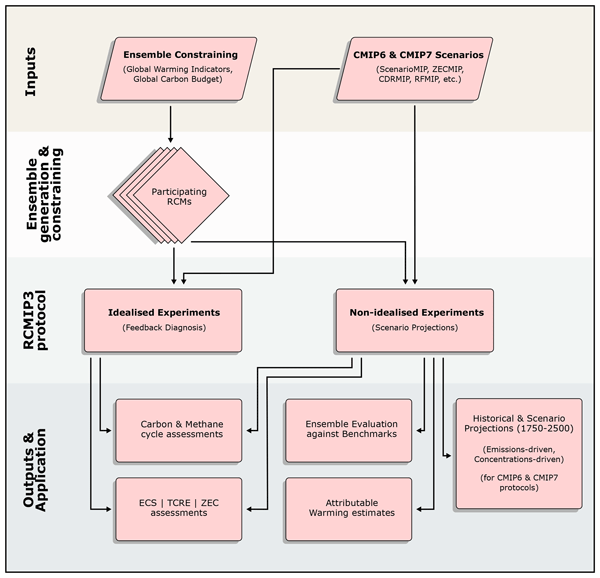
Alejandro Romero-Prieto, Marit Sandstad, Benjamin M. Sanderson, Zebedee R. J. Nicholls, Norman J. Steinert, Thomas Gasser, Camilla Mathison, Jarmo Kikstra, Thomas J. Aubry, Katsumasa Tanaka, Konstantin Weber, and Chris Smith
Geosci. Model Dev., 19, 7111–7133, https://doi.org/10.5194/gmd-19-7111-2026, https://doi.org/10.5194/gmd-19-7111-2026, 2026
Short summary
Short summary
Reduced-complexity models are an important tool in climate science, helping us understand and estimate future climate change. We present the experimental protocol for the next phase of the reduced-complexity model intercomparison project, which aims to compare results from many such models to better understand their behaviour. This knowledge will guide how these models are developed and used in the future, including in the upcoming Intergovernmental Panel on Climate Change (IPCC) assessment report (AR7).
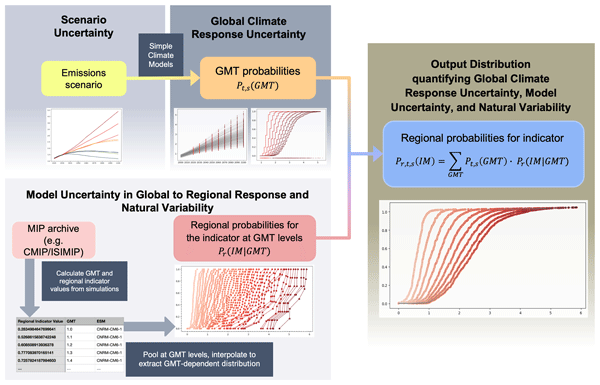
Niklas Schwind, Mahé Perrette, Edward Byers, Annika Högner, Quentin Lejeune, Tessa Möller, Zebedee Nicholls, Peter Pfleiderer, Sarah Schöngart, Michaela Werning, and Carl-Friedrich Schleussner
Geosci. Model Dev., 19, 6797–6828, https://doi.org/10.5194/gmd-19-6797-2026, https://doi.org/10.5194/gmd-19-6797-2026, 2026
Short summary
Short summary
We study how regional climate and climate impact indicators may respond to different emissions scenarios. Their possible outcomes are shaped by uncertainties in future emissions, global warming, regional effects of global warming, and the chaotic climate system. We introduce RIME-X (Rapid Impact Model Emulator Extended), an emulator that combines multiple tools and datasets to estimate probabilistically how any emissions path may influence regional outcomes.
Thomas Kleinen, Helena Bergstedt, Philipp de Vrese, Tobias Stacke, and Victor Brovkin
EGUsphere, https://doi.org/10.5194/egusphere-2026-3098, https://doi.org/10.5194/egusphere-2026-3098, 2026
Short summary
Short summary
The Arctic holds a large amount of carbon in frozen permafrost soils. Climate change will thaw the permafrost, leading to carbon decomposition and CO2 emission. Using a land surface model, we tested the effect of plant distribution changes in low, medium and high warming futures. If the plant distribution is allowed to adapt to a changed climate, biomass increases strongly, limiting carbon losses to ~70 PgC under high warming, and even a small net gain of carbon in low warming scenarios.
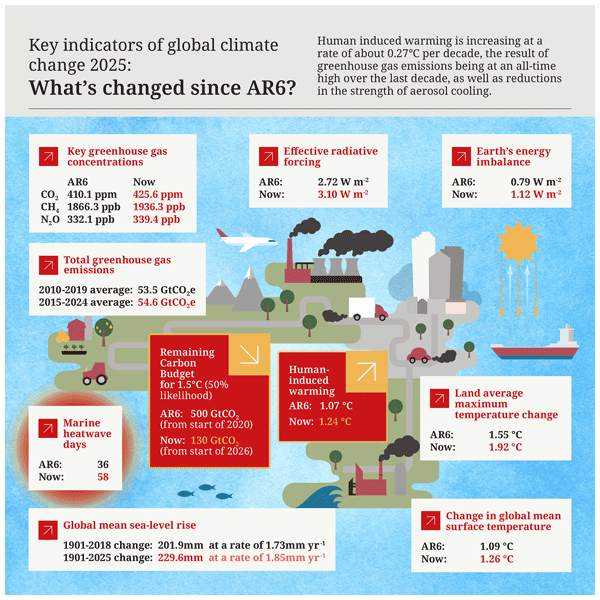
Piers M. Forster, Tristram Walsh, Chris Smith, William F. Lamb, Robin Lamboll, Christophe Cassou, Mathias Hauser, Zeke Hausfather, June-Yi Lee, Matthew D. Palmer, Karina von Schuckmann, Aimée B. A. Slangen, Sophie Szopa, Blair Trewin, Jeongeun Yun, Nathan P. Gillett, Stuart Jenkins, H. Damon Matthews, Krishnan Raghavan, Aurélien Ribes, Joeri Rogelj, Debbie Rosen, Xuebin Zhang, Myles Allen, Robbie M. Andrew, Chris Atkinson, Richard A. Betts, Antonio Bombelli, Samantha N. Burgess, Lijing Cheng, Helen E. Claxton, Pierre Friedlingstein, Thomas L. Frölicher, Catia M. Domingues, Thomas Gasser, Catherine H. Gregory, Rachel M. Hoesly, Daniel Huppmann, Masayoshi Ishii, Christopher Kadow, Alexia Karwat, John Kennedy, Rachel E. Killick, Mahesh V. M. Kovilakam, Paul B. Krummel, Xin Lan, Jean-François Lamarque, Aurélien Liné, Belén Martín-Míguez, Didier P. Monselesan, Colin Morice, Jens Mühle, Pino Mussak, Glen P. Peters, Anna Pirani, Julia Pongratz, Matthew Rigby, Robert Rohde, Abhishek Savita, Sonia I. Seneviratne, Steven J. Smith, Ghassan Taha, Caterina Tassone, Peter Thorne, Christopher Wells, Luke M. Western, Guido R. van der Werf, Susan E. Wijffels, Marco Zecchetto, Junting Zhong, Xiao-Ye Zhang, Valérie Masson-Delmotte, and Panmao Zhai
Earth Syst. Sci. Data, 18, 3889–3933, https://doi.org/10.5194/essd-18-3889-2026, https://doi.org/10.5194/essd-18-3889-2026, 2026
Short summary
Short summary
We give our annual update of key climate indicators. Our work quantifies the human contribution to global warming and the pace of climate change. This represents a large effort by the international community akin to an Intergovernmental Panel on Climate Change (IPCC) report.
Anne Dallmeyer, Nils Weitzel, Laura Schild, Ulrike Herzschuh, Thomas Kleinen, and Martin Claussen
Clim. Past, 22, 1125–1157, https://doi.org/10.5194/cp-22-1125-2026, https://doi.org/10.5194/cp-22-1125-2026, 2026
Short summary
Short summary
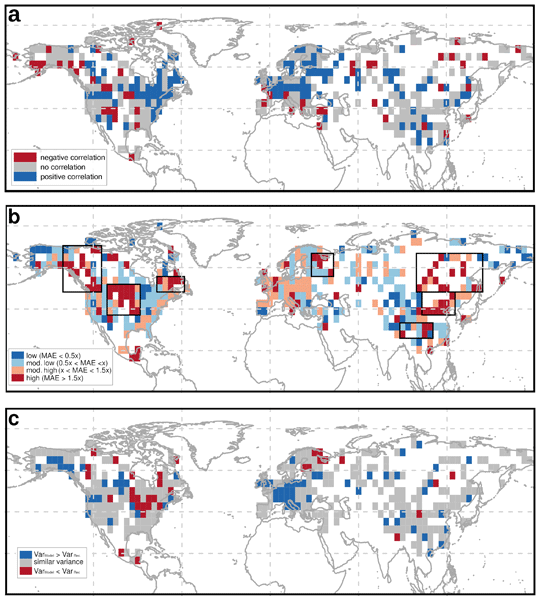
We compare pollen-based reconstructions of Northern Hemisphere tree cover over the last 20 000 years with simulations from the Max-Planck-Institute Earth System Model (MPI-ESM). The model captures broad forest trends but misses key regional patterns and the mid-Holocene forest peak. Testing climate drivers reveals mismatches in how temperature, water, and CO2 control forests, pointing to structural limits and the need for improved vegetation processes in models.
Mengze Li, Robert B. Jackson, Marielle Saunois, Philippe Ciais, Ben Poulter, Josep G. Canadell, Prabir K. Patra, Hanqin Tian, Zhen Zhang, Etienne Fluet-Chouinard, Zutao Ouyang, Ting Zhang, David J. Beerling, Dmitry A. Belikov, Philippe Bousquet, Danilo Custodio, Naveen Chandra, Xinyu Dou, Nicola Gedney, Peter O. Hopcroft, Alison M. Hoyt, Kazuhito Ichii, Akihito Ito, Atul K. Jain, Katherine Jensen, Fortunat Joos, Thomas Kleinen, Masayuki Kondo, Fa Li, Tingting Li, Xiangyu Liu, Shamil Maksyutov, Avni Malhotra, Adrien Martinez, Kyle McDonald, Joe R. Melton, Jurek Müller, Yosuke Niwa, Shufen Pan, Shushi Peng, Changhui Peng, Zhangcai Qin, Peter Raymond, William Riley, Arjo Segers, Rona L. Thompson, Aki Tsuruta, Yi Xi, Kunxiaojia Yuan, Wenxin Zhang, Bo Zheng, Qing Zhu, Qiuan Zhu, and Qianlai Zhuang
Earth Syst. Sci. Data, 18, 3507–3524, https://doi.org/10.5194/essd-18-3507-2026, https://doi.org/10.5194/essd-18-3507-2026, 2026
Short summary
Short summary
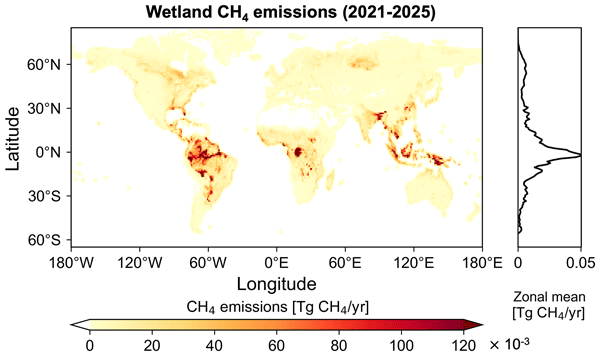
We proposed a framework that combines machine-learning and climate data to predict global natural vegetated wetland methane emissions for 2000–2025. We found that although total global emissions remained stable in the post-2020s, Northern Hemisphere emissions surged whilst tropical emissions fell. This approach allows us to rapidly monitor emissions and provides early warnings for climate impacts.
Thomas J. Aubry, Matthew Toohey, Sujan Khanal, Man Mei Chim, Magali Verkerk, Ben Johnson, Anja Schmidt, Mahesh Kovilakam, Michael Sigl, Zebedee Nicholls, Larry Thomason, Vaishali Naik, Landon Rieger, Dominik Stiller, Elisa Ziegler, Paul Durack, and Isabel H. Smith
Geosci. Model Dev., 19, 3725–3756, https://doi.org/10.5194/gmd-19-3725-2026, https://doi.org/10.5194/gmd-19-3725-2026, 2026
Short summary
Short summary
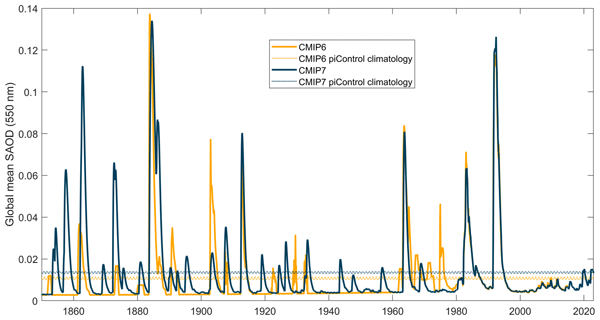
Climate forcings, such as solar radiation or anthropogenic greenhouse gases, are required to run global climate model simulations. Stratospheric aerosols, which mostly originate from large volcanic eruptions, are a key natural forcing. In this paper, we document the stratospheric aerosol forcing dataset that will feed the next generation (CMIP7) of climate models. Our dataset is very different from its predecessor (CMIP6), which might affect simulations of the 1850–2021 climate.
Yue Li, Gang Tang, Eleanor O'Rourke, Samar Minallah, Martim Mas e Braga, Sophie Nowicki, Robin S. Smith, David M. Lawrence, George C. Hurtt, Daniele Peano, Gesa Meyer, Birgit Hassler, Jiafu Mao, Yongkang Xue, and Martin Juckes
Geosci. Model Dev., 19, 3129–3155, https://doi.org/10.5194/gmd-19-3129-2026, https://doi.org/10.5194/gmd-19-3129-2026, 2026
Short summary
Short summary
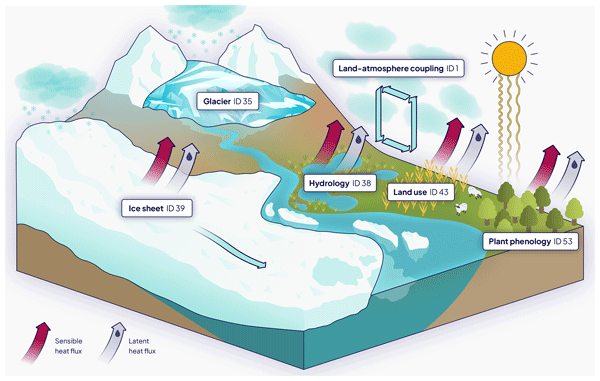
Land and Land Ice Theme Opportunities describe a list that contains 25 variable groups with 716 variables, which are potentially available to the broad scientific audience for performing analysis in land–atmosphere coupling, hydrological processes and freshwater systems, glacier and ice sheet mass balance and their influence on the sea levels, land use, and plant phenology.
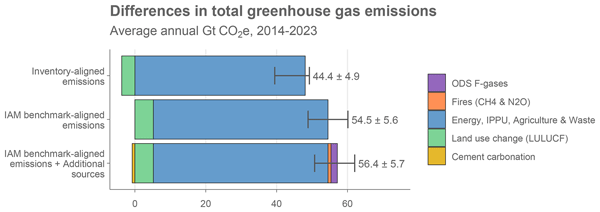
William F. Lamb, Robbie M. Andrew, Matthew Jones, Zebedee Nicholls, Glen P. Peters, Chris Smith, Marielle Saunois, Giacomo Grassi, Julia Pongratz, Steven J. Smith, Francesco N. Tubiello, Monica Crippa, Matthew Gidden, Pierre Friedlingstein, Jan Minx, and Piers M. Forster
Earth Syst. Sci. Data, 18, 2549–2572, https://doi.org/10.5194/essd-18-2549-2026, https://doi.org/10.5194/essd-18-2549-2026, 2026
Short summary
Short summary
This study explores why global greenhouse gas (GHG) emissions estimates vary. Key reasons include different coverage of gases and sectors, varying definitions of anthropogenic land use change emissions, and the Paris Agreement not covering all emission sources. The study highlights three main ways emissions data is reported, each with different objectives and resulting in varying global emission totals. It emphasizes the need for transparency in choosing datasets and setting assessment scopes.
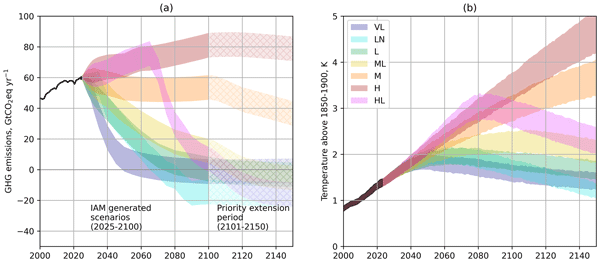
Detlef P. Van Vuuren, Brian C. O'Neill, Claudia Tebaldi, Benjamin M. Sanderson, Louise P. Chini, Pierre Friedlingstein, Tomoko Hasegawa, Keywan Riahi, Bala Govindasamy, Nico Bauer, Veronika Eyring, Cheikh M. N. Fall, Katja Frieler, Matthew J. Gidden, Laila K. Gohar, Annika Högner, Andrew D. Jones, Jarmo Kikstra, Andrew King, Reto Knutti, Elmar Kriegler, Peter Lawrence, Chris Lennard, Jason Lowe, Camilla Mathison, Shahbaz Mehmood, Zebedee Nicholls, Luciana F. Prado, Qiang Zhang, Steven K. Rose, Alex C. Ruane, Marit Sandstad, Carl-Friedrich Schleussner, Roland Seferian, Jana Sillmann, Chris Smith, Anna A. Sörensson, Swapna Panickal, Kaoru Tachiiri, Naomi Vaughan, Saritha S. Vishwanathan, Tokuta Yokohata, Marco Zecchetto, and Tilo Ziehn
Geosci. Model Dev., 19, 2627–2656, https://doi.org/10.5194/gmd-19-2627-2026, https://doi.org/10.5194/gmd-19-2627-2026, 2026
Short summary
Short summary
We propose a set of seven plausible 21st century emission scenarios, and their multi-century extensions, that will be used by the international community of climate modeling centers to produce the next generation of climate projections. These projections will support climate, impact and mitigation researchers, provide information to practitioners to address future risks from climate change, and contribute to policymakers’ considerations of the trade-offs among various levels of mitigation.
Shengxi Bai, Huilin Chen, Zhen Zhang, Shushi Peng, Fei Jiang, Fei Li, Shuzhuang Feng, Yingqi Yan, Qidan Huang, and Yongguang Zhang
EGUsphere, https://doi.org/10.5194/egusphere-2025-4610, https://doi.org/10.5194/egusphere-2025-4610, 2026
Short summary
Short summary
We examined methane emissions from coal mines in Shanxi Province, China’s major coal production region. Using satellite observations and advanced analysis, we found that rare but very large methane releases play a major role in total emissions. Policies to cut coal capacity initially reduced methane, but emissions rose again with production recovery. Our findings improve understanding of how energy policies affect climate pollution and offer a framework for better methane monitoring worldwide.
Peter W. Thorne, John M. Nicklas, John J. Kennedy, Bruce Calvert, Baylor Fox-Kemper, Mark T. Richardson, Adrian Simmons, Ed Hawkins, Robert Rhode, Kathryn Cowtan, Nerilie J. Abram, Axel Andersson, Simon Noone, Phillipe Marbaix, Nathan Lenssen, Dirk Olonscheck, Tristram Walsh, Stephen Outten, Ingo Bethke, Bjorn H. Samset, Chris Smith, Anna Pirani, Jan Fuglestvedt, Lavanya Rajamani, Richard A. Betts, Elizabeth C. Kent, Blair Trewin, Colin Morice, Tim Osborn, Samantha N. Burgess, Oliver Geden, Andrew Parnell, Piers M. Forster, Chris Hewitt, Zeke Hausfather, Valerie Masson-Delmotte, Jochem Marotzke, Nathan Gillett, Sonia I. Seneviratne, Gavin A. Schmidt, Duo Chan, Stefan Brönnimann, Andy Reisinger, Matthew Menne, Maisa Rojas Corradi, Christopher Kadow, Peter Huybers, David B. Stephenson, Emily Wallis, Joeri Rogelj, Andrew Schurer, Karen McKinnon, Panmao Zhai, Fatima Driouech, Wilfran Moufouma Okia, Saeed Vazifehkhah, Sophie Szopa, Christopher J. Merchant, Shoji Hirahara, Masayoshi Ishii, Francois A. Engelbrecht, Qingxiang Li, June-Yi Lee, Alex J. Cannon, Christophe Cassou, Karina von Schuckmann, Amir H. Delju, and Ellie Murtagh
Earth Syst. Sci. Data Discuss., https://doi.org/10.5194/essd-2025-825, https://doi.org/10.5194/essd-2025-825, 2026
Preprint under review for ESSD
Short summary
Short summary
We reassess the basis for determining the present level of long-term global warming. Unbiased estimates of both realised warming and anthropogenic warming are possible that approximate a 20-year retrospective mean. Our resulting estimates of 1.40 [1.23–1.58] °C (realised) and 1.34 [1.18–1.50] °C (anthropogenic) as at end of 2024 highlight the urgency of immediate, far-reaching and sustained climate mitigation actions if we are to meet the long term temperature goal of the Paris Agreement.
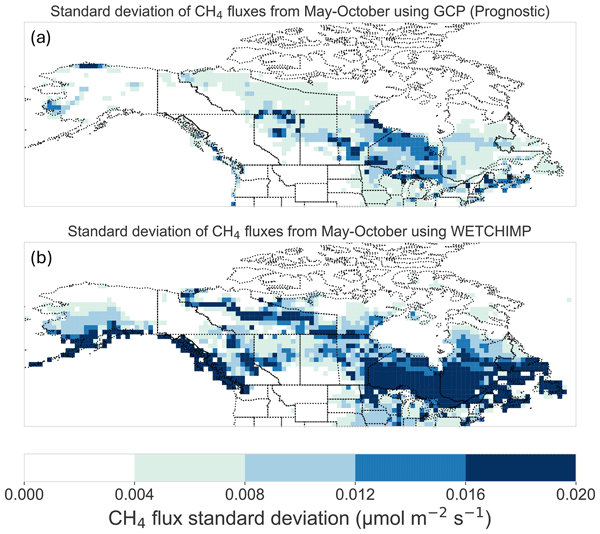
Hanyu Liu, Misa Ishizawa, Felix R. Vogel, Zhen Zhang, Benjamin Poulter, Leyang Feng, Ao Chen, Anna L. Gagné-Landmann, Deborah N. Huntzinger, Joe R. Melton, Vineet Yadav, Dylan C. Gaeta, Ziting Huang, Douglas E. J. Worthy, Douglas Chan, and Scot M. Miller
Atmos. Chem. Phys., 26, 1229–1247, https://doi.org/10.5194/acp-26-1229-2026, https://doi.org/10.5194/acp-26-1229-2026, 2026
Short summary
Short summary
We find that the state-of-the-art process-based methane flux models have both lower flux magnitude and reduced inter-model uncertainty compared to a previous model inter-comparison from over a decade ago. Despite these improvements, methane flux estimates from process-based models are still likely too high compared to atmospheric observations. We also find that models with simpler parameterizations often result in better agreement with atmospheric observations in high-latitude North America.
Benjamin M. Sanderson, Susanne Baur, Carl-Freidrich Schleussner, Glen P. Peters, Shivika Mittal, Marit Sandstad, Steffen Kallbekken, Chris Smith, Sabine Fuss, Bas van Ruijven, Rosie A. Fisher, Joeri Rogelj, Roland Séférian, Bjørn Samset, Norman J. Steinert, Laurent Terray, and Jan Fuglestvedt
EGUsphere, https://doi.org/10.5194/egusphere-2026-28, https://doi.org/10.5194/egusphere-2026-28, 2026
Preprint archived
Short summary
Short summary
Solar Radiation Modification by adding aerosols to the stratosphere could rapidly and temporarily cool the Earth, but this speed creates unprecedented risks. Fast climate responses coupled with political instability create risks of failure to decarbonise, super-rapid climate change, and conflict. Idealized scenarios or conventional modeling tools could lead to systematic ignorance of these risks. We thus introduce a framework outlining what must be represented in future modeling and assessment.
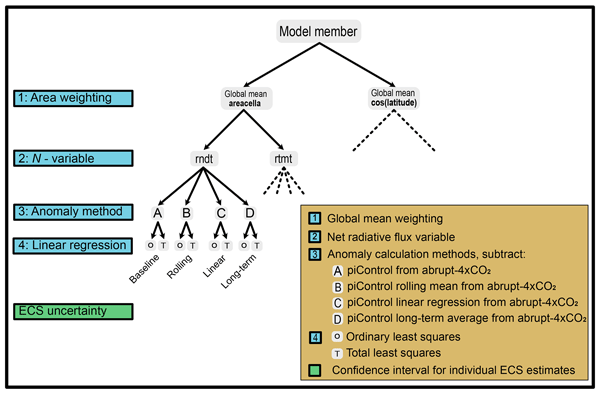
Anna Zehrung, Andrew D. King, Zebedee Nicholls, Mark D. Zelinka, and Malte Meinshausen
Geosci. Model Dev., 18, 9433–9450, https://doi.org/10.5194/gmd-18-9433-2025, https://doi.org/10.5194/gmd-18-9433-2025, 2025
Short summary
Short summary
The Gregory method is a common approach for calculating the equilibrium climate sensitivity (ECS). However, studies which apply this method lack transparency in how model data is processed prior to calculating the ECS, inhibiting replicability. Different choices of global weighting, net radiative flux variable, anomaly calculation, and linear regression fit can affect the ECS estimates. We investigate the impact of these choices and propose a standardised method for future ECS calculations.
Lin Yu, Thomas Kleinen, Min Jung Kwon, Christian Knoblauch, and Christian Beer
EGUsphere, https://doi.org/10.5194/egusphere-2025-4648, https://doi.org/10.5194/egusphere-2025-4648, 2025
Short summary
Short summary
We studied how adding biochar to soils might affect future climate. Using computer simulations, we found that while global averages of temperature and rainfall change little, extreme events respond more clearly. Heat waves and heavy rain are reduced in many regions, though drought risks rise in some dry areas. These results suggest that biochar could help moderate harmful climate extremes, especially on land, but with region-specific effects.
John P. Dunne, Helene T. Hewitt, Julie M. Arblaster, Frédéric Bonou, Olivier Boucher, Tereza Cavazos, Beth Dingley, Paul J. Durack, Birgit Hassler, Martin Juckes, Tomoki Miyakawa, Matt Mizielinski, Vaishali Naik, Zebedee Nicholls, Eleanor O'Rourke, Robert Pincus, Benjamin M. Sanderson, Isla R. Simpson, and Karl E. Taylor
Geosci. Model Dev., 18, 6671–6700, https://doi.org/10.5194/gmd-18-6671-2025, https://doi.org/10.5194/gmd-18-6671-2025, 2025
Short summary
Short summary
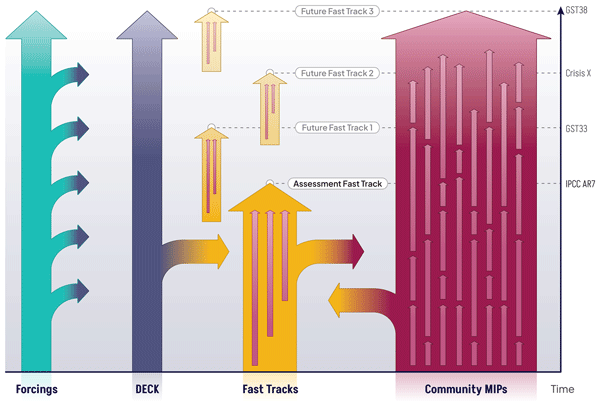
The seventh phase of the Coupled Model Intercomparison Project (CMIP7) coordinates efforts to answer key and timely climate science questions and facilitate delivery of relevant multi-model simulations for prediction and projection; characterization, attribution, and process understanding; and vulnerability, impact, and adaptation analysis. Key to the CMIP7 design are the mandatory Diagnostic, Evaluation and Characterization of Klima and optional Assessment Fast Track experiments.
Benjamin M. Sanderson, Victor Brovkin, Rosie A. Fisher, David Hohn, Tatiana Ilyina, Chris D. Jones, Torben Koenigk, Charles Koven, Hongmei Li, David M. Lawrence, Peter Lawrence, Spencer Liddicoat, Andrew H. MacDougall, Nadine Mengis, Zebedee Nicholls, Eleanor O'Rourke, Anastasia Romanou, Marit Sandstad, Jörg Schwinger, Roland Séférian, Lori T. Sentman, Isla R. Simpson, Chris Smith, Norman J. Steinert, Abigail L. S. Swann, Jerry Tjiputra, and Tilo Ziehn
Geosci. Model Dev., 18, 5699–5724, https://doi.org/10.5194/gmd-18-5699-2025, https://doi.org/10.5194/gmd-18-5699-2025, 2025
Short summary
Short summary
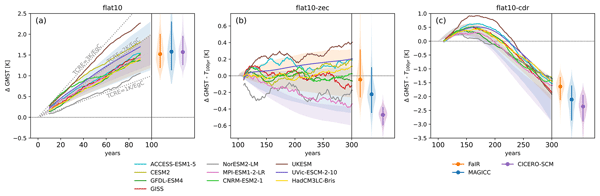
This study investigates how climate models warm in response to simplified carbon emissions trajectories, refining the understanding of climate reversibility and commitment. Metrics are defined for warming response to cumulative emissions and for the cessation of emissions or ramp-down to net-zero and net-negative levels. Results indicate that previous concentration-driven experiments may have overstated the Zero Emissions Commitment due to emissions rates exceeding historical levels.
Piers M. Forster, Chris Smith, Tristram Walsh, William F. Lamb, Robin Lamboll, Christophe Cassou, Mathias Hauser, Zeke Hausfather, June-Yi Lee, Matthew D. Palmer, Karina von Schuckmann, Aimée B. A. Slangen, Sophie Szopa, Blair Trewin, Jeongeun Yun, Nathan P. Gillett, Stuart Jenkins, H. Damon Matthews, Krishnan Raghavan, Aurélien Ribes, Joeri Rogelj, Debbie Rosen, Xuebin Zhang, Myles Allen, Lara Aleluia Reis, Robbie M. Andrew, Richard A. Betts, Alex Borger, Jiddu A. Broersma, Samantha N. Burgess, Lijing Cheng, Pierre Friedlingstein, Catia M. Domingues, Marco Gambarini, Thomas Gasser, Johannes Gütschow, Masayoshi Ishii, Christopher Kadow, John Kennedy, Rachel E. Killick, Paul B. Krummel, Aurélien Liné, Didier P. Monselesan, Colin Morice, Jens Mühle, Vaishali Naik, Glen P. Peters, Anna Pirani, Julia Pongratz, Jan C. Minx, Matthew Rigby, Robert Rohde, Abhishek Savita, Sonia I. Seneviratne, Peter Thorne, Christopher Wells, Luke M. Western, Guido R. van der Werf, Susan E. Wijffels, Valérie Masson-Delmotte, and Panmao Zhai
Earth Syst. Sci. Data, 17, 2641–2680, https://doi.org/10.5194/essd-17-2641-2025, https://doi.org/10.5194/essd-17-2641-2025, 2025
Short summary
Short summary
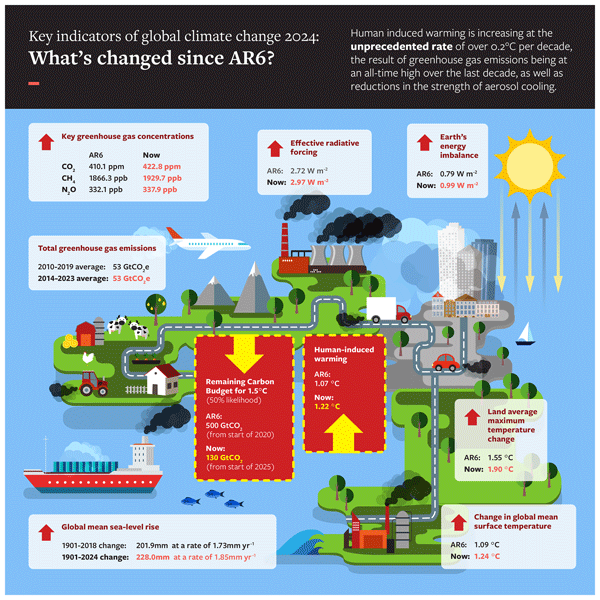
In a rapidly changing climate, evidence-based decision-making benefits from up-to-date and timely information. Here we compile monitoring datasets to track real-world changes over time. To make our work relevant to policymakers, we follow methods from the Intergovernmental Panel on Climate Change (IPCC). Human activities are increasing the Earth's energy imbalance and driving faster sea-level rise compared to the IPCC assessment.
Marielle Saunois, Adrien Martinez, Benjamin Poulter, Zhen Zhang, Peter A. Raymond, Pierre Regnier, Josep G. Canadell, Robert B. Jackson, Prabir K. Patra, Philippe Bousquet, Philippe Ciais, Edward J. Dlugokencky, Xin Lan, George H. Allen, David Bastviken, David J. Beerling, Dmitry A. Belikov, Donald R. Blake, Simona Castaldi, Monica Crippa, Bridget R. Deemer, Fraser Dennison, Giuseppe Etiope, Nicola Gedney, Lena Höglund-Isaksson, Meredith A. Holgerson, Peter O. Hopcroft, Gustaf Hugelius, Akihiko Ito, Atul K. Jain, Rajesh Janardanan, Matthew S. Johnson, Thomas Kleinen, Paul B. Krummel, Ronny Lauerwald, Tingting Li, Xiangyu Liu, Kyle C. McDonald, Joe R. Melton, Jens Mühle, Jurek Müller, Fabiola Murguia-Flores, Yosuke Niwa, Sergio Noce, Shufen Pan, Robert J. Parker, Changhui Peng, Michel Ramonet, William J. Riley, Gerard Rocher-Ros, Judith A. Rosentreter, Motoki Sasakawa, Arjo Segers, Steven J. Smith, Emily H. Stanley, Joël Thanwerdas, Hanqin Tian, Aki Tsuruta, Francesco N. Tubiello, Thomas S. Weber, Guido R. van der Werf, Douglas E. J. Worthy, Yi Xi, Yukio Yoshida, Wenxin Zhang, Bo Zheng, Qing Zhu, Qiuan Zhu, and Qianlai Zhuang
Earth Syst. Sci. Data, 17, 1873–1958, https://doi.org/10.5194/essd-17-1873-2025, https://doi.org/10.5194/essd-17-1873-2025, 2025
Short summary
Short summary
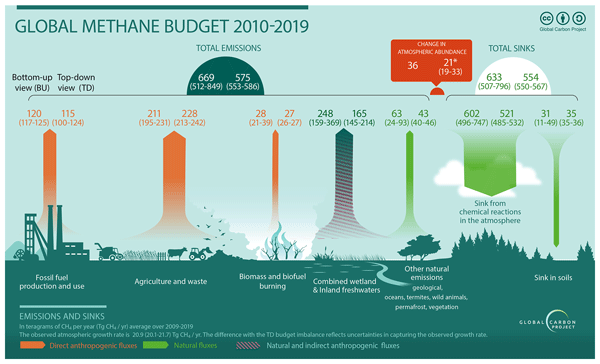
Methane (CH4) is the second most important human-influenced greenhouse gas in terms of climate forcing after carbon dioxide (CO2). A consortium of multi-disciplinary scientists synthesise and update the budget of the sources and sinks of CH4. This edition benefits from important progress in estimating emissions from lakes and ponds, reservoirs, and streams and rivers. For the 2010s decade, global CH4 emissions are estimated at 575 Tg CH4 yr-1, including ~65 % from anthropogenic sources.
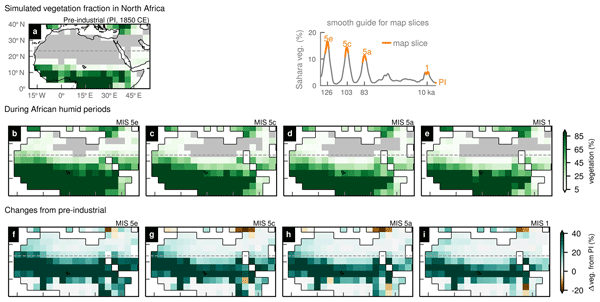
Mateo Duque-Villegas, Martin Claussen, Thomas Kleinen, Jürgen Bader, and Christian H. Reick
Clim. Past, 21, 773–794, https://doi.org/10.5194/cp-21-773-2025, https://doi.org/10.5194/cp-21-773-2025, 2025
Short summary
Short summary
We simulate the last glacial cycle with a comprehensive model of the Earth system and investigate vegetation cover change in northern Africa during the last four African Humid Periods (AHPs). We find a common pattern of vegetation change and relate it with climatic factors in order to discuss how vegetation might have evolved during even older AHPs. This scaling relationship we find according to past AHPs fails to account for projected changes in northern Africa under strong greenhouse gas warming.
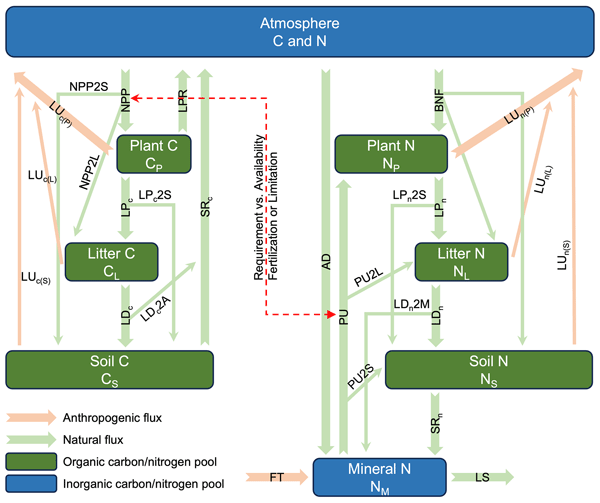
Gang Tang, Zebedee Nicholls, Alexander Norton, Sönke Zaehle, and Malte Meinshausen
Geosci. Model Dev., 18, 2193–2230, https://doi.org/10.5194/gmd-18-2193-2025, https://doi.org/10.5194/gmd-18-2193-2025, 2025
Short summary
Short summary
We studied carbon–nitrogen coupling in Earth system models by developing a global carbon–nitrogen cycle model (CNit v1.0) within the widely used emulator MAGICC. CNit effectively reproduced the global carbon–nitrogen cycle dynamics observed in complex models. Our results show persistent nitrogen limitations on plant growth (net primary production) from 1850 to 2100, suggesting that nitrogen deficiency may constrain future land carbon sequestration.
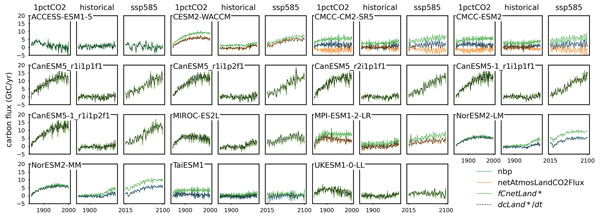
Gang Tang, Zebedee Nicholls, Chris Jones, Thomas Gasser, Alexander Norton, Tilo Ziehn, Alejandro Romero-Prieto, and Malte Meinshausen
Geosci. Model Dev., 18, 2111–2136, https://doi.org/10.5194/gmd-18-2111-2025, https://doi.org/10.5194/gmd-18-2111-2025, 2025
Short summary
Short summary
We analyzed carbon and nitrogen mass conservation in data from various Earth system models. Our findings reveal significant discrepancies between flux and pool size data, where cumulative imbalances can reach hundreds of gigatons of carbon or nitrogen. These imbalances appear primarily due to missing or inconsistently reported fluxes – especially for land-use and fire emissions. To enhance data quality, we recommend that future climate data protocols address this issue at the reporting stage.
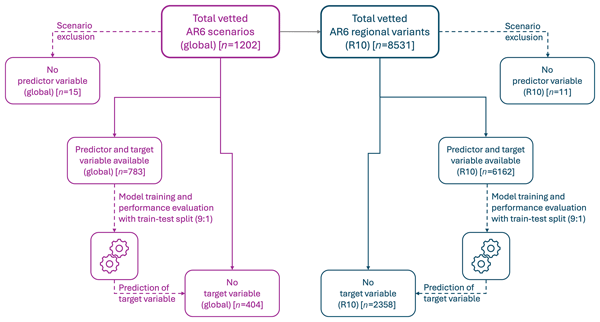
Ruben Prütz, Sabine Fuss, and Joeri Rogelj
Earth Syst. Sci. Data, 17, 221–231, https://doi.org/10.5194/essd-17-221-2025, https://doi.org/10.5194/essd-17-221-2025, 2025
Short summary
Short summary
The AR6 Scenarios Database lacks data on carbon dioxide removal (CDR) via land sinks for many pathways, hindering secondary scenario analyses. We tested and compared regression models, identifying k-nearest neighbors regression as most effective to predict missing CDR data. We provide an imputation dataset for incomplete global scenarios (n = 404) and for regional scenario variants (n = 2358) and discuss the caveats of our study, its use cases, and how our dataset compares to other approaches.
Tuula Aalto, Aki Tsuruta, Jarmo Mäkelä, Jurek Müller, Maria Tenkanen, Eleanor Burke, Sarah Chadburn, Yao Gao, Vilma Mannisenaho, Thomas Kleinen, Hanna Lee, Antti Leppänen, Tiina Markkanen, Stefano Materia, Paul A. Miller, Daniele Peano, Olli Peltola, Benjamin Poulter, Maarit Raivonen, Marielle Saunois, David Wårlind, and Sönke Zaehle
Biogeosciences, 22, 323–340, https://doi.org/10.5194/bg-22-323-2025, https://doi.org/10.5194/bg-22-323-2025, 2025
Short summary
Short summary
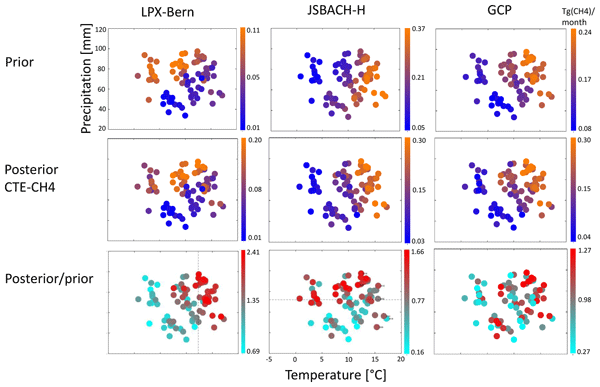
Wetland methane responses to temperature and precipitation were studied in a boreal wetland-rich region in northern Europe using ecosystem models, atmospheric inversions, and upscaled flux observations. The ecosystem models differed in their responses to temperature and precipitation and in their seasonality. However, multi-model means, inversions, and upscaled fluxes had similar seasonality, and they suggested co-limitation by temperature and precipitation.
Zhen Zhang, Benjamin Poulter, Joe R. Melton, William J. Riley, George H. Allen, David J. Beerling, Philippe Bousquet, Josep G. Canadell, Etienne Fluet-Chouinard, Philippe Ciais, Nicola Gedney, Peter O. Hopcroft, Akihiko Ito, Robert B. Jackson, Atul K. Jain, Katherine Jensen, Fortunat Joos, Thomas Kleinen, Sara H. Knox, Tingting Li, Xin Li, Xiangyu Liu, Kyle McDonald, Gavin McNicol, Paul A. Miller, Jurek Müller, Prabir K. Patra, Changhui Peng, Shushi Peng, Zhangcai Qin, Ryan M. Riggs, Marielle Saunois, Qing Sun, Hanqin Tian, Xiaoming Xu, Yuanzhi Yao, Yi Xi, Wenxin Zhang, Qing Zhu, Qiuan Zhu, and Qianlai Zhuang
Biogeosciences, 22, 305–321, https://doi.org/10.5194/bg-22-305-2025, https://doi.org/10.5194/bg-22-305-2025, 2025
Short summary
Short summary
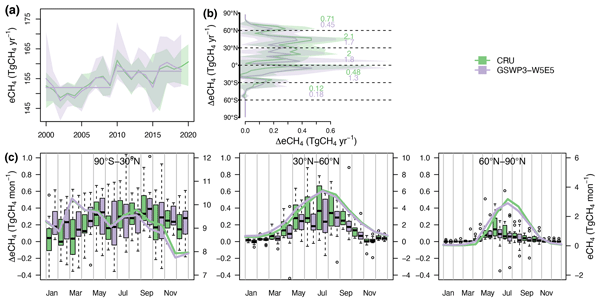
This study assesses global methane emissions from wetlands between 2000 and 2020 using multiple models. We found that wetland emissions increased by 6–7 Tg CH4 yr-1 in the 2010s compared to the 2000s. Rising temperatures primarily drove this increase, while changes in precipitation and CO2 levels also played roles. Our findings highlight the importance of wetlands in the global methane budget and the need for continuous monitoring to understand their impact on climate change.
Chris Smith, Donald P. Cummins, Hege-Beate Fredriksen, Zebedee Nicholls, Malte Meinshausen, Myles Allen, Stuart Jenkins, Nicholas Leach, Camilla Mathison, and Antti-Ilari Partanen
Geosci. Model Dev., 17, 8569–8592, https://doi.org/10.5194/gmd-17-8569-2024, https://doi.org/10.5194/gmd-17-8569-2024, 2024
Short summary
Short summary
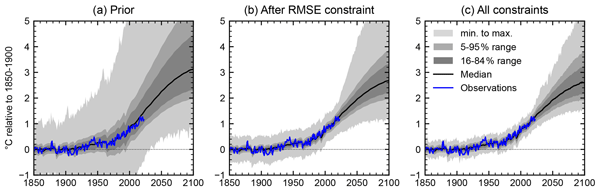
Climate projections are only useful if the underlying models that produce them are well calibrated and can reproduce observed climate change. We formalise a software package that calibrates the open-source FaIR simple climate model to full-complexity Earth system models. Observations, including historical warming, and assessments of key climate variables such as that of climate sensitivity are used to constrain the model output.
Benjamin M. Sanderson, Ben B. B. Booth, John Dunne, Veronika Eyring, Rosie A. Fisher, Pierre Friedlingstein, Matthew J. Gidden, Tomohiro Hajima, Chris D. Jones, Colin G. Jones, Andrew King, Charles D. Koven, David M. Lawrence, Jason Lowe, Nadine Mengis, Glen P. Peters, Joeri Rogelj, Chris Smith, Abigail C. Snyder, Isla R. Simpson, Abigail L. S. Swann, Claudia Tebaldi, Tatiana Ilyina, Carl-Friedrich Schleussner, Roland Séférian, Bjørn H. Samset, Detlef van Vuuren, and Sönke Zaehle
Geosci. Model Dev., 17, 8141–8172, https://doi.org/10.5194/gmd-17-8141-2024, https://doi.org/10.5194/gmd-17-8141-2024, 2024
Short summary
Short summary
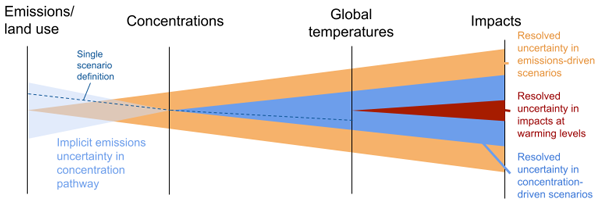
We discuss how, in order to provide more relevant guidance for climate policy, coordinated climate experiments should adopt a greater focus on simulations where Earth system models are provided with carbon emissions from fossil fuels together with land use change instructions, rather than past approaches that have largely focused on experiments with prescribed atmospheric carbon dioxide concentrations. We discuss how these goals might be achieved in coordinated climate modeling experiments.
Nora Farina Specht, Martin Claussen, and Thomas Kleinen
Clim. Past, 20, 1595–1613, https://doi.org/10.5194/cp-20-1595-2024, https://doi.org/10.5194/cp-20-1595-2024, 2024
Short summary
Short summary
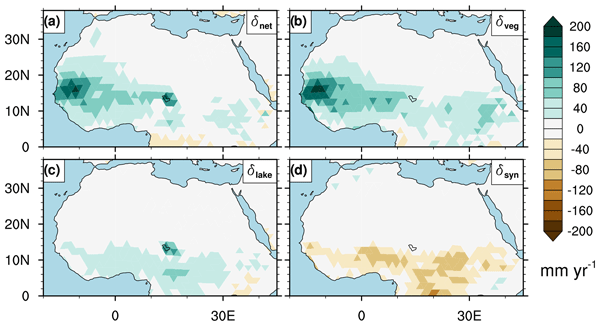
We close the terrestrial water cycle across the Sahara and Sahel by integrating a new endorheic-lake model into a climate model. A factor analysis of mid-Holocene simulations shows that both dynamic lakes and dynamic vegetation individually contribute to a precipitation increase over northern Africa that is collectively greater than that caused by the interaction between lake and vegetation dynamics. Thus, the lake–vegetation interaction causes a relative drying response across the entire Sahel.
Piers M. Forster, Chris Smith, Tristram Walsh, William F. Lamb, Robin Lamboll, Bradley Hall, Mathias Hauser, Aurélien Ribes, Debbie Rosen, Nathan P. Gillett, Matthew D. Palmer, Joeri Rogelj, Karina von Schuckmann, Blair Trewin, Myles Allen, Robbie Andrew, Richard A. Betts, Alex Borger, Tim Boyer, Jiddu A. Broersma, Carlo Buontempo, Samantha Burgess, Chiara Cagnazzo, Lijing Cheng, Pierre Friedlingstein, Andrew Gettelman, Johannes Gütschow, Masayoshi Ishii, Stuart Jenkins, Xin Lan, Colin Morice, Jens Mühle, Christopher Kadow, John Kennedy, Rachel E. Killick, Paul B. Krummel, Jan C. Minx, Gunnar Myhre, Vaishali Naik, Glen P. Peters, Anna Pirani, Julia Pongratz, Carl-Friedrich Schleussner, Sonia I. Seneviratne, Sophie Szopa, Peter Thorne, Mahesh V. M. Kovilakam, Elisa Majamäki, Jukka-Pekka Jalkanen, Margreet van Marle, Rachel M. Hoesly, Robert Rohde, Dominik Schumacher, Guido van der Werf, Russell Vose, Kirsten Zickfeld, Xuebin Zhang, Valérie Masson-Delmotte, and Panmao Zhai
Earth Syst. Sci. Data, 16, 2625–2658, https://doi.org/10.5194/essd-16-2625-2024, https://doi.org/10.5194/essd-16-2625-2024, 2024
Short summary
Short summary
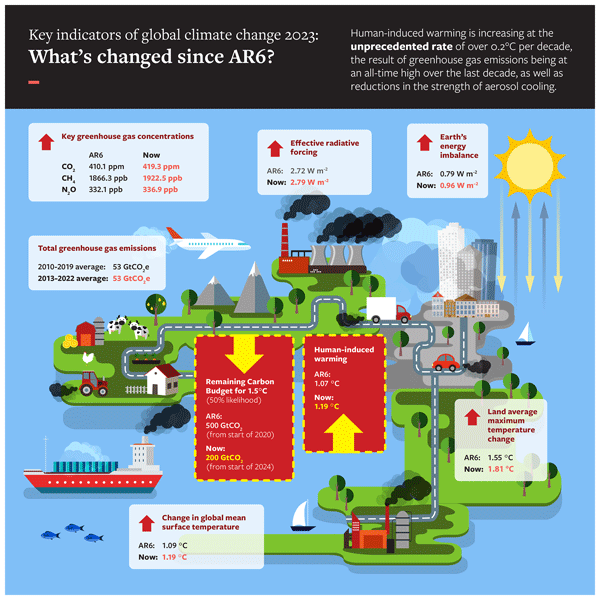
This paper tracks some key indicators of global warming through time, from 1850 through to the end of 2023. It is designed to give an authoritative estimate of global warming to date and its causes. We find that in 2023, global warming reached 1.3 °C and is increasing at over 0.2 °C per decade. This is caused by all-time-high greenhouse gas emissions.
Malte Meinshausen, Carl-Friedrich Schleussner, Kathleen Beyer, Greg Bodeker, Olivier Boucher, Josep G. Canadell, John S. Daniel, Aïda Diongue-Niang, Fatima Driouech, Erich Fischer, Piers Forster, Michael Grose, Gerrit Hansen, Zeke Hausfather, Tatiana Ilyina, Jarmo S. Kikstra, Joyce Kimutai, Andrew D. King, June-Yi Lee, Chris Lennard, Tabea Lissner, Alexander Nauels, Glen P. Peters, Anna Pirani, Gian-Kasper Plattner, Hans Pörtner, Joeri Rogelj, Maisa Rojas, Joyashree Roy, Bjørn H. Samset, Benjamin M. Sanderson, Roland Séférian, Sonia Seneviratne, Christopher J. Smith, Sophie Szopa, Adelle Thomas, Diana Urge-Vorsatz, Guus J. M. Velders, Tokuta Yokohata, Tilo Ziehn, and Zebedee Nicholls
Geosci. Model Dev., 17, 4533–4559, https://doi.org/10.5194/gmd-17-4533-2024, https://doi.org/10.5194/gmd-17-4533-2024, 2024
Short summary
Short summary
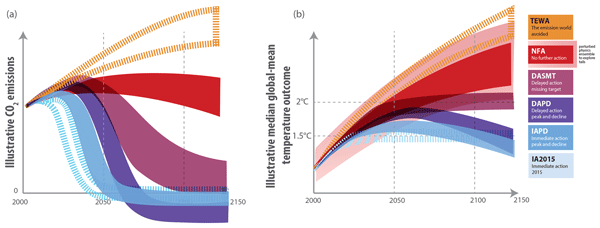
The scientific community is considering new scenarios to succeed RCPs and SSPs for the next generation of Earth system model runs to project future climate change. To contribute to that effort, we reflect on relevant policy and scientific research questions and suggest categories for representative emission pathways. These categories are tailored to the Paris Agreement long-term temperature goal, high-risk outcomes in the absence of further climate policy and worlds “that could have been”.
Nils Weitzel, Heather Andres, Jean-Philippe Baudouin, Marie-Luise Kapsch, Uwe Mikolajewicz, Lukas Jonkers, Oliver Bothe, Elisa Ziegler, Thomas Kleinen, André Paul, and Kira Rehfeld
Clim. Past, 20, 865–890, https://doi.org/10.5194/cp-20-865-2024, https://doi.org/10.5194/cp-20-865-2024, 2024
Short summary
Short summary
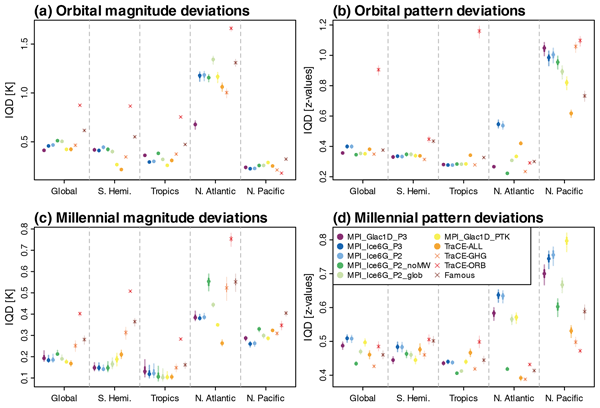
The ability of climate models to faithfully reproduce past warming episodes is a valuable test considering potentially large future warming. We develop a new method to compare simulations of the last deglaciation with temperature reconstructions. We find that reconstructions differ more between regions than simulations, potentially due to deficiencies in the simulation design, models, or reconstructions. Our work is a promising step towards benchmarking simulations of past climate transitions.
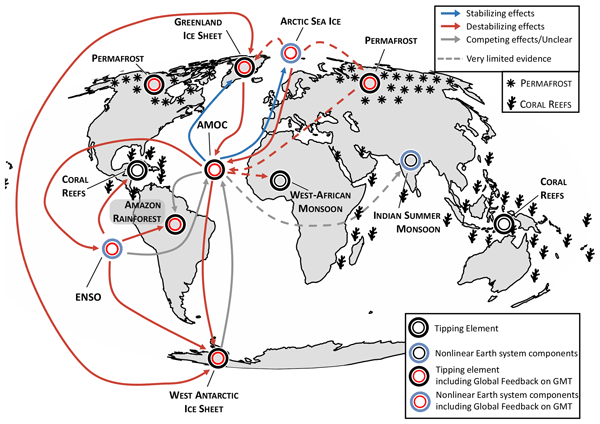
Nico Wunderling, Anna S. von der Heydt, Yevgeny Aksenov, Stephen Barker, Robbin Bastiaansen, Victor Brovkin, Maura Brunetti, Victor Couplet, Thomas Kleinen, Caroline H. Lear, Johannes Lohmann, Rosa Maria Roman-Cuesta, Sacha Sinet, Didier Swingedouw, Ricarda Winkelmann, Pallavi Anand, Jonathan Barichivich, Sebastian Bathiany, Mara Baudena, John T. Bruun, Cristiano M. Chiessi, Helen K. Coxall, David Docquier, Jonathan F. Donges, Swinda K. J. Falkena, Ann Kristin Klose, David Obura, Juan Rocha, Stefanie Rynders, Norman Julius Steinert, and Matteo Willeit
Earth Syst. Dynam., 15, 41–74, https://doi.org/10.5194/esd-15-41-2024, https://doi.org/10.5194/esd-15-41-2024, 2024
Short summary
Short summary
This paper maps out the state-of-the-art literature on interactions between tipping elements relevant for current global warming pathways. We find indications that many of the interactions between tipping elements are destabilizing. This means that tipping cascades cannot be ruled out on centennial to millennial timescales at global warming levels between 1.5 and 2.0 °C or on shorter timescales if global warming surpasses 2.0 °C.
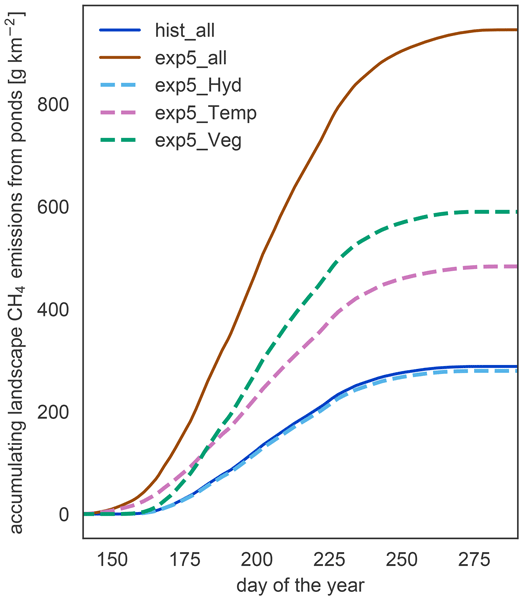
Zoé Rehder, Thomas Kleinen, Lars Kutzbach, Victor Stepanenko, Moritz Langer, and Victor Brovkin
Biogeosciences, 20, 2837–2855, https://doi.org/10.5194/bg-20-2837-2023, https://doi.org/10.5194/bg-20-2837-2023, 2023
Short summary
Short summary
We use a new model to investigate how methane emissions from Arctic ponds change with warming. We find that emissions increase substantially. Under annual temperatures 5 °C above present temperatures, pond methane emissions are more than 3 times higher than now. Most of this increase is caused by an increase in plant productivity as plants provide the substrate microbes used to produce methane. We conclude that vegetation changes need to be included in predictions of pond methane emissions.
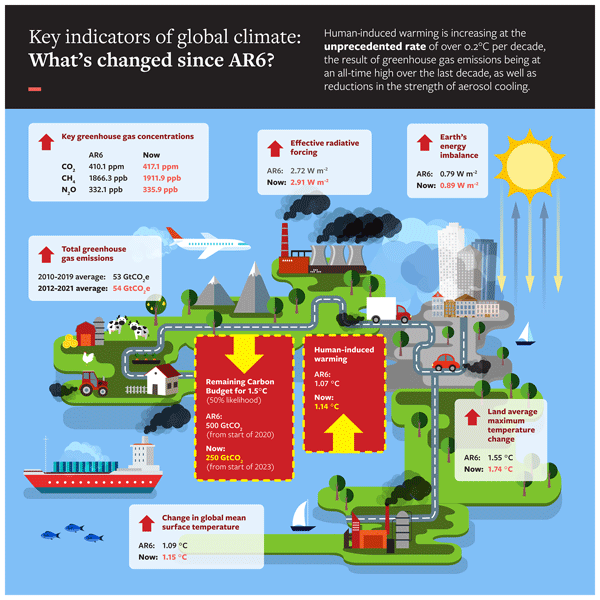
Piers M. Forster, Christopher J. Smith, Tristram Walsh, William F. Lamb, Robin Lamboll, Mathias Hauser, Aurélien Ribes, Debbie Rosen, Nathan Gillett, Matthew D. Palmer, Joeri Rogelj, Karina von Schuckmann, Sonia I. Seneviratne, Blair Trewin, Xuebin Zhang, Myles Allen, Robbie Andrew, Arlene Birt, Alex Borger, Tim Boyer, Jiddu A. Broersma, Lijing Cheng, Frank Dentener, Pierre Friedlingstein, José M. Gutiérrez, Johannes Gütschow, Bradley Hall, Masayoshi Ishii, Stuart Jenkins, Xin Lan, June-Yi Lee, Colin Morice, Christopher Kadow, John Kennedy, Rachel Killick, Jan C. Minx, Vaishali Naik, Glen P. Peters, Anna Pirani, Julia Pongratz, Carl-Friedrich Schleussner, Sophie Szopa, Peter Thorne, Robert Rohde, Maisa Rojas Corradi, Dominik Schumacher, Russell Vose, Kirsten Zickfeld, Valérie Masson-Delmotte, and Panmao Zhai
Earth Syst. Sci. Data, 15, 2295–2327, https://doi.org/10.5194/essd-15-2295-2023, https://doi.org/10.5194/essd-15-2295-2023, 2023
Short summary
Short summary
This is a critical decade for climate action, but there is no annual tracking of the level of human-induced warming. We build on the Intergovernmental Panel on Climate Change assessment reports that are authoritative but published infrequently to create a set of key global climate indicators that can be tracked through time. Our hope is that this becomes an important annual publication that policymakers, media, scientists and the public can refer to.
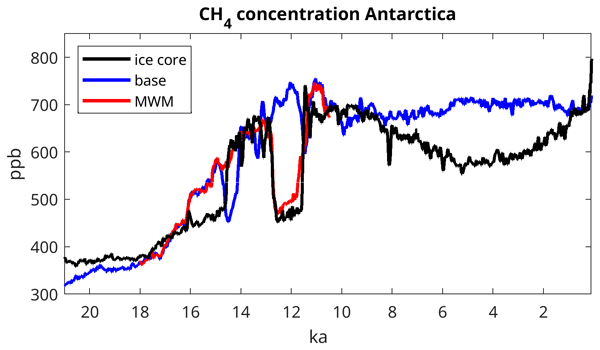
Thomas Kleinen, Sergey Gromov, Benedikt Steil, and Victor Brovkin
Clim. Past, 19, 1081–1099, https://doi.org/10.5194/cp-19-1081-2023, https://doi.org/10.5194/cp-19-1081-2023, 2023
Short summary
Short summary
We modelled atmospheric methane continuously from the last glacial maximum to the present using a state-of-the-art Earth system model. Our model results compare well with reconstructions from ice cores and improve our understanding of a very intriguing period of Earth system history, the deglaciation, when atmospheric methane changed quickly and strongly. Deglacial methane changes are driven by emissions from tropical wetlands, with wetlands in high northern latitudes being secondary.
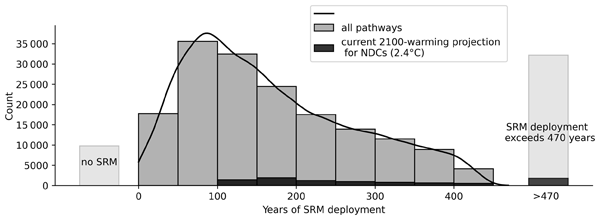
Susanne Baur, Alexander Nauels, Zebedee Nicholls, Benjamin M. Sanderson, and Carl-Friedrich Schleussner
Earth Syst. Dynam., 14, 367–381, https://doi.org/10.5194/esd-14-367-2023, https://doi.org/10.5194/esd-14-367-2023, 2023
Short summary
Short summary
Solar radiation modification (SRM) artificially cools global temperature without acting on the cause of climate change. This study looks at how long SRM would have to be deployed to limit warming to 1.5 °C and how this timeframe is affected by different levels of mitigation, negative emissions and climate uncertainty. None of the three factors alone can guarantee short SRM deployment. Due to their uncertainty at the time of SRM initialization, any deployment risks may be several centuries long.
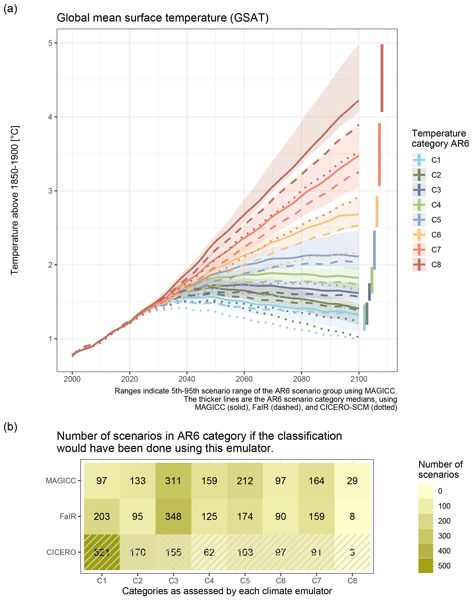
Jarmo S. Kikstra, Zebedee R. J. Nicholls, Christopher J. Smith, Jared Lewis, Robin D. Lamboll, Edward Byers, Marit Sandstad, Malte Meinshausen, Matthew J. Gidden, Joeri Rogelj, Elmar Kriegler, Glen P. Peters, Jan S. Fuglestvedt, Ragnhild B. Skeie, Bjørn H. Samset, Laura Wienpahl, Detlef P. van Vuuren, Kaj-Ivar van der Wijst, Alaa Al Khourdajie, Piers M. Forster, Andy Reisinger, Roberto Schaeffer, and Keywan Riahi
Geosci. Model Dev., 15, 9075–9109, https://doi.org/10.5194/gmd-15-9075-2022, https://doi.org/10.5194/gmd-15-9075-2022, 2022
Short summary
Short summary
Assessing hundreds or thousands of emission scenarios in terms of their global mean temperature implications requires standardised procedures of infilling, harmonisation, and probabilistic temperature assessments. We here present the open-source
climate-assessmentworkflow that was used in the IPCC AR6 Working Group III report. The paper provides key insight for anyone wishing to understand the assessment of climate outcomes of mitigation pathways in the context of the Paris Agreement.
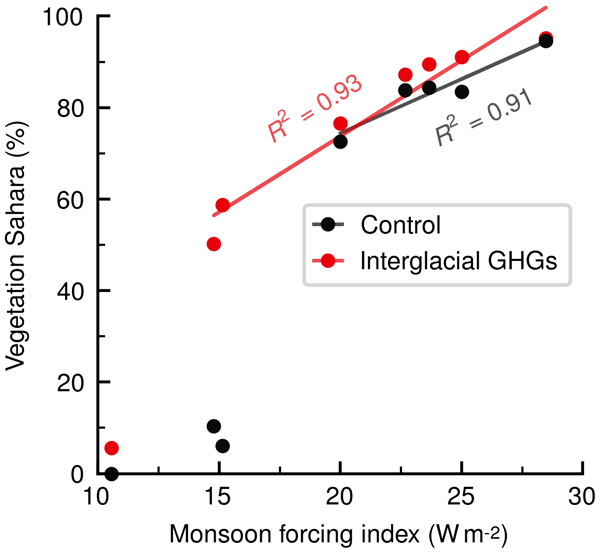
Mateo Duque-Villegas, Martin Claussen, Victor Brovkin, and Thomas Kleinen
Clim. Past, 18, 1897–1914, https://doi.org/10.5194/cp-18-1897-2022, https://doi.org/10.5194/cp-18-1897-2022, 2022
Short summary
Short summary
Using an Earth system model of intermediate complexity, we quantify contributions of the Earth's orbit, greenhouse gases (GHGs) and ice sheets to the strength of Saharan greening during late Quaternary African humid periods (AHPs). Orbital forcing is found as the dominant factor, having a critical threshold and accounting for most of the changes in the vegetation response. However, results suggest that GHGs may influence the orbital threshold and thus may play a pivotal role for future AHPs.
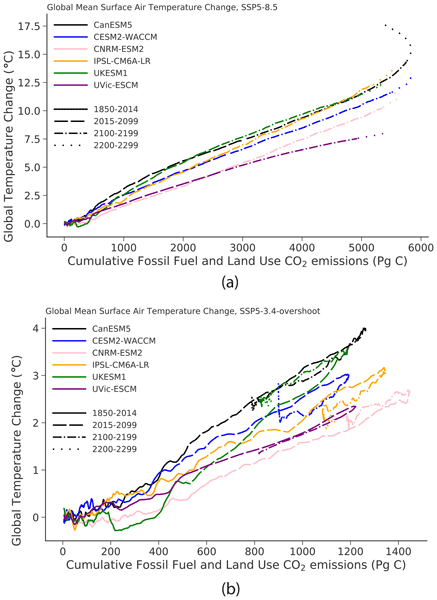
Charles D. Koven, Vivek K. Arora, Patricia Cadule, Rosie A. Fisher, Chris D. Jones, David M. Lawrence, Jared Lewis, Keith Lindsay, Sabine Mathesius, Malte Meinshausen, Michael Mills, Zebedee Nicholls, Benjamin M. Sanderson, Roland Séférian, Neil C. Swart, William R. Wieder, and Kirsten Zickfeld
Earth Syst. Dynam., 13, 885–909, https://doi.org/10.5194/esd-13-885-2022, https://doi.org/10.5194/esd-13-885-2022, 2022
Short summary
Short summary
We explore the long-term dynamics of Earth's climate and carbon cycles under a pair of contrasting scenarios to the year 2300 using six models that include both climate and carbon cycle dynamics. One scenario assumes very high emissions, while the second assumes a peak in emissions, followed by rapid declines to net negative emissions. We show that the models generally agree that warming is roughly proportional to carbon emissions but that many other aspects of the model projections differ.
Nora Farina Specht, Martin Claussen, and Thomas Kleinen
Clim. Past, 18, 1035–1046, https://doi.org/10.5194/cp-18-1035-2022, https://doi.org/10.5194/cp-18-1035-2022, 2022
Short summary
Short summary
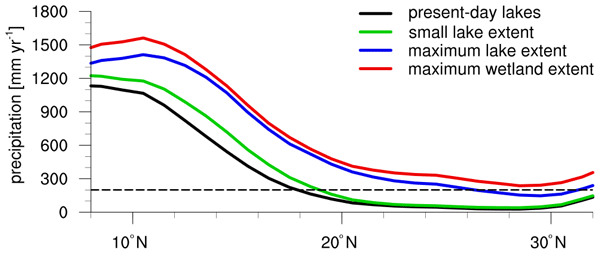
Palaeoenvironmental records only provide a fragmentary picture of the lake and wetland extent in North Africa during the mid-Holocene. Therefore, we investigate the possible range of mid-Holocene precipitation changes caused by an estimated small and maximum lake extent and a maximum wetland extent. Results show a particularly strong monsoon precipitation response to lakes and wetlands over the Western Sahara and an increased monsoon precipitation when replacing lakes with vegetated wetlands.
Lea Beusch, Zebedee Nicholls, Lukas Gudmundsson, Mathias Hauser, Malte Meinshausen, and Sonia I. Seneviratne
Geosci. Model Dev., 15, 2085–2103, https://doi.org/10.5194/gmd-15-2085-2022, https://doi.org/10.5194/gmd-15-2085-2022, 2022
Short summary
Short summary
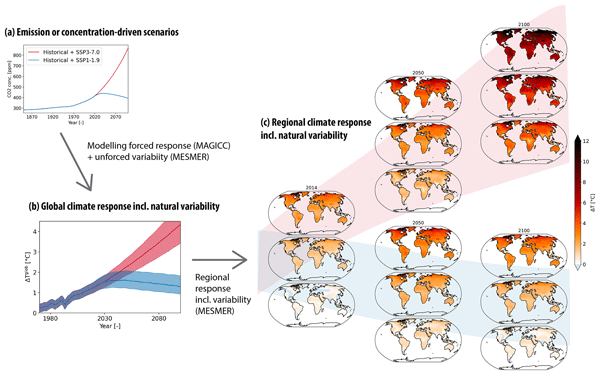
We introduce the first chain of computationally efficient Earth system model (ESM) emulators to translate user-defined greenhouse gas emission pathways into regional temperature change time series accounting for all major sources of climate change projection uncertainty. By combining the global mean emulator MAGICC with the spatially resolved emulator MESMER, we can derive ESM-specific and constrained probabilistic emulations to rapidly provide targeted climate information at the local scale.
Cited articles
Byers, E., Krey, V., Kriegler, E., Riahi, K., Schaeffer, R., Kikstra, J., Lamboll, R., Nicholls, Z., Sandstad, M., Smith, C., van der Wijst, K., Al Khourdajie, A., Lecocq, F., Portugal-Pereira, J., Saheb, Y., Stromman, A., Winkler, H., Auer, C., Brutschin, E., Gidden, M., Hackstock, P., Harmsen, M., Huppmann, D., Kolp, P., Lepault, C., Lewis, J., Marangoni, G., Müller-Casseres, E., Skeie, R., Werning, M., Calvin, K., Forster, P., Guivarch, C., Hasegawa, T., Meinshausen, M., Peters, G., Rogelj, J., Samset, B., Steinberger, J., Tavoni, M., and van Vuuren, D.: AR6 Scenarios Database, Zenodo [data set], https://doi.org/10.5281/zenodo.7197970, 2022. a
Chang, K.-Y., Riley, W. J., Knox, S. H., Jackson, R. B., McNicol, G., Poulter, B., Aurela, M., Baldocchi, D., Bansal, S., Bohrer, G., Campbell, D. I., Cescatti, A., Chu, H., Delwiche, K. B., Desai, A. R., Euskirchen, E., Friborg, T. Goeckede, M., Helbig, M., Hemes, K. S., Hirano, T., Iwata, H., Kang, M., Keenan, T., Krauss, K. W., Lohila, A., Mammarella, I., Mitra, B., Miyata, A., Nilsson, M. B., Noormets, A., Oechel, W. C., Papale, D., Peichl, M., Reba, M. L., Rinne, J., Runkle, B. R. K., Ryu, Y., Sachs, T., Schäfer, K. V. R., Schmid, H. P., Shurpali, N., Sonnentag, O., Tang, A. C. I., Torn, M. S., Trotta, C., Tuittila, E.-S., Ueyama, M. Vargas, R., Vesala, T., Windham-Myers, L., Zhang, Z., and Zona, D.: Substantial hysteresis in emergent temperature sensitivity of global wetland CH4 emissions, Nat. Commun., 12, 2266, https://doi.org/10.1038/s41467-021-22452-1, 2021. a
Davidson, N. C., Fluet-Chouinard, E., and Finlayson, C. M.: Global extent and distribution of wetlands: trends and issues, Mar. Freshw. Res., 69, 620–627, 2018. a
Folberth, G., Staniaszek, Z., Archibald, A., Gedney, N., Griffiths, P., Jones, C., O'connor, F., Parker, R., Sellar, A., and Wiltshire, A.: Description and evaluation of an emission-driven and fully coupled methane cycle in UKESM1, J. Adv. Model. Earth Syst., 14, e2021MS002982, https://doi.org/10.1029/2021MS002982, 2022. a
Gedney, N., Huntingford, C., Comyn-Platt, E., and Wiltshire, A.: Significant feedbacks of wetland methane release on climate change and the causes of their uncertainty, Environ. Res. Lett., 14, 084027, https://doi.org/10.1088/1748-9326/ab2726, 2019. a
Im, U., Tsigaridis, K., Bauer, S. E., Shindell, D. T., Olivié, D., Wilson, S., Sørensen, L. L., Langen, P. L., and Eckhardt, S.: Future CH4 as modelled by a fully coupled Earth system model: prescribed GHG concentrations vs. interactive CH4 sources and sinks, Environ. Res.: Climate, 4, 015008, https://doi.org/10.1088/2752-5295/adb3c0, 2025. a, b, c, d
Kikstra, J. S., Nicholls, Z. R. J., Smith, C. J., Lewis, J., Lamboll, R. D., Byers, E., Sandstad, M., Meinshausen, M., Gidden, M. J., Rogelj, J., Kriegler, E., Peters, G. P., Fuglestvedt, J. S., Skeie, R. B., Samset, B. H., Wienpahl, L., van Vuuren, D. P., van der Wijst, K.-I., Al Khourdajie, A., Forster, P. M., Reisinger, A., Schaeffer, R., and Riahi, K.: The IPCC Sixth Assessment Report WGIII climate assessment of mitigation pathways: from emissions to global temperatures, Geosci. Model Dev., 15, 9075–9109, https://doi.org/10.5194/gmd-15-9075-2022, 2022. a
Kleinen, T., Gromov, S., Steil, B., and Brovkin, V.: Natural methane emissions 1850–3009, https://hdl.handle.net/21.14106/edf716626b6105380067d7eeece2e4020464c793 (last access: 15 May 2025), 2021b. a
Mauritsen, T., Bader, J., Becker, T., Behrens, J., Bittner, M., Brokopf, R., Brovkin, V., Claussen, M., Crueger, T., Esch, M., Fast, I., Fiedler, S., Fläschner, D., Gayler, V., Giorgetta, M., Goll, D. S., Haak, H., Hagemann, S., Hedemann, C., Hohenegger, C., Ilyina, T., Jahns, T., Jimenéz-de-la Cuesta, D., Jungclaus, J., Kleinen, T., Kloster, S., Kracher, D., Kinne, S., Kleberg, D., Lasslop, G., Kornblueh, L., Marotzke, J., Matei, D., Meraner, K., Mikolajewicz, U., Modali, K., Möbis, B., Müller, W. A., Nabel, J. E. M. S., Nam, C. C. W., Notz, D., Nyawira, S.-S., Paulsen, H., Peters, K., Pincus, R., Pohlmann, H., Pongratz, J., Popp, M., Raddatz, T. J., Rast, S., Redler, R., Reick, C. H., Rohrschneider, T., Schemann, V., Schmidt, H., Schnur, R., Schulzweida, U., Six, K. D., Stein, L., Stemmler, I., Stevens, B., von Storch, J.-S., Tian, F., Voigt, A., Vrese, P., Wieners, K.-H., Wilkenskjeld, S., Winkler, A., and Roeckner, E.: Developments in the MPI-M Earth System Model version 1.2 (MPI-ESM1.2) and Its Response to Increasing CO2, J. Adv. Model. Earth Syst., 11, 998–1038, https://doi.org/10.1029/2018MS001400, 2019. a
Meinshausen, M., Raper, S. C. B., and Wigley, T. M. L.: Emulating coupled atmosphere-ocean and carbon cycle models with a simpler model, MAGICC6 – Part 1: Model description and calibration, Atmos. Chem. Phys., 11, 1417–1456, https://doi.org/10.5194/acp-11-1417-2011, 2011a. a, b, c
Meinshausen, M., Smith, S. J., Calvin, K., Daniel, J. S., Kainuma, M. L. T., Lamarque, J.-F., Matsumoto, K., Montzka, S. A., Raper, S. C. B., Riahi, K., Thomson, A., Velders, G. J. M., and van Vuuren, D. P. P.: The RCP greenhouse gas concentrations and their extensions from 1765 to 2300, Climatic Change, 109, 213, https://doi.org/10.1007/s10584-011-0156-z, 2011b. a
Meinshausen, M., Nicholls, Z. R. J., Lewis, J., Gidden, M. J., Vogel, E., Freund, M., Beyerle, U., Gessner, C., Nauels, A., Bauer, N., Canadell, J. G., Daniel, J. S., John, A., Krummel, P. B., Luderer, G., Meinshausen, N., Montzka, S. A., Rayner, P. J., Reimann, S., Smith, S. J., van den Berg, M., Velders, G. J. M., Vollmer, M. K., and Wang, R. H. J.: The shared socio-economic pathway (SSP) greenhouse gas concentrations and their extensions to 2500, Geosci. Model Dev., 13, 3571–3605, https://doi.org/10.5194/gmd-13-3571-2020, 2020. a, b, c
Nelder, J. A. and Mead, R.: A simplex method for function minimization, Comput. J., 7, 308–313, 1965. a
Nicholls, Z., Meinshausen, M., Lewis, J., Corradi, M. R., Dorheim, K., Gasser, T., Gieseke, R., Hope, A. P., Leach, N. J., McBride, L. A., Quilcaille, Y., Rogelj, J., Salawitch, R. J., Samset, B. H., Sandstad, M., Shiklomanov, A., Skeie, R. B., Smith, C. J., Smith, S. J., Su, X., Tsutsui, J., Vega-Westhoff, B., and Woodard, D. L.: Reduced Complexity Model Intercomparison Project Phase 2: Synthesizing Earth System Knowledge for Probabilistic Climate Projections, Earth's Future, 9, e2020EF001900, https://doi.org/10.1029/2020EF001900, 2021. a
Nicholls, Z., Lewis, J., Tang, G., Trevor, S., Nauels, A., Norton, A., Wigley, T., and Meinshausen, M.: Model for the Assessment of Greenhouse gas Induced Climate Change (MAGICC), Zenodo [code], https://doi.org/10.5281/zenodo.17054564, 2025. a, b
O'Neill, B. C., Tebaldi, C., van Vuuren, D. P., Eyring, V., Friedlingstein, P., Hurtt, G., Knutti, R., Kriegler, E., Lamarque, J.-F., Lowe, J., Meehl, G. A., Moss, R., Riahi, K., and Sanderson, B. .: The Scenario Model Intercomparison Project (ScenarioMIP) for CMIP6, Geosci. Model Dev., 9, 3461–3482, https://doi.org/10.5194/gmd-9-3461-2016, 2016. a
Peng, S., Lin, X., Thompson, R. L., Xi, Y., Liu, G., Hauglustaine, D., Lan, X., Poulter, B., Ramonet, M., Saunois, M., Yin, Y., Zhang, Z., Zheng, B., and Ciais, P.: Wetland emission and atmospheric sink changes explain methane growth in 2020, Nature, 612, 477–482, https://doi.org/10.1038/s41586-022-05447-w, 2022. a
Qu, Z., Jacob, D. J., Bloom, A. A., Worden, J. R., Parker, R. J., and Boesch, H.: Inverse modeling of 2010–2022 satellite observations shows that inundation of the wet tropics drove the 2020–2022 methane surge, P. Natl. Acad. Sci. USA, 121, e2402730121, https://doi.org/10.1073/pnas.2402730121, 2024. a
Riahi, K., van Vuuren, D. P., Kriegler, E., Edmonds, J., O'Neill, B. C., Fujimori, S., Bauer, N., Calvin, K., Dellink, R., Fricko, O., Lutz, W., Popp, A., Cuaresma, J. C., KC, S., Leimbach, M., Jiang, L., Kram, T., Rao, S., Emmerling, J., Ebi, K., Hasegawa, T., Havlik, P., Humpenöder, F., Da Silva, L. A., Smith, S., Stehfest, E., Bosetti, V., Eom, J., Gernaat, D., Masui, T., Rogelj, J., Strefler, J., Drouet, L., Krey, V., Luderer, G., Harmsen, M., Takahashi, K., Baumstark, L., Doelman, J. C., Kainuma, M., Klimont, Z., Marangoni, G., Lotze-Campen, H., Obersteiner, M., Tabeau, A., and Tavoni, M.: The Shared Socioeconomic Pathways and their energy, land use, and greenhouse gas emissions implications: An overview, Global Environ. Change, 42, 153–168, https://doi.org/10.1016/j.gloenvcha.2016.05.009, 2017. a
Riahi, K., Schaeffer, R., Arango, J., Calvin, K., Guivarch, C., Hasegawa, T., Jiang, K., Kriegler, E., Matthews, R., Peters, G., Rao, A., Robertson, S., Sebbit, A., Steinberger, J., Tavoni, M., and Van Vuuren, D.: Mitigation pathways compatible with long-term goals, in: Climate Change 2022: Mitigation of Climate Change. Contribution of Working Group III to the Sixth Assessment Report of the Intergovernmental Panel on Climate Change, book section 3, edited by: Shukla, P., Skea, J., Slade, R., Khourdajie, A. A., van Diemen, R., McCollum, D., Pathak, M., Some, S., Vyas, P., Fradera, R., Belkacemi, M., Hasija, A., Lisboa, G., Luz, S., and Malley, J., Cambridge University Press, Cambridge, UK and New York, NY, USA, https://doi.org/10.1017/9781009157926.005, 2022. a
Saunois, M., Stavert, A. R., Poulter, B., Bousquet, P., Canadell, J. G., Jackson, R. B., Raymond, P. A., Dlugokencky, E. J., Houweling, S., Patra, P. K., Ciais, P., Arora, V. K., Bastviken, D., Bergamaschi, P., Blake, D. R., Brailsford, G., Bruhwiler, L., Carlson, K. M., Carrol, M., Castaldi, S., Chandra, N., Crevoisier, C., Crill, P. M., Covey, K., Curry, C. L., Etiope, G., Frankenberg, C., Gedney, N., Hegglin, M. I., Höglund-Isaksson, L., Hugelius, G., Ishizawa, M., Ito, A., Janssens-Maenhout, G., Jensen, K. M., Joos, F., Kleinen, T., Krummel, P. B., Langenfelds, R. L., Laruelle, G. G., Liu, L., Machida, T., Maksyutov, S., McDonald, K. C., McNorton, J., Miller, P. A., Melton, J. R., Morino, I., Müller, J., Murguia-Flores, F., Naik, V., Niwa, Y., Noce, S., O'Doherty, S., Parker, R. J., Peng, C., Peng, S., Peters, G. P., Prigent, C., Prinn, R., Ramonet, M., Regnier, P., Riley, W. J., Rosentreter, J. A., Segers, A., Simpson, I. J., Shi, H., Smith, S. J., Steele, L. P., Thornton, B. F., Tian, H., Tohjima, Y., Tubiello, F. N., Tsuruta, A., Viovy, N., Voulgarakis, A., Weber, T. S., van Weele, M., van der Werf, G. R., Weiss, R. F., Worthy, D., Wunch, D., Yin, Y., Yoshida, Y., Zhang, W., Zhang, Z., Zhao, Y., Zheng, B., Zhu, Q., Zhu, Q., and Zhuang, Q.: The Global Methane Budget 2000–2017, Earth Syst. Sci. Data, 12, 1561–1623, https://doi.org/10.5194/essd-12-1561-2020, 2020. a, b
Saunois, M., Martinez, A., Poulter, B., Zhang, Z., Raymond, P. A., Regnier, P., Canadell, J. G., Jackson, R. B., Patra, P. K., Bousquet, P., Ciais, P., Dlugokencky, E. J., Lan, X., Allen, G. H., Bastviken, D., Beerling, D. J., Belikov, D. A., Blake, D. R., Castaldi, S., Crippa, M., Deemer, B. R., Dennison, F., Etiope, G., Gedney, N., Höglund-Isaksson, L., Holgerson, M. A., Hopcroft, P. O., Hugelius, G., Ito, A., Jain, A. K., Janardanan, R., Johnson, M. S., Kleinen, T., Krummel, P. B., Lauerwald, R., Li, T., Liu, X., McDonald, K. C., Melton, J. R., Mühle, J., Müller, J., Murguia-Flores, F., Niwa, Y., Noce, S., Pan, S., Parker, R. J., Peng, C., Ramonet, M., Riley, W. J., Rocher-Ros, G., Rosentreter, J. A., Sasakawa, M., Segers, A., Smith, S. J., Stanley, E. H., Thanwerdas, J., Tian, H., Tsuruta, A., Tubiello, F. N., Weber, T. S., van der Werf, G. R., Worthy, D. E. J., Xi, Y., Yoshida, Y., Zhang, W., Zheng, B., Zhu, Q., Zhu, Q., and Zhuang, Q.: Global Methane Budget 2000–2020, Earth Syst. Sci. Data, 17, 1873–1958, https://doi.org/10.5194/essd-17-1873-2025, 2025. a
Skeie, R. B., Hodnebrog, Ø., and Myhre, G.: Trends in atmospheric methane concentrations since 1990 were driven and modified by anthropogenic emissions, Commun. Earth Environ., 4, 317, https://doi.org/10.1038/s43247-023-00969-1, 2023. a
Sloughter, T. and Nicholls, Z.: MAGICC AR7 fast track probabilistic distribution, Zenodo [data set], https://doi.org/10.5281/zenodo.14678474, 2025. a, b
Zhang, Z., Poulter, B., Feldman, A. F., Ying, Q., Ciais, P., Peng, S., and Li, X.: Recent intensification of wetland methane feedback, Nat. Clim. Change, 13, 430–433, 2023. a
Zhang, Z., Poulter, B., Melton, J. R., Riley, W. J., Allen, G. H., Beerling, D. J., Bousquet, P., Canadell, J. G., Fluet-Chouinard, E., Ciais, P., Gedney, N., Hopcroft, P. O., Ito, A., Jackson, R. B., Jain, A. K., Jensen, K., Joos, F., Kleinen, T., Knox, S. H., Li, T., Li, X., Liu, X., McDonald, K., McNicol, G., Miller, P. A., Müller, J., Patra, P. K., Peng, C., Peng, S., Qin, Z., Riggs, R. M., Saunois, M., Sun, Q., Tian, H., Xu, X., Yao, Y., Xi, Y., Zhang, W., Zhu, Q., Zhu, Q., and Zhuang, Q.: Ensemble estimates of global wetland methane emissions over 2000–2020, Biogeosciences, 22, 305–321, https://doi.org/10.5194/bg-22-305-2025, 2025. a, b, c, d
Zhu, B., Qiu, C., Gasser, T., Ciais, P., Lamboll, R. D., Ballantyne, A., Chang, J., Chaudhary, N., Gallego-Sala, A. V., Guenet, B., Holden, J., Joos, F., Kleinen, T., Kwon, M. J., Melnikova, I., Müller, J., Page, S., Salmon, E., Schleussner, C.-F., Schurgers, G., Shrivastav, G. P., Shurpali, N. J., Tanaka, K., Wårlind, D., Westermann, S., Xi, Y., Zhang, W., Zhang, Y., and Zhu, D.: Warming of northern peatlands increases the global temperature overshoot challenge, One Earth, 8, https://doi.org/10.1016/j.oneear.2025.101353, 2025. a
Short summary
High resolution models of the earth system exhibit some disagreement and uncertainty on future methane emissions from natural sources, in particular wetlands, with some studies predicting wetlands alone could be very significant sources over the 21st century. Modelling these emissions as a response to global temperature is one option for simple models to approximate the climate impact of wetlands. The effect is a small increase in overall temperatures and a widening of the uncertainty range.
High resolution models of the earth system exhibit some disagreement and uncertainty on future...


