
Articles | Volume 19, issue 18
https://doi.org/10.5194/gmd-19-8597-2026
© Author(s) 2026. This work is distributed under
the Creative Commons Attribution 4.0 License.
the Creative Commons Attribution 4.0 License.
https://doi.org/10.5194/gmd-19-8597-2026
© Author(s) 2026. This work is distributed under
the Creative Commons Attribution 4.0 License.
the Creative Commons Attribution 4.0 License.
Development and technical paper
| 
17 Sep 2026
Development and technical paper |
| 17 Sep 2026
| 17 Sep 2026
Development of the CCPP-based GEFS-aerosols component in the Unified Forecast System for subseasonal prediction (UFS-Chem v1.0)

Cooperative Institute for Research In Environmental Sciences, University of Colorado Boulder, Boulder, CO, USA
NOAA/OAR/Global Systems Laboratory, Boulder, CO, USA
Haiqin Li
Cooperative Institute for Research In Environmental Sciences, University of Colorado Boulder, Boulder, CO, USA
NOAA/OAR/Global Systems Laboratory, Boulder, CO, USA
Georg A. Grell
NOAA/OAR/Global Systems Laboratory, Boulder, CO, USA
visiting scientist at: National Science Foundation National Center for Atmospheric Research (NCAR), Boulder, CO, USA
retired
Partha S. Bhattacharjee
SAIC/Lynker at NOAA/NWS/Office of Modeling and Development, Riverdale Park, MD, USA
Gonzalo A. Ferrada
Cooperative Institute for Research In Environmental Sciences, University of Colorado Boulder, Boulder, CO, USA
NOAA/OAR/Global Systems Laboratory, Boulder, CO, USA
Benjamin W. Green
Cooperative Institute for Research In Environmental Sciences, University of Colorado Boulder, Boulder, CO, USA
NOAA/OAR/Global Systems Laboratory, Boulder, CO, USA
Shan Sun
NOAA/OAR/Global Systems Laboratory, Boulder, CO, USA
Ligia Bernardet
NOAA/OAR/Global Systems Laboratory, Boulder, CO, USA
Anders Jensen
NOAA/OAR/Global Systems Laboratory, Boulder, CO, USA
Barry Baker
NOAA/NWS/OMD, Riverdale Park, MD, USA
SAIC/Lynker at NOAA/NWS/Office of Modeling and Development, Riverdale Park, MD, USA
Cooperative Institute for Research In Environmental Sciences, University of Colorado Boulder, Boulder, CO, USA
NOAA/OAR/Chemical Sciences Laboratory, Boulder, CO, USA
Jordan Schnell
Cooperative Institute for Research In Environmental Sciences, University of Colorado Boulder, Boulder, CO, USA
NOAA/OAR/Global Systems Laboratory, Boulder, CO, USA
Ravan Ahmadov
NOAA/OAR/Global Systems Laboratory, Boulder, CO, USA
Samuel Trahan
Cooperative Institute for Research In Environmental Sciences, University of Colorado Boulder, Boulder, CO, USA
NOAA/OAR/Global Systems Laboratory, Boulder, CO, USA
Dustin Swales
NOAA/OAR/Global Systems Laboratory, Boulder, CO, USA
Anning Cheng
SAIC/Lynker at NOAA/NWS/Office of Modeling and Development, Riverdale Park, MD, USA
Fanglin Yang
NOAA/NWS/OMD, Riverdale Park, MD, USA
Rebecca H. Schwantes
NOAA/OAR/Chemical Sciences Laboratory, Boulder, CO, USA
Brian C. McDonald
NOAA/OAR/Chemical Sciences Laboratory, Boulder, CO, USA
Dominikus Heinzeller
Marine Meteorology Division, Naval Research Laboratory, Monterey, CA, USA
Cooperative Programs for the Advancement of Earth System Sciences, University Corporation for Atmospheric Research, Boulder, CO, USA
Shobha Kondragunta
NOAA/NESDIS Center for Satellite Applications and Research, College Park, MD, USA
Related authors
Haiqin Li, Georg A. Grell, Ravan Ahmadov, Li Zhang, Shan Sun, Jordan Schnell, and Ning Wang
Geosci. Model Dev., 17, 607–619, https://doi.org/10.5194/gmd-17-607-2024, https://doi.org/10.5194/gmd-17-607-2024, 2024
Short summary
Short summary
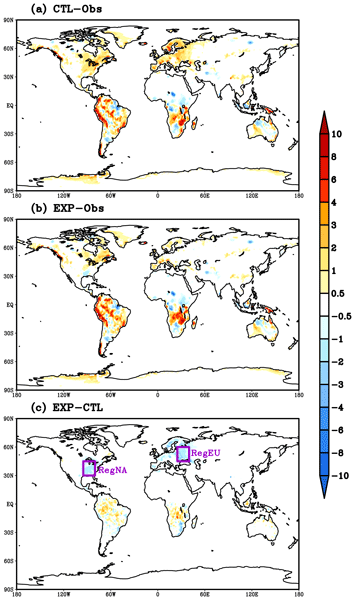
We developed a simple and realistic method to provide aerosol emissions for aerosol-aware microphysics in a numerical weather forecast model. The cloud-radiation differences between the experimental (EXP) and control (CTL) experiments responded to the aerosol differences. The strong positive precipitation biases over North America and Europe from the CTL run were significantly reduced in the EXP run. This study shows that a realistic representation of aerosol emissions should be considered.
Li Pan, Partha S. Bhattacharjee, Li Zhang, Raffaele Montuoro, Barry Baker, Jeff McQueen, Georg A. Grell, Stuart A. McKeen, Shobha Kondragunta, Xiaoyang Zhang, Gregory J. Frost, Fanglin Yang, and Ivanka Stajner
Geosci. Model Dev., 17, 431–447, https://doi.org/10.5194/gmd-17-431-2024, https://doi.org/10.5194/gmd-17-431-2024, 2024
Short summary
Short summary
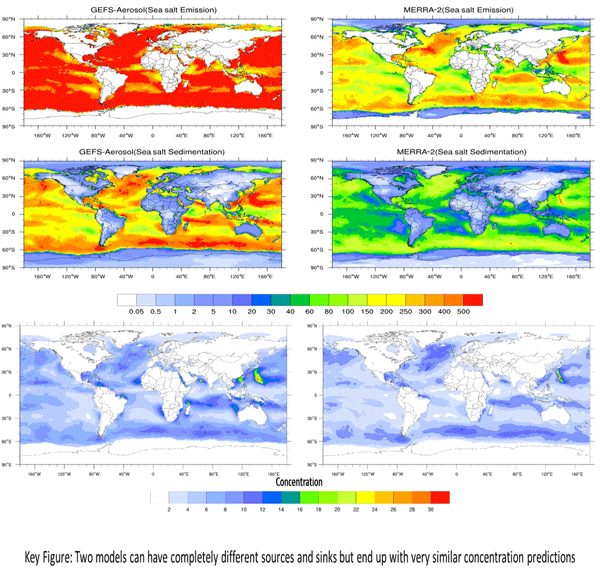
A GEFS-Aerosols simulation was conducted from 1 September 2019 to 30 September 2020 to evaluate the model performance of GEFS-Aerosols. The purpose of this study was to understand how aerosol chemical and physical processes affect ambient aerosol concentrations by placing aerosol wet deposition, dry deposition, reactions, gravitational deposition, and emissions into the aerosol mass balance equation.
Li Zhang, Raffaele Montuoro, Stuart A. McKeen, Barry Baker, Partha S. Bhattacharjee, Georg A. Grell, Judy Henderson, Li Pan, Gregory J. Frost, Jeff McQueen, Rick Saylor, Haiqin Li, Ravan Ahmadov, Jun Wang, Ivanka Stajner, Shobha Kondragunta, Xiaoyang Zhang, and Fangjun Li
Geosci. Model Dev., 15, 5337–5369, https://doi.org/10.5194/gmd-15-5337-2022, https://doi.org/10.5194/gmd-15-5337-2022, 2022
Short summary
Short summary
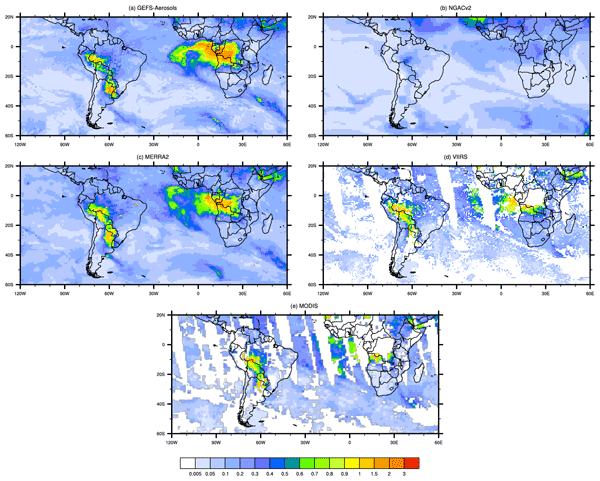
The NOAA’s air quality predictions contribute to protecting lives and health in the US, which requires sustainable development and improvement of forecast systems. GEFS-Aerosols v1 has been developed in a collaboration between the NOAA research laboratories for operational forecast since September 2020 in the NCEP. The predictions demonstrate substantial improvements for both composition and variability of aerosol distributions over those from the former operational system.

Li Zhang, Georg A. Grell, Stuart A. McKeen, Ravan Ahmadov, Karl D. Froyd, and Daniel Murphy
Geosci. Model Dev., 15, 467–491, https://doi.org/10.5194/gmd-15-467-2022, https://doi.org/10.5194/gmd-15-467-2022, 2022
Short summary
Short summary
Applying the chemistry package from WRF-Chem into the Flow-following finite-volume Icosahedra Model, we essentially make it possible to explore the importance of different levels of complexity in gas and aerosol chemistry, as well as in physics parameterizations, for the interaction processes in global modeling systems. The model performance validated by the Atmospheric Tomography Mission aircraft measurements in summer 2016 shows good performance in capturing the aerosol and gas-phase tracers.
Anders A. Jensen, David D. Turner, Jorge Guerra, Stanley G. Benjamin, Clark Evans, David J. Gagne, Justin R. Minder, and Joseph B. Olson
EGUsphere, https://doi.org/10.5194/egusphere-2026-4026, https://doi.org/10.5194/egusphere-2026-4026, 2026
This preprint is open for discussion and under review for Geoscientific Model Development (GMD).
Short summary
Short summary
Clouds and precipitation are predicted by complex algorithms in weather models. In this study, parts of these algorithms were replaced by machine learning. This approach successfully added cloud details vital for cloud-radiation interactions and temperature forecasts, and replicated a model component while maintaining accurate total precipitation forecasts. Ultimately, weather models benefit from faster algorithms and the addition of physical details from machine learning.
Jordan Schnell, Ravan Ahmadov, Georg A. Grell, Joseph B. Olson, Eric James, Ming Hu, Ka Yee Wong, Brian McDonald, Rebecca H. Schwantes, Jian He, Colin Harkins, Wayne M. Angevine, Brian Jamison, R. Bradley Pierce, Matthew Coggon, Barry Baker, Saulo Freitas, Gabriel Pereira, and Marina Tsidulko
EGUsphere, https://doi.org/10.5194/egusphere-2026-4786, https://doi.org/10.5194/egusphere-2026-4786, 2026
This preprint is open for discussion and under review for Geoscientific Model Development (GMD).
Short summary
Short summary
The Rapid-Refresh model coupled to Chemistry is an experimental weather and chemistry model that includes emissions from human and natural sources that are connected to simulated weather, the effect of aerosols on radiation and clouds, and updated vertical mixing. We compare simulated air quality and weather to ground-based and remotely-sensed observations during the 2020 North American wildfires, demonstrating that our model physics developments and coupling with chemistry improves predictions.
Duseong S. Jo, John J. Orlando, Rebecca H. Schwantes, Louisa K. Emmons, Rebecca S. Hornbrook, Eric C. Apel, Alan J. Hills, Kirk Ullmann, L. Gregory Huey, Claire Granier, Chelsea R. Thompson, and Jeff Peischl
EGUsphere, https://doi.org/10.5194/egusphere-2026-1868, https://doi.org/10.5194/egusphere-2026-1868, 2026
Short summary
Short summary
C4-C6 alkane hydrocarbons are important precursors of air pollution, but most global atmospheric chemistry models represent them using a single lumped surrogate compound, limiting detailed simulation of their oxidation products. We developed a new chemical mechanism that explicitly treats individual C4-C6 alkane species in a global model. This explicit treatment substantially changes the simulated budgets of key oxygenated compounds such as methyl ethyl ketone.
Alexander Ukhov, Georgiy Stenchikov, Jordan Schnell, Ravan Ahmadov, Umberto Rizza, Georg Grell, and Ibrahim Hoteit
Geosci. Model Dev., 18, 9805–9825, https://doi.org/10.5194/gmd-18-9805-2025, https://doi.org/10.5194/gmd-18-9805-2025, 2025
Short summary
Short summary
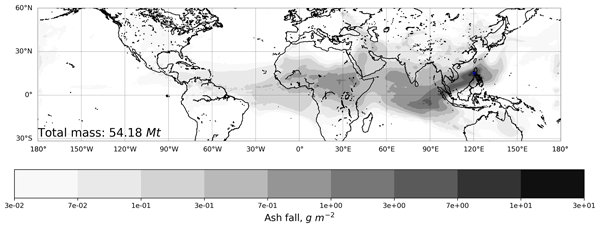
Volcanic eruptions are natural hazards impacting aviation, the environment, and climate. Here, we improve the simulation of volcanic material transport using the Weather Research and Forecasting (WRF-Chem) version 4.8. Analysis of ash, sulfate, and SO2 mass budgets was performed. The direct radiative effect of volcanic aerosols was implemented. A preprocessor, PrepEmisSources, was developed to streamline the preparation of volcanic emissions.
Chi-Tsan Wang, Patrick C. Campbell, Paul Makar, Siqi Ma, Irena Ivanova, Bok H. Baek, Wei-Ting Hung, Zachary Moon, Youhua Tang, Barry Baker, Rick Saylor, Jung-Hun Woo, and Daniel Tong
Atmos. Chem. Phys., 25, 16631–16655, https://doi.org/10.5194/acp-25-16631-2025, https://doi.org/10.5194/acp-25-16631-2025, 2025
Short summary
Short summary
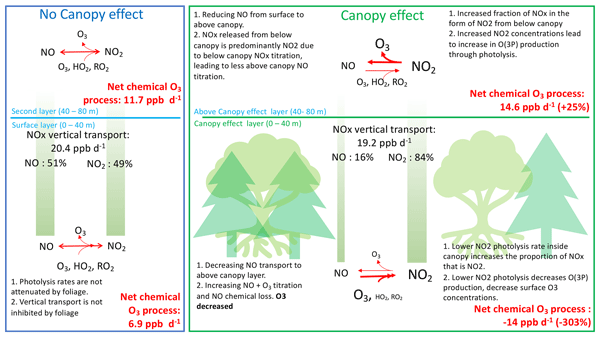
Forests influence air quality by altering ozone levels, but most air pollution models overlook canopy effects. Our study improves ozone predictions by incorporating forest canopy shading and turbulence into a widely used model. We found that tree cover reduces near-surface ozone by decreasing photolysis rates and diffusion inside canopy, resulting in lower ozone concentrations in densely forested areas. These findings enhance ozone surface prediction accuracy and improve air quality modeling.
Daniel L. Goldberg, M. Omar Nawaz, Congmeng Lyu, Jian He, Annmarie G. Carlton, Shobha Kondragunta, and Susan C. Anenberg
Atmos. Chem. Phys., 25, 16287–16302, https://doi.org/10.5194/acp-25-16287-2025, https://doi.org/10.5194/acp-25-16287-2025, 2025
Short summary
Short summary
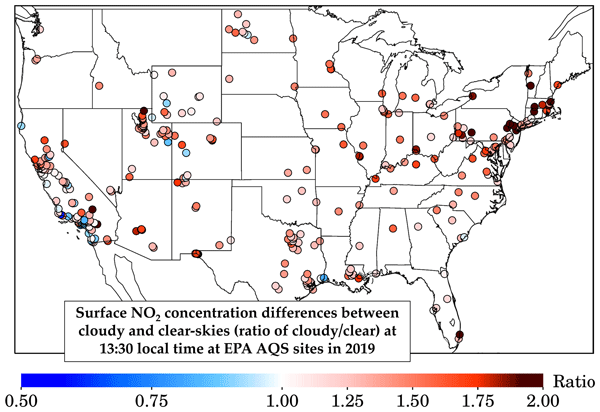
This research investigates how air quality, specifically NO2 concentrations, is different under clear and cloudy skies. We find that in situ surface NO2 is, on average, +36 % larger during cloudy days versus clear sky days, with a wide distribution based on geographic region and roadway proximity: largest in the Northeast U.S. and smallest in the Southwest U.S. and near major roadways. This has implications for satellite data applications, which only use measurements in the absence of clouds.
Sina Voshtani, Dylan B. A. Jones, Debra Wunch, Drew C. Pendergrass, Paul O. Wennberg, David F. Pollard, Isamu Morino, Hirofumi Ohyama, Nicholas M. Deutscher, Frank Hase, Ralf Sussmann, Damien Weidmann, Rigel Kivi, Omaira García, Yao Té, Jack Chen, Kerry Anderson, Robin Stevens, Shobha Kondragunta, Aihua Zhu, Douglas Worthy, Senen Racki, Kathryn McKain, Maria V. Makarova, Nicholas Jones, Emmanuel Mahieu, Andrea Cadena-Caicedo, Paolo Cristofanelli, Casper Labuschagne, Elena Kozlova, Thomas Seitz, Martin Steinbacher, Reza Mahdi, and Isao Murata
Atmos. Chem. Phys., 25, 15527–15565, https://doi.org/10.5194/acp-25-15527-2025, https://doi.org/10.5194/acp-25-15527-2025, 2025
Short summary
Short summary
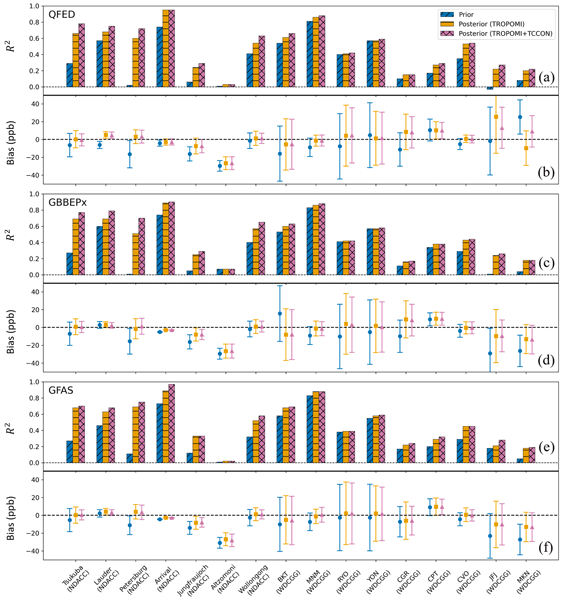
We assess the complementarity of the greater temporal coverage provided by ground-based remote sensing data with the spatial coverage of satellite observations when these data are used together to quantify CO emissions from extreme wildfires in 2023. Our results reveal that the commonly used biomass burning emission inventories significantly underestimate the fire emissions and emphasize the importance of the ground-based remote sensing data in reducing uncertainties in the estimated emissions.
Jonah K. Shaw, Dustin J. Swales, Sergio DeSouza-Machado, David D. Turner, Jennifer E. Kay, and David P. Schneider
Geosci. Model Dev., 18, 4935–4950, https://doi.org/10.5194/gmd-18-4935-2025, https://doi.org/10.5194/gmd-18-4935-2025, 2025
Short summary
Short summary
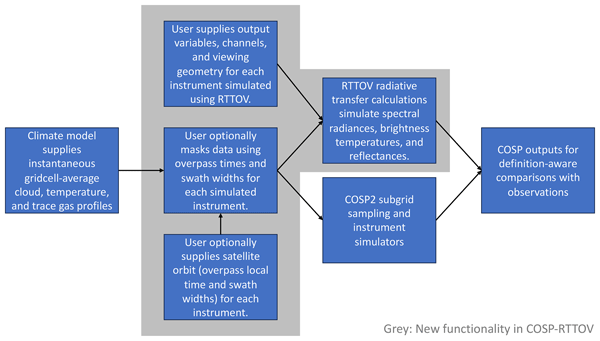
Satellites have observed Earth's emissions of infrared radiation since the 1970s. Because infrared wavelengths interact with the atmosphere in distinct ways, these observations contain information about Earth and the atmosphere. We present a tool that runs within Earth system models and produces output that can be directly compared with satellite measurements of infrared radiation. We then use this tool for climate model evaluation, climate change detection, and satellite mission design.
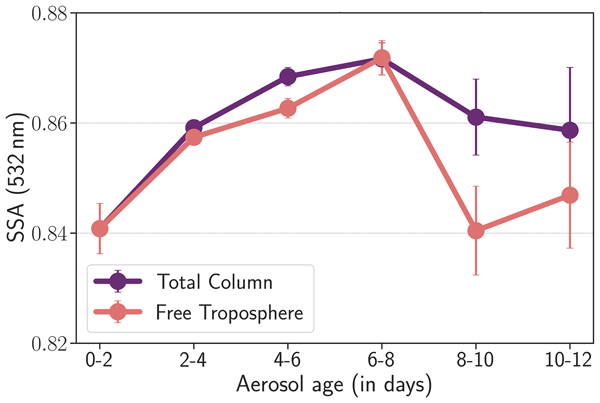
Abdulamid A. Fakoya, Jens Redemann, Pablo E. Saide, Lan Gao, Logan T. Mitchell, Calvin Howes, Amie Dobracki, Ian Chang, Gonzalo A. Ferrada, Kristina Pistone, Samuel E. Leblanc, Michal Segal-Rozenhaimer, Arthur J. Sedlacek III, Thomas Eck, Brent Holben, Pawan Gupta, Elena Lind, Paquita Zuidema, Gregory Carmichael, and Connor J. Flynn
Atmos. Chem. Phys., 25, 7879–7902, https://doi.org/10.5194/acp-25-7879-2025, https://doi.org/10.5194/acp-25-7879-2025, 2025
Short summary
Short summary
Tiny atmospheric particles from wildfire smoke impact the climate by interacting with sunlight and clouds, the extent of which is uncertain due to gaps in understanding how smoke changes over time. We developed a new method using remote sensing instruments to track how these particles evolve during atmospheric transport. Our results show that the ability of these particles to absorb sunlight increases as they travel. This discovery could help improve predictions of future climate scenarios.
Christopher D. Holmes, Joshua P. Schwarz, Charles H. Fite, Anxhelo Agastra, Holly K. Nowell, Katherine Ball, T. Paul Bui, Johnathan Dean-Day, Zachary C. J. Decker, Joshua P. DiGagni, Glenn S. Diskin, Emily M. Gargulinski, Hannah Halliday, Shobha Kondragunta, John B. Nowak, David A. Peterson, Michael A. Robinson, Amber J. Soja, Rebecca A. Washenfelder, Chuanyu Xu, and Robert J. Yokelson
Earth Syst. Sci. Data Discuss., https://doi.org/10.5194/essd-2025-307, https://doi.org/10.5194/essd-2025-307, 2025
Revised manuscript accepted for ESSD
Short summary
Short summary
Smoke age is an important factor in the chemical and physical evolution of smoke. Two methods for determining the age of smoke are applied to the NASA-NOAA FIREX-AQ field campaign: one based on wind speed and distance, and another using an ensemble of modeled air parcel trajectories. Both methods are evaluated, with the trajectory method, which includes plume rise and uncertainty estimates, proving more accurate.
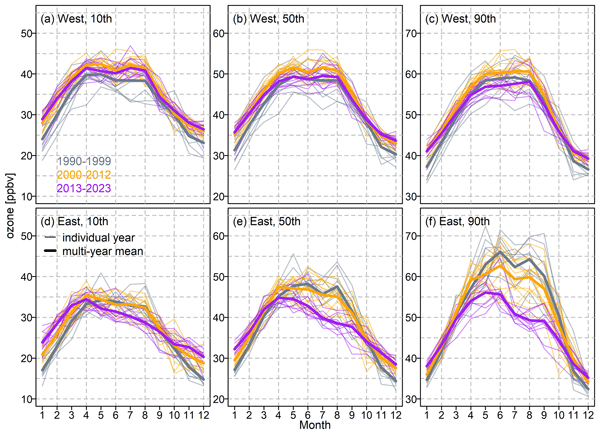
Kai-Lan Chang, Brian C. McDonald, Colin Harkins, and Owen R. Cooper
Atmos. Chem. Phys., 25, 5101–5132, https://doi.org/10.5194/acp-25-5101-2025, https://doi.org/10.5194/acp-25-5101-2025, 2025
Short summary
Short summary
Exposure to high levels of ozone can be harmful to human health. This study shows consistent and robust evidence of decreasing ozone extremes across much of the United States over the period from 1990 to 2023, previously attributed to ozone precursor emission controls. Nevertheless, we also show that the increasing heat wave frequencies are likely to contribute to additional ozone exceedances, slowing the progress of decreasing the frequency of ozone exceedances.
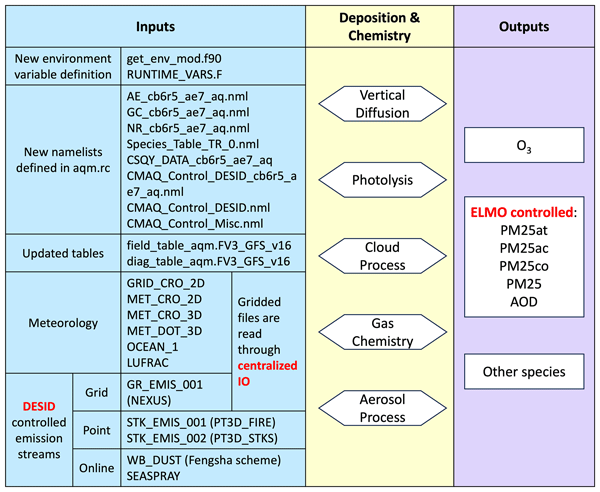
Wei Li, Beiming Tang, Patrick C. Campbell, Youhua Tang, Barry Baker, Zachary Moon, Daniel Tong, Jianping Huang, Kai Wang, Ivanka Stajner, and Raffaele Montuoro
Geosci. Model Dev., 18, 1635–1660, https://doi.org/10.5194/gmd-18-1635-2025, https://doi.org/10.5194/gmd-18-1635-2025, 2025
Short summary
Short summary
The study describes the updates of NOAA's current UFS-AQMv7 air quality forecast model by incorporating the latest scientific and structural changes in CMAQv5.4. An evaluation during the summer of 2023 shows that the updated model overall improves the simulation of MDA8 O3 by reducing the bias by 8%–12% in the contiguous US. PM2.5 predictions have mixed results due to wildfire, highlighting the need for future refinements.
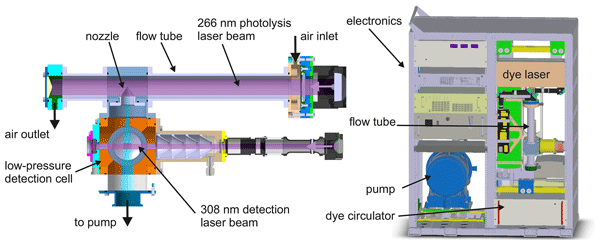
Hendrik Fuchs, Aaron Stainsby, Florian Berg, René Dubus, Michelle Färber, Andreas Hofzumahaus, Frank Holland, Kelvin H. Bates, Steven S. Brown, Matthew M. Coggon, Glenn S. Diskin, Georgios I. Gkatzelis, Christopher M. Jernigan, Jeff Peischl, Michael A. Robinson, Andrew W. Rollins, Nell B. Schafer, Rebecca H. Schwantes, Chelsea E. Stockwell, Patrick R. Veres, Carsten Warneke, Eleanor M. Waxman, Lu Xu, Kristen Zuraski, Andreas Wahner, and Anna Novelli
Atmos. Meas. Tech., 18, 881–895, https://doi.org/10.5194/amt-18-881-2025, https://doi.org/10.5194/amt-18-881-2025, 2025
Short summary
Short summary
Significant improvements have been made to the instruments used to measure OH reactivity, which is equivalent to the sum of air pollutant concentrations. Accurate and precise measurements with a high time resolution have been achieved, allowing use on aircraft, as demonstrated during flights in the USA.
Chelsea E. Stockwell, Matthew M. Coggon, Rebecca H. Schwantes, Colin Harkins, Bert Verreyken, Congmeng Lyu, Qindan Zhu, Lu Xu, Jessica B. Gilman, Aaron Lamplugh, Jeff Peischl, Michael A. Robinson, Patrick R. Veres, Meng Li, Andrew W. Rollins, Kristen Zuraski, Sunil Baidar, Shang Liu, Toshihiro Kuwayama, Steven S. Brown, Brian C. McDonald, and Carsten Warneke
Atmos. Chem. Phys., 25, 1121–1143, https://doi.org/10.5194/acp-25-1121-2025, https://doi.org/10.5194/acp-25-1121-2025, 2025
Short summary
Short summary
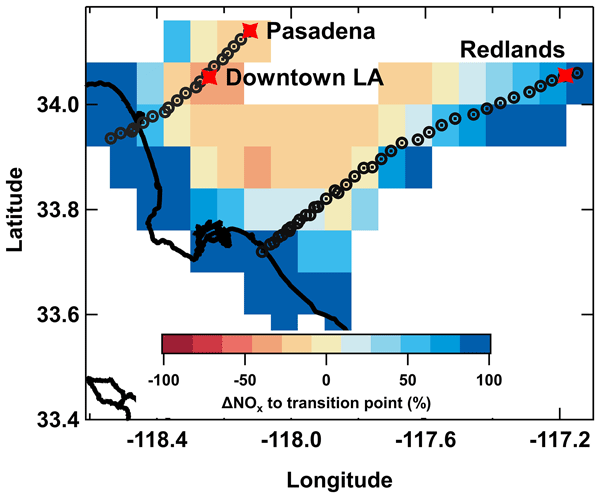
In urban areas, emissions from everyday products like paints, cleaners, and personal care products, along with non-traditional sources such as cooking, are increasingly important and impact air quality. This study uses a box model to evaluate how these emissions impact ozone in the Los Angeles Basin and quantifies the impact of gaseous cooking emissions. Accurate representation of these and other anthropogenic sources in inventories is crucial for informing effective air quality policies.
T. Nash Skipper, Emma L. D'Ambro, Forwood C. Wiser, V. Faye McNeill, Rebecca H. Schwantes, Barron H. Henderson, Ivan R. Piletic, Colleen B. Baublitz, Jesse O. Bash, Andrew R. Whitehill, Lukas C. Valin, Asher P. Mouat, Jennifer Kaiser, Glenn M. Wolfe, Jason M. St. Clair, Thomas F. Hanisco, Alan Fried, Bryan K. Place, and Havala O.T. Pye
Atmos. Chem. Phys., 24, 12903–12924, https://doi.org/10.5194/acp-24-12903-2024, https://doi.org/10.5194/acp-24-12903-2024, 2024
Short summary
Short summary
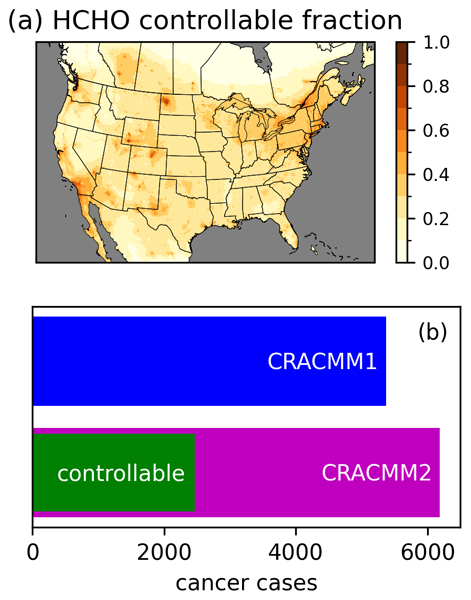
We develop the Community Regional Atmospheric Chemistry Multiphase Mechanism (CRACMM) version 2 to improve predictions of formaldehyde in ambient air compared to satellite-, aircraft-, and ground-based observations. With the updated chemistry, we estimate the cancer risk from inhalation exposure to ambient formaldehyde across the contiguous USA and predict that 40 % of this risk is controllable through reductions in anthropogenic emissions of nitrogen oxides and reactive organic carbon.
Audrey Gaudel, Ilann Bourgeois, Meng Li, Kai-Lan Chang, Jerald Ziemke, Bastien Sauvage, Ryan M. Stauffer, Anne M. Thompson, Debra E. Kollonige, Nadia Smith, Daan Hubert, Arno Keppens, Juan Cuesta, Klaus-Peter Heue, Pepijn Veefkind, Kenneth Aikin, Jeff Peischl, Chelsea R. Thompson, Thomas B. Ryerson, Gregory J. Frost, Brian C. McDonald, and Owen R. Cooper
Atmos. Chem. Phys., 24, 9975–10000, https://doi.org/10.5194/acp-24-9975-2024, https://doi.org/10.5194/acp-24-9975-2024, 2024
Short summary
Short summary
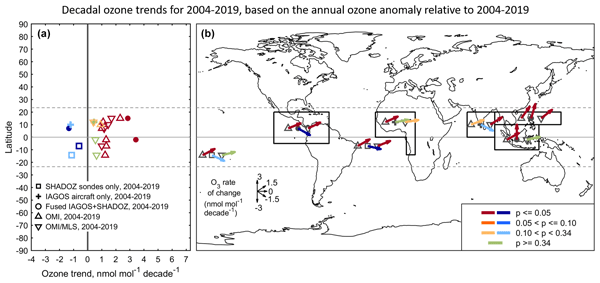
The study examines tropical tropospheric ozone changes. In situ data from 1994–2019 display increased ozone, notably over India, Southeast Asia, and Malaysia and Indonesia. Sparse in situ data limit trend detection for the 15-year period. In situ and satellite data, with limited sampling, struggle to consistently detect trends. Continuous observations are vital over the tropical Pacific Ocean, Indian Ocean, western Africa, and South Asia for accurate ozone trend estimation in these regions.
Shan Sun and Amy Solomon
The Cryosphere, 18, 3033–3048, https://doi.org/10.5194/tc-18-3033-2024, https://doi.org/10.5194/tc-18-3033-2024, 2024
Short summary
Short summary
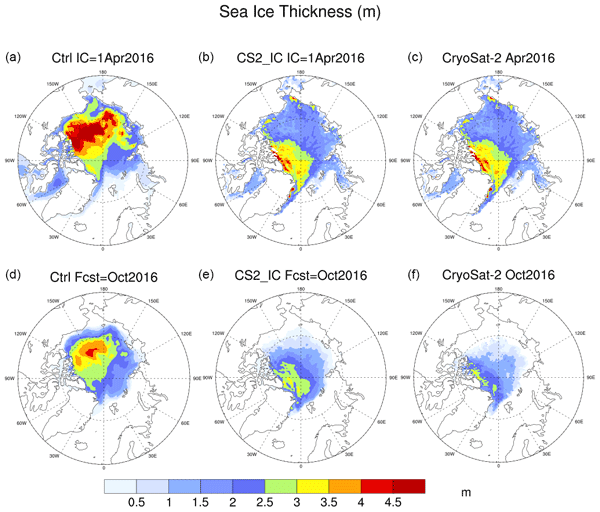
The study brings to light the suitability of CICE for seasonal prediction being contingent on several factors, such as initial conditions like sea ice coverage and thickness, as well as atmospheric and oceanic conditions including oceanic currents and sea surface temperature. We show there is potential to improve seasonal forecasting by using a more reliable sea ice thickness initialization. Thus, data assimilation of sea ice thickness is highly relevant for advancing seasonal prediction skills.
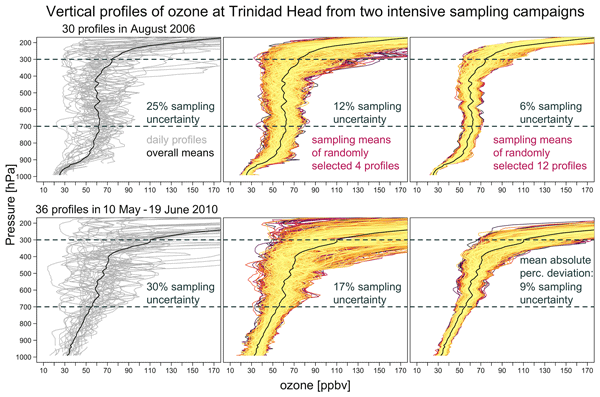
Kai-Lan Chang, Owen R. Cooper, Audrey Gaudel, Irina Petropavlovskikh, Peter Effertz, Gary Morris, and Brian C. McDonald
Atmos. Chem. Phys., 24, 6197–6218, https://doi.org/10.5194/acp-24-6197-2024, https://doi.org/10.5194/acp-24-6197-2024, 2024
Short summary
Short summary
A great majority of observational trend studies of free tropospheric ozone use sparsely sampled ozonesonde and aircraft measurements as reference data sets. A ubiquitous assumption is that trends are accurate and reliable so long as long-term records are available. We show that sampling bias due to sparse samples can persistently reduce the trend accuracy, and we highlight the importance of maintaining adequate frequency and continuity of observations.
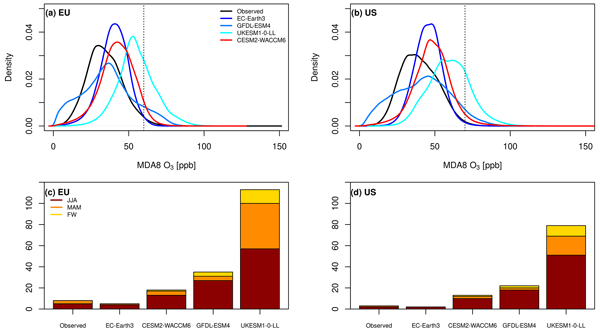
Christoph Staehle, Harald E. Rieder, Arlene M. Fiore, and Jordan L. Schnell
Atmos. Chem. Phys., 24, 5953–5969, https://doi.org/10.5194/acp-24-5953-2024, https://doi.org/10.5194/acp-24-5953-2024, 2024
Short summary
Short summary
Chemistry–climate models show biases compared to surface ozone observations and thus require bias correction for impact studies and the assessment of air quality changes. We compare the performance of commonly used correction techniques for model outputs available via CMIP6. While all methods can reduce model biases, better results are obtained from more complex approaches. Thus, our study suggests broader use of these techniques in studies seeking to inform air quality management and policy.
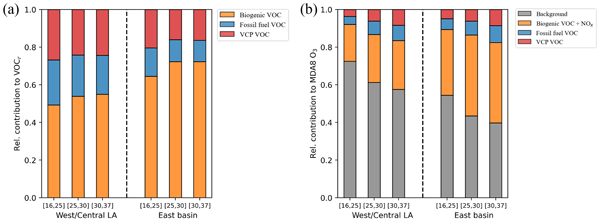
Qindan Zhu, Rebecca H. Schwantes, Matthew Coggon, Colin Harkins, Jordan Schnell, Jian He, Havala O. T. Pye, Meng Li, Barry Baker, Zachary Moon, Ravan Ahmadov, Eva Y. Pfannerstill, Bryan Place, Paul Wooldridge, Benjamin C. Schulze, Caleb Arata, Anthony Bucholtz, John H. Seinfeld, Carsten Warneke, Chelsea E. Stockwell, Lu Xu, Kristen Zuraski, Michael A. Robinson, J. Andrew Neuman, Patrick R. Veres, Jeff Peischl, Steven S. Brown, Allen H. Goldstein, Ronald C. Cohen, and Brian C. McDonald
Atmos. Chem. Phys., 24, 5265–5286, https://doi.org/10.5194/acp-24-5265-2024, https://doi.org/10.5194/acp-24-5265-2024, 2024
Short summary
Short summary
Volatile organic compounds (VOCs) fuel the production of air pollutants like ozone and particulate matter. The representation of VOC chemistry remains challenging due to its complexity in speciation and reactions. Here, we develop a chemical mechanism, RACM2B-VCP, that better represents VOC chemistry in urban areas such as Los Angeles. We also discuss the contribution of VOCs emitted from volatile chemical products and other anthropogenic sources to total VOC reactivity and O3.
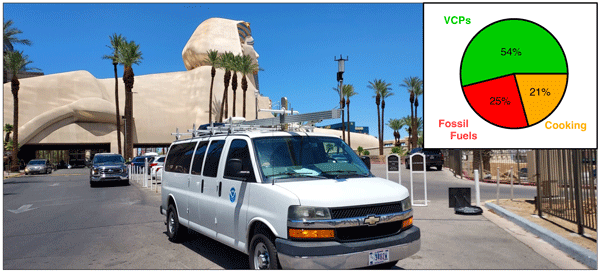
Matthew M. Coggon, Chelsea E. Stockwell, Lu Xu, Jeff Peischl, Jessica B. Gilman, Aaron Lamplugh, Henry J. Bowman, Kenneth Aikin, Colin Harkins, Qindan Zhu, Rebecca H. Schwantes, Jian He, Meng Li, Karl Seltzer, Brian McDonald, and Carsten Warneke
Atmos. Chem. Phys., 24, 4289–4304, https://doi.org/10.5194/acp-24-4289-2024, https://doi.org/10.5194/acp-24-4289-2024, 2024
Short summary
Short summary
Residential and commercial cooking emits pollutants that degrade air quality. Here, ambient observations show that cooking is an important contributor to anthropogenic volatile organic compounds (VOCs) emitted in Las Vegas, NV. These emissions are not fully presented in air quality models, and more work may be needed to quantify emissions from important sources, such as commercial restaurants.
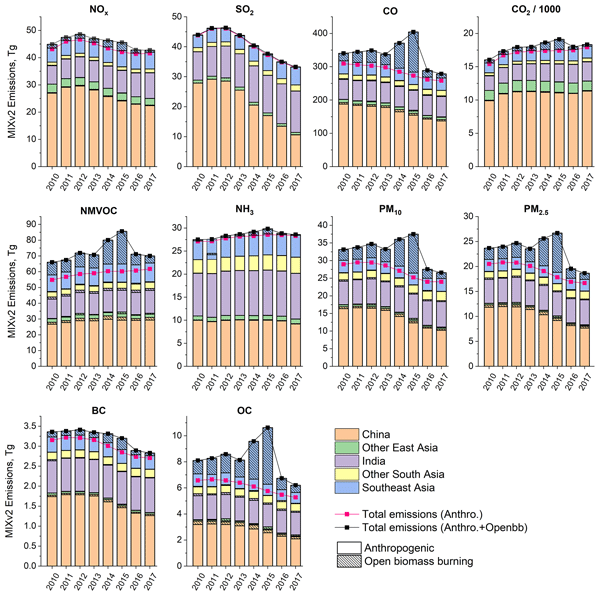
Meng Li, Junichi Kurokawa, Qiang Zhang, Jung-Hun Woo, Tazuko Morikawa, Satoru Chatani, Zifeng Lu, Yu Song, Guannan Geng, Hanwen Hu, Jinseok Kim, Owen R. Cooper, and Brian C. McDonald
Atmos. Chem. Phys., 24, 3925–3952, https://doi.org/10.5194/acp-24-3925-2024, https://doi.org/10.5194/acp-24-3925-2024, 2024
Short summary
Short summary
In this work, we developed MIXv2, a mosaic Asian emission inventory for 2010–2017. With high spatial (0.1°) and monthly temporal resolution, MIXv2 integrates anthropogenic and open biomass burning emissions across seven sectors following a mosaic methodology. It provides CO2 emissions data alongside nine key pollutants and three chemical mechanisms. Our publicly accessible gridded monthly emissions data can facilitate long-term atmospheric and climate model analyses.
Haiqin Li, Georg A. Grell, Ravan Ahmadov, Li Zhang, Shan Sun, Jordan Schnell, and Ning Wang
Geosci. Model Dev., 17, 607–619, https://doi.org/10.5194/gmd-17-607-2024, https://doi.org/10.5194/gmd-17-607-2024, 2024
Short summary
Short summary
We developed a simple and realistic method to provide aerosol emissions for aerosol-aware microphysics in a numerical weather forecast model. The cloud-radiation differences between the experimental (EXP) and control (CTL) experiments responded to the aerosol differences. The strong positive precipitation biases over North America and Europe from the CTL run were significantly reduced in the EXP run. This study shows that a realistic representation of aerosol emissions should be considered.
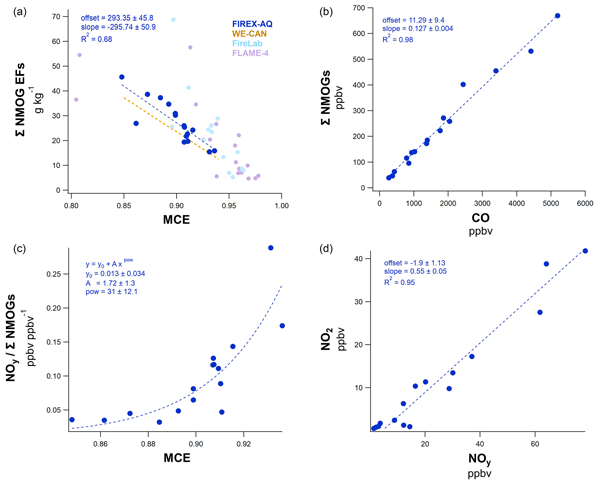
Georgios I. Gkatzelis, Matthew M. Coggon, Chelsea E. Stockwell, Rebecca S. Hornbrook, Hannah Allen, Eric C. Apel, Megan M. Bela, Donald R. Blake, Ilann Bourgeois, Steven S. Brown, Pedro Campuzano-Jost, Jason M. St. Clair, James H. Crawford, John D. Crounse, Douglas A. Day, Joshua P. DiGangi, Glenn S. Diskin, Alan Fried, Jessica B. Gilman, Hongyu Guo, Johnathan W. Hair, Hannah S. Halliday, Thomas F. Hanisco, Reem Hannun, Alan Hills, L. Gregory Huey, Jose L. Jimenez, Joseph M. Katich, Aaron Lamplugh, Young Ro Lee, Jin Liao, Jakob Lindaas, Stuart A. McKeen, Tomas Mikoviny, Benjamin A. Nault, J. Andrew Neuman, John B. Nowak, Demetrios Pagonis, Jeff Peischl, Anne E. Perring, Felix Piel, Pamela S. Rickly, Michael A. Robinson, Andrew W. Rollins, Thomas B. Ryerson, Melinda K. Schueneman, Rebecca H. Schwantes, Joshua P. Schwarz, Kanako Sekimoto, Vanessa Selimovic, Taylor Shingler, David J. Tanner, Laura Tomsche, Krystal T. Vasquez, Patrick R. Veres, Rebecca Washenfelder, Petter Weibring, Paul O. Wennberg, Armin Wisthaler, Glenn M. Wolfe, Caroline C. Womack, Lu Xu, Katherine Ball, Robert J. Yokelson, and Carsten Warneke
Atmos. Chem. Phys., 24, 929–956, https://doi.org/10.5194/acp-24-929-2024, https://doi.org/10.5194/acp-24-929-2024, 2024
Short summary
Short summary
This study reports emissions of gases and particles from wildfires. These emissions are related to chemical proxies that can be measured by satellite and incorporated into models to improve predictions of wildfire impacts on air quality and climate.
Li Pan, Partha S. Bhattacharjee, Li Zhang, Raffaele Montuoro, Barry Baker, Jeff McQueen, Georg A. Grell, Stuart A. McKeen, Shobha Kondragunta, Xiaoyang Zhang, Gregory J. Frost, Fanglin Yang, and Ivanka Stajner
Geosci. Model Dev., 17, 431–447, https://doi.org/10.5194/gmd-17-431-2024, https://doi.org/10.5194/gmd-17-431-2024, 2024
Short summary
Short summary
A GEFS-Aerosols simulation was conducted from 1 September 2019 to 30 September 2020 to evaluate the model performance of GEFS-Aerosols. The purpose of this study was to understand how aerosol chemical and physical processes affect ambient aerosol concentrations by placing aerosol wet deposition, dry deposition, reactions, gravitational deposition, and emissions into the aerosol mass balance equation.
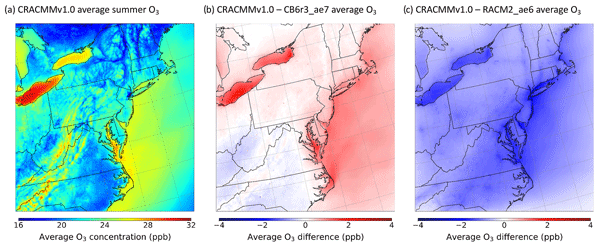
Bryan K. Place, William T. Hutzell, K. Wyat Appel, Sara Farrell, Lukas Valin, Benjamin N. Murphy, Karl M. Seltzer, Golam Sarwar, Christine Allen, Ivan R. Piletic, Emma L. D'Ambro, Emily Saunders, Heather Simon, Ana Torres-Vasquez, Jonathan Pleim, Rebecca H. Schwantes, Matthew M. Coggon, Lu Xu, William R. Stockwell, and Havala O. T. Pye
Atmos. Chem. Phys., 23, 9173–9190, https://doi.org/10.5194/acp-23-9173-2023, https://doi.org/10.5194/acp-23-9173-2023, 2023
Short summary
Short summary
Ground-level ozone is a pollutant with adverse human health and ecosystem effects. Air quality models allow scientists to understand the chemical production of ozone and demonstrate impacts of air quality management plans. In this work, the role of multiple systems in ozone production was investigated for the northeastern US in summer. Model updates to chemical reaction rates and monoterpene chemistry were most influential in decreasing predicted ozone and improving agreement with observations.

Havala O. T. Pye, Bryan K. Place, Benjamin N. Murphy, Karl M. Seltzer, Emma L. D'Ambro, Christine Allen, Ivan R. Piletic, Sara Farrell, Rebecca H. Schwantes, Matthew M. Coggon, Emily Saunders, Lu Xu, Golam Sarwar, William T. Hutzell, Kristen M. Foley, George Pouliot, Jesse Bash, and William R. Stockwell
Atmos. Chem. Phys., 23, 5043–5099, https://doi.org/10.5194/acp-23-5043-2023, https://doi.org/10.5194/acp-23-5043-2023, 2023
Short summary
Short summary
Chemical mechanisms describe how emissions from vehicles, vegetation, and other sources are chemically transformed in the atmosphere to secondary products including criteria and hazardous air pollutants. The Community Regional Atmospheric Chemistry Multiphase Mechanism integrates gas-phase radical chemistry with pathways to fine-particle mass. New species were implemented, resulting in a bottom-up representation of organic aerosol, which is required for accurate source attribution of pollutants.
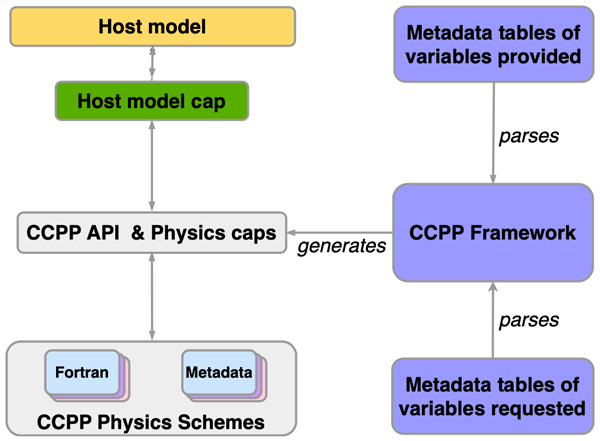
Dominikus Heinzeller, Ligia Bernardet, Grant Firl, Man Zhang, Xia Sun, and Michael Ek
Geosci. Model Dev., 16, 2235–2259, https://doi.org/10.5194/gmd-16-2235-2023, https://doi.org/10.5194/gmd-16-2235-2023, 2023
Short summary
Short summary
The Common Community Physics Package is a collection of physical atmospheric parameterizations for use in Earth system models and a framework that couples the physics to a host model’s dynamical core. A primary goal for this effort is to facilitate research and development of physical parameterizations and physics–dynamics coupling methods while offering capabilities for numerical weather prediction operations, for example in the upcoming implementation of the Global Forecast System (GFS) v17.
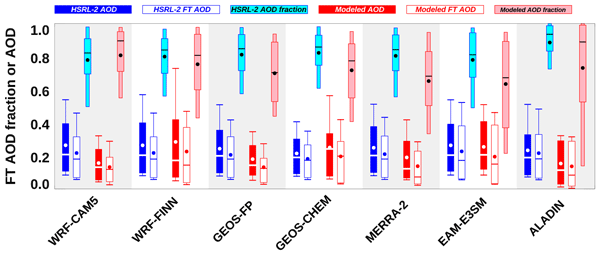
Ian Chang, Lan Gao, Connor J. Flynn, Yohei Shinozuka, Sarah J. Doherty, Michael S. Diamond, Karla M. Longo, Gonzalo A. Ferrada, Gregory R. Carmichael, Patricia Castellanos, Arlindo M. da Silva, Pablo E. Saide, Calvin Howes, Zhixin Xue, Marc Mallet, Ravi Govindaraju, Qiaoqiao Wang, Yafang Cheng, Yan Feng, Sharon P. Burton, Richard A. Ferrare, Samuel E. LeBlanc, Meloë S. Kacenelenbogen, Kristina Pistone, Michal Segal-Rozenhaimer, Kerry G. Meyer, Ju-Mee Ryoo, Leonhard Pfister, Adeyemi A. Adebiyi, Robert Wood, Paquita Zuidema, Sundar A. Christopher, and Jens Redemann
Atmos. Chem. Phys., 23, 4283–4309, https://doi.org/10.5194/acp-23-4283-2023, https://doi.org/10.5194/acp-23-4283-2023, 2023
Short summary
Short summary
Abundant aerosols are present above low-level liquid clouds over the southeastern Atlantic during late austral spring. The model simulation differences in the proportion of aerosol residing in the planetary boundary layer and in the free troposphere can greatly affect the regional aerosol radiative effects. This study examines the aerosol loading and fractional aerosol loading in the free troposphere among various models and evaluates them against measurements from the NASA ORACLES campaign.
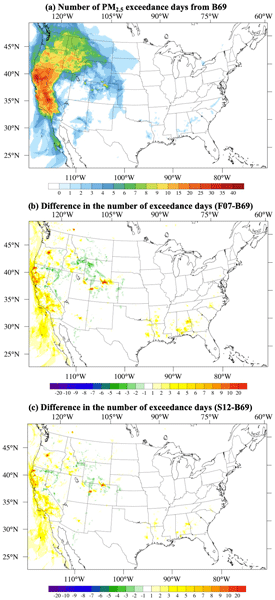
Yunyao Li, Daniel Tong, Siqi Ma, Saulo R. Freitas, Ravan Ahmadov, Mikhail Sofiev, Xiaoyang Zhang, Shobha Kondragunta, Ralph Kahn, Youhua Tang, Barry Baker, Patrick Campbell, Rick Saylor, Georg Grell, and Fangjun Li
Atmos. Chem. Phys., 23, 3083–3101, https://doi.org/10.5194/acp-23-3083-2023, https://doi.org/10.5194/acp-23-3083-2023, 2023
Short summary
Short summary
Plume height is important in wildfire smoke dispersion and affects air quality and human health. We assess the impact of plume height on wildfire smoke dispersion and the exceedances of the National Ambient Air Quality Standards. A higher plume height predicts lower pollution near the source region, but higher pollution in downwind regions, due to the faster spread of the smoke once ejected, affects pollution exceedance forecasts and the early warning of extreme air pollution events.
Shan Sun and Amy Solomon
EGUsphere, https://doi.org/10.5194/egusphere-2022-1368, https://doi.org/10.5194/egusphere-2022-1368, 2022
Preprint archived
Short summary
Short summary
We evaluate sea ice prediction skill at seasonal time scales using the CICE sea ice model. It confirms the importance of the accuracy in ice thickness initialization for seasonal sea ice prediction. It suggests that there exists a potentially important source of additional skill in seasonal forecasting, namely, a more reliable sea ice thickness initialization. Hence, assimilation of sea ice thickness appears to be highly relevant for advancing seasonal prediction skill.
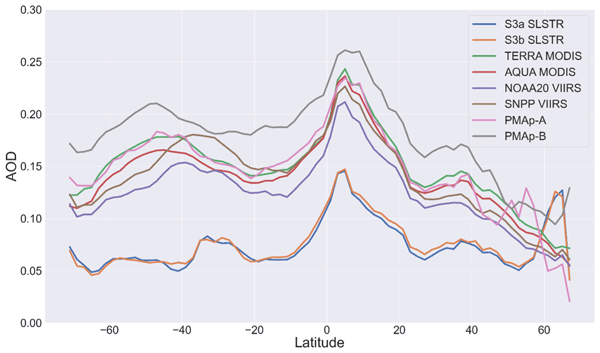
Sebastien Garrigues, Samuel Remy, Julien Chimot, Melanie Ades, Antje Inness, Johannes Flemming, Zak Kipling, Istvan Laszlo, Angela Benedetti, Roberto Ribas, Soheila Jafariserajehlou, Bertrand Fougnie, Shobha Kondragunta, Richard Engelen, Vincent-Henri Peuch, Mark Parrington, Nicolas Bousserez, Margarita Vazquez Navarro, and Anna Agusti-Panareda
Atmos. Chem. Phys., 22, 14657–14692, https://doi.org/10.5194/acp-22-14657-2022, https://doi.org/10.5194/acp-22-14657-2022, 2022
Short summary
Short summary
The Copernicus Atmosphere Monitoring Service (CAMS) provides global monitoring of aerosols using the ECMWF forecast model constrained by the assimilation of satellite aerosol optical depth (AOD). This work aims at evaluating two new satellite AODs to enhance the CAMS aerosol global forecast. It highlights the spatial and temporal differences between the satellite AOD products at the model spatial resolution, which is essential information to design multi-satellite AOD data assimilation schemes.
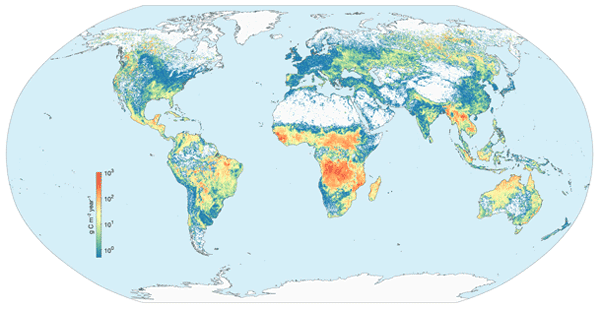
Gonzalo A. Ferrada, Meng Zhou, Jun Wang, Alexei Lyapustin, Yujie Wang, Saulo R. Freitas, and Gregory R. Carmichael
Geosci. Model Dev., 15, 8085–8109, https://doi.org/10.5194/gmd-15-8085-2022, https://doi.org/10.5194/gmd-15-8085-2022, 2022
Short summary
Short summary
The smoke from fires is composed of different compounds that interact with the atmosphere and can create poor air-quality episodes. Here, we present a new fire inventory based on satellite observations from the Visible Infrared Imaging Radiometer Suite (VIIRS). We named this inventory the VIIRS-based Fire Emission Inventory (VFEI). Advantages of VFEI are its high resolution (~500 m) and that it provides information for many species. VFEI is publicly available and has provided data since 2012.
Peeyush Khare, Jordan E. Krechmer, Jo E. Machesky, Tori Hass-Mitchell, Cong Cao, Junqi Wang, Francesca Majluf, Felipe Lopez-Hilfiker, Sonja Malek, Will Wang, Karl Seltzer, Havala O. T. Pye, Roisin Commane, Brian C. McDonald, Ricardo Toledo-Crow, John E. Mak, and Drew R. Gentner
Atmos. Chem. Phys., 22, 14377–14399, https://doi.org/10.5194/acp-22-14377-2022, https://doi.org/10.5194/acp-22-14377-2022, 2022
Short summary
Short summary
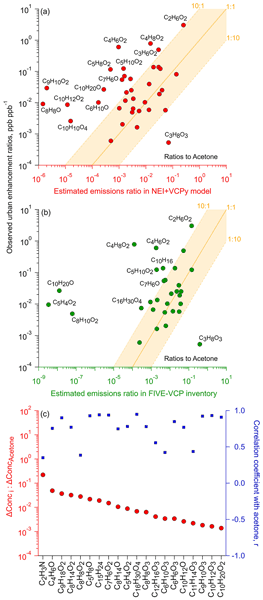
Ammonium adduct chemical ionization is used to examine the atmospheric abundances of oxygenated volatile organic compounds associated with emissions from volatile chemical products, which are now key contributors of reactive precursors to ozone and secondary organic aerosols in urban areas. The application of this valuable measurement approach in densely populated New York City enables the evaluation of emissions inventories and thus the role these oxygenated compounds play in urban air quality.
Youhua Tang, Patrick C. Campbell, Pius Lee, Rick Saylor, Fanglin Yang, Barry Baker, Daniel Tong, Ariel Stein, Jianping Huang, Ho-Chun Huang, Li Pan, Jeff McQueen, Ivanka Stajner, Jose Tirado-Delgado, Youngsun Jung, Melissa Yang, Ilann Bourgeois, Jeff Peischl, Tom Ryerson, Donald Blake, Joshua Schwarz, Jose-Luis Jimenez, James Crawford, Glenn Diskin, Richard Moore, Johnathan Hair, Greg Huey, Andrew Rollins, Jack Dibb, and Xiaoyang Zhang
Geosci. Model Dev., 15, 7977–7999, https://doi.org/10.5194/gmd-15-7977-2022, https://doi.org/10.5194/gmd-15-7977-2022, 2022
Short summary
Short summary
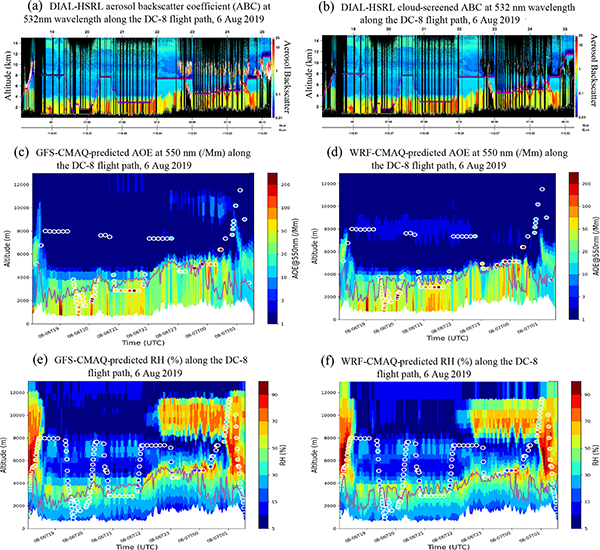
This paper compares two meteorological datasets for driving a regional air quality model: a regional meteorological model using WRF (WRF-CMAQ) and direct interpolation from an operational global model (GFS-CMAQ). In the comparison with surface measurements and aircraft data in summer 2019, these two methods show mixed performance depending on the corresponding meteorological settings. Direct interpolation is found to be a viable method to drive air quality models.
Aditya Kumar, R. Bradley Pierce, Ravan Ahmadov, Gabriel Pereira, Saulo Freitas, Georg Grell, Chris Schmidt, Allen Lenzen, Joshua P. Schwarz, Anne E. Perring, Joseph M. Katich, John Hair, Jose L. Jimenez, Pedro Campuzano-Jost, and Hongyu Guo
Atmos. Chem. Phys., 22, 10195–10219, https://doi.org/10.5194/acp-22-10195-2022, https://doi.org/10.5194/acp-22-10195-2022, 2022
Short summary
Short summary
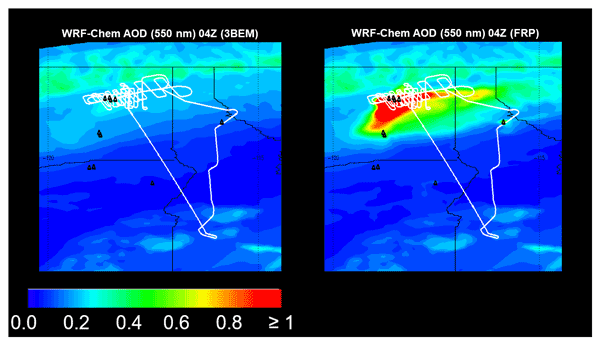
We use the WRF-Chem model with new implementations of GOES-16 wildfire emissions and plume rise based on fire radiative power (FRP) to interpret aerosol observations during the 2019 NASA–NOAA FIREX-AQ field campaign and perform model evaluations. The model shows significant improvements in simulating the variety of aerosol loading environments sampled during FIREX-AQ. Our results also highlight the importance of accurate wildfire diurnal cycle and aerosol chemical mechanisms in models.
Li Zhang, Raffaele Montuoro, Stuart A. McKeen, Barry Baker, Partha S. Bhattacharjee, Georg A. Grell, Judy Henderson, Li Pan, Gregory J. Frost, Jeff McQueen, Rick Saylor, Haiqin Li, Ravan Ahmadov, Jun Wang, Ivanka Stajner, Shobha Kondragunta, Xiaoyang Zhang, and Fangjun Li
Geosci. Model Dev., 15, 5337–5369, https://doi.org/10.5194/gmd-15-5337-2022, https://doi.org/10.5194/gmd-15-5337-2022, 2022
Short summary
Short summary
The NOAA’s air quality predictions contribute to protecting lives and health in the US, which requires sustainable development and improvement of forecast systems. GEFS-Aerosols v1 has been developed in a collaboration between the NOAA research laboratories for operational forecast since September 2020 in the NCEP. The predictions demonstrate substantial improvements for both composition and variability of aerosol distributions over those from the former operational system.
Patrick Le Moigne, Eric Bazile, Anning Cheng, Emanuel Dutra, John M. Edwards, William Maurel, Irina Sandu, Olivier Traullé, Etienne Vignon, Ayrton Zadra, and Weizhong Zheng
The Cryosphere, 16, 2183–2202, https://doi.org/10.5194/tc-16-2183-2022, https://doi.org/10.5194/tc-16-2183-2022, 2022
Short summary
Short summary
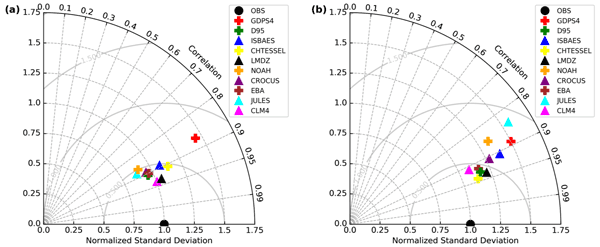
This paper describes an intercomparison of snow models, of varying complexity, used for numerical weather prediction or academic research. The results show that the simplest models are, under certain conditions, able to reproduce the surface temperature just as well as the most complex models. Moreover, the diversity of surface parameters of the models has a strong impact on the temporal variability of the components of the simulated surface energy balance.
Patrick C. Campbell, Youhua Tang, Pius Lee, Barry Baker, Daniel Tong, Rick Saylor, Ariel Stein, Jianping Huang, Ho-Chun Huang, Edward Strobach, Jeff McQueen, Li Pan, Ivanka Stajner, Jamese Sims, Jose Tirado-Delgado, Youngsun Jung, Fanglin Yang, Tanya L. Spero, and Robert C. Gilliam
Geosci. Model Dev., 15, 3281–3313, https://doi.org/10.5194/gmd-15-3281-2022, https://doi.org/10.5194/gmd-15-3281-2022, 2022
Short summary
Short summary
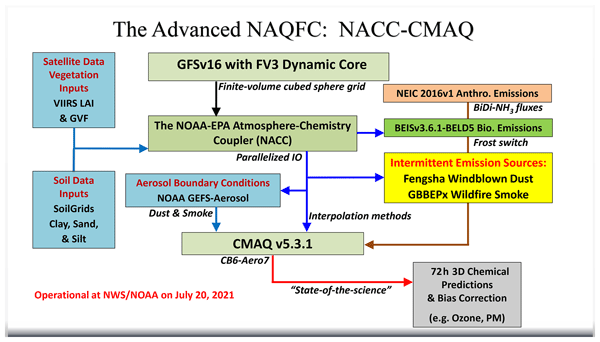
NOAA's National Air Quality Forecast Capability (NAQFC) continues to protect Americans from the harmful effects of air pollution, while saving billions of dollars per year. Here we describe and evaluate the development of the most advanced version of the NAQFC to date, which became operational at NOAA on 20 July 2021. The new NAQFC is based on a coupling of NOAA's operational Global Forecast System (GFS) version 16 with the Community Multiscale Air Quality (CMAQ) model version 5.3.1.
Li Zhang, Georg A. Grell, Stuart A. McKeen, Ravan Ahmadov, Karl D. Froyd, and Daniel Murphy
Geosci. Model Dev., 15, 467–491, https://doi.org/10.5194/gmd-15-467-2022, https://doi.org/10.5194/gmd-15-467-2022, 2022
Short summary
Short summary
Applying the chemistry package from WRF-Chem into the Flow-following finite-volume Icosahedra Model, we essentially make it possible to explore the importance of different levels of complexity in gas and aerosol chemistry, as well as in physics parameterizations, for the interaction processes in global modeling systems. The model performance validated by the Atmospheric Tomography Mission aircraft measurements in summer 2016 shows good performance in capturing the aerosol and gas-phase tracers.
Sarah J. Doherty, Pablo E. Saide, Paquita Zuidema, Yohei Shinozuka, Gonzalo A. Ferrada, Hamish Gordon, Marc Mallet, Kerry Meyer, David Painemal, Steven G. Howell, Steffen Freitag, Amie Dobracki, James R. Podolske, Sharon P. Burton, Richard A. Ferrare, Calvin Howes, Pierre Nabat, Gregory R. Carmichael, Arlindo da Silva, Kristina Pistone, Ian Chang, Lan Gao, Robert Wood, and Jens Redemann
Atmos. Chem. Phys., 22, 1–46, https://doi.org/10.5194/acp-22-1-2022, https://doi.org/10.5194/acp-22-1-2022, 2022
Short summary
Short summary
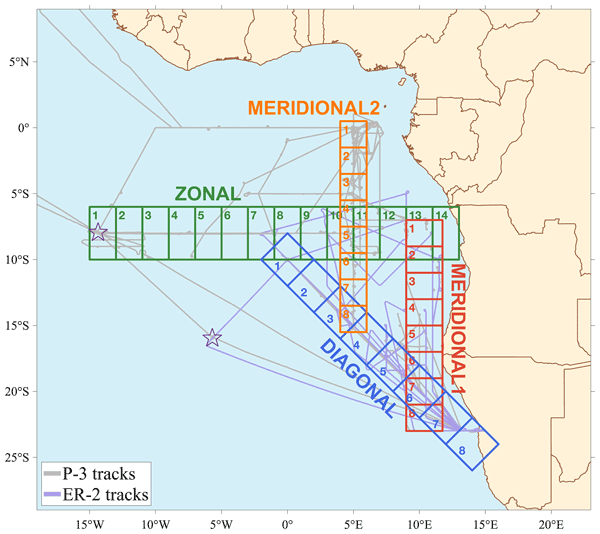
Between July and October, biomass burning smoke is advected over the southeastern Atlantic Ocean, leading to climate forcing. Model calculations of forcing by this plume vary significantly in both magnitude and sign. This paper compares aerosol and cloud properties observed during three NASA ORACLES field campaigns to the same in four models. It quantifies modeled biases in properties key to aerosol direct radiative forcing and evaluates how these biases propagate to biases in forcing.
Shan Sun and Amy Solomon
The Cryosphere Discuss., https://doi.org/10.5194/tc-2021-353, https://doi.org/10.5194/tc-2021-353, 2021
Preprint withdrawn
Short summary
Short summary
We validate the standalone CICE sea ice model for application in the seasonal forecast, before it is used in the coupled atmosphere-ocean-ice model. We found the model did a better job in forecasting Arctic sea ice extent in the warm season than in the cold season at the seasonal time scale. A higher forecast skill is achieved when the model is initialized with ice thickness from satellite observations, indicating the importance of the ice thickness initialization.
Siqi Ma, Daniel Tong, Lok Lamsal, Julian Wang, Xuelei Zhang, Youhua Tang, Rick Saylor, Tianfeng Chai, Pius Lee, Patrick Campbell, Barry Baker, Shobha Kondragunta, Laura Judd, Timothy A. Berkoff, Scott J. Janz, and Ivanka Stajner
Atmos. Chem. Phys., 21, 16531–16553, https://doi.org/10.5194/acp-21-16531-2021, https://doi.org/10.5194/acp-21-16531-2021, 2021
Short summary
Short summary
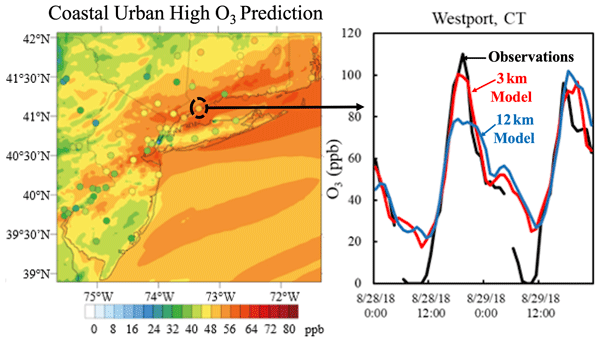
Predicting high ozone gets more challenging as urban emissions decrease. How can different techniques be used to foretell the quality of air to better protect human health? We tested four techniques with the CMAQ model against observations during a field campaign over New York City. The new system proves to better predict the magnitude and timing of high ozone. These approaches can be extended to other regions to improve the predictability of high-O3 episodes in contemporary urban environments.
Zachary C. J. Decker, Michael A. Robinson, Kelley C. Barsanti, Ilann Bourgeois, Matthew M. Coggon, Joshua P. DiGangi, Glenn S. Diskin, Frank M. Flocke, Alessandro Franchin, Carley D. Fredrickson, Georgios I. Gkatzelis, Samuel R. Hall, Hannah Halliday, Christopher D. Holmes, L. Gregory Huey, Young Ro Lee, Jakob Lindaas, Ann M. Middlebrook, Denise D. Montzka, Richard Moore, J. Andrew Neuman, John B. Nowak, Brett B. Palm, Jeff Peischl, Felix Piel, Pamela S. Rickly, Andrew W. Rollins, Thomas B. Ryerson, Rebecca H. Schwantes, Kanako Sekimoto, Lee Thornhill, Joel A. Thornton, Geoffrey S. Tyndall, Kirk Ullmann, Paul Van Rooy, Patrick R. Veres, Carsten Warneke, Rebecca A. Washenfelder, Andrew J. Weinheimer, Elizabeth Wiggins, Edward Winstead, Armin Wisthaler, Caroline Womack, and Steven S. Brown
Atmos. Chem. Phys., 21, 16293–16317, https://doi.org/10.5194/acp-21-16293-2021, https://doi.org/10.5194/acp-21-16293-2021, 2021
Short summary
Short summary
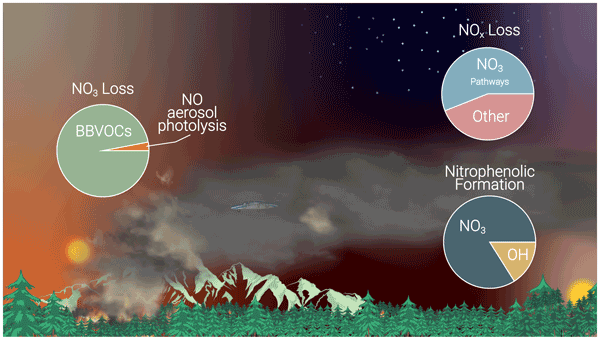
To understand air quality impacts from wildfires, we need an accurate picture of how wildfire smoke changes chemically both day and night as sunlight changes the chemistry of smoke. We present a chemical analysis of wildfire smoke as it changes from midday through the night. We use aircraft observations from the FIREX-AQ field campaign with a chemical box model. We find that even under sunlight typical
nighttimechemistry thrives and controls the fate of key smoke plume chemical processes.
Cited articles
Adcroft, A., Anderson, W., Balaji, V., Blanton, C., Bushuk, M., Dufour, C. O., Dunne, J. P., Griffies, S. M., Hallberg, R., Harrison, M. J., Held, I. M., Jansen, M. F., John, J. G., Krasting, J. P., Langenhorst, A. R., Legg, S., Liang, Z., McHugh, C., Radhakrishnan, A., Reichl, B. G., Rosati, T., Samuels, B. L., Shao, A., Stouffer, R., Winton, M., Wittenberg, A. W., Xiang, B., Zadeh, N., and Zhang, R.: The GFDL Global Ocean and Sea Ice Model OM4.0: Model description and simulation features, J. Adv. Model. Earth Sy., 11, 3167–3211, https://doi.org/10.1029/2019MS001726, 2019.
Ahmadov, R., Grell, G., James, E., Csiszar, I., Tsidulko, M., Pierce, B., McKeen, S., Benjamin, S., Alexander, C., Pereira, G., Freitas, S., and Goldberg, M.: Using VIIRS Fire Radiative Power data to simulate biomass burning emissions, plume rise and smoke transport in a real-time air quality modeling system. 2017 Ieee International Geoscience and Remote Sensing Symposium, IEEE International Symposium on Geoscience and Remote Sensing IGARSS, New York, IEEE, 2806–2808, 2017.
Albrecht, B. A.: Aerosols, cloud microphysics, and fractional cloudiness, Science, 245, 1227–1230, https://doi.org/10.1126/science.245.4923.1227, 1989.
Appel, K. W., Bash, J. O., Fahey, K. M., Foley, K. M., Gilliam, R. C., Hogrefe, C., Hutzell, W. T., Kang, D., Mathur, R., Murphy, B. N., Napelenok, S. L., Nolte, C. G., Pleim, J. E., Pouliot, G. A., Pye, H. O. T., Ran, L., Roselle, S. J., Sarwar, G., Schwede, D. B., Sidi, F. I., Spero, T. L., and Wong, D. C.: The Community Multiscale Air Quality (CMAQ) model versions 5.3 and 5.3.1: system updates and evaluation, Geosci. Model Dev., 14, 2867–2897, https://doi.org/10.5194/gmd-14-2867-2021, 2021.
Bangert, M., Nenes, A., Vogel, B., Vogel, H., Barahona, D., Karydis, V. A., Kumar, P., Kottmeier, C., and Blahak, U.: Saharan dust event impacts on cloud formation and radiation over Western Europe, Atmos. Chem. Phys., 12, 4045–4063, https://doi.org/10.5194/acp-12-4045-2012, 2012.
Benedetti, A. and Vitart, F.: Can the direct effect of aerosols improve subseasonal predictability?, Mon. Weather Rev., 146, 3481–3498, https://doi.org/10.1175/MWR-D-17-0282.1, 2018.
Bengtsson, L. and Han, J.: Updates to NOAA's Unified Forecast System's cumulus convection parameterization scheme between GFSv16 and GFSv17, Weather Forecast., 39, 1559–1570, https://doi.org/10.1175/WAF-D-23-0232.1, 2024.
Bernardet, L., Bengtsson, L., Reinecke, P. A., Yang, F., Zhang, M., Hall, K., Doyle, J., Martini, M., Firl, G., and Xue, L.: Common Community Physics Package: Fostering Collaborative Development in Physical Parameterizations and Suites, B. Am. Meteorol. Soc., 105, E1490–E1505, https://doi.org/10.1175/BAMS-D-23-0227.1, 2024.
Berry, E. X. and Reinhardt, R. L.: An analysis of cloud drop growth by collection: Part II. Single initial distributions, J. Atmos. Sci., 31, 1825–1831, https://doi.org/10.1175/1520-0469(1974)031<1825:AAOCDG>2.0.CO;2, 1974.
Bey, I., Jacob, D. J., Yantosca, R. M., Logan, J. A., Field, B. D., Fiore, A. M., Li, Q., Liu, H., Mickley, L. J., and Schultz, M. G.: Global modeling of tropospheric chemistry with assimilated meteorology: Model description and evaluation, J. Geophys. Res.-Atmos., 106, 23073–23095, https://doi.org/10.1029/2001JD000807, 2001.
Bhattacharjee, P. S., Zhang, L., Baker, B., Pan, L., Montuoro, R., Grell, G. A., and McQueen, J. T.: Evaluation of aerosol optical depth forecasts from NOAA's global aerosol forecast model (GEFS-Aerosols), Weather Forecast., 38, 225–249, https://doi.org/10.1175/WAF-D-22-0083.1, 2023.
Boucher, O., Randall, D., Artaxo, P., Bretherton, C., Feingold, G., Forster, P., Kerminen, V.-M., Kondo, Y., Liao, H., Lohmann, U., Rasch, P., Satheesh, S. K., Sherwood, S., Stevens, B., and Zhang, X. Y.: Clouds and aerosols, in: Climate Change 2013: The Physical Science Basis, Contribution of Working Group I to the Fifth Assessment Report of the Intergovernmental Panel on Climate Change, edited by: Stocker, T. F., Qin, D., Plattner, G.-K., Tignor, M., Allen, S. K., Boschung, J., Nauels, A., Xia, Y., Bex, V., and Midgley, P. M., Cambridge University Press, Cambridge, UK and New York, NY, USA, 571–658, https://doi.org/10.1017/CBO9781107415324.016, 2013.
Bozzo, A., Benedetti, A., Flemming, J., Kipling, Z., and Rémy, S.: An aerosol climatology for global models based on the tropospheric aerosol scheme in the Integrated Forecasting System of ECMWF, Geosci. Model Dev., 13, 1007–1034, https://doi.org/10.5194/gmd-13-1007-2020, 2020.
Byun, D. and Schere, K. L.: Review of the governing equations, computational algorithms, and other components of the Models-3 Community Multiscale Air Quality (CMAQ) modeling system, Appl. Mech. Rev., 59, 51–77, https://doi.org/10.1115/1.2128636, 2006.
Cheng, A. and Yang, F.: Direct radiative effects of aerosols on numerical weather forecasts – a comparison of two aerosol datasets in the NCEP GFS, Weather Forecast., 38, 753–772, https://doi.org/10.1175/WAF-D-22-0060.1, 2023.
Cheng, A. and Yang, F.: Aerosol, clouds and radiation interactions in the NCEP Unified Forecast Systems, Meteorology, 4, 14, https://doi.org/10.3390/meteorology4020014, 2025.
Chin, M., Rood, R. B., Lin, S.-J., Müller, J.-F., and Thompson, A. M.: Atmospheric sulfur cycle simulated in the global model GOCART: Model description and global properties, J. Geophys. Res.-Atmos., 105, 24671–24687, https://doi.org/10.1029/2000JD900384, 2000.
Colarco, P. R., da Silva, A., Chin, M., and Diehl, T.: Online simulations of global aerosol distributions in the NASA GEOS model and comparisons to satellite and ground-based aerosol optical depth, J. Geophys. Res.-Atmos., 115, D14207, https://doi.org/10.1029/2009JD012820, 2010.
Collow, A. B., Colarco, P. R., da Silva, A. M., Buchard, V., Bian, H., Chin, M., Das, S., Govindaraju, R., Kim, D., and Aquila, V.: Benchmarking GOCART-2G in the Goddard Earth Observing System (GEOS), Geosci. Model Dev., 17, 1443–1468, https://doi.org/10.5194/gmd-17-1443-2024, 2024.
Cooper, W. A.: Ice initiation in natural clouds, in: Precipitation Enhancement – A Scientific Challenge, Meteorol. Monogr., 21, 29–32, https://doi.org/10.1175/0065-9401-21.43.29, 1986.
DeMott, P. J., Prenni, A. J., Liu, X., Kreidenweis, S. M., Petters, M. D., Twohy, C. H., Richardson, M. S., Eidhammer, T., and Rogers, D. C.: Predicting global atmospheric ice nuclei distributions and their impacts on climate, P. Natl. Acad. Sci. USA, 107, 11217–11222, https://doi.org/10.1073/pnas.0910818107, 2010.
Eastham, S. D., Long, M. S., Keller, C. A., Lundgren, E., Yantosca, R. M., Zhuang, J., Li, C., Lee, C. J., Yannetti, M., Auer, B. M., Clune, T. L., Kouatchou, J., Putman, W. M., Thompson, M. A., Trayanov, A. L., Molod, A. M., Martin, R. V., and Jacob, D. J.: GEOS-Chem High Performance (GCHP v11-02c): a next-generation implementation of the GEOS-Chem chemical transport model for massively parallel applications, Geosci. Model Dev., 11, 2941–2953, https://doi.org/10.5194/gmd-11-2941-2018, 2018.
Eck, T. F., Holben, B. N., Reid, J. S., Dubovik, O., Smirnov, A., O'Neill, N. T., Slutsker, I., and Kinne, S.: The wavelength dependence of the optical depth of biomass burning, urban and desert dust aerosols, J. Geophys. Res., 104, 31333–31350, https://doi.org/10.1029/1999JD900923, 1999.
Flemming, J., Huijnen, V., Arteta, J., Bechtold, P., Beljaars, A., Blechschmidt, A.-M., Diamantakis, M., Engelen, R. J., Gaudel, A., Inness, A., Jones, L., Josse, B., Katragkou, E., Marecal, V., Peuch, V.-H., Richter, A., Schultz, M. G., Stein, O., and Tsikerdekis, A.: Tropospheric chemistry in the Integrated Forecasting System of ECMWF, Geosci. Model Dev., 8, 975–1003, https://doi.org/10.5194/gmd-8-975-2015, 2015.
Freire, J. L. M., Longo, K. M., Freitas, S. R., Coelho, C. A. S., Molod, A. M., Marshak, J., da Silva, A., and Ribeiro, B. Z.: To what extent biomass burning aerosols impact South America seasonal climate predictions?, Geophys. Res. Lett., 47, e2020GL088096, https://doi.org/10.1029/2020GL088096, 2020.
Freitas, S. R., Longo, K. M., Chatfield, R., Latham, D., Silva Dias, M. A. F., Andreae, M. O., Prins, E., Santos, J. C., Gielow, R., and Carvalho Jr., J. A.: Including the sub-grid scale plume rise of vegetation fires in low resolution atmospheric transport models, Atmos. Chem. Phys., 7, 3385–3398, https://doi.org/10.5194/acp-7-3385-2007, 2007.
Fu, B., Zhu, Y., Guan, H., Sinsky, E., Yang, B., Xue, X., Pegion, P., and Yang, F.: Weather-to-subseasonal prediction from the UFS coupled Global Ensemble Forecast System, Weather and Forecasting,https://doi.org/10.1175/WAF-D-23-0071.1https://doi.org/10.1175/WAF-D-23-0071.1, 2024.
Gelaro, R., McCarty, W., Suárez, M. J., Todling, R., Molod, A., Takacs, L., Randles, C. A., Darmenov, A., Bosilovich, M. G., Reichle, R., Wargan, K., Coy, L., Cullather, R., Draper, C., Akella, S., Buchard, V., Conaty, A., da Silva, A. M., Gu, W., Kim, G., Koster, R., Lucchesi, D. Merkova, J. E., Nielsen, G. Partyka, G., Pawson, S., Putman, W., Rienecker, M., Schubert, S. D., Sienkiewicz, M., and Zhao, B.: The Modern-Era Retrospective Analysis for Research and Applications, Version 2 (MERRA-2), J. Climate, 30, 5419–5454, https://doi.org/10.1175/JCLI-D-16-0758.1, 2017.
Gong, S. L.: A parameterization of sea-salt aerosol source function for sub- and super-micron particles, Global Biogeochem. Cy., 17, 1097, https://doi.org/10.1029/2003GB002079, 2003.
Gordon, H., Glassmeier, F., and McCoy, D. T.: An Overview of Aerosol-Cloud Interactions, in: Clouds and Their Climatic Impacts: Radiation, Circulation, and Precipitation, edited by: Sullivan, S. C. and Hoose, C., Wiley, 15–45, https://doi.org/10.1002/9781119700357.ch2, 2023.
Grell, G. A. and Baklanov, A.: Integrated modeling for forecasting weather and air quality: A call for fully coupled approaches, Atmos. Environ., 45, 6845–6851, https://doi.org/10.1016/j.atmosenv.2011.01.017, 2011.
Grell, G. A., Peckham, S. E., Schmitz, R., McKeen, S. A., Frost, G., Skamarock, W. C., and Eder, B.: Fully coupled “online” chemistry within the WRF model, Atmos. Environ., 39, 6957–6975, https://doi.org/10.1016/j.atmosenv.2005.04.027, 2005.
Han, J. and Pan, H.-L.: Revision of convection and vertical diffusion schemes in the NCEP Global Forecast System, Weather Forecast., 26, 520–533, https://doi.org/10.1175/WAF-D-10-05038.1, 2011.
Han, J., Wang, W., Kwon, Y. C., and Hong, S.-Y.: Implementation of a positive definite mass-flux scheme and a method for removing the negative tracers in the NCEP GFS planetary boundary layer and cumulus convection schemes, NCEP Office Note, 506, https://doi.org/10.25923/5051-3r70, 2022.
Harris, L., Chen, X., Putman, W., Zhou, L., and Chen, H.-L.: A scientific description of the GFDL finite-volume cubed-sphere dynamical core, NOAA Tech. Memo. OAR GFDL-2021(001), 109 pp., https://doi.org/10.25923/6nhs-5897, 2021.
He, C., Valayamkunnath, P., Barlage, M., Chen, F., Gochis, D., Cabell, R., Schneider, T., Rasmussen, R., Niu, G.-Y., Yang, Z.-L., Niyogi, D., and Ek, M.: Modernizing the open-source community Noah with multi-parameterization options (Noah-MP) land surface model (version 5.0) with enhanced modularity, interoperability, and applicability, Geosci. Model Dev., 16, 5131–5151, https://doi.org/10.5194/gmd-16-5131-2023, 2023.
He, J., Zhang, L., Schwantes, R. H., Baker, B., Horowitz, L., Naik, V., Lyu, C., Moon, Z., Grell, G., Ahmadov, R., Schnell, J., Yang, K., Wei, Z., Wang, S., Chang, K.-L., Gorchov Negron, A. M., Zhu, A., Kondragunta, S., Apel, E. C., Bourgeois, I., Commane, R., Hall, S. R., Hills, A., Hornbrook, R. S., Peischl, J., Ullmann, K., González Abad, G., Ayazpour, Z., Nowlan, C., and McDonald, B. C.: Incorporating gas-phase chemistry into the Unified Forecast System (UFS) for global air quality applications, J. Adv. Model. Earth Sy., 18, e2025MS005299, https://doi.org/10.1029/2025MS005299, 2026.
Heinzeller, D., Bernardet, L., Firl, G., Zhang, M., Sun, X., and Ek, M.: The Common Community Physics Package (CCPP) Framework v6, Geosci. Model Dev., 16, 2235–2259, https://doi.org/10.5194/gmd-16-2235-2023, 2023.
Hoesly, R. M., Smith, S. J., Feng, L., Klimont, Z., Janssens-Maenhout, G., Pitkanen, T., Seibert, J. J., Vu, L., Andres, R. J., Bolt, R. M., Bond, T. C., Dawidowski, L., Kholod, N., Kurokawa, J.-I., Li, M., Liu, L., Lu, Z., Moura, M. C. P., O'Rourke, P. R., and Zhang, Q.: Historical (1750–2014) anthropogenic emissions of reactive gases and aerosols from the Community Emissions Data System (CEDS), Geosci. Model Dev., 11, 369–408, https://doi.org/10.5194/gmd-11-369-2018, 2018.
Holben, B. N., Eck, T. F., Slutsker, I., Tanré, D., Buis, J. P., Setzer, A., Vermote, E., Reagan, J. A., Kaufman, Y. J., Nakajima, T., Lavenu, F., Jankowiak, I., and Smirnov, A.: AERONET – A Federated instrument network and data archive for aerosol characterization, Remote Sens. Environ., 66, 1–16, https://doi.org/10.1016/S0034-4257(98)00031-5, 1998.
Hsu, N. C., Jeong, M.-J., Bettenhausen, C., Sayer, A. M., Hansell, R., Seftor, C. S., Huang, J., and Tsay, S.-C.: Enhanced Deep Blue aerosol retrieval algorithm: The second generation, J. Geophys. Res.-Atmos., 118, 9296–9315, https://doi.org/10.1002/jgrd.50712, 2013.
Hu, A., Ke, Z., Liu, X., Wagman, B., Brown, H., Lu, Z., Wu, M., Wang, H., Tang, Q., Bull, D., Peterson, K., and Xie, S.: Size-resolved process understanding of stratospheric sulfate aerosol following the Pinatubo eruption, Atmos. Chem. Phys., 25, 12137–12157, https://doi.org/10.5194/acp-25-12137-2025, 2025.
Huang, B., Liu, C., Banzon, V., Freeman, E., Graham, G., Hankins, B., Smith, T., and Zhang, H.-M.: Improvements of the Daily Optimum Interpolation Sea Surface Temperature (DOISST) Version 2.1, J. Climate, 34, 2923–2939, https://doi.org/10.1175/JCLI-D-20-0166.1, 2021.
Inness, A., Ades, M., Agustí-Panareda, A., Barré, J., Benedictow, A., Blechschmidt, A.-M., Dominguez, J. J., Engelen, R., Eskes, H., Flemming, J., Huijnen, V., Jones, L., Kipling, Z., Massart, S., Parrington, M., Peuch, V.-H., Razinger, M., Remy, S., Schulz, M., and Suttie, M.: The CAMS reanalysis of atmospheric composition, Atmos. Chem. Phys., 19, 3515–3556, https://doi.org/10.5194/acp-19-3515-2019, 2019.
IPCC: Climate Change 2021: The Physical Science Basis, Contribution of Working Group I to the Sixth Assessment Report of the Intergovernmental Panel on Climate Change, Cambridge University Press, Cambridge, UK and New York, NY, USA, https://doi.org/10.1017/9781009157896, 2021.
Jackson, J., Liu, H., Laszlo, I., Kondragunta, S., Remer, L. A., Huang, J., and Huang, H.-C.: Suomi-NPP VIIRS Aerosol Algorithms and Data Products, J. Geophys. Res., 118, 12673–12689, https://doi.org/10.1002/2013jd020449, 2013.
Jacobs, N. A.: Open innovation and the case for community model development, B. Am. Meteorol. Soc., 102, E2002–E2011, https://doi.org/10.1175/BAMS-D-21-0030.1, 2021.
Jaeglé, L., Quinn, P. K., Bates, T. S., Alexander, B., and Lin, J.-T.: Global distribution of sea salt aerosols: new constraints from in situ and remote sensing observations, Atmos. Chem. Phys., 11, 3137–3157, https://doi.org/10.5194/acp-11-3137-2011, 2011.
Kato, S., Rose, F. G., Rutan, D. A., Thorsen, T. E., Loeb, N. G., Doelling, D. R., Huang, X., Smith, W. L., Su, W., and Ham, S.-H.: Surface irradiances of Edition 4.0 Clouds and the Earth's Radiant Energy System (CERES) Energy Balanced and Filled (EBAF) data product, J. Climate, 31, 4501–4527, https://doi.org/10.1175/JCLI-D-17-0523.1, 2018.
Keller, C. A., Knowland, K. E., Duncan, B. N., Liu, J., Anderson, D. C., Das, S., Lucchesi, R. A., Lundgren, E. W., Nicely, J. M., Nielsen, E., Ott, L. E., Saunders, E., Strode, S. A., Wales, P. A., Jacob, D. J., and Pawson, S.: Description of the NASA GEOS Composition Forecast Modeling System GEOS-CF v1.0, J. Adv. Model. Earth Sy., 13, e2020MS002413, https://doi.org/10.1029/2020MS002413, 2021.
Levy, R. C., Mattoo, S., Munchak, L. A., Remer, L. A., Sayer, A. M., Patadia, F., and Hsu, N. C.: The Collection 6 MODIS aerosol products over land and ocean, Atmos. Meas. Tech., 6, 2989–3034, https://doi.org/10.5194/amt-6-2989-2013, 2013.
Li, H., Grell, G. A., Ahmadov, R., Zhang, L., Sun, S., Schnell, J., and Wang, N.: A simple and realistic aerosol emission approach for use in the Thompson–Eidhammer microphysics scheme in the NOAA UFS Weather Model (version GSL global-24Feb2022), Geosci. Model Dev., 17, 607–619, https://doi.org/10.5194/gmd-17-607-2024, 2024.
Li, H., Ahmadov, R., Romero-Alvarez, J., Grell, G. A., Olson, J., Schnell, J., James, E., Trahan, S., Hu, M., and Bhimireddy, S.: Enhancing aerosol direct feedback for numerical weather prediction in NOAA's Rapid Refresh Forecast System–Smoke and Dust (RRFS-SD v1), Geophys. Res. Lett., 52, e2025GL115384, https://doi.org/10.1029/2025GL115384, 2025.
Liu, H., Remer, L. A., Huang, J., Huang, H.-C., Kondragunta, S., Laszlo, I., Oo, M., and Jackson, J. M.: Preliminary Evaluation of Suomi-NPP VIIRS Aerosol Optical Thickness, J. Geophys. Res., 119, 3942–3962, https://doi.org/10.1002/2013jd020360, 2013.
Loeb, N. G., Doelling, D. R., Wang, H., Su, W., Nguyen, C., Corbett, J. G., Liang, L., Mitrescu, C., Rose, F. G., and Kato, S.: Clouds and the Earth's Radiant Energy System (CERES) Energy Balanced and Filled (EBAF) Top-of-Atmosphere (TOA) Edition-4.0 Data Product. J. Climate, 31, 895–918, https://doi.org/10.1175/JCLI-D-17-0208.1, 2018.
McDuffie, E. E., Smith, S. J., O'Rourke, P., Tibrewal, K., Venkataraman, C., Marais, E. A., Zheng, B., Crippa, M., Brauer, M., and Martin, R. V.: A global anthropogenic emission inventory of atmospheric pollutants from sector- and fuel-specific sources (1970–2017): an application of the Community Emissions Data System (CEDS), Earth Syst. Sci. Data, 12, 3413–3442, https://doi.org/10.5194/essd-12-3413-2020, 2020.
Mills, M. J., Schmidt, A., Easter, R., Solomon, S., Kinnison, D. E., Ghan, S. J., Neely III, R. R., Marsh, D. R., Conley, A., Bardeen, C. G., and Gettelman, A.: Global volcanic aerosol properties derived from emissions, 1990–2014, using CESM1(WACCM), J. Geophys. Res.-Atmos., 121, 2332–2348, https://doi.org/10.1002/2015JD024290, 2016.
Molod, A., Takacs, L., Suarez, M., and Bacmeister, J.: Development of the GEOS-5 atmospheric general circulation model: evolution from MERRA to MERRA2, Geosci. Model Dev., 8, 1339–1356, https://doi.org/10.5194/gmd-8-1339-2015, 2015.
NASA/LARC/SD/ASDC: CERES Energy Balanced and Filled (EBAF) TOA and Surface Monthly means data in netCDF Edition 4.2, NASA Langley Atmospheric Science Data Center DAAC [data set], https://doi.org/10.5067/TERRA-AQUA-NOAA20/CERES/EBAF_L3B004.2, 2023.
Niu, G.-Y., Yang, Z.-L., Mitchell, K. E., Chen, F., Ek, M. B., Barlage, M., Kumar, A., Manning, K., Niyogi, D., Rosero, E., Tewari, M., and Xia, Y.: The community Noah land surface model with multiparameterization options (Noah-MP): 1. Model description and evaluation with local-scale measurements, J. Geophys. Res., 116, D12109, https://doi.org/10.1029/2010JD015139, 2011.
NOAA EPIC (Environmental Prediction Innovation Center): FENGSHA in UFS Webinar, https://ufs.epic.noaa.gov/wp-content/uploads/2023/08/FENGSHA_UFS_Webinar.pdf (last access: 7 July 2026), 2023.
Reid, J., Benedetti, A., Colarco, P. R., and Hansen, J. A.: International operational aerosol observability work-shop, B. Am. Meteorol. Soc., 92, ES21–ES24, https://doi.org/10.1175/2010BAMS3183.1, 2011.
Rieger, D., Steiner, A., Bachmann, V., Gasch, P., Förstner, J., Deetz, K., Vogel, B., and Vogel, H.: Impact of the 4 April 2014 Saharan dust outbreak on the photovoltaic power generation in Germany, Atmos. Chem. Phys., 17, 13391–13415, https://doi.org/10.5194/acp-17-13391-2017, 2017.
Rienecker, M. M., Suarez, M. J., Todling, R., Bacmeister, J., Takacs, L., Liu, H.-C., Gu, W., Sienkiewicz, M., Koster, R. D., Gelaro, R., Stajner, I., and Nielsen, J. E.: The GEOS-5 Data Assimilation System – Documentation of Versions 5.0.1, 5.1.0, and 5.2.0, NASA Technical Memorandum NASA/TM-2008-104606, Vol. 27, NASA Goddard Space Flight Center, Greenbelt, MD, USA, 118 pp., 2008.
Sayer, A. M., Hsu, N. C., Bettenhausen, C., and Jeong, M.-J.: Validation and uncertainty estimates for MODIS Collection 6 “Deep Blue” aerosol data, J. Geophys. Res.-Atmos., 118, 7864–7872, https://doi.org/10.1002/jgrd.50600, 2013.
Sayer, A. M., Munchak, L. A., Hsu, N. C., Levy, R. C., Bettenhausen, C., and Jeong M.-J.: MODIS Collection 6 aerosol products: Comparison between Aqua's e-Deep blue, dark target and “merged” data sets and usage recommendations, J. Geophys. Res.-Atmos., 119, 13965–989, https://doi.org/10.1002/2014JD022453, 2014.
Seinfeld, J. H., Bretherton, C. S., Carslaw, K. S., Coe, H., DeMott, P. J., Dunlea, E. J., Feingold, G., Ghan, S. J., Guenther, A. B., Kahn, R. A., Kraucunas, I., Kreidenweis, S. M., Molina, M. J., Nenes, A., Penner, J. E., Prather, K. A., Ramanathan, V., Ramaswamy, V., Rasch, P. J., Ravishankara, A. R., Rosenfeld, D., Stephens, G., and Wood, R.: Improving our fundamental understanding of the role of aerosol–cloud interactions in the climate system, P. Natl. Acad. Sci. USA, 113, 5781–5790, https://doi.org/10.1073/pnas.1514043113, 2016.
Sessions, W. R., Reid, J. S., Benedetti, A., Colarco, P. R., da Silva, A., Lu, S., Sekiyama, T., Tanaka, T. Y., Baldasano, J. M., Basart, S., Brooks, M. E., Eck, T. F., Iredell, M., Hansen, J. A., Jorba, O. C., Juang, H.-M. H., Lynch, P., Morcrette, J.-J., Moorthi, S., Mulcahy, J., Pradhan, Y., Razinger, M., Sampson, C. B., Wang, J., and Westphal, D. L.: Development towards a global operational aerosol consensus: basic climatological characteristics of the International Cooperative for Aerosol Prediction Multi-Model Ensemble (ICAP-MME), Atmos. Chem. Phys., 15, 335–362, https://doi.org/10.5194/acp-15-335-2015, 2015.
Slinn, W. G. N.: Precipitation scavenging, in: Atmospheric Science and Power Production, edited by: Randerson, D., Tech. Inf. Cent., Off. of Sci. and Techn. Inf., U.S. Department of Energy, Washington, DC, USA, 466–532, ISBN 978-0870791260, 1984.
Sun, S., Grell, G. A., Zhang, L., Henderson, J. K., Wang, S., Heinzeller, D., Li, H., Meixner, J., and Bhattacharjee, P. S.: Simulating the effects of aerosol–radiation interactions on subseasonal prediction using the coupled Unified Forecast System and CCPP-Chem: interactive aerosol module versus prescribed aerosol climatology, J. Adv. Model. Earth Sy., 17, e2024MS004392, https://doi.org/10.1029/2024MS004392, 2025.
The WAVEWATCH III Development Group: User manual and system documentation of WAVEWATCH III version 6.07, NOAA/NWS/NCEP/MMAB Technical Note 333, 466 pp., 2019.
Thompson, G. and Eidhammer, T.: A study of aerosol impacts on clouds and precipitation development in a large winter cyclone, J. Atmos. Sci., 71, 3636–3658, https://doi.org/10.1175/JAS-D-13-0305.1, 2014.
Thompson, G., Field, P. R., Rasmussen, R. M., and Hall, W. D.: Explicit forecasts of winter precipitation using an improved bulk microphysics scheme. Part II: Implementation of a new snow parameterization, Mon. Weather Rev., 136, 5095–5115, https://doi.org/10.1175/2008MWR2387.1, 2008.
Twomey, S.: The influence of pollution on the shortwave albedo of clouds, J. Atmos. Sci., 34, 1149–1152, https://doi.org/10.1175/1520-0469(1977)034<1149:TIOPOT>2.0.CO;2, 1977.
Wang, X., Zhang, L., and Moran, M. D.: Uncertainty assessment of current size-resolved parameterizations for below-cloud particle scavenging by rain, Atmos. Chem. Phys., 10, 5685–5705, https://doi.org/10.5194/acp-10-5685-2010, 2010.
Xian, P., Reid, J. S., Hyer, E. J., Sampson, C. R., Rubin, J. I., Ades, M., Asencio, N., Basart, S., Benedetti, A., Bhattacharjee, P. S., Brooks, M. E., Colarco, P. R., da Silva, A. M., Eck, T. F., Guth, J., Jorba, O., Kouznetsov, R., Kipling, Z., Sofiev, M., Garcia-Pando, C. P., Pradhan, Y., Tanaka, T., Wang, J., Westphal, D. L., Yumimoto, K., and Zhang, J.: Current state of the global operational aerosol multi-model ensemble: An update from the International Cooperative for Aerosol Prediction (ICAP), Q. J. Roy. Meteor. Soc., 145, 176–209, https://doi.org/10.1002/qj.3497, 2019.
Zhang, L., Montuoro, R., McKeen, S. A., Baker, B., Bhattacharjee, P. S., Grell, G. A., Henderson, J., Pan, L., Frost, G. J., McQueen, J., Saylor, R., Li, H., Ahmadov, R., Wang, J., Stajner, I., Kondragunta, S., Zhang, X., and Li, F.: Development and evaluation of the Aerosol Forecast Member in the National Center for Environment Prediction (NCEP)'s Global Ensemble Forecast System (GEFS-Aerosols v1), Geosci. Model Dev., 15, 5337–5369, https://doi.org/10.5194/gmd-15-5337-2022, 2022.
Zhang, L., Li, H., Grell, G. A., Bhattacharjee, P. S., Ferrada, G. A., Green, B. W., Sun, S., Bernardet, L., Jensen, A., Baker, B., Pan, L., He, J., Schnell, J., Ahmadov, R., Trahan, S., Swales, D., Cheng, A., Yang, F., Schwantes, R. H., McDonald, B. C., Heinzeller, D., and Kondragunta, S.: Development of the CCPP-Based GEFS-Aerosols Component in the Unified Forecast System for Subseasonal Prediction (UFS-Chem v1.0), Zenodo [code], https://doi.org/10.5281/zenodo.19262140, 2026.
Zhang, X., Kondragunta, S., Da Silva, A., Lu, S., Ding, H., Li, F., and Zhu, Y.: The blended global biomass burning emissions product from MODIS and geostationary satellites (GBBEPx), Version 3.1, NOAA/NESDIS/OSPO, https://ospo.noaa.gov/resources/documents/pdf/GBBEPx_EUM.pdf (last access: 10 September 2026), 2019.
Zhang, Y., Liu, P., Liu, X.-H., Pun, B., Seigneur, C., Jacobson, M. Z., and Wang, W.-X.: Fine-scale modeling of wintertime aerosol mass, number, and size distributions in central California, J. Geophys. Res.-Atmos., 119, 1837–1863, https://doi.org/10.1002/2013JD020258, 2014.
Short summary
Based on the operational Global Ensemble Forecast System-Aerosols at the National Centers for Environmental Prediction, we developed an upgraded system using the Common Community Physics Package framework that allows aerosol particles to directly influence radiation and cloud formation, including how precipitation removes particles from the atmosphere. Evaluation against observations and reanalysis data demonstrates improved forecast skill for weather and subseasonal prediction.
Based on the operational Global Ensemble Forecast System-Aerosols at the National Centers for...


