
Articles | Volume 19, issue 17
https://doi.org/10.5194/gmd-19-8053-2026
© Author(s) 2026. This work is distributed under
the Creative Commons Attribution 4.0 License.
the Creative Commons Attribution 4.0 License.
Special issue:
https://doi.org/10.5194/gmd-19-8053-2026
© Author(s) 2026. This work is distributed under
the Creative Commons Attribution 4.0 License.
the Creative Commons Attribution 4.0 License.
Development and technical paper
| 
01 Sep 2026
Development and technical paper |
| 01 Sep 2026
| 01 Sep 2026
CMIP7 Data Request: co-created guidance for the production of CMIP7 data [v1.2.2.5]

Climate Science Centre, CSIRO Environment, Aspendale, VIC, Australia
Martin Juckes
Department of Physics, University of Oxford, Oxford, UK
UKRI Science and Technology Facilities Council (STFC), Harwell, Didcot, UK
James Anstey
Canadian Centre for Climate Modelling and Analysis (CCCma), Environment and Climate Change Canada, Victoria, Canada
Beth Dingley
CMIP International Project Office (IPO), ECSAT, Harwell Science and Innovation Campus, Oxfordshire, UK
Charlotte Pascoe
UKRI Science and Technology Facilities Council (STFC), Harwell, Didcot, UK
Gaëlle Rigoudy
Météo-France, CNRS, Univ. Toulouse, CNRM, Toulouse, France
Marie-Pierre Moine
CECI, Université de Toulouse, CERFACS/CNRS/IRD, Toulouse, France
Tomas Lovato
CMCC Foundation, Euro-Mediterranean Center on Climate Change (CMCC), Bologna, Italy
Alison Pamment
National Centre for Atmospheric Science (NCAS), Leeds, UK
UKRI-STFC Rutherford Appleton Laboratory, Harwell Oxford, UK
Martin Schupfner
German Climate Computing Center (DKRZ), Hamburg, Germany
Michio Kawamiya
Japan Agency for Marine-Earth Science and Technology (JAMSTEC), Yokohama, Japan
Advanced Institute for Marine Ecosystem Change (AIMEC), Tohoku University, Sendai, Japan
Tommi Bergman
Finnish Meteorological Institute, Helsinki, Finland
Charles Koven
Climate and Ecosystem Sciences Division (CESD), Lawrence Berkeley National Lab, Berkeley, CA, USA
Eleanor O'Rourke
CMIP International Project Office (IPO), ECSAT, Harwell Science and Innovation Campus, Oxfordshire, UK
Briony Turner
CMIP International Project Office (IPO), ECSAT, Harwell Science and Innovation Campus, Oxfordshire, UK
Daniel Ellis
CMIP International Project Office (IPO), ECSAT, Harwell Science and Innovation Campus, Oxfordshire, UK
Matthew Mizielinski
Met Office, Exeter, UK
Related authors
Baylor Fox-Kemper, Patricia DeRepentigny, Anne Marie Treguier, Christian Stepanek, Eleanor O'Rourke, Chloe Mackallah, Alberto Meucci, Yevgeny Aksenov, Paul J. Durack, Nicole Feldl, Oluwayemi Garuba, Vanessa Hernaman, Céline Heuzé, Doroteaciro Iovino, Gaurav Madan, André L. Marquez, François Massonnet, Jenny Mecking, Dhrubajyoti Samanta, Patrick C. Taylor, Wan-Ling Tseng, and Martin Vancoppenolle
Geosci. Model Dev., 19, 6043–6078, https://doi.org/10.5194/gmd-19-6043-2026, https://doi.org/10.5194/gmd-19-6043-2026, 2026
Short summary
Short summary
The ocean and sea ice are central to Earth's climate system, influencing global heat and carbon cycles, weather patterns, and sea level rise. Here the earth system model variables needed for studies of the ocean and sea ice are prioritized and requested. These requested variables were developed through an international, community-based process.
Martin Juckes, Karl E. Taylor, Fabrizio Antonio, David Brayshaw, Carlo Buontempo, Jian Cao, Paul J. Durack, Michio Kawamiya, Hyungjun Kim, Tomas Lovato, Chloe Mackallah, Matthew Mizielinski, Alessandra Nuzzo, Martina Stockhause, Daniele Visioni, Jeremy Walton, Briony Turner, Eleanor O'Rourke, and Beth Dingley
Geosci. Model Dev., 18, 2639–2663, https://doi.org/10.5194/gmd-18-2639-2025, https://doi.org/10.5194/gmd-18-2639-2025, 2025
Short summary
Short summary
The Baseline Climate Variables for Earth System Modelling (ESM-BCVs) are defined as a list of 135 variables which have high utility for the evaluation and exploitation of climate simulations. The list reflects the most frequently used variables from Earth system models based on an assessment of data publication and download records from the largest archive of global climate projects.
Charles Koven, Benjamin M. Sanderson, Abigail L. S. Swann, Victor Brovkin, John Dunne, Rosie A. Fisher, Tomohiro Hajima, Chris D. Jones, Spencer K. Liddicoat, Anastasia Romanou, Roland Séférian, Norman J. Steinert, Jerry Tjiputra, Tilo Ziehn, Tatiana Ilyina, Nancy Y. Kiang, David M. Lawrence, Peter Lawrence, Hongmei Li, Jorg Schwinger, and Lori T. Sentman
EGUsphere, https://doi.org/10.5194/egusphere-2026-5381, https://doi.org/10.5194/egusphere-2026-5381, 2026
This preprint is open for discussion and under review for Earth System Dynamics (ESD).
Short summary
Short summary
We use a set of climate models to ask how aspects of climate beyond global mean temperatures would differ if we first emit, and then remove, a given amount of CO2, compared to a case where the CO2 hadn't been emitted. We show that precipitation increases, and that land cools relative to the ocean. Models disagree on many of the finer-scale regional changes, but they do agree that many of the regional changes that occur under positive and then negative emissions also occur under zero emissions.
Norman Julius Steinert, Kirsten Zickfeld, Benjamin Mark Sanderson, Charles D. Koven, Nadine Mengis, Pia Rethmeier, and Jörg Schwinger
EGUsphere, https://doi.org/10.5194/egusphere-2026-5338, https://doi.org/10.5194/egusphere-2026-5338, 2026
This preprint is open for discussion and under review for Earth System Dynamics (ESD).
Short summary
Short summary
As 1.5°C pathways increasingly rely on temperature overshoot, this Perspective examines whether climate overshoot-induced effects can be reversed. We synthesize what drives climate reversibility in positive and negative emission pathways, proposing a typology of temperature responses beyond simple (ir)reversible categories. Current climate models suggest irreversible responses cannot be ruled out, underscoring the need for more nuanced assessment of overshoot-based mitigation risks.
Jacopo Alessandri, Giulia Bonino, Tomas Lovato, Momme Butenschön, Lorenzo Mentaschi, Giorgia Verri, Ivan Federico, and Nadia Pinardi
Geosci. Model Dev., 19, 9301–9324, https://doi.org/10.5194/gmd-19-9301-2026, https://doi.org/10.5194/gmd-19-9301-2026, 2026
Short summary
Short summary
Coastal seas are strongly shaped by complex coastlines, shallow depths, and inputs from rivers, which influence marine life and water quality. This study introduces a new high-resolution modelling system that combines ocean circulation and marine ecosystem processes on unstructured grids. Applied to the northern Adriatic Sea, the model realistically captures seasonal changes in key biogeochemical variables, offering improved tools to support coastal environmental management.
Martin B. Andrews, Neal Butchart, James A. Anstey, Ewa Bednarz, Dillon Elsbury, Jorge L. García-Franco, Vinay Kumar, Froila M. Palmeiro, Natasha E. Trencham, Kohei Yoshida, Zhaoyang Chai, Dong-Chan Hong, Kai Huang, Aleena M. Jaison, Yoshio Kawatani, Jeff R. Knight, Pu Lin, François Lott, Yixiong Lu, Hiroaki Naoe, Scott M. Osprey, Jadwiga H. Richter, Federico Serva, Seok-Woo Son, Qi Tang, Shingo Watanabe, and Jinbo Xie
Weather Clim. Dynam., 7, 1797–1820, https://doi.org/10.5194/wcd-7-1797-2026, https://doi.org/10.5194/wcd-7-1797-2026, 2026
Short summary
Short summary
The observed winds in the upper atmosphere over the equator have alternating easterly and westerly regions that descend towards the lower atmosphere before dissipating, with a period of approximately 28 months. This is known as the Quasi-Biennial Oscillation (QBO). The QBO is known to influence remote regions of the atmosphere. This paper details the results of multi-model experiments where the QBO is nudged towards the observed QBO allowing the assessment of these remote connections.
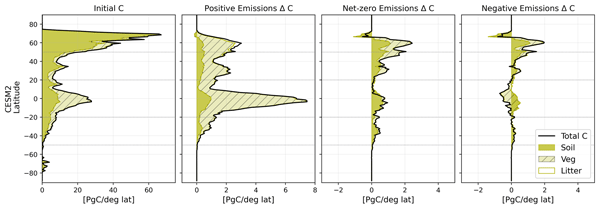
Abigail L. S. Swann, Charles D. Koven, Cristian Proistosecu, Rosie A. Fisher, Benjamin M. Sanderson, Victor Brovkin, Tomohiro Hajima, Chris D. Jones, Nancy Y. Kiang, David M. Lawrence, Spencer Liddicoat, Hannah Liddy, Anastasia Romanou, Roland Séférian, Lori T. Sentman, Norman J. Steinert, Jerry Tjiputra, and Tilo Ziehn
Earth Syst. Dynam., 17, 1237–1275, https://doi.org/10.5194/esd-17-1237-2026, https://doi.org/10.5194/esd-17-1237-2026, 2026
Short summary
Short summary
We analyzed simulations from Earth system models (ESM) with a constant rate of emissions, zero emissions, and negative emissions of CO2 to quantify the response of land carbon sinks. We found that under positive emissions vegetation in the tropics gained carbon. Under zero emissions and negative emissions most ESMs lost carbon from vegetation in the tropics but gained carbon in mid- and high-latitudes, mostly in soils. Our findings imply that tropical carbon is vulnerable under zero emissions.
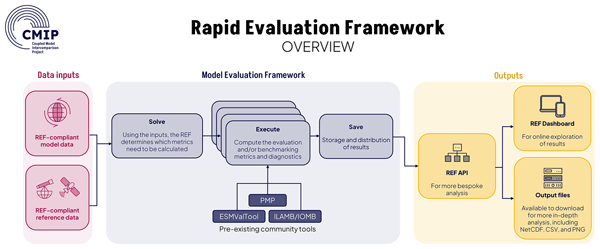
Forrest M. Hoffman, Birgit Hassler, Ranjini Swaminathan, Jared Lewis, Bouwe Andela, Nathan Collier, Dóra Hegedűs, Jiwoo Lee, Charlotte Pascoe, Mika Pflüger, Martina Stockhause, Paul Ullrich, Min Xu, Lisa Bock, Felicity Chun, Bettina K. Gier, Douglas I. Kelley, Axel Lauer, Julien Lenhardt, Manuel Schlund, Mohanan G. Sreeush, Katja Weigel, Ed Blockley, Rebecca Beadling, Romain Beucher, Demiso D. Dugassa, Valerio Lembo, Jianhua Lu, Swen Brands, Jerry Tjiputra, Elizaveta Malinina, Brian Medeiros, Enrico Scoccimarro, Jeremy Walton, Phil Kershaw, André Lanfer Marquez, Malcolm J. Roberts, Eleanor O'Rourke, Beth Dingley, Briony Turner, Helene Hewitt, and John P. Dunne
Geosci. Model Dev., 19, 7415–7455, https://doi.org/10.5194/gmd-19-7415-2026, https://doi.org/10.5194/gmd-19-7415-2026, 2026
Short summary
Short summary
The Rapid Evaluation Framework (REF) is a community-driven platform for benchmarking and performance assessment of Earth system models. Built upon four disparate community evaluation tools, the REF is designed to provide model-data comparisons for the Assessment Fast Track for the Seventh Phase of the Coupled Model Intercomparison Project. The REF will be run at the Earth System Grid Federation to enable model devleopers and scientists to quickly identify model biases and performance issues.
Xiulin Gao, Jessica Katz, Charles D. Koven, Adam Hanbury-Brown, and Lara M. Kueppers
EGUsphere, https://doi.org/10.5194/egusphere-2026-3850, https://doi.org/10.5194/egusphere-2026-3850, 2026
This preprint is open for discussion and under review for Biogeosciences (BG).
Short summary
Short summary
We developed a new prescribed fire model and adapted an existing thinning model to represent forest health treatments in a vegetation demography model. Comparisons with post-treatment vegetation and fuel data from three sites suggest that the model captures key ecological processes shaping treatment effects on wildfire risk and carbon balance, as well as the differences between thinning and prescribed fire. This feature supports future studies of climate-vegetation-fire-human interactions.
Aleena M. Jaison, Lesley J. Gray, Scott M. Osprey, James A. Anstey, Martin B. Andrews, Neal Butchart, Zhaoyang Chai, Dong-Chan Hong, Kai Huang, Yoshio Kawatani, Jeff R. Knight, Pu Lin, Francois Lott, Yixiong Lu, Hiroaki Naoe, Jadwiga H. Richter, Nan Rosenbloom, Federico Serva, Anne K. Smith, Seok-Woo Son, Qi Tang, Shingo Watanabe, Jinbo Xie, and Kohei Yoshida
EGUsphere, https://doi.org/10.5194/egusphere-2026-4135, https://doi.org/10.5194/egusphere-2026-4135, 2026
Short summary
Short summary
The tropical upper stratosphere has winds that switch between westerly and easterly every six months known as the semi-annual oscillation (SAO). Climate models commonly show an easterly bias in the SAO. We analysed data from many models to test if correcting the biases in winds lower in the stratosphere could improve SAO. We find correcting the lower-level wind biases reduces the SAO easterly bias, though further improvements, such as better representation of atmospheric waves, are still needed.
Kai Huang, Chang-Hyun Park, Seung-Yoon Back, Jorge L. García-Franco, Hera Kim, Pu Lin, Scott Osprey, Jadwiga Richter, Chih-Chieh Chen, Seok-Woo Son, Shigeo Yoden, Yuna Lim, Neal Butchart, James Anstey, Yoshio Kawatani, Martin B. Andrews, Francois Lott, Yixiong Lu, Zhaoyang Chai, Nan Rosenbloom, Qi Tang, Jinbo Xie, Federico Serva, Dong-Chan Hong, Shingo Watanabe, Aleena M. Jaison, Hiroaki Naoe, and Kohei Yoshida
EGUsphere, https://doi.org/10.5194/egusphere-2026-3744, https://doi.org/10.5194/egusphere-2026-3744, 2026
Short summary
Short summary
The tropical atmosphere has large-scale wind and rainfall patterns shaping weather worldwide. Winds high above the tropics are thought to influence a major tropical rainfall system, but climate models fail to reproduce this link. We tested 12 climate models after constraining their high-altitude winds to match observations. Although the winds then matched, the models failed to capture the tropical response, as they did not realistically simulate it. Improving this is key to better prediction.
Baylor Fox-Kemper, Patricia DeRepentigny, Anne Marie Treguier, Christian Stepanek, Eleanor O'Rourke, Chloe Mackallah, Alberto Meucci, Yevgeny Aksenov, Paul J. Durack, Nicole Feldl, Oluwayemi Garuba, Vanessa Hernaman, Céline Heuzé, Doroteaciro Iovino, Gaurav Madan, André L. Marquez, François Massonnet, Jenny Mecking, Dhrubajyoti Samanta, Patrick C. Taylor, Wan-Ling Tseng, and Martin Vancoppenolle
Geosci. Model Dev., 19, 6043–6078, https://doi.org/10.5194/gmd-19-6043-2026, https://doi.org/10.5194/gmd-19-6043-2026, 2026
Short summary
Short summary
The ocean and sea ice are central to Earth's climate system, influencing global heat and carbon cycles, weather patterns, and sea level rise. Here the earth system model variables needed for studies of the ocean and sea ice are prioritized and requested. These requested variables were developed through an international, community-based process.
Hyun-Kyu Lee, James A. Anstey, Hye-Yeong Chun, Shingo Watanabe, Francois Lott, Zhaoyang Chai, Yixiong Lu, Qi Tang, Jinbo Xie, Dong-Chan Hong, Seok-Woo Son, Federico Serva, Pu Lin, Martin B. Andrews, Neal Butchart, Aleena M. Jaison, Jeff R. Knight, Scott Osprey, Hiroaki Naoe, Kohei Yoshida, Yoshio Kawatani, and Jadwiga H. Richter
EGUsphere, https://doi.org/10.5194/egusphere-2026-2856, https://doi.org/10.5194/egusphere-2026-2856, 2026
Short summary
Short summary
This study investigates the systematic biases in equatorial wave forcing of the quasi-biennial oscillation (QBO) by comparing internally generated and bias-corrected experiments using a multi-model ensemble. Although nudging effectively mitigates QBO biases, systematic biases in wave forcing are not fully resolved. The equatorial wave forcing in the lower stratosphere remains weaker than that in reanalyses, while an eastward wave forcing bias is observed in the mid-to-upper stratosphere.
Zachary James Robbins, Lucas Tiede, Charlie Koven, Ryan Knox, Nate McDowell, and Chonggang Xu
EGUsphere, https://doi.org/10.5194/egusphere-2026-2433, https://doi.org/10.5194/egusphere-2026-2433, 2026
This preprint is open for discussion and under review for Geoscientific Model Development (GMD).
Short summary
Short summary
We put forth a new framework, CRAFT, that provides by which to more robustly estimate complex earth surface and ecology model parameters from observational data using machine learning and Bayesian statistics. For the complex FATES-HYDRO plant hydrodynamics model, we find this does a good job capturing synthetic parameters and model parameter sensitivity. We provide the software for this to be useful for a wide range of models.
Benjamin M. Sanderson, Marit Sandstad, Alejandro Romero-Prieto, Stuart Jenkins, Charles Koven, Glen Peters, Roland Séfèrian, Andrew H. MacDougall, Ashwin Seshadri, Victor Brovkin, John Dunne, Abigail L. S. Swann, Torben Koenigk, Rosie A. Fisher, David Hohn, Tatiana Ilyina, Chris D. Jones, Hongmei Li, Peter Lawrence, Spencer Liddicoat, Nadine Mengis, Anastasia Romanou, Lori T. Sentman, Chris Smith, Norman J. Steinert, Jerry Tjiputra, and Tilo Ziehn
EGUsphere, https://doi.org/10.5194/egusphere-2026-1875, https://doi.org/10.5194/egusphere-2026-1875, 2026
Short summary
Short summary
When humanity stops emitting carbon dioxide, will temperatures keep rising, stabilize, or fall? Our study reveals in most models, temperatures remain nearly stable, but this hides a balance between the warming in response to radiation imbalance, and the cooling due to uptake of carbon in the land and ocean. Understanding this balance helps refine how much more CO2 we can safely emit.
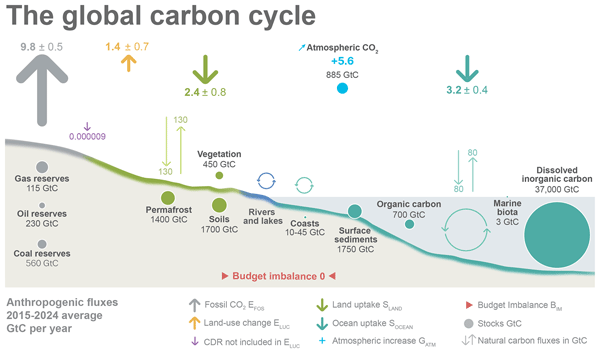
Pierre Friedlingstein, Michael O'Sullivan, Matthew W. Jones, Robbie M. Andrew, Dorothee C. E. Bakker, Judith Hauck, Peter Landschützer, Corinne Le Quéré, Hongmei Li, Ingrid T. Luijkx, Glen P. Peters, Wouter Peters, Julia Pongratz, Clemens Schwingshackl, Stephen Sitch, Josep G. Canadell, Philippe Ciais, Kjetil Aas, Simone R. Alin, Peter Anthoni, Leticia Barbero, Nicholas R. Bates, Nicolas Bellouin, Alice Benoit-Cattin, Carla F. Berghoff, Raffaele Bernardello, Laurent Bopp, Ida Bagus Mandhara Brasika, Matthew A. Chamberlain, Naveen Chandra, Frédéric Chevallier, Louise P. Chini, Nathan O. Collier, Thomas H. Colligan, Margot Cronin, Laique M. Djeutchouang, Xinyu Dou, Matt P. Enright, Kazutaka Enyo, Michael Erb, Wiley Evans, Richard A. Feely, Liang Feng, Daniel J. Ford, Adrianna Foster, Filippa Fransner, Thomas Gasser, Marion Gehlen, Thanos Gkritzalis, Jefferson Goncalves De Souza, Giacomo Grassi, Luke Gregor, Nicolas Gruber, Bertrand Guenet, Özgür Gürses, Kirsty Harrington, Ian Harris, Jens Heinke, George C. Hurtt, Yosuke Iida, Tatiana Ilyina, Akihiko Ito, Andrew R. Jacobson, Atul K. Jain, Tereza Jarníková, Annika Jersild, Fei Jiang, Steve D. Jones, Etsushi Kato, Ralph F. Keeling, Kees Klein Goldewijk, Jürgen Knauer, Yawen Kong, Jan Ivar Korsbakken, Charles Koven, Taro Kunimitsu, Xin Lan, Junjie Liu, Zhiqiang Liu, Zhu Liu, Claire Lo Monaco, Lei Ma, Gregg Marland, Patrick C. McGuire, Galen A. McKinley, Joe R. Melton, Natalie Monacci, Erwan Monier, Eric J. Morgan, David R. Munro, Jens D. Müller, Shin-Ichiro Nakaoka, Lorna R. Nayagam, Yosuke Niwa, Tobias Nutzel, Are Olsen, Abdirahman M. Omar, Naiqing Pan, Sudhanshu Pandey, Denis Pierrot, Zhangcai Qin, Pierre Regnier, Gregor Rehder, Laure Resplandy, Alizée Roobaert, Thais M. Rosan, Christian Rödenbeck, Jörg Schwinger, Ingunn Skjelvan, T. Luke Smallman, Victoria Spada, Mohanan G. Sreeush, Qing Sun, Adrienne J. Sutton, Colm Sweeney, Didier Swingedouw, Roland Séférian, Shintaro Takao, Hiroaki Tatebe, Hanqin Tian, Xiangjun Tian, Bronte Tilbrook, Hiroyuki Tsujino, Francesco Tubiello, Erik van Ooijen, Guido R. van der Werf, Sebastiaan J. van de Velde, Anthony P. Walker, Rik Wanninkhof, Xiaojuan Yang, Wenping Yuan, Xu Yue, and Jiye Zeng
Earth Syst. Sci. Data, 18, 3211–3288, https://doi.org/10.5194/essd-18-3211-2026, https://doi.org/10.5194/essd-18-3211-2026, 2026
Short summary
Short summary
The Global Carbon Budget 2025 describes the methodology, main results, and datasets used to quantify the anthropogenic emissions of carbon dioxide (CO2) and their partitioning among the atmosphere, land ecosystems, and the ocean over the historical period (1750–2025). These living datasets are updated every year to provide the highest transparency and traceability in the reporting of CO2, the key driver of climate change.
James A. Anstey, Neal Butchart, Scott Osprey, Yoshio Kawatani, Kevin Hamilton, Jadwiga H. Richter, Tim Stockdale, Martin B. Andrews, Zhaoyang Chai, Paolo Davini, Dong-Chan Hong, Kai Huang, Aleena M. Jaison, Tobias Kerzenmacher, Jeff R. Knight, Pu Lin, Francois Lott, Yixiong Lu, Hiroaki Naoe, Federico Serva, Isla Simpson, Seok-Woo Son, Qi Tang, Shingo Watanabe, Jinbo Xie, and Kohei Yoshida
EGUsphere, https://doi.org/10.5194/egusphere-2026-1165, https://doi.org/10.5194/egusphere-2026-1165, 2026
Short summary
Short summary
We describe experiments where modelled tropical stratosphere winds are adjusted by "nudging" them toward realistic time-evolving eastward and westward Quasi-Biennial Oscillation (QBO) winds. The effects of this bias correction on other atmospheric processes, such as the stratospheric polar vortex or tropical waves that force the QBO, can then be assessed. We describe details of the experiments, the multi-model ensemble that has performed them, and basic validation of the nudging response.
Arundathi Chandrasekharan, Tommi Bergman, Kalle Nordling, Meryem Bouchahmoud, Joonas Merikanto, and Risto Makkonen
EGUsphere, https://doi.org/10.5194/egusphere-2026-2122, https://doi.org/10.5194/egusphere-2026-2122, 2026
Short summary
Short summary
This study examines how well CMIP6 models and the chemistry transport model TM5 simulate Arctic aerosols, using data collected during the MOSAiC expedition. Additionally, the study includes a sensitivity analysis to identify the sources of any inaccuracies in the model results. The findings offer suggestions for improving model performance in the Arctic and highlight areas that need further research.
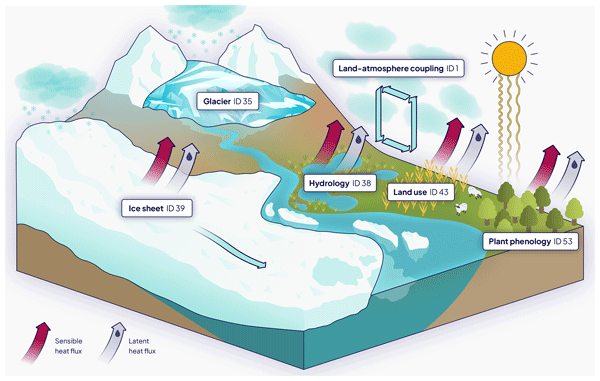
Yue Li, Gang Tang, Eleanor O'Rourke, Samar Minallah, Martim Mas e Braga, Sophie Nowicki, Robin S. Smith, David M. Lawrence, George C. Hurtt, Daniele Peano, Gesa Meyer, Birgit Hassler, Jiafu Mao, Yongkang Xue, and Martin Juckes
Geosci. Model Dev., 19, 3129–3155, https://doi.org/10.5194/gmd-19-3129-2026, https://doi.org/10.5194/gmd-19-3129-2026, 2026
Short summary
Short summary
Land and Land Ice Theme Opportunities describe a list that contains 25 variable groups with 716 variables, which are potentially available to the broad scientific audience for performing analysis in land–atmosphere coupling, hydrological processes and freshwater systems, glacier and ice sheet mass balance and their influence on the sea levels, land use, and plant phenology.
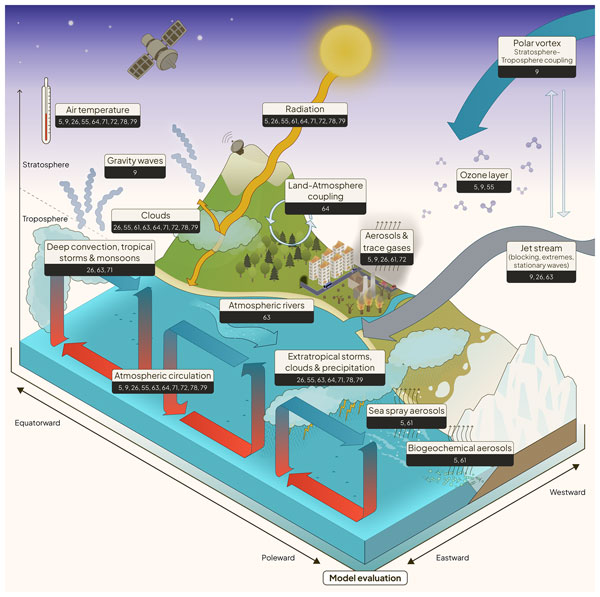
Beth Dingley, James A. Anstey, Marta Abalos, Carsten Abraham, Tommi Bergman, Lisa Bock, Sonya Fiddes, Birgit Hassler, Ryan J. Kramer, Fei Luo, Fiona M. O'Connor, Petr Šácha, Isla R. Simpson, Laura J. Wilcox, and Mark D. Zelinka
Geosci. Model Dev., 19, 2945–2984, https://doi.org/10.5194/gmd-19-2945-2026, https://doi.org/10.5194/gmd-19-2945-2026, 2026
Short summary
Short summary
This manuscript defines as a list of variables and scientific opportunities which are requested from the Coupled Model Intercomparison Project Phase 7 (CMIP7) Assessment Fast Track to address open atmospheric science questions. The list reflects the output of a large public community engagement effort, coordinated across autumn 2025 through to summer 2025.
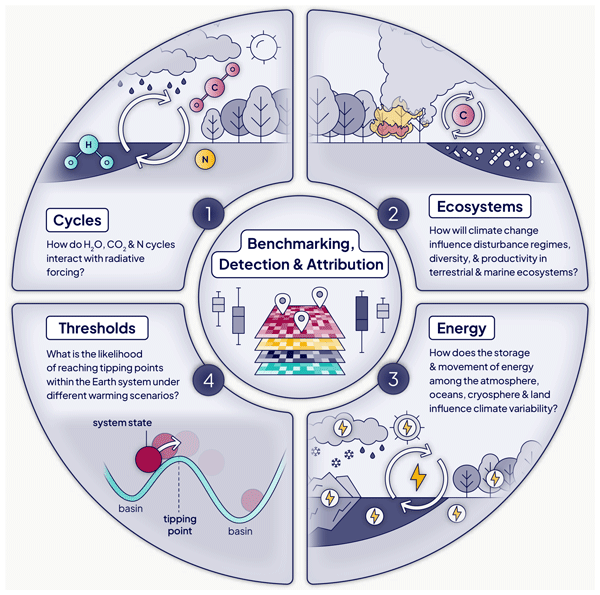
Mara Y. McPartland, Tomas Lovato, Charles Koven, Jamie D. Wilson, Briony Turner, Colleen M. Petrik, José Licón-Saláiz, Fang Li, Fanny Lhardy, Jaclyn Clement Kinney, Michio Kawamiya, Birgit Hassler, Nathan P. Gillett, Cheikh Modou Noreyni Fall, Christopher Danek, Chris M. Brierley, Ana Bastos, and Oliver Andrews
Geosci. Model Dev., 19, 2849–2880, https://doi.org/10.5194/gmd-19-2849-2026, https://doi.org/10.5194/gmd-19-2849-2026, 2026
Short summary
Short summary
The Coupled Model Intercomparison Project (CMIP) is an international consortium of climate modeling groups that produce coordinated experiments in order to evaluate human influence on the climate and test knowledge of Earth systems. This paper describes the data requested for Earth systems research in CMIP7. We detail the request for model output of the carbon cycle, the flows of energy among the atmosphere, land and the oceans, and interactions between these and the global climate.
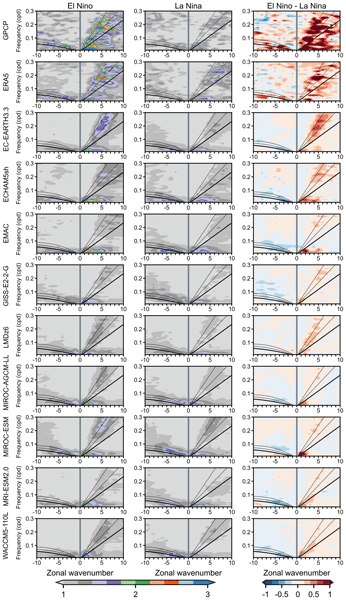
Dillon Elsbury, Federico Serva, Julie M. Caron, Seung-Yoon Back, Clara Orbe, Jadwiga H. Richter, James A. Anstey, Neal Butchart, Chih-Chieh Chen, Javier García-Serrano, Anne Glanville, Yoshio Kawatani, Tobias Kerzenmacher, Francois Lott, Hiroaki Naoe, Scott Osprey, Froila M. Palmeiro, Seok-Woo Son, Masakazu Taguchi, Stefan Versick, Shingo Watanabe, and Kohei Yoshida
Weather Clim. Dynam., 7, 317–339, https://doi.org/10.5194/wcd-7-317-2026, https://doi.org/10.5194/wcd-7-317-2026, 2026
Short summary
Short summary
We used climate models to test how constant El Niño and La Niña ocean conditions shape the Madden-Julian Oscillation during northern winter. El Niño made this weather pattern move faster, while La Niña slowed it down. The Quasi-Biennial Oscillation, a repeating wind pattern high in the atmosphere, had little effect. This shows that long-lasting ocean conditions mainly drive the changes we found.
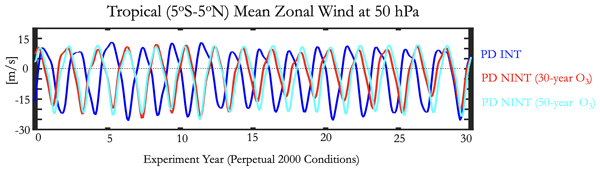
Clara Orbe, Alison Ming, Gabriel Chiodo, Michael Prather, Mohamadou Diallo, Qi Tang, Andreas Chrysanthou, Hiroaki Naoe, Xin Zhou, Irina Thaler, Dillon Elsbury, Ewa Bednarz, Jonathon S. Wright, Aaron Match, Shingo Watanabe, James Anstey, Tobias Kerzenmacher, Stefan Versick, Marion Marchand, Feng Li, and James Keeble
Geosci. Model Dev., 19, 773–794, https://doi.org/10.5194/gmd-19-773-2026, https://doi.org/10.5194/gmd-19-773-2026, 2026
Short summary
Short summary
The quasi-biennial oscillation (QBO) is the main source of wind fluctuations in the tropical stratosphere, which can couple to surface climate. However, models do a poor job of simulating the QBO in the lower stratosphere, for reasons that remain unclear. One possibility is that models do not completely represent how ozone influences the QBO-associated wind variations. Here we propose a multi-model framework for assessing how ozone influences the QBO in recent past and future climates.
Jean-Francois Lamarque, Pierre Friedlingstein, Brian Osias, Steve Strongin, Venkatramani Balaji, Kevin W. Bowman, Josep G. Canadell, Philippe Ciais, Heidi Cullen, Kenneth J. Davis, Scott C. Doney, Kevin R. Gurney, Alicia R. Karspeck, Charles D. Koven, Galen McKinley, Glen P. Peters, Julia Pongratz, Britt Stephens, and Colm Sweeney
EGUsphere, https://doi.org/10.5194/egusphere-2025-6457, https://doi.org/10.5194/egusphere-2025-6457, 2026
Short summary
Short summary
This Perspective highlights requirements to scale the carbon credit market and enable the growth in climate solutions funded through such market. The requirements are on the understanding of the value of the proposed carbon credit projects, and on the availability of a verification system. This verification becomes particularly relevant as the carbon credit market scales to significant impacts on CO2 (or other greenhouse gases), such that attribution to collective actions can be identified.
Alex C. Ruane, Charlotte L. Pascoe, Claas Teichmann, David J. Brayshaw, Carlo Buontempo, Ibrahima Diouf, Jesus Fernandez, Paula L. M. Gonzalez, Birgit Hassler, Vanessa Hernaman, Ulas Im, Doroteaciro Iovino, Martin Juckes, Iréne L. Lake, Timothy Lam, Xiaomao Lin, Jiafu Mao, Negin Nazarian, Sylvie Parey, Indrani Roy, Wan-Ling Tseng, Briony Turner, Andrew Wiebe, Lei Zhao, and Damaris Zurell
Geosci. Model Dev., 18, 9497–9540, https://doi.org/10.5194/gmd-18-9497-2025, https://doi.org/10.5194/gmd-18-9497-2025, 2025
Short summary
Short summary
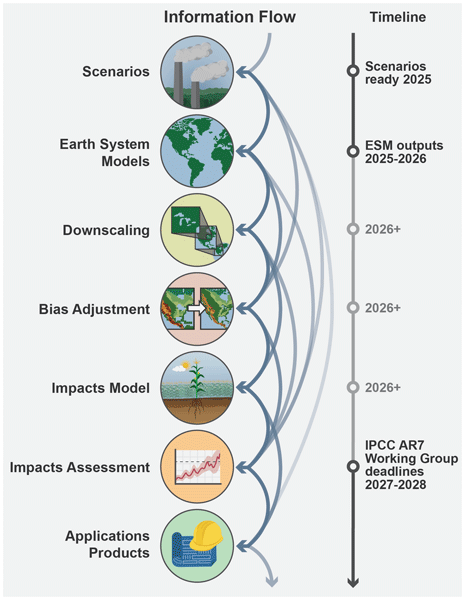
This paper describes how the Coupled Model Intercomparison Project organized its 7th phase (CMIP7) to encourage the production of Earth system model outputs relevant for impacts and adaptation. Community engagement identified 13 opportunities for application across human and natural systems, 60 variable groups and 539 unique variables. We also show how simulations can more efficiently meet applications needs by targeting appropriate resolution, time slices, experiments and variable groups.
Junyan Ding, Nate McDowell, Vanessa Bailey, Nate Conroy, Donnie J. Day, Yilin Fang, Kenneth M. Kemner, Matthew L. Kirwan, Charlie D. Koven, Matthew Kovach, Patrick Megonigal, Kendalynn A. Morris, Teri O'Meara, Stephanie C. Pennington, Roberta B. Peixoto, Peter Thornton, Mike Weintraub, Peter Regier, Leticia Sandoval, Fausto Machado-Silva, Alice Stearns, Nick Ward, and Stephanie J. Wilson
Biogeosciences, 22, 6963–6978, https://doi.org/10.5194/bg-22-6963-2025, https://doi.org/10.5194/bg-22-6963-2025, 2025
Short summary
Short summary
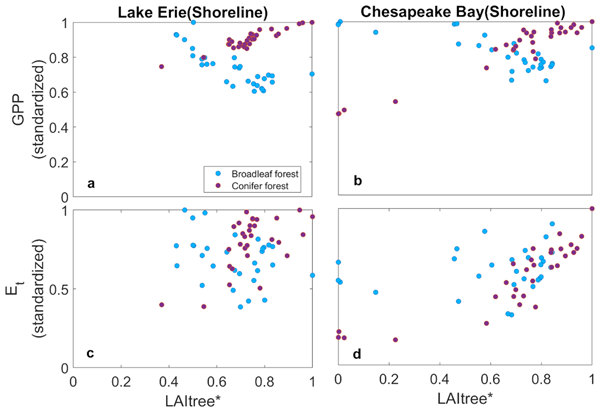
We used a vegetation model to study why coastal forests are dying due to rising water levels and what happens to the ecosystem when marshes take over. We found that tree death is mainly caused by water-damaged roots, leading to major changes in the environment, such as reduced water use and carbon storage. Our study helps explain how coastal ecosystems are shifting and offers new ideas to explore in future field research.
Victor Brovkin, Benjamin M. Sanderson, Noel G. Brizuela, Tomohiro Hajima, Tatiana Ilyina, Chris D. Jones, Charles Koven, David Lawrence, Peter Lawrence, Hongmei Li, Spencer Liddcoat, Anastasia Romanou, Roland Séférian, Lori T. Sentman, Abigail L. S. Swann, Jerry Tjiputra, Tilo Ziehn, and Alexander J. Winkler
Earth Syst. Dynam., 16, 2021–2034, https://doi.org/10.5194/esd-16-2021-2025, https://doi.org/10.5194/esd-16-2021-2025, 2025
Short summary
Short summary
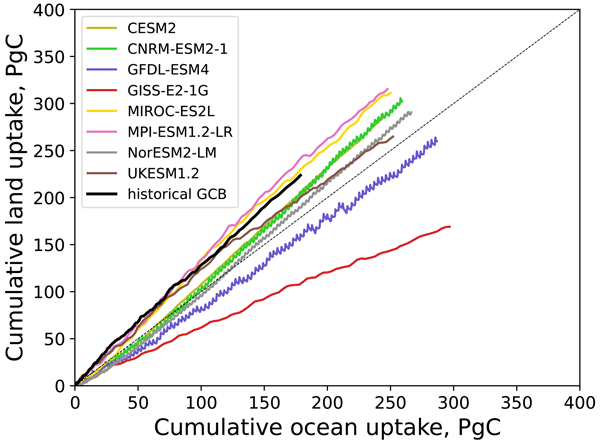
Idealized experiments with Earth system models provide a basis for understanding the response of the carbon cycle to emissions. We show that most models exhibit a quasi-linear relationship between cumulative carbon uptake on land and in the ocean and hypothesize that this relationship does not depend on emission pathways. We reduce the coupled system to only one differential equation, which represents a powerful simplification of the Earth system dynamics as a function of fossil fuel emissions.
Yoshio Kawatani, Kevin Hamilton, Shingo Watanabe, Masakazu Taguchi, Federico Serva, James A. Anstey, Jadwiga H. Richter, Neal Butchart, Clara Orbe, Scott M. Osprey, Hiroaki Naoe, Dillon Elsbury, Chih-Chieh Chen, Javier García-Serrano, Anne Glanville, Tobias Kerzenmacher, François Lott, Froila M. Palmeiro, Mijeong Park, Stefan Versick, and Kohei Yoshida
Weather Clim. Dynam., 6, 1045–1073, https://doi.org/10.5194/wcd-6-1045-2025, https://doi.org/10.5194/wcd-6-1045-2025, 2025
Short summary
Short summary
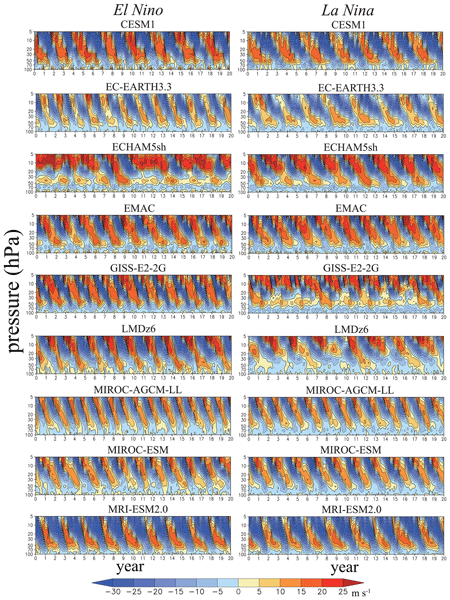
The Quasi-Biennial Oscillation (QBO) of the tropical stratospheric mean winds has been relatively steady over the 7 decades it has been observed, but there are always cycle-to-cycle variations. This study used several global atmospheric models to investigate systematic modulation of the QBO by the El Niño/La Niña cycle. All models simulated shorter periods during El Niño, in agreement with observations. By contrast, the models disagreed even on the sign of the El Niño effect on QBO amplitude.
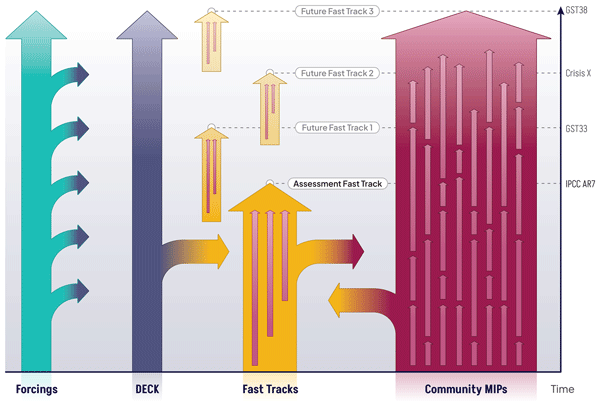
John P. Dunne, Helene T. Hewitt, Julie M. Arblaster, Frédéric Bonou, Olivier Boucher, Tereza Cavazos, Beth Dingley, Paul J. Durack, Birgit Hassler, Martin Juckes, Tomoki Miyakawa, Matt Mizielinski, Vaishali Naik, Zebedee Nicholls, Eleanor O'Rourke, Robert Pincus, Benjamin M. Sanderson, Isla R. Simpson, and Karl E. Taylor
Geosci. Model Dev., 18, 6671–6700, https://doi.org/10.5194/gmd-18-6671-2025, https://doi.org/10.5194/gmd-18-6671-2025, 2025
Short summary
Short summary
The seventh phase of the Coupled Model Intercomparison Project (CMIP7) coordinates efforts to answer key and timely climate science questions and facilitate delivery of relevant multi-model simulations for prediction and projection; characterization, attribution, and process understanding; and vulnerability, impact, and adaptation analysis. Key to the CMIP7 design are the mandatory Diagnostic, Evaluation and Characterization of Klima and optional Assessment Fast Track experiments.
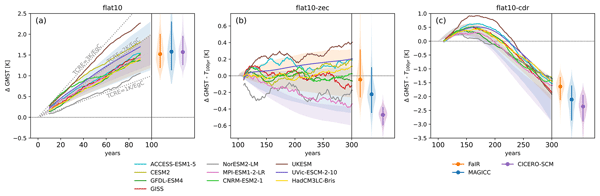
Benjamin M. Sanderson, Victor Brovkin, Rosie A. Fisher, David Hohn, Tatiana Ilyina, Chris D. Jones, Torben Koenigk, Charles Koven, Hongmei Li, David M. Lawrence, Peter Lawrence, Spencer Liddicoat, Andrew H. MacDougall, Nadine Mengis, Zebedee Nicholls, Eleanor O'Rourke, Anastasia Romanou, Marit Sandstad, Jörg Schwinger, Roland Séférian, Lori T. Sentman, Isla R. Simpson, Chris Smith, Norman J. Steinert, Abigail L. S. Swann, Jerry Tjiputra, and Tilo Ziehn
Geosci. Model Dev., 18, 5699–5724, https://doi.org/10.5194/gmd-18-5699-2025, https://doi.org/10.5194/gmd-18-5699-2025, 2025
Short summary
Short summary
This study investigates how climate models warm in response to simplified carbon emissions trajectories, refining the understanding of climate reversibility and commitment. Metrics are defined for warming response to cumulative emissions and for the cessation of emissions or ramp-down to net-zero and net-negative levels. Results indicate that previous concentration-driven experiments may have overstated the Zero Emissions Commitment due to emissions rates exceeding historical levels.
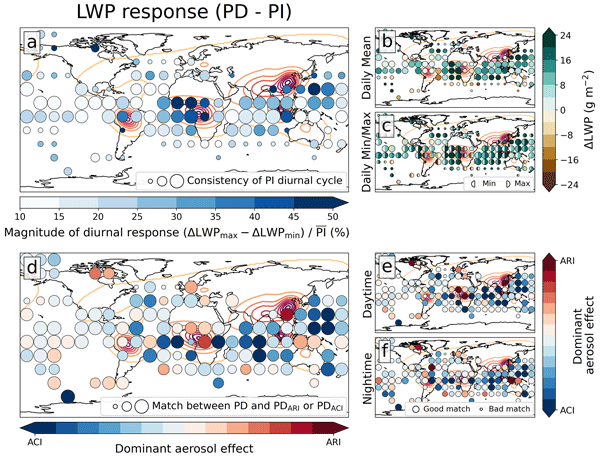
Ross J. Herbert, Andrew I. L. Williams, Philipp Weiss, Duncan Watson-Parris, Elisabeth Dingley, Daniel Klocke, and Philip Stier
Atmos. Chem. Phys., 25, 7789–7814, https://doi.org/10.5194/acp-25-7789-2025, https://doi.org/10.5194/acp-25-7789-2025, 2025
Short summary
Short summary
Clouds exist at scales that climate models struggle to represent, limiting our knowledge of how climate change may impact clouds. Here we use a new kilometer-scale global model representing an important step towards the necessary scale. We focus on how aerosol particles modify clouds, radiation, and precipitation. We find the magnitude and manner of responses tend to vary from region to region, highlighting the potential of global kilometer-scale simulations and a need to represent aerosols in climate models.
Martin Juckes, Karl E. Taylor, Fabrizio Antonio, David Brayshaw, Carlo Buontempo, Jian Cao, Paul J. Durack, Michio Kawamiya, Hyungjun Kim, Tomas Lovato, Chloe Mackallah, Matthew Mizielinski, Alessandra Nuzzo, Martina Stockhause, Daniele Visioni, Jeremy Walton, Briony Turner, Eleanor O'Rourke, and Beth Dingley
Geosci. Model Dev., 18, 2639–2663, https://doi.org/10.5194/gmd-18-2639-2025, https://doi.org/10.5194/gmd-18-2639-2025, 2025
Short summary
Short summary
The Baseline Climate Variables for Earth System Modelling (ESM-BCVs) are defined as a list of 135 variables which have high utility for the evaluation and exploitation of climate simulations. The list reflects the most frequently used variables from Earth system models based on an assessment of data publication and download records from the largest archive of global climate projects.
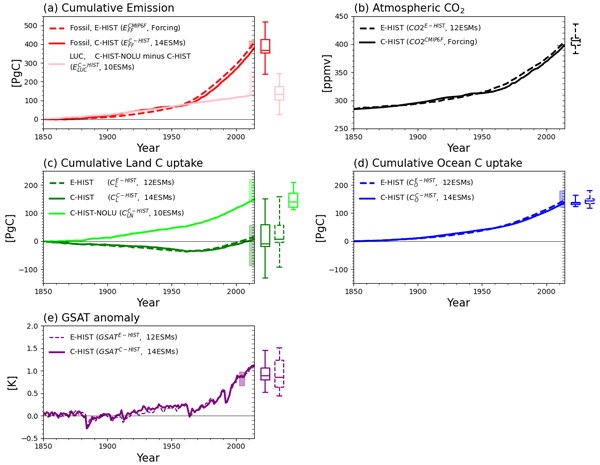
Tomohiro Hajima, Michio Kawamiya, Akihiko Ito, Kaoru Tachiiri, Chris D. Jones, Vivek Arora, Victor Brovkin, Roland Séférian, Spencer Liddicoat, Pierre Friedlingstein, and Elena Shevliakova
Biogeosciences, 22, 1447–1473, https://doi.org/10.5194/bg-22-1447-2025, https://doi.org/10.5194/bg-22-1447-2025, 2025
Short summary
Short summary
This study analyzes atmospheric CO2 concentrations and global carbon budgets simulated by multiple Earth system models, using several types of simulations (CO2 concentration- and emission-driven experiments). We successfully identified problems with regard to the global carbon budget in each model. We also found urgent issues with regard to land use change CO2 emissions that should be solved in the latest generation of models.
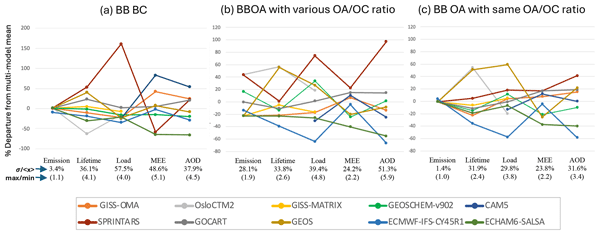
Mariya Petrenko, Ralph Kahn, Mian Chin, Susanne E. Bauer, Tommi Bergman, Huisheng Bian, Gabriele Curci, Ben Johnson, Johannes W. Kaiser, Zak Kipling, Harri Kokkola, Xiaohong Liu, Keren Mezuman, Tero Mielonen, Gunnar Myhre, Xiaohua Pan, Anna Protonotariou, Samuel Remy, Ragnhild Bieltvedt Skeie, Philip Stier, Toshihiko Takemura, Kostas Tsigaridis, Hailong Wang, Duncan Watson-Parris, and Kai Zhang
Atmos. Chem. Phys., 25, 1545–1567, https://doi.org/10.5194/acp-25-1545-2025, https://doi.org/10.5194/acp-25-1545-2025, 2025
Short summary
Short summary
We compared smoke plume simulations from 11 global models to each other and to satellite smoke amount observations aimed at constraining smoke source strength. In regions where plumes are thick and background aerosol is low, models and satellites compare well. However, the input emission inventory tends to underestimate in many places, and particle property and loss rate assumptions vary enormously among models, causing uncertainties that require systematic in situ measurements to resolve.
Paul J. Durack, Karl E. Taylor, Peter J. Gleckler, Gerald A. Meehl, Bryan N. Lawrence, Curt Covey, Ronald J. Stouffer, Guillaume Levavasseur, Atef Ben-Nasser, Sebastien Denvil, Martina Stockhause, Jonathan M. Gregory, Martin Juckes, Sasha K. Ames, Fabrizio Antonio, David C. Bader, John P. Dunne, Daniel Ellis, Veronika Eyring, Sandro L. Fiore, Sylvie Joussaume, Philip Kershaw, Jean-Francois Lamarque, Michael Lautenschlager, Jiwoo Lee, Chris F. Mauzey, Matthew Mizielinski, Paola Nassisi, Alessandra Nuzzo, Eleanor O’Rourke, Jeffrey Painter, Gerald L. Potter, Sven Rodriguez, and Dean N. Williams
EGUsphere, https://doi.org/10.5194/egusphere-2024-3729, https://doi.org/10.5194/egusphere-2024-3729, 2025
Short summary
Short summary
CMIP6 was the most expansive and ambitious Model Intercomparison Project (MIP), the latest in a history, extending four decades. CMIP engaged a growing community focused on improving climate understanding, and quantifying and attributing observed climate change being experienced today. The project's profound impact is due to the combining the latest climate science and technology, enabling the latest-generation climate simulations and increasing community attention in every successive phase.
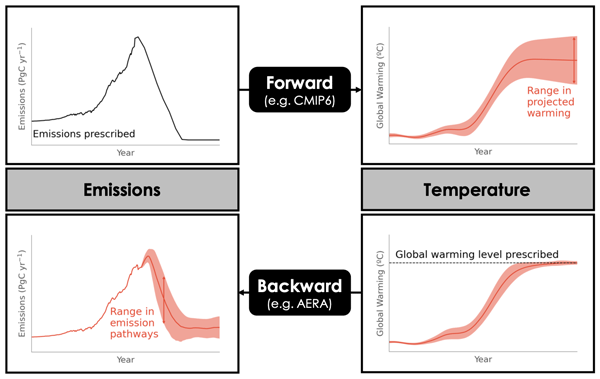
Yona Silvy, Thomas L. Frölicher, Jens Terhaar, Fortunat Joos, Friedrich A. Burger, Fabrice Lacroix, Myles Allen, Raffaele Bernardello, Laurent Bopp, Victor Brovkin, Jonathan R. Buzan, Patricia Cadule, Martin Dix, John Dunne, Pierre Friedlingstein, Goran Georgievski, Tomohiro Hajima, Stuart Jenkins, Michio Kawamiya, Nancy Y. Kiang, Vladimir Lapin, Donghyun Lee, Paul Lerner, Nadine Mengis, Estela A. Monteiro, David Paynter, Glen P. Peters, Anastasia Romanou, Jörg Schwinger, Sarah Sparrow, Eric Stofferahn, Jerry Tjiputra, Etienne Tourigny, and Tilo Ziehn
Earth Syst. Dynam., 15, 1591–1628, https://doi.org/10.5194/esd-15-1591-2024, https://doi.org/10.5194/esd-15-1591-2024, 2024
Short summary
Short summary
The adaptive emission reduction approach is applied with Earth system models to generate temperature stabilization simulations. These simulations provide compatible emission pathways and budgets for a given warming level, uncovering uncertainty ranges previously missing in the Coupled Model Intercomparison Project scenarios. These target-based emission-driven simulations offer a more coherent assessment across models for studying both the carbon cycle and its impacts under climate stabilization.
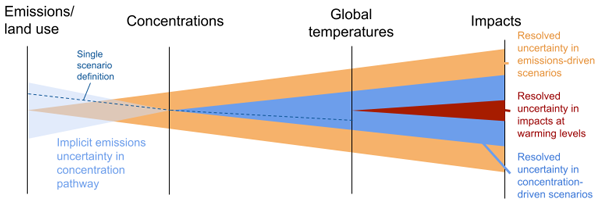
Benjamin M. Sanderson, Ben B. B. Booth, John Dunne, Veronika Eyring, Rosie A. Fisher, Pierre Friedlingstein, Matthew J. Gidden, Tomohiro Hajima, Chris D. Jones, Colin G. Jones, Andrew King, Charles D. Koven, David M. Lawrence, Jason Lowe, Nadine Mengis, Glen P. Peters, Joeri Rogelj, Chris Smith, Abigail C. Snyder, Isla R. Simpson, Abigail L. S. Swann, Claudia Tebaldi, Tatiana Ilyina, Carl-Friedrich Schleussner, Roland Séférian, Bjørn H. Samset, Detlef van Vuuren, and Sönke Zaehle
Geosci. Model Dev., 17, 8141–8172, https://doi.org/10.5194/gmd-17-8141-2024, https://doi.org/10.5194/gmd-17-8141-2024, 2024
Short summary
Short summary
We discuss how, in order to provide more relevant guidance for climate policy, coordinated climate experiments should adopt a greater focus on simulations where Earth system models are provided with carbon emissions from fossil fuels together with land use change instructions, rather than past approaches that have largely focused on experiments with prescribed atmospheric carbon dioxide concentrations. We discuss how these goals might be achieved in coordinated climate modeling experiments.

Colin G. Jones, Fanny Adloff, Ben B. B. Booth, Peter M. Cox, Veronika Eyring, Pierre Friedlingstein, Katja Frieler, Helene T. Hewitt, Hazel A. Jeffery, Sylvie Joussaume, Torben Koenigk, Bryan N. Lawrence, Eleanor O'Rourke, Malcolm J. Roberts, Benjamin M. Sanderson, Roland Séférian, Samuel Somot, Pier Luigi Vidale, Detlef van Vuuren, Mario Acosta, Mats Bentsen, Raffaele Bernardello, Richard Betts, Ed Blockley, Julien Boé, Tom Bracegirdle, Pascale Braconnot, Victor Brovkin, Carlo Buontempo, Francisco Doblas-Reyes, Markus Donat, Italo Epicoco, Pete Falloon, Sandro Fiore, Thomas Frölicher, Neven S. Fučkar, Matthew J. Gidden, Helge F. Goessling, Rune Grand Graversen, Silvio Gualdi, José M. Gutiérrez, Tatiana Ilyina, Daniela Jacob, Chris D. Jones, Martin Juckes, Elizabeth Kendon, Erik Kjellström, Reto Knutti, Jason Lowe, Matthew Mizielinski, Paola Nassisi, Michael Obersteiner, Pierre Regnier, Romain Roehrig, David Salas y Mélia, Carl-Friedrich Schleussner, Michael Schulz, Enrico Scoccimarro, Laurent Terray, Hannes Thiemann, Richard A. Wood, Shuting Yang, and Sönke Zaehle
Earth Syst. Dynam., 15, 1319–1351, https://doi.org/10.5194/esd-15-1319-2024, https://doi.org/10.5194/esd-15-1319-2024, 2024
Short summary
Short summary
We propose a number of priority areas for the international climate research community to address over the coming decade. Advances in these areas will both increase our understanding of past and future Earth system change, including the societal and environmental impacts of this change, and deliver significantly improved scientific support to international climate policy, such as future IPCC assessments and the UNFCCC Global Stocktake.
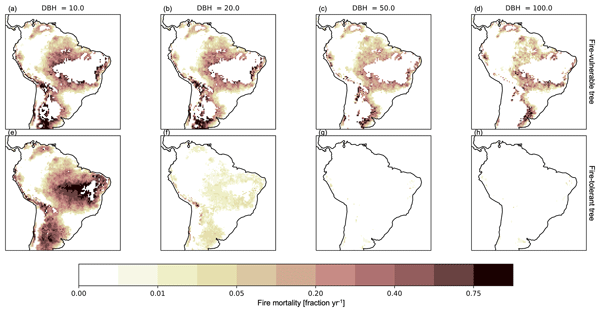
Jacquelyn K. Shuman, Rosie A. Fisher, Charles Koven, Ryan Knox, Lara Kueppers, and Chonggang Xu
Geosci. Model Dev., 17, 4643–4671, https://doi.org/10.5194/gmd-17-4643-2024, https://doi.org/10.5194/gmd-17-4643-2024, 2024
Short summary
Short summary
We adapt a fire behavior and effects module for use in a size-structured vegetation demographic model to test how climate, fire regime, and fire-tolerance plant traits interact to determine the distribution of tropical forests and grasslands. Our model captures the connection between fire disturbance and plant fire-tolerance strategies in determining plant distribution and provides a useful tool for understanding the vulnerability of these areas under changing conditions across the tropics.
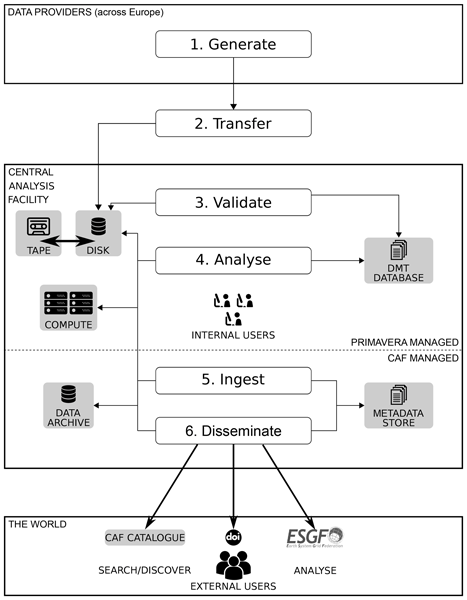
Jon Seddon, Ag Stephens, Matthew S. Mizielinski, Pier Luigi Vidale, and Malcolm J. Roberts
Geosci. Model Dev., 16, 6689–6700, https://doi.org/10.5194/gmd-16-6689-2023, https://doi.org/10.5194/gmd-16-6689-2023, 2023
Short summary
Short summary
The PRIMAVERA project aimed to develop a new generation of advanced global climate models. The large volume of data generated was uploaded to a central analysis facility (CAF) and was analysed by 100 PRIMAVERA scientists there. We describe how the PRIMAVERA project used the CAF's facilities to enable users to analyse this large dataset. We believe that similar, multi-institute, big-data projects could also use a CAF to efficiently share, organise and analyse large volumes of data.
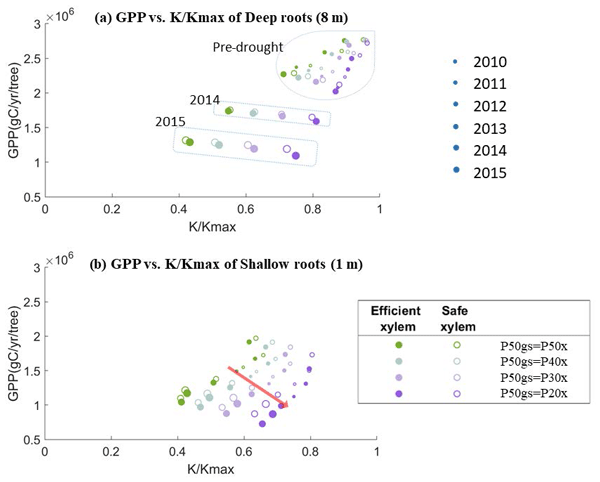
Junyan Ding, Polly Buotte, Roger Bales, Bradley Christoffersen, Rosie A. Fisher, Michael Goulden, Ryan Knox, Lara Kueppers, Jacquelyn Shuman, Chonggang Xu, and Charles D. Koven
Biogeosciences, 20, 4491–4510, https://doi.org/10.5194/bg-20-4491-2023, https://doi.org/10.5194/bg-20-4491-2023, 2023
Short summary
Short summary
We used a vegetation model to investigate how the different combinations of plant rooting depths and the sensitivity of leaves and stems to drying lead to differential responses of a pine forest to drought conditions in California, USA. We found that rooting depths are the strongest control in that ecosystem. Deep roots allow trees to fully utilize the soil water during a normal year but result in prolonged depletion of soil moisture during a severe drought and hence a high tree mortality risk.
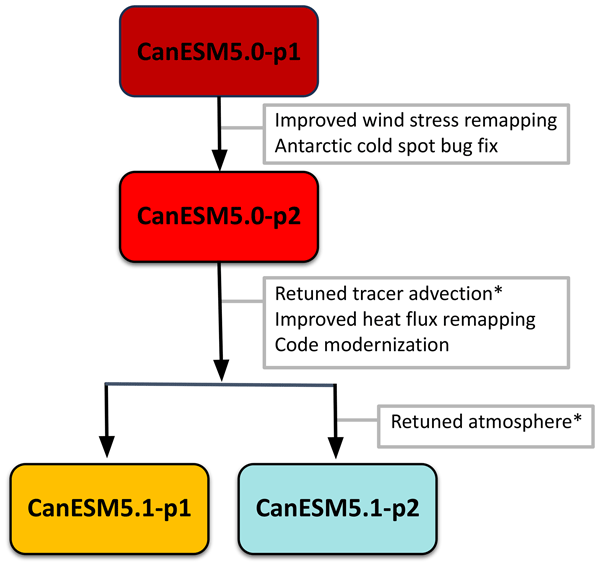
Michael Sigmond, James Anstey, Vivek Arora, Ruth Digby, Nathan Gillett, Viatcheslav Kharin, William Merryfield, Catherine Reader, John Scinocca, Neil Swart, John Virgin, Carsten Abraham, Jason Cole, Nicolas Lambert, Woo-Sung Lee, Yongxiao Liang, Elizaveta Malinina, Landon Rieger, Knut von Salzen, Christian Seiler, Clint Seinen, Andrew Shao, Reinel Sospedra-Alfonso, Libo Wang, and Duo Yang
Geosci. Model Dev., 16, 6553–6591, https://doi.org/10.5194/gmd-16-6553-2023, https://doi.org/10.5194/gmd-16-6553-2023, 2023
Short summary
Short summary
We present a new activity which aims to organize the analysis of biases in the Canadian Earth System model (CanESM) in a systematic manner. Results of this “Analysis for Development” (A4D) activity includes a new CanESM version, CanESM5.1, which features substantial improvements regarding the simulation of dust and stratospheric temperatures, a second CanESM5.1 variant with reduced climate sensitivity, and insights into potential avenues to reduce various other model biases.
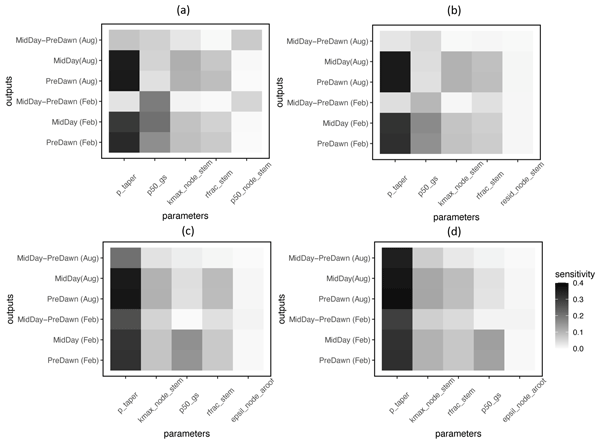
Chonggang Xu, Bradley Christoffersen, Zachary Robbins, Ryan Knox, Rosie A. Fisher, Rutuja Chitra-Tarak, Martijn Slot, Kurt Solander, Lara Kueppers, Charles Koven, and Nate McDowell
Geosci. Model Dev., 16, 6267–6283, https://doi.org/10.5194/gmd-16-6267-2023, https://doi.org/10.5194/gmd-16-6267-2023, 2023
Short summary
Short summary
We introduce a plant hydrodynamic model for the U.S. Department of Energy (DOE)-sponsored model, the Functionally Assembled Terrestrial Ecosystem Simulator (FATES). To better understand this new model system and its functionality in tropical forest ecosystems, we conducted a global parameter sensitivity analysis at Barro Colorado Island, Panama. We identified the key parameters that affect the simulated plant hydrodynamics to guide both modeling and field campaign studies.
Lingcheng Li, Yilin Fang, Zhonghua Zheng, Mingjie Shi, Marcos Longo, Charles D. Koven, Jennifer A. Holm, Rosie A. Fisher, Nate G. McDowell, Jeffrey Chambers, and L. Ruby Leung
Geosci. Model Dev., 16, 4017–4040, https://doi.org/10.5194/gmd-16-4017-2023, https://doi.org/10.5194/gmd-16-4017-2023, 2023
Short summary
Short summary
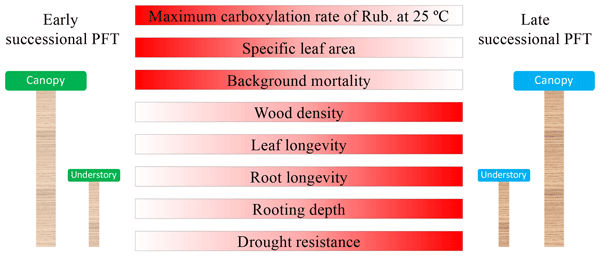
Accurately modeling plant coexistence in vegetation demographic models like ELM-FATES is challenging. This study proposes a repeatable method that uses machine-learning-based surrogate models to optimize plant trait parameters in ELM-FATES. Our approach significantly improves plant coexistence modeling, thus reducing errors. It has important implications for modeling ecosystem dynamics in response to climate change.
Alban Planchat, Lester Kwiatkowski, Laurent Bopp, Olivier Torres, James R. Christian, Momme Butenschön, Tomas Lovato, Roland Séférian, Matthew A. Chamberlain, Olivier Aumont, Michio Watanabe, Akitomo Yamamoto, Andrew Yool, Tatiana Ilyina, Hiroyuki Tsujino, Kristen M. Krumhardt, Jörg Schwinger, Jerry Tjiputra, John P. Dunne, and Charles Stock
Biogeosciences, 20, 1195–1257, https://doi.org/10.5194/bg-20-1195-2023, https://doi.org/10.5194/bg-20-1195-2023, 2023
Short summary
Short summary
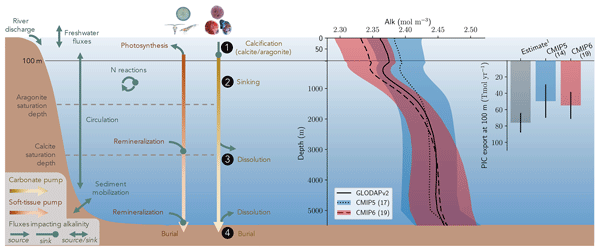
Ocean alkalinity is critical to the uptake of atmospheric carbon and acidification in surface waters. We review the representation of alkalinity and the associated calcium carbonate cycle in Earth system models. While many parameterizations remain present in the latest generation of models, there is a general improvement in the simulated alkalinity distribution. This improvement is related to an increase in the export of biotic calcium carbonate, which closer resembles observations.
Yilin Fang, L. Ruby Leung, Charles D. Koven, Gautam Bisht, Matteo Detto, Yanyan Cheng, Nate McDowell, Helene Muller-Landau, S. Joseph Wright, and Jeffrey Q. Chambers
Geosci. Model Dev., 15, 7879–7901, https://doi.org/10.5194/gmd-15-7879-2022, https://doi.org/10.5194/gmd-15-7879-2022, 2022
Short summary
Short summary
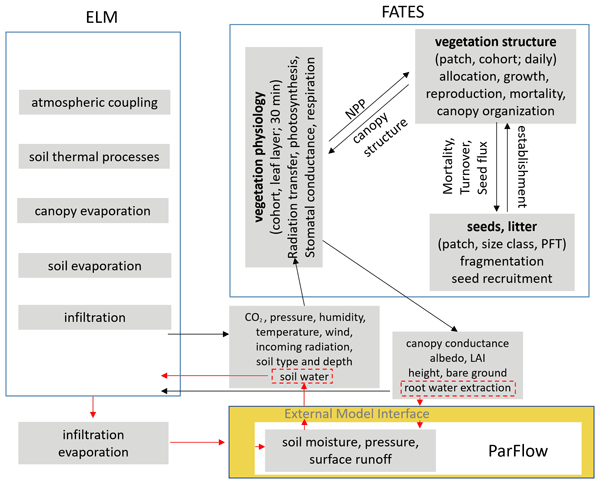
We develop a model that integrates an Earth system model with a three-dimensional hydrology model to explicitly resolve hillslope topography and water flow underneath the land surface to understand how local-scale hydrologic processes modulate vegetation along water availability gradients. Our coupled model can be used to improve the understanding of the diverse impact of local heterogeneity and water flux on nutrient availability and plant communities.
Ville Leinonen, Harri Kokkola, Taina Yli-Juuti, Tero Mielonen, Thomas Kühn, Tuomo Nieminen, Simo Heikkinen, Tuuli Miinalainen, Tommi Bergman, Ken Carslaw, Stefano Decesari, Markus Fiebig, Tareq Hussein, Niku Kivekäs, Radovan Krejci, Markku Kulmala, Ari Leskinen, Andreas Massling, Nikos Mihalopoulos, Jane P. Mulcahy, Steffen M. Noe, Twan van Noije, Fiona M. O'Connor, Colin O'Dowd, Dirk Olivie, Jakob B. Pernov, Tuukka Petäjä, Øyvind Seland, Michael Schulz, Catherine E. Scott, Henrik Skov, Erik Swietlicki, Thomas Tuch, Alfred Wiedensohler, Annele Virtanen, and Santtu Mikkonen
Atmos. Chem. Phys., 22, 12873–12905, https://doi.org/10.5194/acp-22-12873-2022, https://doi.org/10.5194/acp-22-12873-2022, 2022
Short summary
Short summary
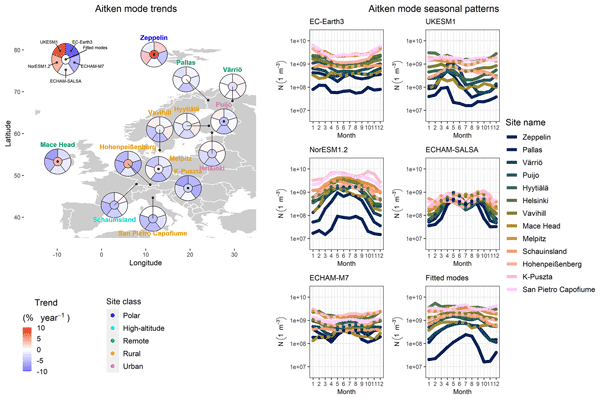
We provide the first extensive comparison of detailed aerosol size distribution trends between in situ observations from Europe and five different earth system models. We investigated aerosol modes (nucleation, Aitken, and accumulation) separately and were able to show the differences between measured and modeled trends and especially their seasonal patterns. The differences in model results are likely due to complex effects of several processes instead of certain specific model features.
Marco Reale, Gianpiero Cossarini, Paolo Lazzari, Tomas Lovato, Giorgio Bolzon, Simona Masina, Cosimo Solidoro, and Stefano Salon
Biogeosciences, 19, 4035–4065, https://doi.org/10.5194/bg-19-4035-2022, https://doi.org/10.5194/bg-19-4035-2022, 2022
Short summary
Short summary
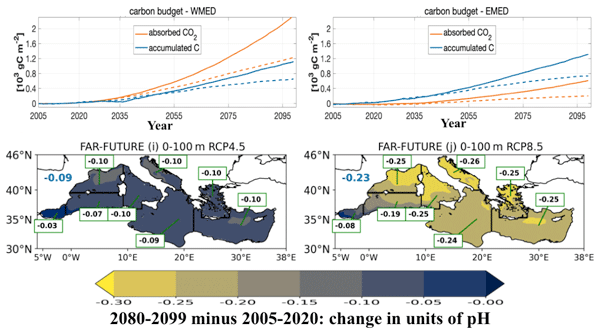
Future projections under the RCP8.5 and RCP4.5 emission scenarios of the Mediterranean Sea biogeochemistry at the end of the 21st century show different levels of decline in nutrients, oxygen and biomasses and an acidification of the water column. The signal intensity is stronger under RCP8.5 and in the eastern Mediterranean. Under RCP4.5, after the second half of the 21st century, biogeochemical variables show a recovery of the values observed at the beginning of the investigated period.
Yilin Fang, L. Ruby Leung, Ryan Knox, Charlie Koven, and Ben Bond-Lamberty
Geosci. Model Dev., 15, 6385–6398, https://doi.org/10.5194/gmd-15-6385-2022, https://doi.org/10.5194/gmd-15-6385-2022, 2022
Short summary
Short summary
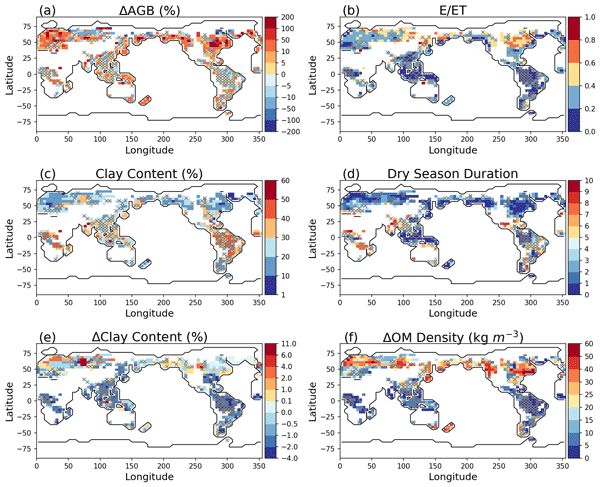
Accounting for water movement in the soil and water transport within the plant is important for plant growth in Earth system modeling. We implemented different numerical approaches for a plant hydrodynamic model and compared their impacts on the simulated aboveground biomass (AGB) at single points and globally. We found care should be taken when discretizing the number of soil layers for numerical simulations as it can significantly affect AGB if accuracy and computational costs are of concern.
Peter Hitchcock, Amy Butler, Andrew Charlton-Perez, Chaim I. Garfinkel, Tim Stockdale, James Anstey, Dann Mitchell, Daniela I. V. Domeisen, Tongwen Wu, Yixiong Lu, Daniele Mastrangelo, Piero Malguzzi, Hai Lin, Ryan Muncaster, Bill Merryfield, Michael Sigmond, Baoqiang Xiang, Liwei Jia, Yu-Kyung Hyun, Jiyoung Oh, Damien Specq, Isla R. Simpson, Jadwiga H. Richter, Cory Barton, Jeff Knight, Eun-Pa Lim, and Harry Hendon
Geosci. Model Dev., 15, 5073–5092, https://doi.org/10.5194/gmd-15-5073-2022, https://doi.org/10.5194/gmd-15-5073-2022, 2022
Short summary
Short summary
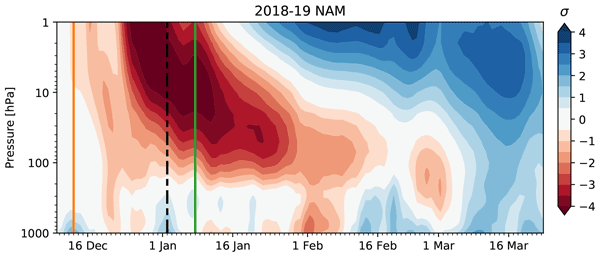
This paper describes an experimental protocol focused on sudden stratospheric warmings to be carried out by subseasonal forecast modeling centers. These will allow for inter-model comparisons of these major disruptions to the stratospheric polar vortex and their impacts on the near-surface flow. The protocol will lead to new insights into the contribution of the stratosphere to subseasonal forecast skill and new approaches to the dynamical attribution of extreme events.
Charles D. Koven, Vivek K. Arora, Patricia Cadule, Rosie A. Fisher, Chris D. Jones, David M. Lawrence, Jared Lewis, Keith Lindsay, Sabine Mathesius, Malte Meinshausen, Michael Mills, Zebedee Nicholls, Benjamin M. Sanderson, Roland Séférian, Neil C. Swart, William R. Wieder, and Kirsten Zickfeld
Earth Syst. Dynam., 13, 885–909, https://doi.org/10.5194/esd-13-885-2022, https://doi.org/10.5194/esd-13-885-2022, 2022
Short summary
Short summary
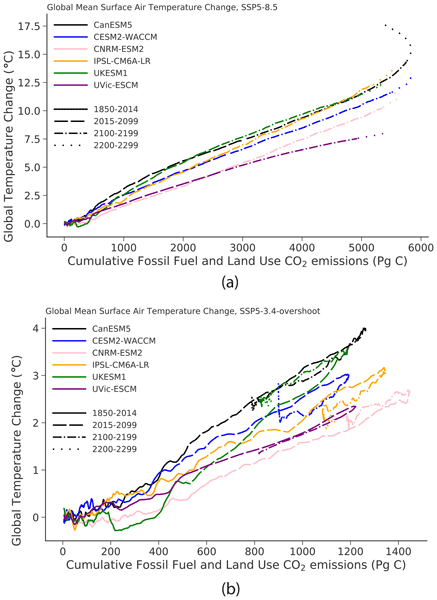
We explore the long-term dynamics of Earth's climate and carbon cycles under a pair of contrasting scenarios to the year 2300 using six models that include both climate and carbon cycle dynamics. One scenario assumes very high emissions, while the second assumes a peak in emissions, followed by rapid declines to net negative emissions. We show that the models generally agree that warming is roughly proportional to carbon emissions but that many other aspects of the model projections differ.
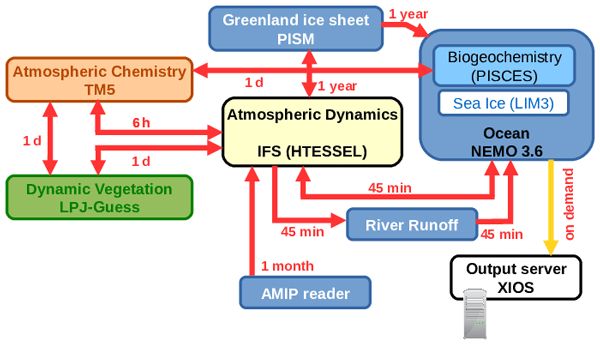
Ralf Döscher, Mario Acosta, Andrea Alessandri, Peter Anthoni, Thomas Arsouze, Tommi Bergman, Raffaele Bernardello, Souhail Boussetta, Louis-Philippe Caron, Glenn Carver, Miguel Castrillo, Franco Catalano, Ivana Cvijanovic, Paolo Davini, Evelien Dekker, Francisco J. Doblas-Reyes, David Docquier, Pablo Echevarria, Uwe Fladrich, Ramon Fuentes-Franco, Matthias Gröger, Jost v. Hardenberg, Jenny Hieronymus, M. Pasha Karami, Jukka-Pekka Keskinen, Torben Koenigk, Risto Makkonen, François Massonnet, Martin Ménégoz, Paul A. Miller, Eduardo Moreno-Chamarro, Lars Nieradzik, Twan van Noije, Paul Nolan, Declan O'Donnell, Pirkka Ollinaho, Gijs van den Oord, Pablo Ortega, Oriol Tintó Prims, Arthur Ramos, Thomas Reerink, Clement Rousset, Yohan Ruprich-Robert, Philippe Le Sager, Torben Schmith, Roland Schrödner, Federico Serva, Valentina Sicardi, Marianne Sloth Madsen, Benjamin Smith, Tian Tian, Etienne Tourigny, Petteri Uotila, Martin Vancoppenolle, Shiyu Wang, David Wårlind, Ulrika Willén, Klaus Wyser, Shuting Yang, Xavier Yepes-Arbós, and Qiong Zhang
Geosci. Model Dev., 15, 2973–3020, https://doi.org/10.5194/gmd-15-2973-2022, https://doi.org/10.5194/gmd-15-2973-2022, 2022
Short summary
Short summary
The Earth system model EC-Earth3 is documented here. Key performance metrics show physical behavior and biases well within the frame known from recent models. With improved physical and dynamic features, new ESM components, community tools, and largely improved physical performance compared to the CMIP5 version, EC-Earth3 represents a clear step forward for the only European community ESM. We demonstrate here that EC-Earth3 is suited for a range of tasks in CMIP6 and beyond.
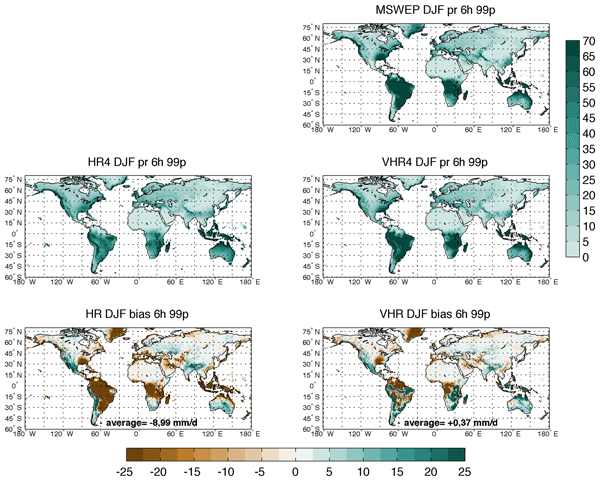
Enrico Scoccimarro, Daniele Peano, Silvio Gualdi, Alessio Bellucci, Tomas Lovato, Pier Giuseppe Fogli, and Antonio Navarra
Geosci. Model Dev., 15, 1841–1854, https://doi.org/10.5194/gmd-15-1841-2022, https://doi.org/10.5194/gmd-15-1841-2022, 2022
Short summary
Short summary
This study evaluated the ability of the CMCC-CM2 climate model participating to the last CMIP6 effort, in representing extreme events of precipitation and temperature at the daily and 6-hourly frequencies. The 1/4° resolution version of the atmospheric model provides better results than the version at 1° resolution for temperature extremes, at both time frequencies. For precipitation extremes, especially at the daily time frequency, the higher resolution does not improve model results.
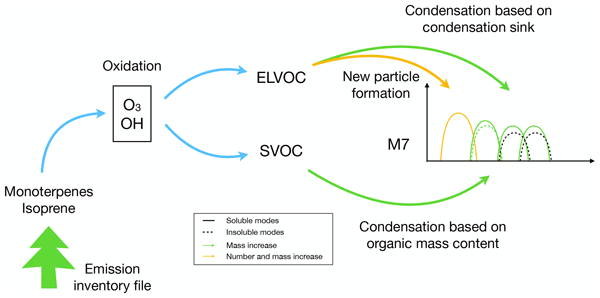
Tommi Bergman, Risto Makkonen, Roland Schrödner, Erik Swietlicki, Vaughan T. J. Phillips, Philippe Le Sager, and Twan van Noije
Geosci. Model Dev., 15, 683–713, https://doi.org/10.5194/gmd-15-683-2022, https://doi.org/10.5194/gmd-15-683-2022, 2022
Short summary
Short summary
We describe in this paper the implementation of a process-based secondary organic aerosol and new particle formation scheme within the chemistry transport model TM5-MP version 1.2. The performance of the model simulations for the year 2010 is evaluated against in situ observations, ground-based remote sensing and satellite retrievals. Overall, the simulated aerosol fields are improved, although in some areas the model shows a decline in performance.
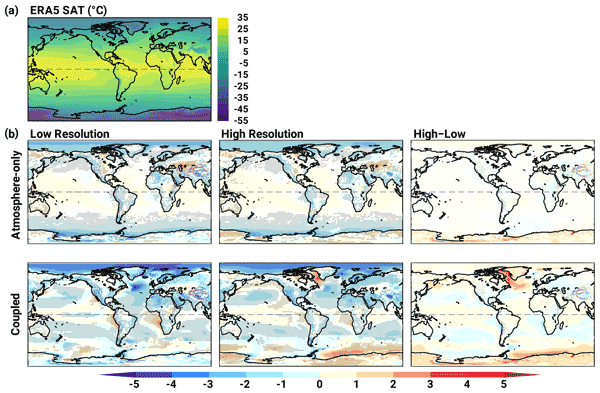
Eduardo Moreno-Chamarro, Louis-Philippe Caron, Saskia Loosveldt Tomas, Javier Vegas-Regidor, Oliver Gutjahr, Marie-Pierre Moine, Dian Putrasahan, Christopher D. Roberts, Malcolm J. Roberts, Retish Senan, Laurent Terray, Etienne Tourigny, and Pier Luigi Vidale
Geosci. Model Dev., 15, 269–289, https://doi.org/10.5194/gmd-15-269-2022, https://doi.org/10.5194/gmd-15-269-2022, 2022
Short summary
Short summary
Climate models do not fully reproduce observations: they show differences (biases) in regional temperature, precipitation, or cloud cover. Reducing model biases is important to increase our confidence in their ability to reproduce present and future climate changes. Model realism is set by its resolution: the finer it is, the more physical processes and interactions it can resolve. We here show that increasing resolution of up to ~ 25 km can help reduce model biases but not remove them entirely.
Cited articles
Anstey, J., Rigoudy, G., Ellis, D., Mizielinski, M., Schupfner, M., Moine, M.-P., CMIP_IPO, and Swarnalee, M.: CMIP-Data-Request/CMIP7_DReq_Software: v1.4 CMIP7 data request software, Zenodo [code], https://doi.org/10.5281/zenodo.17993659, 2025. a, b
Anstey, J., Dingley, B., and Ellis, D.: CMIP-Data-Request/CMIP7_DReq_Content: Data request content for v1.2.2.5, Zenodo [data set], https://doi.org/10.5281/zenodo.21412336, 2026. a, b
Cinquini, L., Crichton, D., Mattmann, C., Harney, J., Shipman, G., Wang, F., Ananthakrishnan, R., Miller, N., Denvil, S., Morgan, M., Pobre, Z., Bell, G. M., Doutriaux, C., Drach, R., Williams, D., Kershaw, P., Pascoe, S., Gonzalez, E., Fiore, S., and Schweitzer, R.: The Earth System Grid Federation: An open infrastructure for access to distributed geospatial data, Future Gener. Comp. Sy., 36, 400–417, https://doi.org/10.1016/j.future.2013.07.002, 2014. a
CMIP Data Request Task Team: CMIP7 Data Request v1.0 launch, Zenodo, https://doi.org/10.5281/zenodo.14506389, 2024. a
CMIP Data Request Task Team: CMIP7 Data Request v1.2 launch, Zenodo, https://doi.org/10.5281/zenodo.15880427, 2025. a
Deck, M. and Strom, M.: Model of Co-Development Emerges, Res. Technol. Manage., 45, 47–53, https://doi.org/10.1080/08956308.2002.11671500, 2002. a
Dingley, B., O'Rourke, E., Turner, B., Members, C. P., Members, W. I. P., and Members, C. T. T.: CMIP Annual Report 2022-2023, Zenodo, https://doi.org/10.5281/zenodo.8101810, 2023. a
Dingley, B., O'Rourke, E., Turner, B., Ellis, D., Members, C. P., Members, W. I. P., and Members, C. T. T.: CMIP Annual Report 2023-2024, Zenodo, https://doi.org/10.5281/zenodo.12772973, 2024. a
Dingley, B., Anstey, J. A., Abalos, M., Abraham, C., Bergman, T., Bock, L., Fiddes, S., Hassler, B., Kramer, R. J., Luo, F., O'Connor, F. M., Šácha, P., Simpson, I. R., Wilcox, L. J., and Zelinka, M. D.: CMIP7 Data Request: atmosphere priorities and opportunities, Geosci. Model Dev., 19, 2945–2984, https://doi.org/10.5194/gmd-19-2945-2026, 2026. a, b, c
Dunne, J. P., Hewitt, H. T., Arblaster, J. M., Bonou, F., Boucher, O., Cavazos, T., Dingley, B., Durack, P. J., Hassler, B., Juckes, M., Miyakawa, T., Mizielinski, M., Naik, V., Nicholls, Z., O'Rourke, E., Pincus, R., Sanderson, B. M., Simpson, I. R., and Taylor, K. E.: An evolving Coupled Model Intercomparison Project phase 7 (CMIP7) and Fast Track in support of future climate assessment, Geosci. Model Dev., 18, 6671–6700, https://doi.org/10.5194/gmd-18-6671-2025, 2025. a, b, c, d
Durack, P. J., Taylor, K. E., Gleckler, P. J., Meehl, G. A., Lawrence, B. N., Covey, C., Stouffer, R. J., Levavasseur, G., Ben-Nasser, A., Denvil, S., Stockhause, M., Gregory, J. M., Juckes, M., Ames, S. K., Antonio, F., Bader, D. C., Dunne, J. P., Ellis, D., Eyring, V., Fiore, S. L., Joussaume, S., Kershaw, P., Lamarque, J.-F., Lautenschlager, M., Lee, J., Mauzey, C. F., Mizielinski, M., Nassisi, P., Nuzzo, A., O’Rourke, E., Painter, J., Potter, G. L., Rodriguez, S., and Williams, D. N.: The Coupled Model Intercomparison Project (CMIP): Reviewing project history, evolution, infrastructure and implementation, EGUsphere [preprint], https://doi.org/10.5194/egusphere-2024-3729, 2025a. a, b, c, d
Durack, P. J., Taylor, K. E., Mizielinski, M., Doutriaux, C., Nadeau, D., and Juckes, M.: CMIP6 Controlled Vocabularies (CVs), Zenodo [code], https://doi.org/10.5281/zenodo.17058938, 2025b. a
Eaton, B., Gregory, J., Drach, B., Taylor, K., Hankin, S., Caron, J., Signell, R., Bentley, P., Rappa, G., Höck, H., Pamment, A., Juckes, M., Raspaud, M., Blower, J., Horne, R., Whiteaker, T., Blodgett, D., Zender, C., Lee, D., Hassell, D., Snow, A. D., Kölling, T., Allured, D., Jelenak, A., Soerensen, A. M., Gaultier, L., Herlédan, S., Manzano, F., Bärring, L., Barker, C., Bartholomew, S. L., Lavergne, T., Lawrence, B., Massey, N., Cofiño, A. S., McGinnis, S., and Laake, P. V.: NetCDF Climate and Forecast (CF) Metadata Conventions, Zenodo, https://doi.org/10.5281/zenodo.17801666, 2025. a, b
Eyring, V., Bony, S., Meehl, G. A., Senior, C. A., Stevens, B., Stouffer, R. J., and Taylor, K. E.: Overview of the Coupled Model Intercomparison Project Phase 6 (CMIP6) experimental design and organization, Geosci. Model Dev., 9, 1937–1958, https://doi.org/10.5194/gmd-9-1937-2016, 2016. a
Fleming, A., Bohensky, E., Dutra, L., Lin, B., Melbourne-Thomas, J., Moore, T., Stone-Jovicich, S., Tozer, C., Clarke, J., Donegan, L., Hopkins, M., Merson, S., Remenyi, T., Swirepik, A., and Vertigan, C.: Perceptions of co-design, co-development and co-delivery (Co-3D) as part of the co-production process – Insights for climate services, Climate Services, 30, 100364, https://doi.org/10.1016/j.cliser.2023.100364, 2023. a
Fox-Kemper, B., DeRepentigny, P., Treguier, A. M., Stepanek, C., O'Rourke, E., Mackallah, C., Meucci, A., Aksenov, Y., Durack, P. J., Feldl, N., Garuba, O., Hernaman, V., Heuzé, C., Iovino, D., Madan, G., Marquez, A. L., Massonnet, F., Mecking, J., Samanta, D., Taylor, P. C., Tseng, W.-L., and Vancoppenolle, M.: CMIP7 data request: ocean and sea ice priorities and opportunities, Geosci. Model Dev., 19, 6043–6078, https://doi.org/10.5194/gmd-19-6043-2026, 2026. a, b
Hassell, D., Taylor, K. E., Levavasseur, G., Pascoe, C., Crawford, A., Durack, P. J., Ellis, D., Goddard, C., Horanyi, A., Lawrence, B., Nicholls, Z., Stockhause, M., and Troussellier, L.: Essential Model Documentation (EMD), Zenodo, https://doi.org/10.5281/zenodo.17853724, 2025. a
Hibbard, K., Meehl, G., Cox, P., and Friedlingstein, P.: A Strategy for Climate Change Stabilization Experiments, Eos T. Am. Geophys. Un., 88, https://doi.org/10.1029/2007EO200002, 2007. a
Hoffman, F. M., Hassler, B., Swaminathan, R., Lewis, J., Andela, B., Collier, N., Hegedűs, D., Lee, J., Pascoe, C., Pflüger, M., Stockhause, M., Ullrich, P., Xu, M., Bock, L., Chun, F., Gier, B. K., Kelley, D. I., Lauer, A., Lenhardt, J., Schlund, M., Sreeush, M. G., Weigel, K., Blockley, E., Beadling, R., Beucher, R., Dugassa, D. D., Lembo, V., Lu, J., Brands, S., Tjiputra, J., Malinina, E., Medeiros, B., Scoccimarro, E., Walton, J., Kershaw, P., Lanfer Marquez, A., Roberts, M. J., O'Rourke, E., Dingley, B., Turner, B., Hewitt, H., and Dunne, J. P.: Rapid Evaluation Framework for the CMIP7 Assessment Fast Track, Geosci. Model Dev., 19, 7415–7455, https://doi.org/10.5194/gmd-19-7415-2026, 2026. a
Hosseini, M., Kerridge, S., Allen, L., Kiermer, V., and Holmes, K.: CRediT Roles and Example Research Tasks That Could be Attributed to Them, Zenodo, https://doi.org/10.5281/zenodo.18421449, 2026. a
Hughes, L., Tsueng, G., Digiovanna, J., Horvath, T., Rasmussen, L., Savidge, T., Stoeger, T., Turkarslan, S., Wu, Q., Wu, C., Su, A., and Pache, L.: Addressing barriers in FAIR data practices for biomedical data, Sci. Data, 10, 98, https://doi.org/10.1038/s41597-023-01969-8, 2023. a
Ju, Y., Azad, N., Ding, W., and He, H.: Progress and Trends in Coupled Model Intercomparison Project (CMIP) Research: A Bibliometric Analysis, Agriculture, 15, https://doi.org/10.3390/agriculture15080826, 2025. a
Juckes, M.: CMIP Data Request Schema 2.0, Zenodo, https://doi.org/10.5281/zenodo.4287148, 2020. a
Juckes, M., Taylor, K. E., Antonio, F., Brayshaw, D., Buontempo, C., Cao, J., Durack, P. J., Kawamiya, M., Kim, H., Lovato, T., Mackallah, C., Mizielinski, M., Nuzzo, A., Stockhause, M., Visioni, D., Walton, J., Turner, B., O'Rourke, E., and Dingley, B.: Baseline Climate Variables for Earth System Modelling, Geosci. Model Dev., 18, 2639–2663, https://doi.org/10.5194/gmd-18-2639-2025, 2025. a, b, c, d, e, f, g
Lake, I., Gutowski, W., Giorgi, F., and Lee, B.: CORDEX: Climate Research and Information for Regions, B. Am. Meteorol. Soc., 98, ES189–ES192, https://doi.org/10.1175/BAMS-D-17-0042.1, 2017. a
Li, Y., Tang, G., O'Rourke, E., Minallah, S., Mas e Braga, M., Nowicki, S., Smith, R. S., Lawrence, D. M., Hurtt, G. C., Peano, D., Meyer, G., Hassler, B., Mao, J., Xue, Y., and Juckes, M.: CMIP7 data request: land and land ice priorities and opportunities, Geosci. Model Dev., 19, 3129–3155, https://doi.org/10.5194/gmd-19-3129-2026, 2026. a, b
McPartland, M. Y., Lovato, T., Koven, C., Wilson, J. D., Turner, B., Petrik, C. M., Licón-Saláiz, J., Li, F., Lhardy, F., Clement Kinney, J., Kawamiya, M., Hassler, B., Gillett, N. P., Fall, C. M. N., Danek, C., Brierley, C. M., Bastos, A., and Andrews, O.: CMIP7 data request: Earth system priorities and opportunities, Geosci. Model Dev., 19, 2849–2880, https://doi.org/10.5194/gmd-19-2849-2026, 2026. a, b
Meehl, G. A., Boer, G. J., Covey, C., Latif, M., and Stouffer, R. J.: Intercomparison makes for a better climate model, Eos T. Am. Geophys. Un., 78, 445–451, https://doi.org/10.1029/97EO00276, 1997. a
Meehl, G. A., Covey, C., McAvaney, B., Latif, M., and Stouffer, R. J.: Overview of the Coupled Model Intercomparison Project, B. Am. Meteorol. Soc., 86, 89–94, https://doi.org/10.1175/BAMS-86-1-89, 2005. a
Meehl, G. A., Covey, C., Delworth, T., Latif, M., McAvaney, B., Mitchell, J. F. B., Stouffer, R. J., and Taylor, K. E.: The WCRP CMIP3 Multimodel Dataset: A New Era in Climate Change Research, B. Am. Meteorol. Soc., 88, 1383–1394, https://doi.org/10.1175/BAMS-88-9-1383, 2007. a
Mons, B.: Invest 5% of research funds in ensuring data are reusable, Nature, 578, 491–491, https://doi.org/10.1038/d41586-020-00505-7, 2020. a
O'Rourke, E.: CMIP6 Community Survey Results, Zenodo, https://doi.org/10.5281/zenodo.11654909, 2024. a
Pamment, A.: CF Standard Names for the CMIP7 Data Request, Zenodo, https://doi.org/10.5281/zenodo.13682885, 2024. a
Rafter, T., Trenham, C., Thatcher, M., Remenyi, T., Wilson, L., Heady, C., and Love, P.: CCAM Climate Downscaling Data for Victoria 2019, v2, CSIRO Service Collection, http://hdl.handle.net/102.100.100/77939?index=1 (last access: 3 August 2026), 2019. a
Round, V., Grose, M., Macadam, I., Bodman, R., King, M., Truong, S., Thatcher, M., Clarke, J., and Heady, C.: Victorian Climate Projections 2024 Technical Report, Environment Research Unit, CSIRO: EP2024-5902, https://doi.org/10.25919/m1bh-by95, 2024. a
Ruane, A. C., Pascoe, C. L., Teichmann, C., Brayshaw, D. J., Buontempo, C., Diouf, I., Fernandez, J., Gonzalez, P. L. M., Hassler, B., Hernaman, V., Im, U., Iovino, D., Juckes, M., Lake, I. L., Lam, T., Lin, X., Mao, J., Nazarian, N., Parey, S., Roy, I., Tseng, W.-L., Turner, B., Wiebe, A., Zhao, L., and Zurell, D.: CMIP7 data request: impacts and adaptation priorities and opportunities, Geosci. Model Dev., 18, 9497–9540, https://doi.org/10.5194/gmd-18-9497-2025, 2025. a, b
Taylor, K. E., Balaji, V., Hankin, S., Juckes, M., Lawrence, B., and Pascoe, S.: CMIP5 Data Reference Syntax (DRS) and Controlled Vocabularies (CVs), Zenodo, https://doi.org/10.5281/zenodo.12764404, 2012a. a
Taylor, K. E., Stouffer, R. J., and Meehl, G. A.: An Overview of CMIP5 and the Experiment Design, B. Am. Meteorol. Soc., 93, 485–498, https://doi.org/10.1175/BAMS-D-11-00094.1, 2012b. a
Taylor, K. E., Juckes, M., Balaji, V., Cinquini, L., Denvil, S., Durack, P. J., Elkington, M., Guilyardi, E., Kharin, S., Lautenschlager, M., Lawrence, B., Nadeau, D., and Stockhause, M.: CMIP6 Model Output Metadata Requirements, Data Reference Syntax (DRS) and Controlled Vocabularies (CVs), Zenodo, https://doi.org/10.5281/zenodo.12768887, 2018. a
Taylor, K. E., troussellier, l., Ames, S., Hassell, D., Molina, M., Nicholls, Z., Schupfner, M., Anstey, J., Ellis, D., Dingley, B., Durack, P. J., Levavasseur, G., Mizielinski, M., and Moine, M.-P.: CMIP7 Global Attributes, DRS, Filenames, Directory Structure, and CVs, Zenodo, https://doi.org/10.5281/zenodo.17250297, 2025. a, b
Turner, B., Dingley, B., O'Rourke, E., Juckes, M., Mackallah, C., and Anstey, J.: CMIP7 Data Request: Public Consultation Guidance supporting information, Zenodo, https://doi.org/10.5281/zenodo.13224743, 2024. a
Weiss, C. H.: Nothing as practical as good theory: Exploring theory-based evaluation for comprehensive community initiatives for children and families, New approaches to evaluating community initiatives: Concepts, methods, and contexts, 1, 65–92, 1995. a
Wilkinson, M., Dumontier, M., Aalbersberg, I. J., Appleton, G., Axton, M., Baak, A., Blomberg, N., Boiten, J.-W., Bonino da Silva Santos, L. O., Bourne, P., Bouwman, J., Brookes, A., Clark, T., Crosas, M., Dillo, I., Dumon, O., Edmunds, S., Evelo, C., Finkers, R., and Mons, B.: The FAIR Guiding Principles for scientific data management and stewardship, Sci. Data, 3, https://doi.org/10.1038/sdata.2016.18, 2016. a
WMO, IOC-UNESCO, ISC, UNEP, and C3S: The 2022 GCOS ECVs Requirements, https://library.wmo.int/idurl/4/58111 (last access: 3 August 2026), 2025. a
Short summary
This paper describes the creation of a new set of output data requirements for upcoming global climate model experiments performed for CMIP7, an international climate modelling activity. Experts from the community helped to co-create a database that describes which data should be produced, and the scientific justifications behind these choices. It supports growing climate research and policy needs by linking experiments and variables to scientific objectives and real‑world applications.
This paper describes the creation of a new set of output data requirements for upcoming global...


Special issue