
Articles | Volume 19, issue 15
https://doi.org/10.5194/gmd-19-7169-2026
© Author(s) 2026. This work is distributed under
the Creative Commons Attribution 4.0 License.
the Creative Commons Attribution 4.0 License.
https://doi.org/10.5194/gmd-19-7169-2026
© Author(s) 2026. This work is distributed under
the Creative Commons Attribution 4.0 License.
the Creative Commons Attribution 4.0 License.
Development and technical paper
| 
05 Aug 2026
Development and technical paper |
| 05 Aug 2026
| 05 Aug 2026
Design and implementation of a Newtonian relaxation scheme in the NOAA GFDL Sea Ice Model (SIS2)
Dmitry S. Dukhovskoy
CORRESPONDING AUTHOR

NOAA NWS OMD, College Park, MD 20740, USA
Center for Ocean Atmospheric Prediction Studies, Florida State University, Tallahassee, FL 32306, USA
Theresa Cordero
NOAA OAR GFDL, Princeton, NJ 08540, USA
Katherine Hedstrom
College of Fisheries and Ocean Sciences, UAF, Fairbanks, AK 99775, USA
Michael Alexander
Department of Atmospheric and Oceanic Sciences, University of Colorado Boulder, Boulder, CO 80309, USA
Michael Jacox
NOAA NMFS SWFSC, Monterey, CA 93940, USA
NOAA OAR PSL, Boulder, CO 80305, USA
Robert Hallberg
NOAA OAR GFDL, Princeton, NJ 08540, USA
Matthew Harrison
NOAA OAR GFDL, Princeton, NJ 08540, USA
Jessie Liu
NOAA OAR PSL, Boulder, CO 80305, USA
Related authors
Michael Jacox, Dmitry Dukhovskoy, Jessie Liu, Michael Alexander, Elizabeth Drenkard, Andrew Ross, Natalie Freeman, Dillon Amaya, Steven Bograd, Allison Cluett, Nicole Lovenduski, Samuel Mogen, Mercedes Pozo Buil, Charles Stock, Wei Cheng, Albert Hermann, Liwei Jia, Nathaniel Johnson, Kelly Kearney, Colleen McHugh, and Darren Pilcher
EGUsphere, https://doi.org/10.5194/egusphere-2026-5844, https://doi.org/10.5194/egusphere-2026-5844, 2026
This preprint is open for discussion and under review for Ocean Science (OS).
Short summary
Short summary
We present a new system to predict conditions in the Northeast Pacific Ocean up to one year in advance. By comparing past forecasts with ocean measurements, we show that we can accurately predict temperature and oxygen levels several months in advance. These predictions will soon be available to the public, enabling coastal communities, managers, and industries to make better proactive decisions.
Michael Jacox, Dmitry Dukhovskoy, Jessie Liu, Michael Alexander, Elizabeth Drenkard, Andrew Ross, Natalie Freeman, Dillon Amaya, Steven Bograd, Allison Cluett, Nicole Lovenduski, Samuel Mogen, Mercedes Pozo Buil, Charles Stock, Wei Cheng, Albert Hermann, Liwei Jia, Nathaniel Johnson, Kelly Kearney, Colleen McHugh, and Darren Pilcher
EGUsphere, https://doi.org/10.5194/egusphere-2026-5844, https://doi.org/10.5194/egusphere-2026-5844, 2026
This preprint is open for discussion and under review for Ocean Science (OS).
Short summary
Short summary
We present a new system to predict conditions in the Northeast Pacific Ocean up to one year in advance. By comparing past forecasts with ocean measurements, we show that we can accurately predict temperature and oxygen levels several months in advance. These predictions will soon be available to the public, enabling coastal communities, managers, and industries to make better proactive decisions.
Joseph K. Ansong, Brian K. Arbic, Romain Bourdalle-Badié, Clément Bricaud, Jérôme Chanut, Dimitris Menemenlis, Richard D. Ray, Michael Schindelegger, Alan J. Wallcraft, He Wang, Alistair J. Adcroft, Frédéric Briol, Maarten C. Buijsman, Loren Carrère, Eric P. Chassignet, Gerald Dibarboure, Robert W. Hallberg, Christopher N. Hill, Ariane Koch-Larrouy, Florent Lyard, Matthew R. Mazloff, An T. Nguyen, Nicolas Picot, Rui M. Ponte, and Jay F. Shriver
EGUsphere, https://doi.org/10.5194/egusphere-2026-5064, https://doi.org/10.5194/egusphere-2026-5064, 2026
This preprint is open for discussion and under review for Ocean Science (OS).
Short summary
Short summary
We assess how well four high-resolution global ocean models reproduce surface and internal tides compared with satellite observations. Some models produce internal tides that are too strong, but including energy loss over rough seafloor improves their accuracy. Longer model records and higher resolution also improve agreement with observations. We further identify errors in the tidal forcing of widely used MITgcm simulations that reduce the accuracy of their simulated tides.
Xiao Liu, John P. Dunne, Liwei Jia, Charles A. Stock, Xiaosong Yang, Matthew J. Harrison, Liping Zhang, and Anthony Rosati
EGUsphere, https://doi.org/10.5194/egusphere-2026-4194, https://doi.org/10.5194/egusphere-2026-4194, 2026
Short summary
Short summary
This study uses NOAA GFDL’s SPEAR model to improve predictions of how the ocean absorbs human emitted CO2. While standard models capture long-term trends, they struggle with yearly fluctuations. Researchers found that "initializing" the model with observed data significantly boosts their prediction accuracy for up to two years. This framework helps separate the predictions of natural variability from human-driven carbon changes, a vital step for verifying future marine carbon removal efforts.
Dongmin Kim, Andrew C. Ross, Sang-Ik Shin, Fabian A. Gomez, Jasmin G. John, Denis L. Volkov, Sang-Ki Lee, Michael A. Alexander, and Charles A. Stock
Ocean Sci., 22, 1987–2009, https://doi.org/10.5194/os-22-1987-2026, https://doi.org/10.5194/os-22-1987-2026, 2026
Short summary
Short summary
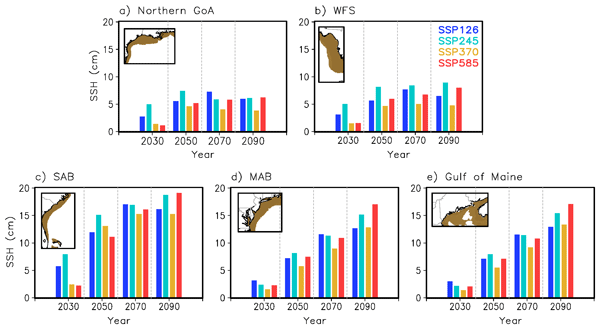
Using high-resolution Modular Ocean Model version 6, we projected Northwest Atlantic changes under four future emission scenarios. Results show a weakening Gulf Stream reduces upwelling, causing significant shelf warming and salinification. This also leads to dynamic sea-level rise along the US East Coast, particularly in the South Atlantic Bight, with critical implications for marine ecosystems and coastal risks.
Meena Raju, David J. Cannon, Peter Alsip, He Wang, Jia Wang, Theresa Cordero, Robert W. Hallberg, Charles A. Stock, and Joseph A. Langan
Geosci. Model Dev., 19, 4331–4356, https://doi.org/10.5194/gmd-19-4331-2026, https://doi.org/10.5194/gmd-19-4331-2026, 2026
Short summary
Short summary
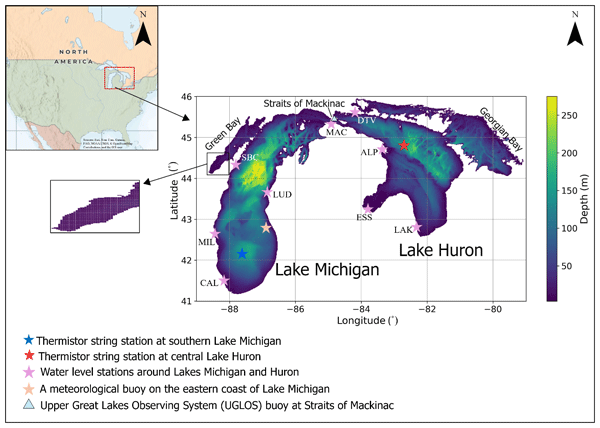
This study developed the Modular Ocean Model version 6.0 coupled with Sea Ice Simulator version 2.0 for the Great Lakes, validated against observations and an operational model. This study also tested two vertical coordinate systems, z* and hybrid. The model reproduced lake physics with good skill. The hybrid vertical coordinate improved thermocline representation and preserved deep cold-water during stratification, demonstrating the model’s suitability for large freshwater systems.
Nicole Cristine Laureanti, Enrique Curchitser, Katherine Hedstrom, Alistair Adcroft, Robert Hallberg, Matthew J. Harrison, Raphael Dussin, Sin Chan Chou, Paulo Nobre, Emanuel Giarolla, and Rosio Camayo
Geosci. Model Dev., 19, 3109–3128, https://doi.org/10.5194/gmd-19-3109-2026, https://doi.org/10.5194/gmd-19-3109-2026, 2026
Short summary
Short summary
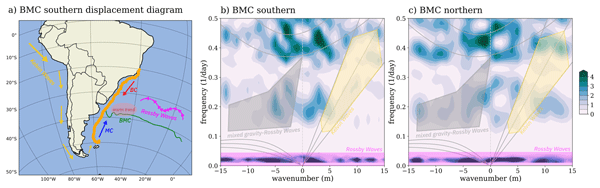
This study investigates the variability of currents in the Southwestern Atlantic Ocean using a high-resolution simulation. Particularly in the Brazil-Malvinas Confluence (BMC), it finds that the southward movement of the BMC, induced by the warming trends in the region, is balanced by northward flow from the Malvinas Current and Pacific Waves. The analysis also examines the intense northward displacement of the North Brazil Current, where inconsistencies in the simulation affect its evolution.
Inseong Chang, Young Ho Kim, Young-Gyu Park, Hyunkeun Jin, Gyundo Pak, Andrew C. Ross, and Robert Hallberg
Geosci. Model Dev., 19, 3053–3074, https://doi.org/10.5194/gmd-19-3053-2026, https://doi.org/10.5194/gmd-19-3053-2026, 2026
Short summary
Short summary
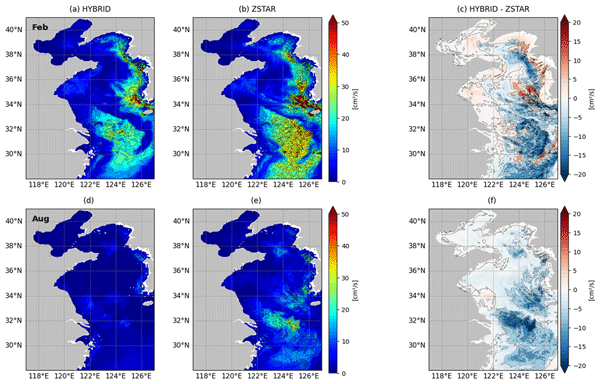
This study assesses how vertical coordinate choice shapes barotropic and baroclinic tide simulations in a high-resolution, MOM6 (Modular Ocean Model version 6) regional model. Focusing on the Yellow Sea under realistic forcing and seasonal stratification, we compare z* and z*-isopycnal hybrid to quantify coordinate-dependent impacts on tidal energetics and vertical structure. The results underscore that vertical representation is critical for accurately reproducing coastal stratification and tide–stratification interactions.
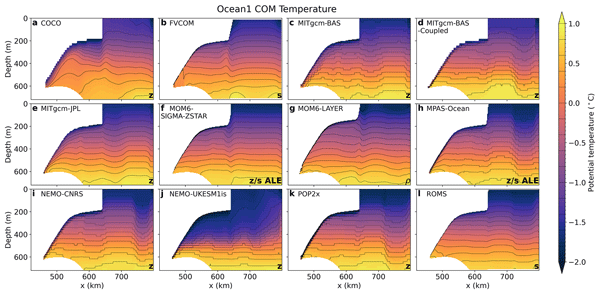
Claire K. Yung, Xylar S. Asay-Davis, Alistair Adcroft, Christopher Y. S. Bull, Jan De Rydt, Michael S. Dinniman, Benjamin K. Galton-Fenzi, Daniel Goldberg, David E. Gwyther, Robert Hallberg, Matthew Harrison, Tore Hattermann, David M. Holland, Denise Holland, Paul R. Holland, James R. Jordan, Nicolas C. Jourdain, Kazuya Kusahara, Gustavo Marques, Pierre Mathiot, Dimitris Menemenlis, Adele K. Morrison, Yoshihiro Nakayama, Olga Sergienko, Robin S. Smith, Alon Stern, Ralph Timmermann, and Qin Zhou
The Cryosphere, 20, 2053–2088, https://doi.org/10.5194/tc-20-2053-2026, https://doi.org/10.5194/tc-20-2053-2026, 2026
Short summary
Short summary
The second Ice Shelf-Ocean Model Intercomparison Project, ISOMIP+, compares 12 ice shelf-ocean models with a common, idealised, static configuration, aiming to assess inter-model variability. Models show similar basal melt rate patterns, ocean profiles and circulation but differ in ice-ocean boundary layer properties. Ice-ocean boundary layer representation is a key area for future work, as are realistic-domain ice sheet-ocean model intercomparisons.

Inseong Chang, Young Ho Kim, Young-Gyu Park, Hyunkeun Jin, Gyundo Pak, Andrew C. Ross, and Robert Hallberg
Geosci. Model Dev., 19, 187–216, https://doi.org/10.5194/gmd-19-187-2026, https://doi.org/10.5194/gmd-19-187-2026, 2026
Short summary
Short summary
We conducted sensitivity experiments to examine how different vertical coordinates influence the representation of water masses and tides using a high-resolution regional ocean model for the Northwest Pacific. We found that the choice of vertical coordinate strongly affects the degree of artificial mixing, which in turn changes how well the model reproduces key ocean features. This highlights the importance of selecting a vertical coordinate when developing regional ocean models.
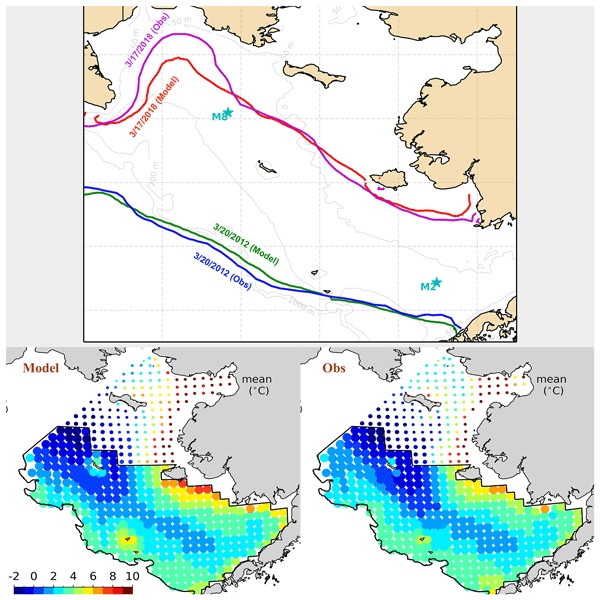
Vivek Seelanki, Wei Cheng, Phyllis J. Stabeno, Albert J. Hermann, Elizabeth J. Drenkard, Charles A. Stock, and Katherine Hedstrom
Geosci. Model Dev., 18, 7681–7705, https://doi.org/10.5194/gmd-18-7681-2025, https://doi.org/10.5194/gmd-18-7681-2025, 2025
Short summary
Short summary
Both physical and ecosystem properties of the ocean are rapidly changing. These changes anticipating ecosystem responses to environmental change and effectively managing marine. The model-based predictions and their performance in the historical states of the ocean must be carefully evaluated against observations. In this study a coupled ocean and sea-ice simulation during 1993–2018 using observations. We focus on the Bering Sea shelf, which is the largest productive ecosystem in the US.
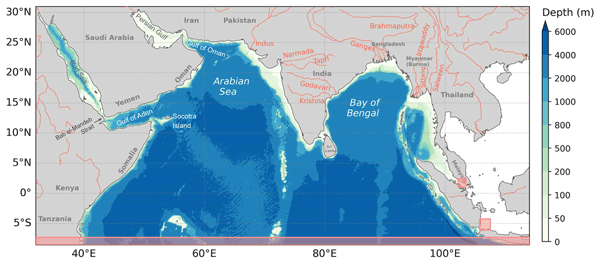
Enhui Liao, Laure Resplandy, Fan Yang, Yangyang Zhao, Sam Ditkovsky, Manon Malsang, Jenna Pearson, Andrew C. Ross, Robert Hallberg, and Charles Stock
Geosci. Model Dev., 18, 6553–6596, https://doi.org/10.5194/gmd-18-6553-2025, https://doi.org/10.5194/gmd-18-6553-2025, 2025
Short summary
Short summary
The northern Indian Ocean is central to the livelihoods and economies of countries that comprise about one-third of the world's population. We present a high-resolution (~10 km) ocean model that simulates seasonal and year-to-year variability in ocean, including currents, oxygen levels, and phytoplankton growth. This model is a powerful tool to study how climate change and human activities influence the northern Indian Ocean, which can be used for marine resource applications and management.
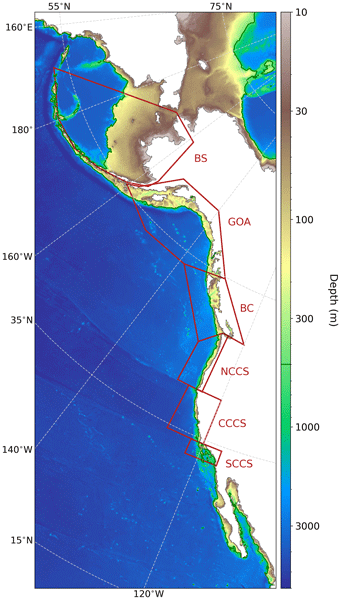
Elizabeth J. Drenkard, Charles A. Stock, Andrew C. Ross, Yi-Cheng Teng, Theresa Cordero, Wei Cheng, Alistair Adcroft, Enrique Curchitser, Raphael Dussin, Robert Hallberg, Claudine Hauri, Katherine Hedstrom, Albert Hermann, Michael G. Jacox, Kelly A. Kearney, Rémi Pagès, Darren J. Pilcher, Mercedes Pozo Buil, Vivek Seelanki, and Niki Zadeh
Geosci. Model Dev., 18, 5245–5290, https://doi.org/10.5194/gmd-18-5245-2025, https://doi.org/10.5194/gmd-18-5245-2025, 2025
Short summary
Short summary
We made a new regional ocean model to assist fisheries and ecosystem managers in making decisions in the Northeast Pacific Ocean (NEP). We found that the model did well simulating past ocean conditions like temperature and nutrient and oxygen levels and can even reproduce metrics used by, and important to, ecosystem managers.
Andrew C. Ross, Charles A. Stock, Alistair Adcroft, Enrique Curchitser, Robert Hallberg, Matthew J. Harrison, Katherine Hedstrom, Niki Zadeh, Michael Alexander, Wenhao Chen, Elizabeth J. Drenkard, Hubert du Pontavice, Raphael Dussin, Fabian Gomez, Jasmin G. John, Dujuan Kang, Diane Lavoie, Laure Resplandy, Alizée Roobaert, Vincent Saba, Sang-Ik Shin, Samantha Siedlecki, and James Simkins
Geosci. Model Dev., 16, 6943–6985, https://doi.org/10.5194/gmd-16-6943-2023, https://doi.org/10.5194/gmd-16-6943-2023, 2023
Short summary
Short summary
We evaluate a model for northwest Atlantic Ocean dynamics and biogeochemistry that balances high resolution with computational economy by building on the new regional features in the MOM6 ocean model and COBALT biogeochemical model. We test the model's ability to simulate impactful historical variability and find that the model simulates the mean state and variability of most features well, which suggests the model can provide information to inform living-marine-resource applications.
Gustavo M. Marques, Nora Loose, Elizabeth Yankovsky, Jacob M. Steinberg, Chiung-Yin Chang, Neeraja Bhamidipati, Alistair Adcroft, Baylor Fox-Kemper, Stephen M. Griffies, Robert W. Hallberg, Malte F. Jansen, Hemant Khatri, and Laure Zanna
Geosci. Model Dev., 15, 6567–6579, https://doi.org/10.5194/gmd-15-6567-2022, https://doi.org/10.5194/gmd-15-6567-2022, 2022
Short summary
Short summary
We present an idealized ocean model configuration and a set of simulations performed using varying horizontal grid spacing. While the model domain is idealized, it resembles important geometric features of the Atlantic and Southern oceans. The simulations described here serve as a framework to effectively study mesoscale eddy dynamics, to investigate the effect of mesoscale eddies on the large-scale dynamics, and to test and evaluate eddy parameterizations.
Cited articles
Adcroft, A. and Campin, J.-M.: Rescaled height coordinates for accurate representation of free-surface flows in ocean circulation models, Ocean Model., 7, 269–284, https://doi.org/10.1016/j.ocemod.2003.09.003, 2004.
Adcroft, A., Anderson, W., Balaji, V., Blanton, C., Bushuk, M., Dufour, C. O., Dunne, J. P., Griffies, S. M., Hallberg, R., Harrison, M. J., Held, I. M., Jansen, M. F., John, J. G., Krasting, J. P., Langenhorst, A. R., Legg, S., Liang, Z., McHugh, C., Radhakrishnan, A., Reichl, B. G., Rosati, T., Samuels, B. L., Shao, A., Stouffer, R., Winton, M., Wittenberg, A. T., Xiang, B., Zadeh, N., and Zhang, R.: The GFDL global ocean and sea ice model OM4.0: Model description and simulation features, J. Adv. Model. Earth Syst., 11, https://doi.org/10.1029/2019MS001726, 2019.
Audette, A. and Kushner, P.: Simple hybrid sea ice nudging method for improving control over partitioning of sea ice concentration and thickness, J. Adv. Model. Earth Sy., 14, e2022MS003180, https://doi.org/10.1029/2022MS003180, 2022.
Beamer, J. P., Hill, D. F., Arendt, A., and Liston, G. E.: High-resolution modeling of coastal freshwater discharge and glacier mass balance in the Gulf of Alaska watershed, Water Resour. Res., 52, 3888–3909, https://doi.org/10.1002/2015WR018457, 2016.
Beamer, J. P., Hill, D. F., McGrath, D., Arendt, A., and Kienholz, C.: Hydrologic impacts of changes in climate and glacier extent in the Gulf of Alaska watershed, Water Resour. Res., 53, 7502–7520, https://doi.org/10.1002/2016WR020033, 2017.
Bitz, C. M. and Lipscomb, W. H.: An energy-conserving thermodynamic model of sea ice, J. Geophys. Res., 104, 15669–15677, https://doi.org/10.1029/1999JC900100, 1999.
Bitz, C. M., Holland, M. M., Hunke, E. C., and Moritz, R. E.: Maintenance of the sea-ice edge, J. Climate, 18, 2903–2921, https://doi.org/10.1175/JCLI3428.1, 2005.
Blanchard-Wrigglesworth, E., Armour, K. C., Bitz, C. M., and DeWeaver, E.: Persistence and inherent predictability of Arctic sea ice in a GCM ensemble and observations, J. Climate, 24, 231–250, 2011.
Bodner, A. S., Fox-Kemper, B., Johnson, L., Van Roekel, L. P., McWilliams, J. C., Sullivan, P. P., Hall, P. S., and Dong, J.: Modifying the mixed layer eddy parameterization to include frontogenesis arrest by boundary layer turbulence, J. Phys. Oceanogr., 53, 323–339, https://doi.org/10.1175/JPO-D-21-0297.1, 2023.
Bouchat, A., Hutter, N. C., Chanut, J., Dupont, F., Dukhovskoy, D. S., Garric, G., Lee, Y. J., Lemieux, J.-F., Lique, C., Losch, M., Maslowski, W., Myers, P. G., Ólason, E. O., Rampal, P., Rasmussen, T. A. S., Talandier, C., Tremblay, B., and Wang, Q.: Sea ice rheology experiment (SIREx), Part I: Scaling and statistical properties of sea-ice deformation fields, J. Geophys. Res.-Oceans, 127, e2021JC017667, https://doi.org/10.1029/2021JC017666, 2022.
Bouillon, S., Morales Maqueda, M., Legat, V., and Fichefet, T.: An elastic-viscous-plastic sea ice model formulated on Arakawa B and C grids, Ocean Model., 27, 174–184, https://doi.org/10.1016/j.ocemod.2009.01.004, 2009.
Briegleb, B. P. and Light, B.: A delta-Eddington multiple scattering parameterization for solar radiation in the sea ice component of the Community Climate System Model, NCAR Tech. Note NCAR/TN-472+STR, University Corporation for Atmospheric Research, https://doi.org/10.5065/D6B27S71, 2007.
Carter, B. R.: Empirical Seawater Property Estimation Routines, accepted (Version v0), Zenodo [code], https://doi.org/10.5281/zenodo.5512697, 2021.
Carter, B. R., Bittig, H. C., Fassbender, A. J., Sharp, J. D., Takeshita, Y., Xu, Y.-Y., Álvarez, M., Wanninkhof, R., Feely, R. A., and Barbero, L.: New and updated global empirical seawater property estimation routines, Limnol. Oceanogr.-Meth., 19, 785–809, https://doi.org/10.1002/lom3.10461, 2021.
Day, J. J., Hawkins, E., and Tietsche, S.: Will Arctic sea ice thickness initialization improve seasonal forecast skill?, Geophys. Res. Lett., 41, 7566–7575, 2014.
Dirkson, A., Denis, B., and Merryfield, W. J.: A multimodel approach for improving seasonal probabilistic forecasts of regional Arctic sea ice, Geophys. Res. Lett., 46, 10844–10853, https://doi.org/10.1029/2019GL083831, 2019.
Drenkard, E. J., Stock, C. A., Ross, A. C., Teng, Y.-C., Cordero, T., Cheng, W., Adcroft, A., Curchitser, E., Dussin, R., Hallberg, R., Hauri, C., Hedstrom, K., Hermann, A., Jacox, M. G., Kearney, K. A., Pagès, R., Pilcher, D. J., Pozo Buil, M., Seelanki, V., and Zadeh, N.: A regional physical–biogeochemical ocean model for marine resource applications in the Northeast Pacific (MOM6-COBALT-NEP10k v1.0), Geosci. Model Dev., 18, 5245–5290, https://doi.org/10.5194/gmd-18-5245-2025, 2025.
Duarte, P., Brændshøi, J., Shcherbin, D., Barras, P., Albretsen, J., Gusdal, Y., Szapiro, N., Martinsen, A., Samuelsen, A., Wang, K., and Debernard, J. B.: Implementation and evaluation of open boundary conditions for sea ice in a regional coupled ocean (ROMS) and sea ice (CICE) modeling system, Geosci. Model Dev., 15, 4373–4392, https://doi.org/10.5194/gmd-15-4373-2022, 2022.
Dukhovskoy, D., Ubnoske, J., Blanchard-Wrigglesworth, E., Hiester, H., and Proshutinsky, A.: Skill metrics for evaluation and comparison of sea ice models, J. Geophys. Res.-Oceans, 120, 5910–5931, https://doi.org/10.1002/2015JC010989, 2015.
Dukhovskoy, D., Cordero, T., Hedstrom, K., Michael, A., Jacox, M., Halberg, R., Harrison, M., and Liu, J: Analysis codes for initial submission of “Design and Implementation of a Newtonian Relaxation Scheme in the NOAA GFDL Sea Ice Model (SIS2)” to GMD, Zenodo [data set], https://doi.org/10.5281/zenodo.18686644, 2026a.
Dukhovskoy, D., Cordero, T., Hedstrom, K., Michael, A., Jacox, M., Halberg, R., Harrison, M., and Liu, J.: NOAA GFDL MOM6-SIS2-BGC model code, Zenodo [code], https://doi.org/10.5281/zenodo.19338655, 2026b.
Dumont, D.: Marginal ice zone dynamics: History, definitions and research perspectives, Philos. Trans. R. Soc. A, 380, 20210253, https://doi.org/10.1098/rsta.2021.0253, 2022.
Egbert, G. D. and Erofeeva, S. Y.: Efficient inverse modeling of barotropic ocean tides, J. Atmos. Ocean. Tech., 19, 183–204, https://doi.org/10.1175/1520-0426(2002)019<0183:EIMOBO>2.0.CO;2, 2002.
England, M. R., Eisenman, I., and Wagner, T. J. W.: Spurious climate impacts in coupled sea ice loss simulations, J. Climate, 35, 3801–3811, https://doi.org/10.1175/JCLI-D-21-0647.1, 2022.
Flather, R.: A tidal model of the north-west European continental shelf, Mem. Soc. R. Sci. Liege, 10, 141–164, 1976.
Frankignoul, C., Raillard, L., Ferster, B., and Kwon, Y.: Arctic September sea ice concentration biases in CMIP6 models and their relationships with other model variables, J. Climate, 37, 4257–4274, https://doi.org/10.1175/JCLI-D-23-0452.1, 2024.
Fritzner, S., Graversen, R., Christensen, K. H., Rostosky, P., and Wang, K.: Impact of assimilating sea ice concentration, sea ice thickness and snow depth in a coupled ocean–sea ice modelling system, The Cryosphere, 13, 491–509, https://doi.org/10.5194/tc-13-491-2019, 2019.
Global Ocean Physics Reanalysis: E.U. Copernicus Marine Service Information (CMEMS), Marine Data Store (MDS) [data set], https://doi.org/10.48670/moi-00021, 2021.
Gomez, F. A., Lee, S.-K., Stock, C. A., Ross, A. C., Resplandy, L., Siedlecki, S. A., Tagklis, F., and Salisbury, J. E.: RC4USCoast: A river chemistry dataset for regional ocean model application in the U.S. East, Gulf of Mexico, and West Coasts from 1950-01-01 to 2022-12-31 (NCEI Accession 0260455), NOAA National Centers for Environmental Information [data set], https://doi.org/10.25921/9jfw-ph50, 2022.
Griffies, S. M., Adcroft, A., and Hallberg, R.: A primer on the vertical Lagrangian-remap method in ocean models based on finite volume generalized vertical coordinates, J. Adv. Model. Earth Sy., 12, https://doi.org/10.1029/2019MS001954, 2020.
Grimaldi, S., Salamon, P., Disperati, J., Zsoter, E., Russo, C., Ramos, A., Carton De Wiart, C., Barnard, C., Hansford, E., Gomes, G., and Prudhomme, C.: River discharge and related historical data from the Global Awareness System, v4.0, European Commission, Joint Research Centre (JRC) [data set], https://doi.org/10.24381/cds.a4fdd6b9, 2022.
Hallberg, R. and Adcroft, A.: Reconciling estimates of the free surface height in Lagrangian vertical coordinate ocean models with mode-split time stepping, Ocean Model., 29, https://doi.org/10.1016/j.ocemod.2009.02.008, 2009.
Harrigan, S., Zsoter, E., Alfieri, L., Prudhomme, C., Salamon, P., Wetterhall, F., Barnard, C., Cloke, H., and Pappenberger, F.: GloFAS-ERA5 operational global river discharge reanalysis 1979–present, Earth Syst. Sci. Data, 12, 2043–2060, https://doi.org/10.5194/essd-12-2043-2020, 2020.
Hersbach, H., Bell, B., Berrisford, P., Hirahara, S., Horányi, A., Muñoz-Sabater, J., Nicolas, J., Peubey, C., Radu, R., Schepers, D., Simmons, A., Soci, C., Abdalla, S., Abellan, X., Balsamo, G., Bechtold, P., Biavati, G., Bidlot, J., Bonavita, M., De Chiara, G., Dahlgren, P., Dee, D., Diamantakis, M., Dragani, R., Flemming, J., Forbes, R., Fuentes, M., Geer, A., Haimberger, L., Healy, S., Hogan, R. J., Hólm, E., Janisková, M., Keeley, S., Laloyaux, P., Lopez, P., Lupu, C., Radnoti, G., de Rosnay, P., Rozum, I., Vamborg, F., Villaume, S., and Thépaut, J.-N.: The ERA5 global reanalysis, Q. J. Roy. Meteor. Soc., 146, 1999–2049, https://doi.org/10.1002/qj.3803, 2020.
Hersbach, H., Bell, B., Berrisford, P., Biavati, G., Horányi, A., Muñoz Sabater, J., Nicolas, J., Peubey, C., Radu, R., Rozum, I., Schepers, D., Simmons, A., Soci, C., Dee, D., and Thépaut, J.-N.: ERA5 hourly data on single levels from 1940 to present, Copernicus Climate Change Service (C3S) Climate Data Store (CDS) [data set], https://doi.org/10.24381/cds.adbb2d47, 2023.
Hibler, W. D.: Modeling a variable thickness sea ice cover, Mon. Weather Rev., 108, 1943–1973, 1980.
Hill, D.: Coastal freshwater discharge simulations fo the Gulf of Alaska, 1931–2021, Research Workspace [data set], https://doi.org/10.24431/rw1k7d3, 2023.
Hunke, E. C. and Lipscomb, W. H.: CICE: The Los Alamos sea ice model documentation and software user's manual version 4.1, LA-CC-06-012, Los Alamos National Laboratory, NM, https://csdms.colorado.edu/w/images/CICE_documentation_and_software_user's_manual.pdf (last access: 1 August 2026), 2010.
Hunke, E. C., Lipscomb, W. H., Turner, A. K., Jeffery, N., and Elliot, S.: CICE: The Los Alamos sea ice model documentation and user's manual, version 5.1, LA-CC-06-012, Los Alamos National Laboratory, USA, Zenodo, https://doi.org/10.5281/zenodo.19207490, 2015.
Hutter, N. C., Bouchat, A., Chanut, J., Dupont, F., Dukhovskoy, D. S., Garric, G., Lee, Y. J., Lemieux, J.-F., Lique, C., Losch, M., Maslowski, W., Myers, P. G., Ólason, E. O., Rampal, P., Rasmussen, T. A. S., Talandier, C., Tremblay, B., and Wang, Q.: Sea ice rheology experiment (SIREx), Part II: Evaluating simulated linear kinematic features in high-resolution sea-ice simulations, J. Geophys. Res.-Oceans, 127, e2021JC017666, https://doi.org/10.1029/2021JC017667, 2022.
Jackson, L., Hallberg, R., and Legg, S.: A parameterization of shear-driven turbulence for ocean climate models, J. Phys. Oceanogr., 38, 1033–1053, https://doi.org/10.1175/2007JPO3779.1, 2008.
Johnson, M., Proshutinsky, A., Aksenov, Y., Nguyen, A. T., Lindsay, R., Haas, C., Zhang, J., Diansky, N., Kwok, R., Maslowski, W., Häkkinen, S., Ashik, I., and de Cuevas, B.: Evaluation of Arctic sea ice thickness simulated by Arctic Ocean Model Intercomparison Project models, J. Geophys. Res., 117, C00D13, https://doi.org/10.1029/2011JC007257, 2012.
Kalnay, E., Kanamitsu, M., Kistler, R., Collins, W., Deaven, D., Gandin, L., Iredell, M., Saha, S., White, G., Woollen, J., Zhu, Y., Chelliah, M., Ebisuzaki, W., Higgins, W., Janowiak, J., Mo, K. C., Ropelewski, C., Wang, J., Leetmaa, A., Reynolds, R., Jenne, R., and Joseph, D.: The NCEP/NCAR 40-year reanalysis project, B. Am. Meteorol. Soc., 77, 437–471, 1996.
Kimmritz, M., Counillon, F., Bitz, C. M., Massonnet, F., Bethke, I., and Gao, Y.: Optimising assimilation of sea ice concentration in an Earth system model with a multicategory sea ice model, Tellus A, 70, 1435945, https://doi.org/10.1080/16000870.2018.1435945, 2018.
Labe, Z., Magnusdottir, G., and Stern, H.: Variability of Arctic sea ice thickness using PIOMAS and the CESM large ensemble, J. Climate, 31, 3233–3247, https://doi.org/10.1175/JCLI-D-17-0436.1, 2018.
Laxon, S. W., Giles, K. A., Ridout, A. L., Wingham, D. J., Willatt, R., Cullen, R., Kwok, R., Schweiger, A., Zhang, J., Haas, C., Hendricks, S., Krishfield, R., Kurtz, N., Farrell, S., and Davidson, M.: CryoSat-2 estimates of Arctic sea ice thickness and volume, Geophys. Res. Lett., 40, 732–737, https://doi.org/10.1002/grl.50193, 2013.
Lellouche, J., Greiner, E., Bourdallé-Badie, R., Garric, G., Melet, A., Drévillon, M., Bricaud, C., Hamon, M., Le Galloudec, O., Regnier, C., Candela, T., Testut, C., Gasparin, F., Ruggiero, G., Benkiran, M., Drillet, Y., and Le Traon, P.: The Copernicus Global 1/12° oceanic and sea ice GLORYS12 reanalysis, Front. Earth Sci., 9, 698876, https://doi.org/10.3389/feart.2021.698876, 2021.
Lemieux, J.-F., Tremblay, B., Thomas, S., Sedláček, J., and Mysak, L. A.: Using the preconditioned generalized minimum residual (GMRES) method to solve the sea-ice momentum equation, J. Geophys. Res., 113, C10004, https://doi.org/10.1029/2007JC004680, 2008.
Lindsay, R. W. and Zhang, J.: Arctic ocean ice thickness: Modes of variability and the best locations from which to monitor them, J. Phys. Oceanogr., 36, 496–506, https://doi.org/10.1175/JPO2861.1, 2006.
Liu, Y., Wang, W., and Kumar, A.: Multiweek prediction skill assessment of Arctic sea ice variability in the CFSv2, Weather Forecast., 33, 1453–1476, https://doi.org/10.1175/WAF-D-18-0046.1, 2018.
Manizza, M., Le Quéré, C., Watson, A. J., and Buitenhuis, E. T.: Bio-optical feedbacks among phytoplankton, upper ocean physics and sea-ice in a global model, Geophys. Res. Lett., 32, L05603, https://doi.org/10.1029/2004GL020778, 2005.
Marchesiello, P., McWilliams, J. C., and Shchepetkin, A.: Open boundary conditions for long-term integration of regional oceanic models, Ocean Model., 3, 1–20, https://doi.org/10.1016/S1463-5003(00)00013-5, 2001.
Mayorga, E., Seitzinger, S. P., Harrison, J. A., Dumont, E., Beusen, A. H., Bouwman, A., Fekete, B. M., Kroeze, C., and Van Drecht, G.: Global Nutrient Export from WaterSheds 2 (NEWS 2): Model Development and Implementation, Environ. Modell. Softw., 25, 837–853, https://doi.org/10.1016/j.envsoft.2010.01.007, 2010 (data available at: https://ars.els-cdn.com/content/image/1-s2.0-S1364815210000186-mmc2.xls, last access: 1 August 2011).
Nicolis, C.: Dynamics of model error: The role of the boundary conditions, J. Atmos. Sci., 64, 204–215, 2007.
Niebauer, H. J.: Bio-physical oceanographic interactions at the edge of the Arctic ice pack, J. Marine Syst., 2, 209–232, https://doi.org/10.1016/0924-7963(91)90025-P, 1991.
Orlanski, I.: A simple boundary condition for unbounded hyperbolic flows, J. Comput. Phys., 21, 251–269, https://doi.org/10.1016/0021-9991(76)90023-1, 1976.
Petty, A. A., Kurtz, N., Kwok, R., Markus, T., Neumann, T. A., and Keeney, N.: ICESat-2 L4 monthly gridded sea ice thickness (IS2SITMOGR4, Version 2), NASA National Snow and Ice Data Center Distributed Active Archive Center [data set], https://doi.org/10.5067/OE8BDP5KU30Q, 2022.
Prasad, S., Haynes, R. D., Zakharov, I., and Puestow, T.: Estimation of sea ice parameters using an assimilated sea ice model with a variable drag formulation, Ocean Model., 158, 101739, https://doi.org/10.1016/j.ocemod.2020.101739, 2021.
Quarteroni, A., Sacco, R., and Saleri, F.: Numerical mathematics, Springer, New York, 654 pp., ISBN 0-387-98959-5, 2000.
Reichl, B. G. and Hallberg, R.: A simplified energetics based planetary boundary layer (ePBL) approach for ocean climate simulations, Ocean Model., 132, 112–129, https://doi.org/10.1016/j.ocemod.2018.10.004, 2018.
Ross, A. C., Stock, C. A., Adcroft, A., Curchitser, E., Hallberg, R., Harrison, M. J., Hedstrom, K., Zadeh, N., Alexander, M., Chen, W., Drenkard, E. J., du Pontavice, H., Dussin, R., Gomez, F., John, J. G., Kang, D., Lavoie, D., Resplandy, L., Roobaert, A., Saba, V., Shin, S.-I., Siedlecki, S., and Simkins, J.: A high-resolution physical–biogeochemical model for marine resource applications in the northwest Atlantic (MOM6-COBALT-NWA12 v1.0), Geosci. Model Dev., 16, 6943–6985, https://doi.org/10.5194/gmd-16-6943-2023, 2023.
Rothrock, D. A.: The energetics of the plastic deformation of pack ice by ridging, J. Geophys. Res., 80, 4514–4519, 1975.
Rousset, C., Vancoppenolle, M., Madec, G., Fichefet, T., Flavoni, S., Barthélemy, A., Benshila, R., Chanut, J., Levy, C., Masson, S., and Vivier, F.: The Louvain-La-Neuve sea ice model LIM3.6: global and regional capabilities, Geosci. Model Dev., 8, 2991–3005, https://doi.org/10.5194/gmd-8-2991-2015, 2015.
Schweiger, A., Lindsay, R., Zhang, J., Steele, M., Stern, H., and Kwok, R.: Uncertainty in modeled Arctic sea ice volume, J. Geophys. Res., 116, C00D06, https://doi.org/10.1029/2011JC007084, 2011.
Schweiger, A. J. and Zhang, J.: Accuracy of short-term sea ice drift forecasts using a coupled ice–ocean model, J. Geophys. Res.-Oceans, 120, https://doi.org/10.1002/2015JC011273, 2015.
Serreze, M. C., Crawford, A. D., Stroeve, J. C., Barrett, A. P., and Woodgate, R. A.: Variability, trends, and predictability of seasonal sea ice retreat and advance in the Chukchi Sea, J. Geophys. Res.-Oceans, 121, 7308–7325, https://doi.org/10.1002/2016JC011977, 2016.
Smedsrud, L. H., Budgell, W. P., Jenkins, A. D., and Ådlandsvik, B.: Fine-scale sea-ice modelling of the Storfjorden polynya, Ann. Glaciol., 44, 73–79, 2006.
Smith, D. M., Dunstone, N. J., Scaife, A. A., Fiedler, E. K., Copsey, D., and Hardiman, S. C.: Atmospheric response to Arctic and Antarctic sea ice: The importance of ocean–atmosphere coupling and the background state, J. Climate, 30, 4547–4565, https://doi.org/10.1175/JCLI-D-16-0564.1, 2017.
Smith, R., Dukowicz, J., and Malone, R.: Parallel ocean general circulation modeling, Physica D, 60, 38–61, 1992.
Steele, M., Ermold, W., and Zhang, J.: Arctic Ocean surface warming trends over the past 100 years, Geophys. Res. Lett., 35, L02614, https://doi.org/10.1029/2007GL031651, 2008.
Stock, C. A., Dunne, J. P., Luo, J. Y., Ross, A. C., Van Oostende, N., Zadeh, N., Cordero, T. J., Liu, X., and Teng, Y.-C.: Photoacclimation and photoadaptation sensitivity in a global ocean ecosystem model, J. Adv. Model. Earth Sy., 17, e2024MS004701, https://doi.org/10.1029/2024MS004701, 2025.
Stroeve, J., Barrett, A., Serreze, M., and Schweiger, A.: Using records from submarine, aircraft and satellites to evaluate climate model simulations of Arctic sea ice thickness, The Cryosphere, 8, 1839–1854, https://doi.org/10.5194/tc-8-1839-2014, 2014.
Thorndike, A. S., Rothrock, D. A., Maykut, G. A., and Colony, R.: The thickness distribution of sea ice, J. Geophys. Res., 80, 4501–4513, 1975.
Tietsche, S., Notz, D., Jungclaus, J. H., and Marotzke, J.: Assimilation of sea-ice concentration in a global climate model – physical and statistical aspects, Ocean Sci., 9, 19–36, https://doi.org/10.5194/os-9-19-2013, 2013.
Tilling, R. L., Ridout, A., and Shepherd, A.: Estimating Arctic sea ice thickness and volume using CryoSat-2 radar altimeter data, Adv. Space Res., 62, 1203–1225, https://doi.org/10.1016/j.asr.2017.10.051, 2018.
Wang, X., Key, J., Kwok, R., and Zhang, J.: Comparison of Arctic sea ice thickness from satellites, aircraft, and PIOMAS data, Remote Sens., 8, 713, https://doi.org/10.3390/rs8090713, 2016.
Wang, J., Hu, H., Mizobata, K., and Saitoh, S.: Seasonal variations of sea ice and ocean circulation in the Bering Sea: A model–data fusion study, J. Geophys. Res., 114, C02011, https://doi.org/10.1029/2008JC004727, 2009.
Zhang, J. and Rothrock, D. A.: A thickness and enthalpy distribution sea-ice model, J. Phys. Oceanogr., 31, 2986–3001, 2001.
Zhang, J. and Rothrock, D. A.: Modeling global sea ice with a thickness and enthalpy distribution model in generalized curvilinear coordinates, Mon. Weather Rev., 131, 845–861, https://doi.org/10.1175/1520-0493(2003)131<0845:MGSIWA>2.0.CO;2, 2003.
Zhang, Y., Bushuk, M., Winton, M., Hurlin, B., Yang, X., Delworth, T., and Jia, L.: Assimilation of satellite-retrieved sea ice concentration and prospects for September predictions of Arctic sea ice, J. Climate, 34, 2107–2126, https://doi.org/10.1175/JCLI-D-20-0469.1, 2021.
Zygmuntowska, M., Rampal, P., Ivanova, N., and Smedsrud, L. H.: Uncertainties in Arctic sea ice thickness and volume: new estimates and implications for trends, The Cryosphere, 8, 705–720, https://doi.org/10.5194/tc-8-705-2014, 2014.
Short summary
Regional sea ice models often struggle to represent sea ice near model domain boundaries, where errors can accumulate over time. We implemented and tested a method that gradually adjusts simulated sea ice toward prescribed conditions while preserving a realistic evolution of the ice cover. Experiments in the Arctic and Northeast Pacific show improved sea ice simulations and ocean surface conditions, providing a practical tool for regional forecasting and research applications.
Regional sea ice models often struggle to represent sea ice near model domain boundaries, where...


