
Articles | Volume 19, issue 2
https://doi.org/10.5194/gmd-19-713-2026
© Author(s) 2026. This work is distributed under
the Creative Commons Attribution 4.0 License.
the Creative Commons Attribution 4.0 License.
https://doi.org/10.5194/gmd-19-713-2026
© Author(s) 2026. This work is distributed under
the Creative Commons Attribution 4.0 License.
the Creative Commons Attribution 4.0 License.
Model description paper
| 
22 Jan 2026
Model description paper |
| 22 Jan 2026
| 22 Jan 2026
Toward exascale climate modelling: a python DSL approach to ICON's (icosahedral non-hydrostatic) dynamical core (icon-exclaim v0.2.0)
Anurag Dipankar
CORRESPONDING AUTHOR

Center for Climate System Modelling C2SM, ETH Zürich, Zurich, Switzerland
Mauro Bianco
Swiss National Supercomputing Centre CSCS, ETH Zürich, Zurich, Switzerland
Mona Bukenberger
Institute for Atmospheric and Climate Sciences IAC, ETH Zürich, Zurich, Switzerland
Till Ehrengruber
Swiss National Supercomputing Centre CSCS, ETH Zürich, Zurich, Switzerland
Nicoletta Farabullini
Center for Climate System Modelling C2SM, ETH Zürich, Zurich, Switzerland
Oliver Fuhrer
Federal Office of Meteorology and Climatology MeteoSwiss, Zürich, Switzerland
Abishek Gopal
NSF National Center for Atmospheric Research, Boulder, Colorado
Daniel Hupp
Federal Office of Meteorology and Climatology MeteoSwiss, Zürich, Switzerland
Andreas Jocksch
Swiss National Supercomputing Centre CSCS, ETH Zürich, Zurich, Switzerland
Samuel Kellerhals
Center for Climate System Modelling C2SM, ETH Zürich, Zurich, Switzerland
Clarissa A. Kroll
Institute for Atmospheric and Climate Sciences IAC, ETH Zürich, Zurich, Switzerland
Xavier Lapillonne
Federal Office of Meteorology and Climatology MeteoSwiss, Zürich, Switzerland
Matthieu Leclair
Center for Climate System Modelling C2SM, ETH Zürich, Zurich, Switzerland
Magdalena Luz
Center for Climate System Modelling C2SM, ETH Zürich, Zurich, Switzerland
Christoph Müller
Federal Office of Meteorology and Climatology MeteoSwiss, Zürich, Switzerland
Chia Rui Ong
Center for Climate System Modelling C2SM, ETH Zürich, Zurich, Switzerland
Carlos Osuna
Federal Office of Meteorology and Climatology MeteoSwiss, Zürich, Switzerland
Praveen Pothapakula
Institute for Atmospheric and Climate Sciences IAC, ETH Zürich, Zurich, Switzerland
Andreas Prein
Institute for Atmospheric and Climate Sciences IAC, ETH Zürich, Zurich, Switzerland
Matthias Röthlin
Federal Office of Meteorology and Climatology MeteoSwiss, Zürich, Switzerland
William Sawyer
Swiss National Supercomputing Centre CSCS, ETH Zürich, Zurich, Switzerland
Christoph Schär
Institute for Atmospheric and Climate Sciences IAC, ETH Zürich, Zurich, Switzerland
Sebastian Schemm
Department of Applied Mathematics and Theoretical Physics, Cambridge University, Cambridge, UK
Giacomo Serafini
Federal Office of Meteorology and Climatology MeteoSwiss, Zürich, Switzerland
Hannes Vogt
Swiss National Supercomputing Centre CSCS, ETH Zürich, Zurich, Switzerland
Ben Weber
Federal Office of Meteorology and Climatology MeteoSwiss, Zürich, Switzerland
Robert C. Jnglin Wills
Institute for Atmospheric and Climate Sciences IAC, ETH Zürich, Zurich, Switzerland
Nicolas Gruber
Institute of Biogeochemistry and Pollutant Dynamics, ETH Zürich, Zurich, Switzerland
Thomas C. Schulthess
Swiss National Supercomputing Centre CSCS, ETH Zürich, Zurich, Switzerland
Related authors
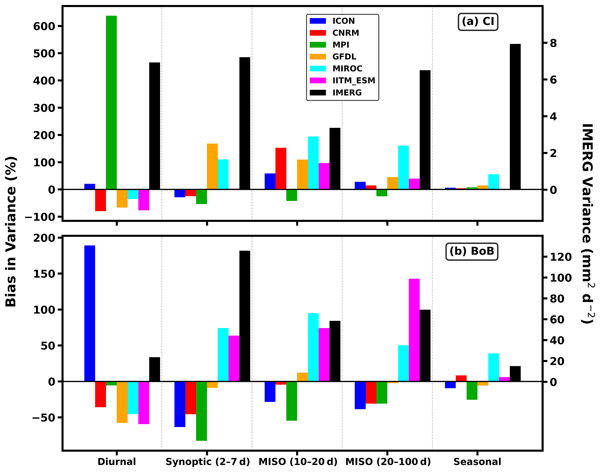
Samir Pokhrel, Verma Utkarsh, Patita Kalyana Sahoo, Praveen K. Pothapakula, Anusha Sunkisala, Nishant Gautam, Kolady P. Pribin, Shivamurthy Yashas, Hemantkumar S. Chaudhari, Archana Rai, Hasibur Rahaman, Andreas F. Prein, Anurag Dipankar, and Subodh Kumar Saha
Weather Clim. Dynam., 7, 1447–1477, https://doi.org/10.5194/wcd-7-1447-2026, https://doi.org/10.5194/wcd-7-1447-2026, 2026
Short summary
Short summary
We studied how well climate models simulate Indian monsoon rainfall at different time scales, from daily cycles to longer variations. We found that models may match seasonal averages but still fail to capture when and how rainfall occurs. These errors differ over land and ocean and affect overall monsoon patterns. Improving how models represent rainfall processes across scales is essential for better prediction.
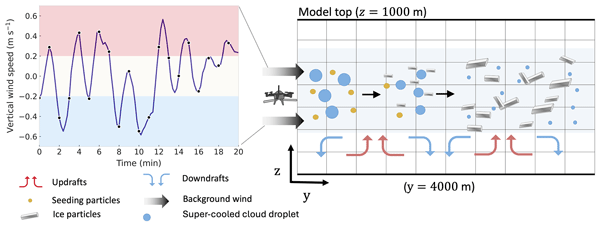
Huiying Zhang, Chia Rui Ong, Anurag Dipankar, Ulrike Lohmann, and Jan Henneberger
Atmos. Chem. Phys., 26, 8677–8693, https://doi.org/10.5194/acp-26-8677-2026, https://doi.org/10.5194/acp-26-8677-2026, 2026
Short summary
Short summary
We used computer simulations to study cloud seeding. We discovered a 'self-lofting' mechanism whereby, as the seeded ice crystals grow, they release heat, generating an upward air current. This enables the ice plume to rise and spread vertically, even when the surrounding air is sinking. This is why seeded ice survives in unfavourable wind conditions. Our results demonstrate that this internal heating is essential for the effectiveness and validation of weather modification technologies.
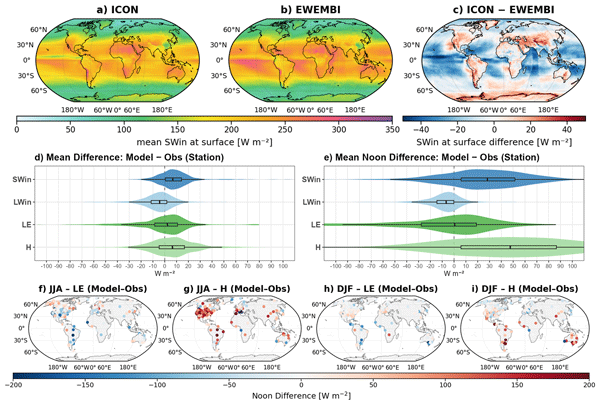
Andreas F. Prein, Praveen K. Pothapakula, Christian Zeman, Morgane Lalonde, Marius Rixen, Anurag Dipankar, Matthieu Leclair, and Andreas Jocksch
Geosci. Model Dev., 19, 5277–5303, https://doi.org/10.5194/gmd-19-5277-2026, https://doi.org/10.5194/gmd-19-5277-2026, 2026
Short summary
Short summary
We produce one of the world's most detailed global weather and climate simulations, spanning 4 years and enabling the direct representation of storms rather than approximations. This allows the capture of dangerous events such as strong wind gusts, heavy rain, and powerful tropical and mid-latitude storms everywhere on Earth. Our results show major improvements over traditional climate models, but also reveal remaining challenges in representing large, organized storm systems in the tropics.
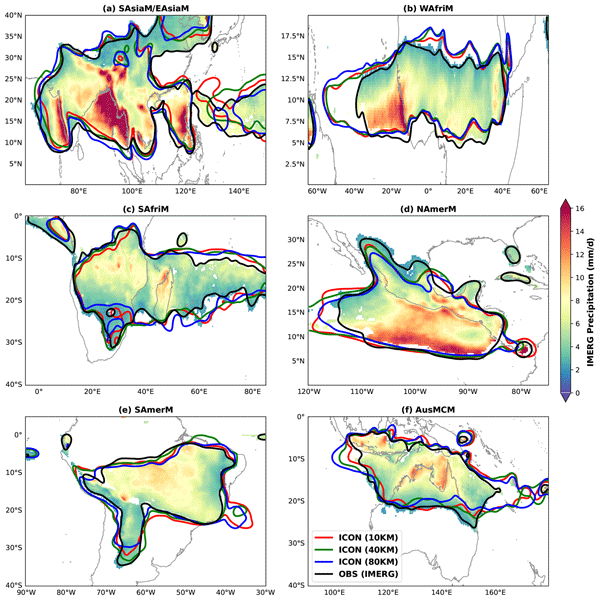
Praveen K. Pothapakula, Andreas F. Prein, Anusha Sunkisala, and Anurag Dipankar
Weather Clim. Dynam., 7, 979–1007, https://doi.org/10.5194/wcd-7-979-2026, https://doi.org/10.5194/wcd-7-979-2026, 2026
Short summary
Short summary
Monsoons provide vital rainfall for billions but are hard to forecast. Using a next-generation climate model, we simulated monsoons at different grid spacings. The model captures key seasonal patterns, but finer grids do not always improve accuracy. They can worsen predictions by overproducing intense rain, as they artificially strengthen weather systems like monsoon lows and waves. Our work shows that smarter model physics is needed for reliable future forecasts and climate projections.
Oliver Douglas Levers, Dorien Herremans, Anurag Dipankar, and Lucienne Blessing
EGUsphere, https://doi.org/10.5194/egusphere-2022-234, https://doi.org/10.5194/egusphere-2022-234, 2022
Preprint withdrawn
Short summary
Short summary
Southeast Asia is a region which is very sensitive to climate change and has numerous islands and peninsulas which are not well resolved within many General Circulation Models (GCMs). Here, deep convolutional encoders are employed to increase the spatial resolution of climate model data (downscaling) and address systematic errors in model outputs (bias correction). Technique and region-specific issues are identified for surface temperature data and compared with other model outputs.
Arash Hamzehloo, Erik F. M. Koene, Nikolai Ponomarev, Michael Steiner, Sven Werchner, Xavier Lapillonne, William B. Sawyer, Michael Jähn, Lukas Emmenegger, and Dominik Brunner
EGUsphere, https://doi.org/10.5194/egusphere-2026-2531, https://doi.org/10.5194/egusphere-2026-2531, 2026
This preprint is open for discussion and under review for Geoscientific Model Development (GMD).
Short summary
Short summary
Tracking where greenhouse gases and air pollutants come from, and where plants absorb carbon dioxide, requires demanding computer simulations of the atmosphere. We rewrote key parts of a widely used atmospheric model so that they run efficiently on graphics processors. The new code runs six times faster than before and uses energy more efficiently. This supports air-quality monitoring, climate research, and combining satellite data with high-resolution simulations of cities and ecosystems.
Andres Barrio-Martin, Carlos Calvo-Sancho, Nuria P. Plaza-Martin, Cesar Azorin-Molina, Andreas F. Prein, Tim R. McVicar, Sergio M. Vicente-Serrano, Luis Gimeno, Raquel Nieto, Zhenzhong Zeng, Ana Morata, and Deliang Chen
EGUsphere, https://doi.org/10.5194/egusphere-2026-5202, https://doi.org/10.5194/egusphere-2026-5202, 2026
This preprint is open for discussion and under review for Natural Hazards and Earth System Sciences (NHESS).
Short summary
Short summary
We identified the atmospheric conditions that distinguish ordinary thunderstorms from four severe weather hazards, highlighting numerical proxies for their modelling in the Mediterranean. Severe winds occur in warm, unstable air (summer) or with strong mid-level winds (other seasons); tornadoes are favored by instability near the ground; large hail occurs when instability and strong winds combine; and short-duration heavy precipitation is favored by high moisture and slow-moving thunderstorms.
Samir Pokhrel, Verma Utkarsh, Patita Kalyana Sahoo, Praveen K. Pothapakula, Anusha Sunkisala, Nishant Gautam, Kolady P. Pribin, Shivamurthy Yashas, Hemantkumar S. Chaudhari, Archana Rai, Hasibur Rahaman, Andreas F. Prein, Anurag Dipankar, and Subodh Kumar Saha
Weather Clim. Dynam., 7, 1447–1477, https://doi.org/10.5194/wcd-7-1447-2026, https://doi.org/10.5194/wcd-7-1447-2026, 2026
Short summary
Short summary
We studied how well climate models simulate Indian monsoon rainfall at different time scales, from daily cycles to longer variations. We found that models may match seasonal averages but still fail to capture when and how rainfall occurs. These errors differ over land and ocean and affect overall monsoon patterns. Improving how models represent rainfall processes across scales is essential for better prediction.
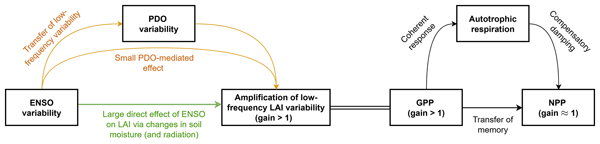
Nora L. S. Fahrenbach and Robert C. J. Wills
Earth Syst. Dynam., 17, 987–1006, https://doi.org/10.5194/esd-17-987-2026, https://doi.org/10.5194/esd-17-987-2026, 2026
Short summary
Short summary
The El Niño-Southern Oscillation (ENSO) drives short-term global plant changes, but its influence on decadal changes is not fully known. Using global climate models, we found that plants show pronounced ENSO-driven changes on decadal and longer timescales. Slow plant responses are influenced by soil water content and plant dynamics but only have a weak effect on the plant’s net carbon uptake. Our work shows that vegetation memory could be an important source of decadal climate predictability.
Huiying Zhang, Chia Rui Ong, Anurag Dipankar, Ulrike Lohmann, and Jan Henneberger
Atmos. Chem. Phys., 26, 8677–8693, https://doi.org/10.5194/acp-26-8677-2026, https://doi.org/10.5194/acp-26-8677-2026, 2026
Short summary
Short summary
We used computer simulations to study cloud seeding. We discovered a 'self-lofting' mechanism whereby, as the seeded ice crystals grow, they release heat, generating an upward air current. This enables the ice plume to rise and spread vertically, even when the surrounding air is sinking. This is why seeded ice survives in unfavourable wind conditions. Our results demonstrate that this internal heating is essential for the effectiveness and validation of weather modification technologies.
Andreas F. Prein, Praveen K. Pothapakula, Christian Zeman, Morgane Lalonde, Marius Rixen, Anurag Dipankar, Matthieu Leclair, and Andreas Jocksch
Geosci. Model Dev., 19, 5277–5303, https://doi.org/10.5194/gmd-19-5277-2026, https://doi.org/10.5194/gmd-19-5277-2026, 2026
Short summary
Short summary
We produce one of the world's most detailed global weather and climate simulations, spanning 4 years and enabling the direct representation of storms rather than approximations. This allows the capture of dangerous events such as strong wind gusts, heavy rain, and powerful tropical and mid-latitude storms everywhere on Earth. Our results show major improvements over traditional climate models, but also reveal remaining challenges in representing large, organized storm systems in the tropics.
Suki C. K. Wong, Galen A. McKinley, Richard Seager, Tess Wei-Ping Jacobson, Amanda Fay, Özgür Gürses, Nicolas Gruber, Tatiana Ilyina, Tereza Jarnikova, Laure Resplandy, Jörg Schwinger, and Roland Séférian
EGUsphere, https://doi.org/10.5194/egusphere-2026-3104, https://doi.org/10.5194/egusphere-2026-3104, 2026
Short summary
Short summary
The ocean absorbs nearly a third of human-made carbon dioxide, slowing climate change. This uptake varies from decade to decade for reasons we do not fully understand. Using a 66-year ocean carbon dataset, we found that the tropical Pacific and Southern Ocean drive this variability, in step with broader climate patterns across the Pacific. But these patterns cannot fully explain the recent weakening of the Southern Ocean sink, suggesting biological processes may also play an important role.
Praveen K. Pothapakula, Andreas F. Prein, Anusha Sunkisala, and Anurag Dipankar
Weather Clim. Dynam., 7, 979–1007, https://doi.org/10.5194/wcd-7-979-2026, https://doi.org/10.5194/wcd-7-979-2026, 2026
Short summary
Short summary
Monsoons provide vital rainfall for billions but are hard to forecast. Using a next-generation climate model, we simulated monsoons at different grid spacings. The model captures key seasonal patterns, but finer grids do not always improve accuracy. They can worsen predictions by overproducing intense rain, as they artificially strengthen weather systems like monsoon lows and waves. Our work shows that smarter model physics is needed for reliable future forecasts and climate projections.
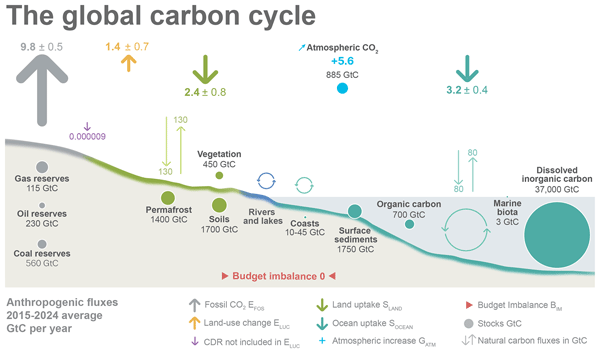
Pierre Friedlingstein, Michael O'Sullivan, Matthew W. Jones, Robbie M. Andrew, Dorothee C. E. Bakker, Judith Hauck, Peter Landschützer, Corinne Le Quéré, Hongmei Li, Ingrid T. Luijkx, Glen P. Peters, Wouter Peters, Julia Pongratz, Clemens Schwingshackl, Stephen Sitch, Josep G. Canadell, Philippe Ciais, Kjetil Aas, Simone R. Alin, Peter Anthoni, Leticia Barbero, Nicholas R. Bates, Nicolas Bellouin, Alice Benoit-Cattin, Carla F. Berghoff, Raffaele Bernardello, Laurent Bopp, Ida Bagus Mandhara Brasika, Matthew A. Chamberlain, Naveen Chandra, Frédéric Chevallier, Louise P. Chini, Nathan O. Collier, Thomas H. Colligan, Margot Cronin, Laique M. Djeutchouang, Xinyu Dou, Matt P. Enright, Kazutaka Enyo, Michael Erb, Wiley Evans, Richard A. Feely, Liang Feng, Daniel J. Ford, Adrianna Foster, Filippa Fransner, Thomas Gasser, Marion Gehlen, Thanos Gkritzalis, Jefferson Goncalves De Souza, Giacomo Grassi, Luke Gregor, Nicolas Gruber, Bertrand Guenet, Özgür Gürses, Kirsty Harrington, Ian Harris, Jens Heinke, George C. Hurtt, Yosuke Iida, Tatiana Ilyina, Akihiko Ito, Andrew R. Jacobson, Atul K. Jain, Tereza Jarníková, Annika Jersild, Fei Jiang, Steve D. Jones, Etsushi Kato, Ralph F. Keeling, Kees Klein Goldewijk, Jürgen Knauer, Yawen Kong, Jan Ivar Korsbakken, Charles Koven, Taro Kunimitsu, Xin Lan, Junjie Liu, Zhiqiang Liu, Zhu Liu, Claire Lo Monaco, Lei Ma, Gregg Marland, Patrick C. McGuire, Galen A. McKinley, Joe R. Melton, Natalie Monacci, Erwan Monier, Eric J. Morgan, David R. Munro, Jens D. Müller, Shin-Ichiro Nakaoka, Lorna R. Nayagam, Yosuke Niwa, Tobias Nutzel, Are Olsen, Abdirahman M. Omar, Naiqing Pan, Sudhanshu Pandey, Denis Pierrot, Zhangcai Qin, Pierre Regnier, Gregor Rehder, Laure Resplandy, Alizée Roobaert, Thais M. Rosan, Christian Rödenbeck, Jörg Schwinger, Ingunn Skjelvan, T. Luke Smallman, Victoria Spada, Mohanan G. Sreeush, Qing Sun, Adrienne J. Sutton, Colm Sweeney, Didier Swingedouw, Roland Séférian, Shintaro Takao, Hiroaki Tatebe, Hanqin Tian, Xiangjun Tian, Bronte Tilbrook, Hiroyuki Tsujino, Francesco Tubiello, Erik van Ooijen, Guido R. van der Werf, Sebastiaan J. van de Velde, Anthony P. Walker, Rik Wanninkhof, Xiaojuan Yang, Wenping Yuan, Xu Yue, and Jiye Zeng
Earth Syst. Sci. Data, 18, 3211–3288, https://doi.org/10.5194/essd-18-3211-2026, https://doi.org/10.5194/essd-18-3211-2026, 2026
Short summary
Short summary
The Global Carbon Budget 2025 describes the methodology, main results, and datasets used to quantify the anthropogenic emissions of carbon dioxide (CO2) and their partitioning among the atmosphere, land ecosystems, and the ocean over the historical period (1750–2025). These living datasets are updated every year to provide the highest transparency and traceability in the reporting of CO2, the key driver of climate change.
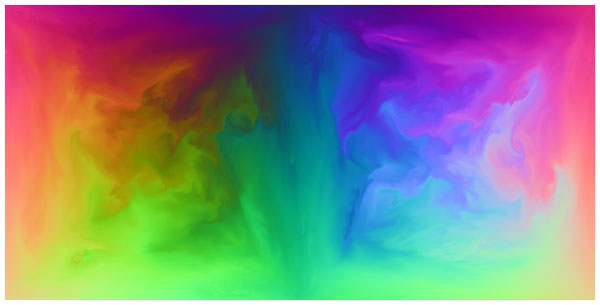
Alexander Pietak, Langwen Huang, Luigi Fusco, Michael Sprenger, Sebastian Schemm, and Torsten Hoefler
Geosci. Model Dev., 19, 3893–3922, https://doi.org/10.5194/gmd-19-3893-2026, https://doi.org/10.5194/gmd-19-3893-2026, 2026
Short summary
Short summary
As meteorological models grow in complexity, the volume of output data increases, making compression increasingly desirable. However, no specialized methods currently exist for compressing data in the Lagrangian frame. To address this gap, we developed psit, a pipeline for the lossy compression of Lagrangian flow data. In most cases, psit achieves performance that is equivalent or superior to non specialized alternatives, with compression errors behaving similar to measurement inaccuracies.
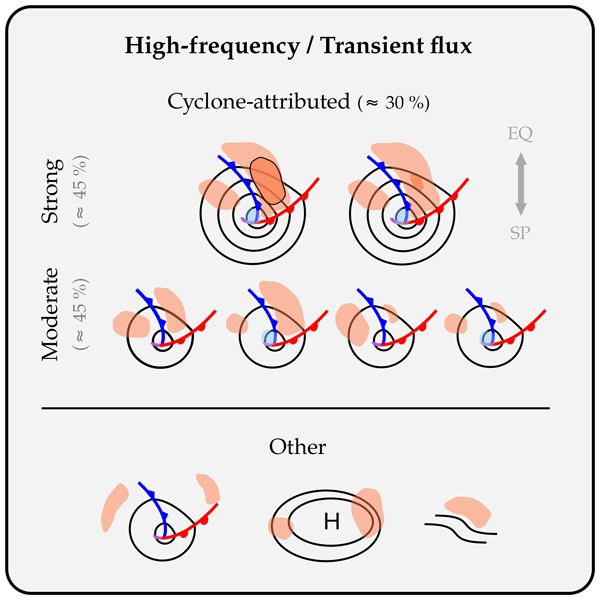
Jan Zibell, Alejandro Hermoso, Aaron Donohoe, and Sebastian Schemm
Weather Clim. Dynam., 7, 659–679, https://doi.org/10.5194/wcd-7-659-2026, https://doi.org/10.5194/wcd-7-659-2026, 2026
Short summary
Short summary
The transient moist static energy (MSE) flux dominates the poleward atmospheric heat transport in the Southern Hemisphere. In this study, we investigate how this transient MSE flux evolves over the life cycle of extratropical cyclones. By attributing transient MSE fluxes to nearby cyclones, we assess the contribution of individual cyclones to zonally integrated atmospheric heat transport and discuss the relationship between cyclone numbers and atmospheric heat transport on a seasonal scale.
Marius Rixen, Praveen Pothapakula, Michael Sprenger, Christian Zeman, and Andreas F. Prein
EGUsphere, https://doi.org/10.5194/egusphere-2026-1814, https://doi.org/10.5194/egusphere-2026-1814, 2026
Short summary
Short summary
Despite steady improvements in forecasting skill, episodes of low forecast skill, called forecast busts, still persist. Using global ensemble simulations at different grid spacings, we show that coarse-grid simulations fail to resolve key mesoscale diabatic processes, and that errors upscale and propagate downstream, leading to large forecast errors. Fine grid spacing simulations better capture scale interactions in strongly diabatic flow, highlighting the potential of kilometer-scale models.
Alexandre Schickele, Hadrien Savioz, Nicolas Gruber, Lionel Guidi, Jean-Olivier Irisson, and Meike Vogt
EGUsphere, https://doi.org/10.1101/2025.10.28.685123, https://doi.org/10.1101/2025.10.28.685123, 2026
Short summary
Short summary
By regulating the ocean nitrogen cycle, microbial plankton recycle nutrients and sustain productivity. Using global genetic data, we mapped where prokaryotes have the potential to carry out key nitrogen transformations. We show that this potential is structured by metabolic requirements, and environmental factors such as oxygen and nutrients concentrations. This reveals how microbial communities shape nitrogen processes and provides new insights to better represent them in global ocean models.
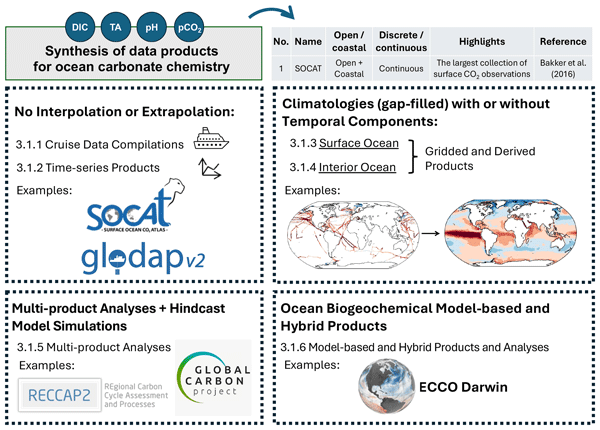
Li-Qing Jiang, Amanda Fay, Jens Daniel Müller, Luke Gregor, Alizée Roobaert, Lydia Keppler, Dustin Carroll, Siv K. Lauvset, Tim DeVries, Judith Hauck, Christian Rödenbeck, Nicolas Metzl, Andrea J. Fassbender, Jean-Pierre Gattuso, Peter Landschützer, Rik Wanninkhof, Christopher Sabine, Simone R. Alin, Mario Hoppema, Are Olsen, Matthew P. Humphreys, Kunal Chakraborty, Ana C. Franco, Kumiko Azetsu-Scott, Dorothee C. E. Bakker, Leticia Barbero, Nicholas R. Bates, Nicole Besemer, Henry C. Bittig, Albert E. Boyd, Daniel Broullón, Wei-Jun Cai, Brendan R. Carter, Thi-Tuyet-Trang Chau, Chen-Tung Arthur Chen, Frédéric Cyr, John E. Dore, Ian Enochs, Richard A. Feely, Hernan E. Garcia, Marion Gehlen, Prasanna Kanti Ghoshal, Lucas Gloege, Melchor González-Dávila, Nicolas Gruber, Debby Ianson, Yosuke Iida, Masao Ishii, Apurva Padamnabh Joshi, Esther Kennedy, Alex Kozyr, Nico Lange, Claire Lo Monaco, Derek P. Manzello, Galen A. McKinley, Natalie M. Monacci, Xose A. Padin, Ana M. Palacio-Castro, Fiz F. Pérez, J. Magdalena Santana-Casiano, Jonathan Sharp, Adrienne Sutton, Jim Swift, Toste Tanhua, Maciej Telszewski, Jens Terhaar, Ruben van Hooidonk, Anton Velo, Andrew J. Watson, Angelicque E. White, Zelun Wu, Liang Xue, Hyelim Yoo, Jiye Zeng, and Guorong Zhong
Earth Syst. Sci. Data, 18, 1405–1462, https://doi.org/10.5194/essd-18-1405-2026, https://doi.org/10.5194/essd-18-1405-2026, 2026
Short summary
Short summary
This review article provides an overview of 68 existing ocean carbonate chemistry data products and data product sets, encompassing a broad range of types, including compilations of cruise datasets, gap-filled observational products, model simulations, and more. It is designed to help researchers identify and access the data products that best support their scientific objectives, thereby facilitating progress in understanding the ocean's changing carbonate chemistry.
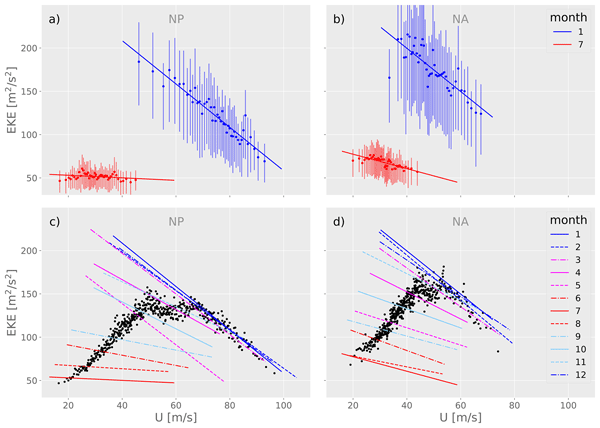
Nora Zilibotti, Heini Wernli, and Sebastian Schemm
Weather Clim. Dynam., 7, 201–221, https://doi.org/10.5194/wcd-7-201-2026, https://doi.org/10.5194/wcd-7-201-2026, 2026
Short summary
Short summary
This study investigates the relationship between jet strength and storm track activity in the North Pacific and North Atlantic with a new approach that does not rely on monthly averaging. We find a consistent behaviour in the two basins, with two distinct relationships on seasonal and sub-monthly timescales emerging. This work underlines the importance of separating different timescales of variability to understand the interplay of jet characteristics and storm track activity.
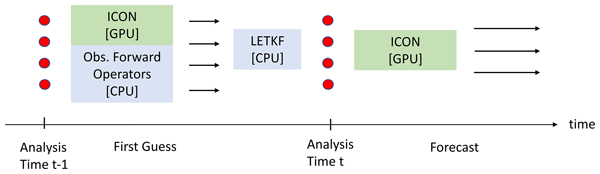
Xavier Lapillonne, Daniel Hupp, Fabian Gessler, André Walser, Andreas Pauling, Annika Lauber, Benjamin Cumming, Carlos Osuna, Christoph Müller, Claire Merker, Daniel Leuenberger, David Leutwyler, Dmitry Alexeev, Gabriel Vollenweider, Guillaume Van Parys, Jonas Jucker, Lukas Jansing, Marco Arpagaus, Marco Induni, Marek Jacob, Matthias Kraushaar, Michael Jähn, Mikael Stellio, Oliver Fuhrer, Petra Baumann, Philippe Steiner, Pirmin Kaufmann, Remo Dietlicher, Ralf Müller, Sergey Kosukhin, Thomas C. Schulthess, Ulrich Schättler, Victoria Cherkas, and William Sawyer
Geosci. Model Dev., 19, 755–772, https://doi.org/10.5194/gmd-19-755-2026, https://doi.org/10.5194/gmd-19-755-2026, 2026
Short summary
Short summary
The ICON climate and numerical weather prediction model was fully ported to Graphical Processing Units (GPUs) using OpenACC compiler directives, covering all components required for operational weather prediction. The GPU port together with several performance optimizations led to a speed-up of 5.6× when comparing to traditional Central Processing Units (CPUs) . Thanks to this adaptation effort, MeteoSwiss became the first national weather service to run the ICON model operationally on GPUs.
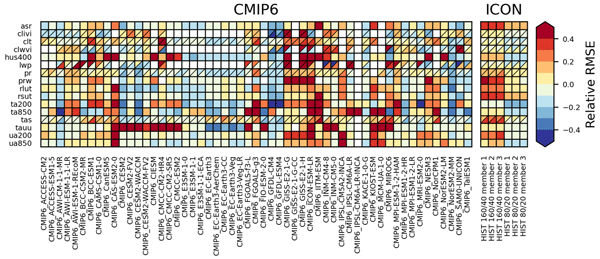
Wolfgang A. Müller, Stephan Lorenz, Trang V. Pham, Andrea Schneidereit, Renate Brokopf, Victor Brovkin, Nils Brüggemann, Fatemeh Chegini, Dietmar Dommenget, Kristina Fröhlich, Barbara Früh, Veronika Gayler, Helmuth Haak, Stefan Hagemann, Moritz Hanke, Tatiana Ilyina, Johann Jungclaus, Martin Köhler, Peter Korn, Luis Kornblueh, Clarissa A. Kroll, Julian Krüger, Karel Castro-Morales, Ulrike Niemeier, Holger Pohlmann, Iuliia Polkova, Roland Potthast, Thomas Riddick, Manuel Schlund, Tobias Stacke, Roland Wirth, Dakuan Yu, and Jochem Marotzke
Geosci. Model Dev., 18, 9385–9415, https://doi.org/10.5194/gmd-18-9385-2025, https://doi.org/10.5194/gmd-18-9385-2025, 2025
Short summary
Short summary
We provide a new Earth System model configuration framed into the ICON architecture, which provides the baseline for the next generation of climate predictions and projections (hereafter ICON XPP). Two resolutions of ICON XPP are presented that show high runtime performances making it suitable to run long integrations and large-ensemble experiments. ICON XPP similarly perform to CMIP6-class of climate models making it a good basis for climate forecasts and projections, and climate research.
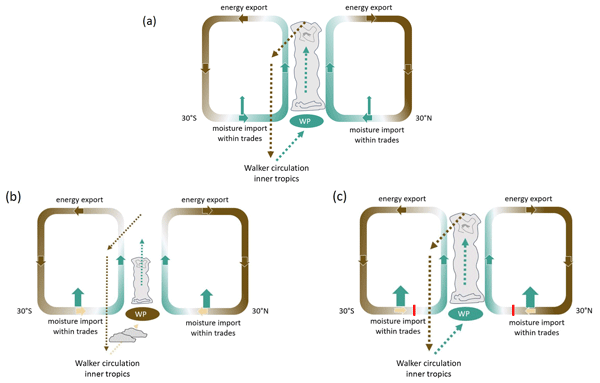
Clarissa A. Kroll, Robert C. Jnglin Wills, Luis Kornblueh, Ulrike Niemeier, and Andrea Schneidereit
Atmos. Chem. Phys., 25, 16915–16943, https://doi.org/10.5194/acp-25-16915-2025, https://doi.org/10.5194/acp-25-16915-2025, 2025
Short summary
Short summary
The double Inter-Tropical Convergence Zone is a prominent precipitation bias in climate models. We demonstrate its persistence from a resolution of 160 km up to 5 km. Its root cause lies in biased moisture transport from the subtropics to the inner tropics reducing convection and weakening tropical circulation. Increasing the surface wind speed addresses the bias, but deteriorates the global circulation. This highlights the importance of resolution hierarchies and parametrization development.
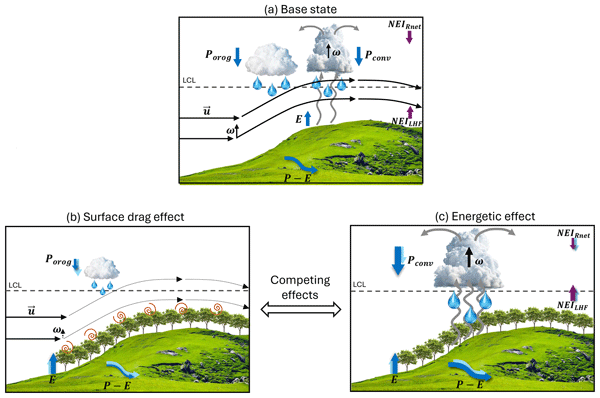
Nora L. S. Fahrenbach, Robert C. J. Wills, and Steven J. De Hertog
Weather Clim. Dynam., 6, 1461–1477, https://doi.org/10.5194/wcd-6-1461-2025, https://doi.org/10.5194/wcd-6-1461-2025, 2025
Short summary
Short summary
Afforestation is a key strategy for climate change mitigation, yet the impacts on tropical hydroclimate remain uncertain. We find that potential future afforestation would increase evaporation and precipitation in the tropics, especially over Africa. However, it would reduce net precipitation (precipitation minus evaporation), which determines water availability. This happens because trees slow near-surface winds, while their influence on the energy budget would otherwise strengthen convection.
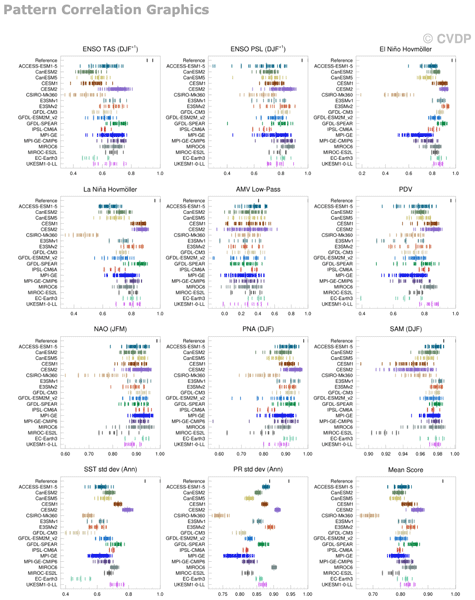
Nicola Maher, Adam S. Phillips, Clara Deser, Robert C. Jnglin Wills, Flavio Lehner, John Fasullo, Julie M. Caron, Lukas Brunner, Urs Beyerle, and Jemma Jeffree
Geosci. Model Dev., 18, 6341–6365, https://doi.org/10.5194/gmd-18-6341-2025, https://doi.org/10.5194/gmd-18-6341-2025, 2025
Short summary
Short summary
We present the new Multi-Model Large Ensemble Archive (MMLEAv2) and introduce the newly updated Climate Variability Diagnostics Package version 6 (CVDPv6), which is designed specifically for use with large ensembles. For highly variable quantities, we demonstrate that a model might perform evaluation poorly or favourably compared to the single realisation of the world that the observations represent, highlighting the need for large ensembles for model evaluation.
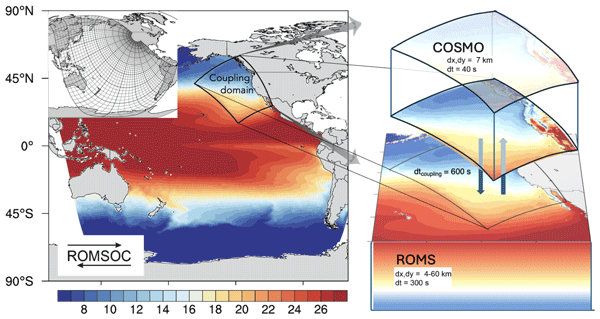
Gesa K. Eirund, Matthieu Leclair, Matthias Muennich, and Nicolas Gruber
Geosci. Model Dev., 18, 6255–6274, https://doi.org/10.5194/gmd-18-6255-2025, https://doi.org/10.5194/gmd-18-6255-2025, 2025
Short summary
Short summary
To realistically simulate small-scale processes in the atmosphere and ocean, such as clouds or mixing, high-resolution numerical models are needed. However, these models are computationally very demanding. Here, we present a recently developed atmosphere–ocean model which is able to resolve most of these processes and is less expensive to run due to its computational design. Our model can be used for a wide range of applications like the investigation of marine heatwaves or future projections.
Sofía Segovia, Pablo A. Mendoza, Miguel Lagos-Zúñiga, Lucía Scaff, and Andreas Prein
EGUsphere, https://doi.org/10.5194/egusphere-2025-3061, https://doi.org/10.5194/egusphere-2025-3061, 2025
Short summary
Short summary
High-resolution climate simulations can improve our understanding of precipitation and temperature patterns in regions with complex terrain. We evaluate a new climate dataset against in-situ observations, and its potencial for hydrological modeling. Results show that, despite some limitations in dry areas, high-resolution climate models can provide information of a quality comparable to that of observation-based products, supporting their use in water resources planning and decision-making.
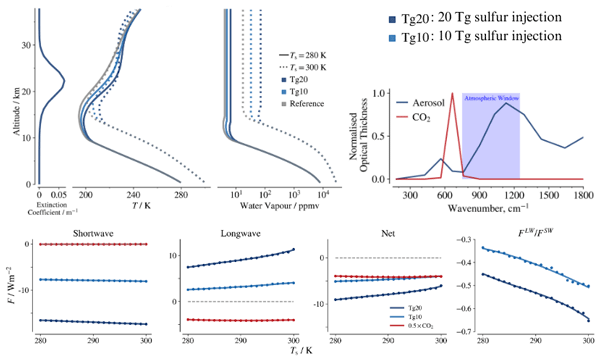
Ravikiran Hegde, Moritz Günther, Hauke Schmidt, and Clarissa Kroll
Atmos. Chem. Phys., 25, 3873–3887, https://doi.org/10.5194/acp-25-3873-2025, https://doi.org/10.5194/acp-25-3873-2025, 2025
Short summary
Short summary
Using a one-dimensional radiative–convective equilibrium model, we show that in clear-sky conditions, stratospheric sulfate aerosol forcing weakens with increasing surface temperature while CO2 forcing varies much less. This effect arises as sulfate aerosol, unlike CO2, absorbs mainly at wavelengths where the atmosphere is optically thin. It thereby masks the surface emission, which increases with warming. The spectral masking also results in weaker radiative feedback when aerosol is present.
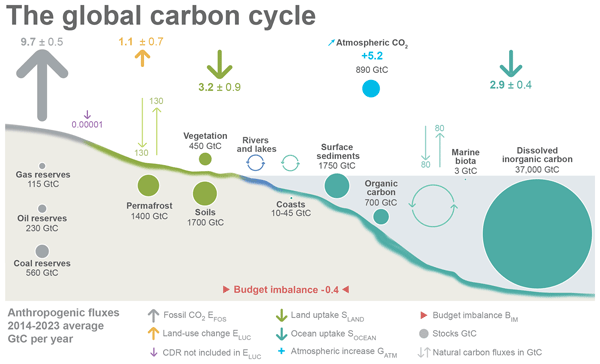
Pierre Friedlingstein, Michael O'Sullivan, Matthew W. Jones, Robbie M. Andrew, Judith Hauck, Peter Landschützer, Corinne Le Quéré, Hongmei Li, Ingrid T. Luijkx, Are Olsen, Glen P. Peters, Wouter Peters, Julia Pongratz, Clemens Schwingshackl, Stephen Sitch, Josep G. Canadell, Philippe Ciais, Robert B. Jackson, Simone R. Alin, Almut Arneth, Vivek Arora, Nicholas R. Bates, Meike Becker, Nicolas Bellouin, Carla F. Berghoff, Henry C. Bittig, Laurent Bopp, Patricia Cadule, Katie Campbell, Matthew A. Chamberlain, Naveen Chandra, Frédéric Chevallier, Louise P. Chini, Thomas Colligan, Jeanne Decayeux, Laique M. Djeutchouang, Xinyu Dou, Carolina Duran Rojas, Kazutaka Enyo, Wiley Evans, Amanda R. Fay, Richard A. Feely, Daniel J. Ford, Adrianna Foster, Thomas Gasser, Marion Gehlen, Thanos Gkritzalis, Giacomo Grassi, Luke Gregor, Nicolas Gruber, Özgür Gürses, Ian Harris, Matthew Hefner, Jens Heinke, George C. Hurtt, Yosuke Iida, Tatiana Ilyina, Andrew R. Jacobson, Atul K. Jain, Tereza Jarníková, Annika Jersild, Fei Jiang, Zhe Jin, Etsushi Kato, Ralph F. Keeling, Kees Klein Goldewijk, Jürgen Knauer, Jan Ivar Korsbakken, Xin Lan, Siv K. Lauvset, Nathalie Lefèvre, Zhu Liu, Junjie Liu, Lei Ma, Shamil Maksyutov, Gregg Marland, Nicolas Mayot, Patrick C. McGuire, Nicolas Metzl, Natalie M. Monacci, Eric J. Morgan, Shin-Ichiro Nakaoka, Craig Neill, Yosuke Niwa, Tobias Nützel, Lea Olivier, Tsuneo Ono, Paul I. Palmer, Denis Pierrot, Zhangcai Qin, Laure Resplandy, Alizée Roobaert, Thais M. Rosan, Christian Rödenbeck, Jörg Schwinger, T. Luke Smallman, Stephen M. Smith, Reinel Sospedra-Alfonso, Tobias Steinhoff, Qing Sun, Adrienne J. Sutton, Roland Séférian, Shintaro Takao, Hiroaki Tatebe, Hanqin Tian, Bronte Tilbrook, Olivier Torres, Etienne Tourigny, Hiroyuki Tsujino, Francesco Tubiello, Guido van der Werf, Rik Wanninkhof, Xuhui Wang, Dongxu Yang, Xiaojuan Yang, Zhen Yu, Wenping Yuan, Xu Yue, Sönke Zaehle, Ning Zeng, and Jiye Zeng
Earth Syst. Sci. Data, 17, 965–1039, https://doi.org/10.5194/essd-17-965-2025, https://doi.org/10.5194/essd-17-965-2025, 2025
Short summary
Short summary
The Global Carbon Budget 2024 describes the methodology, main results, and datasets used to quantify the anthropogenic emissions of carbon dioxide (CO2) and their partitioning among the atmosphere, land ecosystems, and the ocean over the historical period (1750–2024). These living datasets are updated every year to provide the highest transparency and traceability in the reporting of CO2, the key driver of climate change.
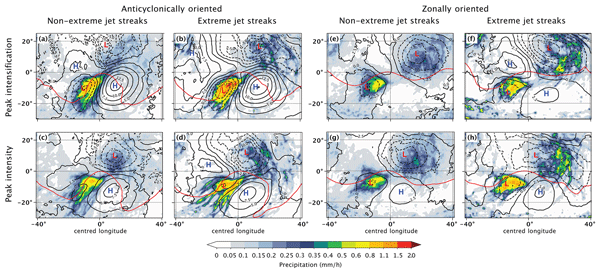
Mona Bukenberger, Lena Fasnacht, Stefan Rüdisühli, and Sebastian Schemm
Weather Clim. Dynam., 6, 279–316, https://doi.org/10.5194/wcd-6-279-2025, https://doi.org/10.5194/wcd-6-279-2025, 2025
Short summary
Short summary
The jet stream is a band of strong westerly winds, within which jet streaks are regions of faster wind speeds that can aid storm development. This study analyses jet streaks over the North Atlantic during winter. Jet streaks are linked to pairs of surface anticyclones and cyclones and are often accompanied by intense precipitation, especially extreme jet streaks. With cloud processes playing an increased role in extreme jet streaks, follow-up studies concerning their role are warranted.
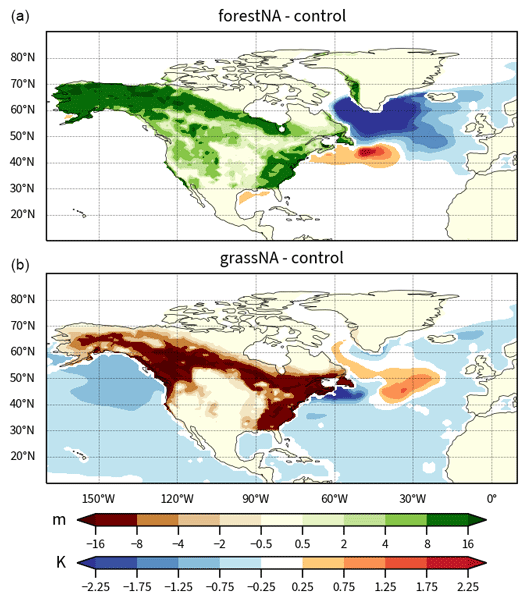
Victoria M. Bauer, Sebastian Schemm, Raphael Portmann, Jingzhi Zhang, Gesa K. Eirund, Steven J. De Hertog, and Jan Zibell
Earth Syst. Dynam., 16, 379–409, https://doi.org/10.5194/esd-16-379-2025, https://doi.org/10.5194/esd-16-379-2025, 2025
Short summary
Short summary
Past research has shown that the North Atlantic Ocean circulation reacts strongly to global forest cover changes. Using Earth system model simulations featuring idealised forestation and deforestation of North America, this study shows that the North Atlantic Ocean is highly sensitive to upstream land cover changes. Anomalies in air temperature over land propagate downstream and modify ocean-to-atmosphere heat fluxes over the North Atlantic through altering the cold-air outbreak frequency.
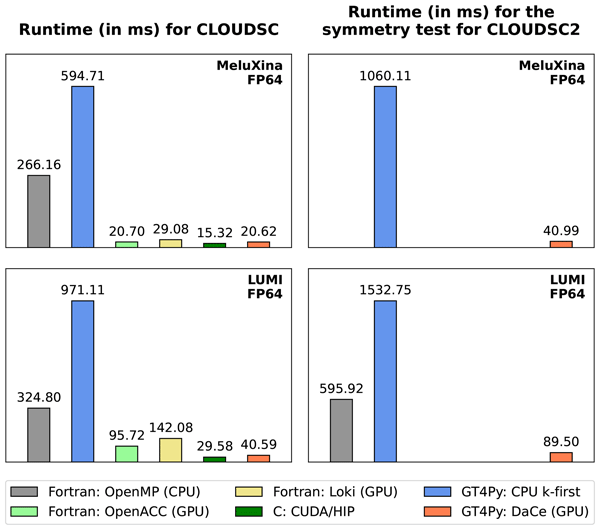
Stefano Ubbiali, Christian Kühnlein, Christoph Schär, Linda Schlemmer, Thomas C. Schulthess, Michael Staneker, and Heini Wernli
Geosci. Model Dev., 18, 529–546, https://doi.org/10.5194/gmd-18-529-2025, https://doi.org/10.5194/gmd-18-529-2025, 2025
Short summary
Short summary
We explore a high-level programming model for porting numerical weather prediction (NWP) model codes to graphics processing units (GPUs). We present a Python rewrite with the domain-specific library GT4Py (GridTools for Python) of two renowned cloud microphysics schemes and the associated tangent-linear and adjoint algorithms. We find excellent portability, competitive GPU performance, robust execution on diverse computing architectures, and enhanced code maintainability and user productivity.
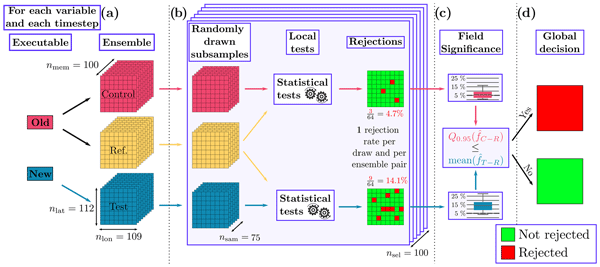
Hugo Banderier, Christian Zeman, David Leutwyler, Stefan Rüdisühli, and Christoph Schär
Geosci. Model Dev., 17, 5573–5586, https://doi.org/10.5194/gmd-17-5573-2024, https://doi.org/10.5194/gmd-17-5573-2024, 2024
Short summary
Short summary
We investigate the effects of reduced-precision arithmetic in a state-of-the-art regional climate model by studying the results of 10-year-long simulations. After this time, the results of the reduced precision and the standard implementation are hardly different. This should encourage the use of reduced precision in climate models to exploit the speedup and memory savings it brings. The methodology used in this work can help researchers verify reduced-precision implementations of their model.
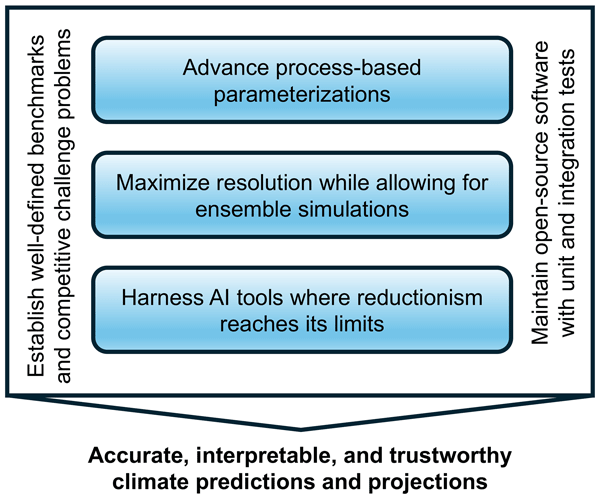
Tapio Schneider, L. Ruby Leung, and Robert C. J. Wills
Atmos. Chem. Phys., 24, 7041–7062, https://doi.org/10.5194/acp-24-7041-2024, https://doi.org/10.5194/acp-24-7041-2024, 2024
Short summary
Short summary
Climate models are crucial for predicting climate change in detail. This paper proposes a balanced approach to improving their accuracy by combining traditional process-based methods with modern artificial intelligence (AI) techniques while maximizing the resolution to allow for ensemble simulations. The authors propose using AI to learn from both observational and simulated data while incorporating existing physical knowledge to reduce data demands and improve climate prediction reliability.
Bjorn Stevens, Stefan Adami, Tariq Ali, Hartwig Anzt, Zafer Aslan, Sabine Attinger, Jaana Bäck, Johanna Baehr, Peter Bauer, Natacha Bernier, Bob Bishop, Hendryk Bockelmann, Sandrine Bony, Guy Brasseur, David N. Bresch, Sean Breyer, Gilbert Brunet, Pier Luigi Buttigieg, Junji Cao, Christelle Castet, Yafang Cheng, Ayantika Dey Choudhury, Deborah Coen, Susanne Crewell, Atish Dabholkar, Qing Dai, Francisco Doblas-Reyes, Dale Durran, Ayoub El Gaidi, Charlie Ewen, Eleftheria Exarchou, Veronika Eyring, Florencia Falkinhoff, David Farrell, Piers M. Forster, Ariane Frassoni, Claudia Frauen, Oliver Fuhrer, Shahzad Gani, Edwin Gerber, Debra Goldfarb, Jens Grieger, Nicolas Gruber, Wilco Hazeleger, Rolf Herken, Chris Hewitt, Torsten Hoefler, Huang-Hsiung Hsu, Daniela Jacob, Alexandra Jahn, Christian Jakob, Thomas Jung, Christopher Kadow, In-Sik Kang, Sarah Kang, Karthik Kashinath, Katharina Kleinen-von Königslöw, Daniel Klocke, Uta Kloenne, Milan Klöwer, Chihiro Kodama, Stefan Kollet, Tobias Kölling, Jenni Kontkanen, Steve Kopp, Michal Koran, Markku Kulmala, Hanna Lappalainen, Fakhria Latifi, Bryan Lawrence, June Yi Lee, Quentin Lejeun, Christian Lessig, Chao Li, Thomas Lippert, Jürg Luterbacher, Pekka Manninen, Jochem Marotzke, Satoshi Matsouoka, Charlotte Merchant, Peter Messmer, Gero Michel, Kristel Michielsen, Tomoki Miyakawa, Jens Müller, Ramsha Munir, Sandeep Narayanasetti, Ousmane Ndiaye, Carlos Nobre, Achim Oberg, Riko Oki, Tuba Özkan-Haller, Tim Palmer, Stan Posey, Andreas Prein, Odessa Primus, Mike Pritchard, Julie Pullen, Dian Putrasahan, Johannes Quaas, Krishnan Raghavan, Venkatachalam Ramaswamy, Markus Rapp, Florian Rauser, Markus Reichstein, Aromar Revi, Sonakshi Saluja, Masaki Satoh, Vera Schemann, Sebastian Schemm, Christina Schnadt Poberaj, Thomas Schulthess, Cath Senior, Jagadish Shukla, Manmeet Singh, Julia Slingo, Adam Sobel, Silvina Solman, Jenna Spitzer, Philip Stier, Thomas Stocker, Sarah Strock, Hang Su, Petteri Taalas, John Taylor, Susann Tegtmeier, Georg Teutsch, Adrian Tompkins, Uwe Ulbrich, Pier-Luigi Vidale, Chien-Ming Wu, Hao Xu, Najibullah Zaki, Laure Zanna, Tianjun Zhou, and Florian Ziemen
Earth Syst. Sci. Data, 16, 2113–2122, https://doi.org/10.5194/essd-16-2113-2024, https://doi.org/10.5194/essd-16-2113-2024, 2024
Short summary
Short summary
To manage Earth in the Anthropocene, new tools, new institutions, and new forms of international cooperation will be required. Earth Virtualization Engines is proposed as an international federation of centers of excellence to empower all people to respond to the immense and urgent challenges posed by climate change.
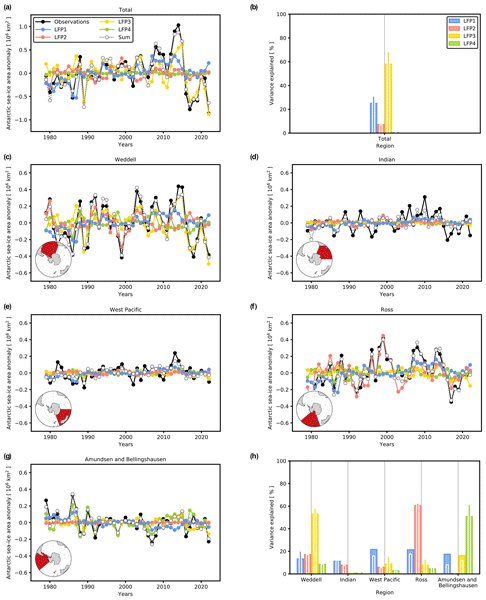
David B. Bonan, Jakob Dörr, Robert C. J. Wills, Andrew F. Thompson, and Marius Årthun
The Cryosphere, 18, 2141–2159, https://doi.org/10.5194/tc-18-2141-2024, https://doi.org/10.5194/tc-18-2141-2024, 2024
Short summary
Short summary
Antarctic sea ice has exhibited variability over satellite records, including a period of gradual expansion and a period of sudden decline. We use a novel statistical method to identify sources of variability in observed Antarctic sea ice changes. We find that the gradual increase in sea ice is likely related to large-scale temperature trends, and periods of abrupt sea ice decline are related to specific flavors of equatorial tropical variability known as the El Niño–Southern Oscillation.
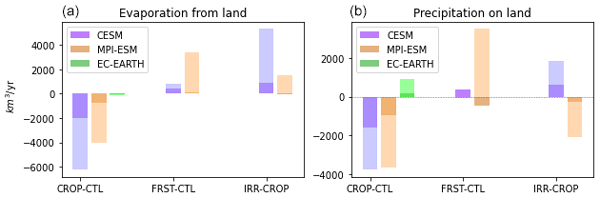
Steven J. De Hertog, Carmen E. Lopez-Fabara, Ruud van der Ent, Jessica Keune, Diego G. Miralles, Raphael Portmann, Sebastian Schemm, Felix Havermann, Suqi Guo, Fei Luo, Iris Manola, Quentin Lejeune, Julia Pongratz, Carl-Friedrich Schleussner, Sonia I. Seneviratne, and Wim Thiery
Earth Syst. Dynam., 15, 265–291, https://doi.org/10.5194/esd-15-265-2024, https://doi.org/10.5194/esd-15-265-2024, 2024
Short summary
Short summary
Changes in land use are crucial to achieve lower global warming. However, despite their importance, the effects of these changes on moisture fluxes are poorly understood. We analyse land cover and management scenarios in three climate models involving cropland expansion, afforestation, and irrigation. Results show largely consistent influences on moisture fluxes, with cropland expansion causing a drying and reduced local moisture recycling, while afforestation and irrigation show the opposite.
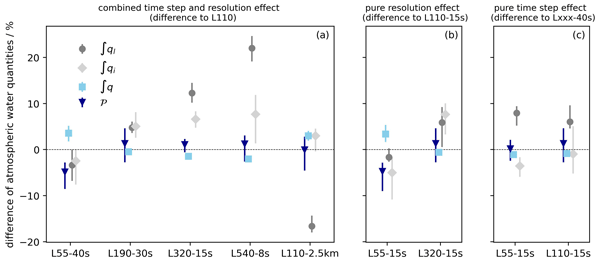
Hauke Schmidt, Sebastian Rast, Jiawei Bao, Amrit Cassim, Shih-Wei Fang, Diego Jimenez-de la Cuesta, Paul Keil, Lukas Kluft, Clarissa Kroll, Theresa Lang, Ulrike Niemeier, Andrea Schneidereit, Andrew I. L. Williams, and Bjorn Stevens
Geosci. Model Dev., 17, 1563–1584, https://doi.org/10.5194/gmd-17-1563-2024, https://doi.org/10.5194/gmd-17-1563-2024, 2024
Short summary
Short summary
A recent development in numerical simulations of the global atmosphere is the increase in horizontal resolution to grid spacings of a few kilometers. However, the vertical grid spacing of these models has not been reduced at the same rate as the horizontal grid spacing. Here, we assess the effects of much finer vertical grid spacings, in particular the impacts on cloud quantities and the atmospheric energy balance.
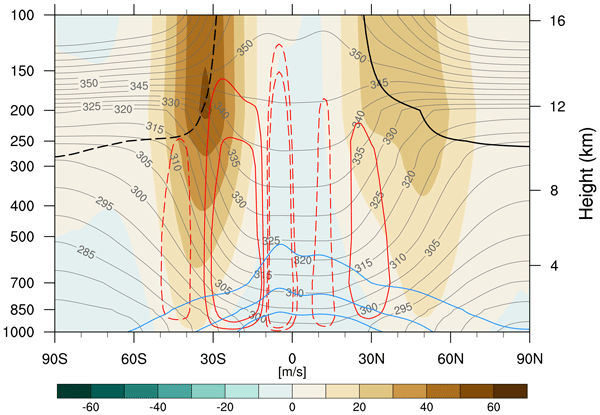
Sebastian Schemm and Matthias Röthlisberger
Weather Clim. Dynam., 5, 43–63, https://doi.org/10.5194/wcd-5-43-2024, https://doi.org/10.5194/wcd-5-43-2024, 2024
Short summary
Short summary
Climate change has started to weaken atmospheric circulation during summer in the Northern Hemisphere. However, there is low agreement on the processes underlying changes in, for example, the stationarity of weather patterns or the seasonality of the jet response to warming. This study examines changes during summertime in an idealised setting and confirms some important changes in hemisphere-wide wave and jet characteristics under warming.
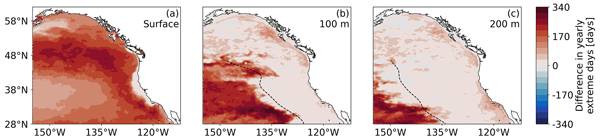
Flora Desmet, Matthias Münnich, and Nicolas Gruber
Biogeosciences, 20, 5151–5175, https://doi.org/10.5194/bg-20-5151-2023, https://doi.org/10.5194/bg-20-5151-2023, 2023
Short summary
Short summary
Ocean acidity extremes in the upper 250 m depth of the northeastern Pacific rapidly increase with atmospheric CO2 rise, which is worrisome for marine organisms that rapidly experience pH levels outside their local environmental conditions. Presented research shows the spatiotemporal heterogeneity in this increase between regions and depths. In particular, the subsurface increase is substantially slowed down by the presence of mesoscale eddies, often not resolved in Earth system models.
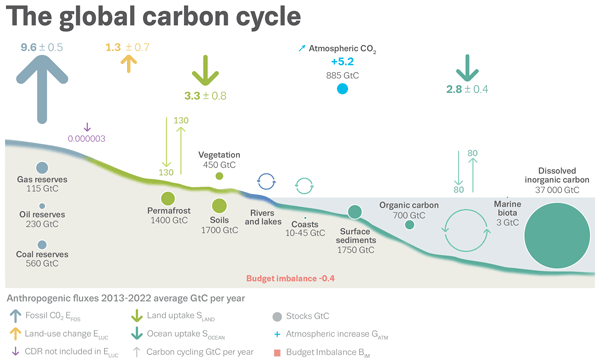
Pierre Friedlingstein, Michael O'Sullivan, Matthew W. Jones, Robbie M. Andrew, Dorothee C. E. Bakker, Judith Hauck, Peter Landschützer, Corinne Le Quéré, Ingrid T. Luijkx, Glen P. Peters, Wouter Peters, Julia Pongratz, Clemens Schwingshackl, Stephen Sitch, Josep G. Canadell, Philippe Ciais, Robert B. Jackson, Simone R. Alin, Peter Anthoni, Leticia Barbero, Nicholas R. Bates, Meike Becker, Nicolas Bellouin, Bertrand Decharme, Laurent Bopp, Ida Bagus Mandhara Brasika, Patricia Cadule, Matthew A. Chamberlain, Naveen Chandra, Thi-Tuyet-Trang Chau, Frédéric Chevallier, Louise P. Chini, Margot Cronin, Xinyu Dou, Kazutaka Enyo, Wiley Evans, Stefanie Falk, Richard A. Feely, Liang Feng, Daniel J. Ford, Thomas Gasser, Josefine Ghattas, Thanos Gkritzalis, Giacomo Grassi, Luke Gregor, Nicolas Gruber, Özgür Gürses, Ian Harris, Matthew Hefner, Jens Heinke, Richard A. Houghton, George C. Hurtt, Yosuke Iida, Tatiana Ilyina, Andrew R. Jacobson, Atul Jain, Tereza Jarníková, Annika Jersild, Fei Jiang, Zhe Jin, Fortunat Joos, Etsushi Kato, Ralph F. Keeling, Daniel Kennedy, Kees Klein Goldewijk, Jürgen Knauer, Jan Ivar Korsbakken, Arne Körtzinger, Xin Lan, Nathalie Lefèvre, Hongmei Li, Junjie Liu, Zhiqiang Liu, Lei Ma, Greg Marland, Nicolas Mayot, Patrick C. McGuire, Galen A. McKinley, Gesa Meyer, Eric J. Morgan, David R. Munro, Shin-Ichiro Nakaoka, Yosuke Niwa, Kevin M. O'Brien, Are Olsen, Abdirahman M. Omar, Tsuneo Ono, Melf Paulsen, Denis Pierrot, Katie Pocock, Benjamin Poulter, Carter M. Powis, Gregor Rehder, Laure Resplandy, Eddy Robertson, Christian Rödenbeck, Thais M. Rosan, Jörg Schwinger, Roland Séférian, T. Luke Smallman, Stephen M. Smith, Reinel Sospedra-Alfonso, Qing Sun, Adrienne J. Sutton, Colm Sweeney, Shintaro Takao, Pieter P. Tans, Hanqin Tian, Bronte Tilbrook, Hiroyuki Tsujino, Francesco Tubiello, Guido R. van der Werf, Erik van Ooijen, Rik Wanninkhof, Michio Watanabe, Cathy Wimart-Rousseau, Dongxu Yang, Xiaojuan Yang, Wenping Yuan, Xu Yue, Sönke Zaehle, Jiye Zeng, and Bo Zheng
Earth Syst. Sci. Data, 15, 5301–5369, https://doi.org/10.5194/essd-15-5301-2023, https://doi.org/10.5194/essd-15-5301-2023, 2023
Short summary
Short summary
The Global Carbon Budget 2023 describes the methodology, main results, and data sets used to quantify the anthropogenic emissions of carbon dioxide (CO2) and their partitioning among the atmosphere, land ecosystems, and the ocean over the historical period (1750–2023). These living datasets are updated every year to provide the highest transparency and traceability in the reporting of CO2, the key driver of climate change.
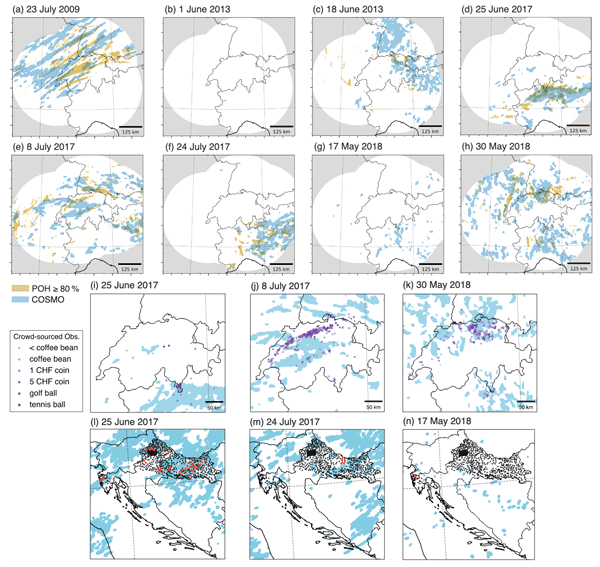
Ruoyi Cui, Nikolina Ban, Marie-Estelle Demory, Raffael Aellig, Oliver Fuhrer, Jonas Jucker, Xavier Lapillonne, and Christoph Schär
Weather Clim. Dynam., 4, 905–926, https://doi.org/10.5194/wcd-4-905-2023, https://doi.org/10.5194/wcd-4-905-2023, 2023
Short summary
Short summary
Our study focuses on severe convective storms that occur over the Alpine-Adriatic region. By running simulations for eight real cases and evaluating them against available observations, we found our models did a good job of simulating total precipitation, hail, and lightning. Overall, this research identified important meteorological factors for hail and lightning, and the results indicate that both HAILCAST and LPI diagnostics are promising candidates for future climate research.
Christoph Heinze, Thorsten Blenckner, Peter Brown, Friederike Fröb, Anne Morée, Adrian L. New, Cara Nissen, Stefanie Rynders, Isabel Seguro, Yevgeny Aksenov, Yuri Artioli, Timothée Bourgeois, Friedrich Burger, Jonathan Buzan, B. B. Cael, Veli Çağlar Yumruktepe, Melissa Chierici, Christopher Danek, Ulf Dieckmann, Agneta Fransson, Thomas Frölicher, Giovanni Galli, Marion Gehlen, Aridane G. González, Melchor Gonzalez-Davila, Nicolas Gruber, Örjan Gustafsson, Judith Hauck, Mikko Heino, Stephanie Henson, Jenny Hieronymus, I. Emma Huertas, Fatma Jebri, Aurich Jeltsch-Thömmes, Fortunat Joos, Jaideep Joshi, Stephen Kelly, Nandini Menon, Precious Mongwe, Laurent Oziel, Sólveig Ólafsdottir, Julien Palmieri, Fiz F. Pérez, Rajamohanan Pillai Ranith, Juliano Ramanantsoa, Tilla Roy, Dagmara Rusiecka, J. Magdalena Santana Casiano, Yeray Santana-Falcón, Jörg Schwinger, Roland Séférian, Miriam Seifert, Anna Shchiptsova, Bablu Sinha, Christopher Somes, Reiner Steinfeldt, Dandan Tao, Jerry Tjiputra, Adam Ulfsbo, Christoph Völker, Tsuyoshi Wakamatsu, and Ying Ye
Biogeosciences Discuss., https://doi.org/10.5194/bg-2023-182, https://doi.org/10.5194/bg-2023-182, 2023
Revised manuscript not accepted
Short summary
Short summary
For assessing the consequences of human-induced climate change for the marine realm, it is necessary to not only look at gradual changes but also at abrupt changes of environmental conditions. We summarise abrupt changes in ocean warming, acidification, and oxygen concentration as the key environmental factors for ecosystems. Taking these abrupt changes into account requires greenhouse gas emissions to be reduced to a larger extent than previously thought to limit respective damage.
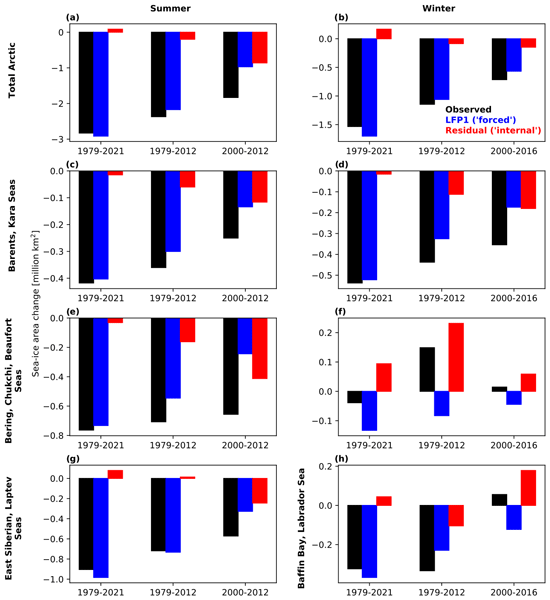
Jakob Simon Dörr, David B. Bonan, Marius Årthun, Lea Svendsen, and Robert C. J. Wills
The Cryosphere, 17, 4133–4153, https://doi.org/10.5194/tc-17-4133-2023, https://doi.org/10.5194/tc-17-4133-2023, 2023
Short summary
Short summary
The Arctic sea-ice cover is retreating due to climate change, but this retreat is influenced by natural (internal) variability in the climate system. We use a new statistical method to investigate how much internal variability has affected trends in the summer and winter Arctic sea-ice cover using observations since 1979. Our results suggest that the impact of internal variability on sea-ice retreat might be lower than what climate models have estimated.
Steven J. De Hertog, Carmen E. Lopez-Fabara, Ruud van der Ent, Jessica Keune, Diego G. Miralles, Raphael Portmann, Sebastian Schemm, Felix Havermann, Suqi Guo, Fei Luo, Iris Manola, Quentin Lejeune, Julia Pongratz, Carl-Friedrich Schleussner, Sonia I. Seneviratne, and Wim Thiery
EGUsphere, https://doi.org/10.5194/egusphere-2023-953, https://doi.org/10.5194/egusphere-2023-953, 2023
Preprint archived
Short summary
Short summary
Land cover and management changes can affect the climate and water availability. In this study we use climate model simulations of extreme global land cover changes (afforestation, deforestation) and land management changes (irrigation) to understand the effects on the global water cycle and local to continental water availability. We show that cropland expansion generally leads to higher evaporation and lower amounts of precipitation and afforestation and irrigation expansion to the opposite.
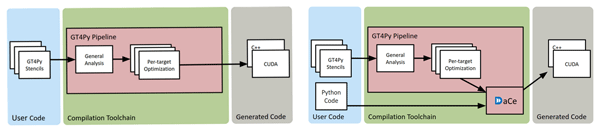
Johann Dahm, Eddie Davis, Florian Deconinck, Oliver Elbert, Rhea George, Jeremy McGibbon, Tobias Wicky, Elynn Wu, Christopher Kung, Tal Ben-Nun, Lucas Harris, Linus Groner, and Oliver Fuhrer
Geosci. Model Dev., 16, 2719–2736, https://doi.org/10.5194/gmd-16-2719-2023, https://doi.org/10.5194/gmd-16-2719-2023, 2023
Short summary
Short summary
It is hard for scientists to write code which is efficient on different kinds of supercomputers. Python is popular for its user-friendliness. We converted a Fortran code, simulating Earth's atmosphere, into Python. This new code auto-converts to a faster language for processors or graphic cards. Our code runs 3.5–4 times faster on graphic cards than the original on processors in a specific supercomputer system.
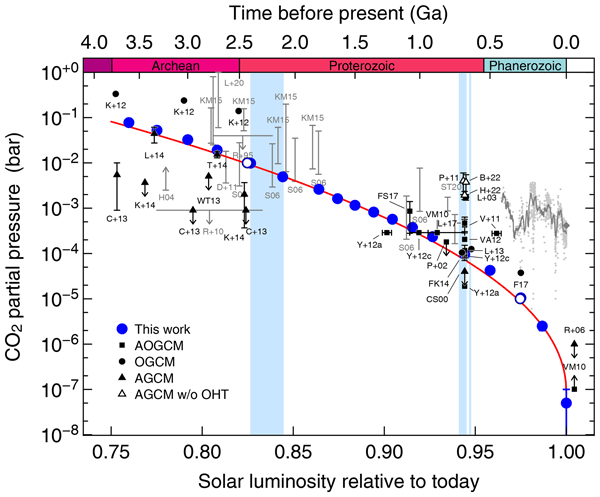
Georg Feulner, Mona Bukenberger, and Stefan Petri
Earth Syst. Dynam., 14, 533–547, https://doi.org/10.5194/esd-14-533-2023, https://doi.org/10.5194/esd-14-533-2023, 2023
Short summary
Short summary
One limit of planetary habitability is defined by the threshold of global glaciation. If Earth cools, growing ice cover makes it brighter, leading to further cooling, since more sunlight is reflected, eventually leading to global ice cover (Snowball Earth). We study how much carbon dioxide is needed to prevent global glaciation in Earth's history given the slow increase in the Sun's brightness. We find an unexpected change in the characteristics of climate states close to the Snowball limit.
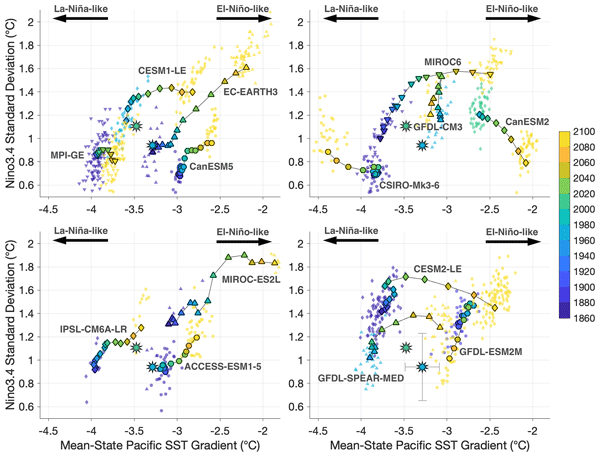
Nicola Maher, Robert C. Jnglin Wills, Pedro DiNezio, Jeremy Klavans, Sebastian Milinski, Sara C. Sanchez, Samantha Stevenson, Malte F. Stuecker, and Xian Wu
Earth Syst. Dynam., 14, 413–431, https://doi.org/10.5194/esd-14-413-2023, https://doi.org/10.5194/esd-14-413-2023, 2023
Short summary
Short summary
Understanding whether the El Niño–Southern Oscillation (ENSO) is likely to change in the future is important due to its widespread impacts. By using large ensembles, we can robustly isolate the time-evolving response of ENSO variability in 14 climate models. We find that ENSO variability evolves in a nonlinear fashion in many models and that there are large differences between models. These nonlinear changes imply that ENSO impacts may vary dramatically throughout the 21st century.
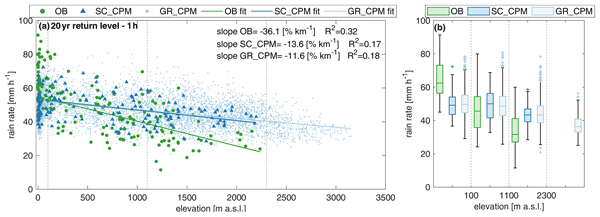
Eleonora Dallan, Francesco Marra, Giorgia Fosser, Marco Marani, Giuseppe Formetta, Christoph Schär, and Marco Borga
Hydrol. Earth Syst. Sci., 27, 1133–1149, https://doi.org/10.5194/hess-27-1133-2023, https://doi.org/10.5194/hess-27-1133-2023, 2023
Short summary
Short summary
Convection-permitting climate models could represent future changes in extreme short-duration precipitation, which is critical for risk management. We use a non-asymptotic statistical method to estimate extremes from 10 years of simulations in an orographically complex area. Despite overall good agreement with rain gauges, the observed decrease of hourly extremes with elevation is not fully represented by the model. Climate model adjustment methods should consider the role of orography.
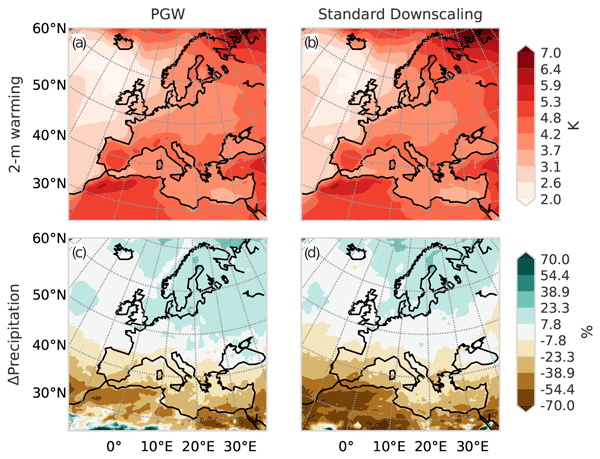
Roman Brogli, Christoph Heim, Jonas Mensch, Silje Lund Sørland, and Christoph Schär
Geosci. Model Dev., 16, 907–926, https://doi.org/10.5194/gmd-16-907-2023, https://doi.org/10.5194/gmd-16-907-2023, 2023
Short summary
Short summary
The pseudo-global-warming (PGW) approach is a downscaling methodology that imposes the large-scale GCM-based climate change signal on the boundary conditions of a regional climate simulation. It offers several benefits in comparison to conventional downscaling. We present a detailed description of the methodology, provide companion software to facilitate the preparation of PGW simulations, and present validation and sensitivity studies.
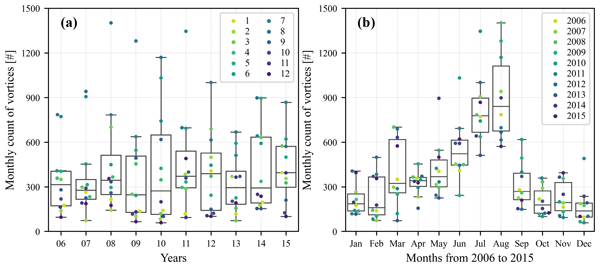
Qinggang Gao, Christian Zeman, Jesus Vergara-Temprado, Daniela C. A. Lima, Peter Molnar, and Christoph Schär
Weather Clim. Dynam., 4, 189–211, https://doi.org/10.5194/wcd-4-189-2023, https://doi.org/10.5194/wcd-4-189-2023, 2023
Short summary
Short summary
We developed a vortex identification algorithm for realistic atmospheric simulations. The algorithm enabled us to obtain a climatology of vortex shedding from Madeira Island for a 10-year simulation period. This first objective climatological analysis of vortex streets shows consistency with observed atmospheric conditions. The analysis shows a pronounced annual cycle with an increasing vortex shedding rate from April to August and a sudden decrease in September.
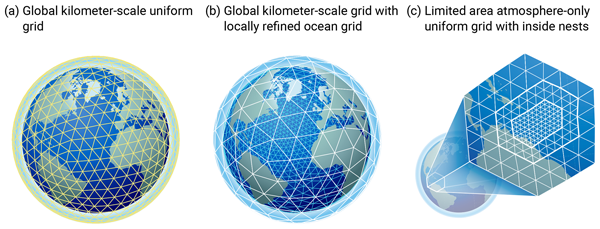
Cathy Hohenegger, Peter Korn, Leonidas Linardakis, René Redler, Reiner Schnur, Panagiotis Adamidis, Jiawei Bao, Swantje Bastin, Milad Behravesh, Martin Bergemann, Joachim Biercamp, Hendryk Bockelmann, Renate Brokopf, Nils Brüggemann, Lucas Casaroli, Fatemeh Chegini, George Datseris, Monika Esch, Geet George, Marco Giorgetta, Oliver Gutjahr, Helmuth Haak, Moritz Hanke, Tatiana Ilyina, Thomas Jahns, Johann Jungclaus, Marcel Kern, Daniel Klocke, Lukas Kluft, Tobias Kölling, Luis Kornblueh, Sergey Kosukhin, Clarissa Kroll, Junhong Lee, Thorsten Mauritsen, Carolin Mehlmann, Theresa Mieslinger, Ann Kristin Naumann, Laura Paccini, Angel Peinado, Divya Sri Praturi, Dian Putrasahan, Sebastian Rast, Thomas Riddick, Niklas Roeber, Hauke Schmidt, Uwe Schulzweida, Florian Schütte, Hans Segura, Radomyra Shevchenko, Vikram Singh, Mia Specht, Claudia Christine Stephan, Jin-Song von Storch, Raphaela Vogel, Christian Wengel, Marius Winkler, Florian Ziemen, Jochem Marotzke, and Bjorn Stevens
Geosci. Model Dev., 16, 779–811, https://doi.org/10.5194/gmd-16-779-2023, https://doi.org/10.5194/gmd-16-779-2023, 2023
Short summary
Short summary
Models of the Earth system used to understand climate and predict its change typically employ a grid spacing of about 100 km. Yet, many atmospheric and oceanic processes occur on much smaller scales. In this study, we present a new model configuration designed for the simulation of the components of the Earth system and their interactions at kilometer and smaller scales, allowing an explicit representation of the main drivers of the flow of energy and matter by solving the underlying equations.
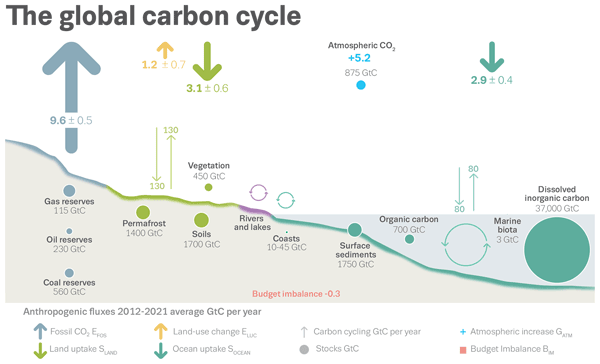
Pierre Friedlingstein, Michael O'Sullivan, Matthew W. Jones, Robbie M. Andrew, Luke Gregor, Judith Hauck, Corinne Le Quéré, Ingrid T. Luijkx, Are Olsen, Glen P. Peters, Wouter Peters, Julia Pongratz, Clemens Schwingshackl, Stephen Sitch, Josep G. Canadell, Philippe Ciais, Robert B. Jackson, Simone R. Alin, Ramdane Alkama, Almut Arneth, Vivek K. Arora, Nicholas R. Bates, Meike Becker, Nicolas Bellouin, Henry C. Bittig, Laurent Bopp, Frédéric Chevallier, Louise P. Chini, Margot Cronin, Wiley Evans, Stefanie Falk, Richard A. Feely, Thomas Gasser, Marion Gehlen, Thanos Gkritzalis, Lucas Gloege, Giacomo Grassi, Nicolas Gruber, Özgür Gürses, Ian Harris, Matthew Hefner, Richard A. Houghton, George C. Hurtt, Yosuke Iida, Tatiana Ilyina, Atul K. Jain, Annika Jersild, Koji Kadono, Etsushi Kato, Daniel Kennedy, Kees Klein Goldewijk, Jürgen Knauer, Jan Ivar Korsbakken, Peter Landschützer, Nathalie Lefèvre, Keith Lindsay, Junjie Liu, Zhu Liu, Gregg Marland, Nicolas Mayot, Matthew J. McGrath, Nicolas Metzl, Natalie M. Monacci, David R. Munro, Shin-Ichiro Nakaoka, Yosuke Niwa, Kevin O'Brien, Tsuneo Ono, Paul I. Palmer, Naiqing Pan, Denis Pierrot, Katie Pocock, Benjamin Poulter, Laure Resplandy, Eddy Robertson, Christian Rödenbeck, Carmen Rodriguez, Thais M. Rosan, Jörg Schwinger, Roland Séférian, Jamie D. Shutler, Ingunn Skjelvan, Tobias Steinhoff, Qing Sun, Adrienne J. Sutton, Colm Sweeney, Shintaro Takao, Toste Tanhua, Pieter P. Tans, Xiangjun Tian, Hanqin Tian, Bronte Tilbrook, Hiroyuki Tsujino, Francesco Tubiello, Guido R. van der Werf, Anthony P. Walker, Rik Wanninkhof, Chris Whitehead, Anna Willstrand Wranne, Rebecca Wright, Wenping Yuan, Chao Yue, Xu Yue, Sönke Zaehle, Jiye Zeng, and Bo Zheng
Earth Syst. Sci. Data, 14, 4811–4900, https://doi.org/10.5194/essd-14-4811-2022, https://doi.org/10.5194/essd-14-4811-2022, 2022
Short summary
Short summary
The Global Carbon Budget 2022 describes the datasets and methodology used to quantify the anthropogenic emissions of carbon dioxide (CO2) and their partitioning among the atmosphere, the land ecosystems, and the ocean. These living datasets are updated every year to provide the highest transparency and traceability in the reporting of CO2, the key driver of climate change.
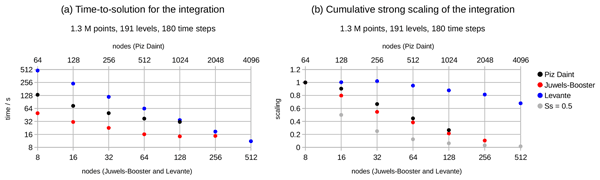
Marco A. Giorgetta, William Sawyer, Xavier Lapillonne, Panagiotis Adamidis, Dmitry Alexeev, Valentin Clément, Remo Dietlicher, Jan Frederik Engels, Monika Esch, Henning Franke, Claudia Frauen, Walter M. Hannah, Benjamin R. Hillman, Luis Kornblueh, Philippe Marti, Matthew R. Norman, Robert Pincus, Sebastian Rast, Daniel Reinert, Reiner Schnur, Uwe Schulzweida, and Bjorn Stevens
Geosci. Model Dev., 15, 6985–7016, https://doi.org/10.5194/gmd-15-6985-2022, https://doi.org/10.5194/gmd-15-6985-2022, 2022
Short summary
Short summary
This work presents a first version of the ICON atmosphere model that works not only on CPUs, but also on GPUs. This GPU-enabled ICON version is benchmarked on two GPU machines and a CPU machine. While the weak scaling is very good on CPUs and GPUs, the strong scaling is poor on GPUs. But the high performance of GPU machines allowed for first simulations of a short period of the quasi-biennial oscillation at very high resolution with explicit convection and gravity wave forcing.

Christian R. Steger, Benjamin Steger, and Christoph Schär
Geosci. Model Dev., 15, 6817–6840, https://doi.org/10.5194/gmd-15-6817-2022, https://doi.org/10.5194/gmd-15-6817-2022, 2022
Short summary
Short summary
Terrain horizon and sky view factor are crucial quantities for many geoscientific applications; e.g. they are used to account for effects of terrain on surface radiation in climate and land surface models. Because typical terrain horizon algorithms are inefficient for high-resolution (< 30 m) elevation data, we developed a new algorithm based on a ray-tracing library. A comparison with two conventional methods revealed both its high performance and its accuracy for complex terrain.
Oliver Douglas Levers, Dorien Herremans, Anurag Dipankar, and Lucienne Blessing
EGUsphere, https://doi.org/10.5194/egusphere-2022-234, https://doi.org/10.5194/egusphere-2022-234, 2022
Preprint withdrawn
Short summary
Short summary
Southeast Asia is a region which is very sensitive to climate change and has numerous islands and peninsulas which are not well resolved within many General Circulation Models (GCMs). Here, deep convolutional encoders are employed to increase the spatial resolution of climate model data (downscaling) and address systematic errors in model outputs (bias correction). Technique and region-specific issues are identified for surface temperature data and compared with other model outputs.
Praveen Kumar Pothapakula, Amelie Hoff, Anika Obermann-Hellhund, Timo Keber, and Bodo Ahrens
Earth Syst. Dynam. Discuss., https://doi.org/10.5194/esd-2022-24, https://doi.org/10.5194/esd-2022-24, 2022
Preprint withdrawn
Short summary
Short summary
The Vb-cyclones simulated with a coupled regional climate model with two different driving data sets are compared against each other in historical period, thereafter the future climate predictions were analyzed. The Vb-cyclones in two simulations agree well in terms of their occurrence, intensity and track in two simulations, though there are discrepancies in seasonal cycles and their process linking Mediterranean Sea in historical period. So significant changes were observed in the future.
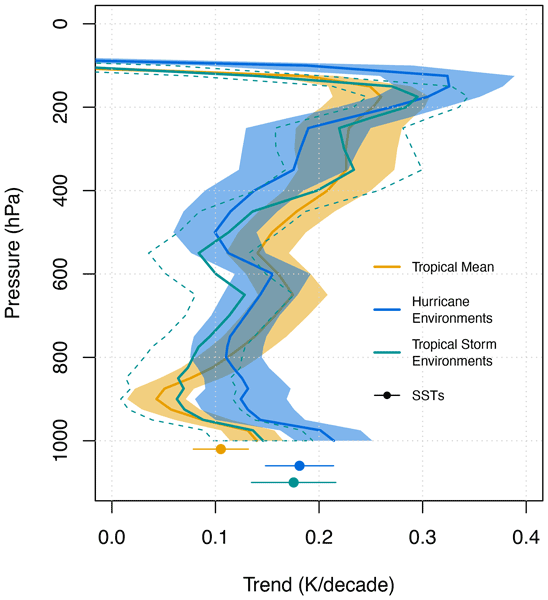
James M. Done, Gary M. Lackmann, and Andreas F. Prein
Weather Clim. Dynam., 3, 693–711, https://doi.org/10.5194/wcd-3-693-2022, https://doi.org/10.5194/wcd-3-693-2022, 2022
Short summary
Short summary
We know that warm oceans generally favour tropical cyclones (TCs). Less is known about the role of air temperature above the oceans extending into the lower stratosphere. Our global analysis of historical records and computer simulations suggests that TCs strengthen in response to historical temperature change while also being influenced by other environmental factors. Ocean warming drives much of the strengthening, with relatively small contributions from temperature changes aloft.
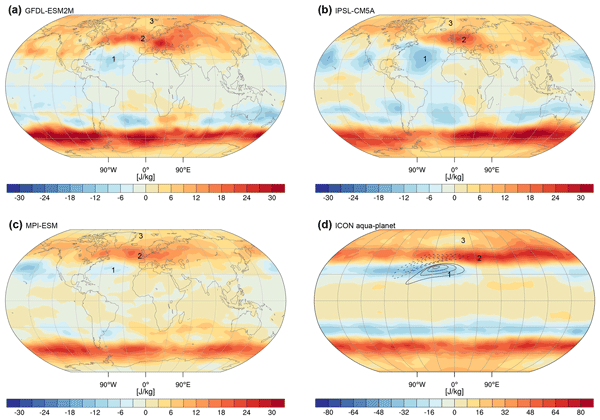
Sebastian Schemm, Lukas Papritz, and Gwendal Rivière
Weather Clim. Dynam., 3, 601–623, https://doi.org/10.5194/wcd-3-601-2022, https://doi.org/10.5194/wcd-3-601-2022, 2022
Short summary
Short summary
Much of the change in our daily weather patterns is due to the development and intensification of extratropical cyclones. The response of these systems to climate change is an important topic of ongoing research. This study is the first to reproduce the changes in the North Atlantic circulation and extratropical cyclone characteristics found in fully coupled Earth system models under high-CO2 scenarios, but in an idealized, reduced-complexity simulation with uniform warming.
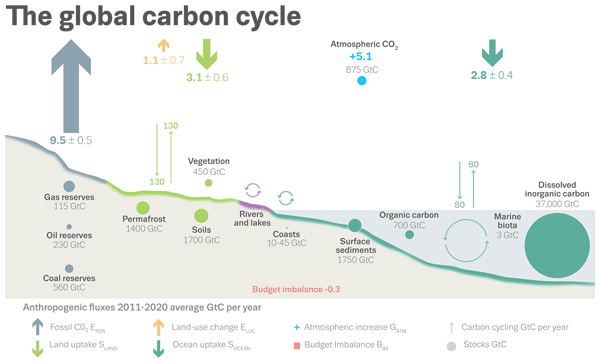
Pierre Friedlingstein, Matthew W. Jones, Michael O'Sullivan, Robbie M. Andrew, Dorothee C. E. Bakker, Judith Hauck, Corinne Le Quéré, Glen P. Peters, Wouter Peters, Julia Pongratz, Stephen Sitch, Josep G. Canadell, Philippe Ciais, Rob B. Jackson, Simone R. Alin, Peter Anthoni, Nicholas R. Bates, Meike Becker, Nicolas Bellouin, Laurent Bopp, Thi Tuyet Trang Chau, Frédéric Chevallier, Louise P. Chini, Margot Cronin, Kim I. Currie, Bertrand Decharme, Laique M. Djeutchouang, Xinyu Dou, Wiley Evans, Richard A. Feely, Liang Feng, Thomas Gasser, Dennis Gilfillan, Thanos Gkritzalis, Giacomo Grassi, Luke Gregor, Nicolas Gruber, Özgür Gürses, Ian Harris, Richard A. Houghton, George C. Hurtt, Yosuke Iida, Tatiana Ilyina, Ingrid T. Luijkx, Atul Jain, Steve D. Jones, Etsushi Kato, Daniel Kennedy, Kees Klein Goldewijk, Jürgen Knauer, Jan Ivar Korsbakken, Arne Körtzinger, Peter Landschützer, Siv K. Lauvset, Nathalie Lefèvre, Sebastian Lienert, Junjie Liu, Gregg Marland, Patrick C. McGuire, Joe R. Melton, David R. Munro, Julia E. M. S. Nabel, Shin-Ichiro Nakaoka, Yosuke Niwa, Tsuneo Ono, Denis Pierrot, Benjamin Poulter, Gregor Rehder, Laure Resplandy, Eddy Robertson, Christian Rödenbeck, Thais M. Rosan, Jörg Schwinger, Clemens Schwingshackl, Roland Séférian, Adrienne J. Sutton, Colm Sweeney, Toste Tanhua, Pieter P. Tans, Hanqin Tian, Bronte Tilbrook, Francesco Tubiello, Guido R. van der Werf, Nicolas Vuichard, Chisato Wada, Rik Wanninkhof, Andrew J. Watson, David Willis, Andrew J. Wiltshire, Wenping Yuan, Chao Yue, Xu Yue, Sönke Zaehle, and Jiye Zeng
Earth Syst. Sci. Data, 14, 1917–2005, https://doi.org/10.5194/essd-14-1917-2022, https://doi.org/10.5194/essd-14-1917-2022, 2022
Short summary
Short summary
The Global Carbon Budget 2021 describes the data sets and methodology used to quantify the emissions of carbon dioxide and their partitioning among the atmosphere, land, and ocean. These living data are updated every year to provide the highest transparency and traceability in the reporting of CO2, the key driver of climate change.
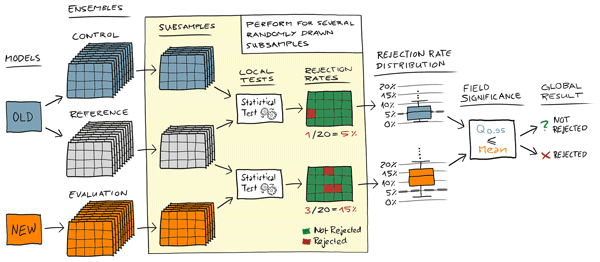
Christian Zeman and Christoph Schär
Geosci. Model Dev., 15, 3183–3203, https://doi.org/10.5194/gmd-15-3183-2022, https://doi.org/10.5194/gmd-15-3183-2022, 2022
Short summary
Short summary
Our atmosphere is a chaotic system, where even a tiny change can have a big impact. This makes it difficult to assess if small changes, such as the move to a new hardware architecture, will significantly affect a weather and climate model. We present a methodology that allows to objectively verify this. The methodology is applied to several test cases, showing a high sensitivity. Results also show that a major system update of the underlying supercomputer did not significantly affect our model.
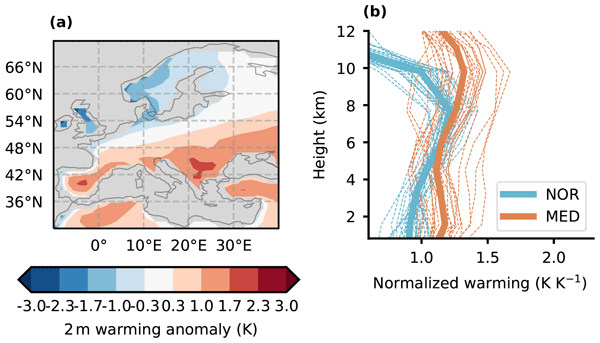
Roman Brogli, Silje Lund Sørland, Nico Kröner, and Christoph Schär
Weather Clim. Dynam., 2, 1093–1110, https://doi.org/10.5194/wcd-2-1093-2021, https://doi.org/10.5194/wcd-2-1093-2021, 2021
Short summary
Short summary
In a warmer future climate, climate simulations predict that some land areas will experience excessive warming during summer. We show that the excessive summer warming is related to the vertical distribution of warming within the atmosphere. In regions characterized by excessive warming, much of the warming occurs close to the surface. In other regions, most of the warming is redistributed to higher levels in the atmosphere, which weakens the surface warming.
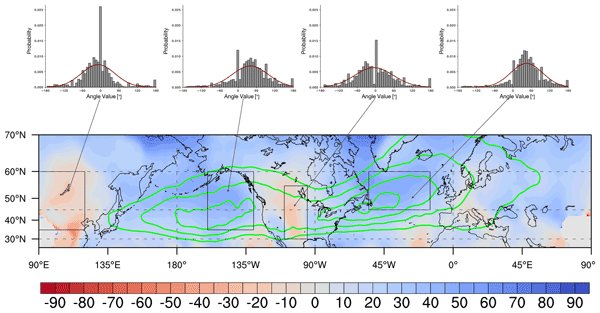
Philippe Besson, Luise J. Fischer, Sebastian Schemm, and Michael Sprenger
Weather Clim. Dynam., 2, 991–1009, https://doi.org/10.5194/wcd-2-991-2021, https://doi.org/10.5194/wcd-2-991-2021, 2021
Short summary
Short summary
The strongest cyclone intensification is associated with a strong dry-dynamical forcing. Moreover, strong forcing and strong intensification correspond to a tendency for poleward cyclone propagation, which occurs in distinct regions in the Northern Hemisphere. There is a clear spatial pattern in the occurrence of certain forcing combinations. This implies a fundamental relationship between dry-dynamical processes and the intensification as well as the propagation of extratropical cyclones.

Amanda R. Fay, Luke Gregor, Peter Landschützer, Galen A. McKinley, Nicolas Gruber, Marion Gehlen, Yosuke Iida, Goulven G. Laruelle, Christian Rödenbeck, Alizée Roobaert, and Jiye Zeng
Earth Syst. Sci. Data, 13, 4693–4710, https://doi.org/10.5194/essd-13-4693-2021, https://doi.org/10.5194/essd-13-4693-2021, 2021
Short summary
Short summary
The movement of carbon dioxide from the atmosphere to the ocean is estimated using surface ocean carbon (pCO2) measurements and an equation including variables such as temperature and wind speed; the choices of these variables lead to uncertainties. We introduce the SeaFlux ensemble which provides carbon flux maps calculated in a consistent manner, thus reducing uncertainty by using common choices for wind speed and a set definition of "global" coverage.
Cited articles
Adamidis, P., Pfister, E., Bockelmann, H., Zobel, D., Beismann, J.-O., and Jacob, M.: The real challenges for climate and weather modelling on its way to sustained exascale performance: a case study using ICON (v2.6.6), Geosci. Model Dev., 18, 905–919, https://doi.org/10.5194/gmd-18-905-2025, 2025.
Afanasyev, A., Bianco, M., Mosimann, L., Osuna, C., Thaler, F., Vogt, H., Fuhrer, O., VandeVondele, J., and Schulthess, T. C.: GridTools: A framework for portable weather and climate applications, SoftwareX, 15, https://doi.org/10.1016/j.softx.2021.100707, 2021.
Bauer, P., Stevens, B., and Hazeleger, W.: A digital twin of Earth for the green transition, Nat. Clim. Change, 11, 80–83, https://doi.org/10.1038/s41558-021-00986-y, 2021.
Ben-Nun, T., de Fine Licht, J., Ziogas, A. N., Schneider, T., and Hoefler, T.: Stateful Dataflow Multigraphs: A DataCentric Model for Performance Portability on Heterogeneous Architectures, in: Proceedings of the International Conference for High Performance Computing, Networking, Storage and Analysis, SC '19, November 2019, Association for Computing Machinery, New York, NY, USA, 81, 1–14, https://doi.org/10.1145/3295500.3356173, 2019.
Bloch-Johnson, J., Rugenstein, M. A. A., Alessi, M. J., Proistosescu, C., Zhao, M., Zhang, B., Williams, A. I. L., Gregory, J. M., Cole, J., Dong, Y., Dufy M. L., Kang, S. M., and Zhou C.: The green's function model intercomparison project (GFMIP) protocol, J. Adv. Model. Earth Syst., 16, e2023MS003700, https://doi.org/10.1029/2023MS003700, 2024.
Bubnová, R., Hello, G., Bénard, P., and Geleyn, J.-F.: Integration of the Fully Elastic Equations Cast in the Hydrostatic Pressure Terrain-Following Coordinate in the Framework of the ARPEGE/Aladin NWP system, Mon. Weather Rev., 123, 515–535, https://doi.org/10.1175/1520-0493(1995)123<0515:IOTFEE>2.0.CO;2, 1995.
Charney, J. G., Arakawa, A., Baker. D. J., Bolin, B., Dickinson, R. E., Goody, R. M., Leith, C. E., Stommel, H. M., and Wunsch, C. I.: Carbon dioxide and climate: a scientific assessment, National Academy of Sciences, Washington, D.C., https://doi.org/10.17226/12181, 1979.
Climate Change: The Physical Science Basis Working Group I Contribution to the Sixth Assessment Report of the Intergovernmental Panel on Climate Change, Cambridge University Press, 2193–2204, https://doi.org/10.1017/9781009157896.019, 2021.
Dahm, J., Davis, E., Deconinck, F., Elbert, O., George, R., McGibbon, J., Wicky, T., Wu, E., Kung, C., Ben-Nun, T., Harris, L., Groner, L., and Fuhrer, O.: Pace v0.2: a Python-based performance-portable atmospheric model, Geosci. Model Dev., 16, 2719–2736, https://doi.org/10.5194/gmd-16-2719-2023, 2023.
Dipankar, A.: EXCLAIM use cases, Zenodo [code], https://doi.org/10.5281/zenodo.17250248, 2025.
Dipankar, A., Stevens, B., Heinze, R., Moseley, C., Zängl, G., Giorgetta, M., and Brdar, S.: Large eddy simulation using the general circulation model ICON, J. Adv. Model. Earth Syst., 7, 963–986, https://doi.org/10.1002/2015MS000431, 2015.
Dipankar, A., Bukenberger, M., Kroll, C., and Pothapakula, P. K.: Data for the article “Toward Exascale Climate Modelling: A Python DSL Approach to ICON's (Icosahedral Non-hydrostatic) Dynamical Core (icon-exclaim v0.2.0)”, Zenodo [data set], https://doi.org/10.5281/zenodo.17317423, 2025.
Donahue, A. S., Caldwell, P. M., Bertagna, L., Beydoun, H., Bogenschutz, P. A., Bradley, A. M., Clevenger, T. C., Foucar, J. G., Golaz, J.-C., Guba, O., Hillman, R., Johnson, J. N., Keen, N., Lin, W., Singh, B., Hannah, W. M., Sreepathi, S., Taylor, M. A., Tian, J., Terai, C. R., Ullrich, P. A., Yuan, X., and Zhang, Y.: To exascale and beyond – The Simple CloudResolving E3SM Atmosphere Model (SCREAM), a performance portable global atmosphere model for cloud-resolving scales, J. Adv. Model. Earth Syst., 16, e2024MS004314, https://doi.org/10.1029/2024MS004314, 2024.
Duras, J., Ziemen, F., and Klocke, D.: The DYAMOND Winter data collection, EGU General Assembly 2021, online, 19–30 April 2021, EGU21-4687, https://doi.org/10.5194/egusphere-egu21-4687, 2021.
Früh, B., Potthast, R., Müller, W., Korn, P., Brienen, S., Fröhlich, K., Helmert, J., Köhler, M., Lorenz, S., Pham, T. V., Pohlmann, H., Schlemmer, L., Schnur, R., Schulz, J.-P., Sgoff, C., Vogel, B., Wirth, R., and Zängl, G.: ICON-Seamless, the development of a novel Earth System Model based on ICON for time scales from weather to climate, EMS Annual Meeting 2022, Bonn, Germany, 5–9 September 2022, EMS2022-292, https://doi.org/10.5194/ems2022-292, 2022.
Giorgetta, M. A., Brokopf, R., Crueger, T., Esch, M., Fiedler, S., Helmert, J., Hohenegger, C., Kornblueh, L., Köhler, M., Manzini, E., Mauritsen, T., Nam, C., Raddatz, T., Rast, S., Reinert, D., Sakradzija, M., Schmidt, H., Schneck, R., Schnur, R., Silvers, L., Wan, H., Zängl, G., and Stevens, B.: ICON-A, the atmosphere component of the ICON Earth system model: I. Model description, J. Adv. Model. Earth Syst., 10, 1613–1637, https://doi.org/10.1029/2017MS001242, 2018.
Giorgetta, M. A., Sawyer, W., Lapillonne, X., Adamidis, P., Alexeev, D., Clément, V., Dietlicher, R., Engels, J. F., Esch, M., Franke, H., Frauen, C., Hannah, W. M., Hillman, B. R., Kornblueh, L., Marti, P., Norman, M. R., Pincus, R., Rast, S., Reinert, D., Schnur, R., Schulzweida, U., and Stevens, B. : The ICON-A model for direct QBO simulations on GPUs (version icon-cscs:baf28a514), Geosci. Model Dev., 15, 6985–7016, https://doi.org/10.5194/gmd-15-6985-2022, 2022.
Gysi, T., Osuna, C., Fuhrer, O., Bianco, M., and Schulthess TC.: STELLA: A domain specific tool for structured grid methods in weather and climate models, in: Proc. of the intl. conf. for high performance computing, networking, storage and analysis, ACM, New York, NY, USA, 12, 41, https://doi.org/10.1145/2807591.2807627, 2015.
Hart, D.: iCAS 2024 Presentations, figshare [data set], https://doi.org/10.6084/m9.figshare.c.7439641.v3, 2024.
Hazeleger, W., Aerts, J. P. M., Bauer, P., Bierkens, M. F. P., Camps-Valls, G., Dekker, M. M., Doblas-Reyes, F. J., Eyring, V., Finkenauer, C., Grundner, A., Hachinger, S., Hall, D. M., Hartmann, T., Iglesias-Suarez, F., Janssens, M., Jones, E. R., Kölling, T., Lees, M., Lhermitte, S., van Nieuwpoort, R. V., Pahker, A.-K., Pellicer-Valero, O. J., Pijpers, F. P., Siibak, A., Spitzer, J., Stevens, B., Vasconcelos, V. V., and Vossepoel, F. C.: Digital twins of the Earth with and for humans, Commun. Earth Environ., 5, 463, https://doi.org/10.1038/s43247-024-01626-x, 2024.
Heinze, R., Dipankar, A., Henken, C. C., Moseley, C., Sourdeval, O., Trömel, S., Xie, X., Adamidis, P., Ament, F., Baars, H., Barthlott, C., Behrendt, A., Blahak, U., Bley, S., Brdar, S., Brueck, M., Crewell, S., Deneke, H., Di Girolamo, P., Evaristo, R., Fischer, J., Frank, C., Friederichs, P., Göcke, T., Gorges, K., Hande, L., Hanke, M., Hansen, A., Hege, H.-C., Hoose, C., Jahns, T., Kalthoff, N., Klocke, D., Kneifel, S., Knippertz, P., Kuhn, A., van Laar, T., Macke, A., Maurer, V., Mayer, B., Meyer, C. I., Muppa, S. K., Neggers, R. A. J., Orlandi, E., Pantillon, F., Pospichal, B., Röber, N., Scheck, L., Seifert, A., Seifert, P., Senf, F., Siligam, P., Simmer, C., Steinke, S., Stevens, B., Wapler, K., Weniger, M., Wulfmeyer, V., Zängl, G., Zhang, D., and Quaas, J.: Large-eddy simulations over Germany using ICON: a comprehensive evaluation, Q. J. Roy. Meteorol. Soc., 143, 69–100, https://doi.org/10.1002/qj.2947, 2017.
Heise, E., Ritter, B., and Schrodin, R.: Operational implementation of the multilayer soil model, COSMO Technical Reports No. 9, Consortium for Small-Scale Modelling, http://www.cosmo-model.org (last access: 21 January 2026), 2006.
Hogan, R. J. and Bozzo, A.: A flexible and efficient radiation scheme for the ecmwf model, J. Adv. Model Earth Syst., 10, 1990–2008, https://doi.org/10.1029/2018MS001364, 2018.
Hohenegger, C., Korn, P., Linardakis, L., Redler, R., Schnur, R., Adamidis, P., Bao, J., Bastin, S., Behravesh, M., Bergemann, M., Biercamp, J., Bockelmann, H., Brokopf, R., Brüggemann, N., Casaroli, L., Chegini, F., Datseris, G., Esch, M., George, G., Giorgetta, M., Gutjahr, O., Haak, H., Hanke, M., Ilyina, T., Jahns, T., Jungclaus, J., Kern, M., Klocke, D., Kluft, L., Kölling, T., Kornblueh, L., Kosukhin, S., Kroll, C., Lee, J., Mauritsen, T., Mehlmann, C., Mieslinger, T., Naumann, A. K., Paccini, L., Peinado, A., Praturi, D. S., Putrasahan, D., Rast, S., Riddick, T., Roeber, N., Schmidt, H., Schulzweida, U., Schütte, F., Segura, H., Shevchenko, R., Singh, V., Specht, M., Stephan, C. C., von Storch, J.-S., Vogel, R., Wengel, C., Winkler, M., Ziemen, F., Marotzke, J., and Stevens, B.: ICON-Sapphire: simulating the components of the Earth system and their interactions at kilometer and subkilometer scales, Geosci. Model Dev., 16, 779–811, https://doi.org/10.5194/gmd-16-779-2023, 2023.
Huffman, G. J., Bolvin D. T., Braithwaite D., Hsu K., Joyce R., Kidd C., Nelkin E. J., Sorooshian S., Tan J., and Xie P.: NASA Global Precipitation Measurement (GPM) Integrated Multi-Satellite Retrievals for GPM (IMERG), NASA Algorithm Theoretical Basis Doc., version 06, NASA, 38 pp., https://gpm.nasa.gov/sites/default/files/2020-05/IMERG_ATBD_V06.3.pdf (last access: 20 January 2026), 2020.
Klocke, D., Frauen, C., Engels, J. F., Alexeev, D., Redler, R., Schnur, R., Haak, H., Kornblueh, L., Brüggemann N., Chegini, F., Römmer, M., Hoffmann, L., Griessbach, S., Bode, M., Coles, J., Gila, M., Sawyer, W., Calotoiu, A., Budanaz, Y., Mazumder, P., Copik, M., Weber, B., Herten, A., Bockelmann, H., Hoefler, T., Hohenegger, C., and Stevens, B.: Computing the Full Earth System at 1 km Resolution, in: Proceedings of the International Conference for High Performance Computing, Networking, Storage and Analysis (SC '25), Association for Computing Machinery, New York, NY, USA, 125–136, https://doi.org/10.1145/3712285.3771789, 2025.
Kroll, C. A., Jnglin Wills, R. C., Kornblueh, L., Niemeier, U., and Schneidereit, A.: Parameterization adaption needed to unlock the benefits of increased resolution for the ITCZ in ICON, Atmos. Chem. Phys., 25, 16915–16943, https://doi.org/10.5194/acp-25-16915-2025, 2025.
Kuma, P., Bender, F. A.-M., McDonald, A. J., Alexander, S. P., McFarquhar, G. M., Cassano, J. J., Plank, G. E., Hartery, S., Parsons, S., Garrett, S., Schuddeboom, A. J., and Possner, A.: Ship-based lidar evaluation of Southern Ocean low clouds in the storm-resolving general circulation model ICON and the ERA5 and MERRA-2 reanalyses, Zenodo [data set], https://doi.org/10.5281/zenodo.16313702, 2025.
Lapillonne, X., Hupp, D., Gessler, F., Walser, A., Pauling, A., Lauber, A., Cumming, B., Osuna, C., Müller, C., Merker, C., Leuenberger, D., Leutwyler, D., Alexeev, D., Vollenweider, G., Van Parys, G., Jucker, J., Jansing, L., Arpagaus, M., Induni, M., Jacob, M., Kraushaar, M., Jähn, M., Stellio, M., Fuhrer, O., Baumann, P., Steiner, P., Kaufmann, P., Dietlicher, R., Müller, R., Kosukhin, S., Schulthess, T. C., Schättler, U., Cherkas, V., and Sawyer, W.: Operational numerical weather prediction with ICON on GPUs (version 2024.10), EGUsphere [preprint], https://doi.org/10.5194/egusphere-2025-3585, 2025.
Lee, J. and Hohenegger, C.: Weaker land–atmosphere coupling in global storm-resolving simulation, P. Natl. Acad. Sci. USA, 121, e2314265121, https://doi.org/10.1073/pnas.2314265121, 2024.
Mauritsen, T., Svensson, G., Zilitinkevich, S. S., Esau, I., Enger, L., and Grisogono, B: A Total Turbulent Energy Closure Model for Neutrally and Stably Stratified Atmospheric Boundary Layers, J. Atmos. Sci., 64, 4113–4126, https://doi.org/10.1175/2007JAS2294.1, 2007.
Müller, W. A., Lorenz, S., Van Pham, T., Schneidereit, A., Brokopf, R., Brovkin, V., Brüggemann, N., Castro-Morales, K., Chegini, F., Dommenget, D., Engels, F., Fröhlich, K., Früh, B., Gayler, V., Haak, H., Hagemann, S., Hanke, M., Ilyina, T., Jungclaus, J., Köhler, M., Korn, P., Kornblueh, L., Kroll, C., Krüger, J., Nabel, J. E. M. S., Niemeier, U., Potthast, R., Riddick, T., Pohlmann, H., Polkova, I., Riddick, T., Schlund, M., Schnur, R., Stacke, T., Wirth, R., Yu, D., Zaehle, S., and Marotzke, J.: Source code and scripts for publication “The ICON-based coupled Earth System Model for Climate Predictions and Projections (ICON XPP)” (3.1), Edmond [code], https://doi.org/10.17617/3.UUIIZ8, 2024.
Müller, W. A., Lorenz, S., Pham, T. V., Schneidereit, A., Brokopf, R., Brovkin, V., Brüggemann, N., Chegini, F., Dommenget, D., Fröhlich, K., Früh, B., Gayler, V., Haak, H., Hagemann, S., Hanke, M., Ilyina, T., Jungclaus, J., Köhler, M., Korn, P., Kornblueh, L., Kroll, C. A., Krüger, J., Castro-Morales, K., Niemeier, U., Pohlmann, H., Polkova, I., Potthast, R., Riddick, T., Schlund, M., Stacke, T., Wirth, R., Yu, D., and Marotzke, J.: The ICON-based Earth System Model for climate predictions and projections (ICON XPP v1.0), Geosci. Model Dev., 18, 9385–9415, https://doi.org/10.5194/gmd-18-9385-2025, 2025.
Niemeier, U., Wallis, S., Timmreck, C., van Pham, T., and von Savigny, C.: How the Hunga Tonga–Hunga Ha'apai water vapor cloud impacts its transport through the stratosphere: Dynamical and radiative effects, Geophys. Res. Lett., 50, e2023GL106482, https://doi.org/10.1029/2023GL106482, 2023.
Paredes, E. G., Groner, L., Ubbiali, S., Vogt, H., Madonna, A., Mariotti, K., Cruz, F., Benedicic, L., Bianco, M., VandeVondele, J., and Schuthess, T. C.: GT4Py: High Performance Stencils for Weather and Climate Applications using Python, arXiv [preprint], https://doi.org/10.48550/arXiv.2311.08322, 2023.
Prill, F., Reinert, D., Rieger, D., and Zängl, G.: ICON tutorial 2023: Working with the ICON model, Deutscher Wetterdienst, https://doi.org/10.5676/DWD_pub/nwv/icon_tutorial2023, 2023.
Probtest: Probability testing, https://github.com/MeteoSwiss/probtest (last access: 25 September 2025), 2023.
Raschendorfer, M.: The new turbulence parameterization of LM, COSMO News Letter No. 1, Consortium for Small-Scale Modelling, 89–97, http://www.cosmo-model.org (last access: 21 January 2026), 2001.
Reick, C. H., Gayler, V., Goll, D., Hagemann, S., Heidkamp, M., Nabel, J. E. M. S., Raddatz, T., Roeckner, E., Schnur, R., and Wilkenskjeld, S.: JSBACH 3 –The land component of the MPI Earth System Model: documentation of version 3.2, MPI für Meteorologie, p. 4990986, https://doi.org/10.17617/2.3279802, 2021.
Rieger, D., Köhler, M., Hogan, R. J., Schäfer, S. A. K., Seifert, A., de Lozar, A., and Zängl, G.: ecRad in ICON – Details on the Implementation and First Results, DWD, https://doi.org/10.5676/DWD_pub/nwv/icon_004, 2019.
Rosinski, J. M. and Williamson, D. L. : The Accumulation of Rounding Errors and Port Validation for Global Atmospheric Models, SIAM J. Sci. Comput., 18, 552–564, https://doi.org/10.1137/S1064827594275534, 1997.
Satoh, M., Tomita, H., Yashiro, H., Miura, H., Kodama, C., Seiki, T., Noda, A. T., Yamada, Y., Goto, D., Sawada, M., Miyoshi, T., Niwa, Y., Hara, M., Ohno, T., Iga S-i, Arakawa, T., Inoue, T., and Kubokawa, H.: The Non-hydrostatic Icosahedral Atmospheric Model: description and development, Prog. Earth Planet. Sci., 1, 18, https://doi.org/10.1186/s40645-014-0018-1, 2014.
Satoh, M., Tomita, H., Yashiro, H., Kajikawa, Y., Miyamoto, Y., Yamaura, T., Miyakawa, T., Nakano, M., Kodama, C.,Noda, A. T., Nasuno, T., Yamada, Y., and Fukutomi Y : Outcomes and challenges of global high-resolution non-hydrostatic atmospheric simulations using the K computer, Prog. Earth Planet. Sci., 4, 13, https://doi.org/10.1186/s40645-017-0127-8, 2017.
Schemm, S. : Toward eliminating the decades-old “too zonal and too equatorward” storm-track bias in climate models, J. Adv. Model. Earth Syst., 15, e2022MS003482, https://doi.org/10.1029/2022MS003482, 2023.
Schulthess, T.: Programming revisited, Nat. Phys., 11, 369–373, https://doi.org/10.1038/nphys3294, 2015.
Schulthess, T. C., Bauer, P., Fuhrer, O., Hoefler, T., Schär, C., and Wedi, N.: Reflecting on the goal and baseline for exascale computing: a roadmap based on weather and climate simulations, IEEE Comput. Sci. Eng., 21, 30–41, https://doi.org/10.1109/MCSE.2018.2888788, 2019.
Seifert, A. : A revised cloud microphysical parameterization for COSMO-LME, COSMO News Letter No. 7, in: Proceedings from the 8th COSMO General Meeting in Bucharest, 2006, Consortium for Small-Scale Modelling, 25–28, https://www.cosmo-model.org/content/model/documentation/newsLetters/newsLetter07/ (last access: 21 January 2026), 2008.
Sherwood, S. C., Webb, M. J., Annan, J. D., Armour, K. C., Forster, P. M., Hargreaves, J. C., Hegerl, G. C., Klein, S. A., Marvel, K. D., Rohling, E. J., Watanabe, M., Andrews, T., Braconnot, P., Bretherton, C. S., Foster, G. L., Hausfather, Z., von der Heydt, A. S., Knutti, R., Mauritsen, T., Norris, J. R., Proistosescu, C., Rugenstein, M., Schmidt, G. A., Tokarska, K. B., and Zelinka, M. D.: An assessment of Earth's climate sensitivity using multiple lines of evidence, Rev. Geophys., 58, e2019RG000678, https://doi.org/10.1029/2019RG000678, 2020.
Smagorinsky, J.: General Circulation Experiments with the Primitive Equations 1. The Basic Experiment, Mon. Weather Rev., 91, 99–164, https://doi.org/10.1175/1520-0493(1963)091<0099:GCEWTP>2.3.CO;2, 1963.
Spät, D., Biasutti, M., Schuhbauer, D., and Voigt, A. : Autocorrelation – A simple diagnostic for tropical precipitation variability in global kilometer-scale climate models, Geophys. Res. Lett., 51, e2024GL108856, https://doi.org/10.1029/2024GL108856, 2024.
Stevens, B., Satoh, M., Auger, L., Biercamp, J., Bretherton, C. S., Chen, X., Düben, P., Judt, F., Khairoutdinov, M., Klocke, D., Kodama, C., Kornblueh, L., Lin, S.-J., Neumann, P., Putman, W. M., Röber, N., Shibuya, R., Vanniere, B., Vidale, P. L., Wedi, N., and Zhou, L.: DYAMOND: The DYnamics of the Atmospheric general circulation Modeled On Non-hydrostatic Domains, Prog. Earth Planet. Sci., 6, 61, https://doi.org/10.1186/s40645-019-0304-z, 2019.
Takasuka, D., Satoh, M., Miyakawa, T., Kodama, C., Klocke, D., Stevens, B., Vidale, P. L., and Terai, C. R.: A protocol and analysis of year-long simulations of global storm-resolving models and beyond, ResearchSquare, https://doi.org/10.21203/rs.3.rs-4458164/v1, 2024.
Trott, C. R., Lebrun-Grandié, D., Arndt, D., Ciesko, J., Dang, V., Ellingwood, N., Gayatri, R., Harvey, E., Hollman, D. S., Ibanez, D., Liber, N., Madsen, J., Miles, J., Poliakoff, D., Powell, A., Rajamanickam, S., Simberg, M., Sunderland, D., Turcksin, B., and Wilke, J.: Kokkos 3: Programming Model Extensions for the Exascale Era, IEEE Trans. Parallel Distrib. Syst., 33, 805–817, https://doi.org/10.1109/TPDS.2021.3097283, 2022.
Ubbiali, S., Kühnlein, C., Schär, C., Schlemmer, L., Schulthess, T. C., Staneker, M., and Wernli, H.: Exploring a high-level programming model for the NWP domain using ECMWF microphysics schemes, Geosci. Model Dev., 18, 529–546, https://doi.org/10.5194/gmd-18-529-2025, 2025.
UKRI Science and Technology Facilities Council: Psyclone, GitHub [code], https://github.com/stfc/PSyclone (last access: 1 October 2025), 2025.
Wang, B. and Ding, Q.: Global monsoon: Dominant mode of annual variation in the tropics, Dynam. Atmos. Oceans, 44, 165–183, https://doi.org/10.1016/j.dynatmoce.2007.05.002, 2008.
Wille, J. D., Koch, R., Becker, T., and Fischer, E.: Extreme precipitation depiction in convection-permitting Earth System Models within the nextGEMS project, J. Adv. Model. Earth Syst., 17, e2024MS004840, https://doi.org/10.1029/2024MS004840, 2025.
Zängl, G., Reinert, D., Rípodas, P., and Baldauf, M.: The ICON (ICOsahedral Non-hydrostatic) modelling framework of DWD and MPI-M: Description of the non-hydrostatic dynamical core, Q. J. Roy. Meteorol. Soc., 141, 563–579, https://doi.org/10.1002/qj.2378, 2015.
Short summary
Climate models are becoming more detailed and accurate by simulating weather at scales of just a few kilometers. Simulating at km-scale is computationally demanding requiring powerful supercomputers and efficient code. This work presents a refactored dynamical core of a state-of-the-art climate model using a Python-based approach. The refactored code has passed through a sequence of verification and validation demonstrating its usability in performing km-scale global simulations.
Climate models are becoming more detailed and accurate by simulating weather at scales of just a...


