
Articles | Volume 19, issue 14
https://doi.org/10.5194/gmd-19-6829-2026
© Author(s) 2026. This work is distributed under
the Creative Commons Attribution 4.0 License.
the Creative Commons Attribution 4.0 License.
Special issue:
https://doi.org/10.5194/gmd-19-6829-2026
© Author(s) 2026. This work is distributed under
the Creative Commons Attribution 4.0 License.
the Creative Commons Attribution 4.0 License.
Model description paper
| 
28 Jul 2026
Model description paper |
| 28 Jul 2026
| 28 Jul 2026
copan:LPJmL: a new hybrid modelling framework for dynamic land use and agricultural management
Jannes Breier
CORRESPONDING AUTHOR

Potsdam Institute for Climate Impact Research (PIK), Member of the Leibniz Association, P.O. Box 60 12 03, 14412 Potsdam, Germany
Humboldt Universität zu Berlin, Department of Geography, Unter den Linden 6, 10099 Berlin, Germany
Integrative Earth System Science, Max Planck Institute of Geoanthropology, Kahlaische Str. 10, 07745 Jena, Germany
Luana Schwarz
Potsdam Institute for Climate Impact Research (PIK), Member of the Leibniz Association, P.O. Box 60 12 03, 14412 Potsdam, Germany
Integrative Earth System Science, Max Planck Institute of Geoanthropology, Kahlaische Str. 10, 07745 Jena, Germany
University of Potsdam, Institute of Environmental Science and Geography, Karl-Liebknecht-Str. 24–25, 14476 Potsdam, Germany
Hannah Prawitz
Potsdam Institute for Climate Impact Research (PIK), Member of the Leibniz Association, P.O. Box 60 12 03, 14412 Potsdam, Germany
Integrative Earth System Science, Max Planck Institute of Geoanthropology, Kahlaische Str. 10, 07745 Jena, Germany
University of Potsdam, Institute of Physics and Astronomy, Karl-Liebknecht-Str. 24–25, 14476 Potsdam, Germany
Werner von Bloh
Potsdam Institute for Climate Impact Research (PIK), Member of the Leibniz Association, P.O. Box 60 12 03, 14412 Potsdam, Germany
Christoph Müller
Potsdam Institute for Climate Impact Research (PIK), Member of the Leibniz Association, P.O. Box 60 12 03, 14412 Potsdam, Germany
Stephen Björn Wirth
Potsdam Institute for Climate Impact Research (PIK), Member of the Leibniz Association, P.O. Box 60 12 03, 14412 Potsdam, Germany
Max Bechthold
Potsdam Institute for Climate Impact Research (PIK), Member of the Leibniz Association, P.O. Box 60 12 03, 14412 Potsdam, Germany
Integrative Earth System Science, Max Planck Institute of Geoanthropology, Kahlaische Str. 10, 07745 Jena, Germany
University of Potsdam, Institute of Physics and Astronomy, Karl-Liebknecht-Str. 24–25, 14476 Potsdam, Germany
Dieter Gerten
Potsdam Institute for Climate Impact Research (PIK), Member of the Leibniz Association, P.O. Box 60 12 03, 14412 Potsdam, Germany
Humboldt Universität zu Berlin, Department of Geography, Unter den Linden 6, 10099 Berlin, Germany
Jonathan F. Donges
Potsdam Institute for Climate Impact Research (PIK), Member of the Leibniz Association, P.O. Box 60 12 03, 14412 Potsdam, Germany
Integrative Earth System Science, Max Planck Institute of Geoanthropology, Kahlaische Str. 10, 07745 Jena, Germany
Stockholm Resilience Centre, Stockholm University, Kräftriket 2B, 106 91 Stockholm, Sweden
Related authors
Adakudlu Muralidhar, Cecilie Mauritzen, Christopher D. Wells, Benjamin Blanz, William Schoenberg, Beniamino Callegari, Jannes Breier, Jefferson K. Rajah, Lennart Ramme, Andreas Nicolaidis Lindqvist, Alexandre C. Köberle, Axel E. Eriksson, and Chris Smith
EGUsphere, https://doi.org/10.5194/egusphere-2026-3072, https://doi.org/10.5194/egusphere-2026-3072, 2026
This preprint is open for discussion and under review for Earth System Dynamics (ESD).
Short summary
Short summary
Using the integrated assessment model FRIDA v2.1, we examine how climate impacts spread through interconnected human and Earth systems, including the economy, energy, food, water, finance, and behaviour. We find that interacting climate impacts can reduce economic growth strongly than models assuming isolated effects. Financial feedbacks are especially important, and nonlinear climate–society interactions can amplify risks across sectors even without explicit climate tipping points.
Christopher D. Wells, Lennart Ramme, Chris Smith, Jannes Breier, Adakudlu Muralidhar, Chao Li, Ada Gjermundsen, William Alexander Schoenberg, Benjamin Blanz, and Cecilie Mauritzen
Geosci. Model Dev., 19, 1429–1453, https://doi.org/10.5194/gmd-19-1429-2026, https://doi.org/10.5194/gmd-19-1429-2026, 2026
Short summary
Short summary
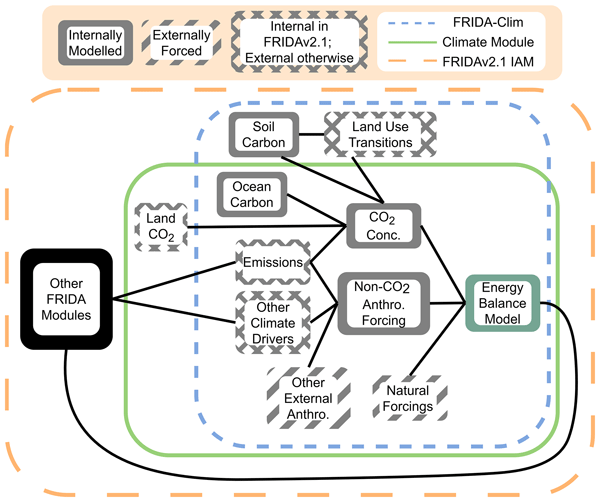
Understanding the change in climate that would occur under different future pathways of greenhouse gas emissions and changes in land use is crucial. Here, we develop a new simple climate model to help study this. We reduce the number of inputs so that our model can be connected to a model of the human causes of climate change. This way, we can study the interaction between climate change and society, including climate impacts. Our model broadly agrees with historical observations.
Christopher D. Wells, Benjamin Blanz, Lennart Ramme, Jannes Breier, Beniamino Callegari, Adakudlu Muralidhar, Jefferson K. Rajah, Andreas Nicolaidis Lindqvist, Axel E. Eriksson, William Alexander Schoenberg, Alexandre C. Köberle, Lan Wang-Erlandsson, Cecilie Mauritzen, Martin B. Grimeland, and Chris Smith
Geosci. Model Dev., 19, 1229–1260, https://doi.org/10.5194/gmd-19-1229-2026, https://doi.org/10.5194/gmd-19-1229-2026, 2026
Short summary
Short summary
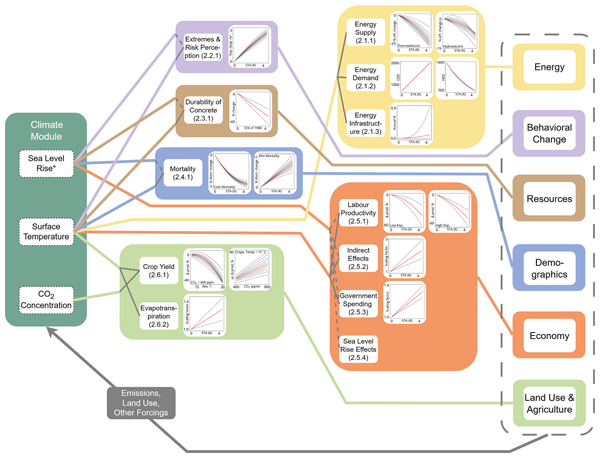
Computer models built to study future developments of human activity and climate change often exclude the impacts of climate change. Here, we include these effects in a new model. We create functions connecting changes in global temperature, carbon dioxide, and sea level to energy supply and demand, food systems, mortality, economic damages, and other important quantities. Including these effects will allow us to explore their impact on future changes in the human and climate realms.
William Schoenberg, Benjamin Blanz, Jefferson K. Rajah, Beniamino Callegari, Christopher Wells, Jannes Breier, Martin B. Grimeland, Andreas Nicolaidis Lindqvist, Lennart Ramme, Chris Smith, Chao Li, Sarah Mashhadi, Adakudlu Muralidhar, and Cecilie Mauritzen
Geosci. Model Dev., 18, 8047–8069, https://doi.org/10.5194/gmd-18-8047-2025, https://doi.org/10.5194/gmd-18-8047-2025, 2025
Short summary
Short summary
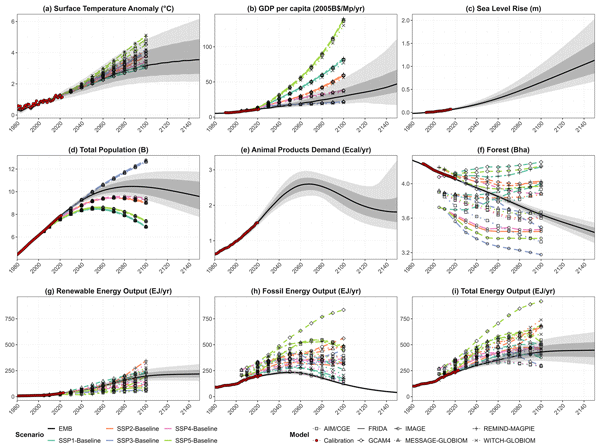
The current crop of models assessed by the Intergovernmental Panel on Climate Change to produce their assessment reports lack endogenous process-based representations of climate-driven changes to human activities, limiting understanding of the feedback between climate and humans. FRIDA (Feedback-based knowledge Repository for IntegrateD Assessments) v2.1 integrates these systems and generate results that suggest standard scenarios the shared socioeconomic pathways baseline scenarios may overestimate economic growth, highlighting the importance of feedbacks for realistic projections and informed policymaking.
Luana Schwarz, Jannes Breier, Hannah Prawitz, Max Bechthold, Werner von Bloh, Sara M. Constantino, Dieter Gerten, Jobst Heitzig, Ronja Hotz, Leander John, Christoph Müller, Johan Rockström, and Jonathan F. Donges
EGUsphere, https://doi.org/10.5194/egusphere-2025-4079, https://doi.org/10.5194/egusphere-2025-4079, 2025
Short summary
Short summary
We present a novel global model that links farmer decisions with ecological processes to explore how agricultural systems co-evolve. Unlike previous tools, it captures feedbacks between society and nature at up-to planetary scale. We find that conservation practices can restore soil health and support stable harvests. Adoption spreads through learning and norms, showing how regeneration at the farm scale can ripple outward, contributing to global sustainability and Earth system resilience.
Max Bechthold, Wolfram Barfuss, André Butz, Jannes Breier, Sara M. Constantino, Jobst Heitzig, Luana Schwarz, Sanam N. Vardag, and Jonathan F. Donges
Earth Syst. Dynam., 16, 1365–1390, https://doi.org/10.5194/esd-16-1365-2025, https://doi.org/10.5194/esd-16-1365-2025, 2025
Short summary
Short summary
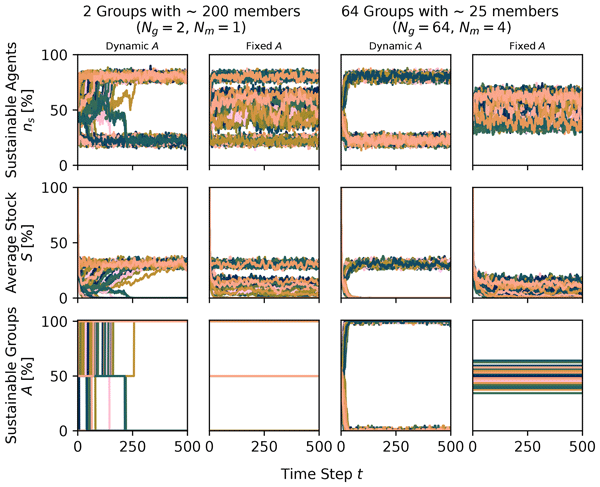
Social norms are a major influence on human behaviour. In natural resource use models, norms are often included in a simplistic way leading to “black or white” sustainability outcomes. We find that a dynamic representation of norms, including social groups, determines more nuanced states of the environment in a stylised model of resource use while also defining the success of attempts to manage the system, suggesting the importance of representing both aspects well in coupled models.
Jens Heinke, Sibyll Schaphoff, Stephen Björn Wirth, and Christoph Müller
EGUsphere, https://doi.org/10.5194/egusphere-2026-4549, https://doi.org/10.5194/egusphere-2026-4549, 2026
This preprint is open for discussion and under review for Geoscientific Model Development (GMD).
Short summary
Short summary
Nitrogen is essential for plant growth, and vegetation models must capture how its availability limits it. We found a long-standing error in one such model, LPJmL, that had overestimated plants' nitrogen needs by about a factor of two. Correcting it removed this limit almost entirely, which required further adjustments to how the model handles nitrogen uptake, recycling, and plant leaf timing, to restore a realistic level of nitrogen limitation and overall model behavior.
Sibyll Schaphoff, David Hötten, Christoph Müller, Dieter Gerten, Sebastian Ostberg, and Werner von Bloh
Geosci. Model Dev., 19, 7615–7651, https://doi.org/10.5194/gmd-19-7615-2026, https://doi.org/10.5194/gmd-19-7615-2026, 2026
Short summary
Short summary
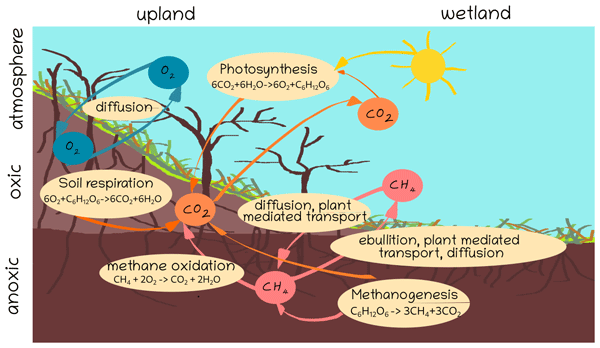
Methane is a powerful driver of climate change, yet emissions from wetlands and farming remain uncertain. We improved a global vegetation model that links water, plants and soils to methane production and release. The model now captures waterlogged areas, methane creation and escape, and flood-tolerant plants. It reproduces global wetland patterns and emissions more realistically, helping assess how climate and land-use change may affect future methane release and improve climate projections.
Hannah Prawitz, Luana Schwarz, Wolfram Barfuss, Sibel Eker, Johannes Halbe, and Jonathan Friedemann Donges
EGUsphere, https://doi.org/10.5194/egusphere-2026-3862, https://doi.org/10.5194/egusphere-2026-3862, 2026
This preprint is open for discussion and under review for Earth System Dynamics (ESD).
Short summary
Short summary
Human societies and the natural environment constantly shape one another, yet researchers usually study and model them separately. We reviewed 314 studies on global, two-way coupled social-environmental models and propose a typology to structure the field. While we find clear differences between the groups, models overall could be improved by better representing social-cultural dynamics, agent heterogeneity, diverse feedback loops, endogenous tipping dynamics, and cross-scale interactions.
Colin Jones, Isaline Bossert, Donovan P. Dennis, Hazel A. Jeffery, Chris D. Jones, Torben Koenigk, Sina Loriani, Benjamin Sanderson, Roland Séférian, Klaus Wyser, Shuting Yang, Manabu Abe, Sebastian Bathiany, Pascale Braconnot, Victor Brovkin, Friedrich A. Burger, Patrica Cadule, Frederic S. Castruccio, Gokhan Danabasoglu, Andrea Dittus, Jonathan F. Donges, Friederike Fröb, Thomas L. Frölicher, Goran Georgievski, Chuncheng Guo, Aixue Hu, Peter Lawrence, Paul Lerner, José Licón-Saláiz, Bette Otto-Bliesner, Anastasia Romanou, Elena Shevliakova, Yona Silvy, Didier Swingedouw, Jerry Tjiputra, Jeremy Walton, Andy Wiltshire, Ricarda Winkelmann, Richard Wood, Tokuta Yokohata, and Tilo Ziehn
Geosci. Model Dev., 19, 6941–6966, https://doi.org/10.5194/gmd-19-6941-2026, https://doi.org/10.5194/gmd-19-6941-2026, 2026
Short summary
Short summary
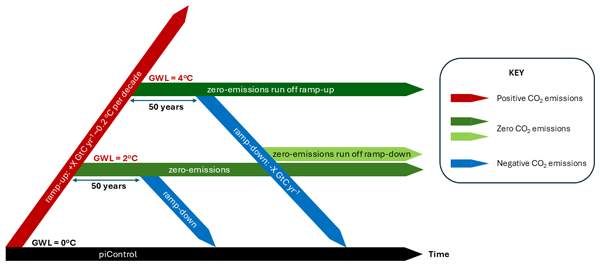
We introduce a new Earth system model experiment protocol to help researchers understand how Earth might respond to positive, zero, and negative carbon emissions. This protocol enables different models to be compared following similar warming and cooling rates. Researchers use the models to explore how the Earth reacts to different climate futures, including the risk of tipping points being exceeded and whether changes can be reversed. The results will support improved long-term climate policy.
Lily-belle Sweet, Christoph Müller, Jonas Jägermeyr, and Jakob Zscheischler
Geosci. Model Dev., 19, 6687–6735, https://doi.org/10.5194/gmd-19-6687-2026, https://doi.org/10.5194/gmd-19-6687-2026, 2026
Short summary
Short summary
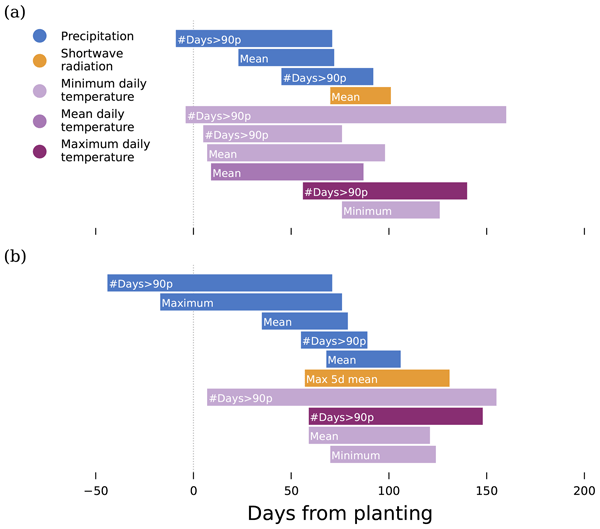
This study presents a method to identify climate drivers of an impact, such as agricultural yield failure, from high-resolution weather data. The approach systematically generates, selects and combines predictors that generalise across different environments. Tested on crop model simulations, the identified drivers are used to create parsimonious models that achieve high predictive performance over long time horizons, offering a more interpretable alternative to black-box models.
Xinrui Liu, Thomas Gasser, Jianmin Ma, Junfeng Liu, Jonas Jägermeyr, Christoph Müller, Christian Folberth, Florian Zabel, Atul K. Jain, Wenfeng Liu, and Heidi Webber
Geosci. Model Dev., 19, 5857–5880, https://doi.org/10.5194/gmd-19-5857-2026, https://doi.org/10.5194/gmd-19-5857-2026, 2026
Short summary
Short summary
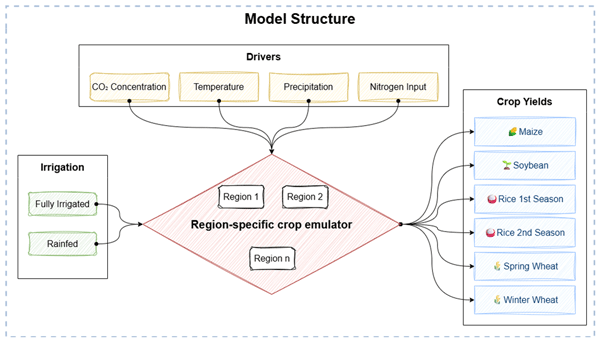
This paper presents a crop yield emulator for four major crops (maize, rice, soybean, and wheat). Trained on process-based crop model simulations, it captures yield responses to key drivers: atmospheric CO2, temperature, water availability, and nitrogen use. The emulator closely reproduces the behavior of complex crop models and aligns well with FAO (Food and Agriculture Organization)-reported historical yields. It provides a robust and efficient method for representing agricultural outcomes in climate change impact assessments.
Adakudlu Muralidhar, Cecilie Mauritzen, Christopher D. Wells, Benjamin Blanz, William Schoenberg, Beniamino Callegari, Jannes Breier, Jefferson K. Rajah, Lennart Ramme, Andreas Nicolaidis Lindqvist, Alexandre C. Köberle, Axel E. Eriksson, and Chris Smith
EGUsphere, https://doi.org/10.5194/egusphere-2026-3072, https://doi.org/10.5194/egusphere-2026-3072, 2026
This preprint is open for discussion and under review for Earth System Dynamics (ESD).
Short summary
Short summary
Using the integrated assessment model FRIDA v2.1, we examine how climate impacts spread through interconnected human and Earth systems, including the economy, energy, food, water, finance, and behaviour. We find that interacting climate impacts can reduce economic growth strongly than models assuming isolated effects. Financial feedbacks are especially important, and nonlinear climate–society interactions can amplify risks across sectors even without explicit climate tipping points.
Kobe De Maeyer, Jakob Harteg, Jonathan F. Donges, Ricarda Winkelmann, and Sina Loriani
EGUsphere, https://doi.org/10.5194/egusphere-2026-3389, https://doi.org/10.5194/egusphere-2026-3389, 2026
Short summary
Short summary
Understanding Earth system dynamics requires comparing outputs from many models and variables. Yet identifying where and when datasets agree on significant changes remains a challenge. We developed methods that combine detected signals across models and variables into shared patterns in space and time, providing robust signals from large model ensembles. Applied to Amazon rainforest simulations, we show that conclusions about Earth system change depend critically on how evidence is synthesised.
Andreia F. S. Ribeiro, Maik Biling, Kirsten Thonicke, Werner von Bloh, Jakob Wessel, Sabine Undorf, Matthias Forkel, and Jakob Zscheischler
EGUsphere, https://doi.org/10.5194/egusphere-2026-2952, https://doi.org/10.5194/egusphere-2026-2952, 2026
Short summary
Short summary
Wildfires are becoming more extreme, yet our state-of-the-art tools fail to capture the full risk. We simulate a large ensemble of wildfire simulations capturing a broader range of physically plausible extreme wildfire events beyond what observations alone can reveal. Extreme fire danger alone does not explain the worst impacts: ignitions, fuel and vegetation-fire feedback need to be incorporated. This modelling framework is transferable to other climate-impact sectors beyond wildfires.
Jakob Harteg, Nico Wunderling, and Jonathan F. Donges
Earth Syst. Dynam., 17, 673–686, https://doi.org/10.5194/esd-17-673-2026, https://doi.org/10.5194/esd-17-673-2026, 2026
Short summary
Short summary
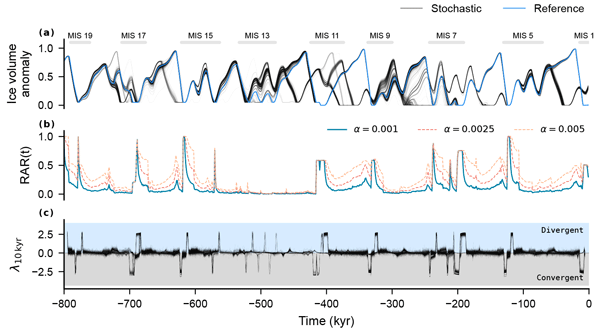
We investigate how resilient Earth’s climate system is to disturbances by analysing glacial-interglacial cycles using a simple climate model. By simulating small and large shocks to ice volume, we show that Earth’s climate more easily returns to its natural path during warm periods. These results improve our understanding of how Earth resilience varies over time in systems driven by external forces.
Heindriken Dahlmann, Lauren S. Andersen, Sibyll Schaphoff, Fabian Stenzel, Johanna Braun, Christoph Müller, and Dieter Gerten
Hydrol. Earth Syst. Sci., 30, 3185–3201, https://doi.org/10.5194/hess-30-3185-2026, https://doi.org/10.5194/hess-30-3185-2026, 2026
Short summary
Short summary
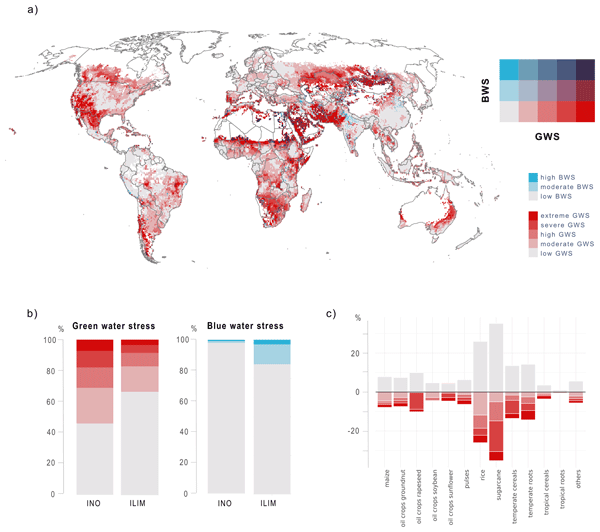
Green water stress can negatively affect agricultural production and is often mitigated through irrigation. In this global modelling study, we investigate where and to what extent the implementation of irrigation helps to compensate for green water stress but at the same time leads to an increase in blue water scarcity. Our findings highlight the need to consider both water stresses together, along with their dynamic interactions, for sustainable water management.
Marie Hemmen, Heidi Webber, Werner von Bloh, Jens Heinke, and Christoph Müller
EGUsphere, https://doi.org/10.5194/egusphere-2026-1898, https://doi.org/10.5194/egusphere-2026-1898, 2026
Short summary
Short summary
In this study we present a lightweight approach to compute crop canopy temperatures in computationally expensive models, which we apply in the global Lund-Potsdam-Jena managed Land model. The evaluation reveals that the developed approach reproduces cooling and heating effects of the canopy for daily maximum temperatures and suggests that replacement of standard 2 m air temperature input by simulated canopy temperatures improves the skill to model high temperature impacts on crop growth.
Susanne Rolinski, Jens Heinke, Stephen B. Wirth, and Christoph Müller
EGUsphere, https://doi.org/10.5194/egusphere-2026-1529, https://doi.org/10.5194/egusphere-2026-1529, 2026
Short summary
Short summary
Livestock rearing in semi-arid steppe regions is traditionally extensive but under pressure both from increasing demand and by climate change. We demonstrate by applying a vegetation model that increasing management intensity by increasing fertilization and animal densities result in increasing livestock productivity but also environmental impacts in a nonlinear way. That allows to find management combinations with low environmental impacts without jeopardizing livestock productivity.
Didier Swingedouw, Laura Jackson, Aixue Hu, Anastasia Romanou, Nicole C. Laureanti, Wilbert Weijer, Sina Loriani, Bette Otto-Bliesner, Ayako Abe-Ouchi, Lucas Almeida, Alessio Bellucci, Reyk Börner, Gokhan Danabasoglu, Donovan P. Dennis, Marion Devilliers, Sybren Drijfhout, Jonathan Donges, Friederike Fröb, Thomas L. Frölicher, Guillaume Gastineau, Heiko Goelzer, Chuncheng Guo, Urs Hofmann, Anna Höse, Colin Jones, Torben Koenigk, Ann Kristin Klose, Valerio Lembo, Jose Licon-Salaiz, Ken Mankoff, Virna Meccia, Irina Melnikova, Oliver Mehling, Laurie Menviel, Juliette Mignot, Jon I. Robson, Gavin A. Schmidt, Robin Smith, Yuchen Sun, Irene Trombini, Matteo Willeit, Richard Wood, Fanghua Wu, Lin Zhaohui, and Ricarda Winkelmann
EGUsphere, https://doi.org/10.5194/egusphere-2026-1698, https://doi.org/10.5194/egusphere-2026-1698, 2026
Short summary
Short summary
This study presents a plan for climate model experiments to better understand how changes in freshwater in the North Atlantic affect major ocean currents. We designed coordinated simulations to test their response to warming, added freshwater, and possible recovery after weakening. Comparing results across models and past climate evidence helps improve confidence in projections and assess risks of large ocean circulation changes.
Bastian Ott, Jonathan F. Donges, and Johan Rockström
EGUsphere, https://doi.org/10.5194/egusphere-2026-79, https://doi.org/10.5194/egusphere-2026-79, 2026
Short summary
Short summary
Climate adaptation is crucial but its impacts on the Earth system are not well understood. Our study finds climate adaptation contributes ~26 % of annual greenhouse gas emissions, ~74 % of human freshwater withdrawals, and even affects the ozone layer. While some of these impacts are driven by climate change, the majority is likely fuelled by economic, demographic, and technological developments. These findings highlight the need to balance adaptation with respect for Earth system resilience.
Christopher D. Wells, Lennart Ramme, Chris Smith, Jannes Breier, Adakudlu Muralidhar, Chao Li, Ada Gjermundsen, William Alexander Schoenberg, Benjamin Blanz, and Cecilie Mauritzen
Geosci. Model Dev., 19, 1429–1453, https://doi.org/10.5194/gmd-19-1429-2026, https://doi.org/10.5194/gmd-19-1429-2026, 2026
Short summary
Short summary
Understanding the change in climate that would occur under different future pathways of greenhouse gas emissions and changes in land use is crucial. Here, we develop a new simple climate model to help study this. We reduce the number of inputs so that our model can be connected to a model of the human causes of climate change. This way, we can study the interaction between climate change and society, including climate impacts. Our model broadly agrees with historical observations.
John M. Anderies, Max Bechthold, Jonathan F. Donges, Ingo Fetzer, Nico Wunderling, Wolfram Barfuss, and Johan Rockström
EGUsphere, https://doi.org/10.5194/egusphere-2025-6345, https://doi.org/10.5194/egusphere-2025-6345, 2026
Short summary
Short summary
This paper explores a new approach to understanding human-Earth system resilience. It introduces a measure that estimates how likely a system is to reach a safe and just state. Available knowledge about how the system works, its boundaries, and potential disruptions centrally constrain the measure. It could help decision-makers strike a balance between gaining knowledge, building capacity to act, and taking practical measures to improve resilience in many different types of systems.
Christopher D. Wells, Benjamin Blanz, Lennart Ramme, Jannes Breier, Beniamino Callegari, Adakudlu Muralidhar, Jefferson K. Rajah, Andreas Nicolaidis Lindqvist, Axel E. Eriksson, William Alexander Schoenberg, Alexandre C. Köberle, Lan Wang-Erlandsson, Cecilie Mauritzen, Martin B. Grimeland, and Chris Smith
Geosci. Model Dev., 19, 1229–1260, https://doi.org/10.5194/gmd-19-1229-2026, https://doi.org/10.5194/gmd-19-1229-2026, 2026
Short summary
Short summary
Computer models built to study future developments of human activity and climate change often exclude the impacts of climate change. Here, we include these effects in a new model. We create functions connecting changes in global temperature, carbon dioxide, and sea level to energy supply and demand, food systems, mortality, economic damages, and other important quantities. Including these effects will allow us to explore their impact on future changes in the human and climate realms.
Marie Brunel, Stephen B. Wirth, Markus Drüke, Kirsten Thonicke, Henrique Barbosa, Jens Heinke, and Susanne Rolinski
Biogeosciences, 23, 939–965, https://doi.org/10.5194/bg-23-939-2026, https://doi.org/10.5194/bg-23-939-2026, 2026
Short summary
Short summary
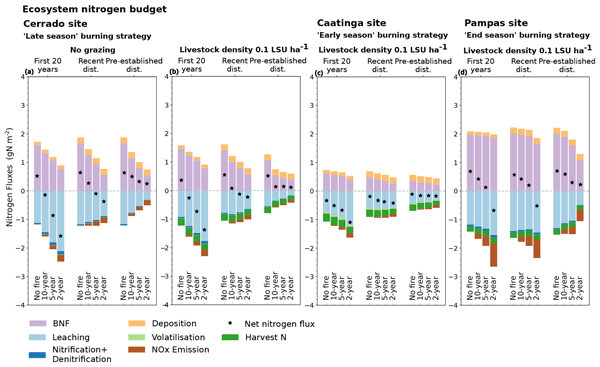
Farmers often use fire to clear dead pasture biomass, impacting vegetation and soil nutrients. This study integrates fire management into a Dynamic Global Vegetation Model (DGVM) to assess its effects, focusing on Brazil. The results show that combining grazing and fire management reduces vegetation carbon and soil nitrogen over time. The research highlights the need to include these practices in models to improve pasture management assessments and calls for better data on fire usage and its long-term effects.
Jakob Harteg, Lukas Röhrich, Kobe De Maeyer, Julius Garbe, Boris Sakschewski, Ann Kristin Klose, Jonathan F. Donges, Ricarda Winkelmann, and Sina Loriani
EGUsphere, https://doi.org/10.5194/egusphere-2026-356, https://doi.org/10.5194/egusphere-2026-356, 2026
Short summary
Short summary
Climate systems can undergo abrupt, potentially irreversible changes with major impacts on ecosystems and societies, yet consistent tools to detect these transitions across different models are lacking. We present an open-source software package for systematically detecting where and when such changes occur in climate simulations and quantifying variation in transition timing. This enables robust comparison of abrupt changes across models and contributes to assessing climate-tipping risks.
E. Keith Smith, Carl Folke, Niklas Kitzmann, Manjana Milkoreit, Per Olsson, Ricarda Winkelmann, Anne-Sophie Crépin, Christina Eder, Niklas Harring, Jobst Heitzig, Alexia Katsanidou, Timothy M. Lenton, Franz Mauelshagen, Kelton Minor, Ilona M. Otto, Armon Rezai, Jürgen Scheffran, Isabelle Stadelmann-Steffen, Rick van der Ploeg, Nico Wunderling, and Jonathan F. Donges
EGUsphere, https://doi.org/10.5194/egusphere-2026-177, https://doi.org/10.5194/egusphere-2026-177, 2026
This preprint is open for discussion and under review for Geoscientific Model Development (GMD).
Short summary
Short summary
Achieving climate and sustainability goals requires rapid, large-scale change. We introduce criticality – the likelihood a system is near a social tipping point – and critical agency – the capacity to shape those conditions. Our framework shows how coalitions and policies can trigger desired shifts and avoid harmful ones, linking complex systems theory with evidence to guide policymakers and practitioners.
Jéssica Schüler, Sarah Bereswill, Werner von Bloh, Maik Billing, Boris Sakschewski, Luke Oberhagemann, Kirsten Thonicke, and Mercedes M. C. Bustamante
Biogeosciences, 23, 95–113, https://doi.org/10.5194/bg-23-95-2026, https://doi.org/10.5194/bg-23-95-2026, 2026
Short summary
Short summary
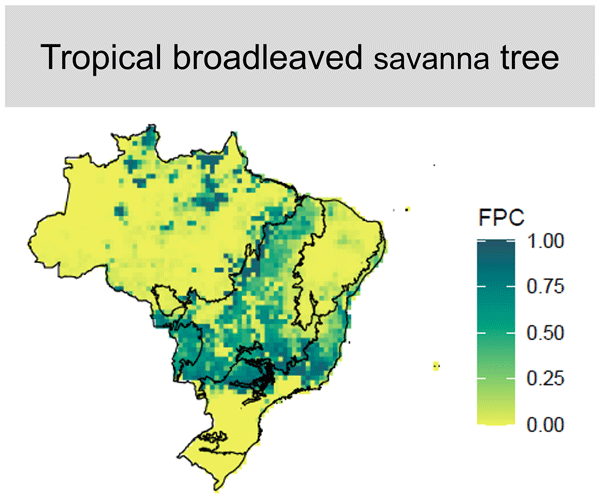
We introduced a new plant type into a global vegetation model to better represent the ecology of the Cerrado, South America's second largest biome. This improved the model’s ability to simulate vegetation structure, root systems, and fire dynamics, aligning more closely with observations. Our results enhance understanding of tropical savannas and provide a stronger basis for studying their responses to fire and climate change at regional and global scales.
Dieter Gerten, Bruna Almeida, Steven J. Lade, and Anna Norberg
EGUsphere, https://doi.org/10.5194/egusphere-2025-4761, https://doi.org/10.5194/egusphere-2025-4761, 2025
Short summary
Short summary
Transgression of planetary boundaries increases the risk of Earth system destabilization, in particular as the impacts may compound each other. This Perspective unravels processes underlying interactions between the planetary boundaries for freshwater change, climate change and land-system change. It proposes a systematic model-based assessment of drivers and impacts of their interactions, emphasising the need to maintain multiple boundaries collectively so as to avoid uncontrolled feedbacks.
William Schoenberg, Benjamin Blanz, Jefferson K. Rajah, Beniamino Callegari, Christopher Wells, Jannes Breier, Martin B. Grimeland, Andreas Nicolaidis Lindqvist, Lennart Ramme, Chris Smith, Chao Li, Sarah Mashhadi, Adakudlu Muralidhar, and Cecilie Mauritzen
Geosci. Model Dev., 18, 8047–8069, https://doi.org/10.5194/gmd-18-8047-2025, https://doi.org/10.5194/gmd-18-8047-2025, 2025
Short summary
Short summary
The current crop of models assessed by the Intergovernmental Panel on Climate Change to produce their assessment reports lack endogenous process-based representations of climate-driven changes to human activities, limiting understanding of the feedback between climate and humans. FRIDA (Feedback-based knowledge Repository for IntegrateD Assessments) v2.1 integrates these systems and generate results that suggest standard scenarios the shared socioeconomic pathways baseline scenarios may overestimate economic growth, highlighting the importance of feedbacks for realistic projections and informed policymaking.
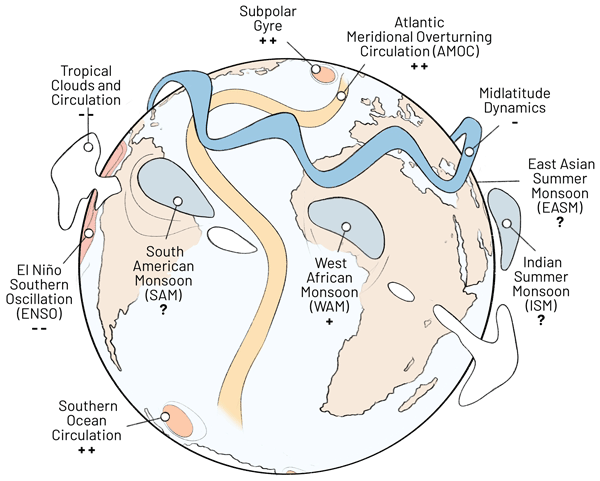
Sina Loriani, Yevgeny Aksenov, David I. Armstrong McKay, Govindasamy Bala, Andreas Born, Cristiano Mazur Chiessi, Henk A. Dijkstra, Jonathan F. Donges, Sybren Drijfhout, Matthew H. England, Alexey V. Fedorov, Laura C. Jackson, Kai Kornhuber, Gabriele Messori, Francesco S. R. Pausata, Stefanie Rynders, Jean-Baptiste Sallée, Bablu Sinha, Steven C. Sherwood, Didier Swingedouw, and Thejna Tharammal
Earth Syst. Dynam., 16, 1611–1653, https://doi.org/10.5194/esd-16-1611-2025, https://doi.org/10.5194/esd-16-1611-2025, 2025
Short summary
Short summary
In this work, we draw on palaeo-records, observations, and modelling studies to review tipping points in the ocean overturning circulations, monsoon systems, and global atmospheric circulations. We find indications for tipping in the ocean overturning circulations and the West African monsoon, with potentially severe impacts on the Earth system and humans. Tipping in the other considered systems is regarded as conceivable but is currently not sufficiently supported by evidence.
Luana Schwarz, Jannes Breier, Hannah Prawitz, Max Bechthold, Werner von Bloh, Sara M. Constantino, Dieter Gerten, Jobst Heitzig, Ronja Hotz, Leander John, Christoph Müller, Johan Rockström, and Jonathan F. Donges
EGUsphere, https://doi.org/10.5194/egusphere-2025-4079, https://doi.org/10.5194/egusphere-2025-4079, 2025
Short summary
Short summary
We present a novel global model that links farmer decisions with ecological processes to explore how agricultural systems co-evolve. Unlike previous tools, it captures feedbacks between society and nature at up-to planetary scale. We find that conservation practices can restore soil health and support stable harvests. Adoption spreads through learning and norms, showing how regeneration at the farm scale can ripple outward, contributing to global sustainability and Earth system resilience.
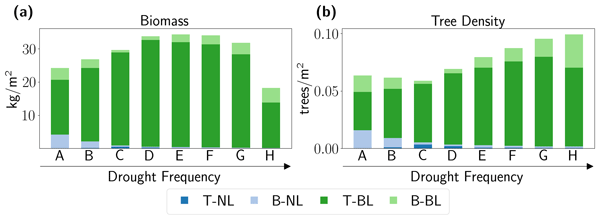
Jamir Priesner, Boris Sakschewski, Maik Billing, Werner von Bloh, Sebastian Fiedler, Sarah Bereswill, Kirsten Thonicke, and Britta Tietjen
Nat. Hazards Earth Syst. Sci., 25, 3309–3331, https://doi.org/10.5194/nhess-25-3309-2025, https://doi.org/10.5194/nhess-25-3309-2025, 2025
Short summary
Short summary
In our simulations increased drought frequencies lead to a drastic reduction in biomass in temperate pine monoculture and mixed forests. Mixed forests eventually recovered as long as drought frequency was not too high. The higher resilience of mixed forests was due to higher adaptive capacity. After adaptation mixed forests were mainly composed of smaller, broadleaved trees with higher wood density and slower growth. This would have strong implications for forestry and other ecosystem services.
Max Bechthold, Wolfram Barfuss, André Butz, Jannes Breier, Sara M. Constantino, Jobst Heitzig, Luana Schwarz, Sanam N. Vardag, and Jonathan F. Donges
Earth Syst. Dynam., 16, 1365–1390, https://doi.org/10.5194/esd-16-1365-2025, https://doi.org/10.5194/esd-16-1365-2025, 2025
Short summary
Short summary
Social norms are a major influence on human behaviour. In natural resource use models, norms are often included in a simplistic way leading to “black or white” sustainability outcomes. We find that a dynamic representation of norms, including social groups, determines more nuanced states of the environment in a stylised model of resource use while also defining the success of attempts to manage the system, suggesting the importance of representing both aspects well in coupled models.
Arne Tobian, Sarah Cornell, Ingo Fetzer, Dieter Gerten, and Johan Rockström
EGUsphere, https://doi.org/10.5194/egusphere-2025-2202, https://doi.org/10.5194/egusphere-2025-2202, 2025
Short summary
Short summary
The land use change reallocation tool LUCATOO enables the creation of future land use change scenario datasets tailored to specific requirements in model study applications. Its usability is demonstrated in the planetary boundaries interaction context. Being written in the programming language R and made openly accessible, LUCATOO can be easily adapted to be employed in contexts other than the planetary boundaries framework.
Ricarda Winkelmann, Donovan P. Dennis, Jonathan F. Donges, Sina Loriani, Ann Kristin Klose, Jesse F. Abrams, Jorge Alvarez-Solas, Torsten Albrecht, David Armstrong McKay, Sebastian Bathiany, Javier Blasco Navarro, Victor Brovkin, Eleanor Burke, Gokhan Danabasoglu, Reik V. Donner, Markus Drüke, Goran Georgievski, Heiko Goelzer, Anna B. Harper, Gabriele Hegerl, Marina Hirota, Aixue Hu, Laura C. Jackson, Colin Jones, Hyungjun Kim, Torben Koenigk, Peter Lawrence, Timothy M. Lenton, Hannah Liddy, José Licón-Saláiz, Maxence Menthon, Marisa Montoya, Jan Nitzbon, Sophie Nowicki, Bette Otto-Bliesner, Francesco Pausata, Stefan Rahmstorf, Karoline Ramin, Alexander Robinson, Johan Rockström, Anastasia Romanou, Boris Sakschewski, Christina Schädel, Steven Sherwood, Robin S. Smith, Norman J. Steinert, Didier Swingedouw, Matteo Willeit, Wilbert Weijer, Richard Wood, Klaus Wyser, and Shuting Yang
EGUsphere, https://doi.org/10.5194/egusphere-2025-1899, https://doi.org/10.5194/egusphere-2025-1899, 2025
Short summary
Short summary
The Tipping Points Modelling Intercomparison Project (TIPMIP) is an international collaborative effort to systematically assess tipping point risks in the Earth system using state-of-the-art coupled and stand-alone domain models. TIPMIP will provide a first global atlas of potential tipping dynamics, respective critical thresholds and key uncertainties, generating an important building block towards a comprehensive scientific basis for policy- and decision-making.
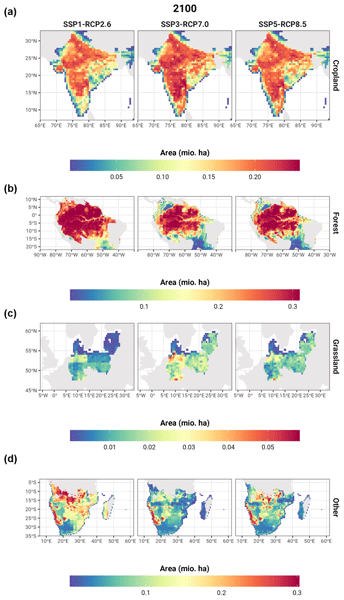
Edna Johanna Molina Bacca, Miodrag Stevanović, Benjamin Leon Bodirsky, Jonathan Cornelis Doelman, Louise Parsons Chini, Jan Volkholz, Katja Frieler, Christopher Paul Oliver Reyer, George Hurtt, Florian Humpenöder, Kristine Karstens, Jens Heinke, Christoph Müller, Jan Philipp Dietrich, Hermann Lotze-Campen, Elke Stehfest, and Alexander Popp
Earth Syst. Dynam., 16, 753–801, https://doi.org/10.5194/esd-16-753-2025, https://doi.org/10.5194/esd-16-753-2025, 2025
Short summary
Short summary
Land-use change projections are vital for impact studies. This study compares updated land-use model projections, including CO2 fertilization among other upgrades, from the MAgPIE and IMAGE models under three scenarios, highlighting differences, uncertainty hotspots, and harmonization effects. Key findings include reduced bioenergy crop demand projections and differences in grassland area allocation and sizes, with socioeconomic–climate scenarios' largest effect on variance starting in 2030.
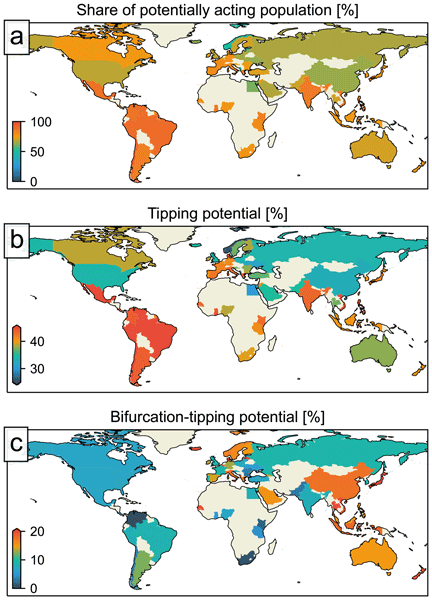
E. Keith Smith, Marc Wiedermann, Jonathan F. Donges, Jobst Heitzig, and Ricarda Winkelmann
Earth Syst. Dynam., 16, 545–564, https://doi.org/10.5194/esd-16-545-2025, https://doi.org/10.5194/esd-16-545-2025, 2025
Short summary
Short summary
Social tipping dynamics have received recent attention as a potential mechanism for effective climate actions – yet how such tipping dynamics could unfold remains largely unquantified. We explore how social tipping processes can develop by enabling necessary conditions (exemplified by climate change concern) and increased perceptions of localized impacts (sea level rise). The likelihood of social tipping varies regionally, mostly along areas with the highest exposure to persistent risks.
Luke Oberhagemann, Maik Billing, Werner von Bloh, Markus Drüke, Matthew Forrest, Simon P. K. Bowring, Jessica Hetzer, Jaime Ribalaygua Batalla, and Kirsten Thonicke
Geosci. Model Dev., 18, 2021–2050, https://doi.org/10.5194/gmd-18-2021-2025, https://doi.org/10.5194/gmd-18-2021-2025, 2025
Short summary
Short summary
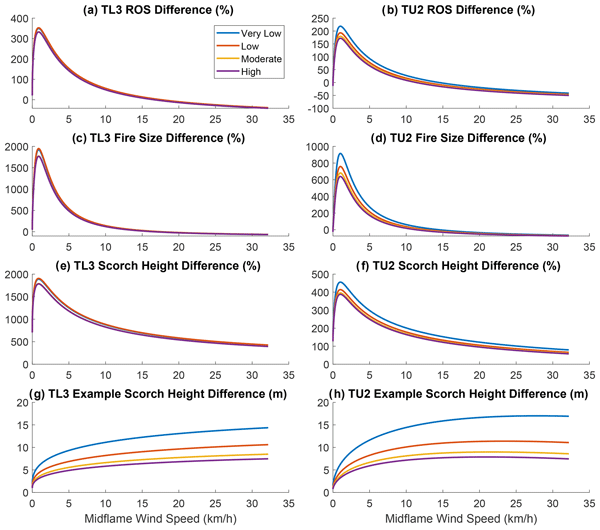
Under climate change, the conditions necessary for wildfires to form are occurring more frequently in many parts of the world. To help predict how wildfires will change in future, global fire models are being developed. We analyze and further develop one such model, SPITFIRE. Our work identifies and corrects sources of substantial bias in the model that are important to the global fire modelling field. With this analysis and these developments, we help to provide a basis for future improvements.
Elena Xoplaki, Florian Ellsäßer, Jens Grieger, Katrin M. Nissen, Joaquim G. Pinto, Markus Augenstein, Ting-Chen Chen, Hendrik Feldmann, Petra Friederichs, Daniel Gliksman, Laura Goulier, Karsten Haustein, Jens Heinke, Lisa Jach, Florian Knutzen, Stefan Kollet, Jürg Luterbacher, Niklas Luther, Susanna Mohr, Christoph Mudersbach, Christoph Müller, Efi Rousi, Felix Simon, Laura Suarez-Gutierrez, Svenja Szemkus, Sara M. Vallejo-Bernal, Odysseas Vlachopoulos, and Frederik Wolf
Nat. Hazards Earth Syst. Sci., 25, 541–564, https://doi.org/10.5194/nhess-25-541-2025, https://doi.org/10.5194/nhess-25-541-2025, 2025
Short summary
Short summary
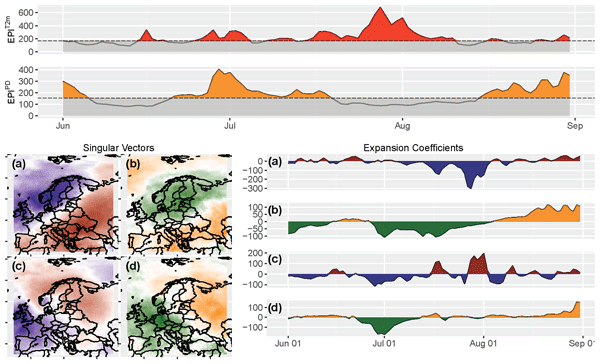
Europe frequently experiences compound events, with major impacts. We investigate these events’ interactions, characteristics, and changes over time, focusing on socio-economic impacts in Germany and central Europe. Highlighting 2018’s extreme events, this study reveals impacts on water, agriculture, and forests and stresses the need for impact-focused definitions and better future risk quantification to support adaptation planning.
Jordan P. Everall, Fabian Tschofenig, Jonathan F. Donges, and Ilona M. Otto
Earth Syst. Dynam., 16, 189–214, https://doi.org/10.5194/esd-16-189-2025, https://doi.org/10.5194/esd-16-189-2025, 2025
Short summary
Short summary
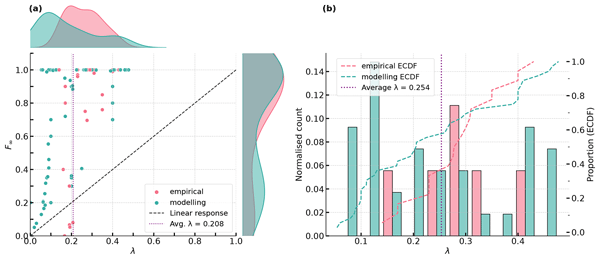
A social tipping process is a large change in a social group that can be started by few people. Does the 80/20 rule apply here? We see if this is the case for human social groups. We find that, if the social conditions allow, change occurs when around 25 % of people engage. While tipping can happen between 10 % and 43 %, most cases tip by 40 %. However, tipping is not guaranteed: when people are resistant, trusted friend groups and context-appropriate messaging help the process along.
Stephen Björn Wirth, Johanna Braun, Jens Heinke, Sebastian Ostberg, Susanne Rolinski, Sibyll Schaphoff, Fabian Stenzel, Werner von Bloh, Friedhelm Taube, and Christoph Müller
Geosci. Model Dev., 17, 7889–7914, https://doi.org/10.5194/gmd-17-7889-2024, https://doi.org/10.5194/gmd-17-7889-2024, 2024
Short summary
Short summary
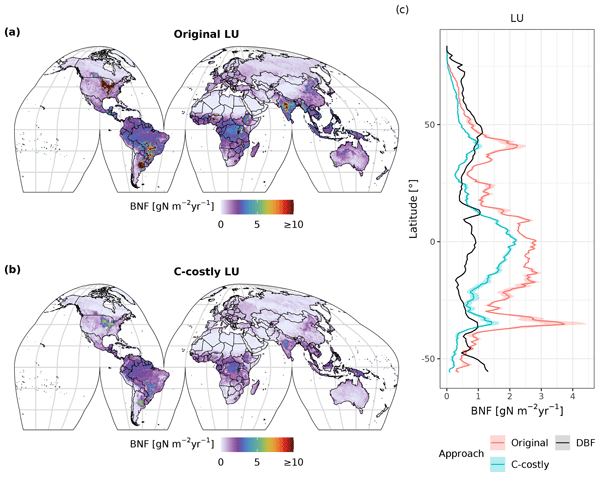
We present a new approach to modelling biological nitrogen fixation (BNF) in the Lund–Potsdam–Jena managed Land dynamic global vegetation model. While in the original approach BNF depended on actual evapotranspiration, the new approach considers soil water content and temperature, vertical root distribution, the nitrogen (N) deficit and carbon (C) costs. The new approach improved simulated BNF compared to the scientific literature and the model ability to project future C and N cycle dynamics.
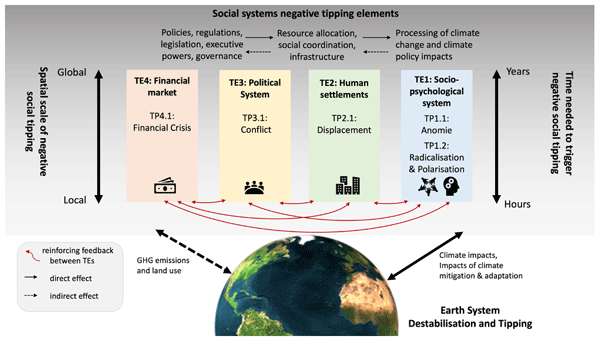
Viktoria Spaiser, Sirkku Juhola, Sara M. Constantino, Weisi Guo, Tabitha Watson, Jana Sillmann, Alessandro Craparo, Ashleigh Basel, John T. Bruun, Krishna Krishnamurthy, Jürgen Scheffran, Patricia Pinho, Uche T. Okpara, Jonathan F. Donges, Avit Bhowmik, Taha Yasseri, Ricardo Safra de Campos, Graeme S. Cumming, Hugues Chenet, Florian Krampe, Jesse F. Abrams, James G. Dyke, Stefanie Rynders, Yevgeny Aksenov, and Bryan M. Spears
Earth Syst. Dynam., 15, 1179–1206, https://doi.org/10.5194/esd-15-1179-2024, https://doi.org/10.5194/esd-15-1179-2024, 2024
Short summary
Short summary
In this paper, we identify potential negative social tipping points linked to Earth system destabilization and draw on related research to understand the drivers and likelihood of these negative social tipping dynamics, their potential effects on human societies and the Earth system, and the potential for cascading interactions and contribution to systemic risks.
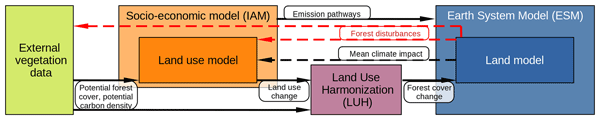
Felix Jäger, Jonas Schwaab, Yann Quilcaille, Michael Windisch, Jonathan Doelman, Stefan Frank, Mykola Gusti, Petr Havlik, Florian Humpenöder, Andrey Lessa Derci Augustynczik, Christoph Müller, Kanishka Balu Narayan, Ryan Sebastian Padrón, Alexander Popp, Detlef van Vuuren, Michael Wögerer, and Sonia Isabelle Seneviratne
Earth Syst. Dynam., 15, 1055–1071, https://doi.org/10.5194/esd-15-1055-2024, https://doi.org/10.5194/esd-15-1055-2024, 2024
Short summary
Short summary
Climate change mitigation strategies developed with socioeconomic models rely on the widespread (re)planting of trees to limit global warming below 2°. However, most of these models neglect climate-driven shifts in forest damage like fires. By assessing existing mitigation scenarios, we show the exposure of projected forestation areas to fire-promoting weather conditions. Our study highlights the problem of ignoring climate-driven shifts in forest damage and ways to address it.
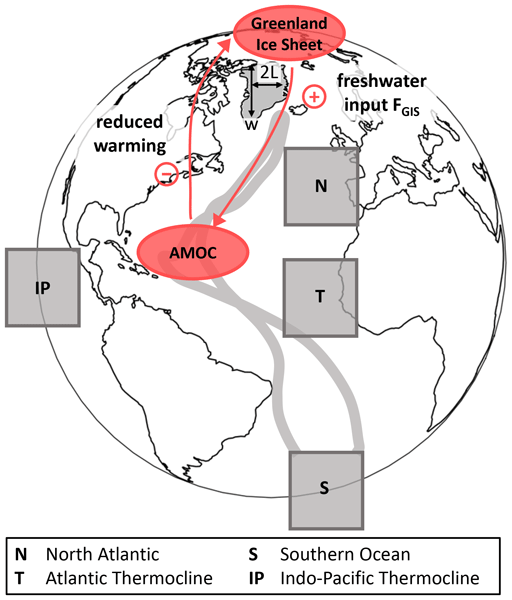
Ann Kristin Klose, Jonathan F. Donges, Ulrike Feudel, and Ricarda Winkelmann
Earth Syst. Dynam., 15, 635–652, https://doi.org/10.5194/esd-15-635-2024, https://doi.org/10.5194/esd-15-635-2024, 2024
Short summary
Short summary
We qualitatively study the long-term stability of the Greenland Ice Sheet and AMOC as tipping elements in the Earth system, which is largely unknown given their interaction in a positive–negative feedback loop. Depending on the timescales of ice loss and the position of the AMOC’s state relative to its critical threshold, we find distinct dynamic regimes of cascading tipping. These suggest that respecting safe rates of environmental change is necessary to mitigate potential domino effects.
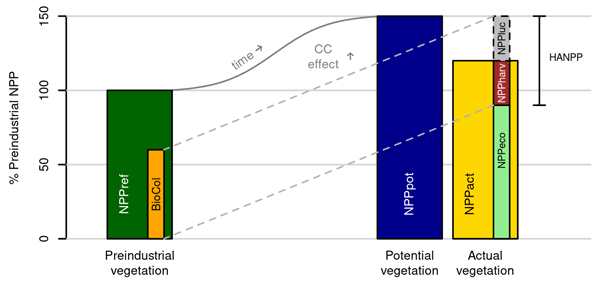
Fabian Stenzel, Johanna Braun, Jannes Breier, Karlheinz Erb, Dieter Gerten, Jens Heinke, Sarah Matej, Sebastian Ostberg, Sibyll Schaphoff, and Wolfgang Lucht
Geosci. Model Dev., 17, 3235–3258, https://doi.org/10.5194/gmd-17-3235-2024, https://doi.org/10.5194/gmd-17-3235-2024, 2024
Short summary
Short summary
We provide an R package to compute two biosphere integrity metrics that can be applied to simulations of vegetation growth from the dynamic global vegetation model LPJmL. The pressure metric BioCol indicates that we humans modify and extract > 20 % of the potential preindustrial natural biomass production. The ecosystems state metric EcoRisk shows a high risk of ecosystem destabilization in many regions as a result of climate change and land, water, and fertilizer use.
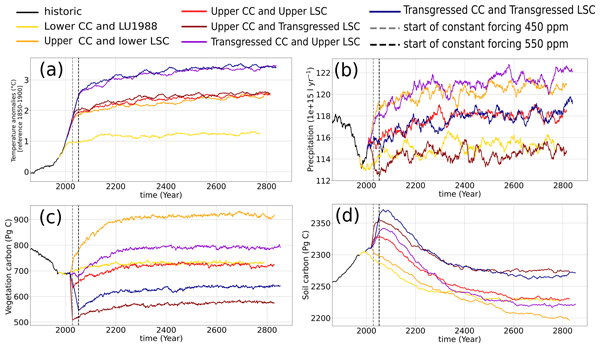
Markus Drüke, Wolfgang Lucht, Werner von Bloh, Stefan Petri, Boris Sakschewski, Arne Tobian, Sina Loriani, Sibyll Schaphoff, Georg Feulner, and Kirsten Thonicke
Earth Syst. Dynam., 15, 467–483, https://doi.org/10.5194/esd-15-467-2024, https://doi.org/10.5194/esd-15-467-2024, 2024
Short summary
Short summary
The planetary boundary framework characterizes major risks of destabilization of the Earth system. We use the comprehensive Earth system model POEM to study the impact of the interacting boundaries for climate change and land system change. Our study shows the importance of long-term effects on carbon dynamics and climate, as well as the need to investigate both boundaries simultaneously and to generally keep both boundaries within acceptable ranges to avoid a catastrophic scenario for humanity.
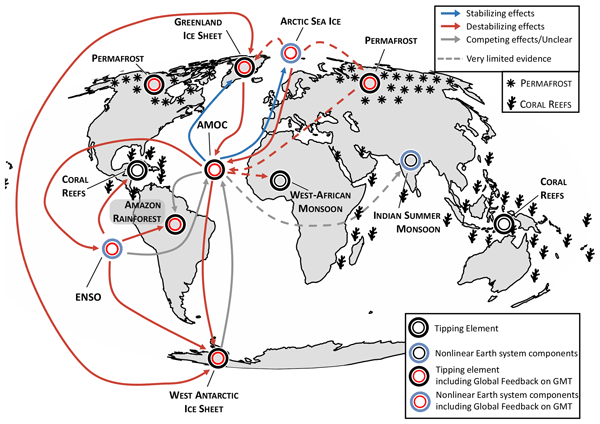
Nico Wunderling, Anna S. von der Heydt, Yevgeny Aksenov, Stephen Barker, Robbin Bastiaansen, Victor Brovkin, Maura Brunetti, Victor Couplet, Thomas Kleinen, Caroline H. Lear, Johannes Lohmann, Rosa Maria Roman-Cuesta, Sacha Sinet, Didier Swingedouw, Ricarda Winkelmann, Pallavi Anand, Jonathan Barichivich, Sebastian Bathiany, Mara Baudena, John T. Bruun, Cristiano M. Chiessi, Helen K. Coxall, David Docquier, Jonathan F. Donges, Swinda K. J. Falkena, Ann Kristin Klose, David Obura, Juan Rocha, Stefanie Rynders, Norman Julius Steinert, and Matteo Willeit
Earth Syst. Dynam., 15, 41–74, https://doi.org/10.5194/esd-15-41-2024, https://doi.org/10.5194/esd-15-41-2024, 2024
Short summary
Short summary
This paper maps out the state-of-the-art literature on interactions between tipping elements relevant for current global warming pathways. We find indications that many of the interactions between tipping elements are destabilizing. This means that tipping cascades cannot be ruled out on centennial to millennial timescales at global warming levels between 1.5 and 2.0 °C or on shorter timescales if global warming surpasses 2.0 °C.
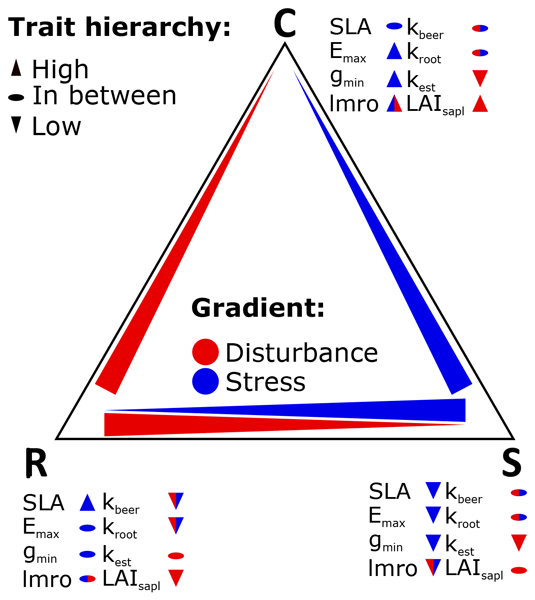
Stephen Björn Wirth, Arne Poyda, Friedhelm Taube, Britta Tietjen, Christoph Müller, Kirsten Thonicke, Anja Linstädter, Kai Behn, Sibyll Schaphoff, Werner von Bloh, and Susanne Rolinski
Biogeosciences, 21, 381–410, https://doi.org/10.5194/bg-21-381-2024, https://doi.org/10.5194/bg-21-381-2024, 2024
Short summary
Short summary
In dynamic global vegetation models (DGVMs), the role of functional diversity in forage supply and soil organic carbon storage of grasslands is not explicitly taken into account. We introduced functional diversity into the Lund Potsdam Jena managed Land (LPJmL) DGVM using CSR theory. The new model reproduced well-known trade-offs between plant traits and can be used to quantify the role of functional diversity in climate change mitigation using different functional diversity scenarios.
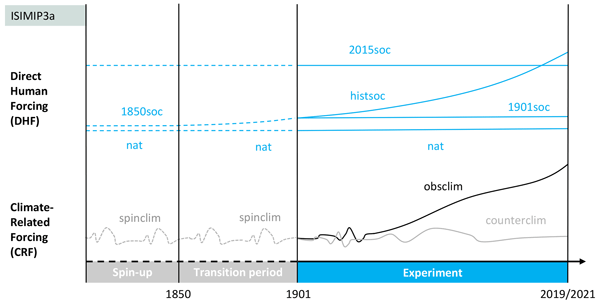
Katja Frieler, Jan Volkholz, Stefan Lange, Jacob Schewe, Matthias Mengel, María del Rocío Rivas López, Christian Otto, Christopher P. O. Reyer, Dirk Nikolaus Karger, Johanna T. Malle, Simon Treu, Christoph Menz, Julia L. Blanchard, Cheryl S. Harrison, Colleen M. Petrik, Tyler D. Eddy, Kelly Ortega-Cisneros, Camilla Novaglio, Yannick Rousseau, Reg A. Watson, Charles Stock, Xiao Liu, Ryan Heneghan, Derek Tittensor, Olivier Maury, Matthias Büchner, Thomas Vogt, Tingting Wang, Fubao Sun, Inga J. Sauer, Johannes Koch, Inne Vanderkelen, Jonas Jägermeyr, Christoph Müller, Sam Rabin, Jochen Klar, Iliusi D. Vega del Valle, Gitta Lasslop, Sarah Chadburn, Eleanor Burke, Angela Gallego-Sala, Noah Smith, Jinfeng Chang, Stijn Hantson, Chantelle Burton, Anne Gädeke, Fang Li, Simon N. Gosling, Hannes Müller Schmied, Fred Hattermann, Jida Wang, Fangfang Yao, Thomas Hickler, Rafael Marcé, Don Pierson, Wim Thiery, Daniel Mercado-Bettín, Robert Ladwig, Ana Isabel Ayala-Zamora, Matthew Forrest, and Michel Bechtold
Geosci. Model Dev., 17, 1–51, https://doi.org/10.5194/gmd-17-1-2024, https://doi.org/10.5194/gmd-17-1-2024, 2024
Short summary
Short summary
Our paper provides an overview of all observational climate-related and socioeconomic forcing data used as input for the impact model evaluation and impact attribution experiments within the third round of the Inter-Sectoral Impact Model Intercomparison Project. The experiments are designed to test our understanding of observed changes in natural and human systems and to quantify to what degree these changes have already been induced by climate change.
Weihang Liu, Tao Ye, Christoph Müller, Jonas Jägermeyr, James A. Franke, Haynes Stephens, and Shuo Chen
Geosci. Model Dev., 16, 7203–7221, https://doi.org/10.5194/gmd-16-7203-2023, https://doi.org/10.5194/gmd-16-7203-2023, 2023
Short summary
Short summary
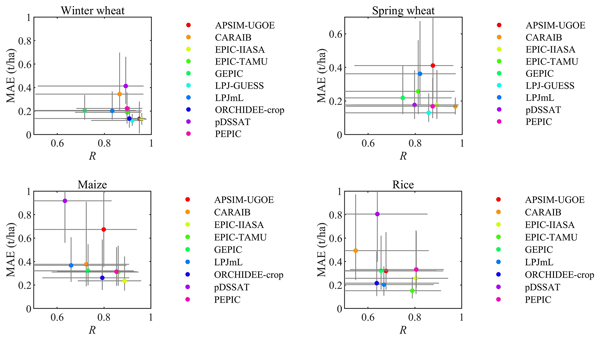
We develop a machine-learning-based crop model emulator with the inputs and outputs of multiple global gridded crop model ensemble simulations to capture the year-to-year variation of crop yield under future climate change. The emulator can reproduce the year-to-year variation of simulated yield given by the crop models under CO2, temperature, water, and nitrogen perturbations. Developing this emulator can provide a tool to project future climate change impact in a simple way.
Sebastian Ostberg, Christoph Müller, Jens Heinke, and Sibyll Schaphoff
Geosci. Model Dev., 16, 3375–3406, https://doi.org/10.5194/gmd-16-3375-2023, https://doi.org/10.5194/gmd-16-3375-2023, 2023
Short summary
Short summary
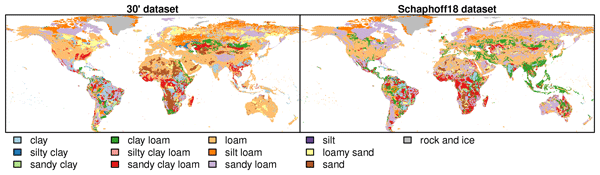
We present a new toolbox for generating input datasets for terrestrial ecosystem models from diverse and partially conflicting data sources. The toolbox documents the sources and processing of data and is designed to make inconsistencies between source datasets transparent so that users can make their own decisions on how to resolve these should they not be content with our default assumptions. As an example, we use the toolbox to create input datasets at two different spatial resolutions.
Jens Heinke, Susanne Rolinski, and Christoph Müller
Geosci. Model Dev., 16, 2455–2475, https://doi.org/10.5194/gmd-16-2455-2023, https://doi.org/10.5194/gmd-16-2455-2023, 2023
Short summary
Short summary
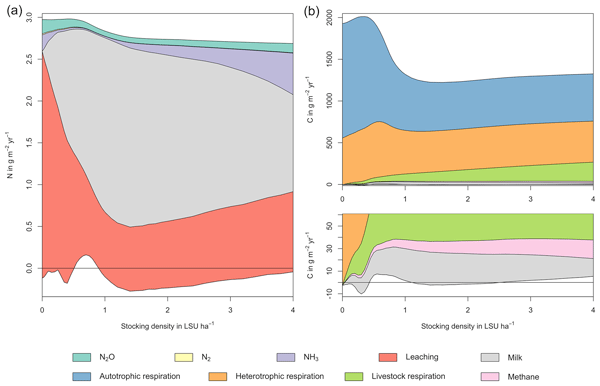
We develop a livestock module for the global vegetation model LPJmL5.0 to simulate the impact of grazing dairy cattle on carbon and nitrogen cycles in grasslands. A novelty of the approach is that it accounts for the effect of feed quality on feed uptake and feed utilization by animals. The portioning of dietary nitrogen into milk, feces, and urine shows very good agreement with estimates obtained from animal trials.
Jenny Niebsch, Werner von Bloh, Kirsten Thonicke, and Ronny Ramlau
Geosci. Model Dev., 16, 17–33, https://doi.org/10.5194/gmd-16-17-2023, https://doi.org/10.5194/gmd-16-17-2023, 2023
Short summary
Short summary
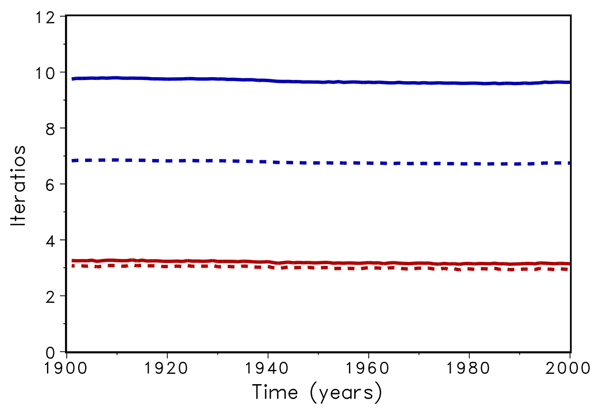
The impacts of climate change require strategies for climate adaptation. Dynamic global vegetation models (DGVMs) are used to study the effects of multiple processes in the biosphere under climate change. There is a demand for a better computational performance of the models. In this paper, the photosynthesis model in the Lund–Potsdam–Jena managed Land DGVM (4.0.002) was examined. We found a better numerical solution of a nonlinear equation. A significant run time reduction was possible.
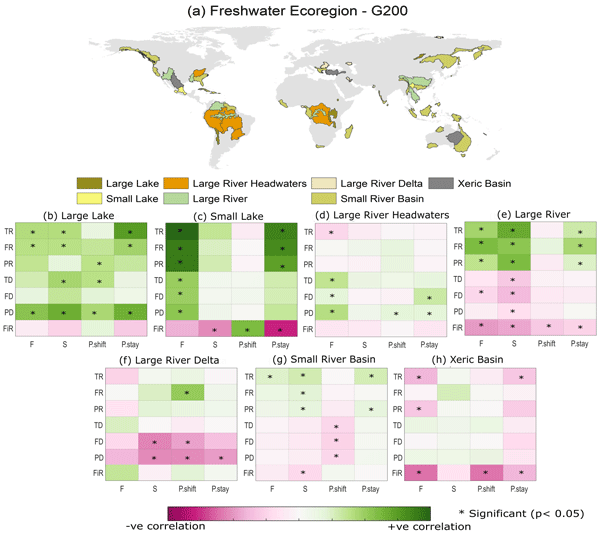
Chinchu Mohan, Tom Gleeson, James S. Famiglietti, Vili Virkki, Matti Kummu, Miina Porkka, Lan Wang-Erlandsson, Xander Huggins, Dieter Gerten, and Sonja C. Jähnig
Hydrol. Earth Syst. Sci., 26, 6247–6262, https://doi.org/10.5194/hess-26-6247-2022, https://doi.org/10.5194/hess-26-6247-2022, 2022
Short summary
Short summary
The relationship between environmental flow violations and freshwater biodiversity at a large scale is not well explored. This study intended to carry out an exploratory evaluation of this relationship at a large scale. While our results suggest that streamflow and EF may not be the only determinants of freshwater biodiversity at large scales, they do not preclude the existence of relationships at smaller scales or with more holistic EF methods or with other biodiversity data or metrics.
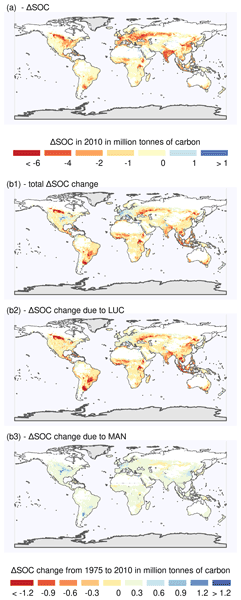
Kristine Karstens, Benjamin Leon Bodirsky, Jan Philipp Dietrich, Marta Dondini, Jens Heinke, Matthias Kuhnert, Christoph Müller, Susanne Rolinski, Pete Smith, Isabelle Weindl, Hermann Lotze-Campen, and Alexander Popp
Biogeosciences, 19, 5125–5149, https://doi.org/10.5194/bg-19-5125-2022, https://doi.org/10.5194/bg-19-5125-2022, 2022
Short summary
Short summary
Soil organic carbon (SOC) has been depleted by anthropogenic land cover change and agricultural management. While SOC models often simulate detailed biochemical processes, the management decisions are still little investigated at the global scale. We estimate that soils have lost around 26 GtC relative to a counterfactual natural state in 1975. Yet, since 1975, SOC has been increasing again by 4 GtC due to a higher productivity, recycling of crop residues and manure, and no-tillage practices.
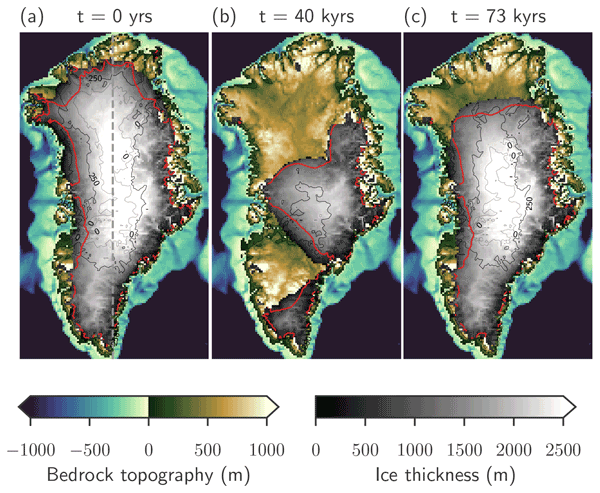
Maria Zeitz, Jan M. Haacker, Jonathan F. Donges, Torsten Albrecht, and Ricarda Winkelmann
Earth Syst. Dynam., 13, 1077–1096, https://doi.org/10.5194/esd-13-1077-2022, https://doi.org/10.5194/esd-13-1077-2022, 2022
Short summary
Short summary
The stability of the Greenland Ice Sheet under global warming is crucial. Here, using PISM, we study how the interplay of feedbacks between the ice sheet, the atmosphere and solid Earth affects the long-term response of the Greenland Ice Sheet under constant warming. Our findings suggest four distinct dynamic regimes of the Greenland Ice Sheet on the route to destabilization under global warming – from recovery via quasi-periodic oscillations in ice volume to ice sheet collapse.
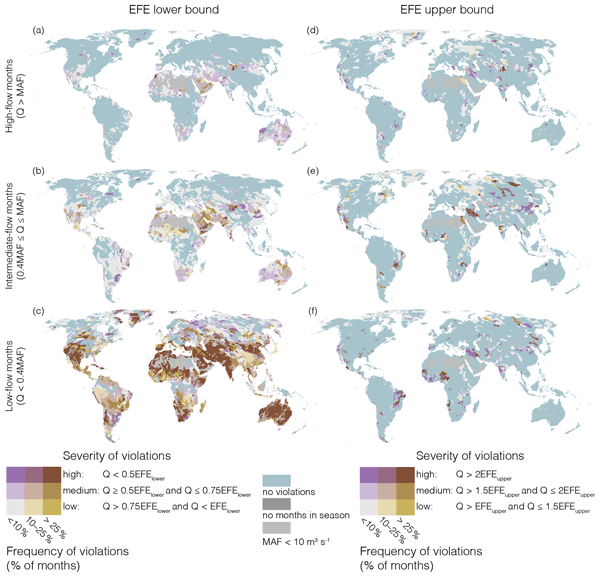
Vili Virkki, Elina Alanärä, Miina Porkka, Lauri Ahopelto, Tom Gleeson, Chinchu Mohan, Lan Wang-Erlandsson, Martina Flörke, Dieter Gerten, Simon N. Gosling, Naota Hanasaki, Hannes Müller Schmied, Niko Wanders, and Matti Kummu
Hydrol. Earth Syst. Sci., 26, 3315–3336, https://doi.org/10.5194/hess-26-3315-2022, https://doi.org/10.5194/hess-26-3315-2022, 2022
Short summary
Short summary
Direct and indirect human actions have altered streamflow across the world since pre-industrial times. Here, we apply a method of environmental flow envelopes (EFEs) that develops the existing global environmental flow assessments by methodological advances and better consideration of uncertainty. By assessing the violations of the EFE, we comprehensively quantify the frequency, severity, and trends of flow alteration during the past decades, illustrating anthropogenic effects on streamflow.
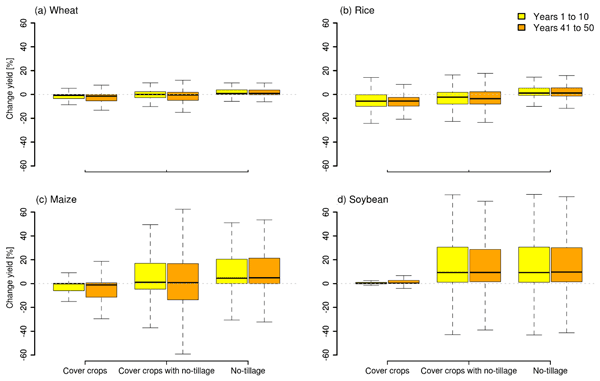
Vera Porwollik, Susanne Rolinski, Jens Heinke, Werner von Bloh, Sibyll Schaphoff, and Christoph Müller
Biogeosciences, 19, 957–977, https://doi.org/10.5194/bg-19-957-2022, https://doi.org/10.5194/bg-19-957-2022, 2022
Short summary
Short summary
The study assesses impacts of grass cover crop cultivation on cropland during main-crop off-season periods applying the global vegetation model LPJmL (V.5.0-tillage-cc). Compared to simulated bare-soil fallowing practices, cover crops led to increased soil carbon content and reduced nitrogen leaching rates on the majority of global cropland. Yield responses of main crops following cover crops vary with location, duration of altered management, crop type, water regime, and tillage practice.
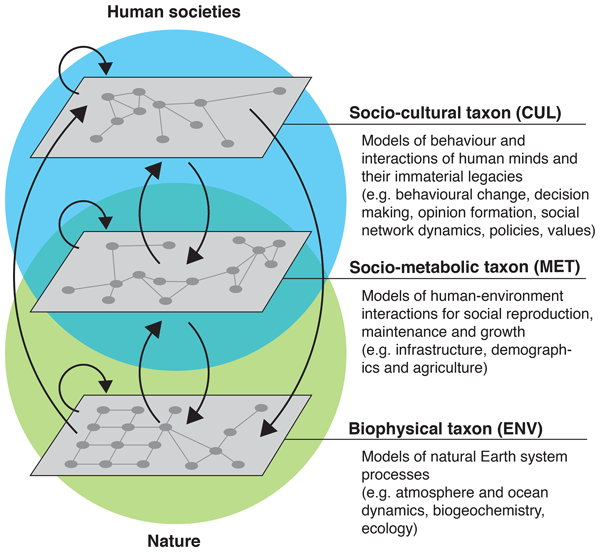
Jonathan F. Donges, Wolfgang Lucht, Sarah E. Cornell, Jobst Heitzig, Wolfram Barfuss, Steven J. Lade, and Maja Schlüter
Earth Syst. Dynam., 12, 1115–1137, https://doi.org/10.5194/esd-12-1115-2021, https://doi.org/10.5194/esd-12-1115-2021, 2021
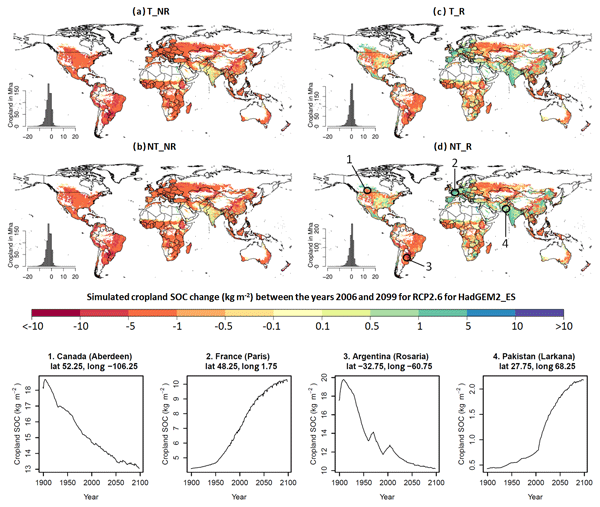
Tobias Herzfeld, Jens Heinke, Susanne Rolinski, and Christoph Müller
Earth Syst. Dynam., 12, 1037–1055, https://doi.org/10.5194/esd-12-1037-2021, https://doi.org/10.5194/esd-12-1037-2021, 2021
Short summary
Short summary
Soil organic carbon sequestration on cropland has been proposed as a climate change mitigation strategy. We simulate different agricultural management practices under climate change scenarios using a global biophysical model. We find that at the global aggregated level, agricultural management practices are not capable of enhancing total carbon storage in the soil, yet for some climate regions, we find that there is potential to enhance the carbon content in cropland soils.
Cited articles
Adriaenssens, V., Baets, B. D., Goethals, P. L. M., and Pauw, N. D.: Fuzzy rule-based models for decision support in ecosystem management, Sci. Total Environ., 319, 1–12, https://doi.org/10.1016/S0048-9697(03)00433-9, 2004. a
Ajzen, I.: From Intentions to Actions: A Theory of Planned Behavior, in: Action Control: From Cognition to Behavior, edited by: Kuhl, J. and Beckmann, J., Springer, Berlin, Heidelberg, 11–39, ISBN 978-3-642-69746-3, https://doi.org/10.1007/978-3-642-69746-3_2, 1985. a, b
Anderies, J. M., Barfuss, W., Donges, J. F., Fetzer, I., Heitzig, J., and Rockström, J.: A modeling framework for World-Earth system resilience: exploring social inequality and Earth system tipping points, Environ. Res. Lett., 18, 095001, https://doi.org/10.1088/1748-9326/ace91d, 2023. a
Arneth, A., Brown, C., and Rounsevell, M. D. A.: Global models of human decision-making for land-based mitigation and adaptation assessment, Nat. Clim. Change, 4, 550–557, https://doi.org/10.1038/nclimate2250, 2014. a
Arnold, J. G., Bieger, K., White, M. J., Srinivasan, R., Dunbar, J. A., and Allen, P. M.: Use of Decision Tables to Simulate Management in SWAT+, Water, 10, 713, https://doi.org/10.3390/w10060713, 2018. a
Asefi-Najafabady, S., Laura, V.-O., and Morgan, J.: The failure of Integrated Assessment Models as a response to “climate emergency” and ecological breakdown: the Emperor has no clothes, Globalizations, 18, 1178–1188, https://doi.org/10.1080/14747731.2020.1853958, 2021. a
Barker, M., Chue Hong, N. P., Katz, D. S., Lamprecht, A.-L., Martinez-Ortiz, C., Psomopoulos, F., Harrow, J., Castro, L. J., Gruenpeter, M., Martinez, P. A., and Honeyman, T.: Introducing the FAIR Principles for research software, Sci. Data, 9, 622, https://doi.org/10.1038/s41597-022-01710-x, 2022. a
Bauch, C. T., Sigdel, R., Pharaon, J., and Anand, M.: Early warning signals of regime shifts in coupled human–environment systems, P. Natl. Acad. Sci. USA, 113, 14560–14567, https://doi.org/10.1073/pnas.1604978113, 2016. a
Bauer, N., Klein, D., Humpenöder, F., Kriegler, E., Luderer, G., Popp, A., and Strefler, J.: Bio-energy and CO2 emission reductions: an integrated land-use and energy sector perspective, Climatic Change, 163, 1675–1693, https://doi.org/10.1007/s10584-020-02895-z, 2020. a
Bechthold, M., Heitzig, J., Donges, J., Barfuss, W., Marc, W., Zimmerer, K. B., Kolb, J., Kolster, T., Müller-Hansen, F., and Breitbach, P.: pycopancore: Reference implementation of the copan:CORE World-Earth modelling framework, Zenodo [code], https://doi.org/10.5281/zenodo.12654089, 2024. a
Bechthold, M., Barfuss, W., Butz, A., Breier, J., Constantino, S. M., Heitzig, J., Schwarz, L., Vardag, S. N., and Donges, J. F.: Social norms and groups structure safe operating spaces in renewable resource use in a social–ecological multi-layer network model, Earth Syst. Dynam., 16, 1365–1390, https://doi.org/10.5194/esd-16-1365-2025, 2025. a
Beck, M. and Krueger, T.: The epistemic, ethical, and political dimensions of uncertainty in integrated assessment modeling, WIREs Climate Change, 7, 627–645, https://doi.org/10.1002/wcc.415, _eprint: https://onlinelibrary.wiley.com/doi/pdf/10.1002/wcc.415, 2016. a
Beckage, B., Lacasse, K., Winter, J. M., Gross, L. J., Fefferman, N., Hoffman, F. M., Metcalf, S. S., Franck, T., Carr, E., Zia, A., and Kinzig, A.: The Earth has humans, so why don’t our climate models?, Climatic Change, 163, 181–188, https://doi.org/10.1007/s10584-020-02897-x, 2020. a, b, c
Beckage, B., Moore, F. C., and Lacasse, K.: Incorporating human behaviour into Earth system modelling, Nature Human Behaviour, 6, 1493–1502, https://doi.org/10.1038/s41562-022-01478-5, 2022. a, b, c
Beier, F. D., Dietrich, J. P., Heinke, J., Abrahao, G., Jeetze, P. v., Bodirsky, B. L., Crawford, M., Humpenöder, F., Merfort, L., Weindl, I., Herrero, M., Mason-D’Croz, D., Rockström, J., Sundiang, M., Wierik, S. t., Norberg, A., Klein, D., Müller, C., Lotze-Campen, H., and Popp, A.: Planetary boundaries under a land-based climate change mitigation scenario with a food demand transformation: a modelling study, Lancet Planetary Health, https://doi.org/10.1016/S2542-5196(25)00087-7, 2025. a
Blanco-Gutiérrez, I., Varela-Ortega, C., and Purkey, D. R.: Integrated assessment of policy interventions for promoting sustainable irrigation in semi-arid environments: A hydro-economic modeling approach, J. Environ. Manage., 128, 144–160, https://doi.org/10.1016/j.jenvman.2013.04.037, 2013. a
Bodirsky, B. L., Popp, A., Weindl, I., Dietrich, J. P., Rolinski, S., Scheiffele, L., Schmitz, C., and Lotze-Campen, H.: N2O emissions from the global agricultural nitrogen cycle – current state and future scenarios, Biogeosciences, 9, 4169–4197, https://doi.org/10.5194/bg-9-4169-2012, 2012. a
Bondeau, A., Smith, P. C., Zaehle, S., Schaphoff, S., Lucht, W., Cramer, W., Gerten, D., Lotze-Campen, H., Müller, C., Reichstein, M., and Smith, B.: Modelling the role of agriculture for the 20th century global terrestrial carbon balance, Glob. Change Biol., 13, 679–706, https://doi.org/10.1111/j.1365-2486.2006.01305.x, 2007. a, b
Braakhekke, M. C., Doelman, J. C., Baas, P., Müller, C., Schaphoff, S., Stehfest, E., and van Vuuren, D. P.: Modeling forest plantations for carbon uptake with the LPJmL dynamic global vegetation model, Earth Syst. Dynam., 10, 617–630, https://doi.org/10.5194/esd-10-617-2019, 2019. a
Breier, J.: copan:LPJmL homepage, https://copanlpjml.pik-potsdam.de (last access: 20 May 2026), 2025. a
Breier, J. and Prawitz, H.: Data for GMD submission “copan:LPJmL: A new hybrid modelling framework for dynamic land use and agricultural management, Zenodo [data set], https://doi.org/10.5281/zenodo.17054847, 2025. a
Breier, J., Ostberg, S., Wirth, S. B., Hötten, D., Minoli, S., Stenzel, F., and Müller, C.: lpjmlkit: A toolkit for operating LPJmL and model-specific data processing, J. Open Source Softw., 9, 5447, https://doi.org/10.21105/joss.05447, 2024. a
Breier, J., Prawitz, H., and Wirth, S. B.: Example models of land management based on copan:LPJmL, Zenodo [code], https://doi.org/10.5281/zenodo.17037004, 2025a. a, b, c
Breier, J., Schwarz, L., Hotz, R., Bechthold, M., Heitzig, J., Donges, J., Barfuss, W., Marc, W., Zimmerer, K. B., Kolb, J., Kolster, T., Müller-Hansen, F., and Breitbach, P.: pycopancore: Reference implementation of the copan:CORE World-Earth modelling framework, Zenodo [code], https://doi.org/10.5281/zenodo.14938316, 2025b. a, b, c
Breier, J., Schwarz, L., Prawitz, H., Bechthold, M., and Hotz, R.: Model of integrated social-ecological resilient land systems (InSEEDS), Zenodo [code], https://doi.org/10.5281/zenodo.17037107, 2025c. a, b
Breier, J., Schwarz, L., Prawitz, H., and Bechthold, M.: copan:LPJmL, an advanced World-Earth modeling framework extending copan:CORE, integrating LPJmL as the Earth system interface for comprehensive social-ecological simulations, Zenodo [code], https://doi.org/10.5281/zenodo.17036693, 2025d. a, b, c
Bury, T. M., Bauch, C. T., and Anand, M.: Charting pathways to climate change mitigation in a coupled socio-climate model, PLOS Comput. Biol., 15, e1007000, https://doi.org/10.1371/journal.pcbi.1007000, 2019. a
Calvin, K. and Bond-Lamberty, B.: Integrated human-earth system modeling-state of the science and future directions, Environ. Res. Lett., 13, 063006, https://doi.org/10.1088/1748-9326/aac642, 2018. a, b
Campbell, B. M., Beare, D. J., Bennett, E. M., Hall-Spencer, J. M., Ingram, J. S. I., Jaramillo, F., Ortiz, R., Ramankutty, N., Sayer, J. A., and Shindell, D.: Agriculture production as a major driver of the Earth system exceeding planetary boundaries, Ecology and Society, 22, https://www.jstor.org/stable/26798991 (last access: 20 May 2026), 2017. a
Chen, D. and Huang, Y.: Integrating Reinforcement Learning and Large Language Models for Crop Production Process Management Optimization and Control through A New Knowledge-Based Deep Learning Paradigm, arXiv [preprint], https://doi.org/10.48550/arXiv.2410.09680, 2024. a
Crutzen, P. J.: The “anthropocene”, Journal de Physique IV (Proceedings), 12, 1–5, https://doi.org/10.1051/jp4:20020447, 2002. a
Dantas de Paula, M., Gómez Giménez, M., Niamir, A., Thurner, M., and Hickler, T.: Combining European Earth Observation products with Dynamic Global Vegetation Models for estimating Essential Biodiversity Variables, Int. J. Digit. Earth, 13, 262–277, https://doi.org/10.1080/17538947.2019.1597187, 2020. a
Dietrich, J. P., Bodirsky, B. L., Humpenöder, F., Weindl, I., Stevanović, M., Karstens, K., Kreidenweis, U., Wang, X., Mishra, A., Klein, D., Ambrósio, G., Araujo, E., Yalew, A. W., Baumstark, L., Wirth, S., Giannousakis, A., Beier, F., Chen, D. M.-C., Lotze-Campen, H., and Popp, A.: MAgPIE 4 – a modular open-source framework for modeling global land systems, Geosci. Model Dev., 12, 1299–1317, https://doi.org/10.5194/gmd-12-1299-2019, 2019. a, b
Doelman, J. C., Stehfest, E., van Vuuren, D. P., Tabeau, A., Hof, A. F., Braakhekke, M. C., Gernaat, D. E. H. J., van den Berg, M., van Zeist, W.-J., Daioglou, V., van Meijl, H., and Lucas, P. L.: Afforestation for climate change mitigation: Potentials, risks and trade-offs, Glob. Change Biol., 26, 1576–1591, https://doi.org/10.1111/gcb.14887, 2020. a
Donges, J. F., Winkelmann, R., Lucht, W., Cornell, S. E., Dyke, J. G., Rockström, J., Heitzig, J., and Schellnhuber, H. J.: Closing the loop: Reconnecting human dynamics to Earth System science, Anthropocene Rev., 4, 151–157, https://doi.org/10.1177/2053019617725537, 2017. a
Donges, J. F., Heitzig, J., Barfuss, W., Wiedermann, M., Kassel, J. A., Kittel, T., Kolb, J. J., Kolster, T., Müller-Hansen, F., Otto, I. M., Zimmerer, K. B., and Lucht, W.: Earth system modeling with endogenous and dynamic human societies: the copan:CORE open World–Earth modeling framework, Earth Syst. Dynam., 11, 395–413, https://doi.org/10.5194/esd-11-395-2020, 2020. a, b, c, d, e, f, g, h, i, j, k
Donges, J. F., Lucht, W., Cornell, S. E., Heitzig, J., Barfuss, W., Lade, S. J., and Schlüter, M.: Taxonomies for structuring models for World–Earth systems analysis of the Anthropocene: subsystems, their interactions and social–ecological feedback loops, Earth Syst. Dynam., 12, 1115–1137, https://doi.org/10.5194/esd-12-1115-2021, 2021. a, b, c, d
FAO: FAOSTAT, https://www.fao.org/faostat/en/#data (last access: 20 May 2026), 2025. a
Farahbakhsh, I., Bauch, C. T., and Anand, M.: Modelling coupled human–environment complexity for the future of the biosphere: strengths, gaps and promising directions, Philos. T. Roy. Soc. B, 377, 20210382, https://doi.org/10.1098/rstb.2021.0382, 2022. a, b
Filatova, T., Verburg, P. H., Parker, D. C., and Stannard, C. A.: Spatial agent-based models for socio-ecological systems: Challenges and prospects, Environ. Modell. Softw., 45, 1–7, https://doi.org/10.1016/j.envsoft.2013.03.017, 2013. a
Foley, J. A., DeFries, R., Asner, G. P., Barford, C., Bonan, G., Carpenter, S. R., Chapin, F. S., Coe, M. T., Daily, G. C., Gibbs, H. K., Helkowski, J. H., Holloway, T., Howard, E. A., Kucharik, C. J., Monfreda, C., Patz, J. A., Prentice, I. C., Ramankutty, N., and Snyder, P. K.: Global Consequences of Land Use, Science, 309, 570–574, https://doi.org/10.1126/science.1111772, 2005. a
Gao, C., Lan, X., Li, N., Yuan, Y., Ding, J., Zhou, Z., Xu, F., and Li, Y.: Large language models empowered agent-based modeling and simulation: a survey and perspectives, Humanities and Social Sciences Communications, 11, 1259, https://doi.org/10.1057/s41599-024-03611-3, 2024. a, b
Gerten, D., Schönfeld, M., and Schauberger, B.: On deeper human dimensions in Earth system analysis and modelling, Earth Syst. Dynam., 9, 849–863, https://doi.org/10.5194/esd-9-849-2018, 2018. a
Gerten, D., Heck, V., Jägermeyr, J., Bodirsky, B. L., Fetzer, I., Jalava, M., Kummu, M., Lucht, W., Rockström, J., Schaphoff, S., and Schellnhuber, H. J.: Feeding ten billion people is possible within four terrestrial planetary boundaries, Nat. Sustain., 3, 200–208, https://doi.org/10.1038/s41893-019-0465-1, 2020. a, b
Hanke, M., Redler, R., Holfeld, T., and Yastremsky, M.: YAC 1.2.0: new aspects for coupling software in Earth system modelling, Geosci. Model Dev., 9, 2755–2769, https://doi.org/10.5194/gmd-9-2755-2016, 2016. a
Heinke, J., Rolinski, S., and Müller, C.: Modelling the role of livestock grazing in C and N cycling in grasslands with LPJmL5.0-grazing, Geosci. Model Dev., 16, 2455–2475, https://doi.org/10.5194/gmd-16-2455-2023, 2023. a, b
Herzfeld, T., Heinke, J., Rolinski, S., and Müller, C.: Soil organic carbon dynamics from agricultural management practices under climate change, Earth Syst. Dynam., 12, 1037–1055, https://doi.org/10.5194/esd-12-1037-2021, 2021. a, b
Holdgate, M. W.: Our Common Future: The Report of the World Commission on Environment and Development. Oxford University Press, Oxford & New York, xv + 347 + 35 pp., Oxford Paperback, Environmental Conservation, 14, 282–282, https://doi.org/10.1017/S0376892900016702, 1987. a
Horsevad, N., Mateo, D., Kooij, R. E., Barrat, A., and Bouffanais, R.: Transition from simple to complex contagion in collective decision-making, Nat. Commun., 13, 1442, https://doi.org/10.1038/s41467-022-28958-6, 2022. a
Hoyer, S. and Hamman, J.: xarray: N-D labeled Arrays and Datasets in Python, J. Open Res. Softw., 5, https://doi.org/10.5334/jors.148, 2017. a
Huber, R., Xiong, H., Keller, K., and Finger, R.: Bridging behavioural factors and standard bio-economic modelling in an agent-based modelling framework, J. Agr. Econom., 73, 35–63, https://doi.org/10.1111/1477-9552.12447, 2022. a
Hutton, E. W. h., Piper, M. D., and Tucker, G. E.: The Basic Model Interface 2.0: A standard interface for coupling numerical models in the geosciences, J. Open Source Softw., 5, 2317, https://doi.org/10.21105/joss.02317, 2020. a, b
IPCC: Climate Change 2022: Mitigation of Climate Change. Contribution of Working Group III to the Sixth Assessment Report of the Intergovernmental Panel on Climate Change, edited by: Shukla, P. R., Skea, J., Slade, R., Al Khourdajie, A., van Diemen, R., McCollum, D., Pathak, M., Some, S., Vyas, P., Fradera, R., Belkacemi, M., Hasija, A., Lisboa, G., Luz, S., and Malley, J., Cambridge University Press, Cambridge, UK and New York, NY, USA, https://doi.org/10.1017/9781009157926, 2022. a
Jones, J. W., Hoogenboom, G., Porter, C. H., Boote, K. J., Batchelor, W. D., Hunt, L. A., Wilkens, P. W., Singh, U., Gijsman, A. J., and Ritchie, J. T.: The DSSAT cropping system model, Eur. J. Agron., 18, 235–265, https://doi.org/10.1016/S1161-0301(02)00107-7, 2003. a
Jägermeyr, J., Gerten, D., Heinke, J., Schaphoff, S., Kummu, M., and Lucht, W.: Water savings potentials of irrigation systems: global simulation of processes and linkages, Hydrol. Earth Syst. Sci., 19, 3073–3091, https://doi.org/10.5194/hess-19-3073-2015, 2015. a, b
Jägermeyr, J., Gerten, D., Schaphoff, S., Heinke, J., Lucht, W., and Rockström, J.: Integrated crop water management might sustainably halve the global food gap, Environ. Res. Lett., 11, 025002, https://doi.org/10.1088/1748-9326/11/2/025002, 2016. a
Koasidis, K., Nikas, A., and Doukas, H.: Why integrated assessment models alone are insufficient to navigate us through the polycrisis, One Earth, 6, 205–209, https://doi.org/10.1016/j.oneear.2023.02.009, 2023. a
Kou-Giesbrecht, S., Arora, V. K., Seiler, C., and Wang, L.: The impacts of modelling prescribed vs. dynamic land cover in a high-CO2 future scenario – greening of the Arctic and Amazonian dieback, Biogeosciences, 21, 3339–3371, https://doi.org/10.5194/bg-21-3339-2024, 2024. a
Krawczyk, F. and Braun, A. C.: Models like heroes? Making Integrated Assessment Models (IAMs) ready for deep decarbonization and a socio-economic transformation, Energy Research & Social Science, 121, 103959, https://doi.org/10.1016/j.erss.2025.103959, 2025. a, b
Kreibich, H., Sivapalan, M., AghaKouchak, A., Addor, N., Aksoy, H., Arheimer, B., Arnbjerg-Nielsen, K., Vail-Castro, C., Cudennec, C., Madruga de Brito, M., Di Baldassarre, G., Finger, D. C., Fowler, K., Knoben, W., Krueger, T., Liu, J., Macdonald, E., McMillan, H., Mendiondo, E. M., Montanari, A., Muller, M. F., Pande, S., Tian, F., Viglione, A., Wei, Y., Castellarin, A., Loucks, D. P., Oki, T., Polo, M. J., Savenije, H., Van Loon, A. F., Agarwal, A., Alvarez-Garreton, C., Andreu, A., Barendrecht, M. H., Brunner, M., Cavalcante, L., Cavus, Y., Ceola, S., Chaffe, P., Chen, X., Coxon, G., Dandan, Z., Davary, K., Dembélé, M., Dewals, B., Frolova (Bibikova), T., Gain, A. K., Gelfan, A., Ghoreishi, M., Grabs, T., Guan, X., Hannah, D. M., Helmschrot, J., Höllermann, B., Hounkpè, J., Koebele, E., Konar, M., Kratzert, F., Lindersson, S., Llasat, M. C., Matanó, A., Mazzoleni, M., Mejia, A., Mendoza, P., Merz, B., Mukherjee, J., Nasiri Saleh, F., Nlend, B., Nonki, R. M., Orieschnig, C., Papagiannaki, K., Penny, G., Petrucci, O., Pimentel, R., Pool, S., Ridolfi, E., Rusca, M., Sairam, N., Sankaran Namboothiri, A., Sarmento Buarque, A. C., Savelli, E., Schoppa, L., Schröter, K., Scolobig, A., Shafiei, M., Sikorska-Senoner, A. E., Smigaj, M., Teutschbein, C., Thaler, T., Todorovic, A., Tootoonchi, F., Tootoonchi, R., Toth, E., van Nooijen, R., Vanelli, F. M., Vásquez, N., Walker, D. W., Wens, M., Yu, D. J., Zarei, H., Zhou, C., and Blöschl, G.: Panta Rhei: a decade of progress in research on change in hydrology and society, Hydrolog. Sci. J., 70, 1210–1236, https://doi.org/10.1080/02626667.2025.2469762, 2025. a
Krey, V., Havlik, P., Kishimoto, P., Fricko, O., Zilliacus, J., Gidden, M., Strubegger, M., Kartasasmita, G., Ermolieva, T., Forsell, N., Guo, F., Gusti, M., Huppmann, D., Johnson, N., Kikstra, J., Kindermann, G., Kolp, P., Lovat, F., McCollum, D., Min, J., Pachauri, S., Parkinson, S., Rao, S., Rogelj, J., Ünlü, G., Valin, H., Wagner, P., Zakeri, B., Obersteiner, M., and Riahi, K.: MESSAGEix-GLOBIOM Documentation – 2020 release, Laxenburg, Austria, https://doi.org/10.22022/IACC/03-2021.17115, 2020. a
Lange, S., Mengel, M., Treu, S., and Büchner, M.: ISIMIP3a atmospheric climate input data (v1.2), ISIMIP Repository [data set], https://doi.org/10.48364/ISIMIP.982724.2, 2023. a, b
Lange, S., Quesada-Chacón, D., and Büchner, M.: Secondary ISIMIP3b bias-adjusted atmospheric climate input data (v1.5), ISIMIP Repository [data set], https://doi.org/10.48364/ISIMIP.581124.5, 2024. a, b, c
Lenton, T.: Earth System Science: A Very Short Introduction, Oxford University Press, ISBN 978-0-19-871887-1, google-Books-ID: ijs6CwAAQBAJ, 2016. a
Li, R., Xu, M., Chen, Z., Gao, B., Cai, J., Shen, F., He, X., Zhuang, Y., and Chen, D.: Phenology-based classification of crop species and rotation types using fused MODIS and Landsat data: The comparison of a random-forest-based model and a decision-rule-based model, Soil Till. Res., 206, 104838, https://doi.org/10.1016/j.still.2020.104838, 2021. a
Li, X., Yu, L., Sohl, T., Clinton, N., Li, W., Zhu, Z., Liu, X., and Gong, P.: A cellular automata downscaling based 1 km global land use datasets (2010–2100), Sci. Bull., 61, 1651–1661, https://doi.org/10.1007/s11434-016-1148-1, 2016. a
Liang, X., Guan, Q., Clarke, K. C., Liu, S., Wang, B., and Yao, Y.: Understanding the drivers of sustainable land expansion using a patch-generating land use simulation (PLUS) model: A case study in Wuhan, China, Computers, Environ. Urban Syst., 85, 101569, https://doi.org/10.1016/j.compenvurbsys.2020.101569, 2021. a
Liu, W., Ye, T., Müller, C., Jägermeyr, J., Franke, J. A., Stephens, H., and Chen, S.: The statistical emulators of GGCMI phase 2: responses of year-to-year variation of crop yield to CO2, temperature, water, and nitrogen perturbations, Geosci. Model Dev., 16, 7203–7221, https://doi.org/10.5194/gmd-16-7203-2023, 2023. a
Lovelock, J. E. and Margulis, L.: Atmospheric homeostasis by and for the biosphere: the gaia hypothesis, Tellus, 26, 2–10, https://doi.org/10.3402/tellusa.v26i1-2.9731, 1974. a
Lutz, F., Herzfeld, T., Heinke, J., Rolinski, S., Schaphoff, S., von Bloh, W., Stoorvogel, J. J., and Müller, C.: Simulating the effect of tillage practices with the global ecosystem model LPJmL (version 5.0-tillage), Geosci. Model Dev., 12, 2419–2440, https://doi.org/10.5194/gmd-12-2419-2019, 2019. a, b
Mathias, J.-D., Debeljak, M., Deffuant, G., Diemer, A., Dierickx, F., Donges, J. F., Gladkykh, G., Heitzig, J., Holtz, G., Obergassel, W., Pellaud, F., Sánchez, A., Trajanov, A., and Videira, N.: Grounding Social Foundations for Integrated Assessment Models of Climate Change, Earth's Future, 8, e2020EF001573, https://doi.org/10.1029/2020EF001573, 2020. a
Meyfroidt, P., de Bremond, A., Ryan, C. M., Archer, E., Aspinall, R., Chhabra, A., Camara, G., Corbera, E., DeFries, R., Díaz, S., Dong, J., Ellis, E. C., Erb, K.-H., Fisher, J. A., Garrett, R. D., Golubiewski, N. E., Grau, H. R., Grove, J. M., Haberl, H., Heinimann, A., Hostert, P., Jobbágy, E. G., Kerr, S., Kuemmerle, T., Lambin, E. F., Lavorel, S., Lele, S., Mertz, O., Messerli, P., Metternicht, G., Munroe, D. K., Nagendra, H., Nielsen, J. O., Ojima, D. S., Parker, D. C., Pascual, U., Porter, J. R., Ramankutty, N., Reenberg, A., Roy Chowdhury, R., Seto, K. C., Seufert, V., Shibata, H., Thomson, A., Turner, B. L., Urabe, J., Veldkamp, T., Verburg, P. H., Zeleke, G., and zu Ermgassen, E. K. H. J.: Ten facts about land systems for sustainability, P. Natl. Acad. Sci. USA, 119, e2109217118, https://doi.org/10.1073/pnas.2109217118, 2022. a
Minoli, S., Jägermeyr, J., Asseng, S., Urfels, A., and Müller, C.: Workflow for Global crop yields can be lifted by timely adaptation of growing periods to climate change, Zenodo, https://doi.org/10.5281/zenodo.7038163, 2022b. a
Moore, A. D., Holzworth, D. P., Herrmann, N. I., Brown, H. E., de Voil, P. G., Snow, V. O., Zurcher, E. J., and Huth, N. I.: Modelling the manager: Representing rule-based management in farming systems simulation models, Environ. Modell. Softw., 62, 399–410, https://doi.org/10.1016/j.envsoft.2014.09.001, 2014. a
Moore, F. C., Lacasse, K., Mach, K. J., Shin, Y. A., Gross, L. J., and Beckage, B.: Determinants of emissions pathways in the coupled climate–social system, Nature, 603, 103–111, https://doi.org/10.1038/s41586-022-04423-8, 2022. a
Murray-Rust, D., Brown, C., van Vliet, J., Alam, S. J., Robinson, D. T., Verburg, P. H., and Rounsevell, M.: Combining agent functional types, capitals and services to model land use dynamics, Environ. Modell. Softw., 59, 187–201, https://doi.org/10.1016/j.envsoft.2014.05.019, 2014. a, b
Müller, C., Stehfest, E., Van Minnen, J. G., Strengers, B., Von Bloh, W., Beusen, A. H. W., Schaphoff, S., Kram, T., and Lucht, W.: Drivers and patterns of land biosphere carbon balance reversal, Environ. Res. Lett., 11, 044002, https://doi.org/10.1088/1748-9326/11/4/044002, 2016. a
Müller, S., Lange, M., Fischer, T., König, S., Kelbling, M., Leal Rojas, J. J., and Thober, S.: FINAM is not a model (v1.0): a new Python-based model coupling framework, Geosci. Model Dev., 18, 4483–4498, https://doi.org/10.5194/gmd-18-4483-2025, 2025. a
Natel, C., Belda, D. M., Anthoni, P., Haß, N., Rabin, S., and Arneth, A.: Emulating grid-based forest carbon dynamics using machine learning: an LPJ-GUESS v4.1.1 application, Geosci. Model Dev., 18, 4317–4333, https://doi.org/10.5194/gmd-18-4317-2025, 2025. a
National Research Council: Earth System Science: Overview – A Program for Global Change, National Academy Press, https://doi.org/10.17226/19210, 1986. a
Ngwira, A. R., Aune, J. B., and Thierfelder, C.: DSSAT modelling of conservation agriculture maize response to climate change in Malawi, Soil Till. Res., 143, 85–94, https://doi.org/10.1016/j.still.2014.05.003, 2014. a
Porwollik, V., Rolinski, S., Heinke, J., von Bloh, W., Schaphoff, S., and Müller, C.: The role of cover crops for cropland soil carbon, nitrogen leaching, and agricultural yields – A global simulation study with LPJmL (V. 5.0-tillage-cc), Biogeosciences Discuss. [preprint], https://doi.org/10.5194/bg-2021-215, 2021. a, b
Porwollik, V., Rolinski, S., Heinke, J., von Bloh, W., Schaphoff, S., and Müller, C.: The role of cover crops for cropland soil carbon, nitrogen leaching, and agricultural yields – a global simulation study with LPJmL (V. 5.0-tillage-cc), Biogeosciences, 19, 957–977, https://doi.org/10.5194/bg-19-957-2022, 2022. a
Preiser, R., Biggs, R., De Vos, A., and Folke, C.: Social-ecological systems as complex adaptive systems: organizing principles for advancing research methods and approaches, Ecol. Soc., 23, https://doi.org/10.5751/ES-10558-230446, 2018. a, b
Reick, C. H., Raddatz, T., Brovkin, V., and Gayler, V.: Representation of natural and anthropogenic land cover change in MPI-ESM, J. Adv. Model. Earth Sy., 5, 459–482, https://doi.org/10.1002/jame.20022, 2013. a
Rockström, J., Steffen, W., Noone, K., Persson, A., Chapin, F. S., Lambin, E. F., Lenton, T. M., Scheffer, M., Folke, C., Schellnhuber, H. J., Nykvist, B., de Wit, C. A., Hughes, T., van der Leeuw, S., Rodhe, H., Sörlin, S., Snyder, P. K., Costanza, R., Svedin, U., Falkenmark, M., Karlberg, L., Corell, R. W., Fabry, V. J., Hansen, J., Walker, B., Liverman, D., Richardson, K., Crutzen, P., and Foley, J. A.: A safe operating space for humanity, Nature, 461, 472–475, https://doi.org/10.1038/461472a, 2009. a
Rolinski, S., Müller, C., Heinke, J., Weindl, I., Biewald, A., Bodirsky, B. L., Bondeau, A., Boons-Prins, E. R., Bouwman, A. F., Leffelaar, P. A., te Roller, J. A., Schaphoff, S., and Thonicke, K.: Modeling vegetation and carbon dynamics of managed grasslands at the global scale with LPJmL 3.6, Geosci. Model Dev., 11, 429–451, https://doi.org/10.5194/gmd-11-429-2018, 2018. a
Rosol, C., Nelson, S., and Renn, J.: Introduction: In the machine room of the Anthropocene, Anthropocene Rev., 4, 2–8, https://doi.org/10.1177/2053019617701165, 2017. a
Rounsevell, M. D. A., Robinson, D. T., and Murray-Rust, D.: From actors to agents in socio-ecological systems models, Philos. T. Roy. Soc. B, 367, 259–269, https://doi.org/10.1098/rstb.2011.0187, 2012. a
Rounsevell, M. D. A., Arneth, A., Alexander, P., Brown, D. G., de Noblet-Ducoudré, N., Ellis, E., Finnigan, J., Galvin, K., Grigg, N., Harman, I., Lennox, J., Magliocca, N., Parker, D., O'Neill, B. C., Verburg, P. H., and Young, O.: Towards decision-based global land use models for improved understanding of the Earth system, Earth Syst. Dynam., 5, 117–137, https://doi.org/10.5194/esd-5-117-2014, 2014. a
Sakschewski, B., von Bloh, W., Boit, A., Poorter, L., Peña-Claros, M., Heinke, J., Joshi, J., and Thonicke, K.: Resilience of Amazon forests emerges from plant trait diversity, Nat. Clim. Change, 6, 1032–1036, https://doi.org/10.1038/nclimate3109, 2016. a
Schaphoff, S., von Bloh, W., Rammig, A., Thonicke, K., Biemans, H., Forkel, M., Gerten, D., Heinke, J., Jägermeyr, J., Knauer, J., Langerwisch, F., Lucht, W., Müller, C., Rolinski, S., and Waha, K.: LPJmL4 – a dynamic global vegetation model with managed land – Part 1: Model description, Geosci. Model Dev., 11, 1343–1375, https://doi.org/10.5194/gmd-11-1343-2018, 2018. a, b
Schaphoff, S., von Bloh, W., Rammig, A., Thonicke, K., Biemans, H., Forkel, M., Gerten, D., Heinke, J., Jägermeyr, J., Langerwisch, F., Lucht, W., Rolinski, S., Waha, K., Ostberg, S., Wirth, S. B., Fader, M., Drüke, M., Jans, Y., Lutz, F., Herzfeld, T., Minoli, S., Porwollik, V., Stehfest, E., de Waal, L., Beringer (Erbrecht), T., Rost (Jachner), S., Gumpenberger, M., Heyder, U., Werner, C., Braun, J., Breier, J., Stenzel, F., Mathesius, S., Hemmen, M., Billing, M., Oberhagemann, L., Sakschewski, B., and Müller, C.: LPJmL for InSEEDS and further copan:LPJmL models, Zenodo [code], https://doi.org/10.5281/zenodo.17036653, 2025. a, b
Schellnhuber, H. J.: “Earth system” analysis and the second Copernican revolution, Nature, 402, C19–C23, https://doi.org/10.1038/35011515, 1999. a, b
Schill, C., Anderies, J. M., Lindahl, T., Folke, C., Polasky, S., Cárdenas, J. C., Crépin, A.-S., Janssen, M. A., Norberg, J., and Schlüter, M.: A more dynamic understanding of human behaviour for the Anthropocene, Nat. Sustain., 2, 1075–1082, https://doi.org/10.1038/s41893-019-0419-7, 2019. a
Schleussner, C.-F., Ganti, G., Lejeune, Q., Zhu, B., Pfleiderer, P., Prütz, R., Ciais, P., Frölicher, T. L., Fuss, S., Gasser, T., Gidden, M. J., Kropf, C. M., Lacroix, F., Lamboll, R., Martyr, R., Maussion, F., McCaughey, J. W., Meinshausen, M., Mengel, M., Nicholls, Z., Quilcaille, Y., Sanderson, B., Seneviratne, S. I., Sillmann, J., Smith, C. J., Steinert, N. J., Theokritoff, E., Warren, R., Price, J., and Rogelj, J.: Overconfidence in climate overshoot, Nature, 634, 366–373, https://doi.org/10.1038/s41586-024-08020-9, 2024. a
Schlüter, M., Mcallister, R. R. J., Arlinghaus, R., Bunnefeld, N., Eisenack, K., Hölker, F., Milner-Gulland, E., Müller, B., Nicholson, E., Quaas, M., and Stöven, M.: New Horizons for Managing the Environment: A Review of Coupled Social-Ecological Systems Modeling, Nat. Resour. Model., 25, 219–272, https://doi.org/10.1111/j.1939-7445.2011.00108.x, 2012. a
Schlüter, M., Baeza, A., Dressler, G., Frank, K., Groeneveld, J., Jager, W., Janssen, M. A., McAllister, R. R. J., Müller, B., Orach, K., Schwarz, N., and Wijermans, N.: A framework for mapping and comparing behavioural theories in models of social-ecological systems, Ecol. Econ., 131, 21–35, https://doi.org/10.1016/j.ecolecon.2016.08.008, 2017. a
Schlüter, M., Lindkvist, E., Wijermans, N., and Polhill, G.: Agent-based modelling, in: The Routledge Handbook of Research Methods for Social-Ecological Systems, Routledge, ISBN 978-1-003-02133-9, 2021. a
Schrieks, T., Botzen, W. J. W., Wens, M., Haer, T., and Aerts, J. C. J. H.: Integrating Behavioral Theories in Agent-Based Models for Agricultural Drought Risk Assessments, Front. Water, 3, https://doi.org/10.3389/frwa.2021.686329, 2021. a
Schulze, J., Müller, B., Groeneveld, J., and Grimm, V.: Agent-Based Modelling of Social-Ecological Systems: Achievements, Challenges, and a Way Forward, J. Artif. Soc. S., 20, https://doi.org/10.18564/jasss.3423, 2017. a
Schwarz, L., Breier, J., Prawitz, H., Bechthold, M., von Bloh, W., Constantino, S. M., Gerten, D., Heitzig, J., Hotz, R., John, L., Müller, C., Rockström, J., and Donges, J. F.: From Farm to Planet: The InSEEDS World-Earth Model for Simulating Transitions to Regenerative Agriculture, EGUsphere [preprint], https://doi.org/10.5194/egusphere-2025-4079, 2025. a, b, c, d, e
Smith, T. M., Shugart, H. H., Woodward, F. I., and Burton, P. J.: Plant Functional Types, in: Vegetation Dynamics & Global Change, edited by Solomon, A. M. and Shugart, H. H., Springer US, Boston, MA, 272–292, ISBN 978-1-4615-2816-6, https://doi.org/10.1007/978-1-4615-2816-6_14, 1993. a
Springmann, M., Clark, M., Mason-D’Croz, D., Wiebe, K., Bodirsky, B. L., Lassaletta, L., de Vries, W., Vermeulen, S. J., Herrero, M., Carlson, K. M., Jonell, M., Troell, M., DeClerck, F., Gordon, L. J., Zurayk, R., Scarborough, P., Rayner, M., Loken, B., Fanzo, J., Godfray, H. C. J., Tilman, D., Rockström, J., and Willett, W.: Options for keeping the food system within environmental limits, Nature, 562, 519–525, https://doi.org/10.1038/s41586-018-0594-0, 2018. a
Steffen, W., Persson, Å., Deutsch, L., Zalasiewicz, J., Williams, M., Richardson, K., Crumley, C., Crutzen, P., Folke, C., Gordon, L., Molina, M., Ramanathan, V., Rockström, J., Scheffer, M., Schellnhuber, H. J., and Svedin, U.: The Anthropocene: From Global Change to Planetary Stewardship, AMBIO, 40, 739–761, https://doi.org/10.1007/s13280-011-0185-x, 2011. a, b
Steffen, W., Richardson, K., Rockström, J., Schellnhuber, H. J., Dube, O. P., Dutreuil, S., Lenton, T. M., and Lubchenco, J.: The emergence and evolution of Earth System Science, Nat. Rev. Earth Environ., 1, 54–63, https://doi.org/10.1038/s43017-019-0005-6, 2020. a
Stehfest, E. (Ed.): Integrated assessment of global environmental change with IMAGE 3.0: model description and policy applications, PBL Netherlands Environmental Assessment Agency, The Hague, ISBN 978-94-91506-71-0, 2014. a
Stern, P. C., Dietz, T., Abel, T., Guagnano, G. A., and Kalof, L.: A Value-Belief-Norm Theory of Support for Social Movements: The Case of Environmentalism, Human Ecol. Rev., 6, 81–97, https://www.jstor.org/stable/24707060 (last access: 20 May 2026), 1999. a
Szalai, M., Kiss, J., Kövér, S., and Toepfer, S.: Simulating crop rotation strategies with a spatiotemporal lattice model to improve legislation for the management of the maize pest Diabrotica virgifera virgifera, Agr. Syst., 124, 39–50, https://doi.org/10.1016/j.agsy.2013.10.009, 2014. a
Tajfel, H. and Turner, J. C.: The Social Identity Theory of Intergroup Behavior, in: Political Psychology, Psychology Press, 18 pp., https://doi.org/10.4324/9780203505984, 2004. a
Verburg, P. H. and Overmars, K. P.: Combining top-down and bottom-up dynamics in land use modeling: exploring the future of abandoned farmlands in Europe with the Dyna-CLUE model, Landscape Ecol., 24, 1167–1181, https://doi.org/10.1007/s10980-009-9355-7, 2009. a
von Bloh, W., Schaphoff, S., Müller, C., Rolinski, S., Waha, K., and Zaehle, S.: Implementing the nitrogen cycle into the dynamic global vegetation, hydrology, and crop growth model LPJmL (version 5.0), Geosci. Model Dev., 11, 2789–2812, https://doi.org/10.5194/gmd-11-2789-2018, 2018. a, b
Waha, K., van Bussel, L. G. J., Müller, C., and Bondeau, A.: Climate-driven simulation of global crop sowing dates, Global Ecol. Biogeogr., 21, 247–259, https://doi.org/10.1111/j.1466-8238.2011.00678.x, 2012. a
Wens, M., Veldkamp, T. I. E., Mwangi, M., Johnson, J. M., Lasage, R., Haer, T., and Aerts, J. C. J. H.: Simulating Small-Scale Agricultural Adaptation Decisions in Response to Drought Risk: An Empirical Agent-Based Model for Semi-Arid Kenya, Front. Water, 2, https://doi.org/10.3389/frwa.2020.00015, 2020. a
Wirth, S. B., Braun, J., Heinke, J., Ostberg, S., Rolinski, S., Schaphoff, S., Stenzel, F., von Bloh, W., Taube, F., and Müller, C.: Biological nitrogen fixation of natural and agricultural vegetation simulated with LPJmL 5.7.9, Geosci. Model Dev., 17, 7889–7914, https://doi.org/10.5194/gmd-17-7889-2024, 2024a. a
Wirth, S. B., Poyda, A., Taube, F., Tietjen, B., Müller, C., Thonicke, K., Linstädter, A., Behn, K., Schaphoff, S., von Bloh, W., and Rolinski, S.: Connecting competitor, stress-tolerator and ruderal (CSR) theory and Lund Potsdam Jena managed Land 5 (LPJmL 5) to assess the role of environmental conditions, management and functional diversity for grassland ecosystem functions, Biogeosciences, 21, 381–410, https://doi.org/10.5194/bg-21-381-2024, 2024b. a
Ye, Q., Liu, Q., Swamy, D., Gao, L., Moallemi, E. A., Rydzak, F., and Eker, S.: FeliX 2.0: An integrated model of climate, economy, environment, and society interactions, Environ. Modell. Softw., 179, 106121, https://doi.org/10.1016/j.envsoft.2024.106121, 2024. a
Zabel, F., Müller, C., Elliott, J., Minoli, S., Jägermeyr, J., Schneider, J. M., Franke, J. A., Moyer, E., Dury, M., Francois, L., Folberth, C., Liu, W., Pugh, T. A., Olin, S., Rabin, S. S., Mauser, W., Hank, T., Ruane, A. C., and Asseng, S.: Large potential for crop production adaptation depends on available future varieties, Glob. Change Biol., 27, 3870–3882, https://doi.org/10.1111/gcb.15649, 2021. a
Zeng, Y., Brown, C., Raymond, J., Byari, M., Hotz, R., and Rounsevell, M.: Exploring the opportunities and challenges of using large language models to represent institutional agency in land system modelling, Earth Syst. Dynam., 16, 423–449, https://doi.org/10.5194/esd-16-423-2025, 2025. a, b
Short summary
We present a new modelling framework that combines simulations of environmental change and human decision-making in an integrated approach. It allows researchers to explore how farming decisions affect land, water, and climate, and how these environmental changes influence future decisions. By connecting people and nature, it helps investigate food security, climate adaptation, and sustainability challenges, and supports the development of more realistic scenarios of future environmental change.
We present a new modelling framework that combines simulations of environmental change and human...


Special issue