
Articles | Volume 19, issue 14
https://doi.org/10.5194/gmd-19-6687-2026
© Author(s) 2026. This work is distributed under
the Creative Commons Attribution 4.0 License.
the Creative Commons Attribution 4.0 License.
https://doi.org/10.5194/gmd-19-6687-2026
© Author(s) 2026. This work is distributed under
the Creative Commons Attribution 4.0 License.
the Creative Commons Attribution 4.0 License.
Methods for assessment of models
| 
23 Jul 2026
Methods for assessment of models |
| 23 Jul 2026
| 23 Jul 2026
A data-driven method for identifying climate drivers of agricultural yield failure from daily weather data

Department of Compound Environmental Risks, Helmholtz Centre for Environmental Research – UFZ, Leipzig, Germany
Department of Hydro Sciences, TUD Dresden University of Technology, Dresden, Germany
Christoph Müller
Potsdam Institute for Climate Impact Research (PIK), Member of the Leibniz Association, Potsdam, Germany
Jonas Jägermeyr
Columbia University, Climate School, New York, NY, USA
NASA Goddard Institute for Space Studies (GISS), New York, NY, USA
Potsdam Institute for Climate Impact Research (PIK), Member of the Leibniz Association, Potsdam, Germany
Jakob Zscheischler
Department of Compound Environmental Risks, Helmholtz Centre for Environmental Research – UFZ, Leipzig, Germany
Department of Hydro Sciences, TUD Dresden University of Technology, Dresden, Germany
Center for Scalable Data Analytics and Artificial Intelligence (ScaDS.AI), Dresden–Leipzig, Germany
Related authors
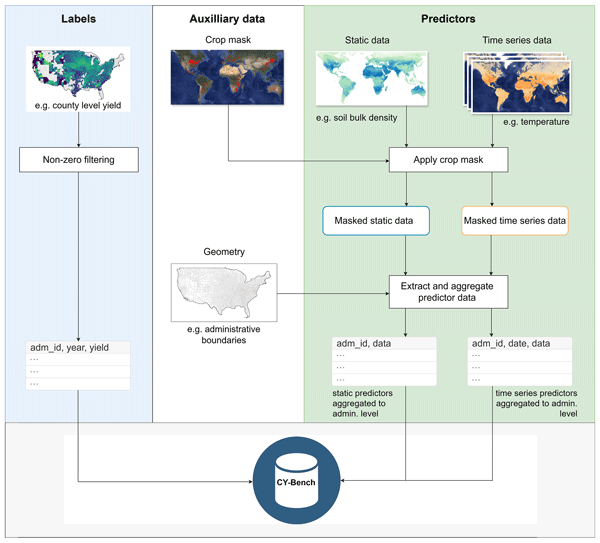
Michiel Kallenberg, Dilli Paudel, Stella Ofori-Ampofo, Hilmy Baja, Ron van Bree, Aike Potze, Pratishtha Poudel, Abdelrahman Saleh, Weston Anderson, Malte von Bloh, Andres Castellano, Oumnia Ennaji, Raed Hamed, Rahel Laudien, Donghoon Lee, Inti Luna, Dainius Masiliūnas, Michele Meroni, Janet Mumo Mutuku, Siyabusa Mkuhlani, Jonathan Richetti, Alex C. Ruane, Ritvik Sahajpal, Guanyuan Shuai, Vasileios Sitokonstantinou, Rogério de S. Nóia-Júnior, Amit Kumar Srivastava, Robert Strong, Lily-belle Sweet, Petar Vojnović, Allard de Wit, Maximilian Zachow, and Ioannis N. Athanasiadis
Earth Syst. Sci. Data, 18, 3997–4018, https://doi.org/10.5194/essd-18-3997-2026, https://doi.org/10.5194/essd-18-3997-2026, 2026
Short summary
Short summary
Improving crop yield predictions is crucial for food security. Prior research relied on case studies, making it hard to compare methods and track progress. We introduce CY-Bench (Crop Yield Benchmark), a global dataset for forecasting maize and wheat yields across diverse farming systems in over 25 countries. It includes standardized weather, soil, and satellite data, curated by a diverse set of experts. CY-Bench supports the development of tools to help decision-makers plan for food security.
Jens Heinke, Sibyll Schaphoff, Stephen Björn Wirth, and Christoph Müller
EGUsphere, https://doi.org/10.5194/egusphere-2026-4549, https://doi.org/10.5194/egusphere-2026-4549, 2026
This preprint is open for discussion and under review for Geoscientific Model Development (GMD).
Short summary
Short summary
Nitrogen is essential for plant growth, and vegetation models must capture how its availability limits it. We found a long-standing error in one such model, LPJmL, that had overestimated plants' nitrogen needs by about a factor of two. Correcting it removed this limit almost entirely, which required further adjustments to how the model handles nitrogen uptake, recycling, and plant leaf timing, to restore a realistic level of nitrogen limitation and overall model behavior.
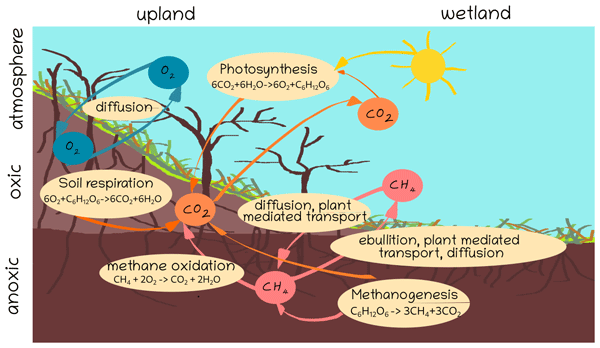
Sibyll Schaphoff, David Hötten, Christoph Müller, Dieter Gerten, Sebastian Ostberg, and Werner von Bloh
Geosci. Model Dev., 19, 7615–7651, https://doi.org/10.5194/gmd-19-7615-2026, https://doi.org/10.5194/gmd-19-7615-2026, 2026
Short summary
Short summary
Methane is a powerful driver of climate change, yet emissions from wetlands and farming remain uncertain. We improved a global vegetation model that links water, plants and soils to methane production and release. The model now captures waterlogged areas, methane creation and escape, and flood-tolerant plants. It reproduces global wetland patterns and emissions more realistically, helping assess how climate and land-use change may affect future methane release and improve climate projections.
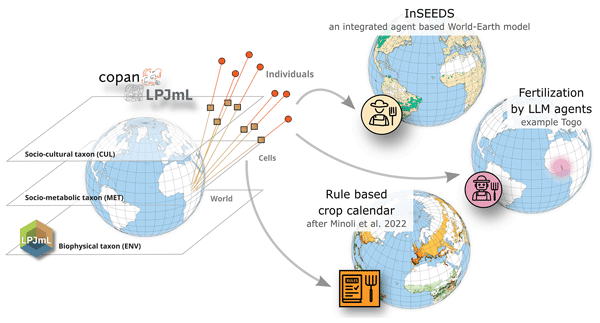
Jannes Breier, Luana Schwarz, Hannah Prawitz, Werner von Bloh, Christoph Müller, Stephen Björn Wirth, Max Bechthold, Dieter Gerten, and Jonathan F. Donges
Geosci. Model Dev., 19, 6829–6855, https://doi.org/10.5194/gmd-19-6829-2026, https://doi.org/10.5194/gmd-19-6829-2026, 2026
Short summary
Short summary
We present a new modelling framework that combines simulations of environmental change and human decision-making in an integrated approach. It allows researchers to explore how farming decisions affect land, water, and climate, and how these environmental changes influence future decisions. By connecting people and nature, it helps investigate food security, climate adaptation, and sustainability challenges, and supports the development of more realistic scenarios of future environmental change.

Daniel Klotz, Peter Miersch, Thiago V. M. do Nascimento, Fabrizio Fenicia, Corinna Frank, Martin Gauch, and Jakob Zscheischler
Earth Syst. Sci. Data, 18, 5485–5504, https://doi.org/10.5194/essd-18-5485-2026, https://doi.org/10.5194/essd-18-5485-2026, 2026
Short summary
Short summary
Data availability is central to hydrological science. It is the basis for advancing our understanding of hydrological processes, building prediction models, and anticipatory water management. We present a data-driven daily runoff reconstruction product for natural streamflow. We name it EARLS: European aggregated reconstruction for large-sample studies. The reconstructions represent daily simulations of natural streamflow across Europe and cover the period from 1953 to 2020.
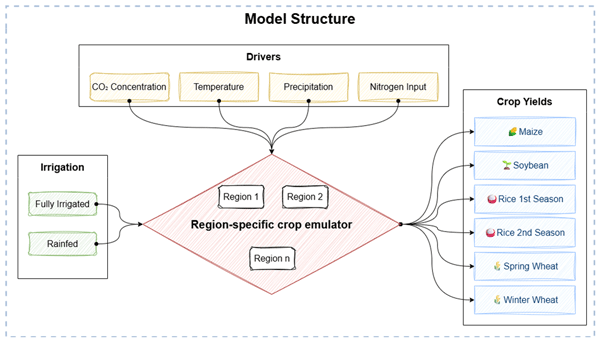
Xinrui Liu, Thomas Gasser, Jianmin Ma, Junfeng Liu, Jonas Jägermeyr, Christoph Müller, Christian Folberth, Florian Zabel, Atul K. Jain, Wenfeng Liu, and Heidi Webber
Geosci. Model Dev., 19, 5857–5880, https://doi.org/10.5194/gmd-19-5857-2026, https://doi.org/10.5194/gmd-19-5857-2026, 2026
Short summary
Short summary
This paper presents a crop yield emulator for four major crops (maize, rice, soybean, and wheat). Trained on process-based crop model simulations, it captures yield responses to key drivers: atmospheric CO2, temperature, water availability, and nitrogen use. The emulator closely reproduces the behavior of complex crop models and aligns well with FAO (Food and Agriculture Organization)-reported historical yields. It provides a robust and efficient method for representing agricultural outcomes in climate change impact assessments.
Jonathan Wider and Jakob Zscheischler
EGUsphere, https://doi.org/10.5194/egusphere-2026-2325, https://doi.org/10.5194/egusphere-2026-2325, 2026
Short summary
Short summary
unseen-awg, a novel approach for generating multivariate spatiotemporal weather data, operates by resampling a large dataset of historical weather forecasts. The method uses block sampling of days and a parameter-tuning strategy to improve the realism of the generated European weather. It holds great potential for assessing weather-related risks across sectors such as water, agriculture, or forestry that require simulating multiple variables and spatial dependencies across numerous locations.
Michiel Kallenberg, Dilli Paudel, Stella Ofori-Ampofo, Hilmy Baja, Ron van Bree, Aike Potze, Pratishtha Poudel, Abdelrahman Saleh, Weston Anderson, Malte von Bloh, Andres Castellano, Oumnia Ennaji, Raed Hamed, Rahel Laudien, Donghoon Lee, Inti Luna, Dainius Masiliūnas, Michele Meroni, Janet Mumo Mutuku, Siyabusa Mkuhlani, Jonathan Richetti, Alex C. Ruane, Ritvik Sahajpal, Guanyuan Shuai, Vasileios Sitokonstantinou, Rogério de S. Nóia-Júnior, Amit Kumar Srivastava, Robert Strong, Lily-belle Sweet, Petar Vojnović, Allard de Wit, Maximilian Zachow, and Ioannis N. Athanasiadis
Earth Syst. Sci. Data, 18, 3997–4018, https://doi.org/10.5194/essd-18-3997-2026, https://doi.org/10.5194/essd-18-3997-2026, 2026
Short summary
Short summary
Improving crop yield predictions is crucial for food security. Prior research relied on case studies, making it hard to compare methods and track progress. We introduce CY-Bench (Crop Yield Benchmark), a global dataset for forecasting maize and wheat yields across diverse farming systems in over 25 countries. It includes standardized weather, soil, and satellite data, curated by a diverse set of experts. CY-Bench supports the development of tools to help decision-makers plan for food security.
Andreia F. S. Ribeiro, Maik Biling, Kirsten Thonicke, Werner von Bloh, Jakob Wessel, Sabine Undorf, Matthias Forkel, and Jakob Zscheischler
EGUsphere, https://doi.org/10.5194/egusphere-2026-2952, https://doi.org/10.5194/egusphere-2026-2952, 2026
Short summary
Short summary
Wildfires are becoming more extreme, yet our state-of-the-art tools fail to capture the full risk. We simulate a large ensemble of wildfire simulations capturing a broader range of physically plausible extreme wildfire events beyond what observations alone can reveal. Extreme fire danger alone does not explain the worst impacts: ignitions, fuel and vegetation-fire feedback need to be incorporated. This modelling framework is transferable to other climate-impact sectors beyond wildfires.

Ni Li, Wim Thiery, Shorouq Zahra, Mariana Madruga de Brito, Koffi Worou, Murathan Kurfalı, Seppe Lampe, Paul Muñoz, Clare Flynn, Camila Trigoso, Joakim Nivre, Jakob Zscheischler, and Gabriele Messori
Nat. Hazards Earth Syst. Sci., 26, 2609–2636, https://doi.org/10.5194/nhess-26-2609-2026, https://doi.org/10.5194/nhess-26-2609-2026, 2026
Short summary
Short summary
Climate extremes threaten society and ecosystems, making impact understanding critical. Wikimpacts 1.0 provides an automated pipeline processing Wikipedia texts with underexploited information on climate impacts, yielding comprehensive socio-economic impact data for 2726 climate events from 1034–2024. It offers broader storm-related impacts and finer spatial resolution than established databases, showcasing natural language processing's potential to advance climate impact data.
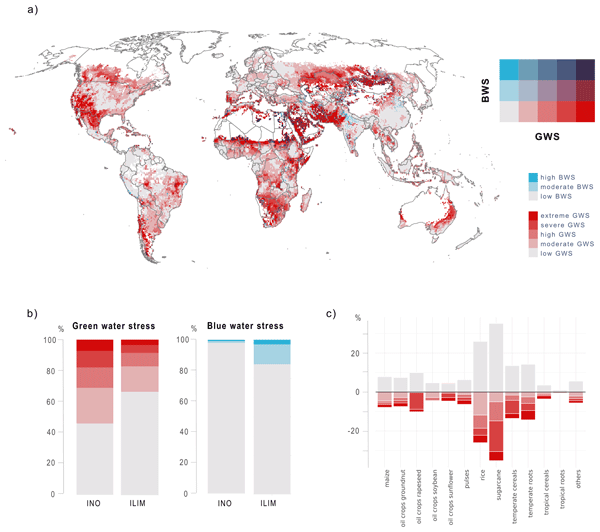
Heindriken Dahlmann, Lauren S. Andersen, Sibyll Schaphoff, Fabian Stenzel, Johanna Braun, Christoph Müller, and Dieter Gerten
Hydrol. Earth Syst. Sci., 30, 3185–3201, https://doi.org/10.5194/hess-30-3185-2026, https://doi.org/10.5194/hess-30-3185-2026, 2026
Short summary
Short summary
Green water stress can negatively affect agricultural production and is often mitigated through irrigation. In this global modelling study, we investigate where and to what extent the implementation of irrigation helps to compensate for green water stress but at the same time leads to an increase in blue water scarcity. Our findings highlight the need to consider both water stresses together, along with their dynamic interactions, for sustainable water management.
Marie Hemmen, Heidi Webber, Werner von Bloh, Jens Heinke, and Christoph Müller
EGUsphere, https://doi.org/10.5194/egusphere-2026-1898, https://doi.org/10.5194/egusphere-2026-1898, 2026
Short summary
Short summary
In this study we present a lightweight approach to compute crop canopy temperatures in computationally expensive models, which we apply in the global Lund-Potsdam-Jena managed Land model. The evaluation reveals that the developed approach reproduces cooling and heating effects of the canopy for daily maximum temperatures and suggests that replacement of standard 2 m air temperature input by simulated canopy temperatures improves the skill to model high temperature impacts on crop growth.
Susanne Rolinski, Jens Heinke, Stephen B. Wirth, and Christoph Müller
EGUsphere, https://doi.org/10.5194/egusphere-2026-1529, https://doi.org/10.5194/egusphere-2026-1529, 2026
Short summary
Short summary
Livestock rearing in semi-arid steppe regions is traditionally extensive but under pressure both from increasing demand and by climate change. We demonstrate by applying a vegetation model that increasing management intensity by increasing fertilization and animal densities result in increasing livestock productivity but also environmental impacts in a nonlinear way. That allows to find management combinations with low environmental impacts without jeopardizing livestock productivity.
Luana Schwarz, Jannes Breier, Hannah Prawitz, Max Bechthold, Werner von Bloh, Sara M. Constantino, Dieter Gerten, Jobst Heitzig, Ronja Hotz, Leander John, Christoph Müller, Johan Rockström, and Jonathan F. Donges
EGUsphere, https://doi.org/10.5194/egusphere-2025-4079, https://doi.org/10.5194/egusphere-2025-4079, 2025
Short summary
Short summary
We present a novel global model that links farmer decisions with ecological processes to explore how agricultural systems co-evolve. Unlike previous tools, it captures feedbacks between society and nature at up-to planetary scale. We find that conservation practices can restore soil health and support stable harvests. Adoption spreads through learning and norms, showing how regeneration at the farm scale can ripple outward, contributing to global sustainability and Earth system resilience.
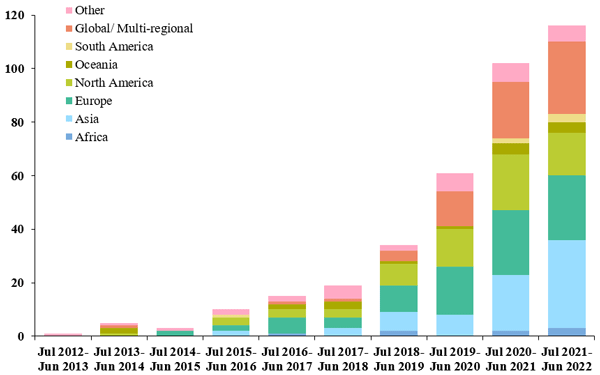
Lou Brett, Christopher J. White, Daniela I. V. Domeisen, Bart van den Hurk, Philip Ward, and Jakob Zscheischler
Nat. Hazards Earth Syst. Sci., 25, 2591–2611, https://doi.org/10.5194/nhess-25-2591-2025, https://doi.org/10.5194/nhess-25-2591-2025, 2025
Short summary
Short summary
Compound events, where multiple weather or climate hazards occur together, pose significant risks to both society and the environment. These events, like simultaneous wind and rain, can have more severe impacts than single hazards. Our review of compound event research from 2012–2022 reveals a rise in studies, especially on events that occur concurrently, hot and dry events, and compounding flooding. The review also highlights opportunities for research in the coming years.
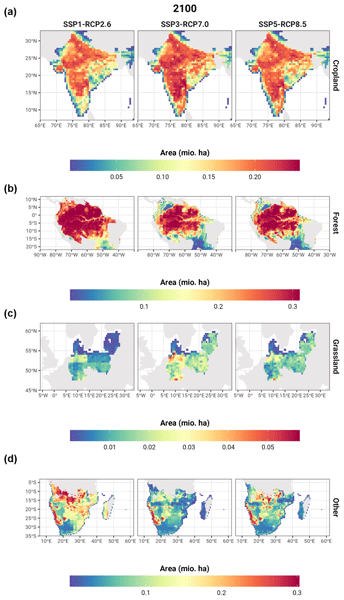
Edna Johanna Molina Bacca, Miodrag Stevanović, Benjamin Leon Bodirsky, Jonathan Cornelis Doelman, Louise Parsons Chini, Jan Volkholz, Katja Frieler, Christopher Paul Oliver Reyer, George Hurtt, Florian Humpenöder, Kristine Karstens, Jens Heinke, Christoph Müller, Jan Philipp Dietrich, Hermann Lotze-Campen, Elke Stehfest, and Alexander Popp
Earth Syst. Dynam., 16, 753–801, https://doi.org/10.5194/esd-16-753-2025, https://doi.org/10.5194/esd-16-753-2025, 2025
Short summary
Short summary
Land-use change projections are vital for impact studies. This study compares updated land-use model projections, including CO2 fertilization among other upgrades, from the MAgPIE and IMAGE models under three scenarios, highlighting differences, uncertainty hotspots, and harmonization effects. Key findings include reduced bioenergy crop demand projections and differences in grassland area allocation and sizes, with socioeconomic–climate scenarios' largest effect on variance starting in 2030.
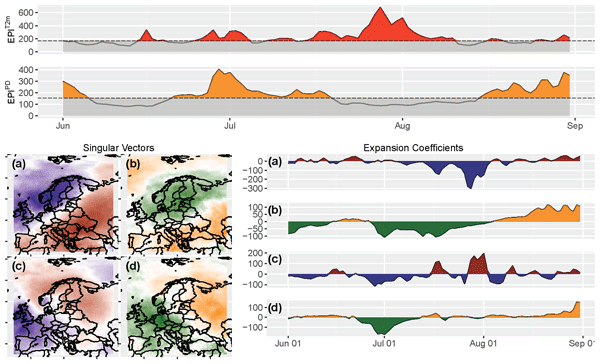
Elena Xoplaki, Florian Ellsäßer, Jens Grieger, Katrin M. Nissen, Joaquim G. Pinto, Markus Augenstein, Ting-Chen Chen, Hendrik Feldmann, Petra Friederichs, Daniel Gliksman, Laura Goulier, Karsten Haustein, Jens Heinke, Lisa Jach, Florian Knutzen, Stefan Kollet, Jürg Luterbacher, Niklas Luther, Susanna Mohr, Christoph Mudersbach, Christoph Müller, Efi Rousi, Felix Simon, Laura Suarez-Gutierrez, Svenja Szemkus, Sara M. Vallejo-Bernal, Odysseas Vlachopoulos, and Frederik Wolf
Nat. Hazards Earth Syst. Sci., 25, 541–564, https://doi.org/10.5194/nhess-25-541-2025, https://doi.org/10.5194/nhess-25-541-2025, 2025
Short summary
Short summary
Europe frequently experiences compound events, with major impacts. We investigate these events’ interactions, characteristics, and changes over time, focusing on socio-economic impacts in Germany and central Europe. Highlighting 2018’s extreme events, this study reveals impacts on water, agriculture, and forests and stresses the need for impact-focused definitions and better future risk quantification to support adaptation planning.
Stephen Björn Wirth, Johanna Braun, Jens Heinke, Sebastian Ostberg, Susanne Rolinski, Sibyll Schaphoff, Fabian Stenzel, Werner von Bloh, Friedhelm Taube, and Christoph Müller
Geosci. Model Dev., 17, 7889–7914, https://doi.org/10.5194/gmd-17-7889-2024, https://doi.org/10.5194/gmd-17-7889-2024, 2024
Short summary
Short summary
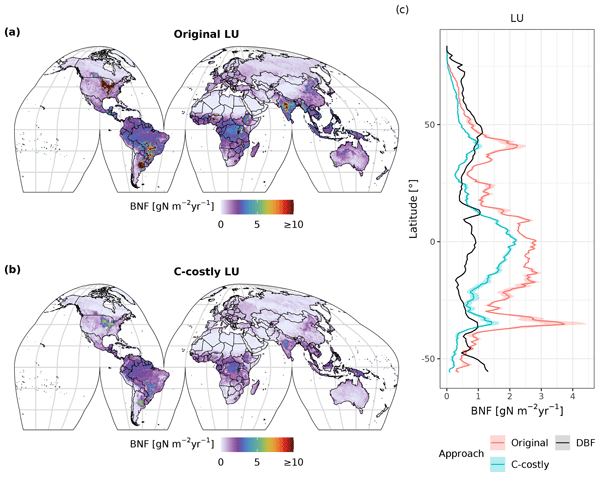
We present a new approach to modelling biological nitrogen fixation (BNF) in the Lund–Potsdam–Jena managed Land dynamic global vegetation model. While in the original approach BNF depended on actual evapotranspiration, the new approach considers soil water content and temperature, vertical root distribution, the nitrogen (N) deficit and carbon (C) costs. The new approach improved simulated BNF compared to the scientific literature and the model ability to project future C and N cycle dynamics.
Beijing Fang, Emanuele Bevacqua, Oldrich Rakovec, and Jakob Zscheischler
Hydrol. Earth Syst. Sci., 28, 3755–3775, https://doi.org/10.5194/hess-28-3755-2024, https://doi.org/10.5194/hess-28-3755-2024, 2024
Short summary
Short summary
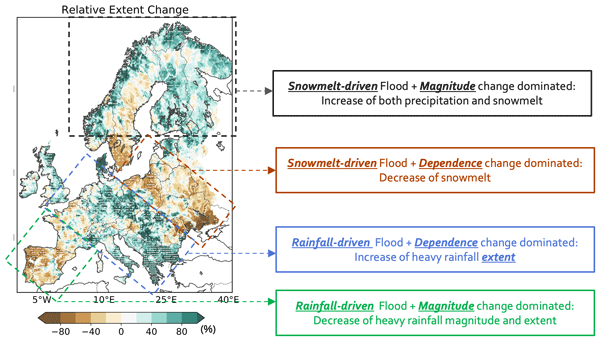
We use grid-based runoff from a hydrological model to identify large spatiotemporally connected flood events in Europe, assess extent trends over the last 70 years, and attribute the trends to different drivers. Our findings reveal a general increase in flood extent, with regional variations driven by diverse factors. The study not only enables a thorough examination of flood events across multiple basins but also highlights the potential challenges arising from changing flood extents.
Felix Jäger, Jonas Schwaab, Yann Quilcaille, Michael Windisch, Jonathan Doelman, Stefan Frank, Mykola Gusti, Petr Havlik, Florian Humpenöder, Andrey Lessa Derci Augustynczik, Christoph Müller, Kanishka Balu Narayan, Ryan Sebastian Padrón, Alexander Popp, Detlef van Vuuren, Michael Wögerer, and Sonia Isabelle Seneviratne
Earth Syst. Dynam., 15, 1055–1071, https://doi.org/10.5194/esd-15-1055-2024, https://doi.org/10.5194/esd-15-1055-2024, 2024
Short summary
Short summary
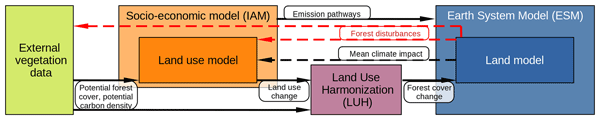
Climate change mitigation strategies developed with socioeconomic models rely on the widespread (re)planting of trees to limit global warming below 2°. However, most of these models neglect climate-driven shifts in forest damage like fires. By assessing existing mitigation scenarios, we show the exposure of projected forestation areas to fire-promoting weather conditions. Our study highlights the problem of ignoring climate-driven shifts in forest damage and ways to address it.
Daniel Klotz, Martin Gauch, Frederik Kratzert, Grey Nearing, and Jakob Zscheischler
Hydrol. Earth Syst. Sci., 28, 3665–3673, https://doi.org/10.5194/hess-28-3665-2024, https://doi.org/10.5194/hess-28-3665-2024, 2024
Short summary
Short summary
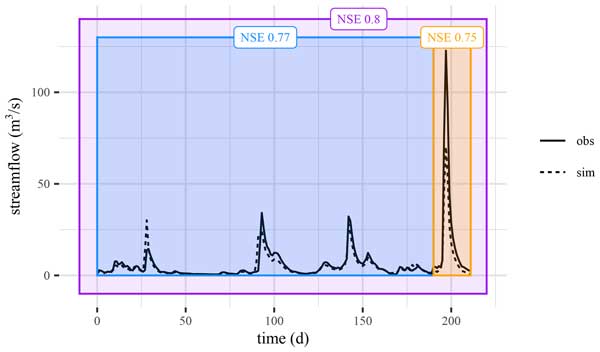
The evaluation of model performance is essential for hydrological modeling. Using performance criteria requires a deep understanding of their properties. We focus on a counterintuitive aspect of the Nash–Sutcliffe efficiency (NSE) and show that if we divide the data into multiple parts, the overall performance can be higher than all the evaluations of the subsets. Although this follows from the definition of the NSE, the resulting behavior can have unintended consequences in practice.
Derrick Muheki, Axel A. J. Deijns, Emanuele Bevacqua, Gabriele Messori, Jakob Zscheischler, and Wim Thiery
Earth Syst. Dynam., 15, 429–466, https://doi.org/10.5194/esd-15-429-2024, https://doi.org/10.5194/esd-15-429-2024, 2024
Short summary
Short summary
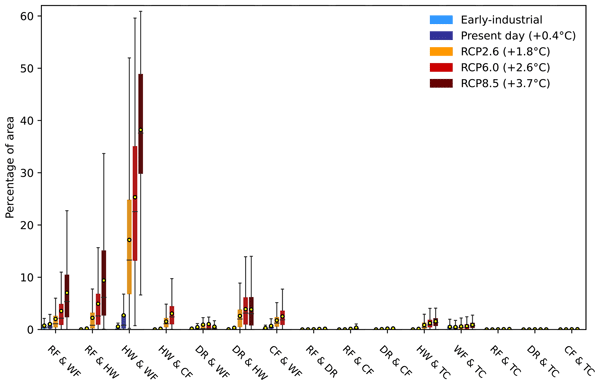
Climate change affects the interaction, dependence, and joint occurrence of climate extremes. Here we investigate the joint occurrence of pairs of river floods, droughts, heatwaves, crop failures, wildfires, and tropical cyclones in East Africa under past and future climate conditions. Our results show that, across all future warming scenarios, the frequency and spatial extent of these co-occurring extremes will increase in this region, particularly in areas close to the Nile and Congo rivers.
Jose Rafael Guarin, Jonas Jägermeyr, Elizabeth A. Ainsworth, Fabio A. A. Oliveira, Senthold Asseng, Kenneth Boote, Joshua Elliott, Lisa Emberson, Ian Foster, Gerrit Hoogenboom, David Kelly, Alex C. Ruane, and Katrina Sharps
Geosci. Model Dev., 17, 2547–2567, https://doi.org/10.5194/gmd-17-2547-2024, https://doi.org/10.5194/gmd-17-2547-2024, 2024
Short summary
Short summary
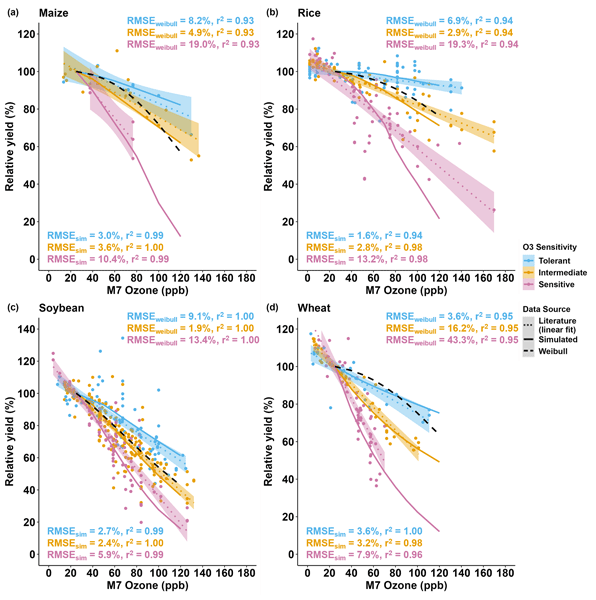
The effects of ozone (O3) stress on crop photosynthesis and leaf senescence were added to maize, rice, soybean, and wheat crop models. The modified models reproduced growth and yields under different O3 levels measured in field experiments and reported in the literature. The combined interactions between O3 and additional stresses were reproduced with the new models. These updated crop models can be used to simulate impacts of O3 stress under future climate change and air pollution scenarios.
Stephen Björn Wirth, Arne Poyda, Friedhelm Taube, Britta Tietjen, Christoph Müller, Kirsten Thonicke, Anja Linstädter, Kai Behn, Sibyll Schaphoff, Werner von Bloh, and Susanne Rolinski
Biogeosciences, 21, 381–410, https://doi.org/10.5194/bg-21-381-2024, https://doi.org/10.5194/bg-21-381-2024, 2024
Short summary
Short summary
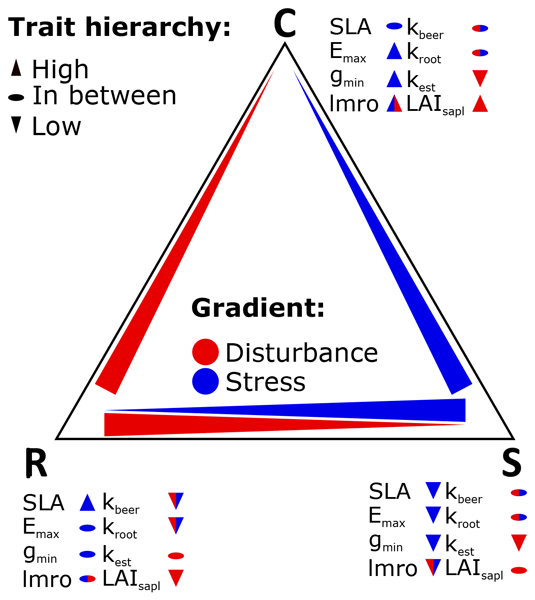
In dynamic global vegetation models (DGVMs), the role of functional diversity in forage supply and soil organic carbon storage of grasslands is not explicitly taken into account. We introduced functional diversity into the Lund Potsdam Jena managed Land (LPJmL) DGVM using CSR theory. The new model reproduced well-known trade-offs between plant traits and can be used to quantify the role of functional diversity in climate change mitigation using different functional diversity scenarios.
Katja Frieler, Jan Volkholz, Stefan Lange, Jacob Schewe, Matthias Mengel, María del Rocío Rivas López, Christian Otto, Christopher P. O. Reyer, Dirk Nikolaus Karger, Johanna T. Malle, Simon Treu, Christoph Menz, Julia L. Blanchard, Cheryl S. Harrison, Colleen M. Petrik, Tyler D. Eddy, Kelly Ortega-Cisneros, Camilla Novaglio, Yannick Rousseau, Reg A. Watson, Charles Stock, Xiao Liu, Ryan Heneghan, Derek Tittensor, Olivier Maury, Matthias Büchner, Thomas Vogt, Tingting Wang, Fubao Sun, Inga J. Sauer, Johannes Koch, Inne Vanderkelen, Jonas Jägermeyr, Christoph Müller, Sam Rabin, Jochen Klar, Iliusi D. Vega del Valle, Gitta Lasslop, Sarah Chadburn, Eleanor Burke, Angela Gallego-Sala, Noah Smith, Jinfeng Chang, Stijn Hantson, Chantelle Burton, Anne Gädeke, Fang Li, Simon N. Gosling, Hannes Müller Schmied, Fred Hattermann, Jida Wang, Fangfang Yao, Thomas Hickler, Rafael Marcé, Don Pierson, Wim Thiery, Daniel Mercado-Bettín, Robert Ladwig, Ana Isabel Ayala-Zamora, Matthew Forrest, and Michel Bechtold
Geosci. Model Dev., 17, 1–51, https://doi.org/10.5194/gmd-17-1-2024, https://doi.org/10.5194/gmd-17-1-2024, 2024
Short summary
Short summary
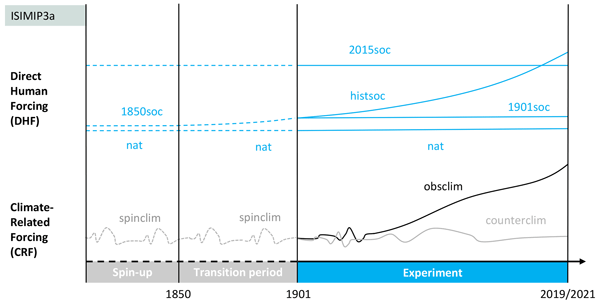
Our paper provides an overview of all observational climate-related and socioeconomic forcing data used as input for the impact model evaluation and impact attribution experiments within the third round of the Inter-Sectoral Impact Model Intercomparison Project. The experiments are designed to test our understanding of observed changes in natural and human systems and to quantify to what degree these changes have already been induced by climate change.
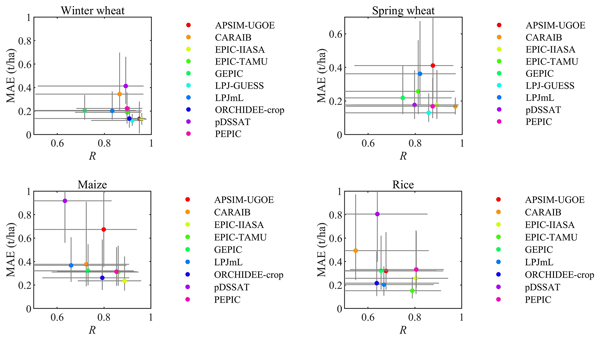
Weihang Liu, Tao Ye, Christoph Müller, Jonas Jägermeyr, James A. Franke, Haynes Stephens, and Shuo Chen
Geosci. Model Dev., 16, 7203–7221, https://doi.org/10.5194/gmd-16-7203-2023, https://doi.org/10.5194/gmd-16-7203-2023, 2023
Short summary
Short summary
We develop a machine-learning-based crop model emulator with the inputs and outputs of multiple global gridded crop model ensemble simulations to capture the year-to-year variation of crop yield under future climate change. The emulator can reproduce the year-to-year variation of simulated yield given by the crop models under CO2, temperature, water, and nitrogen perturbations. Developing this emulator can provide a tool to project future climate change impact in a simple way.
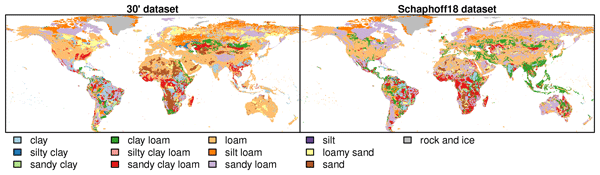
Sebastian Ostberg, Christoph Müller, Jens Heinke, and Sibyll Schaphoff
Geosci. Model Dev., 16, 3375–3406, https://doi.org/10.5194/gmd-16-3375-2023, https://doi.org/10.5194/gmd-16-3375-2023, 2023
Short summary
Short summary
We present a new toolbox for generating input datasets for terrestrial ecosystem models from diverse and partially conflicting data sources. The toolbox documents the sources and processing of data and is designed to make inconsistencies between source datasets transparent so that users can make their own decisions on how to resolve these should they not be content with our default assumptions. As an example, we use the toolbox to create input datasets at two different spatial resolutions.
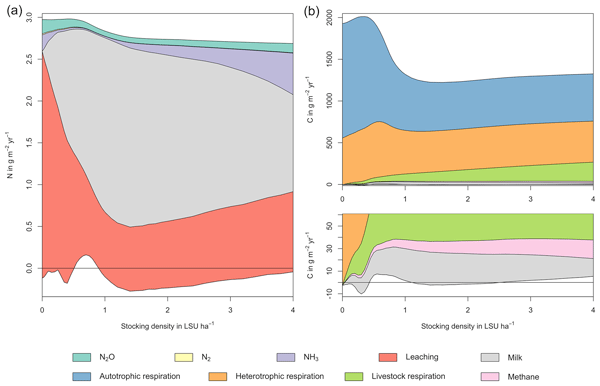
Jens Heinke, Susanne Rolinski, and Christoph Müller
Geosci. Model Dev., 16, 2455–2475, https://doi.org/10.5194/gmd-16-2455-2023, https://doi.org/10.5194/gmd-16-2455-2023, 2023
Short summary
Short summary
We develop a livestock module for the global vegetation model LPJmL5.0 to simulate the impact of grazing dairy cattle on carbon and nitrogen cycles in grasslands. A novelty of the approach is that it accounts for the effect of feed quality on feed uptake and feed utilization by animals. The portioning of dietary nitrogen into milk, feces, and urine shows very good agreement with estimates obtained from animal trials.
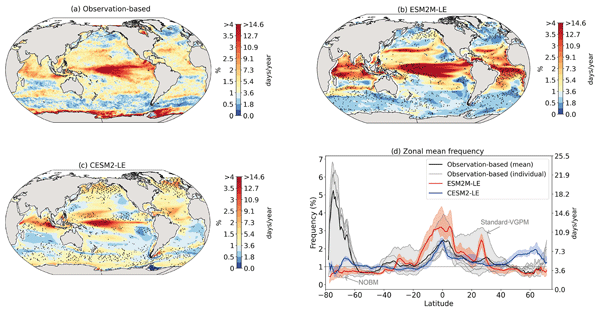
Natacha Le Grix, Jakob Zscheischler, Keith B. Rodgers, Ryohei Yamaguchi, and Thomas L. Frölicher
Biogeosciences, 19, 5807–5835, https://doi.org/10.5194/bg-19-5807-2022, https://doi.org/10.5194/bg-19-5807-2022, 2022
Short summary
Short summary
Compound events threaten marine ecosystems. Here, we investigate the potentially harmful combination of marine heatwaves with low phytoplankton productivity. Using satellite-based observations, we show that these compound events are frequent in the low latitudes. We then investigate the drivers of these compound events using Earth system models. The models share similar drivers in the low latitudes but disagree in the high latitudes due to divergent factors limiting phytoplankton production.
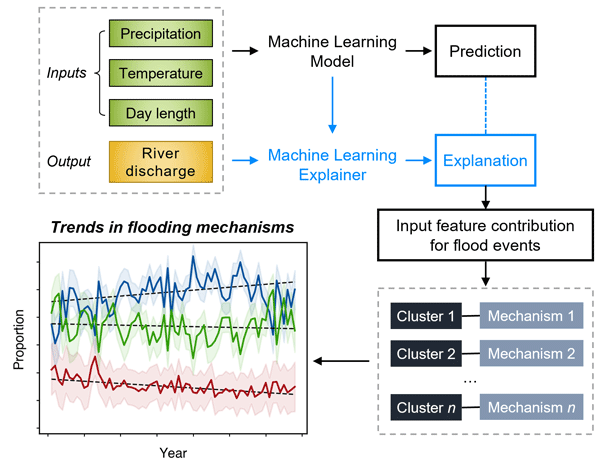
Shijie Jiang, Emanuele Bevacqua, and Jakob Zscheischler
Hydrol. Earth Syst. Sci., 26, 6339–6359, https://doi.org/10.5194/hess-26-6339-2022, https://doi.org/10.5194/hess-26-6339-2022, 2022
Short summary
Short summary
Using a novel explainable machine learning approach, we investigated the contributions of precipitation, temperature, and day length to different peak discharges, thereby uncovering three primary flooding mechanisms widespread in European catchments. The results indicate that flooding mechanisms have changed in numerous catchments over the past 70 years. The study highlights the potential of artificial intelligence in revealing complex changes in extreme events related to climate change.
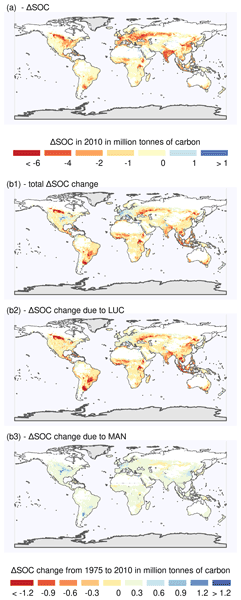
Kristine Karstens, Benjamin Leon Bodirsky, Jan Philipp Dietrich, Marta Dondini, Jens Heinke, Matthias Kuhnert, Christoph Müller, Susanne Rolinski, Pete Smith, Isabelle Weindl, Hermann Lotze-Campen, and Alexander Popp
Biogeosciences, 19, 5125–5149, https://doi.org/10.5194/bg-19-5125-2022, https://doi.org/10.5194/bg-19-5125-2022, 2022
Short summary
Short summary
Soil organic carbon (SOC) has been depleted by anthropogenic land cover change and agricultural management. While SOC models often simulate detailed biochemical processes, the management decisions are still little investigated at the global scale. We estimate that soils have lost around 26 GtC relative to a counterfactual natural state in 1975. Yet, since 1975, SOC has been increasing again by 4 GtC due to a higher productivity, recycling of crop residues and manure, and no-tillage practices.
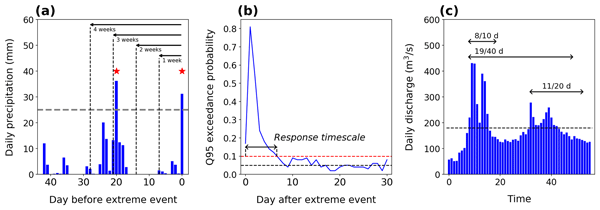
Alexandre Tuel, Bettina Schaefli, Jakob Zscheischler, and Olivia Martius
Hydrol. Earth Syst. Sci., 26, 2649–2669, https://doi.org/10.5194/hess-26-2649-2022, https://doi.org/10.5194/hess-26-2649-2022, 2022
Short summary
Short summary
River discharge is strongly influenced by the temporal structure of precipitation. Here, we show how extreme precipitation events that occur a few days or weeks after a previous event have a larger effect on river discharge than events occurring in isolation. Windows of 2 weeks or less between events have the most impact. Similarly, periods of persistent high discharge tend to be associated with the occurrence of several extreme precipitation events in close succession.
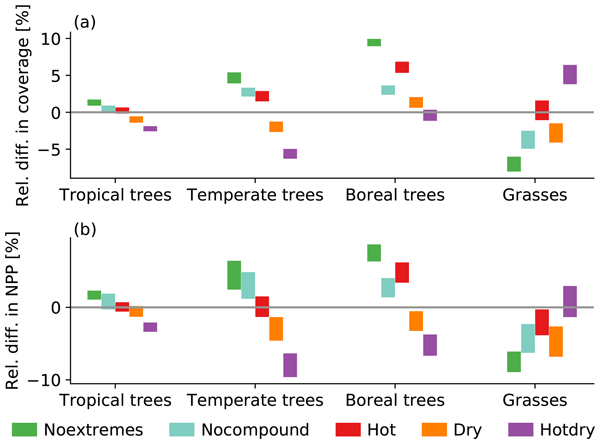
Elisabeth Tschumi, Sebastian Lienert, Karin van der Wiel, Fortunat Joos, and Jakob Zscheischler
Biogeosciences, 19, 1979–1993, https://doi.org/10.5194/bg-19-1979-2022, https://doi.org/10.5194/bg-19-1979-2022, 2022
Short summary
Short summary
Droughts and heatwaves are expected to occur more often in the future, but their effects on land vegetation and the carbon cycle are poorly understood. We use six climate scenarios with differing extreme occurrences and a vegetation model to analyse these effects. Tree coverage and associated plant productivity increase under a climate with no extremes. Frequent co-occurring droughts and heatwaves decrease plant productivity more than the combined effects of single droughts or heatwaves.
Vera Porwollik, Susanne Rolinski, Jens Heinke, Werner von Bloh, Sibyll Schaphoff, and Christoph Müller
Biogeosciences, 19, 957–977, https://doi.org/10.5194/bg-19-957-2022, https://doi.org/10.5194/bg-19-957-2022, 2022
Short summary
Short summary
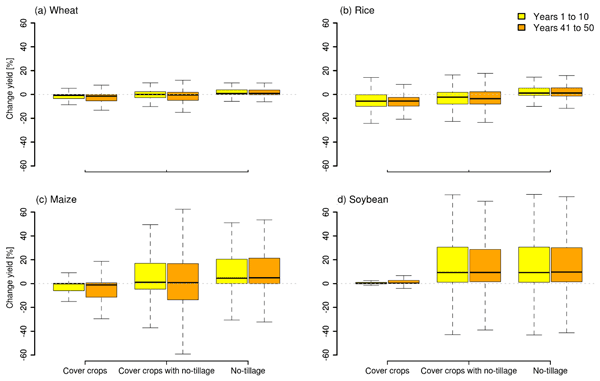
The study assesses impacts of grass cover crop cultivation on cropland during main-crop off-season periods applying the global vegetation model LPJmL (V.5.0-tillage-cc). Compared to simulated bare-soil fallowing practices, cover crops led to increased soil carbon content and reduced nitrogen leaching rates on the majority of global cropland. Yield responses of main crops following cover crops vary with location, duration of altered management, crop type, water regime, and tillage practice.
Tobias Herzfeld, Jens Heinke, Susanne Rolinski, and Christoph Müller
Earth Syst. Dynam., 12, 1037–1055, https://doi.org/10.5194/esd-12-1037-2021, https://doi.org/10.5194/esd-12-1037-2021, 2021
Short summary
Short summary
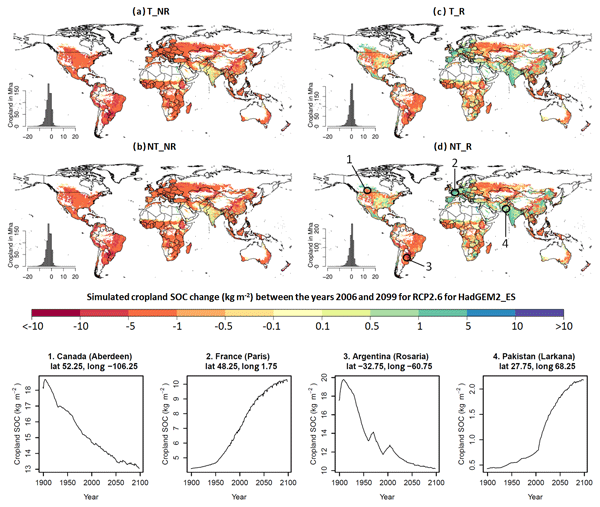
Soil organic carbon sequestration on cropland has been proposed as a climate change mitigation strategy. We simulate different agricultural management practices under climate change scenarios using a global biophysical model. We find that at the global aggregated level, agricultural management practices are not capable of enhancing total carbon storage in the soil, yet for some climate regions, we find that there is potential to enhance the carbon content in cropland soils.
Cited articles
Anand, M., Bohn, F. J., Camps-Valls, G., Fischer, R., Huth, A., Sweet, L.-b., and Zscheischler, J.: Identifying compound weather drivers of forest biomass loss with generative deep learning, Environ. Data Sci., 3, e4, https://doi.org/10.1017/eds.2024.2, 2024a. a
Anand, M., Hamed, R., Linscheid, N., Silva, P. S., Andre, J., Zscheischler, J., Garry, F. K., and Bastos, A.: Winter Climate Preconditioning of Summer Vegetation Extremes in the Northern Hemisphere, Environ. Res. Lett., 19, 094045, https://doi.org/10.1088/1748-9326/ad627d, 2024b. a
Ben-Ari, T., Boé, J., Ciais, P., Lecerf, R., Van der Velde, M., and Makowski, D.: Causes and implications of the unforeseen 2016 extreme yield loss in the breadbasket of France, Nat. Commun., 9, 1627, https://doi.org/10.1038/s41467-018-04087-x, 2018. a
Bilodeau, B., Jaques, N., Koh, P. W., and Kim, B.: Impossibility theorems for feature attribution, P. Natl. Acad. Sci. USA, 121, e2304406120, https://doi.org/10.1073/pnas.2304406120, 2024. a
Cammarano, D., Rötter, R. P., Asseng, S., Ewert, F., Wallach, D., Martre, P., Hatfield, J. L., Jones, J. W., Rosenzweig, C., Ruane, A. C., Boote, K. J., Thorburn, P. J., Kersebaum, K. C., Aggarwal, P. K., Angulo, C., Basso, B., Bertuzzi, P., Biernath, C., Brisson, N., Challinor, A. J., Doltra, J., Gayler, S., Goldberg, R., Heng, L., Hooker, J., Hunt, L. A., Ingwersen, J., Izaurralde, R. C., Müller, C., Kumar, S. N., Nendel, C., O’Leary, G. J., Olesen, J. E., Osborne, T. M., Palosuo, T., Priesack, E., Ripoche, D., Semenov, M. A., Shcherbak, I., Steduto, P., Stöckle, C. O., Stratonovitch, P., Streck, T., Supit, I., Tao, F., Travasso, M., Waha, K., White, J. W., and Wolf, J.: Uncertainty of wheat water use: Simulated patterns and sensitivity to temperature and CO2, Field Crop. Res., 198, 80–92, https://doi.org/10.1016/j.fcr.2016.08.015, 2016. a
Chen, M., Guilpart, N., and Makowski, D.: Comparison of methods to aggregate climate data to predict crop yield: an application to soybean, Environ. Res. Lett., 19, 054049, https://doi.org/10.1088/1748-9326/ad42b5, 2024. a, b, c
Crane-Droesch, A.: Machine learning methods for crop yield prediction and climate change impact assessment in agriculture, Environ. Res. Lett., 13, 114003, https://doi.org/10.1088/1748-9326/aae159, 2018. a
Cucchi, M., Weedon, G. P., Amici, A., Bellouin, N., Lange, S., Müller Schmied, H., Hersbach, H., and Buontempo, C.: WFDE5: bias-adjusted ERA5 reanalysis data for impact studies, Earth Syst. Sci. Data, 12, 2097–2120, https://doi.org/10.5194/essd-12-2097-2020, 2020. a
Deines, J. M., Swatantran, A., Ye, D., Myers, B., Archontoulis, S., and Lobell, D. B.: Field-scale dynamics of planting dates in the US Corn Belt from 2000 to 2020, Remote Sens. Environ., 291, 113551, https://doi.org/10.1016/j.rse.2023.113551, 2023. a
Dirmeyer, P. A., Gao, X., Zhao, M., Guo, Z., Oki, T., and Hanasaki, N.: GSWP-2: Multimodel Analysis and Implications for Our Perception of the Land Surface, B. Am. Meteorol. Soc., https://doi.org/10.1175/BAMS-87-10-1381, 2006. a
Elliott, J., Kelly, D., Chryssanthacopoulos, J., Glotter, M., Jhunjhnuwala, K., Best, N., Wilde, M., and Foster, I.: The parallel system for integrating impact models and sectors (pSIMS), Environ. Modell. Softw., 62, 509–516, https://doi.org/10.1016/j.envsoft.2014.04.008, 2014. a
Ferraciolli, M. A., Bocca, F. F., and Rodrigues, L. H. A.: Neglecting spatial autocorrelation causes underestimation of the error of sugarcane yield models, Comput. Electron. Agr., 161, 233–240, https://doi.org/10.1016/j.compag.2018.09.003, 2019. a
Filippi, P., Han, S. Y., and Bishop, T. F.: On crop yield modelling, predicting, and forecasting and addressing the common issues in published studies, Precis. Agric., 26, 8, https://doi.org/10.1007/s11119-024-10212-2, 2024. a
Folberth, C., Baklanov, A., Balkovič, J., Skalský, R., Khabarov, N., and Obersteiner, M.: Spatio-temporal downscaling of gridded crop model yield estimates based on machine learning, Agr. Forest Meteorol., 264, 1–15, https://doi.org/10.1016/j.agrformet.2018.09.021, 2019. a
Franch, B., Cintas, J., Becker-Reshef, I., Sanchez-Torres, M. J., Roger, J., Skakun, S., Sobrino, J. A., Van Tricht, K., Degerickx, J., Gilliams, S., Koetz, B., Szantoi, Z., and Whitcraft, A.: Global crop calendars of maize and wheat in the framework of the WorldCereal project, GISci. Remote Sens., 59, 885–913, https://doi.org/10.1080/15481603.2022.2079273, 2022. a
Frieler, K., Schauberger, B., Arneth, A., Balkovič, J., Chryssanthacopoulos, J., Deryng, D., Elliott, J., Folberth, C., Khabarov, N., Müller, C., Olin, S., Pugh, T. A. M., Schaphoff, S., Schewe, J., Schmid, E., Warszawski, L., and Levermann, A.: Understanding the weather signal in national crop-yield variability, Earths Future, 5, 605–616, https://doi.org/10.1002/2016EF000525, 2017. a
Geurts, P., Ernst, D., and Wehenkel, L.: Extremely randomized trees, Mach. Learn., 63, 3–42, https://doi.org/10.1007/s10994-006-6226-1, 2006. a
Han, J., Shi, L., Yang, Q., Yu, J., and Athanasiadis, I. N.: Knowledge-guided machine learning with multivariate sparse data for crop growth modelling, Field Crop. Res., 328, 109912, https://doi.org/10.1016/j.fcr.2025.109912, 2025. a
Haqiqi, I., Grogan, D. S., Hertel, T. W., and Schlenker, W.: Quantifying the impacts of compound extremes on agriculture, Hydrol. Earth Syst. Sci., 25, 551–564, https://doi.org/10.5194/hess-25-551-2021, 2021. a
Heilemann, J., Klassert, C., Samaniego, L., Thober, S., Marx, A., Boeing, F., Klauer, B., and Gawel, E.: Projecting impacts of extreme weather events on crop yields using LASSO regression, Weather and Climate Extremes, 46, 100738, https://doi.org/10.1016/j.wace.2024.100738, 2024. a, b
Heinicke, S., Frieler, K., Jägermeyr, J., and Mengel, M.: Global gridded crop models underestimate yield responses to droughts and heatwaves, Environ. Res. Lett., 17, 044026, https://doi.org/10.1088/1748-9326/ac592e, 2022. a
Hoffman, A. L., Kemanian, A. R., and Forest, C. E.: The response of maize, sorghum, and soybean yield to growing-phase climate revealed with machine learning, Environ. Res. Lett., 15, 094013, https://doi.org/10.1088/1748-9326/ab7b22, 2020. a
Hogan, D. and Schlenker, W.: Non-linear relationships between daily temperature extremes and US agricultural yields uncovered by global gridded meteorological datasets, Nat. Commun., 15, 4638, https://doi.org/10.1038/s41467-024-48388-w, 2024. a
Hsiao, J., Swann, A. L. S., and Kim, S.-H.: Maize yield under a changing climate: The hidden role of vapor pressure deficit, Agr. Forest Meteorol., 279, 107692, https://doi.org/10.1016/j.agrformet.2019.107692, 2019. a
Hultgren, A., Carleton, T., Delgado, M., Gergel, D. R., Greenstone, M., Houser, T., Hsiang, S., Jina, A., Kopp, R. E., Malevich, S. B., McCusker, K. E., Mayer, T., Nath, I., Rising, J., Rode, A., and Yuan, J.: Impacts of climate change on global agriculture accounting for adaptation, Nature, 642, 644–652, https://doi.org/10.1038/s41586-025-09085-w, 2025. a
Jiang, S., Sweet, L.-b., Blougouras, G., Brenning, A., Li, W., Reichstein, M., Denzler, J., Shangguan, W., Yu, G., Huang, F., and Zscheischler, J.: How Interpretable Machine Learning Can Benefit Process Understanding in the Geosciences, Earths Future, 12, e2024EF004540, https://doi.org/10.1029/2024EF004540, 2024a. a
Jiang, S., Tarasova, L., Yu, G., and Zscheischler, J.: Compounding effects in flood drivers challenge estimates of extreme river floods, Science Advances, 10, eadl4005, https://doi.org/10.1126/sciadv.adl4005, 2024b. a
Jin, Z., Zhuang, Q., Wang, J., Archontoulis, S. V., Zobel, Z., and Kotamarthi, V. R.: The combined and separate impacts of climate extremes on the current and future US rainfed maize and soybean production under elevated CO2, Glob. Change Biol., 23, 2687–2704, https://doi.org/10.1111/gcb.13617, 2017. a
Jones, J. W., Hoogenboom, G., Porter, C. H., Boote, K. J., Batchelor, W. D., Hunt, L. A., Wilkens, P. W., Singh, U., Gijsman, A. J., and Ritchie, J. T.: The DSSAT cropping system model, Eur. J. Agron., 18, 235–265, https://doi.org/10.1016/S1161-0301(02)00107-7, 2003. a
Jägermeyr, J., Müller, C., Ruane, A. C., Elliott, J., Balkovic, J., Castillo, O., Faye, B., Foster, I., Folberth, C., Franke, J. A., Fuchs, K., Guarin, J. R., Heinke, J., Hoogenboom, G., Iizumi, T., Jain, A. K., Kelly, D., Khabarov, N., Lange, S., Lin, T.-S., Liu, W., Mialyk, O., Minoli, S., Moyer, E. J., Okada, M., Phillips, M., Porter, C., Rabin, S. S., Scheer, C., Schneider, J. M., Schyns, J. F., Skalsky, R., Smerald, A., Stella, T., Stephens, H., Webber, H., Zabel, F., and Rosenzweig, C.: Climate impacts on global agriculture emerge earlier in new generation of climate and crop models, Nature Food, 2, 873–885, https://doi.org/10.1038/s43016-021-00400-y, 2021. a, b, c
Kim, H.: Global Soil Wetness Project Phase 3 Atmospheric Boundary Conditions (Experiment 1), version 1, https://doi.org/10.20783/DIAS.501, 2017. a
Kim, Y.-U., Ruane, A. C., Finger, R., and Webber, H.: Robust assessment of climatic risks to crop production, Nature Food, 1–2, https://doi.org/10.1038/s43016-025-01168-1, 2025. a, b
Lange, S.: Trend-preserving bias adjustment and statistical downscaling with ISIMIP3BASD (v1.0), Geosci. Model Dev., 12, 3055–3070, https://doi.org/10.5194/gmd-12-3055-2019, 2019. a
Lange, S.: ISIMIP3BASD, Zenodo [code], https://doi.org/10.5281/zenodo.4686991, 2021. a
Lange, S., Menz, C., Gleixner, S., Cucchi, M., Weedon, G. P., Amici, A., Bellouin, N., Schmied, H. M., Hersbach, H., Buontempo, C., and Cagnazzo, C.: WFDE5 over land merged with ERA5 over the ocean (W5E5 v2.0), version Number: 2.0, ISIMIP Repository [data set], https://doi.org/10.48364/ISIMIP.342217, 2021. a
Lange, S., Mengel, M., Treu, S., and Büchner, M.: ISIMIP3a atmospheric climate input data, version Number: 1.1, ISIMIP Repository [data set], https://doi.org/10.48364/ISIMIP.982724.1, 2022. a, b
Lesk, C., Coffel, E., Winter, J., Ray, D., Zscheischler, J., Seneviratne, S. I., and Horton, R.: Stronger temperature–moisture couplings exacerbate the impact of climate warming on global crop yields, Nature Food, 2, 683–691, https://doi.org/10.1038/s43016-021-00341-6, 2021. a
Lin, T., Zhong, R., Wang, Y., Xu, J., Jiang, H., Xu, J., Ying, Y., Rodriguez, L., Ting, K. C., and Li, H.: DeepCropNet: a deep spatial-temporal learning framework for county-level corn yield estimation, Environ. Res. Lett., 15, 034016, https://doi.org/10.1088/1748-9326/ab66cb, 2020. a
Lischeid, G., Webber, H., Sommer, M., Nendel, C., and Ewert, F.: Machine learning in crop yield modelling: A powerful tool, but no surrogate for science, Agr. Forest Meteorol., 312, 108698, https://doi.org/10.1016/j.agrformet.2021.108698, 2022. a, b
Liu, Q., Yang, M., Mohammadi, K., Song, D., Bi, J., and Wang, G.: Machine Learning Crop Yield Models Based on Meteorological Features and Comparison with a Process-Based Model, Artificial Intelligence for the Earth Systems, 1, https://doi.org/10.1175/AIES-D-22-0002.1, 2022. a
Liu, W., Ye, T., Müller, C., Jägermeyr, J., Franke, J. A., Stephens, H., and Chen, S.: The statistical emulators of GGCMI phase 2: responses of year-to-year variation of crop yield to CO2, temperature, water, and nitrogen perturbations, Geosci. Model Dev., 16, 7203–7221, https://doi.org/10.5194/gmd-16-7203-2023, 2023. a, b
Lobell, D. B. and Di Tommaso, S.: A half-century of climate change in major agricultural regions: Trends, impacts, and surprises, P. Natl. Acad. Sci. USA, 122, e2502789122, https://doi.org/10.1073/pnas.2502789122, 2025. a, b
Lobell, D. B., Hammer, G. L., McLean, G., Messina, C., Roberts, M. J., and Schlenker, W.: The critical role of extreme heat for maize production in the United States, Nat. Clim. Change, 3, 497–501, https://doi.org/10.1038/nclimate1832, 2013. a
Lobell, D. B., Roberts, M. J., Schlenker, W., Braun, N., Little, B. B., Rejesus, R. M., and Hammer, G. L.: Greater Sensitivity to Drought Accompanies Maize Yield Increase in the U.S. Midwest, Science, 344, 516–519, https://doi.org/10.1126/science.1251423, 2014. a
Ludwig, M., Moreno-Martinez, A., Hölzel, N., Pebesma, E., and Meyer, H.: Assessing and improving the transferability of current global spatial prediction models, Global Ecol. Biogeogr., 32, 356–368, https://doi.org/10.1111/geb.13635, 2023. a
Lutz, F., Herzfeld, T., Heinke, J., Rolinski, S., Schaphoff, S., von Bloh, W., Stoorvogel, J. J., and Müller, C.: Simulating the effect of tillage practices with the global ecosystem model LPJmL (version 5.0-tillage), Geosci. Model Dev., 12, 2419–2440, https://doi.org/10.5194/gmd-12-2419-2019, 2019. a
Mamalakis, A., Barnes, E. A., and Ebert-Uphoff, I.: Investigating the Fidelity of Explainable Artificial Intelligence Methods for Applications of Convolutional Neural Networks in Geoscience, Artificial Intelligence for the Earth Systems, 1, https://doi.org/10.1175/AIES-D-22-0012.1, 2022. a
Martínez-Ferrer, L., Piles, M., and Camps-Valls, G.: Crop Yield Estimation and Interpretability With Gaussian Processes, IEEE Geosci. Remote S., 1–5, https://doi.org/10.1109/LGRS.2020.3016140, 2020. a
Matiu, M., Ankerst, D. P., and Menzel, A.: Interactions between temperature and drought in global and regional crop yield variability during 1961–2014, PLOS ONE, 12, e0178339, https://doi.org/10.1371/journal.pone.0178339, 2017. a
Meyer, H., Reudenbach, C., Hengl, T., Katurji, M., and Nauss, T.: Improving performance of spatio-temporal machine learning models using forward feature selection and target-oriented validation, Environ. Modell. Softw., 101, 1–9, https://doi.org/10.1016/j.envsoft.2017.12.001, 2018. a, b
Meyer, H., Reudenbach, C., Wöllauer, S., and Nauss, T.: Importance of spatial predictor variable selection in machine learning applications – Moving from data reproduction to spatial prediction, Ecol. Model., 411, 108815, https://doi.org/10.1016/j.ecolmodel.2019.108815, 2019. a
Mistry, M. N., Wing, I. S., and Cian, E. D.: Simulated vs. empirical weather responsiveness of crop yields: US evidence and implications for the agricultural impacts of climate change, Environ. Res. Lett., 12, 075007, https://doi.org/10.1088/1748-9326/aa788c, 2017. a, b
Moon, T., Kim, D., Kwon, S., and Son, J. E.: Process-Based Crop Modeling for High Applicability with Attention Mechanism and Multitask Decoders, Plant Phenomics, 5, 0035, https://doi.org/10.34133/plantphenomics.0035, 2023. a
Müller, C., Elliott, J., Chryssanthacopoulos, J., Arneth, A., Balkovic, J., Ciais, P., Deryng, D., Folberth, C., Glotter, M., Hoek, S., Iizumi, T., Izaurralde, R. C., Jones, C., Khabarov, N., Lawrence, P., Liu, W., Olin, S., Pugh, T. A. M., Ray, D. K., Reddy, A., Rosenzweig, C., Ruane, A. C., Sakurai, G., Schmid, E., Skalsky, R., Song, C. X., Wang, X., de Wit, A., and Yang, H.: Global gridded crop model evaluation: benchmarking, skills, deficiencies and implications, Geosci. Model Dev., 10, 1403–1422, https://doi.org/10.5194/gmd-10-1403-2017, 2017. a
Müller, C., Jägermeyr, J., Franke, J. A., Ruane, A. C., Balkovic, J., Ciais, P., Dury, M., Falloon, P., Folberth, C., Hank, T., Hoffmann, M., Izaurralde, R. C., Jacquemin, I., Khabarov, N., Liu, W., Olin, S., Pugh, T. A. M., Wang, X., Williams, K., Zabel, F., and Elliott, J. W.: Substantial Differences in Crop Yield Sensitivities Between Models Call for Functionality-Based Model Evaluation, Earths Future, 12, e2023EF003773, https://doi.org/10.1029/2023EF003773, 2024. a
Nóia Júnior, R. d. S., Asseng, S., Müller, C., Deswarte, J.-C., Cohan, J.-P., and Martre, P.: Negative impacts of climate change on crop yields are underestimated, Trends Plant Sci., https://doi.org/10.1016/j.tplants.2025.05.002, 2025. a
Ortiz-Bobea, A., Wang, H., Carrillo, C. M., and Ault, T. R.: Unpacking the climatic drivers of US agricultural yields, Environ. Res. Lett., 14, 064003, https://doi.org/10.1088/1748-9326/ab1e75, 2019. a
Peters, J., Bühlmann, P., and Meinshausen, N.: Causal inference by using invariant prediction: identification and confidence intervals, J. R. Stat. Soc. B, 78, 947–1012, https://doi.org/10.1111/rssb.12167, 2016. a
Portmann, F. T., Siebert, S., and Döll, P.: MIRCA2000 – Global monthly irrigated and rainfed crop areas around the year 2000: A new high-resolution data set for agricultural and hydrological modeling, Global Biogeochem. Cy., 24, https://doi.org/10.1029/2008GB003435, 2010. a
Richens, J. and Everitt, T.: Robust agents learn causal world models, in: The Twelfth International Conference on Learning Representations, https://doi.org/10.48550/arXiv.2402.10877, 2024. a
Rigden, A. J., Mueller, N. D., Holbrook, N. M., Pillai, N., and Huybers, P.: Combined influence of soil moisture and atmospheric evaporative demand is important for accurately predicting US maize yields, Nature Food, 1, 127–133, https://doi.org/10.1038/s43016-020-0028-7, 2020. a, b
Roberts, M. J., Schlenker, W., and Eyer, J.: Agronomic Weather Measures in Econometric Models of Crop Yield with Implications for Climate Change, Am. J. Agr. Econ., 95, 236–243, https://doi.org/10.1093/ajae/aas047, 2013. a
Ryo, M.: Explainable artificial intelligence and interpretable machine learning for agricultural data analysis, Artificial Intelligence in Agriculture, 6, 257–265, https://doi.org/10.1016/j.aiia.2022.11.003, 2022. a
Sacks, W. J. and Kucharik, C. J.: Crop management and phenology trends in the U.S. Corn Belt: Impacts on yields, evapotranspiration and energy balance, Agr. Forest Meteorol., 151, 882–894, https://doi.org/10.1016/j.agrformet.2011.02.010, 2011. a
Schauberger, B., Archontoulis, S., Arneth, A., Balkovic, J., Ciais, P., Deryng, D., Elliott, J., Folberth, C., Khabarov, N., Müller, C., Pugh, T. A. M., Rolinski, S., Schaphoff, S., Schmid, E., Wang, X., Schlenker, W., and Frieler, K.: Consistent negative response of US crops to high temperatures in observations and crop models, Nat. Commun., 8, 13931, https://doi.org/10.1038/ncomms13931, 2017. a
Schlenker, W. and Roberts, M. J.: Nonlinear temperature effects indicate severe damages to U.S. crop yields under climate change, P. Natl. Acad. Sci. USA, 106, 15594–15598, https://doi.org/10.1073/pnas.0906865106, 2009. a, b
Shahhosseini, M., Martinez-Feria, R. A., Hu, G., and Archontoulis, S. V.: Maize yield and nitrate loss prediction with machine learning algorithms, Environ. Res. Lett., 14, 124026, https://doi.org/10.1088/1748-9326/ab5268, 2019. a, b
Siebers, M. H., Slattery, R. A., Yendrek, C. R., Locke, A. M., Drag, D., Ainsworth, E. A., Bernacchi, C. J., and Ort, D. R.: Simulated heat waves during maize reproductive stages alter reproductive growth but have no lasting effect when applied during vegetative stages, Agr. Ecosyst. Environ., 240, 162–170, https://doi.org/10.1016/j.agee.2016.11.008, 2017. a
Siebert, S., Webber, H., and Rezaei, E. E.: Weather impacts on crop yields – searching for simple answers to a complex problem, Environ. Res. Lett., 12, 081001, https://doi.org/10.1088/1748-9326/aa7f15, 2017a. a, b, c
Siebert, S., Webber, H., Zhao, G., and Ewert, F.: Heat stress is overestimated in climate impact studies for irrigated agriculture, Environ. Res. Lett., 12, 054023, https://doi.org/10.1088/1748-9326/aa702f, 2017b. a
Silva, J. V., Heerwaarden, J. v., Reidsma, P., Laborte, A. G., Tesfaye, K., and Ittersum, M. K. v.: Big data, small explanatory and predictive power: Lessons from random forest modeling of on-farm yield variability and implications for data-driven agronomy, Field Crop. Res., 302, 109063, https://doi.org/10.1016/j.fcr.2023.109063, 2023. a
Sweet, L.-b.: A data-driven method for identifying climate drivers of agricultural yield failure from daily weather data, Zenodo [code and data set], https://doi.org/10.5281/zenodo.15725040, 2026. a
Sweet, L.-b., Athanasiadis, I. N., Bree, R. v., Castellano, A., Martre, P., Paudel, D., Ruane, A. C., and Zscheischler, J.: Transdisciplinary coordination is essential for advancing agricultural modeling with machine learning, One Earth, 8, https://doi.org/10.1016/j.oneear.2025.101233, 2025. a
Ting, M., Lesk, C., Liu, C., Li, C., Horton, R. M., Coffel, E. D., Rogers, C. D. W., and Singh, D.: Contrasting impacts of dry versus humid heat on US corn and soybean yields, Sci. Rep.-UK, 13, 710, https://doi.org/10.1038/s41598-023-27931-7, 2023. a
Troy, T. J., Kipgen, C., and Pal, I.: The impact of climate extremes and irrigation on US crop yields, Environ. Res. Lett., 10, 054013, https://doi.org/10.1088/1748-9326/10/5/054013, 2015. a
U.S. Census Bureau: TIGER/Line Shapefile, 2018, Current State and Equivalent National, https://catalog.data.gov/dataset/tiger-line-shapefile-2018-nation-u-s-current-state-and-equivalent-national (last access: May 2025), 2018. a
Vogel, E., Donat, M. G., Alexander, L. V., Meinshausen, M., Ray, D. K., Karoly, D., Meinshausen, N., and Frieler, K.: The effects of climate extremes on global agricultural yields, Environ. Res. Lett., 14, 054010, https://doi.org/10.1088/1748-9326/ab154b, 2019. a, b
Vogel, J., Rivoire, P., Deidda, C., Rahimi, L., Sauter, C. A., Tschumi, E., van der Wiel, K., Zhang, T., and Zscheischler, J.: Identifying meteorological drivers of extreme impacts: an application to simulated crop yields, Earth Syst. Dynam., 12, 151–172, https://doi.org/10.5194/esd-12-151-2021, 2021. a, b, c
von Bloh, W., Schaphoff, S., Müller, C., Rolinski, S., Waha, K., and Zaehle, S.: Implementing the nitrogen cycle into the dynamic global vegetation, hydrology, and crop growth model LPJmL (version 5.0), Geosci. Model Dev., 11, 2789–2812, https://doi.org/10.5194/gmd-11-2789-2018, 2018. a
Wadoux, A. M. J.-C., Samuel-Rosa, A., Poggio, L., and Mulder, V. L.: A note on knowledge discovery and machine learning in digital soil mapping, Eur. J. Soil Sci., 71, 133–136, https://doi.org/10.1111/ejss.12909, 2020. a
Wang, B., Jägermeyr, J., O’Leary, G. J., Wallach, D., Ruane, A. C., Feng, P., Li, L., Liu, D. L., Waters, C., Yu, Q., Asseng, S., and Rosenzweig, C.: Pathways to identify and reduce uncertainties in agricultural climate impact assessments, Nature Food, 1–7, https://doi.org/10.1038/s43016-024-01014-w, 2024. a
Webber, H., Rezaei, E. E., Ryo, M., and Ewert, F.: Framework to guide modeling single and multiple abiotic stresses in arable crops, Agr. Ecosyst. Environ., 340, 108179, https://doi.org/10.1016/j.agee.2022.108179, 2022. a, b
Wolanin, A., Mateo-García, G., Camps-Valls, G., Gómez-Chova, L., Meroni, M., Duveiller, G., Liangzhi, Y., and Guanter, L.: Estimating and understanding crop yields with explainable deep learning in the Indian Wheat Belt, Environ. Res. Lett., 15, 024019, https://doi.org/10.1088/1748-9326/ab68ac, 2020. a
Zhao, C., Liu, B., Piao, S., Wang, X., Lobell, D. B., Huang, Y., Huang, M., Yao, Y., Bassu, S., Ciais, P., Durand, J.-L., Elliott, J., Ewert, F., Janssens, I. A., Li, T., Lin, E., Liu, Q., Martre, P., Müller, C., Peng, S., Peñuelas, J., Ruane, A. C., Wallach, D., Wang, T., Wu, D., Liu, Z., Zhu, Y., Zhu, Z., and Asseng, S.: Temperature increase reduces global yields of major crops in four independent estimates, P. Natl. Acad. Sci. USA, 114, 9326–9331, https://doi.org/10.1073/pnas.1701762114, 2017. a
Zhu, P., Zhuang, Q., Archontoulis, S., Bernacchi, C., and Müller, C.: Dissecting the nonlinear response of maize yield to high temperature stress with model-data integration, Glob. Change Biol., 25, https://doi.org/10.1111/gcb.14632, 2019. a
Zscheischler, J., Martius, O., Westra, S., Bevacqua, E., Raymond, C., Horton, R. M., van den Hurk, B., AghaKouchak, A., Jézéquel, A., Mahecha, M. D., Maraun, D., Ramos, A. M., Ridder, N. N., Thiery, W., and Vignotto, E.: A typology of compound weather and climate events, Nat. Rev. Earth Environ., 1, 333–347, https://doi.org/10.1038/s43017-020-0060-z, 2020. a
Short summary
This study presents a method to identify climate drivers of an impact, such as agricultural yield failure, from high-resolution weather data. The approach systematically generates, selects and combines predictors that generalise across different environments. Tested on crop model simulations, the identified drivers are used to create parsimonious models that achieve high predictive performance over long time horizons, offering a more interpretable alternative to black-box models.
This study presents a method to identify climate drivers of an impact, such as agricultural...


