
Articles | Volume 19, issue 12
https://doi.org/10.5194/gmd-19-5571-2026
© Author(s) 2026. This work is distributed under
the Creative Commons Attribution 4.0 License.
the Creative Commons Attribution 4.0 License.
https://doi.org/10.5194/gmd-19-5571-2026
© Author(s) 2026. This work is distributed under
the Creative Commons Attribution 4.0 License.
the Creative Commons Attribution 4.0 License.
Model evaluation paper
| 
29 Jun 2026
Model evaluation paper |
| 29 Jun 2026
| 29 Jun 2026
Surface horizontal kinetic energy sensitivity to numerical parameters in tidal-resolving North and Equatorial Atlantic simulations
Rémi Laxenaire
CORRESPONDING AUTHOR

Laboratoire de l'Atmosphère et des Cyclones (LACy), UMR8105 (Université de la Réunion – CNRS – Météo-France), Université de La Réunion, Saint-Denis de La Réunion, France
Center for Ocean-Atmospheric Prediction Studies, Florida State University, Tallahassee, FL, USA
Eric P. Chassignet
Center for Ocean-Atmospheric Prediction Studies, Florida State University, Tallahassee, FL, USA
Xiaobiao Xu
Center for Ocean-Atmospheric Prediction Studies, Florida State University, Tallahassee, FL, USA
Alan J. Wallcraft
Center for Ocean-Atmospheric Prediction Studies, Florida State University, Tallahassee, FL, USA
Luna Hiron
Center for Ocean-Atmospheric Prediction Studies, Florida State University, Tallahassee, FL, USA
Royal Netherlands Meteorological Institute (KNMI), De Bilt, the Netherlands
Brian K. Arbic
Department of Earth and Environmental Sciences, University of Michigan, Ann Arbor, MI, USA
Maarten C. Buijsman
School of Ocean Science and Engineering, University of Southern Mississippi, Hattiesburg, MS, USA
Miguel Solano
School of Ocean Science and Engineering, University of Southern Mississippi, Hattiesburg, MS, USA
Shane Elipot
Rosenstiel School of Marine, Atmospheric, and Earth Science, University of Miami, Miami, FL, USA
Related authors
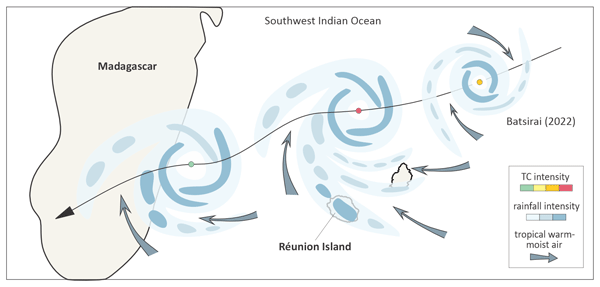
Keun-Ok Lee, Soline Bielli, Clément Soufflet, Rémi Laxenaire, and Kevin Hoarau
Atmos. Chem. Phys., 26, 12435–12455, https://doi.org/10.5194/acp-26-12435-2026, https://doi.org/10.5194/acp-26-12435-2026, 2026
Short summary
Short summary
Tropical cyclones forming in the southwest Indian Ocean frequently affect mountainous island nations. However, their role in modulating rainfall has not yet been thoroughly investigated. Using both observational data and a high-resolution numerical model, we aim to improve our understanding of the orographic effects of Madagascar and Réunion Island on approaching tropical cyclone (TC) track, intensity, and, ultimately, heavy rainfall using a representative case: TC Batsirai (2022).
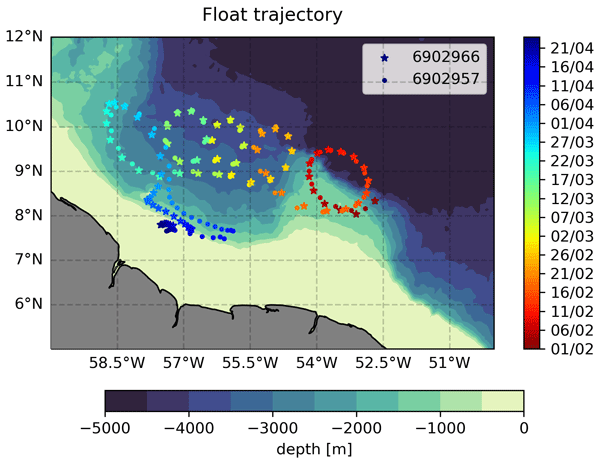
Yan Barabinot, Sabrina Speich, Xavier Carton, Pierre L'Hégaret, Corentin Subirade, Rémi Laxenaire, and Johannes Karstensen
Ocean Sci., 21, 1849–1872, https://doi.org/10.5194/os-21-1849-2025, https://doi.org/10.5194/os-21-1849-2025, 2025
Short summary
Short summary
Mesoscale eddies are rotating oceanic currents key to ocean variability. Off Brazil’s northeast coast, the North Brazil Current generates on average 4.5 eddies per year, which drift towards the West Indies, transporting waters from the Southern Hemisphere. Using data collected at sea by the EUREC4A-OA cruise, this study reveals that deep eddies transport 5 times more water than surface ones, reshaping our understanding of the regional water transport.
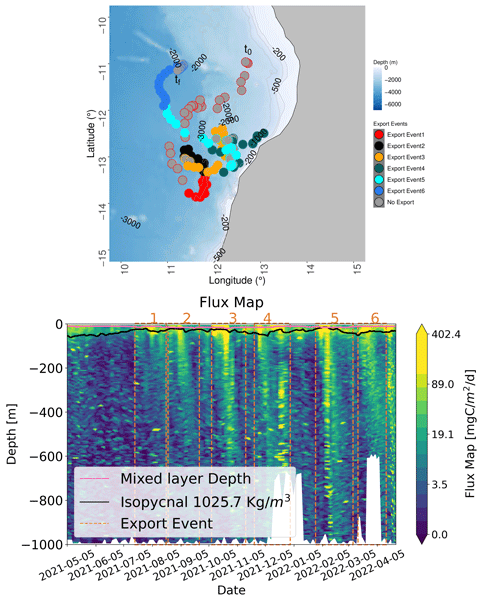
Yawouvi Dodji Soviadan, Miriam Beck, Joelle Habib, Alberto Baudena, Laetitia Drago, Alexandre Accardo, Remi Laxenaire, Sabrina Speich, Peter Brandt, Rainer Kiko, and Stemmann Lars
Biogeosciences, 22, 3485–3501, https://doi.org/10.5194/bg-22-3485-2025, https://doi.org/10.5194/bg-22-3485-2025, 2025
Short summary
Short summary
Key parameters representing the gravity flux in global models are sinking speed and vertical attenuation of exported material. We calculate, for the first time, these parameters in situ in the ocean for six intermittent blooms followed by export events using high-resolution (3 d) time series of 0–1000 m depth profiles from imaging sensors mounted on an Argo float. We show that sinking speed depends not only on size but also on the morphology of the particles, with density being an important property.
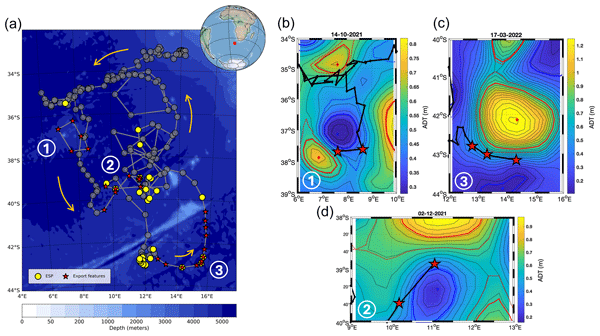
Alexandre Accardo, Rémi Laxenaire, Alberto Baudena, Sabrina Speich, Rainer Kiko, and Lars Stemmann
Biogeosciences, 22, 1183–1201, https://doi.org/10.5194/bg-22-1183-2025, https://doi.org/10.5194/bg-22-1183-2025, 2025
Short summary
Short summary
The open ocean helps mitigate climate change by storing CO2 via the biological carbon pump (BCP), which involves processes like organic carbon production at the surface and transferring it to the deep ocean via various pathways. By deploying an autonomous platform, we found significant marine snow accumulation from the surface to the mesopelagic zone in frontal regions between eddies. We suggest that the coupling of hydrodynamics at eddy edges and biological activity may enhance this process.
Pierre L'Hégaret, Florian Schütte, Sabrina Speich, Gilles Reverdin, Dariusz B. Baranowski, Rena Czeschel, Tim Fischer, Gregory R. Foltz, Karen J. Heywood, Gerd Krahmann, Rémi Laxenaire, Caroline Le Bihan, Philippe Le Bot, Stéphane Leizour, Callum Rollo, Michael Schlundt, Elizabeth Siddle, Corentin Subirade, Dongxiao Zhang, and Johannes Karstensen
Earth Syst. Sci. Data, 15, 1801–1830, https://doi.org/10.5194/essd-15-1801-2023, https://doi.org/10.5194/essd-15-1801-2023, 2023
Short summary
Short summary
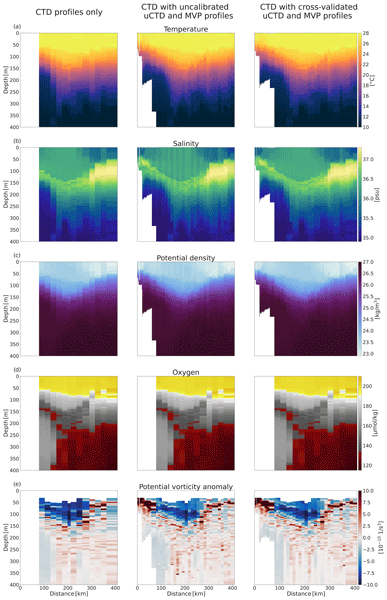
In early 2020, the EUREC4A-OA/ATOMIC experiment took place in the northwestern Tropical Atlantic Ocean, a dynamical region where different water masses interact. Four oceanographic vessels and a fleet of autonomous devices were deployed to study the processes at play and sample the upper ocean, each with its own observing capability. The article first describes the data calibration and validation and second their cross-validation, using a hierarchy of instruments and estimating the uncertainty.
Joseph K. Ansong, Brian K. Arbic, Romain Bourdalle-Badié, Clément Bricaud, Jérôme Chanut, Dimitris Menemenlis, Richard D. Ray, Michael Schindelegger, Alan J. Wallcraft, He Wang, Alistair J. Adcroft, Frédéric Briol, Maarten C. Buijsman, Loren Carrère, Eric P. Chassignet, Gerald Dibarboure, Robert W. Hallberg, Christopher N. Hill, Ariane Koch-Larrouy, Florent Lyard, Matthew R. Mazloff, An T. Nguyen, Nicolas Picot, Rui M. Ponte, and Jay F. Shriver
EGUsphere, https://doi.org/10.5194/egusphere-2026-5064, https://doi.org/10.5194/egusphere-2026-5064, 2026
This preprint is open for discussion and under review for Ocean Science (OS).
Short summary
Short summary
We assess how well four high-resolution global ocean models reproduce surface and internal tides compared with satellite observations. Some models produce internal tides that are too strong, but including energy loss over rough seafloor improves their accuracy. Longer model records and higher resolution also improve agreement with observations. We further identify errors in the tidal forcing of widely used MITgcm simulations that reduce the accuracy of their simulated tides.
Keun-Ok Lee, Soline Bielli, Clément Soufflet, Rémi Laxenaire, and Kevin Hoarau
Atmos. Chem. Phys., 26, 12435–12455, https://doi.org/10.5194/acp-26-12435-2026, https://doi.org/10.5194/acp-26-12435-2026, 2026
Short summary
Short summary
Tropical cyclones forming in the southwest Indian Ocean frequently affect mountainous island nations. However, their role in modulating rainfall has not yet been thoroughly investigated. Using both observational data and a high-resolution numerical model, we aim to improve our understanding of the orographic effects of Madagascar and Réunion Island on approaching tropical cyclone (TC) track, intensity, and, ultimately, heavy rainfall using a representative case: TC Batsirai (2022).
Gokhan Danabasoglu, Frederic S. Castruccio, Burcu Boza, Alice M. Barthel, Arne Biastoch, Adam Blaker, Alexandra Bozec, Diego Bruciaferri, Frank O. Bryan, Eric P. Chassignet, Yao Fu, Ian Grooms, Catherine Guiavarc'h, Hakase Hayashida, Andrew McC. Hogg, Ryan M. Holmes, Doroteaciro Iovino, Andrew E. Kiss, M. Susan Lozier, Gustavo Marques, Alex Megann, Franziska U. Schwarzkopf, Dave Storkey, Luke van Roekel, Jon Wolfe, Xiaobiao Xu, and Rong Zhang
Geosci. Model Dev., 19, 5071–5117, https://doi.org/10.5194/gmd-19-5071-2026, https://doi.org/10.5194/gmd-19-5071-2026, 2026
Short summary
Short summary
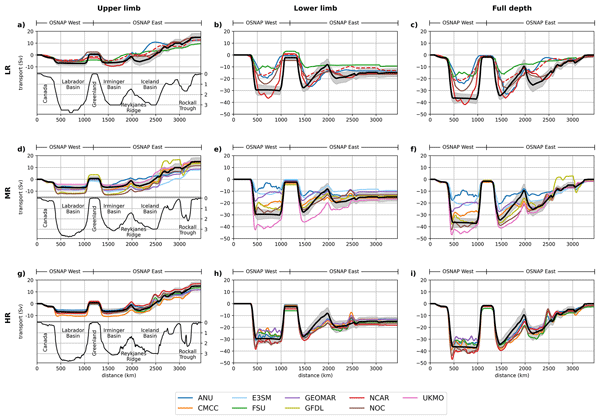
A comparison of simulated and observed overturning transports across the Overturning in the Subpolar North Atlantic Program sections is presented. Eighteen ocean simulations participate in the study with resolutions ranging from coarse to eddy-resolving. The simulated transports are in general agreement with observations, with better agreement at high resolution. Analyzing overturning circulations in both depth and density space together provides a more complete picture.
Anthony Chen, He Wang, Brian Arbic, and Robert Krasny
EGUsphere, https://doi.org/10.48550/arXiv.2602.01416, https://doi.org/10.48550/arXiv.2602.01416, 2026
Short summary
Short summary
Self Attraction and Loading (SAL) is an important force that affects many oceanic motions, including tides. Computing SAL is challenging and ocean models neglected to include the impacts of SAL for a long time. Recent work has proposed a method for incorporating the effects of SAL, but the method has several limitations that limit the accuracy. This work proposes an alternative method. Tests of this new method in an ocean model indicate that it reduces the amount of error in the modeled tides.
Marco Larrañaga, Julien Jouanno, Eric P. Chassignet, Giovanni Durante, Ilkyeong Ma, Julio Sheinbaum, and Lionel Renault
Ocean Sci., 22, 821–841, https://doi.org/10.5194/os-22-821-2026, https://doi.org/10.5194/os-22-821-2026, 2026
Short summary
Short summary
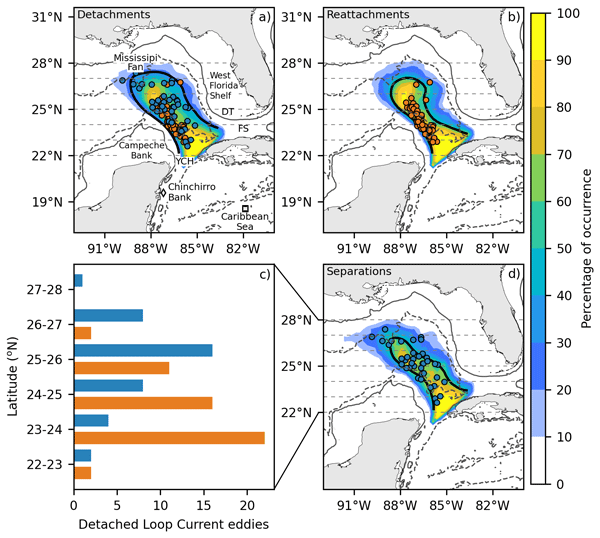
We analyze 29 years of satellite altimetry to investigate the detachment of Loop Current Eddies in the Gulf of Mexico. Over half of the Loop Current eddies reattach within a month, while 42 % separate and drift westward. Detachment requires the Loop Current to reach the Mississippi Fan and is strongly influenced by cyclonic eddies, whose configuration determines whether an eddy separates or reattaches to the Loop Current.
Yan Barabinot, Sabrina Speich, Xavier Carton, Pierre L'Hégaret, Corentin Subirade, Rémi Laxenaire, and Johannes Karstensen
Ocean Sci., 21, 1849–1872, https://doi.org/10.5194/os-21-1849-2025, https://doi.org/10.5194/os-21-1849-2025, 2025
Short summary
Short summary
Mesoscale eddies are rotating oceanic currents key to ocean variability. Off Brazil’s northeast coast, the North Brazil Current generates on average 4.5 eddies per year, which drift towards the West Indies, transporting waters from the Southern Hemisphere. Using data collected at sea by the EUREC4A-OA cruise, this study reveals that deep eddies transport 5 times more water than surface ones, reshaping our understanding of the regional water transport.
Yawouvi Dodji Soviadan, Miriam Beck, Joelle Habib, Alberto Baudena, Laetitia Drago, Alexandre Accardo, Remi Laxenaire, Sabrina Speich, Peter Brandt, Rainer Kiko, and Stemmann Lars
Biogeosciences, 22, 3485–3501, https://doi.org/10.5194/bg-22-3485-2025, https://doi.org/10.5194/bg-22-3485-2025, 2025
Short summary
Short summary
Key parameters representing the gravity flux in global models are sinking speed and vertical attenuation of exported material. We calculate, for the first time, these parameters in situ in the ocean for six intermittent blooms followed by export events using high-resolution (3 d) time series of 0–1000 m depth profiles from imaging sensors mounted on an Argo float. We show that sinking speed depends not only on size but also on the morphology of the particles, with density being an important property.
Ibrahim Hoteit, Eric Chassignet, and Mike Bell
State Planet, 5-opsr, 21, https://doi.org/10.5194/sp-5-opsr-21-2025, https://doi.org/10.5194/sp-5-opsr-21-2025, 2025
Short summary
Short summary
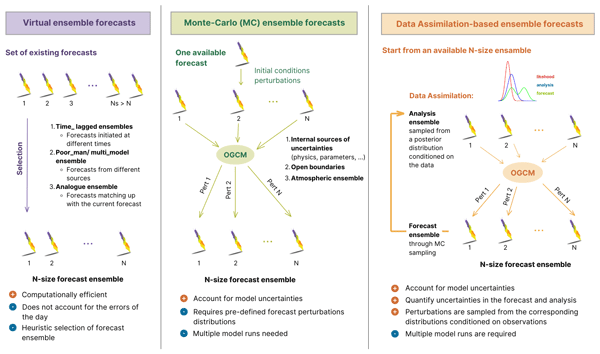
This paper explores how using multiple predictions instead of just one can improve ocean forecasts and help prepare for changes in ocean conditions. By combining different forecasts, scientists can better understand the uncertainty in predictions, leading to more reliable forecasts and better decision-making. This method is useful for responding to hazards like oil spills, improving climate forecasts, and supporting decision-making in fields like marine safety and resource management.
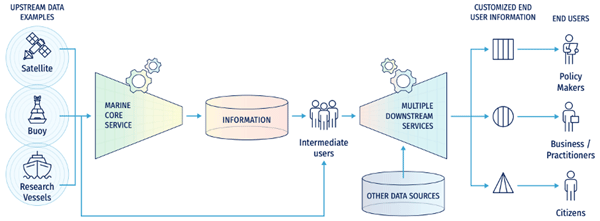
Yann Drillet, Matthew Martin, Yosuke Fujii, Eric Chassignet, and Stefania Ciliberti
State Planet, 5-opsr, 2, https://doi.org/10.5194/sp-5-opsr-2-2025, https://doi.org/10.5194/sp-5-opsr-2-2025, 2025
Short summary
Short summary
This article describes the various stages of research and development that have been carried out over the last few decades to produce an operational reference service for global ocean monitoring and forecasting.
Marina Tonani, Eric Chassignet, Mauro Cirano, Yasumasa Miyazawa, and Begoña Pérez Gómez
State Planet, 5-opsr, 3, https://doi.org/10.5194/sp-5-opsr-3-2025, https://doi.org/10.5194/sp-5-opsr-3-2025, 2025
Short summary
Short summary
This article provides an overview of the main characteristics of ocean forecast systems covering a limited region of the ocean. Their main components are described, as well as the spatial and temporal scales they resolve. The oceanic variables that these systems are able to predict are also explained. An overview of the main forecasting systems currently in operation is also provided.
Alexandre Accardo, Rémi Laxenaire, Alberto Baudena, Sabrina Speich, Rainer Kiko, and Lars Stemmann
Biogeosciences, 22, 1183–1201, https://doi.org/10.5194/bg-22-1183-2025, https://doi.org/10.5194/bg-22-1183-2025, 2025
Short summary
Short summary
The open ocean helps mitigate climate change by storing CO2 via the biological carbon pump (BCP), which involves processes like organic carbon production at the surface and transferring it to the deep ocean via various pathways. By deploying an autonomous platform, we found significant marine snow accumulation from the surface to the mesopelagic zone in frontal regions between eddies. We suggest that the coupling of hydrodynamics at eddy edges and biological activity may enhance this process.
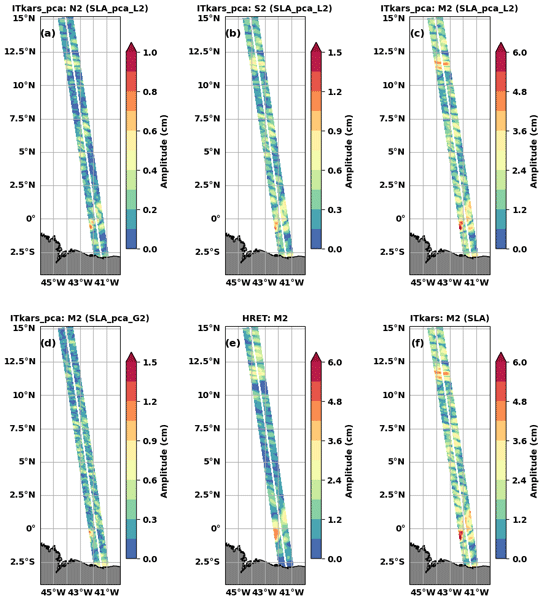
Michel Tchilibou, Loren Carrere, Florent Lyard, Clément Ubelmann, Gérald Dibarboure, Edward D. Zaron, and Brian K. Arbic
Ocean Sci., 21, 325–342, https://doi.org/10.5194/os-21-325-2025, https://doi.org/10.5194/os-21-325-2025, 2025
Short summary
Short summary
Sea level observations along the swaths of the new SWOT (Surface Water and Ocean Topography) mission were used to characterize internal tides at three semidiurnal frequencies off the Amazon shelf in the tropical Atlantic during the SWOT calibration/validation period. The atlases were derived using harmonic analysis and principal component analysis. The SWOT-derived internal tide atlas outperforms the reference atlas previously used to correct SWOT observations.
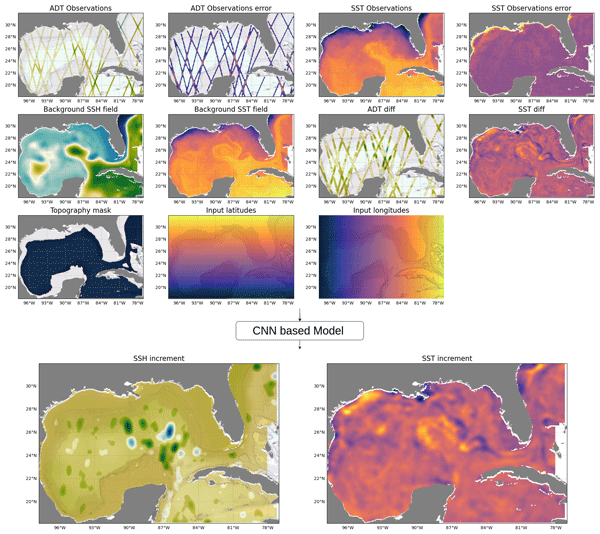
Olmo Zavala-Romero, Alexandra Bozec, Eric P. Chassignet, and Jose R. Miranda
Ocean Sci., 21, 113–132, https://doi.org/10.5194/os-21-113-2025, https://doi.org/10.5194/os-21-113-2025, 2025
Short summary
Short summary
This study shows AI can speed up data assimilation in ocean models. Researchers used convolutional neural networks (CNNs) to assimilate sea surface temperature and height observations in the Gulf of Mexico, learning to replicate corrections made by traditional, computationally expensive methods. CNN design and training window size significantly impacted accuracy, but the percentage of ocean pixels did not. These findings suggest CNNs may accelerate data assimilation in realistic settings.
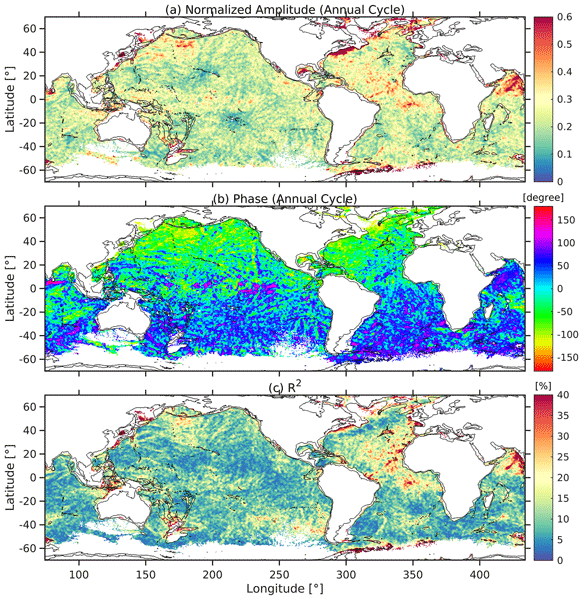
Harpreet Kaur, Maarten C. Buijsman, Zhongxiang Zhao, and Jay F. Shriver
Ocean Sci., 20, 1187–1208, https://doi.org/10.5194/os-20-1187-2024, https://doi.org/10.5194/os-20-1187-2024, 2024
Short summary
Short summary
This study examines the seasonal variability in internal tide sea surface height in a global model simulation. We also compare this with altimetry and the seasonal variability in the internal tide energy terms. Georges Bank and the Arabian Sea show the strongest seasonal variability. This study also reveals that sea surface height may not be the most accurate indicator of the true seasonal variability in the internal tides because it is modulated by the seasonal variability in stratification.
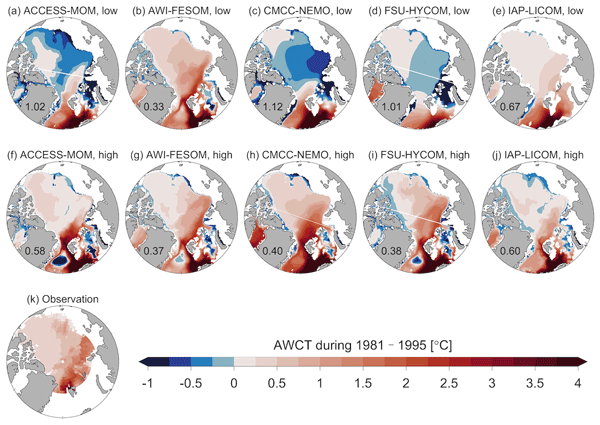
Qiang Wang, Qi Shu, Alexandra Bozec, Eric P. Chassignet, Pier Giuseppe Fogli, Baylor Fox-Kemper, Andy McC. Hogg, Doroteaciro Iovino, Andrew E. Kiss, Nikolay Koldunov, Julien Le Sommer, Yiwen Li, Pengfei Lin, Hailong Liu, Igor Polyakov, Patrick Scholz, Dmitry Sidorenko, Shizhu Wang, and Xiaobiao Xu
Geosci. Model Dev., 17, 347–379, https://doi.org/10.5194/gmd-17-347-2024, https://doi.org/10.5194/gmd-17-347-2024, 2024
Short summary
Short summary
Increasing resolution improves model skills in simulating the Arctic Ocean, but other factors such as parameterizations and numerics are at least of the same importance for obtaining reliable simulations.
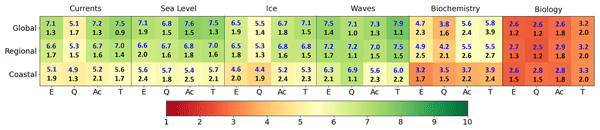
Stefania A. Ciliberti, Enrique Alvarez Fanjul, Jay Pearlman, Kirsten Wilmer-Becker, Pierre Bahurel, Fabrice Ardhuin, Alain Arnaud, Mike Bell, Segolene Berthou, Laurent Bertino, Arthur Capet, Eric Chassignet, Stefano Ciavatta, Mauro Cirano, Emanuela Clementi, Gianpiero Cossarini, Gianpaolo Coro, Stuart Corney, Fraser Davidson, Marie Drevillon, Yann Drillet, Renaud Dussurget, Ghada El Serafy, Katja Fennel, Marcos Garcia Sotillo, Patrick Heimbach, Fabrice Hernandez, Patrick Hogan, Ibrahim Hoteit, Sudheer Joseph, Simon Josey, Pierre-Yves Le Traon, Simone Libralato, Marco Mancini, Pascal Matte, Angelique Melet, Yasumasa Miyazawa, Andrew M. Moore, Antonio Novellino, Andrew Porter, Heather Regan, Laia Romero, Andreas Schiller, John Siddorn, Joanna Staneva, Cecile Thomas-Courcoux, Marina Tonani, Jose Maria Garcia-Valdecasas, Jennifer Veitch, Karina von Schuckmann, Liying Wan, John Wilkin, and Romane Zufic
State Planet, 1-osr7, 2, https://doi.org/10.5194/sp-1-osr7-2-2023, https://doi.org/10.5194/sp-1-osr7-2-2023, 2023
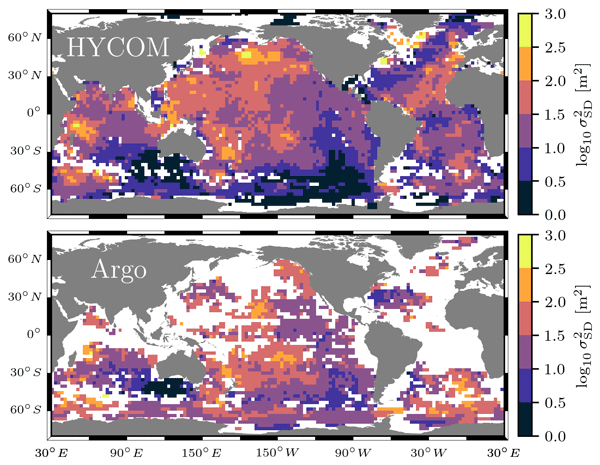
Gaspard Geoffroy, Jonas Nycander, Maarten C. Buijsman, Jay F. Shriver, and Brian K. Arbic
Ocean Sci., 19, 811–835, https://doi.org/10.5194/os-19-811-2023, https://doi.org/10.5194/os-19-811-2023, 2023
Short summary
Short summary
The ocean state is sensitive to the mixing originating from internal tides (ITs). To date, our knowledge of the magnitude and spatial distribution of this mixing mostly relies on uncertain modeling. Here, we use novel observations from autonomous floats to validate the spatial variability in the semidiurnal IT in a realistic ocean simulation. The numerical simulation is found to correctly reproduce the main spatial patterns of the observed tidal energy but to be biased low at the global scale.
Pierre L'Hégaret, Florian Schütte, Sabrina Speich, Gilles Reverdin, Dariusz B. Baranowski, Rena Czeschel, Tim Fischer, Gregory R. Foltz, Karen J. Heywood, Gerd Krahmann, Rémi Laxenaire, Caroline Le Bihan, Philippe Le Bot, Stéphane Leizour, Callum Rollo, Michael Schlundt, Elizabeth Siddle, Corentin Subirade, Dongxiao Zhang, and Johannes Karstensen
Earth Syst. Sci. Data, 15, 1801–1830, https://doi.org/10.5194/essd-15-1801-2023, https://doi.org/10.5194/essd-15-1801-2023, 2023
Short summary
Short summary
In early 2020, the EUREC4A-OA/ATOMIC experiment took place in the northwestern Tropical Atlantic Ocean, a dynamical region where different water masses interact. Four oceanographic vessels and a fleet of autonomous devices were deployed to study the processes at play and sample the upper ocean, each with its own observing capability. The article first describes the data calibration and validation and second their cross-validation, using a hierarchy of instruments and estimating the uncertainty.
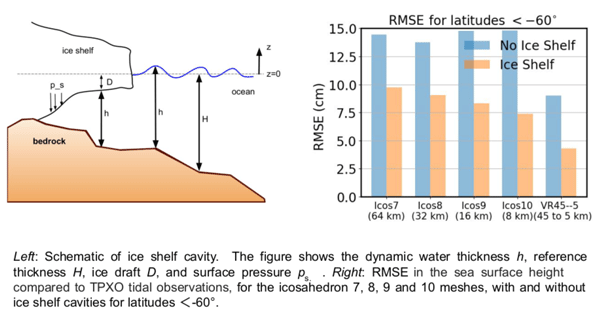
Nairita Pal, Kristin N. Barton, Mark R. Petersen, Steven R. Brus, Darren Engwirda, Brian K. Arbic, Andrew F. Roberts, Joannes J. Westerink, and Damrongsak Wirasaet
Geosci. Model Dev., 16, 1297–1314, https://doi.org/10.5194/gmd-16-1297-2023, https://doi.org/10.5194/gmd-16-1297-2023, 2023
Short summary
Short summary
Understanding tides is essential to accurately predict ocean currents. Over the next several decades coastal processes such as flooding and erosion will be severely impacted due to climate change. Tides affect currents along the coastal regions the most. In this paper we show the results of implementing tides in a global ocean model known as MPAS–Ocean. We also show how Antarctic ice shelf cavities affect global tides. Our work points towards future research with tide–ice interactions.
Takaya Uchida, Julien Le Sommer, Charles Stern, Ryan P. Abernathey, Chris Holdgraf, Aurélie Albert, Laurent Brodeau, Eric P. Chassignet, Xiaobiao Xu, Jonathan Gula, Guillaume Roullet, Nikolay Koldunov, Sergey Danilov, Qiang Wang, Dimitris Menemenlis, Clément Bricaud, Brian K. Arbic, Jay F. Shriver, Fangli Qiao, Bin Xiao, Arne Biastoch, René Schubert, Baylor Fox-Kemper, William K. Dewar, and Alan Wallcraft
Geosci. Model Dev., 15, 5829–5856, https://doi.org/10.5194/gmd-15-5829-2022, https://doi.org/10.5194/gmd-15-5829-2022, 2022
Short summary
Short summary
Ocean and climate scientists have used numerical simulations as a tool to examine the ocean and climate system since the 1970s. Since then, owing to the continuous increase in computational power and advances in numerical methods, we have been able to simulate increasing complex phenomena. However, the fidelity of the simulations in representing the phenomena remains a core issue in the ocean science community. Here we propose a cloud-based framework to inter-compare and assess such simulations.
Cited articles
Abdalla, S., Abdeh Kolahchi, A., Ablain, M., Adusumilli, S., Aich Bhowmick, S., Alou-Font, E., Amarouche, L., Andersen, O. B., Antich, H., Aouf, L., Arbic, B., Armitage, T., Arnault, S., Artana, C., Aulicino, G., Ayoub, N., Badulin, S., Baker, S., Banks, C., Bao, L., Barbetta, S., Barceló-Llull, B., Barlier, F., Basu, S., Bauer-Gottwein, P., Becker, M., Beckley, B., Bellefond, N., Belonenko, T., Benkiran, M., Benkouider, T., Bennartz, R., Benveniste, J., Bercher, N., Berge-Nguyen, M., Bettencourt, J., Blarel, F., Blazquez, A., Blumstein, D., Bonnefond, P., Borde, F., Bouffard, J., Boy, F., Boy, J.-P., Brachet, C., Brasseur, P., Braun, A., Brocca, L., Brockley, D., Brodeau, L., Brown, S., Bruinsma, S., Bulczak, A., Buzzard, S., Cahill, M., Calmant, S., Calzas, M., Camici, S., Cancet, M., Capdeville, H., Carabajal, C. C., Carrere, L., Cazenave, A., Chassignet, E. P., Chauhan, P., Cherchali, S., Chereskin, T., Cheymol, C., Ciani, D., Cipollini, P., Cirillo, F., Cosme, E., Coss, S., Cotroneo, Y., Cotton, D., Couhert, A., Coutin-Faye, S., Crétaux, J.-F., Cyr, F., d'Ovidio, F., Darrozes, J., David, C., Dayoub, N., De Staerke, D., Deng, X., Desai, S., Desjonqueres, J.-D., Dettmering, D., Di Bella, A., Díaz-Barroso, L., Dibarboure, G., Dieng, H. B., Dinardo, S., Dobslaw, H., Dodet, G., Doglioli, A., Domeneghetti, A., Donahue, D., Dong, S., Donlon, C., Dorandeu, J., Drezen, C., Drinkwater, M., Du Penhoat, Y., Dushaw, B., Egido, A., Erofeeva, S., Escudier, P., Esselborn, S., Exertier, P., Fablet, R., Falco, C., Farrell, S. L., Faugere, Y., Femenias, P., Fenoglio, L., Fernandes, J., Fernández, J. G., Ferrage, P., Ferrari, R., Fichen, L., Filippucci, P., Flampouris, S., Fleury, S., Fornari, M., Forsberg, R., Frappart, F., Frery, M.-L., Garcia, P., Garcia-Mondejar, A., Gaudelli, J., Gaultier, L., Getirana, A., Gibert, F., Gil, A., Gilbert, L., Gille, S., Giulicchi, L., Gómez-Enri, J., Gómez-Navarro, L., Gommenginger, C., Gourdeau, L., Griffin, D., Groh, A., Guerin, A., Guerrero, R., Guinle, T., Gupta, P., Gutknecht, B. D., Hamon, M., Han, G., Hauser, D., Helm, V., Hendricks, S., Hernandez, F., Hogg, A., Horwath, M., Idžanović, M., Janssen, P., Jeansou, E., Jia, Y., Jia, Y., Jiang, L., Johannessen, J. A., Kamachi, M., Karimova, S., Kelly, K., Kim, S. Y., King, R., Kittel, C. M. M., Klein, P., Klos, A., Knudsen, P., Koenig, R., Kostianoy, A., Kouraev, A., Kumar, R., Labroue, S., Lago, L. S., Lambin, J., Lasson, L., Laurain, O., Laxenaire, R., Lázaro, C., Le Gac, S., Le Sommer, J., Le Traon, P.-Y., Lebedev, S., Léger, F., Legresy, B., Lemoine, F., Lenain, L., Leuliette, E., Levy, M., Lillibridge, J., Liu, J., Llovel, W., Lyard, F., Macintosh, C., Makhoul Varona, E., Manfredi, C., Marin, F., Mason, E., Massari, C., Mavrocordatos, C., Maximenko, N., McMillan, M., Medina, T., Melet, A., Meloni, M., Mertikas, S., Metref, S., Meyssignac, B., Minster, J.-F., Moreau, T., Moreira, D., Morel, Y., Morrow, R., Moyard, J., Mulet, S., Naeije, M., Nerem, R. S., Ngodock, H., Nielsen, K., Nilsen, J. E. Ø., Niño, F., Nogueira Loddo, C., Noûs, C., Obligis, E., Otosaka, I., Otten, M., Oztunali Ozbahceci, B., P. Raj, R., Paiva, R., Paniagua, G., Paolo, F., Paris, A., Pascual, A., Passaro, M., Paul, S., Pavelsky, T., Pearson, C., Penduff, T., Peng, F., Perosanz, F., Picot, N., Piras, F., Poggiali, V., Poirier, É., Ponce de León, S., Prants, S., Prigent, C., Provost, C., Pujol, M.-I., Qiu, B., Quilfen, Y., Rami, A., Raney, R. K., Raynal, M., Remy, E., Rémy, F., Restano, M., Richardson, A., Richardson, D., Ricker, R., Ricko, M., Rinne, E., Rose, S. K., Rosmorduc, V., Rudenko, S., Ruiz, S., Ryan, B. J., Salaün, C., Sanchez-Roman, A., Sandberg Sørensen, L., Sandwell, D., Saraceno, M., Scagliola, M., Schaeffer, P., Scharffenberg, M. G., Scharroo, R., Schiller, A., Schneider, R., Schwatke, C., Scozzari, A., Ser-giacomi, E., Seyler, F., Shah, R., Sharma, R., Shaw, A., Shepherd, A., Shriver, J., Shum, C. K., Simons, W., Simonsen, S. B., Slater, T., Smith, W., Soares, S., Sokolovskiy, M., Soudarin, L., Spatar, C., Speich, S., Srinivasan, M., Srokosz, M., Stanev, E., Staneva, J., Steunou, N., Stroeve, J., Su, B., Sulistioadi, Y. B., Swain, D., Sylvestre-baron, A., Taburet, N., Tailleux, R., Takayama, K., Tapley, B., Tarpanelli, A., Tavernier, G., Testut, L., Thakur, P. K., Thibaut, P., Thompson, L., Tintoré, J., Tison, C., Tourain, C., Tournadre, J., Townsend, B., Tran, N., Trilles, S., Tsamados, M., Tseng, K.-H., Ubelmann, C., Uebbing, B., Vergara, O., Verron, J., Vieira, T., Vignudelli, S., Vinogradova Shiffer, N., Visser, P., Vivier, F., Volkov, D., von Schuckmann, K., Vuglinskii, V., Vuilleumier, P., Walter, B., Wang, J., Wang, C., Watson, C., Wilkin, J., Willis, J., Wilson, H., Woodworth, P., Yang, K., Yao, F., Zaharia, R., Zakharova, E., Zaron, E. D., Zhang, Y., Zhao, Z., Zinchenko, V., and Zlotnicki, V.: Altimetry for the future: Building on 25 years of progress, Adv. Space Res., 68, 319–363, https://doi.org/10.1016/j.asr.2021.01.022, 2021. a
Ajayi, A., Le Sommer, J., Chassignet, E., Molines, J.-M., Xu, X., Albert, A., and Cosme, E.: Spatial and Temporal Variability of the North Atlantic Eddy Field From Two Kilometric-Resolution Ocean Models, J. Geophys. Res.-Oceans, 125, e2019JC015827, https://doi.org/10.1029/2019JC015827, 2020. a
Ajayi, A., Le Sommer, J., Chassignet, E. P., Molines, J.-M., Xu, X., Albert, A., and Dewar, W.: Diagnosing Cross-Scale Kinetic Energy Exchanges From Two Submesoscale Permitting Ocean Models, J. Adv. Model. Earth Sy., 13, e2019MS001923, https://doi.org/10.1029/2019MS001923, 2021. a
Amante, C. and Eakins, B.: ETOPO1 1 Arc-Minute Global Relief Model: procedures, data sources and analysis, NOAA Technical Memorandum NESDIS NGDC-24, National Geophysical Data Center, NOAA, https://doi.org/10.7289/V5C8276M, 2009. a
Ansong, J. K., Arbic, B. K., Buijsman, M. C., Richman, J. G., Shriver, J. F., and Wallcraft, A. J.: Indirect evidence for substantial damping of low-mode internal tides in the open ocean, J. Geophys. Res.-Oceans, 120, 6057–6071, https://doi.org/10.1002/2015JC010998, 2015. a
Arbic, B. K.: Incorporating tides and internal gravity waves within global ocean general circulation models: A review, Prog. Oceanogr., 206, 102824, https://doi.org/10.1016/j.pocean.2022.102824, 2022. a
Arbic, B. K., Wallcraft, A. J., and Metzger, E. J.: Concurrent simulation of the eddying general circulation and tides in a global ocean model, Ocean Model., 32, 175–187, https://doi.org/10.1016/j.ocemod.2010.01.007, 2010. a, b
Arbic, B. K., Richman, J. G., Shriver, J. F., Timko, P. G., Metzger, E. J., and Wallcraft, A. J.: Global modeling of internal tides: Within an eddying ocean general circulation model, Oceanography, 25, 20–29, https://doi.org/10.5670/oceanog.2012.38, 2012. a
Arbic, B. K., Alford, M. H., Ansong, J. K., Buijsman, M. C., Ciotti, R. B., Farrar, J. T., Hallberg, R. W., Henze, C. E., Hill, C. N., Luecke, C. A., Menemenlis, D., Metzger, E. J., Müller, M., Nelson, A. D., Nelson, B. C., Ngodock, H. E., Ponte, R. M., Richman, J. G., Savage, A. C., Scott, R. B., Shriver, J. F., Simmons, H. L., Souopgui, I., Timko, P. G., Wallcraft, A. J., Zamudio, L., and Zhao, Z.: A primer on global internal tide and internal gravity wave continuum modeling in HYCOM and MITgcm, New frontiers in operational oceanography, 307–392, https://doi.org/10.17125/gov2018.ch13, 2018. a
Arbic, B. K., Elipot, S., Brasch, J. M., Menemenlis, D., Ponte, A. L., Shriver, J. F., Yu, X., Zaron, E. D., Alford, M. H., Buijsman, M. C., Abernathey, R., Garcia, D., Guan, L., Martin, P. E., and Nelson, A. D.: Near-surface oceanic kinetic energy distributions from drifter observations and numerical models, J. Geophys. Res.-Oceans, 127, e2022JC018551, https://doi.org/10.1029/2022JC018551, 2022. a, b, c, d, e, f, g, h, i, j, k, l, m, n, o, p, q, r, s, t, u, v, w, x, y, z
Archer, M., Wang, J., Klein, P., Dibarboure, G., and Fu, L.-L.: Wide-swath satellite altimetry unveils global submesoscale ocean dynamics, Nature, 640, 691–696, https://doi.org/10.1038/s41586-025-08722-8, 2025. a
Beardsley, R. C., Candela, J., Limeburner, R., Geyer, W. R., Lentz, S. J., Castro, B. M., Cacchione, D., and Carneiro, N.: The M2 tide on the Amazon Shelf, J. Geophys. Res.-Oceans, 100, 2283–2319, https://doi.org/10.1029/94JC01688, 1995. a, b, c
Bleck, R.: An oceanic general circulation model framed in hybrid isopycnic-Cartesian coordinates, Ocean Model., 4, 55–88, https://doi.org/10.1016/S1463-5003(01)00012-9, 2002. a, b
Buijsman, M. C., Arbic, B. K., Green, J., Helber, R. W., Richman, J. G., Shriver, J. F., Timko, P., and Wallcraft, A.: Optimizing internal wave drag in a forward barotropic model with semidiurnal tides, Ocean Model., 85, 42–55, https://doi.org/10.1016/j.ocemod.2014.11.003, 2015. a
Buijsman, M. C., Stephenson, G. R., Ansong, J. K., Arbic, B. K., Green, J. M., Richman, J. G., Shriver, J. F., Vic, C., Wallcraft, A. J., and Zhao, Z.: On the interplay between horizontal resolution and wave drag and their effect on tidal baroclinic mode waves in realistic global ocean simulations, Ocean Model., 152, 101656, https://doi.org/10.1016/j.ocemod.2020.101656, 2020. a, b, c, d, e, f
Buijsman, M. C., Abdulfatai, M., Arbic, B. K., Chassignet, E. P., Hiron, L., Shriver, J. F., Solano, M., Varma, D., and Xu, X.: Energetics of (Super)Tidal Baroclinic Modes in a Realistically Forced Global Ocean Simulation, J. Geophys. Res.-Oceans, 130, e2025JC022460, https://doi.org/10.1029/2025JC022460, 2025. a, b
Carnes, M. R.: Description and evaluation of GDEMV 3.0. Naval Rearch Laboratory Memo, Tech. rep., NRL/MR/7330-09-9165, 2009. a
Caspar-Cohen, Z., Ponte, A., Lahaye, N., Carton, X., Yu, X., and Legentil, S.: Characterization of Internal Tide Incoherence: Eulerian versus Lagrangian Perspectives, J. Phys. Oceanogr., 52, 1245–1259, https://doi.org/10.1175/JPO-D-21-0088.1, 2022. a
Caspar-Cohen, Z., Ponte, A., Lahaye, N., Zaron, E. D., Arbic, B. K., Yu, X., LeGentil, S., and Menemenlis, D.: Combining surface drifters and high resolution global simulations enables the mapping of internal tide surface energy, Sci. Rep., 15, 10672, https://doi.org/10.1038/s41598-025-92662-w, 2025. a, b, c, d
Chassignet, E. P. and Xu, X.: On the importance of high-resolution in large-scale ocean models, Adv. Atmos. Sci., 38, 1621–1634, https://doi.org/10.1007/s00376-021-0385-7, 2021. a, b
Chassignet, E. P. and Xu, X.: Impact of wind stress formulation on Gulf Stream pathway and variability, Front. Mar. Sci., 12, 1739630, https://doi.org/10.3389/fmars.2025.1739630, 2025. a
Chassignet, E. P., Smith, L. T., Halliwell, G. R., and Bleck, R.: North Atlantic Simulations with the Hybrid Coordinate Ocean Model (HYCOM): Impact of the Vertical Coordinate Choice, Reference Pressure, and Thermobaricity, J. Phys. Oceanogr., 33, 2504–2526, https://doi.org/10.1175/1520-0485(2003)033<2504:naswth>2.0.co;2, 2003. a, b
Chassignet, E. P., Hurlburt, H. E., Smedstad, O. M., Halliwell, G. R., Wallcraft, A. J., Metzger, E. J., Blanton, B. O., Lozano, C., Rao, D. B., Hogan, P. J., and Srinivasan, A.: Generalized vertical coordinates for eddy-resolving global and coastal ocean forecasts, Oceanography, 19, 118–129, https://doi.org/10.5670/oceanog.2006.95, 2006. a
Chassignet, E. P., Hurlburt, H. E., Metzger, E. J., Smedstad, O. M., Cummings, J. A., Halliwell, G. R., Bleck, R., Baraille, R., Wallcraft, A. J., Lozano, C., Tolman, H. L., Srinivasan, A., Hankin, S., Cornillon, P., Weisberg, R., Barth, A., He, R., Werner, F., and Wilkin, J.: US GODAE: Global Ocean Prediction with the HYbrid Coordinate Ocean Model (HYCOM), Oceanography, 22, 64–75, https://doi.org/10.5670/oceanog.2009.39, 2009. a
Chassignet, E. P., Yeager, S. G., Fox-Kemper, B., Bozec, A., Castruccio, F., Danabasoglu, G., Horvat, C., Kim, W. M., Koldunov, N., Li, Y., Lin, P., Liu, H., Sein, D. V., Sidorenko, D., Wang, Q., and Xu, X.: Impact of horizontal resolution on global ocean–sea ice model simulations based on the experimental protocols of the Ocean Model Intercomparison Project phase 2 (OMIP-2), Geosci. Model Dev., 13, 4595–4637, https://doi.org/10.5194/gmd-13-4595-2020, 2020. a
Cummins, P. F., Karsten, R. H., and Arbic, B. K.: The semi-diurnal tide in Hudson strait as a resonant channel oscillation, Atmosphere-Ocean, 48, 163–176, https://doi.org/10.3137/OC307.2010, 2010. a, b
Dai, A.: The diurnal cycle from observations and ERA5 in surface pressure, temperature, humidity, and winds, Clim. Dynam., 61, 2965–2990, https://doi.org/10.1007/s00382-023-06721-x, 2023. a, b, c
Dai, A. and Deser, C.: Diurnal and semidiurnal variations in global surface wind and divergence fields, J. Geophys. Res.-Atmos., 104, 31109–31125, https://doi.org/10.1029/1999JD900927, 1999. a, b, c, d
Davis, R.: Oceanic property transport, Lagrangian particle statistics, and their prediction, J. Marine Res., 41, 163–194, 1983. a
Delandmeter, P. and van Sebille, E.: The Parcels v2.0 Lagrangian framework: new field interpolation schemes, Geosci. Model Dev., 12, 3571–3584, https://doi.org/10.5194/gmd-12-3571-2019, 2019. a, b
De Marez, C., Lahaye, N. J., and Gula, J.: Interaction of the Gulf Stream with small scale topography: A focus on lee waves, Sci. Rep., 10, 2332, https://doi.org/10.1038/s41598-020-59297-5, 2020. a, b
Egbert, G. D. and Ray, R. D.: Estimates of M2 tidal energy dissipation from TOPEX/Poseidon altimeter data, J. Geophys. Res.-Oceans, 106, 22475–22502, https://doi.org/10.1029/2000JC000699, 2001. a, b
Elipot, S. and Lumpkin, R.: Spectral description of oceanic near-surface variability, Geophys. Res. Lett., 35, https://doi.org/10.1029/2007GL032874, 2008. a
Elipot, S., Sykulski, A., Lumpkin, R., Centurioni, L., and Pazos, M.: Hourly location, current velocity, and temperature collected from Global Drifter Program drifters world-wide, Accession, 248584, v1, https://doi.org/10.25921/x46c-3620, 2022. a, b
Emery, W. J. and Thomson, R. E.: Data Analysis Methods in Physical Oceanography, 2nd and Revised Edn., Elsevier, ISBN 978-0-444-50756-3, 2001. a
Flexas, M. M., Thompson, A. F., Torres, H. S., Klein, P., Farrar, J. T., Zhang, H., and Menemenlis, D.: Global estimates of the energy transfer from the wind to the ocean, with emphasis on near-inertial oscillations, J. Geophys. Res.-Oceans, 124, 5723–5746, https://doi.org/10.1029/2018JC014453, 2019. a, b
Fratantoni, D. M. and Glickson, D. A.: North Brazil Current ring generation and evolution observed with SeaWiFS, J. Phys. Oceanogr., 32, 1058–1074, https://doi.org/10.1175/1520-0485(2002)032<1058:NBCRGA>2.0.CO;2, 2002. a
Fu, L.-L., Pavelsky, T., Cretaux, J.-F., Morrow, R., Farrar, J. T., Vaze, P., Sengenes, P., Vinogradova-Shiffer, N., Sylvestre-Baron, A., Picot, N., and Dibarboure, G.: The Surface Water and Ocean Topography Mission: A Breakthrough in Radar Remote Sensing of the Ocean and Land Surface Water, Geophys. Res. Lett., 51, e2023GL107652, https://doi.org/10.1029/2023GL107652, 2024. a
Furevik, T. and Foldvik, A.: Stability at M2 critical latitude in the Barents Sea, J. Geophys. Res.-Oceans, 101, 8823–8837, https://doi.org/10.1029/96JC00081, 1996. a
Gabioux, M., Vinzon, S. B., and Paiva, A. M.: Tidal propagation over fluid mud layers on the Amazon shelf, Cont. Shelf Res., 25, 113–125, https://doi.org/10.1016/j.csr.2004.09.001, 2005. a
Garrett, C.: Tidal resonance in the Bay of Fundy and Gulf of Maine, Nature, 238, 441–443, https://doi.org/10.1038/238441a0, 1972. a, b
Garrett, C. and Munk, W.: Space-time scales of internal waves: A progress report, J. Geophys. Res., 80, 291–297, https://doi.org/10.1029/JC080i003p00291, 1975. a, b, c
GEBCO Bathymetric Compilation Group 2019: The GEBCO_2019 Grid – a continuous terrain model of the global oceans and land, British Oceanographic Data Centre [data set], National Oceanography Centre, NERC, UK, https://doi.org/10.5285/836f016a-33be-6ddc-e053-6c86abc0788e, 2019. a
Goerss, J. S. and Jeffries, R. A.: Assimilation of synthetic tropical cyclone observations into the Navy Operational Global Atmospheric Prediction System, Weather Forecast., 9, 557–576, https://doi.org/10.1175/1520-0434(1994)009<0557:AOSTCO>2.0.CO;2, 1994. a
Gonella, J.: A rotary-component method for analysing meteorological and oceanographic vector time series, Deep-Sea Res., 19, 833–846, https://doi.org/10.1016/0011-7471(72)90002-2, 1972. a
Grace, S. F.: The Principal Diurnal Constituent of Tidal Motion in the Gulf of Mexico, Geophys. J. Int., 3, 70–83, https://doi.org/10.1111/j.1365-246X.1932.tb00401.x, 1932. a
Hiron, L., Schönau, M. C., Raja, K. J., Chassignet, E. P., Buijsman, M. C., Arbic, B. K., Bozec, A., Coelho, E. F., and Solano, M. S.: The Influence of Vertical Resolution on Internal Tide Energetics and Subsequent Effects on Underwater Acoustic Propagation, J. Adv. Model. Earth Sy., 17, e2024MS004389, https://doi.org/10.1029/2024MS004389, 2025. a, b
Hogan, T. F. and Rosmond, T. E.: The description of the Navy Operational Global Atmospheric Prediction System's spectral forecast model, Mon. Weather Rev., 119, 1786–1815, https://doi.org/10.1175/1520-0493(1991)119<1786:TDOTNO>2.0.CO;2, 1991. a
Jayne, S. R. and St. Laurent, L. C.: Parameterizing tidal dissipation over rough topography, Geophys. Res. Lett., 28, 811–814, https://doi.org/10.1029/2000GL012044, 2001. a, b, c
Jänicke, L., Ebener, A., Dangendorf, S., Arns, A., Schindelegger, M., Niehüser, S., Haigh, I. D., Woodworth, P., and Jensen, J.: Assessment of Tidal Range Changes in the North Sea From 1958 to 2014, J. Geophys. Res.-Oceans, 126, e2020JC016456, https://doi.org/10.1029/2020JC016456, 2021. a, b
Klein, P., Lapeyre, G., and Large, W. G.: Wind ringing of the ocean in presence of mesoscale eddies, Geophys. Res. Lett., 31, https://doi.org/10.1029/2004GL020274, 2004. a, b
Kunze, E.: Near-Inertial Wave Propagation In Geostrophic Shear, J. Phys. Oceanogr., 15, 544–565, https://doi.org/10.1175/1520-0485(1985)015<0544:NIWPIG>2.0.CO;2, 1985. a, b
Lange, M. and van Sebille, E.: Parcels v0.9: prototyping a Lagrangian ocean analysis framework for the petascale age, Geosci. Model Dev., 10, 4175–4186, https://doi.org/10.5194/gmd-10-4175-2017, 2017. a, b
Laxenaire, R., Chassignet, E. P., and Xu, X.: Gridded rotary velocity spectra and surface kinetic energy in the North and Equatorial Atlantic from HYCOM NEATL simulations, OceanParcels trajectories, and GDP drifter observations, SEANOE [data set], https://doi.org/10.17882/111296, 2026. a, b, c, d
Le Traon, P. Y.: From satellite altimetry to Argo and operational oceanography: three revolutions in oceanography, Ocean Sci., 9, 901–915, https://doi.org/10.5194/os-9-901-2013, 2013. a
Leben, R. R.: Altimeter-Derived Loop Current Metrics, American Geophysical Union (AGU), 181–201, ISBN 9781118666166, https://doi.org/10.1029/161GM15, 2005. a
Lu, X., Dong, C., Xu, Z., Yang, J., Zhang, H., Wang, D., and Chen, D.: Effects of Numerical Model's Horizontal Resolution on the Vertical Transport of Near-Inertial Energy, Deep-Sea Res. Pt. II, 207, 105223, https://doi.org/10.1016/j.dsr2.2022.105223, 2023. a, b
Lumpkin, R. and Pazos, M.: Measuring surface currents with Surface Velocity Program drifters: the instrument, its data, and some recent results, in: Lagrangian Analysis and Prediction of Coastal and Ocean Dynamics, edited by: Griffa, A., Kirwan, A. D., J., Mariano, A. J., Özgökmen, T., and Rossby, H. T., Cambridge University Press, Cambridge, 39–67, https://doi.org/10.1017/CBO9780511535901.003, 2007. a
Middleton, J. F.: Drifter spectra and diffusivities, J. Mar. Res., 43, 37–55, 1985. a
Middleton, J. H. and Denniss, T.: The propagation of tides near the critical latitude, Geophys. Astrophys. Fluid, 68, 1–13, https://doi.org/10.1080/03091929308203559, 1993. a
Mooers, C. N.: A technique for the cross spectrum analysis of pairs of complex-valued time series, with emphasis on properties of polarized components and rotational invariants, Deep-Sea Res., 20, 1129–1141, https://doi.org/10.1016/0011-7471(73)90027-2, 1973. a
Morrow, R. and Le Traon, P.-Y.: Recent advances in observing mesoscale ocean dynamics with satellite altimetry, Adv. Space Res., 50, 1062–1076, https://doi.org/10.1016/j.asr.2011.09.033, 2012. a, b
Morrow, R., Fu, L.-L., Ardhuin, F., Benkiran, M., Chapron, B., Cosme, E., d'Ovidio, F., Farrar, J. T., Gille, S. T., Lapeyre, G., Le Traon, P.-Y., Pascual, A., Ponte, A., Qiu, B., Rascle, N., Ubelmann, C., Wang, J., and Zaron, E. D.: Global observations of fine-scale ocean surface topography with the Surface Water and Ocean Topography (SWOT) mission, Front. Mar. Sci., 6, 232, https://doi.org/10.3389/fmars.2019.00232, 2019. a
Müller, P., McWilliams, J., and Molemaker, M.: Routes to dissipation in the ocean: The 2D/3D turbulence conundrum, in: Marine Turbulence: Theories, Observations and Models, edited by: Baumert, H. Z., Simpson, J., and Sündermann, J., Cambridge University Press, 397–405, ISBN 978-0-521-83789-7, 2005. a
Müller, M., Arbic, B. K., Richman, J. G., Shriver, J. F., Kunze, E. L., Scott, R. B., Wallcraft, A. J., and Zamudio, L.: Toward an internal gravity wave spectrum in global ocean models, Geophys. Res. Lett., 42, 3474–3481, https://doi.org/10.1002/2015GL063365, 2015. a, b, c
Nelson, A., Arbic, B., Menemenlis, D., Peltier, W., Alford, M., Grisouard, N., and Klymak, J.: Improved internal wave spectral continuum in a regional ocean model, J. Geophys. Res.-Oceans, 125, e2019JC015974, https://doi.org/10.1029/2019JC015974, 2020. a, b
Niiler, P. P. and Paduan, J. D.: Wind-Driven Motions in the Northeast Pacific as Measured by Lagrangian Drifters, J. Phys. Oceanogr., 25, 2819–2830, https://doi.org/10.1175/1520-0485(1995)025<2819:WDMITN>2.0.CO;2, 1995. a, b, c, d
Nikurashin, M. and Ferrari, R.: Radiation and dissipation of internal waves generated by geostrophic motions impinging on small-scale topography: Theory, J. Phys. Oceanogr., 40, 1055–1074, https://doi.org/10.1175/2009JPO4199.1, 2010. a, b
Niwa, Y. and Hibiya, T.: Estimation of Baroclinic Tide Energy Available for Deep Ocean Mixing Based on Three-Dimensional Global Numerical Simulations, J. Oceanogr., 67, 493–502, https://doi.org/10.1007/s10872-011-0052-1, 2011. a, b
Pugh, D. and Woodworth, P.: Tidal dynamics, in: Sea-Level Science: Understanding Tides, Surges, Tsunamis and Mean Sea-Level Changes, Cambridge University Press, 97–132, https://doi.org/10.1017/CBO9781139235778.008, 2014. a, b, c
Raja, K. J., Buijsman, M. C., Shriver, J. F., Arbic, B. K., and Siyanbola, O.: Near-inertial wave energetics modulated by background flows in a global model simulation, J. Phys. Oceanogr., 52, 823–840, https://doi.org/10.1175/JPO-D-21-0130.1, 2022. a, b
Ray, R. D.: Propagation of the overtide M4 through the deep Atlantic Ocean, Geophys. Res. Lett., 34, https://doi.org/10.1029/2007GL031618, 2007. a
Rimac, A., von Storch, J.-S., Eden, C., and Haak, H.: The influence of high-resolution wind stress field on the power input to near-inertial motions in the ocean, Geophys. Res. Lett., 40, 4882–4886, https://doi.org/10.1002/grl.50929, 2013. a, b, c, d
Robertson, R.: Internal tides and baroclinicity in the Southern Weddell Sea: 2. Effects of the critical latitude and stratification, J. Geophys. Res.-Oceans, 106, 27017–27034, https://doi.org/10.1029/2000JC000476, 2001. a, b, c
Saha, S., Moorthi, S., Pan, H.-L., Wu, X., Wang, J., Nadiga, S., Tripp, P., Kistler, R., Woollen, J., Behringer, D., Liu, H., Stokes, D., Grumbine, R., Gayno, G., Wang, J., Hou, Y.-T., Chuang, H., Juang, H. H., Sela, J., Iredell, M., Treadon, R., Kleist, D., Van Delst, P., Keyser, D., Derber, J., Ek, M., Meng, J., Wei, H., Yang, R., Lord, S., van den Dool, H., Kumar, A., Wang, W., Long, C., Chelliah, M., Xue, Y., Huang, B., Schemm, J., Ebisuzaki, W., Lin, R., Xie, P., Chen, M., Zhou, S., Higgins, W., Zou, C., Liu, Q., Chen, Y., Han, Y., Cucurull, L., Reynolds, R. W., Rutledge, G., and Goldberg, M.: The NCEP Climate Forecast System Reanalysis, B. Am. Meteorol. Soc., 91, 1015–1058, https://doi.org/10.1175/2010bams3001.1, 2010. a
Savazzi, A. C. M., Nuijens, L., Sandu, I., George, G., and Bechtold, P.: The representation of the trade winds in ECMWF forecasts and reanalyses during EUREC4A, Atmos. Chem. Phys., 22, 13049–13066, https://doi.org/10.5194/acp-22-13049-2022, 2022. a, b, c
Shriver, J. F., Arbic, B. K., Richman, J. G., Ray, R. D., Metzger, E. J., Wallcraft, A. J., and Timko, P. G.: An evaluation of the barotropic and internal tides in a high-resolution global ocean circulation model, J. Geophys. Res.-Oceans, 117, https://doi.org/10.1029/2012JC008170, 2012. a, b, c
Smith, W. and Sandwell, D.: Global Sea Floor Topography from Satellite Altimetry and Ship Depth Soundings, Science, 277, 1956–1962, https://doi.org/10.1126/science.277.5334.1956, 1997. a
Stewart, K., Hogg, A. M., Griffies, S., Heerdegen, A., Ward, M., Spence, P., and England, M. H.: Vertical resolution of baroclinic modes in global ocean models, Ocean Model., 113, 50–65, https://doi.org/10.1016/j.ocemod.2017.03.012, 2017. a, b
Tchilibou, M., Koch-Larrouy, A., Barbot, S., Lyard, F., Morel, Y., Jouanno, J., and Morrow, R.: Internal tides off the Amazon shelf during two contrasted seasons: interactions with background circulation and SSH imprints, Ocean Sci., 18, 1591–1618, https://doi.org/10.5194/os-18-1591-2022, 2022. a, b, c
Teague, W. J., Carron, M. J., and Hogan, P. J.: A comparison between the Generalized Digital Environmental Model and Levitus climatologies, J. Geophys. Res.-Oceans, 95, 7167–7183, https://doi.org/10.1029/JC095iC05p07167, 1990. a
Thomas, L. N., Rainville, L., Asselin, O., Young, W. R., Girton, J., Whalen, C. B., Centurioni, L., and Hormann, V.: Direct Observations of Near-Inertial Wave ζ-Refraction in a Dipole Vortex, Geophys. Res. Lett., 47, e2020GL090375, https://doi.org/10.1029/2020GL090375, 2020. a, b
Uppala, S. M., Kållberg, P. W., Simmons, A. J., Andrae, U., da Costa Bechtold, V., Fiorino, M., Gibson, J. K., Haseler, J., Hernandez, A., Kelly, G. A., Li, X., Onogi, K., Saarinen, S., Sokka, N., Allan, R. P., Andersson, E., Arpe, K., Balmaseda, M. A., Beljaars, A. C. M., van de Berg, L., Bidlot, J., Bormann, N., Caires, S., Chevallier, F., Dethof, A., Dragosavac, M., Fisher, M., Fuentes, M., Hagemann, S., Hólm, E., Hoskins, B. J., Isaksen, L., Janssen, P. A. E. M., Jenne, R., McNally, A. P., Mahfouf, J.-F., Morcrette, J.-J., Rayner, N. A., Saunders, R. W., Simon, P., Sterl, A., Trenberth, K. E., Untch, A., Vasiljevic, D., Viterbo, P., and Woollen, J.: The ERA-40 re-analysis, Q. J. Roy. Meteor. Soc., 131, 2961–3012, https://doi.org/10.1256/qj.04.176, 2005. a
Van Sebille, E., Kehl, C., Lange, M., Delandmeter, P., and The Parcels contributors: Parcels, Zenodo [code], https://doi.org/10.5281/zenodo.7035503, 2021. a, b
Villas Bôas, A. B., Marechal, G., and Bohé, A.: Observing Interactions Between Waves, Winds, and Currents From SWOT, Geophys. Res. Lett., 52, e2024GL114331, https://doi.org/10.1029/2024GL114331, 2025. a
Webb, D. J.: On the shelf resonances of the English Channel and Irish Sea, Ocean Sci., 9, 731–744, https://doi.org/10.5194/os-9-731-2013, 2013. a, b
Wunsch, C. and Ferrari, R.: Vertical mixing, energy, and the general circulation of the oceans, Annu. Rev. Fluid Mech., 36, 281–314, https://doi.org/10.1146/annurev.fluid.36.050802.122121, 2004. a
Wunsch, C. and Stammer, D.: The global frequency-wavenumber spectrum of oceanic variability estimated from TOPEX/POSEIDON altimetric measurements, J. Geophys. Res.-Oceans, 100, 24895–24910, https://doi.org/10.1029/95JC01783, 1995. a, b
Xu, X., Chassignet, E. P., Wallcraft, A. J., Arbic, B. K., Buijsman, M. C., and Solano, M.: On the spatial variability of the mesoscale sea surface height wavenumber spectra in the Atlantic Ocean, J. Geophys. Res.-Oceans, 127, e2022JC018769, https://doi.org/10.1029/2022JC018769, 2022. a, b, c, d, e, f, g, h, i, j
Xu, X., Chassignet, E. P., and Wallcraft, A. J.: Impact of vertical resolution on representing baroclinic modes and water mass distribution in the North Atlantic, Ocean Model., 186, 102261, https://doi.org/10.1016/j.ocemod.2023.102261, 2023. a, b, c, d
Yu, X., Ponte, A. L., Elipot, S., Menemenlis, D., Zaron, E. D., and Abernathey, R.: Surface kinetic energy distributions in the global oceans from a high-resolution numerical model and surface drifter observations, Geophys. Res. Lett., 46, 9757–9766, https://doi.org/10.1029/2019GL083074, 2019. a, b, c, d, e, f, g, h, i, j, k, l, m, n, o, p, q, r, s, t, u, v, w, x
Zaron, E. D. and Elipot, S.: An assessment of global ocean barotropic tide models using geodetic mission altimetry and surface drifters, J. Phys. Oceanogr., 51, 63–82, https://doi.org/10.1175/JPO-D-20-0089.1, 2021. a
Zhai, X., Johnson, H. L., and Marshall, D. P.: Significant sink of ocean-eddy energy near western boundaries, Nat. Geosci., 3, 608–612, https://doi.org/10.1038/ngeo943, 2010. a, b
Short summary
Surface kinetic energy reflects the distribution of ocean circulation across temporal and spatial scales, shaping energy transfer and mixing in the upper ocean. In a series of North and Equatorial Atlantic numerical simulations, we show that the surface kinetic energy is sensitive to the model's choices in grid and seafloor resolution and to the tides and wind variability, offering guidance for the configuration of future ocean simulations.
Surface kinetic energy reflects the distribution of ocean circulation across temporal and...


