
Articles | Volume 19, issue 11
https://doi.org/10.5194/gmd-19-4999-2026
© Author(s) 2026. This work is distributed under
the Creative Commons Attribution 4.0 License.
the Creative Commons Attribution 4.0 License.
https://doi.org/10.5194/gmd-19-4999-2026
© Author(s) 2026. This work is distributed under
the Creative Commons Attribution 4.0 License.
the Creative Commons Attribution 4.0 License.
Model description paper
| 
12 Jun 2026
Model description paper |
| 12 Jun 2026
| 12 Jun 2026
MIPV-NWP-PINNs V1.0: development of a multi-scale photovoltaic power forecasting framework integrating numerical weather prediction with physics-informed neural networks
Fei Zhang
School of Physics, Ningxia University, Yinchuan, 750021, China
State Key Laboratory of Atmospheric Environment and Extreme Meteorology, Institute of Atmospheric Physics, Chinese Academy of Sciences, Beijing 100029, China
Xingcai Li
CORRESPONDING AUTHOR

School of Physics, Ningxia University, Yinchuan, 750021, China
Zifa Wang
State Key Laboratory of Atmospheric Environment and Extreme Meteorology, Institute of Atmospheric Physics, Chinese Academy of Sciences, Beijing 100029, China
College of Earth and Planetary Sciences, University of Chinese Academy of Sciences, Beijing 100049, China
Yunyun Wen
School of Physics, Ningxia University, Yinchuan, 750021, China
Xuyang Zhou
School of Physics, Ningxia University, Yinchuan, 750021, China
Zichen Wu
State Key Laboratory of Atmospheric Environment and Extreme Meteorology, Institute of Atmospheric Physics, Chinese Academy of Sciences, Beijing 100029, China
College of Earth and Planetary Sciences, University of Chinese Academy of Sciences, Beijing 100049, China
Zhuoran Wang
State Key Laboratory of Atmospheric Environment and Extreme Meteorology, Institute of Atmospheric Physics, Chinese Academy of Sciences, Beijing 100029, China
College of Earth and Planetary Sciences, University of Chinese Academy of Sciences, Beijing 100049, China
Huansheng Chen
State Key Laboratory of Atmospheric Environment and Extreme Meteorology, Institute of Atmospheric Physics, Chinese Academy of Sciences, Beijing 100029, China
College of Earth and Planetary Sciences, University of Chinese Academy of Sciences, Beijing 100049, China
State Key Laboratory of Atmospheric Environment and Extreme Meteorology, Institute of Atmospheric Physics, Chinese Academy of Sciences, Beijing 100029, China
College of Earth and Planetary Sciences, University of Chinese Academy of Sciences, Beijing 100049, China
Xueshun Chen
CORRESPONDING AUTHOR
State Key Laboratory of Atmospheric Environment and Extreme Meteorology, Institute of Atmospheric Physics, Chinese Academy of Sciences, Beijing 100029, China
College of Earth and Planetary Sciences, University of Chinese Academy of Sciences, Beijing 100049, China
Related authors
No articles found.
Kai Cao, Qizhong Wu, Xiao Tang, Jinxi Li, Xueshun Chen, Huansheng Chen, Wending Wang, Huangjian Wu, Lei Kong, Jie Li, Jiang Zhu, and Zifa Wang
Geosci. Model Dev., 19, 9807–9829, https://doi.org/10.5194/gmd-19-9807-2026, https://doi.org/10.5194/gmd-19-9807-2026, 2026
Short summary
Short summary
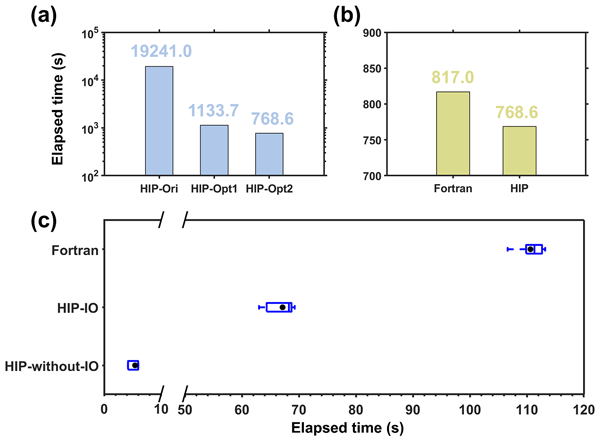
This study achieves significant acceleration by developing an optimized advection module for Emission and atmospheric Processes Integrated and Coupled Community Model on Graphics Processing Unit. Through implementing thread-block indexing, minimizing Central Processing Unit and Graphics Processing Unit communication, and an parallel framework, we demonstrate speedups: 556.5× faster offline performance for the Heterogeneous Interface advection solver and 20.5× acceleration in coupled simulations.
Mengjie Lou, Qizhong Wu, Wending Wang, Huansheng Chen, Kai Cao, Xiaohan Fan, Dingyue Liang, Fenfen Yu, Jiating Zhang, Wei Wang, and Zifa Wang
Geosci. Model Dev., 19, 9651–9676, https://doi.org/10.5194/gmd-19-9651-2026, https://doi.org/10.5194/gmd-19-9651-2026, 2026
Short summary
Short summary
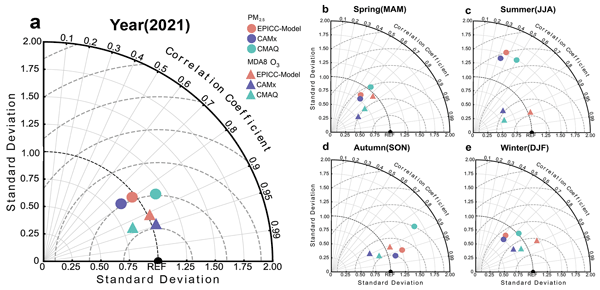
This study compares the model performance of the Emission and atmospheric Processes Integrated and Coupled Community Model with the two air quality models in China. The EPICC-Model excels in simulating summer ozone peaks, accurately captures pollution characteristics in highly polluted areas, and better reproduces persistent compound pollution processes. The study reveals common issues among the models and directions for improvement, providing a basis for optimizing global air quality models.
Nuohang Liu, Baozhu Ge, Danhui Xu, Nan Yang, Xueshun Chen, Qixin Tan, and Zifa Wang
EGUsphere, https://doi.org/10.5194/egusphere-2026-4057, https://doi.org/10.5194/egusphere-2026-4057, 2026
This preprint is open for discussion and under review for Atmospheric Chemistry and Physics (ACP).
Short summary
Short summary
A physically-based below-cloud wet scavenging parameterization was developed and incorporated in the Nested Air Quality Prediction Model System. The scheme substantially improves simulations of nitrogen wet deposition across East Asia, particularly in polluted regions of China, by better capturing below-cloud scavenging coefficients and separating in-cloud and below-cloud processes, supporting more reliable assessments of pollutant transport and deposition.
Lianfang Wei, Xueshun Chen, Wenyi Yang, Zhe Wang, Jie Li, Di Liu, Huiyun Du, Xiaole Pan, Yafang Cheng, Pingqing Fu, and Zifa Wang
Atmos. Chem. Phys., 26, 11667–11682, https://doi.org/10.5194/acp-26-11667-2026, https://doi.org/10.5194/acp-26-11667-2026, 2026
Short summary
Short summary
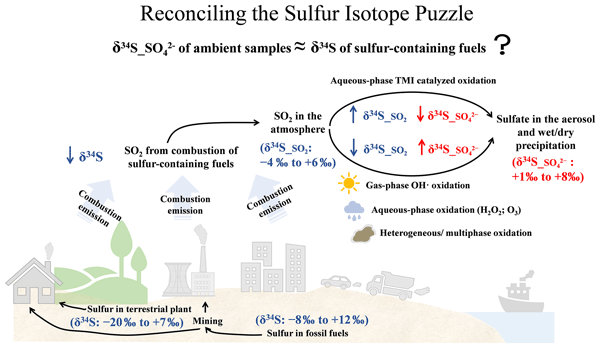
Current models cannot track sulfur isotope changes during atmospheric transformations. We developed a new model that simulates these processes. It reproduces the isotope fractionation patterns, capturing both spatial and seasonal variations. This validation shows sulfate isotope signatures often resemble those of fuels despite chemical processing. Our results suggest combustion alters sulfur isotope ratios, counterbalancing chemical effects.
Jiaze Zhang, Ling Liu, An Ning, Haotian Zu, Jing Li, Fengyang Bai, Jie Yang, Xueshun Chen, and Xiuhui Zhang
Atmos. Chem. Phys., 26, 11627–11643, https://doi.org/10.5194/acp-26-11627-2026, https://doi.org/10.5194/acp-26-11627-2026, 2026
Short summary
Short summary
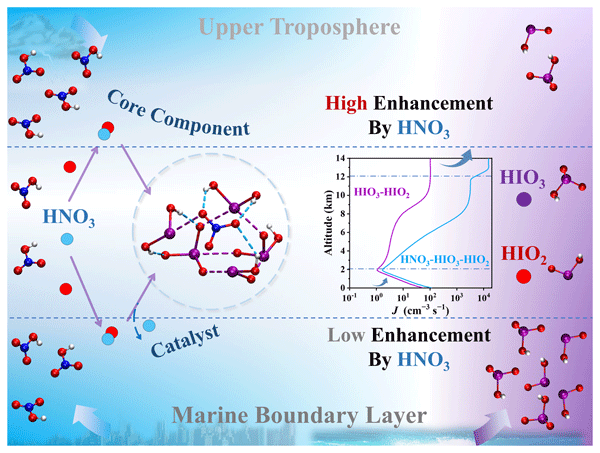
Sulfuric acid (SA)-dominated nucleation cannot explain observed tropospheric particulate matter and cloud condensation nuclei. Via quantum chemical calculations and atmospheric cluster dynamics simulations, we find the role of nitric acid shifts from a marine boundary layer catalyst to an upper troposphere cluster core in HIO3–HIO2 nucleation, with particle formation rates surpassing established SA pathways, explaining unaccounted-for new particle formation (NPF) amid falling sulfur and rising marine iodine emissions.
Yi Zhang, Wei Zhou, Weiqi Xu, Yan Li, Yu Zhang, Zijun Zhang, Bojiang Su, Ning Zhang, Eleonora Aruffo, Junfeng Wang, Piero Di Carlo, Lanzhong Liu, Xiaole Pan, Zifa Wang, Douglas Worsnop, and Yele Sun
EGUsphere, https://doi.org/10.5194/egusphere-2026-3643, https://doi.org/10.5194/egusphere-2026-3643, 2026
Short summary
Short summary
We tracked OOMs that form haze and clouds at a forested mountain in southeastern China. Warm weather boosted natural emissions from plants, making them the primary source of these compounds. Conversely, cooler weather amplified the impact of pollution blowing in from other regions. Clouds also played a major role by washing away certain chemicals while transforming others. These interactions between weather, nature, and pollution offer crucial insights for improving climate models.
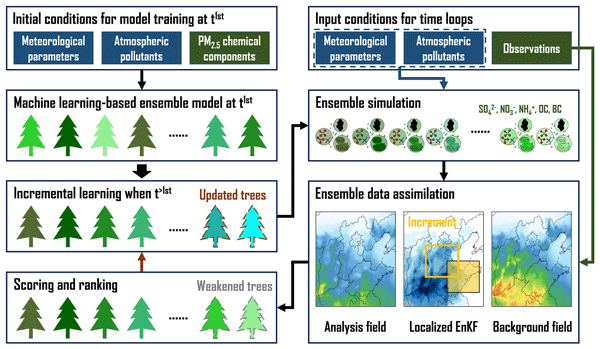
Hongyi Li, Ting Yang, Lei Kong, Di Zhang, Guigang Tang, Xiao Tang, and Zifa Wang
Geosci. Model Dev., 19, 4835–4856, https://doi.org/10.5194/gmd-19-4835-2026, https://doi.org/10.5194/gmd-19-4835-2026, 2026
Short summary
Short summary
We develop a novel data assimilation system by integrating incremental machine learning with a localized ensemble Kalman filter to enhance the simulation and reanalysis of particulate matter < 2.5 µm chemical components. Compared to traditional chemical transport model-based data assimilation, our assimilation system has superior computational efficiency and simulation improvements. Comparisons with independent observations and reanalysis datasets validate the robust performance of our system.
Xiaofei Wu, Siyang Chen, Jinxi Li, Yu Zhang, Zifa Wang, Pu Gan, Jie Zheng, and Fangxin Fang
EGUsphere, https://doi.org/10.5194/egusphere-2026-1685, https://doi.org/10.5194/egusphere-2026-1685, 2026
Short summary
Short summary
Cities face a major challenge in tracking how wind and air pollution move through complex building clusters. Common numerical models often struggle to balance accuracy with calculating speed. We developed a new simulation system that automatically adjusts its focus to where the air is moving rapidly. By testing this against observations, it significantly improves predictions of wind and pollution. This tool helps urban planners design healthier cities by better identifying how pollutants travel.
Yutong Tian, Ting Yang, Zifa Wang, Linghan Zeng, Yining Tan, Weichun Liang, Qingqing Xia, Tong Wang, and Shitian Kou
EGUsphere, https://doi.org/10.5194/egusphere-2026-2017, https://doi.org/10.5194/egusphere-2026-2017, 2026
Preprint archived
Short summary
Short summary
This study introduces a novel algorithm using multiwavelength lidar to classify and quantify tropospheric aerosols at a mountain observatory. Using seven optical parameters, it separates smoke, pollution, pollen, and dust in complex mixtures. Validated across multiple platforms, the method decouples meteorologically driven optical enhancement from actual mass fluctuations, enabling high-precision aerosol typing and mass retrieval in high-altitude environments.
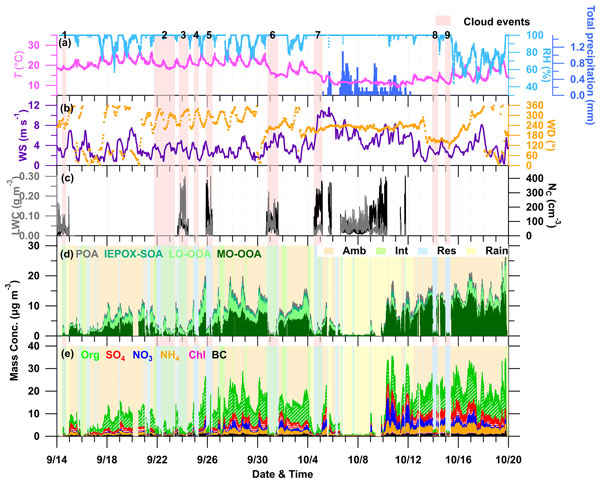
Yi Zhang, Weiqi Xu, Yan Li, Guohua Zhang, Dantong Liu, Ye Kuang, Yu Zhang, Wei Zhou, Xiaocong Peng, Bojiang Su, Weihong Huang, Zijun Zhang, Liu Yang, Yangzhou Wu, Siyuan Li, Shitong Zhao, Lanzhong Liu, Xiaole Pan, Zifa Wang, Xinhui Bi, Mikael Ehn, Douglas R. Worsnop, and Yele Sun
Atmos. Chem. Phys., 26, 5617–5634, https://doi.org/10.5194/acp-26-5617-2026, https://doi.org/10.5194/acp-26-5617-2026, 2026
Short summary
Short summary
This study explores how clouds influence the chemical composition of air particles through field research at a high-altitude station in southeastern China across different seasons. We found that different cloud types cause varying degrees of chemical changes in these particles. These findings enhance our understanding of the impact of clouds on air quality and contribute to improving climate models.
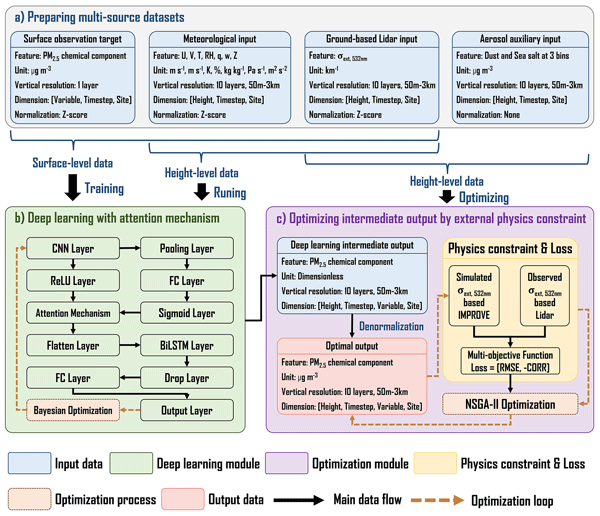
Hongyi Li, Ting Yang, Yele Sun, and Zifa Wang
Atmos. Meas. Tech., 19, 2225–2244, https://doi.org/10.5194/amt-19-2225-2026, https://doi.org/10.5194/amt-19-2225-2026, 2026
Short summary
Short summary
We develop a physics-constrained deep-learning framework to retrieve vertical profiles of particulate matter <2.5 µm chemical components from lidar measurements. Comparisons with surface, tower, and aircraft measurements validate the performance of the framework. A six-year vertical profile dataset generated for Beijing reveals that organic matter and nitrate are dominant chemical components. This work offers a new perspective on the lidar inversion of chemical component profiles.

Wei Zhou, Liu Yang, Siqi Zeng, Yunping Kan, Lirong Yang, Weihong Zhang, Weijie Wang, Zijun Zhang, Yan Li, Weiqi Xu, Yucheng Gu, Yaozong Wang, Zhengyan Zuo, Jie Li, Zifa Wang, and Yele Sun
Atmos. Chem. Phys., 26, 2425–2441, https://doi.org/10.5194/acp-26-2425-2026, https://doi.org/10.5194/acp-26-2425-2026, 2026
Short summary
Short summary
Northwest China, situated in an arid and semi-arid climate region; air quality issues in this area have received less attention compared to other Chinese metropolitan clusters. This research identify a significant shift towards the coupling PM2.5 and O3 relationships over the past decade in northwest China, highlighting the great importance of urban terpenes and aromatic oxidation in secondary organic aerosol formation.
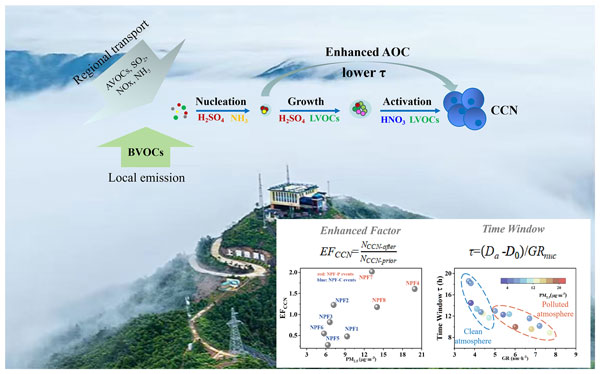
Weibin Zhu, Sai Shang, Jieqi Wang, Yunfei Wu, Zhaoze Deng, Liang Ran, Ye Kuang, Guiqian Tang, Xiangpeng Huang, Xiaole Pan, Lanzhong Liu, Weiqi Xu, Yele Sun, Bo Hu, Zifa Wang, and Zirui Liu
Atmos. Chem. Phys., 26, 1947–1965, https://doi.org/10.5194/acp-26-1947-2026, https://doi.org/10.5194/acp-26-1947-2026, 2026
Short summary
Short summary
NPF (new particle formation) is a key global CCN (cloud condensation nuclei) source, but its contribution at the polluted boundary-layer top remains unclear. Based on mountaintop observations in the Yangtze River Delta, we show that under polluted conditions, NPF at the boundary-layer top is enhanced and accelerates its conversion to CCN. Ammonia plays a key role, and a newly defined "Time Window" metric highlights the importance of oxidation-driven growth and regional transport in this process.
Yutong Tian, Ting Yang, Hongyi Li, Ping Tian, Yifan Song, Jiancun He, Yining Tan, Yele Sun, and Zifa Wang
Atmos. Chem. Phys., 25, 17581–17594, https://doi.org/10.5194/acp-25-17581-2025, https://doi.org/10.5194/acp-25-17581-2025, 2025
Short summary
Short summary
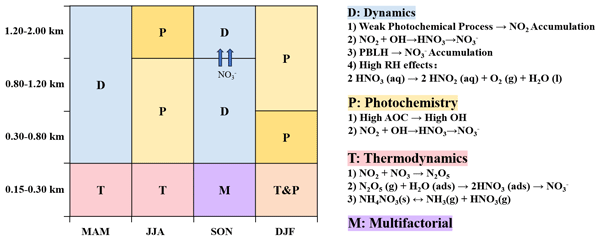
This study examines how nitrate pollution varies with height and season to combat urban haze. Nitrate levels peak near the ground in spring/winter due to humidity and temperature, while wind and sunlight drive high-altitude pollution in late autumn. Winter shows unique daytime peaks linked to sunlight and nighttime chemistry. Findings help cities design targeted strategies, like timing emissions cuts, to improve air quality by addressing pollution at specific heights and times.
Mengjie Lou, Qizhong Wu, Wending Wang, Huansheng Chen, Kai Cao, Xiaohan Fan, Dingyue Liang, Fenfen Yu, Jiating Zhang, Wei Wang, and Zifa Wang
EGUsphere, https://doi.org/10.5194/egusphere-2025-4441, https://doi.org/10.5194/egusphere-2025-4441, 2025
Preprint archived
Short summary
Short summary
This study compares the performance of the independently developed EPICC-Model with CAMx and CMAQ in simulating PM2.5 and O3 in China. It finds that EPICC-Model excels in simulating summer ozone peaks, accurately captures pollution characteristics in highly polluted areas, and better reproduces persistent compound pollution processes. Furthermore, this study reveals common issues among the models and directions for improvement, providing a basis for optimizing global air quality models.
Kai Cao, Qizhong Wu, Xiao Tang, Jinxi Li, Xueshun Chen, Huansheng Chen, Wending Wang, Huangjian Wu, Lei Kong, Jie Li, Jiang Zhu, and Zifa Wang
EGUsphere, https://doi.org/10.5194/egusphere-2025-2918, https://doi.org/10.5194/egusphere-2025-2918, 2025
Preprint archived
Short summary
Short summary
This study achieves significant acceleration by developing an optimized advection module for Emission and atmospheric Processes Integrated and Coupled Community Model on GPU-like accelerators. Through implementing thread-block coordinated indexing, minimizing CPU-GPU communication, and an hybrid parallelization framework, we demonstrate prominent speedups: 556.5× faster offline performance for the Heterogeneous Interface PPM solver and 20.5× acceleration in coupled simulations.
Xi Chen, Ke Li, Ting Yang, Xipeng Jin, Lei Chen, Yang Yang, Shuman Zhao, Bo Hu, Bin Zhu, Zifa Wang, and Hong Liao
Atmos. Chem. Phys., 25, 9151–9168, https://doi.org/10.5194/acp-25-9151-2025, https://doi.org/10.5194/acp-25-9151-2025, 2025
Short summary
Short summary
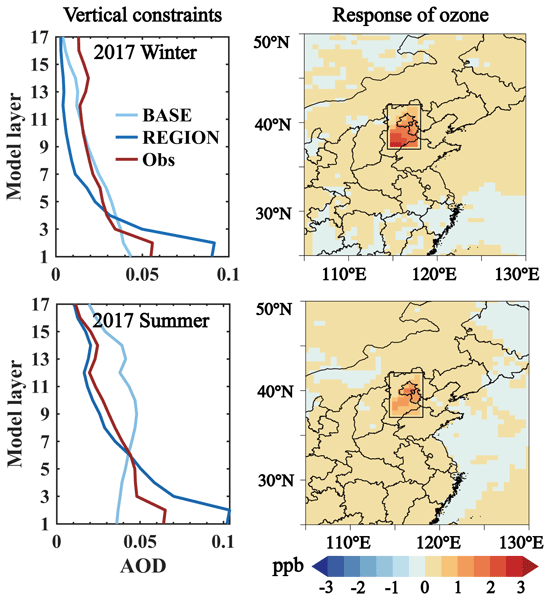
Aerosol vertical distribution that plays a crucial role in aerosol–photolysis interaction (API) remains underrepresented in chemical models. We integrated lidar and radiosonde observations to constrain the simulated aerosol profiles over North China and quantified the photochemical responses. The increased photolysis rates in the lower layers led to increased ozone and accounted for a 36 %–56 % reduction in API effects, resulting in enhanced atmospheric oxidizing capacity and aerosol formation.
Huiyun Du, Jie Li, Xueshun Chen, Gabriele Curci, Fangqun Yu, Yele Sun, Xu Dao, Song Guo, Zhe Wang, Wenyi Yang, Lianfang Wei, and Zifa Wang
Atmos. Chem. Phys., 25, 5665–5681, https://doi.org/10.5194/acp-25-5665-2025, https://doi.org/10.5194/acp-25-5665-2025, 2025
Short summary
Short summary
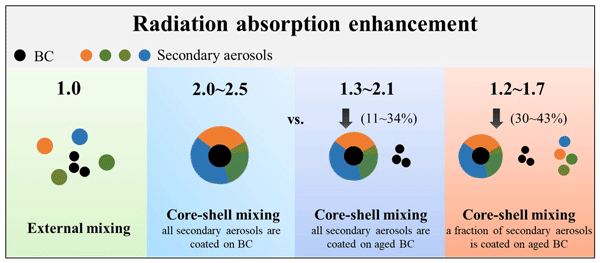
Inadequate consideration of mixing states and coatings on black carbon (BC) hinders aerosol radiation forcing quantification. Core–shell mixing aligns well with observations, but partial internal mixing is a more realistic representation. We used a microphysics module to determine the fraction of embedded BC and coating aerosols, constraining the mixing state. This reduced absorption enhancement by 30 %–43 % in northern China, offering insights into BC's radiative effects.
Zichen Wu, Xueshun Chen, Zifa Wang, Huansheng Chen, Zhe Wang, Qing Mu, Lin Wu, Wending Wang, Xiao Tang, Jie Li, Ying Li, Qizhong Wu, Yang Wang, Zhiyin Zou, and Zijian Jiang
Geosci. Model Dev., 17, 8885–8907, https://doi.org/10.5194/gmd-17-8885-2024, https://doi.org/10.5194/gmd-17-8885-2024, 2024
Short summary
Short summary
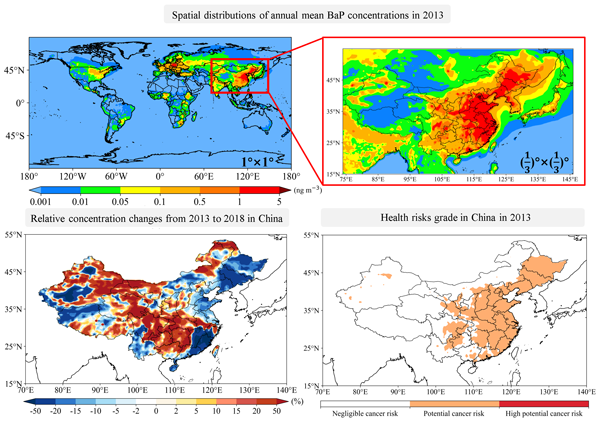
We developed a model to simulate polycyclic aromatic hydrocarbons (PAHs) from global to regional scales. The model can reproduce PAH distribution well. The concentration of BaP (indicator species for PAHs) could exceed the target values of 1 ng m-3 over some areas (e.g., in central Europe, India, and eastern China). The change in BaP is lower than that in PM2.5 from 2013 to 2018. China still faces significant potential health risks posed by BaP although the Action Plan has been implemented.
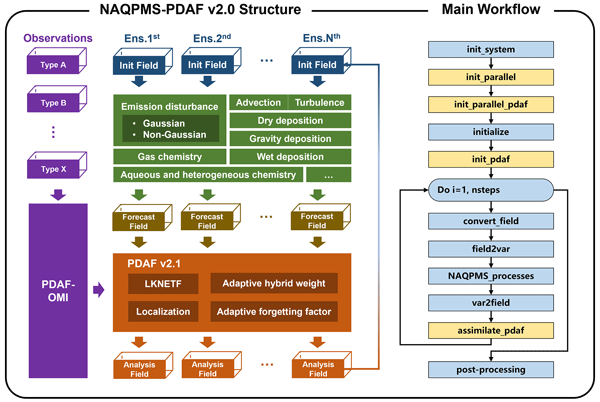
Hongyi Li, Ting Yang, Lars Nerger, Dawei Zhang, Di Zhang, Guigang Tang, Haibo Wang, Yele Sun, Pingqing Fu, Hang Su, and Zifa Wang
Geosci. Model Dev., 17, 8495–8519, https://doi.org/10.5194/gmd-17-8495-2024, https://doi.org/10.5194/gmd-17-8495-2024, 2024
Short summary
Short summary
To accurately characterize the spatiotemporal distribution of particulate matter <2.5 µm chemical components, we developed the Nested Air Quality Prediction Model System with the Parallel Data Assimilation Framework (NAQPMS-PDAF) v2.0 for chemical components with non-Gaussian and nonlinear properties. NAQPMS-PDAF v2.0 has better computing efficiency, excels when used with a small ensemble size, and can significantly improve the simulation performance of chemical components.
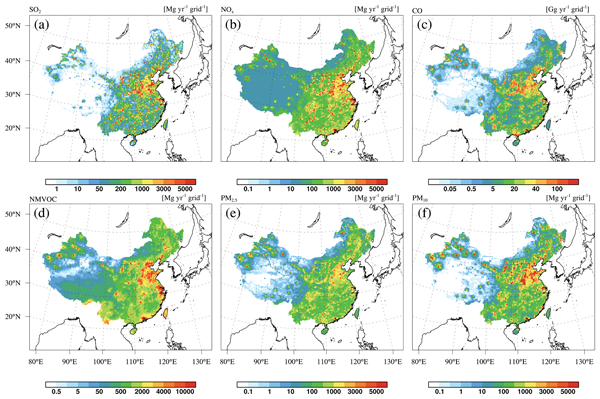
Lei Kong, Xiao Tang, Zifa Wang, Jiang Zhu, Jianjun Li, Huangjian Wu, Qizhong Wu, Huansheng Chen, Lili Zhu, Wei Wang, Bing Liu, Qian Wang, Duohong Chen, Yuepeng Pan, Jie Li, Lin Wu, and Gregory R. Carmichael
Earth Syst. Sci. Data, 16, 4351–4387, https://doi.org/10.5194/essd-16-4351-2024, https://doi.org/10.5194/essd-16-4351-2024, 2024
Short summary
Short summary
A new long-term inversed emission inventory for Chinese air quality (CAQIEI) is developed in this study, which contains constrained monthly emissions of NOx, SO2, CO, PM2.5, PM10, and NMVOCs in China from 2013 to 2020 with a horizontal resolution of 15 km. Emissions of different air pollutants and their changes during 2013–2020 were investigated and compared with previous emission inventories, which sheds new light on the complex variations of air pollutant emissions in China.
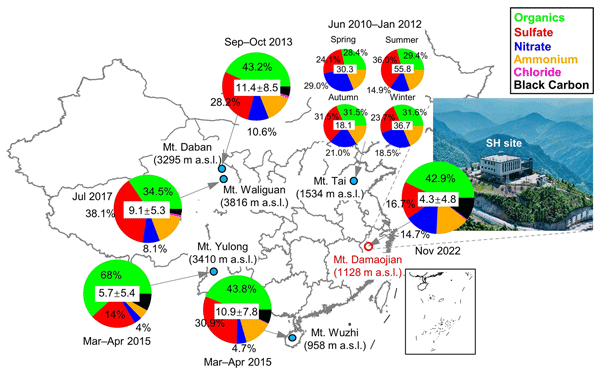
Zijun Zhang, Weiqi Xu, Yi Zhang, Wei Zhou, Xiangyu Xu, Aodong Du, Yinzhou Zhang, Hongqin Qiao, Ye Kuang, Xiaole Pan, Zifa Wang, Xueling Cheng, Lanzhong Liu, Qingyan Fu, Douglas R. Worsnop, Jie Li, and Yele Sun
Atmos. Chem. Phys., 24, 8473–8488, https://doi.org/10.5194/acp-24-8473-2024, https://doi.org/10.5194/acp-24-8473-2024, 2024
Short summary
Short summary
We investigated aerosol composition and sources and the interaction between secondary organic aerosol (SOA) and clouds at a regional mountain site in southeastern China. Clouds efficiently scavenge more oxidized SOA; however, cloud evaporation leads to the production of less oxidized SOA. The unexpectedly high presence of nitrate in aerosol particles indicates that nitrate formed in polluted areas has undergone interactions with clouds, significantly influencing the regional background site.
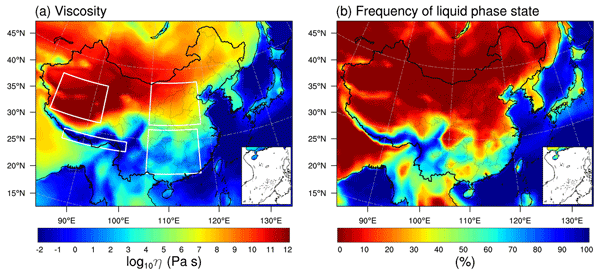
Zhiqiang Zhang, Ying Li, Haiyan Ran, Junling An, Yu Qu, Wei Zhou, Weiqi Xu, Weiwei Hu, Hongbin Xie, Zifa Wang, Yele Sun, and Manabu Shiraiwa
Atmos. Chem. Phys., 24, 4809–4826, https://doi.org/10.5194/acp-24-4809-2024, https://doi.org/10.5194/acp-24-4809-2024, 2024
Short summary
Short summary
Secondary organic aerosols (SOAs) can exist in liquid, semi-solid, or amorphous solid states, which are rarely accounted for in current chemical transport models. We predict the phase state of SOA particles over China and find that in northwestern China SOA particles are mostly highly viscous or glassy solid. Our results indicate that the particle phase state should be considered in SOA formation in chemical transport models for more accurate prediction of SOA mass concentrations.
Aodong Du, Jiaxing Sun, Hang Liu, Weiqi Xu, Wei Zhou, Yuting Zhang, Lei Li, Xubing Du, Yan Li, Xiaole Pan, Zifa Wang, and Yele Sun
Atmos. Chem. Phys., 23, 13597–13611, https://doi.org/10.5194/acp-23-13597-2023, https://doi.org/10.5194/acp-23-13597-2023, 2023
Short summary
Short summary
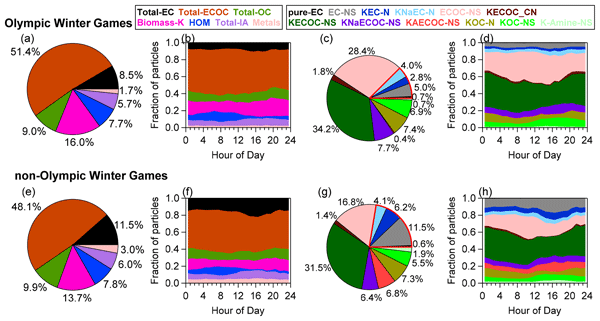
We characterized the impacts of emission controls on particle mixing state and density during the Beijing Olympic Winter Games using a SPAMS in tandem with a DMA and an AAC. OC and sulfate-containing particles increased, while those from primary emissions decreased. The effective particle densities increased and varied largely for different particles, highlighting the impacts of aging and formation processes on the changes of particle density and mixing state.
Tao Wang, Hang Liu, Jie Li, Shuai Wang, Youngseob Kim, Yele Sun, Wenyi Yang, Huiyun Du, Zhe Wang, and Zifa Wang
Geosci. Model Dev., 16, 5585–5599, https://doi.org/10.5194/gmd-16-5585-2023, https://doi.org/10.5194/gmd-16-5585-2023, 2023
Short summary
Short summary
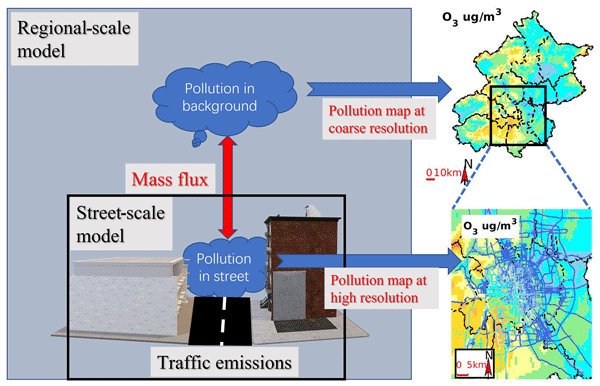
This paper developed a two-way coupled module in a new version of a regional urban–street network model, IAQMS-street v2.0, in which the mass flux from streets to background is considered. Test cases are defined to evaluate the performance of IAQMS-street v2.0 in Beijing by comparing it with that simulated by IAQMS-street v1.0 and a regional model. The contribution of local emissions and the influence of on-road vehicle control measures on air quality are evaluated by using IAQMS-street v2.0.
Xi Chen, Ting Yang, Zifa Wang, Futing Wang, and Haibo Wang
Atmos. Meas. Tech., 16, 4289–4302, https://doi.org/10.5194/amt-16-4289-2023, https://doi.org/10.5194/amt-16-4289-2023, 2023
Short summary
Short summary
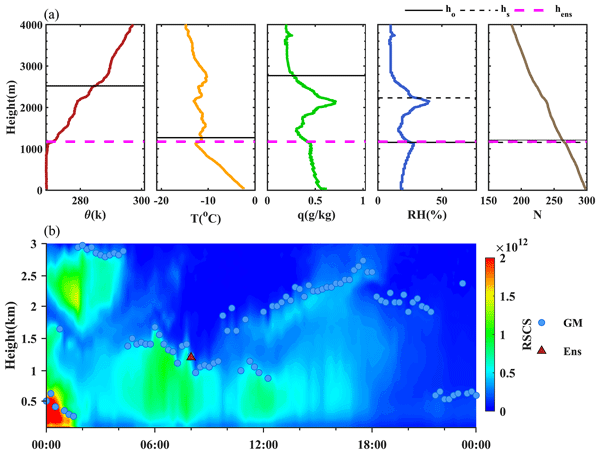
Uncertainties remain great in the planetary boundary layer height (PBLH) determination from radiosonde, especially during the transition period of different PBL regimes. We combine seven existing methods along with statistical modification on gradient-based methods. We find that the ensemble method can eliminate the overestimation of PBLH and reduce the inconsistency between individual methods. The ensemble method improves the effectiveness of PBLH determination to 62.6 %.
Lichao Yang, Wansuo Duan, and Zifa Wang
Geosci. Model Dev., 16, 3827–3848, https://doi.org/10.5194/gmd-16-3827-2023, https://doi.org/10.5194/gmd-16-3827-2023, 2023
Short summary
Short summary
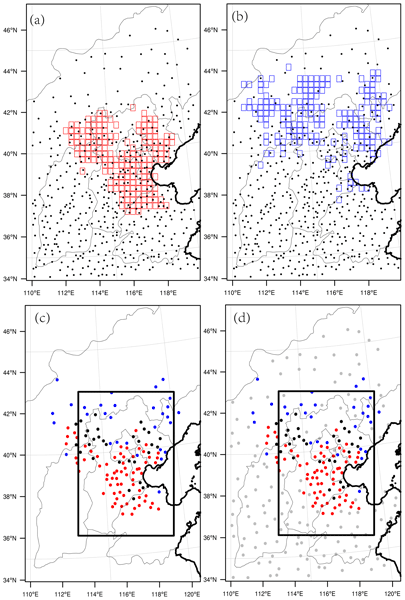
An approach is proposed to refine a ground meteorological observation network to improve the PM2.5 forecasts in the Beijing–Tianjin–Hebei region. A cost-effective observation network is obtained and makes the relevant PM2.5 forecasts assimilate fewer observations but achieve the forecasting skill comparable to or higher than that obtained by assimilating all ground station observations, suggesting that many of the current ground stations can be greatly scattered to avoid much unnecessary work.
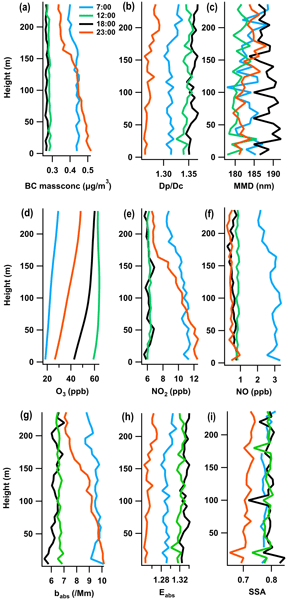
Hang Liu, Xiaole Pan, Shandong Lei, Yuting Zhang, Aodong Du, Weijie Yao, Guiqian Tang, Tao Wang, Jinyuan Xin, Jie Li, Yele Sun, Junji Cao, and Zifa Wang
Atmos. Chem. Phys., 23, 7225–7239, https://doi.org/10.5194/acp-23-7225-2023, https://doi.org/10.5194/acp-23-7225-2023, 2023
Short summary
Short summary
We provide the average vertical profiles of black carbon (BC) concentration, size distribution and coating thickness at different times of the day in an urban area based on 112 vertical profiles. In addition, it is found that BC in the residual layer generally has a thicker coating, higher absorption enhancement and hygroscopicity than on the surface. Such aged BC could enter into the boundary layer and influence the BC properties in the early morning.
Wen Lu, Bin Zhu, Shuqi Yan, Jie Li, and Zifa Wang
EGUsphere, https://doi.org/10.5194/egusphere-2023-1089, https://doi.org/10.5194/egusphere-2023-1089, 2023
Preprint archived
Short summary
Short summary
Parameterized the minimum turbulent diffusivity (Kzmin) by sensible heat flux and latent heat flux and embedded it into the WRF-Chem model. New scheme improved the underestimation of turbulence diffusion underestimation and overestimation of surface PM2.5 under stable boundary layer simulation over eastern China. The physical relationship between Kzmin and two factors was discussed. Process analysis showed that vertical mixing is the key process to improve surface PM2.5 simulations.
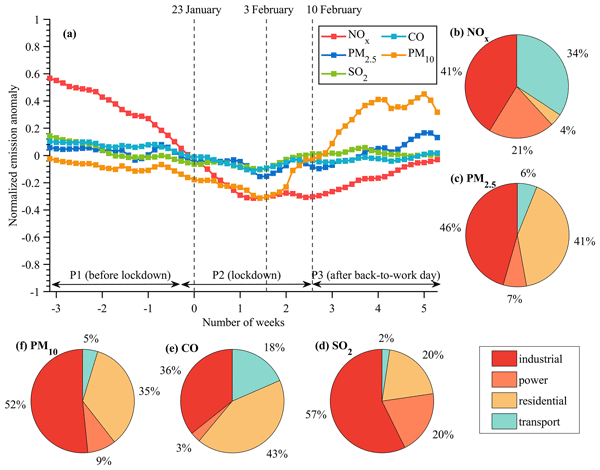
Lei Kong, Xiao Tang, Jiang Zhu, Zifa Wang, Yele Sun, Pingqing Fu, Meng Gao, Huangjian Wu, Miaomiao Lu, Qian Wu, Shuyuan Huang, Wenxuan Sui, Jie Li, Xiaole Pan, Lin Wu, Hajime Akimoto, and Gregory R. Carmichael
Atmos. Chem. Phys., 23, 6217–6240, https://doi.org/10.5194/acp-23-6217-2023, https://doi.org/10.5194/acp-23-6217-2023, 2023
Short summary
Short summary
A multi-air-pollutant inversion system has been developed in this study to estimate emission changes in China during COVID-19 lockdown. The results demonstrate that the lockdown is largely a nationwide road traffic control measure with NOx emissions decreasing by ~40 %. Emissions of other species only decreased by ~10 % due to smaller effects of lockdown on other sectors. Assessment results further indicate that the lockdown only had limited effects on the control of PM2.5 and O3 in China.
Junhua Wang, Baozhu Ge, Xueshun Chen, Jie Li, Keding Lu, Yayuan Dong, Lei Kong, Zifa Wang, and Yuanhang Zhang
Geosci. Model Dev. Discuss., https://doi.org/10.5194/gmd-2023-22, https://doi.org/10.5194/gmd-2023-22, 2023
Revised manuscript not accepted
Short summary
Short summary
We developed a quantitative decoupling analysis (QDA) method to quantify the contributions of emissions, meteorology, chemical reactions, and their nonlinear interactions on PM2.5. We found the effects of adverse meteorological conditions and the importance of nonlinear interactions. This method can provide valuable information for understanding of key factors to heavy pollution, but also help the modelers to find out the sources of uncertainties in numerical models.

Shujun Zhong, Shuang Chen, Junjun Deng, Yanbing Fan, Qiang Zhang, Qiaorong Xie, Yulin Qi, Wei Hu, Libin Wu, Xiaodong Li, Chandra Mouli Pavuluri, Jialei Zhu, Xin Wang, Di Liu, Xiaole Pan, Yele Sun, Zifa Wang, Yisheng Xu, Haijie Tong, Hang Su, Yafang Cheng, Kimitaka Kawamura, and Pingqing Fu
Atmos. Chem. Phys., 23, 2061–2077, https://doi.org/10.5194/acp-23-2061-2023, https://doi.org/10.5194/acp-23-2061-2023, 2023
Short summary
Short summary
This study investigated the role of the secondary organic aerosol (SOA) loading on the molecular composition of wintertime urban aerosols by ultrahigh-resolution mass spectrometry. Results demonstrate that the SOA loading is an important factor associated with the oxidation degree, nitrate group content, and chemodiversity of nitrooxy–organosulfates. Our study also found that the hydrolysis of nitrooxy–organosulfates is a possible pathway for the formation of organosulfates.
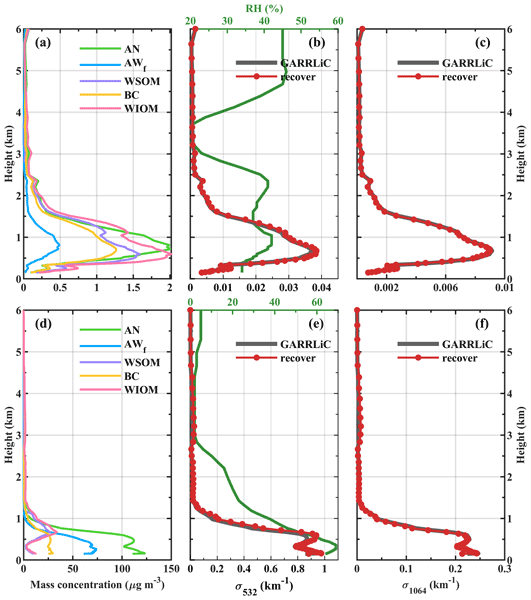
Futing Wang, Ting Yang, Zifa Wang, Haibo Wang, Xi Chen, Yele Sun, Jianjun Li, Guigang Tang, and Wenxuan Chai
Atmos. Meas. Tech., 15, 6127–6144, https://doi.org/10.5194/amt-15-6127-2022, https://doi.org/10.5194/amt-15-6127-2022, 2022
Short summary
Short summary
We develop a new algorithm to get the vertical mass concentration profiles of fine aerosol components based on the synergy of ground-based remote sensing for the first time. The comparisons with in situ observations and chemistry transport models validate the performance of the algorithm. Uncertainties caused by input parameters are also assessed in this paper. We expected that the algorithm can provide a new idea for lidar inversion and promote the development of aerosol component profiles.
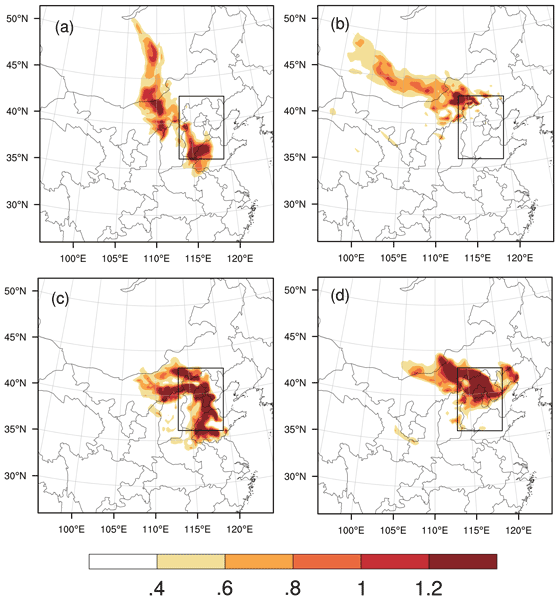
Lichao Yang, Wansuo Duan, Zifa Wang, and Wenyi Yang
Atmos. Chem. Phys., 22, 11429–11453, https://doi.org/10.5194/acp-22-11429-2022, https://doi.org/10.5194/acp-22-11429-2022, 2022
Short summary
Short summary
The initial meteorological state has a great impact on PM2.5 forecasts. Assimilating additional observations is an effective way to improve the accuracy of the initial meteorological state. Here we used an advanced optimization approach to identify where we should preferentially place the meteorological observations associated with PM2.5 forecasts in the Beijing–Tianjin–Hebei region of China. We provide evidence that the target observation strategy is effective for improving PM2.5 forecasts.
Zhiqiang Zhang, Yele Sun, Chun Chen, Bo You, Aodong Du, Weiqi Xu, Yan Li, Zhijie Li, Lu Lei, Wei Zhou, Jiaxing Sun, Yanmei Qiu, Lianfang Wei, Pingqing Fu, and Zifa Wang
Atmos. Chem. Phys., 22, 10409–10423, https://doi.org/10.5194/acp-22-10409-2022, https://doi.org/10.5194/acp-22-10409-2022, 2022
Short summary
Short summary
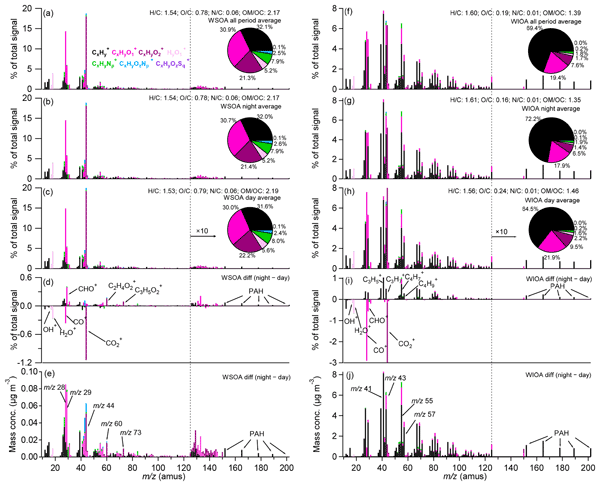
We present a comprehensive characterization of water-soluble organic aerosol and the first mass spectral characterization of water-insoluble organic aerosol in the cold season in Beijing by integrating online and offline aerosol mass spectrometer measurements. WSOA comprised dominantly secondary OA and showed large changes during the transition season from autumn to winter. WIOA was characterized by prominent hydrocarbon ions series, low oxidation states, and significant day–night differences.
Jiaxing Sun, Yele Sun, Conghui Xie, Weiqi Xu, Chun Chen, Zhe Wang, Lei Li, Xubing Du, Fugui Huang, Yan Li, Zhijie Li, Xiaole Pan, Nan Ma, Wanyun Xu, Pingqing Fu, and Zifa Wang
Atmos. Chem. Phys., 22, 7619–7630, https://doi.org/10.5194/acp-22-7619-2022, https://doi.org/10.5194/acp-22-7619-2022, 2022
Short summary
Short summary
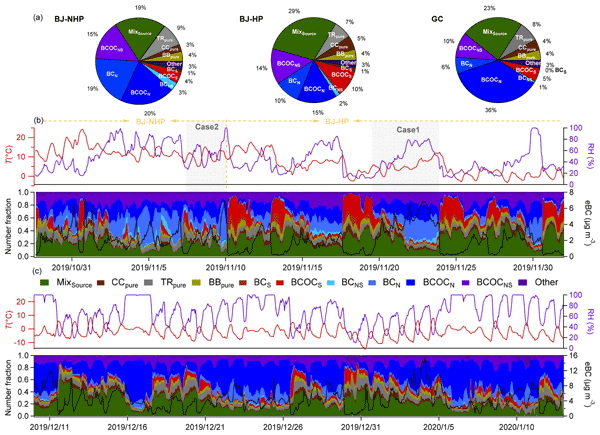
We analyzed the chemical composition and mixing state of BC-containing particles at urban and rural sites in winter in the North China Plain and evaluated their impact on light absorption enhancement. BC was dominantly mixed with organic carbon, nitrate, and sulfate, and the mixing state evolved significantly as a function of relative humidity (RH) at both sites. The absorption enhancement depended strongly on coated secondary inorganic aerosol and was up to ~1.3–1.4 during aging processes.
Junjun Deng, Hao Ma, Xinfeng Wang, Shujun Zhong, Zhimin Zhang, Jialei Zhu, Yanbing Fan, Wei Hu, Libin Wu, Xiaodong Li, Lujie Ren, Chandra Mouli Pavuluri, Xiaole Pan, Yele Sun, Zifa Wang, Kimitaka Kawamura, and Pingqing Fu
Atmos. Chem. Phys., 22, 6449–6470, https://doi.org/10.5194/acp-22-6449-2022, https://doi.org/10.5194/acp-22-6449-2022, 2022
Short summary
Short summary
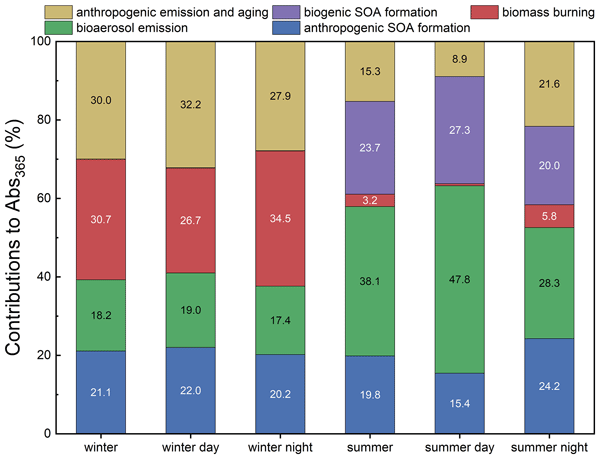
Light-absorbing brown carbon (BrC) plays an important role in climate change and atmospheric chemistry. Here we investigated the seasonal and diurnal variations in water-soluble BrC in PM2.5 in the megacity Tianjin in coastal China. Results of the source apportionments from the combination with organic molecular compositions and optical properties of water-soluble BrC reveal a large contribution from primary bioaerosol particles to BrC in the urban atmosphere.
Haibo Wang, Ting Yang, Zifa Wang, Jianjun Li, Wenxuan Chai, Guigang Tang, Lei Kong, and Xueshun Chen
Geosci. Model Dev., 15, 3555–3585, https://doi.org/10.5194/gmd-15-3555-2022, https://doi.org/10.5194/gmd-15-3555-2022, 2022
Short summary
Short summary
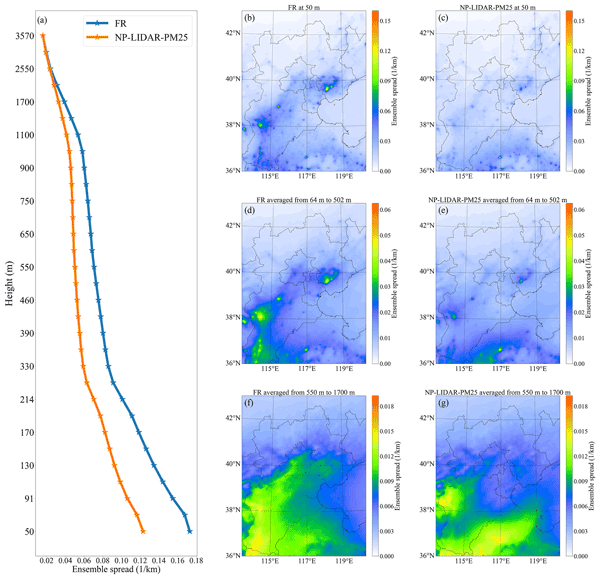
In this paper, we develop an online data coupled assimilation system (NAQPMS-PDAF) with the Eulerian atmospheric chemistry-transport model. NAQPMS-PDAF allows efficient use of large computational resources. The application and performance of the system are investigated by assimilating 1 month of vertical aerosol observations. The results show that NAQPMS-PDAF can significantly improve the performance of aerosol vertical structure simulation and reduce the uncertainty to a large extent.
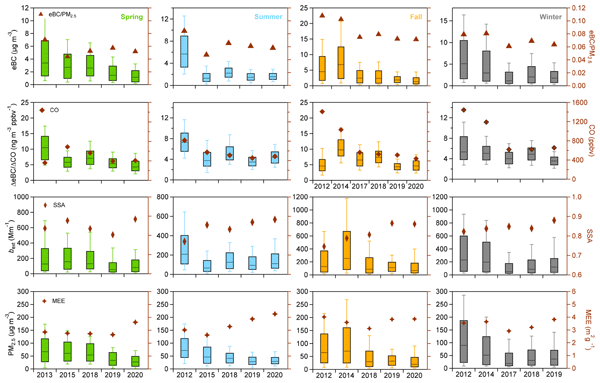
Jiaxing Sun, Zhe Wang, Wei Zhou, Conghui Xie, Cheng Wu, Chun Chen, Tingting Han, Qingqing Wang, Zhijie Li, Jie Li, Pingqing Fu, Zifa Wang, and Yele Sun
Atmos. Chem. Phys., 22, 561–575, https://doi.org/10.5194/acp-22-561-2022, https://doi.org/10.5194/acp-22-561-2022, 2022
Short summary
Short summary
We analyzed 9-year measurements of BC and aerosol optical properties from 2012 to 2020 in Beijing, China. Our results showed large reductions in BC and light extinction coefficient due to the Clean Air Action Plan. As a response, both SSA and mass extinction efficiency (MEE) showed considerable increases, demonstrating a future challenge in visibility improvement. The primary and secondary BrC was also separated and quantified, and the changes in radiative forcing of BC and BrC were estimated.
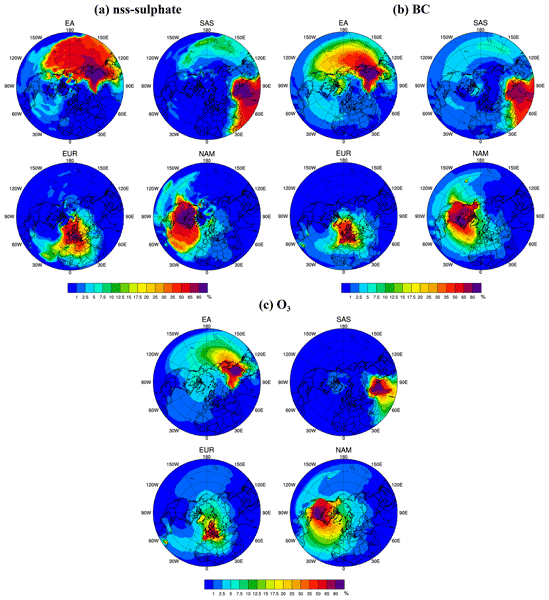
Qian Ye, Jie Li, Xueshun Chen, Huansheng Chen, Wenyi Yang, Huiyun Du, Xiaole Pan, Xiao Tang, Wei Wang, Lili Zhu, Jianjun Li, Zhe Wang, and Zifa Wang
Geosci. Model Dev., 14, 7573–7604, https://doi.org/10.5194/gmd-14-7573-2021, https://doi.org/10.5194/gmd-14-7573-2021, 2021
Short summary
Short summary
We developed a global tropospheric atmospheric chemistry source–receptor model. This model can quantify the contributions of multiple air pollutants from various source regions in one simulation without introducing the nonlinear error of atmospheric chemistry. The S-R relationships of PM2.5 and O3 from a global high-resolution (0.5° × 0.5°) simulation were given and compared with previous studies. This model will be useful for creating a link between the scientific community and policymakers.
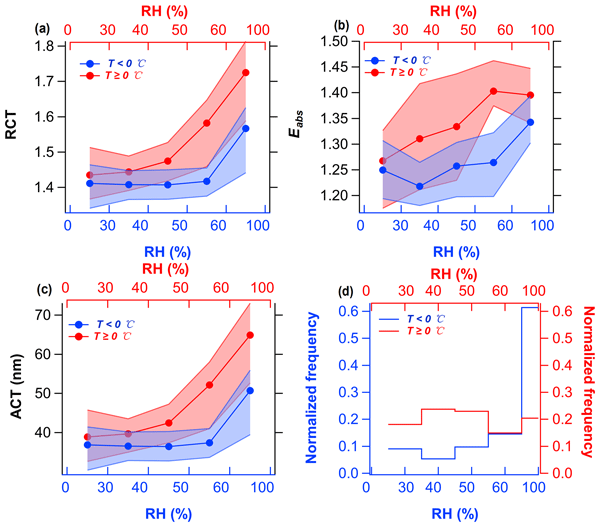
Yuting Zhang, Hang Liu, Shandong Lei, Wanyun Xu, Yu Tian, Weijie Yao, Xiaoyong Liu, Qi Liao, Jie Li, Chun Chen, Yele Sun, Pingqing Fu, Jinyuan Xin, Junji Cao, Xiaole Pan, and Zifa Wang
Atmos. Chem. Phys., 21, 17631–17648, https://doi.org/10.5194/acp-21-17631-2021, https://doi.org/10.5194/acp-21-17631-2021, 2021
Short summary
Short summary
In this study, the authors used a single-particle soot photometer (SP2) to characterize the particle size, mixing state, and optical properties of black carbon aerosols in rural areas of the North China Plain in winter. Relatively warm and high-RH environments (RH > 50 %, −4° < T < 4 °) were more favorable to rBC aging than dry and cold environments (RH < 60 %, T < −8°). The paper emphasizes the importance of meteorological parameters in the mixing state of black carbon.
Cited articles
Al-Dahidi, S., Madhiarasan, M., Al-Ghussain, L., Abubaker, A. M., Ahmad, A. D., Alrbai, M., Aghaei, M., Alahmer, H., Alahmer, A., Baraldi, P., and Zio, E.: Forecasting Solar Photovoltaic Power Production: A Comprehensive Review and Innovative Data-Driven Modeling Framework, Energies, https://doi.org/10.3390/en17164145, 2024.
Alskaif, T., Dev, S., Visser, L., Hossari, M., and van Sark, W.: A systematic analysis of meteorological variables for PV output power estimation, Renew. Energ., 153, 12–22, https://doi.org/10.1016/j.renene.2020.01.150, 2020.
Alvarenga, R., Herbaux, H., and Linguet, L.: Combination of Post-Processing Methods to Improve High-Resolution NWP Solar Irradiance Forecasts in French Guiana, Engineering Proceedings, https://doi.org/10.3390/engproc2022018027, 2022.
Anderson, K., Hansen, C., Holmgren, W., Jensen, A., Mikofski, M., and Driesse, A.: pvlib python: 2023 project update, Journal of Open Source Software, 8, 5994, https://doi.org/10.21105/joss.05994, 2023.
Antonanzas, J., Osorio, N., Escobar, R., Urraca, R., Martinez-de-Pison, F. J., and Antonanzas-Torres, F.: Review of photovoltaic power forecasting, Sol. Energy, 136, 78–111, https://doi.org/10.1016/j.solener.2016.06.069, 2016.
Charoensuk, T., Luchner, J., Balbarini, N., Sisomphon, P., and Bauer-Gottwein, P.: Enhancing the capabilities of the Chao Phraya forecasting system through the integration of pre-processed numerical weather forecasts, J. Hydrol.: Regional Studies, 52, 101737, https://doi.org/10.1016/j.ejrh.2024.101737, 2024.
Contributor: NCEP GDAS/FNL 0.25 Degree Global Tropospheric Analyses and Forecast Grids, Research Data Archive at the National Center for Atmospheric Research, Computational and Information Systems Laboratory [data set], https://doi.org/10.5065/D65Q4T4Z, 2015.
Dai, H., Zhen, Z., Wang, F., Lin, Y., Xu, F., and Duić, N.: A short-term PV power forecasting method based on weather type credibility prediction and multi-model dynamic combination, Energ. Convers. Manage., 326, 119501, https://doi.org/10.1016/j.enconman.2025.119501, 2025.
Dai, Y., Yu, W., and Leng, M.: A hybrid ensemble optimized BiGRU method for short-term photovoltaic generation forecasting, Energy, 299, 131458, https://doi.org/10.1016/j.energy.2024.131458, 2024.
Das, U. K., Tey, K. S., Seyedmahmoudian, M., Mekhilef, S., Idris, M. Y. I., Van Deventer, W., Horan, B., and Stojcevski, A.: Forecasting of photovoltaic power generation and model optimization: A review, Renew. Sust. Energ. Rev., 81, 912–928, https://doi.org/10.1016/j.rser.2017.08.017, 2018.
de Oliveira Santos, L., AlSkaif, T., Barroso, G. C., and de Carvalho, P. C. M.: Photovoltaic power estimation and forecast models integrating physics and machine learning: A review on hybrid techniques, Sol. Energy, 284, 113044, https://doi.org/10.1016/j.solener.2024.113044, 2024.
De Soto, W., Klein, S. A., and Beckman, W. A.: Improvement and validation of a model for photovoltaic array performance, Sol. Energy, 80, 78–88, https://doi.org/10.1016/j.solener.2005.06.010, 2006.
Dolara, A., Grimaccia, F., Leva, S., Mussetta, M., and Ogliari, E.: A Physical Hybrid Artificial Neural Network for Short Term Forecasting of PV Plant Power Output, Energies, https://doi.org/10.3390/en8021138, 2015.
Dudhia, J.: Numerical Study of Convection Observed during the Winter Monsoon Experiment Using a Mesoscale Two-Dimensional Model, J. Atmos. Sci., 46, 3077–3107, https://doi.org/10.1175/1520-0469(1989)046<3077:NSOCOD>2.0.CO;2, 1989.
Ekambaram, V., Jati, A., Nguyen, N., Sinthong, P., and Kalagnanam, J.: TSMixer: Lightweight MLP-Mixer Model for Multivariate Time Series Forecasting, Proceedings of the 29th ACM SIGKDD Conference on Knowledge Discovery and Data Mining, Long Beach, CA, USA, https://doi.org/10.1145/3580305.3599533, 2023.
Erbs, D. G., Klein, S. A., and Duffie, J. A.: Estimation of the diffuse radiation fraction for hourly, daily and monthly-average global radiation, Sol. Energy, 28, 293–302, https://doi.org/10.1016/0038-092X(82)90302-4, 1982.
Fan, S., Geng, H., Zhang, H., Yang, J., and Hiroichi, K.: Photovoltaic power forecasting model employing epoch-dependent adaptive loss weighting and data assimilation, Sol. Energy, 290, 113351, https://doi.org/10.1016/j.solener.2025.113351, 2025.
Fei, Z., Xingcai, L., and Xueshun, C.: MIPV-NWP-PINN V1.0: Development of a Multi-scale Photovoltaic Power Forecasting Framework Integrating Numerical Weather Prediction with Physics-Informed Neural Networks (v3), Zenodo [code, data set], https://doi.org/10.5281/zenodo.19551487, 2026.
Guo, F., Yang, C., Xia, D., and Xu, J.: Short-Term Prediction of Photovoltaic Power Based on Improved CNN-LSTM and Cascading Learning, Energ. Eng., 122, 1975–1999, https://doi.org/10.32604/ee.2025.062035, 2025.
Gupta, M., Arya, A., Varshney, U., Mittal, J., and Tomar, A.: A review of PV power forecasting using machine learning techniques, Progress in Engineering Science, 2, 100058, https://doi.org/10.1016/j.pes.2025.100058, 2025.
Hay, J. E.: Calculation of monthly mean solar radiation for horizontal and inclined surfaces, Sol. Energy, 23, 301–307, https://doi.org/10.1016/0038-092X(79)90123-3, 1979.
Hochreiter, S. and Schmidhuber, J.: Long Short-Term Memory, Neural Comput., 9, 1735-1780, 10.1162/neco.1997.9.8.1735, 1997.
Hottel, H. C.: A simple model for estimating the transmittance of direct solar radiation through clear atmospheres, Sol. Energy, 18, 129–134, https://doi.org/10.1016/0038-092X(76)90045-1, 1976.
IEA: Share of renewable electricity generation by technology, https://www.iea.org/data-and-statistics/charts/share-of-renewable-electricity-generation-by-technology-2000-2028 (last access: 10 September 2025), 2024.
Iheanetu, K. J.: Solar Photovoltaic Power Forecasting: A Review, Sustainability, https://doi.org/10.3390/su142417005, 2022.
Jannah, N., Gunawan, T. S., Yusoff, S. H., Hanifah, M. S. A., and Sapihie, S. N. M.: Recent Advances and Future Challenges of Solar Power Generation Forecasting, IEEE Access, 12, 168904–168924, https://doi.org/10.1109/ACCESS.2024.3496120, 2024.
Karniadakis, G. E., Kevrekidis, I. G., Lu, L., Perdikaris, P., Wang, S., and Yang, L.: Physics-informed machine learning, Nature Reviews Physics, 3, 422–440, https://doi.org/10.1038/s42254-021-00314-5, 2021.
Khan, M. U. and Jama, M. A.: Evaluation and correction of solar irradiance in Somaliland using ground measurements and global reanalysis products, Heliyon, 10, e35256, https://doi.org/10.1016/j.heliyon.2024.e35256, 2024.
Koujani, S. R., Hosseini, S. A., and Sharafati, A.: Soil moisture downscaling in the state of Oklahoma: Employing advanced machine learning, J. Atmos. Sol.-Terr. Phy., 268, 106454, https://doi.org/10.1016/j.jastp.2025.106454, 2025.
Kumar, R. S., Meera, P. S., Lavanya, V., and Hemamalini, S.: Brown bear optimized random forest model for short term solar power forecasting, Results in Engineering, 25, 104583, https://doi.org/10.1016/j.rineng.2025.104583, 2025.
Li, C., Xu, Y., Xie, M., Zhang, P., Zhang, B., Xiao, B., Zhang, S., Liu, Z., Zhang, W., and Hao, X.: Assessing solar-to-PV power conversion models: Physical, ML, and hybrid approaches across diverse scales, Energy, 323, 135744, https://doi.org/10.1016/j.energy.2025.135744, 2025.
Lindsay, N., Libois, Q., Badosa, J., Migan-Dubois, A., and Bourdin, V.: Errors in PV power modelling due to the lack of spectral and angular details of solar irradiance inputs, Sol. Energy, 197, 266–278, https://doi.org/10.1016/j.solener.2019.12.042, 2020.
Liu, P., Quan, F., Gao, Y., Alotaibi, B., Alsenani, T. R., and Abuhussain, M.: Green energy forecasting using multiheaded convolutional LSTM model for sustainable life, Sustainable Energy Technologies and Assessments, 63, 103609, https://doi.org/10.1016/j.seta.2024.103609, 2024.
Liu, Y., Hu, T., Zhang, H., Wu, H., Wang, S., Ma, L., and Long, M.: itransformer: Inverted transformers are effective for time series forecasting, arXiv [preprint], https://doi.org/10.48550/arXiv.2310.06625, 2023.
Mahmoudi, E., de Souza Silva, J. L., and dos Santos Barros, T. A.: Assessing the performance of physical transposition models in photovoltaic power forecasting: A comprehensive micro and macro accuracy analysis, Energ. Convers. Manage.: X, 24, 100792, https://doi.org/10.1016/j.ecmx.2024.100792, 2024.
Mallard, M. S., Spero, T. L., Bowden, J. H., Willison, J., Nolte, C. G., and Jalowska, A. M.: Examining spin-up behaviour within WRF dynamical downscaling applications, Geosci. Model Dev., 19, 579–594, https://doi.org/10.5194/gmd-19-579-2026, 2026.
Ngai, S. T., Tangang, F., and Juneng, L.: Bias correction of global and regional simulated daily precipitation and surface mean temperature over Southeast Asia using quantile mapping method, Global Planet. Change, 149, 79–90, https://doi.org/10.1016/j.gloplacha.2016.12.009, 2017.
Nie, X. and Mao, Q.: Study on shortwave radiative transfer characteristics in polydisperse aerosols in a clear sky, Infrared Phys. Techn., 118, 103903, https://doi.org/10.1016/j.infrared.2021.103903, 2021.
Pandžić, F. and Capuder, T.: Advances in Short-Term Solar Forecasting: A Review and Benchmark of Machine Learning Methods and Relevant Data Sources, Energies, https://doi.org/10.3390/en17010097, 2024.
Piantadosi, G., Dutto, S., Galli, A., De Vito, S., Sansone, C., and Di Francia, G.: Photovoltaic power forecasting: A Transformer based framework, Energy and AI, 18, 100444, https://doi.org/10.1016/j.egyai.2024.100444, 2024.
Raissi, M., Perdikaris, P., and Karniadakis, G. E.: Physics-informed neural networks: A deep learning framework for solving forward and inverse problems involving nonlinear partial differential equations, J. Comput. Phys., 378, 686–707, https://doi.org/10.1016/j.jcp.2018.10.045, 2019.
Rincón, A., Jorba, O., Frutos, M., Alvarez, L., Barrios, F. P., and González, J. A.: Bias correction of global irradiance modelled with weather and research forecasting model over Paraguay, Sol. Energy, 170, 201–211, https://doi.org/10.1016/j.solener.2018.05.061, 2018.
Ruiz-Arias, J. A., Dudhia, J., and Gueymard, C. A.: A simple parameterization of the short-wave aerosol optical properties for surface direct and diffuse irradiances assessment in a numerical weather model, Geosci. Model Dev., 7, 1159–1174, https://doi.org/10.5194/gmd-7-1159-2014, 2014.
Sengupta, M., Xie, Y., Lopez, A., Habte, A., Maclaurin, G., and Shelby, J.: The National Solar Radiation Data Base (NSRDB), Renew. Sust. Energ. Rev., 89, 51–60, https://doi.org/10.1016/j.rser.2018.03.003, 2018.
Shih, S.-Y., Sun, F.-K., and Lee, H.-y.: Temporal pattern attention for multivariate time series forecasting, Mach. Learn., 108, 1421–1441, https://doi.org/10.1007/s10994-019-05815-0, 2019.
Stossmeister, G. J., Gill, D. O., Powers, J. G., and Duda, M. G.: A Description of the Advanced Research WRF Model Version 4.1, NCAR Tech. Note NCAR/TN-556+STR, 145 pp., https://doi.org/10.5065/1dfh-6p97, 2019.
Sun, H., Fung, J. C. H., Chen, Y., Li, Z., Yuan, D., Chen, W., and Lu, X.: Development of an LSTM broadcasting deep-learning framework for regional air pollution forecast improvement, Geosci. Model Dev., 15, 8439–8452, https://doi.org/10.5194/gmd-15-8439-2022, 2022.
Visaga, S. M., Pascua, P. J., Tonga, L. P., Olaguera, L. M., Cruz, F. A., Alvarenga, R., Bucholtz, A., Magnaye, A. M., Simpas, J. B., Reid, E., Uy, S. N., and Villarin, J. R.: Application of Kalman filter for post-processing WRF-Solar forecasts over Metro Manila, Philippines, Sol. Energy, 283, 113050, https://doi.org/10.1016/j.solener.2024.113050, 2024.
Wang, K., Qi, X., and Liu, H.: A comparison of day-ahead photovoltaic power forecasting models based on deep learning neural network, Appl. Energ., 251, 113315, https://doi.org/10.1016/j.apenergy.2019.113315, 2019.
Wang, K., Wang, L., Meng, Q., Yang, C., Lin, Y., Zhu, J., Zhao, Z., Zhou, C., Zheng, C., and Gao, X.: Accurate photovoltaic power prediction via temperature correction with physics-informed neural networks, Energy, 328, 136546, https://doi.org/10.1016/j.energy.2025.136546, 2025.
Wu, J., Zhao, Y., Zhang, R., Li, X., and Wu, Y.: Application of three Transformer neural networks for short-term photovoltaic power prediction: A case study, Solar Compass, 12, 100089, https://doi.org/10.1016/j.solcom.2024.100089, 2024a.
Wu, Y., Liu, J., Li, S., and Jin, M.: Physical model and long short-term memory-based combined prediction of photovoltaic power generation, J. Power Electron., 24, 1118–1128, https://doi.org/10.1007/s43236-024-00782-9, 2024b.
Yang, F., Fu, X., and Zhang, Y.: 2 - LSTM-based day-ahead photovoltaic power prediction, in: Statistical Relational Artificial Intelligence in Photovoltaic Power Uncertainty Analysis, edited by: Fu, X., Elsevier, 35–70, https://doi.org/10.1016/B978-0-443-34041-3.00009-2, 2025.
Yu, S., He, B., and Fang, L.: Multi-step short-term forecasting of photovoltaic power utilizing TimesNet with enhanced feature extraction and a novel loss function, Appl. Energ., 388, 125645, https://doi.org/10.1016/j.apenergy.2025.125645, 2025.
Yue, X., Tang, X., Hu, B., Chen, K., Wu, Q., Kong, L., Wu, H., Wang, Z., and Zhu, J.: Evaluation of the simulation performance of WRF-Solar for a summer month in China using ground observation network data, Atmospheric and Oceanic Science Letters, 18, 100532, https://doi.org/10.1016/j.aosl.2024.100532, 2025.
Zempila, M.-M., Giannaros, T. M., Bais, A., Melas, D., and Kazantzidis, A.: Evaluation of WRF shortwave radiation parameterizations in predicting Global Horizontal Irradiance in Greece, Renew. Energ., 86, 831–840, https://doi.org/10.1016/j.renene.2015.08.057, 2016.
Zhang, X., Li, Y., Li, T., Gui, Y., Sun, Q., and Gao, D. W.: Digital Twin Empowered PV Power Prediction, J. Mod. Power Syst. Cle., 12, 1472–1483, https://doi.org/10.35833/MPCE.2023.000351, 2024.
Short summary
Solar power generation depends on weather conditions and photovoltaic modules, making accurate forecasts crucial for reliable grid operation. We combined weather prediction and artificial intelligence to improve the solar power prediction at different time scales for a plant. By improving sunlight predictions and incorporating physical constraints into the model, our approach reduced errors significantly. This can help integrate clean energy into power grids safely and efficiently.
Solar power generation depends on weather conditions and photovoltaic modules, making accurate...


