Articles | Volume 19, issue 8
https://doi.org/10.5194/gmd-19-3213-2026
© Author(s) 2026. This work is distributed under
the Creative Commons Attribution 4.0 License.

https://doi.org/10.5194/gmd-19-3213-2026
© Author(s) 2026. This work is distributed under
the Creative Commons Attribution 4.0 License.
MeteoSaver v1.0: a machine-learning based software for the transcription of historical weather data

Vrije Universiteit Brussel, Department of Water and Climate, 1050 Brussels, Belgium
Bas Vercruysse
Ghent University, Department of History, Ghent Centre for Digital Humanities, 9000 Ghent, Belgium
Krishna Kumar Thirukokaranam Chandrasekar
Ghent University, Department of History, Ghent Centre for Digital Humanities, 9000 Ghent, Belgium
Royal Museums of Art and History, 1000 Brussels, Belgium
Christophe Verbruggen
Ghent University, Department of History, Ghent Centre for Digital Humanities, 9000 Ghent, Belgium
Julie M. Birkholz
Ghent University, Department of History, Ghent Centre for Digital Humanities, 9000 Ghent, Belgium
Digital Research Lab, KBR – Royal Library of Belgium, 1000 Brussels, Belgium
Koen Hufkens
BlueGreen Labs (bv), 9120 Melsele, Belgium
Hans Verbeeck
Ghent University, Department of Environment, 9000 Ghent, Belgium
Pascal Boeckx
Ghent University, Isotope Bioscience Laboratory – ISOFYS, 9000 Ghent, Belgium
Seppe Lampe
Vrije Universiteit Brussel, Department of Water and Climate, 1050 Brussels, Belgium
Ed Hawkins
University of Reading, National Centre for Atmospheric Science, Department of Meteorology, RG6 6ET Reading, UK
Peter Thorne
Maynooth University, ICARUS Climate Research Centre, Maynooth, Ireland
Dominique Kankonde Ntumba
Institut National pour l'Etude et la Recherche Agronomiques, Direction Générale, Kinshasa, Democratic Republic of the Congo
Olivier Kapalay Moulasa
Institut National pour l'Etude et la Recherche Agronomiques, Direction Générale, Kinshasa, Democratic Republic of the Congo
Wim Thiery
Vrije Universiteit Brussel, Department of Water and Climate, 1050 Brussels, Belgium
Related authors
Derrick Muheki, Axel A. J. Deijns, Emanuele Bevacqua, Gabriele Messori, Jakob Zscheischler, and Wim Thiery
Earth Syst. Dynam., 15, 429–466, https://doi.org/10.5194/esd-15-429-2024, https://doi.org/10.5194/esd-15-429-2024, 2024
Short summary
Short summary
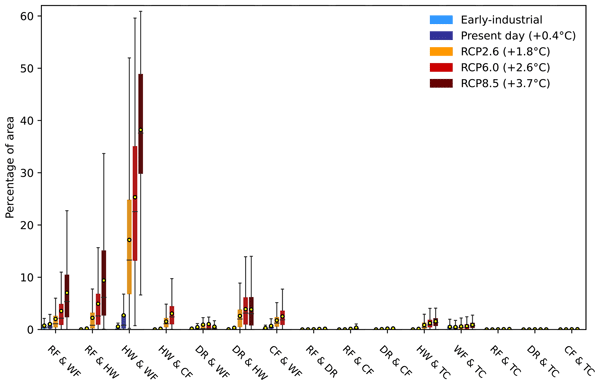
Climate change affects the interaction, dependence, and joint occurrence of climate extremes. Here we investigate the joint occurrence of pairs of river floods, droughts, heatwaves, crop failures, wildfires, and tropical cyclones in East Africa under past and future climate conditions. Our results show that, across all future warming scenarios, the frequency and spatial extent of these co-occurring extremes will increase in this region, particularly in areas close to the Nile and Congo rivers.
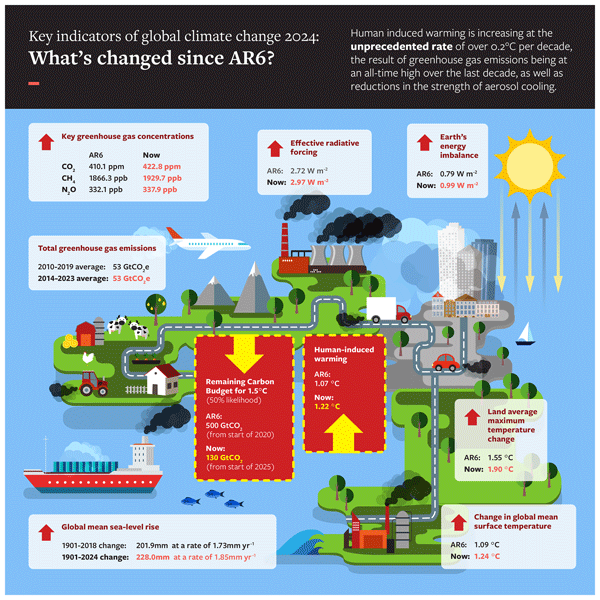
Piers M. Forster, Tristram Walsh, Chris Smith, William F. Lamb, Robin Lamboll, Christophe Cassou, Mathias Hauser, Zeke Hausfather, June-Yi Lee, Matthew D. Palmer, Karina von Schuckmann, Aimée B. A. Slangen, Sophie Szopa, Blair Trewin, Jeongeun Yun, Nathan P. Gillett, Stuart Jenkins, H. Damon Matthews, Krishnan Raghavan, Aurélien Ribes, Joeri Rogelj, Debbie Rosen, Xuebin Zhang, Myles Allen, Robbie M. Andrew, Chris Atkinson, Richard A. Betts, Antonio Bombelli, Samantha N. Burgess, Lijing Cheng, Helen E. Claxton, Pierre Friedlingstein, Thomas L. Frölicher, Catia M. Domingues, Thomas Gasser, Catherine H. Gregory, Rachel M. Hoesly, Daniel Huppmann, Masayoshi Ishii, Christopher Kadow, Alexia Karwat, John Kennedy, Rachel E. Killick, Mahesh V. M. Kovilakam, Paul B. Krummel, Xin Lan, Jean-François Lamarque, Aurélien Liné, Belén Martín-Míguez, Didier P. Monselesan, Colin Morice, Jens Mühle, Pino Mussak, Glen P. Peters, Anna Pirani, Julia Pongratz, Matthew Rigby, Robert Rohde, Abhishek Savita, Sonia I. Seneviratne, Steven J. Smith, Ghassan Taha, Caterina Tassone, Peter Thorne, Christopher Wells, Luke M. Western, Guido R. van der Werf, Susan E. Wijffels, Marco Zecchetto, Junting Zhong, Xiao-ye Zhang, Valérie Masson-Delmotte, and Panmao Zhai
Earth Syst. Sci. Data Discuss., https://doi.org/10.5194/essd-2026-287, https://doi.org/10.5194/essd-2026-287, 2026
Preprint under review for ESSD
Short summary
Short summary
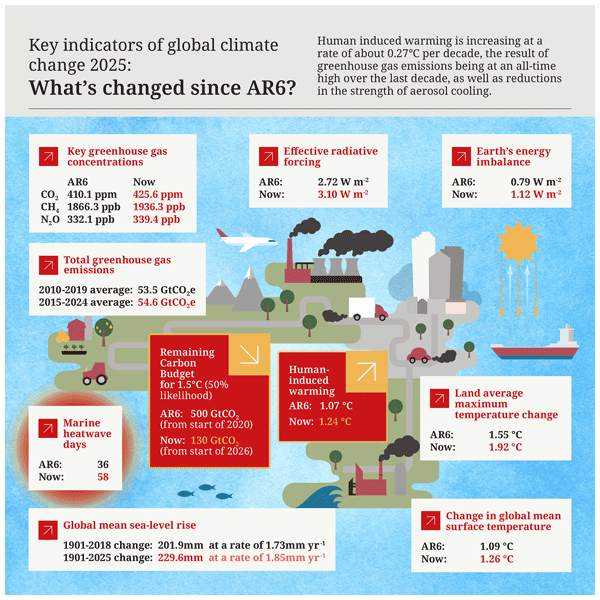
We give our annual update of key climate indicators. Our work quantifies the human contribution to global warming and the pace of climate change. This represents a large effort by the international community akin to an IPCC report
Yongyao Liang, Ed Hawkins, Gerard McCarthy, and Peter Thorne
EGUsphere, https://doi.org/10.5194/egusphere-2026-699, https://doi.org/10.5194/egusphere-2026-699, 2026
This preprint is open for discussion and under review for Earth System Dynamics (ESD).
Short summary
Short summary
Using novel climate simulations and historical temperature estimates, we separated natural climate fluctuations from externally driven influences. We find that the timing of long-term temperature swings since the mid-nineteenth century is mainly controlled by external factors, while natural variability mostly affects their strength. We also show that biases in early temperature estimates can complicate interpretation of Atlantic Multidecadal Variability.
Emma Van de Walle, Félicien Meunier, Steven J. De Hertog, Louise Terryn, Pieter Sanczuk, Kim Calders, Francis Wyffels, Pieter De Frenne, Michiel Stock, and Hans Verbeeck
EGUsphere, https://doi.org/10.5194/egusphere-2026-649, https://doi.org/10.5194/egusphere-2026-649, 2026
Short summary
Short summary
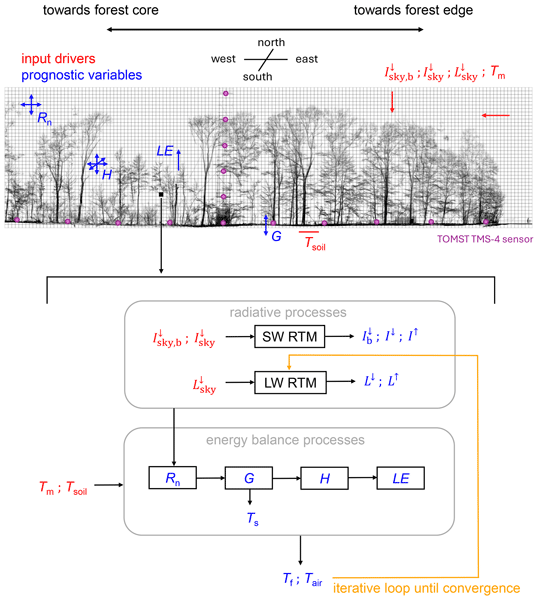
We present ForEdgeClim, a process-based model that simulates forest microclimate temperatures from edges to forest interiors. The model combines high-resolution forest structure, meteorological data, and a physically based energy balance that includes vertical and lateral radiation and heat exchange. Validation with field measurements shows that ForEdgeClim captures observed edge-to-core temperature gradients, supporting its use for studying forest fragmentation and climate impacts.
Seppe Lampe, Lukas Gudmundsson, Basil Kraft, Stijn Hantson, Douglas Kelley, Vincent Humphrey, Bertrand Le Saux, Emilio Chuvieco, and Wim Thiery
Geosci. Model Dev., 19, 955–988, https://doi.org/10.5194/gmd-19-955-2026, https://doi.org/10.5194/gmd-19-955-2026, 2026
Short summary
Short summary
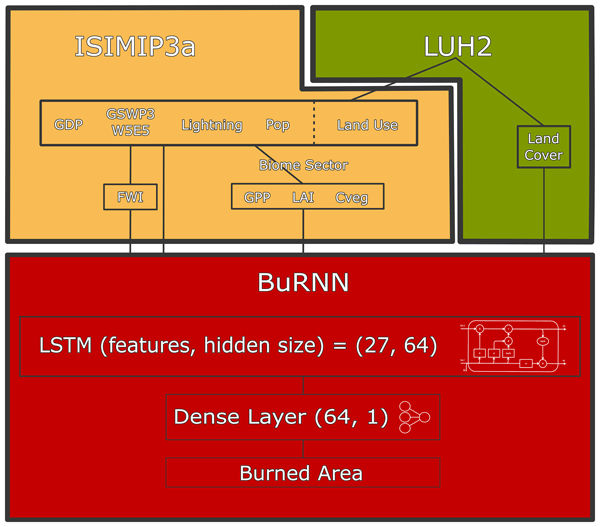
We introduce BuRNN (BUrned area modelling by Recurrent Neural Networks), a model which estimates monthly burned area based on satellite observations and climate, vegetation, and socio-economic data using machine learning. BuRNN outperforms existing process-based fire models, which improves our capabilities of modelling past and future burned areas.
Peter W. Thorne, John M. Nicklas, John J. Kennedy, Bruce Calvert, Baylor Fox-Kemper, Mark T. Richardson, Adrian Simmons, Ed Hawkins, Robert Rhode, Kathryn Cowtan, Nerilie J. Abram, Axel Andersson, Simon Noone, Phillipe Marbaix, Nathan Lenssen, Dirk Olonscheck, Tristram Walsh, Stephen Outten, Ingo Bethke, Bjorn H. Samset, Chris Smith, Anna Pirani, Jan Fuglestvedt, Lavanya Rajamani, Richard A. Betts, Elizabeth C. Kent, Blair Trewin, Colin Morice, Tim Osborn, Samantha N. Burgess, Oliver Geden, Andrew Parnell, Piers M. Forster, Chris Hewitt, Zeke Hausfather, Valerie Masson-Delmotte, Jochem Marotzke, Nathan Gillett, Sonia I. Seneviratne, Gavin A. Schmidt, Duo Chan, Stefan Brönnimann, Andy Reisinger, Matthew Menne, Maisa Rojas Corradi, Christopher Kadow, Peter Huybers, David B. Stephenson, Emily Wallis, Joeri Rogelj, Andrew Schurer, Karen McKinnon, Panmao Zhai, Fatima Driouech, Wilfran Moufouma Okia, Saeed Vazifehkhah, Sophie Szopa, Christopher J. Merchant, Shoji Hirahara, Masayoshi Ishii, Francois A. Engelbrecht, Qingxiang Li, June-Yi Lee, Alex J. Cannon, Christophe Cassou, Karina von Schuckmann, Amir H. Delju, and Ellie Murtagh
Earth Syst. Sci. Data Discuss., https://doi.org/10.5194/essd-2025-825, https://doi.org/10.5194/essd-2025-825, 2026
Preprint under review for ESSD
Short summary
Short summary
We reassess the basis for determining the present level of long-term global warming. Unbiased estimates of both realised warming and anthropogenic warming are possible that approximate a 20-year retrospective mean. Our resulting estimates of 1.40 [1.23–1.58] °C (realised) and 1.34 [1.18–1.50] °C (anthropogenic) as at end of 2024 highlight the urgency of immediate, far-reaching and sustained climate mitigation actions if we are to meet the long term temperature goal of the Paris Agreement.
Simon Scheiter, Jinfeng Chang, Philippe Ciais, Marie Dury, Louis Francois, Matthew Forrest, Alexandra Henrot, Christopher P. O. Reyer, Sonia Seneviratne, Jörg Steinkamp, Wim Thiery, Wenfang Xu, and Thomas Hickler
EGUsphere, https://doi.org/10.5194/egusphere-2026-221, https://doi.org/10.5194/egusphere-2026-221, 2026
Short summary
Short summary
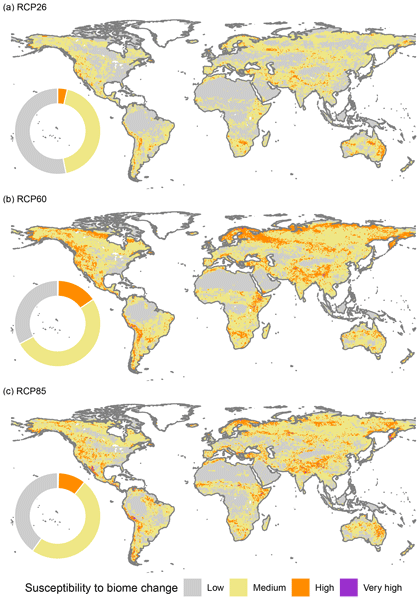
Our study shows how climate change may reshape the world's major biomes, such as forests, grasslands, and tundra. Using dynamic vegetation models, machine learning and real-world observations, we found that many biomes are likely to shift toward the poles as temperatures rise. Even under low-emission scenarios, large areas could change. These results help identify regions most susceptible to climate change and support global efforts to protect and manage natural ecosystems in the future.
Robert Reinecke, Tanjila Akhter, Annemarie Bäthge, Ricarda Dietrich, Sebastian Gnann, Simon N. Gosling, Danielle Grogan, Andreas Hartmann, Stefan Kollet, Rohini Kumar, Richard Lammers, Sida Liu, Yan Liu, Nils Moosdorf, Bibi Naz, Sara Nazari, Chibuike Orazulike, Yadu Pokhrel, Jacob Schewe, Mikhail Smilovic, Maryna Strokal, Wim Thiery, Yoshihide Wada, Shan Zuidema, and Inge de Graaf
Geosci. Model Dev., 19, 523–542, https://doi.org/10.5194/gmd-19-523-2026, https://doi.org/10.5194/gmd-19-523-2026, 2026
Short summary
Short summary
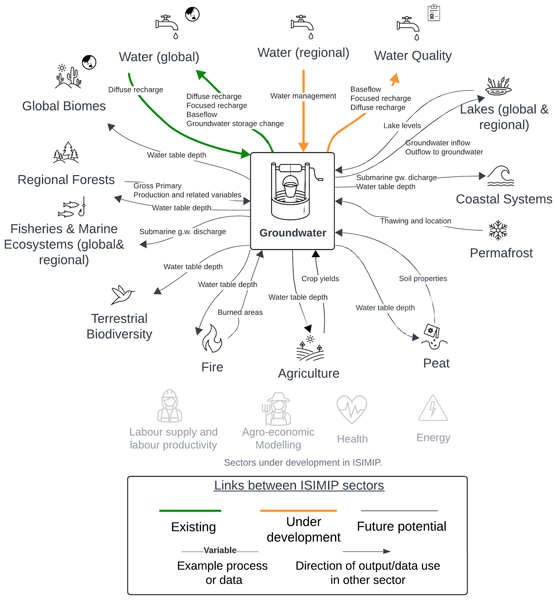
Here we describe a collaborative effort to improve predictions of how climate change will affect groundwater. The ISIMIP (The Inter-Sectoral Impact Model Intercomparison Project) groundwater sector combines multiple global groundwater models to capture a range of possible outcomes and reduce uncertainty. Initial comparisons reveal significant differences between models in key metrics like water table depth and recharge rates, highlighting the need for structured model intercomparisons.
Colin P. Morice, David I. Berry, Richard C. Cornes, Kathryn Cowtan, Thomas Cropper, Ed Hawkins, John J. Kennedy, Timothy J. Osborn, Nick A. Rayner, Beatriz Recinos Rivas, Andrew P. Schurer, Michael Taylor, Praveen R. Teleti, Emily J. Wallis, Jonathan Winn, and Elizabeth C. Kent
Earth Syst. Sci. Data, 17, 7079–7100, https://doi.org/10.5194/essd-17-7079-2025, https://doi.org/10.5194/essd-17-7079-2025, 2025
Short summary
Short summary
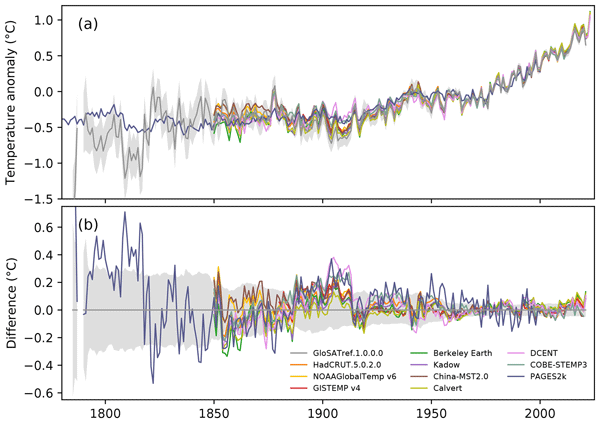
We present a new data set of global gridded surface air temperature change extending back to the 1780s. This is achieved using marine air temperature observations with newly available estimates of diurnal-heating biases together with an updated land station database that includes bias adjustments for early thermometer enclosures. These developments allow the data set to extend further into the past than current data sets that use sea surface temperature rather than marine air temperature data.
Josefa Arán Paredes, Fabian Bernhard, Koen Hufkens, Mayeul Marcadella, and Benjamin D. Stocker
Geosci. Model Dev., 18, 9855–9878, https://doi.org/10.5194/gmd-18-9855-2025, https://doi.org/10.5194/gmd-18-9855-2025, 2025
Short summary
Short summary
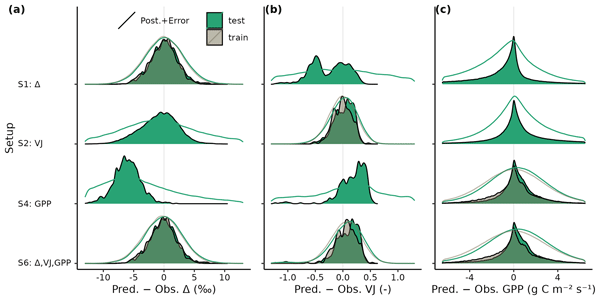
Mechanistic vegetation models serve to estimate terrestrial carbon fluxes and climate impacts on ecosystems across diverse conditions. Here, we demonstrate and evaluate the rsofun R package, which provides a computationally efficient implementation of the P-model for site-scale simulations of ecosystem photosynthesis. Bayesian model fitting to observed fluxes and traits and evaluation on an independent test data set indicated robust calibration and unbiased prediction capabilities.
Adam M. Young, Thomas Milliman, Koen Hufkens, Keith L. Ballou, Christopher Coffey, Kai Begay, Michael Fell, Mostafa Javadian, Alison K. Post, Christina Schädel, Zakary Vladich, Oscar Zimmerman, Dawn M. Browning, Christopher R. Florian, Minkyu Moon, Michael D. SanClements, Bijan Seyednasrollah, Mark A. Friedl, and Andrew D. Richardson
Earth Syst. Sci. Data, 17, 6531–6556, https://doi.org/10.5194/essd-17-6531-2025, https://doi.org/10.5194/essd-17-6531-2025, 2025
Short summary
Short summary
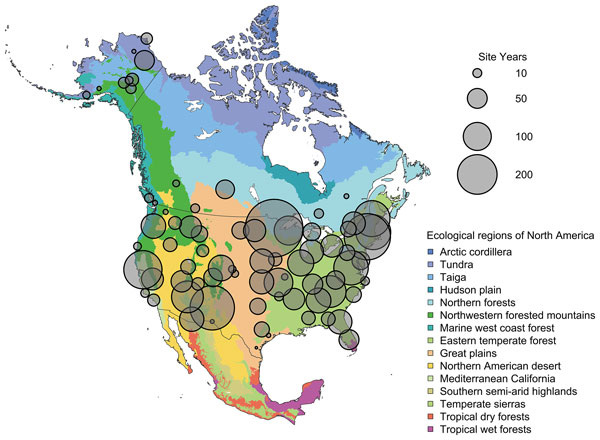
Here, we describe the PhenoCam V3.0 public data release, which characterizes vegetation phenology in ecosystems across the US and globally using repeat digital photography. This V3.0 release includes new data records (a camera-derived normalized difference vegetation index and simplified data sets) and provides >4800 site years of phenological time series and transition dates, a 170 % increase relative to the previous release (V2.0). Over 450 of the time series are 5 years or longer in length.
Aurora Patchett, Louise Rütting, Tobias Rütting, Samuel Bodé, Sara Hallin, Jaanis Juhanson, C. Florian Stange, Mats P. Björkman, Pascal Boeckx, Gunhild Rosqvist, and Robert G. Björk
Biogeosciences, 22, 6841–6860, https://doi.org/10.5194/bg-22-6841-2025, https://doi.org/10.5194/bg-22-6841-2025, 2025
Short summary
Short summary
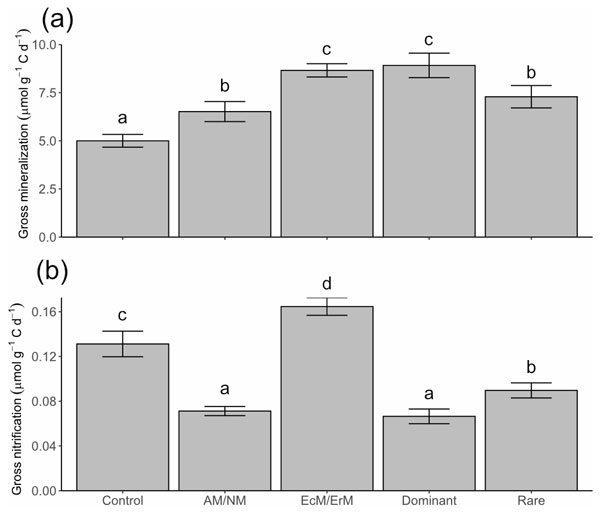
This study explores how different types of fungi and plant species affect nitrogen cycling in Arctic soils. By removing certain plants, we found that fungi associated with shrubs speed up nitrogen processes more than those with grasses. Dominant plant species enhance nitrogen recycling, while rare species increase nitrogen loss. These findings help predict how Arctic ecosystems respond to climate change, highlighting the importance of fungi and plant diversity in regulating ecosystem processes.
Ni Li, Wim Thiery, Shorouq Zahra, Mariana Madruga de Brito, Koffi Worou, Murathan Kurfalı, Seppe Lampe, Paul Muñoz, Clare Flynn, Camila Trigoso, Joakim Nivre, Jakob Zscheischler, and Gabriele Messori
EGUsphere, https://doi.org/10.5194/egusphere-2025-4891, https://doi.org/10.5194/egusphere-2025-4891, 2025
Short summary
Short summary
Climate extremes threaten society and ecosystems. Understanding impacts is critical, despite open databases like EM-DAT and DesInventar, reliable impact data remain scattered across various text sources. Wikimpacts 1.0, using GPT4o, provides comprehensive socio-economic impact data on 2,928 events from 1034 to 2024. It offers broader storm coverage and finer spatial resolution impact data than EM-DAT, showcasing the potential of natural language processing to enhance climate impact datasets.
Inês Vieira, Félicien Meunier, Maria Carolina Duran Rojas, Stephen Sitch, Flossie Brown, Giacomo Gerosa, Silvano Fares, Pascal Boeckx, Marijn Bauters, and Hans Verbeeck
Biogeosciences, 22, 6205–6223, https://doi.org/10.5194/bg-22-6205-2025, https://doi.org/10.5194/bg-22-6205-2025, 2025
Short summary
Short summary
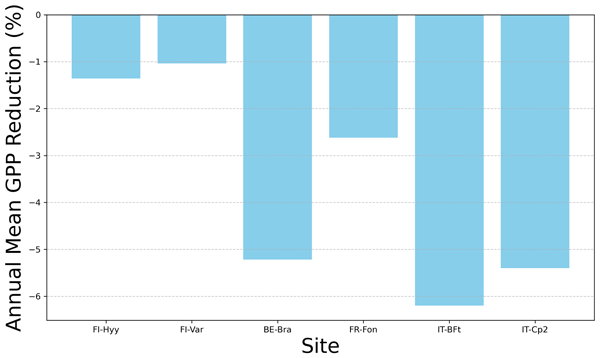
We used a computer model to study how ozone pollution reduces plant growth in six European forests, from Finland to Italy. Combining field data and simulations, we found that ozone can lower carbon uptake by up to 6 % each year, especially in Mediterranean areas. Our study shows that local climate and forest type influence ozone damage and highlights the need to include ozone effects in forest and climate models.
Manon Maisonnier, Maoyuan Feng, David Bastviken, Sandra Arndt, Ronny Lauerwald, Aidin Jabbari, Goulven Gildas Laruelle, Murray D. MacKay, Zeli Tan, Wim Thiery, and Pierre Regnier
Earth Syst. Dynam., 16, 1779–1808, https://doi.org/10.5194/esd-16-1779-2025, https://doi.org/10.5194/esd-16-1779-2025, 2025
Short summary
Short summary
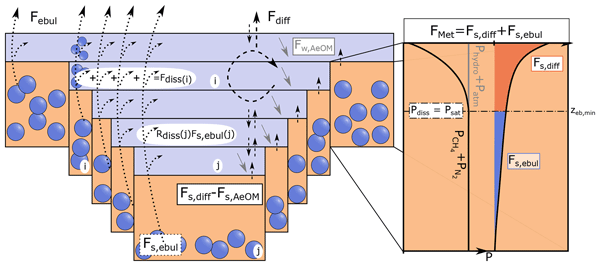
A new process-based modelling framework, FLaMe-v1.0 (Fluxes of Lake Methane version 1.0), is developed to simulate methane (CH4) emissions from lakes at large scales. FLaMe couples the dynamics of organic carbon, oxygen and methane in lakes and rests on an innovative, computationally efficient lake clustering approach for the simulation of CH4 emissions across a large number of lakes. The model evaluation suggests that FLaMe captures the sub-annual and spatial variability of CH4 emissions well.
Douglas I. Kelley, Chantelle Burton, Francesca Di Giuseppe, Matthew W. Jones, Maria L. F. Barbosa, Esther Brambleby, Joe R. McNorton, Zhongwei Liu, Anna S. I. Bradley, Katie Blackford, Eleanor Burke, Andrew Ciavarella, Enza Di Tomaso, Jonathan Eden, Igor José M. Ferreira, Lukas Fiedler, Andrew J. Hartley, Theodore R. Keeping, Seppe Lampe, Anna Lombardi, Guilherme Mataveli, Yuquan Qu, Patrícia S. Silva, Fiona R. Spuler, Carmen B. Steinmann, Miguel Ángel Torres-Vázquez, Renata Veiga, Dave van Wees, Jakob B. Wessel, Emily Wright, Bibiana Bilbao, Mathieu Bourbonnais, Cong Gao, Carlos M. Di Bella, Kebonye Dintwe, Victoria M. Donovan, Sarah Harris, Elena A. Kukavskaya, Aya Brigitte N'Dri, Cristina Santín, Galia Selaya, Johan Sjöström, John T. Abatzoglou, Niels Andela, Rachel Carmenta, Emilio Chuvieco, Louis Giglio, Douglas S. Hamilton, Stijn Hantson, Sarah Meier, Mark Parrington, Mojtaba Sadegh, Jesus San-Miguel-Ayanz, Fernando Sedano, Marco Turco, Guido R. van der Werf, Sander Veraverbeke, Liana O. Anderson, Hamish Clarke, Paulo M. Fernandes, and Crystal A. Kolden
Earth Syst. Sci. Data, 17, 5377–5488, https://doi.org/10.5194/essd-17-5377-2025, https://doi.org/10.5194/essd-17-5377-2025, 2025
Short summary
Short summary
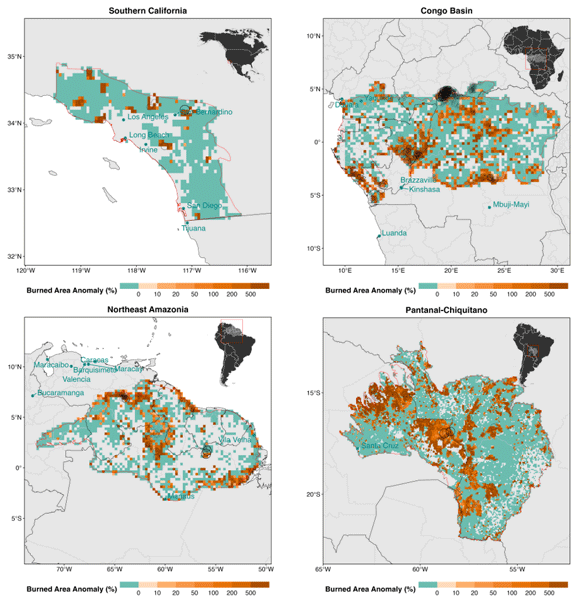
The second State of Wildfires report examines extreme wildfire events from 2024 to early 2025. It analyses key regional events in Southern California, Northeast Amazonia, Pantanal–Chiquitano, and the Congo Basin, assessing their drivers and predictability and attributing them to climate change and land use. Seasonal outlooks and decadal projections are provided. Climate change greatly increased the likelihood of these fires, and without strong mitigation, such events will become more frequent.
Kirsty J. Pringle, Richard Rigby, Steven T. Turnock, Carly L. Reddington, Meruyert Shayakhmetova, Malcolm Illingworth, Denis Barclay, Neil Chue Hong, Ed Hawkins, Douglas S. Hamilton, Ethan Brain, and James B. McQuaid
Geosci. Commun., 8, 229–236, https://doi.org/10.5194/gc-8-229-2025, https://doi.org/10.5194/gc-8-229-2025, 2025
Short summary
Short summary
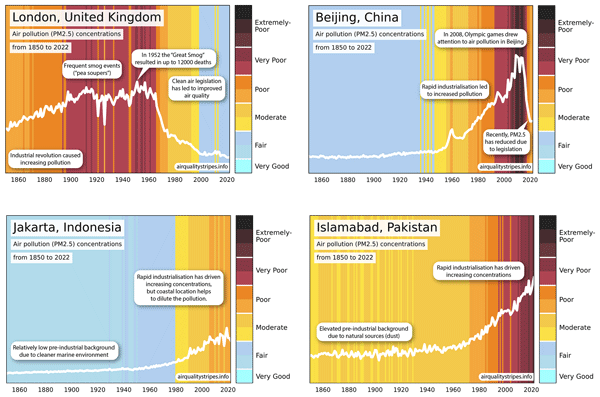
The Air Quality Stripes images visualise historical changes in particulate matter air pollution in over 150 cities worldwide. The project celebrates significant improvements in air quality in regions like Europe, North America, and China while highlighting the urgent need for action in areas such as central Asia. Designed to raise awareness, the images aim to inspire discussions about the critical impact of air pollution and the global inequalities it causes.
Wim Verbruggen, David Wårlind, Stéphanie Horion, Félicien Meunier, Hans Verbeeck, Aleksander Wieckowski, Torbern Tagesson, and Guy Schurgers
Geosci. Model Dev., 18, 6623–6645, https://doi.org/10.5194/gmd-18-6623-2025, https://doi.org/10.5194/gmd-18-6623-2025, 2025
Short summary
Short summary
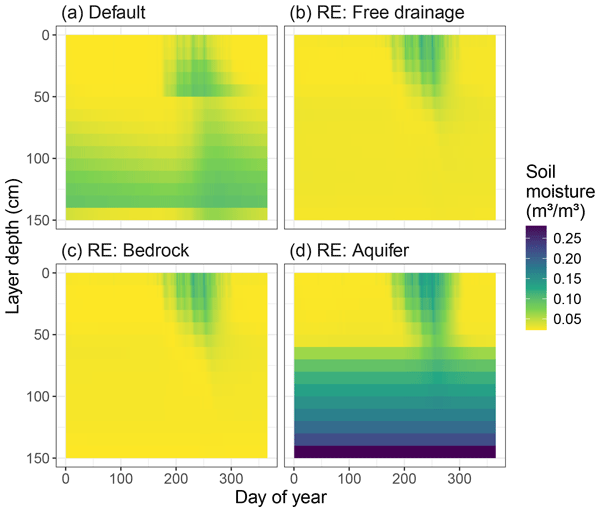
We improved the representation of soil water movement in a state-of-the-art dynamic vegetation model. This is important for dry ecosystems, as they are often driven by changes in soil water availability. We showed that this update resulted in a better match with observations and that the updated model is more sensitive to soil texture. The new model can also simulate a groundwater table. This updated model can help us to better understand the future of dry ecosystems under climate change.
Masatomo Fujiwara, Bomin Sun, Anthony Reale, Domenico Cimini, Salvatore Larosa, Lori Borg, Christoph von Rohden, Michael Sommer, Ruud Dirksen, Marion Maturilli, Holger Vömel, Rigel Kivi, Bruce Ingleby, Ryan J. Kramer, Belay Demoz, Fabio Madonna, Fabien Carminati, Owen Lewis, Brett Candy, Christopher Thomas, David Edwards, Noersomadi, Kensaku Shimizu, and Peter Thorne
Atmos. Meas. Tech., 18, 2919–2955, https://doi.org/10.5194/amt-18-2919-2025, https://doi.org/10.5194/amt-18-2919-2025, 2025
Short summary
Short summary
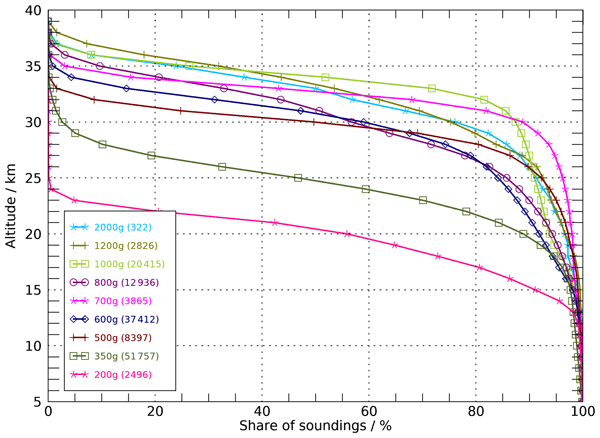
We assess and illustrate the benefits of high-altitude attainment of balloon-borne radiosonde soundings up to and beyond 10 hPa level from various aspects. We show that the extra costs and technical challenges involved in consistent attainment of high ascents are more than outweighed by the benefits for a broad variety of real-time and delayed-mode applications. Consistent attainment of high ascents should therefore be pursued across the balloon observational network.
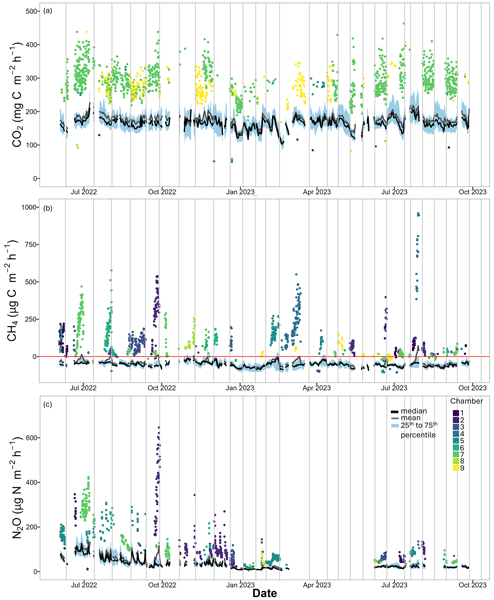
Antoine de Clippele, Astrid C. H. Jaeger, Simon Baumgartner, Marijn Bauters, Pascal Boeckx, Clement Botefa, Glenn Bush, Jessica Carilli, Travis W. Drake, Christian Ekamba, Gode Lompoko, Nivens Bey Mukwiele, Kristof Van Oost, Roland A. Werner, Joseph Zambo, Johan Six, and Matti Barthel
Biogeosciences, 22, 3011–3027, https://doi.org/10.5194/bg-22-3011-2025, https://doi.org/10.5194/bg-22-3011-2025, 2025
Short summary
Short summary
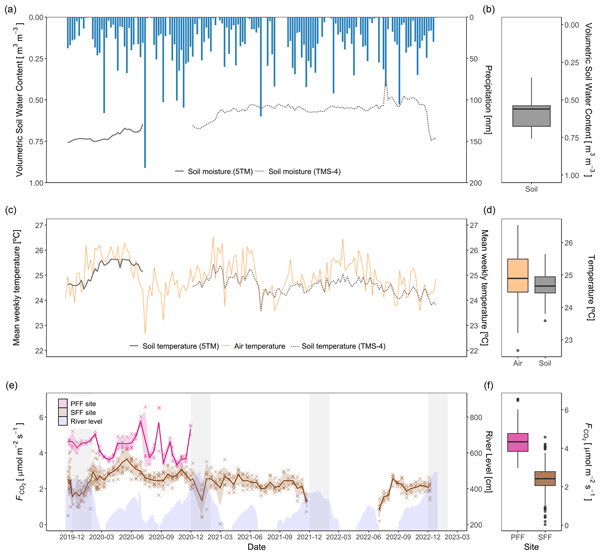
Tropical forest soils as a large terrestrial source of carbon dioxide (CO2) contribute to the global greenhouse gas budget. Despite this, carbon flux data from forested wetlands are scarce in tropical Africa. The study presents 3 years of semi-continuous measurements of surface CO2 fluxes within the Congo Basin. Although no seasonal patterns were evident, our results show a positive effect of soil temperature and moisture, while a quadratic relationship was observed with the water table.
Piers M. Forster, Chris Smith, Tristram Walsh, William F. Lamb, Robin Lamboll, Christophe Cassou, Mathias Hauser, Zeke Hausfather, June-Yi Lee, Matthew D. Palmer, Karina von Schuckmann, Aimée B. A. Slangen, Sophie Szopa, Blair Trewin, Jeongeun Yun, Nathan P. Gillett, Stuart Jenkins, H. Damon Matthews, Krishnan Raghavan, Aurélien Ribes, Joeri Rogelj, Debbie Rosen, Xuebin Zhang, Myles Allen, Lara Aleluia Reis, Robbie M. Andrew, Richard A. Betts, Alex Borger, Jiddu A. Broersma, Samantha N. Burgess, Lijing Cheng, Pierre Friedlingstein, Catia M. Domingues, Marco Gambarini, Thomas Gasser, Johannes Gütschow, Masayoshi Ishii, Christopher Kadow, John Kennedy, Rachel E. Killick, Paul B. Krummel, Aurélien Liné, Didier P. Monselesan, Colin Morice, Jens Mühle, Vaishali Naik, Glen P. Peters, Anna Pirani, Julia Pongratz, Jan C. Minx, Matthew Rigby, Robert Rohde, Abhishek Savita, Sonia I. Seneviratne, Peter Thorne, Christopher Wells, Luke M. Western, Guido R. van der Werf, Susan E. Wijffels, Valérie Masson-Delmotte, and Panmao Zhai
Earth Syst. Sci. Data, 17, 2641–2680, https://doi.org/10.5194/essd-17-2641-2025, https://doi.org/10.5194/essd-17-2641-2025, 2025
Short summary
Short summary
In a rapidly changing climate, evidence-based decision-making benefits from up-to-date and timely information. Here we compile monitoring datasets to track real-world changes over time. To make our work relevant to policymakers, we follow methods from the Intergovernmental Panel on Climate Change (IPCC). Human activities are increasing the Earth's energy imbalance and driving faster sea-level rise compared to the IPCC assessment.
Katja Frieler, Stefan Lange, Jacob Schewe, Matthias Mengel, Simon Treu, Christian Otto, Jan Volkholz, Christopher P. O. Reyer, Stefanie Heinicke, Colin Jones, Julia L. Blanchard, Cheryl S. Harrison, Colleen M. Petrik, Tyler D. Eddy, Kelly Ortega-Cisneros, Camilla Novaglio, Ryan Heneghan, Derek P. Tittensor, Olivier Maury, Matthias Büchner, Thomas Vogt, Dánnell Quesada Chacón, Kerry Emanuel, Chia-Ying Lee, Suzana J. Camargo, Jonas Jägermeyr, Sam Rabin, Jochen Klar, Iliusi D. Vega del Valle, Lisa Novak, Inga J. Sauer, Gitta Lasslop, Sarah Chadburn, Eleanor Burke, Angela Gallego-Sala, Noah Smith, Jinfeng Chang, Stijn Hantson, Chantelle Burton, Anne Gädeke, Fang Li, Simon N. Gosling, Hannes Müller Schmied, Fred Hattermann, Thomas Hickler, Rafael Marcé, Don Pierson, Wim Thiery, Daniel Mercado-Bettín, Robert Ladwig, Ana Isabel Ayala-Zamora, Matthew Forrest, Michel Bechtold, Robert Reinecke, Inge de Graaf, Jed O. Kaplan, Alexander Koch, and Matthieu Lengaigne
EGUsphere, https://doi.org/10.5194/egusphere-2025-2103, https://doi.org/10.5194/egusphere-2025-2103, 2025
Short summary
Short summary
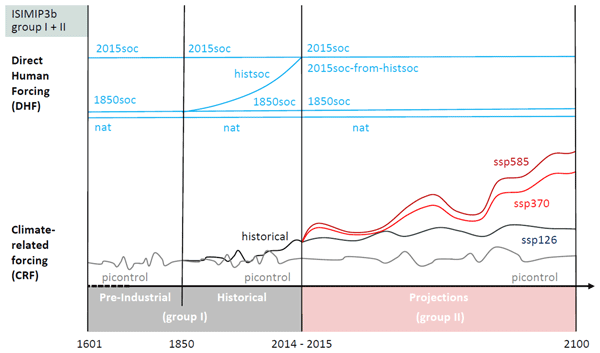
This paper describes the experiments and data sets necessary to run historic and future impact projections, and the underlying assumptions of future climate change as defined by the 3rd round of the ISIMIP Project (Inter-sectoral Impactmodel Intercomparison Project, isimip.org). ISIMIP provides a framework for cross-sectorally consistent climate impact simulations to contribute to a comprehensive and consistent picture of the world under different climate-change scenarios.
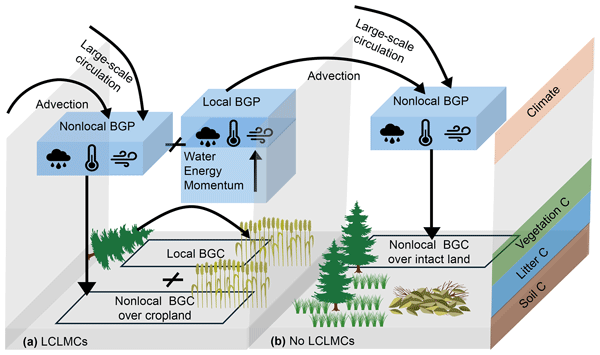
Suqi Guo, Felix Havermann, Steven J. De Hertog, Fei Luo, Iris Manola, Thomas Raddatz, Hongmei Li, Wim Thiery, Quentin Lejeune, Carl-Friedrich Schleussner, David Wårlind, Lars Nieradzik, and Julia Pongratz
Earth Syst. Dynam., 16, 631–666, https://doi.org/10.5194/esd-16-631-2025, https://doi.org/10.5194/esd-16-631-2025, 2025
Short summary
Short summary
Land cover and land management changes (LCLMCs) can alter climate even in intact areas, causing carbon changes in remote areas. This study is the first to assess these effects, finding they substantially alter global carbon dynamics, changing terrestrial stocks by up to dozens of gigatonnes. These results are vital for scientific and policy assessments, given the expected role of LCLMCs in achieving the Paris Agreement's goal to limit global warming below 1.5 °C.
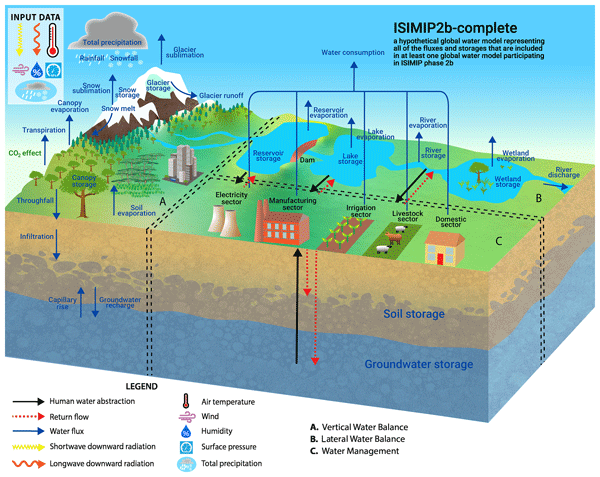
Hannes Müller Schmied, Simon Newland Gosling, Marlo Garnsworthy, Laura Müller, Camelia-Eliza Telteu, Atiq Kainan Ahmed, Lauren Seaby Andersen, Julien Boulange, Peter Burek, Jinfeng Chang, He Chen, Lukas Gudmundsson, Manolis Grillakis, Luca Guillaumot, Naota Hanasaki, Aristeidis Koutroulis, Rohini Kumar, Guoyong Leng, Junguo Liu, Xingcai Liu, Inga Menke, Vimal Mishra, Yadu Pokhrel, Oldrich Rakovec, Luis Samaniego, Yusuke Satoh, Harsh Lovekumar Shah, Mikhail Smilovic, Tobias Stacke, Edwin Sutanudjaja, Wim Thiery, Athanasios Tsilimigkras, Yoshihide Wada, Niko Wanders, and Tokuta Yokohata
Geosci. Model Dev., 18, 2409–2425, https://doi.org/10.5194/gmd-18-2409-2025, https://doi.org/10.5194/gmd-18-2409-2025, 2025
Short summary
Short summary
Global water models contribute to the evaluation of important natural and societal issues but are – as all models – simplified representation of reality. So, there are many ways to calculate the water fluxes and storages. This paper presents a visualization of 16 global water models using a standardized visualization and the pathway towards this common understanding. Next to academic education purposes, we envisage that these diagrams will help researchers, model developers, and data users.
Cristina Deidda, Arpita Khanna, Wolfgang Schade, and Wim Thiery
EGUsphere, https://doi.org/10.5194/egusphere-2025-1697, https://doi.org/10.5194/egusphere-2025-1697, 2025
Short summary
Short summary
Climate extremes like floods, heatwaves, droughts, and wildfires are disrupting Europe’s transport. This study combines a review of past events and future projections to assess current losses and the future exposure of transport infrastructure. Exposure to extremes is projected to rise, but lower emissions can reduce it. Urgent action is needed to adapt the Trans-European Transport Network to a changing climate.
Roxanne Daelman, Marijn Bauters, Matti Barthel, Emmanuel Bulonza, Lodewijk Lefevre, José Mbifo, Johan Six, Klaus Butterbach-Bahl, Benjamin Wolf, Ralf Kiese, and Pascal Boeckx
Biogeosciences, 22, 1529–1542, https://doi.org/10.5194/bg-22-1529-2025, https://doi.org/10.5194/bg-22-1529-2025, 2025
Short summary
Short summary
The increase in atmospheric concentrations of several greenhouse gases (GHGs) since 1750 is attributed to human activity. However, natural ecosystems, such as tropical forests, also contribute to GHG budgets. The Congo Basin hosts the second largest tropical forest and is understudied. In this study, measurements of soil GHG exchange were carried out during 16 months in a tropical forest in the Congo Basin. Overall, the soil acted as a major source of CO2 and N2O and a minor sink of CH4.
Philippe Marbaix, Alexandre K. Magnan, Veruska Muccione, Peter W. Thorne, and Zinta Zommers
Earth Syst. Sci. Data, 17, 317–349, https://doi.org/10.5194/essd-17-317-2025, https://doi.org/10.5194/essd-17-317-2025, 2025
Short summary
Short summary
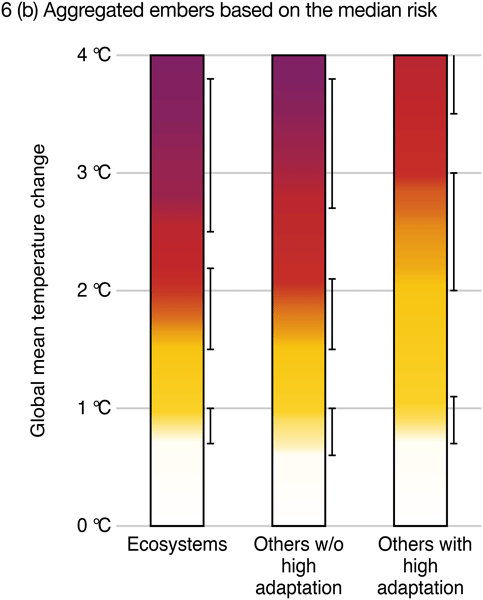
Since 2001, the Intergovernmental Panel on Climate Change (IPCC) has used burning-ember diagrams to show how risks increase with global warming. We bring these data into a harmonized framework available through an online Climate Risks Embers Explorer. Without high levels of adaptation, most risks reach a high level around 2 to 2.3 °C of global warming. Improvements in future reports could include systematic collection of explanatory information and broader coverage of regions and adaptation.
Astrid Françoys, Orly Mendoza, Junwei Hu, Pascal Boeckx, Wim Cornelis, Stefaan De Neve, and Steven Sleutel
SOIL, 11, 121–140, https://doi.org/10.5194/soil-11-121-2025, https://doi.org/10.5194/soil-11-121-2025, 2025
Short summary
Short summary
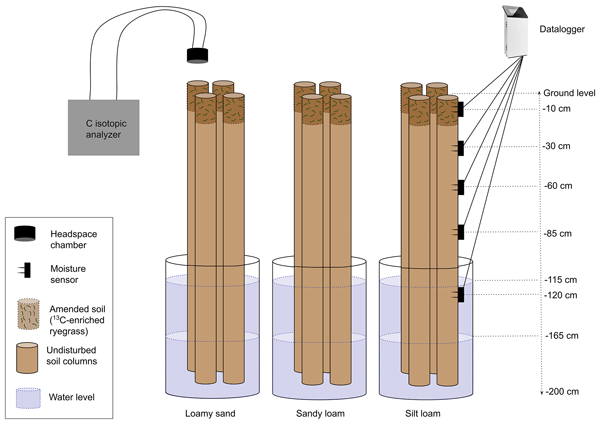
To assess the impact of the groundwater table (GWT) depth on soil moisture and C mineralization, we designed a laboratory setup using 200 cm undisturbed soil columns. Surprisingly, the moisture increase induced by a shallower GWT did not result in enhanced C mineralization. We presume this upward capillary moisture effect was offset by increased C mineralization upon rewetting, particularly noticeable in drier soils when capillary rise affected the topsoil to a lesser extent due to a deeper GWT.
Flossie Brown, Gerd Folberth, Stephen Sitch, Paulo Artaxo, Marijn Bauters, Pascal Boeckx, Alexander W. Cheesman, Matteo Detto, Ninong Komala, Luciana Rizzo, Nestor Rojas, Ines dos Santos Vieira, Steven Turnock, Hans Verbeeck, and Alfonso Zambrano
Atmos. Chem. Phys., 24, 12537–12555, https://doi.org/10.5194/acp-24-12537-2024, https://doi.org/10.5194/acp-24-12537-2024, 2024
Short summary
Short summary
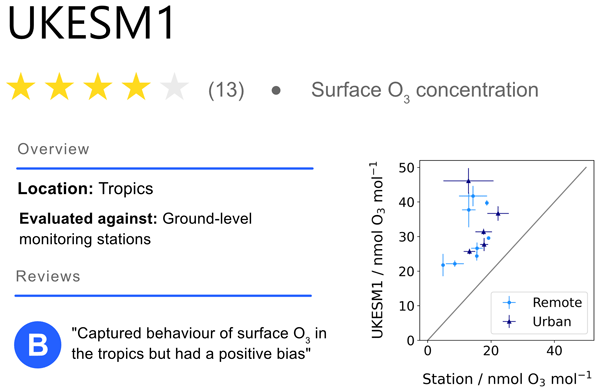
Ozone is a pollutant that is detrimental to human and plant health. Ozone monitoring sites in the tropics are limited, so models are often used to understand ozone exposure. We use measurements from the tropics to evaluate ozone from the UK Earth system model, UKESM1. UKESM1 is able to capture the pattern of ozone in the tropics, except in southeast Asia, although it systematically overestimates it at all sites. This work highlights that UKESM1 can capture seasonal and hourly variability.
Sabin I. Taranu, David M. Lawrence, Yoshihide Wada, Ting Tang, Erik Kluzek, Sam Rabin, Yi Yao, Steven J. De Hertog, Inne Vanderkelen, and Wim Thiery
Geosci. Model Dev., 17, 7365–7399, https://doi.org/10.5194/gmd-17-7365-2024, https://doi.org/10.5194/gmd-17-7365-2024, 2024
Short summary
Short summary
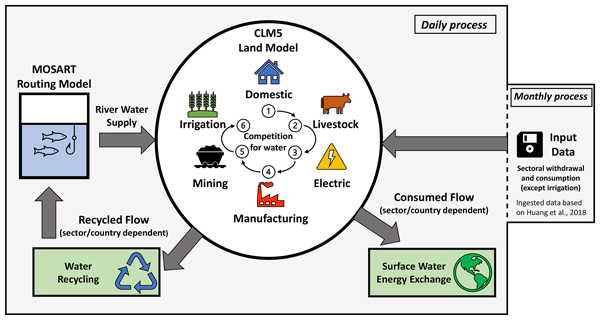
In this study, we improved a climate model by adding the representation of water use sectors such as domestic, industry, and agriculture. This new feature helps us understand how water is used and supplied in various areas. We tested our model from 1971 to 2010 and found that it accurately identifies areas with water scarcity. By modelling the competition between sectors when water availability is limited, the model helps estimate the intensity and extent of individual sectors' water shortages.
Matthew W. Jones, Douglas I. Kelley, Chantelle A. Burton, Francesca Di Giuseppe, Maria Lucia F. Barbosa, Esther Brambleby, Andrew J. Hartley, Anna Lombardi, Guilherme Mataveli, Joe R. McNorton, Fiona R. Spuler, Jakob B. Wessel, John T. Abatzoglou, Liana O. Anderson, Niels Andela, Sally Archibald, Dolors Armenteras, Eleanor Burke, Rachel Carmenta, Emilio Chuvieco, Hamish Clarke, Stefan H. Doerr, Paulo M. Fernandes, Louis Giglio, Douglas S. Hamilton, Stijn Hantson, Sarah Harris, Piyush Jain, Crystal A. Kolden, Tiina Kurvits, Seppe Lampe, Sarah Meier, Stacey New, Mark Parrington, Morgane M. G. Perron, Yuquan Qu, Natasha S. Ribeiro, Bambang H. Saharjo, Jesus San-Miguel-Ayanz, Jacquelyn K. Shuman, Veerachai Tanpipat, Guido R. van der Werf, Sander Veraverbeke, and Gavriil Xanthopoulos
Earth Syst. Sci. Data, 16, 3601–3685, https://doi.org/10.5194/essd-16-3601-2024, https://doi.org/10.5194/essd-16-3601-2024, 2024
Short summary
Short summary
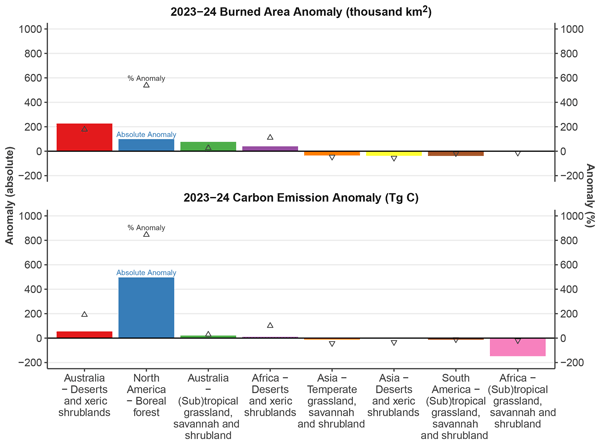
This inaugural State of Wildfires report catalogues extreme fires of the 2023–2024 fire season. For key events, we analyse their predictability and drivers and attribute them to climate change and land use. We provide a seasonal outlook and decadal projections. Key anomalies occurred in Canada, Greece, and western Amazonia, with other high-impact events catalogued worldwide. Climate change significantly increased the likelihood of extreme fires, and mitigation is required to lessen future risk.
Ed Hawkins, Nigel Arnell, Jamie Hannaford, and Rowan Sutton
Geosci. Commun., 7, 161–165, https://doi.org/10.5194/gc-7-161-2024, https://doi.org/10.5194/gc-7-161-2024, 2024
Short summary
Short summary
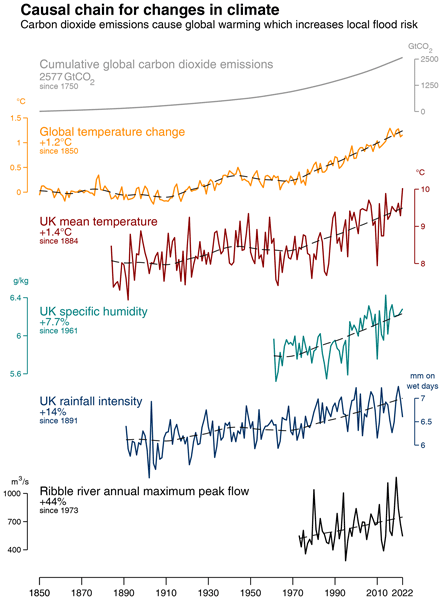
Climate change can often seem rather remote, especially when the discussion is about global averages which appear to have little relevance to local experiences. But those global changes are already affecting people, even if they do not fully realise it, and effective communication of this issue is critical. We use long observations and well-understood physical principles to visually highlight how global emissions influence local flood risk in one river basin in the UK.
Piers M. Forster, Chris Smith, Tristram Walsh, William F. Lamb, Robin Lamboll, Bradley Hall, Mathias Hauser, Aurélien Ribes, Debbie Rosen, Nathan P. Gillett, Matthew D. Palmer, Joeri Rogelj, Karina von Schuckmann, Blair Trewin, Myles Allen, Robbie Andrew, Richard A. Betts, Alex Borger, Tim Boyer, Jiddu A. Broersma, Carlo Buontempo, Samantha Burgess, Chiara Cagnazzo, Lijing Cheng, Pierre Friedlingstein, Andrew Gettelman, Johannes Gütschow, Masayoshi Ishii, Stuart Jenkins, Xin Lan, Colin Morice, Jens Mühle, Christopher Kadow, John Kennedy, Rachel E. Killick, Paul B. Krummel, Jan C. Minx, Gunnar Myhre, Vaishali Naik, Glen P. Peters, Anna Pirani, Julia Pongratz, Carl-Friedrich Schleussner, Sonia I. Seneviratne, Sophie Szopa, Peter Thorne, Mahesh V. M. Kovilakam, Elisa Majamäki, Jukka-Pekka Jalkanen, Margreet van Marle, Rachel M. Hoesly, Robert Rohde, Dominik Schumacher, Guido van der Werf, Russell Vose, Kirsten Zickfeld, Xuebin Zhang, Valérie Masson-Delmotte, and Panmao Zhai
Earth Syst. Sci. Data, 16, 2625–2658, https://doi.org/10.5194/essd-16-2625-2024, https://doi.org/10.5194/essd-16-2625-2024, 2024
Short summary
Short summary
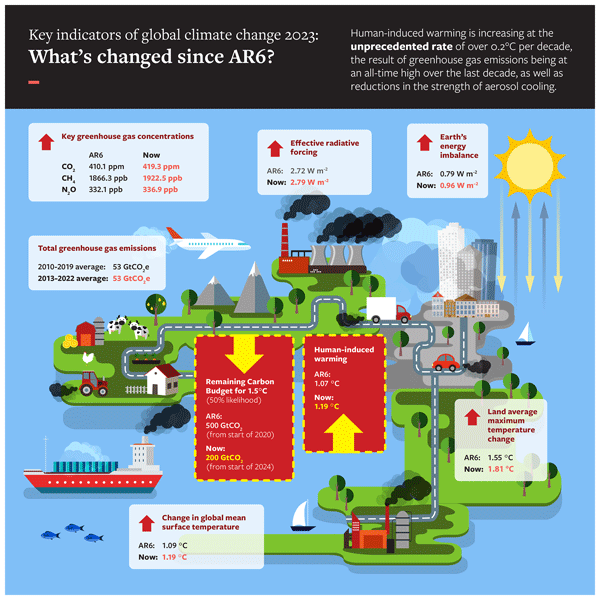
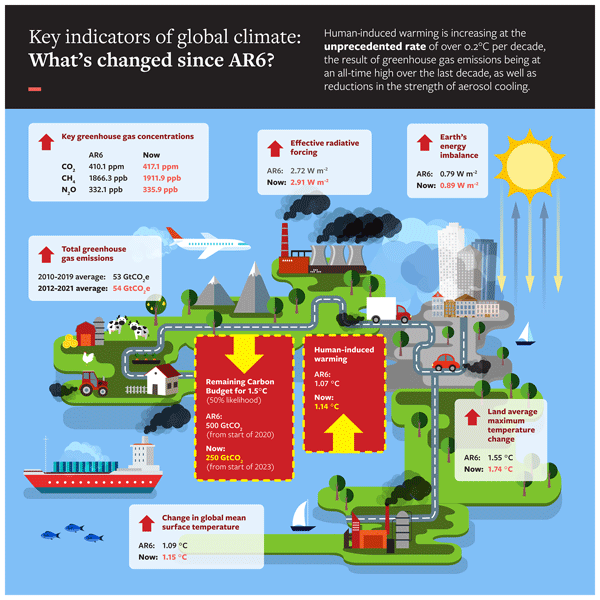
This paper tracks some key indicators of global warming through time, from 1850 through to the end of 2023. It is designed to give an authoritative estimate of global warming to date and its causes. We find that in 2023, global warming reached 1.3 °C and is increasing at over 0.2 °C per decade. This is caused by all-time-high greenhouse gas emissions.
Omar V. Müller, Patrick C. McGuire, Pier Luigi Vidale, and Ed Hawkins
Hydrol. Earth Syst. Sci., 28, 2179–2201, https://doi.org/10.5194/hess-28-2179-2024, https://doi.org/10.5194/hess-28-2179-2024, 2024
Short summary
Short summary
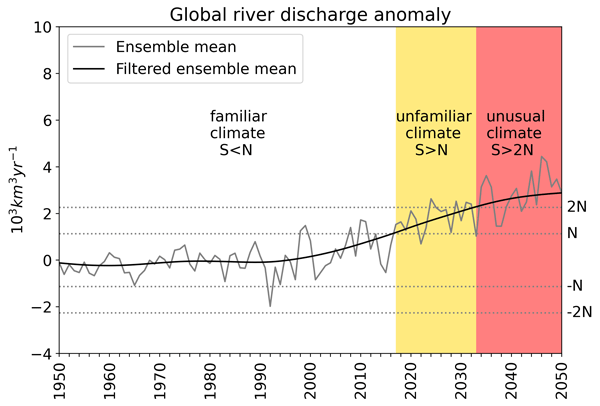
This work evaluates how rivers are projected to change in the near future compared to the recent past in the context of a warming world. We show that important rivers of the world will notably change their flows, mainly during peaks, exceeding the variations that rivers used to exhibit. Such large changes may produce more frequent floods, alter hydropower generation, and potentially affect the ocean's circulation.
Tao Chen, Félicien Meunier, Marc Peaucelle, Guoping Tang, Ye Yuan, and Hans Verbeeck
Biogeosciences, 21, 2253–2272, https://doi.org/10.5194/bg-21-2253-2024, https://doi.org/10.5194/bg-21-2253-2024, 2024
Short summary
Short summary
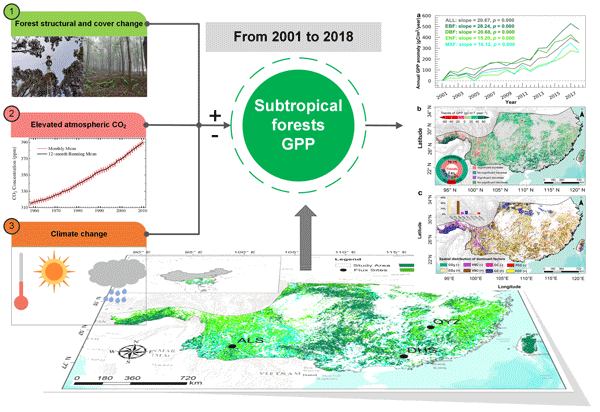
Chinese subtropical forest ecosystems are an extremely important component of global forest ecosystems and hence crucial for the global carbon cycle and regional climate change. However, there is still great uncertainty in the relationship between subtropical forest carbon sequestration and its drivers. We provide first quantitative estimates of the individual and interactive effects of different drivers on the gross primary productivity changes of various subtropical forest types in China.
Derrick Muheki, Axel A. J. Deijns, Emanuele Bevacqua, Gabriele Messori, Jakob Zscheischler, and Wim Thiery
Earth Syst. Dynam., 15, 429–466, https://doi.org/10.5194/esd-15-429-2024, https://doi.org/10.5194/esd-15-429-2024, 2024
Short summary
Short summary
Climate change affects the interaction, dependence, and joint occurrence of climate extremes. Here we investigate the joint occurrence of pairs of river floods, droughts, heatwaves, crop failures, wildfires, and tropical cyclones in East Africa under past and future climate conditions. Our results show that, across all future warming scenarios, the frequency and spatial extent of these co-occurring extremes will increase in this region, particularly in areas close to the Nile and Congo rivers.
Steven J. De Hertog, Carmen E. Lopez-Fabara, Ruud van der Ent, Jessica Keune, Diego G. Miralles, Raphael Portmann, Sebastian Schemm, Felix Havermann, Suqi Guo, Fei Luo, Iris Manola, Quentin Lejeune, Julia Pongratz, Carl-Friedrich Schleussner, Sonia I. Seneviratne, and Wim Thiery
Earth Syst. Dynam., 15, 265–291, https://doi.org/10.5194/esd-15-265-2024, https://doi.org/10.5194/esd-15-265-2024, 2024
Short summary
Short summary
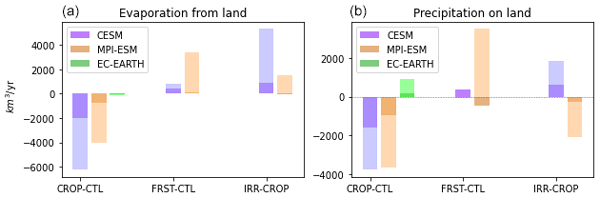
Changes in land use are crucial to achieve lower global warming. However, despite their importance, the effects of these changes on moisture fluxes are poorly understood. We analyse land cover and management scenarios in three climate models involving cropland expansion, afforestation, and irrigation. Results show largely consistent influences on moisture fluxes, with cropland expansion causing a drying and reduced local moisture recycling, while afforestation and irrigation show the opposite.
Rosa Pietroiusti, Inne Vanderkelen, Friederike E. L. Otto, Clair Barnes, Lucy Temple, Mary Akurut, Philippe Bally, Nicole P. M. van Lipzig, and Wim Thiery
Earth Syst. Dynam., 15, 225–264, https://doi.org/10.5194/esd-15-225-2024, https://doi.org/10.5194/esd-15-225-2024, 2024
Short summary
Short summary
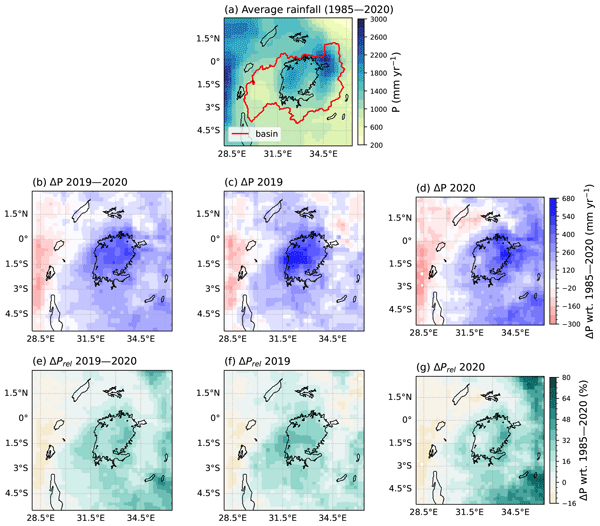
Heavy rainfall in eastern Africa between late 2019 and mid 2020 caused devastating floods and landslides and drove the levels of Lake Victoria to a record-breaking maximum in May 2020. In this study, we characterize the spatial extent and impacts of the floods in the Lake Victoria basin and investigate how human-induced climate change influenced the probability and intensity of the record-breaking lake levels and flooding by applying a multi-model extreme event attribution methodology.
Celray James Chawanda, Albert Nkwasa, Wim Thiery, and Ann van Griensven
Hydrol. Earth Syst. Sci., 28, 117–138, https://doi.org/10.5194/hess-28-117-2024, https://doi.org/10.5194/hess-28-117-2024, 2024
Short summary
Short summary
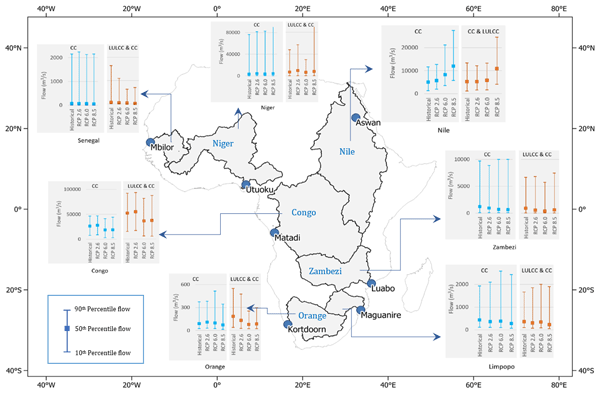
Africa's water resources are being negatively impacted by climate change and land-use change. The SWAT+ hydrological model was used to simulate the hydrological cycle in Africa, and results show likely decreases in river flows in the Zambezi and Congo rivers and highest flows in the Niger River basins due to climate change. Land cover change had the biggest impact in the Congo River basin, emphasizing the importance of including land-use change in studies.
Katja Frieler, Jan Volkholz, Stefan Lange, Jacob Schewe, Matthias Mengel, María del Rocío Rivas López, Christian Otto, Christopher P. O. Reyer, Dirk Nikolaus Karger, Johanna T. Malle, Simon Treu, Christoph Menz, Julia L. Blanchard, Cheryl S. Harrison, Colleen M. Petrik, Tyler D. Eddy, Kelly Ortega-Cisneros, Camilla Novaglio, Yannick Rousseau, Reg A. Watson, Charles Stock, Xiao Liu, Ryan Heneghan, Derek Tittensor, Olivier Maury, Matthias Büchner, Thomas Vogt, Tingting Wang, Fubao Sun, Inga J. Sauer, Johannes Koch, Inne Vanderkelen, Jonas Jägermeyr, Christoph Müller, Sam Rabin, Jochen Klar, Iliusi D. Vega del Valle, Gitta Lasslop, Sarah Chadburn, Eleanor Burke, Angela Gallego-Sala, Noah Smith, Jinfeng Chang, Stijn Hantson, Chantelle Burton, Anne Gädeke, Fang Li, Simon N. Gosling, Hannes Müller Schmied, Fred Hattermann, Jida Wang, Fangfang Yao, Thomas Hickler, Rafael Marcé, Don Pierson, Wim Thiery, Daniel Mercado-Bettín, Robert Ladwig, Ana Isabel Ayala-Zamora, Matthew Forrest, and Michel Bechtold
Geosci. Model Dev., 17, 1–51, https://doi.org/10.5194/gmd-17-1-2024, https://doi.org/10.5194/gmd-17-1-2024, 2024
Short summary
Short summary
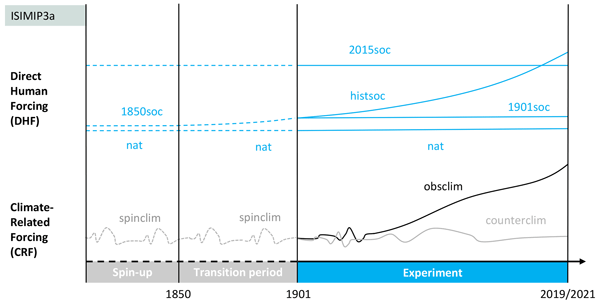
Our paper provides an overview of all observational climate-related and socioeconomic forcing data used as input for the impact model evaluation and impact attribution experiments within the third round of the Inter-Sectoral Impact Model Intercomparison Project. The experiments are designed to test our understanding of observed changes in natural and human systems and to quantify to what degree these changes have already been induced by climate change.
Ed Hawkins, Gilbert P. Compo, and Prashant D. Sardeshmukh
Earth Syst. Dynam., 14, 1081–1084, https://doi.org/10.5194/esd-14-1081-2023, https://doi.org/10.5194/esd-14-1081-2023, 2023
Short summary
Short summary
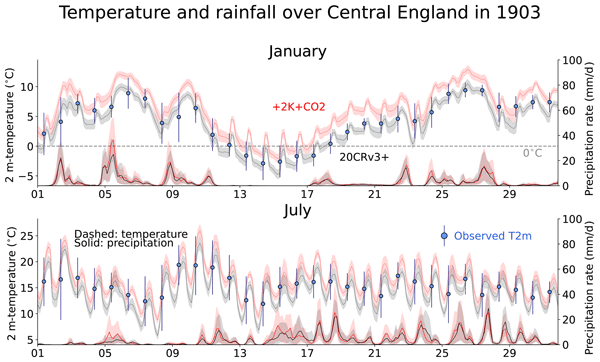
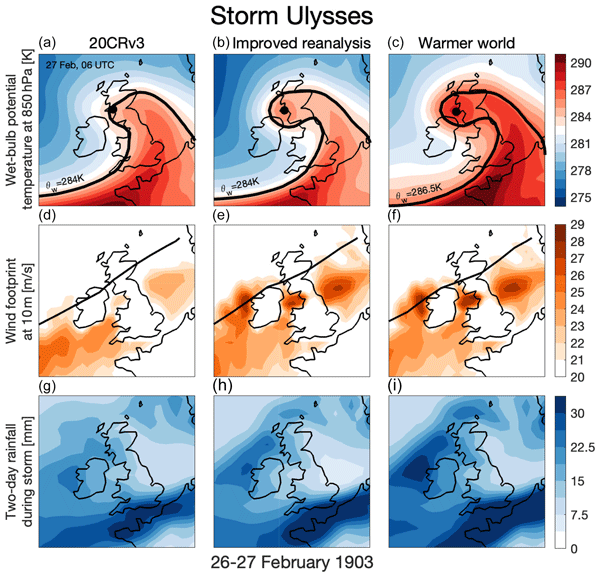
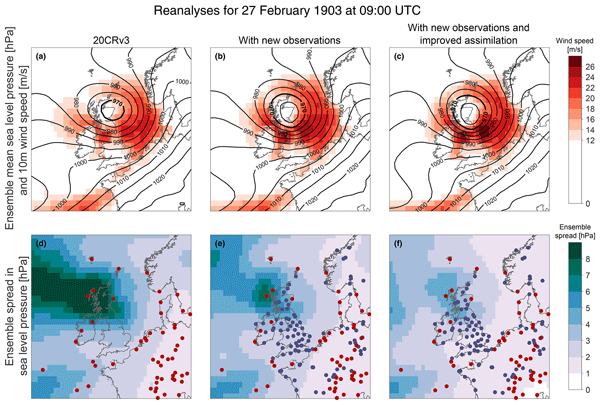
Adapting to climate change requires an understanding of how extreme weather events are changing. We propose a new approach to examine how the consequences of a particular weather pattern have been made worse by climate change, using an example of a severe windstorm that occurred in 1903. When this storm is translated into a warmer world, it produces higher wind speeds and increased rainfall, suggesting that this storm would be more damaging if it occurred today rather than 120 years ago.
Shruti Nath, Lukas Gudmundsson, Jonas Schwaab, Gregory Duveiller, Steven J. De Hertog, Suqi Guo, Felix Havermann, Fei Luo, Iris Manola, Julia Pongratz, Sonia I. Seneviratne, Carl F. Schleussner, Wim Thiery, and Quentin Lejeune
Geosci. Model Dev., 16, 4283–4313, https://doi.org/10.5194/gmd-16-4283-2023, https://doi.org/10.5194/gmd-16-4283-2023, 2023
Short summary
Short summary
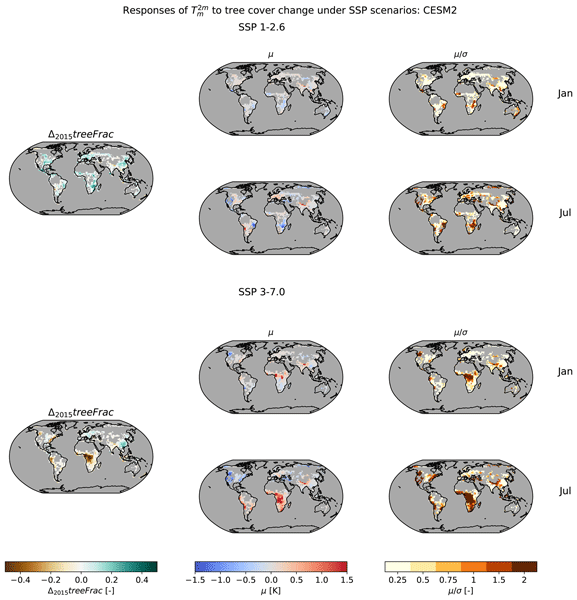
Tree cover changes play a significant role in climate mitigation and adaptation. Their regional impacts are key in informing national-level decisions and prioritising areas for conservation efforts. We present a first step towards exploring these regional impacts using a simple statistical device, i.e. emulator. The emulator only needs to train on climate model outputs representing the maximal impacts of aff-, re-, and deforestation, from which it explores plausible in-between outcomes itself.
Piers M. Forster, Christopher J. Smith, Tristram Walsh, William F. Lamb, Robin Lamboll, Mathias Hauser, Aurélien Ribes, Debbie Rosen, Nathan Gillett, Matthew D. Palmer, Joeri Rogelj, Karina von Schuckmann, Sonia I. Seneviratne, Blair Trewin, Xuebin Zhang, Myles Allen, Robbie Andrew, Arlene Birt, Alex Borger, Tim Boyer, Jiddu A. Broersma, Lijing Cheng, Frank Dentener, Pierre Friedlingstein, José M. Gutiérrez, Johannes Gütschow, Bradley Hall, Masayoshi Ishii, Stuart Jenkins, Xin Lan, June-Yi Lee, Colin Morice, Christopher Kadow, John Kennedy, Rachel Killick, Jan C. Minx, Vaishali Naik, Glen P. Peters, Anna Pirani, Julia Pongratz, Carl-Friedrich Schleussner, Sophie Szopa, Peter Thorne, Robert Rohde, Maisa Rojas Corradi, Dominik Schumacher, Russell Vose, Kirsten Zickfeld, Valérie Masson-Delmotte, and Panmao Zhai
Earth Syst. Sci. Data, 15, 2295–2327, https://doi.org/10.5194/essd-15-2295-2023, https://doi.org/10.5194/essd-15-2295-2023, 2023
Short summary
Short summary
This is a critical decade for climate action, but there is no annual tracking of the level of human-induced warming. We build on the Intergovernmental Panel on Climate Change assessment reports that are authoritative but published infrequently to create a set of key global climate indicators that can be tracked through time. Our hope is that this becomes an important annual publication that policymakers, media, scientists and the public can refer to.
Steven J. De Hertog, Felix Havermann, Inne Vanderkelen, Suqi Guo, Fei Luo, Iris Manola, Dim Coumou, Edouard L. Davin, Gregory Duveiller, Quentin Lejeune, Julia Pongratz, Carl-Friedrich Schleussner, Sonia I. Seneviratne, and Wim Thiery
Earth Syst. Dynam., 14, 629–667, https://doi.org/10.5194/esd-14-629-2023, https://doi.org/10.5194/esd-14-629-2023, 2023
Short summary
Short summary
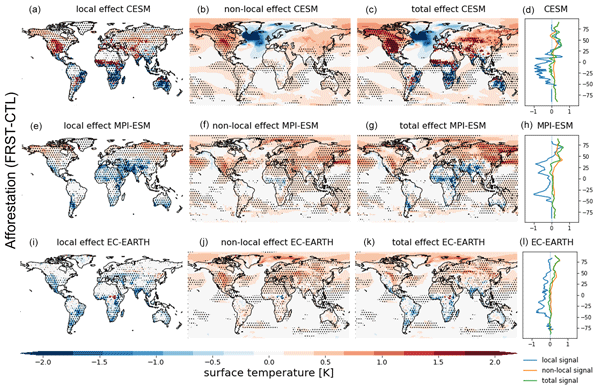
Land cover and land management changes are important strategies for future land-based mitigation. We investigate the climate effects of cropland expansion, afforestation, irrigation and wood harvesting using three Earth system models. Results show that these have important implications for surface temperature where the land cover and/or management change occur and in remote areas. Idealized afforestation causes global warming, which might offset the cooling effect from enhanced carbon uptake.
Steven J. De Hertog, Carmen E. Lopez-Fabara, Ruud van der Ent, Jessica Keune, Diego G. Miralles, Raphael Portmann, Sebastian Schemm, Felix Havermann, Suqi Guo, Fei Luo, Iris Manola, Quentin Lejeune, Julia Pongratz, Carl-Friedrich Schleussner, Sonia I. Seneviratne, and Wim Thiery
EGUsphere, https://doi.org/10.5194/egusphere-2023-953, https://doi.org/10.5194/egusphere-2023-953, 2023
Preprint archived
Short summary
Short summary
Land cover and management changes can affect the climate and water availability. In this study we use climate model simulations of extreme global land cover changes (afforestation, deforestation) and land management changes (irrigation) to understand the effects on the global water cycle and local to continental water availability. We show that cropland expansion generally leads to higher evaporation and lower amounts of precipitation and afforestation and irrigation expansion to the opposite.
Francisco José Cuesta-Valero, Hugo Beltrami, Almudena García-García, Gerhard Krinner, Moritz Langer, Andrew H. MacDougall, Jan Nitzbon, Jian Peng, Karina von Schuckmann, Sonia I. Seneviratne, Wim Thiery, Inne Vanderkelen, and Tonghua Wu
Earth Syst. Dynam., 14, 609–627, https://doi.org/10.5194/esd-14-609-2023, https://doi.org/10.5194/esd-14-609-2023, 2023
Short summary
Short summary
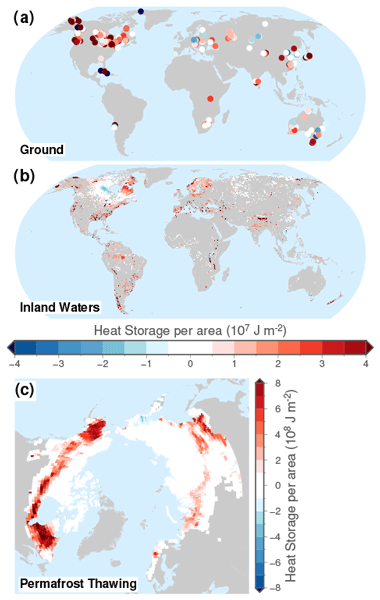
Climate change is caused by the accumulated heat in the Earth system, with the land storing the second largest amount of this extra heat. Here, new estimates of continental heat storage are obtained, including changes in inland-water heat storage and permafrost heat storage in addition to changes in ground heat storage. We also argue that heat gains in all three components should be monitored independently of their magnitude due to heat-dependent processes affecting society and ecosystems.
Ed Hawkins, Philip Brohan, Samantha N. Burgess, Stephen Burt, Gilbert P. Compo, Suzanne L. Gray, Ivan D. Haigh, Hans Hersbach, Kiki Kuijjer, Oscar Martínez-Alvarado, Chesley McColl, Andrew P. Schurer, Laura Slivinski, and Joanne Williams
Nat. Hazards Earth Syst. Sci., 23, 1465–1482, https://doi.org/10.5194/nhess-23-1465-2023, https://doi.org/10.5194/nhess-23-1465-2023, 2023
Short summary
Short summary
We examine a severe windstorm that occurred in February 1903 and caused significant damage in the UK and Ireland. Using newly digitized weather observations from the time of the storm, combined with a modern weather forecast model, allows us to determine why this storm caused so much damage. We demonstrate that the event is one of the most severe windstorms to affect this region since detailed records began. The approach establishes a new tool to improve assessments of risk from extreme weather.
Manoj Joshi, Robert A. Hall, David P. Stevens, and Ed Hawkins
Earth Syst. Dynam., 14, 443–455, https://doi.org/10.5194/esd-14-443-2023, https://doi.org/10.5194/esd-14-443-2023, 2023
Short summary
Short summary
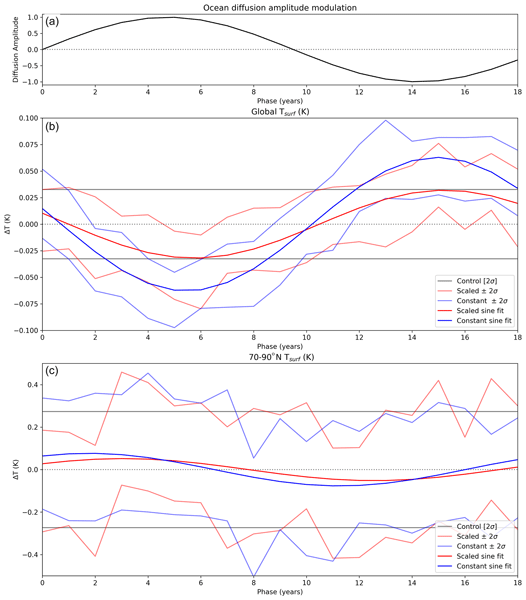
The 18.6-year lunar nodal cycle arises from variations in the angle of the Moon's orbital plane and affects ocean tides. In this work we use a climate model to examine the effect of this cycle on the ocean, surface, and atmosphere. The timing of anomalies is consistent with the so-called slowdown in global warming and has implications for when global temperatures will exceed 1.5 ℃ above pre-industrial levels. Regional anomalies have implications for seasonal climate areas such as Europe.
Karina von Schuckmann, Audrey Minière, Flora Gues, Francisco José Cuesta-Valero, Gottfried Kirchengast, Susheel Adusumilli, Fiammetta Straneo, Michaël Ablain, Richard P. Allan, Paul M. Barker, Hugo Beltrami, Alejandro Blazquez, Tim Boyer, Lijing Cheng, John Church, Damien Desbruyeres, Han Dolman, Catia M. Domingues, Almudena García-García, Donata Giglio, John E. Gilson, Maximilian Gorfer, Leopold Haimberger, Maria Z. Hakuba, Stefan Hendricks, Shigeki Hosoda, Gregory C. Johnson, Rachel Killick, Brian King, Nicolas Kolodziejczyk, Anton Korosov, Gerhard Krinner, Mikael Kuusela, Felix W. Landerer, Moritz Langer, Thomas Lavergne, Isobel Lawrence, Yuehua Li, John Lyman, Florence Marti, Ben Marzeion, Michael Mayer, Andrew H. MacDougall, Trevor McDougall, Didier Paolo Monselesan, Jan Nitzbon, Inès Otosaka, Jian Peng, Sarah Purkey, Dean Roemmich, Kanako Sato, Katsunari Sato, Abhishek Savita, Axel Schweiger, Andrew Shepherd, Sonia I. Seneviratne, Leon Simons, Donald A. Slater, Thomas Slater, Andrea K. Steiner, Toshio Suga, Tanguy Szekely, Wim Thiery, Mary-Louise Timmermans, Inne Vanderkelen, Susan E. Wjiffels, Tonghua Wu, and Michael Zemp
Earth Syst. Sci. Data, 15, 1675–1709, https://doi.org/10.5194/essd-15-1675-2023, https://doi.org/10.5194/essd-15-1675-2023, 2023
Short summary
Short summary
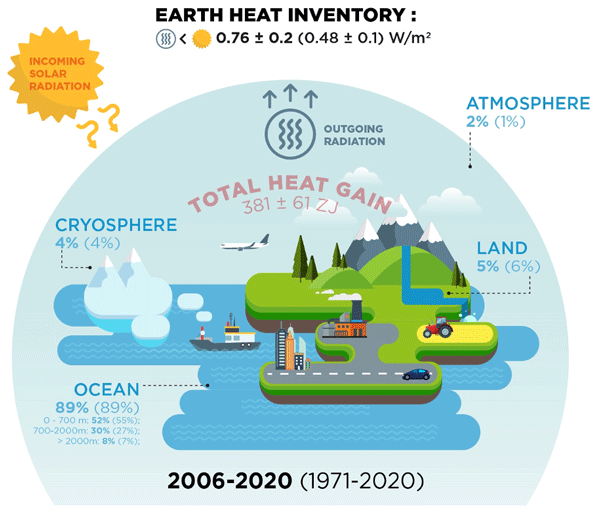
Earth's climate is out of energy balance, and this study quantifies how much heat has consequently accumulated over the past decades (ocean: 89 %, land: 6 %, cryosphere: 4 %, atmosphere: 1 %). Since 1971, this accumulated heat reached record values at an increasing pace. The Earth heat inventory provides a comprehensive view on the status and expectation of global warming, and we call for an implementation of this global climate indicator into the Paris Agreement’s Global Stocktake.
Joseph Okello, Marijn Bauters, Hans Verbeeck, Samuel Bodé, John Kasenene, Astrid Françoys, Till Engelhardt, Klaus Butterbach-Bahl, Ralf Kiese, and Pascal Boeckx
Biogeosciences, 20, 719–735, https://doi.org/10.5194/bg-20-719-2023, https://doi.org/10.5194/bg-20-719-2023, 2023
Short summary
Short summary
The increase in global and regional temperatures has the potential to drive accelerated soil organic carbon losses in tropical forests. We simulated climate warming by translocating intact soil cores from higher to lower elevations. The results revealed increasing temperature sensitivity and decreasing losses of soil organic carbon with increasing elevation. Our results suggest that climate warming may trigger enhanced losses of soil organic carbon from tropical montane forests.
Katherine Dooley, Ciaran Kelly, Natascha Seifert, Therese Myslinski, Sophie O'Kelly, Rushna Siraj, Ciara Crosby, Jack Kevin Dunne, Kate McCauley, James Donoghue, Eoin Gaddren, Daniel Conway, Jordan Cooney, Niamh McCarthy, Eoin Cullen, Simon Noone, Conor Murphy, and Peter Thorne
Clim. Past, 19, 1–22, https://doi.org/10.5194/cp-19-1-2023, https://doi.org/10.5194/cp-19-1-2023, 2023
Short summary
Short summary
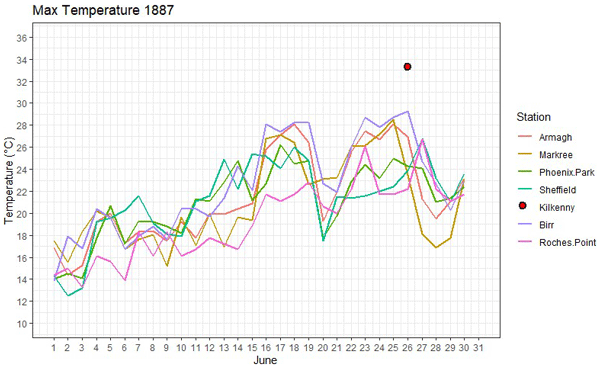
The highest currently recognised air temperature (33.3 °C) ever recorded in the Republic of Ireland was logged at Kilkenny Castle in 1887. This paper reassesses the plausibility of the record using various methods such as inter-station reassessment and 20CRv3 reanalysis. As a result, Boora 1976 at 32.5 °C is presented as a more reliable high-temperature record for the Republic of Ireland. The final decision however rests with the national meteorological service, Met Éireann.
Axel A. J. Deijns, Olivier Dewitte, Wim Thiery, Nicolas d'Oreye, Jean-Philippe Malet, and François Kervyn
Nat. Hazards Earth Syst. Sci., 22, 3679–3700, https://doi.org/10.5194/nhess-22-3679-2022, https://doi.org/10.5194/nhess-22-3679-2022, 2022
Short summary
Short summary
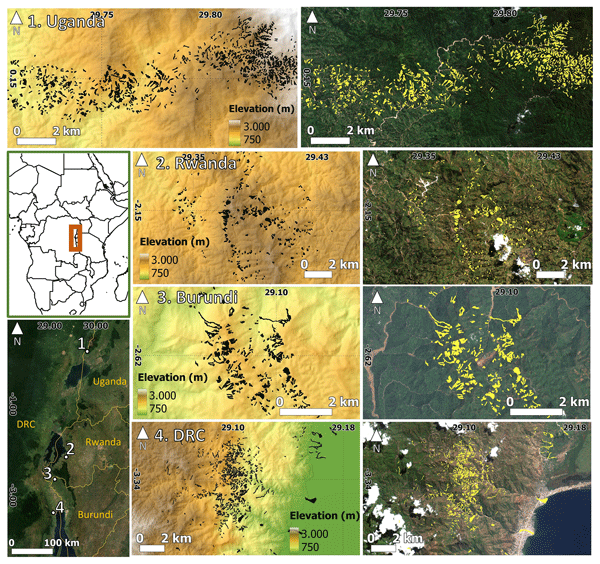
Landslides and flash floods are rainfall-induced processes that often co-occur and interact, generally very quickly. In mountainous cloud-covered environments, determining when these processes occur remains challenging. We propose a regional methodology using open-access satellite radar images that allow for the timing of landslide and flash floods events, in the contrasting landscapes of tropical Africa, with an accuracy of up to a few days. The methodology shows potential for transferability.
Félicien Meunier, Wim Verbruggen, Hans Verbeeck, and Marc Peaucelle
Geosci. Model Dev., 15, 7573–7591, https://doi.org/10.5194/gmd-15-7573-2022, https://doi.org/10.5194/gmd-15-7573-2022, 2022
Short summary
Short summary
Drought stress occurs in plants when water supply (i.e. root water uptake) is lower than the water demand (i.e. atmospheric demand). It is strongly related to soil properties and expected to increase in intensity and frequency in the tropics due to climate change. In this study, we show that contrary to the expectations, state-of-the-art terrestrial biosphere models are mostly insensitive to soil texture and hence probably inadequate to reproduce in silico the plant water status in drying soils.
Steven J. De Hertog, Felix Havermann, Inne Vanderkelen, Suqi Guo, Fei Luo, Iris Manola, Dim Coumou, Edouard L. Davin, Gregory Duveiller, Quentin Lejeune, Julia Pongratz, Carl-Friedrich Schleussner, Sonia I. Seneviratne, and Wim Thiery
Earth Syst. Dynam., 13, 1305–1350, https://doi.org/10.5194/esd-13-1305-2022, https://doi.org/10.5194/esd-13-1305-2022, 2022
Short summary
Short summary
Land cover and land management changes are important strategies for future land-based mitigation. We investigate the climate effects of cropland expansion, afforestation, irrigation, and wood harvesting using three Earth system models. Results show that these have important implications for surface temperature where the land cover and/or management change occurs and in remote areas. Idealized afforestation causes global warming, which might offset the cooling effect from enhanced carbon uptake.
Flossie Brown, Gerd A. Folberth, Stephen Sitch, Susanne Bauer, Marijn Bauters, Pascal Boeckx, Alexander W. Cheesman, Makoto Deushi, Inês Dos Santos Vieira, Corinne Galy-Lacaux, James Haywood, James Keeble, Lina M. Mercado, Fiona M. O'Connor, Naga Oshima, Kostas Tsigaridis, and Hans Verbeeck
Atmos. Chem. Phys., 22, 12331–12352, https://doi.org/10.5194/acp-22-12331-2022, https://doi.org/10.5194/acp-22-12331-2022, 2022
Short summary
Short summary
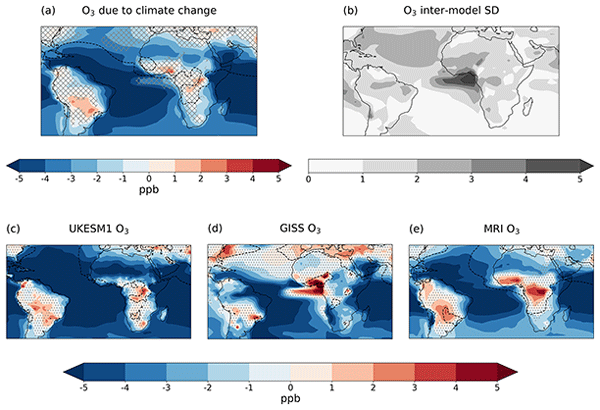
Surface ozone can decrease plant productivity and impair human health. In this study, we evaluate the change in surface ozone due to climate change over South America and Africa using Earth system models. We find that if the climate were to change according to the worst-case scenario used here, models predict that forested areas in biomass burning locations and urban populations will be at increasing risk of ozone exposure, but other areas will experience a climate benefit.
Louise Busschaert, Shannon de Roos, Wim Thiery, Dirk Raes, and Gabriëlle J. M. De Lannoy
Hydrol. Earth Syst. Sci., 26, 3731–3752, https://doi.org/10.5194/hess-26-3731-2022, https://doi.org/10.5194/hess-26-3731-2022, 2022
Short summary
Short summary
Increasing amounts of water are used for agriculture. Therefore, we looked into how irrigation requirements will evolve under a changing climate over Europe. Our results show that, by the end of the century and under high emissions, irrigation water will increase by 30 % on average compared to the year 2000. Also, the irrigation requirement is likely to vary more from 1 year to another. However, if emissions are mitigated, these effects are reduced.
Félicien Meunier, Sruthi M. Krishna Moorthy, Marc Peaucelle, Kim Calders, Louise Terryn, Wim Verbruggen, Chang Liu, Ninni Saarinen, Niall Origo, Joanne Nightingale, Mathias Disney, Yadvinder Malhi, and Hans Verbeeck
Geosci. Model Dev., 15, 4783–4803, https://doi.org/10.5194/gmd-15-4783-2022, https://doi.org/10.5194/gmd-15-4783-2022, 2022
Short summary
Short summary
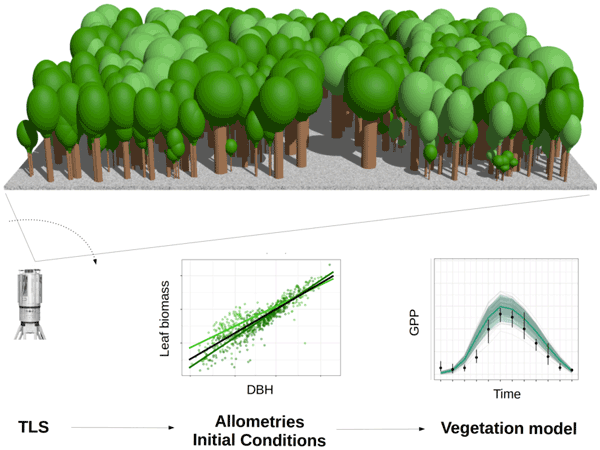
We integrated state-of-the-art observations of the structure of the vegetation in a temperate forest to constrain a vegetation model that aims to reproduce such an ecosystem in silico. We showed that the use of this information helps to constrain the model structure, its critical parameters, as well as its initial state. This research confirms the critical importance of the representation of the vegetation structure in vegetation models and proposes a method to overcome this challenge.
Malgorzata Golub, Wim Thiery, Rafael Marcé, Don Pierson, Inne Vanderkelen, Daniel Mercado-Bettin, R. Iestyn Woolway, Luke Grant, Eleanor Jennings, Benjamin M. Kraemer, Jacob Schewe, Fang Zhao, Katja Frieler, Matthias Mengel, Vasiliy Y. Bogomolov, Damien Bouffard, Marianne Côté, Raoul-Marie Couture, Andrey V. Debolskiy, Bram Droppers, Gideon Gal, Mingyang Guo, Annette B. G. Janssen, Georgiy Kirillin, Robert Ladwig, Madeline Magee, Tadhg Moore, Marjorie Perroud, Sebastiano Piccolroaz, Love Raaman Vinnaa, Martin Schmid, Tom Shatwell, Victor M. Stepanenko, Zeli Tan, Bronwyn Woodward, Huaxia Yao, Rita Adrian, Mathew Allan, Orlane Anneville, Lauri Arvola, Karen Atkins, Leon Boegman, Cayelan Carey, Kyle Christianson, Elvira de Eyto, Curtis DeGasperi, Maria Grechushnikova, Josef Hejzlar, Klaus Joehnk, Ian D. Jones, Alo Laas, Eleanor B. Mackay, Ivan Mammarella, Hampus Markensten, Chris McBride, Deniz Özkundakci, Miguel Potes, Karsten Rinke, Dale Robertson, James A. Rusak, Rui Salgado, Leon van der Linden, Piet Verburg, Danielle Wain, Nicole K. Ward, Sabine Wollrab, and Galina Zdorovennova
Geosci. Model Dev., 15, 4597–4623, https://doi.org/10.5194/gmd-15-4597-2022, https://doi.org/10.5194/gmd-15-4597-2022, 2022
Short summary
Short summary
Lakes and reservoirs are warming across the globe. To better understand how lakes are changing and to project their future behavior amidst various sources of uncertainty, simulations with a range of lake models are required. This in turn requires international coordination across different lake modelling teams worldwide. Here we present a protocol for and results from coordinated simulations of climate change impacts on lakes worldwide.
Inne Vanderkelen, Shervan Gharari, Naoki Mizukami, Martyn P. Clark, David M. Lawrence, Sean Swenson, Yadu Pokhrel, Naota Hanasaki, Ann van Griensven, and Wim Thiery
Geosci. Model Dev., 15, 4163–4192, https://doi.org/10.5194/gmd-15-4163-2022, https://doi.org/10.5194/gmd-15-4163-2022, 2022
Short summary
Short summary
Human-controlled reservoirs have a large influence on the global water cycle. However, dam operations are rarely represented in Earth system models. We implement and evaluate a widely used reservoir parametrization in a global river-routing model. Using observations of individual reservoirs, the reservoir scheme outperforms the natural lake scheme. However, both schemes show a similar performance due to biases in runoff timing and magnitude when using simulated runoff.
Amin Shoari Nejad, Andrew C. Parnell, Alice Greene, Peter Thorne, Brian P. Kelleher, Robert J. N. Devoy, and Gerard McCarthy
Ocean Sci., 18, 511–522, https://doi.org/10.5194/os-18-511-2022, https://doi.org/10.5194/os-18-511-2022, 2022
Short summary
Short summary
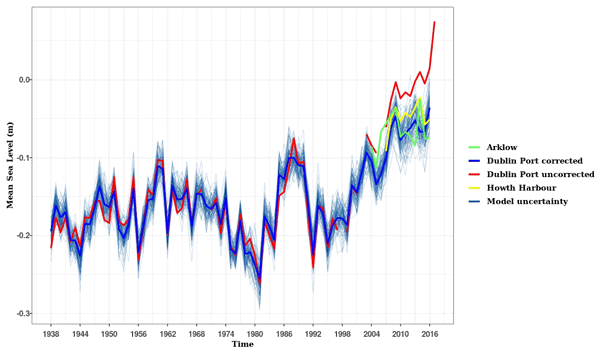
We have collated multiple sources of tide gauge data for Dublin Port, and subsequently corrected them for bias. We have then shown that these corrected mean sea level measurements agree with nearby tide gauges to a far higher degree than the raw data. A longer-term comparison with Brest and Newlyn also indicates overall agreement. Our final adjusted dataset estimated the rate of sea level rise to be 1.1 mm/yr between 1953 and 2016 and 7 mm/yr between 1997 and 2016 at Dublin Port.
Samuel O. Awe, Martin Mahony, Edley Michaud, Conor Murphy, Simon J. Noone, Victor K. C. Venema, Thomas G. Thorne, and Peter W. Thorne
Clim. Past, 18, 793–820, https://doi.org/10.5194/cp-18-793-2022, https://doi.org/10.5194/cp-18-793-2022, 2022
Short summary
Short summary
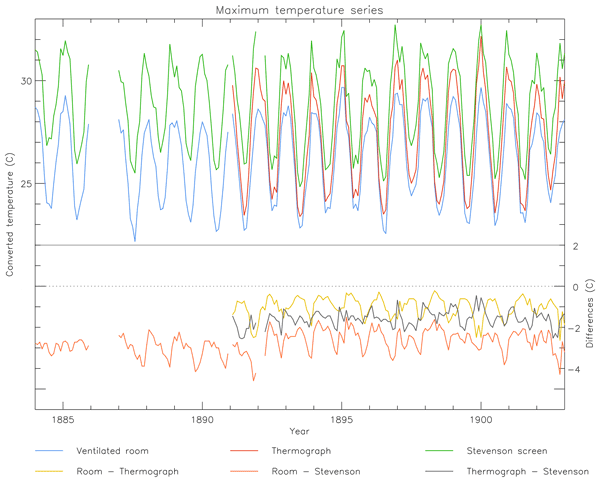
We unearth and analyse 2 decades of highly valuable measurements made on Mauritius at the Royal Alfred Observatory, where several distinct thermometer combinations were in use and compared, at the turn of the 20th century. This series provides unique insights into biases in early instrumental temperature records. Differences are substantial and for some instruments exhibit strong seasonality. This reinforces the critical importance of understanding early instrumental series biases.
Aine M. Gormley-Gallagher, Sebastian Sterl, Annette L. Hirsch, Sonia I. Seneviratne, Edouard L. Davin, and Wim Thiery
Earth Syst. Dynam., 13, 419–438, https://doi.org/10.5194/esd-13-419-2022, https://doi.org/10.5194/esd-13-419-2022, 2022
Short summary
Short summary
Our results show that agricultural management can impact the local climate and highlight the need to evaluate land management in climate models. We use regression analysis on climate simulations and observations to assess irrigation and conservation agriculture impacts on warming trends. This allowed us to distinguish between the effects of land management and large-scale climate forcings such as rising CO2 concentrations and thus gain insight into the impacts under different climate regimes.
Caroline C. Clason, Will H. Blake, Nick Selmes, Alex Taylor, Pascal Boeckx, Jessica Kitch, Stephanie C. Mills, Giovanni Baccolo, and Geoffrey E. Millward
The Cryosphere, 15, 5151–5168, https://doi.org/10.5194/tc-15-5151-2021, https://doi.org/10.5194/tc-15-5151-2021, 2021
Short summary
Short summary
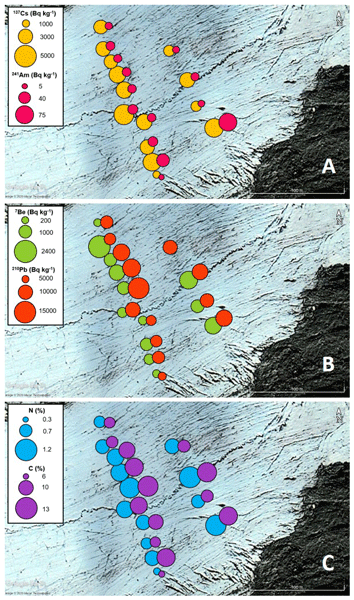
Our paper presents results of sample collection and subsequent geochemical analyses from the glaciated Isfallsglaciären catchment in Arctic Sweden. The data suggest that material found on the surface of glaciers,
cryoconite, is very efficient at accumulating products of nuclear fallout transported in the atmosphere following events such as the Chernobyl disaster. We investigate how this compares with samples in the downstream environment and consider potential environmental implications.
Laura Summerauer, Philipp Baumann, Leonardo Ramirez-Lopez, Matti Barthel, Marijn Bauters, Benjamin Bukombe, Mario Reichenbach, Pascal Boeckx, Elizabeth Kearsley, Kristof Van Oost, Bernard Vanlauwe, Dieudonné Chiragaga, Aimé Bisimwa Heri-Kazi, Pieter Moonen, Andrew Sila, Keith Shepherd, Basile Bazirake Mujinya, Eric Van Ranst, Geert Baert, Sebastian Doetterl, and Johan Six
SOIL, 7, 693–715, https://doi.org/10.5194/soil-7-693-2021, https://doi.org/10.5194/soil-7-693-2021, 2021
Short summary
Short summary
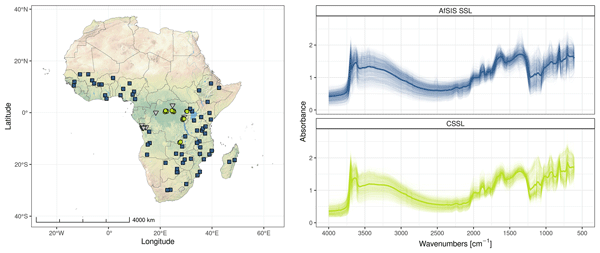
We present a soil mid-infrared library with over 1800 samples from central Africa in order to facilitate soil analyses of this highly understudied yet critical area. Together with an existing continental library, we demonstrate a regional analysis and geographical extrapolation to predict total carbon and nitrogen. Our results show accurate predictions and highlight the value that the data contribute to existing libraries. Our library is openly available for public use and for expansion.
Heleen Deroo, Masuda Akter, Samuel Bodé, Orly Mendoza, Haichao Li, Pascal Boeckx, and Steven Sleutel
Biogeosciences, 18, 5035–5051, https://doi.org/10.5194/bg-18-5035-2021, https://doi.org/10.5194/bg-18-5035-2021, 2021
Short summary
Short summary
We assessed if and how incorporation of exogenous organic carbon (OC) such as straw could affect decomposition of native soil organic carbon (SOC) under different irrigation regimes. Addition of exogenous OC promoted dissolution of native SOC, partly because of increased Fe reduction, leading to more net release of Fe-bound SOC. Yet, there was no proportionate priming of SOC-derived DOC mineralisation. Water-saving irrigation can retard both priming of SOC dissolution and mineralisation.
Sebastian Doetterl, Rodrigue K. Asifiwe, Geert Baert, Fernando Bamba, Marijn Bauters, Pascal Boeckx, Benjamin Bukombe, Georg Cadisch, Matthew Cooper, Landry N. Cizungu, Alison Hoyt, Clovis Kabaseke, Karsten Kalbitz, Laurent Kidinda, Annina Maier, Moritz Mainka, Julia Mayrock, Daniel Muhindo, Basile B. Mujinya, Serge M. Mukotanyi, Leon Nabahungu, Mario Reichenbach, Boris Rewald, Johan Six, Anna Stegmann, Laura Summerauer, Robin Unseld, Bernard Vanlauwe, Kristof Van Oost, Kris Verheyen, Cordula Vogel, Florian Wilken, and Peter Fiener
Earth Syst. Sci. Data, 13, 4133–4153, https://doi.org/10.5194/essd-13-4133-2021, https://doi.org/10.5194/essd-13-4133-2021, 2021
Short summary
Short summary
The African Tropics are hotspots of modern-day land use change and are of great relevance for the global carbon cycle. Here, we present data collected as part of the DFG-funded project TropSOC along topographic, land use, and geochemical gradients in the eastern Congo Basin and the Albertine Rift. Our database contains spatial and temporal data on soil, vegetation, environmental properties, and land management collected from 136 pristine tropical forest and cropland plots between 2017 and 2020.
Silje Lund Sørland, Roman Brogli, Praveen Kumar Pothapakula, Emmanuele Russo, Jonas Van de Walle, Bodo Ahrens, Ivonne Anders, Edoardo Bucchignani, Edouard L. Davin, Marie-Estelle Demory, Alessandro Dosio, Hendrik Feldmann, Barbara Früh, Beate Geyer, Klaus Keuler, Donghyun Lee, Delei Li, Nicole P. M. van Lipzig, Seung-Ki Min, Hans-Jürgen Panitz, Burkhardt Rockel, Christoph Schär, Christian Steger, and Wim Thiery
Geosci. Model Dev., 14, 5125–5154, https://doi.org/10.5194/gmd-14-5125-2021, https://doi.org/10.5194/gmd-14-5125-2021, 2021
Short summary
Short summary
We review the contribution from the CLM-Community to regional climate projections following the CORDEX framework over Europe, South Asia, East Asia, Australasia, and Africa. How the model configuration, horizontal and vertical resolutions, and choice of driving data influence the model results for the five domains is assessed, with the purpose of aiding the planning and design of regional climate simulations in the future.
Maurizio Santoro, Oliver Cartus, Nuno Carvalhais, Danaë M. A. Rozendaal, Valerio Avitabile, Arnan Araza, Sytze de Bruin, Martin Herold, Shaun Quegan, Pedro Rodríguez-Veiga, Heiko Balzter, João Carreiras, Dmitry Schepaschenko, Mikhail Korets, Masanobu Shimada, Takuya Itoh, Álvaro Moreno Martínez, Jura Cavlovic, Roberto Cazzolla Gatti, Polyanna da Conceição Bispo, Nasheta Dewnath, Nicolas Labrière, Jingjing Liang, Jeremy Lindsell, Edward T. A. Mitchard, Alexandra Morel, Ana Maria Pacheco Pascagaza, Casey M. Ryan, Ferry Slik, Gaia Vaglio Laurin, Hans Verbeeck, Arief Wijaya, and Simon Willcock
Earth Syst. Sci. Data, 13, 3927–3950, https://doi.org/10.5194/essd-13-3927-2021, https://doi.org/10.5194/essd-13-3927-2021, 2021
Short summary
Short summary
Forests play a crucial role in Earth’s carbon cycle. To understand the carbon cycle better, we generated a global dataset of forest above-ground biomass, i.e. carbon stocks, from satellite data of 2010. This dataset provides a comprehensive and detailed portrait of the distribution of carbon in forests, although for dense forests in the tropics values are somewhat underestimated. This dataset will have a considerable impact on climate, carbon, and socio-economic modelling schemes.
Camelia-Eliza Telteu, Hannes Müller Schmied, Wim Thiery, Guoyong Leng, Peter Burek, Xingcai Liu, Julien Eric Stanislas Boulange, Lauren Seaby Andersen, Manolis Grillakis, Simon Newland Gosling, Yusuke Satoh, Oldrich Rakovec, Tobias Stacke, Jinfeng Chang, Niko Wanders, Harsh Lovekumar Shah, Tim Trautmann, Ganquan Mao, Naota Hanasaki, Aristeidis Koutroulis, Yadu Pokhrel, Luis Samaniego, Yoshihide Wada, Vimal Mishra, Junguo Liu, Petra Döll, Fang Zhao, Anne Gädeke, Sam S. Rabin, and Florian Herz
Geosci. Model Dev., 14, 3843–3878, https://doi.org/10.5194/gmd-14-3843-2021, https://doi.org/10.5194/gmd-14-3843-2021, 2021
Short summary
Short summary
We analyse water storage compartments, water flows, and human water use sectors included in 16 global water models that provide simulations for the Inter-Sectoral Impact Model Intercomparison Project phase 2b. We develop a standard writing style for the model equations. We conclude that even though hydrologic processes are often based on similar equations, in the end these equations have been adjusted, or the models have used different values for specific parameters or specific variables.
Cited articles
Adler, R. F., Sapiano, M. R. P., Huffman, G. J., Wang, J.-J., Gu, G., Bolvin, D., Chiu, L., Schneider, U., Becker, A., Nelkin, E., Xie, P., Ferraro, R., and Shin, D.-B.: The Global Precipitation Climatology Project (GPCP) monthly analysis (new version 2.3) and a review of 2017 global precipitation, Atmosphere-Basel, 9, https://doi.org/10.3390/atmos9040138, 2018. a
Alsdorf, D., Beighley, E., Laraque, A., Lee, H., Tshimanga, R., O'Loughlin, F., Mahé, G., Dinga, B., Moukandi, G., and Spencer, R. G. M.: Opportunities for hydrologic research in the Congo Basin, Rev. Geophys., 54, 378–409, https://doi.org/10.1002/2016RG000517, 2016. a
Badami, K.: How to Extract Table from Image in Python (OpenCV & OCR), https://livefiredev.com/how-to-extract-table-from-image-in-python-opencv-ocr/, gitHub repository: https://github.com/livefiredev/ocr-extract-table-from-image-python (last access: 19 July 2024), 2023. a
Bangare, S. L., Dubal, A., Bangare, P. S., and Patil, S. T.: Reviewing Otsu's method for image thresholding, International Journal of Applied Engineering Research, 10, https://doi.org/10.37622/IJAER/10.9.2015.21777-21783, 2015. a, b
Bell, B., Hersbach, H., Simmons, A., Berrisford, P., Dahlgren, P., Horányi, A., Muñoz-Sabater, J., Nicolas, J., Radu, R., Schepers, D., Soci, C., Villaume, S., Bidlot, J.-R., Haimberger, L., Woollen, J., Buontempo, C., and Thépaut, J.-N.: The ERA5 global reanalysis: preliminary extension to 1950, Q. J. Roy. Meteor. Soc., 147, 4186–4227, https://doi.org/10.1002/qj.4174, 2021. a
Bradshaw, E., Rickards, L., and Aarup, T.: Sea level data archaeology and the Global Sea Level Observing System (GLOSS), GeoResJ, 6, 9–16, https://doi.org/10.1016/j.grj.2015.02.005, 2015. a, b
Braverman, A., Chatterjee, S., Heyman, M., and Cressie, N.: Probabilistic evaluation of competing climate models, Adv. Stat. Clim. Meteorol. Oceanogr., 3, 93–105, https://doi.org/10.5194/ascmo-3-93-2017, 2017. a
Brohan, P., Kennedy, J., Harris, I., Tett, S., and Jones, P.: Uncertainty estimates in regional and global observed temperature changes: a new data set from 1850, J. Geophys. Res.-Atmos., 111, https://doi.org/10.1029/2005JD006548, 2006. a, b
Brönnimann, S., Brugnara, Y., Allan, R. J., Brunet, M., Compo, G. P., Crouthamel, R. I., Jones, P. D., Jourdain, S., Luterbacher, J., Siegmund, P., Valente, M. A., and Wilkinson, C. W.: A roadmap to climate data rescue services, Geosci. Data J., 5, 28–39, https://doi.org/10.1002/gdj3.56, 2018. a, b, c, d, e, f
Chauhan, R. and Parashar, Y.: Outlier Pattern Detection in Time Series Sequences using Standard Deviation and Mean, Int. J. Res. Appl. Sci. Eng. Technol., 8, 858–863, https://doi.org/10.22214/ijraset.2020.4000, 2020. a
Craig, P. M. and Hawkins, E.: Digitizing observations from the Met Office Daily Weather Reports for 1900–1910 using citizen scientist volunteers, Geosci. Data J., 7, 116–134, https://doi.org/10.1002/gdj3.93, 2020. a, b
de Smeth, K., Comer, J., and Murphy, C.: Hydrometric data rescue and extension of river flow records: method development and application to catchments modified by arterial drainage, Geosci. Data J., 11, 176–196, https://doi.org/10.1002/gdj3.206, 2024. a
Eyring, V., Cox, P. M., Flato, G. M., Gleckler, P. J., Abramowitz, G., Caldwell, P., Collins, W. D., Gier, B. K., Hall, A. D., Hoffman, F. M., Hurtt, G. C., Jahn, A., Jones, C. D., Klein, S. A., Krasting, J. P., Kwiatkowski, L., Lorenz, R., Maloney, E., Meehl, G. A., Pendergrass, A. G., Pincus, R., Ruane, A. C., Russell, J. L., Sanderson, B. M., Santer, B. D., Sherwood, S. C., Simpson, I. R., Stouffer, R. J., and Williamson, M. S.: Taking climate model evaluation to the next level, Nat. Clim. Change, 9, 102–110, https://doi.org/10.1038/s41558-018-0355-y, 2019. a
Flato, G., Marotzke, J., Abiodun, B., Braconnot, P., Chou, S., Collins, W., Cox, P., Driouech, F., Emori, S., Eyring, V., Forest, C., Gleckler, P., Guilyardi, E., Jakob, C., Kattsov, V., Reason, C., and Rummukainen, M.: Evaluation of climate models, in: Climate Change 2013: The Physical Science Basis, Contribution of Working Group I to the Fifth Assessment Report of the Intergovernmental Panel on Climate Change, edited by: Stocker, T., Qin, D., Plattner, G.-K., Tignor, M., Allen, S., Boschung, J., Nauels, A., Xia, Y., Bex, V., and Midgley, P., book section 9, Cambridge University Press, Cambridge, UK and New York, NY, USA, https://doi.org/10.1017/CBO9781107415324.020, 741–866, 2013. a
Folland, C., Rayner, N., Brown, S., Smith, T., Shen, S., Parker, D., Macadam, I., Jones, P., Nicholls, N., and Sexton, D.: Global temperature change and its uncertainties since 1861, Geophys. Res. Lett., 28, https://doi.org/10.1029/2001GL012877, 2001. a
Funk, C., Peterson, P., Landsfeld, M., Pedreros, D., Verdin, J., Shukla, S., Husak, G., Rowland, J., Harrison, L., Hoell, A., and Michaelsen, J.: The climate hazards infrared precipitation with stations – a new environmental record for monitoring extremes, Scientific Data, 2, https://doi.org/10.1038/sdata.2015.66, 2015. a
Hawkins, E., Burt, S., Brohan, P., Lockwood, M., Richardson, H., Roy, M., and Thomas, S.: Hourly weather observations from the Scottish Highlands (1883–1904) rescued by volunteer citizen scientists, Geosci. Data J., 6, 160–173, https://doi.org/10.1002/gdj3.79, 2019. a, b, c, d
Hawkins, E., Burt, S., McCarthy, M., Murphy, C., Ross, C., Baldock, M., Brazier, J., Hersee, G., Huntley, J., Meats, R., O'Grady, J., Scrimgeour, I., and Silk, T.: Millions of historical monthly rainfall observations taken in the UK and Ireland rescued by citizen scientists, Geosci. Data J., 10, 246–261, https://doi.org/10.1002/gdj3.157, 2022. a, b, c, d
Hawkins, E., Brohan, P., Burgess, S. N., Burt, S., Compo, G. P., Gray, S. L., Haigh, I. D., Hersbach, H., Kuijjer, K., Martínez-Alvarado, O., McColl, C., Schurer, A. P., Slivinski, L., and Williams, J.: Rescuing historical weather observations improves quantification of severe windstorm risks, Nat. Hazards Earth Syst. Sci., 23, 1465–1482, https://doi.org/10.5194/nhess-23-1465-2023, 2023. a, b, c, d
Hersbach, H., Bell, B., Berrisford, P., Hirahara, S., Horányi, A., Muñoz-Sabater, J., Nicolas, J., Peubey, C., Radu, R., Schepers, D., Simmons, A., Soci, C., Abdalla, S., Abellan, X., Balsamo, G., Bechtold, P., Biavati, G., Bidlot, J., Bonavita, M., De Chiara, G., Dahlgren, P., Dee, D., Diamantakis, M., Dragani, R., Flemming, J., Forbes, R., Fuentes, M., Geer, A., Haimberger, L., Healy, S., Hogan, R. J., Hólm, E., Janisková, M., Keeley, S., Laloyaux, P., Lopez, P., Lupu, C., Radnoti, G., de Rosnay, P., Rozum, I., Vamborg, F., Villaume, S., and Thépaut, J.-N.: The ERA5 global reanalysis, Q. J. Roy. Meteor. Soc., 146, 1999–2049, https://doi.org/10.1002/qj.3803, 2020. a
Huffman, G. J., Adler, R. F., Behrangi, A., Bolvin, D. T., Nelkin, E. J., Gu, G., and Ehsani, M. R.: The New Version 3.2 Global Precipitation Climatology Project (GPCP) monthly and daily precipitation products, J. Climate, 36, 7635–7655, https://doi.org/10.1175/JCLI-D-23-0123.1, 2023. a
IPCC: Climate Change 2021: The Physical Science Basis, Contribution of Working Group I to the Sixth Assessment Report of the Intergovernmental Panel on Climate Change, Cambridge University Press, Cambridge, UK and New York, NY, USA, https://doi.org/10.1017/9781009157896, 2021. a, b, c, d
IPCC: Summary for policymakers, in: Climate Change 2022: Impacts, Adaptation and Vulnerability, Contribution of Working Group II to the Sixth Assessment Report of the Intergovernmental Panel on Climate Change, edited by: Pörtner, H. O., Roberts, D. C., Tignor, M., Poloczanska, E. S., Mintenbeck, K., Alegría, A., Craig, M., Langsdorf, S., Löschke, S., Möller, V., Okem, A., and Rama, B., Cambridge University Press, Cambridge, UK and New York, NY, USA, https://doi.org/10.1017/9781009325844.001, 2022. a
JaidedAI: EasyOCR, https://github.com/JaidedAI/EasyOCR (last access: 19 July 2024), 2023. a
Jourdain, S., Émeline Roucaute, Dandin, P., Javelle, J.-P., Donet, I., Ménassère, S., and Cénac, N.: Le sauvetage de données climatologiques anciennes à Météo-France : De la conservation des documents à la mise à disposition des données, La Météorologie, 89, 47–55, https://doi.org/10.4267/2042/56598, 2015. a
Kalnay, E., Kanamitsu, M., Kistler, R., Collins, W., Deaven, D., Gandin, L., Iredell, M., Saha, S., White, G., Woollen, J., Zhu, Y., Chelliah, M., Ebisuzaki, W., Higgins, W., Janowiak, J., Mo, K. C., Ropelewski, C., Wang, J., Leetmaa, A., Reynolds, R., Jenne, R., and Joseph, D.: The NCEP/NCAR 40-year reanalysis project, B. Am. Meteorol. Soc., 77, 437–472, https://doi.org/10.1175/1520-0477(1996)077<0437:TNYRP>2.0.CO;2, 1996. a
Kimutai, J., Faka, D., Ayabagabo, P., Barnes, C., Zachariah, M., Pinto, I., Vahlberg, M., Singh, R., Heinrich, D., Raju, E., Thalheimer, L., Sivanu, S., Otto, F., Philip, S., Kiswendsida, G., and Nioulé, L.: Limited data prevent assessment of role of climate change in deadly floods affecting highly vulnerable communities around Lake Kivu, Grantham Institute for Climate Change [data set], https://doi.org/10.25561/105152, 2023. a
King, A. D., Grose, M. R., Kimutai, J., Pinto, I., and Harrington, L. J.: Event attribution is not ready for a major role in loss and damage, Nat. Clim. Change, 13, 415–417, https://doi.org/10.1038/s41558-023-01651-2, 2023. a
Latapy, A., Ferret, Y., Testut, L., Talke, S., Aarup, T., Pons, F., Jan, G., Bradshaw, E., and Pouvreau, N.: Data rescue process in the context of sea level reconstructions: an overview of the methodology, lessons learned, up-to-date best practices and recommendations, Geosci. Data J., 10, 396–425, https://doi.org/10.1002/gdj3.179, 2022. a, b
Morice, C. P., Kennedy, J. J., Rayner, N. A., and Jones, P. D.: Quantifying uncertainties in global and regional temperature change using an ensemble of observational estimates: the HadCRUT4 data set, J. Geophys. Res.-Atmos., 117, https://doi.org/10.1029/2011JD017187, 2012. a
Muheki, D., Vercruysse, B., Chandrasekar, K. K. T., Hufkens, K., and Thiery, W.: MeteoSaver v1.0 (v1.0-final), Zenodo [code], https://doi.org/10.5281/zenodo.19123862, 2026a. a
Muheki, D., Hufkens, K., Jacobsen, K., Verbeeck, H., Boeckx, P., Kankonde Ntumba, D., Kapalay Moulasa, O., Vercruysse, B., M. Birkholz, J., Verbruggen, C., Hawkins, E., Lampe, S., Kasongo Yakusu, E., Makanzu Imwangana, F., Mbifo, J., Besango Likwela, T., Meunier, F., Dewitte, O., Thorne, P., and Thiery, W.: From Paper to Proof: Revealing Congo Basin Warming Through Rescued Climate Archives, EGU General Assembly 2026, Vienna, Austria, 3–8 May 2026, EGU26-10837, https://doi.org/10.5194/egusphere-egu26-10837, 2026b. a
Nidhi, Saluja, K., Mahajan, A., Jadhav, A., Aggarwal, N., Chaurasia, D., and Ghosh, D.: Table detection and extraction using OpenCV and novel optimization methods, in: 2021 International Conference on Computational Performance Evaluation (ComPE), https://doi.org/10.1109/ComPE53109.2021.9752204, 755–760, 2021. a
Nockels, J., Gooding, P., Ames, S., and Terras, M.: Understanding the application of handwritten text recognition technology in heritage contexts: a systematic review of Transkribus in published research, Archival Science, 22, 367–392, https://doi.org/10.1007/s10502-022-09397-0, 2022. a, b, c
Noone, S., D'Arcy, C., Donegan, S., Durkan, W., Essel, B., Healion, K., Hersbach, H., Madden, S., Marshall, J., McConnell, L., Mensah, I., Scroxton, N., Thiesen, S., and Thorne, P.: Investigating the potential for students to contribute to climate data rescue: introducing the Climate Data Rescue Africa project (CliDaR-Africa), Geosci. Data J., 1–17, https://doi.org/10.1002/gdj3.248, 2024. a, b, c, d
Noy, I., Wehner, M., Stone, D., Rosier, S., Frame, D., Lawal, K. A., and Newman, R.: Event attribution is ready to inform loss and damage negotiations, Nat. Clim. Change, 13, 1279–1281, https://doi.org/10.1038/s41558-023-01865-4, 2023. a
Otto, F. E. L., Harrington, L., Schmitt, K., Philip, S., Kew, S., van Oldenborgh, G. J., Singh, R., Kimutai, J., and Wolski, P.: Challenges to understanding extreme weather changes in lower income countries, B. Am. Meteorol. Soc., 101, E1851 – E1860, https://doi.org/10.1175/BAMS-D-19-0317.1, 2020. a
PaddleOCR: PaddlePaddle/PaddleOCR, https://github.com/PaddlePaddle/PaddleOCR/tree/main, last access: 19 July 2024. a
Roberts, M. J., Vidale, P. L., Senior, C., Hewitt, H. T., Bates, C., Berthou, S., Chang, P., Christensen, H. M., Danilov, S., Demory, M.-E., Griffies, S. M., Haarsma, R., Jung, T., Martin, G., Minobe, S., Ringler, T., Satoh, M., Schiemann, R., Scoccimarro, E., Stephens, G., and Wehner, M. F.: The benefits of global high resolution for climate simulation: process understanding and the enabling of stakeholder decisions at the regional scale, B. Am. Meteorol. Soc., 99, 2341–2359, https://doi.org/10.1175/BAMS-D-15-00320.1, 2018. a
Sánchez, J. A., Bosch, V., Romero, V., Depuydt, K., and de Does, J.: Handwritten text recognition for historical documents in the transcriptorium project, in: Proceedings of the First International Conference on Digital Access to Textual Cultural Heritage, DATeCH '14, Association for Computing Machinery, New York, NY, USA, https://doi.org/10.1145/2595188.2595193, 111–117, 2014. a
Sauvola, J. and Pietikäinen, M.: Adaptive document image binarization, Pattern Recogn., 33, 225–236, https://doi.org/10.1016/S0031-3203(99)00055-2, 2000. a
Seneviratne, S., Zhang, X., Adnan, M., Badi, W., Dereczynski, C., Di Luca, A., Ghosh, S., Iskandar, I., Kossin, J., Lewis, S., Otto, F., Pinto, I., Satoh, M., Vicente-Serrano, S., Wehner, M., and Zhou, B.: Weather and climate extreme events in a changing climate, in: Climate Change 2021: The Physical Science Basis, Contribution of Working Group I to the Sixth Assessment Report of the Intergovernmental Panel on Climate Change, edited by: Masson-Delmotte, V., Zhai, P., Pirani, A., Connors, S. L., Péan, C., Berger, S., Caud, N., Chen, Y., Goldfarb, L., Gomis, M. I., Huang, M., Leitzell, K., Lonnoy, E., Matthews, J. B. R., Maycock, T. K., Waterfield, T., Yelekçi, O., Yu, R., and Zhou, B., book section 11, Cambridge University Press, Cambridge, UK and New York, NY, USA, https://doi.org/10.1017/9781009157896.013, 1513–1765, 2021. a, b, c
Shaman, J. L.: Letter to the Editor: Caution needed when using gridded meteorological data products for analyses in Africa, Euro surveillance: bulletin Europeen sur les maladies transmissibles, European Communicable Disease Bulletin, 19, 20930, https://doi.org/10.2807/1560-7917.ES2014.19.41.20930, 2014. a
Suresh, L., Simha, J. B., and Velur, R.: Seeding Cluster centers of K-means Clustering through Median projection, in: International Conference on Complex, Intelligent and Software Intensive Systems, 217–222, https://doi.org/10.1109/CISIS.2010.133, 2010. a
Terras, M.: Chapter 7: Inviting AI into the Archives: The Reception of Handwritten Recognition Technology into Historical Manuscript Transcription, Digital Humanities Research – Bielefeld University Press, https://doi.org/10.14361/9783839455845-008, 2022. a
Transkribus: Transcribing 3 million scans at the National Archives of the Netherlands, https://www.transkribus.org/success-story/national-archives-of-the-netherlands, last access: 2 October 2024. a
Vercruysse, B., Birkholz, J. M., Thirukokaranam Chandrasekar, K. k., Muheki, D., Thiery, W., Verbeeck, H., Hufkens, K., Jacobsen, K., and Verbruggen, C.: Human-in-the-loop tabular data extraction methods for historical climate data rescue, Int. J. Doc. Anal. Recog., https://doi.org/10.1007/s10032-025-00524-y, 2025. a, b, c, d, e, f, g, h, i, j
Wilkinson, C. and Vasquez, M.: Report on the Imaging of Sources of Historic Ice, Meteorological and Oceanographic Data in the SouthernOcean – Åland Maritime Museum, Mariehamn, Finland, https://doi.org/10.13140/RG.2.2.24494.61763, 2017. a
Wypych, A., Ustrnul, Z., Kopaczka-Lepa, D., and Walus, K.: Weather conditions in southern Poland at the turn of the 20th century – insights from archived observational records, J. Hist. Geogr., 86, 191–203, https://doi.org/10.1016/j.jhg.2024.08.005, 2024. a, b, c, d
Xu, W.-H., Li, Q.-X., Yang, S., and Xu, Y.: Overview of global monthly surface temperature data in the past century and preliminary integration, Advances in Climate Change Research, 5, 111–117, https://doi.org/10.1016/j.accre.2014.11.003, 2014. a, b
Yang, J.-D., Chen, Y.-S., and Hsu, W.-H.: Adaptive thresholding algorithm and its hardware implementation, Pattern Recogn. Lett., 15, 141–150, https://doi.org/10.1016/0167-8655(94)90043-4, 1994. a
Yuan, J., Li, H., Wang, M., Liu, R., Li, C., and Wang, B.: An OpenCV-based Framework for Table Information Extraction, 2020 IEEE International Conference on Knowledge Graph (ICKG), https://doi.org/10.1109/ICBK50248.2020.00093, 621–628, 2020. a, b, c, d
Short summary
Archives worldwide host vast records of observed weather data crucial for understanding climate variability. However, most of these records are still in paper form, limiting their use. To address this, we developed MeteoSaver, an open-source tool, to transcribe these records to machine-readable format. Applied to ten handwritten temperature sheets, it achieved a median accuracy of 74 %. This tool offers a promising solution to preserve records from archives and unlock historical weather insights.
Archives worldwide host vast records of observed weather data crucial for understanding climate...