
Articles | Volume 19, issue 8
https://doi.org/10.5194/gmd-19-3109-2026
© Author(s) 2026. This work is distributed under
the Creative Commons Attribution 4.0 License.
the Creative Commons Attribution 4.0 License.
https://doi.org/10.5194/gmd-19-3109-2026
© Author(s) 2026. This work is distributed under
the Creative Commons Attribution 4.0 License.
the Creative Commons Attribution 4.0 License.
Methods for assessment of models
| 
22 Apr 2026
Methods for assessment of models |
| 22 Apr 2026
| 22 Apr 2026
Controls of the latitudinal migration of the Brazil-Malvinas confluence described in MOM6-SWA14
Nicole Cristine Laureanti
CORRESPONDING AUTHOR

Department of Environmental Sciences, Rutgers, The State University of New Jersey, New Brunswick, NJ, USA
Potsdam Institute for Climate Impact Research, Potsdam, BB, Germany
National Institute for Space Research (INPE), Cachoeira Paulista, SP, Brazil
Enrique Curchitser
Department of Environmental Sciences, Rutgers, The State University of New Jersey, New Brunswick, NJ, USA
Katherine Hedstrom
College of Fisheries and Ocean Sciences, University of Alaska Fairbanks, Fairbanks, AK, USA
Alistair Adcroft
Princeton University, Princeton, NJ, USA
Robert Hallberg
NOAA/OAR/Geophysical Fluid Dynamics Laboratory, Princeton, NJ, USA
Matthew J. Harrison
NOAA/OAR/Geophysical Fluid Dynamics Laboratory, Princeton, NJ, USA
Raphael Dussin
UCAR, Boulder, CO, USA
Sin Chan Chou
National Institute for Space Research (INPE), Cachoeira Paulista, SP, Brazil
Paulo Nobre
National Institute for Space Research (INPE), Cachoeira Paulista, SP, Brazil
Emanuel Giarolla
National Institute for Space Research (INPE), Cachoeira Paulista, SP, Brazil
Rosio Camayo
National Institute for Space Research (INPE), Cachoeira Paulista, SP, Brazil
Related authors
Friederike Fröb, David Matthew Chandler, Anastasia Romanou, Manon Berger, Tomas Torsvik, Thomas L. Frölicher, Chuncheng Guo, Aixue Hu, Willem Huiskamp, Colin Jones, Malte Jürchott, Ann Kristin Klose, Torben Koenigk, Petra M. Langebroek, Nicole Laureanti, Paul Lerner, Torge Martin, Laurie Menviel, Lettie A. Roach, Robin Smith, Didier Swingedouw, Ricarda Winkelmann, and Shuting Yang
EGUsphere, https://doi.org/10.5194/egusphere-2026-6311, https://doi.org/10.5194/egusphere-2026-6311, 2026
This preprint is open for discussion and under review for Geoscientific Model Development (GMD).
Short summary
Short summary
The Southern Ocean plays a key role in the climate system. Perturbations in the freshwater budget may affect local dens water formation impacting global climate. Here we outline a design for climate model experiments to assess the sensitivity of the large scale circulation to idealized freshwater fluxes. Multi-model results will allow to better understand the Earth System response to warming and freshening, applied in the Southern Ocean alone or in both hemispheres.
Didier Swingedouw, Laura Jackson, Aixue Hu, Anastasia Romanou, Nicole C. Laureanti, Wilbert Weijer, Sina Loriani, Bette Otto-Bliesner, Ayako Abe-Ouchi, Lucas Almeida, Alessio Bellucci, Reyk Börner, Gokhan Danabasoglu, Donovan P. Dennis, Marion Devilliers, Sybren Drijfhout, Jonathan Donges, Friederike Fröb, Thomas L. Frölicher, Guillaume Gastineau, Heiko Goelzer, Chuncheng Guo, Urs Hofmann, Anna Höse, Colin Jones, Torben Koenigk, Ann Kristin Klose, Valerio Lembo, Jose Licon-Salaiz, Ken Mankoff, Virna Meccia, Irina Melnikova, Oliver Mehling, Laurie Menviel, Juliette Mignot, Jon I. Robson, Gavin A. Schmidt, Robin Smith, Yuchen Sun, Irene Trombini, Matteo Willeit, Richard Wood, Fanghua Wu, Lin Zhaohui, and Ricarda Winkelmann
EGUsphere, https://doi.org/10.5194/egusphere-2026-1698, https://doi.org/10.5194/egusphere-2026-1698, 2026
Short summary
Short summary
This study presents a plan for climate model experiments to better understand how changes in freshwater in the North Atlantic affect major ocean currents. We designed coordinated simulations to test their response to warming, added freshwater, and possible recovery after weakening. Comparing results across models and past climate evidence helps improve confidence in projections and assess risks of large ocean circulation changes.
Friederike Fröb, David Matthew Chandler, Anastasia Romanou, Manon Berger, Tomas Torsvik, Thomas L. Frölicher, Chuncheng Guo, Aixue Hu, Willem Huiskamp, Colin Jones, Malte Jürchott, Ann Kristin Klose, Torben Koenigk, Petra M. Langebroek, Nicole Laureanti, Paul Lerner, Torge Martin, Laurie Menviel, Lettie A. Roach, Robin Smith, Didier Swingedouw, Ricarda Winkelmann, and Shuting Yang
EGUsphere, https://doi.org/10.5194/egusphere-2026-6311, https://doi.org/10.5194/egusphere-2026-6311, 2026
This preprint is open for discussion and under review for Geoscientific Model Development (GMD).
Short summary
Short summary
The Southern Ocean plays a key role in the climate system. Perturbations in the freshwater budget may affect local dens water formation impacting global climate. Here we outline a design for climate model experiments to assess the sensitivity of the large scale circulation to idealized freshwater fluxes. Multi-model results will allow to better understand the Earth System response to warming and freshening, applied in the Southern Ocean alone or in both hemispheres.
Joseph K. Ansong, Brian K. Arbic, Romain Bourdalle-Badié, Clément Bricaud, Jérôme Chanut, Dimitris Menemenlis, Richard D. Ray, Michael Schindelegger, Alan J. Wallcraft, He Wang, Alistair J. Adcroft, Frédéric Briol, Maarten C. Buijsman, Loren Carrère, Eric P. Chassignet, Gerald Dibarboure, Robert W. Hallberg, Christopher N. Hill, Ariane Koch-Larrouy, Florent Lyard, Matthew R. Mazloff, An T. Nguyen, Nicolas Picot, Rui M. Ponte, and Jay F. Shriver
EGUsphere, https://doi.org/10.5194/egusphere-2026-5064, https://doi.org/10.5194/egusphere-2026-5064, 2026
This preprint is open for discussion and under review for Ocean Science (OS).
Short summary
Short summary
We assess how well four high-resolution global ocean models reproduce surface and internal tides compared with satellite observations. Some models produce internal tides that are too strong, but including energy loss over rough seafloor improves their accuracy. Longer model records and higher resolution also improve agreement with observations. We further identify errors in the tidal forcing of widely used MITgcm simulations that reduce the accuracy of their simulated tides.
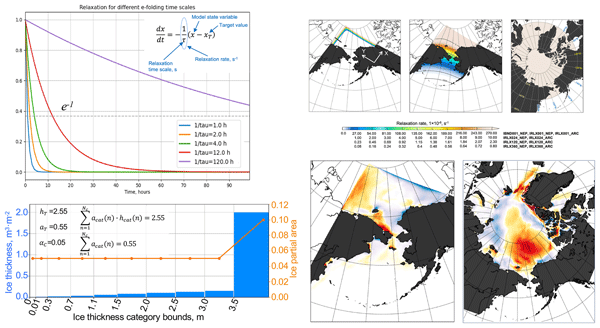
Dmitry S. Dukhovskoy, Theresa Cordero, Katherine Hedstrom, Michael Alexander, Michael Jacox, Robert Hallberg, Matthew Harrison, and Jessie Liu
Geosci. Model Dev., 19, 7169–7196, https://doi.org/10.5194/gmd-19-7169-2026, https://doi.org/10.5194/gmd-19-7169-2026, 2026
Short summary
Short summary
Regional sea ice models often struggle to represent sea ice near model domain boundaries, where errors can accumulate over time. We implemented and tested a method that gradually adjusts simulated sea ice toward prescribed conditions while preserving a realistic evolution of the ice cover. Experiments in the Arctic and Northeast Pacific show improved sea ice simulations and ocean surface conditions, providing a practical tool for regional forecasting and research applications.
Xiao Liu, John P. Dunne, Liwei Jia, Charles A. Stock, Xiaosong Yang, Matthew J. Harrison, Liping Zhang, and Anthony Rosati
EGUsphere, https://doi.org/10.5194/egusphere-2026-4194, https://doi.org/10.5194/egusphere-2026-4194, 2026
Short summary
Short summary
This study uses NOAA GFDL’s SPEAR model to improve predictions of how the ocean absorbs human emitted CO2. While standard models capture long-term trends, they struggle with yearly fluctuations. Researchers found that "initializing" the model with observed data significantly boosts their prediction accuracy for up to two years. This framework helps separate the predictions of natural variability from human-driven carbon changes, a vital step for verifying future marine carbon removal efforts.
Meena Raju, David J. Cannon, Peter Alsip, He Wang, Jia Wang, Theresa Cordero, Robert W. Hallberg, Charles A. Stock, and Joseph A. Langan
Geosci. Model Dev., 19, 4331–4356, https://doi.org/10.5194/gmd-19-4331-2026, https://doi.org/10.5194/gmd-19-4331-2026, 2026
Short summary
Short summary
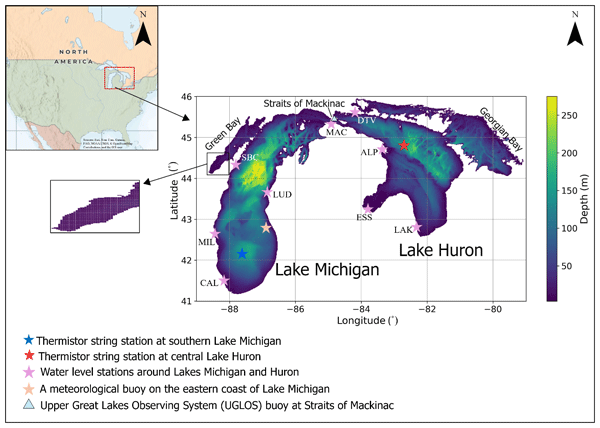
This study developed the Modular Ocean Model version 6.0 coupled with Sea Ice Simulator version 2.0 for the Great Lakes, validated against observations and an operational model. This study also tested two vertical coordinate systems, z* and hybrid. The model reproduced lake physics with good skill. The hybrid vertical coordinate improved thermocline representation and preserved deep cold-water during stratification, demonstrating the model’s suitability for large freshwater systems.
Inseong Chang, Young Ho Kim, Young-Gyu Park, Hyunkeun Jin, Gyundo Pak, Andrew C. Ross, and Robert Hallberg
Geosci. Model Dev., 19, 3053–3074, https://doi.org/10.5194/gmd-19-3053-2026, https://doi.org/10.5194/gmd-19-3053-2026, 2026
Short summary
Short summary
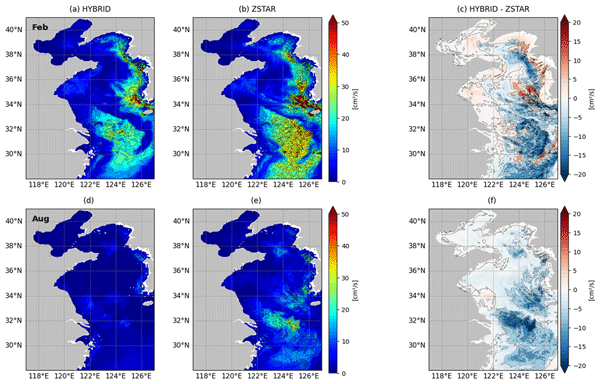
This study assesses how vertical coordinate choice shapes barotropic and baroclinic tide simulations in a high-resolution, MOM6 (Modular Ocean Model version 6) regional model. Focusing on the Yellow Sea under realistic forcing and seasonal stratification, we compare z* and z*-isopycnal hybrid to quantify coordinate-dependent impacts on tidal energetics and vertical structure. The results underscore that vertical representation is critical for accurately reproducing coastal stratification and tide–stratification interactions.
Claire K. Yung, Xylar S. Asay-Davis, Alistair Adcroft, Christopher Y. S. Bull, Jan De Rydt, Michael S. Dinniman, Benjamin K. Galton-Fenzi, Daniel Goldberg, David E. Gwyther, Robert Hallberg, Matthew Harrison, Tore Hattermann, David M. Holland, Denise Holland, Paul R. Holland, James R. Jordan, Nicolas C. Jourdain, Kazuya Kusahara, Gustavo Marques, Pierre Mathiot, Dimitris Menemenlis, Adele K. Morrison, Yoshihiro Nakayama, Olga Sergienko, Robin S. Smith, Alon Stern, Ralph Timmermann, and Qin Zhou
The Cryosphere, 20, 2053–2088, https://doi.org/10.5194/tc-20-2053-2026, https://doi.org/10.5194/tc-20-2053-2026, 2026
Short summary
Short summary
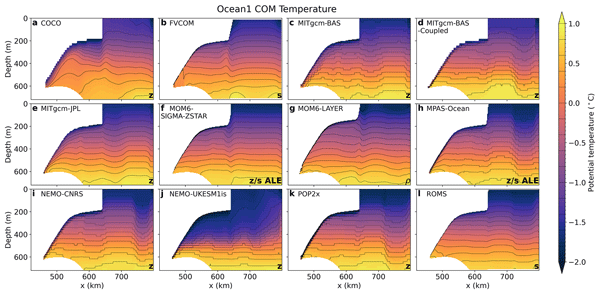
The second Ice Shelf-Ocean Model Intercomparison Project, ISOMIP+, compares 12 ice shelf-ocean models with a common, idealised, static configuration, aiming to assess inter-model variability. Models show similar basal melt rate patterns, ocean profiles and circulation but differ in ice-ocean boundary layer properties. Ice-ocean boundary layer representation is a key area for future work, as are realistic-domain ice sheet-ocean model intercomparisons.
Didier Swingedouw, Laura Jackson, Aixue Hu, Anastasia Romanou, Nicole C. Laureanti, Wilbert Weijer, Sina Loriani, Bette Otto-Bliesner, Ayako Abe-Ouchi, Lucas Almeida, Alessio Bellucci, Reyk Börner, Gokhan Danabasoglu, Donovan P. Dennis, Marion Devilliers, Sybren Drijfhout, Jonathan Donges, Friederike Fröb, Thomas L. Frölicher, Guillaume Gastineau, Heiko Goelzer, Chuncheng Guo, Urs Hofmann, Anna Höse, Colin Jones, Torben Koenigk, Ann Kristin Klose, Valerio Lembo, Jose Licon-Salaiz, Ken Mankoff, Virna Meccia, Irina Melnikova, Oliver Mehling, Laurie Menviel, Juliette Mignot, Jon I. Robson, Gavin A. Schmidt, Robin Smith, Yuchen Sun, Irene Trombini, Matteo Willeit, Richard Wood, Fanghua Wu, Lin Zhaohui, and Ricarda Winkelmann
EGUsphere, https://doi.org/10.5194/egusphere-2026-1698, https://doi.org/10.5194/egusphere-2026-1698, 2026
Short summary
Short summary
This study presents a plan for climate model experiments to better understand how changes in freshwater in the North Atlantic affect major ocean currents. We designed coordinated simulations to test their response to warming, added freshwater, and possible recovery after weakening. Comparing results across models and past climate evidence helps improve confidence in projections and assess risks of large ocean circulation changes.

Inseong Chang, Young Ho Kim, Young-Gyu Park, Hyunkeun Jin, Gyundo Pak, Andrew C. Ross, and Robert Hallberg
Geosci. Model Dev., 19, 187–216, https://doi.org/10.5194/gmd-19-187-2026, https://doi.org/10.5194/gmd-19-187-2026, 2026
Short summary
Short summary
We conducted sensitivity experiments to examine how different vertical coordinates influence the representation of water masses and tides using a high-resolution regional ocean model for the Northwest Pacific. We found that the choice of vertical coordinate strongly affects the degree of artificial mixing, which in turn changes how well the model reproduces key ocean features. This highlights the importance of selecting a vertical coordinate when developing regional ocean models.
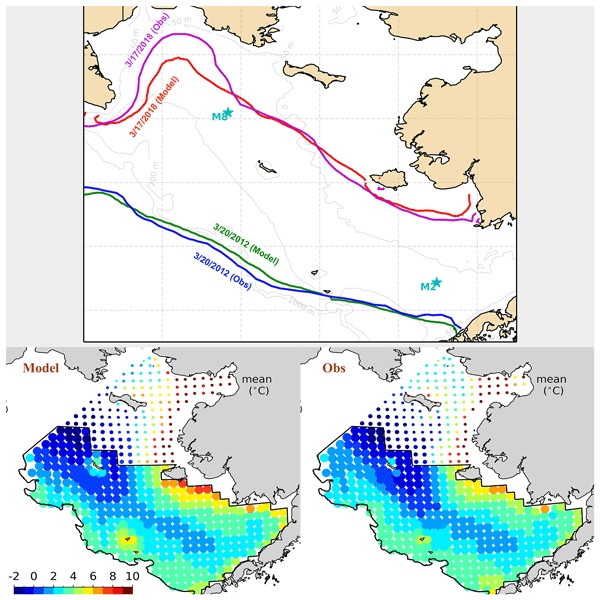
Vivek Seelanki, Wei Cheng, Phyllis J. Stabeno, Albert J. Hermann, Elizabeth J. Drenkard, Charles A. Stock, and Katherine Hedstrom
Geosci. Model Dev., 18, 7681–7705, https://doi.org/10.5194/gmd-18-7681-2025, https://doi.org/10.5194/gmd-18-7681-2025, 2025
Short summary
Short summary
Both physical and ecosystem properties of the ocean are rapidly changing. These changes anticipating ecosystem responses to environmental change and effectively managing marine. The model-based predictions and their performance in the historical states of the ocean must be carefully evaluated against observations. In this study a coupled ocean and sea-ice simulation during 1993–2018 using observations. We focus on the Bering Sea shelf, which is the largest productive ecosystem in the US.
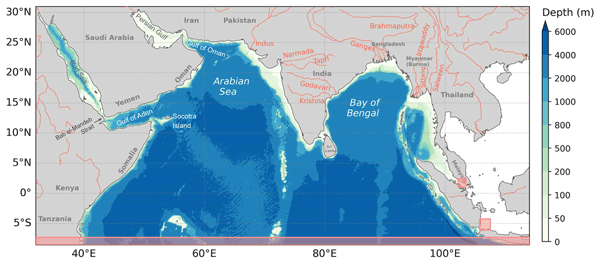
Enhui Liao, Laure Resplandy, Fan Yang, Yangyang Zhao, Sam Ditkovsky, Manon Malsang, Jenna Pearson, Andrew C. Ross, Robert Hallberg, and Charles Stock
Geosci. Model Dev., 18, 6553–6596, https://doi.org/10.5194/gmd-18-6553-2025, https://doi.org/10.5194/gmd-18-6553-2025, 2025
Short summary
Short summary
The northern Indian Ocean is central to the livelihoods and economies of countries that comprise about one-third of the world's population. We present a high-resolution (~10 km) ocean model that simulates seasonal and year-to-year variability in ocean, including currents, oxygen levels, and phytoplankton growth. This model is a powerful tool to study how climate change and human activities influence the northern Indian Ocean, which can be used for marine resource applications and management.
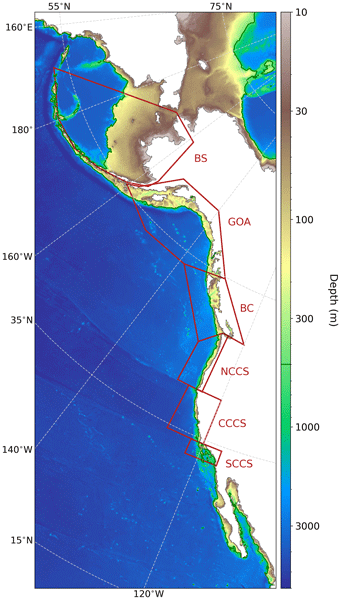
Elizabeth J. Drenkard, Charles A. Stock, Andrew C. Ross, Yi-Cheng Teng, Theresa Cordero, Wei Cheng, Alistair Adcroft, Enrique Curchitser, Raphael Dussin, Robert Hallberg, Claudine Hauri, Katherine Hedstrom, Albert Hermann, Michael G. Jacox, Kelly A. Kearney, Rémi Pagès, Darren J. Pilcher, Mercedes Pozo Buil, Vivek Seelanki, and Niki Zadeh
Geosci. Model Dev., 18, 5245–5290, https://doi.org/10.5194/gmd-18-5245-2025, https://doi.org/10.5194/gmd-18-5245-2025, 2025
Short summary
Short summary
We made a new regional ocean model to assist fisheries and ecosystem managers in making decisions in the Northeast Pacific Ocean (NEP). We found that the model did well simulating past ocean conditions like temperature and nutrient and oxygen levels and can even reproduce metrics used by, and important to, ecosystem managers.
Malcolm J. Roberts, Kevin A. Reed, Qing Bao, Joseph J. Barsugli, Suzana J. Camargo, Louis-Philippe Caron, Ping Chang, Cheng-Ta Chen, Hannah M. Christensen, Gokhan Danabasoglu, Ivy Frenger, Neven S. Fučkar, Shabeh ul Hasson, Helene T. Hewitt, Huanping Huang, Daehyun Kim, Chihiro Kodama, Michael Lai, Lai-Yung Ruby Leung, Ryo Mizuta, Paulo Nobre, Pablo Ortega, Dominique Paquin, Christopher D. Roberts, Enrico Scoccimarro, Jon Seddon, Anne Marie Treguier, Chia-Ying Tu, Paul A. Ullrich, Pier Luigi Vidale, Michael F. Wehner, Colin M. Zarzycki, Bosong Zhang, Wei Zhang, and Ming Zhao
Geosci. Model Dev., 18, 1307–1332, https://doi.org/10.5194/gmd-18-1307-2025, https://doi.org/10.5194/gmd-18-1307-2025, 2025
Short summary
Short summary
HighResMIP2 is a model intercomparison project focusing on high-resolution global climate models, that is, those with grid spacings of 25 km or less in the atmosphere and ocean, using simulations of decades to a century in length. We are proposing an update of our simulation protocol to make the models more applicable to key questions for climate variability and hazard in present-day and future projections and to build links with other communities to provide more robust climate information.
Andrew C. Ross, Charles A. Stock, Alistair Adcroft, Enrique Curchitser, Robert Hallberg, Matthew J. Harrison, Katherine Hedstrom, Niki Zadeh, Michael Alexander, Wenhao Chen, Elizabeth J. Drenkard, Hubert du Pontavice, Raphael Dussin, Fabian Gomez, Jasmin G. John, Dujuan Kang, Diane Lavoie, Laure Resplandy, Alizée Roobaert, Vincent Saba, Sang-Ik Shin, Samantha Siedlecki, and James Simkins
Geosci. Model Dev., 16, 6943–6985, https://doi.org/10.5194/gmd-16-6943-2023, https://doi.org/10.5194/gmd-16-6943-2023, 2023
Short summary
Short summary
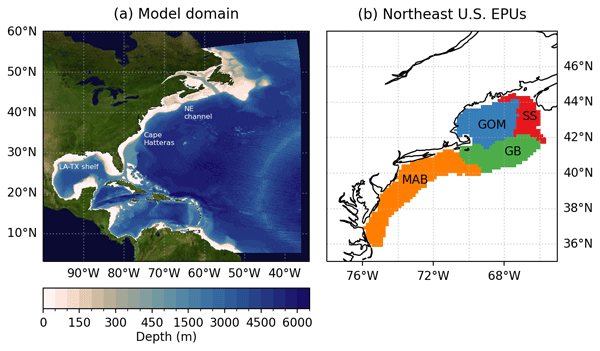
We evaluate a model for northwest Atlantic Ocean dynamics and biogeochemistry that balances high resolution with computational economy by building on the new regional features in the MOM6 ocean model and COBALT biogeochemical model. We test the model's ability to simulate impactful historical variability and find that the model simulates the mean state and variability of most features well, which suggests the model can provide information to inform living-marine-resource applications.
Gustavo M. Marques, Nora Loose, Elizabeth Yankovsky, Jacob M. Steinberg, Chiung-Yin Chang, Neeraja Bhamidipati, Alistair Adcroft, Baylor Fox-Kemper, Stephen M. Griffies, Robert W. Hallberg, Malte F. Jansen, Hemant Khatri, and Laure Zanna
Geosci. Model Dev., 15, 6567–6579, https://doi.org/10.5194/gmd-15-6567-2022, https://doi.org/10.5194/gmd-15-6567-2022, 2022
Short summary
Short summary
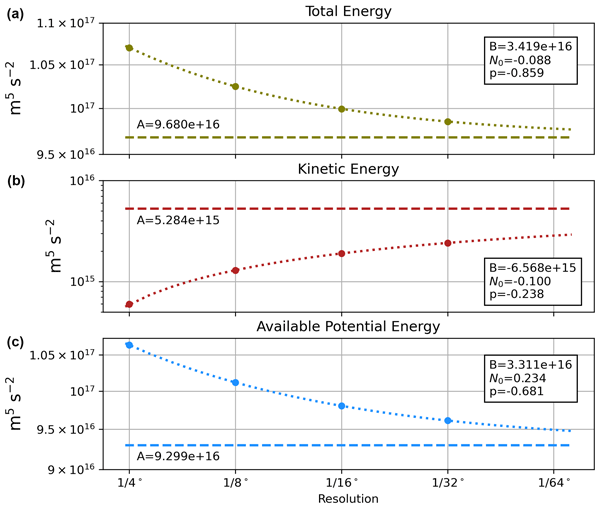
We present an idealized ocean model configuration and a set of simulations performed using varying horizontal grid spacing. While the model domain is idealized, it resembles important geometric features of the Atlantic and Southern oceans. The simulations described here serve as a framework to effectively study mesoscale eddy dynamics, to investigate the effect of mesoscale eddies on the large-scale dynamics, and to test and evaluate eddy parameterizations.
Cited articles
Adcroft, A. and Campin, J.-M.: Rescaled height coordinates for accurate representation of free-surface flows in ocean circulation models, Ocean Model., 7, 269–284, https://doi.org/10.1016/j.ocemod.2003.09.003, 2004.
Adcroft, A., Anderson, W., Balaji, V., Blanton, C., Bushuk, M., Dufour, C. O., Dunne, J. P., Griffies, S. M., Hallberg, R., Harrison, M. J., Held, I. M., Jansen, M. F., John, J. G., Krasting, J. P., Langenhorst, A. R., Legg, S., Liang, Z., McHugh, C., Radhakrishnan, A., Reichl, B. G., Rosati, T., Samuels, B. L., Shao, A., Stouffer, R., Winton, M., Wittenberg, A. T., Xiang, B., Zadeh, N., and Zhang, R.: The GFDL Global Ocean and Sea Ice Model OM4.0: Model Description and Simulation Features, J. Adv. Model. Earth Sy., 11, 3167–3211, https://doi.org/10.1029/2019MS001726, 2019.
Alford, M. H., MacKinnon, J. A., Simmons, H. L., and Nash, J. D.: Near-Inertial Internal Gravity Waves in the Ocean, Annu. Rev. Mar. Sci., 8, 95–123, 2016.
Artana, C. and Provost, C.: Intense anticyclones at the global Argentine Basin array of the Ocean Observatory Initiative, Ocean Sci., 19, 953–971, https://doi.org/10.5194/os-19-953-2023, 2023.
Artana, C., Provost, C., Lellouche, J.-M., Rio, M.-H., Ferrari, R., and Sennéchael, N.: The Malvinas Current at the Confluence with the Brazil Current: Inferences from 25 years of Mercator Ocean reanalysis, J. Geophys. Res.-Oceans, 124, 7178–7200, https://doi.org/10.1029/2019JC015289, 2019.
Artana, C., Provost, C., Poli, L., Ferrari, R., and Lellouche, J.-M.: Revisiting the Malvinas Current upper circulation and water masses using a highresolution ocean reanalysis, J. Geophys. Res.-Oceans, 126, https://doi.org/10.1029/2021JC017271, 2021.
Barré, N., Provost, C., and Saraceno, M.: Spatial and temporal scales of the Brazil–Malvinas Current confluence documented by simultaneous MODIS Aqua 1.1 km resolution SST and color images, Adv. Space Res., 37, 770–786, https://doi.org/10.1016/J.ASR.2005.09.026, 2006.
Bonou, F. K., Noriega, C., Lefèvre, N., and Araujo, M.: Distribution of CO2 parameters in the Western Tropical Atlantic Ocean, Dynam. Atmos. Oceans, 73, 47–60, https://doi.org/10.1016/J.DYNATMOCE.2015.12.001, 2016.
Bueno, L. F., Costa, V. S., Mill, G. N., and Paiva, A. M.: Volume and Heat Transports by North Brazil Current Rings, Frontiers in Marine Science, 9, https://doi.org/10.3389/fmars.2022.831098, 2022.
Campos, P. C., Möller, O. O., Piola, A. R., and Palma, E. D.: Seasonal variability and coastal upwelling near Cape Santa Marta (Brazil), J. Geophys. Res.-Oceans, 118, 1420–1433, https://doi.org/10.1002/JGRC.20131, 2013.
Chassignet, E. P. and Xu, X.: On the Importance of High-Resolution in Large-Scale Ocean Models, https://doi.org/10.1007/s00376-021-0385-7, 2021.
Combes, V. and Matano, R. P.: A two-way nested simulation of the oceanic circulation in the Southwestern Atlantic, J. Geophys. Res.-Oceans, 119, 731–756, https://doi.org/10.1002/2013JC009498, 2014a.
Combes, V. and Matano, R. P.: Trends in the Brazil/Malvinas Confluence region, Geophys. Res. Lett., 41, 8971–8977, https://doi.org/10.1002/2014GL062523, 2014b.
Combes, V. and Matano, R. P.: The Patagonian shelf circulation: Drivers and variability, Prog. Oceanogr., 167, 24–43, https://doi.org/10.1016/J.POCEAN.2018.07.003, 2018.
de Boyer Montégut, C., Madec, G., Fischer, A. S., Lazar, A., and Iudicone, D.: Mixed layer depth over the global ocean: An examination of profile data and a profile-based climatology, J. Geophys. Res.-Oceans, 109, https://doi.org/10.1029/2004JC002378, 2004 (data available at: https://mld.ifremer.fr/Surface_Mixed_Layer_Depth.php, last access: 28 March 2026).
Egbert, G. D. and Erofeeva, S. Y.: Efficient Inverse Modeling of Barotropic Ocean Tides, J. Atmos. Ocean. Tech., 19, 183–204, https://doi.org/10.1175/1520-0426(2002)019<0183:EIMOBO>2.0.CO;2, 2002 (data available at: https://www.tpxo.net/home, last access: 28 March 2026).
Ferrari, R., Artana, C., Saraceno, M., Piola, A. R., and Provost, C.: Satellite Altimetry and Current-Meter Velocities in the Malvinas Current at 41° S: Comparisons and Modes of Variations, J. Geophys. Res.-Oceans, 122, 9572–9590, https://doi.org/10.1002/2017JC013340, 2017.
Fox-Kemper, B., Danabasoglu, G., Ferrari, R., Griffies, S. M., Hallberg, R. W., Holland, M. M., Maltrud, M. E., Peacock, S., and Samuels, B. L.: Parameterization of mixed layer eddies. III: Implementation and impact in global ocean climate simulations, Ocean Model., 39, 61–78, https://doi.org/10.1016/j.ocemod.2010.09.002, 2011.
Franco, B. C., Defeo, O., Piola, A. R., Barreiro, M., Yang, H., Ortega, L., Gianelli, I., Castello, J. P., Vera, C., Buratti, C., Pájaro, M., Pezzi, L. P., and Möller, O. O.: Climate change impacts on the atmospheric circulation, ocean, and fisheries in the southwest South Atlantic Ocean: a review, Climatic Change, 162, 2359–2377, https://doi.org/10.1007/S10584-020-02783-6, 2020.
Garzoli, S. L. and Bianchi, A.: Time-space variability of the local dynamics of the Malvinas-Brazil confluence as revealed by inverted echosounders, J. Geophys. Res.-Oceans, 92, 1914–1922, https://doi.org/10.1029/JC092iC02p01914, 1987.
Garzoli, S. L., Ffield, A., Johns, W. E., and Yao, Q.: North Brazil Current retroflection and transports, J. Geophys. Res.-Oceans, 109, https://doi.org/10.1029/2003JC001775, 2004.
Giribabu, D., Hari, R., Sharma, J., Ghosh, K., Padiyar, N., Sharma, A., Bera, A. K., and Srivastav, S. K.: Assessment of GEBCO 2023 Gridded Bathymetric Data in Shallow Waters Using the Seafloor from ICESat-2 Photons, Research Square [preprint], https://doi.org/10.21203/rs.3.rs-3020167/v1, 2023 (data available at: https://download.gebco.net/, last access: 25 March 2026).
Goni, G. J., Bringas, F., and DiNezio, P. N.: Observed low frequency variability of the Brazil Current front, J. Geophys. Res.-Oceans, 116, https://doi.org/10.1029/2011JC007198, 2011.
Griffies, S. M., Böning, C., Bryan, F. O., Chassignet, E. P., Gerdes, R., Hasumi, H., Hirst, A., Treguier, A.-M., and Webb, D.: Developments in ocean climate modelling, Ocean Model., 2, 123–192, https://doi.org/10.1016/S1463-5003(00)00014-7, 2000.
Griffies, S. M., Winton, M., Anderson, W. G., Benson, R., Delworth, T. L., Dufour, C. O., Dunne, J. P., Goddard, P., Morrison, A. K., Rosati, A., Wittenberg, A. T., Yin, J., and Zhang, R.: Impacts on ocean heat from transient mesoscale eddies in a hierarchy of climate models, J. Climate, 28, 952–977, https://doi.org/10.1175/JCLI-D-14-00353.1, 2015.
Guerra, L. A. A., Paiva, A. M., and Chassignet, E. P.: On the translation of Agulhas rings to the western South Atlantic Ocean, Deep-Sea Res. Pt. I, 139, 104–113, 2018.
Guerrero, R. A., Piola, A. R., Fenco, H., Matano, R. P., Combes, V., Chao, Y., James, C., Palma, E. D., Saraceno, M., and Strub, P. T.: The salinity signature of the cross-shelf exchanges in the Southwestern Atlantic Ocean: Satellite observations, J. Geophys. Res.-Oceans, 119, 7794–7810, https://doi.org/10.1002/2014JC010113, 2014.
Hallberg, R.: Using a resolution function to regulate parameterizations of oceanic mesoscale eddy effects, Ocean Model., 72, 92–103, https://doi.org/10.1016/j.ocemod.2013.08.007, 2013.
Hersbach, H., Bell, B., Berrisford, P., Biavati, G., Horányi, A., Muñoz Sabater, J., Nicolas, J., Peubey, C., Radu, R., Rozum, I., Schepers, D., Simmons, A., Soci, C., Dee, D., and Thépaut, J.-N.: ERA5 hourly data on single levels from 1940 to present, Copernicus Climate Change Service (C3S) Climate Data Store (CDS) [data set], https://doi.org/10.24381/cds.adbb2d47, 2023.
Hoffman, R. N. and Leidner, S. M.: An Introduction to the Near–Real–Time QuikSCAT Data, Weather Forecast., 20, 476–493, https://doi.org/10.1175/WAF841.1, 2005 (data available at: https://podaac.jpl.nasa.gov/QuikSCAT?tab=-mission-objectives§ions=about%2Bdata, last access: 25 March 2026).
Hughes, C. W., Fukumori, I., Griffies, S. M., Huthnance, J. M., Minobe, S., Spence, P., Thompson, K. R., and Wise, A.: Sea Level and the Role of Coastal Trapped Waves in Mediating the Influence of the Open Ocean on the Coast, Surv. Geophys., 40, 1467–1492, https://doi.org/10.1007/s10712-019-09535-x, 2019.
Jackson, L., Hallberg, R., and Legg, S.: A Parameterization of Shear-Driven Turbulence for Ocean Climate Models, J. Phys. Oceanogr., 38, 1033–1053, https://doi.org/10.1175/2007JPO3779.1, 2008.
Jean-Michel, L., Eric, G., Romain, B.-B., Gilles, G., Angélique, M., Marie, D., Clément, B., Mathieu, H., Olivier, L. G., Charly, R., Tony, C., Charles-Emmanuel, T., Florent, G., Giovanni, R., Mounir, B., Yann, D., and Pierre-Yves, L. T.: The Copernicus Global
Kang, D., Curchitser, E. N., and Rosati, A.: Seasonal Variability of the Gulf Stream Kinetic Energy, J. Phys. Oceanogr., 46, 1189–1207, https://doi.org/10.1175/JPO-D-15-0235.1, 2016.
Kendall, M. G.: Rank Correlation Methods, 4th edn., Charles Griffin, London, ISBN 9780852641996, 1975.
Lago, L. S., Saraceno, M., Martos, P., Guerrero, R. A., Piola, A. R., Paniagua, G. F., Ferrari, R., Artana, C. I., and Provost, C.: On the Wind Contribution to the Variability of Ocean Currents Over Wide Continental Shelves: A Case Study on the Northern Argentine Continental Shelf, J. Geophys. Res.-Oceans, 124, 7457–7472, https://doi.org/10.1029/2019JC015105, 2019.
Laureanti, N. C., Chou, S. C., Nobre, P., and Curchitser, E.: On the relationship between the South Atlantic Convergence Zone and sea surface temperature during Central-East Brazil extreme precipitation events, Dynam. Atmos. Oceans, 105, https://doi.org/10.1016/j.dynatmoce.2023.101422, 2024.
Laureanti, N. C., Curchitser, E., Hedstrom, K., Adcroft, A., Halberg, R., Matthews, H., Dussin, R., Chou, S. C., Nobre, P., Giarolla, E., and Camayo, R.: MOM6-SWA14 model code, Zenodo [code], https://doi.org/10.5281/zenodo.17252994, 2025a.
Laureanti, N. C., Curchitser, E., Hedstrom, K., Adcroft, A., Halberg, R., Harrison, M., Dussin, R., Chou, S. C., Nobre, P., Giarolla, E., and Camayo, R.: “Controls of the Latitudinal Migration of the Brazil-Malvinas Confluence described on MOM6-SWA14” model set-up scripts and files, Zenodo [code], https://doi.org/10.5281/zenodo.17252554, 2025b.
Laureanti, N. C., Curchitser, E., Hedstrom, K., Adcroft, A., Hallberg, R., Matthews, H., Dussin, R., Chou, S. C., Nobre, P., Camayo, R., and Giarolla, E.: “Controls of the Latitudinal Migration of the Brazil-Malvinas Confluence described on MOM6-SWA14” figures scripts and files, Zenodo [code], https://doi.org/10.5281/zenodo.18498115, 2026.
Locarnini, R., Mishonov, A., Baranova, O., Boyer, T., Zweng, M., Garcia, H., Reagan, J., Seidov, D., Weathers, K., Paver, C., Smolyar, I., and Locarnini, R.: World Ocean Atlas 2018, Vol. 1: Temperature, A. Mishonov Technical Ed.; NOAA Atlas NESDIS 81, 52 pp., https://doi.org/10.25923/e5rn-9711, 2019.
Lumpkin, R. and Garzoli, S.: Interannual to decadal changes in the western South Atlantic's surface circulation, J. Geophys. Res.-Oceans, 116, https://doi.org/10.1029/2010JC006285, 2011.
Lumpkin, R. and Garzoli, S. L.: Near-surface circulation in the Tropical Atlantic Ocean, Deep-Sea Res. Pt. I, 52, 495–518, https://doi.org/10.1016/J.DSR.2004.09.001, 2005.
Mann, H. B.: Non-parametric tests against trend, Econometrica, 13, 163–171, 1945.
Müller, V. and Melnichenko, O.: Meridional Eddy Heat Transport Variability in the Surface Mixed Layer of the Atlantic Ocean, J. Geophys. Res.-Oceans, 126, e2021JC017789, https://doi.org/10.1029/2021JC017789, 2021.
NASA: Sea-viewing Wide Field-of-view Sensor (SeaWiFS) level-2 ocean color data, NASA Ocean Biology Processing Group distributed Sctive Archive Center, https://oceandata.sci.gsfc.nasa.gov/api/file_search/ (last access: 28 March 2026), 2018.
NOAA (National Oceanic and Atmospheric Administration): Physical Sciences Laboratory (PSL). Climate Indices: Monthly Atmospheric and Ocean Time-Series, https://psl.noaa.gov/data/climateindices/list/, last access: 15 May 2024.
Nobre, P., Lemos, A. T., Giarolla, E., Camayo, R., Namikawa, L., Kampel, M., Rudorff, N., Bezerra, D. X., Lorenzzetti, J., and Gomes, J.: The 2019 northeast Brazil oil spill: scenarios, An. Acad. Bras. Cienc., 94, e20210391, https://doi.org/10.1590/0001-3765202220210391, 2022.
Oliveira, L. R., Piola, A. R., Mata, M. M., and Soares, I. D.: Brazil Current surface circulation and energetics observed from drifting buoys, J. Geophys. Res.-Oceans, 114, 10006, https://doi.org/10.1029/2008JC004900, 2009.
Palma, E. D., Matano, R. P., and Piola, A. R.: A numerical study of the Southwestern Atlantic Shelf circulation: Barotropic response to tidal and wind forcing, J. Geophys. Res.-Oceans, 109, 8014, https://doi.org/10.1029/2004JC002315, 2004.
Palma, E. D., Matano, R. P., and Piola, A. R.: A numerical study of the Southwestern Atlantic Shelf circulation: Stratified ocean response to local and offshore forcing, J. Geophys. Res.-Oceans, 113, 11010, https://doi.org/10.1029/2007JC004720, 2008.
Peterson, R. G.: The boundary currents in the western Argentine Basin, Deep-Sea Res., 39, 623–644, https://doi.org/10.1016/0198-0149(92)90092-8, 1992.
Pezzi, L. P., Quadro, M. F., Lorenzzetti, J. A., Miller, A. J., Rosa, E. B., Lima, L. N., and Sutil, U. A.: The effect of Oceanic South Atlantic Convergence Zone episodes on regional SST anomalies: the roles of heat fluxes and upper-ocean dynamics, Clim. Dynam., 59, 2041–2065, https://doi.org/10.1007/s00382-022-06195-3, 2022.
Piola, A. R., Matano, R. P., Palma, E. D., Möller, O. O., and Campos, E. J. D.: The influence of the Plata River discharge on the western South Atlantic shelf, Geophys. Res. Lett., 32, 1–4, https://doi.org/10.1029/2004GL021638, 2005.
Poli, L., Artana, C., and Provost, C.: Topographically trapped waves around South America with periods between 40 and 130 d in a global ocean reanalysis, J. Geophys. Res.-Oceans, 127, e2021JC018067, https://doi.org/10.1029/2021JC018067, 2022.
Pontes, G. M. and Menviel, L.: Weakening of the Atlantic Meridional Overturning Circulation driven by subarctic freshening since the mid-twentieth century, Nat. Geosci., 17, 1291–1298, https://doi.org/10.1038/s41561-024-01568-1, 2024.
Reagan, J. R., Boyer, T. P., García, H. E., Locarnini, R. A., Baranova, O. K., Bouchard, C., Cross, S. L., Mishonov, A. V., Paver, C. R., Seidov, D., Wang, Z., and Dukhovskoy, D.: World Ocean Atlas 2023. Salinity and Temperature, NOAA National Centers for Environmental Information [data set], https://doi.org/10.25921/va26-hv25, 2023.
Reichl, B. G. and Hallberg, R.: A simplified energetics based planetary boundary layer (ePBL) approach for ocean climate simulations, Ocean Model., 132, 112–129, https://doi.org/10.1016/j.ocemod.2018.10.004, 2018.
Risaro, D. B., Chidichimo, M. P., and Piola, A. R.: Interannual Variability and Trends of Sea Surface Temperature Around Southern South America, Frontiers in Marine Science, 9, https://doi.org/10.3389/fmars.2022.829144, 2022.
Rodrigues, R. R., Taschetto, A. S., sen Gupta, A., and Foltz, G. R.: Common cause for severe droughts in South America and marine heatwaves in the South Atlantic, Nat. Geosci., 12, 620–626, https://doi.org/10.1038/s41561-019-0393-8, 2019.
Ross, A. C., Stock, C. A., Adcroft, A., Curchitser, E., Hallberg, R., Harrison, M. J., Hedstrom, K., Zadeh, N., Alexander, M., Chen, W., Drenkard, E. J., du Pontavice, H., Dussin, R., Gomez, F., John, J. G., Kang, D., Lavoie, D., Resplandy, L., Roobaert, A., Saba, V., Shin, S.-I., Siedlecki, S., and Simkins, J.: A high-resolution physical–biogeochemical model for marine resource applications in the northwest Atlantic (MOM6-COBALT-NWA12 v1.0), Geosci. Model Dev., 16, 6943–6985, https://doi.org/10.5194/gmd-16-6943-2023, 2023.
Servain, J., Busalacchi, A., McPhaden, M., Moura, A., Reverfdin, G., Vianna, M., and Zebiak, S.: A pilot research moored array in the tropical Atlantic (PIRATA), B. Am. Meteorol. Soc., 79, 2019–2032, https://doi.org/10.1175/1520-0477(1998)079<2019:APRMAI>2.0.CO;2, 1998 (data available at: https://www.pmel.noaa.gov/gtmba/pmel-theme/atlantic-ocean-pirata last access: 25 March 2026).
Song, H., Marshall, J., McGillicuddy, D. J., and Seo, H.: Impact of current-wind interaction on vertical processes in the Southern Ocean, J. Geophys. Res.-Oceans, 125, e2020JC016046, https://doi.org/10.1029/2020JC016046, 2020.
Stock, C. A., Pegion, K., Vecchi, G. A., Alexander, M. A., Tommasi, D., Bond, N. A., Fratantoni, P. S., Gudgel, R. G., Kristiansen, T., O'Brien, T. D., Xue, Y., and Yang, X.: Seasonal sea surface temperature anomaly prediction for coastal ecosystems, Prog. Oceanogr., 137, 219–236, https://doi.org/10.1016/j.pocean.2015.06.007, 2015.
Valerio, A. M., Kampel, M., Ward, N. D., Sawakuchi, H. O., Cunha, A. C., and Richey, J. E.: CO2 partial pressure and fluxes in the Amazon River plume using in situ and remote sensing data, Cont. Shelf Res., 215, 104348, https://doi.org/10.1016/J.CSR.2021.104348, 2021.
Wheeler, M. and Kiladis, G. N.: Convectively Coupled Equatorial Waves: Analysis of Clouds and Temperature in the Wavenumber–Frequency Domain, J. Atmos. Sci., 56, 374–399, https://doi.org/10.1175/1520-0469(1999)056<0374:CCEWAO>2.0.CO;2, 1999.
Wright, D. G.: An Equation of State for Use in Ocean Models: Eckart's Formula Revisited, J. Atmos. Ocean. Tech., 14, 735–740, https://doi.org/10.1175/1520-0426(1997)014<0735:AEOSFU>2.0.CO;2, 1997.
Wunsch, C. and Ferrari, R.: Vertical mixing, energy, and the general circulation of the oceans, Annu. Rev. Fluid Mech., 36, 281–314, https://doi.org/10.1146/annurev.fluid.36.050802.122121, 2004.
Zsoter, E., Harrigan, S., Barnard, C., Wetterhall, F., Ferrario, I., Mazzetti, C., Alfieri, L., Salamon, P., and Prudhomme, C.: River discharge and related historical data from the Global Flood Awareness System. v3.1, CEMS Early Warning Data Store [data set], https://doi.org/10.24381/cds.a4fdd6b9, 2021.
Zweng, M., Reagan, J., Seidov, D., Boyer, T., Locarnini, R., Garcia, H., Mishonov, A., Baranova, O., Paver, C., and Smolyar, I.: World Ocean Atlas 2018, Vol. 2: Salinity, A. Mishonov Technical Ed.; NOAA Atlas NESDIS 82, 50 pp., https://doi.org/10.25923/9pgv-1224, 2019.
Short summary
This study investigates the variability of currents in the Southwestern Atlantic Ocean using a high-resolution simulation. Particularly in the Brazil-Malvinas Confluence (BMC), it finds that the southward movement of the BMC, induced by the warming trends in the region, is balanced by northward flow from the Malvinas Current and Pacific Waves. The analysis also examines the intense northward displacement of the North Brazil Current, where inconsistencies in the simulation affect its evolution.
This study investigates the variability of currents in the Southwestern Atlantic Ocean using a...


