Articles | Volume 19, issue 5
https://doi.org/10.5194/gmd-19-1965-2026
© Author(s) 2026. This work is distributed under
the Creative Commons Attribution 4.0 License.

https://doi.org/10.5194/gmd-19-1965-2026
© Author(s) 2026. This work is distributed under
the Creative Commons Attribution 4.0 License.
RADIv2: an adaptable and versatile diagenetic model for coastal and open-ocean sediments
Hinne F. van der Zant

CORRESPONDING AUTHOR
LIttoral, Environnement et SociétéS (LIENSs) – UMR 7266, CNRS-La Rochelle Université, 2 rue Olympe de Gouges, La Rochelle, 17000, France
Olivier Sulpis
CEREGE, Technopole Environnement Arbois-Méditerranée BP 80 13545 Aix-en-Provence, CEDEX 04, France
Jack J. Middelburg
Utrecht University, Department of Earth Sciences, Princetonlaan 8A, 3584 CB Utrecht, the Netherlands
Matthew P. Humphreys
NIOZ Royal Netherlands Institute for Sea Research, Department of Ocean Systems (OCS), P.O. Box 59, 1790 AB Den Burg (Texel), the Netherlands
Raphaël Savelli
Jet Propulsion Laboratory, California Institute of Technology, 4800 Oak Grove Dr, La Cañada Flintridge, CA 91011, USA
Moss Landing Marine Laboratories, San José State University, 8272 Moss Landing Road Moss Landing, CA 95039, USA
Dustin Carroll
Jet Propulsion Laboratory, California Institute of Technology, 4800 Oak Grove Dr, La Cañada Flintridge, CA 91011, USA
Moss Landing Marine Laboratories, San José State University, 8272 Moss Landing Road Moss Landing, CA 95039, USA
Dimitris Menemenlis
Moss Landing Marine Laboratories, San José State University, 8272 Moss Landing Road Moss Landing, CA 95039, USA
Kay Sušelj
Jet Propulsion Laboratory, California Institute of Technology, 4800 Oak Grove Dr, La Cañada Flintridge, CA 91011, USA
Vincent Le Fouest
LIttoral, Environnement et SociétéS (LIENSs) – UMR 7266, CNRS-La Rochelle Université, 2 rue Olympe de Gouges, La Rochelle, 17000, France
Related authors
No articles found.
Li-Qing Jiang, Amanda Fay, Jens Daniel Müller, Luke Gregor, Alizée Roobaert, Lydia Keppler, Dustin Carroll, Siv K. Lauvset, Tim DeVries, Judith Hauck, Christian Rödenbeck, Nicolas Metzl, Andrea J. Fassbender, Jean-Pierre Gattuso, Peter Landschützer, Rik Wanninkhof, Christopher Sabine, Simone R. Alin, Mario Hoppema, Are Olsen, Matthew P. Humphreys, Kunal Chakraborty, Ana C. Franco, Kumiko Azetsu-Scott, Dorothee C. E. Bakker, Leticia Barbero, Nicholas R. Bates, Nicole Besemer, Henry C. Bittig, Albert E. Boyd, Daniel Broullón, Wei-Jun Cai, Brendan R. Carter, Thi-Tuyet-Trang Chau, Chen-Tung Arthur Chen, Frédéric Cyr, John E. Dore, Ian Enochs, Richard A. Feely, Hernan E. Garcia, Marion Gehlen, Prasanna Kanti Ghoshal, Lucas Gloege, Melchor González-Dávila, Nicolas Gruber, Debby Ianson, Yosuke Iida, Masao Ishii, Apurva Padamnabh Joshi, Esther Kennedy, Alex Kozyr, Nico Lange, Claire Lo Monaco, Derek P. Manzello, Galen A. McKinley, Natalie M. Monacci, Xose A. Padin, Ana M. Palacio-Castro, Fiz F. Pérez, J. Magdalena Santana-Casiano, Jonathan Sharp, Adrienne Sutton, Jim Swift, Toste Tanhua, Maciej Telszewski, Jens Terhaar, Ruben van Hooidonk, Anton Velo, Andrew J. Watson, Angelicque E. White, Zelun Wu, Liang Xue, Hyelim Yoo, Jiye Zeng, and Guorong Zhong
Earth Syst. Sci. Data, 18, 1405–1462, https://doi.org/10.5194/essd-18-1405-2026, https://doi.org/10.5194/essd-18-1405-2026, 2026
Short summary
Short summary
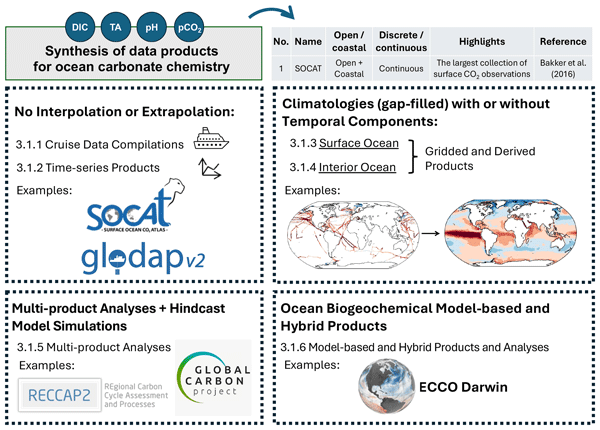
This review article provides an overview of 68 existing ocean carbonate chemistry data products and data product sets, encompassing a broad range of types, including compilations of cruise datasets, gap-filled observational products, model simulations, and more. It is designed to help researchers identify and access the data products that best support their scientific objectives, thereby facilitating progress in understanding the ocean's changing carbonate chemistry.
Raphaël Savelli, Dustin Carroll, Dimitris Menemenlis, Jonathan M. Lauderdale, Clément Bertin, Stephanie Dutkiewicz, Manfredi Manizza, A. Anthony Bloom, Karel Castro-Morales, Charles E. Miller, Marc Simard, Kevin W. Bowman, and Hong Zhang
Geosci. Model Dev., 19, 867–885, https://doi.org/10.5194/gmd-19-867-2026, https://doi.org/10.5194/gmd-19-867-2026, 2026
Short summary
Short summary
Accounting for carbon and nutrients in rivers is essential for resolving carbon dioxide (CO2) exchanges between the ocean and the atmosphere. In this study, we add the effect of present-day rivers to a pioneering global-ocean biogeochemistry model. This study highlights the challenge for global ocean numerical models to cover the complexity of the flow of water and carbon across the Land-to-Ocean Aquatic Continuum.
Anne L. Kruijt, Robin van Dijk, Olivier Sulpis, Luc Beaufort, Guillaume Lassus, Geert-Jan Brummer, A. Daniëlle van der Burg, Ben A. Cala, Yasmina Ourradi, Katja T. C. A. Peijnenburg, Matthew P. Humphreys, Sonia Chaabane, Appy Sluijs, and Jack J. Middelburg
Biogeosciences, 23, 531–563, https://doi.org/10.5194/bg-23-531-2026, https://doi.org/10.5194/bg-23-531-2026, 2026
Short summary
Short summary
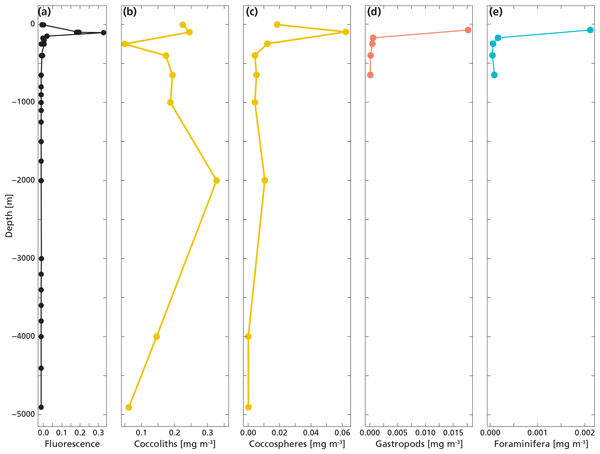
We measured the three main types of plankton that produce calcium carbonate in the ocean, at the same time and location. While coccolithophores were the biggest contributors, we found that planktonic gastropods, not foraminifera, were the second largest contributor. This challenges the current view and improves our understanding of how these organisms influence oceans’ carbon cycling.
Abdullah A. Fahad, Andrea Molod, Krzysztof Wargan, Dimitris Menemenlis, Patrick Heimbach, Atanas Trayanov, Ehud Strobach, and Lawrence Coy
Atmos. Chem. Phys., 26, 647–663, https://doi.org/10.5194/acp-26-647-2026, https://doi.org/10.5194/acp-26-647-2026, 2026
Short summary
Short summary
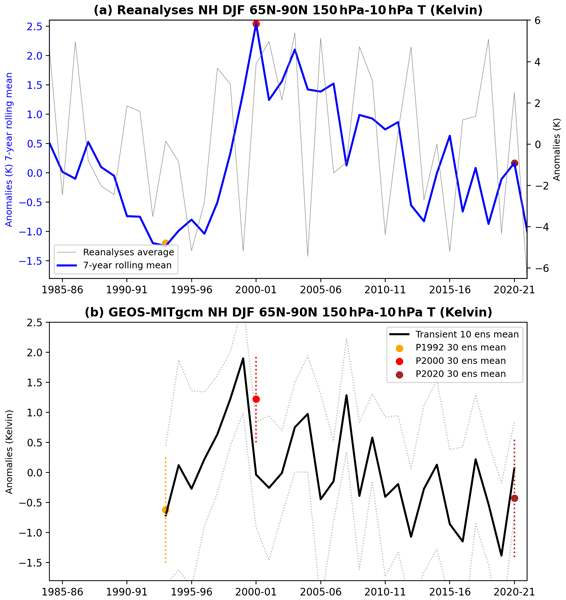
This study used reanalysis datasets and a 1-degree coupled General Circulation Model to analyze the Northern Hemisphere stratospheric temperature response in a decadal simulation. Results show that the polar stratospheric temperature increased from 1992 to 2000, contrary to the expectation of stratospheric cooling due to rising CO2. The study concluded that changes in ozone and CO2 drive the meridional eddy heat transport, dictating polar stratospheric temperature behavior.
Matthew P. Humphreys and Sharyn Ossebaar
Ocean Sci., 21, 3123–3130, https://doi.org/10.5194/os-21-3123-2025, https://doi.org/10.5194/os-21-3123-2025, 2025
Short summary
Short summary
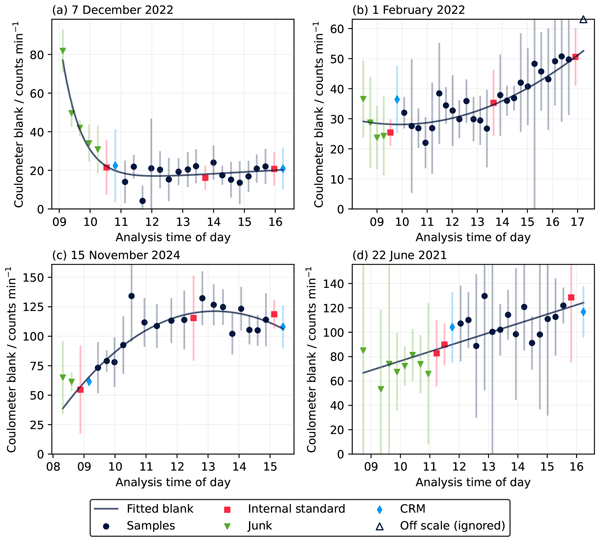
The ocean is one of the main reservoirs of carbon dioxide (CO2) on Earth's surface, so it plays an important role in modulating the climate. In this paper, we propose an update to how dissolved CO2 in seawater is determined from laboratory data, which can sometimes improve the accuracy of these measurements.
Clément Bertin, Vincent Le Fouest, Dustin Carroll, Stephanie Dutkiewicz, Dimitris Menemenlis, Atsushi Matsuoka, Manfredi Manizza, and Charles E. Miller
Biogeosciences, 22, 6607–6629, https://doi.org/10.5194/bg-22-6607-2025, https://doi.org/10.5194/bg-22-6607-2025, 2025
Short summary
Short summary
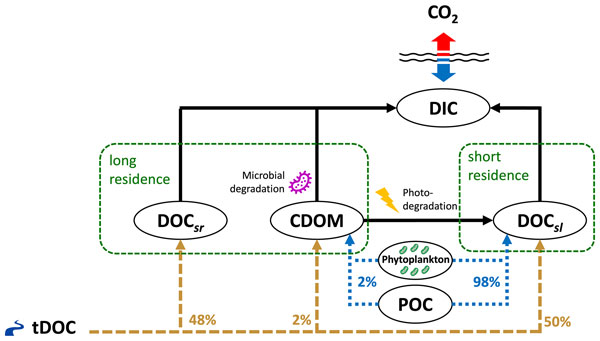
We adjusted a model of the Mackenzie River region to account for the riverine export of organic matter that affects light in the water. We show that such export causes a delay in the phytoplankton growth by two weeks and raises the water surface temperature by 1.7 °C. We found that temperature increase turns this coastal region from a sink of carbon dioxide to an emitter. Our findings suggest that rising exports of organic matter can significantly affect the carbon cycle in Arctic coastal areas.
Gavin A. Schmidt, Kenneth D. Mankoff, Jonathan L. Bamber, Clara Burgard, Dustin Carroll, David M. Chandler, Violaine Coulon, Benjamin J. Davison, Matthew H. England, Paul R. Holland, Nicolas C. Jourdain, Qian Li, Juliana M. Marson, Pierre Mathiot, Clive R. McMahon, Twila A. Moon, Ruth Mottram, Sophie Nowicki, Anna Olivé Abelló, Andrew G. Pauling, Thomas Rackow, and Damien Ringeisen
Geosci. Model Dev., 18, 8333–8361, https://doi.org/10.5194/gmd-18-8333-2025, https://doi.org/10.5194/gmd-18-8333-2025, 2025
Short summary
Short summary
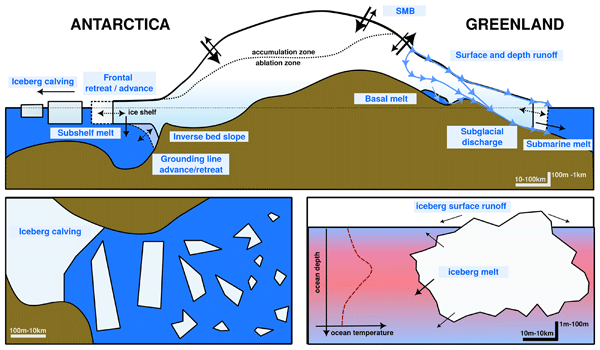
The impact of increasing mass loss from the Greenland and Antarctic ice sheets has not so far been included in historical climate model simulations. This paper describes the protocols and data available for modeling groups to add this anomalous freshwater to their ocean modules to better represent the impacts of these fluxes on ocean circulation, sea ice, salinity and sea level.
Yasmina Ourradi, Gert-Jan Reichart, Sonja van Leeuwen, and Matthew Humphreys
EGUsphere, https://doi.org/10.5194/egusphere-2025-5050, https://doi.org/10.5194/egusphere-2025-5050, 2025
Short summary
Short summary
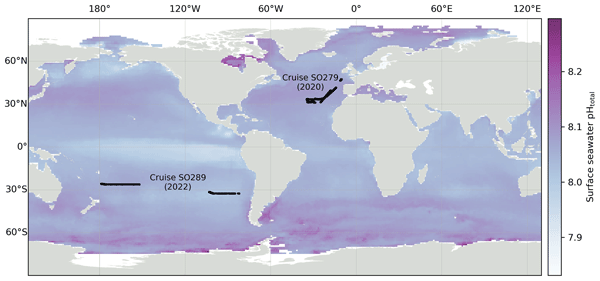
We measured pH at high frequency for nearly a year at the Wadden Sea-North Sea interface. Biological activity mainly controls daily pH variations, while water exchange affects alkalinity. Dissolved inorganic carbon is influenced by both processes. Our research shows the Wadden Sea releases CO2 to the atmosphere. Understanding these patterns is crucial for predicting how coastal seas respond to changing climate and water conditions.
Ben A. Cala, Mariette Wolthers, Olivier Sulpis, Jonathan D. Sharp, and Matthew P. Humphreys
EGUsphere, https://doi.org/10.5194/egusphere-2025-5059, https://doi.org/10.5194/egusphere-2025-5059, 2025
Short summary
Short summary
Magnesium calcites are minerals produced by some marine organisms. Understanding how these minerals dissolve helps us to predict how the ocean stores carbon. We developed a new method to calculate the solubility of these minerals in seawater, using existing laboratory data and taking into account the effects of temperature, salinity and pressure. Applying this method globally, we found that magnesium calcites dissolve deeper than previously thought.
Louise Delaigue, Gert-Jan Reichart, Li Qiu, Eric P. Achterberg, Yasmina Ourradi, Chris Galley, André Mutzberg, and Matthew P. Humphreys
Biogeosciences, 22, 5103–5121, https://doi.org/10.5194/bg-22-5103-2025, https://doi.org/10.5194/bg-22-5103-2025, 2025
Short summary
Short summary
Our study analysed pH in ocean surface waters to understand how it fluctuates with changes in temperature, salinity, and biological activities. We found that temperature mainly controls daily pH variations, but biological processes also play a role, especially in affecting CO2 levels between the ocean and atmosphere. Our research shows how these factors together maintain the balance of ocean chemistry, which is crucial for predicting changes in marine environments.
Michael Dominik Tyka, Mengyang Zhou, Elizabeth Yankovsky, and Dustin Carroll
EGUsphere, https://doi.org/10.5194/egusphere-2025-3713, https://doi.org/10.5194/egusphere-2025-3713, 2025
Short summary
Short summary
Quantification of the kinetics of the induced ocean CO2 uptake following application of marine carbon dioxide removal technologies (mCDR) is crucial for such technologies to gain scientific and social acceptance. Here, we compare two circulation models commonly used for this purpose and find substantial differences in their predictions. We analyze which physical aspects of the models contribute the most to the inter-model discrepancies, and thus require future research.
Aman KC, Ellyn M. Enderlin, Dominik Fahrner, Twila Moon, and Dustin Carroll
The Cryosphere, 19, 3089–3106, https://doi.org/10.5194/tc-19-3089-2025, https://doi.org/10.5194/tc-19-3089-2025, 2025
Short summary
Short summary
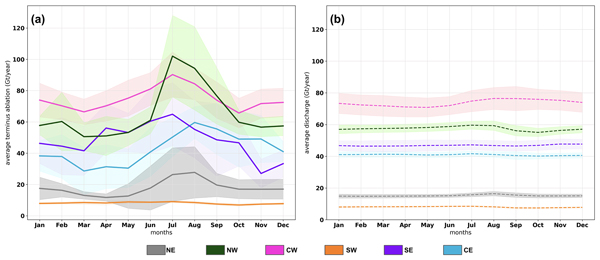
The sum of ice flowing towards a glacier’s terminus and changes in the position of the terminus over time collectively makes up terminus ablation. We found that terminus ablation has more seasonal variability than previously concluded from flux-based estimates of ice discharge. The findings are of importance in understanding the timing and location of the freshwater input to the fjords and surrounding ocean basins affecting local and regional ecosystems and ocean properties.
Samantha Siedlecki, Stanley Nmor, Gennadi Lessin, Kelly Kearney, Subhadeep Rakshit, Colleen Petrik, Jessica Luo, Cristina Schultz, Dalton Sasaki, Kayla Gillen, Anh Pham, Christopher Somes, Damian Brady, Jeremy Testa, Christophe Rabouille, Isa Elegbede, and Olivier Sulpis
EGUsphere, https://doi.org/10.5194/egusphere-2025-1846, https://doi.org/10.5194/egusphere-2025-1846, 2025
Preprint archived
Short summary
Short summary
Benthic biogeochemical models are essential for simulating seafloor carbon cycling and climate feedbacks, yet vary widely in structure and assumptions. This paper introduces SedBGC_MIP, a community initiative to compare existing models, refine key processes, and assess uncertainty. We highlight discrepancies through case studies and introduce needs including observational benchmarks. Ultimately, we seek to improve climate and resource projections.
Jana Krause, Dustin Carroll, Juan Höfer, Jeremy Donaire, Eric P. Achterberg, Emilio Alarcón, Te Liu, Lorenz Meire, Kechen Zhu, and Mark J. Hopwood
The Cryosphere, 18, 5735–5752, https://doi.org/10.5194/tc-18-5735-2024, https://doi.org/10.5194/tc-18-5735-2024, 2024
Short summary
Short summary
Here we analysed calved ice samples from both the Arctic and Antarctic to assess the variability in the composition of iceberg meltwater. Our results suggest that low concentrations of nitrate and phosphate in ice are primarily from the ice matrix, whereas sediment-rich layers impart a low concentration of silica and modest concentrations of iron and manganese. At a global scale, there are very limited differences in the nutrient composition of ice.
Yoshihiro Nakayama, Alena Malyarenko, Hong Zhang, Ou Wang, Matthis Auger, Yafei Nie, Ian Fenty, Matthew Mazloff, Armin Köhl, and Dimitris Menemenlis
Geosci. Model Dev., 17, 8613–8638, https://doi.org/10.5194/gmd-17-8613-2024, https://doi.org/10.5194/gmd-17-8613-2024, 2024
Short summary
Short summary
Global- and basin-scale ocean reanalyses are becoming easily accessible. However, such ocean reanalyses are optimized for their entire model domains and their ability to simulate the Southern Ocean requires evaluation. We conduct intercomparison analyses of Massachusetts Institute of Technology General Circulation Model (MITgcm)-based ocean reanalyses. They generally perform well for the open ocean, but open-ocean temporal variability and Antarctic continental shelves require improvements.
Matthew P. Humphreys
Ocean Sci., 20, 1325–1350, https://doi.org/10.5194/os-20-1325-2024, https://doi.org/10.5194/os-20-1325-2024, 2024
Short summary
Short summary
The ocean takes up carbon dioxide (CO2) from the atmosphere, slowing climate change. This CO2 uptake is controlled by a property called ƒCO2. Seawater ƒCO2 changes as seawater warms or cools, although by an uncertain amount; measurements and calculations give inconsistent results. Here, we work out how ƒCO2 should, in theory, respond to temperature. This matches field data and model calculations but still has discrepancies with scarce laboratory results, which need more measurements to resolve.
Siv K. Lauvset, Nico Lange, Toste Tanhua, Henry C. Bittig, Are Olsen, Alex Kozyr, Marta Álvarez, Kumiko Azetsu-Scott, Peter J. Brown, Brendan R. Carter, Leticia Cotrim da Cunha, Mario Hoppema, Matthew P. Humphreys, Masao Ishii, Emil Jeansson, Akihiko Murata, Jens Daniel Müller, Fiz F. Pérez, Carsten Schirnick, Reiner Steinfeldt, Toru Suzuki, Adam Ulfsbo, Anton Velo, Ryan J. Woosley, and Robert M. Key
Earth Syst. Sci. Data, 16, 2047–2072, https://doi.org/10.5194/essd-16-2047-2024, https://doi.org/10.5194/essd-16-2047-2024, 2024
Short summary
Short summary
GLODAP is a data product for ocean inorganic carbon and related biogeochemical variables measured by the chemical analysis of water bottle samples from scientific cruises. GLODAPv2.2023 is the fifth update of GLODAPv2 from 2016. The data that are included have been subjected to extensive quality controlling, including systematic evaluation of measurement biases. This version contains data from 1108 hydrographic cruises covering the world's oceans from 1972 to 2021.
Katharina Gallmeier, J. Xavier Prochaska, Peter Cornillon, Dimitris Menemenlis, and Madolyn Kelm
Geosci. Model Dev., 16, 7143–7170, https://doi.org/10.5194/gmd-16-7143-2023, https://doi.org/10.5194/gmd-16-7143-2023, 2023
Short summary
Short summary
This paper introduces an approach to evaluate numerical models of ocean circulation. We compare the structure of satellite-derived sea surface temperature anomaly (SSTa) instances determined by a machine learning algorithm at 10–80 km scales to those output by a high-resolution MITgcm run. The simulation over much of the ocean reproduces the observed distribution of SSTa patterns well. This general agreement, alongside a few notable exceptions, highlights the potential of this approach.
Siv K. Lauvset, Nico Lange, Toste Tanhua, Henry C. Bittig, Are Olsen, Alex Kozyr, Simone Alin, Marta Álvarez, Kumiko Azetsu-Scott, Leticia Barbero, Susan Becker, Peter J. Brown, Brendan R. Carter, Leticia Cotrim da Cunha, Richard A. Feely, Mario Hoppema, Matthew P. Humphreys, Masao Ishii, Emil Jeansson, Li-Qing Jiang, Steve D. Jones, Claire Lo Monaco, Akihiko Murata, Jens Daniel Müller, Fiz F. Pérez, Benjamin Pfeil, Carsten Schirnick, Reiner Steinfeldt, Toru Suzuki, Bronte Tilbrook, Adam Ulfsbo, Anton Velo, Ryan J. Woosley, and Robert M. Key
Earth Syst. Sci. Data, 14, 5543–5572, https://doi.org/10.5194/essd-14-5543-2022, https://doi.org/10.5194/essd-14-5543-2022, 2022
Short summary
Short summary
GLODAP is a data product for ocean inorganic carbon and related biogeochemical variables measured by the chemical analysis of water bottle samples from scientific cruises. GLODAPv2.2022 is the fourth update of GLODAPv2 from 2016. The data that are included have been subjected to extensive quality controlling, including systematic evaluation of measurement biases. This version contains data from 1085 hydrographic cruises covering the world's oceans from 1972 to 2021.
Hector S. Torres, Patrice Klein, Jinbo Wang, Alexander Wineteer, Bo Qiu, Andrew F. Thompson, Lionel Renault, Ernesto Rodriguez, Dimitris Menemenlis, Andrea Molod, Christopher N. Hill, Ehud Strobach, Hong Zhang, Mar Flexas, and Dragana Perkovic-Martin
Geosci. Model Dev., 15, 8041–8058, https://doi.org/10.5194/gmd-15-8041-2022, https://doi.org/10.5194/gmd-15-8041-2022, 2022
Short summary
Short summary
Wind work at the air-sea interface is the scalar product of winds and currents and is the transfer of kinetic energy between the ocean and the atmosphere. Using a new global coupled ocean-atmosphere simulation performed at kilometer resolution, we show that all scales of winds and currents impact the ocean dynamics at spatial and temporal scales. The consequential interplay of surface winds and currents in the numerical simulation motivates the need for a winds and currents satellite mission.
Olivier Sulpis, Matthew P. Humphreys, Monica M. Wilhelmus, Dustin Carroll, William M. Berelson, Dimitris Menemenlis, Jack J. Middelburg, and Jess F. Adkins
Geosci. Model Dev., 15, 2105–2131, https://doi.org/10.5194/gmd-15-2105-2022, https://doi.org/10.5194/gmd-15-2105-2022, 2022
Short summary
Short summary
A quarter of the surface of the Earth is covered by marine sediments rich in calcium carbonates, and their dissolution acts as a giant antacid tablet protecting the ocean against human-made acidification caused by massive CO2 emissions. Here, we present a new model of sediment chemistry that incorporates the latest experimental findings on calcium carbonate dissolution kinetics. This model can be used to predict how marine sediments evolve through time in response to environmental perturbations.
Matthew P. Humphreys, Erik H. Meesters, Henk de Haas, Szabina Karancz, Louise Delaigue, Karel Bakker, Gerard Duineveld, Siham de Goeyse, Andreas F. Haas, Furu Mienis, Sharyn Ossebaar, and Fleur C. van Duyl
Biogeosciences, 19, 347–358, https://doi.org/10.5194/bg-19-347-2022, https://doi.org/10.5194/bg-19-347-2022, 2022
Short summary
Short summary
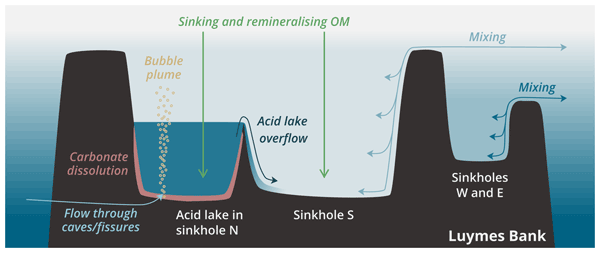
A series of submarine sinkholes were recently discovered on Luymes Bank, part of Saba Bank, a carbonate platform in the Caribbean Netherlands. Here, we investigate the waters inside these sinkholes for the first time. One of the sinkholes contained a body of dense, low-oxygen and low-pH water, which we call the
acid lake. We use measurements of seawater chemistry to work out what processes were responsible for forming the acid lake and discuss the consequences for the carbonate platform.
Matthew P. Humphreys, Ernie R. Lewis, Jonathan D. Sharp, and Denis Pierrot
Geosci. Model Dev., 15, 15–43, https://doi.org/10.5194/gmd-15-15-2022, https://doi.org/10.5194/gmd-15-15-2022, 2022
Short summary
Short summary
The ocean helps to mitigate our impact on Earth's climate by absorbing about a quarter of the carbon dioxide (CO2) released by human activities each year. However, once absorbed, chemical reactions between CO2 and water reduce seawater pH (
ocean acidification), which may have adverse effects on marine ecosystems. Our Python package, PyCO2SYS, models the chemical reactions of CO2 in seawater, allowing us to quantify the corresponding changes in pH and related chemical properties.
Gerrit Müller, Jack J. Middelburg, and Appy Sluijs
Earth Syst. Sci. Data, 13, 3565–3575, https://doi.org/10.5194/essd-13-3565-2021, https://doi.org/10.5194/essd-13-3565-2021, 2021
Short summary
Short summary
Rivers are major freshwater resources, connectors and transporters on Earth. As the composition of river waters and particles results from processes in their catchment, such as erosion, weathering, environmental pollution, nutrient and carbon cycling, Earth-spanning databases of river composition are needed for studies of these processes on a global scale. While extensive resources on water and nutrient composition exist, we provide a database of river particle composition.
Luca Possenti, Ingunn Skjelvan, Dariia Atamanchuk, Anders Tengberg, Matthew P. Humphreys, Socratis Loucaides, Liam Fernand, and Jan Kaiser
Ocean Sci., 17, 593–614, https://doi.org/10.5194/os-17-593-2021, https://doi.org/10.5194/os-17-593-2021, 2021
Short summary
Short summary
A Seaglider was deployed for 8 months in the Norwegian Sea mounting an oxygen and, for the first time, a CO2 optode and a chlorophyll fluorescence sensor. The oxygen and CO2 data were used to assess the spatial and temporal variability and calculate the net community production, N(O2) and N(CT). The dataset was used to calculate net community production from inventory changes, air–sea flux, diapycnal mixing and entrainment.
Yang Feng, Dimitris Menemenlis, Huijie Xue, Hong Zhang, Dustin Carroll, Yan Du, and Hui Wu
Geosci. Model Dev., 14, 1801–1819, https://doi.org/10.5194/gmd-14-1801-2021, https://doi.org/10.5194/gmd-14-1801-2021, 2021
Short summary
Short summary
Simulation of coastal plume regions was improved in global ECCOv4 with a series of sensitivity tests. We find modeled SSS is closer to SMAP when using daily point-source runoff as well as increasing the resolution from coarse to intermediate. The plume characteristics, freshwater transport, and critical water properties are modified greatly. But this may not happen with a further increase to high resolution. The study will advance the seamless modeling of land–ocean–atmosphere feedback in ESMs.
Cited articles
Friedlingstein, P., O'Sullivan, M., Jones, M. W., Andrew, R. M., Bakker, D. C. E., Hauck, J., Landschützer, P., Le Quéré, C., Luijkx, I. T., Peters, G. P., Peters, W., Pongratz, J., Schwingshackl, C., Sitch, S., Canadell, J. G., Ciais, P., Jackson, R. B., Alin, S. R., Anthoni, P., Barbero, L., Bates, N. R., Becker, M., Bellouin, N., Decharme, B., Bopp, L., Brasika, I. B. M., Cadule, P., Chamberlain, M. A., Chandra, N., Chau, T.-T.-T., Chevallier, F., Chini, L. P., Cronin, M., Dou, X., Enyo, K., Evans, W., Falk, S., Feely, R. A., Feng, L., Ford, D. J., Gasser, T., Ghattas, J., Gkritzalis, T., Grassi, G., Gregor, L., Gruber, N., Gürses, Ö., Harris, I., Hefner, M., Heinke, J., Houghton, R. A., Hurtt, G. C., Iida, Y., Ilyina, T., Jacobson, A. R., Jain, A., Jarníková, T., Jersild, A., Jiang, F., Jin, Z., Joos, F., Kato, E., Keeling, R. F., Kennedy, D., Klein Goldewijk, K., Knauer, J., Korsbakken, J. I., Körtzinger, A., Lan, X., Lefèvre, N., Li, H., Liu, J., Liu, Z., Ma, L., Marland, G., Mayot, N., McGuire, P. C., McKinley, G. A., Meyer, G., Morgan, E. J., Munro, D. R., Nakaoka, S.-I., Niwa, Y., O'Brien, K. M., Olsen, A., Omar, A. M., Ono, T., Paulsen, M., Pierrot, D., Pocock, K., Poulter, B., Powis, C. M., Rehder, G., Resplandy, L., Robertson, E., Rödenbeck, C., Rosan, T. M., Schwinger, J., Séférian, R., Smallman, T. L., Smith, S. M., Sospedra-Alfonso, R., Sun, Q., Sutton, A. J., Sweeney, C., Takao, S., Tans, P. P., Tian, H., Tilbrook, B., Tsujino, H., Tubiello, F., van der Werf, G. R., van Ooijen, E., Wanninkhof, R., Watanabe, M., Wimart-Rousseau, C., Yang, D., Yang, X., Yuan, W., Yue, X., Zaehle, S., Zeng, J., and Zheng, B.: Global Carbon Budget 2023, Earth Syst. Sci. Data, 15, 5301–5369, https://doi.org/10.5194/essd-15-5301-2023, 2023. a
Anderson, L. A.: On the hydrogen and oxygen content of marine phytoplankton, Deep Sea Research Part I: Oceanographic research papers, 42, 1675–1680, https://doi.org/10.1016/0967-0637(95)00072-E, 1995. a
Anderson, R., Rowe, G., Kemp, P., Trumbores, S., and Biscaye, P.: Carbon budget for the mid-slope depocenter of the Middle Atlantic Bight, Deep Sea Research Part II: Topical Studies in Oceanography, 41, 669–703, https://doi.org/10.1016/0967-0645(94)90040-X, 1994. a
Archer, D. and Devol, A.: Benthic oxygen fluxes on the Washington shelf and slope: A comparison of in situ microelectrode and chamber flux measurements, Limnology and Oceanography, 37, 614–629, https://doi.org/10.4319/lo.1992.37.3.0614, 1992. a
Arndt, S., Jørgensen, B. B., LaRowe, D. E., Middelburg, J., Pancost, R., and Regnier, P.: Quantifying the degradation of organic matter in marine sediments: A review and synthesis, Earth-Science Reviews, 123, 53–86, https://doi.org/10.1016/j.earscirev.2013.02.008, 2013. a, b, c
Aumont, O. and Bopp, L.: Globalizing results from ocean in situ iron fertilization studies, Global Biogeochemical Cycles, 20, https://doi.org/10.1029/2005GB002591, 2006. a
Aumont, O., Ethé, C., Tagliabue, A., Bopp, L., and Gehlen, M.: PISCES-v2: an ocean biogeochemical model for carbon and ecosystem studies, Geosci. Model Dev., 8, 2465–2513, https://doi.org/10.5194/gmd-8-2465-2015, 2015. a
Berelson, W., Johnson, K., Coale, K., and Li, H.-C.: Organic matter diagenesis in the sediments of the San Pedro Shelf along a transect affected by sewage effluent, Continental Shelf Research, 22, 1101–1115, https://doi.org/10.1016/S0278-4343(01)00120-0, 2002. a
Berelson, W., McManus, J., Coale, K., Johnson, K., Burdige, D., Kilgore, T., Colodner, D., Chavez, F., Kudela, R., and Boucher, J.: A time series of benthic flux measurements from Monterey Bay, CA, Continental Shelf Research, 23, 457–481, https://doi.org/10.1016/S0278-4343(03)00009-8, 2003. a, b, c, d, e, f
Berelson, W. M., Hammond, D. E., McManus, J., and Kilgore, T. E.: Dissolution kinetics of calcium carbonate in equatorial Pacific sediments, Global Biogeochemical Cycles, 8, 219–235, https://doi.org/10.1029/93GB03394, 1994. a
Bezanson, J., Edelman, A., Karpinski, S., and Shah, V. B.: Julia: A fresh approach to numerical computing, SIAM Review, 59, 65–98, https://doi.org/10.1137/141000671, 2017. a
Boudreau, B. P.: Carbonate dissolution rates at the deep ocean floor, Geophysical Research Letters, 40, 744–748, https://doi.org/10.1029/2012GL054231, 2013. a, b
Brenner, H., Braeckman, U., Le Guitton, M., and Meysman, F. J.: The impact of sedimentary alkalinity release on the water column CO2 system in the North Sea, Biogeosciences, 13, 841–863, https://doi.org/10.5194/bg-13-841-2016, 2016. a
Brink, K., Arnone, R., Coble, P., Flagg, C., Jones, B., Kindle, J., Lee, C., Phinney, D., Wood, M., Yentsch, C., and Young, D.: Monsoons boost biological productivity in Arabian Sea, Eos, Transactions American Geophysical Union, 79, 165–169, https://doi.org/10.1029/98EO00120, 1998. a
Burt, W., Thomas, H., Pätsch, J., Omar, A., Schrum, C., Daewel, U., Brenner, H., and de Baar, H.: Radium isotopes as a tracer of sediment-water column exchange in the North Sea, Global Biogeochemical Cycles, 28, 786–804, https://doi.org/10.1002/2014GB004825, 2014. a
Caldeira, K. and Wickett, M. E.: Anthropogenic carbon and ocean pH, Nature, 425, 365–365, https://doi.org/10.1146/annurev.marine.010908.163834, 2003. a
Canfield, D. E., Thamdrup, B., and Hansen, J. W.: The anaerobic degradation of organic matter in Danish coastal sediments: iron reduction, manganese reduction, and sulfate reduction, Geochimica et Cosmochimica Acta, 57, 3867–3883, https://doi.org/10.1016/0016-7037(93)90340-3, 1993. a
Carroll, D., Menemenlis, D., Adkins, J. F., Bowman, K. W., Brix, H., Dutkiewicz, S., Fenty, I., Gierach, M. M., Hill, C., Jahn, O., Landschützer, P., Lauderdale, J. M., Liu, J., Manizza, M., Naviaux, J. D., Rödenbeck, C., Schimel, D. S., Van Der Stocken, T., and Zhang, H.: Seasonal to multi-decadal air-sea CO2 fluxes from the data-constrained ECCO-Darwin global ocean biogeochemistry model: Estimates of Seasonal to Multidecadal Surface Ocean pCO2 and Air-Sea CO2 Flux, Journal of Advances in Modeling Earth Systems, 12, e2019MS001888, https://doi.org/10.1029/2019MS001888, 2020. a, b, c
Cheng, L., Von Schuckmann, K., Abraham, J. P., Trenberth, K. E., Mann, M. E., Zanna, L., England, M. H., Zika, J. D., Fasullo, J. T., Yu, Y., Pan, Y., Zhu, J., Newsom, E. R., Bronselaer, B., and Lin, X.: Past and future ocean warming, Nature Reviews Earth & Environment, 3, 776–794, https://doi.org/10.1038/s43017-022-00345-1, 2022. a
Cheriton, O. M., McPhee-Shaw, E. E., Shaw, W. J., Stanton, T. P., Bellingham, J. G., and Storlazzi, C. D.: Suspended particulate layers and internal waves over the southern Monterey Bay continental shelf: an important control on shelf mud belts?, Journal of Geophysical Research: Oceans, 119, 428–444, https://doi.org/10.1002/2013JC009360, 2014. a
Christensen, J. P.: Sulfate reduction and carbon oxidation rates in continental shelf sediments, an examination of offshelf carbon transport, Continental Shelf Research, 9, 223–246, https://doi.org/10.1016/0278-4343(89)90025-3, 1989. a
Christensen, J. P., Devol, A. H., and Smethie Jr, W. M.: Biological enhancement of solute exchange between sediments and bottom water on the Washington continental shelf, Continental Shelf Research, 3, 9–23, https://doi.org/10.1016/0278-4343(84)90040-2, 1984. a
Christensen, J. P., Smethie Jr, W. M., and Devol, A. H.: Benthic nutrient regeneration and denitrification on the Washington continental shelf, Deep Sea Research Part A. Oceanographic Research Papers, 34, 1027–1047, https://doi.org/10.1016/0198-0149(87)90051-3, 1987. a
IPCC: Climate Change 2023: Synthesis Report, Contribution of Working Groups I, II and III to the Sixth Assessment Report of the Intergovernmental Panel on Climate Change, edited by: Lee, H. and Romero, J., IPCC, Geneva, Switzerland, https://doi.org/10.59327/IPCC/AR6-9789291691647, 2023. a
De Borger, E., Braeckman, U., and Soetaert, K.: Rapid organic matter cycling in North Sea sediments, Continental Shelf Research, 214, 104327, https://doi.org/10.1016/j.csr.2020.104327, 2021. a, b
DeVries, T., Yamamoto, K., Wanninkhof, R., Gruber, N., Hauck, J., Müller, J. D., Bopp, L., Carroll, D., Carter, B., Chau, T., Doney, S. C., Gehlen, M., Gloege, L., Gregor, L., Henson, S., Kim, J. H., Iida, Y., Ilyina, T., Landschützer, P., Le Quéré, C., Munro, D., Nissen, C., Patara, L., Pérez, F. F., Resplandy, L., Rodgers, K. B., Schwinger, J., Séférian, R., Sicardi, V., Terhaar, J., Triñanes, J., Tsujino, H., Watson, A., Yasunaka, S., and Zeng, J.: Magnitude, trends, and variability of the global ocean carbon sink from 1985 to 2018, Global Biogeochemical Cycles, 37, e2023GB007780, https://doi.org/10.1029/2023GB007780, 2023. a
Diamessis, P. J. and Redekopp, L. G.: Numerical investigation of solitary internal wave-induced global instability in shallow water benthic boundary layers, Journal of Physical Oceanography, 36, 784–812, https://doi.org/10.1175/JPO2900.1, 2006. a
Diaz, R. J. and Rosenberg, R.: Spreading dead zones and consequences for marine ecosystems, Science, 321, 926–929, https://doi.org/10.1126/science.1156401, 2008. a
Doney, S. C., Fabry, V. J., Feely, R. A., and Kleypas, J. A.: Ocean acidification: the other CO2 problem, Annual Review of Marine Science, 1, 169–192, https://doi.org/10.1146/annurev.marine.010908.163834, 2009. a
Dong, S., Berelson, W. M., Rollins, N. E., Subhas, A. V., Naviaux, J. D., Celestian, A. J., Liu, X., Turaga, N., Kemnitz, N. J., Byrne, R. H., and Adkins, J. F.: Aragonite dissolution kinetics and calcite/aragonite ratios in sinking and suspended particles in the North Pacific, Earth and Planetary Science Letters, 515, 1–12, https://doi.org/10.1016/j.epsl.2019.03.016, 2019. a, b
Egger, M., Riedinger, N., Mogollón, J. M., and Jørgensen, B. B.: Global diffusive fluxes of methane in marine sediments, Nature Geoscience, 11, 421–425, https://doi.org/10.1038/s41561-018-0122-8, 2018. a, b
Emerson, S. and Bender, M.: Carbon fluxes at the sediment-water interface of the deep-sea: calcium carbonate preservation, Journal of Marine Research, 39, 139–162, 1981. a
Feely, R. A., Sabine, C. L., Lee, K., Berelson, W., Kleypas, J., Fabry, V. J., and Millero, F. J.: Impact of anthropogenic CO2 on the CaCO3 system in the oceans, Science, 305, 362–366, https://doi.org/10.1126/science.1097329, 2004. a
Feldt, R. and Stukalov, A.: Blackboxoptim.jl, Github, https://github.com/robertfeldt/BlackBoxOptim.jl (last access: 12 February 2026), 2018. a
Fennel, K. and Testa, J. M.: Biogeochemical controls on coastal hypoxia, Annual Review of Marine Science, 11, 105–130, https://doi.org/10.1146/annurev-marine-010318-095138, 2019. a
Fiadeiro, M. E. and Veronis, G.: On weighted-mean schemes for the finite-difference approximation to the advection-diffusion equation, Tellus, 29, 512–522, https://doi.org/10.1111/j.2153-3490.1977.tb00763.x, 1977. a, b, c
Fossing, H.: Sulfate reduction in shelf sediments in the upwelling region off Central Peru, Continental Shelf Research, 10, 355–367, https://doi.org/10.1016/0278-4343(90)90056-R, 1990. a
Fossing, H., Berg, P., Thamdrup, B., Rysgaard, S., Sorensen, H. M., and Nielsen, K.: A model set-up for an oxygen and nutrient flux model for Aarhus Bay (Denmark), NERI technical report, 483, ISBN 87-7772-793-2, 2004. a
Froelich, P., Klinkhammer, G., Bender, M. L., Luedtke, N., Heath, G. R., Cullen, D., Dauphin, P., Hammond, D., Hartman, B., and Maynard, V.: Early oxidation of organic matter in pelagic sediments of the eastern equatorial Atlantic: suboxic diagenesis, Geochimica et Cosmochimica Acta, 43, 1075–1090, https://doi.org/10.1016/0016-7037(79)90095-4, 1979. a
Glud, R. N., Berg, P., Fossing, H., and Jørgensen, B. B.: Effect of the diffusive boundary layer on benthic mineralization and O2 distribution: A theoretical model analysis, Limnology and Oceanography, 52, 547–557, https://doi.org/10.4319/lo.2007.52.2.0547, 2007. a, b, c
Grebmeier, J. M. and McRoy, C. P.: Pelagic-benthic coupling on the shelf of the northern Bering and Chukchi Seas. III. Benthic food supply and carbon cycling, Marine Ecology Progress Series, 79–91, https://doi.org/10.3354/meps053079, 1989. a
Hedges, J., Baldock, J., Gélinas, Y., Lee, C., Peterson, M., and Wakeham, S.: The biochemical and elemental compositions of marine plankton: A NMR perspective, Marine Chemistry, 78, 47–63, https://doi.org/10.1016/S0304-4203(02)00009-9, 2002. a
Heinze, C., Maier-Reimer, E., Winguth, A. M., and Archer, D.: A global oceanic sediment model for long-term climate studies, Global Biogeochemical Cycles, 13, 221–250, https://doi.org/10.1029/98GB02812, 1999. a
Hinrichs, K.-U., Hayes, J. M., Sylva, S. P., Brewer, P. G., and DeLong, E. F.: Methane-consuming archaebacteria in marine sediments, Nature, 398, 802–805, https://doi.org/10.1038/19751, 1999. a
Hosegood, P. and van Haren, H.: Near-bed solibores over the continental slope in the Faeroe-Shetland Channel, Deep Sea Research Part II: Topical Studies in Oceanography, 51, 2943–2971, https://doi.org/10.1016/j.dsr2.2004.09.016, 2004. a
Huettel, M., Berg, P., and Kostka, J. E.: Benthic exchange and biogeochemical cycling in permeable sediments, Annual review of marine Science, 6, 23–51, https://doi.org/10.1146/annurev-marine-051413-012706, 2014. a, b, c
Humphreys, M. P., Lewis, E. R., Sharp, J. D., and Pierrot, D.: PyCO2SYS v1.8: marine carbonate system calculations in Python, Geosci. Model Dev., 15, 15–43, https://doi.org/10.5194/gmd-15-15-2022, 2022a. a, b, c
Humphreys, M. P., Orr, J. C., van Heuven, S. M., Pierrot, D., Lewis, E. R., and Wallace, D. W.: mvdh7/CO2System.jl: CO2System.jl: CO2SYS in Julia (v2.0.5-jl.1), Zenodo [code], https://doi.org/10.5281/zenodo.6395674, 2022b. a
Ilyina, T., Six, K. D., Segschneider, J., Maier-Reimer, E., Li, H., and Núñez-Riboni, I.: Global ocean biogeochemistry model HAMOCC: Model architecture and performance as component of the MPI-Earth system model in different CMIP5 experimental realizations, Journal of Advances in Modeling Earth Systems, 5, 287–315, https://doi.org/10.1029/2012MS000178, 2013. a
Ingle, S., Culberson, C., Hawley, J., and Pytkowicz, R.: The solubility of calcite in seawater at atmospheric pressure and 35% permil; salinity, Marine Chemistry, 1, 295–307, https://doi.org/10.1016/0304-4203(73)90019-4, 1973. a
Jorgensen, B. B.: A comparison of methods for the quantification of bacterial sulfate reduction in coastal marine sediments, Geomicrobiology Journal, 1, 11–27, https://doi.org/10.1080/01490457809377721, 1978. a
Keeling, R. F., Körtzinger, A., and Gruber, N.: Ocean deoxygenation in a warming world, Annual Review of Marine Science, 2, 199–229, https://doi.org/10.1146/annurev.marine.010908.163855, 2010. a
Kuderer, M. and Middelburg, J. J.: Organic carbon reaction kinetics in bioturbated sediments, Geophysical Research Letters, 51, e2024GL110404, https://doi.org/10.1029/2024GL110404, 2024. a, b, c
Lacroix, F., Ilyina, T., Mathis, M., Laruelle, G. G., and Regnier, P.: Historical increases in land-derived nutrient inputs may alleviate effects of a changing physical climate on the oceanic carbon cycle, Global Change Biology, 27, 5491–5513, https://doi.org/10.1111/gcb.15822, 2021. a
Laurent, A., Fennel, K., Cai, W.-J., Huang, W.-J., Barbero, L., and Wanninkhof, R.: Eutrophication-induced acidification of coastal waters in the northern Gulf of Mexico: Insights into origin and processes from a coupled physical-biogeochemical model, Geophysical Research Letters, 44, 946–956, https://doi.org/10.1002/2016GL071881, 2017. a
Levich, V. G. and Tobias, C. W.: Physicochemical hydrodynamics, Journal of The Electrochemical Society, 110, 251C, https://doi.org/10.1149/1.2425619, 1963. a, b
Levitus, S., Antonov, J., and Boyer, T.: Warming of the world ocean, 1955–2003, Geophysical Research Letters, 32, https://doi.org/10.1029/2004GL021592, 2005. a
Lewis, E. and Wallace, D.: Program developed for CO2 system calculations, Tech. rep., Environmental System Science Data Infrastructure for a Virtual Ecosystem, https://doi.org/10.15485/1464255, 1998. a
Liu, K.-K., Chen, Y.-J., Tseng, C.-M., Lin, I.-I., Liu, H.-B., and Snidvongs, A.: The significance of phytoplankton photo-adaptation and benthic–pelagic coupling to primary production in the South China Sea: Observations and numerical investigations, Deep Sea Research Part II: Topical Studies in Oceanography, 54, 1546–1574, 2007. a, b
Lohse, L., Epping, E. H., Helder, W., and van Raaphorst, W.: Oxygen pore water profiles in continental shelf sediments of the North Sea: turbulent versus molecular diffusion, Marine Ecology Progress Series, 145, 63–75, https://doi.org/10.3354/meps145063, 1996. a
Lorke, A. and Peeters, F.: Toward a unified scaling relation for interfacial fluxes, Journal of Physical Oceanography, 36, 955–961, https://doi.org/10.1175/JPO2903.1, 2006. a, b
Lorke, A., Müller, B., Maerki, M., and Wüest, A.: Breathing sediments: The control of diffusive transport across the sediment – water interface by periodic boundary-layer turbulence, Limnology and Oceanography, 48, 2077–2085, https://doi.org/10.4319/lo.2003.48.6.2077, 2003. a, b
Manghnani, V., Morrison, J. M., Hopkins, T. S., and Böhm, E.: Advection of upwelled waters in the form of plumes off Oman during the Southwest Monsoon, Deep Sea Research Part II: Topical Studies in Oceanography, 45, 2027–2052, https://doi.org/10.1016/S0967-0645(98)00062-9, 1998. a
Mauritsen, T., Bader, J., Becker, T., Behrens, J., Bittner, M., Brokopf, R., Brovkin, V., Claussen, M., Crueger, T., Esch, M., Fast, I., Fiedler, S., Fläschner, D., Gayler, V., Giorgetta, M., Goll, D. S., Haak, H., Hagemann, S., Hedemann, C., Hohenegger, C., Ilyina, T., Jahns, T., Jimenéz‐de‐la‐Cuesta, D., Jungclaus, J., Kleinen, T., Kloster, S., Kracher, D., Kinne, S., Kleberg, D., Lasslop, G., Kornblueh, L., Marotzke, J., Matei, D., Meraner, K., Mikolajewicz, U., Modali, K., Möbis, B., Müller, W. A., Nabel, J. E. M. S., Nam, C. C. W., Notz, D., Nyawira, S., Paulsen, H., Peters, K., Pincus, R., Pohlmann, H., Pongratz, J., Popp, M., Raddatz, T. J., Rast, S., Redler, R., Reick, C. H., Rohrschneider, T., Schemann, V., Schmidt, H., Schnur, R., Schulzweida, U., Six, K. D., Stein, L., Stemmler, I., Stevens, B., Von Storch, J., Tian, F., Voigt, A., Vrese, P., Wieners, K., Wilkenskjeld, S., Winkler, A., and Roeckner, E.: Developments in the MPI-M Earth System Model version 1.2 (MPI-ESM1.2) and its response to increasing CO2, Journal of Advances in Modeling Earth Systems, 11, 998–1038, https://doi.org/10.1029/2018MS001400, 2019. a
Mayorga, E., Seitzinger, S. P., Harrison, J. A., Dumont, E., Beusen, A. H., Bouwman, A., Fekete, B. M., Kroeze, C., and Van Drecht, G.: Global nutrient export from WaterSheds 2 (NEWS 2): model development and implementation, Environmental Modelling & Software, 25, 837–853, https://doi.org/10.1016/j.envsoft.2010.01.007, 2010. a
Meysman, F. J., Middelburg, J. J., Herman, P. M., and Heip, C. H.: Reactive transport in surface sediments. II. Media: an object-oriented problem-solving environment for early diagenesis, Computers & Geosciences, 29, 301–318, https://doi.org/10.1016/S0098-3004(03)00007-4, 2003. a
Middelburg, J. J.: Marine carbon biogeochemistry: A primer for earth system scientists, Springer Nature, 2019. a
Middelburg, J. J., Soetaert, K., Herman, P. M., and Heip, C. H.: Denitrification in marine sediments: A model study, Global Biogeochemical Cycles, 10, 661–673, https://doi.org/10.1029/96GB02562, 1996. a, b
Middelburg, J. J., Soetaert, K., and Herman, P. M.: Empirical relationships for use in global diagenetic models, Deep Sea Research Part I: Oceanographic Research Papers, 44, 327–344, https://doi.org/10.1016/S0967-0637(96)00101-X, 1997. a
Monin, A. S. and Yaglom, A. M.: Statistical Fluid Dynamics, vol. I and II, MIT Press, Cambridge, MA, ISBN 0262130629, 1971. a
Moosdorf, N., Tschaikowski, J., Kretschmer, D., and Reinecke, R.: A global coastal permeability dataset (CoPerm 1.0), Scientific Data, 11, 893, https://doi.org/10.1038/s41597-024-03749-4, 2024. a
Morford, J. L. and Emerson, S.: The geochemistry of redox sensitive trace metals in sediments, Geochimica et Cosmochimica Acta, 63, 1735–1750, https://doi.org/10.1016/S0016-7037(99)00126-X, 1999. a, b
Mucci, A.: The solubility of calcite and aragonite in seawater at various salinities, temperatures, and one atmosphere total pressure, American Journal of Science, 283, 780–799, https://doi.org/10.2475/ajs.283.7.780, 1983. a
National Academies of Sciences, Engineering, and Medicine: A Research Strategy for Ocean-based Carbon Dioxide Removal and Sequestration, The National Academies Press, Washington, DC, ISBN 978-0-309-08761-2, https://doi.org/10.17226/26278, 2022. a
Naviaux, J. D., Subhas, A. V., Dong, S., Rollins, N. E., Liu, X., Byrne, R. H., Berelson, W. M., and Adkins, J. F.: Calcite dissolution rates in seawater: Lab vs. in-situ measurements and inhibition by organic matter, Marine Chemistry, 215, 103 684, https://doi.org/10.1016/j.marchem.2019.103684, 2019. a, b
Niemistö, J. and Lund-Hansen, L. C.: Instantaneous effects of sediment resuspension on inorganic and organic benthic nutrient fluxes at a shallow water coastal site in the Gulf of Finland, Baltic Sea, Estuaries and Coasts, 42, 2054–2071, 2019. a
Rackauckas, C. and Nie, Q.: Differentialequations. jl–a performant and feature-rich ecosystem for solving differential equations in julia, Journal of Open Research Software, 5, https://doi.org/10.5334/jors.151, 2017. a, b
Rothman, D. H.: Slow closure of Earth’s carbon cycle, Proceedings of the National Academy of Sciences, 121, e2310998121, https://doi.org/10.1073/pnas.2310998121, 2024. a
Rowe, G., Theroux, R., Phoel, W., Quinby, H., Wilke, R., Koschoreck, D., Whitledge, T., Falkowski, P., and Fray, C.: Benthic carbon budgets for the continental shelf south of New England, Continental Shelf Research, 8, 511–527, https://doi.org/10.1016/0278-4343(88)90066-0, 1988. a
Santschi, P. H., Bower, P., Nyffeler, U. P., Azevedo, A., and Broecker, W. S.: Estimates of the resistance to chemical transport posed by the deep-sea boundary layer 1, 2, Limnology and Oceanography, 28, 899–912, https://doi.org/10.4319/lo.1983.28.5.0899, 1983. a, b
Smith Jr., K. L., Ruhl, H. A., Huffard, C. L., Messié, M., and Kahru, M.: Episodic organic carbon fluxes from surface ocean to abyssal depths during long-term monitoring in NE Pacific, Proceedings of the National Academy of Sciences, 115, 12235–12240, https://doi.org/10.1073/pnas.1814559115, 2018. a
Snelgrove, P. V., Soetaert, K., Solan, M., Thrush, S., Wei, C.-L., Danovaro, R., Fulweiler, R. W., Kitazato, H., Ingole, B., Norkko, A., Parkes, R. J., and Volkenborn, N.: Global carbon cycling on a heterogeneous seafloor, Trends in Ecology & Evolution, 33, 96–105, https://doi.org/10.1016/j.tree.2017.11.004, 2018. a
Soetaert, K., Herman, P. M., and Middelburg, J. J.: Dynamic response of deep-sea sediments to seasonal variations: A model, Limnology and Oceanography, 41, 1651–1668, https://doi.org/10.4319/lo.1996.41.8.1651, 1996a. a
Soetaert, K., Herman, P. M., and Middelburg, J. J.: A model of early diagenetic processes from the shelf to abyssal depths, Geochimica et Cosmochimica Acta, 60, 1019–1040, https://doi.org/10.1016/0016-7037(96)00013-0, 1996b. a
Soetaert, K., Middelburg, J. J., Herman, P. M., and Buis, K.: On the coupling of benthic and pelagic biogeochemical models, Earth-Science Reviews, 51, 173–201, https://doi.org/10.1016/S0012-8252(00)00004-0, 2000. a, b
Stastna, M. and Lamb, K. G.: Sediment resuspension mechanisms associated with internal waves in coastal waters, Journal of Geophysical Research: Oceans, 113, https://doi.org/10.1029/2007JC004711, 2008. a
Stock, C. A., Dunne, J. P., Fan, S., Ginoux, P., John, J., Krasting, J. P., Laufkötter, C., Paulot, F., and Zadeh, N.: Ocean biogeochemistry in GFDL's Earth System Model 4.1 and its response to increasing atmospheric CO2, Journal of Advances in Modeling Earth Systems, 12, e2019MS002043, https://doi.org/10.1029/2019MS002043, 2020. a, b
Stranne, C., O’Regan, M., Hong, W.-L., Brüchert, V., Ketzer, M., Thornton, B. F., and Jakobsson, M.: Anaerobic oxidation has a minor effect on mitigating seafloor methane emissions from gas hydrate dissociation, Communications Earth & Environment, 3, 163, https://doi.org/10.1038/s43247-022-00490-x, 2022. a
Sulpis, O., Boudreau, B. P., Mucci, A., Jenkins, C., Trossman, D. S., Arbic, B. K., and Key, R. M.: Current CaCO3 dissolution at the seafloor caused by anthropogenic CO2, Proceedings of the National Academy of Sciences, 115, 11700–11705, https://doi.org/10.1073/pnas.1804250115, 2018. a, b, c
Sulpis, O., Jeansson, E., Dinauer, A., Lauvset, S. K., and Middelburg, J. J.: Calcium carbonate dissolution patterns in the ocean, Nature Geoscience, 14, 423–428, https://doi.org/10.1038/s41561-021-00743-y, 2021. a
Sulpis, O., Humphreys, M. P., Wilhelmus, M. M., Carroll, D., Berelson, W. M., Menemenlis, D., Middelburg, J. J., and Adkins, J. F.: RADIv1: a non-steady-state early diagenetic model for ocean sediments in Julia and MATLAB/GNU Octave, Geosci. Model Dev., 15, 2105–2131, https://doi.org/10.5194/gmd-15-2105-2022, 2022. a, b, c, d, e, f, g, h, i, j
Sulpis, O., Trossman, D. S., Holzer, M., Jeansson, E., Lauvset, S. K., and Middelburg, J. J.: Respiration patterns in the dark ocean, Global Biogeochemical Cycles, 37, e2023GB007747, https://doi.org/10.1029/2023GB007747, 2023. a
Swart, N. C., Cole, J. N. S., Kharin, V. V., Lazare, M., Scinocca, J. F., Gillett, N. P., Anstey, J., Arora, V., Christian, J. R., Hanna, S., Jiao, Y., Lee, W. G., Majaess, F., Saenko, O. A., Seiler, C., Seinen, C., Shao, A., Sigmond, M., Solheim, L., von Salzen, K., Yang, D., and Winter, B.: The Canadian Earth System Model version 5 (CanESM5.0.3), Geosci. Model Dev., 12, 4823–4873, https://doi.org/10.5194/gmd-12-4823-2019, 2019. a
Séférian, R., Berthet, S., Yool, A., Palmiéri, J., Bopp, L., Tagliabue, A., Kwiatkowski, L., Aumont, O., Christian, J., Dunne, J., Gehlen, M., Ilyina, T., John, J. G., Li, H., Long, M. C., Luo, J. Y., Nakano, H., Romanou, A., Schwinger, J., Stock, C., Santana-Falcón, Y., Takano, Y., Tjiputra, J., Tsujino, H., Watanabe, M., Wu, T., Wu, F., and Yamamoto, A.: Tracking improvement in simulated marine biogeochemistry between CMIP5 and CMIP6, Current Climate Change Reports, 6, 95–119, 2020. a, b
Tanioka, T. and Matsumoto, K.: Stability of marine organic matter respiration stoichiometry, Geophysical Research Letters, 47, e2019GL085564, https://doi.org/10.1029/2019GL085564, 2020. a
Terhaar, J., Goris, N., Müller, J. D., DeVries, T., Gruber, N., Hauck, J., Perez, F. F., and Séférian, R.: Assessment of global ocean biogeochemistry models for ocean carbon sink estimates in RECCAP2 and recommendations for future studies, Journal of Advances in Modeling Earth Systems, 16, e2023MS003840, https://doi.org/10.1029/2023MS003840, 2024. a, b, c, d
Thamdrup, B. and Canfield, D. E.: Pathways of carbon oxidation in continental margin sediments off central Chile, Limnology and Oceanography, 41, 1629–1650, https://doi.org/10.4319/lo.1996.41.8.1629, 1996. a
Therkildsen, M. S. and Lomstein, B. A.: Seasonal variation in net benthic C-mineralization in a shallow estuary, FEMS Microbiology Ecology, 12, 131–142, https://doi.org/10.1111/j.1574-6941.1993.tb00025.x, 1993. a
Upton, A., Nedwell, D., Parkes, R. J., and Harvey, S. M.: Seasonal benthic microbial activity in the southern North Sea; oxygen uptake and sulphate reduction, Marine Ecology Progress Series, 273–281, https://doi.org/10.3354/meps101273, 1993. a, b
Van Cappellen, P. and Wang, Y.: Cycling of iron and manganese in surface sediments; a general theory for the coupled transport and reaction of carbon, oxygen, nitrogen, sulfur, iron, and manganese, American Journal of Science, 296, 197–243, https://doi.org/10.2475/ajs.296.3.197, 1996. a
Van Dam, B., Lehmann, N., Zeller, M. A., Neumann, A., Pröfrock, D., Lipka, M., Thomas, H., and Böttcher, M. E.: Benthic alkalinity fluxes from coastal sediments of the Baltic and North seas: comparing approaches and identifying knowledge gaps, Biogeosciences, 19, 3775–3789, https://doi.org/10.5194/bg-19-3775-2022, 2022. a
van der Zant, H. F., Humphreys, M. P., and Sulpis, O.: Radi.jl: the reactive-advective-diffusive-irrigative diagenetic sediment module in Julia (v2.0.0-rc.1), Zenodo [code and data set], https://doi.org/10.5281/zenodo.18386461, 2025. a, b, c
Van Raaphorst, W., Kloosterhuis, H. T., Cramer, A., and Bakker, K. J.: Nutrient early diagenesis in the sandy sediments of the Dogger Bank area, North Sea: Pore water results, Netherlands Journal of Sea Research, 26, 25–52, https://doi.org/10.1016/0077-7579(90)90054-K, 1990. a
Voermans, J. J., Ghisalberti, M., and Ivey, G. N.: A model for mass transport across the sediment-water interface, Water Resources Research, 54, 2799–2812, https://doi.org/10.1002/2017WR022418, 2018. a, b
Voynova, Y. G., Petersen, W., Gehrung, M., Aßmann, S., and King, A. L.: Intertidal regions changing coastal alkalinity: The Wadden Sea-North Sea tidally coupled bioreactor, Limnology and Oceanography, 64, 1135–1149, https://doi.org/10.1002/lno.11103, 2019. a
Welch, B. L.: The significance of the difference between two means when the population variances are unequal, Biometrika, 29, 350–362, https://doi.org/10.2307/2332010, 1938. a
Westrich, J. T. and Berner, R. A.: The role of sedimentary organic matter in bacterial sulfate reduction: The G model tested 1, Limnology and Oceanography, 29, 236–249, https://doi.org/10.4319/lo.1984.29.2.0236, 1984. a
Yool, A., Popova, E. E., and Anderson, T. R.: MEDUSA-2.0: an intermediate complexity biogeochemical model of the marine carbon cycle for climate change and ocean acidification studies, Geosci. Model Dev., 6, 1767–1811, https://doi.org/10.5194/gmd-6-1767-2013, 2013. a, b
Yuan-Hui, L. and Gregory, S.: Diffusion of ions in sea water and in deep-sea sediments, Geochimica et Cosmochimica Acta, 38, 703–714, https://doi.org/10.1016/0016-7037(74)90145-8, 1974. a, b
Zeppilli, D., Pusceddu, A., Trincardi, F., and Danovaro, R.: Seafloor heterogeneity influences the biodiversity–ecosystem functioning relationships in the deep sea, Scientific reports, 6, 26352, https://doi.org/10.1038/srep26352, 2016. a
Short summary
We developed a model to simulate seafloor biogeochemical processes across a wide range of marine environments, from shallow coastal zones to deep-sea sediments. From this model, we derived a set of simple equations that predict how carbon, oxygen, and alkalinity are exchanged between sediments and overlying waters. These equations provide an efficient way to improve how ocean models represent seafloor interactions, which are often missing or overly simplified.
We developed a model to simulate seafloor biogeochemical processes across a wide range of marine...