
Articles | Volume 19, issue 19
https://doi.org/10.5194/gmd-19-9627-2026
© Author(s) 2026. This work is distributed under
the Creative Commons Attribution 4.0 License.
the Creative Commons Attribution 4.0 License.
https://doi.org/10.5194/gmd-19-9627-2026
© Author(s) 2026. This work is distributed under
the Creative Commons Attribution 4.0 License.
the Creative Commons Attribution 4.0 License.
Model evaluation paper
| 
12 Oct 2026
Model evaluation paper |
| 12 Oct 2026
| 12 Oct 2026
Towards high-fidelity simulations of coastal submesoscale baroclinic instabilities with MPAS–O (vE3SM3.0.0) – Part 2: Realistic experiments
Dylan R. Schlichting
CORRESPONDING AUTHOR

Los Alamos National Laboratory, Los Alamos, NM, USA
Katherine M. Smith
Los Alamos National Laboratory, Los Alamos, NM, USA
Mark R. Petersen
Los Alamos National Laboratory, Los Alamos, NM, USA
Robert D. Hetland
Pacific Northwest National Laboratory, Richland, WA, USA
Kyle E. Hinson
Pacific Northwest National Laboratory, Richland, WA, USA
Darren Engwirda
Los Alamos National Laboratory, Los Alamos, NM, USA
Commonwealth Scientific and Industrial Research Organisation, Canberra, Australia
Related authors
Kyle E. Hinson, Dylan R. Schlichting, Robert D. Hetland, Darren Engwirda, Katherine M. Smith, Mark R. Petersen, and Kaila Uyeda
EGUsphere, https://doi.org/10.5194/egusphere-2026-1566, https://doi.org/10.5194/egusphere-2026-1566, 2026
Short summary
Short summary
Physical dynamics of ocean flows at fine spatial scales are challenging for regional and global scale ocean models due to high computational effort associated with smaller grid cell sizes. We compared two ocean models: a regional model (ROMS; Regional Ocean Modeling System) and global model (MPAS-O; Model for Prediction Across Scales – Ocean) across a range of resolutions (10 km to 100 m) in an idealized domain, and found that their similarities may hold promise for future coupling between them.
Skyler Kern, Mary E. McGuinn, Katherine M. Smith, Nadia Pinardi, Kyle E. Niemeyer, Nicole S. Lovenduski, and Peter E. Hamlington
Geosci. Model Dev., 19, 5601–5622, https://doi.org/10.5194/gmd-19-5601-2026, https://doi.org/10.5194/gmd-19-5601-2026, 2026
Short summary
Short summary
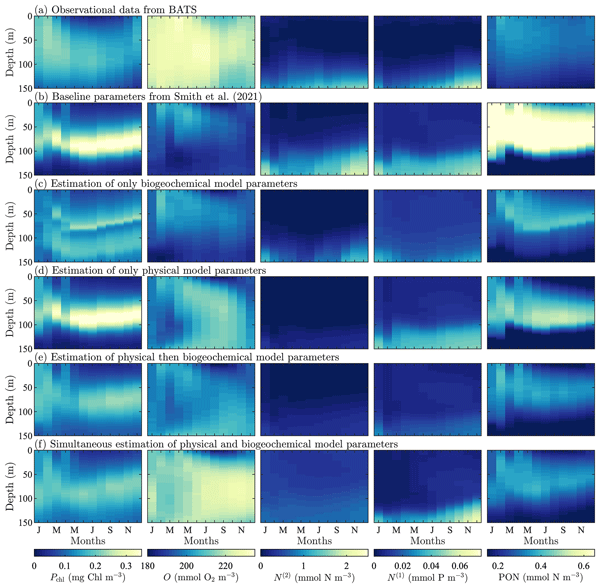
The parameters that control a model's behavior determine its ability to represent a system. In this work, multiple cases test how to estimate the parameters of a model with components corresponding to both the physics and the chemical and biological processes (i.e. the biogeochemistry) of the ocean. While demonstrating how to approach this problem type, the results show estimating both sets of parameters simultaneously is better than estimating the physics then the biogeochemistry separately.
Kyle E. Hinson, Dylan R. Schlichting, Robert D. Hetland, Darren Engwirda, Katherine M. Smith, Mark R. Petersen, and Kaila Uyeda
EGUsphere, https://doi.org/10.5194/egusphere-2026-1566, https://doi.org/10.5194/egusphere-2026-1566, 2026
Short summary
Short summary
Physical dynamics of ocean flows at fine spatial scales are challenging for regional and global scale ocean models due to high computational effort associated with smaller grid cell sizes. We compared two ocean models: a regional model (ROMS; Regional Ocean Modeling System) and global model (MPAS-O; Model for Prediction Across Scales – Ocean) across a range of resolutions (10 km to 100 m) in an idealized domain, and found that their similarities may hold promise for future coupling between them.
Mark R. Petersen, Xylar S. Asay-Davis, Alice M. Barthel, Carolyn Branecky Begeman, Siddhartha Bishnu, Steven R. Brus, Philip W. Jones, Hyun-Gyu Kang, Youngsung Kim, Azamat Mametjanov, Brian J. O'Neill, James R. Overfelt, Kieran K. Ringel, Katherine M. Smith, Sarat Sreepathi, Luke P. Van Roekel, and Maciej Waruszewski
Geosci. Model Dev., 19, 3569–3594, https://doi.org/10.5194/gmd-19-3569-2026, https://doi.org/10.5194/gmd-19-3569-2026, 2026
Short summary
Short summary
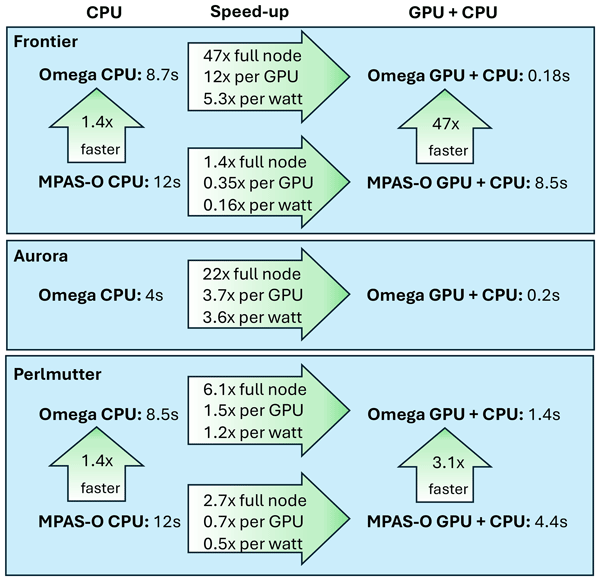
Ocean models are used to predict currents, temperature, and salinity of the earth's oceans, much like weather forecasting. As supercomputer hardware changes with evolving technology, models must be updated, and sometimes rewritten. Here we document Omega, a new ocean model that was designed to run on the world's fastest supercomputers. Testing shows that Omega accurately solves the model equations, and runs efficiently on many different computer architectures, including exascale computers.
Dongyu Feng, Zeli Tan, Darren Engwirda, Jonathan D. Wolfe, Donghui Xu, Chang Liao, Gautam Bisht, James J. Benedict, Tian Zhou, Mithun Deb, Hong-Yi Li, and L. Ruby Leung
Nat. Hazards Earth Syst. Sci., 25, 3619–3639, https://doi.org/10.5194/nhess-25-3619-2025, https://doi.org/10.5194/nhess-25-3619-2025, 2025
Short summary
Short summary
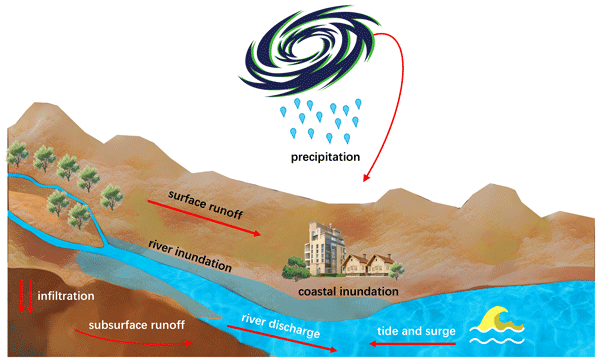
Our study explores how riverine and coastal flooding during hurricanes is influenced by the interaction of atmosphere, land, river, and ocean conditions. Using an advanced Earth system model, we simulate Hurricane Irene to evaluate how meteorological and hydrological uncertainties affect flood modeling. Our findings reveal the importance of a multi-component modeling system, how hydrological conditions play critical roles in flood modeling, and greater flood risks if multiple factors are present.
Chang Liao, Darren Engwirda, Matthew G. Cooper, Mingke Li, and Yilin Fang
Earth Syst. Sci. Data, 17, 2035–2062, https://doi.org/10.5194/essd-17-2035-2025, https://doi.org/10.5194/essd-17-2035-2025, 2025
Short summary
Short summary
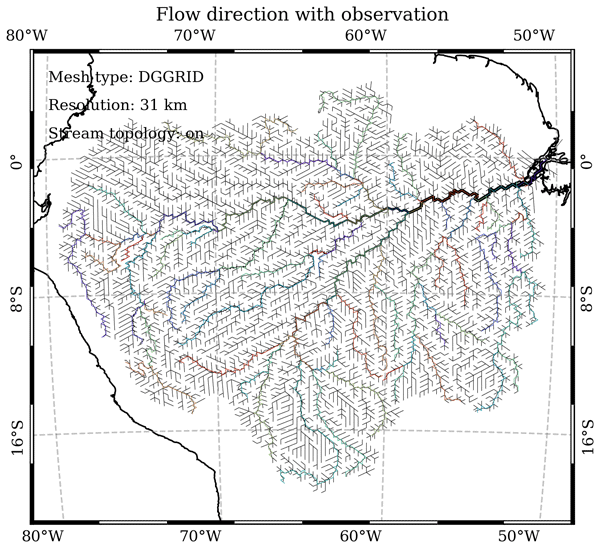
Discrete global grid systems, or DGGS, are digital frameworks that help us organize information about our planet. Although scientists have used DGGS in areas like weather and nature, using them in the water cycle has been challenging because some core datasets are missing. We created a way to generate these datasets. We then developed the datasets in the Amazon and Yukon basins, which play important roles in our planet's climate. These datasets may help us improve our water cycle models.
Katherine M. Smith, Alice M. Barthel, LeAnn M. Conlon, Luke P. Van Roekel, Anthony Bartoletti, Jean-Christophe Golaz, Chengzhu Zhang, Carolyn Branecky Begeman, James J. Benedict, Gautam Bisht, Yan Feng, Walter Hannah, Bryce E. Harrop, Nicole Jeffery, Wuyin Lin, Po-Lun Ma, Mathew E. Maltrud, Mark R. Petersen, Balwinder Singh, Qi Tang, Teklu Tesfa, Jonathan D. Wolfe, Shaocheng Xie, Xue Zheng, Karthik Balaguru, Oluwayemi Garuba, Peter Gleckler, Aixue Hu, Jiwoo Lee, Ben Moore-Maley, and Ana C. Ordoñez
Geosci. Model Dev., 18, 1613–1633, https://doi.org/10.5194/gmd-18-1613-2025, https://doi.org/10.5194/gmd-18-1613-2025, 2025
Short summary
Short summary
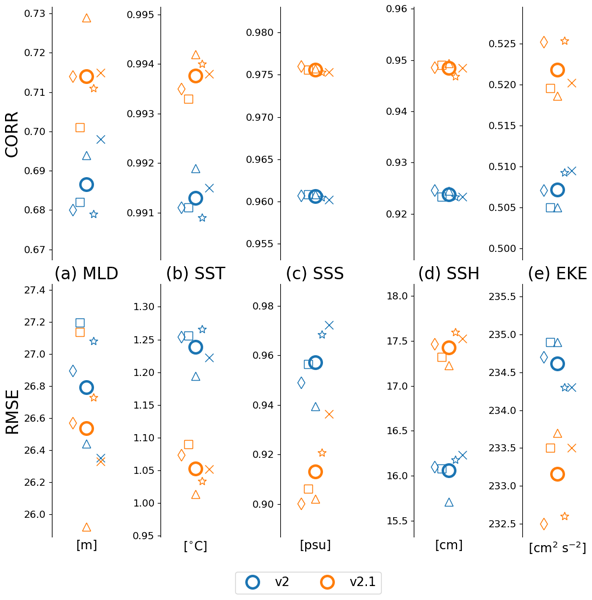
Version 2.1 of the U.S. Department of Energy's Energy Exascale Earth System Model (E3SM) adds the Fox-Kemper et al. (2011) mixed-layer eddy parameterization, which restratifies the ocean surface layer through an overturning streamfunction. Results include surface layer bias reduction in temperature, salinity, and sea ice extent in the North Atlantic; a small strengthening of the Atlantic meridional overturning circulation; and improvements to many atmospheric climatological variables.
Huilin Huang, Yun Qian, Gautam Bisht, Jiali Wang, Tirthankar Chakraborty, Dalei Hao, Jianfeng Li, Travis Thurber, Balwinder Singh, Zhao Yang, Ye Liu, Pengfei Xue, William J. Sacks, Ethan Coon, and Robert Hetland
Geosci. Model Dev., 18, 1427–1443, https://doi.org/10.5194/gmd-18-1427-2025, https://doi.org/10.5194/gmd-18-1427-2025, 2025
Short summary
Short summary
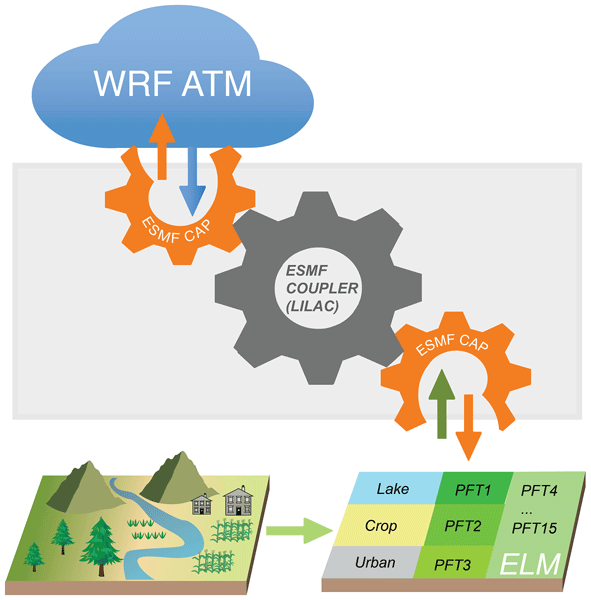
We integrate the E3SM Land Model (ELM) with the WRF model through the Lightweight Infrastructure for Land Atmosphere Coupling (LILAC) Earth System Modeling Framework (ESMF). This framework includes a top-level driver, LILAC, for variable communication between WRF and ELM and ESMF caps for ELM initialization, execution, and finalization. The LILAC–ESMF framework maintains the integrity of the ELM's source code structure and facilitates the transfer of future ELM model developments to WRF-ELM.
Cara Nissen, Nicole S. Lovenduski, Mathew Maltrud, Alison R. Gray, Yohei Takano, Kristen Falcinelli, Jade Sauvé, and Katherine Smith
Geosci. Model Dev., 17, 6415–6435, https://doi.org/10.5194/gmd-17-6415-2024, https://doi.org/10.5194/gmd-17-6415-2024, 2024
Short summary
Short summary
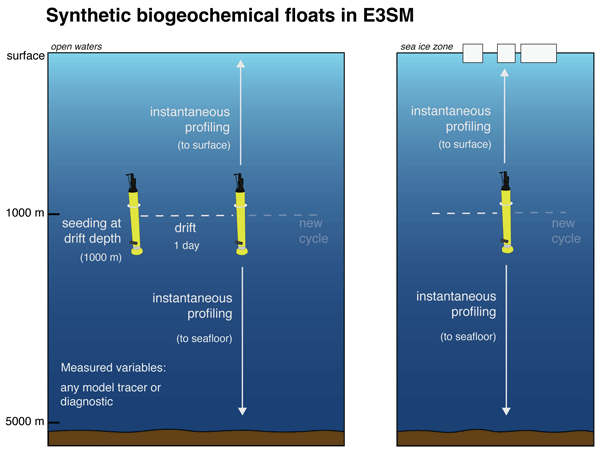
Autonomous profiling floats have provided unprecedented observational coverage of the global ocean, but uncertainties remain about whether their sampling frequency and density capture the true spatiotemporal variability of physical, biogeochemical, and biological properties. Here, we present the novel synthetic biogeochemical float capabilities of the Energy Exascale Earth System Model version 2 and demonstrate their utility as a test bed to address these uncertainties.
Mithun Deb, James J. Benedict, Ning Sun, Zhaoqing Yang, Robert D. Hetland, David Judi, and Taiping Wang
Nat. Hazards Earth Syst. Sci., 24, 2461–2479, https://doi.org/10.5194/nhess-24-2461-2024, https://doi.org/10.5194/nhess-24-2461-2024, 2024
Short summary
Short summary
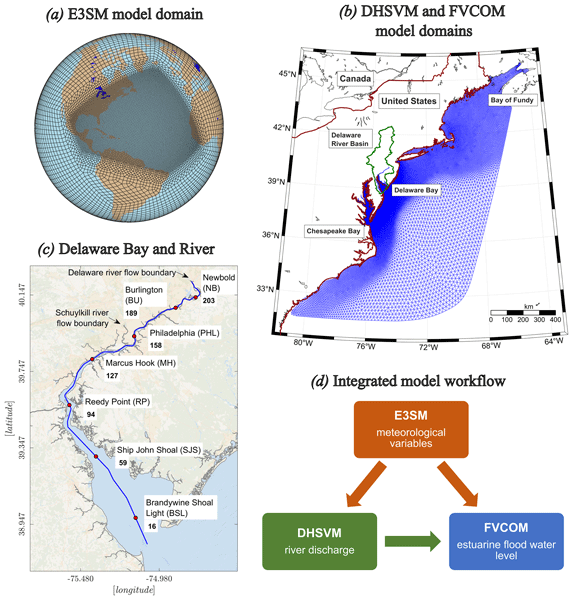
We coupled earth system, hydrology, and hydrodynamic models to generate plausible and physically consistent ensembles of hurricane events and their associated water levels from the open coast to tidal rivers of Delaware Bay and River. Our results show that the hurricane landfall locations and the estuarine wind can significantly amplify the extreme surge in a shallow and converging system, especially when the wind direction aligns with the surge propagation direction.
Sara Calandrini, Darren Engwirda, and Luke Van Roekel
EGUsphere, https://doi.org/10.5194/egusphere-2024-472, https://doi.org/10.5194/egusphere-2024-472, 2024
Preprint withdrawn
Short summary
Short summary
Most modern ocean circulation models only consider the hydrostatic pressure, but for coastal phenomena nonhydrostatic effects become important, creating the need to include the nonhydrostatic pressure. In this work, we present a nonhydrostatic formulation for MPAS-Ocean (MPAS-O NH) and show its correctness on idealized benchmark test cases. MPAS-O NH is the first global nonhydrostatic model at variable resolution and is the first nonhydrostatic ocean model to be fully coupled in a climate model.
Skyler Kern, Mary E. McGuinn, Katherine M. Smith, Nadia Pinardi, Kyle E. Niemeyer, Nicole S. Lovenduski, and Peter E. Hamlington
Geosci. Model Dev., 17, 621–649, https://doi.org/10.5194/gmd-17-621-2024, https://doi.org/10.5194/gmd-17-621-2024, 2024
Short summary
Short summary
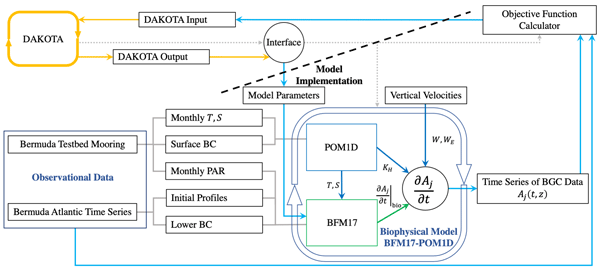
Computational models are used to simulate the behavior of marine ecosystems. The models often have unknown parameters that need to be calibrated to accurately represent observational data. Here, we propose a novel approach to simultaneously determine a large set of parameters for a one-dimensional model of a marine ecosystem in the surface ocean at two contrasting sites. By utilizing global and local optimization techniques, we estimate many parameters in a computationally efficient manner.
Siddhartha Bishnu, Robert R. Strauss, and Mark R. Petersen
Geosci. Model Dev., 16, 5539–5559, https://doi.org/10.5194/gmd-16-5539-2023, https://doi.org/10.5194/gmd-16-5539-2023, 2023
Short summary
Short summary
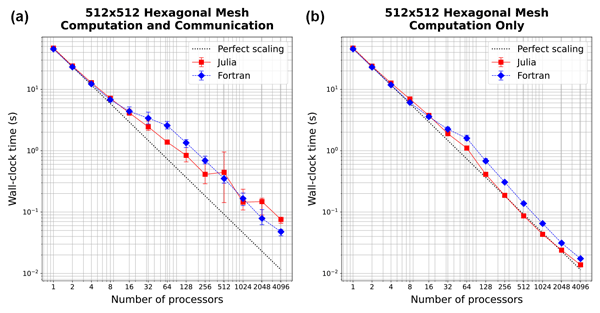
Here we test Julia, a relatively new programming language, which is designed to be simple to write, but also fast on advanced computer architectures. We found that Julia is both convenient and fast, but there is no free lunch. Our first attempt to develop an ocean model in Julia was relatively easy, but the code was slow. After several months of further development, we created a Julia code that is as fast on supercomputers as a Fortran ocean model.
Kyle E. Hinson, Marjorie A. M. Friedrichs, Raymond G. Najjar, Maria Herrmann, Zihao Bian, Gopal Bhatt, Pierre St-Laurent, Hanqin Tian, and Gary Shenk
Biogeosciences, 20, 1937–1961, https://doi.org/10.5194/bg-20-1937-2023, https://doi.org/10.5194/bg-20-1937-2023, 2023
Short summary
Short summary
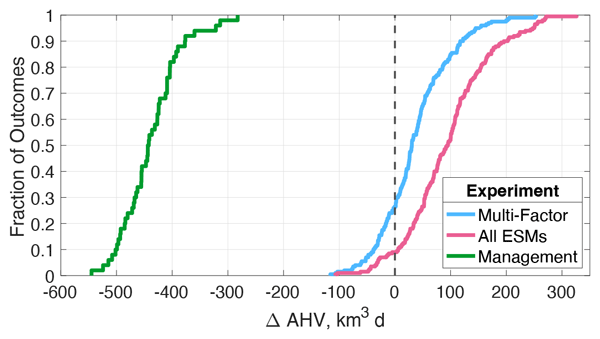
Climate impacts are essential for environmental managers to consider when implementing nutrient reduction plans designed to reduce hypoxia. This work highlights relative sources of uncertainty in modeling regional climate impacts on the Chesapeake Bay watershed and consequent declines in bay oxygen levels. The results demonstrate that planned water quality improvement goals are capable of reducing hypoxia levels by half, offsetting climate-driven impacts on terrestrial runoff.
Nairita Pal, Kristin N. Barton, Mark R. Petersen, Steven R. Brus, Darren Engwirda, Brian K. Arbic, Andrew F. Roberts, Joannes J. Westerink, and Damrongsak Wirasaet
Geosci. Model Dev., 16, 1297–1314, https://doi.org/10.5194/gmd-16-1297-2023, https://doi.org/10.5194/gmd-16-1297-2023, 2023
Short summary
Short summary
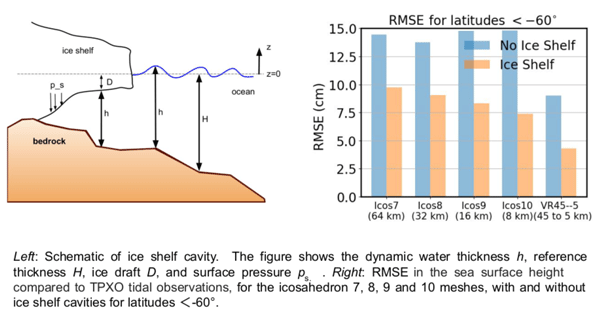
Understanding tides is essential to accurately predict ocean currents. Over the next several decades coastal processes such as flooding and erosion will be severely impacted due to climate change. Tides affect currents along the coastal regions the most. In this paper we show the results of implementing tides in a global ocean model known as MPAS–Ocean. We also show how Antarctic ice shelf cavities affect global tides. Our work points towards future research with tide–ice interactions.
Dongyu Feng, Zeli Tan, Darren Engwirda, Chang Liao, Donghui Xu, Gautam Bisht, Tian Zhou, Hong-Yi Li, and L. Ruby Leung
Hydrol. Earth Syst. Sci., 26, 5473–5491, https://doi.org/10.5194/hess-26-5473-2022, https://doi.org/10.5194/hess-26-5473-2022, 2022
Short summary
Short summary
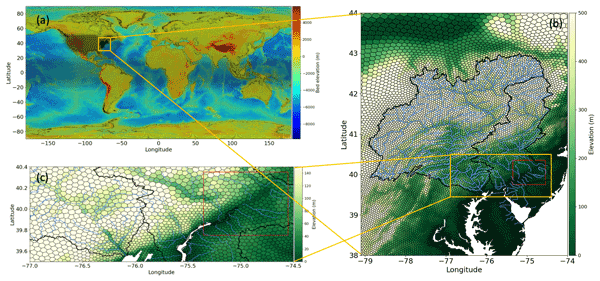
Sea level rise, storm surge and river discharge can cause coastal backwater effects in downstream sections of rivers, creating critical flood risks. This study simulates the backwater effects using a large-scale river model on a coastal-refined computational mesh. By decomposing the backwater drivers, we revealed their relative importance and long-term variations. Our analysis highlights the increasing strength of backwater effects due to sea level rise and more frequent storm surge.
Adrian K. Turner, William H. Lipscomb, Elizabeth C. Hunke, Douglas W. Jacobsen, Nicole Jeffery, Darren Engwirda, Todd D. Ringler, and Jonathan D. Wolfe
Geosci. Model Dev., 15, 3721–3751, https://doi.org/10.5194/gmd-15-3721-2022, https://doi.org/10.5194/gmd-15-3721-2022, 2022
Short summary
Short summary
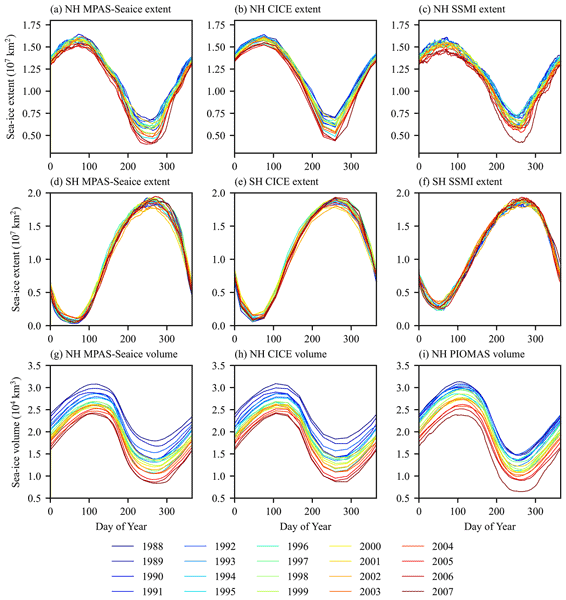
We present the dynamical core of the MPAS-Seaice model, which uses a mesh consisting of a Voronoi tessellation with polygonal cells. Such a mesh allows variable mesh resolution in different parts of the domain and the focusing of computational resources in regions of interest. We describe the velocity solver and tracer transport schemes used and examine errors generated by the model in both idealized and realistic test cases and examine the computational efficiency of the model.
Milena Veneziani, Wieslaw Maslowski, Younjoo J. Lee, Gennaro D'Angelo, Robert Osinski, Mark R. Petersen, Wilbert Weijer, Anthony P. Craig, John D. Wolfe, Darin Comeau, and Adrian K. Turner
Geosci. Model Dev., 15, 3133–3160, https://doi.org/10.5194/gmd-15-3133-2022, https://doi.org/10.5194/gmd-15-3133-2022, 2022
Short summary
Short summary
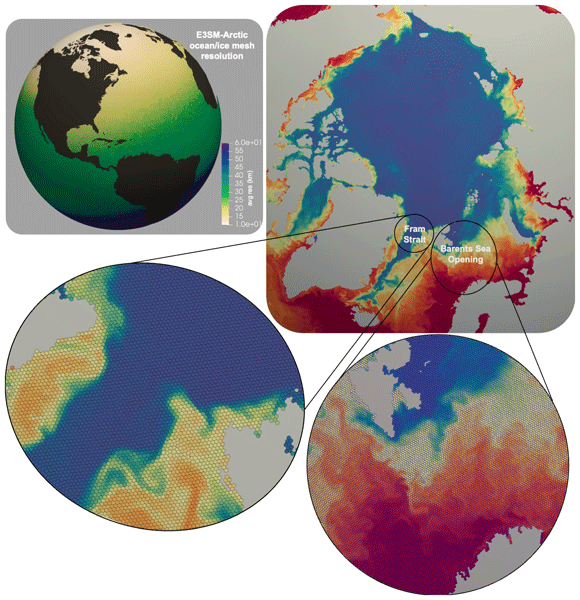
We present an Earth system model (ESM) simulation, E3SM-Arctic-OSI, with a refined grid to better resolve the Arctic ocean and sea-ice system and low spatial resolution elsewhere. The configuration satisfactorily represents many aspects of the Arctic system and its interactions with the sub-Arctic, while keeping computational costs at a fraction of those necessary for global high-resolution ESMs. E3SM-Arctic can thus be an efficient tool to study Arctic processes on climate-relevant timescales.
Cited articles
Balwada, D., Xiao, Q., Smith, S., Abernathey, R., and Gray, A. R.: Vertical fluxes conditioned on vorticity and strain reveal submesoscale ventilation, J. Phys. Oceanogr., 51, 2883–2901, https://doi.org/10.1175/JPO-D-21-0016.1, 2021. a
Barkan, R., McWilliams, J. C., Shchepetkin, A. F., Molemaker, M. J., Renault, L., Bracco, A., and Choi, J.: Submesoscale Dynamics in the Northern Gulf of Mexico. Part I: Regional and Seasonal Characterization and the Role of River Outflow, J. Phys. Oceanogr., 47, 2325–2346, https://doi.org/10.1175/jpo-d-17-0035.1, 2017. a, b
Barron, C. N., Kara, A. B., Martin, P. J., Rhodes, R. C., and Smedstad, L. F.: Formulation, implementation and examination of vertical coordinate choices in the Global Navy Coastal Ocean Model (NCOM), Ocean Model., 11, 347–375, https://doi.org/10.1016/j.ocemod.2005.01.004, 2006. a
Bianchi, T. S., DiMarco, S. F., Cowan Jr, J., Hetland, R. D., Chapman, P., Day, J., and Allison, M.: The science of hypoxia in the Northern Gulf of Mexico: A review, Sci. Total Environ., 408, 1471–1484, https://doi.org/10.1016/j.scitotenv.2009.11.047, 2010. a
Bracco, A., Liu, G., and Sun, D.: Mesoscale-submesoscale interactions in the Gulf of Mexico: From oil dispersion to climate, Chaos Solit. Fract., 119, 63–72, https://doi.org/10.1016/j.chaos.2018.12.012, 2019. a
Burchard, H. and Bolding, K.: GETM – A General Estuarine Transport Model: Scientific documentation, Tech. Rep. EUR 20253 EN, European Commission, 157 pp., https://publications.jrc.ec.europa.eu/repository/handle/JRC23237 (last access: 8 October 2026), 2002. a
Burchard, H. and Rennau, H.: Comparative quantification of physically and numerically induced mixing in ocean models, Ocean Model., 20, 293–311, https://doi.org/10.1016/j.ocemod.2007.10.003, 2008. a
Callies, J., Ferrari, R., Klymak, J. M., and Gula, J.: Seasonality in submesoscale turbulence, Nat. Commun., 6, 6862, https://doi.org/10.1038/ncomms7862, 2015. a
Danabasoglu, G., Lamarque, J.-F., Bacmeister, J., Bailey, D. A., DuVivier, A. K., Edwards, J., Emmons, L. K., Fasullo, J., Garcia, R., Gettelman, A., Hannay, C., Holland, M. M., Large, W. G., Lauritzen, P. H., Lawrence, D. M., Lenaerts, J. T. M., Lindsay, K., Lipscomb, W. H., Mills, M. J., Neale, R., Oleson, K. W., Otto-Bliesner, B., Phillips, A. S., Sacks, W., Tilmes, S., van Kampenhout, L., Vertenstein, M., Bertini, A., Dennis, J., Deser, C., Fischer, C., Fox-Kemper, B., Kay, J. E., Kinnison, D., Kushner, P. J., Larson, V. E., Long, M. C., Mickelson, S., Moore, J. K., Nienhouse, E., Polvani, L., Rasch, P. J., and Strand, W. G.: The Community Earth System Model Version 2 (CESM2), J. Adv. Model. Earth Syst., 12, e2019MS001916, https://doi.org/10.1029/2019MS001916, 2020. a
DiMarco, S. F. and Reid, R. O.: Characterization of the principal tidal current constituents on the Texas-Louisiana shelf, J. Geophys. Res.-Oceans, 103, 3093–3109, https://doi.org/10.1029/97jc03289, 1998. a
Engwirda, D.: JIGSAW-GEO (1.0): Locally orthogonal staggered unstructured grid generation for general circulation modelling on the sphere, Geosci. Model Dev., 10, 2117–2140, https://doi.org/10.5194/gmd-10-2117-2017, 2017. a
Epke, M., Linardakis, L., Korn, P., and Brüggemann, N.: Overturning of Mixed Layer Eddies in a Submesoscale-Resolving Simulation of the North Atlantic, J. Phys. Oceanogr., 56, 1437–1468, https://doi.org/10.1175/JPO-D-25-0015.1, 2026. a
Fong, D. A. and Geyer, W. R.: Response of a river plume during an upwelling favorable wind event, J. Geophys. Res.-Oceans, 106, 1067–1084, https://doi.org/10.1029/2000JC900134, 2001. a
Fox-Kemper, B., Danabasoglu, G., Ferrari, R., Griffies, S., Hallberg, R., Holland, M., Maltrud, M., Peacock, S., and Samuels, B.: Parameterization of mixed layer eddies. III: Implementation and impact in global ocean climate simulations, Ocean Model., 39, 61–78, https://doi.org/10.1016/j.ocemod.2010.09.002, 2011. a
Gent, P. R. and McWilliams, J. C.: Isopycnal mixing in ocean circulation models, J. Phys. Oceanogr., 20, 150–155, https://doi.org/10.1175/1520-0485(1990)020<0150:IMIOCM>2.0.CO;2, 1990. a
Golaz, J.-C., Lin, W., Zheng, X., Xie, S., Roberts, A. F., Van Roekel, L. P., Thornton, P. E., Barthel, A. M., Bradley, A. M., Wolfe, J. D., Zhang, C., Zhang, K., Zhang, S., Asay-Davis, X. S., Begeman, C. B., Bisht, G., Burrows, S. M., Chen, C.-C.-J., Feng, Y., Hunke, E. C., Jacob, R. L., Ke, Z., Mahajan, S., Mahfouz, N. G., Maltrud, M. E., Shi, X., Tang, Q., Terai, C. R., Thomas, E. E., Wang, H., Xie, J., Zhou, T., Bartoletti, T., Benedict, J. J., Brunke, M. A., Comeau, D. S., Fan, J., Forsyth, R. M., Foucar, J. G., Guba, O., Hannah, W. M., Hao, D., Huang, X., Jeffery, N., Kang, H.-G., Keen, N. D., Lee, H.-H., Lee, J., Liu, X., Mametjanov, A., Mülmenstädt, J., Petersen, M. R., Prather, M. J., Price, S. F., Qian, Y., Salinger, A. G., Santos, S. P., Shan, Y., Singh, B., Smith, K. M., Song, X., Sreepathi, S., Turner, A. K., Vo, T., Wan, H., Wu, M., Yu, W., Zender, C. S., Zeng, X., Zhang, G. J., Zhang, M., Zhang, T., Zhang, Y., McCoy, R. B., Taylor, M. A., Leung, L. R., Caldwell, P. M., and Bader, D. C.: The Energy Exascale Earth System Model Version 3: 2. Overview of the Coupled System, J. Adv. Model. Earth Syst., 18, e2025MS005302, https://doi.org/10.1029/2025MS005302, 2026. a, b, c, d
Große, F., Fennel, K., and Laurent, A.: Quantifying the relative importance of riverine and open-ocean nitrogen sources for hypoxia formation in the northern Gulf of Mexico, J. Geophys. Res.-Oceans, 124, 5451–5467, https://doi.org/10.1029/2019JC015230, 2019. a
Hetland, R. and Hsu, T.: Freshwater and sediment dispersal in large river plumes, Biogeochemical dynamics at large river-coastal interfaces: Linkages with global climate change, Cambridge University Press, 55–85, https://doi.org/10.1017/CBO9781139136853, 2013. a
Hetland, R. D.: Relating river plume structure to vertical mixing, J. Phys. Oceanogr., 35, 1667–1688, https://doi.org/10.1175/jpo2774.1, 2005. a
Hetland, R. D. and DiMarco, S. F.: Skill assessment of a hydrodynamic model of circulation over the Texas–Louisiana continental shelf, Ocean Model., 43, 64–76, https://doi.org/10.1016/j.ocemod.2011.11.009, 2012. a
Higdon, R. L.: A two-level time-stepping method for layered ocean circulation models: further development and testing, J. Comput. Phys., 206, 463–504, https://doi.org/10.1016/j.jcp.2004.12.011, 2005. a
Hinson, K. E., Schlichting, D. R., Hetland, R. D., Engwirda, D., Smith, K. M., Petersen, M. R., and Uyeda, K.: Towards high-fidelity simulations of coastal submesoscale baroclinic instabilities with MPAS–O (vE3SM3.0.0) – Part I: Idealized experiments, EGUsphere [preprint], https://doi.org/10.5194/egusphere-2026-1566, 2026. a, b, c
Hoch, K. E., Petersen, M. R., Brus, S. R., Engwirda, D., Roberts, A. F., Rosa, K. L., and Wolfram, P. J.: MPAS-Ocean simulation quality for variable-resolution North American coastal meshes, J. Adv. Model. Earth Syst., 12, e2019MS001848, https://doi.org/10.1029/2019MS001848, 2020. a
Horner-Devine, A. R., Hetland, R. D., and MacDonald, D. G.: Mixing and transport in coastal river plumes, Annu. Rev. Fluid Mech., 47, 569–594, https://doi.org/10.1146/annurev-fluid-010313-141408, 2015. a, b
Jerlov, N. G.: Optical studies of ocean water, Reports of the Swedish Deep-Sea Expedition 1947–1948, 3, Elanders Boktryckeri Aktiebolag, Mölnlycke, Sweden, 1–59, 1951. a
Körner, M., Cusack, J. M., Nash, J., Shearman, R. K., Thomas, L. N., MacKinnon, J., Hsu, F. H. W., Taylor, J., Liu, J., and Hilditch, J. P.: Symmetric instability drives exchange between surface and bottom waters in a coastal front, Sci. Adv., 12, eaeb9841, https://doi.org/10.1126/sciadv.aeb9841, 2026. a
Large, W. G., McWilliams, J. C., and Doney, S. C.: Oceanic vertical mixing: A review and a model with a nonlocal boundary layer parameterization, Rev. Geophys., 32, 363–403, https://doi.org/10.1029/94RG01872, 1994. a, b
Lévy, M., Franks, P. J., and Smith, K. S.: The role of submesoscale currents in structuring marine ecosystems, Nat. Commun., 9, 4758, https://doi.org/10.1038/s41467-018-07059-3, 2018. a
Li, Q., Reichl, B. G., Fox-Kemper, B., Adcroft, A. J., Belcher, S. E., Danabasoglu, G., Grant, A. L. M., Griffies, S. M., Hallberg, R., Hara, T., Harcourt, R. R., Kukulka, T., Large, W. G., McWilliams, J. C., Pearson, B., Sullivan, P. P., Van Roekel, L., Wang, P., and Zheng, Z.: Comparing ocean surface boundary vertical mixing schemes including Langmuir turbulence, J. Adv. Model. Earth Syst., 11, 3545–3592, https://doi.org/10.1029/2019MS001810, 2019. a, b
Liu, G., Bracco, A., and Sitar, A.: Submesoscale mixing across the mixed layer in the Gulf of Mexico, Front. Mar. Sci., 8, 615066, https://doi.org/10.3389/fmars.2021.615066, 2021. a
Marta-Almeida, M., Hetland, R. D., and Zhang, X.: Evaluation of model nesting performance on the Texas-Louisiana continental shelf, J. Geophys. Res.-Oceans, 118, 2476–2491, https://doi.org/10.1002/jgrc.20163, 2013. a
Mathis, M., Logemann, K., Maerz, J., Lacroix, F., Hagemann, S., Chegini, F., Ramme, L., Ilyina, T., Korn, P., and Schrum, C.: Seamless integration of the coastal ocean in global marine carbon cycle modeling, J. Adv. Model. Earth Syst., 14, e2021MS002789, https://doi.org/10.1029/2021MS002789, 2022. a, b, c, d
McWilliams, J. C.: Submesoscale currents in the ocean, P. Roy. Soc. A, 472, 20160117, https://doi.org/10.1098/rspa.2016.0117, 2016. a
McWilliams, J. C., Huckle, E., and Shchepetkin, A. F.: Buoyancy effects in a stratified Ekman layer, J. Phys. Oceanogr., 39, 2581–2599, https://doi.org/10.1175/2009JPO4130.1, 2009. a
Ntaganou, N., Chassignet, E. P., and Bozec, A.: Impact of horizontal model resolution on mixing and dispersion in the northeastern Gulf of Mexico, J. Geophys. Res.-Oceans, 129, e2024JC021315, https://doi.org/10.1029/2024JC021315, 2024. a
Paulson, C. A. and Simpson, J. J.: Irradiance measurements in the upper ocean, J. Phys. Oceanogr., 7, 952–956, https://doi.org/10.1175/1520-0485(1977)007<0952:IMITUO>2.0.CO;2, 1977. a
Petersen, M. R., Jacobsen, D. W., Ringler, T. D., Hecht, M. W., and Maltrud, M. E.: Evaluation of the arbitrary Lagrangian–Eulerian vertical coordinate method in the MPAS-Ocean model, Ocean Model., 86, 93–113, https://doi.org/10.1016/j.ocemod.2014.12.004, 2015. a, b
Petersen, M. R., Asay-Davis, X. S., Berres, A. S., Chen, Q., Feige, N., Hoffman, M. J., Jacobsen, D. W., Jones, P. W., Maltrud, M. E., Price, S. F., Ringler, T. D., Streletz, G. J., Turner, A. K., Van Roekel, L. P., Veneziani, M., Wolfe, J. D., Wolfram, P. J., and Woodring, J. L.: An evaluation of the ocean and sea ice climate of E3SM using MPAS and interannual CORE-II forcing, J. Adv. Model. Earth Syst., 11, 1438–1458, https://doi.org/10.1029/2018MS001373, 2019. a
Qu, L., Thomas, L. N., and Hetland, R. D.: Near-inertial-wave critical layers over sloping bathymetry, J. Phys. Oceanogr., 51, 1737–1756, https://doi.org/10.1175/jpo-d-20-0221.1, 2021. a
Qu, L., Thomas, L. N., Wienkers, A. F., Hetland, R. D., Kobashi, D., Taylor, J. R., Hsu, F. H. W., MacKinnon, J. A., Shearman, R. K., and Nash, J. D.: Rapid vertical exchange at fronts in the Northern Gulf of Mexico, Nat. Commun., 13, 5624, https://doi.org/10.1038/s41467-022-33251-7, 2022. a, b, c, d
Redi, M. H.: Oceanic isopycnal mixing by coordinate rotation, J. Phys. Oceanogr., 12, 1154–1158, https://doi.org/10.1175/1520-0485(1982)012<1154:OIMBCR>2.0.CO;2, 1982. a
Ringler, T., Petersen, M., Higdon, R. L., Jacobsen, D., Jones, P. W., and Maltrud, M.: A multi-resolution approach to global ocean modeling, Ocean Model., 69, 211–232, https://doi.org/10.1016/j.ocemod.2013.04.010, 2013. a
Ringler, T. D., Thuburn, J., Klemp, J. B., and Skamarock, W. C.: A unified approach to energy conservation and potential vorticity dynamics for arbitrarily-structured C-grids, J. Comput. Phys., 229, 3065–3090, https://doi.org/10.1016/j.jcp.2009.12.007, 2010. a
Roobaert, A., Laruelle, G. G., Landschützer, P., Gruber, N., Chou, L., and Regnier, P.: The spatiotemporal dynamics of the sources and sinks of CO2 in the global coastal ocean, Global Biogeochem. Cy., 33, 1693–1714, https://doi.org/10.1029/2019GB006239, 2019. a
Savelli, R., Carroll, D., Menemenlis, D., Lauderdale, J. M., Bertin, C., Dutkiewicz, S., Manizza, M., Bloom, A. A., Castro-Morales, K., Miller, C. E., Simard, M., Bowman, K. W., and Zhang, H.: Implementing riverine biogeochemical inputs in ECCO-Darwin: a sensitivity analysis of terrestrial fluxes in a data-assimilative global ocean biogeochemistry model, Geosci. Model Dev., 19, 867–885, https://doi.org/10.5194/gmd-19-867-2026, 2026. a
Schlichting, D., Qu, L., Kobashi, D., and Hetland, R.: Quantification of physical and numerical mixing in a coastal ocean model using salinity variance budgets, J. Adv. Model. Earth Syst., 15, e2022MS003380, https://doi.org/10.1029/2022MS003380, 2023. a, b, c
Schlichting, D., Hetland, R., and Jones, C. S.: Numerical mixing suppresses submesoscale baroclinic instabilities over sloping bathymetry, J. Adv. Model. Earth Syst., 16, e2024MS004321, https://doi.org/10.1029/2024MS004321, 2024. a
Schlichting, D., Smith, K., Petersen, M., Hetland, R., Hinson, K., and Engwirda, D.: Towards High-Fidelity Simulations of Coastal Submesoscale Baroclinic Instabilities with MPAS-O (vE3SM3.0.0) Part II: Data and Code, Zenodo [code and data set], https://doi.org/10.5281/zenodo.17903086, 2026. a
Shchepetkin, A. F. and McWilliams, J. C.: Quasi-monotone advection schemes based on explicit locally adaptive dissipation, Mon. Weather Rev., 126, 1541–1580, https://doi.org/10.1175/1520-0493(1998)126<1541:QMASBO>2.0.CO;2, 1998. a
Shchepetkin, A. F. and McWilliams, J. C.: The Regional Oceanic Modeling System (ROMS): A split-explicit, free-surface, topography-following-coordinate oceanic model, Ocean Model., 9, 347–404, https://doi.org/10.1016/j.ocemod.2004.08.002, 2005. a, b
Shchepetkin, A. F. and McWilliams, J. C.: Computational kernel algorithms for fine-scale, multiprocess, longtime oceanic simulations, in: Handbook of numerical analysis, vol. 14, Elsevier, 121–183, https://doi.org/10.1016/S1570-8659(08)01202-0, 2009. a
Shcherbina, A. Y., D'Asaro, E. A., Lee, C. M., Klymak, J. M., Molemaker, M. J., and McWilliams, J. C.: Statistics of vertical vorticity, divergence, and strain in a developed submesoscale turbulence field, Geophys. Res. Lett., 40, 4706–4711, https://doi.org/10.1002/grl.50919, 2013. a
Skamarock, W. C. and Gassmann, A.: Conservative transport schemes for spherical geodesic grids: High-order flux operators for ODE-based time integration, Mon. Weather Rev., 139, 2962–2975, https://doi.org/10.1175/MWR-D-10-05056.1, 2011. a
Smith, K. M., Hamlington, P. E., and Fox-Kemper, B.: Effects of submesoscale turbulence on ocean tracers, J. Geophys. Res.-Oceans, 121, 908–933, https://doi.org/10.1002/2015JC011089, 2016. a
Smolarkiewicz, P. K. and Margolin, L. G.: MPDATA: A finite-difference solver for geophysical flows, J. Comput. Phys., 140, 459–480, https://doi.org/10.1006/jcph.1998.5901, 1998. a
Sorourian, S., Huang, H., Xu, K., Justic, D., and D'Sa, E. J.: A modeling study of water and sediment flux partitioning through the major passes of Mississippi Birdfoot Delta and their plume structures, Geomorphology, 401, 108109, https://doi.org/10.1016/j.geomorph.2022.108109, 2022. a
Stefan, H. G. and Preud'homme, E. B.: Stream temperature estimation from air temperature, J. Am. Water Resour. Assoc., 29, 27–45, https://doi.org/10.1111/j.1752-1688.1993.tb01502.x, 1993. a, b
Stewart, K., Kim, W., Urakawa, S., Hogg, A., Yeager, S., Tsujino, H., Nakano, H., Kiss, A., and Danabasoglu, G.: JRA55-do-based repeat year forcing datasets for driving ocean–sea-ice models, Ocean Model., 147, 101557, https://doi.org/10.1016/j.ocemod.2019.101557, 2020. a, b, c
Sun, Q., Whitney, M. M., Bryan, F. O., and Tseng, Y.-h.: A box model for representing estuarine physical processes in Earth system models, Ocean Model., 112, 139–153, https://doi.org/10.1016/j.ocemod.2017.03.004, 2017. a
Suzuki, T., Yamazaki, D., Tsujino, H., Komuro, Y., Nakano, H., and Urakawa, S.: A dataset of continental river discharge based on JRA-55 for use in a global ocean circulation model, J. Oceanogr., 74, 421–429, https://doi.org/10.1007/s10872-017-0458-5, 2018. a
Tang, Q., Golaz, J.-C., Van Roekel, L. P., Taylor, M. A., Lin, W., Hillman, B. R., Ullrich, P. A., Bradley, A. M., Guba, O., Wolfe, J. D., Zhou, T., Zhang, K., Zheng, X., Zhang, Y., Zhang, M., Wu, M., Wang, H., Tao, C., Singh, B., Rhoades, A. M., Qin, Y., Li, H.-Y., Feng, Y., Zhang, Y., Zhang, C., Zender, C. S., Xie, S., Roesler, E. L., Roberts, A. F., Mametjanov, A., Maltrud, M. E., Keen, N. D., Jacob, R. L., Jablonowski, C., Hughes, O. K., Forsyth, R. M., Di Vittorio, A. V., Caldwell, P. M., Bisht, G., McCoy, R. B., Leung, L. R., and Bader, D. C.: The fully coupled regionally refined model of E3SM version 2: overview of the atmosphere, land, and river results, Geosci. Model Dev., 16, 3953–3995, https://doi.org/10.5194/gmd-16-3953-2023, 2023. a
Taylor, J. R. and Thompson, A. F.: Submesoscale dynamics in the upper ocean, Annu. Rev. Fluid Mech., 55, 103–127, https://doi.org/10.1146/annurev-fluid-031422-095147, 2023. a
Thyng, K. M. and Hetland, R. D.: Seasonal and interannual cross-shelf transport over the Texas and Louisiana continental shelf, Cont. Shelf Res., 160, 23–35, https://doi.org/10.1016/j.csr.2018.03.006, 2018. a
Turner, A. K., Lipscomb, W. H., Hunke, E. C., Jacobsen, D. W., Jeffery, N., Engwirda, D., Ringler, T. D., and Wolfe, J. D.: MPAS-Seaice (v1.0.0): sea-ice dynamics on unstructured Voronoi meshes, Geosci. Model Dev., 15, 3721–3751, https://doi.org/10.5194/gmd-15-3721-2022, 2022. a
Uchida, T., Le Sommer, J., Stern, C., Abernathey, R. P., Holdgraf, C., Albert, A., Brodeau, L., Chassignet, E. P., Xu, X., Gula, J., Roullet, G., Koldunov, N., Danilov, S., Wang, Q., Menemenlis, D., Bricaud, C., Arbic, B. K., Shriver, J. F., Qiao, F., Xiao, B., Biastoch, A., Schubert, R., Fox-Kemper, B., Dewar, W. K., and Wallcraft, A.: Cloud-based framework for inter-comparing submesoscale-permitting realistic ocean models, Geosci. Model Dev., 15, 5829–5856, https://doi.org/10.5194/gmd-15-5829-2022, 2022. a
Van Roekel, L., Adcroft, A. J., Danabasoglu, G., Griffies, S. M., Kauffman, B., Large, W., Levy, M., Reichl, B. G., Ringler, T., and Schmidt, M.: The KPP boundary layer scheme for the ocean: Revisiting its formulation and benchmarking one-dimensional simulations relative to LES, J. Adv. Model. Earth Syst., 10, 2647–2685, https://doi.org/10.1029/2018MS001336, 2018. a, b, c, d
Warner, J. C., Sherwood, C. R., Arango, H. G., and Signell, R. P.: Performance of four turbulence closure models implemented using a generic length scale method, Ocean Model., 8, 81–113, https://doi.org/10.1016/j.ocemod.2003.12.003, 2005. a
Wise, A., Harle, J., Bruciaferri, D., O'Dea, E., and Polton, J.: The effect of vertical coordinates on the accuracy of a shelf sea model, Ocean Model., 170, 101935, https://doi.org/10.1016/j.ocemod.2021.101935, 2022. a
Wiseman, W. J., Rabalais, N., Turner, R., Dinnel, S., and MacNaughton, A.: Seasonal and interannual variability within the Louisiana coastal current: stratification and hypoxia, J. Mar. Syst., 12, 237–248, https://doi.org/10.1016/S0924-7963(96)00100-5, 1997. a
Zhang, W. and Hetland, R. D.: A study of baroclinic instability induced convergence near the bottom using water age simulations, J. Geophys. Res.-Oceans, 123, 1962–1977, https://doi.org/10.1002/2017JC013561, 2018. a
Zhang, X., Hetland, R. D., Marta-Almeida, M., and DiMarco, S. F.: A numerical investigation of the Mississippi and Atchafalaya freshwater transport, filling and flushing times on the Texas-Louisiana Shelf, J. Geophys. Res.-Oceans, 117, C11009, https://doi.org/10.1029/2012jc008108, 2012a. a, b, c, d, e, f, g, h, i, j, k, l, m, n
Zhang, X., Marta-Almeida, M., and Hetland, R. D.: A high-resolution pre-operational forecast model of circulation on the Texas-Louisiana continental shelf and slope, J. Operat. Oceanogr., 5, 19–34, https://doi.org/10.1080/1755876X.2012.11020129, 2012b. a, b
Zhang, Y. J., Fernandez-Montblanc, T., Pringle, W., Yu, H.-C., Cui, L., and Moghimi, S.: Global seamless tidal simulation using a 3D unstructured-grid model (SCHISM v5.10.0), Geosci. Model Dev., 16, 2565–2581, https://doi.org/10.5194/gmd-16-2565-2023, 2023. a, b
Short summary
River plumes can strongly influence coastal dynamics but are poorly resolved in global ocean models. Building on a companion study, we perform high-resolution simulations of the Mississippi–Atchafalaya (M–A) plume with the Model for Prediction Across Scales–Ocean (MPAS–O), a global model, and compare with a limited-domain Regional Ocean Modeling System configuration. MPAS–O qualitatively captures the M–A plume seasonality but fails to generate realistic eddies on the Texas–Louisiana shelf.
River plumes can strongly influence coastal dynamics but are poorly resolved in global ocean...


