
Articles | Volume 19, issue 18
https://doi.org/10.5194/gmd-19-8693-2026
© Author(s) 2026. This work is distributed under
the Creative Commons Attribution 4.0 License.
the Creative Commons Attribution 4.0 License.
Special issue:
https://doi.org/10.5194/gmd-19-8693-2026
© Author(s) 2026. This work is distributed under
the Creative Commons Attribution 4.0 License.
the Creative Commons Attribution 4.0 License.
Model experiment description paper
| Highlight paper
| 
18 Sep 2026
Model experiment description paper | Highlight paper |
| 18 Sep 2026
| 18 Sep 2026
The Cloud Feedback Model Intercomparison Project (CFMIP) contribution to CMIP7

Department of Physics, Imperial College London, London, UK
Alejandro Bodas-Salcedo
Met Office Hadley Centre, Exeter, UK
Mark D. Zelinka
Lawrence Livermore National Laboratory, Livermore, CA, USA
Timothy Andrews
Met Office Hadley Centre, Exeter, UK
School of Earth and Environment, University of Leeds, Leeds, United Kingdom
Florent Brient
LMD/IPSL, Sorbonne Université, Paris, France
Institut Universitaire de France (IUF), Paris, France
Robin Chadwick
Met Office Hadley Centre, Exeter, UK
Global Systems Institute, Department of Mathematics and Statistics, University of Exeter, Exeter, UK
An-Zhuo Dai
Department of Physics, Imperial College London, London, UK
Jonathan M. Gregory
National Centre for Atmospheric Science, University of Reading, Reading, UK
Yen-Ting Hwang
Department of Atmospheric Sciences, National Taiwan University, Taipei, Taiwan
Sarah M. Kang
Max Planck Institute for Meteorology, Hamburg, Germany
Jennifer E. Kay
Department of Atmospheric and Oceanic Sciences, University of Colorado Boulder, Boulder, Colorado, USA
Cooperative Institute for Research in Environmental Science, University of Colorado Boulder, Boulder, Colorado, USA
Thorsten Mauritsen
Department of Meteorology, Stockholm University, Stockholm, Sweden
Bolin Centre for Climate Research, Stockholm University, Stockholm, Sweden
Tomoo Ogura
Earth System Division, National Institute for Environmental Studies, Tsukuba, Japan
George Tselioudis
Goddard Institute for Space Studies, NASA, New York, NY, USA
Masahiro Watanabe
Atmosphere and Ocean Research Institute, University of Tokyo, Kashiwa, Japan
Mark J. Webb
Met Office Hadley Centre, Exeter, UK
Allison A. Wing
Department of Earth, Ocean and Atmospheric Science, Florida State University, Tallahassee, FL, USA
Related authors
Abel Shibu, Henrik Auestad, Paulo Ceppi, and Tim Woollings
EGUsphere, https://doi.org/10.5194/egusphere-2026-4895, https://doi.org/10.5194/egusphere-2026-4895, 2026
This preprint is open for discussion and under review for Weather and Climate Dynamics (WCD).
Short summary
Short summary
We estimate the contributions from various processes to the strength of extratropical cyclones using a novel framework applied to cyclones tracked in climate model data. Diabatic processes increase in importance with cyclone strength and account for most of the strength of the strongest storms in both summer and winter. In a warmer climate with increased moisture availability, winter storms show a significant increase in strength, with implications for future weather extremes.
Omer Roi-Cohen, Gaea Hadary, Casey J. Wall, Paulo Ceppi, and Guy Dagan
EGUsphere, https://doi.org/10.5194/egusphere-2026-3075, https://doi.org/10.5194/egusphere-2026-3075, 2026
Short summary
Short summary
When humans burn fossil fuels, released particles make clouds more reflective, cooling Earth. This effect is a major uncertainty in climate projections, and recent satellite studies disagree widely on its magnitude. We developed a framework, validated against models and observations, to test which analytical choices are most reliable. Our resulting estimate aligns with major international climate assessments, providing independent observational support for consensus climate projections.
Aleena M. Jaison, Paulo Ceppi, and Sarah Wilson Kemsley
EGUsphere, https://doi.org/10.5194/egusphere-2026-2841, https://doi.org/10.5194/egusphere-2026-2841, 2026
Short summary
Short summary
We investigate how stratospheric winds influence high clouds using satellite observations and climate models. These winds, known as the quasi-biennial oscillation, alter meteorological conditions in the troposphere such as upper-tropospheric temperature, stability, and humidity, and clouds respond to these changes. Reducing model biases requires improving cloud sensitivity to these factors. This framework could also help assess cloud responses to stratospheric cooling driven by climate change.
Paulo Ceppi, Sarah Wilson Kemsley, Hendrik Andersen, Timothy Andrews, Ryan J. Kramer, Peer Nowack, Casey J. Wall, and Mark D. Zelinka
Atmos. Chem. Phys., 26, 4153–4171, https://doi.org/10.5194/acp-26-4153-2026, https://doi.org/10.5194/acp-26-4153-2026, 2026
Short summary
Short summary
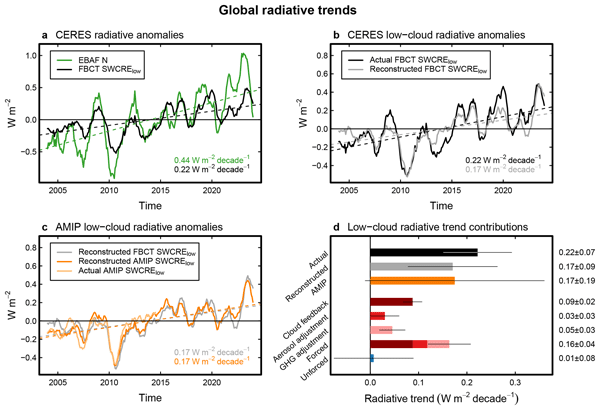
Recent decades have seen a marked decrease in global low-level cloud cover, leading to more sunlight heating the Earth. This trend is poorly understood, raising the concern that clouds may amplify global warming more than previously thought. We show that the cloud decrease is mostly caused by human forcing on climate, and that it agrees with previous estimates of how clouds respond to decreasing aerosol pollution, increasing greenhouse gas concentration, and their effects on global temperature.
Richard G. Williams, Philip Goodwin, Paulo Ceppi, Chris D. Jones, and Andrew H. MacDougall
Biogeosciences, 22, 7167–7186, https://doi.org/10.5194/bg-22-7167-2025, https://doi.org/10.5194/bg-22-7167-2025, 2025
Short summary
Short summary
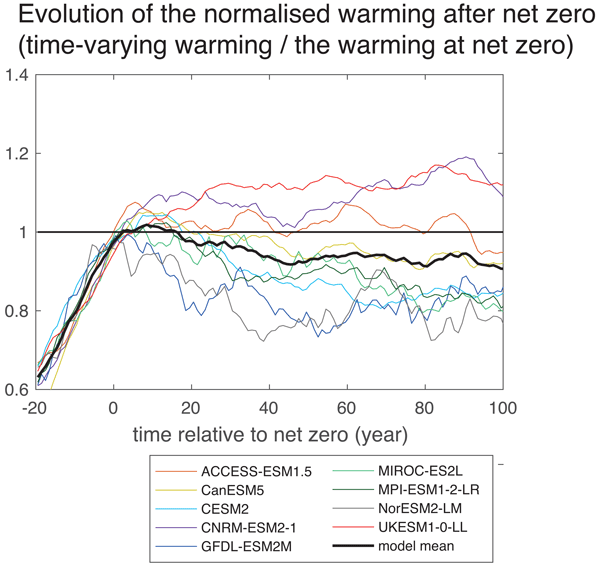
How the climate system responds when carbon emissions cease is an open question: some climate models reveal a slight warming, whereas most models reveal a slight cooling. The temperature response after net zero is connected via a new framework to quantify and compare the opposing thermal and carbon drivers. The climate response after net zero is controlled by how the planet takes up heat and radiates heat back to space, and how the land and ocean sequester carbon from the atmosphere.
Philipp Breul, Paulo Ceppi, and Peer Nowack
Atmos. Chem. Phys., 25, 11991–12005, https://doi.org/10.5194/acp-25-11991-2025, https://doi.org/10.5194/acp-25-11991-2025, 2025
Short summary
Short summary
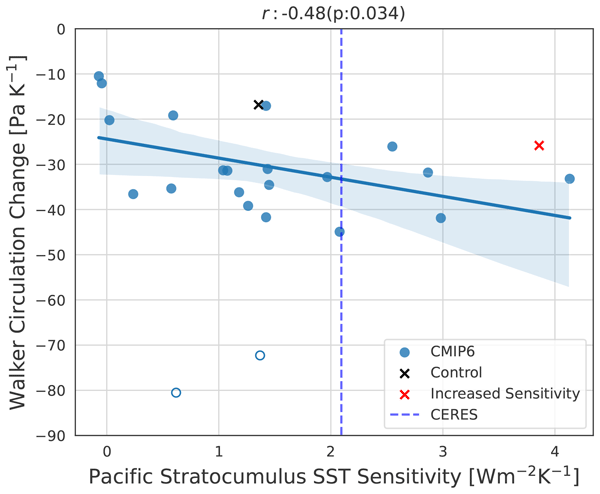
We explore how Pacific low-level clouds influence projections of regional climate change by adjusting a climate model to enhance low-cloud response to surface temperatures. We find significant changes in projected warming patterns and circulation changes under increased CO2 conditions. Our findings are supported by similar relationships across state-of-the-art climate models. These results highlight the importance of accurately representing clouds for predicting regional climate change impacts.
Henrik Auestad, Clemens Spensberger, Andrea Marcheggiani, Paulo Ceppi, Thomas Spengler, and Tim Woollings
Weather Clim. Dynam., 5, 1269–1286, https://doi.org/10.5194/wcd-5-1269-2024, https://doi.org/10.5194/wcd-5-1269-2024, 2024
Short summary
Short summary
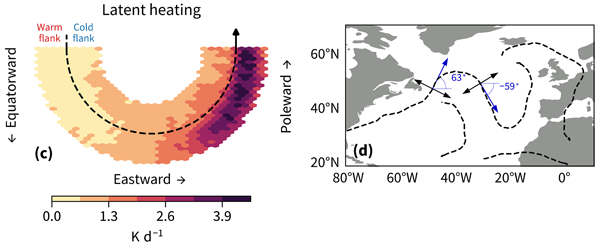
Latent heating due to condensation can influence atmospheric circulation by strengthening or weakening horizontal temperature contrasts. Strong temperature contrasts intensify storms and imply the existence of strong upper tropospheric winds called jets. It remains unclear whether latent heating preferentially reinforces or abates the existing jet. We show that this disagreement is attributable to how the jet is defined, confirming that latent heating reinforces the jet.
Sarah Wilson Kemsley, Paulo Ceppi, Hendrik Andersen, Jan Cermak, Philip Stier, and Peer Nowack
Atmos. Chem. Phys., 24, 8295–8316, https://doi.org/10.5194/acp-24-8295-2024, https://doi.org/10.5194/acp-24-8295-2024, 2024
Short summary
Short summary
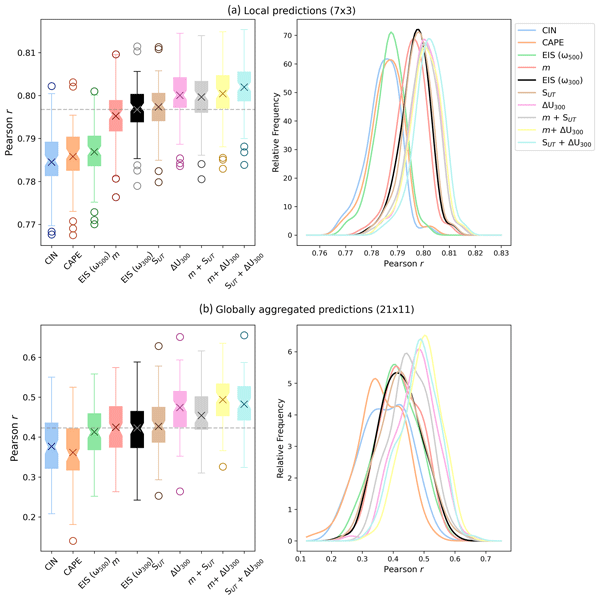
Aiming to inform parameter selection for future observational constraint analyses, we incorporate five candidate meteorological drivers specifically targeting high clouds into a cloud controlling factor framework within a range of spatial domain sizes. We find a discrepancy between optimal domain size for predicting locally and globally aggregated cloud radiative anomalies and identify upper-tropospheric static stability as an important high-cloud controlling factor.
Philip Goodwin, Richard Williams, Paulo Ceppi, and B. B. Cael
EGUsphere, https://doi.org/10.5194/egusphere-2023-2307, https://doi.org/10.5194/egusphere-2023-2307, 2023
Preprint archived
Short summary
Short summary
Climate feedbacks are normally evaluated by considering the change over time for Earth's energy balance and surface temperatures in the climate system. However, we only have around 1 degree Celsius of temperature change to utilise. Here, climate feedbacks are instead evaluated from the change in latitude of Earth's energy balance and surface temperatures, where we have around 70 degrees Celsius of temperature change to utilise.
Philipp Breul, Paulo Ceppi, and Theodore G. Shepherd
Weather Clim. Dynam., 4, 39–47, https://doi.org/10.5194/wcd-4-39-2023, https://doi.org/10.5194/wcd-4-39-2023, 2023
Short summary
Short summary
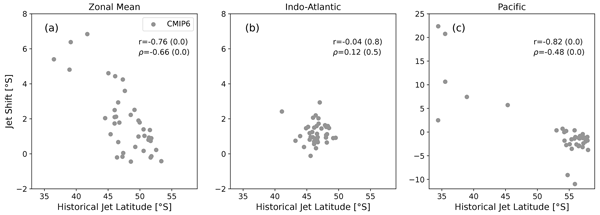
Accurately predicting the response of the midlatitude jet stream to climate change is very important, but models show a variety of possible scenarios. Previous work identified a relationship between climatological jet latitude and future jet shift in the southern hemispheric winter. We show that the relationship does not hold in separate sectors and propose that zonal asymmetries are the ultimate cause in the zonal mean. This questions the usefulness of the relationship.
Philipp Breul, Paulo Ceppi, and Theodore G. Shepherd
Weather Clim. Dynam., 3, 645–658, https://doi.org/10.5194/wcd-3-645-2022, https://doi.org/10.5194/wcd-3-645-2022, 2022
Short summary
Short summary
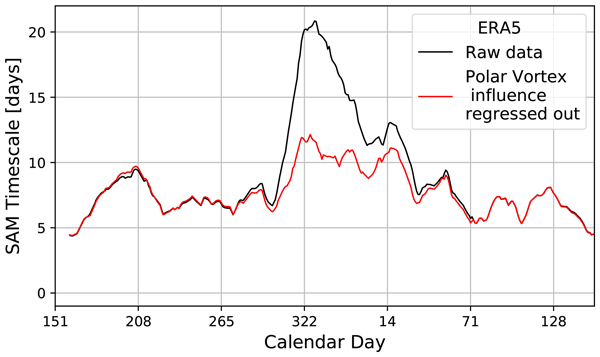
Understanding how the mid-latitude jet stream will respond to a changing climate is highly important. Unfortunately, climate models predict a wide variety of possible responses. Theoretical frameworks can link an internal jet variability timescale to its response. However, we show that stratospheric influence approximately doubles the internal timescale, inflating predicted responses. We demonstrate an approach to account for the stratospheric influence and recover correct response predictions.
Leah J. Bertrand, Jennifer E. Kay, and Gijs de Boer
EGUsphere, https://doi.org/10.5194/egusphere-2026-4740, https://doi.org/10.5194/egusphere-2026-4740, 2026
This preprint is open for discussion and under review for Atmospheric Chemistry and Physics (ACP).
Short summary
Short summary
Using 23 years of US DOE and NOAA observations on the North Slope of Alaska, we show how long-term changes in cloud properties strongly modulate surface warming: during the dark season (October–March), cloud changes double the infrared surface warming effect of atmospheric warming and moistening. During the sunlit season (April–September), changing clouds and rising mid-summer surface albedo reverse that infrared surface warming effect entirely.
Abel Shibu, Henrik Auestad, Paulo Ceppi, and Tim Woollings
EGUsphere, https://doi.org/10.5194/egusphere-2026-4895, https://doi.org/10.5194/egusphere-2026-4895, 2026
This preprint is open for discussion and under review for Weather and Climate Dynamics (WCD).
Short summary
Short summary
We estimate the contributions from various processes to the strength of extratropical cyclones using a novel framework applied to cyclones tracked in climate model data. Diabatic processes increase in importance with cyclone strength and account for most of the strength of the strongest storms in both summer and winter. In a warmer climate with increased moisture availability, winter storms show a significant increase in strength, with implications for future weather extremes.
Natsuki Watanabe, Masahiro Watanabe, Tomohiro Hajima, Tokuta Yokohata, and Irina Melnikova
Earth Syst. Dynam., 17, 1135–1150, https://doi.org/10.5194/esd-17-1135-2026, https://doi.org/10.5194/esd-17-1135-2026, 2026
Short summary
Short summary
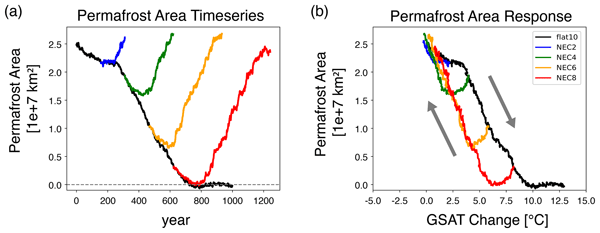
We investigated a response of permafrost using an Earth system model driven by an idealized overshooting carbon emission scenario, and found that the permafrost response to warming and cooling is reversible in the area but irreversible in its property. The permafrost response shows hysteresis, arising from a slow soil response tied to heat conductivity and specific heat of water phase change. A carbon release from thawed permafrost accounts for 0.6–41% of the cumulative carbon emission.
Anna Trosits, Andreas Foth, Allison A. Wing, Johanna Roschke, Moritz Haarig, Anton Kötsche, and Heike Kalesse-Los
EGUsphere, https://doi.org/10.5194/egusphere-2026-4385, https://doi.org/10.5194/egusphere-2026-4385, 2026
This preprint is open for discussion and under review for Atmospheric Chemistry and Physics (ACP).
Short summary
Short summary
This study shows the effect of air layers originating from the Saharan Desert on clouds over the tropical Atlantic observed during the ship-borne research campaign BOWTIE. These Saharan Air Layers (SAL) were analysed with data from several instruments providing atmospheric profiles and can be characterised by low moisture and dispersed mineral dust. The investigation suggests a suppression of vertical cloud development by the SAL, also affecting microphysical properties of the cloud.
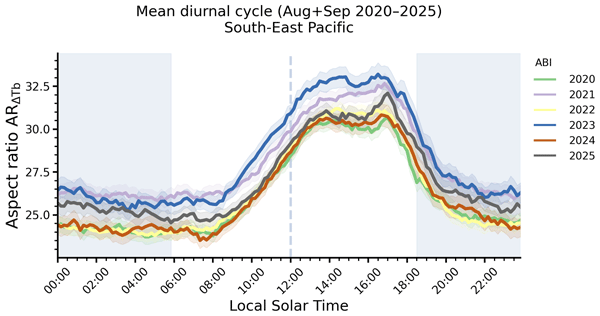
Emma Monnier, Florent Brient, and Jean-Louis Dufresne
Atmos. Chem. Phys., 26, 10509–10531, https://doi.org/10.5194/acp-26-10509-2026, https://doi.org/10.5194/acp-26-10509-2026, 2026
Short summary
Short summary
Stratocumulus clouds over the ocean form large cellular patterns whose physics and dynamics remains poorly understood but reflects boundary layer circulation. Using five years of geostationary satellite data, we show these patterns follow a diurnal cycle in the South-East Pacific, growing in the morning, decaying in the afternoon, and stabilizing at night. Despite changes in cell size, their proportion relative to boundary layer depth stays stable, suggesting a fundamental organizing mechanism.
Prince Xavier, Martin Willett, Tim Graham, Paul Earnshaw, Dan Copsey, Nikesh Narayan, Charline Marzin, Alistair Sellar, Duncan Ackerley, Adam Blaker, Ed Blockley, Alejandro Bodas-Salcedo, Andrew Bushell, Nakbin Choi, Xin Rong Chua, Catherine Guiavarc'h, Muhammad Hassim, Julian Heming, Debra Hudson, Sarah Ineson, Anthony Jones, Colin Jones, Richard Keane, Kiwook Kim, Jiyeong Kim, Till Kuhlbrodt, Myong-In Lee, Richard Levine, Chen Li, Gill Martin, Alex Megann, Anne Mccabe, Aurel Moise, Leighton Regayre, Jeff Ridley, Luke Roberts, Sandeep Sahany, Reinhard K. H. Schiemann, David Storkey, Warren Tennant, Lorenzo Tomassini, Yoko Tsushima, Graham P. Weedon, Alex West, Matthew C. Wheeler, Keith Williams, Xiaobing Zhou, and Hongyan Zhu
EGUsphere, https://doi.org/10.5194/egusphere-2026-4281, https://doi.org/10.5194/egusphere-2026-4281, 2026
Short summary
Short summary
GC5 is the Met Office's newest climate and weather model, combining an updated atmosphere/land component with an improved ocean and sea-ice component. Compared to its predecessor GC4, it better simulates global temperatures, winds, monsoons over India and SE Asia, and African weather, and forecasts tropical cyclones more accurately. Southern Ocean errors shrank too. Some tropical patterns and regional biases worsened slightly. A lower-resolution version will underpin the UK's Earth System Model.
Hans Segura, Allison A. Wing, Heike Kalesse-Los, Ruben Carrasco, James H. Ruppert Jr., Anna Trosits, Louise Nuijens, Felix Ament, Daniel Blandfort, Michael M. Bell, Pierre Bosser, Delián Colón-Burgos, Geet George, Joelle Habib, Jochen Horstmann, Friedhelm Jansen, Lukas Kluft, Robert Kopte, Klas Ove Möller, Peristera Paschou, Hauke Schmidt, Michael Schlundt, Ilya Serikov, Martin Stelzner, Elizabeth J. Thompson, Werenfrid Wimmer, Marcus Dengler, and Daniel Klocke
Earth Syst. Sci. Data Discuss., https://doi.org/10.5194/essd-2026-343, https://doi.org/10.5194/essd-2026-343, 2026
Preprint under review for ESSD
Short summary
Short summary
BOWTIE (Beobachtung von Ozean und Wolken - Das Trans ITCZ Experiment) was an observational campaign occurring in summer 2024, which intensively took measurements from the upper ocean to the upper troposphere in the wettest region of the tropical Atlantic. Here, we provide an overview of the measurements and instrumentation, including remote sensing and conventional, which targeted small-scale processes under different weather regimes, from calm doldrums to gusty, precipitating events.
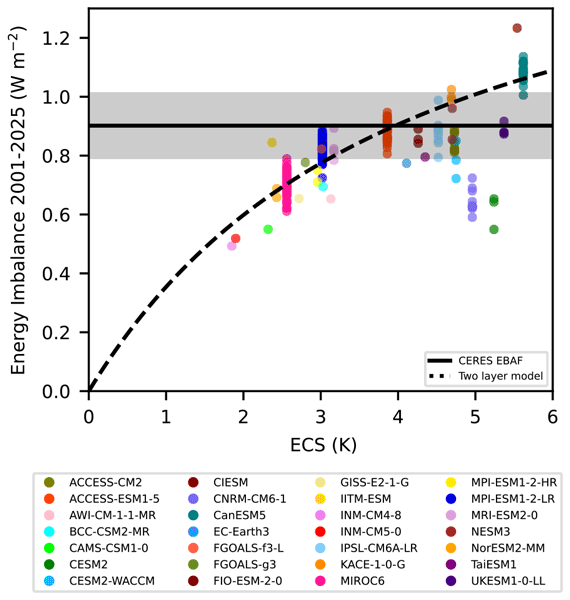
Kyriaki Bimpiri, Thomas Hocking, and Thorsten Mauritsen
Earth Syst. Dynam., 17, 877–892, https://doi.org/10.5194/esd-17-877-2026, https://doi.org/10.5194/esd-17-877-2026, 2026
Short summary
Short summary
Observations show an increasing imbalance between how much energy the Earth absorbs from the Sun and emits back to space, leading to climate change. We evaluate how well climate models simulate both the magnitude and trend of the imbalance. We find that models capture the magnitude but underestimate the trend, which is not related to how models handle volcanic aerosols when switching to future scenarios. The models that best simulate the magnitude are the ones with moderate climate sensitivity.
Omer Roi-Cohen, Gaea Hadary, Casey J. Wall, Paulo Ceppi, and Guy Dagan
EGUsphere, https://doi.org/10.5194/egusphere-2026-3075, https://doi.org/10.5194/egusphere-2026-3075, 2026
Short summary
Short summary
When humans burn fossil fuels, released particles make clouds more reflective, cooling Earth. This effect is a major uncertainty in climate projections, and recent satellite studies disagree widely on its magnitude. We developed a framework, validated against models and observations, to test which analytical choices are most reliable. Our resulting estimate aligns with major international climate assessments, providing independent observational support for consensus climate projections.
Aleena M. Jaison, Paulo Ceppi, and Sarah Wilson Kemsley
EGUsphere, https://doi.org/10.5194/egusphere-2026-2841, https://doi.org/10.5194/egusphere-2026-2841, 2026
Short summary
Short summary
We investigate how stratospheric winds influence high clouds using satellite observations and climate models. These winds, known as the quasi-biennial oscillation, alter meteorological conditions in the troposphere such as upper-tropospheric temperature, stability, and humidity, and clouds respond to these changes. Reducing model biases requires improving cloud sensitivity to these factors. This framework could also help assess cloud responses to stratospheric cooling driven by climate change.
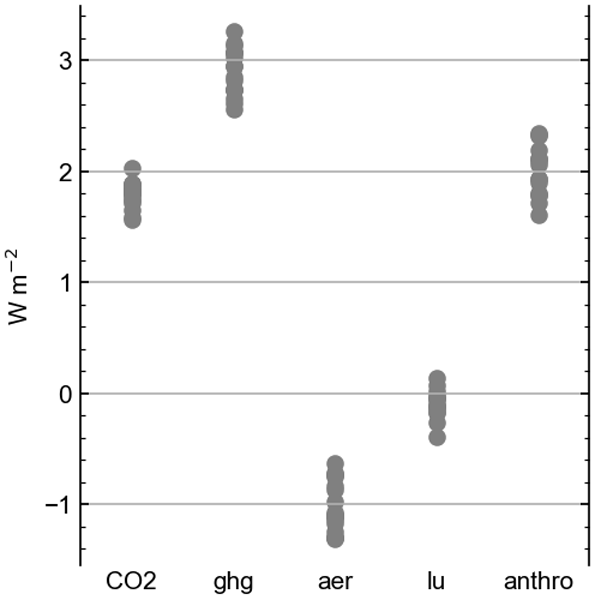
Ryan J. Kramer, Chris Smith, and Timothy Andrews
Geosci. Model Dev., 19, 4447–4466, https://doi.org/10.5194/gmd-19-4447-2026, https://doi.org/10.5194/gmd-19-4447-2026, 2026
Short summary
Short summary
Natural or anthropogenic activities can cause a perturbation in Earth's radiative energy budget known as a radiative forcing, which induces a climate response. Diagnosing radiative forcing and its uncertainty is foundational to understanding past and future climate change. Here we outline the protocol for the second iteration of the Radiative Forcing Model Intercomparison Project (RFMIP2.0), which provides a standardized method for diagnosing radiative forcing across Global Climate Models.
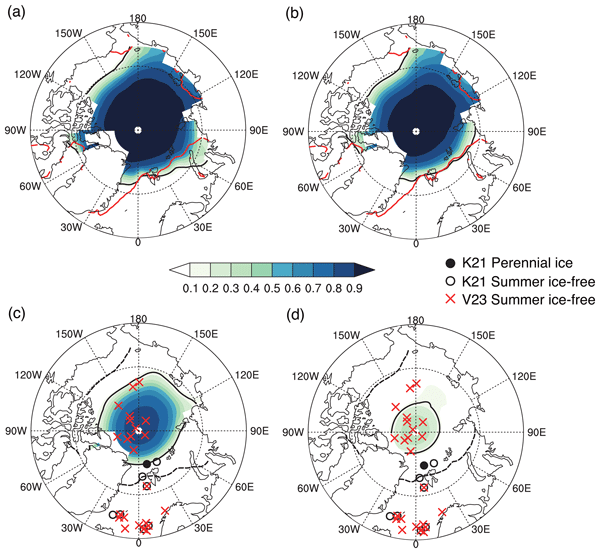
Nozomi Arima, Masakazu Yoshimori, Ayako Abe-Ouchi, Ryouta O'ishi, Wing-Le Chan, Sam Sherriff-Tadano, and Tomoo Ogura
Clim. Past, 22, 891–913, https://doi.org/10.5194/cp-22-891-2026, https://doi.org/10.5194/cp-22-891-2026, 2026
Short summary
Short summary
During the Last Interglacial period, spanning 129 000 to 116 000 years ago, the Arctic was considered warmer than during the preindustrial period. Many climate models do not simulate an ice-free Arctic Ocean in summer, as suggested by recent reconstructions. Here, we examine the importance of how the liquid or solid phase of cloud particles is determined in models. It is found that the representation of cloud phase indeed has a substantial impact on the simulation of summer sea ice cover.
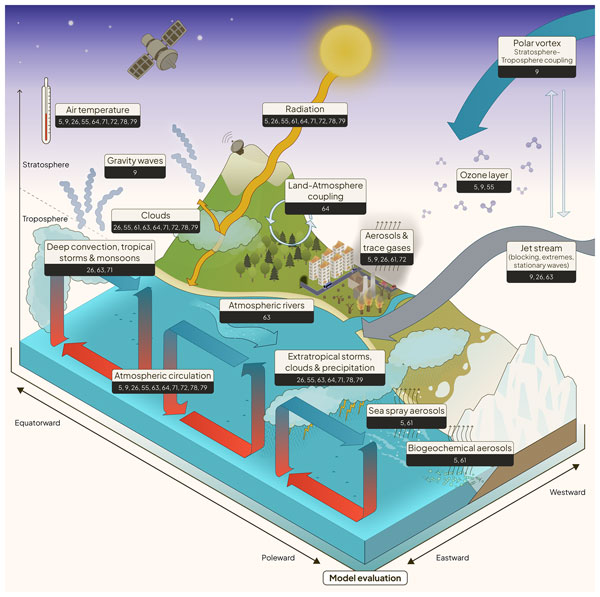
Beth Dingley, James A. Anstey, Marta Abalos, Carsten Abraham, Tommi Bergman, Lisa Bock, Sonya Fiddes, Birgit Hassler, Ryan J. Kramer, Fei Luo, Fiona M. O'Connor, Petr Šácha, Isla R. Simpson, Laura J. Wilcox, and Mark D. Zelinka
Geosci. Model Dev., 19, 2945–2984, https://doi.org/10.5194/gmd-19-2945-2026, https://doi.org/10.5194/gmd-19-2945-2026, 2026
Short summary
Short summary
This manuscript defines as a list of variables and scientific opportunities which are requested from the Coupled Model Intercomparison Project Phase 7 (CMIP7) Assessment Fast Track to address open atmospheric science questions. The list reflects the output of a large public community engagement effort, coordinated across autumn 2025 through to summer 2025.
John W. Rostron, Alejandro Bodas-Salcedo, David M. H. Sexton, Colin G. Jones, Edward W. Blockley, Till Kuhlbrodt, Jane P. Mulcahy, Tamzin E. Palmer, Saloua Peatier, Mark A. Ringer, Steven T. Rumbold, Benjamin M. Sanderson, Yongming Tang, and Martin R. Willet
EGUsphere, https://doi.org/10.5194/egusphere-2026-1676, https://doi.org/10.5194/egusphere-2026-1676, 2026
Short summary
Short summary
The Met Office’s latest weather and climate model warms very strongly in response to increases in carbon dioxide. We created a modified version of the model with a more moderate warming response by adjusting key model parameters, using both automated methods and expert judgement. The new model matches historical temperatures more closely and is better suited for studies of long‑term climate, but has reduced overall accuracy when simulating the baseline climate.
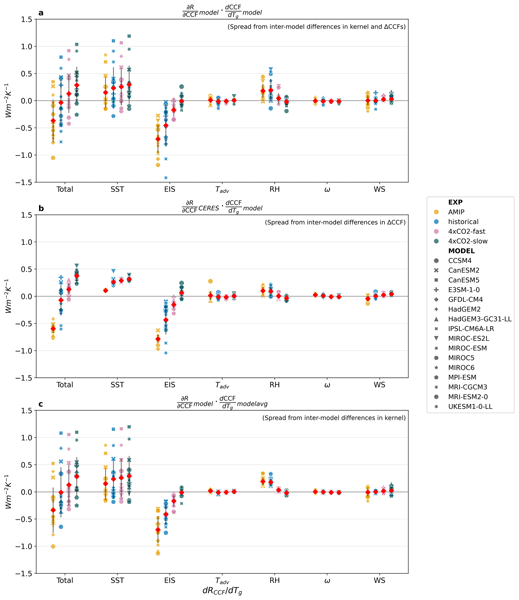
Rachel Yuen Sum Tam, Timothy A. Myers, Mark D. Zelinka, Cristian Proistosescu, Yuan-Jen Lin, and Kate Marvel
Atmos. Chem. Phys., 26, 4289–4311, https://doi.org/10.5194/acp-26-4289-2026, https://doi.org/10.5194/acp-26-4289-2026, 2026
Short summary
Short summary
This work identifies the key driver to the change of present and future climate response, known as the pattern effect, by breaking down low-cloud feedback as the radiative changes to meteorology and the meteorology changes to warming using a cloud controlling factor framework. We identify inversion strength in the Southern Ocean and the South East Pacific as the main driver to the pattern effect, and larger uncertainty remains in the sensitivities of radiative flux to meteorology.
Paulo Ceppi, Sarah Wilson Kemsley, Hendrik Andersen, Timothy Andrews, Ryan J. Kramer, Peer Nowack, Casey J. Wall, and Mark D. Zelinka
Atmos. Chem. Phys., 26, 4153–4171, https://doi.org/10.5194/acp-26-4153-2026, https://doi.org/10.5194/acp-26-4153-2026, 2026
Short summary
Short summary
Recent decades have seen a marked decrease in global low-level cloud cover, leading to more sunlight heating the Earth. This trend is poorly understood, raising the concern that clouds may amplify global warming more than previously thought. We show that the cloud decrease is mostly caused by human forcing on climate, and that it agrees with previous estimates of how clouds respond to decreasing aerosol pollution, increasing greenhouse gas concentration, and their effects on global temperature.
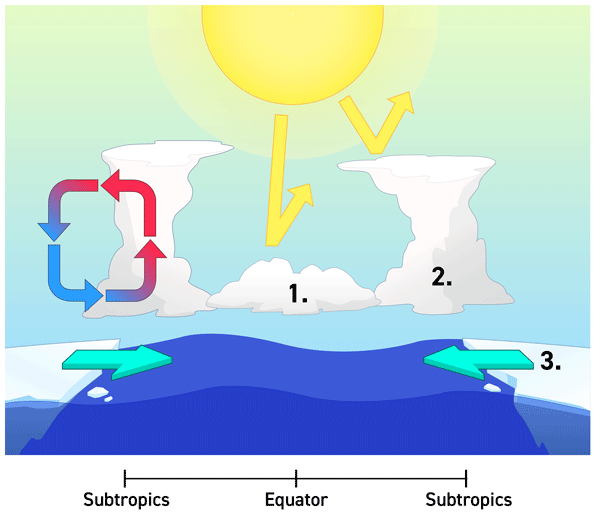
Martin Renoult, Navjit Sagoo, Johannes Hörner, and Thorsten Mauritsen
Earth Syst. Dynam., 17, 303–318, https://doi.org/10.5194/esd-17-303-2026, https://doi.org/10.5194/esd-17-303-2026, 2026
Short summary
Short summary
Geological evidence indicate persistent tropical sea-ice cover in the deep past, often called Snowball Earth. Using a climate model, we show here that clouds substantially cool down the tropics and facilitate the advance of sea-ice into lower latitudes. We identify a critical threshold temperature close to 0 °C from where cooling down the Earth is accelerated. This value can be used as a constraint on Earth's sensitivity to CO2, as recent cold paleoclimates never entered Snowball Earth.
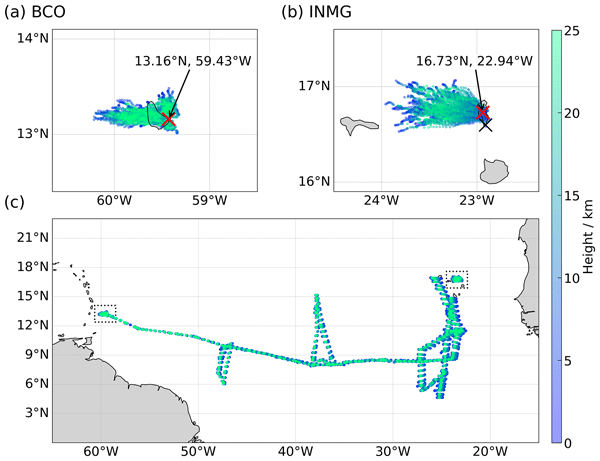
Marius Winkler, Marius Rixen, Florent Beucher, Fleur Couvreux, Chaehyeon C. Nam, Philippe Peyrillé, Hauke Schmidt, Hans Segura, Karl-Hermann Wieners, Ezri Alkilani-Brown, Abdou Aziz Coly, Giovanni Biagioli, Michael M. Bell, Ester Brito, Emma Chauvin, Julie Capo, Delián Colón-Burgos, Akeem Dawes, Jose Carlos da Luz, Zekican Demiralay, Vincent Douet, Vincent Ducastin, Clarisse Dufaux, Jean-Louis Dufresne, Florence Favot, Thomas Fiolleau, Emilie Fons, Geet George, Helene M. Gloeckner, Suelly Gonçalves, Laurent Gouttesoulard, Lennéa Hayo, Wei-Ting Hsiao, Sarah Kennison, Michael Kopelman, Tsung-Yung Lee, Enora Le Gall, Mateo Lovato, Emily Luschen, Nicolas Maury, Brett McKim, Louis Netz, Diouf Ousseynou, Karsten Peters-von Gehlen, Chavez Pope, Basile Poujol, Niwde Rivera Maldonado, Nina Robbins-Blanch, Nicolas Rochetin, Daniel Rowe, Paula Romero Jure, James H. Ruppert Jr., Jairo Segura Bermudez, Jarrett C. Starr, Martin Stelzner, Connor Stoll, Macintyre Syrett, Abraham Tekoe, Jeremie Trules, Colin Welty, Daniel Klocke, Raphaela Vogel, Sandrine Bony, Allison A. Wing, and Bjorn Stevens
Earth Syst. Sci. Data, 18, 1833–1854, https://doi.org/10.5194/essd-18-1833-2026, https://doi.org/10.5194/essd-18-1833-2026, 2026
Short summary
Short summary
The RAPSODI dataset compiles 624 radiosonde profiles collected during the 2024 ORCESTRA campaign across the tropical Atlantic: from Cape Verde (INMG), the R/V Meteor, and the Barbados Cloud Observatory. It provides high-resolution temperature, humidity, wind, and pressure data to study convection, tropical waves, and ITCZ dynamics. Data are quality-controlled and openly available in Zarr format via IPFS.
Thomas Hocking, Linda Megner, Maria Hakuba, and Thorsten Mauritsen
Atmos. Meas. Tech., 19, 1643–1674, https://doi.org/10.5194/amt-19-1643-2026, https://doi.org/10.5194/amt-19-1643-2026, 2026
Short summary
Short summary
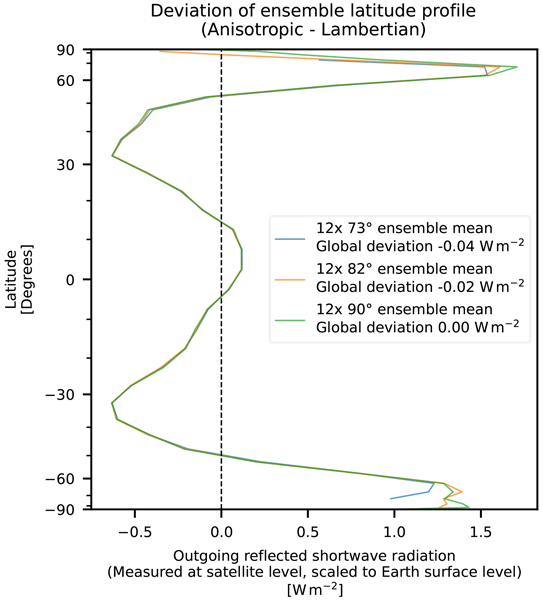
The imbalance between the energy the Earth absorbs from the Sun and emits back to space gives rise to climate change, but measuring the small imbalance is challenging. The Earth surface reflects sunlight more in some directions than in others, as with e.g. ocean sunglint. We simulate satellites to investigate how this uneven reflection impacts estimates of the imbalance. We identify orbits that cover all directions well, so that the impact is small.
Anna Zehrung, Andrew D. King, Zebedee Nicholls, Mark D. Zelinka, and Malte Meinshausen
Geosci. Model Dev., 18, 9433–9450, https://doi.org/10.5194/gmd-18-9433-2025, https://doi.org/10.5194/gmd-18-9433-2025, 2025
Short summary
Short summary
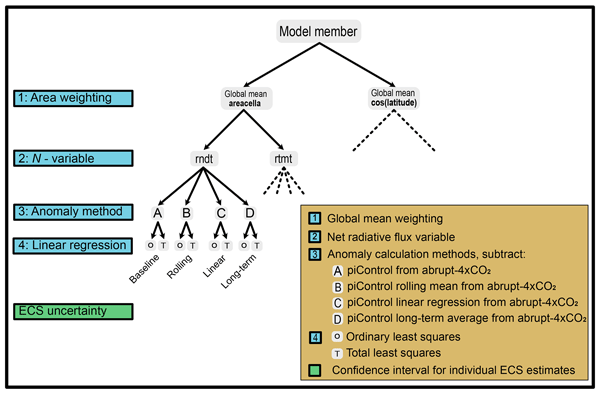
The Gregory method is a common approach for calculating the equilibrium climate sensitivity (ECS). However, studies which apply this method lack transparency in how model data is processed prior to calculating the ECS, inhibiting replicability. Different choices of global weighting, net radiative flux variable, anomaly calculation, and linear regression fit can affect the ECS estimates. We investigate the impact of these choices and propose a standardised method for future ECS calculations.
Richard G. Williams, Philip Goodwin, Paulo Ceppi, Chris D. Jones, and Andrew H. MacDougall
Biogeosciences, 22, 7167–7186, https://doi.org/10.5194/bg-22-7167-2025, https://doi.org/10.5194/bg-22-7167-2025, 2025
Short summary
Short summary
How the climate system responds when carbon emissions cease is an open question: some climate models reveal a slight warming, whereas most models reveal a slight cooling. The temperature response after net zero is connected via a new framework to quantify and compare the opposing thermal and carbon drivers. The climate response after net zero is controlled by how the planet takes up heat and radiates heat back to space, and how the land and ocean sequester carbon from the atmosphere.
Hans Segura, Xabier Pedruzo-Bagazgoitia, Philipp Weiss, Sebastian K. Müller, Thomas Rackow, Junhong Lee, Edgar Dolores-Tesillos, Imme Benedict, Matthias Aengenheyster, Razvan Aguridan, Gabriele Arduini, Alexander J. Baker, Jiawei Bao, Swantje Bastin, Eulàlia Baulenas, Tobias Becker, Sebastian Beyer, Hendryk Bockelmann, Nils Brüggemann, Lukas Brunner, Suvarchal K. Cheedela, Sushant Das, Jasper Denissen, Ian Dragaud, Piotr Dziekan, Madeleine Ekblom, Jan Frederik Engels, Monika Esch, Richard Forbes, Claudia Frauen, Lilli Freischem, Diego García-Maroto, Philipp Geier, Paul Gierz, Álvaro González-Cervera, Katherine Grayson, Matthew Griffith, Oliver Gutjahr, Helmuth Haak, Ioan Hadade, Kerstin Haslehner, Shabeh ul Hasson, Jan Hegewald, Lukas Kluft, Aleksei Koldunov, Nikolay Koldunov, Tobias Kölling, Shunya Koseki, Sergey Kosukhin, Josh Kousal, Peter Kuma, Arjun U. Kumar, Rumeng Li, Nicolas Maury, Maximilian Meindl, Sebastian Milinski, Kristian Mogensen, Bimochan Niraula, Jakub Nowak, Divya Sri Praturi, Ulrike Proske, Dian Putrasahan, René Redler, David Santuy, Domokos Sármány, Reiner Schnur, Patrick Scholz, Dmitry Sidorenko, Dorian Spät, Birgit Sützl, Daisuke Takasuka, Adrian Tompkins, Alejandro Uribe, Mirco Valentini, Menno Veerman, Aiko Voigt, Sarah Warnau, Fabian Wachsmann, Marta Wacławczyk, Nils Wedi, Karl-Hermann Wieners, Jonathan Wille, Marius Winkler, Yuting Wu, Florian Ziemen, Janos Zimmermann, Frida A.-M. Bender, Dragana Bojovic, Sandrine Bony, Simona Bordoni, Patrice Brehmer, Marcus Dengler, Emanuel Dutra, Saliou Faye, Erich Fischer, Chiel van Heerwaarden, Cathy Hohenegger, Heikki Järvinen, Markus Jochum, Thomas Jung, Johann H. Jungclaus, Noel S. Keenlyside, Daniel Klocke, Heike Konow, Martina Klose, Szymon Malinowski, Olivia Martius, Thorsten Mauritsen, Juan Pedro Mellado, Theresa Mieslinger, Elsa Mohino, Hanna Pawłowska, Karsten Peters-von Gehlen, Abdoulaye Sarré, Pajam Sobhani, Philip Stier, Lauri Tuppi, Pier Luigi Vidale, Irina Sandu, and Bjorn Stevens
Geosci. Model Dev., 18, 7735–7761, https://doi.org/10.5194/gmd-18-7735-2025, https://doi.org/10.5194/gmd-18-7735-2025, 2025
Short summary
Short summary
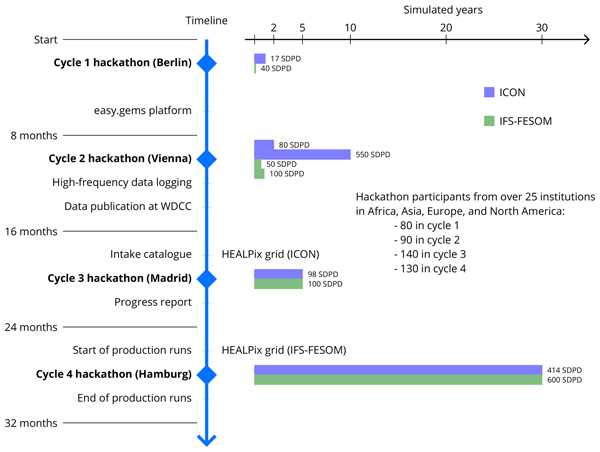
The Next Generation of Earth Modeling Systems project (nextGEMS) developed two Earth system models that use horizontal grid spacing of 10 km and finer, giving more fidelity to the representation of local phenomena, globally. In its fourth cycle, nextGEMS simulated the Earth System climate over the 2020–2049 period under the SSP3-7.0 scenario. Here, we provide an overview of nextGEMS, insights into the model development, and the realism of multi-decadal, kilometer-scale simulations.
Ash Gilbert, Jennifer E. Kay, and Penny Rowe
Geosci. Model Dev., 18, 7185–7197, https://doi.org/10.5194/gmd-18-7185-2025, https://doi.org/10.5194/gmd-18-7185-2025, 2025
Short summary
Short summary
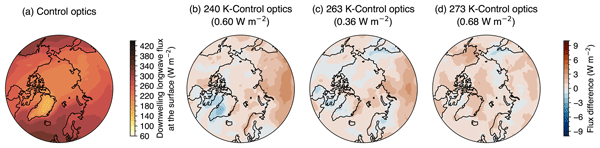
We developed a novel methodology for assessing whether a new physics parameterization should be added to a climate model based on its effect across a hierarchy of model dynamical constraints. Our study used this model hierarchy to evaluate the effect of a new cloud radiation parameterization on longwave radiation and determined that the parameterization should be added to climate radiation models, but its effect is not large enough to be a priority.
Philipp Breul, Paulo Ceppi, and Peer Nowack
Atmos. Chem. Phys., 25, 11991–12005, https://doi.org/10.5194/acp-25-11991-2025, https://doi.org/10.5194/acp-25-11991-2025, 2025
Short summary
Short summary
We explore how Pacific low-level clouds influence projections of regional climate change by adjusting a climate model to enhance low-cloud response to surface temperatures. We find significant changes in projected warming patterns and circulation changes under increased CO2 conditions. Our findings are supported by similar relationships across state-of-the-art climate models. These results highlight the importance of accurately representing clouds for predicting regional climate change impacts.
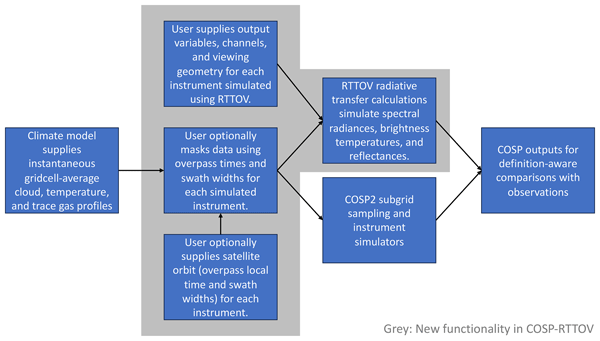
Jonah K. Shaw, Dustin J. Swales, Sergio DeSouza-Machado, David D. Turner, Jennifer E. Kay, and David P. Schneider
Geosci. Model Dev., 18, 4935–4950, https://doi.org/10.5194/gmd-18-4935-2025, https://doi.org/10.5194/gmd-18-4935-2025, 2025
Short summary
Short summary
Satellites have observed Earth's emissions of infrared radiation since the 1970s. Because infrared wavelengths interact with the atmosphere in distinct ways, these observations contain information about Earth and the atmosphere. We present a tool that runs within Earth system models and produces output that can be directly compared with satellite measurements of infrared radiation. We then use this tool for climate model evaluation, climate change detection, and satellite mission design.
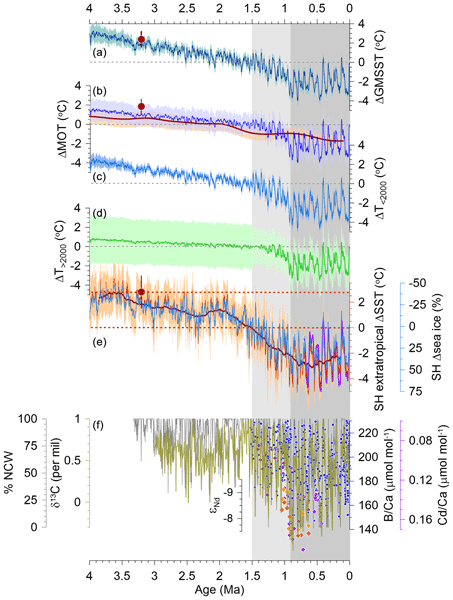
Peter U. Clark, Jeremy D. Shakun, Yair Rosenthal, Chenyu Zhu, Patrick J. Bartlein, Jonathan M. Gregory, Peter Köhler, Zhengyu Liu, and Daniel P. Schrag
Clim. Past, 21, 973–1000, https://doi.org/10.5194/cp-21-973-2025, https://doi.org/10.5194/cp-21-973-2025, 2025
Short summary
Short summary
We reconstruct changes in mean ocean temperature (ΔMOT) over the last 4.5 Myr. We find that the ratio of ΔMOT to changes in global mean sea surface temperature was around 0.5 before the Middle Pleistocene transition but was 1 thereafter. We subtract our ΔMOT reconstruction from the global δ18O record to derive the δ18O of seawater. Finally, we develop a theoretical understanding of why the ratio of ΔMOT / ΔGMSST changed over the Plio-Pleistocene.
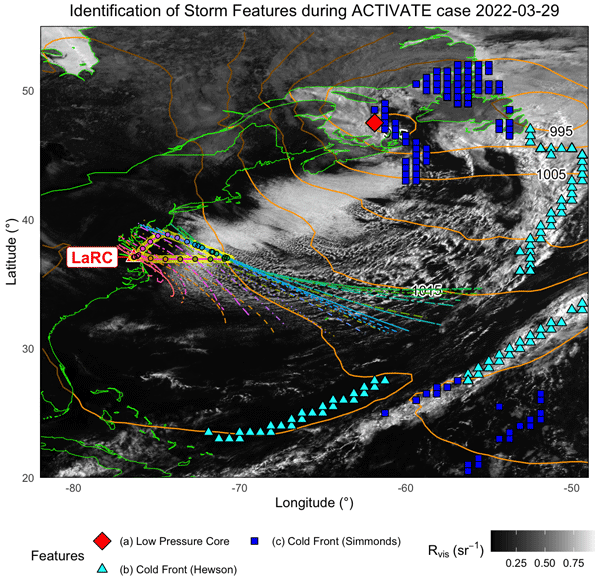
Florian Tornow, Ann Fridlind, George Tselioudis, Brian Cairns, Andrew Ackerman, Seethala Chellappan, David Painemal, Paquita Zuidema, Christiane Voigt, Simon Kirschler, and Armin Sorooshian
Atmos. Chem. Phys., 25, 5053–5074, https://doi.org/10.5194/acp-25-5053-2025, https://doi.org/10.5194/acp-25-5053-2025, 2025
Short summary
Short summary
The recent NASA campaign ACTIVATE (Aerosol Cloud meTeorology Interactions oVer the western ATlantic Experiment) performed 71 tandem flights in mid-latitude marine cold-air outbreaks off the US eastern seaboard. We provide meteorological and cloud transition stage context, allowing us to identify days that are most suitable for Lagrangian modeling and analysis. Surveyed cloud properties show signatures of cloud microphysical processes, such as cloud-top entrainment and secondary ice formation.
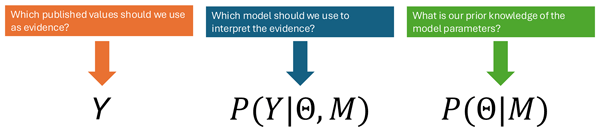
Kate Marvel and Mark Webb
Earth Syst. Dynam., 16, 317–332, https://doi.org/10.5194/esd-16-317-2025, https://doi.org/10.5194/esd-16-317-2025, 2025
Short summary
Short summary
Climate sensitivity (S) to doubled atmospheric carbon dioxide has remained stubbornly uncertain for decades. Multiple lines of evidence can be used to constrain S, but any analysis relies on unavoidable subjective decisions. Here, we present a framework for combining the subjective judgments of multiple experts in a fair and robust way.
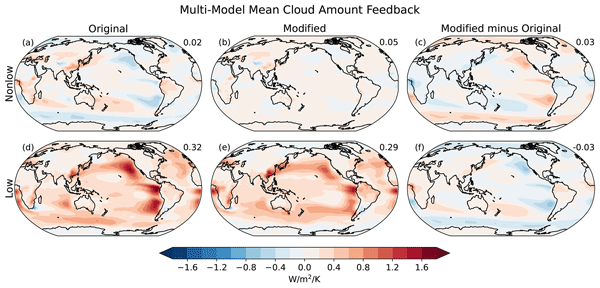
Mark D. Zelinka, Li-Wei Chao, Timothy A. Myers, Yi Qin, and Stephen A. Klein
Atmos. Chem. Phys., 25, 1477–1495, https://doi.org/10.5194/acp-25-1477-2025, https://doi.org/10.5194/acp-25-1477-2025, 2025
Short summary
Short summary
Clouds lie at the heart of uncertainty in both climate sensitivity and radiative forcing, making it imperative to properly diagnose their radiative effects. Here we provide a recommended methodology and code base for the community to use in performing such diagnoses using cloud radiative kernels. We show that properly accounting for changes in obscuration of lower-level clouds by upper-level clouds is important for accurate diagnosis and attribution of cloud feedbacks and adjustments.
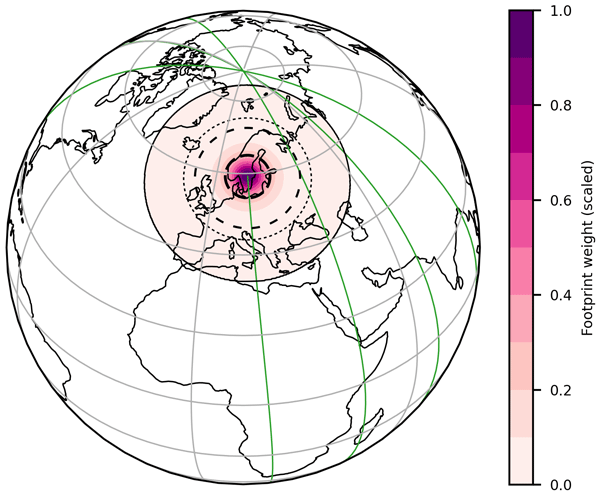
Thomas Hocking, Thorsten Mauritsen, and Linda Megner
Atmos. Meas. Tech., 17, 7077–7095, https://doi.org/10.5194/amt-17-7077-2024, https://doi.org/10.5194/amt-17-7077-2024, 2024
Short summary
Short summary
The imbalance between the energy the Earth absorbs from the Sun and the energy the Earth emits back into space gives rise to climate change, but measuring the small imbalance is challenging. We simulate satellites in various orbits to investigate how well they sample the imbalance and find that the best option is to combine at least two satellites that see complementary parts of the Earth and cover the daily and annual cycles. This information is useful when planning future satellite missions.
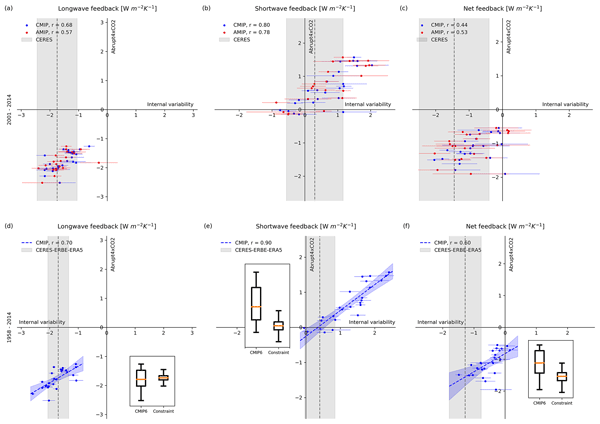
Alejandro Uribe, Frida A.-M. Bender, and Thorsten Mauritsen
Atmos. Chem. Phys., 24, 13371–13384, https://doi.org/10.5194/acp-24-13371-2024, https://doi.org/10.5194/acp-24-13371-2024, 2024
Short summary
Short summary
Our study explores climate feedbacks, vital for understanding global warming. It links them to shifts in Earth's energy balance at the atmosphere's top due to natural temperature variations. It takes roughly 50 years to establish this connection. Combined satellite observations and reanalysis suggest that Earth cools more than expected under carbon dioxide influence. However, continuous satellite data until at least the mid-2030s are crucial for refining our understanding of climate feedbacks.
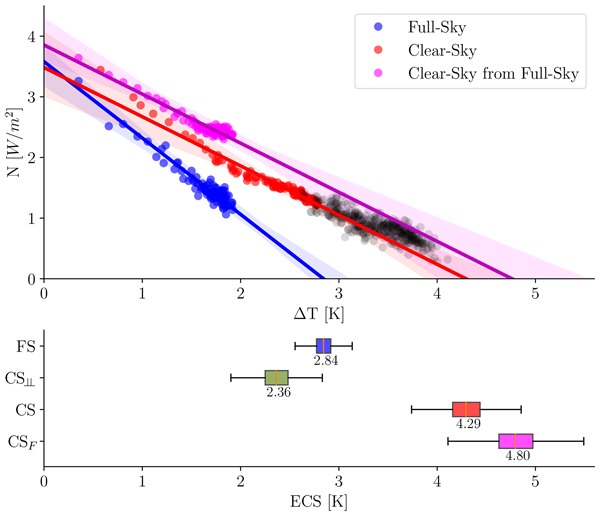
Andrea Mosso, Thomas Hocking, and Thorsten Mauritsen
Atmos. Chem. Phys., 24, 12793–12806, https://doi.org/10.5194/acp-24-12793-2024, https://doi.org/10.5194/acp-24-12793-2024, 2024
Short summary
Short summary
Clouds play a crucial role in the Earth's energy balance, as they can either warm up or cool down the area they cover depending on their height and depth. They are expected to alter their behaviour under climate change, affecting the warming generated by greenhouse gases. This paper proposes a new method to estimate their overall effect on this warming by simulating a climate where clouds are transparent. Results show that with the model used, clouds have a stabilising effect on climate.
Henrik Auestad, Clemens Spensberger, Andrea Marcheggiani, Paulo Ceppi, Thomas Spengler, and Tim Woollings
Weather Clim. Dynam., 5, 1269–1286, https://doi.org/10.5194/wcd-5-1269-2024, https://doi.org/10.5194/wcd-5-1269-2024, 2024
Short summary
Short summary
Latent heating due to condensation can influence atmospheric circulation by strengthening or weakening horizontal temperature contrasts. Strong temperature contrasts intensify storms and imply the existence of strong upper tropospheric winds called jets. It remains unclear whether latent heating preferentially reinforces or abates the existing jet. We show that this disagreement is attributable to how the jet is defined, confirming that latent heating reinforces the jet.
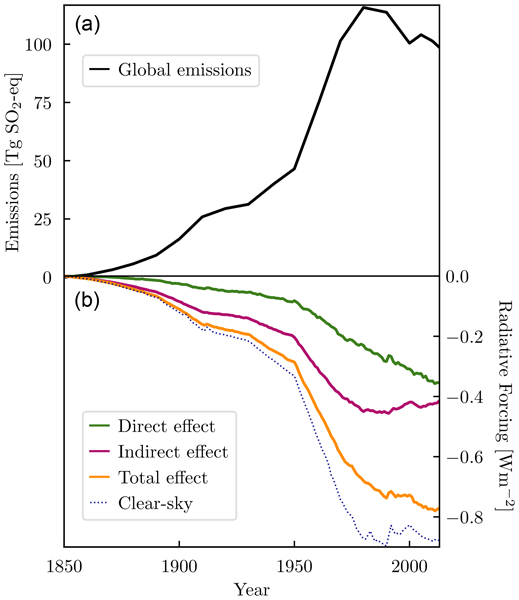
Antoine Hermant, Linnea Huusko, and Thorsten Mauritsen
Atmos. Chem. Phys., 24, 10707–10715, https://doi.org/10.5194/acp-24-10707-2024, https://doi.org/10.5194/acp-24-10707-2024, 2024
Short summary
Short summary
Aerosol particles, from natural and human sources, have a cooling effect on the climate, partially offsetting global warming. They do this through direct (sunlight reflection) and indirect (cloud property alteration) mechanisms. Using a global climate model, we found that, despite declining emissions, the direct effect of human aerosols has increased while the indirect effect has decreased, which is attributed to the shift in emissions from North America and Europe to Southeast Asia.
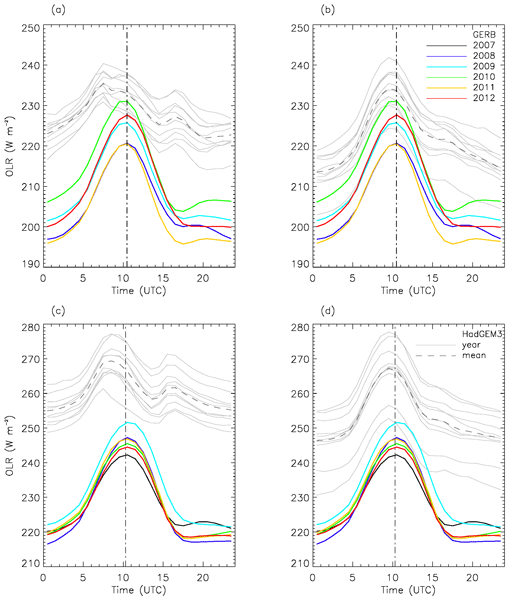
Jacqueline E. Russell, Richard J. Bantges, Helen E. Brindley, and Alejandro Bodas-Salcedo
Earth Syst. Sci. Data, 16, 4243–4266, https://doi.org/10.5194/essd-16-4243-2024, https://doi.org/10.5194/essd-16-4243-2024, 2024
Short summary
Short summary
We present a dataset of top-of-atmosphere diurnally resolved reflected solar and emitted thermal energy for Earth system model evaluation. The multi-year, monthly hourly dataset, derived from observations made by the Geostationary Earth Radiation Budget instrument, covers the range 60° N–60° S, 60° E–60° W at 1° resolution. Comparison with two versions of the Hadley Centre Global Environmental Model highlight how the data can be used to assess updates to key model parameterizations.
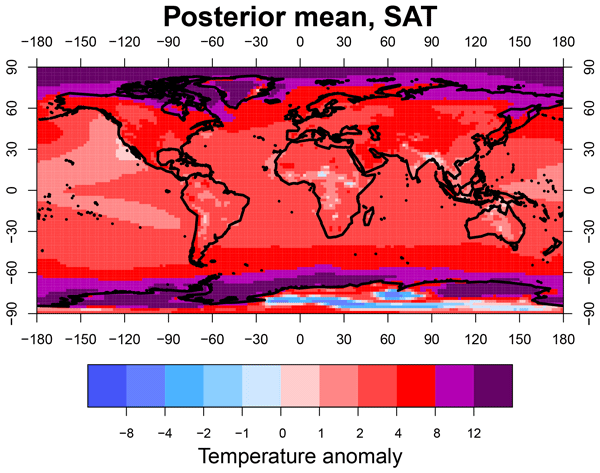
James D. Annan, Julia C. Hargreaves, Thorsten Mauritsen, Erin McClymont, and Sze Ling Ho
Clim. Past, 20, 1989–1999, https://doi.org/10.5194/cp-20-1989-2024, https://doi.org/10.5194/cp-20-1989-2024, 2024
Short summary
Short summary
We have created a new global surface temperature reconstruction of the climate of the mid-Pliocene Warm Period, representing the period roughly 3.2 million years before the present day. We estimate that the globally averaged mean temperature was around 3.9 °C warmer than it was in pre-industrial times, but there is significant uncertainty in this value.
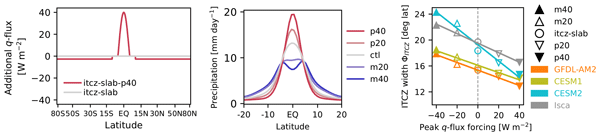
Angeline G. Pendergrass, Michael P. Byrne, Oliver Watt-Meyer, Penelope Maher, and Mark J. Webb
Geosci. Model Dev., 17, 6365–6378, https://doi.org/10.5194/gmd-17-6365-2024, https://doi.org/10.5194/gmd-17-6365-2024, 2024
Short summary
Short summary
The width of the tropical rain belt affects many aspects of our climate, yet we do not understand what controls it. To better understand it, we present a method to change it in numerical model experiments. We show that the method works well in four different models. The behavior of the width is unexpectedly simple in some ways, such as how strong the winds are as it changes, but in other ways, it is more complicated, especially how temperature increases with carbon dioxide.
Allison A. Wing, Levi G. Silvers, and Kevin A. Reed
Geosci. Model Dev., 17, 6195–6225, https://doi.org/10.5194/gmd-17-6195-2024, https://doi.org/10.5194/gmd-17-6195-2024, 2024
Short summary
Short summary
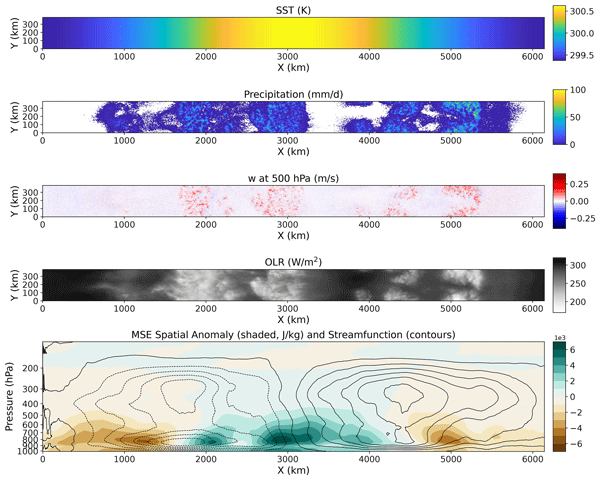
This paper presents the experimental design for a model intercomparison project to study tropical clouds and climate. It is a follow-up from a prior project that used a simplified framework for tropical climate. The new project adds one new component – a specified pattern of sea surface temperatures as the lower boundary condition. We provide example results from one cloud-resolving model and one global climate model and test the sensitivity to the experimental parameters.
Sarah Wilson Kemsley, Paulo Ceppi, Hendrik Andersen, Jan Cermak, Philip Stier, and Peer Nowack
Atmos. Chem. Phys., 24, 8295–8316, https://doi.org/10.5194/acp-24-8295-2024, https://doi.org/10.5194/acp-24-8295-2024, 2024
Short summary
Short summary
Aiming to inform parameter selection for future observational constraint analyses, we incorporate five candidate meteorological drivers specifically targeting high clouds into a cloud controlling factor framework within a range of spatial domain sizes. We find a discrepancy between optimal domain size for predicting locally and globally aggregated cloud radiative anomalies and identify upper-tropospheric static stability as an important high-cloud controlling factor.
Megan Thompson-Munson, Jennifer E. Kay, and Bradley R. Markle
The Cryosphere, 18, 3333–3350, https://doi.org/10.5194/tc-18-3333-2024, https://doi.org/10.5194/tc-18-3333-2024, 2024
Short summary
Short summary
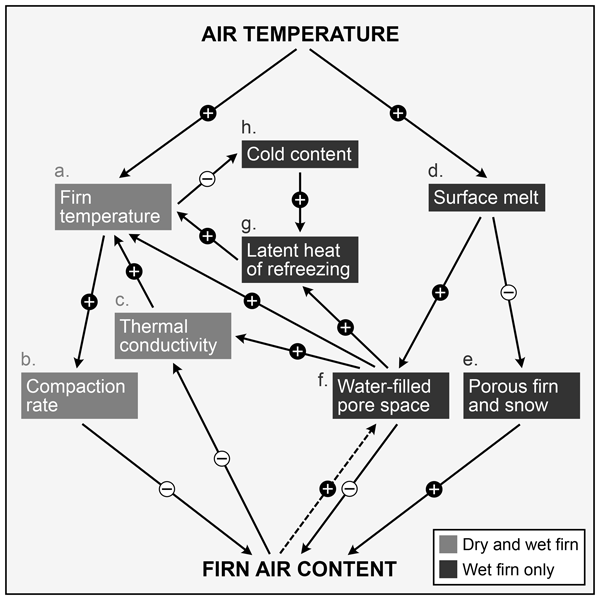
The upper layers of the Greenland Ice Sheet are absorbent and can store meltwater that would otherwise flow into the ocean and raise sea level. The amount of meltwater that the ice sheet can store changes when the air temperature changes. We use a model to show that warming and cooling have opposite but unequal effects. Warming has a stronger effect than cooling, which highlights the vulnerability of the Greenland Ice Sheet to modern climate change.
Raphael Grodofzig, Martin Renoult, and Thorsten Mauritsen
Earth Syst. Dynam., 15, 913–927, https://doi.org/10.5194/esd-15-913-2024, https://doi.org/10.5194/esd-15-913-2024, 2024
Short summary
Short summary
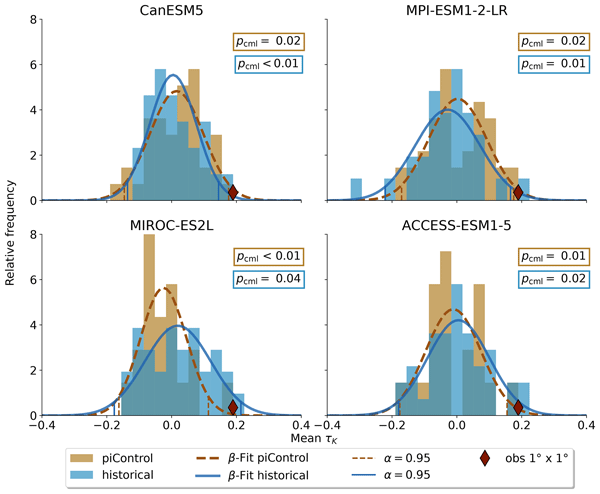
We investigate whether the Amazon rainforest has lost substantial resilience since 1990. This assertion is based on trends in the observational record of vegetation density. We calculate the same metrics in a large number of climate model simulations and find that several models behave indistinguishably from the observations, suggesting that the observed trend could be caused by internal variability and that the cause of the ongoing rapid loss of Amazon rainforest is not mainly global warming.
Sam Sherriff-Tadano, Ruza Ivanovic, Lauren Gregoire, Charlotte Lang, Niall Gandy, Jonathan Gregory, Tamsin L. Edwards, Oliver Pollard, and Robin S. Smith
Clim. Past, 20, 1489–1512, https://doi.org/10.5194/cp-20-1489-2024, https://doi.org/10.5194/cp-20-1489-2024, 2024
Short summary
Short summary
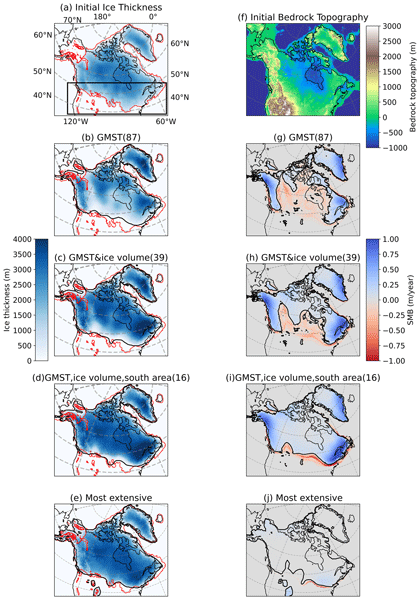
Ensemble simulations of the climate and ice sheets of the Last Glacial Maximum (LGM) are performed with a new coupled climate–ice sheet model. Results show a strong sensitivity of the North American ice sheet to the albedo scheme, while the Greenland ice sheet appeared more sensitive to basal sliding schemes. Our result implies a potential connection between the North American ice sheet at the LGM and the future Greenland ice sheet through the albedo scheme.
Jiwoo Lee, Peter J. Gleckler, Min-Seop Ahn, Ana Ordonez, Paul A. Ullrich, Kenneth R. Sperber, Karl E. Taylor, Yann Y. Planton, Eric Guilyardi, Paul Durack, Celine Bonfils, Mark D. Zelinka, Li-Wei Chao, Bo Dong, Charles Doutriaux, Chengzhu Zhang, Tom Vo, Jason Boutte, Michael F. Wehner, Angeline G. Pendergrass, Daehyun Kim, Zeyu Xue, Andrew T. Wittenberg, and John Krasting
Geosci. Model Dev., 17, 3919–3948, https://doi.org/10.5194/gmd-17-3919-2024, https://doi.org/10.5194/gmd-17-3919-2024, 2024
Short summary
Short summary
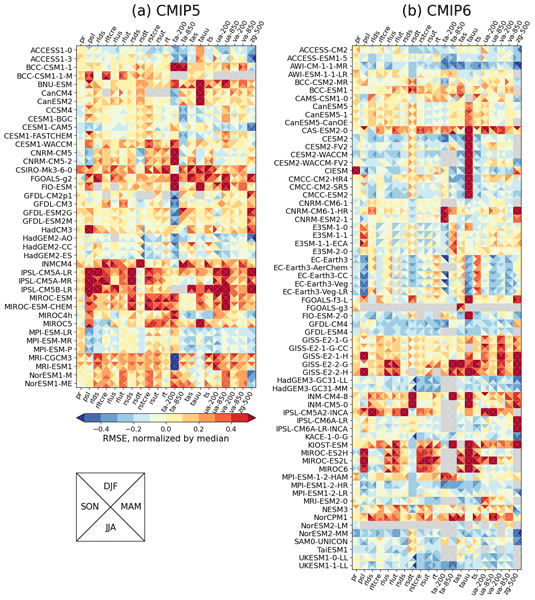
We introduce an open-source software, the PCMDI Metrics Package (PMP), developed for a comprehensive comparison of Earth system models (ESMs) with real-world observations. Using diverse metrics evaluating climatology, variability, and extremes simulated in thousands of simulations from the Coupled Model Intercomparison Project (CMIP), PMP aids in benchmarking model improvements across generations. PMP also enables efficient tracking of performance evolutions during ESM developments.
Bjorn Stevens, Stefan Adami, Tariq Ali, Hartwig Anzt, Zafer Aslan, Sabine Attinger, Jaana Bäck, Johanna Baehr, Peter Bauer, Natacha Bernier, Bob Bishop, Hendryk Bockelmann, Sandrine Bony, Guy Brasseur, David N. Bresch, Sean Breyer, Gilbert Brunet, Pier Luigi Buttigieg, Junji Cao, Christelle Castet, Yafang Cheng, Ayantika Dey Choudhury, Deborah Coen, Susanne Crewell, Atish Dabholkar, Qing Dai, Francisco Doblas-Reyes, Dale Durran, Ayoub El Gaidi, Charlie Ewen, Eleftheria Exarchou, Veronika Eyring, Florencia Falkinhoff, David Farrell, Piers M. Forster, Ariane Frassoni, Claudia Frauen, Oliver Fuhrer, Shahzad Gani, Edwin Gerber, Debra Goldfarb, Jens Grieger, Nicolas Gruber, Wilco Hazeleger, Rolf Herken, Chris Hewitt, Torsten Hoefler, Huang-Hsiung Hsu, Daniela Jacob, Alexandra Jahn, Christian Jakob, Thomas Jung, Christopher Kadow, In-Sik Kang, Sarah Kang, Karthik Kashinath, Katharina Kleinen-von Königslöw, Daniel Klocke, Uta Kloenne, Milan Klöwer, Chihiro Kodama, Stefan Kollet, Tobias Kölling, Jenni Kontkanen, Steve Kopp, Michal Koran, Markku Kulmala, Hanna Lappalainen, Fakhria Latifi, Bryan Lawrence, June Yi Lee, Quentin Lejeun, Christian Lessig, Chao Li, Thomas Lippert, Jürg Luterbacher, Pekka Manninen, Jochem Marotzke, Satoshi Matsouoka, Charlotte Merchant, Peter Messmer, Gero Michel, Kristel Michielsen, Tomoki Miyakawa, Jens Müller, Ramsha Munir, Sandeep Narayanasetti, Ousmane Ndiaye, Carlos Nobre, Achim Oberg, Riko Oki, Tuba Özkan-Haller, Tim Palmer, Stan Posey, Andreas Prein, Odessa Primus, Mike Pritchard, Julie Pullen, Dian Putrasahan, Johannes Quaas, Krishnan Raghavan, Venkatachalam Ramaswamy, Markus Rapp, Florian Rauser, Markus Reichstein, Aromar Revi, Sonakshi Saluja, Masaki Satoh, Vera Schemann, Sebastian Schemm, Christina Schnadt Poberaj, Thomas Schulthess, Cath Senior, Jagadish Shukla, Manmeet Singh, Julia Slingo, Adam Sobel, Silvina Solman, Jenna Spitzer, Philip Stier, Thomas Stocker, Sarah Strock, Hang Su, Petteri Taalas, John Taylor, Susann Tegtmeier, Georg Teutsch, Adrian Tompkins, Uwe Ulbrich, Pier-Luigi Vidale, Chien-Ming Wu, Hao Xu, Najibullah Zaki, Laure Zanna, Tianjun Zhou, and Florian Ziemen
Earth Syst. Sci. Data, 16, 2113–2122, https://doi.org/10.5194/essd-16-2113-2024, https://doi.org/10.5194/essd-16-2113-2024, 2024
Short summary
Short summary
To manage Earth in the Anthropocene, new tools, new institutions, and new forms of international cooperation will be required. Earth Virtualization Engines is proposed as an international federation of centers of excellence to empower all people to respond to the immense and urgent challenges posed by climate change.
Leah Bertrand, Jennifer E. Kay, John Haynes, and Gijs de Boer
Earth Syst. Sci. Data, 16, 1301–1316, https://doi.org/10.5194/essd-16-1301-2024, https://doi.org/10.5194/essd-16-1301-2024, 2024
Short summary
Short summary
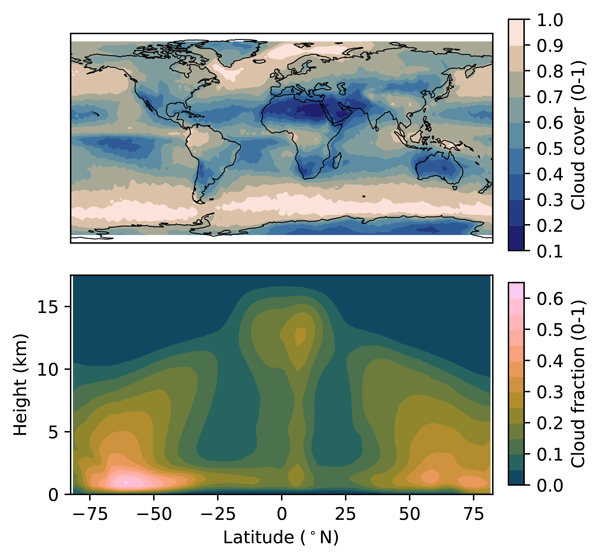
The vertical structure of clouds has a major impact on global energy flows, air circulation, and the hydrologic cycle. Two satellite instruments, CloudSat radar and CALIPSO lidar, have taken complementary measurements of cloud vertical structure for over a decade. Here, we present the 3S-GEOPROF-COMB product, a globally gridded satellite data product combining CloudSat and CALIPSO observations of cloud vertical structure.
Marika M. Holland, Cecile Hannay, John Fasullo, Alexandra Jahn, Jennifer E. Kay, Michael Mills, Isla R. Simpson, William Wieder, Peter Lawrence, Erik Kluzek, and David Bailey
Geosci. Model Dev., 17, 1585–1602, https://doi.org/10.5194/gmd-17-1585-2024, https://doi.org/10.5194/gmd-17-1585-2024, 2024
Short summary
Short summary
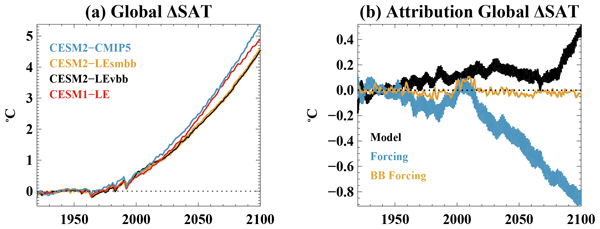
Climate evolves in response to changing forcings, as prescribed in simulations. Models and forcings are updated over time to reflect new understanding. This makes it difficult to attribute simulation differences to either model or forcing changes. Here we present new simulations which enable the separation of model structure and forcing influence between two widely used simulation sets. Results indicate a strong influence of aerosol emission uncertainty on historical climate.
Genevieve L. Clow, Nicole S. Lovenduski, Michael N. Levy, Keith Lindsay, and Jennifer E. Kay
Geosci. Model Dev., 17, 975–995, https://doi.org/10.5194/gmd-17-975-2024, https://doi.org/10.5194/gmd-17-975-2024, 2024
Short summary
Short summary
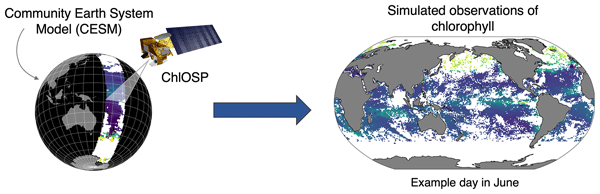
Satellite observations of chlorophyll allow us to study marine phytoplankton on a global scale; yet some of these observations are missing due to clouds and other issues. To investigate the impact of missing data, we developed a satellite simulator for chlorophyll in an Earth system model. We found that missing data can impact the global mean chlorophyll by nearly 20 %. The simulated observations provide a more direct comparison to real-world data and can be used to improve model validation.
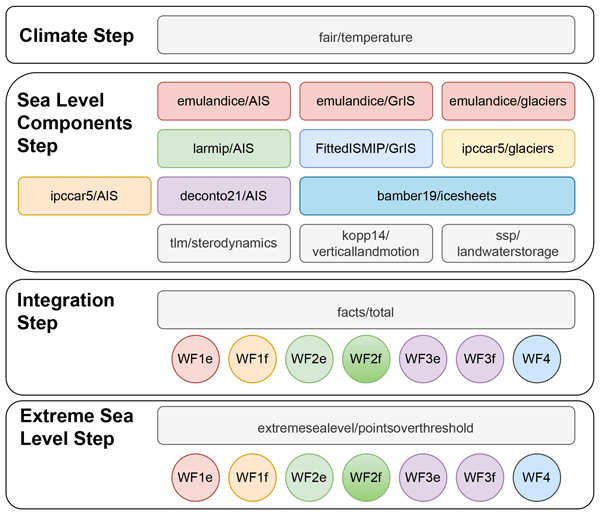
Robert E. Kopp, Gregory G. Garner, Tim H. J. Hermans, Shantenu Jha, Praveen Kumar, Alexander Reedy, Aimée B. A. Slangen, Matteo Turilli, Tamsin L. Edwards, Jonathan M. Gregory, George Koubbe, Anders Levermann, Andre Merzky, Sophie Nowicki, Matthew D. Palmer, and Chris Smith
Geosci. Model Dev., 16, 7461–7489, https://doi.org/10.5194/gmd-16-7461-2023, https://doi.org/10.5194/gmd-16-7461-2023, 2023
Short summary
Short summary
Future sea-level rise projections exhibit multiple forms of uncertainty, all of which must be considered by scientific assessments intended to inform decision-making. The Framework for Assessing Changes To Sea-level (FACTS) is a new software package intended to support assessments of global mean, regional, and extreme sea-level rise. An early version of FACTS supported the development of the IPCC Sixth Assessment Report sea-level projections.
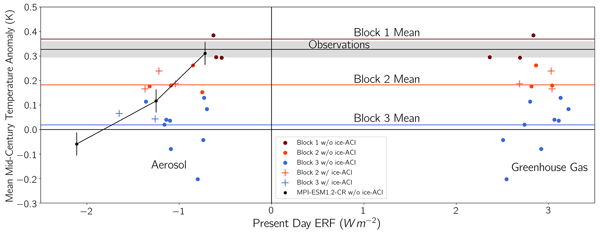
Clare Marie Flynn, Linnea Huusko, Angshuman Modak, and Thorsten Mauritsen
Atmos. Chem. Phys., 23, 15121–15133, https://doi.org/10.5194/acp-23-15121-2023, https://doi.org/10.5194/acp-23-15121-2023, 2023
Short summary
Short summary
The latest-generation climate models show surprisingly cold mid-20th century global-mean temperatures, often despite exhibiting more realistic late 20th/early 21st century temperatures. A too-strong aerosol forcing in many models was thought to the be primary cause of these too-cold mid-century temperatures, but this was found to only be a partial explanation. This also partly undermines the hope to construct a strong relationship between the mid-century temperatures and aerosol forcing.
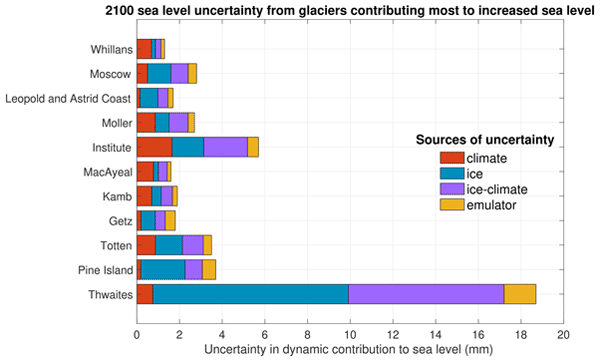
Hélène Seroussi, Vincent Verjans, Sophie Nowicki, Antony J. Payne, Heiko Goelzer, William H. Lipscomb, Ayako Abe-Ouchi, Cécile Agosta, Torsten Albrecht, Xylar Asay-Davis, Alice Barthel, Reinhard Calov, Richard Cullather, Christophe Dumas, Benjamin K. Galton-Fenzi, Rupert Gladstone, Nicholas R. Golledge, Jonathan M. Gregory, Ralf Greve, Tore Hattermann, Matthew J. Hoffman, Angelika Humbert, Philippe Huybrechts, Nicolas C. Jourdain, Thomas Kleiner, Eric Larour, Gunter R. Leguy, Daniel P. Lowry, Chistopher M. Little, Mathieu Morlighem, Frank Pattyn, Tyler Pelle, Stephen F. Price, Aurélien Quiquet, Ronja Reese, Nicole-Jeanne Schlegel, Andrew Shepherd, Erika Simon, Robin S. Smith, Fiammetta Straneo, Sainan Sun, Luke D. Trusel, Jonas Van Breedam, Peter Van Katwyk, Roderik S. W. van de Wal, Ricarda Winkelmann, Chen Zhao, Tong Zhang, and Thomas Zwinger
The Cryosphere, 17, 5197–5217, https://doi.org/10.5194/tc-17-5197-2023, https://doi.org/10.5194/tc-17-5197-2023, 2023
Short summary
Short summary
Mass loss from Antarctica is a key contributor to sea level rise over the 21st century, and the associated uncertainty dominates sea level projections. We highlight here the Antarctic glaciers showing the largest changes and quantify the main sources of uncertainty in their future evolution using an ensemble of ice flow models. We show that on top of Pine Island and Thwaites glaciers, Totten and Moscow University glaciers show rapid changes and a strong sensitivity to warmer ocean conditions.
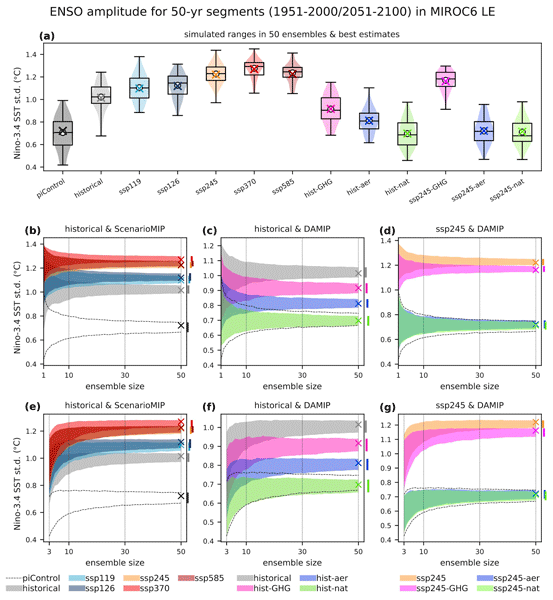
Hideo Shiogama, Hiroaki Tatebe, Michiya Hayashi, Manabu Abe, Miki Arai, Hiroshi Koyama, Yukiko Imada, Yu Kosaka, Tomoo Ogura, and Masahiro Watanabe
Earth Syst. Dynam., 14, 1107–1124, https://doi.org/10.5194/esd-14-1107-2023, https://doi.org/10.5194/esd-14-1107-2023, 2023
Short summary
Short summary
We produced one of the largest single model initial-condition ensembles thus far using the MIROC6 coupled atmosphere–ocean global climate model (MIROC6-LE). MIROC6-LE includes historical simulations, eight single forcing historical experiments, five future scenario experiments and three single forcing future experiments with 10- or 50-ensemble members. We describe the experimental design and show initial analyses. This dataset would be useful to a wide range of research communities.
Philip Goodwin, Richard Williams, Paulo Ceppi, and B. B. Cael
EGUsphere, https://doi.org/10.5194/egusphere-2023-2307, https://doi.org/10.5194/egusphere-2023-2307, 2023
Preprint archived
Short summary
Short summary
Climate feedbacks are normally evaluated by considering the change over time for Earth's energy balance and surface temperatures in the climate system. However, we only have around 1 degree Celsius of temperature change to utilise. Here, climate feedbacks are instead evaluated from the change in latitude of Earth's energy balance and surface temperatures, where we have around 70 degrees Celsius of temperature change to utilise.
Sushant Das, Frida Bender, and Thorsten Mauritsen
EGUsphere, https://doi.org/10.5194/egusphere-2023-1605, https://doi.org/10.5194/egusphere-2023-1605, 2023
Preprint archived
Short summary
Short summary
Quantifying global and Indian precipitation responses to anthropogenic aerosol and CO2 forcings using multiple models is needed for reducing climate uncertainty. The response to global warming from CO2 increases precipitation both globally and over India, whereas the cooling response to sulfate aerosol leads to a reduction in precipitation in both cases. An opposite response to black carbon is noted i.e., a global decrease but an increase of precipitation over India implying changes in dynamics.
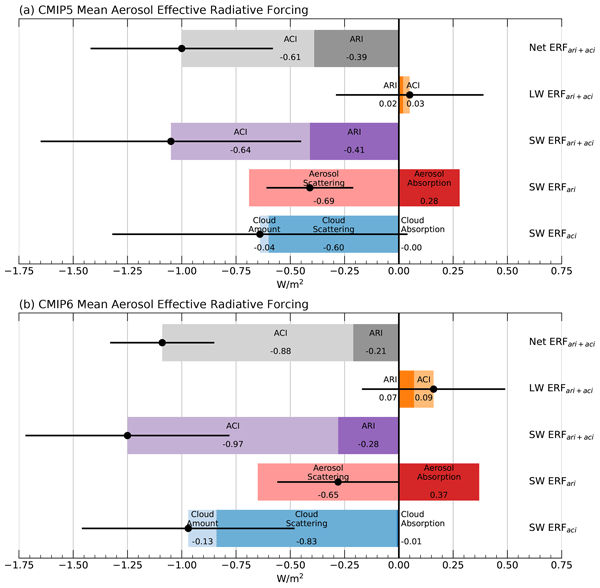
Mark D. Zelinka, Christopher J. Smith, Yi Qin, and Karl E. Taylor
Atmos. Chem. Phys., 23, 8879–8898, https://doi.org/10.5194/acp-23-8879-2023, https://doi.org/10.5194/acp-23-8879-2023, 2023
Short summary
Short summary
The primary uncertainty in how strongly Earth's climate has been perturbed by human activities comes from the unknown radiative impact of aerosol changes. Accurately quantifying these forcings – and their sub-components – in climate models is crucial for understanding the past and future simulated climate. In this study we describe biases in previously published estimates of aerosol radiative forcing in climate models and provide corrected estimates along with code for users to compute them.
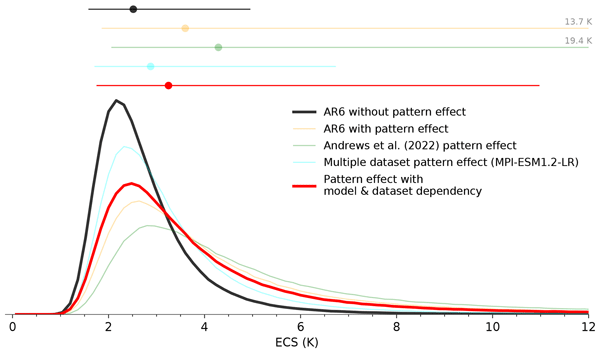
Angshuman Modak and Thorsten Mauritsen
Atmos. Chem. Phys., 23, 7535–7549, https://doi.org/10.5194/acp-23-7535-2023, https://doi.org/10.5194/acp-23-7535-2023, 2023
Short summary
Short summary
We provide an improved estimate of equilibrium climate sensitivity (ECS) constrained based on the instrumental temperature record including the corrections for the pattern effect. The improved estimate factors in the uncertainty caused by the underlying sea-surface temperature datasets used in the estimates of pattern effect. This together with the inter-model spread lifts the corresponding IPCC AR6 estimate to 3.2 K [1.8 to 11.0], which is lower and better constrained than in past studies.
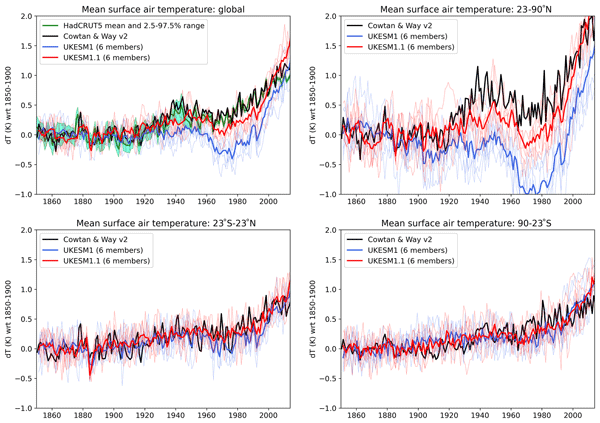
Jane P. Mulcahy, Colin G. Jones, Steven T. Rumbold, Till Kuhlbrodt, Andrea J. Dittus, Edward W. Blockley, Andrew Yool, Jeremy Walton, Catherine Hardacre, Timothy Andrews, Alejandro Bodas-Salcedo, Marc Stringer, Lee de Mora, Phil Harris, Richard Hill, Doug Kelley, Eddy Robertson, and Yongming Tang
Geosci. Model Dev., 16, 1569–1600, https://doi.org/10.5194/gmd-16-1569-2023, https://doi.org/10.5194/gmd-16-1569-2023, 2023
Short summary
Short summary
Recent global climate models simulate historical global mean surface temperatures which are too cold, possibly to due to excessive aerosol cooling. This raises questions about the models' ability to simulate important climate processes and reduces confidence in future climate predictions. We present a new version of the UK Earth System Model, which has an improved aerosols simulation and a historical temperature record. Interestingly, the long-term response to CO2 remains largely unchanged.
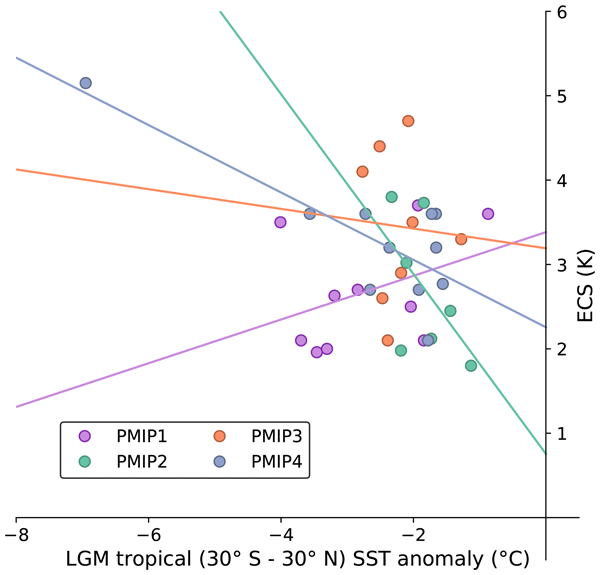
Martin Renoult, Navjit Sagoo, Jiang Zhu, and Thorsten Mauritsen
Clim. Past, 19, 323–356, https://doi.org/10.5194/cp-19-323-2023, https://doi.org/10.5194/cp-19-323-2023, 2023
Short summary
Short summary
The relationship between the Last Glacial Maximum and the sensitivity of climate models to a doubling of CO2 can be used to estimate the true sensitivity of the Earth. However, this relationship has varied in successive model generations. In this study, we assess multiple processes at the Last Glacial Maximum which weaken this relationship. For example, how models respond to the presence of ice sheets is a large contributor of uncertainty.
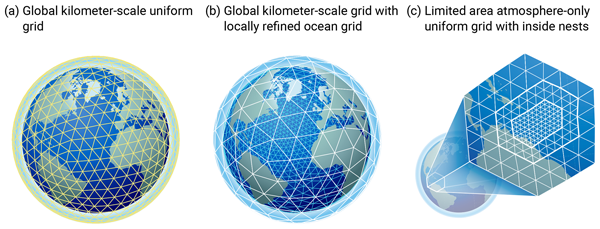
Cathy Hohenegger, Peter Korn, Leonidas Linardakis, René Redler, Reiner Schnur, Panagiotis Adamidis, Jiawei Bao, Swantje Bastin, Milad Behravesh, Martin Bergemann, Joachim Biercamp, Hendryk Bockelmann, Renate Brokopf, Nils Brüggemann, Lucas Casaroli, Fatemeh Chegini, George Datseris, Monika Esch, Geet George, Marco Giorgetta, Oliver Gutjahr, Helmuth Haak, Moritz Hanke, Tatiana Ilyina, Thomas Jahns, Johann Jungclaus, Marcel Kern, Daniel Klocke, Lukas Kluft, Tobias Kölling, Luis Kornblueh, Sergey Kosukhin, Clarissa Kroll, Junhong Lee, Thorsten Mauritsen, Carolin Mehlmann, Theresa Mieslinger, Ann Kristin Naumann, Laura Paccini, Angel Peinado, Divya Sri Praturi, Dian Putrasahan, Sebastian Rast, Thomas Riddick, Niklas Roeber, Hauke Schmidt, Uwe Schulzweida, Florian Schütte, Hans Segura, Radomyra Shevchenko, Vikram Singh, Mia Specht, Claudia Christine Stephan, Jin-Song von Storch, Raphaela Vogel, Christian Wengel, Marius Winkler, Florian Ziemen, Jochem Marotzke, and Bjorn Stevens
Geosci. Model Dev., 16, 779–811, https://doi.org/10.5194/gmd-16-779-2023, https://doi.org/10.5194/gmd-16-779-2023, 2023
Short summary
Short summary
Models of the Earth system used to understand climate and predict its change typically employ a grid spacing of about 100 km. Yet, many atmospheric and oceanic processes occur on much smaller scales. In this study, we present a new model configuration designed for the simulation of the components of the Earth system and their interactions at kilometer and smaller scales, allowing an explicit representation of the main drivers of the flow of energy and matter by solving the underlying equations.
Philipp Breul, Paulo Ceppi, and Theodore G. Shepherd
Weather Clim. Dynam., 4, 39–47, https://doi.org/10.5194/wcd-4-39-2023, https://doi.org/10.5194/wcd-4-39-2023, 2023
Short summary
Short summary
Accurately predicting the response of the midlatitude jet stream to climate change is very important, but models show a variety of possible scenarios. Previous work identified a relationship between climatological jet latitude and future jet shift in the southern hemispheric winter. We show that the relationship does not hold in separate sectors and propose that zonal asymmetries are the ultimate cause in the zonal mean. This questions the usefulness of the relationship.
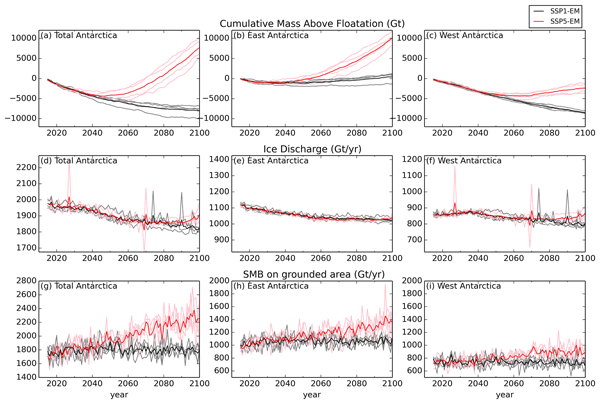
Antony Siahaan, Robin S. Smith, Paul R. Holland, Adrian Jenkins, Jonathan M. Gregory, Victoria Lee, Pierre Mathiot, Antony J. Payne, Jeff K. Ridley, and Colin G. Jones
The Cryosphere, 16, 4053–4086, https://doi.org/10.5194/tc-16-4053-2022, https://doi.org/10.5194/tc-16-4053-2022, 2022
Short summary
Short summary
The UK Earth System Model is the first to fully include interactions of the atmosphere and ocean with the Antarctic Ice Sheet. Under the low-greenhouse-gas SSP1–1.9 (Shared Socioeconomic Pathway) scenario, the ice sheet remains stable over the 21st century. Under the strong-greenhouse-gas SSP5–8.5 scenario, the model predicts strong increases in melting of large ice shelves and snow accumulation on the surface. The dominance of accumulation leads to a sea level fall at the end of the century.
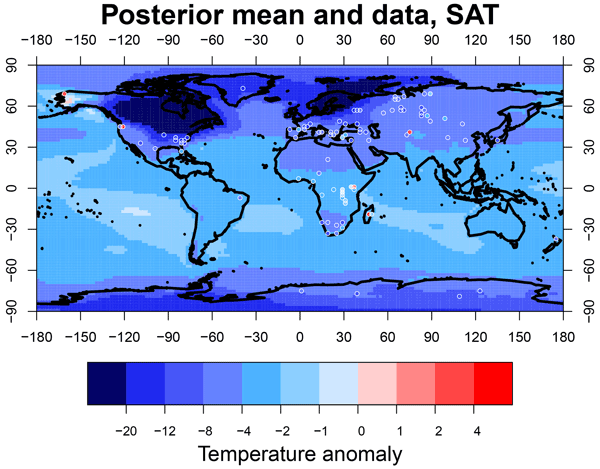
James D. Annan, Julia C. Hargreaves, and Thorsten Mauritsen
Clim. Past, 18, 1883–1896, https://doi.org/10.5194/cp-18-1883-2022, https://doi.org/10.5194/cp-18-1883-2022, 2022
Short summary
Short summary
We have created a new global surface temperature reconstruction of the climate of the Last Glacial Maximum, representing the period 19–23 000 years before the present day. We find that the globally averaged mean temperature was roughly 4.5 °C colder than it was in pre-industrial times, albeit there is significant uncertainty on this value.

Jorge L. García-Franco, Lesley J. Gray, Scott Osprey, Robin Chadwick, and Zane Martin
Weather Clim. Dynam., 3, 825–844, https://doi.org/10.5194/wcd-3-825-2022, https://doi.org/10.5194/wcd-3-825-2022, 2022
Short summary
Short summary
This paper establishes robust links between the stratospheric quasi-biennial oscillation (QBO) and several features of tropical climate. Robust precipitation responses, as well as changes to the Walker circulation, were found to be robustly linked to the variability in the lower stratosphere associated with the QBO using a 500-year simulation of a state-of-the-art climate model.
Philipp Breul, Paulo Ceppi, and Theodore G. Shepherd
Weather Clim. Dynam., 3, 645–658, https://doi.org/10.5194/wcd-3-645-2022, https://doi.org/10.5194/wcd-3-645-2022, 2022
Short summary
Short summary
Understanding how the mid-latitude jet stream will respond to a changing climate is highly important. Unfortunately, climate models predict a wide variety of possible responses. Theoretical frameworks can link an internal jet variability timescale to its response. However, we show that stratospheric influence approximately doubles the internal timescale, inflating predicted responses. We demonstrate an approach to account for the stratospheric influence and recover correct response predictions.
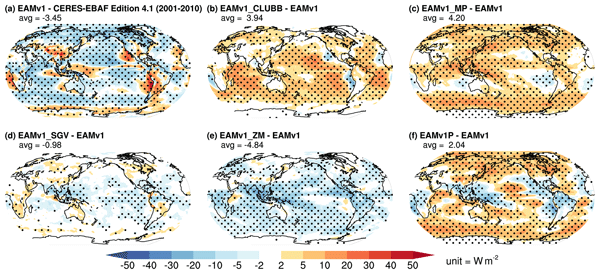
Po-Lun Ma, Bryce E. Harrop, Vincent E. Larson, Richard B. Neale, Andrew Gettelman, Hugh Morrison, Hailong Wang, Kai Zhang, Stephen A. Klein, Mark D. Zelinka, Yuying Zhang, Yun Qian, Jin-Ho Yoon, Christopher R. Jones, Meng Huang, Sheng-Lun Tai, Balwinder Singh, Peter A. Bogenschutz, Xue Zheng, Wuyin Lin, Johannes Quaas, Hélène Chepfer, Michael A. Brunke, Xubin Zeng, Johannes Mülmenstädt, Samson Hagos, Zhibo Zhang, Hua Song, Xiaohong Liu, Michael S. Pritchard, Hui Wan, Jingyu Wang, Qi Tang, Peter M. Caldwell, Jiwen Fan, Larry K. Berg, Jerome D. Fast, Mark A. Taylor, Jean-Christophe Golaz, Shaocheng Xie, Philip J. Rasch, and L. Ruby Leung
Geosci. Model Dev., 15, 2881–2916, https://doi.org/10.5194/gmd-15-2881-2022, https://doi.org/10.5194/gmd-15-2881-2022, 2022
Short summary
Short summary
An alternative set of parameters for E3SM Atmospheric Model version 1 has been developed based on a tuning strategy that focuses on clouds. When clouds in every regime are improved, other aspects of the model are also improved, even though they are not the direct targets for calibration. The recalibrated model shows a lower sensitivity to anthropogenic aerosols and surface warming, suggesting potential improvements to the simulated climate in the past and future.
Cited articles
Andrews, T. and Webb, M. J.: The dependence of global cloud and lapse-rate feedbacks on the spatial structure of tropical Pacific warming, J. Climate, 31, 641–654, https://doi.org/10.1175/JCLI-D-17-0087.1, 2018. a
Andrews, T., Gregory, J. M., Webb, M. J., and Taylor, K. E.: Forcing, feedbacks and climate sensitivity in CMIP5 coupled atmosphere-ocean climate models, Geophys. Res. Lett., 39, L09712, https://doi.org/10.1029/2012GL051607, 2012. a
Andrews, T., Gregory, J. M., and Webb, M. J.: The Dependence of Radiative Forcing and Feedback on Evolving Patterns of Surface Temperature Change in Climate Models, J. Climate, 28, 1630–1648, https://doi.org/10.1175/JCLI-D-14-00545.1, 2015. a, b
Andrews, T., Gregory, J. M., Paynter, D., Silvers, L. G., Zhou, C., Mauritsen, T., Webb, M. J., Armour, K. C., Forster, P. M., and Titchner, H.: Accounting for Changing Temperature Patterns Increases Historical Estimates of Climate Sensitivity, Geophys. Res. Lett., 45, 8490–8499, https://doi.org/10.1029/2018GL078887, 2018. a
Andrews, T., Bodas-Salcedo, A., Gregory, J. M., Dong, Y., Armour, K. C., Paynter, D., Lin, P., Modak, A., Mauritsen, T., Cole, J. N. S., Medeiros, B., Benedict, J. J., Douville, H., Roehrig, R., Koshiro, T., Kawai, H., Ogura, T., Dufresne, J.-L., Allan, R. P., and Liu, C.: On the Effect of Historical SST Patterns on Radiative Feedback, J. Geophys. Res.-Atmos., 127, e2022JD036675, https://doi.org/10.1029/2022JD036675, 2022. a, b, c, d, e
Bellomo, K., Clement, A. C., Murphy, L. N., Polvani, L. M., and Cane, M. A.: New observational evidence for a positive cloud feedback that amplifies the Atlantic Multidecadal Oscillation, Geophys. Res. Lett., 43, 9852–9859, https://doi.org/10.1002/2016GL069961, 2016. a
Bjordal, J., Storelvmo, T., Alterskjær, K., and Carlsen, T.: Equilibrium climate sensitivity above 5 °C plausible due to state-dependent cloud feedback, Nat. Geosci., 13, 718–721, https://doi.org/10.1038/s41561-020-00649-1, 2020. a, b
Bloch-Johnson, J., Pierrehumbert, R. T., and Abbot, D. S.: Feedback temperature dependence determines the risk of high warming, Geophys. Res. Lett., 42, 4973–4980, https://doi.org/10.1002/2015GL064240, 2015. a
Bloch-Johnson, J., Rugenstein, M. A. A., Alessi, M. J., Proistosescu, C., Zhao, M., Zhang, B., Williams, A. I. L., Gregory, J. M., Cole, J., Dong, Y., Duffy, M. L., Kang, S. M., and Zhou, C.: The Green's Function Model Intercomparison Project (GFMIP) Protocol, J. Adv. Model. Earth Sy., 16, e2023MS003700, https://doi.org/10.1029/2023MS003700, 2024. a
Bodas-Salcedo, A., Webb, M. J., Bony, S., Chepfer, H., Dufresne, J.-L., Klein, S. A., Zhang, Y., Marchand, R., Haynes, J. M., Pincus, R., and John, V. O.: COSP: Satellite simulation software for model assessment, B. Am. Meteorol. Soc., 92, 1023–1043, https://doi.org/10.1175/2011BAMS2856.1, 2011. a, b
Bony, S., Stevens, B., Frierson, D. M. W., Jakob, C., Kageyama, M., Pincus, R., Shepherd, T. G., Sherwood, S. C., Siebesma, A. P., Sobel, A. H., Watanabe, M., and Webb, M. J.: Clouds, circulation and climate sensitivity, Nat. Geosci., 8, 261–268, https://doi.org/10.1038/ngeo2398, 2015. a
Bony, S., Stevens, B., Coppin, D., Becker, T., Reed, K. A., Voigt, A., and Medeiros, B.: Thermodynamic control of anvil cloud amount, P. Natl. Acad. Sci. USA, 113, 8927–32, https://doi.org/10.1073/pnas.1601472113, 2016. a
Bony, S., Stevens, B., Ament, F., Bigorre, S., Chazette, P., Crewell, S., Delanoë, J., Emanuel, K., Farrell, D., Flamant, C., Gross, S., Hirsch, L., Karstensen, J., Mayer, B., Nuijens, L., Ruppert, J. H., Sandu, I., Siebesma, P., Speich, S., Szczap, F., Totems, J., Vogel, R., Wendisch, M., and Wirth, M.: EUREC4A: A Field Campaign to Elucidate the Couplings Between Clouds, Convection and Circulation, Surv. Geophys., 38, 1529–1568, https://doi.org/10.1007/s10712-017-9428-0, 2017. a
Bony, S., Semie, A., Kramer, R. J., Soden, B., Tompkins, A. M., and Emanuel, K. A.: Observed Modulation of the Tropical Radiation Budget by Deep Convective Organization and Lower-Tropospheric Stability, AGU Adv., 1, e2019AV000155, https://doi.org/10.1029/2019AV000155, 2020. a
Bourdin, S., Kluft, L., and Stevens, B.: Dependence of Climate Sensitivity on the Given Distribution of Relative Humidity, Geophys. Res. Lett., 48, e2021GL092462, https://doi.org/10.1029/2021GL092462, 2021. a
Breul, P., Ceppi, P., and Nowack, P.: The importance of stratocumulus clouds for projected warming patterns and circulation changes, Atmos. Chem. Phys., 25, 11991–12005, https://doi.org/10.5194/acp-25-11991-2025, 2025. a
Brown, P. T., Lozier, M. S., Zhang, R., and Li, W.: The necessity of cloud feedback for a basin-scale Atlantic Multidecadal Oscillation, Geophys. Res. Lett., 43, 3955–3963, https://doi.org/10.1002/2016GL068303, 2016. a
Byrne, M. P. and Zanna, L.: Radiative Effects of Clouds and Water Vapor on an Axisymmetric Monsoon, J. Climate, 33, 8789–8811, https://doi.org/10.1175/JCLI-D-19-0974.1, 2020. a
Ceppi, P. and Gregory, J. M.: A refined model for the Earth's global energy balance, Clim. Dynam., 53, 4781–4797, https://doi.org/10.1007/s00382-019-04825-x, 2019. a, b
Ceppi, P., Brient, F., Zelinka, M. D., and Hartmann, D. L.: Cloud feedback mechanisms and their representation in global climate models, WIRes Clim. Change, 8, e465, https://doi.org/10.1002/wcc.465, 2017. a
Ceppi, P., Zappa, G., Shepherd, T. G., and Gregory, J. M.: Fast and slow components of the extratropical atmospheric circulation response to CO2 forcing, J. Climate, 31, 1091–1105, https://doi.org/10.1175/JCLI-D-17-0323.1, 2018. a, b
Ceppi, P., Myers, T. A., Nowack, P., Wall, C. J., and Zelinka, M. D.: Implications of a Pervasive Climate Model Bias for Low-Cloud Feedback, Geophys. Res. Lett., 51, e2024GL110525, https://doi.org/10.1029/2024GL110525, 2024. a, b
Ceppi, P., Wilson Kemsley, S., Andersen, H., Andrews, T., Kramer, R. J., Nowack, P., Wall, C. J., and Zelinka, M. D.: Emerging low-cloud feedback and adjustment in global satellite observations, Atmos. Chem. Phys., 26, 4153–4171, https://doi.org/10.5194/acp-26-4153-2026, 2026a. a, b, c
Ceppi, P., Gregory, J., and Dai, A.-Z.: SST and sea-ice boundary conditions for CFMIP4 experiments, Zenodo [data set], https://doi.org/10.5281/zenodo.21164518, 2026b. a, b
Cesana, G. V. and Del Genio, A. D.: Observational constraint on cloud feedbacks suggests moderate climate sensitivity, Nat. Clim. Change, 11, 213–218, https://doi.org/10.1038/s41558-020-00970-y, 2021. a
Cess, R. D., Potter, G. L., Blanchet, J. P., Boer, G. J., Del Genio, A. D., Déqué, M., Dymnikov, V., Galin, V., Gates, W. L., Ghan, S. J., Kiehl, J. T., Lacis, A. A., Le Treut, H., Li, Z.-X., Liang, X.-Z., McAvaney, B. J., Meleshko, V. P., Mitchell, J. F. B., Morcrette, J.-J., Randall, D. A., Rikus, L., Roeckner, E., Royer, J. F., Schlese, U., Sheinin, D. A., Slingo, A., Sokolov, A. P., Taylor, K. E., Washington, W. M., Wetherald, R. T., Yagai, I., and Zhang, M.-H.: Intercomparison and interpretation of climate feedback processes in 19 atmospheric general circulation models, J. Geophys. Res., 95, 16601, https://doi.org/10.1029/JD095iD10p16601, 1990. a
Chadwick, R., Douville, H., and Skinner, C. B.: Timeslice experiments for understanding regional climate projections: applications to the tropical hydrological cycle and European winter circulation, Clim. Dynam., 1–19, https://doi.org/10.1007/s00382-016-3488-6, 2017. a, b, c
Charney, J. G., Arakawa, A., Baker, D. J., Bolin, B., Dickinson, R. E., Goody, R. M., Leith, C. E., Stommel, H. M., and Wunsch, C. I.: Carbon Dioxide and Climate, Tech. rep., National Academy of Science, Washington, D.C., https://doi.org/10.17226/12181, 1979. a
Chepfer, H., Chomette, O., Arouf, A., Noel, V., Winker, D., Feofilov, A., and Alava Baldazo, A.: Variability and Trends in Cloud Properties Over 17 Years From CALIPSO Space Lidar Observations, J. Geophys. Res.-Atmos., 130, e2025JD043764, https://doi.org/10.1029/2025JD043764, 2025. a
Collins, W. J., Lamarque, J.-F., Schulz, M., Boucher, O., Eyring, V., Hegglin, M. I., Maycock, A., Myhre, G., Prather, M., Shindell, D., and Smith, S. J.: AerChemMIP: quantifying the effects of chemistry and aerosols in CMIP6, Geosci. Model Dev., 10, 585–607, https://doi.org/10.5194/gmd-10-585-2017, 2017. a
Cooper, V. T., Armour, K. C., Hakim, G. J., Tierney, J. E., Osman, M. B., Proistosescu, C., Dong, Y., Burls, N. J., Andrews, T., Amrhein, D. E., Zhu, J., Dong, W., Ming, Y., and Chmielowiec, P.: Last Glacial Maximum pattern effects reduce climate sensitivity estimates, Sci. Adv., 10, eadk9461, https://doi.org/10.1126/sciadv.adk9461, 2024. a
Curtis, P. E., Ceppi, P., and Zappa, G.: Role of the mean state for the Southern Hemispheric jet stream response to CO2 forcing in CMIP6 models, Environ. Res. Lett., 15, 064011, https://doi.org/10.1088/1748-9326/ab8331, 2020. a
Dal Gesso, S. and Neggers, R. A. J.: Can We Use Single-Column Models for Understanding the Boundary Layer Cloud-Climate Feedback?, J. Adv. Model. Earth Sy., 10, 245–261, https://doi.org/10.1002/2017MS001113, 2018. a
Dingley, B., Anstey, J. A., Abalos, M., Abraham, C., Bergman, T., Bock, L., Fiddes, S., Hassler, B., Kramer, R. J., Luo, F., O'Connor, F. M., Šácha, P., Simpson, I. R., Wilcox, L. J., and Zelinka, M. D.: CMIP7 Data Request: atmosphere priorities and opportunities, Geosci. Model Dev., 19, 2945–2984, https://doi.org/10.5194/gmd-19-2945-2026, 2026. a
Dong, Y., Lu, K., Hwang, Y.-T., Hu, R.-J., Ceppi, P., Breul, P., Roach, L. A., and Deser, C.: Tropical Impacts of the Southern Ocean Underestimated by Mean-State Biases, Sci. Adv., 12, eaed1936, https://doi.org/10.1126/sciadv.aed1936, 2026. a
Duffy, M. L., Medeiros, B., Gettelman, A., and Eidhammer, T.: Perturbing Parameters to Understand Cloud Contributions to Climate Change, J. Climate, 37, 213–227, https://doi.org/10.1175/JCLI-D-23-0250.1, 2023. a
Dunne, J. P., Hewitt, H. T., Arblaster, J. M., Bonou, F., Boucher, O., Cavazos, T., Dingley, B., Durack, P. J., Hassler, B., Juckes, M., Miyakawa, T., Mizielinski, M., Naik, V., Nicholls, Z., O'Rourke, E., Pincus, R., Sanderson, B. M., Simpson, I. R., and Taylor, K. E.: An evolving Coupled Model Intercomparison Project phase 7 (CMIP7) and Fast Track in support of future climate assessment, Geosci. Model Dev., 18, 6671–6700, https://doi.org/10.5194/gmd-18-6671-2025, 2025. a, b, c, d, e, f, g, h, i
Durack, P. J., Taylor, K. E., Ames, S. K., Po-Chedley, S., and Mauzey, C.: PCMDI AMIP SST and Sea-Ice Boundary Conditions Version 1.1.10, Earth System Grid Federation [data set], https://doi.org/10.25981/ESGF.input4MIPs.CMIP7/2575015, 2025. a
Espinosa, Z. I., Zelinka, M. D., Bitz, C. M., and Armour, K. C.: The Strength of Coupling to the Southern Ocean Modulates Tropical Eastern Pacific Variability and Forced Response, J. Climate, 39, 1543–1558, https://doi.org/10.1175/JCLI-D-25-0226.1, 2026. a
Fan, C., Paynter, D., Kramer, R. J., and Lin, P.: Sensitivity of Earth's Radiation Budget to Lower Boundary Condition Data Sets in Historical Climate Simulations, Geophys. Res. Lett., 52, e2025GL115914, https://doi.org/10.1029/2025GL115914, 2025. a, b
Fiedler, S., O'Connor, F. M., Watson-Parris, D., Allen, R. J., Collins, W. J., Griffiths, P. T., Kasoar, M., Kikstra, J., Kok, J. F., Murray, L. T., Paulot, F., Sand, M., Turnock, S. T., Weber, J., Wilcox, L. J., and Naik, V.: AerChemMIP2 – unraveling the role of reactive gases, aerosol particles, and land use for air quality and climate change in CMIP7, Geosci. Model Dev., 19, 3477–3508, https://doi.org/10.5194/gmd-19-3477-2026, 2026. a
Forster, P. M., Storelvmo, T., Armour, K., Collins, W., Dufresne, J.-L., Frame, D., Lunt, D., Mauritsen, T., Palmer, M., Watanabe, M., Wild, M., and Zhang, H.: The Earth's energy budget, climate feedbacks, and climate sensitivity, in: Climate Change 2021: The Physical Science Basis. Contribution of Working Group I to the Sixth Assessment Report of the Intergovernmental Panel on Climate Change, edited by: Masson-Delmotte, V., Zhai, P., Pirani, A., Connors, S. L., Péan, C., Berger, S., Caud, N., Chen, Y., Goldfarb, L., Gomis, M. I., Huang, M., Leitzell, K., Lonnoy, E., Matthews, J. B. R., Maycock, T. K., Waterfield, T., Yelekçi, O., Yu, R., and Zhou, B., Cambridge University Press, https://www.ipcc.ch/report/ar6/wg1/downloads/report/IPCC_AR6_WGI_Chapter07.pdf (last access: 8 September 2026), 2021. a
Geoffroy, O., Saint-Martin, D., Bellon, G., Voldoire, A., Olivié, D. J. L., and Tytéca, S.: Transient Climate Response in a Two-Layer Energy-Balance Model. Part II: Representation of the Efficacy of Deep-Ocean Heat Uptake and Validation for CMIP5 AOGCMs, J. Climate, 26, 1859–1876, https://doi.org/10.1175/JCLI-D-12-00196.1, 2013. a
Gettelman, A., Eidhammer, T., Duffy, M. L., McCoy, D. T., Song, C., and Watson-Parris, D.: The Interaction Between Climate Forcing and Feedbacks, J. Geophys. Res.-Atmos., 129, e2024JD040857, https://doi.org/10.1029/2024JD040857, 2024. a
Goessling, H. F., Rackow, T., and Jung, T.: Recent global temperature surge intensified by record-low planetary albedo, Science, 387, 68–73, https://doi.org/10.1126/science.adq7280, 2025. a, b
Good, P., Gregory, J. M., and Lowe, J. A.: A step-response simple climate model to reconstruct and interpret AOGCM projections, Geophys. Res. Lett., 38, L01703, https://doi.org/10.1029/2010GL045208, 2011. a
Gregory, J. M. and Andrews, T.: Variation in climate sensitivity and feedback parameters during the historical period, Geophys. Res. Lett., 43, 3911–3920, https://doi.org/10.1002/2016GL068406, 2016. a, b, c
Gregory, J. M., Ingram, W. J., Palmer, M. A., Jones, G. S., Stott, P. A., Thorpe, R. B., Lowe, J. A., Johns, T. C., and Williams, K. D.: A new method for diagnosing radiative forcing and climate sensitivity, Geophys. Res. Lett., 31, L03205, https://doi.org/10.1029/2003GL018747, 2004. a
Grise, K. M. and Davis, S. M.: Hadley cell expansion in CMIP6 models, Atmos. Chem. Phys., 20, 5249–5268, https://doi.org/10.5194/acp-20-5249-2020, 2020. a
Günther, M., Schmidt, H., Timmreck, C., and Toohey, M.: Climate Feedback to Stratospheric Aerosol Forcing: The Key Role of the Pattern Effect, J. Climate, 35, 4303–4317, https://doi.org/10.1175/JCLI-D-22-0306.1, 2022. a, b
Hansen, J., Sato, M., Ruedy, R., Nazarenko, L., Lacis, A., Schmidt, G. A., Russell, G., Aleinov, I., Bauer, M., Bauer, S., Bell, N., Cairns, B., Canuto, V., Chandler, M., Cheng, Y., Del Genio, A., Faluvegi, G., Fleming, E., Friend, A., Hall, T., Jackman, C., Kelley, M., Kiang, N., Koch, D., Lean, J., Lerner, J., Lo, K., Menon, S., Miller, R., Minnis, P., Novakov, T., Oinas, V., Perlwitz, J., Perlwitz, J., Rind, D., Romanou, A., Shindell, D., Stone, P., Sun, S., Tausnev, N., Thresher, D., Wielicki, B., Wong, T., Yao, M., and Zhang, S.: Efficacy of climate forcings, J. Geophys. Res., 110, D18104, https://doi.org/10.1029/2005JD005776, 2005. a, b
Hartmann, D. L. and Larson, K.: An important constraint on tropical cloud–climate feedback, Geophys. Res. Lett., 29, 1951, https://doi.org/10.1029/2002GL015835, 2002. a
Harvey, B. J., Cook, P., Shaffrey, L. C., and Schiemann, R.: The Response of the Northern Hemisphere Storm Tracks and Jet Streams to Climate Change in the CMIP3, CMIP5, and CMIP6 Climate Models, J. Geophys. Res.-Atmos., 125, e2020JD032701, https://doi.org/10.1029/2020JD032701, 2020. a
Haugstad, A. D., Armour, K. C., Battisti, D. S., and Rose, B. E.: Relative roles of surface temperature and climate forcing patterns in the inconstancy of radiative feedbacks, Geophys. Res. Lett., 44, 7455–7463, https://doi.org/10.1002/2017GL074372, 2017. a
Heede, U. K., Fedorov, A. V., and Burls, N. J.: Time Scales and Mechanisms for the Tropical Pacific Response to Global Warming: A Tug of War between the Ocean Thermostat and Weaker Walker, J. Climate, 33, 6101–6118, https://doi.org/10.1175/JCLI-D-19-0690.1, 2020. a
Hodnebrog, Ø., Myhre, G., Jouan, C., Andrews, T., Forster, P. M., Jia, H., Loeb, N. G., Olivié, D. J. L., Paynter, D., Quaas, J., Raghuraman, S. P., and Schulz, M.: Recent reductions in aerosol emissions have increased Earth’s energy imbalance, Commun. Earth Environ., 5, 166, https://doi.org/10.1038/s43247-024-01324-8, 2024. a, b
Hsiao, W.-T., Hwang, Y.-T., Chen, Y.-J., and Kang, S. M.: The Role of Clouds in Shaping Tropical Pacific Response Pattern to Extratropical Thermal Forcing, Geophys. Res. Lett., 49, e2022GL098023, https://doi.org/10.1029/2022GL098023, 2022. a
Hurrell, J. W., Hack, J. J., Shea, D., Caron, J. M., and Rosinski, J.: A New Sea Surface Temperature and Sea Ice Boundary Dataset for the Community Atmosphere Model, J. Climate, 21, 5145–5153, https://doi.org/10.1175/2008JCLI2292.1, 2008. a
Jansson, F., Janssens, M., Grönqvist, J. H., Siebesma, A. P., Glassmeier, F., Attema, J., Azizi, V., Satoh, M., Sato, Y., Schulz, H., and Kölling, T.: Cloud Botany: Shallow Cumulus Clouds in an Ensemble of Idealized Large-Domain Large-Eddy Simulations of the Trades, J. Adv. Model. Earth Sy., 15, e2023MS003796, https://doi.org/10.1029/2023MS003796, 2023. a
Juckes, M., Taylor, K. E., Antonio, F., Brayshaw, D., Buontempo, C., Cao, J., Durack, P. J., Kawamiya, M., Kim, H., Lovato, T., Mackallah, C., Mizielinski, M., Nuzzo, A., Stockhause, M., Visioni, D., Walton, J., Turner, B., O'Rourke, E., and Dingley, B.: Baseline Climate Variables for Earth System Modelling, Geosci. Model Dev., 18, 2639–2663, https://doi.org/10.5194/gmd-18-2639-2025, 2025. a
Kang, S. M., Hawcroft, M., Xiang, B., Hwang, Y. T., Cazes, G., Codron, F., Crueger, T., Deser, C., Hodnebrog, Ø., Kim, H., Kim, J., Kosaka, Y., Losada, T., Mechoso, C. R., Myhre, G., Seland, Ø., Stevens, B., Watanabe, M., and Yu, S.: Extratropical–tropical interaction model intercomparison project (ETIN-MIP): Protocol and initial results, B. Am. Meteorol. Soc., 100, 2589–2605, https://doi.org/10.1175/BAMS-D-18-0301.1, 2019. a
Kang, S. M., Ceppi, P., Yu, Y., and Kang, I.-S.: Recent global climate feedback controlled by Southern Ocean cooling, Nat. Geosci., 16, 775–780, https://doi.org/10.1038/s41561-023-01256-6, 2023a. a
Kang, S. M., Yu, Y., Deser, C., Zhang, X., Kang, I.-S., Lee, S.-S., Rodgers, K. B., and Ceppi, P.: Global impacts of recent Southern Ocean cooling, P. Natl. Acad. Sci., 120, e2300881120, https://doi.org/10.1073/pnas.2300881120, 2023b. a, b
Kidston, J. and Gerber, E. P.: Intermodel variability of the poleward shift of the austral jet stream in the CMIP3 integrations linked to biases in 20th century climatology, Geophys. Res. Lett., 37, L09708, https://doi.org/10.1029/2010GL042873, 2010. a
Kim, H., Kang, S. M., Kay, J. E., and Xie, S.-P.: Subtropical clouds key to Southern Ocean teleconnections to the tropical Pacific, P. Natl. Acad. Sci., 119, e2200514119, https://doi.org/10.1073/pnas.2200514119, 2022. a, b
Kluft, L., Stevens, B., Brath, M., and Buehler, S. A.: A conceptual framework for understanding longwave cloud effects on climate sensitivity, Atmos. Chem. Phys., 25, 9075–9084, https://doi.org/10.5194/acp-25-9075-2025, 2025. a
Koll, D. D. B., Jeevanjee, N., and Lutsko, N. J.: An Analytic Model for the Clear-Sky Longwave Feedback, J. Atmos. Sci., 80, 1923–1951, https://doi.org/10.1175/JAS-D-22-0178.1, 2023. a
Kramer, R. J., Smith, C., and Andrews, T.: The Radiative Forcing Model Intercomparison Project (RFMIP2.0) for CMIP7, Geosci. Model Dev., 19, 4447–4466, https://doi.org/10.5194/gmd-19-4447-2026, 2026. a, b, c, d
Kuhlbrodt, T., Swaminathan, R., Ceppi, P., and Wilder, T.: A Glimpse into the Future: The 2023 Ocean Temperature and Sea Ice Extremes in the Context of Longer-Term Climate Change, J. Climate, 105, E474–E485, https://doi.org/10.1175/BAMS-D-23-0209.1, 2024. a, b
Lewis, N. and Mauritsen, T.: Negligible Unforced Historical Pattern Effect on Climate Feedback Strength Found in HadISST-Based AMIP Simulations, J. Climate, 34, 39–55, https://doi.org/10.1175/JCLI-D-19-0941.1, 2021. a, b
Li, C., von Storch, J.-S., and Marotzke, J.: Deep-ocean heat uptake and equilibrium climate response, Clim. Dynam., 40, 1071–1086, https://doi.org/10.1007/s00382-012-1350-z, 2013. a
Loeb, N. G., Ham, S.-H., Allan, R. P., Thorsen, T. J., Meyssignac, B., Kato, S., Johnson, G. C., and Lyman, J. M.: Observational Assessment of Changes in Earth's Energy Imbalance Since 2000, Surv. Geophys., https://doi.org/10.1007/s10712-024-09838-8, 2024. a
Marvel, K., Schmidt, G. A., Miller, R. L., and Nazarenko, L. S.: Implications for climate sensitivity from the response to individual forcings, Nat. Clim. Change, 6, 386–389, https://doi.org/10.1038/nclimate2888, 2016. a, b
Mauritsen, T., Tsushima, Y., Meyssignac, B., Loeb, N. G., Hakuba, M., Pilewskie, P., Cole, J., Suzuki, K., Ackerman, T. P., Allan, R. P., Andrews, T., Bender, F. A.-M., Bloch-Johnson, J., Bodas-Salcedo, A., Brookshaw, A., Ceppi, P., Clerbaux, N., Dessler, A. E., Donohoe, A., Dufresne, J.-L., Eyring, V., Findell, K. L., Gettelman, A., Gristey, J. J., Hawkins, E., Heimbach, P., Hewitt, H. T., Jeevanjee, N., Jones, C., Kang, S. M., Kato, S., Kay, J. E., Klein, S. A., Knutti, R., Kramer, R., Lee, J.-Y., McCoy, D. T., Medeiros, B., Megner, L., Modak, A., Ogura, T., Palmer, M. D., Paynter, D., Quaas, J., Ramanathan, V., Ringer, M., von Schuckmann, K., Sherwood, S., Stevens, B., Tan, I., Tselioudis, G., Sutton, R., Voigt, A., Watanabe, M., Webb, M. J., Wild, M., and Zelinka, M. D.: Earth's Energy Imbalance More Than Doubled in Recent Decades, AGU Adv., 6, e2024AV001636, https://doi.org/10.1029/2024AV001636, 2025. a
McCoy, D. T., Frazer, M. E., Mülmenstädt, J., Tan, I., Terai, C. R., and Zelinka, M. D.: Extratropical Cloud Feedbacks, in: Clouds and Their Climatic Impacts, 133–157, American Geophysical Union (AGU), ISBN 978-1-119-70035-7, https://doi.org/10.1002/9781119700357.ch6, 2023. a
McKim, B., Bony, S., and Dufresne, J.-L.: Weak anvil cloud area feedback suggested by physical and observational constraints, Nat. Geosci., 17, 392–397, https://doi.org/10.1038/s41561-024-01414-4, 2024. a, b
Modak, A. and Mauritsen, T.: Better-constrained climate sensitivity when accounting for dataset dependency on pattern effect estimates, Atmos. Chem. Phys., 23, 7535–7549, https://doi.org/10.5194/acp-23-7535-2023, 2023. a, b
Mutton, H., Andrews, T., Hermanson, L., Seabrook, M., Smith, D. M., Ringer, M. A., Jones, G. S., and Webb, M. J.: Feedbacks, Pattern Effects, and Efficacies in a Large Ensemble of HadGEM3-GC3.1-LL Historical Simulations, J. Geophys. Res.-Atmos., 129, e2024JD041137, https://doi.org/10.1029/2024JD041137, 2024. a
Mutton, H., Chadwick, R., Collins, M., Lambert, F. H., Taylor, C. M., Geen, R., Douville, H., and Saint-Lu, M.: Understanding the Uncertainty in the West African Monsoon Precipitation Response to Increasing CO2, J. Climate, 38, 3151–3168, https://doi.org/10.1175/JCLI-D-24-0506.1, 2025. a
Myers, T. A. and Mechoso, C. R.: Relative Contributions of Atmospheric, Oceanic, and Coupled Processes to North Pacific and North Atlantic Variability, Geophys. Res. Lett., 47, https://doi.org/10.1029/2019GL086321, 2020. a
Myers, T. A., Scott, R. C., Zelinka, M. D., Klein, S. A., Norris, J. R., and Caldwell, P. M.: Observational constraints on low cloud feedback reduce uncertainty of climate sensitivity, Nat. Clim. Change, 501–507, https://doi.org/10.1038/s41558-021-01039-0, 2021. a, b
Myers, T. A., Vogel, R., Brient, F., Parishani, H., and Scott, R. C.: Tropical Marine Low Clouds: Feedbacks to Warming and on Climate Variability, in: Clouds and Their Climatic Impacts, 159–177, American Geophysical Union (AGU), ISBN 978-1-119-70035-7, https://doi.org/10.1002/9781119700357.ch7, 2023. a
Myhre, G., Byrom, R. E., Andrews, T., Forster, P. M., and Smith, C. J.: Efficacy of climate forcings in transient CMIP6 simulations, Front. Climate, 6, https://doi.org/10.3389/fclim.2024.1397358, 2024. a
Mülmenstädt, J., Salzmann, M., Kay, J. E., Zelinka, M. D., Ma, P.-L., Nam, C., Kretzschmar, J., Hörnig, S., and Quaas, J.: An underestimated negative cloud feedback from cloud lifetime changes, Nat. Clim. Change, 11, 508–513, https://doi.org/10.1038/s41558-021-01038-1, 2021. a
Natchiar, S. R. M., Webb, M. J., Lambert, F. H., Vallis, G. K., Morcrette, C. J., Holloway, C. E., Sergeev, D. E., and Boutle, I.: Reduction in the Tropical High Cloud Fraction in Response to an Indirect Weakening of the Hadley Cell, J. Adv. Model. Earth Sy., 16, e2023MS003985, https://doi.org/10.1029/2023MS003985, 2024. a
Norris, J. R., Allen, R. J., Evan, A. T., Zelinka, M. D., O'Dell, C. W., and Klein, S. A.: Evidence for climate change in the satellite cloud record, Nature, 536, 72–75, https://doi.org/10.1038/nature18273, 2016. a
Nuijens, L. and Siebesma, A. P.: Boundary Layer Clouds and Convection over Subtropical Oceans in our Current and in a Warmer Climate, Current Climate Change Reports, 5, 80–94, https://doi.org/10.1007/s40641-019-00126-x, 2019. a
Ogura, T., Webb, M. J., and Lock, A. P.: Positive Low Cloud Feedback Primarily Caused by Increasing Longwave Radiation From the Sea Surface in Two Versions of a Climate Model, Geophys. Res. Lett., 50, e2023GL104786, https://doi.org/10.1029/2023GL104786, 2023. a, b, c
Olonscheck, D. and Rugenstein, M.: Coupled Climate Models Systematically Underestimate Radiation Response to Surface Warming, Geophys. Res. Lett., 51, e2023GL106909, https://doi.org/10.1029/2023GL106909, 2024. a
Peng, L., Blossey, P. N., Hannah, W. M., Bretherton, C. S., Terai, C. R., Jenney, A. M., Ferretti, S. L., Parishani, H., and Pritchard, M. S.: Resolving Low Cloud Feedbacks Globally With E3SM High-Res MMF: Agreement With LES but Stronger Shortwave Effects, J. Adv. Model. Earth Sy., 17, e2025MS005003, https://doi.org/10.1029/2025MS005003, 2025. a, b
Pincus, R., Forster, P. M., and Stevens, B.: The Radiative Forcing Model Intercomparison Project (RFMIP): experimental protocol for CMIP6, Geosci. Model Dev., 9, 3447–3460, https://doi.org/10.5194/gmd-9-3447-2016, 2016. a
Poletti, A. N., Frierson, D. M. W., and Armour, K. C.: Why Do CO2 Quadrupling Simulations Warm More Than Twice as Much as CO2 Doubling Simulations in CMIP6?, Geophys. Res. Lett., 51, e2023GL107320, https://doi.org/10.1029/2023GL107320, 2024. a
Proistosescu, C. and Huybers, P. J.: Slow climate mode reconciles historical and model-based estimates of climate sensitivity, Sci. Adv., 3, https://doi.org/10.1126/sciadv.1602821, 2017. a, b
Qin, Y., Zelinka, M. D., and Klein, S. A.: On the Correspondence Between Atmosphere-Only and Coupled Simulations for Radiative Feedbacks and Forcing From CO2, J. Geophys. Res.-Atmos., 127, e2021JD035460, https://doi.org/10.1029/2021JD035460, 2022. a
Quaas, J., Jia, H., Smith, C., Albright, A. L., Aas, W., Bellouin, N., Boucher, O., Doutriaux-Boucher, M., Forster, P. M., Grosvenor, D., Jenkins, S., Klimont, Z., Loeb, N. G., Ma, X., Naik, V., Paulot, F., Stier, P., Wild, M., Myhre, G., and Schulz, M.: Robust evidence for reversal of the trend in aerosol effective climate forcing, Atmos. Chem. Phys., 22, 12221–12239, https://doi.org/10.5194/acp-22-12221-2022, 2022. a
Raghuraman, S. P. and Medeiros, B.: Cloud Feedback Overestimated in Coupled CESM2 Simulations Relative to AMIP Simulations and Satellite Observations: Importance of the Pattern Effect and Implications for Climate Sensitivity, Environ. Res. Lett., 21, 084018, https://doi.org/10.1088/1748-9326/ae5fab, 2026. a
Raghuraman, S. P., Paynter, D., and Ramaswamy, V.: Anthropogenic forcing and response yield observed positive trend in Earth's energy imbalance, Nat. Commun., 12, 4577, https://doi.org/10.1038/s41467-021-24544-4, 2021. a
Raghuraman, S. P., Medeiros, B., and Gettelman, A.: Observational Quantification of Tropical High Cloud Changes and Feedbacks, J. Geophys. Res.-Atmos., 129, e2023JD039364, https://doi.org/10.1029/2023JD039364, 2024. a
Rayner, N. A., Parker, D. E., Horton, E. B., Folland, C. K., Alexander, L. V., Rowell, D. P., Kent, E. C., and Kaplan, A.: Global analyses of sea surface temperature, sea ice, and night marine air temperature since the late nineteenth century, J. Geophys. Res.-Atmos., 108, https://doi.org/10.1029/2002JD002670, 2003. a, b
Reynolds, R. W., Rayner, N. A., Smith, T. M., Stokes, D. C., and Wang, W.: An Improved In Situ and Satellite SST Analysis for Climate, J. Climate, 15, 1609–1625, https://doi.org/10.1175/1520-0442(2002)015<1609:AIISAS>2.0.CO;2, 2002. a
Richardson, M. T., Roy, R. J., and Lebsock, M. D.: Satellites Suggest Rising Tropical High Cloud Altitude: 2002–2021, Geophys. Res. Lett., 49, e2022GL098160, https://doi.org/10.1029/2022GL098160, 2022. a
Richardson, T. B., Forster, P. M., Smith, C. J., Maycock, A. C., Wood, T., Andrews, T., Boucher, O., Faluvegi, G., Fläschner, D., Hodnebrog, Ø., Kasoar, M., Kirkevåg, A., Lamarque, J. F., Mülmenstädt, J., Myhre, G., Olivié, D., Portmann, R. W., Samset, B. H., Shawki, D., Shindell, D., Stier, P., Takemura, T., Voulgarakis, A., and Watson-Parris, D.: Efficacy of Climate Forcings in PDRMIP Models, J. Geophys. Res.-Atmos., 124, 12824–12844, https://doi.org/10.1029/2019JD030581, 2019. a
Rieck, M., Nuijens, L., and Stevens, B.: Marine Boundary Layer Cloud Feedbacks in a Constant Relative Humidity Atmosphere, J. Atmos. Sci., 69, 2538–2550, https://doi.org/10.1175/JAS-D-11-0203.1, 2012. a
Ringer, M. A., Bodas-Salcedo, A., and Webb, M. J.: Global and Regional Climate Feedbacks in Response to Uniform Warming and Cooling, J. Geophys. Res.-Atmos., 128, e2023JD038861, https://doi.org/10.1029/2023JD038861, 2023. a, b, c
Roberts, M. J., Reed, K. A., Bao, Q., Barsugli, J. J., Camargo, S. J., Caron, L.-P., Chang, P., Chen, C.-T., Christensen, H. M., Danabasoglu, G., Frenger, I., Fučkar, N. S., ul Hasson, S., Hewitt, H. T., Huang, H., Kim, D., Kodama, C., Lai, M., Leung, L.-Y. R., Mizuta, R., Nobre, P., Ortega, P., Paquin, D., Roberts, C. D., Scoccimarro, E., Seddon, J., Treguier, A. M., Tu, C.-Y., Ullrich, P. A., Vidale, P. L., Wehner, M. F., Zarzycki, C. M., Zhang, B., Zhang, W., and Zhao, M.: High-Resolution Model Intercomparison Project phase 2 (HighResMIP2) towards CMIP7, Geosci. Model Dev., 18, 1307–1332, https://doi.org/10.5194/gmd-18-1307-2025, 2025. a
Rugenstein, M., Bloch-Johnson, J., Abe-Ouchi, A., Andrews, T., Beyerle, U., Cao, L., Chadha, T., Danabasoglu, G., Dufresne, J.-L., Duan, L., Foujols, M.-A., Frölicher, T., Geoffroy, O., Gregory, J., Knutti, R., Li, C., Marzocchi, A., Mauritsen, T., Menary, M., Moyer, E., Nazarenko, L., Paynter, D., Saint-Martin, D., Schmidt, G. A., Yamamoto, A., and Yang, S.: LongRunMIP: Motivation and Design for a Large Collection of Millennial-Length AOGCM Simulations, B. Am. Meteorol. Soc., 100, 2551–2570, https://doi.org/10.1175/BAMS-D-19-0068.1, 2019. a
Rugenstein, M., Bloch-Johnson, J., Gregory, J., Andrews, T., Mauritsen, T., Li, C., Frölicher, T. L., Paynter, D., Danabasoglu, G., Yang, S., Dufresne, J.-L., Cao, L., Schmidt, G. A., Abe-Ouchi, A., Geoffroy, O., and Knutti, R.: Equilibrium Climate Sensitivity Estimated by Equilibrating Climate Models, Geophys. Res. Lett., 47, e2019GL083898, https://doi.org/10.1029/2019GL083898, 2020. a
Rugenstein, M., Zelinka, M., Karnauskas, K. D., Ceppi, P., and Andrews, T.: Patterns of Surface Warming Matter for Climate Sensitivity, Eos, 104, https://doi.org/10.1029/2023EO230411, 2023. a
Rugenstein, M. A. A., Gregory, J. M., Schaller, N., Sedláček, J., and Knutti, R.: Multi-annual ocean-atmosphere adjustments to radiative forcing, J. Climate, JCLI-D-16-0312.1, https://doi.org/10.1175/JCLI-D-16-0312.1, 2016. a
Rädel, G., Mauritsen, T., Stevens, B., Dommenget, D., Matei, D., Bellomo, K., and Clement, A.: Amplification of El Niño by cloud longwave coupling to atmospheric circulation, Nat. Geosci., 9, 106–110, https://doi.org/10.1038/ngeo2630, 2016. a
Salvi, P., Ceppi, P., and Gregory, J. M.: Interpreting Differences in Radiative Feedbacks From Aerosols Versus Greenhouse Gases, Geophys. Res. Lett., 49, e2022GL097766, https://doi.org/10.1029/2022GL097766, 2022. a, b
Salvi, P., Gregory, J. M., and Ceppi, P.: Time-Evolving Radiative Feedbacks in the Historical Period, J. Geophys. Res.-Atmos., 128, e2023JD038984, https://doi.org/10.1029/2023JD038984, 2023. a, b
Scheff, J. and Frierson, D.: 21st-century multi-model subtropical precipitation declines are mostly mid-latitude shifts, J. Climate, 120125132609008, https://doi.org/10.1175/JCLI-D-11-00393.1, 2012. a
Schmidt, G.: Climate models can't explain 2023's huge heat anomaly – we could be in uncharted territory, Nature, 627, 467–467, https://doi.org/10.1038/d41586-024-00816-z, 2024. a
Schmidt, G. A., Andrews, T., Bauer, S. E., Durack, P. J., Loeb, N. G., Ramaswamy, V., Arnold, N. P., Bosilovich, M. G., Cole, J., Horowitz, L. W., Johnson, G. C., Lyman, J. M., Medeiros, B., Michibata, T., Olonscheck, D., Paynter, D., Raghuraman, S. P., Schulz, M., Takasuka, D., Tallapragada, V., Taylor, P. C., and Ziehn, T.: CERESMIP: a climate modeling protocol to investigate recent trends in the Earth's Energy Imbalance, Frontiers in Climate, 5, https://doi.org/10.3389/fclim.2023.1202161, 2023. a, b
Seeley, J. T. and Jeevanjee, N.: H2O Windows and CO2 Radiator Fins: A Clear-Sky Explanation for the Peak in Equilibrium Climate Sensitivity, Geophys. Res. Lett., 48, e2020GL089609, https://doi.org/10.1029/2020GL089609, 2021. a
Shen, Z., Sridhar, A., Tan, Z., Jaruga, A., and Schneider, T.: A Library of Large-Eddy Simulations Forced by Global Climate Models, J. Adv. Model. Earth Sy., 14, e2021MS002631, https://doi.org/10.1029/2021MS002631, 2022. a, b
Sherwood, S., Webb, M. J., Annan, J. D., Armour, K. C., Forster, P. M., Hargreaves, J. C., Hegerl, G., Klein, S. A., Marvel, K. D., Rohling, E. J., Watanabe, M., Andrews, T., Braconnot, P., Bretherton, C. S., Foster, G. L., Hausfather, Z., Heydt, A. S. v. d., Knutti, R., Mauritsen, T., Norris, J. R., Proistosescu, C., Rugenstein, M., Schmidt, G. A., Tokarska, K. B., and Zelinka, M. D.: An assessment of Earth's climate sensitivity using multiple lines of evidence, Rev. Geophys., 58, 1–92, https://doi.org/10.1029/2019RG000678, 2020. a
Simpson, I. R., Shaw, T. A., Ceppi, P., Clement, A. C., Fischer, E., Grise, K. M., Pendergrass, A. G., Screen, J. A., Wills, R. C. J., Woollings, T., Blackport, R., Kang, J. M., and Po-Chedley, S.: Confronting Earth System Model trends with observations, Sci. Adv., 11, eadt8035, https://doi.org/10.1126/sciadv.adt8035, 2025. a
Stevens, B. and Kluft, L.: A colorful look at climate sensitivity, Atmos. Chem. Phys., 23, 14673–14689, https://doi.org/10.5194/acp-23-14673-2023, 2023. a
Stevens, B., Sherwood, S. C., Bony, S., and Webb, M. J.: Prospects for narrowing bounds on Earth's equilibrium climate sensitivity, Earth's Future, 4, 512–522, https://doi.org/10.1002/2016EF000376, 2016. a
Stevens, B., Bony, S., Gross, S., Klocke, D., Windmiller, J. M., Wing, A. A., von Bismarck, J., Brito, E., David, R. O., Delanoë, J., Farrell, D., and Wu, Y.: ORCESTRA: Organized Convection and EarthCARE Studies Over the Tropical Atlantic, Tellus, 79, https://doi.org/10.16993/tellus.4123, 2026. a
Swales, D. J., Pincus, R., and Bodas-Salcedo, A.: The Cloud Feedback Model Intercomparison Project Observational Simulator Package: Version 2, Geosci. Model Dev., 11, 77–81, https://doi.org/10.5194/gmd-11-77-2018, 2018. a, b, c
Tan, I., Zhou, C., Lamy, A., and Stauffer, C. L.: Moderate climate sensitivity due to opposing mixed-phase cloud feedbacks, npj Climate and Atmospheric Science, 8, 86, https://doi.org/10.1038/s41612-025-00948-7, 2025. a
Taylor, K. E., Williamson, D., and Zwiers, F.: The sea surface temperature and sea ice concentration boundary conditions for AMIP II simulations, Tech. Rep. 60, Lawrence Livermore National Laboratory, Program for Climate Model Diagnosis and Intercomparison, https://pcmdi.llnl.gov/report/pdf/60.pdf (last access: 8 September 2026), 2000. a
Tselioudis, G., Lipat, B. R., Konsta, D., Grise, K. M., and Polvani, L. M.: Midlatitude cloud shifts, their primary link to the Hadley cell, and their diverse radiative effects, Geophys. Res. Lett., 43, 4594–4601, https://doi.org/10.1002/2016GL068242, 2016. a
Tselioudis, G., Remillard, J., Jakob, C., and Rossow, W. B.: Contraction of the World's Storm-Cloud Zones the Primary Contributor to the 21st Century Increase in the Earth's Sunlight Absorption, Geophys. Res. Lett., 52, e2025GL114882, https://doi.org/10.1029/2025GL114882, 2025. a
Vogel, R., Albright, A. L., Vial, J., George, G., Stevens, B., and Bony, S.: Strong cloud–circulation coupling explains weak trade cumulus feedback, Nature, 612, 696–700, https://doi.org/10.1038/s41586-022-05364-y, 2022. a
Voigt, A., Albern, N., Ceppi, P., Grise, K., Li, Y., and Medeiros, B.: Clouds, radiation, and atmospheric circulation in the present‐day climate and under climate change, WIREs Clim. Change, 12, https://doi.org/10.1002/wcc.694, 2021. a
Wall, C. J., Norris, J. R., Possner, A., McCoy, D. T., McCoy, I. L., and Lutsko, N. J.: Assessing effective radiative forcing from aerosol–cloud interactions over the global ocean, P. Natl. Acad. Sci., 119, e2210481119, https://doi.org/10.1073/pnas.2210481119, 2022a. a
Wall, C. J., Storelvmo, T., Norris, J. R., and Tan, I.: Observational Constraints on Southern Ocean Cloud-Phase Feedback, J. Climate, 35, 5087–5102, https://doi.org/10.1175/JCLI-D-21-0812.1, 2022b. a, b
Wang, B., Jin, C., and Liu, J.: Understanding Future Change of Global Monsoons Projected by CMIP6 Models, J. Climate, 33, 6471–6489, https://doi.org/10.1175/JCLI-D-19-0993.1, 2020. a
Webb, M.: CFMIP Cfsites Locations for CFMIP4/CMIP7, Zenodo, https://doi.org/10.5281/zenodo.17966101, 2025. a
Webb, M. J., Andrews, T., Bodas-Salcedo, A., Bony, S., Bretherton, C. S., Chadwick, R., Chepfer, H., Douville, H., Good, P., Kay, J. E., Klein, S. A., Marchand, R., Medeiros, B., Siebesma, A. P., Skinner, C. B., Stevens, B., Tselioudis, G., Tsushima, Y., and Watanabe, M.: The Cloud Feedback Model Intercomparison Project (CFMIP) contribution to CMIP6, Geosci. Model Dev., 10, 359–384, https://doi.org/10.5194/gmd-10-359-2017, 2017. a, b, c, d, e
Wendisch, M., Crewell, S., Ehrlich, A., Herber, A., Kirbus, B., Lüpkes, C., Mech, M., Abel, S. J., Akansu, E. F., Ament, F., Aubry, C., Becker, S., Borrmann, S., Bozem, H., Brückner, M., Clemen, H.-C., Dahlke, S., Dekoutsidis, G., Delanoë, J., De La Torre Castro, E., Dorff, H., Dupuy, R., Eppers, O., Ewald, F., George, G., Gorodetskaya, I. V., Grawe, S., Groß, S., Hartmann, J., Henning, S., Hirsch, L., Jäkel, E., Joppe, P., Jourdan, O., Jurányi, Z., Karalis, M., Kellermann, M., Klingebiel, M., Lonardi, M., Lucke, J., Luebke, A. E., Maahn, M., Maherndl, N., Maturilli, M., Mayer, B., Mayer, J., Mertes, S., Michaelis, J., Michalkov, M., Mioche, G., Moser, M., Müller, H., Neggers, R., Ori, D., Paul, D., Paulus, F. M., Pilz, C., Pithan, F., Pöhlker, M., Pörtge, V., Ringel, M., Risse, N., Roberts, G. C., Rosenburg, S., Röttenbacher, J., Rückert, J., Schäfer, M., Schaefer, J., Schemann, V., Schirmacher, I., Schmidt, J., Schmidt, S., Schneider, J., Schnitt, S., Schwarz, A., Siebert, H., Sodemann, H., Sperzel, T., Spreen, G., Stevens, B., Stratmann, F., Svensson, G., Tatzelt, C., Tuch, T., Vihma, T., Voigt, C., Volkmer, L., Walbröl, A., Weber, A., Wehner, B., Wetzel, B., Wirth, M., and Zinner, T.: Overview: quasi-Lagrangian observations of Arctic air mass transformations – introduction and initial results of the HALO–(𝒜ℒ)3 aircraft campaign, Atmos. Chem. Phys., 24, 8865–8892, https://doi.org/10.5194/acp-24-8865-2024, 2024. a
Wilcox, L. J., Allen, R. J., Samset, B. H., Bollasina, M. A., Griffiths, P. T., Keeble, J., Lund, M. T., Makkonen, R., Merikanto, J., O'Donnell, D., Paynter, D. J., Persad, G. G., Rumbold, S. T., Takemura, T., Tsigaridis, K., Undorf, S., and Westervelt, D. M.: The Regional Aerosol Model Intercomparison Project (RAMIP), Geosci. Model Dev., 16, 4451–4479, https://doi.org/10.5194/gmd-16-4451-2023, 2023. a
Wills, R. C. J., Dong, Y., Proistosescu, C., Armour, K. C., and Battisti, D. S.: Systematic Climate Model Biases in the Large-Scale Patterns of Recent Sea-Surface Temperature and Sea-Level Pressure Change, Geophys. Res. Lett., 49, e2022GL100011, https://doi.org/10.1029/2022GL100011, 2022. a
Wilson Kemsley, S., Nowack, P., and Ceppi, P.: Climate Models Underestimate Global Decreases in High-Cloud Amount With Warming, Geophys. Res. Lett., 52, e2024GL113316, https://doi.org/10.1029/2024GL113316, 2025. a, b
Wing, A. A., Reed, K. A., Satoh, M., Stevens, B., Bony, S., and Ohno, T.: Radiative–convective equilibrium model intercomparison project, Geosci. Model Dev., 11, 793–813, https://doi.org/10.5194/gmd-11-793-2018, 2018. a, b
Wing, A. A., Silvers, L. G., and Reed, K. A.: RCEMIP-II: mock-Walker simulations as phase II of the radiative–convective equilibrium model intercomparison project, Geosci. Model Dev., 17, 6195–6225, https://doi.org/10.5194/gmd-17-6195-2024, 2024. a, b, c
Ying, J. and Huang, P.: Cloud–Radiation Feedback as a Leading Source of Uncertainty in the Tropical Pacific SST Warming Pattern in CMIP5 Models, J. Climate, 29, 3867–3881, https://doi.org/10.1175/JCLI-D-15-0796.1, 2016. a
Zelinka, M. D. and Hartmann, D. L.: Why is longwave cloud feedback positive?, J. Geophys. Res., 115, D16117, https://doi.org/10.1029/2010JD013817, 2010. a
Zelinka, M. D., Myers, T. A., McCoy, D. T., Po‐Chedley, S., Caldwell, P. M., Ceppi, P., Klein, S. A., and Taylor, K. E.: Causes of Higher Climate Sensitivity in CMIP6 Models, Geophys. Res. Lett., 47, https://doi.org/10.1029/2019GL085782, 2020. a, b, c, d
Zelinka, M. D., Myers, T. A., Qin, Y., Chao, L.-W., Klein, S. A., Po-Chedley, S., Ma, P.-L., Wall, C. J., Ceppi, P., and Gettelman, A.: Recent Cloud Trends and Extremes Reaffirm Established Bounds on Cloud Feedback and Aerosol-Cloud Interactions, Commun. Earth Environ., https://doi.org/10.1038/s43247-026-03461-8, 2026. a, b, c
Zhang, B., Zhao, M., He, H., Soden, B. J., Tan, Z., Xiang, B., and Wang, C.: The Dependence of Climate Sensitivity on the Meridional Distribution of Radiative Forcing, Geophys. Res. Lett., 50, e2023GL105492, https://doi.org/10.1029/2023GL105492, 2023. a
Zhang, J. and Kang, S. M.: Fast Expansion and Slow Contraction of the ITCZ in Response to CO2 Forcing, Sci. Adv., 12, eaef2833, https://doi.org/10.1126/sciadv.aef2833, 2026. a
Zhou, C., Zelinka, M. D., and Klein, S. A.: Impact of decadal cloud variations on the Earth's energy budget, Nat. Geosci., 9, 871–874, https://doi.org/10.1038/ngeo2828, 2016. a, b, c, d
Zhou, C., Wang, M., Zelinka, M. D., Liu, Y., Dong, Y., and Armour, K. C.: Explaining Forcing Efficacy With Pattern Effect and State Dependence, Geophys. Res. Lett., 50, e2022GL101700, https://doi.org/10.1029/2022GL101700, 2023. a, b
Zhou, C., Wang, Q., Tan, I., Zhang, L., Zelinka, M. D., Wang, M., and Bloch-Johnson, J.: Sea Ice Pattern Effect on Earth's Energy Budget Is Characterized by Hemispheric Asymmetry, Sci. Adv., 11, eadr4248, https://doi.org/10.1126/sciadv.adr4248, 2025. a
Editorial statement
Cloud feedbacks are a critical component of the climate system and key to modelling and understanding the changing climate. This paper presents the cloud feedback modelling component of CMIP7. The paper presents the key questions in cloud feedback modelling in a clear and accessible way, in addition to describing the technical requirements for Cloud Feedback Model Intercomparison Project. It should be read by everyone wishing to understand the role of clouds in climate models.
Cloud feedbacks are a critical component of the climate system and key to modelling and...
Short summary
Clouds constitute a key uncertainty for climate change projections. The Cloud Feedback Model Intercomparison Project (CFMIP) aims to address this challenge by evaluating and understanding clouds and their impacts on atmospheric circulation, precipitation, and climate sensitivity. The present paper describes the CFMIP experiment protocol for the Coupled Model Intercomparison Project phase 7 (CMIP7), and discusses the accompanying science questions and opportunities for progress.
Clouds constitute a key uncertainty for climate change projections. The Cloud Feedback Model...


Special issue