
Articles | Volume 19, issue 17
https://doi.org/10.5194/gmd-19-8427-2026
© Author(s) 2026. This work is distributed under
the Creative Commons Attribution 4.0 License.
the Creative Commons Attribution 4.0 License.
https://doi.org/10.5194/gmd-19-8427-2026
© Author(s) 2026. This work is distributed under
the Creative Commons Attribution 4.0 License.
the Creative Commons Attribution 4.0 License.
Development and technical paper
| 
10 Sep 2026
Development and technical paper |
| 10 Sep 2026
| 10 Sep 2026
Development of a high-resolution coupled SHiELD-MOM6-LM4 model – Part 2: Model overview, coupling technique, and evaluation of hydrological extremes during Hurricane Helene

Program in Atmospheric and Oceanic Sciences, Princeton University, Princeton, NJ, USA
Sergey Malyshev
Geophysical Fluid Dynamics Laboratory/NOAA, Princeton, NJ, USA
Zhihong Tan
Program in Atmospheric and Oceanic Sciences, Princeton University, Princeton, NJ, USA
Elena Shevliakova
Geophysical Fluid Dynamics Laboratory/NOAA, Princeton, NJ, USA
Kun Gao
Program in Atmospheric and Oceanic Sciences, Princeton University, Princeton, NJ, USA
Lucas Harris
Geophysical Fluid Dynamics Laboratory/NOAA, Princeton, NJ, USA
Rusty Benson
Geophysical Fluid Dynamics Laboratory/NOAA, Princeton, NJ, USA
William Cooke
Geophysical Fluid Dynamics Laboratory/NOAA, Princeton, NJ, USA
Niki Zadeh
Geophysical Fluid Dynamics Laboratory/NOAA, Princeton, NJ, USA
Lauren Chilutti
Geophysical Fluid Dynamics Laboratory/NOAA, Princeton, NJ, USA
Related authors
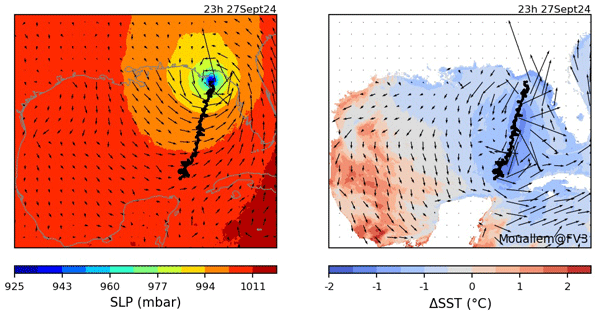
Joseph Mouallem, Kun Gao, Brandon G. Reichl, Lauren Chilutti, Lucas Harris, Rusty Benson, Niki Zadeh, Jing Chen, Jan-Huey Chen, and Cheng Zhang
Geosci. Model Dev., 18, 6461–6478, https://doi.org/10.5194/gmd-18-6461-2025, https://doi.org/10.5194/gmd-18-6461-2025, 2025
Short summary
Short summary
We introduce a new high-resolution model that couples the atmosphere and ocean to better simulate extreme weather events. It combines the Geophysical Fluid Dynamics Laboratory (GFDL) advanced atmospheric and ocean models with a powerful coupling system that enables robust and efficient two-way interactions. Simulations show that the model accurately captures hurricane behavior and its impact on the ocean. It also runs efficiently on supercomputers. This model represents a key step toward improving extreme weather forecasts.
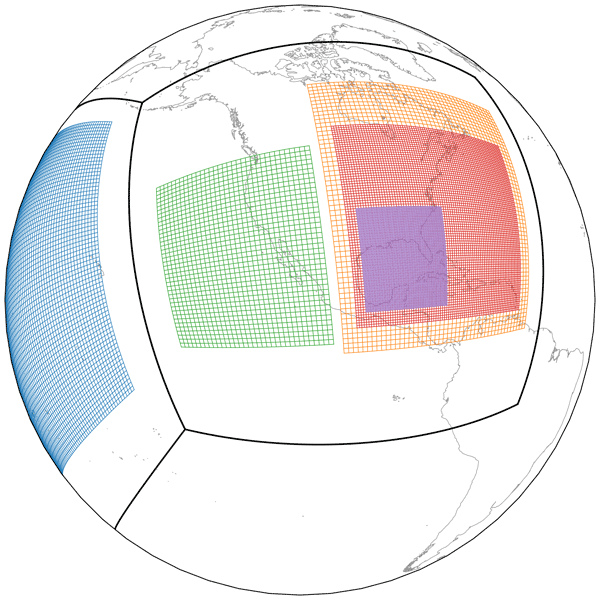
Joseph Mouallem, Lucas Harris, and Rusty Benson
Geosci. Model Dev., 15, 4355–4371, https://doi.org/10.5194/gmd-15-4355-2022, https://doi.org/10.5194/gmd-15-4355-2022, 2022
Short summary
Short summary
The single-nest capability in GFDL's dynamical core, FV3, is upgraded to support multiple same-level and telescoping nests. Grid nesting adds a refined grid over an area of interest to better resolve small-scale flow features necessary to accurately predict special weather events such as severe storms and hurricanes. This work allows concurrent execution of multiple same-level and telescoping multi-level nested grids in both global and regional setups.
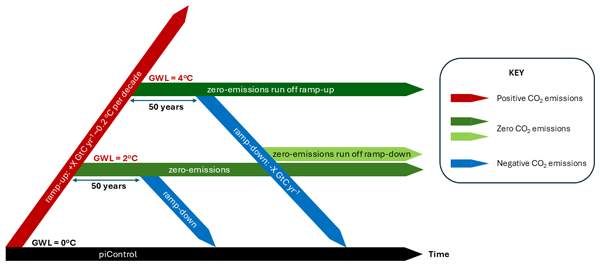
Colin Jones, Isaline Bossert, Donovan P. Dennis, Hazel A. Jeffery, Chris D. Jones, Torben Koenigk, Sina Loriani, Benjamin Sanderson, Roland Séférian, Klaus Wyser, Shuting Yang, Manabu Abe, Sebastian Bathiany, Pascale Braconnot, Victor Brovkin, Friedrich A. Burger, Patrica Cadule, Frederic S. Castruccio, Gokhan Danabasoglu, Andrea Dittus, Jonathan F. Donges, Friederike Fröb, Thomas L. Frölicher, Goran Georgievski, Chuncheng Guo, Aixue Hu, Peter Lawrence, Paul Lerner, José Licón-Saláiz, Bette Otto-Bliesner, Anastasia Romanou, Elena Shevliakova, Yona Silvy, Didier Swingedouw, Jerry Tjiputra, Jeremy Walton, Andy Wiltshire, Ricarda Winkelmann, Richard Wood, Tokuta Yokohata, and Tilo Ziehn
Geosci. Model Dev., 19, 6941–6966, https://doi.org/10.5194/gmd-19-6941-2026, https://doi.org/10.5194/gmd-19-6941-2026, 2026
Short summary
Short summary
We introduce a new Earth system model experiment protocol to help researchers understand how Earth might respond to positive, zero, and negative carbon emissions. This protocol enables different models to be compared following similar warming and cooling rates. Researchers use the models to explore how the Earth reacts to different climate futures, including the risk of tipping points being exceeded and whether changes can be reversed. The results will support improved long-term climate policy.
Joseph Mouallem, Kun Gao, Brandon G. Reichl, Lauren Chilutti, Lucas Harris, Rusty Benson, Niki Zadeh, Jing Chen, Jan-Huey Chen, and Cheng Zhang
Geosci. Model Dev., 18, 6461–6478, https://doi.org/10.5194/gmd-18-6461-2025, https://doi.org/10.5194/gmd-18-6461-2025, 2025
Short summary
Short summary
We introduce a new high-resolution model that couples the atmosphere and ocean to better simulate extreme weather events. It combines the Geophysical Fluid Dynamics Laboratory (GFDL) advanced atmospheric and ocean models with a powerful coupling system that enables robust and efficient two-way interactions. Simulations show that the model accurately captures hurricane behavior and its impact on the ocean. It also runs efficiently on supercomputers. This model represents a key step toward improving extreme weather forecasts.
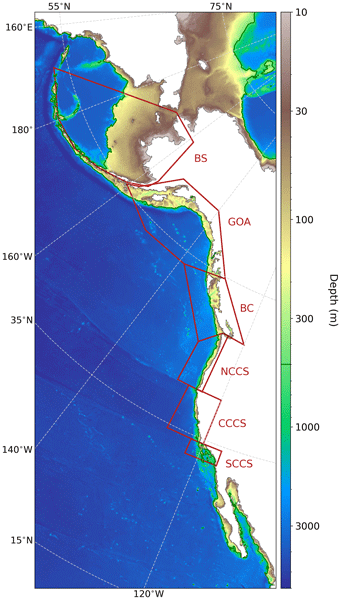
Elizabeth J. Drenkard, Charles A. Stock, Andrew C. Ross, Yi-Cheng Teng, Theresa Cordero, Wei Cheng, Alistair Adcroft, Enrique Curchitser, Raphael Dussin, Robert Hallberg, Claudine Hauri, Katherine Hedstrom, Albert Hermann, Michael G. Jacox, Kelly A. Kearney, Rémi Pagès, Darren J. Pilcher, Mercedes Pozo Buil, Vivek Seelanki, and Niki Zadeh
Geosci. Model Dev., 18, 5245–5290, https://doi.org/10.5194/gmd-18-5245-2025, https://doi.org/10.5194/gmd-18-5245-2025, 2025
Short summary
Short summary
We made a new regional ocean model to assist fisheries and ecosystem managers in making decisions in the Northeast Pacific Ocean (NEP). We found that the model did well simulating past ocean conditions like temperature and nutrient and oxygen levels and can even reproduce metrics used by, and important to, ecosystem managers.
Amali A. Amali, Clemens Schwingshackl, Akihiko Ito, Alina Barbu, Christine Delire, Daniele Peano, David M. Lawrence, David Wårlind, Eddy Robertson, Edouard L. Davin, Elena Shevliakova, Ian N. Harman, Nicolas Vuichard, Paul A. Miller, Peter J. Lawrence, Tilo Ziehn, Tomohiro Hajima, Victor Brovkin, Yanwu Zhang, Vivek K. Arora, and Julia Pongratz
Earth Syst. Dynam., 16, 803–840, https://doi.org/10.5194/esd-16-803-2025, https://doi.org/10.5194/esd-16-803-2025, 2025
Short summary
Short summary
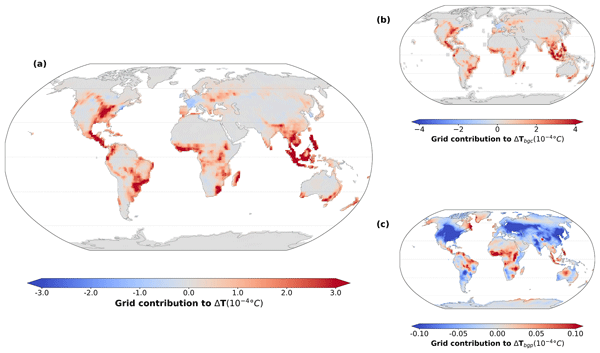
Our study explored the impact of anthropogenic land-use change (LUC) on climate dynamics, focusing on biogeophysical (BGP) and biogeochemical (BGC) effects using data from the Land Use Model Intercomparison Project (LUMIP) and the Coupled Model Intercomparison Project Phase 6 (CMIP6). We found that LUC-induced carbon emissions contribute to a BGC warming of 0.21 °C, with BGC effects dominating globally over BGP effects, which show regional variability. Our findings highlight discrepancies in model simulations and emphasize the need for improved representations of LUC processes.
Mathieu A. Poupon, Laure Resplandy, Jessica Garwood, Charles Stock, Niki Zadeh, and Jessica Y. Luo
Ocean Sci., 21, 851–875, https://doi.org/10.5194/os-21-851-2025, https://doi.org/10.5194/os-21-851-2025, 2025
Short summary
Short summary
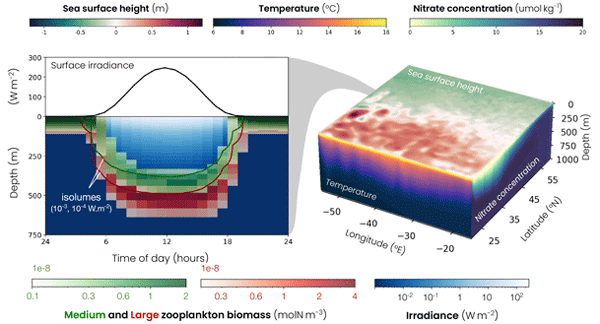
Zooplankton diel vertical migration (DVM) shapes ocean biogeochemical cycles. We present a new DVM model that reproduces migration depths observed in the North Atlantic Ocean. We show that chlorophyll shading contributes to reducing zooplankton migration depth and mainly controls its spatial and temporal variability. Thus, high chlorophyll concentrations may limit carbon sequestration caused by zooplankton migration despite the general abundance of zooplankton migration in these environments.
Minki Hong, Nathaniel Chaney, Sergey Malyshev, Enrico Zorzetto, Anthony Preucil, and Elena Shevliakova
Geosci. Model Dev., 18, 2275–2301, https://doi.org/10.5194/gmd-18-2275-2025, https://doi.org/10.5194/gmd-18-2275-2025, 2025
Short summary
Short summary
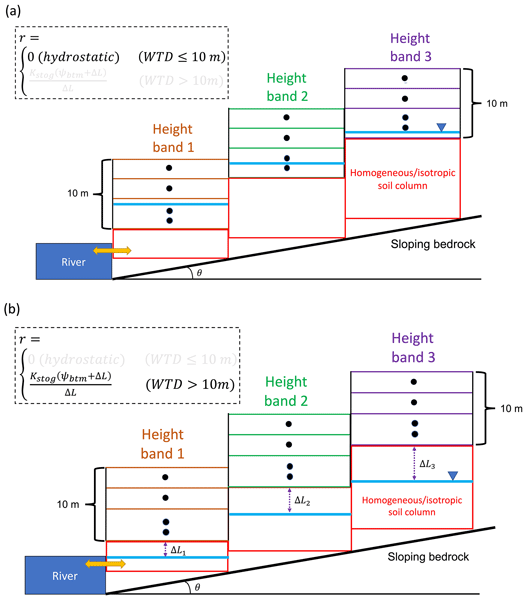
This study shows the significance of groundwater in resolving the coupled terrestrial water–energy cycle. LM4-SHARC (soil–hillslope aquifer–river continuum) describes the hillslope groundwater using its emergent properties, yielding noticeable improvements in soil moisture/temperature and groundwater discharge predictions. The implications of groundwater-mediated hydrologic interactions between hillslopes and streams need further exploration in the Earth system modeling community.
Enrico Zorzetto, Paul Ginoux, Sergey Malyshev, and Elena Shevliakova
The Cryosphere, 19, 1313–1334, https://doi.org/10.5194/tc-19-1313-2025, https://doi.org/10.5194/tc-19-1313-2025, 2025
Short summary
Short summary
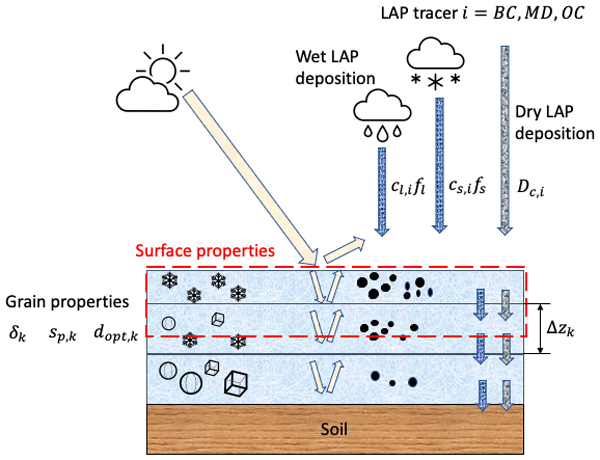
Light-absorbing particle (LAP) deposition on snow leads to a darkening of the snow surface and can thus accelerate snow melt. Understanding the extent to which different types of LAPs contribute to snow melt is important to both predict changes in water availability and improve global climate model predictions. Here, we extend a recently developed snow model to account for the deposition of LAPs in the snowpack and evaluate the effect of snow darkening on accelerating snow melt.
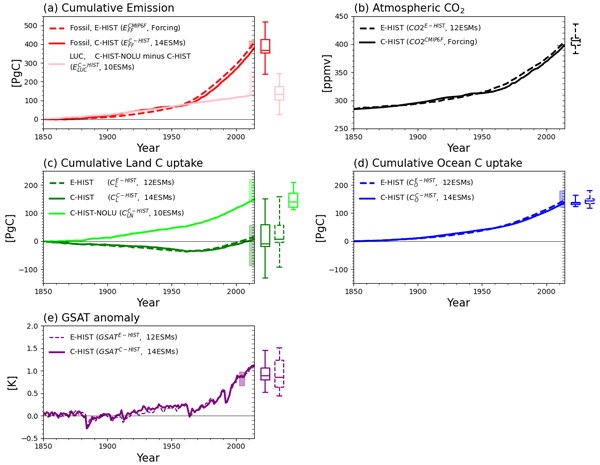
Tomohiro Hajima, Michio Kawamiya, Akihiko Ito, Kaoru Tachiiri, Chris D. Jones, Vivek Arora, Victor Brovkin, Roland Séférian, Spencer Liddicoat, Pierre Friedlingstein, and Elena Shevliakova
Biogeosciences, 22, 1447–1473, https://doi.org/10.5194/bg-22-1447-2025, https://doi.org/10.5194/bg-22-1447-2025, 2025
Short summary
Short summary
This study analyzes atmospheric CO2 concentrations and global carbon budgets simulated by multiple Earth system models, using several types of simulations (CO2 concentration- and emission-driven experiments). We successfully identified problems with regard to the global carbon budget in each model. We also found urgent issues with regard to land use change CO2 emissions that should be solved in the latest generation of models.
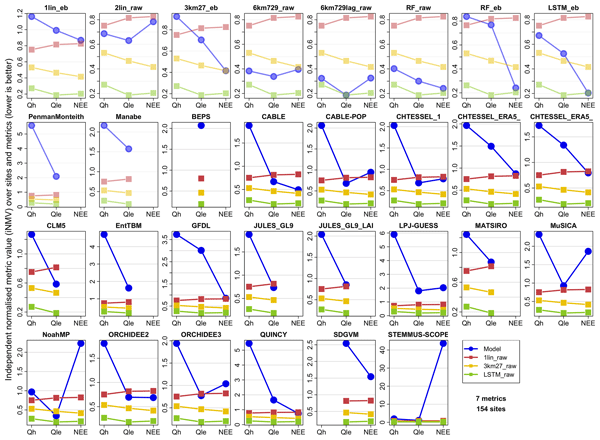
Gab Abramowitz, Anna Ukkola, Sanaa Hobeichi, Jon Cranko Page, Mathew Lipson, Martin G. De Kauwe, Samuel Green, Claire Brenner, Jonathan Frame, Grey Nearing, Martyn Clark, Martin Best, Peter Anthoni, Gabriele Arduini, Souhail Boussetta, Silvia Caldararu, Kyeungwoo Cho, Matthias Cuntz, David Fairbairn, Craig R. Ferguson, Hyungjun Kim, Yeonjoo Kim, Jürgen Knauer, David Lawrence, Xiangzhong Luo, Sergey Malyshev, Tomoko Nitta, Jerome Ogee, Keith Oleson, Catherine Ottlé, Phillipe Peylin, Patricia de Rosnay, Heather Rumbold, Bob Su, Nicolas Vuichard, Anthony P. Walker, Xiaoni Wang-Faivre, Yunfei Wang, and Yijian Zeng
Biogeosciences, 21, 5517–5538, https://doi.org/10.5194/bg-21-5517-2024, https://doi.org/10.5194/bg-21-5517-2024, 2024
Short summary
Short summary
This paper evaluates land models – computer-based models that simulate ecosystem dynamics; land carbon, water, and energy cycles; and the role of land in the climate system. It uses machine learning and AI approaches to show that, despite the complexity of land models, they do not perform nearly as well as they could given the amount of information they are provided with about the prediction problem.
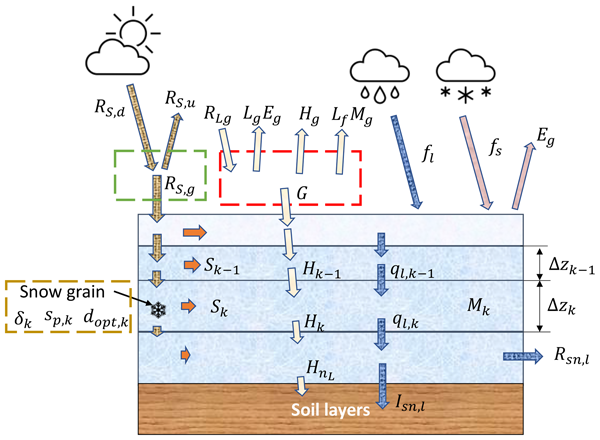
Enrico Zorzetto, Sergey Malyshev, Paul Ginoux, and Elena Shevliakova
Geosci. Model Dev., 17, 7219–7244, https://doi.org/10.5194/gmd-17-7219-2024, https://doi.org/10.5194/gmd-17-7219-2024, 2024
Short summary
Short summary
We describe a new snow scheme developed for use in global climate models, which simulates the interactions of snowpack with vegetation, atmosphere, and soil. We test the new snow model over a set of sites where in situ observations are available. We find that when compared to a simpler snow model, this model improves predictions of seasonal snow and of soil temperature under the snowpack, important variables for simulating both the hydrological cycle and the global climate system.
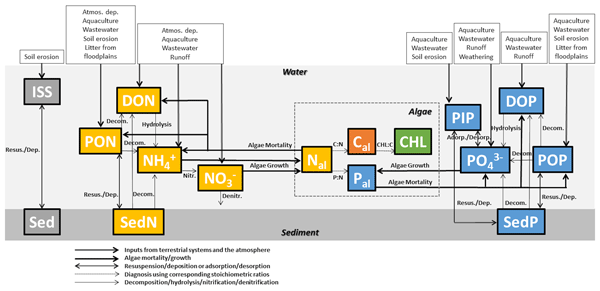
Minjin Lee, Charles A. Stock, John P. Dunne, and Elena Shevliakova
Geosci. Model Dev., 17, 5191–5224, https://doi.org/10.5194/gmd-17-5191-2024, https://doi.org/10.5194/gmd-17-5191-2024, 2024
Short summary
Short summary
Modeling global freshwater solid and nutrient loads, in both magnitude and form, is imperative for understanding emerging eutrophication problems. Such efforts, however, have been challenged by the difficulty of balancing details of freshwater biogeochemical processes with limited knowledge, input, and validation datasets. Here we develop a global freshwater model that resolves intertwined algae, solid, and nutrient dynamics and provide performance assessment against measurement-based estimates.
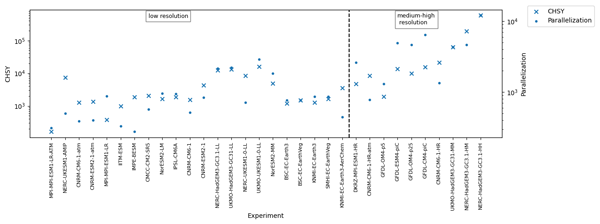
Mario C. Acosta, Sergi Palomas, Stella V. Paronuzzi Ticco, Gladys Utrera, Joachim Biercamp, Pierre-Antoine Bretonniere, Reinhard Budich, Miguel Castrillo, Arnaud Caubel, Francisco Doblas-Reyes, Italo Epicoco, Uwe Fladrich, Sylvie Joussaume, Alok Kumar Gupta, Bryan Lawrence, Philippe Le Sager, Grenville Lister, Marie-Pierre Moine, Jean-Christophe Rioual, Sophie Valcke, Niki Zadeh, and Venkatramani Balaji
Geosci. Model Dev., 17, 3081–3098, https://doi.org/10.5194/gmd-17-3081-2024, https://doi.org/10.5194/gmd-17-3081-2024, 2024
Short summary
Short summary
We present a collection of performance metrics gathered during the Coupled Model Intercomparison Project Phase 6 (CMIP6), a worldwide initiative to study climate change. We analyse the metrics that resulted from collaboration efforts among many partners and models and describe our findings to demonstrate the utility of our study for the scientific community. The research contributes to understanding climate modelling performance on the current high-performance computing (HPC) architectures.
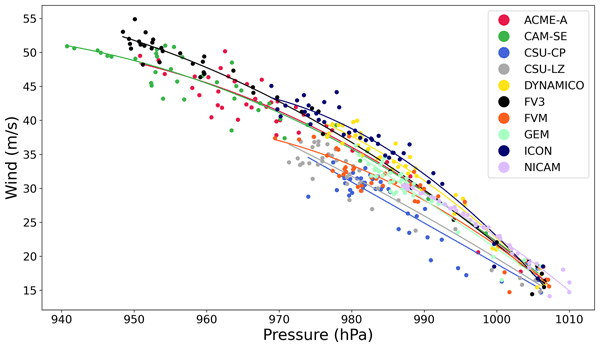
Justin L. Willson, Kevin A. Reed, Christiane Jablonowski, James Kent, Peter H. Lauritzen, Ramachandran Nair, Mark A. Taylor, Paul A. Ullrich, Colin M. Zarzycki, David M. Hall, Don Dazlich, Ross Heikes, Celal Konor, David Randall, Thomas Dubos, Yann Meurdesoif, Xi Chen, Lucas Harris, Christian Kühnlein, Vivian Lee, Abdessamad Qaddouri, Claude Girard, Marco Giorgetta, Daniel Reinert, Hiroaki Miura, Tomoki Ohno, and Ryuji Yoshida
Geosci. Model Dev., 17, 2493–2507, https://doi.org/10.5194/gmd-17-2493-2024, https://doi.org/10.5194/gmd-17-2493-2024, 2024
Short summary
Short summary
Accurate simulation of tropical cyclones (TCs) is essential to understanding their behavior in a changing climate. One way this is accomplished is through model intercomparison projects, where results from multiple climate models are analyzed to provide benchmark solutions for the wider climate modeling community. This study describes and analyzes the previously developed TC test case for nine climate models in an intercomparison project, providing solutions that aid in model development.
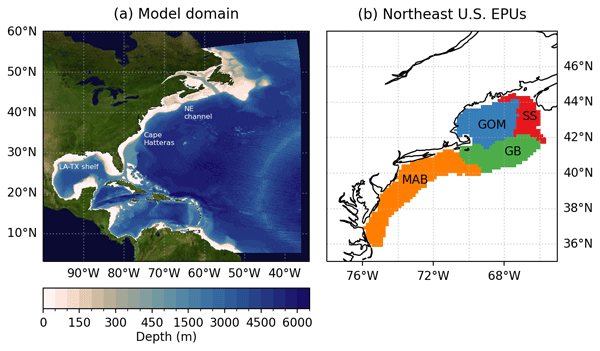
Andrew C. Ross, Charles A. Stock, Alistair Adcroft, Enrique Curchitser, Robert Hallberg, Matthew J. Harrison, Katherine Hedstrom, Niki Zadeh, Michael Alexander, Wenhao Chen, Elizabeth J. Drenkard, Hubert du Pontavice, Raphael Dussin, Fabian Gomez, Jasmin G. John, Dujuan Kang, Diane Lavoie, Laure Resplandy, Alizée Roobaert, Vincent Saba, Sang-Ik Shin, Samantha Siedlecki, and James Simkins
Geosci. Model Dev., 16, 6943–6985, https://doi.org/10.5194/gmd-16-6943-2023, https://doi.org/10.5194/gmd-16-6943-2023, 2023
Short summary
Short summary
We evaluate a model for northwest Atlantic Ocean dynamics and biogeochemistry that balances high resolution with computational economy by building on the new regional features in the MOM6 ocean model and COBALT biogeochemical model. We test the model's ability to simulate impactful historical variability and find that the model simulates the mean state and variability of most features well, which suggests the model can provide information to inform living-marine-resource applications.
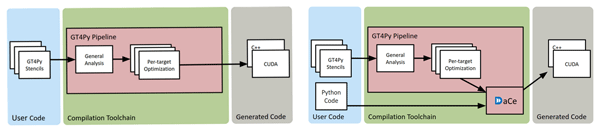
Johann Dahm, Eddie Davis, Florian Deconinck, Oliver Elbert, Rhea George, Jeremy McGibbon, Tobias Wicky, Elynn Wu, Christopher Kung, Tal Ben-Nun, Lucas Harris, Linus Groner, and Oliver Fuhrer
Geosci. Model Dev., 16, 2719–2736, https://doi.org/10.5194/gmd-16-2719-2023, https://doi.org/10.5194/gmd-16-2719-2023, 2023
Short summary
Short summary
It is hard for scientists to write code which is efficient on different kinds of supercomputers. Python is popular for its user-friendliness. We converted a Fortran code, simulating Earth's atmosphere, into Python. This new code auto-converts to a faster language for processors or graphic cards. Our code runs 3.5–4 times faster on graphic cards than the original on processors in a specific supercomputer system.
Enrico Zorzetto, Sergey Malyshev, Nathaniel Chaney, David Paynter, Raymond Menzel, and Elena Shevliakova
Geosci. Model Dev., 16, 1937–1960, https://doi.org/10.5194/gmd-16-1937-2023, https://doi.org/10.5194/gmd-16-1937-2023, 2023
Short summary
Short summary
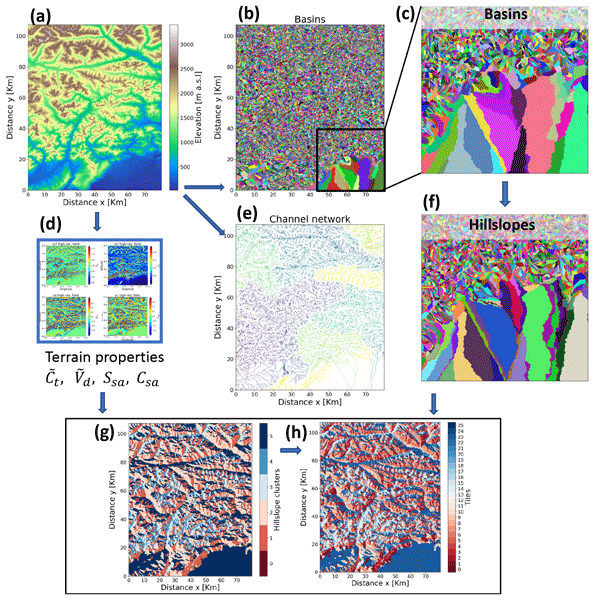
In this paper we develop a methodology to model the spatial distribution of solar radiation received by land over mountainous terrain. The approach is designed to be used in Earth system models, where coarse grid cells hinder the description of fine-scale land–atmosphere interactions. We adopt a clustering algorithm to partition the land domain into a set of homogeneous sub-grid
tiles, and for each tile we evaluate solar radiation received by land based on terrain properties.
Zun Yin, Kirsten L. Findell, Paul Dirmeyer, Elena Shevliakova, Sergey Malyshev, Khaled Ghannam, Nina Raoult, and Zhihong Tan
Hydrol. Earth Syst. Sci., 27, 861–872, https://doi.org/10.5194/hess-27-861-2023, https://doi.org/10.5194/hess-27-861-2023, 2023
Short summary
Short summary
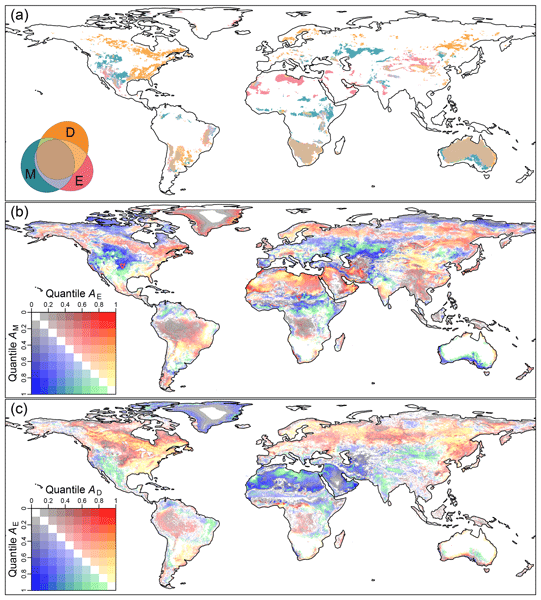
Land–atmosphere (L–A) interactions typically focus on daytime processes connecting the land state with the overlying atmospheric boundary layer. However, much prior L–A work used monthly or daily means due to the lack of daytime-only data products. Here we show that monthly smoothing can significantly obscure the L–A coupling signal, and including nighttime information can mute or mask the daytime processes of interest. We propose diagnosing L–A coupling within models or archiving subdaily data.
Joseph Mouallem, Lucas Harris, and Rusty Benson
Geosci. Model Dev., 15, 4355–4371, https://doi.org/10.5194/gmd-15-4355-2022, https://doi.org/10.5194/gmd-15-4355-2022, 2022
Short summary
Short summary
The single-nest capability in GFDL's dynamical core, FV3, is upgraded to support multiple same-level and telescoping nests. Grid nesting adds a refined grid over an area of interest to better resolve small-scale flow features necessary to accurately predict special weather events such as severe storms and hurricanes. This work allows concurrent execution of multiple same-level and telescoping multi-level nested grids in both global and regional setups.
Kai-Yuan Cheng, Lucas M. Harris, and Yong Qiang Sun
Geosci. Model Dev., 15, 1097–1105, https://doi.org/10.5194/gmd-15-1097-2022, https://doi.org/10.5194/gmd-15-1097-2022, 2022
Short summary
Short summary
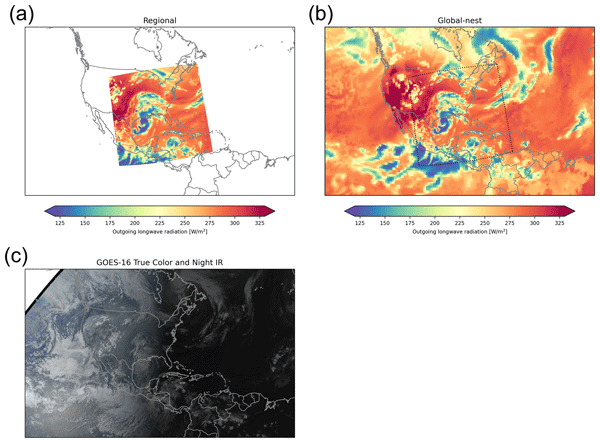
This paper presents the implementation of container technology for the System for High‐resolution prediction on Earth‐to‐Local Domains (SHiELD), a unified atmospheric model that can be used as a global, a global–nest, and a regional model for weather-to-seasonal prediction. Container technology makes SHiELD cross-platform and easy to use, which opens opportunities for collaborative research and development. The performance and scalability of the containerized SHiELD are evaluated and discussed.
Cited articles
Adcroft, A., Anderson, W., Balaji, V., Blanton, C., Bushuk, M., Dufour, C. O., Dunne, J. P., Griffies, S. M., Hallberg, R., Harrison, M. J., Held, I. M., Jansen, M. F., John, J. G., Krasting, J. P., Langenhorst, A. R., Legg, S., Liang, Z., McHugh, C., Radhakrishnan, A., Reichl, B. G., Rosati, T., Samuels, B. L., Shao, A., Stouffer, R., Winton, M., Wittenberg, A. T., Xiang, B., Zadeh, N., and Zhang, R.: The GFDL Global Ocean and Sea Ice Model OM4.0: Model Description and Simulation Features, J. Adv. Model. Earth Sy., 11, 3167–3211, https://doi.org/10.1029/2019MS001726, 2019. a
Alfieri, L., Burek, P., Dutra, E., Krzeminski, B., Muraro, D., Thielen, J., and Pappenberger, F.: GloFAS – global ensemble streamflow forecasting and flood early warning, Hydrol. Earth Syst. Sci., 17, 1161–1175, https://doi.org/10.5194/hess-17-1161-2013, 2013. a
Balaji, V.: The Flexible Modeling System, Springer Berlin Heidelberg, Berlin, Heidelberg, 33–41, ISBN 978-3-642-23360-9, https://doi.org/10.1007/978-3-642-23360-9_5, 2012. a
Balaji, V. and Langenhorst, A.: ESM Workflow, Springer Berlin Heidelberg, Berlin, Heidelberg, 5–13, ISBN 978-3-642-23932-8, https://doi.org/10.1007/978-3-642-23932-8_2, 2012. a
Balaji, V., Anderson, J., Held, I., Winton, M., Durachta, J., Malyshev, S., and Stouffer, R. J.: The Exchange Grid: A mechanism for data exchange between Earth System components on independent grids, in: Parallel Computational Fluid Dynamics 2005, edited by: Deane, A., Ecer, A., McDonough, J., Satofuka, N., Brenner, G., Emerson, D. R., Periaux, J., and Tromeur-Dervout, D., Elsevier, Amsterdam, 179–186, ISBN 978-0-444-52206-1, https://doi.org/10.1016/B978-044452206-1/50021-5, 2006. a
Balsamo, G., Beljaars, A. C. M., Scipal, K., Viterbo, P., van den Hurk, B., Hirschi, M., and Betts, A. K.: A Revised Hydrology for the ECMWF Model: Verification from Field Site to Terrestrial Water Storage and Impact in the Integrated Forecast System, J. Hydrometeorol., 10, 623–643, https://doi.org/10.1175/2008JHM1068.1, 2009. a
Best, M. J., Beljaars, A., Polcher, J., and Viterbo, P.: A Proposed Structure for Coupling Tiled Surfaces with the Planetary Boundary Layer, J. Hydrometeorol., 5, 1271–1278, https://doi.org/10.1175/JHM-382.1, 2004. a
Boussetta, S., Balsamo, G., Arduini, G., Dutra, E., McNorton, J., Choulga, M., Agustí-Panareda, A., Beljaars, A., Wedi, N., Munõz-Sabater, J., de Rosnay, P., Sandu, I., Hadade, I., Carver, G., Mazzetti, C., Prudhomme, C., Yamazaki, D., and Zsoter, E.: ECLand: The ECMWF Land Surface Modelling System, Atmosphere, 12, 723, https://doi.org/10.3390/atmos12060723, 2021. a
Chen, X., Andronova, N., Leer, B. V., Penner, J. E., Boyd, J. P., Jablonowski, C., and Lin, S. J.: A control-volume model of the compressible Euler equations with a vertical Lagrangian coordinate, Mon. Weather Rev., 141, 2526–2544, https://doi.org/10.1175/MWR-D-12-00129.1, 2013. a
Cosgrove, B., Gochis, D., Flowers, T., Dugger, A., Ogden, F., Graziano, T., Clark, E., Cabell, R., Casiday, N., Cui, Z., Eicher, K., Fall, G., Feng, X., Fitzgerald, K., Frazier, N., George, C., Gibbs, R., Hernandez, L., Johnson, D., Jones, R., Karsten, L., Kefelegn, H., Kitzmiller, D., Lee, H., Liu, Y., Mashriqui, H., Mattern, D., McCluskey, A., McCreight, J. L., McDaniel, R., Midekisa, A., Newman, A., Pan, L., Pham, C., RafieeiNasab, A., Rasmussen, R., Read, L., Rezaeianzadeh, M., Salas, F., Sang, D., Sampson, K., Schneider, T., Shi, Q., Sood, G., Wood, A., Wu, W., Yates, D., Yu, W., and Zhang, Y.: NOAA's National Water Model: Advancing operational hydrology through continental-scale modeling, JAWRA J. Ame.n Water Resour. Assoc., 60, 247–272, https://doi.org/10.1111/1752-1688.13184, 2024. a
Delworth, T. L., Cooke, W. F., Adcroft, A., Bushuk, M., Chen, J.-H., Dunne, K. A., Ginoux, P., Gudgel, R., Hallberg, R. W., Harris, L., Harrison, M. J., Johnson, N., Kapnick, S. B., Lin, S.-J., Lu, F., Malyshev, S., Milly, P. C., Murakami, H., Naik, V., Pascale, S., Paynter, D., Rosati, A., Schwarzkopf, M., Shevliakova, E., Underwood, S., Wittenberg, A. T., Xiang, B., Yang, X., Zeng, F., Zhang, H., Zhang, L., and Zhao, M.: SPEAR: The Next Generation GFDL Modeling System for Seasonal to Multidecadal Prediction and Projection, J. Adv. Model. Earth Sy., 12, e2019MS001895, https://doi.org/10.1029/2019MS001895, 2020. a
Du, J.: NCEP/EMC 4KM Gridded Data (GRIB) Stage IV Data. Version 1.0, NSF NCAR Earth Observing Laboratory [data set], https://doi.org/10.5065/D6PG1QDD, 2011. a
Ek, M. B., Mitchell, K. E., Lin, Y., Rogers, E., Grunmann, P., Koren, V., Gayno, G., and Tarpley, J. D.: Implementation of Noah land surface model advances in the National Centers for Environmental Prediction operational mesoscale Eta model, J. Geophys. Res.-Atmos., 108, https://doi.org/10.1029/2002JD003296, 2003. a, b
Han, J. and Bretherton, C. S.: TKE-Based Moist Eddy-Diffusivity Mass-Flux (EDMF) Parameterization for Vertical Turbulent Mixing, Weather Forecast., 34, 869–886, https://doi.org/10.1175/WAF-D-18-0146.1, 2019. a
Han, J., Wang, W., Kwon, Y. C., Hong, S.-Y., Tallapragada, V., and Yang, F.: Updates in the NCEP GFS Cumulus Convection Schemes with Scale and Aerosol Awareness, Weather Forecast., 32, 2005–2017, https://doi.org/10.1175/WAF-D-17-0046.1, 2017. a
Harris, L., Zhou, L., Lin, S. J., Chen, J. H., Chen, X., Gao, K., Morin, M., Rees, S., Sun, Y., Tong, M., Xiang, B., Bender, M., Benson, R., Cheng, K. Y., Clark, S., Elbert, O. D., Hazelton, A., Huff, J. J., Kaltenbaugh, A., Liang, Z., Marchok, T., Shin, H. H., and Stern, W.: GFDL SHiELD: A Unified System for Weather-to-Seasonal Prediction, J. Adv. Model. Earth Sy., 12, 1–25, https://doi.org/10.1029/2020MS002223, 2020. a, b
Harris, L. M. and Lin, S. J.: A two-way nested global-regional dynamical core on the cubed-sphere grid, Mon. Weather Rev., 141, 283–306, https://doi.org/10.1175/MWR-D-11-00201.1, 2013. a
Harris, L. M., Lin, S.-J., and Tu, C.: High-Resolution Climate Simulations Using GFDL HiRAM with a Stretched Global Grid, J. Climate, https://doi.org/10.1175/JCLI-D-15-0389.s1, 2016. a
Held, I. M.: Surface fluxes, implicit time stepping, and the exchange grid: The structure of the surface exchange module, Zenodo, https://doi.org/10.5281/zenodo.18090279, 2004. a
Held, I. M., Guo, H., Adcroft, A., Dunne, J. P., Horowitz, L. W., Krasting, J., Shevliakova, E., Winton, M., Zhao, M., Bushuk, M., Wittenberg, A. T., Wyman, B., Xiang, B., Zhang, R., Anderson, W., Balaji, V., Donner, L., Dunne, K., Durachta, J., Gauthier, P. P. G., Ginoux, P., Golaz, J.-C., Griffies, S. M., Hallberg, R., Harris, L., Harrison, M., Hurlin, W., John, J., Lin, P., Lin, S.-J., Malyshev, S., Menzel, R., Milly, P. C. D., Ming, Y., Naik, V., Paynter, D., Paulot, F., Ramaswamy, V., Reichl, B., Robinson, T., Rosati, A., Seman, C., Silvers, L. G., Underwood, S., and Zadeh, N.: Structure and Performance of GFDL's CM4.0 Climate Model, J. Adv. Model. Earth Sy., 11, 3691–3727, https://doi.org/10.1029/2019MS001829, 2019. a
Koster, R. D., Dirmeyer, P. A., Guo, Z., Bonan, G., Chan, E., Cox, P., Gordon, C. T., Kanae, S., Kowalczyk, E., Lawrence, D., Liu, P., Lu, C.-H., Malyshev, S., McAvaney, B., Mitchell, K., Mocko, D., Oki, T., Oleson, K., Pitman, A., Sud, Y. C., Taylor, C. M., Verseghy, D., Vasic, R., Xue, Y., and Yamada, T.: Regions of Strong Coupling Between Soil Moisture and Precipitation, Science, 305, 1138–1140, https://doi.org/10.1126/science.1100217, 2004. a
Lamichhane, K., Karki, S., Sharma, K., Khadka, B., Acharya, B., Biswakarma, K., Adhikari, S., Kc, R., Danegulu, A., Bhattarai, S., Regmi, A., Subedi, M., and Bhattarai, P. K.: Unraveling the causes and impacts of increasing flood disasters in the kathmandu valley: Lessons from the unprecedented September 2024 floods, Nat. Hazards Res., 5, 875–897, https://doi.org/10.1016/j.nhres.2025.04.001, 2025. a
Lawrence, D., Fisher, R., Koven, C., Oleson, K., Swenson, S., Bonan, G., Collier, N., Ghimire, B., van Kampenhout, L., Kennedy, D., Kluzek, E., Lawrence, P., Li, F., Li, H., Lombardozzi, D., Riley, W., Sacks, W., Shi, M., Vertenstein, M., Wieder, W., Xu, C., Ali, A., Badger, A., Bisht, G., van den Broeke, M., Brunke, M., Burns, S., Buzan, J., Clark, M., Craig, A., Dahlin, K., Drewniak, B., Fisher, J., Flanner, M., Fox, A., Gentine, P., Hoffman, F., Keppel-Aleks, G., Knox, R., Kumar, S., Lenaerts, J., Leung, L., Lipscomb, W., Lu, Y., Pandey, A., Pelletier, J., Perket, J., Randerson, J., Ricciuto, D., Sanderson, B., Slater, A., Subin, Z., Tang, J., Thomas, R., Val Martin, M., and Zeng, X.: The Community Land Model 85 Version 5: Description of New Features, Benchmarking, and Impact of Forcing Uncertainty, J. Adv. Model. Earth Sy., 11, 4245–4287, https://doi.org/10.1029/2018MS001583, 2019. a
Lin, S. J.: A “vertically Lagrangian” finite-volume dynamical core for global models, Mon. Weather Rev., 132, 2293–2307, https://doi.org/10.1175/1520-0493(2004)132<2293:AVLFDC>2.0.CO;2, 2004. a
Lin, S.-J. and Rood, R. B.: Multidimensional Flux-Form Semi-Lagrangian Transport Schemes, Mon. Weather Rev., 124, 2046–2070, https://doi.org/10.1175/1520-0493(1996)124<2046:MFFSLT>2.0.CO;2, 1996. a
Lin, S.-J. and Rood, R. B.: An explicit flux-form semi-Lagrangian shallow-water model on the sphere, Q. J. Roy. Meteor. Soc., 123, 2477–2498, https://doi.org/10.1002/qj.49712354416, 1997. a
Miralles, D. G., Gentine, P., Seneviratne, S. I., and Teuling, A. J.: Land–atmospheric feedbacks during droughts and heatwaves: state of the science and current challenges, Ann. New York Acad. Sci., 1436, 19–35, https://doi.org/10.1111/nyas.13912, 2019. a
Mogensen, K., Magnusson, L., and Bidlot, J.-R.: The IFS Single-Executable Coupling Strategy, Technical Memorandum 673, European Centre for Medium-Range Weather Forecasts (ECMWF), https://doi.org/10.21957/rfplwzuol, 2012. a
Mouallem, J.: Running SHiELD with GFDL's FMS full coupler infrastructure, NOAA technical memorandum OAR GFDL, 2024-002, https://doi.org/10.25923/ezfm-az21, 2024. a
Mouallem, J.: Development of a high-resolution coupled SHiELD- MOM6-LM4 model – Part 2: Model overview, coupling technique, and evaluation of hydrological extremes during Hurricane Helene, Zenodo [code/data set], https://doi.org/10.5281/zenodo.21542868, 2026. a
Mouallem, J., Harris, L., and Benson, R.: Multiple same-level and telescoping nesting in GFDL's dynamical core, Geosci. Model Dev., 15, 4355–4371, https://doi.org/10.5194/gmd-15-4355-2022, 2022. a
Mouallem, J., Harris, L., and Chen, X.: Implementation of the Novel Duo-Grid in GFDL's FV3 Dynamical Core, J. Adv. Model. Earth Sy., 15, e2023MS003712, https://doi.org/10.1029/2023MS003712, 2023. a
Mouallem, J., Gao, K., Reichl, B. G., Chilutti, L., Harris, L., Benson, R., Zadeh, N., Chen, J., Chen, J.-H., and Zhang, C.: Development of a high-resolution coupled SHiELD-MOM6 model – Part 1: Model overview, coupling technique, and validation in a regional setup, Geosci. Model Dev., 18, 6461–6478, https://doi.org/10.5194/gmd-18-6461-2025, 2025. a, b, c, d, e, f
Niu, G.-Y., Yang, Z.-L., Mitchell, K. E., Chen, F., Ek, M. B., Barlage, M., Kumar, A., Manning, K., Niyogi, D., Rosero, E., Tewari, M., and Xia, Y.: The community Noah land surface model with multiparameterization options (Noah-MP): 1. Model description and evaluation with local-scale measurements, J. Geophys. Res.-Atmos., 116, https://doi.org/10.1029/2010JD015139, 2011. a
O'Neill, B. C., Tebaldi, C., van Vuuren, D. P., Eyring, V., Friedlingstein, P., Hurtt, G., Knutti, R., Kriegler, E., Lamarque, J.-F., Lowe, J., Meehl, G. A., Moss, R., Riahi, K., and Sanderson, B. M.: The Scenario Model Intercomparison Project (ScenarioMIP) for CMIP6, Geosci. Model Dev., 9, 3461–3482, https://doi.org/10.5194/gmd-9-3461-2016, 2016. a
Pollard, R. T., Rhines, P. B., and Thompson, R. O. R. Y.: The deepening of the wind-Mixed layer, Geophys. Fluid Dynam., 4, 381–404, https://doi.org/10.1080/03091927208236105, 1973. a
Putman, W. M. and Lin, S. J.: Finite-volume transport on various cubed-sphere grids, J. Comput. Phys., 227, 55–78, https://doi.org/10.1016/j.jcp.2007.07.022, 2007. a
Roberts, C. D., Senan, R., Molteni, F., Boussetta, S., Mayer, M., and Keeley, S. P. E.: Climate model configurations of the ECMWF Integrated Forecasting System (ECMWF-IFS cycle 43r1) for HighResMIP, Geosci. Model Dev., 11, 3681–3712, https://doi.org/10.5194/gmd-11-3681-2018, 2018. a
Santos, L., Mouallem, J., and S. Peixoto, P.: Analysis of finite-volume transport schemes on cubed-sphere grids and an accurate scheme for divergent winds, J. Comput. Phys., 522, 113618, https://doi.org/10.1016/j.jcp.2024.113618, 2025. a
Seneviratne, S., Lüthi, D., Litschi, M., and Schär, C: Land–atmosphere coupling and climate change in Europe, Nature, 443, 205–209, https://doi.org/10.1038/nature05095, 2006. a
UCAR: Using CTSM with WRF – CTSM documentation, https://escomp.github.io/CTSM/lilac/specific-atm-models/wrf.html (last access: 6 September 2026), 2020. a
Vuuren D., Kriegler, E., O'Neill, B., Ebi, K., Riahi, K., Carter, T., Edmonds, J., Hallegatte, S., Kram, T., Mathur, R., and Winkler, H.: A new scenario framework for Climate Change Research: scenario matrix architecture, Climatic Change, 122, 373–386, https://doi.org/10.1007/s10584-013-0906-1, 2014. a
Worthen, D., Wang, J., Montuoro, R., Heinzeller, D., Li, B., Theurich, G., Turuncoglu, U., Rosen, D., Jovic, D., Curtis, B., Mahajan, R., Lei, H., Richert, A., Chawla, A., Wang, J., Meixner, J., Abdolali, A., Masarik, M., Pan, L., Barlage, M., Liu, B., Vertenstein, M., Craig, T., Benson, R., Robinson, T., Clune, T., Jiang, W., Barton, N., Vandenberghe, G., Potts, M., Kim, J., Perlin, N., Book, C., Bernardet, L., Yang, F., Sun, S., Kim, H.-S., Baker, B., Huang, J., Jeon, C.-H., and Stajner, I.: Coupling Infrastructure Capability in UFS Weather Model, Office Note 519, National Centers for Environmental Prediction, https://doi.org/10.25923/dvv2-3g03, 2024. a
Yamazaki, D., Kanae, S., Kim, H., and Oki, T.: A Physically Based Description of Floodplain Inundation Dynamics in a Global River Routing Model, Water Resour. Res., 47, W04501, https://doi.org/10.1029/2010WR009726, 2011. a
Zhao, M., Golaz, J.-C., Held, I. M., Guo, H., Balaji, V., Benson, R., Chen, J.-H., Chen, X., Donner, L. J., Dunne, J. P., Durachta, J. W., Fan, S.-M., Friedenreich, S. M., Garner, S. T., Ginoux, P., Harris, L. M., Horowitz, L. W., Krasting, J. P., Langenhost, A. R., Liang, Z., Lin, P., Lin, S.-J., Malyshev, S., Mason, E., Milly, P. C. D., Ming, Y., Naik, V., Paulot, F., Paynter, D., Phillips, P. J., Radkhakrishnan, A., Ramaswamy, V., Robinson, T., Schwarzcopf, M. D., Seman, C. J., Shevliakova, E., Shen, Z., Shin, H., Silvers, L. G., Wilson, J. R., Winton, M., Wittenberg, A. T., Wyman, B. L., and Xiang, B.: The GFDL Global Atmosphere and Land Model AM4.0/LM4.0: 2. Model Description, Sensitivity Studies, and Tuning Strategies, J. Adv. Model. Earth Sy., 10, 735–769, https://doi.org/10.1002/2017ms001209, 2018. a
Zhou, L., Harris, L., and Chen, J.-H.: The GFDL Cloud Microphysics Parameterization, NOAA technical memorandum OAR GFDL, 2022-002, https://doi.org/10.25923/pz3c-8b96, 2022a. a
Zhou, L., Harris, L., Chen, J.-H., Gao, K., Guo, H., Xiang, B., Tong, M., Huff, J. J., and Morin, M.: Improving Global Weather Prediction in GFDL SHiELD Through an Upgraded GFDL Cloud Microphysics Scheme, J. Adv. Model. Earth Sy., 14, https://doi.org/10.1029/2021MS002971, 2022b. a, b
Zhou, L., Harris, L., Chen, J.-H., Gao, K., Cheng, K.-Y., Tong, M., Kaltenbaugh, A., Morin, M., Mouallem, J., Chilutti, L., and Johnston, L.: Bridging the Gap Between Global Weather Prediction and Global Storm-Resolving Simulation: Introducing the GFDL 6.5-km SHiELD, J. Adv. Model. Earth Sy., 16, e2024MS004430, https://doi.org/10.1029/2024MS004430, 2024. a
Short summary
We integrate GFDL's (Geophysical Fluid Dynamics Laboratory) land model in the high resolution global atmospheric model SHiELD (System for High-resolution modeling for Earth-to-Local Domains), unlocking new capabilities in simulating new suite of land-atmosphere conditions and extreme hydrological processes such as flooding. A single global simulation captures Hurricane Helene's 2024 landfall, including soil saturation, runoff generation, and river flooding in Western North Carolina, while simultaneously capturing an independent extreme rainfall and flooding event in Nepal.
We integrate GFDL's (Geophysical Fluid Dynamics Laboratory) land model in the high resolution...


