
Articles | Volume 19, issue 17
https://doi.org/10.5194/gmd-19-8149-2026
© Author(s) 2026. This work is distributed under
the Creative Commons Attribution 4.0 License.
the Creative Commons Attribution 4.0 License.
https://doi.org/10.5194/gmd-19-8149-2026
© Author(s) 2026. This work is distributed under
the Creative Commons Attribution 4.0 License.
the Creative Commons Attribution 4.0 License.
Development and technical paper
| 
02 Sep 2026
Development and technical paper |
| 02 Sep 2026
| 02 Sep 2026
Implementation of the Generalized Double-Moment scaling Normalization method for raindrop size distribution in a WRF 4.3.1 bulk-type cloud microphysics scheme: a case study over the Korean Peninsula
Joonghyun Jo
National Institute of Meteorological Sciences, Korea Meteorological Administration, Seogwipo, Republic of Korea
Kyo Sun Lim
CORRESPONDING AUTHOR

School of Earth and Environmental Sciences, Seoul National University, Seoul, Republic of Korea
Sun-Young Park
Climate Prediction Research Center, Seoul National University, Seoul, Republic of Korea
Juhee Kwon
School of Earth and Environmental Sciences, Seoul National University, Seoul, Republic of Korea
Wonbae Bang
BK21 Weather Extremes Education & Research Team, Department of Atmospheric Sciences, Center for Atmospheric REmote sensing (CARE), Kyungpook National University, Daegu, Republic of Korea
HyangSuk Park
National Institute of Meteorological Sciences, Korea Meteorological Administration, Seogwipo, Republic of Korea
Jae-Young Byon
National Institute of Meteorological Sciences, Korea Meteorological Administration, Seogwipo, Republic of Korea
Gyuwon Lee
CORRESPONDING AUTHOR
BK21 Weather Extremes Education & Research Team, Department of Atmospheric Sciences, Center for Atmospheric REmote sensing (CARE), Kyungpook National University, Daegu, Republic of Korea
Related authors
No articles found.
Pierre Grzegorczyk, Wolfram Wobrock, Antoine Canzi, Frédéric Tridon, Sun-Young Park, Gyuwon Lee, Kwonil Kim, Kyo-Sun Lim, and Céline Planche
Geosci. Model Dev., 19, 8025–8051, https://doi.org/10.5194/gmd-19-8025-2026, https://doi.org/10.5194/gmd-19-8025-2026, 2026
Short summary
Short summary
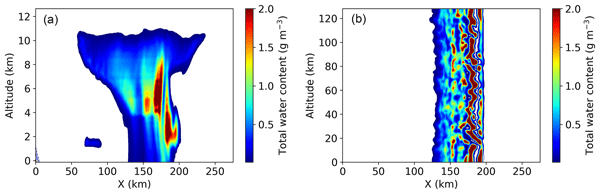
This study evaluates the implementation of predicted rime mass distribution a bin microphysics scheme. Based on the ‘fill-in’ concept, the model allows a smooth transition between unrimed and graupel ice particles. The implementation is tested for an idealized squall-line system and a heavy snowfall event observed by ground-based instruments in the Korean Peninsula. The new model version gives a better agreement with the observations with significant changes for precipitation.
Hyun-Joon Sung, Kyo-Sun Lim, Song-You Hong, JiHoon Shin, Baek-Min Kim, and Ji-Hun Choi
Geosci. Model Dev., 19, 7069–7088, https://doi.org/10.5194/gmd-19-7069-2026, https://doi.org/10.5194/gmd-19-7069-2026, 2026
Short summary
Short summary
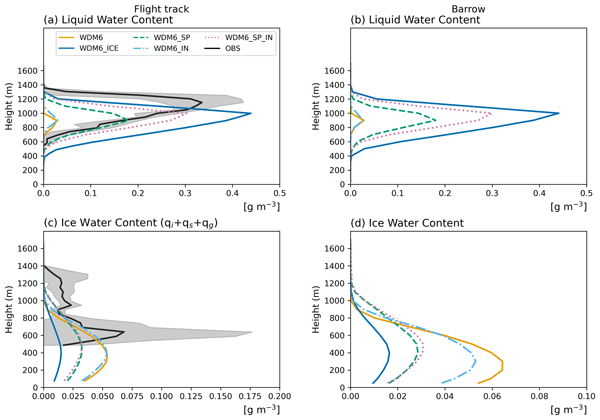
Arctic clouds containing both liquid droplets and ice crystals are difficult to simulate. We tested how ice-related changes in a weather model, designed for temperate regions, perform in the Arctic. Ice crystal shape is the dominant factor: making crystals spherical substantially reduces cloud ice and shifts it to snow. These modifications are moderate in temperate regions but stronger in the Arctic. As this rests on a single case, they should be validated across diverse cases and climates.
Jong-Hoon Jeong, Seung Hee Kim, Su-Bin Oh, Jeong-Eun Lee, Chia-Lun Tasi, and Gyuwon Lee
EGUsphere, https://doi.org/10.5194/egusphere-2026-1878, https://doi.org/10.5194/egusphere-2026-1878, 2026
Short summary
Short summary
This study examines why extreme rainfall can persist near coastal regions by analyzing a severe storm over western South Korea. Using advanced radar observations, we identify how interactions between airflow, precipitation processes, and coastal land–sea contrasts enhance storm organization. Our results show that these coupled processes play a critical role in sustaining heavy rainfall and support efforts to mitigate hazards in densely populated coastal areas.
Soorok Ryu, Joon Jin Song, Kyo Sun Lim, and GyuWon Lee
Earth Syst. Sci. Data Discuss., https://doi.org/10.5194/essd-2026-302, https://doi.org/10.5194/essd-2026-302, 2026
Revised manuscript accepted for ESSD
Short summary
Short summary
We developed a detailed rainfall dataset for South Korea by combining weather radar data with ground rain measurements. This dataset provides rainfall information every ten minutes at a very fine spatial scale from 2016 to 2024. We created it to better understand rainfall patterns and improve applications such as flood forecasting and water management. By combining the strengths of both data sources, the dataset offers more accurate and consistent rainfall information over time and space.
Chia-Lun Tsai, Kwonil Kim, Yu-Chieng Liou, and GyuWon Lee
Atmos. Meas. Tech., 18, 6371–6392, https://doi.org/10.5194/amt-18-6371-2025, https://doi.org/10.5194/amt-18-6371-2025, 2025
Short summary
Short summary
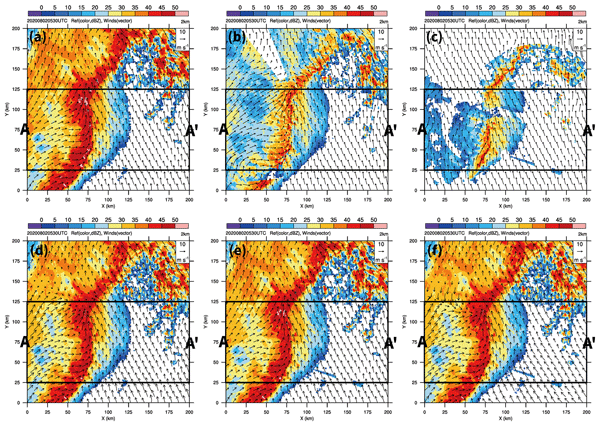
The Wind Synthesis System using Doppler Measurements (WISSDOM) is a practical scheme to derive 3D winds by using 11 radars in this study. The observations of shot-wavelength radars can be attributed to lower level precipitation and wind information in WISSDOM, which allowed for the capture of stronger updrafts in the convection areas of the squall line. Overall, these results highlight the advantages of using radars with multiple wavelengths in WISSDOM, especially shot-wavelength radars.
Wonbae Bang, Jacob T. Carlin, Kwonil Kim, Alexander V. Ryzhkov, Guosheng Liu, and GyuWon Lee
Geosci. Model Dev., 18, 3559–3581, https://doi.org/10.5194/gmd-18-3559-2025, https://doi.org/10.5194/gmd-18-3559-2025, 2025
Short summary
Short summary
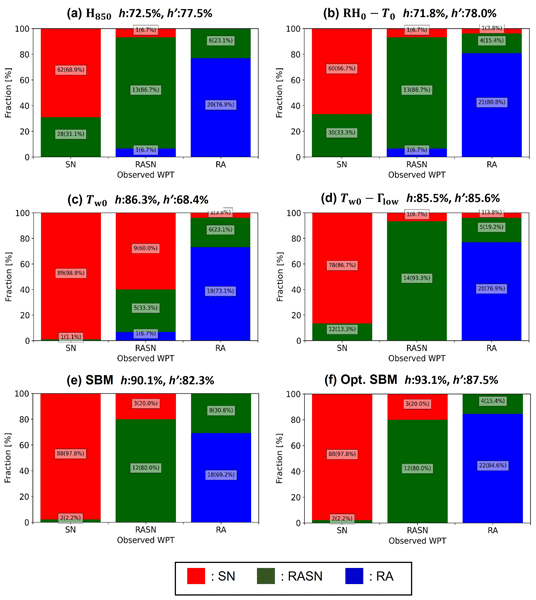
Microphysics model-based diagnosis, such as the spectral bin model (SBM), has recently been attempted to diagnose winter precipitation types. In this study, the accuracy of SBM-based precipitation type diagnosis is compared with other traditional methods. SBM has a relatively higher accuracy for dry-snow and wet-snow events, whereas it has lower accuracy for rain events. When the microphysics scheme in the SBM was optimized for the corresponding region, the accuracy for rain events improved.
Jeonggyu Kim, Sungmin Park, Greg M. McFarquhar, Anthony J. Baran, Joo Wan Cha, Kyoungmi Lee, Seoung Soo Lee, Chang Hoon Jung, Kyo-Sun Sunny Lim, and Junshik Um
Atmos. Chem. Phys., 24, 12707–12726, https://doi.org/10.5194/acp-24-12707-2024, https://doi.org/10.5194/acp-24-12707-2024, 2024
Short summary
Short summary
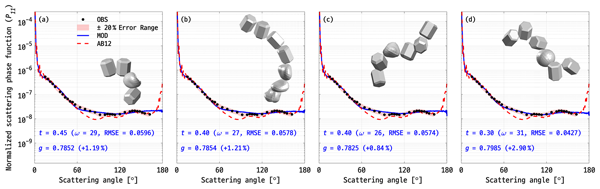
We developed idealized models to represent the shapes of ice particles found in deep convective clouds and calculated their single-scattering properties. By comparing these results with in situ measurements, we discovered that a mixture of shape models matches in situ measurements more closely than single-form models or aggregate models. This finding has important implications for enhancing the simulation of single-scattering properties of ice crystals in deep convective clouds.
Wei-Yu Chang, Yung-Chuan Yang, Chen-Yu Hung, Kwonil Kim, Gyuwon Lee, and Ali Tokay
Atmos. Chem. Phys., 24, 11955–11979, https://doi.org/10.5194/acp-24-11955-2024, https://doi.org/10.5194/acp-24-11955-2024, 2024
Short summary
Short summary
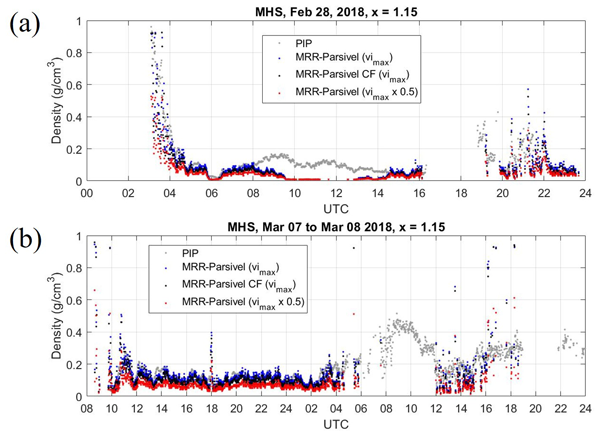
Snow density is derived by collocated Micro-Rain Radar (MRR) and Parsivel (ICE-POP 2017/2018). We apply the particle size distribution from Parsivel to a T-matrix backscattering simulation and compare with ZHH from MRR. Bulk density and bulk water fractions are derived from comparing simulated and calculated ZHH. Retrieved bulk density is validated by comparing snowfall rate measurements from Pluvio and the Precipitation Imaging Package. Snowfall rate consistency confirms the algorithm.
Sun-Young Park, Kyo-Sun Sunny Lim, Kwonil Kim, Gyuwon Lee, and Jason A. Milbrandt
Geosci. Model Dev., 17, 7199–7218, https://doi.org/10.5194/gmd-17-7199-2024, https://doi.org/10.5194/gmd-17-7199-2024, 2024
Short summary
Short summary
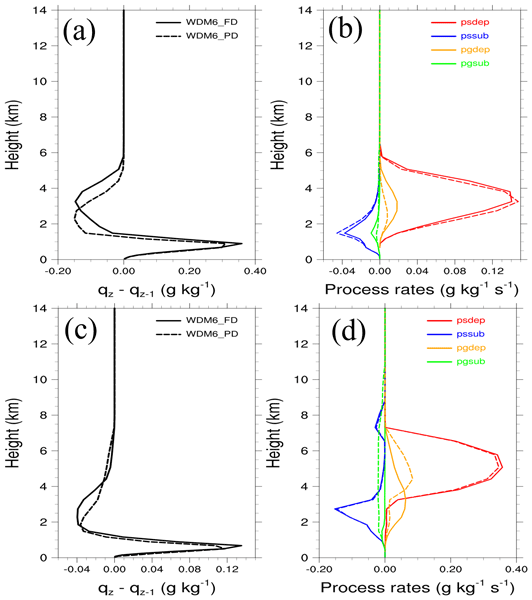
We enhance the WDM6 scheme by incorporating predicted graupel density. The modification affects graupel characteristics, including fall velocity–diameter and mass–diameter relationships. Simulations highlight changes in graupel distribution and precipitation patterns, potentially influencing surface snow amounts. The study underscores the significance of integrating predicted graupel density for a more realistic portrayal of microphysical properties in weather models.
Chia-Lun Tsai, Kwonil Kim, Yu-Chieng Liou, and GyuWon Lee
Atmos. Meas. Tech., 16, 845–869, https://doi.org/10.5194/amt-16-845-2023, https://doi.org/10.5194/amt-16-845-2023, 2023
Short summary
Short summary
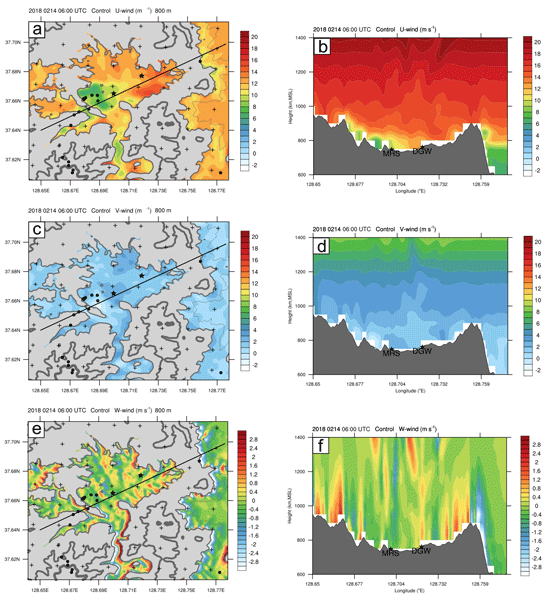
Since the winds in clear-air conditions usually play an important role in the initiation of various weather systems and phenomena, the modified Wind Synthesis System using Doppler Measurements (WISSDOM) synthesis scheme was developed to derive high-quality and high-spatial-resolution 3D winds under clear-air conditions. The performance and accuracy of derived 3D winds from this modified scheme were evaluated with an extreme strong wind event over complex terrain in Pyeongchang, South Korea.
Xuanli Li, Jason B. Roberts, Jayanthi Srikishen, Jonathan L. Case, Walter A. Petersen, Gyuwon Lee, and Christopher R. Hain
Geosci. Model Dev., 15, 5287–5308, https://doi.org/10.5194/gmd-15-5287-2022, https://doi.org/10.5194/gmd-15-5287-2022, 2022
Short summary
Short summary
This research assimilated the Global Precipitation Measurement (GPM) satellite-retrieved ocean surface meteorology data into the Weather Research and Forecasting (WRF) model with the Gridpoint Statistical Interpolation (GSI) system. This was for two snowstorms during the International Collaborative Experiments for PyeongChang 2018 Olympic and Paralympic Winter Games' (ICE-POP 2018) field experiments. The results indicated a positive impact of the data for short-term forecasts for heavy snowfall.
Jeong-Su Ko, Kyo-Sun Sunny Lim, Kwonil Kim, Gyuwon Lee, Gregory Thompson, and Alexis Berne
Geosci. Model Dev., 15, 4529–4553, https://doi.org/10.5194/gmd-15-4529-2022, https://doi.org/10.5194/gmd-15-4529-2022, 2022
Short summary
Short summary
This study evaluates the performance of the four microphysics parameterizations, the WDM6, WDM7, Thompson, and Morrison schemes, in simulating snowfall events during the ICE-POP 2018 field campaign. Eight snowfall events are selected and classified into three categories (cold-low, warm-low, and air–sea interaction cases). The evaluation focuses on the simulated hydrometeors, microphysics budgets, wind fields, and precipitation using the measurement data.
Ki-Hong Min, Kao-Shen Chung, Ji-Won Lee, Cheng-Rong You, and Gyuwon Lee
Geosci. Model Dev. Discuss., https://doi.org/10.5194/gmd-2022-18, https://doi.org/10.5194/gmd-2022-18, 2022
Revised manuscript not accepted
Short summary
Short summary
LETKF underestimated the water vapor mixing ratio and temperature compared to 3DVAR due to a lack of a water vapor mixing ratio and temperature observation operator. Snowfall in GWD was less simulated in LETKF. The results signify that water vapor assimilation is important in radar DA and significantly impacts precipitation forecasts, regardless of the DA method used. Therefore, it is necessary to apply observation operators for water vapor mixing ratio and temperature in radar DA.
Cited articles
Bang, W., Lee, G., Ryzhkov, A., Schuur, T., and Lim, K.-S. S.: Comparison of microphysical characteristics between the Southern Korean Peninsula and Oklahoma using two-dimensional video disdrometer data, J. Hydrometeorol., 21, 2675–2690, https://doi.org/10.1175/JHM-D-20-0087.1, 2020.
Berne, A., Jaffrain, J., and Schleiss, M.: Scaling analysis of the variability of the rain drop size distribution at small scale, Adv. Water Resour., 45, 2–12, https://doi.org/10.1016/j.advwatres.2011.12.016, 2012.
Byun, U.-Y., Hong, S.-Y., Shin, H., Lee, J.-W., Song, J.-I., Hahm, S.-J., Kim, J.-K., Kim, H.-W., and Kim, J.-S.: WRF-based short-range forecast system of the Korea Air Force: Verification of prediction skill in 2009 summer, Atmosphere, 21, 197–208, https://doi.org/10.14191/Atmos.2011.21.2.197, 2011.
Cha, J. W., Koo, H. J., Kim, B.-Y., Miloslav, B., Hwang, H. J., Kim, M. H., Chang, K.-H., and Lee, Y. H.: Analysis of rain drop size distribution to elucidate the precipitation process using a cloud microphysics conceptual model and in situ measurement, Asia-Pacific J. Atmos. Sci., 59, 257–269, https://doi.org/10.1007/s13143-022-00299-w, 2023.
Chakraborty, T., Pattnaik, S., Jenamani, R., and Baisya, H.: Evaluating the performances of cloud microphysical parameterizations in WRF for the heavy rainfall event of Kerala (2018), Meteorol. Atmos. Phys., 133, 707–737, https://doi.org/10.1007/s00703-021-00776-3, 2021.
Chen, F. and Dudhia, J.: Coupling an advanced land surface–hydrology model with the Penn State–NCAR MM5 modeling system. Part I: Model implementation and sensitivity, Mon. Weather Rev., 129, 569–585, https://doi.org/10.1175/1520-0493(2001)129<0569:CAALSH>2.0.CO;2, 2001.
Cohard, J. M. and Pinty, J. P.: A comprehensive two‐moment warm microphysical bulk scheme. I: Description and tests, Q. J. Roy. Meteor. Soc., 126, 1815–1842, https://doi.org/10.1002/qj.49712656613, 2000.
Dolan, B., Fuchs, B., Rutledge, S., Barnes, E., and Thompson, E.: Primary modes of global drop size distributions, J. Atmos. Sci., 75, 1453–1476, https://doi.org/10.1175/JAS-D-17-0242.1, 2018.
Gao, W., Sui, C. H., Chen Wang, T. C., and Chang, W. Y.: An evaluation and improvement of microphysical parameterization from a two‐moment cloud microphysics scheme and the Southwest Monsoon Experiment (SoWMEX)/Terrain‐influenced Monsoon Rainfall Experiment (TiMREX) observations, J. Geophys. Res.-Atmos., 116, https://doi.org/10.1029/2011JD015718, 2011.
Hagos, S., Leung, L. R., Yang, Q., Zhao, C., and Lu, J.: Resolution and dynamical core dependence of atmospheric river frequency in global model simulations, J. Climate, 28, 2764–2776, https://doi.org/10.1175/JCLI-D-14-00567.1, 2015.
Hersbach, H., Bell, B., Berrisford, P., Hirahara, S., Horányi, A., Muñoz‐Sabater, J., Nicolas, J., Peubey, C., Radu, R., and Schepers, D.: The ERA5 global reanalysis, Q. J. Roy. Meteor. Soc., 146, 1999–2049, https://doi.org/10.1002/qj.3803, 2020.
Hersbach, H., Bell, B., Berrisford, P., Biavati, G., Horányi, A., Muñoz Sabater, J., Nicolas, J., Peubey, C., Radu, R., Rozum, I., Schepers, D., Simmons, A., Soci, C., Dee, D., and Thépaut, J.-N.: ERA5 hourly data on single levels from 1940 to present, Copernicus Climate Change Service (C3S) Climate Data Store (CDS) [data set], https://doi.org/10.24381/cds.adbb2d47, 2023a.
Hersbach, H., Bell, B., Berrisford, P., Biavati, G., Horányi, A., Muñoz Sabater, J., Nicolas, J., Peubey, C., Radu, R., Rozum, I., Schepers, D., Simmons, A., Soci, C., Dee, D., and Thépaut, J.-N.: ERA5 hourly data on pressure levels from 1940 to present, Copernicus Climate Change Service (C3S) Climate Data Store (CDS) [data set], https://doi.org/10.24381/cds.bd0915c6, 2023b.
Hong, S.-Y., Noh, Y., and Dudhia, J.: A new vertical diffusion package with an explicit treatment of entrainment processes, Mon. Weather Rev., 134, 2318–2341, https://doi.org/10.1175/MWR3199.1, 2006.
Huang, B., Liu, C., Banzon, V., Freeman, E., Graham, G., Hankins, B., Smith, T., and Zhang, H.-M.: Improvements of the daily optimum interpolation sea surface temperature (DOISST) version 2.1, J. Climate, 34, 2923–2939, https://doi.org/10.1175/jcli-d-20-0166.1, 2021.
Huffman, G. J., Bolvin, D. T., Braithwaite, D., Hsu, K., Joyce, R., Kidd, C., Nelkin, E. J., and Xie, P.: NASA global precipitation measurement (GPM) integrated multi-satellitE retrievals for GPM (IMERG), Algorithm Theoretical Basis Document (ATBD), version 4.5, National Aeronautics and Space Administration (NASA), 30 pp., https://gpm.nasa.gov/sites/default/files/document_files/IMERG_ATBD_V4.5.pdf (last access: 24 August 2026), 2015.
Iacono, M. J., Delamere, J. S., Mlawer, E. J., Shephard, M. W., Clough, S. A., and Collins, W. D.: Radiative forcing by long‐lived greenhouse gases: Calculations with the AER radiative transfer models, J. Geophys. Res.-Atmos., 113, https://doi.org/10.1029/2008JD009944, 2008.
Jiménez, P. A., Dudhia, J., González-Rouco, J. F., Navarro, J., Montávez, J. P., and García-Bustamante, E.: A revised scheme for the WRF surface layer formulation, Mon. Weather Rev., 140, 898–918, https://doi.org/10.1175/MWR-D-11-00056.1, 2012.
Jo, J.: Code for publication – Implementation of Generalized Double-Moment Scaling Normalization in a Cloud Microphysics Scheme: A Case Study in the Korean Peninsula, Zenodo [code], https://doi.org/10.5281/zenodo.17194841, 2025.
Jo, J.: Additional data for publication – Implementation of Generalized Double-Moment Scaling Normalization in a Cloud Microphysics Scheme: A Case Study in the Korean Peninsula, Zenodo [data set], https://doi.org/10.5281/zenodo.18328177, 2026a.
Jo, J.: Additional scripts and output data for publication – Implementation of Generalized Double-Moment Scaling Normalization in a Cloud Microphysics Scheme: A Case Study in the Korean Peninsula, Zenodo [code and data set], https://doi.org/10.5281/zenodo.18346988, 2026b.
Kain, J. S.: The Kain–Fritsch convective parameterization: an update, J. Appl. Meteorol., 43, 170–181, https://doi.org/10.1175/1520-0450(2004)043<0170:TKCPAU>2.0.CO;2, 2004.
Kain, J. S. and Fritsch, J. M.: A one-dimensional entraining/detraining plume model and its application in convective parameterization, J. Atmos. Sci., 47, 2784–2802, https://doi.org/10.1175/1520-0469(1990)047<2784:AODEPM>2.0.CO;2, 1990.
Koch, S. E., Ferrier, B., Stoelinga, M. T., Szoke, E., Weiss, S. J., and Kain, J. S.: The use of simulated radar reflectivity fields in the diagnosis of mesoscale phenomena from high-resolution WRF model forecasts, Preprints, 11th Conf. on Mesoscale Processes, 24–28 October 2005, Albuquerque, New Mexico, USA, https://ams.confex.com/ams/32Rad11Meso/webprogram/Paper97032.html (last access: 2 September 2026), Amer. Meteor. Soc., J4J, 1–9, 2005.
Kwon, S., Jung, S.-H., and Lee, G.: A case study on microphysical characteristics of mesoscale convective system using generalized DSD parameters retrieved from dual-polarimetric radar observations, Remote Sens., 12, 1812, https://doi.org/10.3390/rs12111812, 2020.
Lee, G., Bringi, V., and Thurai, M.: The retrieval of drop size distribution parameters using a dual-polarimetric radar, Remote Sens., 15, 1063, https://doi.org/10.3390/rs15041063, 2023.
Lee, G. W., Zawadzki, I., Szyrmer, W., Sempere-Torres, D., and Uijlenhoet, R.: A general approach to double-moment normalization of drop size distributions, J. Appl. Meteorol., 43, 264–281, https://doi.org/10.1175/1520-0450(2004)043<0264:AGATDN>2.0.CO;2, 2004.
Lim, K.-S. S. and Hong, S.-Y.: Development of an effective double-moment cloud microphysics scheme with prognostic cloud condensation nuclei (CCN) for weather and climate models, Mon. Weather Rev., 138, 1587–1612, https://doi.org/10.1175/2009MWR2968.1, 2010.
Lim, K.-S. S. and Hong, S.-Y.: Investigation of aerosol indirect effects on simulated flash-flood heavy rainfall over Korea, Meteorol. Atmos. Phys., 118, 199–214, https://doi.org/10.1007/s00703-012-0216-6, 2012.
Lim, K. S. S., Chang, E.-C., Sun, R., Kim, K., Tapiador, F. J., and Lee, G.: Evaluation of simulated winter precipitation using WRF-ARW during the ICE-POP 2018 field campaign, Weather Forecast., 35, 2199–2213, https://doi.org/10.1175/WAF-D-19-0236.1, 2020.
Lin, Y.-L., Farley, R. D., and Orville, H. D.: Bulk Parameterization of the Snow Field in a Cloud Model, J. Appl. Meteorol. Climatol., 22, 1065–1092, https://doi.org/10.1175/1520-0450(1983)022<1065:BPOTSF>2.0.CO;2, 1983.
Meyers, M. P., Walko, R. L., Harrington, J. Y., and Cotton, W. R.: New RAMS cloud microphysics parameterization. Part II: The two-moment scheme, Atmos. Res., 45, 3–39, https://doi.org/10.1016/S0169-8095(97)00018-5, 1997.
Milbrandt, J. A. and Yau, M.: A multimoment bulk microphysics parameterization. Part I: Analysis of the role of the spectral shape parameter, J. Atmos. Sci., 62, 3051–3064, 2005.
Min, K.-H., Choo, S., Lee, D., and Lee, G.: Evaluation of WRF cloud microphysics schemes using radar observations, Weather Forecast., 30, 1571–1589, https://doi.org/10.1175/WAF-D-14-00095.1, 2015.
Morcrette, J., Barker, H. W., Cole, J., Iacono, M. J., and Pincus, R.: Impact of a new radiation package, McRad, in the ECMWF Integrated Forecasting System, Mon. Weather Rev., 136, 4773–4798, https://doi.org/10.1175/2008MWR2363.1, 2008.
Morrison, H.: On the robustness of aerosol effects on an idealized supercell storm simulated with a cloud system-resolving model, Atmos. Chem. Phys., 12, 7689–7705, https://doi.org/10.5194/acp-12-7689-2012, 2012.
Morrison, H., Curry, J., and Khvorostyanov, V.: A new double-moment microphysics parameterization for application in cloud and climate models. Part I: Description, J. Atmos. Sci., 62, 1665–1677, https://doi.org/10.1175/JAS3446.1, 2005.
Morrison, H., Milbrandt, J. A., Bryan, G. H., Ikeda, K., Tessendorf, S. A., and Thompson, G.: Parameterization of cloud microphysics based on the prediction of bulk ice particle properties. Part II: Case study comparisons with observations and other schemes, J. Atmos. Sci., 72, 312–339, https://doi.org/10.1175/JAS-D-14-0066.1, 2015.
Morrison, H., Kumjian, M. R., Martinkus, C. P., Prat, O. P., and van Lier-Walqui, M.: A general N-moment normalization method for deriving raindrop size distribution scaling relationships, J. Appl. Meteorol. Climatol., 58, 247–267, https://doi.org/10.1175/JAMC-D-18-0060.1, 2019.
Park, S.-Y., Lim, K.-S. S., and Jo, J.: Assessing the relative importance of the prognostic hail mixing ratio and predicted graupel density on the vertical reflectivity structure in bulk cloud microphysics schemes, Atmos. Res., 328, 108440, https://doi.org/10.1016/j.atmosres.2025.108440, 2025.
Raupach, T. H., Thurai, M., Bringi, V., and Berne, A.: Reconstructing the drizzle mode of the raindrop size distribution using double-moment normalization, J. Appl. Meteorol. Climatol., 58, 145–164, https://doi.org/10.1175/JAMC-D-18-0156.1, 2019.
Reisner, J., Rasmussen, R., and Bruintjes, R.: Explicit forecasting of supercooled liquid water in winter storms using the MM5 mesoscale model, Q. J. Roy. Meteor. Soc., 124, 1071–1107, https://doi.org/10.1002/qj.49712454804, 1998.
Rutledge, S. A. and Hobbs, P.: The mesoscale and microscale structure and organization of clouds and precipitation in midlatitude cyclones. VIII: A model for the “seeder-feeder” process in warm-frontal rainbands, J. Atmos. Sci., 40, 1185–1206, https://doi.org/10.1175/1520-0469(1983)040<1185:TMAMSA>2.0.CO;2, 1983.
Schoenberg Ferrier, B.: A double-moment multiple-phase four-class bulk ice scheme. Part I: Description, J. Atmos. Sci., 51, 249–280, https://doi.org/10.1175/1520-0469(1994)051<0249:ADMMPF>2.0.CO;2, 1994.
Sempere-Torres, D. S., Porrà, J. M., and Creutin, J.-D.: A general formulation for raindrop size distribution, J. Appl. Meteorol. Climatol., 33, 1494–1502, https://doi.org/10.1175/1520-0450(1994)033<1494:AGFFRS>2.0.CO;2, 1994.
Shin, K., Kim, K., Song, J. J., and Lee, G.: Polarimetric Retrieval of Raindrop Size Distribution: Double‐Moment Normalization Approach and Machine Learning Techniques, Geophys. Res. Lett., 51, e2023GL106057, https://doi.org/10.1029/2023GL106057, 2024.
Skamarock, W. C., Klemp, J. B., Dudhia, J., Gill, D. O., Liu, Z., Berner, J., Wang, W., Powers, J. G., Duda, M. G., and Barker, D. M.: A description of the advanced research WRF version 4, NCAR tech. note ncar/tn-556+ str, 145, https://www2.mmm.ucar.edu/wrf/users/docs/technote/v4_technote.pdf (last access: 24 August 2026), 2019.
Song, H.-J. and Sohn, B.-J.: Two heavy rainfall types over the Korean peninsula in the humid East Asian summer environment: A satellite observation study, Mon. Weather Rev., 143, 363–382, https://doi.org/10.1175/MWR-D-14-00184.1, 2015.
Stoelinga, M. T.: Simulated equivalent reflectivity factor as currently formulated in RIP: Description and possible improvements, University of Washington Tech. Rep., 5 pp., http://citeseerx.ist.psu.edu/viewdoc/download?doi=10.1.1.522.925&rep=rep1&typepdf (last access: 24 August 2026), 2005.
Szyrmer, W., Laroche, S., and Zawadzki, I.: A microphysical bulk formulation based on scaling normalization of the particle size distribution. Part I: Description, J. Atmos. Sci., 62, 4206–4221, 2005.
Tapiador, F. J., Shin, K., Leganés, L. J., Lim, K. S., Juárez, G., Bang, W., Navarro, A., Martín, R., Park, S. Y., and Lee, G.: A physically consistent particle size distribution modeling of the microphysics of precipitation for weather and climate models, Geophys. Res. Lett., 53, e2025GL118545, https://doi.org/10.1029/2025GL118545, 2026.
Testud, J., Oury, S., Black, R. A., Amayenc, P., and Dou, X.: The concept of “normalized” distribution to describe raindrop spectra: A tool for cloud physics and cloud remote sensing, J. Appl. Meteorol., 40, 1118–1140, https://doi.org/10.1175/1520-0450(2001)040<1118:TCONDT>2.0.CO;2, 2001.
Thompson, G., Field, P. R., Rasmussen, R. M., and Hall, W. D.: Explicit forecasts of winter precipitation using an improved bulk microphysics scheme. Part II: Implementation of a new snow parameterization, Mon. Weather Rev., 136, 5095–5115, https://doi.org/10.1175/2008MWR2387.1, 2008.
Uijlenhoet, R., Steiner, M., and Smith, J. A.: Variability of raindrop size distributions in a squall line and implications for radar rainfall estimation, J. Hydrometeorol., 4, 43–61, https://doi.org/10.1175/1525-7541(2003)004<0043:VORSDI>2.0.CO;2, 2003.
Yang, Q., Dai, Q., Han, D., Chen, Y., and Zhang, S.: Sensitivity analysis of raindrop size distribution parameterizations in WRF rainfall simulation, Atmos. Res., 228, 1–13, https://doi.org/10.1016/j.atmosres.2019.05.019, 2019.
Short summary
This study improves rainfall simulation by applying the Generalized Double-moment scaling Normalization (GDMN) method to the rain Drop Size Distribution (DSD) in the Weather Research and Forecasting Double-Moment 6-class (WDM6) microphysics scheme. Using observed raindrop data, GDMN better represents variations in raindrop sizes. The modified WDM6 improves precipitation patterns, radar reflectivity, and storm movement, with benefits also demonstrated in a month-long East Asian simulation.
This study improves rainfall simulation by applying the Generalized Double-moment scaling...


