
Articles | Volume 19, issue 16
https://doi.org/10.5194/gmd-19-7979-2026
© Author(s) 2026. This work is distributed under
the Creative Commons Attribution 4.0 License.
the Creative Commons Attribution 4.0 License.
https://doi.org/10.5194/gmd-19-7979-2026
© Author(s) 2026. This work is distributed under
the Creative Commons Attribution 4.0 License.
the Creative Commons Attribution 4.0 License.
Model description paper
| 
27 Aug 2026
Model description paper |
| 27 Aug 2026
| 27 Aug 2026
DeepMelt-GL v1: a neural network emulator of sub-shelf melt rates for the unrepresented regions of ice-shelf cavities in ocean models
Helen Ockenden
CORRESPONDING AUTHOR

Université Grenoble Alpes, CNRS, IRD, INRAE, Grenoble INP, IGE, Grenoble, France
Clara Burgard
Laboratoire d'Océanographie et du Climat Expérimentations et Approches Numériques (LOCEAN), Sorbonne Université, CNRS/IRD/MNHN, Paris, France
Institut Pierre-Simon Laplace (IPSL), Paris, France
Pierre Mathiot
Université Grenoble Alpes, CNRS, IRD, INRAE, Grenoble INP, IGE, Grenoble, France
Christoph Kittel
Laboratory of Climatology, Department of Geography, SPHERES research unit, University of Liège, Liège, Belgium
Physical Geography Research Group, Department of Geography, Vrije Universiteit Brussel, Brussel, Belgium
Achille Gellens
Laboratoire des Sciences du Climat et de l'Environnement (LSCE), CEA, CNRS, UVSQ, Université Paris-Saclay, Gif-sur-Yvette, France
Institut Pierre-Simon Laplace (IPSL), Paris, France
Cécile Agosta
Laboratoire des Sciences du Climat et de l'Environnement (LSCE), CEA, CNRS, UVSQ, Université Paris-Saclay, Gif-sur-Yvette, France
Institut Pierre-Simon Laplace (IPSL), Paris, France
Nicolas C. Jourdain
Université Grenoble Alpes, CNRS, IRD, INRAE, Grenoble INP, IGE, Grenoble, France
Related authors
Helen Ockenden, Robert G. Bingham, Andrew Curtis, and Daniel Goldberg
The Cryosphere, 16, 3867–3887, https://doi.org/10.5194/tc-16-3867-2022, https://doi.org/10.5194/tc-16-3867-2022, 2022
Short summary
Short summary
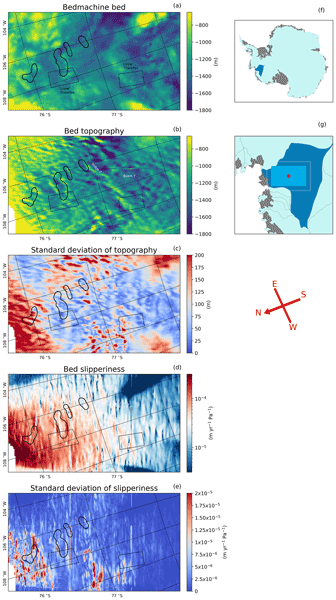
Hills and valleys hidden under the ice of Thwaites Glacier have an impact on ice flow and future ice loss, but there are not many three-dimensional observations of their location or size. We apply a mathematical theory to new high-resolution observations of the ice surface to predict the bed topography beneath the ice. There is a good correlation with ice-penetrating radar observations. The method may be useful in areas with few direct observations or as a further constraint for other methods.
Ronja Reese, Nicolas C. Jourdain, Xylar S. Asay-Davis, Clara Burgard, Erwin Lambert, Yoshihiro Nakayama, Paul R. Holland, Kaitlin A. Naughten, Ralph Timmermann, Pierre Dutrieux, Shenjie Zhou, Golsa Talebigheshlaghi, and Yanmei Tian
EGUsphere, https://doi.org/10.5194/egusphere-2026-5337, https://doi.org/10.5194/egusphere-2026-5337, 2026
This preprint is open for discussion and under review for The Cryosphere (TC).
Short summary
Short summary
An important factor in projections of the Antarctic contribution to future sea level rise is the Southern Ocean. The Ice Sheet Model Intercomparison Project for CMIP7 aims to provide ice sheet projections, and here we introduce the protocol for handling the ocean in Antarctica. It describes how ocean changes from global atmosphere-ocean models can be used in Antarctic simulations and how ocean conditions can be translated into melt rates, taking into account oceanographic knowledge.
Cyrille Mosbeux, Peter Råback, Adrien Gilbert, Julien Brondex, Fabien Gillet-Chaulet, Nicolas C. Jourdain, Mondher Chekki, Olivier Gagliardini, and Gaël Durand
Geosci. Model Dev., 19, 8269–8288, https://doi.org/10.5194/gmd-19-8269-2026, https://doi.org/10.5194/gmd-19-8269-2026, 2026
Short summary
Short summary
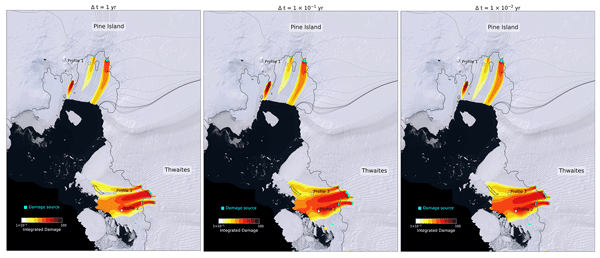
Transport processes like rocks carried by ice flow and damage evolution – a proxy for crevasses – are key in ice sheet modeling and should occur without diffusion. Yet, standard numerical methods often blur these features. We explore a particle-based Semi-Lagrangian approach, comparing it to a Discontinuous Galerkin method, and show it can accurately simulate such transport when run at high enough resolution.
Philippe Conesa, Cécile Agosta, Sylvie Charbit, Christophe Dumas, Simon Beylat, and Nina Raoult
The Cryosphere, 20, 4973–5003, https://doi.org/10.5194/tc-20-4973-2026, https://doi.org/10.5194/tc-20-4973-2026, 2026
Short summary
Short summary
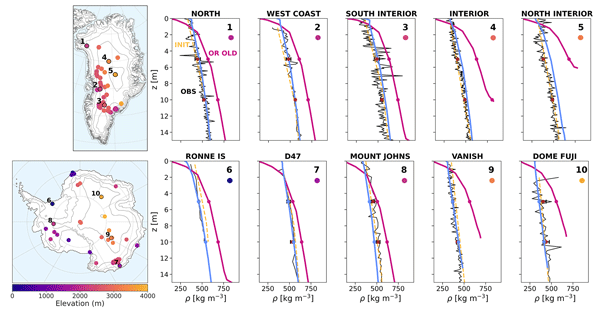
As Greenland and Antarctic ice sheets are almost entirely covered by snow, a proper modelling of the internal snowpack processes is essential to predict their evolution. This study evaluates the snow densification over ice sheets in the ORCHIDEE (Organising Carbon and Hydrology In Dynamic Ecosystems) land surface model. The development of a new formulation for the surface snow density and the calibration of densification parameters improve the model agreement with polar snow observations.
Thomas Lauwers, Elise Fourré, Niels Dutrievoz, Cécile Agosta, Olivier Jossoud, Bénédicte Minster, Frédéric Prié, Olivier Cattani, Valérie Masson-Delmotte, Mathieu Casado, Christophe Genthon, and Amaëlle Landais
Atmos. Meas. Tech., 19, 4743–4758, https://doi.org/10.5194/amt-19-4743-2026, https://doi.org/10.5194/amt-19-4743-2026, 2026
Short summary
Short summary
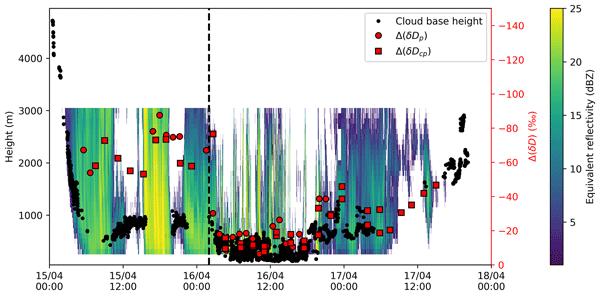
This study presents a new method to measure the isotopic composition of snowfall and atmospheric water vapor in Antarctica. With a single laser spectrometer, it enables continuous, high frequency observations without human intervention. Tests in East Antarctica show a very good agreement with conventionnal snow sampling. This new sampling method opens new opportunities to better understand snowfall formation, improve climate models, and refine the interpretation of ice core climate records.
Guillaume Timmermans, Brice Noël, Christoph Kittel, Thomas Dethinne, Nicolas Ghilain, and Xavier Fettweis
EGUsphere, https://doi.org/10.5194/egusphere-2026-2341, https://doi.org/10.5194/egusphere-2026-2341, 2026
Short summary
Short summary
We assess how well a regional climate model reproduces changes in the mass of the Greenland Ice Sheet due to surface processes, an important driver of sea level rise. By comparing model results with observations, we show that high-resolution simulations closely match reality. Coarser simulations are less detailed near the edges but remain reliable overall. A resolution of 10 kilometers provides a good balance between accuracy and computing cost for long-term projections.
Anna Olivé Abelló, Pierre Mathiot, Nicolas C. Jourdain, Yavor Kostov, and Paul R. Holland
EGUsphere, https://doi.org/10.5194/egusphere-2026-3422, https://doi.org/10.5194/egusphere-2026-3422, 2026
Short summary
Short summary
Antarctic icebergs release large amounts of freshwater, but models often add it entirely at the ocean surface. Using simulations with drifting icebergs, we assessed whether releasing meltwater at depth alters the Southern Ocean's response. Most meltwater remained in the surface mixed layer, and deeper release caused only weak, local changes in the ocean, sea ice and ice shelf melting. Hence, surface release remains a reasonable approach for large-scale studies, though depth matters regionally.
Agnese Petteni, Mathieu Casado, Christophe Leroy-Dos Santos, Amaelle Landais, Niels Dutrievoz, Cécile Agosta, Pete D. Akers, Joel Savarino, Andrea Spolaor, Massimo Frezzotti, and Barbara Stenni
The Cryosphere, 20, 3581–3598, https://doi.org/10.5194/tc-20-3581-2026, https://doi.org/10.5194/tc-20-3581-2026, 2026
Short summary
Short summary
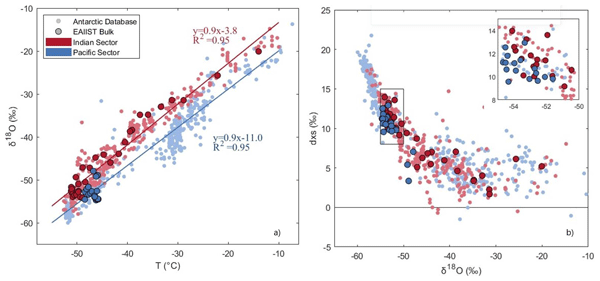
We investigated the isotopic composition of surface snow in a previously unexplored region of East Antarctica to understand how differences in air mass origin influence its variability. By comparing observations with model data, we validated the model and quantified the impact of post-depositional processes at the snow–atmosphere interface. Our results offer valuable insights for reconstructing past temperatures from ice cores.
Ian Simpson, Edward Hanna, Ryan S. Williams, Linh Luu, Andrew Orr, Julie Jones, Xavier Fettweis, Jose Abraham Torres Alavez, Ole Bøssing Christensen, Ella Gilbert, Sid Gumber, Christoph Kittel, Sihan Li, Damien Maure, Ruth Mottram, Tony Phillips, Willem Jan van de Berg, and Kristiina Verro
EGUsphere, https://doi.org/10.5194/egusphere-2026-2270, https://doi.org/10.5194/egusphere-2026-2270, 2026
Short summary
Short summary
The warming trend in global temperatures has potential to result in accelerated break up of the Antarctic ice shelves, which would contribute to rising sea levels. Here we present a novel database of Antarctic extreme weather events over a selection of the Antarctic ice shelves. We examine air temperature, precipitation, wind and surface pressure. In addition, we examine trends in the frequency of extreme events and the links with weather patterns around Antarctica.
Ella Gilbert, José Abraham Torres-Alavez, Marte G. Hofsteenge, Willem Jan van de Berg, Fredrik Boberg, Ole Bøssing Christensen, Christiaan Timo van Dalum, Xavier Fettweis, Siddharth Gumber, Nicolaj Hansen, Christoph Kittel, Clara Lambin, Damien Maure, Ruth Mottram, Martin Olesen, Andrew Orr, Tony Phillips, Maurice van Tiggelen, Kristiina Verro, and Priscilla A. Mooney
The Cryosphere, 20, 2629–2658, https://doi.org/10.5194/tc-20-2629-2026, https://doi.org/10.5194/tc-20-2629-2026, 2026
Short summary
Short summary
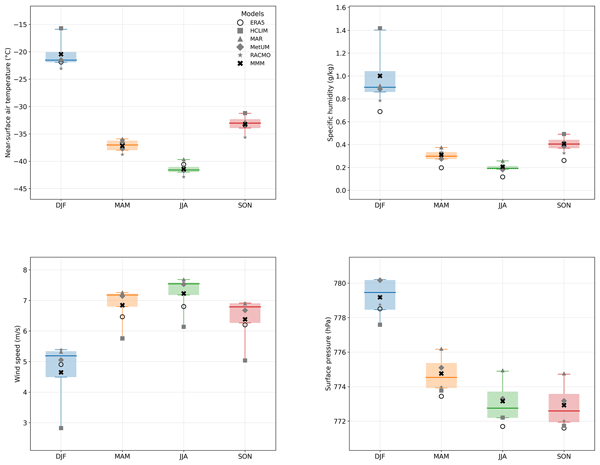
Here we present a new dataset – the PolarRES ensemble – of four state-of-the-art regional climate models, which capture the full complexity of Antarctica's climate. The ensemble out-performs other available tools, advancing our ability to explore Antarctic climate. While it still has limitations, the PolarRES ensemble offers a novel and exciting way of evaluating climate processes and features, and we encourage researchers to use the data, which are freely available.
Claire K. Yung, Xylar S. Asay-Davis, Alistair Adcroft, Christopher Y. S. Bull, Jan De Rydt, Michael S. Dinniman, Benjamin K. Galton-Fenzi, Daniel Goldberg, David E. Gwyther, Robert Hallberg, Matthew Harrison, Tore Hattermann, David M. Holland, Denise Holland, Paul R. Holland, James R. Jordan, Nicolas C. Jourdain, Kazuya Kusahara, Gustavo Marques, Pierre Mathiot, Dimitris Menemenlis, Adele K. Morrison, Yoshihiro Nakayama, Olga Sergienko, Robin S. Smith, Alon Stern, Ralph Timmermann, and Qin Zhou
The Cryosphere, 20, 2053–2088, https://doi.org/10.5194/tc-20-2053-2026, https://doi.org/10.5194/tc-20-2053-2026, 2026
Short summary
Short summary
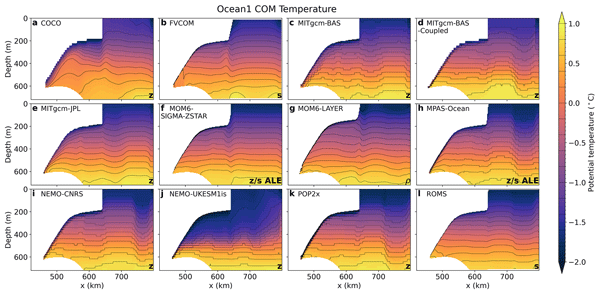
The second Ice Shelf-Ocean Model Intercomparison Project, ISOMIP+, compares 12 ice shelf-ocean models with a common, idealised, static configuration, aiming to assess inter-model variability. Models show similar basal melt rate patterns, ocean profiles and circulation but differ in ice-ocean boundary layer properties. Ice-ocean boundary layer representation is a key area for future work, as are realistic-domain ice sheet-ocean model intercomparisons.
Dorothée Vallot, Nicolas C. Jourdain, and Pierre Mathiot
The Cryosphere, 20, 1997–2016, https://doi.org/10.5194/tc-20-1997-2026, https://doi.org/10.5194/tc-20-1997-2026, 2026
Short summary
Short summary
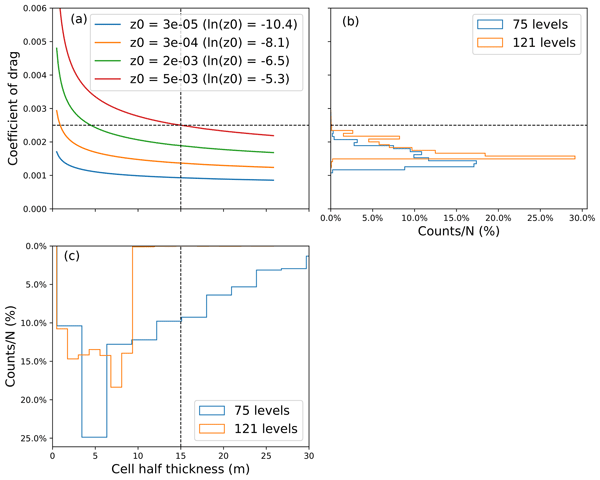
Some recent studies show that the topography at the base of an ice shelf has consequences for its interaction with the ocean. To describe friction velocity in the melt parameterisation, we use a drag coefficient dependent on the distance of the first wet cell to the ice and the basal topography rather than a fixed-tuned parameter. We find that it is less dependent on the choice of vertical resolution and, while providing similar total melt, it gives more weight to highly crevassed areas.
Pierre Mathiot, Nicolas C. Jourdain, Benoit Urruty, Fabien Gillet-Chaulet, Olivier Gagliardini, and Gaël Durand
EGUsphere, https://doi.org/10.5194/egusphere-2026-927, https://doi.org/10.5194/egusphere-2026-927, 2026
Short summary
Short summary
How the Antarctic ice sheet responds to rapid ocean warming remains uncertain. To explore this, we used a coupled ocean–ice sheet model. We compared simulations under present-day conditions with simulations under strong future warming for 50 years, then returned to today’s climate. The ocean warmed quickly but recovered within decades. In contrast, several ice streams continued to retreat for centuries. This shows that even brief warming could cause lasting ice loss and sea-level rise.
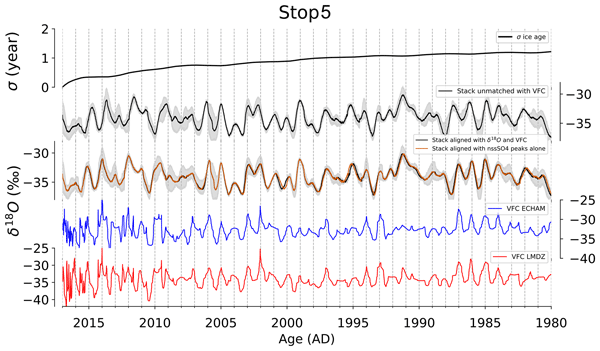
Titouan Tcheng, Elise Fourré, Christophe Leroy-Dos Santos, Frédéric Parrenin, Emmanuel Le Meur, Frédéric Prié, Olivier Jossoud, Roxanne Jacob, Bénédicte Minster, Olivier Magand, Cécile Agosta, Niels Dutrievoz, Vincent Favier, Léa Baubant, Coralie Lassalle-Bernard, Mathieu Casado, Martin Werner, Alexandre Cauquoin, Laurent Arnaud, Bruno Jourdain, Ghislain Picard, Marie Bouchet, and Amaëlle Landais
The Cryosphere, 20, 1599–1618, https://doi.org/10.5194/tc-20-1599-2026, https://doi.org/10.5194/tc-20-1599-2026, 2026
Short summary
Short summary
Studying Antarctic ice cores is crucial to assess past climate changes, as they hold historical climate data. This study examines multiple ice cores from three sites in coastal Adélie Land to see if combining cores improves data interpretability. It does at two sites, but at a third, wind-driven snow layer mixing limited benefits. We show that using multiple ice cores from one location can better uncover climate history, especially in areas with less wind disturbance.
Emma Samin, Amaëlle Landais, Elise Fourré, Mathieu Casado, Adrien Ooms, Niels Dutrievoz, Cécile Agosta, Valérie Masson-Delmotte, Thomas Combacal, Elsa Gautier, and Bénédicte Minster
EGUsphere, https://doi.org/10.5194/egusphere-2026-871, https://doi.org/10.5194/egusphere-2026-871, 2026
Short summary
Short summary
This study presents the water isotope profiles of two firn cores drilled at Little Dome C (LDC) in Antarctica and dated by identifying volcanic events, which enabled us to determine an accumulation rate at LDC of 24 mmwe.yr-1. Comparison of a virtual firn core model with these data allowed us to study the surface processes responsible for isotopic variability in firn. We therefore suggest that future models consider the mixing of the surface layer and re-quantify diffusion.
Benjamin Heurgue, Charles Amory, Christoph Kittel, Fredrik Boberg, Gaël Durand, Vincent Favier, Xavier Fettweis, Quentin Glaude, Heiko Goelzer, Nicolaj Hansen, Nicolas C. Jourdain, Ruth Mottram, Martin Olesen, Willem Jan Van de Berg, Michiel R. Van den Broeke, and René R. Wijngaard
EGUsphere, https://doi.org/10.5194/egusphere-2026-624, https://doi.org/10.5194/egusphere-2026-624, 2026
Short summary
Short summary
We studied how the Antarctic ice sheet surface mass balance may change by 2100 using three high-resolution climate models forced by the same future climate scenario. While the models agree for present-day conditions, they project very different futures, especially over floating ice shelves. These differences mainly come from how melting, refreezing, and temperature are represented. Our results show that future sea level projections strongly depend on how well models simulate today’s climate.
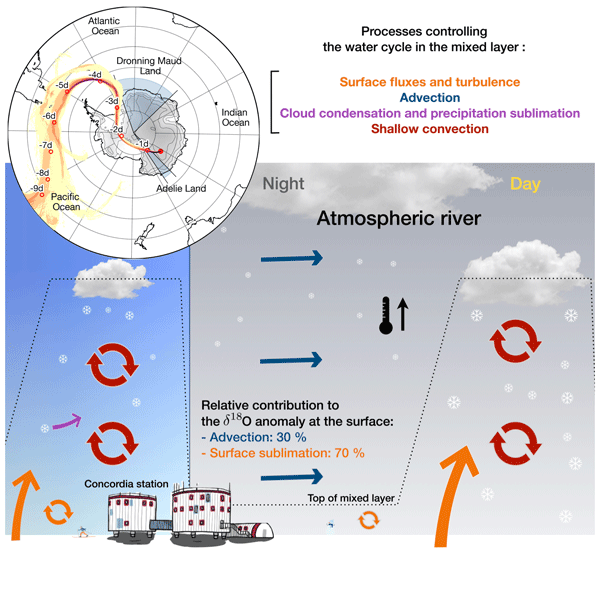
Niels Dutrievoz, Cécile Agosta, Cécile Davrinche, Amaëlle Landais, Sebastien Nguyen, Étienne Vignon, Inès Ollivier, Christophe Leroy-Dos Santos, Elise Fourré, Mathieu Casado, Jonathan Wille, Vincent Favier, Bénédicte Minster, and Frédéric Prié
The Cryosphere, 20, 1025–1046, https://doi.org/10.5194/tc-20-1025-2026, https://doi.org/10.5194/tc-20-1025-2026, 2026
Short summary
Short summary
In December 2018, an atmospheric river event from the Atlantic reached Dome C, East Antarctica, causing a +18 °C warming, tripled water vapour, and a strong isotopic anomaly in water vapour (+ 17 ‰ for δ18O) at the surface. During the peak of the event, we found 70 % of the water vapour came from local snow sublimation, and 30 % from the atmospheric river itself, highlighting both long-range moisture advection and interactions between the boundary layer and the snowpack.
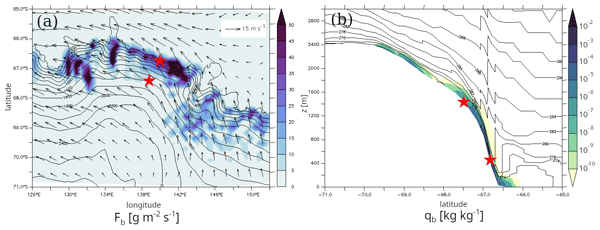
Étienne Vignon, Nicolas Chiabrando, Cécile Agosta, Charles Amory, Valentin Wiener, Justine Charrel, Thomas Dubos, and Christophe Genthon
Geosci. Model Dev., 19, 239–259, https://doi.org/10.5194/gmd-19-239-2026, https://doi.org/10.5194/gmd-19-239-2026, 2026
Short summary
Short summary
The erosion of surface snow by the wind is an important process for the Antarctic surface mass balance. This study presents the first development of a parameterisation of blowing snow for a global climate model. Simulations avec evaluated using measurements in Antarctica. Results show an overall decrease of the snow accumulation in the escarpment region of the ice sheet due to snow erosion and an increase at the coast due to blowing snow deposition and increase in precipitation.
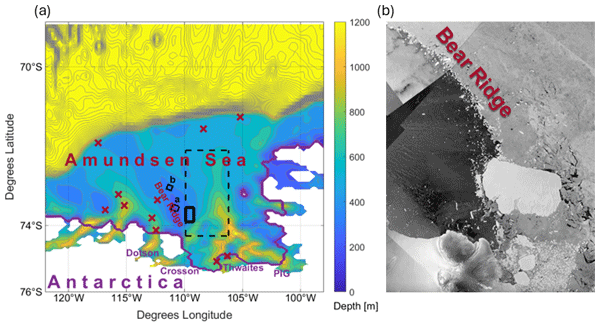
Yavor Kostov, Paul R. Holland, Kelly A. Hogan, James A. Smith, Nicolas C. Jourdain, Pierre Mathiot, Anna Olivé Abelló, Andrew H. Fleming, and Andrew J. S. Meijers
The Cryosphere, 20, 135–169, https://doi.org/10.5194/tc-20-135-2026, https://doi.org/10.5194/tc-20-135-2026, 2026
Short summary
Short summary
Icebergs ground when they reach shallow topography such as Bear Ridge in the Amundsen Sea. Grounded icebergs can block the transport of sea-ice and create areas of higher and lower sea-ice concentration. We introduce a physically and observationally motivated representation of grounding in an ocean model. In addition, we improve the way simulated icebergs respond to winds, ocean currents, and density differences in sea water. We analyse the forces acting on freely floating and grounded icebergs.
Cécile Davrinche, Anaïs Orsi, Charles Amory, Christoph Kittel, and Cécile Agosta
The Cryosphere, 19, 6023–6042, https://doi.org/10.5194/tc-19-6023-2025, https://doi.org/10.5194/tc-19-6023-2025, 2025
Short summary
Short summary
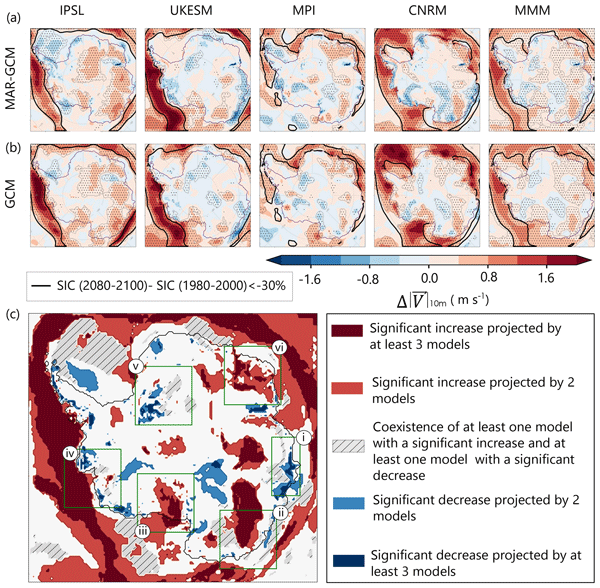
We analyse changes in Antarctic winter surface winds projected by 4 models. Depending on the area and model, changes on the continent by 2100 reveal opposing trends. Nevertheless, models agree on a strengthening of surface winds in Adélie Land for example and a weakening in some other areas such as the Amundsen region. We attribute the strengthening of near-surface winds to changes in the large-sale atmospheric circulation and the weakening to changes in the structure of the lower atmosphere.
Gavin A. Schmidt, Kenneth D. Mankoff, Jonathan L. Bamber, Clara Burgard, Dustin Carroll, David M. Chandler, Violaine Coulon, Benjamin J. Davison, Matthew H. England, Paul R. Holland, Nicolas C. Jourdain, Qian Li, Juliana M. Marson, Pierre Mathiot, Clive R. McMahon, Twila A. Moon, Ruth Mottram, Sophie Nowicki, Anna Olivé Abelló, Andrew G. Pauling, Thomas Rackow, and Damien Ringeisen
Geosci. Model Dev., 18, 8333–8361, https://doi.org/10.5194/gmd-18-8333-2025, https://doi.org/10.5194/gmd-18-8333-2025, 2025
Short summary
Short summary
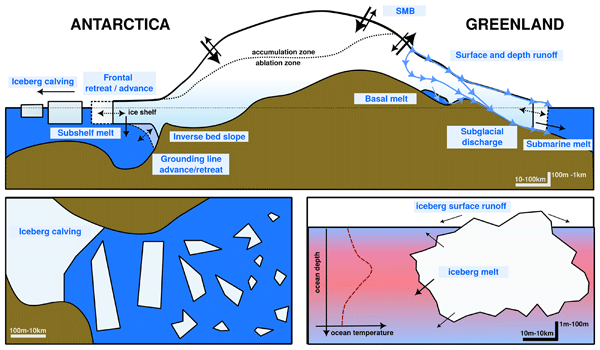
The impact of increasing mass loss from the Greenland and Antarctic ice sheets has not so far been included in historical climate model simulations. This paper describes the protocols and data available for modeling groups to add this anomalous freshwater to their ocean modules to better represent the impacts of these fluxes on ocean circulation, sea ice, salinity and sea level.
Sanne B. M. Veldhuijsen, Willem Jan van de Berg, Peter Kuipers Munneke, Nicolaj Hansen, Fredrik Boberg, Christoph Kittel, Charles Amory, and Michiel R. van den Broeke
The Cryosphere, 19, 5157–5173, https://doi.org/10.5194/tc-19-5157-2025, https://doi.org/10.5194/tc-19-5157-2025, 2025
Short summary
Short summary
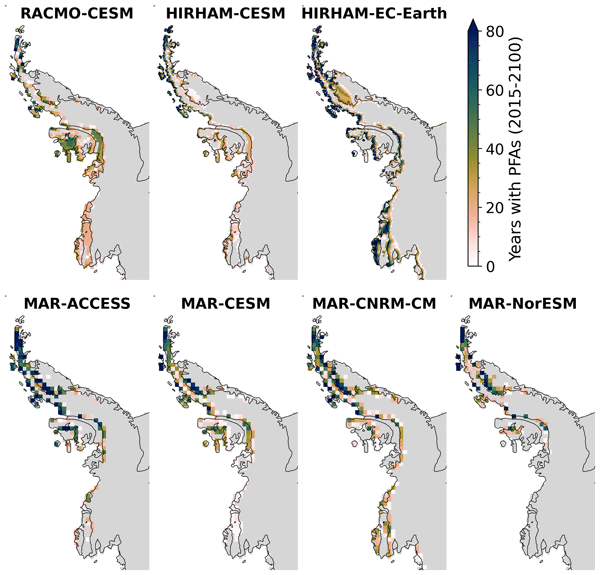
Perennial firn aquifers (PFAs), year-round bodies of liquid water within firns, can potentially impact ice-shelf and ice-sheet stability. We developed a fast XGBoost firn emulator to predict the 21st-century distribution of PFAs in Antarctica for 12 climatic forcing datasets. Our findings suggest that, in low-emission scenarios, PFAs remain confined to the Antarctic Peninsula. However, in a high-emission scenario, PFAs are projected to expand to a region in West Antarctica and East Antarctica.
Inès Ollivier, Thomas Lauwers, Niels Dutrievoz, Cécile Agosta, Mathieu Casado, Elise Fourré, Christophe Genthon, Olivier Jossoud, Frédéric Prié, Hans Christian Steen-Larsen, and Amaëlle Landais
Earth Syst. Sci. Data, 17, 5655–5674, https://doi.org/10.5194/essd-17-5655-2025, https://doi.org/10.5194/essd-17-5655-2025, 2025
Short summary
Short summary
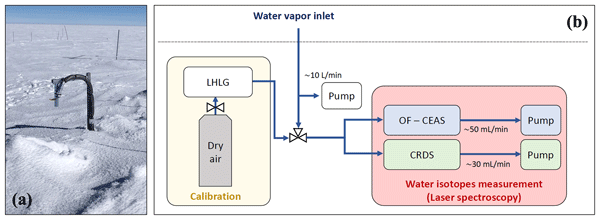
We present a novel 2.5-month record of the atmospheric water vapour isotopic composition during the austral summer 2023–2024 at Concordia Station on the Antarctic Plateau. We show that two independent laser spectrometers accurately record the diurnal variability of the atmospheric water vapour 𝛿18O, 𝛿D, and d-excess. We compare the measurements against outputs of the isotope-enabled general circulation model LMDZ6-iso to show how the data can be used to evaluate such models.
Thomas Dethinne, Nicolas Ghilain, Christoph Kittel, Benjamin Lecart, Xavier Fettweis, and François Jonard
EGUsphere, https://doi.org/10.5194/egusphere-2025-3907, https://doi.org/10.5194/egusphere-2025-3907, 2025
Short summary
Short summary
This study replace standard vegetation input of a regional climate model with a satellite-based vegetation dataset to assess how vegetation influences climate during extreme events and to test the sensitivity of the model. The results show a non-linear sensitivity to vegetation, and using an observation-based vegetation input allows for a better representation of the extreme events, highlight the need for an advanced representation of vegetation in climate model to improve climate predictions.
Johanna Beckmann, Ronja Reese, Felicity S. McCormack, Sue Cook, Lawrence Bird, Dawid Gwyther, Daniel Richards, Matthias Scheiter, Yu Wang, Hélène Seroussi, Ayako Abe‐Ouchi, Torsten Albrecht, Jorge Alvarez‐Solas, Xylar S. Asay‐Davis, Jean‐Baptiste Barre, Constantijn J. Berends, Jorge Bernales, Javier Blasco, Justine Caillet, David M. Chandler, Violaine Coulon, Richard Cullather, Christophe Dumas, Benjamin K. Galton‐Fenzi, Julius Garbe, Fabien Gillet‐Chaulet, Rupert Gladstone, Heiko Goelzer, Nicholas R. Golledge, Ralf Greve, G. Hilmar Gudmundsson, Holly Kyeore Han, Trevor R. Hillebrand, Matthew J. Hoffman, Philippe Huybrechts, Nicolas C. Jourdain, Ann Kristin Klose, Petra M. Langebroek, Gunter R. Leguy, William H. Lipscomb, Daniel P. Lowry, Pierre Mathiot, Marisa Montoya, Mathieu Morlighem, Sophie Nowicki, Frank Pattyn, Antony J. Payne, Tyler Pelle, Aurélien Quiquet, Alexander Robinson, Leopekka Saraste, Erika G. Simon, Sainan Sun, Jake P. Twarog, Luke D. Trusel, Benoit Urruty, Jonas Van Breedam, Roderik S. W. van de Wal, Chen Zhao, and Thomas Zwinger
EGUsphere, https://doi.org/10.5194/egusphere-2025-4069, https://doi.org/10.5194/egusphere-2025-4069, 2025
Short summary
Short summary
Antarctica holds enough ice to raise sea levels by many meters, but its future is uncertain. Warm ocean water melts ice shelves from below, letting inland ice flow faster into the sea. By 2300, Antarctica could add 0.6–4.4 m to sea levels. Our study identifies two key factors—how strongly shelves melt and how the ice responds. These explain much of the range, and refining them in models may improve future predictions.
Alison Delhasse, Christoph Kittel, and Johanna Beckmann
The Cryosphere, 19, 4459–4469, https://doi.org/10.5194/tc-19-4459-2025, https://doi.org/10.5194/tc-19-4459-2025, 2025
Short summary
Short summary
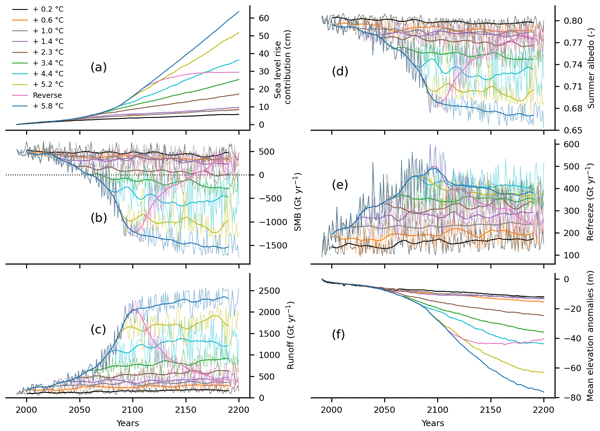
This study explores how the Greenland Ice Sheet (GrIS) responds to different levels of stabilized global warming and if the climate cools back. Our findings show that global temperature increases beyond +2.3 °C mark a critical threshold. We also highlight the importance of limiting warming to avoid irreversible ice loss, as well as the potential for recovery after temporarily exceeding warming thresholds if action is taken quickly to lower global temperatures.
Jonathan Wiskandt and Nicolas C. Jourdain
The Cryosphere, 19, 3253–3258, https://doi.org/10.5194/tc-19-3253-2025, https://doi.org/10.5194/tc-19-3253-2025, 2025
Short summary
Short summary
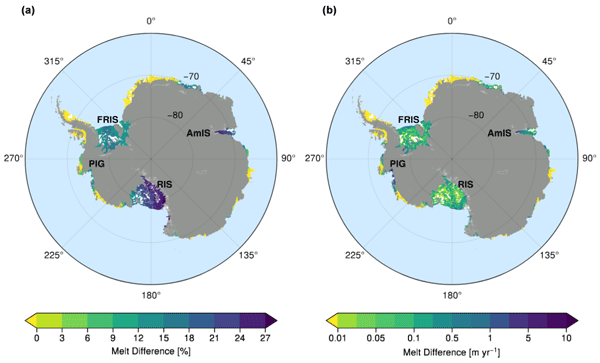
In ocean models, submarine melt of ice shelves is parameterized based on the heat budget at the ice–ocean interface. The heat budget includes the ocean heat transport, the heat conducted into the ice, and the heat available for melting. Here we compare three different approaches to estimating the heat conduction into the ice. We show that the most used approximation is not the most accurate one: it overestimates the melt by up to 25 % compared to the more accurate approximations.
Erwin Lambert and Clara Burgard
The Cryosphere, 19, 2495–2505, https://doi.org/10.5194/tc-19-2495-2025, https://doi.org/10.5194/tc-19-2495-2025, 2025
Short summary
Short summary
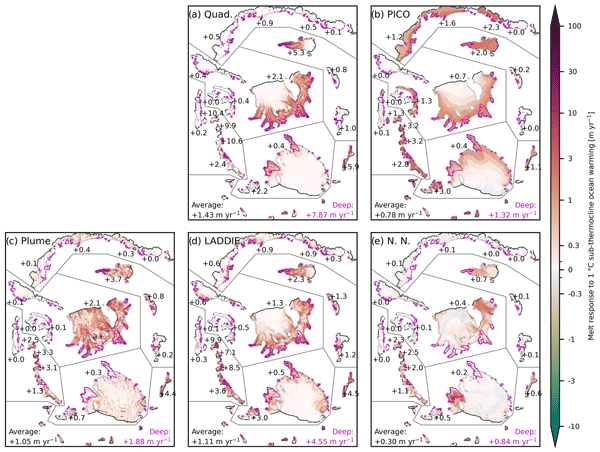
The effect of ocean warming on Antarctic ice-sheet melting is a major source of uncertainty in estimates of future sea level rise. We compare five melt models to show that ocean warming strongly increases melting. Despite their calibration based on present-day melting, the models disagree on the amount of melt increase. In some important regions, the difference reaches a factor 100. We conclude that using various melt models is important to accurately estimate uncertainties in future sea level rise.
David Storkey, Pierre Mathiot, Michael J. Bell, Dan Copsey, Catherine Guiavarc'h, Helene T. Hewitt, Jeff Ridley, and Malcolm J. Roberts
Geosci. Model Dev., 18, 2725–2745, https://doi.org/10.5194/gmd-18-2725-2025, https://doi.org/10.5194/gmd-18-2725-2025, 2025
Short summary
Short summary
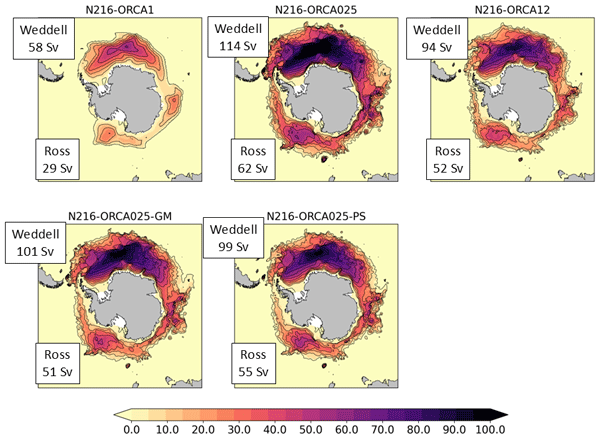
The Southern Ocean is a key region of the world ocean in the context of climate change studies. We show that the Met Office Hadley Centre coupled model with intermediate ocean resolution struggles to accurately simulate the Southern Ocean. Increasing the frictional drag that the seafloor exerts on ocean currents and introducing a representation of unresolved ocean eddies both appear to reduce the large-scale biases in this model.
Nicolas C. Jourdain, Charles Amory, Christoph Kittel, and Gaël Durand
The Cryosphere, 19, 1641–1674, https://doi.org/10.5194/tc-19-1641-2025, https://doi.org/10.5194/tc-19-1641-2025, 2025
Short summary
Short summary
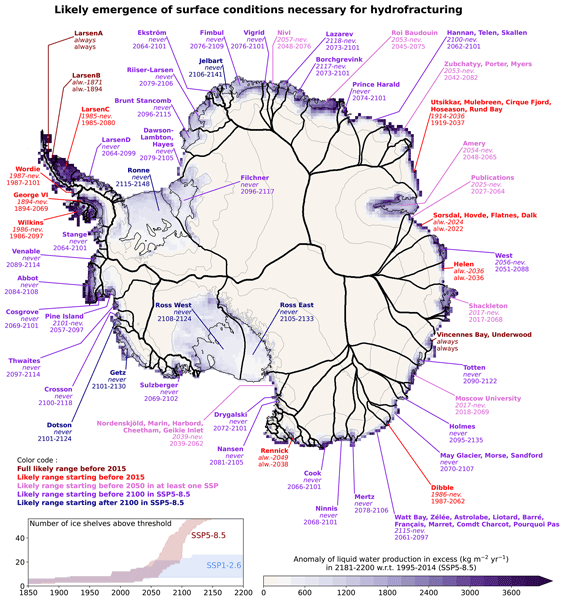
A mixed statistical–physical approach is used to reproduce the behaviour of a regional climate model. From that, we estimate the contribution of snowfall and melting at the surface of the Antarctic Ice Sheet to changes in global mean sea level. We also investigate the impact of surface melting in a warmer climate on the stability of the Antarctic ice shelves that provide back stress on the ice flow to the ocean.
Justine Caillet, Nicolas C. Jourdain, Pierre Mathiot, Fabien Gillet-Chaulet, Benoit Urruty, Clara Burgard, Charles Amory, Mondher Chekki, and Christoph Kittel
Earth Syst. Dynam., 16, 293–315, https://doi.org/10.5194/esd-16-293-2025, https://doi.org/10.5194/esd-16-293-2025, 2025
Short summary
Short summary
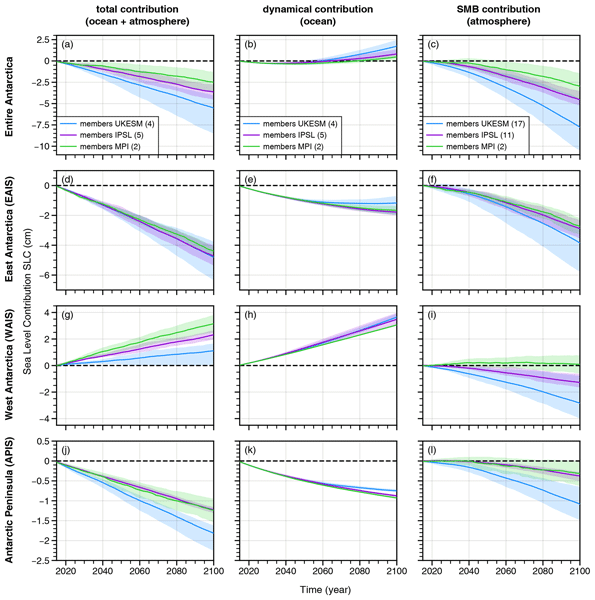
Internal climate variability, resulting from processes intrinsic to the climate system, modulates the Antarctic response to climate change by delaying or offsetting its effects. Using climate and ice-sheet models, we highlight that irreducible internal climate variability significantly enlarges the likely range of Antarctic contribution to sea-level rise until 2100. Thus, we recommend considering internal climate variability as a source of uncertainty for future ice-sheet projections.
Catherine Guiavarc'h, David Storkey, Adam T. Blaker, Ed Blockley, Alex Megann, Helene Hewitt, Michael J. Bell, Daley Calvert, Dan Copsey, Bablu Sinha, Sophia Moreton, Pierre Mathiot, and Bo An
Geosci. Model Dev., 18, 377–403, https://doi.org/10.5194/gmd-18-377-2025, https://doi.org/10.5194/gmd-18-377-2025, 2025
Short summary
Short summary
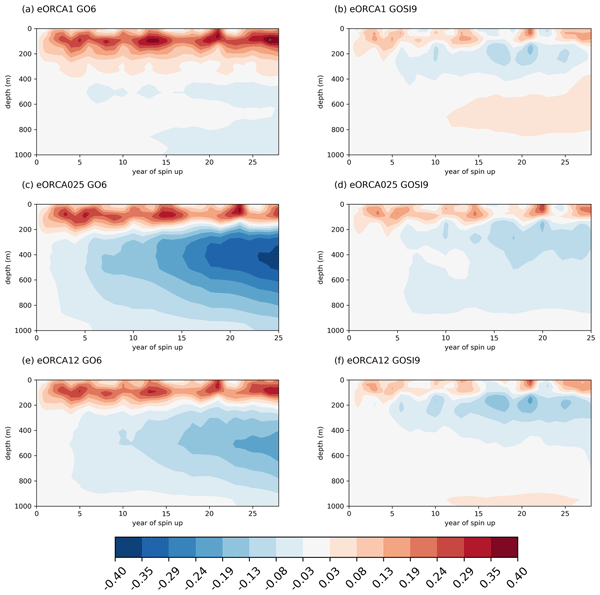
The Global Ocean and Sea Ice configuration version 9 (GOSI9) is the new UK hierarchy of model configurations based on the Nucleus for European Modelling of the Ocean (NEMO) and available at three resolutions. It will be used for various applications, e.g. weather forecasting and climate prediction. It improves upon the previous version by reducing global temperature and salinity biases and enhancing the representation of Arctic sea ice and the Antarctic Circumpolar Current.
Jan De Rydt, Nicolas C. Jourdain, Yoshihiro Nakayama, Mathias van Caspel, Ralph Timmermann, Pierre Mathiot, Xylar S. Asay-Davis, Hélène Seroussi, Pierre Dutrieux, Ben Galton-Fenzi, David Holland, and Ronja Reese
Geosci. Model Dev., 17, 7105–7139, https://doi.org/10.5194/gmd-17-7105-2024, https://doi.org/10.5194/gmd-17-7105-2024, 2024
Short summary
Short summary
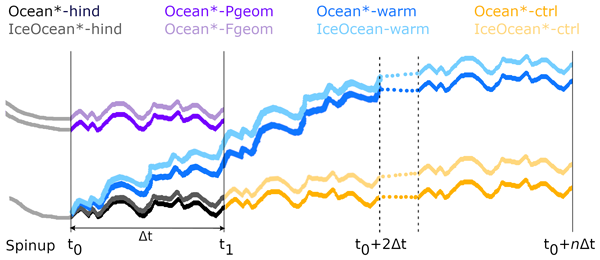
Global climate models do not reliably simulate sea-level change due to ice-sheet–ocean interactions. We propose a community modelling effort to conduct a series of well-defined experiments to compare models with observations and study how models respond to a range of perturbations in climate and ice-sheet geometry. The second Marine Ice Sheet–Ocean Model Intercomparison Project will continue to lay the groundwork for including ice-sheet–ocean interactions in global-scale IPCC-class models.

Cécile Davrinche, Anaïs Orsi, Cécile Agosta, Charles Amory, and Christoph Kittel
The Cryosphere, 18, 2239–2256, https://doi.org/10.5194/tc-18-2239-2024, https://doi.org/10.5194/tc-18-2239-2024, 2024
Short summary
Short summary
Coastal surface winds in Antarctica are amongst the strongest winds on Earth. They are either driven by the cooling of the surface air mass by the ice sheet (katabatic) or by large-scale pressure systems. Here we compute the relative contribution of these drivers. We find that seasonal variations in the wind speed come from the katabatic acceleration, but, at a 3-hourly timescale, none of the large-scale or katabatic accelerations can be considered as the main driver.
Amaelle Landais, Cécile Agosta, Françoise Vimeux, Olivier Magand, Cyrielle Solis, Alexandre Cauquoin, Niels Dutrievoz, Camille Risi, Christophe Leroy-Dos Santos, Elise Fourré, Olivier Cattani, Olivier Jossoud, Bénédicte Minster, Frédéric Prié, Mathieu Casado, Aurélien Dommergue, Yann Bertrand, and Martin Werner
Atmos. Chem. Phys., 24, 4611–4634, https://doi.org/10.5194/acp-24-4611-2024, https://doi.org/10.5194/acp-24-4611-2024, 2024
Short summary
Short summary
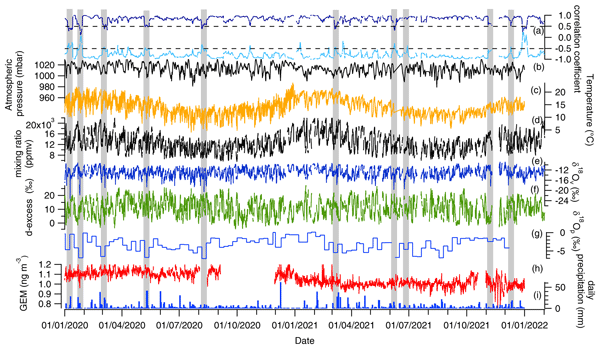
We have monitored water vapor isotopes since January 2020 on Amsterdam Island in the Indian Ocean. We show 11 periods associated with abrupt negative excursions of water vapor δ18Ο. Six of these events show a decrease in gaseous elemental mercury, suggesting subsidence of air from a higher altitude. Accurately representing the water isotopic signal during these cold fronts is a real challenge for the atmospheric components of Earth system models equipped with water isotopes.
Alison Delhasse, Johanna Beckmann, Christoph Kittel, and Xavier Fettweis
The Cryosphere, 18, 633–651, https://doi.org/10.5194/tc-18-633-2024, https://doi.org/10.5194/tc-18-633-2024, 2024
Short summary
Short summary
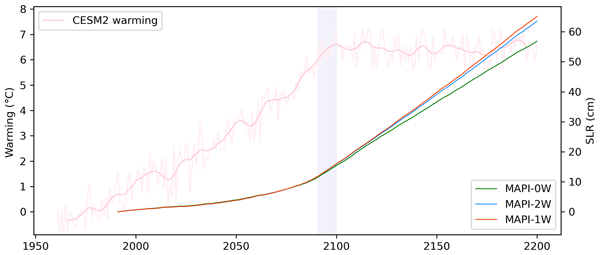
Aiming to study the long-term influence of an extremely warm climate in the Greenland Ice Sheet contribution to sea level rise, a new regional atmosphere–ice sheet model setup was established. The coupling, explicitly considering the melt–elevation feedback, is compared to an offline method to consider this feedback. We highlight mitigation of the feedback due to local changes in atmospheric circulation with changes in surface topography, making the offline correction invalid on the margins.
Violaine Coulon, Ann Kristin Klose, Christoph Kittel, Tamsin Edwards, Fiona Turner, Ricarda Winkelmann, and Frank Pattyn
The Cryosphere, 18, 653–681, https://doi.org/10.5194/tc-18-653-2024, https://doi.org/10.5194/tc-18-653-2024, 2024
Short summary
Short summary
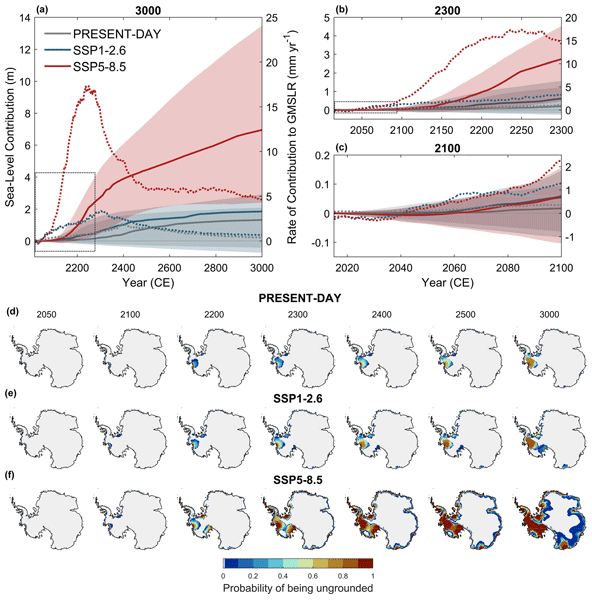
We present new projections of the evolution of the Antarctic ice sheet until the end of the millennium, calibrated with observations. We show that the ocean will be the main trigger of future ice loss. As temperatures continue to rise, the atmosphere's role may shift from mitigating to amplifying Antarctic mass loss already by the end of the century. For high-emission scenarios, this may lead to substantial sea-level rise. Adopting sustainable practices would however reduce the rate of ice loss.
Aymeric P. M. Servettaz, Cécile Agosta, Christoph Kittel, and Anaïs J. Orsi
The Cryosphere, 17, 5373–5389, https://doi.org/10.5194/tc-17-5373-2023, https://doi.org/10.5194/tc-17-5373-2023, 2023
Short summary
Short summary
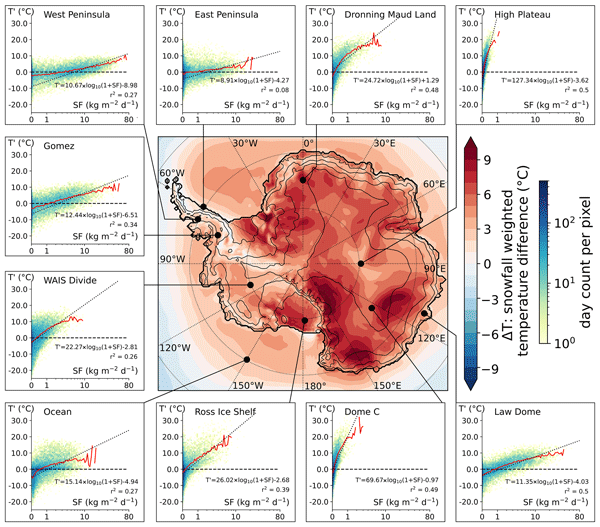
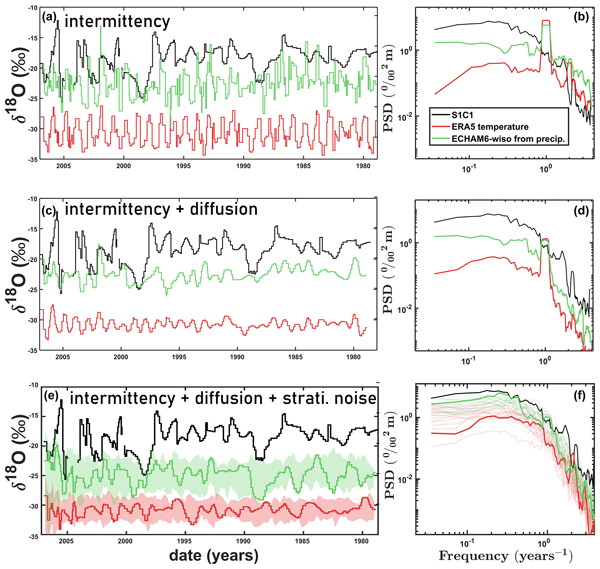
It has been previously observed in polar regions that the atmospheric temperature is warmer during precipitation events. Here, we use a regional atmospheric model to quantify the temperature changes associated with snowfall events across Antarctica. We show that more intense snowfall is statistically associated with a warmer temperature anomaly compared to the seasonal average, with the largest anomalies seen in winter. This bias may affect water isotopes in ice cores deposited during snowfall.
Christophe Leroy-Dos Santos, Elise Fourré, Cécile Agosta, Mathieu Casado, Alexandre Cauquoin, Martin Werner, Benedicte Minster, Frédéric Prié, Olivier Jossoud, Leila Petit, and Amaëlle Landais
The Cryosphere, 17, 5241–5254, https://doi.org/10.5194/tc-17-5241-2023, https://doi.org/10.5194/tc-17-5241-2023, 2023
Short summary
Short summary
In the face of global warming, understanding the changing water cycle and temperatures in polar regions is crucial. These factors directly impact the balance of ice sheets in the Arctic and Antarctic. By studying the composition of water vapor, we gain insights into climate variations. Our 2-year study at Dumont d’Urville station, Adélie Land, offers valuable data to refine models. Additionally, we demonstrate how modeling aids in interpreting signals from ice core samples in the region.
Hélène Seroussi, Vincent Verjans, Sophie Nowicki, Antony J. Payne, Heiko Goelzer, William H. Lipscomb, Ayako Abe-Ouchi, Cécile Agosta, Torsten Albrecht, Xylar Asay-Davis, Alice Barthel, Reinhard Calov, Richard Cullather, Christophe Dumas, Benjamin K. Galton-Fenzi, Rupert Gladstone, Nicholas R. Golledge, Jonathan M. Gregory, Ralf Greve, Tore Hattermann, Matthew J. Hoffman, Angelika Humbert, Philippe Huybrechts, Nicolas C. Jourdain, Thomas Kleiner, Eric Larour, Gunter R. Leguy, Daniel P. Lowry, Chistopher M. Little, Mathieu Morlighem, Frank Pattyn, Tyler Pelle, Stephen F. Price, Aurélien Quiquet, Ronja Reese, Nicole-Jeanne Schlegel, Andrew Shepherd, Erika Simon, Robin S. Smith, Fiammetta Straneo, Sainan Sun, Luke D. Trusel, Jonas Van Breedam, Peter Van Katwyk, Roderik S. W. van de Wal, Ricarda Winkelmann, Chen Zhao, Tong Zhang, and Thomas Zwinger
The Cryosphere, 17, 5197–5217, https://doi.org/10.5194/tc-17-5197-2023, https://doi.org/10.5194/tc-17-5197-2023, 2023
Short summary
Short summary
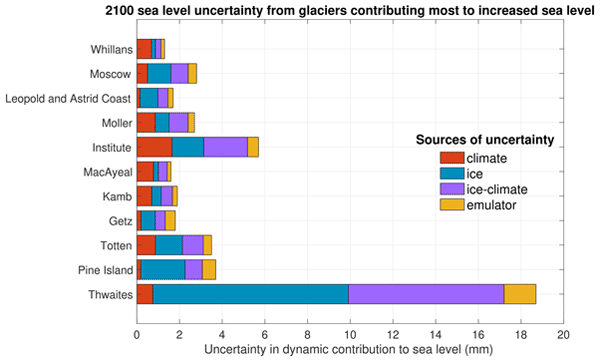
Mass loss from Antarctica is a key contributor to sea level rise over the 21st century, and the associated uncertainty dominates sea level projections. We highlight here the Antarctic glaciers showing the largest changes and quantify the main sources of uncertainty in their future evolution using an ensemble of ice flow models. We show that on top of Pine Island and Thwaites glaciers, Totten and Moscow University glaciers show rapid changes and a strong sensitivity to warmer ocean conditions.
Pierre Mathiot and Nicolas C. Jourdain
Ocean Sci., 19, 1595–1615, https://doi.org/10.5194/os-19-1595-2023, https://doi.org/10.5194/os-19-1595-2023, 2023
Short summary
Short summary
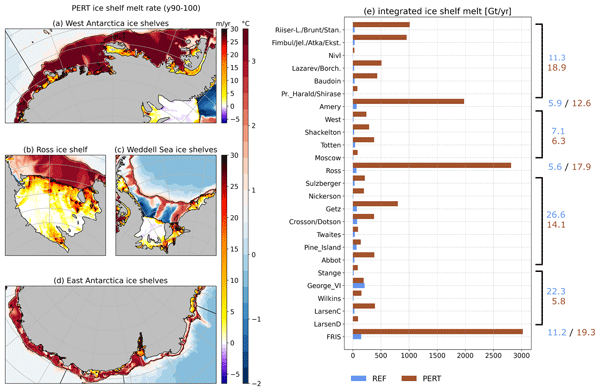
How much the Antarctic ice shelf basal melt rate can increase in response to global warming remains an open question. To achieve this, we compared an ocean simulation under present-day atmospheric condition to a one under late 23rd century atmospheric conditions. The ocean response to the perturbation includes a decrease in the production of cold dense water and an increased intrusion of warmer water onto the continental shelves. This induces a substantial increase in ice shelf basal melt rates.
Damien Maure, Christoph Kittel, Clara Lambin, Alison Delhasse, and Xavier Fettweis
The Cryosphere, 17, 4645–4659, https://doi.org/10.5194/tc-17-4645-2023, https://doi.org/10.5194/tc-17-4645-2023, 2023
Short summary
Short summary
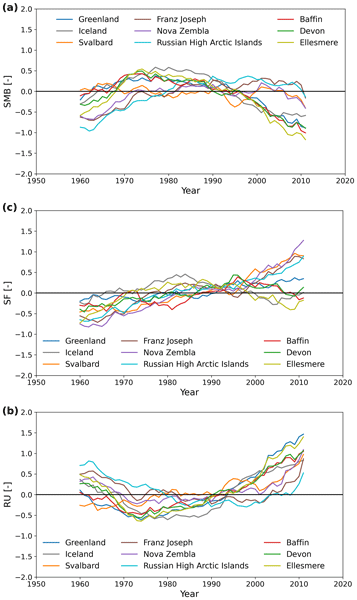
The Arctic is warming faster than the rest of the Earth. Studies have already shown that Greenland and the Canadian Arctic are experiencing a record increase in melting rates, while Svalbard has been relatively less impacted. Looking at those regions but also extending the study to Iceland and the Russian Arctic archipelagoes, we see a heterogeneity in the melting-rate response to the Arctic warming, with the Russian archipelagoes experiencing lower melting rates than other regions.
Thomas Dethinne, Quentin Glaude, Ghislain Picard, Christoph Kittel, Patrick Alexander, Anne Orban, and Xavier Fettweis
The Cryosphere, 17, 4267–4288, https://doi.org/10.5194/tc-17-4267-2023, https://doi.org/10.5194/tc-17-4267-2023, 2023
Short summary
Short summary
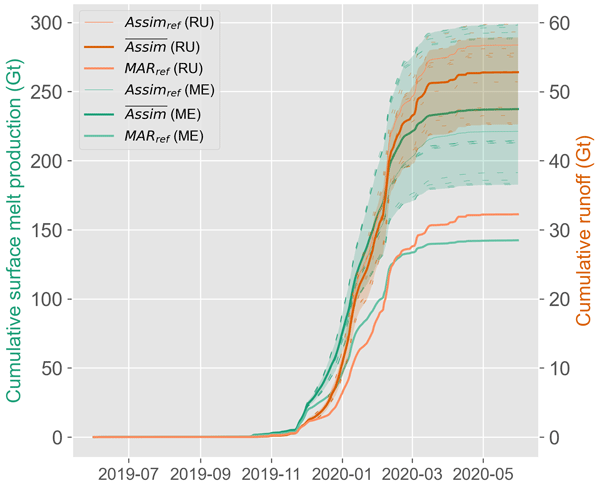
We investigate the sensitivity of the regional climate model
Modèle Atmosphérique Régional(MAR) to the assimilation of wet-snow occurrence estimated by remote sensing datasets. The assimilation is performed by nudging the MAR snowpack temperature. The data assimilation is performed over the Antarctic Peninsula for the 2019–2021 period. The results show an increase in the melt production (+66.7 %) and a decrease in surface mass balance (−4.5 %) of the model for the 2019–2020 melt season.
Katherine Hutchinson, Julie Deshayes, Christian Éthé, Clément Rousset, Casimir de Lavergne, Martin Vancoppenolle, Nicolas C. Jourdain, and Pierre Mathiot
Geosci. Model Dev., 16, 3629–3650, https://doi.org/10.5194/gmd-16-3629-2023, https://doi.org/10.5194/gmd-16-3629-2023, 2023
Short summary
Short summary
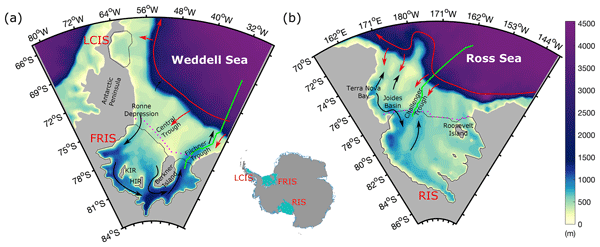
Bottom Water constitutes the lower half of the ocean’s overturning system and is primarily formed in the Weddell and Ross Sea in the Antarctic due to interactions between the atmosphere, ocean, sea ice and ice shelves. Here we use a global ocean 1° resolution model with explicit representation of the three large ice shelves important for the formation of the parent waters of Bottom Water. We find doing so reduces salt biases, improves water mass realism and gives realistic ice shelf melt rates.
Inès N. Otosaka, Andrew Shepherd, Erik R. Ivins, Nicole-Jeanne Schlegel, Charles Amory, Michiel R. van den Broeke, Martin Horwath, Ian Joughin, Michalea D. King, Gerhard Krinner, Sophie Nowicki, Anthony J. Payne, Eric Rignot, Ted Scambos, Karen M. Simon, Benjamin E. Smith, Louise S. Sørensen, Isabella Velicogna, Pippa L. Whitehouse, Geruo A, Cécile Agosta, Andreas P. Ahlstrøm, Alejandro Blazquez, William Colgan, Marcus E. Engdahl, Xavier Fettweis, Rene Forsberg, Hubert Gallée, Alex Gardner, Lin Gilbert, Noel Gourmelen, Andreas Groh, Brian C. Gunter, Christopher Harig, Veit Helm, Shfaqat Abbas Khan, Christoph Kittel, Hannes Konrad, Peter L. Langen, Benoit S. Lecavalier, Chia-Chun Liang, Bryant D. Loomis, Malcolm McMillan, Daniele Melini, Sebastian H. Mernild, Ruth Mottram, Jeremie Mouginot, Johan Nilsson, Brice Noël, Mark E. Pattle, William R. Peltier, Nadege Pie, Mònica Roca, Ingo Sasgen, Himanshu V. Save, Ki-Weon Seo, Bernd Scheuchl, Ernst J. O. Schrama, Ludwig Schröder, Sebastian B. Simonsen, Thomas Slater, Giorgio Spada, Tyler C. Sutterley, Bramha Dutt Vishwakarma, Jan Melchior van Wessem, David Wiese, Wouter van der Wal, and Bert Wouters
Earth Syst. Sci. Data, 15, 1597–1616, https://doi.org/10.5194/essd-15-1597-2023, https://doi.org/10.5194/essd-15-1597-2023, 2023
Short summary
Short summary
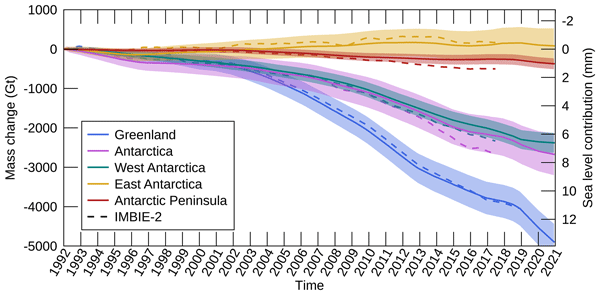
By measuring changes in the volume, gravitational attraction, and ice flow of Greenland and Antarctica from space, we can monitor their mass gain and loss over time. Here, we present a new record of the Earth’s polar ice sheet mass balance produced by aggregating 50 satellite-based estimates of ice sheet mass change. This new assessment shows that the ice sheets have lost (7.5 x 10¹²) t of ice between 1992 and 2020, contributing 21 mm to sea level rise.
Jeff Polton, James Harle, Jason Holt, Anna Katavouta, Dale Partridge, Jenny Jardine, Sarah Wakelin, Julia Rulent, Anthony Wise, Katherine Hutchinson, David Byrne, Diego Bruciaferri, Enda O'Dea, Michela De Dominicis, Pierre Mathiot, Andrew Coward, Andrew Yool, Julien Palmiéri, Gennadi Lessin, Claudia Gabriela Mayorga-Adame, Valérie Le Guennec, Alex Arnold, and Clément Rousset
Geosci. Model Dev., 16, 1481–1510, https://doi.org/10.5194/gmd-16-1481-2023, https://doi.org/10.5194/gmd-16-1481-2023, 2023
Short summary
Short summary
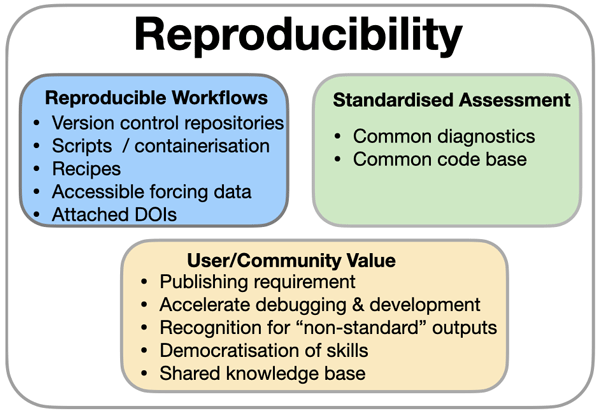
The aim is to increase the capacity of the modelling community to respond to societally important questions that require ocean modelling. The concept of reproducibility for regional ocean modelling is developed: advocating methods for reproducible workflows and standardised methods of assessment. Then, targeting the NEMO framework, we give practical advice and worked examples, highlighting key considerations that will the expedite development cycle and upskill the user community.
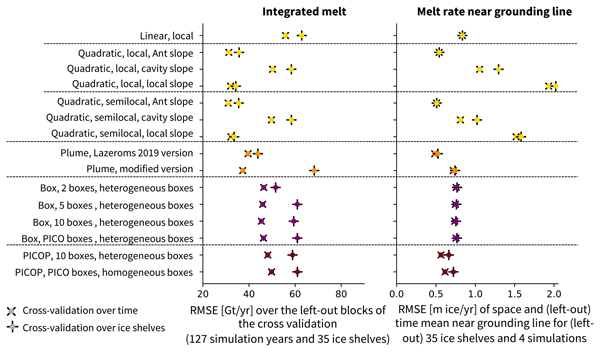
Clara Burgard, Nicolas C. Jourdain, Ronja Reese, Adrian Jenkins, and Pierre Mathiot
The Cryosphere, 16, 4931–4975, https://doi.org/10.5194/tc-16-4931-2022, https://doi.org/10.5194/tc-16-4931-2022, 2022
Short summary
Short summary
The ocean-induced melt at the base of the floating ice shelves around Antarctica is one of the largest uncertainty factors in the Antarctic contribution to future sea-level rise. We assess the performance of several existing parameterisations in simulating basal melt rates on a circum-Antarctic scale, using an ocean simulation resolving the cavities below the shelves as our reference. We find that the simple quadratic slope-independent and plume parameterisations yield the best compromise.
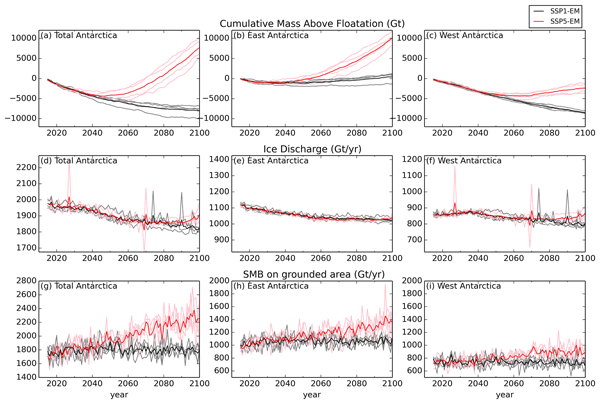
Antony Siahaan, Robin S. Smith, Paul R. Holland, Adrian Jenkins, Jonathan M. Gregory, Victoria Lee, Pierre Mathiot, Antony J. Payne, Jeff K. Ridley, and Colin G. Jones
The Cryosphere, 16, 4053–4086, https://doi.org/10.5194/tc-16-4053-2022, https://doi.org/10.5194/tc-16-4053-2022, 2022
Short summary
Short summary
The UK Earth System Model is the first to fully include interactions of the atmosphere and ocean with the Antarctic Ice Sheet. Under the low-greenhouse-gas SSP1–1.9 (Shared Socioeconomic Pathway) scenario, the ice sheet remains stable over the 21st century. Under the strong-greenhouse-gas SSP5–8.5 scenario, the model predicts strong increases in melting of large ice shelves and snow accumulation on the surface. The dominance of accumulation leads to a sea level fall at the end of the century.
Helen Ockenden, Robert G. Bingham, Andrew Curtis, and Daniel Goldberg
The Cryosphere, 16, 3867–3887, https://doi.org/10.5194/tc-16-3867-2022, https://doi.org/10.5194/tc-16-3867-2022, 2022
Short summary
Short summary
Hills and valleys hidden under the ice of Thwaites Glacier have an impact on ice flow and future ice loss, but there are not many three-dimensional observations of their location or size. We apply a mathematical theory to new high-resolution observations of the ice surface to predict the bed topography beneath the ice. There is a good correlation with ice-penetrating radar observations. The method may be useful in areas with few direct observations or as a further constraint for other methods.
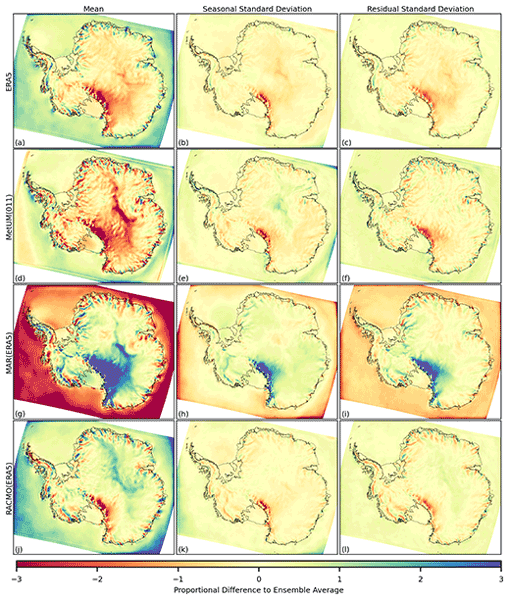
Jeremy Carter, Amber Leeson, Andrew Orr, Christoph Kittel, and J. Melchior van Wessem
The Cryosphere, 16, 3815–3841, https://doi.org/10.5194/tc-16-3815-2022, https://doi.org/10.5194/tc-16-3815-2022, 2022
Short summary
Short summary
Climate models provide valuable information for studying processes such as the collapse of ice shelves over Antarctica which impact estimates of sea level rise. This paper examines variability across climate simulations over Antarctica for fields including snowfall, temperature and melt. Significant systematic differences between outputs are found, occurring at both large and fine spatial scales across Antarctica. Results are important for future impact assessments and model development.
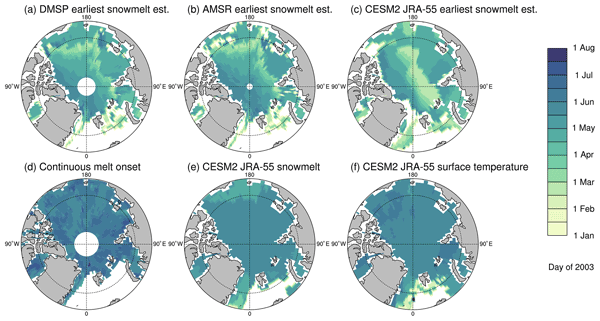
Abigail Smith, Alexandra Jahn, Clara Burgard, and Dirk Notz
The Cryosphere, 16, 3235–3248, https://doi.org/10.5194/tc-16-3235-2022, https://doi.org/10.5194/tc-16-3235-2022, 2022
Short summary
Short summary
The timing of Arctic sea ice melt each year is an important metric for assessing how sea ice in climate models compares to satellite observations. Here, we utilize a new tool for creating more direct comparisons between climate model projections and satellite observations of Arctic sea ice, such that the melt onset dates are defined the same way. This tool allows us to identify climate model biases more clearly and gain more information about what the satellites are observing.
Christoph Kittel, Charles Amory, Stefan Hofer, Cécile Agosta, Nicolas C. Jourdain, Ella Gilbert, Louis Le Toumelin, Étienne Vignon, Hubert Gallée, and Xavier Fettweis
The Cryosphere, 16, 2655–2669, https://doi.org/10.5194/tc-16-2655-2022, https://doi.org/10.5194/tc-16-2655-2022, 2022
Short summary
Short summary
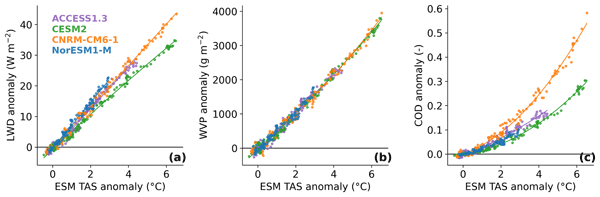
Model projections suggest large differences in future Antarctic surface melting even for similar greenhouse gas scenarios and warming rates. We show that clouds containing a larger amount of liquid water lead to stronger melt. As surface melt can trigger the collapse of the ice shelves (the safety band of the Antarctic Ice Sheet), clouds could be a major source of uncertainties in projections of sea level rise.
Nicolaj Hansen, Sebastian B. Simonsen, Fredrik Boberg, Christoph Kittel, Andrew Orr, Niels Souverijns, J. Melchior van Wessem, and Ruth Mottram
The Cryosphere, 16, 711–718, https://doi.org/10.5194/tc-16-711-2022, https://doi.org/10.5194/tc-16-711-2022, 2022
Short summary
Short summary
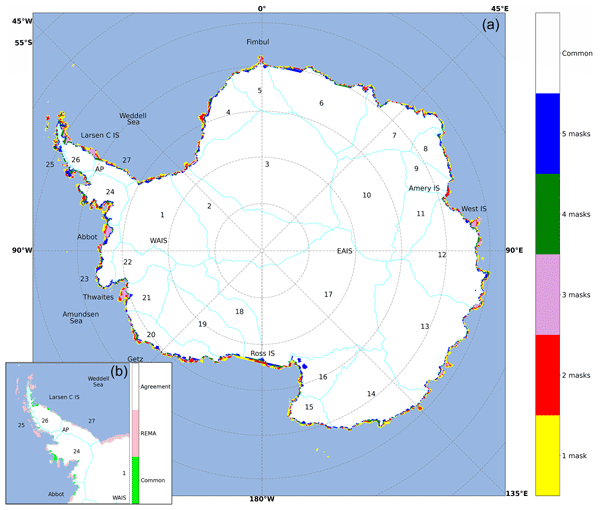
We investigate the impact of different ice masks when modelling surface mass balance over Antarctica. We used ice masks and data from five of the most used regional climate models and a common mask. We see large disagreement between the ice masks, which has a large impact on the surface mass balance, especially around the Antarctic Peninsula and some of the largest glaciers. We suggest a solution for creating a new, up-to-date, high-resolution ice mask that can be used in Antarctic modelling.

Charles Pelletier, Thierry Fichefet, Hugues Goosse, Konstanze Haubner, Samuel Helsen, Pierre-Vincent Huot, Christoph Kittel, François Klein, Sébastien Le clec'h, Nicole P. M. van Lipzig, Sylvain Marchi, François Massonnet, Pierre Mathiot, Ehsan Moravveji, Eduardo Moreno-Chamarro, Pablo Ortega, Frank Pattyn, Niels Souverijns, Guillian Van Achter, Sam Vanden Broucke, Alexander Vanhulle, Deborah Verfaillie, and Lars Zipf
Geosci. Model Dev., 15, 553–594, https://doi.org/10.5194/gmd-15-553-2022, https://doi.org/10.5194/gmd-15-553-2022, 2022
Short summary
Short summary
We present PARASO, a circumpolar model for simulating the Antarctic climate. PARASO features five distinct models, each covering different Earth system subcomponents (ice sheet, atmosphere, land, sea ice, ocean). In this technical article, we describe how this tool has been developed, with a focus on the
coupling interfacesrepresenting the feedbacks between the distinct models used for contribution. PARASO is stable and ready to use but is still characterized by significant biases.
Cited articles
Asay-Davis, X. S., Cornford, S. L., Durand, G., Galton-Fenzi, B. K., Gladstone, R. M., Gudmundsson, G. H., Hattermann, T., Holland, D. M., Holland, D., Holland, P. R., Martin, D. F., Mathiot, P., Pattyn, F., and Seroussi, H.: Experimental design for three interrelated marine ice sheet and ocean model intercomparison projects: MISMIP v. 3 (MISMIP +), ISOMIP v. 2 (ISOMIP +) and MISOMIP v. 1 (MISOMIP1), Geosci. Model Dev., 9, 2471–2497, https://doi.org/10.5194/gmd-9-2471-2016, 2016. a
Beckmann, A., Hellmer, H. H., and Timmermann, R.: A numerical model of the Weddell Sea: Large-scale circulation and water mass distribution, J. Geophys. Res.-Oceans, 104, 23375–23391, https://doi.org/10.1029/1999JC900194, 1999. a
Beckmann, J., Reese, R., McCormack, F. S., Cook, S., Bird, L., Gwyther, D., Richards, D., Scheiter, M., Wang, Y., Seroussi, H., Abe‐Ouchi, A., Albrecht, T., Alvarez‐Solas, J., Asay‐Davis, X. S., Barre, J., Berends, C. J., Bernales, J., Blasco, J., Caillet, J., Chandler, D. M., Coulon, V., Cullather, R., Dumas, C., Galton‐Fenzi, B. K., Garbe, J., Gillet‐Chaulet, F., Gladstone, R., Goelzer, H., Golledge, N. R., Greve, R., Gudmundsson, G. H., Han, H. K., Hillebrand, T. R., Hoffman, M. J., Huybrechts, P., Jourdain, N. C., Klose, A. K., Langebroek, P. M., Leguy, G. R., Lipscomb, W. H., Lowry, D. P., Mathiot, P., Montoya, M., Morlighem, M., Nowicki, S., Pattyn, F., Payne, A. J., Pelle, T., Quiquet, A., Robinson, A., Saraste, L., Simon, E. G., Sun, S., Twarog, J. P., Trusel, L. D., Urruty, B., Van Breedam, J., van de Wal, R. S. W., Zhao, C., and Zwinger, T.: Disentangling uncertainty in ISMIP6 Antarctic sub-shelf melting and 2300 sea level rise projections, EGUsphere [preprint], https://doi.org/10.5194/egusphere-2025-4069, 2025. a
Begeman, C. B., Tulaczyk, S., Padman, L., King, M., Siegfried, M. R., Hodson, T. O., and Fricker, H. A.: Tidal pressurization of the ocean cavity near an Antarctic ice shelf grounding line, J. Geophys. Res.-Oceans, 125, e2019JC015562, https://doi.org/10.1029/2019JC015562, 2020. a
Bett, D. T., Bradley, A. T., Williams, C. R., Holland, P. R., Arthern, R. J., and Goldberg, D. N.: Coupled ice–ocean interactions during future retreat of West Antarctic ice streams in the Amundsen Sea sector, The Cryosphere, 18, 2653–2675, https://doi.org/10.5194/tc-18-2653-2024, 2024. a
Boucher, O., Servonnat, J., Albright, A. L., Aumont, O., Balkanski, Y., Bastrikov, V., Bekki, S., Bonnet, R., Bony, S., Bopp, L., and Braconnot, P.: Presentation and evaluation of the IPSL-CM6A-LR climate model, J. Adv. Model. Earth Syst., 12, e2019MS002010, https://doi.org/10.1029/2019MS002010, 2020. a
Burgard, C., Jourdain, N. C., Reese, R., Jenkins, A., and Mathiot, P.: An assessment of basal melt parameterisations for Antarctic ice shelves, The Cryosphere, 16, 4931–4975, https://doi.org/10.5194/tc-16-4931-2022, 2022. a, b, c
Burgard, C., Jourdain, N. C., Mathiot, P., Smith, R. S., Schäfer, R., Caillet, J., Finn, T. S., and Johnson, J. E.: Emulating present and future simulations of melt rates at the base of Antarctic ice shelves with neural networks, J. Adv. Model. Earth Syst., 15, e2023MS003829, https://doi.org/10.1029/2023MS003829, 2023. a, b, c, d, e, f, g, h, i, j, k, l, m, n
Burgard, C., Jourdain, N.C., Mosbeux, C., Caillet, J., Mathiot, P., and Kittel, C.: Ocean warming threatens the viability of 60 % of Antarctic ice shelves, Nature, 647, 102–108, https://doi.org/10.1038/s41586-025-09657-w, 2025. a
Chen, J. J., Swart, N. C., Beadling, R., Cheng, X., Hattermann, T., Jüling, A., Li, Q., Marshall, J., Martin, T., Muilwijk, M., and Pauling, A. G.: Reduced deep convection and bottom water formation due to Antarctic meltwater in a multi-model ensemble, Geophysi. Res. Lett., 50, e2023GL106492, https://doi.org/10.1029/2023GL106492, 2023. a
Cheng, G., Krishna, M., and Morlighem, M.: A Python library for solving ice sheet modeling problems using physics-informed neural networks, PINNICLE v1.0, Geosci. Model Dev., 18, 5311–5327, https://doi.org/10.5194/gmd-18-5311-2025, 2025. a
Chollet, F.: keras, https://keras.io (last access: 24 August 2026), 2015. a
Davis, P. E. and Nicholls, K. W.: Turbulence observations beneath Larsen C ice shelf, Antarctica, J. Geophys. Res.-Oceans, 124, 5529–5550, https://doi.org/10.1029/2019JC015164, 2019. a
Davison, B. J., Hogg, A. E., Gourmelen, N., Jakob, L., Wuite, J., Nagler, T., Greene, C. A., Andreasen, J., and Engdahl, M. E.: Annual mass budget of Antarctic ice shelves from 1997 to 2021, Sci. Adv., 9, eadi0186, https://doi.org/10.1126/sciadv.adi0186, 2023. a, b
DeConto, R. M. and Pollard, D.: Contribution of Antarctica to past and future sea-level rise, Nature, 531, 591–597, https://doi.org/10.1038/nature17145, 2016. a
De Rydt, J., Jourdain, N. C., Nakayama, Y., van Caspel, M., Timmermann, R., Mathiot, P., Asay-Davis, X. S., Seroussi, H., Dutrieux, P., Galton-Fenzi, B., Holland, D., and Reese, R.: Experimental design for the Marine Ice Sheet–Ocean Model Intercomparison Project – phase 2 (MISOMIP2), Geosci. Model Dev., 17, 7105–7139, https://doi.org/10.5194/gmd-17-7105-2024, 2024. a, b, c, d, e
DeVries, T.: The oceanic anthropogenic CO2 sink: Storage, air-sea fluxes, and transports over the industrial era, Global Biogeochem. Cy., 28, 631–647, https://doi.org/10.1002/2013GB004739, 2014. a
Eyring, V., Bony, S., Meehl, G. A., Senior, C. A., Stevens, B., Stouffer, R. J., and Taylor, K. E.: Overview of the Coupled Model Intercomparison Project Phase 6 (CMIP6) experimental design and organization, Geosci. Model Dev., 9, 1937–1958, https://doi.org/10.5194/gmd-9-1937-2016, 2016. a
Fukushima, K.: Cognitron: A self-organizing multilayered neural network, Biol. Cybernet., 20, 121–136, https://doi.org/10.1007/BF00342633, 1975. a
Goosse, H., Kay, J. E., Armour, K. C., Bodas-Salcedo, A., Chepfer, H., Docquier, D., Jonko, A., Kushner, P. J., Lecomte, O., Massonnet, F., and Park, H. S.: Quantifying climate feedbacks in polar regions, Nat. Commun., 9, 1919, https://doi.org/10.1038/s41467-018-04173-0, 2018. a
Gruber, N., Landschützer, P., and Lovenduski, N. S.: The variable Southern Ocean carbon sink, Annu. Rev. Mar. Sci., 11, 159–186, https://doi.org/10.1146/annurev-marine-121916-063407, 2019. a
Gwyther, D. E., Cougnon, E. A., Galton-Fenzi, B. K., Roberts, J. L., Hunter, J. R., and Dinniman, M. S.: Modelling the response of ice shelf basal melting to different ocean cavity environmental regimes, Ann. Glaciol., 57, 131–141, https://doi.org/10.1017/aog.2016.31, 2016. a
Heuzé, C.: Antarctic Bottom Water and North Atlantic Deep Water in CMIP6 models, Ocean Sci., 17, 59–90, https://doi.org/10.5194/os-17-59-2021, 2021. a
Heuzé, C., Heywood, K. J., Stevens, D. P., and Ridley, J. K.: Southern Ocean bottom water characteristics in CMIP5 models, Geophys. Res. Lett., 40, 1409–1414, 2013. a
Holland, D. M. and Jenkins, A.: Modeling thermodynamic ice–ocean interactions at the base of an ice shelf, J. Phys. Oceanogr., 29, 1787–1800, https://doi.org/10.1175/1520-0485(1999)029<1787:MTIOIA>2.0.CO;2, 1999. a
Holland, P. R., Jenkins, A., and Holland, D. M.: The response of ice shelf basal melting to variations in ocean temperature, J. Climate, 21, 2558–2572, https://doi.org/10.1175/2007JCLI1909.1, 2008. a
Holt, J., Hyder, P., Ashworth, M., Harle, J., Hewitt, H. T., Liu, H., New, A. L., Pickles, S., Porter, A., Popova, E., Allen, J. I., Siddorn, J., and Wood, R.: Prospects for improving the representation of coastal and shelf seas in global ocean models, Geosci. Model Dev., 10, 499–523, https://doi.org/10.5194/gmd-10-499-2017, 2017. a
Hutchinson, K., Deshayes, J., Éthé, C., Rousset, C., de Lavergne, C., Vancoppenolle, M., Jourdain, N. C., and Mathiot, P.: Improving Antarctic Bottom Water precursors in NEMO for climate applications, Geosci. Model Dev., 16, 3629–3650, https://doi.org/10.5194/gmd-16-3629-2023, 2023. a, b
Iwasaki, Y. and Lai, C.-Y.: One-dimensional ice shelf hardness inversion: Clustering behavior and collocation resampling in physics-informed neural networks, J. Comput. Phys., 492, 112435, https://doi.org/10.1016/j.jcp.2023.112435, 2023. a
Jha, D., Smedsrud, P. H., Riegler, M. A., Johansen, D., De Lange, T., Halvorsen, P., and Johansen, H. D.: Resunet++: An advanced architecture for medical image segmentation, in: 2019 IEEE international symposium on multimedia (ISM), 225–2255, https://doi.org/10.1109/ISM46123.2019.00049, 2019. a
Jourdain, N. C., Asay-Davis, X., Hattermann, T., Straneo, F., Seroussi, H., Little, C. M., and Nowicki, S.: A protocol for calculating basal melt rates in the ISMIP6 Antarctic ice sheet projections, The Cryosphere, 14, 3111–3134, https://doi.org/10.5194/tc-14-3111-2020, 2020. a, b
Jourdain, N. C., Mathiot, P., Burgard, C., Caillet, J., and Kittel, C.: Ice shelf basal melt rates in the Amundsen Sea at the end of the 21st century, Geophys. Res. Lett., 49, e2022GL100629, https://doi.org/10.1029/2022GL100629, 2022. a
Kingma, D. P. and Ba, J.: Adam: A Method for Stochastic Optimization, arXiv [preprint], https://doi.org/10.48550/arXiv.1412.6980, 2017. a
Kittel, C., Amory, C., Agosta, C., Jourdain, N. C., Hofer, S., Delhasse, A., Doutreloup, S., Huot, P.-V., Lang, C., Fichefet, T., and Fettweis, X.: Diverging future surface mass balance between the Antarctic ice shelves and grounded ice sheet, The Cryosphere, 15, 1215–1236, https://doi.org/10.5194/tc-15-1215-2021, 2021. a
Kreuzer, M., Reese, R., Huiskamp, W. N., Petri, S., Albrecht, T., Feulner, G., and Winkelmann, R.: Coupling framework (1.0) for the PISM (1.1.4) ice sheet model and the MOM5 (5.1.0) ocean model via the PICO ice shelf cavity model in an Antarctic domain, Geosci. Model Dev., 14, 3697–3714, https://doi.org/10.5194/gmd-14-3697-2021, 2021. a
Lambert, E. and Burgard, C.: Brief communication: Sensitivity of Antarctic ice shelf melting to ocean warming across basal melt models, The Cryosphere, 19, 2495–2505, https://doi.org/10.5194/tc-19-2495-2025, 2025. a
Lambert, E., Jüling, A., van de Wal, R. S. W., and Holland, P. R.: Modelling Antarctic ice shelf basal melt patterns using the one-layer Antarctic model for dynamical downscaling of ice–ocean exchanges (LADDIE v1.0), The Cryosphere, 17, 3203–3228, https://doi.org/10.5194/tc-17-3203-2023, 2023. a, b
Li, D., DeConto, R. M., Pollard, D., and Hu, Y.: Competing climate feedbacks of ice sheet freshwater discharge in a warming world, Nat. Commun., 15, 5178, https://doi.org/10.1038/s41467-024-49604-3, 2024. a
Little, C. M., Gnanadesikan, A., and Oppenheimer, M.: How ice shelf morphology controls basal melting, J. Geophys. Res.-Oceans, 114, https://doi.org/10.1029/2008JC005197, 2009. a
Lurton, T., Balkanski, Y., Bastrikov, V., Bekki, S., Bopp, L., Braconnot, P., Brockmann, P., Cadule, P., Contoux, C., Cozic, A., and Cugnet, D: Implementation of the CMIP6 forcing data in the IPSL-CM6A-LR model, J. Adv. Model. Earth Syst., 12, e2019MS001940, https://doi.org/10.1029/2019MS001940, 2020. a
Madec, G. and the NEMO System Team: NEMO Ocean Engine Reference Manual, Zenodo [data set], https://doi.org/10.5281/zenodo.1464816, 2024. a, b
Mathiot, P., Jenkins, A., Harris, C., and Madec, G.: Explicit representation and parametrised impacts of under ice shelf seas in the z* coordinate ocean model NEMO 3.6, Geosci. Model Dev., 10, 2849–2874, https://doi.org/10.5194/gmd-10-2849-2017, 2017. a
Merino, N., Jourdain, N. C., Le Sommer, J., Goosse, H., Mathiot, P., and Durand, G.: Impact of increasing antarctic glacial freshwater release on regional sea-ice cover in the Southern Ocean, Ocean Model., 121, 76–89, https://doi.org/10.1016/j.ocemod.2017.11.009, 2018. a
Morlighem, M., Rignot, E., Binder, T., Blankenship, D., Drews, R., Eagles, G., Eisen, O., Ferraccioli, F., Forsberg, R., Fretwell, P., and Goel, V.: Deep glacial troughs and stabilizing ridges unveiled beneath the margins of the Antarctic ice sheet, Nat. Geosci., 13, 132–137, https://doi.org/10.1038/s41561-019-0510-8, 2020. a, b, c
Mouginot, J., Scheuchl, B., and Rignot, E.: MEaSUREs Antarctic Boundaries for IPY 2007–2009 from Satellite Radar, Version 2, NASA National Snow and Ice Data Center [data set], https://doi.org/10.5067/AXE4121732AD, 2017. a, b, c
Naughten, K. A., Holland, P. R., and De Rydt, J.: Unavoidable future increase in West Antarctic ice-shelf melting over the twenty-first century, Nat. Clim. Change, 13, 1222–1228, https://doi.org/10.1038/s41558-023-01818-x, 2023. a
Ockenden, H.: Code which accompanies the manuscript “A neural network emulator of ice-shelf melt rates for use in ocean models which partially resolve ice-shelf cavities”, Zenodo [code], https://doi.org/10.5281/zenodo.17358195, 2025a. a
Ockenden, H.: Data which accompanies the manuscript “A neural network emulator of ice-shelf melt rates for use in ocean models which partially resolve ice-shelf cavities”, Zenodo [data set], https://doi.org/10.5281/zenodo.17358228, 2025b. a
Olivé Abelló, A., Mathiot, P., Jourdain, N. C., Kostov, Y., Holland, P. R., Gascoin, S., and Rousset, C.: Iceberg grounding enhances the release of freshwater on the Antarctic continental shelf, J. Geophys. Res.-Oceans, 130, e2025JC022857, https://doi.org/10.1029/2025JC022857, 2025. a
Patmore, R. D., Holland, P. R., Vreugdenhil, C. A., Jenkins, A., and Taylor, J. R.: Turbulence in the ice shelf-ocean boundary current and its sensitivity to model resolution, J. Phys. Oceanogr., 53, 613–633, https://doi.org/10.1175/JPO-D-22-0034.1, 2023. a
Pelle, T., Morlighem, M., and Bondzio, J. H.: Brief communication: PICOP, a new ocean melt parameterization under ice shelves combining PICO and a plume model, The Cryosphere, 13, 1043—1049, https://doi.org/10.5194/tc-13-1043-2019, 2019. a
Pelle, T., Morlighem, M., Nakayama, Y., and Seroussi, H.: Widespread grounding line retreat of Totten Glacier, East Antarctica, over the 21st century, Geophys. Res. Lett., 48, e2021GL093213, https://doi.org/10.1029/2021GL093213, 2021. a
Pirlet, N., Fichefet, T., Vancoppenolle, M., Fraser, A. D., Mathiot, P., Rousset, C., Barthélemy, A., Barriat, P. Y., Pelletier, C., Madec, G., and Kittel, C.: Benefits of a landfast ice representation on simulated Antarctic sea ice and coastal polynya dynamics, J. Geophys. Res.-Oceans, 130, e2024JC022032, https://doi.org/10.1029/2024JC022032, 2025. a
Pritchard, H., Ligtenberg, S. R., Fricker, H. A., Vaughan, D. G., van den Broeke, M. R., and Padman, L.: Antarctic ice-sheet loss driven by basal melting of ice shelves, Nature, 484, 502–505, https://doi.org/10.1038/nature10968, 2012. a
Ramachandran, P., Zoph, B., and Le, Q. V.: Searching for activation functions, arXiv [preprint], https://doi.org/10.48550/arXiv.1710.05941, 2017. a
Richter, O., Gwyther, D. E., King, M. A., and Galton-Fenzi, B. K.: The impact of tides on Antarctic ice shelf melting, The Cryosphere, 16, 1409–1429, https://doi.org/10.5194/tc-16-1409-2022, 2022. a
Rignot, E.: Ice-shelf changes in Pine Island Bay, Antarctica, 1947–2000, J. Glaciol., 48, 247–256, https://doi.org/10.3189/172756502781831386, 2002. a
Rignot, E., Mouginot, J., Scheuchl, B., van den Broeke, M., van Wessem, M., and Morlighem, M.: Four decades of Antarctic Ice Sheet mass balance from 1979–2017, P. Natl. Acad. Sci. USA, 116, 1095–1103, https://doi.org/10.1073/pnas.1812883116, 2019. a
Rosier, S. H., Bull, C. Y., Woo, W. L., and Gudmundsson, G. H.: Predicting ocean-induced ice-shelf melt rates using deep learning, The Cryosphere, 17, 499–518, https://doi.org/10.5194/tc-17-499-2023, 2023. a, b, c, d
Sadai, S., Karmalkar, A. V., Pollard, D., Dong, Y., Lucas, E., Gomez, N., DeConto, R., and Condron, A.: Antarctic meltwater alters future projections of climate and sea level, Nat. Commun., 16, 9271, https://doi.org/10.1038/s41467-025-64438-3, 2025. a
Schmidt, G. A., Mankoff, K. D., Bamber, J. L., Burgard, C., Carroll, D., Chandler, D. M., Coulon, V., Davison, B. J., England, M. H., Holland, P. R., Jourdain, N. C., Li, Q., Marson, J. M., Mathiot, P., McMahon, C. R., Moon, T. A., Mottram, R., Nowicki, S., Olivé Abelló, A., Pauling, A. G., Rackow, T., and Ringeisen, D.: Datasets and protocols for including anomalous freshwater from melting ice sheets in climate simulations, Geosci. Model Dev., 18, 8333–8361, https://doi.org/10.5194/gmd-18-8333-2025, 2025. a
Seroussi, H., Nakayama, Y., Larour, E., Menemenlis, D., Morlighem, M., Rignot, E., and Khazendar, A.: Continued retreat of Thwaites Glacier, West Antarctica, controlled by bed topography and ocean circulation, Geophys. Res. Lett., 44, 6191–6199, https://doi.org/10.1002/2017GL072910, 2017. a
Seroussi, H., Pelle, T., Lipscomb, W. H., Abe‐Ouchi, A., Albrecht, T., Alvarez‐Solas, J., Asay‐Davis, X., Barre, J. B., Berends, C. J., Bernales, J., and Blasco, J.: Evolution of the Antarctic Ice Sheet over the next three centuries from an ISMIP6 model ensemble, Earth's Future, 12, e2024EF004561, https://doi.org/10.1029/2024EF004561, 2024. a
Smith, R. S., Mathiot, P., Siahaan, A., Lee, V., Cornford, S. L., Gregory, J. M., Payne, A. J., Jenkins, A., Holland, P. R., Ridley, J. K., and Jones, C. G.: Coupling the UK Earth System Model to dynamic models of the Greenland and Antarctic ice sheets, Journal of Adv. Model. Earth Syst., 13, e2021MS002520, https://doi.org/10.1029/2021MS002520, 2021. a, b, c, d
Storkey, D., Blaker, A. T., Mathiot, P., Megann, A., Aksenov, Y., Blockley, E. W., Calvert, D., Graham, T., Hewitt, H. T., Hyder, P., Kuhlbrodt, T., Rae, J. G. L., and Sinha, B.: UK Global Ocean GO6 and GO7: a traceable hierarchy of model resolutions, Geosci. Model Dev., 11, 3187–3213, https://doi.org/10.5194/gmd-11-3187-2018, 2018. a
Timmermann, R. and Goeller, S.: Response to Filchner–Ronne Ice Shelf cavity warming in a coupled ocean–ice sheet model – Part 1: The ocean perspective, Ocean Sci., 13, 765–776, https://doi.org/10.5194/os-13-765-2017, 2017. a
Timmermann, R. and Hellmer, H. H.: Southern Ocean warming and increased ice shelf basal melting in the twenty-first and twenty-second centuries based on coupled ice-ocean finite-element modelling, Ocean Dynam., 63, 1011–1026, https://doi.org/10.1007/s10236-013-0642-0, 2013. a
Timmermann, R., Wang, Q., and Hellmer, H.: Ice-shelf basal melting in a global finite-element sea-ice/ice-shelf/ocean model, Ann. Glaciol., 53, 303–314, https://doi.org/10.3189/2012AoG60A156, 2012. a
Tsujino, H., Urakawa, S., Nakano, H., Small, R. J., Kim, W. M., Yeager, S. G., Danabasoglu, G., Suzuki, T., Bamber, J. L., Bentsen, M., and Böning, C. W.: JRA-55 based surface dataset for driving ocean–sea-ice models (JRA55-do), Ocean Model., 130, 79–139, https://doi.org/10.1016/j.ocemod.2018.07.002, 2018. a
Van Achter, G., Fichefet, T., Goosse, H., Pelletier, C., Haubner, K., and Pattyn, F.: Ocean–ice sheet coupling in the Totten Glacier area, East Antarctica: analysis of the feedbacks and their response to a sudden ocean warming, Geosciences, 13, 106, https://doi.org/10.3390/geosciences13040106, 2023. a
Voldoire, A., Saint‐Martin, D., Sénési, S., Decharme, B., Alias, A., Chevallier, M., Colin, J., Guérémy, J. F., Michou, M., Moine, M. P., and Nabat, P.: Evaluation of CMIP6 deck experiments with CNRM-CM6-1, J. Adv. Model. Earth Syst., 11, 2177–2213, https://doi.org/10.1029/2019MS001683, 2019. a
Washam, P., Lawrence, J. D., Stevens, C. L., Hulbe, C. L., Horgan, H. J., Robinson, N. J., Stewart, C. L., Spears, A., Quartini, E., Hurwitz, B., and Meister, M. R.: Direct observations of melting, freezing, and ocean circulation in an ice shelf basal crevasse, Sci. Adv., 9, eadi7638, https://doi.org/10.1126/sciadv.adi7638, 2023. a
Yung, C. K., Asay-Davis, X. S., Adcroft, A., Bull, C. Y. S., De Rydt, J., Dinniman, M. S., Galton-Fenzi, B. K., Goldberg, D., Gwyther, D. E., Hallberg, R., Harrison, M., Hattermann, T., Holland, D. M., Holland, D., Holland, P. R., Jordan, J. R., Jourdain, N. C., Kusahara, K., Marques, G., Mathiot, P., Menemenlis, D., Morrison, A. K., Nakayama, Y., Sergienko, O., Smith, R. S., Stern, A., Timmermann, R., and Zhou, Q.: Results of the second Ice Shelf–Ocean Model Intercomparison Project (ISOMIP+), The Cryosphere, 20, 2053–2088, https://doi.org/10.5194/tc-20-2053-2026, 2026. a
Yuval, J. and O'Gorman, P. A.: Stable machine-learning parameterization of subgrid processes for climate modeling at a range of resolutions, Nat. Commun., 11, 3295, https://doi.org/10.1038/s41467-020-17142-3, 2020. a
Zhu, Y., Zhang, R.-H., Moum, J. N., Wang, F., Li, X., and Li, D.: Physics-informed deep-learning parameterization of ocean vertical mixing improves climate simulations, Natl. Sci. Rev., 9, nwac044, https://doi.org/10.1093/nsr/nwac044, 2022. a
Short summary
Since numerical computing is expensive, climate models must decide between having a high spatial resolution or running for long time periods. Here, we develop a simple neural network to emulate small-scale processes occurring beneath Antarctic ice shelves, which allows sub-shelf melt and ice–ocean interactions to be included in global ocean models which can run for multiple centuries. This neural network will help us to understand how ocean circulation may change in the future.
Since numerical computing is expensive, climate models must decide between having a high spatial...


