
Articles | Volume 19, issue 15
https://doi.org/10.5194/gmd-19-7479-2026
© Author(s) 2026. This work is distributed under
the Creative Commons Attribution 4.0 License.
the Creative Commons Attribution 4.0 License.
https://doi.org/10.5194/gmd-19-7479-2026
© Author(s) 2026. This work is distributed under
the Creative Commons Attribution 4.0 License.
the Creative Commons Attribution 4.0 License.
Development and technical paper
| 
13 Aug 2026
Development and technical paper |
| 13 Aug 2026
| 13 Aug 2026
Enhancing air–sea CO2 exchange and modulating seawater carbonate–pH dynamics: the role of wave effect mechanisms in the POP2–waves coupled model
Yung-Yao Lan
Research Center for Environmental Changes, Academia Sinica, Taipei 11529, Taiwan
National Land Resources Conservation Center, National Chung Hsing University, Taichung 40227, Taiwan
Huang-Hsiung Hsu
Research Center for Environmental Changes, Academia Sinica, Taipei 11529, Taiwan
Wei-Liang Lee
CORRESPONDING AUTHOR

Research Center for Environmental Changes, Academia Sinica, Taipei 11529, Taiwan
Simon Chou
Research Center for Environmental Changes, Academia Sinica, Taipei 11529, Taiwan
Related authors
Katherine Shu-Min Li, Nadun Sinhabahu, Ben-Jei Tsuang, Fang-Chi Wu, Wan-Ling Tseng, Pei-Hsuan Kuo, Sying-Jyan Wang, Pang-Yen Liu, Jen-Her Chen, Bin-Ming Wang, Yung-Yao Lan, and Sun-Yuan Kung
EGUsphere, https://doi.org/10.5194/egusphere-2025-142, https://doi.org/10.5194/egusphere-2025-142, 2025
Preprint archived
Short summary
Short summary
This study underscores the transformative potential of machine learning algorithms in environmental forecasting. The superior performance of Bi-LSTM in reducing SST bias, coupled with its broader applicability in time-series analysis, makes it a valuable tool for improving the accuracy and reliability of numerical weather prediction models.
Yung-Yao Lan, Huang-Hsiung Hsu, and Wan-Ling Tseng
Geosci. Model Dev., 17, 3897–3918, https://doi.org/10.5194/gmd-17-3897-2024, https://doi.org/10.5194/gmd-17-3897-2024, 2024
Short summary
Short summary
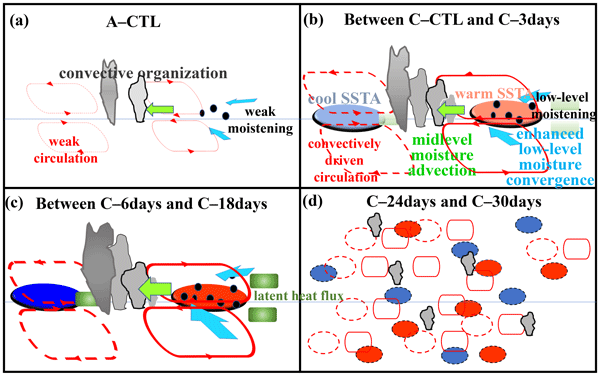
This study uses the CAM5–SIT coupled model to investigate the effects of SST feedback frequency on the MJO simulations with intervals at 30 min, 1, 3, 6, 12, 18, 24, and 30 d. The simulations become increasingly unrealistic as the frequency of the SST feedback decreases. Our results suggest that more spontaneous air--sea interaction (e.g., ocean response within 3 d in this study) with high vertical resolution in the ocean model is key to the realistic simulation of the MJO.
Yung-Yao Lan, Huang-Hsiung Hsu, Wan-Ling Tseng, and Li-Chiang Jiang
Geosci. Model Dev., 15, 5689–5712, https://doi.org/10.5194/gmd-15-5689-2022, https://doi.org/10.5194/gmd-15-5689-2022, 2022
Short summary
Short summary
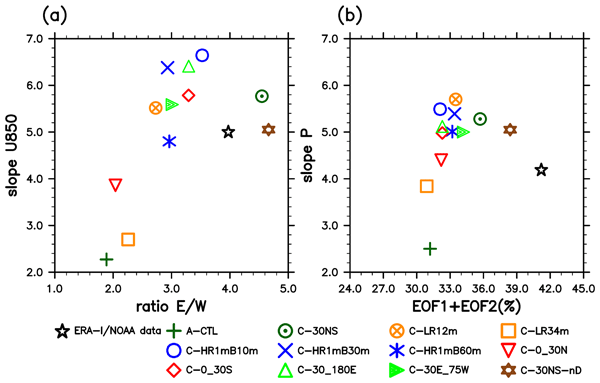
This study has shown that coupling a high-resolution 1-D ocean model (SIT 1.06) with the Community Atmosphere Model 5.3 (CAM5.3) significantly improves the simulation of the Madden–Julian Oscillation (MJO) over the standalone CAM5.3. Systematic sensitivity experiments resulted in more realistic simulations of the tropical MJO because they had better upper-ocean resolution, adequate upper-ocean thickness, coupling regions including the eastern Pacific and southern tropics, and a diurnal cycle.
I-Chun Tsai, Chein-Jung Shiu, Cheng-An Chen, Hsin-Chien Liang, Hung-Hsiung Hsu, and Wei-Liang Lee
EGUsphere, https://doi.org/10.5194/egusphere-2026-4942, https://doi.org/10.5194/egusphere-2026-4942, 2026
Short summary
Short summary
Clouds and tiny air particles can change how much sunlight Earth reflects, but this effect remains difficult to measure. We studied this process in the Taiwan Earth System Model version 1 by comparing climate simulations and separating the roles of particles, clouds, sunlight, and the ocean. The model shows strong cooling mainly because particles make clouds reflect more sunlight, not because there are more clouds. This points to cloud brightness as a key target for improving climate models.
Chao-Tzuen Cheng, Chihchung Chou, Ping-Yi Lin, Huang-Hsiung Hsu, and Yung-Ming Chen
Earth Syst. Sci. Data Discuss., https://doi.org/10.5194/essd-2026-242, https://doi.org/10.5194/essd-2026-242, 2026
Preprint under review for ESSD
Short summary
Short summary
The TReAD dataset, developed by the TCCIP project, provides a high-resolution (2 km) 40-year climate reconstruction (1980–2019) for Taiwan’s complex terrain. By downscaling ERA5 data using the WRF model, we minimized physical biases to create a continuous historical record. Validated against ground observations, TReAD excels in capturing temperature, pressure, and extreme events like Typhoon Morakot. It is a vital tool for hydroclimatic and ecological research where station data is too sparse.
Katherine Shu-Min Li, Nadun Sinhabahu, Ben-Jei Tsuang, Fang-Chi Wu, Wan-Ling Tseng, Pei-Hsuan Kuo, Sying-Jyan Wang, Pang-Yen Liu, Jen-Her Chen, Bin-Ming Wang, Yung-Yao Lan, and Sun-Yuan Kung
EGUsphere, https://doi.org/10.5194/egusphere-2025-142, https://doi.org/10.5194/egusphere-2025-142, 2025
Preprint archived
Short summary
Short summary
This study underscores the transformative potential of machine learning algorithms in environmental forecasting. The superior performance of Bi-LSTM in reducing SST bias, coupled with its broader applicability in time-series analysis, makes it a valuable tool for improving the accuracy and reliability of numerical weather prediction models.
Yung-Yao Lan, Huang-Hsiung Hsu, and Wan-Ling Tseng
Geosci. Model Dev., 17, 3897–3918, https://doi.org/10.5194/gmd-17-3897-2024, https://doi.org/10.5194/gmd-17-3897-2024, 2024
Short summary
Short summary
This study uses the CAM5–SIT coupled model to investigate the effects of SST feedback frequency on the MJO simulations with intervals at 30 min, 1, 3, 6, 12, 18, 24, and 30 d. The simulations become increasingly unrealistic as the frequency of the SST feedback decreases. Our results suggest that more spontaneous air--sea interaction (e.g., ocean response within 3 d in this study) with high vertical resolution in the ocean model is key to the realistic simulation of the MJO.
Bjorn Stevens, Stefan Adami, Tariq Ali, Hartwig Anzt, Zafer Aslan, Sabine Attinger, Jaana Bäck, Johanna Baehr, Peter Bauer, Natacha Bernier, Bob Bishop, Hendryk Bockelmann, Sandrine Bony, Guy Brasseur, David N. Bresch, Sean Breyer, Gilbert Brunet, Pier Luigi Buttigieg, Junji Cao, Christelle Castet, Yafang Cheng, Ayantika Dey Choudhury, Deborah Coen, Susanne Crewell, Atish Dabholkar, Qing Dai, Francisco Doblas-Reyes, Dale Durran, Ayoub El Gaidi, Charlie Ewen, Eleftheria Exarchou, Veronika Eyring, Florencia Falkinhoff, David Farrell, Piers M. Forster, Ariane Frassoni, Claudia Frauen, Oliver Fuhrer, Shahzad Gani, Edwin Gerber, Debra Goldfarb, Jens Grieger, Nicolas Gruber, Wilco Hazeleger, Rolf Herken, Chris Hewitt, Torsten Hoefler, Huang-Hsiung Hsu, Daniela Jacob, Alexandra Jahn, Christian Jakob, Thomas Jung, Christopher Kadow, In-Sik Kang, Sarah Kang, Karthik Kashinath, Katharina Kleinen-von Königslöw, Daniel Klocke, Uta Kloenne, Milan Klöwer, Chihiro Kodama, Stefan Kollet, Tobias Kölling, Jenni Kontkanen, Steve Kopp, Michal Koran, Markku Kulmala, Hanna Lappalainen, Fakhria Latifi, Bryan Lawrence, June Yi Lee, Quentin Lejeun, Christian Lessig, Chao Li, Thomas Lippert, Jürg Luterbacher, Pekka Manninen, Jochem Marotzke, Satoshi Matsouoka, Charlotte Merchant, Peter Messmer, Gero Michel, Kristel Michielsen, Tomoki Miyakawa, Jens Müller, Ramsha Munir, Sandeep Narayanasetti, Ousmane Ndiaye, Carlos Nobre, Achim Oberg, Riko Oki, Tuba Özkan-Haller, Tim Palmer, Stan Posey, Andreas Prein, Odessa Primus, Mike Pritchard, Julie Pullen, Dian Putrasahan, Johannes Quaas, Krishnan Raghavan, Venkatachalam Ramaswamy, Markus Rapp, Florian Rauser, Markus Reichstein, Aromar Revi, Sonakshi Saluja, Masaki Satoh, Vera Schemann, Sebastian Schemm, Christina Schnadt Poberaj, Thomas Schulthess, Cath Senior, Jagadish Shukla, Manmeet Singh, Julia Slingo, Adam Sobel, Silvina Solman, Jenna Spitzer, Philip Stier, Thomas Stocker, Sarah Strock, Hang Su, Petteri Taalas, John Taylor, Susann Tegtmeier, Georg Teutsch, Adrian Tompkins, Uwe Ulbrich, Pier-Luigi Vidale, Chien-Ming Wu, Hao Xu, Najibullah Zaki, Laure Zanna, Tianjun Zhou, and Florian Ziemen
Earth Syst. Sci. Data, 16, 2113–2122, https://doi.org/10.5194/essd-16-2113-2024, https://doi.org/10.5194/essd-16-2113-2024, 2024
Short summary
Short summary
To manage Earth in the Anthropocene, new tools, new institutions, and new forms of international cooperation will be required. Earth Virtualization Engines is proposed as an international federation of centers of excellence to empower all people to respond to the immense and urgent challenges posed by climate change.
Yi-Chi Wang, Wan-Ling Tseng, Yu-Luen Chen, Shih-Yu Lee, Huang-Hsiung Hsu, and Hsin-Chien Liang
Geosci. Model Dev., 16, 4599–4616, https://doi.org/10.5194/gmd-16-4599-2023, https://doi.org/10.5194/gmd-16-4599-2023, 2023
Short summary
Short summary
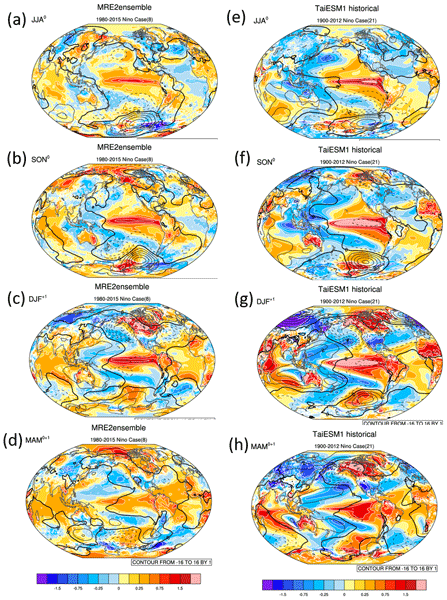
This study focuses on evaluating the performance of the Taiwan Earth System Model version 1 (TaiESM1) in simulating the El Niño–Southern Oscillation (ENSO), a significant tropical climate pattern with global impacts. Our findings reveal that TaiESM1 effectively captures several characteristics of ENSO, such as its seasonal variation and remote teleconnections. Its pronounced ENSO strength bias is also thoroughly investigated, aiming to gain insights to improve climate model performance.
Yung-Yao Lan, Huang-Hsiung Hsu, Wan-Ling Tseng, and Li-Chiang Jiang
Geosci. Model Dev., 15, 5689–5712, https://doi.org/10.5194/gmd-15-5689-2022, https://doi.org/10.5194/gmd-15-5689-2022, 2022
Short summary
Short summary
This study has shown that coupling a high-resolution 1-D ocean model (SIT 1.06) with the Community Atmosphere Model 5.3 (CAM5.3) significantly improves the simulation of the Madden–Julian Oscillation (MJO) over the standalone CAM5.3. Systematic sensitivity experiments resulted in more realistic simulations of the tropical MJO because they had better upper-ocean resolution, adequate upper-ocean thickness, coupling regions including the eastern Pacific and southern tropics, and a diurnal cycle.
Wan-Ling Tseng, Huang-Hsiung Hsu, Yung-Yao Lan, Wei-Liang Lee, Chia-Ying Tu, Pei-Hsuan Kuo, Ben-Jei Tsuang, and Hsin-Chien Liang
Geosci. Model Dev., 15, 5529–5546, https://doi.org/10.5194/gmd-15-5529-2022, https://doi.org/10.5194/gmd-15-5529-2022, 2022
Short summary
Short summary
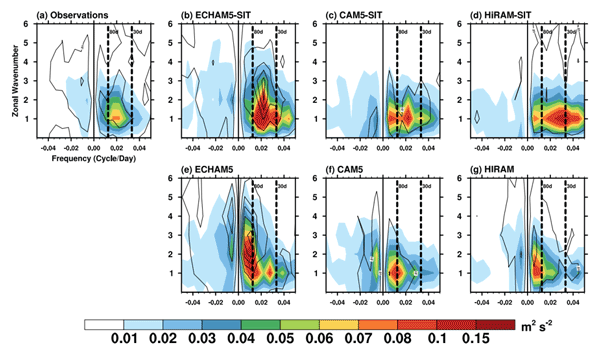
We show that coupling a high-resolution one-column ocean model to three atmospheric general circulation models dramatically improves Madden–Julian oscillation (MJO) simulations. It suggests two major improvements to the coupling process in the preconditioning phase and strongest convection phase over the Maritime Continent. Our results demonstrate a simple but effective way to significantly improve MJO simulations and potentially seasonal to subseasonal prediction.
Dalei Hao, Gautam Bisht, Yu Gu, Wei-Liang Lee, Kuo-Nan Liou, and L. Ruby Leung
Geosci. Model Dev., 14, 6273–6289, https://doi.org/10.5194/gmd-14-6273-2021, https://doi.org/10.5194/gmd-14-6273-2021, 2021
Short summary
Short summary
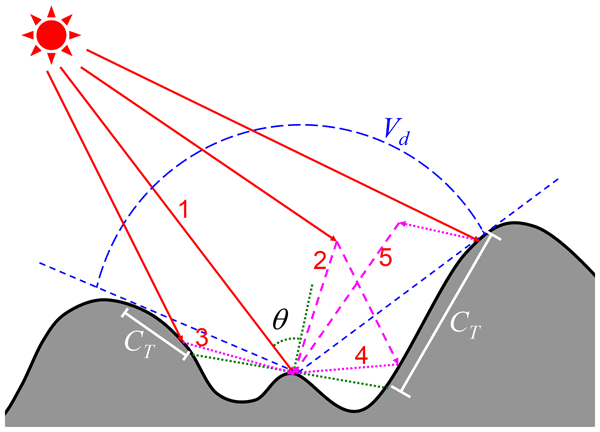
Topography exerts significant influence on the incoming solar radiation at the land surface. This study incorporated a well-validated sub-grid topographic parameterization in E3SM land model (ELM) version 1.0. The results demonstrate that sub-grid topography has non-negligible effects on surface energy budget, snow cover, and surface temperature over the Tibetan Plateau and that the ELM simulations are sensitive to season, elevation, and spatial scale.
Cited articles
Akhand, A., Chanda, A., Watanabe, K., Das, S., Tokoro, T., Hazra, S., and Kuwae, T.: Reduction in riverine freshwater supply changes inorganic and organic carbon dynamics and air-water CO2 fluxes in a tropical mangrove dominated estuary, J. Geophys. Res. G-Biogeo., 126, e2020JG006144, https://doi.org/10.1029/2020JG006144, 2021.
Andreas, E., Vlahos, P., and Monahan, E.: The potential role of sea spray droplets in facilitating air–sea gas transfer, in: IOP conference series: earth and environmental science, IOP Publishing, 35, 012003, https://doi.org/10.1088/1755-1315/35/1/012003, 2016.
Bakker, D. C. E., Pfeil, B., Landa, C. S., Metzl, N., O'Brien, K. M., Olsen, A., Smith, K., Cosca, C., Harasawa, S., Jones, S. D., Nakaoka, S., Nojiri, Y., Schuster, U., Steinhoff, T., Sweeney, C., Takahashi, T., Tilbrook, B., Wada, C., Wanninkhof, R., Alin, S. R., Balestrini, C. F., Barbero, L., Bates, N. R., Bianchi, A. A., Bonou, F., Boutin, J., Bozec, Y., Burger, E. F., Cai, W.-J., Castle, R. D., Chen, L., Chierici, M., Currie, K., Evans, W., Featherstone, C., Feely, R. A., Fransson, A., Goyet, C., Greenwood, N., Gregor, L., Hankin, S., Hardman-Mountford, N. J., Harlay, J., Hauck, J., Hoppema, M., Humphreys, M. P., Hunt, C. W., Huss, B., Ibánhez, J. S. P., Johannessen, T., Keeling, R., Kitidis, V., Körtzinger, A., Kozyr, A., Krasakopoulou, E., Kuwata, A., Landschützer, P., Lauvset, S. K., Lefèvre, N., Lo Monaco, C., Manke, A., Mathis, J. T., Merlivat, L., Millero, F. J., Monteiro, P. M. S., Munro, D. R., Murata, A., Newberger, T., Omar, A. M., Ono, T., Paterson, K., Pearce, D., Pierrot, D., Robbins, L. L., Saito, S., Salisbury, J., Schlitzer, R., Schneider, B., Schweitzer, R., Sieger, R., Skjelvan, I., Sullivan, K. F., Sutherland, S. C., Sutton, A. J., Tadokoro, K., Telszewski, M., Tuma, M., van Heuven, S. M. A. C., Vandemark, D., Ward, B., Watson, A. J., and Xu, S.: A multi-decade record of high-quality fCO2 data in version 3 of the Surface Ocean CO2 Atlas (SOCAT), Earth Syst. Sci. Data, 8, 383–413, https://doi.org/10.5194/essd-8-383-2016, 2016.
Bange, H. W., Mongwe, P., Shutler, J. D., Arévalo-Martínez, D. L., Bianchi, D., Lauvset, S. K., Liu, C., Löscher, C. R., Martins, H., Rosentreter, J. A., Schmale, O., Steinhoff, T., Upstill-Goddard, R. C., Wanninkhof, R., Wilson, S. T., and Xie, H.: Advances in understanding of air–sea exchange and cycling of greenhouse gases in the upper ocean, Elementa, 12, https://doi.org/10.1525/elementa.2023.00044, 2024.
Behncke, J., Landschützer, P., and Tanhua, T.: A detectable change in the air–sea CO2 flux estimate from sailboat measurements, Sci. Rep., 14, 3345, https://doi.org/10.1038/s41598-024-53159-0, 2024.
Bell, T. G., Landwehr, S., Miller, S. D., de Bruyn, W. J., Callaghan, A. H., Scanlon, B., Ward, B., Yang, M., and Saltzman, E. S.: Estimation of bubble-mediated air–sea gas exchange from concurrent DMS and CO2 transfer velocities at intermediate–high wind speeds, Atmos. Chem. Phys., 17, 9019–9033, https://doi.org/10.5194/acp-17-9019-2017, 2017.
Blomquist, B. W,, Brumer, S. E., Fairall, C. W., Huebert, B. J., Zappa, C. J., Brooks, I. M., Yang, M., Bariteau, L., Prytherch, J., Hare, J. E., Czerski, H., Matei, A., and Pascal, R. W.: Wind speed and sea state dependencies of air–sea gas transfer: Results from the High Wind speed Gas exchange Study (HiWinGS), J. Geophys. Res.-Oceans, 122, 8034–8062, https://doi.org/10.1002/2017JC013181, 2017.
Blumberg, A. F. and Mellor, G. L.: A Description of a Three-Dimensional Coastal Ocean Circulation Model, in: Coastal and Estuarine Sciences, edited by: Heaps, N. S., Book 4, American Geophysical Union, 1–6, ISBN 978-1-118-66504-6, https://agupubs.onlinelibrary.wiley.com/doi/10.1029/CO004p0001 (last access: 10 August 2026), 1987.
Boucher, O., Servonnat, J., Albright, A. L., Aumont, O., Balkanski, Y., Bastrikov, V., Bekki, S., Bonnet, R., Bony, S., Bopp, L., Braconnot, P., Brockmann, P., Cadule, P., Caubel, A., Cheruy, F., Codron, F., Cozic, A., Cugnet, D., D'Andrea, F., Davini, P., de Lavergne, C., Denvil, S., Deshayes, J., Devilliers, M., Ducharne, A., Dufresne, J.-L., Dupont, E., Éthé, C., Fairhead, L., Falletti, L., Flavoni, S., Foujols, M.-A., Gardoll, S., Gastineau, G., Ghattas, J., Grandpeix, J.-Y., Guenet, B., Guez, L. E., Guilyardi, E., Guimberteau, M., Hauglustaine, D., Hourdin, F., Idelkadi, A., Joussaume, S., Kageyama, M., Khodri, M., Krinner, G., Lebas, N., Levavasseur, G., Lévy, C., Li, L., Lott, F., Lurton, T., Luyssaert, S., Madec, G., Madeleine, J.-B., Maignan, F., Marchand, M., Marti, O., Mellul, L., Meurdesoif, Y., Mignot, J., Musat, I., Ottlé, C., Peylin, P., Planton, Y., Polcher, J., Rio, C., Rochetin, N., Rousset, C., Sepulchre, P., Sima, A., Swingedouw, D., Thiéblemont, R., Traore, A. K., Vancoppenolle, M., Vial, J., Vialard, J., Viovy, N., and Vuichard, N.: Presentation and Evaluation of the IPSL-CM6A-LR Climate Model, J. Adv. Model. Earth Sy., 12, e2019MS002010, https://doi.org/10.1029/2019MS002010, 2020.
Brumer, S. E., Zappa, C. J., Blomquist, B. W., Fairall, C. W., Cifuentes-Lorenzen, A., Edson, J. B., Brooks, I. M., and Huebert, B. J.: Wave-related Reynolds number parameterizations of CO2 and DMS transfer velocities, Geophys. Res. Lett., 44, 9865–9875, https://doi.org/10.1002/2017GL074979, 2017.
Chikamoto, M. O. and DiNezio, P.: Multi-century changes in the ocean carbon cycle controlled by the tropical oceans and the Southern Ocean, Global Biogeochem. Cy., 35, e2021GB007090, https://doi.org/10.1029/2021GB007090, 2021.
Chikamoto, M. O., DiNezio, P., and Lovenduski, N.: Long-term slowdown of ocean carbon uptake by alkalinity dynamics, Geophys. Res. Lett., 50, e2022GL101954, https://doi.org/10.1029/2022GL101954, 2023.
Coggins, A., Watson, A. J., Schuster, U., Mackay, N., King, B., McDonagh, E., and Poulton, A. J.: Surface ocean carbon budget in the 2017 South Georgia diatom bloom: Observations and validation of profiling biogeochemical argo floats, Deep-Sea Res. Pt. II, 209, 105275, https://doi.org/10.1016/j.dsr2.2023.105275, 2023.
Couldrey, M. P., Oliver, K. I. C., Yool, A., Halloran, P. R., and Achterberg, E. P.: On which timescales do gastransfer velocities control NorthAtlantic CO2 flux variability?, Global Biogeochem. Cy., 30 787–802, https://doi.org/10.1002/2015GB005267, 2016.
Czerski, H., Brooks, I. M., Gunn, S., Pascal, R., Matei, A., and Blomquist, B.: Ocean bubbles under high wind conditions – Part 2: Bubble size distributions and implications for models of bubble dynamics, Ocean Sci., 18, 587–608, https://doi.org/10.5194/os-18-587-2022, 2022.
Danabasoglu, G., Lamarque, J.-F., Bacmeister, J., Bailey, D. A., DuVivier, A. K., Edwards, J., Emmons, L. K., Fasullo, J., Garcia, R., Gettelman, A., Hannay, C., Holland, M. M., Large, W. G., Lauritzen, P. H., Lawrence, D. M., Lenaerts, J. T. M., Lindsay, K., Lipscomb, W. H., Mills, M. J., Neale, R., Oleson, K. W., Otto-Bliesner, B., Phillips, A. S., Sacks, W., Tilmes, S., van Kampenhout, L., Vertenstein, M., Bertini, A., Dennis, J., Deser, C., Fischer, C., Fox-Kemper, B., Kay, J. E., Kinnison, D., Kushner, P. J., Larson, V. E., Long, M. C., Mickelson, S., Moore, J. K., Nienhouse, E., Polvani, L., Rasch, P. J., and Strand, W. G.: The Community Earth System Model Version 2 (CESM2), J. Adv. Model. Earth Sy., 12, e2019MS001916, https://doi.org/10.1029/2019MS001916, 2020.
Deike, L.: Mass transfer at the ocean-atmosphere interface: The role of wave breaking, droplets, and bubbles, Annu. Rev. Fluid Mech, 54, 191–224, https://doi.org/10.1146/annurev-fluid-030121-014132, 2022.
Deike, L. and Melville, W. K.: Gas transfer by breaking waves, Geophys. Res. Lett., 45, 10482–10492, https://doi.org/10.1029/2018GL078758, 2018.
Deike, L., Zhou, X., Rustogi, P., Stanley, R. H. R., Reichl, B. G., Bushinsky, S. M., and Resplandy, L.: A universal wind–wave–bubble formulation for air–sea gas exchange and its impact on oxygen fluxes, P. Natl. Acad. Sci. USA, 122, e2419319122, https://doi.org/10.1073/pnas.2419319122, 2025.
Dickson, A. G.: An exact definition of total alkalinity and a procedure for the estimation of alkalinity and total inorganic carbon from titration data, Deep-Sea Res., 28A, 609–623, https://doi.org/10.1016/0198-0149(81)90121-7, 1981.
Dong, Y., Yang, M., Bakker, D. C. E., Kitidis, V., and Bell, T. G.: Uncertainties in eddy covariance air–sea CO2 flux measurements and implications for gas transfer velocity parameterisations, Atmos. Chem. Phys., 21, 8089–8110, https://doi.org/10.5194/acp-21-8089-2021, 2021.
Dong, Y., Bakker, D. C. E., Bell, T. G., Huang, B., Landschützer, P., Liss, P. S., and Yang, M.: Update on the temperature corrections of global air–sea CO2 flux estimates, Global Biogeochem. Cy., 36, e2022GB007360, https://doi.org/10.1029/2022GB007360, 2022.
Edson, J. B., Fairall, C. W., Bariteau, L., Zappa, C. J., Cifuentes-Lorenzen, A., McGillis, W. R., Pezoa, S., Hare, J. E., and Helmig, D.: Direct covariance measurement of CO2 gas transfer velocity during the 2008 Southern Ocean Gas Exchange Experiment: Wind speed dependency, J. Geophys. Res.-Oceans, 116, https://doi.org/10.1029/2011jc007022, 2011.
Fay, A. R., Gregor, L., Landschützer, P., McKinley, G. A., Gruber, N., Gehlen, M., Iida, Y., Laruelle, G. G., Rödenbeck, C., Roobaert, A., and Zeng, J.: SeaFlux: harmonization of air–sea CO2 fluxes from surface pCO2 data products using a standardized approach, Earth Syst. Sci. Data, 13, 4693–4710, https://doi.org/10.5194/essd-13-4693-2021, 2021.
Fay, A. R., Munro, D. R., McKinley, G. A., Pierrot, D., Sutherland, S. C., Sweeney, C., and Wanninkhof, R.: Updated climatological mean ΔfCO2 and net sea–air CO2 flux over the global open ocean regions, Earth Syst. Sci. Data, 16, 2123–2139, https://doi.org/10.5194/essd-16-2123-2024, 2024.
Gray, A. R., Johnson, K. S., Bushinsky, S. M., Riser, S. C., Russell, J. L., Talley, L. D., Wanninkhof, R., Williams, N. L., and Sarmiento, J. L.: Autonomous biogeochemical floats detect significant carbon dioxide outgassing in the high-latitude Southern Ocean, Geophys. Res. Lett., 45, 9049–9057, https://doi.org/10.1029/2018GL078013, 2018.
Gutiérrez-Loza, L., Nilsson, E., Wallin, M. B., Sahlée, E., and Rutgersson, A.: On physical mechanisms enhancing air–sea CO2 exchange, Biogeosciences, 19, 5645–5665, https://doi.org/10.5194/bg-19-5645-2022, 2022.
Hajima, T., Watanabe, M., Yamamoto, A., Tatebe, H., Noguchi, M. A., Abe, M., Ohgaito, R., Ito, A., Yamazaki, D., Okajima, H., Ito, A., Takata, K., Ogochi, K., Watanabe, S., and Kawamiya, M.: Development of the MIROC-ES2L Earth system model and the evaluation of biogeochemical processes and feedbacks, Geosci. Model Dev., 13, 2197–2244, https://doi.org/10.5194/gmd-13-2197-2020, 2020.
Heimdal, T. H., McKinley, G. A., Sutton, A. J., Fay, A. R., and Gloege, L.: Assessing improvements in global ocean pCO2 machine learning reconstructions with Southern Ocean autonomous sampling, Biogeosciences, 21, 2159–2176, https://doi.org/10.5194/bg-21-2159-2024, 2024.
Honkanen, M., Tuovinen, J.-P., Laurila, T., Mäkelä, T., Hatakka, J., Kielosto, S., and Laakso, L.: Measuring turbulent CO2 fluxes with a closed-path gas analyzer in a marine environment, Atmos. Meas. Tech., 11, 5335–5350, https://doi.org/10.5194/amt-11-5335-2018, 2018.
Hurrell, J. W., Holland, M. M., Gent, P. R., Ghan, S., Kay, J. E., Kushner, P. J., Lamarque, J.-F., Large, W. G., Lawrence, D., Lindsay, K., Lipscomb, W. H., Long, M. C., Mahowald, N., Marsh, D. R., Neale, R. B., Rasch, P., Vavrus, S., Vertenstein, M., Bader, D., Collins, W. D., Hack, J. J., Kiehl, J., and Marshall, S.: The Community Earth System Model: A framework for collaborative research, B. Am. Meteorol. Soc., 94, 1339–1360, https://doi.org/10.1175/BAMS-D-12-00121.1, 2013.
Jacobson, A. R., Gruber, N., Sarmiento, J. L., Gloor, M., and Fletcher, S. E. M.: A joint atmosphere-ocean inversion for surface fluxes of carbon dioxide: I. methods and global-scale fluxes, Global. Biogeochem. Cy., 21, GB1020, https://doi.org/10.1029/2005GB002556, 2007.
Jin, C. X., Zhou, T. J., Chen, X. L., and Wu, B: Seasonally evolving dominant interannual variability mode of air–sea CO2 flux over the western North Pacific simulated by CESM1-BGC, Sci. China Earth Sci., 60, 1854–1865, https://doi.org/10.1007/s11430-015-9085-4, 2017.
Johansson, M. M., Björkqvist, J.-V., Särkkä, J., Leijala, U., and Kahma, K. K.: Correlation of wind waves and sea level variations on the coast of the seasonally ice-covered Gulf of Finland, Nat. Hazards Earth Syst. Sci., 22, 813–829, https://doi.org/10.5194/nhess-22-813-2022, 2022.
Koseki, S., Tjiputra, J., Fransner, F., Crespo, L. R., and Keenlyside, N. S.: isentangling the impact of Atlantic Niño on sea–air CO2 flux, Nat. Commun., 14, 3649, https://doi.org/10.1038/s41467-023-38718-9, 2023.
Krall, K. E., Smith, A. W., Takagaki, N., and Jähne, B.: Air–sea gas exchange at wind speeds up to 85 m s−1, Ocean Sci., 15, 1783–1799, https://doi.org/10.5194/os-15-1783-2019, 2019.
Lan, Y.-Y.: POP2–waves coupled model in CESM1.2.2 framework, Zenodo [code], https://doi.org/10.5281/zenodo.15795234, 2025.
Lan, Y.-Y., Hsu, H.-H., Tsuang, B.-J., and Tu, C.-Y.: rceclccr/CAM5_SIT_v1.0 (v1.0.0), Zenodo [code], https://doi.org/10.5281/zenodo.5510795, 2021.
Li, S, Babanin, A. V., and Guan, C.: Dimensionless Parameterizations of Air–Sea CO2 Gas Transfer Velocity on Surface Waves, Tellus B, 75, 1–12, https://doi.org/10.16993/tellusb.1867, 2023.
Liu, B., Six, K. D., and Ilyina, T.: Incorporating the stable carbon isotope 13C in the ocean biogeochemical component of the Max Planck Institute Earth System Model, Biogeosciences, 18, 4389–4429, https://doi.org/10.5194/bg-18-4389-2021, 2021.
Long, M. C., Lindsay, K., Peacock, S., Moore, J. K., and Doney, S. C.: Twentieth-Century oceanic carbon uptake and storage in CESM1 (BGC), J. Climate, 26, 6775–6800, https://doi.org/10.1175/JCLI-D-12-00184.1, 2013.
Lovato, T., Peano, D., Butenschön, M., Materia, S., Iovino, D., Scoccimarro, E., Fogli, P. G., Cherchi, A., Bellucci, A., Gualdi, S., Masina, S., and Navarra, A.: CMIP6 Simulations With the CMCC Earth System Model (CMCC-ESM2), J. Adv. Model. Earth Sy., 14, e2021MS002814, https://doi.org/10.1029/2021MS002814, 2022.
Lovenduski, N. S., Yeager, S. G., Lindsay, K., and Long, M. C.: Predicting near-term variability in ocean carbon uptake, Earth Syst. Dynam., 10, 45–57, https://doi.org/10.5194/esd-10-45-2019, 2019.
Macovei, V. A., Petersen, W., Brix, H., and Voynova, Y. G.: Reduced ocean carbon sink in the south and central North Sea (2014–2018) revealed from FerryBox observations, Geophys. Res. Lett., 48, e2021GL092645, https://doi.org/10.1029/2021GL092645, 2021.
Mauritsen, T., Bader, J., Becker, T., Behrens, J., Bittner, M., Brokopf, R., Brovkin, V., Claussen, M., Crueger, T., Esch, M., Fast, I., Fiedler, S., Flaeschner, D., Gayler, V., Giorgetta, M., Goll, D. S., Haak, H., Hagemann, S., Hedemann, C., Hohenegger, C., Ilyina, T., Jahns, T., Jimenéz-de-la Cuesta, D., Jungclaus, J., Kleinen, T., Kloster, S., Kracher, D., Kinne, S., Kleberg, D., Lasslop, G., Kornblueh, L., Marotzke, J., Matei, D., Meraner, K., Mikolajewicz, U., Modali, K., Moebis, B., Mueller, W. A., Nabel, J. E. M. S., Nam, C. C. W., Notz, D., Nyawira, S.-S., Paulsen, H., Peters, K., Pincus, R., Pohlmann, H., Pongratz, J., Popp, M., Raddatz, T. J., Rast, S., Redler, R., Reick, C. H., Rohrschneider, T., Schemann, V., Schmidt, H., Schnur, R., Schulzweida, U., Six, K. D., Stein, L., Stemmler, I., Stevens, B., von Storch, J.-S., Tian, F., Voigt, A., Vrese, P., Wieners, K.-H., Wilkenskjeld, S., Winkler, A., and Roeckner, E.: Developments in the MPI-M Earth System Model version 1.2 (MPI-ESM1.2) and Its Response to Increasing CO2, J. Adv. Model. Earth Sy., 11, 998–1038, https://doi.org/10.1029/2018MS001400, 2019.
McKinley, G. A., Fay, A. R., Eddebbar, Y. A., Gloege, L., and Lovenduski, N. S.: External forcing explains recentdecadal variability of the ocean carbonsink, AGU Advances, 1, e2019AV00014, https://doi.org/10.1029/2019AV000149, 2020.
Mellor, G. L., Donelan, M. A., and Oey, L.-Y.: A surface wave model for coupling with numerical ocean circulation models. J. Atmos. Ocean. Technol., 25, 1785–1807, https://doi.org/10.1175/2008JTECHO573.1, 2008.
Monahan, E. C. and Spillane, M. C.: The role of oceanic whitecaps in air–sea gas exchange, in: Gas transfer at water surfaces, edited by: Brutsaert, W. and Jirka, G. H., Reidel, Hingham, MA, 495–503, https://doi.org/10.1007/978-94-017-1660-4_45, 1984.
Moore, J. K., Lindsay, K., Doney, S. C., Long, M. C., and Misumi, K.: Marine ecosystem dynamics and biogeochemical cycling in the Community Earth System Model [CESM1 (BGC)]: Comparison of the 1990s with the 2090s under the RCP4.5 and RCP8.5 scenarios, J. Climate, 26, 9291–9312, https://doi.org/10.1175/JCLI-D-12-00566.1, 2013.
Müller, J. D., Gruber, N., Carter, B., Feely, R., Ishii, M., Lange, N., Lauvset, S. K., Murata, A., Olsen, A., Pérez, F. F., Sabine, C., Tanhua, T., Wanninkhof, R., and Zhu, D.: Decadal trends in the oceanic storage of anthropogenic carbon from 1994 to 2014, AGU Advances, 4, e2023AV000875, https://doi.org/10.1029/2023AV000875, 2023.
Reichl, B. G. and Deike, L.: Contribution of Sea-State Dependent Bubbles to Air–sea Carbon Dioxide Fluxes, Geophys. Res. Lett., 47, e2020GL087267, https://doi.org/10.1029/2020GL087267, 2020.
Roobaert, A., Resplandy, L., Laruelle, G. G., Liao, E., and Regnier, P.: Unraveling the physical and biological controls of the global coastal CO2 sink, Global Biogeochem. Cy., 38, e2023GB007799, https://doi.org/10.1029/2023GB007799, 2024.
Rustogi, P., Resplandy, L., Liao, E., Reichl, B. G., and Deike, L.: Influence of wave‐induced variability on ocean carbon uptake, Global Biogeochem. Cy., 39, e2024GB008382, https://doi.org/10.1029/2024GB008382, 2025.
Sabine, C., Sutton, A., McCabe, K., Lawrence-Slavas, N., Alin, S, Feely, R., Jenkins, R., Maenner, S., Meinig, C., Thomas, J., van Ooijen, E., Passmore, A., and Tilbrook, B.: Evaluation of a new carbon dioxide system for autonomous surface vehicles, J. Atmos. Ocean. Tech., 37, 1305–1317, https://doi.org/10.1175/JTECH-D-20-0010.1, 2020.
Séférian, R., Nabat, P., Michou, M., Saint-Martin, D., Voldoire, A., Colin, J., Decharme, B., Delire, C., Berthet, S., Chevallier, M., Sénési, S., Franchisteguy, L., Vial, J., Mallet, M., Joetzjer, E., Geoffroy, O., Guérémy, J.-F., Moine, M.-P., Msadek, R., Ribes, A., Rocher, M., Roehrig, R., Salas-y-Mélia, D., Sanchez, E., Terray, L., Valcke, S., Waldman, R., Aumont, O., Bopp, L., Deshayes, J., Éthé, C., and Madec, G.: Evaluation of CNRM Earth-System model, CNRM-ESM2-1: role of Earth system processes in present-day and future climate, J. Adv. Model. Earth Sy., 11, 4182–4227, https://doi.org/10.1029/2019MS001791, 2019.
Seland, Ø., Bentsen, M., Olivié, D., Toniazzo, T., Gjermundsen, A., Graff, L. S., Debernard, J. B., Gupta, A. K., He, Y.-C., Kirkevåg, A., Schwinger, J., Tjiputra, J., Aas, K. S., Bethke, I., Fan, Y., Griesfeller, J., Grini, A., Guo, C., Ilicak, M., Karset, I. H. H., Landgren, O., Liakka, J., Moseid, K. O., Nummelin, A., Spensberger, C., Tang, H., Zhang, Z., Heinze, C., Iversen, T., and Schulz, M.: Overview of the Norwegian Earth System Model (NorESM2) and key climate response of CMIP6 DECK, historical, and scenario simulations, Geosci. Model Dev., 13, 6165–6200, https://doi.org/10.5194/gmd-13-6165-2020, 2020.
Sellar, A. A., Jones, C. G., Mulcahy, J. P., Tang, Y., Yool, A., Wiltshire, A., O'Connor, F. M., Stringer, M., Hill, R., Palmieri, J., Woodward, S., de Mora, L., Kuhlbrodt, T., Rumbold, S. T., Kelley, D. I., Ellis, R., Johnson, C. E., Walton, J., Abraham, N. L., Andrews, M. B., Andrews, T., Archibald, A. T., Berthou, S., Burke, E., Blockley, E., Carslaw, K., Dalvi, M., Edwards, J., Folberth, G. A., Gedney, N., Griffiths, P. T., Harper, A. B., Hendry, M. A., Hewitt, A. J., Johnson, B., Jones, A., Jones, C. D., Keeble, J., Liddicoat, S., Morgenstern, O., Parker, R. J., Predoi, V., Robertson, E., Siahaan, A., Smith, R. S., Swaminathan, R., Woodhouse, M. T., Zeng, G., and Zerroukat, M.: UKESM1: Description and Evaluation of the U.K. Earth System Model, J. Adv. Model. Earth Syst., 11, 4513–4558, https://doi.org/10.1029/2019MS001739, 2019.
Shutler, J. D., Wanninkhof, R., Nightingale, P. D., Woolf, D. K., Bakker, D. C., Watson, A., Ashton, I., Holding, T., Chapron, B., Quilfen, Y., Fairall, C., Schuster, U., Nakajima, M., and Donlon, C. J.: Satellites will address critical science priorities for quantifying ocean carbon, Front. Ecol. Environ., 18, 27–35, https://doi.org/10.1002/fee.2129, 2019.
Sigmond, M., Anstey, J., Arora, V., Digby, R., Gillett, N., Kharin, V., Merryfield, W., Reader, C., Scinocca, J., Swart, N., Virgin, J., Abraham, C., Cole, J., Lambert, N., Lee, W.-S., Liang, Y., Malinina, E., Rieger, L., von Salzen, K., Seiler, C., Seinen, C., Shao, A., Sospedra-Alfonso, R., Wang, L., and Yang, D.: Improvements in the Canadian Earth System Model (CanESM) through systematic model analysis: CanESM5.0 and CanESM5.1, Geosci. Model Dev., 16, 6553–6591, https://doi.org/10.5194/gmd-16-6553-2023, 2023.
Signorini, S. R. and McClain, C. R.: Effect of uncertainties in climatologic wind, ocean pCO2, and gas transfer algorithms on the estimate of global sea–air CO2 flux, Global Biogeochem. Cy., 23, GB2025, https://doi.org/10.1029/2008GB003246, 2009.
Smith, R., Jones, P., Briegleb, B., Bryan, F., Danabasoglu, G., Dennis, J., Dukowicz, J., Eden, C., Fox-Kemper, B., Gent, P., Hecht, M., Jayne, S., Jochum, M., Large, W., Lindsay, K., Maltrud, M., Norton, N., Peacock, S., Vertenstein, M., and Yeager, S.: The Parallel Ocean Program (POP) reference manual ocean component of the Community Climate System Model (CCSM) and Community Earth System Model (CESM), Los Alamos National Laboratory Tech. Rep. LAUR-10-01853, 140 pp., https://files.cesm.ucar.edu/models/pop/2/POPRefManual.pdf (last access: 8 August 2026), 2010.
Soloviev, A. and Lukas, R.: Effects of Bubbles and Sea Spray on Air–Sea Exchange in Hurricane Conditions, Bound.-Layer Meteorol., 136, 365–376, https://doi.org/10.1007/s10546-010-9505-0, 2010.
Stock, C. A., Dunne, J. P., Fan, S., Ginoux, P., John, J., Krasting, J. P., Laufkötter, C., Paulot, F., and Zadeh, N.: Ocean biogeochemistry in GFDL's Earth System Model 4.1 and its response to increasing atmospheric CO2, J. Adv. Model. Earth Sy., 12, e2019MS002043, https://doi.org/10.1029/2019MS002043, 2020.
Sutton, A. J., Sabine, C. L., Maenner-Jones, S., Lawrence-Slavas, N., Meinig, C., Feely, R. A., Mathis, J. T., Musielewicz, S., Bott, R., McLain, P. D., Fought, H. J., and Kozyr, A.: A high-frequency atmospheric and seawater pCO2 data set from 14 open-ocean sites using a moored autonomous system, Earth Syst. Sci. Data, 6, 353–366, https://doi.org/10.5194/essd-6-353-2014, 2014.
Sutton, A. J., Williams, N. L., and Tilbrook, B.: Constraining Southern Ocean CO2 flux uncertainty using uncrewed surface vehicle observations, Geophys. Res. Lett., 48, e2020GL091748, https://doi.org/10.1029/2020GL091748, 2021.
Tjiputra, J. F., Schwinger, J., Bentsen, M., Morée, A. L., Gao, S., Bethke, I., Heinze, C., Goris, N., Gupta, A., He, Y.-C., Olivié, D., Seland, Ø., and Schulz, M.: Ocean biogeochemistry in the Norwegian Earth System Model version 2 (NorESM2), Geosci. Model Dev., 13, 2393–2431, https://doi.org/10.5194/gmd-13-2393-2020, 2020.
Tokoro, T., Hosokawa, S., Miyoshi, E., Tada, K., Watanabe, K., Montani, S., Kayanne, H., and Kuwae, T.: Net uptake of atmospheric CO2 by coastal submerged aquatic vegetation, Glob. Change Biol., 20, 1873–1884, https://doi.org/10.1111/gcb.12543, 2014.
Van Dam, B., Polsenaere, P., Barreras-Apodaca, A., Lopes, C., Sanchez-Mejia, Z., Tokoro, T., Kuwae, T., Loza, L. G., Rutgersson, A., Fourqurean, J., and Thomas, H.: Global trends in air-water CO2 exchange over seagrass meadows revealed by atmospheric Eddy Covariance, Global Biogeochem. Cy., 35, e2020GB006848, https://doi.org/10.1029/2020GB006848, 2021.
Wanninkhof, R.: Relationship between wind speed and gas exchange over the ocean, J. Geophys. Res.-Oceans, 97, 7373–7382, https://doi.org/10.1029/92JC00188, 1992.
Wanninkhof, R.: Relationship between wind speed and gas exchange over the ocean revisited, Limnol. Oceanogr-Meth., 12, 351–362, https://doi.org/10.4319/lom.2014.12.351, 2014.
Weiss, R. F.: Carbon dioxide in water and seawater: the solubility of a non-ideal gas, Mar. Chem., 2, 203–215, https://doi.org/10.1016/0304-4203(74)90015-2, 1974.
Williams, N. L., Juranek, L. W., Feely, R. A., Johnson, K. S., Sarmiento, J. L., Talley, L. D., Dickson, A. G., Gray, A. R., Wanninkhof, R., Russell, J. L., and Riser, S. C.: Calculating surface ocean pCO2 from biogeochemical Argo floats equipped with pH: An uncertainty analysis, Global Biogeochem. Cy., 31, 591–604, https://doi.org/10.1002/2016GB005541, 2017.
Wu, L., Cai, Y., and Rutgersson, A.: Ocean surface waves impact on global air–sea CO2 flux, Biogeochemistry, 168, 68, https://doi.org/10.1007/s10533-025-01267-y, 2025.
Wu, Y. and Qi, D.: The controversial Southern Ocean air–sea CO2 flux in the era of autonomous ocean observations, Sci. Bull., 68, 2519–2522, https://doi.org/10.1016/j.scib.2023.08.059, 2023.
Yang, X., Wynn-Edwards, C. A., Strutton, P. G., and Shadwick, E. H.: Drivers of air–sea CO2 flux in the subantarctic zone revealed by time series observations, Global Biogeochem. Cy., 38, e2023GB007766, https://doi.org/10.1029/2023GB007766, 2024.
Yool, A., Palmiéri, J., Jones, C. G., de Mora, L., Kuhlbrodt, T., Popova, E. E., Nurser, A. J. G., Hirschi, J., Blaker, A. T., Coward, A. C., Blockley, E. W., and Sellar, A. A.: Evaluating the physical and biogeochemical state of the global ocean component of UKESM1 in CMIP6 historical simulations, Geosci. Model Dev., 14, 3437–3472, https://doi.org/10.5194/gmd-14-3437-2021, 2021.
Zhou, X., Reichl, B. G., Romero, L., and Deike, L.: A sea state dependent gas transfer velocity for CO2 unifying theory, model, and field data, Earth Space Sci., 10, e2023EA003237, https://doi.org/10.1029/2023EA003237, 2023.
Ziehn, T., Chamberlain, M., Law, R., Lenton, A., Bodman, R., Dix, M., Stevens, L., Wang, Y.-P., and Srbinovsky, J.: The Australian Earth System Model: ACCESS-ESM1.5, J. South. Hemisph. Earth Syst. Sci., 70, 193–214, https://doi.org/10.1071/ES19035, 2020.
Short summary
This study links wave and ocean models in real time to better simulate how our oceans breathe. Unlike older models that treat waves and oceans separately, this new approach captures their dynamic interactions. It reveals that wave-generated bubbles drive up to 40% of the gas exchange, boosting the estimated global ocean carbon sink by 1.8%. This helps scientists better predict climate change and understand the ocean's natural capacity to buffer global warming.
This study links wave and ocean models in real time to better simulate how our oceans breathe....


