Articles | Volume 19, issue 13
https://doi.org/10.5194/gmd-19-5881-2026
© Author(s) 2026. This work is distributed under
the Creative Commons Attribution 4.0 License.

Special issue:
https://doi.org/10.5194/gmd-19-5881-2026
© Author(s) 2026. This work is distributed under
the Creative Commons Attribution 4.0 License.
A sea ice free Arctic: CMIP7 Assessment Fast Track abrupt-127k experimental protocol and motivation

British Antarctic Survey, Cambridge, UK
Rachel Diamond
British Antarctic Survey, Cambridge, UK
Department of Earth Sciences, University of Cambridge, Cambridge, UK
Christian Stepanek
Alfred Wegener Institute – Helmholtz Centre for Polar and Marine Research, Bremerhaven, Germany
Chris Brierley
University College London, London, UK
David Schroeder
CPOM, University of Reading, Reading, UK
Masa Kageyama
Laboratoire des Sciences du Climat et de l'Environnement (LSCE) – Institut Pierre-Simon Laplace (IPSL) UMR CEA-CNRS-UVSQ, Université Paris-Saclay, Gif-sur-Yvette, France
Matthew Pollock
University College London, London, UK
Irene Malmierca-Vallet
British Antarctic Survey, Cambridge, UK
Ed Blockley
Met Office, Exeter, UK
Alex West
Met Office, Exeter, UK
Danny Feltham
CPOM, University of Reading, Reading, UK
Jeff Ridley
Met Office, Exeter, UK
Pascale Braconnot
Laboratoire des Sciences du Climat et de l'Environnement (LSCE) – Institut Pierre-Simon Laplace (IPSL) UMR CEA-CNRS-UVSQ, Université Paris-Saclay, Gif-sur-Yvette, France
Charles J. R. Williams
University College London, London, UK
University of Bristol, Bristol, UK
Xiaoxu Shi
Southern Marine Science and Engineering Guangdong Laboratory, Zhuhai, China
Bette L. Otto-Bliesner
NSF National Center for Atmospheric Research, Boulder, CO, USA
Sophia I. Macarewich
NSF National Center for Atmospheric Research, Boulder, CO, USA
Silvana Ramos Buarque
Centre National de Recherches Météorologiques, Toulouse, France
Qiong Zhang
Department of Physical Geography, Stockholm University, Stockholm, Sweden
Allegra LeGrande
NASA Goddard Institute for Space Studies, New York, USA
Columbia University, New York, USA
Weipeng Zheng
Institute of Atmospheric Physics, Chinese Academy of Sciences, Beijing, China
Dabang Jiang
Institute of Atmospheric Physics, Chinese Academy of Sciences, Beijing, China
Polina Morozova
Institute of Geography, Russian Academy of Sciences, Moscow, Russia
Chuncheng Guo
Danish Meteorological Institute, Copenhagen, Denmark
NORCE Norwegian Research Centre, and Bjerknes Centre for Climate Research, Bergen, Norway
Zhongshi Zhang
Peking University, Beijing, China
NORCE Norwegian Research Centre, and Bjerknes Centre for Climate Research, Bergen, Norway
Nicholas Yeung
Climate Change Research Centre, University of New South Wales, Sydney, Australia
Laurie Menviel
Climate Change Research Centre, University of New South Wales, Sydney, Australia
The Australian Centre for Excellence in Antarctic Science, University of New South Wales, Sydney, Australia
Sandeep Narayanasetti
Indian Institute of Tropical Meteorology, Pune, 411008, India
Masakazu Yoshimori
Atmosphere and Ocean Research Institute, The University of Tokyo, Kashiwa, Japan
Olivia Reeves
University College London, London, UK
Anni Zhao
NORCE Norwegian Research Centre, and Bjerknes Centre for Climate Research, Bergen, Norway
Related authors
Alison J. McLaren, Louise C. Sime, Simon Wilson, Jeff Ridley, Qinggang Gao, Merve Gorguner, Giorgia Line, Martin Werner, and Paul Valdes
Geosci. Model Dev., 18, 8129–8142, https://doi.org/10.5194/gmd-18-8129-2025, https://doi.org/10.5194/gmd-18-8129-2025, 2025
Short summary
Short summary
We describe a new development in a state-of-the-art computer atmosphere model, which follows the movement of the model’s water. This provides an efficient way to track all the model's rain and snow back to the average location of the evaporative source, as shown in a present-day simulation. The new scheme can be used in simulations of the future to predict how sources of regional rain or snowfall might change owing to human actions, providing useful information for water management purposes.
Louise C. Sime, Rahul Sivankutty, Irene Malmierca-Vallet, Sentia Goursaud Oger, Allegra N. LeGrande, Erin L. McClymont, Agatha de Boer, Alexandre Cauquoin, and Martin Werner
Clim. Past, 21, 1725–1753, https://doi.org/10.5194/cp-21-1725-2025, https://doi.org/10.5194/cp-21-1725-2025, 2025
Short summary
Short summary
We used climate models to study how stable water isotopes in ice cores changed in the Arctic and Antarctica during the warm Last Interglacial (LIG) period. Whilst standard simulations underestimate polar warming, when the effects of ice sheet meltwater from the preceding deglaciation are included, there is a much better match with observations. Findings suggest that previous estimates of LIG Arctic warming were too high. Understanding these past polar changes can help improve future predictions.
Zanna Chase, Karen E. Kohfeld, Amy Leventer, David Lund, Xavier Crosta, Laurie Menviel, Helen C. Bostock, Matthew Chadwick, Samuel L. Jaccard, Jacob Jones, Alice Marzocchi, Katrin J. Meissner, Elisabeth Sikes, Louise C. Sime, and Luke Skinner
EGUsphere, https://doi.org/10.5194/egusphere-2025-3504, https://doi.org/10.5194/egusphere-2025-3504, 2025
Short summary
Short summary
The impact of recent dramatic declines in Antarctic sea ice on the Earth system are uncertain. We reviewed how sea ice affects ocean circulation, ice sheets, winds, and the carbon cycle by considering theory and modern observations alongside paleo-proxy reconstructions. We found evidence for connections between sea ice and these systems but also conflicting results, which point to missing knowledge. Our work highlights the complex role of sea ice in the Earth system.
Qinggang Gao, Emilie Capron, Louise C. Sime, Rachael H. Rhodes, Rahul Sivankutty, Xu Zhang, Bette L. Otto-Bliesner, and Martin Werner
Clim. Past, 21, 419–440, https://doi.org/10.5194/cp-21-419-2025, https://doi.org/10.5194/cp-21-419-2025, 2025
Short summary
Short summary
Marine sediment and ice core records suggest a warmer Southern Ocean and Antarctica at the early last interglacial, ~127 000 years ago. However, when only forced by orbital parameters and greenhouse gas concentrations during that period, state-of-the-art climate models do not reproduce the magnitude of warming. Here we show that much of the warming at southern middle to high latitudes can be reproduced by a UK climate model, HadCM3, with a 3000-year freshwater forcing over the North Atlantic.
Sentia Goursaud Oger, Louise C. Sime, and Max Holloway
Clim. Past, 20, 2539–2560, https://doi.org/10.5194/cp-20-2539-2024, https://doi.org/10.5194/cp-20-2539-2024, 2024
Short summary
Short summary
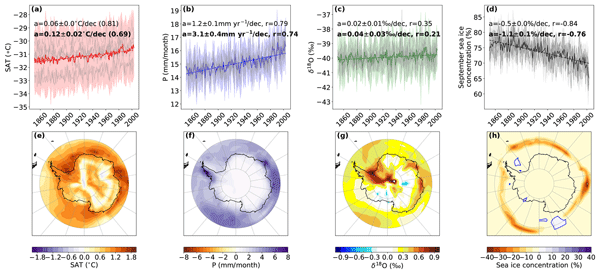
Antarctic ice cores provide information about past temperatures. Here, we run new climate model simulations, including stable water isotopes for the historical period. Across one-third of Antarctica, there is no strong connection between isotopes and temperature and a weak connection for most of the rest of Antarctica. This disconnect between isotopes and temperature is largely driven by changes in Antarctic sea ice. Our results are helpful for temperature reconstructions from ice core records.
John Slattery, Louise C. Sime, Francesco Muschitiello, and Keno Riechers
Clim. Past, 20, 2431–2454, https://doi.org/10.5194/cp-20-2431-2024, https://doi.org/10.5194/cp-20-2431-2024, 2024
Short summary
Short summary
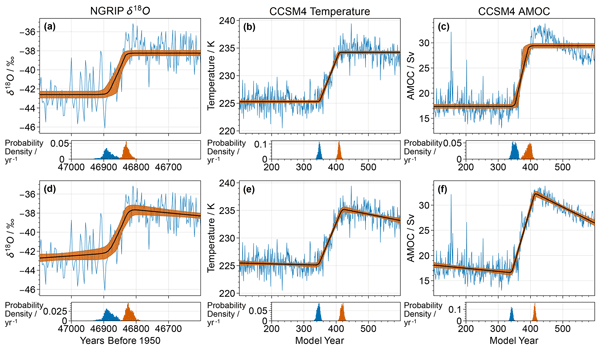
Dansgaard–Oeschger events are a series of abrupt past climate change events during which the atmosphere, sea ice, and ocean in the North Atlantic underwent rapid changes. One current topic of interest is the order in which these different changes occurred, which remains unknown. In this work, we find that the current best method used to investigate this topic is subject to substantial bias. This implies that it is not possible to reliably determine the order of the different changes.
Qinggang Gao, Louise C. Sime, Alison J. McLaren, Thomas J. Bracegirdle, Emilie Capron, Rachael H. Rhodes, Hans Christian Steen-Larsen, Xiaoxu Shi, and Martin Werner
The Cryosphere, 18, 683–703, https://doi.org/10.5194/tc-18-683-2024, https://doi.org/10.5194/tc-18-683-2024, 2024
Short summary
Short summary
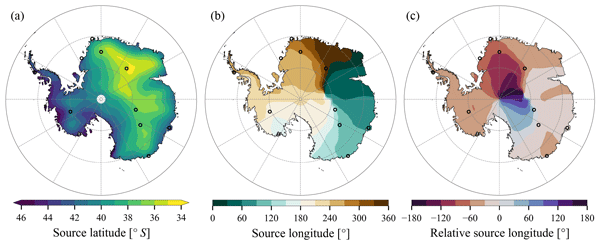
Antarctic precipitation is a crucial component of the climate system. Its spatio-temporal variability impacts sea level changes and the interpretation of water isotope measurements in ice cores. To better understand its climatic drivers, we developed water tracers in an atmospheric model to identify moisture source conditions from which precipitation originates. We find that mid-latitude surface winds exert an important control on moisture availability for Antarctic precipitation.
Irene Malmierca-Vallet, Louise C. Sime, and the D–O community members
Clim. Past, 19, 915–942, https://doi.org/10.5194/cp-19-915-2023, https://doi.org/10.5194/cp-19-915-2023, 2023
Short summary
Short summary
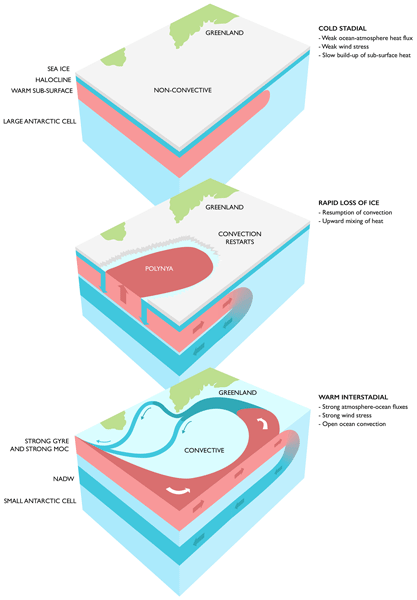
Greenland ice core records feature Dansgaard–Oeschger (D–O) events, abrupt warming episodes followed by a gradual-cooling phase during mid-glacial periods. There is uncertainty whether current climate models can effectively represent the processes that cause D–O events. Here, we propose a Marine Isotopic Stage 3 (MIS3) baseline protocol which is intended to provide modelling groups investigating D–O oscillations with a common framework.
Louise C. Sime, Rahul Sivankutty, Irene Vallet-Malmierca, Agatha M. de Boer, and Marie Sicard
Clim. Past, 19, 883–900, https://doi.org/10.5194/cp-19-883-2023, https://doi.org/10.5194/cp-19-883-2023, 2023
Short summary
Short summary
It is not known if the Last Interglacial (LIG) experienced Arctic summers that were sea ice free: models show a wide spread in LIG Arctic temperature and sea ice results. Evaluation against sea ice markers is hampered by few observations. Here, an assessment of 11 climate model simulations against summer temperatures shows that the most skilful models have a 74 %–79 % reduction in LIG sea ice. The measurements of LIG areas indicate a likely mix of ice-free and near-ice-free LIG summers.
Maria Vittoria Guarino, Louise C. Sime, Rachel Diamond, Jeff Ridley, and David Schroeder
Clim. Past, 19, 865–881, https://doi.org/10.5194/cp-19-865-2023, https://doi.org/10.5194/cp-19-865-2023, 2023
Short summary
Short summary
We investigate the response of the atmosphere, ocean, and ice domains to the release of a large volume of glacial meltwaters thought to have occurred during the Last Interglacial period. We show that the signal that originated in the North Atlantic travels over great distances across the globe. It modifies the ocean gyre circulation in the Northern Hemisphere as well as the belt of westerly winds in the Southern Hemisphere, with consequences for Antarctic sea ice.
Xavier Crosta, Karen E. Kohfeld, Helen C. Bostock, Matthew Chadwick, Alice Du Vivier, Oliver Esper, Johan Etourneau, Jacob Jones, Amy Leventer, Juliane Müller, Rachael H. Rhodes, Claire S. Allen, Pooja Ghadi, Nele Lamping, Carina B. Lange, Kelly-Anne Lawler, David Lund, Alice Marzocchi, Katrin J. Meissner, Laurie Menviel, Abhilash Nair, Molly Patterson, Jennifer Pike, Joseph G. Prebble, Christina Riesselman, Henrik Sadatzki, Louise C. Sime, Sunil K. Shukla, Lena Thöle, Maria-Elena Vorrath, Wenshen Xiao, and Jiao Yang
Clim. Past, 18, 1729–1756, https://doi.org/10.5194/cp-18-1729-2022, https://doi.org/10.5194/cp-18-1729-2022, 2022
Short summary
Short summary
Despite its importance in the global climate, our knowledge of Antarctic sea-ice changes throughout the last glacial–interglacial cycle is extremely limited. As part of the Cycles of Sea Ice Dynamics in the Earth system (C-SIDE) Working Group, we review marine- and ice-core-based sea-ice proxies to provide insights into their applicability and limitations. By compiling published records, we provide information on Antarctic sea-ice dynamics over the past 130 000 years.
Erin L. McClymont, Michael J. Bentley, Dominic A. Hodgson, Charlotte L. Spencer-Jones, Thomas Wardley, Martin D. West, Ian W. Croudace, Sonja Berg, Darren R. Gröcke, Gerhard Kuhn, Stewart S. R. Jamieson, Louise Sime, and Richard A. Phillips
Clim. Past, 18, 381–403, https://doi.org/10.5194/cp-18-381-2022, https://doi.org/10.5194/cp-18-381-2022, 2022
Short summary
Short summary
Sea ice is important for our climate system and for the unique ecosystems it supports. We present a novel way to understand past Antarctic sea-ice ecosystems: using the regurgitated stomach contents of snow petrels, which nest above the ice sheet but feed in the sea ice. During a time when sea ice was more extensive than today (24 000–30 000 years ago), we show that snow petrel diet had varying contributions of fish and krill, which we interpret to show changing sea-ice distribution.
Matthew Chadwick, Claire S. Allen, Louise C. Sime, Xavier Crosta, and Claus-Dieter Hillenbrand
Clim. Past, 18, 129–146, https://doi.org/10.5194/cp-18-129-2022, https://doi.org/10.5194/cp-18-129-2022, 2022
Short summary
Short summary
Algae preserved in marine sediments have allowed us to reconstruct how much winter sea ice was present around Antarctica during a past time period (130 000 years ago) when the climate was warmer than today. The patterns of sea-ice increase and decrease vary between different parts of the Southern Ocean. The Pacific sector has a largely stable sea-ice extent, whereas the amount of sea ice in the Atlantic sector is much more variable with bigger decreases and increases than other regions.
Rachel Diamond, Louise C. Sime, David Schroeder, and Maria-Vittoria Guarino
The Cryosphere, 15, 5099–5114, https://doi.org/10.5194/tc-15-5099-2021, https://doi.org/10.5194/tc-15-5099-2021, 2021
Short summary
Short summary
The Hadley Centre Global Environment Model version 3 (HadGEM3) is the first coupled climate model to simulate an ice-free summer Arctic during the Last Interglacial (LIG), 127 000 years ago, and yields accurate Arctic surface temperatures. We investigate the causes and impacts of this extreme simulated ice loss and, in particular, the role of melt ponds.
Ségolène Crossouard, Soulivanh Thao, Thomas Dubos, Masa Kageyama, Mathieu Vrac, and Yann Meurdesoif
Geosci. Model Dev., 19, 5907–5931, https://doi.org/10.5194/gmd-19-5907-2026, https://doi.org/10.5194/gmd-19-5907-2026, 2026
Short summary
Short summary
Current atmospheric models are limited by the computational time required for physical processes, known as physical parameterizations. To address this, we developed neural network-based emulators to replace these parameterizations in the IPSL climate model, using a simplified aquaplanet setup and a realistic configuration. We found that incorporating some physical knowledge, such as latent variables, into the learning process can improve predictions.
Clemens Schannwell, Marie-Luise Kapsch, Matteo Willeit, Lars Ackermann, Gregor Knorr, Uta Krebs-Kanzow, Gerrit Lohmann, Katharina D. Six, Christian Stepanek, and Uwe Mikolajewicz
EGUsphere, https://doi.org/10.5194/egusphere-2026-3384, https://doi.org/10.5194/egusphere-2026-3384, 2026
This preprint is open for discussion and under review for Earth System Dynamics (ESD).
Short summary
Short summary
We present long-term future projections of the Greenland ice sheet based on three numerical models which all explicitly account for feedbacks between the climate and the Greenland ice sheet. We find that projections vary considerably across the models, particularly beyond 2100. The main reasons for this is the different modelled climate as well as how the modelled climate is translated into snowfall and melt in each of the models.
Yanxuan Du, Josephine R. Brown, Laurie Menviel, Himadri Saini, Russell N. Drysdale, David K. Hutchinson, and Calla N. Gould-Whaley
Clim. Past, 22, 1105–1124, https://doi.org/10.5194/cp-22-1105-2026, https://doi.org/10.5194/cp-22-1105-2026, 2026
Short summary
Short summary
This study examines the climate response to different magnitudes of Atlantic Meridional Overturning Circulation (AMOC) weakening under glacial conditions using the Australian Earth System Model. A potential threshold is identified between linear AMOC slowdown and nonlinear shutdown, driven by a critical change in ocean heat loss that induces a nonlinear atmospheric response governed by energetic constraints.
Iuri Gorenstein, Ilana Wainer, Francesco S. R. Pausata, Luciana F. Prado, Pedro L. Silva Dias, Allegra N. LeGrande, Clay R. Tabor, and William R. Peltier
Geosci. Model Dev., 19, 3689–3707, https://doi.org/10.5194/gmd-19-3689-2026, https://doi.org/10.5194/gmd-19-3689-2026, 2026
Short summary
Short summary
We introduce a new approach based on information theory to study climate variability using observational and model data. To showcase our methodology, we study the tropical and South Atlantic by examining broad patterns in ocean and rainfall data at decadal scales in four climate models under mid‐Holocene and pre‐industrial conditions and observations. Our findings show that large-scale patterns help explain long-term climate behavior.
Nozomi Arima, Masakazu Yoshimori, Ayako Abe-Ouchi, Ryouta O'ishi, Wing-Le Chan, Sam Sherriff-Tadano, and Tomoo Ogura
Clim. Past, 22, 891–913, https://doi.org/10.5194/cp-22-891-2026, https://doi.org/10.5194/cp-22-891-2026, 2026
Short summary
Short summary
During the Last Interglacial period, spanning 129 000 to 116 000 years ago, the Arctic was considered warmer than during the preindustrial period. Many climate models do not simulate an ice-free Arctic Ocean in summer, as suggested by recent reconstructions. Here, we examine the importance of how the liquid or solid phase of cloud particles is determined in models. It is found that the representation of cloud phase indeed has a substantial impact on the simulation of summer sea ice cover.
Yurui Zhang, Jilin Wei, Zhen Li, Nan Dai, Weipeng Zheng, Qiuzhen Yin, Agatha M. de Boer, Zhengguo Shi, and Lixia Zhang
Clim. Past, 22, 879–889, https://doi.org/10.5194/cp-22-879-2026, https://doi.org/10.5194/cp-22-879-2026, 2026
Short summary
Short summary
This study examines how the warm Miocene (~23–5 Ma) climate responded to orbital changes compared with modern day. Simulations show weaker Miocene temperature responses with distinct spatial patterns. High latitudes were less sensitive due to weaker albedo feedback, while tropical Africa cooled more strongly from an enhanced water cycle. The Southern Ocean warmed under low insolation as winter sea ice shrank. These findings highlight how background climate states shape orbital climate responses.
Yufei Liu, Hu Yang, Haowen Dang, Gerrit Lohmann, Tao Lian, Zhengyao Lu, Xiaoxu Shi, Jiping Liu, Hang Wang, Feng Jiang, Xinyue Deng, Xiaoming Hu, and Dake Chen
EGUsphere, https://doi.org/10.21203/rs.3.rs-7865695/v1, https://doi.org/10.21203/rs.3.rs-7865695/v1, 2026
Short summary
Short summary
Observations and reconstructions show that ENSO is influenced by astronomical precession in addition to anthropogenic warming. Using ~10,000-year simulations, we reconstruct a full tropical precession cycle and find that present ENSO activity is relatively strong within it. This results from asymmetric continental heating that alters the background climate and the threshold for ENSO development, linking astronomical forcing to tropical climate variability.
Mara Y. McPartland, Tomas Lovato, Charles Koven, Jamie D. Wilson, Briony Turner, Colleen M. Petrik, José Licón-Saláiz, Fang Li, Fanny Lhardy, Jaclyn Clement Kinney, Michio Kawamiya, Birgit Hassler, Nathan P. Gillett, Cheikh Modou Noreyni Fall, Christopher Danek, Chris M. Brierley, Ana Bastos, and Oliver Andrews
Geosci. Model Dev., 19, 2849–2880, https://doi.org/10.5194/gmd-19-2849-2026, https://doi.org/10.5194/gmd-19-2849-2026, 2026
Short summary
Short summary
The Coupled Model Intercomparison Project (CMIP) is an international consortium of climate modeling groups that produce coordinated experiments in order to evaluate human influence on the climate and test knowledge of Earth systems. This paper describes the data requested for Earth systems research in CMIP7. We detail the request for model output of the carbon cycle, the flows of energy among the atmosphere, land and the oceans, and interactions between these and the global climate.
John W. Rostron, Alejandro Bodas-Salcedo, David M. H. Sexton, Colin G. Jones, Edward W. Blockley, Till Kuhlbrodt, Jane P. Mulcahy, Tamzin E. Palmer, Saloua Peatier, Mark A. Ringer, Steven T. Rumbold, Benjamin M. Sanderson, Yongming Tang, and Martin R. Willet
EGUsphere, https://doi.org/10.5194/egusphere-2026-1676, https://doi.org/10.5194/egusphere-2026-1676, 2026
Short summary
Short summary
The Met Office’s latest weather and climate model warms very strongly in response to increases in carbon dioxide. We created a modified version of the model with a more moderate warming response by adjusting key model parameters, using both automated methods and expert judgement. The new model matches historical temperatures more closely and is better suited for studies of long‑term climate, but has reduced overall accuracy when simulating the baseline climate.
Peter Köhler, Laurie Menviel, Frerk Pöppelmeier, Timothy J. Heaton, Edouard Bard, and Luke C. Skinner
Clim. Past, 22, 729–746, https://doi.org/10.5194/cp-22-729-2026, https://doi.org/10.5194/cp-22-729-2026, 2026
Short summary
Short summary
Radiocarbon (14C) is decaying over time, which is used to determine the age of carbon-containing objects. Calibration curves are necessary to come from measured 14C values to calendar ages. We use different models in order to improve future calibration curves, especially around times of abrupt changes in the Atlantic meridional overturning circulation. We find that uncertainties during those times are underrepresented in present calibrations, especially in the Atlantic.
Andrew G. Pauling, Inga J. Smith, Torge Martin, Jeff K. Ridley, David P. Stevens, Max Thomas, Rebecca L. Beadling, Christopher Danek, Tore Hattermann, Qian Li, John Marshall, Morven Muilwijk, Ariaan Purich, and Neil C. Swart
EGUsphere, https://doi.org/10.5194/egusphere-2026-658, https://doi.org/10.5194/egusphere-2026-658, 2026
Short summary
Short summary
Climate models typically do not include meltwater entering the Southern Ocean due to Antarctic ice sheet mass loss. Previous work shows this meltwater drives sea ice growth, but the varying responses have been difficult to compare across models. We ran 11 climate models using the same meltwater input and found a wide range of sea ice responses depending on the background state in each model. Understanding this uncertainty in response is important for future projections of Antarctic sea ice.
Didier Swingedouw, Laura Jackson, Aixue Hu, Anastasia Romanou, Nicole C. Laureanti, Wilbert Weijer, Sina Loriani, Bette Otto-Bliesner, Ayako Abe-Ouchi, Lucas Almeida, Alessio Bellucci, Reyk Börner, Gokhan Danabasoglu, Donovan P. Dennis, Marion Devilliers, Sybren Drijfhout, Jonathan Donges, Friederike Fröb, Thomas L. Frölicher, Guillaume Gastineau, Heiko Goelzer, Chuncheng Guo, Urs Hofmann, Anna Höse, Colin Jones, Torben Koenigk, Ann Kristin Klose, Valerio Lembo, Jose Licon-Salaiz, Ken Mankoff, Virna Meccia, Irina Melnikova, Oliver Mehling, Laurie Menviel, Juliette Mignot, Jon I. Robson, Gavin A. Schmidt, Robin Smith, Yuchen Sun, Irene Trombini, Matteo Willeit, Richard Wood, Fanghua Wu, Lin Zhaohui, and Ricarda Winkelmann
EGUsphere, https://doi.org/10.5194/egusphere-2026-1698, https://doi.org/10.5194/egusphere-2026-1698, 2026
Short summary
Short summary
This study presents a plan for climate model experiments to better understand how changes in freshwater in the North Atlantic affect major ocean currents. We designed coordinated simulations to test their response to warming, added freshwater, and possible recovery after weakening. Comparing results across models and past climate evidence helps improve confidence in projections and assess risks of large ocean circulation changes.
Anni Zhao, Chris Brierley, Venni Arra-Kastrati, Xiaoxu Shi, and Yongyun Hu
Clim. Past, 22, 689–708, https://doi.org/10.5194/cp-22-689-2026, https://doi.org/10.5194/cp-22-689-2026, 2026
Short summary
Short summary
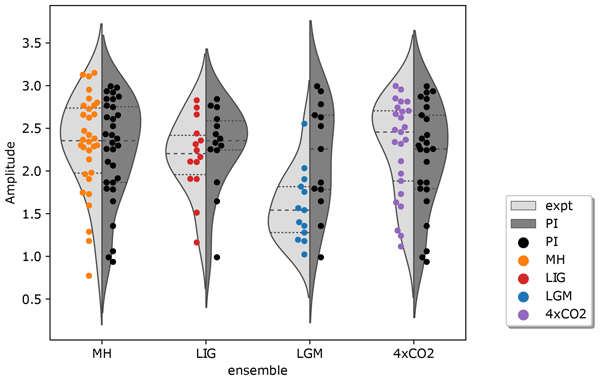
The North Atlantic Oscillation has large impacts on the European climate, whose future behaviour remains uncertain. We assess the NAO response in three past experiments (midHolocene, lig127k, lgm) and an abrupt quadrupled CO2 experiment (abrupt4xCO2). Our results show that NAO weakens (enhances) in response to cooling (warming), while it is not sensitive to orbital configurations. The associated teleconnections change consistently with the theory and are sensitive to the change in NAO amplitude.
Chao-Yuan Yang, Fengguan Gu, Jiping Liu, Annette Rinke, Hu Yang, and Xiaoxu Shi
EGUsphere, https://doi.org/10.5194/egusphere-2026-362, https://doi.org/10.5194/egusphere-2026-362, 2026
Short summary
Short summary
Accurately exchanging energy between the atmosphere and the ocean-ice systems through surface heat fluxes is crucial for climate modelling. We present an improved version of Coupled Arctic Prediction System (CAPS) by revising flux coupling for conservation of heat. Our results show that the model with improved flux coupling can better simulate sea ice conditions during the period of Multidisciplinary drifting Observatory for the Study of Arctic Climate (MOSAiC).
Nicholas Williams, Nicholas Byrne, Daniel Feltham, Peter Jan Van Leeuwen, Ross Bannister, David Schroeder, Isobel Lawrence, Lars Nerger, Jack Landy, and Geoffrey Dawson
EGUsphere, https://doi.org/10.5194/egusphere-2026-742, https://doi.org/10.5194/egusphere-2026-742, 2026
This preprint is open for discussion and under review for The Cryosphere (TC).
Short summary
Short summary
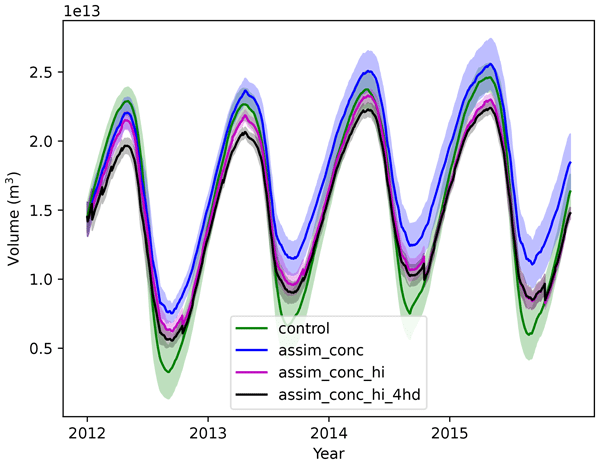
In this study we present three satellite era Arctic sea ice reanalyses, each assimilating different combinations of sea ice concentration and thickness observations. Results show that using year-round thickness observations substantially improves reanalysis compared to winter-only data. The best-performing reanalysis reveals a seasonally compensating bias cycle, suggesting errors in ice growth, leads, refreezing, marginal ice zone dynamics, redistribution, and melt timing mask model errors.
Ram Singh, Alexander Koch, Allegra N. LeGrande, Kostas Tsigaridis, Riovie D. Ramos, Francis Ludlow, Igor Aleinov, Reto Ruedy, and Jed O. Kaplan
Geosci. Model Dev., 19, 1405–1428, https://doi.org/10.5194/gmd-19-1405-2026, https://doi.org/10.5194/gmd-19-1405-2026, 2026
Short summary
Short summary
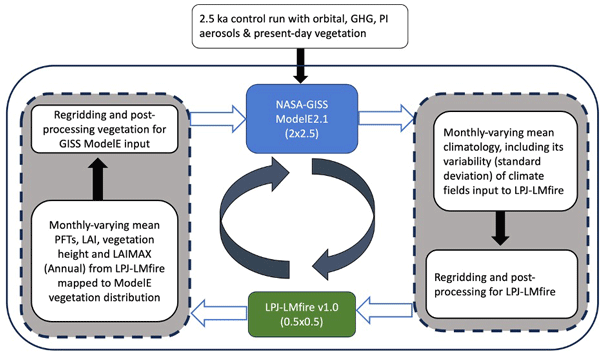
This study presents an experimental framework for asynchronous land-atmosphere coupling to include biogeophysical feedbacks using a dynamic vegetation model with an Earth system model that lacks a fully dynamic vegetation component. The framework is implemented for the 2.5 ka period and also illustrates the role of model performance metrics (bias, variability), while evaluating the simulated climate against the multi-proxy paleoclimate reconstructions.
Morven Muilwijk, Tore Hattermann, Rebecca L. Beadling, Neil C. Swart, Aleksi Nummelin, Chuncheng Guo, David M. Chandler, Petra M. Langebroek, Shenjie Zhou, Pierre Dutrieux, Jia-Jia Chen, Christopher Danek, Matthew H. England, Stephen M. Griffies, F. Alexander Haumann, André Jüling, Ombeline Jouet, Qian Li, Torge Martin, John Marshall, Andrew G. Pauling, Ariaan Purich, Zihan Song, Inga J. Smith, Max Thomas, Irene Trombini, Eveline C. van der Linden, and Xiaoqi Xu
The Cryosphere, 20, 1087–1117, https://doi.org/10.5194/tc-20-1087-2026, https://doi.org/10.5194/tc-20-1087-2026, 2026
Short summary
Short summary
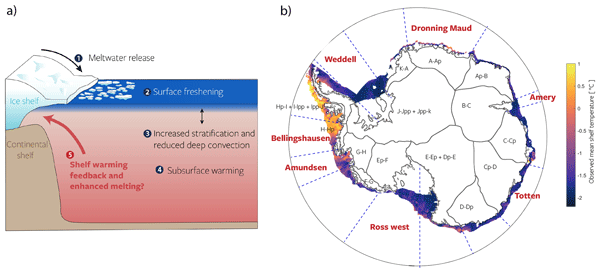
Antarctic meltwater affects ocean stratification and temperature, which in turn influences the rate of ice shelf melting – a coupling missing in most climate models. We analyze a suite of climate models with added meltwater to explore this feedback in different regions. While meltwater generally enhances ocean warming and melt, in West Antarctica most models simulate coastal cooling, suggesting a negative feedback that could slow future ice loss there.
Héloïse Barathieu, Thibaut Caley, Masa Kageyama, Didier Swingedouw, and Pascale Braconnot
EGUsphere, https://doi.org/10.5194/egusphere-2026-254, https://doi.org/10.5194/egusphere-2026-254, 2026
Short summary
Short summary
This study evaluates climate model simulations of the Last Glacial Maximum using ocean surface density reconstructions from foraminiferal shells δ¹⁸O. Models capture global patterns but regional climate changes are less well simulated, especially in the North Indian Ocean. Tropical differences between reconstructions and model simulations are mainly driven by changes in ocean salinity linked to precipitation.
Daniel J. Lunt, Nicky M. Wright, Bram Vaes, Ulrich Salzmann, James W. B. Rae, Thomas Hickler, David K. Hutchinson, Julia Brugger, Jiang Zhu, Sebastian Steinig, A. Nele Meckler, Gordon N. Inglis, David Evans, Agatha M. de Boer, Bette L. Otto-Bliesner, Natalie Burls, Yurui Zhang, Appy Sluijs, Tammo Reichgelt, Igor Niezgodzki, Katrin Meissner, Jean-Baptiste Ladant, Fanni D. Kelemen, Matthew Huber, David Greenwood, Mattias Green, Flavia Boscolo-Galazzo, Mauel Tobias Blau, and Michiel Baatsen
EGUsphere, https://doi.org/10.5194/egusphere-2025-6135, https://doi.org/10.5194/egusphere-2025-6135, 2026
Short summary
Short summary
The early Eocene, about 50 million years ago, was a super-warm period of Earth's history, with high concentrations of carbon dioxide in the atmosphere. Here, we provide a framework and experimental design for climate modellers to carry out a coordinated project, simulating this period. This is the second phase of this project, and here we provide updated maps of the Earth's mountains and ocean floor, and vegetation, to enable more accurate modelling.
Silvana Ramos Buarque, Bertrand Decharme, Alina L. Barbu, and Laurent Franchisteguy
Earth Syst. Sci. Data, 17, 7227–7249, https://doi.org/10.5194/essd-17-7227-2025, https://doi.org/10.5194/essd-17-7227-2025, 2025
Short summary
Short summary
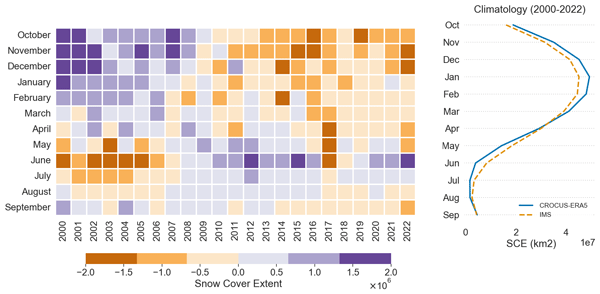
The Crocus-ERA5 snow dataset supports Arctic snow monitoring and contributes to the Arctic Report Card. It improves on its predecessor with higher spatial resolution (0.25° vs. 0.75°), enhancing topographic and land cover detail. The product’s performance is assessed in terms of snow depth and cover compared to in situ observations and satellite data. The findings show a notable improvement, though remaining biases appear in boreal forests, where snow–forest interactions are not captured.
Pascale Braconnot, Nicolas Viovy, and Olivier Marti
Earth Syst. Dynam., 16, 2113–2136, https://doi.org/10.5194/esd-16-2113-2025, https://doi.org/10.5194/esd-16-2113-2025, 2025
Short summary
Short summary
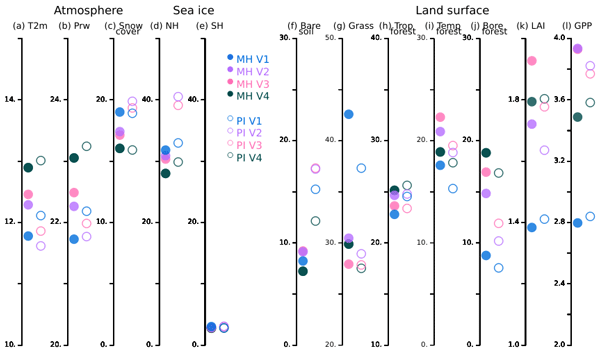
This study highlights how the representation of the vegetation in a climate model triggers the atmospheric feedback controlling the top of the atmosphere radiative fluxes. Using simulations of the mid-Holocene and the preindustrial climates, we analyse cascading effects involving local snow-vegetation interactions, as well as tropical atmospheric water content. We show that photosynthesis plays a key role in shaping the seasonality of the climate response and differences between model versions
Fernanda DI Alzira Oliveira Matos, Dmitry Sidorenko, Xiaoxu Shi, Lars Ackermann, Janini Pereira, Gerrit Lohmann, and Christian Stepanek
Ocean Sci., 21, 2895–2914, https://doi.org/10.5194/os-21-2895-2025, https://doi.org/10.5194/os-21-2895-2025, 2025
Short summary
Short summary
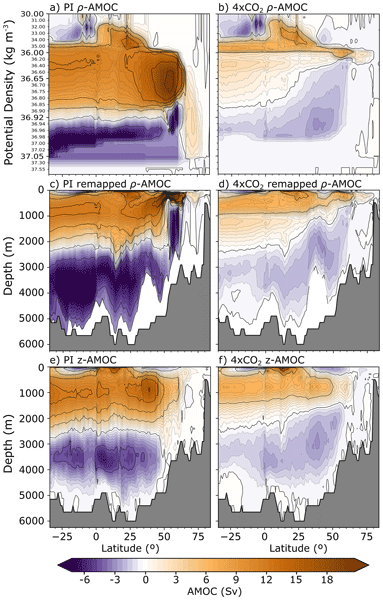
The Atlantic Meridional Overturning Circulation (AMOC) is responsible for about 25 % of the poleward ocean heat transport. Currently, the AMOC strength is mostly calculated in depth space (z-AMOC). However, we argue that, in warmer climates, the AMOC should be calculated in density space (ρ-AMOC). We performed simulations with CO2 forcing of 280 ppmv (PI) and 1120 ppmv of (4xCO2) and find that ρ-AMOC provides more physical and meaningful information about the AMOC in warmer climates.
Alison J. McLaren, Louise C. Sime, Simon Wilson, Jeff Ridley, Qinggang Gao, Merve Gorguner, Giorgia Line, Martin Werner, and Paul Valdes
Geosci. Model Dev., 18, 8129–8142, https://doi.org/10.5194/gmd-18-8129-2025, https://doi.org/10.5194/gmd-18-8129-2025, 2025
Short summary
Short summary
We describe a new development in a state-of-the-art computer atmosphere model, which follows the movement of the model’s water. This provides an efficient way to track all the model's rain and snow back to the average location of the evaporative source, as shown in a present-day simulation. The new scheme can be used in simulations of the future to predict how sources of regional rain or snowfall might change owing to human actions, providing useful information for water management purposes.
Katherine Power, Fernanda DI Alzira Oliveira Matos, and Qiong Zhang
Earth Syst. Dynam., 16, 1845–1863, https://doi.org/10.5194/esd-16-1845-2025, https://doi.org/10.5194/esd-16-1845-2025, 2025
Short summary
Short summary
This study explores the climate impact of reduced Antarctic and Greenland ice sheets using the Late Pliocene as an analogue for future climate. Results reveal a 9.5 °C rise in Antarctic surface temperature, 16 % sea ice loss, a less stable westerly jet, and a weakened Antarctic Bottom Water formation. By isolating albedo effects, this research provides insights into global climate dynamics and feedbacks.
Lise Seland Graff, Jerry Tjiputra, Ada Gjermundsen, Andreas Born, Jens Boldingh Debernard, Heiko Goelzer, Yan-Chun He, Petra Margaretha Langebroek, Aleksi Nummelin, Dirk Olivié, Øyvind Seland, Trude Storelvmo, Mats Bentsen, Chuncheng Guo, Andrea Rosendahl, Dandan Tao, Thomas Toniazzo, Camille Li, Stephen Outten, and Michael Schulz
Earth Syst. Dynam., 16, 1671–1698, https://doi.org/10.5194/esd-16-1671-2025, https://doi.org/10.5194/esd-16-1671-2025, 2025
Short summary
Short summary
The magnitude of future Arctic amplification is highly uncertain. Using the Norwegian Earth System Model, we explore the effect of improving the representation of clouds, ocean eddies, the Greenland ice sheet, sea ice, and ozone on the projected Arctic winter warming in a coordinated experiment set. These improvements all lead to enhanced projected Arctic warming, with the largest changes found in the sea ice retreat regions and the largest uncertainty found on the Atlantic side.
Louise C. Sime, Rahul Sivankutty, Irene Malmierca-Vallet, Sentia Goursaud Oger, Allegra N. LeGrande, Erin L. McClymont, Agatha de Boer, Alexandre Cauquoin, and Martin Werner
Clim. Past, 21, 1725–1753, https://doi.org/10.5194/cp-21-1725-2025, https://doi.org/10.5194/cp-21-1725-2025, 2025
Short summary
Short summary
We used climate models to study how stable water isotopes in ice cores changed in the Arctic and Antarctica during the warm Last Interglacial (LIG) period. Whilst standard simulations underestimate polar warming, when the effects of ice sheet meltwater from the preceding deglaciation are included, there is a much better match with observations. Findings suggest that previous estimates of LIG Arctic warming were too high. Understanding these past polar changes can help improve future predictions.
Colin Jones, Isaline Bossert, Donovan P. Dennis, Hazel Jeffery, Chris D. Jones, Torben Koenigk, Sina Loriani, Benjamin Sanderson, Roland Séférian, Klaus Wyser, Shuting Yang, Manabu Abe, Sebastian Bathiany, Pascale Braconnot, Victor Brovkin, Friedrich A. Burger, Patrica Cadule, Frederic S. Castruccio, Gokhan Danabasoglu, Andrea Dittus, Jonathan F. Donges, Friederike Fröb, Thomas Frölicher, Goran Georgievski, Chuncheng Guo, Aixue Hu, Peter Lawrence, Paul Lerner, José Licón-Saláiz, Bette Otto-Bliesner, Anastasia Romanou, Elena Shevliakova, Yona Silvy, Didier Swingedouw, Jerry Tjiputra, Jeremy Walton, Andy Wiltshire, Ricarda Winkelmann, Richard Wood, Tokuta Yokohata, and Tilo Ziehn
EGUsphere, https://doi.org/10.5194/egusphere-2025-3604, https://doi.org/10.5194/egusphere-2025-3604, 2025
Short summary
Short summary
We introduce a new Earth system model experiment protocol to help researchers understand how Earth might respond to positive, zero, and negative carbon emissions. This protocol enables different models to be compared following similar warming and cooling rates. Researchers use the models to explore how the Earth reacts to different climate futures, including the risk of tipping points being exceeded and whether changes can be reversed. The results will support improved long-term climate policy.
Takashi Obase, Laurie Menviel, Ayako Abe-Ouchi, Tristan Vadsaria, Ruza Ivanovic, Brooke Snoll, Sam Sherriff-Tadano, Paul J. Valdes, Lauren Gregoire, Marie-Luise Kapsch, Uwe Mikolajewicz, Nathaelle Bouttes, Didier Roche, Fanny Lhardy, Chengfei He, Bette Otto-Bliesner, Zhengyu Liu, and Wing-Le Chan
Clim. Past, 21, 1443–1463, https://doi.org/10.5194/cp-21-1443-2025, https://doi.org/10.5194/cp-21-1443-2025, 2025
Short summary
Short summary
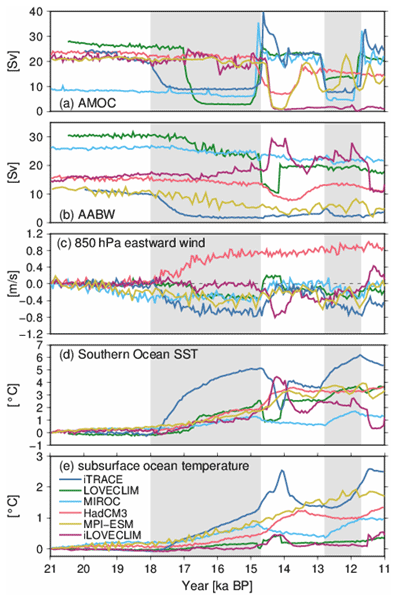
This study analyses transient simulations of the last deglaciation performed by six climate models to understand the processes driving high-southern-latitude temperature changes. We find that atmospheric CO2 and AMOC (Atlantic Meridional Overturning Circulation) changes are the primary drivers of the warming and cooling during the middle stage of the deglaciation. The analysis highlights the model's sensitivity of CO2 and AMOC to meltwater and the meltwater history of temperature changes at high southern latitudes.
Zanna Chase, Karen E. Kohfeld, Amy Leventer, David Lund, Xavier Crosta, Laurie Menviel, Helen C. Bostock, Matthew Chadwick, Samuel L. Jaccard, Jacob Jones, Alice Marzocchi, Katrin J. Meissner, Elisabeth Sikes, Louise C. Sime, and Luke Skinner
EGUsphere, https://doi.org/10.5194/egusphere-2025-3504, https://doi.org/10.5194/egusphere-2025-3504, 2025
Short summary
Short summary
The impact of recent dramatic declines in Antarctic sea ice on the Earth system are uncertain. We reviewed how sea ice affects ocean circulation, ice sheets, winds, and the carbon cycle by considering theory and modern observations alongside paleo-proxy reconstructions. We found evidence for connections between sea ice and these systems but also conflicting results, which point to missing knowledge. Our work highlights the complex role of sea ice in the Earth system.
Hu Yang, Xiaoxu Shi, Xulong Wang, Qingsong Liu, Yi Zhong, Xiaodong Liu, Youbin Sun, Yanjun Cai, Fei Liu, Gerrit Lohmann, Martin Werner, Zhimin Jian, Tainã M. L. Pinho, Hai Cheng, Lijuan Lu, Jiping Liu, Chao-Yuan Yang, Qinghua Yang, Yongyun Hu, Xing Cheng, Jingyu Zhang, and Dake Chen
Clim. Past, 21, 1263–1279, https://doi.org/10.5194/cp-21-1263-2025, https://doi.org/10.5194/cp-21-1263-2025, 2025
Short summary
Short summary
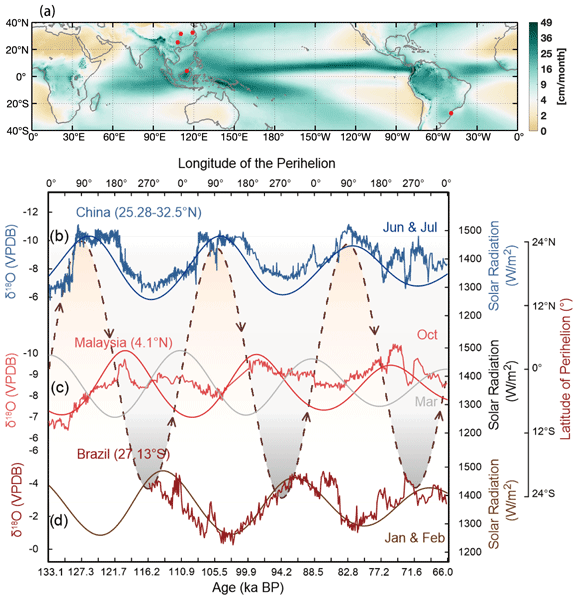
For 1 century, the hemispheric summer insolation is proposed as a key pacemaker of astronomical climate change. However, an increasing number of geologic records reveal that the low-latitude hydrological cycle shows asynchronous precessional evolutions that are very often out of phase with the summer insolation. Here, we propose that the astronomically driven low-latitude hydrological cycle is not paced by summer insolation but by shifting perihelion.
Forrest M. Hoffman, Birgit Hassler, Ranjini Swaminathan, Jared Lewis, Bouwe Andela, Nathaniel Collier, Dóra Hegedűs, Jiwoo Lee, Charlotte Pascoe, Mika Pflüger, Martina Stockhause, Paul Ullrich, Min Xu, Lisa Bock, Felicity Chun, Bettina K. Gier, Douglas I. Kelley, Axel Lauer, Julien Lenhardt, Manuel Schlund, Mohanan G. Sreeush, Katja Weigel, Ed Blockley, Rebecca Beadling, Romain Beucher, Demiso D. Dugassa, Valerio Lembo, Jianhua Lu, Swen Brands, Jerry Tjiputra, Elizaveta Malinina, Brian Mederios, Enrico Scoccimarro, Jeremy Walton, Philip Kershaw, André L. Marquez, Malcolm J. Roberts, Eleanor O’Rourke, Elisabeth Dingley, Briony Turner, Helene Hewitt, and John P. Dunne
EGUsphere, https://doi.org/10.5194/egusphere-2025-2685, https://doi.org/10.5194/egusphere-2025-2685, 2025
Short summary
Short summary
As Earth system models become more complex, rapid and comprehensive evaluation through comparison with observational data is necessary. The upcoming Assessment Fast Track for the Seventh Phase of the Coupled Model Intercomparison Project (CMIP7) will require fast analysis. This paper describes a new Rapid Evaluation Framework (REF) that was developed for the Assessment Fast Track that will be run at the Earth System Grid Federation (ESGF) to inform the community about the performance of models.
Baylor Fox-Kemper, Patricia DeRepentigny, Anne Marie Treguier, Christian Stepanek, Eleanor O’Rourke, Chloe Mackallah, Alberto Meucci, Yevgeny Aksenov, Paul J. Durack, Nicole Feldl, Vanessa Hernaman, Céline Heuzé, Doroteaciro Iovino, Gaurav Madan, André L. Marquez, François Massonnet, Jenny Mecking, Dhrubajyoti Samanta, Patrick C. Taylor, Wan-Ling Tseng, and Martin Vancoppenolle
EGUsphere, https://doi.org/10.5194/egusphere-2025-3083, https://doi.org/10.5194/egusphere-2025-3083, 2025
Short summary
Short summary
The earth system model variables needed for studies of the ocean and sea ice are prioritized and requested.
Bartholomé Duboc, Katrin J. Meissner, Laurie Menviel, Nicholas K. H. Yeung, Babette Hoogakker, Tilo Ziehn, and Matthew Chamberlain
Clim. Past, 21, 1093–1122, https://doi.org/10.5194/cp-21-1093-2025, https://doi.org/10.5194/cp-21-1093-2025, 2025
Short summary
Short summary
We use an earth system model to simulate ocean oxygen during two past warm periods, the Last Interglacial (∼ 129–115 ka) and Marine Isotope Stage (MIS) 9e (∼ 336–321 ka). The global ocean is overall less oxygenated compared to the preindustrial simulation. Large regions in the Mediterranean Sea are oxygen deprived in the Last Interglacial simulation, and to a lesser extent in the MIS 9e simulation, due to an intensification and expansion of the African monsoon and enhanced river runoff.
Gabriel M. Pontes, Pedro L. da Silva Dias, and Laurie Menviel
Clim. Past, 21, 1079–1091, https://doi.org/10.5194/cp-21-1079-2025, https://doi.org/10.5194/cp-21-1079-2025, 2025
Short summary
Short summary
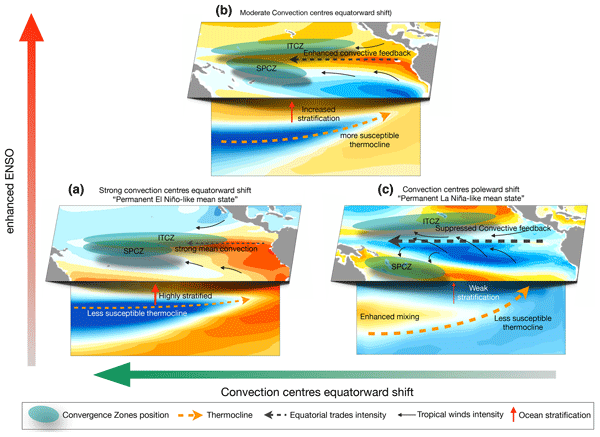
El Niño events are the main drivers of year-to-year climate variability. Understanding how El Niño activity is affected by different climate states is of great relevance to agriculture, water, ecosystem, and climate risk management. Through analysis of past and future climate simulations, we show that the El Niño–Southern Oscillation (ENSO) sensitivity to mean state changes is nonlinear and, to some extent, shaped by atmospheric CO2 levels.
Rebecca C. Frew, Adam William Bateson, Daniel L. Feltham, and David Schröder
The Cryosphere, 19, 2115–2132, https://doi.org/10.5194/tc-19-2115-2025, https://doi.org/10.5194/tc-19-2115-2025, 2025
Short summary
Short summary
As summer Arctic sea ice extent has retreated, the marginal ice zone (MIZ) has been widening and making up an increasing percentage of the summer sea ice. The MIZ is projected to become a larger percentage of the summer ice cover, as the Arctic transitions to ice-free summers. Using a sea ice model, we find that the processes and timing of sea ice loss differ in the MIZ to the rest of the sea cover. We also find the balance of processes within the MIZ changes over time as the sea ice retreats.
Ricarda Winkelmann, Donovan P. Dennis, Jonathan F. Donges, Sina Loriani, Ann Kristin Klose, Jesse F. Abrams, Jorge Alvarez-Solas, Torsten Albrecht, David Armstrong McKay, Sebastian Bathiany, Javier Blasco Navarro, Victor Brovkin, Eleanor Burke, Gokhan Danabasoglu, Reik V. Donner, Markus Drüke, Goran Georgievski, Heiko Goelzer, Anna B. Harper, Gabriele Hegerl, Marina Hirota, Aixue Hu, Laura C. Jackson, Colin Jones, Hyungjun Kim, Torben Koenigk, Peter Lawrence, Timothy M. Lenton, Hannah Liddy, José Licón-Saláiz, Maxence Menthon, Marisa Montoya, Jan Nitzbon, Sophie Nowicki, Bette Otto-Bliesner, Francesco Pausata, Stefan Rahmstorf, Karoline Ramin, Alexander Robinson, Johan Rockström, Anastasia Romanou, Boris Sakschewski, Christina Schädel, Steven Sherwood, Robin S. Smith, Norman J. Steinert, Didier Swingedouw, Matteo Willeit, Wilbert Weijer, Richard Wood, Klaus Wyser, and Shuting Yang
EGUsphere, https://doi.org/10.5194/egusphere-2025-1899, https://doi.org/10.5194/egusphere-2025-1899, 2025
Preprint archived
Short summary
Short summary
The Tipping Points Modelling Intercomparison Project (TIPMIP) is an international collaborative effort to systematically assess tipping point risks in the Earth system using state-of-the-art coupled and stand-alone domain models. TIPMIP will provide a first global atlas of potential tipping dynamics, respective critical thresholds and key uncertainties, generating an important building block towards a comprehensive scientific basis for policy- and decision-making.
Davi Mignac, Jennifer Waters, Daniel J. Lea, Matthew J. Martin, James While, Anthony T. Weaver, Arthur Vidard, Catherine Guiavarc'h, Dave Storkey, David Ford, Edward W. Blockley, Jonathan Baker, Keith Haines, Martin R. Price, Michael J. Bell, and Richard Renshaw
Geosci. Model Dev., 18, 3405–3425, https://doi.org/10.5194/gmd-18-3405-2025, https://doi.org/10.5194/gmd-18-3405-2025, 2025
Short summary
Short summary
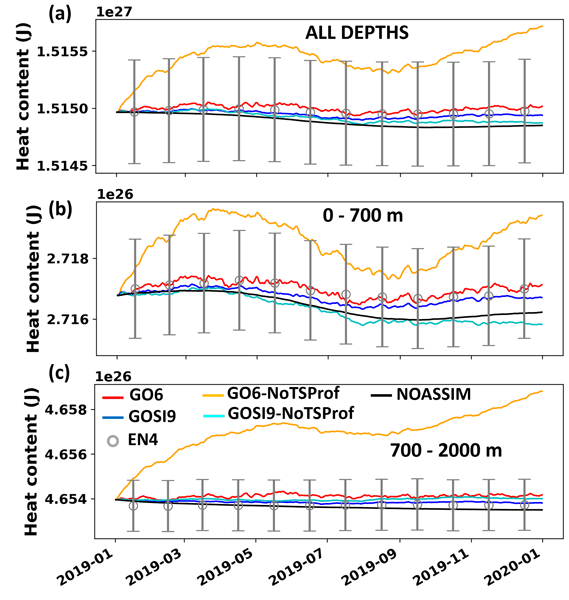
We describe major improvements of the Met Office's global ocean–sea ice forecasting system. The models and the way observations are used to improve the forecasts were changed, which led to a significant error reduction of 1 d forecasts. The new system performance in past conditions, where subsurface observations are scarce, was improved with more consistent ocean heat content estimates. The new system will be of better use for climate studies and will provide improved forecasts for end users.
Laurent Bertino, Patrick Heimbach, Ed Blockley, and Einar Ólason
State Planet, 5-opsr, 14, https://doi.org/10.5194/sp-5-opsr-14-2025, https://doi.org/10.5194/sp-5-opsr-14-2025, 2025
Short summary
Short summary
Forecasts of sea ice are in high demand in the polar regions, and they are also quickly improving and becoming more easily accessible to non-experts. We provide here a brief status of the short-term forecasting services – typically 10 d ahead – and an outlook of their upcoming developments.
Alex E. West and Edward W. Blockley
Geosci. Model Dev., 18, 3041–3064, https://doi.org/10.5194/gmd-18-3041-2025, https://doi.org/10.5194/gmd-18-3041-2025, 2025
Short summary
Short summary
This study uses ice mass balance buoys – temperature- and height-measuring devices frozen into sea ice – to find how well climate models simulate (1) melt and growth of Arctic sea ice and (2) conduction of heat through Arctic sea ice. This may help understand why models produce varying amounts of sea ice in the present day. We find that models tend to show more melt, growth or conduction for a given ice thickness than the buoys, although the difference is smaller for models with more physically realistic thermodynamics.
David Storkey, Pierre Mathiot, Michael J. Bell, Dan Copsey, Catherine Guiavarc'h, Helene T. Hewitt, Jeff Ridley, and Malcolm J. Roberts
Geosci. Model Dev., 18, 2725–2745, https://doi.org/10.5194/gmd-18-2725-2025, https://doi.org/10.5194/gmd-18-2725-2025, 2025
Short summary
Short summary
The Southern Ocean is a key region of the world ocean in the context of climate change studies. We show that the Met Office Hadley Centre coupled model with intermediate ocean resolution struggles to accurately simulate the Southern Ocean. Increasing the frictional drag that the seafloor exerts on ocean currents and introducing a representation of unresolved ocean eddies both appear to reduce the large-scale biases in this model.
Himadri Saini, David K. Hutchinson, Josephine R. Brown, Russell N. Drysdale, Yanxuan Du, and Laurie Menviel
EGUsphere, https://doi.org/10.5194/egusphere-2025-1990, https://doi.org/10.5194/egusphere-2025-1990, 2025
Short summary
Short summary
This study examines how large ice sheets during the last Ice Age influenced global weather patterns. We found that the presence of these ice sheets affected rainfall patterns in regions like Eurasia and Australia. By altering wind and weather systems, they shifted the position of the tropical rainbelt and impacted the circulation of air in both the Northern and Southern Hemispheres. Our research helps us understand past climate changes and their potential effects on future climate patterns.
Qinggang Gao, Emilie Capron, Louise C. Sime, Rachael H. Rhodes, Rahul Sivankutty, Xu Zhang, Bette L. Otto-Bliesner, and Martin Werner
Clim. Past, 21, 419–440, https://doi.org/10.5194/cp-21-419-2025, https://doi.org/10.5194/cp-21-419-2025, 2025
Short summary
Short summary
Marine sediment and ice core records suggest a warmer Southern Ocean and Antarctica at the early last interglacial, ~127 000 years ago. However, when only forced by orbital parameters and greenhouse gas concentrations during that period, state-of-the-art climate models do not reproduce the magnitude of warming. Here we show that much of the warming at southern middle to high latitudes can be reproduced by a UK climate model, HadCM3, with a 3000-year freshwater forcing over the North Atlantic.
Wee Wei Khoo, Juliane Müller, Oliver Esper, Wenshen Xiao, Christian Stepanek, Paul Gierz, Gerrit Lohmann, Walter Geibert, Jens Hefter, and Gesine Mollenhauer
Clim. Past, 21, 299–326, https://doi.org/10.5194/cp-21-299-2025, https://doi.org/10.5194/cp-21-299-2025, 2025
Short summary
Short summary
Using a multiproxy approach, we analyzed biomarkers and diatom assemblages from a marine sediment core from the Powell Basin, Weddell Sea. The results reveal the first continuous coastal Antarctic sea ice record since the Last Penultimate Glacial. Our findings contribute valuable insights into past glacial–interglacial sea ice responses to a changing climate and enhance our understanding of ocean–sea ice–ice shelf interactions and dynamics.
Lauren R. Marshall, Anja Schmidt, Andrew P. Schurer, Nathan Luke Abraham, Lucie J. Lücke, Rob Wilson, Kevin J. Anchukaitis, Gabriele C. Hegerl, Ben Johnson, Bette L. Otto-Bliesner, Esther C. Brady, Myriam Khodri, and Kohei Yoshida
Clim. Past, 21, 161–184, https://doi.org/10.5194/cp-21-161-2025, https://doi.org/10.5194/cp-21-161-2025, 2025
Short summary
Short summary
Large volcanic eruptions have caused temperature deviations over the past 1000 years; however, climate model results and reconstructions of surface cooling using tree rings do not match. We explore this mismatch using the latest models and find a better match to tree-ring reconstructions for some eruptions. Our results show that the way in which eruptions are simulated in models matters for the comparison to tree-rings, particularly regarding the spatial spread of volcanic aerosol.
Catherine Guiavarc'h, David Storkey, Adam T. Blaker, Ed Blockley, Alex Megann, Helene Hewitt, Michael J. Bell, Daley Calvert, Dan Copsey, Bablu Sinha, Sophia Moreton, Pierre Mathiot, and Bo An
Geosci. Model Dev., 18, 377–403, https://doi.org/10.5194/gmd-18-377-2025, https://doi.org/10.5194/gmd-18-377-2025, 2025
Short summary
Short summary
The Global Ocean and Sea Ice configuration version 9 (GOSI9) is the new UK hierarchy of model configurations based on the Nucleus for European Modelling of the Ocean (NEMO) and available at three resolutions. It will be used for various applications, e.g. weather forecasting and climate prediction. It improves upon the previous version by reducing global temperature and salinity biases and enhancing the representation of Arctic sea ice and the Antarctic Circumpolar Current.
Alex T. Archibald, Bablu Sinha, Maria R. Russo, Emily Matthews, Freya A. Squires, N. Luke Abraham, Stephane J.-B. Bauguitte, Thomas J. Bannan, Thomas G. Bell, David Berry, Lucy J. Carpenter, Hugh Coe, Andrew Coward, Peter Edwards, Daniel Feltham, Dwayne Heard, Jim Hopkins, James Keeble, Elizabeth C. Kent, Brian A. King, Isobel R. Lawrence, James Lee, Claire R. Macintosh, Alex Megann, Bengamin I. Moat, Katie Read, Chris Reed, Malcolm J. Roberts, Reinhard Schiemann, David Schroeder, Timothy J. Smyth, Loren Temple, Navaneeth Thamban, Lisa Whalley, Simon Williams, Huihui Wu, and Mingxi Yang
Earth Syst. Sci. Data, 17, 135–164, https://doi.org/10.5194/essd-17-135-2025, https://doi.org/10.5194/essd-17-135-2025, 2025
Short summary
Short summary
Here, we present an overview of the data generated as part of the North Atlantic Climate System Integrated Study (ACSIS) programme that are available through dedicated repositories at the Centre for Environmental Data Analysis (CEDA; www.ceda.ac.uk) and the British Oceanographic Data Centre (BODC; bodc.ac.uk). The datasets described here cover the North Atlantic Ocean, the atmosphere above (it including its composition), and Arctic sea ice.
Johan Liakka, Natalie S. Lord, Alan Kennedy-Asser, Daniel J. Lunt, Charles J. R. Williams, and Jens-Ove Näslund
Adv. Geosci., 65, 71–81, https://doi.org/10.5194/adgeo-65-71-2024, https://doi.org/10.5194/adgeo-65-71-2024, 2024
Short summary
Short summary
Future glaciations can affect the long-term safety of deep geological repositories for nuclear waste. This study introduces a simple method to assess frequency and duration of ice sheets over the next one million years at locations with past glaciations. The method considers uncertainties in human-caused CO2 emissions and climate change. It is easy to implement for any nuclear waste management organization that need to consider impacts of future ice sheets on long-term safety.
Sentia Goursaud Oger, Louise C. Sime, and Max Holloway
Clim. Past, 20, 2539–2560, https://doi.org/10.5194/cp-20-2539-2024, https://doi.org/10.5194/cp-20-2539-2024, 2024
Short summary
Short summary
Antarctic ice cores provide information about past temperatures. Here, we run new climate model simulations, including stable water isotopes for the historical period. Across one-third of Antarctica, there is no strong connection between isotopes and temperature and a weak connection for most of the rest of Antarctica. This disconnect between isotopes and temperature is largely driven by changes in Antarctic sea ice. Our results are helpful for temperature reconstructions from ice core records.
John Slattery, Louise C. Sime, Francesco Muschitiello, and Keno Riechers
Clim. Past, 20, 2431–2454, https://doi.org/10.5194/cp-20-2431-2024, https://doi.org/10.5194/cp-20-2431-2024, 2024
Short summary
Short summary
Dansgaard–Oeschger events are a series of abrupt past climate change events during which the atmosphere, sea ice, and ocean in the North Atlantic underwent rapid changes. One current topic of interest is the order in which these different changes occurred, which remains unknown. In this work, we find that the current best method used to investigate this topic is subject to substantial bias. This implies that it is not possible to reliably determine the order of the different changes.
Mira Berdahl, Gunter R. Leguy, William H. Lipscomb, Bette L. Otto-Bliesner, Esther C. Brady, Robert A. Tomas, Nathan M. Urban, Ian Miller, Harriet Morgan, and Eric J. Steig
Clim. Past, 20, 2349–2371, https://doi.org/10.5194/cp-20-2349-2024, https://doi.org/10.5194/cp-20-2349-2024, 2024
Short summary
Short summary
Studying climate conditions near the Antarctic ice sheet (AIS) during Earth’s past warm periods informs us about how global warming may influence AIS ice loss. Using a global climate model, we investigate climate conditions near the AIS during the Last Interglacial (129 to 116 kyr ago), a period with warmer global temperatures and higher sea level than today. We identify the orbital and freshwater forcings that could cause ice loss and probe the mechanisms that lead to warmer climate conditions.
Colin G. Jones, Fanny Adloff, Ben B. B. Booth, Peter M. Cox, Veronika Eyring, Pierre Friedlingstein, Katja Frieler, Helene T. Hewitt, Hazel A. Jeffery, Sylvie Joussaume, Torben Koenigk, Bryan N. Lawrence, Eleanor O'Rourke, Malcolm J. Roberts, Benjamin M. Sanderson, Roland Séférian, Samuel Somot, Pier Luigi Vidale, Detlef van Vuuren, Mario Acosta, Mats Bentsen, Raffaele Bernardello, Richard Betts, Ed Blockley, Julien Boé, Tom Bracegirdle, Pascale Braconnot, Victor Brovkin, Carlo Buontempo, Francisco Doblas-Reyes, Markus Donat, Italo Epicoco, Pete Falloon, Sandro Fiore, Thomas Frölicher, Neven S. Fučkar, Matthew J. Gidden, Helge F. Goessling, Rune Grand Graversen, Silvio Gualdi, José M. Gutiérrez, Tatiana Ilyina, Daniela Jacob, Chris D. Jones, Martin Juckes, Elizabeth Kendon, Erik Kjellström, Reto Knutti, Jason Lowe, Matthew Mizielinski, Paola Nassisi, Michael Obersteiner, Pierre Regnier, Romain Roehrig, David Salas y Mélia, Carl-Friedrich Schleussner, Michael Schulz, Enrico Scoccimarro, Laurent Terray, Hannes Thiemann, Richard A. Wood, Shuting Yang, and Sönke Zaehle
Earth Syst. Dynam., 15, 1319–1351, https://doi.org/10.5194/esd-15-1319-2024, https://doi.org/10.5194/esd-15-1319-2024, 2024
Short summary
Short summary
We propose a number of priority areas for the international climate research community to address over the coming decade. Advances in these areas will both increase our understanding of past and future Earth system change, including the societal and environmental impacts of this change, and deliver significantly improved scientific support to international climate policy, such as future IPCC assessments and the UNFCCC Global Stocktake.
Ana-Cristina Mârza, Laurie Menviel, and Luke C. Skinner
Geochronology, 6, 503–519, https://doi.org/10.5194/gchron-6-503-2024, https://doi.org/10.5194/gchron-6-503-2024, 2024
Short summary
Short summary
Radiocarbon serves as a powerful dating tool, but the calibration of marine radiocarbon dates presents significant challenges because the whole surface ocean cannot be represented by a single calibration curve. Here we use climate model outputs and data to assess a novel method for developing regional marine calibration curves. Our results are encouraging and point to a way forward for solving the marine radiocarbon age calibration problem without relying on model simulations of the past.
Ed Blockley, Emma Fiedler, Jeff Ridley, Luke Roberts, Alex West, Dan Copsey, Daniel Feltham, Tim Graham, David Livings, Clement Rousset, David Schroeder, and Martin Vancoppenolle
Geosci. Model Dev., 17, 6799–6817, https://doi.org/10.5194/gmd-17-6799-2024, https://doi.org/10.5194/gmd-17-6799-2024, 2024
Short summary
Short summary
This paper documents the sea ice model component of the latest Met Office coupled model configuration, which will be used as the physical basis for UK contributions to CMIP7. Documentation of science options used in the configuration are given along with a brief model evaluation. This is the first UK configuration to use NEMO’s new SI3 sea ice model. We provide details on how SI3 was adapted to work with Met Office coupling methodology and documentation of coupling processes in the model.
Marco Gaetani, Gabriele Messori, Francesco S. R. Pausata, Shivangi Tiwari, M. Carmen Alvarez Castro, and Qiong Zhang
Clim. Past, 20, 1735–1759, https://doi.org/10.5194/cp-20-1735-2024, https://doi.org/10.5194/cp-20-1735-2024, 2024
Short summary
Short summary
Palaeoclimate reconstructions suggest that, around 6000 years ago, a greening of the Sahara took place, accompanied by climate changes in the Northern Hemisphere at middle to high latitudes. In this study, a climate model is used to investigate how this drastic environmental change in the Sahara impacted remote regions. Specifically, climate simulations reveal significant modifications in atmospheric circulation over the North Atlantic, affecting North American and European climates.
Anni Zhao, Ran Feng, Chris M. Brierley, Jian Zhang, and Yongyun Hu
Clim. Past, 20, 1195–1211, https://doi.org/10.5194/cp-20-1195-2024, https://doi.org/10.5194/cp-20-1195-2024, 2024
Short summary
Short summary
We analyse simulations with idealised aerosol scenarios to examine the importance of aerosol forcing on mPWP precipitation and how aerosol uncertainty could explain the data–model mismatch. We find further warming, a narrower and stronger ITCZ, and monsoon domain rainfall change after removal of industrial emissions. Aerosols have more impacts on tropical precipitation than the mPWP boundary conditions. This highlights the importance of prescribed aerosol scenarios in simulating mPWP climate.
Julia E. Weiffenbach, Henk A. Dijkstra, Anna S. von der Heydt, Ayako Abe-Ouchi, Wing-Le Chan, Deepak Chandan, Ran Feng, Alan M. Haywood, Stephen J. Hunter, Xiangyu Li, Bette L. Otto-Bliesner, W. Richard Peltier, Christian Stepanek, Ning Tan, Julia C. Tindall, and Zhongshi Zhang
Clim. Past, 20, 1067–1086, https://doi.org/10.5194/cp-20-1067-2024, https://doi.org/10.5194/cp-20-1067-2024, 2024
Short summary
Short summary
Elevated atmospheric CO2 concentrations and a smaller Antarctic Ice Sheet during the mid-Pliocene (~ 3 million years ago) cause the Southern Ocean surface to become fresher and warmer, which affects the global ocean circulation. The CO2 concentration and the smaller Antarctic Ice Sheet both have a similar and approximately equal impact on the Southern Ocean. The conditions of the Southern Ocean in the mid-Pliocene could therefore be analogous to those in a future climate with smaller ice sheets.
Bjorn Stevens, Stefan Adami, Tariq Ali, Hartwig Anzt, Zafer Aslan, Sabine Attinger, Jaana Bäck, Johanna Baehr, Peter Bauer, Natacha Bernier, Bob Bishop, Hendryk Bockelmann, Sandrine Bony, Guy Brasseur, David N. Bresch, Sean Breyer, Gilbert Brunet, Pier Luigi Buttigieg, Junji Cao, Christelle Castet, Yafang Cheng, Ayantika Dey Choudhury, Deborah Coen, Susanne Crewell, Atish Dabholkar, Qing Dai, Francisco Doblas-Reyes, Dale Durran, Ayoub El Gaidi, Charlie Ewen, Eleftheria Exarchou, Veronika Eyring, Florencia Falkinhoff, David Farrell, Piers M. Forster, Ariane Frassoni, Claudia Frauen, Oliver Fuhrer, Shahzad Gani, Edwin Gerber, Debra Goldfarb, Jens Grieger, Nicolas Gruber, Wilco Hazeleger, Rolf Herken, Chris Hewitt, Torsten Hoefler, Huang-Hsiung Hsu, Daniela Jacob, Alexandra Jahn, Christian Jakob, Thomas Jung, Christopher Kadow, In-Sik Kang, Sarah Kang, Karthik Kashinath, Katharina Kleinen-von Königslöw, Daniel Klocke, Uta Kloenne, Milan Klöwer, Chihiro Kodama, Stefan Kollet, Tobias Kölling, Jenni Kontkanen, Steve Kopp, Michal Koran, Markku Kulmala, Hanna Lappalainen, Fakhria Latifi, Bryan Lawrence, June Yi Lee, Quentin Lejeun, Christian Lessig, Chao Li, Thomas Lippert, Jürg Luterbacher, Pekka Manninen, Jochem Marotzke, Satoshi Matsouoka, Charlotte Merchant, Peter Messmer, Gero Michel, Kristel Michielsen, Tomoki Miyakawa, Jens Müller, Ramsha Munir, Sandeep Narayanasetti, Ousmane Ndiaye, Carlos Nobre, Achim Oberg, Riko Oki, Tuba Özkan-Haller, Tim Palmer, Stan Posey, Andreas Prein, Odessa Primus, Mike Pritchard, Julie Pullen, Dian Putrasahan, Johannes Quaas, Krishnan Raghavan, Venkatachalam Ramaswamy, Markus Rapp, Florian Rauser, Markus Reichstein, Aromar Revi, Sonakshi Saluja, Masaki Satoh, Vera Schemann, Sebastian Schemm, Christina Schnadt Poberaj, Thomas Schulthess, Cath Senior, Jagadish Shukla, Manmeet Singh, Julia Slingo, Adam Sobel, Silvina Solman, Jenna Spitzer, Philip Stier, Thomas Stocker, Sarah Strock, Hang Su, Petteri Taalas, John Taylor, Susann Tegtmeier, Georg Teutsch, Adrian Tompkins, Uwe Ulbrich, Pier-Luigi Vidale, Chien-Ming Wu, Hao Xu, Najibullah Zaki, Laure Zanna, Tianjun Zhou, and Florian Ziemen
Earth Syst. Sci. Data, 16, 2113–2122, https://doi.org/10.5194/essd-16-2113-2024, https://doi.org/10.5194/essd-16-2113-2024, 2024
Short summary
Short summary
To manage Earth in the Anthropocene, new tools, new institutions, and new forms of international cooperation will be required. Earth Virtualization Engines is proposed as an international federation of centers of excellence to empower all people to respond to the immense and urgent challenges posed by climate change.
Brooke Snoll, Ruza Ivanovic, Lauren Gregoire, Sam Sherriff-Tadano, Laurie Menviel, Takashi Obase, Ayako Abe-Ouchi, Nathaelle Bouttes, Chengfei He, Feng He, Marie Kapsch, Uwe Mikolajewicz, Juan Muglia, and Paul Valdes
Clim. Past, 20, 789–815, https://doi.org/10.5194/cp-20-789-2024, https://doi.org/10.5194/cp-20-789-2024, 2024
Short summary
Short summary
Geological records show rapid climate change throughout the recent deglaciation. The drivers of these changes are still misunderstood but are often attributed to shifts in the Atlantic Ocean circulation from meltwater input. A cumulative effort to understand these processes prompted numerous simulations of this period. We use these to explain the chain of events and our collective ability to simulate them. The results demonstrate the importance of the meltwater amount used in the simulation.
Tom Keel, Chris Brierley, and Tamsin Edwards
Geosci. Model Dev., 17, 1229–1247, https://doi.org/10.5194/gmd-17-1229-2024, https://doi.org/10.5194/gmd-17-1229-2024, 2024
Short summary
Short summary
Jet streams are an important control on surface weather as their speed and shape can modify the properties of weather systems. Establishing trends in the operation of jet streams may provide some indication of the future of weather in a warming world. Despite this, it has not been easy to establish trends, as many methods have been used to characterise them in data. We introduce a tool containing various implementations of jet stream statistics and algorithms that works in a standardised manner.
Qinggang Gao, Louise C. Sime, Alison J. McLaren, Thomas J. Bracegirdle, Emilie Capron, Rachael H. Rhodes, Hans Christian Steen-Larsen, Xiaoxu Shi, and Martin Werner
The Cryosphere, 18, 683–703, https://doi.org/10.5194/tc-18-683-2024, https://doi.org/10.5194/tc-18-683-2024, 2024
Short summary
Short summary
Antarctic precipitation is a crucial component of the climate system. Its spatio-temporal variability impacts sea level changes and the interpretation of water isotope measurements in ice cores. To better understand its climatic drivers, we developed water tracers in an atmospheric model to identify moisture source conditions from which precipitation originates. We find that mid-latitude surface winds exert an important control on moisture availability for Antarctic precipitation.
Sarah L. Bradley, Raymond Sellevold, Michele Petrini, Miren Vizcaino, Sotiria Georgiou, Jiang Zhu, Bette L. Otto-Bliesner, and Marcus Lofverstrom
Clim. Past, 20, 211–235, https://doi.org/10.5194/cp-20-211-2024, https://doi.org/10.5194/cp-20-211-2024, 2024
Short summary
Short summary
The Last Glacial Maximum (LGM) was the most recent period with large ice sheets in Europe and North America. We provide a detailed analysis of surface mass and energy components for two time periods that bracket the LGM: 26 and 21 ka BP. We use an earth system model which has been adopted for modern ice sheets. We find that all Northern Hemisphere ice sheets have a positive surface mass balance apart from the British and Irish ice sheets and the North American ice sheet complex.
Alexander Gelfan, Andrey Panin, Andrey Kalugin, Polina Morozova, Vladimir Semenov, Alexey Sidorchuk, Vadim Ukraintsev, and Konstantin Ushakov
Hydrol. Earth Syst. Sci., 28, 241–259, https://doi.org/10.5194/hess-28-241-2024, https://doi.org/10.5194/hess-28-241-2024, 2024
Short summary
Short summary
Paleogeographical data show that 17–13 ka BP, the Caspian Sea level was 80 m above the current level. There are large disagreements on the genesis of this “Great” Khvalynian transgression of the sea, and we tried to shed light on this issue. Using climate and hydrological models as well as the paleo-reconstructions, we proved that the transgression could be initiated solely by hydroclimatic factors within the deglaciation period in the absence of the glacial meltwater effect.
Helen Weierbach, Allegra N. LeGrande, and Kostas Tsigaridis
Atmos. Chem. Phys., 23, 15491–15505, https://doi.org/10.5194/acp-23-15491-2023, https://doi.org/10.5194/acp-23-15491-2023, 2023
Short summary
Short summary
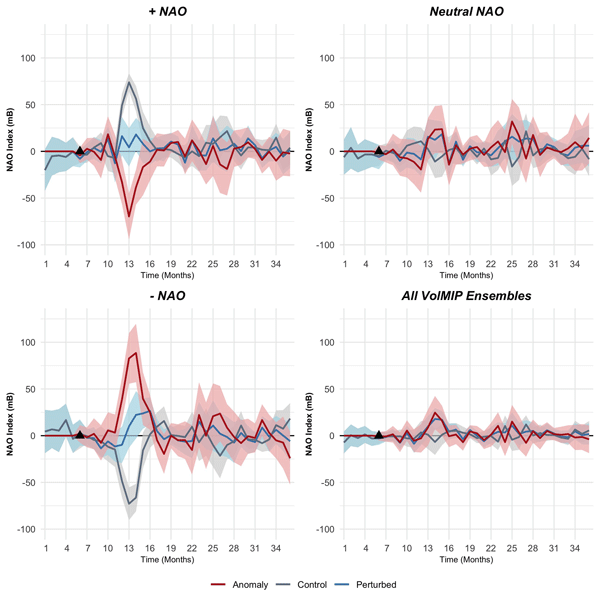
Volcanic aerosols impact global and regional climate conditions but can vary depending on pre-existing initial climate conditions. We ran an ensemble of volcanic aerosol simulations under varying ENSO and NAO initial conditions to understand how initial climate states impact the modeled response to volcanic forcing. Overall we found that initial NAO conditions can impact the strength of the first winter post-eruptive response but are also affected by the choice of anomaly and sampling routine.
Putian Zhou, Zhengyao Lu, Jukka-Pekka Keskinen, Qiong Zhang, Juha Lento, Jianpu Bian, Twan van Noije, Philippe Le Sager, Veli-Matti Kerminen, Markku Kulmala, Michael Boy, and Risto Makkonen
Clim. Past, 19, 2445–2462, https://doi.org/10.5194/cp-19-2445-2023, https://doi.org/10.5194/cp-19-2445-2023, 2023
Short summary
Short summary
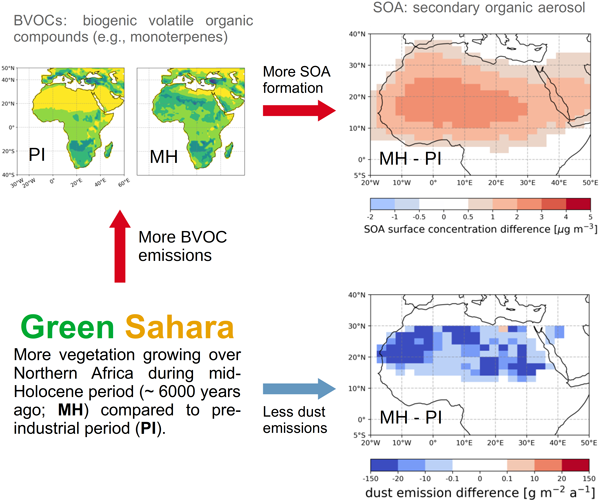
A Green Sahara with enhanced rainfall and larger vegetation cover existed in northern Africa about 6000 years ago. Biosphere–atmosphere interactions are found to be critical to explaining this wet period. Based on modeled vegetation reconstruction data, we simulated dust emissions and aerosol formation, which are key factors in biosphere–atmosphere interactions. Our results also provide a benchmark of aerosol climatology for future paleo-climate simulation experiments.
Laurie C. Menviel, Paul Spence, Andrew E. Kiss, Matthew A. Chamberlain, Hakase Hayashida, Matthew H. England, and Darryn Waugh
Biogeosciences, 20, 4413–4431, https://doi.org/10.5194/bg-20-4413-2023, https://doi.org/10.5194/bg-20-4413-2023, 2023
Short summary
Short summary
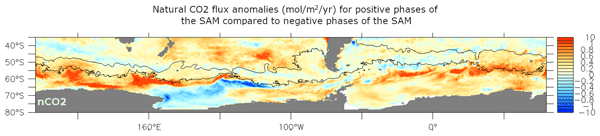
As the ocean absorbs 25% of the anthropogenic emissions of carbon, it is important to understand the impact of climate change on the flux of carbon between the ocean and the atmosphere. Here, we use a very high-resolution ocean, sea-ice, carbon cycle model to show that the capability of the Southern Ocean to uptake CO2 has decreased over the last 40 years due to a strengthening and poleward shift of the southern hemispheric westerlies. This trend is expected to continue over the coming century.
Xiaoxu Shi, Martin Werner, Hu Yang, Roberta D'Agostino, Jiping Liu, Chaoyuan Yang, and Gerrit Lohmann
Clim. Past, 19, 2157–2175, https://doi.org/10.5194/cp-19-2157-2023, https://doi.org/10.5194/cp-19-2157-2023, 2023
Short summary
Short summary
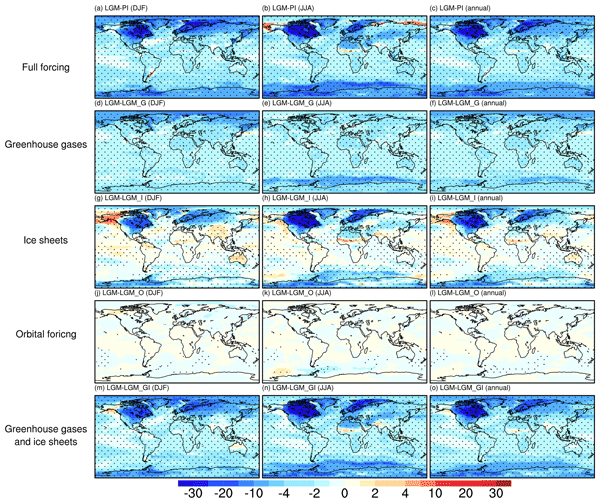
The Last Glacial Maximum (LGM) marks the most recent extremely cold and dry time period of our planet. Using AWI-ESM, we quantify the relative importance of Earth's orbit, greenhouse gases (GHG) and ice sheets (IS) in determining the LGM climate. Our results suggest that both GHG and IS play important roles in shaping the LGM temperature. Continental ice sheets exert a major control on precipitation, atmospheric dynamics, and the intensity of El Niño–Southern Oscillation.
Xin Ren, Daniel J. Lunt, Erica Hendy, Anna von der Heydt, Ayako Abe-Ouchi, Bette Otto-Bliesner, Charles J. R. Williams, Christian Stepanek, Chuncheng Guo, Deepak Chandan, Gerrit Lohmann, Julia C. Tindall, Linda E. Sohl, Mark A. Chandler, Masa Kageyama, Michiel L. J. Baatsen, Ning Tan, Qiong Zhang, Ran Feng, Stephen Hunter, Wing-Le Chan, W. Richard Peltier, Xiangyu Li, Youichi Kamae, Zhongshi Zhang, and Alan M. Haywood
Clim. Past, 19, 2053–2077, https://doi.org/10.5194/cp-19-2053-2023, https://doi.org/10.5194/cp-19-2053-2023, 2023
Short summary
Short summary
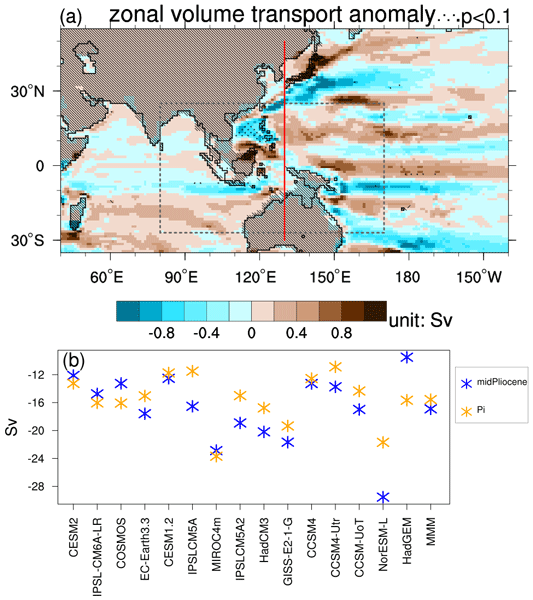
We investigate the Maritime Continent climate in the mid-Piacenzian warm period and find it is warmer and wetter and the sea surface salinity is lower compared with preindustrial period. Besides, the fresh and warm water transfer through the Maritime Continent was stronger. In order to avoid undue influence from closely related models in the multimodel results, we introduce a new metric, the multi-cluster mean, which could reveal spatial signals that are not captured by the multimodel mean.
Himadri Saini, Katrin J. Meissner, Laurie Menviel, and Karin Kvale
Clim. Past, 19, 1559–1584, https://doi.org/10.5194/cp-19-1559-2023, https://doi.org/10.5194/cp-19-1559-2023, 2023
Short summary
Short summary
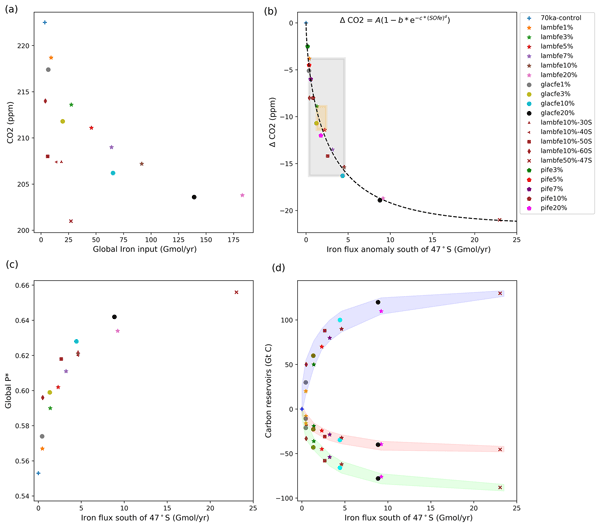
Understanding the changes in atmospheric CO2 during the last glacial cycle is crucial to comprehend the impact of climate change in the future. Previous research has hypothesised a key role of greater aeolian iron input into the Southern Ocean in influencing the global atmospheric CO2 levels by impacting the changes in the marine phytoplankton response. In our study, we test this iron hypothesis using climate modelling and constrain the impact of ocean iron supply on global CO2 decrease.
Gustav Strandberg, Jie Chen, Ralph Fyfe, Erik Kjellström, Johan Lindström, Anneli Poska, Qiong Zhang, and Marie-José Gaillard
Clim. Past, 19, 1507–1530, https://doi.org/10.5194/cp-19-1507-2023, https://doi.org/10.5194/cp-19-1507-2023, 2023
Short summary
Short summary
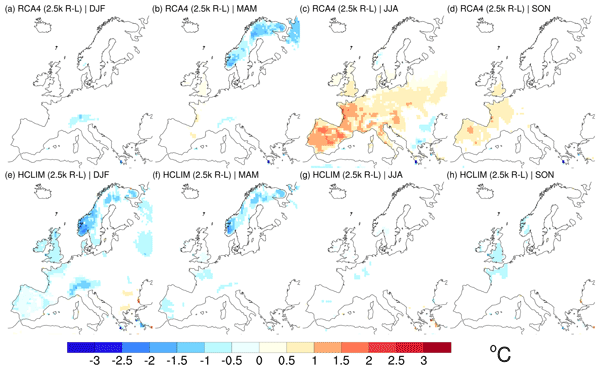
The impact of land use and land cover change (LULCC) on the climate around 2500 years ago is studied using reconstructions and models. The results suggest that LULCC impacted the climate in parts of Europe. Reconstructed LULCC shows up to 1.5 °C higher temperature in parts of Europe in some seasons. This relatively strong response implies that anthropogenic LULCC that had occurred by the late prehistoric period may have already affected the European climate by 2500 years ago.
Nicholas Williams, Nicholas Byrne, Daniel Feltham, Peter Jan Van Leeuwen, Ross Bannister, David Schroeder, Andrew Ridout, and Lars Nerger
The Cryosphere, 17, 2509–2532, https://doi.org/10.5194/tc-17-2509-2023, https://doi.org/10.5194/tc-17-2509-2023, 2023
Short summary
Short summary
Observations show that the Arctic sea ice cover has reduced over the last 40 years. This study uses ensemble-based data assimilation in a stand-alone sea ice model to investigate the impacts of assimilating three different kinds of sea ice observation, including the novel assimilation of sea ice thickness distribution. We show that assimilating ice thickness distribution has a positive impact on thickness and volume estimates within the ice pack, especially for very thick ice.
Léa Terray, Emmanuelle Stoetzel, Eslem Ben Arous, Masa Kageyama, Raphaël Cornette, and Pascale Braconnot
Clim. Past, 19, 1245–1263, https://doi.org/10.5194/cp-19-1245-2023, https://doi.org/10.5194/cp-19-1245-2023, 2023
Short summary
Short summary
The reconstruction of paleoenvironments has long been a subject of great interest, particularly to study past biodiversity. Paleoenvironmental proxies often show inconsistencies, and age estimations can vary depending on the method used. We demonstrate the ability of paleoclimate simulations to address these discrepancies, illustrating the strong potential of our cross-disciplinary consistency approach to refine the context of archeological and paleontological sites.
Qi Shu, Qiang Wang, Chuncheng Guo, Zhenya Song, Shizhu Wang, Yan He, and Fangli Qiao
Geosci. Model Dev., 16, 2539–2563, https://doi.org/10.5194/gmd-16-2539-2023, https://doi.org/10.5194/gmd-16-2539-2023, 2023
Short summary
Short summary
Ocean models are often used for scientific studies on the Arctic Ocean. Here the Arctic Ocean simulations by state-of-the-art global ocean–sea-ice models participating in the Ocean Model Intercomparison Project (OMIP) were evaluated. The simulations on Arctic Ocean hydrography, freshwater content, stratification, sea surface height, and gateway transports were assessed and the common biases were detected. The simulations forced by different atmospheric forcing were also evaluated.
Irene Malmierca-Vallet, Louise C. Sime, and the D–O community members
Clim. Past, 19, 915–942, https://doi.org/10.5194/cp-19-915-2023, https://doi.org/10.5194/cp-19-915-2023, 2023
Short summary
Short summary
Greenland ice core records feature Dansgaard–Oeschger (D–O) events, abrupt warming episodes followed by a gradual-cooling phase during mid-glacial periods. There is uncertainty whether current climate models can effectively represent the processes that cause D–O events. Here, we propose a Marine Isotopic Stage 3 (MIS3) baseline protocol which is intended to provide modelling groups investigating D–O oscillations with a common framework.
Claire Waelbroeck, Jerry Tjiputra, Chuncheng Guo, Kerim H. Nisancioglu, Eystein Jansen, Natalia Vázquez Riveiros, Samuel Toucanne, Frédérique Eynaud, Linda Rossignol, Fabien Dewilde, Elodie Marchès, Susana Lebreiro, and Silvia Nave
Clim. Past, 19, 901–913, https://doi.org/10.5194/cp-19-901-2023, https://doi.org/10.5194/cp-19-901-2023, 2023
Short summary
Short summary
The precise geometry and extent of Atlantic circulation changes that accompanied rapid climate changes of the last glacial period are still unknown. Here, we combine carbon isotopic records from 18 Atlantic sediment cores with numerical simulations and decompose the carbon isotopic change across a cold-to-warm transition into remineralization and circulation components. Our results show that the replacement of southern-sourced by northern-sourced water plays a dominant role below ~ 3000 m depth.
Louise C. Sime, Rahul Sivankutty, Irene Vallet-Malmierca, Agatha M. de Boer, and Marie Sicard
Clim. Past, 19, 883–900, https://doi.org/10.5194/cp-19-883-2023, https://doi.org/10.5194/cp-19-883-2023, 2023
Short summary
Short summary
It is not known if the Last Interglacial (LIG) experienced Arctic summers that were sea ice free: models show a wide spread in LIG Arctic temperature and sea ice results. Evaluation against sea ice markers is hampered by few observations. Here, an assessment of 11 climate model simulations against summer temperatures shows that the most skilful models have a 74 %–79 % reduction in LIG sea ice. The measurements of LIG areas indicate a likely mix of ice-free and near-ice-free LIG summers.
Maria Vittoria Guarino, Louise C. Sime, Rachel Diamond, Jeff Ridley, and David Schroeder
Clim. Past, 19, 865–881, https://doi.org/10.5194/cp-19-865-2023, https://doi.org/10.5194/cp-19-865-2023, 2023
Short summary
Short summary
We investigate the response of the atmosphere, ocean, and ice domains to the release of a large volume of glacial meltwaters thought to have occurred during the Last Interglacial period. We show that the signal that originated in the North Atlantic travels over great distances across the globe. It modifies the ocean gyre circulation in the Northern Hemisphere as well as the belt of westerly winds in the Southern Hemisphere, with consequences for Antarctic sea ice.
Xiaofang Huang, Shiling Yang, Alan Haywood, Julia Tindall, Dabang Jiang, Yongda Wang, Minmin Sun, and Shihao Zhang
Clim. Past, 19, 731–745, https://doi.org/10.5194/cp-19-731-2023, https://doi.org/10.5194/cp-19-731-2023, 2023
Short summary
Short summary
The sensitivity of climate to the height changes of the East Antarctic ice sheet (EAIS) during the mid-Pliocene has been assessed using the HadCM3 model. The results show that the height reduction of the EAIS leads to a warmer and wetter East Antarctica. However, unintuitively, both the surface air temperature and the sea surface temperature decrease over the rest of the globe. These findings could provide insights into future changes caused by warming-induced decay of the Antarctic ice sheet.
Lauren E. Burton, Alan M. Haywood, Julia C. Tindall, Aisling M. Dolan, Daniel J. Hill, Ayako Abe-Ouchi, Wing-Le Chan, Deepak Chandan, Ran Feng, Stephen J. Hunter, Xiangyu Li, W. Richard Peltier, Ning Tan, Christian Stepanek, and Zhongshi Zhang
Clim. Past, 19, 747–764, https://doi.org/10.5194/cp-19-747-2023, https://doi.org/10.5194/cp-19-747-2023, 2023
Short summary
Short summary
Warm climates of the Pliocene (~ 3 million years ago) are similar to projections of the near future. We find elevated concentrations of atmospheric carbon dioxide to be the most important forcing for driving changes in Pliocene surface air temperature, sea surface temperature, and precipitation. However, changes caused by the nature of Pliocene ice sheets and orography are also important, affecting the extent to which we can use the Pliocene as an analogue for our warmer future.
Chris Brierley, Kaustubh Thirumalai, Edward Grindrod, and Jonathan Barnsley
Clim. Past, 19, 681–701, https://doi.org/10.5194/cp-19-681-2023, https://doi.org/10.5194/cp-19-681-2023, 2023
Short summary
Short summary
Year-to-year variations in the weather conditions over the Indian Ocean have important consequences for the substantial fraction of the Earth's population that live near it. This work looks at how these variations respond to climate change – both past and future. The models rarely agree, suggesting a weak, uncertain response to climate change.
Jane P. Mulcahy, Colin G. Jones, Steven T. Rumbold, Till Kuhlbrodt, Andrea J. Dittus, Edward W. Blockley, Andrew Yool, Jeremy Walton, Catherine Hardacre, Timothy Andrews, Alejandro Bodas-Salcedo, Marc Stringer, Lee de Mora, Phil Harris, Richard Hill, Doug Kelley, Eddy Robertson, and Yongming Tang
Geosci. Model Dev., 16, 1569–1600, https://doi.org/10.5194/gmd-16-1569-2023, https://doi.org/10.5194/gmd-16-1569-2023, 2023
Short summary
Short summary
Recent global climate models simulate historical global mean surface temperatures which are too cold, possibly to due to excessive aerosol cooling. This raises questions about the models' ability to simulate important climate processes and reduces confidence in future climate predictions. We present a new version of the UK Earth System Model, which has an improved aerosols simulation and a historical temperature record. Interestingly, the long-term response to CO2 remains largely unchanged.
Ikumi Oyabu, Kenji Kawamura, Shuji Fujita, Ryo Inoue, Hideaki Motoyama, Kotaro Fukui, Motohiro Hirabayashi, Yu Hoshina, Naoyuki Kurita, Fumio Nakazawa, Hiroshi Ohno, Konosuke Sugiura, Toshitaka Suzuki, Shun Tsutaki, Ayako Abe-Ouchi, Masashi Niwano, Frédéric Parrenin, Fuyuki Saito, and Masakazu Yoshimori
Clim. Past, 19, 293–321, https://doi.org/10.5194/cp-19-293-2023, https://doi.org/10.5194/cp-19-293-2023, 2023
Short summary
Short summary
We reconstructed accumulation rate around Dome Fuji, Antarctica, over the last 5000 years from 15 shallow ice cores and seven snow pits. We found a long-term decreasing trend in the preindustrial period, which may be associated with secular surface cooling and sea ice expansion. Centennial-scale variations were also found, which may partly be related to combinations of volcanic, solar and greenhouse gas forcings. The most rapid and intense increases of accumulation rate occurred since 1850 CE.
Ram Singh, Kostas Tsigaridis, Allegra N. LeGrande, Francis Ludlow, and Joseph G. Manning
Clim. Past, 19, 249–275, https://doi.org/10.5194/cp-19-249-2023, https://doi.org/10.5194/cp-19-249-2023, 2023
Short summary
Short summary
This work is a modeling effort to investigate the hydroclimatic impacts of a volcanic
quartetduring 168–158 BCE over the Nile River basin in the context of Ancient Egypt's Ptolemaic era (305–30 BCE). The model simulated a robust surface cooling (~ 1.0–1.5 °C), suppressing the African monsoon (deficit of > 1 mm d−1 over East Africa) and agriculturally vital Nile summer flooding. Our result supports the hypothesized relation between volcanic eruptions, hydroclimatic shocks, and societal impacts.
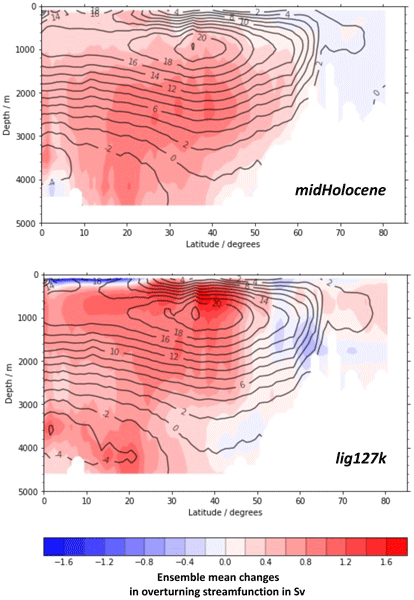
Zhiyi Jiang, Chris Brierley, David Thornalley, and Sophie Sax
Clim. Past, 19, 107–121, https://doi.org/10.5194/cp-19-107-2023, https://doi.org/10.5194/cp-19-107-2023, 2023
Short summary
Short summary
This work looks at a series of model simulations of two past warm climates. We focus on the deep overturning circulation in the Atlantic Ocean. We show that there are no robust changes in the overall strength of the circulation. We also show that the circulation hardly plays a role in changes in the surface climate across the globe.
Julia E. Weiffenbach, Michiel L. J. Baatsen, Henk A. Dijkstra, Anna S. von der Heydt, Ayako Abe-Ouchi, Esther C. Brady, Wing-Le Chan, Deepak Chandan, Mark A. Chandler, Camille Contoux, Ran Feng, Chuncheng Guo, Zixuan Han, Alan M. Haywood, Qiang Li, Xiangyu Li, Gerrit Lohmann, Daniel J. Lunt, Kerim H. Nisancioglu, Bette L. Otto-Bliesner, W. Richard Peltier, Gilles Ramstein, Linda E. Sohl, Christian Stepanek, Ning Tan, Julia C. Tindall, Charles J. R. Williams, Qiong Zhang, and Zhongshi Zhang
Clim. Past, 19, 61–85, https://doi.org/10.5194/cp-19-61-2023, https://doi.org/10.5194/cp-19-61-2023, 2023
Short summary
Short summary
We study the behavior of the Atlantic Meridional Overturning Circulation (AMOC) in the mid-Pliocene. The mid-Pliocene was about 3 million years ago and had a similar CO2 concentration to today. We show that the stronger AMOC during this period relates to changes in geography and that this has a significant influence on ocean temperatures and heat transported northwards by the Atlantic Ocean. Understanding the behavior of the mid-Pliocene AMOC can help us to learn more about our future climate.
Antony Siahaan, Robin S. Smith, Paul R. Holland, Adrian Jenkins, Jonathan M. Gregory, Victoria Lee, Pierre Mathiot, Antony J. Payne, Jeff K. Ridley, and Colin G. Jones
The Cryosphere, 16, 4053–4086, https://doi.org/10.5194/tc-16-4053-2022, https://doi.org/10.5194/tc-16-4053-2022, 2022
Short summary
Short summary
The UK Earth System Model is the first to fully include interactions of the atmosphere and ocean with the Antarctic Ice Sheet. Under the low-greenhouse-gas SSP1–1.9 (Shared Socioeconomic Pathway) scenario, the ice sheet remains stable over the 21st century. Under the strong-greenhouse-gas SSP5–8.5 scenario, the model predicts strong increases in melting of large ice shelves and snow accumulation on the surface. The dominance of accumulation leads to a sea level fall at the end of the century.
Alex West, Edward Blockley, and Matthew Collins
The Cryosphere, 16, 4013–4032, https://doi.org/10.5194/tc-16-4013-2022, https://doi.org/10.5194/tc-16-4013-2022, 2022
Short summary
Short summary
In this study we explore a method of examining model differences in ice volume by looking at the seasonal ice growth and melt. We use simple physical relationships to judge how model differences in key variables affect ice growth and melt and apply these to three case study models with ice volume ranging from very thin to very thick. Results suggest that differences in snow and melt pond cover in early summer are most important in causing the sea ice differences for these models.
Xavier Crosta, Karen E. Kohfeld, Helen C. Bostock, Matthew Chadwick, Alice Du Vivier, Oliver Esper, Johan Etourneau, Jacob Jones, Amy Leventer, Juliane Müller, Rachael H. Rhodes, Claire S. Allen, Pooja Ghadi, Nele Lamping, Carina B. Lange, Kelly-Anne Lawler, David Lund, Alice Marzocchi, Katrin J. Meissner, Laurie Menviel, Abhilash Nair, Molly Patterson, Jennifer Pike, Joseph G. Prebble, Christina Riesselman, Henrik Sadatzki, Louise C. Sime, Sunil K. Shukla, Lena Thöle, Maria-Elena Vorrath, Wenshen Xiao, and Jiao Yang
Clim. Past, 18, 1729–1756, https://doi.org/10.5194/cp-18-1729-2022, https://doi.org/10.5194/cp-18-1729-2022, 2022
Short summary
Short summary
Despite its importance in the global climate, our knowledge of Antarctic sea-ice changes throughout the last glacial–interglacial cycle is extremely limited. As part of the Cycles of Sea Ice Dynamics in the Earth system (C-SIDE) Working Group, we review marine- and ice-core-based sea-ice proxies to provide insights into their applicability and limitations. By compiling published records, we provide information on Antarctic sea-ice dynamics over the past 130 000 years.
Janica C. Bühler, Josefine Axelsson, Franziska A. Lechleitner, Jens Fohlmeister, Allegra N. LeGrande, Madhavan Midhun, Jesper Sjolte, Martin Werner, Kei Yoshimura, and Kira Rehfeld
Clim. Past, 18, 1625–1654, https://doi.org/10.5194/cp-18-1625-2022, https://doi.org/10.5194/cp-18-1625-2022, 2022
Short summary
Short summary
We collected and standardized the output of five isotope-enabled simulations for the last millennium and assess differences and similarities to records from a global speleothem database. Modeled isotope variations mostly arise from temperature differences. While lower-resolution speleothems do not capture extreme changes to the extent of models, they show higher variability on multi-decadal timescales. As no model excels in all comparisons, we advise a multi-model approach where possible.
Adam William Bateson, Daniel L. Feltham, David Schröder, Yanan Wang, Byongjun Hwang, Jeff K. Ridley, and Yevgeny Aksenov
The Cryosphere, 16, 2565–2593, https://doi.org/10.5194/tc-16-2565-2022, https://doi.org/10.5194/tc-16-2565-2022, 2022
Short summary
Short summary
Numerical models are used to understand the mechanisms that drive the evolution of the Arctic sea ice cover. The sea ice cover is formed of pieces of ice called floes. Several recent studies have proposed variable floe size models to replace the standard model assumption of a fixed floe size. In this study we show the need to include floe fragmentation processes in these variable floe size models and demonstrate that model design can determine the impact of floe size on size ice evolution.
Zhaochen Liu, Xianmei Lang, and Dabang Jiang
Atmos. Chem. Phys., 22, 7667–7680, https://doi.org/10.5194/acp-22-7667-2022, https://doi.org/10.5194/acp-22-7667-2022, 2022
Short summary
Short summary
Stratospheric aerosol intervention geoengineering is considered a potential means to counteract global warming. Here the impact of stratospheric aerosol intervention geoengineering on surface air temperature over China and related physical processes are investigated. Results show that the increased stratospheric aerosols cause surface cooling over China. The temperature responses vary with models, regions, and seasons and are largely related to net surface shortwave radiation changes.
Zhiping Tian, Dabang Jiang, Ran Zhang, and Baohuang Su
Geosci. Model Dev., 15, 4469–4487, https://doi.org/10.5194/gmd-15-4469-2022, https://doi.org/10.5194/gmd-15-4469-2022, 2022
Short summary
Short summary
We present an experimental design for a new set of transient experiments for the Holocene from 11.5 ka to the preindustrial period (1850) with a relatively high-resolution Earth system model. Model boundary conditions include time-varying full and single forcing of orbital parameters, greenhouse gases, and ice sheets. The simulations will help to study the mean climate trend and abrupt climate changes through the Holocene in response to both full and single external forcings.
Xiaoxu Shi, Martin Werner, Carolin Krug, Chris M. Brierley, Anni Zhao, Endurance Igbinosa, Pascale Braconnot, Esther Brady, Jian Cao, Roberta D'Agostino, Johann Jungclaus, Xingxing Liu, Bette Otto-Bliesner, Dmitry Sidorenko, Robert Tomas, Evgeny M. Volodin, Hu Yang, Qiong Zhang, Weipeng Zheng, and Gerrit Lohmann
Clim. Past, 18, 1047–1070, https://doi.org/10.5194/cp-18-1047-2022, https://doi.org/10.5194/cp-18-1047-2022, 2022
Short summary
Short summary
Since the orbital parameters of the past are different from today, applying the modern calendar to the past climate can lead to an artificial bias in seasonal cycles. With the use of multiple model outputs, we found that such a bias is non-ignorable and should be corrected to ensure an accurate comparison between modeled results and observational records, as well as between simulated past and modern climates, especially for the Last Interglacial.
Ryan A. Green, Laurie Menviel, Katrin J. Meissner, Xavier Crosta, Deepak Chandan, Gerrit Lohmann, W. Richard Peltier, Xiaoxu Shi, and Jiang Zhu
Clim. Past, 18, 845–862, https://doi.org/10.5194/cp-18-845-2022, https://doi.org/10.5194/cp-18-845-2022, 2022
Short summary
Short summary
Climate models are used to predict future climate changes and as such, it is important to assess their performance in simulating past climate changes. We analyze seasonal sea-ice cover over the Southern Ocean simulated from numerical PMIP3, PMIP4 and LOVECLIM simulations during the Last Glacial Maximum (LGM). Comparing these simulations to proxy data, we provide improved estimates of LGM seasonal sea-ice cover. Our estimate of summer sea-ice extent is 20 %–30 % larger than previous estimates.
Ralf Döscher, Mario Acosta, Andrea Alessandri, Peter Anthoni, Thomas Arsouze, Tommi Bergman, Raffaele Bernardello, Souhail Boussetta, Louis-Philippe Caron, Glenn Carver, Miguel Castrillo, Franco Catalano, Ivana Cvijanovic, Paolo Davini, Evelien Dekker, Francisco J. Doblas-Reyes, David Docquier, Pablo Echevarria, Uwe Fladrich, Ramon Fuentes-Franco, Matthias Gröger, Jost v. Hardenberg, Jenny Hieronymus, M. Pasha Karami, Jukka-Pekka Keskinen, Torben Koenigk, Risto Makkonen, François Massonnet, Martin Ménégoz, Paul A. Miller, Eduardo Moreno-Chamarro, Lars Nieradzik, Twan van Noije, Paul Nolan, Declan O'Donnell, Pirkka Ollinaho, Gijs van den Oord, Pablo Ortega, Oriol Tintó Prims, Arthur Ramos, Thomas Reerink, Clement Rousset, Yohan Ruprich-Robert, Philippe Le Sager, Torben Schmith, Roland Schrödner, Federico Serva, Valentina Sicardi, Marianne Sloth Madsen, Benjamin Smith, Tian Tian, Etienne Tourigny, Petteri Uotila, Martin Vancoppenolle, Shiyu Wang, David Wårlind, Ulrika Willén, Klaus Wyser, Shuting Yang, Xavier Yepes-Arbós, and Qiong Zhang
Geosci. Model Dev., 15, 2973–3020, https://doi.org/10.5194/gmd-15-2973-2022, https://doi.org/10.5194/gmd-15-2973-2022, 2022
Short summary
Short summary
The Earth system model EC-Earth3 is documented here. Key performance metrics show physical behavior and biases well within the frame known from recent models. With improved physical and dynamic features, new ESM components, community tools, and largely improved physical performance compared to the CMIP5 version, EC-Earth3 represents a clear step forward for the only European community ESM. We demonstrate here that EC-Earth3 is suited for a range of tasks in CMIP6 and beyond.
Marie Sicard, Masa Kageyama, Sylvie Charbit, Pascale Braconnot, and Jean-Baptiste Madeleine
Clim. Past, 18, 607–629, https://doi.org/10.5194/cp-18-607-2022, https://doi.org/10.5194/cp-18-607-2022, 2022
Short summary
Short summary
The Last Interglacial (129–116 ka) is characterised by an increased summer insolation over the Arctic region, which leads to a strong temperature rise. The aim of this study is to identify and quantify the main processes and feedback causing this Arctic warming. Using the IPSL-CM6A-LR model, we investigate changes in the energy budget relative to the pre-industrial period. We highlight the crucial role of Arctic sea ice cover, ocean and clouds on the Last Interglacial Arctic warming.
Anni Zhao, Chris M. Brierley, Zhiyi Jiang, Rachel Eyles, Damián Oyarzún, and Jose Gomez-Dans
Geosci. Model Dev., 15, 2475–2488, https://doi.org/10.5194/gmd-15-2475-2022, https://doi.org/10.5194/gmd-15-2475-2022, 2022
Short summary
Short summary
We describe the way that our group have chosen to perform our recent analyses of the Palaeoclimate Modelling Intercomparison Project ensemble simulations. We document the approach used to obtain and curate the simulations, process those outputs via the Climate Variability Diagnostics Package, and then continue through to compute ensemble-wide statistics and create figures. We also provide interim data from all steps, the codes used and the ability for users to perform their own analyses.
Dipayan Choudhury, Laurie Menviel, Katrin J. Meissner, Nicholas K. H. Yeung, Matthew Chamberlain, and Tilo Ziehn
Clim. Past, 18, 507–523, https://doi.org/10.5194/cp-18-507-2022, https://doi.org/10.5194/cp-18-507-2022, 2022
Short summary
Short summary
We investigate the effects of a warmer climate from the Earth's paleoclimate (last interglacial) on the marine carbon cycle of the Southern Ocean using a carbon-cycle-enabled state-of-the-art climate model. We find a 150 % increase in CO2 outgassing during this period, which results from competition between higher sea surface temperatures and weaker oceanic circulation. From this we unequivocally infer that the carbon uptake by the Southern Ocean will reduce under a future warming scenario.
Davide Zanchettin, Claudia Timmreck, Myriam Khodri, Anja Schmidt, Matthew Toohey, Manabu Abe, Slimane Bekki, Jason Cole, Shih-Wei Fang, Wuhu Feng, Gabriele Hegerl, Ben Johnson, Nicolas Lebas, Allegra N. LeGrande, Graham W. Mann, Lauren Marshall, Landon Rieger, Alan Robock, Sara Rubinetti, Kostas Tsigaridis, and Helen Weierbach
Geosci. Model Dev., 15, 2265–2292, https://doi.org/10.5194/gmd-15-2265-2022, https://doi.org/10.5194/gmd-15-2265-2022, 2022
Short summary
Short summary
This paper provides metadata and first analyses of the volc-pinatubo-full experiment of CMIP6-VolMIP. Results from six Earth system models reveal significant differences in radiative flux anomalies that trace back to different implementations of volcanic forcing. Surface responses are in contrast overall consistent across models, reflecting the large spread due to internal variability. A second phase of VolMIP shall consider both aspects toward improved protocol for volc-pinatubo-full.
Erin L. McClymont, Michael J. Bentley, Dominic A. Hodgson, Charlotte L. Spencer-Jones, Thomas Wardley, Martin D. West, Ian W. Croudace, Sonja Berg, Darren R. Gröcke, Gerhard Kuhn, Stewart S. R. Jamieson, Louise Sime, and Richard A. Phillips
Clim. Past, 18, 381–403, https://doi.org/10.5194/cp-18-381-2022, https://doi.org/10.5194/cp-18-381-2022, 2022
Short summary
Short summary
Sea ice is important for our climate system and for the unique ecosystems it supports. We present a novel way to understand past Antarctic sea-ice ecosystems: using the regurgitated stomach contents of snow petrels, which nest above the ice sheet but feed in the sea ice. During a time when sea ice was more extensive than today (24 000–30 000 years ago), we show that snow petrel diet had varying contributions of fish and krill, which we interpret to show changing sea-ice distribution.
Matthew Chadwick, Claire S. Allen, Louise C. Sime, Xavier Crosta, and Claus-Dieter Hillenbrand
Clim. Past, 18, 129–146, https://doi.org/10.5194/cp-18-129-2022, https://doi.org/10.5194/cp-18-129-2022, 2022
Short summary
Short summary
Algae preserved in marine sediments have allowed us to reconstruct how much winter sea ice was present around Antarctica during a past time period (130 000 years ago) when the climate was warmer than today. The patterns of sea-ice increase and decrease vary between different parts of the Southern Ocean. The Pacific sector has a largely stable sea-ice extent, whereas the amount of sea ice in the Atlantic sector is much more variable with bigger decreases and increases than other regions.
Emma K. Fiedler, Matthew J. Martin, Ed Blockley, Davi Mignac, Nicolas Fournier, Andy Ridout, Andrew Shepherd, and Rachel Tilling
The Cryosphere, 16, 61–85, https://doi.org/10.5194/tc-16-61-2022, https://doi.org/10.5194/tc-16-61-2022, 2022
Short summary
Short summary
Sea ice thickness (SIT) observations derived from CryoSat-2 satellite measurements have been successfully used to initialise an ocean and sea ice forecasting model (FOAM). Other centres have previously used gridded and averaged SIT observations for this purpose, but we demonstrate here for the first time that SIT measurements along the satellite orbit track can be used. Validation of the resulting modelled SIT demonstrates improvements in the model performance compared to a control.
Léa Terray, Masa Kageyama, Emmanuelle Stoetzel, Eslem Ben Arous, Raphaël Cornette, and Pascale Braconnot
Clim. Past Discuss., https://doi.org/10.5194/cp-2021-185, https://doi.org/10.5194/cp-2021-185, 2022
Manuscript not accepted for further review
Short summary
Short summary
To reconstruct the paleoenvironmental and chronological context of archaeo/paleontological sites is a key step to understand the evolutionary history of past organisms. Paleoenvironmental proxies often show inconsistencies and age estimations can vary depending on the method used. We show the potential of paleoclimate simulations to address those discrepancies, illustrating the strong potential of our cross-disciplinary approach to refine the context of archaeo/paleontological sites.
Kim H. Stadelmaier, Patrick Ludwig, Pascal Bertran, Pierre Antoine, Xiaoxu Shi, Gerrit Lohmann, and Joaquim G. Pinto
Clim. Past, 17, 2559–2576, https://doi.org/10.5194/cp-17-2559-2021, https://doi.org/10.5194/cp-17-2559-2021, 2021
Short summary
Short summary
We use regional climate simulations for the Last Glacial Maximum to reconstruct permafrost and to identify areas of thermal contraction cracking of the ground in western Europe. We find ground cracking, a precondition for the development of permafrost proxies, south of the probable permafrost border, implying that permafrost was not the limiting factor for proxy development. A good agreement with permafrost and climate proxy data is achieved when easterly winds are modelled more frequently.
Zixuan Han, Qiong Zhang, Qiang Li, Ran Feng, Alan M. Haywood, Julia C. Tindall, Stephen J. Hunter, Bette L. Otto-Bliesner, Esther C. Brady, Nan Rosenbloom, Zhongshi Zhang, Xiangyu Li, Chuncheng Guo, Kerim H. Nisancioglu, Christian Stepanek, Gerrit Lohmann, Linda E. Sohl, Mark A. Chandler, Ning Tan, Gilles Ramstein, Michiel L. J. Baatsen, Anna S. von der Heydt, Deepak Chandan, W. Richard Peltier, Charles J. R. Williams, Daniel J. Lunt, Jianbo Cheng, Qin Wen, and Natalie J. Burls
Clim. Past, 17, 2537–2558, https://doi.org/10.5194/cp-17-2537-2021, https://doi.org/10.5194/cp-17-2537-2021, 2021
Short summary
Short summary
Understanding the potential processes responsible for large-scale hydrological cycle changes in a warmer climate is of great importance. Our study implies that an imbalance in interhemispheric atmospheric energy during the mid-Pliocene could have led to changes in the dynamic effect, offsetting the thermodynamic effect and, hence, altering mid-Pliocene hydroclimate cycling. Moreover, a robust westward shift in the Pacific Walker circulation can moisten the northern Indian Ocean.
Arthur M. Oldeman, Michiel L. J. Baatsen, Anna S. von der Heydt, Henk A. Dijkstra, Julia C. Tindall, Ayako Abe-Ouchi, Alice R. Booth, Esther C. Brady, Wing-Le Chan, Deepak Chandan, Mark A. Chandler, Camille Contoux, Ran Feng, Chuncheng Guo, Alan M. Haywood, Stephen J. Hunter, Youichi Kamae, Qiang Li, Xiangyu Li, Gerrit Lohmann, Daniel J. Lunt, Kerim H. Nisancioglu, Bette L. Otto-Bliesner, W. Richard Peltier, Gabriel M. Pontes, Gilles Ramstein, Linda E. Sohl, Christian Stepanek, Ning Tan, Qiong Zhang, Zhongshi Zhang, Ilana Wainer, and Charles J. R. Williams
Clim. Past, 17, 2427–2450, https://doi.org/10.5194/cp-17-2427-2021, https://doi.org/10.5194/cp-17-2427-2021, 2021
Short summary
Short summary
In this work, we have studied the behaviour of El Niño events in the mid-Pliocene, a period of around 3 million years ago, using a collection of 17 climate models. It is an interesting period to study, as it saw similar atmospheric carbon dioxide levels to the present day. We find that the El Niño events were less strong in the mid-Pliocene simulations, when compared to pre-industrial climate. Our results could help to interpret El Niño behaviour in future climate projections.
Ingo Bethke, Yiguo Wang, François Counillon, Noel Keenlyside, Madlen Kimmritz, Filippa Fransner, Annette Samuelsen, Helene Langehaug, Lea Svendsen, Ping-Gin Chiu, Leilane Passos, Mats Bentsen, Chuncheng Guo, Alok Gupta, Jerry Tjiputra, Alf Kirkevåg, Dirk Olivié, Øyvind Seland, Julie Solsvik Vågane, Yuanchao Fan, and Tor Eldevik
Geosci. Model Dev., 14, 7073–7116, https://doi.org/10.5194/gmd-14-7073-2021, https://doi.org/10.5194/gmd-14-7073-2021, 2021
Short summary
Short summary
The Norwegian Climate Prediction Model version 1 (NorCPM1) is a new research tool for performing climate reanalyses and seasonal-to-decadal climate predictions. It adds data assimilation capability to the Norwegian Earth System Model version 1 (NorESM1) and has contributed output to the Decadal Climate Prediction Project (DCPP) as part of the sixth Coupled Model Intercomparison Project (CMIP6). We describe the system and evaluate its baseline, reanalysis and prediction performance.
Maryam Ilyas, Douglas Nychka, Chris Brierley, and Serge Guillas
Atmos. Meas. Tech., 14, 7103–7121, https://doi.org/10.5194/amt-14-7103-2021, https://doi.org/10.5194/amt-14-7103-2021, 2021
Short summary
Short summary
Instrumental temperature records are fundamental to climate science. There are spatial gaps in the distribution of these measurements across the globe. This lack of spatial coverage introduces coverage error. In this research, a methodology is developed and used to quantify the coverage errors. It results in a data product that, for the first time, provides a full description of both the spatial coverage uncertainties along with the uncertainties in the modeling of these spatial gaps.
Rachel Diamond, Louise C. Sime, David Schroeder, and Maria-Vittoria Guarino
The Cryosphere, 15, 5099–5114, https://doi.org/10.5194/tc-15-5099-2021, https://doi.org/10.5194/tc-15-5099-2021, 2021
Short summary
Short summary
The Hadley Centre Global Environment Model version 3 (HadGEM3) is the first coupled climate model to simulate an ice-free summer Arctic during the Last Interglacial (LIG), 127 000 years ago, and yields accurate Arctic surface temperatures. We investigate the causes and impacts of this extreme simulated ice loss and, in particular, the role of melt ponds.
Nele Lamping, Juliane Müller, Jens Hefter, Gesine Mollenhauer, Christian Haas, Xiaoxu Shi, Maria-Elena Vorrath, Gerrit Lohmann, and Claus-Dieter Hillenbrand
Clim. Past, 17, 2305–2326, https://doi.org/10.5194/cp-17-2305-2021, https://doi.org/10.5194/cp-17-2305-2021, 2021
Short summary
Short summary
We analysed biomarker concentrations on surface sediment samples from the Antarctic continental margin. Highly branched isoprenoids and GDGTs are used for reconstructing recent sea-ice distribution patterns and ocean temperatures respectively. We compared our biomarker-based results with data obtained from satellite observations and estimated from a numerical model and find reasonable agreements. Further, we address caveats and provide recommendations for future investigations.
Charles J. R. Williams, Alistair A. Sellar, Xin Ren, Alan M. Haywood, Peter Hopcroft, Stephen J. Hunter, William H. G. Roberts, Robin S. Smith, Emma J. Stone, Julia C. Tindall, and Daniel J. Lunt
Clim. Past, 17, 2139–2163, https://doi.org/10.5194/cp-17-2139-2021, https://doi.org/10.5194/cp-17-2139-2021, 2021
Short summary
Short summary
Computer simulations of the geological past are an important tool to improve our understanding of climate change. We present results from a simulation of the mid-Pliocene (approximately 3 million years ago) using the latest version of the UK’s climate model. The simulation reproduces temperatures as expected and shows some improvement relative to previous versions of the same model. The simulation is, however, arguably too warm when compared to other models and available observations.
Ellen Berntell, Qiong Zhang, Qiang Li, Alan M. Haywood, Julia C. Tindall, Stephen J. Hunter, Zhongshi Zhang, Xiangyu Li, Chuncheng Guo, Kerim H. Nisancioglu, Christian Stepanek, Gerrit Lohmann, Linda E. Sohl, Mark A. Chandler, Ning Tan, Camille Contoux, Gilles Ramstein, Michiel L. J. Baatsen, Anna S. von der Heydt, Deepak Chandan, William Richard Peltier, Ayako Abe-Ouchi, Wing-Le Chan, Youichi Kamae, Charles J. R. Williams, Daniel J. Lunt, Ran Feng, Bette L. Otto-Bliesner, and Esther C. Brady
Clim. Past, 17, 1777–1794, https://doi.org/10.5194/cp-17-1777-2021, https://doi.org/10.5194/cp-17-1777-2021, 2021
Short summary
Short summary
The mid-Pliocene Warm Period (~ 3.2 Ma) is often considered an analogue for near-future climate projections, and model results from the PlioMIP2 ensemble show an increase of rainfall over West Africa and the Sahara region compared to pre-industrial conditions. Though previous studies of future projections show a west–east drying–wetting contrast over the Sahel, these results indicate a uniform rainfall increase over the Sahel in warm climates characterized by increased greenhouse gas forcing.
Jun Shao, Lowell D. Stott, Laurie Menviel, Andy Ridgwell, Malin Ödalen, and Mayhar Mohtadi
Clim. Past, 17, 1507–1521, https://doi.org/10.5194/cp-17-1507-2021, https://doi.org/10.5194/cp-17-1507-2021, 2021
Short summary
Short summary
Planktic and shallow benthic foraminiferal stable carbon isotope
(δ13C) data show a rapid decline during the last deglaciation. This widespread signal was linked to respired carbon released from the deep ocean and its transport through the upper-ocean circulation. Using numerical simulations in which a stronger flux of respired carbon upwells and outcrops in the Southern Ocean, we find that the depleted δ13C signal is transmitted to the rest of the upper ocean through air–sea gas exchange.
Cited articles
Berger, A. and Loutre, M. F.: Insolation values for the climate of the last 10 million years, Quaternary Sci. Rev., 10, 297–317, https://doi.org/10.1016/0277-3791(91)90033-Q, 1991. a, b
Bracegirdle, T. J., Colleoni, F., Abram, N. J., Bertler, N. A. N., Dixon, D. A., England, M., Favier, V., Fogwill, C. J., Fyfe, J. C., Goodwin, I., Goosse, H., Hobbs, W., Jones, J. M., Keller, E. D., Khan, A. L., Phipps, S. J., Raphael, M. N., Russell, J., Sime, L., Thomas, E. R., van den Broeke, M. R., and Wainer, I.: Back to the future: using long-term observational and paleo-proxy reconstructions to improve model projections of Antarctic climate, Geosciences, 9, 255, https://doi.org/10.3390/geosciences9060255, 2019. a
Braconnot, P., Kageyama, M., Harrison, S. P., Otto-Bliesner, B. L., Abe-Ouchi, A., Villé, M., Peterschmitt, J.-Y., and Caud, N.: PMIP key dates and achievements over the last 30 years, Past Global Changes Magazine, 29, 66–67, https://doi.org/10.22498/pages.29.2.66, 2021. a, b
Crow, B. R. and Prange, M.: Long- and short-term variability of Arctic sea-ice cover during the Last Interglacial and Marine Isotope Stage 11c, Commun. Earth Environ., 6, 274, https://doi.org/10.1038/s43247-025-02267-4, 2025. a
Diamond, R., Schroeder, D., Sime, L. C., Ridley, J., and Feltham, D.: The Significance of the Melt-Pond Scheme in a CMIP6 Global Climate Model, J. Climate, 37, 249–268, https://doi.org/10.1175/JCLI-D-22-0902.1, 2023. a, b, c, d
Diamond, R., Brierley, C., Pollock, M., and Sime, L. C.: Supporting dataset for Sime, Diamond et al. (2025) [submitted], Zenodo [data set], https://doi.org/10.5281/zenodo.16739058, 2025. a
Domingo, D., Malmierca-Vallet, I., Sime, L., Voss, J., and Capron, E.: Using Ice Cores and Gaussian Process Emulation to Recover Changes in the Greenland Ice Sheet During the Last Interglacial, J. Geophys. Res.-Earth, 125, e2019JF005237, https://doi.org/10.1029/2019JF005237, 2020. a, b, c, d
Dunne, J. P., Hewitt, H. T., Arblaster, J. M., Bonou, F., Boucher, O., Cavazos, T., Dingley, B., Durack, P. J., Hassler, B., Juckes, M., Miyakawa, T., Mizielinski, M., Naik, V., Nicholls, Z., O'Rourke, E., Pincus, R., Sanderson, B. M., Simpson, I. R., and Taylor, K. E.: An evolving Coupled Model Intercomparison Project phase 7 (CMIP7) and Fast Track in support of future climate assessment, Geosci. Model Dev., 18, 6671–6700, https://doi.org/10.5194/gmd-18-6671-2025, 2025. a
Eyring, V., Bony, S., Meehl, G. A., Senior, C. A., Stevens, B., Stouffer, R. J., and Taylor, K. E.: Overview of the Coupled Model Intercomparison Project Phase 6 (CMIP6) experimental design and organization, Geosci. Model Dev., 9, 1937–1958, https://doi.org/10.5194/gmd-9-1937-2016, 2016. a, b
Flocco, D., Feltham, D. L., and Turner, A. K.: Incorporation of a physically based melt pond scheme into the sea ice component of a climate model, J. Geophys. Res.-Oceans, 115, C08012, https://doi.org/10.1029/2009JC005568, 2010. a
Fox-Kemper, B., DeRepentigny, P., Treguier, A. M., Stepanek, C., O’Rourke, E., Mackallah, C., Meucci, A., Aksenov, Y., Durack, P. J., Feldl, N., Hernaman, V., Heuzé, C., Iovino, D., Madan, G., Marquez, A. L., Massonnet, F., Mecking, J., Samanta, D., Taylor, P. C., Tseng, W.-L., and Vancoppenolle, M.: CMIP7 Data Request: Ocean and Sea Ice Priorities and Opportunities, EGUsphere [preprint], https://doi.org/10.5194/egusphere-2025-3083, 2025. a
Guarino, M. V., Sime, L. C., Schröeder, D., Malmierca-Vallet, I., Rosenblum, E., Ringer, M., Ridley, J., Feltham, D., Bitz, C., Steig, E. J., Wolff, E., Stroeve, J., and Sellar, A.: Sea-ice-free Arctic during the Last Interglacial supports fast future loss, Nat. Clim. Change, 10, 928–932, https://doi.org/10.1038/s41558-020-0865-2, 2020. a, b, c, d, e, f, g, h, i, j, k, l, m, n, o
Heuzé, C. and Jahn, A.: The first ice-free day in the Arctic Ocean could occur before 2030, Nat. Commun., 15, 10101, https://doi.org/10.1038/s41467-024-54508-3, 2024. a
Hunke, E. C., Hebert, D. A., and Lecomte, O.: Level-ice melt ponds in the Los Alamos sea ice model, CICE, Ocean Model., 71, 26–42, https://doi.org/10.1016/j.ocemod.2012.11.008, 2013. a
IPCC: Climate Change 2021: The Physical Science Basis. Contribution of Working Group I to the Sixth Assessment Report of the Intergovernmental Panel on Climate Change, Cambridge University Press, Cambridge, United Kingdom and New York, NY, USA, https://doi.org/10.1017/9781009157896, 2021. a
Jahn, A., Holland, M. M., and Kay, J. E.: Projections of an ice-free Arctic Ocean, Nature Reviews Earth & Environment, 5, 164–176, https://doi.org/10.1038/s43017-023-00515-9, 2024. a, b, c, d
Juckes, M., Taylor, K. E., Antonio, F., Brayshaw, D., Buontempo, C., Cao, J., Durack, P. J., Kawamiya, M., Kim, H., Lovato, T., Mackallah, C., Mizielinski, M., Nuzzo, A., Stockhause, M., Visioni, D., Walton, J., Turner, B., O'Rourke, E., and Dingley, B.: Baseline Climate Variables for Earth System Modelling, Geosci. Model Dev., 18, 2639–2663, https://doi.org/10.5194/gmd-18-2639-2025, 2025. a
Kageyama, M., Braconnot, P., Harrison, S. P., Haywood, A. M., Jungclaus, J. H., Otto-Bliesner, B. L., Peterschmitt, J.-Y., Abe-Ouchi, A., Albani, S., Bartlein, P. J., Brierley, C., Crucifix, M., Dolan, A., Fernandez-Donado, L., Fischer, H., Hopcroft, P. O., Ivanovic, R. F., Lambert, F., Lunt, D. J., Mahowald, N. M., Peltier, W. R., Phipps, S. J., Roche, D. M., Schmidt, G. A., Tarasov, L., Valdes, P. J., Zhang, Q., and Zhou, T.: The PMIP4 contribution to CMIP6 – Part 1: Overview and over-arching analysis plan, Geosci. Model Dev., 11, 1033–1057, https://doi.org/10.5194/gmd-11-1033-2018, 2018. a
Kageyama, M., Sime, L. C., Sicard, M., Guarino, M.-V., de Vernal, A., Stein, R., Schroeder, D., Malmierca-Vallet, I., Abe-Ouchi, A., Bitz, C., Braconnot, P., Brady, E. C., Cao, J., Chamberlain, M. A., Feltham, D., Guo, C., LeGrande, A. N., Lohmann, G., Meissner, K. J., Menviel, L., Morozova, P., Nisancioglu, K. H., Otto-Bliesner, B. L., O'ishi, R., Ramos Buarque, S., Salas y Melia, D., Sherriff-Tadano, S., Stroeve, J., Shi, X., Sun, B., Tomas, R. A., Volodin, E., Yeung, N. K. H., Zhang, Q., Zhang, Z., Zheng, W., and Ziehn, T.: A multi-model CMIP6-PMIP4 study of Arctic sea ice at 127 ka: sea ice data compilation and model differences, Clim. Past, 17, 37–62, https://doi.org/10.5194/cp-17-37-2021, 2021. a, b, c, d, e, f, g, h, i, j, k, l
Kageyama, M., Braconnot, P., Chiessi, C. M., Rehfeld, K., Ait Brahim, Y., Dütsch, M., Gwinneth, B., Hou, A., Loutre, M.-F., Hendrizan, M., Meissner, K., Mongwe, P., Otto-Bliesner, B., Pezzi, L. P., Rovere, A., Seltzer, A., Sime, L., and Zhu, J.: Lessons from paleoclimates for recent and future climate change: opportunities and insights, Frontiers in Climate, 6, 1511997, https://doi.org/10.3389/fclim.2024.1511997, 2024. a, b
Keen, A., Blockley, E., Bailey, D. A., Boldingh Debernard, J., Bushuk, M., Delhaye, S., Docquier, D., Feltham, D., Massonnet, F., O'Farrell, S., Ponsoni, L., Rodriguez, J. M., Schroeder, D., Swart, N., Toyoda, T., Tsujino, H., Vancoppenolle, M., and Wyser, K.: An inter-comparison of the mass budget of the Arctic sea ice in CMIP6 models, The Cryosphere, 15, 951–982, https://doi.org/10.5194/tc-15-951-2021, 2021. a, b, c, d, e, f, g, h, i, j, k, l, m, n
Kim, Y.-H., Min, S.-K., Gillett, N. P., Notz, D., and Malinina, E.: Observationally-constrained projections of an ice-free Arctic even under a low emission scenario, Nat. Commun., 14, 3139, https://doi.org/10.1038/s41467-023-38511-8, 2023. a, b
Malmierca-Vallet, I., Sime, L. C., Tindall, J. C., Capron, E., Valdes, P. J., Vinther, B. M., and Holloway, M. D.: Simulating the Last Interglacial Greenland stable water isotope peak: The role of Arctic sea ice changes, Quaternary Sci. Rev., 198, 1–14, https://doi.org/10.1016/j.quascirev.2018.07.027, 2018. a, b
Meinshausen, M., Smith, S. J., Calvin, K. V., Daniel, J. S., Kainuma, M., Lamarque, J.-F., Matsumoto, K., Montzka, S. A., Raper, S. C. B., Riahi, K., Thomson, A. M., Velders, G. J. M., and van Vuuren, D.: The RCP greenhouse gas concentrations and their extensions from 1765 to 2300, Climatic Change, 109, 213–241, https://doi.org/10.1007/s10584-011-0156-z, 2011. a
NEEM community members: Eemian interglacial reconstructed from a Greenland folded ice core, Nature, 493, 489–494, https://doi.org/10.1038/nature11789, 2013. a, b
Notz, D. and SIMIP Community: Arctic sea ice in CMIP6, Geophys. Res. Lett., 47, e2019GL086749, https://doi.org/10.1029/2019GL086749, 2020. a, b, c, d
Notz, D., Jahn, A., Holland, M., Hunke, E., Massonnet, F., Stroeve, J., Tremblay, B., and Vancoppenolle, M.: The CMIP6 Sea-Ice Model Intercomparison Project (SIMIP): understanding sea ice through climate-model simulations, Geosci. Model Dev., 9, 3427–3446, https://doi.org/10.5194/gmd-9-3427-2016, 2016. a, b, c, d, e
Otto-Bliesner, B. L., Braconnot, P., Harrison, S. P., Lunt, D. J., Abe-Ouchi, A., Albani, S., Bartlein, P. J., Capron, E., Carlson, A. E., Dutton, A., Fischer, H., Goelzer, H., Govin, A., Haywood, A., Joos, F., LeGrande, A. N., Lipscomb, W. H., Lohmann, G., Mahowald, N., Nehrbass-Ahles, C., Pausata, F. S. R., Peterschmitt, J.-Y., Phipps, S. J., Renssen, H., and Zhang, Q.: The PMIP4 contribution to CMIP6 – Part 2: Two interglacials, scientific objective and experimental design for Holocene and Last Interglacial simulations, Geosci. Model Dev., 10, 3979–4003, https://doi.org/10.5194/gmd-10-3979-2017, 2017. a, b, c, d, e, f, g, h, i, j, k, l, m, n, o
Otto-Bliesner, B. L., Brady, E. C., Tomas, R. A., Albani, S., Bartlein, P. J., Mahowald, N. M., Shafer, S. L., Kluzek, E., Lawrence, P. J., Leguy, G., Rothstein, M., and Sommers, A. N.: A Comparison of the CMIP6 midHolocene and lig127k Simulations in CESM2, Paleoceanography and Paleoclimatology, 35, e2020PA003957, https://doi.org/10.1029/2020PA003957, 2020. a
Otto-Bliesner, B. L., Brady, E. C., Zhao, A., Brierley, C. M., Axford, Y., Capron, E., Govin, A., Hoffman, J. S., Isaacs, E., Kageyama, M., Scussolini, P., Tzedakis, P. C., Williams, C. J. R., Wolff, E., Abe-Ouchi, A., Braconnot, P., Ramos Buarque, S., Cao, J., de Vernal, A., Guarino, M. V., Guo, C., LeGrande, A. N., Lohmann, G., Meissner, K. J., Menviel, L., Morozova, P. A., Nisancioglu, K. H., O'ishi, R., Salas y Mélia, D., Shi, X., Sicard, M., Sime, L., Stepanek, C., Tomas, R., Volodin, E., Yeung, N. K. H., Zhang, Q., Zhang, Z., and Zheng, W.: Large-scale features of Last Interglacial climate: results from evaluating the lig127k simulations for the Coupled Model Intercomparison Project (CMIP6)–Paleoclimate Modeling Intercomparison Project (PMIP4), Clim. Past, 17, 63–94, https://doi.org/10.5194/cp-17-63-2021, 2021. a, b, c, d, e
Riahi, K., van Vuuren, D. P., Kriegler, E., Edmonds, J., O'Neill, B. C., Fujimori, S., Bauer, N., Calvin, K., Dellink, R., Fricko, O., Lutz, W., Popp, A., Cuaresma, J. C., KC, S., Leimbach, M., Jiang, L., Kram, T., Rao, S., Emmerling, J., Ebi, K., Hasegawa, T., Havlik, P., Humpenöder, F., Da Silva, L. A., Smith, S., Stehfest, E., Bosetti, V., Eom, J., Gernaat, D., Masui, T., Rogelj, J., Strefler, J., Drouet, L., Krey, V., Luderer, G., Harmsen, M., Takahashi, K., Baumstark, L., Doelman, J. C., Kainuma, M., Klimont, Z., Marangoni, G., Lotze-Campen, H., Obersteiner, M., Tabeau, A., and Tavoni, M.: The Shared Socioeconomic Pathways and their energy, land use, and greenhouse gas emissions implications: An overview, Global Environ. Chang., 42, 153–168, https://doi.org/10.1016/j.gloenvcha.2016.05.009, 2017. a
Schulzweida, U.: CDO User Guide, Zenodo, https://doi.org/10.5281/zenodo.10020800, 2023. a
Selivanova, J., Iovino, D., and Cocetta, F.: Past and future of the Arctic sea ice in High-Resolution Model Intercomparison Project (HighResMIP) climate models, The Cryosphere, 18, 2739–2763, https://doi.org/10.5194/tc-18-2739-2024, 2024. a, b
Sime, L. C., Sivankutty, R., Malmierca-Vallet, I., Goursaud Oger, S., LeGrande, A. N., McClymont, E. L., de Boer, A., Cauquoin, A., and Werner, M.: H11 meltwater and standard 127 ka Last Interglacial simulations suggest more modest peak temperatures for both Greenland and Antarctica: a multi-model study of water isotopes, Clim. Past, 21, 1725–1753, https://doi.org/10.5194/cp-21-1725-2025, 2025. a
Sommers, A. N., Otto-Bliesner, B. L., Lipscomb, W. H., Lofverstrom, M., Shafer, S. L., Bartlein, P. J., Brady, E. C., Kluzek, E., Leguy, G., Thayer-Calder, K., and Tomas, R. A.: Retreat and Regrowth of the Greenland Ice Sheet During the Last Interglacial as Simulated by the CESM2-CISM2 Coupled Climate–Ice Sheet Model, Paleoceanography and Paleoclimatology, 36, e2021PA004272, https://doi.org/10.1029/2021PA004272, 2021. a, b
Tan, I. and Storelvmo, T.: Evidence of Strong Contributions From Mixed-Phase Clouds to Arctic Climate Change, Geophys. Res. Lett., 46, 2894–2902, https://doi.org/10.1029/2018GL081871, 2019. a
West, A. E. and Blockley, E. W.: CMIP6 models overestimate sea ice melt, growth and conduction relative to ice mass balance buoy estimates, Geosci. Model Dev., 18, 3041–3064, https://doi.org/10.5194/gmd-18-3041-2025, 2025. a, b
Short summary
The Arctic may have lost its summer sea ice 127,000 years ago during a naturally warm period in Earth’s past. Climate models can be tested by recreating those conditions, with similar sunlight and greenhouse gas levels. Analysing the large sea ice changes in these simulations helps us understand how the Arctic might respond in the near future and improves how we test and trust our climate models.
The Arctic may have lost its summer sea ice 127,000 years ago during a naturally warm period in...
Special issue