
Articles | Volume 19, issue 12
https://doi.org/10.5194/gmd-19-5439-2026
© Author(s) 2026. This work is distributed under
the Creative Commons Attribution 4.0 License.
the Creative Commons Attribution 4.0 License.
https://doi.org/10.5194/gmd-19-5439-2026
© Author(s) 2026. This work is distributed under
the Creative Commons Attribution 4.0 License.
the Creative Commons Attribution 4.0 License.
Methods for assessment of models
| 
24 Jun 2026
Methods for assessment of models |
| 24 Jun 2026
| 24 Jun 2026
Optimisation of ICON-CLM for the EURO-CORDEX domain: developments, sensitivities, tuning

Institute of Coastal Systems, Helmholtz-Zentrum Hereon, Geesthacht, Germany
Angelo Campanale
Euro-Mediterranean Center on Climate Change (CMCC Foundation), Caserta, Italy
Evgenii Churiulin
Institute of Meteorology and Climate Research Troposphere Research (IMKTRO), Karlsruhe Institute of Technology, Karlsruhe, Germany
Hendrik Feldmann
Institute of Meteorology and Climate Research Troposphere Research (IMKTRO), Karlsruhe Institute of Technology, Karlsruhe, Germany
Klaus Goergen
Institut für Bio- und Geowissenschaften (Agrosphäre, IBG-3), Forschungszentrum Jülich, Jülich, Germany
Stefan Hagemann
Institute of Coastal Systems, Helmholtz-Zentrum Hereon, Geesthacht, Germany
Ha Thi Minh Ho-Hagemann
Institute of Coastal Systems, Helmholtz-Zentrum Hereon, Geesthacht, Germany
Muhammed Muhshif Karadan
Fachgebiet Atmosphärische Prozesse, Brandenburgische Technische Universität Cottbus-Senftenberg, Cottbus, Germany
Klaus Keuler
Fachgebiet Atmosphärische Prozesse, Brandenburgische Technische Universität Cottbus-Senftenberg, Cottbus, Germany
Pavel Khain
Israel Meteorological Service, Bet-Dagan, Israel
Divyaja Lawand
Fachgebiet Atmosphärische Prozesse, Brandenburgische Technische Universität Cottbus-Senftenberg, Cottbus, Germany
Patrick Ludwig
Institute of Meteorology and Climate Research Troposphere Research (IMKTRO), Karlsruhe Institute of Technology, Karlsruhe, Germany
Vera Maurer
Deutscher Wetterdienst, Offenbach am Main, Germany
Sergei Petrov
Institute of Coastal Systems, Helmholtz-Zentrum Hereon, Geesthacht, Germany
Stefan Poll
Institut für Bio- und Geowissenschaften (Agrosphäre, IBG-3), Forschungszentrum Jülich, Jülich, Germany
Christopher Purr
Deutscher Wetterdienst, Offenbach am Main, Germany
Emmanuele Russo
Institute for Atmospheric and Climate Science, ETH Zurich, Zürich, Switzerland
Martina Schubert-Frisius
GERICS, Helmholtz-Zentrum Hereon, Geesthacht, Germany
Jan-Peter Schulz
Deutscher Wetterdienst, Offenbach am Main, Germany
Euro-Mediterranean Center on Climate Change (CMCC Foundation), Caserta, Italy
Shweta Singh
Deutscher Wetterdienst, Offenbach am Main, Germany
Christian Steger
Deutscher Wetterdienst, Offenbach am Main, Germany
Heimo Truhetz
Wegener Center for Climate and Global Change (WEGC), University of Graz, Graz, Austria
Andreas Will
Fachgebiet Atmosphärische Prozesse, Brandenburgische Technische Universität Cottbus-Senftenberg, Cottbus, Germany
Related authors
Christoph Braun, Florian Ehmele, Christian Beier, Edgar Fabián Espitia-Sarmiento, Hendrik Feldmann, Thomas Frisius, Beate Geyer, Marie Hundhausen, Klaus Keuler, Jürg Luterbacher, Kevin Sieck, Katja Trachte, Elena Xoplaki, and Joaquim G. Pinto
EGUsphere, https://doi.org/10.5194/egusphere-2026-2517, https://doi.org/10.5194/egusphere-2026-2517, 2026
Short summary
Short summary
Adaptation to future climatic changes requires robust climate information. Here, a newly produced set of high-resolution climate simulations using multiple regional climate models over Germany is compared to observation-based datasets over the period 1961 to 1990. Overall, the simulations represent the observed climate well and, together with their future counterparts considering global warming, expand our knowledge about projected climatic changes to inform climate adaptation measures.
Kevin Sieck, Joaquim G. Pinto, Beate Geyer, Klaus Keuler, Christian Beier, Christoph Braun, Florian Ehmele, Hendrik Feldmann, Thomas Frisius, Philipp Heinrich, Marie Hundhausen, Ronny Petrik, and Katja Trachte
EGUsphere, https://doi.org/10.5194/egusphere-2026-1024, https://doi.org/10.5194/egusphere-2026-1024, 2026
Short summary
Short summary
In this study we present the evaluation of a new generation of user informed climate simulations at scales of typical weather forecasts. It provides detailed information that are vital for climate impact studies at municipal level. Besides typical short comings of climate models in terms of deviations compared to reference data, the simulations show good agreement with observed climate especially in terms of regional patterns.
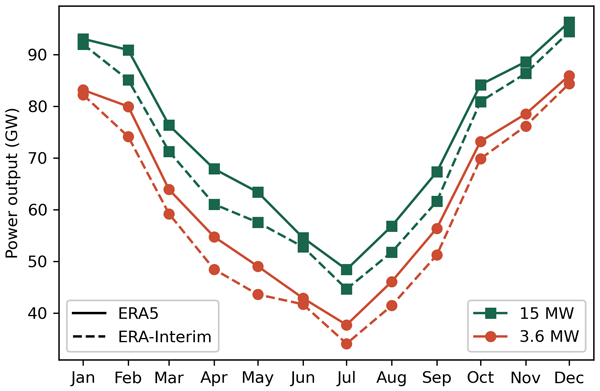
Alberto Elizalde, Naveed Akhtar, Beate Geyer, and Corinna Schrum
Wind Energ. Sci., 11, 1077–1095, https://doi.org/10.5194/wes-11-1077-2026, https://doi.org/10.5194/wes-11-1077-2026, 2026
Short summary
Short summary
As green energy demand rises, offshore wind farms in the North Sea are expanding. This study examines the uncertainties in power output predictions, considering turbine arrangements and different atmospheric situations. Using an advanced climate model, we found that power output can vary by up to 10 % due to these reasons. The findings are vital for accurate economic and environmental planning. This research will contribute to a better understanding of the potential of offshore wind energy.
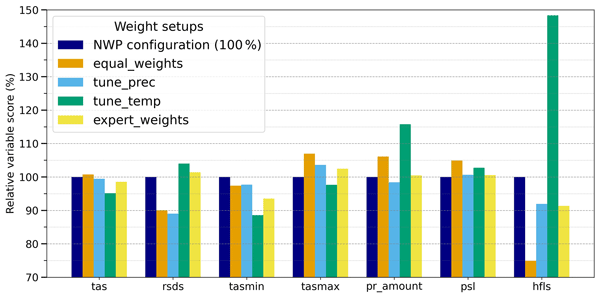
Sergei Petrov, Andreas Will, and Beate Geyer
Geosci. Model Dev., 18, 6177–6194, https://doi.org/10.5194/gmd-18-6177-2025, https://doi.org/10.5194/gmd-18-6177-2025, 2025
Short summary
Short summary
This study introduces a new method that helps improve the accuracy of climate models by automatically selecting the best parameters to match real-world observations. Instead of manually adjusting many parameters, the method uses a mathematical tool to find the most appropriate settings for the model. It can be especially helpful for researchers who introduce new physical parameters into climate models to assess their impact on model results and optimize them along with the old ones.
Wolfgang Wicker, Georgios Fragkoulidis, Nili Harnik, Emmanuele Russo, and Daniela I. V. Domeisen
EGUsphere, https://doi.org/10.5194/egusphere-2026-5678, https://doi.org/10.5194/egusphere-2026-5678, 2026
This preprint is open for discussion and under review for Weather and Climate Dynamics (WCD).
Short summary
Short summary
The horizontal structure of spatially compounding climate extremes can be described in terms of a zonal wavenumber. We derive this wavenumber by calibrating a simple dispersion relation with local flow properties and compare the structure of concurrent heatwaves in an idealized atmospheric model with reanalysis data. We find that the calibration can explain differences in concurrent heatwave frequency between summer and winter, and between the Northern and the Southern hemisphere.
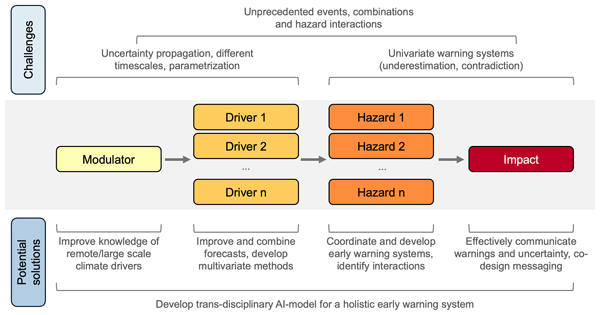
Kai Kornhuber, Emanuele Bevacqua, Mariana Madruga de Brito, Wiebke S. Jäger, Pauline Rivoire, Cassandra D. W. Rogers, Fabiola Banfi, Fulden Batibeniz, James Carruthers, Carlo De Michele, Silvia De Angeli, Cristina Deidda, Marleen C. de Ruiter, Andreas H. Fink, Henrique M. D. Goulart, Katharina Küpfer, Patrick Ludwig, Douglas Maraun, Gabriele Messori, Shruti Nath, Fiachra O'Loughlin, Joaquim G. Pinto, Benjamin Poschlod, Alexandre M. Ramos, Colin Raymond, Andreia F. S. Ribeiro, Deepti Singh, Laura Suarez Gutierrez, Philip J. Ward, and Christopher J. White
Nat. Hazards Earth Syst. Sci., 26, 4309–4334, https://doi.org/10.5194/nhess-26-4309-2026, https://doi.org/10.5194/nhess-26-4309-2026, 2026
Short summary
Short summary
Impacts from extreme weather events may become more severe due to increased likelihood of compounding events under global warming, which challenge present day climate modelling and forecasting capacities. In this perspective we reflect on the usability of compound event research to bridge the gap between academic research and real-world applications.
Haojin Zhao, Richard Hoffmann, Heye Bogena, Cosimo Brogi, Alexandre Belleflamme, Klaus Görgen, Johannes Keller, Lukas Strebel, and Harrie-Jan Hendricks Franssen
EGUsphere, https://doi.org/10.5194/egusphere-2026-4630, https://doi.org/10.5194/egusphere-2026-4630, 2026
Short summary
Short summary
Farmers need timely information on how much water is available in the soil, especially as drought and weather variability increase. We developed an automated system that combines field measurements, computer simulations, and multiple weather forecasts to predict soil moisture up to ten days ahead. Applied at a German test site, the system improved agreement with observations by about 20 percent and turned forecasts into simple indicators that can support irrigation and field management.
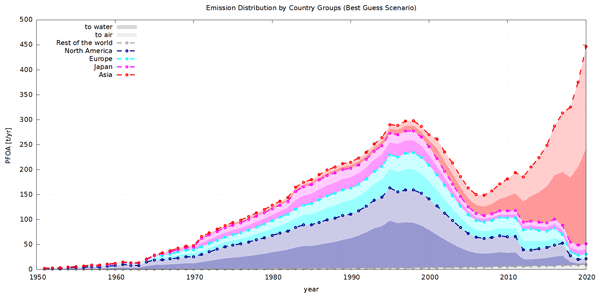
Pascal Simon, Martin Otto Paul Ramacher, Stefan Hagemann, Volker Matthias, Hanna Joerss, and Johannes Bieser
Earth Syst. Sci. Data, 18, 5713–5737, https://doi.org/10.5194/essd-18-5713-2026, https://doi.org/10.5194/essd-18-5713-2026, 2026
Short summary
Short summary
Per- and Polyfluorinated Alkyl Substances (PFAS) constitute a group of often toxic, persistent, and bioaccumulative substances. We constructed a global Emissions model and inventory based on multiple datasets for 23 widely used PFAS. The model computes temporally and spatially resolved model ready emissions distinguishing between emissions to air and emissions to water covering the time span from 1950 up until 2020 on an annual basis to be used for chemistry transport modelling.
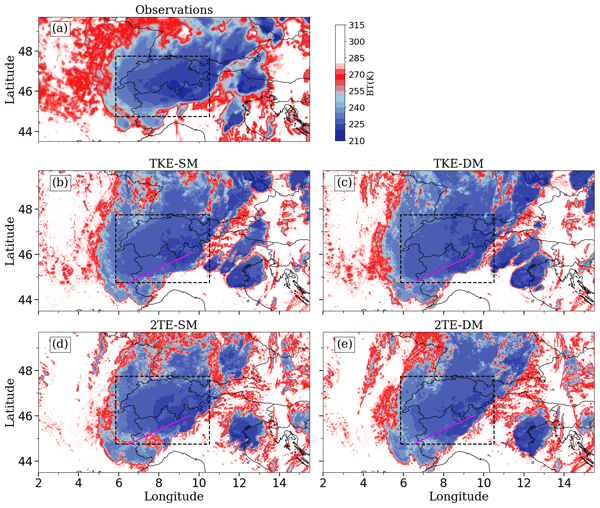
Hemanth Kumar Alladi, Julian Quimbayo-Duarte, Luca Bugliaro, Johanna Mayer, Shweta Singh, and Juerg Schmidli
Atmos. Chem. Phys., 26, 8617–8635, https://doi.org/10.5194/acp-26-8617-2026, https://doi.org/10.5194/acp-26-8617-2026, 2026
Short summary
Short summary
Thunderstorms can transport moisture into the lower stratosphere, affecting climate. Over mountains, models fail to represent them due to underrepresentation of turbulent mixing and cloud microphysics. This study evaluates the operational and new turbulence schemes, with single and double moment microphysics, in the ICOsahedral Nonhydrostatic (ICON) model against observations. The operational turbulence scheme enhances mixing, while double moment produces taller storms with more ice transport.
Andreas Hense, Christoph Kottmeier, Petra Friederichs, Sebastian Buschow, Svenja Szemkus, Uwe Ulbrich, Jens Grieger, Joaquim G. Pinto, Hendrik Feldmann, Frank Kaspar, Deborah Niermann, Rike Lorenz, Florian Ruff, and Etor E. Lucio Eceiza
EGUsphere, https://doi.org/10.5194/egusphere-2026-2697, https://doi.org/10.5194/egusphere-2026-2697, 2026
Short summary
Short summary
The extreme events heatwaves, droughts, heavy precipitation, floods and wind storms affect socio-economic systems and generate strong public attention. They are embedded into atmospheric dynamics and are statistically rare events. Here we compile the contributions of twenty one articles of the inter-journal NHESS/ASCMO/WCD special issue by project ClimXtreme parallel to results from thirty three more publication. The conclusions underline the complexity of the results.
Christoph Braun, Florian Ehmele, Christian Beier, Edgar Fabián Espitia-Sarmiento, Hendrik Feldmann, Thomas Frisius, Beate Geyer, Marie Hundhausen, Klaus Keuler, Jürg Luterbacher, Kevin Sieck, Katja Trachte, Elena Xoplaki, and Joaquim G. Pinto
EGUsphere, https://doi.org/10.5194/egusphere-2026-2517, https://doi.org/10.5194/egusphere-2026-2517, 2026
Short summary
Short summary
Adaptation to future climatic changes requires robust climate information. Here, a newly produced set of high-resolution climate simulations using multiple regional climate models over Germany is compared to observation-based datasets over the period 1961 to 1990. Overall, the simulations represent the observed climate well and, together with their future counterparts considering global warming, expand our knowledge about projected climatic changes to inform climate adaptation measures.
Kevin Sieck, Joaquim G. Pinto, Beate Geyer, Klaus Keuler, Christian Beier, Christoph Braun, Florian Ehmele, Hendrik Feldmann, Thomas Frisius, Philipp Heinrich, Marie Hundhausen, Ronny Petrik, and Katja Trachte
EGUsphere, https://doi.org/10.5194/egusphere-2026-1024, https://doi.org/10.5194/egusphere-2026-1024, 2026
Short summary
Short summary
In this study we present the evaluation of a new generation of user informed climate simulations at scales of typical weather forecasts. It provides detailed information that are vital for climate impact studies at municipal level. Besides typical short comings of climate models in terms of deviations compared to reference data, the simulations show good agreement with observed climate especially in terms of regional patterns.
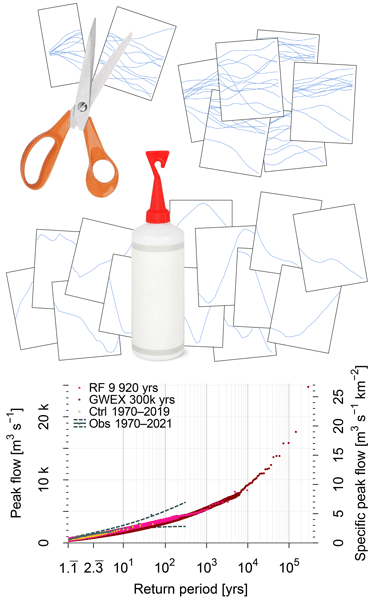
Daniel Viviroli, Martin Jury, Maria Staudinger, Martina Kauzlaric, Heimo Truhetz, and Douglas Maraun
Nat. Hazards Earth Syst. Sci., 26, 1835–1857, https://doi.org/10.5194/nhess-26-1835-2026, https://doi.org/10.5194/nhess-26-1835-2026, 2026
Short summary
Short summary
Estimating the frequency and magnitude of floods is challenging due to the limited length of streamflow records. Here, we explore whether an extensive archive of meteorological forecasts run over past dates can assist in this context. After processing and concatenating these data for use as input to a hydrological model, we derive flood statistics from simulated streamflow. Results are promising for the larger catchments studied, providing a valuable complementary perspective on rare floods.
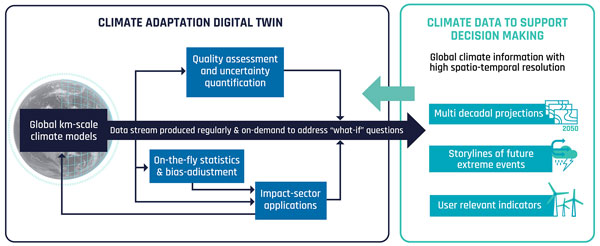
Francisco J. Doblas-Reyes, Jenni Kontkanen, Irina Sandu, Mario Acosta, Mohammed Hussam Al Turjmam, Ivan Alsina-Ferrer, Miguel Andrés-Martínez, Costanza Anerdi, Leo Arriola, Marvin Axness, Marc Batlle Martín, Peter Bauer, Tobias Becker, Daniel Beltrán, Sebastian Beyer, Hendryk Bockelmann, Pierre-Antoine Bretonnière, Sebastien Cabaniols, Silvia Caprioli, Miguel Castrillo, Aparna Chandrasekar, Suvarchal Cheedela, Victor Correal, Emanuele Danovaro, Paolo Davini, Jussi Enkovaara, Claudia Frauen, Barbara Früh, Aina Gaya Àvila, Paolo Ghinassi, Rohit Ghosh, Supriyo Ghosh, Iker González, Katherine Grayson, Matthew Griffith, Ioan Hadade, Christopher Haine, Carl Hartick, Utz-Uwe Haus, Shane Hearne, Heikki Järvinen, Bernat Jiménez, Amal John, Marlin Juchem, Thomas Jung, Jessica Kegel, Matthias Kelbling, Kai Keller, Bruno Kinoshita, Theresa Kiszler, Daniel Klocke, Lukas Kluft, Nikolay Koldunov, Tobias Kölling, Joonas Kolstela, Luis Kornblueh, Sergey Kosukhin, Aleksander Lacima-Nadolnik, Jeisson Javier Leal Rojas, Jonni Lehtiranta, Tuomas Lunttila, Anna Luoma, Pekka Manninen, Alexey Medvedev, Sebastian Milinski, Ali Mohammed, Sebastian Müller, Devaraju Naryanappa, Natalia Nazarova, Sami Niemelä, Bimochan Niraula, Henrik Nortamo, Aleksi Nummelin, Matteo Nurisso, Pablo Ortega, Stella Paronuzzi, Xabier Pedruzo-Bagazgoitia, Charles Pelletier, Carlos Peña, Suraj Polade, Himansu Kesari Pradhan, Rommel Quintanilla, Tiago Quintino, Thomas Rackow, Jouni Räisänen, Maqsood Mubarak Rajput, René Redler, Balthasar Reuter, Nuno Rocha Monteiro, Francesc Roura-Adserias, Silva Ruppert, Susan Sayed, Reiner Schnur, Tanvi Sharma, Dmitry Sidorenko, Outi Sievi-Korte, Albert Soret, Christian Steger, Bjorn Stevens, Jan Streffing, Jaleena Sunny, Luiggi Tenorio, Stephan Thober, Ulf Tigerstedt, Oriol Tinto, Juha Tonttila, Heikki Tuomenvirta, Lauri Tuppi, Ginka Van Thielen, Emanuele Vitali, Jost von Hardenberg, Ingo Wagner, Nils Wedi, Jan Wehner, Sven Willner, Xavier Yepes-Arbós, Florian Ziemen, and Janos Zimmermann
Geosci. Model Dev., 19, 2821–2848, https://doi.org/10.5194/gmd-19-2821-2026, https://doi.org/10.5194/gmd-19-2821-2026, 2026
Short summary
Short summary
The Climate Change Adaptation Digital Twin (Climate DT) pioneers the operationalisation of global climate projections. It produces global simulations with local granularity for adaptation decision-making. Applications are embedded to generate tailored indicators. A unified workflow orchestrates all components in several supercomputers. Data management ensures consistency and streaming enables real-time use. It is a complementary innovation to initiatives like CMIP, CORDEX, and climate services.
Paul Voit, Marie Hundhausen, Larisa Seregina, Hendrik Feldmann, Bodo Ahrens, and Maik Heistermann
EGUsphere, https://doi.org/10.5194/egusphere-2026-1229, https://doi.org/10.5194/egusphere-2026-1229, 2026
Short summary
Short summary
Extreme rainfall is expected to increase with a warming climate. However, it remains unclear how this will impact future floods. This study utilizes an ensemble of 6 new datasets, containing the future projected rainfall, and compares the simulated flash floods of the past (1971–2000) and future (2071–2100) under the RCP8.5 scenario for the German part of the Danube catchment. Our results indicate an increase of 100-yr flood return levels of 30 % across all subcatchments under this scenario.
Alberto Elizalde, Naveed Akhtar, Beate Geyer, and Corinna Schrum
Wind Energ. Sci., 11, 1077–1095, https://doi.org/10.5194/wes-11-1077-2026, https://doi.org/10.5194/wes-11-1077-2026, 2026
Short summary
Short summary
As green energy demand rises, offshore wind farms in the North Sea are expanding. This study examines the uncertainties in power output predictions, considering turbine arrangements and different atmospheric situations. Using an advanced climate model, we found that power output can vary by up to 10 % due to these reasons. The findings are vital for accurate economic and environmental planning. This research will contribute to a better understanding of the potential of offshore wind energy.
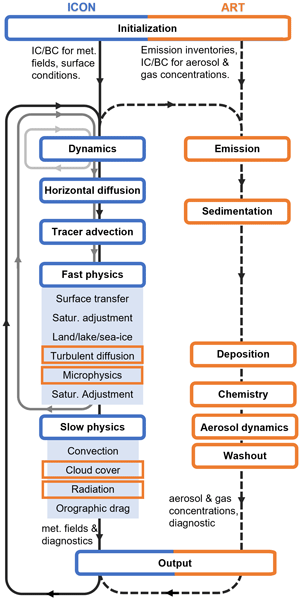
Gholam Ali Hoshyaripour, Andreas Baer, Sascha Bierbauer, Julia Bruckert, Dominik Brunner, Jochen Förstner, Arash Hamzehloo, Valentin Hanft, Corina Keller, Martina Klose, Pankaj Kumar, Patrick Ludwig, Enrico Metzner, Lisa Muth, Andreas Pauling, Nikolas Porz, Maryam Ramezani Ziarani, Thomas Reddmann, Luca Reißig, Roland Ruhnke, Khompat Satitkovitchai, Axel Seifert, Miriam Sinnhuber, Michael Steiner, Stefan Versick, Heike Vogel, Michael Weimer, Sven Werchner, and Corinna Hoose
Geosci. Model Dev., 19, 1645–1681, https://doi.org/10.5194/gmd-19-1645-2026, https://doi.org/10.5194/gmd-19-1645-2026, 2026
Short summary
Short summary
This paper presents recent advances in ICON-ART, a modeling system that simulates atmospheric composition – such as gases and particles – and their interactions with weather and climate. By integrating updated chemistry, emissions, and aerosol processes, ICON-ART enables detailed, scale-spanning simulations. It supports both scientific research and operational forecasts, contributing to improved air quality, weather and climate predictions.

Vera Maurer, Wibke Düsterhöft-Wriggers, Rebekka Beddig, Janna Meyer, Claudia Hinrichs, Ha Thi Minh Ho-Hagemann, Joanna Staneva, Birte-Marie Ehlers, and Frank Janssen
Geosci. Model Dev., 19, 543–578, https://doi.org/10.5194/gmd-19-543-2026, https://doi.org/10.5194/gmd-19-543-2026, 2026
Short summary
Short summary
With CORDEX-CMIP6, ensembles of regional climate projections enable analyses on regional climate change. We present a regional coupled ocean-atmosphere model setup for Europe, tailored to provide consistent climate change information for the North and Baltic Seas. The simulation effectively captures the mean climate, variability, and extremes such as storm surges and marine heatwaves. Using this setup, we will contribute climate projections to EURO-CORDEX.
Wolfgang A. Müller, Stephan Lorenz, Trang V. Pham, Andrea Schneidereit, Renate Brokopf, Victor Brovkin, Nils Brüggemann, Fatemeh Chegini, Dietmar Dommenget, Kristina Fröhlich, Barbara Früh, Veronika Gayler, Helmuth Haak, Stefan Hagemann, Moritz Hanke, Tatiana Ilyina, Johann Jungclaus, Martin Köhler, Peter Korn, Luis Kornblueh, Clarissa A. Kroll, Julian Krüger, Karel Castro-Morales, Ulrike Niemeier, Holger Pohlmann, Iuliia Polkova, Roland Potthast, Thomas Riddick, Manuel Schlund, Tobias Stacke, Roland Wirth, Dakuan Yu, and Jochem Marotzke
Geosci. Model Dev., 18, 9385–9415, https://doi.org/10.5194/gmd-18-9385-2025, https://doi.org/10.5194/gmd-18-9385-2025, 2025
Short summary
Short summary
We provide a new Earth System model configuration framed into the ICON architecture, which provides the baseline for the next generation of climate predictions and projections (hereafter ICON XPP). Two resolutions of ICON XPP are presented that show high runtime performances making it suitable to run long integrations and large-ensemble experiments. ICON XPP similarly perform to CMIP6-class of climate models making it a good basis for climate forecasts and projections, and climate research.
Stefan Poll, Paul Rigor, Slavko Brdar, Ha Thi Minh Ho-Hagemann, Carl Hartick, Marco van Hulten, Ana Gonzalez-Nicolas, Johannes Keller, Daniel Caviedes-Voullieme, Harrie-Jan Hendricks-Franssen, Klaus Goergen, and Stefan Kollet
EGUsphere, https://doi.org/10.5194/egusphere-2025-5468, https://doi.org/10.5194/egusphere-2025-5468, 2025
This preprint is open for discussion and under review for Natural Hazards and Earth System Sciences (NHESS).
Short summary
Short summary
This paper presents TSMP2, a new version of an regional Earth system model that allows to simulate and analyze the complex interactions within terrestrial ecosystems from groundwater to atmosphere. TSMP2 links an atmospheric, a land surface model and an hydrological model through an external coupler and is fully open-source. We describe the TSMP2 model system, present the impact of coupling approaches, and outline our development strategy along with technical and performance aspects.
Andrea L. Campoverde, Uwe Ehret, Patrick Ludwig, and Joaquim G. Pinto
EGUsphere, https://doi.org/10.5194/egusphere-2025-3988, https://doi.org/10.5194/egusphere-2025-3988, 2025
Short summary
Short summary
Droughts are becoming more common in Europe. Our study used vast climate data to uncover extreme unseen low-water events. These simulations show the potential droughts becoming more severe and lasting longer than the damaging 2018 event, which impacted shipping and industry. This research highlights the urgent need for adaptation measures to prevent costly economic and ecological consequences for the Rhine's waterway.
Wolfgang Wicker, Emmanuele Russo, and Daniela I. V. Domeisen
Weather Clim. Dynam., 6, 965–979, https://doi.org/10.5194/wcd-6-965-2025, https://doi.org/10.5194/wcd-6-965-2025, 2025
Short summary
Short summary
Heatwaves are becoming more frequent, but the contribution by atmospheric circulation changes is unclear. Experiments with an idealized model that simulates atmospheric dynamcis, but excludes clouds, radiation, and moisture, show how a poleward storm track shift increases the eastward phase speed of Rossby waves and reduces mid-latitude heatwave frequency. A comparison with real data for the Southern Hemisphere is attempted.
Sergei Petrov, Andreas Will, and Beate Geyer
Geosci. Model Dev., 18, 6177–6194, https://doi.org/10.5194/gmd-18-6177-2025, https://doi.org/10.5194/gmd-18-6177-2025, 2025
Short summary
Short summary
This study introduces a new method that helps improve the accuracy of climate models by automatically selecting the best parameters to match real-world observations. Instead of manually adjusting many parameters, the method uses a mathematical tool to find the most appropriate settings for the model. It can be especially helpful for researchers who introduce new physical parameters into climate models to assess their impact on model results and optimize them along with the old ones.
Richard Lohmann, Christopher Purr, and Bodo Ahrens
EGUsphere, https://doi.org/10.5194/egusphere-2025-3670, https://doi.org/10.5194/egusphere-2025-3670, 2025
Short summary
Short summary
This study investigates the relationship between atmospheric blocking and the extreme events heatwaves, heavy rainfall and calm events in Germany in atmospheric reanalyses and CMIP6 climate simulations. In the reanalyses, the statistical relationship is more pronounced between blocking and calms than between blocking and heavy precipitation. In the simulated future climate, the frequency of the three extreme event types increases with nearly unchanged relationship of blocking with the extremes.
Patricia Coll-Hidalgo, Raquel Nieto, Alexandre Ramos, Patrick Ludwig, and Luis Gimeno
EGUsphere, https://doi.org/10.5194/egusphere-2025-1775, https://doi.org/10.5194/egusphere-2025-1775, 2025
Preprint withdrawn
Short summary
Short summary
This study uses Lagrangian moisture tracking and high-resolution weather simulations to trace moisture sources for Storm Ianos (Sept 2020). The analysis identified the Ionian Basin and southwestern Balkans as the primary sources, with secondary contributions from the surrounding seas. Large transport moisture traveled via three main pathways, with the Marmara-Black Sea route most significant. For record-breaking rainfall local evaporation over Greece and the Ionian Sea dominated moisture uptake.
Elena Xoplaki, Florian Ellsäßer, Jens Grieger, Katrin M. Nissen, Joaquim G. Pinto, Markus Augenstein, Ting-Chen Chen, Hendrik Feldmann, Petra Friederichs, Daniel Gliksman, Laura Goulier, Karsten Haustein, Jens Heinke, Lisa Jach, Florian Knutzen, Stefan Kollet, Jürg Luterbacher, Niklas Luther, Susanna Mohr, Christoph Mudersbach, Christoph Müller, Efi Rousi, Felix Simon, Laura Suarez-Gutierrez, Svenja Szemkus, Sara M. Vallejo-Bernal, Odysseas Vlachopoulos, and Frederik Wolf
Nat. Hazards Earth Syst. Sci., 25, 541–564, https://doi.org/10.5194/nhess-25-541-2025, https://doi.org/10.5194/nhess-25-541-2025, 2025
Short summary
Short summary
Europe frequently experiences compound events, with major impacts. We investigate these events’ interactions, characteristics, and changes over time, focusing on socio-economic impacts in Germany and central Europe. Highlighting 2018’s extreme events, this study reveals impacts on water, agriculture, and forests and stresses the need for impact-focused definitions and better future risk quantification to support adaptation planning.
Tatiana Klimiuk, Patrick Ludwig, Antonio Sanchez-Benitez, Helge F. Goessling, Peter Braesicke, and Joaquim G. Pinto
Earth Syst. Dynam., 16, 239–255, https://doi.org/10.5194/esd-16-239-2025, https://doi.org/10.5194/esd-16-239-2025, 2025
Short summary
Short summary
Our study examines potential changes in heatwaves in central Europe due to global warming, using the 2019 summer heatwave as an example. By producing high-resolution storylines, we provide insights into how future heatwaves might spread, how they might persist for longer, and where stronger or weaker temperature increases may occur. This research helps us understand regional thermodynamic responses and highlights the importance of local strategies to protect communities from future heat events.
Alberto Elizalde, Gibran Romero-Mujalli, Tobias Stacke, and Stefan Hagemann
EGUsphere, https://doi.org/10.5194/egusphere-2024-3645, https://doi.org/10.5194/egusphere-2024-3645, 2025
Preprint archived
Short summary
Short summary
This study examines phosphorus land-to-sea transport in Europe, exploring changes over time and predicting future trends under various scenarios. It integrates human and environmental factors, offering a comprehensive analysis. Our findings show how global warming-induced rainfall patterns affect phosphorus levels. While pollution reduction policies are helpful, population growth, land-use changes, and increased rainfall could lead to higher phosphorus levels in the future.
Stefan Hagemann, Thao Thi Nguyen, and Ha Thi Minh Ho-Hagemann
Ocean Sci., 20, 1457–1478, https://doi.org/10.5194/os-20-1457-2024, https://doi.org/10.5194/os-20-1457-2024, 2024
Short summary
Short summary
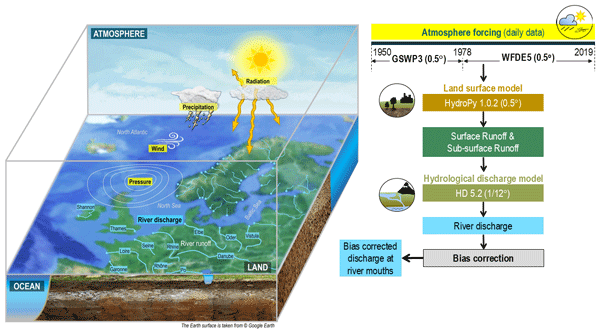
We have developed a methodology for the bias correction of simulated river runoff to force ocean models in which low, medium, and high discharges are corrected once separated at the coast. We show that the bias correction generally leads to an improved representation of river runoff in Europe. The methodology is suitable for model regions with a sufficiently high coverage of discharge observations, and it can be applied to river runoff based on climate hindcasts or climate change simulations.
Ha Thi Minh Ho-Hagemann, Vera Maurer, Stefan Poll, and Irina Fast
Geosci. Model Dev., 17, 7815–7834, https://doi.org/10.5194/gmd-17-7815-2024, https://doi.org/10.5194/gmd-17-7815-2024, 2024
Short summary
Short summary
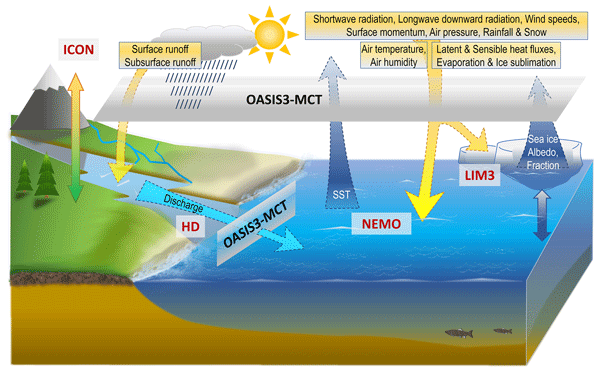
The regional Earth system model GCOAST-AHOI v2.0 that includes the regional climate model ICON-CLM coupled to the ocean model NEMO and the hydrological discharge model HD via the OASIS3-MCT coupler can be a useful tool for conducting long-term regional climate simulations over the EURO-CORDEX domain. The new OASIS3-MCT coupling interface implemented in ICON-CLM makes it more flexible for coupling to an external ocean model and an external hydrological discharge model.
Selina M. Kiefer, Patrick Ludwig, Sebastian Lerch, Peter Knippertz, and Joaquim G. Pinto
EGUsphere, https://doi.org/10.5194/egusphere-2024-2955, https://doi.org/10.5194/egusphere-2024-2955, 2024
Preprint withdrawn
Short summary
Short summary
Weather forecasts 14 days in advance generally have a low skill but not always. We identify reasons thereof depending on the atmospheric flow, shown by Weather Regimes (WRs). If the WRs during the forecasts follow climatological patterns, forecast skill is increased. The forecast of a cold-wave day is better when the European Blocking WR (high pressure around the British Isles) is present a few days before a cold-wave day. These results can be used to assess the reliability of predictions.
Andrea L. Campoverde, Uwe Ehret, Patrick Ludwig, and Joaquim G. Pinto
Geosci. Model Dev. Discuss., https://doi.org/10.5194/gmd-2024-134, https://doi.org/10.5194/gmd-2024-134, 2024
Revised manuscript not accepted
Short summary
Short summary
We looked at how well the model WRF-Hydro performed during the 2018 drought event in the River Rhine basin, even though it is typically used for floods. We used the meteorological ERA5 reanalysis dataset to simulate River Rhine’s streamflow and adjusted the model using parameters and actual discharge measurements. We focused on Lake Constance, a key part of the basin, but found issues with the model’s lake outflow simulation. By removing the lake module, we obtained more accurate results.
Félix García-Pereira, Jesús Fidel González-Rouco, Camilo Melo-Aguilar, Norman Julius Steinert, Elena García-Bustamante, Philip de Vrese, Johann Jungclaus, Stephan Lorenz, Stefan Hagemann, Francisco José Cuesta-Valero, Almudena García-García, and Hugo Beltrami
Earth Syst. Dynam., 15, 547–564, https://doi.org/10.5194/esd-15-547-2024, https://doi.org/10.5194/esd-15-547-2024, 2024
Short summary
Short summary
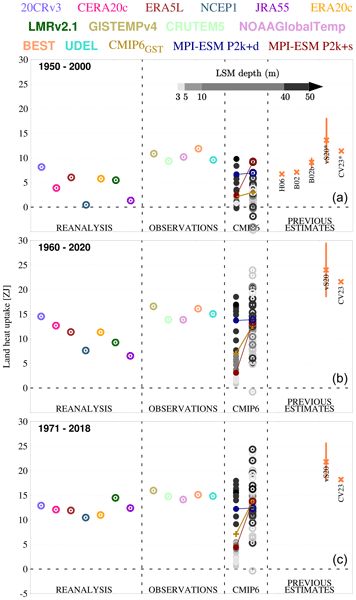
According to climate model estimates, the land stored 2 % of the system's heat excess in the last decades, while observational studies show it was around 6 %. This difference stems from these models using land components that are too shallow to constrain land heat uptake. Deepening the land component does not affect the surface temperature. This result can be used to derive land heat uptake estimates from different sources, which are much closer to previous observational reports.
Emmanuele Russo, Jonathan Buzan, Sebastian Lienert, Guillaume Jouvet, Patricio Velasquez Alvarez, Basil Davis, Patrick Ludwig, Fortunat Joos, and Christoph C. Raible
Clim. Past, 20, 449–465, https://doi.org/10.5194/cp-20-449-2024, https://doi.org/10.5194/cp-20-449-2024, 2024
Short summary
Short summary
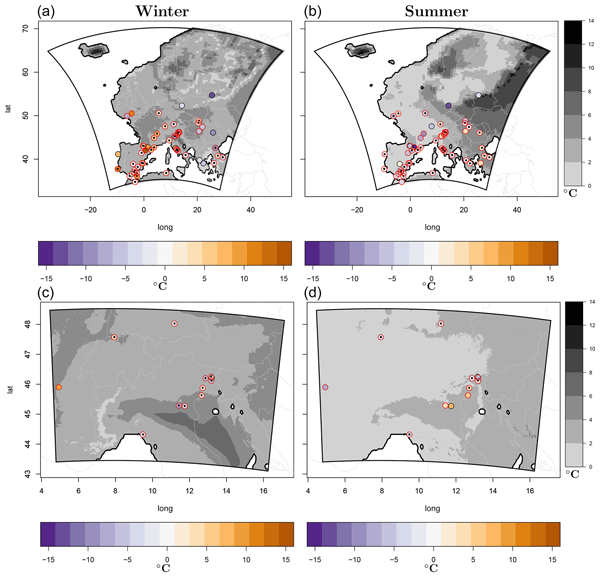
We present a series of experiments conducted for the Last Glacial Maximum (~21 ka) over Europe using the regional climate Weather Research and Forecasting model (WRF) at convection-permitting resolutions. The model, with new developments better suited to paleo-studies, agrees well with pollen-based climate reconstructions. This agreement is improved when considering different sources of uncertainty. The effect of convection-permitting resolutions is also assessed.
Liubov Poshyvailo-Strube, Niklas Wagner, Klaus Goergen, Carina Furusho-Percot, Carl Hartick, and Stefan Kollet
Earth Syst. Dynam., 15, 167–189, https://doi.org/10.5194/esd-15-167-2024, https://doi.org/10.5194/esd-15-167-2024, 2024
Short summary
Short summary
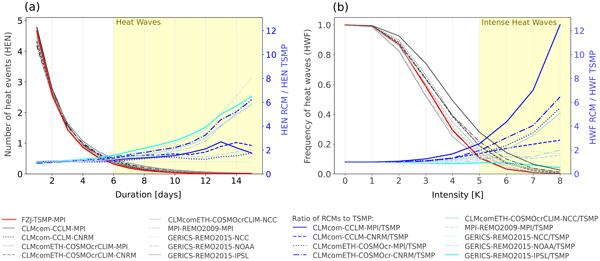
Groundwater (GW) representation is simplified in most regional climate models. Here, we introduce a unique Terrestrial Systems Modeling Platform (TSMP) dataset with an explicit representation of GW, in the context of dynamical downscaling of GCMs for climate change studies. We compare the heat events statistics of TSMP and the CORDEX ensemble. Our results show that TSMP systematically simulates fewer heat waves, and they are shorter and less intense.
Sven Karsten, Hagen Radtke, Matthias Gröger, Ha T. M. Ho-Hagemann, Hossein Mashayekh, Thomas Neumann, and H. E. Markus Meier
Geosci. Model Dev., 17, 1689–1708, https://doi.org/10.5194/gmd-17-1689-2024, https://doi.org/10.5194/gmd-17-1689-2024, 2024
Short summary
Short summary
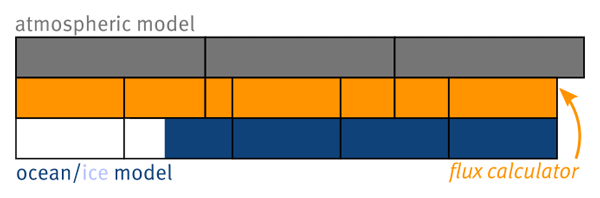
This paper describes the development of a regional Earth System Model for the Baltic Sea region. In contrast to conventional coupling approaches, the presented model includes a flux calculator operating on a common exchange grid. This approach automatically ensures a locally consistent treatment of fluxes and simplifies the exchange of model components. The presented model can be used for various scientific questions, such as studies of natural variability and ocean–atmosphere interactions.
Marie Hundhausen, Hendrik Feldmann, Natalie Laube, and Joaquim G. Pinto
Nat. Hazards Earth Syst. Sci., 23, 2873–2893, https://doi.org/10.5194/nhess-23-2873-2023, https://doi.org/10.5194/nhess-23-2873-2023, 2023
Short summary
Short summary
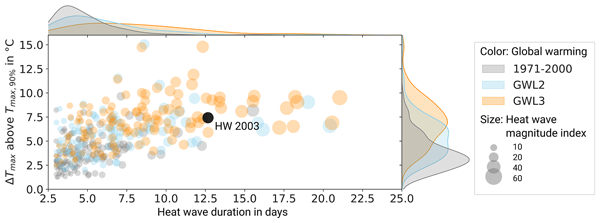
Using a convection-permitting regional climate ensemble, the magnitude of heat waves (HWs) over Germany is projected to increase by 26 % (100 %) in a 2 °C (3 °C) warmer world. The increase is strongest in late summer, relatively homogeneous in space, and accompanied by increasing variance in HW length. Tailored parameters to climate adaptation to heat revealed dependency on major landscapes, and a nonlinear, exponential increase for parameters characterizing strong heat stress is expected.
Alberto Caldas-Alvarez, Hendrik Feldmann, Etor Lucio-Eceiza, and Joaquim G. Pinto
Weather Clim. Dynam., 4, 543–565, https://doi.org/10.5194/wcd-4-543-2023, https://doi.org/10.5194/wcd-4-543-2023, 2023
Short summary
Short summary
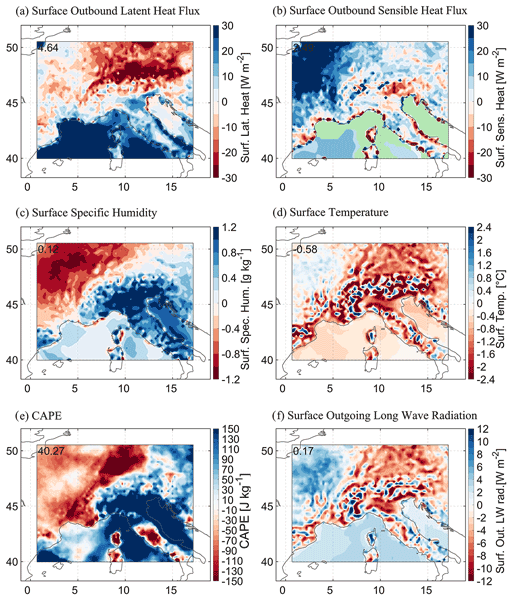
We evaluate convection-permitting modelling (CPM) simulations for the greater Alpine area to assess its added value compared to a 25 km resolution. A new method for severe precipitation detection is used, and the associated synoptic weather types are considered. Our results document the added value of CPM for precipitation representation with higher intensities, better rank correlation, better hit rates, and an improved amount and structure, but with an overestimation of the rates.
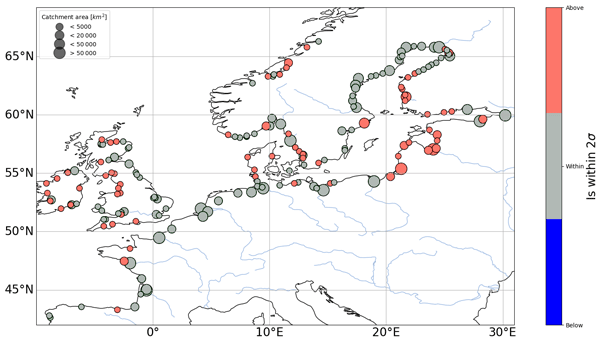
Philipp Heinrich, Stefan Hagemann, Ralf Weisse, Corinna Schrum, Ute Daewel, and Lidia Gaslikova
Nat. Hazards Earth Syst. Sci., 23, 1967–1985, https://doi.org/10.5194/nhess-23-1967-2023, https://doi.org/10.5194/nhess-23-1967-2023, 2023
Short summary
Short summary
High seawater levels co-occurring with high river discharges have the potential to cause destructive flooding. For the past decades, the number of such compound events was larger than expected by pure chance for most of the west-facing coasts in Europe. Additionally rivers with smaller catchments showed higher numbers. In most cases, such events were associated with a large-scale weather pattern characterized by westerly winds and strong rainfall.

Patrick Ludwig, Florian Ehmele, Mário J. Franca, Susanna Mohr, Alberto Caldas-Alvarez, James E. Daniell, Uwe Ehret, Hendrik Feldmann, Marie Hundhausen, Peter Knippertz, Katharina Küpfer, Michael Kunz, Bernhard Mühr, Joaquim G. Pinto, Julian Quinting, Andreas M. Schäfer, Frank Seidel, and Christina Wisotzky
Nat. Hazards Earth Syst. Sci., 23, 1287–1311, https://doi.org/10.5194/nhess-23-1287-2023, https://doi.org/10.5194/nhess-23-1287-2023, 2023
Short summary
Short summary
Heavy precipitation in July 2021 led to widespread floods in western Germany and neighboring countries. The event was among the five heaviest precipitation events of the past 70 years in Germany, and the river discharges exceeded by far the statistical 100-year return values. Simulations of the event under future climate conditions revealed a strong and non-linear effect on flood peaks: for +2 K global warming, an 18 % increase in rainfall led to a 39 % increase of the flood peak in the Ahr river.
Veronika Ettrichrätz, Christian Beier, Klaus Keuler, and Katja Trachte
EGUsphere, https://doi.org/10.5194/egusphere-2023-552, https://doi.org/10.5194/egusphere-2023-552, 2023
Preprint archived
Short summary
Short summary
Will heavy precipitation increase under climate change by the end of this century? The analyses of 40 regional climate simulations for two climate scenarios show that large parts of northern, central, and eastern Europe will be affected by a robust increase in heavy and extreme precipitation, while southwestern Europe will rather experience a slight decrease. Both the increase and the affected areas can be up to twice as large in an extreme than in a more moderate greenhouse gas scenario.

Bibi S. Naz, Wendy Sharples, Yueling Ma, Klaus Goergen, and Stefan Kollet
Geosci. Model Dev., 16, 1617–1639, https://doi.org/10.5194/gmd-16-1617-2023, https://doi.org/10.5194/gmd-16-1617-2023, 2023
Short summary
Short summary
It is challenging to apply a high-resolution integrated land surface and groundwater model over large spatial scales. In this paper, we demonstrate the application of such a model over a pan-European domain at 3 km resolution and perform an extensive evaluation of simulated water states and fluxes by comparing with in situ and satellite data. This study can serve as a benchmark and baseline for future studies of climate change impact projections and for hydrological forecasting.
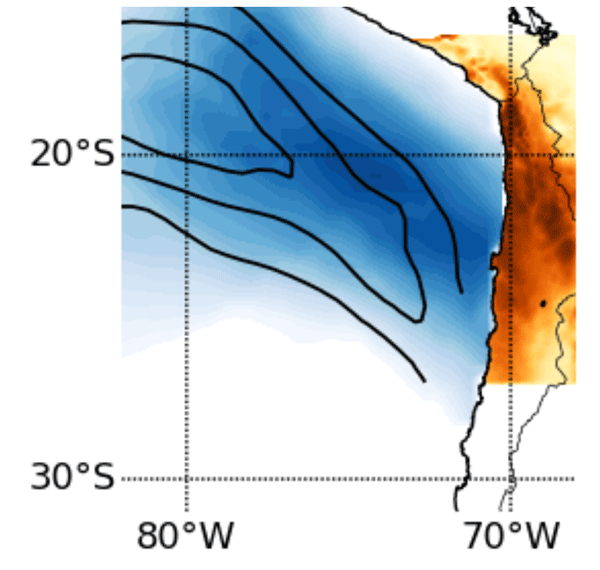
Mark Reyers, Stephanie Fiedler, Patrick Ludwig, Christoph Böhm, Volker Wennrich, and Yaping Shao
Clim. Past, 19, 517–532, https://doi.org/10.5194/cp-19-517-2023, https://doi.org/10.5194/cp-19-517-2023, 2023
Short summary
Short summary
In this study we performed high-resolution climate model simulations for the hyper-arid Atacama Desert for the mid-Pliocene (3.2 Ma). The aim is to uncover the atmospheric processes that are involved in the enhancement of strong rainfall events during this period. We find that strong upper-level moisture fluxes (so-called moisture conveyor belts) originating in the tropical eastern Pacific are the main driver for increased rainfall in the mid-Pliocene.
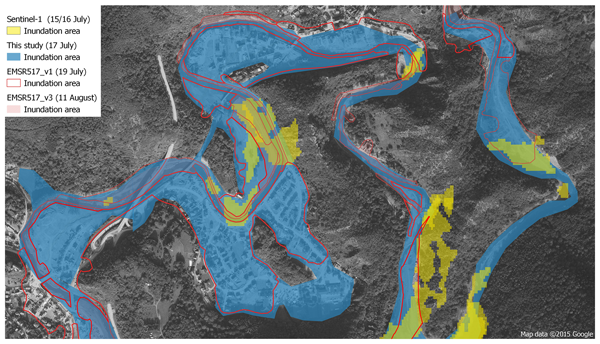
Susanna Mohr, Uwe Ehret, Michael Kunz, Patrick Ludwig, Alberto Caldas-Alvarez, James E. Daniell, Florian Ehmele, Hendrik Feldmann, Mário J. Franca, Christian Gattke, Marie Hundhausen, Peter Knippertz, Katharina Küpfer, Bernhard Mühr, Joaquim G. Pinto, Julian Quinting, Andreas M. Schäfer, Marc Scheibel, Frank Seidel, and Christina Wisotzky
Nat. Hazards Earth Syst. Sci., 23, 525–551, https://doi.org/10.5194/nhess-23-525-2023, https://doi.org/10.5194/nhess-23-525-2023, 2023
Short summary
Short summary
The flood event in July 2021 was one of the most severe disasters in Europe in the last half century. The objective of this two-part study is a multi-disciplinary assessment that examines the complex process interactions in different compartments, from meteorology to hydrological conditions to hydro-morphological processes to impacts on assets and environment. In addition, we address the question of what measures are possible to generate added value to early response management.
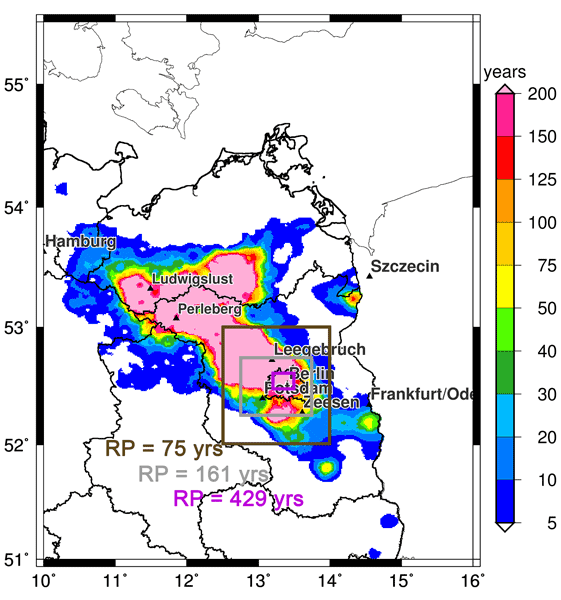
Alberto Caldas-Alvarez, Markus Augenstein, Georgy Ayzel, Klemens Barfus, Ribu Cherian, Lisa Dillenardt, Felix Fauer, Hendrik Feldmann, Maik Heistermann, Alexia Karwat, Frank Kaspar, Heidi Kreibich, Etor Emanuel Lucio-Eceiza, Edmund P. Meredith, Susanna Mohr, Deborah Niermann, Stephan Pfahl, Florian Ruff, Henning W. Rust, Lukas Schoppa, Thomas Schwitalla, Stella Steidl, Annegret H. Thieken, Jordis S. Tradowsky, Volker Wulfmeyer, and Johannes Quaas
Nat. Hazards Earth Syst. Sci., 22, 3701–3724, https://doi.org/10.5194/nhess-22-3701-2022, https://doi.org/10.5194/nhess-22-3701-2022, 2022
Short summary
Short summary
In a warming climate, extreme precipitation events are becoming more frequent. To advance our knowledge on such phenomena, we present a multidisciplinary analysis of a selected case study that took place on 29 June 2017 in the Berlin metropolitan area. Our analysis provides evidence of the extremeness of the case from the atmospheric and the impacts perspectives as well as new insights on the physical mechanisms of the event at the meteorological and climate scales.

Emmanuele Russo, Bijan Fallah, Patrick Ludwig, Melanie Karremann, and Christoph C. Raible
Clim. Past, 18, 895–909, https://doi.org/10.5194/cp-18-895-2022, https://doi.org/10.5194/cp-18-895-2022, 2022
Short summary
Short summary
In this study a set of simulations are performed with the regional climate model COSMO-CLM for Europe, for the mid-Holocene and pre-industrial periods. The main aim is to better understand the drivers of differences between models and pollen-based summer temperatures. Results show that a fundamental role is played by spring soil moisture availability. Additionally, results suggest that model bias is not stationary, and an optimal configuration could not be the best under different forcing.
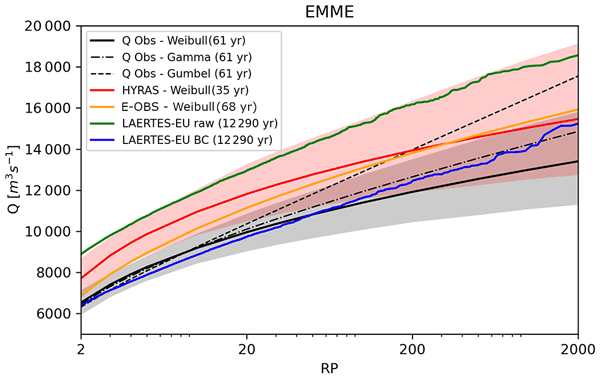
Florian Ehmele, Lisa-Ann Kautz, Hendrik Feldmann, Yi He, Martin Kadlec, Fanni D. Kelemen, Hilke S. Lentink, Patrick Ludwig, Desmond Manful, and Joaquim G. Pinto
Nat. Hazards Earth Syst. Sci., 22, 677–692, https://doi.org/10.5194/nhess-22-677-2022, https://doi.org/10.5194/nhess-22-677-2022, 2022
Short summary
Short summary
For various applications, it is crucial to have profound knowledge of the frequency, severity, and risk of extreme flood events. Such events are characterized by very long return periods which observations can not cover. We use a large ensemble of regional climate model simulations as input for a hydrological model. Precipitation data were post-processed to reduce systematic errors. The representation of precipitation and discharge is improved, and estimates of long return periods become robust.
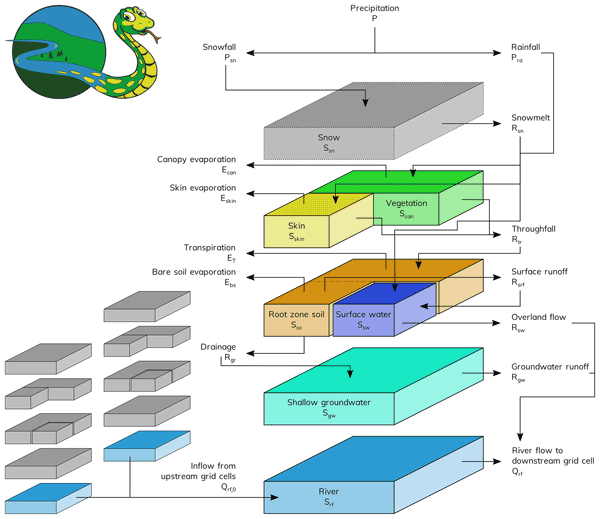
Tobias Stacke and Stefan Hagemann
Geosci. Model Dev., 14, 7795–7816, https://doi.org/10.5194/gmd-14-7795-2021, https://doi.org/10.5194/gmd-14-7795-2021, 2021
Short summary
Short summary
HydroPy is a new version of an established global hydrology model. It was rewritten from scratch and adapted to a modern object-oriented infrastructure to facilitate its future development and application. With this study, we provide a thorough documentation and evaluation of our new model. At the same time, we open our code base and publish the model's source code in a public software repository. In this way, we aim to contribute to increasing transparency and reproducibility in science.
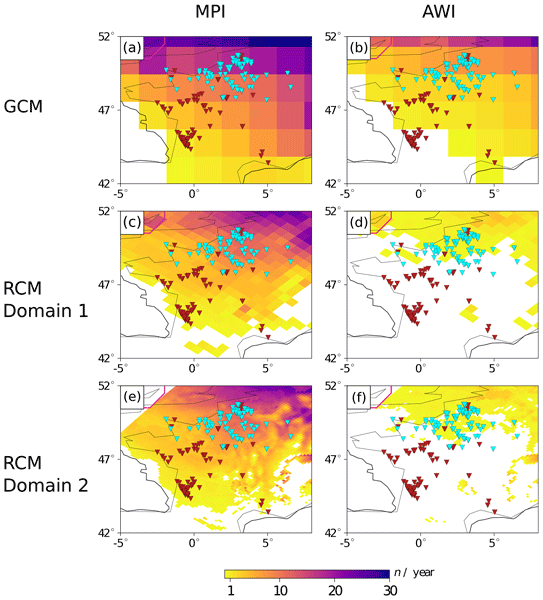
Kim H. Stadelmaier, Patrick Ludwig, Pascal Bertran, Pierre Antoine, Xiaoxu Shi, Gerrit Lohmann, and Joaquim G. Pinto
Clim. Past, 17, 2559–2576, https://doi.org/10.5194/cp-17-2559-2021, https://doi.org/10.5194/cp-17-2559-2021, 2021
Short summary
Short summary
We use regional climate simulations for the Last Glacial Maximum to reconstruct permafrost and to identify areas of thermal contraction cracking of the ground in western Europe. We find ground cracking, a precondition for the development of permafrost proxies, south of the probable permafrost border, implying that permafrost was not the limiting factor for proxy development. A good agreement with permafrost and climate proxy data is achieved when easterly winds are modelled more frequently.
Evgenii Churiulin, Vladimir Kopeikin, Markus Übel, Jürgen Helmert, Jean-Maria Bettems, and Merja Helena Tölle
Biogeosciences Discuss., https://doi.org/10.5194/bg-2021-294, https://doi.org/10.5194/bg-2021-294, 2021
Revised manuscript not accepted
Short summary
Short summary
Our research is an important step towards a more realistic representation of vegetation in regional climate models. We have implemented in COSMO-CLM the new algorithms for stomatal resistance, leaf photosynthesis and two-big leaf. We applied the modern phenology algorithms of CLM model and fully adapted them for COSMO-CLM. The personal software was created for validation COSMO-CLM results. The research also brought out many tensions, which we are going to update in our next developments.
Cited articles
Anders, I., Brienen, S., Demuzere, M., Bucchignani, E., Ferrone, A., Geyer, B., Keuler, K., Lüthi, D., Mertens, M., Osterried, K., Panitz, H.-J., Saeed, S., Sørland, S. L., and Schulz, J.-P.: Evaluation Report COSMO-CLM5.0, Zenodo, https://doi.org/10.5281/zenodo.14515358, 2024. a
Andersson, A., Fennig, K., Klepp, C., Bakan, S., Graßl, H., and Schulz, J.: The Hamburg Ocean Atmosphere Parameters and Fluxes from Satellite Data – HOAPS-3, Earth Syst. Sci. Data, 2, 215–234, https://doi.org/10.5194/essd-2-215-2010, 2010. a
Andersson, A., Graw, K., Schröder, M., Fennig, K., Liman, J., Bakan, S., Hollmann, R., and Klepp, C.: Hamburg Ocean Atmosphere Parameters and Fluxes from Satellite Data – HOAPS 4.0, Satellite Application Facility on Climate Monitoring (CM SAF) [data set], https://doi.org/10.5676/EUM_SAF_CM/HOAPS/V002, 2017. a
Avgoustoglou, E., Carmona, I., Voudouri, A., Levi, Y., Will, A., and Bettems, J.-M.: Calibration of COSMO model in the Central-Eastern Mediterranean area adjusted over the domains of Greece and Israel, Atmos. Res., 279, 106362, https://doi.org/10.1016/j.atmosres.2022.106362, 2022. a
Bechtold, P., Köhler, M., Jung, T., Doblas-Reyes, F., Leutbecher, M., Rodwell, M. J., Vitart, F., and Balsamo, G.: Advances in simulating atmospheric variability with the ECMWF model: From synoptic to decadal time-scales, Q. J. Roy. Meteor. Soc., 134, 1337–1351, https://doi.org/10.1002/qj.289, 2008. a, b
Bellprat, O., Kotlarski, S., Lüthi, D., and Schär, C.: Objective calibration of regional climate models, J. Geophys. Res.-Atmos., 117, https://doi.org/10.1029/2012JD018262, 2012. a
Bellprat, O., Kotlarski, S., Lüthi, D., Elía, R., Frigon, A., Laprise, R., and Schär, C.: Objective Calibration of Regional Climate Models: Application over Europe and North America, J. Climate, 29, 819–838, https://doi.org/10.1175/jcli-d-15-0302.1, 2016. a, b
Bennartz, R. and Rausch, J.: Global and regional estimates of warm cloud droplet number concentration based on 13 years of AQUA-MODIS observations, Atmos. Chem. Phys., 17, 9815–9836, https://doi.org/10.5194/acp-17-9815-2017, 2017. a
Broyden, C. G.: The Convergence of a Class of Double-Rank Minimization Algorithms 2. The New Algorithm, IMA J. Appl. Math., 6, 222–231, https://doi.org/10.1093/imamat/6.3.222, 1970. a
Byrd, R. H., Lu, P., Nocedal, J., and Zhu, C.: A Limited Memory Algorithm for Bound Constrained Optimization, SIAM J. Sci. Comput., 16, 1190–1208, https://doi.org/10.1137/0916069, 1995. a
Campanale, A., Adinolfi, M., Raffa, M., Schulz, J.-P., and Mercogliano, P.: Investigating urban heat islands over Rome and Milan during a summer period through the TERRA_URB parameterization in the ICON model, Urban Clim., 60, 102335, https://doi.org/10.1016/j.uclim.2025.102335, 2025. a
Checa-Garcia, R.: CMIP6 Ozone forcing dataset: supporting information, Zenodo [data set], https://doi.org/10.5281/zenodo.1135127, 2018. a
Coddington, O., Lean, J. L., Pilewskie, P., Snow, M., and Lindholm, D.: A Solar Irradiance Climate Data Record, B. Am. Meteorol. Soc., 97, 1265–1282, https://doi.org/10.1175/BAMS-D-14-00265.1, 2016. a, b, c
CORDEX: CORDEX experiment design for dynamical downscaling of CMIP6 (Version v2), Zenodo, https://doi.org/10.5281/zenodo.15268192, 2025. a
Cornes, R., van der Schrier, G., van den Besselaar, E., and Jones, P.: An ensemble version of the E-OBS temperature and precipitation data sets, J. Geophys. Res.-Atmos., 123, 9391–9409, https://doi.org/10.1029/2017jd028200, 2018. a
Deutscher Wetterdienst: Klimadaten zum direkten Download, https://opendata.dwd.de/climate_environment/CDC/observations_germany/climate/hourly/ (last access: 3 April 2026), 2025. a
DWD: DAS-Basisdienst “Klima und Wasser”, https://www.das-basisdienst.de/DAS-Basisdienst/DE/home/home_node.html (last access: 16 September 2025), 2023. a
EURO-CORDEX: List of published parameters, https://confluence.ecmwf.int/display/CKB/CORDEX:+Regional+climate+projections#CORDEX:Regionalclimateprojections-Listofpublishedparameters (last access: 3 April 2026), 2025. a
European Space Agency and Université Catholique de Louvain: GlobCover 2009 Project (GlobCover2009_V2.3), land cover dataset produced by ESA and UCLouvain, http://due.esrin.esa.int/page_globcover.php (last access: 3 April 2026), 2010. a
Eyring, V., Bony, S., Meehl, G. A., Senior, C. A., Stevens, B., Stouffer, R. J., and Taylor, K. E.: Overview of the Coupled Model Intercomparison Project Phase 6 (CMIP6) experimental design and organization, Geosci. Model Dev., 9, 1937–1958, https://doi.org/10.5194/gmd-9-1937-2016, 2016. a
FAO and IIASA: Harmonized World Soil Database Version 2.0, Rome and Laxenburg, https://doi.org/10.4060/cc3823en, 2023. a
Fiedler, S., Stevens, B., Gidden, M., Smith, S. J., Riahi, K., and van Vuuren, D.: First forcing estimates from the future CMIP6 scenarios of anthropogenic aerosol optical properties and an associated Twomey effect, Geosci. Model Dev., 12, 989–1007, https://doi.org/10.5194/gmd-12-989-2019, 2019. a
Früh, B.: Aktualisierung der Datengrundlage für die Anpassung an den Klimawandel in Deutschland, https://www.dwd.de/DE/forschung/projekte/udag/udag_node.html (last access: 16 September 2025), 2023. a
Gao, C., Zhang, X., Yang, H., Huang, L., Zhao, H., Zhang, S., and Xiu, A.: The role of dust mineral composition in atmospheric radiation and pollution in North China: new insights from EMIT and two-way coupled modeling, Atmos. Chem. Phys., 26, 3765–3781, https://doi.org/10.5194/acp-26-3765-2026, 2026. a
Geyer, B.: ERA5 reanalysis data, converted to ICON-CLM input format, s3 storage address: 3dkrz/pd1309/forcings/reanalyses/ERA5, 2025. a
Geyer, B., Churiulin, E., Jähn, M., Brienen, S., Truhetz, H., Poll, S., and Rockel, B.: SPICE (Starter Package for ICON-CLM Experiments), Zenodo [code], https://doi.org/10.5281/zenodo.10047046, 2025a. a, b, c
Geyer, B., Petrov, S., Will, A., Churiulin, E., Petrik, R., Singh, S., Lawand, D., Schubert-Frisius, M., Russo, E., Ho-Hagemann, H. T. M., Ludwig, P., Maurer, V., Pothapakula, P. K., Purr, C., Keuler, K., Campanale, A., Feldmann, H., Maurer, V., Karadan, M. M., Sulis, M., and Goergen, K.: COPAT2-ICON scripts and routines, Zenodo [code], https://doi.org/10.5281/zenodo.18078427, 2025b. a
Geyer, B., Will, A., Keuler, K., Campanale, A., Feldmann, H., Goergen, K., Ho-Hagemann, H., Karadan, M., Ludwig, P., Maurer, V., Petrov, S., Poll, S., Pothapakula, P., Purr, C., Russo, E., Schubert-Frisius, M., Singh, S., and Sulis, M.: COPAT2 – ICON-CLM test simulations towards the optimal setup of ICON-CLM-2024.07, https://www.wdc-climate.de/ui/entry?acronym=DKRZ_LTA_1155_dsg0002 (last access: 3 April 2026), 2025c. a, b
Gregoire, L., Valdes, P., Payne, A., and Kahana, R.: Optimal tuning of a GCM using modern and glacial constraints, Clim. Dynam., 37, 705–719, https://doi.org/10.1007/s00382-010-0934-8, 2011. a
Grosvenor, D. P., Sourdeval, O., Zuidema, P., Ackerman, A., Alexandrov, M. D., Bennartz, R., Boers, R., Cairns, B., Chiu, J. C., Christensen, M., Deneke, H., Diamond, M., Feingold, G., Fridlind, A., Hünerbein, A., Knist, C., Kollias, P., Marshak, A., McCoy, D., Merk, D., Painemal, D., Rausch, J., Rosenfeld, D., Russchenberg, H., Seifert, P., Sinclair, K., Stier, P., van Diedenhoven, B., Wendisch, M., Werner, F., Wood, R., Zhang, Z., and Quaas, J.: Remote Sensing of Droplet Number Concentration in Warm Clouds: A Review of the Current State of Knowledge and Perspectives, Rev. Geophys., 56, 409–453, https://doi.org/10.1029/2017rg000593, 2018. a
Gryspeerdt, E., McCoy, D. T., Crosbie, E., Moore, R. H., Nott, G. J., Painemal, D., Small-Griswold, J., Sorooshian, A., and Ziemba, L.: The impact of sampling strategy on the cloud droplet number concentration estimated from satellite data, Atmos. Meas. Tech., 15, 3875–3892, https://doi.org/10.5194/amt-15-3875-2022, 2022. a
Hersbach, H., Bell, B., Berrisford, P., Hirahara, S., Horányi, A., Muñoz-Sabater, J., Nicolas, J., Peubey, C., Radu, R., Schepers, D., Simmons, A., Soci, C., Abdalla, S., Abellan, X., Balsamo, G., Bechtold, P., Biavati, G., Bidlot, J., Bonavita, M., De, Giovanna, D., Dahlgren, P., Dee, D., Diamantakis, M., Dragani, R., Flemming, J., Forbes, R., Fuentes, M., Geer, A., Haimberger, L., Healy, S., J., Robin, J., Hólm, E., Janisková, M., Keeley, S., Laloyaux, P., Lopez, P., Lupu, C., Radnoti, G., de, Patricia, d., Rozum, I., Vamborg, F., Villaume, S., and Thépaut, J.-N.: The ERA5 global reanalysis, Q. J. Roy. Meteor. Soc., 146, 1999–2049, https://doi.org/10.1002/qj.3803, 2020. a, b
Ho-Hagemann, H. T. M., Maurer, V., Poll, S., and Fast, I.: Coupling the regional climate model ICON-CLM v2.6.6 to the Earth system model GCOAST-AHOI v2.0 using OASIS3-MCT v4.0, Geosci. Model Dev., 17, 7815–7834, https://doi.org/10.5194/gmd-17-7815-2024, 2024. a
Hodson, T. O.: Root-mean-square error (RMSE) or mean absolute error (MAE): when to use them or not, Geosci. Model Dev., 15, 5481–5487, https://doi.org/10.5194/gmd-15-5481-2022, 2022. a
Hogan, R. J. and Bozzo, A.: A Flexible and Efficient Radiation Scheme for the ECMWF Model, J. Adv. Model. Earth Sy., 10, 1990–2008, https://doi.org/10.1029/2018ms001364, 2018. a
Hourdin, F., Mauritsen, T., Gettelman, A., Golaz, J.-C., Balaji, V., Duan, Q., Folini, D., Ji, D., Klocke, D., Qian, Y., Rauser, F., Rio, C., Tomassini, L., Watanabe, M., and Williamson, D.: The Art and Science of Climate Model Tuning, B. Am. Meteorol. Soc., 98, 589–602, https://doi.org/10.1175/BAMS-D-15-00135.1, 2017. a
Hourdin, F., Ferster, B., Deshayes, J., Mignot, J., Musat, I., and Williamson, D.: Toward machine-assisted tuning avoiding the underestimation of uncertainty in climate change projections, Sci. Adv., 9, eadf2758, https://doi.org/10.1126/sciadv.adf2758, 2023. a
ICON partnership (DWD, MPI-M, DKRZ, KIT, C2SM): ICON release 2024.07, World Data Center for Climate [data set], https://doi.org/10.35089/WDCC/ICONRELEASE2024.07, 2024. a, b
Inness, A., Flemming, J., Suttie, M., and Jones, L.: GEMS data assimilation system for chemically reactive gases, ECMWF Technical Memoranda, https://doi.org/10.21957/jdo65q77d, 2009. a
Inness, A., Blechschmidt, A.-M., Bouarar, I., Chabrillat, S., Crepulja, M., Engelen, R. J., Eskes, H., Flemming, J., Gaudel, A., Hendrick, F., Huijnen, V., Jones, L., Kapsomenakis, J., Katragkou, E., Keppens, A., Langerock, B., de Mazière, M., Melas, D., Parrington, M., Peuch, V. H., Razinger, M., Richter, A., Schultz, M. G., Suttie, M., Thouret, V., Vrekoussis, M., Wagner, A., and Zerefos, C.: Data assimilation of satellite-retrieved ozone, carbon monoxide and nitrogen dioxide with ECMWF's Composition-IFS, Atmos. Chem. Phys., 15, 5275–5303, https://doi.org/10.5194/acp-15-5275-2015, 2015. a
Jungclaus, J. H., Lorenz, S. J., Schmidt, H., Brovkin, V., Brüggemann, N., Chegini, F., Crüger, T., De-Vrese, P., Gayler, V., Giorgetta, M. A., Gutjahr, O., Haak, H., Hagemann, S., Hanke, M., Ilyina, T., Korn, P., Kröger, J., Linardakis, L., Mehlmann, C., Mikolajewicz, U., Müller, W. A., Nabel, J. E. M. S., Notz, D., Pohlmann, H., Putrasahan, D. A., Raddatz, T., Ramme, L., Redler, R., Reick, C. H., Riddick, T., Sam, T., Schneck, R., Schnur, R., Schupfner, M., von Storch, J.-S., Wachsmann, F., Wieners, K.-H., Ziemen, F., Stevens, B., Marotzke, J., and Claussen, M.: The ICON Earth System Model Version 1.0, J. Adv. Model. Earth Sy., 14, e2021MS002813, https://doi.org/10.1029/2021ms002813, 2022. a
Katragkou, E., Sobolowski, S. P., Teichmann, C., Solmon, F., Pavlidis, V., Rechid, D., Hoffmann, P., Fernandez, J., Nikulin, G., and Jacob, D.: Delivering an Improved Framework for the New Generation of CMIP6-Driven EURO-CORDEX Regional Climate Simulations, B. Am. Meteorol. Soc., 105, E962–E974, https://doi.org/10.1175/BAMS-D-23-0131.1, 2024. a
Kinne, S.: The MACv2 aerosol climatology, Tellus B, 1–21, https://doi.org/10.1080/16000889.2019.1623639, 2019a. a
Kinne, S.: Aerosol radiative effects with MACv2, Atmos. Chem. Phys., 19, 10919–10959, https://doi.org/10.5194/acp-19-10919-2019, 2019b. a
Loeb, N. G., Doelling, D. R., Wang, H., Su, W., Nguyen, C., Corbett, J. G., Liang, L., Mitrescu, C., Rose, F. G., and Kato, S.: Clouds and the Earth's Radiant Energy System (CERES) Energy Balanced and Filled (EBAF) Top-of-Atmosphere (TOA) Edition-4.0 Data Product, J. Climate, 31, 895–918, https://doi.org/10.1175/jcli-d-17-0208.1, 2018. a
Lott, F. and Miller, M. J.: A new subgrid-scale orographic drag parametrization: Its formulation and testing, Q. J. Roy. Meteor. Soc., 123, 101–127, https://doi.org/10.1002/qj.49712353704, 1997. a
Matthes, K., Funke, B., Andersson, M. E., Barnard, L., Beer, J., Charbonneau, P., Clilverd, M. A., Dudok de Wit, T., Haberreiter, M., Hendry, A., Jackman, C. H., Kretzschmar, M., Kruschke, T., Kunze, M., Langematz, U., Marsh, D. R., Maycock, A. C., Misios, S., Rodger, C. J., Scaife, A. A., Seppälä, A., Shangguan, M., Sinnhuber, M., Tourpali, K., Usoskin, I., van de Kamp, M., Verronen, P. T., and Versick, S.: Solar forcing for CMIP6 (v3.2), Geosci. Model Dev., 10, 2247–2302, https://doi.org/10.5194/gmd-10-2247-2017, 2017. a
Maurer, V., Düsterhöft-Wriggers, W., Beddig, R., Meyer, J., Hinrichs, C., Ho-Hagemann, H. T. M., Staneva, J., Ehlers, B.-M., and Janssen, F.: Evaluation of coupled and uncoupled ocean–ice–atmosphere simulations using icon-2024.07 and NEMOv4.2.0 for the EURO-CORDEX domain, Geosci. Model Dev., 19, 543–578, https://doi.org/10.5194/gmd-19-543-2026, 2026. a, b
Mauritsen, T. and Roeckner, E.: Tuning the MPI-ESM1.2 Global Climate Model to Improve the Match With Instrumental Record Warming by Lowering Its Climate Sensitivity, J. Adv. Model. Earth Sy., 12, e2019MS002037, https://doi.org/10.1029/2019MS002037, 2020. a
Mauritsen, T., Stevens, B., Roeckner, E., Crueger, T., Esch, M., Giorgetta, M., Haak, H., Jungclaus, J., Klocke, D., Matei, D., Mikolajewicz, U., Notz, D., Pincus, R., Schmidt, H., and Tomassini, L.: Tuning the climate of a global model, J. Adv. Model. Earth Sy., 4, https://doi.org/10.1029/2012MS000154, 2012. a
Mironov, D.: Parameterization of lakes in numerical weather prediction. Description of a lake model., Tech. rep., Deutscher Wetterdienst, https://doi.org/10.5676/DWD_pub/nwv/cosmo-tr_11, 2008. a
Mironov, D., Ritter, B., Schulz, J.-P., Buchhold, M., Lange, M., and Machulskaya, E.: Parameterisation of sea and lake ice in numerical weather prediction models of the German Weather Service, Tellus A, 64, 17330, https://doi.org/10.3402/tellusa.v64i0.17330, 2012. a
Müller, W. A., Früh, B., Korn, P., Potthast, R., Baehr, J., Bettems, J.-M., Bölöni, G., Brienen, S., Fröhlich, K., Helmert, J., Jungclaus, J., Köhler, M., Lorenz, S., Schneidereit, A., Schnur, R., Schulz, J.-P., Schlemmer, L., Sgoff, C., Pham, T. V., Pohlmann, H., Vogel, B., Vogel, H., Wirth, R., Zaehle, S., Zängl, G., Stevens, B., and Marotzke, J.: ICON: Towards vertically integrated model configurations for numerical weather prediction, climate predictions and projections, B. Am. Meteorol. Soc., https://doi.org/10.1175/bams-d-24-0042.1, 2025. a, b
NASA/LARC/SD/ASDC: CERES Energy Balanced and Filled (EBAF) TOA Monthly means data in netCDF Edition4.1, NASA Langley Atmospheric Science Data Center Distributed Active Archive Center [data set], https://doi.org/10.5067/terra-aqua/ceres/ebaf-toa_l3b004.1, 2019. a
Neelin, J., Bracco, A., Luo, H., McWilliams, J., and Meyerson, J.: Considerations for parameter optimization and sensitivity in climate models, P. Natl. Acad. Sci. USA, 107, 21349–21354, https://doi.org/10.1073/pnas.1015473107, 2010. a
Orr, A., Bechtold, P., Scinocca, J., Ern, M., and Janiskova, M.: Improved Middle Atmosphere Climate and Forecasts in the ECMWF Model through a Nonorographic Gravity Wave Drag Parameterization, J. Climate, 23, 5905–5926, https://doi.org/10.1175/2010jcli3490.1, 2010. a
Petrik, R., Geyer, B., Churiulin, E., Rockel, B., and Braun, C.: EvaSuite (Evaluation Suite for climate data), Zenodo [code], https://doi.org/10.5281/zenodo.19223685, 2026. a
Petrov, S. and Will, A.: LiMMo (Linear Meta-Model optimization for regional climate model), Zenodo [code], https://doi.org/10.5281/ZENODO.14662291, 2025. a
Pham, T. V., Steger, C., Rockel, B., Keuler, K., Kirchner, I., Mertens, M., Rieger, D., Zängl, G., and Früh, B.: ICON in Climate Limited-area Mode (ICON release version 2.6.1): a new regional climate model, Geosci. Model Dev., 14, 985–1005, https://doi.org/10.5194/gmd-14-985-2021, 2021. a, b, c
Prill, F., Reinert, D., Rieger, D., and Zängl, G.: Working with the ICON Model, Tech. rep., Deutscher Wetterdienst, https://doi.org/10.5676/dwd_pub/nwv/icon_tutorial2024, 2024. a
Raschendorfer, M.: The New Turbulence Parameterization of LM. COSMO Newsletter No. 1, Consortium for Small-Scale Modelling, Tech. rep., Consortium for Small-Scale Modelling, 89–97, https://www.cosmo-model.org/content/model/documentation/newsLetters/newsLetter01/newsLetter_01.pdf (last access: 3 April 2026), 2001. a
Rieger, D.: ecRad in ICON Implementation Overview, Tech. rep., Deutscher Wetterdienst, https://doi.org/10.5676/DWD pub/nwv/icon 004, 2019. a
Schaaf, C. and Wang, Z.: MODIS/Terra+Aqua BRDF/Albedo Daily L3 Global – 500m V061, NASA Land Processes Distributed Active Archive Center [data set], https://doi.org/10.5067/MODIS/MCD43A3.061, 2021. a, b
Schär, C., Leuenberger, D., Fuhrer, O., Lüthi, D., and Girard, C.: A New Terrain-Following Vertical Coordinate Formulation for Atmospheric Prediction Models, Mon. Weather Rev., 130, 2459–2480, https://doi.org/10.1175/1520-0493(2002)130<2459:antfvc>2.0.co;2, 2002. a
Schlemmer, L., Schär, C., Lüthi, D., and Strebel, L.: A Groundwater and Runoff Formulation for Weather and Climate Models, J. Adv. Model. Earth Sy., 10, 1809–1832, https://doi.org/10.1029/2017ms001260, 2018. a, b, c
Schrodin, R. and Heise, E.: The Multi-Layer Version of the DWD Soil Model TERRA_LM, Tech. rep., Consortium for Small-Scale Modelling, https://doi.org/10.5676/DWD_pub/nwv/cosmo-tr_2, 2001. a
Schrum, C.: Coastal Futures, https://www.coastalfutures.de (last access: 16 September 2025), 2021. a
Schulz, J.-P.: Introducing sub-grid scale orographic effects in the COSMO model, in: COSMO Newsletter No. 9, edited by Schättler, U., Montani, A., and Milelli, M., Deutscher Wetterdienst, Offenbach am Main, Germany, 29–36, https://www.cosmo-model.org/content/model/documentation/newsLetters/newsLetter09 (last access: 3 April 2026), 2008. a
Schulz, J.-P. and Vogel, G.: Improving the processes in the land surface scheme TERRA: Bare soil evaporation and skin temperature, Atmosphere, 11, 513, https://doi.org/10.3390/atmos11050513, 2020. a
Schulz, J.-P., Vogel, G., Becker, C., Kothe, S., Rummel, U., and Ahrens, B.: Evaluation of the ground heat flux simulated by a multi-layer land surface scheme using high-quality observations at grass land and bare soil, Meteorol. Z., 25, 607–620, https://doi.org/10.1127/metz/2016/0537, 2016. a
Schulz, J.-P., Mercogliano, P., Adinolfi, M., Apreda, C., Bassani, F., Bucchignani, E., Campanale, A., Cinquegrana, D., De Lucia, C., Dumitrache, R., Fedele, G., Garbero, V., Interewicz, W., Iriza-Burca, A., Jaczewski, A., Khain, P., Levi, Y., Maco, B., Mandal, A., and Milelli, M. and the COSMO PP CITTA' team: A new urban parameterisation for the ICON atmospheric model, EMS Annual Meeting 2022, Bonn, Germany, 5–9 Sep 2022, EMS2022-501, https://doi.org/10.5194/ems2022-501, 2022. a
Seifert, A.: A Revised Cloud Microphysical Parameterization for COSMO-LME, http://www.cosmo-model.org/content/model/documentation/newsLetters/newsLetter07/default.htm (last access: 3 April 2026), 2008. a
Sicard, M., Bertolín, S., Mallet, M., Dubuisson, P., and Comerón, A.: Estimation of mineral dust long-wave radiative forcing: sensitivity study to particle properties and application to real cases in the region of Barcelona, Atmos. Chem. Phys., 14, 9213–9231, https://doi.org/10.5194/acp-14-9213-2014, 2014. a
Sieck, K.: NUKLEUS – Nutzbare Lokale Klimainformationen für Deutschland, https://www.fona.de/de/massnahmen/foerdermassnahmen/RegIKlim/nukleus.php (last access: 16 September 2025), 2020. a
Sieck, K., Pinto, J. G., Geyer, B., Keuler, K., Beier, C., Braun, C., Ehmele, F., Feldmann, H., Frisius, T., Heinrich, P., Hundhausen, M., Petrik, R., and Trachte, K.: NUKLEUS – A First Kilometre Scale Multi-model Climate Ensemble for Germany: Evaluation, EGUsphere [preprint], https://doi.org/10.5194/egusphere-2026-1024, 2026. a, b
Stenchikov, G. L., Kirchner, I., Robock, A., Graf, H.-F., Antuna, J. C., Grainger, R. G., Lambert, A., and Thomason, L.: Radiative forcing from the 1991 Mount Pinatubo volcanic eruption, J. Geophys. Res.-Atmos., 103, 13837–13857, 1998. a
Stevens, B., Giorgetta, M., Esch, M., Mauritsen, T., Crueger, T., Rast, S., Salzmann, M., Schmidt, H., Bader, J., Block, K., Brokopf, R., Fast, I., Kinne, S., Kornblueh, L., Lohmann, U., Pincus, R., Reichler, T., and Roeckner, E.: Atmospheric component of the MPI-M Earth System Model: ECHAM6, J. Adv. Model. Earth Sy., 5, 146–172, https://doi.org/10.1002/jame.20015, 2013. a
Stevens, B., Fiedler, S., Kinne, S., Peters, K., Rast, S., Müsse, J., Smith, S. J., and Mauritsen, T.: MACv2-SP: a parameterization of anthropogenic aerosol optical properties and an associated Twomey effect for use in CMIP6, Geosci. Model Dev., 10, 433–452, https://doi.org/10.5194/gmd-10-433-2017, 2017. a
GLOBE Task Team, Hastings, D. A., Dunbar, P. K., Elphingstone, G. M., Bootz, M., Murakami, H., Maruyama, H., Masaharu, H., Holland, P., Payne, J., Bryant, N. A., Logan, T. L., Muller, J.-P., Schreier, G., and MacDonald, J. S. (Eds.): The Global Land One-kilometer Base Elevation (GLOBE) Digital Elevation Model, Version 1.0. National Oceanic and Atmospheric Administration, National Geophysical Data Center, Boulder, Colorado, USA, http://www.ngdc.noaa.gov/mgg/topo/globe.html (last access: 3 April 2026), 1999. a
Tegen, I., Hollrig, P., Chin, M., Fung, I., Jacob, D., and Penner, J.: Contribution of different aerosol species to the global aerosol extinction optical thickness: Estimates from model results, J. Geophys. Res., 102, 23895–23915, https://doi.org/10.1029/97jd01864, 1997. a
Tiedtke, M.: A comprehensive mass flux scheme for cumulus parameterization in large-scale models, Mon. Weather Rev., 117, 1779–1800, https://doi.org/10.1175/1520-0493(1989)117<1779: Acmfsf>2.0.co;2, 1989. a
Williamson, D., Goldstein, M., and Blaker, A.: Fast Linked Analyses for Scenario-based Hierarchies, J. Roy. Stat. Soc. Ser. C, 61, 665–691, https://doi.org/10.1111/j.1467-9876.2012.01042.x, 2012. a
Winterfeldt, J., Geyer, B., and Weisse, R.: Using QuikSCAT in the added value assessment of dynamically downscaled wind speed, Int. J. Climatol., 31, 1028–1039, https://doi.org/10.1002/joc.2105, 2011. a
Wouters, H., Demuzere, M., Blahak, U., Fortuniak, K., Maiheu, B., Camps, J., Tielemans, D., and van Lipzig, N. P. M.: The efficient urban canopy dependency parametrization (SURY) v1.0 for atmospheric modelling: description and application with the COSMO-CLM model for a Belgian summer, Geosci. Model Dev., 9, 3027–3054, https://doi.org/10.5194/gmd-9-3027-2016, 2016. a, b
Wouters, H., Varentsov, M., Blahak, U., Schulz, J.-P., Schättler, U., Bucchignani, E., and Demuzere, M.: User guide for TERRA_URB v2.2: The urban-canopy land-surface scheme of the COSMO model, Tech. rep., Ghent University, https://www.cosmo-model.org/content/tasks/workGroups/wgPHY/docs/terra_urb_user.pdf (last access: 3 April 2026), 2017. a
Zängl, G.: Adaptive tuning of uncertain parameters in a numerical weather prediction model based upon data assimilation, Q. J. Roy. Meteor. Soc., 149, 2861–2880, https://doi.org/10.1002/qj.4535, 2023. a
Zängl, G., Reinert, D., Rípodas, P., and Baldauf, M.: The ICON (ICOsahedral Non-hydrostatic) modelling framework of DWD and MPI-M: Description of the non-hydrostatic dynamical core, Q. J. Roy. Meteor. Soci., 141, 563–579, https://doi.org/10.1002/qj.2378, 2015. a, b
Zängl, G., Reinert, D., and Prill, F.: Grid refinement in ICON v2.6.4, Geosci. Model Dev., 15, 7153–7176, https://doi.org/10.5194/gmd-15-7153-2022, 2022. a
Zou, G. Y.: Toward using confidence intervals to compare correlations, Psychol. Meth., 12, 399–413, https://doi.org/10.1037/1082-989x.12.4.399, 2007. a
Short summary
Complex models in environmental science typically have a lot of tuning parameters, which has to be set by the users depending on the application. This study presents a new method of objective tuning of a huge number of parameters, by combining expert judgement with automated tuning called Linear Meta-Model optimisation (LiMMo). The method is successfully applied to the regional climate model named ICON (Icosahedral Non-hydrostatic)-CLM (Climate Limited-area Modelling) over Europe.
Complex models in environmental science typically have a lot of tuning parameters, which has to...


