
Articles | Volume 19, issue 11
https://doi.org/10.5194/gmd-19-4817-2026
© Author(s) 2026. This work is distributed under
the Creative Commons Attribution 4.0 License.
the Creative Commons Attribution 4.0 License.
https://doi.org/10.5194/gmd-19-4817-2026
© Author(s) 2026. This work is distributed under
the Creative Commons Attribution 4.0 License.
the Creative Commons Attribution 4.0 License.
Model evaluation paper
| 
05 Jun 2026
Model evaluation paper |
| 05 Jun 2026
| 05 Jun 2026
Why does the signal-to-noise paradox exist in seasonal climate predictability?
Shivamurthy Yashas
Indian Institute of Tropical Meteorology, Pune, India
Savitribai Phule Pune University, Pune, India
Indian Institute of Tropical Meteorology, Pune, India
Samir Pokhrel
Indian Institute of Tropical Meteorology, Pune, India
Mahen Konwar
Indian Institute of Tropical Meteorology, Pune, India
Verma Utkarsh
Indian Institute of Tropical Meteorology, Pune, India
Savitribai Phule Pune University, Pune, India
Related authors
Samir Pokhrel, Verma Utkarsh, Patita Kalyana Sahoo, Praveen K. Pothapakula, Anusha Sunkisala, Nishant Gautam, Kolady P. Pribin, Shivamurthy Yashas, Hemantkumar S. Chaudhari, Archana Rai, Hasibur Rahaman, Andreas F. Prein, Anurag Dipankar, and Subodh Kumar Saha
Weather Clim. Dynam., 7, 1447–1477, https://doi.org/10.5194/wcd-7-1447-2026, https://doi.org/10.5194/wcd-7-1447-2026, 2026
Short summary
Short summary
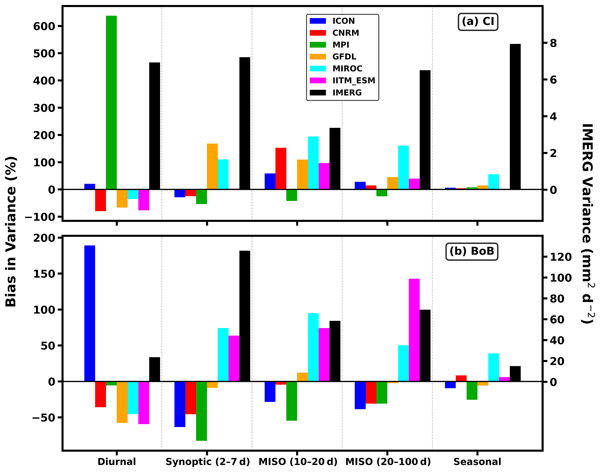
We studied how well climate models simulate Indian monsoon rainfall at different time scales, from daily cycles to longer variations. We found that models may match seasonal averages but still fail to capture when and how rainfall occurs. These errors differ over land and ocean and affect overall monsoon patterns. Improving how models represent rainfall processes across scales is essential for better prediction.
Samir Pokhrel, Verma Utkarsh, Patita Kalyana Sahoo, Praveen K. Pothapakula, Anusha Sunkisala, Nishant Gautam, Kolady P. Pribin, Shivamurthy Yashas, Hemantkumar S. Chaudhari, Archana Rai, Hasibur Rahaman, Andreas F. Prein, Anurag Dipankar, and Subodh Kumar Saha
Weather Clim. Dynam., 7, 1447–1477, https://doi.org/10.5194/wcd-7-1447-2026, https://doi.org/10.5194/wcd-7-1447-2026, 2026
Short summary
Short summary
We studied how well climate models simulate Indian monsoon rainfall at different time scales, from daily cycles to longer variations. We found that models may match seasonal averages but still fail to capture when and how rainfall occurs. These errors differ over land and ocean and affect overall monsoon patterns. Improving how models represent rainfall processes across scales is essential for better prediction.
K. S. Apsara, Aravindakshan Jayakumar, Theethai Jacob Anurose, Saji Mohandas, Paul R. Field, Thara Prabhakaran, Mahen Konwar, and Vijayapurapu Srinivasa Prasad
Atmos. Chem. Phys., 25, 11423–11439, https://doi.org/10.5194/acp-25-11423-2025, https://doi.org/10.5194/acp-25-11423-2025, 2025
Short summary
Short summary
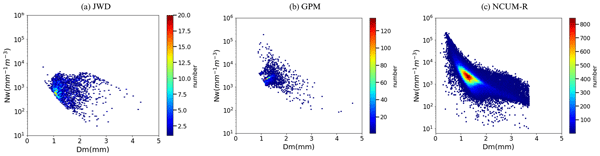
Science has made significant strides in weather prediction, especially for intense tropical rainfall that can lead to floods and landslides. Our study aims to improve monsoon rainfall forecasts by analyzing raindrop sizes. Using a new approach to model raindrop growth, we achieved a more accurate depiction of large rainfall events. These improvements can be generalized to enhance early warning systems, offering reliable predictions that help reduce risks from severe tropical weather events.
Mahen Konwar, Benjamin Werden, Edward C. Fortner, Sudarsan Bera, Mercy Varghese, Subharthi Chowdhuri, Kurt Hibert, Philip Croteau, John Jayne, Manjula Canagaratna, Neelam Malap, Sandeep Jayakumar, Shivsai A. Dixit, Palani Murugavel, Duncan Axisa, Darrel Baumgardner, Peter F. DeCarlo, Doug R. Worsnop, and Thara Prabhakaran
Atmos. Meas. Tech., 17, 2387–2400, https://doi.org/10.5194/amt-17-2387-2024, https://doi.org/10.5194/amt-17-2387-2024, 2024
Short summary
Short summary
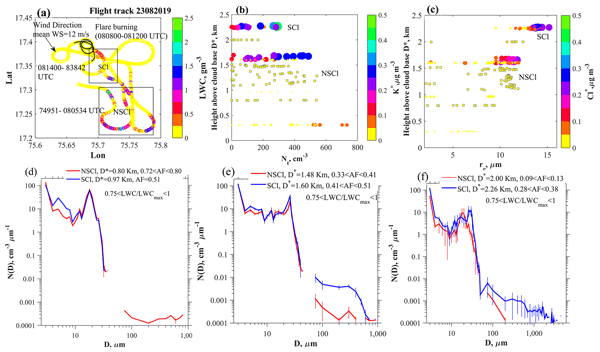
In a warm cloud seeding experiment hygroscopic particles are released to alter cloud processes to induce early raindrops. During the Cloud–Aerosol Interaction and Precipitation Enhancement Experiment, airborne mini aerosol mass spectrometers analyse the particles on which clouds form. The seeded clouds showed higher concentrations of chlorine and potassium, the oxidizing agents of flares. Small cloud droplet concentrations increased, and seeding particles were detected in deep cloud depths.
Cited articles
Adler, R., Wang, J.-J., Sapiano, M., Huffman, G., Chiu, L., Xie, P. P., Ferraro, R., Schneider, U., Becker, A., Bolvin, D., Nelkin, E., Gu, G., , and NOAA CDR Program: Hybrid gridded demographic data for the world, 1950–2020, Zenodo [data set], https://doi.org/10.5281/zenodo.3768003, 2020. a, b
Bauer, P., Thorpe, A., and Brunet, G.: The quiet revolution of numerical weather prediction, Nature, 525, 47–55, 2015. a
Borah, P. J., Venugopal, V., Sukhatme, J., Muddebihal, P., and Goswami, B. N.: Indian monsoon derailed by a North Atlantic wavetrain, Science, 370, 1335–1338, 2020. a
Bröcker, J., Charlton-Perez, A. J., and Weisheimer, A.: A statistical perspective on the signal-to-noise paradox, Q. J. Roy. Meteorol. Soc., 149, 911–923, 2023. a
Charney, J. G. and Shukla, J.: Predictability of Monsoons, in: Monsoon Dynamics, edited by: Lighthill, J. and Pearce, R. P., Cambridge University Press, Cambridge, 99–108, https://doi.org/10.1017/CBO9780511897580.009, 1981. a, b
Cottrell, F. M., Screen, J. A., and Scaife, A. A.: Signal-to-noise errors in free-running atmospheric simulations and their dependence on model resolution, Atmos. Sci. Let., 25, https://doi.org/10.1002/asl.1212, 2024. a
Duchon, C. E.: Lanczos filtering on one and two dimensions, J. Appl. Meteorol., 18, 1016–1022, 1979. a
Ek, M. B., Mitchell, K. E., Lin, Y., Rogers, E., Grunmann, P., Koren, V., Gayno, G., and Tarplay, J. D.: Implementation of Noah land surface model advances in the National Centers for Environmental Prediction operational mesoscale Eta model, J. Geophys. Res., 1089, 8851, https://doi.org/10.1029/2002JD003296, 2003. a
Good, S. A., Martin, M. J., and Rayner, N. A.: EN4: Quality controlled ocean temperature and salinity profiles and monthly objective analyses with uncertainty estimates, J. Geophy. Res.-Oceans, 118, 6704–6716, https://doi.org/10.1002/2013JC009067, 2013. a, b
Griffies, S. M., Harrison, M. J., Pacanowski, R. C., and Rosati, A.: A Technical guide to MOM4, GFDL Ocean Group Technical Report 5, GFDL, 337 pp., https://www.gfdl.noaa.gov/wp-content/uploads/files/model_development/ocean/guide4p0.pdf (last access: 4 June 2026), 2004. a
Harris, I. P. D. J., Osborn, T. J., and Lister, D. H.: Updated high-resolution grids of monthly climatic observations-The CRU TS3.10 57 dataset, Int. J. Climatol., 34, 623–642, https://doi.org/10.1002/joc.3711, 2014. a, b
Hazra, A., Chaudhari, H. S., Saha, S. K., Pokhrel, S., and Goswami, B. N.: Progress towards achieving the challenge of Indian summer monsoon climate simulation in a coupled ocean‐atmosphere model, J. Adv. Model. Eart. Syst., 9, 2268–2290, 2017. a
Hersbach, H., Bell, B., Berrisford, P., Hirahara, S., Horányi, A., Muñoz-Sabater, J., Nicolas, J., Peubey, C., Radu, R., Schepers, D., Simmons, A., Soci, C., Abdalla, S., Abellan, X., Balsamo, G., Bechtold, P., Biavati, G., Bidlot, J., Bonavita, M., De Chiara, G., Dahlgren, P., Dee, D., Diamantakis, M., Dragani, R., Flemming, J., Forbes, R., Fuentes, M., Geer, A., Haimberger, L., Healy, S., Hogan, R. J., Hólm, E., Janisková, M., Keeley, S., Laloyaux, P., Lopez, P., Lupu, C., Radnoti, G., de Rosnay, P., Rozum, I., Vamborg, F., Villaume, S., and Thépaut, J.-N.: The ERA5 global reanalysis, Q. J. Roy. Meteorol. Soc., 146, 1999–2049, https://doi.org/10.1002/qj.3803, 2020. a, b
Hu, Z.-Z., Kumar, A., and Zhu, J.: Dominant modes of ensemble mean signal and noise in seasonal forecasts of SST, Clim. Dynam., 56, 1251–1264, 2021. a
Jain, S., Scaife, A. A., and Mitra, A. K.: Skill of Indian summer monsoon rainfall prediction in multiple seasonal prediction systems, Clim. Dynam., 52, 5291–5301, 2019. a
Kang, I.-S. and Shukla, J.: Dynamic Seasonal Prediction and Predictability of the Monsoon, in: The Asian Monsoon, Praxis, edited by: Wang, B., Springer, Berlin, Heidelberg, 585–612, https://doi.org/10.1007/3-540-37722-0_15, 2006. a, b
Klavans, J., Cane, M., and Clement, A. E. A.: NAO predictability from external forcing in the late 20th century, npj Clim. Atmos. Sci., 4, 22, https://doi.org/10.1038/s41612-021-00177-8, 2021. a
Kumar, K. K., Hoerling, M., and Rajagopalan, B.: Advancing dynamical prediction of Indian monsoon rainfall, Geophys. Res. Lett., 32, L08704, https://doi.org/10.1029/2004GL021979, 2005. a
Lorenz, E. N.: Three approaches to atmospheric predictability, B. Am. Meteorol. Soc., 50, 345–351, 1969. a
Mayer, B., Düsterhus, A., and Baehr, J.: When Does the Lorenz 1963 Model Exhibit the Signal-To-Noise Paradox?, Geophys. Res. Lett., 48, e2020GL089283, https://doi.org/10.1029/2020GL089283, 2021. a
Mooley, D. and Parthasarathy, B.: Indian summer monsoon and the east equatorial pacific sea surface temperature, Atmos.-Ocean, 22, 23–35, https://doi.org/10.1080/07055900.1984.9649182, 1984. a
Peixoto, J. P. and Oort, A. H.: Physics of Climate, Springer, 520 pp., ISBN 978-0-88318-712-8, 1992. a
Pokhrel, S., Saha, S. K., Dhakate, A., Rahman, H., Chaudhari, H. S., Salunke, K., Hazra, A., Sujith, K., and Sikka, D. R.: Seasonal prediction of Indian summer monsoon rainfall in NCEP CFSv2: forecast and predictability error, Clim. Dynam., 46, 2305–2326, Dhttps://doi.org/10.1007/s00382-015-2703-1, 2016. a
Rai, A., Saha, S. K., and Sujith, K.: Implementation of snow albedo schemes of varying complexity and their performances in offline Noah and Noah coupled with NCEP CFSv2, Clim. Dynam., 53, 1261–1276, https://doi.org/10.1007/s00382-019-04632-4, 2019. a
Rajeevan, M., Unnikrishnan, C. K., and Preethi, B.: Evaluation of the ENSEMBLES multi-model seasonal forecasts of Indian summer monsoon variability, Clim. Dynam., 38, 2257–2274, 2012. a
Rowell, D. P.: Assessing potential seasonal predictability with an ensemble of multidecadal GCM simulation, J. Climate, 11, 109–120, 1998. a
Saha, S., Moorthi, S., Pan, H.-L., Wu, X., Wang, J., Nadiga, S., Tripp, P., Kistler, R., Woollen, J., Behringer, D., Liu, H., Stokes, D., Grumbine, R., Gayno, G., Wang, J., Hou, Y. T., Chuang, H. Y., Juang, H.-M. H., Sela, J., Iredell, M., Treadon, R., Kleist, D., Delst, P. V., Keyser, D., Derber, J., Ek, M., Meng, J., Wei, H., Yang, R., Lord, S., Dool, H. V. D., Kumar, A., Wang, W., Long, C., Chelliah, M., Xue, Y., Huang, B., Schemm, J. K., Ebisuzaki, W., Lin, R., Xie, P., Chen, M., Zhou, S., Higgins, W., Zou, C. Z., Liu, Q., Chen, Y., Han, Y., Cucurull, L., Reynolds, R. W., Rutledge, G., and Goldberg, M.: The NCEP Climate Forecast System Reanalysis, B. Am. Meteorol. Soc., 91, 1015–1057, 2010. a
Saha, S. K.: Why does the signal-to-noise paradox exist in seasonal climate predictability?, Zenodo [data set], https://doi.org/10.5281/zenodo.13166897, 2024. a
Saha, S., Moorthi, S., Wu, X., Wang, J., Pan, H.-L., Wang, J., Nadiga, S., Tripp, P., Behringer, D., Hou, Y. T., Chuang, H. Y., Iredell, M., Ek, M., Meng, J., Yang, R., Mensez, M. P., Dool, H. V. D., Zhang, Q., Wang, W., Chen, M., and Becker, E.: The NCEP Climate Forecast System Version 2, J. Climate, 27, 2185–2208, 2014a. a
Saha, S. K., Pokhrel, S., Chaudhari, H. S., Dhakate, A., Shewale, S., Sabeerali, C. T., Salunke, K., Hazra, A., Mahaptra, S., and Rao, A. S.: Improved simulation of Indian summer monsoon in latest NCEP climate forecast system free run, Int. J. Climatol., 35, 1628–1641, 2014b. a
Saha, S. K., Pokhrel, S., Salunke, K., Dhakate, A., Chaudhari, H. S., Rahaman, H., Sujith, K., Hazra, A., and Sikka, D. R.: Potential Predictability of Indian Summer Monsoon Rainfall in NCEP CFSv2, J. Adv. Model. Eart. Syst., 8, 96–120, https://doi.org/10.1002/2015MS000542, 2016a. a, b, c, d
Saha, S. K., Sujith, K., Pokhrel, S., Chaudhari, H. S., and Hazra, A.: Predictability of global Monsoon Rainfall in NCEP CFSv2, Clim. Dynam., 47, 1693–1715, 2016b. a
Saha, S. K., Sujith, K., Pokhrel, S., Chaudhari, H. S., and Hazra, A.: Effects of multilayer snow scheme on the simulation of snow: Offline Noah and coupled with NCEP CFSv2, J. Adv. Model. Eart. Syst., 9, 271–290, 2017. a
Saha, S. K., Hazra, A., Pokhrel, S., Chaudhari, H. S., Sujith, K., Rai, A., Rahaman, H., and Goswami, B. N.: Reply to Comment by E. T. Swenson, D. Das, and J. Shukla on “Unraveling the Mystery of Indian Summer Monsoon Prediction: Improved Estimate of Predictability Limit”, J. Geophys. Res., 125, e2020JD033242, https://doi.org/10.1029/2020JD033242, 2020. a, b, c
Saha, S. K., Konwar, M., Pokhrel, S., Hazra, A., Chaudhari, H. S., and Rai, A.: Interplay between subseasonal rainfall and global predictors in modulating interannual to multidecadal predictability of the ISMR, Geophys. Res. Lett., 48, e2020GL091458., https://doi.org/10.1029/2020GL091458, 2021. a, b, c
Scaife, A. A., Arribas, A., Blockley, E., Brookshaw, A., Clark, R. T., Dunstone, N., Eade, R., Fereday, D., Folland, C. K., Gordon, M., Hermanson, L., Knight, J. R., Lea, D. J., MacLachlan, C., Maidens, A., Martin, M., Peterson, K. A., Smith, D. M., Vellinga, M., Wallace, E., Waters, J., and Williams, A.: Skillful long-range prediction of European and North American winters, Geophys. Res. Lett., 41, 2514–2519, https://doi.org/10.1002/2014GL059637, 2014. a
Scheffe, H.: The Analysis of Variance, John Wiley and Sons, New York, https://doi.org/10.1002/bimj.19610030206, 1959. a, b
Schneider, T. and Griffies, S. M.: A Conceptual Framework for Predictability Studies, J. Climate, 12, 3133–3155, 1999. a
Sharma, D., Das, S., Chakraborty, D., Mitra, A., and Goswami, B. N.: Improving Indian summer monsoon rainfall prediction using deep learning up to two years in advance, Q. J. Roy. Meteorol. Soc., 152, e70023, https://doi.org/10.1002/qj.70023, 2025. a
Shukla, J.: Monsoon Mysteries, Science, 318, 204–205, 2007. a
Smith, D. M., Eade, R., Scaife, A. A., Caron, L. P., Danabasoglu, G., DelSole, T. M., Delworth, T., Doblas-Reyes, F. J., Dunstone, N. J., Hermanson, L., Kharin, V., Kimoto, M., Merryfield, W. J., Mochizuki, T., Müller, W. A., Pohlmann, H., Yeager, S., and Yang, X.: Robust skill of decadal climate predictions, npj Clim. Atmos. Sci., 2, 13, https://doi.org/10.1038/s41612-019-0071-y, 2019. a
Smith, D. M., Scaife, A. A., Eade, R., Athanasiadis, P., Bellucci, A., Bethke, I., Bilbao, R., Borchert, L. F., Caron, L.-P., Counillon, F., Danabasoglu, G., Delworth, T., Doblas-Reyes, F. J., Dunstone, N. J., Estella-Perez, V., Flavoni, S., Hermanson, L., Keenlyside, N., Kharin, V., Kimoto, M., Merryfield, W. J., Mignot, J., Mochizuki, T., Modali, K., Monerie, P.-A., Müller, W. A., Nicolí, D., Ortega, P., Pankatz, K., Pohlmann, H., Robson, J., Ruggieri, P., Sospedra-Alfonso, R., Swingedouw, D., Wang, Y., Wild, S., Yeager, S., Yang, X., and Zhang, L.: North Atlantic climate far more predictable than models imply, Nature, 583, 796–800, https://doi.org/10.1038/s41586-020-2525-0, 2020. a
Strommen, K. and Palmer, T. N.: Signal and noise in regime systems: A hypothesis on the predictability of the North Atlantic Oscillation, Q. J. Roy. Meteorol. Soc., 145, 147–163, 2019. a
Sujith, K., Saha, S. K., Rai, A., Pokhrel, S., Chaudhari, H. S., Hazra, A., Murtugudde, R., and Goswami, B. N.: Effects of a multilayer snow scheme on the global teleconnections of the Indian summer monsoon, Q. J. Roy. Meteorol. Soc., 145, 1102–1117, https://doi.org/10.1002/qj.3480, 2019. a
Walker, G. T.: Correlation in seasonal variations of weather, IX. A further study of world weather, Memoirs of the Indian Meteorological Department, 24, 275–332, 1924. a
Weisheimer, A., Decremer, D., MacLeod, D., O'Reilly, C., Stockdale, T., Johnson, S., and Palmer, T.: How confident are predictability estimates of the winter North Atlantic Oscillation?, Q. J. Roy. Meteorol. Soc., 145, 140–159, https://doi.org/10.1002/qj.3446, 2018. a, b, c
Westra, S. and Sharma, A.: An Upper Limit to Seasonal Rainfall Predictability?, J. Climate, 23, 3332–3351, 2010. a
Winton, M.: A reformulated three-layer sea ice model, J. Atmos. Ocean. Tech., 17, 525–531, 2000. a
Wu, X., Simmonds, I., and Budd, W. F.: Modeling of Antarctic sea ice in a general circulation model, J. Climate, 10, 593–609, 1997. a
Yang, D., Tang, Y., Zhang, Y., and Yang, X.: Information-based potential predictability of the Asian summer monsoon in a coupled model, J. Geophys. Res., 117, D03119, https://doi.org/10.1029/2011JD016775, 2012. a
Yashas, S.: Codes used in the preparation of the article “Why does the signal-to-noise paradox exist in seasonal climate predictability?”, Zenodo [code], https://doi.org/10.5281/zenodo.15369106, 2025. a
Zhang, W., Kirtman, B., Siqueira, L., Clement, A., and Xia, J.: Understanding the signal-to-noise paradox in decadal climate predictability from CMIP5 and an eddying global coupled model, Clim. Dynam., 56, 2895–2913, 2021. a
Short summary
This study highlights challenges in estimating seasonal climate predictability using the
perfect modelframework, which assumes only initial conditions cause error. We show that forecasts can exceed the predicted limit, known as the Potential Predictability Limit (PPL), due to model imperfections in simulating physical processes. A new method is proposed to estimate PPL more accurately and avoid such paradoxes.
This study highlights challenges in estimating seasonal climate predictability using the
perfect...


