
Articles | Volume 19, issue 1
https://doi.org/10.5194/gmd-19-423-2026
© Author(s) 2026. This work is distributed under
the Creative Commons Attribution 4.0 License.
the Creative Commons Attribution 4.0 License.
https://doi.org/10.5194/gmd-19-423-2026
© Author(s) 2026. This work is distributed under
the Creative Commons Attribution 4.0 License.
the Creative Commons Attribution 4.0 License.
Development and technical paper
| 
15 Jan 2026
Development and technical paper |
| 15 Jan 2026
| 15 Jan 2026
Implementation and evaluation of sea level operators in OceanVar2.0: an open-source oceanographic three-dimensional variational data assimilation system

Department of Physics and Astronomy, Bologna University, Bologna, Italy
CMCC Foundation – Euro-Mediterranean Center on Climate Change, Bologna, Italy
Mario Adani
CMCC Foundation – Euro-Mediterranean Center on Climate Change, Bologna, Italy
now at: Italian National Agency for New Technologies, Energy and Sustainable Economic Development (ENEA), Bologna, 40129, Italy
Francesco Carere
CMCC Foundation – Euro-Mediterranean Center on Climate Change, Lecce, Italy
Andrea Cipollone
CMCC Foundation – Euro-Mediterranean Center on Climate Change, Bologna, Italy
Anna Chiara Goglio
CMCC Foundation – Euro-Mediterranean Center on Climate Change, Bologna, Italy
Eric Jansen
CMCC Foundation – Euro-Mediterranean Center on Climate Change, Lecce, Italy
Ali Aydogdu
CMCC Foundation – Euro-Mediterranean Center on Climate Change, Bologna, Italy
Francesca Mele
CMCC Foundation – Euro-Mediterranean Center on Climate Change, Lecce, Italy
Italo Epicoco
CMCC Foundation – Euro-Mediterranean Center on Climate Change, Lecce, Italy
Department of Engineering for Innovation, University of Salento, Lecce, Italy
Jenny Pistoia
CMCC Foundation – Euro-Mediterranean Center on Climate Change, Bologna, Italy
Emanuela Clementi
CMCC Foundation – Euro-Mediterranean Center on Climate Change, Bologna, Italy
Nadia Pinardi
Department of Physics and Astronomy, Bologna University, Bologna, Italy
CMCC Foundation – Euro-Mediterranean Center on Climate Change, Bologna, Italy
Simona Masina
CMCC Foundation – Euro-Mediterranean Center on Climate Change, Bologna, Italy
Related authors
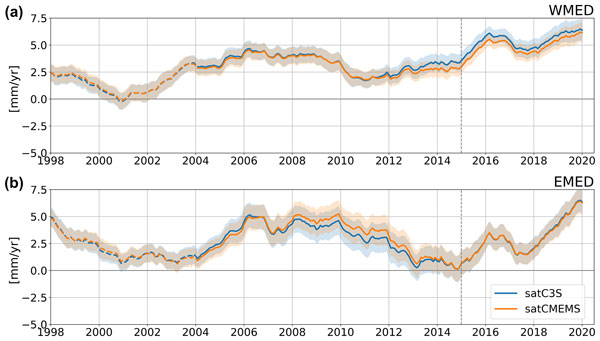
Federica Borile, Vladyslav Lyubartsev, Begoña Pérez Gómez, Jue Lin-Ye, Anna Mangilli, Emanuela Clementi, and Paolo Oddo
State Planet, 7-osr10, 13, https://doi.org/10.5194/sp-7-osr10-13-2026, https://doi.org/10.5194/sp-7-osr10-13-2026, 2026
Short summary
Short summary
Sea level decadal trends are analysed in the Western and Eastern Mediterranean Sea using satellite and in-situ data. We found that sea level rise is not constant but varies over decades and differs between regions. These changes are influenced by temperature, salinity, and local land movements. Understanding this variability helps improve coastal planning and prepares communities for changing sea levels in the near future.
Anna Chiara Goglio, Emanuela Clementi, Nadia Pinardi, Giulio Boccaletti, Paolo Oddo, and Lorenzo Mentaschi
EGUsphere, https://doi.org/10.5194/egusphere-2026-4734, https://doi.org/10.5194/egusphere-2026-4734, 2026
This preprint is open for discussion and under review for Natural Hazards and Earth System Sciences (NHESS).
Short summary
Short summary
Venice, one of the world's most famous cities, is threatened by flooding, locally known as Acqua Alta. Based on numerical results from the Copernicus Marine Mediterranean Analysis and Forecasting System, we investigate each process involved in the dynamics of these events to improve their predictability. For the first time, we identify processes occurring within the water column that contribute to the sea level peak, providing new insight into the understanding and modeling of Acqua Alta events.
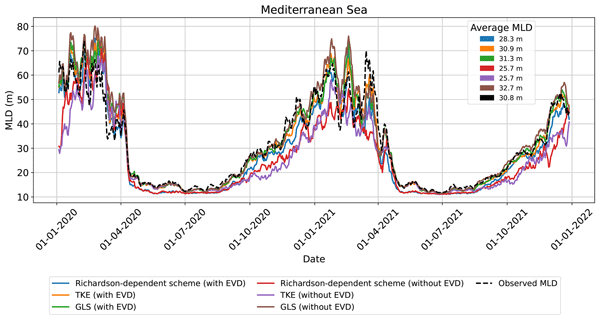
Lucia Gualtieri, Hans Burchard, Federica Borile, Aimie Moulin, Pietro Miraglio, Francesco Maicu, Emanuela Clementi, and Paolo Oddo
Geosci. Model Dev., 19, 7041–7068, https://doi.org/10.5194/gmd-19-7041-2026, https://doi.org/10.5194/gmd-19-7041-2026, 2026
Short summary
Short summary
This study addresses a gap in understanding how turbulent mixing closure schemes and convective adjustments interplay in the Mediterranean Sea. Coupled ocean-wave simulations were performed with different mixing parameterizations and model results were compared against Argo float observations across different space and time scales. Results show that the Generalised Length Scale closure scheme best reproduces observed mixed layer properties and variability, without needing convective adjustment.
Anna Chiara Goglio, Lorenzo Mentaschi, Begoña Pérez Gómez, Paolo Oddo, Emanuela Clementi, and Federica Borile
State Planet Discuss., https://doi.org/10.5194/sp-2026-7, https://doi.org/10.5194/sp-2026-7, 2026
Preprint under review for SP
Short summary
Short summary
Mediterranean coastal communities are increasingly threatened by extreme sea level events. We built an indicator combining model and observed data to summarize their changes. The analysis of their evolution revealed that the associated hazard is rising along the entire coastline, especially in the northern Adriatic, the Aegean Sea, and along Turkish and Cypriot coasts. This trend is mostly driven by sea level rise, except for the Adriatic Sea, where strong storm effects play a bigger role.
Martina Auditore, Baptiste Mourre, and Paolo Oddo
EGUsphere, https://doi.org/10.5194/egusphere-2026-3276, https://doi.org/10.5194/egusphere-2026-3276, 2026
This preprint is open for discussion and under review for Ocean Science (OS).
Short summary
Short summary
Coastal eddies are rotating water masses that transport heat, nutrients, and other materials, shaping ecosystems and circulation. This study evaluates the new SWOT (Surface Water and Ocean Topography) satellite’s ability to track the alongshore propagation of a coastal eddy in the Algerian Basin (Western Mediterranean). SWOT’s high-resolution daily observations capture eddy evolution in unprecedented detail, revealing interactions with the coast and topography beyond conventional altimetry.
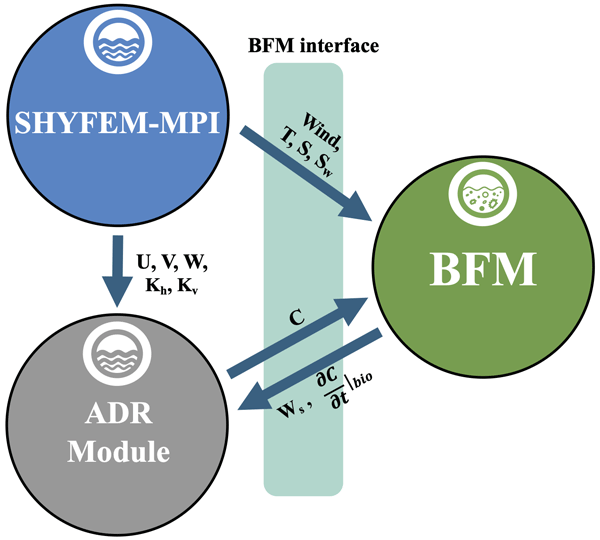
Jacopo Alessandri, Giulia Bonino, Tomas Lovato, Momme Butenschön, Lorenzo Mentaschi, Giorgia Verri, Ivan Federico, and Nadia Pinardi
Geosci. Model Dev., 19, 9301–9324, https://doi.org/10.5194/gmd-19-9301-2026, https://doi.org/10.5194/gmd-19-9301-2026, 2026
Short summary
Short summary
Coastal seas are strongly shaped by complex coastlines, shallow depths, and inputs from rivers, which influence marine life and water quality. This study introduces a new high-resolution modelling system that combines ocean circulation and marine ecosystem processes on unstructured grids. Applied to the northern Adriatic Sea, the model realistically captures seasonal changes in key biogeochemical variables, offering improved tools to support coastal environmental management.
Federica Borile, Vladyslav Lyubartsev, Begoña Pérez Gómez, Jue Lin-Ye, Anna Mangilli, Emanuela Clementi, and Paolo Oddo
State Planet, 7-osr10, 13, https://doi.org/10.5194/sp-7-osr10-13-2026, https://doi.org/10.5194/sp-7-osr10-13-2026, 2026
Short summary
Short summary
Sea level decadal trends are analysed in the Western and Eastern Mediterranean Sea using satellite and in-situ data. We found that sea level rise is not constant but varies over decades and differs between regions. These changes are influenced by temperature, salinity, and local land movements. Understanding this variability helps improve coastal planning and prepares communities for changing sea levels in the near future.
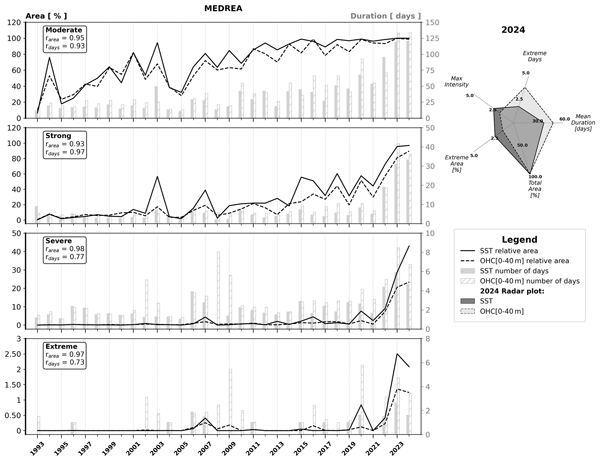
Leonardo Lima, Rafael Gomes de Menezes, Ehsan Sadighrad, Ronan McAdam, Filipe Costa, Pietro Miraglio, Mehmet Ilicak, Eric Jansen, Ali Aydogdu, Francesco Maicu, and Emanuela Clementi
State Planet, 7-osr10, 5, https://doi.org/10.5194/sp-7-osr10-5-2026, https://doi.org/10.5194/sp-7-osr10-5-2026, 2026
Short summary
Short summary
As climate change intensifies, marine heatwaves (MHWs), periods of unusually high ocean temperatures, threaten ecosystems and communities. This study analyzes MHWs in the Mediterranean and Black Seas, examining surface temperatures and ocean heat content in the upper 0–40 m to capture subsurface warming. Findings highlight the need to monitor both surface and subsurface conditions for a comprehensive understanding and better management considering ongoing warming trends in both seas.
Susanna Winkelbauer, Gaël Forget, Michael Mayer, Romain Bourdalle-Badie, Andrea Cipollone, Leopold Haimberger, Keith Haines, Satoshi Osafune, Yuanyuan Song, Andrea Storto, Chunxue Yang, and Hao Zuo
EGUsphere, https://doi.org/10.5194/egusphere-2026-5435, https://doi.org/10.5194/egusphere-2026-5435, 2026
This preprint is open for discussion and under review for Ocean Science (OS).
Short summary
Short summary
Ocean currents carry vast amounts of heat through the Atlantic and strongly influence climate. We compared estimates from 17 global ocean reanalyses with observations to assess how well they reproduce this heat transport and its changes over time. Most reanalyses capture the main patterns and variations, but important differences remain. The reanalyses also suggest a decrease in northward heat transport since the early 1990s, although its magnitude remains uncertain.
Francesco De Rovere, Giulia Bonino, Ronan McAdam, Enrico Scoccimarro, Samuel Somot, Iván M. Parras-Berrocal, Bodo Ahrens, Vladimir Djurdjevic, Laurent Li, and Simona Masina
Ocean Sci., 22, 2725–2742, https://doi.org/10.5194/os-22-2725-2026, https://doi.org/10.5194/os-22-2725-2026, 2026
Short summary
Short summary
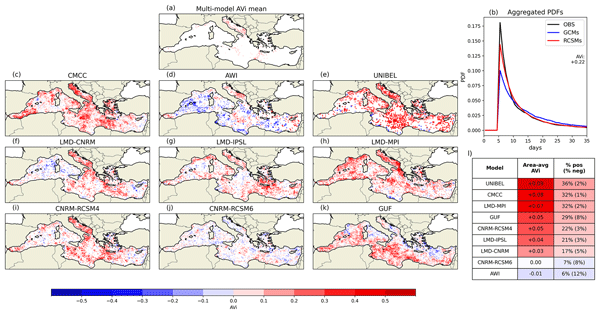
Marine heatwaves in the Mediterranean Sea are intensifying, posing growing threats to marine life and coastal communities. We evaluated if high-resolution regional climate models better capture these extremes compared to the global models driving them. Regional models reliably improve sea surface temperature patterns and marine heatwave duration, but struggle more with heatwave intensity. Higher horizontal resolution alone is not enough, advances in other model components are equally needed.
Yushi Morioka, Doroteaciro Iovino, Andrea Cipollone, Andrea Storto, Takeshi Doi, Masami Nonaka, and Swadhin K. Behera
EGUsphere, https://doi.org/10.5194/egusphere-2026-5070, https://doi.org/10.5194/egusphere-2026-5070, 2026
This preprint is open for discussion and under review for The Cryosphere (TC).
Short summary
Short summary
Arctic sea ice has been shrinking for the last four decades. As global warming continues, predicting summer sea ice is becoming more important. Here we create a seasonal forecast system using the SINTEX-F3 model. Results show that summer sea ice in the Barents-Kara Sea is best predicted when accurate sea ice and snow conditions are provided from spring. It is found that initial sea ice thickness acts as a memory for the climate system, enabling accurate summer sea ice prediction from spring.
Francesco Cocetta, Doroteaciro Iovino, Andrea Cipollone, and Daniela Flocco
EGUsphere, https://doi.org/10.5194/egusphere-2026-4349, https://doi.org/10.5194/egusphere-2026-4349, 2026
This preprint is open for discussion and under review for The Cryosphere (TC).
Short summary
Short summary
Arctic sea ice is rapidly changing toward a new climate state characterized by thinner and more seasonal ice. To understand these changes, we use reconstructions of ocean and sea ice states to investigate the transition zone between consolidated pack ice and open ocean. Our results show clear differences from central pack ice, highlighting the need for better representation in climate models and opening the path toward identifying specific indicators of its evolution.
Francesco Maicu, Seimur Shirinov, Charikleia L. G. Oikonomou, Vitalii Sharmar, Lucia Gualtieri, Anna Chiara Goglio, Ehsan Sadighrad, Dimitra Denaxa, Aimie Moulin, Bethany McDonagh, Salvatore Causio, Emanuela Clementi, Gerasimos Korres, Ivan Federico, and Enrico Scoccimarro
State Planet Discuss., https://doi.org/10.5194/sp-2026-12, https://doi.org/10.5194/sp-2026-12, 2026
Preprint under review for SP
Short summary
Short summary
In January 2026, an exceptional storm brought record waves, flooding, and strong currents to the Mediterranean Sea. To understand its coastal impact, we combined data from Europe's ocean monitoring service with a detailed coastal computer model, tracking the storm from open sea to shore. We found unusually high waves, raised sea levels, and strong changes in currents and saltiness. Combining wide-area forecasts with local models improves flood prediction, supporting earlier coastal warning.
Anna Chiara Goglio, Emanuela Clementi, Nadia Pinardi, Giulio Boccaletti, Paolo Oddo, and Lorenzo Mentaschi
EGUsphere, https://doi.org/10.5194/egusphere-2026-4734, https://doi.org/10.5194/egusphere-2026-4734, 2026
This preprint is open for discussion and under review for Natural Hazards and Earth System Sciences (NHESS).
Short summary
Short summary
Venice, one of the world's most famous cities, is threatened by flooding, locally known as Acqua Alta. Based on numerical results from the Copernicus Marine Mediterranean Analysis and Forecasting System, we investigate each process involved in the dynamics of these events to improve their predictability. For the first time, we identify processes occurring within the water column that contribute to the sea level peak, providing new insight into the understanding and modeling of Acqua Alta events.
Lucia Gualtieri, Hans Burchard, Federica Borile, Aimie Moulin, Pietro Miraglio, Francesco Maicu, Emanuela Clementi, and Paolo Oddo
Geosci. Model Dev., 19, 7041–7068, https://doi.org/10.5194/gmd-19-7041-2026, https://doi.org/10.5194/gmd-19-7041-2026, 2026
Short summary
Short summary
This study addresses a gap in understanding how turbulent mixing closure schemes and convective adjustments interplay in the Mediterranean Sea. Coupled ocean-wave simulations were performed with different mixing parameterizations and model results were compared against Argo float observations across different space and time scales. Results show that the Generalised Length Scale closure scheme best reproduces observed mixed layer properties and variability, without needing convective adjustment.
Filipe Costa, Ehsan Sadighrad, Leonardo Lima, Ali Aydoğdu, Mehmet Ilicak, Diana Azevedo, and Emanuela Clementi
State Planet Discuss., https://doi.org/10.5194/sp-2026-17, https://doi.org/10.5194/sp-2026-17, 2026
Preprint under review for SP
Short summary
Short summary
Freshwater is essential to the Black Sea, supporting marine ecosystems, coastal management, and climate services. This study presents the first long-term assessment of freshwater storage changes using a high-resolution regional dataset. We show that freshwater has declined mainly because of increasing evaporation and decreasing river discharge. This new indicator supports long-term monitoring of environmental change in the Black Sea.
Anna Chiara Goglio, Lorenzo Mentaschi, Begoña Pérez Gómez, Paolo Oddo, Emanuela Clementi, and Federica Borile
State Planet Discuss., https://doi.org/10.5194/sp-2026-7, https://doi.org/10.5194/sp-2026-7, 2026
Preprint under review for SP
Short summary
Short summary
Mediterranean coastal communities are increasingly threatened by extreme sea level events. We built an indicator combining model and observed data to summarize their changes. The analysis of their evolution revealed that the associated hazard is rising along the entire coastline, especially in the northern Adriatic, the Aegean Sea, and along Turkish and Cypriot coasts. This trend is mostly driven by sea level rise, except for the Adriatic Sea, where strong storm effects play a bigger role.
Laura Feudale, Giorgio Bolzon, Gianpiero Cossarini, Anna Teruzzi, Emanuela Clementi, and Stefano Salon
EGUsphere, https://doi.org/10.5194/egusphere-2026-3413, https://doi.org/10.5194/egusphere-2026-3413, 2026
This preprint is open for discussion and under review for Ocean Science (OS).
Short summary
Short summary
We investigate the impact of physical forcing frequency on Mediterranean biogeochemical simulations. Using 6-hourly instead of daily ocean fields improves phytoplankton bloom and nutrient patterns through a better representation of vertical transport processes, highlighting the importance of high-frequency variability for ecosystem forecasting.
Skyler Kern, Mary E. McGuinn, Katherine M. Smith, Nadia Pinardi, Kyle E. Niemeyer, Nicole S. Lovenduski, and Peter E. Hamlington
Geosci. Model Dev., 19, 5601–5622, https://doi.org/10.5194/gmd-19-5601-2026, https://doi.org/10.5194/gmd-19-5601-2026, 2026
Short summary
Short summary
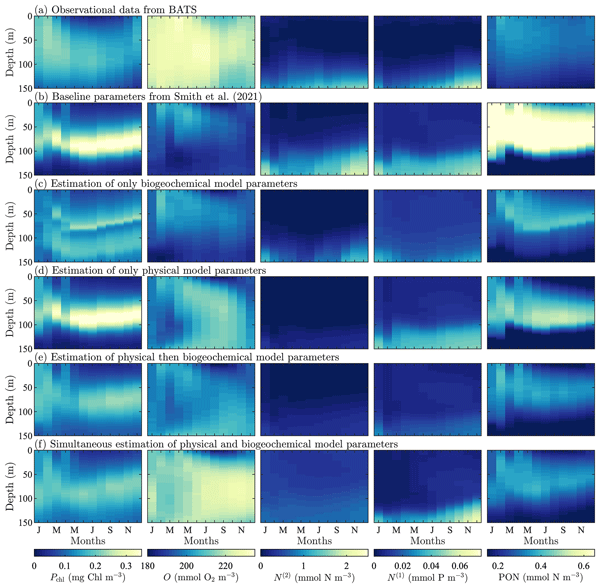
The parameters that control a model's behavior determine its ability to represent a system. In this work, multiple cases test how to estimate the parameters of a model with components corresponding to both the physics and the chemical and biological processes (i.e. the biogeochemistry) of the ocean. While demonstrating how to approach this problem type, the results show estimating both sets of parameters simultaneously is better than estimating the physics then the biogeochemistry separately.
Martina Auditore, Baptiste Mourre, and Paolo Oddo
EGUsphere, https://doi.org/10.5194/egusphere-2026-3276, https://doi.org/10.5194/egusphere-2026-3276, 2026
This preprint is open for discussion and under review for Ocean Science (OS).
Short summary
Short summary
Coastal eddies are rotating water masses that transport heat, nutrients, and other materials, shaping ecosystems and circulation. This study evaluates the new SWOT (Surface Water and Ocean Topography) satellite’s ability to track the alongshore propagation of a coastal eddy in the Algerian Basin (Western Mediterranean). SWOT’s high-resolution daily observations capture eddy evolution in unprecedented detail, revealing interactions with the coast and topography beyond conventional altimetry.
Manuel Vargas-Yáñez, Orens Pasqueron de Fommervault, Emanuela Clementi, Christian Ferrarin, Svitlana Liubertseva, Diego Álvarez-Berastegui, Baptiste Mourre, Salvatore Aronica, Rosa Balbin, Joaquín Ballabrera-Poy, Sana Ben Ismail, Nathaniel Benssousan, Ismail Bessa, Alicia Blanco, Anthony Bosse, Evi Bourma, François Bourrin, Carlo Brandini, Fulvio Capodici, Clara Casals-Baixas, Branko Cermelj, Giuseppe Ciraolo, Pascal Conan, Laurent Coppola, Lorenzo Corgnati, Joaquín del Río, Emilie Diamond Riquier, Lara Diaz-Barroso, Bartolomeo Doronzo, Xavier Durrieu de Madron, Milad Fakhri, Costantine Frangoulis, Claudia Fratianni, Emilio García-Ladona, Jesus García-Lafuente, M. Carmen García-Martínez, Joaquín Garrabou, Josep Gasol, Adam Gauci, Frédéric Gazeau, Gerard Gregory, Abed El Raman Hassoun, Jordi Isern-Fontanet, Dominique Lefevre, Nadia Lo Bue, Guiomar López, Pablo Lorente, Deny Malengros, Ramon Massana, Sinan Mavruk, Stefano Miserocchi, Behzad Mostajir, Laure Mousseau, Francina Moya, Antonio Novellino, Arianna Orasi, Emanuele Organelli, Vicent Ouisse, Tal Ozer, Begoña Pérez-Gómez, Susana Pérez-Rubio, Leonidas Perivoliotis, Georges Petihakis, Anne Petrenko, Sebastien Pinel, Xavier Pitarch, Angela Pomaro, Lucía Quirós-Collazos, Emma Reyes, Simone Sammartino, Anna Sánchez-Vidal, Katrin Schroeder, Stefano Taddei, Elena Tel, Pierre Testor, Marco Torri, Daniela Turk, Laura Ursella, Dimitris Velaoras, Francesca Vidussi, Ivica Vilivić, Enrico Zambiachi, D. Nikolaos Zarokanellos, George Zodiatis, and Vanessa Cardin
EGUsphere, https://doi.org/10.5194/egusphere-2026-2632, https://doi.org/10.5194/egusphere-2026-2632, 2026
Short summary
Short summary
This work compiles current marine observation capabilities in the Mediterranean Sea, making this information accessible to scientists, organizations, stakeholders, and environmental policymakers. It supports initiatives such as Copernicus Marine Service, EMODNet, the European Ocean Pact, and EU directives. It is intended as a living resource to be updated, identifying strengths and gaps in Mediterranean observation systems.
Rita Lecci, Robyn Gwee, Kun Yan, Sanne Muis, Nadia Pinardi, Jun She, Martin Verlaan, Simona Masina, Wenshan Li, Hui Wang, Salvatore Causio, Antonio Novellino, Marco Alba, Etiënne Kras, Sandra Gaytan Aguilar, and Jan-Bart Calewaert
Nat. Hazards Earth Syst. Sci., 26, 1767–1783, https://doi.org/10.5194/nhess-26-1767-2026, https://doi.org/10.5194/nhess-26-1767-2026, 2026
Short summary
Short summary
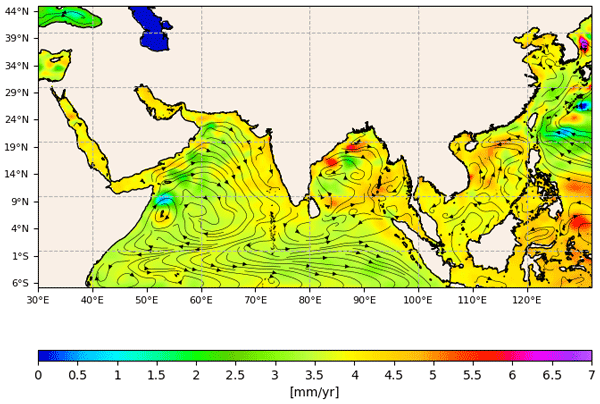
This study explored how sea level is changing along the China-Europe Sea Route. By combining satellite and in-situ observations with advanced modeling, the research identified ongoing sea level rise and an increasing frequency of extreme water level events in some regions. These findings underscore the importance of continued monitoring and provide useful knowledge to support long-term planning, coastal resilience, and informed decision-making.
Simona Masina, Andrea Cipollone, Doroteaciro Iovino, Stefania Ciliberti, Rita Lecci, Sergio Cretí, Vladyslav Lyubartsev, Giovanni Coppini, and Emanuela Clementi
EGUsphere, https://doi.org/10.5194/egusphere-2026-887, https://doi.org/10.5194/egusphere-2026-887, 2026
Short summary
Short summary
The paper presents GOFS16, an eddy-resolving global operational ocean and sea ice forecasting system which provides 6-day forecasts of three-dimensional temperature, salinity, currents, sea level, and sea ice properties. The system assimilates satellite and in situ observations using a 3D variational data assimilation scheme. Validation is conducted routinely using global and regional metrics. Results indicate that GOFS16 performs within the expected range of skill for current global systems.
Leonardo Lima, Diana Azevedo, Mehmet Ilicak, Eric Jansen, Filipe Costa, Adil Sozer, Pietro Miraglio, and Emanuela Clementi
Ocean Sci., 22, 1051–1072, https://doi.org/10.5194/os-22-1051-2026, https://doi.org/10.5194/os-22-1051-2026, 2026
Short summary
Short summary
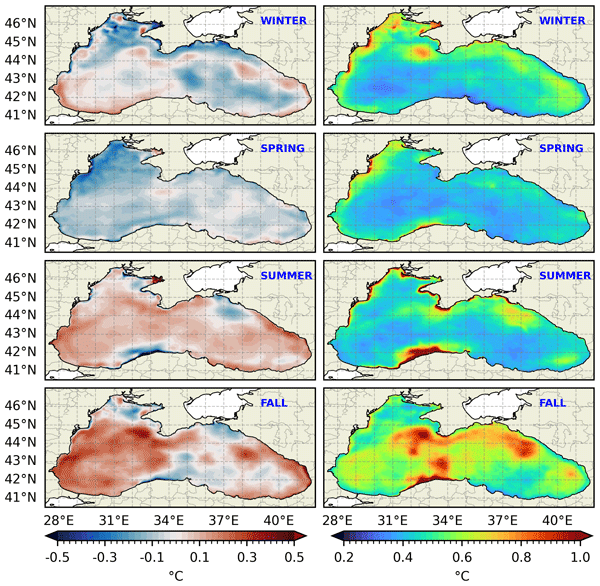
We used a high-resolution ocean model to investigate how the Black Sea is responding to external drivers, including climate change. Our results show clear warming, particularly in the upper 150 m, and reveal significant changes in ocean circulation and water masses. The model also supports the development of ocean monitoring indicators that help track the sea’s response to climate-related trends and improve our understanding of how ocean conditions in the Black Sea evolve.

Italo dos Reis Lopes, Ivan Federico, Michalis Vousdoukas, Luisa Perini, Salvatore Causio, Giovanni Coppini, Maurilio Milella, Nadia Pinardi, and Lorenzo Mentaschi
Nat. Hazards Earth Syst. Sci., 26, 811–825, https://doi.org/10.5194/nhess-26-811-2026, https://doi.org/10.5194/nhess-26-811-2026, 2026
Short summary
Short summary
We improved a computer model to simulate coastal flooding by including temporary barriers like sand dunes. We tested it where sand dunes are built seasonally to protect the shoreline for two real storms: one that broke through the dunes and another where dunes held strong. Our model showed how important it is to design these defenses carefully since even if a small part of a dune fails, a major flooding can happen. Overall, our work helps create better tools to manage and protect coastal areas.

Mahmud Hasan Ghani, Nadia Pinardi, Antonio Navarra, Lorenzo Mentaschi, Silvia Bianconcini, Francesco Maicu, and Francesco Trotta
Ocean Sci., 22, 427–441, https://doi.org/10.5194/os-22-427-2026, https://doi.org/10.5194/os-22-427-2026, 2026
Short summary
Short summary
Using the same sea surface temperature and the same bulk formula but different atmospheric reanalysis and analysis surface-variable datasets, we show that a higher-resolution dataset is crucial for evaluating the heat-budget closure hypothesis in the Mediterranean Sea. For the first time, we investigate the impact of extreme heat-loss events in the Mediterranean Sea by computing the long-term, basin-averaged mean heat budget.
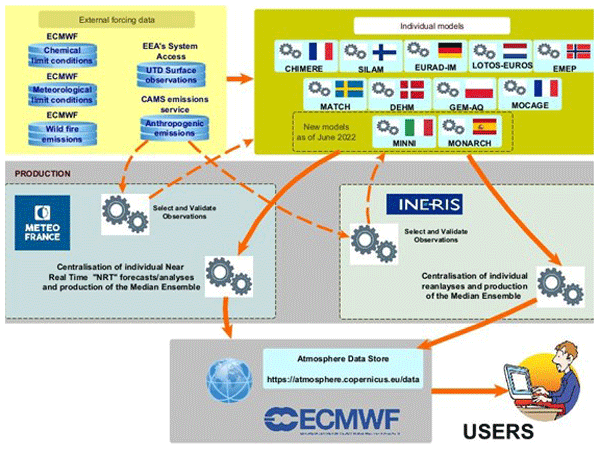
Augustin Colette, Gaëlle Collin, François Besson, Etienne Blot, Vincent Guidard, Frédérik Meleux, Adrien Royer, Valentin Petiot, Claire Miller, Oihana Fermond, Alizé Jeant, Mario Adani, Joaquim Arteta, Anna Benedictow, Robert Bergström, Dene Bowdalo, Jorgen Brandt, Gino Briganti, Ana C. Carvalho, Jesper Heile Christensen, Florian Couvidat, Ilaria D'Elia, Massimo D'Isidoro, Hugo Denier van der Gon, Gaël Descombes, Enza Di Tomaso, John Douros, Jeronimo Escribano, Henk Eskes, Hilde Fagerli, Yalda Fatahi, Johannes Flemming, Elmar Friese, Lise Frohn, Michael Gauss, Camilla Geels, Guido Guarnieri, Marc Guevara, Antoine Guion, Jonathan Guth, Risto Hänninen, Kaj Hansen, Ulas Im, Ruud Janssen, Marine Jeoffrion, Mathieu Joly, Luke Jones, Oriol Jorba, Evgeni Kadantsev, Michael Kahnert, Jacek W. Kaminski, Rostislav Kouznetsov, Richard Kranenburg, Jeroen Kuenen, Anne Caroline Lange, Joachim Langner, Victor Lannuque, Francesca Macchia, Astrid Manders, Mihaela Mircea, Agnes Nyiri, Miriam Olid, Carlos Pérez García-Pando, Yuliia Palamarchuk, Antonio Piersanti, Blandine Raux, Miha Razinger, Lennard Robertson, Arjo Segers, Martijn Schaap, Pilvi Siljamo, David Simpson, Mikhail Sofiev, Anders Stangel, Joanna Struzewska, Carles Tena, Renske Timmermans, Thanos Tsikerdekis, Svetlana Tsyro, Svyatoslav Tyuryakov, Anthony Ung, Andreas Uppstu, Alvaro Valdebenito, Peter van Velthoven, Lina Vitali, Zhuyun Ye, Vincent-Henri Peuch, and Laurence Rouïl
Geosci. Model Dev., 18, 6835–6883, https://doi.org/10.5194/gmd-18-6835-2025, https://doi.org/10.5194/gmd-18-6835-2025, 2025
Short summary
Short summary
The Copernicus Atmosphere Monitoring Service – Regional Production delivers daily forecasts, analyses, and reanalyses of air quality in Europe. The service relies on a distributed modelling production by 11 leading European modelling teams following stringent requirements with an operational design that has no equivalent in the world. All the products are free, open, and quality-assured and disseminated with a high level of reliability.
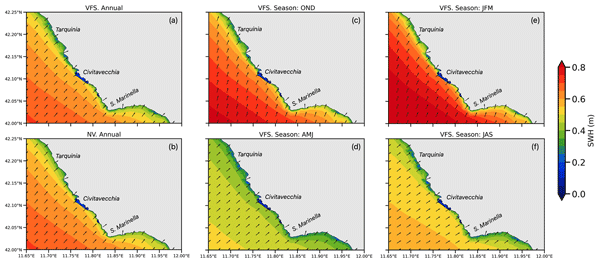
Seimur Shirinov, Ivan Federico, Simone Bonamano, Salvatore Causio, Nicolás Biocca, Viviana Piermattei, Daniele Piazzolla, Jacopo Alessandri, Lorenzo Mentaschi, Giovanni Coppini, Marco Marcelli, and Nadia Pinardi
Nat. Hazards Earth Syst. Sci., 25, 3737–3758, https://doi.org/10.5194/nhess-25-3737-2025, https://doi.org/10.5194/nhess-25-3737-2025, 2025
Short summary
Short summary
This research investigates how seagrass meadows attenuate coastal waves. Our methodology integrates site measurements with numerical simulations, revealing that plant flexibility and seasonal growth cycles are crucial factors that enhance model fidelity for predicting wave damping. These insights aid ecosystem-based coastal protection and conservation of these vital habitats. Future work should address current–sediment–vegetation interactions for a more complete hydrodynamic understanding.
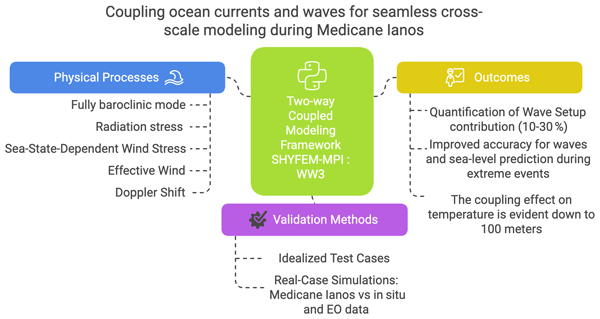
Salvatore Causio, Seimur Shirinov, Ivan Federico, Giovanni De Cillis, Emanuela Clementi, Lorenzo Mentaschi, and Giovanni Coppini
Ocean Sci., 21, 1105–1123, https://doi.org/10.5194/os-21-1105-2025, https://doi.org/10.5194/os-21-1105-2025, 2025
Short summary
Short summary
This study examines how waves and ocean currents interact during severe weather, focusing on Medicane Ianos, one of the strongest storms in the Mediterranean. Using advanced modeling, we created a unique system to simulate these interactions, capturing effects like wave-induced water levels and wave-induced effects on the vertical structure of the ocean. We validated our approach with ideal tests and real data from the storm.

Jennifer Veitch, Enrique Alvarez-Fanjul, Arthur Capet, Stefania Ciliberti, Mauro Cirano, Emanuela Clementi, Fraser Davidson, Ghada el Serafy, Guilherme Franz, Patrick Hogan, Sudheer Joseph, Svitlana Liubartseva, Yasumasa Miyazawa, Heather Regan, and Katerina Spanoudaki
State Planet, 5-opsr, 6, https://doi.org/10.5194/sp-5-opsr-6-2025, https://doi.org/10.5194/sp-5-opsr-6-2025, 2025
Short summary
Short summary
Ocean forecast systems provide information about a future state of the ocean. This information is provided in the form of decision support tools, or downstream applications, that can be accessed by various stakeholders to support livelihoods, coastal resilience and the good governance of the marine environment. This paper provides an overview of the various downstream applications of ocean forecast systems that are utilized around the world.
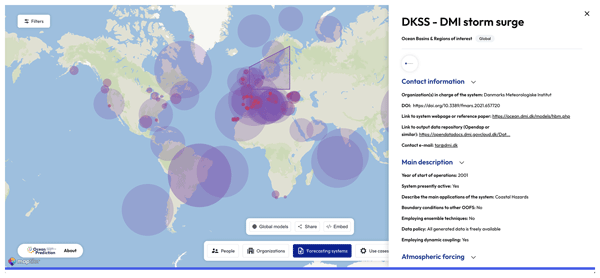
Mauro Cirano, Enrique Alvarez-Fanjul, Arthur Capet, Stefania Ciliberti, Emanuela Clementi, Boris Dewitte, Matias Dinápoli, Ghada El Serafy, Patrick Hogan, Sudheer Joseph, Yasumasa Miyazawa, Ivonne Montes, Diego A. Narvaez, Heather Regan, Claudia G. Simionato, Gregory C. Smith, Joanna Staneva, Clemente A. S. Tanajura, Pramod Thupaki, Claudia Urbano-Latorre, Jennifer Veitch, and Jorge Zavala Hidalgo
State Planet, 5-opsr, 5, https://doi.org/10.5194/sp-5-opsr-5-2025, https://doi.org/10.5194/sp-5-opsr-5-2025, 2025
Short summary
Short summary
Operational ocean forecasting systems (OOFSs) are crucial for human activities, environmental monitoring, and policymaking. An assessment across eight key regions highlights strengths and gaps, particularly in coastal and biogeochemical forecasting. AI offers improvements, but collaboration, knowledge sharing, and initiatives like the OceanPrediction Decade Collaborative Centre (DCC) are key to enhancing accuracy, accessibility, and global forecasting capabilities.
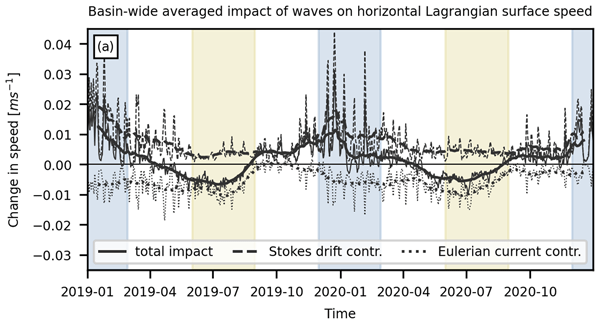
Siren Rühs, Ton van den Bremer, Emanuela Clementi, Michael C. Denes, Aimie Moulin, and Erik van Sebille
Ocean Sci., 21, 217–240, https://doi.org/10.5194/os-21-217-2025, https://doi.org/10.5194/os-21-217-2025, 2025
Short summary
Short summary
Simulating the transport of floating particles on the ocean surface is crucial for solving many societal issues. Here, we investigate how the representation of wind-generated surface waves impacts particle transport simulations. We find that different wave-driven processes can alter transport patterns and that commonly adopted approximations are not always adequate. This suggests that ideally coupled ocean–wave models should be used for surface particle transport simulations.
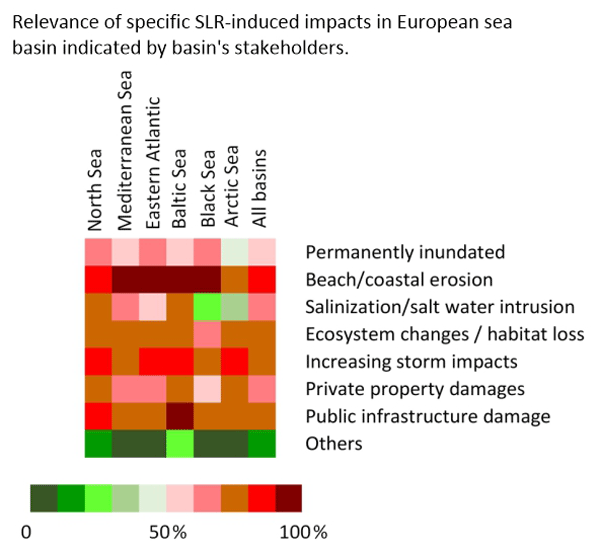
José A. Jiménez, Gundula Winter, Antonio Bonaduce, Michael Depuydt, Giulia Galluccio, Bart van den Hurk, H. E. Markus Meier, Nadia Pinardi, Lavinia G. Pomarico, and Natalia Vazquez Riveiros
State Planet, 3-slre1, 3, https://doi.org/10.5194/sp-3-slre1-3-2024, https://doi.org/10.5194/sp-3-slre1-3-2024, 2024
Short summary
Short summary
The Knowledge Hub on Sea Level Rise (SLR) has done a scoping study involving stakeholders from government and academia to identify gaps and needs in SLR information, impacts, and policies across Europe. Gaps in regional SLR projections and uncertainties were found, while concerns were raised about shoreline erosion and emerging problems like saltwater intrusion and ineffective adaptation plans. The need for improved communication to make better decisions on SLR adaptation was highlighted.
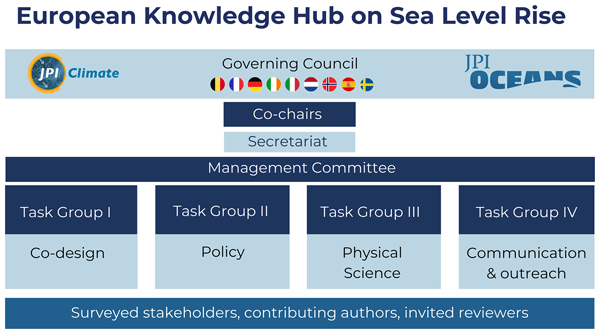
Nadia Pinardi, Bart van den Hurk, Michael Depuydt, Thorsten Kiefer, Petra Manderscheid, Lavinia Giulia Pomarico, and Kanika Singh
State Planet, 3-slre1, 2, https://doi.org/10.5194/sp-3-slre1-2-2024, https://doi.org/10.5194/sp-3-slre1-2-2024, 2024
Short summary
Short summary
The Knowledge Hub on Sea Level Rise (KH-SLR), a joint effort between JPI Climate and JPI Oceans, addresses the critical need for science-based information on sea level changes in Europe. The KH-SLR actively involves stakeholders through a co-design process discussing the impacts, adaptation planning, and policy requirements related to SLR in Europe. Its primary output is the KH Assessment Report (KH-AR), which is described in this volume.
Bart van den Hurk, Nadia Pinardi, Alexander Bisaro, Giulia Galluccio, José A. Jiménez, Kate Larkin, Angélique Melet, Lavinia Giulia Pomarico, Kristin Richter, Kanika Singh, Roderik van de Wal, and Gundula Winter
State Planet, 3-slre1, 1, https://doi.org/10.5194/sp-3-slre1-1-2024, https://doi.org/10.5194/sp-3-slre1-1-2024, 2024
Short summary
Short summary
The Summary for Policymakers compiles findings from “Sea Level Rise in Europe: 1st Assessment Report of the Knowledge Hub on Sea Level Rise”. It covers knowledge gaps, observations, projections, impacts, adaptation measures, decision-making principles, and governance challenges. It provides information for each European basin (Mediterranean, Black Sea, North Sea, Baltic Sea, Atlantic, and Arctic) and aims to assist policymakers in enhancing the preparedness of European coasts for sea level rise.

Colin G. Jones, Fanny Adloff, Ben B. B. Booth, Peter M. Cox, Veronika Eyring, Pierre Friedlingstein, Katja Frieler, Helene T. Hewitt, Hazel A. Jeffery, Sylvie Joussaume, Torben Koenigk, Bryan N. Lawrence, Eleanor O'Rourke, Malcolm J. Roberts, Benjamin M. Sanderson, Roland Séférian, Samuel Somot, Pier Luigi Vidale, Detlef van Vuuren, Mario Acosta, Mats Bentsen, Raffaele Bernardello, Richard Betts, Ed Blockley, Julien Boé, Tom Bracegirdle, Pascale Braconnot, Victor Brovkin, Carlo Buontempo, Francisco Doblas-Reyes, Markus Donat, Italo Epicoco, Pete Falloon, Sandro Fiore, Thomas Frölicher, Neven S. Fučkar, Matthew J. Gidden, Helge F. Goessling, Rune Grand Graversen, Silvio Gualdi, José M. Gutiérrez, Tatiana Ilyina, Daniela Jacob, Chris D. Jones, Martin Juckes, Elizabeth Kendon, Erik Kjellström, Reto Knutti, Jason Lowe, Matthew Mizielinski, Paola Nassisi, Michael Obersteiner, Pierre Regnier, Romain Roehrig, David Salas y Mélia, Carl-Friedrich Schleussner, Michael Schulz, Enrico Scoccimarro, Laurent Terray, Hannes Thiemann, Richard A. Wood, Shuting Yang, and Sönke Zaehle
Earth Syst. Dynam., 15, 1319–1351, https://doi.org/10.5194/esd-15-1319-2024, https://doi.org/10.5194/esd-15-1319-2024, 2024
Short summary
Short summary
We propose a number of priority areas for the international climate research community to address over the coming decade. Advances in these areas will both increase our understanding of past and future Earth system change, including the societal and environmental impacts of this change, and deliver significantly improved scientific support to international climate policy, such as future IPCC assessments and the UNFCCC Global Stocktake.
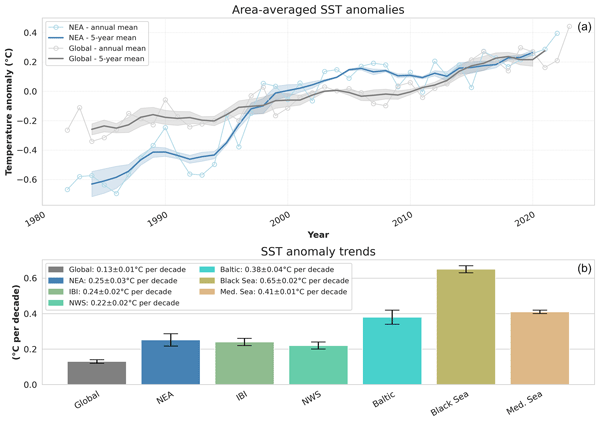
Karina von Schuckmann, Lorena Moreira, Mathilde Cancet, Flora Gues, Emmanuelle Autret, Ali Aydogdu, Lluis Castrillo, Daniele Ciani, Andrea Cipollone, Emanuela Clementi, Gianpiero Cossarini, Alvaro de Pascual-Collar, Vincenzo De Toma, Marion Gehlen, Rianne Giesen, Marie Drevillon, Claudia Fanelli, Kevin Hodges, Simon Jandt-Scheelke, Eric Jansen, Melanie Juza, Ioanna Karagali, Priidik Lagemaa, Vidar Lien, Leonardo Lima, Vladyslav Lyubartsev, Ilja Maljutenko, Simona Masina, Ronan McAdam, Pietro Miraglio, Helen Morrison, Tabea Rebekka Panteleit, Andrea Pisano, Marie-Isabelle Pujol, Urmas Raudsepp, Roshin Raj, Ad Stoffelen, Simon Van Gennip, Pierre Veillard, and Chunxue Yang
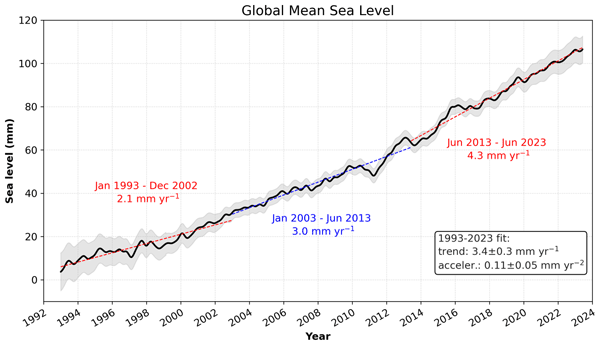
State Planet, 4-osr8, 2, https://doi.org/10.5194/sp-4-osr8-2-2024, https://doi.org/10.5194/sp-4-osr8-2-2024, 2024
Karina von Schuckmann, Lorena Moreira, Mathilde Cancet, Flora Gues, Emmanuelle Autret, Jonathan Baker, Clément Bricaud, Romain Bourdalle-Badie, Lluis Castrillo, Lijing Cheng, Frederic Chevallier, Daniele Ciani, Alvaro de Pascual-Collar, Vincenzo De Toma, Marie Drevillon, Claudia Fanelli, Gilles Garric, Marion Gehlen, Rianne Giesen, Kevin Hodges, Doroteaciro Iovino, Simon Jandt-Scheelke, Eric Jansen, Melanie Juza, Ioanna Karagali, Thomas Lavergne, Simona Masina, Ronan McAdam, Audrey Minière, Helen Morrison, Tabea Rebekka Panteleit, Andrea Pisano, Marie-Isabelle Pujol, Ad Stoffelen, Sulian Thual, Simon Van Gennip, Pierre Veillard, Chunxue Yang, and Hao Zuo
State Planet, 4-osr8, 1, https://doi.org/10.5194/sp-4-osr8-1-2024, https://doi.org/10.5194/sp-4-osr8-1-2024, 2024
Ronan McAdam, Giulia Bonino, Emanuela Clementi, and Simona Masina
State Planet, 4-osr8, 13, https://doi.org/10.5194/sp-4-osr8-13-2024, https://doi.org/10.5194/sp-4-osr8-13-2024, 2024
Short summary
Short summary
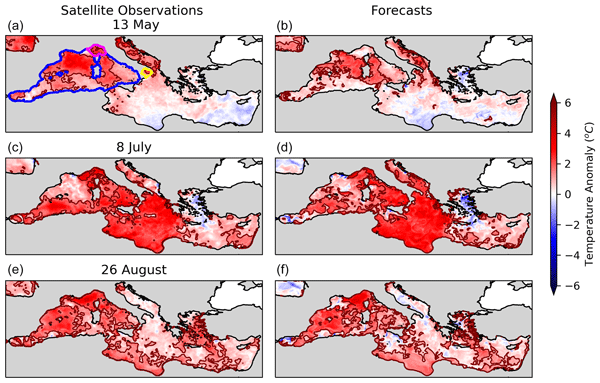
In the summer of 2022, a regional short-term forecasting system was able to predict the onset, spread, peaks, and decay of a record-breaking marine heatwave in the Mediterranean Sea up to 10 d in advance. Satellite data show that the event was record-breaking in terms of basin-wide intensity and duration. This study demonstrates the potential of state-of-the-art forecasting systems to provide early warning of marine heatwaves for marine activities (e.g. conservation and aquaculture).
Dimitra Denaxa, Gerasimos Korres, Giulia Bonino, Simona Masina, and Maria Hatzaki
State Planet, 4-osr8, 11, https://doi.org/10.5194/sp-4-osr8-11-2024, https://doi.org/10.5194/sp-4-osr8-11-2024, 2024
Short summary
Short summary
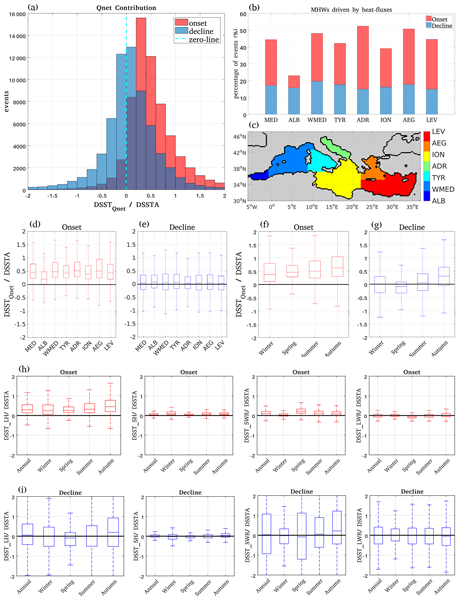
We investigate the air–sea heat flux during marine heatwaves (MHWs) in the Mediterranean Sea. Surface heat flux drives 44 % of the onset and only 17 % of the declining MHW phases, suggesting a key role of oceanic processes. Heat flux is more important in warmer months and onset phases, with latent heat dominating. Shorter events show a weaker heat flux contribution. In most cases, mixed layer shoaling occurs over the entire MHW duration, followed by vertical mixing after the MHW end day.
Anna Teruzzi, Ali Aydogdu, Carolina Amadio, Emanuela Clementi, Simone Colella, Valeria Di Biagio, Massimiliano Drudi, Claudia Fanelli, Laura Feudale, Alessandro Grandi, Pietro Miraglio, Andrea Pisano, Jenny Pistoia, Marco Reale, Stefano Salon, Gianluca Volpe, and Gianpiero Cossarini
State Planet, 4-osr8, 15, https://doi.org/10.5194/sp-4-osr8-15-2024, https://doi.org/10.5194/sp-4-osr8-15-2024, 2024
Short summary
Short summary
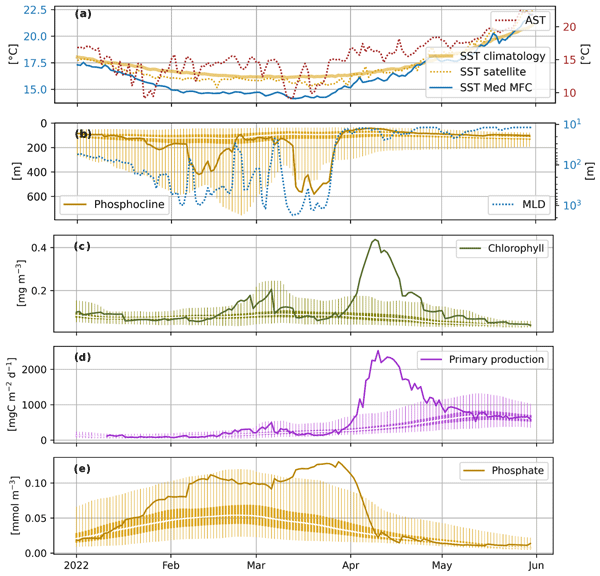
A noticeable cold spell occurred in Eastern Europe at the beginning of 2022 and was the main driver of intense deep-water formation and the associated transport of nutrients to the surface. Southeast of Crete, the availability of both light and nutrients in the surface layer stimulated an anomalous phytoplankton bloom. In the area, chlorophyll concentration (a proxy for bloom intensity) and primary production were considerably higher than usual, suggesting possible impacts on fishery catches.
Bethany McDonagh, Emanuela Clementi, Anna Chiara Goglio, and Nadia Pinardi
Ocean Sci., 20, 1051–1066, https://doi.org/10.5194/os-20-1051-2024, https://doi.org/10.5194/os-20-1051-2024, 2024
Short summary
Short summary
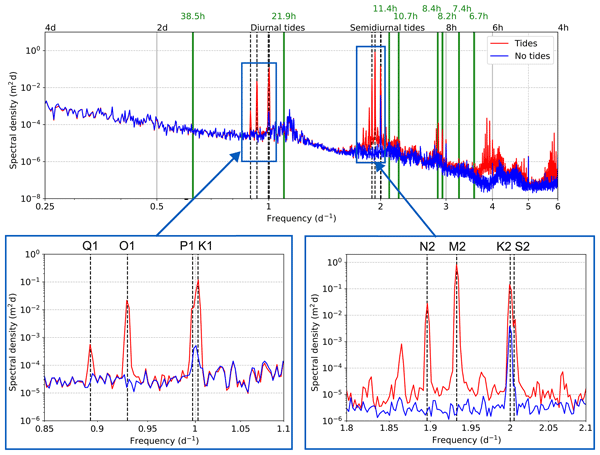
Tides in the Mediterranean Sea are typically of low amplitude, but twin experiments with and without tides demonstrate that tides affect the circulation directly at scales away from those of the tides. Analysis of the energy changes due to tides shows that they enhance existing oscillations, and internal tides interact with other internal waves. Tides also increase the mixed layer depth and enhance deep water formation in key regions. Internal tides are widespread in the Mediterranean Sea.
Roberta Benincasa, Giovanni Liguori, Nadia Pinardi, and Hans von Storch
Ocean Sci., 20, 1003–1012, https://doi.org/10.5194/os-20-1003-2024, https://doi.org/10.5194/os-20-1003-2024, 2024
Short summary
Short summary
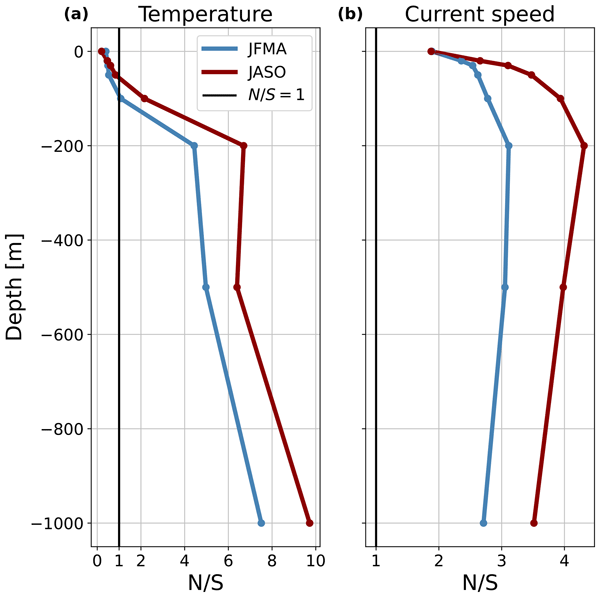
Ocean dynamics result from the interplay of internal processes and external inputs, primarily from the atmosphere. It is crucial to discern between these factors to gauge the ocean's intrinsic predictability and to be able to attribute a signal under study to either external factors or internal variability. Employing a simple analysis, we successfully characterized this variability in the Mediterranean Sea and compared it with the oceanic response induced by atmospheric conditions.
Elena Bianco, Doroteaciro Iovino, Simona Masina, Stefano Materia, and Paolo Ruggieri
The Cryosphere, 18, 2357–2379, https://doi.org/10.5194/tc-18-2357-2024, https://doi.org/10.5194/tc-18-2357-2024, 2024
Short summary
Short summary
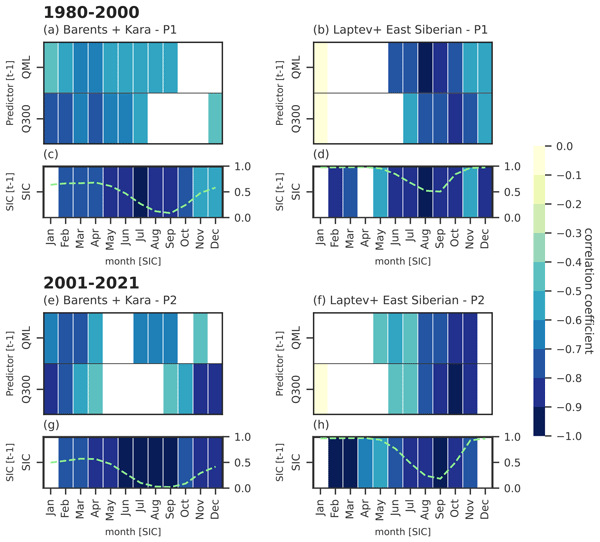
Changes in ocean heat transport and surface heat fluxes in recent decades have altered the Arctic Ocean heat budget and caused warming of the upper ocean. Using two eddy-permitting ocean reanalyses, we show that this has important implications for sea ice variability. In the Arctic regional seas, upper-ocean heat content acts as an important precursor for sea ice anomalies on sub-seasonal timescales, and this link has strengthened since the 2000s.
Mario C. Acosta, Sergi Palomas, Stella V. Paronuzzi Ticco, Gladys Utrera, Joachim Biercamp, Pierre-Antoine Bretonniere, Reinhard Budich, Miguel Castrillo, Arnaud Caubel, Francisco Doblas-Reyes, Italo Epicoco, Uwe Fladrich, Sylvie Joussaume, Alok Kumar Gupta, Bryan Lawrence, Philippe Le Sager, Grenville Lister, Marie-Pierre Moine, Jean-Christophe Rioual, Sophie Valcke, Niki Zadeh, and Venkatramani Balaji
Geosci. Model Dev., 17, 3081–3098, https://doi.org/10.5194/gmd-17-3081-2024, https://doi.org/10.5194/gmd-17-3081-2024, 2024
Short summary
Short summary
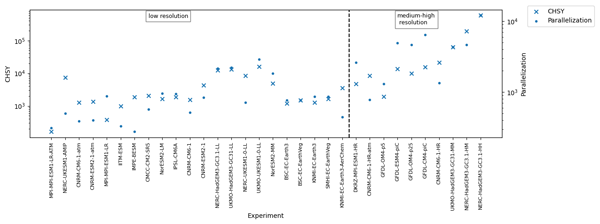
We present a collection of performance metrics gathered during the Coupled Model Intercomparison Project Phase 6 (CMIP6), a worldwide initiative to study climate change. We analyse the metrics that resulted from collaboration efforts among many partners and models and describe our findings to demonstrate the utility of our study for the scientific community. The research contributes to understanding climate modelling performance on the current high-performance computing (HPC) architectures.
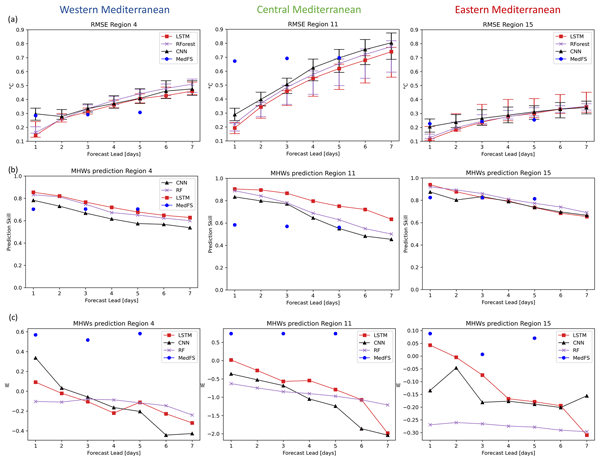
Giulia Bonino, Giuliano Galimberti, Simona Masina, Ronan McAdam, and Emanuela Clementi
Ocean Sci., 20, 417–432, https://doi.org/10.5194/os-20-417-2024, https://doi.org/10.5194/os-20-417-2024, 2024
Short summary
Short summary
This study employs machine learning to predict marine heatwaves (MHWs) in the Mediterranean Sea. MHWs have far-reaching impacts on society and ecosystems. Using data from ESA and ECMWF, the research develops accurate prediction models for sea surface temperature (SST) and MHWs across the region. Notably, machine learning methods outperform existing forecasting systems, showing promise in early MHW predictions. The study also highlights the importance of solar radiation as a predictor of SST.
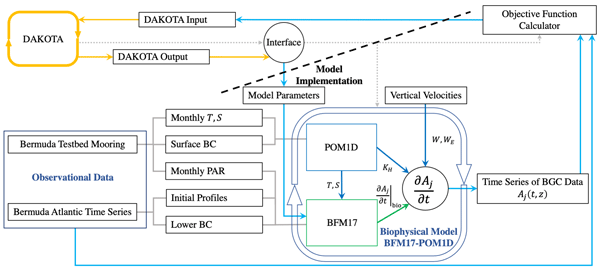
Skyler Kern, Mary E. McGuinn, Katherine M. Smith, Nadia Pinardi, Kyle E. Niemeyer, Nicole S. Lovenduski, and Peter E. Hamlington
Geosci. Model Dev., 17, 621–649, https://doi.org/10.5194/gmd-17-621-2024, https://doi.org/10.5194/gmd-17-621-2024, 2024
Short summary
Short summary
Computational models are used to simulate the behavior of marine ecosystems. The models often have unknown parameters that need to be calibrated to accurately represent observational data. Here, we propose a novel approach to simultaneously determine a large set of parameters for a one-dimensional model of a marine ecosystem in the surface ocean at two contrasting sites. By utilizing global and local optimization techniques, we estimate many parameters in a computationally efficient manner.
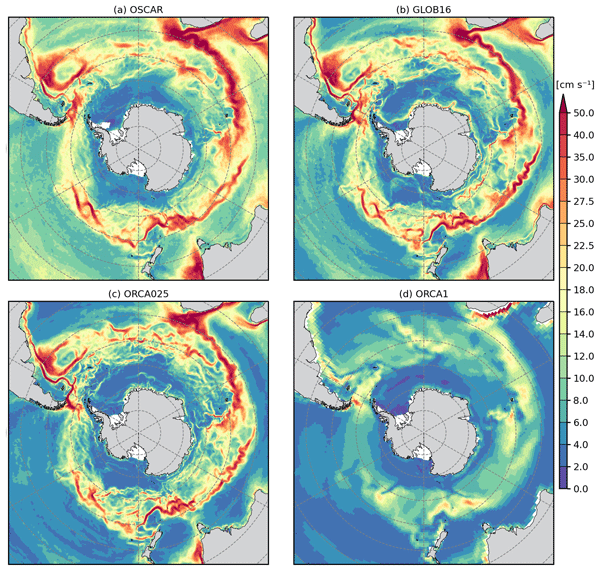
Doroteaciro Iovino, Pier Giuseppe Fogli, and Simona Masina
Geosci. Model Dev., 16, 6127–6159, https://doi.org/10.5194/gmd-16-6127-2023, https://doi.org/10.5194/gmd-16-6127-2023, 2023
Short summary
Short summary
This paper describes the model performance of three global ocean–sea ice configurations, from non-eddying (1°) to eddy-rich (1/16°) resolutions. Model simulations are obtained following the Ocean Model Intercomparison Project phase 2 (OMIP2) protocol. We compare key global climate variables across the three models and against observations, emphasizing the relative advantages and disadvantages of running forced ocean–sea ice models at higher resolution.
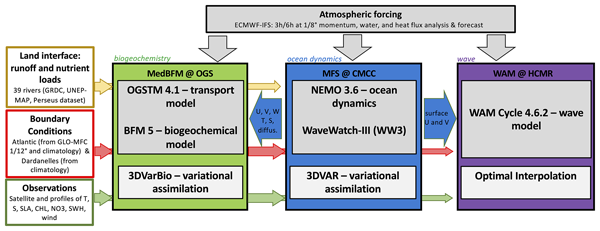
Giovanni Coppini, Emanuela Clementi, Gianpiero Cossarini, Stefano Salon, Gerasimos Korres, Michalis Ravdas, Rita Lecci, Jenny Pistoia, Anna Chiara Goglio, Massimiliano Drudi, Alessandro Grandi, Ali Aydogdu, Romain Escudier, Andrea Cipollone, Vladyslav Lyubartsev, Antonio Mariani, Sergio Cretì, Francesco Palermo, Matteo Scuro, Simona Masina, Nadia Pinardi, Antonio Navarra, Damiano Delrosso, Anna Teruzzi, Valeria Di Biagio, Giorgio Bolzon, Laura Feudale, Gianluca Coidessa, Carolina Amadio, Alberto Brosich, Arnau Miró, Eva Alvarez, Paolo Lazzari, Cosimo Solidoro, Charikleia Oikonomou, and Anna Zacharioudaki
Ocean Sci., 19, 1483–1516, https://doi.org/10.5194/os-19-1483-2023, https://doi.org/10.5194/os-19-1483-2023, 2023
Short summary
Short summary
The paper presents the Mediterranean Forecasting System evolution and performance developed in the framework of the Copernicus Marine Service.
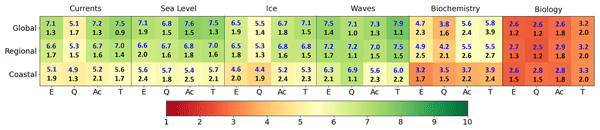
Stefania A. Ciliberti, Enrique Alvarez Fanjul, Jay Pearlman, Kirsten Wilmer-Becker, Pierre Bahurel, Fabrice Ardhuin, Alain Arnaud, Mike Bell, Segolene Berthou, Laurent Bertino, Arthur Capet, Eric Chassignet, Stefano Ciavatta, Mauro Cirano, Emanuela Clementi, Gianpiero Cossarini, Gianpaolo Coro, Stuart Corney, Fraser Davidson, Marie Drevillon, Yann Drillet, Renaud Dussurget, Ghada El Serafy, Katja Fennel, Marcos Garcia Sotillo, Patrick Heimbach, Fabrice Hernandez, Patrick Hogan, Ibrahim Hoteit, Sudheer Joseph, Simon Josey, Pierre-Yves Le Traon, Simone Libralato, Marco Mancini, Pascal Matte, Angelique Melet, Yasumasa Miyazawa, Andrew M. Moore, Antonio Novellino, Andrew Porter, Heather Regan, Laia Romero, Andreas Schiller, John Siddorn, Joanna Staneva, Cecile Thomas-Courcoux, Marina Tonani, Jose Maria Garcia-Valdecasas, Jennifer Veitch, Karina von Schuckmann, Liying Wan, John Wilkin, and Romane Zufic
State Planet, 1-osr7, 2, https://doi.org/10.5194/sp-1-osr7-2-2023, https://doi.org/10.5194/sp-1-osr7-2-2023, 2023
Ali Aydogdu, Pietro Miraglio, Romain Escudier, Emanuela Clementi, and Simona Masina
State Planet, 1-osr7, 6, https://doi.org/10.5194/sp-1-osr7-6-2023, https://doi.org/10.5194/sp-1-osr7-6-2023, 2023
Short summary
Short summary
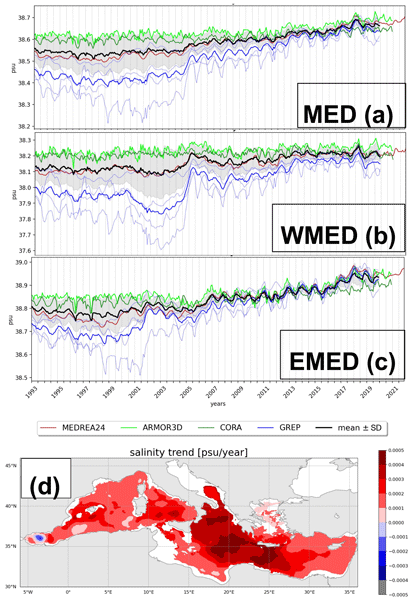
This paper investigates the salt content, salinity anomaly and trend in the Mediterranean Sea using observational and reanalysis products. The salt content increases overall, while negative salinity anomalies appear in the western basin, especially around the upwelling regions. There is a large spread in the salinity estimates that is reduced with the emergence of the Argo profilers.
Andrea Cipollone, Deep Sankar Banerjee, Doroteaciro Iovino, Ali Aydogdu, and Simona Masina
Ocean Sci., 19, 1375–1392, https://doi.org/10.5194/os-19-1375-2023, https://doi.org/10.5194/os-19-1375-2023, 2023
Short summary
Short summary
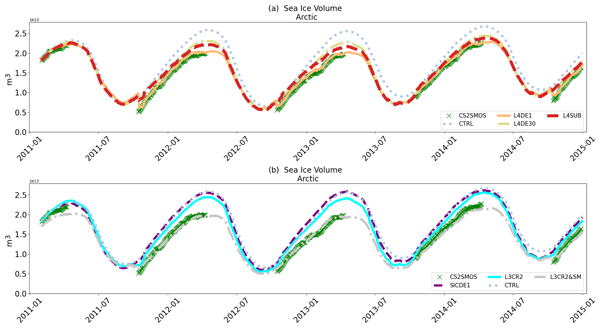
Sea-ice volume is characterized by low predictability compared to the sea ice area or the extent. A joint initialization of the thickness and concentration using satellite data could improve the predictive power, although it is still absent in the present global analysis–reanalysis systems. This study shows a scheme to correct the two features together that can be easily extended to include ocean variables. The impact of such a joint initialization is shown and compared among different set-ups.
Leonardo Lima, Salvatore Causio, Mehmet Ilicak, Ronan McAdam, and Eric Jansen
State Planet Discuss., https://doi.org/10.5194/sp-2023-19, https://doi.org/10.5194/sp-2023-19, 2023
Revised manuscript not accepted
Short summary
Short summary
Recent studies have revealed an increase in the ocean temperature and heat content in the Black Sea, where the research on marine heat waves (MHWs) is still incipient. Our study reveals long-lasting MHWs and interesting connections between surface and subsurface MHWs in the Black Sea. Our analysis is a starting point to create a monitoring system of MHWs for the Black Sea.
Sukun Cheng, Yumeng Chen, Ali Aydoğdu, Laurent Bertino, Alberto Carrassi, Pierre Rampal, and Christopher K. R. T. Jones
The Cryosphere, 17, 1735–1754, https://doi.org/10.5194/tc-17-1735-2023, https://doi.org/10.5194/tc-17-1735-2023, 2023
Short summary
Short summary
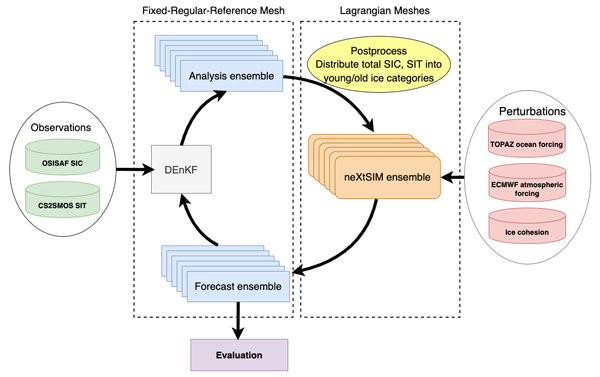
This work studies a novel application of combining a Lagrangian sea ice model, neXtSIM, and data assimilation. It uses a deterministic ensemble Kalman filter to incorporate satellite-observed ice concentration and thickness in simulations. The neXtSIM Lagrangian nature is handled using a remapping strategy on a common homogeneous mesh. The ensemble is formed by perturbing air–ocean boundary conditions and ice cohesion. Thanks to data assimilation, winter Arctic sea ice forecasting is enhanced.
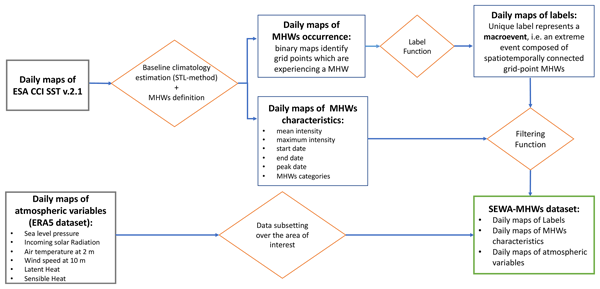
Giulia Bonino, Simona Masina, Giuliano Galimberti, and Matteo Moretti
Earth Syst. Sci. Data, 15, 1269–1285, https://doi.org/10.5194/essd-15-1269-2023, https://doi.org/10.5194/essd-15-1269-2023, 2023
Short summary
Short summary
We present a unique observational dataset of marine heat wave (MHW) macroevents and their characteristics over southern Europe and western Asian (SEWA) basins in the SEWA-MHW dataset. This dataset is the first effort in the literature to archive extremely hot sea surface temperature macroevents. The advantages of the availability of SEWA-MHWs are avoiding the waste of computational resources to detect MHWs and building a consistent framework which would increase comparability among MHW studies.

Umesh Pranavam Ayyappan Pillai, Nadia Pinardi, Ivan Federico, Salvatore Causio, Francesco Trotta, Silvia Unguendoli, and Andrea Valentini
Nat. Hazards Earth Syst. Sci., 22, 3413–3433, https://doi.org/10.5194/nhess-22-3413-2022, https://doi.org/10.5194/nhess-22-3413-2022, 2022
Short summary
Short summary
The study presents the application of high-resolution coastal modelling for wave hindcasting on the Emilia-Romagna coastal belt. The generated coastal databases which provide an understanding of the prevailing wind-wave characteristics can aid in predicting coastal impacts.

Giulia Bonino, Doroteaciro Iovino, Laurent Brodeau, and Simona Masina
Geosci. Model Dev., 15, 6873–6889, https://doi.org/10.5194/gmd-15-6873-2022, https://doi.org/10.5194/gmd-15-6873-2022, 2022
Short summary
Short summary
The sea surface temperature (SST) is highly influenced by the transfer of energy driven by turbulent air–sea fluxes (TASFs). In the NEMO ocean general circulation model, TASFs are computed by means of bulk formulas. Bulk formulas require the choice of a given bulk parameterization, which influences the magnitudes of the TASFs. Our results show that parameterization-related SST differences are primarily sensitive to the wind stress differences across parameterizations.
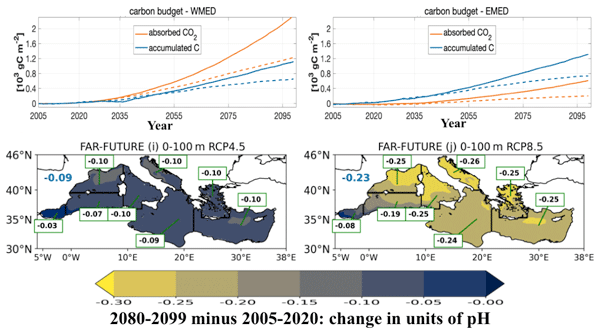
Marco Reale, Gianpiero Cossarini, Paolo Lazzari, Tomas Lovato, Giorgio Bolzon, Simona Masina, Cosimo Solidoro, and Stefano Salon
Biogeosciences, 19, 4035–4065, https://doi.org/10.5194/bg-19-4035-2022, https://doi.org/10.5194/bg-19-4035-2022, 2022
Short summary
Short summary
Future projections under the RCP8.5 and RCP4.5 emission scenarios of the Mediterranean Sea biogeochemistry at the end of the 21st century show different levels of decline in nutrients, oxygen and biomasses and an acidification of the water column. The signal intensity is stronger under RCP8.5 and in the eastern Mediterranean. Under RCP4.5, after the second half of the 21st century, biogeochemical variables show a recovery of the values observed at the beginning of the investigated period.
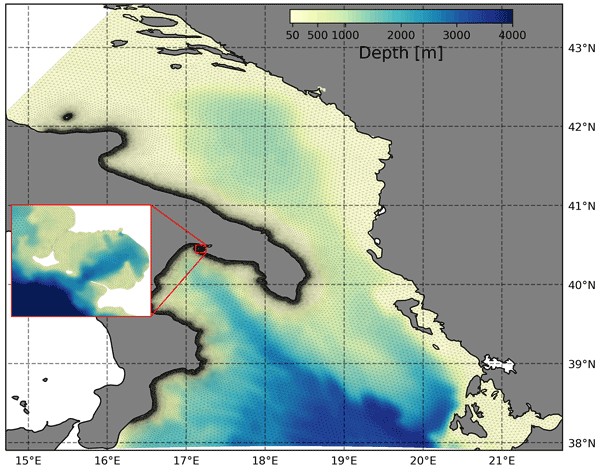
Giorgio Micaletto, Ivano Barletta, Silvia Mocavero, Ivan Federico, Italo Epicoco, Giorgia Verri, Giovanni Coppini, Pasquale Schiano, Giovanni Aloisio, and Nadia Pinardi
Geosci. Model Dev., 15, 6025–6046, https://doi.org/10.5194/gmd-15-6025-2022, https://doi.org/10.5194/gmd-15-6025-2022, 2022
Short summary
Short summary
The full exploitation of supercomputing architectures requires a deep revision of the current climate models. This paper presents the parallelization of the three-dimensional hydrodynamic model SHYFEM (System of HydrodYnamic Finite Element Modules). Optimized numerical libraries were used to partition the model domain and solve the sparse linear system of equations in parallel. The performance assessment demonstrates a good level of scalability with a realistic configuration used as a benchmark.
Cited articles
Adani, M., Dobricic, S., and Pinardi, N.: Quality assessment of a 1985–2007 Mediterranean Sea reanalysis, J. Atmos. Oceanic Technol., 28, 569–589, https://doi.org/10.1175/2010JTECHO798.1, 2011.
Adani, M., Aydogdu, A., Cipollone, A., Jansen, E., Carere, F., and Oddo, P.: OceanVar User Manual, https://github.com/CMCC-Foundation/OceanVar2/blob/main/doc/OceanVar_User_Manual.pdf (last access: 15 January 2025), 2025.
Anderson, J. L., Hoar, T., Raeder, K., Liu, H., Collins, N., Torn, R., and Arellano, A.: The Data Assimilation Research Testbed: a community facility, Bull. Am. Meteorol. Soc., 90, 1283–1296, https://doi.org/10.1175/2009BAMS2618.1, 2009.
Arbic, B. K.: Incorporating tides and internal gravity waves within global ocean general circulation models: a review, Prog. Oceanogr., 206, 102824, https://doi.org/10.1016/j.pocean.2022.102824, 2022.
Barthélémy, S., Brajard, J., Bertino, L., and Counillon, F.: Super-resolution data assimilation, Ocean Dyn., 72, 661–678, 2022.
Beauchamp, M., Febvre, Q., Georgenthum, H., and Fablet, R.: 4DVarNet-SSH: end-to-end learning of variational interpolation schemes for nadir and wide-swath satellite altimetry, Geosci. Model Dev., 16, 2119–2147, https://doi.org/10.5194/gmd-16-2119-2023, 2023.
Broccoli, M. and Cipollone, A.: Assimilation of diurnal satellite retrieval of sea surface temperature with convolutional neural network, Mach. Learn.: Earth, 1, 015007, https://doi.org/10.1088/3049-4753/adfb7e, 2025.
Byrd, R. H., Lu, P., Nocedal, J., and Zhu, C.: A limited memory algorithm for bound constrained optimization, SIAM J. Sci. Comput., 16, 1190–1208, 1995.
Cao, A.-Z., Wang, D.-S., and Lv, X.-Q.: Harmonic analysis in the simulation of multiple constituents: determination of the optimum length of time series, J. Atmos. Oceanic Technol., 32, 1112–1118, 2015.
Carrassi, A., Bocquet, M., Bertino, L., and Evensen, G.: Data assimilation in the geosciences: an overview of methods, issues, and perspectives, WIREs Clim. Change, 9, e535, https://doi.org/10.1002/wcc.535, 2018.
Cipollone, A., Banerjee, D. S., Iovino, D., Aydogdu, A., and Masina, S.: Bivariate sea-ice assimilation for global-ocean analysis–reanalysis, Ocean Sci., 19, 1375–1392, https://doi.org/10.5194/os-19-1375-2023, 2023.
Clementi, E., Drudi, M., Aydogdu, A., Moulin, A., Grandi, A., Mariani, A., Goglio, A. C., Pistoia, J., Miraglio, P., Lecci, R., Palermo, F., Coppini, G., Masina, S., and Pinardi, N.: Mediterranean Sea Physical Analysis and Forecast (CMS MED-Physics, EAS8 system) (Version 1), Copernicus Marine Service [data set], https://doi.org/10.25423/CMCC/MEDSEA_ANALYSISFORECAST_PHY_006_013_EAS8, 2023.
Ciliberti, S. A., Jansen, E., Coppini, G., Peneva, E., Azevedo, D., Causio, S., Stefanizzi, L., Creti, S., Lecci, R., Lima, L., Ilicak, M., Pinardi, N., and Palazov, A.: The Black Sea Physics Analysis and Forecasting System within the framework of the Copernicus Marine Service, J. Mar. Sci. Eng., 10, 48, https://doi.org/10.3390/jmse10010048, 2022.
Cohn, S. E.: An introduction to estimation theory, J. Meteorol. Soc. Jpn., 75, 257–288, 1997.
Coppini, G., Clementi, E., Cossarini, G., Salon, S., Korres, G., Ravdas, M., Lecci, R., Pistoia, J., Goglio, A. C., Drudi, M., Grandi, A., Aydogdu, A., Escudier, R., Cipollone, A., Lyubartsev, V., Mariani, A., Cretì, S., Palermo, F., Scuro, M., Masina, S., Pinardi, N., Navarra, A., Delrosso, D., Teruzzi, A., Di Biagio, V., Bolzon, G., Feudale, L., Coidessa, G., Amadio, C., Brosich, A., Miró, A., Alvarez, E., Lazzari, P., Solidoro, C., Oikonomou, C., and Zacharioudaki, A.: The Mediterranean Forecasting System – Part 1: Evolution and performance, Ocean Sci., 19, 1483–1516, https://doi.org/10.5194/os-19-1483-2023, 2023.
De Mey, P. and Robinson, A. R.: Assimilation of altimetric fields in a limited area quasigeostrophic model, J. Phys. Oceanogr., 17, 2280–2293, 1987.
Derber, J. and Rosati, A.: A global oceanic data assimilation system, J. Phys. Oceanogr., 19, 1333–1347, 1989.
Desroziers, G., Berre, L., Chapnik, B., and Poli, P.: Diagnosis of observation, background and analysis-error statistics in observation space, Q. J. R. Meteorol. Soc., 131, 3385–3396, https://doi.org/10.1256/qj.05.108, 2005.
Dhomps, A.-L., Guinehut, S., Le Traon, P.-Y., and Larnicol, G.: A global comparison of Argo and satellite altimetry observations, Ocean Sci., 7, 175–183, https://doi.org/10.5194/os-7-175-2011, 2011.
Dobricic, S. and Pinardi, N.: An oceanographic three-dimensional variational data assimilation scheme, Ocean Model., 22, 89–105, 2008.
Dobricic, S., Pinardi, N., Adani, M., Bonazzi, A., Fratianni, C., and Tonani, M.: Mediterranean Forecasting System: an improved assimilation scheme for sea-level anomaly and its validation, Q. J. R. Meteorol. Soc., 131, 3627–3642, https://doi.org/10.1256/qj.05.100, 2006.
Dobricic, S., Pinardi, N., Adani, M., Tonani, M., Fratianni, C., Bonazzi, A., and Fernandez, V.: Daily oceanographic analyses by Mediterranean Forecasting System at the basin scale, Ocean Sci., 3, 149–157, https://doi.org/10.5194/os-3-149-2007, 2007.
Dobricic, S., Dufau, C., Oddo, P., Pinardi, N., Pujol, I., and Rio, M.-H.: Assimilation of SLA along track observations in the Mediterranean with an oceanographic model forced by atmospheric pressure, Ocean Sci., 8, 787–795, https://doi.org/10.5194/os-8-787-2012, 2012.
Dobricic, S., Wikle, C. K., Milliff, R. F., Pinardi, N., and Berliner, L. M.: Assimilation of oceanographic observations with estimates of vertical background-error covariances by a Bayesian hierarchical model, Q. J. R. Meteorol. Soc., 141, 182–194, https://doi.org/10.1002/qj.2348, 2015.
Escudier, R., Clementi, E., Cipollone, A., Pistoia, J., Drudi, M., Grandi, A., Lyubartsev, V., Lecci, R., Aydogdu, A., Delrosso, D., Omar, M., Masina, S., Coppini, G., and Pinardi, N.: A high-resolution reanalysis for the Mediterranean Sea, Front. Earth Sci., 9, 702285, https://doi.org/10.3389/feart.2021.702285, 2021.
Foreman, M. G. G.: Manual for tidal heights analysis and prediction, Pacific Marine Science Report 77-10, Institute of Ocean Sciences, Patricia Bay, Sidney, B.C., 58 pp., unpublished manuscript, 1977.
Foreman, M. G. G.: Manual for tidal currents analysis and prediction, Pacific Marine Science Report 78-6, Institute of Ocean Sciences, Patricia Bay, Sidney, B.C., 57 pp., unpublished manuscript, 1978.
Hayden, C. M. and Purser, R. J.: Recursive filter objective analysis of meteorological fields: applications to NESDIS operational processing, J. Appl. Meteorol., 34, 3–15, 1995.
Hoffman, J. D. and Frankel, S.: Numerical Methods for Engineers and Scientists, 2nd edn., CRC Press, Boca Raton, https://doi.org/10.1201/9781315274508, 2001.
Kwizak, M. and Robert, A. J.: A semi-implicit scheme for grid point atmospheric models of the primitive equations, Mon. Weather Rev., 99, 32–36, 1971.
Le Traon, P.-Y., Dibarboure, G., Lellouche, J.-M., Pujol, M.-I., Benkiran, M., Drevillon, M., Drillet, Y., Faugère, Y., and Remy, E.: Satellite altimetry and operational oceanography: from Jason-1 to SWOT, Ocean Sci., 21, 1329–1347, https://doi.org/10.5194/os-21-1329-2025, 2025.
Lima, L., Ciliberti, S. A., Aydoğdu, A., Masina, S., Escudier, R., Cipollone, A., Azevedo, D., Causio, S., Peneva, E., Lecci, R., Clementi, E., Jansen, E., Ilicak, M., Cretì, S., Stefanizzi, L., Palermo, F., and Coppini, G.: Climate signals in the Black Sea from a multidecadal eddy-resolving reanalysis, Front. Mar. Sci., 8, 710973, https://doi.org/10.3389/fmars.2021.710973, 2021.
Lorenc, A. C.: Iterative analysis using covariance functions and filters, Q. J. R. Meteorol. Soc., 118, 569–591, 1992.
Lorenc, A. C.: Development of an operational variational assimilation scheme, J. Meteorol. Soc. Jpn., 75, 339–346, 1997.
Madec, G. and the NEMO System Team: NEMO ocean engine, Sci. Notes IPSL Clim. Model. Cent., 27, Zenodo [code], https://doi.org/10.5281/zenodo.6334656, 2022.
Madec, G. and the NEMO System Team: NEMO Ocean Engine Reference Manual, Zenodo, https://doi.org/10.5281/zenodo.8167700, 2023.
Martin, M. J., Hoteit, I., Bertino, L., and Moore, A. M.: Data assimilation schemes for ocean forecasting: state of the art, in: Ocean prediction: present status and state of the art (OPSR), edited by: Álvarez Fanjul, E., Ciliberti, S. A., Pearlman, J., Wilmer-Becker, K., and Behera, S., Copernicus Publications, State Planet, 5-opsr, 9, https://doi.org/10.5194/sp-5-opsr-9-2025, 2025.
Massart, S., Pajot, B., Piacentini, A., and Pannekoucke, O.: On the merits of using a 3D-FGAT assimilation scheme with an outer loop for atmospheric situations governed by transport, Mon. Weather Rev., 138, 4509–4522, https://doi.org/10.1175/2010MWR3237.1, 2010.
Moore, A. M., Arango, H. G., Broquet, G., Powell, B. S., Weaver, A. T., and Zavala-Garay, J.: The Regional Ocean Modeling System (ROMS) 4-dimensional variational data assimilation systems. Part I: System overview and formulation, Prog. Oceanogr., 91, 34–49, 2011.
Murphy, A. H.: Skill scores based on the mean square error and their relationships to the correlation coefficient, Mon. Weather Rev., 116, 2417–2424, 1988.
Nerger, L. and Hiller, W.: Software for ensemble-based data assimilation systems – implementation strategies and scalability, Comput. Geosci., 55, 110–118, https://doi.org/10.1016/j.cageo.2012.03.026, 2013.
Nilsson, J. A. U., Dobricic, S., Pinardi, N., Poulain, P.-M., and Pettenuzzo, D.: Variational assimilation of Lagrangian trajectories in the Mediterranean ocean Forecasting System, Ocean Sci., 8, 249–259, https://doi.org/10.5194/os-8-249-2012, 2012.
Oddo, P., Storto, A., Dobricic, S., Russo, A., Lewis, C., Onken, R., and Coelho, E.: A hybrid variational-ensemble data assimilation scheme with systematic error correction for limited-area ocean models, Ocean Sci., 12, 1137–1153, https://doi.org/10.5194/os-12-1137-2016, 2016.
Oddo, P., Adani, M., Carere, F., Cipollone, A., Goglio, A. C., Jansen, E., Aydogdu, A., Mele, F., Epicoco, I., Pistoia, J., Clementi, E., Pinardi, N., and Masina, S.: OceanVar2.0 (2.0), Zenodo [code], https://doi.org/10.5281/zenodo.15593468, 2025.
Pawlowicz, R., Beardsley, B., and Lentz, S.: Classical tidal harmonic analysis including error estimates in MATLAB using T_TIDE, Comput. Geosci., 28, 929–937, 2002.
Purser, R. J., Wu, W.-S., Parrish, D. F., and Roberts, N. M.: Numerical aspects of the application of recursive filters to variational statistical analysis. Part II: Spatially inhomogeneous and anisotropic covariances, Mon. Weather Rev., 131, 1524–1535, 2003.
Purser, R. J., Rancic, M., and Pondeca, M. S. D.: The multigrid beta function approach for modeling of background error covariance in the Real-Time Mesoscale Analysis (RTMA), Mon. Weather Rev., 150, 715–732, 2022.
Rio, M.-H., Pascual, A., Poulain, P.-M., Menna, M., Barceló, B., and Tintoré, J.: Computation of a new mean dynamic topography for the Mediterranean Sea from model outputs, altimeter measurements and oceanographic in situ data, Ocean Sci., 10, 731–744, https://doi.org/10.5194/os-10-731-2014, 2014.
Sanchez de la Lama, M., La Casce, J. H., and Fuhr, H. K.: The vertical structure of ocean eddies, Dyn. Stat. Climate Syst., 1, 1–16, https://doi.org/10.1093/climsys/dzw001, 2016.
Storto, A.: Variational quality control of hydrographic profile data with non-Gaussian errors for global ocean variational data assimilation systems, Ocean Model., 104, 226–241, https://doi.org/10.1016/j.ocemod.2016.06.011, 2016.
Storto, A. and Oddo, P.: Optimal assimilation of daytime SST retrievals from SEVIRI in a regional ocean prediction system, Remote Sens., 11, 2776, https://doi.org/10.3390/rs11232776, 2019.
Storto, A., Dobricic, S., Masina, S., and Di Pietro, P.: Assimilating along-track altimetric observations through local hydrostatic adjustment in a global ocean variational assimilation system, Mon. Weather Rev., 139, 738–754, https://doi.org/10.1175/2010MWR3350.1, 2011.
Storto, A., Masina, S., and Navarra, A.: Evaluation of the CMCC eddy-permitting global ocean physical reanalysis system (C-GLORS, 1982–2012) and its assimilation components, Q. J. R. Meteorol. Soc., 142, 738–758, https://doi.org/10.1002/qj.2673, 2016.
Storto, A., Oddo, P., Cipollone, A., Mirouze, I., and Lemieux-Dudon, B.: Extending an oceanographic variational scheme to allow for affordable hybrid and four-dimensional data assimilation, Ocean Model., 128, 67–86, https://doi.org/10.1016/j.ocemod.2018.06.005, 2018.
Storto, A., Falchetti, S., Oddo, P., Jiang, Y.-M., and Tesei, A.: Assessing the impact of different ocean analysis schemes on oceanic and underwater acoustic predictions, J. Geophys. Res.-Oceans, 125, e2019JC015636, https://doi.org/10.1029/2019JC015636, 2020.
Storto, A., De Magistris, G., Falchetti, S., and Oddo, P.: A neural network–based observation operator for coupled ocean–acoustic variational data assimilation, Mon. Weather Rev., 149, 1967–1985, https://doi.org/10.1175/MWR-D-20-0320.1, 2021.
Teruzzi, A., Dobricic, S., Solidoro, C., and Cossarini, G.: A 3-D variational assimilation scheme in coupled transport–biogeochemical models: forecast of Mediterranean biogeochemical properties, J. Geophys. Res.-Oceans, 119, 200–217, https://doi.org/10.1002/2013JC009277, 2014.
Teruzzi, A., Bolzon, G., Salon, S., Lazzari, P., Solidoro, C., and Cossarini, G.: Assimilation of coastal and open sea biogeochemical data to improve phytoplankton simulation in the Mediterranean Sea, Ocean Model., 132, 46–60, 2018.
The MPI Forum: MPI: A Message Passing Interface, in: Proceedings of the 1993 ACM/IEEE Conference on Supercomputing, Portland, Oregon, USA, 878–883, https://doi.org/10.1145/169627.169855, 1993.
Van Leeuwen, P. J., Künsch, H. R., Nerger, L., Potthast, R., and Reich, S.: Particle filters for high-dimensional geoscience applications: a review, Q. J. R. Meteorol. Soc., 145, 2335–2365, 2019.
Weaver, A. and Courtier, P.: Correlation modeling on the sphere using a generalized diffusion equation, Q. J. R. Meteorol. Soc., 122, 535–561, 2001.
Weaver, A. T., Vialard, J., and Anderson, D. L. T.: Three- and four-dimensional variational assimilation with an ocean general circulation model of the tropical Pacific Ocean. Part 1: Formulation, internal diagnostics and consistency checks, Mon. Weather Rev., 131, 1360–1378, 2003.
Zavala-Romero, O., Bozec, A., Chassignet, E. P., and Miranda, J. R.: Convolutional neural networks for sea surface data assimilation in operational ocean models: test case in the Gulf of Mexico, Ocean Sci., 21, 113–132, https://doi.org/10.5194/os-21-113-2025, 2025.
Short summary
This study present a data assimilation system that combines ocean observational data with ocean model results to better understand the ocean and predict its future state. The method uses a three dimensional incremental variational approach focusing on the physical relationships between all the state vector variables errors. Testing in the Mediterranean Sea showed that a complex sea level operator based on a barotropic model works best.
This study present a data assimilation system that combines ocean observational data with ocean...


