
Articles | Volume 19, issue 1
https://doi.org/10.5194/gmd-19-389-2026
© Author(s) 2026. This work is distributed under
the Creative Commons Attribution 4.0 License.
the Creative Commons Attribution 4.0 License.
https://doi.org/10.5194/gmd-19-389-2026
© Author(s) 2026. This work is distributed under
the Creative Commons Attribution 4.0 License.
the Creative Commons Attribution 4.0 License.
Model description paper
| 
14 Jan 2026
Model description paper |
| 14 Jan 2026
| 14 Jan 2026
Advanced modeling of gas chemistry and aerosol dynamics with SSH-aerosol v2.0

CEREA, Ecole nationale des ponts et chaussées, EDF R & D, Institut Polytechnique de Paris, IPSL, 77455 Marne-la-vallée, France
Zhizhao Wang
CEREA, Ecole nationale des ponts et chaussées, EDF R & D, Institut Polytechnique de Paris, IPSL, 77455 Marne-la-vallée, France
INERIS, 60550 Verneuil en Halatte, France
now at: University of California, Riverside, CA, USA
now at: National Center for Atmospheric Research, Boulder, CO, USA
Youngseob Kim
CEREA, Ecole nationale des ponts et chaussées, EDF R & D, Institut Polytechnique de Paris, IPSL, 77455 Marne-la-vallée, France
Victor Lannuque
INERIS, 60550 Verneuil en Halatte, France
Florian Couvidat
CORRESPONDING AUTHOR
INERIS, 60550 Verneuil en Halatte, France
Related authors
Aurélien Le Bayon, Aliisa Ojala, Siddharth Iyer, Zhizhao Wang, Victor Lannuque, Florian Couvidat, Raluca Ciuraru, and Karine Sartelet
EGUsphere, https://doi.org/10.5194/egusphere-2026-3391, https://doi.org/10.5194/egusphere-2026-3391, 2026
Short summary
Short summary
Aromatics compounds emitted in the atmosphere, such as benzene and phenol, contribute to the formation of organic aerosols. This study presents and evaluates an updated description of benzene chemistry, in which the most influential pathways are identified, including one developed in this work. The resulting mechanism reproduces laboratory observation with great accuracy and is reduced for use in large-scale air quality models.
Daphné Ladet, Yelva Roustan, Karine Sartelet, and Olivier Duclaux
EGUsphere, https://doi.org/10.5194/egusphere-2025-4472, https://doi.org/10.5194/egusphere-2025-4472, 2025
Short summary
Short summary
Amines used as solvents for CO2 capture can lead to the formation of secondary pollutants once they enter the atmosphere. We studied the degradation of 2-amino-2-methyl-1-propanol to understand the processes that can lead to the formation of secondary particles. Relying on an atmospheric chamber experiment, we developed a model with low-volatility compounds and reproduce the results with nucleation and condensation processes.
Oscar Jacquot and Karine Sartelet
Geosci. Model Dev., 18, 3965–3984, https://doi.org/10.5194/gmd-18-3965-2025, https://doi.org/10.5194/gmd-18-3965-2025, 2025
Short summary
Short summary
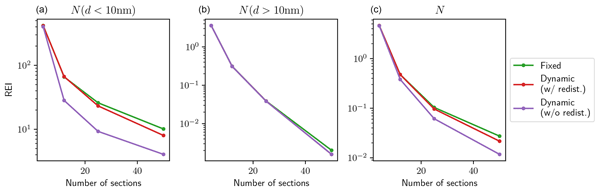
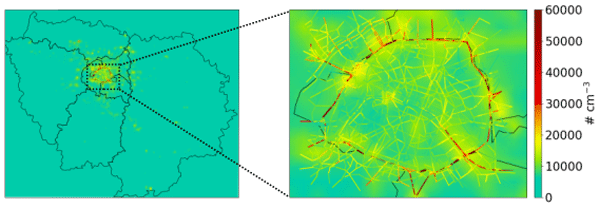
Modelling the size distribution and the number concentration is important to represent ultrafine particles. A new analytic formulation is presented to compute coagulation partition coefficients, allowing us to lower the numerical diffusion associated with the resolution of aerosol dynamics. The significance of this effect is assessed in a 0D box model and over greater Paris with a chemistry transport model, using different size resolutions of the particle distribution.
Soo-Jin Park, Lya Lugon, Oscar Jacquot, Youngseob Kim, Alexia Baudic, Barbara D'Anna, Ludovico Di Antonio, Claudia Di Biagio, Fabrice Dugay, Olivier Favez, Véronique Ghersi, Aline Gratien, Julien Kammer, Jean-Eudes Petit, Olivier Sanchez, Myrto Valari, Jérémy Vigneron, and Karine Sartelet
Atmos. Chem. Phys., 25, 3363–3387, https://doi.org/10.5194/acp-25-3363-2025, https://doi.org/10.5194/acp-25-3363-2025, 2025
Short summary
Short summary
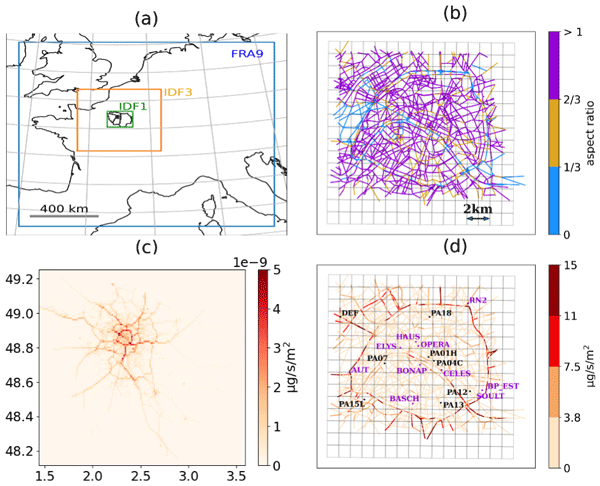
To accurately represent the population exposure to outdoor concentrations of pollutants of interest to health (NO2, PM2.5, black carbon, and ultrafine particles), multi-scale modelling down to the street scale is set up and evaluated using measurements from field campaigns. An exposure scaling factor is defined, allowing regional-scale simulations to be corrected to evaluate population exposure. Urban heterogeneities strongly influence NO2, black carbon, and ultrafine particles but less strongly PM2.5.
Alexis Squarcioni, Yelva Roustan, Myrto Valari, Youngseob Kim, Karine Sartelet, Lya Lugon, Fabrice Dugay, and Robin Voitot
Atmos. Chem. Phys., 25, 93–117, https://doi.org/10.5194/acp-25-93-2025, https://doi.org/10.5194/acp-25-93-2025, 2025
Short summary
Short summary
This study highlights the interest of using a street-network model to estimate pollutant concentrations of NOx, NO2, and PM2.5 in heterogeneous urban areas, particularly those adjacent to highways, compared with the subgrid-scale approach embedded in the 3D Eulerian model CHIMERE. However, the study also reveals comparable performances between the two approaches for the aforementioned pollutants in areas near the city center, where urban characteristics are more uniform.
Victor Lannuque and Karine Sartelet
Atmos. Chem. Phys., 24, 8589–8606, https://doi.org/10.5194/acp-24-8589-2024, https://doi.org/10.5194/acp-24-8589-2024, 2024
Short summary
Short summary
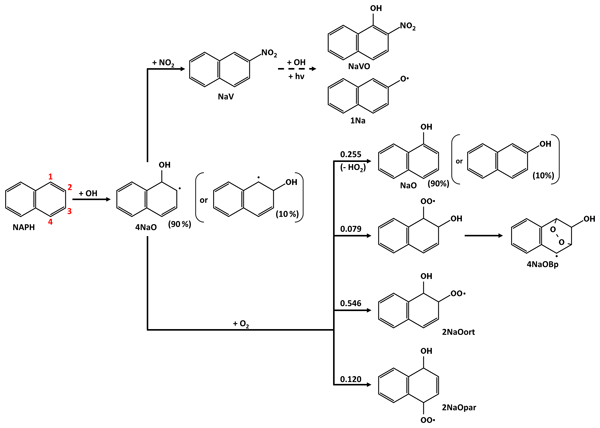
Large uncertainties remain in understanding secondary organic aerosol (SOA) formation and speciation from naphthalene oxidation. This study details the development of the first near-explicit chemical scheme for naphthalene oxidation by OH, which includes kinetic and mechanistic data, and is able to reproduce most of the experimentally identified products in both gas and particle phases.
Alice Maison, Lya Lugon, Soo-Jin Park, Alexia Baudic, Christopher Cantrell, Florian Couvidat, Barbara D'Anna, Claudia Di Biagio, Aline Gratien, Valérie Gros, Carmen Kalalian, Julien Kammer, Vincent Michoud, Jean-Eudes Petit, Marwa Shahin, Leila Simon, Myrto Valari, Jérémy Vigneron, Andrée Tuzet, and Karine Sartelet
Atmos. Chem. Phys., 24, 6011–6046, https://doi.org/10.5194/acp-24-6011-2024, https://doi.org/10.5194/acp-24-6011-2024, 2024
Short summary
Short summary
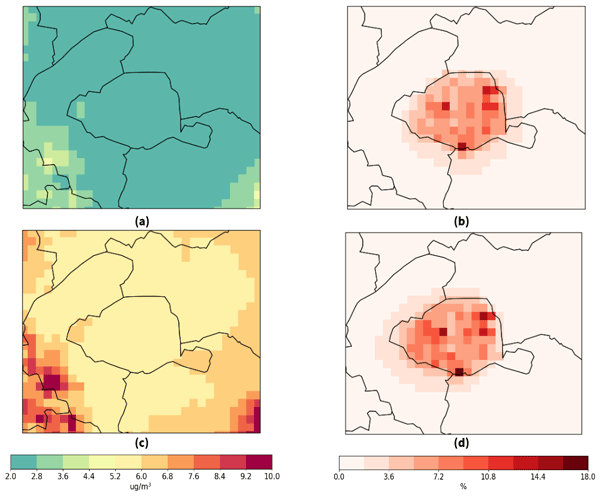
This study presents the development of a bottom-up inventory of urban tree biogenic emissions. Emissions are computed for each tree based on their location and characteristics and are integrated in the regional air quality model WRF-CHIMERE. The impact of these biogenic emissions on air quality is quantified for June–July 2022. Over Paris city, urban trees increase the concentrations of particulate organic matter by 4.6 %, of PM2.5 by 0.6 %, and of ozone by 1.0 % on average over 2 months.
Evangelia Kostenidou, Baptiste Marques, Brice Temime-Roussel, Yao Liu, Boris Vansevenant, Karine Sartelet, and Barbara D'Anna
Atmos. Chem. Phys., 24, 2705–2729, https://doi.org/10.5194/acp-24-2705-2024, https://doi.org/10.5194/acp-24-2705-2024, 2024
Short summary
Short summary
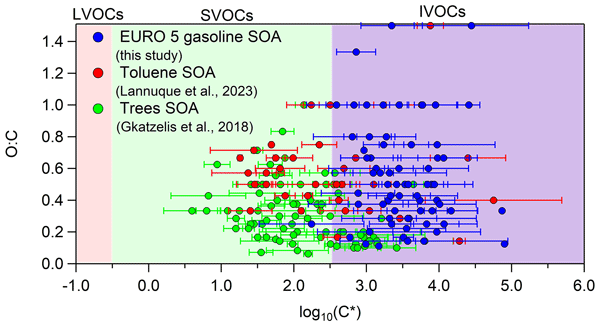
Secondary organic aerosol (SOA) from gasoline vehicles can be a significant source of particulate matter in urban areas. Here the chemical composition of secondary volatile organic compounds and SOA produced by photo-oxidation of Euro 5 gasoline vehicle emissions was studied. The volatility of the SOA formed was calculated. Except for the temperature and the concentration of the aerosol, additional parameters may play a role in the gas-to-particle partitioning.
Victor Lannuque, Barbara D'Anna, Evangelia Kostenidou, Florian Couvidat, Alvaro Martinez-Valiente, Philipp Eichler, Armin Wisthaler, Markus Müller, Brice Temime-Roussel, Richard Valorso, and Karine Sartelet
Atmos. Chem. Phys., 23, 15537–15560, https://doi.org/10.5194/acp-23-15537-2023, https://doi.org/10.5194/acp-23-15537-2023, 2023
Short summary
Short summary
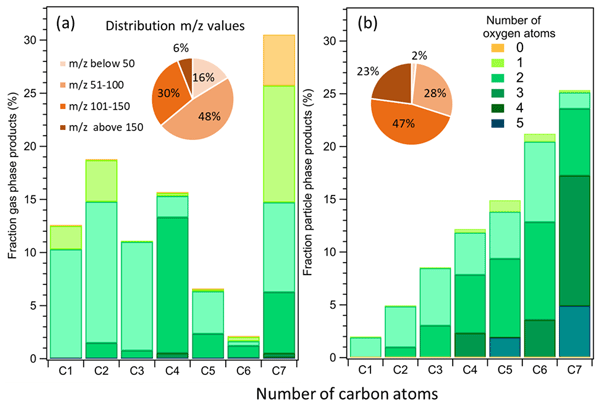
Large uncertainties remain in understanding secondary organic aerosol (SOA) formation from toluene oxidation. In this study, speciation measurements in gaseous and particulate phases were carried out, providing partitioning and volatility data on individual toluene SOA components at different temperatures. A new detailed oxidation mechanism was developed to improve modeled speciation, and effects of different processes involved in gas–particle partitioning at the molecular scale are explored.
Thibaud Sarica, Alice Maison, Yelva Roustan, Matthias Ketzel, Steen Solvang Jensen, Youngseob Kim, Christophe Chaillou, and Karine Sartelet
Geosci. Model Dev., 16, 5281–5303, https://doi.org/10.5194/gmd-16-5281-2023, https://doi.org/10.5194/gmd-16-5281-2023, 2023
Short summary
Short summary
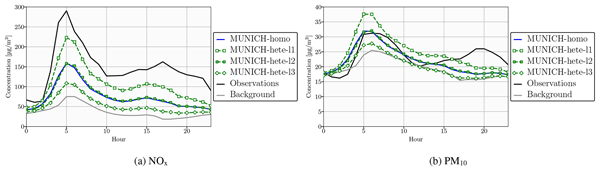
A new version of the Model of Urban Network of Intersecting Canyons and Highways (MUNICH) is developed to represent heterogeneities of concentrations in streets. The street volume is discretized vertically and horizontally to limit the artificial dilution of emissions and concentrations. This new version is applied to street networks in Copenhagen and Paris. The comparisons to observations are improved, with higher concentrations of pollutants emitted by traffic at the bottom of the street.
Chao Lin, Yunyi Wang, Ryozo Ooka, Cédric Flageul, Youngseob Kim, Hideki Kikumoto, Zhizhao Wang, and Karine Sartelet
Atmos. Chem. Phys., 23, 1421–1436, https://doi.org/10.5194/acp-23-1421-2023, https://doi.org/10.5194/acp-23-1421-2023, 2023
Short summary
Short summary
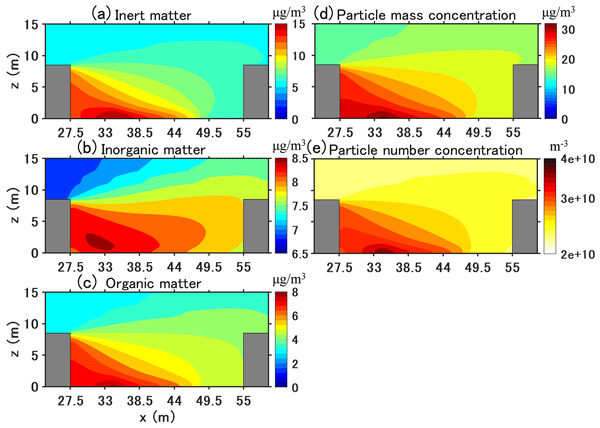
In this study, SSH-aerosol, a modular box model that simulates the evolution of gas, primary, and secondary aerosols, is coupled with the computational fluid dynamics (CFD) software, OpenFOAM and Code_Saturne. The transient dispersion of pollutants emitted from traffic in a street canyon of Greater Paris is simulated. The coupled model achieved better agreement in NO2 and PM10 with measurement data than the conventional CFD simulation which regards pollutants as passive scalars.
Zhizhao Wang, Florian Couvidat, and Karine Sartelet
Geosci. Model Dev., 15, 8957–8982, https://doi.org/10.5194/gmd-15-8957-2022, https://doi.org/10.5194/gmd-15-8957-2022, 2022
Short summary
Short summary
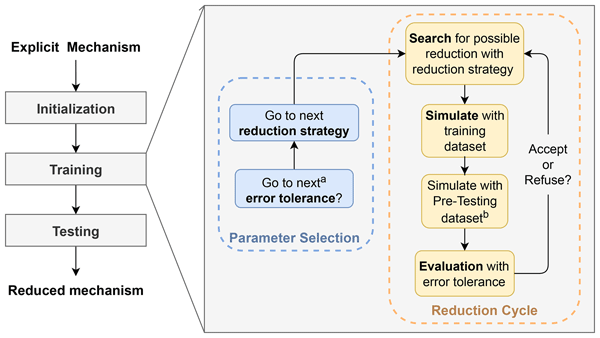
Air quality models need to reliably predict secondary organic aerosols (SOAs) at a reasonable computational cost. Thus, we developed GENOA v1.0, a mechanism reduction algorithm that preserves the accuracy of detailed gas-phase chemical mechanisms for SOA formation, thereby improving the practical use of actual chemistry in SOA models. With GENOA, a near-explicit chemical scheme was reduced to 2 % of its original size and computational time, with an average error of less than 3 %.
Youngseob Kim, Lya Lugon, Alice Maison, Thibaud Sarica, Yelva Roustan, Myrto Valari, Yang Zhang, Michel André, and Karine Sartelet
Geosci. Model Dev., 15, 7371–7396, https://doi.org/10.5194/gmd-15-7371-2022, https://doi.org/10.5194/gmd-15-7371-2022, 2022
Short summary
Short summary
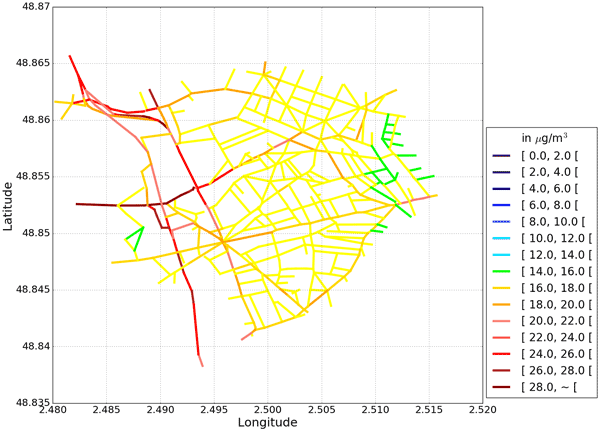
This paper presents the latest version of the street-network model MUNICH, v2.0. The description of MUNICH v1.0, which models gas-phase pollutants in a street network, was published in GMD in 2018. Since then, major modifications have been made to MUNICH. The comprehensive aerosol model SSH-aerosol is now coupled to MUNICH to simulate primary and secondary aerosol concentrations. New parameterisations have also been introduced. Test cases are defined to illustrate the new model functionalities.
Alice Maison, Cédric Flageul, Bertrand Carissimo, Yunyi Wang, Andrée Tuzet, and Karine Sartelet
Atmos. Chem. Phys., 22, 9369–9388, https://doi.org/10.5194/acp-22-9369-2022, https://doi.org/10.5194/acp-22-9369-2022, 2022
Short summary
Short summary
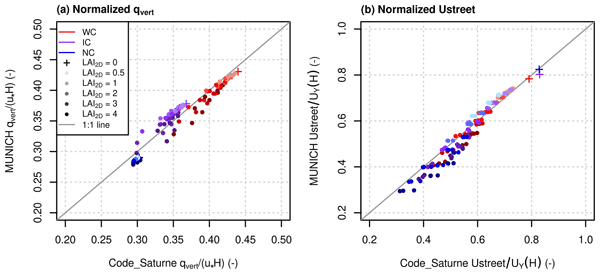
This paper presents a parameterization of the tree crown effect on air flow and pollutant dispersion in a street network model used to simulate air quality at the street level. The new parameterization is built using a finer-scale model (computational fluid dynamics). The tree effect increases with the leaf area index and the crown volume fraction of the trees; the street horizontal velocity is reduced by up to 68 % and the vertical transfer into or out of the street by up to 23 %.
Karine Sartelet, Youngseob Kim, Florian Couvidat, Maik Merkel, Tuukka Petäjä, Jean Sciare, and Alfred Wiedensohler
Atmos. Chem. Phys., 22, 8579–8596, https://doi.org/10.5194/acp-22-8579-2022, https://doi.org/10.5194/acp-22-8579-2022, 2022
Short summary
Short summary
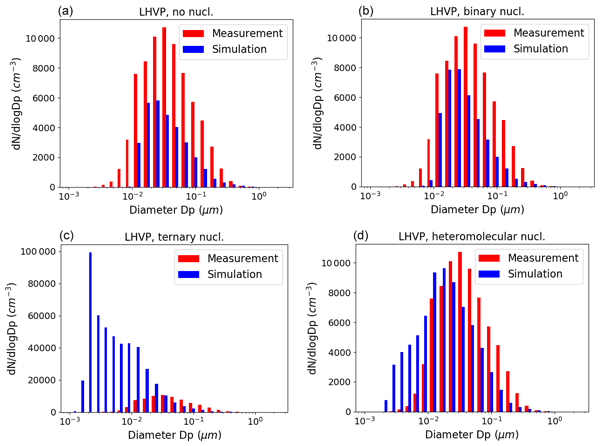
A methodology is defined to estimate number emissions from an inventory providing mass emissions. Number concentrations are simulated over Greater Paris using different nucleation parameterisations (binary, ternary involving sulfuric acid and ammonia, and heteromolecular involving sulfuric acid and extremely low-volatility organics, ELVOCs). The comparisons show that ternary nucleation may not be a dominant process for new particle formation in cities, but they stress the role of ELVOCs.
Boris Vansevenant, Cédric Louis, Corinne Ferronato, Ludovic Fine, Patrick Tassel, Pascal Perret, Evangelia Kostenidou, Brice Temime-Roussel, Barbara D'Anna, Karine Sartelet, Véronique Cerezo, and Yao Liu
Atmos. Meas. Tech., 14, 7627–7655, https://doi.org/10.5194/amt-14-7627-2021, https://doi.org/10.5194/amt-14-7627-2021, 2021
Short summary
Short summary
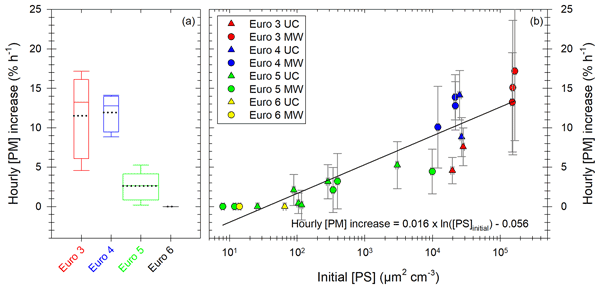
A new method was developed to correct wall losses of particles on Teflon walls using a new environmental chamber. It was applied to experiments with six diesel vehicles (Euro 3 to 6), tested on a chassis dynamometer. Emissions of particles and precursors were obtained under urban and motorway conditions. The chamber experiments help understand the role of physical processes in diesel particle evolutions in the dark. These results can be applied to situations such as tunnels or winter rush hours.
Lya Lugon, Jérémy Vigneron, Christophe Debert, Olivier Chrétien, and Karine Sartelet
Geosci. Model Dev., 14, 7001–7019, https://doi.org/10.5194/gmd-14-7001-2021, https://doi.org/10.5194/gmd-14-7001-2021, 2021
Short summary
Short summary
The multiscale Street-in-Grid model is used to simulate black carbon (BC) concentrations in streets. To respect street-surface mass balance, particle resuspension is estimated with a new approach based on deposited mass. The contribution of resuspension is low, but non-exhaust emissions from tyre wear may largely contribute to BC concentrations. The impact of the two-way dynamic coupling between scales on BC concentrations varies depending on the street geometry and traffic emission intensity.
Florian Couvidat, Antoine Guion, Victor Lannuque, Palmira Messina, Elsa Real, Gaël Descombes, Pauline Buysse, Augustin Colette, and Raia Silvia Massad
EGUsphere, https://doi.org/10.5194/egusphere-2026-4644, https://doi.org/10.5194/egusphere-2026-4644, 2026
This preprint is open for discussion and under review for Atmospheric Chemistry and Physics (ACP).
Short summary
Short summary
This study investigates weather-driven trends in atmospheric emissions and air quality across Europe over 1990–2022 using an enhanced version of the CHIMERE chemistry-transport model. Simulations reveal significant increases in biogenic VOC, ammonia, and soil NOx emissions, while ozone exhibits contrasting regional responses, increasing in southern Europe but decreasing in northern regions due to enhanced vegetation-driven deposition. Trends are also analyzed for NO2, particles and deposition.
Julia Lee-Taylor, William P. L. Carter, Bernard Aumont, John J. Orlando, Zhizhao Wang, Marie Camredon, Richard Valorso, and Kelley C. Barsanti
EGUsphere, https://doi.org/10.5194/egusphere-2026-4908, https://doi.org/10.5194/egusphere-2026-4908, 2026
This preprint is open for discussion and under review for Atmospheric Chemistry and Physics (ACP).
Short summary
Short summary
Air quality models require representation of gas-phase compounds and their products. While these model mechanisms are typically small, one compound can form millions of products. Small mechanisms can be derived by hand, but generation of complete mechanisms must be automated. The two most common automated generators for atmospheric chemical mechanisms are compared here for the first time. The comparison highlights underlying differences and implications for predictions of atmospheric chemistry.
Aurélien Le Bayon, Aliisa Ojala, Siddharth Iyer, Zhizhao Wang, Victor Lannuque, Florian Couvidat, Raluca Ciuraru, and Karine Sartelet
EGUsphere, https://doi.org/10.5194/egusphere-2026-3391, https://doi.org/10.5194/egusphere-2026-3391, 2026
Short summary
Short summary
Aromatics compounds emitted in the atmosphere, such as benzene and phenol, contribute to the formation of organic aerosols. This study presents and evaluates an updated description of benzene chemistry, in which the most influential pathways are identified, including one developed in this work. The resulting mechanism reproduces laboratory observation with great accuracy and is reduced for use in large-scale air quality models.
Zhizhao Wang, William P. L. Carter, Julia Lee-Taylor, John Orlando, Qing Ye, Richard Valorso, Marie Camredon, Bernard Aumont, and Kelley Barsanti
EGUsphere, https://doi.org/10.5194/egusphere-2026-1921, https://doi.org/10.5194/egusphere-2026-1921, 2026
Short summary
Short summary
Comprehensive chemical mechanisms that describe how pollutants react in the atmosphere can include millions of reactions and are too complex for practical models. This study presents a framework that can reduce them to tens or hundreds of reactions while preserving key behavior and accuracy. This enables the use of detailed chemistry in large simulations, improving studies of air quality and how atmospheric processes are represented in models.
Daphné Ladet, Yelva Roustan, Karine Sartelet, and Olivier Duclaux
EGUsphere, https://doi.org/10.5194/egusphere-2025-4472, https://doi.org/10.5194/egusphere-2025-4472, 2025
Short summary
Short summary
Amines used as solvents for CO2 capture can lead to the formation of secondary pollutants once they enter the atmosphere. We studied the degradation of 2-amino-2-methyl-1-propanol to understand the processes that can lead to the formation of secondary particles. Relying on an atmospheric chamber experiment, we developed a model with low-volatility compounds and reproduce the results with nucleation and condensation processes.
William P. L. Carter, Jia Jiang, Zhizhao Wang, and Kelley C. Barsanti
Geosci. Model Dev., 18, 8461–8483, https://doi.org/10.5194/gmd-18-8461-2025, https://doi.org/10.5194/gmd-18-8461-2025, 2025
Short summary
Short summary
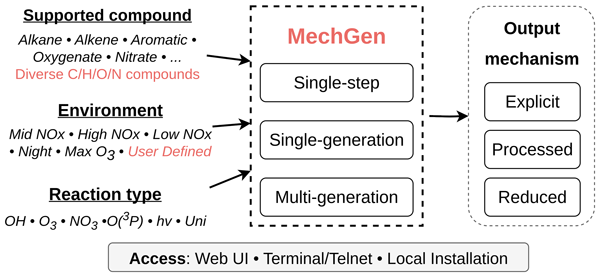
The SAPRC Atmospheric Chemical Mechanism Generation System (MechGen) generates explicit chemical reaction mechanisms for organic compounds. MechGen has been used for decades in the development of the widely used SAPRC mechanisms. This paper, detailing the software system, and a companion paper, detailing the chemical basis, represent the first complete documentation of MechGen. This paper includes examples and instructions for generating explicit and reduced mechanisms.
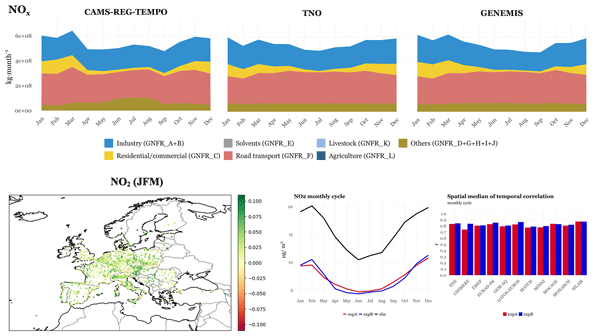
Marc Guevara, Augustin Colette, Antoine Guion, Valentin Petiot, Mario Adani, Joaquim Arteta, Anna Benedictow, Robert Bergström, Andrea Bolignano, Paula Camps, Ana C. Carvalho, Jesper Heile Christensen, Florian Couvidat, Ilaria D'Elia, Hugo Denier van der Gon, Gaël Descombes, John Douros, Hilde Fagerli, Yalda Fatahi, Elmar Friese, Lise Frohn, Michael Gauss, Camilla Geels, Risto Hänninen, Kaj Hansen, Oriol Jorba, Jacek W. Kaminski, Rostislav Kouznetsov, Richard Kranenburg, Jeroen Kuenen, Victor Lannuque, Frédérik Meleux, Agnes Nyíri, Yuliia Palamarchuk, Carlos Pérez García-Pando, Lennard Robertson, Felicita Russo, Arjo Segers, Mikhail Sofiev, Joanna Struzewska, Renske Timmermans, Andreas Uppstu, Alvaro Valdebenito, and Zhuyun Ye
Atmos. Chem. Phys., 25, 13245–13278, https://doi.org/10.5194/acp-25-13245-2025, https://doi.org/10.5194/acp-25-13245-2025, 2025
Short summary
Short summary
Air quality models require hourly emissions to accurately represent dispersion and physico-chemical processes in the atmosphere. Since emission inventories are typically provided at the annual level, emissions are downscaled to a refined temporal resolution using temporal profiles. This study quantifies the impact of using new anthropogenic temporal profiles on the performance of an European air quality multi-model ensemble. Overall, the findings indicate an improvement of the modelling results.
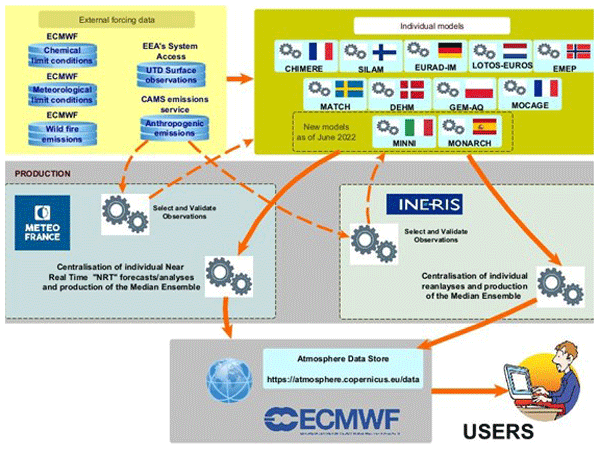
Augustin Colette, Gaëlle Collin, François Besson, Etienne Blot, Vincent Guidard, Frédérik Meleux, Adrien Royer, Valentin Petiot, Claire Miller, Oihana Fermond, Alizé Jeant, Mario Adani, Joaquim Arteta, Anna Benedictow, Robert Bergström, Dene Bowdalo, Jorgen Brandt, Gino Briganti, Ana C. Carvalho, Jesper Heile Christensen, Florian Couvidat, Ilaria D'Elia, Massimo D'Isidoro, Hugo Denier van der Gon, Gaël Descombes, Enza Di Tomaso, John Douros, Jeronimo Escribano, Henk Eskes, Hilde Fagerli, Yalda Fatahi, Johannes Flemming, Elmar Friese, Lise Frohn, Michael Gauss, Camilla Geels, Guido Guarnieri, Marc Guevara, Antoine Guion, Jonathan Guth, Risto Hänninen, Kaj Hansen, Ulas Im, Ruud Janssen, Marine Jeoffrion, Mathieu Joly, Luke Jones, Oriol Jorba, Evgeni Kadantsev, Michael Kahnert, Jacek W. Kaminski, Rostislav Kouznetsov, Richard Kranenburg, Jeroen Kuenen, Anne Caroline Lange, Joachim Langner, Victor Lannuque, Francesca Macchia, Astrid Manders, Mihaela Mircea, Agnes Nyiri, Miriam Olid, Carlos Pérez García-Pando, Yuliia Palamarchuk, Antonio Piersanti, Blandine Raux, Miha Razinger, Lennard Robertson, Arjo Segers, Martijn Schaap, Pilvi Siljamo, David Simpson, Mikhail Sofiev, Anders Stangel, Joanna Struzewska, Carles Tena, Renske Timmermans, Thanos Tsikerdekis, Svetlana Tsyro, Svyatoslav Tyuryakov, Anthony Ung, Andreas Uppstu, Alvaro Valdebenito, Peter van Velthoven, Lina Vitali, Zhuyun Ye, Vincent-Henri Peuch, and Laurence Rouïl
Geosci. Model Dev., 18, 6835–6883, https://doi.org/10.5194/gmd-18-6835-2025, https://doi.org/10.5194/gmd-18-6835-2025, 2025
Short summary
Short summary
The Copernicus Atmosphere Monitoring Service – Regional Production delivers daily forecasts, analyses, and reanalyses of air quality in Europe. The service relies on a distributed modelling production by 11 leading European modelling teams following stringent requirements with an operational design that has no equivalent in the world. All the products are free, open, and quality-assured and disseminated with a high level of reliability.
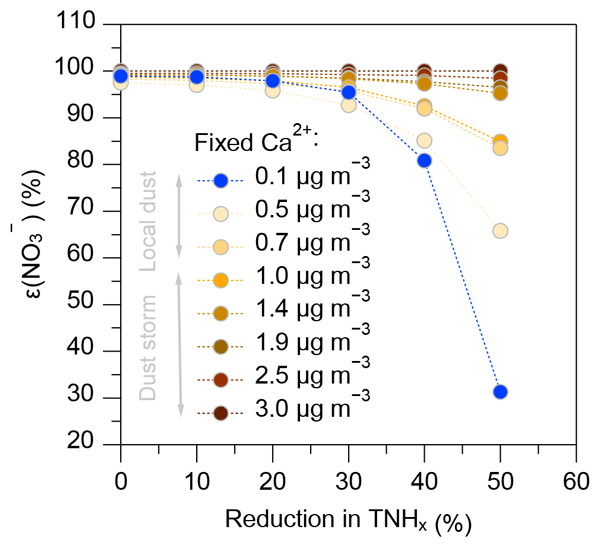
Hanrui Lang, Yunjiang Zhang, Sheng Zhong, Yongcai Rao, Minfeng Zhou, Jian Qiu, Jingyi Li, Diwen Liu, Florian Couvidat, Olivier Favez, Didier Hauglustaine, and Xinlei Ge
Atmos. Chem. Phys., 25, 10587–10601, https://doi.org/10.5194/acp-25-10587-2025, https://doi.org/10.5194/acp-25-10587-2025, 2025
Short summary
Short summary
This study investigates how dust pollution influences particulate nitrate formation. We found that dust pollution could reduce the effectiveness of ammonia emission controls by altering aerosol chemistry. Using field observations and modeling, we showed that dust particles affect nitrate distribution between gas and particle phases. Our findings highlight the need for pollution control strategies that consider both human emissions and dust sources for better urban air quality management.
Oscar Jacquot and Karine Sartelet
Geosci. Model Dev., 18, 3965–3984, https://doi.org/10.5194/gmd-18-3965-2025, https://doi.org/10.5194/gmd-18-3965-2025, 2025
Short summary
Short summary
Modelling the size distribution and the number concentration is important to represent ultrafine particles. A new analytic formulation is presented to compute coagulation partition coefficients, allowing us to lower the numerical diffusion associated with the resolution of aerosol dynamics. The significance of this effect is assessed in a 0D box model and over greater Paris with a chemistry transport model, using different size resolutions of the particle distribution.
Soo-Jin Park, Lya Lugon, Oscar Jacquot, Youngseob Kim, Alexia Baudic, Barbara D'Anna, Ludovico Di Antonio, Claudia Di Biagio, Fabrice Dugay, Olivier Favez, Véronique Ghersi, Aline Gratien, Julien Kammer, Jean-Eudes Petit, Olivier Sanchez, Myrto Valari, Jérémy Vigneron, and Karine Sartelet
Atmos. Chem. Phys., 25, 3363–3387, https://doi.org/10.5194/acp-25-3363-2025, https://doi.org/10.5194/acp-25-3363-2025, 2025
Short summary
Short summary
To accurately represent the population exposure to outdoor concentrations of pollutants of interest to health (NO2, PM2.5, black carbon, and ultrafine particles), multi-scale modelling down to the street scale is set up and evaluated using measurements from field campaigns. An exposure scaling factor is defined, allowing regional-scale simulations to be corrected to evaluate population exposure. Urban heterogeneities strongly influence NO2, black carbon, and ultrafine particles but less strongly PM2.5.
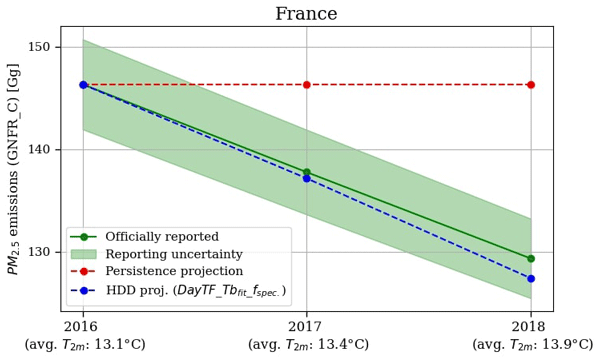
Antoine Guion, Florian Couvidat, Marc Guevara, and Augustin Colette
Atmos. Chem. Phys., 25, 2807–2827, https://doi.org/10.5194/acp-25-2807-2025, https://doi.org/10.5194/acp-25-2807-2025, 2025
Short summary
Short summary
The residential sector can cause high background levels of pollutants and pollution peaks in winter. Its emissions are dominated by space heating and show strong daily variations linked to changes in outside temperature. Using heating degree days, we provide country- and species-dependent parameters for the distribution of these emissions, improving the performance of the CHIMERE air quality model. This also allows annual residential emissions to be projected before official publications.
Alexis Squarcioni, Yelva Roustan, Myrto Valari, Youngseob Kim, Karine Sartelet, Lya Lugon, Fabrice Dugay, and Robin Voitot
Atmos. Chem. Phys., 25, 93–117, https://doi.org/10.5194/acp-25-93-2025, https://doi.org/10.5194/acp-25-93-2025, 2025
Short summary
Short summary
This study highlights the interest of using a street-network model to estimate pollutant concentrations of NOx, NO2, and PM2.5 in heterogeneous urban areas, particularly those adjacent to highways, compared with the subgrid-scale approach embedded in the 3D Eulerian model CHIMERE. However, the study also reveals comparable performances between the two approaches for the aforementioned pollutants in areas near the city center, where urban characteristics are more uniform.
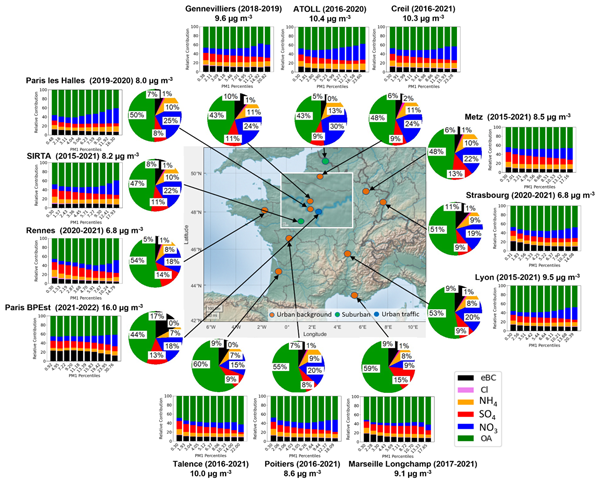
Hasna Chebaicheb, Joel F. de Brito, Tanguy Amodeo, Florian Couvidat, Jean-Eudes Petit, Emmanuel Tison, Gregory Abbou, Alexia Baudic, Mélodie Chatain, Benjamin Chazeau, Nicolas Marchand, Raphaële Falhun, Florie Francony, Cyril Ratier, Didier Grenier, Romain Vidaud, Shouwen Zhang, Gregory Gille, Laurent Meunier, Caroline Marchand, Véronique Riffault, and Olivier Favez
Earth Syst. Sci. Data, 16, 5089–5109, https://doi.org/10.5194/essd-16-5089-2024, https://doi.org/10.5194/essd-16-5089-2024, 2024
Short summary
Short summary
Long-term (2015–2021) quasi-continuous measurements have been obtained at 13 French urban sites using online mass spectrometry, to acquire the comprehensive chemical composition of submicron particulate matter. The results show their spatial and temporal differences and confirm the predominance of organics in France (40–60 %). These measurements can be used for many future studies, such as trend and epidemiological analyses, or comparisons with chemical transport models.
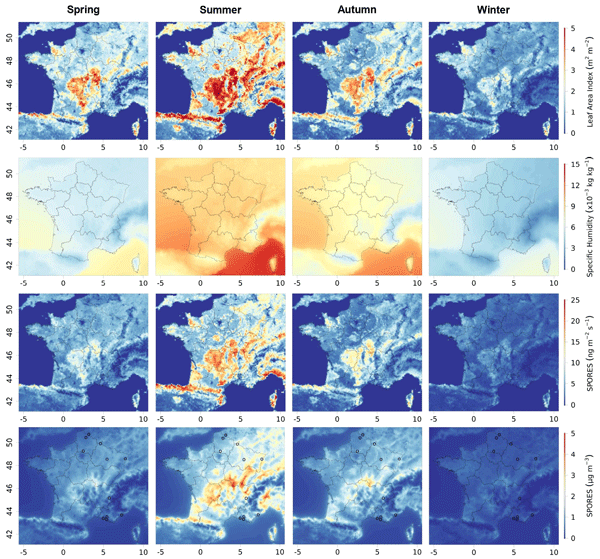
Matthieu Vida, Gilles Foret, Guillaume Siour, Florian Couvidat, Olivier Favez, Gaelle Uzu, Arineh Cholakian, Sébastien Conil, Matthias Beekmann, and Jean-Luc Jaffrezo
Atmos. Chem. Phys., 24, 10601–10615, https://doi.org/10.5194/acp-24-10601-2024, https://doi.org/10.5194/acp-24-10601-2024, 2024
Short summary
Short summary
We simulate 2 years of atmospheric fungal spores over France and use observations of polyols and primary biogenic factors from positive matrix factorisation. The representation of emissions taking into account a proxy for vegetation surface and specific humidity enables us to reproduce very accurately the seasonal cycle of fungal spores. Furthermore, we estimate that fungal spores can account for 20 % of PM10 and 40 % of the organic fraction of PM10 over vegetated areas in summer.
Vignesh Vasudevan-Geetha, Lee Tiszenkel, Zhizhao Wang, Robin Russo, Daniel Bryant, Julia Lee-Taylor, Kelley Barsanti, and Shan-Hu Lee
EGUsphere, https://doi.org/10.5194/egusphere-2024-2454, https://doi.org/10.5194/egusphere-2024-2454, 2024
Preprint archived
Short summary
Short summary
Our laboratory experiments using two high-resolution mass spectrometers show that these OOMs can also form within the particle phase, in addition to gas-to-particle conversion processes. Our results demonstrate that particle-phase formation processes can contribute to the formation and growth of new particles in biogenic environments.
Victor Lannuque and Karine Sartelet
Atmos. Chem. Phys., 24, 8589–8606, https://doi.org/10.5194/acp-24-8589-2024, https://doi.org/10.5194/acp-24-8589-2024, 2024
Short summary
Short summary
Large uncertainties remain in understanding secondary organic aerosol (SOA) formation and speciation from naphthalene oxidation. This study details the development of the first near-explicit chemical scheme for naphthalene oxidation by OH, which includes kinetic and mechanistic data, and is able to reproduce most of the experimentally identified products in both gas and particle phases.
Alice Maison, Lya Lugon, Soo-Jin Park, Alexia Baudic, Christopher Cantrell, Florian Couvidat, Barbara D'Anna, Claudia Di Biagio, Aline Gratien, Valérie Gros, Carmen Kalalian, Julien Kammer, Vincent Michoud, Jean-Eudes Petit, Marwa Shahin, Leila Simon, Myrto Valari, Jérémy Vigneron, Andrée Tuzet, and Karine Sartelet
Atmos. Chem. Phys., 24, 6011–6046, https://doi.org/10.5194/acp-24-6011-2024, https://doi.org/10.5194/acp-24-6011-2024, 2024
Short summary
Short summary
This study presents the development of a bottom-up inventory of urban tree biogenic emissions. Emissions are computed for each tree based on their location and characteristics and are integrated in the regional air quality model WRF-CHIMERE. The impact of these biogenic emissions on air quality is quantified for June–July 2022. Over Paris city, urban trees increase the concentrations of particulate organic matter by 4.6 %, of PM2.5 by 0.6 %, and of ozone by 1.0 % on average over 2 months.

Shoma Yamanouchi, Shayamilla Mahagammulla Gamage, Sara Torbatian, Jad Zalzal, Laura Minet, Audrey Smargiassi, Ying Liu, Ling Liu, Forood Azargoshasbi, Jinwoong Kim, Youngseob Kim, Daniel Yazgi, and Marianne Hatzopoulou
Geosci. Model Dev., 17, 3579–3597, https://doi.org/10.5194/gmd-17-3579-2024, https://doi.org/10.5194/gmd-17-3579-2024, 2024
Short summary
Short summary
Air pollution is a major health hazard, and chemical transport models (CTMs) are valuable tools that aid in our understanding of the risks of air pollution at both local and regional scales. In this study, the Polair3D CTM of the Polyphemus air quality modeling platform was set up over Quebec, Canada, to assess the model’s capability in predicting key air pollutant species over the region, at seasonal temporal scales and at regional spatial scales.
Evangelia Kostenidou, Baptiste Marques, Brice Temime-Roussel, Yao Liu, Boris Vansevenant, Karine Sartelet, and Barbara D'Anna
Atmos. Chem. Phys., 24, 2705–2729, https://doi.org/10.5194/acp-24-2705-2024, https://doi.org/10.5194/acp-24-2705-2024, 2024
Short summary
Short summary
Secondary organic aerosol (SOA) from gasoline vehicles can be a significant source of particulate matter in urban areas. Here the chemical composition of secondary volatile organic compounds and SOA produced by photo-oxidation of Euro 5 gasoline vehicle emissions was studied. The volatility of the SOA formed was calculated. Except for the temperature and the concentration of the aerosol, additional parameters may play a role in the gas-to-particle partitioning.
Victor Lannuque, Barbara D'Anna, Evangelia Kostenidou, Florian Couvidat, Alvaro Martinez-Valiente, Philipp Eichler, Armin Wisthaler, Markus Müller, Brice Temime-Roussel, Richard Valorso, and Karine Sartelet
Atmos. Chem. Phys., 23, 15537–15560, https://doi.org/10.5194/acp-23-15537-2023, https://doi.org/10.5194/acp-23-15537-2023, 2023
Short summary
Short summary
Large uncertainties remain in understanding secondary organic aerosol (SOA) formation from toluene oxidation. In this study, speciation measurements in gaseous and particulate phases were carried out, providing partitioning and volatility data on individual toluene SOA components at different temperatures. A new detailed oxidation mechanism was developed to improve modeled speciation, and effects of different processes involved in gas–particle partitioning at the molecular scale are explored.
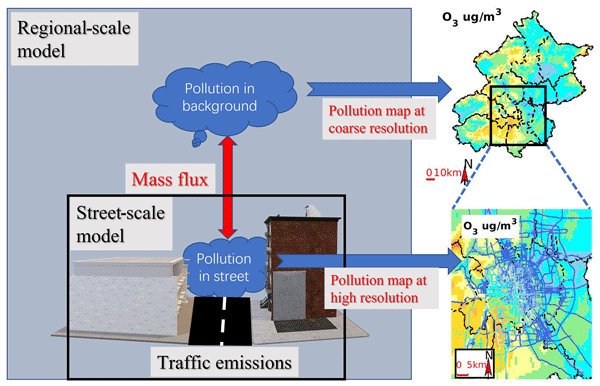
Tao Wang, Hang Liu, Jie Li, Shuai Wang, Youngseob Kim, Yele Sun, Wenyi Yang, Huiyun Du, Zhe Wang, and Zifa Wang
Geosci. Model Dev., 16, 5585–5599, https://doi.org/10.5194/gmd-16-5585-2023, https://doi.org/10.5194/gmd-16-5585-2023, 2023
Short summary
Short summary
This paper developed a two-way coupled module in a new version of a regional urban–street network model, IAQMS-street v2.0, in which the mass flux from streets to background is considered. Test cases are defined to evaluate the performance of IAQMS-street v2.0 in Beijing by comparing it with that simulated by IAQMS-street v1.0 and a regional model. The contribution of local emissions and the influence of on-road vehicle control measures on air quality are evaluated by using IAQMS-street v2.0.
Thibaud Sarica, Alice Maison, Yelva Roustan, Matthias Ketzel, Steen Solvang Jensen, Youngseob Kim, Christophe Chaillou, and Karine Sartelet
Geosci. Model Dev., 16, 5281–5303, https://doi.org/10.5194/gmd-16-5281-2023, https://doi.org/10.5194/gmd-16-5281-2023, 2023
Short summary
Short summary
A new version of the Model of Urban Network of Intersecting Canyons and Highways (MUNICH) is developed to represent heterogeneities of concentrations in streets. The street volume is discretized vertically and horizontally to limit the artificial dilution of emissions and concentrations. This new version is applied to street networks in Copenhagen and Paris. The comparisons to observations are improved, with higher concentrations of pollutants emitted by traffic at the bottom of the street.

Rémy Lapere, Nicolás Huneeus, Sylvain Mailler, Laurent Menut, and Florian Couvidat
Atmos. Chem. Phys., 23, 1749–1768, https://doi.org/10.5194/acp-23-1749-2023, https://doi.org/10.5194/acp-23-1749-2023, 2023
Short summary
Short summary
Glaciers in the Andes of central Chile are shrinking rapidly in response to global warming. This melting is accelerated by the deposition of opaque particles onto snow and ice. In this work, model simulations quantify typical deposition rates of soot on glaciers in summer and winter months and show that the contribution of emissions from Santiago is not as high as anticipated. Additionally, the combination of regional- and local-scale meteorology explains the seasonality in deposition.
Chao Lin, Yunyi Wang, Ryozo Ooka, Cédric Flageul, Youngseob Kim, Hideki Kikumoto, Zhizhao Wang, and Karine Sartelet
Atmos. Chem. Phys., 23, 1421–1436, https://doi.org/10.5194/acp-23-1421-2023, https://doi.org/10.5194/acp-23-1421-2023, 2023
Short summary
Short summary
In this study, SSH-aerosol, a modular box model that simulates the evolution of gas, primary, and secondary aerosols, is coupled with the computational fluid dynamics (CFD) software, OpenFOAM and Code_Saturne. The transient dispersion of pollutants emitted from traffic in a street canyon of Greater Paris is simulated. The coupled model achieved better agreement in NO2 and PM10 with measurement data than the conventional CFD simulation which regards pollutants as passive scalars.
Zhizhao Wang, Florian Couvidat, and Karine Sartelet
Geosci. Model Dev., 15, 8957–8982, https://doi.org/10.5194/gmd-15-8957-2022, https://doi.org/10.5194/gmd-15-8957-2022, 2022
Short summary
Short summary
Air quality models need to reliably predict secondary organic aerosols (SOAs) at a reasonable computational cost. Thus, we developed GENOA v1.0, a mechanism reduction algorithm that preserves the accuracy of detailed gas-phase chemical mechanisms for SOA formation, thereby improving the practical use of actual chemistry in SOA models. With GENOA, a near-explicit chemical scheme was reduced to 2 % of its original size and computational time, with an average error of less than 3 %.
Youngseob Kim, Lya Lugon, Alice Maison, Thibaud Sarica, Yelva Roustan, Myrto Valari, Yang Zhang, Michel André, and Karine Sartelet
Geosci. Model Dev., 15, 7371–7396, https://doi.org/10.5194/gmd-15-7371-2022, https://doi.org/10.5194/gmd-15-7371-2022, 2022
Short summary
Short summary
This paper presents the latest version of the street-network model MUNICH, v2.0. The description of MUNICH v1.0, which models gas-phase pollutants in a street network, was published in GMD in 2018. Since then, major modifications have been made to MUNICH. The comprehensive aerosol model SSH-aerosol is now coupled to MUNICH to simulate primary and secondary aerosol concentrations. New parameterisations have also been introduced. Test cases are defined to illustrate the new model functionalities.
Alice Maison, Cédric Flageul, Bertrand Carissimo, Yunyi Wang, Andrée Tuzet, and Karine Sartelet
Atmos. Chem. Phys., 22, 9369–9388, https://doi.org/10.5194/acp-22-9369-2022, https://doi.org/10.5194/acp-22-9369-2022, 2022
Short summary
Short summary
This paper presents a parameterization of the tree crown effect on air flow and pollutant dispersion in a street network model used to simulate air quality at the street level. The new parameterization is built using a finer-scale model (computational fluid dynamics). The tree effect increases with the leaf area index and the crown volume fraction of the trees; the street horizontal velocity is reduced by up to 68 % and the vertical transfer into or out of the street by up to 23 %.
Karine Sartelet, Youngseob Kim, Florian Couvidat, Maik Merkel, Tuukka Petäjä, Jean Sciare, and Alfred Wiedensohler
Atmos. Chem. Phys., 22, 8579–8596, https://doi.org/10.5194/acp-22-8579-2022, https://doi.org/10.5194/acp-22-8579-2022, 2022
Short summary
Short summary
A methodology is defined to estimate number emissions from an inventory providing mass emissions. Number concentrations are simulated over Greater Paris using different nucleation parameterisations (binary, ternary involving sulfuric acid and ammonia, and heteromolecular involving sulfuric acid and extremely low-volatility organics, ELVOCs). The comparisons show that ternary nucleation may not be a dominant process for new particle formation in cities, but they stress the role of ELVOCs.
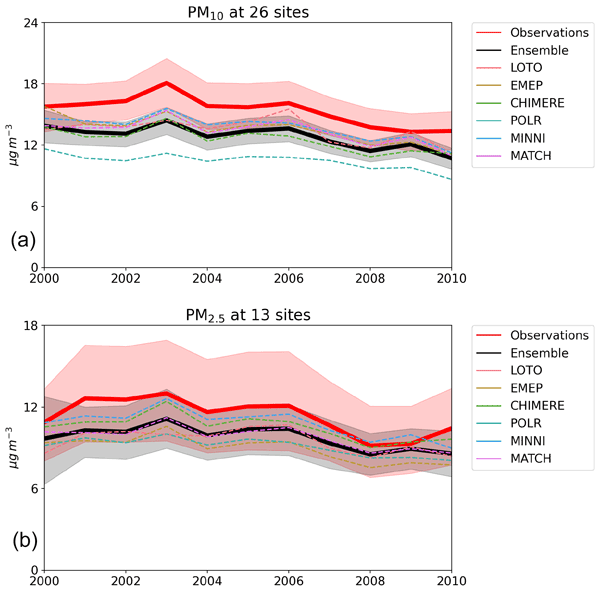
Svetlana Tsyro, Wenche Aas, Augustin Colette, Camilla Andersson, Bertrand Bessagnet, Giancarlo Ciarelli, Florian Couvidat, Kees Cuvelier, Astrid Manders, Kathleen Mar, Mihaela Mircea, Noelia Otero, Maria-Teresa Pay, Valentin Raffort, Yelva Roustan, Mark R. Theobald, Marta G. Vivanco, Hilde Fagerli, Peter Wind, Gino Briganti, Andrea Cappelletti, Massimo D'Isidoro, and Mario Adani
Atmos. Chem. Phys., 22, 7207–7257, https://doi.org/10.5194/acp-22-7207-2022, https://doi.org/10.5194/acp-22-7207-2022, 2022
Short summary
Short summary
Particulate matter (PM) air pollution causes adverse health effects. In Europe, the emissions caused by anthropogenic activities have been reduced in the last decades. To assess the efficiency of emission reductions in improving air quality, we have studied the evolution of PM pollution in Europe. Simulations with six air quality models and observational data indicate a decrease in PM concentrations by 10 % to 30 % across Europe from 2000 to 2010, which is mainly a result of emission reductions.
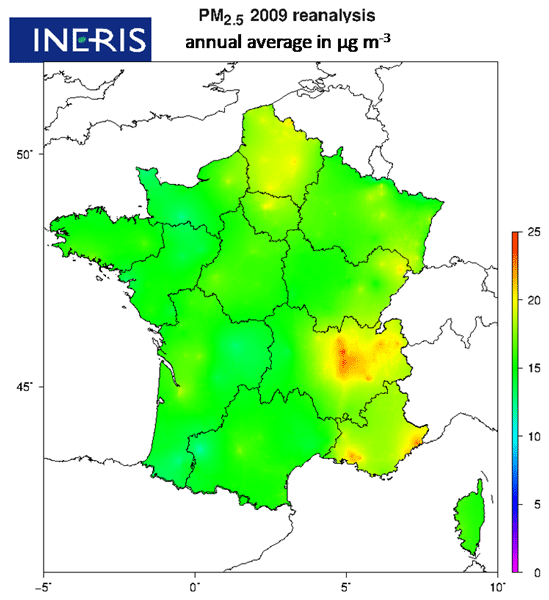
Elsa Real, Florian Couvidat, Anthony Ung, Laure Malherbe, Blandine Raux, Alicia Gressent, and Augustin Colette
Earth Syst. Sci. Data, 14, 2419–2443, https://doi.org/10.5194/essd-14-2419-2022, https://doi.org/10.5194/essd-14-2419-2022, 2022
Short summary
Short summary
This paper describes a 16-year (2000–2015) dataset of air pollution concentrations and air quality indicators over France combining background measurements and modeling. Hourly concentrations and regulatory indicators of NO2, O3, PM10 and PM2.5 are produced with 4 km spatial resolution. The overall dataset has been cross-validated and showed overall very good results. We hope that this open-access publication will facilitate further studies on the impacts of air pollution.
Boris Vansevenant, Cédric Louis, Corinne Ferronato, Ludovic Fine, Patrick Tassel, Pascal Perret, Evangelia Kostenidou, Brice Temime-Roussel, Barbara D'Anna, Karine Sartelet, Véronique Cerezo, and Yao Liu
Atmos. Meas. Tech., 14, 7627–7655, https://doi.org/10.5194/amt-14-7627-2021, https://doi.org/10.5194/amt-14-7627-2021, 2021
Short summary
Short summary
A new method was developed to correct wall losses of particles on Teflon walls using a new environmental chamber. It was applied to experiments with six diesel vehicles (Euro 3 to 6), tested on a chassis dynamometer. Emissions of particles and precursors were obtained under urban and motorway conditions. The chamber experiments help understand the role of physical processes in diesel particle evolutions in the dark. These results can be applied to situations such as tunnels or winter rush hours.
Lya Lugon, Jérémy Vigneron, Christophe Debert, Olivier Chrétien, and Karine Sartelet
Geosci. Model Dev., 14, 7001–7019, https://doi.org/10.5194/gmd-14-7001-2021, https://doi.org/10.5194/gmd-14-7001-2021, 2021
Short summary
Short summary
The multiscale Street-in-Grid model is used to simulate black carbon (BC) concentrations in streets. To respect street-surface mass balance, particle resuspension is estimated with a new approach based on deposited mass. The contribution of resuspension is low, but non-exhaust emissions from tyre wear may largely contribute to BC concentrations. The impact of the two-way dynamic coupling between scales on BC concentrations varies depending on the street geometry and traffic emission intensity.
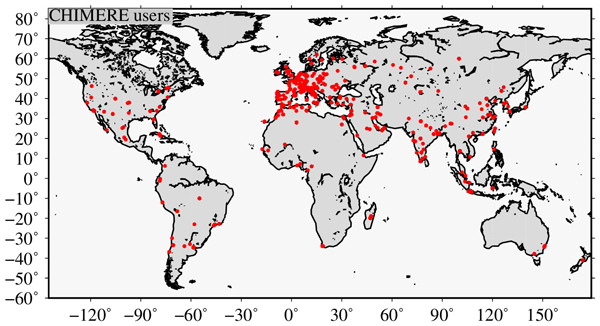
Laurent Menut, Bertrand Bessagnet, Régis Briant, Arineh Cholakian, Florian Couvidat, Sylvain Mailler, Romain Pennel, Guillaume Siour, Paolo Tuccella, Solène Turquety, and Myrto Valari
Geosci. Model Dev., 14, 6781–6811, https://doi.org/10.5194/gmd-14-6781-2021, https://doi.org/10.5194/gmd-14-6781-2021, 2021
Short summary
Short summary
The CHIMERE chemistry-transport model is presented in its new version, V2020r1. Many changes are proposed compared to the previous version. These include online modeling, new parameterizations for aerosols, new emissions schemes, a new parameter file format, the subgrid-scale variability of urban concentrations and new transport schemes.
Cited articles
Ascher, U. and Petzold, L.: Computer Methods for Ordinary Differential Equations and Differential-Algebraic Equations, Society for Industrial and Applied Mathematics, Philadelphia, ISBN 978-0-89871-412-8, 1998. a
Aumont, B., Szopa, S., and Madronich, S.: Modelling the evolution of organic carbon during its gas-phase tropospheric oxidation: development of an explicit model based on a self generating approach, Atmos. Chem. Phys., 5, 2497–2517, https://doi.org/10.5194/acp-5-2497-2005, 2005. a
Bird, R. B., Stewart, W. E., and Lightfoot, E. N.: Transport Phenomena, Revised 2nd Edn., John Wiley & Sons, Inc., ISBN 0-471-41077-2, 2006. a
Camredon, M., Aumont, B., Lee-Taylor, J., and Madronich, S.: The SOA/VOC/NOx system: an explicit model of secondary organic aerosol formation, Atmos. Chem. Phys., 7, 5599–5610, https://doi.org/10.5194/acp-7-5599-2007, 2007. a, b
Carlton, A. G., Turpin, B. J., Altieri, K. E., Seitzinger, S. P., Mathur, R., Roselle, S. J., and Weber, R. J.: CMAQ Model Performance Enhanced When In-Cloud Secondary Organic Aerosol is Included: Comparisons of Organic Carbon Predictions with Measurements, Environ. Sci. and Technol., 42, 8798–8802, https://doi.org/10.1021/es801192n, 2008. a
Carter, W.: Development of the SAPRC-07 chemical mechanism, Atmos. Environ., 44, 5324–5335, https://doi.org/10.1016/j.atmosenv.2010.01.026, 2010. a
Chan, A. W. H., Kautzman, K. E., Chhabra, P. S., Surratt, J. D., Chan, M. N., Crounse, J. D., Kürten, A., Wennberg, P. O., Flagan, R. C., and Seinfeld, J. H.: Secondary organic aerosol formation from photooxidation of naphthalene and alkylnaphthalenes: implications for oxidation of intermediate volatility organic compounds (IVOCs), Atmos. Chem. Phys., 9, 3049–3060, https://doi.org/10.5194/acp-9-3049-2009, 2009. a
Chrit, M., Sartelet, K., Sciare, J., Pey, J., Marchand, N., Couvidat, F., Sellegri, K., and Beekmann, M.: Modelling organic aerosol concentrations and properties during ChArMEx summer campaigns of 2012 and 2013 in the western Mediterranean region, Atmos. Chem. Phys., 17, 12509–12531, https://doi.org/10.5194/acp-17-12509-2017, 2017. a
Clusius, P., Xavier, C., Pichelstorfer, L., Zhou, P., Olenius, T., Roldin, P., and Boy, M.: Atmospherically Relevant Chemistry and Aerosol box model – ARCA box (version 1.2), Geosci. Model Dev., 15, 7257–7286, https://doi.org/10.5194/gmd-15-7257-2022, 2022. a
Couvidat, F., Kim, Y., Sartelet, K., Seigneur, C., Marchand, N., and Sciare, J.: Modeling secondary organic aerosol in an urban area: application to Paris, France, Atmos. Chem. Phys., 13, 983–996, https://doi.org/10.5194/acp-13-983-2013, 2013a. a, b
Couvidat, F., Sartelet, K., and Seigneur, C.: Investigating the Impact of Aqueous-Phase Chemistry and Wet Deposition on Organic Aerosol Formation Using a Molecular Surrogate Modeling Approach, Environ. Sci. and Technol., 47, 914–922, https://doi.org/10.1021/es3034318, 2013b. a, b, c
Couvidat, F., Bessagnet, B., Garcia-Vivanco, M., Real, E., Menut, L., and Colette, A.: Development of an inorganic and organic aerosol model (CHIMERE 2017β v1.0): seasonal and spatial evaluation over Europe, Geosci. Model Dev., 11, 165–194, https://doi.org/10.5194/gmd-11-165-2018, 2018a. a
Couvidat, F., Vivanco, M. G., and Bessagnet, B.: Simulating secondary organic aerosol from anthropogenic and biogenic precursors: comparison to outdoor chamber experiments, effect of oligomerization on SOA formation and reactive uptake of aldehydes, Atmos. Chem. Phys., 18, 15743–15766, https://doi.org/10.5194/acp-18-15743-2018, 2018b. a, b
Couvidat, F., Lugon, L., Messina, P., Sartelet, K., and Colette, A.: Optimizing computation time in 3D air quality models by using aerosol superbins within a sectional size distribution approach: Application to the CHIMERE model, J. Atmos. Sci., 187, 106572, https://doi.org/10.1016/j.jaerosci.2025.106572, 2025. a
Curry, L. A., Tsui, W. G., and McNeill, V. F.: Technical note: Updated parameterization of the reactive uptake of glyoxal and methylglyoxal by atmospheric aerosols and cloud droplets, Atmos. Chem. Phys., 18, 9823–9830, https://doi.org/10.5194/acp-18-9823-2018, 2018. a, b
Curtis, J. H., Riemer, N., and West, M.: Explicit stochastic advection algorithms for the regional-scale particle-resolved atmospheric aerosol model WRF-PartMC (v1.0), Geosci. Model Dev., 17, 8399–8420, https://doi.org/10.5194/gmd-17-8399-2024, 2024. a
Debry, E., Fahey, K., Sartelet, K., Sportisse, B., and Tombette, M.: Technical Note: A new SIze REsolved Aerosol Model (SIREAM), Atmos. Chem. Phys., 7, 1537–1547, https://doi.org/10.5194/acp-7-1537-2007, 2007. a, b
DeRieux, W.-S. W., Li, Y., Lin, P., Laskin, J., Laskin, A., Bertram, A. K., Nizkorodov, S. A., and Shiraiwa, M.: Predicting the glass transition temperature and viscosity of secondary organic material using molecular composition, Atmos. Chem. Phys., 18, 6331–6351, https://doi.org/10.5194/acp-18-6331-2018, 2018. a
Derognat, C., Beekmann, M., Baeumle, M., Martin, D., and Schmidt, H.: Effect of biogenic volatile organic compound emissions on tropospheric chemistry during the Atmospheric Pollution Over the Paris Area (ESQUIF) campaign in the Ile-de-France region, J. Geophys. Res.: Atmos., 108, https://doi.org/10.1029/2001JD001421, 2003. a
Devilliers, M., Debry, E., Sartelet, K., and Seigneur, C.: A new algorithm to solve condensation/evaporation for ultra fine, fine, and coarse particles, J. Atmos. Sci., 55, 116–136, https://doi.org/10.1016/j.jaerosci.2012.08.005, 2013. a, b
Donahue, N., Robinson, A., Stanier, C., and Pandis, S.: Coupled partitioning, dilution, and chemical aging of semi-volatile organics, Environ. Sci. and Technol., 40, 2635–2643, https://doi.org/10.1021/es052297c, 2006. a
Ervens, B. and Volkamer, R.: Glyoxal processing by aerosol multiphase chemistry: towards a kinetic modeling framework of secondary organic aerosol formation in aqueous particles, Atmos. Chem. Phys., 10, 8219–8244, https://doi.org/10.5194/acp-10-8219-2010, 2010. a
Fountoukis, C. and Nenes, A.: ISORROPIA II: a computationally efficient thermodynamic equilibrium model for K+-Ca2+-Mg2+-
Gervasi, N. R., Topping, D. O., and Zuend, A.: A predictive group-contribution model for the viscosity of aqueous organic aerosol, Atmos. Chem. Phys., 20, 2987–3008, https://doi.org/10.5194/acp-20-2987-2020, 2020. a, b
Goliff, W., Stockwell, W., and Lawson, C.: The Regional Atmospheric Chemistry Mechanism, version 2, Atmos. Environ., 68, 174–185, https://doi.org/10.1016/j.atmosenv.2012.11.038, 2013. a
Herrmann, H., Hoffmann, D., Schaefer, T., Brauer, P., and Tilgner, A.: Tropospheric Aqueous-Phase Free-Radical Chemistry: Radical Sources, Spectra, Reaction Kinetics and Prediction Tools, Chem. Phys. Chem., 11, 3796–3822, https://doi.org/10.1002/cphc.201000533, 2010. a
Hu, J., Chen, Z., Qin, X., and Dong, P.: Reversible and irreversible gas–particle partitioning of dicarbonyl compounds observed in the real atmosphere, Atmos. Chem. Phys., 22, 6971–6987, https://doi.org/10.5194/acp-22-6971-2022, 2022. a, b
Huang, Y., Zhao, R., Charan, S. M., Kenseth, C. M., Zhang, X., and Seinfeld, J. H.: Unified Theory of Vapor–Wall Mass Transport in Teflon-Walled Environmental Chambers, Environ. Sci. and Technol., 52, 2134–2142, https://doi.org/10.1021/acs.est.7b05575, 2018. a, b
Iyer, S., Kumar, A., Savolainen, A., Barua, S., Daub, C., Pichelstorfer, L., Roldin, P., Garmash, O., Seal, P., Kurtén, T., and Rissanen, M.: Molecular rearrangement of bicyclic peroxy radicals is a key route to aerosol from aromatics, Nature Comm., 14, 4984, https://doi.org/10.1038/s41467-023-40675-2, 2023. a, b, c, d
Jacquot, O. and Sartelet, K.: Numerical investigations on the modelling of ultrafine particles in SSH-aerosol-v1.3a: size resolution and redistribution, Geosci. Model Dev., 18, 3965–3984, https://doi.org/10.5194/gmd-18-3965-2025, 2025. a, b
Jayne, J. T., Duan, S. X., and Davidovits, P.: Uptake of gas-phase aldehydes by water surfaces, J. Phys. Chem., 96, https://doi.org/10.1021/j100192a049, 1992. a
Jenkin, M. E., Saunders, S. M., and Pilling, M. J.: The tropospheric degradation of volatile organic compounds: a protocol for mechanism development, Atmos. Environ., 31, 81–104, https://doi.org/10.1016/S1352-2310(96)00105-7, 1997. a
Jenkin, M. E., Wyche, K. P., Evans, C. J., Carr, T., Monks, P. S., Alfarra, M. R., Barley, M. H., McFiggans, G. B., Young, J. C., and Rickard, A. R.: Development and chamber evaluation of the MCM v3.2 degradation scheme for β-caryophyllene, Atmos. Chem. Phys., 12, 5275–5308, https://doi.org/10.5194/acp-12-5275-2012, 2012. a, b
Karl, M., Pirjola, L., Grönholm, T., Kurppa, M., Anand, S., Zhang, X., Held, A., Sander, R., Dal Maso, M., Topping, D., Jiang, S., Kangas, L., and Kukkonen, J.: Description and evaluation of the community aerosol dynamics model MAFOR v2.0, Geosci. Model Dev., 15, 3969–4026, https://doi.org/10.5194/gmd-15-3969-2022, 2022. a
Kim, Y., Couvidat, F., Sartelet, K., and Seigneur, C.: Comparison of different gas-phase mechanisms and aerosol modules for simulating particulate matter formation, J. Air Waste Manage. Assoc., 61, 1218–1226, https://doi.org/10.1080/10473289.2011.603999, 2011. a
Kim, Y., Sartelet, K., and Couvidat, F.: Modeling the effect of non-ideality, dynamic mass transfer and viscosity on SOA formation in a 3-D air quality model, Atmos. Chem. Phys., 19, 1241–1261, https://doi.org/10.5194/acp-19-1241-2019, 2019. a
Kim, Y., Lugon, L., Maison, A., Sarica, T., Roustan, Y., Valari, M., Zhang, Y., André, M., and Sartelet, K.: MUNICH v2.0: a street-network model coupled with SSH-aerosol (v1.2) for multi-pollutant modelling, Geosci. Model Dev., 15, 7371–7396, https://doi.org/10.5194/gmd-15-7371-2022, 2022. a
Kokkola, H., Kühn, T., Laakso, A., Bergman, T., Lehtinen, K. E. J., Mielonen, T., Arola, A., Stadtler, S., Korhonen, H., Ferrachat, S., Lohmann, U., Neubauer, D., Tegen, I., Siegenthaler-Le Drian, C., Schultz, M. G., Bey, I., Stier, P., Daskalakis, N., Heald, C. L., and Romakkaniemi, S.: SALSA2.0: The sectional aerosol module of the aerosol–chemistry–climate model ECHAM6.3.0-HAM2.3-MOZ1.0, Geosci. Model Dev., 11, 3833–3863, https://doi.org/10.5194/gmd-11-3833-2018, 2018. a
Kuang, C., McMurry, P., McCormick, A., and Eisele, F.: Dependence of nucleation rates on sulfuric acid vapor concentration in diverse atmospheric locations, J. Geophys. Res., 113, https://doi.org/10.1029/2007JD009253, 2008. a, b
Lakey, P. S. J., Cummings, B. E., Waring, M. S., Morrison, G. C., and Shiraiwa, M.: Effective mass accommodation for partitioning of organic compounds into surface films with different viscosities, Environ. Sci.: Processes Impacts, 25, 1464–1478, https://doi.org/10.1039/D3EM00213F, 2023. a
Lannuque, V., D'Anna, B., Couvidat, F., Valorso, R., and Sartelet, K.: Improvement in Modeling of OH and HO2 Radical Concentrations during Toluene and Xylene Oxidation with RACM2 Using MCM/GECKO-A, Atmosphere, 12, 732, https://doi.org/10.3390/atmos12060732, 2021. a
Lannuque, V., D'Anna, B., Kostenidou, E., Couvidat, F., Martinez-Valiente, A., Eichler, P., Wisthaler, A., Müller, M., Temime-Roussel, B., Valorso, R., and Sartelet, K.: Gas–particle partitioning of toluene oxidation products: an experimental and modeling study, Atmos. Chem. Phys., 23, 15537–15560, https://doi.org/10.5194/acp-23-15537-2023, 2023. a, b, c, d, e, f, g, h, i
Lee, S.-H., Gordon, H., Yu, H., Lehtipalo, K., Haley, R., Li, Y., and Zhang, R.: New Particle Formation in the Atmosphere: From Molecular Clusters to Global Climate, J. Geophys. Res.: Atmos., 124, 7098–7146, https://doi.org/10.1029/2018JD029356, 2019. a
Lemaire, V., Coll, I., Couvidat, F., Mouchel-Vallon, C., Seigneur, C., and Siour, G.: Oligomer formation in the troposphere: from experimental knowledge to 3-D modeling, Geosci. Model Dev., 9, 1361–1382, https://doi.org/10.5194/gmd-9-1361-2016, 2016. a
Lin, C., Wang, Y., Ooka, R., Flageul, C., Kim, Y., Kikumoto, H., Wang, Z., and Sartelet, K.: Modeling of street-scale pollutant dispersion by coupled simulation of chemical reaction, aerosol dynamics, and CFD, Atmos. Chem. Phys., 23, 1421–1436, https://doi.org/10.5194/acp-23-1421-2023, 2023. a, b, c
Lin, C., Ooka, R., Kikumoto, H., Flageul, C., Kim, Y., Zhang, Y., and Sartelet, K.: Impact of solid road barriers on reactive pollutant dispersion in an idealized urban canyon: A large-eddy simulation coupled with chemistry, Urban Climate, 55, 101989, https://doi.org/10.1016/j.uclim.2024.101989, 2024a. a
Lin, C., Ooka, R., Kikumoto, H., Kim, Y., Zhang, Y., Flageul, C., and Sartelet, K.: Impact of gas dry deposition parameterization on secondary particle formation in an urban canyon, Atmos. Environ., 333, 120633, https://doi.org/10.1016/j.atmosenv.2024.120633, 2024b. a
Lugon, L., Sartelet, K., Kim, Y., Vigneron, J., and Chrétien, O.: Simulation of primary and secondary particles in the streets of Paris using MUNICH, Faraday Discuss., 226, 432–456, https://doi.org/10.1039/D0FD00092B, 2021. a, b
Lugon, L., Kim, Y., Vigneron, J., Chrétien, O., André, M., André, J.-M., Moukhtar, S., Redaelli, M., and Sartelet, K.: Effect of vehicle fleet composition and mobility on outdoor population exposure: A street resolution analysis in Paris, Atmos. Poll. Res., 13, 101365, https://doi.org/10.1016/j.apr.2022.101365, 2022. a, b
Maclean, A. M., Smith, N. R., Li, Y., Huang, Y., Hettiyadura, A. P. S., Crescenzo, G. V., Shiraiwa, M., Laskin, A., Nizkorodov, S. A., and Bertram, A. K.: Humidity-Dependent Viscosity of Secondary Organic Aerosol from Ozonolysis of beta-Caryophyllene: Measurements, Predictions, and Implications, ACS Earth and Space Chemistry, 5, 305–318, https://doi.org/10.1021/acsearthspacechem.0c00296, 2021. a, b
Maison, A., Lugon, L., Park, S.-J., Baudic, A., Cantrell, C., Couvidat, F., D'Anna, B., Di Biagio, C., Gratien, A., Gros, V., Kalalian, C., Kammer, J., Michoud, V., Petit, J.-E., Shahin, M., Simon, L., Valari, M., Vigneron, J., Tuzet, A., and Sartelet, K.: Significant impact of urban tree biogenic emissions on air quality estimated by a bottom-up inventory and chemistry transport modeling, Atmos. Chem. Phys., 24, 6011–6046, https://doi.org/10.5194/acp-24-6011-2024, 2024a. a, b
Maison, A., Lugon, L., Park, S.-J., Boissard, C., Faucheux, A., Gros, V., Kalalian, C., Kim, Y., Leymarie, J., Petit, J.-E., Roustan, Y., Sanchez, O., Squarcioni, A., Valari, M., Viatte, C., Vigneron, J., Tuzet, A., and Sartelet, K.: Contrasting effects of urban trees on air quality: From the aerodynamic effects in streets to impacts of biogenic emissions in cities, Sci. Total Environ., 946, 174116, https://doi.org/10.1016/j.scitotenv.2024.174116, 2024b. a
Matsui, H.: Development of a global aerosol model using a two-dimensional sectional method: 1. Model design, J. Adv. Model. Earth Syst., 9, 1921–1947, https://doi.org/10.1002/2017MS000936, 2017. a
Menut, L., Cholakian, A., Pennel, R., Siour, G., Mailler, S., Valari, M., Lugon, L., and Meurdesoif, Y.: The CHIMERE chemistry-transport model v2023r1, Geosci. Model Dev., 17, 5431–5457, https://doi.org/10.5194/gmd-17-5431-2024, 2024. a
Merikanto, J., Napari, I., Vehkamäki, H., Anttila, T., and Kulmala, M.: New parameterization of sulfuric acid-ammonia-water ternary nucleation rates at tropospheric conditions, J. Geophys. Res., 112, https://doi.org/10.1029/2006JD007977, 2007. a, b
Merikanto, J., Napari, I., Vehkamäki, H., Anttila, T., and Kulmala, M.: Correction to “New parameterization of sulfuric acid-ammonia-water ternary nucleation rates at tropospheric conditions”, J. Geophys. Res., 114, https://doi.org/10.1029/2009JD012136, 2009. a, b
Myrdal, P. and Yalkowsky, S. H.: Estimating Pure Component Vapor Pressures of Complex Organic Molecules, Industrial & Engineering Chemistry Research, 36, 2494–2499, https://doi.org/10.1021/IE950242L, 1997. a, b
Nannoolal, Y., Rarey, J., Ramjugernath, D., and Cordes, W.: Estimation of pure component properties: Part 1. Estimation of the normal boiling point of non-electrolyte organic compounds via group contributions and group interactions, Fluid Ph. Equilib., 226, 45–63, https://doi.org/10.1016/j.fluid.2004.09.001, 2004. a, b
Napari, I., Noppel, M., Vehkamaki, H., and Kulmala, M.: Parametrization of ternary nucleation rates for H2SO4-NH3-H2O vapors, J. Geophys. Res., 107, https://doi.org/10.1029/2002JD002132, 2002. a, b, c
Odum, J., Hoffmann, T., Bowman, F., Collins, D., Flagan, R., and Seinfeld, J.: Gas/particle partitioning and secondary organic aerosol yields, Environ. Sci. and Technol., 30, 2580–2585, https://doi.org/10.1021/es950943+, 1996. a
Park, S.-J., Lugon, L., Jacquot, O., Kim, Y., Baudic, A., D'Anna, B., Di Antonio, L., Di Biagio, C., Dugay, F., Favez, O., Ghersi, V., Gratien, A., Kammer, J., Petit, J.-E., Sanchez, O., Valari, M., Vigneron, J., and Sartelet, K.: Population exposure to outdoor NO2, black carbon, and ultrafine and fine particles over Paris with multi-scale modelling down to the street scale, Atmos. Chem. Phys., 25, 3363–3387, https://doi.org/10.5194/acp-25-3363-2025, 2025. a, b, c
Pierce, J. R., Engelhart, G. J., Hildebrandt, L., Weitkamp, E. A., Pathak, R. K., Donahue, N. M., Robinson, A. L., Adams, P. J., and Pandis, S. N.: Constraining Particle Evolution from Wall Losses, Coagulation, and Condensation-Evaporation in Smog-Chamber Experiments: Optimal Estimation Based on Size Distribution Measurements, Aer. Sci. Technol., 42, 1001–1015, https://doi.org/10.1080/02786820802389251, 2008. a
Platt, S. M., El Haddad, I., Zardini, A. A., Clairotte, M., Astorga, C., Wolf, R., Slowik, J. G., Temime-Roussel, B., Marchand, N., Ježek, I., Drinovec, L., Močnik, G., Möhler, O., Richter, R., Barmet, P., Bianchi, F., Baltensperger, U., and Prévôt, A. S. H.: Secondary organic aerosol formation from gasoline vehicle emissions in a new mobile environmental reaction chamber, Atmos. Chem. Phys., 13, 9141–9158, https://doi.org/10.5194/acp-13-9141-2013, 2013. a, b
Pöschl, U., Rudich, Y., and Ammann, M.: Kinetic model framework for aerosol and cloud surface chemistry and gas-particle interactions – Part 1: General equations, parameters, and terminology, Atmos. Chem. Phys., 7, 5989–6023, https://doi.org/10.5194/acp-7-5989-2007, 2007. a
Pun, B. K. and Seigneur, C.: Investigative modeling of new pathways for secondary organic aerosol formation, Atmos. Chem. Phys., 7, 2199–2216, https://doi.org/10.5194/acp-7-2199-2007, 2007. a, b, c
Riccobono, F., Schobesberger, S., Scott, C., Dommen, J., Ortega, I., Rondo, L., Almeida, J., Amorim, A., Bianchi, F., Breitenlechner, M., David, A., Downard, A., Dunne, E., Duplissy, J., Ehrhart, S., Flagan, R., Franchin, A., Hansel, A., Junninen, H., Kajos, M., Keskinen, H., Kupc, A., Kürten, A., Kvashin, A., Laaksonen, A., Lehtipalo, K., Makhmutov, V., Mathot, S., Nieminen, T., Onnela, A., Petäjä, T., Praplan, A., Santos, F., Schallhart, S., Seinfeld, J., Sipilä, M., Spracklen, D., Stozhkov, Y., Stratmann, F., Tomé, A., Tsagkogeorgas, G., Vaattovaara, P., Viisanen, Y., Vrtala, A., Wagner, P., Weingartner, E., Wex, H., Wimmer, D., Carslaw, K., Curtius, J., Donahue, N., Kirkby, J., Kulmala, M., Worsnop, D., and Baltensperger, U.: Oxidation products of biogenic emissions contribute to nucleation of atmospheric particles, Science, 16, 717–721, https://doi.org/10.1126/science.1243527, 2014. a
Riemer, N., Ault, A. P., West, M., Craig, R. L., and Curtis, J. H.: Aerosol Mixing State: Measurements, Modeling, and Impacts, Reviews of Geophysics, 57, 187–249, https://doi.org/10.1029/2018RG000615, 2019. a
Roldin, P., Ehn, M., Kurtén, T., Olenius, T., Rissanen, M. P., Sarnela, N., Elm, J., Rantala, P., Hao, L., Hyttinen, N., Heikkinen, L., Worsnop, D. R., Pichelstorfer, L., Xavier, C., Clusius, P., Öström, E., Petäjä, T., Kulmala, M., Vehkamäki, H., Virtanen, A., Riipinen, I., and Boy, M.: The role of highly oxygenated organic molecules in the Boreal aerosol-cloud-climate system, Nature Comm., 10, 4370, https://doi.org/10.1038/s41467-019-12338-8, 2019. a, b
Sander, R.: Compilation of Henry's law constants (version 4.0) for water as solvent, Atmos. Chem. Phys., 15, 4399–4981, https://doi.org/10.5194/acp-15-4399-2015, 2015. a, b
Sarica, T., Maison, A., Roustan, Y., Ketzel, M., Jensen, S. S., Kim, Y., Chaillou, C., and Sartelet, K.: Modelling concentration heterogeneities in streets using the street-network model MUNICH, Geosci. Model Dev., 16, 5281–5303, https://doi.org/10.5194/gmd-16-5281-2023, 2023a. a
Sarica, T., Sartelet, K., Roustan, Y., Kim, Y., Lugon, L., Marques, B., D'Anna, B., Chaillou, C., and Larrieu, C.: Sensitivity of pollutant concentrations in urban streets to asphalt and traffic-related emissions, Environ. Poll., 332, 121955, https://doi.org/10.1016/j.envpol.2023.121955, 2023b. a
Sarica, T., Chaillou, C., Roustan, Y., Larrieu, C., Wali, S.-E., and Sartelet, K.: Differentiated impact of low-exhaust-emission vehicles on NO2 and particle concentrations in the Paris region, Eur. Transp. Res. Rev., 16, https://doi.org/10.1186/s12544-024-00660-2, 2024. a
Sartelet, K., Hayami, H., Albriet, B., and Sportisse, B.: Development and preliminary validation of a modal aerosol model for tropospheric chemistry: MAM, Aer. Sci. Technol., 40, 118–127, https://doi.org/10.1080/02786820500485948, 2006. a, b, c, d
Sartelet, K., Couvidat, F., Wang, Z., Flageul, C., and Kim, Y.: SSH-Aerosol v1.1: A Modular Box Model to Simulate the Evolution of Primary and Secondary Aerosols, Atmosphere, 11, 525, https://doi.org/10.3390/atmos11050525, 2020. a, b, c
Sartelet, K., Kim, Y., Couvidat, F., Merkel, M., Petäjä, T., Sciare, J., and Wiedensohler, A.: Influence of emission size distribution and nucleation on number concentrations over Greater Paris, Atmos. Chem. Phys., 22, 8579–8596, https://doi.org/10.5194/acp-22-8579-2022, 2022. a, b, c, d
Sartelet, K., Couvidat, F., Wang, Z., Lannuque, V., and Kim, Y.: SSH-aerosol: a modular box model to simulate the evolution of primary and secondary aerosols, Zenodo [code and data set], https://doi.org/10.5281/zenodo.14196277, 2025. a
Schervish, M., Donahue, N., and Shiraiwa, M.: Effects of volatility, viscosity, and non-ideality on particle-particle mixing timescales of secondary organic aerosols, Aer. Sci. Technol., 58, 411–426, https://doi.org/10.1080/02786826.2023.2256827, 2024. a
Schmedding, R., Rasool, Q. Z., Zhang, Y., Pye, H. O. T., Zhang, H., Chen, Y., Surratt, J. D., Lopez-Hilfiker, F. D., Thornton, J. A., Goldstein, A. H., and Vizuete, W.: Predicting secondary organic aerosol phase state and viscosity and its effect on multiphase chemistry in a regional-scale air quality model, Atmos. Chem. Phys., 20, 8201–8225, https://doi.org/10.5194/acp-20-8201-2020, 2020. a
Seigneur, C., Hudischewskyj, A. B., Seinfeld, J. H., Whitby, K. T., Whitby, E. R., Brock, J. R., and Barnes, H. M.: Simulation of aerosol dynamics: A comparative review of mathematical models, Aer. Sci. Technol., 5, 205–222, https://doi.org/10.1080/02786828608959088, 1986. a, b, c
Shiraiwa, M. and Pöschl, U.: Mass accommodation and gas–particle partitioning in secondary organic aerosols: dependence on diffusivity, volatility, particle-phase reactions, and penetration depth, Atmos. Chem. Phys., 21, 1565–1580, https://doi.org/10.5194/acp-21-1565-2021, 2021. a
Squarcioni, A., Roustan, Y., Valari, M., Kim, Y., Sartelet, K., Lugon, L., Dugay, F., and Voitot, R.: To what extent is the description of streets important in estimating local air quality: a case study over Paris, Atmos. Chem. Phys., 25, 93–117, https://doi.org/10.5194/acp-25-93-2025, 2025. a
Topping, D., Barley, M., Bane, M. K., Higham, N., Aumont, B., Dingle, N., and McFiggans, G.: UManSysProp v1.0: an online and open-source facility for molecular property prediction and atmospheric aerosol calculations, Geosci. Model Dev., 9, 899–914, https://doi.org/10.5194/gmd-9-899-2016, 2016. a, b, c
Vehkamaki, H., Kulmala, M., Napari, I., Lehtinen, K., Timmreck, C., Noppel, M., and Laaksonen, A.: An improved parameterization for sulfuric acid-water nucleation rates for tropospheric and stratospheric conditions, J. Geophys. Res., 107, 4622, https://doi.org/10.1029/2002JD002184, 2002. a, b
Verwer, J., Blom, J., van Loon, M., and Spee, E.: A comparison of stiff ODE solvers for atmospheric chemistry problems, Atmos. Environ., 30, 49–58, https://doi.org/10.1016/1352-2310(95)00283-5, 1996. a
Verwer, J. G.: Gauss-Seidel Iteration for Stiff ODES from Chemical Kinetics, SIAM Journal on Scientific Computing, 15, 1243–1250, https://doi.org/10.1137/0915076, 1994. a
Vignati, E., Wilson, J., and Stier, P.: M7: An efficient size-resolved aerosol microphysics module for large-scale aerosol transport models, J. Geophys. Res., 109, https://doi.org/10.1029/2003JD004485, 2004. a
Wang, Y., Flageul, C., Maison, A., Carissimo, B., and Sartelet, K.: Impact of trees on gas concentrations and condensables in a 2-D street canyon using CFD coupled to chemistry modeling, Environ. Poll., 323, 121210, https://doi.org/10.1016/j.envpol.2023.121210, 2023a. a
Wang, Z., Couvidat, F., and Sartelet, K.: GENerator of reduced Organic Aerosol mechanism (GENOA v1.0): an automatic generation tool of semi-explicit mechanisms, Geosci. Model Dev., 15, 8957–8982, https://doi.org/10.5194/gmd-15-8957-2022, 2022. a, b
Wang, Z., Couvidat, F., and Sartelet, K.: Implementation of a parallel reduction algorithm in the GENerator of reduced Organic Aerosol mechanisms (GENOA v2.0): Application to multiple monoterpene aerosol precursors, J. Aerosol Sci., 174, 106248, https://doi.org/10.1016/j.jaerosci.2023.106248, 2023b. a, b, c, d, e, f, g, h, i
Wang, Z., Couvidat, F., and Sartelet, K.: Response of biogenic secondary organic aerosol formation to anthropogenic NOx emission mitigation, Sci. Total Environ., 927, 172142, https://doi.org/10.1016/j.scitotenv.2024.172142, 2024. a, b, c, d
Xavier, C., Rusanen, A., Zhou, P., Dean, C., Pichelstorfer, L., Roldin, P., and Boy, M.: Aerosol mass yields of selected biogenic volatile organic compounds – a theoretical study with nearly explicit gas-phase chemistry, Atmos. Chem. Phys., 19, 13741–13758, https://doi.org/10.5194/acp-19-13741-2019, 2019. a, b, c
Yarwood, G., Rao, S., Yocke, M., and Whitten, G.: Updates to the Carbon Bond Chemical Mechanism: CB05 Final Report to the US EPA, RT-0400675, Tech. rep., US EPA, https://www.camx.com/Files/CB05_Final_Report_120805.pdf (last access: 12 January 2026), 2005. a
Zhang, Y., Seigneur, C., Seinfeld, J. H., Jacobson, M. Z., and Binkowski, F. S.: Simulation of aerosol dynamics: A comparative review of algorithms used in air quality models, Aer. Sci. Technol., 31, 487–514, https://doi.org/10.1080/027868299304039, 1999. a, b, c
Zhu, S., Sartelet, K. N., and Seigneur, C.: A size-composition resolved aerosol model for simulating the dynamics of externally mixed particles: SCRAM (v 1.0), Geosci. Model Dev., 8, 1595–1612, https://doi.org/10.5194/gmd-8-1595-2015, 2015. a, b
Zhu, S., Sartelet, K., Healy, R., and Wenger, J.: Simulation of particle diversity and mixing state over Greater Paris: A model-measurement inter-comparison, Faraday Discuss., 189, 547–566, https://doi.org/10.1039/C5FD00175G, 2016. a
Short summary
The model simulates the evolution of primary and secondary pollutants via gas-phase chemistry, aerosol dynamics (including ultrafine particles), and intra-particle reactions. It uses a sectional approach for size and composition, includes a wall-loss module, and links gas-phase mechanisms of different complexity to secondary organic aerosol formation. Representation of particle phase composition allows viscosity and non-ideality to be taken into account.
The model simulates the evolution of primary and secondary pollutants via gas-phase chemistry,...


