
Articles | Volume 19, issue 8
https://doi.org/10.5194/gmd-19-3257-2026
© Author(s) 2026. This work is distributed under
the Creative Commons Attribution 4.0 License.
the Creative Commons Attribution 4.0 License.
https://doi.org/10.5194/gmd-19-3257-2026
© Author(s) 2026. This work is distributed under
the Creative Commons Attribution 4.0 License.
the Creative Commons Attribution 4.0 License.
Model experiment description paper
| 
24 Apr 2026
Model experiment description paper |
| 24 Apr 2026
| 24 Apr 2026
G6-1.5K-MCB: Marine Cloud Brightening scenario design for the Geoengineering Model Intercomparison Project (GeoMIP) in CESM2.1, E3SMv2.0, and UKESM1.1
Department of Atmospheric and Climate Science, University of Washington, Seattle, WA, USA
Matthew Henry
Department of Mathematics, University of Exeter, Exeter, UK
Philip J. Rasch
Department of Atmospheric and Climate Science, University of Washington, Seattle, WA, USA
Robert Wood
Department of Atmospheric and Climate Science, University of Washington, Seattle, WA, USA
Sarah J. Doherty
Department of Atmospheric and Climate Science, University of Washington, Seattle, WA, USA
Cooperative Institute for Climate, Ocean and Ecosystem Studies, University of Washington, Seattle, WA, USA
James Haywood
Department of Mathematics, University of Exeter, Exeter, UK
Alex Wong
SilverLining, Washington, DC, USA
Jean-Francois Lamarque
SilverLining, Washington, DC, USA
now at: Three Cairns Group, New York, NY, USA
Ezra Brody
Cornell University, Ithaca, NY, USA
Hailong Wang
Pacific Northwest National Laboratory, Richland, WA, USA
Related authors
Alex M. Mason, Matthew Henry, Haruki Hirasawa, Fiona M. O'Connor, and James Haywood
Atmos. Chem. Phys., 26, 10861–10879, https://doi.org/10.5194/acp-26-10861-2026, https://doi.org/10.5194/acp-26-10861-2026, 2026
Short summary
Short summary
Marine Cloud Brightening (MCB) proposes the spraying of sea salt particles into marine clouds to cool the planet. MCB in midlatitude regions in models gave a relatively even climate response. We use 42 simulations of MCB to target several climate responses. Two optimised combinations are compared to a midlatitude MCB simulation, which improved sea ice restoration and the temperature response pattern, highlighting the importance of high latitude MCB for MCB optimisation in this model.
Daniele Visioni, Alan Robock, Alistair Duffey, Matthew Henry, Haruki Hirasawa, Walker R. Lee, Cindy Wang, Kelsey Roberts, Shingo Watanabe, Michelle S. Reboita, Masahiro Sugiyama, Ben Kravitz, Jim Haywood, Simone Tilmes, Frederic Bonou, Jack Chen, Timofei Sukodolov, Sandro Vattioni, Andrin Jörimann, Diego Villanueva, Ryan Vella, Paul Farron, Ewa M. Bednarz, Ulrike Niemeier, Colleen Golja, and Juan A. Anel
EGUsphere, https://doi.org/10.5194/egusphere-2026-2417, https://doi.org/10.5194/egusphere-2026-2417, 2026
Short summary
Short summary
The Geoengineering Model Intercomparison Project is a coordinated international model intercomparison effort aiming to provide robust experimental protocols for simulations of various Solar Radiation Modification (SRM) methods. In this manuscript, we describe a list of novel experiments decided by the community, to be run by climate models to better understand sources of uncertainty in SRM. We also show and discuss some preliminary results from a few climate models.
Philip J. Rasch, Haruki Hirasawa, Mingxuan Wu, Sarah J. Doherty, Robert Wood, Hailong Wang, Andy Jones, James Haywood, and Hansi Singh
Geosci. Model Dev., 17, 7963–7994, https://doi.org/10.5194/gmd-17-7963-2024, https://doi.org/10.5194/gmd-17-7963-2024, 2024
Short summary
Short summary
We introduce a protocol to compare computer climate simulations to better understand a proposed strategy intended to counter warming and climate impacts from greenhouse gas increases. This slightly changes clouds in six ocean regions to reflect more sunlight and cool the Earth. Example changes in clouds and climate are shown for three climate models. Cloud changes differ between the models, but precipitation and surface temperature changes are similar when their cooling effects are made similar.
Alex M. Mason, Matthew Henry, Haruki Hirasawa, Fiona M. O'Connor, and James Haywood
Atmos. Chem. Phys., 26, 10861–10879, https://doi.org/10.5194/acp-26-10861-2026, https://doi.org/10.5194/acp-26-10861-2026, 2026
Short summary
Short summary
Marine Cloud Brightening (MCB) proposes the spraying of sea salt particles into marine clouds to cool the planet. MCB in midlatitude regions in models gave a relatively even climate response. We use 42 simulations of MCB to target several climate responses. Two optimised combinations are compared to a midlatitude MCB simulation, which improved sea ice restoration and the temperature response pattern, highlighting the importance of high latitude MCB for MCB optimisation in this model.
Sylwester Arabas, Agnieszka Żaba, Daria Klimaszewska, Emma C. Ware, Clare E. Singer, Manhal Alhilali, Jason Barr, Daniel G. Partridge, Shin-ichiro Shima, and Robert Wood
EGUsphere, https://doi.org/10.5194/egusphere-2026-3906, https://doi.org/10.5194/egusphere-2026-3906, 2026
This preprint is open for discussion and under review for Geoscientific Model Development (GMD).
Short summary
Short summary
The paper focuses on the use of Python and its package ecosystem for modeling the dynamics of atmospheric aerosol and cloud droplets. We highlight that concise code and high-level abstractions (incl. programmatic expression of physical units) can be used without performance tradeoffs. The paper features two cloud-microphysics classics: an adiabatic parcel model and a Monte-Carlo coagulation solver. The presented code constitutes a single Jupyter notebook that can be executed "in the cloud".
Katherine Mifsud, Jason Barr, Robert Wood, Yonghoon Choi, Ewan Crosbie, Glenn S. Diskin, Joshua P. DiGangi, Richard H. Moore, Claire Robinson, Michael A. Shook, Armin Sorooshian, Christiane Voigt, and Luke Ziemba
EGUsphere, https://doi.org/10.5194/egusphere-2026-3027, https://doi.org/10.5194/egusphere-2026-3027, 2026
Short summary
Short summary
Salt particles from the ocean can help marine clouds precipitate more quickly, but their role is not fully understood. Using aircraft observations over the northwest Atlantic Ocean and computer simulations, we studied how these particles affect warm rain formation. We found that clouds containing more large sea salt particles, even at relatively low amounts, produce more rain. These results improve understanding of how sea salt aerosols influence clouds, rainfall, and climate.
Guangxin Ai, Shuaiqi Tang, Hailong Wang, Fan Mei, and Minghuai Wang
Atmos. Chem. Phys., 26, 7967–7984, https://doi.org/10.5194/acp-26-7967-2026, https://doi.org/10.5194/acp-26-7967-2026, 2026
Short summary
Short summary
Tiny aerosol particles help form cloud droplets and can affect rainfall and climate, but their behavior is hard to predict. We used aircraft measurements over the ocean near the Azores and over the central United States to compare clean and polluted air. We found that particle size and chemical makeup together control how easily clouds form, and organic-rich particles often reduce droplet formation. These results can improve how weather and climate models represent clouds.
Walker Raymond Lee, Daniele Visioni, Benjamin Moore Wagman, Christopher Robert Wentland, Ben Kravitz, Shingo Watanabe, Takashi Sekiya, Andy Jones, Jim Haywood, Matthew Henry, and Ewa Monika Bednarz
Atmos. Chem. Phys., 26, 7463–7483, https://doi.org/10.5194/acp-26-7463-2026, https://doi.org/10.5194/acp-26-7463-2026, 2026
Short summary
Short summary
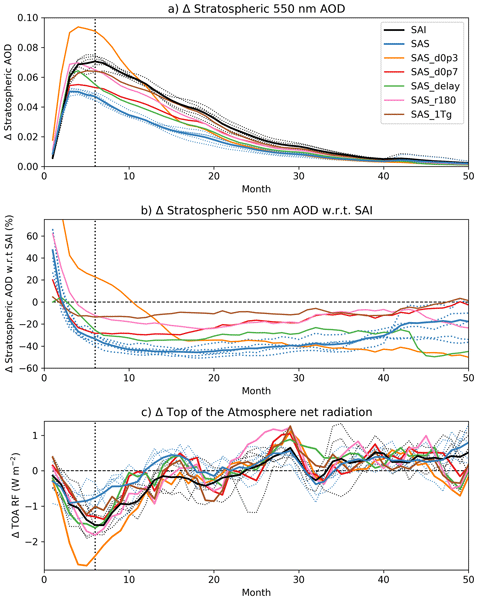
Stratospheric aerosol injection (SAI) is a proposed method of cooling the planet by introducing reflective particles called aerosols into the middle atmosphere to reflect sunlight back into space. We consider recent simulations of SAI from four different climate models. SAI cools the planet effectively in all four models; we examine the impacts on temperature and precipitation in each model and compare to previous experiments. Our simulations will help inform future research and policy.
Anthony C. Jones, James M. Haywood, Matthew Henry, and Alistair Duffey
Atmos. Chem. Phys., 26, 7589–7605, https://doi.org/10.5194/acp-26-7589-2026, https://doi.org/10.5194/acp-26-7589-2026, 2026
Short summary
Short summary
Injecting aerosol into the stratosphere has been suggested to rapidly cool the planet and counter climate change. Rival actors who oppose deployment may seek to counter stratospheric aerosol injection. Using a climate model, we investigate whether stratospheric aerosol removal could be hastened by injecting coarse aerosol which promote aerosol growth and gravitational settling. We find that this could be effective, reducing aerosol impacts by 30 % in simulations, and warrants further research.
Lucas A. McMichael, Ehsan Erfani, Robert Wood, and Knut von Salzen
EGUsphere, https://doi.org/10.5194/egusphere-2026-2730, https://doi.org/10.5194/egusphere-2026-2730, 2026
Short summary
Short summary
This study explores how aerosol plumes spread in marine clouds and how that affects cloud brightening. Changes in turbulence strongly affect plume spreading rates, but have little effect on the overall brightening in the cases studied. The main uncertainties are aerosol lifetime and how clouds adjust to the aerosols. Climate models often assume that plumes spread instantly, and we find that this may overestimate cooling in some cases.
Daniel A. Williams, Cyril J. Morcrette, and James M. Haywood
EGUsphere, https://doi.org/10.5194/egusphere-2026-2490, https://doi.org/10.5194/egusphere-2026-2490, 2026
Short summary
Short summary
Contrails (condensation trails) are ice clouds that form behind aircraft in a region of cold and moist atmosphere. If contrails persist for many hours or into the night, they warm the climate. A minority of flights produce persistent contrails, so the climate impact of aviation could be decreased if we can predict and avoid where contrails form in advance. Using statistics on climate model and satellite data, we developed a model to predict contrails and tested it against historical data.
Josh Smith, Matthew Henry, Masaru Yoshioka, Ben Johnson, and Jim Haywood
EGUsphere, https://doi.org/10.5194/egusphere-2026-2654, https://doi.org/10.5194/egusphere-2026-2654, 2026
Short summary
Short summary
In 2020, new international rules cut sulphur in shipping fuels by roughly eighty percent, removing particles that had been brightening clouds over the oceans and reflecting sunlight. Using a climate model, we tested how this loss of cooling has been calculated and found that recent studies have
likely underestimated the resulting warming by a factor of two to four. This means cleaner shipping fuels may be contributing more to recent global warming than previously recognised.
likely underestimated the resulting warming by a factor of two to four. This means cleaner shipping fuels may be contributing more to recent global warming than previously recognised.
Elizabeth Quaye, Ben T. Johnson, James M. Haywood, Guido R. van der Werf, Roland Vernooij, Stephen A. Sitch, and Tom Eames
Atmos. Chem. Phys., 26, 6629–6654, https://doi.org/10.5194/acp-26-6629-2026, https://doi.org/10.5194/acp-26-6629-2026, 2026
Short summary
Short summary
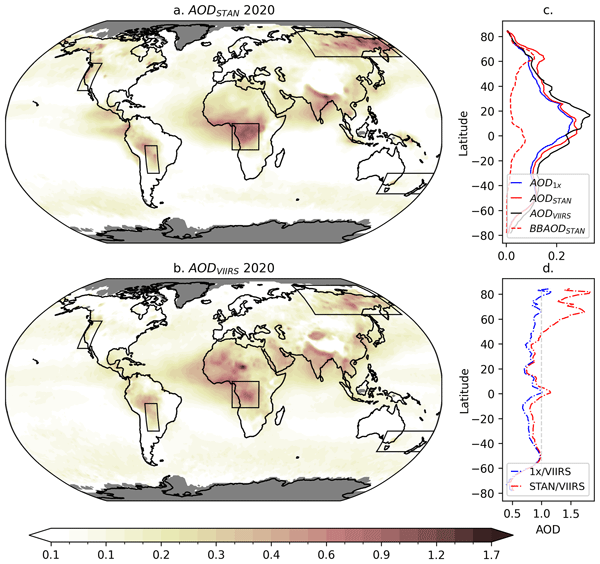
We find aerosol optical depths in a global climate model are overestimated during extreme wildfire events if emissions are scaled up by a factor of two, typically applied to improve simulated aerosol on seasonal–annual timescales. We propose a technique where a variable scaling factor is determined by fuel consumption, improving correlation in five fire-affected areas. We explore the impact of this change on aerosol radiative effects, during extreme events and on broader space and time scales.
Eliza K. Duncan, George Jordan, Paul Kim, James M. Haywood, Duncan Watson-Parris, Ben Johnson, Alistair Sellar, Zak Kipling, João Teixeira, Florent Malavelle, and Daniel G. Partridge
EGUsphere, https://doi.org/10.5194/egusphere-2026-1043, https://doi.org/10.5194/egusphere-2026-1043, 2026
Short summary
Short summary
The 2014–15 Holuhraun eruption offers a natural experiment to assess how well climate models can capture the changes in aerosol associated with the plume. We investigate the aerosol lifecycle during transport to identify key differences in climate models' representation of aerosol processes, which could affect the models’ ability to capture changes in cloud properties. Our study highlights the importance of the representation of boundary layer nucleation processes in climate models.
Daniele Visioni, Alan Robock, Alistair Duffey, Matthew Henry, Haruki Hirasawa, Walker R. Lee, Cindy Wang, Kelsey Roberts, Shingo Watanabe, Michelle S. Reboita, Masahiro Sugiyama, Ben Kravitz, Jim Haywood, Simone Tilmes, Frederic Bonou, Jack Chen, Timofei Sukodolov, Sandro Vattioni, Andrin Jörimann, Diego Villanueva, Ryan Vella, Paul Farron, Ewa M. Bednarz, Ulrike Niemeier, Colleen Golja, and Juan A. Anel
EGUsphere, https://doi.org/10.5194/egusphere-2026-2417, https://doi.org/10.5194/egusphere-2026-2417, 2026
Short summary
Short summary
The Geoengineering Model Intercomparison Project is a coordinated international model intercomparison effort aiming to provide robust experimental protocols for simulations of various Solar Radiation Modification (SRM) methods. In this manuscript, we describe a list of novel experiments decided by the community, to be run by climate models to better understand sources of uncertainty in SRM. We also show and discuss some preliminary results from a few climate models.
Isobel M. Parry, Paul D. L. Ritchie, Olivier Boucher, Peter M. Cox, James M. Haywood, Ulrike Niemeier, Roland Séférian, Simone Tilmes, and Daniele Visioni
Earth Syst. Dynam., 17, 387–414, https://doi.org/10.5194/esd-17-387-2026, https://doi.org/10.5194/esd-17-387-2026, 2026
Short summary
Short summary
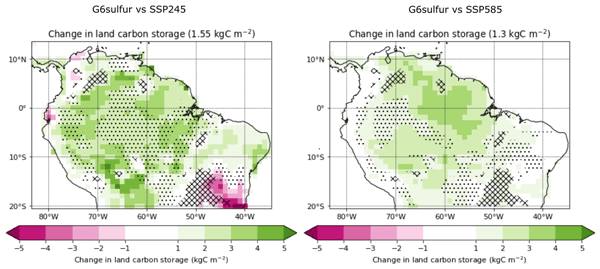
Contrary to some expectations, results from the latest Earth System Models suggest that Solar Radiation Geoengineering could protect the Amazon rainforest from climate-driven dieback. Under Stratospheric Aerosol Injection, carbon storage in Amazonia was projected to increase by a mean of 10.8 % relative to a high CO2 emissions scenario, and even by 8.6% compared to a more conventional medium CO2 emissions scenario.
Alistair Duffey, Walker Lee, Lauren Wheeler, Peter Irvine, Benjamin Wagman, Matthew Henry, Daniele Visioni, Michel Tsamados, and Douglas MacMartin
Earth Syst. Dynam., 17, 353–385, https://doi.org/10.5194/esd-17-353-2026, https://doi.org/10.5194/esd-17-353-2026, 2026
Short summary
Short summary
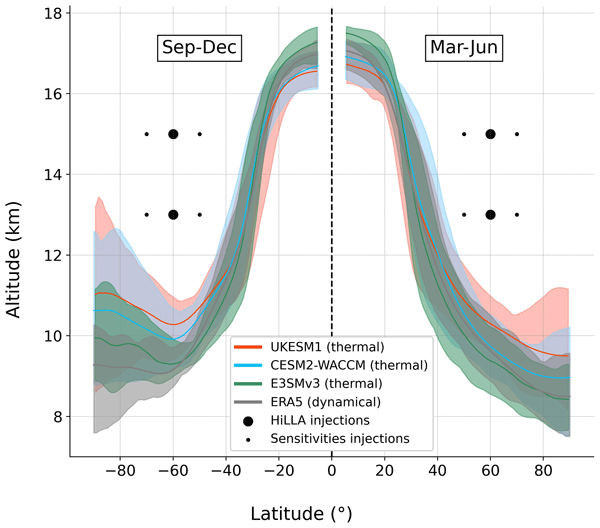
Adding a layer of reflective particles high in the atmosphere is one suggested way of cooling the planet and reducing the impacts of climate change. This technique might be less logistically difficult in the high latitudes, because the material could be released at lower altitude there. Here, we use new simulations in three earth system models to assess how this form of intervention, High-Latitude Low-Altitude Stratospheric Aerosol Injection (HiLLA-SAI), would impact the global climate.
Logan T. Mitchell, Connor J. Flynn, Kristina Pistone, Samuel E. LeBlanc, K. Sebastian Schmidt, Hong Chen, Paquita Zuidema, Robert Wood, and Jens Redemann
EGUsphere, https://doi.org/10.5194/egusphere-2026-1418, https://doi.org/10.5194/egusphere-2026-1418, 2026
Short summary
Short summary
During 2016–2018, NASA conducted an airborne field campaign over the Southeast Atlantic Ocean to study biomass burning aerosols emitted from Southern African fires. We have found that aerosol scattering increases over the course of the emission season, which is due to a compositional change within black carbon as the source fires shift southeastward, rather than an increase in brown carbon. This aerosol brightening is also noted within a 30-year aerosol climatology from ground-based stations.
Masaru Yoshioka, Daniel P. Grosvenor, Amy H. Peace, Jim M. Haywood, Ying Chen, and Paul R. Field
Atmos. Chem. Phys., 26, 4341–4358, https://doi.org/10.5194/acp-26-4341-2026, https://doi.org/10.5194/acp-26-4341-2026, 2026
Short summary
Short summary
We used advanced computer simulations to study how aerosol particles from a volcanic eruption in Iceland affected clouds. The eruption plume increased small droplets, but changes in cloud water and horizontal extent were not clear. Satellite comparisons between plume and non-plume regions can miss volcanic effects due to spatial variability in weather and aerosol, but simulations can isolate the impact by comparing cases with and without the eruption.
John J. D'Alessandro, Robert Wood, and Peter N. Blossey
Atmos. Chem. Phys., 26, 4067–4088, https://doi.org/10.5194/acp-26-4067-2026, https://doi.org/10.5194/acp-26-4067-2026, 2026
Short summary
Short summary
Many theories speculate drop clustering is an important facet of precipitation initiation. This study evaluates the relationship between drop size and drop clustering surrounding the individual drops. Large drops are generally isolated from neighboring drops, particularly in subsaturated environments. Samples capturing this trend also have the broadest drop size distributions and largest drops, suggesting the importance of entrainment-mixing to precipitation initiation.
Jared Farley, Douglas G. MacMartin, Daniele Visioni, Ben Kravitz, Ewa M. Bednarz, Alistair Duffey, Matthew Henry, and Ali Akherati
Geosci. Model Dev., 19, 1809–1831, https://doi.org/10.5194/gmd-19-1809-2026, https://doi.org/10.5194/gmd-19-1809-2026, 2026
Short summary
Short summary
As the climate changes, many are studying sunlight reflection as a potential method of cooling. Such climate intervention could be deployed in many possible ways, including in scenarios where not every actor agrees on the strategy of cooling. These scenarios are so diverse that to explore all of them using earth system models proves to be too costly. In this paper, we develop a simplified climate model that allows users to easily explore climate intervention scenarios of their choice.
Jingyi Chen, Hailong Wang, Bo Zhang, Hongyu Liu, David Painemal, Armin Sorooshian, Sheng-Lun Tai, and Christiane Voigt
Atmos. Chem. Phys., 26, 2209–2224, https://doi.org/10.5194/acp-26-2209-2026, https://doi.org/10.5194/acp-26-2209-2026, 2026
Short summary
Short summary
NASA-validated modeling shows +4K SST (sea surface temperature) & +25 % gradients distinctly alter boundary layer dynamics, cloud physics in cold-air outbreaks. Warmer SST reduces cloud cover; increases size, elongation; hydrometeors shift to ice. Sharper Gradients boost liquid water (cold upwind); reduces ice; disrupts organization. Also, SST changes alter cloud-top properties via entrained airmass origin. Resolving ocean-atmosphere coupling in global models is essential for accurate cloud feedback projections.
Ewa M. Bednarz, Amy H. Butler, James M. Haywood, Matthew Henry, Andy Jones, Ben Kravitz, Walker R. Lee, Douglas G. MacMartin, Amanda C. Maycock, Takashi Sekiya, Shingo Watanabe, and Daniele Visioni
EGUsphere, https://doi.org/10.5194/egusphere-2026-310, https://doi.org/10.5194/egusphere-2026-310, 2026
Short summary
Short summary
An assessment of the potential impacts of Stratospheric Aerosol Injection, a proposed method to offset global warming, on stratospheric ozone projections over the 21st century using the new multi-model GeoMIP G6-1.5K-SAI experiment. We discuss drivers of the responses, identify areas of model agreement and disagreement and sources of uncertainty. Our results highlight the need to assess any projected SAI impacts in wider strategy and scenario dimension using a multi-model framework.
Huimin Li, Yang Yang, and Hailong Wang
EGUsphere, https://doi.org/10.5194/egusphere-2025-5734, https://doi.org/10.5194/egusphere-2025-5734, 2025
Short summary
Short summary
The O3 pollution across Africa has been exacerbating, which poses serious threats to public health. In this study, we predict future near-surface O3 concentrations with an integrated machine learning framework. This study reveals that global warming will exacerbate the health risk associated with O3 pollution. The elevated air temperatures act as primary driver of increased mortality ratios, while enhanced O3 concentrations is an additional stressor as an adverse side effect of warming climate.
Shicheng Yan, Yang Yang, Lili Ren, Hailong Wang, Pinya Wang, Lei Chen, Jianbin Jin, and Hong Liao
Atmos. Chem. Phys., 25, 16877–16893, https://doi.org/10.5194/acp-25-16877-2025, https://doi.org/10.5194/acp-25-16877-2025, 2025
Short summary
Short summary
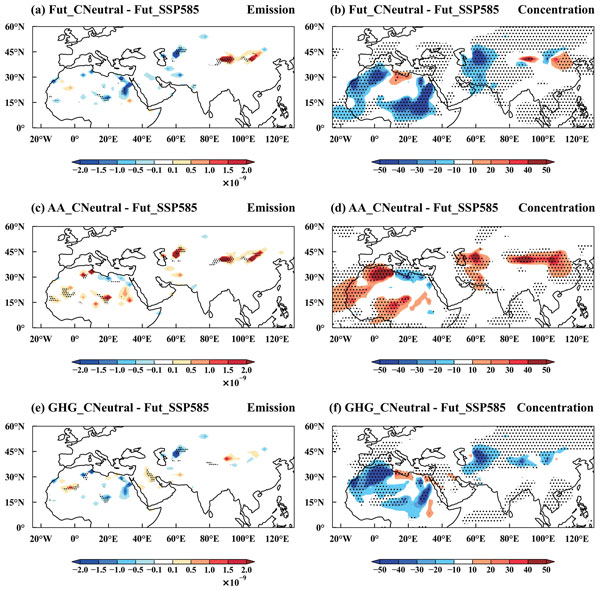
In this study, we assess the impact of carbon neutrality by 2060 on dust emissions in the Northern Hemisphere using the Community Earth System Model. Our findings show that reductions in greenhouse gases (GHGs) and aerosols lead to decreased dust loading compared to high fossil fuel scenarios. While aerosol reductions promote dust, GHGs decreases reduce wind speeds, suppressing dust emissions. These results suggest that carbon-neutral policies mitigate climate change and reduce dust pollution.
Huihui Wu, Fanny Peers, Jonathan W. Taylor, Chenjie Yu, Steven J. Abel, Paul A. Barrett, Jamie Trembath, Keith Bower, Jim M. Haywood, and Hugh Coe
Atmos. Chem. Phys., 25, 16589–16609, https://doi.org/10.5194/acp-25-16589-2025, https://doi.org/10.5194/acp-25-16589-2025, 2025
Short summary
Short summary
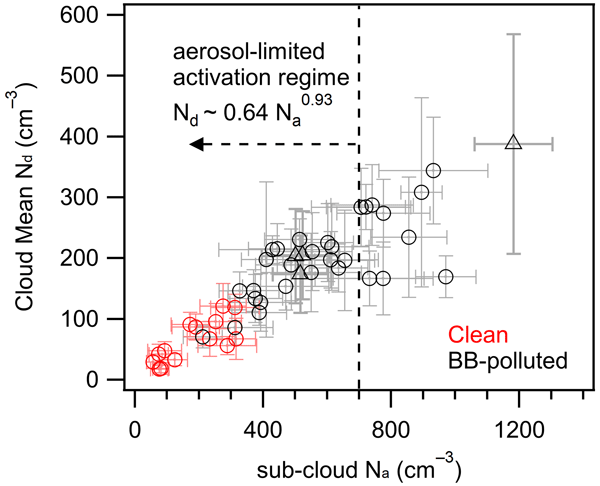
This study investigates the transport history of African Biomass-Burning aerosols (BBAs) over the Southeast Atlantic (SEA) and their impacts on cloud properties. Using in situ airborne measurements around Ascension Island, this work provides critical parameterizations of aerosol–cloud interactions to improve the assessment of radiative forcing in the SEA region. It also identifies key entrainment regions for understanding the vertical transport process of African BBAs.
Naser Mahfouz, Hassan Beydoun, Johannes Mülmenstädt, Noel Keen, Adam C. Varble, Luca Bertagna, Peter Bogenschutz, Andrew Bradley, Matthew W. Christensen, T. Conrad Clevenger, Aaron Donahue, Jerome Fast, James Foucar, Jean-Christophe Golaz, Oksana Guba, Walter Hannah, Benjamin Hillman, Robert Jacob, Wuyin Lin, Po-Lun Ma, Yun Qian, Balwinder Singh, Christopher Terai, Hailong Wang, Mingxuan Wu, Kai Zhang, Andrew Gettelman, Mark Taylor, L. Ruby Leung, Peter Caldwell, and Susannah Burrows
Atmos. Chem. Phys., 25, 15105–15120, https://doi.org/10.5194/acp-25-15105-2025, https://doi.org/10.5194/acp-25-15105-2025, 2025
Short summary
Short summary
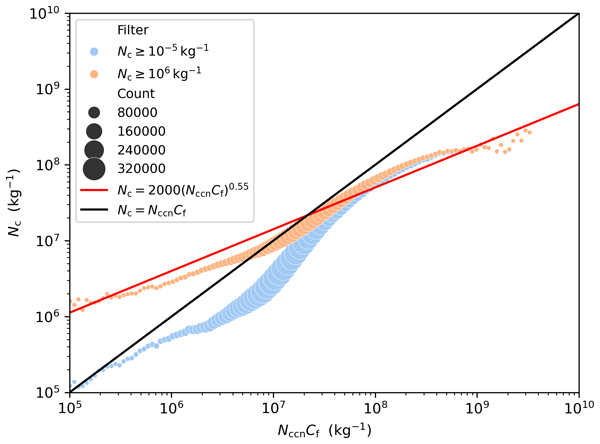
Our study assesses the aerosol effective radiative forcing in a global cloud-resolving atmosphere model at ultra-high resolution. We demonstrate that global aerosol forcing signal can be robustly reproduced across resolutions when aerosol activation processes are carefully parameterized. Further, we argue that simplified prescribed aerosol schemes will open the door for further process/mechanism studies under controlled conditions.
Eliza K. Duncan, Jonathan E. Fieldsend, Alistair Sellar, Emanuele Tovazzi, Paul Kim, James M. Haywood, and Daniel G. Partridge
EGUsphere, https://doi.org/10.5194/egusphere-2025-4298, https://doi.org/10.5194/egusphere-2025-4298, 2025
Short summary
Short summary
Atmospheric aerosol particles are a major confounding factor in accurately representing climate change. We build a novel generic framework to untangle the role of complex processes focusing on a remote site in Antarctica as a case study in near-pristine conditions. Our machine-learning model predicts aerosol concentrations from an airmass history, considering the meteorology and potential sources and removal processes, enabling improved representation in climate models.
George Jordan, Florent Malavelle, Jim Haywood, Ying Chen, Ben Johnson, Daniel Partridge, Amy Peace, Eliza Duncan, Duncan Watson-Parris, David Neubauer, Anton Laakso, Martine Michou, and Pierre Nabat
Atmos. Chem. Phys., 25, 13393–13428, https://doi.org/10.5194/acp-25-13393-2025, https://doi.org/10.5194/acp-25-13393-2025, 2025
Short summary
Short summary
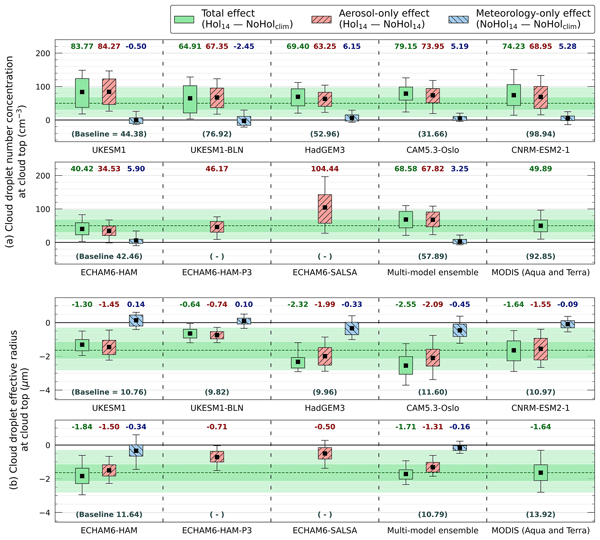
The 2014–15 Holuhraun eruption created a vast aerosol plume that acted as a natural experiment to assess how well climate models capture changes in cloud properties due to increased aerosol. We find that climate models represent the observed shift to smaller, more numerous cloud droplets well. However, climate models diverge in their aerosol-induced changes to large-scale cloud properties, particularly cloud liquid water content. Our study shows that Holuhraun had a cooling effect on the Earth.
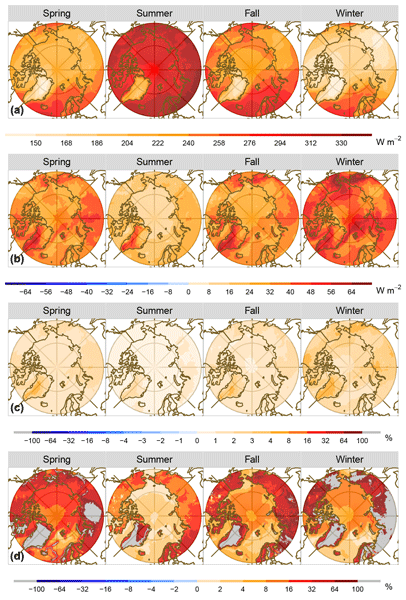
Chen Zhang, John J. Cassano, Mark W. Seefeldt, Hailong Wang, Weiming Ma, and Wen-wen Tung
The Cryosphere, 19, 4671–4699, https://doi.org/10.5194/tc-19-4671-2025, https://doi.org/10.5194/tc-19-4671-2025, 2025
Short summary
Short summary
An atmospheric river (AR) is a long, narrow corridor of moisture transport in the atmosphere. ARs are crucial for moisture and heat transport into the polar regions. Our study examines the role of ARs in the surface energy budget (SEB) in the Arctic. The results reveal distinct seasonality and land–sea–sea ice contrasts due to the impacts of ARs on the SEB. The conclusions provide greater insights into the current and future role of ARs in the Arctic climate system.
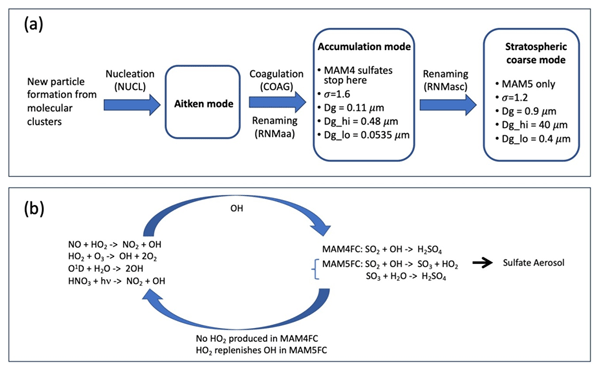
Allen Hu, Ziming Ke, Xiaohong Liu, Benjamin Wagman, Hunter Brown, Zheng Lu, Mingxuan Wu, Hailong Wang, Qi Tang, Diana Bull, Kara Peterson, and Shaocheng Xie
Atmos. Chem. Phys., 25, 12137–12157, https://doi.org/10.5194/acp-25-12137-2025, https://doi.org/10.5194/acp-25-12137-2025, 2025
Short summary
Short summary
Volcanic eruptions have major effects on atmospheric temperature and can be studied as a proxy for geo-engineering. The original aerosol module in the Energy Exascale Earth System Model v2 (E3SMv2) has problems simulating volcanic aerosols. We alter the aerosol module to simulate the 1991 Pinatubo eruption and implement a more complex chemistry scheme, producing results that better agree with observations. Process analyses of the volcanic aerosols help explain how they grow in the stratosphere.
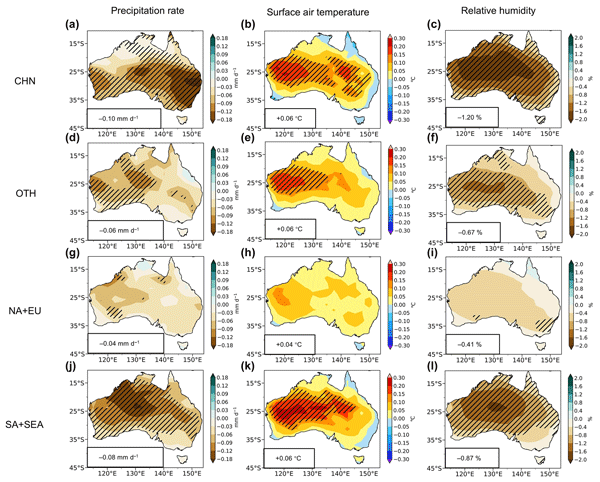
Jiyuan Gao, Yang Yang, Hailong Wang, Pinya Wang, and Hong Liao
Atmos. Chem. Phys., 25, 10949–10964, https://doi.org/10.5194/acp-25-10949-2025, https://doi.org/10.5194/acp-25-10949-2025, 2025
Short summary
Short summary
The decline in aerosols in China alters temperature and pressure gradients between the two hemispheres, which intensifies the Southern Trade Winds and causes a moisture divergence in Australia, resulting in less rainfall. Reduced surface moisture leads to more energy being converted into sensible heat instead of evaporating as latent heat, which raises near-surface temperatures in Australia. Our findings offer insights for managing drought and wildfire risks in Australia.
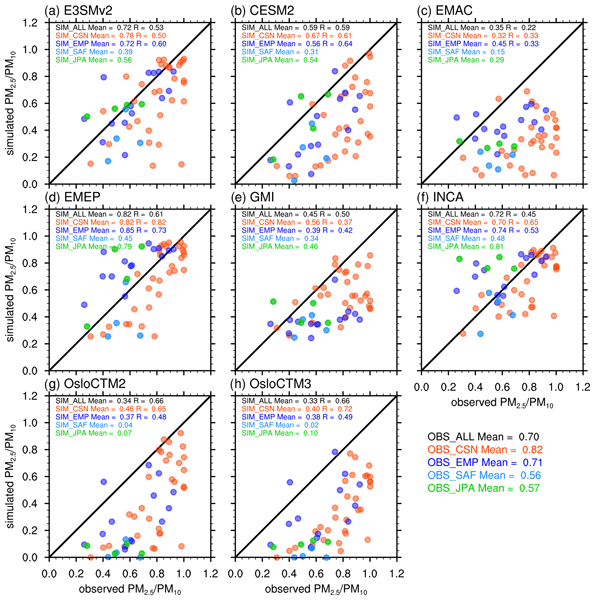
Mingxuan Wu, Hailong Wang, Zheng Lu, Xiaohong Liu, Huisheng Bian, David D. Cohen, Yan Feng, Mian Chin, Didier A. Hauglustaine, Vlassis A. Karydis, Marianne T. Lund, Gunnar Myhre, Andrea Pozzer, Michael Schulz, Ragnhild B. Skeie, Alexandra P. Tsimpidi, Svetlana G. Tsyro, and Shaocheng Xie
Atmos. Chem. Phys., 25, 10049–10074, https://doi.org/10.5194/acp-25-10049-2025, https://doi.org/10.5194/acp-25-10049-2025, 2025
Short summary
Short summary
A key challenge in simulating the life cycle of nitrate aerosol in global models is accurately representing the mass size distribution of nitrate aerosol, which lacks sufficient observational constraints. We found that most global models underestimate the mass fraction of fine-mode nitrate at the surface in all regions. Our study highlights the importance of gas–aerosol partitioning parameterization and the simulation of dust and sea salt in correctly simulating the mass size distribution of nitrate.
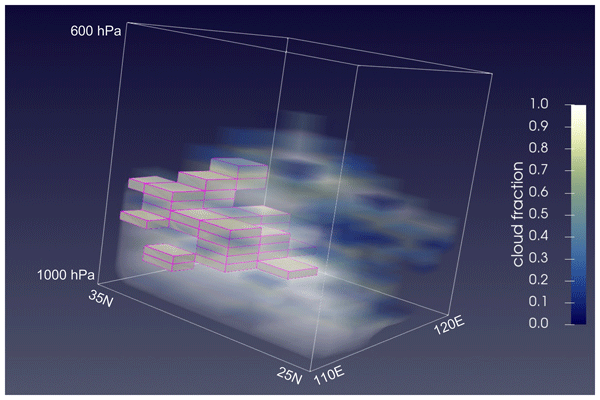
Hui Wan, Abhishek Yenpure, Berk Geveci, Richard C. Easter, Philip J. Rasch, Kai Zhang, and Xubin Zeng
Geosci. Model Dev., 18, 5655–5680, https://doi.org/10.5194/gmd-18-5655-2025, https://doi.org/10.5194/gmd-18-5655-2025, 2025
Short summary
Short summary
In the Energy Exascale Earth System Model version 2 (E3SMv2) and many other global models, the simulated anthropogenic aerosol effective radiative forcing is sensitive to the presence of clouds with very low droplet number concentrations. Numerical experiments presented in this paper indicate that mid- and high-latitude low-level stratus occurring under weak turbulence is a key cloud regime for investigating the causes of these very low cloud droplet number concentrations in E3SMv2.
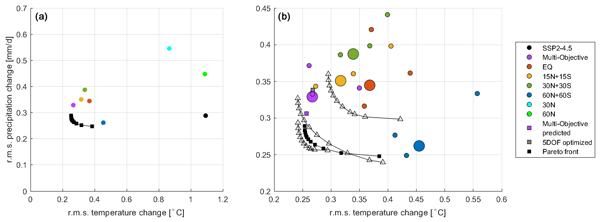
Ezra Brody, Yan Zhang, Douglas G. MacMartin, Daniele Visioni, Ben Kravitz, and Ewa M. Bednarz
Earth Syst. Dynam., 16, 1325–1341, https://doi.org/10.5194/esd-16-1325-2025, https://doi.org/10.5194/esd-16-1325-2025, 2025
Short summary
Short summary
Stratospheric aerosol injection (SAI) is being studied as a possible supplement to emission reduction to temporarily mitigate some of the risks associated with climate change. The latitudes at which SAI is done determine the effect on the climate. We try to find if there are combinations of latitudes that do a better job of counteracting climate change than existing strategies. We found that there are, but just how significant these improvements are depends on the amount of cooling.
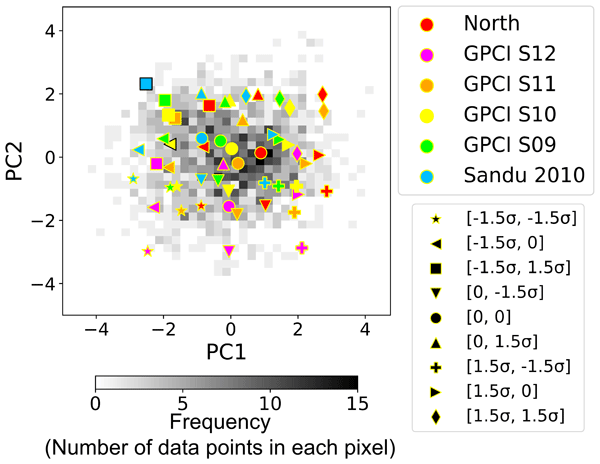
Ehsan Erfani, Robert Wood, Peter Blossey, Sarah J. Doherty, and Ryan Eastman
Atmos. Chem. Phys., 25, 8743–8768, https://doi.org/10.5194/acp-25-8743-2025, https://doi.org/10.5194/acp-25-8743-2025, 2025
Short summary
Short summary
In this study, we explore how marine clouds interact with aerosols. We introduce a novel approach to identify a reduced number of representative cases from a wide array of observed environmental conditions prevalent in the Northeast Pacific. We create over 2200 trajectories from observations and use cloud-resolving simulations to investigate how marine low clouds evolve in two different cases. It is shown that aerosols can delay cloud breakup, but their impact depends on precipitation.
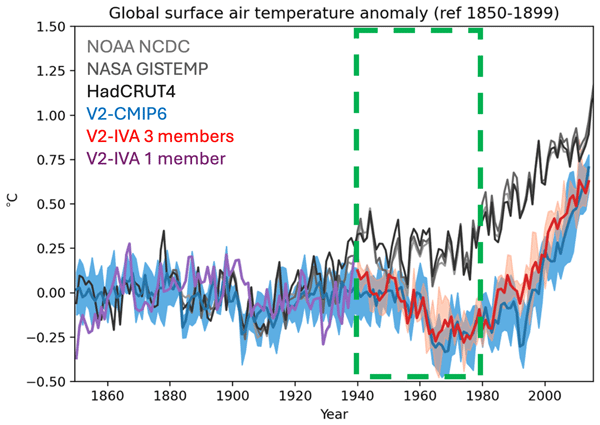
Ziming Ke, Qi Tang, Jean-Christophe Golaz, Xiaohong Liu, and Hailong Wang
Geosci. Model Dev., 18, 4137–4153, https://doi.org/10.5194/gmd-18-4137-2025, https://doi.org/10.5194/gmd-18-4137-2025, 2025
Short summary
Short summary
This study assesses volcanic aerosol representation in E3SM (Energy Exascale Earth System Model), showing that an emission-based approach moderately improves temperature variability and cloud responses compared to a prescribed forcing approach, yet significant bias persists.
Je-Yun Chun, Robert Wood, Peter N. Blossey, and Sarah J. Doherty
Atmos. Chem. Phys., 25, 5251–5271, https://doi.org/10.5194/acp-25-5251-2025, https://doi.org/10.5194/acp-25-5251-2025, 2025
Short summary
Short summary
This study explores how aerosols affect clouds transitioning from stratocumulus to cumulus along trade winds under varying atmospheric conditions. We found that aerosols typically reduce precipitation and raise cloud height, but their impact changes when subsidence changes by aerosol enhancement are considered. Our findings indicate that the cooling effect of aerosols might be overestimated if these atmospheric changes are not accounted for.
Yang Yang, Li You, Hailong Wang, Huimin Li, Pinya Wang, and Hong Liao
EGUsphere, https://doi.org/10.5194/egusphere-2025-840, https://doi.org/10.5194/egusphere-2025-840, 2025
Preprint archived
Short summary
Short summary
This study used machine learning to predict global and regional temperature changes under carbon neutrality and high emissions from 2015 to 2100.The results show that while carbon neutrality slows long-term warming, it causes short-term warming due to the rapid decline in aerosols. In contrast, greenhouse gases dominate warming in the high-emission scenario. These findings emphasize the important role of aerosols in shaping near-term climate change under carbon-neutral pathways.
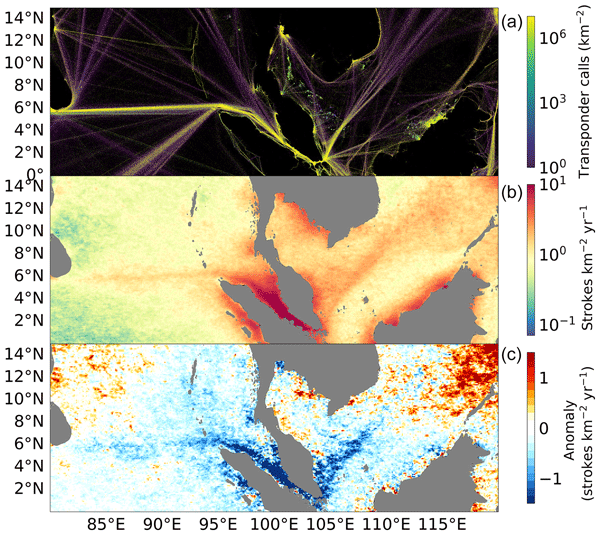
Chris J. Wright, Joel A. Thornton, Lyatt Jaeglé, Yang Cao, Yannian Zhu, Jihu Liu, Randall Jones II, Robert Holzworth, Daniel Rosenfeld, Robert Wood, Peter Blossey, and Daehyun Kim
Atmos. Chem. Phys., 25, 2937–2946, https://doi.org/10.5194/acp-25-2937-2025, https://doi.org/10.5194/acp-25-2937-2025, 2025
Short summary
Short summary
Aerosol particles influence clouds, which exert a large forcing on solar radiation and freshwater. To better understand the mechanisms by which aerosol influences thunderstorms, we look at the two busiest shipping lanes in the world, where recent regulations have reduced sulfur emissions by nearly an order of magnitude. We find that the reduction in emissions has been accompanied by a dramatic decrease in both lightning and the number of droplets in clouds over the shipping lanes.
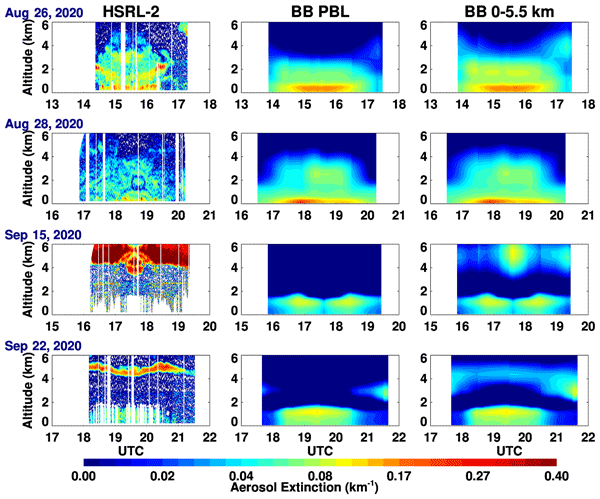
Hongyu Liu, Bo Zhang, Richard H. Moore, Luke D. Ziemba, Richard A. Ferrare, Hyundeok Choi, Armin Sorooshian, David Painemal, Hailong Wang, Michael A. Shook, Amy Jo Scarino, Johnathan W. Hair, Ewan C. Crosbie, Marta A. Fenn, Taylor J. Shingler, Chris A. Hostetler, Gao Chen, Mary M. Kleb, Gan Luo, Fangqun Yu, Mark A. Vaughan, Yongxiang Hu, Glenn S. Diskin, John B. Nowak, Joshua P. DiGangi, Yonghoon Choi, Christoph A. Keller, and Matthew S. Johnson
Atmos. Chem. Phys., 25, 2087–2121, https://doi.org/10.5194/acp-25-2087-2025, https://doi.org/10.5194/acp-25-2087-2025, 2025
Short summary
Short summary
We use the GEOS-Chem model to simulate aerosol distributions and properties over the western North Atlantic Ocean (WNAO) during the winter and summer deployments in 2020 of the NASA ACTIVATE mission. Model results are evaluated against aircraft, ground-based, and satellite observations. The improved understanding of life cycle, composition, transport pathways, and distribution of aerosols has important implications for characterizing aerosol–cloud–meteorology interactions over WNAO.
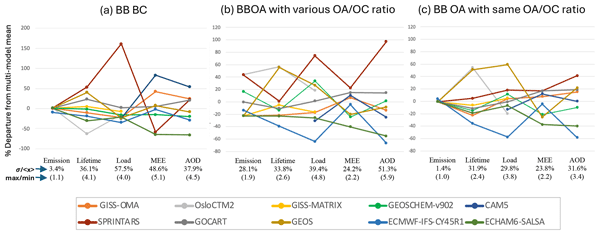
Mariya Petrenko, Ralph Kahn, Mian Chin, Susanne E. Bauer, Tommi Bergman, Huisheng Bian, Gabriele Curci, Ben Johnson, Johannes W. Kaiser, Zak Kipling, Harri Kokkola, Xiaohong Liu, Keren Mezuman, Tero Mielonen, Gunnar Myhre, Xiaohua Pan, Anna Protonotariou, Samuel Remy, Ragnhild Bieltvedt Skeie, Philip Stier, Toshihiko Takemura, Kostas Tsigaridis, Hailong Wang, Duncan Watson-Parris, and Kai Zhang
Atmos. Chem. Phys., 25, 1545–1567, https://doi.org/10.5194/acp-25-1545-2025, https://doi.org/10.5194/acp-25-1545-2025, 2025
Short summary
Short summary
We compared smoke plume simulations from 11 global models to each other and to satellite smoke amount observations aimed at constraining smoke source strength. In regions where plumes are thick and background aerosol is low, models and satellites compare well. However, the input emission inventory tends to underestimate in many places, and particle property and loss rate assumptions vary enormously among models, causing uncertainties that require systematic in situ measurements to resolve.
Paul J. Durack, Karl E. Taylor, Peter J. Gleckler, Gerald A. Meehl, Bryan N. Lawrence, Curt Covey, Ronald J. Stouffer, Guillaume Levavasseur, Atef Ben-Nasser, Sebastien Denvil, Martina Stockhause, Jonathan M. Gregory, Martin Juckes, Sasha K. Ames, Fabrizio Antonio, David C. Bader, John P. Dunne, Daniel Ellis, Veronika Eyring, Sandro L. Fiore, Sylvie Joussaume, Philip Kershaw, Jean-Francois Lamarque, Michael Lautenschlager, Jiwoo Lee, Chris F. Mauzey, Matthew Mizielinski, Paola Nassisi, Alessandra Nuzzo, Eleanor O’Rourke, Jeffrey Painter, Gerald L. Potter, Sven Rodriguez, and Dean N. Williams
EGUsphere, https://doi.org/10.5194/egusphere-2024-3729, https://doi.org/10.5194/egusphere-2024-3729, 2025
Short summary
Short summary
CMIP6 was the most expansive and ambitious Model Intercomparison Project (MIP), the latest in a history, extending four decades. CMIP engaged a growing community focused on improving climate understanding, and quantifying and attributing observed climate change being experienced today. The project's profound impact is due to the combining the latest climate science and technology, enabling the latest-generation climate simulations and increasing community attention in every successive phase.
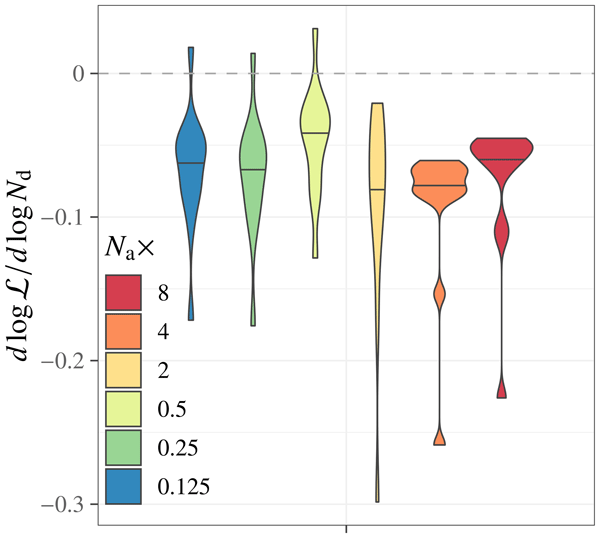
Johannes Mülmenstädt, Andrew S. Ackerman, Ann M. Fridlind, Meng Huang, Po-Lun Ma, Naser Mahfouz, Susanne E. Bauer, Susannah M. Burrows, Matthew W. Christensen, Sudhakar Dipu, Andrew Gettelman, L. Ruby Leung, Florian Tornow, Johannes Quaas, Adam C. Varble, Hailong Wang, Kai Zhang, and Youtong Zheng
Atmos. Chem. Phys., 24, 13633–13652, https://doi.org/10.5194/acp-24-13633-2024, https://doi.org/10.5194/acp-24-13633-2024, 2024
Short summary
Short summary
Stratocumulus clouds play a large role in Earth's climate by reflecting incoming solar energy back to space. Turbulence at stratocumulus cloud top mixes in dry, warm air, which can lead to cloud dissipation. This process is challenging for coarse-resolution global models to represent. We show that global models nevertheless agree well with our process understanding. Global models also think the process is less important for the climate than other lines of evidence have led us to conclude.
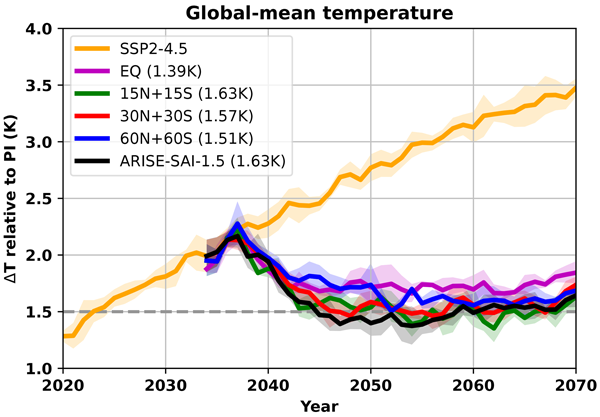
Matthew Henry, Ewa M. Bednarz, and Jim Haywood
Atmos. Chem. Phys., 24, 13253–13268, https://doi.org/10.5194/acp-24-13253-2024, https://doi.org/10.5194/acp-24-13253-2024, 2024
Short summary
Short summary
Stratospheric aerosol injection (SAI) refers to a climate intervention by which aerosols are intentionally added to the high atmosphere to increase the amount of reflected sunlight and reduce Earth's temperature. The climate outcomes of SAI depend on the latitude of injection. While injecting aerosols at the Equator has undesirable side effects, injecting away from the Equator has different effects on temperature, rainfall, ozone, and atmospheric circulation, which are analysed in this work.
Philip J. Rasch, Haruki Hirasawa, Mingxuan Wu, Sarah J. Doherty, Robert Wood, Hailong Wang, Andy Jones, James Haywood, and Hansi Singh
Geosci. Model Dev., 17, 7963–7994, https://doi.org/10.5194/gmd-17-7963-2024, https://doi.org/10.5194/gmd-17-7963-2024, 2024
Short summary
Short summary
We introduce a protocol to compare computer climate simulations to better understand a proposed strategy intended to counter warming and climate impacts from greenhouse gas increases. This slightly changes clouds in six ocean regions to reflect more sunlight and cool the Earth. Example changes in clouds and climate are shown for three climate models. Cloud changes differ between the models, but precipitation and surface temperature changes are similar when their cooling effects are made similar.
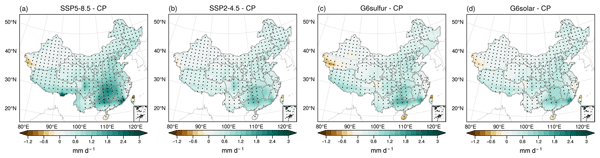
Ou Wang, Ju Liang, Yuchen Gu, Jim M. Haywood, Ying Chen, Chenwei Fang, and Qin'geng Wang
Atmos. Chem. Phys., 24, 12355–12373, https://doi.org/10.5194/acp-24-12355-2024, https://doi.org/10.5194/acp-24-12355-2024, 2024
Short summary
Short summary
As extreme precipitation events increase in China, this study explores the potential of stratospheric aerosol injection (SAI) to mitigate these effects by the end of the 21st century using the UKESM1 model. Results show that SAI reduces extreme precipitation in eastern China. However, caution is advised due to potential side effects in high-latitude regions, and further optimization is required for future SAI deployment.
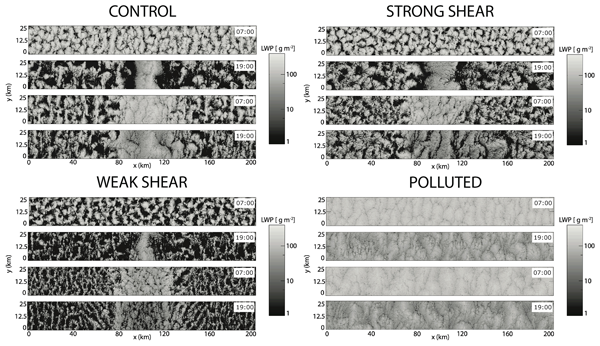
Lucas A. McMichael, Michael J. Schmidt, Robert Wood, Peter N. Blossey, and Lekha Patel
Geosci. Model Dev., 17, 7867–7888, https://doi.org/10.5194/gmd-17-7867-2024, https://doi.org/10.5194/gmd-17-7867-2024, 2024
Short summary
Short summary
Marine cloud brightening (MCB) is a climate intervention technique to potentially cool the climate. Climate models used to gauge regional climate impacts associated with MCB often assume large areas of the ocean are uniformly perturbed. However, a more realistic representation of MCB application would require information about how an injected particle plume spreads. This work aims to develop such a plume-spreading model.
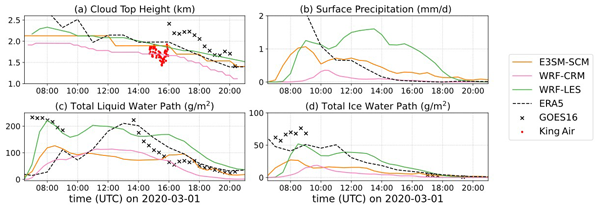
Shuaiqi Tang, Hailong Wang, Xiang-Yu Li, Jingyi Chen, Armin Sorooshian, Xubin Zeng, Ewan Crosbie, Kenneth L. Thornhill, Luke D. Ziemba, and Christiane Voigt
Atmos. Chem. Phys., 24, 10073–10092, https://doi.org/10.5194/acp-24-10073-2024, https://doi.org/10.5194/acp-24-10073-2024, 2024
Short summary
Short summary
We examined marine boundary layer clouds and their interactions with aerosols in the E3SM single-column model (SCM) for a case study. The SCM shows good agreement when simulating the clouds with high-resolution models. It reproduces the relationship between cloud droplet and aerosol particle number concentrations as produced in global models. However, the relationship between cloud liquid water and droplet number concentration is different, warranting further investigation.
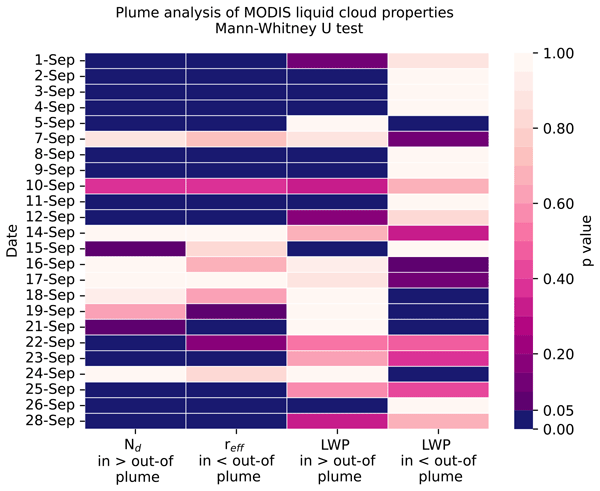
Amy H. Peace, Ying Chen, George Jordan, Daniel G. Partridge, Florent Malavelle, Eliza Duncan, and Jim M. Haywood
Atmos. Chem. Phys., 24, 9533–9553, https://doi.org/10.5194/acp-24-9533-2024, https://doi.org/10.5194/acp-24-9533-2024, 2024
Short summary
Short summary
Natural aerosols from volcanic eruptions can help us understand how anthropogenic aerosols modify climate. We use observations and model simulations of the 2014–2015 Holuhraun eruption plume to examine aerosol–cloud interactions in September 2014. We find a shift to clouds with smaller, more numerous cloud droplets in the first 2 weeks of the eruption. In the third week, the background meteorology and previous conditions experienced by air masses modulate the aerosol perturbation to clouds.
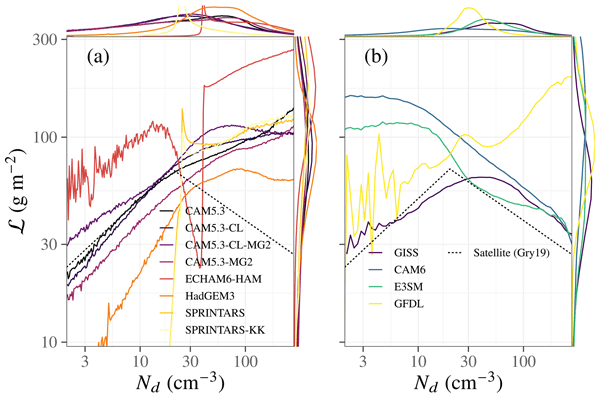
Johannes Mülmenstädt, Edward Gryspeerdt, Sudhakar Dipu, Johannes Quaas, Andrew S. Ackerman, Ann M. Fridlind, Florian Tornow, Susanne E. Bauer, Andrew Gettelman, Yi Ming, Youtong Zheng, Po-Lun Ma, Hailong Wang, Kai Zhang, Matthew W. Christensen, Adam C. Varble, L. Ruby Leung, Xiaohong Liu, David Neubauer, Daniel G. Partridge, Philip Stier, and Toshihiko Takemura
Atmos. Chem. Phys., 24, 7331–7345, https://doi.org/10.5194/acp-24-7331-2024, https://doi.org/10.5194/acp-24-7331-2024, 2024
Short summary
Short summary
Human activities release copious amounts of small particles called aerosols into the atmosphere. These particles change how much sunlight clouds reflect to space, an important human perturbation of the climate, whose magnitude is highly uncertain. We found that the latest climate models show a negative correlation but a positive causal relationship between aerosols and cloud water. This means we need to be very careful when we interpret observational studies that can only see correlation.
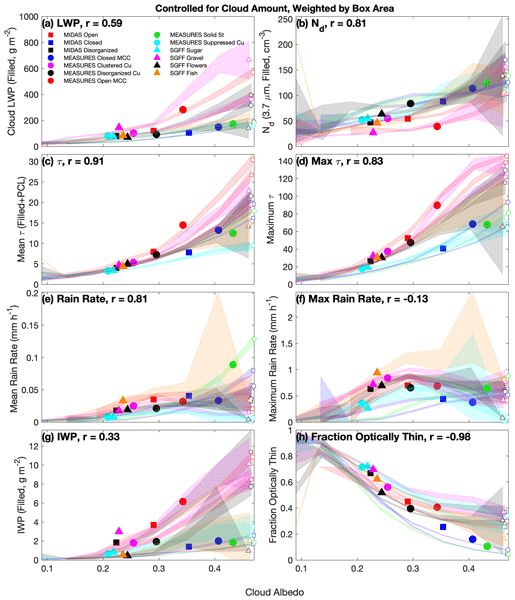
Ryan Eastman, Isabel L. McCoy, Hauke Schulz, and Robert Wood
Atmos. Chem. Phys., 24, 6613–6634, https://doi.org/10.5194/acp-24-6613-2024, https://doi.org/10.5194/acp-24-6613-2024, 2024
Short summary
Short summary
Cloud types are determined using machine learning image classifiers applied to satellite imagery for 1 year in the North Atlantic. This survey of these cloud types shows that the climate impact of a cloud scene is, in part, a function of cloud type. Each type displays a different mix of thick and thin cloud cover, with the fraction of thin cloud cover having the strongest impact on the clouds' radiative effect. Future studies must account for differing properties and processes among cloud types.
Yang Yang, Shaoxuan Mou, Hailong Wang, Pinya Wang, Baojie Li, and Hong Liao
Atmos. Chem. Phys., 24, 6509–6523, https://doi.org/10.5194/acp-24-6509-2024, https://doi.org/10.5194/acp-24-6509-2024, 2024
Short summary
Short summary
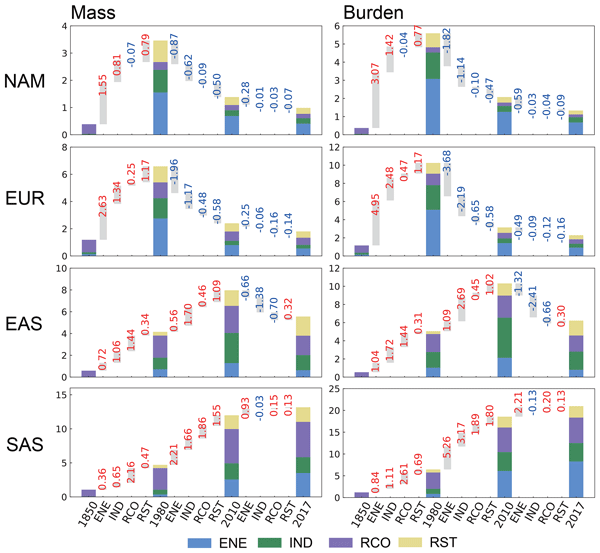
The variations in anthropogenic aerosol concentrations and source contributions and their subsequent radiative impact in major emission regions during historical periods are quantified based on an aerosol-tagging system in E3SMv1. Due to the industrial development and implementation of economic policies, sources of anthropogenic aerosols show different variations, which has important implications for pollution prevention and control measures and decision-making for global collaboration.
Taufiq Hassan, Kai Zhang, Jianfeng Li, Balwinder Singh, Shixuan Zhang, Hailong Wang, and Po-Lun Ma
Geosci. Model Dev., 17, 3507–3532, https://doi.org/10.5194/gmd-17-3507-2024, https://doi.org/10.5194/gmd-17-3507-2024, 2024
Short summary
Short summary
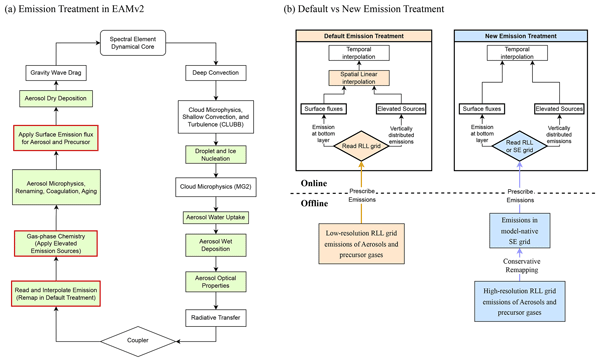
Anthropogenic aerosol emissions are an essential part of global aerosol models. Significant errors can exist from the loss of emission heterogeneity. We introduced an emission treatment that significantly improved aerosol emission heterogeneity in high-resolution model simulations, with improvements in simulated aerosol surface concentrations. The emission treatment will provide a more accurate representation of aerosol emissions and their effects on climate.
Weiming Ma, Hailong Wang, Gang Chen, Yun Qian, Ian Baxter, Yiling Huo, and Mark W. Seefeldt
Atmos. Chem. Phys., 24, 4451–4472, https://doi.org/10.5194/acp-24-4451-2024, https://doi.org/10.5194/acp-24-4451-2024, 2024
Short summary
Short summary
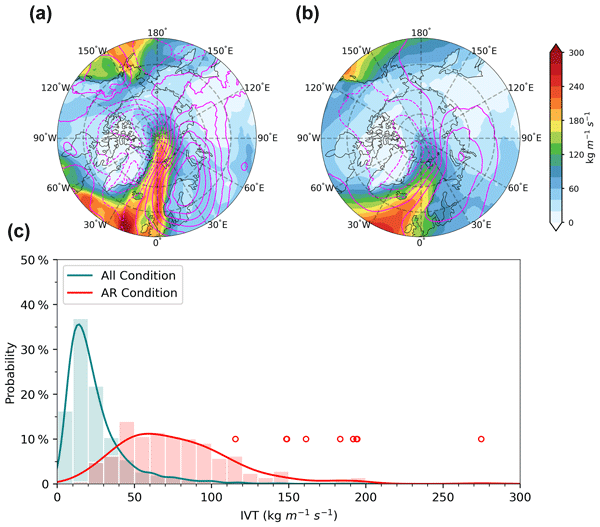
Extreme warming events with surface temperature going above 0°C can occur in the high-Arctic winter. Although reanalysis data show that these events were short-lived and occurred rarely during 1980–2021, they have become more frequent, stronger, and longer lasting latterly. A dipole pattern, comprising high- and low-pressure systems, is found to be the key in driving them. These findings have implications for the recent changes in sea ice, hydrological cycle, and ecosystem over the Arctic.
Daniele Visioni, Alan Robock, Jim Haywood, Matthew Henry, Simone Tilmes, Douglas G. MacMartin, Ben Kravitz, Sarah J. Doherty, John Moore, Chris Lennard, Shingo Watanabe, Helene Muri, Ulrike Niemeier, Olivier Boucher, Abu Syed, Temitope S. Egbebiyi, Roland Séférian, and Ilaria Quaglia
Geosci. Model Dev., 17, 2583–2596, https://doi.org/10.5194/gmd-17-2583-2024, https://doi.org/10.5194/gmd-17-2583-2024, 2024
Short summary
Short summary
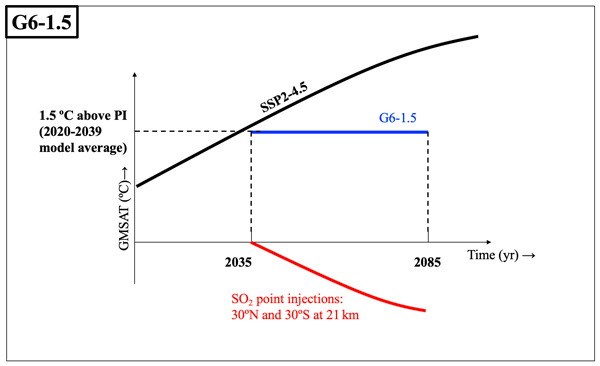
This paper describes a new experimental protocol for the Geoengineering Model Intercomparison Project (GeoMIP). In it, we describe the details of a new simulation of sunlight reflection using the stratospheric aerosols that climate models are supposed to run, and we explain the reasons behind each choice we made when defining the protocol.
John T. Fasullo, Jean-Christophe Golaz, Julie M. Caron, Nan Rosenbloom, Gerald A. Meehl, Warren Strand, Sasha Glanville, Samantha Stevenson, Maria Molina, Christine A. Shields, Chengzhu Zhang, James Benedict, Hailong Wang, and Tony Bartoletti
Earth Syst. Dynam., 15, 367–386, https://doi.org/10.5194/esd-15-367-2024, https://doi.org/10.5194/esd-15-367-2024, 2024
Short summary
Short summary
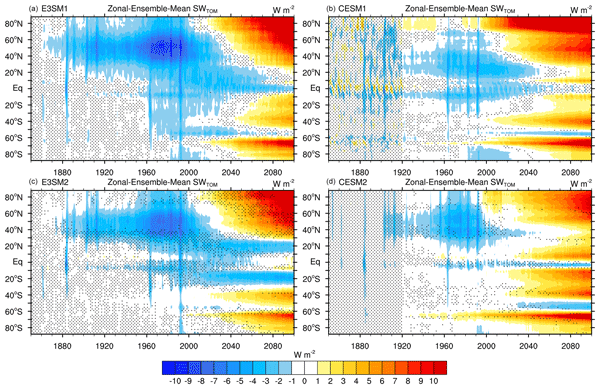
Climate model large ensembles provide a unique and invaluable means for estimating the climate response to external forcing agents and quantify contrasts in model structure. Here, an overview of the Energy Exascale Earth System Model (E3SM) version 2 large ensemble is given along with comparisons to large ensembles from E3SM version 1 and versions 1 and 2 of the Community Earth System Model. The paper provides broad and important context for users of these ensembles.
Yawen Liu, Yun Qian, Philip J. Rasch, Kai Zhang, Lai-yung Ruby Leung, Yuhang Wang, Minghuai Wang, Hailong Wang, Xin Huang, and Xiu-Qun Yang
Atmos. Chem. Phys., 24, 3115–3128, https://doi.org/10.5194/acp-24-3115-2024, https://doi.org/10.5194/acp-24-3115-2024, 2024
Short summary
Short summary
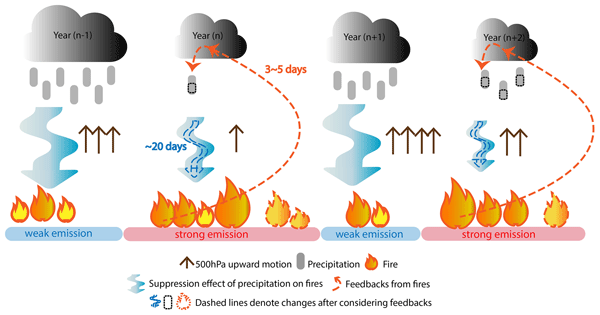
Fire management has long been a challenge. Here we report that spring-peak fire activity over southern Mexico and Central America (SMCA) has a distinct quasi-biennial signal by measuring multiple fire metrics. This signal is initially driven by quasi-biennial variability in precipitation and is further amplified by positive feedback of fire–precipitation interaction at short timescales. This work highlights the importance of fire–climate interactions in shaping fires on an interannual scale.
Hui Wan, Kai Zhang, Christopher J. Vogl, Carol S. Woodward, Richard C. Easter, Philip J. Rasch, Yan Feng, and Hailong Wang
Geosci. Model Dev., 17, 1387–1407, https://doi.org/10.5194/gmd-17-1387-2024, https://doi.org/10.5194/gmd-17-1387-2024, 2024
Short summary
Short summary
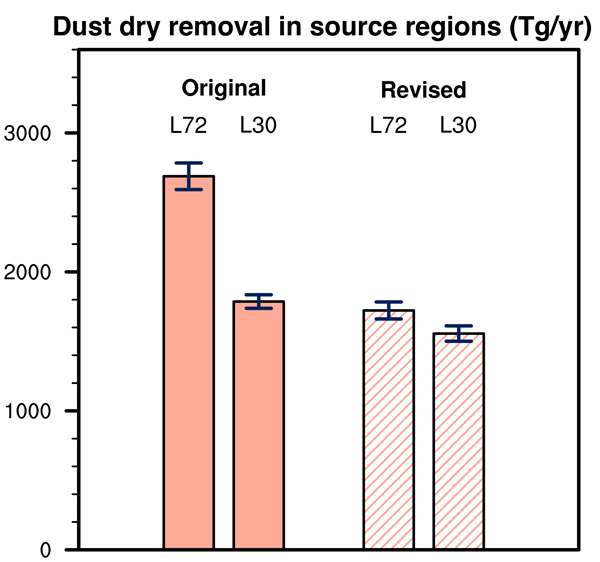
Sophisticated numerical models of the Earth's atmosphere include representations of many physical and chemical processes. In numerical simulations, these processes need to be calculated in a certain sequence. This study reveals the weaknesses of the sequence of calculations used for aerosol processes in a global atmosphere model. A revision of the sequence is proposed and its impacts on the simulated global aerosol climatology are evaluated.
George Jordan, Florent Malavelle, Ying Chen, Amy Peace, Eliza Duncan, Daniel G. Partridge, Paul Kim, Duncan Watson-Parris, Toshihiko Takemura, David Neubauer, Gunnar Myhre, Ragnhild Skeie, Anton Laakso, and James Haywood
Atmos. Chem. Phys., 24, 1939–1960, https://doi.org/10.5194/acp-24-1939-2024, https://doi.org/10.5194/acp-24-1939-2024, 2024
Short summary
Short summary
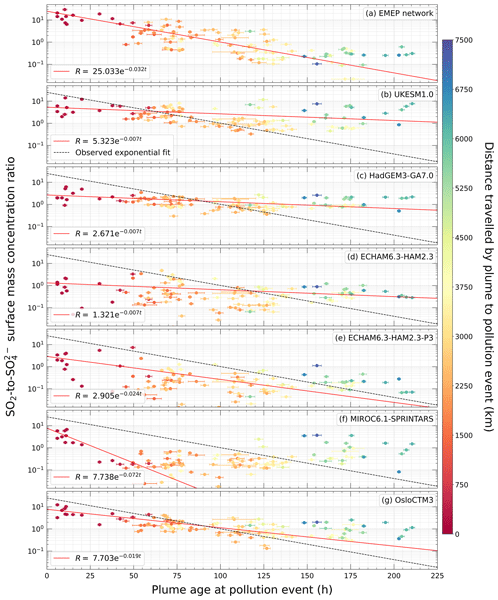
The 2014–15 Holuhraun eruption caused a huge aerosol plume in an otherwise unpolluted region, providing a chance to study how aerosol alters cloud properties. This two-part study uses observations and models to quantify this relationship’s impact on the Earth’s energy budget. Part 1 suggests the models capture the observed spatial and chemical evolution of the plume, yet no model plume is exact. Understanding these differences is key for Part 2, where changes to cloud properties are explored.
Huisheng Bian, Mian Chin, Peter R. Colarco, Eric C. Apel, Donald R. Blake, Karl Froyd, Rebecca S. Hornbrook, Jose Jimenez, Pedro Campuzano Jost, Michael Lawler, Mingxu Liu, Marianne Tronstad Lund, Hitoshi Matsui, Benjamin A. Nault, Joyce E. Penner, Andrew W. Rollins, Gregory Schill, Ragnhild B. Skeie, Hailong Wang, Lu Xu, Kai Zhang, and Jialei Zhu
Atmos. Chem. Phys., 24, 1717–1741, https://doi.org/10.5194/acp-24-1717-2024, https://doi.org/10.5194/acp-24-1717-2024, 2024
Short summary
Short summary
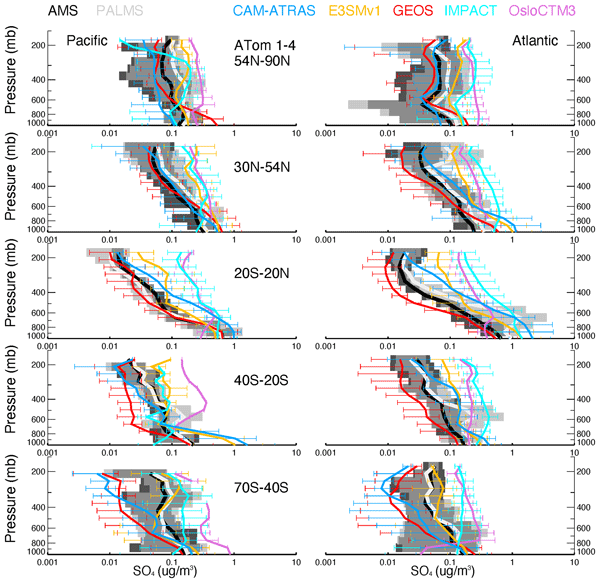
This work studies sulfur in the remote troposphere at global and seasonal scales using aircraft measurements and multi-model simulations. The goal is to understand the sulfur cycle over remote oceans, spread of model simulations, and observation–model discrepancies. Such an understanding and comparison with real observations are crucial to narrow down the uncertainties in model sulfur simulations and improve understanding of the sulfur cycle in atmospheric air quality, climate, and ecosystems.
Yang Yang, Yang Zhou, Hailong Wang, Mengyun Li, Huimin Li, Pinya Wang, Xu Yue, Ke Li, Jia Zhu, and Hong Liao
Atmos. Chem. Phys., 24, 1177–1191, https://doi.org/10.5194/acp-24-1177-2024, https://doi.org/10.5194/acp-24-1177-2024, 2024
Short summary
Short summary
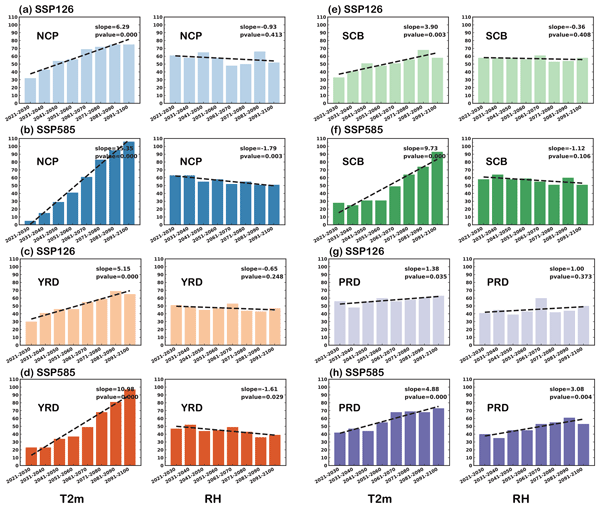
This study reveals that extreme ozone pollution over the North China Plain and Yangtze River Delta is due to the chemical production related to hot and dry conditions, and the regional transport explains the ozone pollution over the Sichuan Basin and Pearl River Delta. The frequency of meteorological conditions of the extreme ozone pollution increases from the past to the future. The sustainable scenario is the optimal path to retaining clean air in China in the future.
Jim M. Haywood, Andy Jones, Anthony C. Jones, Paul Halloran, and Philip J. Rasch
Atmos. Chem. Phys., 23, 15305–15324, https://doi.org/10.5194/acp-23-15305-2023, https://doi.org/10.5194/acp-23-15305-2023, 2023
Short summary
Short summary
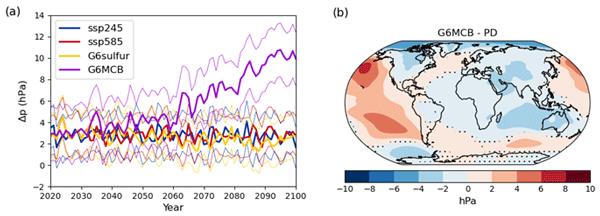
The difficulties in ameliorating global warming and the associated climate change via conventional mitigation are well documented, with all climate model scenarios exceeding 1.5 °C above the preindustrial level in the near future. There is therefore a growing interest in geoengineering to reflect a greater proportion of sunlight back to space and offset some of the global warming. We use a state-of-the-art Earth-system model to investigate two of the most prominent geoengineering strategies.
Hamza Ahsan, Hailong Wang, Jingbo Wu, Mingxuan Wu, Steven J. Smith, Susanne Bauer, Harrison Suchyta, Dirk Olivié, Gunnar Myhre, Hitoshi Matsui, Huisheng Bian, Jean-François Lamarque, Ken Carslaw, Larry Horowitz, Leighton Regayre, Mian Chin, Michael Schulz, Ragnhild Bieltvedt Skeie, Toshihiko Takemura, and Vaishali Naik
Atmos. Chem. Phys., 23, 14779–14799, https://doi.org/10.5194/acp-23-14779-2023, https://doi.org/10.5194/acp-23-14779-2023, 2023
Short summary
Short summary
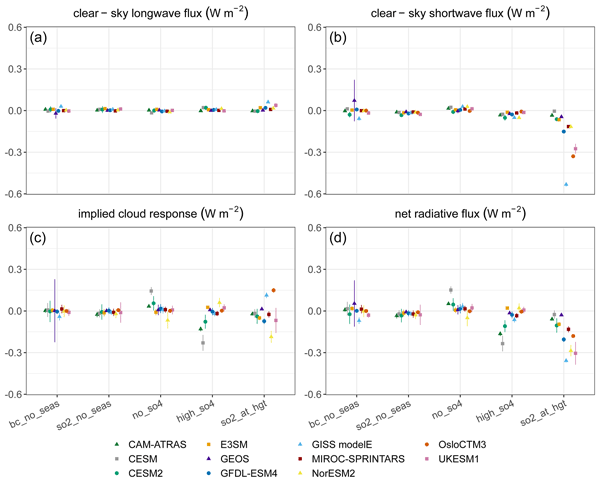
We examine the impact of the assumed effective height of SO2 injection, SO2 and BC emission seasonality, and the assumed fraction of SO2 emissions injected as SO4 on climate and chemistry model results. We find that the SO2 injection height has a large impact on surface SO2 concentrations and, in some models, radiative flux. These assumptions are a
hiddensource of inter-model variability and may be leading to bias in some climate model results.
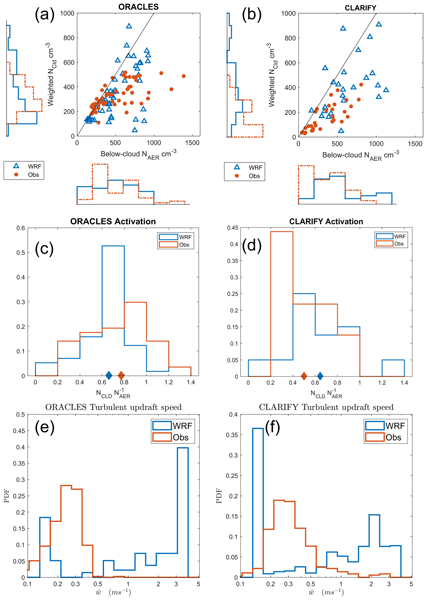
Calvin Howes, Pablo E. Saide, Hugh Coe, Amie Dobracki, Steffen Freitag, Jim M. Haywood, Steven G. Howell, Siddhant Gupta, Janek Uin, Mary Kacarab, Chongai Kuang, L. Ruby Leung, Athanasios Nenes, Greg M. McFarquhar, James Podolske, Jens Redemann, Arthur J. Sedlacek, Kenneth L. Thornhill, Jenny P. S. Wong, Robert Wood, Huihui Wu, Yang Zhang, Jianhao Zhang, and Paquita Zuidema
Atmos. Chem. Phys., 23, 13911–13940, https://doi.org/10.5194/acp-23-13911-2023, https://doi.org/10.5194/acp-23-13911-2023, 2023
Short summary
Short summary
To better understand smoke properties and its interactions with clouds, we compare the WRF-CAM5 model with observations from ORACLES, CLARIFY, and LASIC field campaigns in the southeastern Atlantic in August 2017. The model transports and mixes smoke well but does not fully capture some important processes. These include smoke chemical and physical aging over 4–12 days, smoke removal by rain, sulfate particle formation, aerosol activation into cloud droplets, and boundary layer turbulence.
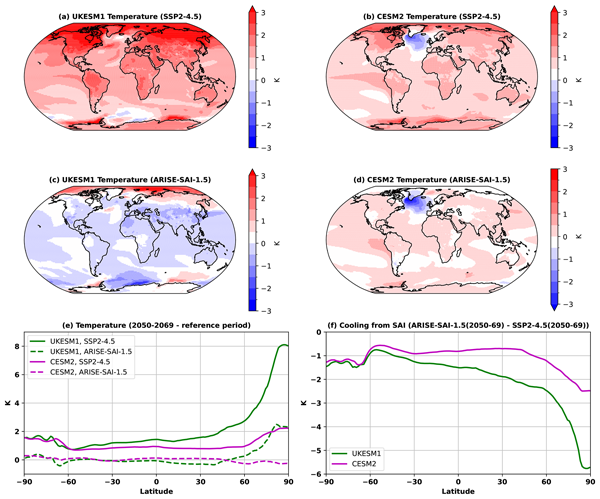
Matthew Henry, Jim Haywood, Andy Jones, Mohit Dalvi, Alice Wells, Daniele Visioni, Ewa M. Bednarz, Douglas G. MacMartin, Walker Lee, and Mari R. Tye
Atmos. Chem. Phys., 23, 13369–13385, https://doi.org/10.5194/acp-23-13369-2023, https://doi.org/10.5194/acp-23-13369-2023, 2023
Short summary
Short summary
Solar climate interventions, such as injecting sulfur in the stratosphere, may be used to offset some of the adverse impacts of global warming. We use two independently developed Earth system models to assess the uncertainties around stratospheric sulfur injections. The injection locations and amounts are optimized to maintain the same pattern of surface temperature. While both models show reduced warming, the change in rainfall patterns (even without sulfur injections) is uncertain.
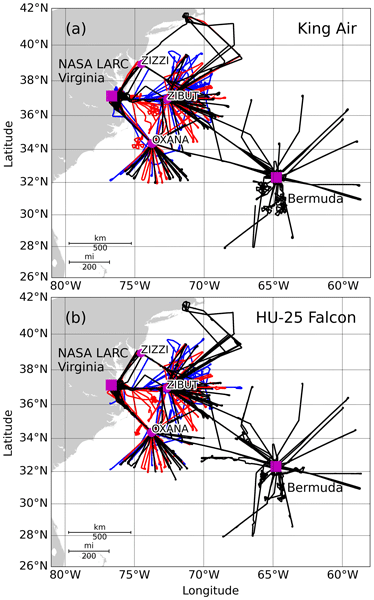
Armin Sorooshian, Mikhail D. Alexandrov, Adam D. Bell, Ryan Bennett, Grace Betito, Sharon P. Burton, Megan E. Buzanowicz, Brian Cairns, Eduard V. Chemyakin, Gao Chen, Yonghoon Choi, Brian L. Collister, Anthony L. Cook, Andrea F. Corral, Ewan C. Crosbie, Bastiaan van Diedenhoven, Joshua P. DiGangi, Glenn S. Diskin, Sanja Dmitrovic, Eva-Lou Edwards, Marta A. Fenn, Richard A. Ferrare, David van Gilst, Johnathan W. Hair, David B. Harper, Miguel Ricardo A. Hilario, Chris A. Hostetler, Nathan Jester, Michael Jones, Simon Kirschler, Mary M. Kleb, John M. Kusterer, Sean Leavor, Joseph W. Lee, Hongyu Liu, Kayla McCauley, Richard H. Moore, Joseph Nied, Anthony Notari, John B. Nowak, David Painemal, Kasey E. Phillips, Claire E. Robinson, Amy Jo Scarino, Joseph S. Schlosser, Shane T. Seaman, Chellappan Seethala, Taylor J. Shingler, Michael A. Shook, Kenneth A. Sinclair, William L. Smith Jr., Douglas A. Spangenberg, Snorre A. Stamnes, Kenneth L. Thornhill, Christiane Voigt, Holger Vömel, Andrzej P. Wasilewski, Hailong Wang, Edward L. Winstead, Kira Zeider, Xubin Zeng, Bo Zhang, Luke D. Ziemba, and Paquita Zuidema
Earth Syst. Sci. Data, 15, 3419–3472, https://doi.org/10.5194/essd-15-3419-2023, https://doi.org/10.5194/essd-15-3419-2023, 2023
Short summary
Short summary
The NASA Aerosol Cloud meTeorology Interactions oVer the western ATlantic Experiment (ACTIVATE) produced a unique dataset for research into aerosol–cloud–meteorology interactions. HU-25 Falcon and King Air aircraft conducted systematic and spatially coordinated flights over the northwest Atlantic Ocean. This paper describes the ACTIVATE flight strategy, instrument and complementary dataset products, data access and usage details, and data application notes.
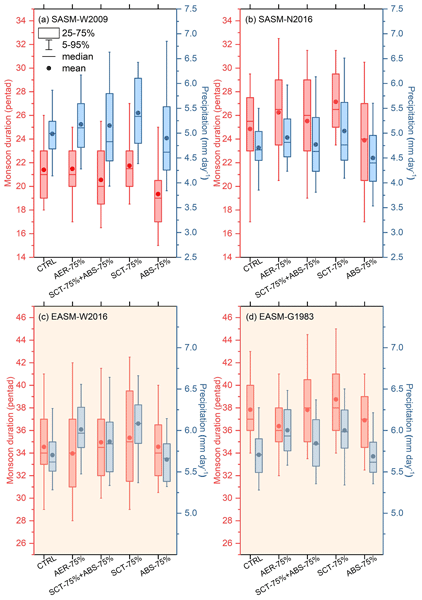
Chenwei Fang, Jim M. Haywood, Ju Liang, Ben T. Johnson, Ying Chen, and Bin Zhu
Atmos. Chem. Phys., 23, 8341–8368, https://doi.org/10.5194/acp-23-8341-2023, https://doi.org/10.5194/acp-23-8341-2023, 2023
Short summary
Short summary
The responses of Asian summer monsoon duration and intensity to air pollution mitigation are identified given the net-zero future. We show that reducing scattering aerosols makes the rainy season longer and stronger across South Asia and East Asia but that absorbing aerosol reduction has the opposite effect. Our results hint at distinct monsoon responses to emission controls that target different aerosols.
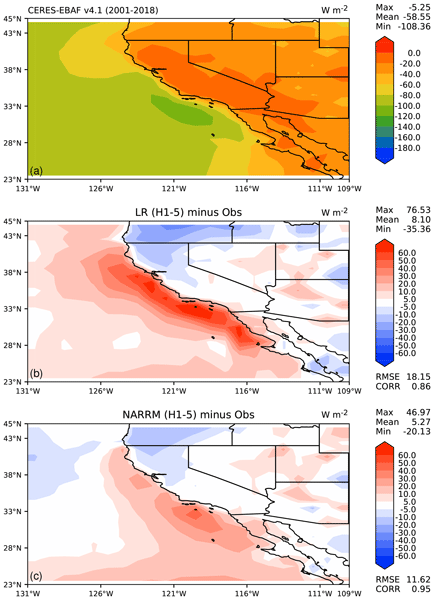
Qi Tang, Jean-Christophe Golaz, Luke P. Van Roekel, Mark A. Taylor, Wuyin Lin, Benjamin R. Hillman, Paul A. Ullrich, Andrew M. Bradley, Oksana Guba, Jonathan D. Wolfe, Tian Zhou, Kai Zhang, Xue Zheng, Yunyan Zhang, Meng Zhang, Mingxuan Wu, Hailong Wang, Cheng Tao, Balwinder Singh, Alan M. Rhoades, Yi Qin, Hong-Yi Li, Yan Feng, Yuying Zhang, Chengzhu Zhang, Charles S. Zender, Shaocheng Xie, Erika L. Roesler, Andrew F. Roberts, Azamat Mametjanov, Mathew E. Maltrud, Noel D. Keen, Robert L. Jacob, Christiane Jablonowski, Owen K. Hughes, Ryan M. Forsyth, Alan V. Di Vittorio, Peter M. Caldwell, Gautam Bisht, Renata B. McCoy, L. Ruby Leung, and David C. Bader
Geosci. Model Dev., 16, 3953–3995, https://doi.org/10.5194/gmd-16-3953-2023, https://doi.org/10.5194/gmd-16-3953-2023, 2023
Short summary
Short summary
High-resolution simulations are superior to low-resolution ones in capturing regional climate changes and climate extremes. However, uniformly reducing the grid size of a global Earth system model is too computationally expensive. We provide an overview of the fully coupled regionally refined model (RRM) of E3SMv2 and document a first-of-its-kind set of climate production simulations using RRM at an economic cost. The key to this success is our innovative hybrid time step method.
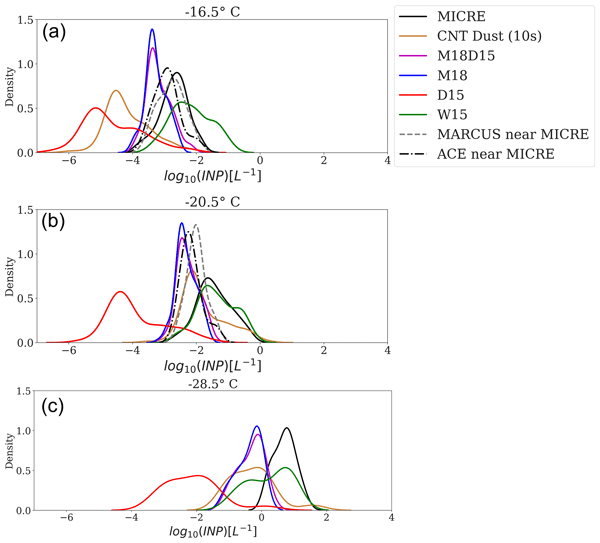
Aishwarya Raman, Thomas Hill, Paul J. DeMott, Balwinder Singh, Kai Zhang, Po-Lun Ma, Mingxuan Wu, Hailong Wang, Simon P. Alexander, and Susannah M. Burrows
Atmos. Chem. Phys., 23, 5735–5762, https://doi.org/10.5194/acp-23-5735-2023, https://doi.org/10.5194/acp-23-5735-2023, 2023
Short summary
Short summary
Ice-nucleating particles (INPs) play an important role in cloud processes and associated precipitation. Yet, INPs are not accurately represented in climate models. This study attempts to uncover these gaps by comparing model-simulated INP concentrations against field campaign measurements in the SO for an entire year, 2017–2018. Differences in INP concentrations and variability between the model and observations have major implications for modeling cloud properties in high latitudes.
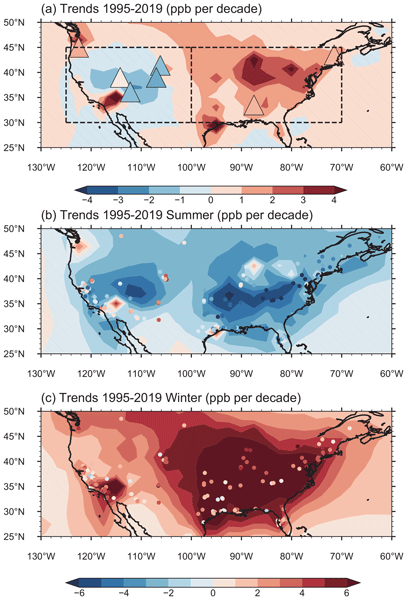
Pengwei Li, Yang Yang, Hailong Wang, Su Li, Ke Li, Pinya Wang, Baojie Li, and Hong Liao
Atmos. Chem. Phys., 23, 5403–5417, https://doi.org/10.5194/acp-23-5403-2023, https://doi.org/10.5194/acp-23-5403-2023, 2023
Short summary
Short summary
We use a novel technique that can attribute O3 to precursors to investigate O3 changes in the United States during 1995–2019. We found that the US domestic energy and surface transportation emission reductions are primarily responsible for the O3 decrease in summer. In winter, factors such as nitrogen oxide emission reduction in the context of its inhibition of ozone production, increased aviation and shipping activities, and large-scale circulation changes contribute to the O3 increases.
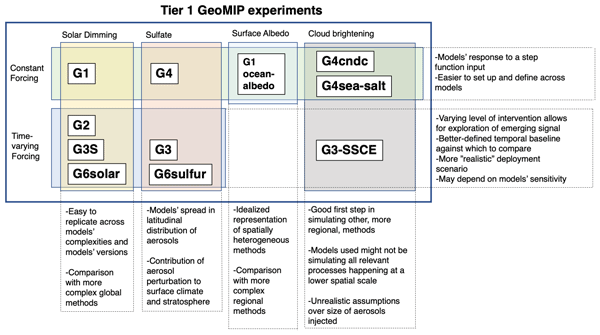
Daniele Visioni, Ben Kravitz, Alan Robock, Simone Tilmes, Jim Haywood, Olivier Boucher, Mark Lawrence, Peter Irvine, Ulrike Niemeier, Lili Xia, Gabriel Chiodo, Chris Lennard, Shingo Watanabe, John C. Moore, and Helene Muri
Atmos. Chem. Phys., 23, 5149–5176, https://doi.org/10.5194/acp-23-5149-2023, https://doi.org/10.5194/acp-23-5149-2023, 2023
Short summary
Short summary
Geoengineering indicates methods aiming to reduce the temperature of the planet by means of reflecting back a part of the incoming radiation before it reaches the surface or allowing more of the planetary radiation to escape into space. It aims to produce modelling experiments that are easy to reproduce and compare with different climate models, in order to understand the potential impacts of these techniques. Here we assess its past successes and failures and talk about its future.

Amie Dobracki, Paquita Zuidema, Steven G. Howell, Pablo Saide, Steffen Freitag, Allison C. Aiken, Sharon P. Burton, Arthur J. Sedlacek III, Jens Redemann, and Robert Wood
Atmos. Chem. Phys., 23, 4775–4799, https://doi.org/10.5194/acp-23-4775-2023, https://doi.org/10.5194/acp-23-4775-2023, 2023
Short summary
Short summary
Southern Africa produces approximately one-third of the world’s carbon from fires. The thick smoke layer can flow westward, interacting with the southeastern Atlantic cloud deck. The net radiative impact can alter regional circulation patterns, impacting rainfall over Africa. We find that the smoke is highly absorbing of sunlight, mostly because it contains more black carbon than smoke over the Northern Hemisphere.
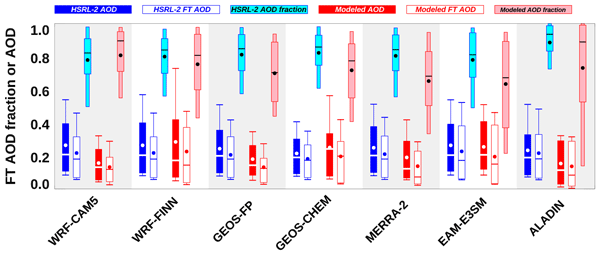
Ian Chang, Lan Gao, Connor J. Flynn, Yohei Shinozuka, Sarah J. Doherty, Michael S. Diamond, Karla M. Longo, Gonzalo A. Ferrada, Gregory R. Carmichael, Patricia Castellanos, Arlindo M. da Silva, Pablo E. Saide, Calvin Howes, Zhixin Xue, Marc Mallet, Ravi Govindaraju, Qiaoqiao Wang, Yafang Cheng, Yan Feng, Sharon P. Burton, Richard A. Ferrare, Samuel E. LeBlanc, Meloë S. Kacenelenbogen, Kristina Pistone, Michal Segal-Rozenhaimer, Kerry G. Meyer, Ju-Mee Ryoo, Leonhard Pfister, Adeyemi A. Adebiyi, Robert Wood, Paquita Zuidema, Sundar A. Christopher, and Jens Redemann
Atmos. Chem. Phys., 23, 4283–4309, https://doi.org/10.5194/acp-23-4283-2023, https://doi.org/10.5194/acp-23-4283-2023, 2023
Short summary
Short summary
Abundant aerosols are present above low-level liquid clouds over the southeastern Atlantic during late austral spring. The model simulation differences in the proportion of aerosol residing in the planetary boundary layer and in the free troposphere can greatly affect the regional aerosol radiative effects. This study examines the aerosol loading and fractional aerosol loading in the free troposphere among various models and evaluates them against measurements from the NASA ORACLES campaign.

Francesca Gallo, Janek Uin, Kevin J. Sanchez, Richard H. Moore, Jian Wang, Robert Wood, Fan Mei, Connor Flynn, Stephen Springston, Eduardo B. Azevedo, Chongai Kuang, and Allison C. Aiken
Atmos. Chem. Phys., 23, 4221–4246, https://doi.org/10.5194/acp-23-4221-2023, https://doi.org/10.5194/acp-23-4221-2023, 2023
Short summary
Short summary
This study provides a summary statistic of multiday aerosol plume transport event influences on aerosol physical properties and the cloud condensation nuclei budget at the U.S. Department of Energy Atmospheric Radiation Measurement Facility in the eastern North Atlantic (ENA). An algorithm that integrates aerosol properties is developed and applied to identify multiday aerosol transport events. The influence of the aerosol plumes on aerosol populations at the ENA is successively assessed.
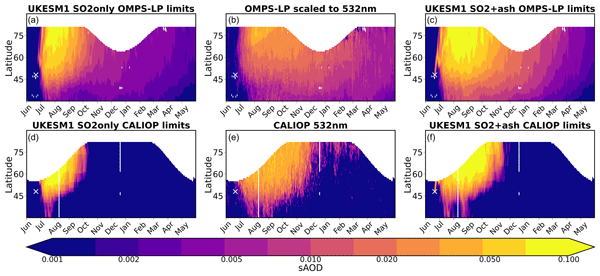
Alice F. Wells, Andy Jones, Martin Osborne, Lilly Damany-Pearce, Daniel G. Partridge, and James M. Haywood
Atmos. Chem. Phys., 23, 3985–4007, https://doi.org/10.5194/acp-23-3985-2023, https://doi.org/10.5194/acp-23-3985-2023, 2023
Short summary
Short summary
In 2019 the Raikoke volcano erupted explosively, emitting the largest injection of SO2 into the stratosphere since 2011. Observations indicated that a large amount of volcanic ash was also injected. Previous studies have identified that volcanic ash can prolong the lifetime of stratospheric aerosol optical depth, which we explore in UKESM1. Comparisons to observations suggest that including ash in model emission schemes can improve the representation of volcanic plumes in global climate models.
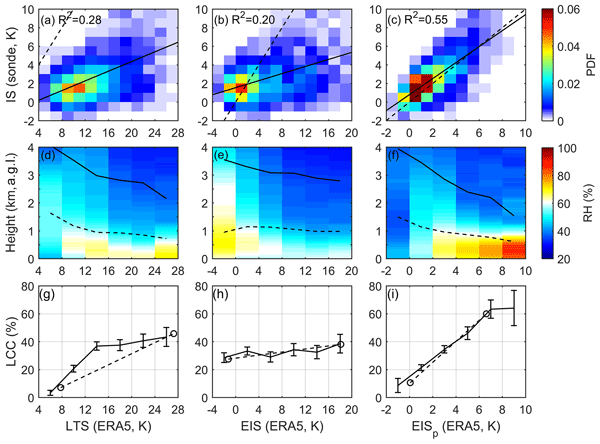
Zhenquan Wang, Jian Yuan, Robert Wood, Yifan Chen, and Tiancheng Tong
Atmos. Chem. Phys., 23, 3247–3266, https://doi.org/10.5194/acp-23-3247-2023, https://doi.org/10.5194/acp-23-3247-2023, 2023
Short summary
Short summary
This study develops a novel profile-based algorithm based on the ERA5 to estimate the inversion strength in the planetary boundary layer better than the previous inversion index, which is a key low-cloud-controlling factor. This improved measure is more effective at representing the meteorological influence on low-cloud variations. It can better constrain the meteorological influence on low clouds to better isolate cloud responses to aerosols or to estimate low cloud feedbacks in climate models.
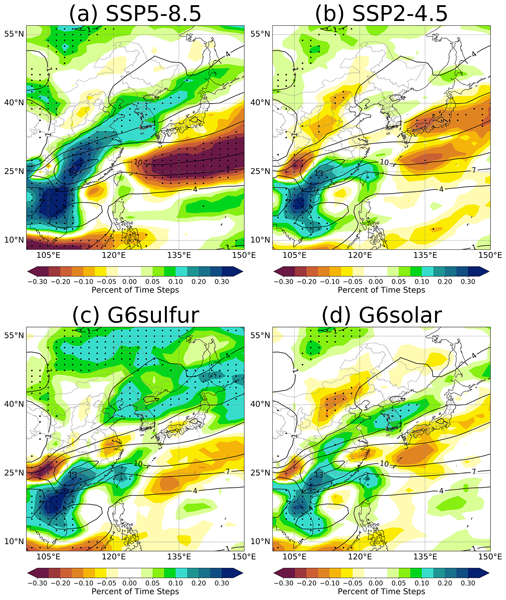
Ju Liang and Jim Haywood
Atmos. Chem. Phys., 23, 1687–1703, https://doi.org/10.5194/acp-23-1687-2023, https://doi.org/10.5194/acp-23-1687-2023, 2023
Short summary
Short summary
The recent record-breaking flood events in China during the summer of 2021 highlight the importance of mitigating the risks from future changes in high-impact weather systems under global warming. Based on a state-of-the-art Earth system model, we demonstrate a pilot study on the responses of atmospheric rivers and extreme precipitation over East Asia to anthropogenically induced climate warming and an unconventional mitigation strategy – stratospheric aerosol injection.
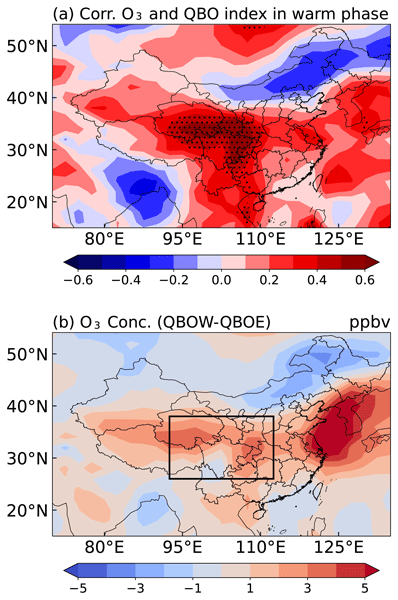
Mengyun Li, Yang Yang, Hailong Wang, Huimin Li, Pinya Wang, and Hong Liao
Atmos. Chem. Phys., 23, 1533–1544, https://doi.org/10.5194/acp-23-1533-2023, https://doi.org/10.5194/acp-23-1533-2023, 2023
Short summary
Short summary
Using the GEOS-Chem model, the impact of the quasi-biennial oscillation (QBO) on summertime tropospheric O3 in China is investigated. In the warm phases of sea surface temperature anomalies over the eastern tropical Pacific, the QBO has a significant positive correlation with near-surface O3 concentrations over central China. The QBO impacts on O3 pollution in China are mainly a result of changing vertical transport of O3.
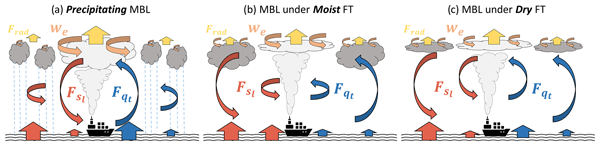
Je-Yun Chun, Robert Wood, Peter Blossey, and Sarah J. Doherty
Atmos. Chem. Phys., 23, 1345–1368, https://doi.org/10.5194/acp-23-1345-2023, https://doi.org/10.5194/acp-23-1345-2023, 2023
Short summary
Short summary
We investigate the impact of injected aerosol on subtropical low marine clouds under a variety of meteorological conditions using high-resolution model simulations. This study illustrates processes perturbed by aerosol injections and their impact on cloud properties (e.g., cloud number concentration, thickness, and cover). We show that those responses are highly sensitive to background meteorological conditions, such as precipitation, and background cloud properties.
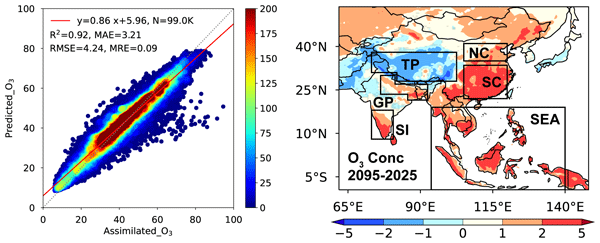
Huimin Li, Yang Yang, Jianbing Jin, Hailong Wang, Ke Li, Pinya Wang, and Hong Liao
Atmos. Chem. Phys., 23, 1131–1145, https://doi.org/10.5194/acp-23-1131-2023, https://doi.org/10.5194/acp-23-1131-2023, 2023
Short summary
Short summary
Future climate change will aggravate ozone pollution in Asia, especially in high-forcing scenarios. Ozone pollution in China will expand from North China to South China and extend into the cold season in a warmer future. The emphasis of this work is to quantify the impacts of future climate change on O3 pollution in Asia, which is of great significance for future O3 pollution mitigation strategies.
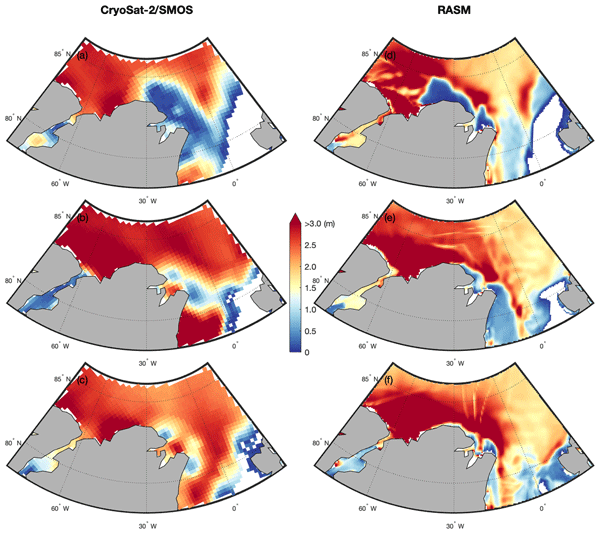
Younjoo J. Lee, Wieslaw Maslowski, John J. Cassano, Jaclyn Clement Kinney, Anthony P. Craig, Samy Kamal, Robert Osinski, Mark W. Seefeldt, Julienne Stroeve, and Hailong Wang
The Cryosphere, 17, 233–253, https://doi.org/10.5194/tc-17-233-2023, https://doi.org/10.5194/tc-17-233-2023, 2023
Short summary
Short summary
During 1979–2020, four winter polynyas occurred in December 1986 and February 2011, 2017, and 2018 north of Greenland. Instead of ice melting due to the anomalous warm air intrusion, the extreme wind forcing resulted in greater ice transport offshore. Based on the two ensemble runs, representing a 1980s thicker ice vs. a 2010s thinner ice, a dominant cause of these winter polynyas stems from internal variability of atmospheric forcing rather than from the forced response to a warming climate.
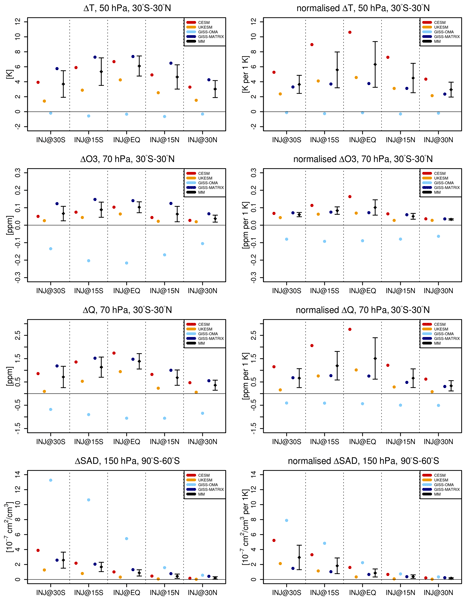
Ewa M. Bednarz, Daniele Visioni, Ben Kravitz, Andy Jones, James M. Haywood, Jadwiga Richter, Douglas G. MacMartin, and Peter Braesicke
Atmos. Chem. Phys., 23, 687–709, https://doi.org/10.5194/acp-23-687-2023, https://doi.org/10.5194/acp-23-687-2023, 2023
Short summary
Short summary
Building on Part 1 of this two-part study, we demonstrate the role of biases in climatological circulation and specific aspects of model microphysics in driving the differences in simulated sulfate distributions amongst three Earth system models. We then characterize the simulated changes in stratospheric and free-tropospheric temperatures, ozone, water vapor, and large-scale circulation, elucidating the role of the above aspects in the surface responses discussed in Part 1.

Daniele Visioni, Ewa M. Bednarz, Walker R. Lee, Ben Kravitz, Andy Jones, Jim M. Haywood, and Douglas G. MacMartin
Atmos. Chem. Phys., 23, 663–685, https://doi.org/10.5194/acp-23-663-2023, https://doi.org/10.5194/acp-23-663-2023, 2023
Short summary
Short summary
The paper constitutes Part 1 of a study performing a first systematic inter-model comparison of the atmospheric responses to stratospheric sulfate aerosol injections (SAIs) at various latitudes as simulated by three state-of-the-art Earth system models. We identify similarities and differences in the modeled aerosol burden, investigate the differences in the aerosol approaches between the models, and ultimately show the differences produced in surface climate, temperature and precipitation.
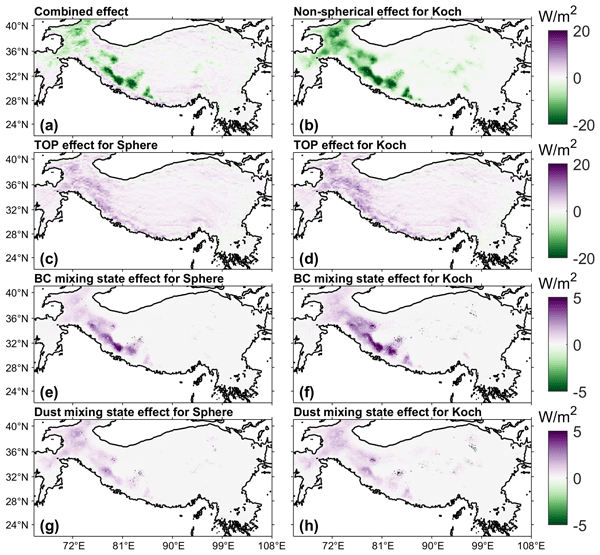
Dalei Hao, Gautam Bisht, Karl Rittger, Edward Bair, Cenlin He, Huilin Huang, Cheng Dang, Timbo Stillinger, Yu Gu, Hailong Wang, Yun Qian, and L. Ruby Leung
Geosci. Model Dev., 16, 75–94, https://doi.org/10.5194/gmd-16-75-2023, https://doi.org/10.5194/gmd-16-75-2023, 2023
Short summary
Short summary
Snow with the highest albedo of land surface plays a vital role in Earth’s surface energy budget and water cycle. This study accounts for the impacts of snow grain shape and mixing state of light-absorbing particles with snow on snow albedo in the E3SM land model. The findings advance our understanding of the role of snow grain shape and mixing state of LAP–snow in land surface processes and offer guidance for improving snow simulations and radiative forcing estimates in Earth system models.
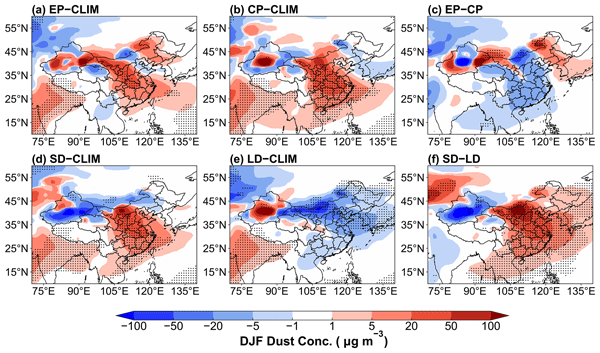
Yang Yang, Liangying Zeng, Hailong Wang, Pinya Wang, and Hong Liao
Atmos. Chem. Phys., 22, 14489–14502, https://doi.org/10.5194/acp-22-14489-2022, https://doi.org/10.5194/acp-22-14489-2022, 2022
Short summary
Short summary
Using an aerosol–climate model, dust pollution in China affected by different spatial and temporal types of El Niño are examined. Both eastern and central Pacific El Niño and short-duration El Niño increase winter dust concentrations over northern China, while long-duration El Niño decreases concentrations. Only long-duration El Niño events can significantly affect dust over China in the following spring. This study has profound implications for air pollution control and dust storm prediction.
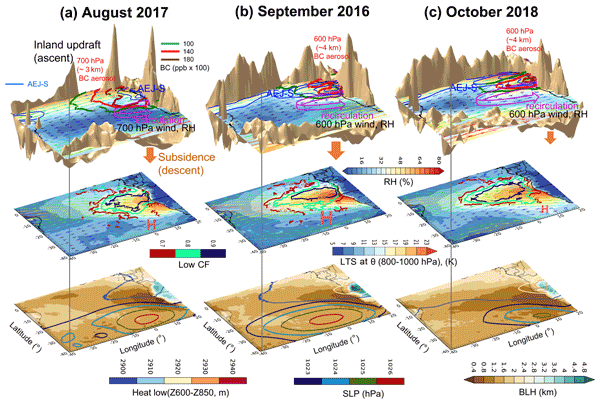
Ju-Mee Ryoo, Leonhard Pfister, Rei Ueyama, Paquita Zuidema, Robert Wood, Ian Chang, and Jens Redemann
Atmos. Chem. Phys., 22, 14209–14241, https://doi.org/10.5194/acp-22-14209-2022, https://doi.org/10.5194/acp-22-14209-2022, 2022
Short summary
Short summary
The variability in the meteorological fields during each deployment is highly modulated at a daily to synoptic timescale. This paper, along with part 1, the climatological overview paper, provides a meteorological context for interpreting the airborne measurements gathered during the three ORACLES deployments. This study supports related studies focusing on the detailed investigation of the processes controlling stratocumulus decks, aerosol lifting, transport, and their interactions.
Paul A. Barrett, Steven J. Abel, Hugh Coe, Ian Crawford, Amie Dobracki, James Haywood, Steve Howell, Anthony Jones, Justin Langridge, Greg M. McFarquhar, Graeme J. Nott, Hannah Price, Jens Redemann, Yohei Shinozuka, Kate Szpek, Jonathan W. Taylor, Robert Wood, Huihui Wu, Paquita Zuidema, Stéphane Bauguitte, Ryan Bennett, Keith Bower, Hong Chen, Sabrina Cochrane, Michael Cotterell, Nicholas Davies, David Delene, Connor Flynn, Andrew Freedman, Steffen Freitag, Siddhant Gupta, David Noone, Timothy B. Onasch, James Podolske, Michael R. Poellot, Sebastian Schmidt, Stephen Springston, Arthur J. Sedlacek III, Jamie Trembath, Alan Vance, Maria A. Zawadowicz, and Jianhao Zhang
Atmos. Meas. Tech., 15, 6329–6371, https://doi.org/10.5194/amt-15-6329-2022, https://doi.org/10.5194/amt-15-6329-2022, 2022
Short summary
Short summary
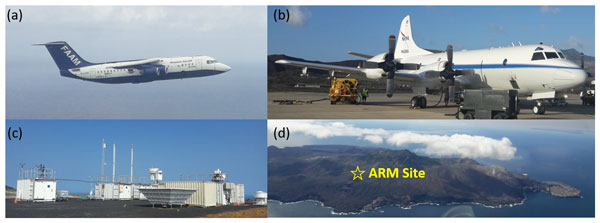
To better understand weather and climate, it is vital to go into the field and collect observations. Often measurements take place in isolation, but here we compared data from two aircraft and one ground-based site. This was done in order to understand how well measurements made on one platform compared to those made on another. Whilst this is easy to do in a controlled laboratory setting, it is more challenging in the real world, and so these comparisons are as valuable as they are rare.
Flossie Brown, Gerd A. Folberth, Stephen Sitch, Susanne Bauer, Marijn Bauters, Pascal Boeckx, Alexander W. Cheesman, Makoto Deushi, Inês Dos Santos Vieira, Corinne Galy-Lacaux, James Haywood, James Keeble, Lina M. Mercado, Fiona M. O'Connor, Naga Oshima, Kostas Tsigaridis, and Hans Verbeeck
Atmos. Chem. Phys., 22, 12331–12352, https://doi.org/10.5194/acp-22-12331-2022, https://doi.org/10.5194/acp-22-12331-2022, 2022
Short summary
Short summary
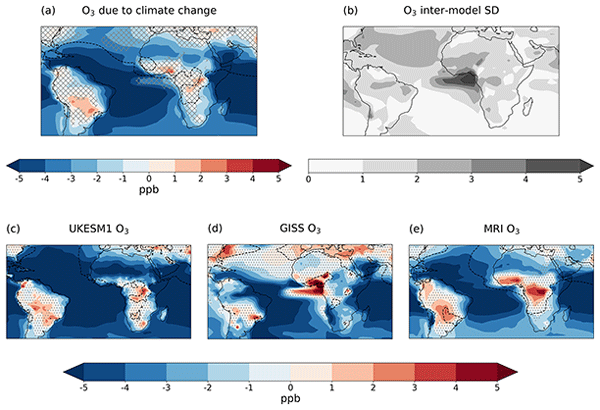
Surface ozone can decrease plant productivity and impair human health. In this study, we evaluate the change in surface ozone due to climate change over South America and Africa using Earth system models. We find that if the climate were to change according to the worst-case scenario used here, models predict that forested areas in biomass burning locations and urban populations will be at increasing risk of ozone exposure, but other areas will experience a climate benefit.
Michael S. Diamond, Pablo E. Saide, Paquita Zuidema, Andrew S. Ackerman, Sarah J. Doherty, Ann M. Fridlind, Hamish Gordon, Calvin Howes, Jan Kazil, Takanobu Yamaguchi, Jianhao Zhang, Graham Feingold, and Robert Wood
Atmos. Chem. Phys., 22, 12113–12151, https://doi.org/10.5194/acp-22-12113-2022, https://doi.org/10.5194/acp-22-12113-2022, 2022
Short summary
Short summary
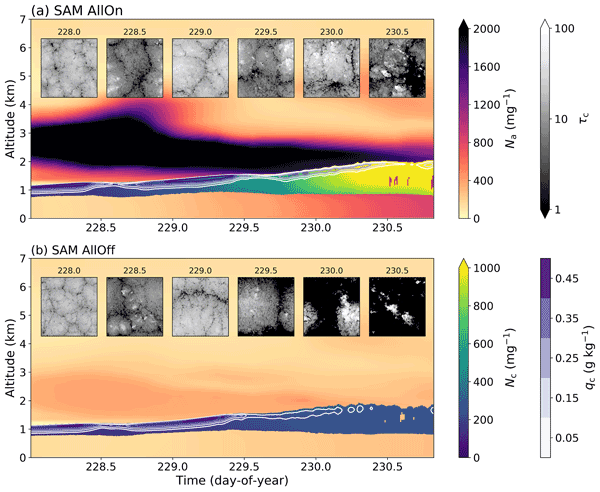
Smoke from southern Africa blankets the southeast Atlantic from June-October, overlying a major transition region between overcast and scattered clouds. The smoke affects Earth's radiation budget by absorbing sunlight and changing cloud properties. We investigate these effects in regional climate and large eddy simulation models based on international field campaigns. We find that large-scale circulation changes more strongly affect cloud transitions than smoke microphysical effects in our case.
Jessica Danker, Odran Sourdeval, Isabel L. McCoy, Robert Wood, and Anna Possner
Atmos. Chem. Phys., 22, 10247–10265, https://doi.org/10.5194/acp-22-10247-2022, https://doi.org/10.5194/acp-22-10247-2022, 2022
Short summary
Short summary
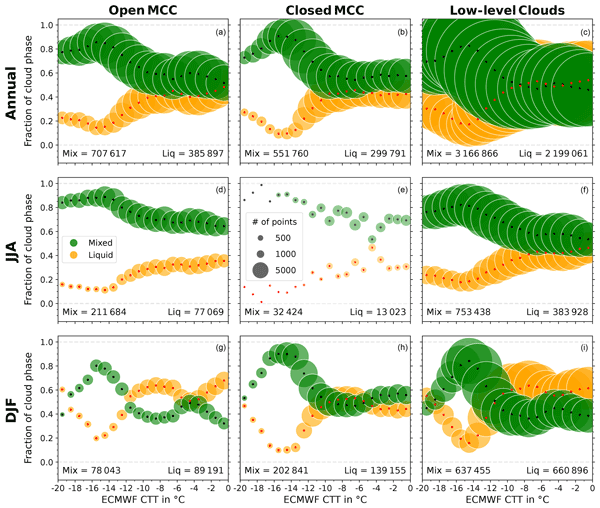
Using spaceborne lidar-radar retrievals, we show that seasonal changes in cloud phase outweigh changes in cloud-phase statistics across cloud morphologies at given cloud-top temperatures. These results show that cloud morphology does not seem to pose a primary constraint on cloud-phase statistics in the Southern Ocean. Meanwhile, larger changes in in-cloud albedo across cloud morphologies are observed in supercooled liquid rather than mixed-phase stratocumuli.
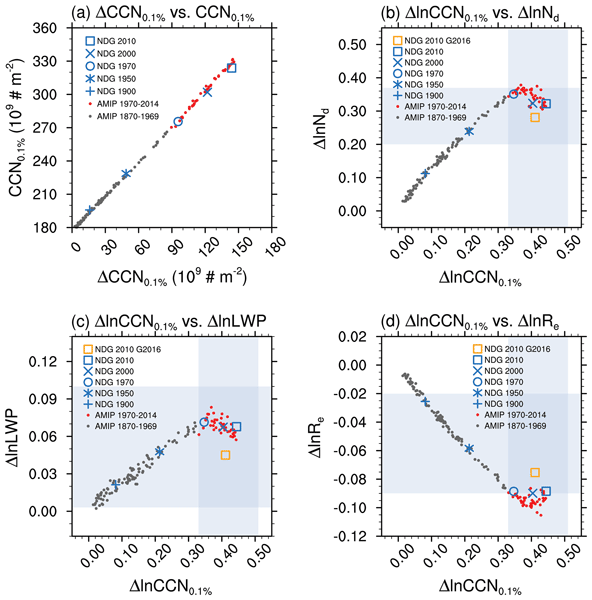
Kai Zhang, Wentao Zhang, Hui Wan, Philip J. Rasch, Steven J. Ghan, Richard C. Easter, Xiangjun Shi, Yong Wang, Hailong Wang, Po-Lun Ma, Shixuan Zhang, Jian Sun, Susannah M. Burrows, Manish Shrivastava, Balwinder Singh, Yun Qian, Xiaohong Liu, Jean-Christophe Golaz, Qi Tang, Xue Zheng, Shaocheng Xie, Wuyin Lin, Yan Feng, Minghuai Wang, Jin-Ho Yoon, and L. Ruby Leung
Atmos. Chem. Phys., 22, 9129–9160, https://doi.org/10.5194/acp-22-9129-2022, https://doi.org/10.5194/acp-22-9129-2022, 2022
Short summary
Short summary
Here we analyze the effective aerosol forcing simulated by E3SM version 1 using both century-long free-running and short nudged simulations. The aerosol forcing in E3SMv1 is relatively large compared to other models, mainly due to the large indirect aerosol effect. Aerosol-induced changes in liquid and ice cloud properties in E3SMv1 have a strong correlation. The aerosol forcing estimates in E3SMv1 are sensitive to the parameterization changes in both liquid and ice cloud processes.
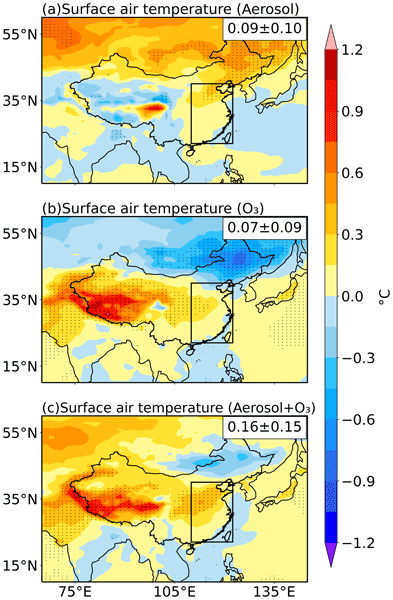
Jiyuan Gao, Yang Yang, Hailong Wang, Pinya Wang, Huimin Li, Mengyun Li, Lili Ren, Xu Yue, and Hong Liao
Atmos. Chem. Phys., 22, 7131–7142, https://doi.org/10.5194/acp-22-7131-2022, https://doi.org/10.5194/acp-22-7131-2022, 2022
Short summary
Short summary
China has been implementing a sequence of policies for clean air since the year 2013. The aerosol decline produced a 0.09 ± 0.10°C warming during 2013–2017 estimated in this study, and the increase in ozone in the lower troposphere during this time period accelerated the warming, leading to a total 0.16 ± 0.15°C temperature increase in eastern China. Residential emission reductions led to a cooling effect because of a substantial decrease in light-absorbing aerosols.
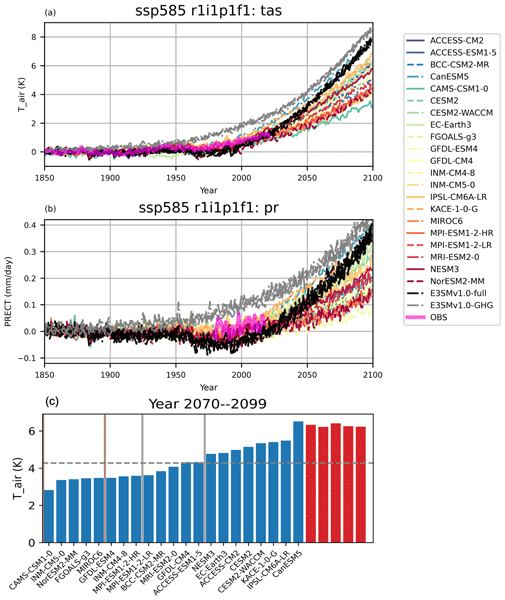
Xue Zheng, Qing Li, Tian Zhou, Qi Tang, Luke P. Van Roekel, Jean-Christophe Golaz, Hailong Wang, and Philip Cameron-Smith
Geosci. Model Dev., 15, 3941–3967, https://doi.org/10.5194/gmd-15-3941-2022, https://doi.org/10.5194/gmd-15-3941-2022, 2022
Short summary
Short summary
We document the model experiments for the future climate projection by E3SMv1.0. At the highest future emission scenario, E3SMv1.0 projects a strong surface warming with rapid changes in the atmosphere, ocean, sea ice, and land runoff. Specifically, we detect a significant polar amplification and accelerated warming linked to the unmasking of the aerosol effects. The impact of greenhouse gas forcing is examined in different climate components.
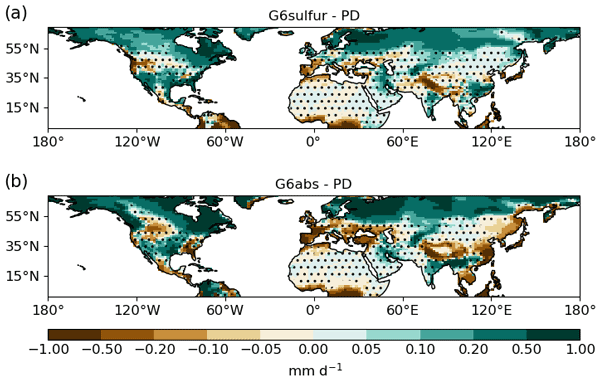
Jim M. Haywood, Andy Jones, Ben T. Johnson, and William McFarlane Smith
Atmos. Chem. Phys., 22, 6135–6150, https://doi.org/10.5194/acp-22-6135-2022, https://doi.org/10.5194/acp-22-6135-2022, 2022
Short summary
Short summary
Simulations are presented investigating the influence of moderately absorbing aerosol in the stratosphere to combat the impacts of climate change. A number of detrimental impacts are noted compared to sulfate aerosol, including (i) reduced cooling efficiency, (ii) increased deficits in global precipitation, (iii) delays in the recovery of the stratospheric ozone hole, and (iv) disruption of the stratospheric circulation and the wintertime storm tracks that impact European precipitation.
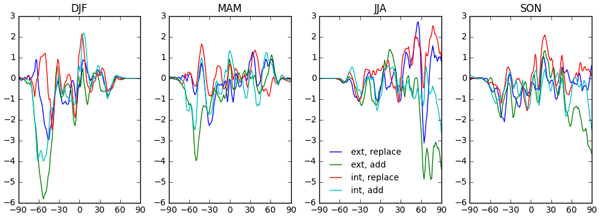
Susannah M. Burrows, Richard C. Easter, Xiaohong Liu, Po-Lun Ma, Hailong Wang, Scott M. Elliott, Balwinder Singh, Kai Zhang, and Philip J. Rasch
Atmos. Chem. Phys., 22, 5223–5251, https://doi.org/10.5194/acp-22-5223-2022, https://doi.org/10.5194/acp-22-5223-2022, 2022
Short summary
Short summary
Sea spray particles are composed of a mixture of salts and organic substances from oceanic microorganisms. In prior work, our team developed an approach connecting sea spray chemistry to ocean biology, called OCEANFILMS. Here we describe its implementation within an Earth system model, E3SM. We show that simulated sea spray chemistry is consistent with observed seasonal cycles and that sunlight reflected by simulated Southern Ocean clouds increases, consistent with analysis of satellite data.

Hui Wan, Kai Zhang, Philip J. Rasch, Vincent E. Larson, Xubin Zeng, Shixuan Zhang, and Ross Dixon
Geosci. Model Dev., 15, 3205–3231, https://doi.org/10.5194/gmd-15-3205-2022, https://doi.org/10.5194/gmd-15-3205-2022, 2022
Short summary
Short summary
This paper describes a tool embedded in a global climate model for sampling atmospheric conditions and monitoring physical processes as a numerical simulation is being carried out. The tool facilitates process-level model evaluation by allowing the users to select a wide range of quantities and processes to monitor at run time without having to do tedious ad hoc coding.
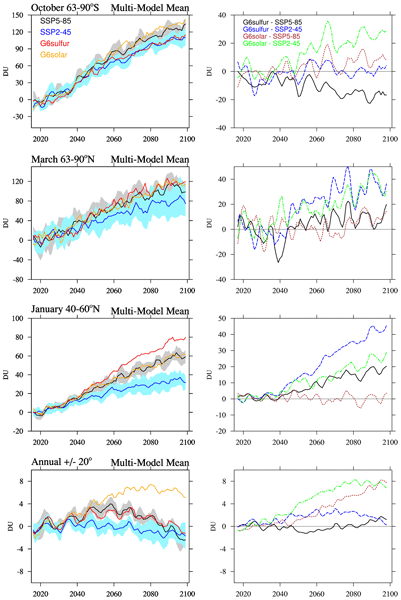
Simone Tilmes, Daniele Visioni, Andy Jones, James Haywood, Roland Séférian, Pierre Nabat, Olivier Boucher, Ewa Monica Bednarz, and Ulrike Niemeier
Atmos. Chem. Phys., 22, 4557–4579, https://doi.org/10.5194/acp-22-4557-2022, https://doi.org/10.5194/acp-22-4557-2022, 2022
Short summary
Short summary
This study assesses the impacts of climate interventions, using stratospheric sulfate aerosol and solar dimming on stratospheric ozone, based on three Earth system models with interactive stratospheric chemistry. The climate interventions have been applied to a high emission (baseline) scenario in order to reach global surface temperatures of a medium emission scenario. We find significant increases and decreases in total column ozone, depending on regions and seasons.
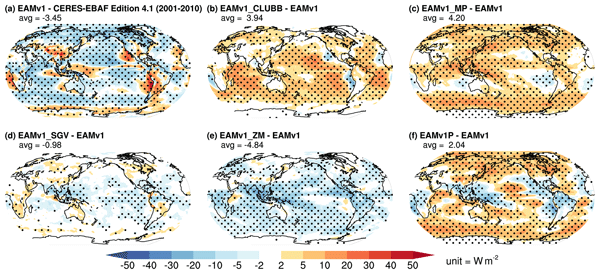
Po-Lun Ma, Bryce E. Harrop, Vincent E. Larson, Richard B. Neale, Andrew Gettelman, Hugh Morrison, Hailong Wang, Kai Zhang, Stephen A. Klein, Mark D. Zelinka, Yuying Zhang, Yun Qian, Jin-Ho Yoon, Christopher R. Jones, Meng Huang, Sheng-Lun Tai, Balwinder Singh, Peter A. Bogenschutz, Xue Zheng, Wuyin Lin, Johannes Quaas, Hélène Chepfer, Michael A. Brunke, Xubin Zeng, Johannes Mülmenstädt, Samson Hagos, Zhibo Zhang, Hua Song, Xiaohong Liu, Michael S. Pritchard, Hui Wan, Jingyu Wang, Qi Tang, Peter M. Caldwell, Jiwen Fan, Larry K. Berg, Jerome D. Fast, Mark A. Taylor, Jean-Christophe Golaz, Shaocheng Xie, Philip J. Rasch, and L. Ruby Leung
Geosci. Model Dev., 15, 2881–2916, https://doi.org/10.5194/gmd-15-2881-2022, https://doi.org/10.5194/gmd-15-2881-2022, 2022
Short summary
Short summary
An alternative set of parameters for E3SM Atmospheric Model version 1 has been developed based on a tuning strategy that focuses on clouds. When clouds in every regime are improved, other aspects of the model are also improved, even though they are not the direct targets for calibration. The recalibrated model shows a lower sensitivity to anthropogenic aerosols and surface warming, suggesting potential improvements to the simulated climate in the past and future.
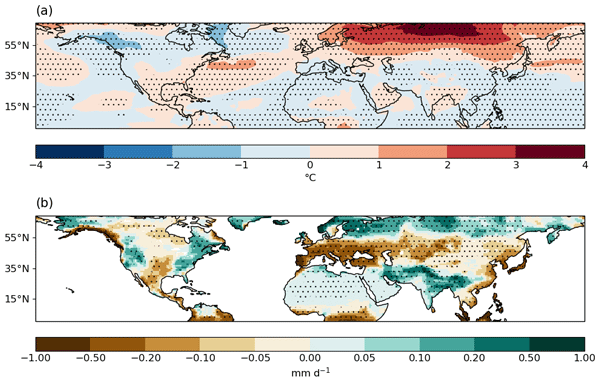
Andy Jones, Jim M. Haywood, Adam A. Scaife, Olivier Boucher, Matthew Henry, Ben Kravitz, Thibaut Lurton, Pierre Nabat, Ulrike Niemeier, Roland Séférian, Simone Tilmes, and Daniele Visioni
Atmos. Chem. Phys., 22, 2999–3016, https://doi.org/10.5194/acp-22-2999-2022, https://doi.org/10.5194/acp-22-2999-2022, 2022
Short summary
Short summary
Simulations by six Earth-system models of geoengineering by introducing sulfuric acid aerosols into the tropical stratosphere are compared. A robust impact on the northern wintertime North Atlantic Oscillation is found, exacerbating precipitation reduction over parts of southern Europe. In contrast, the models show no consistency with regard to impacts on the Quasi-Biennial Oscillation, although results do indicate a risk that the oscillation could become locked into a permanent westerly phase.

Matthew W. Christensen, Andrew Gettelman, Jan Cermak, Guy Dagan, Michael Diamond, Alyson Douglas, Graham Feingold, Franziska Glassmeier, Tom Goren, Daniel P. Grosvenor, Edward Gryspeerdt, Ralph Kahn, Zhanqing Li, Po-Lun Ma, Florent Malavelle, Isabel L. McCoy, Daniel T. McCoy, Greg McFarquhar, Johannes Mülmenstädt, Sandip Pal, Anna Possner, Adam Povey, Johannes Quaas, Daniel Rosenfeld, Anja Schmidt, Roland Schrödner, Armin Sorooshian, Philip Stier, Velle Toll, Duncan Watson-Parris, Robert Wood, Mingxi Yang, and Tianle Yuan
Atmos. Chem. Phys., 22, 641–674, https://doi.org/10.5194/acp-22-641-2022, https://doi.org/10.5194/acp-22-641-2022, 2022
Short summary
Short summary
Trace gases and aerosols (tiny airborne particles) are released from a variety of point sources around the globe. Examples include volcanoes, industrial chimneys, forest fires, and ship stacks. These sources provide opportunistic experiments with which to quantify the role of aerosols in modifying cloud properties. We review the current state of understanding on the influence of aerosol on climate built from the wide range of natural and anthropogenic laboratories investigated in recent decades.
Amie Dobracki, Paquita Zuidema, Steve Howell, Pablo Saide, Steffen Freitag, Allison C. Aiken, Sharon P. Burton, Arthur J. Sedlacek III, Jens Redemann, and Robert Wood
Atmos. Chem. Phys. Discuss., https://doi.org/10.5194/acp-2021-1081, https://doi.org/10.5194/acp-2021-1081, 2022
Preprint withdrawn
Short summary
Short summary
The global maximum of shortwave-absorbing aerosol above cloud occurs above the southeast Atlantic, where the biomass-burning aerosol provides a distinct aerosol radiative warming of regional climate. The smoke aerosols are unusually highly absorbing of sunlight. This study seeks to understand the cause. We conclude the aerosol is already strongly absorbing at the fire emission source, but that chemical aging, through encouraging a net loss of organic aerosol, also contributes.
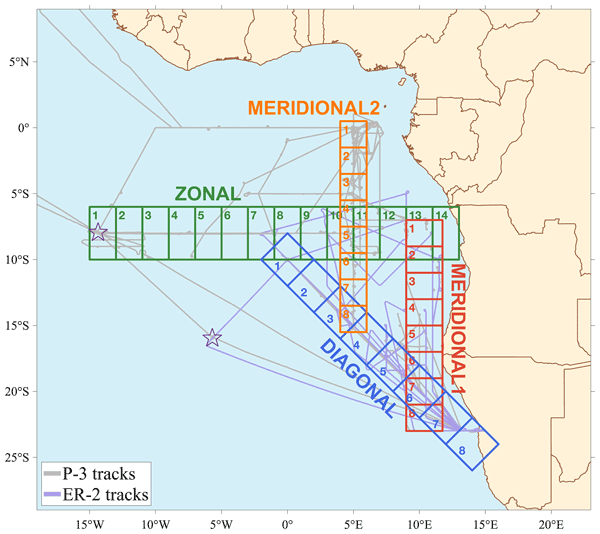
Sarah J. Doherty, Pablo E. Saide, Paquita Zuidema, Yohei Shinozuka, Gonzalo A. Ferrada, Hamish Gordon, Marc Mallet, Kerry Meyer, David Painemal, Steven G. Howell, Steffen Freitag, Amie Dobracki, James R. Podolske, Sharon P. Burton, Richard A. Ferrare, Calvin Howes, Pierre Nabat, Gregory R. Carmichael, Arlindo da Silva, Kristina Pistone, Ian Chang, Lan Gao, Robert Wood, and Jens Redemann
Atmos. Chem. Phys., 22, 1–46, https://doi.org/10.5194/acp-22-1-2022, https://doi.org/10.5194/acp-22-1-2022, 2022
Short summary
Short summary
Between July and October, biomass burning smoke is advected over the southeastern Atlantic Ocean, leading to climate forcing. Model calculations of forcing by this plume vary significantly in both magnitude and sign. This paper compares aerosol and cloud properties observed during three NASA ORACLES field campaigns to the same in four models. It quantifies modeled biases in properties key to aerosol direct radiative forcing and evaluates how these biases propagate to biases in forcing.
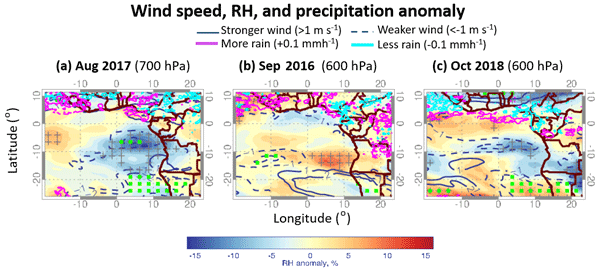
Ju-Mee Ryoo, Leonhard Pfister, Rei Ueyama, Paquita Zuidema, Robert Wood, Ian Chang, and Jens Redemann
Atmos. Chem. Phys., 21, 16689–16707, https://doi.org/10.5194/acp-21-16689-2021, https://doi.org/10.5194/acp-21-16689-2021, 2021
Short summary
Short summary
Part 1 of the meteorological overview paper highlights the anomalous meteorological characteristics during the ORACLES deployment compared to the climatological mean at monthly timescales. The upper-level wave disturbance and the associated anomalous circulation explain the weakening of AEJ-S through the reduction of the strength of the heat low over the land during August 2017. This may also help explain the anomalously low aerosol optical depth observed in the August 2017 ORACLES deployment.
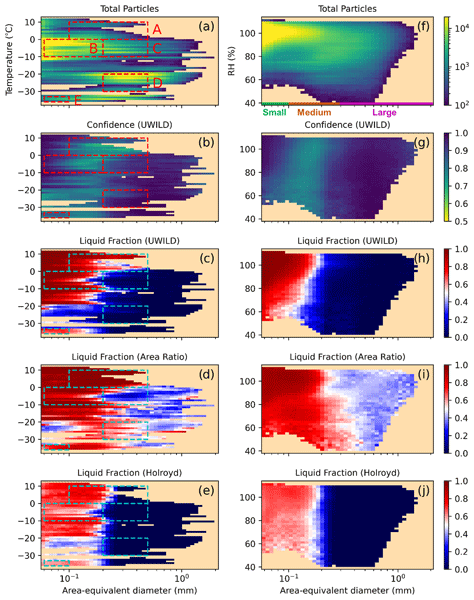
Rachel Atlas, Johannes Mohrmann, Joseph Finlon, Jeremy Lu, Ian Hsiao, Robert Wood, and Minghui Diao
Atmos. Meas. Tech., 14, 7079–7101, https://doi.org/10.5194/amt-14-7079-2021, https://doi.org/10.5194/amt-14-7079-2021, 2021
Short summary
Short summary
Many clouds with temperatures between 0 °C and −40 °C contain both liquid and ice particles, and the ratio of liquid to ice particles influences how the clouds interact with radiation and moderate Earth's climate. We use a machine learning method called random forest to classify images of individual cloud particles as either liquid or ice. We apply our algorithm to images captured by aircraft within clouds overlying the Southern Ocean, and we find that it outperforms two existing algorithms.

Hossein Dadashazar, Majid Alipanah, Miguel Ricardo A. Hilario, Ewan Crosbie, Simon Kirschler, Hongyu Liu, Richard H. Moore, Andrew J. Peters, Amy Jo Scarino, Michael Shook, K. Lee Thornhill, Christiane Voigt, Hailong Wang, Edward Winstead, Bo Zhang, Luke Ziemba, and Armin Sorooshian
Atmos. Chem. Phys., 21, 16121–16141, https://doi.org/10.5194/acp-21-16121-2021, https://doi.org/10.5194/acp-21-16121-2021, 2021
Short summary
Short summary
This study investigates precipitation impacts on long-range transport of North American outflow over the western North Atlantic Ocean (WNAO). Results demonstrate that precipitation scavenging plays a significant role in modifying surface aerosol concentrations over the WNAO, especially in winter and spring due to large-scale scavenging processes. This study highlights how precipitation impacts surface aerosol properties with relevance for other marine regions vulnerable to continental outflow.
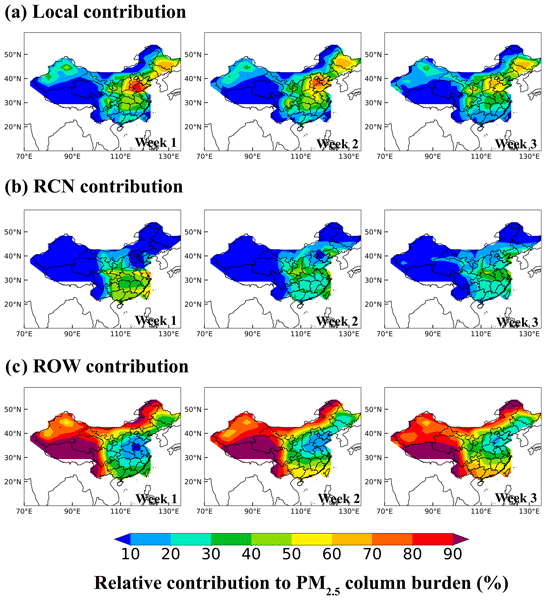
Lili Ren, Yang Yang, Hailong Wang, Pinya Wang, Lei Chen, Jia Zhu, and Hong Liao
Atmos. Chem. Phys., 21, 15431–15445, https://doi.org/10.5194/acp-21-15431-2021, https://doi.org/10.5194/acp-21-15431-2021, 2021
Short summary
Short summary
Due to the COVID-19 pandemic, human activities were strictly restricted in China. Even though anthropogenic aerosol emissions largely decreased, haze events still occurred. Our results shows that PM2.5 over the North China Plain is largely contributed by local sources. For other regions in China, PM2.5 is largely contributed from nonlocal sources. As emission reduction is a future goal, aerosol long-range transport and unfavorable meteorology are increasingly important to air quality.
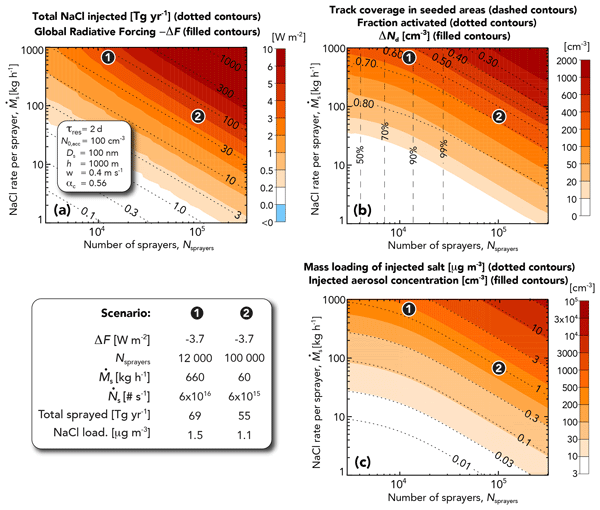
Robert Wood
Atmos. Chem. Phys., 21, 14507–14533, https://doi.org/10.5194/acp-21-14507-2021, https://doi.org/10.5194/acp-21-14507-2021, 2021
Short summary
Short summary
A simple model is described to assess the potential for increasing solar reflection by augmenting the aerosol population below marine low clouds, which increases the concentration of cloud droplets. The model is used to predict global cooling from marine cloud brightening climate intervention as a function of the quantity, size, and lifetime of salt particles injected per sprayer, the number of sprayers deployed, the cloud updraft speed, and unperturbed aerosol size distribution.
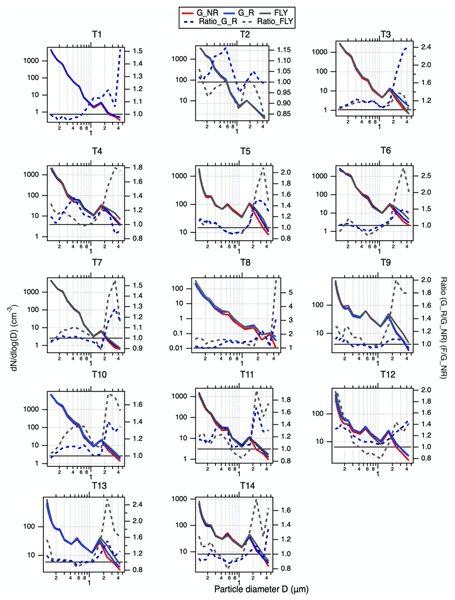
Zixia Liu, Martin Osborne, Karen Anderson, Jamie D. Shutler, Andy Wilson, Justin Langridge, Steve H. L. Yim, Hugh Coe, Suresh Babu, Sreedharan K. Satheesh, Paquita Zuidema, Tao Huang, Jack C. H. Cheng, and James Haywood
Atmos. Meas. Tech., 14, 6101–6118, https://doi.org/10.5194/amt-14-6101-2021, https://doi.org/10.5194/amt-14-6101-2021, 2021
Short summary
Short summary
This paper first validates the performance of an advanced aerosol observation instrument POPS against a reference instrument and examines any biases introduced by operating it on a quadcopter drone. The results show the POPS performs relatively well on the ground. The impact of the UAV rotors on the POPS is small at low wind speeds, but when operating under higher wind speeds, larger discrepancies occur. It appears that the POPS measures sub-micron aerosol particles more accurately on the UAV.
Cited articles
Abdul-Razzak, H. and Ghan, S. J.: A parameterization of aerosol activation: 2. Multiple aerosol types, J. Geophys. Res.-Atmos., 105, 6837–6844, https://doi.org/10.1029/1999JD901161, 2000. a
Adam, O., Bischoff, T., and Schneider, T.: Seasonal and interannual variations of the energy flux equator and ITCZ. Part I: Zonally averaged ITCZ position, J. Climate, 29, 3219–3230, https://doi.org/10.1175/JCLI-D-15-0512.1, 2016. a
Albrecht, B. A.: Aerosols, Cloud Microphysics, and Fractional Cloudiness, Science, 245, 1227–1230, https://doi.org/10.1126/science.245.4923.1227, 1989. a
Alterskjær, K. and Kristjánsson, J. E.: The sign of the radiative forcing from marine cloud brightening depends on both particle size and injection amount, Geophys. Res. Lett., 40, 210–215, https://doi.org/10.1029/2012GL054286, 2013. a
Alterskjær, K., Kristjánsson, J. E., Boucher, O., Muri, H., Niemeier, U., Schmidt, H., Schulz, M., and Timmreck, C.: Sea‐salt injections into the low‐latitude marine boundary layer: The transient response in three Earth system models, J. Geophys. Res.-Atmos., 118, https://doi.org/10.1002/2013JD020432, 2013. a, b, c, d, e, f
Andrews, T., Forster, P. M., and Gregory, J. M.: A Surface Energy Perspective on Climate Change, J. Climate, 22, 2557–2570, https://doi.org/10.1175/2008JCLI2759.1, 2009. a
Aswathy, V. N., Boucher, O., Quaas, M., Niemeier, U., Muri, H., Mülmenstädt, J., and Quaas, J.: Climate extremes in multi-model simulations of stratospheric aerosol and marine cloud brightening climate engineering, Atmos. Chem. Phys., 15, 9593–9610, https://doi.org/10.5194/acp-15-9593-2015, 2015. a
Bala, G., Duffy, P. B., and Taylor, K. E.: Impact of geoengineering schemes on the global hydrological cycle, P. Natl. Acad. Sci. USA, 105, 7664–7669, https://doi.org/10.1073/pnas.0711648105, 2008. a
Bala, G., Caldeira, K., Nemani, R., Cao, L., Ban-Weiss, G., and Shin, H.-J.: Albedo enhancement of marine clouds to counteract global warming: impacts on the hydrological cycle, Clim. Dynam., 37, 915–931, https://doi.org/10.1007/s00382-010-0868-1, 2011. a
Baughman, E., Gnanadesikan, A., Degaetano, A., and Adcroft, A.: Investigation of the Surface and Circulation Impacts of Cloud-Brightening Geoengineering, J. Climate, 25, 7527–7543, https://doi.org/10.1175/JCLI-D-11-00282.1, 2012. a
Brody, E., Zhang, Y., MacMartin, D. G., Visioni, D., Kravitz, B., and Bednarz, E. M.: Using optimization tools to explore stratospheric aerosol injection strategies, Earth Syst. Dynam., 16, 1325–1341, https://doi.org/10.5194/esd-16-1325-2025, 2025. a
Chen, C.-C., Richter, J. H., Lee, W. R., MacMartin, D. G., and Kravitz, B.: Rethinking the susceptibility-based strategy for marine cloud brightening climate intervention: Experiment with CESM2 and its implications, Geophys. Res. Lett., 51, e2024GL108 860, https://doi.org/10.1029/2024GL108860, 2024a. a, b, c
Chen, Y., Haywood, J., Wang, Y., Malavelle, F., Jordan, G., Partridge, D., Fieldsend, J., De Leeuw, J., Schmidt, A., Cho, N., Oreopoulos, L., Platnick, S., Grosvenor, D., Field, P., and Lohmann, U.: Machine learning reveals climate forcing from aerosols is dominated by increased cloud cover, Nat. Geosci., 15, 609–614, https://doi.org/10.1038/s41561-022-00991-6, 2022. a
Chen, Y., Haywood, J., Wang, Y., Malavelle, F., Jordan, G., Peace, A., Partridge, D. G., Cho, N., Oreopoulos, L., Grosvenor, D., Field, P., Allan, R. P., and Lohmann, U.: Substantial cooling effect from aerosol-induced increase in tropical marine cloud cover, Nat. Geosci., 17, 404–410, https://doi.org/10.1038/s41561-024-01427-z, 2024b. a, b, c, d
Christensen, M. W., Gettelman, A., Cermak, J., Dagan, G., Diamond, M., Douglas, A., Feingold, G., Glassmeier, F., Goren, T., Grosvenor, D. P., Gryspeerdt, E., Kahn, R., Li, Z., Ma, P.-L., Malavelle, F., McCoy, I. L., McCoy, D. T., McFarquhar, G., Mülmenstädt, J., Pal, S., Possner, A., Povey, A., Quaas, J., Rosenfeld, D., Schmidt, A., Schrödner, R., Sorooshian, A., Stier, P., Toll, V., Watson-Parris, D., Wood, R., Yang, M., and Yuan, T.: Opportunistic experiments to constrain aerosol effective radiative forcing, Atmos. Chem. Phys., 22, 641–674, https://doi.org/10.5194/acp-22-641-2022, 2022. a
Connolly, P. J., McFiggans, G. B., Wood, R., and Tsiamis, A.: Factors determining the most efficient spray distribution for marine cloud brightening, Philos. T. Roy. Soc. A, 372, 20140056, https://doi.org/10.1098/rsta.2014.0056, 2014. a, b, c
Danabasoglu, G., Lamarque, J., Bacmeister, J., Bailey, D. A., DuVivier, A. K., Edwards, J., Emmons, L. K., Fasullo, J., Garcia, R., Gettelman, A., Hannay, C., Holland, M. M., Large, W. G., Lauritzen, P. H., Lawrence, D. M., Lenaerts, J. T. M., Lindsay, K., Lipscomb, W. H., Mills, M. J., Neale, R., Oleson, K. W., Otto‐Bliesner, B., Phillips, A. S., Sacks, W., Tilmes, S., Van Kampenhout, L., Vertenstein, M., Bertini, A., Dennis, J., Deser, C., Fischer, C., Fox‐Kemper, B., Kay, J. E., Kinnison, D., Kushner, P. J., Larson, V. E., Long, M. C., Mickelson, S., Moore, J. K., Nienhouse, E., Polvani, L., Rasch, P. J., and Strand, W. G.: The Community Earth System Model Version 2 (CESM2), J. Adv. Model. Earth Syst., 12, e2019MS001916, https://doi.org/10.1029/2019MS001916, 2020. a
Davis, N. A., Visioni, D., Garcia, R. R., Kinnison, D. E., Marsh, D. R., Mills, M., Richter, J. H., Tilmes, S., Bardeen, C. G., Gettelman, A., Glanville, A. A., MacMartin, D. G., Smith, A. K., and Vitt, F.: Climate, variability, and climate sensitivity of “middle atmosphere” chemistry configurations of the community earth system model version 2, whole atmosphere community climate model version 6 (CESM2 (WACCM6)), J. Adv. Model. Earth Syst., 15, e2022MS003579, https://doi.org/10.1029/2022MS003579, 2023. a
Diamond, M. S.: Detection of large-scale cloud microphysical changes within a major shipping corridor after implementation of the International Maritime Organization 2020 fuel sulfur regulations, Atmos. Chem. Phys., 23, 8259–8269, https://doi.org/10.5194/acp-23-8259-2023, 2023. a
Feingold, G., Ghate, V., Russell, L., Blossey, P., Cantrell, W., Christensen, M., Diamond, M., Gettelman, A., Glassmeier, F., Gryspeerdt, E., Haywood, J., Hoffmann, F., Kaul, C., Lebsock, M., McComiskey, A., McCoy, D., Ming, Y., Muelmenstaedt, J., Possner, A., Prabhakaran, P., Quinn, P., Schmidt, S., Shaw, R., Singer, C., Sorooshian, A., Toll, V., Wan, J., Wood, R., Yang, F., Zhang, J., and Zheng, X.: DOE-NOAA Marine Cloud Brightening (Workshop Report 2022), Tech. Rep. DOE/SC-0207, OAR-ESRL/CSL-1, DOE, 1902718, https://doi.org/10.2172/1902718, 2022. a
Feingold, G., Ghate, V. P., Russell, L. M., Blossey, P., Cantrell, W., Christensen, M. W., Diamond, M. S., Gettelman, A., Glassmeier, F., Gryspeerdt, E., Haywood, J., Hoffmann, F., Kaul, C. M., Lebsock, M., McComiskey, A. C., McCoy, D. T., Ming, Y., Mülmenstädt, J., Possner, A., Prabhakaran, P., Quinn, P. K., Schmidt, K. S., Shaw, R. A., Singer, C. E., Sorooshian, A., Toll, V., Wan, J. S., Wood, R., Yang, F., Zhang, J., and Zheng, X.: Physical science research needed to evaluate the viability and risks of marine cloud brightening, Sci. Adv., 10, eadi8594, https://doi.org/10.1126/sciadv.adi8594, 2024. a
fischer-ncar, Edwards, J., Sacks, B., Andre, B., The former account of Ben Andre while working at UCAR, Bertini, A., Levy, M., Sobhani, N., Kluzek, E., Vitt, F., Altuntas, A., Thayer-Calder, K., Rabin, S., Baker, A., Dobbins, B., Sun, J., Hansel, P., cacraigucar, and mvertens: haruki-hirasawa/CESM2.1.5: CESM2.1.3 Fork for GMD (release-cesm2.1.3), Zenodo [code], https://doi.org/10.5281/zenodo.17574153, 2025. a
Gettelman, A. and Morrison, H.: Advanced Two-Moment Bulk Microphysics for Global Models. Part I: Off-Line Tests and Comparison with Other Schemes, J. Climate, 28, 1268–1287, https://doi.org/10.1175/JCLI-D-14-00102.1, 2015. a
Ghan, S. J.: Technical Note: Estimating aerosol effects on cloud radiative forcing, Atmos. Chem. Phys., 13, 9971–9974, https://doi.org/10.5194/acp-13-9971-2013, 2013. a, b
Ghosh, P., Evans, K. J., Grosvenor, D. P., Kang, H.-G., Mahajan, S., Xu, M., Zhang, W., and Gordon, H.: Assessing modifications to the Abdul-Razzak and Ghan aerosol activation parameterization (version ARG2000) to improve simulated aerosol–cloud radiative effects in the UK Met Office Unified Model (UM version 13.0), Geosci. Model Dev., 18, 4899–4913, https://doi.org/10.5194/gmd-18-4899-2025, 2025. a
Golaz, J.-C., Van Roekel, L. P., Zheng, X., Roberts, A. F., Wolfe, J. D., Lin, W., Bradley, A. M., Tang, Q., Maltrud, M. E., Forsyth, R. M., Zhang, C., Zhou, T., Zhang, K., Zender, C. S., Wu, M., Wang, H., Turner, A. K., Singh, B., Richter, J. H., Qin, Y., Petersen, M. R., Mametjanov, A., Ma, P.-L., Larson, V. E., Krishna, J., Keen, N. D., Jeffery, N., Hunke, E. C., Hannah, W. M., Guba, O., Griffin, B. M., Feng, Y., Engwirda, D., Di Vittorio, A. V., Dang, C., Conlon, L. M., Chen, C.-C.-J., Brunke, M. A., Bisht, G., Benedict, J. J., Asay-Davis, X. S., Zhang, Y., Zhang, M., Zeng, X., Xie, S., Wolfram, P. J., Vo, T., Veneziani, M., Tesfa, T. K., Sreepathi, S., Salinger, A. G., Reeves Eyre, J. E. J., Prather, M. J., Mahajan, S., Li, Q., Jones, P. W., Jacob, R. L., Huebler, G. W., Huang, X., Hillman, B. R., Harrop, B. E., Foucar, J. G., Fang, Y., Comeau, D. S., Caldwell, P. M., Bartoletti, T., Balaguru, K., Taylor, M. A., McCoy, R. B., Leung, L. R., and Bader, D. C.: The DOE E3SM model version 2: Overview of the physical model and initial model evaluation, J. Adv. Model. Earth Syst., 14, e2022MS003156, https://doi.org/10.1029/2022MS003156, 2022. a, b
Haywood, J. M., Jones, A., Jones, A. C., Halloran, P., and Rasch, P. J.: Climate intervention using marine cloud brightening (MCB) compared with stratospheric aerosol injection (SAI) in the UKESM1 climate model, Atmos. Chem. Phys., 23, 15305–15324, https://doi.org/10.5194/acp-23-15305-2023, 2023. a, b, c, d, e, f, g, h, i, j, k, l
Henry, M., Bednarz, E. M., and Haywood, J.: How does the latitude of stratospheric aerosol injection affect the climate in UKESM1?, Atmos. Chem. Phys., 24, 13253–13268, https://doi.org/10.5194/acp-24-13253-2024, 2024. a, b
Henry, M., Hirasawa, H., Haywood, J. M., and Rasch, P. J.: Marine Cloud Brightening to Cool the Arctic: an Earth System Model Comparison, Authorea [preprint], https://doi.org/10.22541/essoar.174690860.07133973/v1, 2025. a, b
Hernandez-Jaramillo, D. C., Medcraft, C., Braga, R. C., Butcherine, P., Doss, A., Kelaher, B., Rosenfeld, D., and Harrison, D. P.: New airborne research facility observes sensitivity of cumulus cloud microphysical properties to aerosol regime over the great barrier reef, Environ. Sci.: Atmos., 4, 861–871, https://doi.org/10.1039/D4EA00009A, 2024. a
Hernandez-Jaramillo, D. C., Harrison, L., Gunner, G., McGrath, A., Junkermann, W., Lieff, W., Hacker, J., Rosenfeld, D., Kelaher, B., and Harrison, D. P.: First generation outdoor marine cloud brightening trial increases aerosol concentration at cloud base height, Environ. Res. Lett., 20, 054065, https://doi.org/10.1088/1748-9326/adccd7, 2025. a
Hill, S. and Ming, Y.: Nonlinear climate response to regional brightening of tropical marine stratocumulus, Geophys. Res. Lett., 39, https://doi.org/10.1029/2012GL052064, 2012. a, b, c
Hirasawa, H., Hingmire, D., Singh, H., Rasch, P. J., and Mitra, P.: Effect of Regional Marine Cloud Brightening Interventions on Climate Tipping Elements, Geophys. Res. Lett., 50, e2023GL104314, https://doi.org/10.1029/2023GL104314, 2023. a, b
Hirasawa, H., Matthew, H., Wood, R., Doherty, S., and Rasch, P.: Data for “G6-1.5K-MCB: Marine Cloud Brightening Scenario design for the Geoengineering Model Intercomparison Project (GeoMIP)”, Zenodo [data set], https://doi.org/10.5281/zenodo.17525291, 2025. a
Hirasawa, H., Henry, M., Mason, A. M., Rasch, P. J., Doherty, S. J., Wood, R., Haywood, J., and Von Salzen, K.: Forcing Susceptibility and Climate Sensitivity to Midlatitude Marine Cloud Brightening, J. Climate, 39, 769–784, 2026. a
Hoffmann, F., Glassmeier, F., and Feingold, G.: The impact of aerosol on cloud water: a heuristic perspective, Atmos. Chem. Phys., 24, 13403–13412, https://doi.org/10.5194/acp-24-13403-2024, 2024. a
Irvine, P., Emanuel, K., He, J., Horowitz, L. W., Vecchi, G., and Keith, D.: Halving warming with idealized solar geoengineering moderates key climate hazards, Nat. Clim. Change, 9, 295–299, https://doi.org/10.1038/s41558-019-0398-8, 2019. a
Jones, A. and Haywood, J. M.: Sea-spray geoengineering in the HadGEM2-ES earth-system model: radiative impact and climate response, Atmos. Chem. Phys., 12, 10887–10898, https://doi.org/10.5194/acp-12-10887-2012, 2012. a, b
Jones, A., Haywood, J., and Boucher, O.: Climate impacts of geoengineering marine stratocumulus clouds, J. Geophys. Res.-Atmos., 114, 2008JD011450, https://doi.org/10.1029/2008JD011450, 2009. a, b, c
Juckes, M., Taylor, K. E., Antonio, F., Brayshaw, D., Buontempo, C., Cao, J., Durack, P. J., Kawamiya, M., Kim, H., Lovato, T., Mackallah, C., Mizielinski, M., Nuzzo, A., Stockhause, M., Visioni, D., Walton, J., Turner, B., O'Rourke, E., and Dingley, B.: Baseline Climate Variables for Earth System Modelling, Geosci. Model Dev., 18, 2639–2663, https://doi.org/10.5194/gmd-18-2639-2025, 2025. a
Kang, S. M. and Xie, S.-P.: Dependence of Climate Response on Meridional Structure of External Thermal Forcing, J. Climate, 27, 5593–5600, https://doi.org/10.1175/JCLI-D-13-00622.1, 2014. a
Kang, S. M., Held, I. M., Frierson, D. M. W., and Zhao, M.: The Response of the ITCZ to Extratropical Thermal Forcing: Idealized Slab-Ocean Experiments with a GCM, J. Climate, 21, 3521–3532, https://doi.org/10.1175/2007JCLI2146.1, 2008. a
Khairoutdinov, M. and Kogan, Y.: A new cloud physics parameterization in a large-eddy simulation model of marine stratocumulus, Mon. Weather Rev., 128, 229–243, https://doi.org/10.1175/1520-0493(2000)128<0229:ANCPPI>2.0.CO;2, 2000. a
Kravitz, B., Forster, P. M., Jones, A., Robock, A., Alterskjaer, K., Boucher, O., Jenkins, A. K. L., Korhonen, H., Kristjánsson, J. E., Muri, H., Niemeier, U., Partanen, A.-I., Rasch, P. J., Wang, H., and Watanabe, S.: Sea spray geoengineering experiments in the geoengineering model intercomparison project (GeoMIP): Experimental design and preliminary results, J. Geophys. Res.-Atmos., 118, 11175–11186, https://doi.org/10.1002/jgrd.50856, 2013. a, b, c
Kravitz, B., MacMartin, D. G., Mills, M. J., Richter, J. H., Tilmes, S., Lamarque, J., Tribbia, J. J., and Vitt, F.: First Simulations of Designing Stratospheric Sulfate Aerosol Geoengineering to Meet Multiple Simultaneous Climate Objectives, J. Geophys. Res.-Atmos., 122, https://doi.org/10.1002/2017JD026874, 2017. a, b, c
Latham, J., Rasch, P., Chen, C.-C., Kettles, L., Gadian, A., Gettelman, A., Morrison, H., Bower, K., and Choularton, T.: Global temperature stabilization via controlled albedo enhancement of low-level maritime clouds, Philos. T. Roy. Soc. A, 366, 3969–3987, https://doi.org/10.1098/rsta.2008.0137, 2008. a
Lee, W., MacMartin, D., Visioni, D., and Kravitz, B.: Expanding the design space of stratospheric aerosol geoengineering to include precipitation-based objectives and explore trade-offs, Earth Syst. Dynam., 11, 1051–1072, https://doi.org/10.5194/esd-11-1051-2020, 2020. a
Leung, L. R., Bader, D. C., Taylor, M. A., and McCoy, R. B.: An Introduction to the E3SM Special Collection: Goals, Science Drivers, Development, and Analysis, J. Adv. Model. Earth Syst., 12, e2019MS001821, https://doi.org/10.1029/2019MS001821, 2020. a
Liu, F., Lu, J., Garuba, O. A., Huang, Y., Leung, L. R., Harrop, B. E., and Luo, Y.: Sensitivity of Surface Temperature to Oceanic Forcing via q-Flux Green’s Function Experiments. Part II: Feedback Decomposition and Polar Amplification, J. Climate, 31, 6745–6761, https://doi.org/10.1175/JCLI-D-18-0042.1, 2018a. a
Liu, L., Shawki, D., Voulgarakis, A., Kasoar, M., Samset, B. H., Myhre, G., Forster, P. M., Hodnebrog, Ø., Sillmann, J., Aalbergsjø, S. G., Boucher, O., Faluvegi, G., Iversen, T., Kirkevåg, A., Lamarque, J.-F., Olivié, D., Richardson, T., Shindell, D., and Takemura, T.: A PDRMIP Multimodel Study on the Impacts of Regional Aerosol Forcings on Global and Regional Precipitation, J. Climate, 31, 4429–4447, https://doi.org/10.1175/JCLI-D-17-0439.1, 2018b. a
Liu, X., Ma, P.-L., Wang, H., Tilmes, S., Singh, B., Easter, R. C., Ghan, S. J., and Rasch, P. J.: Description and evaluation of a new four-mode version of the Modal Aerosol Module (MAM4) within version 5.3 of the Community Atmosphere Model, Geosci. Model Dev., 9, 505–522, https://doi.org/10.5194/gmd-9-505-2016, 2016. a
Ma, P.-L., Harrop, B. E., Larson, V. E., Neale, R. B., Gettelman, A., Morrison, H., Wang, H., Zhang, K., Klein, S. A., Zelinka, M. D., Zhang, Y., Qian, Y., Yoon, J.-H., Jones, C. R., Huang, M., Tai, S.-L., Singh, B., Bogenschutz, P. A., Zheng, X., Lin, W., Quaas, J., Chepfer, H., Brunke, M. A., Zeng, X., Mülmenstädt, J., Hagos, S., Zhang, Z., Song, H., Liu, X., Pritchard, M. S., Wan, H., Wang, J., Tang, Q., Caldwell, P. M., Fan, J., Berg, L. K., Fast, J. D., Taylor, M. A., Golaz, J.-C., Xie, S., Rasch, P. J., and Leung, L. R.: Better calibration of cloud parameterizations and subgrid effects increases the fidelity of the E3SM Atmosphere Model version 1, Geosci. Model Dev., 15, 2881–2916, https://doi.org/10.5194/gmd-15-2881-2022, 2022. a
MacMartin, D. G., Kravitz, B., Keith, D. W., and Jarvis, A.: Dynamics of the coupled human–climate system resulting from closed-loop control of solar geoengineering, Clim. Dynam., 43, 243–258, https://doi.org/10.1007/s00382-013-1822-9, 2014. a, b
MacMartin, D. G., Visioni, D., Kravitz, B., Richter, J., Felgenhauer, T., Lee, W. R., Morrow, D. R., Parson, E. A., and Sugiyama, M.: Scenarios for modeling solar radiation modification, P. Natl. Acad. Sci. USA, 119, e2202230119, https://doi.org/10.1073/pnas.2202230119, 2022. a
Mahfouz, N. G. A., Hill, S. A., Guo, H., and Ming, Y.: The Radiative and Cloud Responses to Sea Salt Aerosol Engineering in GFDL Models, Geophys. Res. Lett., 50, e2022GL102340, https://doi.org/10.1029/2022GL102340, 2023. a, b
Malavelle, F. F., Haywood, J. M., Jones, A., Gettelman, A., Clarisse, L., Bauduin, S., Allan, R. P., Karset, I. H. H., Kristjánsson, J. E., Oreopoulos, L., Cho, N., Lee, D., Bellouin, N., Boucher, O., Grosvenor, D. P., Carslaw, K. S., Dhomse, S., Mann, G. W., Schmidt, A., Coe, H., Hartley, M. E., Dalvi, M., Hill, A. A., Johnson, B. T., Johnson, C. E., Knight, J. R., O'Connor, F. M., Partridge, D. G., Stier, P., Myhre, G., Platnick, S., Stephens, G. L., Takahashi, H., and Thordarson, T.: Strong constraints on aerosol–cloud interactions from volcanic eruptions, Nature, 546, 485–491, https://doi.org/10.1038/nature22974, 2017. a
Mulcahy, J. P., Jones, C. G., Rumbold, S. T., Kuhlbrodt, T., Dittus, A. J., Blockley, E. W., Yool, A., Walton, J., Hardacre, C., Andrews, T., Bodas-Salcedo, A., Stringer, M., de Mora, L., Harris, P., Hill, R., Kelley, D., Robertson, E., and Tang, Y.: UKESM1.1: development and evaluation of an updated configuration of the UK Earth System Model, Geosci. Model Dev., 16, 1569–1600, https://doi.org/10.5194/gmd-16-1569-2023, 2023. a
Mülmenstädt, J., Ackerman, A. S., Fridlind, A. M., Huang, M., Ma, P.-L., Mahfouz, N., Bauer, S. E., Burrows, S. M., Christensen, M. W., Dipu, S., Gettelman, A., Leung, L. R., Tornow, F., Quaas, J., Varble, A. C., Wang, H., Zhang, K., and Zheng, Y.: Can general circulation models (GCMs) represent cloud liquid water path adjustments to aerosol–cloud interactions?, Atmos. Chem. Phys., 24, 13633–13652, https://doi.org/10.5194/acp-24-13633-2024, 2024. a
National Academies of Sciences, Engineering, and Medicine: Reflecting Sunlight: Recommendations for Solar Geoengineering Research and Research Governance, National Academies Press, Washington, D.C., 25762 pp., ISBN 978-0-309-67605-2, https://doi.org/10.17226/25762, 2021. a
Odoulami, R. C., Hirasawa, H., Kouadio, K., Patel, T. D., Quagraine, K. A., Pinto, I., Egbebiyi, T. S., Abiodun, B. J., Lennard, C., and New, M. G.: Africa's climate response to Marine Cloud Brightening strategies is highly sensitive to deployment region, J. Geophys. Res.-Atmos., 129, e2024JD041070, https://doi.org/10.1029/2024JD041070, 2024. a
Partanen, A.-I., Kokkola, H., Romakkaniemi, S., Kerminen, V.-M., Lehtinen, K. E. J., Bergman, T., Arola, A., and Korhonen, H.: Direct and indirect effects of sea spray geoengineering and the role of injected particle size, J. Geophys. Res.-Atmos., 117, D02203, https://doi.org/10.1029/2011JD016428, 2012. a, b, c
Pielke Jr., R., Burgess, M. G., and Ritchie, J.: Plausible 2005–2050 emissions scenarios project between 2 and 3 degrees C of warming by 2100, Environ. Res. Lett., 17, 024027, https://doi.org/10.1088/1748-9326/ac4ebf, 2022. a
Rasch, P. J., Latham, J., and Chen, C.-C. J.: Geoengineering by cloud seeding: influence on sea ice and climate system, Environ. Res. Lett., 4, 045112, https://doi.org/10.1088/1748-9326/4/4/045112, 2009. a, b
Rasch, P. J., Xie, S., Ma, P., Lin, W., Wang, H., Tang, Q., Burrows, S. M., Caldwell, P., Zhang, K., Easter, R. C., Cameron‐Smith, P., Singh, B., Wan, H., Golaz, J., Harrop, B. E., Roesler, E., Bacmeister, J., Larson, V. E., Evans, K. J., Qian, Y., Taylor, M., Leung, L. R., Zhang, Y., Brent, L., Branstetter, M., Hannay, C., Mahajan, S., Mametjanov, A., Neale, R., Richter, J. H., Yoon, J., Zender, C. S., Bader, D., Flanner, M., Foucar, J. G., Jacob, R., Keen, N., Klein, S. A., Liu, X., Salinger, A., Shrivastava, M., and Yang, Y.: An Overview of the Atmospheric Component of the Energy Exascale Earth System Model, J. Adv. Model. Earth Syst., 11, 2377–2411, https://doi.org/10.1029/2019MS001629, 2019. a
Rasch, P. J., Hirasawa, H., Wu, M., Doherty, S. J., Wood, R., Wang, H., Jones, A., Haywood, J., and Singh, H.: A protocol for model intercomparison of impacts of marine cloud brightening climate intervention, Geosci. Model Dev., 17, 7963–7994, https://doi.org/10.5194/gmd-17-7963-2024, 2024. a, b, c, d, e, f, g, h, i, j, k, l, m, n, o
Richter, J. H., Visioni, D., MacMartin, D. G., Bailey, D. A., Rosenbloom, N., Dobbins, B., Lee, W. R., Tye, M., and Lamarque, J.-F.: Assessing Responses and Impacts of Solar climate intervention on the Earth system with stratospheric aerosol injection (ARISE-SAI): protocol and initial results from the first simulations, Geosci. Model Dev., 15, 8221—8243, https://doi.org/10.5194/gmd-15-8221-2022, 2022. a, b, c, d, e, f
Ridley, J. K., Blockley, E. W., Keen, A. B., Rae, J. G., West, A. E., and Schroeder, D.: The sea ice model component of HadGEM3-GC3.1, Geosci. Model Dev., 11, 713–723, https://doi.org/10.5194/gmd-11-713-2018, 2018. a
Song, C., McCoy, D. T., Eidhammer, T., Gettelman, A., McCoy, I. L., Watson-Parris, D., Wall, C. J., Elsaesser, G., and Wood, R.: Buffering of aerosol-cloud adjustments by coupling between radiative susceptibility and precipitation efficiency, Geophys. Res. Lett., 51, e2024GL108663, 2024. a
Stjern, C. W., Muri, H., Ahlm, L., Boucher, O., Cole, J. N. S., Ji, D., Jones, A., Haywood, J., Kravitz, B., Lenton, A., Moore, J. C., Niemeier, U., Phipps, S. J., Schmidt, H., Watanabe, S., and Kristjánsson, J. E.: Response to marine cloud brightening in a multi-model ensemble, Atmos. Chem. Phys., 18, 621–634, https://doi.org/10.5194/acp-18-621-2018, 2018. a, b
Sun, H., Blossey, P. N., Wood, R., Erfani, E., Doherty, S., and Chun, J.-Y.: Climate warming could weaken aerosol-cloud interactions in subtropical marine stratocumulus, npj Clim. Atmos. Sci., 9, https://doi.org/10.1038/s41612-026-01357-0, 2026. a
Tilmes, S., Richter, J. H., Kravitz, B., MacMartin, D. G., Mills, M. J., Simpson, I. R., Glanville, A. S., Fasullo, J. T., Phillips, A. S., Lamarque, J.-F., Tribbia, J., Edwards, J., Mickelson, S., and Ghosh, S.: CESM1(WACCM) Stratospheric Aerosol Geoengineering Large Ensemble Project, B. Am. Meteorol. Soc., 99, 2361–2371, https://doi.org/10.1175/BAMS-D-17-0267.1, 2018. a, b, c, d
Toll, V., Christensen, M., Quaas, J., and Bellouin, N.: Weak average liquid-cloud-water response to anthropogenic aerosols, Nature, 572, 51–55, https://doi.org/10.1038/s41586-019-1423-9, 2019. a
United Nations Environment Programme: One Atmosphere: An Independent Expert Review on Solar Radiation Modification Research and Deployment, Kenya, Nairobi, ISBN 978-92-807-4005-9, https://wedocs.unep.org/20.500.11822/41903 (last access: 22 April 2026), 2023. a
United States Department of Energy: Energy Exascale Earth System Model v2.0, United States Department of Energy [code], https://doi.org/10.11578/E3SM/dc.20210927.1, 2021. a
Visioni, D., Kravitz, B., Robock, A., Tilmes, S., Haywood, J., Boucher, O., Lawrence, M., Irvine, P., Niemeier, U., Xia, L., Chiodo, G., Lennard, C., Watanabe, S., Moore, J. C., and Muri, H.: Opinion: The scientific and community-building roles of the Geoengineering Model Intercomparison Project (GeoMIP) – past, present, and future, Atmos. Chem. Phys., 23, 5149–5176, https://doi.org/10.5194/acp-23-5149-2023, 2023. a
Visioni, D., Robock, A., Haywood, J., Henry, M., Tilmes, S., MacMartin, D. G., Kravitz, B., Doherty, S. J., Moore, J., Lennard, C., Watanabe, S., Muri, H., Niemeier, U., Boucher, O., Syed, A., Egbebiyi, T. S., Séférian, R., and Quaglia, I.: G6-1.5K-SAI: a new Geoengineering Model Intercomparison Project (GeoMIP) experiment integrating recent advances in solar radiation modification studies, Geosci. Model Dev., 17, 2583–2596, https://doi.org/10.5194/gmd-17-2583-2024, 2024. a, b, c, d, e, f
Visioni, D., Robock, A., Roberts, K. E., Lee, W., Henry, M., Duffey, A., Hirasawa, H., Chegwidden, O., and Sipra, H.: Finalizing experimental protocols for the Geoengineering Model Intercomparison Project (GeoMIP) contribution to CMIP7, B. Am. Meteorol. Soc., 106, E2029–E2035, https://doi.org/10.1175/BAMS-D-25-0191.1, 2025. a
Walters, D., Baran, A. J., Boutle, I., Brooks, M., Earnshaw, P., Edwards, J., Furtado, K., Hill, P., Lock, A., Manners, J., Morcrette, C., Mulcahy, J., Sanchez, C., Smith, C., Stratton, R., Tennant, W., Tomassini, L., Van Weverberg, K., Vosper, S., Willett, M., Browse, J., Bushell, A., Carslaw, K., Dalvi, M., Essery, R., Gedney, N., Hardiman, S., Johnson, B., Johnson, C., Jones, A., Jones, C., Mann, G., Milton, S., Rumbold, H., Sellar, A., Ujiie, M., Whitall, M., Williams, K., and Zerroukat, M.: The Met Office Unified Model Global Atmosphere 7.0/7.1 and JULES Global Land 7.0 configurations, Geosci. Model Dev., 12, 1909–1963, https://doi.org/10.5194/gmd-12-1909-2019, 2019. a
Wan, J. S., Chen, C.-C. J., Tilmes, S., Luongo, M. T., Richter, J. H., and Ricke, K.: Diminished efficacy of regional marine cloud brightening in a warmer world, Nat. Clim. Change, 14, 808–814, https://doi.org/10.1038/s41558-024-02046-7, 2024. a, b
WCRP CMIP International Project Office: CMIP7 Data Request: v1.2.2.2 now available, https://wcrp-cmip.org/ cmip7-data-request-v1-2-2-2/ (last access: 22 April 2026), 2025. a
Williams, K. D., Copsey, D., Blockley, E. W., Bodas-Salcedo, A., Calvert, D., Comer, R., Davis, P., Graham, T., Hewitt, H. T., Hill, R., Hyder, P., Ineson, S., Johns, T. C., Keen, A. B., Lee, R. W., Megann, A., Milton, S. F., Rae, J. G. L., Roberts, M. J., Scaife, A. A., Schiemann, R., Storkey, D., Thorpe, L., Watterson, I. G., Walters, D. N., West, A., Wood, R. A., Woollings, T., and Xavier, P. K.: The Met Office global coupled model 3.0 and 3.1 (GC3.0 and GC3.1) configurations, J. Adv. Model. Earth Syst., 10, 357–380, https://doi.org/10.1002/2017MS001115, 2018. a
Wood, R.: Cancellation of aerosol indirect effects in marine stratocumulus through cloud thinning, J. Atmos. Sci., 64, 2657–2669, 2007. a
Xie, S., Lin, W., Rasch, P. J., Ma, P.-L., Neale, R., Larson, V. E., Qian, Y., Bogenschutz, P. A., Caldwell, P., Cameron-Smith, P., Golaz, J.-C., Mahajan, S., Singh, B., Tang, Q., Wang, H., Yoon, J.-H., Zhang, K., and Zhang, Y.: Understanding cloud and convective characteristics in version 1 of the E3SM atmosphere model, J. Adv. Model. Earth Syst., 10, 2618–2644, https://doi.org/10.1029/2018MS001350, 2018. a
Yuan, T., Song, H., Wood, R., Wang, C., Oreopoulos, L., Platnick, S. E., Von Hippel, S., Meyer, K., Light, S., and Wilcox, E.: Global reduction in ship-tracks from sulfur regulations for shipping fuel, Sci. Adv., 8, eabn7988, https://doi.org/10.1126/sciadv.abn7988, 2022. a
Zelinka, M. D., Smith, C. J., Qin, Y., and Taylor, K. E.: Comparison of methods to estimate aerosol effective radiative forcings in climate models, Atmos. Chem. Phys., 23, 8879–8898, https://doi.org/10.5194/acp-23-8879-2023, 2023. a
Zhang, Y., MacMartin, D. G., Visioni, D., Bednarz, E. M., and Kravitz, B.: Hemispherically symmetric strategies for stratospheric aerosol injection, Earth Syst. Dynam., 15, 191–213, https://doi.org/10.5194/esd-15-191-2024, 2024. a
Short summary
Marine cloud brightening (MCB) is a proposal to emit sea salt aerosols to make clouds more reflective and cool the climate. Here, we use three climate models to study a hypothetical future where MCB is used to maintain temperatures near 2020–2039 conditions. The simulation results indicate that using MCB in midlatitude ocean regions can keep the climate close to present day conditions. This reduces many of the negative impacts shown in previous studies, informing future modeling efforts.
Marine cloud brightening (MCB) is a proposal to emit sea salt aerosols to make...


