
Articles | Volume 19, issue 6
https://doi.org/10.5194/gmd-19-2349-2026
© Author(s) 2026. This work is distributed under
the Creative Commons Attribution 4.0 License.
the Creative Commons Attribution 4.0 License.
https://doi.org/10.5194/gmd-19-2349-2026
© Author(s) 2026. This work is distributed under
the Creative Commons Attribution 4.0 License.
the Creative Commons Attribution 4.0 License.
Development and technical paper
| 
24 Mar 2026
Development and technical paper |
| 24 Mar 2026
| 24 Mar 2026
A Bayesian statistical method to estimate the climatology of extreme temperature under multiple scenarios: the ANKIALE package

Laboratoire des Sciences du Climat et de l'Environnement (LSCE), CEA, CNRS, UVSQ, Université Paris-Saclay, Gif-sur-Yvette, France
Mathieu Vrac
Laboratoire des Sciences du Climat et de l'Environnement (LSCE), CEA, CNRS, UVSQ, Université Paris-Saclay, Gif-sur-Yvette, France
Aurélien Ribes
CNRM, Université de Toulouse, Météo France, CNRS, Toulouse, France
Occitane Barbaux
Laboratoire des Sciences du Climat et de l'Environnement (LSCE), CEA, CNRS, UVSQ, Université Paris-Saclay, Gif-sur-Yvette, France
CNRM, Université de Toulouse, Météo France, CNRS, Toulouse, France
Autorité de sûreté nucléaire et de radioprotection (ASNR), PSE-ENV/SCAN/BEHRIG, 92260, Fontenay-aux-Roses, France
Philippe Naveau
Laboratoire des Sciences du Climat et de l'Environnement (LSCE), CEA, CNRS, UVSQ, Université Paris-Saclay, Gif-sur-Yvette, France
Related authors
Guillaume Evin, Benoit Hingray, Guillaume Thirel, Agnès Ducharne, Laurent Strohmenger, Lola Corre, Yves Tramblay, Jean-Philippe Vidal, Jérémie Bonneau, François Colleoni, Joël Gailhard, Florence Habets, Frédéric Hendrickx, Louis Héraut, Peng Huang, Matthieu Le Lay, Claire Magand, Paola Marson, Céline Monteil, Simon Munier, Alix Reverdy, Jean-Michel Soubeyroux, Yoann Robin, Jean-Pierre Vergnes, Mathieu Vrac, and Eric Sauquet
Hydrol. Earth Syst. Sci., 30, 1023–1051, https://doi.org/10.5194/hess-30-1023-2026, https://doi.org/10.5194/hess-30-1023-2026, 2026
Short summary
Short summary
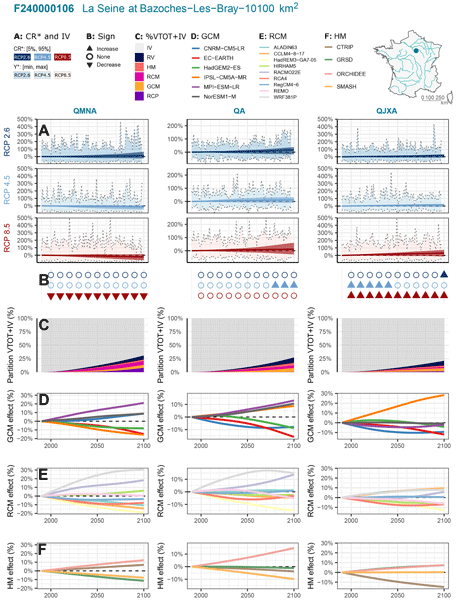
Explore2 provides hydrological projections for 1,735 French catchments. Using QUALYPSO (Quasi-Ergodic Analysis of Climate Projections Using Data Augmentation), this study assesses uncertainties, including internal variability. By the end of the century, low flows are projected to decline in southern France under high emissions, while other indicators remain uncertain. Emission scenarios and regional climate models are key uncertainty sources. Internal variability is often as large as climate-driven changes.
Robin Noyelle, Davide Faranda, Yoann Robin, Mathieu Vrac, and Pascal Yiou
Weather Clim. Dynam., 6, 817–839, https://doi.org/10.5194/wcd-6-817-2025, https://doi.org/10.5194/wcd-6-817-2025, 2025
Short summary
Short summary
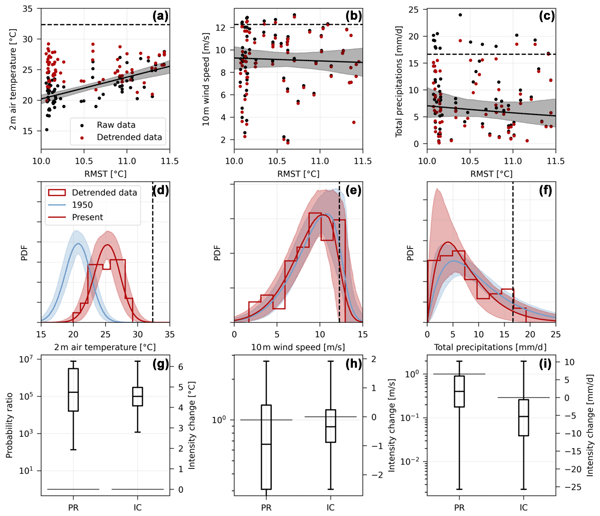
Properties of extreme meteorological and climatological events are changing under human-caused climate change. Extreme event attribution methods seek to estimate the contribution of global warming in the probability and intensity changes of extreme events. Here we propose a procedure to estimate these quantities for the flow analogue method, which compares the observed event to similar events in the past.

Robert Vautard, Geert Jan van Oldenborgh, Rémy Bonnet, Sihan Li, Yoann Robin, Sarah Kew, Sjoukje Philip, Jean-Michel Soubeyroux, Brigitte Dubuisson, Nicolas Viovy, Markus Reichstein, Friederike Otto, and Iñaki Garcia de Cortazar-Atauri
Nat. Hazards Earth Syst. Sci., 23, 1045–1058, https://doi.org/10.5194/nhess-23-1045-2023, https://doi.org/10.5194/nhess-23-1045-2023, 2023
Short summary
Short summary
A deep frost occurred in early April 2021, inducing severe damages in grapevine and fruit trees in France. We found that such extreme frosts occurring after the start of the growing season such as those of April 2021 are currently about 2°C colder [0.5 °C to 3.3 °C] in observations than in preindustrial climate. This observed intensification of growing-period frosts is attributable, at least in part, to human-caused climate change, making the 2021 event 50 % more likely [10 %–110 %].
Yoann Robin and Mathieu Vrac
Earth Syst. Dynam., 12, 1253–1273, https://doi.org/10.5194/esd-12-1253-2021, https://doi.org/10.5194/esd-12-1253-2021, 2021
Short summary
Short summary
We propose a new multivariate downscaling and bias correction approach called
time-shifted multivariate bias correction, which aims to correct temporal dependencies in addition to inter-variable and spatial ones. Our method is evaluated in a
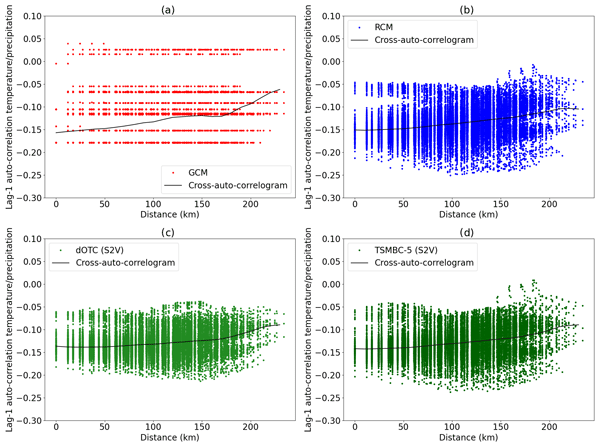
perfect model experimentcontext where simulations are used as pseudo-observations. The results show a large reduction of the biases in the temporal properties, while inter-variable and spatial dependence structures are still correctly adjusted.
Enora Cariou, Julien Cattiuaux, Saïd Qasmi, and Aurélien Ribes
EGUsphere, https://doi.org/10.5194/egusphere-2026-5426, https://doi.org/10.5194/egusphere-2026-5426, 2026
This preprint is open for discussion and under review for Weather and Climate Dynamics (WCD).
Short summary
Short summary
Europe has warmed rapidly in recent decades, partly due to changes in atmospheric circulation, but whether these circulation changes arise from natural variability or anthropogenic forcing remains unclear. Here, using neural network and statistical approaches, we quantify the forced and internal contributions to observed and projected dynamical changes. We further use this dynamical information to derive a new estimate of recent and future warming in Europe.
Greta Cazzaniga, Anastasia Akakpo-Numado, Patrick Brockmann, Adrien Burq, Mathieu Vrac, and Davide Faranda
Nat. Hazards Earth Syst. Sci., 26, 4741–4752, https://doi.org/10.5194/nhess-26-4741-2026, https://doi.org/10.5194/nhess-26-4741-2026, 2026
Short summary
Short summary
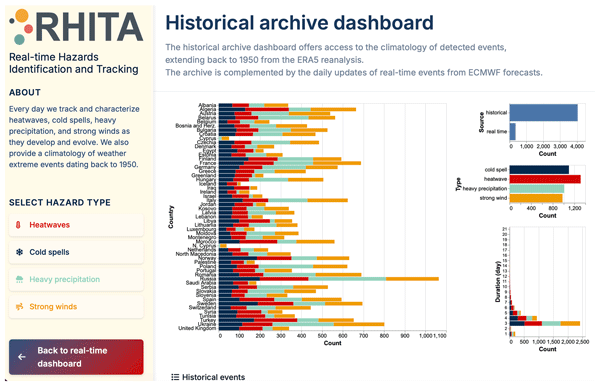
Extreme weather events are becoming more frequent and severe, creating a strong need for rapid and reliable information. We developed an open tool that automatically detects and tracks heatwaves, cold spells, heavy rain, and strong winds across Europe, both in real time and in past decades. By comparing current events with long historical records, the tool shows how unusual an event is and reveals clear increases in heatwaves, while other hazards show more mixed changes.
Adrien Burq, Jean Jouhaud, Victor Xing, Victor Bouvier, Vincent Forcadell, Mateusz Taszarek, Mathieu Vrac, and Davide Faranda
EGUsphere, https://doi.org/10.5194/egusphere-2026-4363, https://doi.org/10.5194/egusphere-2026-4363, 2026
Short summary
Short summary
Lightning is a small-scale process that climate and weather models cannot compute exactly, so it must be approximated. Here we build a deep learning model that predicts lightning across a whole region at once, using inputs from the whole region, and compare it to models that predict each pixel separately. Using this larger-scale information proves beneficial: our model outperforms the single-pixel ones. We also identify the spatial scale and the environmental predictors that matter most.
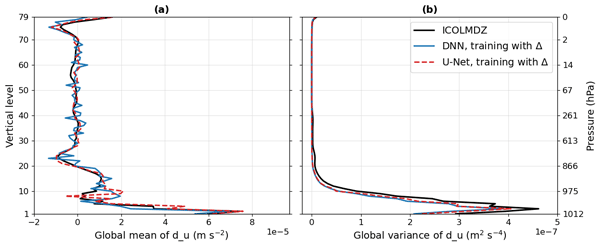
Ségolène Crossouard, Soulivanh Thao, Thomas Dubos, Masa Kageyama, Mathieu Vrac, and Yann Meurdesoif
Geosci. Model Dev., 19, 5907–5931, https://doi.org/10.5194/gmd-19-5907-2026, https://doi.org/10.5194/gmd-19-5907-2026, 2026
Short summary
Short summary
Current atmospheric models are limited by the computational time required for physical processes, known as physical parameterizations. To address this, we developed neural network-based emulators to replace these parameterizations in the IPSL climate model, using a simplified aquaplanet setup and a realistic configuration. We found that incorporating some physical knowledge, such as latent variables, into the learning process can improve predictions.
Grégoire Jacquemin, Mathieu Vrac, Xavier Freulon, and Denis Allard
EGUsphere, https://doi.org/10.5194/egusphere-2026-3269, https://doi.org/10.5194/egusphere-2026-3269, 2026
This preprint is open for discussion and under review for Natural Hazards and Earth System Sciences (NHESS).
Short summary
Short summary
The outputs of climate simulations can be used to project the evolution of compound events in terms of frequency, but they are known to be statistically biased. This study evaluates three bias correction methods on two extremal statistics. Results show that bias correction is necessary to improve the statistical characterization of compound events. This work also reveals that the evolution of compound events in the simulations is preserved by the bias correction methods most of the time.
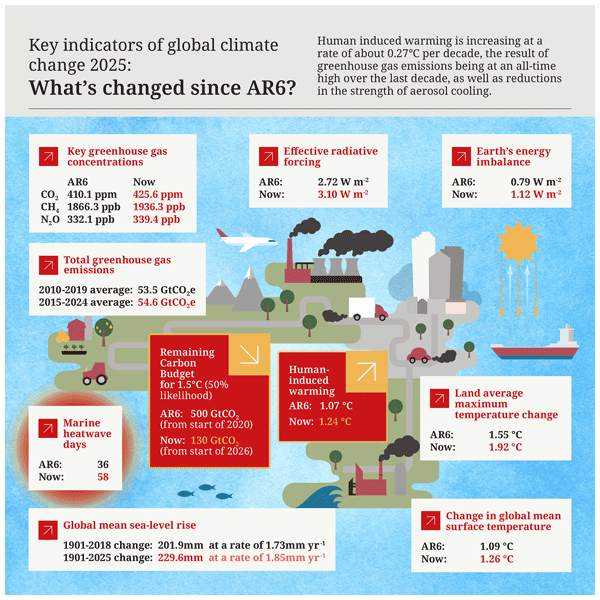
Piers M. Forster, Tristram Walsh, Chris Smith, William F. Lamb, Robin Lamboll, Christophe Cassou, Mathias Hauser, Zeke Hausfather, June-Yi Lee, Matthew D. Palmer, Karina von Schuckmann, Aimée B. A. Slangen, Sophie Szopa, Blair Trewin, Jeongeun Yun, Nathan P. Gillett, Stuart Jenkins, H. Damon Matthews, Krishnan Raghavan, Aurélien Ribes, Joeri Rogelj, Debbie Rosen, Xuebin Zhang, Myles Allen, Robbie M. Andrew, Chris Atkinson, Richard A. Betts, Antonio Bombelli, Samantha N. Burgess, Lijing Cheng, Helen E. Claxton, Pierre Friedlingstein, Thomas L. Frölicher, Catia M. Domingues, Thomas Gasser, Catherine H. Gregory, Rachel M. Hoesly, Daniel Huppmann, Masayoshi Ishii, Christopher Kadow, Alexia Karwat, John Kennedy, Rachel E. Killick, Mahesh V. M. Kovilakam, Paul B. Krummel, Xin Lan, Jean-François Lamarque, Aurélien Liné, Belén Martín-Míguez, Didier P. Monselesan, Colin Morice, Jens Mühle, Pino Mussak, Glen P. Peters, Anna Pirani, Julia Pongratz, Matthew Rigby, Robert Rohde, Abhishek Savita, Sonia I. Seneviratne, Steven J. Smith, Ghassan Taha, Caterina Tassone, Peter Thorne, Christopher Wells, Luke M. Western, Guido R. van der Werf, Susan E. Wijffels, Marco Zecchetto, Junting Zhong, Xiao-Ye Zhang, Valérie Masson-Delmotte, and Panmao Zhai
Earth Syst. Sci. Data, 18, 3889–3933, https://doi.org/10.5194/essd-18-3889-2026, https://doi.org/10.5194/essd-18-3889-2026, 2026
Short summary
Short summary
We give our annual update of key climate indicators. Our work quantifies the human contribution to global warming and the pace of climate change. This represents a large effort by the international community akin to an Intergovernmental Panel on Climate Change (IPCC) report.
Clara Naldesi, Nathalie Bertrand, Davide Faranda, and Mathieu Vrac
EGUsphere, https://doi.org/10.5194/egusphere-2026-1466, https://doi.org/10.5194/egusphere-2026-1466, 2026
Short summary
Short summary
The public increasingly needs to know whether and how climate change influences specific extreme events. ClimaMeter is a scientific tool designed to address this demand. This paper reviews the ClimaMeter methodology, focusing on how it estimates the relative roles of natural variability and climate change. We propose a more flexible and general approach within the same framework, enabling a more nuanced assessment of natural variability.
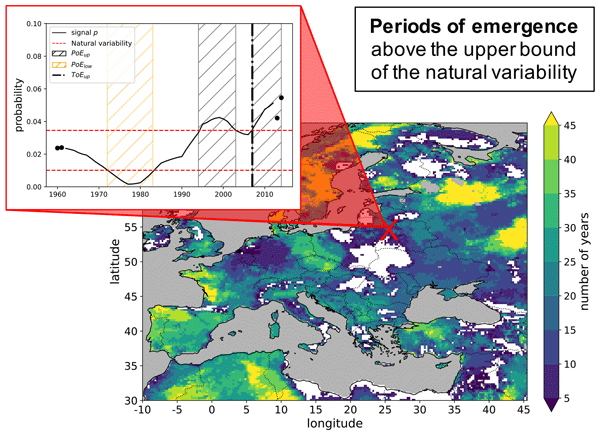
Joséphine Schmutz, Mathieu Vrac, Bastien François, and Burak Bulut
Nat. Hazards Earth Syst. Sci., 26, 881–900, https://doi.org/10.5194/nhess-26-881-2026, https://doi.org/10.5194/nhess-26-881-2026, 2026
Short summary
Short summary
In recent years, Europe has faced severe hot and dry events affecting biodiversity, agriculture, and health. Understanding past significant variation in their occurrence is key for adaptation. This paper identifies emerging hotspots in Europe and North Africa. Since the 1970s, the Iberian Peninsula, Maghreb, and Central Europe have seen more frequent events, driven by rising temperature maxima, while Eastern Europe has experienced a decline due to changes in drought.
Guillaume Evin, Benoit Hingray, Guillaume Thirel, Agnès Ducharne, Laurent Strohmenger, Lola Corre, Yves Tramblay, Jean-Philippe Vidal, Jérémie Bonneau, François Colleoni, Joël Gailhard, Florence Habets, Frédéric Hendrickx, Louis Héraut, Peng Huang, Matthieu Le Lay, Claire Magand, Paola Marson, Céline Monteil, Simon Munier, Alix Reverdy, Jean-Michel Soubeyroux, Yoann Robin, Jean-Pierre Vergnes, Mathieu Vrac, and Eric Sauquet
Hydrol. Earth Syst. Sci., 30, 1023–1051, https://doi.org/10.5194/hess-30-1023-2026, https://doi.org/10.5194/hess-30-1023-2026, 2026
Short summary
Short summary
Explore2 provides hydrological projections for 1,735 French catchments. Using QUALYPSO (Quasi-Ergodic Analysis of Climate Projections Using Data Augmentation), this study assesses uncertainties, including internal variability. By the end of the century, low flows are projected to decline in southern France under high emissions, while other indicators remain uncertain. Emission scenarios and regional climate models are key uncertainty sources. Internal variability is often as large as climate-driven changes.
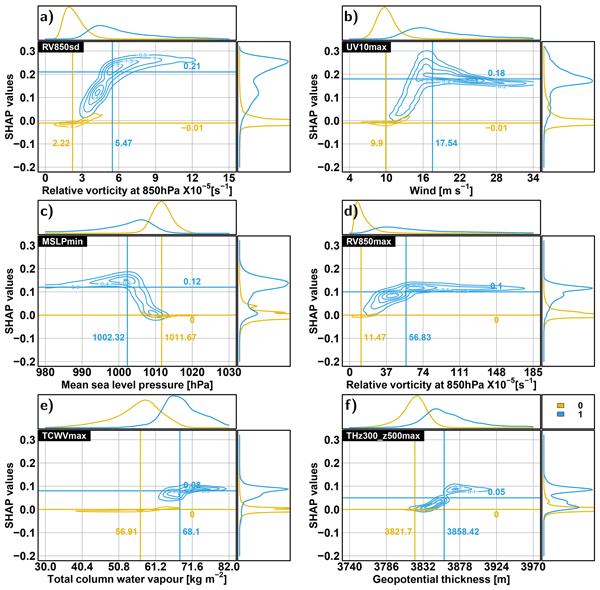
Pradeebane Vaittinada Ayar, Stella Bourdin, Davide Faranda, and Mathieu Vrac
Nat. Hazards Earth Syst. Sci., 25, 4655–4672, https://doi.org/10.5194/nhess-25-4655-2025, https://doi.org/10.5194/nhess-25-4655-2025, 2025
Short summary
Short summary
Tracking tropical cyclones (TCs) remains a matter of interest for investigating observed and simulated tropical cyclones. In this study, Random Forest (RF), a machine learning approach, is considered to track TCs. RF associates the TC occurrence or absence with different atmospheric configurations. Compared to trackers found in the literature, it shows similar performance for tracking TCs, better control over false alarms, more flexibility, and reveals key variables for TCs' detection.
Germain Bénard, Marion Gehlen, and Mathieu Vrac
EGUsphere, https://doi.org/10.5194/egusphere-2025-4680, https://doi.org/10.5194/egusphere-2025-4680, 2025
Preprint archived
Short summary
Short summary
Climate change is transforming ocean ecosystem dynamics. We used causality methods to study how the relationships between ocean physics and biogeochemistry will change in the North Atlantic over the next century. By analyzing five different climate models, we discovered that environmental drivers' influence on ocean productivity evolves in complex ways under global warming. One environmental driver can become of major importance while others can become irrelevant.
Paul C. Astagneau, Raul R. Wood, Mathieu Vrac, Sven Kotlarski, Pradeebane Vaittinada Ayar, Bastien François, and Manuela I. Brunner
Hydrol. Earth Syst. Sci., 29, 5695–5718, https://doi.org/10.5194/hess-29-5695-2025, https://doi.org/10.5194/hess-29-5695-2025, 2025
Short summary
Short summary
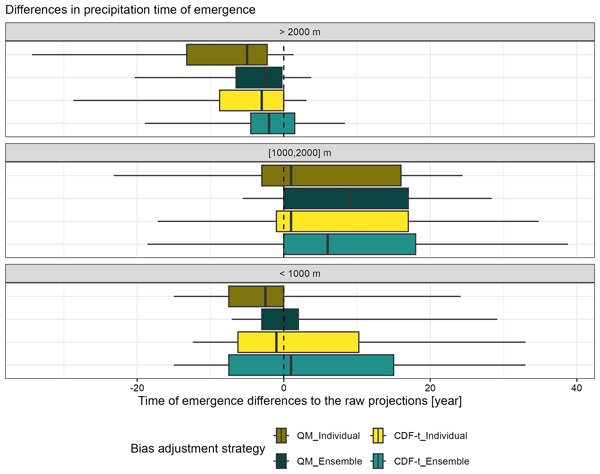
To study floods and droughts that are likely to change in the future, we use climate projections from climate models. However, we first need to adjust the systematic biases of these projections at the catchment scale before using them in hydrological models. Our study compares statistical methods that can adjust these biases but specifically for climate projections that enable a quantification of internal climate variability. We provide recommendations on the most appropriate methods.
Denis Allard, Mathieu Vrac, Bastien François, and Iñaki García de Cortázar-Atauri
Hydrol. Earth Syst. Sci., 29, 4711–4738, https://doi.org/10.5194/hess-29-4711-2025, https://doi.org/10.5194/hess-29-4711-2025, 2025
Short summary
Short summary
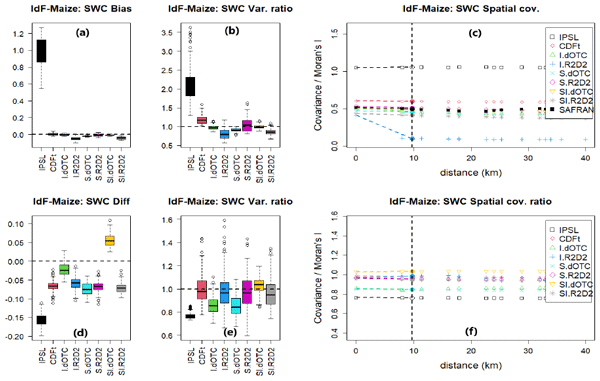
Atmospheric variables from climate models often present biases relative to the past. In order to use these models to assess the impact of climate change on processes of interest, it is necessary to correct these biases. We tested several Multivariate Bias Correction Methods (MBCMs) for 5 physical variables that are input variables for 4 process models. We provide recommendations regarding the use of MBCMs when multivariate and time dependent processes are involved.
Robin Noyelle, Davide Faranda, Yoann Robin, Mathieu Vrac, and Pascal Yiou
Weather Clim. Dynam., 6, 817–839, https://doi.org/10.5194/wcd-6-817-2025, https://doi.org/10.5194/wcd-6-817-2025, 2025
Short summary
Short summary
Properties of extreme meteorological and climatological events are changing under human-caused climate change. Extreme event attribution methods seek to estimate the contribution of global warming in the probability and intensity changes of extreme events. Here we propose a procedure to estimate these quantities for the flow analogue method, which compares the observed event to similar events in the past.
Duncan Pappert, Alexandre Tuel, Dim Coumou, Mathieu Vrac, and Olivia Martius
Weather Clim. Dynam., 6, 769–788, https://doi.org/10.5194/wcd-6-769-2025, https://doi.org/10.5194/wcd-6-769-2025, 2025
Short summary
Short summary
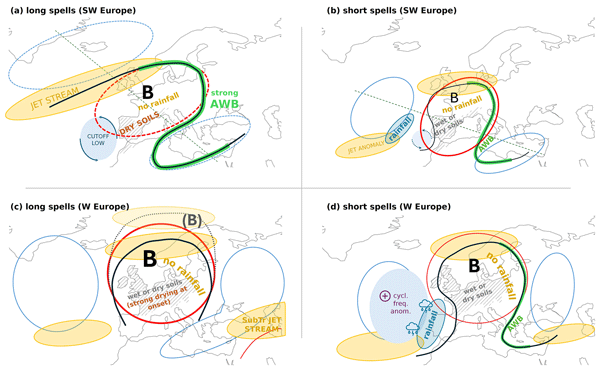
This study compares the dynamical structures that characterise long-lasting (persistent) and short hot spells in Western Europe. We find differences in large-scale atmospheric flow patterns during the events and particular soil moisture evolutions, which can account for the variation in event duration. There is variability in how drivers combine in individual events. Understanding persistent heat extremes can help improve their representation in models and ultimately their prediction.
Nathan P. Gillett, Isla R. Simpson, Gabi Hegerl, Reto Knutti, Dann Mitchell, Aurélien Ribes, Hideo Shiogama, Dáithí Stone, Claudia Tebaldi, Piotr Wolski, Wenxia Zhang, and Vivek K. Arora
Geosci. Model Dev., 18, 4399–4416, https://doi.org/10.5194/gmd-18-4399-2025, https://doi.org/10.5194/gmd-18-4399-2025, 2025
Short summary
Short summary
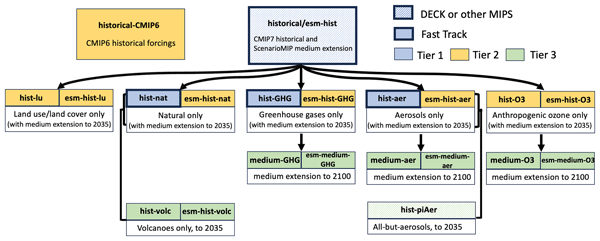
Climate model simulations of the response to human and natural influences together, natural climate influences alone and greenhouse gases alone are key to quantifying human influence on the climate. The last set of such coordinated simulations underpinned key findings in the last Intergovernmental Panel on Climate Change (IPCC) report. Here we propose a new set of such simulations to be used in the next generation of attribution studies and to underpin the next IPCC report.
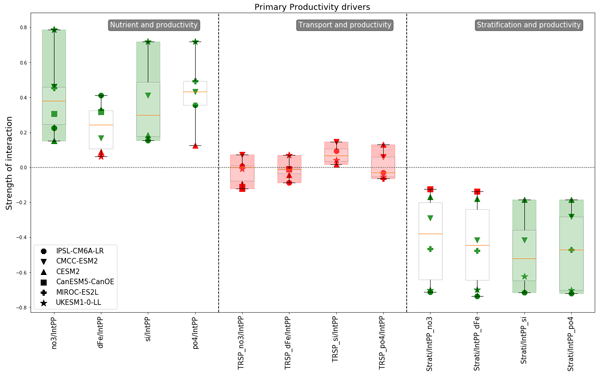
Germain Bénard, Marion Gehlen, and Mathieu Vrac
Earth Syst. Dynam., 16, 1085–1102, https://doi.org/10.5194/esd-16-1085-2025, https://doi.org/10.5194/esd-16-1085-2025, 2025
Short summary
Short summary
We introduce a novel approach to compare Earth system model output using a causality-based approach. The analysis of interactions between atmospheric, oceanic and biogeochemical variables in the North Atlantic subpolar gyre highlights the dynamics of each model. This method reveals potential underlying causes of model differences, offering a tool for enhanced model evaluation and improved understanding of complex Earth system dynamics under past and future climates.
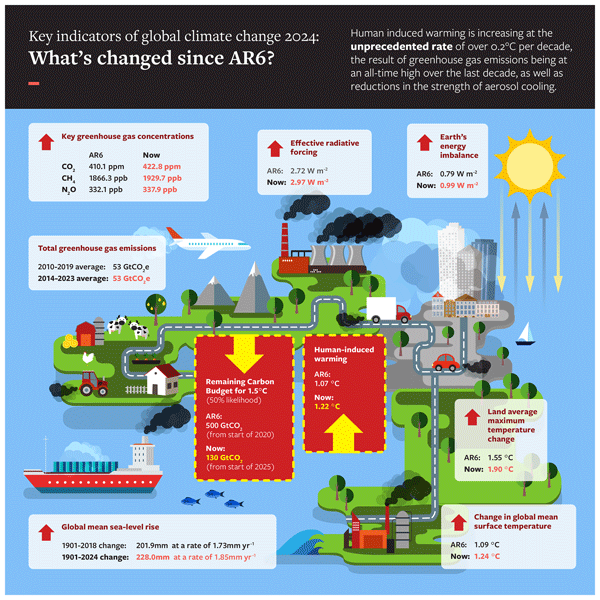
Piers M. Forster, Chris Smith, Tristram Walsh, William F. Lamb, Robin Lamboll, Christophe Cassou, Mathias Hauser, Zeke Hausfather, June-Yi Lee, Matthew D. Palmer, Karina von Schuckmann, Aimée B. A. Slangen, Sophie Szopa, Blair Trewin, Jeongeun Yun, Nathan P. Gillett, Stuart Jenkins, H. Damon Matthews, Krishnan Raghavan, Aurélien Ribes, Joeri Rogelj, Debbie Rosen, Xuebin Zhang, Myles Allen, Lara Aleluia Reis, Robbie M. Andrew, Richard A. Betts, Alex Borger, Jiddu A. Broersma, Samantha N. Burgess, Lijing Cheng, Pierre Friedlingstein, Catia M. Domingues, Marco Gambarini, Thomas Gasser, Johannes Gütschow, Masayoshi Ishii, Christopher Kadow, John Kennedy, Rachel E. Killick, Paul B. Krummel, Aurélien Liné, Didier P. Monselesan, Colin Morice, Jens Mühle, Vaishali Naik, Glen P. Peters, Anna Pirani, Julia Pongratz, Jan C. Minx, Matthew Rigby, Robert Rohde, Abhishek Savita, Sonia I. Seneviratne, Peter Thorne, Christopher Wells, Luke M. Western, Guido R. van der Werf, Susan E. Wijffels, Valérie Masson-Delmotte, and Panmao Zhai
Earth Syst. Sci. Data, 17, 2641–2680, https://doi.org/10.5194/essd-17-2641-2025, https://doi.org/10.5194/essd-17-2641-2025, 2025
Short summary
Short summary
In a rapidly changing climate, evidence-based decision-making benefits from up-to-date and timely information. Here we compile monitoring datasets to track real-world changes over time. To make our work relevant to policymakers, we follow methods from the Intergovernmental Panel on Climate Change (IPCC). Human activities are increasing the Earth's energy imbalance and driving faster sea-level rise compared to the IPCC assessment.
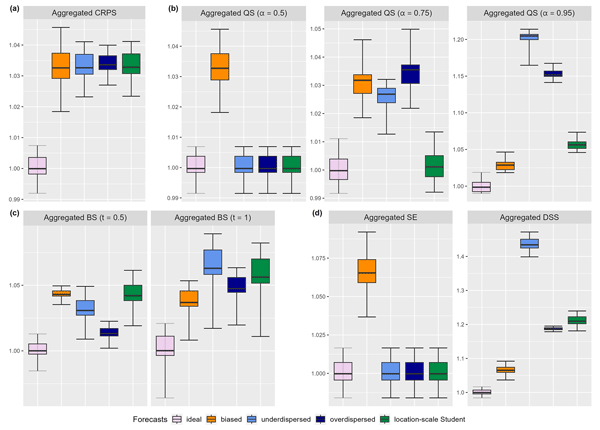
Romain Pic, Clément Dombry, Philippe Naveau, and Maxime Taillardat
Adv. Stat. Clim. Meteorol. Oceanogr., 11, 23–58, https://doi.org/10.5194/ascmo-11-23-2025, https://doi.org/10.5194/ascmo-11-23-2025, 2025
Short summary
Short summary
Correctly forecasting weather is crucial for decision-making in various fields. Standard multivariate verification tools have limitations, and a single tool cannot fully characterize predictive performance. We formalize a framework based on aggregation and transformation to build interpretable verification tools. These tools target specific features of forecasts, improving predictive performance characterization and bridging the gap between theoretical and physics-based tools.
Cedric Gacial Ngoungue Langue, Helene Brogniez, and Philippe Naveau
EGUsphere, https://doi.org/10.5194/egusphere-2024-3481, https://doi.org/10.5194/egusphere-2024-3481, 2025
Short summary
Short summary
This work evaluates the representation of total column water vapor and total cloud cover in General Circulation Models, ERA5 reanalysis and satellite data records from the European Space Agency Climate Change Initiative. A new technique, called "multiresolution analysis," is applied to this evaluation, which enables an analysis of model behavior across different temporal frequencies, from daily to decadal scales, including subseasonal and seasonal variations.
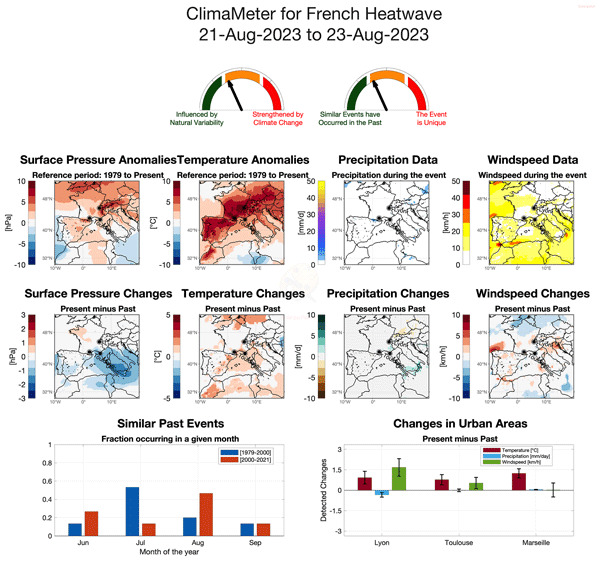
Davide Faranda, Gabriele Messori, Erika Coppola, Tommaso Alberti, Mathieu Vrac, Flavio Pons, Pascal Yiou, Marion Saint Lu, Andreia N. S. Hisi, Patrick Brockmann, Stavros Dafis, Gianmarco Mengaldo, and Robert Vautard
Weather Clim. Dynam., 5, 959–983, https://doi.org/10.5194/wcd-5-959-2024, https://doi.org/10.5194/wcd-5-959-2024, 2024
Short summary
Short summary
We introduce ClimaMeter, a tool offering real-time insights into extreme-weather events. Our tool unveils how climate change and natural variability affect these events, affecting communities worldwide. Our research equips policymakers and the public with essential knowledge, fostering informed decisions and enhancing climate resilience. We analysed two distinct events, showcasing ClimaMeter's global relevance.
Mathieu Vrac, Denis Allard, Grégoire Mariéthoz, Soulivanh Thao, and Lucas Schmutz
Earth Syst. Dynam., 15, 735–762, https://doi.org/10.5194/esd-15-735-2024, https://doi.org/10.5194/esd-15-735-2024, 2024
Short summary
Short summary
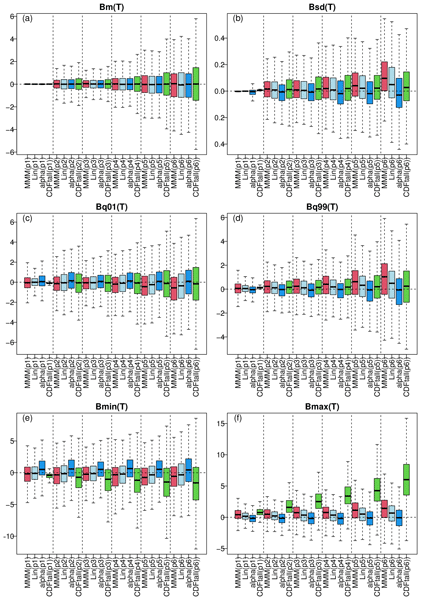
We aim to combine multiple global climate models (GCMs) to enhance the robustness of future projections. We introduce a novel approach, called "α pooling", aggregating the cumulative distribution functions (CDFs) of the models into a CDF more aligned with historical data. The new CDFs allow us to perform bias adjustment of all the raw climate simulations at once. Experiments with European temperature and precipitation demonstrate the superiority of this approach over conventional techniques.
Piers M. Forster, Chris Smith, Tristram Walsh, William F. Lamb, Robin Lamboll, Bradley Hall, Mathias Hauser, Aurélien Ribes, Debbie Rosen, Nathan P. Gillett, Matthew D. Palmer, Joeri Rogelj, Karina von Schuckmann, Blair Trewin, Myles Allen, Robbie Andrew, Richard A. Betts, Alex Borger, Tim Boyer, Jiddu A. Broersma, Carlo Buontempo, Samantha Burgess, Chiara Cagnazzo, Lijing Cheng, Pierre Friedlingstein, Andrew Gettelman, Johannes Gütschow, Masayoshi Ishii, Stuart Jenkins, Xin Lan, Colin Morice, Jens Mühle, Christopher Kadow, John Kennedy, Rachel E. Killick, Paul B. Krummel, Jan C. Minx, Gunnar Myhre, Vaishali Naik, Glen P. Peters, Anna Pirani, Julia Pongratz, Carl-Friedrich Schleussner, Sonia I. Seneviratne, Sophie Szopa, Peter Thorne, Mahesh V. M. Kovilakam, Elisa Majamäki, Jukka-Pekka Jalkanen, Margreet van Marle, Rachel M. Hoesly, Robert Rohde, Dominik Schumacher, Guido van der Werf, Russell Vose, Kirsten Zickfeld, Xuebin Zhang, Valérie Masson-Delmotte, and Panmao Zhai
Earth Syst. Sci. Data, 16, 2625–2658, https://doi.org/10.5194/essd-16-2625-2024, https://doi.org/10.5194/essd-16-2625-2024, 2024
Short summary
Short summary
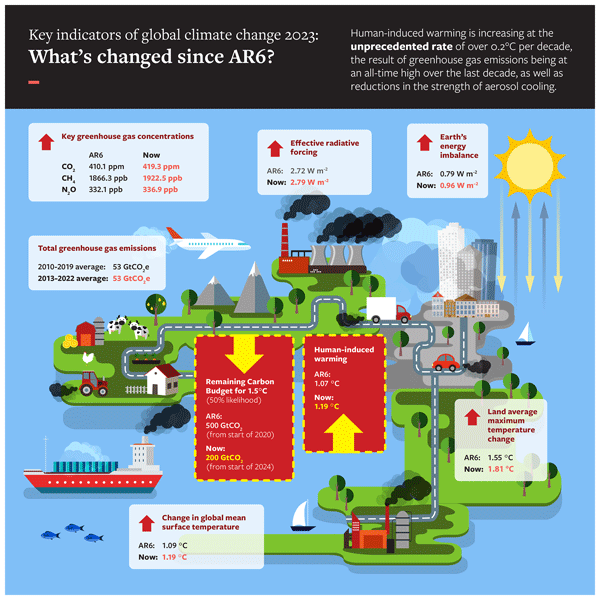
This paper tracks some key indicators of global warming through time, from 1850 through to the end of 2023. It is designed to give an authoritative estimate of global warming to date and its causes. We find that in 2023, global warming reached 1.3 °C and is increasing at over 0.2 °C per decade. This is caused by all-time-high greenhouse gas emissions.
Moctar Dembélé, Mathieu Vrac, Natalie Ceperley, Sander J. Zwart, Josh Larsen, Simon J. Dadson, Grégoire Mariéthoz, and Bettina Schaefli
Proc. IAHS, 385, 121–127, https://doi.org/10.5194/piahs-385-121-2024, https://doi.org/10.5194/piahs-385-121-2024, 2024
Short summary
Short summary
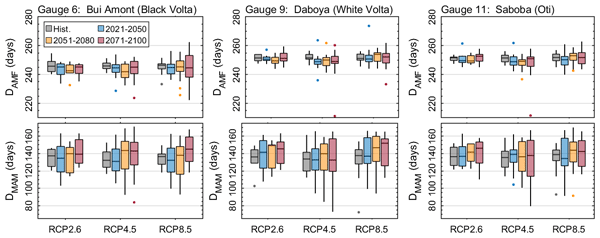
This study assesses the impact of climate change on the timing, seasonality and magnitude of mean annual minimum (MAM) flows and annual maximum flows (AMF) in the Volta River basin (VRB). Several climate change projection data are use to simulate river flow under multiple greenhouse gas emission scenarios. Future projections show that AMF could increase with various magnitude but negligible shift in time across the VRB, while MAM could decrease with up to 14 days of delay in occurrence.
Pauline Rivoire, Olivia Martius, Philippe Naveau, and Alexandre Tuel
Nat. Hazards Earth Syst. Sci., 23, 2857–2871, https://doi.org/10.5194/nhess-23-2857-2023, https://doi.org/10.5194/nhess-23-2857-2023, 2023
Short summary
Short summary
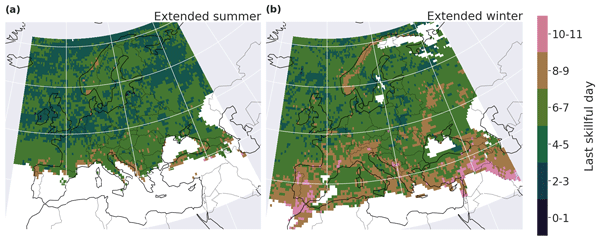
Heavy precipitation can lead to floods and landslides, resulting in widespread damage and significant casualties. Some of its impacts can be mitigated if reliable forecasts and warnings are available. In this article, we assess the capacity of the precipitation forecast provided by ECMWF to predict heavy precipitation events on a subseasonal-to-seasonal (S2S) timescale over Europe. We find that the forecast skill of such events is generally higher in winter than in summer.
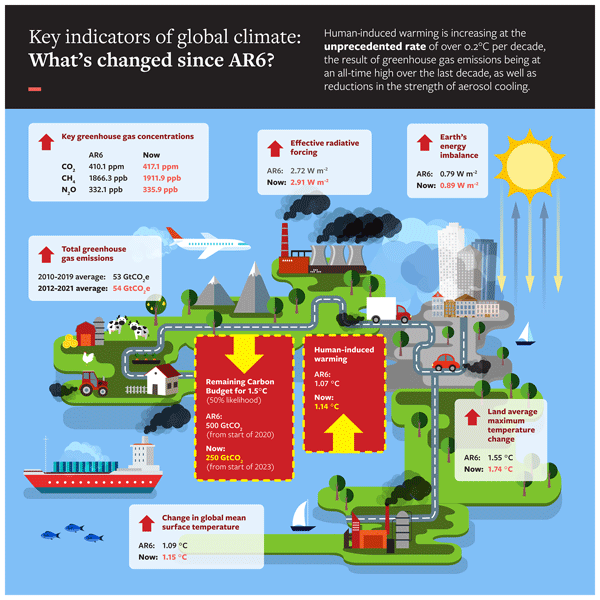
Piers M. Forster, Christopher J. Smith, Tristram Walsh, William F. Lamb, Robin Lamboll, Mathias Hauser, Aurélien Ribes, Debbie Rosen, Nathan Gillett, Matthew D. Palmer, Joeri Rogelj, Karina von Schuckmann, Sonia I. Seneviratne, Blair Trewin, Xuebin Zhang, Myles Allen, Robbie Andrew, Arlene Birt, Alex Borger, Tim Boyer, Jiddu A. Broersma, Lijing Cheng, Frank Dentener, Pierre Friedlingstein, José M. Gutiérrez, Johannes Gütschow, Bradley Hall, Masayoshi Ishii, Stuart Jenkins, Xin Lan, June-Yi Lee, Colin Morice, Christopher Kadow, John Kennedy, Rachel Killick, Jan C. Minx, Vaishali Naik, Glen P. Peters, Anna Pirani, Julia Pongratz, Carl-Friedrich Schleussner, Sophie Szopa, Peter Thorne, Robert Rohde, Maisa Rojas Corradi, Dominik Schumacher, Russell Vose, Kirsten Zickfeld, Valérie Masson-Delmotte, and Panmao Zhai
Earth Syst. Sci. Data, 15, 2295–2327, https://doi.org/10.5194/essd-15-2295-2023, https://doi.org/10.5194/essd-15-2295-2023, 2023
Short summary
Short summary
This is a critical decade for climate action, but there is no annual tracking of the level of human-induced warming. We build on the Intergovernmental Panel on Climate Change assessment reports that are authoritative but published infrequently to create a set of key global climate indicators that can be tracked through time. Our hope is that this becomes an important annual publication that policymakers, media, scientists and the public can refer to.

Adrien Guérou, Benoit Meyssignac, Pierre Prandi, Michaël Ablain, Aurélien Ribes, and François Bignalet-Cazalet
Ocean Sci., 19, 431–451, https://doi.org/10.5194/os-19-431-2023, https://doi.org/10.5194/os-19-431-2023, 2023
Short summary
Short summary
Based on the latest satellite observations published by the French space agency CNES, we present the current state of the sea level at the scale of the planet and assess its rise and acceleration over the past 29 years. To support scientific research we provide updated estimations of our confidence in our estimations and highlight key technological and scientific fields. Making progress on that will help to better characterize the sea level in the future.
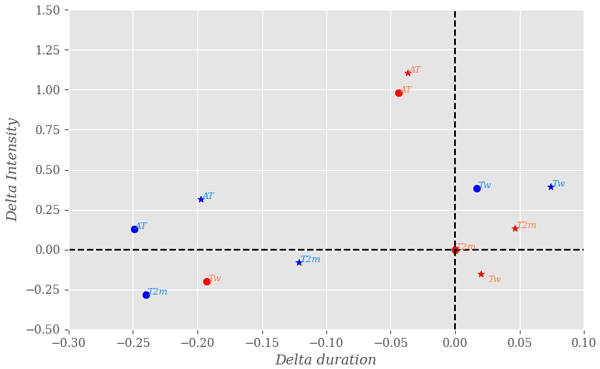
Cedric Gacial Ngoungue Langue, Christophe Lavaysse, Mathieu Vrac, and Cyrille Flamant
Nat. Hazards Earth Syst. Sci., 23, 1313–1333, https://doi.org/10.5194/nhess-23-1313-2023, https://doi.org/10.5194/nhess-23-1313-2023, 2023
Short summary
Short summary
Heat waves (HWs) are climatic hazards that affect the planet. We assess here uncertainties encountered in the process of HW detection and analyse their recent trends in West Africa using reanalysis data. Three types of uncertainty have been investigated. We identified 6 years with higher frequency of HWs, possibly due to higher sea surface temperatures in the equatorial Atlantic. We noticed an increase in HW characteristics during the last decade, which could be a consequence of climate change.
Robert Vautard, Geert Jan van Oldenborgh, Rémy Bonnet, Sihan Li, Yoann Robin, Sarah Kew, Sjoukje Philip, Jean-Michel Soubeyroux, Brigitte Dubuisson, Nicolas Viovy, Markus Reichstein, Friederike Otto, and Iñaki Garcia de Cortazar-Atauri
Nat. Hazards Earth Syst. Sci., 23, 1045–1058, https://doi.org/10.5194/nhess-23-1045-2023, https://doi.org/10.5194/nhess-23-1045-2023, 2023
Short summary
Short summary
A deep frost occurred in early April 2021, inducing severe damages in grapevine and fruit trees in France. We found that such extreme frosts occurring after the start of the growing season such as those of April 2021 are currently about 2°C colder [0.5 °C to 3.3 °C] in observations than in preindustrial climate. This observed intensification of growing-period frosts is attributable, at least in part, to human-caused climate change, making the 2021 event 50 % more likely [10 %–110 %].
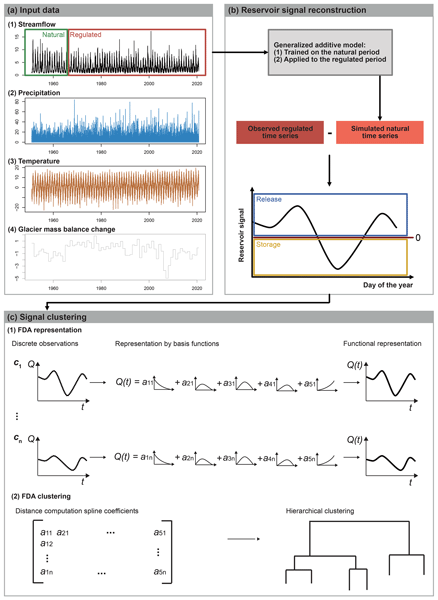
Manuela Irene Brunner and Philippe Naveau
Hydrol. Earth Syst. Sci., 27, 673–687, https://doi.org/10.5194/hess-27-673-2023, https://doi.org/10.5194/hess-27-673-2023, 2023
Short summary
Short summary
Reservoir regulation affects various streamflow characteristics. Still, information on when water is stored in and released from reservoirs is hardly available. We develop a statistical model to reconstruct reservoir operation signals from observed streamflow time series. By applying this approach to 74 catchments in the Alps, we find that reservoir management varies by catchment elevation and that seasonal redistribution from summer to winter is strongest in high-elevation catchments.
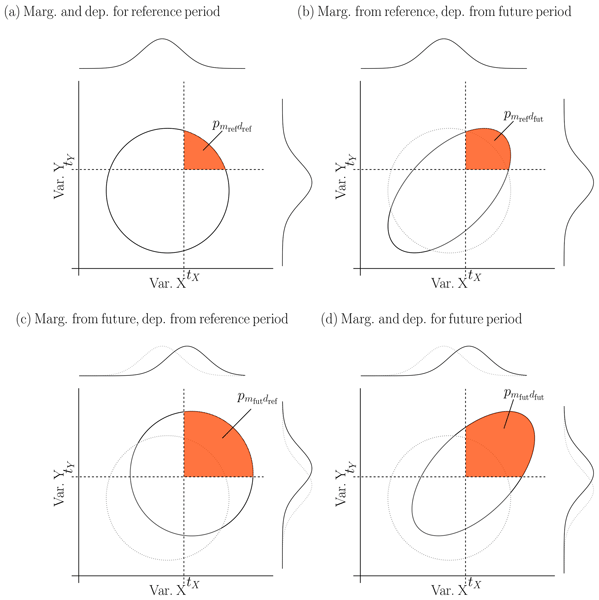
Bastien François and Mathieu Vrac
Nat. Hazards Earth Syst. Sci., 23, 21–44, https://doi.org/10.5194/nhess-23-21-2023, https://doi.org/10.5194/nhess-23-21-2023, 2023
Short summary
Short summary
Compound events (CEs) result from a combination of several climate phenomena. In this study, we propose a new methodology to assess the time of emergence of CE probabilities and to quantify the contribution of marginal and dependence properties of climate phenomena to the overall CE probability changes. By applying our methodology to two case studies, we show the importance of considering changes in both marginal and dependence properties for future risk assessments related to CEs.

Antoine Grisart, Mathieu Casado, Vasileios Gkinis, Bo Vinther, Philippe Naveau, Mathieu Vrac, Thomas Laepple, Bénédicte Minster, Frederic Prié, Barbara Stenni, Elise Fourré, Hans Christian Steen-Larsen, Jean Jouzel, Martin Werner, Katy Pol, Valérie Masson-Delmotte, Maria Hoerhold, Trevor Popp, and Amaelle Landais
Clim. Past, 18, 2289–2301, https://doi.org/10.5194/cp-18-2289-2022, https://doi.org/10.5194/cp-18-2289-2022, 2022
Short summary
Short summary
This paper presents a compilation of high-resolution (11 cm) water isotopic records, including published and new measurements, for the last 800 000 years from the EPICA Dome C ice core, Antarctica. Using this new combined water isotopes (δ18O and δD) dataset, we study the variability and possible influence of diffusion at the multi-decadal to multi-centennial scale. We observe a stronger variability at the onset of the interglacial interval corresponding to a warm period.
Aurélien Ribes, Julien Boé, Saïd Qasmi, Brigitte Dubuisson, Hervé Douville, and Laurent Terray
Earth Syst. Dynam., 13, 1397–1415, https://doi.org/10.5194/esd-13-1397-2022, https://doi.org/10.5194/esd-13-1397-2022, 2022
Short summary
Short summary
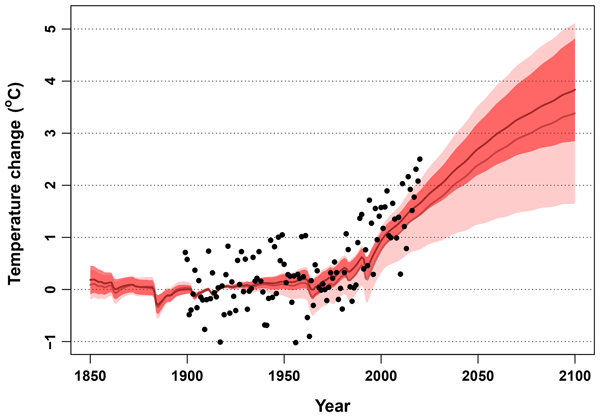
We use a novel statistical method to combine climate simulations and observations, and we deliver an updated assessment of past and future warming over France. As a key result, we find that the warming over that region was underestimated in previous multi-model ensembles by up to 50 %. We also assess the contribution of greenhouse gases, aerosols, and other factors to the observed warming, as well as the impact on the seasonal temperature cycle, and we discuss implications for climate services.
Moctar Dembélé, Mathieu Vrac, Natalie Ceperley, Sander J. Zwart, Josh Larsen, Simon J. Dadson, Grégoire Mariéthoz, and Bettina Schaefli
Hydrol. Earth Syst. Sci., 26, 1481–1506, https://doi.org/10.5194/hess-26-1481-2022, https://doi.org/10.5194/hess-26-1481-2022, 2022
Short summary
Short summary
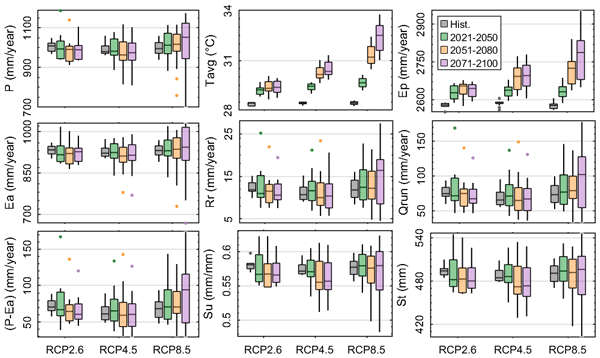
Climate change impacts on water resources in the Volta River basin are investigated under various global warming scenarios. Results reveal contrasting changes in future hydrological processes and water availability, depending on greenhouse gas emission scenarios, with implications for floods and drought occurrence over the 21st century. These findings provide insights for the elaboration of regional adaptation and mitigation strategies for climate change.
Yoann Robin and Mathieu Vrac
Earth Syst. Dynam., 12, 1253–1273, https://doi.org/10.5194/esd-12-1253-2021, https://doi.org/10.5194/esd-12-1253-2021, 2021
Short summary
Short summary
We propose a new multivariate downscaling and bias correction approach called
time-shifted multivariate bias correction, which aims to correct temporal dependencies in addition to inter-variable and spatial ones. Our method is evaluated in a
perfect model experimentcontext where simulations are used as pseudo-observations. The results show a large reduction of the biases in the temporal properties, while inter-variable and spatial dependence structures are still correctly adjusted.
Cited articles
Annan, J. D. and Hargreaves, J. C.: Reliability of the CMIP3 Ensemble, Geophys. Res. Lett., 37, https://doi.org/10.1029/2009GL041994, 2010. a
Auld, G., Hegerl, G. C., and Papastathopoulos, I.: Changes in the distribution of annual maximum temperatures in Europe, Adv. Stat. Clim. Meteorol. Oceanogr., 9, 45–66, https://doi.org/10.5194/ascmo-9-45-2023, 2023. a, b
Barnes, C., Boulanger, Y., Keeping, T., Gachon, P., Gillett, N., Boucher, J., Roberge, F., Kew, S., Haas, O., Heinrich, D., Vahlberg, M., Singh, R., Elbe, M., Sivanu, S., Arrighi, J., Van Aalst, M., Otto, F., Zachariah, M., Krikken, F., Wang, X., Erni, S., Pietropalo, E., Avis, A., Bisaillon, A., and Kimutai, J.: Climate Change More than Doubled the Likelihood of Extreme Fire Weather Conditions in Eastern Canada, Report, World Weather Attribution, https://doi.org/10.25561/105981, 2023. a, b
Bastos, A., Orth, R., Reichstein, M., Ciais, P., Viovy, N., Zaehle, S., Anthoni, P., Arneth, A., Gentine, P., Joetzjer, E., Lienert, S., Loughran, T., McGuire, P. C., O, S., Pongratz, J., and Sitch, S.: Vulnerability of European ecosystems to two compound dry and hot summers in 2018 and 2019, Earth Syst. Dynam., 12, 1015–1035, https://doi.org/10.5194/esd-12-1015-2021, 2021. a
Bentsen, M., Oliviè, D. J. L., Seland, Ø., Toniazzo, T., Gjermundsen, A., Graff, L. S., Debernard, J. B., Gupta, A. K., He, Y., Kirkevåg, A., Schwinger, J., Tjiputra, J., Aas, K. S., Bethke, I., Fan, Y., Griesfeller, J., Grini, A., Guo, C., Ilicak, M., Karset, I. H. H., Landgren, O. A., Liakka, J., Moseid, K. O., Nummelin, A., Spensberger, C., Tang, H., Zhang, Z., Heinze, C., Iversen, T., and Schulz, M.: NCC NorESM2-MM Model Output Prepared for CMIP6 CMIP, Earth System Grid Federation, https://doi.org/10.22033/ESGF/CMIP6.506, 2019. a, b
Betancourt, M.: A Conceptual Introduction to Hamiltonian Monte Carlo, arXiv [preprint], https://doi.org/10.48550/arXiv.1701.02434, 2018. a
Boucher, O., Servonnat, J., Albright, A. L., Aumont, O., Balkanski, Y., Bastrikov, V., Bekki, S., Bonnet, R., Bony, S., Bopp, L., Braconnot, P., Brockmann, P., Cadule, P., Caubel, A., Cheruy, F., Codron, F., Cozic, A., Cugnet, D., D'Andrea, F., Davini, P., de Lavergne, C., Denvil, S., Deshayes, J., Devilliers, M., Ducharne, A., Dufresne, J.-L., Dupont, E., Éthé, C., Fairhead, L., Falletti, L., Flavoni, S., Foujols, M.-A., Gardoll, S., Gastineau, G., Ghattas, J., Grandpeix, J.-Y., Guenet, B., Guez, Lionel, E., Guilyardi, E., Guimberteau, M., Hauglustaine, D., Hourdin, F., Idelkadi, A., Joussaume, S., Kageyama, M., Khodri, M., Krinner, G., Lebas, N., Levavasseur, G., Lévy, C., Li, L., Lott, F., Lurton, T., Luyssaert, S., Madec, G., Madeleine, J.-B., Maignan, F., Marchand, M., Marti, O., Mellul, L., Meurdesoif, Y., Mignot, J., Musat, I., Ottlé, C., Peylin, P., Planton, Y., Polcher, J., Rio, C., Rochetin, N., Rousset, C., Sepulchre, P., Sima, A., Swingedouw, D., Thiéblemont, R., Traore, A. K., Vancoppenolle, M., Vial, J., Vialard, J., Viovy, N., and Vuichard, N.: Presentation and Evaluation of the IPSL-CM6A-LR Climate Model, J. Adv. Model. Earth Sy., 12, e2019MS002010, https://doi.org/10.1029/2019MS002010, 2020. a, b
Brás, T. A., Seixas, J., Carvalhais, N., and Jägermeyr, J.: Severity of Drought and Heatwave Crop Losses Tripled over the Last Five Decades in Europe, Environ. Res. Lett., 16, 065012, https://doi.org/10.1088/1748-9326/abf004, 2021. a
Brooks, S., Gelman, A., Jones, G., and Meng, X.-L. (Eds.): Handbook of Markov Chain Monte Carlo, Chapman and Hall/CRC, New York, ISBN 978-0-429-13850-8, https://doi.org/10.1201/b10905, 2011. a
Brown, S. J., Murphy, J. M., Sexton, D. M. H., and Harris, G. R.: Climate Projections of Future Extreme Events Accounting for Modelling Uncertainties and Historical Simulation Biases, Clim. Dynam., 43, 2681–2705, https://doi.org/10.1007/s00382-014-2080-1, 2014. a, b
Brunner, L., Lorenz, R., Zumwald, M., and Knutti, R.: Quantifying Uncertainty in European Climate Projections Using Combined Performance-Independence Weighting, Environ. Res. Lett., 14, 124010, https://doi.org/10.1088/1748-9326/ab492f, 2019. a
Brunner, L., McSweeney, C., Ballinger, A. P., Befort, D. J., Benassi, M., Booth, B., Coppola, E., de Vries, H., Harris, G., Hegerl, G. C., Knutti, R., Lenderink, G., Lowe, J., Nogherotto, R., O'Reilly, C., Qasmi, S., Ribes, A., Stocchi, P., and Undorf, S.: Comparing Methods to Constrain Future European Climate Projections Using a Consistent Framework, J. Climate, 33, 8671–8692, https://doi.org/10.1175/JCLI-D-19-0953.1, 2020. a
Campbell, S., Remenyi, T. A., White, C. J., and Johnston, F. H.: Heatwave and Health Impact Research: A Global Review, Health Place, 53, 210–218, https://doi.org/10.1016/j.healthplace.2018.08.017, 2018. a
Ciavarella, A., Cotterill, D., Stott, P., Kew, S., Philip, S., van Oldenborgh, G. J., Skålevåg, A., Lorenz, P., Robin, Y., Otto, F., Hauser, M., Seneviratne, S. I., Lehner, F., and Zolina, O.: Prolonged Siberian Heat of 2020 Almost Impossible without Human Influence, Climatic Change, 166, 9, https://doi.org/10.1007/s10584-021-03052-w, 2021. a, b
Clarke, B., Barnes, C., Rodrigues, R., Zachariah, M., Stewart, S., Raju, E., Baumgart, N., Heinrich, D., Libonati, R., Santos, D., Albuquerque, R., Alves, L. M., Pinto, I., Otto, F., Kimutai, J., Philip, S., Kew, S., and Bazo, J.: Climate Change, Not El Niño, Main Driver of Extreme Drought in Highly Vulnerable Amazon River Basin, Report, World Weather Attribution, https://doi.org/10.25561/108761, 2024a. a
Clarke, B., Thorne, P., Ryan, C., Zachariah, M., Murphy, C., McCarthy, G., O'Connor, P., Erasanya, E. O., Cahill, N., Coonan, B., and Otto, F.: Climate Change Made the Extreme 2-Day Rainfall Event Associated with Flooding in Midleton, Ireland More Likely and More Intense, Report, World Weather Attribution, https://doi.org/10.25561/109420, 2024b. a
Coles, S.: An Introduction to Statistical Modeling of Extreme Values, Springer Series in Statistics, Springer, London, ISBN 978-1-84996-874-4, 978-1-4471-3675-0, https://doi.org/10.1007/978-1-4471-3675-0, 2001. a, b, c
Copernicus Climate Change Service: ERA5 hourly data on single levels from 1940 to present, Copernicus Climate Change Service (C3S) Climate Data Store (CDS) [data set], https://doi.org/10.24381/cds.adbb2d47, 2023. a
Cornes, R. C., van der Schrier, G., van den Besselaar, E. J. M., and Jones, P. D.: An Ensemble Version of the E-OBS Temperature and Precipitation Data Sets, J. Geophys. Res.-Atmos., 123, 9391–9409, https://doi.org/10.1029/2017JD028200, 2018. a
Dask Development Team: Dask: Library for Dynamic Task Scheduling, http://dask.pydata.org (last access: 19 March 2026), 2016. a
Diffenbaugh, N. S.: Verification of Extreme Event Attribution: Using out-of-Sample Observations to Assess Changes in Probabilities of Unprecedented Events, Sci. Adv., 6, eaay2368, https://doi.org/10.1126/sciadv.aay2368, 2020. a
D'Ippoliti, D., Michelozzi, P., Marino, C., de'Donato, F., Menne, B., Katsouyanni, K., Kirchmayer, U., Analitis, A., Medina-Ramón, M., Paldy, A., Atkinson, R., Kovats, S., Bisanti, L., Schneider, A., Lefranc, A., Iñiguez, C., and Perucci, C. A.: The Impact of Heat Waves on Mortality in 9 European Cities: Results from the EuroHEAT Project, Environ. Health, 9, 1–9, https://doi.org/10.1186/1476-069X-9-37, 2010. a
Dix, M., Bi, D., Dobrohotoff, P., Fiedler, R., Harman, I., Law, R., Mackallah, C., Marsland, S., O'Farrell, S., Rashid, H., Srbinovsky, J., Sullivan, A., Trenham, C., Vohralik, P., Watterson, I., Williams, G., Woodhouse, M., Bodman, R., Dias, F. B., Domingues, C. M., Hannah, N., Heerdegen, A., Savita, A., Wales, S., Allen, C., Druken, K., Evans, B., Richards, C., Ridzwan, S. M., Roberts, D., Smillie, J., Snow, K., Ward, M., and Yang, R.: CSIRO-ARCCSS ACCESS-CM2 Model Output Prepared for CMIP6 CMIP Historical, Earth System Grid Federation, https://doi.org/10.22033/ESGF/CMIP6.4271, 2019. a
Eaton, M. L.: Multivariate Statistics: A Vector Space Approach, Institute of Mathematical Statistics, ISBN 978-0-940600-69-0, 2007. a
EC-Earth: EC-Earth-Consortium EC-Earth3 Model Output Prepared for CMIP6 CMIP, Earth System Grid Federation, https://doi.org/10.22033/ESGF/CMIP6.181, 2019a. a
EC-Earth: EC-Earth-Consortium EC-Earth3-Veg Model Output Prepared for CMIP6 ScenarioMIP, Earth System Grid Federation, https://doi.org/10.22033/ESGF/CMIP6.727, 2019b. a
EC-Earth: EC-Earth-Consortium EC-Earth3-Veg-LR Model Output Prepared for CMIP6 CMIP, Earth System Grid Federation, https://doi.org/10.22033/ESGF/CMIP6.643, 2020. a
Eyring, V., Bony, S., Meehl, G. A., Senior, C. A., Stevens, B., Stouffer, R. J., and Taylor, K. E.: Overview of the Coupled Model Intercomparison Project Phase 6 (CMIP6) experimental design and organization, Geosci. Model Dev., 9, 1937–1958, https://doi.org/10.5194/gmd-9-1937-2016, 2016. a
Gelman, A., Gilks, W. R., and Roberts, G. O.: Weak Convergence and Optimal Scaling of Random Walk Metropolis Algorithms, Ann. Appl. Probab., 7, 110–120, https://doi.org/10.1214/aoap/1034625254, 1997. a
Gelman, A., Carlin, J. B., Stern, H. S., Dunson, D. B., Vehtari, A., and Rubin, D. B.: Bayesian Data Analysis, Chapman and Hall/CRC, New York, 3rd Edn., ISBN 978-0-429-11307-9, https://doi.org/10.1201/b16018, 2015. a
Good, P., Sellar, A., Tang, Y., Rumbold, S., Ellis, R., Kelley, D., Kuhlbrodt, T., and Walton, J.: MOHC UKESM1.0-LL Model Output Prepared for CMIP6 ScenarioMIP, Earth System Grid Federation, https://doi.org/10.22033/ESGF/CMIP6.1567, 2019. a
Hajima, T., Abe, M., Arakawa, O., Suzuki, T., Komuro, Y., Ogura, T., Ogochi, K., Watanabe, M., Yamamoto, A., Tatebe, H., Noguchi, M. A., Ohgaito, R., Ito, A., Yamazaki, D., Ito, A., Takata, K., Watanabe, S., Kawamiya, M., and Tachiiri, K.: MIROC MIROC-ES2L Model Output Prepared for CMIP6 CMIP, Earth System Grid Federation, https://doi.org/10.22033/ESGF/CMIP6.902, 2019. a
Harris, G. R., Sexton, D. M. H., Booth, B. B. B., Collins, M., and Murphy, J. M.: Probabilistic Projections of Transient Climate Change, Clim. Dynam., 40, 2937–2972, https://doi.org/10.1007/s00382-012-1647-y, 2013. a
Hastings, W. K.: Monte Carlo Sampling Methods Using Markov Chains and Their Applications, Biometrika, 57, 97–109, https://doi.org/10.1093/biomet/57.1.97, 1970. a, b
Hatfield, J. L. and Prueger, J. H.: Temperature Extremes: Effect on Plant Growth and Development, Weather Clim. Extrem., 10, 4–10, https://doi.org/10.1016/j.wace.2015.08.001, 2015. a
Hersbach, H., Bell, B., Berrisford, P., Hirahara, S., Horányi, A., Muñoz-Sabater, J., Nicolas, J., Peubey, C., Radu, R., Schepers, D., Simmons, A., Soci, C., Abdalla, S., Abellan, X., Balsamo, G., Bechtold, P., Biavati, G., Bidlot, J., Bonavita, M., Chiara, G., Dahlgren, P., Dee, D., Diamantakis, M., Dragani, R., Flemming, J., Forbes, R., Fuentes, M., Geer, A., Haimberger, L., Healy, S., Hogan, R. J., Hólm, E., Janisková, M., Keeley, S., Laloyaux, P., Lopez, P., Lupu, C., Radnoti, G., Rosnay, P., Rozum, I., Vamborg, F., Villaume, S., and Thépaut, J.-N.: The ERA5 Global Reanalysis, Q. J. Roy. Meteor. Soc., 146, 1999–2049, https://doi.org/10.1002/qj.3803, 2020. a, b, c
Hoffman, M. D. and Gelman, A.: The No-u-Turn Sampler: Adaptively Setting Path Lengths in Hamiltonian Monte Carlo, J. Mach. Learn. Res., 15, 1593–1623, 2014. a
Huang, W. T. K., Braithwaite, I., Charlton-Perez, A., Sarran, C., and Sun, T.: Non-Linear Response of Temperature-Related Mortality Risk to Global Warming in England and Wales, Environ. Res. Lett., 17, 034017, https://doi.org/10.1088/1748-9326/ac50d5, 2022. a
IPCC: Climate Change 2021: The Physical Science Basis. Contribution of Working Group I to the Sixth Assessment Report of the Intergovernmental Panel on Climate Change, Cambridge University Press, Cambridge, UK and New York, NY, USA, https://doi.org/10.1017/9781009157896, 2021. a
IPCC: Climate Change 2022: Impacts, Adaptation and Vulnerability. Contribution of Working Group II to the Sixth Assessment Report of the Intergovernmental Panel on Climate Change, Cambridge University Press, Cambridge, UK and New York, NY, USA, https://doi.org/10.1017/9781009325844, 2022a. a, b
IPCC: Climate Change 2022: Mitigation of Climate Change. Contribution of Working Group III to the Sixth Assessment Report of the Intergovernmental Panel on Climate Change, Cambridge University Press, Cambridge, UK and New York, NY, USA, https://doi.org/10.1017/9781009157926, 2022b. a
Jewson, S., Sweeting, T., and Jewson, L.: Reducing reliability bias in assessments of extreme weather risk using calibrating priors , Adv. Stat. Clim. Meteorol. Oceanogr., 11, 1–22, https://doi.org/10.5194/ascmo-11-1-2025, 2025. a
Knutti, R., Sedláček, J., Sanderson, B. M., Lorenz, R., Fischer, E. M., and Eyring, V.: A Climate Model Projection Weighting Scheme Accounting for Performance and Interdependence, Geophys. Res. Lett., 44, 1909–1918, https://doi.org/10.1002/2016GL072012, 2017. a
Krasting, J. P., John, J. G., Blanton, C., McHugh, C., Nikonov, S., Radhakrishnan, A., Rand, K., Zadeh, N. T., Balaji, V., Durachta, J., Dupuis, C., Menzel, R., Robinson, T., Underwood, S., Vahlenkamp, H., Dunne, K. A., Gauthier, P. P., Ginoux, P., Griffies, S. M., Hallberg, R., Harrison, M., Hurlin, W., Malyshev, S., Naik, V., Paulot, F., Paynter, D. J., Ploshay, J., Reichl, B. G., Schwarzkopf, D. M., Seman, C. J., Silvers, L., Wyman, B., Zeng, Y., Adcroft, A., Dunne, J. P., Dussin, R., Guo, H., He, J., Held, I. M., Horowitz, L. W., Lin, P., Milly, P., Shevliakova, E., Stock, C., Winton, M., Wittenberg, A. T., Xie, Y., and Zhao, M.: NOAA-GFDL GFDL-ESM4 Model Output Prepared for CMIP6 CMIP, Earth System Grid Federation, https://doi.org/10.22033/ESGF/CMIP6.1407, 2018. a
Lee, W.-L., Wang, Y.-C., Shiu, C.-J., Tsai, I., Tu, C.-Y., Lan, Y.-Y., Chen, J.-P., Pan, H.-L., and Hsu, H.-H.: Taiwan Earth System Model Version 1: description and evaluation of mean state, Geosci. Model Dev., 13, 3887–3904, https://doi.org/10.5194/gmd-13-3887-2020, 2020. a
Lenssen, N. J. L., Schmidt, G. A., Hansen, J. E., Menne, M. J., Persin, A., Ruedy, R., and Zyss, D.: Improvements in the GISTEMP Uncertainty Model, Geophys. Res.-Atmos., 124, 6307–6326, https://doi.org/10.1029/2018JD029522, 2019. a, b
Lovato, T., Peano, D., and Butenschön, M.: CMCC CMCC-ESM2 Model Output Prepared for CMIP6 CMIP, Earth System Grid Federation, https://doi.org/10.22033/ESGF/CMIP6.13164, 2021. a
Maher, N., Milinski, S., Suarez-Gutierrez, L., Botzet, M., Dobrynin, M., Kornblueh, L., Kröger, J., Takano, Y., Ghosh, R., Hedemann, C., Li, C., Li, H., Manzini, E., Notz, D., Putrasahan, D., Boysen, L., Claussen, M., Ilyina, T., Olonscheck, D., Raddatz, T., Stevens, B., and Marotzke, J.: The Max Planck Institute Grand Ensemble: Enabling the Exploration of Climate System Variability, J. Adv. Model. Earth Sy., 11, 2050–2069, https://doi.org/10.1029/2019MS001639, 2019. a
Martin, A., Fournier, É., and Jalbert, J.: Statistical estimation of probable maximum precipitation, Hydrol. Earth Syst. Sci., 29, 4811–4824, https://doi.org/10.5194/hess-29-4811-2025, 2025. a
Masselot, P., Mistry, M., Vanoli, J., Schneider, R., Iungman, T., Garcia-Leon, D., Ciscar, J.-C., Feyen, L., Orru, H., Urban, A., Breitner, S., Huber, V., Schneider, A., Samoli, E., Stafoggia, M., de'Donato, F., Rao, S., Armstrong, B., Nieuwenhuijsen, M., Vicedo-Cabrera, A. M., Gasparrini, A., MCC Collaborative Research Network, and EXHAUSTION project: Excess Mortality Attributed to Heat and Cold: A Health Impact Assessment Study in 854 Cities in Europe, Lancet Planet Health, 7, e271–e281, https://doi.org/10.1016/S2542-5196(23)00023-2, 2023. a
Mauritsen, T. and Roeckner, E.: Tuning the MPI-ESM1.2 Global Climate Model to Improve the Match With Instrumental Record Warming by Lowering Its Climate Sensitivity, J. Adv. Model. Earth Sy., 12, e2019MS002037, https://doi.org/10.1029/2019MS002037, 2020. a
Mauritsen, T., Bader, J., Becker, T., Behrens, J., Bittner, M., Brokopf, R., Brovkin, V., Claussen, M., Crueger, T., Esch, M., Fast, I., Fiedler, S., Fläschner, D., Gayler, V., Giorgetta, M., Goll, D. S., Haak, H., Hagemann, S., Hedemann, C., Hohenegger, C., Ilyina, T., Jahns, T., Jimenéz-de-la-Cuesta, D., Jungclaus, J., Kleinen, T., Kloster, S., Kracher, D., Kinne, S., Kleberg, D., Lasslop, G., Kornblueh, L., Marotzke, J., Matei, D., Meraner, K., Mikolajewicz, U., Modali, K., Möbis, B., Müller, W. A., Nabel, J. E. M. S., Nam, C. C. W., Notz, D., Nyawira, S.-S., Paulsen, H., Peters, K., Pincus, R., Pohlmann, H., Pongratz, J., Popp, M., Raddatz, T. J., Rast, S., Redler, R., Reick, C. H., Rohrschneider, T., Schemann, V., Schmidt, H., Schnur, R., Schulzweida, U., Six, K. D., Stein, L., Stemmler, I., Stevens, B., von Storch, J.-S., Tian, F., Voigt, A., Vrese, P., Wieners, K.-H., Wilkenskjeld, S., Winkler, A., and Roeckner, E.: Developments in the MPI-M Earth System Model Version 1.2 (MPI-ESM1.2) and Its Response to Increasing CO2, J. Adv. Model. Earth Sy., 11, 998–1038, https://doi.org/10.1029/2018MS001400, 2019. a
Metropolis, N., Rosenbluth, A. W., Rosenbluth, M. N., Teller, A. H., and Teller, E.: Equation of State Calculations by Fast Computing Machines, J. Chem. Phys., 21, 1087–1092, https://doi.org/10.1063/1.1699114, 1953. a, b
Miles, A., Jakirkham, Bussonnier, M., Moore, J., Orfanos, D. P., Bennett, D., Stansby, D., Hamman, J., Bourbeau, J., Fulton, A., Lee, G., Abernathey, R., Rzepka, N., Patel, Z., Kristensen, M. R. B., Verma, S., Chopra, S., Rocklin, M., AWA, A. B., Jones, M., Durant, M., de Andrade, E. S., Schut, V., Dussin, R., Chaudhary, S., Barnes, C., Nunez-Iglesias, J., and Shikharsg: Zarr-Developers/Zarr-Python, Zenodo [code], https://doi.org/10.5281/zenodo.3773449, 2024. a
Morice, C. P., Kennedy, J. J., Rayner, N. A., Winn, J. P., Hogan, E., Killick, R. E., Dunn, R. J. H., Osborn, T. J., Jones, P. D., and Simpson, I. R.: An Updated Assessment of Near-Surface Temperature Change From 1850: The HadCRUT5 Data Set, J. Geophys. Res.-Atmos., 126, e2019JD032361, https://doi.org/10.1029/2019JD032361, 2021. a, b
Naveau, P., Huser, R., Ribereau, P., and Hannart, A.: Modeling Jointly Low, Moderate, and Heavy Rainfall Intensities without a Threshold Selection, Water Resour. Res., 52, 2753–2769, https://doi.org/10.1002/2015WR018552, 2016. a
Noyelle, R., Zhang, Y., Yiou, P., and Faranda, D.: Maximal Reachable Temperatures for Western Europe in Current Climate, Environ. Res. Lett., 18, 094061, https://doi.org/10.1088/1748-9326/acf679, 2023. a
Noyelle, R., Robin, Y., Naveau, P., Yiou, P., and Faranda, D.: Integration of Physical Bound Constraints to Alleviate Shortcomings of Statistical Models for Extreme Temperatures, J. Climate, 1, https://doi.org/10.1175/JCLI-D-25-0112.1, 2026. a
O'Neill, B. C., Kriegler, E., Riahi, K., Ebi, K. L., Hallegatte, S., Carter, T. R., Mathur, R., and van Vuuren, D. P.: A New Scenario Framework for Climate Change Research: The Concept of Shared Socioeconomic Pathways, Climatic Change, 122, 387–400, https://doi.org/10.1007/s10584-013-0905-2, 2014. a
O'Neill, B. C., Tebaldi, C., van Vuuren, D. P., Eyring, V., Friedlingstein, P., Hurtt, G., Knutti, R., Kriegler, E., Lamarque, J.-F., Lowe, J., Meehl, G. A., Moss, R., Riahi, K., and Sanderson, B. M.: The Scenario Model Intercomparison Project (ScenarioMIP) for CMIP6, Geosci. Model Dev., 9, 3461–3482, https://doi.org/10.5194/gmd-9-3461-2016, 2016. a
Osborn, T. J., Jones, P. D., Lister, D. H., Morice, C. P., Simpson, I. R., Winn, J. P., Hogan, E., and Harris, I. C.: Land Surface Air Temperature Variations Across the Globe Updated to 2019: The CRUTEM5 Data Set, J. Geophys. Res.-Atmos., 126, e2019JD032352, https://doi.org/10.1029/2019JD032352, 2021. a, b
Otto, F. E. L., Barnes, C., Philip, S., Kew, S., van Oldenborgh, G. J., and Vautard, R.: Formally combining different lines of evidence in extreme-event attribution, Adv. Stat. Clim. Meteorol. Oceanogr., 10, 159–171, https://doi.org/10.5194/ascmo-10-159-2024, 2024. a
Perkins-Kirkpatrick, S. E., Alexander, L. V., King, A. D., Kew, S. F., Philip, S. Y., Barnes, C., Maraun, D., Stuart-Smith, R. F., Jézéquel, A., Bevacqua, E., Burgess, S., Fischer, E., Hegerl, G. C., Kimutai, J., Koren, G., Lawal, K. A., Min, S.-K., New, M., Odoulami, R. C., Patricola, C. M., Pinto, I., Ribes, A., Shaw, T. A., Thiery, W., Trewin, B., Vautard, R., Wehner, M., and Zscheischler, J.: Frontiers in Attributing Climate Extremes and Associated Impacts, Front. Clim., 6, https://doi.org/10.3389/fclim.2024.1455023, 2024. a
Philip, S., Kew, S., van Oldenborgh, G. J., Otto, F., Vautard, R., van der Wiel, K., King, A., Lott, F., Arrighi, J., Singh, R., and van Aalst, M.: A protocol for probabilistic extreme event attribution analyses, Adv. Stat. Clim. Meteorol. Oceanogr., 6, 177–203, https://doi.org/10.5194/ascmo-6-177-2020, 2020. a, b, c
Philip, S. Y., Kew, S. F., van Oldenborgh, G. J., Anslow, F. S., Seneviratne, S. I., Vautard, R., Coumou, D., Ebi, K. L., Arrighi, J., Singh, R., van Aalst, M., Pereira Marghidan, C., Wehner, M., Yang, W., Li, S., Schumacher, D. L., Hauser, M., Bonnet, R., Luu, L. N., Lehner, F., Gillett, N., Tradowsky, J. S., Vecchi, G. A., Rodell, C., Stull, R. B., Howard, R., and Otto, F. E. L.: Rapid attribution analysis of the extraordinary heat wave on the Pacific coast of the US and Canada in June 2021, Earth Syst. Dynam., 13, 1689–1713, https://doi.org/10.5194/esd-13-1689-2022, 2022. a, b
Pinto, I., Odoulami, R. C., Lawal, K. A., Olaniyan, E., Ibrahim, W. A., Guigma, K., Vahlberg, M., Heinrich, D., Marghidan, C. P., Vogel, M., Arrighi, J., Barnes, C., Otto, F., Philip, S., Mistry, M., Sengupta, S., Kew, S., and Kimutai, J.: Dangerous Humid Heat in Southern West Africa about 4 °C Hotter Due to Climate Change, Report, World Weather Attribution, https://doi.org/10.25561/110082, 2024. a
Pu, Y., Liu, H., Yan, R., Yang, H., Xia, K., Li, Y., Dong, L., Li, L., Wang, H., Nie, Y., Song, M., Xie, J., Zhao, S., Chen, K., Wang, B., Li, J., and Zuo, L.: CAS FGOALS-g3 Model Datasets for the CMIP6 Scenario Model Intercomparison Project (ScenarioMIP), Adv. Atmos. Sci., 37, 1081–1092, https://doi.org/10.1007/s00376-020-2032-0, 2020. a
Qasmi, S. and Ribes, A.: Reducing Uncertainty in Local Temperature Projections, Sci. Adv., 8, eabo6872, https://doi.org/10.1126/sciadv.abo6872, 2022. a, b
Radford, M. N.: MCMC Using Hamiltonian Dynamics, in: Handbook of Markov Chain Monte Carlo, book Section 5, Chapman and Hall/CRC, https://doi.org/10.1201/b10905, 2011. a
R Core Team: R: A Language and Environment for Statistical Computing, Vienna, Austria, https://www.R-project.org/ (last access: 19 March 2026), 2024. a
Ribes, A., Zwiers, F. W., Azaïs, J.-M., and Naveau, P.: A New Statistical Approach to Climate Change Detection and Attribution, Clim. Dynam., 48, 367–386, https://doi.org/10.1007/s00382-016-3079-6, 2017. a, b
Ribes, A., Thao, S., and Cattiaux, J.: Describing the Relationship between a Weather Event and Climate Change: A New Statistical Approach, J. Climate, 33, 6297–6314, https://doi.org/10.1175/JCLI-D-19-0217.1, 2020. a, b, c
Ribes, A., Qasmi, S., and Gillett, N. P.: Making Climate Projections Conditional on Historical Observations, Sci. Adv., 7, eabc0671, https://doi.org/10.1126/sciadv.abc0671, 2021. a, b, c
Ribes, A., Boé, J., Qasmi, S., Dubuisson, B., Douville, H., and Terray, L.: An updated assessment of past and future warming over France based on a regional observational constraint, Earth Syst. Dynam., 13, 1397–1415, https://doi.org/10.5194/esd-13-1397-2022, 2022. a
Robin, Y.: SDFC: Statistical Distribution Fit with Covariates, Zenodo [code], https://doi.org/10.5281/zenodo.10683176, 2020. a
Robin, Y.: ANKIALE: ANalysis of Klimate with Bayesian Inference: AppLication to Extreme Events, Zenodo [software], https://doi.org/10.5281/zenodo.15038388, 2025. a
Robin, Y. and Ribes, A.: NSSEA: Non-Stationary Statistics for Extreme Attribution, Zenodo [code], https://doi.org/10.5281/zenodo.4263904, 2020b. a, b
Rong, X., Li, J., Chen, H., Xin, Y., Su, J., Hua, L., Zhou, T., Qi, Y., Zhang, Z., Zhang, G., and Li, J.: The CAMS Climate System Model and a Basic Evaluation of Its Climatology and Climate Variability Simulation, J. Meteorol. Res., 32, 839–861, https://doi.org/10.1007/s13351-018-8058-x, 2018. a
Rougier, J., Goldstein, M., and House, L.: Second-Order Exchangeability Analysis for Multimodel Ensembles, J. Am. Stat. Assoc., 108, 852–863, https://doi.org/10.1080/01621459.2013.802963, 2013. a
Sanderson, B. M., Knutti, R., and Caldwell, P.: A Representative Democracy to Reduce Interdependency in a Multimodel Ensemble, J. Climate, 28, 5171–5194, https://doi.org/10.1175/JCLI-D-14-00362.1, 2015. a
Séférian, R., Nabat, P., Michou, M., Saint-Martin, D., Voldoire, A., Colin, J., Decharme, B., Delire, C., Berthet, S., Chevallier, M., Sénési, S., Franchisteguy, L., Vial, J., Mallet, M., Joetzjer, E., Geoffroy, O., Guérémy, J.-F., Moine, M.-P., Msadek, R., Ribes, A., Rocher, M., Roehrig, R., Salas-y-Mélia, D., Sanchez, E., Terray, L., Valcke, S., Waldman, R., Aumont, O., Bopp, L., Deshayes, J., Éthé, C., and Madec, G.: Evaluation of CNRM Earth System Model, CNRM-ESM2-1: Role of Earth System Processes in Present-Day and Future Climate, J. Adv. Model. Earth Sy., 11, 4182–4227, https://doi.org/10.1029/2019MS001791, 2019. a
Seland, Ø., Bentsen, M., Olivié, D., Toniazzo, T., Gjermundsen, A., Graff, L. S., Debernard, J. B., Gupta, A. K., He, Y.-C., Kirkevåg, A., Schwinger, J., Tjiputra, J., Aas, K. S., Bethke, I., Fan, Y., Griesfeller, J., Grini, A., Guo, C., Ilicak, M., Karset, I. H. H., Landgren, O., Liakka, J., Moseid, K. O., Nummelin, A., Spensberger, C., Tang, H., Zhang, Z., Heinze, C., Iversen, T., and Schulz, M.: Overview of the Norwegian Earth System Model (NorESM2) and key climate response of CMIP6 DECK, historical, and scenario simulations, Geosci. Model Dev., 13, 6165–6200, https://doi.org/10.5194/gmd-13-6165-2020, 2020. a, b
Semmler, T., Danilov, S., Rackow, T., Sidorenko, D., Barbi, D., Hegewald, J., Sein, D., Wang, Q., and Jung, T.: AWI AWI-CM1.1MR Model Output Prepared for CMIP6 CMIP, Earth System Grid Federation, https://doi.org/10.22033/ESGF/CMIP6.359, 2018. a
Seneviratne, S., Zhang, X., Adnan, M., Badi, W., Dereczynski, C., Di Luca, A., Ghosh, S., Iskandar, I., Kossin, J., Lewis, S., Otto, F., Pinto, I., Satoh, M., Vicente-Serrano, S., Wehner, M., and Zhou, B.: Weather and Climate Extreme Events in a Changing Climate, in: Climate Change 2021: The Physical Science Basis. Contribution of Working Group I to the Sixth Assessment Report of the Intergovernmental Panel on Climate Change, edited by: Masson-Delmotte, V., Zhai, P., Pirani, A., Connors, S. L., Péan, C., Berger, S., Caud, N., Chen, Y., Goldfarb, L., Gomis, M. I., Huang, M., Leitzell, K., Lonnoy, E., Matthews, J. B. R., Maycock, T. K., Waterfield, T., Yelekçi, O., Yu, R., and Zhou, B., book section 11, Cambridge University Press, Cambridge, UK and New York, NY, USA, https://doi.org/10.1017/9781009157896.013, 2021. a
Smith, C. J., Harris, G. R., Palmer, M. D., Bellouin, N., Collins, W., Myhre, G., Schulz, M., Golaz, J.-C., Ringer, M., Storelvmo, T., and Forster, P. M.: Energy Budget Constraints on the Time History of Aerosol Forcing and Climate Sensitivity, J. Geophys. Res.-Atmos., 126, e2020JD033622, https://doi.org/10.1029/2020JD033622, 2021. a, b
Swart, N. C., Cole, J. N. S., Kharin, V. V., Lazare, M., Scinocca, J. F., Gillett, N. P., Anstey, J., Arora, V., Christian, J. R., Hanna, S., Jiao, Y., Lee, W. G., Majaess, F., Saenko, O. A., Seiler, C., Seinen, C., Shao, A., Sigmond, M., Solheim, L., von Salzen, K., Yang, D., and Winter, B.: The Canadian Earth System Model version 5 (CanESM5.0.3), Geosci. Model Dev., 12, 4823–4873, https://doi.org/10.5194/gmd-12-4823-2019, 2019. a
Tatebe, H. and Watanabe, M.: MIROC MIROC6 Model Output Prepared for CMIP6 CMIP, Earth System Grid Federation, https://doi.org/10.22033/ESGF/CMIP6.881, 2018. a
UNSD: Standard Country or Area Codes for Statistical Use (M49), https://unstats.un.org/unsd/methodology/m49/ (last access: 19 March 2026), 2020. a
van Oldenborgh, G. J., P., S., S., K., Vautard, R., Boucher, O., Otto, F., Haustein, K., Soubeyroux, J.-M., Ribes, A., Robin, Y., Seneviratne, S. I., Vogel, M. M., Stott, P., and van Aalst, M.: Human Contribution to the Record-Breaking June 2019 Heat Wave in France, Report, World Weather Attribution (not peer reviewed), 2019. a
Van Rossum, G. and Drake, F. L.: Python 3 Reference Manual, CreateSpace, Scotts Valley, CA, ISBN 1-4414-1269-7, 2009. a
van Vuuren, D. P., Kriegler, E., O'Neill, B. C., Ebi, K. L., Riahi, K., Carter, T. R., Edmonds, J., Hallegatte, S., Kram, T., Mathur, R., and Winkler, H.: A New Scenario Framework for Climate Change Research: Scenario Matrix Architecture, Climatic Change, 122, 373–386, https://doi.org/10.1007/s10584-013-0906-1, 2014. a
Vautard, R., van Aalst, M., Boucher, O., Drouin, A., Haustein, K., Kreienkamp, F., van Oldenborgh, G. J., Otto, F. E. L., Ribes, A., Robin, Y., Schneider, M., Soubeyroux, J.-M., Stott, P., Seneviratne, S. I., Vogel, M. M., and Wehner, M.: Human Contribution to the Record-Breaking June and July 2019 Heatwaves in Western Europe, Environ. Res. Lett., 15, 094077, https://doi.org/10.1088/1748-9326/aba3d4, 2020. a
Virgin, J. G., Fletcher, C. G., Cole, J. N. S., von Salzen, K., and Mitovski, T.: Cloud Feedbacks from CanESM2 to CanESM5.0 and their influence on climate sensitivity, Geosci. Model Dev., 14, 5355–5372, https://doi.org/10.5194/gmd-14-5355-2021, 2021. a
Voldoire, A., Saint-Martin, D., Sénési, S., Decharme, B., Alias, A., Chevallier, M., Colin, J., Guérémy, J.-F., Michou, M., Moine, M.-P., Nabat, P., Roehrig, R., Salas y Mélia, D., Séférian, R., Valcke, S., Beau, I., Belamari, S., Berthet, S., Cassou, C., Cattiaux, J., Deshayes, J., Douville, H., Ethé, C., Franchistéguy, L., Geoffroy, O., Lévy, C., Madec, G., Meurdesoif, Y., Msadek, R., Ribes, A., Sanchez-Gomez, E., Terray, L., and Waldman, R.: Evaluation of CMIP6 DECK Experiments With CNRM-CM6-1, J. Adv. Model. Earth Sy., 11, 2177–2213, https://doi.org/10.1029/2019MS001683, 2019. a
Volodin, E., Mortikov, E., Gritsun, A., Lykossov, V., Galin, V., Diansky, N., Gusev, A., Kostrykin, S., Iakovlev, N., Shestakova, A., and Emelina, S.: INM INM-CM5-0 Model Output Prepared for CMIP6 CMIP, Earth System Grid Federation, https://doi.org/10.22033/ESGF/CMIP6.1423, 2019. a
Volodin, E. M., Mortikov, E. V., Kostrykin, S. V., Galin, V. Y., Lykossov, V. N., Gritsun, A. S., Diansky, N. A., Gusev, A. V., Iakovlev, N. G., Shestakova, A. A., and Emelina, S. V.: Simulation of the Modern Climate Using the INM-CM48 Climate Model, Russ. J. Numer. Anal. M., 33, 367–374, https://doi.org/10.1515/rnam-2018-0032, 2018. a
Wu, T., Lu, Y., Fang, Y., Xin, X., Li, L., Li, W., Jie, W., Zhang, J., Liu, Y., Zhang, L., Zhang, F., Zhang, Y., Wu, F., Li, J., Chu, M., Wang, Z., Shi, X., Liu, X., Wei, M., Huang, A., Zhang, Y., and Liu, X.: The Beijing Climate Center Climate System Model (BCC-CSM): the main progress from CMIP5 to CMIP6, Geosci. Model Dev., 12, 1573–1600, https://doi.org/10.5194/gmd-12-1573-2019, 2019. a
WWA: World Weather Attribution, https://www.worldweatherattribution.org/ (last access: 19 March 2026), 2024. a
Yukimoto, S., Koshiro, T., Kawai, H., Oshima, N., Yoshida, K., Urakawa, S., Tsujino, H., Deushi, M., Tanaka, T., Hosaka, M., Yoshimura, H., Shindo, E., Mizuta, R., Ishii, M., Obata, A., and Adachi, Y.: MRI MRI-ESM2.0 Model Output Prepared for CMIP6 CMIP, Earth System Grid Federation, https://doi.org/10.22033/ESGF/CMIP6.621, 2019. a
Zachariah, M., Kotroni, V., Kostas, L., Barnes, C., Kimutai, J., Kew, S., Pinto, I., Yang, W., Vahlberg, M., Singh, R., Thalheimer, D., Marghidan Pereira, C., Otto, F., Philip, S., El Hajj, R., El Khoury, C., Walsh, S., Spyratou, D., Tezapsidou, E., Salmela-Eckstein, S., Arrighi, J., and Bloemendaal, N.: Interplay of Climate Change-Exacerbated Rainfall, Exposure and Vulnerability Led to Widespread Impacts in the Mediterranean Region, Report, World Weather Attribution, https://doi.org/10.25561/106501, 2023a. a
Zachariah, M., Vautard, R., Chandrasekaran, R., Chaithra, S. T., Kimutai, J., Arulalan, T., AchutaRao, K., Barnes, C., Singh, R., Vahlberg, M., Arrgihi, J., Raju, E., Sharma, U., Ogra, A., Vaddhanaphuti, C., Bahinipati, C. S., Tschakert, P., Pereira Marghidan, C., Mondal, A., Schwingshackl, C., Philip, S., and Otto, F.: Extreme Humid Heat in South Asia in April 2023, Largely Driven by Climate Change, Detrimental to Vulnerable and Disadvantaged Communities, Report, World Weather Attribution, https://doi.org/10.25561/104092, 2023b. a, b, c
Zachariah, M., Clarke, B., Barnes, C., Vahlberg, M., Banthiya, A., Thalheimer, L., Otto, F., Kimutai, J., Arrighi, J., and Fisher, D.: Climate Change Increased Heavy Precipitation Associated with Impactful Storm Bettina over Black Sea, Report, World Weather Attribution, https://doi.org/10.25561/108704, 2024. a
Zeder, J., Sippel, S., Pasche, O. C., Engelke, S., and Fischer, E. M.: The Effect of a Short Observational Record on the Statistics of Temperature Extremes, Geophys. Res. Lett., 50, e2023GL104090, https://doi.org/10.1029/2023GL104090, 2023. a, b
Zhang, Y. and Boos, W. R.: An Upper Bound for Extreme Temperatures over Midlatitude Land, P. Natl. Acad. Sci., 120, e2215278120, https://doi.org/10.1073/pnas.2215278120, 2023. a
Ziehn, T., Chamberlain, M. A., Law, R. M., Lenton, A., Bodman, R. W., Dix, M., Stevens, L., Wang, Y.-P., and Srbinovsky, J.: The Australian Earth System Model: ACCESS-ESM1.5, J. South. Hemisphere Earth Syst. Sci., 70, 193–214, https://doi.org/10.1071/ES19035, 2020. a
Zuo, J., Pullen, S., Palmer, J., Bennetts, H., Chileshe, N., and Ma, T.: Impacts of Heat Waves and Corresponding Measures: A Review, J. Clean. Prod., 92, 1–12, https://doi.org/10.1016/j.jclepro.2014.12.078, 2015. a
Short summary
We describe an improved method and the associated free licensed package ANKIALE (ANalysis of Klimate with bayesian Inference: AppLication to extreme Events) for estimating the statistics of temperature extremes. This method uses climate model simulations (including multiple scenarios simultaneously) to provide a prior of the real-world changes, constrained by the observations. The method and the tool are illustrated via an application to temperature over Europe until 2100, for four scenarios.
We describe an improved method and the associated free licensed package ANKIALE (ANalysis of...


