
Articles | Volume 19, issue 5
https://doi.org/10.5194/gmd-19-2197-2026
© Author(s) 2026. This work is distributed under
the Creative Commons Attribution 4.0 License.
the Creative Commons Attribution 4.0 License.
https://doi.org/10.5194/gmd-19-2197-2026
© Author(s) 2026. This work is distributed under
the Creative Commons Attribution 4.0 License.
the Creative Commons Attribution 4.0 License.
Model evaluation paper
| 
17 Mar 2026
Model evaluation paper |
| 17 Mar 2026
| 17 Mar 2026
Assessing and enhancing Noah-MP land surface modeling over tropical forests using machine learning techniques

Asian School of the Environment, Nanyang Technological University, Singapore, Singapore
Centre for Climate Research Singapore, Singapore, Singapore
Yaomin Wang
Department of Civil and Environmental Engineering, National University of Singapore, Singapore, Singapore
Kalli Furtado
Centre for Climate Research Singapore, Singapore, Singapore
Cenlin He
NSF National Center for Atmospheric Research, Boulder, Colorado, USA
Fei Chen
Division of Environment and Sustainability, The Hong Kong University of Science and Technology, Hong Kong SAR, China
Alan D. Ziegler
Andaman Coastal Research Station for Development, Faculty of Fisheries, Kasetsart University, Ranong, Thailand
Song Chen
Centre for Climate Research Singapore, Singapore, Singapore
Matteo Detto
Department of Civil and Environmental Engineering, Princeton University, Princeton, New Jersey, USA
Smithsonian Tropical Research Institute, Panama City, Panama
Yuna Mao
State Key Laboratory of Earth Surface Processes and Disaster Risk Reduction, Faculty of Geographical Science, Beijing Normal University, Beijing, China
Baoxiang Pan
Institute of Atmospheric Physics, Chinese Academy of Sciences, Beijing, China
Yoshiko Kosugi
Laboratory of Forest Hydrology, Division of Forest and Biomaterials Science, Graduate School of Agriculture, Kyoto University, Kyoto, Japan
Marryanna Lion
Forest Research Institute Malaysia, Kepong, Selangor, Malaysia
Shoji Noguchi
Tohoku Research Center, Forestry and Forest Products Research Institute, Iwate, Japan
Satoru Takanashi
Kansai Research Center, Forestry and Forest Products Research Institute, Kyoto, Japan
Lulie Melling
UN Sustainable Development Solutions Network, Asia Headquarters, Sunway University, Bandar Sunway, Selangor, Malaysia
Baoqing Zhang
Key Laboratory of West China's Environmental Systems (Ministry of Education), College of Earth and Environmental Sciences, Lanzhou University, Lanzhou, Gansu, China
Related authors
Yilin Fang, L. Ruby Leung, Charles D. Koven, Gautam Bisht, Matteo Detto, Yanyan Cheng, Nate McDowell, Helene Muller-Landau, S. Joseph Wright, and Jeffrey Q. Chambers
Geosci. Model Dev., 15, 7879–7901, https://doi.org/10.5194/gmd-15-7879-2022, https://doi.org/10.5194/gmd-15-7879-2022, 2022
Short summary
Short summary
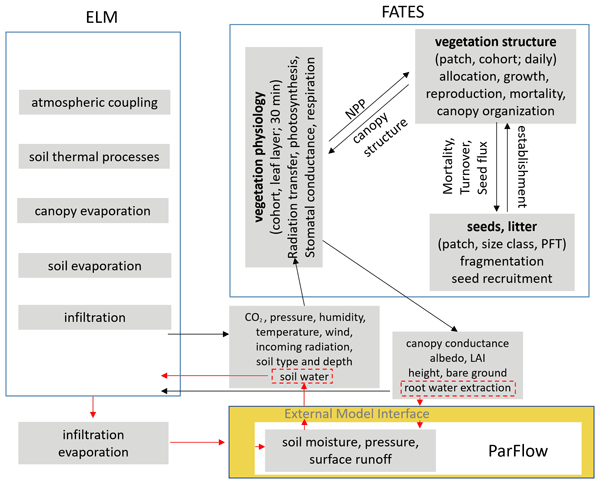
We develop a model that integrates an Earth system model with a three-dimensional hydrology model to explicitly resolve hillslope topography and water flow underneath the land surface to understand how local-scale hydrologic processes modulate vegetation along water availability gradients. Our coupled model can be used to improve the understanding of the diverse impact of local heterogeneity and water flux on nutrient availability and plant communities.
Alexandra E. Ng, Manish Shrivastava, Brian Gaudet, Cenlin He, Zezhen Cheng, and William Vizuete
EGUsphere, https://doi.org/10.5194/egusphere-2026-5534, https://doi.org/10.5194/egusphere-2026-5534, 2026
This preprint is open for discussion and under review for Atmospheric Chemistry and Physics (ACP).
Short summary
Short summary
Wildfire smoke contains dark particles called tar balls that absorb sunlight and warm the air, but air quality and climate models usually leave them out. We added tar balls to a model of the southeastern United States and compared it with aircraft and ground measurements. Including them, and accounting for the coatings that form around them, raised the sunlight absorbed by smoke by up to 6 %. Models that omit tar balls may therefore underestimate warming from wildfires.
Harsh G. Kamath, Gordon B. Bonan, Zong-Liang Yang, Ronnie Abolafia-Rosenzweig, Cenlin He, Ashley Matheny, and Dev Niyogi
EGUsphere, https://doi.org/10.5194/egusphere-2026-4875, https://doi.org/10.5194/egusphere-2026-4875, 2026
This preprint is open for discussion and under review for Geoscientific Model Development (GMD).
Short summary
Short summary
Noah-MP-ML² v1.0 extends the community Noah-MP land surface model with a multilayer canopy, improved radiation and turbulence schemes, Medlyn stomatal conductance, and a mass-conserving Richards-equation solver. Evaluation at five forest FLUXNET sites shows improved simulation of friction velocity, turbulent heat fluxes, and vertical soil-moisture dynamics while identifying remaining uncertainties in soil hydraulic properties, rooting profiles, and plant hydraulics.
Zhilong Fan, Lu Li, Zhongwang Wei, Shupeng Zhang, Sisi Chen, Xingjie Lu, Wei Shangguan, Nan Wei, Hua Yuan, Pan Zhang, Jiaxin Tian, Jianhong Zhou, Baoxiang Pan, Wei Han, and Yongjiu Dai
EGUsphere, https://doi.org/10.5194/egusphere-2026-5358, https://doi.org/10.5194/egusphere-2026-5358, 2026
This preprint is open for discussion and under review for Geoscientific Model Development (GMD).
Short summary
Short summary
We developed a new land data assimilation framework based on deep generative models. Compared with existing methods, it better handles non-Gaussian model errors and noisy observations. Tests in both an idealized system and a realistic land data assimilation experiment showed more accurate and consistent estimates, demonstrating its potential for improving land-state estimation with complex land surface models.
Anna-Maria Virkkala, Isabel Wargowsky, Judith Vogt, McKenzie A. Kuhn, Simran Madaan, Tiffany Windholz, Kyle A. Arndt, Gerard Rocher-Ros, Mathias Göckede, David Olefeldt, Edward A. G. Schuur, David Bastviken, Richard O'Keefe, Brendan M. Rogers, Jennifer D. Watts, Kelcy Kent, Kristoffer Aalstad, Kelly Aho, Joonatan Ala-Könni, Haley Alcock, Inge Althuizen, Christopher D. Arp, Jun Asanuma, Mika Aurela, Sivakiruthika Balathandayuthabani, Katrin Attermeyer, Alan Barr, Maialen Barret, Ochirbat Batkhishig, Christina Biasi, Mats P. Björkman, Andrew Black, Elena Blanc-Betes, Pascal Bodmer, Julia Boike, Abdullah Bolek, Frédéric Bouchard, Ingeborg Bussmann, Lea Cabrol, Eleonora Canfora, Sean Carey, Karel Castro-Morales, Namyi Chae, Andreas Christen, Torben R. Christensen, Casper T. Christiansen, Housen Chu, Graham Clark, Francois Clayer, Patrick Crill, Christopher Cunada, Scott J. Davidson, Joshua F. Dean, Sigrid Dengel, Matteo Detto, Catherine Dieleman, Florent Domine, Egor Dyukarev, Colin Edgar, Bo Elberling, Craig A. Emmerton, Eugenie Euskirchen, Grant Falvo, Thomas Friborg, Michelle Garneau, Mariasilvia Giamberini, Mikhail V. Glagolev, Miquel A. Gonzalez-Meler, Gustaf Granath, Jón Guðmundsson, Konsta Happonen, Yoshinobu Harazono, Lorna Harris, Josh Hashemi, Nicholas Hasson, Janna Heerah, Liam Heffernan, Manuel Helbig, Warren Helgason, Michal Heliasz, Greg Henry, Geert Hensgens, Tetsuya Hiyama, Beth Holmes, Macall Hock, David Holl, Jutta Holst, Thomas Holst, Gabriel Hould-Gosselin, Elyn Humphreys, Jacqueline Hung, Jussi Huotari, Hiroki Ikawa, Danil V. Ilyasov, Mamoru Ishikawa, Go Iwahana, Hiroki Iwata, Marcin Antoni Jackowicz-Korczynski, Joachim Jansen, Järvi Järveoja, Vincent E. J. Jassey, Rasmus Jensen, Katharina Jentzsch, Robert G. Jespersen, Carl-Fredrik Johannesson, Cheristy P. Jones, Anders Jonsson, Ji Young Jung, Sari Juutinen, Evan Kane, Jan Karlsson, Sergey Karsanaev, Kuno Kasak, Julia Kelly, Kasha Kempton, Marcus Klaus, George W. Kling, Natascha Kljun, Jacqueline Knutson, Hideki Kobayashi, John Kochendorfer, Kukka-Maaria Kohonen, Pasi Kolari, Mika Korkiakoski, Aino Korrensalo, Pirkko Kortelainen, Egle Koster, Kajar Koster, Ayumi Kotani, Praveena Krishnan, Juliya Kurbatova, Lars Kutzbach, Min Jung Kwon, Ethan D. Kyzivat, Jessica Lagroix, Theodore Langhorst, Elena Lapshina, Tuula Larmola, Klaus S. Larsen, Isabelle Laurion, Justin Ledman, Hanna Lee, A. Joshua Leffler, Lance Lesack, Anders Lindroth, David Lipson, Annalea Lohila, Efrén López-Blanco, Vincent L. St. Louis, Erik Lundin, Miska Luoto, Takashi Machimura, Marta Magnani, Avni Malhotra, Marja Maljanen, Ivan Mammarella, Elisa Männistö, Luca Belelli Marchesini, Phil Marsh, Pertti J. Martikainen, Maija E. Marushchak, Mikhail Mastepanov, Alex Mavrovic, Trofim Maximov, Christina Minions, Daniel F. Nadeau, Marco Montemayor, Tomoaki Morishita, Patrick Murphy, Erin Nicholls, Mats B. Nilsson, Anastasia Niyazova, Jenni Nordén, Koffi Dodji Noumonvi, Hannu Nykänen, Walter Oechel, Anne Ojala, Tomohiro Okadera, Sujan Pal, Alexey V. Panov, Tim Papakyriakou, Dario Papale, Sang-Jong Park, Frans-Jan W. Parmentier, Gilberto Pastorello, Mike Peacock, Matthias Peichl, Roman Petrov, Kyra St. Pierre, Norbert Pirk, Jessica Plein, Vilmantas Preskienis, Anatoly Prokushkin, Jukka Pumpanen, Hilary A. Rains, Niklas Rakos, Aleksi Räsänen, Helena Rautakoski, Riikka Rinnan, Janne Rinne, Adrian Rocha, Nigel Roulet, Alexandre Roy, Anna Rutgersson, Aleksandr F. Sabrekov, Torsten Sachs, Erik Sahlée, Alejandro Salazar, Henrique Oliveira Sawakuchi, Christopher Schulze, Roger Seco, Armando Sepulveda-Jauregui, Svetlana Serikova, Abbey Serrone, Hanna M. Silvennoinen, Sofie Sjogersten, June Skeeter, Jo Snöälv, Sebastian Sobek, Oliver Sonnentag, Emily H. Stanley, Maria Strack, Lena Strom, Patrick Sullivan, Ryan Sullivan, Anna Sytiuk, Torbern Tagesson, Pierre Taillardat, Julie Talbot, Suzanne E. Tank, Mario Tenuta, Irina Terenteva, Frederic Thalasso, Antoine Thiboult, Halldor Thorgeirsson, Fenix Garcia Tigreros, Margaret Torn, Amy Townsend-Small, Claire Treat, Alain Tremblay, Carlo Trotta, Eeva-Stiina Tuittila, Merritt Turetsky, Masahito Ueyama, Muhammad Umair, Aki Vähä, Lona van Delden, Maarten van Hardenbroek, Andrej Varlagin, Ruth K. Varner, Tarmo Virtanen, Elena Veretennikova, Timo Vesala, Carolina Voigt, Jorien E. Vonk, Robert Wagner, Katey Walter Anthony, Qinxue Wang, Masataka Watanabe, Hailey Webb, Jeffrey M. Welker, Andreas Westergaard-Nielsen, Sebastian Westermann, Jeffrey R. White, Christian Wille, Scott N. Williamson, Scott Zolkos, Donatella Zona, and Susan M. Natali
Earth Syst. Sci. Data, 18, 6357–6409, https://doi.org/10.5194/essd-18-6357-2026, https://doi.org/10.5194/essd-18-6357-2026, 2026
Short summary
Short summary
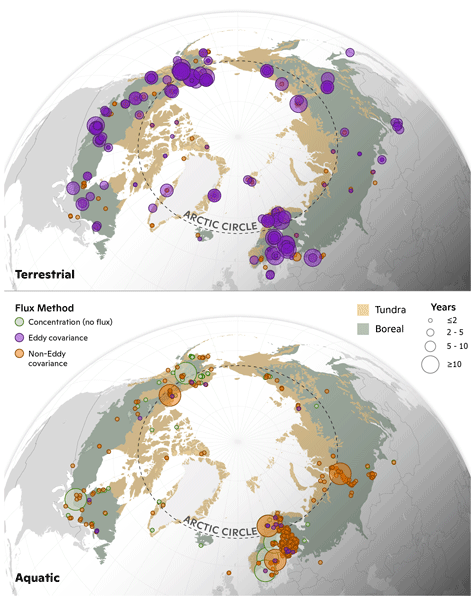
This dataset includes monthly measurements of carbon dioxide and methane exchange between land, water, and the atmosphere from over 1000 sites in Arctic and boreal regions. It combines measurements from a variety of ecosystems, including wetlands, forests, tundra, lakes, and rivers, gathered by over 260 researchers from 1984–2024. This dataset can be used to improve and reduce uncertainty in carbon budgets in order to strengthen our understanding of climate feedbacks in a warming world.
Jie Chao, Qi Liu, Hongming Yan, Zhenlu Liu, Jin Xu, Shuojie Gao, Zihang Han, Hang Su, Ziniu Xiao, Anlai Sun, and Baoxiang Pan
EGUsphere, https://doi.org/10.5194/egusphere-2026-4341, https://doi.org/10.5194/egusphere-2026-4341, 2026
This preprint is open for discussion and under review for Geoscientific Model Development (GMD).
Short summary
Short summary
Scientists need daily weather maps over decades to study extremes, but observations are sparse and uneven. Existing methods fill gaps by averaging nearby data, which smooths intense local events like heavy rain. We instead train a model on modern data to learn realistic patterns. It reconstructs past days using available observations and links days together. Repeating this produces both best estimates and uncertainty, improving accuracy and capturing extremes.
Chayan Roychoudhury, Rajesh Kumar, Cenlin He, William Y. Y. Cheng, Kirpa Ram, Naoki Mizukami, and Avelino F. Arellano
Earth Syst. Sci. Data, 18, 5209–5257, https://doi.org/10.5194/essd-18-5209-2026, https://doi.org/10.5194/essd-18-5209-2026, 2026
Short summary
Short summary
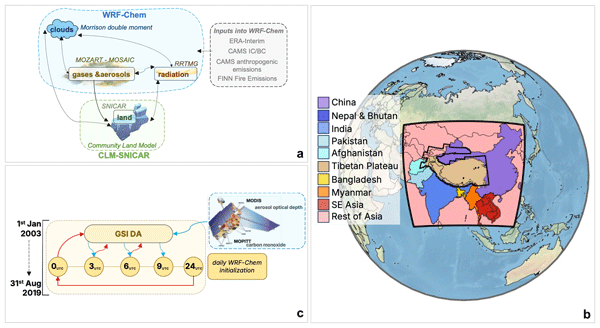
Snow and ice in the high mountains of Asia feed rivers supplying water to over a billion people, but airborne soot and dust darken the snow and speed up melting. We built a 17-year record of these conditions by blending satellite observations with a complex model that simulates weather, air pollution, land, and snow as one connected system. The record agrees well with independent measurements and traces soot on the glaciers to its regional sources, helping assess risks to Asia's water supply.
Rajesh Kumar, Claudio Sanchez, Juan Manuel Castillo, Jian-Guo Li, Bijoy Thompson, Pratiman Patel, Alvin Ng, Kaushik Sasmal, Kalli Furtado, Hailin Yan, Liu Jianyu, and Hugh Zhang
EGUsphere, https://doi.org/10.5194/egusphere-2026-2024, https://doi.org/10.5194/egusphere-2026-2024, 2026
Short summary
Short summary
Weather over Southeast Asia is shaped by complex interactions between the air, ocean, and waves. We developed a high-resolution model that links these processes to better understand and predict rainfall patterns in the region. The results show that ocean–atmosphere interactions improve the representation and prediction of squall events that affect daily life in Singapore and surrounding regions. This work supports more accurate weather forecasting in the region.
Zhangcheng Pei, Sonya L. Fiddes, Marc D. Mallet, Matthew T. Woodhouse, Simon P. Alexander, Alain Protat, Kalli Furtado, and Paul R. Field
EGUsphere, https://doi.org/10.5194/egusphere-2026-3541, https://doi.org/10.5194/egusphere-2026-3541, 2026
This preprint is open for discussion and under review for Atmospheric Chemistry and Physics (ACP).
Short summary
Short summary
Climate models misrepresent Southern Ocean clouds, causing warming biases. Using ship data, we updated a weather model to test how sea spray affects cloud ice. Adding realistic ocean particles prevents deep clouds from freezing too fast, correcting sunlight trasmissions. Yet, shallow clouds remain flawed due to missing moisture. Thus, accurate climate predictions require improving both aerosol-cloud interactions and large-scale weather dynamics.
Tiia Määttä, Ankur R. Desai, Masahito Ueyama, Rodrigo Vargas, Eric J. Ward, Zhen Zhang, Gil Bohrer, Kyle Delwiche, Etienne Fluet-Chouinard, Järvi Järveoja, Sara H. Knox, Lulie Melling, Mats B. Nilsson, Matthias Peichl, Angela Che Ing Tang, Eeva-Stiina Tuittila, Jinsong Wang, Sheel Bansal, Sarah Feron, Manuel Helbig, Aino Korrensalo, Ken W. Krauss, Gavin McNicol, Shuli Niu, Zutao Ouyang, Kathleen Savage, Oliver Sonnentag, Robert Jackson, and Avni Malhotra
Biogeosciences, 23, 4379–4445, https://doi.org/10.5194/bg-23-4379-2026, https://doi.org/10.5194/bg-23-4379-2026, 2026
Short summary
Short summary
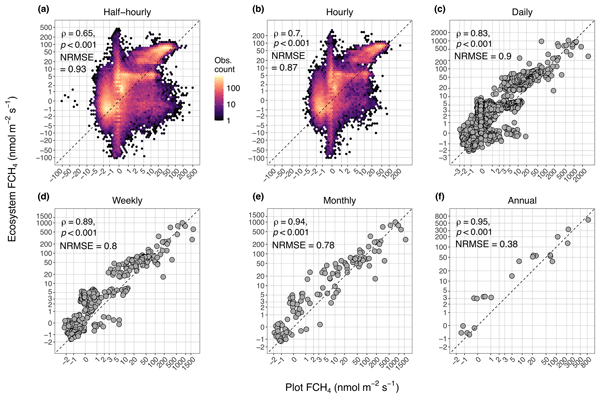
We compared ecosystem- and plot-scale methane fluxes across wetland and upland sites. Ecosystem-scale fluxes were higher than at plot scale, but differences were small. Vapor pressure deficit, atmospheric pressure, turbulence, and wind direction affected the differences. Both scales could be combined for improved methane flux estimates at coarser temporal scales.
Martin R. Willett, Melissa E. Brooks, Andrew Bushell, Paul Earnshaw, Charline Marzin, Samantha Smith, Lorenzo Tomassini, Nathan Luke Abraham, Martin Best, John M. Edwards, Kalli Furtado, Catherine Hardacre, Alan J. Hewitt, Ben Johnson, Adrian Lock, Jane P. Mulcahy, James Manners, Alistair Sellar, Peter Sheridan, Warren Tennant, Kwinten Van Weverberg, Vidya Varma, and Michael Whitall
EGUsphere, https://doi.org/10.5194/egusphere-2026-2425, https://doi.org/10.5194/egusphere-2026-2425, 2026
Short summary
Short summary
Global Atmosphere and Land (GAL) configurations of the Unified Model (UM) and JULES are developed for use in any global atmospheric modelling application. We describe the latest version, GAL9. We compare GAL9 with its predecessor and show that it gives improved forecasts of weather and climate. GAL9 has been used for weather forecasts in the UK from early 2026 and it will be used to study the Earth's climate.
Leyi Wang, Duo Zhang, Jerry Zhijian Yang, Baoxiang Pan, Dazhi Xi, and Xiaoyu Huang
EGUsphere, https://doi.org/10.5194/egusphere-2026-1990, https://doi.org/10.5194/egusphere-2026-1990, 2026
Short summary
Short summary
We built a new artificial intelligence model to forecast the weather, designed to better understand air movement and how landscapes shape atmospheric motions. We trained this model on historical data to predict future conditions. Our tool proved highly accurate at predicting weather up to three days in advance. It also outperforms top models over land area. Our method requires significantly less resources. It paves the way for more efficient and more accurate daily weather forecasts worldwide.
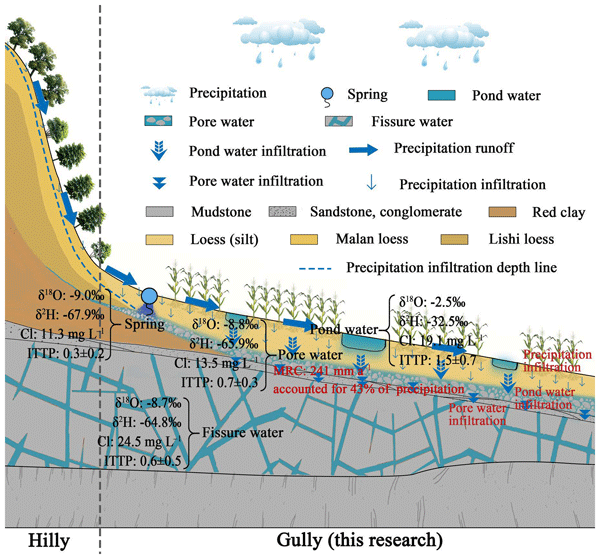
Zhenxia Ji, Alan D. Ziegler, and Li Wang
Hydrol. Earth Syst. Sci., 30, 1891–1914, https://doi.org/10.5194/hess-30-1891-2026, https://doi.org/10.5194/hess-30-1891-2026, 2026
Short summary
Short summary
Isotopic and chemical tracers show that precipitation dominates recharge of shallow pore water in engineered gully zones, whereas deeper fissure water is recharged more slowly through percolation. These systems enhance groundwater recharge in dry regions, providing opportunities for sustainable water management.
Martin Willett, Melissa Brooks, Andrew Bushell, Paul Earnshaw, Samantha Smith, Lorenzo Tomassini, Martin Best, Ian Boutle, Jennifer Brooke, John M. Edwards, Andrew D. Elvidge, Kalli Furtado, Catherine Hardacre, Andrew J. Hartley, Alan J. Hewitt, Ben Johnson, Adrian Lock, Andy Malcolm, Jane Mulcahy, Eike Müller, Ian A. Renfrew, Heather Rumbold, Gabriel G. Rooney, Alistair Sellar, Masashi Ujiie, Annelize van Niekerk, Andy Wiltshire, and Michael Whitall
Geosci. Model Dev., 19, 1473–1517, https://doi.org/10.5194/gmd-19-1473-2026, https://doi.org/10.5194/gmd-19-1473-2026, 2026
Short summary
Short summary
Global Atmosphere (GA) configurations of the Unified Model (UM) and Global Land (GL) configurations of Joint UK Land Environment Simulator (JULES) are developed for use in any global atmospheric modelling application. We describe a recent iteration of these configurations, GA8GL9, which includes improvements to the representation of convection and other physical processes. GA8GL9 is used for operational weather prediction in the UK and forms the basis for the next GA and GL configuration.
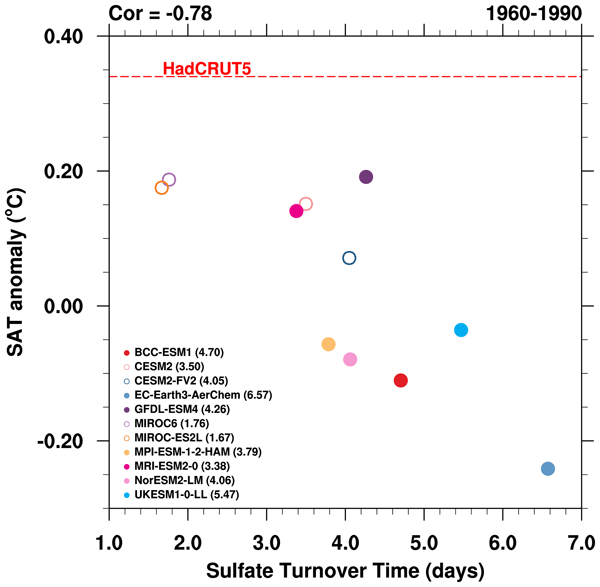
Jie Zhang, Kalli Furtado, Steven T. Turnock, Yixiong Lu, Tongwen Wu, Fang Zhang, Xiaoge Xin, and Yuyun Liu
Atmos. Chem. Phys., 26, 2175–2189, https://doi.org/10.5194/acp-26-2175-2026, https://doi.org/10.5194/acp-26-2175-2026, 2026
Short summary
Short summary
Aerosol cooling has been identified as a key driver of the cold biases in CMIP6 (sixth Coupled Model Inter-comparison Project) models. We demonstrate the critical role of sulfate burden anomaly and the contribution of sulfur removal processes. Faster sulfate deposition directly lowers atmospheric sulfate levels, while enhanced SO₂ deposition reduces the precursor for sulfate formation. The systematically short sulfate lifetime implies that model improvements should focus on SO₂ deposition processes, rather than sulfate deposition.
Mazen Nakad, Mahmoud Mbarak, Jihad Karaki, Tehreem Qureshi, Matteo Detto, Benjamin I. Cook, Marcos Longo, Géraldine Derroire, Xiangtao Xu, Jeremy Lichstein, Zong-Liang Yang, Pierre Gentine, and Ensheng Weng
EGUsphere, https://doi.org/10.5194/egusphere-2026-145, https://doi.org/10.5194/egusphere-2026-145, 2026
Short summary
Short summary
Because long-term drought and heat experiments are hard to run in tropical forests, we used a computer model to test how less rain and warmer, drier air affect forest growth and water loss at three sites. Forest productivity stayed stable until rainfall dropped below a threshold, but warmer air reduced carbon uptake even when soils were moist. Persistent heat and drought caused far larger declines than brief pulses, raising risks for future carbon storage.
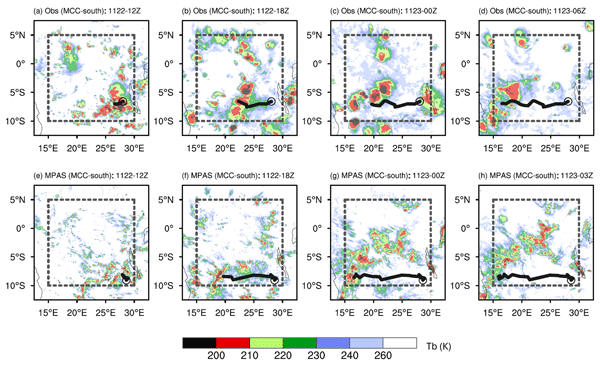
Siyu Zhao, Rong Fu, Kelly Núñez Ocasio, Robert Nystrom, Cenlin He, Jiaying Zhang, Xianan Jiang, and Joao Teixeira
Atmos. Chem. Phys., 25, 17301–17318, https://doi.org/10.5194/acp-25-17301-2025, https://doi.org/10.5194/acp-25-17301-2025, 2025
Short summary
Short summary
The Congo Basin has frequent organized thunderstorms producing much of the region’s rainfall, yet their development remains unclear due to limited data. Using a high-resolution global model, it shows the long-lasting storm is significantly linked to and supported by vertical wind shear up to 400 km ahead, with the mid-level jet stream playing a role in maintaining the shear. The findings highlight the value of such model in data-sparse regions for examining storms and their impacts.
Cenlin He, Tzu-Shun Lin, David M. Mocko, Ronnie Abolafia-Rosenzweig, Jerry W. Wegiel, and Sujay V. Kumar
Geosci. Model Dev., 18, 8439–8460, https://doi.org/10.5194/gmd-18-8439-2025, https://doi.org/10.5194/gmd-18-8439-2025, 2025
Short summary
Short summary
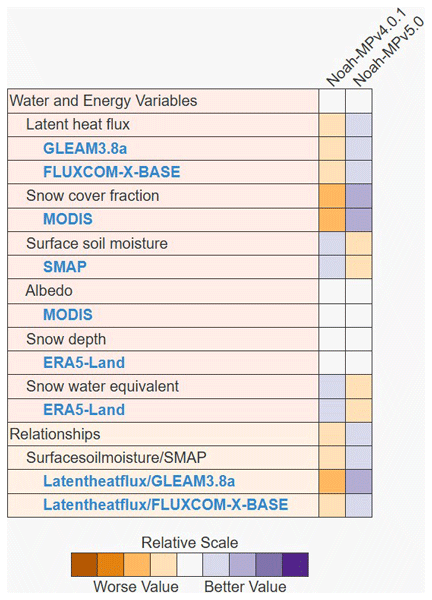
This study integrates the refactored community Noah-MP version 5.0 model with the NASA Land Information System (LIS) version 7.5.2 to streamline the synchronization, development, and maintenance of Noah-MP within LIS and to enhance their interoperability and applicability. The model benchmarking and evaluation results reveal key model strengths and weaknesses in simulating land surface quantities and show implications for future model improvements.
Parag Joshi, Tzu-Shun Lin, Cenlin He, and Katia Lamer
Geosci. Model Dev., 18, 7869–7890, https://doi.org/10.5194/gmd-18-7869-2025, https://doi.org/10.5194/gmd-18-7869-2025, 2025
Short summary
Short summary
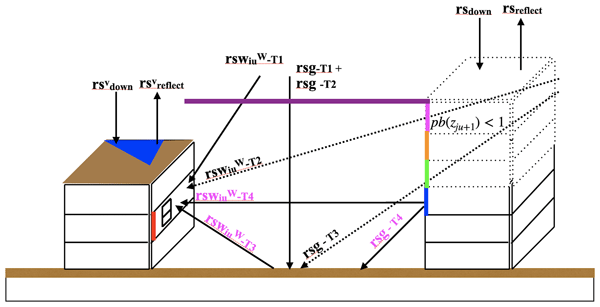
Present study revisits model that represent urban effects in the Weather Research & Forecasting model. We propose methods to identify evaluable parameters via field measurements and found inconsistencies between physics and its code implementation. Simulations reveal small errors can significantly impact outputs.
Naoki Mizukami, Samar Minallah, Cenlin He, Chayan Roychoudhury, William Y.Y. Cheng, and Rajesh Kumar
EGUsphere, https://doi.org/10.5194/egusphere-2025-4586, https://doi.org/10.5194/egusphere-2025-4586, 2025
Short summary
Short summary
We examined how air pollution particles that darken snow affect water resources in High Mountain Asia, a region that supplies rivers vital to millions of populations. Using computer models, we found that these particles cause snow to melt two weeks to a month earlier, shifting when water becomes available. This leads to more runoff at first but less later in the year, slightly reducing annual river flow. The findings highlight the need to link air pollution control with water management.
Masahito Ueyama, Yuta Takao, Hiromi Yazawa, Makiko Tanaka, Hironori Yabuki, Tomo'omi Kumagai, Hiroki Iwata, Md. Abdul Awal, Mingyuan Du, Yoshinobu Harazono, Yoshiaki Hata, Takashi Hirano, Tsutom Hiura, Reiko Ide, Sachinobu Ishida, Mamoru Ishikawa, Kenzo Kitamura, Yuji Kominami, Shujiro Komiya, Ayumi Kotani, Yuta Inoue, Takashi Machimura, Kazuho Matsumoto, Yojiro Matsuura, Yasuko Mizoguchi, Shohei Murayama, Hirohiko Nagano, Taro Nakai, Tatsuro Nakaji, Ko Nakaya, Shinjiro Ohkubo, Takeshi Ohta, Keisuke Ono, Taku M. Saitoh, Ayaka Sakabe, Takanori Shimizu, Seiji Shimoda, Michiaki Sugita, Kentaro Takagi, Yoshiyuki Takahashi, Naoya Takamura, Satoru Takanashi, Takahiro Takimoto, Yukio Yasuda, Qinxue Wang, Jun Asanuma, Hideo Hasegawa, Tetsuya Hiyama, Yoshihiro Iijima, Shigeyuki Ishidoya, Masayuki Itoh, Tomomichi Kato, Hiroaki Kondo, Yoshiko Kosugi, Tomonori Kume, Takahisa Maeda, Shoji Matsuura, Trofim Maximov, Takafumi Miyama, Ryo Moriwaki, Hiroyuki Muraoka, Roman Petrov, Jun Suzuki, Shingo Taniguchi, and Kazuhito Ichii
Earth Syst. Sci. Data, 17, 3807–3833, https://doi.org/10.5194/essd-17-3807-2025, https://doi.org/10.5194/essd-17-3807-2025, 2025
Short summary
Short summary
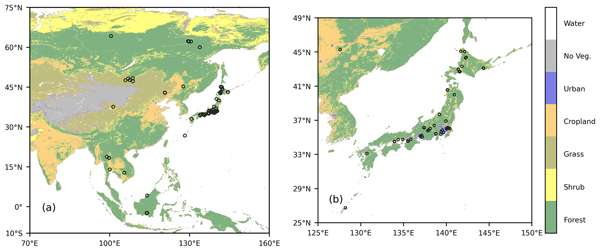
The JapanFlux2024 dataset, created through collaboration across Japan and East Asia, includes eddy covariance data from 83 sites spanning 683 site-years (1990–2023). This comprehensive dataset offers valuable insights into energy, water, and CO2 fluxes, supporting research on land–atmosphere interactions and process models; fosters global collaboration; and advances research in environmental science and regional climate dynamics.
Chayan Roychoudhury, Cenlin He, Rajesh Kumar, and Avelino F. Arellano Jr.
Earth Syst. Dynam., 16, 1237–1266, https://doi.org/10.5194/esd-16-1237-2025, https://doi.org/10.5194/esd-16-1237-2025, 2025
Short summary
Short summary
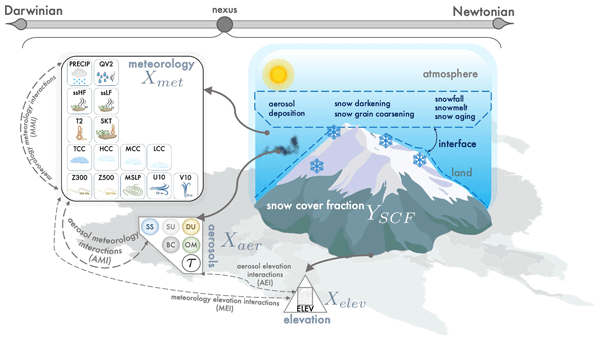
We present a novel data-driven approach to understand how pollution and weather processes interact to influence snowmelt in Asian glaciers and how these interactions are represented in three climate models. Our findings show where models need improvement in predicting snowmelt, particularly dust and its transport. This method can support future model development for reliable predictions in climate-vulnerable regions.
Mike Bush, David L. A. Flack, Huw W. Lewis, Sylvia I. Bohnenstengel, Chris J. Short, Charmaine Franklin, Adrian P. Lock, Martin Best, Paul Field, Anne McCabe, Kwinten Van Weverberg, Segolene Berthou, Ian Boutle, Jennifer K. Brooke, Seb Cole, Shaun Cooper, Gareth Dow, John Edwards, Anke Finnenkoetter, Kalli Furtado, Kate Halladay, Kirsty Hanley, Margaret A. Hendry, Adrian Hill, Aravindakshan Jayakumar, Richard W. Jones, Humphrey Lean, Joshua C. K. Lee, Andy Malcolm, Marion Mittermaier, Saji Mohandas, Stuart Moore, Cyril Morcrette, Rachel North, Aurore Porson, Susan Rennie, Nigel Roberts, Belinda Roux, Claudio Sanchez, Chun-Hsu Su, Simon Tucker, Simon Vosper, David Walters, James Warner, Stuart Webster, Mark Weeks, Jonathan Wilkinson, Michael Whitall, Keith D. Williams, and Hugh Zhang
Geosci. Model Dev., 18, 3819–3855, https://doi.org/10.5194/gmd-18-3819-2025, https://doi.org/10.5194/gmd-18-3819-2025, 2025
Short summary
Short summary
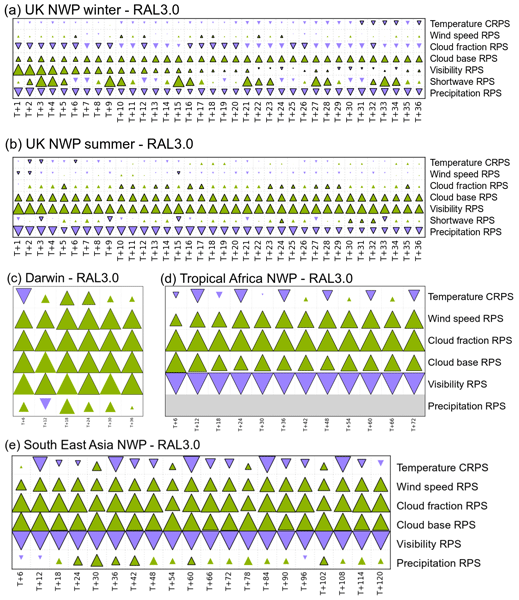
RAL configurations define settings for the Unified Model atmosphere and Joint UK Land Environment Simulator. The third version of the Regional Atmosphere and Land (RAL3) science configuration for kilometre- and sub-kilometre-scale modelling represents a major advance compared to previous versions (RAL2) by delivering a common science definition for applications in tropical and mid-latitude regions. RAL3 has more realistic precipitation distributions and an improved representation of clouds and visibility.
Weilin Liao, Yanman Li, Xiaoping Liu, Yuhao Wang, Yangzi Che, Ledi Shao, Guangzhao Chen, Hua Yuan, Ning Zhang, and Fei Chen
Earth Syst. Sci. Data, 17, 2535–2551, https://doi.org/10.5194/essd-17-2535-2025, https://doi.org/10.5194/essd-17-2535-2025, 2025
Short summary
Short summary
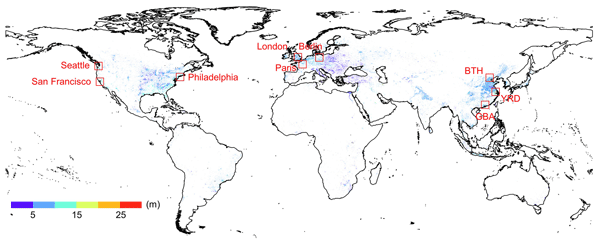
The currently available urban canopy parameter (UCP) datasets are limited to just a few cities for urban climate simulations by the Weather Research and Forecasting (WRF) model. To address this gap, we develop a global 1 km spatially continuous UCP dataset (GloUCP) which provides superior spatial coverage and higher accuracy in capturing urban morphology across diverse regions. It has great potential to support further advancements in urban climate modeling and related applications.
Rajesh Kumar, Piyush Bhardwaj, Cenlin He, Jennifer Boehnert, Forrest Lacey, Stefano Alessandrini, Kevin Sampson, Matthew Casali, Scott Swerdlin, Olga Wilhelmi, Gabriele G. Pfister, Benjamin Gaubert, and Helen Worden
Earth Syst. Sci. Data, 17, 1807–1834, https://doi.org/10.5194/essd-17-1807-2025, https://doi.org/10.5194/essd-17-1807-2025, 2025
Short summary
Short summary
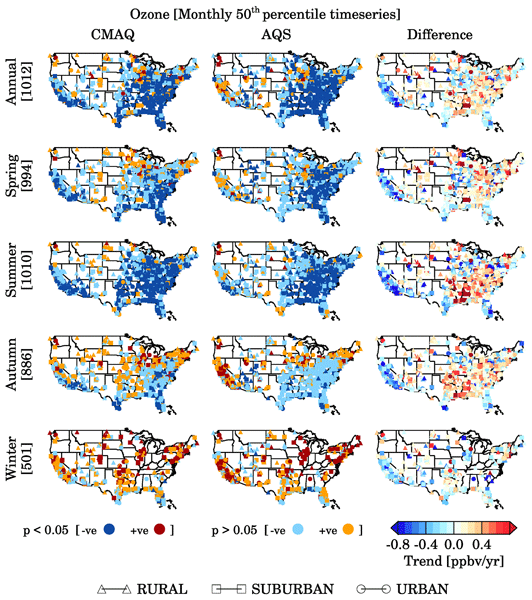
We have created a 14-year hourly air quality dataset at 12 km resolution by combining satellite observations of atmospheric composition with air quality models over the contiguous United States (CONUS). The dataset has been found to reproduce key observed features of air quality over the CONUS. To enable easy visualization and interpretation of county-level air quality measures and trends by stakeholders, an ArcGIS air quality dashboard has also been developed.
Mohamed Hamitouche, Giorgia Fosser, Alessandro Anav, Cenlin He, and Tzu-Shun Lin
Hydrol. Earth Syst. Sci., 29, 1221–1240, https://doi.org/10.5194/hess-29-1221-2025, https://doi.org/10.5194/hess-29-1221-2025, 2025
Short summary
Short summary
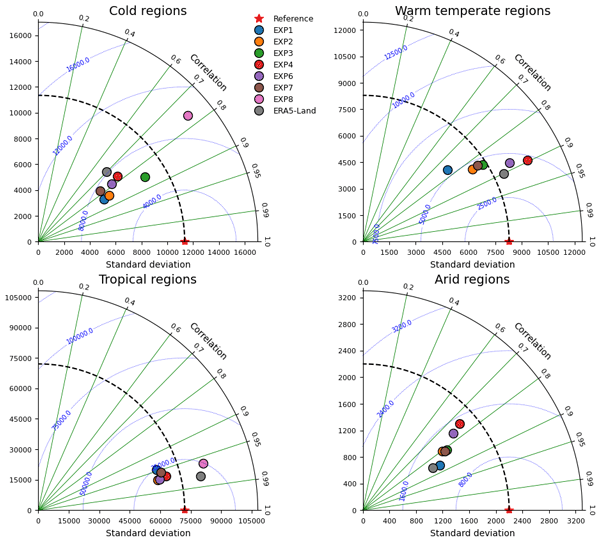
This study evaluates how different methods of simulating runoff impact river flow predictions globally. By comparing seven approaches within the Noah-Multi-parameterisation (Noah-MP) land surface model, we found significant differences in accuracy, with some methods underestimating or overestimating runoff. The results are crucial for improving water resource management and flood prediction. Our work highlights the need for precise modelling to better prepare for climate-related challenges.
Dario Di Santo, Cenlin He, Fei Chen, and Lorenzo Giovannini
Geosci. Model Dev., 18, 433–459, https://doi.org/10.5194/gmd-18-433-2025, https://doi.org/10.5194/gmd-18-433-2025, 2025
Short summary
Short summary
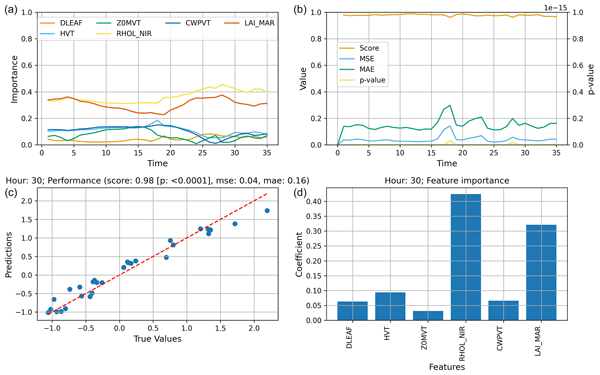
This paper presents the Machine Learning-based Automated Multi-method Parameter Sensitivity and Importance analysis Tool (ML-AMPSIT), a computationally efficient tool that uses machine learning algorithms for sensitivity analysis in atmospheric models. It is tested with the Weather Research and Forecasting (WRF) model coupled with the Noah-Multiparameterization (Noah-MP) land surface model to investigate sea breeze circulation sensitivity to vegetation-related parameters.
Weibin Zhang, Xining Zhao, Xuerui Gao, Wei Liang, Junyi Li, and Baoqing Zhang
Hydrol. Earth Syst. Sci., 29, 507–524, https://doi.org/10.5194/hess-29-507-2025, https://doi.org/10.5194/hess-29-507-2025, 2025
Short summary
Short summary
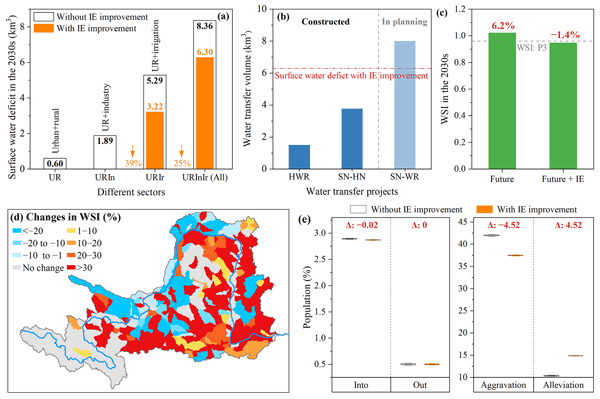
The Yellow River basin shows worsening water stress indicators (WSIs) over 1965‒2020. Water withdrawal is the main factor driving WSI before 2000, balanced by water availability. Local water yield and upstream flows are key drivers of sub-basin water availability. Water demand is expected to rise by 6.5 % in the 2030s, creating an 8.36 km³ surface water deficit. Enhanced irrigation efficiency can cut this deficit by 25 %, maintaining the stress level but worsening it for 44.9% of the population.
Weiyu Zhang, Kwinten Van Weverberg, Cyril J. Morcrette, Wuhu Feng, Kalli Furtado, Paul R. Field, Chih-Chieh Chen, Andrew Gettelman, Piers M. Forster, Daniel R. Marsh, and Alexandru Rap
Atmos. Chem. Phys., 25, 473–489, https://doi.org/10.5194/acp-25-473-2025, https://doi.org/10.5194/acp-25-473-2025, 2025
Short summary
Short summary
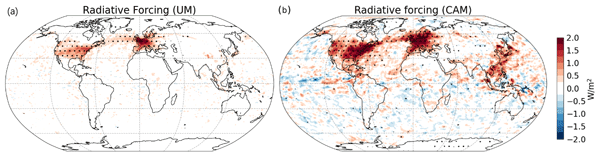
Contrail cirrus is the largest, but also most uncertain, contribution of aviation to global warming. We evaluate, for the first time, the impact of the host climate model on contrail cirrus properties. Substantial differences exist between contrail cirrus formation, persistence, and radiative effects in the host climate models. Reliable contrail cirrus simulations require advanced representation of cloud optical properties and microphysics, which should be better constrained by observations.
Flossie Brown, Gerd Folberth, Stephen Sitch, Paulo Artaxo, Marijn Bauters, Pascal Boeckx, Alexander W. Cheesman, Matteo Detto, Ninong Komala, Luciana Rizzo, Nestor Rojas, Ines dos Santos Vieira, Steven Turnock, Hans Verbeeck, and Alfonso Zambrano
Atmos. Chem. Phys., 24, 12537–12555, https://doi.org/10.5194/acp-24-12537-2024, https://doi.org/10.5194/acp-24-12537-2024, 2024
Short summary
Short summary
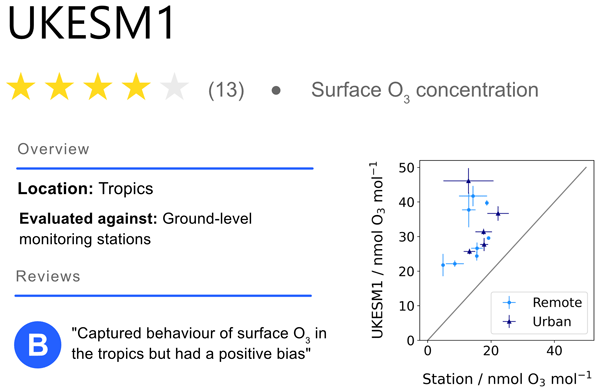
Ozone is a pollutant that is detrimental to human and plant health. Ozone monitoring sites in the tropics are limited, so models are often used to understand ozone exposure. We use measurements from the tropics to evaluate ozone from the UK Earth system model, UKESM1. UKESM1 is able to capture the pattern of ozone in the tropics, except in southeast Asia, although it systematically overestimates it at all sites. This work highlights that UKESM1 can capture seasonal and hourly variability.
Sonya L. Fiddes, Marc D. Mallet, Alain Protat, Matthew T. Woodhouse, Simon P. Alexander, and Kalli Furtado
Geosci. Model Dev., 17, 2641–2662, https://doi.org/10.5194/gmd-17-2641-2024, https://doi.org/10.5194/gmd-17-2641-2024, 2024
Short summary
Short summary
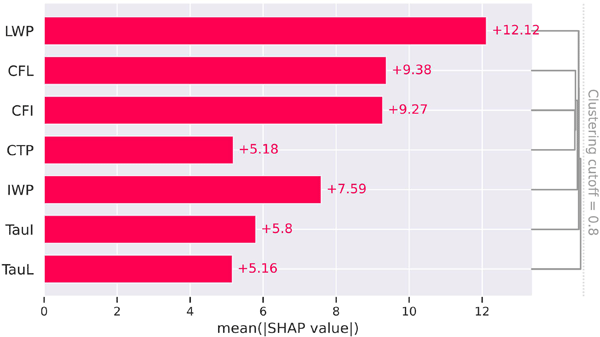
In this study we present an evaluation that considers complex, non-linear systems in a holistic manner. This study uses XGBoost, a machine learning algorithm, to predict the simulated Southern Ocean shortwave radiation bias in the ACCESS model using cloud property biases as predictors. We then used a novel feature importance analysis to quantify the role that each cloud bias plays in predicting the radiative bias, laying the foundation for advanced Earth system model evaluation and development.
Wenfu Tang, Louisa K. Emmons, Helen M. Worden, Rajesh Kumar, Cenlin He, Benjamin Gaubert, Zhonghua Zheng, Simone Tilmes, Rebecca R. Buchholz, Sara-Eva Martinez-Alonso, Claire Granier, Antonin Soulie, Kathryn McKain, Bruce C. Daube, Jeff Peischl, Chelsea Thompson, and Pieternel Levelt
Geosci. Model Dev., 16, 6001–6028, https://doi.org/10.5194/gmd-16-6001-2023, https://doi.org/10.5194/gmd-16-6001-2023, 2023
Short summary
Short summary
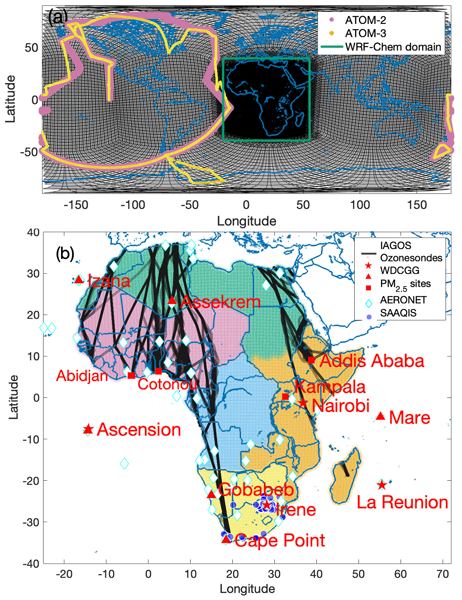
The new MUSICAv0 model enables the study of atmospheric chemistry across all relevant scales. We develop a MUSICAv0 grid for Africa. We evaluate MUSICAv0 with observations and compare it with a previously used model – WRF-Chem. Overall, the performance of MUSICAv0 is comparable to WRF-Chem. Based on model–satellite discrepancies, we find that future field campaigns in an eastern African region (30°E–45°E, 5°S–5°N) could substantially improve the predictive skill of air quality models.
Cenlin He, Prasanth Valayamkunnath, Michael Barlage, Fei Chen, David Gochis, Ryan Cabell, Tim Schneider, Roy Rasmussen, Guo-Yue Niu, Zong-Liang Yang, Dev Niyogi, and Michael Ek
Geosci. Model Dev., 16, 5131–5151, https://doi.org/10.5194/gmd-16-5131-2023, https://doi.org/10.5194/gmd-16-5131-2023, 2023
Short summary
Short summary
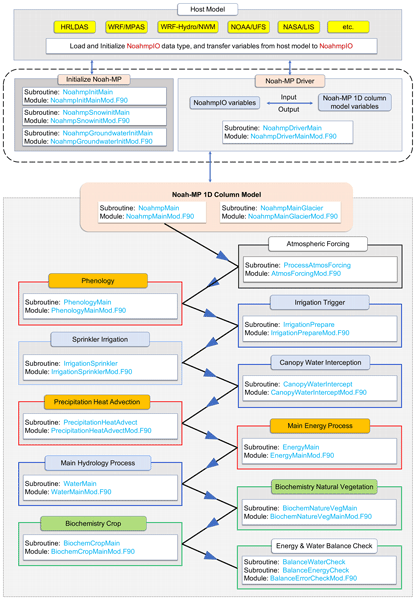
Noah-MP is one of the most widely used open-source community land surface models in the world, designed for applications ranging from uncoupled land surface and ecohydrological process studies to coupled numerical weather prediction and decadal climate simulations. To facilitate model developments and applications, we modernize Noah-MP by adopting modern Fortran code and data structures and standards, which substantially enhance model modularity, interoperability, and applicability.
Bo Qu, Alexandre Roy, Joe R. Melton, Jennifer L. Baltzer, Youngryel Ryu, Matteo Detto, and Oliver Sonnentag
EGUsphere, https://doi.org/10.5194/egusphere-2023-1167, https://doi.org/10.5194/egusphere-2023-1167, 2023
Preprint archived
Short summary
Short summary
Accurately simulating photosynthesis and evapotranspiration challenges terrestrial biosphere models across North America’s boreal biome, in part due to uncertain representation of the maximum rate of photosynthetic carboxylation (Vcmax). This study used forest stand scale observations in an optimization framework to improve Vcmax values for representative vegetation types. Several stand characteristics well explained spatial Vcmax variability and were useful to improve boreal forest modelling.
Zhe Zhang, Yanping Li, Fei Chen, Phillip Harder, Warren Helgason, James Famiglietti, Prasanth Valayamkunnath, Cenlin He, and Zhenhua Li
Geosci. Model Dev., 16, 3809–3825, https://doi.org/10.5194/gmd-16-3809-2023, https://doi.org/10.5194/gmd-16-3809-2023, 2023
Short summary
Short summary
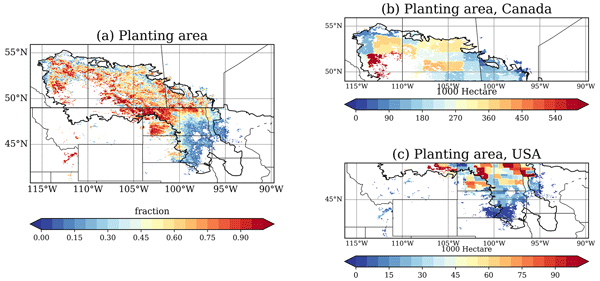
Crop models incorporated in Earth system models are essential to accurately simulate crop growth processes on Earth's surface and agricultural production. In this study, we aim to model the spring wheat in the Northern Great Plains, focusing on three aspects: (1) develop the wheat model at a point scale, (2) apply dynamic planting and harvest schedules, and (3) adopt a revised heat stress function. The results show substantial improvements and have great importance for agricultural production.
Wenfu Tang, Simone Tilmes, David M. Lawrence, Fang Li, Cenlin He, Louisa K. Emmons, Rebecca R. Buchholz, and Lili Xia
Atmos. Chem. Phys., 23, 5467–5486, https://doi.org/10.5194/acp-23-5467-2023, https://doi.org/10.5194/acp-23-5467-2023, 2023
Short summary
Short summary
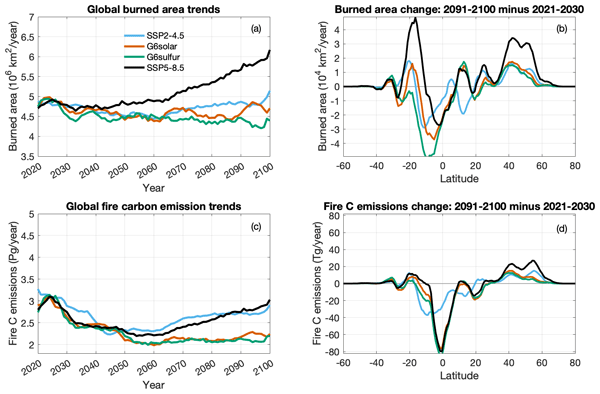
Globally, total wildfire burned area is projected to increase over the 21st century under scenarios without geoengineering and decrease under the two geoengineering scenarios. Geoengineering reduces fire by decreasing surface temperature and wind speed and increasing relative humidity and soil water. However, geoengineering also yields reductions in precipitation, which offset some of the fire reduction.
Dalei Hao, Gautam Bisht, Karl Rittger, Edward Bair, Cenlin He, Huilin Huang, Cheng Dang, Timbo Stillinger, Yu Gu, Hailong Wang, Yun Qian, and L. Ruby Leung
Geosci. Model Dev., 16, 75–94, https://doi.org/10.5194/gmd-16-75-2023, https://doi.org/10.5194/gmd-16-75-2023, 2023
Short summary
Short summary
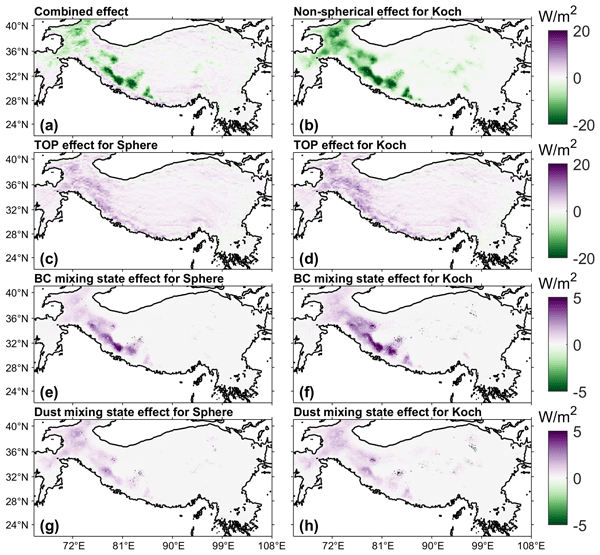
Snow with the highest albedo of land surface plays a vital role in Earth’s surface energy budget and water cycle. This study accounts for the impacts of snow grain shape and mixing state of light-absorbing particles with snow on snow albedo in the E3SM land model. The findings advance our understanding of the role of snow grain shape and mixing state of LAP–snow in land surface processes and offer guidance for improving snow simulations and radiative forcing estimates in Earth system models.
Huilin Huang, Yun Qian, Ye Liu, Cenlin He, Jianyu Zheng, Zhibo Zhang, and Antonis Gkikas
Atmos. Chem. Phys., 22, 15469–15488, https://doi.org/10.5194/acp-22-15469-2022, https://doi.org/10.5194/acp-22-15469-2022, 2022
Short summary
Short summary
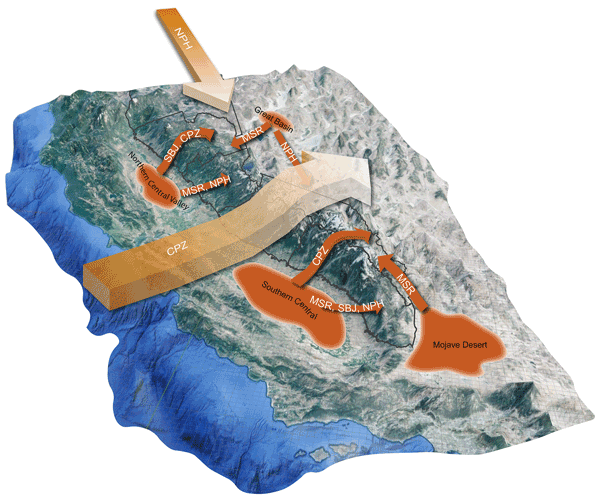
Using a clustering method developed in the field of artificial neural networks, we identify four typical dust transport patterns across the Sierra Nevada, associated with the mesoscale and regional-scale wind circulations. Our results highlight the connection between dust transport and dominant weather patterns, which can be used to understand dust transport in a changing climate.
Yilin Fang, L. Ruby Leung, Charles D. Koven, Gautam Bisht, Matteo Detto, Yanyan Cheng, Nate McDowell, Helene Muller-Landau, S. Joseph Wright, and Jeffrey Q. Chambers
Geosci. Model Dev., 15, 7879–7901, https://doi.org/10.5194/gmd-15-7879-2022, https://doi.org/10.5194/gmd-15-7879-2022, 2022
Short summary
Short summary
We develop a model that integrates an Earth system model with a three-dimensional hydrology model to explicitly resolve hillslope topography and water flow underneath the land surface to understand how local-scale hydrologic processes modulate vegetation along water availability gradients. Our coupled model can be used to improve the understanding of the diverse impact of local heterogeneity and water flux on nutrient availability and plant communities.
Chaman Gul, Shichang Kang, Siva Praveen Puppala, Xiaokang Wu, Cenlin He, Yangyang Xu, Inka Koch, Sher Muhammad, Rajesh Kumar, and Getachew Dubache
Atmos. Chem. Phys., 22, 8725–8737, https://doi.org/10.5194/acp-22-8725-2022, https://doi.org/10.5194/acp-22-8725-2022, 2022
Short summary
Short summary
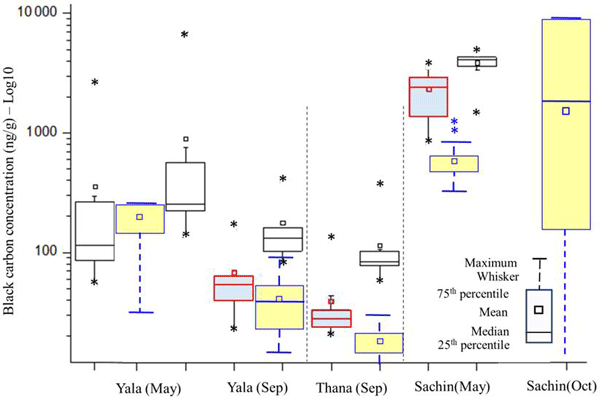
This work aims to understand concentrations, spatial variability, and potential source regions of light-absorbing impurities (black carbon aerosols, dust particles, and organic carbon) in the surface snow of central and western Himalayan glaciers and their impact on snow albedo and radiative forcing.
Lei Tian, Baoqing Zhang, and Pute Wu
Earth Syst. Sci. Data, 14, 2259–2278, https://doi.org/10.5194/essd-14-2259-2022, https://doi.org/10.5194/essd-14-2259-2022, 2022
Short summary
Short summary
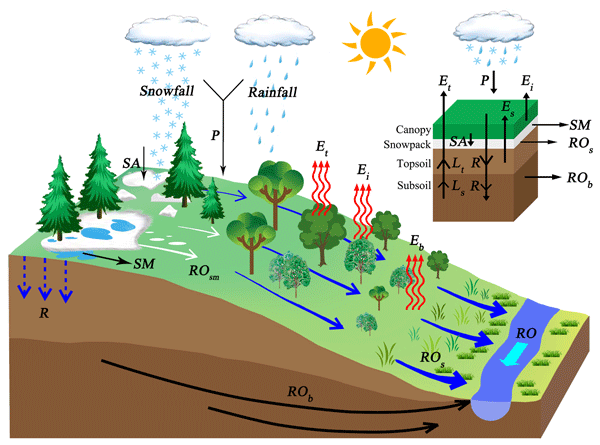
We propose a global monthly drought dataset with a resolution of 0.25° from 1948 to 2010 based on a multitype and multiscalar drought index, the standardized moisture anomaly index adding snow processes (SZIsnow). The consideration of snow processes improved its capability, and the improvement is prominent over snow-covered high-latitude and high-altitude areas. This new dataset is well suited to monitoring, assessing, and characterizing drought and is a valuable resource for drought studies.
Jie Tian, Baoqing Zhang, Xuejin Wang, and Chansheng He
Earth Syst. Sci. Data Discuss., https://doi.org/10.5194/essd-2022-21, https://doi.org/10.5194/essd-2022-21, 2022
Preprint withdrawn
Short summary
Short summary
Based on soil profile data at depths of 5 cm and 25 cm from 238 sampling sites, and on soil data from 32 soil moisture (SM) stations at depths of 5 cm, 15 cm, 25 cm, 40 cm, and 60 cm, we compiled a soil hydraulic properties (SHP) and SM dataset for a mountainous area, Northeastern QTP. The dataset provides information about SHP variability and SM trends at a large-scale mountainous area, thus offers opportunity for further understanding of water and energy processes over the QTP.
Mark G. Flanner, Julian B. Arnheim, Joseph M. Cook, Cheng Dang, Cenlin He, Xianglei Huang, Deepak Singh, S. McKenzie Skiles, Chloe A. Whicker, and Charles S. Zender
Geosci. Model Dev., 14, 7673–7704, https://doi.org/10.5194/gmd-14-7673-2021, https://doi.org/10.5194/gmd-14-7673-2021, 2021
Short summary
Short summary
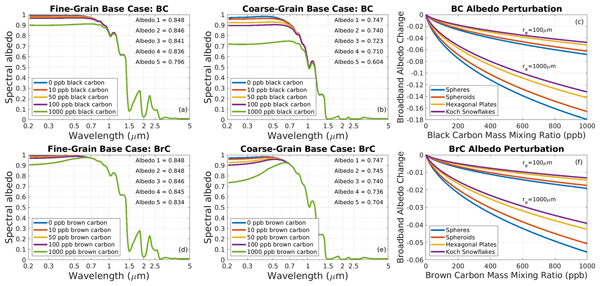
We present the technical formulation and evaluation of a publicly available code and web-based model to simulate the spectral albedo of snow. Our model accounts for numerous features of the snow state and ambient conditions, including the the presence of light-absorbing matter like black and brown carbon, mineral dust, volcanic ash, and snow algae. Carbon dioxide snow, found on Mars, is also represented. The model accurately reproduces spectral measurements of clean and contaminated snow.
Cited articles
Arsenault, K. R., Nearing, G. S., Wang, S., Yatheendradas, S., and Peters-Lidard, C. D.: Parameter sensitivity of the Noah-MP land surface model with dynamic vegetation, J. Hydrometeorol., 19, 815–830, https://doi.org/10.1175/JHM-D-17-0205.1, 2018.
Bonan, G. B.: Land-Atmosphere interactions for climate system Models: coupling biophysical, biogeochemical, and ecosystem dynamical processes, Remote Sens. Environ., 51, 57–73, https://doi.org/10.1016/0034-4257(94)00065-U, 1995.
Bonan, G. B. and Doney, S. C.: Climate, ecosystems, and planetary futures: The challenge to predict life in Earth system models, Science, 359, https://doi.org/10.1126/science.aam8328, 2018.
Chang, M., Liao, W., Wang, X., Zhang, Q., Chen, W., Wu, Z., and Hu, Z.: An optimal ensemble of the Noah-MP land surface model for simulating surface heat fluxes over a typical subtropical forest in South China, Agr. Forest Meteorol., 281, 107815, https://doi.org/10.1016/j.agrformet.2019.107815, 2020.
Chen, D., Ban, X., Li, Y., Xiao, W., Luo, T., Lin, M., and Xu, H.: Responses of gas exchange to neighborhood interference in leaves of teak (Tectona grandis L. f.) in a tropical plantation forest, Shengtai Xuebao/Acta Ecol. Sin., 28, 4059–4069, https://doi.org/10.1016/s1872-2032(08)60078-5, 2008.
Cheng, Y.: Noah-MP.Cheng, Zenodo [data set], https://doi.org/10.5281/zenodo.16780672, 2025a.
Cheng, Y., Ogden, F. L., and Zhu, J.: Earthworms and tree roots: A model study of the effect of preferential flow paths on runoff generation and groundwater recharge in steep, saprolitic, tropical lowland catchments, Water Resour. Res., 53, 5400–5419, https://doi.org/10.1002/2016WR020258, 2017.
Cheng, Y., Ogden, F. L., Zhu, J., and Bretfeld, M.: Land use dependent preferential flow paths affect hydrological response of steep tropical lowland catchments with saprolitic soils, Water Resour Res., 54, 5551–5566, https://doi.org/10.1029/2017WR021875, 2018.
Cheng, Y., Ogden, F., and Zhu, J.: Characterization of sudden and sustained base flow jump hydrologic behaviour in the humid seasonal tropics of the Panama Canal Watershed, Hydrol. Process., 34, 569–582, https://doi.org/10.1002/hyp.13604, 2019.
Cheng, Y., Huang, M., Lawrence, D. M., Calvin, K., Lombardozzi, D. L., Sinha, E., Pan, M., and He, X.: Future bioenergy expansion could alter carbon sequestration potential and exacerbate water stress in the United States, Sci. Adv., 8, 1–14, https://doi.org/10.1126/sciadv.abm8237, 2022a.
Cheng, Y., Leung, L. R., Huang, M., Koven, C., Detto, M., Knox, R., Bisht, G., Bretfeld, M., and Fisher, R. A.: Modeling the joint effects of vegetation characteristics and soil properties on ecosystem dynamics in a Panama tropical forest, J. Adv. Model. Earth Syst., 14, e2021MS002603, https://doi.org/10.1029/2021ms002603, 2022b.
Cheng, Y., Xia, W., Detto, M., and Shoemaker, C. A.: A framework to calibrate ecosystem demography models within Earth system models using parallel surrogate global optimization, Water Resour. Res., 59, e2022WR032945, https://doi.org/10.1029/2022WR032945, 2023.
Cheng, Y., Lawrence, D. M., Pan, M., Zhang, B., Graham, N. T., Lawrence, P. J., Liu, Z., and He, X.: A bioenergy-focused versus a reforestation-focused mitigation pathway yields disparate carbon storage and climate responses, P. Natl. Acad. Sci. USA, 121, 1–11, https://doi.org/10.1073/pnas.2306775121, 2024a.
Cheng, Y., Wang, W., Detto, M., Fisher, R., and Shoemaker, C.: Calibrating Tropical Forest Coexistence in Ecosystem Demography Models Using Multi-Objective Optimization Through Population-Based Parallel Surrogate Search, J. Adv. Model. Earth Syst., 16, 1–18, https://doi.org/10.1029/2023MS004195, 2024b.
Cheruy, F., Dufresne, J. L., Hourdin, F., and Ducharne, A.: Role of clouds and land–atmosphere coupling in midlatitude continental summer warm biases and climate change amplification in CMIP5 simulations, Geophys. Res. Lett., 41, 6493–6500, https://doi.org/10.1002/2014GL061145, 2014.
Cox, P. M., Betts, R. A., Bunton, C. B., Essery, R. L. H., Rowntree, P. R., and Smith, J.: The impact of new land surface physics on the GCM simulation of climate and climate sensitivity, Clim. Dynam., 15, 183–203, https://doi.org/10.1007/s003820050276, 1999.
Cox, P. M., Betts, R. A., Jones, C. D., and Spall, S. A.: Acceleration of global warming due to carbon-cycle feedbacks in a coupled climate model, Nature, 408, 184–187, 2000.
Crossley, J. F., Polcher, J., Cox, P. M., Gedney, N., and Planton, S.: Uncertainties linked to land-surface processes in climate change simulations, Clim. Dynam., 16, 949–961, https://doi.org/10.1007/s003820000092, 2000.
Detto, M. and Pacala, S. W.: Plant hydraulics, stomatal control, and the response of a tropical forest to water stress over multiple temporal scales, Global Change Biol., 28, 4359–4376, https://doi.org/10.1111/gcb.16179, 2022.
Detto, M., Asner, G. P., Muller-Landau, H. C., and Sonnentag, O.: Spatial variability in tropical forest leaf area density from multireturn lidar and modeling, J. Geophys. Res.-Biogeo., 120, 965–978, https://doi.org/10.1002/2014JG002774, 2015.
Dickinson, R. E.: Land surface processes and climate–surface albedos and energy balance, Adv. Geophys., 25, 305–353, https://doi.org/10.1016/S0065-2687(08)60176-4, 1983.
Domingues, T. F., Berry, J. A., Martinelli, L. A., Ometto, J. P. H. B., and Ehleringer, J. R.: Parameterization of canopy structure and leaf-level gas exchange for an Eastern Amazonian tropical rain forest (Tapajós national forest, Pará, Brazil), Earth Interact., 9, https://doi.org/10.1175/EI149.1, 2005.
Duan, Q., Sorooshian, S., and Gupta, V. K.: Effective and efficient global optimization for conceptual rainfall-runoff models, Water Resour. Res., 28, 1015–1031, 1992.
Edwards, W. M., Norton, L. D., and Redmond, C. E.: Characterizing macropores that affect infiltration into nontilled soil, Soil Sci. Soc. Am. J., 52, 483–487, https://doi.org/10.2136/sssaj1988.03615995005200020033x, 1988.
Fang, Y., Leung, L. R., Koven, C. D., Bisht, G., Detto, M., Cheng, Y., McDowell, N., Muller-Landau, H., Wright, S. J., and Chambers, J. Q.: Modeling the topographic influence on aboveground biomass using a coupled model of hillslope hydrology and ecosystem dynamics, Geosci. Model Dev., 15, 7879–7901, https://doi.org/10.5194/gmd-15-7879-2022, 2022.
Fisher, R. and Koven, C.: Perspectives on the Future of Land Surface Models and the Challenges of Representing Complex Terrestrial Systems, J. Adv. Model. Earth Syst., 12, https://doi.org/10.1029/2018ms001453, 2020.
Gan, Y., Liang, X. Z., Duan, Q., Chen, F., Li, J., and Zhang, Y.: Assessment and reduction of the physical parameterization uncertainty for Noah-MP land surface model, Water Resour. Res., 55, 5518–5538, 2019.
Gentine, P., Massmann, A., Lintner, B. R., Hamed Alemohammad, S., Fu, R., Green, J. K., Kennedy, D., and Vilà-Guerau de Arellano, J.: Land–atmosphere interactions in the tropics – a review, Hydrol. Earth Syst. Sci., 23, 4171–4197, https://doi.org/10.5194/hess-23-4171-2019, 2019.
Goudriaan, J.: Crop micrometeorology: a simulation study, internal PhD, Wageningen University and Research, Pudoc, https://doi.org/10.18174/166537, 1977.
Gupta, H. V., Sorooshian, S., and Yapo, P. O.: Status of automatic calibration for hydrologic models: Comparison with multilevel expert calibration, J. Hydrol. Eng., 4, 135–143, 1999.
Hasler, N., Williams, C. A., Denney, V. C., Ellis, P. W., Shrestha, S., Hart, D. E. T., Wolff, N. H., Yeo, S., Crowther, T. W., Werden, L. K., and Cook-Patton, S. C.: Accounting for albedo change to identify climate-positive tree cover restoration, Nat. Commun., 15, 2275, https://doi.org/10.1038/s41467-024-46577-1, 2024.
He, C., Valayamkunnath, P., Barlage, M., Chen, F., Gochis, D., Cabell, R., Schneider, T., Rasmussen, R., Niu, G.-Y., Yang, Z.-L., Niyogi, D., and Ek, M.: Modernizing the open-source community Noah with multi-parameterization options (Noah-MP) land surface model (version 5.0) with enhanced modularity, interoperability, and applicability, Geosci. Model Dev., 16, 5131–5151, https://doi.org/10.5194/gmd-16-5131-2023, 2023a.
He, C., Chen, F., Barlage, M., Yang, Z. L., Wegiel, J. W., Niu, G. Y., Gochis, D., Mocko, D. M., Abolafia-Rosenzweig, R., Zhang, Z., Lin, T. S., Valayamkunnath, P., Ek, M., and Niyogi, D.: Enhancing the Community Noah-MP Land Model Capabilities for Earth Sciences and Applications, B. Am. Meteorol. Soc., 104, E2023–E2029, https://doi.org/10.1175/BAMS-D-23-0249.1, 2023b.
He, C., Valayamkunnath, P., Barlage, M., Chen, F., Gochis, D., Cabell, R., Schneider, T., Rasmussen, R., Niu, G.-Y., Yang, Z.-L., Niyogi, D., and Ek, M.: The Community Noah-MP Land Surface Modeling System Technical Description Version 5.0, NCAR Technical Note NCAR/TN-575+STR, NCAR, https://doi.org/10.5065/ew8g-yr95, 2023c.
Huang, M., Ray, J., Hou, Z., Ren, H., Liu, Y., and Swiler, L.: On the applicability of surrogate-based Markov chain Monte Carlo-Bayesian inversion to the Community Land Model: Case studies at flux tower sites, J. Geophys. Res.-Atmos., 121, 7548–7563, https://doi.org/10.1002/2015JD024339, 2016.
Kosugi, Y., Takanashi, S., Yokoyama, N., Philip, E., and Kamakura, M.: Vertical variation in leaf gas exchange parameters for a Southeast Asian tropical rainforest in Peninsular Malaysia, J. Plant Res., 125, 735–748, https://doi.org/10.1007/s10265-012-0495-5, 2012.
Kratzert, F., Klotz, D., Brenner, C., Schulz, K., and Herrnegger, M.: Rainfall–runoff modelling using Long Short-Term Memory (LSTM) networks, Hydrol. Earth Syst. Sci., 22, 6005–6022, https://doi.org/10.5194/hess-22-6005-2018, 2018.
Lambin, E. F., Geist, H. J., and Lepers, E.: Dynamics of Land-Use and Land-Cover Change in Tropical Regions, Annu. Rev. Environ. Resour., 28, 205–241, https://doi.org/10.1146/annurev.energy.28.050302.105459, 2003.
Lawrence, P., Feddema, J., Bonan, G., Meehl, G., O'Neill, B., Oleson, K., Levis, S., and Thornton, P.: Simulating the biogeochemical and biogeophysical impacts of transient land cover change and wood harvest in the Community Climate System Model (CCSM4) from 1850 to 2100, J. Climate, 25, 3071–3095, https://doi.org/10.1175/JCLI-D-11-00256.1, 2012.
Li, J., Chen, F., Lu, X., Gong, W., Zhang, G., and Gan, Y.: Quantifying contributions of uncertainties in physical parameterization schemes and model parameters to overall errors in Noah-MP dynamic vegetation modeling, J. Adv. Model. Earth Syst., 12, e2019MS001914, https://doi.org/10.1029/2019MS001914, 2020.
Li, J., Miao, C., Zhang, G., Fang, Y. H., Shangguan, W., and Niu, G. Y.: Global evaluation of the Noah-MP land surface model and suggestions for selecting parameterization schemes, J. Geophys. Res.-Atmos., 127, e2021JD035753, https://doi.org/10.1029/2021JD035753, 2022.
Lin, Y., Dong, W., Zhang, M., Xie, Y., Xue, W., Huang, J., and Luo, Y.: Causes of model dry and warm bias over central U.S. and impact on climate projections, Nat. Commun., 8, 1–8, https://doi.org/10.1038/s41467-017-01040-2, 2017.
Lion, M., Kosugi, Y., Takanashi, S., Noguchi, S., Itoh, M., Katsuyama, M., Siti-Aisah, S., and Marryanna, L.: Evapotranspiration and water source of a tropical rainforest in peninsular Malaysia, Hydrol. Process., 31, 4338–4353, https://doi.org/10.1002/hyp.11360, 2017.
Litt, G. F., Ogden, F. L., Mojica, A., Hendrickx, J. M. H., Kempema, E. W., Gardner, C. B., and Stallard, R. F.: Land cover effects on soil infiltration capacity measured using plot scale rainfall simulation in steep tropical lowlands of Central Panama, Hydrol. Process., 34, 878–897, https://doi.org/10.1002/hyp.13605, 2020.
Lu, D. and Ricciuto, D.: Efficient surrogate modeling methods for large-scale Earth system models based on machine-learning techniques, Geosci. Model Dev., 12, 1791–1807, https://doi.org/10.5194/gmd-12-1791-2019, 2019.
Lu, D., Ricciuto, D., Stoyanov, M., and Gu, L.: Calibration of the E3SM Land Model Using Surrogate-Based Global Optimization, J. Adv. Model. Earth Syst., 10, 1337–1356, https://doi.org/10.1002/2017MS001134, 2018.
Lu, D., Liu, Y., Zhang, Z., Bao, F., and Zhang, G.: A Diffusion-Based Uncertainty Quantification Method to Advance E3SM Land Model Calibration, J. Geophys. Res.-Mach. Learn. Comput., 1, https://doi.org/10.1029/2024jh000234, 2024.
Ma, H. Y., Mechoso, C. R., Xue, Y., Xiao, H., Neelin, J. D., and Ji, X.: On the connection between continental-scale land surface processes and the tropical climate in a coupled ocean-atmosphere-land system, J. Climate, 26, 9006–9025, https://doi.org/10.1175/JCLI-D-12-00819.1, 2013.
Mahmood, R., Pielke, R. A., Hubbard, K. G., Niyogi, D., Dirmeyer, P. A., Mcalpine, C., Carleton, A. M., Hale, R., Gambill, S., and Manyari, A.: Land cover changes and their biogeophysical effects on climate, Int. J. Climatol., 34, 929–953, https://doi.org/10.1002/joc.3736, 2014.
Marryanna, L., Noguchi, S., Kosugi, Y., Niiyama, K., Itoh, M., Sato, T., Takanashi, S., Siti-Aisah, S., and Abd-Rahman, K.: Spatial Distribution of Soil Moisture and Its Influence on Stand Structure in a Lowland Dipterocarp Forest in Peninsular Malaysia, J. Trop. For. Sci., 31, 135–150, 2019.
Müller, J., Paudel, R., Shoemaker, C. A., Woodbury, J., Wang, Y., and Mahowald, N.: CH4 parameter estimation in CLM4.5bgc using surrogate global optimization, Geosci. Model Dev., 8, 3285–3310, https://doi.org/10.5194/gmd-8-3285-2015, 2015.
Munyankusi, E., Gupta, S. C., Moncrief, J. F., and Berry, E. C.: Earthworm macropores and preferential transport in a long-term manure applied Typic Hapludalf, J. Environ. Qual., 23, 773–784, https://doi.org/10.2134/jeq1994.00472425002300040023x, 1994.
NCAR – National Center for Atmospheric Research: HRLDAS: High Resolution Land Data Assimilation System) Community Model Repository, GitHub [code] https://github.com/NCAR/hrldas (last access: 8 August 2025), 2025.
Niu, G. Y., Yang, Z. L., Mitchell, K. E., Chen, F., Ek, M. B., Barlage, M., Kumar, A., Manning, K., Niyogi, D., Rosero, E., Tewari, M., and Xia, Y.: The community Noah land surface model with multiparameterization options (Noah-MP): 1, Model description and evaluation with local-scale measurements, J. Geophys. Res.-Atmos., 116, 1–19, https://doi.org/10.1029/2010JD015139, 2011.
Noguchi, S., Kosugi, Y., Takanashi, S., Tani, M., Niiyama, K., Siti Aisah, S., and Lion, M.: Long-term variation in soil moisture in Pasoh forest reserve, a lowland tropical rainforest in Malaysia, J. Trop. For. Sci., 28, 324–333, 2016.
Ogden, F. L., Crouch, T. D., Stallard, R. F., and Hall, J. S.: Effect of land cover and use on dry season river runoff, runoff efficiency, and peak storm runoff in the seasonal tropics of Central Panama, Water Resour. Res., 49, 8443–8462, https://doi.org/10.1002/2013WR013956, 2013.
Pan, Y., Birdsey, R. A., Fang, J., Houghton, R., Kauppi, P. E., Kurz, W. A., Phillips, O. L., Shvidenko, A., Lewis, S. L., Canadell, J. G., Ciais, P., Jackson, R. B., Pacala, S. W., McGuire, A. D., Piao, S., Rautiainen, A., Sitch, S., and Hayes, D.: A Large and Persistent Carbon Sink in the World's Forests, Science, 333, 988–993, 2011.
Pielke, R. A., Pitman, A., Niyogi, D., Mahmood, R., McAlpine, C., Hossain, F., Goldewijk, K. K., Nair, U., Betts, R., Fall, S., Reichstein, M., Kabat, P., and de Noblet-Ducoudré, N.: Land use/land cover changes and climate: Modeling analysis and observational evidence, Wiley Interdisciplin. Rev.: Clim. Change, 2, 828–850, https://doi.org/10.1002/wcc.144, 2011.
Pitman, A. J., De Noblet-Ducoudré, N., Cruz, F. T., Davin, E. L., Bonan, G. B., Brovkin, V., Claussen, M., Delire, C., Ganzeveld, L., Gayler, V., van den Hurk, B. J. J. M., Lawrence, P. J., van der Molen, M. K., Müller, C., Reick, C. H., Rowan, A. J., Sandung, B., Seneviratne, S. I., and Voldoire, A.: Uncertainties in climate responses to past land cover change: First results from the LUCID intercomparison study, Geophys. Res. Lett., 36, 1–6, https://doi.org/10.1029/2009GL039076, 2009.
Schlesinger, W. H. and Jasechko, S.: Transpiration in the global water cycle, Agr. Forest Meteorol., 189–190, 115–117, https://doi.org/10.1016/j.agrformet.2014.01.011, 2014.
Shao, R. and Zhang, B.: Estimating the Increase in Regional Evaporative Water Consumption as a Result of Vegetation Restoration Over the Loess Plateau, China, J. Geophys. Res.-Atmos., 783–802, https://doi.org/10.1029/2019JD031295, 2019.
Shapley, L. S.: A value for n-person games, Contrib. Theory Games, 2, 307–317, 1953.
Storn, R. and Price, K.: Differential Evolution – A Simple and Efficient Heuristic for Global Optimization over Continuous Spaces, J. Global Optim., 11, 341–359, https://doi.org/10.1023/A:1008202821328, 1997.
Sun, R., Duan, Q., and Huo, X.: Multi-Objective Adaptive Surrogate Modeling-Based Optimization for Distributed Environmental Models Based on Grid Sampling, Water Resour. Res., 57, https://doi.org/10.1029/2020WR028740, 2021a.
Sun, W., Wang, B., and Wang, Y.: Parameterizing Subgrid Variations of Land Surface Heat Fluxes to the Atmosphere Improves Boreal Summer Land Precipitation Simulation With the NCAR CESM1.2, Geophys. Res. Lett., 48, 1–10, https://doi.org/10.1029/2020GL090715, 2021b.
Sutera, S. P. and Skalak, R.: The history of Poiseuille's law, Annu. Rev. Fluid Mech., 25, 1–20, https://doi.org/10.1146/annurev.fl.25.010193.000245, 1993.
Teo, H. C., Raghavan, S. V., He, X., Zeng, Z., Cheng, Y., Luo, X., Lechner, A. M., Ashfold, M. J., Lamba, A., Sreekar, R., Zheng, Q., Chen, A., and Koh, L. P.: Large-scale reforestation can increase water yield and reduce drought risk for water-insecure regions in the Asia-Pacific, Global Change Biol., 6385–6403, https://doi.org/10.1111/gcb.16404, 2022.
Unger, N.: Human land-use-driven reduction of forest volatiles cools global climate, Nat. Clim. Change, 4, 907–910, https://doi.org/10.1038/nclimate2347, 2014.
Van Weverberg, K., Morcrette, C. J., Petch, J., Klein, S. A., Ma, H. Y., Zhang, C., Bechtold, P., Beljaars, A. C. M., Ek, M. B., Niu, G. Y., and Pan, H. L.: CAUSES: Attribution of Surface Radiation Biases in NWP and Climate Models near the U.S. Southern Great Plains, J. Geophys. Res.-Atmos., 123, 3612–3644, https://doi.org/10.1002/2017JD027188, 2018.
Vetrita, Y. and Cochrane, M. A.: Fire frequency and related land-use and land-cover changes in Indonesia's Peatlands, Remote Sens., 12, https://doi.org/10.3390/RS12010005, 2020.
Wang, Y.: Code-for-Assessing-and-enhancing-Noah-MP-over-tropical-forests, GitHub [code], https://github.com/Areoreo/Code-for-Assessing-and-enhancing-Noah-MP-over-tropical (last access: 28 February 2026), 2026.
Wang, Y. and Cheng, Y.: Simulation results for “Assessing and enhancing Noah-MP land surface modeling over tropical forests using machine learning techniques”, Zenodo [data set], https://doi.org/10.5281/zenodo.18809781, 2026.
Weiskopf, S. R., Harm, Z. V., Miller, B. W., Myers, B. J. E., Pereira, L., Cecilia, M., Arce-plata, M. I., Blanchard, J. L., Ferrier, S., Fulton, E. A., Harfoot, M., Isbell, F., Johnson, J. A., Mori, A. S., Weng, E., Isabel, M., and Rosa, D.: Increasing the uptake of ecological model results in policy decisions to improve biodiversity outcomes, Environ. Model. Softw., 149, https://doi.org/10.1016/j.envsoft.2022.105318, 2022.
Yan, H., Sun, N., Eldardiry, H., Thurber, T. B., Reed, P. M., Malek, K., Gupta, R., Kennedy, D., Swenson, S. C., Hou, Z., Cheng, Y., and Rice, J. S.: Large Ensemble Diagnostic Evaluation of Hydrologic Parameter Uncertainty in the Community Land Model Version 5, J. Adv. Model. Earth Syst., 15, 1–23, https://doi.org/10.1029/2022MS003312, 2022.
Yang, Z. L., Niu, G. Y., Mitchell, K. E., Chen, F., Ek, M. B., Barlage, M., Kumar, A., Manning, K., Niyogi, D., Rosero, E., Tewari, M., and Xia, Y.: The community Noah land surface model with multiparameterization options (Noah-MP): 2, Evaluation over global river basins, J. Geophys. Res.-Atmos., 16, 1–16, https://doi.org/10.1029/2010JD015140, 2011.
Zhang, B., Tian, L., Yang, Y., and He, X.: Revegetation Does Not Decrease Water Yield in the Loess Plateau of China, Geophys. Res. Lett., 49, https://doi.org/10.1029/2022GL098025, 2022.
Zhang, G., Chen, Y., and Li, J.: Effects of organic soil in the Noah-MP land-surface model on simulated skin and soil temperature profiles and surface energy exchanges for China, Atmos. Res., 249, https://doi.org/10.1016/j.atmosres.2020.105284, 2021.
Zhang, J., Zhang, B., Cheng, Y., Wang, X., Yang, F., and Zhao, X.: Revegetation Rebalances Water Resources by Enhancing Rainwater to Increase Vegetation Carrying Capacity in China's Loess Plateau, Water Resour. Res., 1–18, https://doi.org/10.1029/2025WR040307, 2026.
Short summary
Tropical land surface processes shape the Earth's climate, but models often lack accuracy in the tropics due to limited data for validation. We improved the Noah with Multi-Parameterizations (Noah-MP) land surface model for the tropics using data from forests in Panama and Malaysia. Calibration enhanced simulations of energy and water fluxes, and revealed key vegetation and soil parameters, as well as future directions for model improvement in tropical regions.
Tropical land surface processes shape the Earth's climate, but models often lack accuracy in the...


