
Articles | Volume 19, issue 4
https://doi.org/10.5194/gmd-19-1727-2026
© Author(s) 2026. This work is distributed under
the Creative Commons Attribution 4.0 License.
the Creative Commons Attribution 4.0 License.
https://doi.org/10.5194/gmd-19-1727-2026
© Author(s) 2026. This work is distributed under
the Creative Commons Attribution 4.0 License.
the Creative Commons Attribution 4.0 License.
Model description paper
| 
27 Feb 2026
Model description paper |
| 27 Feb 2026
| 27 Feb 2026
Advancing ecohydrological modelling: coupling LPJ-GUESS with ParFlow for integrated vegetation and surface-subsurface hydrology simulations
Zitong Jia
College of Water Sciences, Beijing Normal University, Beijing, 100875, China
Shouzhi Chen
College of Water Sciences, Beijing Normal University, Beijing, 100875, China

College of Water Sciences, Beijing Normal University, Beijing, 100875, China
Plants and Ecosystems, Department of Biology, University of Antwerp, Antwerp, Belgium
David Martín Belda
Institute of Meteorology and Climate Research Atmospheric Environmental Research (IMK-IFU), Karlsruhe Institute of Technology (KIT), Garmisch-Partenkirchen, 82467, Germany
David Wårlind
Department of Physical Geography and Ecosystem Science, University of Lund, Lund, 223 62, Sweden
Stefan Olin
Department of Physical Geography and Ecosystem Science, University of Lund, Lund, 223 62, Sweden
Chongyu Xu
Department of Geosciences, University of Oslo, Oslo, 0316, Norway
Jing Tang
Center for Volatile Interactions (VOLT), Department of Biology, Universitetsparken 15, Copenhagen, 2100, Denmark
Department of Physical Geography and Ecosystem Science, University of Lund, Lund, 223 62, Sweden
Related authors
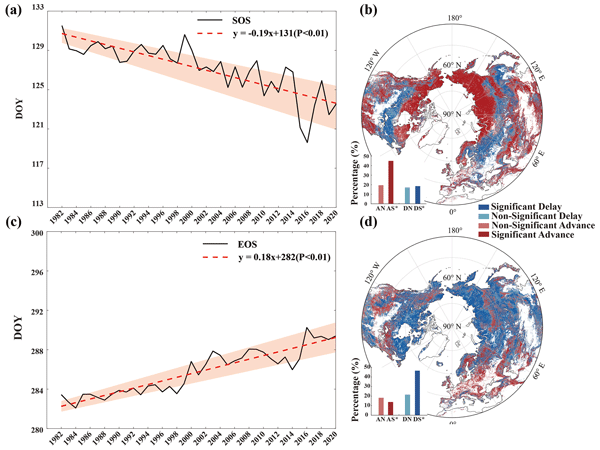
Yishuo Cui, Shouzhi Chen, Yufeng Gong, Mingwei Li, Zitong Jia, Yuyu Zhou, and Yongshuo H. Fu
Earth Syst. Sci. Data, 17, 4005–4022, https://doi.org/10.5194/essd-17-4005-2025, https://doi.org/10.5194/essd-17-4005-2025, 2025
Short summary
Short summary
Global changes have significantly altered vegetation phenology, affecting terrestrial carbon cycles. While various remote-sensing-based phenology datasets exist, they often suffer from inconsistencies and uncertainties. To address this, we developed a new phenology dataset spanning 1982–2020 using a reliability ensemble averaging method. Validated against ground data, our dataset demonstrates substantially improved accuracy, providing a novel and reliable source for global ecological studies.
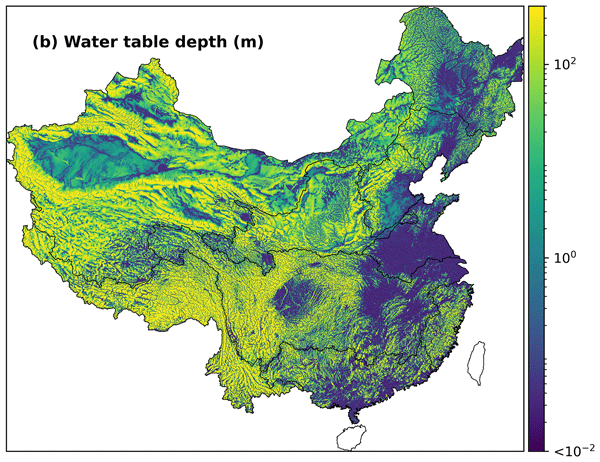
Chen Yang, Zitong Jia, Wenjie Xu, Zhongwang Wei, Xiaolang Zhang, Yiguang Zou, Jeffrey McDonnell, Laura Condon, Yongjiu Dai, and Reed Maxwell
Hydrol. Earth Syst. Sci., 29, 2201–2218, https://doi.org/10.5194/hess-29-2201-2025, https://doi.org/10.5194/hess-29-2201-2025, 2025
Short summary
Short summary
We developed the first high-resolution, integrated surface water–groundwater hydrologic model of the entirety of continental China using ParFlow. The model shows good performance in terms of streamflow and water table depth when compared to global data products and observations. It is essential for water resources management and decision-making in China within a consistent framework in the changing world. It also has significant implications for similar modeling in other places in the world.
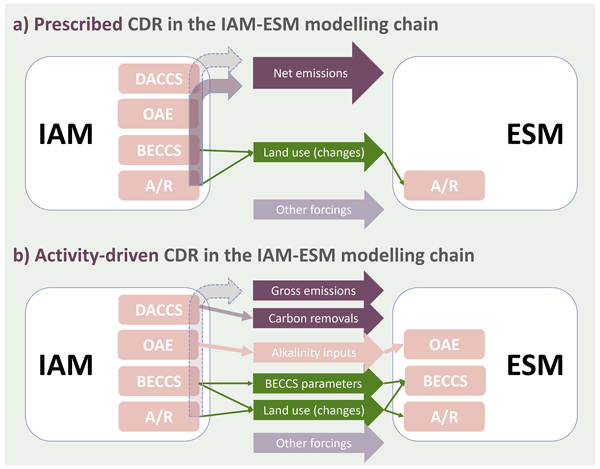
Jörg Schwinger, Leon Merfort, Nico Bauer, Raffaele Bernardello, Momme Butenschön, Timothée Bourgeois, Matthew J. Gidden, Shraddha Gupta, Hanna Lee, Nadine Mengis, Yiannis Moustakis, Helene Muri, Lars Nieradzik, Daniele Peano, Julia Pongratz, Pascal Sauer, Etienne Tourigny, and David Wårlind
Earth Syst. Dynam., 17, 1341–1363, https://doi.org/10.5194/esd-17-1341-2026, https://doi.org/10.5194/esd-17-1341-2026, 2026
Short summary
Short summary
Earth system models can simulate CO2 removal by representing the activity that draws down atmospheric CO2, e.g. growing bioenergy crops for energy production with carbon capture and storage or enhancing the oceans’ alkalinity. We describe a simulation framework, spanning the modeling chain from integrated assessment to Earth system models, that allows separating the intrinsic efficiency of CO2 removal and the overall atmospheric CO2 reduction, the latter being affected by Earth system feedbacks.
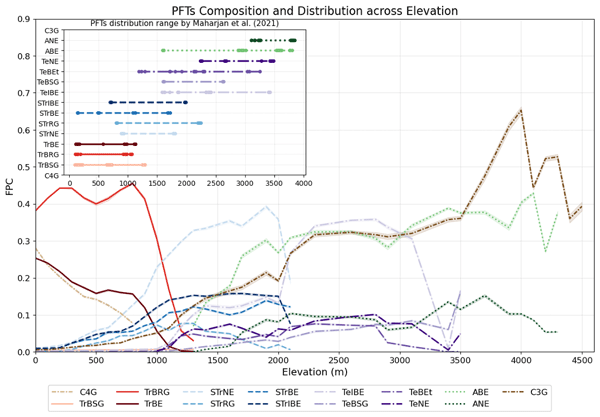
Prashant Paudel, Stefan Olin, Mark Tjoelker, Mikael Pontarp, Daniel Metcalfe, and Benjamin Smith
Biogeosciences, 23, 4999–5018, https://doi.org/10.5194/bg-23-4999-2026, https://doi.org/10.5194/bg-23-4999-2026, 2026
Short summary
Short summary
We used computer simulations to study how vegetation changes from low to high elevations in the Himalayas. We found that competition between plants is more important in warm lowlands, while cold conditions limit plant growth at high elevations. These differences influence plant diversity, vegetation structure, and the amount of plant growth across mountain landscapes, showing how climate and plant strategies together shape ecosystems.
Jette Elena Stoebke, David Wårlind, Stefan Olin, Annemarie Eckes-Shephard, Bogdan Brzeziecki, Mikko Peltoniemi, and Thomas A. M. Pugh
Geosci. Model Dev., 19, 3595–3615, https://doi.org/10.5194/gmd-19-3595-2026, https://doi.org/10.5194/gmd-19-3595-2026, 2026
Short summary
Short summary
Forests are shaped by how trees compete for light. We improved a widely used vegetation model by introducing spatially explicit canopies, allowing light distribution to vary realistically, especially after disturbances like tree death or harvest. This enhances the simulation of forest structure, tree coexistence, and regeneration, providing a better model for predicting forest dynamics and responses to management and environmental change.
Tian Lan, Jiajia Zhang, Wenqing Cheng, Xiao Wang, Hongbo Zhang, Xinghui Gong, Xue Xie, Yongqin David Chen, and Chong-Yu Xu
Hydrol. Earth Syst. Sci., 30, 2455–2471, https://doi.org/10.5194/hess-30-2455-2026, https://doi.org/10.5194/hess-30-2455-2026, 2026
Short summary
Short summary
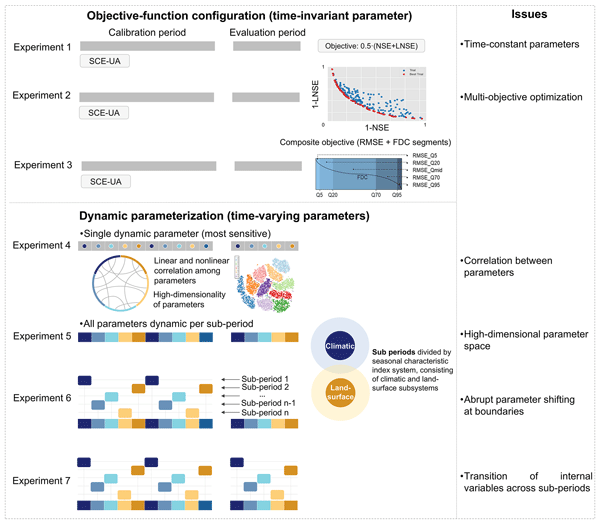
Hydrological models are vital for water management but often fail to predict water flow in dynamic catchments due to model simplification. This study tackles it by developing an optimized calibration framework that considers dynamic catchment characteristics. To overcome potential difficulties, multiple schemes were tested on over 200 U.S. catchments. The results enhanced our understanding of simulation in dynamic catchments and provided a practical solution for improving future forecasting.
Konstantin Gregor, Benjamin F. Meyer, Tillmann Gaida, Victor Justo Vasquez, Karina Bett-Williams, Matthew Forrest, João P. Darela-Filho, Sam Rabin, Marcos Longo, Joe R. Melton, Johan Nord, Peter Anthoni, Vladislav Bastrikov, Thomas Colligan, Christine Delire, Michael C. Dietze, George Hurtt, Akihiko Ito, Lasse T. Keetz, Jürgen Knauer, Johannes Köster, Tzu-Shun Lin, Lei Ma, Marie Minvielle, Stefan Olin, Sebastian Ostberg, Hao Shi, Reiner Schnur, Qing Sun, Peter E. Thornton, and Anja Rammig
Geosci. Model Dev., 19, 2407–2436, https://doi.org/10.5194/gmd-19-2407-2026, https://doi.org/10.5194/gmd-19-2407-2026, 2026
Short summary
Short summary
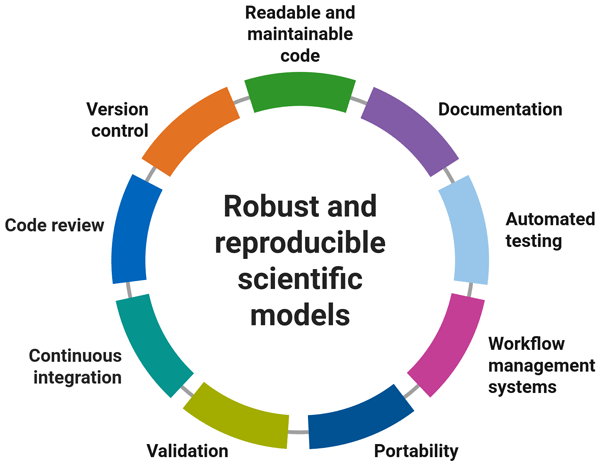
Geoscientific models are crucial for understanding Earth’s processes. However, they sometimes do not adhere to highest software quality standards, and scientific results are often hard to reproduce due to the complexity of the workflows. Here we gather the expertise of 20 modeling groups and software engineers to define best practices for making geoscientific models maintainable, usable, and reproducible. We conclude with an open-source example serving as a reference for modeling communities.
Daju Wang, Ruowen Yang, Lei Cai, Pierre Gentine, César Terrer, Shuli Niu, Mirco Migliavacca, Wenping Yuan, Ryunosuke Tateno, Junlan Xiao, Josep Peñuelas, Caixian Tang, Yongshuo H. Fu, and Weiyu Shi
EGUsphere, https://doi.org/10.5194/egusphere-2026-296, https://doi.org/10.5194/egusphere-2026-296, 2026
Short summary
Short summary
Soil respiration is a major CO2 source, yet its response to vary nitrogen addition levels remains unclear. Using global data from 226 sites, we found moderate N addition has negligible or slightly positive effects, whereas high N addition consistently suppresses total and microbial respiration. These findings were incorporated into the CLM5 model, improving predictions of soil respiration and carbon storage. Our work elucidates how N deposition alters soil carbon processes and climate feedbacks.
Zehong Huang, Shouzhi Chen, Yufeng Gong, Zheng Wang, Zheng Duan, and Yongshuo H. Fu
EGUsphere, https://doi.org/10.5194/egusphere-2025-5503, https://doi.org/10.5194/egusphere-2025-5503, 2025
Preprint archived
Short summary
Short summary
Understanding how carbon moves through rivers is vital for managing water quality and climate change. This study developed a new diagnostic framework that combines computer modeling and data analysis to explore why current river carbon simulations are often inaccurate. The results show that parts of the model describing plant growth and carbon cycling cause most errors, and improving these areas can make future environmental predictions more reliable.

Dmitry Otryakhin, David Martín Belda, and Almut Arneth
Geosci. Model Dev., 18, 9101–9118, https://doi.org/10.5194/gmd-18-9101-2025, https://doi.org/10.5194/gmd-18-9101-2025, 2025
Short summary
Short summary
We developed a methodology for comparison of simulation results by a dynamic global vegetation model (DGVM). Using this methodology, we reveal systematic differences between high- and low-resolution DGVM simulations caused by under-representation of climate variability in the low-resolution data and poor representation of shore lines and inland water bodies. In a study area covering European Union, the differences in aggregated output variables were found to be 2.8%–7.3%.
Qiumei Ma, Chengyu Xie, Zheng Duan, Yanke Zhang, Lihua Xiong, and Chong-Yu Xu
Hydrol. Earth Syst. Sci., 29, 6631–6646, https://doi.org/10.5194/hess-29-6631-2025, https://doi.org/10.5194/hess-29-6631-2025, 2025
Short summary
Short summary
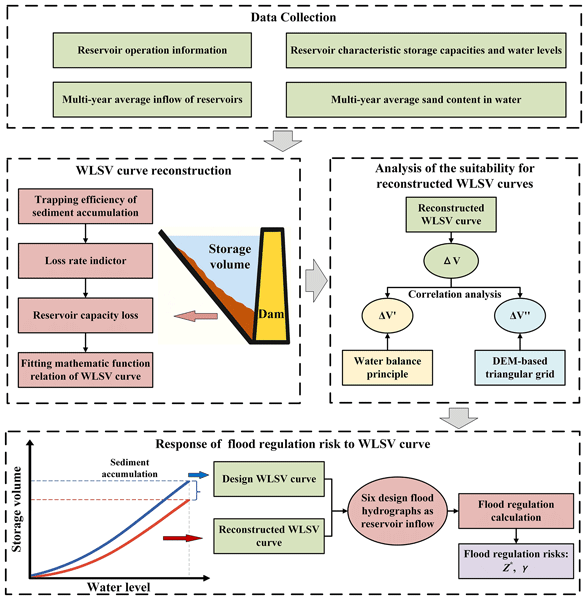
We propose a method to estimate the reservoir water level–storage volume (WLSV) curve based on the capacity loss induced by sediment accumulation and assess the potential negative impact caused by outdated design WLSV curve on flood regulation risks. The findings highlight that when storage capacity is considerably reduced, continued use of design WLSV curves may significantly underestimate, thus posing potential safety hazards to the reservoir itself and downstream flood protection objects.
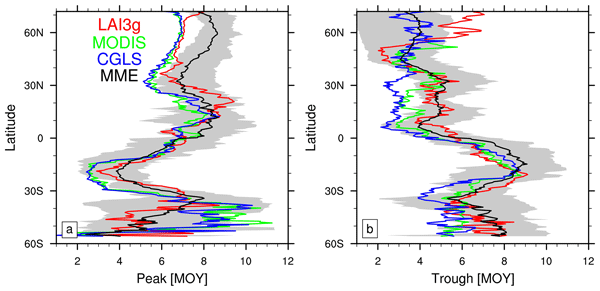
Daniele Peano, Deborah Hemming, Christine Delire, Yuanchao Fan, Hanna Lee, Stefano Materia, Julia E. M. S. Nabel, Taejin Park, David Wårlind, Andy Wiltshire, and Sönke Zaehle
Biogeosciences, 22, 7117–7135, https://doi.org/10.5194/bg-22-7117-2025, https://doi.org/10.5194/bg-22-7117-2025, 2025
Short summary
Short summary
Earth System Models are the principal tools for scientists to study past, present, and future climate changes. This work investigates the ability of a set of them to represent the observed changes in vegetation, which are vital to estimating the impact of future climate mitigation and adaptation strategies. This study highlights the main limitations in correctly representing vegetation variability. These tools still need further development to improve our understanding of future changes.
Olga Silantyeva, Shaochun Huang, and Chong-Yu Xu
EGUsphere, https://doi.org/10.5194/egusphere-2025-4071, https://doi.org/10.5194/egusphere-2025-4071, 2025
Preprint archived
Short summary
Short summary
Hydrological models forecast river flow, but no single model works everywhere. The open-source Shyft framework provides flexible configurations suitable for various climates and landscapes. We benchmarked five Shyft configurations across 109 Norwegian catchments (1981–2021) using ten goal functions and three evaluation criteria. All models outperformed climatological baselines. Precipitation correction had strongest impact , while goal function and model choice also influenced performance.
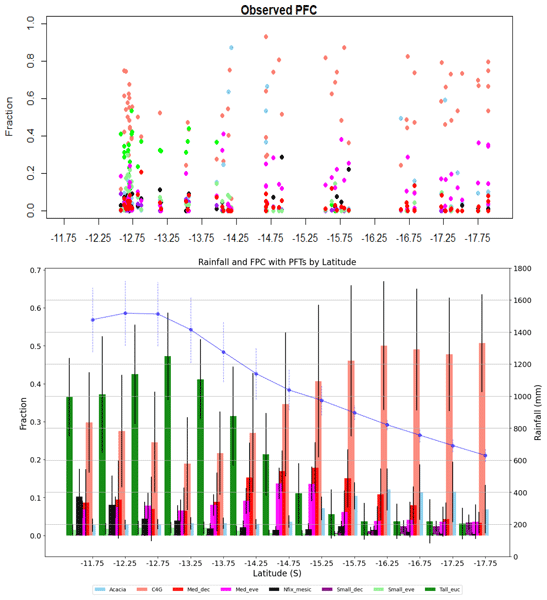
Prashant Paudel, Stefan Olin, Mark Tjoelker, Mikael Pontarp, Daniel Metcalfe, and Benjamin Smith
Biogeosciences, 22, 6153–6171, https://doi.org/10.5194/bg-22-6153-2025, https://doi.org/10.5194/bg-22-6153-2025, 2025
Short summary
Short summary
Ecological processes respond to changes in rainfall conditions. Competition and stress created by water availability are two primary components at two ends of the rainfall gradient. In wetter areas, plants compete for resources, while in drier regions, stress limits growth. The complex interaction between plant characters and their response to growth conditions governs ecosystem processes. These findings can be used to understand how future rainfall changes could impact ecosystems.
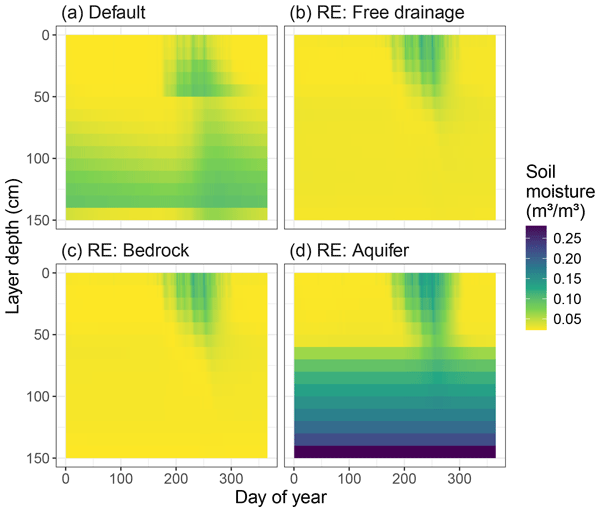
Wim Verbruggen, David Wårlind, Stéphanie Horion, Félicien Meunier, Hans Verbeeck, Aleksander Wieckowski, Torbern Tagesson, and Guy Schurgers
Geosci. Model Dev., 18, 6623–6645, https://doi.org/10.5194/gmd-18-6623-2025, https://doi.org/10.5194/gmd-18-6623-2025, 2025
Short summary
Short summary
We improved the representation of soil water movement in a state-of-the-art dynamic vegetation model. This is important for dry ecosystems, as they are often driven by changes in soil water availability. We showed that this update resulted in a better match with observations and that the updated model is more sensitive to soil texture. The new model can also simulate a groundwater table. This updated model can help us to better understand the future of dry ecosystems under climate change.
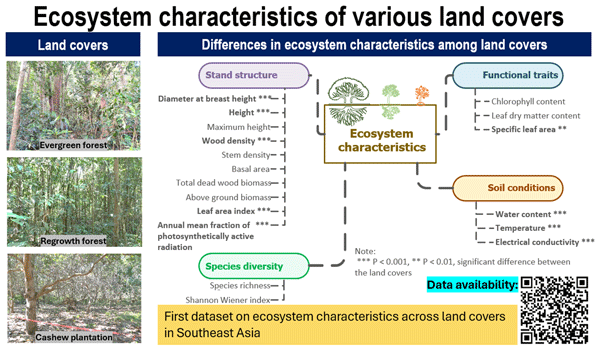
Chansopheaktra Sovann, Torbern Tagesson, Patrik Vestin, Sakada Sakhoeun, Soben Kim, Sothea Kok, and Stefan Olin
Biogeosciences, 22, 4649–4677, https://doi.org/10.5194/bg-22-4649-2025, https://doi.org/10.5194/bg-22-4649-2025, 2025
Short summary
Short summary
We offer pairwise observed datasets that compare the characteristics of tropical ecosystems, specifically pristine forests, regrowth forests, and cashew plantations. Our findings uncover some key differences in their characteristics, emphasizing the influence of human activities on these ecosystems. By sharing our unique datasets, we hope to improve the knowledge of tropical forest ecosystems in Southeast Asia, advancing tropical research and tackling global environmental challenges.
Yishuo Cui, Shouzhi Chen, Yufeng Gong, Mingwei Li, Zitong Jia, Yuyu Zhou, and Yongshuo H. Fu
Earth Syst. Sci. Data, 17, 4005–4022, https://doi.org/10.5194/essd-17-4005-2025, https://doi.org/10.5194/essd-17-4005-2025, 2025
Short summary
Short summary
Global changes have significantly altered vegetation phenology, affecting terrestrial carbon cycles. While various remote-sensing-based phenology datasets exist, they often suffer from inconsistencies and uncertainties. To address this, we developed a new phenology dataset spanning 1982–2020 using a reliability ensemble averaging method. Validated against ground data, our dataset demonstrates substantially improved accuracy, providing a novel and reliable source for global ecological studies.

Carolina Natel, David Martín Belda, Peter Anthoni, Neele Haß, Sam Rabin, and Almut Arneth
Geosci. Model Dev., 18, 4317–4333, https://doi.org/10.5194/gmd-18-4317-2025, https://doi.org/10.5194/gmd-18-4317-2025, 2025
Short summary
Short summary
We developed fast machine learning models to predict forest regrowth and carbon dynamics under climate change. These models mimic the outputs of a complex vegetation model but run 95 % faster, enabling global analyses and supporting climate solutions in large modeling frameworks such as LandSyMM.
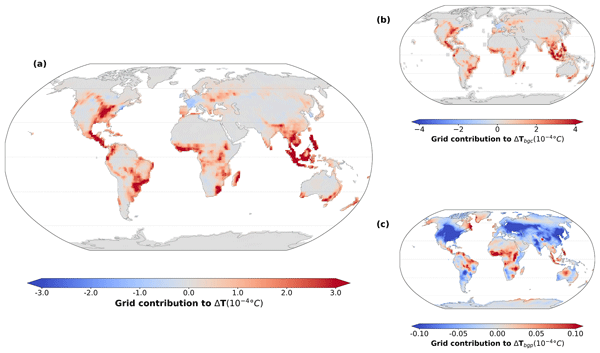
Amali A. Amali, Clemens Schwingshackl, Akihiko Ito, Alina Barbu, Christine Delire, Daniele Peano, David M. Lawrence, David Wårlind, Eddy Robertson, Edouard L. Davin, Elena Shevliakova, Ian N. Harman, Nicolas Vuichard, Paul A. Miller, Peter J. Lawrence, Tilo Ziehn, Tomohiro Hajima, Victor Brovkin, Yanwu Zhang, Vivek K. Arora, and Julia Pongratz
Earth Syst. Dynam., 16, 803–840, https://doi.org/10.5194/esd-16-803-2025, https://doi.org/10.5194/esd-16-803-2025, 2025
Short summary
Short summary
Our study explored the impact of anthropogenic land-use change (LUC) on climate dynamics, focusing on biogeophysical (BGP) and biogeochemical (BGC) effects using data from the Land Use Model Intercomparison Project (LUMIP) and the Coupled Model Intercomparison Project Phase 6 (CMIP6). We found that LUC-induced carbon emissions contribute to a BGC warming of 0.21 °C, with BGC effects dominating globally over BGP effects, which show regional variability. Our findings highlight discrepancies in model simulations and emphasize the need for improved representations of LUC processes.
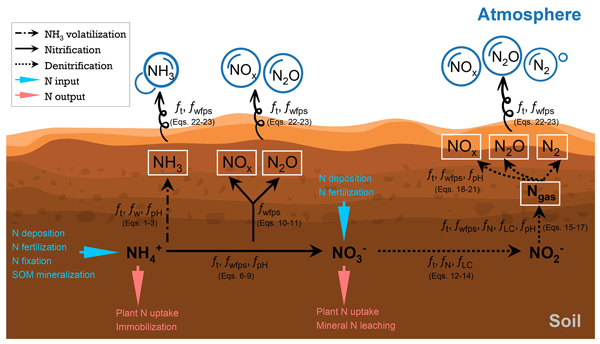
Jianyong Ma, Almut Arneth, Benjamin Smith, Peter Anthoni, Xu-Ri, Peter Eliasson, David Wårlind, Martin Wittenbrink, and Stefan Olin
Geosci. Model Dev., 18, 3131–3155, https://doi.org/10.5194/gmd-18-3131-2025, https://doi.org/10.5194/gmd-18-3131-2025, 2025
Short summary
Short summary
Nitrous oxide (N2O) is a powerful greenhouse gas mainly released from natural and agricultural soils. This study examines how global soil N2O emissions changed from 1961 to 2020 and identifies key factors driving these changes using an ecological model. The findings highlight croplands as the largest source, with factors like fertilizer use and climate change enhancing emissions. Rising CO2 levels, however, can partially mitigate N2O emissions through increased plant nitrogen uptake.
Chen Yang, Zitong Jia, Wenjie Xu, Zhongwang Wei, Xiaolang Zhang, Yiguang Zou, Jeffrey McDonnell, Laura Condon, Yongjiu Dai, and Reed Maxwell
Hydrol. Earth Syst. Sci., 29, 2201–2218, https://doi.org/10.5194/hess-29-2201-2025, https://doi.org/10.5194/hess-29-2201-2025, 2025
Short summary
Short summary
We developed the first high-resolution, integrated surface water–groundwater hydrologic model of the entirety of continental China using ParFlow. The model shows good performance in terms of streamflow and water table depth when compared to global data products and observations. It is essential for water resources management and decision-making in China within a consistent framework in the changing world. It also has significant implications for similar modeling in other places in the world.
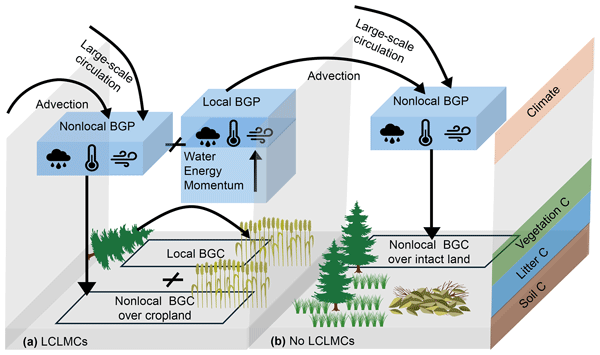
Suqi Guo, Felix Havermann, Steven J. De Hertog, Fei Luo, Iris Manola, Thomas Raddatz, Hongmei Li, Wim Thiery, Quentin Lejeune, Carl-Friedrich Schleussner, David Wårlind, Lars Nieradzik, and Julia Pongratz
Earth Syst. Dynam., 16, 631–666, https://doi.org/10.5194/esd-16-631-2025, https://doi.org/10.5194/esd-16-631-2025, 2025
Short summary
Short summary
Land cover and land management changes (LCLMCs) can alter climate even in intact areas, causing carbon changes in remote areas. This study is the first to assess these effects, finding they substantially alter global carbon dynamics, changing terrestrial stocks by up to dozens of gigatonnes. These results are vital for scientific and policy assessments, given the expected role of LCLMCs in achieving the Paris Agreement's goal to limit global warming below 1.5 °C.
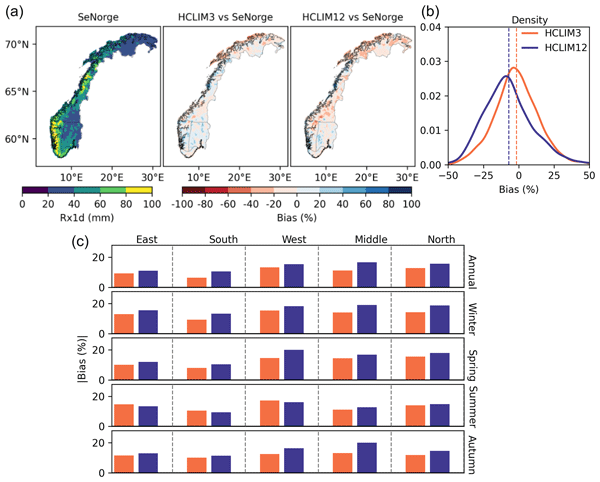
Kun Xie, Lu Li, Hua Chen, Stephanie Mayer, Andreas Dobler, Chong-Yu Xu, and Ozan Mert Göktürk
Hydrol. Earth Syst. Sci., 29, 2133–2152, https://doi.org/10.5194/hess-29-2133-2025, https://doi.org/10.5194/hess-29-2133-2025, 2025
Short summary
Short summary
We compared hourly and daily extreme precipitation across Norway from HARMONIE Climate models at convection-permitting 3 km (HCLIM3) and 12 km (HCLIM12) resolutions. HCLIM3 more accurately captures the extremes in most regions and seasons (except in summer). Its advantages are more pronounced for hourly extremes than for daily extremes. The results highlight the value of convection-permitting models in improving extreme-precipitation predictions and in helping the local society brace for extreme weather.
Mingwei Li, Shouzhi Chen, Fanghua Hao, Nan Wang, Zhaofei Wu, Yue Xu, Jing Zhang, Yongqiang Zhang, and Yongshuo H. Fu
Hydrol. Earth Syst. Sci., 29, 2081–2095, https://doi.org/10.5194/hess-29-2081-2025, https://doi.org/10.5194/hess-29-2081-2025, 2025
Short summary
Short summary
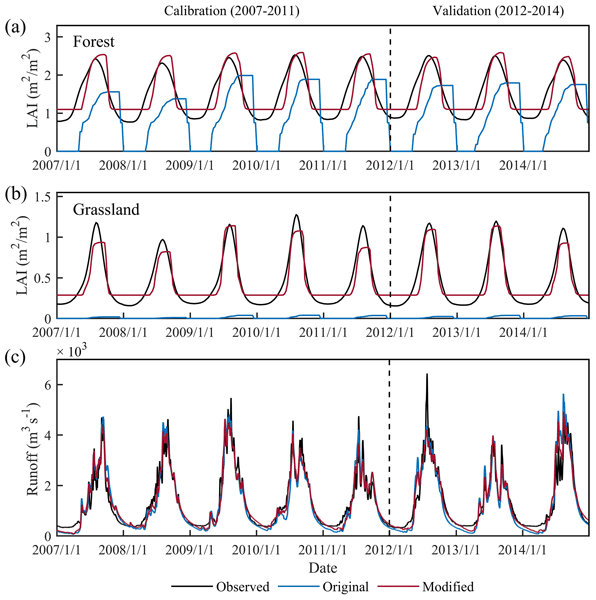
Climate-driven shifts in vegetation phenology have a significant impact on hydrological processes. In this study, we integrated a process-based phenology module into the SWAT-Carbon model, which led to a substantial improvement in the simulation of vegetation dynamics and hydrological processes in the Jinsha River watershed. Our findings highlight the critical need to incorporate vegetation phenology into hydrological models to achieve a more accurate representation of ecohydrological processes.
Mateus Dantas de Paula, Matthew Forrest, David Warlind, João Paulo Darela Filho, Katrin Fleischer, Anja Rammig, and Thomas Hickler
Geosci. Model Dev., 18, 2249–2274, https://doi.org/10.5194/gmd-18-2249-2025, https://doi.org/10.5194/gmd-18-2249-2025, 2025
Short summary
Short summary
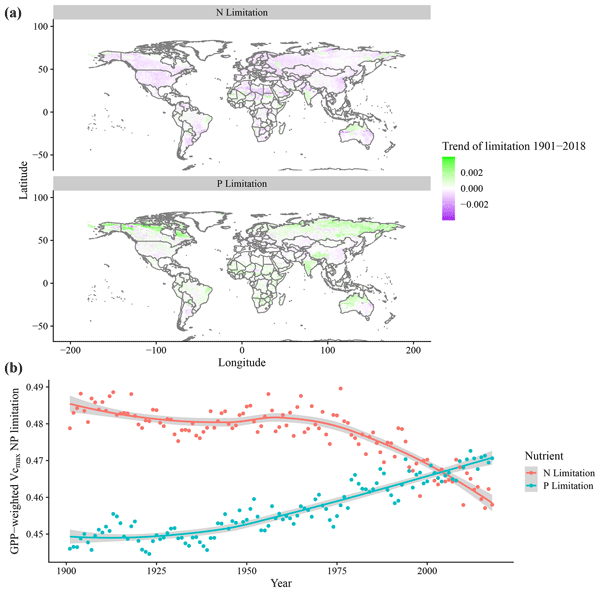
Our study maps global nitrogen (N) and phosphorus (P) availability and how they changed from 1901 to 2018. We find that tropical regions are mostly P-limited, while temperate and boreal areas face N limitations. Over time, P limitation increased, especially in the tropics, while N limitation decreased. These shifts are key to understanding global plant growth and carbon storage, highlighting the importance of including P dynamics in ecosystem models.
Tian Lan, Tongfang Li, Hongbo Zhang, Jiefeng Wu, Yongqin David Chen, and Chong-Yu Xu
Hydrol. Earth Syst. Sci., 29, 903–924, https://doi.org/10.5194/hess-29-903-2025, https://doi.org/10.5194/hess-29-903-2025, 2025
Short summary
Short summary
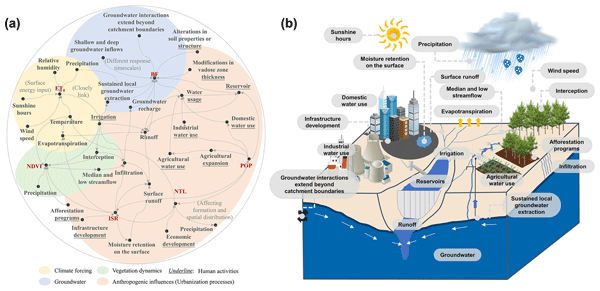
This study develops an integrated framework based on the novel Driving index for changes in Precipitation–Runoff Relationships (DPRR) to explore the controlling changes in precipitation–runoff relationships in non-stationary environments. According to the quantitative results of the candidate driving factors, the possible process explanations for changes in the precipitation–runoff relationships are deduced. The main contribution offers a comprehensive understanding of hydrological processes.
Tuula Aalto, Aki Tsuruta, Jarmo Mäkelä, Jurek Müller, Maria Tenkanen, Eleanor Burke, Sarah Chadburn, Yao Gao, Vilma Mannisenaho, Thomas Kleinen, Hanna Lee, Antti Leppänen, Tiina Markkanen, Stefano Materia, Paul A. Miller, Daniele Peano, Olli Peltola, Benjamin Poulter, Maarit Raivonen, Marielle Saunois, David Wårlind, and Sönke Zaehle
Biogeosciences, 22, 323–340, https://doi.org/10.5194/bg-22-323-2025, https://doi.org/10.5194/bg-22-323-2025, 2025
Short summary
Short summary
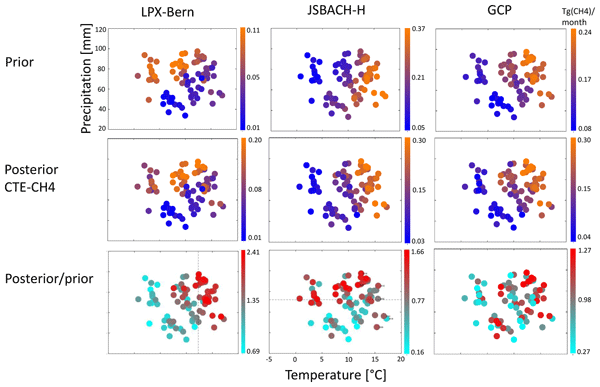
Wetland methane responses to temperature and precipitation were studied in a boreal wetland-rich region in northern Europe using ecosystem models, atmospheric inversions, and upscaled flux observations. The ecosystem models differed in their responses to temperature and precipitation and in their seasonality. However, multi-model means, inversions, and upscaled fluxes had similar seasonality, and they suggested co-limitation by temperature and precipitation.
Zhen Cui, Shenglian Guo, Hua Chen, Dedi Liu, Yanlai Zhou, and Chong-Yu Xu
Hydrol. Earth Syst. Sci., 28, 2809–2829, https://doi.org/10.5194/hess-28-2809-2024, https://doi.org/10.5194/hess-28-2809-2024, 2024
Short summary
Short summary
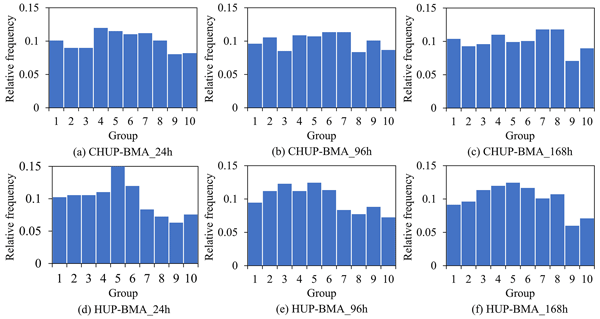
Ensemble forecasting facilitates reliable flood forecasting and warning. This study couples the copula-based hydrologic uncertainty processor (CHUP) with Bayesian model averaging (BMA) and proposes the novel CHUP-BMA method of reducing inflow forecasting uncertainty of the Three Gorges Reservoir. The CHUP-BMA avoids the normal distribution assumption in the HUP-BMA and considers the constraint of initial conditions, which can improve the deterministic and probabilistic forecast performance.
Jinghua Xiong, Shenglian Guo, Abhishek, Jiabo Yin, Chongyu Xu, Jun Wang, and Jing Guo
Hydrol. Earth Syst. Sci., 28, 1873–1895, https://doi.org/10.5194/hess-28-1873-2024, https://doi.org/10.5194/hess-28-1873-2024, 2024
Short summary
Short summary
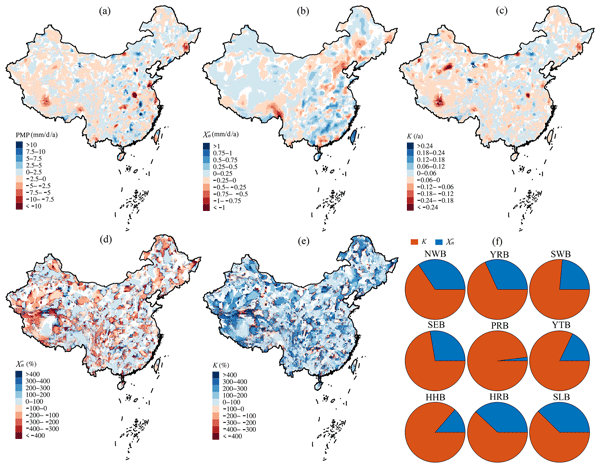
Temporal variability and spatial heterogeneity of climate systems challenge accurate estimation of probable maximum precipitation (PMP) in China. We use high-resolution precipitation data and climate models to explore the variability, trends, and shifts of PMP under climate change. Validated with multi-source estimations, our observations and simulations show significant spatiotemporal divergence of PMP over the country, which is projected to amplify in future due to land–atmosphere coupling.
Chansopheaktra Sovann, Torbern Tagesson, Patrik Vestin, Sakada Sakhoeun, Soben Kim, Sothea Kok, and Stefan Olin
Earth Syst. Sci. Data Discuss., https://doi.org/10.5194/essd-2024-98, https://doi.org/10.5194/essd-2024-98, 2024
Revised manuscript not accepted
Short summary
Short summary
We offer pairwise observed datasets that compare the characteristics of tropical ecosystems, specifically pristine forests, regrowth forests, and cashew plantations. Our findings uncover some key differences in their characteristics, emphasizing the influence of human activities on these ecosystems. By sharing our unique datasets, we hope to improve the knowledge of tropical forest ecosystems in Southeast Asia, advancing tropical research, and tackling global environmental challenges.
Shouzhi Chen, Yongshuo H. Fu, Mingwei Li, Zitong Jia, Yishuo Cui, and Jing Tang
Geosci. Model Dev., 17, 2509–2523, https://doi.org/10.5194/gmd-17-2509-2024, https://doi.org/10.5194/gmd-17-2509-2024, 2024
Short summary
Short summary
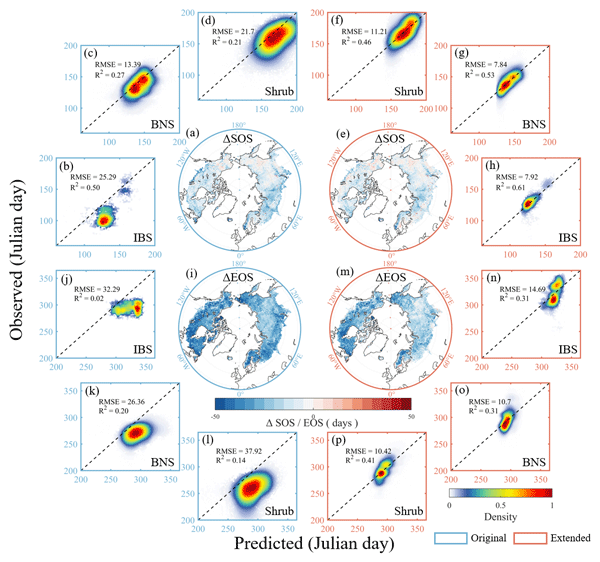
It is still a challenge to achieve an accurate simulation of vegetation phenology in the dynamic global vegetation models (DGVMs). We implemented and coupled the spring and autumn phenology models into one of the DGVMs, LPJ-GUESS, and substantially improved the accuracy in capturing the start and end dates of growing seasons. Our study highlights the importance of getting accurate phenology estimations to reduce the uncertainties in plant distribution and terrestrial carbon and water cycling.
Danielle M. Barna, Kolbjørn Engeland, Thomas Kneib, Thordis L. Thorarinsdottir, and Chong-Yu Xu
EGUsphere, https://doi.org/10.5194/egusphere-2023-2335, https://doi.org/10.5194/egusphere-2023-2335, 2023
Preprint archived
Short summary
Short summary
Estimating flood quantiles at data-scarce sites often involves single-duration regression models. However, floodplain management and reservoir design, for example, need estimates at several durations, posing challenges. Our flexible generalized additive model (GAM) enhances accuracy and explanation, revealing that single-duration models may underperform elsewhere, emphasizing the need for adaptable approaches.
Pengxiang Wang, Zuhao Zhou, Jiajia Liu, Chongyu Xu, Kang Wang, Yangli Liu, Jia Li, Yuqing Li, Yangwen Jia, and Hao Wang
Hydrol. Earth Syst. Sci., 27, 2681–2701, https://doi.org/10.5194/hess-27-2681-2023, https://doi.org/10.5194/hess-27-2681-2023, 2023
Short summary
Short summary
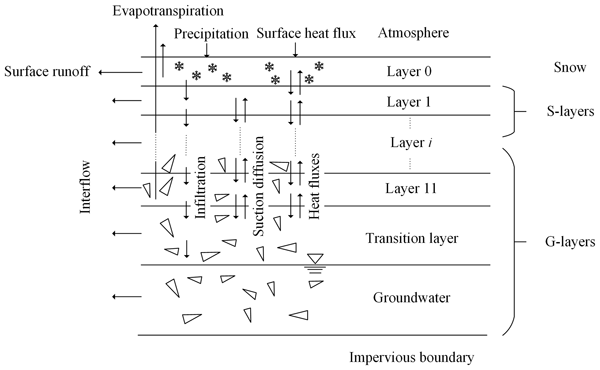
Considering the impact of the special geological and climatic conditions of the Qinghai–Tibet Plateau on the hydrological cycle, this study established the WEP-QTP hydrological model. The snow cover and gravel layers affected the temporal and spatial changes in frozen soil and improved the regulation of groundwater on the flow process. Ignoring he influence of special underlying surface conditions has a great impact on the hydrological forecast and water resource utilization in this area.
Qi Guan, Jing Tang, Lian Feng, Stefan Olin, and Guy Schurgers
Biogeosciences, 20, 1635–1648, https://doi.org/10.5194/bg-20-1635-2023, https://doi.org/10.5194/bg-20-1635-2023, 2023
Short summary
Short summary
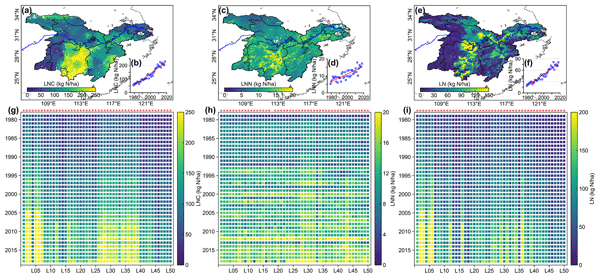
Understanding terrestrial sources of nitrogen is vital to examine lake eutrophication changes. Combining process-based ecosystem modeling and satellite observations, we found that land-leached nitrogen in the Yangtze Plain significantly increased from 1979 to 2018, and terrestrial nutrient sources were positively correlated with eutrophication trends observed in most lakes, demonstrating the necessity of sustainable nitrogen management to control eutrophication.
Shanlin Tong, Weiguang Wang, Jie Chen, Chong-Yu Xu, Hisashi Sato, and Guoqing Wang
Geosci. Model Dev., 15, 7075–7098, https://doi.org/10.5194/gmd-15-7075-2022, https://doi.org/10.5194/gmd-15-7075-2022, 2022
Short summary
Short summary
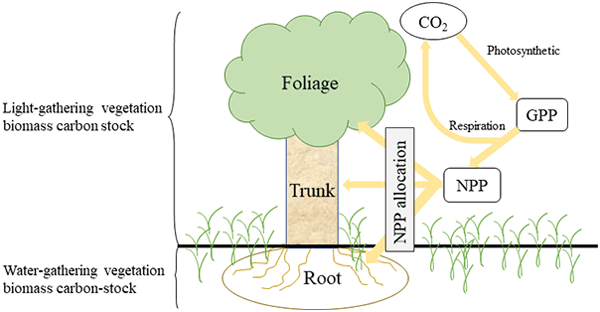
Plant carbon storage potential is central to moderate atmospheric CO2 concentration buildup and mitigation of climate change. There is an ongoing debate about the main driver of carbon storage. To reconcile this discrepancy, we use SEIB-DGVM to investigate the trend and response mechanism of carbon stock fractions among water limitation regions. Results show that the impact of CO2 and temperature on carbon stock depends on water limitation, offering a new perspective on carbon–water coupling.
David Martín Belda, Peter Anthoni, David Wårlind, Stefan Olin, Guy Schurgers, Jing Tang, Benjamin Smith, and Almut Arneth
Geosci. Model Dev., 15, 6709–6745, https://doi.org/10.5194/gmd-15-6709-2022, https://doi.org/10.5194/gmd-15-6709-2022, 2022
Short summary
Short summary
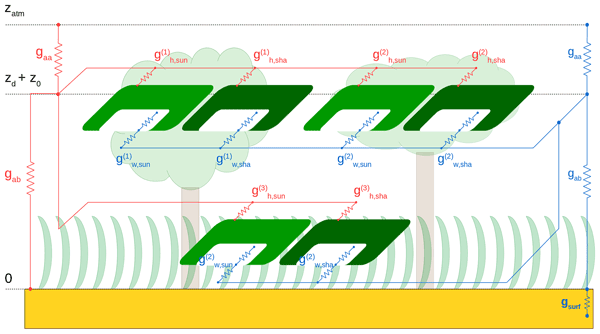
We present a number of augmentations to the ecosystem model LPJ-GUESS, which will allow us to use it in studies of the interactions between the land biosphere and the climate. The new module enables calculation of fluxes of energy and water into the atmosphere that are consistent with the modelled vegetation processes. The modelled fluxes are in fair agreement with observations across 21 sites from the FLUXNET network.
Johannes Oberpriller, Christine Herschlein, Peter Anthoni, Almut Arneth, Andreas Krause, Anja Rammig, Mats Lindeskog, Stefan Olin, and Florian Hartig
Geosci. Model Dev., 15, 6495–6519, https://doi.org/10.5194/gmd-15-6495-2022, https://doi.org/10.5194/gmd-15-6495-2022, 2022
Short summary
Short summary
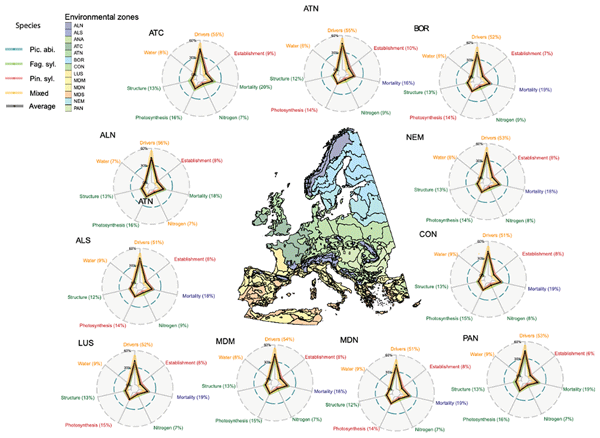
Understanding uncertainties of projected ecosystem dynamics under environmental change is of immense value for research and climate change policy. Here, we analyzed these across European forests. We find that uncertainties are dominantly induced by parameters related to water, mortality, and climate, with an increasing importance of climate from north to south. These results highlight that climate not only contributes uncertainty but also modifies uncertainties in other ecosystem processes.
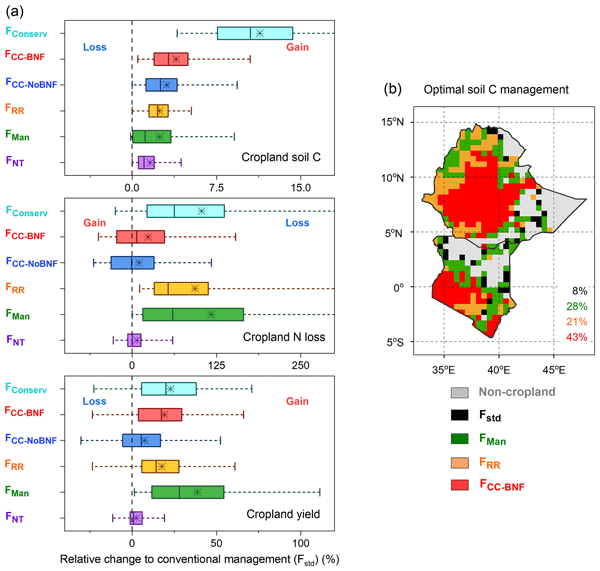
Jianyong Ma, Sam S. Rabin, Peter Anthoni, Anita D. Bayer, Sylvia S. Nyawira, Stefan Olin, Longlong Xia, and Almut Arneth
Biogeosciences, 19, 2145–2169, https://doi.org/10.5194/bg-19-2145-2022, https://doi.org/10.5194/bg-19-2145-2022, 2022
Short summary
Short summary
Improved agricultural management plays a vital role in protecting soils from degradation in eastern Africa. We simulated the impacts of seven management practices on soil carbon pools, nitrogen loss, and crop yield under different climate scenarios in this region. This study highlights the possibilities of conservation agriculture when targeting long-term environmental sustainability and food security in crop ecosystems, particularly for those with poor soil conditions in tropical climates.
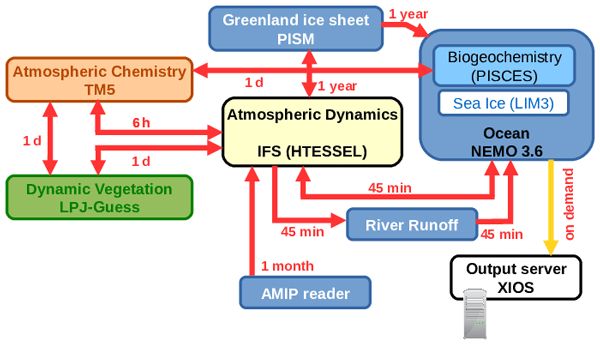
Ralf Döscher, Mario Acosta, Andrea Alessandri, Peter Anthoni, Thomas Arsouze, Tommi Bergman, Raffaele Bernardello, Souhail Boussetta, Louis-Philippe Caron, Glenn Carver, Miguel Castrillo, Franco Catalano, Ivana Cvijanovic, Paolo Davini, Evelien Dekker, Francisco J. Doblas-Reyes, David Docquier, Pablo Echevarria, Uwe Fladrich, Ramon Fuentes-Franco, Matthias Gröger, Jost v. Hardenberg, Jenny Hieronymus, M. Pasha Karami, Jukka-Pekka Keskinen, Torben Koenigk, Risto Makkonen, François Massonnet, Martin Ménégoz, Paul A. Miller, Eduardo Moreno-Chamarro, Lars Nieradzik, Twan van Noije, Paul Nolan, Declan O'Donnell, Pirkka Ollinaho, Gijs van den Oord, Pablo Ortega, Oriol Tintó Prims, Arthur Ramos, Thomas Reerink, Clement Rousset, Yohan Ruprich-Robert, Philippe Le Sager, Torben Schmith, Roland Schrödner, Federico Serva, Valentina Sicardi, Marianne Sloth Madsen, Benjamin Smith, Tian Tian, Etienne Tourigny, Petteri Uotila, Martin Vancoppenolle, Shiyu Wang, David Wårlind, Ulrika Willén, Klaus Wyser, Shuting Yang, Xavier Yepes-Arbós, and Qiong Zhang
Geosci. Model Dev., 15, 2973–3020, https://doi.org/10.5194/gmd-15-2973-2022, https://doi.org/10.5194/gmd-15-2973-2022, 2022
Short summary
Short summary
The Earth system model EC-Earth3 is documented here. Key performance metrics show physical behavior and biases well within the frame known from recent models. With improved physical and dynamic features, new ESM components, community tools, and largely improved physical performance compared to the CMIP5 version, EC-Earth3 represents a clear step forward for the only European community ESM. We demonstrate here that EC-Earth3 is suited for a range of tasks in CMIP6 and beyond.
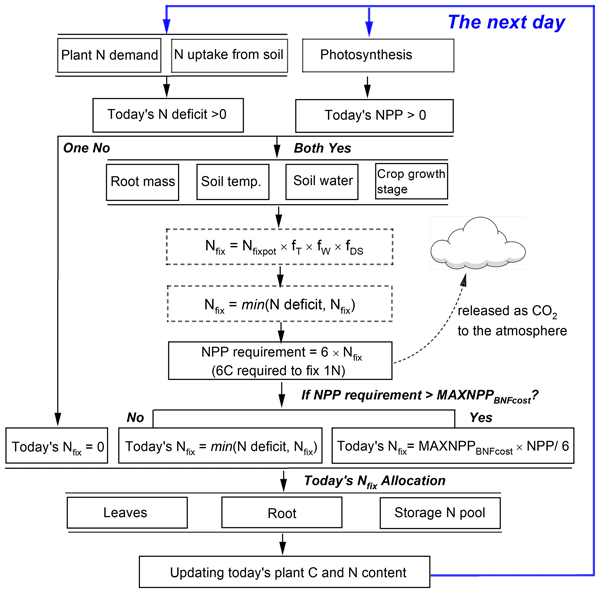
Jianyong Ma, Stefan Olin, Peter Anthoni, Sam S. Rabin, Anita D. Bayer, Sylvia S. Nyawira, and Almut Arneth
Geosci. Model Dev., 15, 815–839, https://doi.org/10.5194/gmd-15-815-2022, https://doi.org/10.5194/gmd-15-815-2022, 2022
Short summary
Short summary
The implementation of the biological N fixation process in LPJ-GUESS in this study provides an opportunity to quantify N fixation rates between legumes and to better estimate grain legume production on a global scale. It also helps to predict and detect the potential contribution of N-fixing plants as
green manureto reducing or removing the use of N fertilizer in global agricultural systems, considering different climate conditions, management practices, and land-use change scenarios.
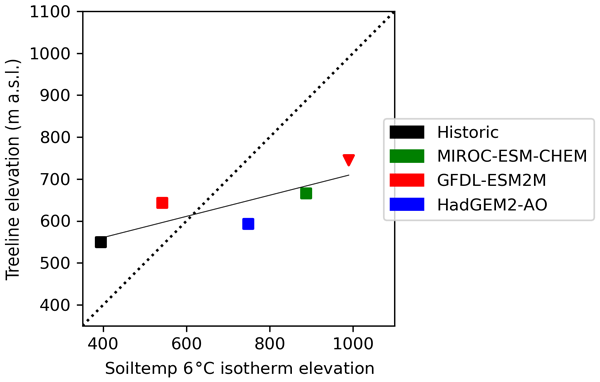
Adrian Gustafson, Paul A. Miller, Robert G. Björk, Stefan Olin, and Benjamin Smith
Biogeosciences, 18, 6329–6347, https://doi.org/10.5194/bg-18-6329-2021, https://doi.org/10.5194/bg-18-6329-2021, 2021
Short summary
Short summary
We performed model simulations of vegetation change for a historic period and a range of climate change scenarios at a high spatial resolution. Projected treeline advance continued at the same or increased rates compared to our historic simulation. Temperature isotherms advanced faster than treelines, revealing a lag in potential vegetation shifts that was modulated by nitrogen availability. At the year 2100 projected treelines had advanced by 45–195 elevational metres depending on the scenario.
Pengxiang Wang, Zuhao Zhou, Jiajia Liu, Chongyu Xu, Kang Wang, Yangli Liu, Jia Li, Yuqing Li, Yangwen Jia, and Hao Wang
Hydrol. Earth Syst. Sci. Discuss., https://doi.org/10.5194/hess-2021-538, https://doi.org/10.5194/hess-2021-538, 2021
Manuscript not accepted for further review
Short summary
Short summary
Combining the geological characteristics of the thin soil layer on the thick gravel layer and the climate characteristics of the long-term snow cover of the Qinghai-Tibet Plateau, the WEP-QTP hydrological model was constructed by dividing a single soil structure into soil and gravel. In contrast to the general cold area, the special environment of the Qinghai–Tibet Plateau affects the hydrothermal transport process, which can not be ignored in hydrological forecast and water resource assessment.
Alexandra Pongracz, David Wårlind, Paul A. Miller, and Frans-Jan W. Parmentier
Biogeosciences, 18, 5767–5787, https://doi.org/10.5194/bg-18-5767-2021, https://doi.org/10.5194/bg-18-5767-2021, 2021
Short summary
Short summary
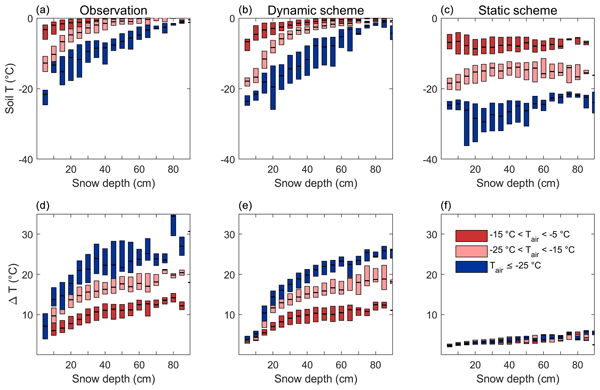
This study shows that the introduction of a multi-layer snow scheme in the LPJ-GUESS DGVM improved simulations of high-latitude soil temperature dynamics and permafrost extent compared to observations. In addition, these improvements led to shifts in carbon fluxes that contrasted within and outside of the permafrost region. Our results show that a realistic snow scheme is essential to accurately simulate snow–soil–vegetation relationships and carbon–climate feedbacks.
Qifen Yuan, Thordis L. Thorarinsdottir, Stein Beldring, Wai Kwok Wong, and Chong-Yu Xu
Hydrol. Earth Syst. Sci., 25, 5259–5275, https://doi.org/10.5194/hess-25-5259-2021, https://doi.org/10.5194/hess-25-5259-2021, 2021
Short summary
Short summary
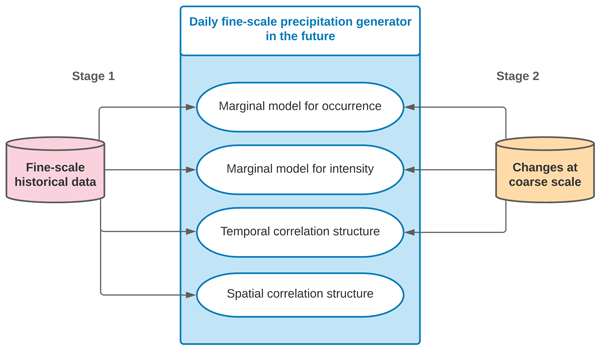
Localized impacts of changing precipitation patterns on surface hydrology are often assessed at a high spatial resolution. Here we introduce a stochastic method that efficiently generates gridded daily precipitation in a future climate. The method works out a stochastic model that can describe a high-resolution data product in a reference period and form a realistic precipitation generator under a projected future climate. A case study of nine catchments in Norway shows that it works well.
Cited articles
Abbaszadeh, P., Zaouna Maina, F., Yang, C., Rosen, D., Kumar, S., Rodell, M., and Maxwell, R.: Coupling the ParFlow Integrated Hydrology Model within the NASA Land Information System: a case study over the Upper Colorado River Basin, Hydrol. Earth Syst. Sci., 29, 5429–5452, https://doi.org/10.5194/hess-29-5429-2025, 2025.
Ajami, H., McCabe, M. F., Evans, J. P., and Stisen, S.: Assessing the impact of model spin-up on surface water-groundwater interactions using an integrated hydrologic model, Water Resour. Res., 50, 2636–2656, https://doi.org/10.1002/2013WR014258, 2014.
Alfieri, L., Bisselink, B., Dottori, F., Naumann, G., de Roo, A., Salamon, P., Wyser, K., and Feyen, L.: Global projections of river flood risk in a warmer world, Earth's Future, 5, 171–182, https://doi.org/10.1002/2016EF000485, 2017.
Alkama, R. and Cescatti, A.: Biophysical climate impacts of recent changes in global forest cover, Science, 351, 600–604, https://doi.org/10.1126/science.aac8083, 2016.
Ashby, S. F. and Falgout, R. D.: A parallel multigrid preconditioned conjugate gradient algorithm for groundwater flow simulations, Nucl. Sci. Eng., 124, 145–159, https://doi.org/10.13182/NSE96-A24230, 1996.
Batjes, N. H.: Harmonized soil property values for broad-scale modelling (WISE30sec) with estimates of global soil carbon stocks, Geoderma, 269, 61–68, https://doi.org/10.1016/j.geoderma.2016.01.034, 2016.
Berghuijs, W. R., Collenteur, R. A., Jasechko, S., Jaramillo, F., Luijendijk, E., Moeck, C., van der Velde, Y., and Allen, S. T.: Groundwater recharge is sensitive to changing long-term aridity, Nat. Clim. Change, 14, 357–363, https://doi.org/10.1038/s41558-024-01953-z, 2024.
Bhaskar, A.: Getting started with ParFlow: Dead Run, Baltimore, Maryland example, UMBC/CUERE Tech. Rep. 2010/002, University of Maryland, Baltimore County, Center for Urban Environmental Research and Education, Baltimore, MD, 2010.
Bonan, G. B.: Climate Change and Terrestrial Ecosystem Modelling, Cambridge University Press, Cambridge, UK, https://doi.org/10.1017/9781107339217, 2019.
Chen, S., Fu, Y. H., Li, M., Jia, Z., Cui, Y., and Tang, J.: A new temperature–photoperiod coupled phenology module in LPJ-GUESS model v4.1: optimizing estimation of terrestrial carbon and water processes, Geosci. Model Dev., 17, 2509–2523, https://doi.org/10.5194/gmd-17-2509-2024, 2024.
Clark, M. P., Fan, Y., Lawrence, D. M., Adam, J. C., Bolster, D., Gochis, D. J., Hooper, R. P., Kumar, M., Leung, L. R., Mackay, D. S., Maxwell, R. M., Shen, C., Swenson, S. C., and Zeng, X.: Improving the representation of hydrologic processes in Earth System Models, Water Resour. Res., 51, 5929–5956, https://doi.org/10.1002/2015WR017096, 2015.
Condon, L. E. and Maxwell, R. M.: Simulating the sensitivity of evapotranspiration and streamflow to large-scale groundwater depletion, Sci. Adv., 5, eaav4574, https://doi.org/10.1126/sciadv.aav4574, 2019a.
Condon, L. E. and Maxwell, R. M.: Modified priority flood and global slope enforcement algorithm for topographic processing in physically based hydrologic modelling applications, Comput. Geosci., 126, 73–83, https://doi.org/10.1016/j.cageo.2019.01.020, 2019b.
Condon, L. E., Maxwell, R. M., and Gangopadhyay, S.: The impact of subsurface conceptualization on land energy fluxes, Adv. Water Resour., 60, 188–203, https://doi.org/10.1016/j.advwatres.2013.06.006, 2013.
Condon, L. E., Atchley, A. L., and Maxwell, R. M.: Evapotranspiration depletes groundwater under warming over the contiguous United States, Nat. Commun., 11, 873, https://doi.org/10.1038/s41467-020-14688-0, 2020.
Dai, Y., Zeng, X., Dickinson, R. E., Baker, I., Bonan, G. B., Bosilovich, M. G., Denning, A. S., Dirmeyer, P. A., Houser, P. R., Niu, G., Oleson, K. W., Schlosser, C. A., and Yang, Z.-L.: The Common Land Model, B. Am. Meteorol. Soc., 84, 1013–1023, https://doi.org/10.1175/BAMS-84-8-1013, 2003.
Davison, J. H., Hwang, H.-T., Sudicky, E. A., Mallia, D. V., and Lin, J. C.: Full coupling between the atmosphere, surface, and subsurface for integrated hydrologic simulation, J. Adv. Model. Earth Syst., 10, 43–53, https://doi.org/10.1002/2017MS001052, 2018.
de Graaf, I. E. M., Gleeson, T., van Beek, L. P. H., Shanafield, M., and van Dijk, A. I. J. M.: Environmental flow limits to global groundwater pumping, Nature, 574, 90–94, https://doi.org/10.1038/s41586-019-1594-4, 2019.
Dorigo, W., Gruber, A., de Jeu, R., Wagner, W., Stacke, T., Loew, A., and Mecklenburg, S.: ESA CCI Soil Moisture for improved Earth system understanding: State-of-the-art and future directions, Remote Sens. Environ., 203, 185–215, https://doi.org/10.1016/j.rse.2017.07.001, 2017.
Duscher, K., Günther, A., Richts, A., Clos, P., Philipp, U., and Struckmeier, W.: The GIS layers of the “International Hydrogeological Map of Europe 1:1,500,000” in a vector format, Hydrogeol. J., 23, 1867–1875, https://doi.org/10.1007/s10040-015-1296-4, 2015.
Eilander, D., van Verseveld, W., Yamazaki, D., Weerts, A., Winsemius, H. C., and Ward, P. J.: A hydrography upscaling method for scale-invariant parametrization of distributed hydrological models, Hydrol. Earth Syst. Sci., 25, 5287–5313, https://doi.org/10.5194/hess-25-5287-2021, 2021.
Fan, Y., Miguez-Macho, G., Weaver, C. P., Walko, R., and Robock, A.: Incorporating water table dynamics in climate modelling: 1. Water table observations and equilibrium water table simulations, J. Geophys. Res., 112, D10125, https://doi.org/10.1029/2006JD008111, 2007.
Fan, Y., Li, H., and Miguez-Macho, G.: Global patterns of groundwater table depth, Science, 339, 940–943, https://doi.org/10.1126/science.1229881, 2013.
Fan, Y., Miguez-Macho, G., Jobbágy, E. G., Jackson, R. B., and Otero-Casal, C.: Hydrologic regulation of plant rooting depth, Proc. Natl. Acad. Sci. USA, 114, 10572–10577, https://doi.org/10.1073/pnas.1712381114, 2017.
Famiglietti, J. S.: The global groundwater crisis, Nat. Clim. Change, 4, 945–948, https://doi.org/10.1038/nclimate2425, 2014.
Fang, Y., Leung, L. R., Koven, C. D., Bisht, G., Detto, M., Cheng, Y., McDowell, N., Muller-Landau, H., Wright, S. J., and Chambers, J. Q.: Modeling the topographic influence on aboveground biomass using a coupled model of hillslope hydrology and ecosystem dynamics, Geosci. Model Dev., 15, 7879–7901, https://doi.org/10.5194/gmd-15-7879-2022, 2022.
Feddes, R. A., Hoff, H., Bruen, M., Dawson, T. E., van de Rosnay, P., Dirmeyer, P., Jackson, R. B., Kabat, P., Kleidon, A., Lilly, A., and Pitman, A. J.: Modelling root water uptake in hydrological and climate models, Bull. Am. Meteorol. Soc., 82, 2797–2809, https://doi.org/10.1175/1520-0477(2001)082<2797:MRWUIH>2.3.CO;2, 2001.
Friedl, M. and Sulla-Menashe, D.: MODIS/Terra+Aqua Land Cover Type Yearly L3 Global 500 m SIN Grid V061, NASA EOSDIS Land Processes Distributed Active Archive Center [dataset], https://doi.org/10.5067/MODIS/MCD12Q1.061, 2022.
Forzieri, G., Miralles, D. G., Ciais, P., Langerwisch, F., and Jung, M.: Increased control of vegetation on global terrestrial energy fluxes, Nat. Clim. Change, 10, 356–362, https://doi.org/10.1038/s41558-020-0717-0, 2020.
Foster, L. M. and Maxwell, R. M.: Sensitivity analysis of hydraulic conductivity and Manning's n parameters lead to new method to scale effective hydraulic conductivity across model resolutions, Hydrol. Processes, 33, 332–349, https://doi.org/10.1002/hyp.13327, 2019.
Geng, X., Zhou, X., Yin, G., Hao, F., Zhang, X., Hao, Z., Singh, V. P., and Fu, Y. H.: Extended growing season reduced river runoff in Luanhe River basin, J. Hydrol., 582, 124538, https://doi.org/10.1016/j.jhydrol.2019.124538, 2020.
Gerten, D., Schaphoff, S., Haberlandt, W., Lucht, W., and Sitch, S.: Terrestrial vegetation and water balance – hydrological evaluation of a dynamic global vegetation model, J. Hydrol., 286, 249–270, 2004.
Gleeson, T., Wada, Y., Bierkens, M. F., and van Beek, L. P.: Water balance of global aquifers revealed by groundwater footprint, Nature, 488, 197–200, https://doi.org/10.1038/nature11295, 2012.
Gleeson, T., Moosdorf, N., Hartmann, J., and van Beek, L. P. H.: A glimpse beneath Earth's surface: GLobal HYdrogeology MaPS (GLHYMPS) of permeability and porosity, Geophys. Res. Lett., 41, 3891–3898, https://doi.org/10.1002/2014GL059856, 2014.
Gochis, D. J., Yu, W., and Yates, D. N.: The WRF-Hydro model technical description and user's guide, version 3.0, NCAR Technical Document, 120 pp., National Center for Atmospheric Research, Boulder, CO, USA, https://ral.ucar.edu/sites/default/files/public/WRF_Hydro_User_Guide_v3.0_CLEAN.pdf (last access: 22 February 2026), 2015.
Good, S. P., Noone, D., and Bowen, G.: Hydrologic connectivity constrains partitioning of global terrestrial water fluxes, Science, 349, 175–177, https://doi.org/10.1126/science.aaa5931, 2015.
Guillaumot, L., Smilovic, M., Burek, P., de Bruijn, J., Greve, P., Kahil, T., and Wada, Y.: Coupling a large-scale hydrological model (CWatM v1.1) with a high-resolution groundwater flow model (MODFLOW 6) to assess the impact of irrigation at regional scale, Geosci. Model Dev., 15, 7099–7120, https://doi.org/10.5194/gmd-15-7099-2022, 2022.
Gustafson, A., Miller, P. A., Björk, R. G., Olin, S., and Smith, B.: Nitrogen restricts future sub-arctic treeline advance in an individual-based dynamic vegetation model, Biogeosciences, 18, 6329–6347, https://doi.org/10.5194/bg-18-6329-2021, 2021.
Hokkanen, J., Kollet, S., Kraus, J., Herten, A., Hrywniak, M., and Pleiter, D.: Leveraging HPC accelerator architectures with modern techniques – hydrologic modeling on GPUs with ParFlow, Comput. Geosci., 25, 1579–1590, https://doi.org/10.1007/s10596-021-10051-4, 2021.
Hong, M., Chaney, N., Malyshev, S., Zorzetto, E., Preucil, A., and Shevliakova, E.: LM4-SHARC v1.0: resolving the catchment-scale soil–hillslope aquifer–river continuum for the GFDL Earth system modeling framework, Geosci. Model Dev., 18, 2275–2301, https://doi.org/10.5194/gmd-18-2275-2025, 2025.
Ionita, M., Badaluta, C. A., Scholz, P., and Chelcea, S.: Vanishing river ice cover in the lower part of the Danube Basin – signs of a changing climate, Sci. Rep., 8, 7948, https://doi.org/10.1038/s41598-018-26357-w, 2018.
Jia, Z., Chen, S., Fu, Y. H., Martín Belda, D., Wårlind, D., Olin, S., Xu, C.-Y., and Tang, J.: Advancing Ecohydrological Modelling: Coupling LPJ-GUESS with ParFlow for Integrated Vegetation and Surface-Subsurface Hydrology Simulations (1.0.0), Zenodo [code], https://doi.org/10.5281/zenodo.16908049, 2025.
Jefferson, J. L. and Maxwell, R. M.: Evaluation of simple to complex parameterizations of bare ground evaporation, J. Adv. Model. Earth Syst., 7, 1075–1092, https://doi.org/10.1002/2014MS000398, 2015.
Jones, J. E. and Woodward, C. S.: Preconditioning Newton-Krylov methods for variably saturated flow, Comput. Methods Water Resour., 1–2, 101–106, 2000.
Jones, J. E. and Woodward, C. S.: Newton-Krylov-multigrid solvers for large-scale, highly heterogeneous, variably saturated flow problems, Adv. Water Resour., 24, 763–774, https://doi.org/10.1016/S0309-1708(00)00075-0, 2001.
Kollet, S. J. and Maxwell, R. M.: Integrated surfacegroundwater flow modelling: A free-surface overland flow boundary condition in a parallel groundwater flow model, Adv. Water Resour., 29, 945–958, 2006.
Kollet, S. J., Maxwell, R. M., and Kollet, S. J.: Proof of concept of regional scale hydrologic simulations at hydrologic resolution utilizing massively parallel computer resources, Water Resour. Res., 46, W04201, https://doi.org/10.1029/2009WR008730, 2010.
Kuffour, B. N. O., Engdahl, N. B., Woodward, C. S., Condon, L. E., Kollet, S., and Maxwell, R. M.: Simulating coupled surface–subsurface flows with ParFlow v3.5.0: capabilities, applications, and ongoing development of an open-source, massively parallel, integrated hydrologic model, Geosci. Model Dev., 13, 1373–1397, https://doi.org/10.5194/gmd-13-1373-2020, 2020.
Kumar, R., Samaniego, L., and Attinger, S.: Implications of distributed hydrologic model parameterization on water fluxes at multiple scales and locations, Water Resour. Res., 49, 1–19, https://doi.org/10.1029/2012WR012195, 2013.
Lapides, D. A., Hahm, W. J., Forrest, M., Rempe, D. M., Hickler, T., and Dralle, D. N.: Inclusion of bedrock vadose zone in dynamic global vegetation models is key for simulating vegetation structure and function, Biogeosciences, 21, 1801–1826, https://doi.org/10.5194/bg-21-1801-2024, 2024.
Li, X., Gentine, P., Lin, C., Zhou, S., Sun, Z., Zheng, Y., Liu, J., and Zheng, C.: A simple and objective method to partition evapotranspiration into transpiration and evaporation at eddy-covariance sites, Agric. For. Meteorol., 265, 171–182, https://doi.org/10.1016/j.agrformet.2018.11.011, 2019.
Lian, X., Piao, S., Huntingford, C., Zhang, Y., and Ciais, P.: Partitioning global land evapotranspiration using CMIP5 models constrained by observations, Nat. Clim. Change, 8, 640–646, https://doi.org/10.1038/s41558-018-0207-9, 2018.
Lindeskog, M., Arneth, A., Miller, P., Nord, J., Mischurov, M., Olin, S., Schurgers, G., Smith, B., Wårlind, D., and past LPJ-GUESS contributors: LPJ-GUESS Release v4.0.1 model code (4.0.1), Zenodo [code], https://doi.org/10.5281/zenodo.8070582, 2017.
Lu, H., Yuan, W., and Chen, X.: A process-based dynamic root growth model integrated into the ecosystem model, J. Adv. Model. Earth Syst., 11, 4614–4628, https://doi.org/10.1029/2019MS001846, 2019.
Martín Belda, D., Anthoni, P., Wårlind, D., Olin, S., Schurgers, G., Tang, J., Smith, B., and Arneth, A.: LPJ-GUESS/LSMv1.0: a next-generation land surface model with high ecological realism, Geosci. Model Dev., 15, 6709–6745, https://doi.org/10.5194/gmd-15-6709-2022, 2022.
McGuire, A. D., Christensen, T. R., Hayes, D., Heroult, A., Euskirchen, E., Kimball, J. S., Koven, C., Lafleur, P., Miller, P. A., Oechel, W., Peylin, P., Williams, M., and Yi, Y.: An assessment of the carbon balance of Arctic tundra: comparisons among observations, process models, and atmospheric inversions, Biogeosciences, 9, 3185–3204, https://doi.org/10.5194/bg-9-3185-2012, 2012.
Maxwell, R. M.: A terrain-following grid transform and preconditioner for parallel, large-scale, integrated hydrologic modelling, Adv. Water Resour., 53, 109–117, https://doi.org/10.1016/j.advwatres.2012.10.001, 2013.
Maxwell, R. M. and Condon, L. E.: Connections between groundwater flow and transpiration partitioning, Science, 353, 377–380, https://doi.org/10.1126/science.aaf7891, 2016.
Maxwell, R. M. and Miller, N. L.: Development of a Coupled Land Surface and Groundwater Model, J. Hydrometeorol., 6, 233–247, https://doi.org/10.1175/JHM422.1, 2005.
Maxwell, R. M., Condon, L. E., and Kollet, S. J.: Surface-subsurface model intercomparison: A first set of benchmark results to diagnose integrated hydrology and feedbacks, Water Resour. Res., 50, 1531–1549, https://doi.org/10.1002/2013WR013725, 2014.
Maxwell, R. M., Lundquist, J. K., Mirocha, J. D., Smith, S. G., Woodward, C. S., and Tompson, A. F. B.: Development of a coupled groundwater–atmosphere model, Mon. Weather Rev., 139, 96–116, https://doi.org/10.1175/2010MWR3392.1, 2011.
Miguez-Macho, G. and Fan, Y.: The role of groundwater in the Amazon water cycle: 2. Influence on seasonal soil moisture and evapotranspiration, J. Geophys. Res.-Atmos., 117, D15114, https://doi.org/10.1029/2012JD017540, 2012.
Miralles, D. G., Bonte, O., Koppa, A., Baez-Villanueva, O. M., Tronquo, E., Zhong, F., Beck, H. E., Hulsman, P., Dorigo, W., Verhoest, N. E. C., and Haghdoost, S.: GLEAM4: global land evaporation and soil moisture dataset at 0.1° resolution from 1980 to near present, Sci. Data, 12, 416, https://doi.org/10.1038/s41597-025-04610-y, 2025.
Muñoz Sabater, J.: ERA5-Land hourly data from 1950 to present, CDS [data set], https://doi.org/10.24381/cds.e2161bac, 2019.
Naz, B. S., Sharples, W., Ma, Y., Goergen, K., and Kollet, S.: Continental-scale evaluation of a fully distributed coupled land surface and groundwater model, ParFlow-CLM (v3.6.0), over Europe, Geosci. Model Dev., 16, 1617–1639, https://doi.org/10.5194/gmd-16-1617-2023, 2023.
Niu, G. Y., Yang, Z. L., Dickinson, R. E., and Gulden, L. E.: A simple TOPMODEL-based runoff parameterization (SIMTOP) for use in global climate models, J. Geophys. Res.-Atmos., 110, D21106, https://doi.org/10.1029/2005JD006111, 2005.
O'Connor, J., Santos, M. J., Rebel, K. T., and Dekker, S. C.: The influence of water table depth on evapotranspiration in the Amazon arc of deforestation, Hydrol. Earth Syst. Sci., 23, 3917–3931, https://doi.org/10.5194/hess-23-3917-2019, 2019.
Oleson, K. W., Lawrence, D. M., and Bonan, G. B.: Modelling vegetation in the Community Land Model, J. Adv. Model. Earth Syst., 10, 2735–2760, https://doi.org/10.1029/2018MS001350, 2018.
Osei-Kuffuor, D., Maxwell, R. M., and Woodward, C. S.: Improved numerical solvers for implicit coupling of subsurface and overland flow, Adv. Water Resour., 74, 185–195, https://doi.org/10.1016/j.advwatres.2014.09.006, 2014.
Piao, S., Liu, Q., Chen, A., Janssens, I. A., Fu, Y., Dai, J., Liu, L., Lian, X., Shen, M., and Zhu, X.: Plant phenology and global climate change: current progresses and challenges, Glob. Change Biol., 25, 1922–1940, https://doi.org/10.1111/gcb.14619, 2019.
Richards, L. A.: Capillary conduction of liquids through porous mediums, Physics, 1, 318–333, https://doi.org/10.1063/1.1745010, 1931.
Rahman, M., Sulis, M., and Kollet, S. J.: The subsurface–land surface–atmosphere connection under convective conditions, Adv. Water Resour., 83, 240–249, https://doi.org/10.1016/j.advwatres.2015.06.003, 2015.
Seck, A., Welty, C., and Maxwell, R. M.: Spin-up behavior and effects of initial conditions for an integrated hydrologic model, Water Resour. Res., 51, 2188–2210, https://doi.org/10.1002/2014WR016371, 2015.
Shangguan, W., Hengl, T., de Jesus, J. M., Yuan, H., and Dai, Y.: Mapping the global depth to bedrock for land surface modeling, J. Adv. Model. Earth Syst., 9, 65–88, https://doi.org/10.1002/2016MS000686, 2017.
Sitch, S., Smith, B., Prentice, I. C., Arneth, A., Bondeau, A., Cramer, W., Kaplan, J. O., Levis, S., Lucht, W., and Sykes, M. T.: Evaluation of ecosystem dynamics, plant geography and terrestrial carbon cycling in the LPJ dynamic global vegetation model, Glob. Change Biol., 9, 161–185, https://doi.org/10.1046/j.1365-2486.2003.00569.x, 2003.
Smith, B., Prentice, I. C., and Sykes, M. T.: Representation of vegetation dynamics in the modelling of terrestrial ecosystems: comparing two contrasting approaches within European climate space, Global Ecol. Biogeogr., 10, 621–637, https://doi.org/10.1046/j.1466-822X.2001.t01-1-00256.x, 2001.
Smith, B., Wårlind, D., Arneth, A., Hickler, T., Leadley, P., Siltberg, J., and Zaehle, S.: Implications of incorporating N cycling and N limitations on primary production in an individual-based dynamic vegetation model, Biogeosciences, 11, 2027–2054, https://doi.org/10.5194/bg-11-2027-2014, 2014.
Smith, S., Ferguson, I., Engdahl, N., Gasper, F., Chennault, C., Triana, J. S. A., Avery, P., Rigor, P., Condon, L., Jourdain, S., Bennett, A., Artavanis, G., Maxwell, R., Kulkarni, K., Bansal, V., Beisman, J., de Rooij, R., Swilley, J., Lazzeri, D., Thompson, D., Coon, E., Bertolacci, I., Azeemi, M. F., and Wagner, N.: parflow/parflow: ParFlow Version 3.13.0 (v3.13.0), Zenodo [code], https://doi.org/10.5281/zenodo.10989198, 2024.
Soltani, S. S., Fahs, M., Al Bitar, A., and Ataie-Ashtiani, B.: Improvement of soil moisture and groundwater level estimations using a scale-consistent river parameterization for the coupled ParFlow-CLM hydrological model: A case study of the Upper Rhine Basin, J. Hydrol., 610, 127991, https://doi.org/10.1016/j.jhydrol.2022.127991, 2022.
Strahler, A. N.: Quantitative analysis of watershed geomorphology, Eos T. Am. Geophys. Un., 38, 913–920, https://doi.org/10.1029/TR038i006p00913, 1957.
Tang, J., Pilesjö, P., Miller, P. A., Persson, A., Yang, Z., Hanna, E., and Callaghan, T. V.: Incorporating topographic indices into dynamic ecosystem modelling using LPJ-GUESS, Ecohydrology, 7, 1147–1162, https://doi.org/10.1002/eco.1446, 2014.
Tang, J., Nilsson, M. B., Miller, P. A., Hugelius, G., Li, Q., Lindroth, A., Christensen, B. G., Zhu, Q., Yu, Q., and Christensen, T. R.: Drivers of dissolved organic carbon export in a subarctic catchment: Importance of microbial decomposition, sorption-desorption, peatland and lateral flow, Sci. Total Environ., 622–623, 260–274, https://doi.org/10.1016/j.scitotenv.2017.11.300, 2018.
Tang, J., Zhou, P., Miller, P. A., Schurgers, G., Gustafson, A., Makkonen, R., Fu, Y. H., and Rinnan, R.: High-latitude vegetation changes will determine future plant volatile impacts on atmospheric organic aerosols, npj Clim. Atmos. Sci., 6, 147, https://doi.org/10.1038/s41612-023-00463-7, 2023.
Tijerina-Kreuzer, D., Swilley, J. S., Tran, H. V., Zhang, J., West, B., Yang, C., Condon, L. E., and Maxwell, R. M.: Continental Scale Hydrostratigraphy: Basin-Scale Testing of Alternative Data-Driven Approaches, Groundwater, 62, 93–110, https://doi.org/10.1111/gwat.13357, 2024.
van Tiel, M., Aubry-Wake, C., Somers, L., Andermann, C., Avanzi, F., Baraer, M., Chiogna, G., Daigre, C., Das, S., Drenkhan, F., Farinotti, D., Fyffe, C. L., de Graaf, I., Hanus, S., Immerzeel, W., Koch, F., McKenzie, J. M., Müller, T., Popp, A. L., Saidaliyeva, Z., Schaefli, B., Schilling, O. S., Teagai, K., Thornton, J. M., and Yapiyev, V.: Cryosphere-groundwater connectivity is a missing link in the mountain water cycle, Nat. Water, 2, 624–637, https://doi.org/10.1038/s44221-024-00277-8, 2024.
Wang, D. and Zeng, Z.: Urgent need to improve modelled sensitivity of evaporation to vegetation change, Nat. Water, 2, 211–214, https://doi.org/10.1038/s44221-024-00203-y, 2024.
Warren, J. M., Hanson, P. J., Iversen, C. M., Kumar, J., Walker, A. P., and Wullschleger, S. D.: Root structural and functional dynamics in terrestrial biosphere models – evaluation and recommendations, New Phytol., 205, 59–78, https://doi.org/10.1111/nph.13034, 2015.
Wood, E. F., Roundy, J. K., Troy, T. J., van Beek, L. P. H., Bierkens, M. F. P., Blyth, E., de Roo, A., Döll, P., Ek, M., Famiglietti, J., Gochis, D., van de Giesen, N., Houser, P., Jaffe, P. R., Kollet, S., Lehner, B., Lettenmaier, D. P., Peters-Lidard, C. D., Sivapalan, M., Sheffield, J., Wade, A. J., and Whitehead, P.: Hyperresolution global land surface modelling: Meeting a grand challenge for monitoring Earth's terrestrial water, Water Resour. Res., 47, W05301, https://doi.org/10.1029/2010WR010090, 2011.
Yang, C., Li, H.-Y., Fang, Y., Cui, C., Wang, T., Zheng, C., Leung, L. R., Maxwell, R. M., Zhang, Y.-K., and Yang, X.: Effects of groundwater pumping on ground surface temperature: A regional modelling study in the North China Plain, J. Geophys. Res.-Atmos., 125, e2019JD031764, https://doi.org/10.1029/2019JD031764, 2020.
Yang, C., Tijerina-Kreuzer, D., Tran, H. V., Condon, L. E., and Maxwell, R. M.: A high-resolution, 3D groundwater-surface water simulation of the contiguous US: advances in the integrated ParFlow-CONUS 2.0 modelling platform, J. Hydrol., 626B, 130294, https://doi.org/10.1016/j.jhydrol.2023.130294, 2023.
Yang, C., Jia, Z., Xu, W., Wei, Z., Zhang, X., Zou, Y., McDonnell, J., Condon, L., Dai, Y., and Maxwell, R.: CONCN: a high-resolution, integrated surface water–groundwater ParFlow modeling platform of continental China, Hydrol. Earth Syst. Sci., 29, 2201–2218, https://doi.org/10.5194/hess-29-2201-2025, 2025.
Yang, H., Piao, S., Zeng, Z., Ciais, P., Yin, Y., Friedlingstein, P., Sitch, S., Ahlström, A., Guimberteau, M., Huntingford, C., Levis, S., Levy, P. E., Huang, M., Li, Y., Li, X., Lomas, M. R., Peylin, P., Poulter, B., Viovy, N., Zaehle, S., Zeng, N., Zhao, F., and Wang, L.: Multicriteria evaluation of discharge simulation in Dynamic Global Vegetation Models, J. Geophys. Res.-Atmos., 120, 7488–7505, https://doi.org/10.1002/2015JD023129, 2015.
Zhang, J., Condon, L. E., Tran, H., and Maxwell, R. M.: A national topographic dataset for hydrological modeling over the contiguous United States, Earth Syst. Sci. Data, 13, 3263–3279, https://doi.org/10.5194/essd-13-3263-2021, 2021.
Zhou, H., Tang, J., Olin, S., and Miller, P. A.: A comprehensive evaluation of hydrological processes in a second-generation dynamic vegetation model, Hydrol. Processes, 38, e15152, https://doi.org/10.1002/hyp.15152, 2024.
Short summary
Groundwater sustains vegetation and regulates land-atmosphere exchanges, yet most Earth system models oversimplify its dynamics. Our study develops an integrated framework coupling a dynamic vegetation model with the three-dimensional hydrological model ParFlow to explicitly represent groundwater-vegetation interactions. The results provide evidence that groundwater flow strongly regulates water exchanges and provides a powerful tool to improve simulations of water cycles in Earth system models.
Groundwater sustains vegetation and regulates land-atmosphere exchanges, yet most Earth system...


