
Articles | Volume 19, issue 3
https://doi.org/10.5194/gmd-19-1405-2026
© Author(s) 2026. This work is distributed under
the Creative Commons Attribution 4.0 License.
the Creative Commons Attribution 4.0 License.
https://doi.org/10.5194/gmd-19-1405-2026
© Author(s) 2026. This work is distributed under
the Creative Commons Attribution 4.0 License.
the Creative Commons Attribution 4.0 License.
Model experiment description paper
| 
16 Feb 2026
Model experiment description paper |
| 16 Feb 2026
| 16 Feb 2026
Modelling framework for asynchronous land-atmosphere coupling using NASA GISS ModelE (NASA-GISS E2.1) and LPJ-LMfire (v1.4.0): design, application and evaluation for the 2.5 ka period

Center for Climate Systems Research, Columbia University, New York, NY, USA
NASA Goddard Institute for Space Studies, New York, NY 10025, USA
Alexander Koch
Department of Earth Sciences, The University of Hong Kong, Hong Kong SAR, China
Allegra N. LeGrande
NASA Goddard Institute for Space Studies, New York, NY 10025, USA
Center for Climate Systems Research, Columbia University, New York, NY, USA
Kostas Tsigaridis
Center for Climate Systems Research, Columbia University, New York, NY, USA
NASA Goddard Institute for Space Studies, New York, NY 10025, USA
Riovie D. Ramos
Earth Observatory of Singapore, Singapore
Francis Ludlow
Department of History, and Trinity Centre for Environmental Humanities, School of Histories and Humanities, Trinity College, Dublin 2, Ireland
Igor Aleinov
Center for Climate Systems Research, Columbia University, New York, NY, USA
NASA Goddard Institute for Space Studies, New York, NY 10025, USA
Reto Ruedy
NASA Goddard Institute for Space Studies, New York, NY 10025, USA
SciSpace LLC, New York, NY, USA
Jed O. Kaplan
Department of Earth, Energy, and Environment, University of Calgary, Calgary AB, Canada
Related authors
Ram Singh, Kostas Tsigaridis, Diana Bull, Laura P. Swiler, Benjamin M. Wagman, and Kate Marvel
Atmos. Chem. Phys., 25, 16511–16532, https://doi.org/10.5194/acp-25-16511-2025, https://doi.org/10.5194/acp-25-16511-2025, 2025
Short summary
Short summary
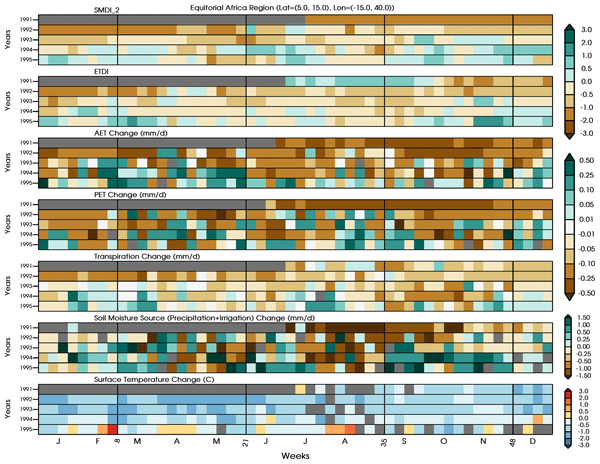
Analysis of post-eruption climate conditions using the impact metrics is crucial for understanding the hydroclimatic responses. We used NASA’s Earth system model to perform the experiments and utilized the moisture-based impact metrics and hydrological variables to investigate the effect of volcanically induced conditions that govern plant productivity. This study highlights Mt. Pinatubo's impact on the drivers of plant productivity and regional and seasonal dependence of these drivers.

Ram Singh, Kostas Tsigaridis, Allegra N. LeGrande, Francis Ludlow, and Joseph G. Manning
Clim. Past, 19, 249–275, https://doi.org/10.5194/cp-19-249-2023, https://doi.org/10.5194/cp-19-249-2023, 2023
Short summary
Short summary
This work is a modeling effort to investigate the hydroclimatic impacts of a volcanic
quartetduring 168–158 BCE over the Nile River basin in the context of Ancient Egypt's Ptolemaic era (305–30 BCE). The model simulated a robust surface cooling (~ 1.0–1.5 °C), suppressing the African monsoon (deficit of > 1 mm d−1 over East Africa) and agriculturally vital Nile summer flooding. Our result supports the hypothesized relation between volcanic eruptions, hydroclimatic shocks, and societal impacts.
Ensheng Weng, Igor Aleinov, Ram Singh, Michael J. Puma, Sonali S. McDermid, Nancy Y. Kiang, Maxwell Kelley, Kevin Wilcox, Ray Dybzinski, Caroline E. Farrior, Stephen W. Pacala, and Benjamin I. Cook
Geosci. Model Dev., 15, 8153–8180, https://doi.org/10.5194/gmd-15-8153-2022, https://doi.org/10.5194/gmd-15-8153-2022, 2022
Short summary
Short summary
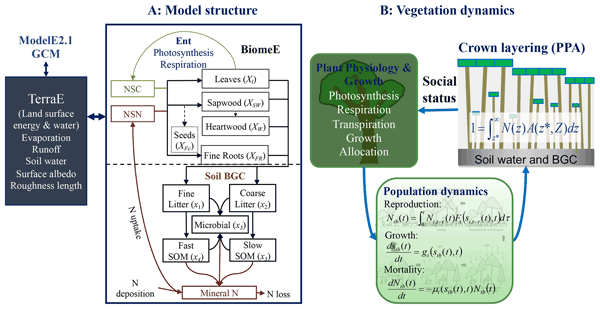
We develop a demographic vegetation model to improve the representation of terrestrial vegetation dynamics and ecosystem biogeochemical cycles in the Goddard Institute for Space Studies ModelE. The individual-based competition for light and soil resources makes the modeling of eco-evolutionary optimality possible. This model will enable ModelE to simulate long-term biogeophysical and biogeochemical feedbacks between the climate system and land ecosystems at decadal to centurial temporal scales.
Sylvain Foisy, Susanne E. Bauer, Kostas Tsigaridis, Otto Hasekamp, and Guangliang Fu
EGUsphere, https://doi.org/10.5194/egusphere-2026-5135, https://doi.org/10.5194/egusphere-2026-5135, 2026
This preprint is open for discussion and under review for Atmospheric Chemistry and Physics (ACP).
Short summary
Short summary
Solid and liquid particles in the sky cool the planet, but we have had limited global measurements, so climate models are not well evaluated. We compare a satellite with novel capabilities launched in 2024 against a NASA model. They agree on the amount over land, but over the ocean the satellite reports eight times more desert dust than the model; we argue this is likely non-spherical sea salt. The model also holds four times more water on its particles, which we trace to how each infers water.
Anastasia Romanou, Paul Lerner, Joy Romanski, Nancy Y. Kiang, Igor Aleinov, Maxwell Kelley, Ron L. Miller, Gary Russell, Reto Ruedy, Gavin A. Schmidt, Maria Z. Hakuba, and Ou Wang
Geosci. Model Dev., 19, 9131–9176, https://doi.org/10.5194/gmd-19-9131-2026, https://doi.org/10.5194/gmd-19-9131-2026, 2026
Short summary
Short summary
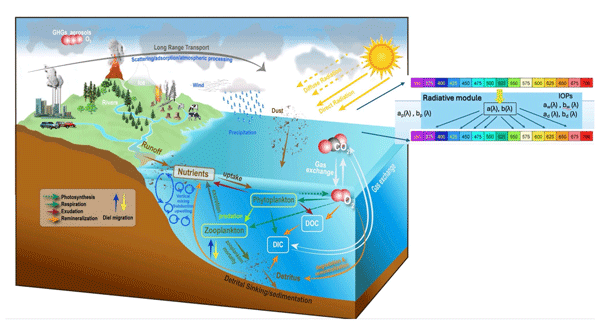
This paper describes simulations of the present climate using the NASA Goddard Institute for Space Studies Earth System model. Major highlight is the capability to include complex interactions of the different components of the Earth System, including biology, and compare well with a wide variety of observations. We demonstrate that this model can be used to address present, past and future changes in the Earth system and their impacts and interactions with ecosystems.
Capucine Marie Sophie Lechartre, Victor Boussange, Dirk Nikolaus Karger, Jed Oliver Kaplan, Philipp Brun, and Niklaus Emmanuel Zimmermann
EGUsphere, https://doi.org/10.5194/egusphere-2026-4919, https://doi.org/10.5194/egusphere-2026-4919, 2026
This preprint is open for discussion and under review for Geoscientific Model Development (GMD).
Short summary
Short summary
Predicting how vegetation distribution responds to climate requires models that can be adapted to different regions and ecological questions. We present Biome.jl, a mechanistic modeling framework that allows customizing vegetation types, simulating their distribution, testing alternative biome concepts, and parameterizing the model using observational data. We demonstrate its capacity with case studies, predicting tree lines in the Swiss Alps and reproducing the distribution of stem succulents.
Jianyu Zheng, Hongbin Yu, Chamara Rajapakse, Mian Chin, Michael Schulz, Yves Balkanski, Susanne E. Bauer, Huisheng Bian, Peter Colarco, Dongchul Kim, Ramiro Checa-Garcia, Yevgeny Derimian, Oleg Dubovik, Paul Ginoux, Zak Kipling, Jasper F. Kok, Harri Kokkola, Philippe Le Sager, Lei Li, Marianne Tronstad Lund, Gunnar Myhre, Hitoshi Matsui, Dirk J. L. Olivie, Samuel Remy, Oyvind Seland, Qianqian Song, Toshihiko Takemura, Qian Tan, Kostas Tsigaridis, Twan van Noije, David Winker, Bin Xie, Hua Zhang, Xindan Zhang, and Zhibo Zhang
EGUsphere, https://doi.org/10.5194/egusphere-2026-4322, https://doi.org/10.5194/egusphere-2026-4322, 2026
This preprint is open for discussion and under review for Atmospheric Chemistry and Physics (ACP).
Short summary
Short summary
Winds carry vast amounts of Saharan dust across the Atlantic Ocean, influencing climate, air quality, and ocean ecosystems. Within the Aerosol Comparisons between Observations and Models (AeroCom) project, we evaluated 17 numerical models against observations. Models deposit dust too quickly, so too little reaches the Caribbean. Better simulations require emitting larger particles, treating their non-spherical shapes, and capturing processes that keep dust aloft during transport.
Natalie Mahowald, Hannah Liddy, Jennifer Marlon, Kostas Tsigaridis, Gisela Winckler, Douglas Hamilton, Jasper Kok, Michael Sigl, Jordan Abell, Adwoa Aboagye-Okyere, Joe Adabouk Amooli, Samuel Albani, Susanne Bauer, Emilie Beaudon, Hunter Brown, Nathan Chellman, Nicolás Cosentino, Nathalie Goodkin, Christopher Guiterman, Stijn Hantson, Chengfei He, Aviva Intveld, Jed Kaplan, Jeremy Klavans, Fabrice Lambert, Haobo Liu, Marie-France Loutre, Joe McConnell, Zachary McGraw, Keren Mezuman, Ron Miller, Nicholas O’Mara, Maria Rosabelle Ong, Gavin Schmidt, Richard Vachula, Lily Wu, and Bingqing Zhang
EGUsphere, https://doi.org/10.5194/egusphere-2026-4532, https://doi.org/10.5194/egusphere-2026-4532, 2026
This preprint is open for discussion and under review for Atmospheric Chemistry and Physics (ACP).
Short summary
Short summary
Aerosols are poorly known in past climates, and yet it is very important to understand how aerosols are changing in different climates. In this paper we review available proxy data and modeling approaches to characterize aerosols in past climates. In addition, we propose future studies that can help improve our understanding.
Natalie J. Burls, Nicky M. Wright, R. Paul Acosta, Catherine D. Bradshaw, Edward Gasson, Lennert B. Stap, Gilles Ramstein, Anna Ruth W. Halberstadt, Agatha M. De Boer, Funda Akgün, David J. Cantrill, Manuel Casas-Gallego, Nela Doláková, Boglarka Erdei, Alex Farnsworth, Sarah Feakins, Ran Feng, Tamara Fletcher, Frédéric Fluteau, J. A. Mattias Green, Anna S. von der Heydt, Matthew Huber, David K. Hutchinson, Dimiter Ivanov, Mine Sezgül Kayseri-Özer, Gregor Knorr, Marianna Kováčová, Caroline H. Lear, Allegra N. LeGrande, Shufeng Li, Xiaoqing Liu, Daniel J. Lunt, Katrin Meissner, Yunfa Miao, Trusha J. Naik, Javier B. Navarro, Joseph B. Novak, Diana Ochoa, Guy J.G. Paxman, Matthew J. Pound, James W. B. Rae, Tammo Reichgelt, Martin Renoult, Francesca Sangiorgi, Anta-Clarisse Sarr, Diane Segalla, Pierre Sepulchre, Amelia Shevenell, Sebastian Steinig, Eivind Straume, Caroline A. E. Strömberg, Clay Tabor, Torsten Utescher, Julia E. Weiffenbach, Elżbieta Worobiec, Yurui Zhang, Feng Zhu, Jiang Zhu, Alexandra Auderset, Florence Colleoni, Aisling Dolan, Rachel Havranek, Ann Holbourn, Nicholas Herold, Daeun Lee, James W. Marschalek, Bryce Mitsunaga, Sevi Modestou, Lina Perez-Angel, Mae Saslaw, Sinda Sosdian, Elena Stiles, Yong Sun, Ning Tan, Zhongshi Zhang, and Yan Zhao
EGUsphere, https://doi.org/10.5194/egusphere-2026-3595, https://doi.org/10.5194/egusphere-2026-3595, 2026
This preprint is open for discussion and under review for Geoscientific Model Development (GMD).
Short summary
Short summary
Simulating warm paleoclimates increases our understanding of the mechanisms that drive climatic change and tipping points. The Miocene Epoch, specifically the Miocene Climatic Optimum, has been identified as a particularly valuable past warm climate to simulate, meriting the design of a coordinated Miocene Model Intercomparison Project. Here we synthesize the latest available literature and present the experimental design for coordinated Miocene simulations and sensitivity studies.
Louise C. Sime, Rachel Diamond, Christian Stepanek, Chris Brierley, David Schroeder, Masa Kageyama, Matthew Pollock, Irene Malmierca-Vallet, Ed Blockley, Alex West, Danny Feltham, Jeff Ridley, Pascale Braconnot, Charles J. R. Williams, Xiaoxu Shi, Bette L. Otto-Bliesner, Sophia I. Macarewich, Silvana Ramos Buarque, Qiong Zhang, Allegra LeGrande, Weipeng Zheng, Dabang Jiang, Polina Morozova, Chuncheng Guo, Zhongshi Zhang, Nicholas Yeung, Laurie Menviel, Sandeep Narayanasetti, Masakazu Yoshimori, Olivia Reeves, and Anni Zhao
Geosci. Model Dev., 19, 5881–5905, https://doi.org/10.5194/gmd-19-5881-2026, https://doi.org/10.5194/gmd-19-5881-2026, 2026
Short summary
Short summary
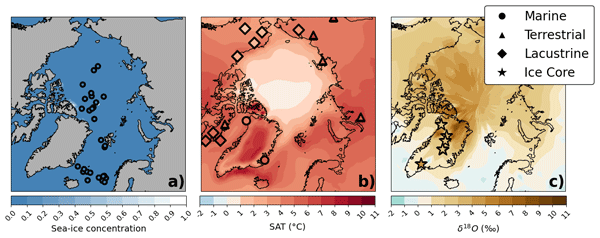
The Arctic may have lost its summer sea ice 127,000 years ago during a naturally warm period in Earth’s past. Climate models can be tested by recreating those conditions, with similar sunlight and greenhouse gas levels. Analysing the large sea ice changes in these simulations helps us understand how the Arctic might respond in the near future and improves how we test and trust our climate models.
Maegan A. DeLessio, Kostas Tsigaridis, and Susanne E. Bauer
Atmos. Chem. Phys., 26, 7325–7359, https://doi.org/10.5194/acp-26-7325-2026, https://doi.org/10.5194/acp-26-7325-2026, 2026
Short summary
Short summary
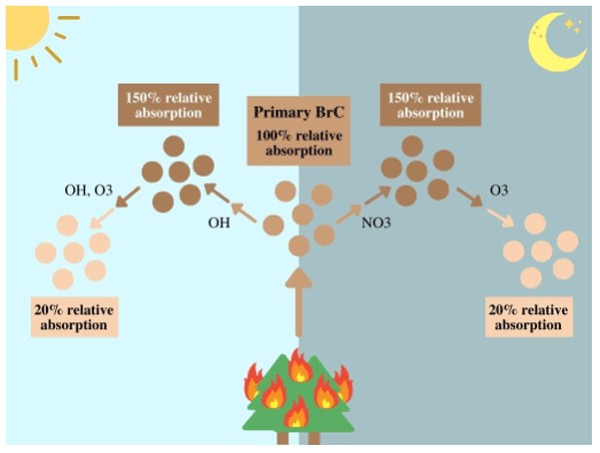
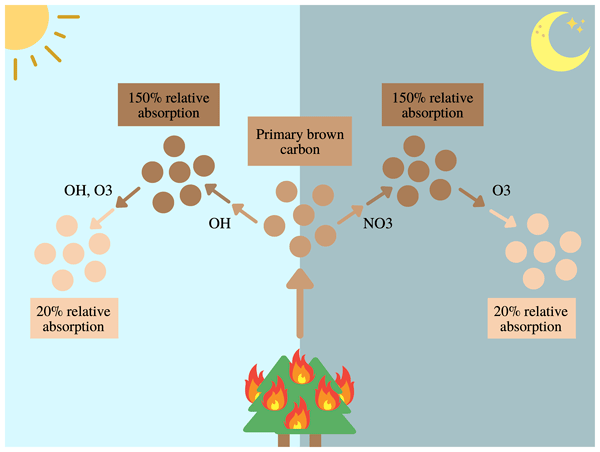
This study utilizes flight campaign observations to evaluate the representation of brown carbon (BrC) aerosols in the Goddard Institute for Space Studies ModelE Earth system model. Measurements of BrC absorption and mass concentrations of related aerosols are compared to that of the model throughout the troposphere. By focusing on air masses influenced by biomass burning, this evaluation highlights important BrC and fire aerosol processes and identifies areas that require additional study.
Bosi Sheng, Massimo A. Bollasina, Alexandre S. Gagnon, Laura J. Wilcox, Thomas P. S. Reynolds, Christopher T. S. Beckett, Haolin Wang, Qingxiang Li, Pierre Nabat, Robert J. Allen, Bjørn H. Samset, Joonas Merikanto, Geeta G. Persad, Toshihiko Takemura, Kostas Tsigaridis, Sharar Ahmadi, Maxwell T. Elling, Knut von Salzen, Daniel M. Westervelt, Naga Oshima, and Tsuyoshi Koshiro
EGUsphere, https://doi.org/10.5194/egusphere-2026-2198, https://doi.org/10.5194/egusphere-2026-2198, 2026
Short summary
Short summary
Observational records indicate that austral summer rainfall over southern Africa experienced substantial wetting during the late 20th century, followed by pronounced drying over the past two decades. We show that East Asian sulphate aerosol emissions played a key role in shaping these rainfall trends. These findings have important implications for reducing uncertainties in regional rainfall projections and for understanding their links to ecosystem changes.
Katja Frieler, Stefan Lange, Jacob Schewe, Matthias Mengel, Simon Treu, Christian Otto, Jan Volkholz, Christopher P. O. Reyer, Stefanie Heinicke, Colin Jones, Julia L. Blanchard, Cheryl S. Harrison, Colleen M. Petrik, Tyler D. Eddy, Kelly Ortega-Cisneros, Camilla Novaglio, Ryan Heneghan, Derek P. Tittensor, Olivier Maury, Matthias Büchner, Thomas Vogt, Dánnell Quesada-Chacón, Kerry Emanuel, Chia-Ying Lee, Suzana J. Camargo, Linn Hamester, Jonas Jägermeyr, Sam Rabin, Jochen Klar, Iliusi D. Vega del Valle, Lisa Novak, Inga J. Sauer, Gitta Lasslop, Sarah Chadburn, Eleanor Burke, Angela Gallego-Sala, Noah Smith, Jinfeng Chang, Stijn Hantson, Chantelle Burton, Anne Gädeke, Fang Li, Simon N. Gosling, Hannes Müller Schmied, Fred Hattermann, Thomas Hickler, Rafael Marcé, Don Pierson, Wim Thiery, Daniel Mercado-Bettín, Robert Ladwig, Ana Isabel Ayala, Matthew Forrest, Michel Bechtold, Robert Reinecke, Inge de Graaf, Jed O. Kaplan, Alexander Koch, Matthieu Lengaigne, Rohini Kumar, and Maryna Strokal
Geosci. Model Dev., 19, 4095–4135, https://doi.org/10.5194/gmd-19-4095-2026, https://doi.org/10.5194/gmd-19-4095-2026, 2026
Short summary
Short summary
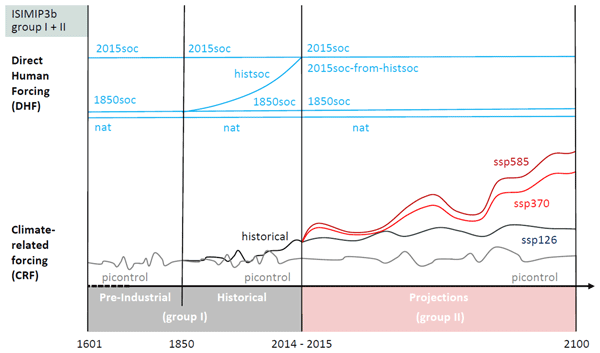
This paper describes the experiments and data sets necessary to run historic and future impact projections, and the underlying assumptions of future climate change as defined by the 3rd round of the ISIMIP Project (Inter-sectoral Impactmodel Intercomparison Project, isimip.org). ISIMIP provides a framework for cross-sectorally consistent climate impact simulations to contribute to a comprehensive and consistent picture of the world under different climate-change scenarios.
Thomas M. DeCarlo, Oliwia Jasnos, Avi Strange, Andreas Andersson, Angel T. Bautista VII, Sierra Bloomer, Isaiah W. Bolden, Maartje Bosman, Thomas C. Brachert, Giulia B. Braz, Gabriel O. Cardoso, Juan P. Carricart-Ganivet, Jessica E. Carilli, Karl D. Castillo, Leticia Cavole, Sylvia Chan, Xuefei Chen, Ben Chomitz, Thierry Correge, Travis A. Courtney, Mikayla Deigan, Juan Pablo D'Olivo, Robert Dunbar, Ian C. Enochs, Ludmilla Falsarella, Thomas Felis, Gabriela Gutierrez-Estrada, Brighton Hedger, Shijian Hu, Seamus Jameson, Stacy Jupiter, Paul Kench, Diego K. Kersting, Ke Lin, Yi-Wei Liu, Carla A. B. Lorigados, Derek P. Manzello, Malcolm T. McCulloch, Miguel Mies, Rodrigo L. Moura, Ferdinand Oberle, Natan Pereira, Nancy Prouty, Riovie D. Ramos, Haojia Ren, Emma Ryan, Diane M. Thompson, Lauren T. Toth, Marina J. Vergotti, Jody M. Webster, and Jens Zinke
Earth Syst. Sci. Data, 18, 3341–3353, https://doi.org/10.5194/essd-18-3341-2026, https://doi.org/10.5194/essd-18-3341-2026, 2026
Short summary
Short summary
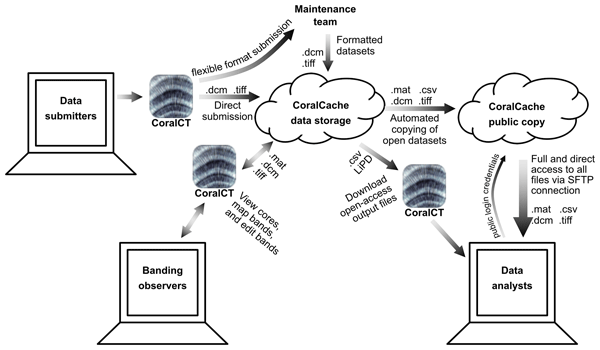
We present CoralCache, a virtual coral core repository with global coverage. This repository fills a key gap by enabling researchers to transparently archive and share the raw core image datasets and the visual interpretations of those images, rather than simply the summarized growth rate data, which on their own cannot be traced or precisely reproduced. CoralCache is designed to meet the data-sharing principles of findability, accessibility, interoperability, and reusability (FAIR).
Mian Chin, Jonathon S. Wright, Huisheng Bian, Qian Tan, Xiaohua Pan, Toshihiko Takemura, Hitoshi Matsui, Kostas Tsigaridis, Susanne Bauer, Paul Ginoux, Yiran Peng, Zengyuan Guo, Suvarna Fadnavis, Anton Laakso, John P. Burrows, Ghassan Taha, Jayanta Kar, Alexei Rozanov, Carlo Arosio, Landon Rieger, and Adam Bourassa
Atmos. Chem. Phys., 26, 6035–6059, https://doi.org/10.5194/acp-26-6035-2026, https://doi.org/10.5194/acp-26-6035-2026, 2026
Short summary
Short summary
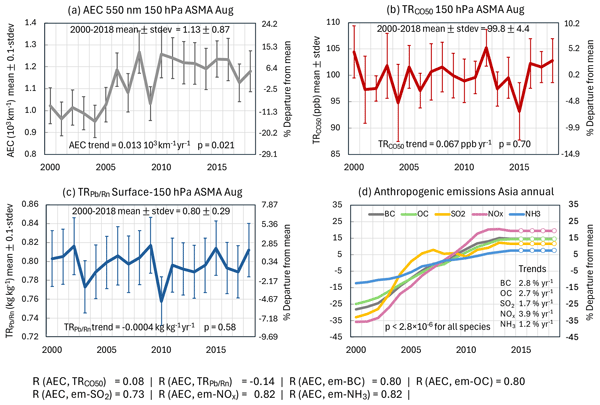
Aerosols in the upper troposphere influence weather and climate. The Asian summer monsoon efficiently transports surface pollutants upward, shaping aerosol amounts and variability in the upper troposphere. Using multiple global models, this study finds a summertime increase in upper-tropospheric aerosols at 1.2 % per year from 2000 to 2018 over Asia, consistent with rising pollutant emissions in Asia, while year-to-year changes are mainly driven by climate variability affecting monsoon dynamics.
Iuri Gorenstein, Ilana Wainer, Francesco S. R. Pausata, Luciana F. Prado, Pedro L. Silva Dias, Allegra N. LeGrande, Clay R. Tabor, and William R. Peltier
Geosci. Model Dev., 19, 3689–3707, https://doi.org/10.5194/gmd-19-3689-2026, https://doi.org/10.5194/gmd-19-3689-2026, 2026
Short summary
Short summary
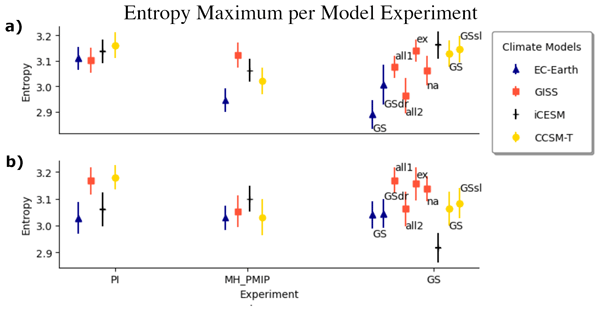
We introduce a new approach based on information theory to study climate variability using observational and model data. To showcase our methodology, we study the tropical and South Atlantic by examining broad patterns in ocean and rainfall data at decadal scales in four climate models under mid‐Holocene and pre‐industrial conditions and observations. Our findings show that large-scale patterns help explain long-term climate behavior.
Gunnar Myhre, Øivind Hodnebrog, Srinath Krishnan, Maria Sand, Marit Sandstad, Ragnhild B. Skeie, Lieven Clarisse, Bruno Franco, Dylan B. Millet, Kelley C. Wells, Alexander Archibald, Hannah N. Bryant, Alex T. Chaudhri, David S. Stevenson, Didier Hauglustaine, Michael Prather, J. Christopher Kaiser, Dirk J. L. Olivie, Michael Schulz, Oliver Wild, Ye Wang, Thérèse Salameh, Jason E. Williams, Philippe Le Sager, Fabien Paulot, Kostas Tsigaridis, and Haley E. Plaas
Geosci. Model Dev., 19, 2577–2591, https://doi.org/10.5194/gmd-19-2577-2026, https://doi.org/10.5194/gmd-19-2577-2026, 2026
Short summary
Short summary
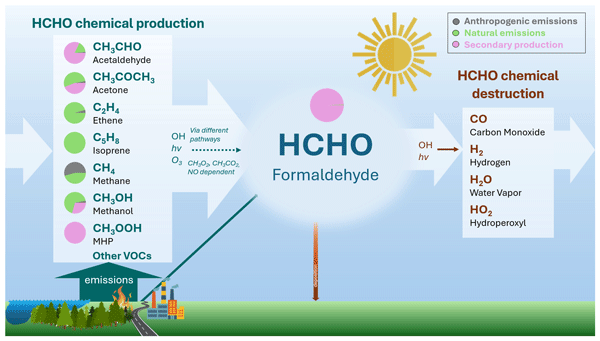
Volatile organic compounds (VOCs) affect air quality and climate, but their behavior in the atmosphere is still uncertain. We launched a global research effort to compare how different models represent these compounds and to improve their accuracy. By analyzing model results alongside observations and satellite data, we aim to better understand the atmospheric composition of these compounds.

Lisa C. Orme, Francis Ludlow, Natasha Langton, Jenny K. Sjöström, Malin E. Kylander, Conor Murphy, Sean D. F. Pyne-O'Donnell, Jonathan N. Turner, Nannan Li, Sarah J. Davies, Fraser J. G. Mitchell, and John A. Matthews
Clim. Past, 22, 287–313, https://doi.org/10.5194/cp-22-287-2026, https://doi.org/10.5194/cp-22-287-2026, 2026
Short summary
Short summary
The link between storms and volcanic eruptions in northwest Europe is investigated. Past storminess was reconstructed using sand deposits in a coastal peatbog from western Ireland. Together with similar records from northwest Europe this shows six periods of high storminess in the last 2500 years, coinciding roughly with the largest eruptions of this time. A record of past windiness for Ireland (600–1616 CE) created from the “Irish Annals” supports enhanced storminess for 3 years after eruptions.
Francesco Tubiello, Nidal Ramadan, Giulia Conchedda, Reto Ruedy, Michael Hendrickson, Nathan Lenssen, Cynthia Rosenzweig, and Gavin Schmidt
Earth Syst. Sci. Data Discuss., https://doi.org/10.5194/essd-2025-681, https://doi.org/10.5194/essd-2025-681, 2026
Preprint under review for ESSD
Short summary
Short summary
We use FAO statistics to develop indicators of exposure for 1961–2024. For each region and year, exposure to temperature change of agriculture—rural population, land use area, harvested area, livestock numbers and production value—was defined as the share of regional aggregates over the total. We computed exposure indicators to ΔT > 1.5 °C and ΔT > 2.0 °C. Results help highlight which regions may be most in need of adaptation preparedness.
William J. Collins, John S. Daniel, Martyn P. Chipperfield, Martin Cussac, Makoto Deushi, Gregory Faluvegi, Paul Griffiths, Øivind Hodnebrog, Larry W. Horowitz, James Keeble, Douglas Kinnison, Vaishali Naik, Fiona M. O'Connor, Drew Shindell, Simone Tilmes, Kostas Tsigaridis, Zihao Wang, and James Weber
EGUsphere, https://doi.org/10.5194/egusphere-2025-6033, https://doi.org/10.5194/egusphere-2025-6033, 2026
Short summary
Short summary
Ozone depleting substances (ODSs) are also greenhouse gases that cause global warming. However, their destruction of ozone contributes a global cooling. We have used results from climate models that include atmospheric chemistry and found that the cooling effect of the ozone depletion diagnosed in the models was larger than that calculated using a standard method. We find that some ODSs have a net cooling effect whereas for others the warming effect is significantly reduced.
Ram Singh, Kostas Tsigaridis, Diana Bull, Laura P. Swiler, Benjamin M. Wagman, and Kate Marvel
Atmos. Chem. Phys., 25, 16511–16532, https://doi.org/10.5194/acp-25-16511-2025, https://doi.org/10.5194/acp-25-16511-2025, 2025
Short summary
Short summary
Analysis of post-eruption climate conditions using the impact metrics is crucial for understanding the hydroclimatic responses. We used NASA’s Earth system model to perform the experiments and utilized the moisture-based impact metrics and hydrological variables to investigate the effect of volcanically induced conditions that govern plant productivity. This study highlights Mt. Pinatubo's impact on the drivers of plant productivity and regional and seasonal dependence of these drivers.
Zhen Yang and Francis Ludlow
Clim. Past, 21, 2061–2081, https://doi.org/10.5194/cp-21-2061-2025, https://doi.org/10.5194/cp-21-2061-2025, 2025
Short summary
Short summary
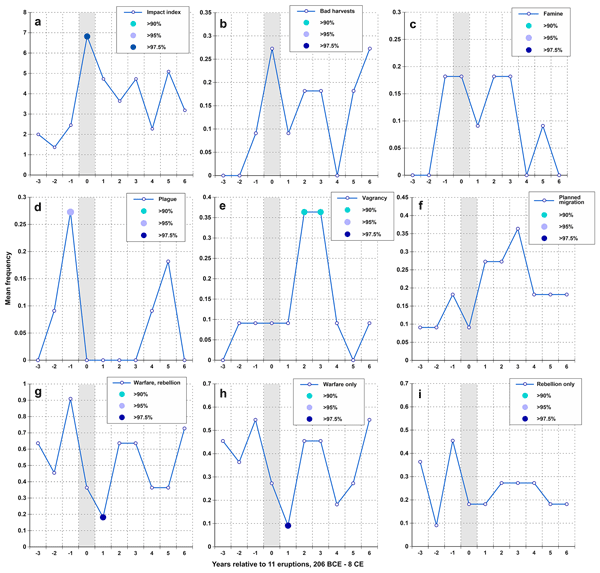
This research examines the climatic and societal impacts of volcanic eruptions in the Western Han Dynasty (206 BCE–8 CE). Statistically, the frequency of relevant climate disasters (e.g., drought, cold) and metrics of societal impacts (e.g., vagrancy) increased following volcanic eruptions. A comparative study of 180–150 BCE and 60–30 BCE reveals that the shortcomings in perceptions of human-nature relationships and the over-reliance on agriculture reduced society's resilience to calamities.
Louise C. Sime, Rahul Sivankutty, Irene Malmierca-Vallet, Sentia Goursaud Oger, Allegra N. LeGrande, Erin L. McClymont, Agatha de Boer, Alexandre Cauquoin, and Martin Werner
Clim. Past, 21, 1725–1753, https://doi.org/10.5194/cp-21-1725-2025, https://doi.org/10.5194/cp-21-1725-2025, 2025
Short summary
Short summary
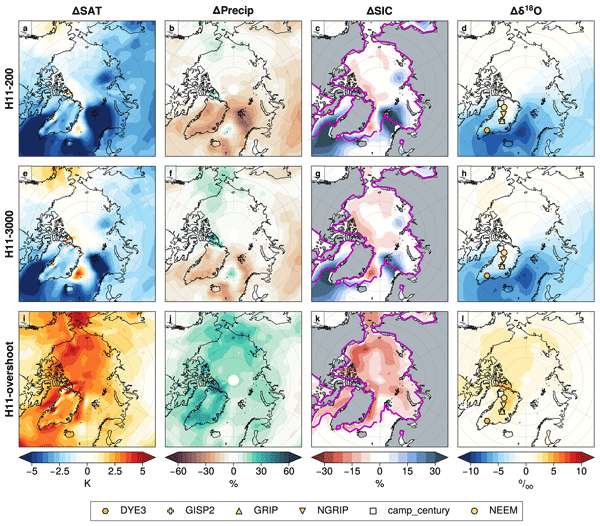
We used climate models to study how stable water isotopes in ice cores changed in the Arctic and Antarctica during the warm Last Interglacial (LIG) period. Whilst standard simulations underestimate polar warming, when the effects of ice sheet meltwater from the preceding deglaciation are included, there is a much better match with observations. Findings suggest that previous estimates of LIG Arctic warming were too high. Understanding these past polar changes can help improve future predictions.
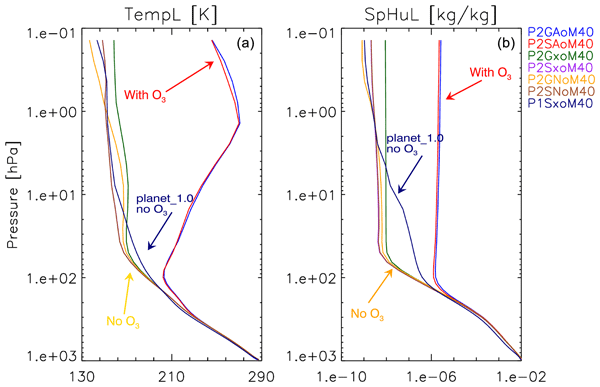
Kostas Tsigaridis, Andrew S. Ackerman, Igor Aleinov, Mark A. Chandler, Thomas L. Clune, Christopher M. Colose, Anthony D. Del Genio, Maxwell Kelley, Nancy Y. Kiang, Anthony Leboissetier, Jan P. Perlwitz, Reto A. Ruedy, Gary L. Russell, Linda E. Sohl, Michael J. Way, and Eric T. Wolf
Geosci. Model Dev., 18, 5825–5871, https://doi.org/10.5194/gmd-18-5825-2025, https://doi.org/10.5194/gmd-18-5825-2025, 2025
Short summary
Short summary
We present the second generation of ROCKE-3D (Resolving Orbital and Climate Keys of Earth and Extraterrestrial Environments with Dynamics), a generalized three-dimensional model for use in Solar System and exoplanetary simulations of rocky planet climates. We quantify how the different component choices affect model results and discuss strengths and limitations of using each component, together with how one can select which component to use. ROCKE-3D is publicly available, and tutorial sessions are available for the community, greatly facilitating its use by any interested group.
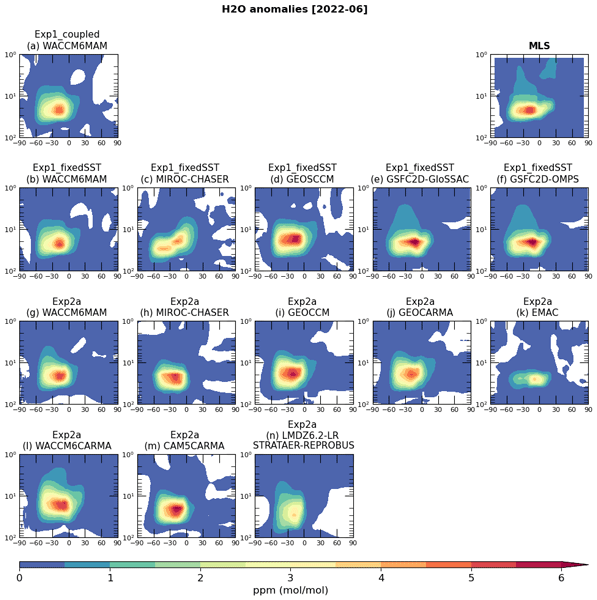
Yunqian Zhu, Hideharu Akiyoshi, Valentina Aquila, Elizabeth Asher, Ewa M. Bednarz, Slimane Bekki, Christoph Brühl, Amy H. Butler, Parker Case, Simon Chabrillat, Gabriel Chiodo, Margot Clyne, Peter R. Colarco, Sandip Dhomse, Lola Falletti, Eric Fleming, Ben Johnson, Andrin Jörimann, Mahesh Kovilakam, Gerbrand Koren, Ales Kuchar, Nicolas Lebas, Qing Liang, Cheng-Cheng Liu, Graham Mann, Michael Manyin, Marion Marchand, Olaf Morgenstern, Paul Newman, Luke D. Oman, Freja F. Østerstrøm, Yifeng Peng, David Plummer, Ilaria Quaglia, William Randel, Samuel Rémy, Takashi Sekiya, Stephen Steenrod, Timofei Sukhodolov, Simone Tilmes, Kostas Tsigaridis, Rei Ueyama, Daniele Visioni, Xinyue Wang, Shingo Watanabe, Yousuke Yamashita, Pengfei Yu, Wandi Yu, Jun Zhang, and Zhihong Zhuo
Geosci. Model Dev., 18, 5487–5512, https://doi.org/10.5194/gmd-18-5487-2025, https://doi.org/10.5194/gmd-18-5487-2025, 2025
Short summary
Short summary
To understand the climate impact of the 2022 Hunga volcanic eruption, we developed a climate model–observation comparison project. The paper describes the protocols and models that participate in the experiments. We designed several experiments to achieve our goals of this activity: (1) to evaluate the climate model performance and (2) to understand the Earth system responses to this eruption.
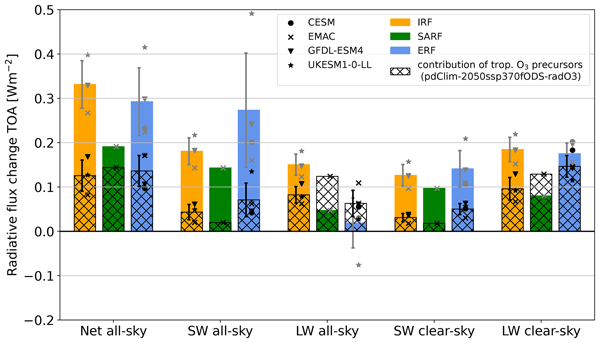
William J. Collins, Fiona M. O'Connor, Rachael E. Byrom, Øivind Hodnebrog, Patrick Jöckel, Mariano Mertens, Gunnar Myhre, Matthias Nützel, Dirk Olivié, Ragnhild Bieltvedt Skeie, Laura Stecher, Larry W. Horowitz, Vaishali Naik, Gregory Faluvegi, Ulas Im, Lee T. Murray, Drew Shindell, Kostas Tsigaridis, Nathan Luke Abraham, and James Keeble
Atmos. Chem. Phys., 25, 9031–9060, https://doi.org/10.5194/acp-25-9031-2025, https://doi.org/10.5194/acp-25-9031-2025, 2025
Short summary
Short summary
We used 7 climate models that include atmospheric chemistry and find that in a scenario with weak controls on air quality, the warming effects (over 2015 to 2050) of decreases in ozone-depleting substances and increases in air quality pollutants are approximately equal and would make ozone the second highest contributor to warming over this period. We find that for stratospheric ozone recovery, the standard measure of climate effects underestimates a more comprehensive measure.
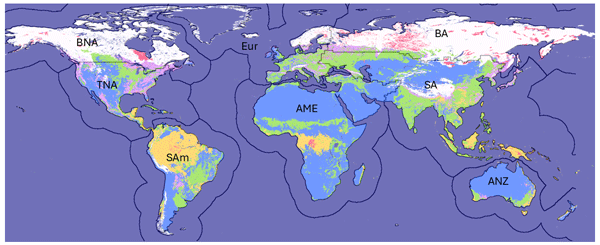
Cynthia H. Whaley, Tim Butler, Jose A. Adame, Rupal Ambulkar, Steve R. Arnold, Rebecca R. Buchholz, Benjamin Gaubert, Douglas S. Hamilton, Min Huang, Hayley Hung, Johannes W. Kaiser, Jacek W. Kaminski, Christoph Knote, Gerbrand Koren, Jean-Luc Kouassi, Meiyun Lin, Tianjia Liu, Jianmin Ma, Kasemsan Manomaiphiboon, Elisa Bergas Masso, Jessica L. McCarty, Mariano Mertens, Mark Parrington, Helene Peiro, Pallavi Saxena, Saurabh Sonwani, Vanisa Surapipith, Damaris Y. T. Tan, Wenfu Tang, Veerachai Tanpipat, Kostas Tsigaridis, Christine Wiedinmyer, Oliver Wild, Yuanyu Xie, and Paquita Zuidema
Geosci. Model Dev., 18, 3265–3309, https://doi.org/10.5194/gmd-18-3265-2025, https://doi.org/10.5194/gmd-18-3265-2025, 2025
Short summary
Short summary
The multi-model experiment design of the HTAP3 Fires project takes a multi-pollutant approach to improving our understanding of transboundary transport of wildland fire and agricultural burning emissions and their impacts. The experiments are designed with the goal of answering science policy questions related to fires. The options for the multi-model approach, including inputs, outputs, and model setup, are discussed, and the official recommendations for the project are presented.
Ngoc Thi Nhu Do, Kengo Sudo, Akihiko Ito, Louisa K. Emmons, Vaishali Naik, Kostas Tsigaridis, Øyvind Seland, Gerd A. Folberth, and Douglas I. Kelley
Geosci. Model Dev., 18, 2079–2109, https://doi.org/10.5194/gmd-18-2079-2025, https://doi.org/10.5194/gmd-18-2079-2025, 2025
Short summary
Short summary
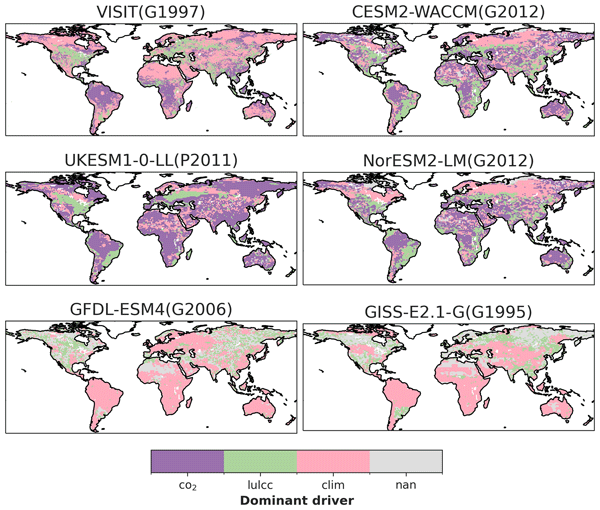
Understanding historical isoprene emission changes is important for predicting future climate, but trends and their controlling factors remain uncertain. This study shows that long-term isoprene trends vary among Earth system models mainly due to partially incorporating CO2 effects and land cover changes rather than to climate. Future models that refine these factors’ effects on isoprene emissions, along with long-term observations, are essential for better understanding plant–climate interactions.
Mariya Petrenko, Ralph Kahn, Mian Chin, Susanne E. Bauer, Tommi Bergman, Huisheng Bian, Gabriele Curci, Ben Johnson, Johannes W. Kaiser, Zak Kipling, Harri Kokkola, Xiaohong Liu, Keren Mezuman, Tero Mielonen, Gunnar Myhre, Xiaohua Pan, Anna Protonotariou, Samuel Remy, Ragnhild Bieltvedt Skeie, Philip Stier, Toshihiko Takemura, Kostas Tsigaridis, Hailong Wang, Duncan Watson-Parris, and Kai Zhang
Atmos. Chem. Phys., 25, 1545–1567, https://doi.org/10.5194/acp-25-1545-2025, https://doi.org/10.5194/acp-25-1545-2025, 2025
Short summary
Short summary
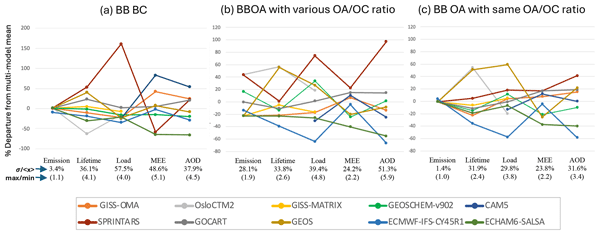
We compared smoke plume simulations from 11 global models to each other and to satellite smoke amount observations aimed at constraining smoke source strength. In regions where plumes are thick and background aerosol is low, models and satellites compare well. However, the input emission inventory tends to underestimate in many places, and particle property and loss rate assumptions vary enormously among models, causing uncertainties that require systematic in situ measurements to resolve.
Basil A. S. Davis, Marc Fasel, Jed O. Kaplan, Emmanuele Russo, and Ariane Burke
Clim. Past, 20, 1939–1988, https://doi.org/10.5194/cp-20-1939-2024, https://doi.org/10.5194/cp-20-1939-2024, 2024
Short summary
Short summary
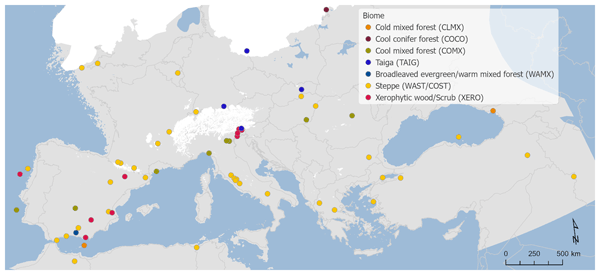
During the last ice age (21 000 yr BP) in Europe, the composition and extent of forest and its associated climate remain unclear, with models indicating more forest north of the Alps and a warmer and somewhat wetter climate than suggested by the data. A new compilation of pollen records with improved dating suggests greater agreement with model climates but still suggests models overestimate forest cover, especially in the west.
Fangxuan Ren, Jintai Lin, Chenghao Xu, Jamiu A. Adeniran, Jingxu Wang, Randall V. Martin, Aaron van Donkelaar, Melanie S. Hammer, Larry W. Horowitz, Steven T. Turnock, Naga Oshima, Jie Zhang, Susanne Bauer, Kostas Tsigaridis, Øyvind Seland, Pierre Nabat, David Neubauer, Gary Strand, Twan van Noije, Philippe Le Sager, and Toshihiko Takemura
Geosci. Model Dev., 17, 4821–4836, https://doi.org/10.5194/gmd-17-4821-2024, https://doi.org/10.5194/gmd-17-4821-2024, 2024
Short summary
Short summary
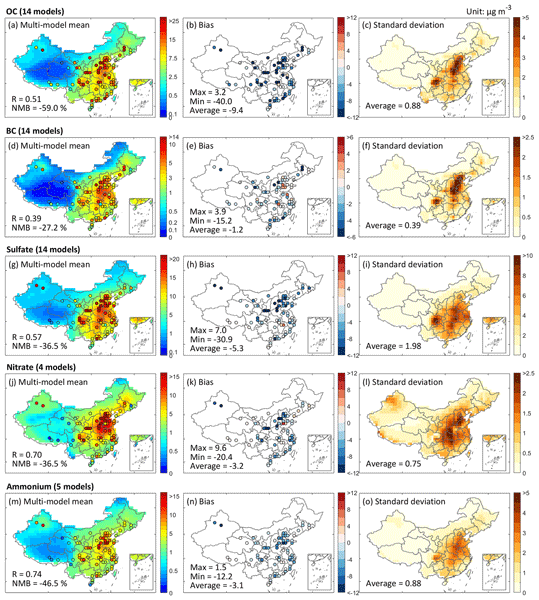
We evaluate the performance of 14 CMIP6 ESMs in simulating total PM2.5 and its 5 components over China during 2000–2014. PM2.5 and its components are underestimated in almost all models, except that black carbon (BC) and sulfate are overestimated in two models, respectively. The underestimation is the largest for organic carbon (OC) and the smallest for BC. Models reproduce the observed spatial pattern for OC, sulfate, nitrate and ammonium well, yet the agreement is poorer for BC.
Maegan A. DeLessio, Kostas Tsigaridis, Susanne E. Bauer, Jacek Chowdhary, and Gregory L. Schuster
Atmos. Chem. Phys., 24, 6275–6304, https://doi.org/10.5194/acp-24-6275-2024, https://doi.org/10.5194/acp-24-6275-2024, 2024
Short summary
Short summary
This study presents the first explicit representation of brown carbon aerosols in the GISS ModelE Earth system model (ESM). Model sensitivity to a range of brown carbon parameters and model performance compared to AERONET and MODIS retrievals of total aerosol properties were assessed. A summary of best practices for incorporating brown carbon into ModelE is also included.
Vincenzo Obiso, María Gonçalves Ageitos, Carlos Pérez García-Pando, Jan P. Perlwitz, Gregory L. Schuster, Susanne E. Bauer, Claudia Di Biagio, Paola Formenti, Kostas Tsigaridis, and Ron L. Miller
Atmos. Chem. Phys., 24, 5337–5367, https://doi.org/10.5194/acp-24-5337-2024, https://doi.org/10.5194/acp-24-5337-2024, 2024
Short summary
Short summary
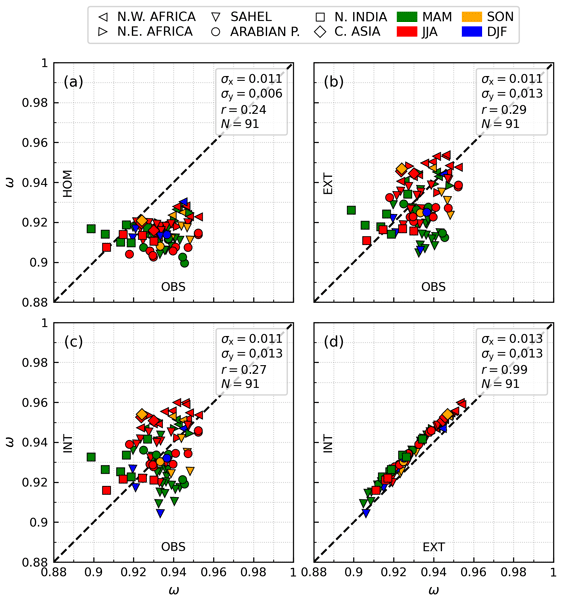
We calculate the dust direct radiative effect (DRE) in an Earth system model accounting for regionally varying soil mineralogy through a new observationally constrained method. Linking dust absorption at solar wavelengths to the varying amount of specific minerals (i.e., iron oxides) improves the modeled range of dust single scattering albedo compared to observations and increases the global cooling by dust. Our results may contribute to improved estimates of the dust DRE and its climate impact.
Ming Luo, Helen M. Worden, Robert D. Field, Kostas Tsigaridis, and Gregory S. Elsaesser
Atmos. Meas. Tech., 17, 2611–2624, https://doi.org/10.5194/amt-17-2611-2024, https://doi.org/10.5194/amt-17-2611-2024, 2024
Short summary
Short summary
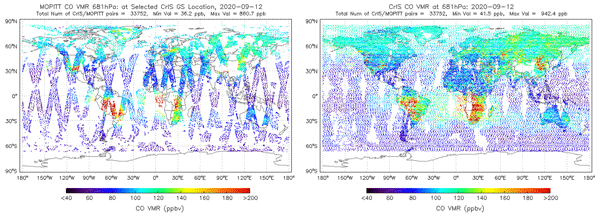
The TROPESS CrIS single-pixel CO profile retrievals are compared to the MOPITT CO products in steps of adjusting them to the common a priori assumptions. The two data sets are found to agree within 5 %. We also demonstrated and analyzed the proper steps in evaluating GISS ModelE CO simulations using satellite CO retrieval products for the western US wildfire events in September 2020.
Alexandra Rivera, Kostas Tsigaridis, Gregory Faluvegi, and Drew Shindell
Geosci. Model Dev., 17, 3487–3505, https://doi.org/10.5194/gmd-17-3487-2024, https://doi.org/10.5194/gmd-17-3487-2024, 2024
Short summary
Short summary
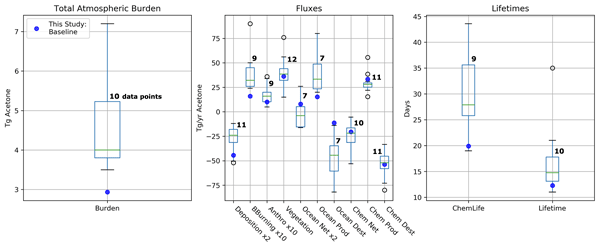
This paper describes and evaluates an improvement to the representation of acetone in the GISS ModelE2.1 Earth system model. We simulate acetone's concentration and transport across the atmosphere as well as its dependence on chemistry, the ocean, and various global emissions. Comparisons of our model’s estimates to past modeling studies and field measurements have shown encouraging results. Ultimately, this paper contributes to a broader understanding of acetone's role in the atmosphere.
Helen Weierbach, Allegra N. LeGrande, and Kostas Tsigaridis
Atmos. Chem. Phys., 23, 15491–15505, https://doi.org/10.5194/acp-23-15491-2023, https://doi.org/10.5194/acp-23-15491-2023, 2023
Short summary
Short summary
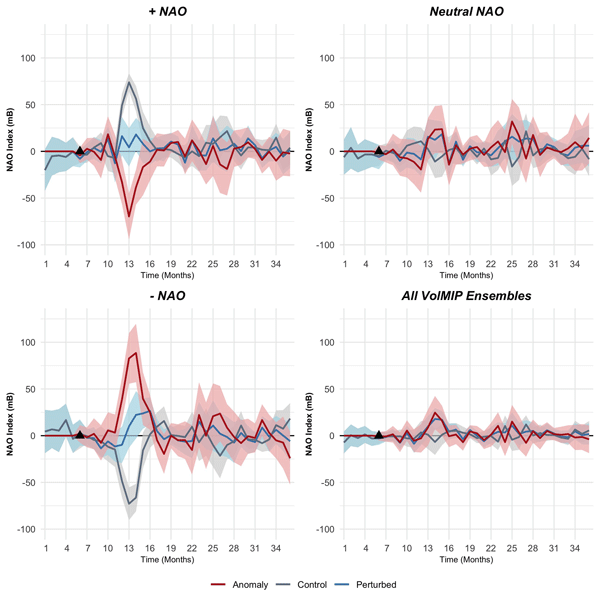
Volcanic aerosols impact global and regional climate conditions but can vary depending on pre-existing initial climate conditions. We ran an ensemble of volcanic aerosol simulations under varying ENSO and NAO initial conditions to understand how initial climate states impact the modeled response to volcanic forcing. Overall we found that initial NAO conditions can impact the strength of the first winter post-eruptive response but are also affected by the choice of anomaly and sampling routine.
Laura J. Wilcox, Robert J. Allen, Bjørn H. Samset, Massimo A. Bollasina, Paul T. Griffiths, James Keeble, Marianne T. Lund, Risto Makkonen, Joonas Merikanto, Declan O'Donnell, David J. Paynter, Geeta G. Persad, Steven T. Rumbold, Toshihiko Takemura, Kostas Tsigaridis, Sabine Undorf, and Daniel M. Westervelt
Geosci. Model Dev., 16, 4451–4479, https://doi.org/10.5194/gmd-16-4451-2023, https://doi.org/10.5194/gmd-16-4451-2023, 2023
Short summary
Short summary
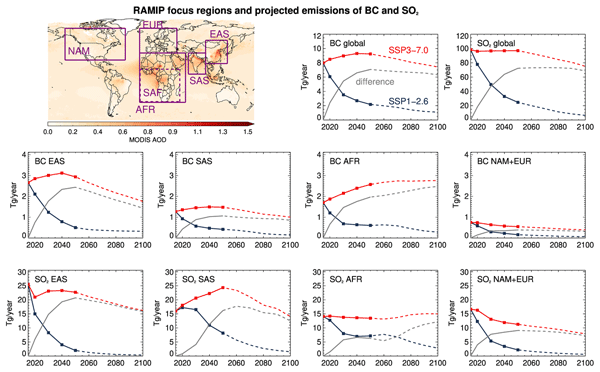
Changes in anthropogenic aerosol emissions have strongly contributed to global and regional climate change. However, the size of these regional impacts and the way they arise are still uncertain. With large changes in aerosol emissions a possibility over the next few decades, it is important to better quantify the potential role of aerosol in future regional climate change. The Regional Aerosol Model Intercomparison Project will deliver experiments designed to facilitate this.
Ram Singh, Kostas Tsigaridis, Allegra N. LeGrande, Francis Ludlow, and Joseph G. Manning
Clim. Past, 19, 249–275, https://doi.org/10.5194/cp-19-249-2023, https://doi.org/10.5194/cp-19-249-2023, 2023
Short summary
Short summary
This work is a modeling effort to investigate the hydroclimatic impacts of a volcanic
quartetduring 168–158 BCE over the Nile River basin in the context of Ancient Egypt's Ptolemaic era (305–30 BCE). The model simulated a robust surface cooling (~ 1.0–1.5 °C), suppressing the African monsoon (deficit of > 1 mm d−1 over East Africa) and agriculturally vital Nile summer flooding. Our result supports the hypothesized relation between volcanic eruptions, hydroclimatic shocks, and societal impacts.
Cynthia H. Whaley, Kathy S. Law, Jens Liengaard Hjorth, Henrik Skov, Stephen R. Arnold, Joakim Langner, Jakob Boyd Pernov, Garance Bergeron, Ilann Bourgeois, Jesper H. Christensen, Rong-You Chien, Makoto Deushi, Xinyi Dong, Peter Effertz, Gregory Faluvegi, Mark Flanner, Joshua S. Fu, Michael Gauss, Greg Huey, Ulas Im, Rigel Kivi, Louis Marelle, Tatsuo Onishi, Naga Oshima, Irina Petropavlovskikh, Jeff Peischl, David A. Plummer, Luca Pozzoli, Jean-Christophe Raut, Tom Ryerson, Ragnhild Skeie, Sverre Solberg, Manu A. Thomas, Chelsea Thompson, Kostas Tsigaridis, Svetlana Tsyro, Steven T. Turnock, Knut von Salzen, and David W. Tarasick
Atmos. Chem. Phys., 23, 637–661, https://doi.org/10.5194/acp-23-637-2023, https://doi.org/10.5194/acp-23-637-2023, 2023
Short summary
Short summary
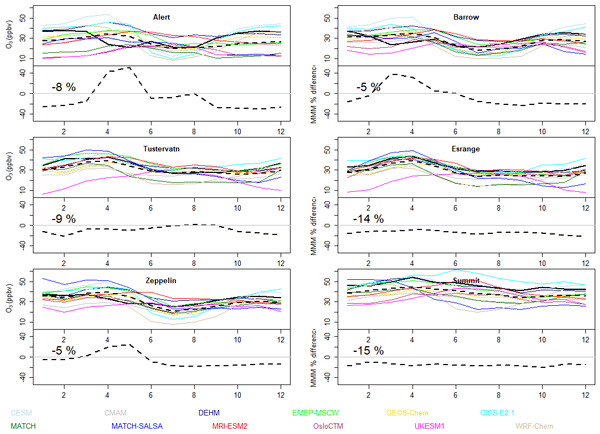
This study summarizes recent research on ozone in the Arctic, a sensitive and rapidly warming region. We find that the seasonal cycles of near-surface atmospheric ozone are variable depending on whether they are near the coast, inland, or at high altitude. Several global model simulations were evaluated, and we found that because models lack some of the ozone chemistry that is important for the coastal Arctic locations, they do not accurately simulate ozone there.
Jed O. Kaplan and Katie Hong-Kiu Lau
Earth Syst. Sci. Data, 14, 5665–5670, https://doi.org/10.5194/essd-14-5665-2022, https://doi.org/10.5194/essd-14-5665-2022, 2022
Short summary
Short summary
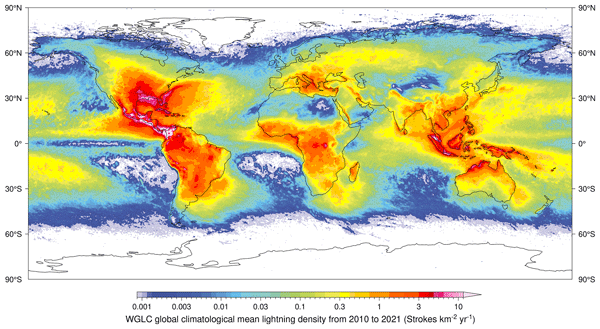
Global lightning strokes are recorded continuously by a network of ground-based stations. We consolidated these point observations into a map form and provide these as electronic datasets for research purposes. Here we extend our dataset to include lightning observations from 2021.
Ensheng Weng, Igor Aleinov, Ram Singh, Michael J. Puma, Sonali S. McDermid, Nancy Y. Kiang, Maxwell Kelley, Kevin Wilcox, Ray Dybzinski, Caroline E. Farrior, Stephen W. Pacala, and Benjamin I. Cook
Geosci. Model Dev., 15, 8153–8180, https://doi.org/10.5194/gmd-15-8153-2022, https://doi.org/10.5194/gmd-15-8153-2022, 2022
Short summary
Short summary
We develop a demographic vegetation model to improve the representation of terrestrial vegetation dynamics and ecosystem biogeochemical cycles in the Goddard Institute for Space Studies ModelE. The individual-based competition for light and soil resources makes the modeling of eco-evolutionary optimality possible. This model will enable ModelE to simulate long-term biogeophysical and biogeochemical feedbacks between the climate system and land ecosystems at decadal to centurial temporal scales.
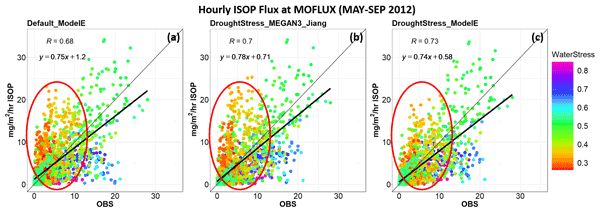
Elizabeth Klovenski, Yuxuan Wang, Susanne E. Bauer, Kostas Tsigaridis, Greg Faluvegi, Igor Aleinov, Nancy Y. Kiang, Alex Guenther, Xiaoyan Jiang, Wei Li, and Nan Lin
Atmos. Chem. Phys., 22, 13303–13323, https://doi.org/10.5194/acp-22-13303-2022, https://doi.org/10.5194/acp-22-13303-2022, 2022
Short summary
Short summary
Severe drought stresses vegetation and causes reduced emission of isoprene. We study the impact of including a new isoprene drought stress (yd) parameterization in NASA GISS ModelE called DroughtStress_ModelE, which is specifically tuned for ModelE. Inclusion of yd leads to better simulated isoprene emissions at the MOFLUX site during the severe drought of 2012, reduced overestimation of OMI satellite ΩHCHO (formaldehyde column), and improved simulated O3 (ozone) during drought.
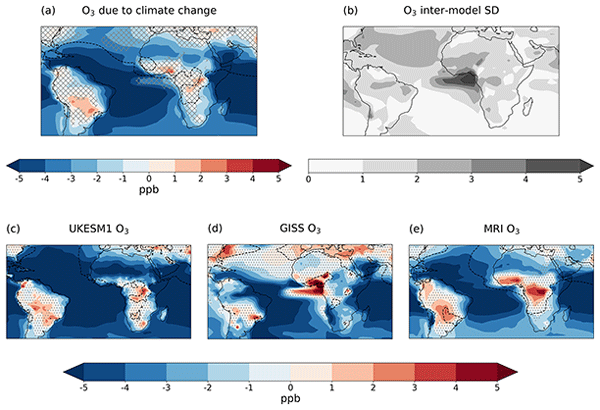
Flossie Brown, Gerd A. Folberth, Stephen Sitch, Susanne Bauer, Marijn Bauters, Pascal Boeckx, Alexander W. Cheesman, Makoto Deushi, Inês Dos Santos Vieira, Corinne Galy-Lacaux, James Haywood, James Keeble, Lina M. Mercado, Fiona M. O'Connor, Naga Oshima, Kostas Tsigaridis, and Hans Verbeeck
Atmos. Chem. Phys., 22, 12331–12352, https://doi.org/10.5194/acp-22-12331-2022, https://doi.org/10.5194/acp-22-12331-2022, 2022
Short summary
Short summary
Surface ozone can decrease plant productivity and impair human health. In this study, we evaluate the change in surface ozone due to climate change over South America and Africa using Earth system models. We find that if the climate were to change according to the worst-case scenario used here, models predict that forested areas in biomass burning locations and urban populations will be at increasing risk of ozone exposure, but other areas will experience a climate benefit.
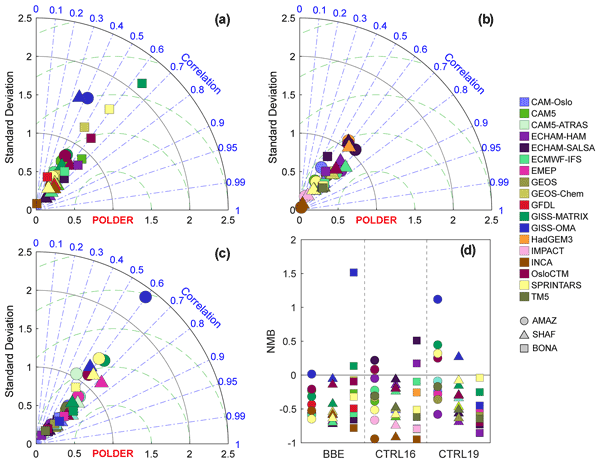
Qirui Zhong, Nick Schutgens, Guido van der Werf, Twan van Noije, Kostas Tsigaridis, Susanne E. Bauer, Tero Mielonen, Alf Kirkevåg, Øyvind Seland, Harri Kokkola, Ramiro Checa-Garcia, David Neubauer, Zak Kipling, Hitoshi Matsui, Paul Ginoux, Toshihiko Takemura, Philippe Le Sager, Samuel Rémy, Huisheng Bian, Mian Chin, Kai Zhang, Jialei Zhu, Svetlana G. Tsyro, Gabriele Curci, Anna Protonotariou, Ben Johnson, Joyce E. Penner, Nicolas Bellouin, Ragnhild B. Skeie, and Gunnar Myhre
Atmos. Chem. Phys., 22, 11009–11032, https://doi.org/10.5194/acp-22-11009-2022, https://doi.org/10.5194/acp-22-11009-2022, 2022
Short summary
Short summary
Aerosol optical depth (AOD) errors for biomass burning aerosol (BBA) are evaluated in 18 global models against satellite datasets. Notwithstanding biases in satellite products, they allow model evaluations. We observe large and diverse model biases due to errors in BBA. Further interpretations of AOD diversities suggest large biases exist in key processes for BBA which require better constraining. These results can contribute to further model improvement and development.
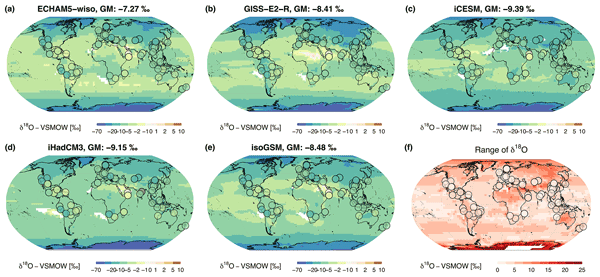
Janica C. Bühler, Josefine Axelsson, Franziska A. Lechleitner, Jens Fohlmeister, Allegra N. LeGrande, Madhavan Midhun, Jesper Sjolte, Martin Werner, Kei Yoshimura, and Kira Rehfeld
Clim. Past, 18, 1625–1654, https://doi.org/10.5194/cp-18-1625-2022, https://doi.org/10.5194/cp-18-1625-2022, 2022
Short summary
Short summary
We collected and standardized the output of five isotope-enabled simulations for the last millennium and assess differences and similarities to records from a global speleothem database. Modeled isotope variations mostly arise from temperature differences. While lower-resolution speleothems do not capture extreme changes to the extent of models, they show higher variability on multi-decadal timescales. As no model excels in all comparisons, we advise a multi-model approach where possible.
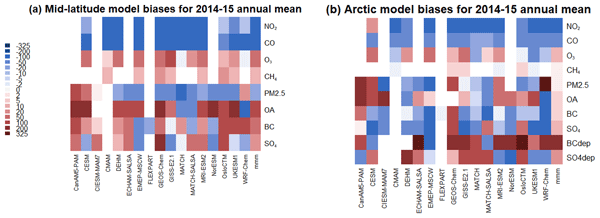
Cynthia H. Whaley, Rashed Mahmood, Knut von Salzen, Barbara Winter, Sabine Eckhardt, Stephen Arnold, Stephen Beagley, Silvia Becagli, Rong-You Chien, Jesper Christensen, Sujay Manish Damani, Xinyi Dong, Konstantinos Eleftheriadis, Nikolaos Evangeliou, Gregory Faluvegi, Mark Flanner, Joshua S. Fu, Michael Gauss, Fabio Giardi, Wanmin Gong, Jens Liengaard Hjorth, Lin Huang, Ulas Im, Yugo Kanaya, Srinath Krishnan, Zbigniew Klimont, Thomas Kühn, Joakim Langner, Kathy S. Law, Louis Marelle, Andreas Massling, Dirk Olivié, Tatsuo Onishi, Naga Oshima, Yiran Peng, David A. Plummer, Olga Popovicheva, Luca Pozzoli, Jean-Christophe Raut, Maria Sand, Laura N. Saunders, Julia Schmale, Sangeeta Sharma, Ragnhild Bieltvedt Skeie, Henrik Skov, Fumikazu Taketani, Manu A. Thomas, Rita Traversi, Kostas Tsigaridis, Svetlana Tsyro, Steven Turnock, Vito Vitale, Kaley A. Walker, Minqi Wang, Duncan Watson-Parris, and Tahya Weiss-Gibbons
Atmos. Chem. Phys., 22, 5775–5828, https://doi.org/10.5194/acp-22-5775-2022, https://doi.org/10.5194/acp-22-5775-2022, 2022
Short summary
Short summary
Air pollutants, like ozone and soot, play a role in both global warming and air quality. Atmospheric models are often used to provide information to policy makers about current and future conditions under different emissions scenarios. In order to have confidence in those simulations, in this study we compare simulated air pollution from 18 state-of-the-art atmospheric models to measured air pollution in order to assess how well the models perform.
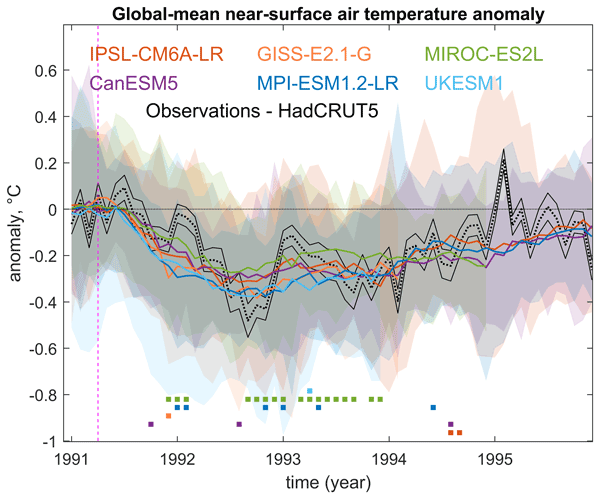
Davide Zanchettin, Claudia Timmreck, Myriam Khodri, Anja Schmidt, Matthew Toohey, Manabu Abe, Slimane Bekki, Jason Cole, Shih-Wei Fang, Wuhu Feng, Gabriele Hegerl, Ben Johnson, Nicolas Lebas, Allegra N. LeGrande, Graham W. Mann, Lauren Marshall, Landon Rieger, Alan Robock, Sara Rubinetti, Kostas Tsigaridis, and Helen Weierbach
Geosci. Model Dev., 15, 2265–2292, https://doi.org/10.5194/gmd-15-2265-2022, https://doi.org/10.5194/gmd-15-2265-2022, 2022
Short summary
Short summary
This paper provides metadata and first analyses of the volc-pinatubo-full experiment of CMIP6-VolMIP. Results from six Earth system models reveal significant differences in radiative flux anomalies that trace back to different implementations of volcanic forcing. Surface responses are in contrast overall consistent across models, reflecting the large spread due to internal variability. A second phase of VolMIP shall consider both aspects toward improved protocol for volc-pinatubo-full.

Henry Bowman, Steven Turnock, Susanne E. Bauer, Kostas Tsigaridis, Makoto Deushi, Naga Oshima, Fiona M. O'Connor, Larry Horowitz, Tongwen Wu, Jie Zhang, Dagmar Kubistin, and David D. Parrish
Atmos. Chem. Phys., 22, 3507–3524, https://doi.org/10.5194/acp-22-3507-2022, https://doi.org/10.5194/acp-22-3507-2022, 2022
Short summary
Short summary
A full understanding of ozone in the troposphere requires investigation of its temporal variability over all timescales. Model simulations show that the northern midlatitude ozone seasonal cycle shifted with industrial development (1850–2014), with an increasing magnitude and a later summer peak. That shift reached a maximum in the mid-1980s, followed by a reversal toward the preindustrial cycle. The few available observations, beginning in the 1970s, are consistent with the model simulations.
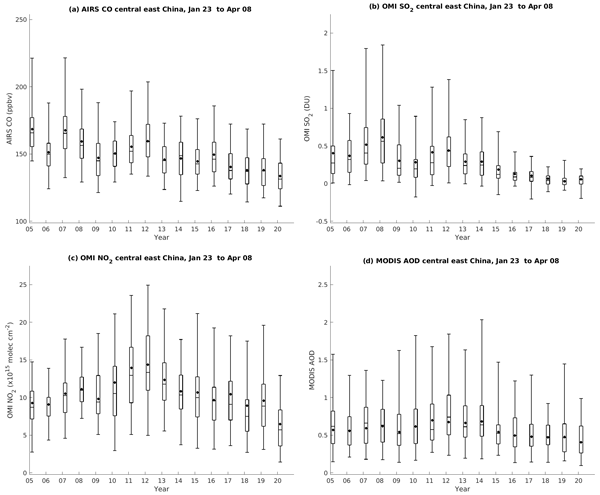
Robert D. Field, Jonathan E. Hickman, Igor V. Geogdzhayev, Kostas Tsigaridis, and Susanne E. Bauer
Atmos. Chem. Phys., 21, 18333–18350, https://doi.org/10.5194/acp-21-18333-2021, https://doi.org/10.5194/acp-21-18333-2021, 2021
Short summary
Short summary
In this study, we examined changes in atmospheric composition over China from satellite measurements during the COVID lockdowns of 2020. We found that interpreting changes in 2020 depended strongly on the background period and whether trends were accounted for. In most cases, pollution levels in 2020 were lower than during the previous few years when pollution levels appear to have stabilized.
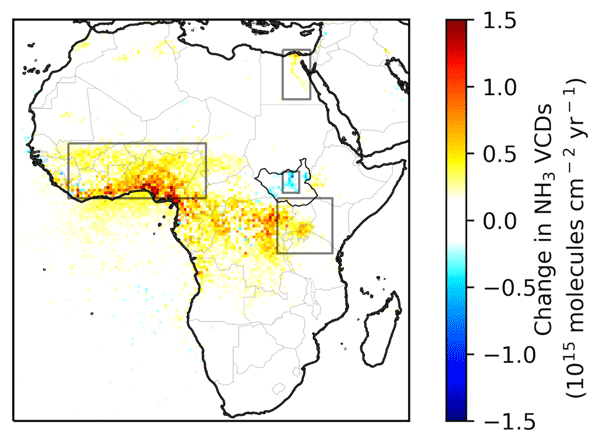
Jonathan E. Hickman, Niels Andela, Enrico Dammers, Lieven Clarisse, Pierre-François Coheur, Martin Van Damme, Courtney A. Di Vittorio, Money Ossohou, Corinne Galy-Lacaux, Kostas Tsigaridis, and Susanne E. Bauer
Atmos. Chem. Phys., 21, 16277–16291, https://doi.org/10.5194/acp-21-16277-2021, https://doi.org/10.5194/acp-21-16277-2021, 2021
Short summary
Short summary
Ammonia (NH3) gas emitted from soils and biomass burning contributes to particulate air pollution. We used satellite observations of the atmosphere over Africa to show that declines in NH3 concentrations over South Sudan's Sudd wetland in 2008–2017 are related to variation in wetland extent. We also find NH3 concentrations increased in West Africa as a result of biomass burning and increased in the Lake Victoria region, likely due to agricultural expansion and intensification.
Maria Sand, Bjørn H. Samset, Gunnar Myhre, Jonas Gliß, Susanne E. Bauer, Huisheng Bian, Mian Chin, Ramiro Checa-Garcia, Paul Ginoux, Zak Kipling, Alf Kirkevåg, Harri Kokkola, Philippe Le Sager, Marianne T. Lund, Hitoshi Matsui, Twan van Noije, Dirk J. L. Olivié, Samuel Remy, Michael Schulz, Philip Stier, Camilla W. Stjern, Toshihiko Takemura, Kostas Tsigaridis, Svetlana G. Tsyro, and Duncan Watson-Parris
Atmos. Chem. Phys., 21, 15929–15947, https://doi.org/10.5194/acp-21-15929-2021, https://doi.org/10.5194/acp-21-15929-2021, 2021
Short summary
Short summary
Absorption of shortwave radiation by aerosols can modify precipitation and clouds but is poorly constrained in models. A total of 15 different aerosol models from AeroCom phase III have reported total aerosol absorption, and for the first time, 11 of these models have reported in a consistent experiment the contributions to absorption from black carbon, dust, and organic aerosol. Here, we document the model diversity in aerosol absorption.
Cited articles
Aleinov, I. and Schmidt, G. A.: Water isotopes in the GISS ModelE land surface scheme, Global and Planetary Change, 51, 108–120, https://doi.org/10.1016/j.gloplacha.2005.12.010, 2006.
Baker, A., Hartmann, A., Duan, W., Hankin, S., Comas-Bru, L., Cuthbert, M. O., Treble, P. C., Banner, J., Genty, D., Baldini, L. M., Bartolomé, M., Moreno, A., Pérez-Mejías, C., and Werner, M.: Global analysis reveals climatic controls on the oxygen isotope composition of cave drip water, Nat. Commun., 10, 2984, https://doi.org/10.1038/s41467-019-11027-w, 2019.
Bauer, S. E., Tsigaridis, K., Faluvegi, G., Kelley, M., Lo, K. K., Miller, R. L., Nazarenko, L., Schmidt, G. A., and Wu, J.: Historical (1850–2014) Aerosol Evolution and Role on Climate Forcing Using the GISS ModelE2.1 Contribution to CMIP6, Journal of Advances in Modeling Earth Systems, 12, e2019MS001978, https://doi.org/10.1029/2019MS001978, 2020.
Berger, A., Loutre, M. F., and Mélice, J. L.: Equatorial insolation: from precession harmonics to eccentricity frequencies, Clim. Past, 2, 131–136, https://doi.org/10.5194/cp-2-131-2006, 2006.
Betts, R. A.: Offset of the potential carbon sink from boreal forestation by decreases in surface albedo, Nature, 408, 187–190, https://doi.org/10.1038/35041545, 2000.
Bonan, G. B.: Forests and Climate Change: Forcings, Feedbacks, and the Climate Benefits of Forests, Science, 320, 1444–1449, https://doi.org/10.1126/science.1155121, 2008.
Bonan, G. B., Pollard, D., and Thompson, S. L.: Effects of boreal forest vegetation on global climate, Nature, 359, 716–718, https://doi.org/10.1038/359716a0, 1992.
Braconnot, P., Harrison, S. P., Kageyama, M., Bartlein, P. J., Masson-Delmotte, V., Abe-Ouchi, A., Otto-Bliesner, B., and Zhao, Y.: Evaluation of climate models using palaeoclimatic data, Nature Clim. Change, 2, 417–424, https://doi.org/10.1038/nclimate1456, 2012.
Chandan, D. and Peltier, W. R.: African Humid Period Precipitation Sustained by Robust Vegetation, Soil, and Lake Feedbacks, Geophysical Research Letters, 47, e2020GL088728, https://doi.org/10.1029/2020GL088728, 2020.
Charney, J., Quirk, W. J., Chow, S., and Kornfield, J.: A Comparative Study of the Effects of Albedo Change on Drought in Semi–Arid Regions, Journal of the Atmospheric Sciences, 34, 1366–1385, https://doi.org/10.1175/1520-0469(1977)034<1366:ACSOTE>2.0.CO;2, 1977.
Charney, J. G.: Dynamics of deserts and drought in the Sahel, Quarterly Journal of the Royal Meteorological Society, 101, 193–202, https://doi.org/10.1002/qj.49710142802, 1975.
Claussen, M.: Modeling bio-geophysical feedback in the African and Indian monsoon region, Climate Dynamics, 13, 247–257, https://doi.org/10.1007/s003820050164, 1997.
Claussen, M.: Late Quaternary vegetation-climate feedbacks, Clim. Past, 5, 203–216, https://doi.org/10.5194/cp-5-203-2009, 2009.
Collins, J. A., Prange, M., Caley, T., Gimeno, L., Beckmann, B., Mulitza, S., Skonieczny, C., Roche, D., and Schefuß, E.: Rapid termination of the African Humid Period triggered by northern high-latitude cooling, Nat. Commun., 8, 1372, https://doi.org/10.1038/s41467-017-01454-y, 2017.
Comas-Bru, L., Atsawawaranunt, K., Harrison, S., and SISAL Working group members: SISAL (Speleothem Isotopes Synthesis and AnaLysis Working Group) database version 2.0, University of Reading, https://doi.org/10.17864/1947.256, 2020.
Compo, G. P., Whitaker, J. S., Sardeshmukh, P. D., Matsui, N., Allan, R. J., Yin, X., Gleason Jr., B. E., Vose, R. S., Rutledge, G., Bessemoulin, P., Brönnimann, S., Brunet, M., Crouthamel, R. I., Grant, A. N., Groisman, P. Y., Jones, P. D., Kruk, M. C., Kruger, A. C., Marshall, G. J., Maugeri, M., Mok, H. Y., Nordli, Ø., Ross, T. F., Trigo, R. M., Wang, X. L., Woodruff, S. D., and Worley, S. J.: The Twentieth Century Reanalysis Project, Q. J. R. Meteorol. Soc., 137, 1–28, https://doi.org/10.1002/qj.776, 2011.
Cox, P. M., Betts, R. A., Jones, C. D., Spall, S. A., and Totterdell, I. J.: Acceleration of global warming due to carbon-cycle feedbacks in a coupled climate model, Nature, 408, 184–187, https://doi.org/10.1038/35041539, 2000.
Dallmeyer, A., Claussen, M., Lorenz, S. J., Sigl, M., Toohey, M., and Herzschuh, U.: Holocene vegetation transitions and their climatic drivers in MPI-ESM1.2, Clim. Past, 17, 2481–2513, https://doi.org/10.5194/cp-17-2481-2021, 2021.
de Noblet, N., Braconnot, P., Joussaume, S., and Masson, V.: Sensitivity of simulated Asian and African summer monsoons to orbitally induced variations in insolation 126, 115 and 6 kBP, Climate Dynamics, 12, 589–603, https://doi.org/10.1007/BF00216268, 1996.
Doherty, R., Kutzbach, J., Foley, J., and Pollard, D.: Fully coupled climate/dynamical vegetation model simulations over Northern Africa during the mid-Holocene, Climate Dynamics, 16, 561–573, https://doi.org/10.1007/s003820000065, 2000.
Doughty, C. E., Loarie, S. R., and Field, C. B.: Theoretical Impact of Changing Albedo on Precipitation at the Southernmost Boundary of the ITCZ in South America, Earth Interactions, 16, 1–14, https://doi.org/10.1175/2012EI422.1, 2012.
Doughty, C. E., Santos-Andrade, P. E., Shenkin, A., Goldsmith, G. R., Bentley, L. P., Blonder, B., Díaz, S., Salinas, N., Enquist, B. J., Martin, R. E., Asner, G. P., and Malhi, Y.: Tropical forest leaves may darken in response to climate change, Nat. Ecol. Evol., 2, 1918–1924, https://doi.org/10.1038/s41559-018-0716-y, 2018.
Eyring, V., Bony, S., Meehl, G. A., Senior, C. A., Stevens, B., Stouffer, R. J., and Taylor, K. E.: Overview of the Coupled Model Intercomparison Project Phase 6 (CMIP6) experimental design and organization, Geosci. Model Dev., 9, 1937–1958, https://doi.org/10.5194/gmd-9-1937-2016, 2016.
Fekete, B. M., Vörösmarty, C. J., and Lammers, R. B.: Scaling gridded river networks for macroscale hydrology: Development, analysis, and control of error, Water Resources Research, 37, 1955–1967, https://doi.org/10.1029/2001WR900024, 2001.
Gao, F., Morisette, J. T., Wolfe, R. E., Ederer, G., Pedelty, J., Masuoka, E., Myneni, R., Tan, B., and Nightingale, J.: An Algorithm to Produce Temporally and Spatially Continuous MODIS-LAI Time Series, IEEE Geoscience and Remote Sensing Letters, 5, 60–64, https://doi.org/10.1109/LGRS.2007.907971, 2008.
Hamilton, D. S., Hantson, S., Scott, C. E., Kaplan, J. O., Pringle, K. J., Nieradzik, L. P., Rap, A., Folberth, G. A., Spracklen, D. V., and Carslaw, K. S.: Reassessment of pre-industrial fire emissions strongly affects anthropogenic aerosol forcing, Nat. Commun., 9, 3182, https://doi.org/10.1038/s41467-018-05592-9, 2018.
Harris, I., Osborn, T. J., Jones, P., and Lister, D.: Version 4 of the CRU TS monthly high-resolution gridded multivariate climate dataset, Sci. Data, 7, 109, https://doi.org/10.1038/s41597-020-0453-3, 2020.
Harrison, S. P., Bartlein, P. J., Izumi, K., Li, G., Annan, J., Hargreaves, J., Braconnot, P., and Kageyama, M.: Evaluation of CMIP5 palaeo-simulations to improve climate projections, Nature Clim. Change, 5, 735–743, https://doi.org/10.1038/nclimate2649, 2015.
Hartmann, A. and Baker, A.: Modelling karst vadose zone hydrology and its relevance for paleoclimate reconstruction, Earth-Science Reviews, 172, 178–192, https://doi.org/10.1016/j.earscirev.2017.08.001, 2017.
Henderson, K., Laube, A., Gäggeler, H. W., Olivier, S., Papina, T., and Schwikowski, M.: Temporal variations of accumulation and temperature during the past two centuries from Belukha ice core, Siberian Altai, Journal of Geophysical Research: Atmospheres, 111, https://doi.org/10.1029/2005JD005819, 2006.
Hoesly, R. M., Smith, S. J., Feng, L., Klimont, Z., Janssens-Maenhout, G., Pitkanen, T., Seibert, J. J., Vu, L., Andres, R. J., Bolt, R. M., Bond, T. C., Dawidowski, L., Kholod, N., Kurokawa, J.-I., Li, M., Liu, L., Lu, Z., Moura, M. C. P., O'Rourke, P. R., and Zhang, Q.: Historical (1750–2014) anthropogenic emissions of reactive gases and aerosols from the Community Emissions Data System (CEDS), Geosci. Model Dev., 11, 369–408, https://doi.org/10.5194/gmd-11-369-2018, 2018.
Ito, G., Romanou, A., Kiang, N. Y., Faluvegi, G., Aleinov, I., Ruedy, R., Russell, G., Lerner, P., Kelley, M., and Lo, K.: Global Carbon Cycle and Climate Feedbacks in the NASA GISS ModelE2.1, Journal of Advances in Modeling Earth Systems, 12, e2019MS002030, https://doi.org/10.1029/2019MS002030, 2020.
Jahn, B., Schneider, R. R., Müller, P.-J., Donner, B., and Röhl, U.: Response of tropical African and East Atlantic climates to orbital forcing over the last 1.7 Ma, Geological Society, London, Special Publications, 247, 65–84, https://doi.org/10.1144/GSL.SP.2005.247.01.04, 2005.
Kageyama, M., Braconnot, P., Harrison, S. P., Haywood, A. M., Jungclaus, J. H., Otto-Bliesner, B. L., Peterschmitt, J.-Y., Abe-Ouchi, A., Albani, S., Bartlein, P. J., Brierley, C., Crucifix, M., Dolan, A., Fernandez-Donado, L., Fischer, H., Hopcroft, P. O., Ivanovic, R. F., Lambert, F., Lunt, D. J., Mahowald, N. M., Peltier, W. R., Phipps, S. J., Roche, D. M., Schmidt, G. A., Tarasov, L., Valdes, P. J., Zhang, Q., and Zhou, T.: The PMIP4 contribution to CMIP6 – Part 1: Overview and over-arching analysis plan, Geosci. Model Dev., 11, 1033–1057, https://doi.org/10.5194/gmd-11-1033-2018, 2018.
Kaplan, J. O., Krumhardt, K. M., and Zimmermann, N. E.: The effects of land use and climate change on the carbon cycle of Europe over the past 500 years, Global Change Biology, 18, 902–914, https://doi.org/10.1111/j.1365-2486.2011.02580.x, 2012.
Kaplan, J. O., Koch, A., and Vitali, R.: ARVE-Research/LPJ-LMfire: LPJ-LMfire (tropical forest restoration), Zenodo [code], https://doi.org/10.5281/zenodo.5831747, 2022.
Kaufman, D., McKay, N., Routson, C., Erb, M., Dätwyler, C., Sommer, P. S., Heiri, O., and Davis, B.: Holocene global mean surface temperature, a multi-method reconstruction approach, Sci. Data, 7, 201, https://doi.org/10.1038/s41597-020-0530-7, 2020.
Kelley, M., Schmidt, G. A., Nazarenko, L. S., Bauer, S. E., Ruedy, R., Russell, G. L., Ackerman, A. S., Aleinov, I., Bauer, M., Bleck, R., Canuto, V., Cesana, G., Cheng, Y., Clune, T. L., Cook, B. I., Cruz, C. A., Del Genio, A. D., Elsaesser, G. S., Faluvegi, G., Kiang, N. Y., Kim, D., Lacis, A. A., Leboissetier, A., LeGrande, A. N., Lo, K. K., Marshall, J., Matthews, E. E., McDermid, S., Mezuman, K., Miller, R. L., Murray, L. T., Oinas, V., Orbe, C., García-Pando, C. P., Perlwitz, J. P., Puma, M. J., Rind, D., Romanou, A., Shindell, D. T., Sun, S., Tausnev, N., Tsigaridis, K., Tselioudis, G., Weng, E., Wu, J., and Yao, M.-S.: GISS-E2.1: Configurations and Climatology, Journal of Advances in Modeling Earth Systems, 12, e2019MS002025, https://doi.org/10.1029/2019MS002025, 2020.
Kim, Y., Moorcroft, P. R., Aleinov, I., Puma, M. J., and Kiang, N. Y.: Variability of phenology and fluxes of water and carbon with observed and simulated soil moisture in the Ent Terrestrial Biosphere Model (Ent TBM version 1.0.1.0.0), Geosci. Model Dev., 8, 3837–3865, https://doi.org/10.5194/gmd-8-3837-2015, 2015.
Kjellström, E., Brandefelt, J., Näslund, J. O., Smith, B., Strandberg, G., and Wohlfarth, B.: Climate conditions in Sweden in a 100,000 year time perspective. Svensk Kärnbränslehantering AB, Report TR-09-04, 140 pp. http://www.skb.se/upload/publications/pdf/TR-09-04webb.pdf (last access: 8 February 2026), 2009.
Köhler, P., Nehrbass-Ahles, C., Schmitt, J., Stocker, T. F., and Fischer, H.: A 156 kyr smoothed history of the atmospheric greenhouse gases CO2, CH4, and N2O and their radiative forcing, Earth Syst. Sci. Data, 9, 363–387, https://doi.org/10.5194/essd-9-363-2017, 2017.
Kubatzki, C. and Claussen, M.: Simulation of the global bio-geophysical interactions during the Last Glacial Maximum, Climate Dynamics, 14, 461–471, https://doi.org/10.1007/s003820050234, 1998.
Kurita, N., Yoshida, N., Inoue, G., and Chayanova, E. A.: Modern isotope climatology of Russia: A first assessment, Journal of Geophysical Research: Atmospheres, 109, https://doi.org/10.1029/2003JD003404, 2004.
Lachniet, M. S.: Climatic and environmental controls on speleothem oxygen-isotope values, Quaternary Science Reviews, 28, 412–432, https://doi.org/10.1016/j.quascirev.2008.10.021, 2009.
Lamb, P. J.: Persistence of Subsaharan drought, Nature, 299, 46–48, https://doi.org/10.1038/299046a0, 1982.
LeGrande, A. N. and Schmidt, G. A.: Global gridded data set of the oxygen isotopic composition in seawater, Geophysical Research Letters, 33, https://doi.org/10.1029/2006GL026011, 2006.
Li, C.-F., Chytrý, M., Zelený, D., Chen, M.-Y., Chen, T.-Y., Chiou, C.-R., Hsia, Y.-J., Liu, H.-Y., Yang, S.-Z., Yeh, C.-L., Wang, J.-C., Yu, C.-F., Lai, Y.-J., Chao, W.-C., and Hsieh, C.-F.: Classification of Taiwan forest vegetation, Applied Vegetation Science, 16, 698–719, https://doi.org/10.1111/avsc.12025, 2013.
Loulergue, L., Schilt, A., Spahni, R., Masson-Delmotte, V., Blunier, T., Lemieux, B., Barnola, J.-M., Raynaud, D., Stocker, T. F., and Chappellaz, J.: Orbital and millennial-scale features of atmospheric CH4 over the past 800,000 years, Nature, 453, 383–386, https://doi.org/10.1038/nature06950, 2008.
Ludlow, F. and Manning, J. G.: Volcanic Eruptions, Veiled Suns, and Nile Failure in Egyptian History: Integrating Hydroclimate into Understandings of Historical Change, in: Climate Change and Ancient Societies in Europe and the Near East: Diversity in Collapse and Resilience, edited by: Erdkamp, P., Manning, J. G., and Verboven, K., Springer International Publishing, Cham, 301–320, https://doi.org/10.1007/978-3-030-81103-7_10, 2021.
Magi, B. I.: Global Lightning Parameterization from CMIP5 Climate Model Output, Journal of Atmospheric and Oceanic Technology, 32, 434–452, https://doi.org/10.1175/JTECH-D-13-00261.1, 2015.
Manning, J. G., Ludlow, F., Stine, A. R., Boos, W. R., Sigl, M., and Marlon, J. R.: Volcanic suppression of Nile summer flooding triggers revolt and constrains interstate conflict in ancient Egypt, Nat. Commun., 8, 900, https://doi.org/10.1038/s41467-017-00957-y, 2017.
Melesse, A. M., Bekele, S., and McCornick, P.: Introduction: Hydrology of the Niles in the Face of Climate and Land-Use Dynamics, in: Nile River Basin: Hydrology, Climate and Water Use, vii–xvii, edited by: Melesse, A. F., Springer, ISBN 978-94-007-0689-7, 2011.
Mikhail, A.: Ottoman Iceland: A Climate History, Environmental History, 20, 262–284, https://doi.org/10.1093/envhis/emv006, 2015.
Myneni, R. B., Hoffman, S., Knyazikhin, Y., Privette, J. L., Glassy, J., Tian, Y., Wang, Y., Song, X., Zhang, Y., Smith, G. R., Lotsch, A., Friedl, M., Morisette, J. T., Votava, P., Nemani, R. R., and Running, S. W.: Global products of vegetation leaf area and fraction absorbed PAR from year one of MODIS data, Remote Sensing of Environment, 83, 214–231, https://doi.org/10.1016/S0034-4257(02)00074-3, 2002.
Otto-Bliesner, B. L., Braconnot, P., Harrison, S. P., Lunt, D. J., Abe-Ouchi, A., Albani, S., Bartlein, P. J., Capron, E., Carlson, A. E., Dutton, A., Fischer, H., Goelzer, H., Govin, A., Haywood, A., Joos, F., LeGrande, A. N., Lipscomb, W. H., Lohmann, G., Mahowald, N., Nehrbass-Ahles, C., Pausata, F. S. R., Peterschmitt, J.-Y., Phipps, S. J., Renssen, H., and Zhang, Q.: The PMIP4 contribution to CMIP6 – Part 2: Two interglacials, scientific objective and experimental design for Holocene and Last Interglacial simulations, Geosci. Model Dev., 10, 3979–4003, https://doi.org/10.5194/gmd-10-3979-2017, 2017.
Pang, G., Chen, D., Wang, X., and Lai, H.-W.: Spatiotemporal variations of land surface albedo and associated influencing factors on the Tibetan Plateau, Science of The Total Environment, 804, 150100, https://doi.org/10.1016/j.scitotenv.2021.150100, 2022.
Pausata, F. S. R., Messori, G., and Zhang, Q.: Impacts of dust reduction on the northward expansion of the African monsoon during the Green Sahara period, Earth and Planetary Science Letters, 434, 298–307, https://doi.org/10.1016/j.epsl.2015.11.049, 2016.
Petite-Maire, N., Beufort, L., and Page, N.: Holocene Climate Change and Man in the Present Day Sahara Desert, in: Third Millennium BC Climate Change and Old World Collapse, edited by: Dalfes, H. N., Kukla, G., and Weiss, H., NATO ASI Series, Vol. 49, Springer, Berlin, Heidelberg, https://doi.org/10.1007/978-3-642-60616-8_10, 1997.
Pfeiffer, M., Spessa, A., and Kaplan, J. O.: A model for global biomass burning in preindustrial time: LPJ-LMfire (v1.0), Geosci. Model Dev., 6, 643–685, https://doi.org/10.5194/gmd-6-643-2013, 2013.
Rachmayani, R., Prange, M., and Schulz, M.: North African vegetation–precipitation feedback in early and mid-Holocene climate simulations with CCSM3-DGVM, Clim. Past, 11, 175–185, https://doi.org/10.5194/cp-11-175-2015, 2015.
Reale, O. and Dirmeyer, P.: Modeling the effects of vegetation on Mediterranean climate during the Roman Classical Period: Part I: Climate history and model sensitivity, Global and Planetary Change, 25, 163–184, https://doi.org/10.1016/S0921-8181(00)00002-3, 2000.
Schmidt, G. A.: Oxygen-18 variations in a global ocean model, Geophysical Research Letters, 25, 1201–1204, https://doi.org/10.1029/98GL50866, 1998.
Schneider, R., Schmitt, J., Köhler, P., Joos, F., and Fischer, H.: A reconstruction of atmospheric carbon dioxide and its stable carbon isotopic composition from the penultimate glacial maximum to the last glacial inception, Clim. Past, 9, 2507–2523, https://doi.org/10.5194/cp-9-2507-2013, 2013.
Sha, L., Ait Brahim, Y., Wassenburg, J. A., Yin, J., Peros, M., Cruz, F. W., Cai, Y., Li, H., Du, W., Zhang, H., Edwards, R. L., and Cheng, H.: How Far North Did the African Monsoon Fringe Expand During the African Humid Period? Insights From Southwest Moroccan Speleothems, Geophysical Research Letters, 46, 14093–14102, https://doi.org/10.1029/2019GL084879, 2019.
Shanahan, T. M., McKay, N. P., Hughen, K. A., Overpeck, J. T., Otto-Bliesner, B., Heil, C. W., King, J., Scholz, C. A., and Peck, J.: The time-transgressive termination of the African Humid Period, Nature Geosci., 8, 140–144, https://doi.org/10.1038/ngeo2329, 2015.
Siegenthaler, U., Stocker, T. F., Monnin, E., Lüthi, D., Schwander, J., Stauffer, B., Raynaud, D., Barnola, J.-M., Fischer, H., Masson-Delmotte, V., and Jouzel, J.: Stable Carbon Cycle–Climate Relationship During the Late Pleistocene, Science, 310, 1313–1317, https://doi.org/10.1126/science.1120130, 2005.
Simard, M., Pinto, N., Fisher, J. B., and Baccini, A.: Mapping forest canopy height globally with spaceborne lidar, Journal of Geophysical Research: Biogeosciences, 116, https://doi.org/10.1029/2011JG001708, 2011.
Singh, R., Tsigaridis, K., LeGrande, A. N., Ludlow, F., and Manning, J. G.: Investigating hydroclimatic impacts of the 168–158 BCE volcanic quartet and their relevance to the Nile River basin and Egyptian history, Clim. Past, 19, 249–275, https://doi.org/10.5194/cp-19-249-2023, 2023.
Singh, R., Koch, A., LeGrande, A. N., Tsigaridis, K., Ramos, R. D., Ludlow, F., Aleinov, I., Ruedy, R., and Kaplan, J. O.: Modelling framework for asynchronous land-atmosphere coupling using NASA GISS ModelE and LPJ-LMfire: Design, Application and Evaluation for the 2.5 ka period, Zenodo [data set], https://doi.org/10.5281/zenodo.13626434, 2024.
Sitch, S., Smith, B., Prentice, I. C., Arneth, A., Bondeau, A., Cramer, W., Kaplan, J. O., Levis, S., Lucht, W., Sykes, M. T., Thonicke, K., and Venevsky, S.: Evaluation of ecosystem dynamics, plant geography and terrestrial carbon cycling in the LPJ dynamic global vegetation model, Global Change Biology, 9, 161–185, https://doi.org/10.1046/j.1365-2486.2003.00569.x, 2003.
Stocker, T. F., Qin, D., Plattner, G.-K., Tignor, M. M. B., Allen, S. K., Boschung, J., Nauels, A., Xia, Y., Bex, V., Midgley, P. M., Alexander, L. V., Allen, S. K., Bindoff, N. L., Breon, F.-M., Church, J. A., Cubasch, U., Emori, S., Forster, P., Friedlingstein, P., Gillett, N., Gregory, J. M., Hartmann, D. L., Jansen, E., Kirtman, B., Knutti, R., Kumar Kanikicharla, K., Lemke, P., Marotzke, J., Masson-Delmotte, V., Meehl, G. A., Mokhov, I. I., Piao, S., Plattner, G.-K., Dahe, Q., Ramaswamy, V., Randall, D., Rhein, M., Rojas, M., Sabine, C., Shindell, D., Stocker, T. F., Talley, L. D., Vaughan, D. G., Xie, S.-P., Allen, M. R., Boucher, O., Chambers, D., Hesselbjerg Christensen, J., Ciais, P., Clark, P. U., Collins, M., Comiso, J. C., Vasconcellos de Menezes, V., Feely, R. A., Fichefet, T., Fiore, A. M., Flato, G., Fuglestvedt, J., Hegerl, G., Hezel, P. J., Johnson, G. C., Kaser, G., Kattsov, V., Kennedy, J., Klein Tank, A. M. G., Le Quere, C., Myhre, G., Osborn, T., Payne, A. J., Perlwitz, J., Power, S., Prather, M., Rintoul, S. R., Rogelj, J., Rusticucci, M., Schulz, M., Sedlacek, J., Stott, P. A., Sutton, R., Thorne, P. W., and Wuebbles, D.: Climate Change 2013. Climate Change 2013: The Physical Science Basis. Contribution of Working Group I to the Fifth Assessment Report of the Intergovernmental Panel on Climate Change, Cambridge University Press, Cambridge, United Kingdom and New York, NY, USA, 1535 pp., 2013.
Strandberg, G., Brandefelt, J., Kjellström, E., and Smith, B.: High-resolution regional simulation of last glacial maximum climate in Europe, Tellus A: Dynamic Meteorology and Oceanography, 63, 107–125, https://doi.org/10.1111/j.1600-0870.2010.00485.x, 2011.
Strandberg, G., Kjellström, E., Poska, A., Wagner, S., Gaillard, M.-J., Trondman, A.-K., Mauri, A., Davis, B. A. S., Kaplan, J. O., Birks, H. J. B., Bjune, A. E., Fyfe, R., Giesecke, T., Kalnina, L., Kangur, M., van der Knaap, W. O., Kokfelt, U., Kuneš, P., Latałowa, M., Marquer, L., Mazier, F., Nielsen, A. B., Smith, B., Seppä, H., and Sugita, S.: Regional climate model simulations for Europe at 6 and 0.2 k BP: sensitivity to changes in anthropogenic deforestation, Clim. Past, 10, 661–680, https://doi.org/10.5194/cp-10-661-2014, 2014a.
Strandberg, G., Kjellström, E., Poska, A., Wagner, S., Gaillard, M.-J., Trondman, A.-K., Mauri, A., Davis, B. A. S., Kaplan, J. O., Birks, H. J. B., Bjune, A. E., Fyfe, R., Giesecke, T., Kalnina, L., Kangur, M., van der Knaap, W. O., Kokfelt, U., Kuneš, P., Latałowa, M., Marquer, L., Mazier, F., Nielsen, A. B., Smith, B., Seppä, H., and Sugita, S.: Regional climate model simulations for Europe at 6 and 0.2 k BP: sensitivity to changes in anthropogenic deforestation, Clim. Past, 10, 661–680, https://doi.org/10.5194/cp-10-661-2014, 2014b.
Swann, A. L., Fung, I. Y., Levis, S., Bonan, G. B., and Doney, S. C.: Changes in Arctic vegetation amplify high-latitude warming through the greenhouse effect, Proceedings of the National Academy of Sciences, 107, 1295–1300, https://doi.org/10.1073/pnas.0913846107, 2010.
Texier, D., De Noblet, N., Harrison, S. P., Haxeltine, A., Jolly, D., Joussaume, S., Laarif, F., Prentice, I. C., and Tarasov, P.: Quantifying the role of biosphere-atmosphere feedbacks in climate change: Coupled model simulations for 6000 years BP and comparison with palaeodata for northern Eurasia and northern Africa, Climate Dynamics, 13, 865–882, 1997.
Thomas, G. and Rowntree, P. R.: The Boreal Forests and Climate, Quarterly Journal of the Royal Meteorological Society, 118, 469–497, https://doi.org/10.1002/qj.49711850505, 1992.
Thompson, A. J., Tabor, C. R., Poulsen, C. J., and Skinner, C. B.: Water isotopic constraints on the enhancement of the mid-Holocene West African monsoon, Earth and Planetary Science Letters, 554, 116677, https://doi.org/10.1016/j.epsl.2020.116677, 2021.
Thonicke, K., Spessa, A., Prentice, I. C., Harrison, S. P., Dong, L., and Carmona-Moreno, C.: The influence of vegetation, fire spread and fire behaviour on biomass burning and trace gas emissions: results from a process-based model, Biogeosciences, 7, 1991–2011, https://doi.org/10.5194/bg-7-1991-2010, 2010.
Tian, Y., Woodcock, C. E., Wang, Y., Privette, J. L., Shabanov, N. V., Zhou, L., Zhang, Y., Buermann, W., Dong, J., Veikkanen, B., Häme, T., Andersson, K., Ozdogan, M., Knyazikhin, Y., and Myneni, R. B.: Multiscale analysis and validation of the MODIS LAI product: I. Uncertainty assessment, Remote Sensing of Environment, 83, 414–430, https://doi.org/10.1016/S0034-4257(02)00047-0, 2002a.
Tian, Y., Woodcock, C. E., Wang, Y., Privette, J. L., Shabanov, N. V., Zhou, L., Zhang, Y., Buermann, W., Dong, J., Veikkanen, B., Häme, T., Andersson, K., Ozdogan, M., Knyazikhin, Y., and Myneni, R. B.: Multiscale analysis and validation of the MODIS LAI product: II. Sampling strategy, Remote Sensing of Environment, 83, 431–441, https://doi.org/10.1016/S0034-4257(02)00058-5, 2002b.
Tierney, J. E., Pausata, F. S. R., and deMenocal, P. B.: Rainfall regimes of the Green Sahara, Science Advances, 3, e1601503, https://doi.org/10.1126/sciadv.1601503, 2017.
Tiwari, S., Ramos, R. D., Pausata, F. S. R., LeGrande, A. N., Griffiths, M. L., Beltrami, H., Wainer, I., de Vernal, A., Litchmore, D. T., Chandan, D., Peltier, W. R., and Tabor, C. R.: On the Remote Impacts of Mid-Holocene Saharan Vegetation on South American Hydroclimate: A Modeling Intercomparison, Geophysical Research Letters, 50, e2022GL101974, https://doi.org/10.1029/2022GL101974, 2023.
Velasquez, P., Kaplan, J. O., Messmer, M., Ludwig, P., and Raible, C. C.: The role of land cover in the climate of glacial Europe, Clim. Past, 17, 1161–1180, https://doi.org/10.5194/cp-17-1161-2021, 2021.
Yang, W., Tan, B., Huang, D., Rautiainen, M., Shabanov, N. V., Wang, Y., Privette, J. L., Huemmrich, K. F., Fensholt, R., Sandholt, I., Weiss, M., Ahl, D. E., Gower, S. T., Nemani, R. R., Knyazikhin, Y., and Myneni, R. B.: MODIS leaf area index products: from validation to algorithm improvement, IEEE Transactions on Geoscience and Remote Sensing, 44, 1885–1898, https://doi.org/10.1109/TGRS.2006.871215, 2006.
Zeng, Z., Wang, D., Yang, L., Wu, J., Ziegler, A. D., Liu, M., Ciais, P., Searchinger, T. D., Yang, Z.-L., Chen, D., Chen, A., Li, L. Z. X., Piao, S., Taylor, D., Cai, X., Pan, M., Peng, L., Lin, P., Gower, D., Feng, Y., Zheng, C., Guan, K., Lian, X., Wang, T., Wang, L., Jeong, S.-J., Wei, Z., Sheffield, J., Caylor, K., and Wood, E. F.: Deforestation-induced warming over tropical mountain regions regulated by elevation, Nat. Geosci., 14, 23–29, https://doi.org/10.1038/s41561-020-00666-0, 2021.
Short summary
This study presents an experimental framework for asynchronous land-atmosphere coupling to include biogeophysical feedbacks using a dynamic vegetation model with an Earth system model that lacks a fully dynamic vegetation component. The framework is implemented for the 2.5 ka period and also illustrates the role of model performance metrics (bias, variability), while evaluating the simulated climate against the multi-proxy paleoclimate reconstructions.
This study presents an experimental framework for asynchronous land-atmosphere coupling to...


